



Achieving lean, defined legs doesn’t require access to an elaborate commercial gym or a rack of intimidating barbells. The misconception that you need heavy, monolithic weights to sculpt your lower body has persisted for decades, likely because people equate “building muscle” with “bulking up.” In reality, creating definition comes down to controlled volume, constant tension, and the ability to train through a full range of motion. Dumbbells offer a level of versatility that barbells simply cannot match, particularly when it comes to unilateral work and hitting stabilizer muscles that often go neglected in traditional machine-based leg routines.
When you train with dumbbells, you force your body to balance the weight, which increases the recruitment of secondary muscle fibers. This isn’t just about moving weight from point A to point B; it is about the way you move it. A pair of moderate dumbbells, when handled with focus and deliberate tempo, will fatigue your legs far more effectively than a heavy leg press where your core is supported by a backrest. By minimizing momentum and maximizing time under tension, you can strip away the fluff and carve out real, functional muscle tone.
If you are tired of the same repetitive leg day that leaves your knees aching but your muscles under-stimulated, it is time to pivot. These 18 movements are designed to target every major muscle group in the lower body—the quads, hamstrings, glutes, and calves—while challenging your balance and core stability. Forget the complicated math of periodization for a moment; the most effective training plan is one you can actually execute with precision and consistency.
The Mechanics of Sculpting Leg Definition
To get lean legs, you have to look at the relationship between muscle hypertrophy and body composition. While diet is the primary driver for shedding body fat, the look of your legs depends on the density and shape of the muscle underneath. Dumbbells are uniquely suited for this because they allow for independent limb training. When you use a barbell, your stronger leg often compensates for the weaker one, leading to muscle imbalances that can eventually cause injury or uneven aesthetic development.
Unilateral movements—exercises that force one leg to work at a time—are non-negotiable for anyone chasing symmetry and definition. By isolating one side, you double the stability requirement, forcing the glute medius and other small stabilizing muscles to fire. These small muscles are often the secret to that “sculpted” look that machine training fails to produce. When your legs are balanced, they appear tighter and more toned, even before you consider the impact of lower body fat percentages.
Intensity in this context does not necessarily mean “heavy.” It means density. Shorter rest periods, slower eccentrics (the lowering phase of the lift), and focusing on the squeeze at the peak of the contraction will drive more metabolic stress than simply trying to lift the heaviest weight you can manage. You are training for shape, endurance, and longevity, not just raw power output.
Why Dumbbells Outperform Machines for Leg Shape
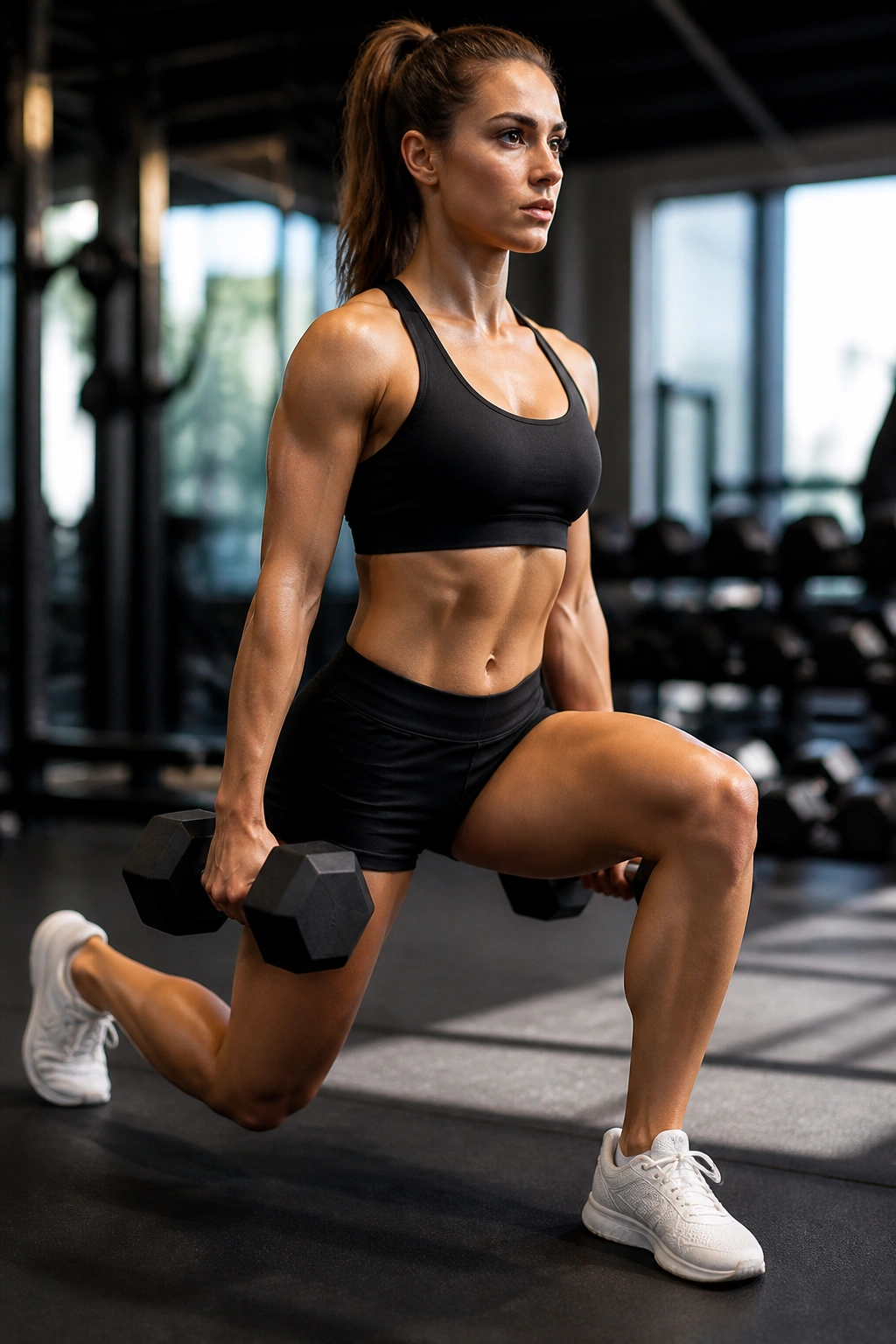
Machines are designed to guide your movement through a fixed path. While this is helpful for isolation, it also removes the need for your brain to control the weight. Your central nervous system essentially goes on autopilot. When you pick up a pair of dumbbells, you are immediately entering an environment where you must actively manage the weight in three-dimensional space.
The Nuance of Range of Motion
Dumbbells allow for a much deeper range of motion on exercises like lunges or split squats. Because your arms are at your sides rather than pinned under a bar, you have more freedom to adjust your stance to fit your anatomy. If you have long femurs, you know that a standard squat can sometimes feel like a hip-dominant exercise rather than a quad-focused one. With dumbbells, you can shift your torso angle and stance width easily to target exactly where you want the burn.
Better Mind-Muscle Connection
There is a tactile feedback loop that happens when your hands are gripping the weight. You can feel the pull in your lats, which helps you keep your chest up, and you can adjust your grip to maintain a better center of gravity. This translates to a stronger mind-muscle connection. When you can feel your quads or glutes working through every inch of the repetition, you are far more likely to maintain the form necessary to avoid wasted movement.
1. Goblet Squats
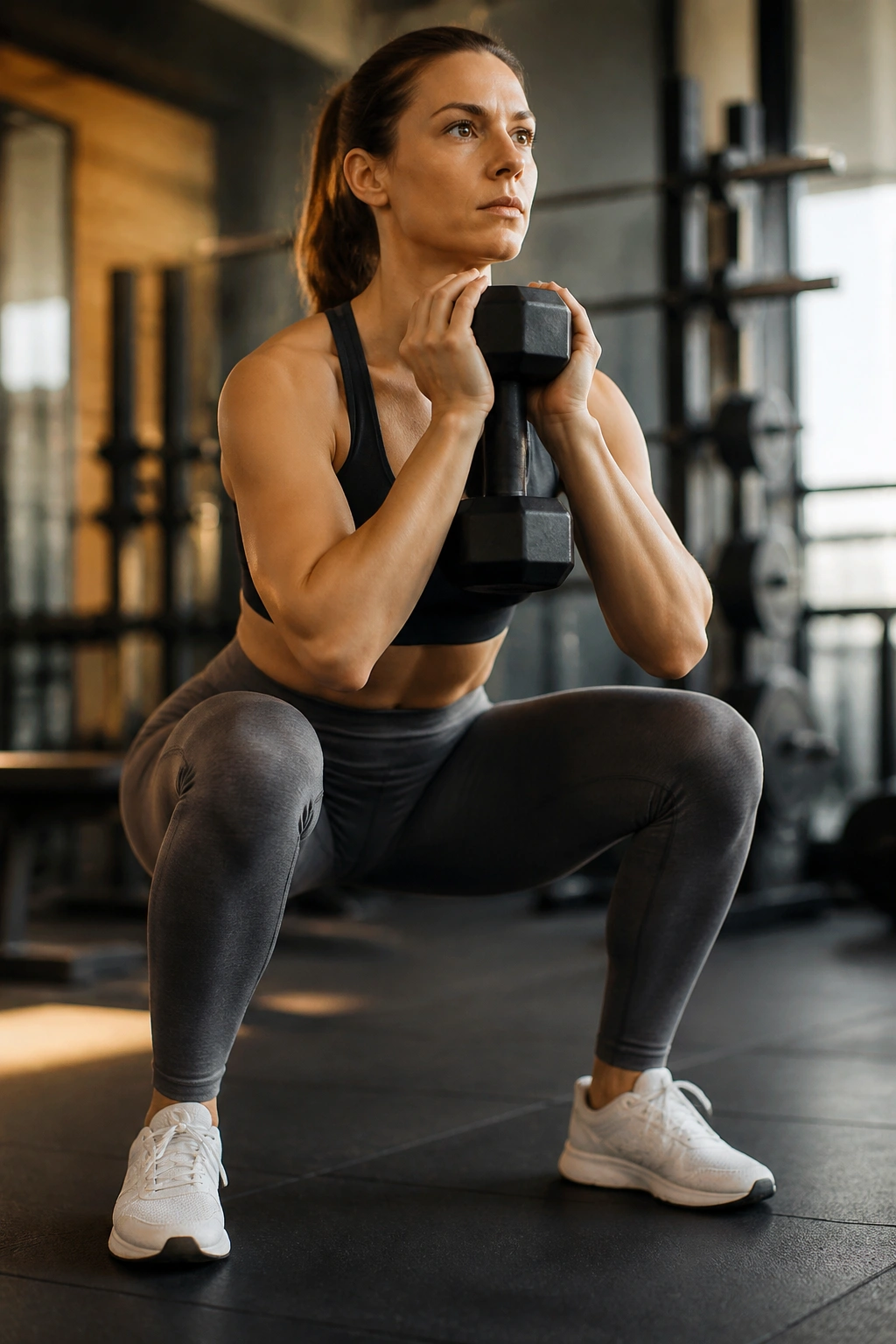
The goblet squat is the gold standard for teaching proper squat mechanics while keeping the upper body upright. By holding a single dumbbell vertically against your chest, you create a counterbalance that forces you to sink deep into your hips without leaning forward excessively. It is effectively a front-loaded squat, which shifts the emphasis onto the quadriceps rather than the lower back.
Why It Works for Lean Legs
The front-loading requires significant core engagement, effectively turning a leg exercise into a full-body movement. Because the weight is held in front, you cannot collapse your chest. This ensures that your quads are doing the lion’s share of the work throughout the entire descent and ascent.
Technique Tips
- Keep your elbows tucked in toward your ribcage.
- Drive your knees outward during the descent to keep your path straight.
- Stop when your elbows graze the inside of your knees—that is your sweet spot for depth.
Pro tip: Slow the descent down to a three-count. Fighting the weight on the way down is where the most muscle breakdown happens, which leads to the definition you are chasing.
2. Dumbbell Lunges
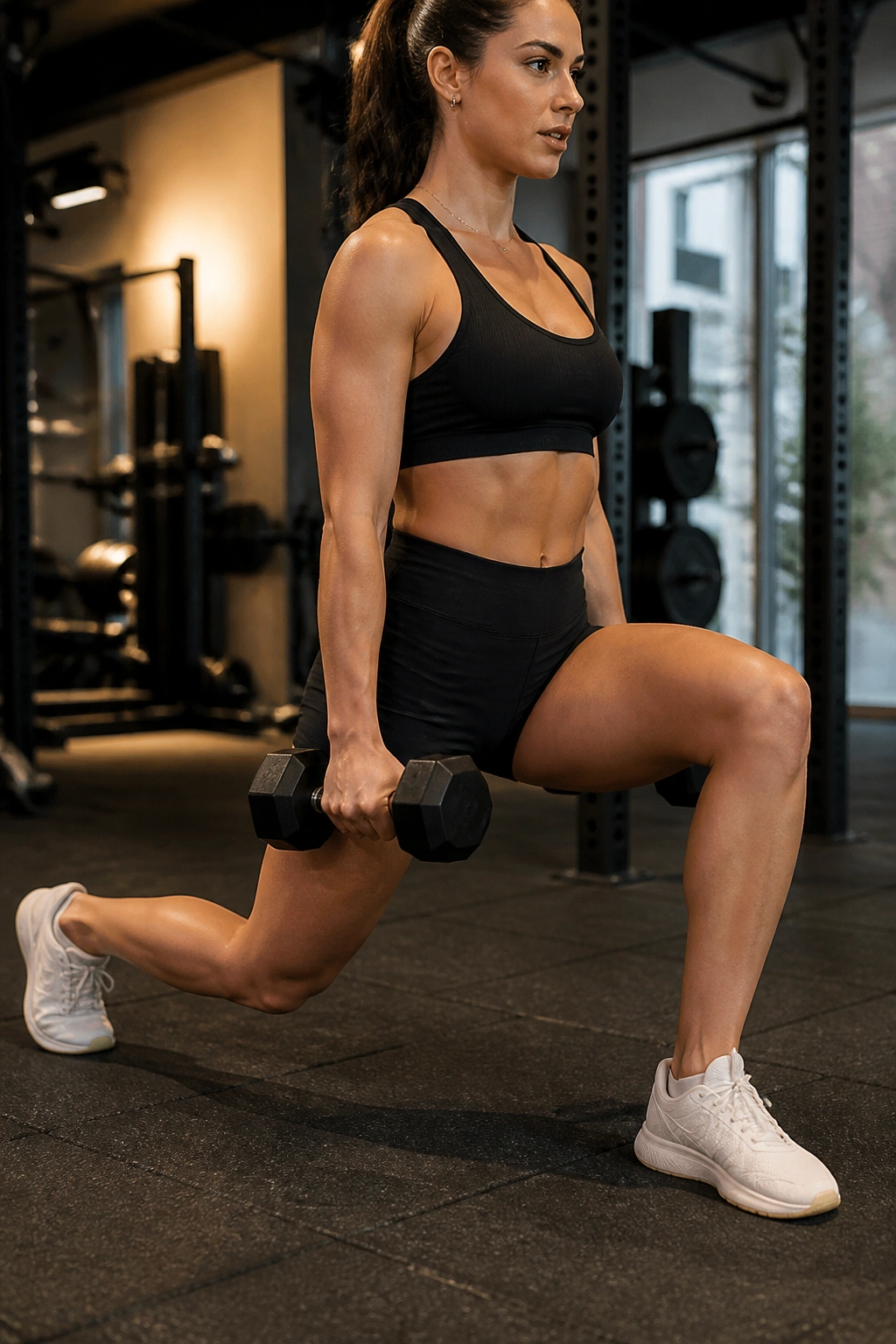
Lunges are the quintessential unilateral movement for leg development. Whether you prefer stepping forward or holding a static position, the dumbbell lunge demands coordination and strength from both the glute and the quad. Most people make the mistake of taking a stride that is too short, which places too much stress on the patellar tendon.
Keys to Perfect Execution
- Take a slightly longer step than you think you need.
- Keep your torso vertical; avoid the common habit of hunching over the front knee.
- Think about driving through the heel of your front foot, not the ball of the foot.
The lunge is unforgiving. If your balance is off, the muscles simply won’t fire correctly. If you find yourself wobbling, reduce the weight immediately. You are better off doing twenty reps with light dumbbells and perfect form than five reps with heavy ones where you are fighting to stay upright. Consistency in form is what builds the shape.
3. Romanian Deadlifts
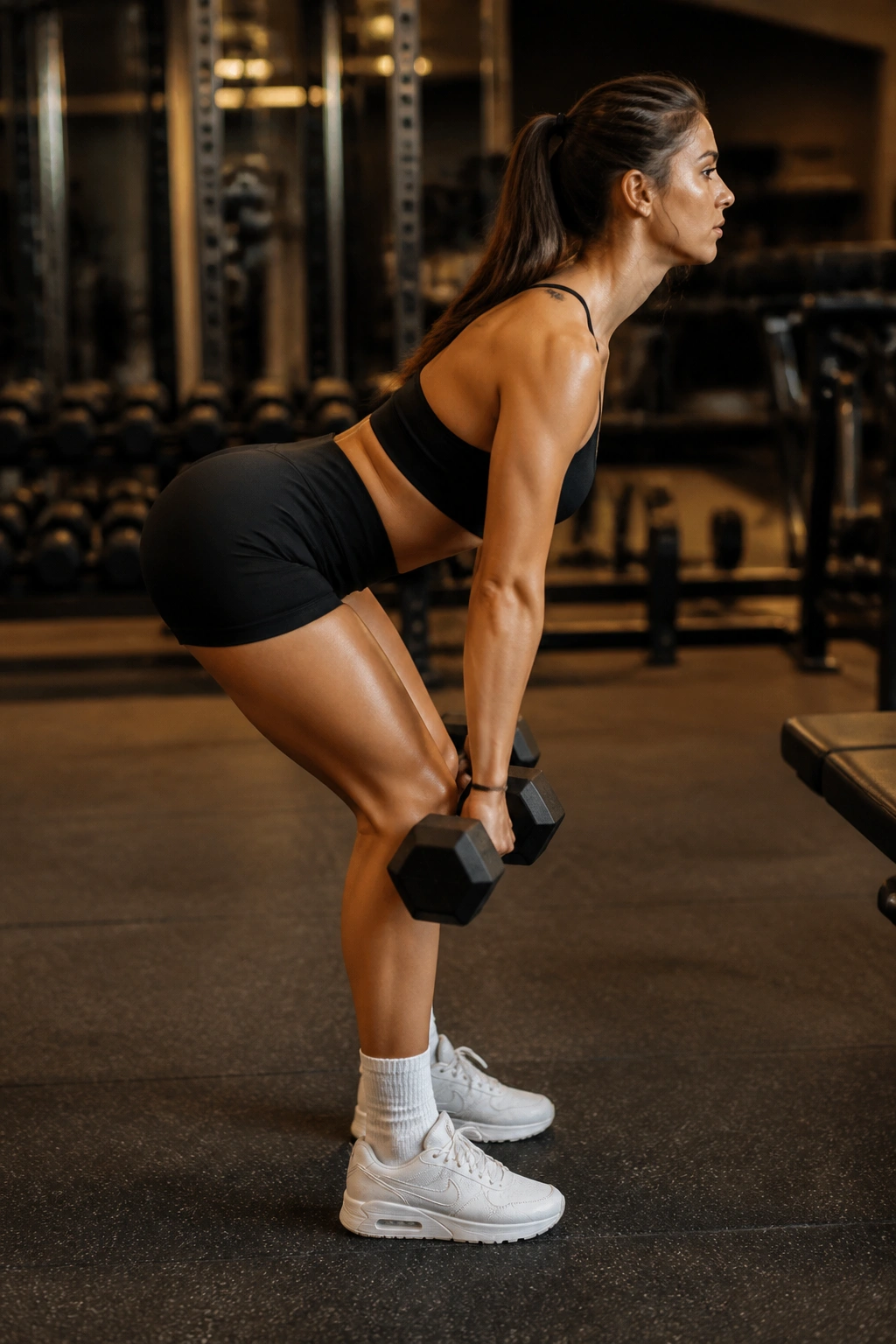
If you want lean legs that don’t look “top-heavy,” the hamstrings are the key. Romanian deadlifts (RDLs) target the posterior chain with surgical precision. Unlike a traditional deadlift, you aren’t pulling from the floor; you are hinging at the hips, keeping your knees soft but mostly stationary, and feeling a deep, intense stretch in the back of your legs.
The Hinge Mechanic
Think of the movement as pushing your hips backward, as if you are trying to touch a wall behind you with your glutes. Your shins should remain vertical throughout the entire motion. If your knees start to bend significantly, you have turned the movement into a squat, and you are no longer targeting the hamstrings effectively.
Proper Depth
You do not need to bring the dumbbells all the way to the floor. In fact, most people lose their back position before they ever get that low. Lower the dumbbells until you feel a profound stretch in your hamstrings, then squeeze your glutes to drive back to the start. Keep the weights as close to your legs as possible; drifting them forward creates a massive lever arm that puts unnecessary strain on your lower back.
4. Bulgarian Split Squats
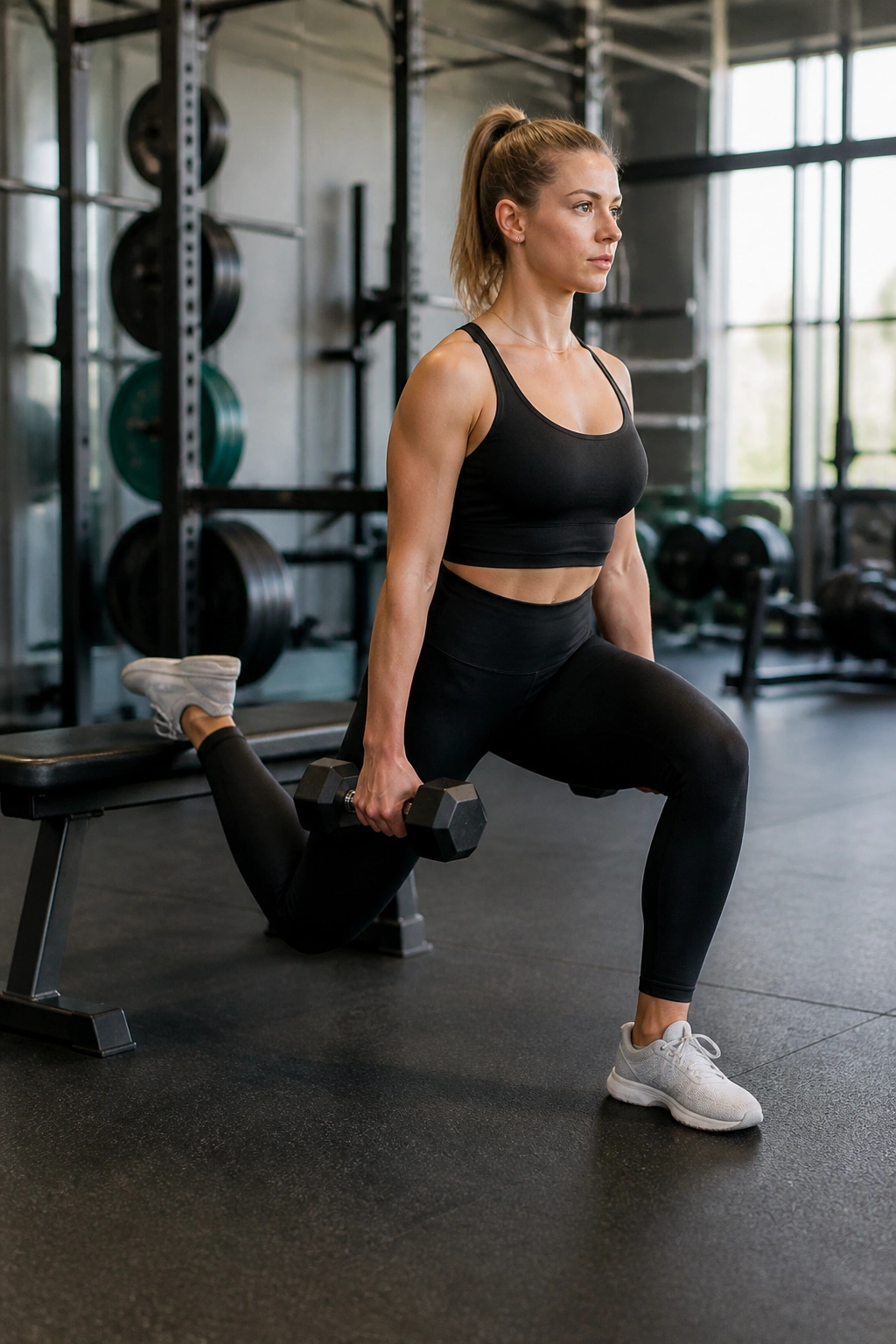
Many consider this the most challenging lower-body exercise in existence, and for good reason. By placing your rear foot on a bench or elevated surface, you essentially take one leg out of the equation. You are forcing the lead leg to lift nearly your entire body weight, plus the resistance of the dumbbells.
Why This Is Essential
It is nearly impossible to “cheat” a Bulgarian split squat. If you lose focus, you lose your balance. This forces your nervous system to recruit every available muscle fiber in your lead leg to keep you stable. Over time, this exercise is unparalleled for building a “shelf” under the glutes and definition in the quads.
Troubleshooting Your Form
- If you feel it more in your hip flexor than your glute, lean your torso slightly forward.
- Ensure your front foot is far enough forward that your knee doesn’t travel excessively past your toes.
- Keep your eyes fixed on a point on the wall; looking around will kill your balance.
5. Sumo Deadlifts
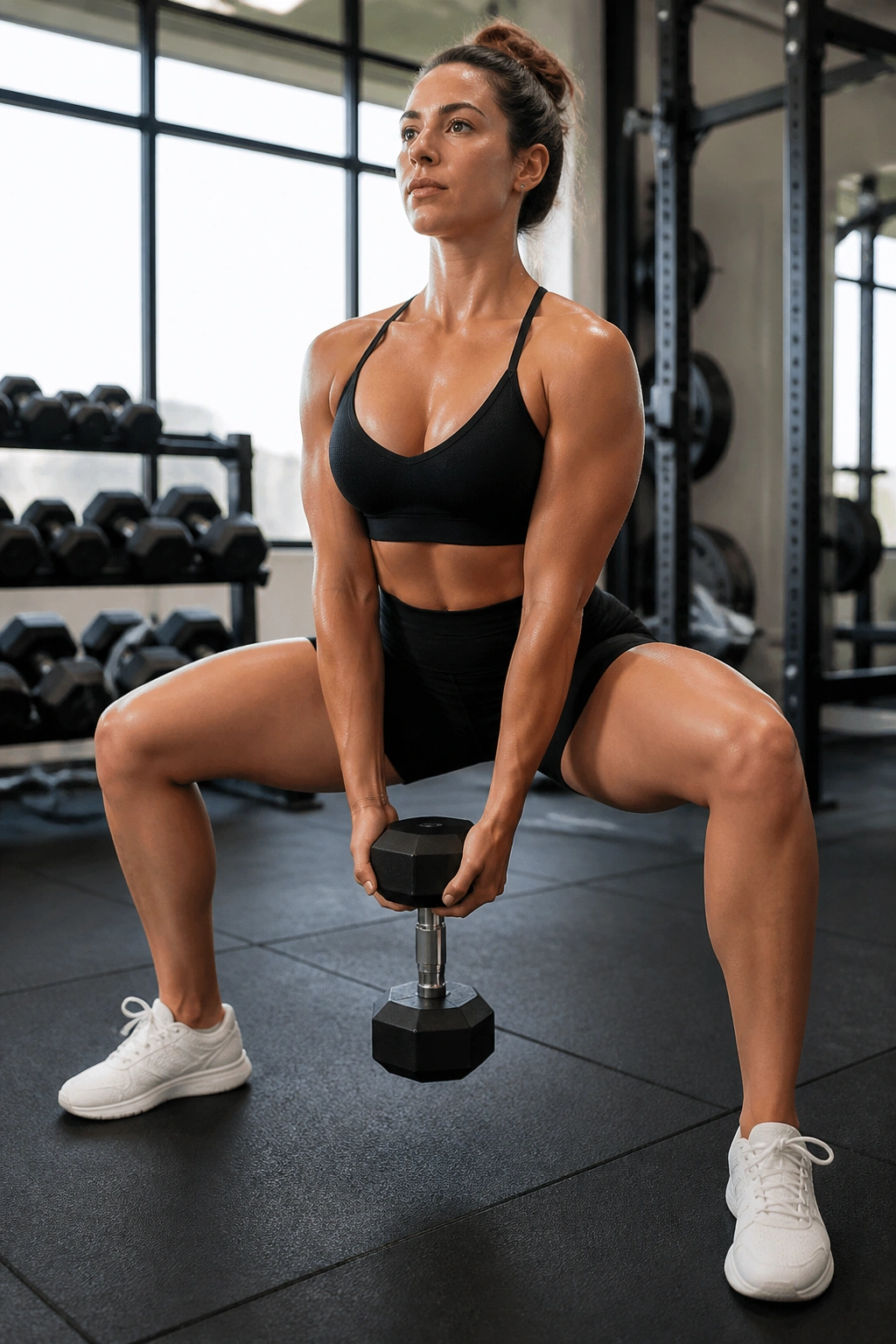
The sumo deadlift takes the wide, toes-out stance of the classic sumo pull and applies it to the dumbbell. This stance forces the knees to track wide, which engages the adductors (inner thighs) and the glutes more aggressively than a conventional stance. For those looking to add width and thickness to their legs, this is a non-negotiable addition to your routine.
Getting the Stance Right
Set your feet wider than shoulder-width with toes pointed out at about a 45-degree angle. As you descend to grab the dumbbell held between your legs, you should feel an immediate activation in the inner thighs. The goal here isn’t to pull with your back; it’s to push the floor away with your legs.
Why It’s Different
Because of the width of your stance, you stay much more upright than in a standard deadlift. This vertical torso angle drastically reduces shear force on the lumbar spine, making it a safer option for those who struggle with back pain during traditional heavy lifting. Focus on squeezing your glutes at the top of the movement to lock it out.
6. Dumbbell Step-Ups
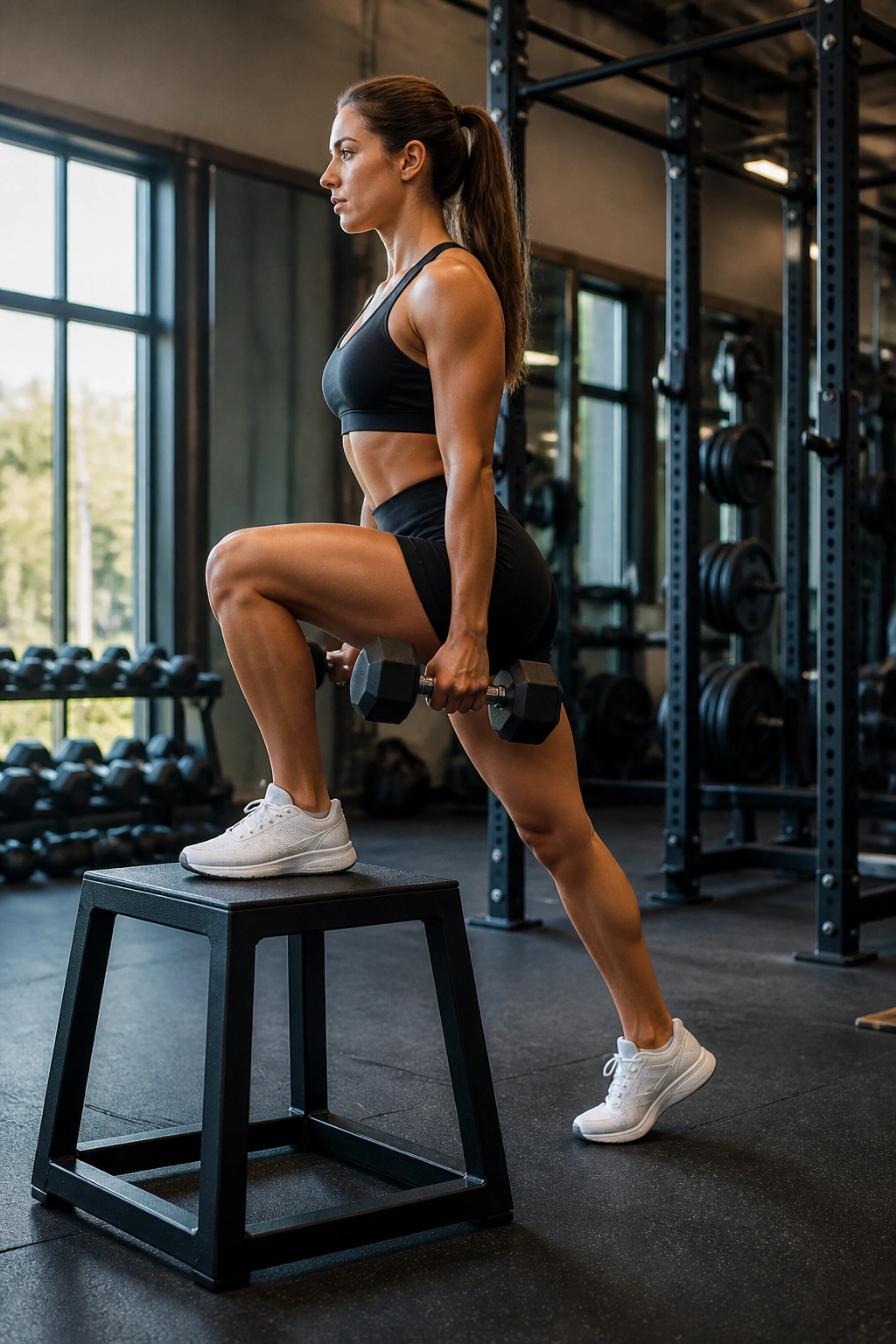
Step-ups are the unsung heroes of leg training. They are a functional movement pattern that mirrors climbing stairs, yet they are rarely programmed with the intensity they deserve. The beauty of a step-up is the concentric focus; you are actively driving your body weight upward from a dead stop at the bottom of the movement.
The Setup
- Use a box or bench height that puts your knee at roughly a 90-degree angle when your foot is planted.
- Avoid the temptation to push off the floor with your trailing leg.
- All the power must come from the leg on the box.
Focus on a slow, controlled descent. Lowering yourself back to the floor is just as important as the step-up itself. If you just drop back down, you are losing half the potential muscle fiber recruitment. Keep the weight challenging enough that you can only maintain that slow tempo for 8 to 12 reps per side.
7. Lateral Lunges
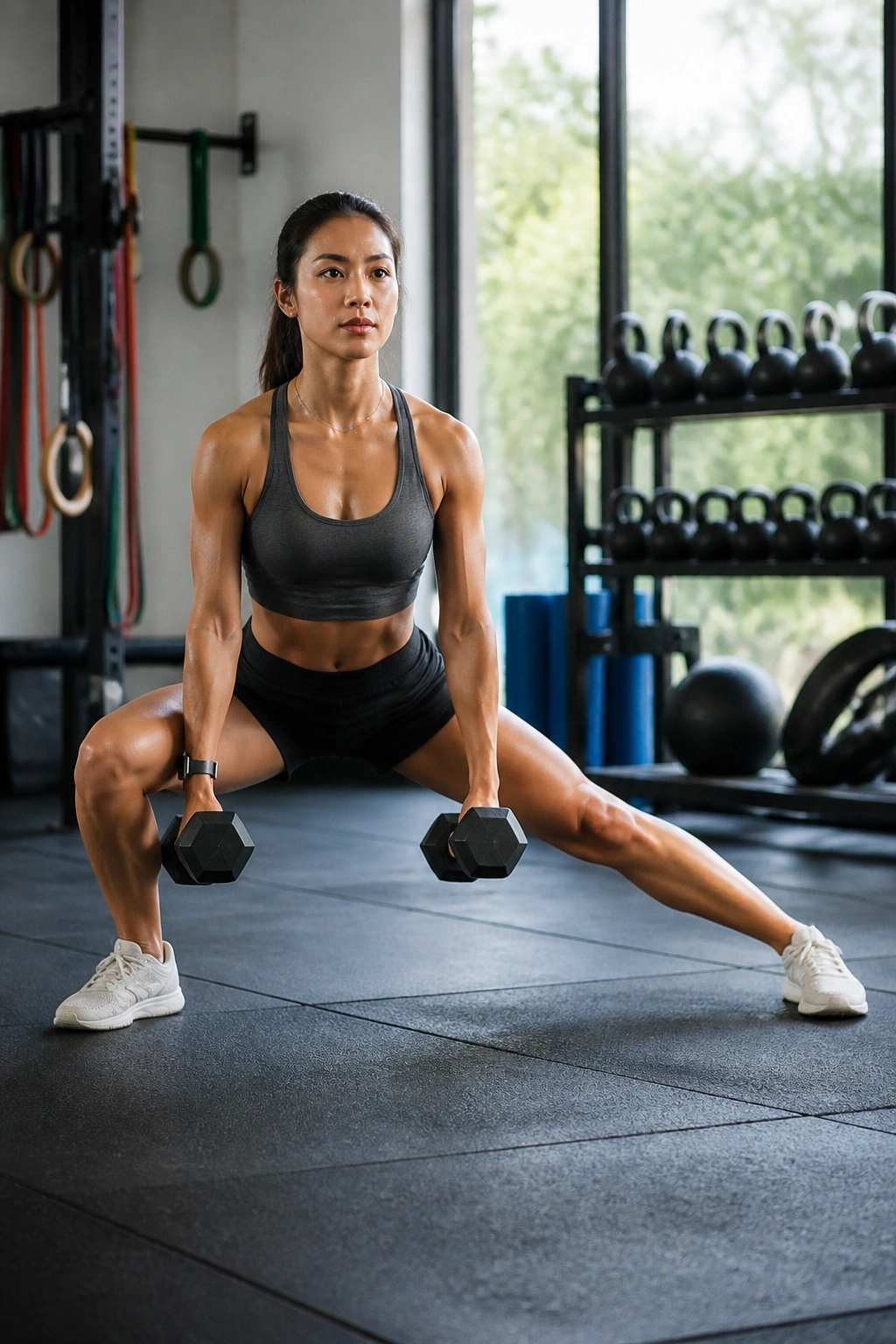
We spend our entire lives moving forward and backward. Lateral lunges introduce a frontal plane of movement that hits the inner and outer thighs in a way no other exercise does. They are essential for athletic longevity and for achieving that “thigh gap” or overall balanced leg definition that strictly sagittal plane exercises miss.
Why Lateral Lunges Matter
By stepping out to the side and sitting into the hip, you stretch the adductor of the working leg and engage the glute medius. This is a common weak point for many people. Strengthening this area doesn’t just look good; it protects your knees by stabilizing the femur during movement.
How to Do Them Right
- Keep your trailing leg perfectly straight.
- Plant your whole foot on the floor.
- Push off the entire foot to return to center, rather than pushing off just the toes.
- Do not round your back; keep your chest proud throughout the side-to-side motion.
8. Dumbbell Glute Bridges
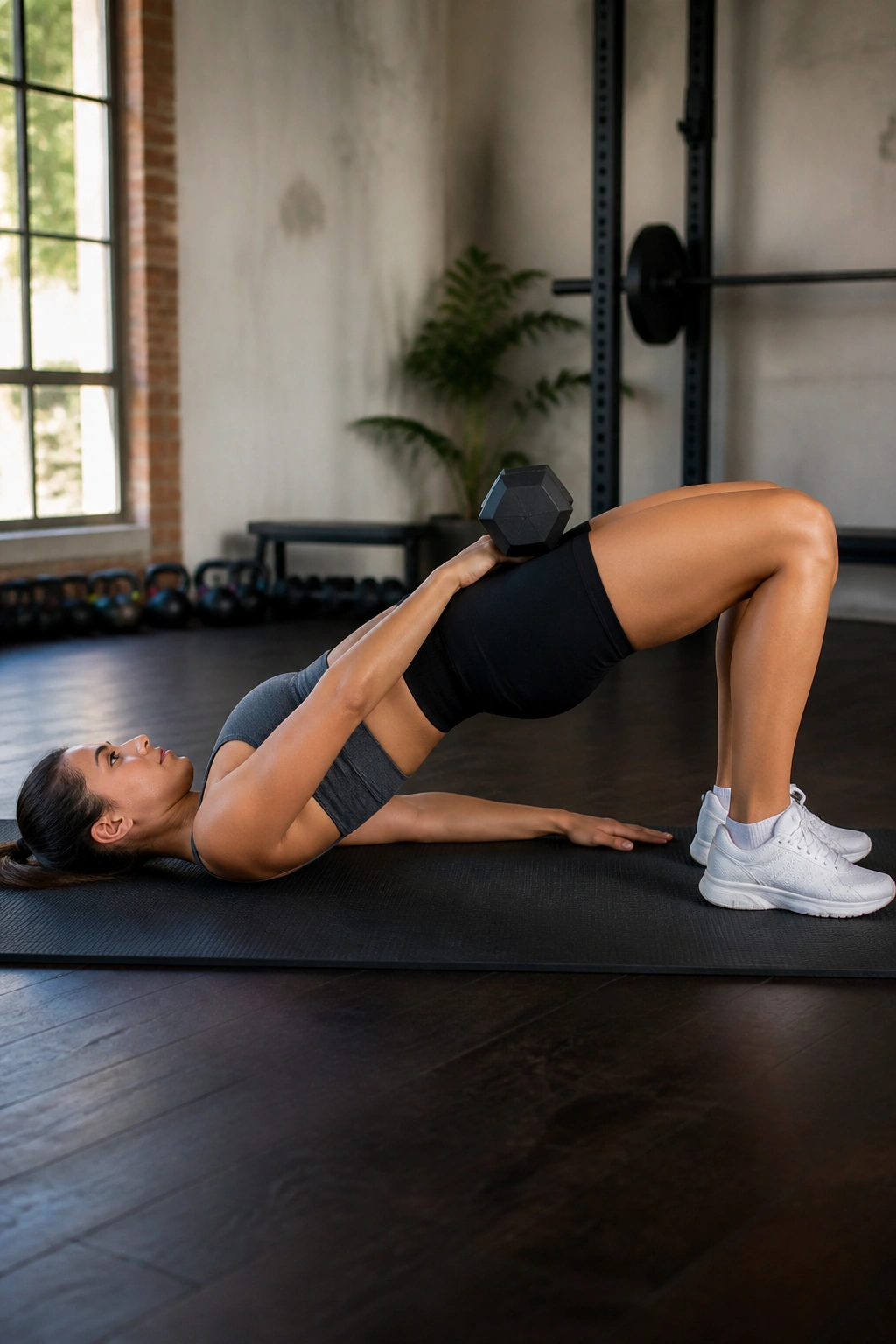
Isolation for the glutes is often overlooked in favor of heavy compound lifts. While squats and deadlifts are great, the glute bridge allows you to specifically target the posterior without involving the quads or lower back as primary movers. Place a dumbbell across your hips and perform a focused, high-repetition movement.
Maximizing the Squeeze
- Walk your feet in close to your glutes.
- Tuck your chin to your chest to keep your spine neutral.
- Pause for a full second at the top of every rep, squeezing your glutes as hard as you can.
Many people rush these, using their hamstrings to “yank” the weight up. If you feel this mostly in your hamstrings, move your feet a few inches closer to your hips. The sensation should be a deep burn in the meat of your gluteal muscles.
9. Curtsy Lunges
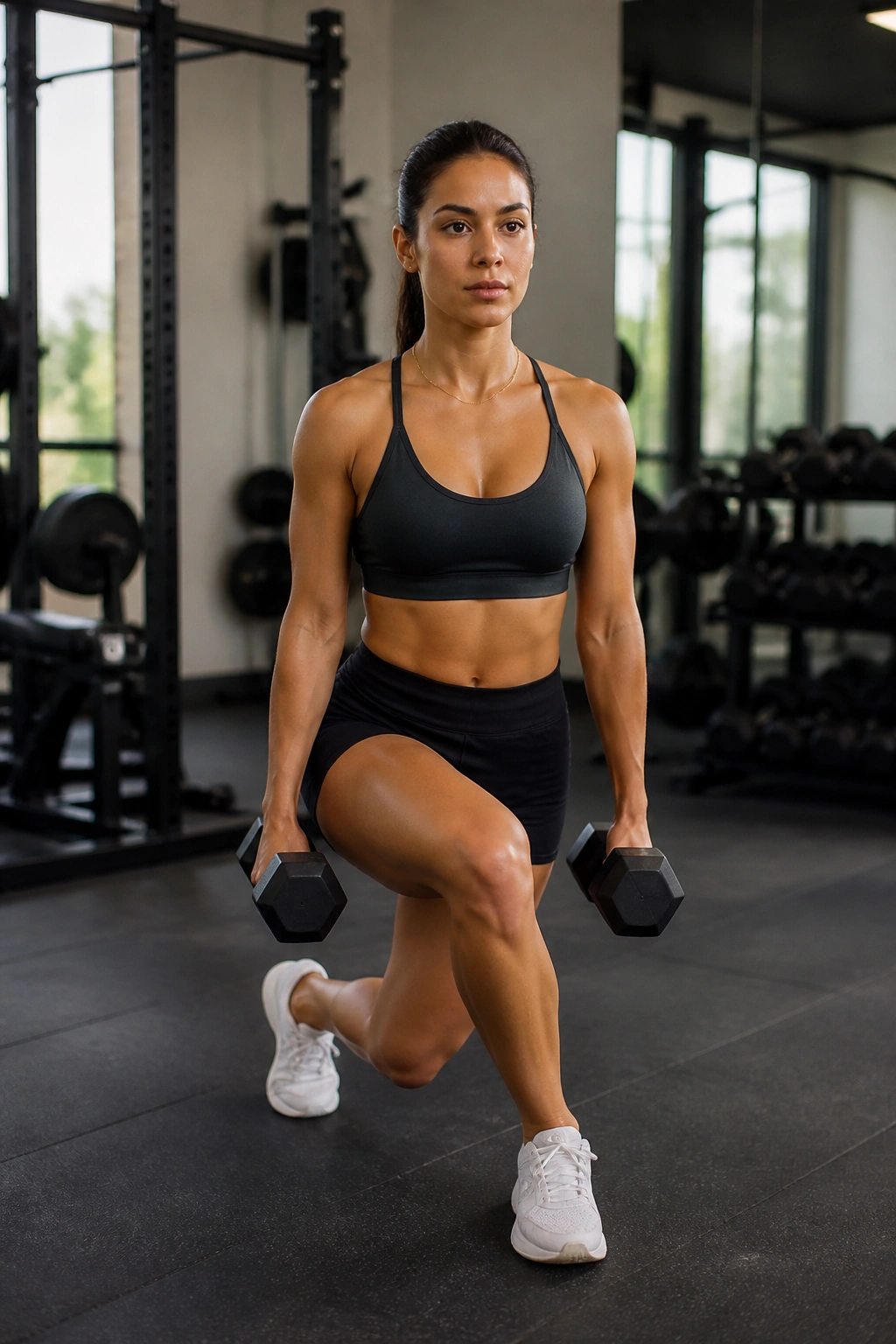
The curtsy lunge is a variation that hits the glute medius and minimus by adding a rotational component to the standard lunge. By stepping one leg behind the other, you create a deeper stretch in the outer hip and glute. It feels awkward at first, but it is one of the most effective ways to sculpt the upper glute area.
Keys to Success
- Focus on the depth of the rear knee.
- Keep your hips square to the front, even though your legs are crossed.
- Use lighter dumbbells than you would for a standard lunge; the focus here is on the stretch and the contraction of the outer glute, not on loading as much weight as possible.
10. Single-Leg Romanian Deadlifts
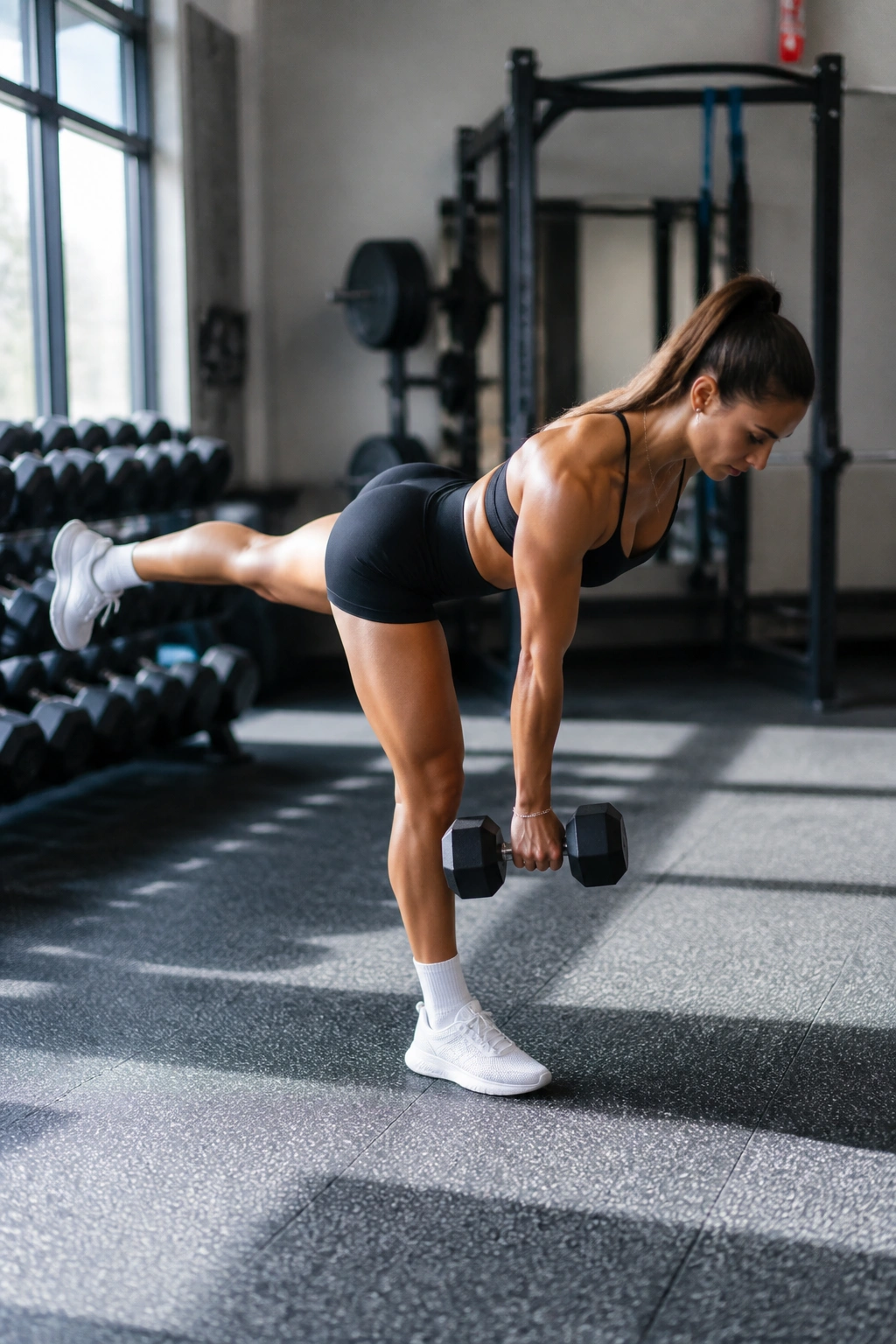
If you want to test your stability while hammer-drilling your hamstrings, this is the move. It is essentially an RDL performed on one leg, which turns a simple hamstring curl into a massive proprioception challenge. You will quickly find out which side of your body is the dominant one.
Mastering the Balance
- Keep your non-working leg straight as it moves back.
- Think about driving your heel toward the ceiling.
- Keep the dumbbell in the hand opposite to the working leg (e.g., left hand, right leg). This helps balance the weight and engages your core even more deeply.
If you cannot do this without falling over, ditch the dumbbells entirely and do it with body weight or just hold onto a wall for stability until your balance improves. The benefits of single-leg stability are too great to ignore, even if you have to start from scratch.
11. Dumbbell Thrusters
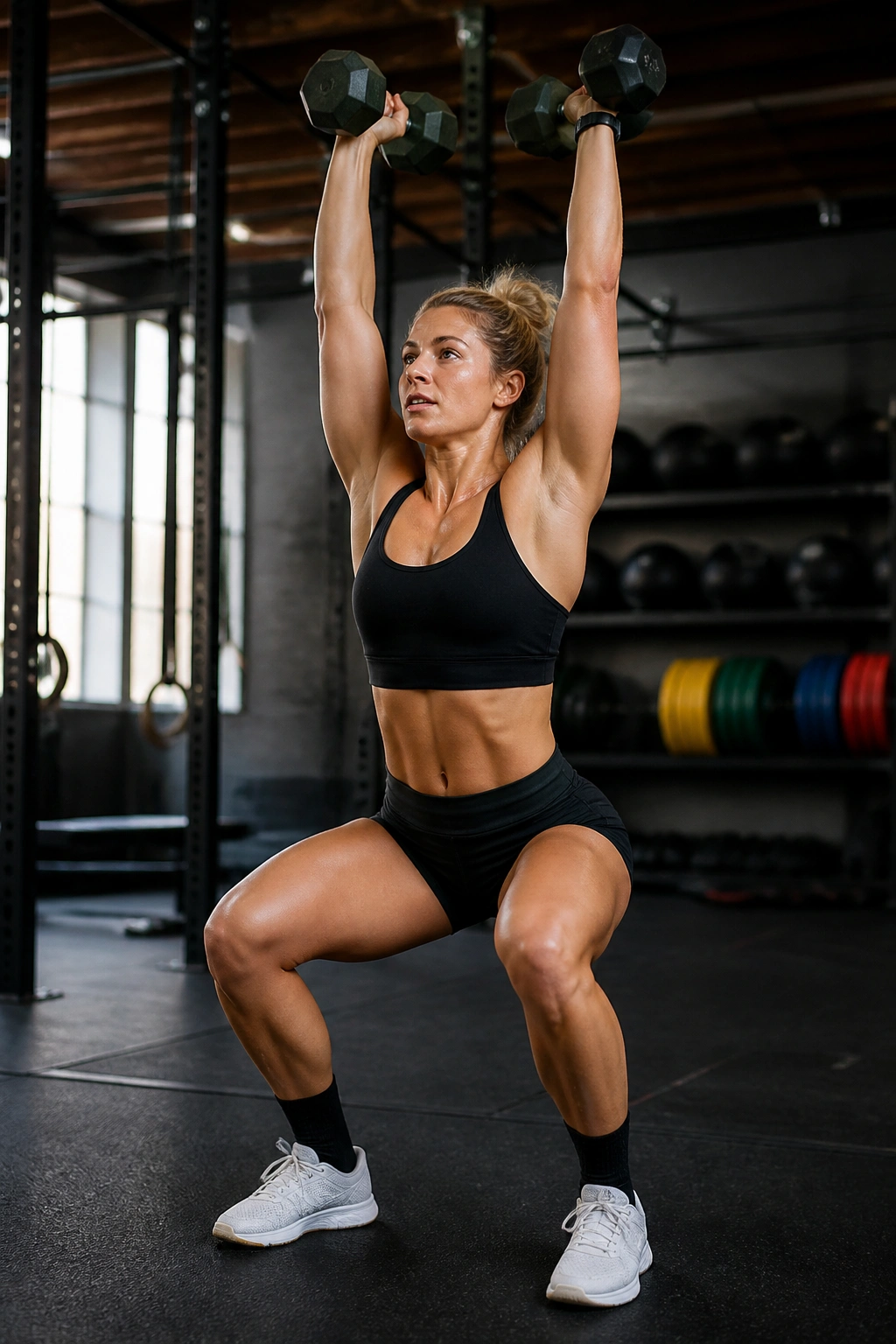
Thrusters are a compound exercise that combines a goblet squat with an overhead press. While this is a full-body movement, the lower body demands are high. You are using the power generated by your legs to propel the weight upward, which creates a massive metabolic demand and builds explosive leg power.
Why They Build Definition
Because of the high heart rate and explosive nature of the movement, thrusters are incredible for fat burning and conditioning. If your goal is lean legs, the intensity of this movement will elevate your heart rate and keep your metabolism burning long after the workout ends.
Avoiding Common Mistakes
- Do not let the dumbbells pull your chest down at the bottom of the squat.
- Use your leg drive to assist the press—do not try to press the weight with just your shoulders.
- Keep the transition between the squat and the press fluid; it should be one continuous movement.
12. Calf Raises
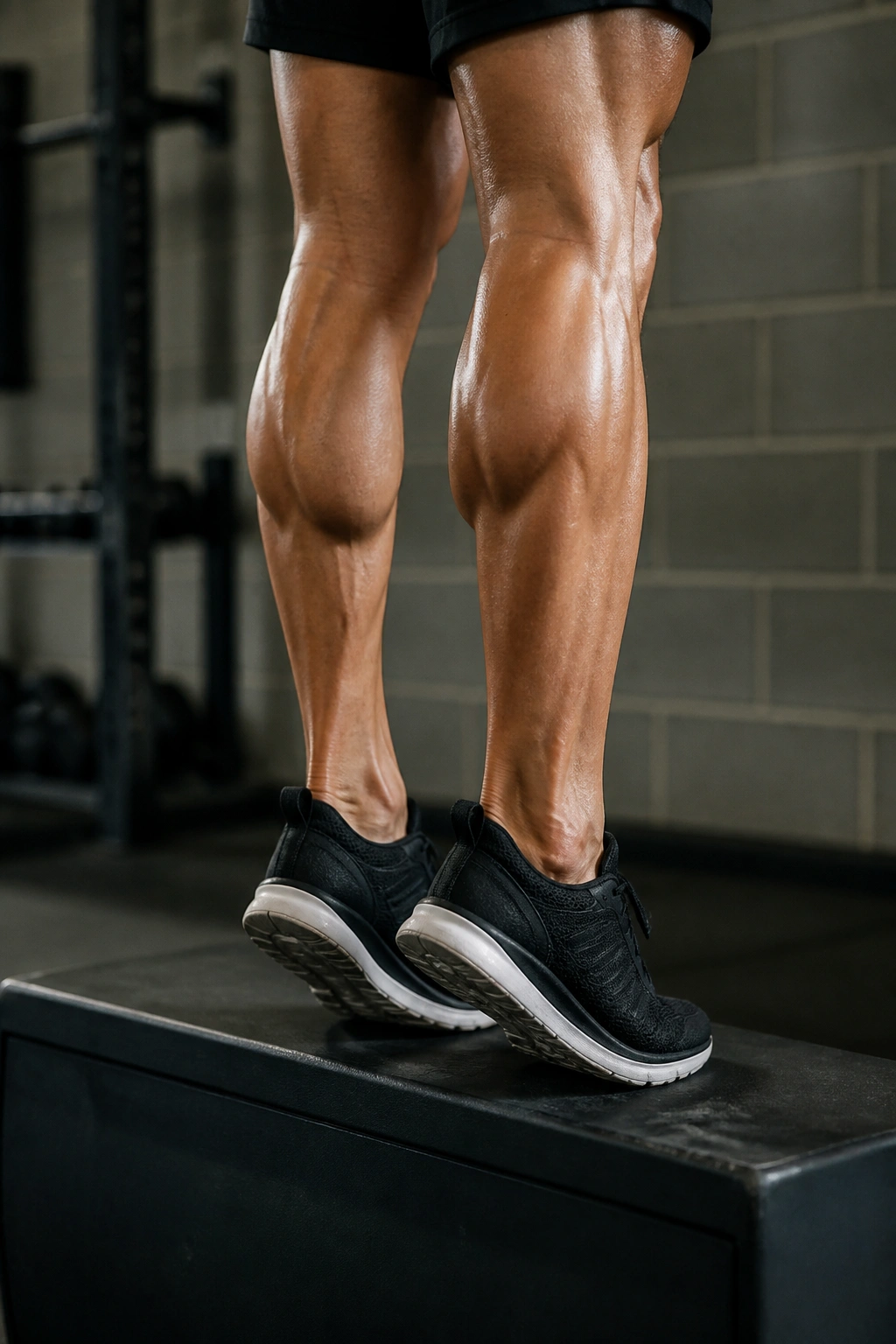
You cannot talk about lower body definition without mentioning the calves. Many people complain that they just have “bad calf genetics,” but the reality is usually a lack of volume or improper technique. The calf is a dense, endurance-oriented muscle that responds well to high volume and a full range of motion.
The Secret to Calf Growth
- Do not bounce at the bottom.
- Use a slight pause at the bottom to kill the stretch reflex, then drive all the way up onto your big toe.
- Hold the top contraction for a full second.
Perform these slowly. If you are doing 30 reps, you are doing too many. Aim for 12 to 15 reps with a heavy-enough dumbbell held in one hand, while supporting yourself against a wall with the other.
13. Dumbbell Swings
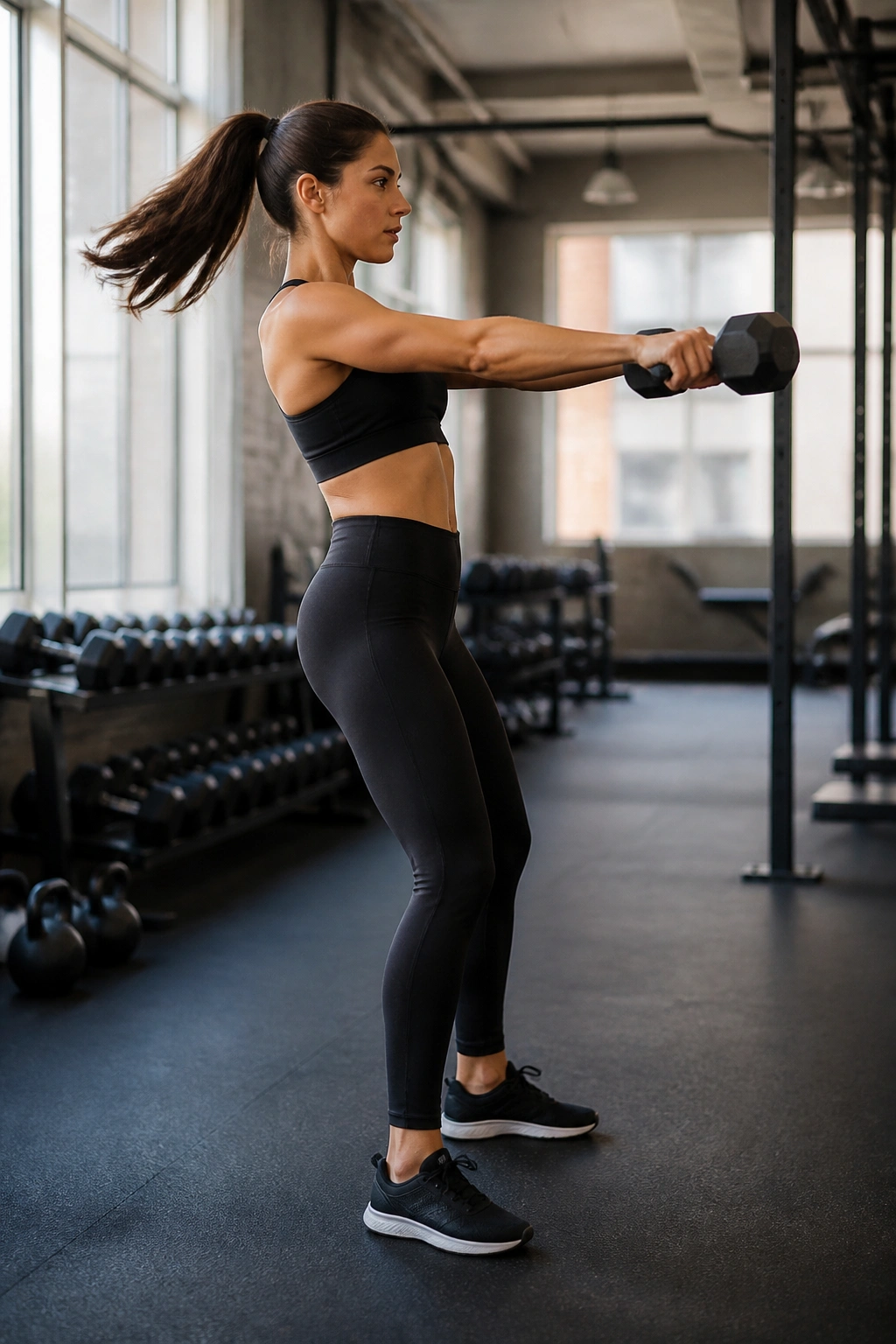
While typically done with a kettlebell, a dumbbell swing is a perfectly viable alternative for targeting the hamstrings and glutes. Hold the dumbbell by the top of the weight (the head) and swing it through your legs, using your hips to drive the motion.
The Hinge vs. The Squat
The biggest mistake here is turning the swing into a squat. Your knees should be soft, not bent into a squat position. This movement is purely a hip hinge. The power comes from snapping your hips forward aggressively. If you are doing it right, you should feel your hamstrings snap tight on every repetition.
14. Reverse Lunges
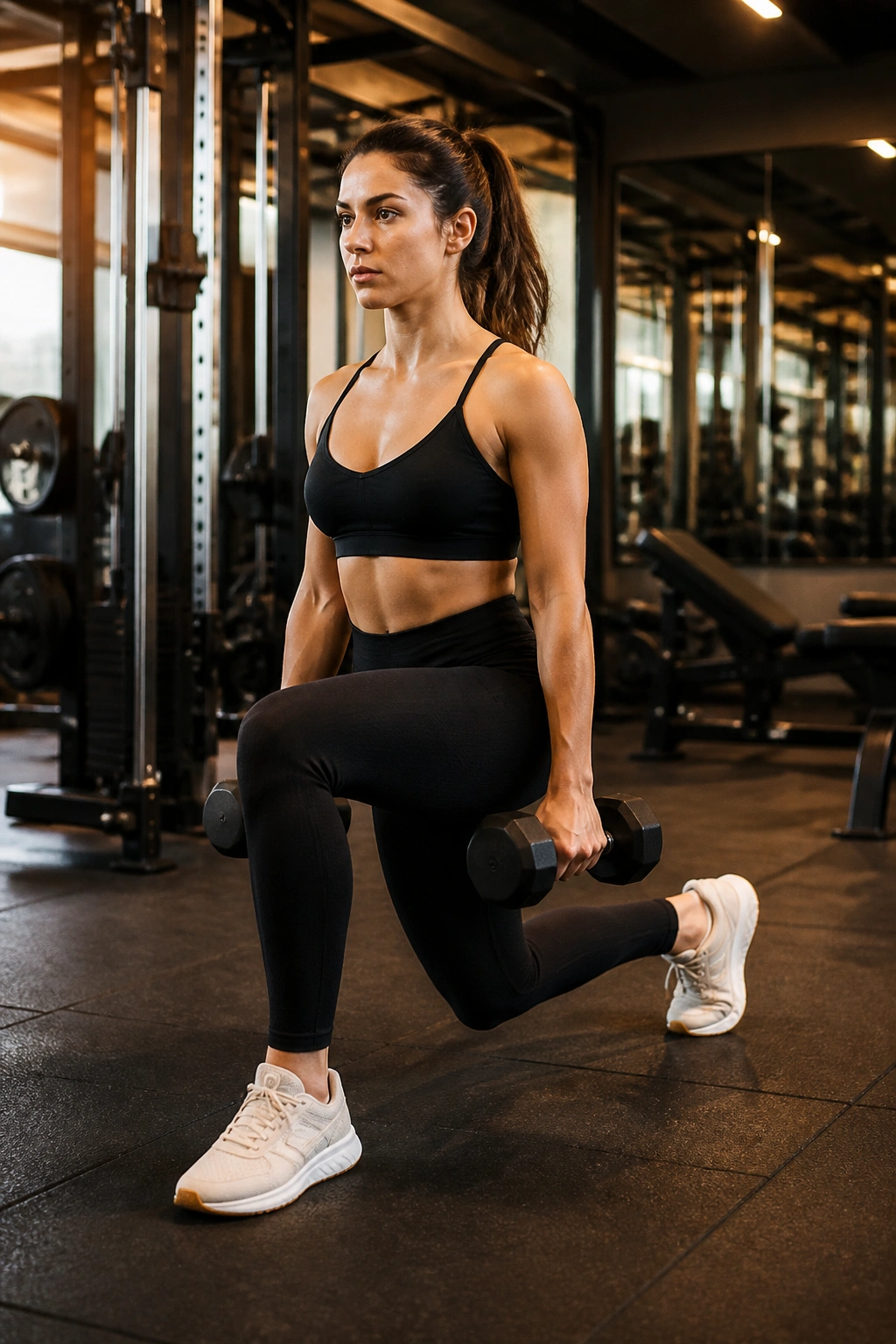
Reverse lunges are generally easier on the knees than forward lunges. Because you are stepping backward, your front shin stays vertical and your weight is kept squarely on the front heel. This makes it a safer, more sustainable exercise for those who want to build glute and quad size without worrying about joint aggravation.
Why They Work
You are putting the focus on the eccentric, or lowering, phase of the movement. Because you are stepping back into the space, you naturally maintain a more stable center of gravity, allowing you to use slightly heavier dumbbells than you might for forward lunges.
15. Goblet Cossack Squats
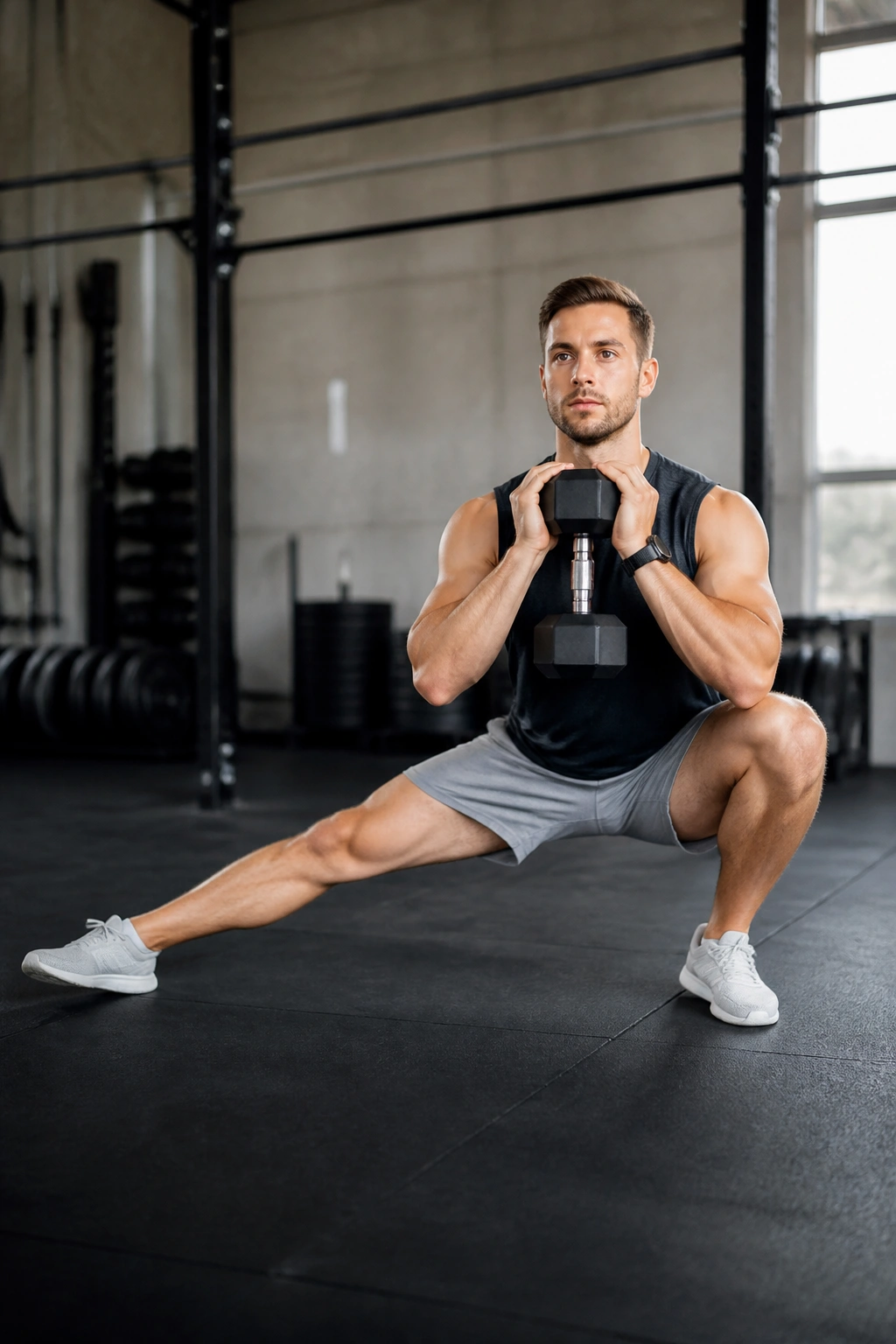
Cossack squats are a wide-stance side lunge that demands significant mobility. You essentially perform a deep side lunge while keeping the toes of your outstretched leg pointed toward the ceiling. This provides an intense stretch to the adductors and forces the squatting leg to work through a massive range of motion.
Who Needs This
Anyone with tight hips or limited ankle mobility. This movement forces you to open up your hips while simultaneously working your legs. If you find yourself falling backward, try holding a light dumbbell out in front of you for a counterbalance—it makes a world of difference.
16. Dumbbell Sumo Squats
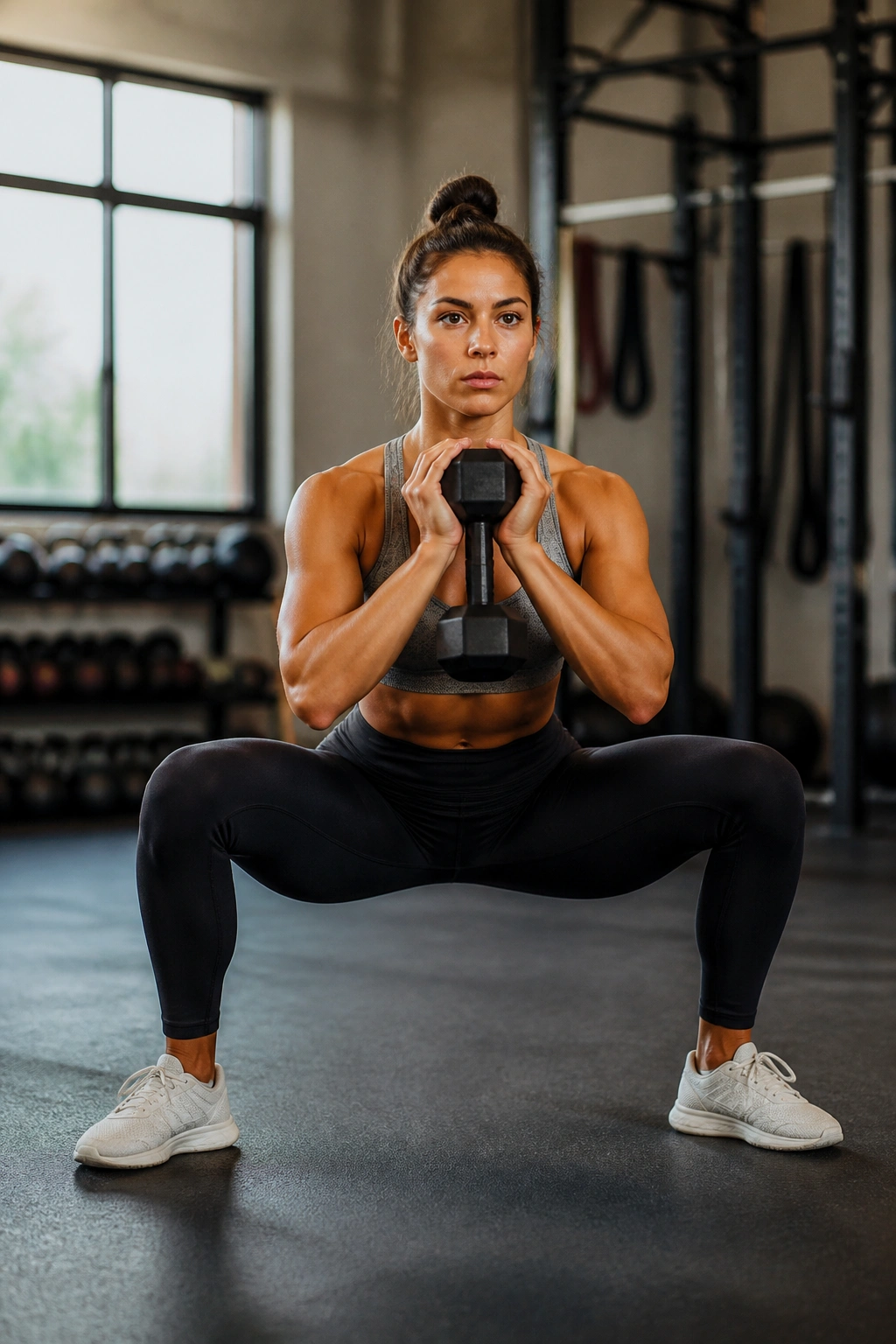
Take the wide stance of the sumo deadlift, but keep your torso vertical and hold the dumbbell as you would in a goblet squat. This combination creates a deep, quad-and-adductor-focused movement that is extremely comfortable for the lower back. It is arguably the best way to get heavy load onto the legs without loading the spine.
Focusing on the Squeeze
- Think about “tearing the floor apart” with your feet as you stand up.
- This creates tension in the glutes before you even begin the movement.
- Maintain that tension throughout the entire set.
17. Dumbbell Hip Thrusts
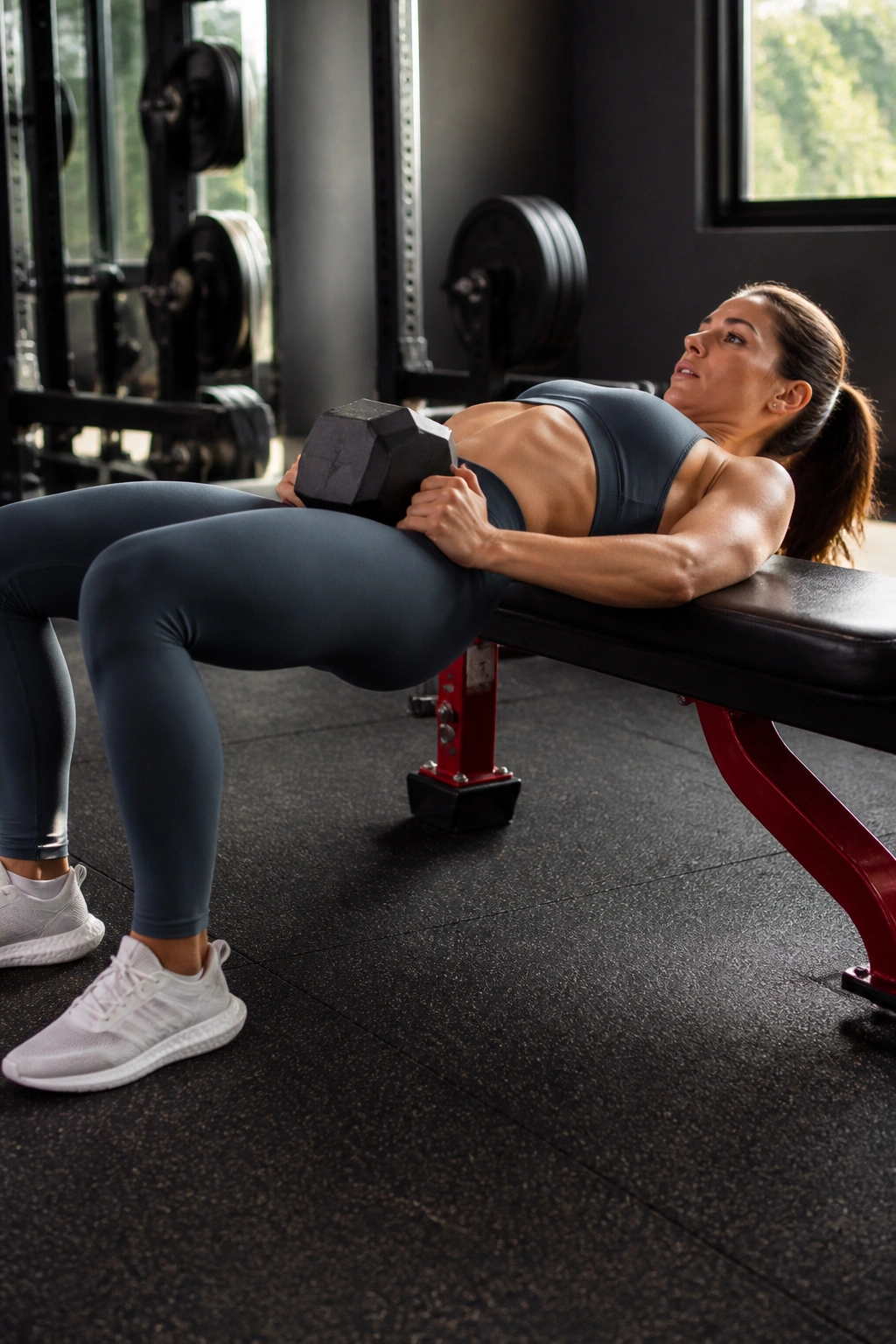
The glute bridge’s more intense cousin. By resting your upper back on a bench and placing a dumbbell on your hips, you create a greater range of motion and a deeper hip extension. This is the gold standard for glute building.
The Setup
- Keep your head neutral; do not look at the ceiling, look forward.
- Drive through the heels.
- If the weight hurts your hips, place a towel or a foam pad under the dumbbell.
- Focus on pushing the weight straight up, not toward your head.
18. Dumbbell Box Squats
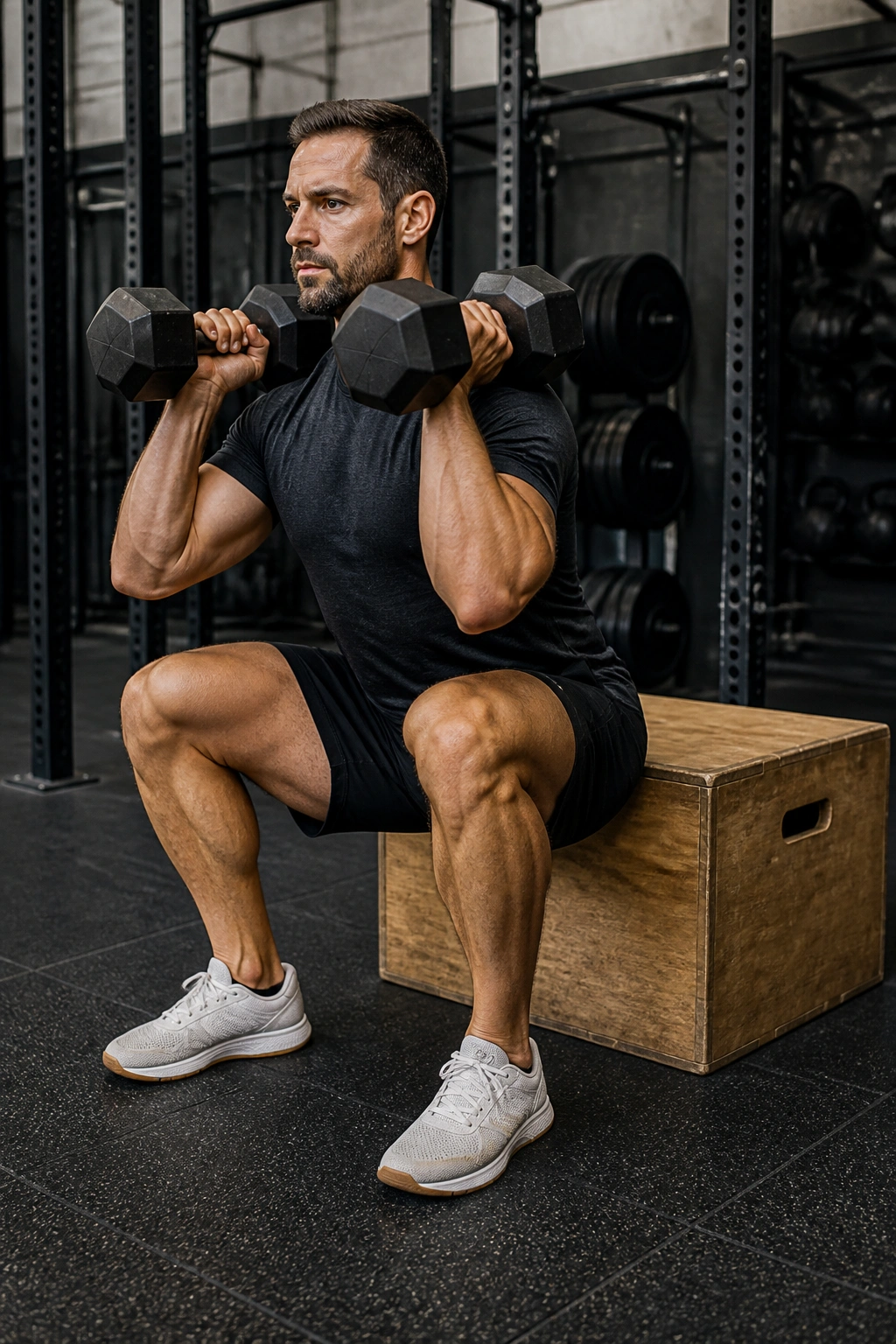
Box squats teach you how to sit back into your hips rather than squatting down into your knees. By tapping a box or bench, you get a tactile cue that you have reached the correct depth. This allows you to pause at the bottom, which removes all momentum and forces your muscles to do the work of standing back up.
Why the Pause Matters
The pause is the differentiator. By sitting on the box, you are completely relaxing your muscles for a split second before having to explode upward. This forces the muscles to recruit more motor units to overcome the inertia. It builds incredible starting strength and helps to “fill out” the legs by creating more muscle density over time.
Scaling Your Workouts for Long-Term Progress
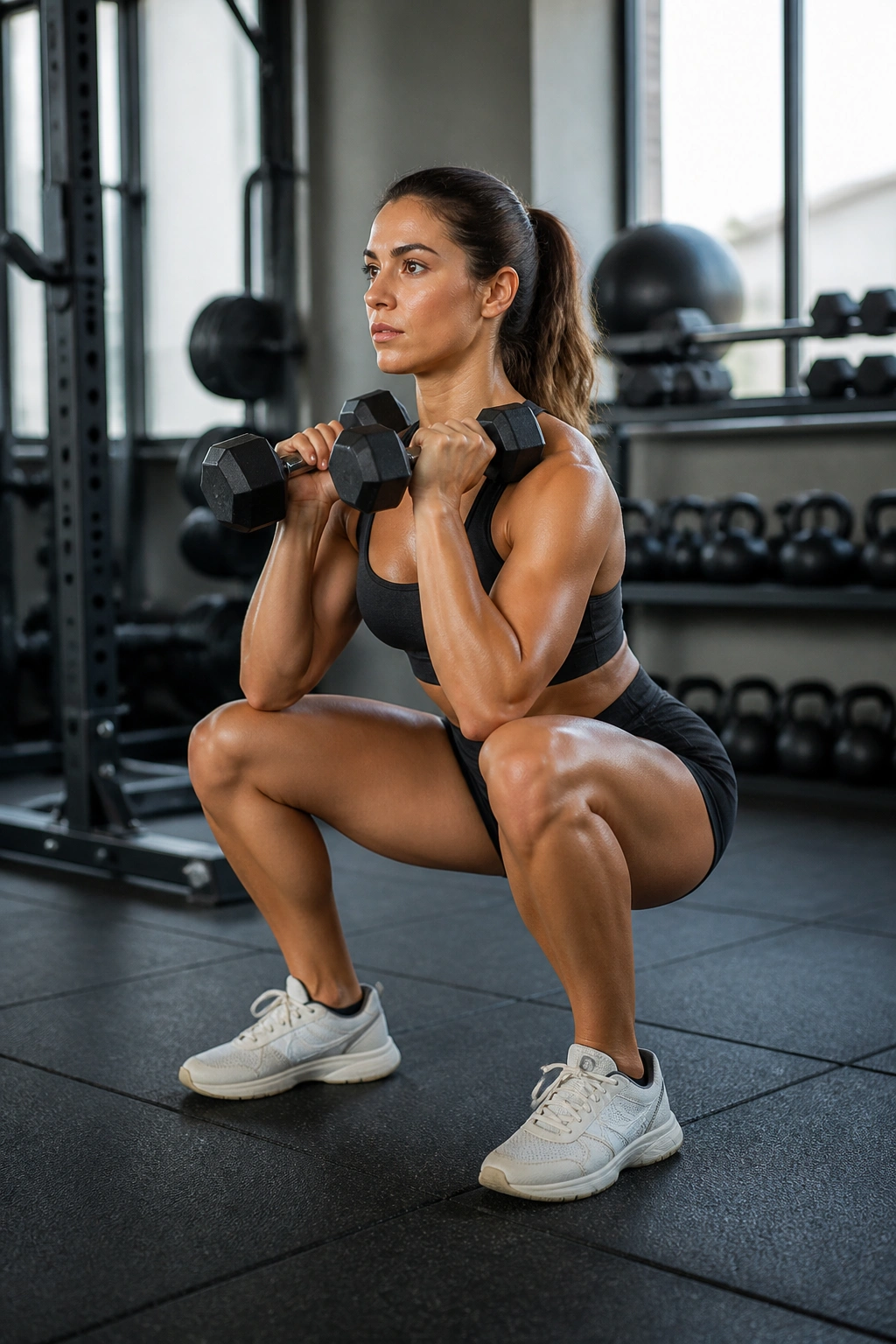
If you have mastered these 18 movements, the next phase is scaling. Consistency is a baseline requirement, but if you do the exact same workout with the same weight for six months, your legs will stop changing. You have to introduce progressive overload. This does not always mean adding more weight.
You can increase the volume by adding more sets or reps. You can decrease your rest time to increase the metabolic demand. You can also manipulate the tempo; doing a 4-second negative (lowering) phase will make even a light pair of dumbbells feel like they weigh twice as much.
Track your workouts. Keep a simple note of what weight you used and how many reps you achieved. If you hit the top end of your rep range easily, it is time to move up in weight or slow down your tempo. A lean, defined physique is built on the foundation of constantly asking your body to do slightly more than it did the week before.
Recovery Tactics for Frequent Leg Training
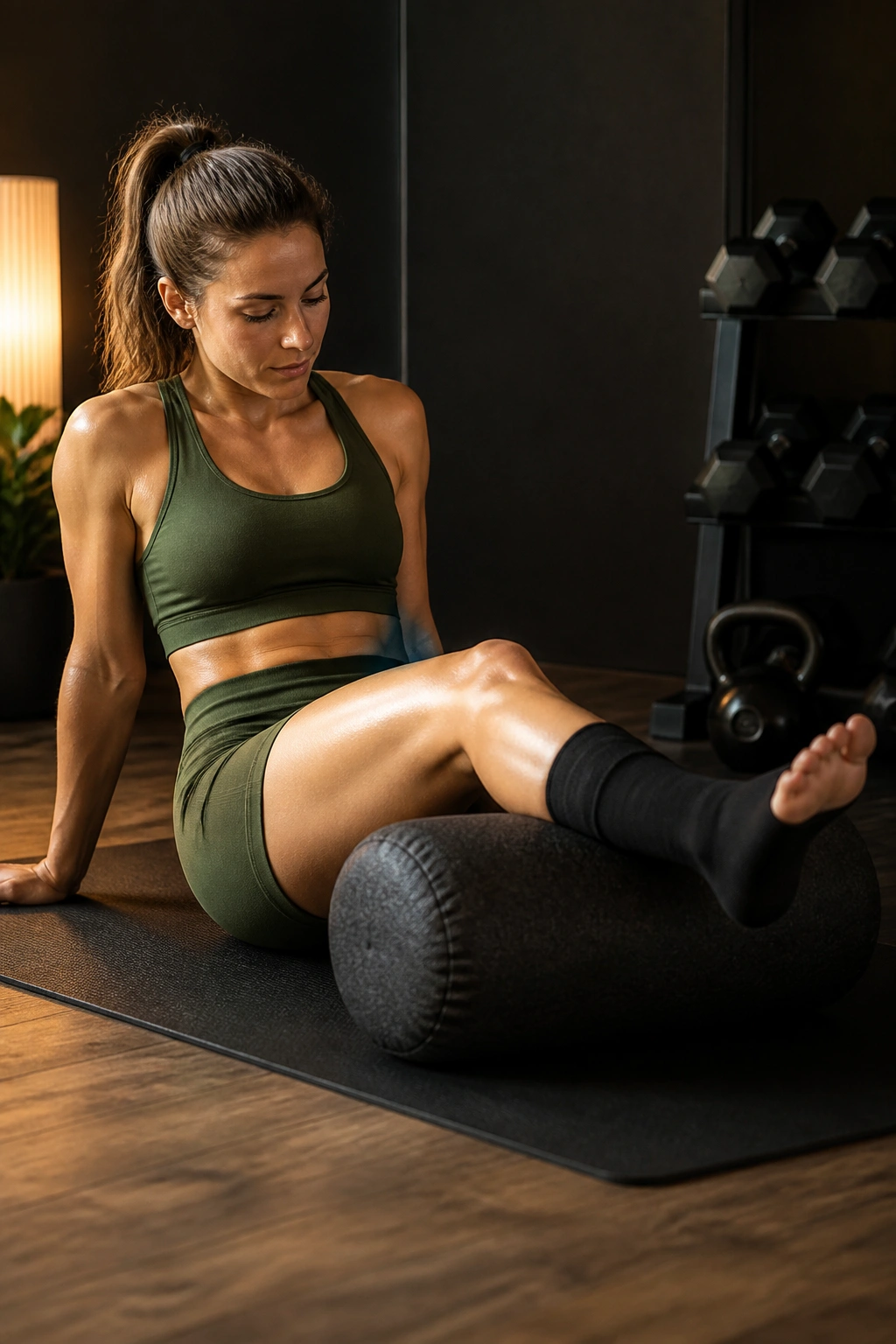
Legs are a large muscle group, and they require proper recovery to actually change shape. If you train them with high intensity, you need to eat enough protein to support repair and enough carbohydrates to fuel the glycogen depletion. Without this, you will simply burn yourself out without building the definition you want.
The Role of Active Recovery
On your days off, don’t just sit on the couch. Gentle walking or mobility work does wonders for circulation. Increased blood flow to the muscles helps clear out metabolic waste products and brings in the nutrients needed for growth. You don’t need intense cardio; you need movement that keeps the joints mobile and the blood flowing.
Sleep is your most underrated training tool. Muscle is not built in the gym; it is built while you sleep. If you are consistently training hard but sleeping five hours a night, your body will never produce the hormonal environment necessary to change its composition. Prioritize your recovery as much as you prioritize your lifting.
Final Thoughts
Building lean legs is a long-game process. It is not about finding the one “perfect” exercise, but about mastering the movements that provide the best stimulus for your specific body. Dumbbells offer the freedom to adjust, the challenge of stability, and the ability to train anywhere.
Stick to the fundamentals, manage your fatigue, and keep your intensity high. Whether you are aiming for strength, size, or definition, the path is the same: move with intention, challenge yourself consistently, and trust the process. You have the tools; all that is left is to put the work in.
