



If your leg days leave you sweaty but not much stronger, the problem usually isn’t effort. It’s selection. A lot of thigh workouts at the gym for women bounce between random machines, half-hearted lunges, and whatever squat variation feels least intimidating that day. That can burn. It does not always build much.
The thighs respond well to a smarter mix: heavy knee-dominant work, hip-dominant work, and single-leg training that exposes side-to-side weaknesses. Quads sit on the front of the thigh, hamstrings run along the back, and the adductors handle a lot more than people give them credit for. When those pieces work together, the legs look fuller, move better, and usually feel more stable on stairs, slopes, and anything that asks a knee to bend under load.
And no, this is not about chasing endless burn. That shaky, desperate feeling at the end of a set is not the goal by itself. It’s a side effect. The goal is controlled reps, enough load to matter, and exercises that actually match what your body needs.
1. Barbell Back Squat
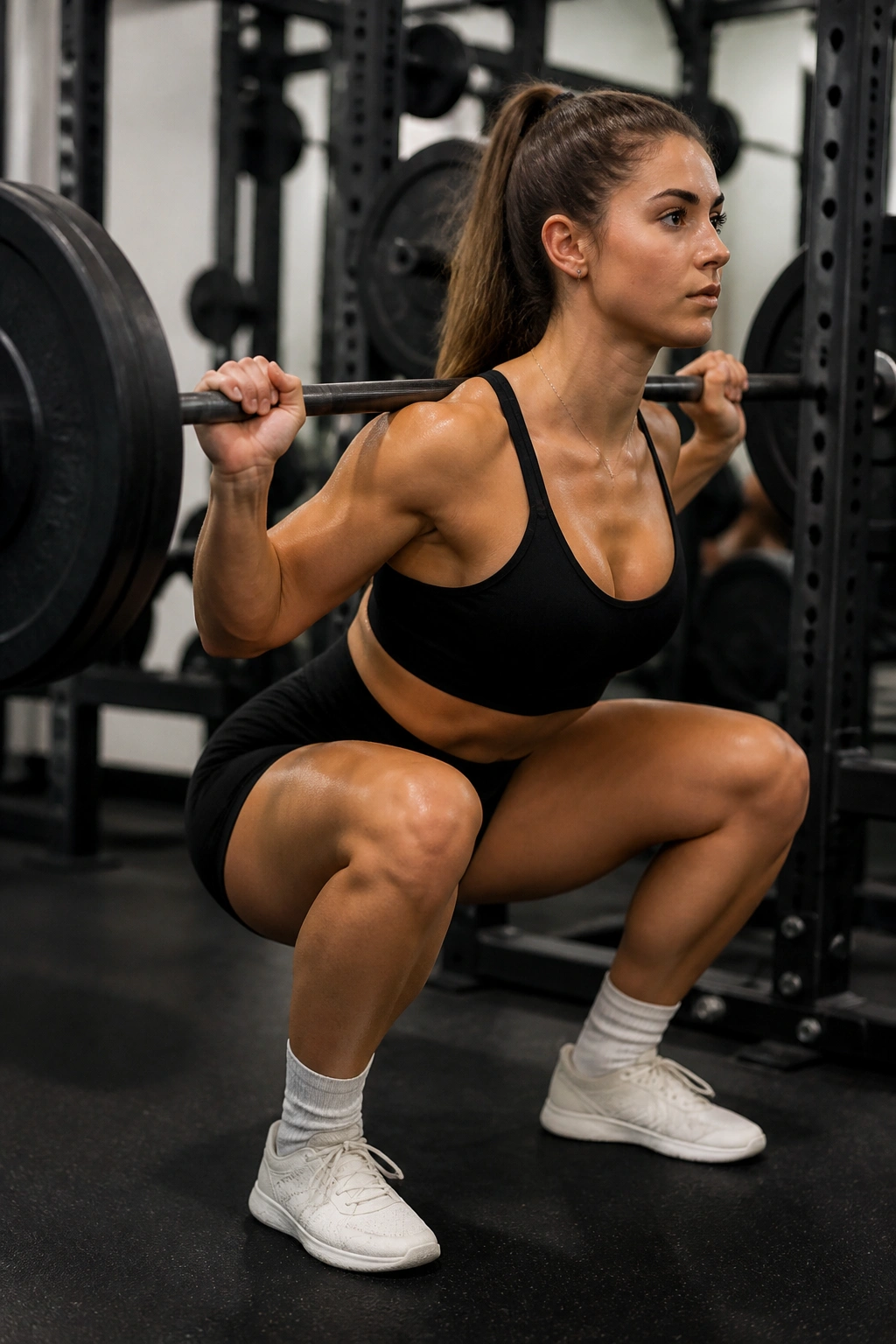
The barbell back squat is the anchor. If you want one move that trains the thighs hard and teaches the rest of your lower body to cooperate, this is it. A solid back squat hits the quads, glutes, and adductors at the same time, and the heavier loads you can use here make it one of the best builders on the list.
Why It Stays on So Many Leg Days
What makes it useful is not mystery. It’s the combination of load, range of motion, and control. You have to brace your trunk, keep your feet planted, and let the knees and hips bend together instead of cheating one or the other. That’s a lot of work for the front of the thigh.
- Best rep range: 4 to 8 reps for strength and size
- Setup cue: Feet about shoulder-width, toes slightly out
- Depth target: Thighs at least parallel if your mobility allows
- Common mistake: Collapsing at the bottom because the weight is too heavy
- Good cue: Drive the floor away and keep your chest from dropping
Use a weight that lets you own the last rep. If your hips shoot up first, the bar is probably too heavy for clean thigh work.
2. Goblet Squat
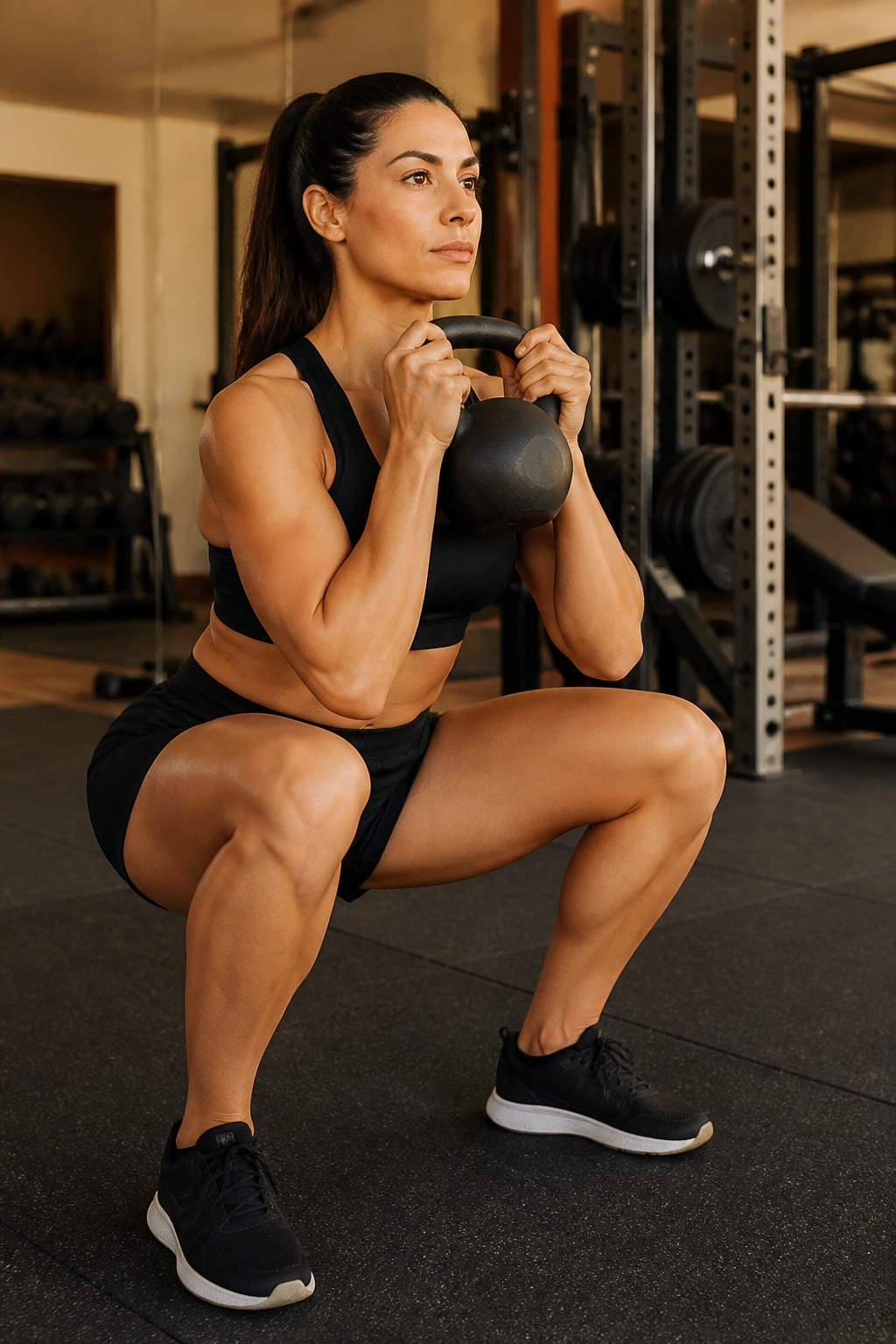
Goblet squats are the friendliest way to learn a real squat pattern. The dumbbell or kettlebell in front of your chest encourages a more upright torso, which usually shifts more work to the quads and makes depth easier to find. It’s not a beginner-only move, either. Plenty of experienced lifters keep it around because it’s clean, simple, and brutally effective with moderate weight.
The front-loaded position forces your core to work without turning the exercise into a circus act. That matters. A lot of people think their thighs are weak when the real issue is that they can’t stay stacked through the middle.
Start with 3 sets of 10 to 12 reps and a weight you can hold close to the chest without your shoulders rounding forward. Keep the elbows angled down, sit between the heels, and pause for a half-second at the bottom if you want more quad demand.
What Makes It So Useful
It’s also one of the easiest squat variations to clean up when someone’s knees cave or their heels pop up. You can usually spot the issue fast, then fix it without loading the spine heavily.
3. Front Squat
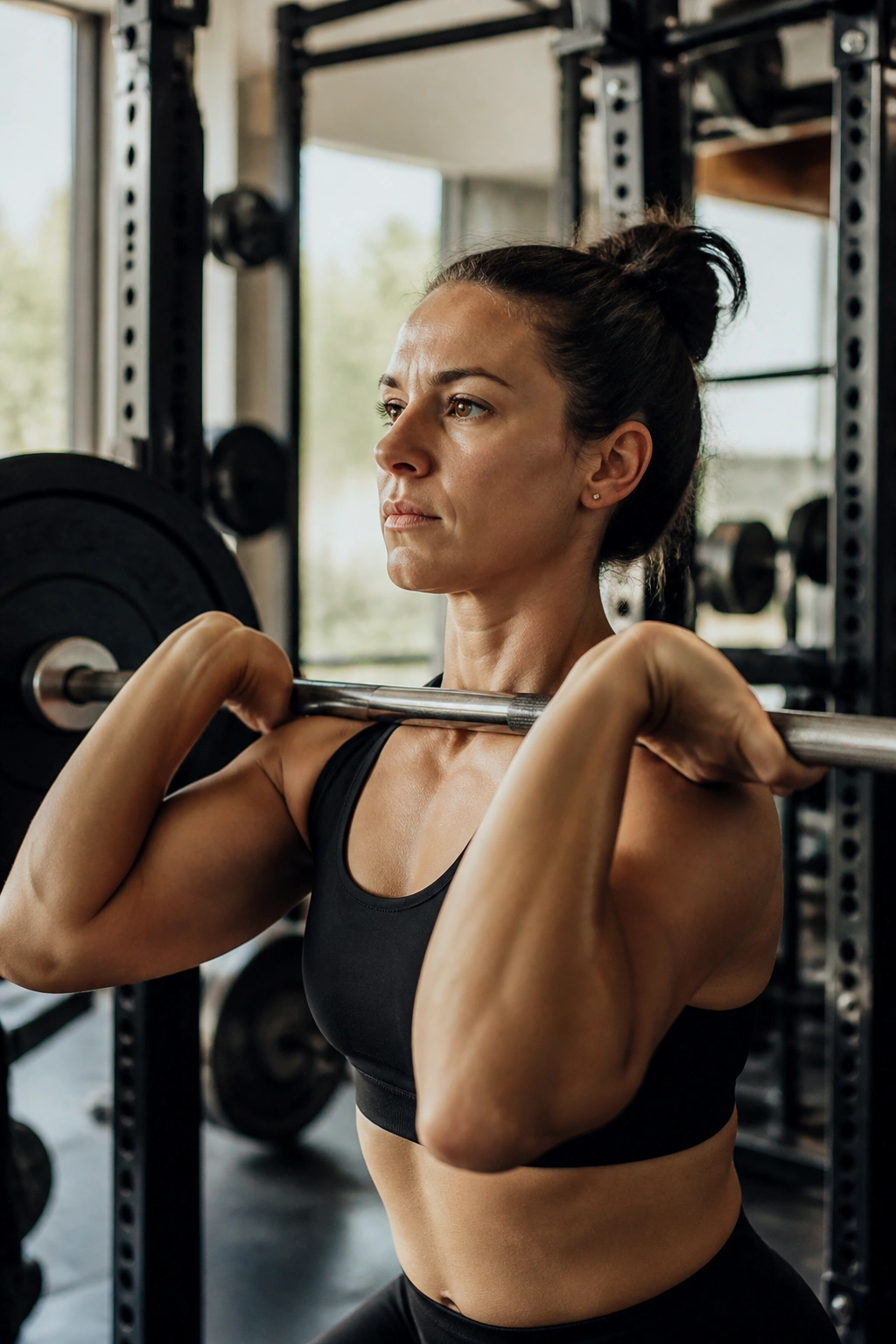
Why does the front squat feel so different? Because the bar sits in front of you, not behind you. That one change forces your torso to stay more upright, which usually means the quads have to do more of the heavy lifting. It also turns sloppy squat mechanics into something you can feel right away.
The front rack can be awkward at first. Fine. Most good things at the gym are a little awkward at first. A clean grip works well if your wrists tolerate it; crossed arms or straps looped around the bar can help if they don’t.
How to Use It
- Sets and reps: 4 sets of 4 to 6 reps
- Load: Moderate to heavy, but never sloppy
- Tempo: Lower under control for 2 seconds
- Watch for: Elbows dropping, which dumps the bar forward
- Best use: Building quad strength without turning every rep into a hip hinge
A good front squat looks tall and tidy. If it turns into a good morning with a bar on your shoulders, the weight is too much or the rack position needs work.
4. Hack Squat Machine
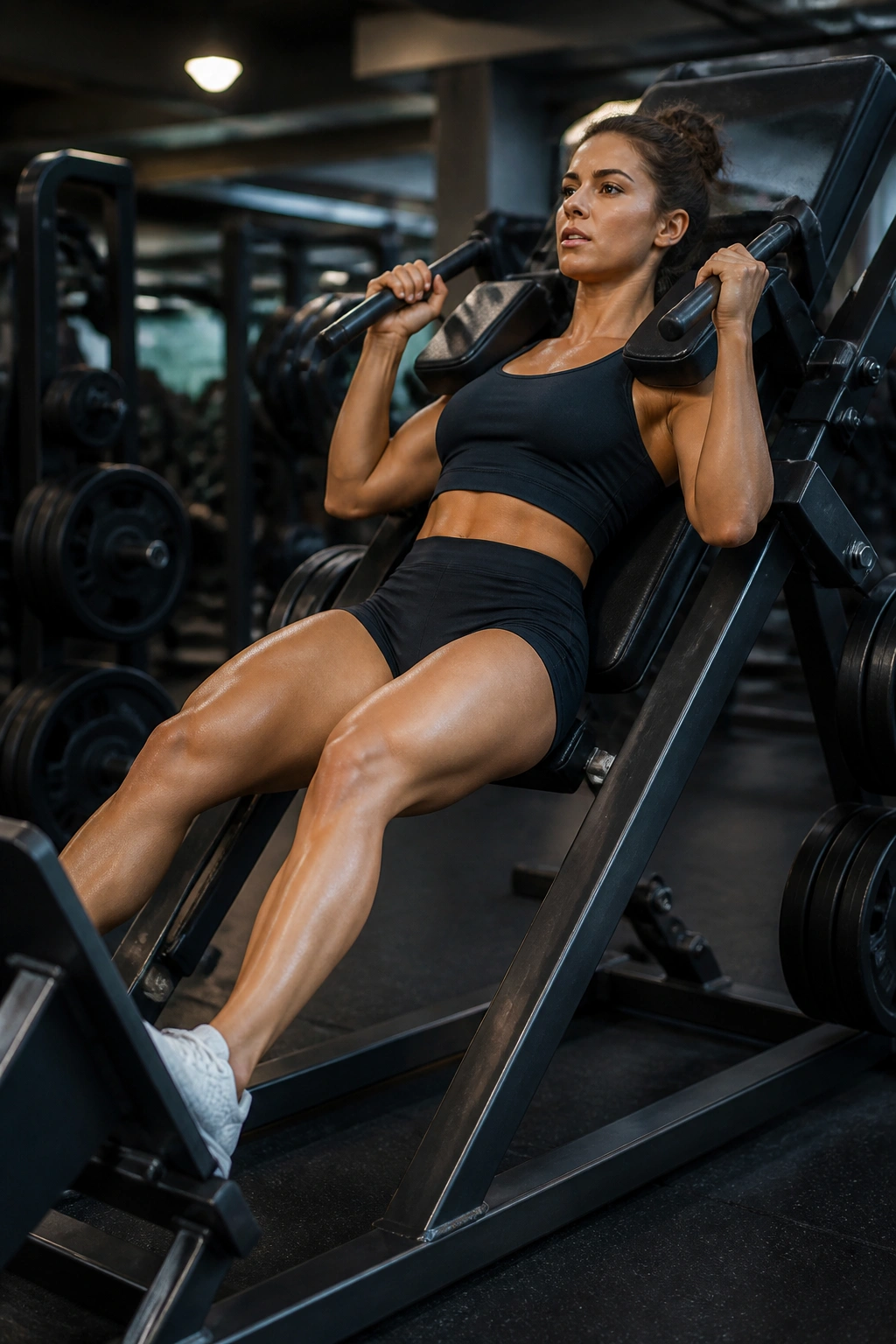
The hack squat is what I reach for when I want the thighs to do the work without asking the lower back to carry the conversation. The sled tracks along a fixed path, so you can push hard through the quads and still keep the movement clean. That makes it a smart choice on days when your energy is high but your stability is not.
The machine also lets you tweak foot placement. A lower stance tends to increase quad involvement, while a slightly higher stance shifts a bit more toward the glutes. Both can be useful. The point is control, not ego.
What to Watch For
- Keep your hips from lifting off the pad
- Lower until your thighs are deep without your pelvis tucking hard
- Don’t lock your knees out aggressively at the top
- Use 3 to 4 sets of 8 to 12 reps
- Try a slower lower, around 3 seconds down, if you want more thigh tension
The hack squat is not subtle. Your quads will know where they’ve been.
5. Leg Press
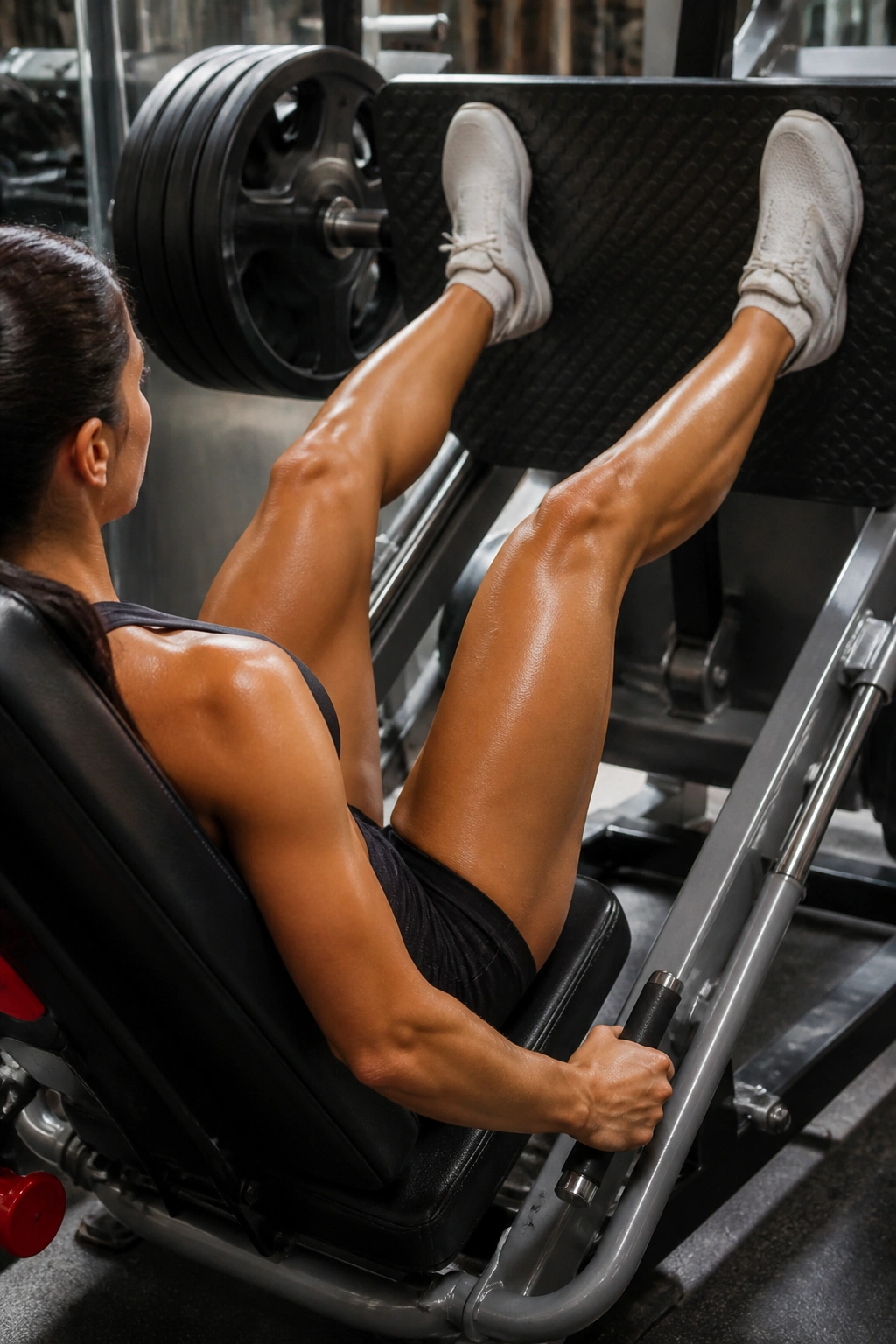
The leg press gets dismissed by people who like to make everything a debate. That’s silly. If you load it well, control the bottom, and don’t turn every rep into a shallow knee shrug, it’s one of the easiest ways to get a serious thigh stimulus without fighting balance. It also lets you push past the point where barbell form starts falling apart.
Foot position changes the whole feel. Lower on the platform usually means more quad focus. Higher can take some pressure off the knees and recruit more glute and hamstring. Neither setup is magic, but both are useful if you know what you’re aiming for.
The useful part is simple: you can do 3 sets of 10 to 15 reps with honest depth and really load the front of the thigh. Keep your lower back glued to the pad. If your hips curl up at the bottom, the range is too deep for the position you’re in.
One small thing people miss: a controlled leg press should feel heavy in the thighs, not like a spine-jarring push contest with the machine. That difference matters.
6. Bulgarian Split Squat
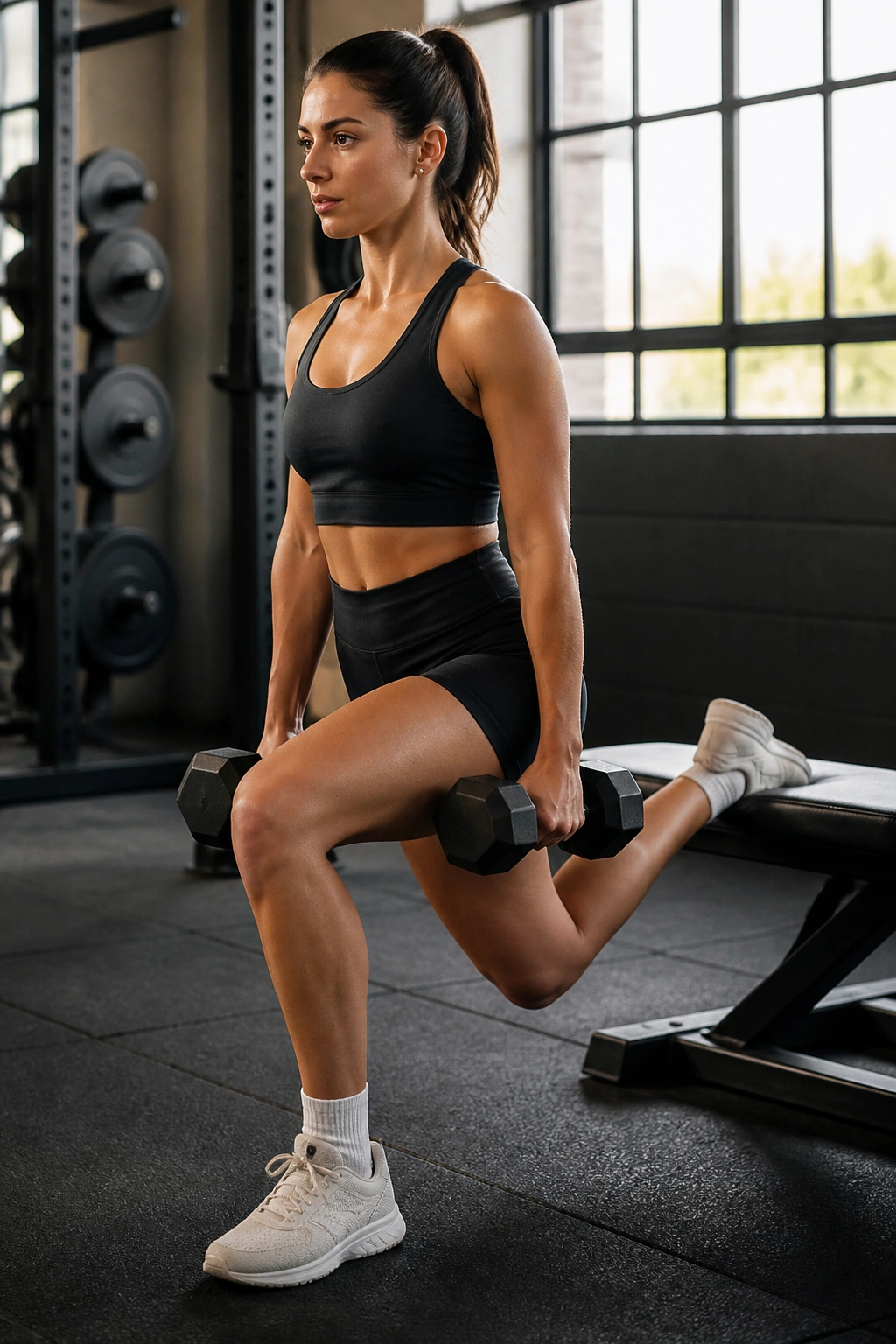
Compared with two-legged squats, the Bulgarian split squat exposes weakness fast. That’s why I like it. One leg gets loaded while the other just helps keep you upright, so the working thigh has to stabilize, lower, and drive up on its own. There’s nowhere to hide.
It also tends to light up the quads in a way many women notice right away, especially when the front foot stays planted and the torso stays fairly tall. A slightly shorter stance pushes more into the front thigh; a longer stance lets the glute help more. Choose based on what you want to feel.
Why It’s Hard in a Good Way
- Good range: 3 sets of 8 to 10 reps per side
- Balance tip: Hold a rack lightly if you wobble
- Form cue: Front knee tracks over the middle toes
- Mistake to avoid: Pushing off the back foot too much
- Best use: Fixing left-right strength gaps
This exercise can feel rude the first few times. That’s normal. It’s supposed to ask more from the thigh than a machine does.
7. Walking Lunge
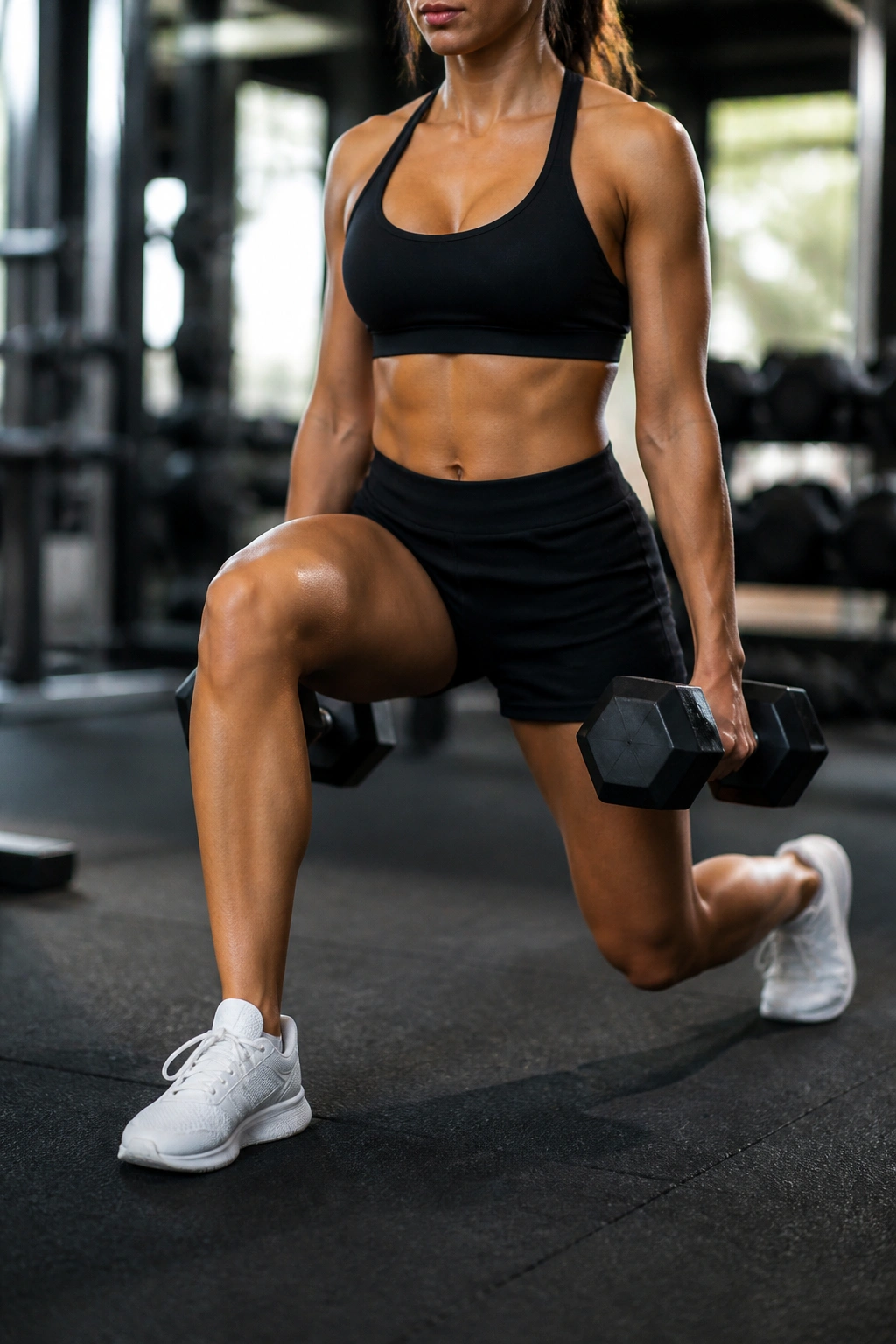
Walking lunges have a different feel from split squats because they keep you moving through space. That little bit of travel adds coordination, balance, and a long stretch through the quads and hip flexors on the back leg. They’re also one of the better thigh exercises for people who want a workout that feels athletic, not just isolated.
Take a long enough step that the front shin can stay fairly vertical while you lower. Too short and the knee slides forward more than it needs to; too long and the front glute takes over. There’s a sweet spot, and you’ll find it fast if you slow down.
How to Get the Most From Them
- Use dumbbells at your sides, not a load that makes you sway
- Try 20 total steps for 2 to 4 rounds
- Keep your torso tall, but not stiff
- Tap the back knee softly on the floor
- Stay smooth on the way up instead of bouncing
If you want a finisher that makes your legs feel like they’ve been through something, this is one of the easiest picks.
8. Reverse Lunge
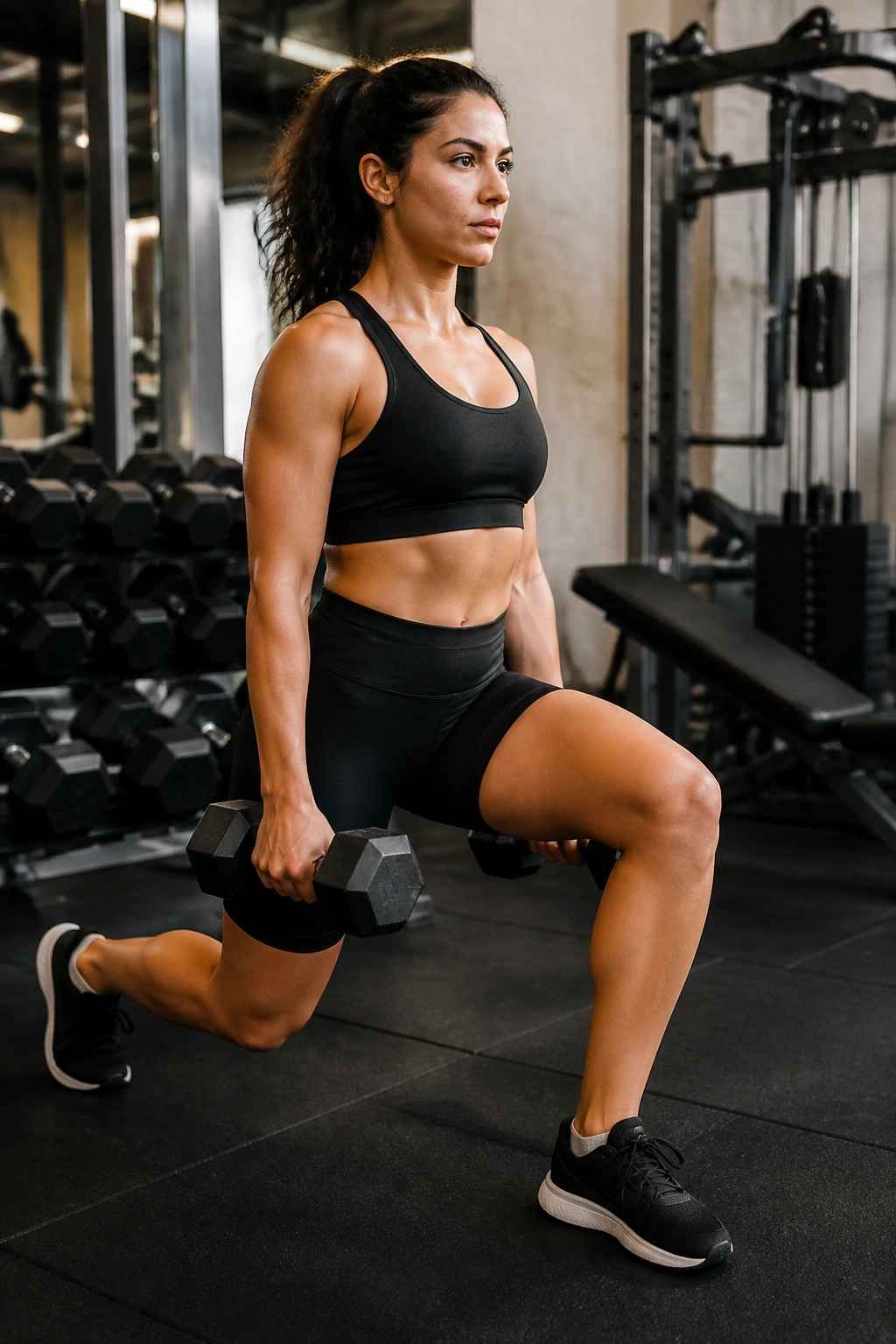
A reverse lunge is the quieter cousin of the forward lunge, and I often prefer it. Stepping backward usually feels more controlled, and many knees tolerate it better because the shin stays more vertical. That makes it a smart thigh move when you want single-leg work without the same amount of forward knee stress.
The front leg still gets hammered. Don’t let the backward step fool you. The working thigh has to absorb your body weight, control the descent, and then stand you back up while staying balanced.
Keep the step long enough to give the front leg room to bend. Use 3 sets of 8 reps per side with dumbbells, or bodyweight if you’re still cleaning up the pattern. The torso can lean forward a little, but not so much that it turns into a sloppy hip hinge.
It’s also a nice choice after a heavy squat day. Less drama. Same payoff.
9. Step-Up
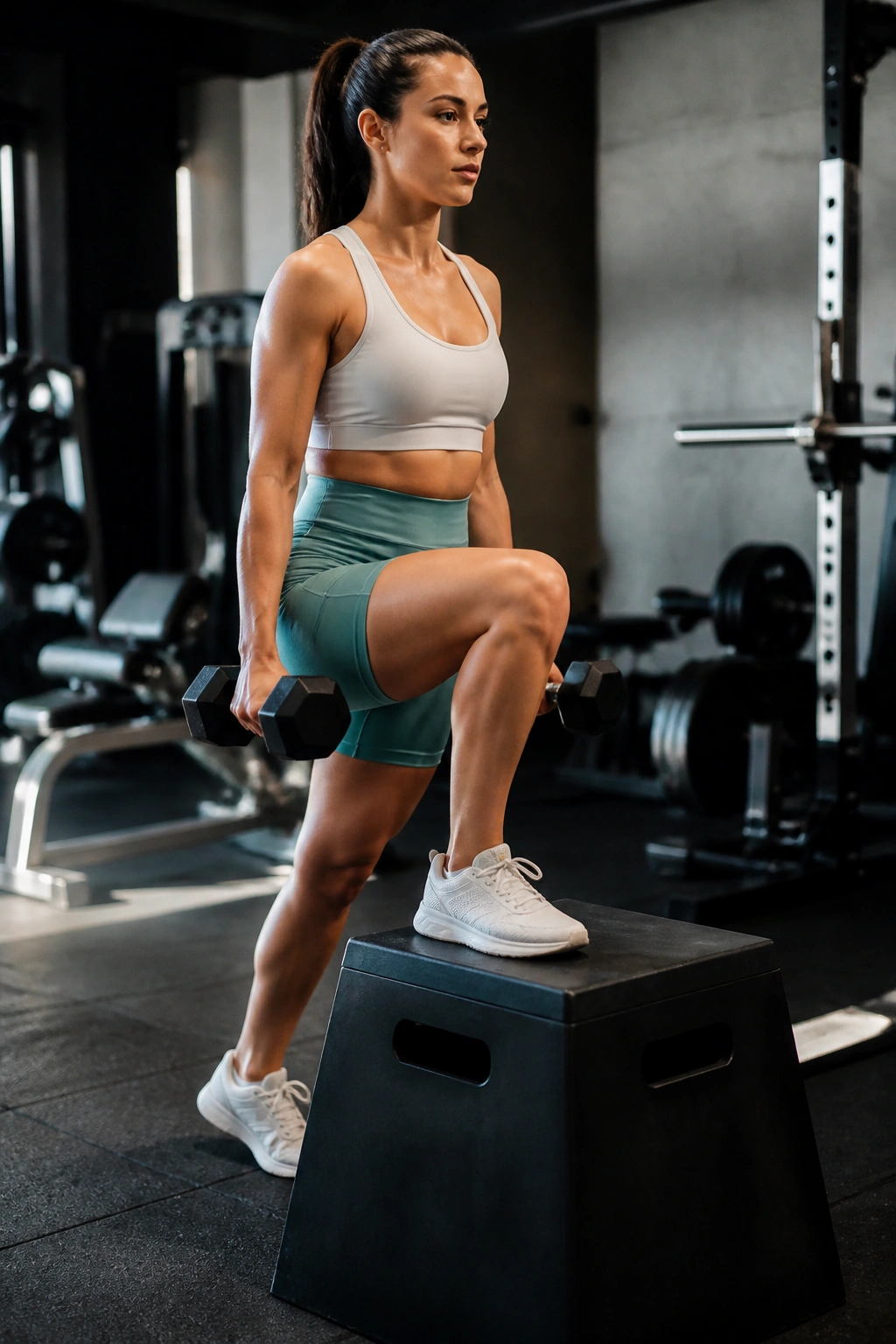
A step-up looks almost too simple. That’s the trap. Once the box gets high enough and the dumbbells get real, the thigh has to do a clean push from a dead stop, which is a lot harder than bouncing through partial reps on a machine. It also trains hip stability in a way that carries over to climbing stairs, hiking, and any sport that asks for single-leg drive.
The box height matters. Start with something around knee height or a little below if you’re learning. Too high, and people usually push off the back leg or dump their torso forward. Too low, and the exercise loses some of its bite.
How to Use It
- 3 sets of 8 to 10 reps per side
- Drive through the heel and midfoot of the working leg
- Keep the front knee from caving inward
- Avoid bouncing off the back foot
- Hold dumbbells only after bodyweight looks steady
The cleanest step-up feels like a strong one-legged squat, not a hop with furniture in the way.
10. Romanian Deadlift
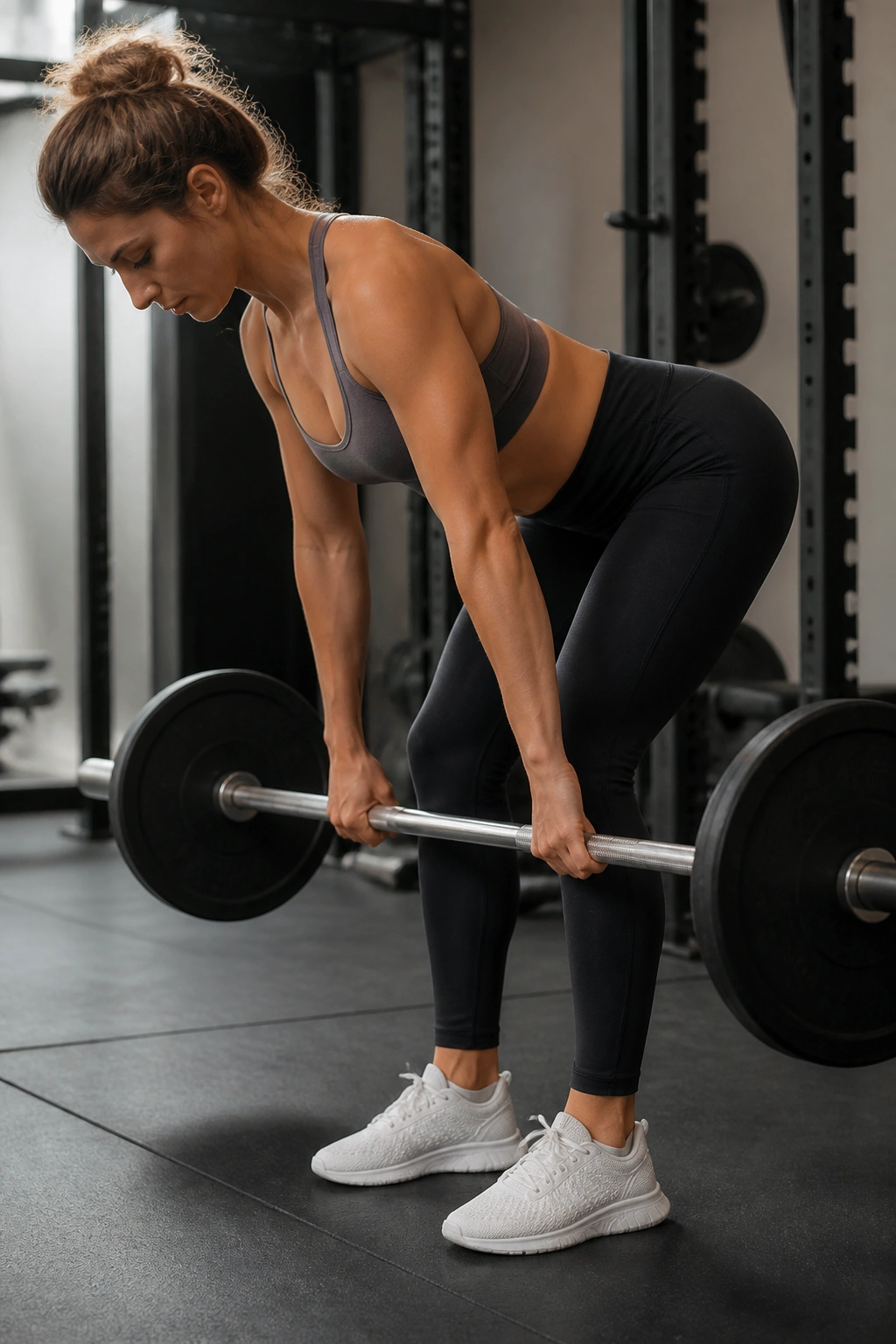
The Romanian deadlift is a hamstring builder with a reputation that still isn’t big enough. It loads the back of the thigh in a lengthened position, which is exactly where hamstrings tend to grow well when the technique is honest. You don’t need to turn it into a super-deep floor touch. You need tension and a controlled hinge.
Start with the bar close to the thighs, then push the hips back until the hamstrings feel taut. The knees stay slightly bent, but the movement is mostly at the hips. If the back rounds or the bar drifts away from you, the set is over.
What the Movement Should Feel Like
- Sets and reps: 4 sets of 6 to 10 reps
- Eccentric: Lower for 2 to 3 seconds
- Bar path: Keep it sliding down the legs
- Stop point: When the spine wants to move
- Common mistake: Squatting the weight down instead of hinging
This one matters because strong thighs are not just front-thigh thighs. The back of the leg pulls a lot of weight in real life.
11. Seated Leg Curl
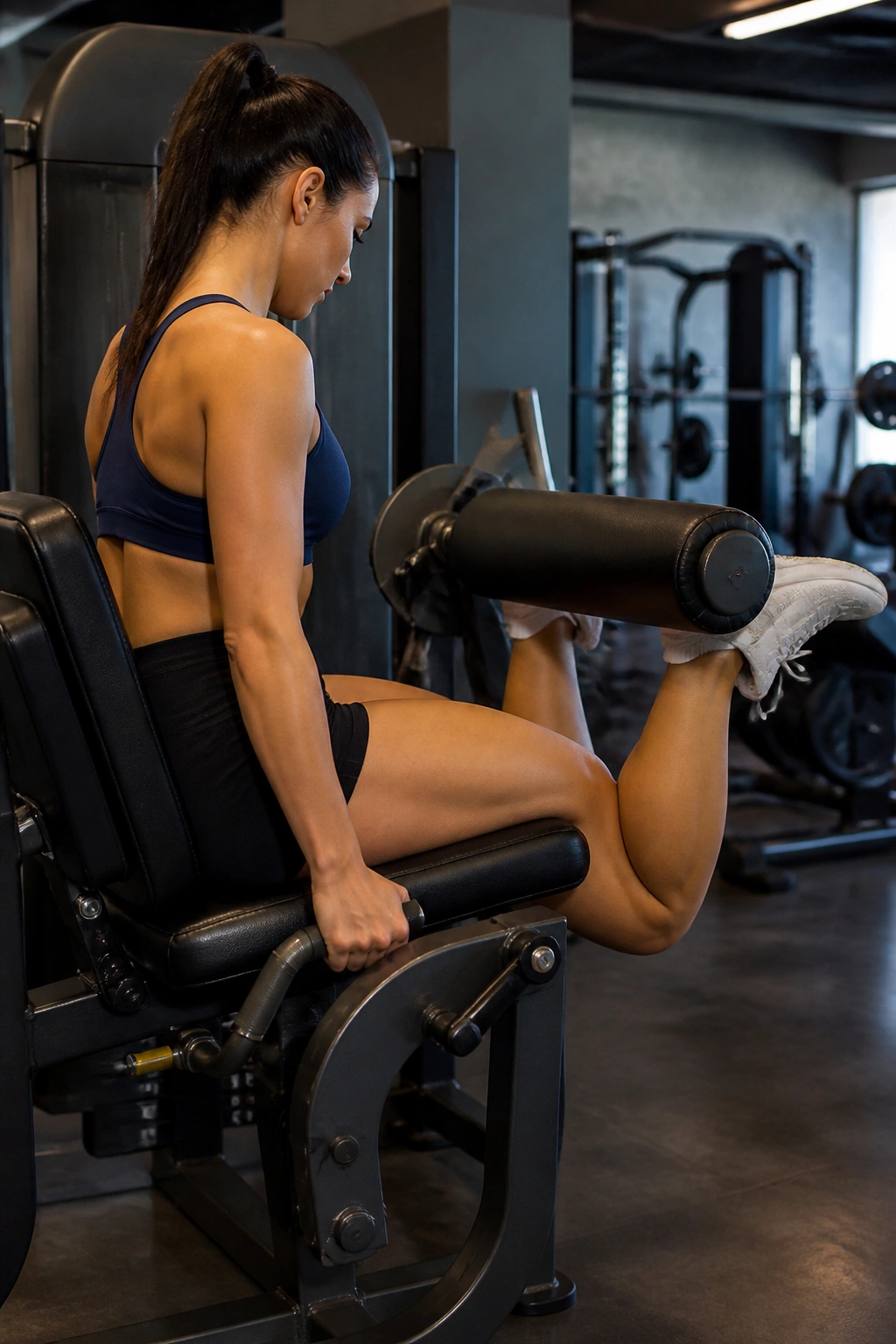
The seated leg curl is one of those machines that looks plain until you do it correctly. Then it starts talking. Because your hips are flexed while the knees bend, the hamstrings work from a longer position than they do in some other curl setups. That can make the exercise feel deeper and harder to fake.
Pad alignment matters a lot here. The knee should line up with the machine’s pivot point, and the shin pad needs to sit just above the heels, not halfway up the calf. If the setup is off, you’ll feel it in the wrong place and waste the set.
Use a full controlled curl, then let the weight return without slamming the stack. 3 sets of 10 to 15 reps is a solid place to live. Hold the squeeze for a second at the bottom if you want the hamstrings to stop pretending they’re on vacation.
This is not flashy. It works anyway.
12. Lying Leg Curl
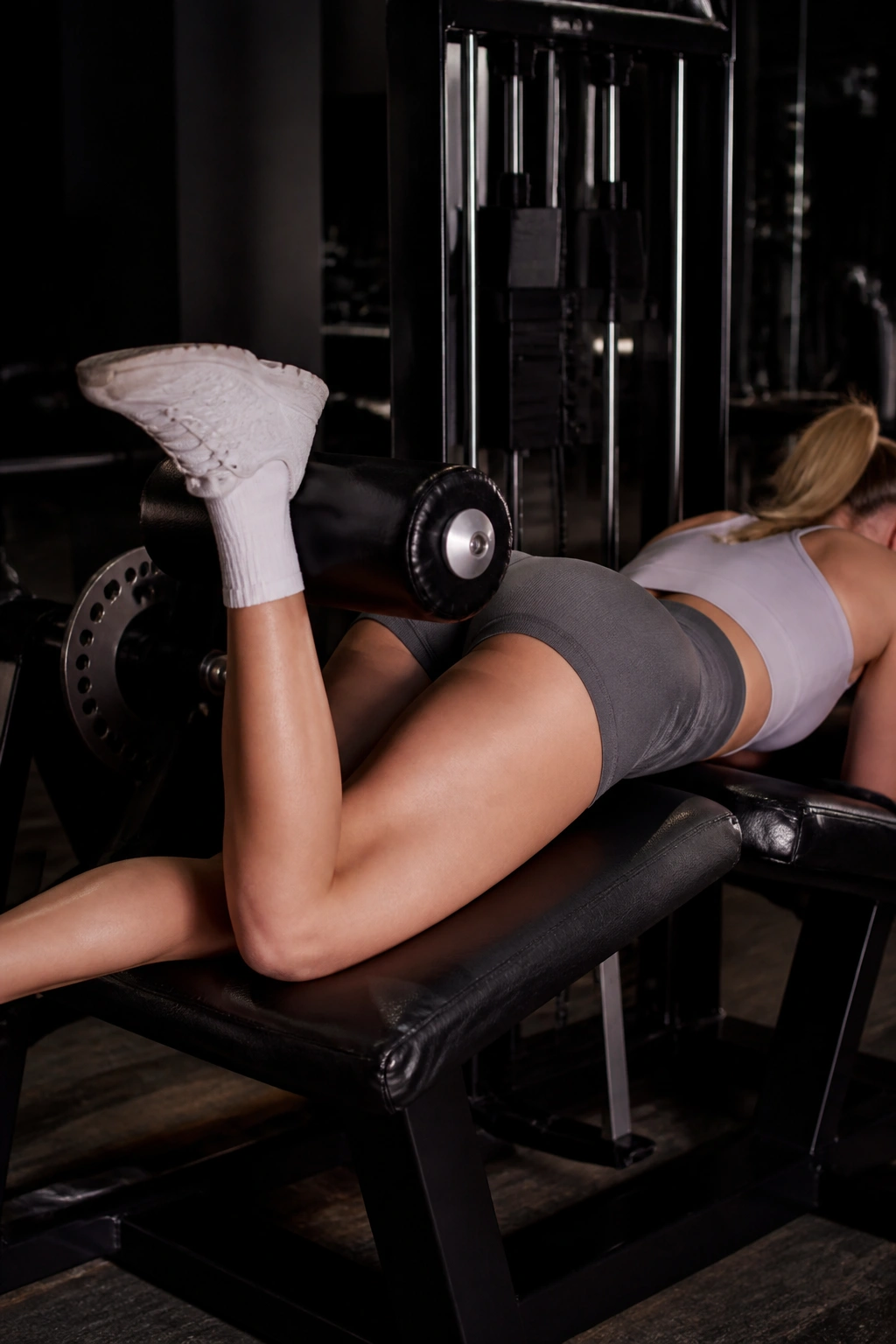
The lying leg curl is a little more old-school, and I like it for a different reason than the seated version. With the body face down and the hips more extended, some people feel a stronger contraction near the top of the rep. Others simply find it easier to control. Either way, it gives the hamstrings another angle of work, which is useful when you train legs more than once a week.
Compare it with the seated curl and you’ll notice the change fast. The seated version tends to stretch the hamstrings more. The lying version can feel a touch shorter and tighter, but that doesn’t make it worse. It just gives you variety without changing the exercise family.
A good prescription is 3 sets of 8 to 12 reps with a slow lower. Don’t crank your hips off the bench to cheat the top position. That turns a hamstring exercise into a lower-back shrug, and nobody needs that.
If your gym has both curl machines, use both over time. Your hamstrings won’t complain.
13. Leg Extension
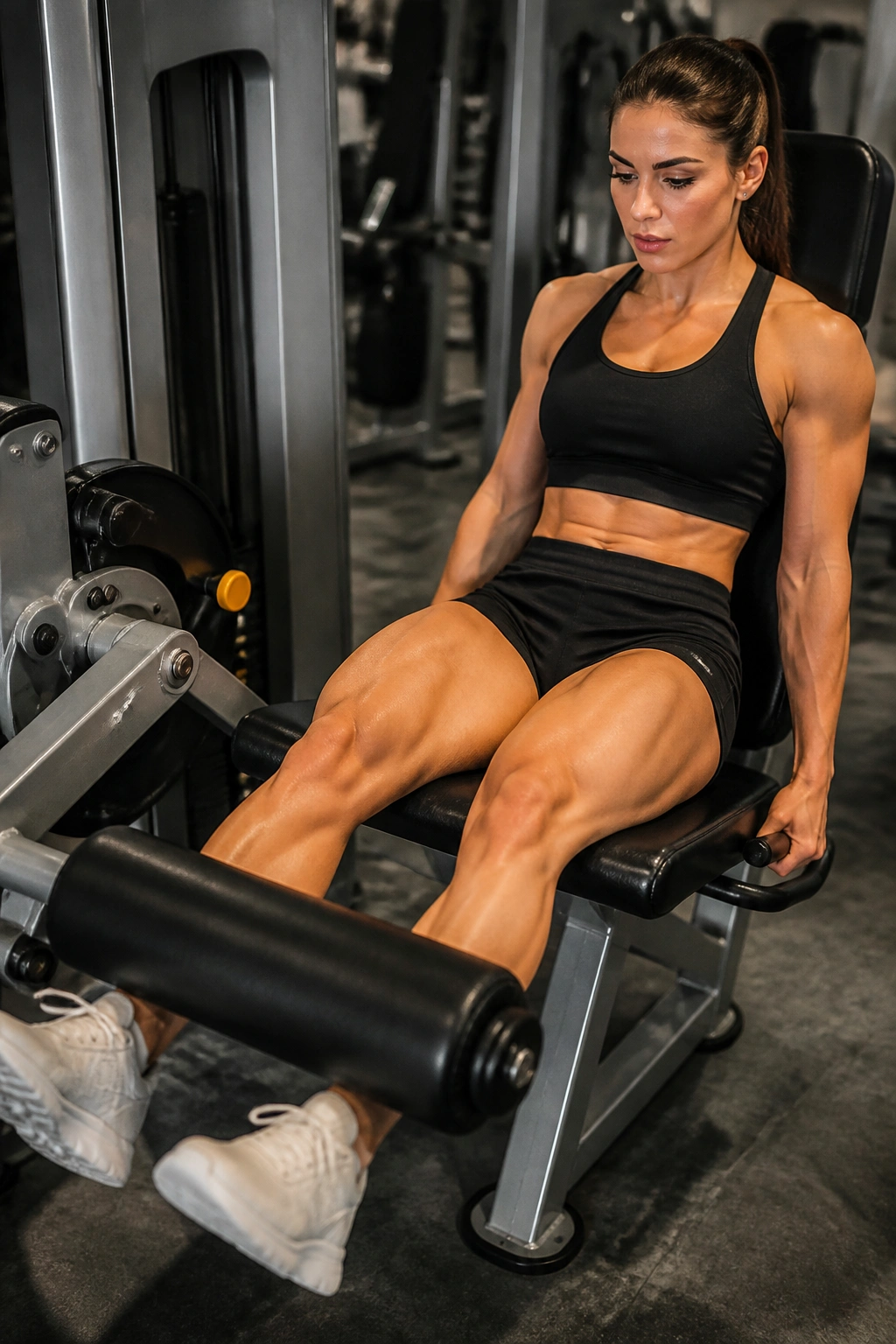
The leg extension is the most direct quad exercise on the floor. No guesswork. No hip hinge. Just knee extension and a clear burn across the front of the thigh. That makes it useful both as a main accessory lift and as a finisher after squats or presses, especially when you want the quads to do extra work without more spinal loading.
How to Make It Count
- 3 sets of 12 to 15 reps
- Pause for 1 second at the top
- Lower under control for 2 to 3 seconds
- Adjust the seat so the knee lines up with the pivot
- Stop short of hard locking if your knees hate it
A lot of people swing through this machine and call it done. That misses the point. The muscle responds well when you keep the pad moving smoothly, use a full range you can own, and don’t bounce off the stack.
One Good Use Case
If your squats are already heavy but your quads still lag, this is a blunt little fix. Not glamorous. Effective.
14. Sumo Squat
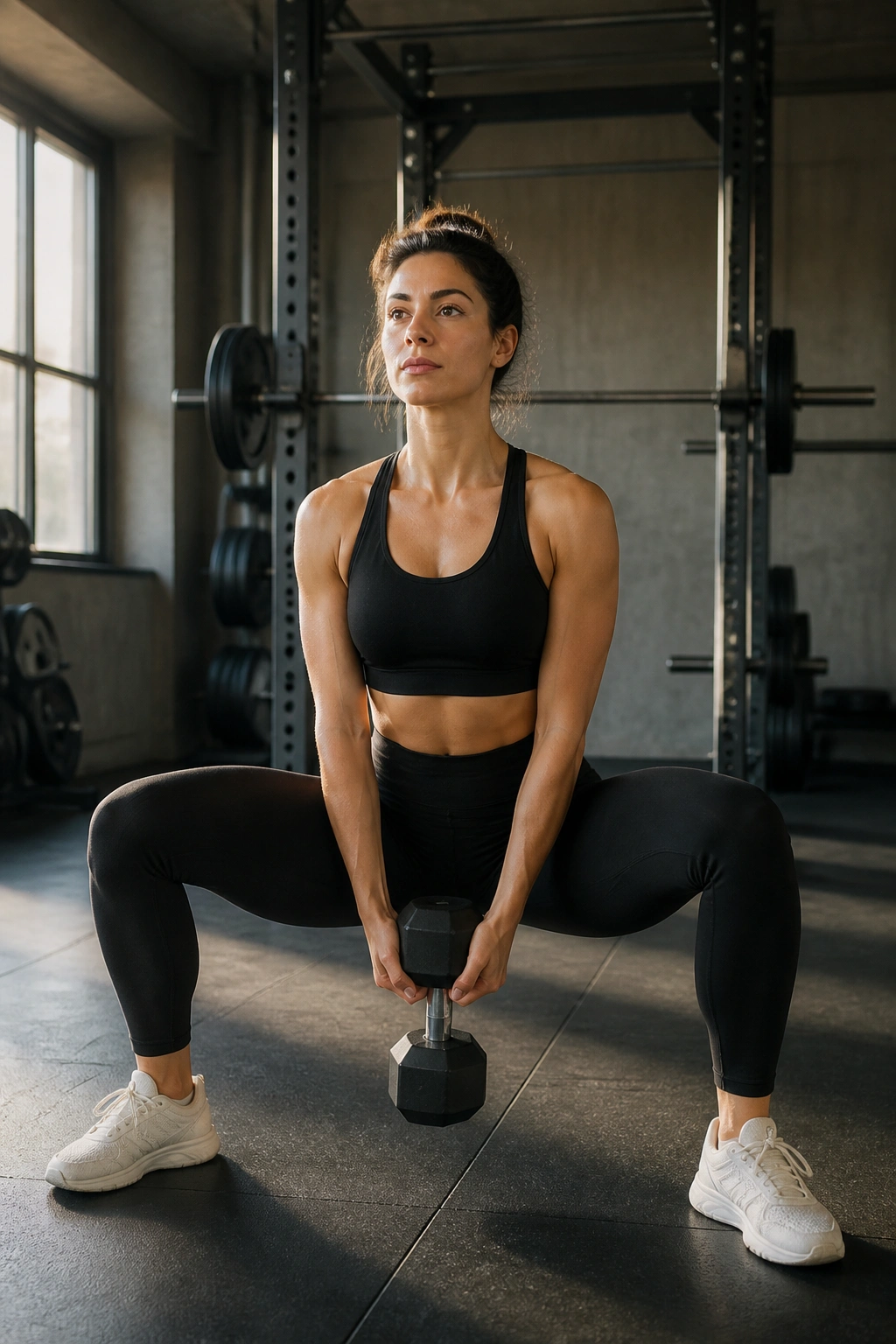
A sumo squat changes the angle enough to shift more attention to the inner thigh and the glutes. The wide stance and turned-out toes let the adductors help drive the movement, which is why it often feels different from a regular squat almost immediately. You can use a dumbbell, kettlebell, or barbell, but the stance is the main event.
The key is not just going wide for the sake of being wide. You need enough hip mobility to keep the knees tracking over the toes without the lower back doing all the work. If the stance is so wide that your depth disappears, narrow it a bit.
How to Make It Hit the Right Place
- Keep your feet wider than shoulder width
- Turn toes out around 30 to 45 degrees
- Hold the weight between the legs
- Sit down between the thighs, not forward onto the knees
- Use 3 sets of 8 to 12 reps
People often treat this like a novelty move. It’s not. Done well, it gives the inner thigh a legitimate job.
15. Sumo Deadlift
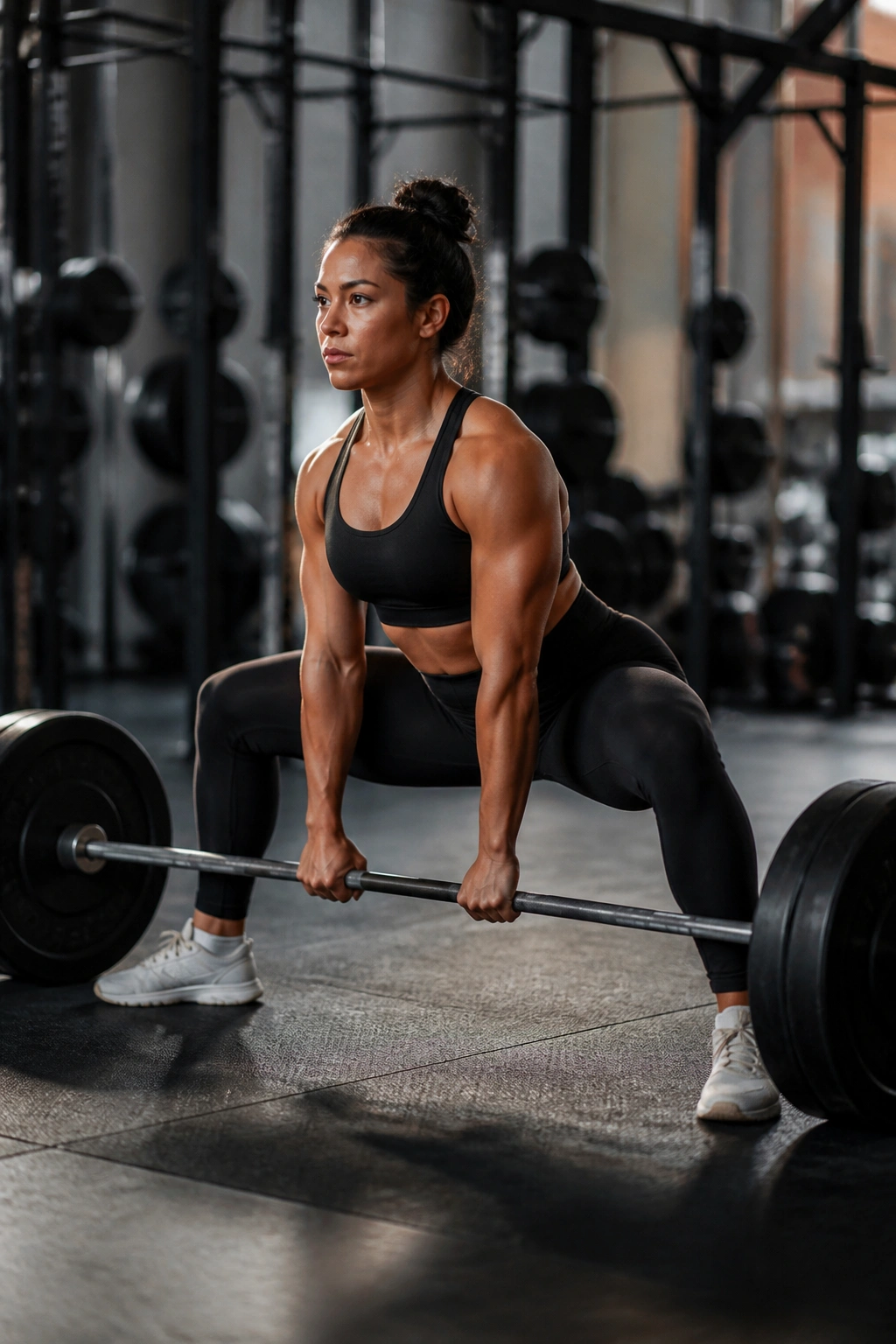
The sumo deadlift looks like a power move, and it is, but it also earns its place on a thigh day because the stance asks the adductors and quads to contribute more than a conventional deadlift often does. The bar starts lower between the legs, the knees track out, and the hips stay closer to the bar. That changes the leverage in a useful way.
This is not a rushed lift. Set your feet, brace hard, and pull the slack out of the bar before it leaves the floor. If the bar jerks or your hips shoot up first, the setup needs work.
What Good Reps Look Like
- 4 sets of 5 to 8 reps
- Chest up, back tight, eyes forward
- Push the floor apart as you lift
- Keep the bar close to the shins
- Lock out by standing tall, not leaning back
A sumo deadlift is one of those lifts that rewards patience. Rush the start, and it punishes you. Respect the setup, and it gives a lot back.
16. Adductor Machine
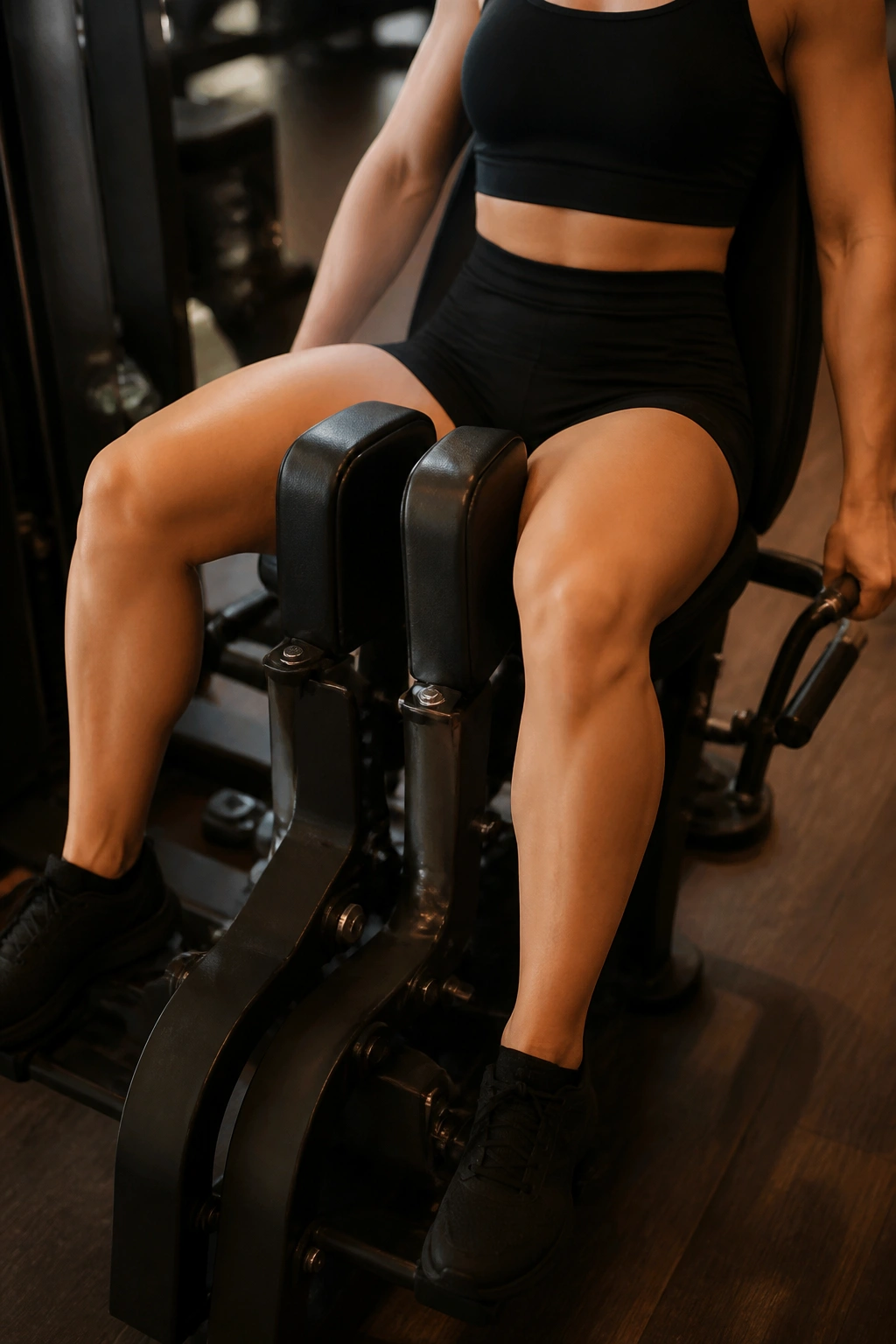
The adductor machine is not a joke, and it’s not just for finishing a workout when you’ve run out of ideas. The inner thigh muscles get a real workload here, especially if you use a full, controlled closing motion and avoid slamming the pads together. That matters more than people think. The adductors help stabilize the pelvis and knees, so a stronger inner thigh can carry over to squats, lunges, and side-to-side movement.
Set the pads so the start position is comfortable but not so open that your hips twist. Lean back a little or stay upright, depending on the machine, then bring the legs together with control. Pause for a second at the peak.
A good dose is 3 sets of 12 to 20 reps. Higher reps work well here because the muscle is small enough to fatigue fast, and the machine makes it easy to keep tension steady.
It burns. That’s the point. You’ll know it’s working when walking down the stairs starts feeling oddly honest.
17. Cable Hip Adduction
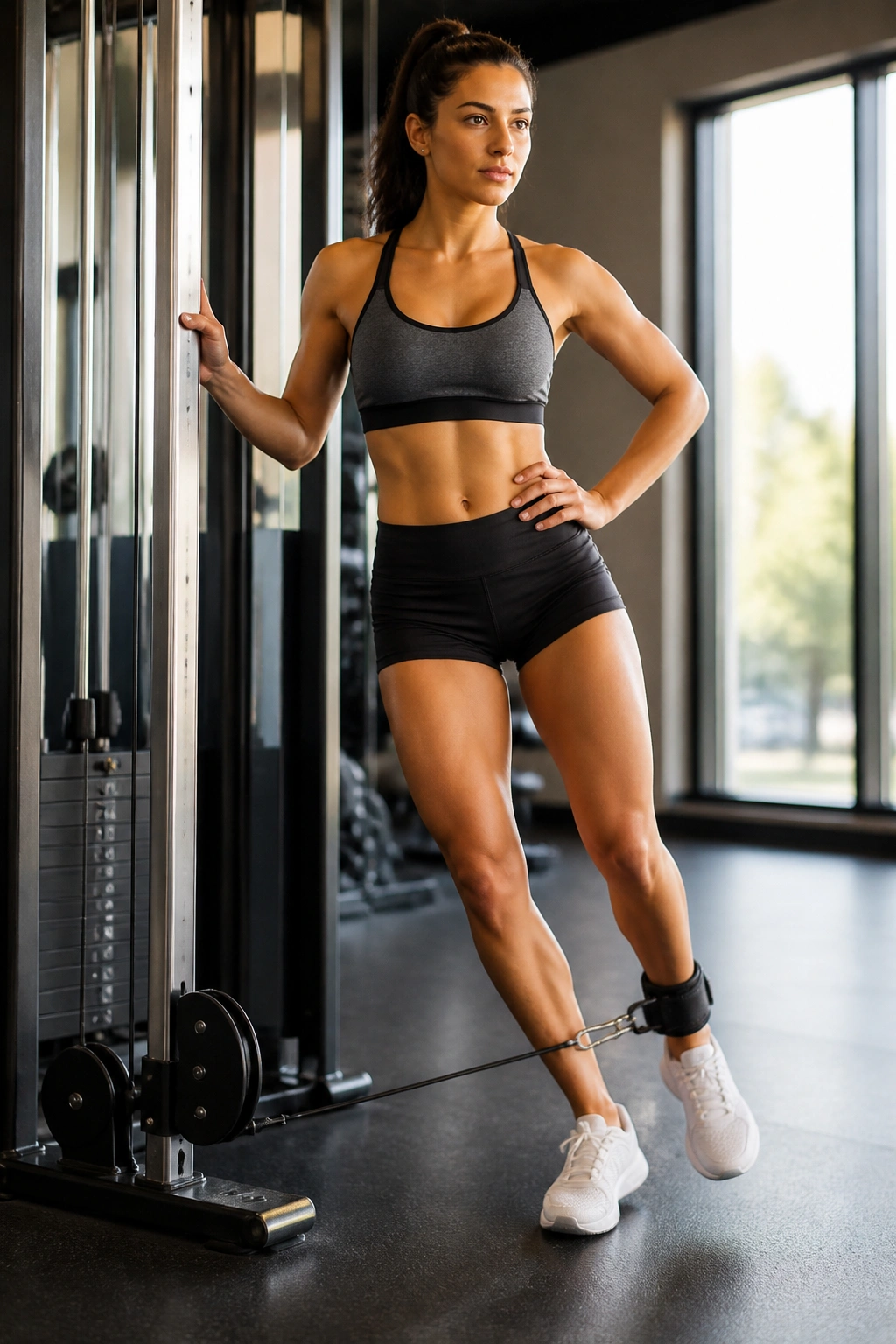
Compared with the machine, cable hip adduction asks for more control and less comfort. One leg moves at a time, so the inner thigh has to work without the support of the other side. That can be excellent if you want to clean up imbalances or just prefer standing work over sitting in a machine.
Attach the ankle cuff low on the cable, stand tall, and bring the working leg across the body in a slow arc. Don’t swing. Don’t lean so far that your torso becomes part of the exercise. The movement should come from the hip, not momentum.
Best Way to Use It
- 2 to 3 sets of 12 to 15 reps per side
- Keep a light hold on the machine for balance
- Move slowly through the return
- Use a small range if you feel your lower back twisting
- Great as a warm-up or finisher
This one is especially useful if the adductor machine feels too restrictive or your gym is crowded and you want something you can slip into a corner.
18. Sissy Squat
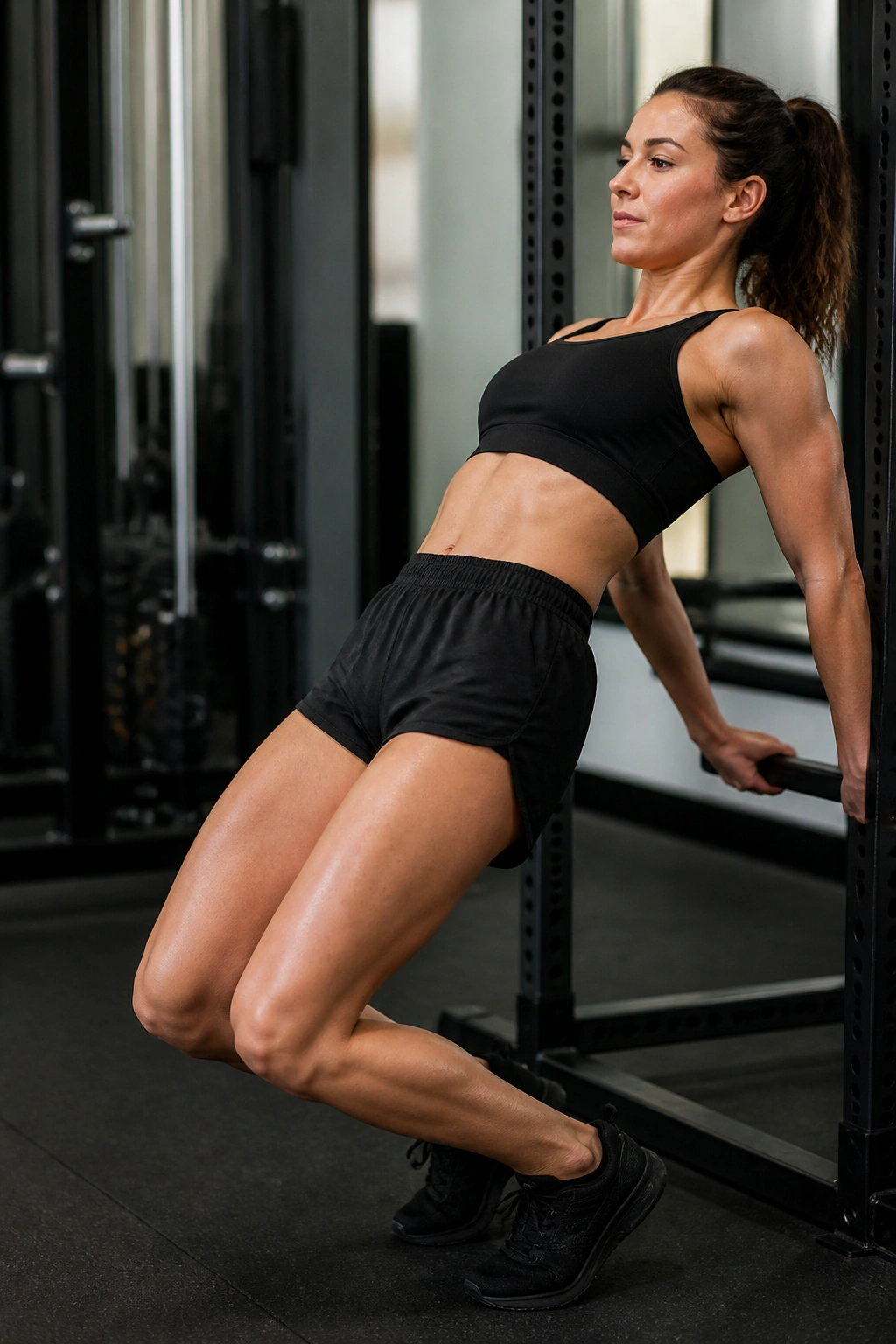
The sissy squat looks strange. It also lights the quads up like very few other bodyweight or machine-free moves can. The knees travel forward while the torso leans back, which creates a huge demand on the front of the thigh. That same setup means you need to be careful and controlled. This is not the place to test bravado.
Use a support bar, rack, or wall if you’re learning. Start with a short range and focus on balance before chasing depth. If your knees dislike the movement, skip it or keep it shallow. I’m not interested in macho nonsense here. The exercise is useful only if you can do it cleanly.
What It’s Good For
- 2 to 3 sets of 8 to 12 reps
- Excellent quad finisher
- Works well after presses or squats
- Better with assistance at first
- Stop if the knees feel sharp, not just tired
There’s a fine line between productive quad pain and bad joint pain. Learn that line.
19. Smith Machine Split Squat
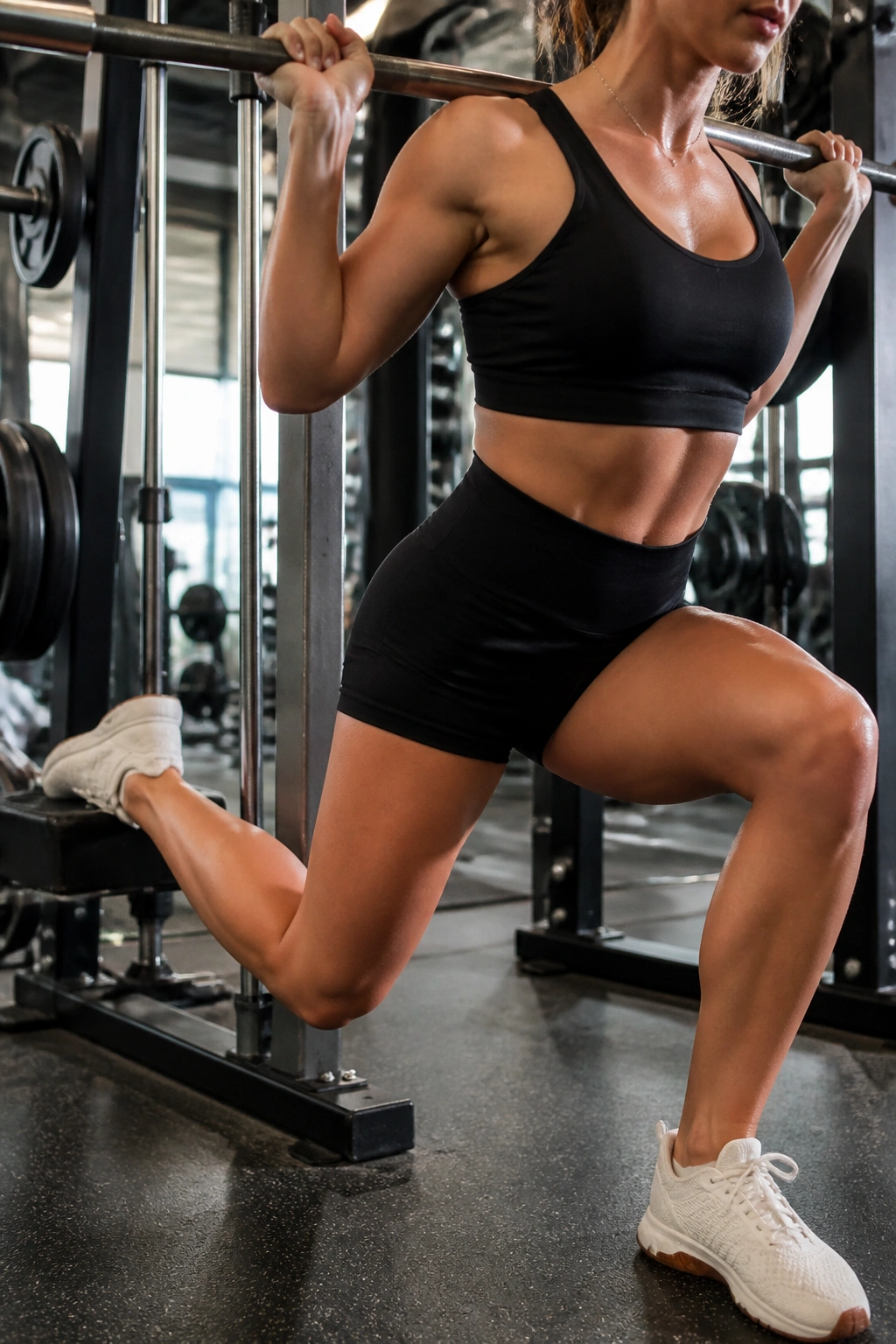
The Smith machine split squat is a nice bridge between free-weight split squats and the locked-in feel of a machine. Because the bar path is fixed, you can load the thighs hard without having to babysit balance the whole time. That often makes it easier to keep the front leg doing the work and to push close to failure in a controlled way.
Set the front foot where the knee can bend deeply without the heel lifting. The back foot is just a kickstand. Lower until the front thigh gets deep tension, then drive up through the full foot. If you’re feeling this mostly in the back leg, your stance is off.
Use 3 sets of 8 to 10 reps per side and keep the torso slightly forward if that helps the front thigh stay loaded. The fixed track can feel odd the first time, but it gets easier fast. And heavy.
This is one of those lifts that looks simple on paper and then leaves you staring at the floor after set two.
20. Cossack Squat
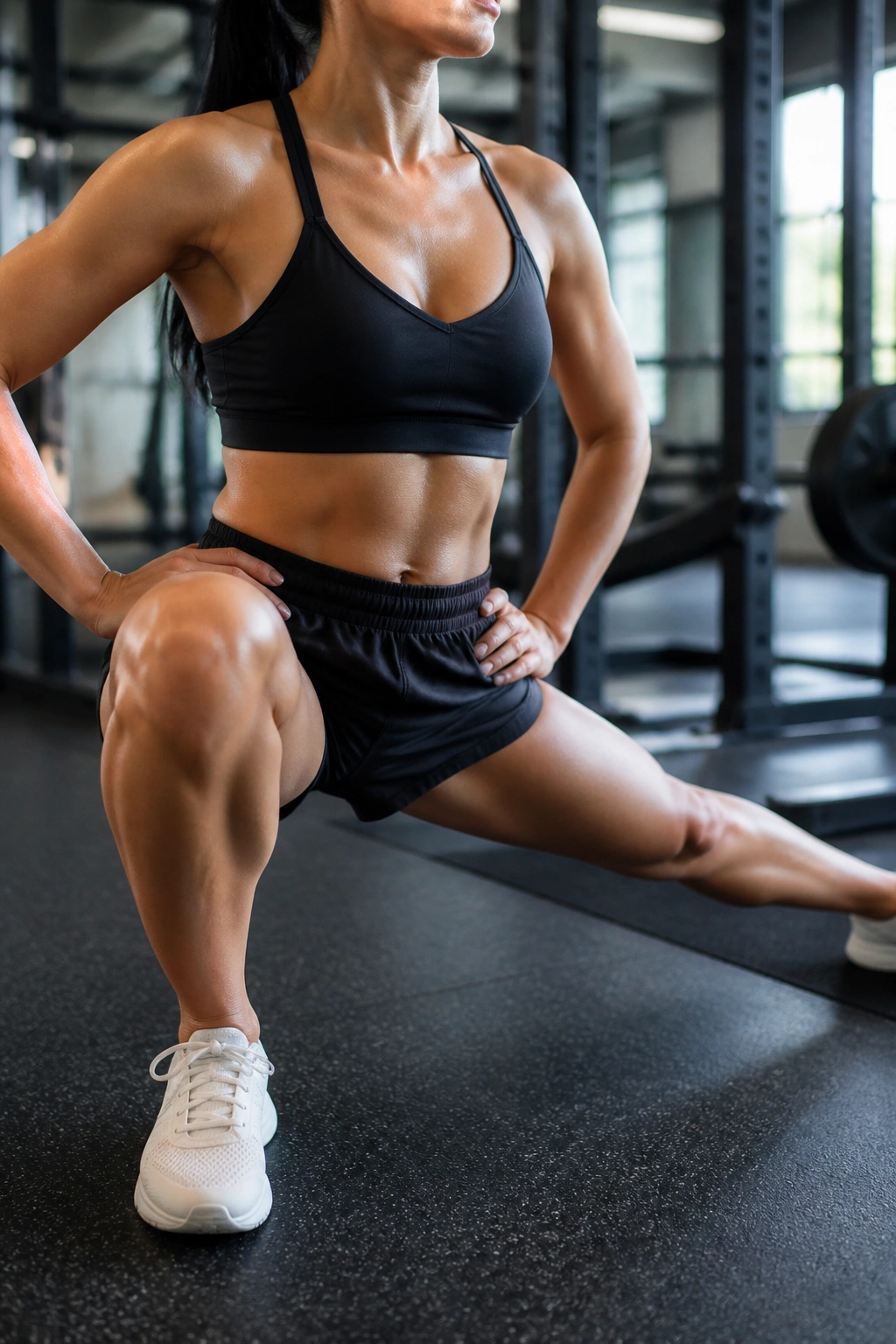
The Cossack squat is the move I like when the inner thigh feels neglected and the hips need a wake-up call. You shift to one side, bend that knee deeply, and keep the other leg straight with the foot planted or lightly turned up. The adductors, glutes, and quads all show up, though the inner thigh gets the loudest demand if you keep the movement honest.
Start with bodyweight and hold onto a rack if balance is shaky. Sit back into the working side, keep the non-working foot grounded, and don’t force depth if your hips are tight. A clean shallow rep beats a collapsed deep one every time.
How to Get More Out of It
- Use 2 to 3 sets of 6 to 8 reps per side
- Keep the chest tall
- Press the heel of the bent leg into the floor
- Move slow enough to own the bottom
- Add a dumbbell only after bodyweight feels steady
It’s a good reminder that thigh training is not only about straight-up and straight-down lifting. Side-to-side strength matters too, and most leg days barely touch it.
