



A good cross fitness workout at the gym does not need a parade of machines or a ninety-minute block of free time. Give me a rower, a barbell, a sled, or even one pair of dumbbells, and I can build something that hits legs, lungs, and grip in one clean shot.
That mix matters because boring cardio and endless isolation work leave gaps. You can squat hard all day and still get winded after a few stairs. Or you can chase calories on a bike and never really train the kind of strength that shows up when you carry groceries, move furniture, or haul your own body up a hill.
The best gym sessions have a simple rhythm: a movement for power, a movement for breathing, a movement for control. Keep the loads sane and the transitions tight, and the workout starts feeling less like random sweat and more like a real test.
A few of the workouts below are short and sharp. A few are slower, heavier, and a little meaner in the legs. Pick the one that matches the equipment in front of you and the kind of tired you want to be.
1. Row, Squat, and Press Ladder for Cross Fitness

A row-squat-press ladder is one of those setups that looks plain on paper and then hits harder than expected. The row gets your breathing up fast, the squat loads the legs, and the press keeps your shoulders honest.
How to run it
Do 5 rounds of:
- 250 meters row
- 8 front squats
- 8 push presses
- Rest 60 seconds between rounds
Use a barbell that feels crisp for all 8 reps, not heroic for round one and ugly by round four. The sweet spot is a load you could press overhead with clean speed when tired.
Best for: people who want a full-body workout that still feels organized.
Scale it: swap front squats for goblet squats and push press for dumbbell push press if your technique gets messy.
The reason this one works is simple. Your legs recover while your upper body works, and your upper body recovers while your lungs keep shouting. That little rotation keeps the session moving without turning it into chaos.
2. Dumbbell EMOM Power Set

Dumbbells are a gift when the gym is crowded. They’re easy to grab, easy to reset, and they force each side of the body to do its share of the work.
Run a 16-minute EMOM — every minute on the minute — with four repeating stations:
- Minute 1: 10 dumbbell thrusters
- Minute 2: 12 alternating reverse lunges
- Minute 3: 10 bent-over rows
- Minute 4: 8 burpees
Repeat the four-minute block four times. If you finish a station early, rest for the remainder of the minute. If you finish with only 5 seconds left, the load is too heavy.
Thrusters make the workout expensive fast, and that’s the point. The lungs go first, then the shoulders, then the legs start bargaining. Don’t let the weights drift out in front of you on the lunge or the row; that’s where the low back starts sneaking in. Clean reps beat wild speed here.
3. Incline Treadmill and Core Intervals
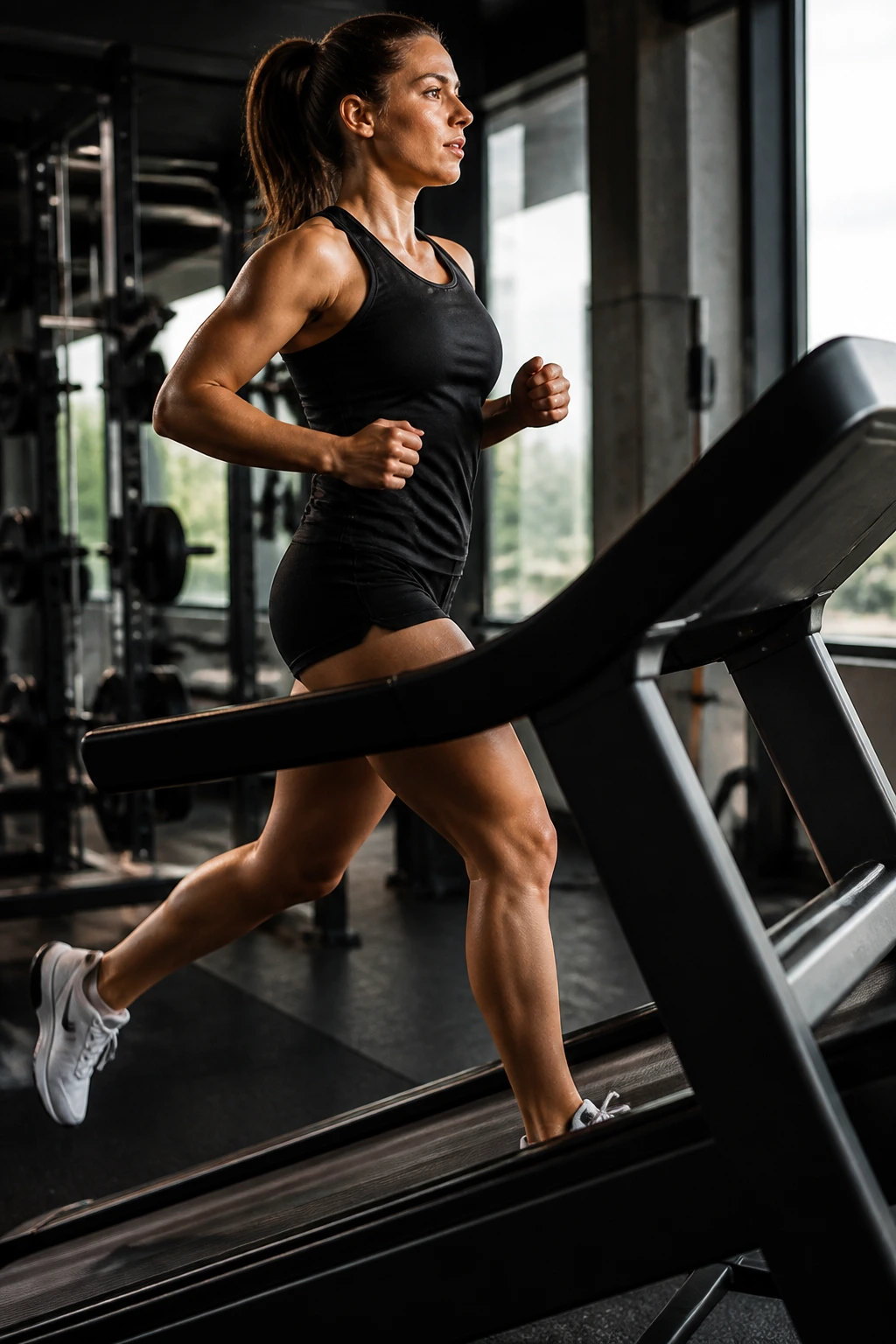
What if you want cardio that does not beat up your knees? Use the treadmill, but tilt it. A hard incline walk or run can light up the glutes and calves without the sloppy pounding of all-out sprint work.
Do 8 rounds of:
- 1 minute at a brisk pace on a 6 to 10 percent incline
- 45 seconds of core work on the floor: dead bugs, plank, or hollow hold
Keep the treadmill pace aggressive enough that your breathing changes, but not so wild that you have to grab the rails. The floor work should feel like active control, not a nap between intervals.
How to scale it
If running feels rough, walk fast and increase the incline. If your core fades before the eight rounds are done, cut the plank time to 25 seconds and keep the position sharp. The point is not to crawl away from the machine.
This workout is sneaky. Your heart rate stays high, but the lower impact makes it easier to repeat week after week, which matters more than people like to admit.
4. Kettlebell Swing and Burpee Circuit
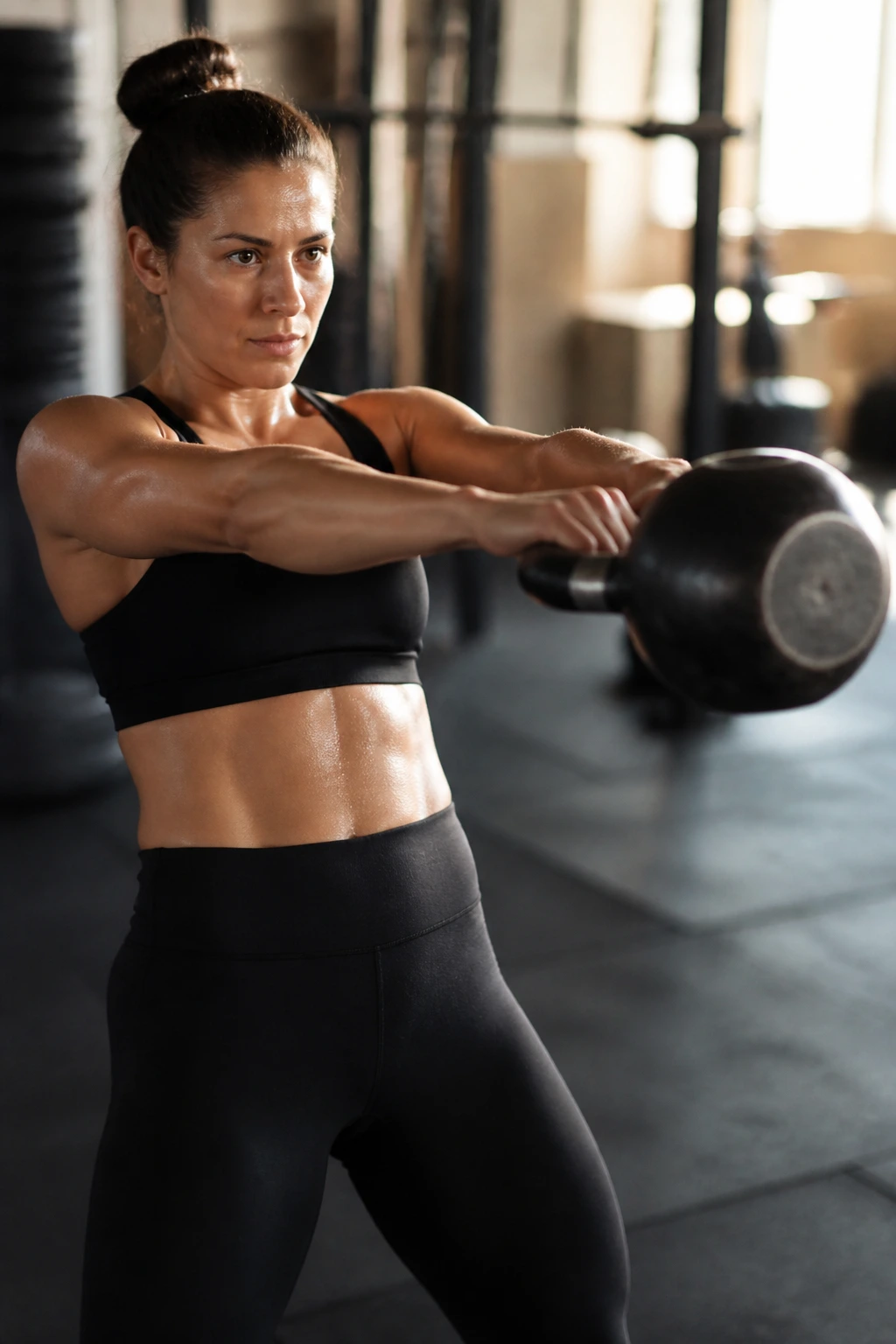
Picture a busy gym floor, one kettlebell, and enough space for a burpee line. That’s all you need for a workout that can go from manageable to nasty in about three minutes.
Do 5 rounds of:
- 15 kettlebell swings
- 8 burpees
- 12 goblet squats
- Rest 45 seconds
Keep the swings crisp. The bell should float, not yank your shoulders forward like a bad roller coaster. On the burpees, step back if your lower back gets cranky; stepping is not cheating, and sloppy jumping is not bravery.
Quick checkpoints:
- Use a kettlebell that lets you snap the hips without losing your grip.
- Keep the goblet squat depth consistent.
- Stop the round if your swing turns into a front raise.
This one is brutally honest. If you rush the first round, the second round will answer for it.
5. Sled Push and Assault Bike Sprint
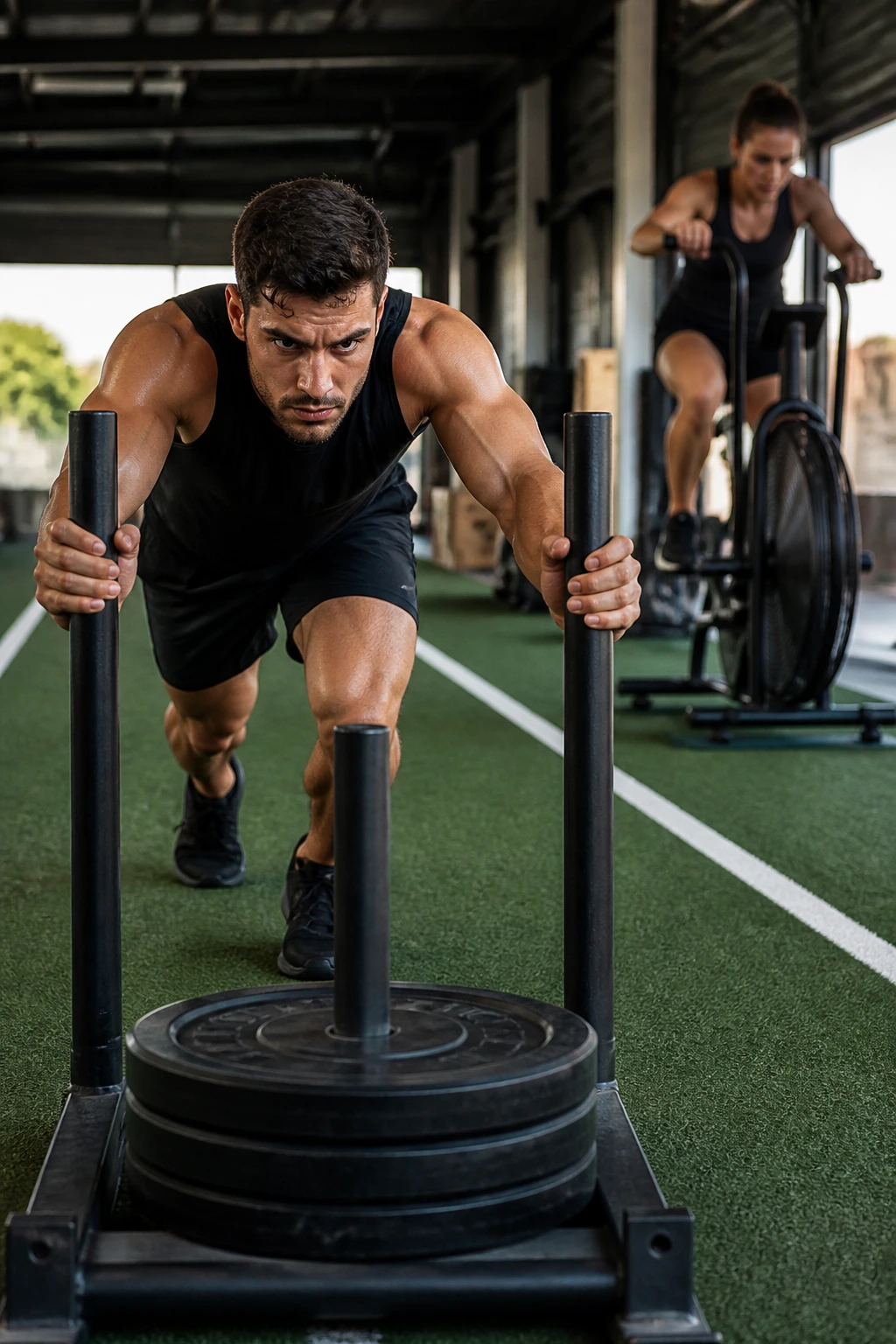
Sleds are honest. They do not care about your mirror muscles or your favorite lift. Push hard, and you get feedback immediately.
Run 6 rounds of:
- 20 meters sled push
- 12 assault bike calories
- 30 seconds rest before the next round
Load the sled with enough weight that you have to drive through the floor, but not so much that the thing stalls halfway down the lane. On the bike, keep the cadence high and the shoulders relaxed. Tense up too much and the neck starts doing work it never signed up for.
The beauty here is the contrast. The sled taxes leg drive and trunk stiffness. The bike clears the legs just enough to let the heart rate stay elevated. You end up working hard without needing a complicated setup, and that makes the whole thing easy to repeat.
6. Pull-Up, Push-Up, and Box Jump Chipper
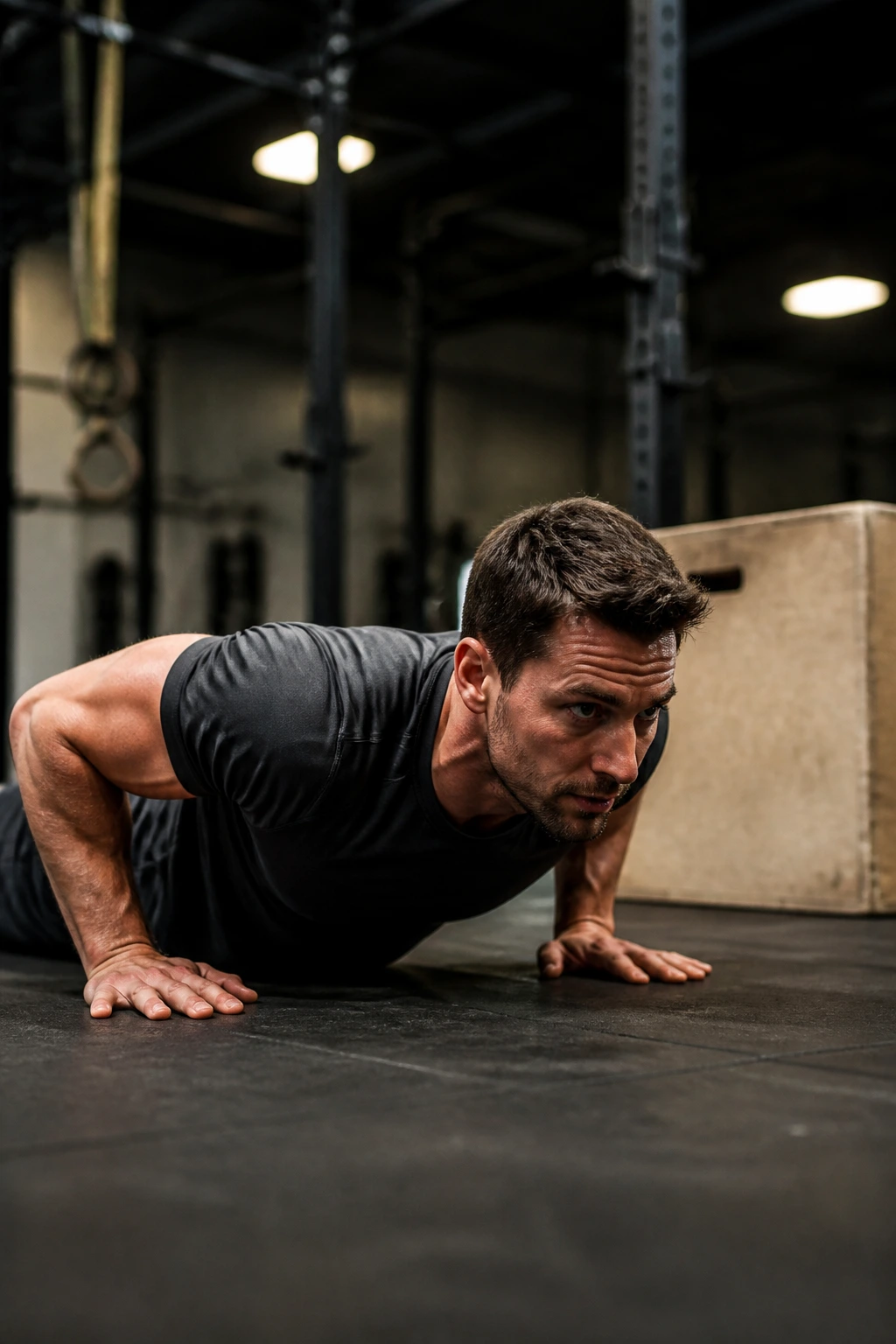
Unlike treadmill intervals, this chipper asks your upper body to keep talking after your legs want out. It has a nice mean streak.
Set a timer for 18 to 22 minutes and move through:
- 40 push-ups
- 30 pull-ups
- 40 box jumps
- 30 push-ups
- 20 pull-ups
- 20 box jumps
Break the reps before you fail. Ten clean pull-ups in a row beats 14 ugly ones and a torn grip. Use a lower box if your jump landings get heavy, and step down instead of jumping down if your Achilles tendons complain.
The order matters. Push-ups make the chest and triceps warm, pull-ups punish the grip, and box jumps force the legs to respond while fatigue is already sitting on the bench. That little grind is why people remember this one.
7. Rower AMRAP with Dumbbell Carries
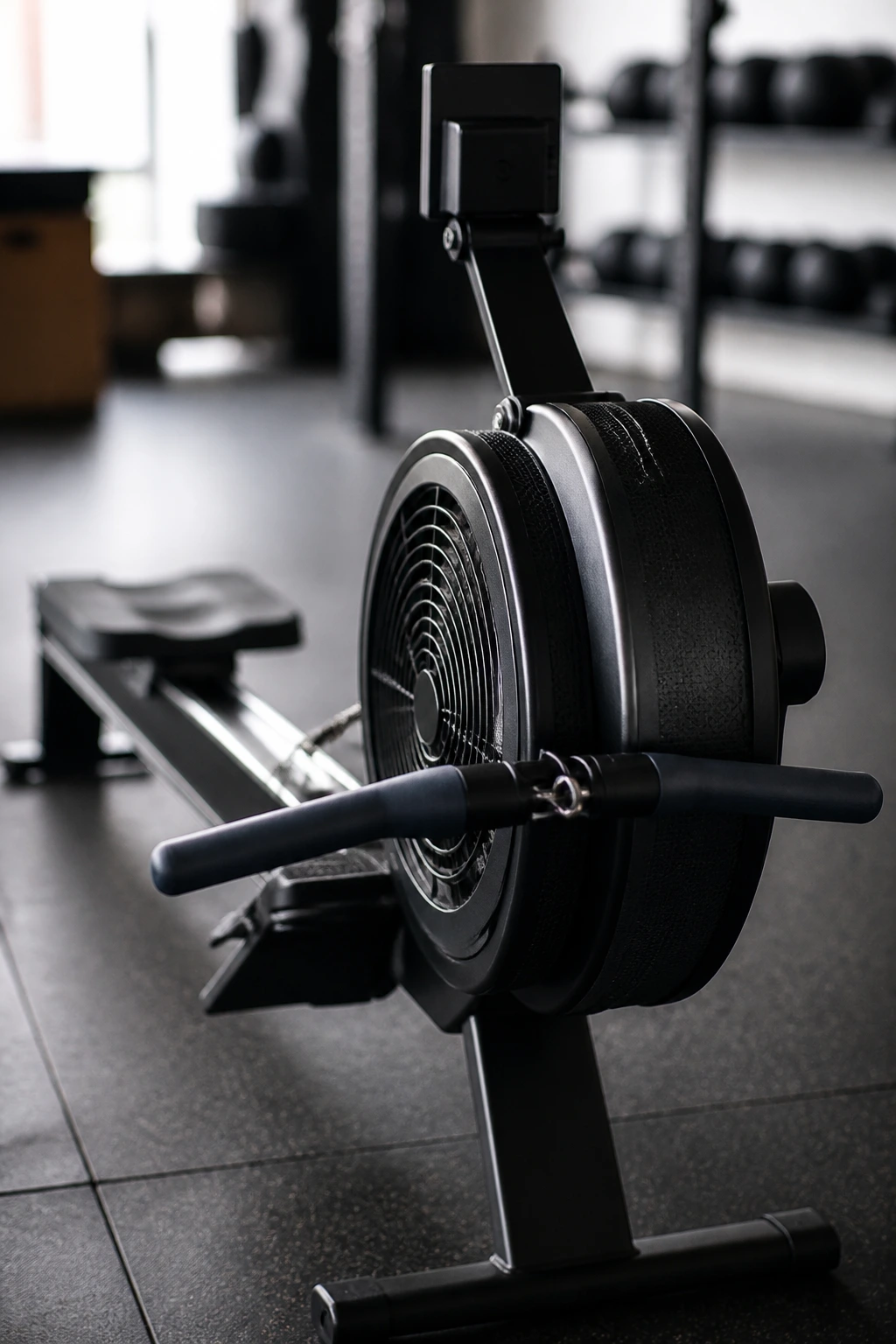
A rower gives you rhythm; carries steal it away. That’s the fun part. A steady pull followed by a heavy walk is a sharp reminder that conditioning and control are not the same thing.
Set an 18-minute AMRAP — as many rounds as possible — of:
- 250 meters row
- 10 dumbbell clean to front rack
- 40 meters farmer carry
- 12 sit-ups
Choose dumbbells you can clean without slamming them into your forearms. The carry should feel heavy enough to challenge your posture, not so heavy that you start leaning like a shopping cart with one bad wheel.
How to scale it
- Shorten the row to 150 meters
- Swap the clean for a deadlift to hang position
- Cut the carry to 20 meters if your grip fades fast
The sit-ups are there to keep the trunk involved, but the carry does the real teaching. Tall posture. Quiet shoulders. No wobbling.
8. Deadlift and Plank Strength Metcon

Deadlifts belong in conditioning work when the weight stays sensible and the reps stay clean. Heavy enough to matter. Light enough to move.
Do 5 rounds of:
- 8 deadlifts
- 30-second forearm plank
- 12 kettlebell swings
- 45 seconds rest
Use a deadlift load you could hold for a few extra reps if you had to. That last bit matters. A metcon deadlift should build strength under fatigue, not turn into a back-saving puzzle. Keep the bar close, wedge the feet, and stand up with the same speed on rep 1 and rep 8.
The plank slot is not filler. It teaches you to brace when your trunk is already tired, and that carries over to every hinge, carry, and squat you do. If your hips sag, stop and reset. Don’t just suffer through nonsense.
9. Stair Climber and Medicine Ball Circuit
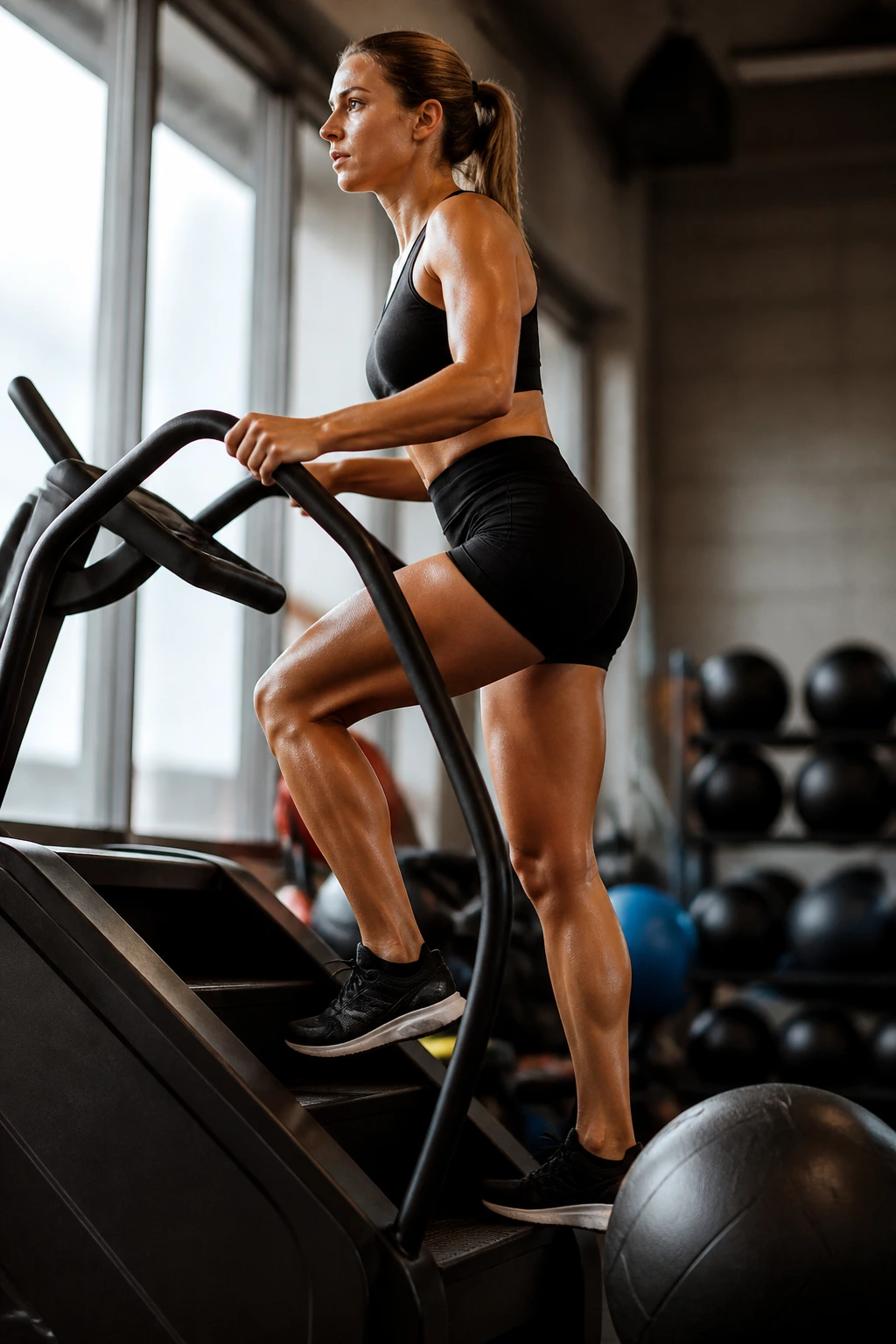
The stair climber has a way of turning your calves warm and your breathing loud in a hurry. Add medicine balls to the mix and you get a workout that feels athletic instead of repetitive.
Run 4 rounds of:
- 2 minutes on the stair climber
- 15 medicine ball slams
- 12 wall balls
- 30 seconds rest
Keep the stair pace strong enough that talking gets chopped into fragments. The slams should come from the hips, not from shrugging the ball overhead like you’re trying to impress someone. On wall balls, hit a repeatable target and keep the squat depth the same each rep.
The magic here is the change in direction. Vertical climbing, then explosive throwing, then squatting under a ball. It keeps the body honest, and it avoids the dead feeling a long machine session can bring.
10. Battle Rope and Lunge Burner

Battle ropes only look simple. Ten seconds in, your shoulders start arguing, and by the end your grip feels like wet cardboard.
Do 10 rounds of:
- 30 seconds battle ropes
- 10 walking lunges each leg
- 30 seconds rest
Keep the rope waves strong and even. If your arms start flailing above shoulder height, shorten the range and make the ripples tighter. On the lunges, take long enough steps to keep the front shin angled well and the knee tracking cleanly.
What to watch for
- Don’t turn the rope work into a shrug-fest.
- Keep the torso tall on lunges.
- Stop the round if your lower back starts taking over.
This session works because it flips between fast upper-body fatigue and controlled leg work. Neither part gets to coast. That’s annoying in the best way.
11. Sandbag Clean and Reverse Lunge Series
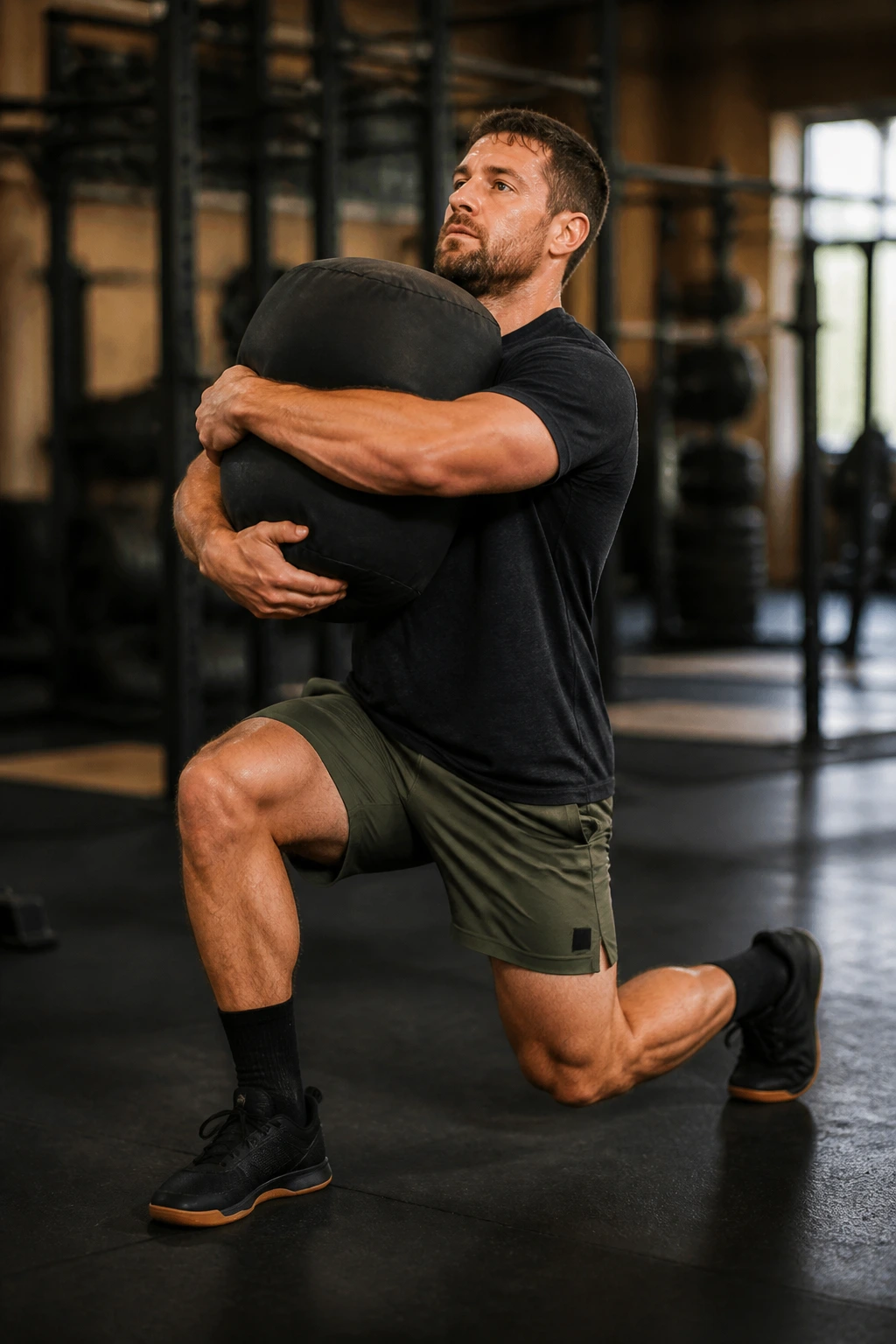
A sandbag changes the feel of everything. It shifts, it bends, and it forces your midsection to brace like it means it. That’s why I like it for gym conditioning.
Complete 4 rounds of:
- 6 sandbag cleans to bear hug
- 8 reverse lunges
- 40 meters bear hug carry
- Rest 60 to 75 seconds
Use a sandbag that makes the clean feel awkward in a useful way. The bag should sit snug against the chest on the carry, not slide around like an overstuffed duffel. Reverse lunges are kinder on the knees than forward lunges for many people, and the carry finishes the job by exposing any lazy posture.
The whole thing feels a little messy at first. Good. That’s the sandbag doing its work. The awkwardness is part of the training.
12. Ring Row and Dip Gym Circuit
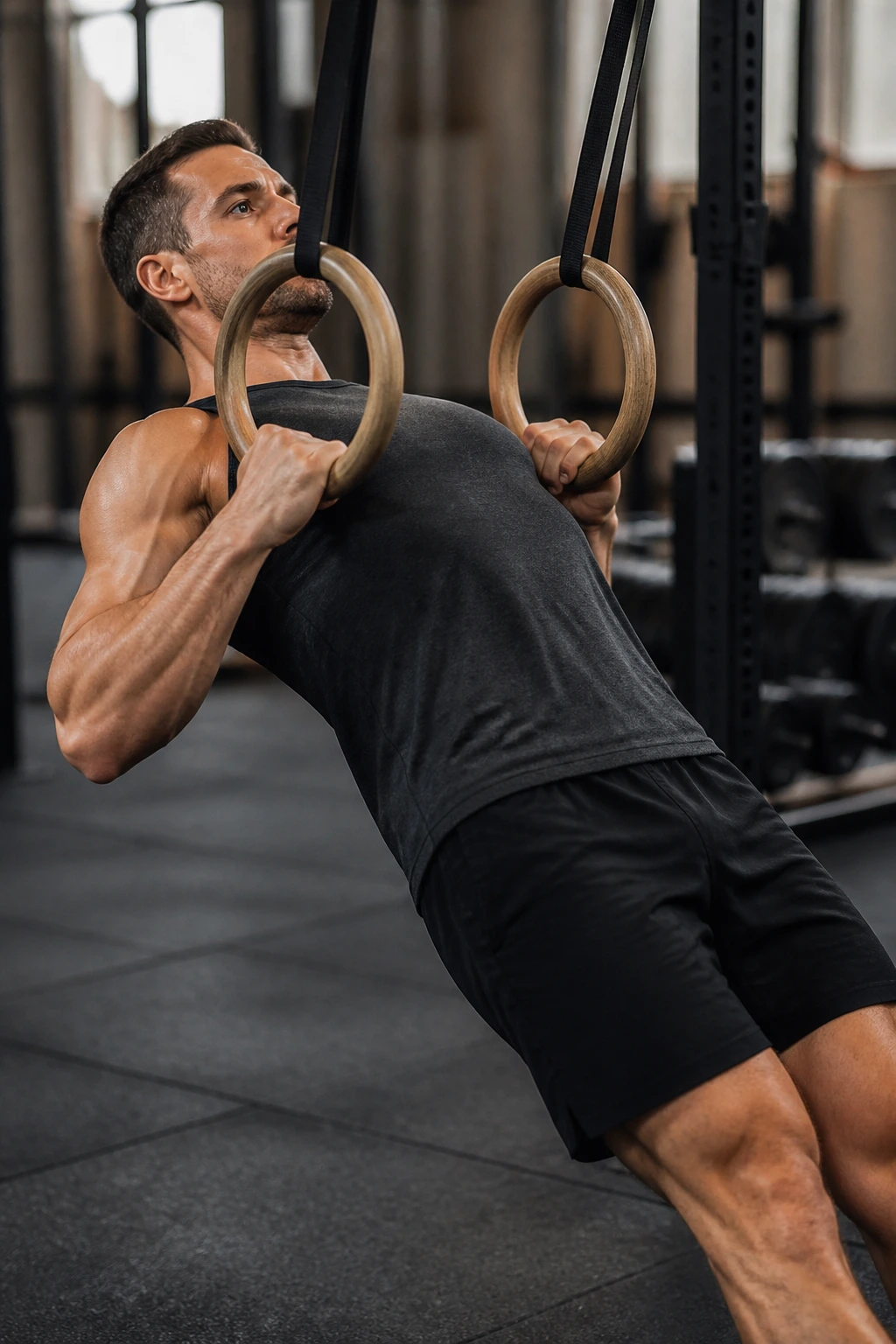
Gym rings can humble strong people fast. They move, they wobble, and they punish sloppy shoulder control in a way fixed bars never do.
Try 5 rounds of:
- 12 ring rows
- 8 ring dips or box dips
- 20-second hollow hold
- 10 push-ups
Why it changes the feel
Ring rows pull the shoulder blades back and down if you do them right. Dips ask for control at the bottom, where a lot of people lose shape. The hollow hold keeps the ribs tucked instead of flaring, which matters more than most lifters want to hear.
Use a foot assist on the dips if full bodyweight is too much. There’s no prize for pretending your joints enjoy a bad range. Keep the rings close, move with control, and let the instability do some of the teaching.
This is a clean upper-body session when you want work without smashing your legs.
13. Sled, SkiErg, and Walking Lunge Hybrid for Cross Fitness
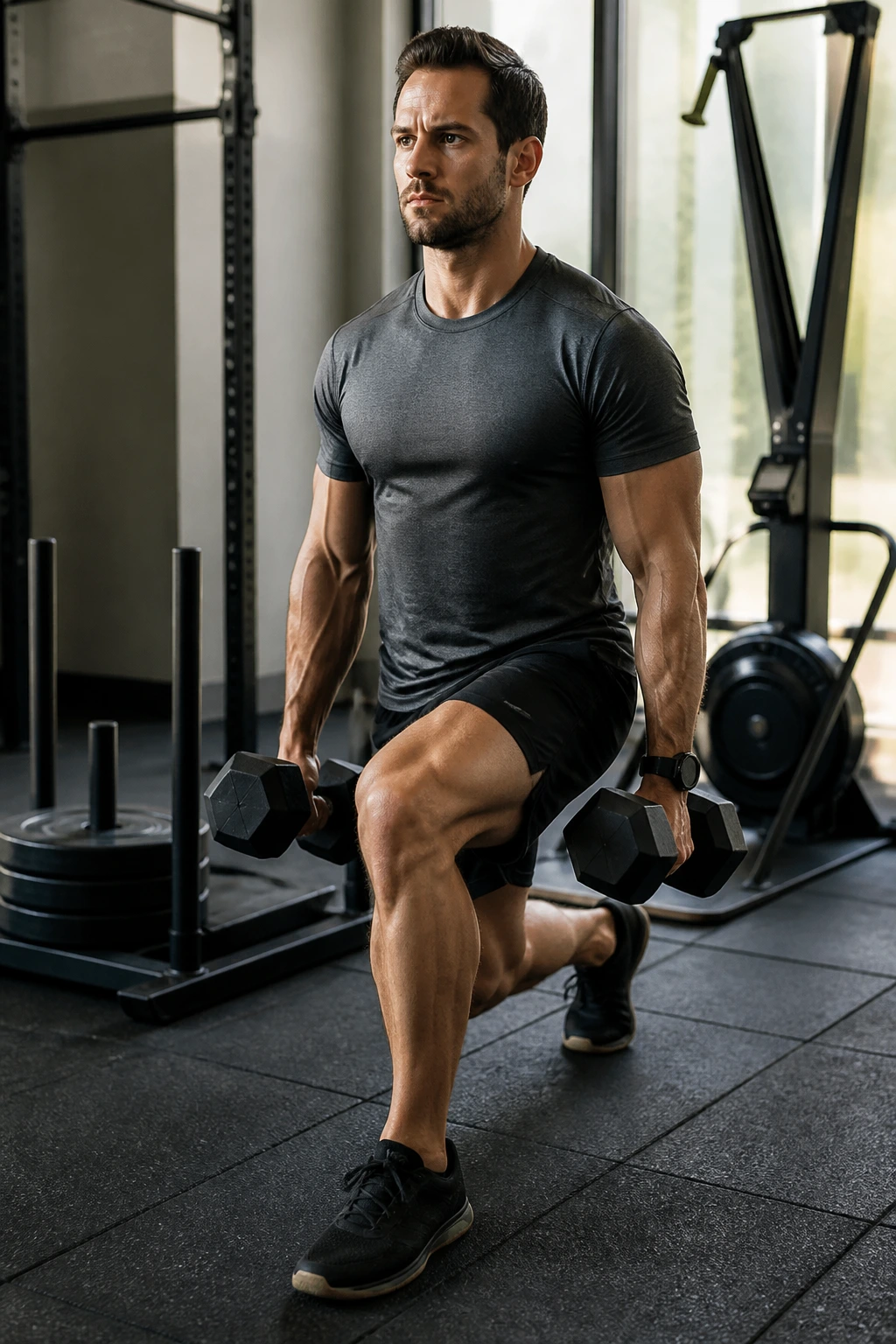
This one is built for days when you want your engine challenged without pounding the same joint angles over and over. Sleds, SkiErgs, and lunges each ask for a different kind of effort, and they fit together better than most people expect.
Do 3 to 4 rounds of:
- 15 calories SkiErg
- 20 meters sled push
- 20 walking lunges
- 1 minute rest
Keep the SkiErg pull smooth and long. On the sled, drive from the hips instead of trying to muscle it with your arms. The lunges are the reset that isn’t really a reset — they force you to stay upright while your heart rate stays high.
Unlike straight cardio, this workout gives you short bursts of tension and movement variety. It suits people who get bored fast on machines and people who like knowing their session covered more than one gear.
14. Upper-Body Push and Pull Density Day
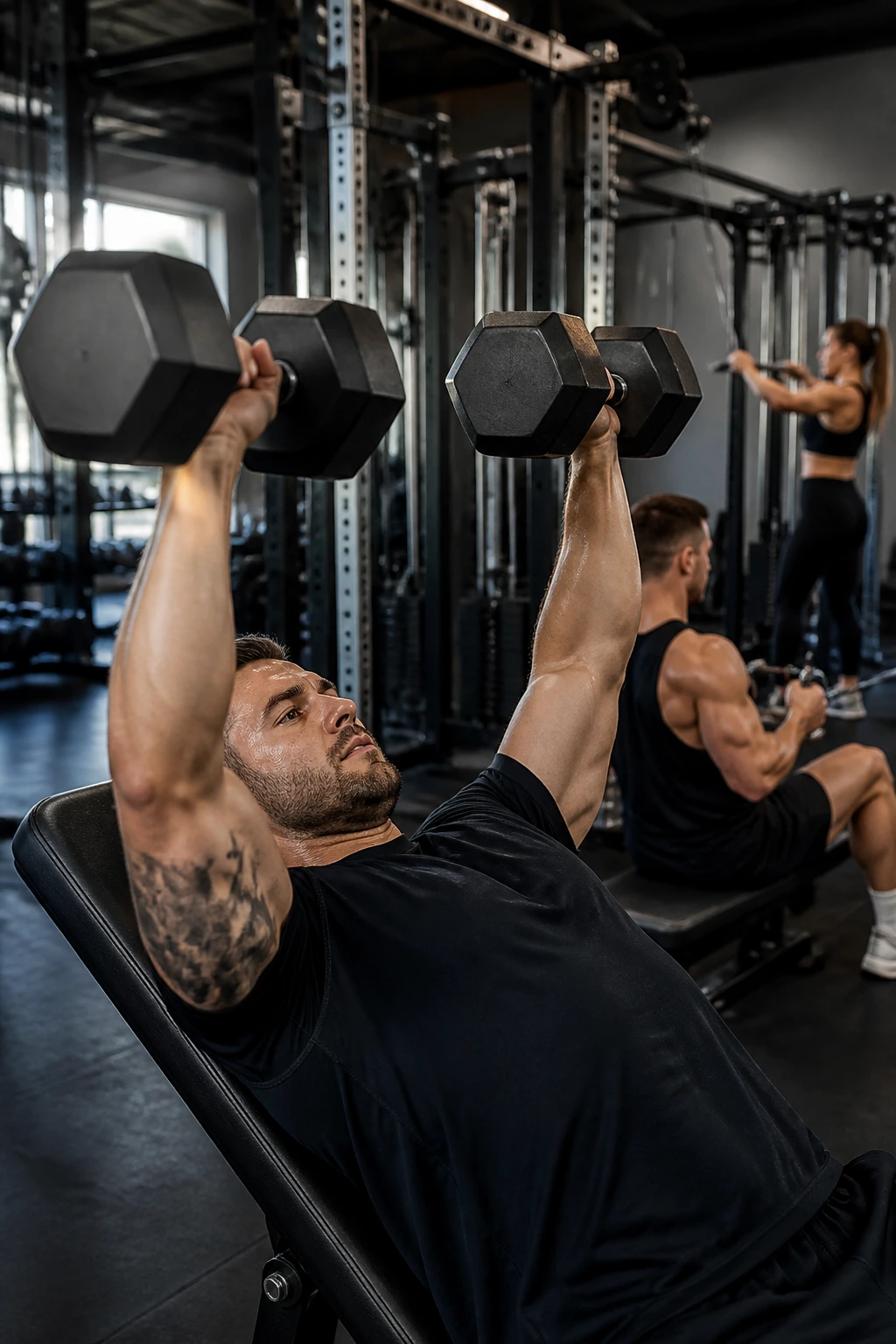
Dense work beats random volume when you want your upper body to stay useful under fatigue. A clean push-pull session should leave your chest, back, and shoulders cooked without trashing your joints.
Set a timer for 20 minutes and cycle through:
- 8 dumbbell bench presses
- 10 cable rows
- 8 strict overhead presses
- 12 face pulls
Move steadily, not frantically. You’re trying to collect quality reps, not race a stopwatch into bad form. If the pressing gets slow, drop the load a little and keep the range clean. Face pulls are the quiet hero here — they help balance all the forward work and keep the shoulders from turning grumpy.
A session like this is useful when you want to train hard but still walk out feeling like your posture improved instead of collapsed.
15. Low-Impact Bike and Cable Station Workout
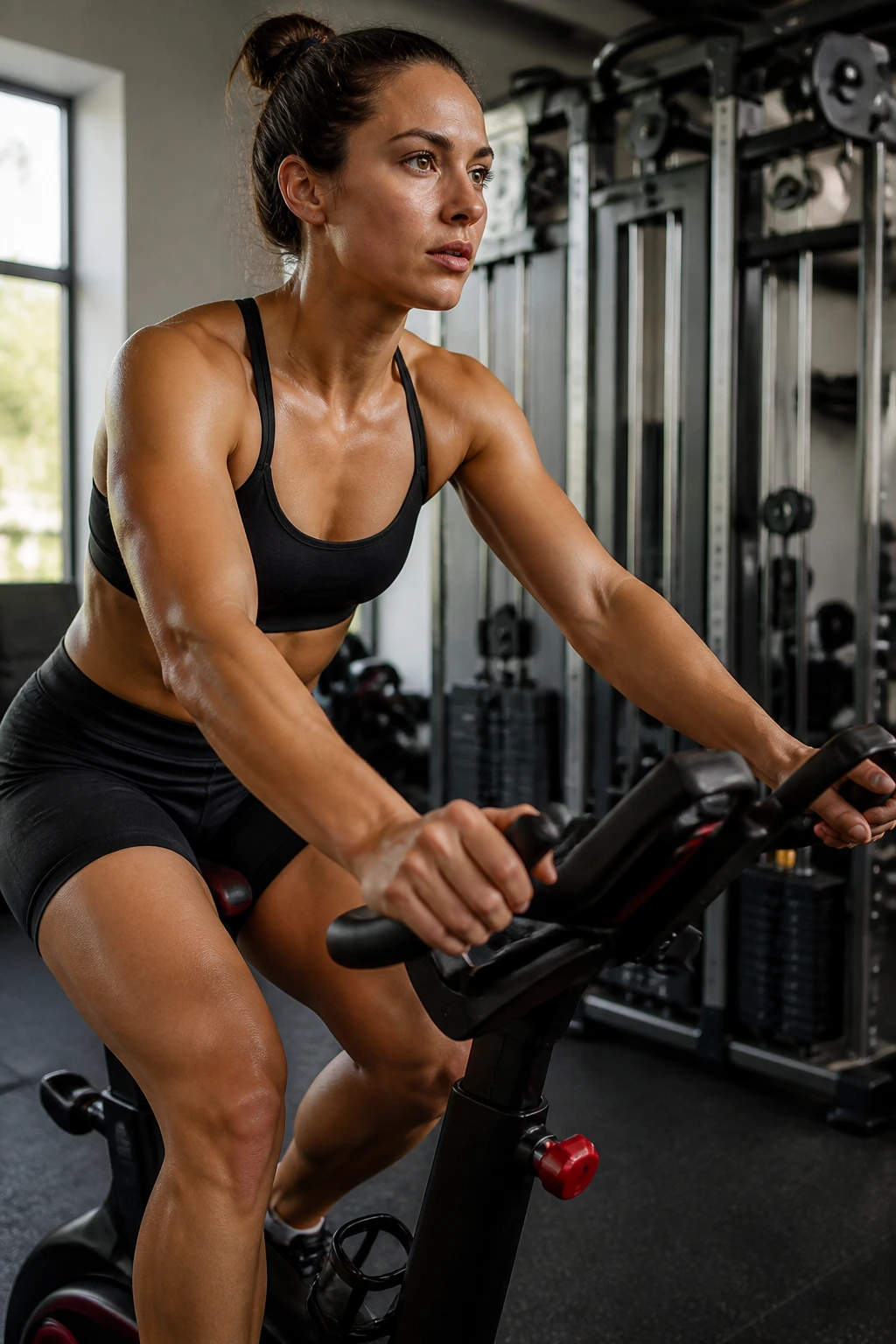
Not every hard gym day needs jumping, sprinting, or a thousand burpees. Sometimes the smarter move is to keep the impact low and the tension high.
Do 5 rounds of:
- 1 minute hard on a stationary bike
- 12 cable wood chops each side
- 12 seated cable rows
- 12 rope face pulls
- Rest 45 seconds
The bike gives you the pulse rise. The cable work keeps the torso and upper back active without pounding the joints. It’s a solid choice for anyone who wants conditioning but knows their knees, ankles, or lower back prefer a kinder setup.
The line I’d draw is this: keep the bike hard enough to breathe, but not so hard that your cable station work falls apart. If your trunk starts twisting on the chops, slow down. That motion should look clean from the first rep to the last.
16. Barbell Complex for Total-Body Power
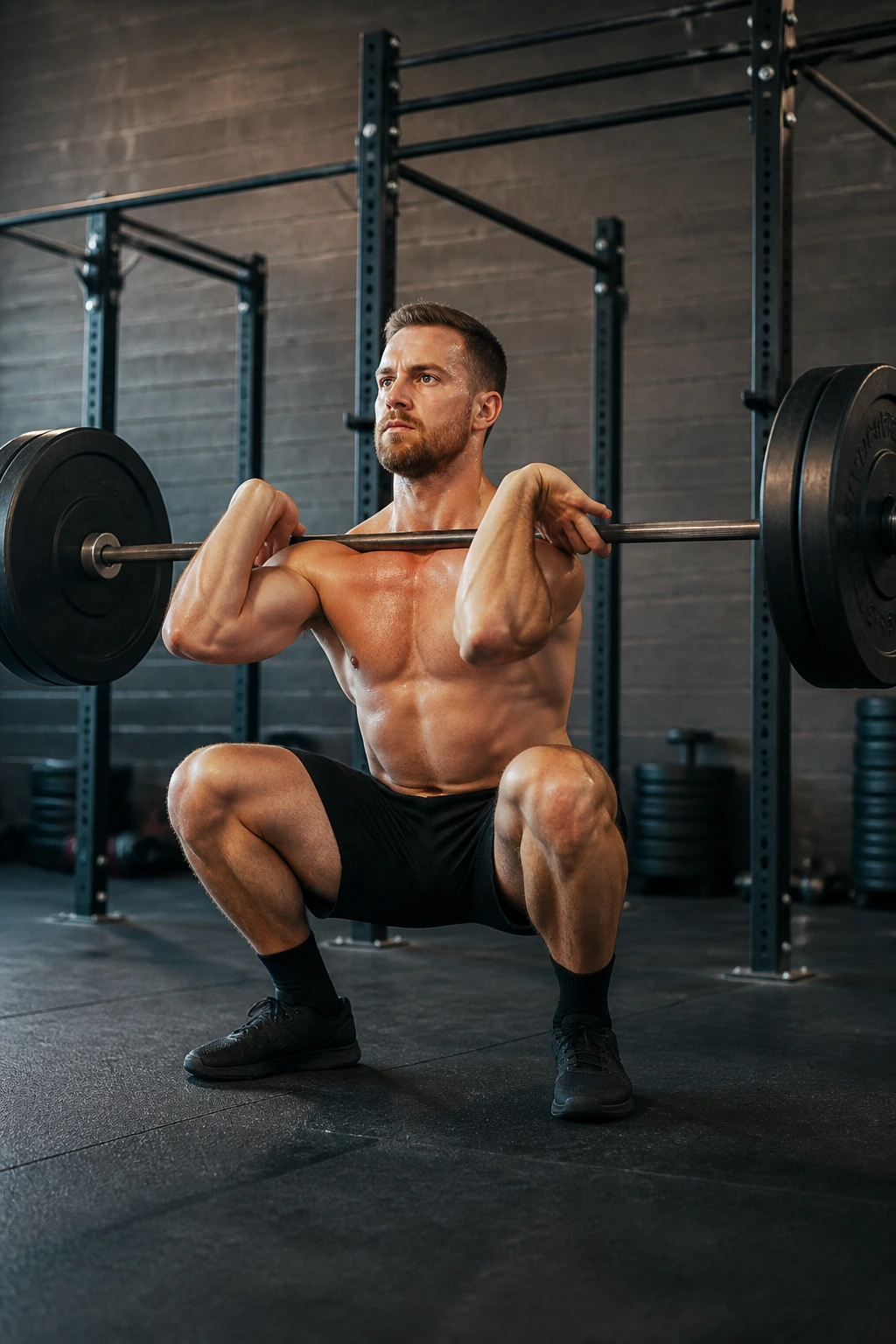
Barbell complexes are brutally efficient. One bar, one load, no dropping between movements, and suddenly the session feels much bigger than the clock suggests.
Use a weight you can control for every rep and run 4 rounds of:
- 6 Romanian deadlifts
- 6 bent-over rows
- 6 hang power cleans
- 6 front squats
- 6 push presses
Rest 2 minutes between rounds.
The load should stay moderate. That is non-negotiable. If the clean gets sloppy or the front rack caves on the squat, the bar is too heavy. Clean transitions matter here because the bar never leaves your hands, and that keeps the heart rate climbing even while the pattern changes.
This is the workout I’d hand to someone who wants barbell training and conditioning in one session without a pile of accessory fluff. It’s direct. No garnish.
17. Core-Heavy Carry and Chop Workout
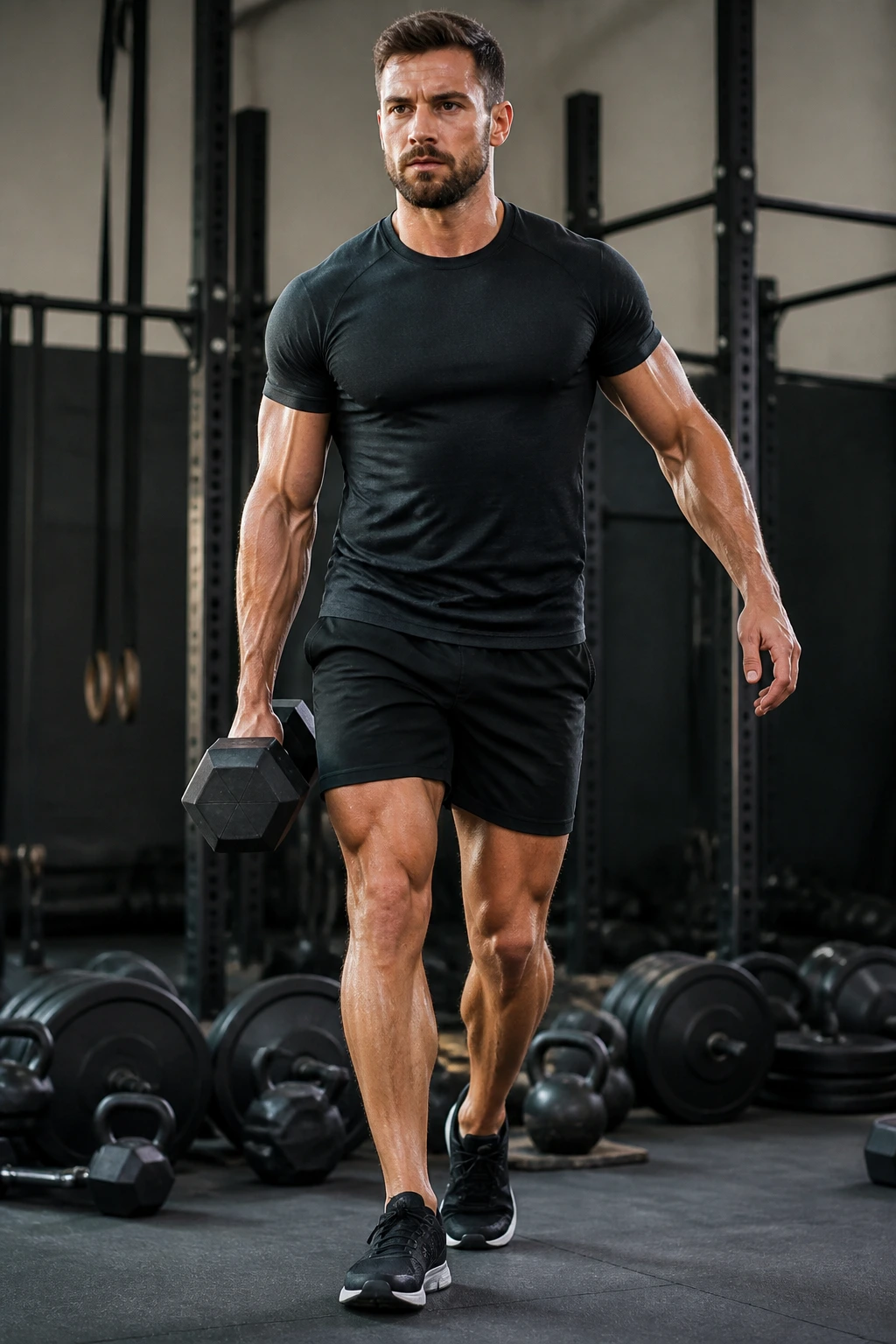
Core training gets boring when people only think of crunches. Carries, chops, and presses do a better job of showing whether your trunk can actually hold shape under load.
Run 4 rounds of:
- 40 meters suitcase carry each side
- 12 Pallof presses each side
- 10 cable chops each side
- 45-second front plank
- Rest 45 seconds
What to watch for
- Keep the suitcase carry from leaning you over.
- Don’t rotate through the ribs on the Pallof press.
- Chop with the shoulders and hips together, not the lower back alone.
The carry is the star. One heavy bell or dumbbell on one side will expose every habit you have, good and bad. If you rush the transition, your posture gets sloppy. If you stay tall and breathe behind the brace, the whole circuit feels cleaner.
This workout is useful for nearly everyone, and it’s especially good for people who want a stronger midsection without beating themselves up on the floor for 30 straight minutes.
18. Boxing Bag and Rowing Conditioning Mix
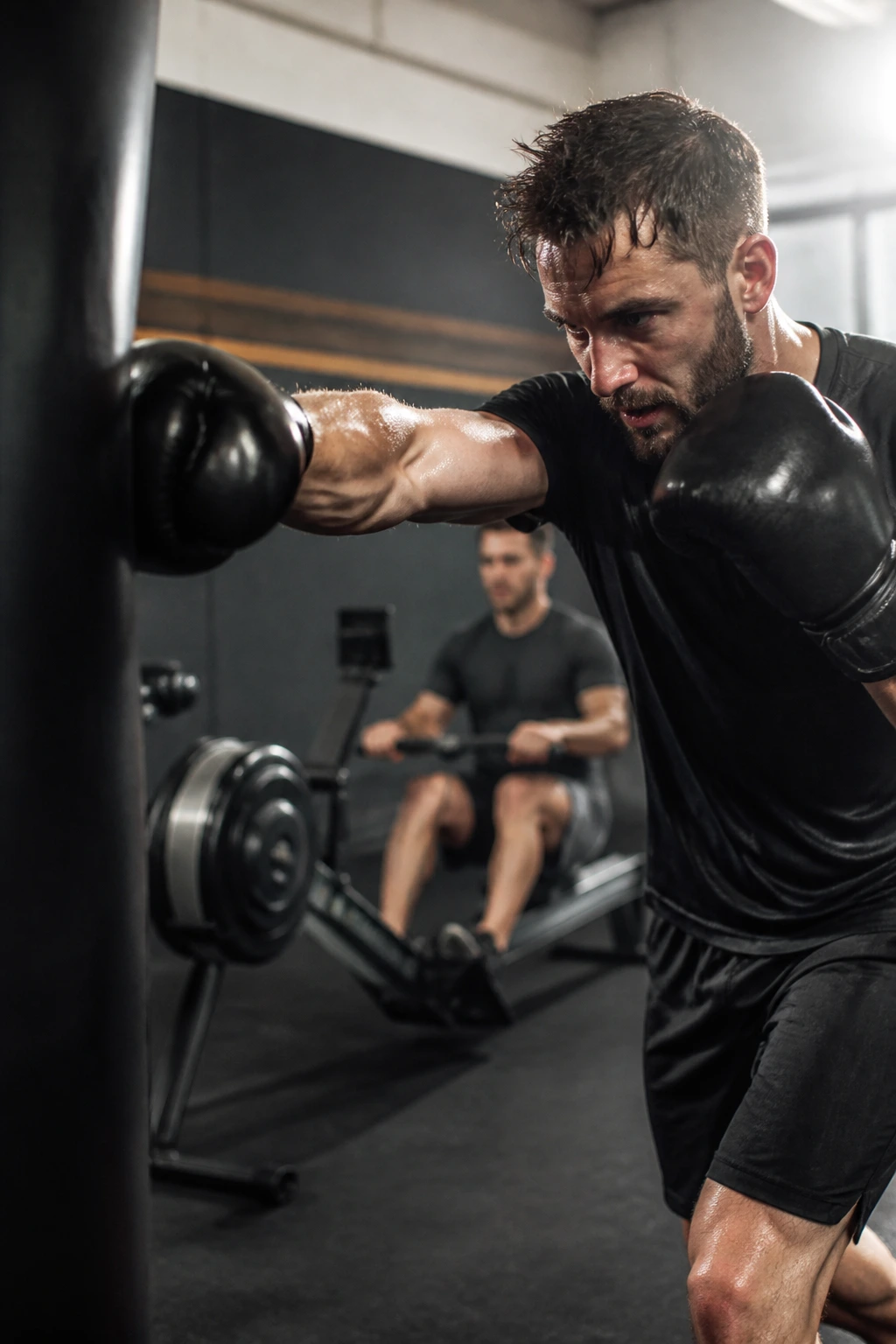
A heavy bag and a rower make a very tidy pairing. One asks for snap and coordination; the other asks for rhythm and output. Put them back to back and the excuses dry up fast.
Do 6 rounds of:
- 2 minutes on the heavy bag
- 250 meters row
- 30 seconds rest
On the bag, mix straight punches with a few hooks and keep your feet moving. You do not need to look like a sparring clip to get the benefit. On the rower, settle into a hard but sustainable pace rather than blowing up in the first 100 meters.
The pairing works because it shifts the stress from upper-body rotation to full-body drive. Your shoulders get a different kind of fatigue on the bag than they do on the rower, and that makes the round feel longer in a useful way.
19. Split Squat and Hamstring Builder
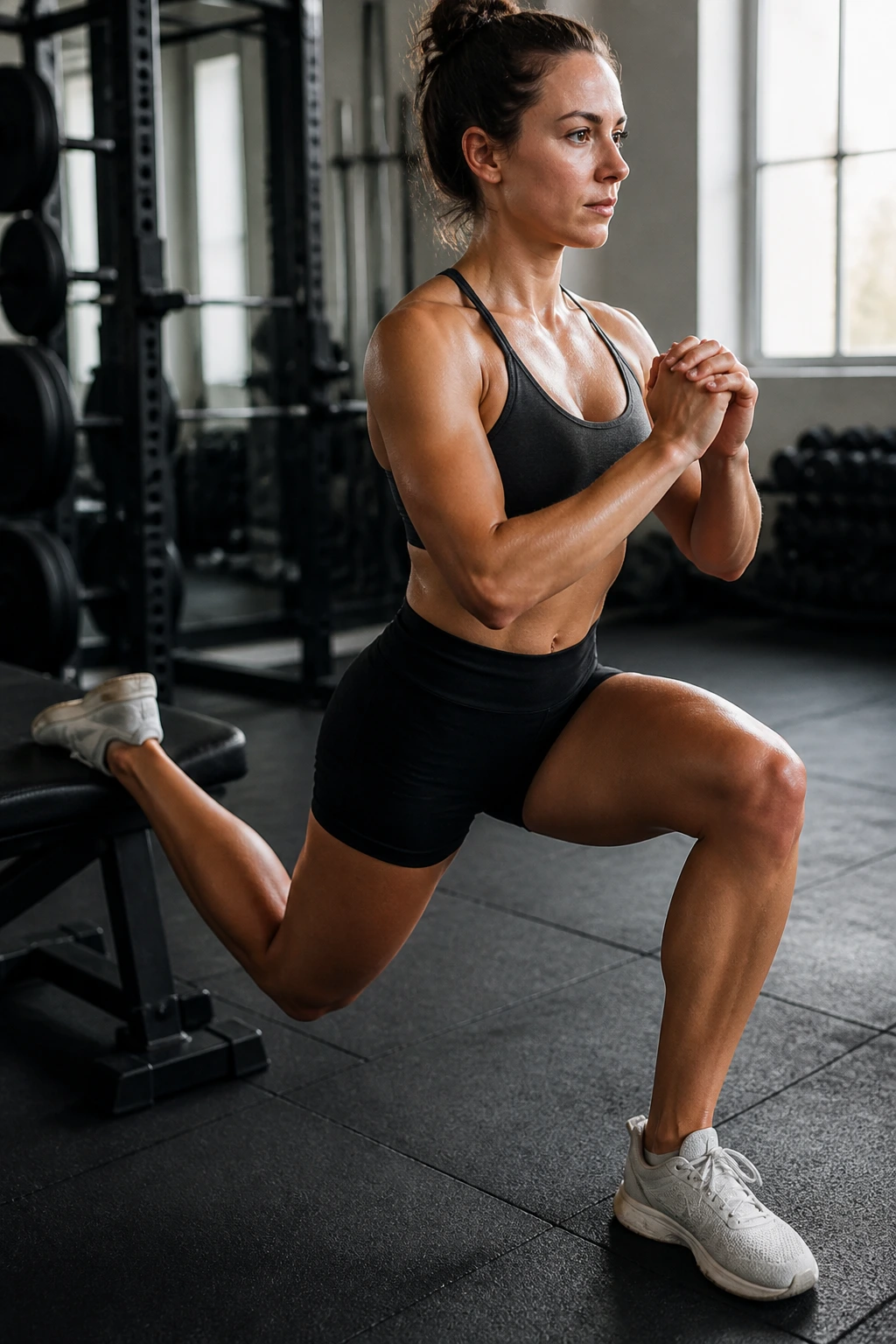
A lot of gym conditioning leans on the front side of the body. This one gives the hamstrings and glutes a proper say.
Complete 4 rounds of:
- 10 Bulgarian split squats each leg
- 12 lying hamstring curls
- 15 glute bridges
- 20 calf raises
- Rest 60 seconds
Use a load on the split squats that makes the last two reps honest but clean. Hamstring curls are one of those movements people rush through; don’t. Control the lowering phase for 2 seconds and you’ll feel the back of the legs wake up fast.
Why this matters
The workout is less flashy than sled pushes or burpees, but it pays off in balance and knee control. Strong glutes and hamstrings make the more aggressive workouts feel steadier, and the calf work helps keep your lower legs from feeling like dead sticks after jumping sessions.
This is the day your body thanks you for later.
20. Medicine Ball Throw and Jump Session
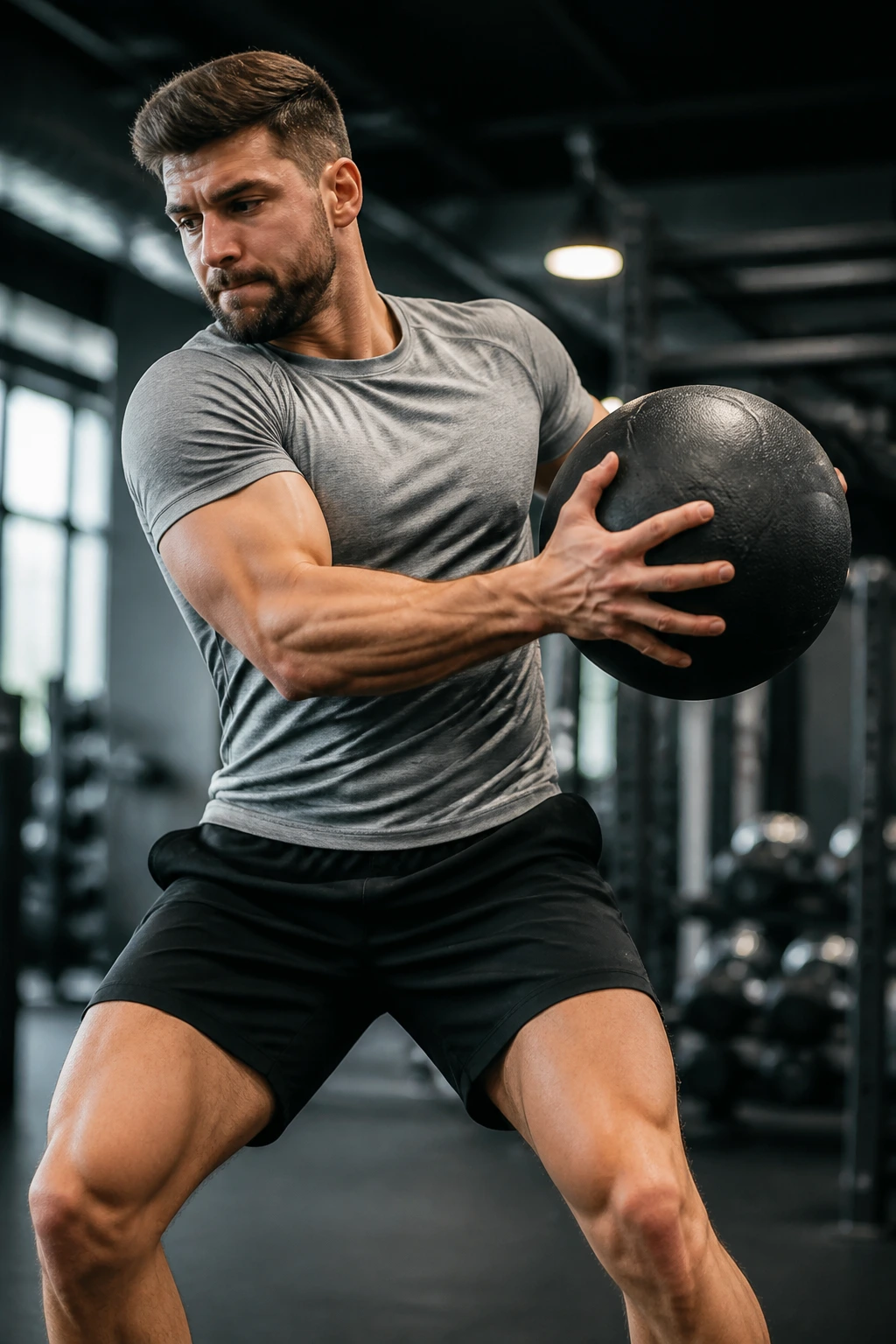
Power work should look snappy. If the ball is floating too slow or the jumps are landing like dropped furniture, the load is wrong.
Do 6 rounds of:
- 10 medicine ball slams
- 5 broad jumps
- 8 lateral bounds each side
- 45 seconds rest
Keep the slams violent but controlled. Reach tall, then drive the ball down with the core and lats, not just the arms. Broad jumps should be measured, not reckless. Stick the landing, hold for a second, and then reset. Lateral bounds teach side-to-side stiffness, which carries over to almost every sport and plenty of life outside the gym.
This workout is short, but it can drain you faster than a longer metcon if you stay explosive the whole way. That’s the trick. Quality first. Speed second.
21. Partner Relay Workout
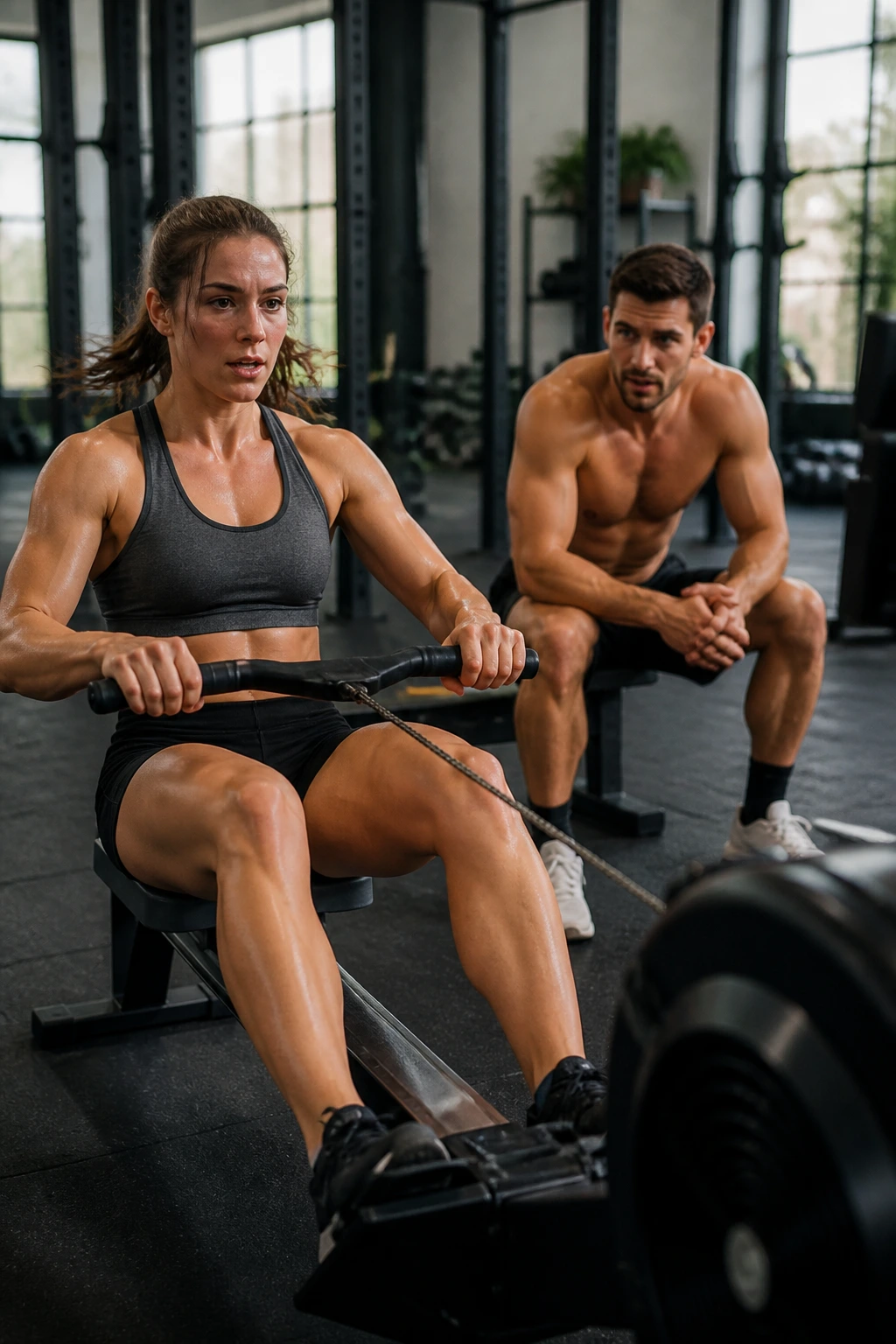
Training with a partner changes the mood fast. You work harder because someone else can see when you coast, and you rest longer between bursts without losing the competitive edge.
Set up 4 relays of:
- 300 meters row
- 20 goblet squats
- 20 synchronized burpees
- 40 alternating dumbbell snatches
One person works while the other rests, then switch at the next station. Keep the snatches light enough to stay crisp even when you’re breathing hard. The synchronized burpees are the sneaky part. They look simple until both people need to stay on the same beat and neither one wants to be the one dragging.
This is a good workout for people who get bored training alone. It also keeps effort honest. Partners have a weird way of making the clock feel meaner than it actually is.
22. Beginner Machine Circuit
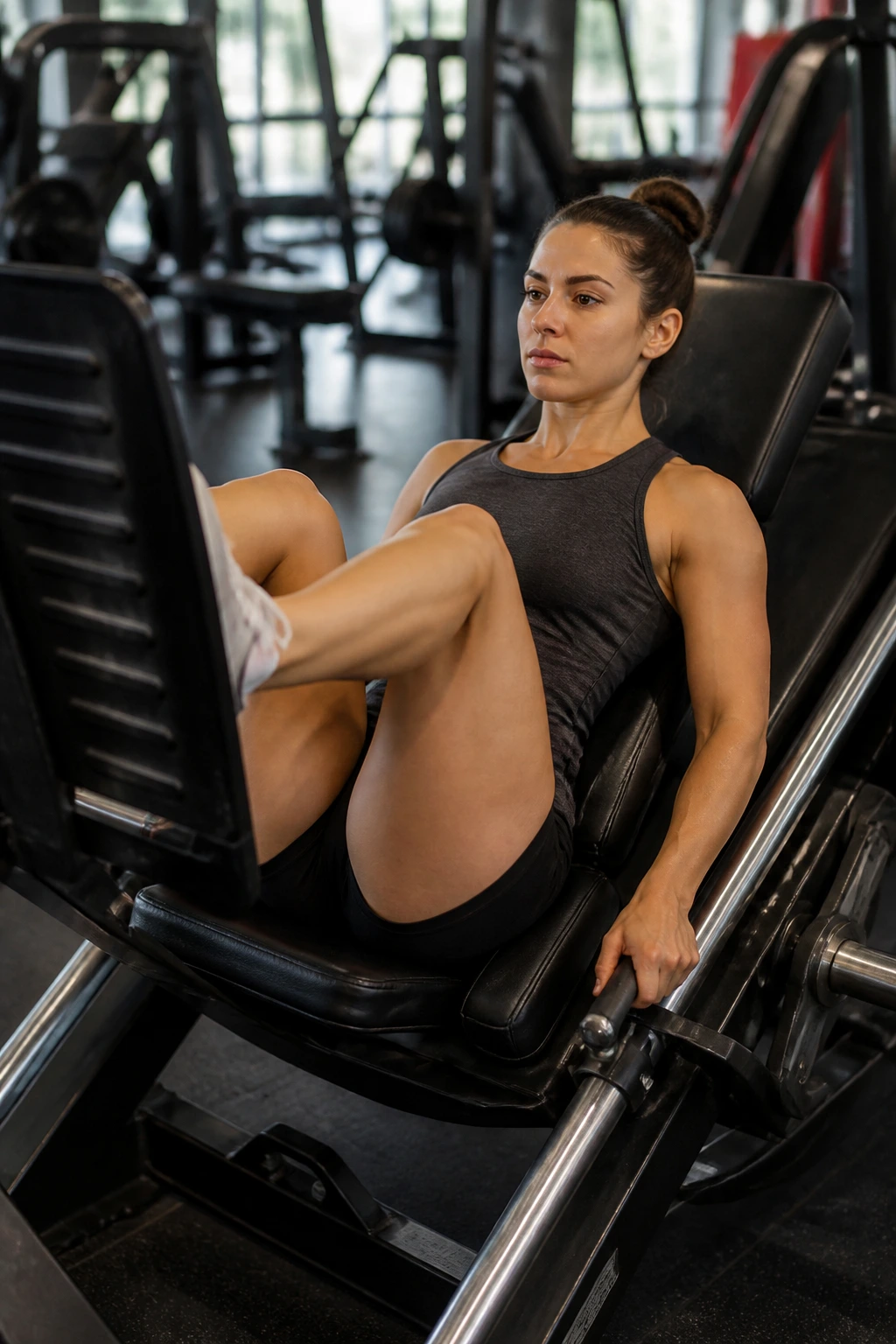
A beginner workout should feel clear, not watered down. Machines can be a gift here because they keep the movement pattern simple while still building useful work capacity.
Do 3 rounds of:
- 5 minutes on a bike or elliptical
- 12 leg press reps
- 12 chest press reps
- 12 lat pulldowns
- 20-second plank
Rest 60 seconds between rounds if needed. Keep the bike pace steady instead of all-out. The machine work should teach range and control, not bury someone under too much load too soon.
The part people miss is that beginner does not mean easy forever. It means repeatable, easy to learn, and hard enough to make progress. If a new lifter can leave with decent form and a little sweat, that’s a win. Chasing exhaustion on day one is usually a bad trade.
23. Descending Ladder Challenge
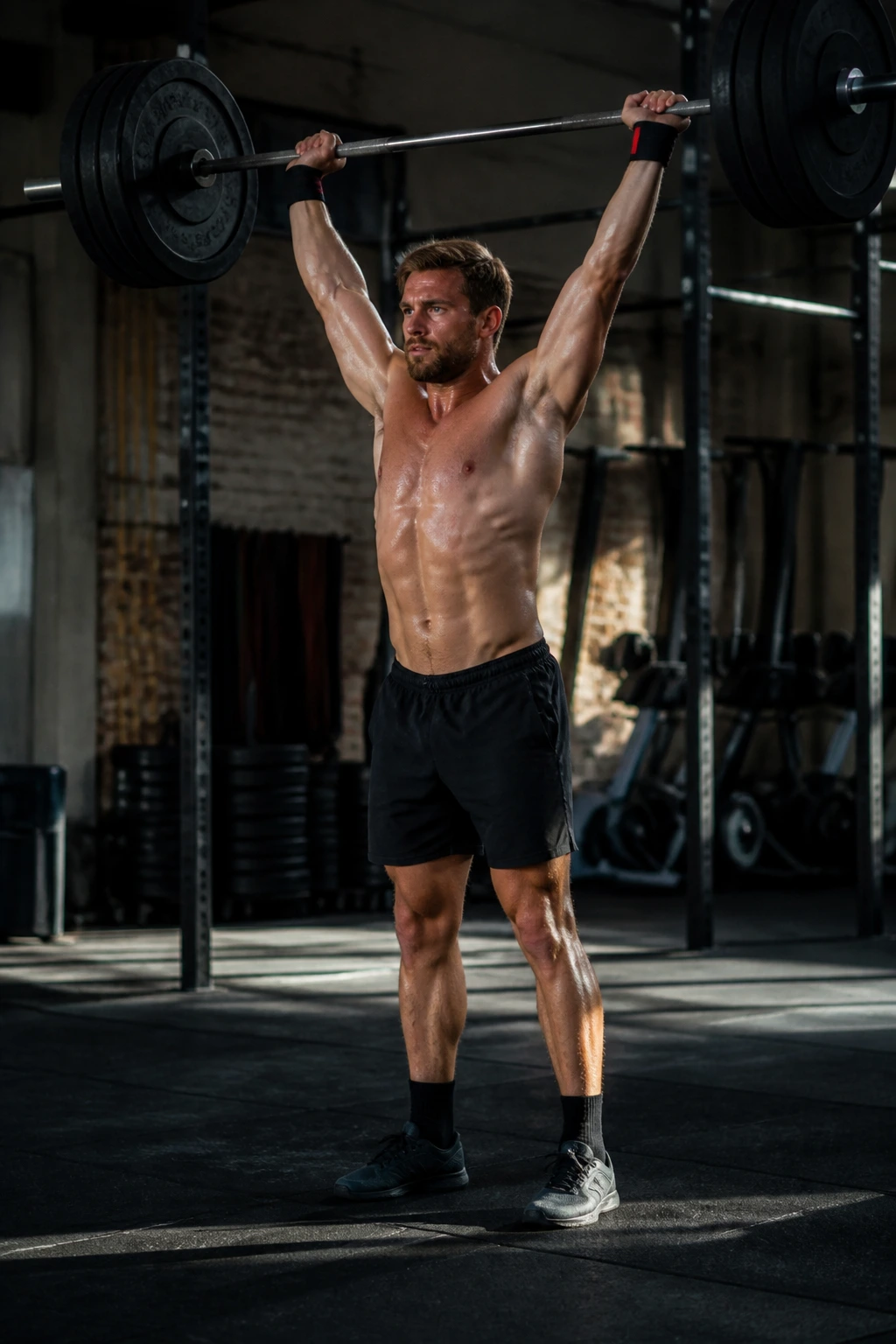
Descending ladders are mean in a clean way. The reps get smaller, which sounds friendly, but the fatigue is already in the room.
Run 10-8-6-4-2 of:
- Thrusters
- Pull-ups
- Toes-to-bar or hanging knee raises
Rest only as needed to keep the movement sharp. The first round is where people make the mistake of going too hard. Don’t. Save enough gas to keep the last two rounds fast and tidy. If full pull-ups are out of reach, use band assistance or ring rows. If toes-to-bar break down, hanging knee raises are a solid substitute.
The beauty of this one is psychological as much as physical. Every round feels shorter, but the barbell and the pull-up bar both keep asking for attention. By the end, your grip will know it has earned the paycheck.
24. Recovery Bike and Mobility Session
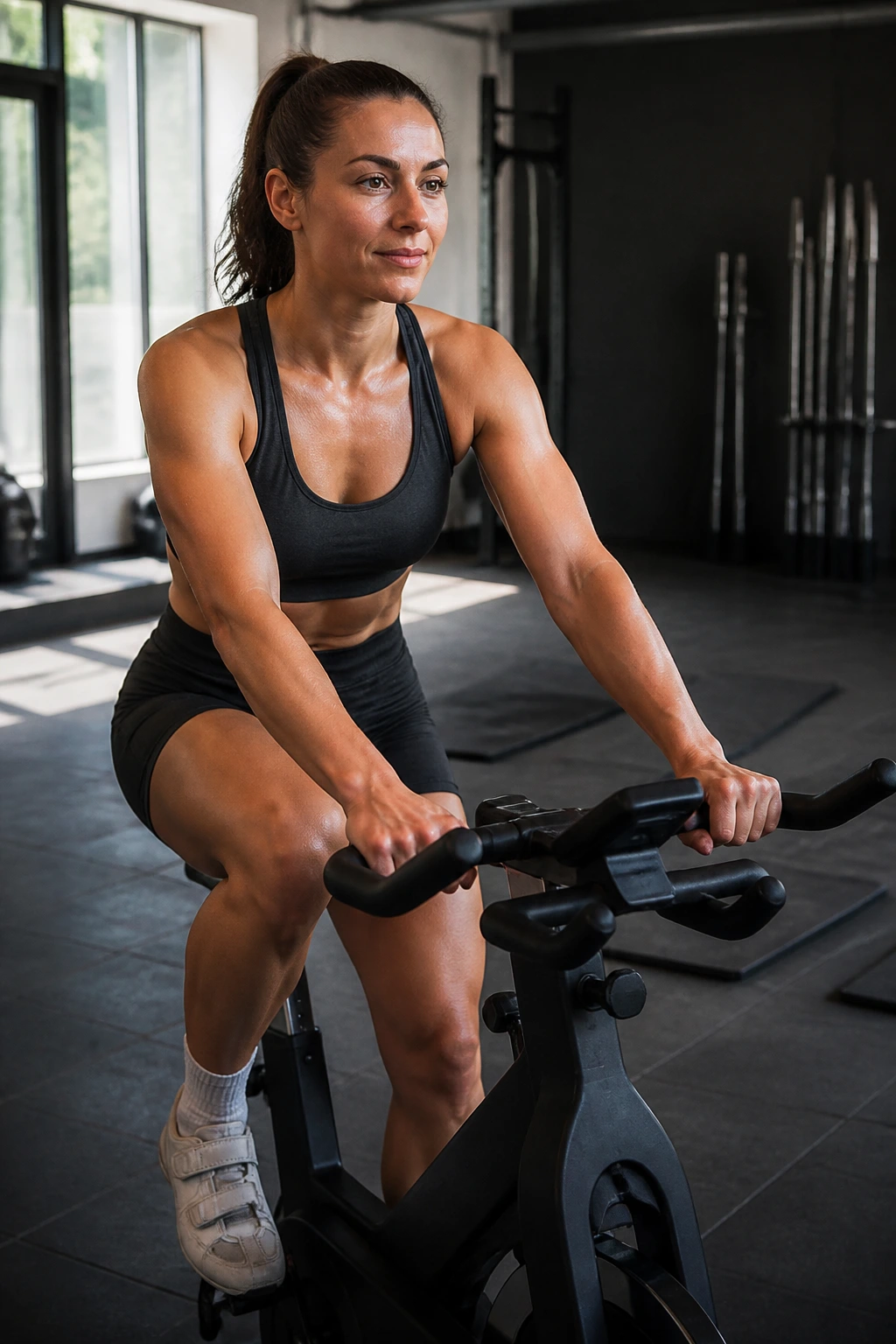
Recovery work can look boring from the outside, and I’m fine with that. Boring is useful when the goal is to get better without piling on more damage.
Spend 20 to 30 minutes on a bike at an easy pace. You should be able to breathe through your nose most of the time and speak in full sentences. Then move through 2 rounds of:
- 30 seconds couch stretch each side
- 30 seconds ankle rocks each side
- 30 seconds thoracic rotations each side
- 30 seconds child’s pose breathing
The bike flushes the legs without impact. The mobility block keeps the hips, ankles, and upper back from locking up after harder sessions. None of it needs to feel fancy. It just needs to be consistent and calm.
This is the day that lets the harder days keep working. Skip it if you want, but don’t pretend your body won’t remember.
25. Full Gym Benchmark Test for Cross Fitness
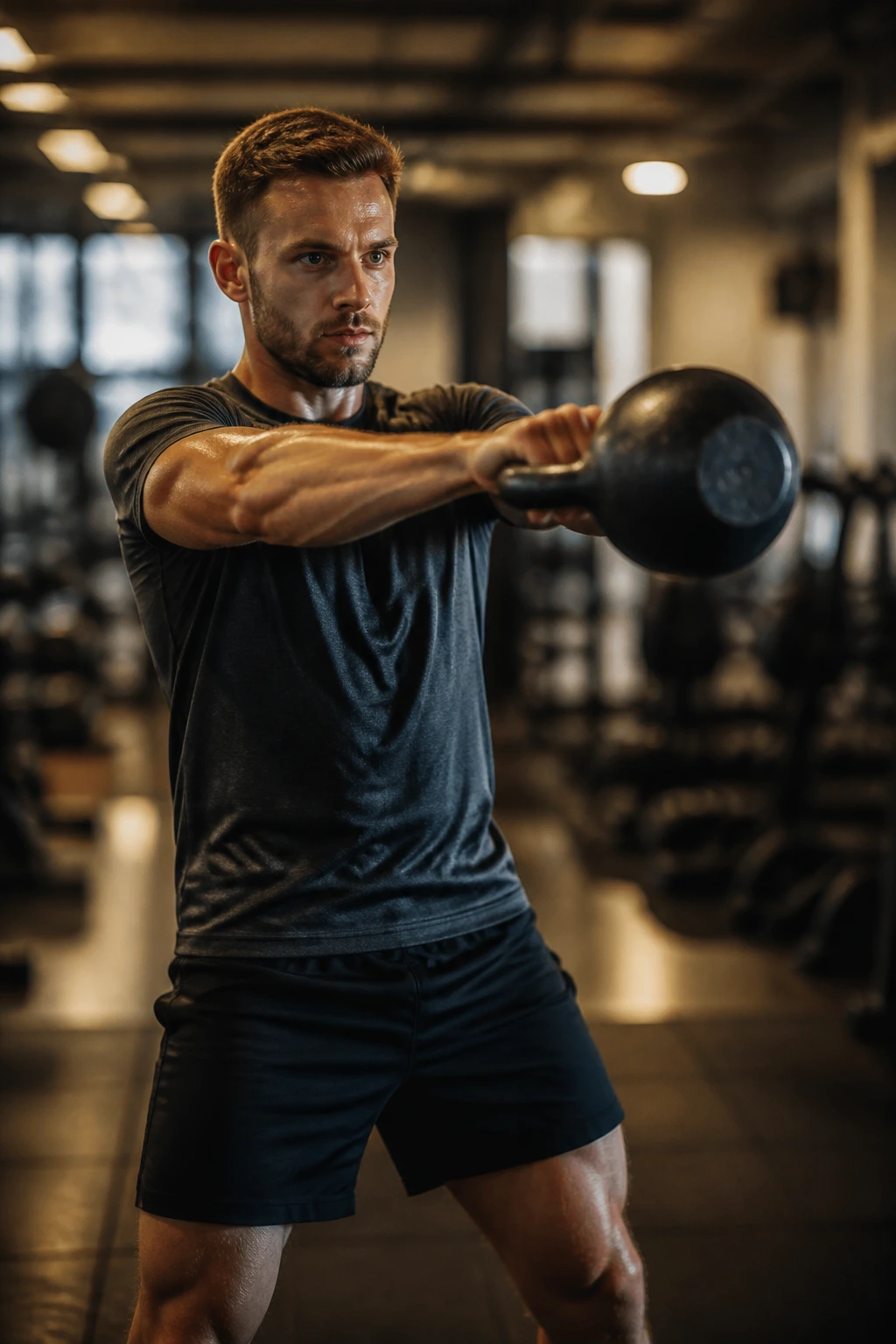
A benchmark should test more than one system. If it only measures speed on a single machine, it misses half the point of cross fitness workouts at the gym.
Set a 20-minute clock and repeat this circuit as many times as you can:
- 400 meters run
- 12 kettlebell swings
- 10 box step-ups
- 8 push presses
Choose a kettlebell and dumbbells that let you keep moving without turning every round into a grind. The step-ups should stay controlled; drive through the whole foot and stand tall on the box. The push press closes the loop by forcing upper-body power when your breathing is already loud.
How to score it
Count total rounds plus leftover reps. If you keep a log, this becomes one of those rare gym workouts that gives you a clean comparison the next time you repeat it. Small improvements matter here — one extra round, cleaner swings, fewer pauses.
It’s a tidy test. Hard enough to respect, simple enough to repeat, and broad enough to show where you’re strong and where you fade.
The Bottom Line
The best gym workouts are the ones that make you move in more than one way. Push, pull, carry, jump, row, press, hinge. That mix is where the useful stuff lives.
A dumbbell circuit can be better than a fancy machine plan. A sled can teach more in five hard pushes than a long lecture about grit ever will. And a recovery session, plain as it looks, can keep the rest of the week from falling apart.
Write your workout down. Track the load, the rounds, and the rest. That habit beats guessing, and it makes the next session a little sharper than the last.
