



A mini band looks harmless until your glutes start shaking halfway through a set of lateral walks. That tiny loop can turn a quiet living room into a place where your legs, shoulders, and core stop pretending to help each other and start doing real work.
That is the appeal of mini band full body workouts at home: they ask for almost no space, almost no setup, and a surprisingly honest amount of effort. You do not need a bench. You do not need a rack. You do need a band that fits snugly enough to create tension without cutting off circulation, because a sloppy band setup turns a good session into a wrestling match with rubber.
I like mini bands most when they are used for more than a warm-up. A lot of people treat them like a five-minute appetizer before the “real” workout, which is a waste. Put one above the knees and it will light up squats and bridges. Put one around the wrists and it can wake up the shoulders, upper back, and core in a way that bodyweight alone often misses. The trick is to keep the moves clean and the rest short enough that you feel the work in your legs, not only in your lungs.
Some of these routines are quiet and controlled. Some are sweaty and mildly rude. A few are built for beginners who want to learn the feel of a band without getting tangled in it, and a few are the kind of circuit that makes you stare at the ceiling for a minute afterward. Pick the one that matches the day, your mood, and the amount of room you actually have.
1. The 12-Minute Squat, Row, and Press Circuit
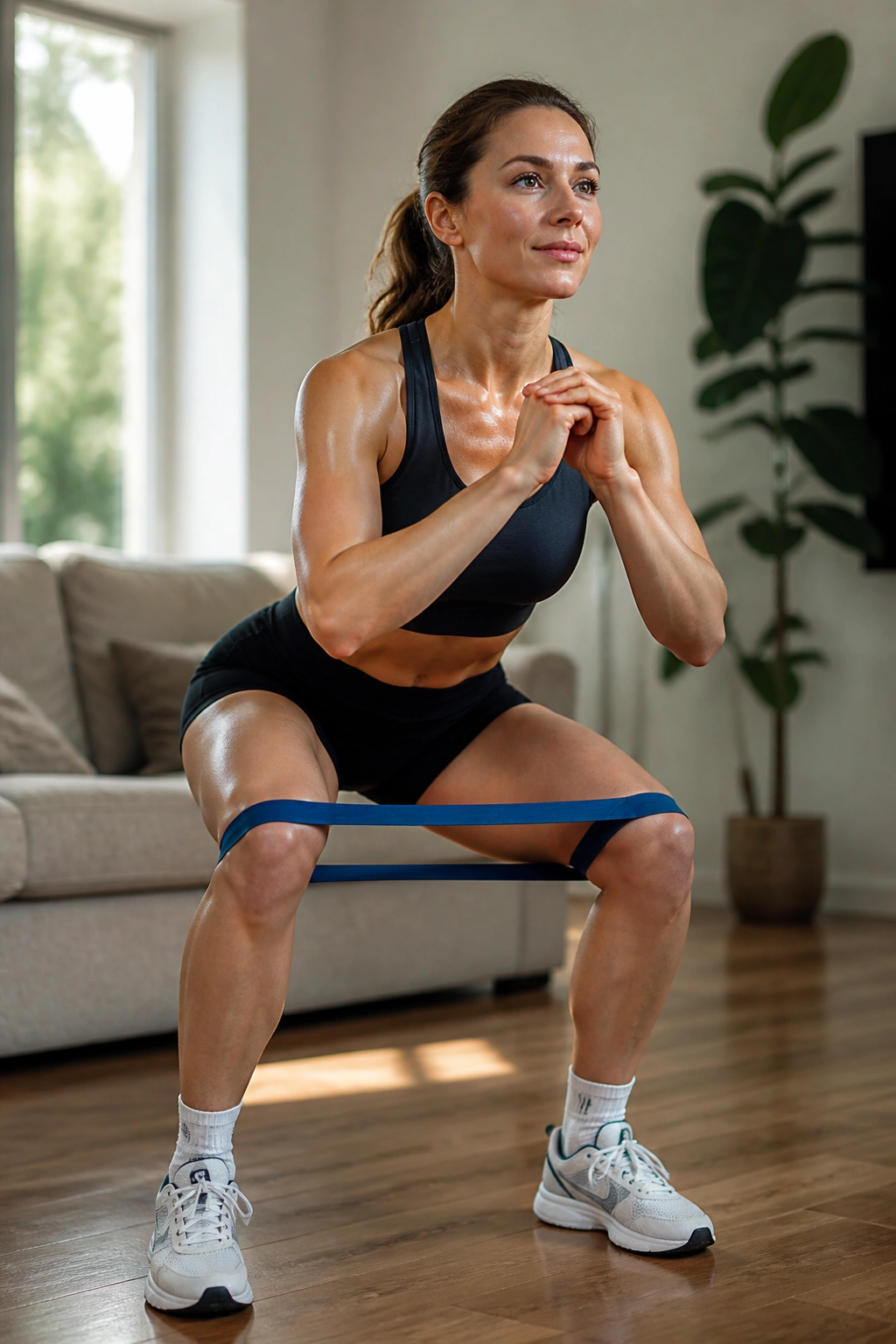
This is the one I reach for when I want a simple full-body hit without a lot of thinking. Loop the band above your knees, keep your chest tall, and move through the set like you mean it. The band is not there to decorate your thighs; it is there to force your knees to stay honest on every squat and lunge.
How to run it
- 40 seconds of squat-to-press-out: drop into a squat, press your knees gently out against the band, and stand.
- 40 seconds of bent-over pull-aparts: hinge at the hips, keep a flat back, and pull your hands apart until the band is taut.
- 40 seconds of alternating reverse lunges: step back smoothly, keep your front heel down, and drive up through the whole foot.
- 40 seconds of glute bridges with band pressure: press the knees out as you lift, then lower under control.
- Rest 20 seconds.
- Repeat for 3 rounds.
The magic here is the balance. Your legs do the obvious work, but your upper back has to keep up on the pull-aparts, and your core has to stop your torso from folding when fatigue shows up. Nothing fancy. Just solid mechanics.
My favorite cue: keep your ribs down on the squat and bridge. If your lower back starts doing the heavy lifting, the band work turns messy fast.
2. The Glute Bridge and Dead Bug Control Session
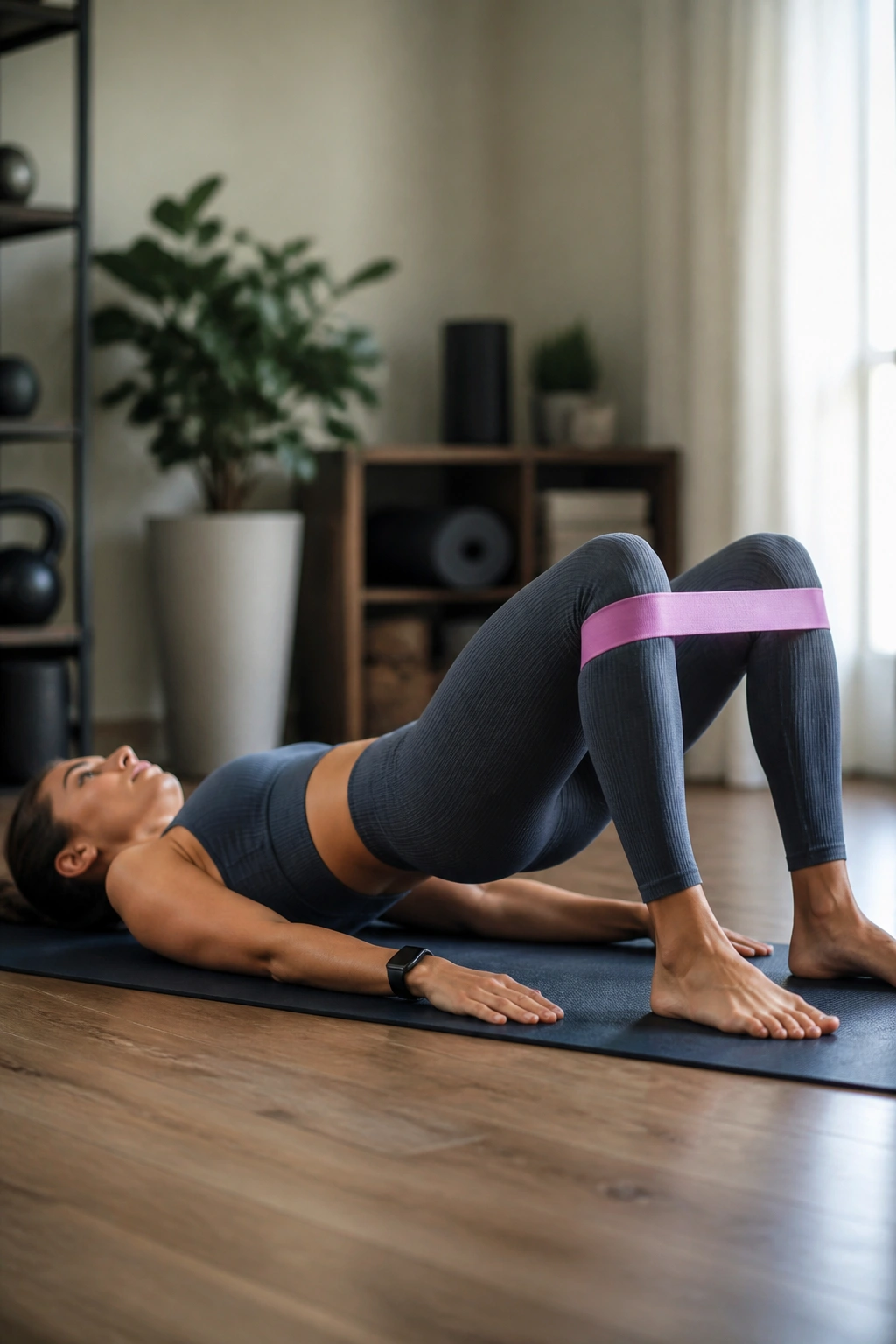
Light bands can feel heavy when your body is still. That is why this floor-based session works so well. You spend most of the time with slow, deliberate tension around the hips and core, which means the burn arrives early and stays put.
Start with the band above your knees and think about pushing the floor away. A glute bridge gets boring in a hurry if you rush it, but a two-second squeeze at the top changes the entire story. The same thing happens in a dead bug. Keep your low back pressed gently into the floor, move one leg at a time, and resist the urge to arch.
Do 12 bridges, then 8 dead bugs per side, then 12 frog pumps with your knees opened against the band. Rest for 30 to 45 seconds, then run the sequence again for 3 to 4 rounds. If you want a little more upper-body work, finish each round with 10 band press-outs while lying on your back and holding the loop between both hands.
It sounds calm. It is not calm.
The best part is how clean it feels when you get it right. Your glutes should finish the bridges with a firm squeeze, not a cramp in the hamstrings. Your core should feel awake, not bent out of shape. If the band starts sliding, that usually means you are letting your knees collapse inward or you chose a band that is too slick for your skin.
3. The Split-Squat Ladder for Legs and Shoulders
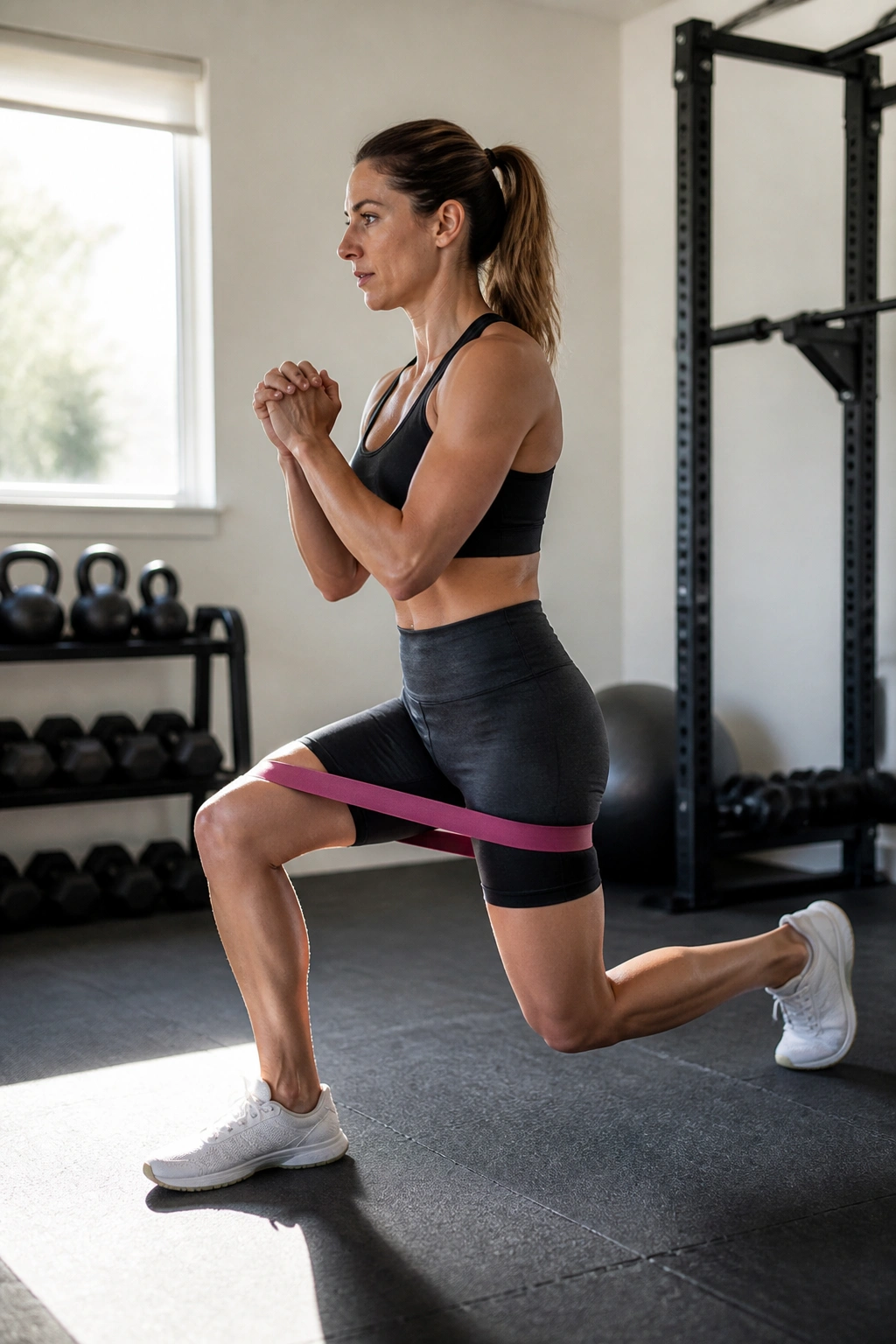
Why does a split-squat ladder hit so hard? Because one leg does the job while the other one mostly watches, and the mini band keeps your hips from cheating. Add a few upper-body moves between rounds and the whole thing turns into a proper full-body session.
How to climb the ladder
- 6 split squats per side
- 8 split squats per side
- 10 split squats per side
- Between each round, do 12 band pull-aparts or 10 standing press-outs
Place the band above your knees and set your feet in a staggered stance. Drop straight down, keep your front knee tracking over the middle toes, and stand up without bouncing. The ladder format matters here because it lets you build heat without rushing the first round. By the time you get to the 10-rep set, the legs start talking back.
Between sides, stand tall and pull the band apart at chest level. That gives your shoulders and upper back a turn, and it stops the workout from becoming all quads, all the time. Nice little balance.
Watch this: if your back knee slams into the floor or your torso folds forward hard, shorten the stance. People love to overstep on split squats. The fix is usually smaller, not bigger.
4. The Low-Impact Cardio Burst That Still Feels Hard
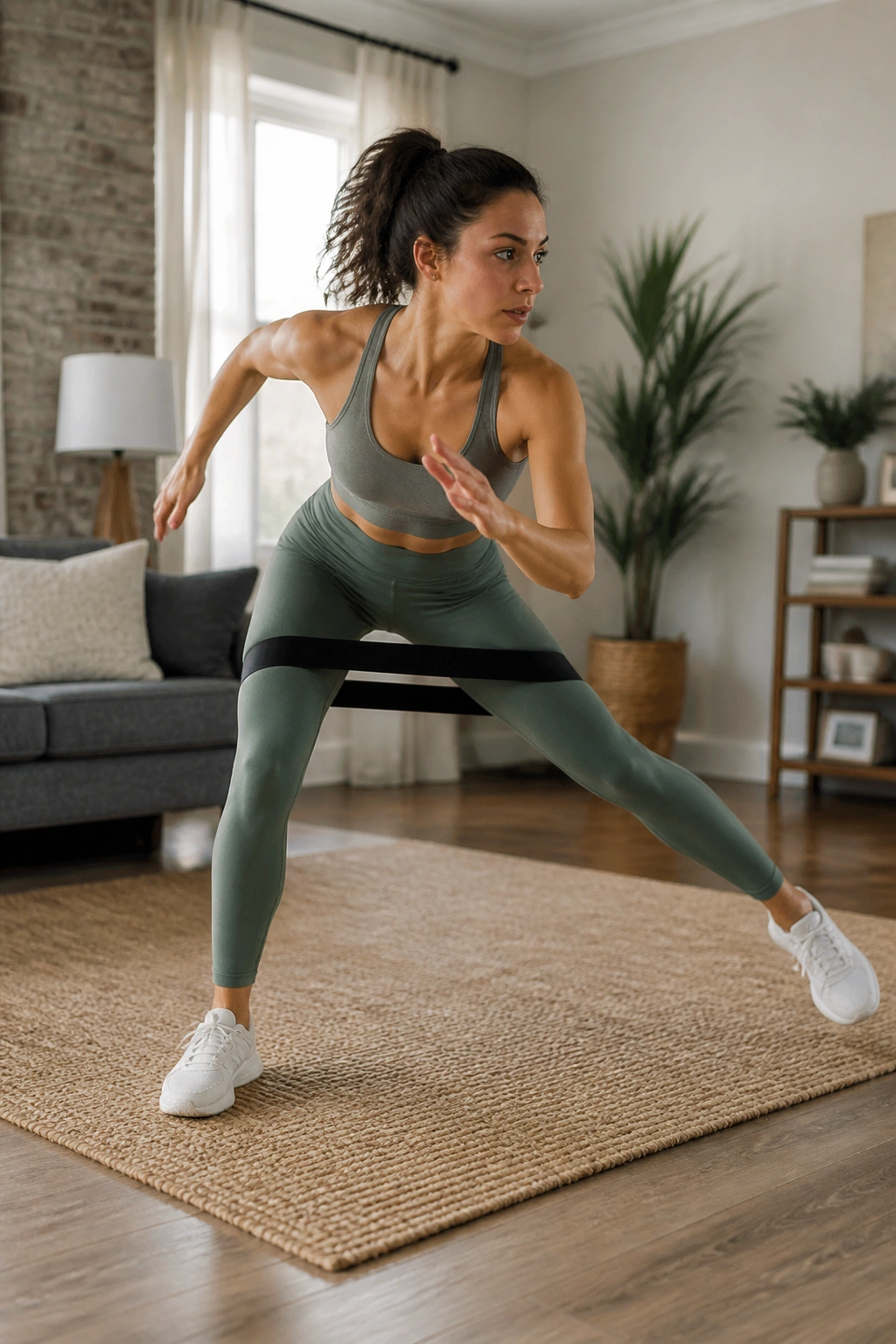
If jumping makes your knees grumpy or your downstairs neighbors complain, this one keeps the heart rate up without turning the room into a trampoline park. It is brisk. It is clean. And yes, it still burns.
Think of it as a moving circuit built from step-based patterns. The band goes above the knees or around the ankles, depending on how much resistance you want. Then you cycle through 30 seconds on, 15 seconds off for 4 to 5 rounds.
- Squat to alternating knee drive
- Skater step with a wide reach
- Mountain climber march from a high plank
- Lateral band walk, 4 steps right and 4 steps left
- Step-out plank jack
The knee drive wakes up the hip flexors and core. The skater step gets the outer hips involved. The plank work makes your shoulders and abs keep their promises. One round feels manageable. Three rounds feel rude.
One sentence here matters: keep the steps crisp, not huge. Big movements sound athletic until your form starts wobbling all over the place. Smaller steps keep tension in the band and let you move faster without losing control.
5. The Posture Reset: Upper Back, Glutes, and Deep Core
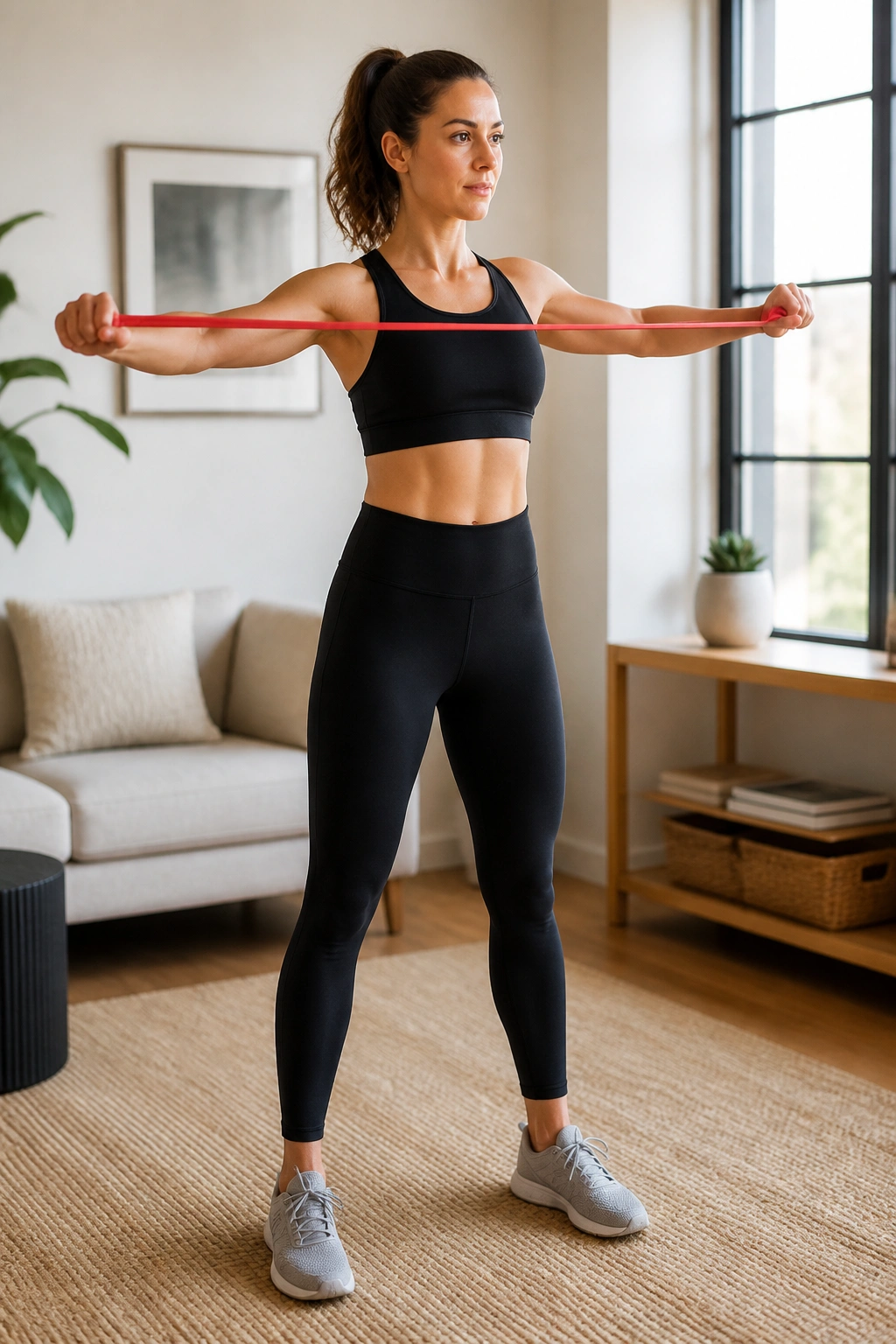
A lot of people want a “posture workout” but do not want the boring parts that make posture improve. Fair enough. This one gets straight to the useful stuff: the upper back, the rear hips, and the deep core that keeps your ribs from flaring like a tent.
Band around the wrists. Feet planted. Stand tall and open the hands just enough to feel the shoulder blades slide down and back. Do 15 pull-aparts, then hinge into 12 good mornings with the band still lightly stretched between your hands. That hinge pattern wakes up the backside without beating up the lower back.
After that, sink into a 20-second wall sit while keeping gentle pressure outward through the band. Then lie down for 10 dead bugs per side and 12 glute bridges. Two or three rounds is enough. More is fine if your form stays tidy, but I would rather see good reps than a long, sloppy grind.
The main thing is this: posture work should not feel like a lecture. It should feel like your body finally remembering where the ribs and hips belong. A clean pull-apart can do more for a slumped desk day than a dozen dramatic stretches.
6. The No-Equipment Stand-Up Workout for Small Rooms
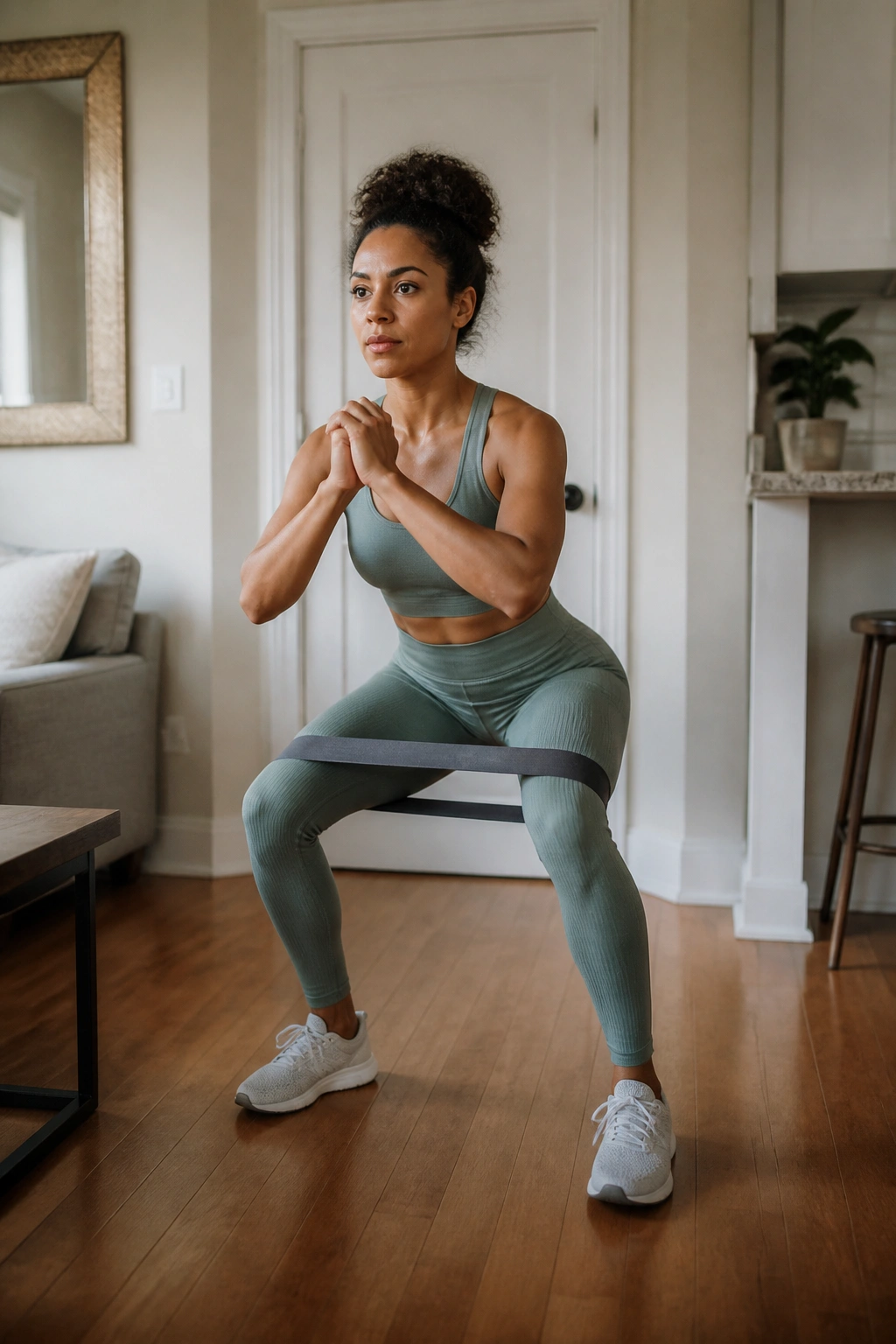
A dumbbell circuit and a mini band circuit are not the same animal. Dumbbells load the hands. Mini bands load the hips, the shoulders, and the tiny stabilizers that usually coast. That makes this standing-only session a smart pick when you want to train hard without laying on the floor or dragging out half the house.
Use the band above the knees for the lower-body moves, then slide it to the wrists for the upper-body work. Do 3 rounds of the following:
- 10 banded squats
- 12 alternating reverse lunges
- 15 standing band press-outs
- 12 standing calf raises
- 10 band pull-aparts
It looks modest on paper. The third round changes your opinion.
This session is best when you need something tidy and quick after work, or when your space is so tight that getting down on the floor would turn into a furniture puzzle. The standing format also helps if your knees feel better with more control and less getting-up-and-down drama. Keep your feet rooted. Keep your shoulders out of your ears. That alone fixes half the sloppy reps I see people do with bands.
Best for: small rooms, apartment workouts, quick lunch-break sessions, and anyone who wants a low-fuss routine that still covers legs, glutes, shoulders, and core.
7. The Bear Crawl Circuit for Core and Shoulders
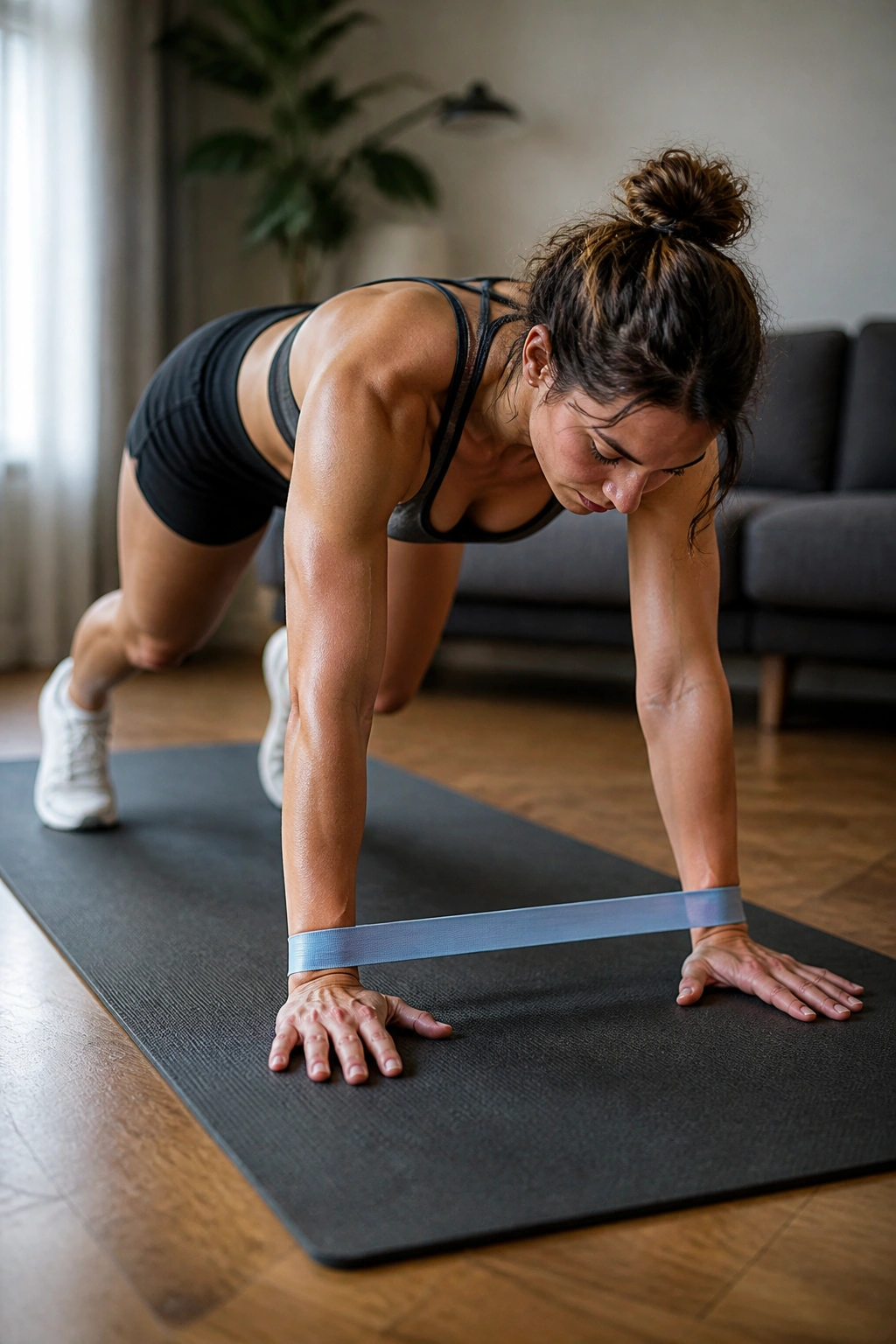
Bear crawls look childish until they last more than ten seconds. Then they become a full-body conversation you did not ask for.
Why the floor work matters
Put the band around your wrists or above your knees, drop into a hover, and crawl slowly for 20 controlled steps. The wrists, shoulders, abs, and hip stabilizers all have to cooperate. If the band is around the wrists, keep a light outward pressure the whole time. If it is above the knees, the crawl becomes more about hip control and keeping the legs from splaying out.
Follow that with 10 shoulder taps per side, 8 knee drives per side, and a 20-second bear hold. Rest 30 seconds, then repeat for 3 rounds. That is enough to make your midsection feel useful for once.
The best part of this workout is the lack of hiding places. Your body will tell on itself fast. If your hips swing side to side during the crawl, shorten the step. If your shoulders collapse, widen your hands a touch. Tiny fixes. Big difference.
This is also one of the better mini band full body workouts for people who want core training that does not feel like endless crunches. Good. Crunches are not the whole story anyway.
8. The Chair-Assisted Beginner Routine
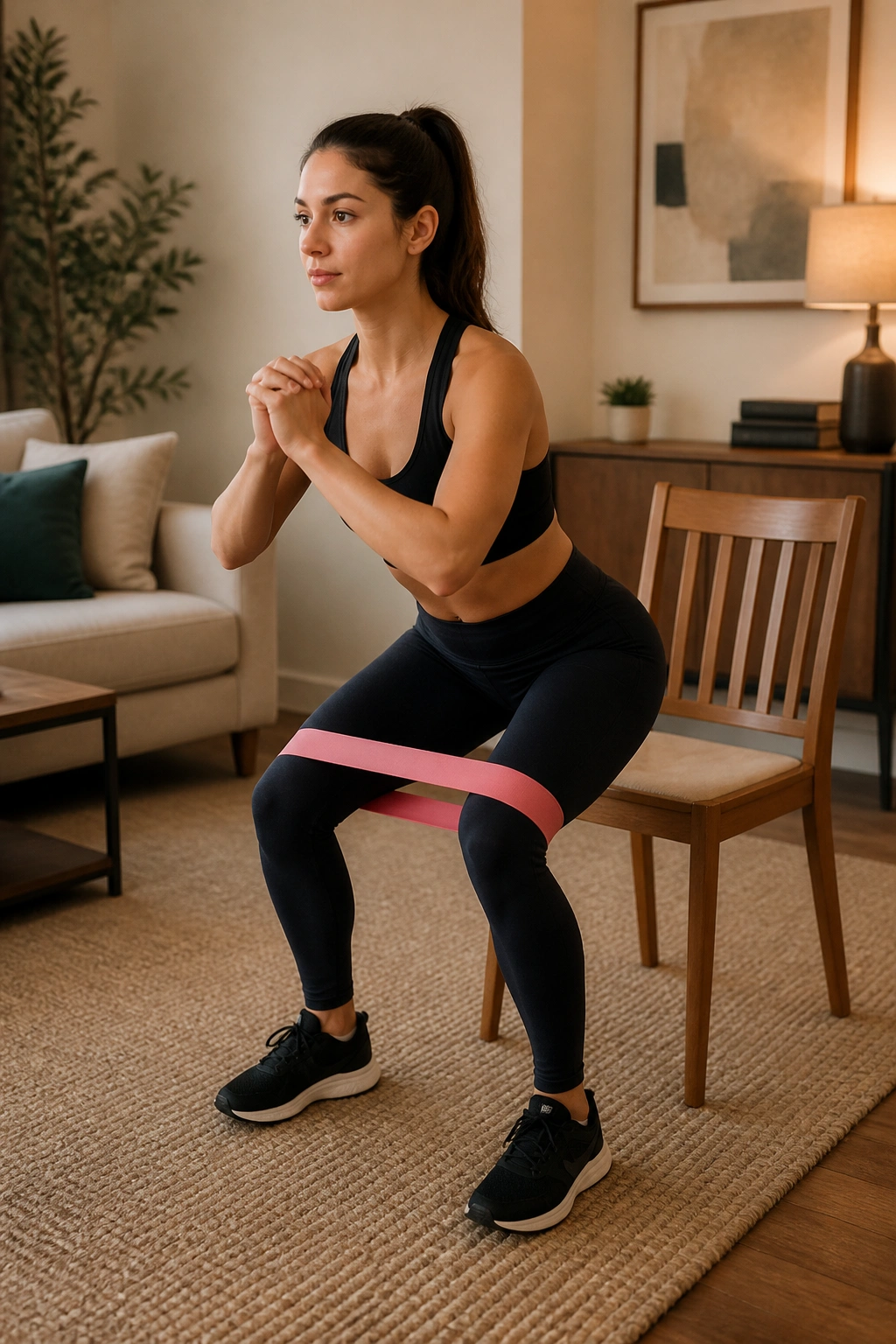
A chair is not a cheat. It is a tool. For beginners, it can mean the difference between a session that feels safe and one that feels like a bad idea you keep trying to be brave about.
Place the band above the knees and stand near a sturdy chair or bench. Sit back to the chair for 10 touch-and-go squats, then hold onto the chair lightly for 8 supported reverse lunges per side. Add 12 glute bridges on the floor, 10 band pull-aparts, and 8 incline push-ups with hands on the chair seat. That covers legs, glutes, chest, shoulders, and core without demanding fancy balance.
The chair helps you learn the range. It also keeps the squat honest. If you always drop too deep and lose your shape, the chair gives you a target. If your knees feel nervous on lunges, the hand support takes the edge off and lets you practice stepping back cleanly.
One thing I like here: the workout does not feel like a watered-down version of “real” exercise. It feels like real exercise with guardrails. That is a much better place to start.
9. The Tight-Space Travel Workout
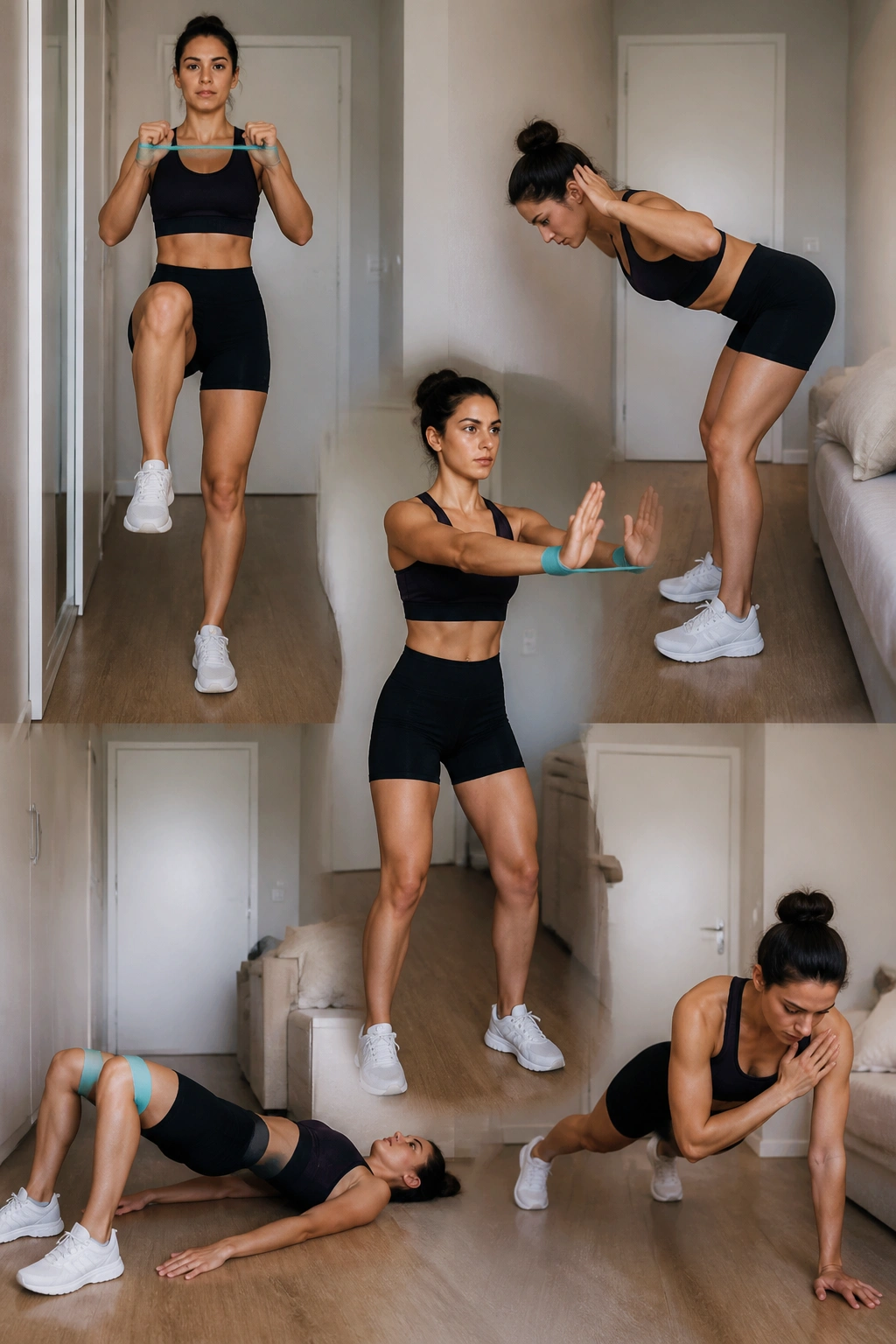
A tiny room changes the rules. You cannot swing your arms around like you own the place, and you definitely cannot throw in giant side steps without knocking a shin into something hard. So this routine keeps the footprint small and the tension high.
Use the band around the wrists for upper-body work and above the knees for the lower body. Move through 40 seconds on, 20 seconds off for 3 rounds:
- March in place with a slight squat
- Banded good morning
- Standing band press-out
- Glute bridge
- Plank shoulder tap from the knees or toes
The march keeps things moving without needing space. The good morning teaches the hinge pattern. The press-out wakes up the shoulders while the bridge and plank finish the job on the core and hips.
There’s a nice honesty to this one. No jumping, no big travel, no drama. Just a small room, a band, and enough work to remind you that limited space does not mean limited training.
10. The Tempo Workout That Makes Light Bands Feel Heavy
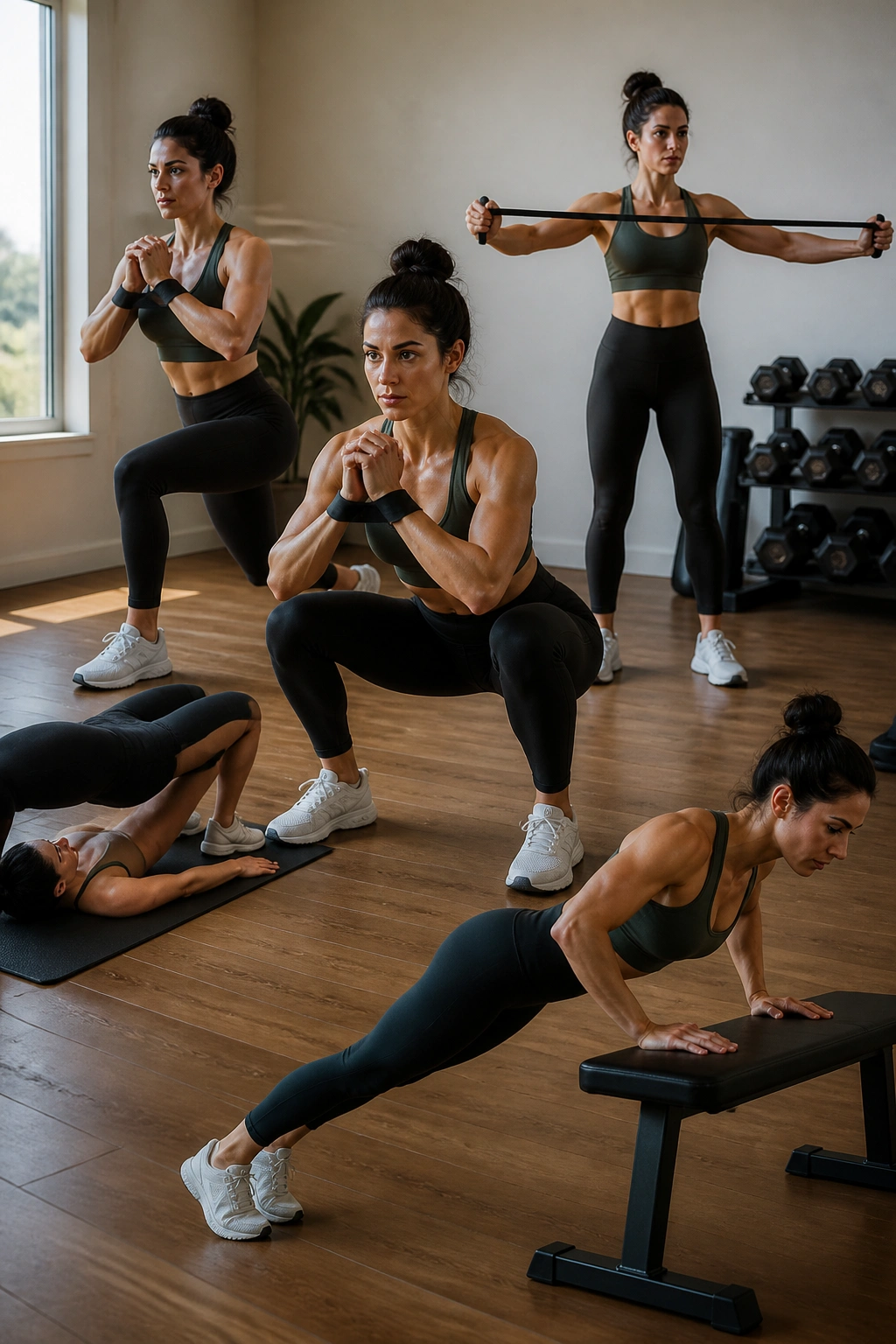
Tempo is the cheapest way to make a light band feel mean. Slow the lowering phase, pause where the muscle is stretched, then drive up with control. That extra control matters more than people think.
Why tempo matters
Do 8 squats with a 3-second lower, pause for 1 second at the bottom, then stand for 1 second. Add 8 reverse lunges per side, 10 pull-aparts, 12 glute bridges, and 8 push-ups with the band around the wrists. Rest 45 seconds and repeat for 3 rounds.
The slow count changes everything. Your legs stop relying on momentum. Your shoulders stop racing through the easy part of the movement. Your core has to stay on the whole time, because sloppy bracing shows up fast when you refuse to hurry.
Tempo work is one of my favorites for home training because it makes a plain band feel much more serious. It also cleans up form. When you can feel the lower half of the squat, or the full path of the bridge, you are less likely to cheat the movement and call it hard work.
Use a band that feels medium, not brutal. If the resistance is too high, the tempo falls apart and you end up fighting the rubber instead of training the muscle.
11. The EMOM Full-Body Burner
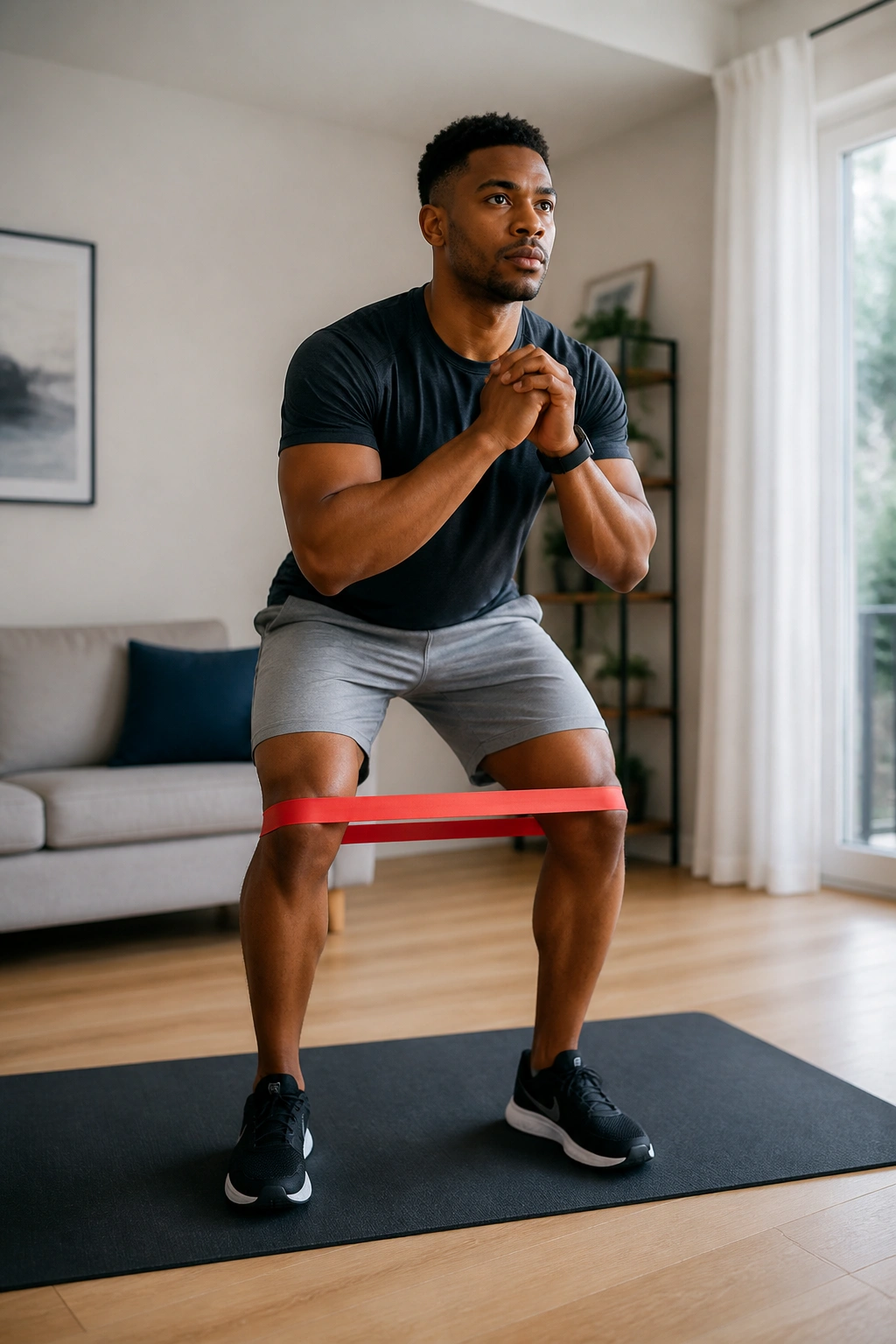
EMOM means “every minute on the minute,” and it is one of the cleanest ways to keep a session organized without checking your watch every twenty seconds. You finish the work, breathe for whatever time is left in the minute, then start again.
Run this for 12 minutes:
- Minute 1: 12 band squats
- Minute 2: 15 pull-aparts
- Minute 3: 10 reverse lunges per side
- Minute 4: 12 glute bridges
- Minute 5: 10 shoulder press-outs
- Minute 6: 20-second plank hold
Then repeat the same six-minute pattern one more time.
The nice thing about this setup is the built-in pressure. If you dawdle, you eat into your rest. If you move cleanly, you get a bit of recovery before the next round starts. It keeps the pace honest. It also works well on days when you want structure but do not want a long routine.
Keep the reps crisp. EMOM training falls apart when people chase speed with ugly form. Better to finish the set at 35 seconds and breathe for 25 than to rush to the minute mark with half your body out of position.
12. The Mobility-Plus-Strength Flow
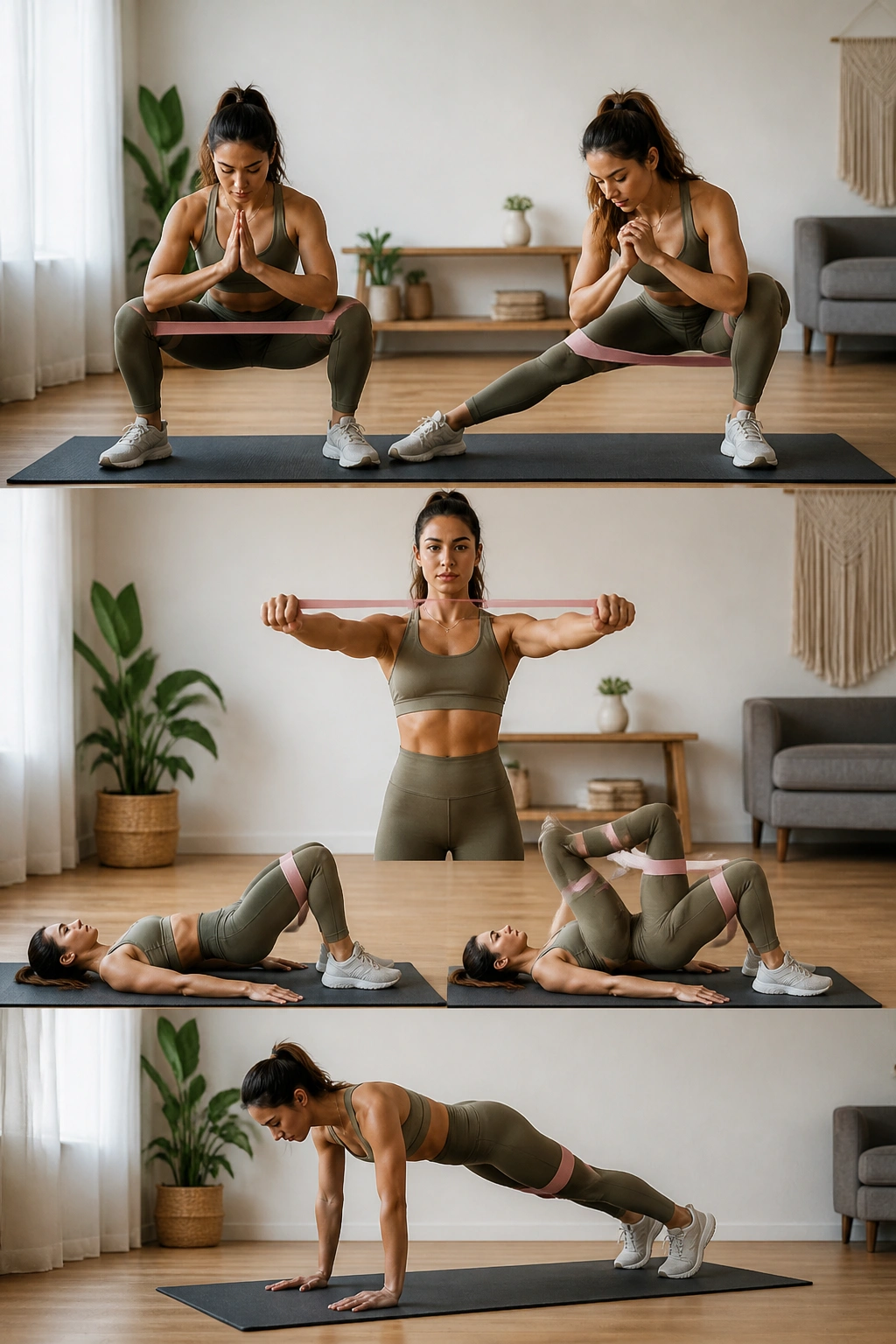
Can a workout feel like a stretch and still count as training? Yes. When the sequence is smart, mobility work and strength work stop being rivals.
Start with a deep squat pry for 30 seconds, band above the knees if your hips need a little extra wake-up. Shift into side lunges, then stand and do 10 pull-aparts. Drop to the floor for 8 bridge marches per side, then finish with 8 bird dogs per side and a short high plank hold.
Two rounds is enough for most people. Three if you want it to feel more complete.
The value here is that none of the movements feel random. The squat opens the hips, the side lunge asks them to move in a different plane, and the bridge plus bird dog forces the trunk to stay steady while the limbs do their thing. That combination matters more than people admit.
This is a good day-after workout, but it is not only for recovery. If your hips get stiff, your lower back tends to steal the job. A flow like this gives the hips and core a fair shot at doing it properly.
13. The Upper-Body Burn With Legs on the Side
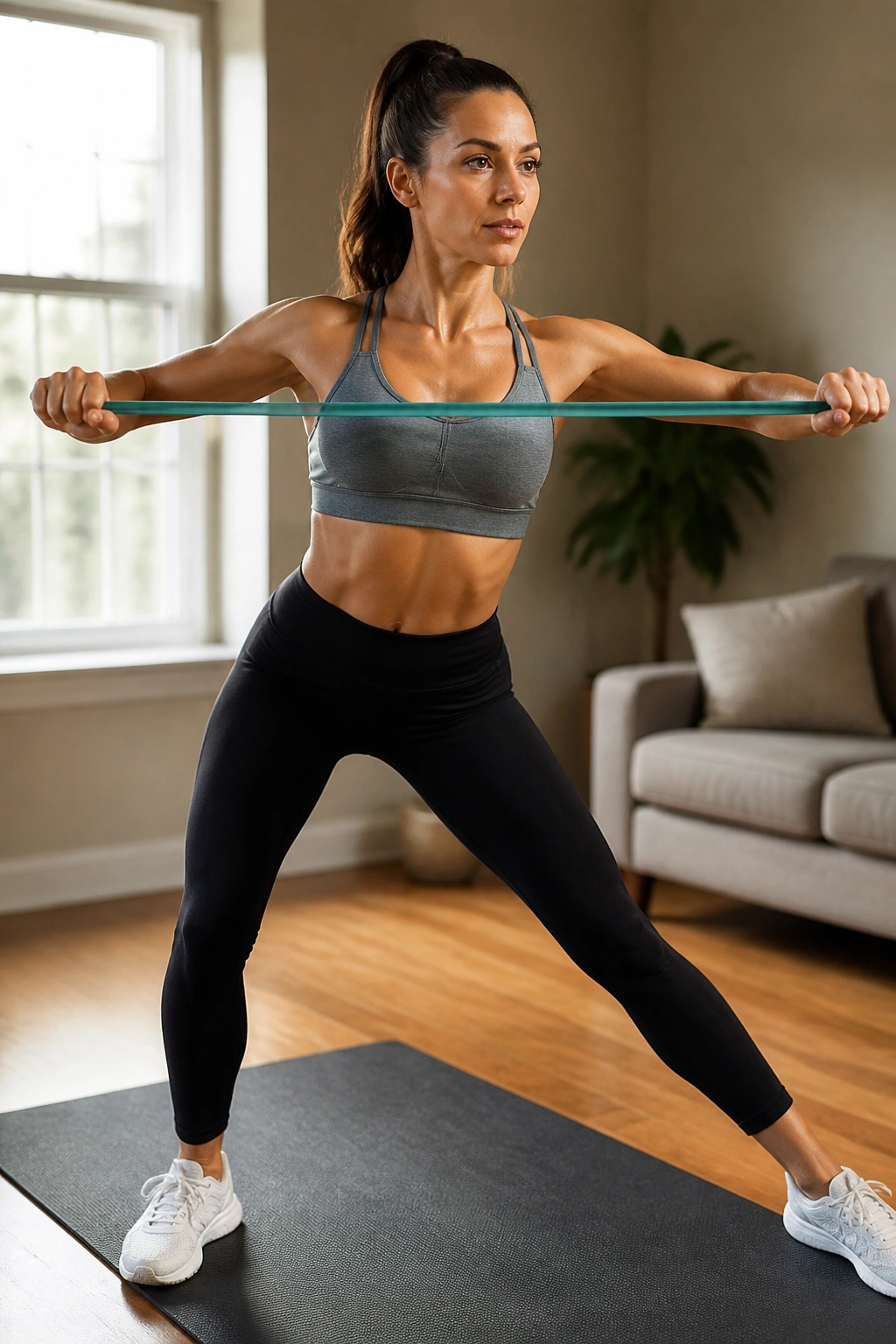
Mini bands do not belong only on thighs. Put one around your wrists and suddenly your shoulders, chest, and upper back have to work harder just to keep the arms in line. Add a few lower-body moves and the session turns into a sneaky full-body grinder.
Do 12 band pull-aparts, 8 incline push-ups with a band around the wrists, 12 squat holds with wrist pressure, 10 reverse lunges per side, and 15 standing press-outs. Rest 30 to 45 seconds, then repeat for 3 rounds.
What I like about this format is that the upper body stays awake the whole time. A lot of home workouts with bands become leg-only sessions because the band feels easier to place there. This flips that pattern. Your shoulders have to stabilize, your chest has to resist collapse, and your legs still get their share.
Unlike a dumbbell upper-body circuit, this one creates constant inward or outward tension that never fully disappears between reps. That means the arms and upper back feel more “on” the whole time, even when the movement looks small.
If your wrists get annoyed, slide the band slightly higher on the forearms. Small adjustment. Big relief.
14. The Hamstring-First Hinge Session
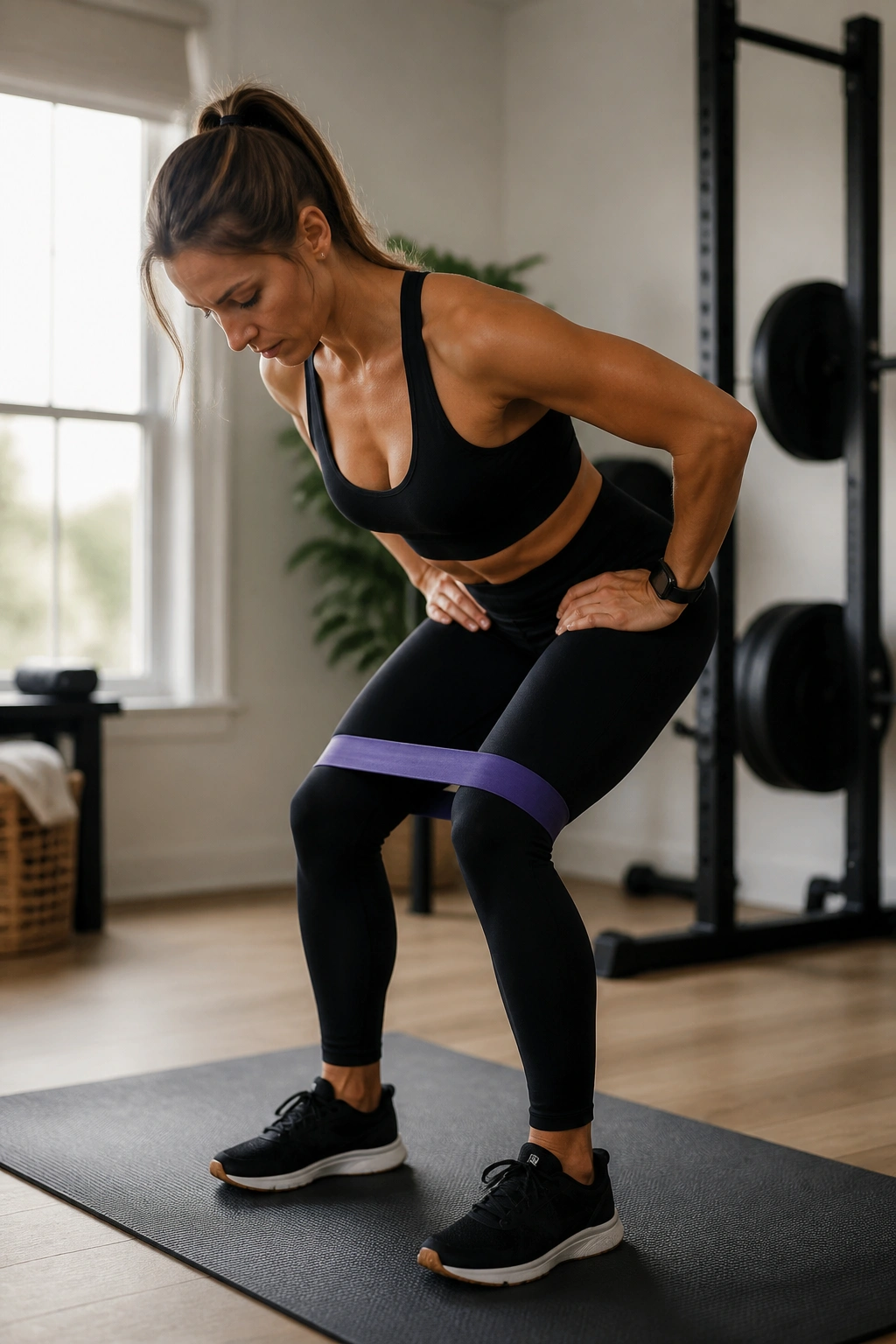
A lot of people think their glutes are the star of lower-body work. Usually the hamstrings are doing more than they get credit for, and this session puts them in the spotlight where they belong.
Loop the band above the knees and start with 10 good mornings, moving from the hips while keeping a soft bend in the knees. Then do 8 Romanian deadlifts if your setup allows it, or just stick with the hinge pattern and slow the descent. Follow that with 10 single-leg hinges per side, 12 glute bridges, and 8 dead bug reps per side to keep the core involved.
The hinge is a clean pattern, but it only works when you keep your spine quiet and let the hips travel back. If the band makes your knees drift inward, press them out gently. Do not overdo it. A little outward pressure is enough.
I like to finish this one with a 20-second hamstring bridge hold. That little pause at the top makes the back of the legs feel dense and hot in a way that fast reps do not always catch.
This is a useful day if squats already dominate your week or your lower back gets cranky when your hips are lazy. The hinge gives you a different load path. Your body usually appreciates that.
15. The Core and Cardio Mash-Up
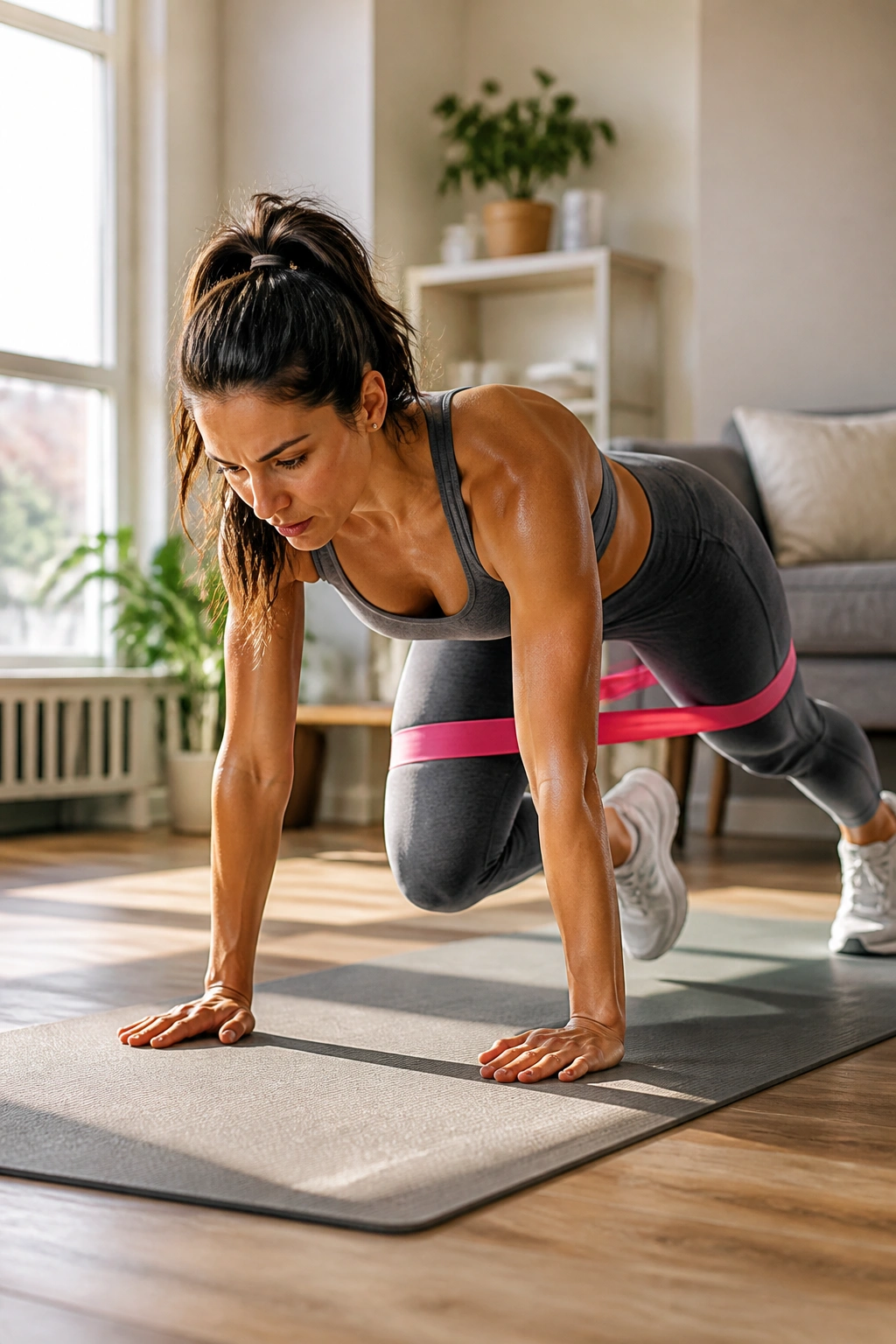
Sometimes you want to breathe hard and feel your middle section doing more than holding a plank for a while. This routine mixes both, and it does not spend time being polite.
Move through 30 seconds on, 15 seconds off for 4 rounds:
- Squat jack step-outs with the band above the knees
- Mountain climber march
- Bear hover
- Skater step
- Side plank knee drive
The pace matters here. It should feel quick enough to raise your breathing, but not so frantic that the band starts snapping around your legs. Control keeps the whole thing from turning into noise.
Your core shows up in different ways across the circuit. In the mountain climber, it resists hip sway. In the bear hover, it keeps the knees from drifting. In the side plank, it protects the spine from folding. That mix is useful because it trains the trunk like a system, not a single muscle you can pinch with your fingers.
Good sweat. Clean reps. That’s the target.
16. The Strength Complex You Run Without Setting the Timer Down
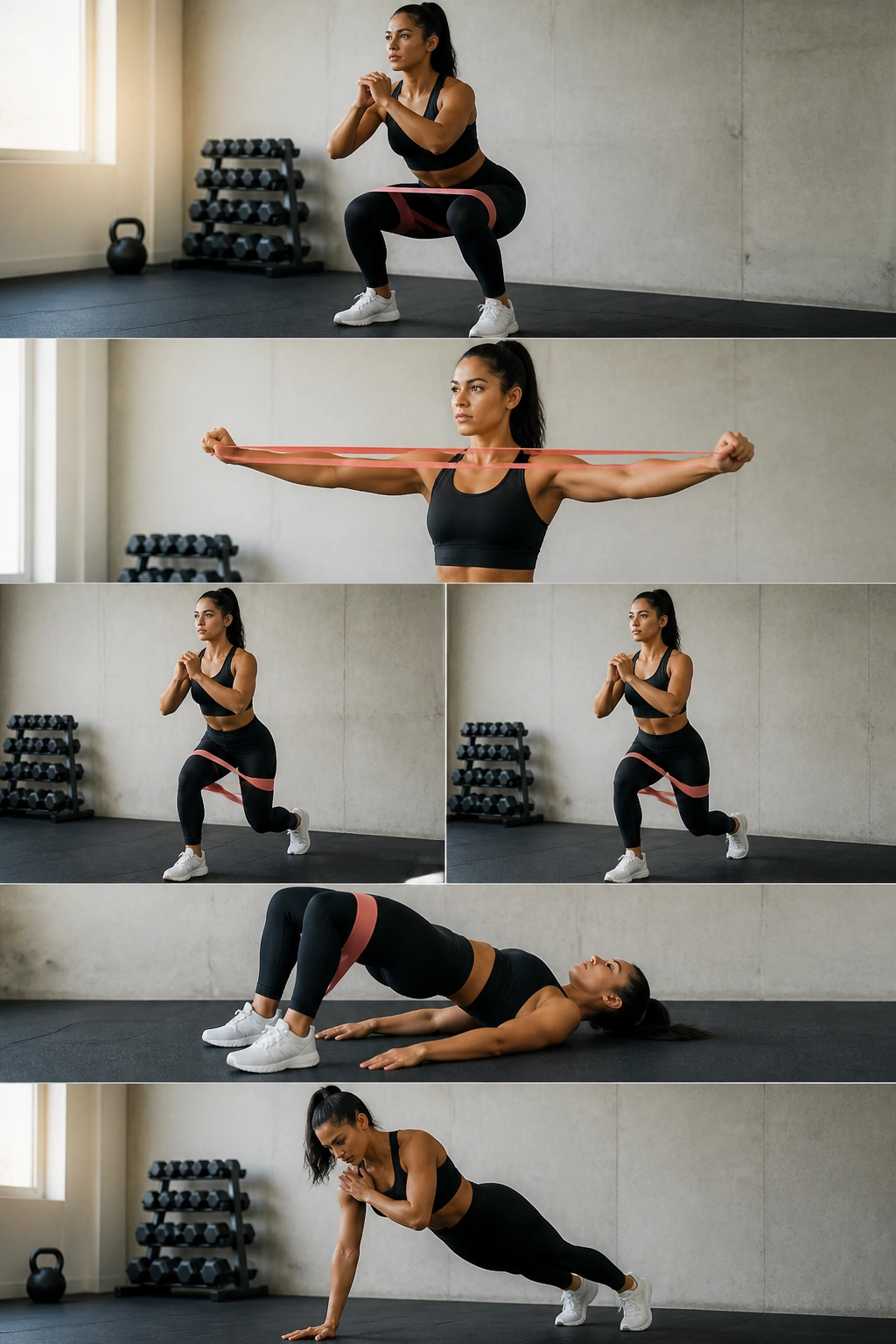
A complex is a chain of moves you complete in order without long rests in the middle. It is efficient, a little unforgiving, and useful when you want strength work to feel tight instead of scattered.
The sequence
- 8 band squats
- 8 pull-aparts
- 8 reverse lunges per side
- 8 glute bridges
- 8 push-up shoulder taps
- Rest 60 seconds
- Repeat for 4 rounds
Keep the band above the knees for the lower-body moves and around the wrists for the push-up taps. If you need to change band placement, do it during the rest, not in the middle of the sequence. That tiny bit of planning keeps the rhythm clean.
What makes this work is the lack of fluff. There is no oddball move to memorize, no huge space requirement, and no complicated setup. The body moves from squat to upper back to lunge to bridge to plank, which is about as practical as a home session gets.
The main caution is pacing. People tend to sprint the first two moves, then fall apart by the reverse lunges. Start at a pace you can hold for all four rounds. Slightly under control beats heroic on round one and useless on round three.
17. The Advanced Athletic Circuit
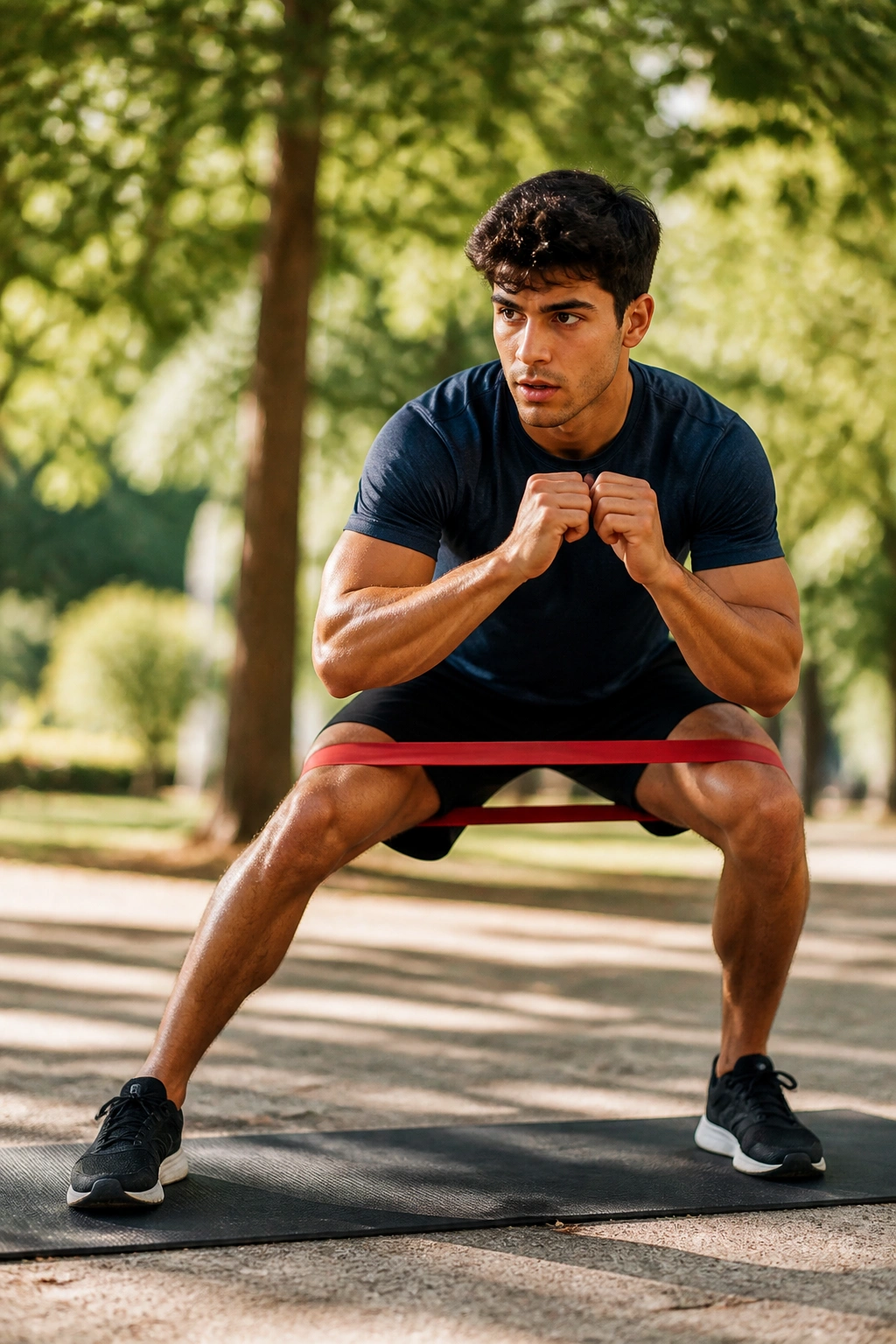
This is the one that stops feeling friendly near the end. It uses faster direction changes, single-leg tension, and enough floor work to make your shoulders and core earn the right to breathe.
Set a timer for 20 seconds on, 10 seconds off, and cycle through these moves for 5 rounds:
- Lateral lunge with band above the knees
- Split-squat pulse
- Bear crawl
- Plank jack step-out
- Standing punch-out with the band around the wrists
The lateral lunge opens the hips in a way regular squats miss. The split-squat pulse keeps one leg under load longer than you expect. The bear crawl and plank jack bring the shoulders and trunk into the same fight. By the time you get to the punch-outs, your upper body is already a little tired, which is the point.
Use this workout when you want a harder session without needing equipment that takes over the room. It suits people who already know how to brace their core and keep their knees tracking well. If that is not you yet, the move choices are still fine, but shorten the work intervals before you chase the full pace.
Tip: keep the band tension moderate. Heavy resistance plus fast transitions is where form goes to die.
18. The 15-Minute Finisher for Any Day
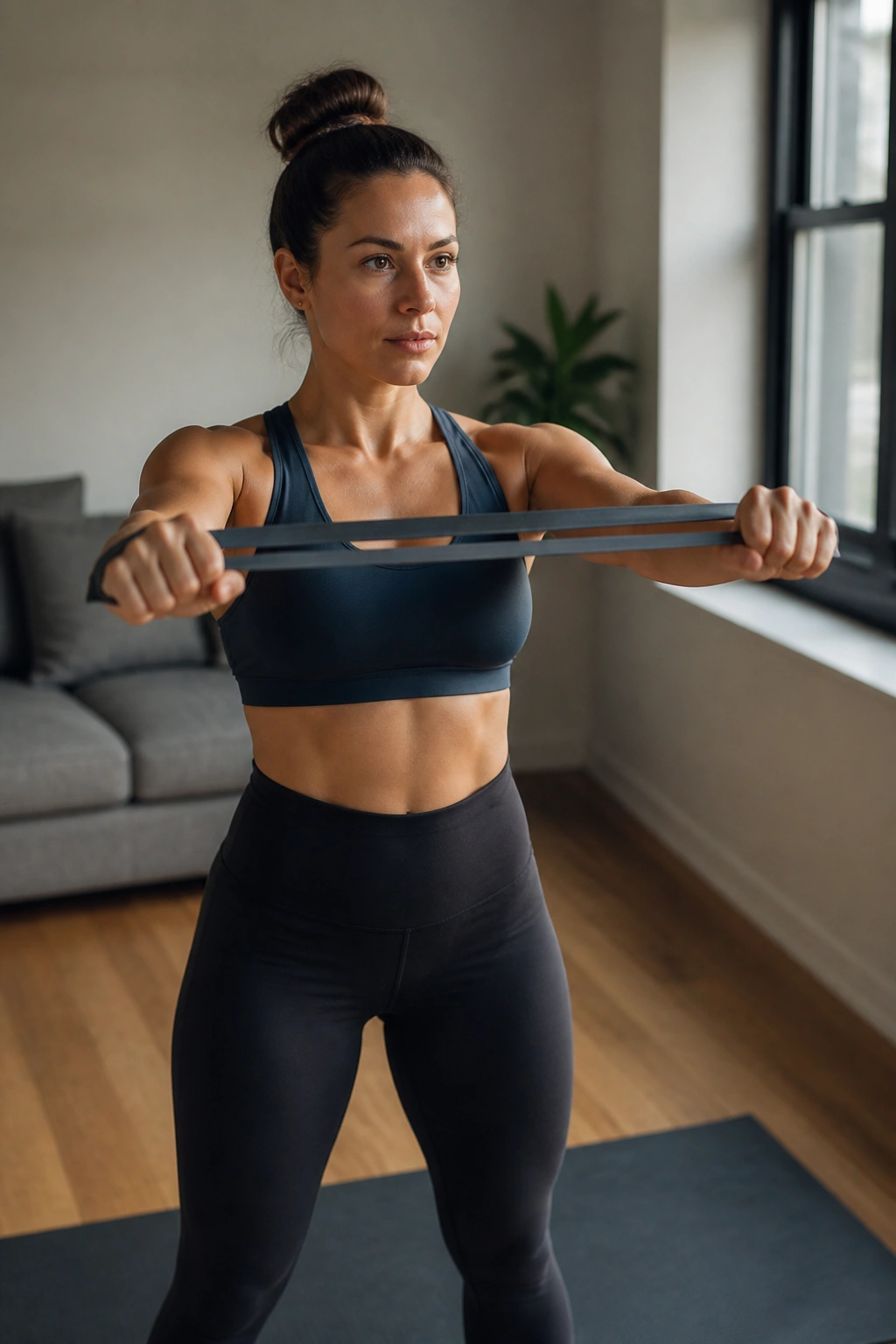
Some days you do not need a long plan. You need a clean finish. This little circuit works after bodyweight training, after a walk, or as the whole workout when your schedule is messy and the fridge is calling.
Run 45 seconds of work, 15 seconds of rest, and repeat the full circuit 3 times:
- Squat with band pressure
- Glute bridge with a two-second squeeze
- Standing pull-apart
- Reverse lunge alternating sides
- High-plank shoulder tap or knee-down plank tap
Keep the band above the knees for the lower-body pair and around the wrists for the upper-body pair. If you only have one placement in you that day, leave it on the knees and do the upper-body moves with slow bodyweight control. Not perfect. Still useful.
This is a good final option because it is hard enough to count and short enough to finish. You get legs, glutes, shoulders, core, and a bit of conditioning without needing to psych yourself up for half an hour first. That matters more than people want to admit. Consistency usually comes from workouts that do not ask for a whole ceremony.
If you keep one mini band near your mat and another near the couch, this is the routine that saves the day when motivation is thin and your energy is halfway gone.
