



If your knees hate pavement but your lungs still want a fight, the cross trainer is hard to beat. Cross trainer workout plans for women get overlooked because the machine looks tame from across the room, yet a good session can leave your legs warm, your breathing honest, and your head a little clearer.
People love to call it “easy cardio.” I don’t buy that. Turn the resistance up, hold your posture, and the pedals stop feeling polite in a hurry. Quads, glutes, calves, and even your upper body if you use the handles properly — all of them have to show up.
I’m using RPE, the 1-to-10 effort scale, because resistance numbers vary from machine to machine. A 4 should feel easy enough to talk through, a 6 should feel like steady work, and an 8 should feel hard without turning your form into a mess. That little distinction matters more than most people think.
Some days call for 15 minutes and a decent sweat. Other days call for long, grinding mileage that quietly builds stamina. The plans below cover both moods, and a few in between.
1. 20-Minute Cross Trainer Steady Burn

A steady ride is boring in the best way. No sprinting, no drama, no excuses. You get on, settle in, and let the machine do what it does best: keep your heart rate up without beating you up.
How to Run It
- 4 minutes easy at low resistance
- 12 minutes at a smooth, conversational pace
- 2 minutes slightly harder, enough to breathe through your mouth
- 2 minutes easy cooldown
Keep your stride long enough to feel the glutes work, but not so long that your hips start rocking. If the pedals feel clunky, you’re pushing too hard or standing too tall. That’s usually the sign to back off one notch.
Best for: days when you want a clean calorie burn and no mental strain.
2. 30-Second Sprint Ladder

Short bursts can do more than long misery. A ladder session keeps your brain awake because the work changes before boredom gets a chance to settle in.
Start with 5 minutes of easy movement. Then do 30 seconds hard / 30 seconds easy for 4 rounds, 45/45 for 4 rounds, and 60/60 for 3 rounds. Finish with 4 minutes of very light pedaling. The hard parts should feel sharp by the end, but your shoulders should stay loose.
This one suits women who like measurable progress. You can watch your breathing, watch your recovery, and feel the difference from one round to the next.
3. 15-Minute Hill Climb Grind

Why does a hill plan feel harder than it looks? Because resistance steals away the bounce that makes easy cardio feel, well, easy. Once you remove that free ride, every push starts to matter.
Begin at a moderate level for 3 minutes, then raise the resistance one notch every 2 minutes until you reach a tough but controlled effort. Hold that top level for 2 minutes, then back down in the same steps. Keep your chest open and your hands light on the handles.
How to Use It
- Stay tall through the torso.
- Push through the heel on the back leg.
- Drop resistance if your shoulders start creeping upward.
- Use it on lower-body days when you want work without a barbell.
This workout looks calm. It isn’t.
4. 18-Minute Recovery Glide

The best recovery session is the one you don’t have to think about. Picture this: your legs are heavy after a hard leg day, you still want to move, and the idea of running feels rude. That’s where this plan fits.
Keep the resistance low and move for 18 minutes at an easy pace. Breathing should stay smooth, and you should be able to speak in full sentences without pausing. If you like numbers, aim for RPE 3 to 4. Nothing heroic.
- 5 minutes easy warm-up
- 8 minutes smooth, relaxed motion
- 3 minutes with a slightly faster cadence
- 2 minutes cooldown
The point is circulation, not exhaustion. That matters.
5. 40-Minute Zone 2 Base Builder

This is the kind of session that feels almost too plain to matter, which is exactly why people skip it. They shouldn’t. A long, steady Zone 2 ride builds the aerobic base that makes every harder workout feel less awful.
Keep the effort at RPE 4 to 5 for most of the session. You should be able to talk, but you probably won’t want to chat much. Aim for smooth breathing, a steady cadence, and a resistance level that makes your legs work without turning the movement choppy.
The nice part is how honest this workout is. If you drift too hard, your breathing tells on you. If you coast, your legs tell on you. There’s nowhere to hide, and that’s useful.
6. Backward-Pedal Glute Focus
Backward pedaling changes the feel in a way that surprises a lot of people. The motion is shorter, the burn shows up sooner in the quads and glutes, and you stop relying on the same forward rhythm you’ve been using for years.
Unlike a standard steady ride, this version asks for more concentration. Keep the resistance low to moderate and reverse the stride for 30 to 60 seconds at a time, then switch back to forward motion for a minute. Repeat that cycle for 15 to 20 minutes.
Best for women who want a lower-impact lower-body session that still feels targeted. If your machine has moving handles, keep the upper body relaxed during the backward intervals and use the arms only as much as needed.
7. Tabata Burst Session

Twenty seconds can be brutal when you do it right. Tabata gets treated like a magic trick, but it’s really just a very short work interval with almost no mercy.
After a 5-minute warm-up, do 20 seconds hard / 10 seconds easy for 8 rounds. Rest for 2 minutes, then repeat the block once more if you’ve got the gas for it. Stay clean with your form. Once your shoulders start hunching or your feet lose rhythm, the session is past its useful point.
A lot of people go too hard in round one and spend the rest of the workout hanging on. Don’t do that. The goal is repeatable intensity, not one reckless sprint that empties the tank.
8. Pyramid Resistance Climb

A pyramid workout gives your body a clear path upward and back down again. That structure helps when you want progression without guessing what comes next.
Start at a moderate resistance for 2 minutes, move up one level for the next 2 minutes, then keep climbing every 2 minutes until you hit a level that feels tough but still controlled. Once you reach the top, come back down the same way. Finish with a short cooldown at the easiest setting.
This plan works well on days when you want a little drama without full-out intervals. The upward climb wakes up the legs. The descent lets you catch your breath while staying in motion. Simple. Effective. No fancy stuff needed.
9. Post-Strength Finisher

Got 10 or 12 minutes after lifting? Use them. A cross trainer finisher can clean up the end of a strength workout without adding much joint stress.
How to Use It
Do 1 minute moderate / 1 minute hard for 5 rounds after your weights. Keep the resistance high enough that your legs are working, but not so high that your form gets sloppy. If you’ve already done squats or lunges, this should feel like a burn, not a second leg day.
It’s best after upper-body lifting, but it works after lower-body work too if you keep the resistance sensible. The trick is leaving the gym with a little left in the tank, not crawling out of it.
10. Cross Trainer Beginner Confidence Builder
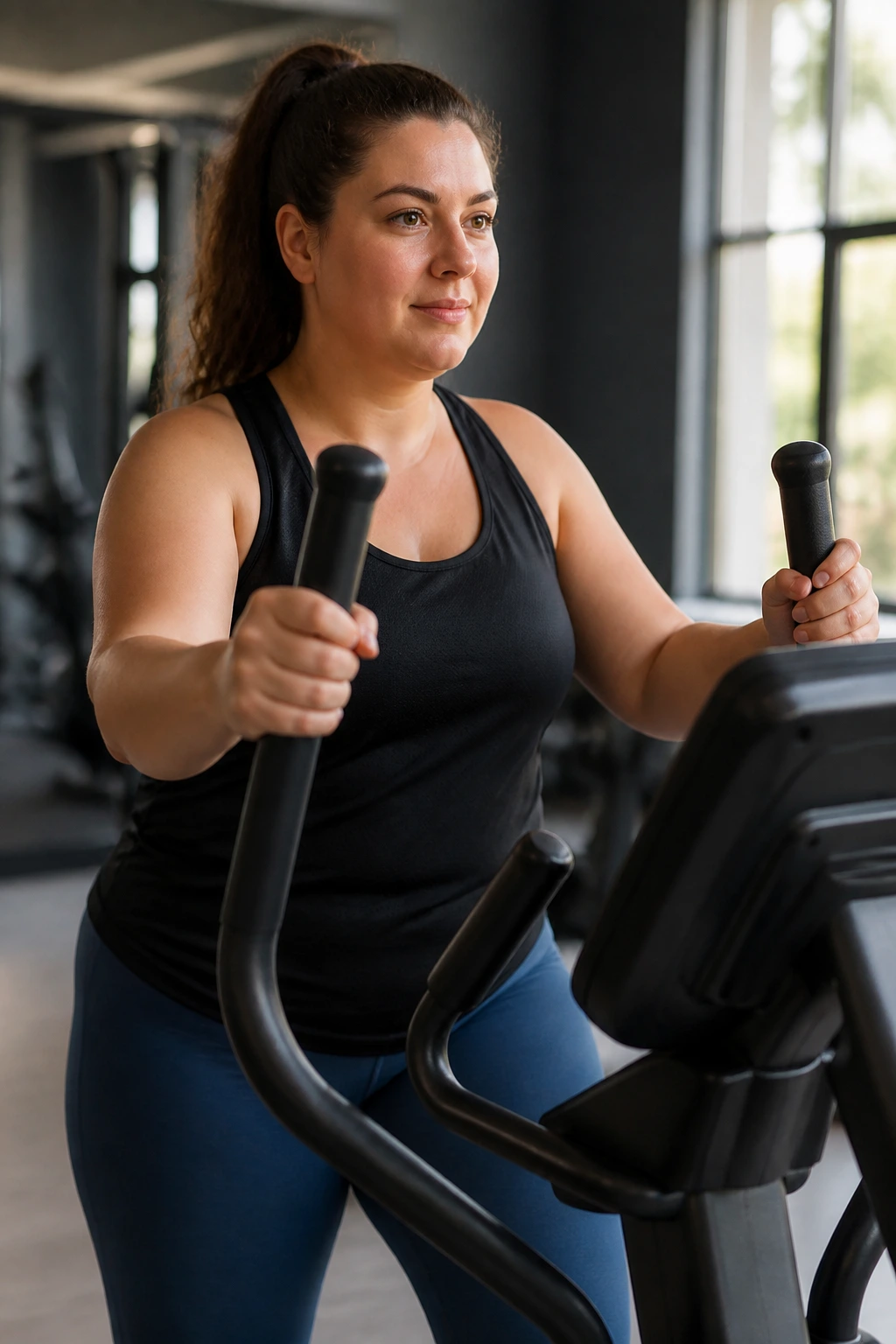
A first cross trainer session should not feel like a punishment. It should feel learnable. That matters, because awkward machines lose people fast if the first experience is too aggressive.
Start with 3 minutes easy, then alternate 2 minutes easy / 1 minute moderate for 12 minutes, and finish with 3 minutes easy. Keep the moving handles relaxed, not white-knuckled. Your feet should stay planted through the whole stride, and your hips should feel stable rather than bouncy.
- Keep resistance low at first.
- Watch the machine display, but trust your breathing more.
- If you lose your rhythm, slow the cadence instead of forcing speed.
This plan builds confidence without making a big speech about it. It just works.
11. Long Endurance Cruise

Long sessions have a special kind of honesty. There’s nowhere to rush, nowhere to fake it, and nowhere to hide from your own pacing. That is useful, even if it sounds dull.
Settle in for 45 to 60 minutes at a steady effort, around RPE 4 to 5. Every 10 minutes, make one small change: raise cadence a touch, add a notch of resistance, or go back to your starting pace for a minute before rebuilding. Those tiny shifts keep the session from turning into a numb shuffle.
You want a finish that feels tired but not broken. If your legs are heavy and your breathing is steady, you got it right. If you’re counting the ceiling tiles, lower the pace next time.
12. Lunch-Break Fat-Burn Circuit

A lunch break workout needs a clean start and a hard stop. No wandering. No extra fluff. You get in, you work, you leave with time to spare.
Unlike a long steady ride, this one uses tight intervals: 4 minutes warm-up, then 8 rounds of 45 seconds hard / 15 seconds easy, then 4 minutes moderate, then 4 minutes cooldown. The work bursts should feel crisp, almost snappy, not sloppy and dragged out.
Best for women who want a shorter session that still earns its sweat. If you have a machine with a quick-resistance button, this is the place to use it. You’re not hunting comfort here. You’re hunting efficiency.
13. Tempo Threshold Session

Tempo work sits in that useful middle ground between easy and all-out. It’s hard enough to demand focus, soft enough to hold for more than a minute, and that balance makes it a very good cross trainer workout.
The Structure
- 5 minutes easy warm-up
- 3 rounds of 5 minutes hard but controlled
- 2 minutes easy between rounds
- 4 minutes cooldown
During the hard sections, you should be breathing heavy but not frantic. If you need to grip the handles harder and harder, the resistance is too high. Keep the stride smooth and the rhythm steady.
This is one of the best plans for building staying power. It’s also one of the least glamorous. Fine. Not every useful workout has to be exciting.
14. Heart-Rate Zone Builder

Some people love screens. Others ignore them. If you’re the type who likes a target to chase, heart-rate work can make the session feel more concrete.
Settle into 30 to 35 minutes where your heart rate lives in a steady middle zone — hard enough to breathe noticeably, not so hard that you need to stop talking completely. If you use a monitor, watch for drift. If your heart rate keeps climbing while your pace stays the same, ease off a little.
The real value here is control. You stop guessing whether you’re working hard enough, and that can be calming. A lot of women do better with a clear number than with a vague “feel the burn” cue. I’m one of them, frankly.
15. Knee-Friendly Cardio Day

A cross trainer can be a gift on days when your knees are complaining but you still want to move. The machine keeps impact low, and that alone makes a big difference.
Start with 5 minutes easy, then hold a smooth pace for 15 to 20 minutes at low to moderate resistance. Keep your feet flat and avoid stomping through the stride. If any part of the motion feels jerky, slow down before you add resistance.
What to Watch For
- No pain in the joint line.
- No bouncing through the hips.
- No death-grip on the handles.
- No sudden speed changes.
If a session needs to be gentle, let it be gentle. That is not failure. That is good judgment.
16. Upper-Body Push-Pull Drive

Most people treat the moving handles like decoration. That’s a missed opportunity. Once you actually push and pull with intent, the session changes fast.
Think of this as a whole-body cross trainer workout. During the hard minutes, drive the handles forward and back with some purpose. During the easier minutes, loosen the grip and let the legs do more of the work. A 20-minute session with 1 minute hard / 1 minute easier intervals works well here.
The best part is the posture check. If your core is asleep, the handles will expose it. If your shoulders creep up, the handles will expose that too. Tiny feedback like that is useful, not annoying, even if it feels annoying in the moment.
17. Sprint-and-Reset Intervals

This one is plain and mean in the right way. Sprint, recover, repeat. No mystery. No poetry.
Hold 45 seconds fast and 75 seconds easy for 8 to 10 rounds, with a 5-minute warm-up and 4-minute cooldown. Keep the fast parts fast enough to make recovery feel earned, but not so wild that you lose the stroke pattern.
Pure sprint sessions are best when you want to feel finished in under half an hour. They also teach pacing better than most people expect. The reset period matters. If you cut it too short, you turn the workout into a mess. If you take it too long, the session loses its bite.
18. High-Cadence Light-Resistance Burn
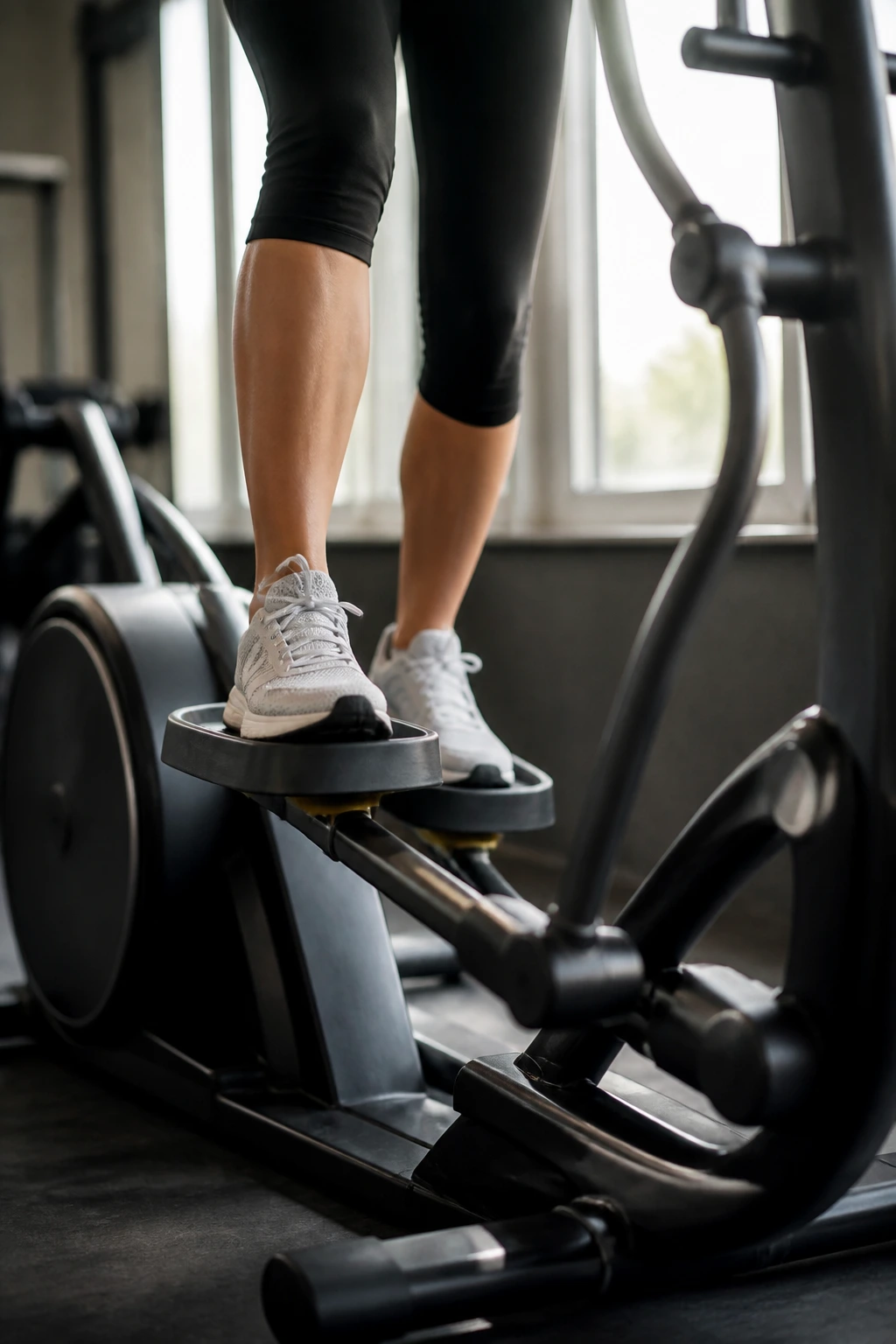
What happens if you spin your feet faster instead of cranking the resistance? You get a different kind of burn — more cardio, less grind, and a little more spring in the movement.
Keep resistance low and work at a fast cadence for 15 to 20 minutes. The trick is staying smooth. Fast feet that bounce all over the machine are not the goal. Fast feet with quiet shoulders and stable hips are.
How It Feels
It should feel quick, light, and a little breathy. Not frantic. If your heels keep popping off the pedals or the handles start jerking, slow down and tidy the motion. This is a good option on days when your legs are cooked but you still want to move sweat around.
19. Pre-Run Warm-Up Glide

A good warm-up should wake you up, not drain you. That’s why the cross trainer works so well before a run, a hike, or any session that needs loose joints and warm legs.
Warm-Up Flow
- 3 minutes easy
- 3 minutes gradually faster
- 2 minutes moderate with light resistance
- 2 minutes easy cooldown or move straight into your next workout
Keep the pace comfortable and the range of motion natural. The goal is blood flow, not fatigue. A few women use this before running because it gives the hips and calves a chance to switch on without pounding the ground first.
This is a small workout with a big job. Don’t rush it.
20. Weekend Sweat Session

Some sessions are built for the days when you have time to breathe and want a workout that feels a little more complete. This is that session.
Start with 5 minutes easy, then alternate 3 minutes hill work and 2 minutes moderate recovery for 5 rounds, then finish with 5 minutes steady and a short cooldown. The hill sections should feel strong, not frantic. The recoveries should be enough to let your breathing settle without going flat.
It’s the sort of workout that works well when you want a Saturday sweat without having to think too hard about the structure. A little climb, a little recovery, a little steady finish. Clean and satisfying.
21. Plateau-Breaker Mix

When progress stalls, the answer is rarely “do the exact same thing harder.” Usually you need variety. This session gives you that without turning the workout into chaos.
Why does it work? Because the body can’t fully settle into one rhythm. Change the resistance every minute for 18 to 20 minutes while keeping the cadence steady. Go easy, then moderate, then hard, then back off. The machine should feel like it’s having a conversation with you.
How to Use It
Pick one pattern before you start:
- easy / moderate / hard / moderate
- two minutes steady, one minute climb
- 30 seconds fast, 90 seconds smooth
That little unpredictability keeps the mind awake and the legs honest. It’s a smart reset when regular workouts start feeling stale.
22. Podcast Pace Workout

Not every cross trainer session needs your full attention. Some are better when you settle in, hit play, and let the time pass in the background while your body does the work.
Keep the effort at a comfortable RPE 4 for 40 to 50 minutes. Every 12 minutes or so, add a short pickup of 1 minute at a higher resistance, then drift back to your easy pace. That keeps the session from going flat without breaking the easy rhythm.
This plan is good for people who hate counting every rep of cardio. It’s also a nice way to make a long session feel less like a chore. Put on a long podcast, keep your posture tall, and let your feet keep moving.
23. Core-and-Posture Session

A lot of cross trainer users hang on the handles and let their torso fold forward. That’s a habit worth breaking. If you stand taller and use your core a little more, the machine feels different fast.
Keep the resistance moderate and spend 20 minutes alternating between hands-on and hands-light intervals. During the hands-light parts, keep your rib cage stacked over your hips and your stride smooth. You’ll feel your midsection working to keep you steady, which is exactly the point.
This is not a circus trick. No hands for the whole workout is unnecessary. Short, controlled stretches of upright work are enough. Small adjustments, big payoff.
24. Short-Hard Power Session

Some days call for a workout that feels punchy and direct. This one gets there fast and doesn’t waste much time.
Unlike the longer endurance pieces, this plan uses 4 rounds of 3 minutes hard / 2 minutes easy, with a 5-minute warm-up and a 4-minute cooldown. That’s it. The hard blocks should feel powerful rather than frantic, and you should still be able to finish the last round with decent form.
Best for women who like efficient sessions and have a little gas left after work or after the school run or after whatever else filled the day. The workout is short enough to fit, but hard enough that you know you did something.
25. Seven-Day Cross Trainer Rotation

A single workout is useful. A smart week is better. If you want the machine to carry more of your training without getting stale, a simple rotation keeps things moving.
A Sample Week
- Day 1: 20-minute steady burn
- Day 2: hill climb grind
- Day 3: recovery glide
- Day 4: sprint ladder
- Day 5: Zone 2 base builder
- Day 6: tempo threshold session
- Day 7: easy glide or full rest
That mix gives you hard, easy, and middle-ground work without piling intensity on top of intensity. You can swap the days around, but don’t stack the toughest sessions back to back unless you enjoy feeling flat for no good reason.
A rotation like this is where the cross trainer starts to earn its keep. It stops being a machine you “use” and becomes one you train with.
Final Notes
The best cross trainer plan is the one that matches your day, not your ego. Some sessions should leave you breathing hard. Others should leave you fresher than when you started. Both matter.
If you keep one steady workout, one interval day, and one recovery day in the mix, you’ll cover a lot of ground without turning cardio into a chore. That balance is what makes the machine useful for the long haul.
