



Upper body superset workouts for women make a lot more sense than the old one-exercise-at-a-time grind if your goal is to get stronger without living in the gym. Pairing a push with a pull, or a big compound lift with a smaller control move, keeps the work moving while one muscle group gets a brief breather.
And no, you do not need to baby your upper body. Strong chest, back, shoulders, and arms help with everything from carrying groceries to hauling a kid on one hip to sitting up straighter after a long day at a desk. I keep coming back to push-pull pairings for a reason: pressing without enough rowing gets sloppy fast.
A good superset is not random exercise speed dating. The two moves should make sense together — chest with back, shoulders with rear delts, biceps with triceps, or a compound lift with a small accessory movement that cleans up the pattern. If one exercise makes the other one better, you’re on the right track.
Pick one workout, run it for three or four rounds, and leave a little gas in the tank on the first set. Twenty options might sound like overkill, but it gives you room to match the session to your equipment, your energy, and whatever your shoulders are willing to do that day.
1. Dumbbell Bench Press + One-Arm Row
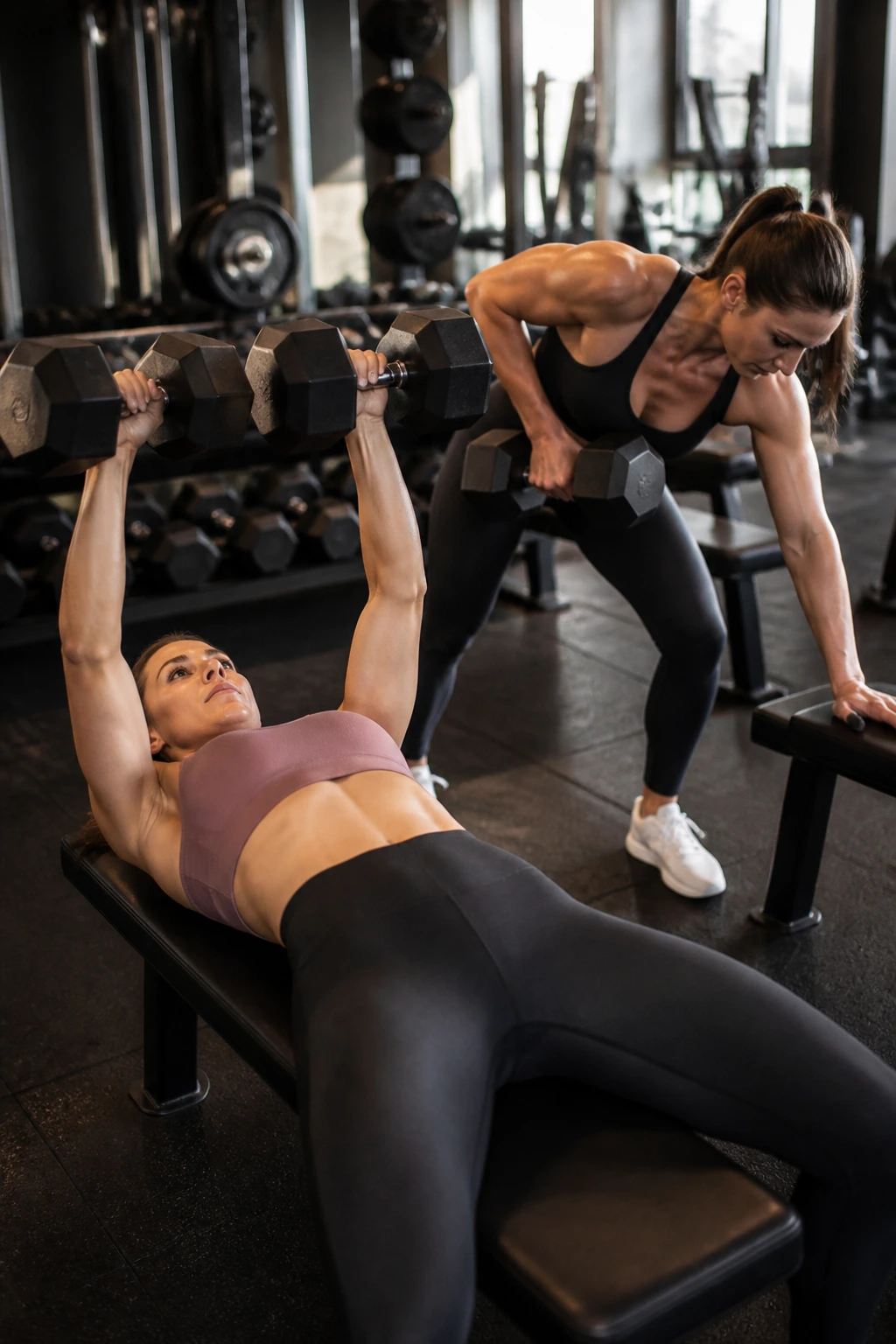
This is the pairing I hand to someone who wants a solid upper-body day without a lot of fluff. The dumbbell bench press hits chest, front delts, and triceps, while the one-arm row wakes up the lats and mid-back so your shoulders do not drift forward and turn the whole session into a shrug-fest.
How to run it
Do 3 to 4 rounds. Start with 8 to 10 reps of dumbbell bench press, then move straight into 8 to 10 reps per side on the row. Rest 60 to 75 seconds after both exercises are done. Choose a load that makes the last two reps feel honest, not wobbly.
A few details matter here. Keep your feet planted, press with a slight arc toward the ceiling, and stop the row with the dumbbell near your hip instead of yanking it up toward your armpit. That small change keeps the lat doing the work instead of letting the upper trap steal the show.
- Keep your wrist stacked over your elbow on the press.
- Pause for one count at the top of each row.
- Don’t let your ribs flare on the bench press.
My favorite part of this superset: it feels balanced. You push, you pull, and the session doesn’t leave one side of your shoulder girdle doing all the complaining.
2. Incline Push-Up + Band Pull-Apart
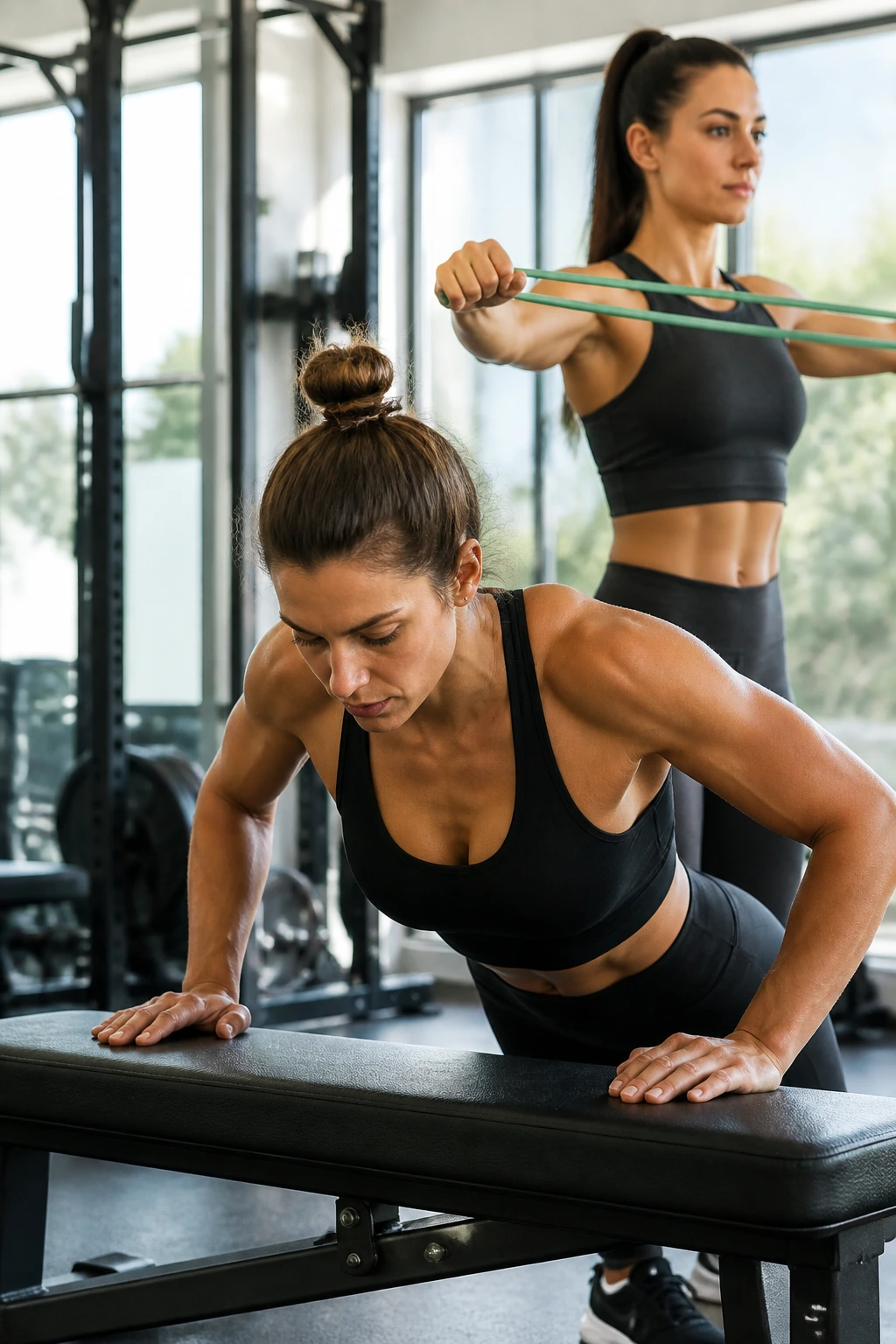
If your shoulders spend half their life rounded over a keyboard, this pair earns its place fast. The incline push-up gives you pressing volume without the full floor-up challenge, and the band pull-apart opens the upper back in a way that feels almost too simple to matter until your posture starts to clean up.
Do 3 rounds of 10 to 15 incline push-ups and 15 to 20 band pull-aparts. Keep the band at chest height, hold the end position for a beat, and use a controlled return. You want your upper back to work, not your neck.
The push-up should feel smooth, not frantic. Hands a little wider than shoulder width is fine. If your lower back sags, raise the surface a bit higher or cut the reps short and keep the form crisp. That is a better choice than chasing ugly reps.
This pairing works well on days when you want to move quickly but still feel like you trained something real. Simple. Effective. A little humbling, too.
3. Seated Overhead Press + Lat Pulldown
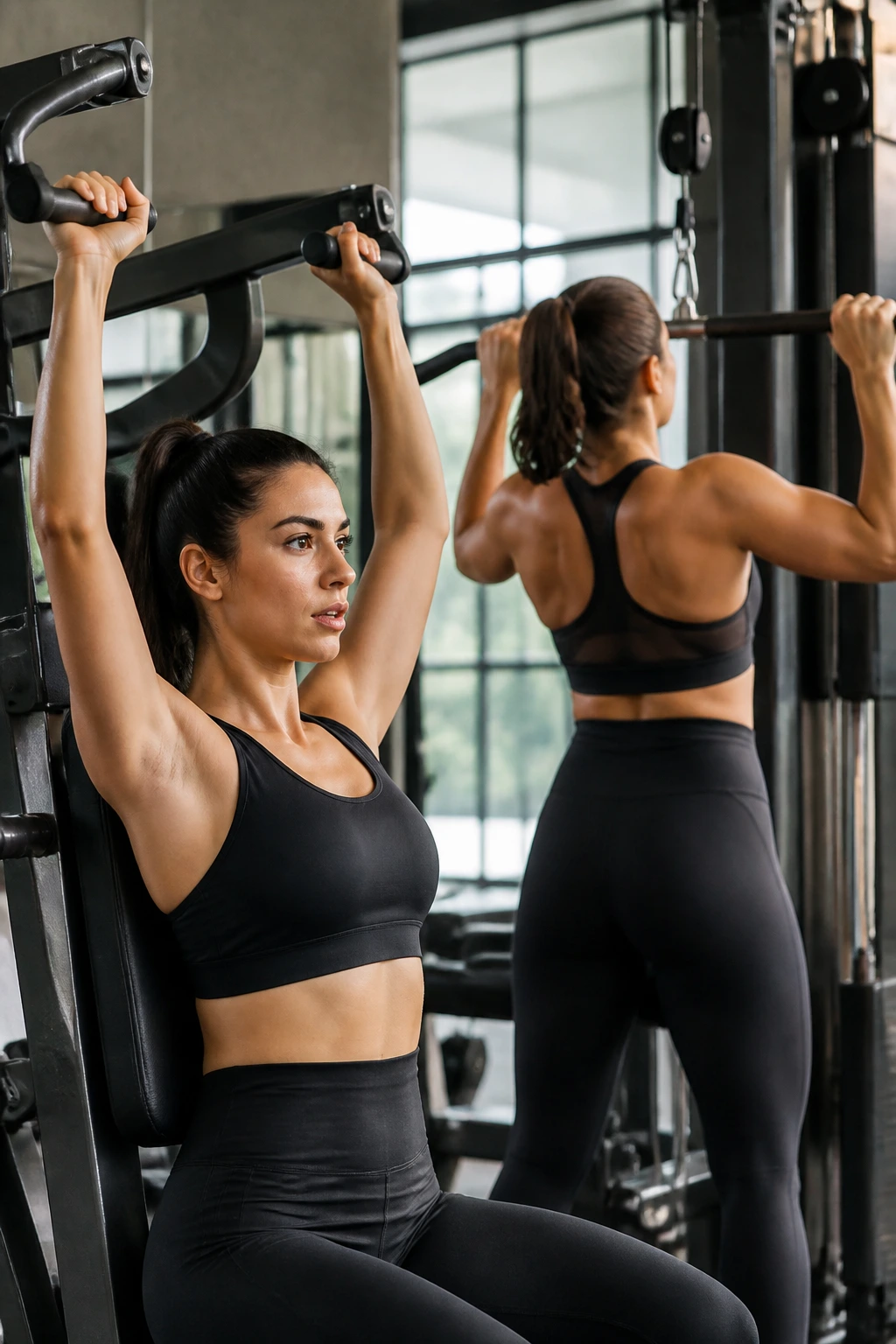
Want a superset that builds shoulders without making the workout feel chaotic? This one stays clean. The seated overhead press trains the delts and triceps in a straight, honest line, while the lat pulldown gives your back a vertical pull that balances all that pressing.
How to use it
Run 4 rounds of 6 to 8 seated dumbbell or machine presses and 8 to 12 lat pulldowns. Rest 75 seconds between rounds if you’re pressing heavy, a little less if you’re using moderate weights. The goal is steady output, not a race.
Keep your ribs down on the press. That part matters more than people think. If you arch hard just to move the weight, you turn a shoulder exercise into a lower-back complaint. On the pulldown, pull your elbows down and slightly forward, then let the bar rise under control until your lats are fully stretched.
- Neutral grip works well if your shoulders get cranky.
- Aim the pulldown bar to the upper chest.
- Don’t slam the weight stack.
If you like training that feels organized and not messy, this is a reliable upper body superset workout for women who want both strength and shape without spending forever on one machine.
4. Arnold Press + Lateral Raise
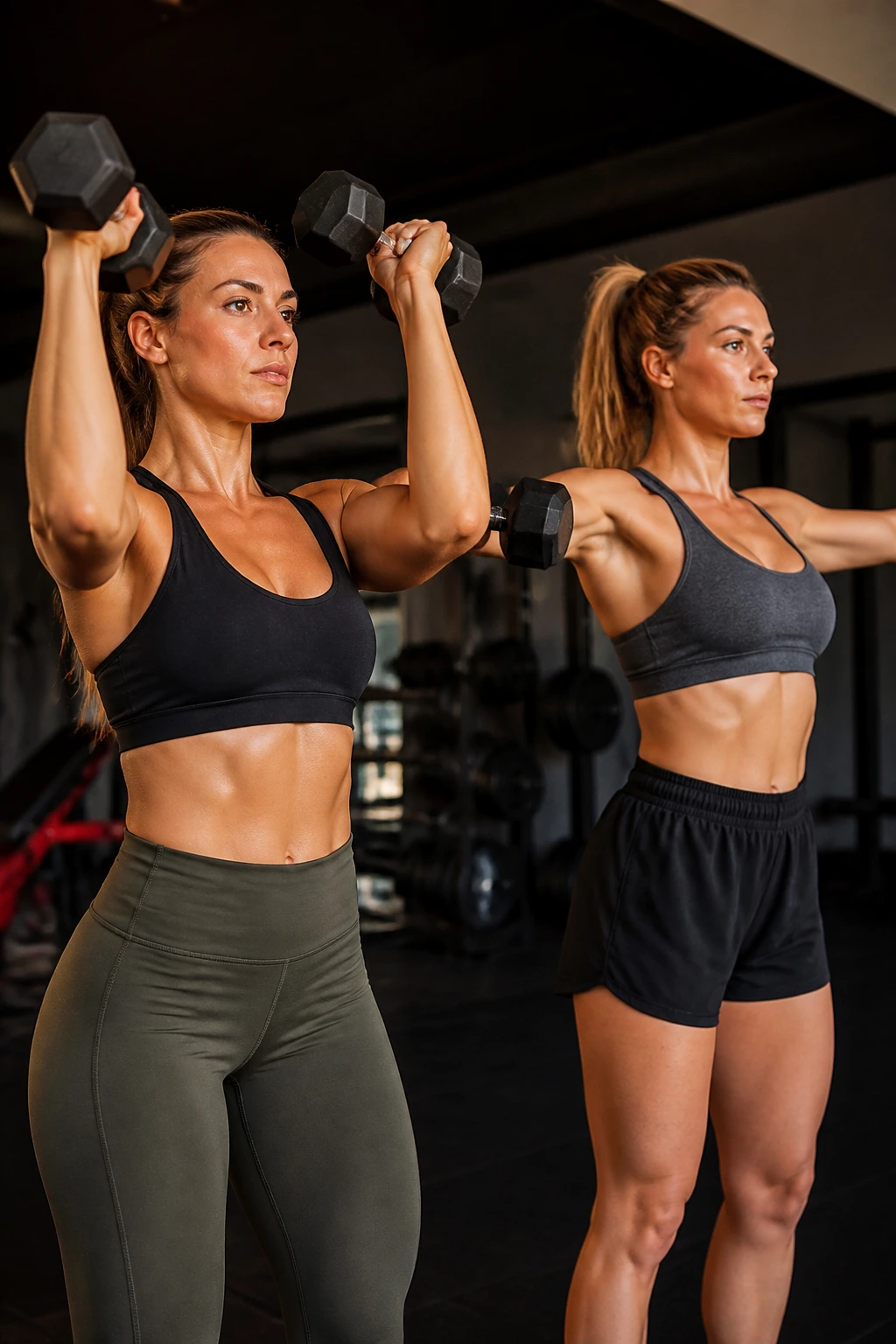
The Arnold press earns its reputation because it covers more shoulder angles than a plain press. Add a lateral raise right after it, and you’ve got a focused shoulder superset that lights up the side delts without needing a giant pile of weight.
Keep the load moderate. 3 rounds of 8 to 10 Arnold presses followed by 12 to 15 lateral raises is plenty. Heavy lateral raises are usually a bad idea anyway. The movement gets sloppy fast, and then the traps take over and you’re just shrugging with style.
A smooth Arnold press starts with palms facing you and finishes with the dumbbells overhead and palms forward. Don’t rush the rotation. On the raise, stop around shoulder height and keep a soft bend in the elbows. If the dumbbells swing above the line of your shoulders, the side delts lose tension.
This pair is especially good when you want shoulders to look more rounded from the front and the side. It doesn’t need drama. It needs clean reps and a little patience.
5. Cable Chest Fly + Reverse Fly
If pressing is the only chest work you ever do, your shoulders will rat you out sooner or later. Cable chest flys and reverse flys fix that imbalance in a way that feels almost civilized — one move narrows the chest, the other opens the rear shoulder and upper back.
Do 3 to 4 rounds of 12 to 15 chest flys and 12 to 15 reverse flys. Use light to moderate loads and slow the lowering phase to about 2 seconds each time. The stretch matters here. So does control.
What to watch for
- Keep a soft bend in the elbows the whole time.
- Set the cables around chest height for flys.
- For reverse flys, think about pulling the arms wide, not pinching the hands together.
- Stop short if your shoulders start to roll forward.
The chest fly should feel like a hug that stops before the wrists cross. The reverse fly should light up the back of the shoulders without turning into a lower-trap shrug. That little detail keeps the workout honest.
This is one of those upper body superset workouts for women that does more than chase a pump. It teaches the shoulder to move well from both sides.
6. Close-Grip Push-Up + Overhead Triceps Extension
A close-grip push-up changes the whole feel of a push day. Compared with a wide stance, it shifts more work into the triceps and inner chest, which makes it a smart pairing with an overhead triceps extension if your goal is arm strength and a tighter pressing pattern.
Do 3 rounds of 6 to 12 close-grip push-ups and 10 to 12 overhead triceps extensions with a dumbbell, cable, or band. If a full close-grip push-up is too much, elevate your hands on a bench or box and keep the body in one long line.
The overhead extension hits the long head of the triceps, which tends to get shortchanged when all you do is press. Keep your elbows pointed mostly forward, not flaring out to the sides. Lower until you feel a real stretch, then extend without snapping the elbows hard at the top.
Unlike a broad push-up, this one feels more compact and more targeted. It’s a good choice when you want your arms to do the talking, but you still want the chest involved.
7. Alternating Dumbbell Curl + Hammer Curl
Two curl variations can sound repetitive until you run them back to back and feel how differently they hit the arm. The alternating dumbbell curl trains the biceps with a supinated grip, while the hammer curl shifts more load into the brachialis and forearm. Same neighborhood. Different house.
Do 3 to 4 rounds of 10 to 12 alternating curls per arm, then 8 to 10 hammer curls. Use a weight that lets you lower the dumbbells for a slow count of 2 to 3 seconds. That slow lowering phase matters more than people want to admit.
Keep your upper arms still. If the elbows drift forward every rep, the biceps stop doing clean work and the whole thing becomes a back-and-forth swing. A little body English on the last rep is fine. A lot of it means the weight is too heavy.
This is a pure arm day superset, and that’s okay. Not every session needs to be a hero workout. Sometimes you just want your sleeves to feel tighter by the end.
8. Push Press + Face Pull
A little power before the shoulder cleanup work makes the session feel athletic instead of sleepy. The push press lets you use a small leg drive to get a heavier weight overhead, then the face pull comes in and reminds your upper back how to hold the shoulder blades where they belong.
Run 4 rounds of 5 push press reps and 15 face pulls. Rest 60 to 90 seconds between rounds. The push press should be crisp, not sloppy. Dip a few inches, drive hard through the floor, and press the dumbbells or bar overhead as the legs finish the work.
Face pulls are the reset. Set the cable or band around face height, pull toward the bridge of the nose or forehead, and finish with the thumbs moving back. If you feel it mostly in your neck, lighten the load and slow down.
What makes this pair work
- Power first, posture second.
- The push press uses momentum on purpose.
- The face pull teaches the shoulders to sit back down again.
This is a good upper body superset workout for women who want a stronger overhead pattern without turning every shoulder day into the same old grind.
9. Renegade Row + Shoulder Tap
You set the dumbbells on the floor and the first few reps feel easy. Then your torso starts to wobble, and suddenly the workout is telling the truth. Renegade rows and shoulder taps are sneaky that way. They train the back, chest, shoulders, and core at the same time, which is why they deserve a place in the lineup.
Do 3 rounds of 6 to 8 renegade rows per side and 10 to 20 shoulder taps total. Keep your feet a little wider than hip width if you need more stability. Narrow stance looks impressive in a video, but it is not the goal here.
The row should stay square. No hip twist. No trying to yank the dumbbell up with a shrug. The shoulder tap should happen with the torso almost still, which is harder than it sounds when the abs start to fatigue. That little wobble is the point.
- Place the dumbbells directly under the shoulders.
- Press the floor away with the non-working hand.
- Keep the gaze a few inches ahead of your hands.
This one is part strength, part control, part ego check. Worth it.
10. Landmine Press + Chest-Supported Row
The landmine press is one of those exercises people ignore until their shoulders get tired of being yelled at by overhead pressing. Because the bar moves on an arc, it usually feels friendlier than a straight vertical press. Pair it with a chest-supported row, and you get upper-body work without loading your lower back.
Do 4 rounds of 8 reps per side on the landmine press and 10 to 12 chest-supported rows. If you’ve got a bench, angle it to about 30 to 45 degrees for the row. If not, use a machine or incline bench setup that lets your torso stay still.
The press should travel up and slightly forward. Don’t lean back and turn it into a weird standing incline press. On the row, keep the chest planted and pull the elbows back with control. No jerking. No bouncing.
This pairing is a favorite when the goal is quality work and not just exhaustion. It also fits nicely on days when your lower back already got enough attention from squats, deadlifts, or life in general.
11. Cable Chest Press + Seated Cable Row
Cable work has a different feel than dumbbells. The tension stays on through more of the range, which means the muscles don’t get those easy little rest spots that show up at the top or bottom of a free-weight rep. That makes the cable chest press and seated cable row a neat, tidy upper-body pairing.
Use 3 rounds of 10 to 12 presses and 10 to 12 rows. Set the press handles around mid-chest and the row handle around lower chest or upper ribs. Sit tall. Plant your feet. Let the cables move smoothly instead of snapping through each rep.
The chest press should stop just before your elbows lock hard. The row should finish with the shoulders down, not shrugged into your ears. If the weight stack clanks like a garage door slamming, the tempo is too fast.
This is a very useful gym workout when you want a clean push-pull pairing without loading a bench or worrying about balance. It’s straightforward. No drama. That’s part of the appeal.
12. Dumbbell Floor Press + Dumbbell Pullover
The floor press gets overlooked because it looks too simple. It isn’t. Limiting the range slightly can make pressing feel safer on the front of the shoulder, and the pause of the upper arms on the floor gives you a dead-stop start that strips away momentum. Add the dumbbell pullover, and you’ve got chest and lat work in one compact package.
Do 4 rounds of 8 to 10 floor presses and 10 to 12 pullovers. Use a weight you can control all the way down. On the floor press, your elbows should touch the ground lightly and briefly; don’t crash down and bounce. On the pullover, keep a small bend in the elbows and let the dumbbell travel only as far back as your shoulders can tolerate.
This is a smart choice for home workouts or small spaces. A bench is nice. You do not need one. A flat floor, a mat, and a pair of dumbbells are enough.
The pullover gets messy when people try to make it too big. Keep it smooth. The goal is tension, not theatrics.
13. Z-Press + High Elbow Row
This pair exposes weak spots fast. The Z-press, done seated on the floor with the legs straight out, removes the usual cheating options. No leg drive. No back arch. Just shoulders, core, and a whole lot of honesty. Follow it with a high elbow row, and the upper back gets exactly what it asked for.
What makes it hard
A Z-press looks simple until you try it with a real load. Sit tall on the floor, brace your abs, and press the dumbbells or bar overhead without leaning back. If your hamstrings are tight, a thin plate under the hips helps a little, though not enough to make it easy.
Run 3 rounds of 6 to 8 Z-presses and 10 to 12 high elbow rows. The row should travel toward the upper ribs with elbows slightly out, which shifts the work toward the rear delts and upper back.
- Keep the torso tall.
- Press without rib flare.
- Row with control, not momentum.
It’s a humbling superset. I mean that in the nicest way.
14. Preacher Curl + Rope Triceps Pressdown
There’s a reason arm day has a loyal following. Sometimes it’s enough to stand by a machine, lock the upper arm in place, and let the biceps and triceps burn on purpose. The preacher curl and rope pressdown are classic for a reason: they are stable, direct, and brutally easy to feel.
Do 3 to 4 rounds of 10 to 12 preacher curls and 10 to 12 rope pressdowns. Keep the upper arm planted on the pad during the curl. On the pressdown, spread the rope apart at the bottom and hold the contraction for one count before the return.
The preacher curl keeps the body from helping too much, which is exactly why it bites so well. The pressdown is cleaner when the elbows stay pinned and the shoulders stay calm. If the weight stack is moving because your torso is leaning and bouncing, drop the load.
Key setup notes
- Use a bar or EZ-curl handle if the wrist feels cranky.
- Choose a rope attachment that lets the hands separate at the bottom.
- Stop one rep before the form gets ragged.
This is not fancy. It works anyway.
15. Incline Dumbbell Press + Rear Delt Row
Want the front and back of your shoulders to stop acting like they live in different zip codes? Pair an incline press with a rear delt row. The incline angle shifts more emphasis to the upper chest and front delts, while the row hits the rear shoulder and upper back that help keep everything centered.
Do 3 rounds of 8 to 12 incline presses and 12 to 15 rear delt rows. Set the bench at about 30 to 45 degrees. Too steep and the movement turns into another shoulder press. Too flat and you lose the upper-chest emphasis.
The rear delt row is the sneaky part people rush. Keep the elbows out a bit, pull the dumbbells toward the upper ribs or lower chest, and pause briefly at the top. You should feel the back of the shoulder, not just the traps.
A short workout like this can do a lot if your posture tends to fold inward. It’s also a nice change from flat bench work when you want your upper chest to show a little more.
16. Pike Push-Up + Scapular Pull-Up
If you train at home or like bodyweight work that feels honest, this pairing is worth your time. The pike push-up builds shoulder strength with your hips high and your head traveling toward the floor, while the scapular pull-up teaches the shoulder blades to move cleanly on the bar without bending the elbows much at all.
Do 3 rounds of 6 to 10 pike push-ups and 8 to 12 scapular pull-ups. If the pike push-up feels too hard, put your hands on a bench or couch to raise the surface. If the pull-up bar is too much for a full hang, keep your toes lightly on the floor and just work the shoulder blades.
This is one of those supersets that looks mild and then quietly burns your upper body apart. The pike push-up should keep your neck long and your elbows angled slightly back. The scapular pull-up should feel like the shoulders drop away from the ears, then lift back up under control.
No weights needed. That’s handy when space is limited.
17. Single-Arm Cable Press + Single-Arm Cable Row
Unilateral work exposes sides that hide when both arms move together. A single-arm cable press and single-arm cable row make you own the line of force one side at a time, which also asks the core to stop the torso from twisting around like a flag in the wind.
Use 3 rounds of 10 reps per side on the press and 10 reps per side on the row. Keep the stance staggered, ribs quiet, and hips square. The cable should stay smooth the whole time. If the body starts rotating, lower the weight and clean it up.
What to notice
- Press straight ahead without leaning.
- Row toward the lower ribs or hip.
- Exhale as you press and row.
- Move one side, then the other, or alternate if the station is busy.
This is especially helpful if one shoulder feels a little lazier than the other. You’ll catch that fast with cables. They do not hide asymmetry well, which is exactly why they’re useful.
18. Assisted Dip + Neutral-Grip Lat Pulldown
This pair looks straightforward, and mostly it is. The assisted dip loads the chest, shoulders, and triceps in a way that feels strong and athletic, while the neutral-grip lat pulldown gives the back a friendlier hand position than a wide overhand grip for a lot of lifters.
Do 4 rounds of 5 to 8 assisted dips and 8 to 12 neutral-grip pulldowns. The dip assist machine should reduce enough bodyweight that you can control the bottom position without feeling like your shoulders are getting shoved into the front of the socket. Go only as deep as feels solid.
On the pulldown, think about driving the elbows down beside the ribs. Neutral grip usually feels smoother on the elbows and wrists, and that matters if you’ve had cranky joints from other pulling work.
This is one of the more gym-specific upper body superset workouts for women who want to build pressing strength and back width in the same session. Clean reps. Controlled depth. No wild swinging.
19. Push-Up + Inverted Row
The push-up and inverted row are the classic bodyweight pairing, and they still earn respect because they work. One move pushes the floor away, the other pulls your body up to the bar, bench, or Smith machine. Together, they cover a big chunk of upper-body strength without a single dumbbell in sight.
Aim for 3 rounds of 8 to 15 push-ups and 8 to 12 inverted rows. If a full push-up is out of reach, put your hands on a bench or step. If the inverted row is too hard, raise the bar so your body sits at a shallower angle.
Make it fit your level
- Hands elevated for easier push-ups.
- Bar higher for easier rows.
- Feet elevated for harder rows.
- Slow the lowering phase if you want more work without adding weight.
This combo is great for home setups, travel workouts, or days when the gym is packed and every bench looks claimed. It’s simple enough to repeat and hard enough to matter.
20. Barbell Curl + Lying Skull Crusher
This is the finisher pair for the day you want your arms to feel like they did a job. The barbell curl works the biceps with a little more load than dumbbells usually allow, and the lying skull crusher gives the triceps a long stretch and a tough lockout pattern that lights them up fast.
Do 3 rounds of 8 to 10 barbell curls and 8 to 10 skull crushers. An EZ-bar is often kinder on the wrists than a straight bar, and I’d take that trade without hesitation if your elbows get irritated. Keep the upper arms pointed toward the ceiling on the skull crusher, and lower the bar just behind the forehead or to the top of the head with control.
This is not the place to rush. Fast reps turn the exercise into elbow roulette. A slower pace lets the biceps and triceps stay under load long enough to matter, which is the whole point of a finisher like this.
If you want a session that ends with a little arm pump and not a mess of sloppy reps, this is a good last stop.
Final Thoughts
The smartest upper body superset workouts for women do not try to impress anyone. They pair movements that make sense, keep the joints happier, and give you enough work density to make a session count even when time is tight.
I’d rather see you do four clean rounds of one good push-pull pairing than wander through eight half-hearted exercises with no plan. Keep one heavier superset, one shoulder-health superset, and one arm finisher in your rotation, and you’ll have plenty to work with.
The best part is that these pairings are easy to adjust. Raise the bench. Switch to cables. Use bands at home. Trim the rest. Add a round. The structure stays the same, and that makes progress a lot easier to track from week to week.
