



You do not need a treadmill, a garage full of gear, or a heroic amount of free time to get a serious conditioning session done. A timer, a little floor space, and a plan that alternates hard effort with enough recovery to let you go again — that’s the heart of cardio interval workouts at home.
The nice part is that interval work gives you choices. Short bursts like 20 seconds on and 10 seconds off feel sharp and fast. Longer rounds like 45 seconds on and 15 seconds off build staying power and make you breathe harder without needing to sprint across a room. If you live upstairs, have creaky knees, or share walls, you can keep things quiet and still make the workout matter.
A solid home session also starts with a warm-up, even if it feels boring. Two minutes of marching, a minute of arm circles, a few bodyweight squats, and some easy hip openers will make the rest of the workout feel smoother. Skip that, and the first hard round tends to feel clumsy. No one wants that.
Pick the workout that fits your space, your mood, and your joints. Some of these are loud and sweaty. Some are quiet enough for an apartment. A few are the kind you only reach for when you want to test yourself a little, and that’s part of the fun.
1. 30/30 Bodyweight Starter
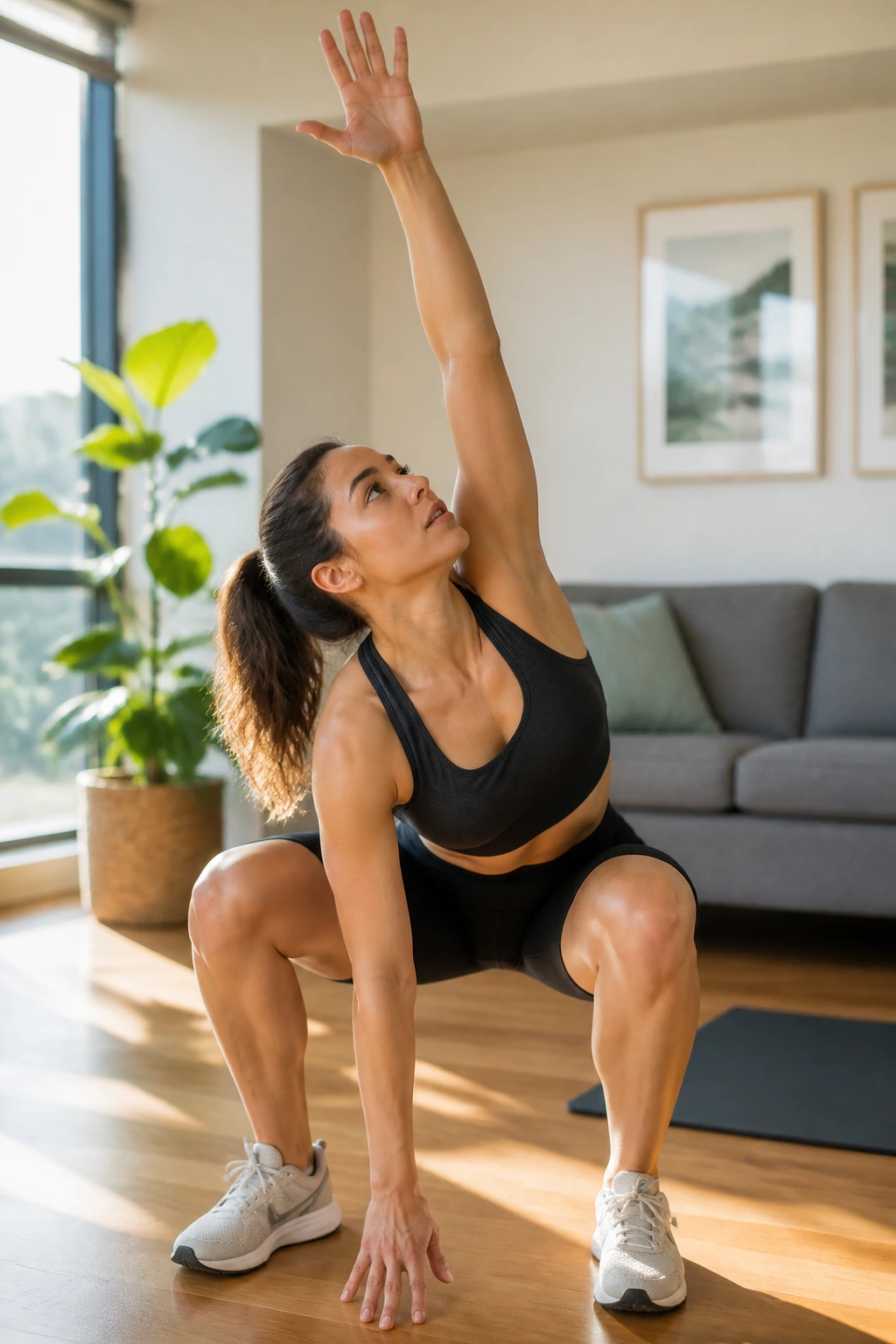
Thirty seconds on, thirty seconds off is a smart place to begin. It gives you enough breathing room to keep your form tidy, but not so much recovery that your heart rate drops off a cliff.
Use four moves: jumping jacks, squat-to-reach, mountain climbers, and reverse lunge to knee drive. Do each one for 30 seconds, rest 30 seconds, then repeat the full four-move circuit 3 to 5 times. If you want a simple target, aim for 12 to 20 minutes total.
This one works because the pattern is easy to remember. You do not waste energy thinking about what comes next. If jumping jacks bother your joints, step one foot out at a time instead. That tiny change keeps the workout moving without turning it into a different session.
2. March-Punch Low-Impact Burner
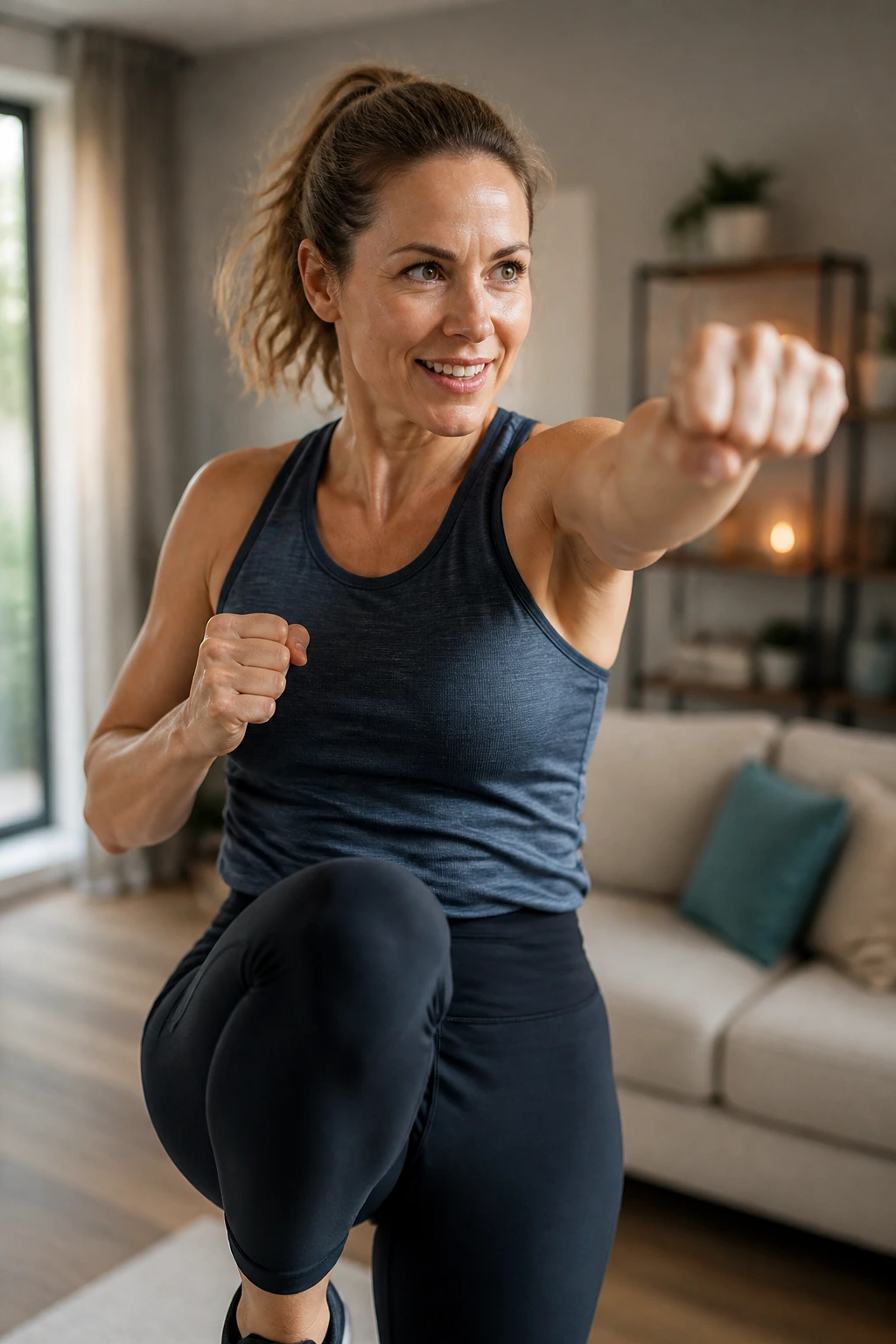
Want something quieter? This is the one I’d hand to anyone who needs cardio without the pounding.
Alternate fast marching, alternating punches, knee lifts, and side steps for 45 seconds, then rest 15 seconds. Repeat for 8 to 10 rounds. Keep your hands active the whole time, even when your feet slow down. That small detail matters more than people think.
A good cue is this: your feet should feel busy, but your landings should stay soft. Think brisk, not bouncy. If you want more work, widen your stance and make the punches longer. If you want less, keep the steps smaller and focus on arm speed instead.
3. Jump Rope Sprint Sets
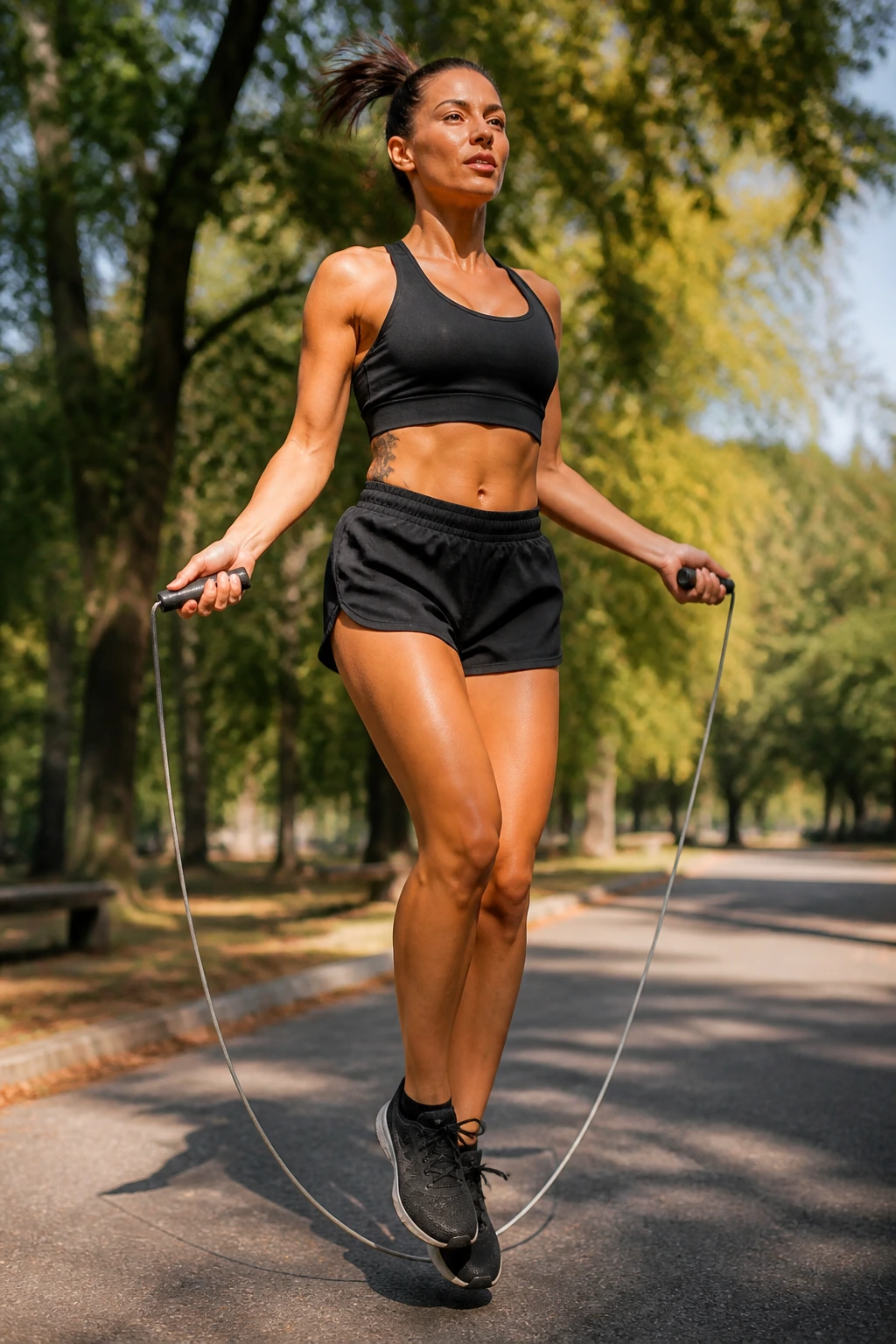
If you have a rope, use it. If you do not, “ghost rope” works fine — just keep the wrist turn and the bounce pattern.
Try 20 seconds fast, 40 seconds easy for 10 to 15 rounds. During the fast parts, stay light on the balls of your feet and keep the rope close to your body. Long, sloppy swings waste energy and make you trip more. A boxer step, a double bounce, or a basic two-foot hop all work.
This style is sneaky hard. Your calves and feet start talking back long before you feel ready to stop. That is normal. If you are new to rope work, shorten the burst to 10 or 15 seconds and build up. That keeps the session sharp instead of turning it into a string of misses.
4. Stair Climb Intervals
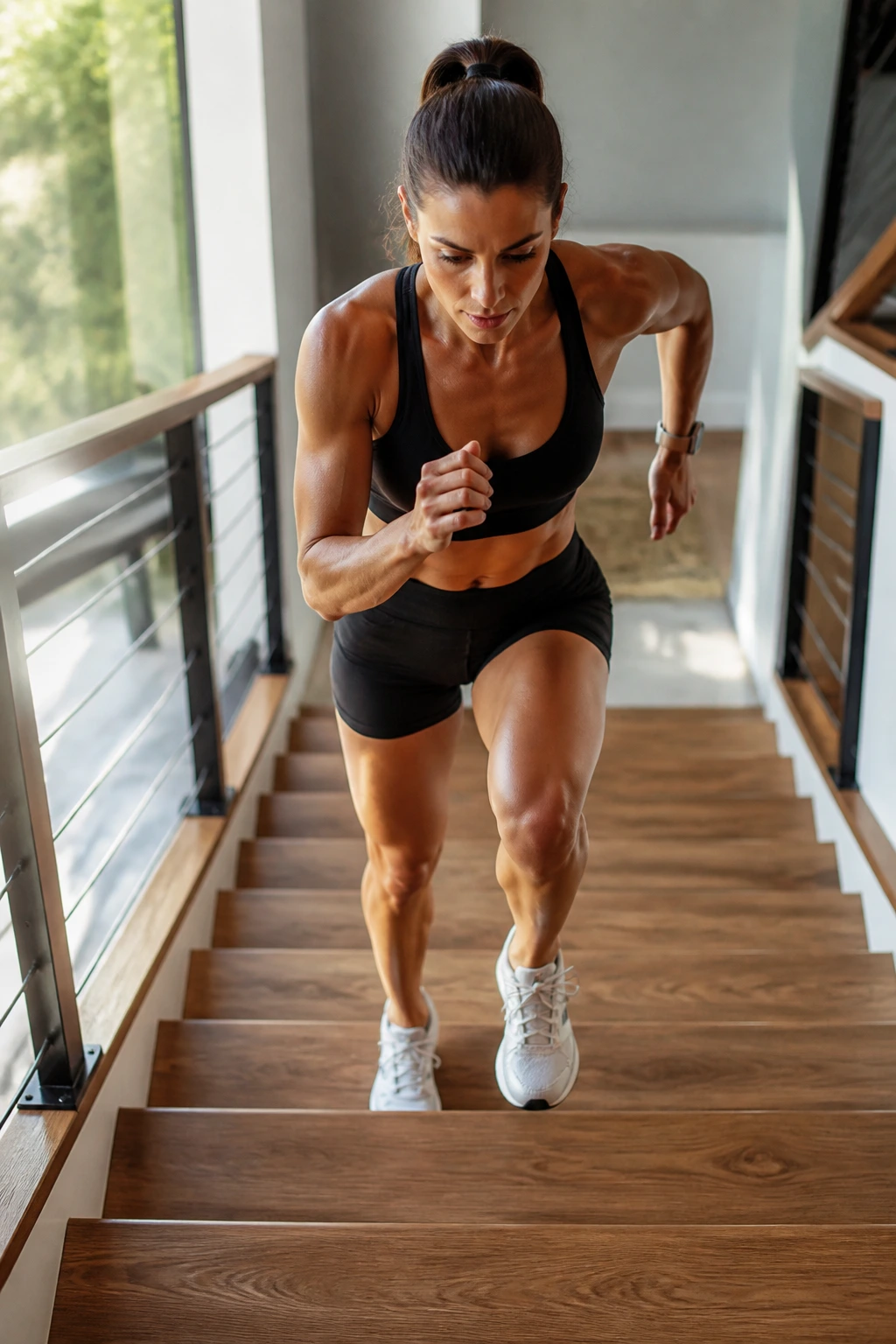
Stairs change the feel of a workout fast. They do not need fancy programming to get your lungs involved.
Use one flight, if that is what you have. Go hard up for 10 to 20 seconds, walk down slowly, and repeat 8 to 12 times. If the stairs are steep, keep your torso tall and take smaller steps. If they are shallow, drive through the whole foot and use the rail only as a light guide.
Do not race the way down. That’s where bad footing happens. The climb is the work; the descent is recovery. A few rounds in, your breathing will get louder, and your thighs will start to feel that heavy, hot kind of fatigue that tells you the workout is doing its job.
5. Shadow Boxing Rounds

Hands up. Shoulders loose. That small stance turns a blank patch of floor into a real conditioning session.
Run 3-minute rounds with 1 minute of rest, using jab-cross, hook-cross, uppercut, slip, and knee strikes. Four to six rounds is plenty. Keep your feet moving the whole time, even when your hands are busy. A lot of people punch with their arms and forget the legs; that makes the whole thing less effective.
A simple round structure
- First minute: straight punches only.
- Second minute: add hooks and slips.
- Third minute: finish with knees or fast flurries.
The magic here is rhythm. You can breathe through it, but barely. If you want more challenge, use a mirror and clean up your stance between flurries. That little self-check keeps your form from getting sloppy when fatigue shows up.
6. Tabata Jacks and Squats
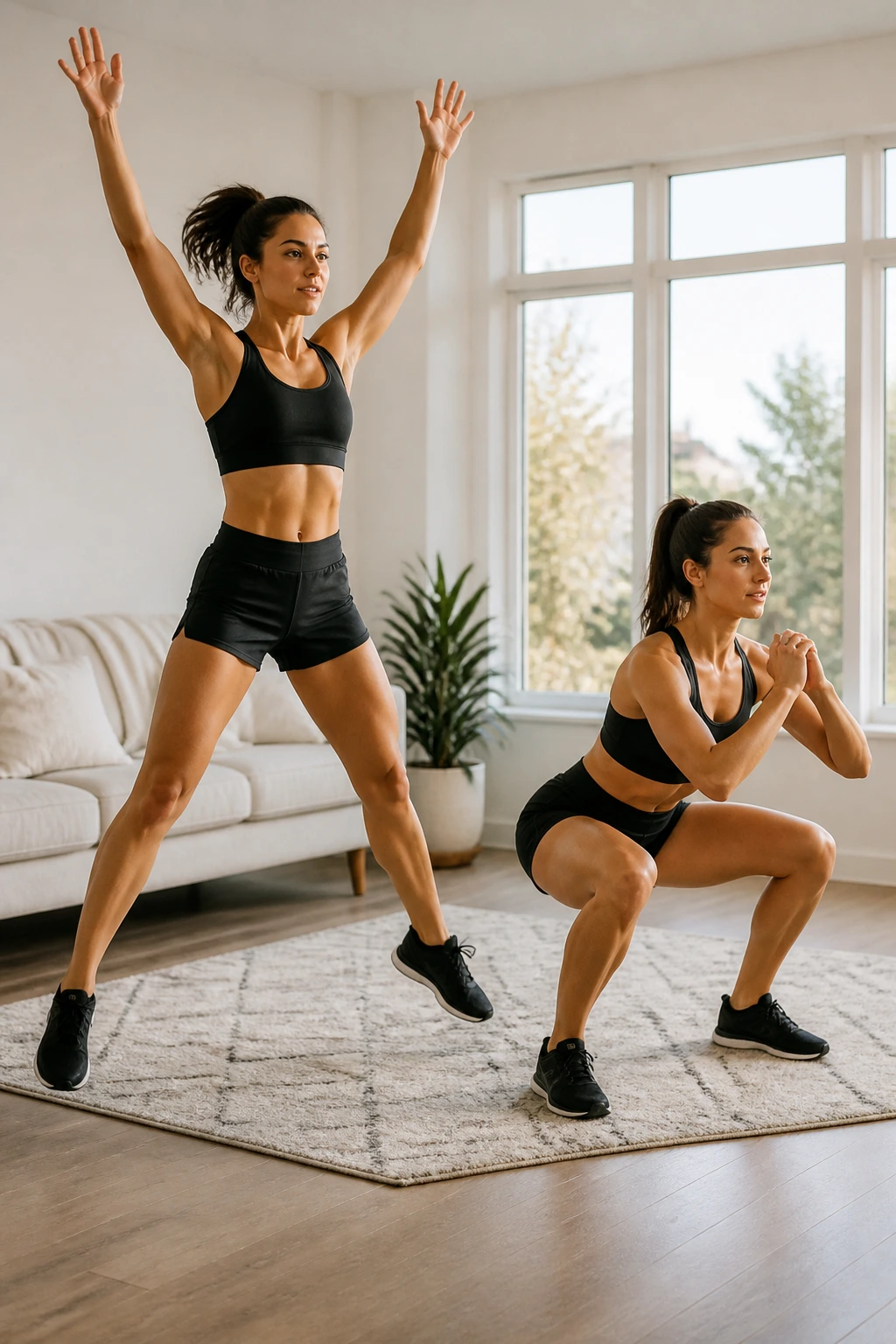
Twenty seconds can feel longer than a minute when the move is squat jacks. That is why this format earns its place.
Use the classic 20 seconds hard, 10 seconds rest setup for 8 total rounds. Alternate between squat jacks and air squats with a knee drive so your legs get both the side-to-side load and the straight-up-and-down burn. Two rounds of each is enough to make the workout bite.
Keep your chest lifted and land softly. If jumping feels like too much, step your feet out and in rather than hopping. The point is to keep the work crisp, not to turn the session into a joint test. Eight rounds go by fast, but they add up in a hurry.
7. Mountain Climber Ladder
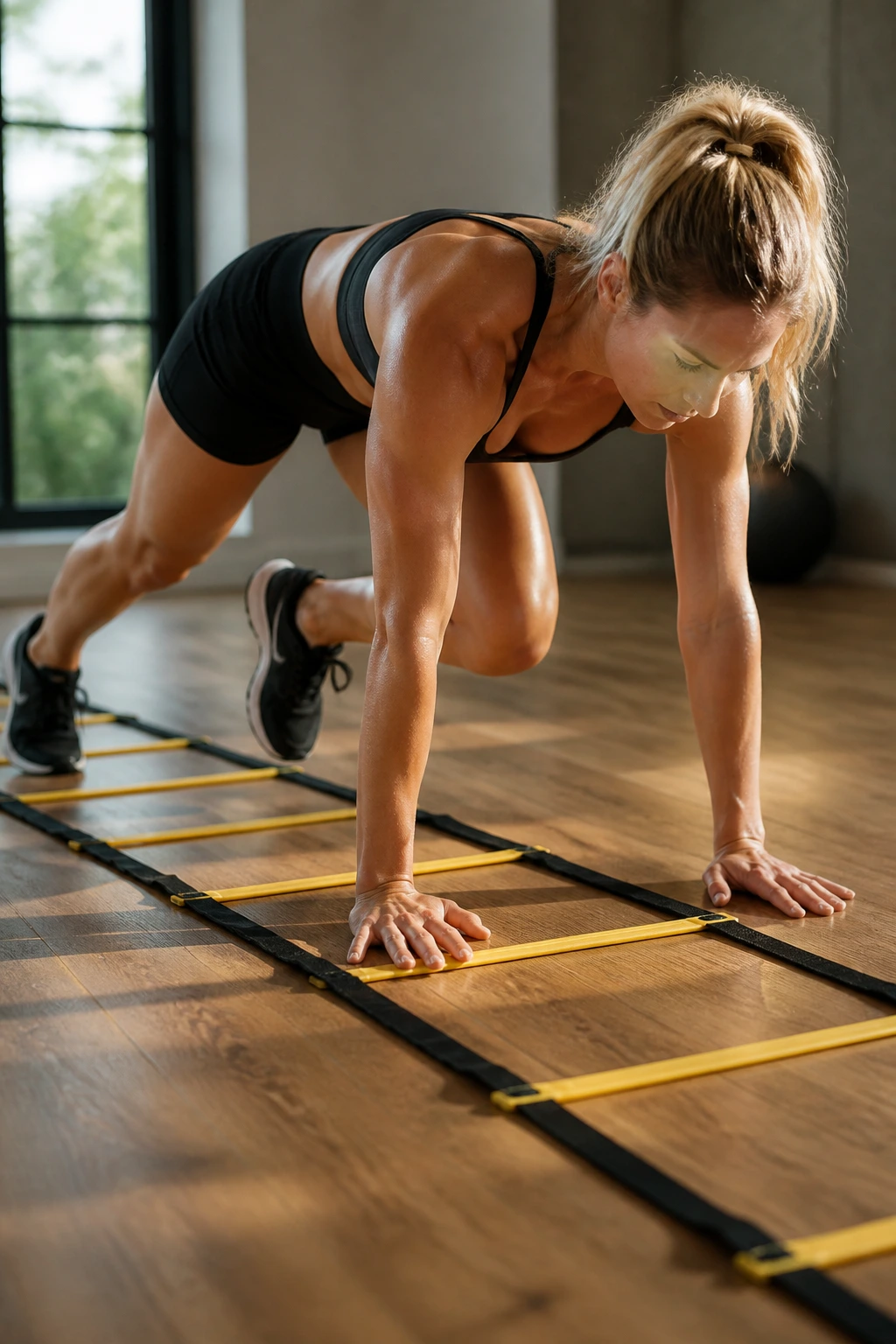
How hard can climbing in place get? Harder than people expect.
Set a ladder like this: 20 seconds, 30 seconds, 40 seconds, 30 seconds, 20 seconds, with 20 to 40 seconds of rest between efforts. Keep your shoulders stacked over your wrists, bring knees toward the chest, and try not to let your hips bounce too much. Clean reps beat frantic ones every time.
If your wrists complain, put your hands on a bench or couch and keep the angle higher. That small adjustment takes a lot of pressure off the floor contact. This workout feels simple on paper. In practice, the longer middle rungs start to make your core and shoulders talk back.
8. Dance Cardio Minute Rounds
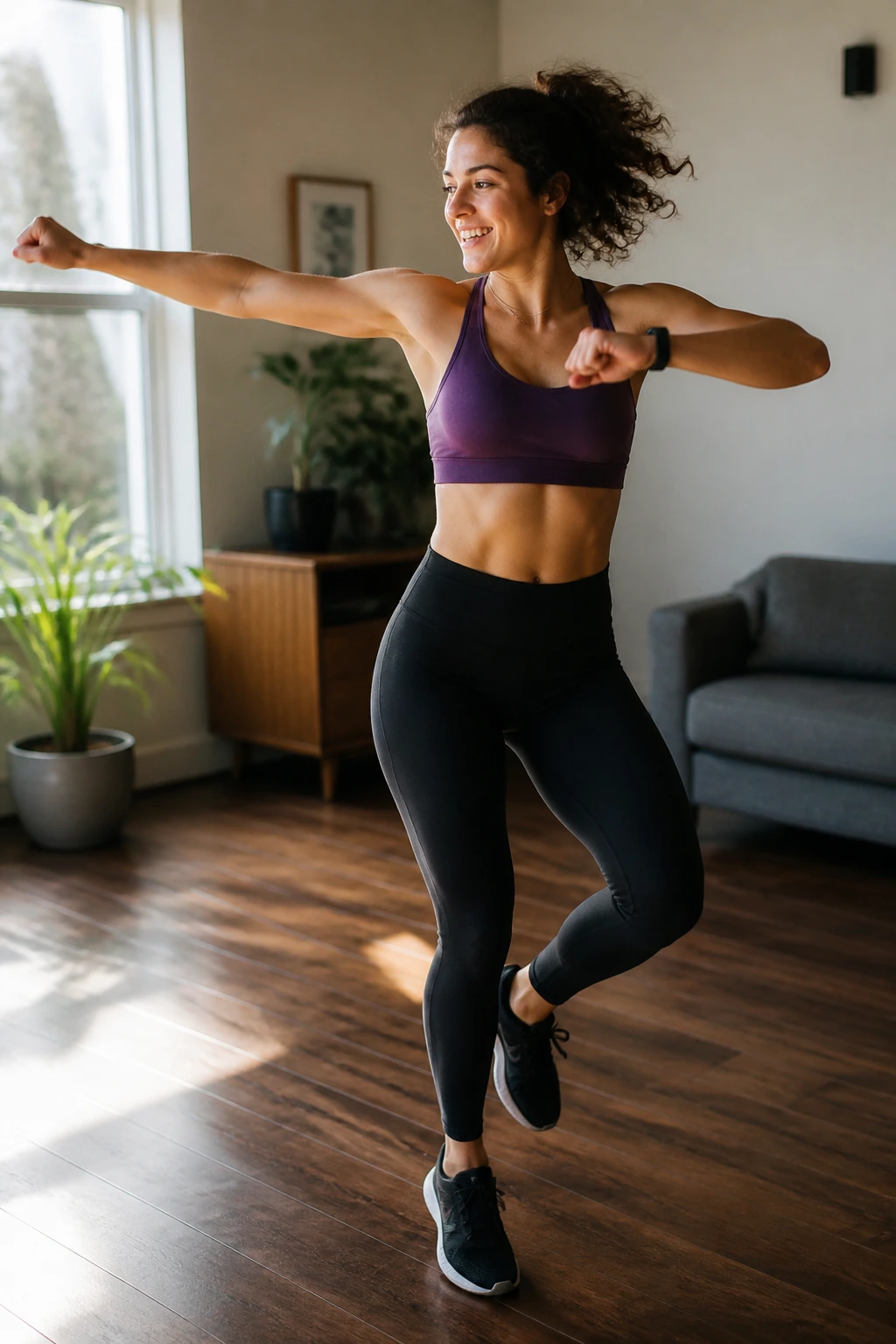
A living room floor and a playlist are enough for this one. You just need to stay honest about the effort.
Pick a few repeatable patterns — grapevine steps, quick knee lifts, side shuffles, or heel digs — and run them in 1-minute bursts with 20 seconds to reset. Ten rounds is a nice target. Keep the moves large enough to raise your breathing, but not so big that you lose the beat.
The point isn’t perfect choreography. It’s steady motion. If you stop every time you fumble a step, the session falls apart. Keep moving, smile if you want, and treat the reset window like a quick sip of water and a shoulder roll before the next minute starts.
9. Burpee Progression Ladder
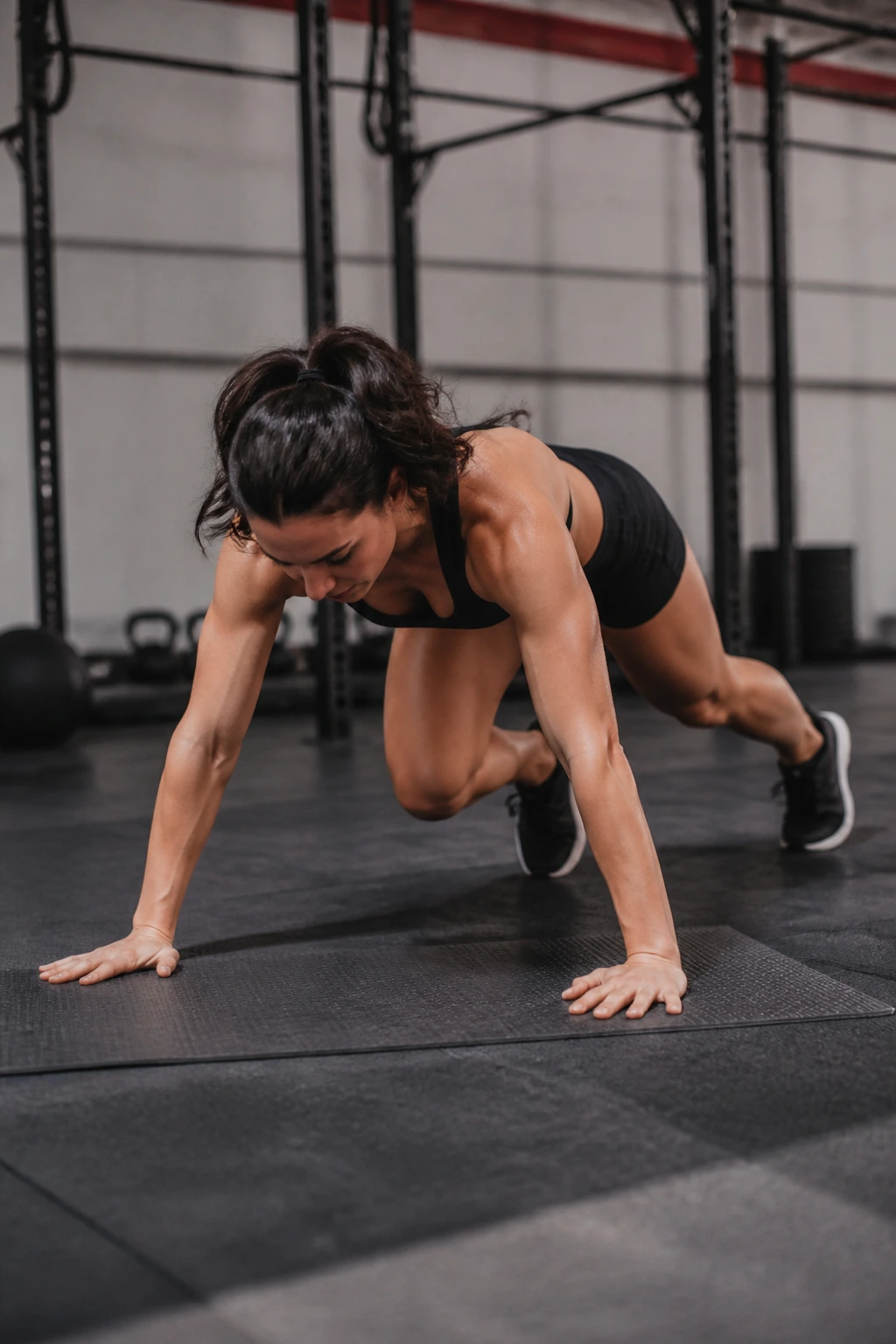
Burpees do not need to be punishment. They work better when you treat them like a ladder instead of a dare.
Try 5 burpees, rest 30 seconds; 6 burpees, rest 30 seconds; 7, 30 seconds, and keep climbing until you hit 10, then come back down if you still have gas. If full burpees are too much, step your feet back one at a time and remove the jump at the top. You still get the heart-rate spike.
How to scale the burpee
- Hands on the floor or on a sturdy couch edge.
- Step back instead of jumping back.
- Skip the push-up if your shoulders are tired.
- Stand up fast, even if you do not jump.
That last part matters. Burpees feel slow only when you let them be slow. A clean rhythm turns them into a conditioning drill instead of a mess.
10. EMOM Conditioning Circuit
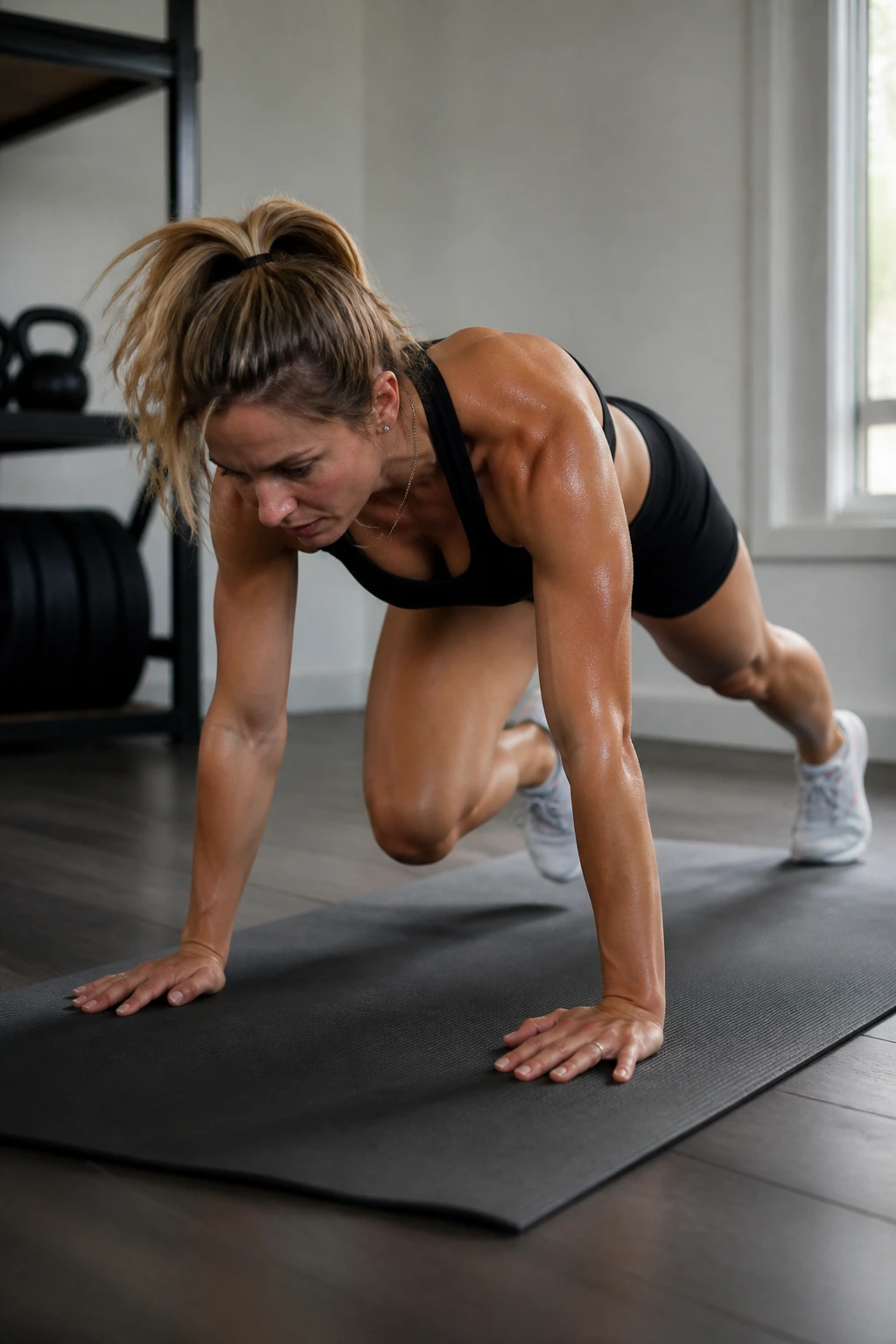
Set a timer for the top of each minute. That is the whole game.
For 10 minutes, start each minute with a preset task, then rest with whatever time is left. Try this pattern: minute 1, 12 squat jumps; minute 2, 10 push-ups and 10 mountain climbers per side; minute 3, 14 alternating reverse lunges; minute 4, 20 fast high knees; minute 5, repeat from the top.
The beauty of EMOM work is the built-in honesty. If you finish in 25 seconds, you earn 35 seconds of rest. If you crawl to the finish line, you know the pace was too hot. That feedback is useful. It keeps you from guessing, which is one of the reasons EMOM sessions work so well at home.
11. Hallway Shuttle Sprints
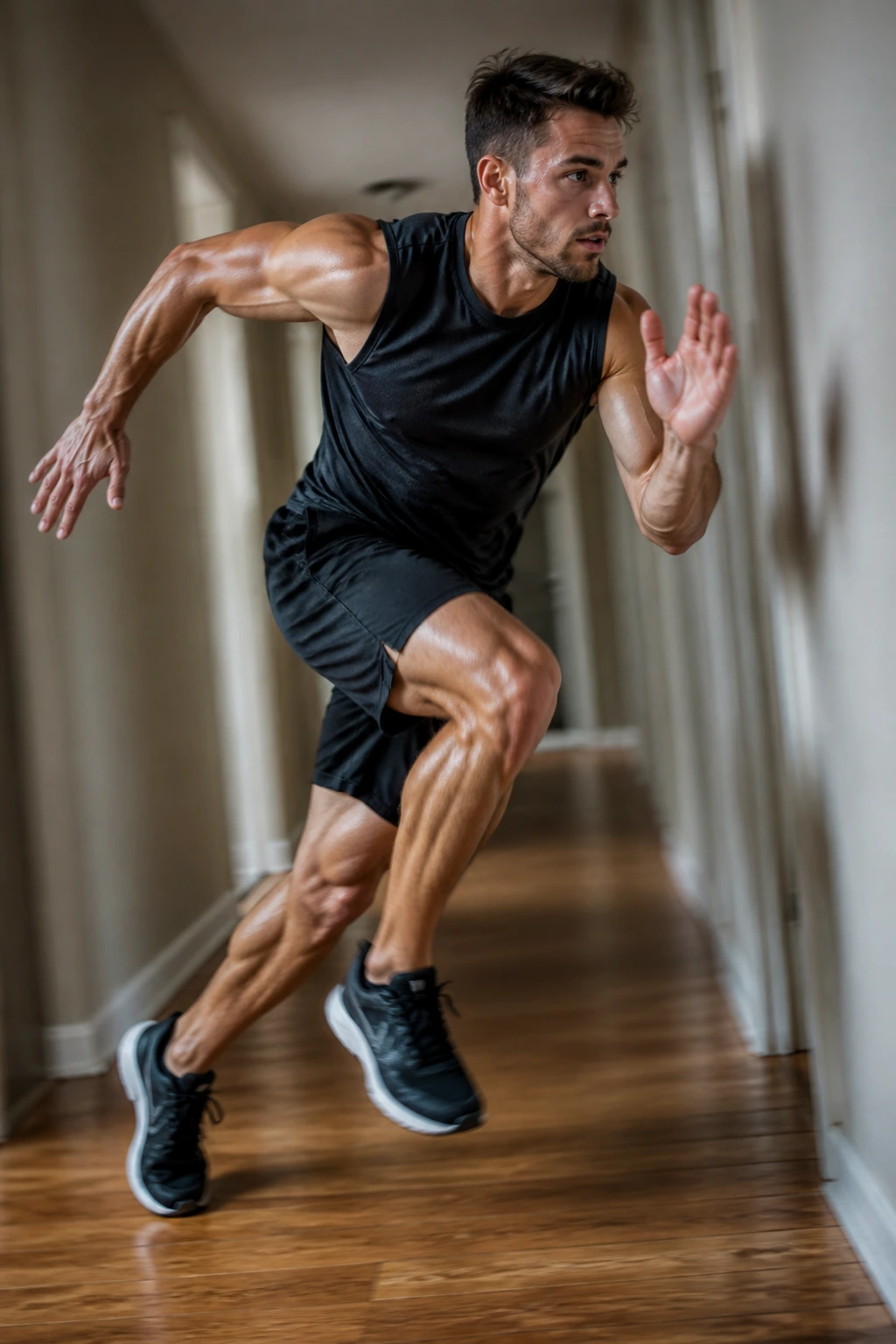
A hallway becomes a track once you use the turns on purpose. You do not need a long space, just enough room to move and stop cleanly.
Run 15 to 20 seconds of shuttle movement, touching the floor or a marker at each end, then rest 40 to 45 seconds. Eight to 12 rounds is a good range. Keep the turns controlled. Sliding into a pivot because you got greedy is how people end up skidding into furniture.
Short spaces work fine. Five to 10 feet can still be enough if you keep the pace sharp and the turns tidy. If your apartment setup is tight, use marching high knees between the markers instead of full runs. The heart rate still climbs, and your legs still feel it.
12. Skater Hop Side-to-Side Sets
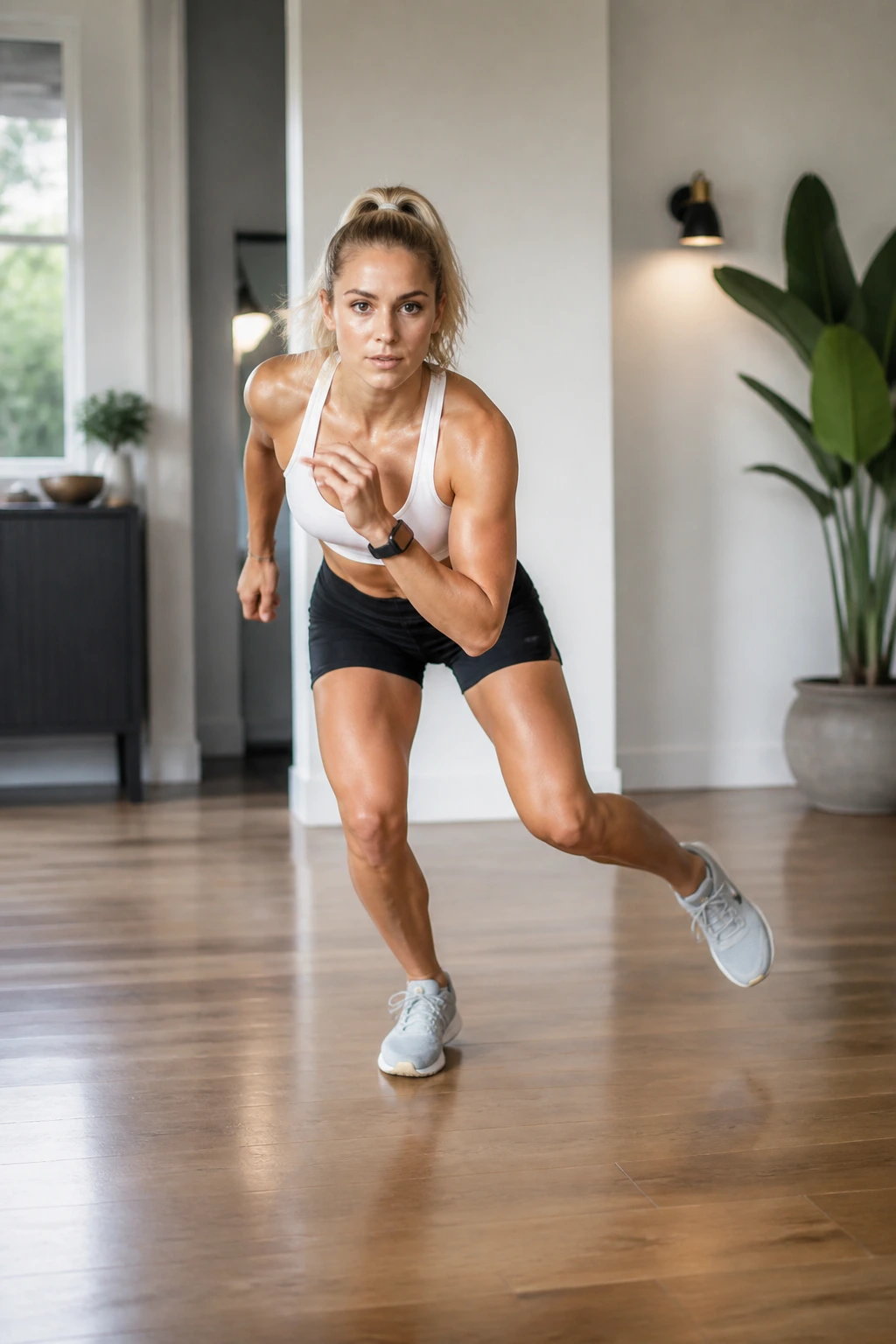
Skater hops look playful. They are not.
Use 30 seconds of work and 15 seconds of rest for 10 to 12 rounds, shifting from one side to the other like you are covering a wide patch of floor. Land softly on one foot, then load the hip before pushing off again. The outer hip and glute on the landing side do a lot of work here.
If the jump feels too sharp, turn it into a side step with a reach. Same pattern, less impact. That makes the workout useful on days when you want to move hard without hammering your knees. Keep your chest tall and avoid collapsing inward on the landing. Clean landings make this move feel strong instead of sloppy.
13. Silent Apartment Cardio
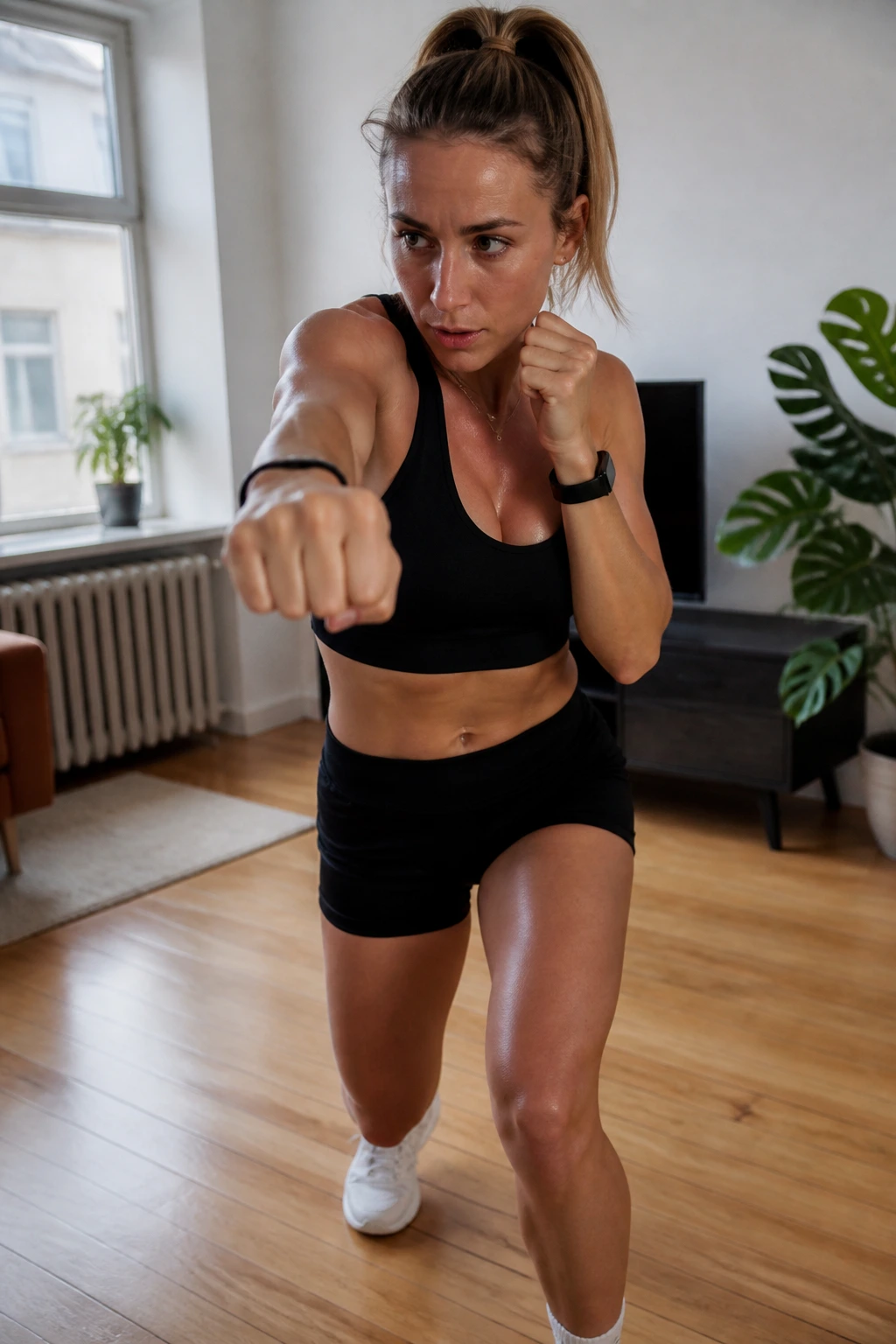
Noise matters more than people admit. If you need to stay quiet, you can still get a real sweat going.
Build your session from step jacks, fast feet, shadow boxing, and low squat pulses. Run each move for 40 seconds, then rest 20 seconds. Four full rounds usually lands in the sweet spot. You should finish breathing hard without making your neighbors hate you.
The trick is to keep tension in the body without bouncing off the floor. Fast feet can stay tiny. Jacks can become step-outs. Even squat pulses can be smooth and controlled if you keep them shallow. This workout is especially handy late at night or on days when jumping feels like too much of a headache.
14. Step-Up and Knee Drive Intervals
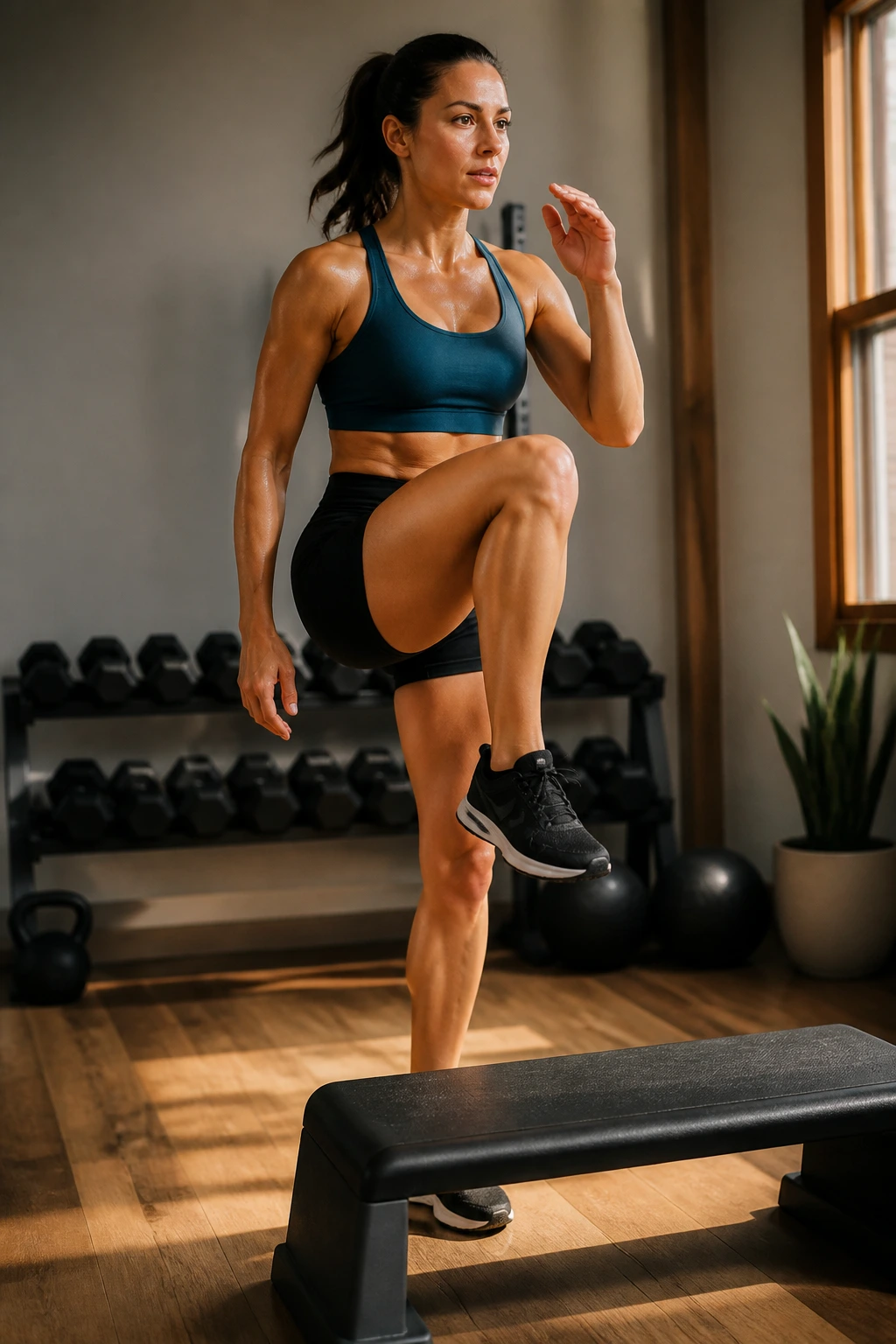
A sturdy step changes the whole session. A low bench, a stair, or a very stable box works fine.
Use 45 seconds of step-ups with a knee drive and 15 seconds of rest for 8 to 10 rounds. Switch the lead leg each set or alternate legs every rep if you want a little more balance work. Drive through the heel of the working leg and stand tall at the top instead of leaning forward like you are climbing a mountain in a hurry.
This one looks easy until round four. Then the legs start to fill up and the breathing gets jumpy. If you want more challenge, hold light dumbbells or slow the lowering phase by one count. If balance is the issue, keep one hand near a wall and keep the step lower.
15. Cardio-Strength Combo Circuit
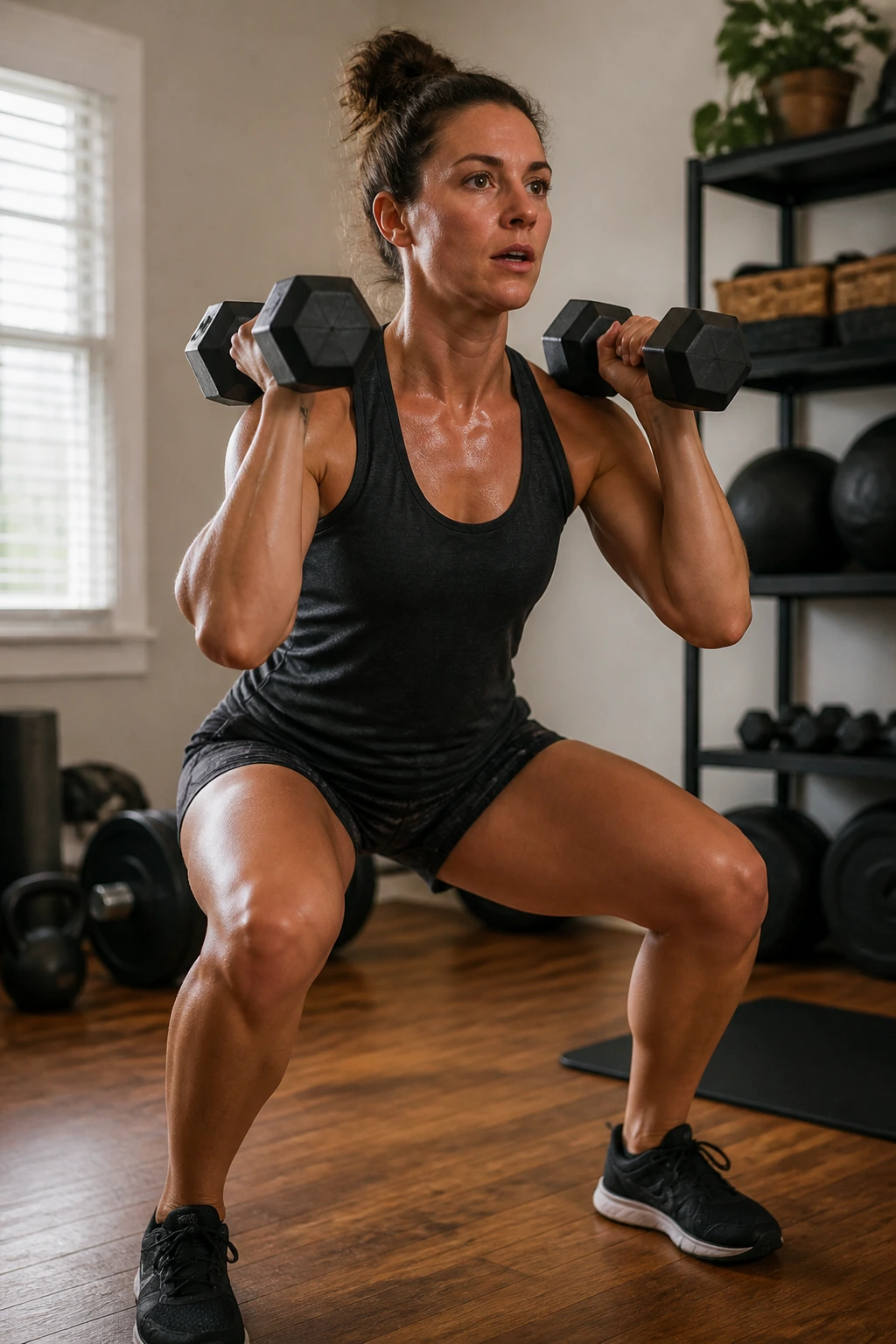
Pairing a strength move with a sprint changes the breath pattern in a hurry. That is the appeal here.
Run a circuit of thrusters, plank jacks, squat jumps, bear crawls, and high knees, spending 30 seconds on each move with 15 seconds of rest between them. Complete 3 to 5 rounds. If you want a more muscle-focused feel, hold a pair of light dumbbells for the thrusters and keep the bear crawl slow but steady.
The mix matters. Thrusters tax the legs and shoulders, plank jacks hit the core, and bear crawls make the whole body work in a way that feels oddly serious. If the session starts to fall apart, shorten the rounds before you lighten the effort. Form first. Always.
16. Core-Driven Cardio Blast
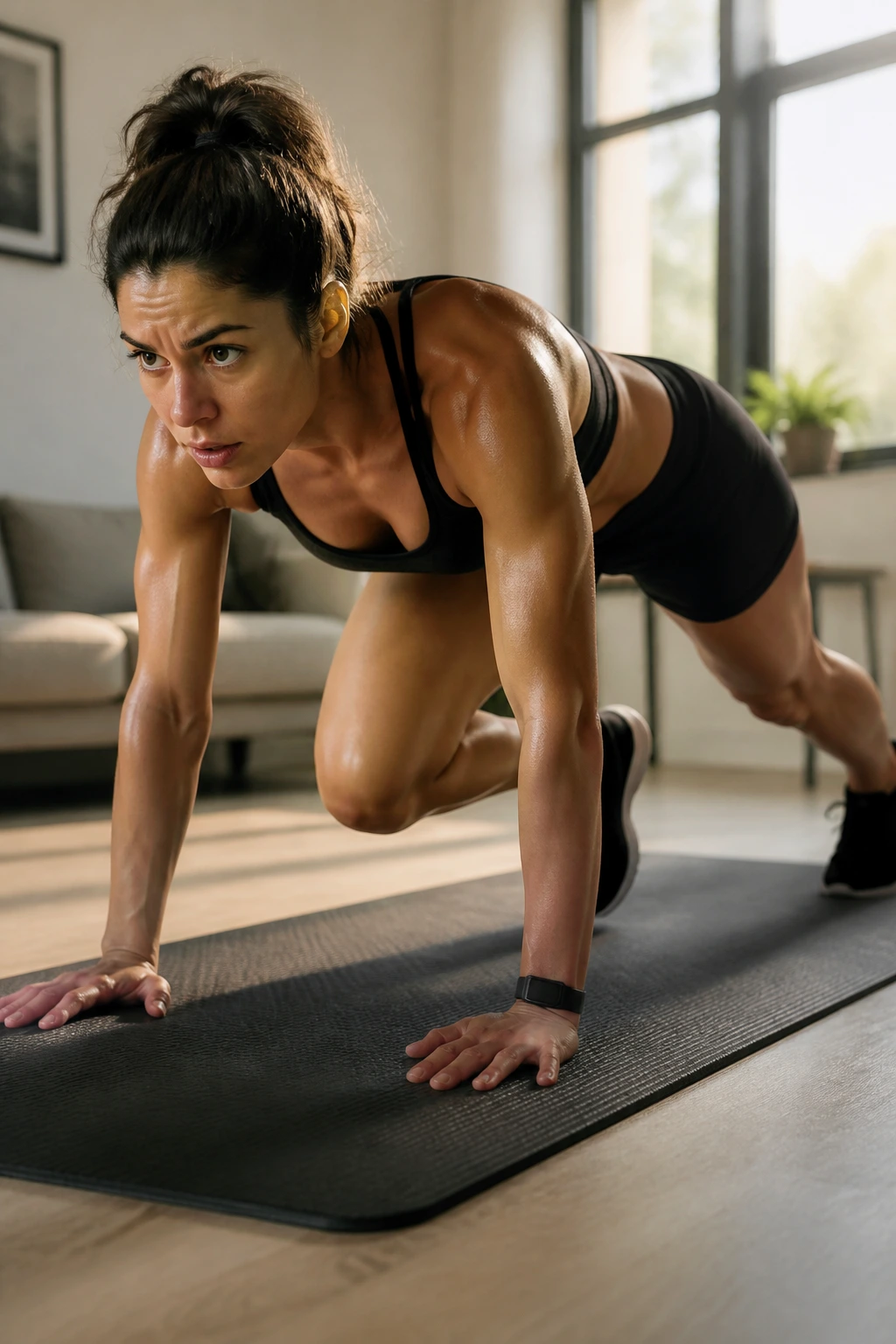
What if your core is the thing that leaves you winded? That happens more than people expect.
Use 40 seconds of bicycle crunches, 40 seconds of mountain climbers, 40 seconds of dead bug reach, and 20 seconds of rest. Repeat for 4 to 6 rounds. Keep the lower back pressed into the floor on the floor-based moves. If the back arches, the work shifts away from the abs and into compensation.
Why it works
- The tempo stays high enough to keep your heart rate up.
- The floor work adds control, not just chaos.
- You get breathing stress without needing jumps.
- It works well on days when your legs are already tired.
This session is not flashy. It is useful. And sometimes that’s enough.
17. Kickboxing Combo Rounds

Keep the gloves imaginary and the combos short. Long, messy sequences are where form goes missing.
Try 2-minute rounds with 1 minute of rest, repeating 5 to 8 times. Build each round from simple combos like jab-cross-hook, cross-knee-cross, or jab-cross-slip-cross. Add footwork between bursts: a step back, a pivot, or a quick angle change. Those little transitions keep the round from turning into arm flailing.
The best part of kickboxing intervals is how fast they pull you out of your head. You’re counting, moving, and breathing hard all at once. That said, keep your shoulders relaxed. Tight shoulders burn out early, and then the rest of the round gets ugly.
18. Rep Ladder Challenge

A ladder is not just for strength work. It also makes cardio feel like a puzzle.
Choose four moves — say burpees, mountain climbers, skaters, and squat jumps — and run them in a 10-8-6-4-2 rep ladder. Rest 20 to 30 seconds between moves and 60 seconds between full ladder runs. You can make the reps count per side for mountain climbers or keep them total, but be consistent so the workout stays honest.
The descending pattern gives you a little relief just when fatigue starts creeping in. That makes the session feel doable even when the early rounds are spicy. If you want to make it longer, run the ladder twice. If not, one solid trip down the ladder is enough.
19. Plyometric Power Circuit
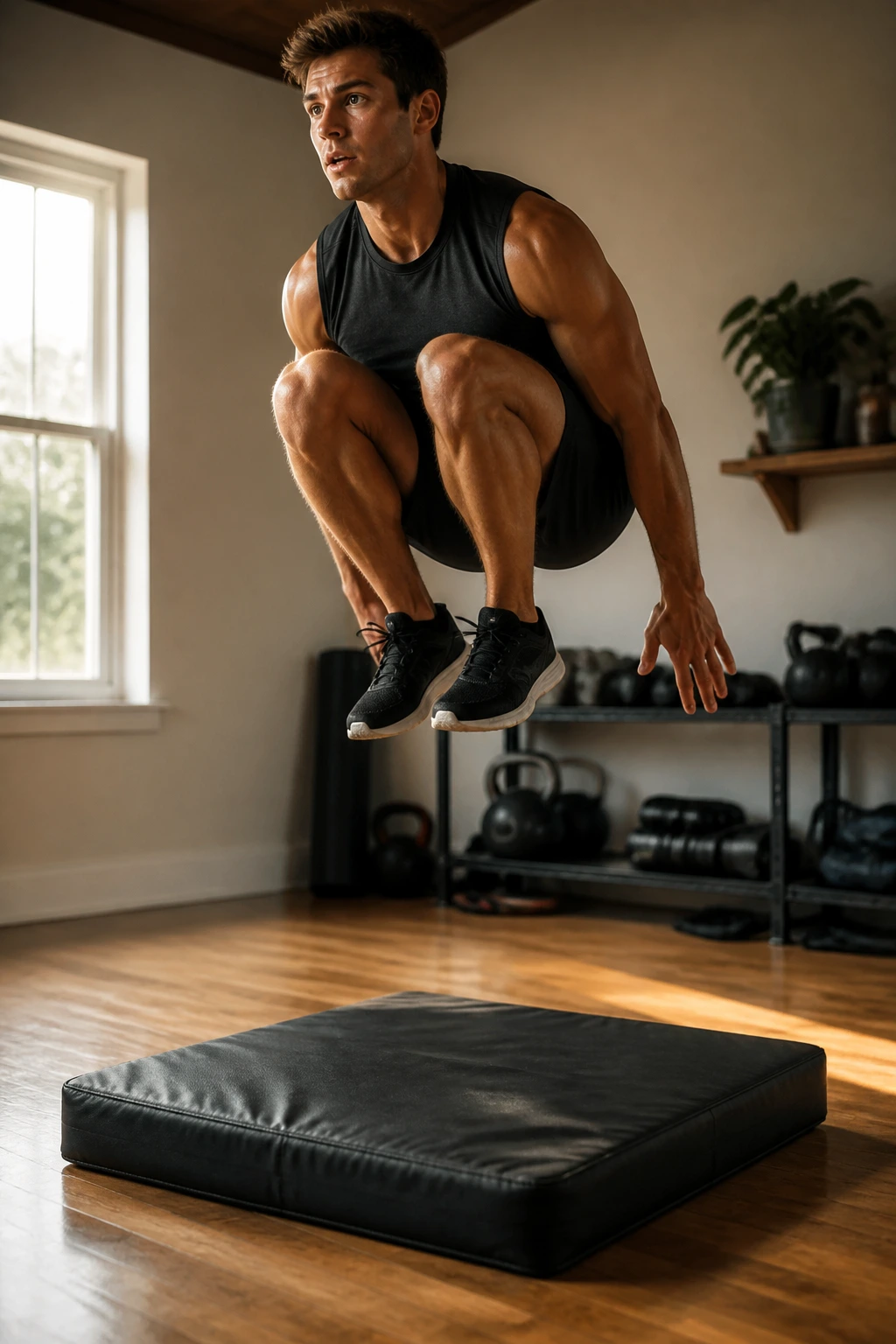
Plyometrics are the sharp end of home cardio. They ask for spring, control, and decent landing mechanics.
Use tuck jumps, split squat jumps, lateral bounds, and pogo hops in 15 to 20 second bursts with 40 to 50 seconds of rest. Three to five rounds is plenty. Keep the jumps crisp and stop the set before your landings get noisy. Quiet landings usually mean better control.
This is not the place to chase exhaustion. It is the place to chase quality. If your knees cave inward or your heels slam the floor, cut the volume. Strong plyometrics should feel quick and springy, not sloppy and punishing.
20. No-Jump Full-Body Intervals
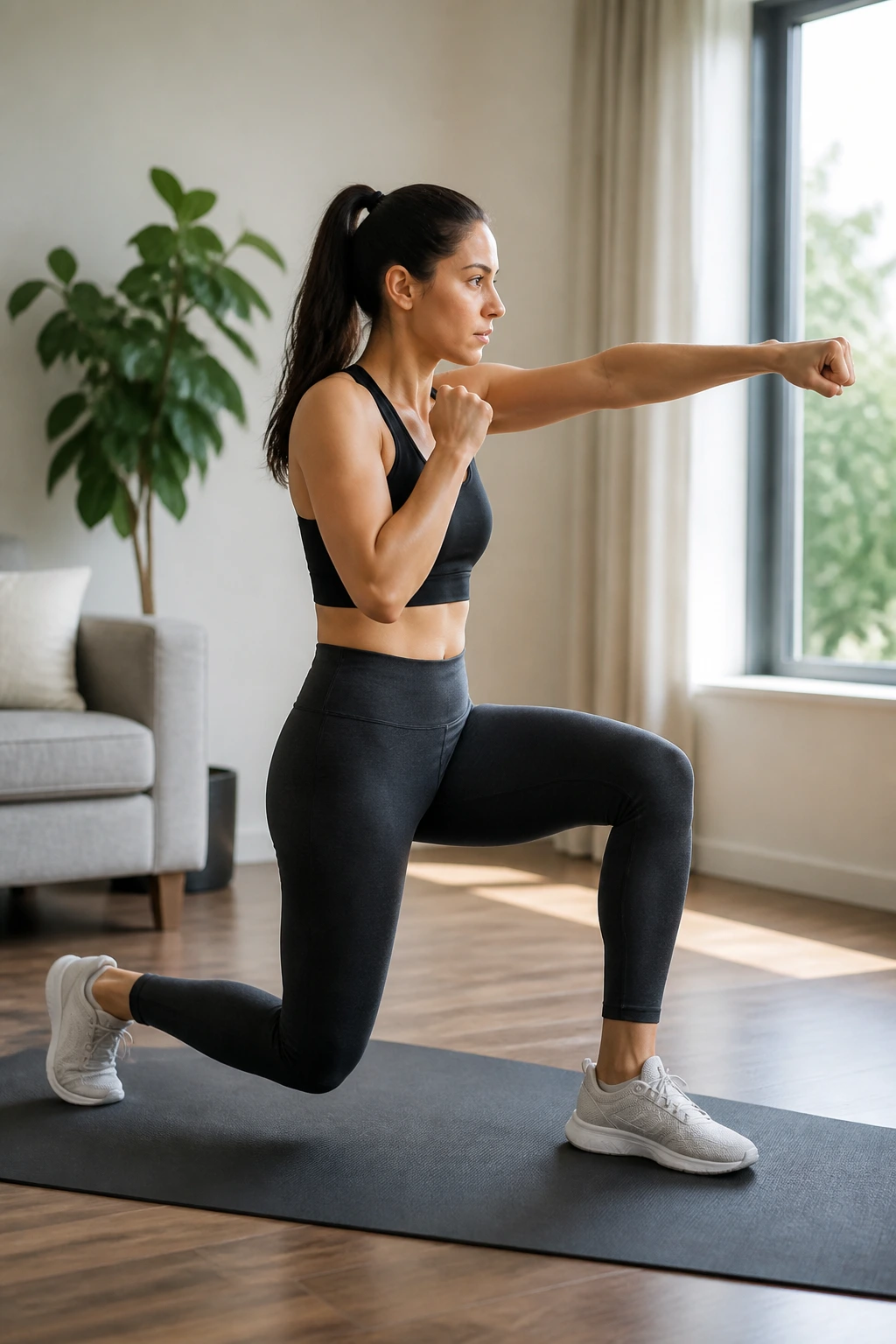
Some days you want movement, not impact. That does not mean the workout has to be easy.
Run 45 seconds of work and 15 seconds of rest through squat to reach, alternating reverse lunge, fast punches, high-knee march, and inchworm walkouts. Repeat 4 to 6 rounds. Keep your pace brisk enough that you can feel your breathing rise, but not so fast that you lose control on the floor transitions.
This format is good for beginners and for tired legs. It also works well when jumping is off the table. The inchworm walkout gives you a brief upper-body hit, and the lunge keeps the legs honest. Nothing flashy. Just steady, useful effort.
21. Pyramid Timer Workout
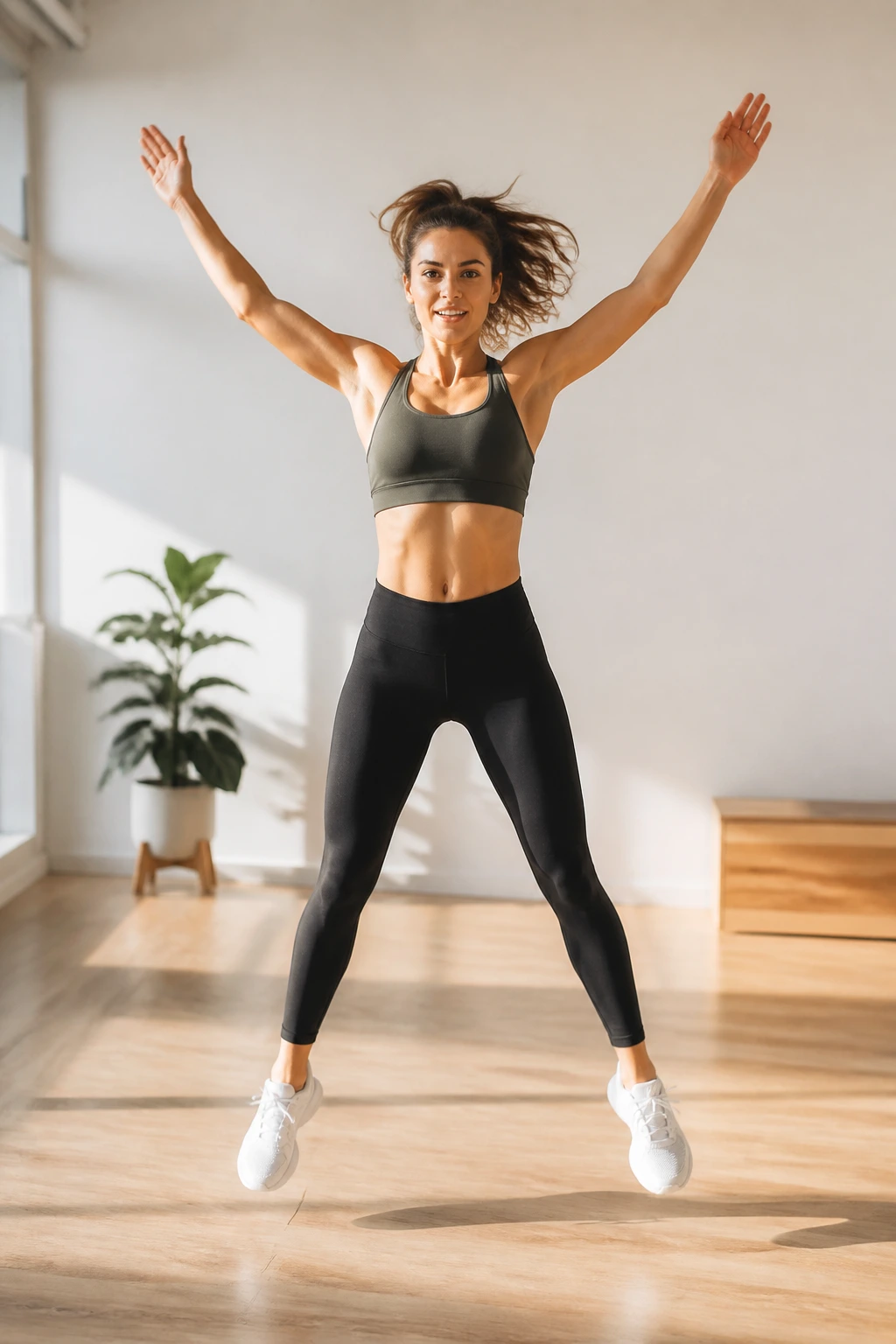
The pyramid works because the hard parts never arrive in a straight line.
Use one move or a small two-move combo and run a timer like this: 15 seconds hard, 15 seconds easy; 30/30; 45/45; 30/30; 15/15. That creates a natural build and release. Jumping jacks, high knees, shadow boxing, or skater steps all fit here.
A pyramid session feels cleaner than a random sprint set because you can sense the effort climbing and dropping. If you want a stronger finish, make the 45-second block your hardest one and save just enough in the tank to keep the last 15-second burst sharp. That little strategy changes the whole workout.
22. Fast Feet and Floor-Touch Drill
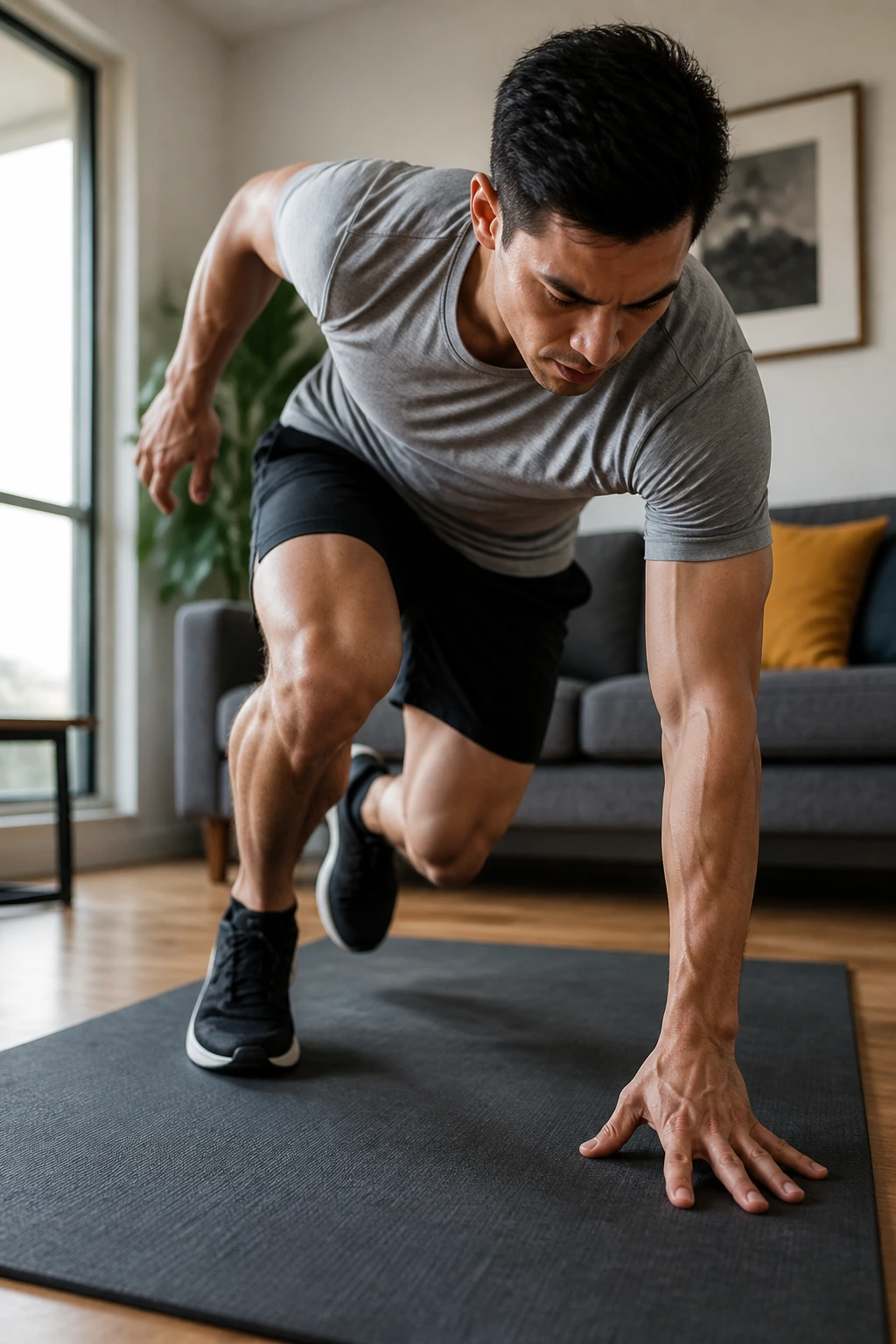
Fast feet sound simple until you try to hold them for 20 seconds. Then the calves and lungs arrive with opinions.
Set up a sequence of 20 seconds fast feet, 20 seconds squat touch, 20 seconds plank walkout, 20 seconds rest. Repeat for 6 to 8 rounds. Keep your feet light and your steps short. The goal is speed and control, not giant stomps that shake the room.
This one feels athletic in a plain, useful way. There’s no trick to it. You move, touch the floor, get down and back up, then repeat before your brain has time to negotiate. If your wrists get cranky during the walkouts, raise your hands onto a couch or a sturdy chair and keep going.
23. Long-Round Endurance Training
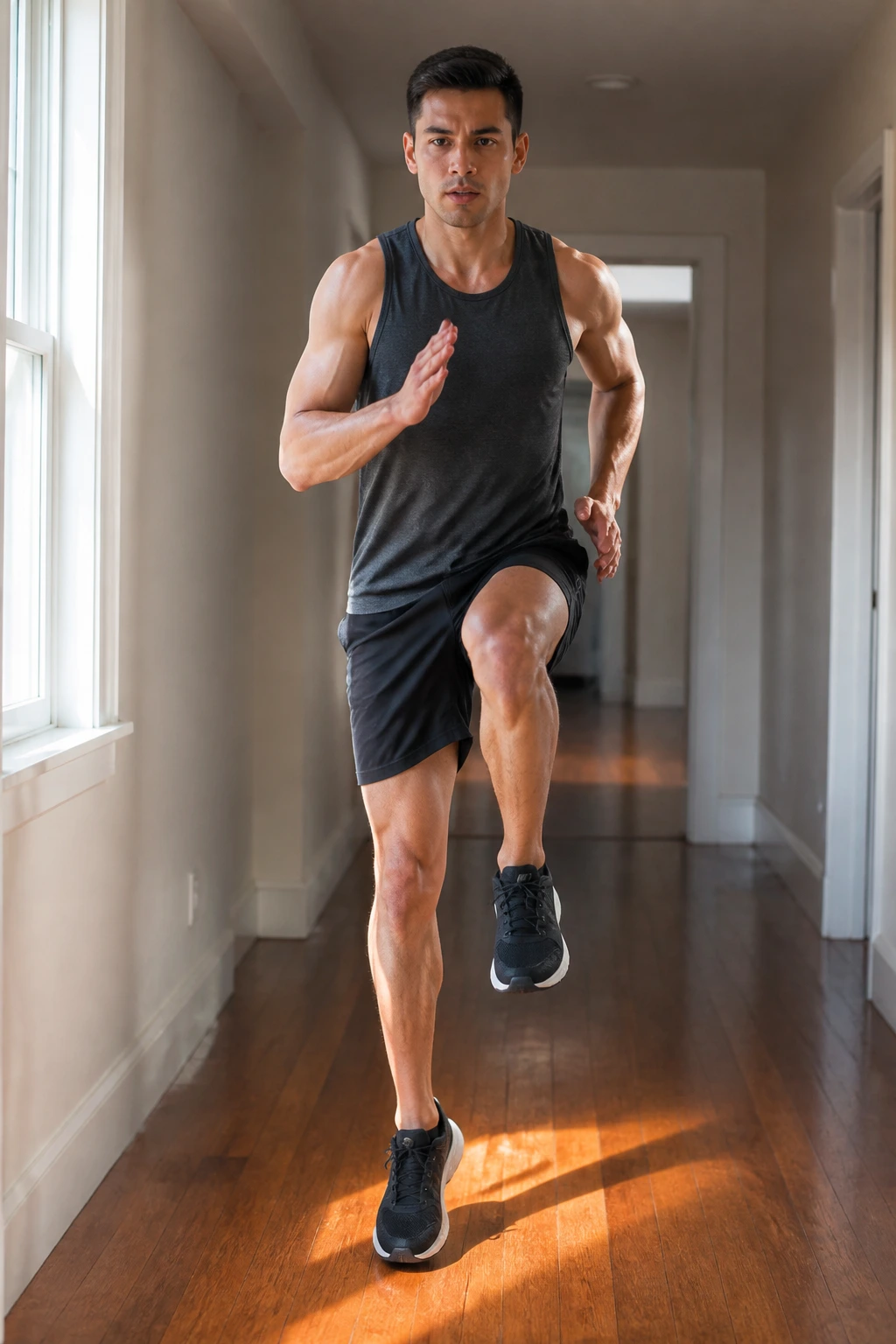
Long rounds feel old-school for a reason. They force you to pace yourself instead of charging the first minute like you’re late for something.
Set 4-minute rounds with 1 minute of rest, then cycle through 4 to 6 rounds. Within each round, rotate between high knees, squat pulses, step-back lunges, and shadow boxing every 30 to 45 seconds so one pattern does not bury your legs. The effort should stay steady, not frantic.
This workout is useful when you want breathing practice as much as leg work. The challenge is restraint. If you go too hard in the first minute, the last two minutes get messy. Keep your pace just under the point where your form starts falling apart. That’s the sweet spot.
24. Short Sprint and Long Recoveries
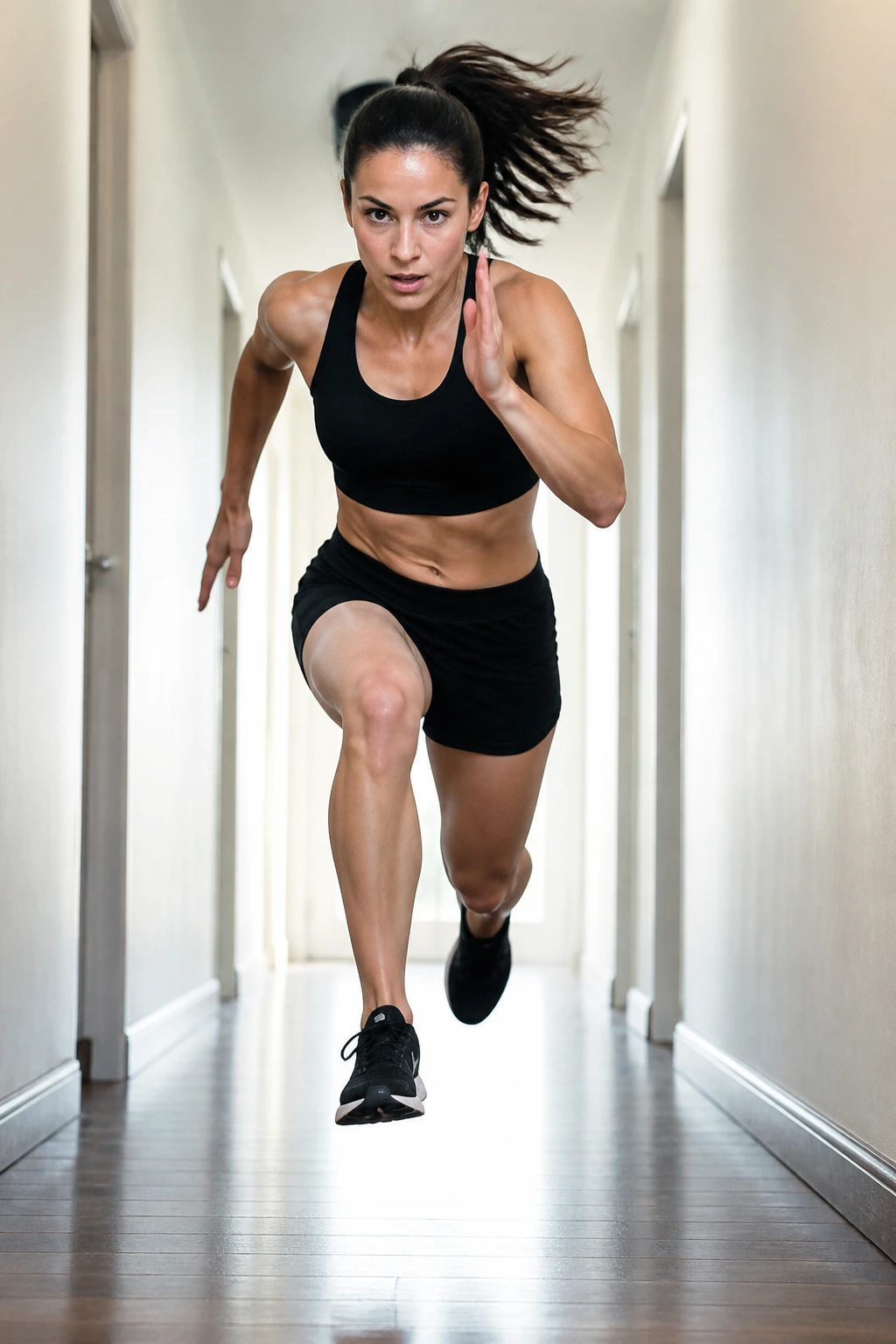
Not every sprint workout needs to end with collapsed lungs. Sometimes the smarter move is to sprint, recover fully, and sprint again with good shape.
Try 10 seconds all-out, 50 seconds easy for 12 to 15 rounds. At home, that can mean high knees, sprint-in-place, a short hallway run, or stair bursts if you have them. The recovery is the point here. Use it. Walk, breathe, shake out your arms, and let the next burst be fast instead of sloppy.
This format is great when you care about speed and power. Quality stays high because each burst is short. If your speed drops hard after round six, keep the same interval count next time and make the movements cleaner instead of making the workout longer.
25. Recovery Cardio Flush
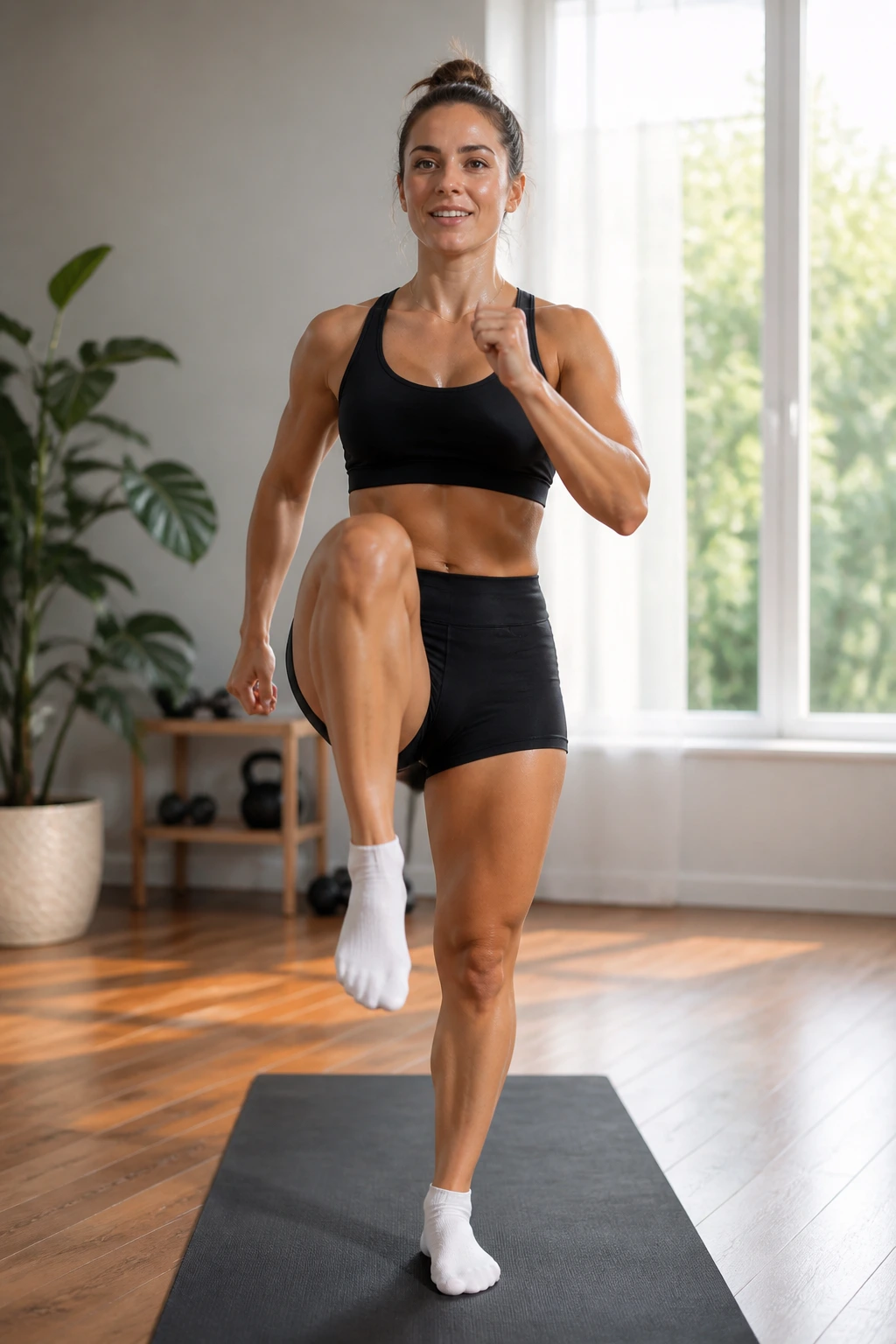
A recovery session can still be interval work. It just has a quieter voice.
Use 40 seconds of brisk marching, 40 seconds of easy step-touch with arm reach, 40 seconds of light shadow boxing, and 20 seconds of rest. Repeat 5 to 6 rounds. Keep the pace smooth and the breathing steady. You should finish feeling looser, not flattened.
Why this belongs in the mix
- It keeps the habit alive on low-energy days.
- It helps the legs recover without making you sit still.
- It gives you a place to train movement quality.
- It is a clean option after a harder session the day before.
This is the workout I’d keep in my back pocket for the days when motivation is thin and the body wants motion, not punishment. Do it in socks on a mat if that feels right, sip some water, and let the session be what it is — simple, useful, and enough.
