



Your first boxing session can feel awkward in the best possible way.
Your feet don’t know where to go, your shoulders light up faster than you expected, and the first time you try to move and punch at the same time, the whole thing feels a little like patting your head and rubbing your stomach while someone counts down a round. That’s normal.
The best boxing workout routines for beginners do not start with wild power. They start with rhythm, balance, and the habit of bringing your hands back home after every punch. A clean jab beats a sloppy haymaker every time, especially when you’re trying to build coordination and conditioning at the same time.
Most beginner boxing work uses simple round timing — 2 or 3 minutes of work, 1 minute of rest — because that gives you enough time to settle into the movement without turning the session into a sprint you can’t repeat. You do not need a ring or a sparring partner to get real work done. Shadowboxing, footwork drills, bag rounds, jump rope, and short bodyweight circuits can build a sturdy base fast.
If your wrists or shoulders complain, shrink the range of motion and slow the pace. No heroics. Clean work matters more than hard work here, and that part sneaks up on people.
1. Boxing Workout Routine for Beginners: 3-Round Shadowboxing Starter
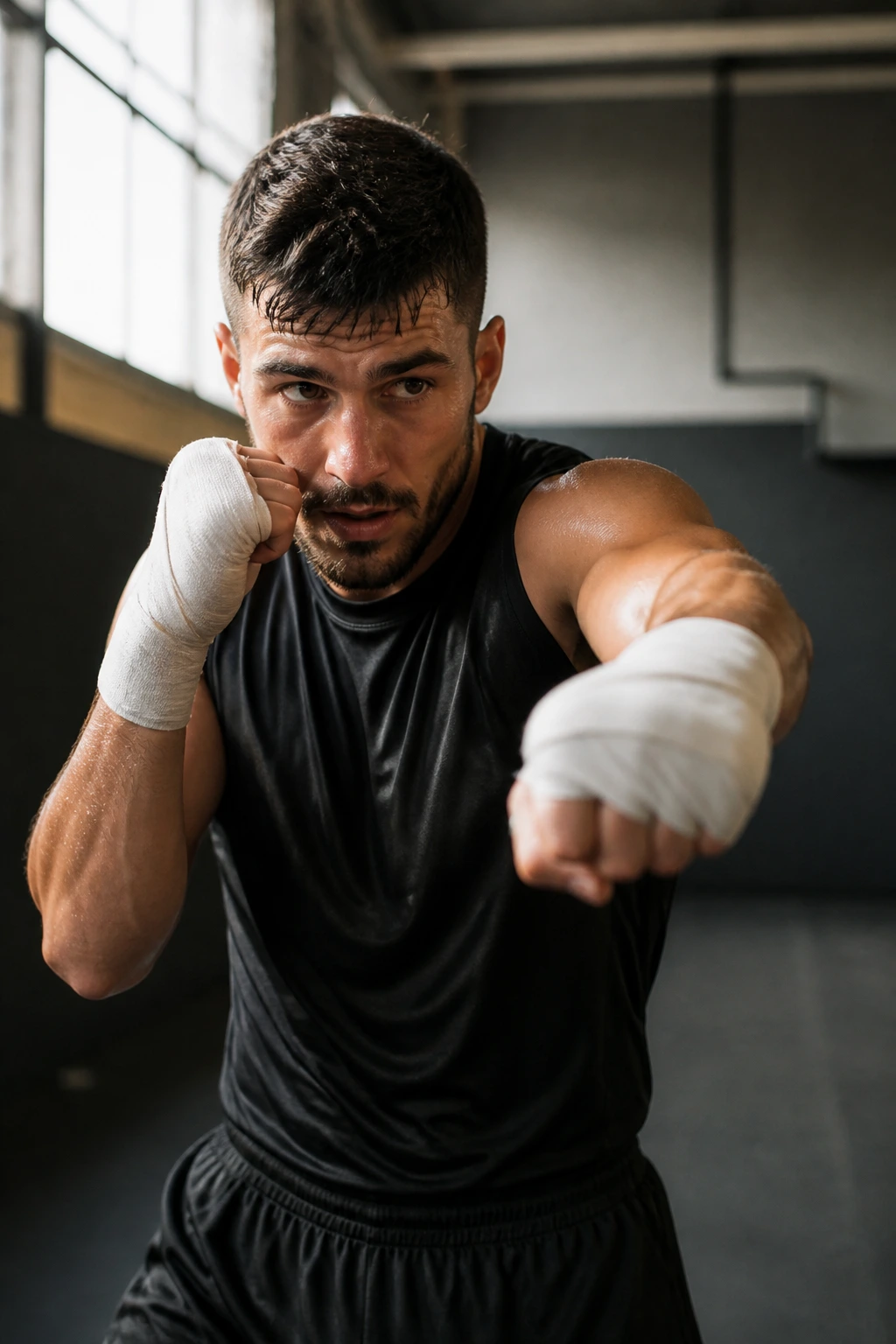
Shadowboxing is where beginners learn the truth fast. You can’t hide sloppy feet, lazy hands, or a stiff upper body when there’s no bag to blame.
I like this as a first routine because it shows you what your body is actually doing. Three rounds of 2 minutes with 1 minute rest is enough to warm you up without frying you, and it gives you room to focus on one idea at a time. Keep the punches light. The goal is shape, not force.
How to run it
- Round 1: Stand in your stance and throw only the jab, resetting after every punch.
- Round 2: Add the cross and a small step forward or back.
- Round 3: Mix in slips, half-steps, and one simple combo like jab-cross-slip.
Watch your hands return to your cheeks. That tiny habit matters more than people think.
A lot of beginners throw punches and then admire them. Don’t. Move your feet immediately after every combination, even if the step is tiny.
2. Jump Rope and Bounce Footwork
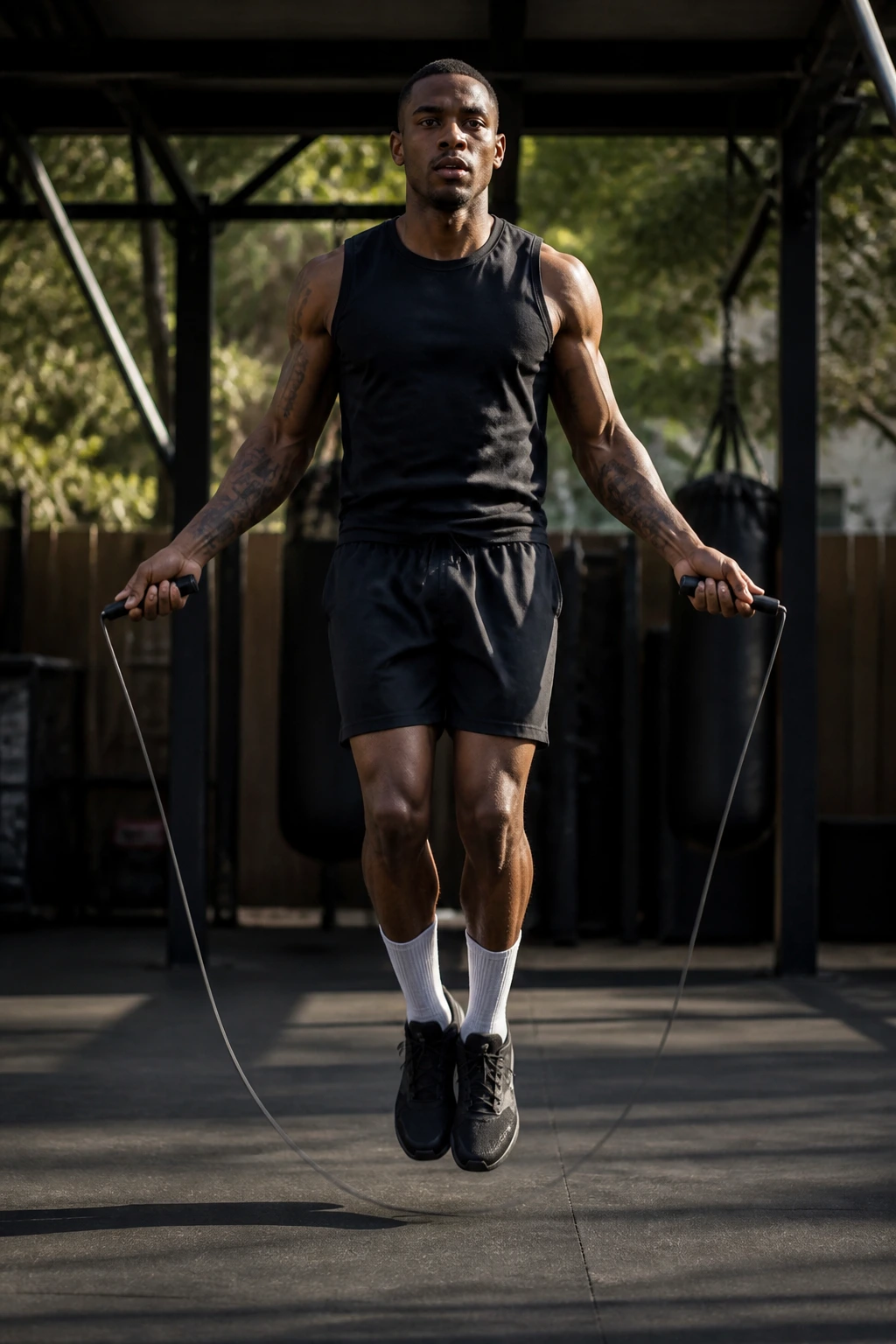
Nothing fixes clumsy feet faster than a rope and a timer.
Two minutes into a jump-rope round, the truth shows up. If you’re bouncing too high, you’ll feel it in your calves. If your posture is off, your lower back will complain. If your rhythm is sloppy, the rope tells on you right away. That’s why this routine works so well before you ever touch a bag.
Do 5 rounds of 1 minute on and 30 seconds off. Start with two-foot hops, then switch to boxer step, then alternate-foot rhythm if you can keep it smooth. Keep your knees soft and your shoulders low. The rope should feel like a metronome, not a punishment.
One quiet benefit here: your breathing starts to settle into a pace that feels closer to boxing. Short exhales. Quick resets. No panic.
The mistake is jumping like you’re trying to clear a fence. Stay low. Your feet only need to skim the floor.
3. Jab-Only Precision Drill

Why jab-only? Because the jab is the punch that teaches everything else.
It teaches distance. It teaches timing. It teaches you how to keep the rear hand glued to the cheek while the lead hand works. If you can’t make the jab clean, the rest of your combinations tend to drift into mess.
How to use it
- Throw 20 straight jabs, then rest 20 seconds.
- Step in on some jabs and step out on others.
- Aim at one spot on a wall, bag, or shadow target.
- End each rep by bringing the lead hand back fast.
Run 4 rounds of 90 seconds. Keep the punch sharp, not wild. The fist should turn over at the end, but your shoulder should stay relaxed.
A good jab has a snap to it. You should hear a light pop in the air, not feel yourself shove the room.
4. One-Two Rhythm Builder
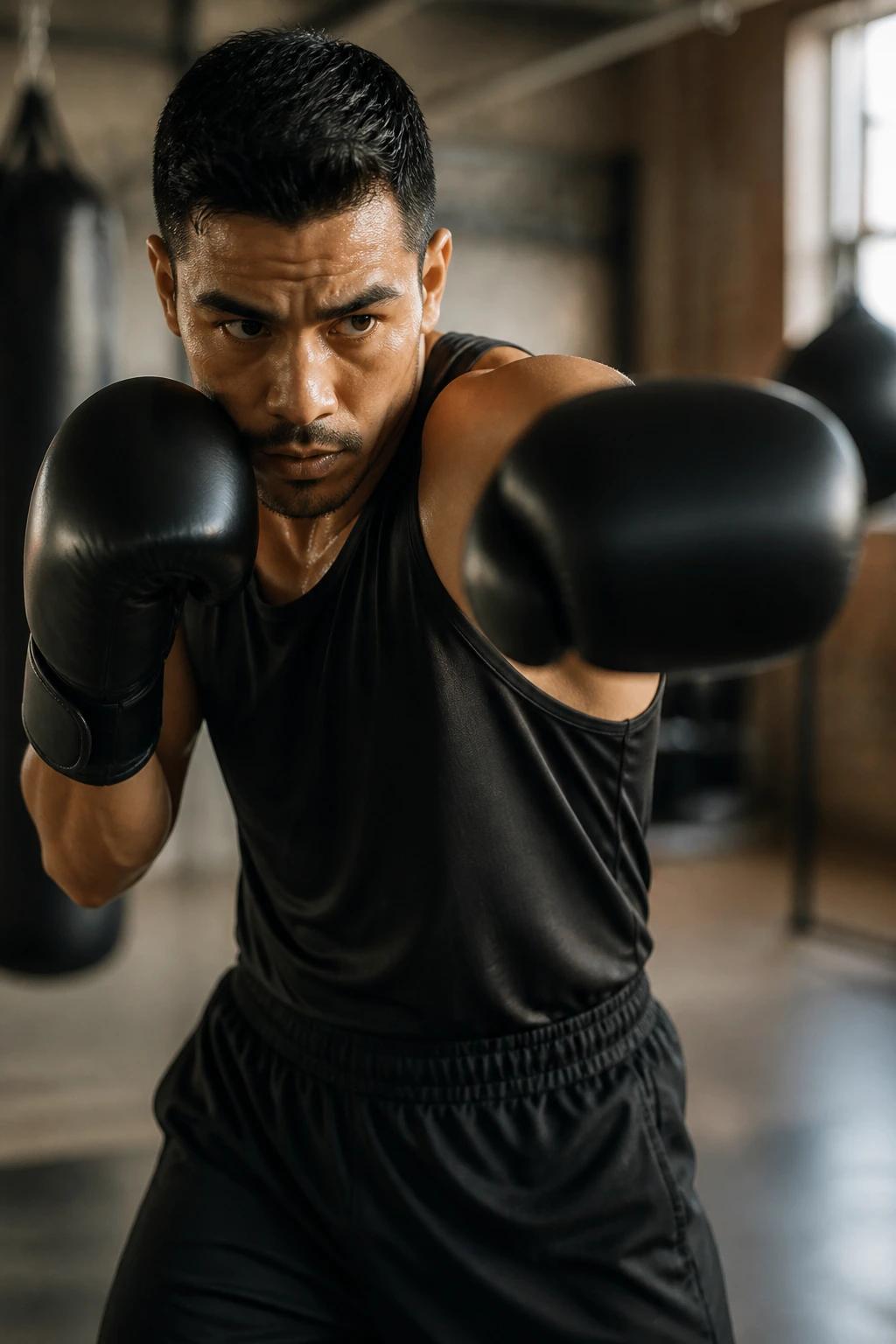
If your first one-two feels like two separate accidents, this is the fix.
The one-two is simple on paper and annoying in real life. People rush the cross, lean too far forward, or forget the feet. So this routine slows the whole thing down and makes you repeat the pattern until it starts to feel boring. That’s the point.
Do 4 rounds of 2 minutes. Spend the first minute on slow, clean one-twos with a full reset after each combo. Spend the second minute adding a small step with the jab or cross, but never both at once until the shape feels stable. If you’re using a bag, land at about half power. If you’re shadowboxing, pick a spot in front of you and keep your eyes on it.
The rhythm should feel smooth, almost musical. Jab. Cross. Reset. Breathe.
When the cross lands, your rear heel should turn just enough to help the hip rotate. If your shoulder tightens up to your ear, you’re muscling it.
5. Slip-and-Return Defense Round
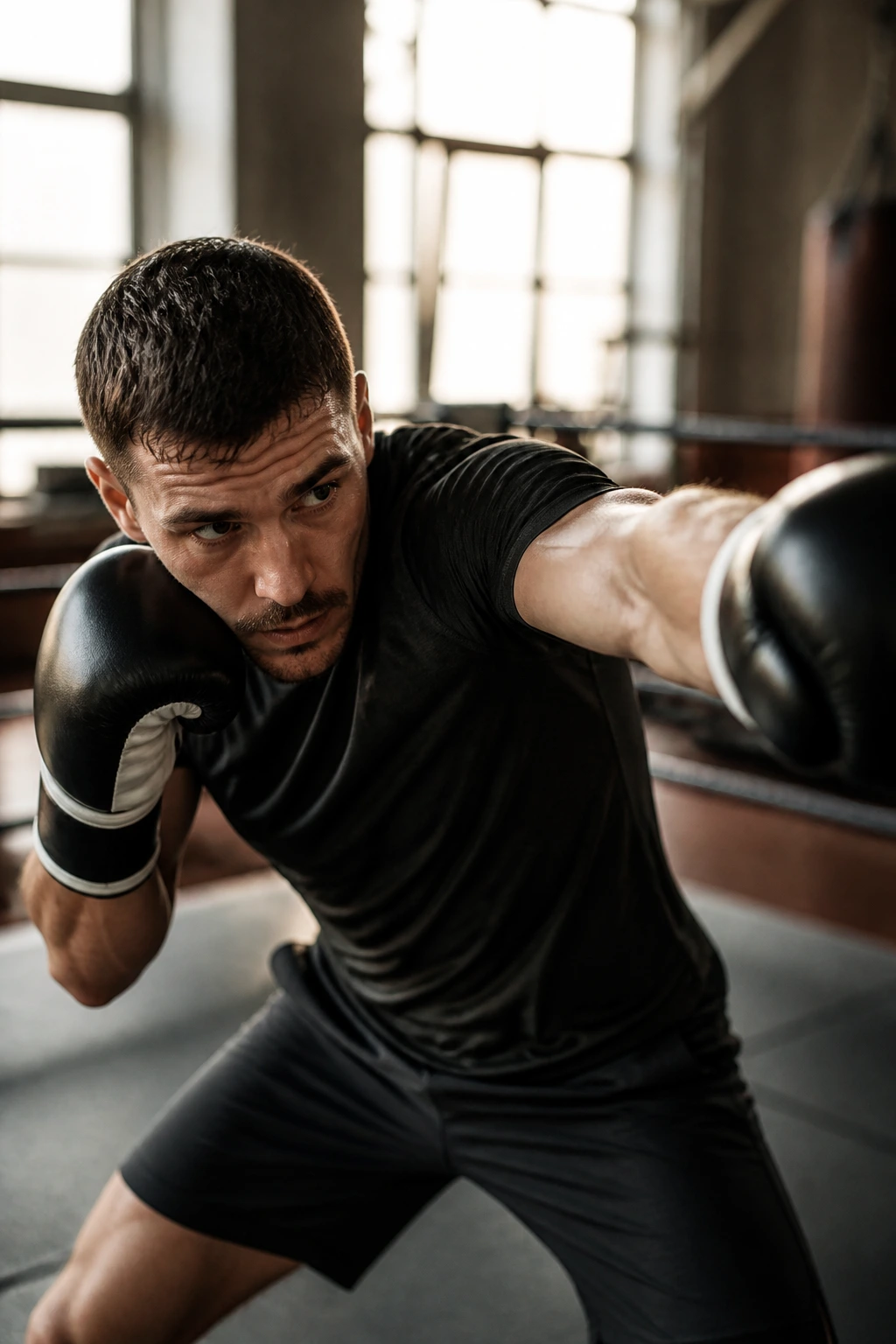
Defense feels weird until it doesn’t.
A beginner’s common habit is to punch and freeze. This round breaks that habit by making you move your head after every combo. Throw a jab-cross, slip left, throw another jab-cross, slip right. Nothing fancy. Just enough movement to keep your body from standing still like a target.
Run 3 rounds of 2 minutes. Keep the slips small, like you’re ducking under a low door frame instead of diving for the floor. The motion comes from the knees and waist together, not from folding yourself in half. A mirror helps here. So does patience.
One sentence: don’t admire your own punches.
If your head ends up way outside your stance, you’ve gone too far. You want a short, useful move that lets you fire back right away.
6. Lead Hook Mechanics on the Air
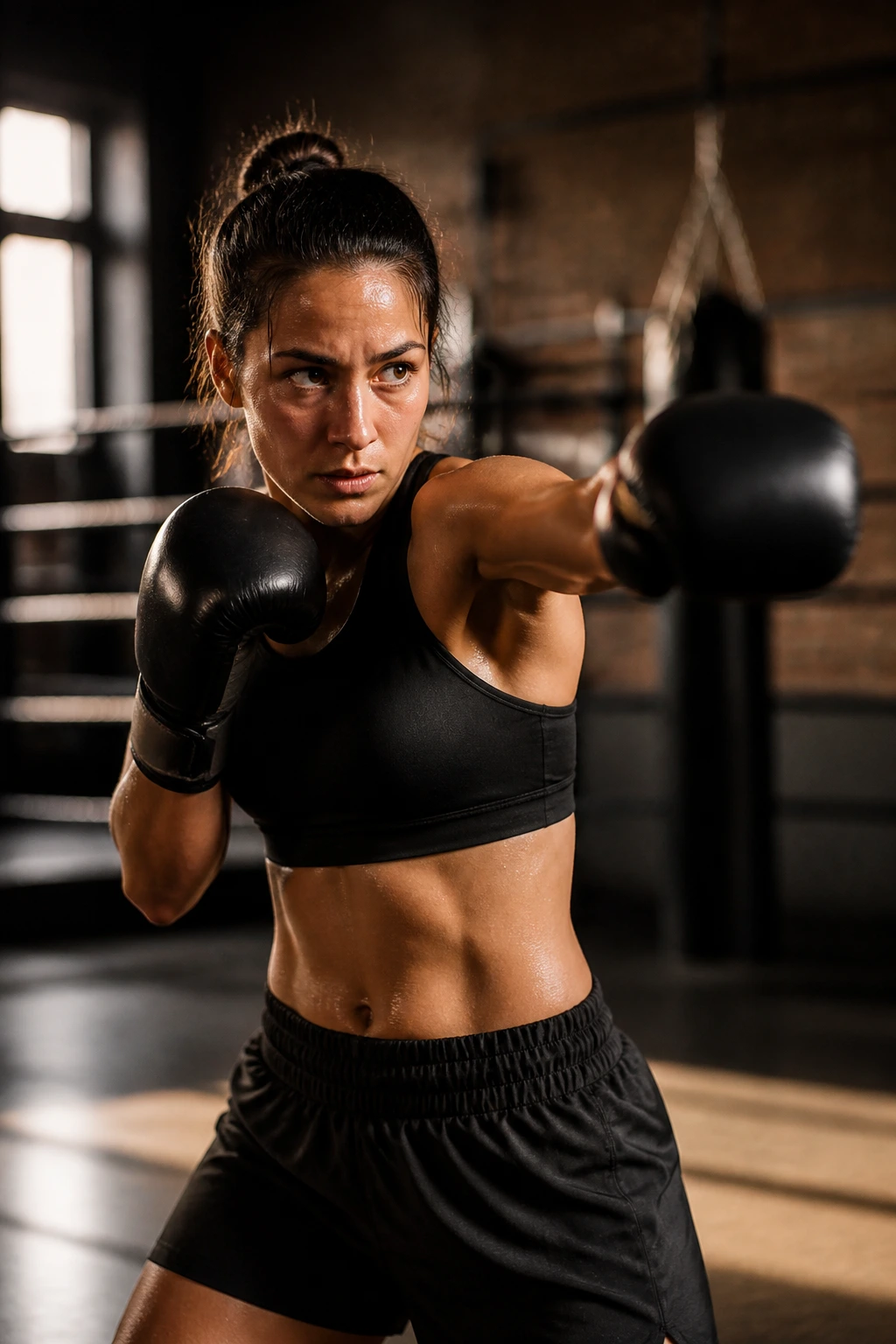
A hook is not a swinging arm punch. That’s how beginners wreck their shoulders and lose balance.
The lead hook starts from the floor, climbs through the hips, and finishes with the elbow roughly level with the fist. If you’re only moving the arm, it will feel weak and disconnected. If you turn the foot and hip with it, the punch gets tighter and cleaner.
Three checkpoints
- Elbow: Keep it roughly in line with the fist, not dropped below it.
- Foot: Let the lead heel turn a bit as the hip rotates.
- Return: Bring the hand back to guard immediately after the punch.
Do 3 rounds of 90 seconds. Work in slow motion at first, then raise the speed only when the shape stays intact.
The best cue is this: the hook should feel like a whip, not a shove. If your neck tenses up, relax and shorten it.
7. Beginner Boxing Workout Routine for the Heavy Bag
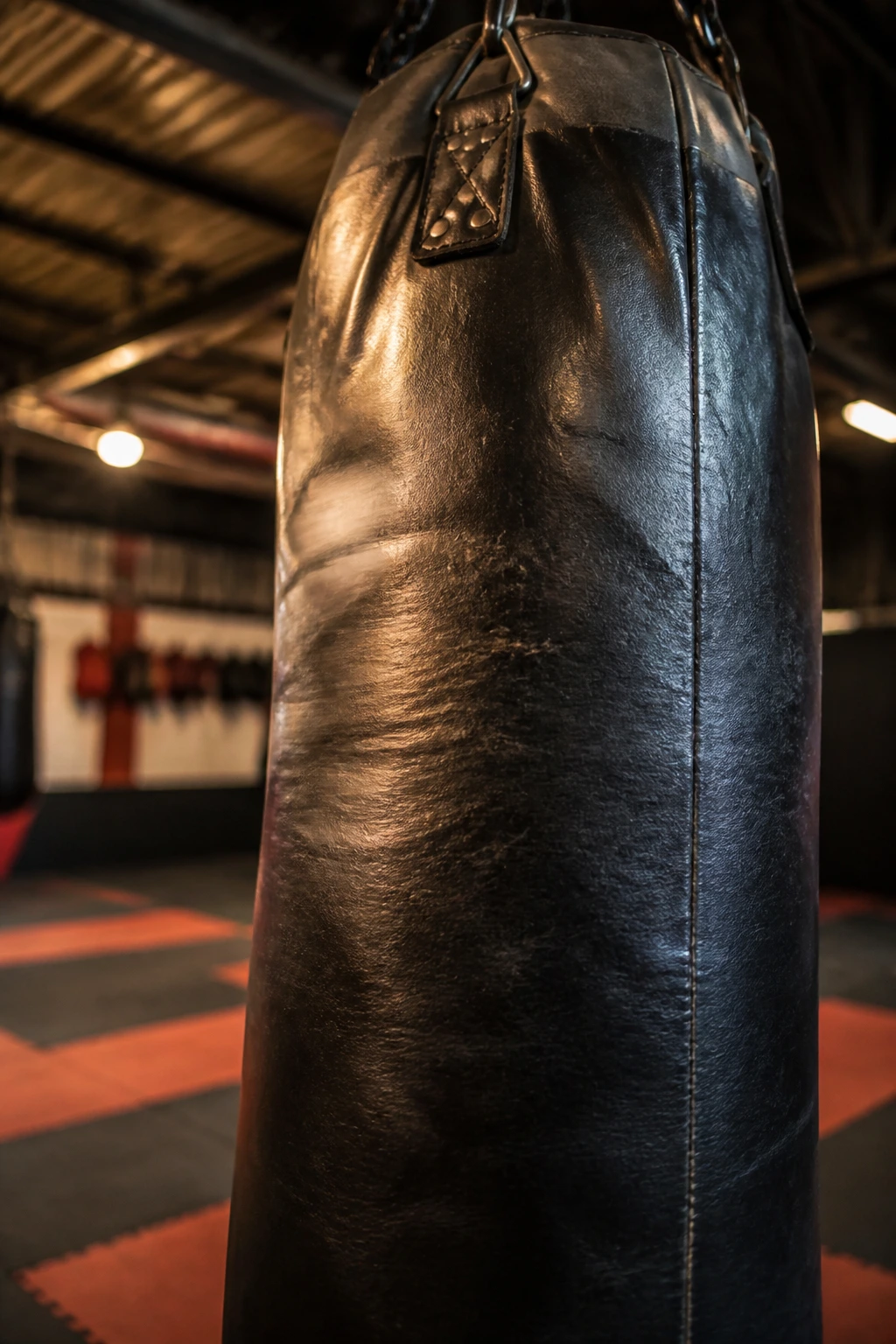
Heavy bag rounds look simple until the bag swings back at you.
That swing is useful. It punishes lazy balance, makes bad distance obvious, and forces you to decide whether you’re moving with purpose or just flinging leather. For beginners, that feedback is gold.
Do 4 rounds of 2 minutes with 1 minute rest. Start at half power. Throw jab-cross, then step out. Throw jab to the body, then reset. Land a short hook only if your feet are stable. Let the bag move a little, but don’t chase it like a dog after a squirrel.
Bag rules that save beginners
- Keep combinations to 3 punches or fewer at first.
- Step away after every combo.
- Let the bag settle between power shots.
- Finish each round with 20 seconds of light straight punches.
If your wrists feel jammed, your gloves may be too light or your fist is landing crooked. That’s not a pain you ignore.
8. Hanging Ball Reaction Drill
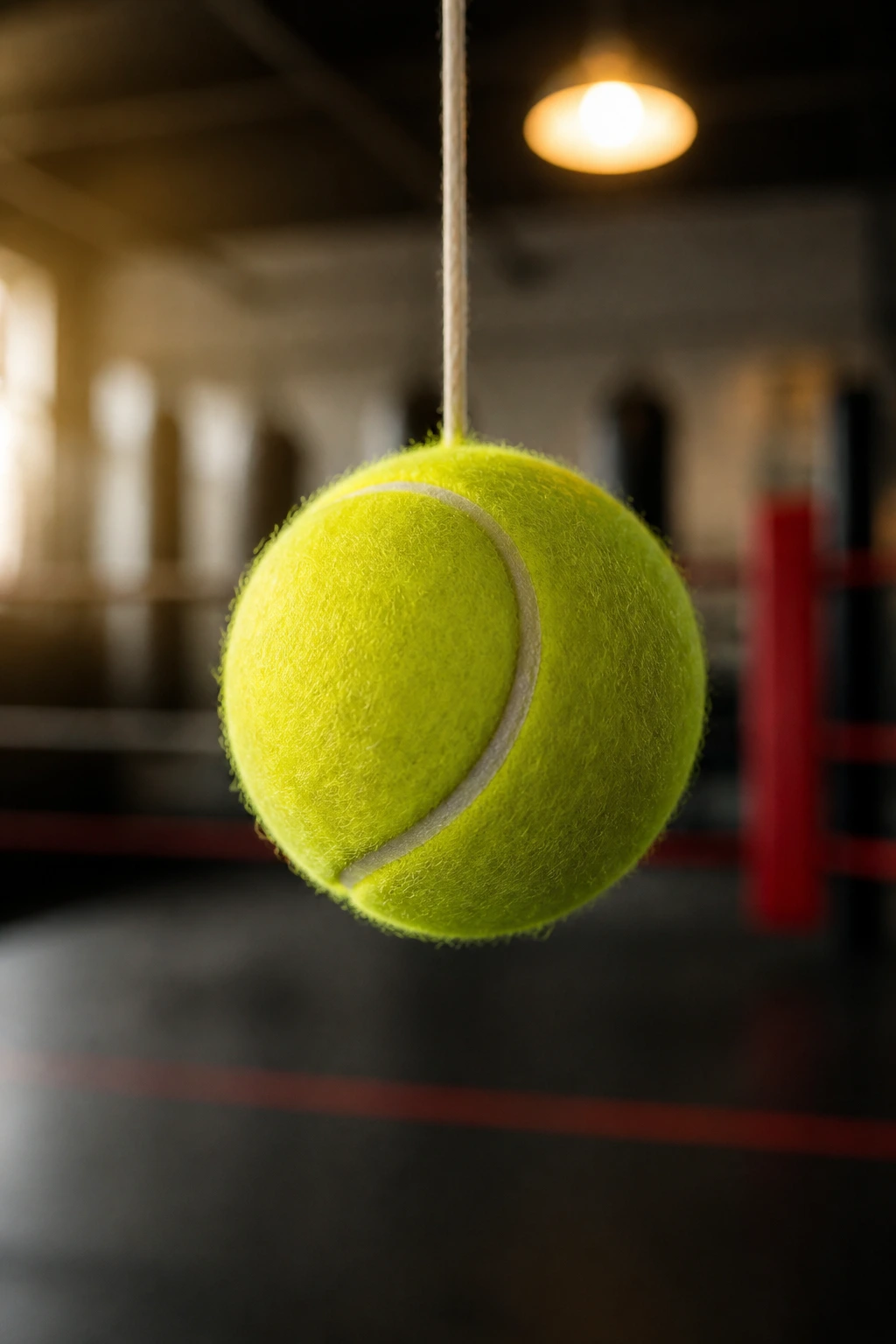
A tennis ball on a string looks silly for about 30 seconds. Then it starts teaching you things you didn’t know you were missing.
The ball moves faster than a heavy bag and gives you a smaller target, which is exactly why it helps. Tap it with the jab, let it come back, then slip it and tap again. You’re training your eyes, hands, and feet to work together without overthinking every step.
Run 3 rounds of 2 minutes. Start with light touches only. If you try to smash the ball, it turns into chaos and you stop learning. A narrow stance works better than a wide one here because it keeps your weight centered.
The real lesson is patience. You wait for the line, then you touch it. No reaching.
When this starts to feel smooth, add a jab-cross and a tiny pivot out. That little exit step matters more than the punch.
9. 30-Second Punch-Out Intervals

Short bursts change the engine.
Thirty seconds is long enough to raise your heart rate and short enough to keep your form from falling apart too early. That makes this one of the cleanest conditioning routines for a beginner who wants boxing work without a full sparring-style round.
Do 10 rounds of 30 seconds on and 30 seconds off. During each work burst, choose one simple combo and repeat it. Jab-cross. Jab-jab-cross. Cross-hook-jab. Keep it basic. The goal is speed endurance, not variety for its own sake.
Quick setup
- Pick a timer you can hear.
- Use 2-punch or 3-punch combinations only.
- Keep your chin tucked and your hands high.
- Use the rest to walk and breathe, not scroll.
This one burns fast. Good. That’s the point. If your shoulders climb into your ears by round 6, slow the hands down and keep the feet moving.
10. Bodyweight Boxer Circuit

A boxer who can’t handle bodyweight work usually feels it in the second half of training.
That doesn’t mean you need a full gym circuit with ten stations. A short, sharp round of push-ups, squats, and core work is plenty. The trick is to keep the movements clean and tie them to boxing rhythm instead of treating them like random fitness homework.
Try 3 rounds of 40 seconds work and 20 seconds rest at each station:
- Push-ups
- Air squats
- Reverse lunges
- Mountain climbers
- Plank shoulder taps
After each station, throw 10 light shadow jabs before the next one. That tiny boxing cue keeps the session from drifting away from fight movement.
You should finish feeling worked, not wrecked. If your squat turns into a half-rep wobble, cut the reps and keep the speed honest.
11. Core Rotation Round
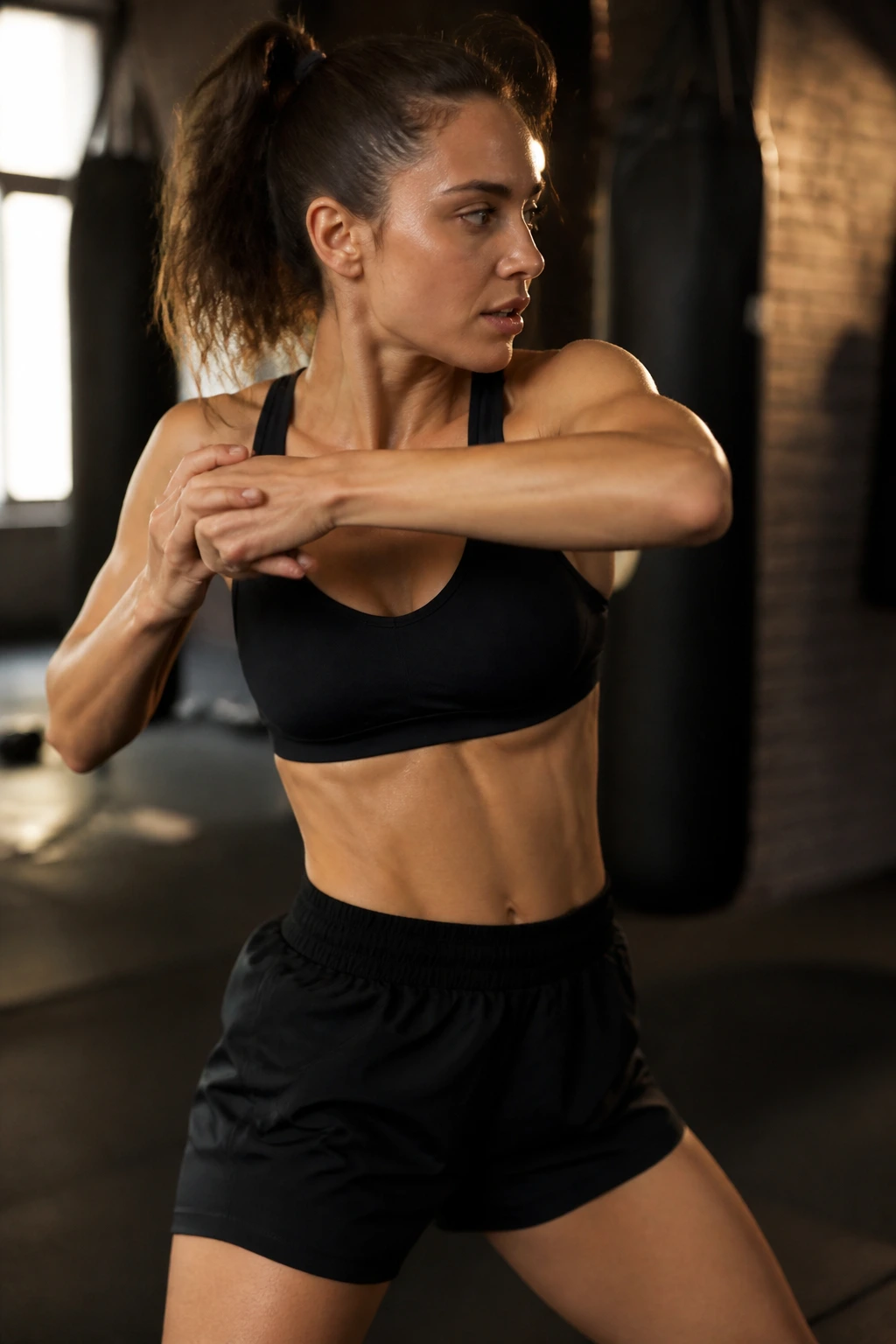
The core in boxing is not about endless crunches. It’s about turning hard, bracing fast, and keeping your trunk from folding when your hands move.
That means rotation matters. Standing woodchops, slow Russian twists, dead bugs, and controlled torso turns all have a place. I’d rather see a beginner do 12 crisp reps than 30 sloppy ones that yank the lower back around.
Run 3 rounds of 2 minutes. Pick 2 or 3 core moves and move between them with almost no rest. Keep your ribs down and your pelvis stable. If you feel the work only in your hip flexors, change the angle. If you feel it in your lower back, stop and shorten the range.
Boring? A little.
Necessary? Completely.
The payoff shows up when your punches stop leaking energy through the middle of your body.
12. Angle-Step and Pivot Drill
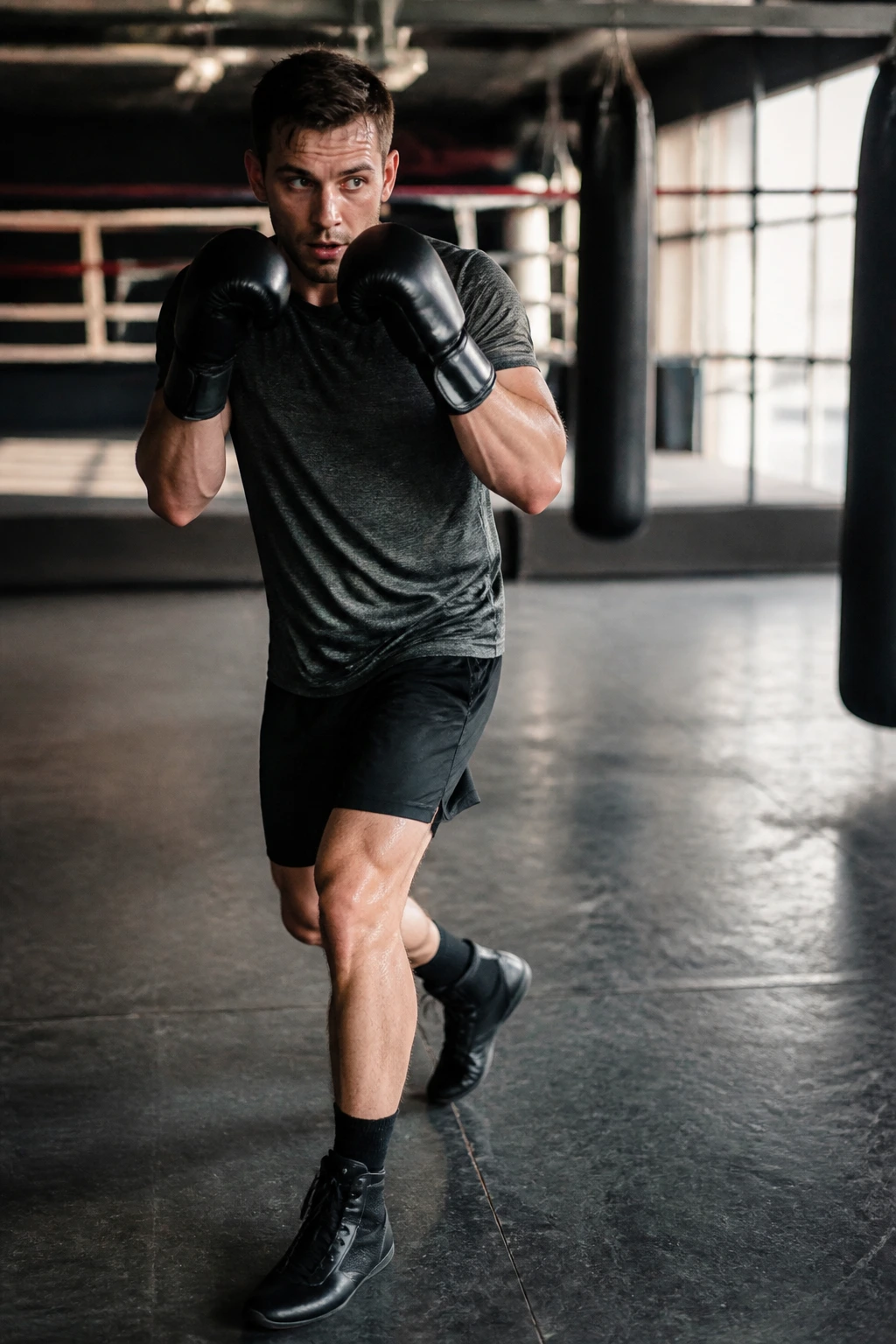
Why do some punches land cleaner even when they don’t look harder? Angle.
A straight-on boxer spends more time in front of the target than he needs to. This drill teaches you to step off the line after you punch, which makes you harder to hit and helps your body stay balanced while turning.
Drill cues
- Step at a 45-degree angle after the jab-cross.
- Move the front foot first on the entry.
- Pivot on the ball of the rear foot when you leave.
- Finish every rep with your guard back in place.
Work 4 rounds of 2 minutes. You can shadowbox, use a bag, or even mark spots on the floor with tape. I like tape for beginners because it makes the path obvious.
The common mistake is overstepping. You do not need a big dramatic escape. Two inches done right beats a huge lunge done wrong.
13. Mirror Boxing Form Check
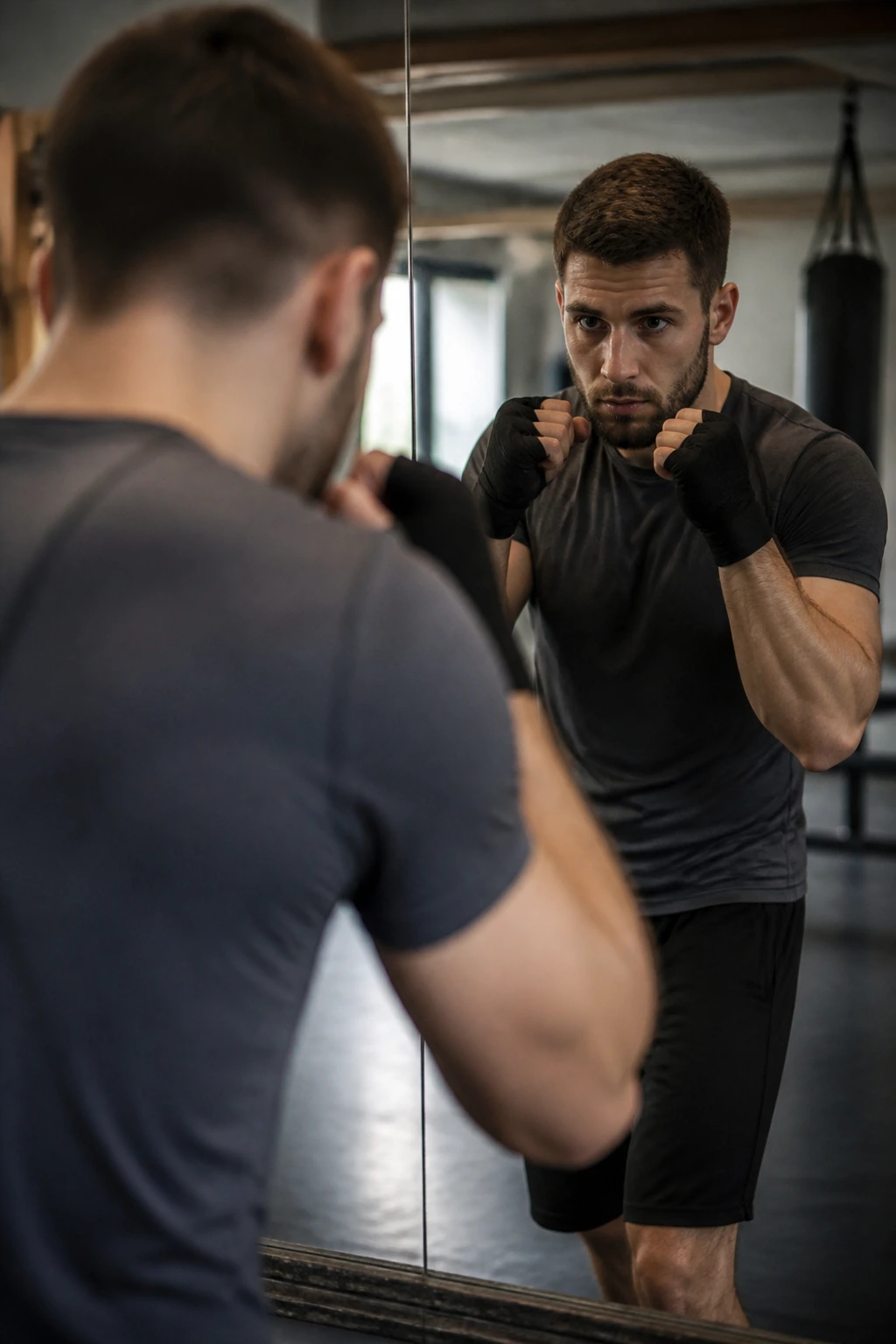
A mirror is brutally honest and weirdly useful.
Stand in front of one and throw your punches at half speed. Watch the boring stuff: Is your chin tucked? Are both hands returning to the same height? Does one shoulder ride higher than the other? A mirror shows all of it, and it usually shows it faster than a coach can say it out loud.
Do 3 rounds of 3 minutes. Spend the first round on stance and guard. Spend the second on straight punches. Spend the third on a simple combo and a small exit step. Move slowly enough that you can actually see the shape changing.
This is not the sexiest training session. I’d still take it over ten rounds of bad habits.
If one side looks worse than the other, keep that in mind and work it a little longer. Human bodies love to cheat to one side.
14. Stair or Hill Conditioning Session

A hill is honest.
It exposes weak legs, poor pacing, and a lazy first step faster than most indoor cardio. For boxing, that matters because the sport lives in the legs. If your feet die, your punches become decorations.
Pick a staircase or a modest hill and do 6 to 10 climbs. Walk back down under control. On the climb, keep your posture tall and your hands in a light guard near your face. If the surface is steep, take shorter steps and avoid bouncing.
How to scale it
- Start with 6 climbs if you’re new.
- Rest 20 to 30 seconds before the first few reps.
- Shorten the climb if your knees complain.
- Keep the upper body calm; don’t swing wildly.
Your breathing will spike fast here. That’s fine. The trick is to recover before the next rep instead of charging every climb like it’s the last one on earth.
15. Guard-Up Endurance Burn

Holding your hands up sounds easy until your shoulders start screaming.
That makes this a sneaky good beginner routine. It teaches posture, arm endurance, and the tiny discipline of keeping your guard where it belongs even when you’re tired. Do 4 rounds of 90 seconds. Keep your hands high, then throw short, light punches while maintaining the guard between reps.
A simple format works best: 10 seconds of jab-cross, 10 seconds of holding guard, repeat. The pauses matter because they train you to stay tall without collapsing into your chest. If you use gloves, you’ll feel the weight in your shoulders pretty quickly.
One thing I like here: it reveals whether your stance is built on structure or wishful thinking.
If your elbows flare wide or your neck cranes forward, reset. The right answer is smaller, not bigger.
16. Body Shot Shadowboxing Round
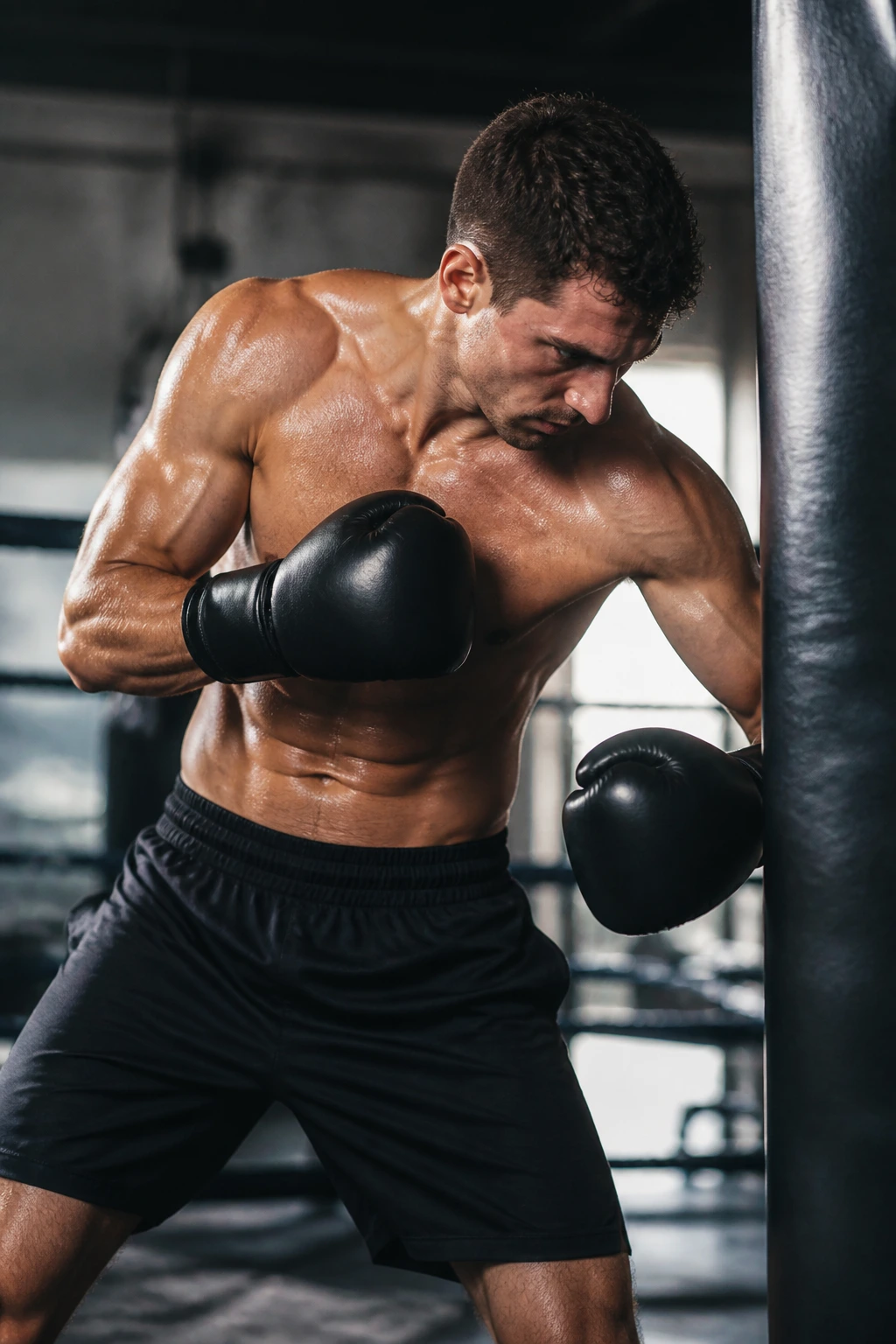
Body shots are where beginners learn to bend the right way.
A lot of new boxers fold at the waist like a folding chair. That’s not the move. You want the knees to soften, the hips to turn, and the torso to angle down just enough to change the target line. The punch comes after the level change, not before.
Do 3 rounds of 2 minutes. Spend the first minute on jab-to-body and cross-to-body motions. Spend the second on a short hook to the body followed by a quick exit. Keep the chin tucked and your eyes up. If you lose your posture while reaching, shorten the punch.
What to feel
- Knees bending, not the spine collapsing.
- Hips loading before the punch.
- Feet staying under you.
- Guard returning fast after the shot.
This round builds a cleaner shape for both offense and defense. It also teaches your legs to do more than stare at the floor.
17. Combo Ladder Workout
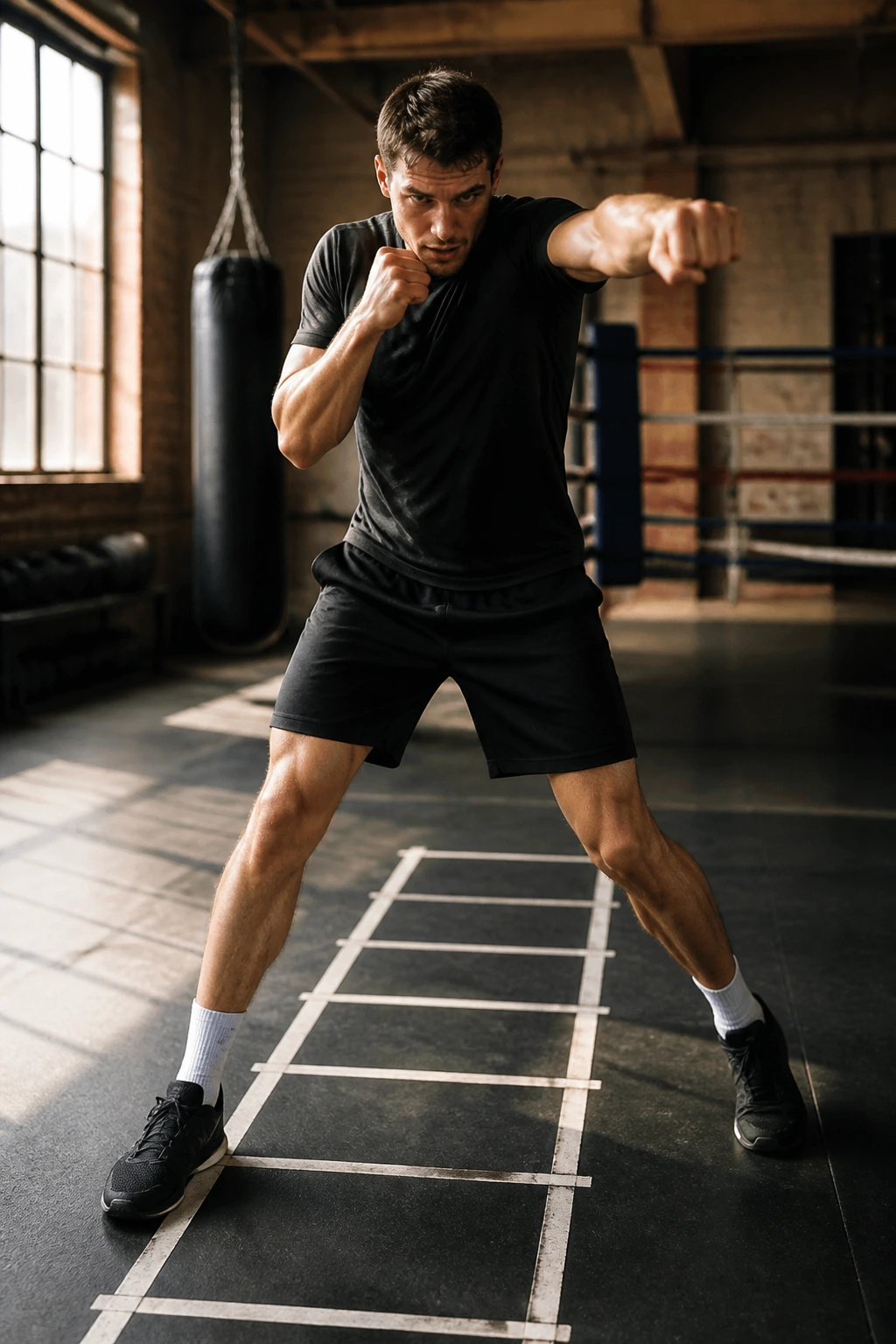
A combo ladder is a nice way to build memory without turning the session into a puzzle.
Start with a short combo and add one piece at a time. Do 1-2, then 1-2-3, then 1-2-3-2, then 1-2-slip-2. Each rung gets a set amount of time, and you repeat the whole ladder a few times so the pattern sinks in. It feels simple because it is simple.
Try 4 minutes total: 1 minute per combo, 30 seconds rest between ladders. If you’re on a bag, stay light enough to keep moving. If you’re in the air, make the exits clean and deliberate. The last punch should not be the end of the thought.
When a combo gets sloppy, climb back down. That’s the whole point. Cleaner beats longer.
One small bonus: this kind of training helps your brain stop panicking when you need to put two or three actions together.
18. Reaction-Cue Drill
A surprise cue is a rude little teacher.
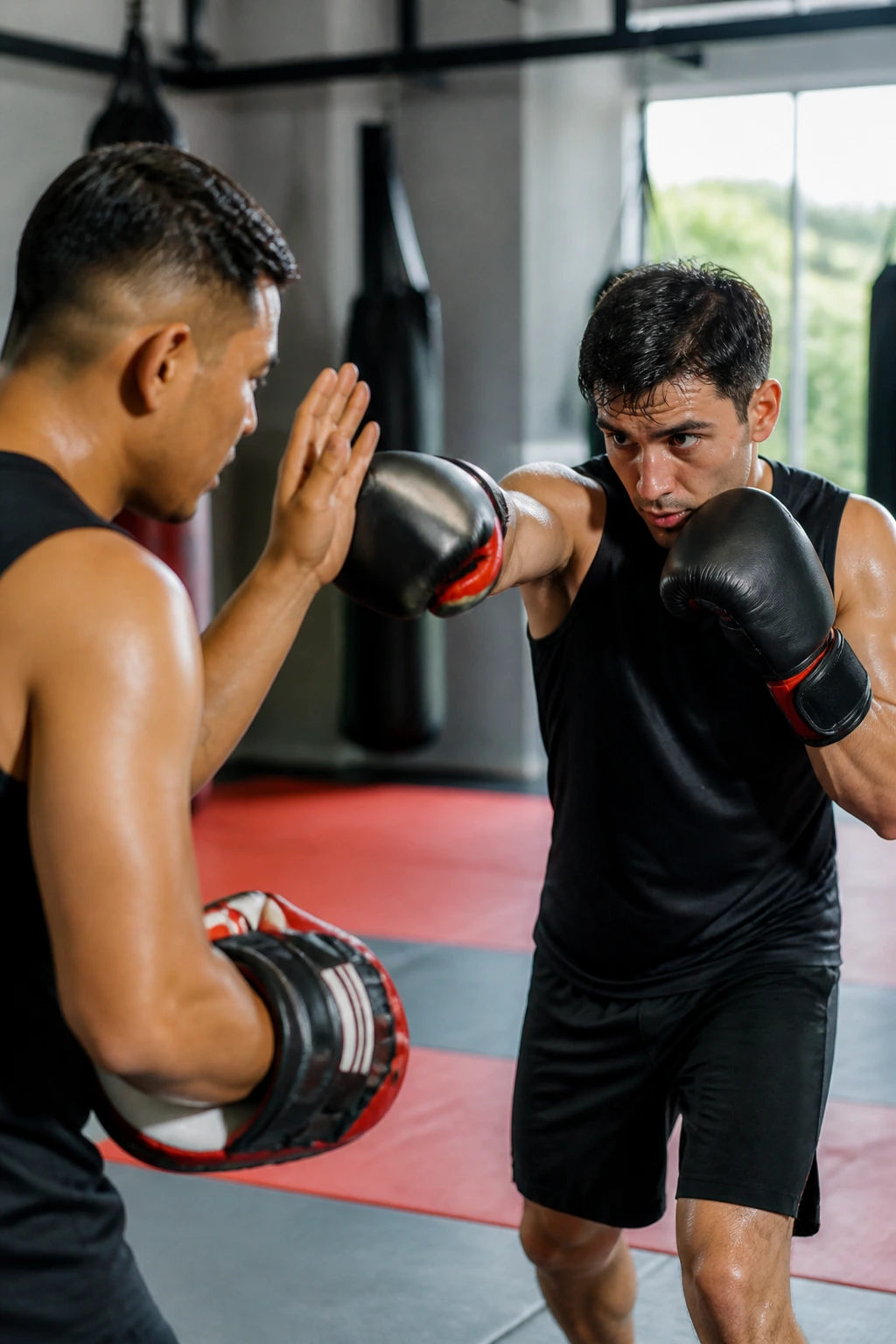
Use a phone timer, a workout app beep, or a partner calling out commands. When you hear “jab,” throw a jab. “Cross,” throw the rear hand. “Slip,” move your head and reset. The drill trains decision-making, which is part of boxing whether people admit it or not.
Set it up
- Assign three cues before you start.
- Work 6 rounds of 1 minute.
- Rest 30 seconds between rounds.
- Keep the reactions sharp and small.
The point is not to race the cue. It’s to respond cleanly, then recover your stance without fumbling around. If you have a partner, they can call different cues in a random order. If you’re alone, an interval timer with changing beeps still works.
This is one of those routines that feels plain until you notice you’re not freezing when the moment changes.
19. Recovery Shadowboxing Day
Not every boxing session should leave you soggy.
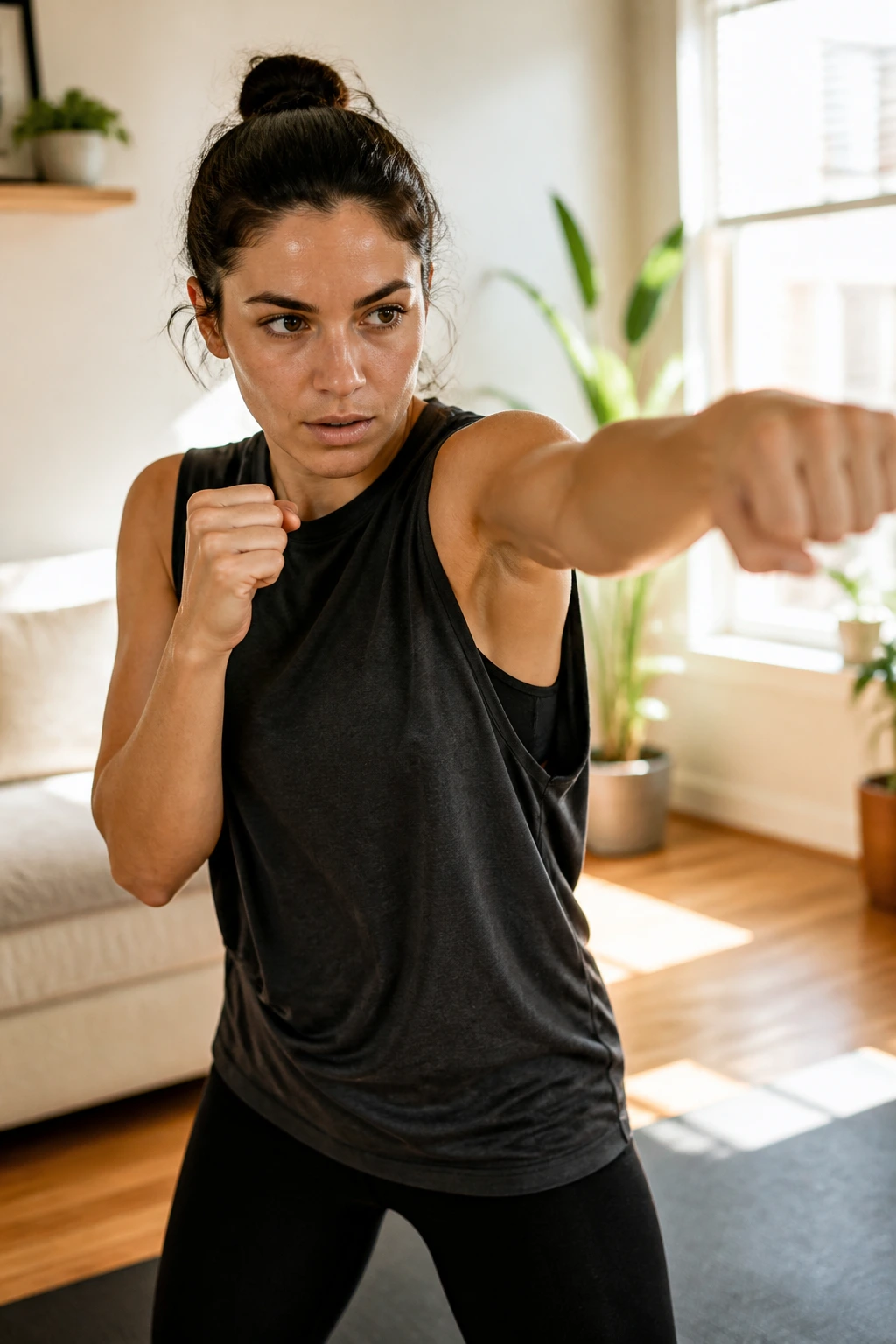
A recovery day keeps the movement pattern alive without piling on fatigue. That means lighter punches, looser footwork, and a pace that lets you breathe through your nose most of the time. I like 3 rounds of 3 minutes with plenty of room to move, but even 15 minutes total is enough if your body feels beat up.
Let the punches float out instead of snapping. Move around the room. Practice stance switches only if you already know how to do them without stumbling. Keep your shoulders soft and your jaw unclenched. If your breathing gets sharp, back off.
This is the kind of session beginners skip because it doesn’t feel tough enough. Then they show up the next day stiff and cranky.
Recovery work keeps the groove. It also teaches you what efficient movement feels like when no one is trying to impress anybody.
20. Tempo Change Rounds
Same combo. Different speed. That’s the whole lesson.
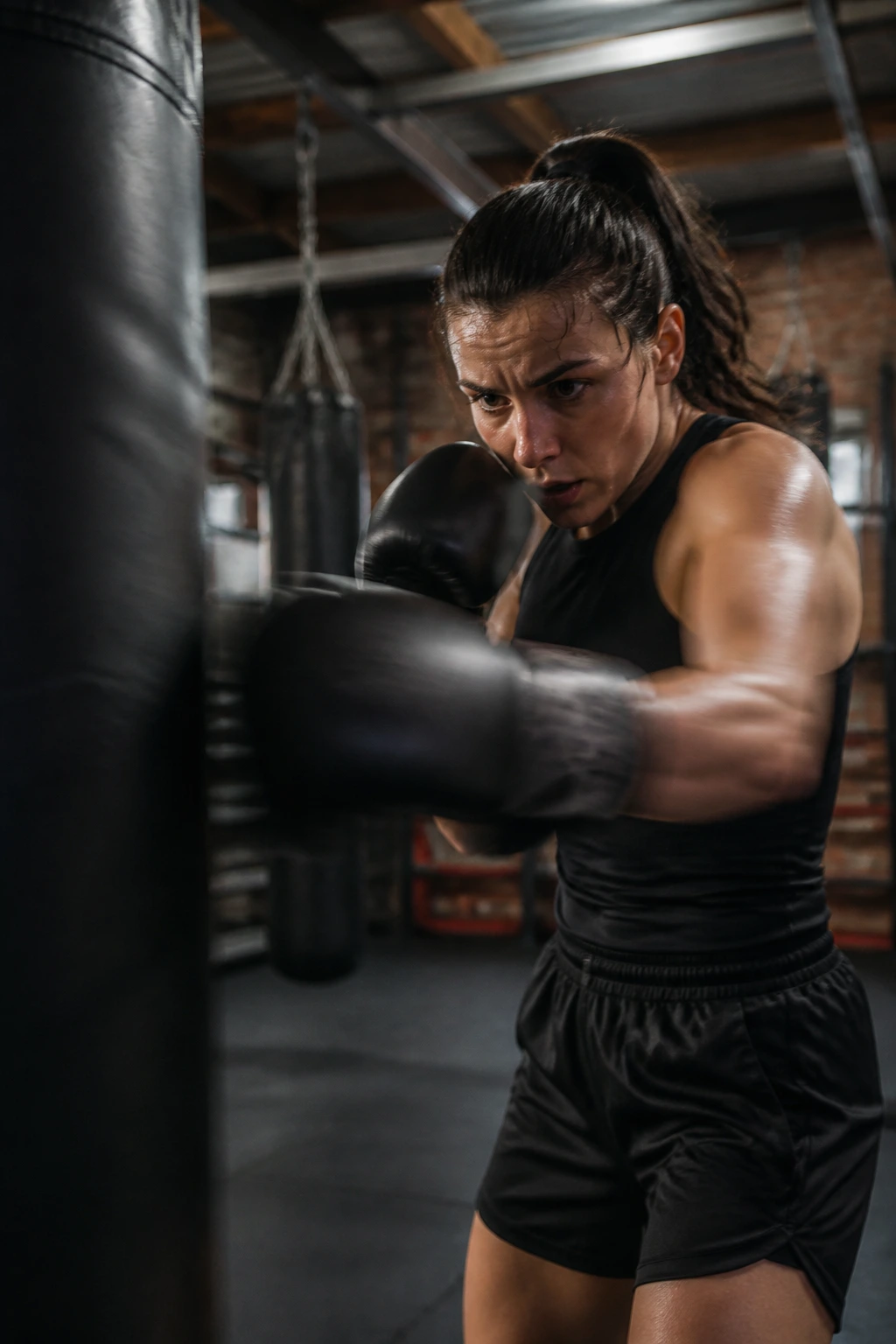
Tempo changes teach you how to drive the pace without burning all your fuel in the first minute. Start slow, spike the hands, then settle again. A beginner who learns this early usually looks smoother than someone who only knows one speed.
Try 4 rounds of 2 minutes. Use 30 seconds slow, 30 seconds medium, 30 seconds fast, 30 seconds easy reset. Shadowbox or hit the bag. The actual combination can stay the same — jab-cross works fine — because the point is timing, not novelty.
Round pattern
- 0:00–0:30: light, technical movement
- 0:30–1:00: medium pace
- 1:00–1:30: fast burst
- 1:30–2:00: reset and move
The shift should feel obvious. If everything looks the same, the drill loses its teeth.
21. Shoulder Stability and Scapular Control
Your punches travel through your shoulders, so weak shoulders become obvious fast.
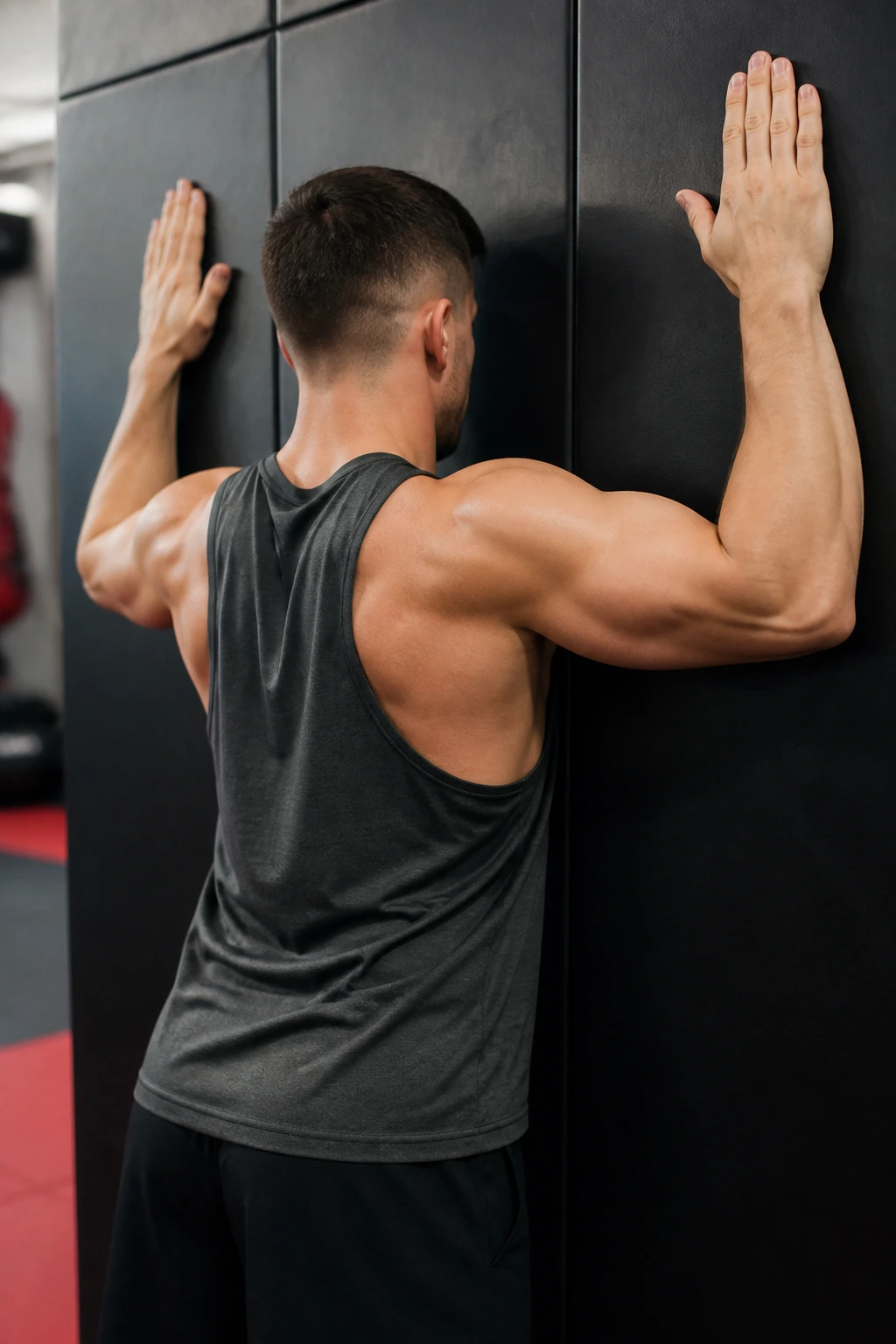
This doesn’t mean you need to chase heavy weights. It means your shoulder blades need to move and settle well. Wall slides, scap push-ups, prone Y-T-W raises, and a light plank all help here. They’re not flashy. They do the job.
Do 2 or 3 rounds of 8 to 12 reps per move. Keep the tempo controlled and stop before form collapses. The key detail is that your shoulders should feel warm and stable, not jammed. If a move pinches, shorten the range or swap it out.
One-sentence truth: good shoulder work is dull.
Still worth it. Especially if your boxing sessions already make your upper body feel like it got hit by a truck.
22. Jump Rope Intervals
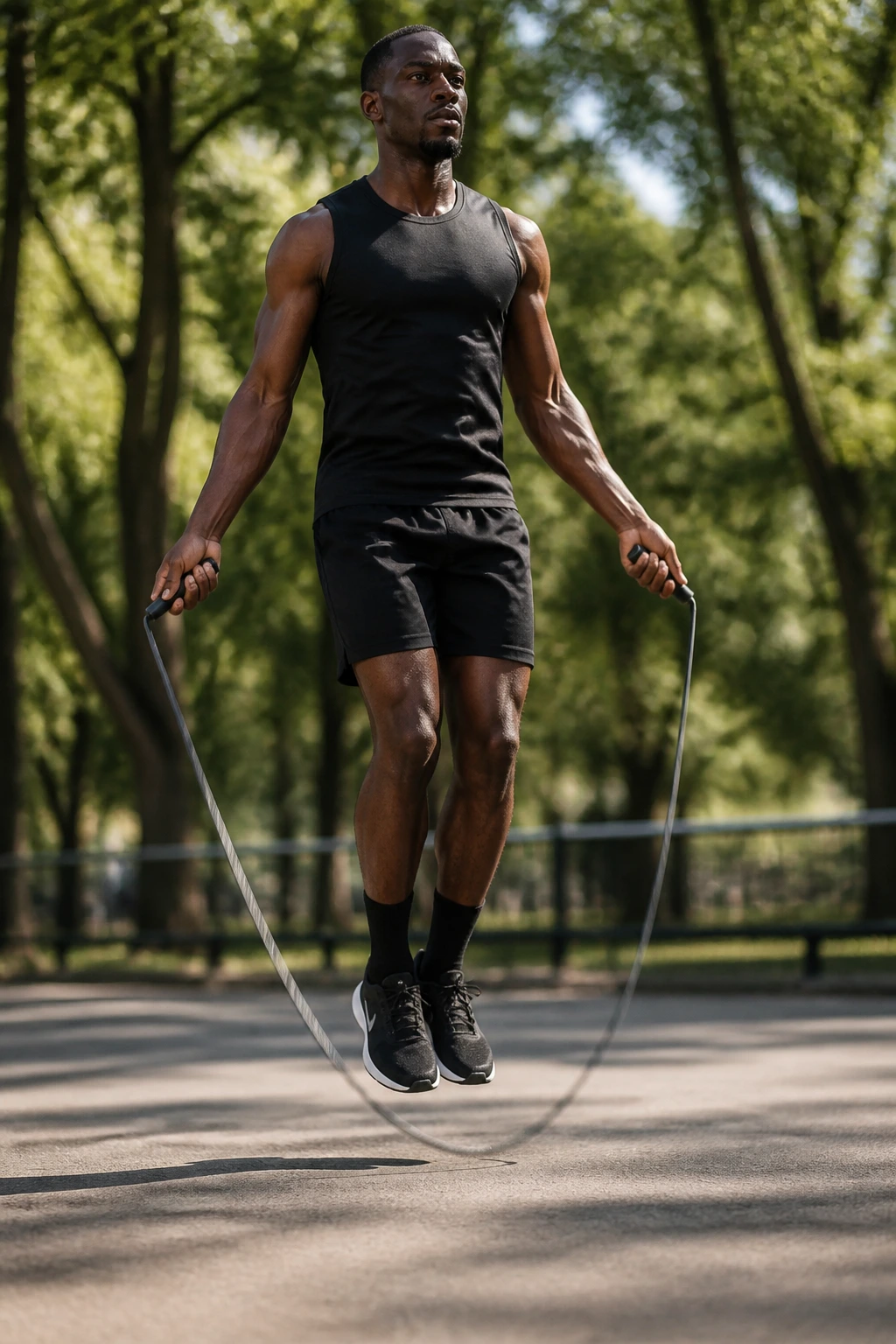
Can a rope really count as boxing training? Absolutely.
It builds foot speed, timing, calf endurance, and a sense of rhythm that carries straight into the ring or onto the bag. Keep the hands low, turn the rope with your wrists, and let the feet do small, quick hops. Big jumps waste energy and make the workout feel harder than it needs to.
Run 8 to 12 rounds of 45 seconds on and 15 seconds off. Alternate foot patterns every round if you want variety: basic bounce, boxer step, high knees, side-to-side, then back to basic bounce. The minute details matter here. If your shoulders are doing all the work, the rope will expose it fast.
Footwork patterns
- Basic bounce
- Boxer step
- Alternate foot
- Side-to-side hops
The best jump-rope sessions leave you springy, not beaten down. That springiness shows up later when you start punching and moving together.
23. Bag-and-Floor Conditioning Circuit
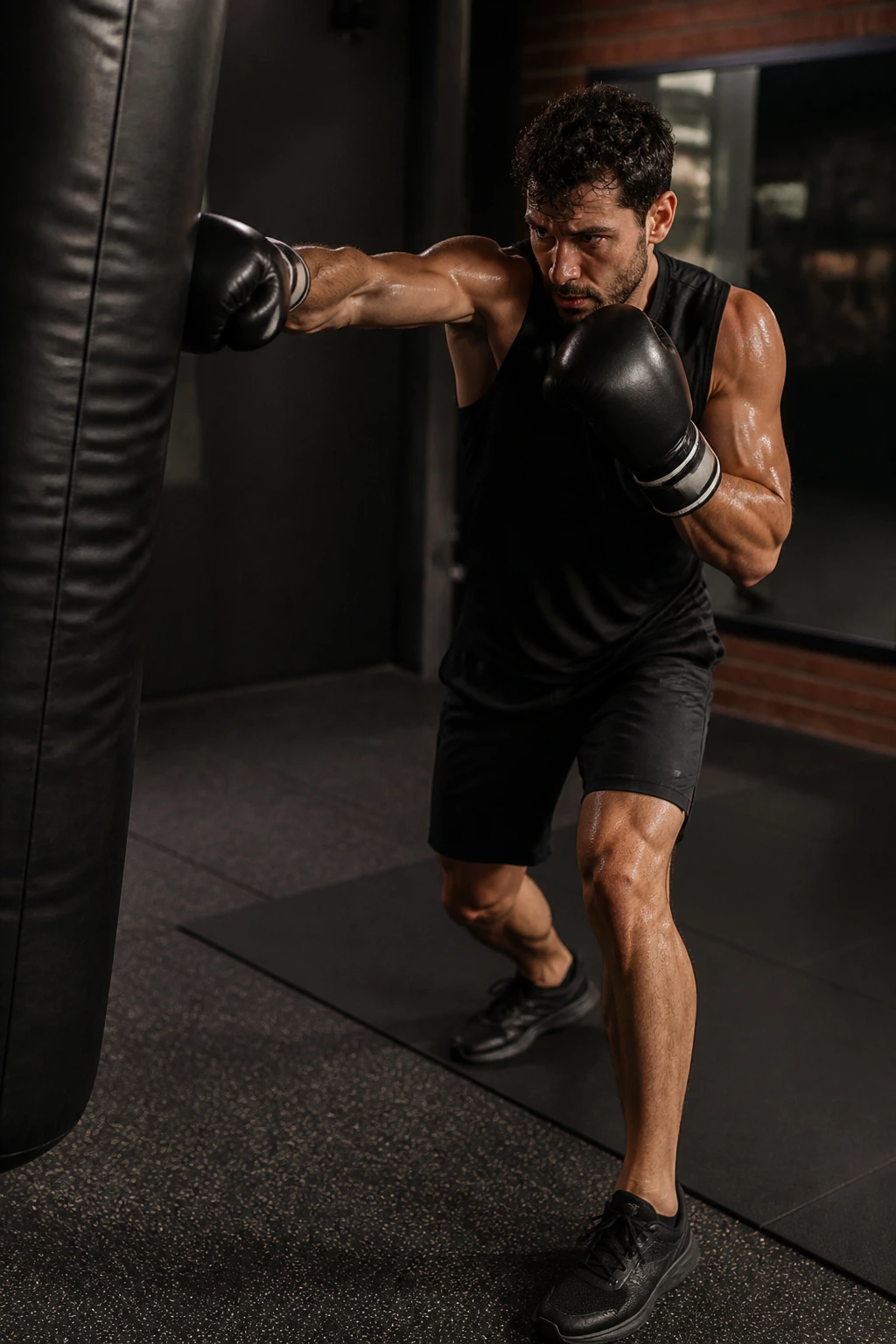
This one feels like a fight between your lungs and your legs.
Hit the bag for 30 seconds, hit the floor for 30 seconds, then go back to the bag. That back-and-forth pattern keeps your heart rate bouncing and makes recovery part of the workout. It’s a smart beginner conditioning routine because it doesn’t let you hide in one type of movement.
Do 3 rounds of this circuit:
- 30 seconds bag punches
- 30 seconds push-ups
- 30 seconds bag punches
- 30 seconds squats
- 30 seconds bag punches
- 30 seconds plank hold
Keep the punches clean and the floor work honest. If the push-ups fall apart, raise your hands on a bench or cut the reps. If the bag work turns sloppy, use straight punches only.
The nice part is the rhythm. You learn to switch gears without losing your shape.
24. Sparring-Prep Beginner Boxing Workout Routine

Sparring prep is not about trading harder shots.
It’s about showing up with a better base: stance, entry, exit, defense, and a calm head. You can do a lot of useful work without ever taking a live punch. Shadowbox as if someone is in front of you, but keep the pace controlled and the decisions tidy.
What to practice
- Step in behind the jab.
- Touch with the lead hand and leave at an angle.
- Slip after every combo.
- Reset your feet before the next exchange.
Run 4 to 6 rounds of 2 minutes. If you have a partner, ask them to feed light cues, not full-contact chaos. If you’re solo, imagine the counter that comes after your punch and move before it lands. That habit matters.
This routine is good for beginners because it turns boxing into a conversation instead of a collision. Much easier on the nerves, too.
25. 20-Minute Full-Body Test Round

This is the session that tells you where you stand.
Use 5 rounds of 2 minutes with 1 minute rest, and make each round a little different: shadowboxing, footwork, one-two work, bodyweight conditioning, then a cool-down round. Keep the intensity moderate in round one, then try to hold your form as fatigue builds. If you’re collapsing by round 4, that’s useful information, not a failure.
Round 1 can be straight shadowboxing. Round 2 can be footwork and pivots. Round 3 can be jab-cross combinations. Round 4 can be push-ups, squats, and planks. Round 5 should drop the pace and focus on breathing, guard, and clean movement. The whole thing takes about 20 minutes of work plus rest, which makes it easy to repeat week after week.
What you want to notice is simple: are your hands dropping, are your steps getting sloppy, and are your punches still returning to guard? Those little signs tell you more than a sweat-soaked mirror ever will.
Keep this one in the rotation. When it starts feeling controlled, everything else tends to feel less mysterious.
