



An hour is enough time for a real gym session. Not a wander around the floor, half-hearted treadmill stroll kind of hour — a proper session with a warm-up, some hard work, and a finish that leaves you tired in the good way. These one-hour gym workout routines for women are built for that kind of hour: the stretch of time between work and pickup, the lunch break, the slot you protect because it keeps your head and body from going sideways.
That matters more than people like to admit. A good workout does not need to swallow your whole day to matter, but it does need a spine. If you’ve got 60 minutes, you can train strength, muscle, endurance, or conditioning with enough focus to make it count. You can also waste the whole hour on fluff if the plan is sloppy. I’m a fan of workouts that tell you exactly what to do, in what order, and when to stop chasing perfection.
The best routine is the one that matches the day you’re having. Some days call for heavy lower-body work. Some call for a fast circuit because your mind is fried and you need sweat, not ceremony. Other days are for recovery, walking, and keeping the engine warm without beating yourself up. Start there, and the rest gets easier.
1. The Barbell Strength Day That Fits in 60 Minutes
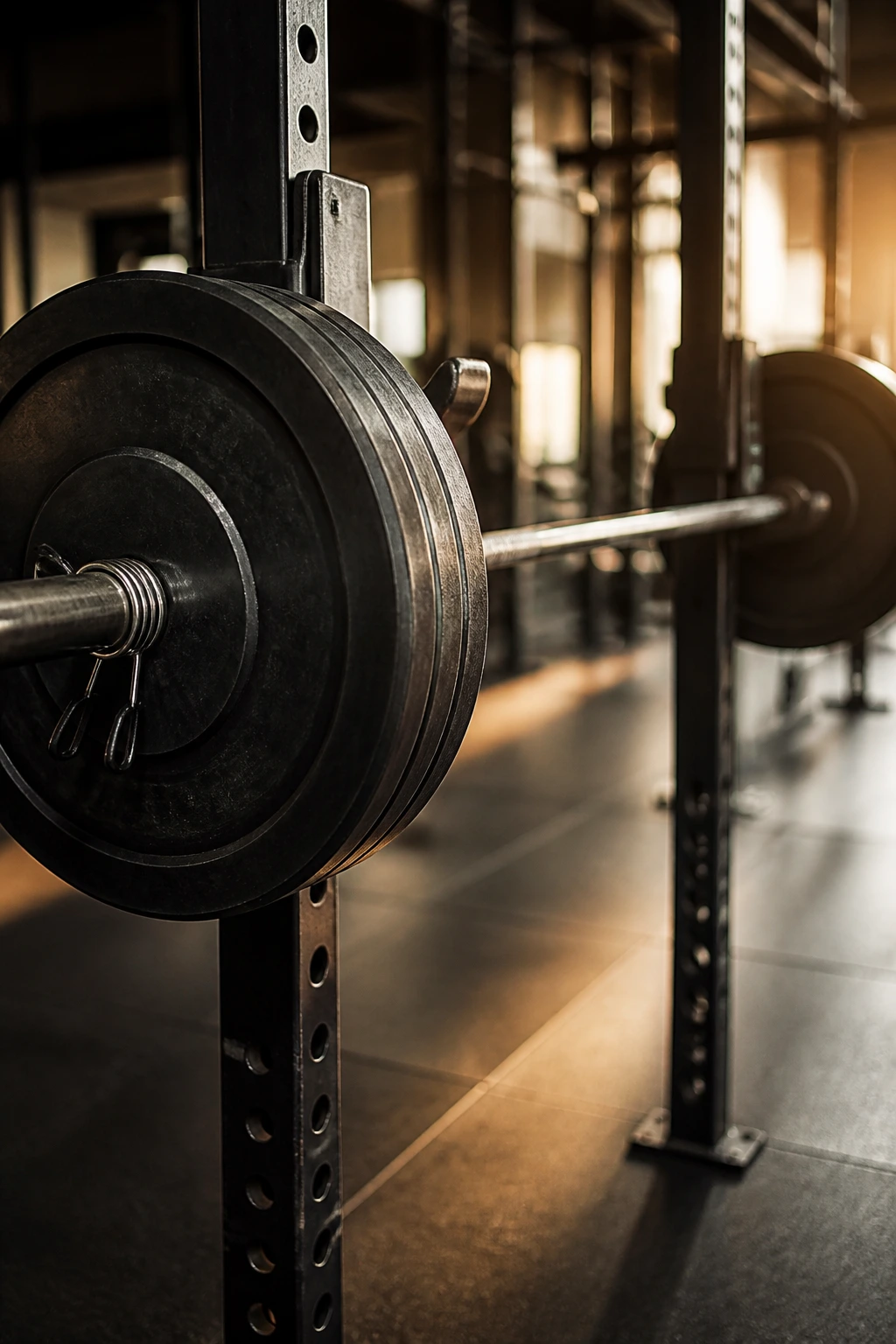
If you like leaving the gym with one clear number to beat next time, start here. A barbell day gives you a clean sense of progress: more weight, more reps, better control, better depth. It feels straightforward because it is straightforward.
How the hour breaks down
- 8 minutes: rower, bike, or incline walk, plus hip circles, bodyweight squats, and a few empty-bar presses
- 15 minutes: back squat, 4 sets of 5 reps, resting 90 seconds between sets
- 12 minutes: bench press, 4 sets of 5 reps, resting 90 seconds
- 12 minutes: bent-over barbell row, 4 sets of 6 reps, resting 75 seconds
- 8 minutes: Romanian deadlift, 3 sets of 8 reps, paired with a 30-second plank
- 5 minutes: slow walk and deep breathing
The trick is to keep the first two lifts honest. Do not turn your warm-up sets into working sets. The bar should feel smooth on the early rounds, then challenging by the last work set, with about 1 to 2 reps left in the tank. That keeps the hour productive instead of ugly.
If the rack is busy, swap the back squat for a heavy goblet squat and keep the same rep range. Same hour. Same focus. Less waiting around.
2. A Glute-Heavy Lower Body Workout With Real Loading
Glute work gets better when you stop treating it like a band-only side quest. The muscle responds to load, control, and enough volume to make the last few reps slow. That’s why this lower-body session leans on hip thrusts, split squats, and leg press instead of endless kickbacks done while staring at your shoes.
Spend the first 6 minutes on an incline walk and a few activation drills: glute bridges, lateral band steps, and bodyweight reverse lunges. Then move to barbell hip thrusts for 4 sets of 8, resting 90 seconds and pausing for a full second at the top of each rep. After that, do Bulgarian split squats for 3 sets of 10 per leg. Keep your torso tall and your front foot planted; if your knee caves in, the load is too heavy.
Finish with leg press for 3 sets of 12, feet a little higher on the platform, then cable kickbacks for 3 sets of 15. I’d rather see you use a little less weight and a cleaner path than swing through the movement and hope for the best. That rarely works. A short calf raise finisher or seated hip abduction machine can fill the last 5 minutes nicely.
3. Push-Pull Upper Body Supersets for Tight Schedules
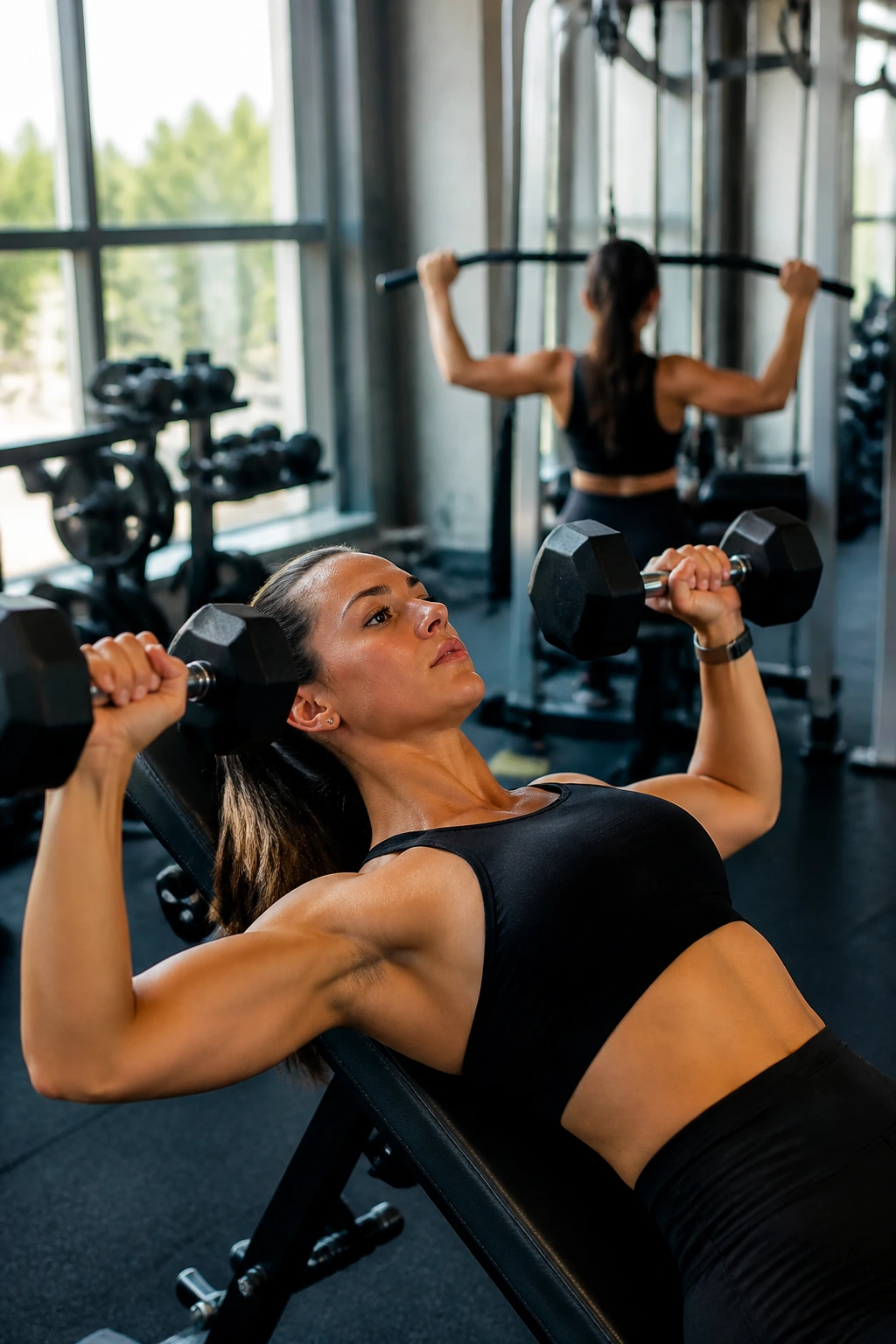
Why spend half your session waiting for equipment when you could pair movements and keep moving? Supersets are the easiest way to make an upper-body workout feel efficient without turning it into chaos. You alternate two exercises back to back, rest, then repeat.
How to run the supersets
- 8-minute warm-up: arm circles, band pull-aparts, light rowing, wall slides
- Superset 1: incline dumbbell press and lat pulldown, 4 rounds of 8 to 10 reps
- Superset 2: seated dumbbell shoulder press and cable row, 3 rounds of 10 reps
- Superset 3: rope pressdown and hammer curl, 3 rounds of 12 reps
- Final 6 minutes: dead bug and side plank, 2 rounds
Keep the rest short but not stupid-short. 30 seconds between exercises, 60 seconds between rounds is a nice middle ground. You should feel the work, not panic through it.
This style is especially good if your gym gets crowded, because it frees you from living on one bench for 20 minutes. And the best part? Your arms still get their share of attention, but your back does too, which is how you keep shoulders happy.
4. Treadmill Intervals and Dumbbells for a Fast, Hard Hour

A lot of people want cardio that feels like something, not just an accidental wander. This is the answer when you want sweat, breathlessness, and a little muscle work without committing to a full lower-body day. Put the treadmill to work first, then lift while your heart rate is still awake.
Start with 10 minutes of brisk walking and a few leg swings. Then do 12 rounds of 1 minute hard / 1 minute easy on the treadmill. Hard can mean running, fast incline walking, or a steep power walk — pick the version that lets you keep good form. After that, move to dumbbells for a compact circuit: goblet squat for 3 sets of 12, dumbbell push press for 3 sets of 10, renegade row for 3 sets of 8 per side, and walking lunges for 2 sets of 12 per leg.
Use the last 8 to 10 minutes for an easy cooldown and calf stretch. Your legs will talk back a little. Fine. That’s the point. If you hate sprinting, make the incline the star and keep the speed moderate. The workout still lands.
5. The Machine-Only Circuit for Busy Gyms
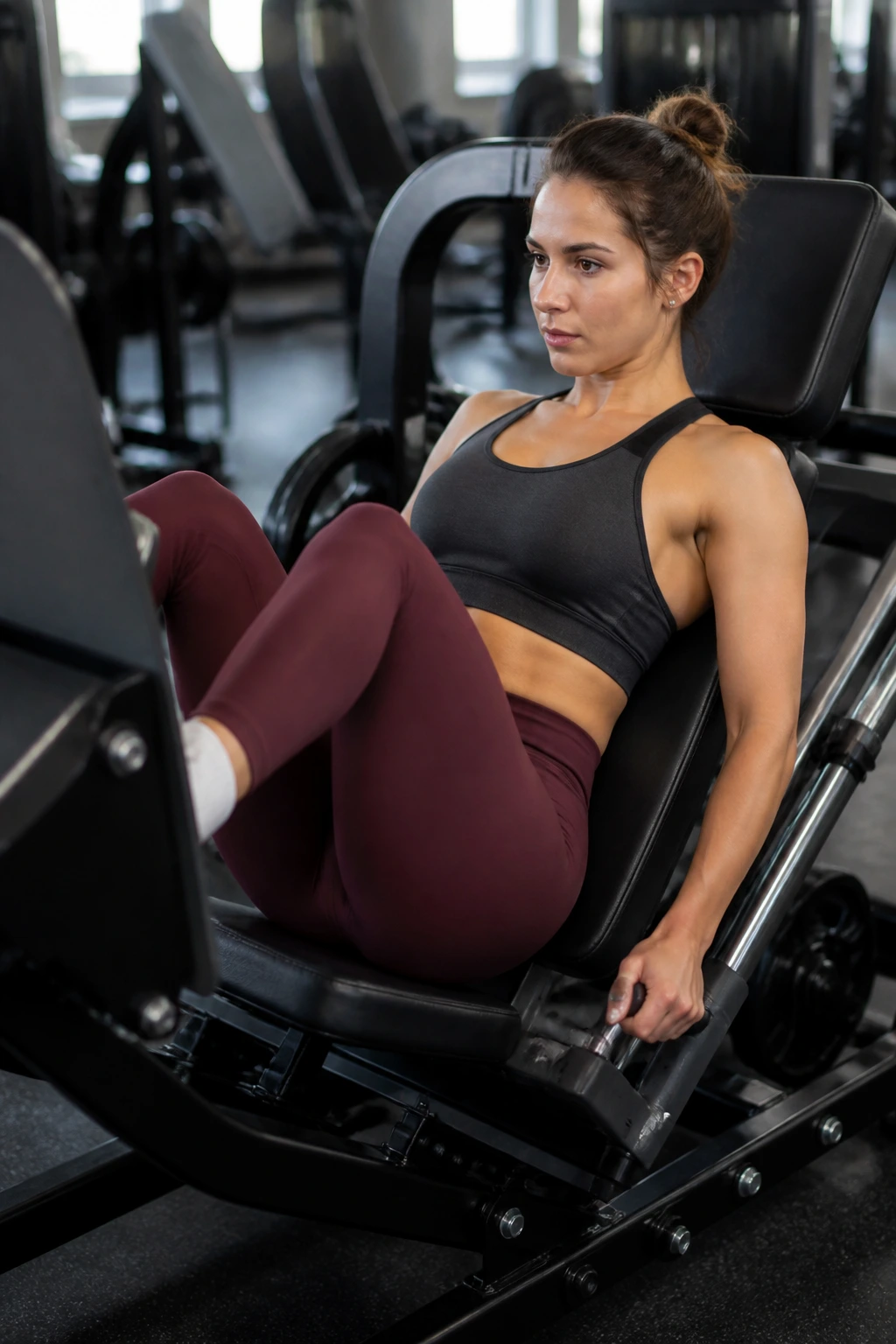
There’s a special kind of calm in a machine workout. No rack to wait for. No barbell to set up. No negotiating with a stranger about how many sets they have left. You walk from station to station and get the work done.
This routine works well when the gym is packed or when you want a more guided feel. Start with 7 minutes on the bike or elliptical, then move through leg press, seated chest press, seated row, lying leg curl, shoulder press, and cable woodchops. Use 3 rounds of 10 to 12 reps on each machine, with about 45 to 60 seconds of rest. That rhythm keeps the session within an hour without rushing every machine like you’re late for a train.
The nice thing about machines is that they let you push close to failure without needing perfect balance or bar path. That can be useful on tired days. It can also be a trap if you move too fast and bounce through the range of motion. Slow the lowering phase a little. Feel the muscles working. Tiny detail, big difference.
6. A Dumbbell-Only Full-Body Routine That Still Feels Serious
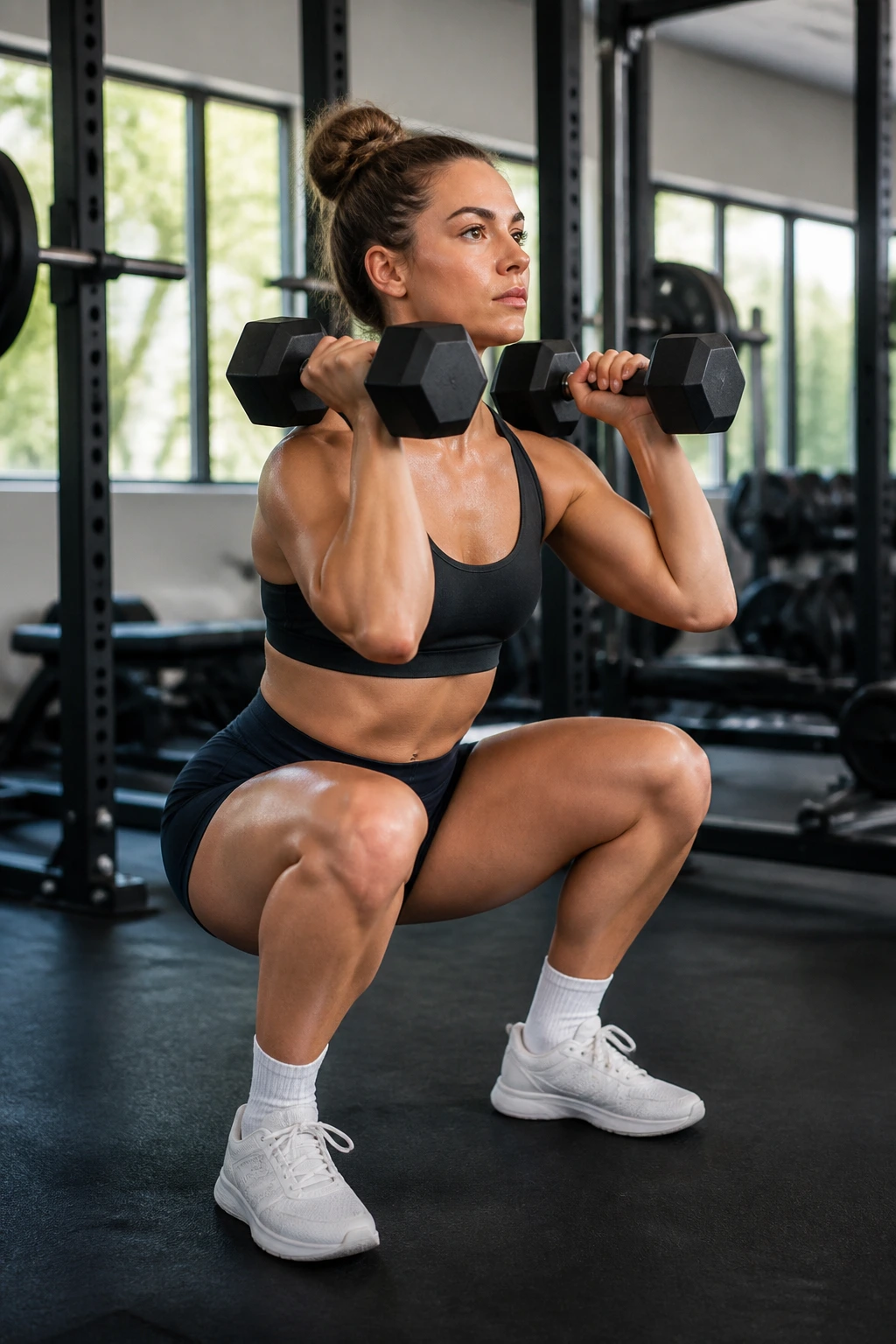
No barbell? No problem. A pair of dumbbells can carry a lot of the load if you choose the right moves and stay honest about tempo. I like this kind of session for people who want a cleaner setup and a bit more freedom of movement.
Begin with 8 minutes of dynamic warm-up work: bodyweight squats, shoulder rolls, hip openers, and light rows. Then do dumbbell front squats for 3 sets of 10, single-arm dumbbell bench press for 3 sets of 8 per side, one-arm dumbbell rows for 3 sets of 10 per side, and reverse lunges for 3 sets of 10 per leg. Finish with farmer carries for 4 walks of 30 seconds and a few dead bugs.
The unilateral work matters here. It shows you where one side is cheating, and it keeps the workout from feeling repetitive. Don’t go so heavy that your grip turns the whole session into a shrug. If the dumbbells are sloppy, the workout is sloppy. That’s the whole story.
7. Hamstrings, Glutes, and Calves: The Lower-Body Builder
What’s the muscle group people skip when they only chase glutes? Hamstrings. And that’s a shame, because strong hamstrings make your lower body feel sturdy, help your hip hinge, and make your legs look more balanced from every angle.
The order matters
Start with Romanian deadlifts for 4 sets of 8. Use a slow lower, soft knees, and a stretch in the back of the legs that feels controlled, not yanked. Then move to seated leg curls for 4 sets of 10 to 12. Squeeze for a beat at the top. Don’t rush that part.
After that, do dumbbell step-ups for 3 sets of 10 per leg, then standing calf raises for 4 sets of 12 to 15. If you have time left, add a short sled push or walking lunge finisher. The back of the legs should feel worked, but not trashed in a way that ruins the rest of your week.
This is a good day for women who spend too much time on quad-dominant work and wonder why their lower body feels unbalanced. It usually is. The fix is not complicated. Train the hinge, curl the knee, and load the calves once in a while.
8. Back and Biceps for Better Posture
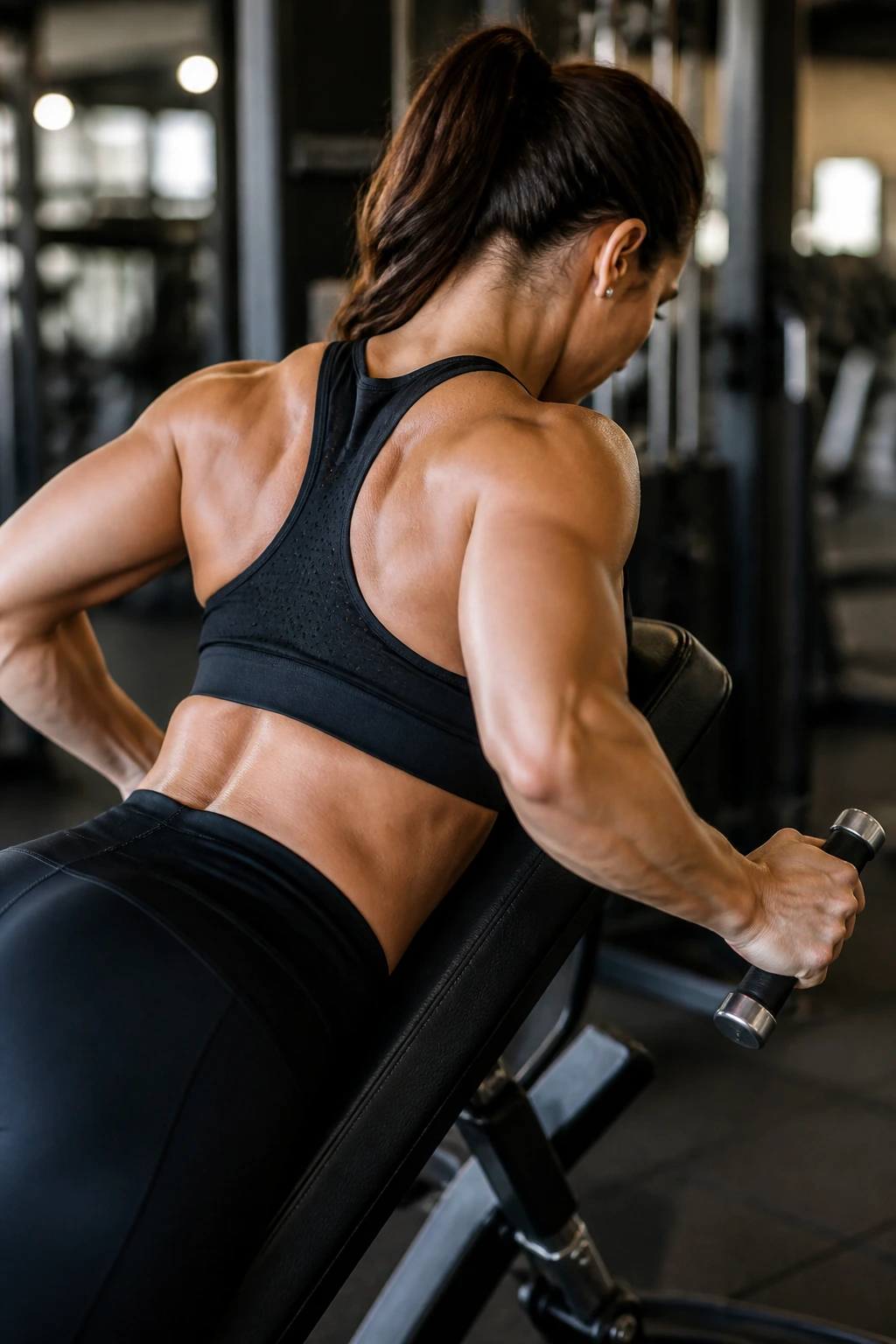
A back day isn’t just about fitting into a fitted top, though that does happen. A stronger upper back changes how you stand, how you pull, and how your shoulders feel after a long day of sitting or carrying a bag on one side.
Start with a chest-supported row for 4 sets of 8, because that takes the lower back out of the equation and lets your upper back do the work. Follow with neutral-grip lat pulldowns for 4 sets of 10, then cable rear delt flyes for 3 sets of 12 to 15. Finish with incline dumbbell curls for 3 sets of 10 and hammer curls for 2 sets of 12.
Keep the pulls clean. No yanking. No half reps. Your shoulders should stay down, your neck relaxed, and your elbows moving where they’re supposed to move. I’d rather see you use a slightly lighter weight and finish every rep with control than chase a bigger number and turn the thing into a shrug-and-swing contest.
9. Chest, Shoulders, and Triceps Without Wasting a Minute

Want a pressing workout that stays tight and doesn’t swallow the whole hour? Keep the exercise count low and the rest honest. That’s the difference between a focused upper-body day and a long bench-press hangout.
Begin with dumbbell or machine chest press for 4 sets of 8, resting 90 seconds. Then move to incline dumbbell press for 3 sets of 10, followed by seated shoulder press for 3 sets of 8 to 10. The side delts get their share with lateral raises for 3 sets of 15, and the triceps finish things off with rope pressdowns for 3 sets of 12. If you still have gas, add one set of push-ups to near-failure.
The first pressing movement should feel challenging but stable. The second should feel like a steady grind. By the time you get to raises, your shoulders will be warm and a little annoyed. Good. That’s the point. If your neck starts taking over, lower the weight and slow down.
10. Core, Carries, and Conditioning in One Hour
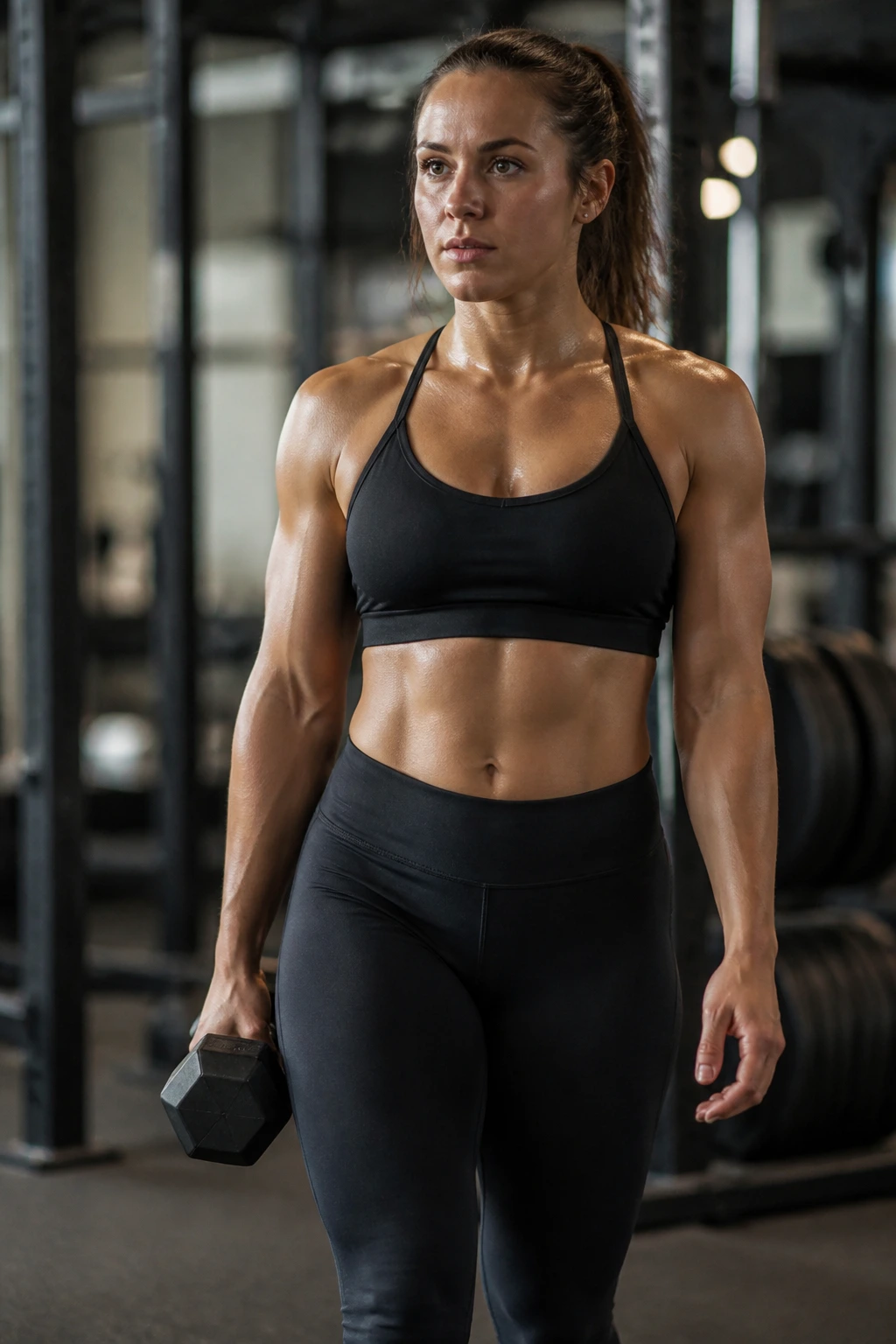
Most people train core like it’s a punishment. Endless crunches. Ugly form. A sore neck. There’s a better way, and it looks more like bracing, carrying, and resisting rotation than flopping on a mat.
What to do first
- 8 minutes: rowing machine or brisk walk, plus bird dogs and glute bridges
- Pallof press: 3 sets of 12 per side
- Suitcase carry: 4 walks of 30 meters per side
- Hanging knee raise or captain’s chair raise: 3 sets of 10
- Back extension: 3 sets of 12
- Finisher: 6 minutes on the bike, alternating 30 seconds hard and 30 seconds easy
The carries matter more than they get credit for. They teach your torso to stop wobbling when a load is hanging to one side, which shows up in daily life and in other lifts. Your core should feel like it’s working to keep you upright, not like it’s only flexing forward.
This is the day I give to people who want a stronger middle without a ton of impact. It’s also a good “I’ve got energy but not for leg day” workout. Those are real days.
11. Incline Walk, Stretching, and Recovery Work That Still Counts
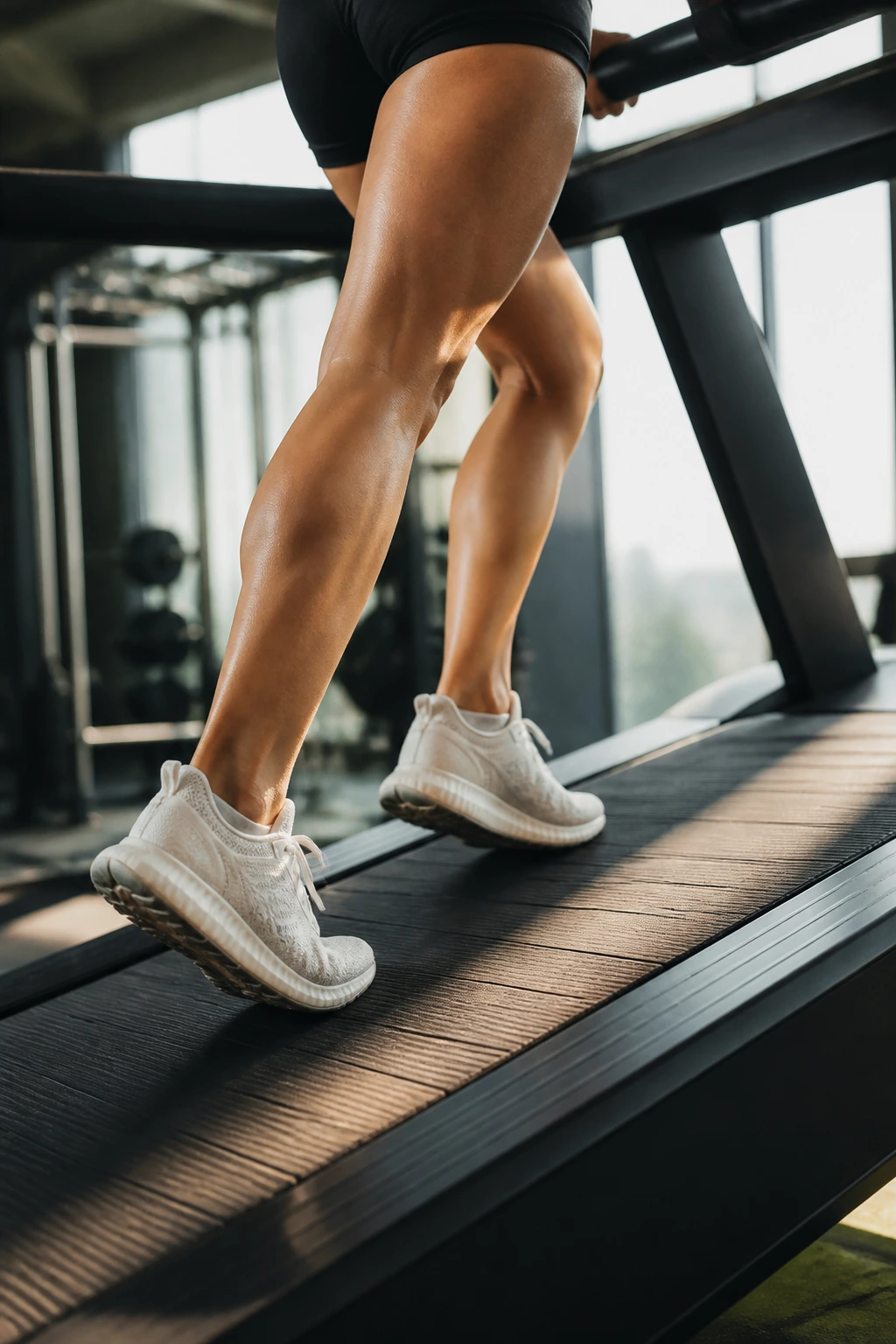
Not every good gym day is loud. Some are quiet, steady, and almost stubbornly boring — and those are often the sessions that let the harder work happen later in the week. Recovery still counts.
Spend 20 minutes on the treadmill at a 6 to 12 percent incline, walking at a pace that raises your breathing but doesn’t spike it. Then move to 10 minutes on the bike or elliptical. After that, spend the rest of the hour on mobility: hip flexor stretches, thoracic rotations, ankle rocks, doorway chest stretches, and a few slow bodyweight squats. If foam rolling helps you, use it on the calves, glutes, or upper back for 30 to 45 seconds each.
You should leave feeling looser, not smashed. That’s the whole goal. I like this day after two heavier sessions or after a night of poor sleep, because it keeps the habit alive without asking your nervous system for much. And yes, a recovery workout is a real workout if it helps you train better next time.
12. Smith Machine Legs When You Want Stability
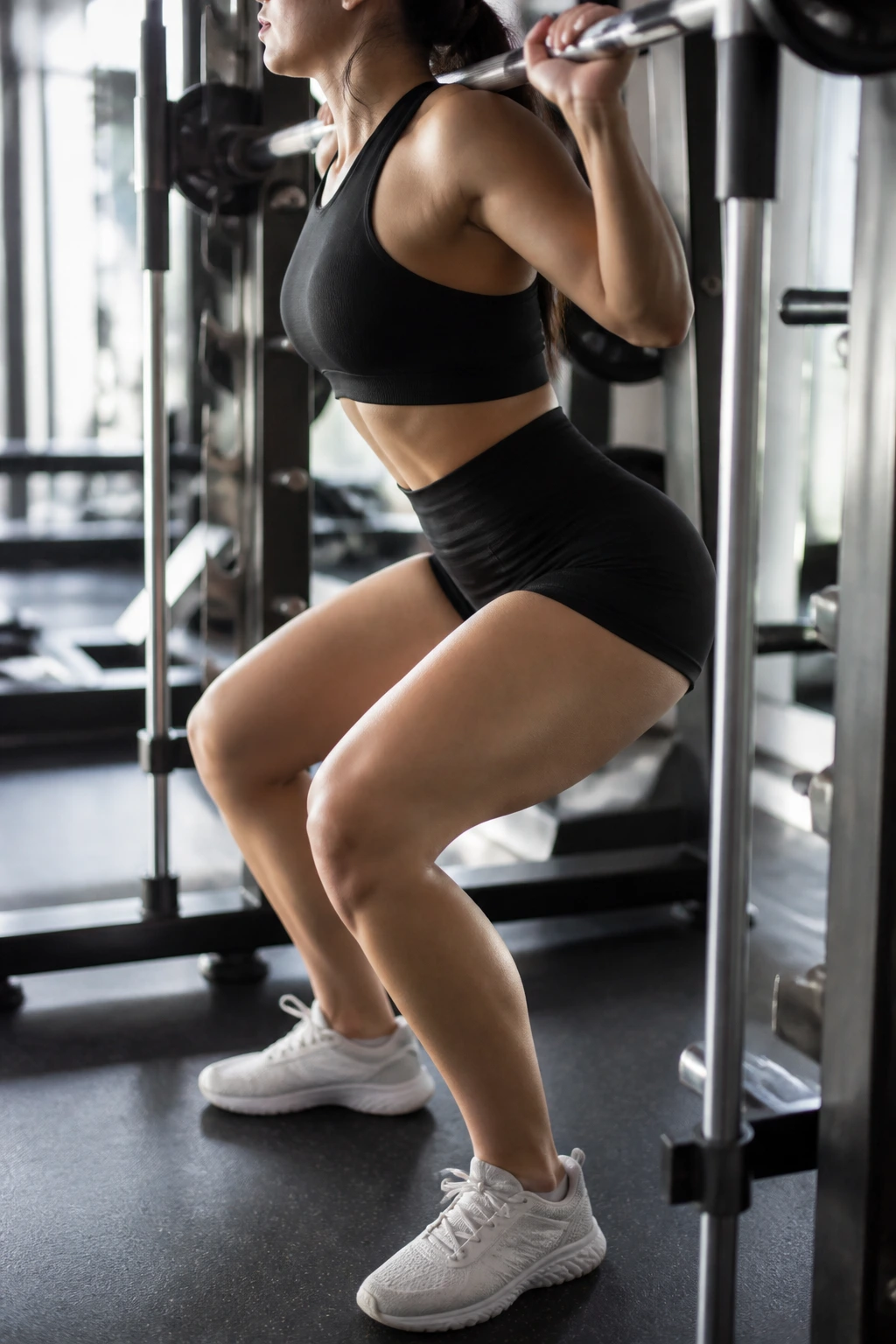
Some lifters talk down the Smith machine like it’s cheating. I don’t buy that. It’s a tool. Use it well and it lets you load the legs hard while taking balance out of the equation, which can be a gift on days when you want pure leg work.
Start with Smith machine squats for 4 sets of 8, placing your feet a little forward so your knees track comfortably. Then do Smith machine split squats for 3 sets of 10 per leg, hip thrusts for 4 sets of 10, and standing calf raises for 4 sets of 15. You can finish with a short wall sit or a sled push if your gym has one.
The fixed path makes setup easier, but it also means your stance matters. A tiny shift forward or back can change how the lift feels. Take a minute on the first set to find the foot position that lets your heels stay planted and your knees move naturally. Once you’ve found it, you can work.
13. Cable Machine Training for Tension You Can Feel
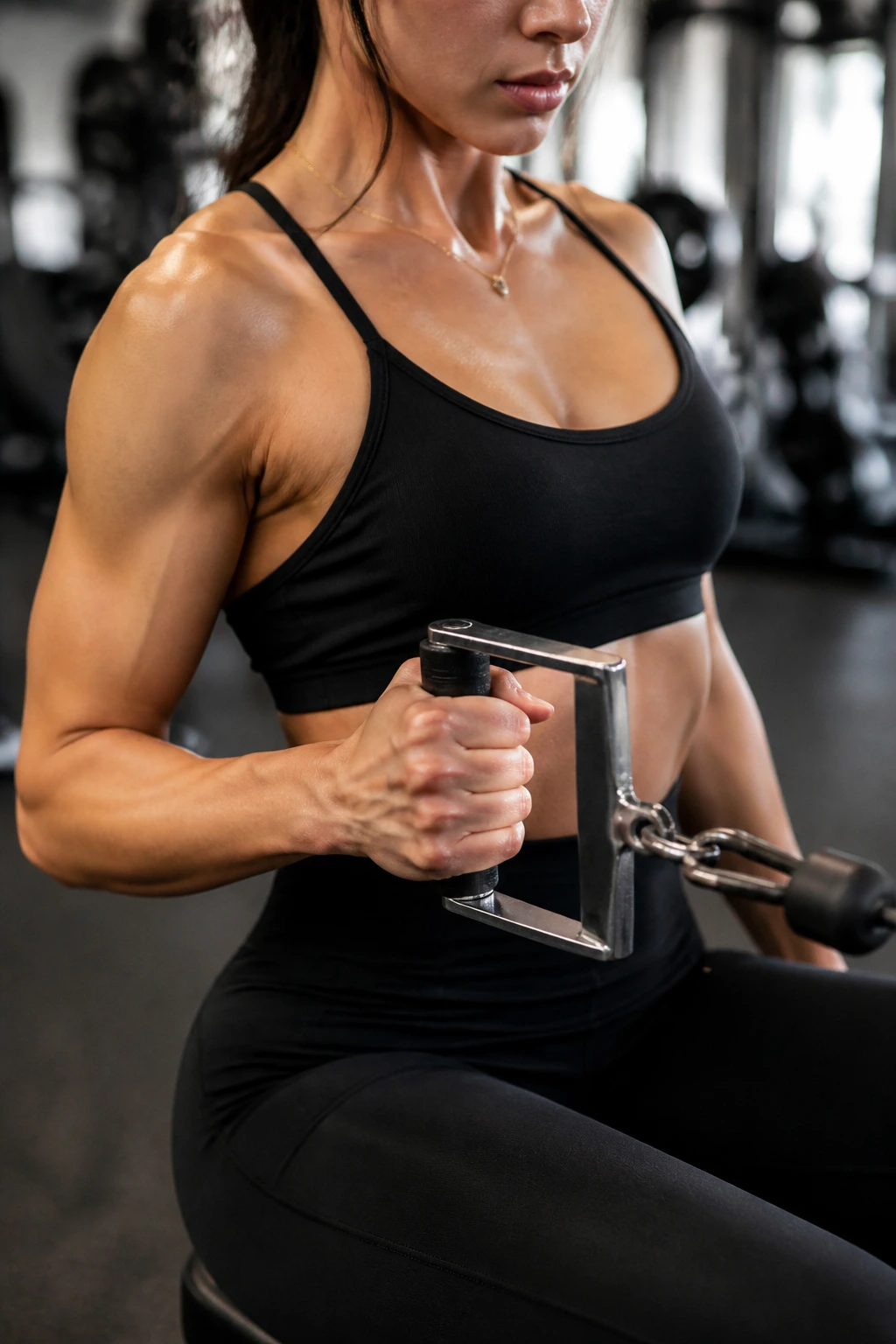
Why do so many people keep coming back to cable work? Because cables keep tension on the muscle through most of the movement. That makes even lighter loads feel surprisingly honest. No dead zones. No sloppy momentum.
How to use it
- Cable pull-throughs: 3 sets of 12
- Single-arm cable chest press: 3 sets of 10 per side
- Single-arm lat pulldown: 3 sets of 10 per side
- Cable face pull: 3 sets of 15
- Cable kickback: 3 sets of 15 per side
- Cable woodchop: 3 sets of 12 per side
Move slowly enough that you can feel the line of pull the whole time. The main mistake here is rushing the stack and letting the weight yank you around. If the cable is doing the work for you, the set is too easy.
This routine works well for women who like smooth movement and joint-friendly loading. It also fits days when you want to train without the clunk of barbells or the locked feel of some machines. Simple, clean, and more effective than it looks from across the room.
14. Plyometrics and Athletic Conditioning for More Bounce
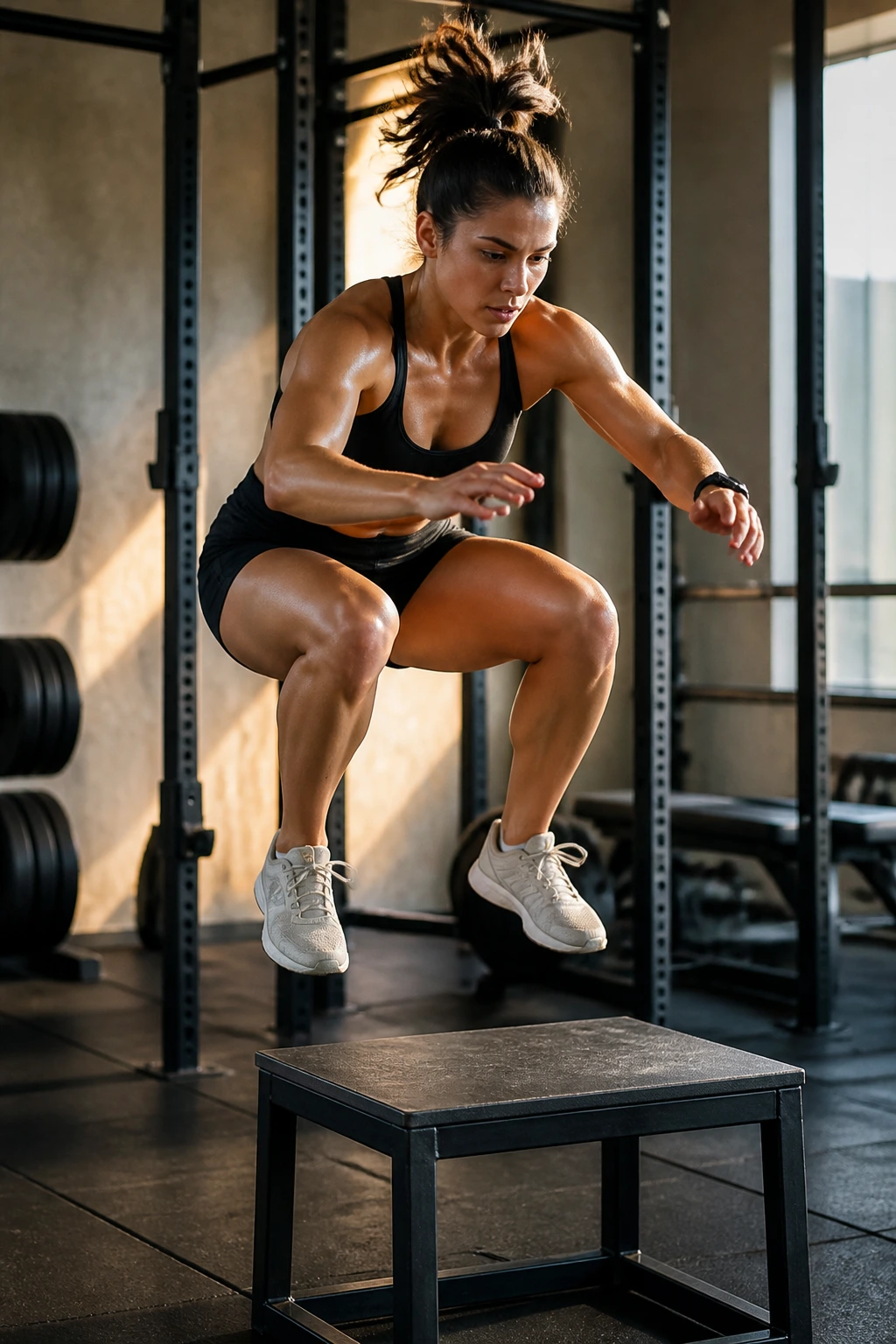
If you want a workout that feels athletic instead of decorative, add some jumping and power work — carefully. The point is not to land exhausted on rep 23. The point is to move fast, clean, and with enough rest that each rep still looks sharp.
Begin with 10 minutes of dynamic warm-up work: leg swings, jumping jacks, inchworms, and light skipping. Then do box jumps for 5 sets of 3, resting a full minute between sets. Follow with kettlebell swings for 4 sets of 15, medicine ball slams for 4 sets of 10, and sled pushes for 6 rounds of 20 meters. Finish with jump rope intervals or a bike sprint if the gym floor is too crowded.
Keep the jumps low and controlled. You do not need a giant box to prove anything. A solid, repeatable jump on a lower platform is better than a sloppy leap onto something too high. That’s true for most power work. Quality beats drama.
15. A Beginner-Friendly Gym Routine When You Want a Clean Start
The first month in a gym should feel simple. Not easy, simple. There’s a difference. Simple means you know where to go next, how many sets to do, and what a decent rep looks like without needing to decode the whole room.
Start with a 6-minute treadmill walk, then move into leg press for 3 sets of 10, machine chest press for 3 sets of 10, seated row for 3 sets of 10, and goblet squat for 2 sets of 12. End with incline walking for 8 to 10 minutes and a little stretching. That’s enough. You don’t need to cram in every machine in sight.
I like this setup for women who feel overwhelmed by the gym floor. The machines give you a path, the goblet squat teaches control, and the walking finish keeps the session from feeling like a test. Keep the last 2 reps of each set challenging but clean. If your form falls apart, the weight is too heavy for that stage.
16. Low-Impact Cardio and Core for Days You Feel Flat
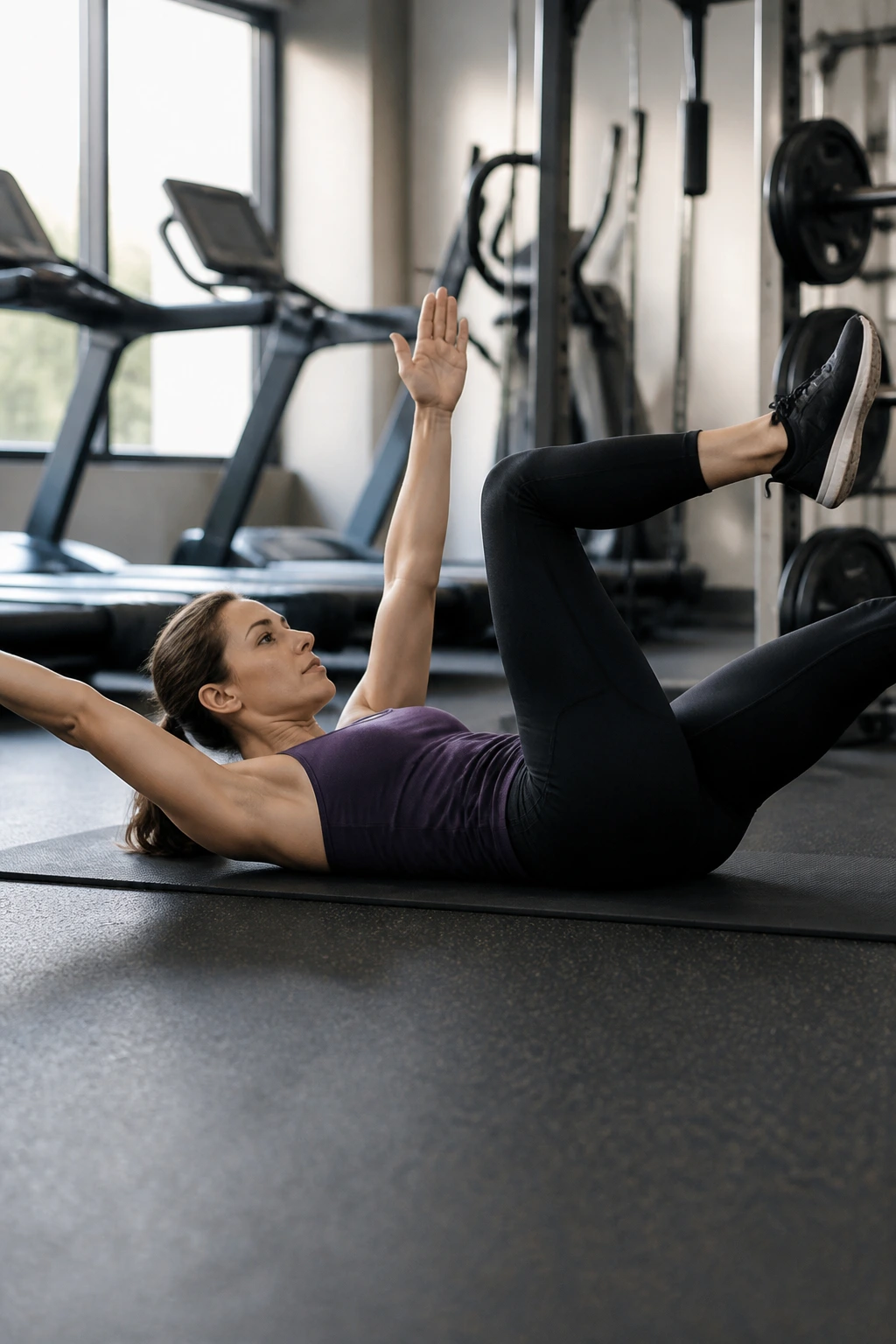
Some days, the body wants movement but not impact. That does not mean you skip the gym. It means you shift the focus and train in a way that keeps the engine running without pounding the joints.
Start with 15 minutes on the elliptical, then do 10 minutes on the rowing machine at a steady pace. After that, move into a core block: dead bugs for 3 sets of 10 per side, side planks for 3 holds of 30 seconds per side, bird dogs for 3 sets of 8 per side, and farmer carries for 4 walks of 20 to 30 meters. Close with 10 minutes of easy incline walking.
This day is quiet but not soft. You’ll sweat, breathe, and probably feel your midsection work harder than you expected, especially on the carries. The best part is how fresh you feel afterward. Not drained. Just better than when you walked in.
17. Heavy Lower-Body Strength for Building Power
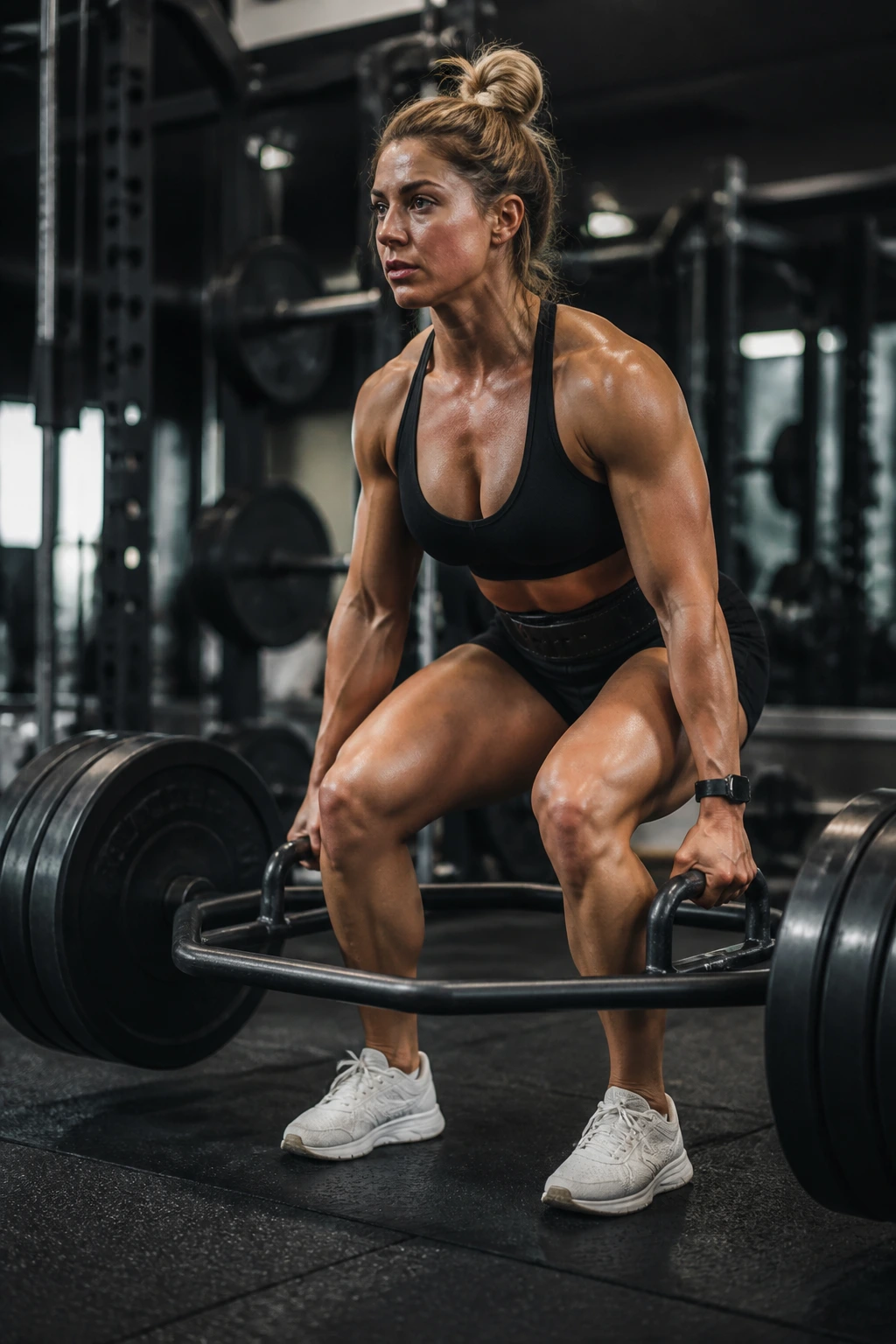
Here’s the difference between a glute day and a true heavy lower-body day: the heavy day is less about shape and more about force. You move bigger loads, rest longer, and treat each rep like it matters. Because it does.
Begin with trap bar deadlifts or conventional deadlifts for 4 sets of 4 to 5 reps, resting 2 minutes. Then do front squats for 4 sets of 5, walking lunges for 3 sets of 10 per leg, and lying leg curls for 3 sets of 10. If there’s still time, add sled pushes or a short bike sprint finisher.
The deadlift should never look rushed. Set your feet, brace, pull smoothly, and stop the set if your back starts rounding or the bar drifts away from your legs. Heavy work is not the place to improvise. The reward is a lower body that feels strong in a way machines can’t quite fake.
18. Upper-Body Endurance Circuits for Stamina and Shape
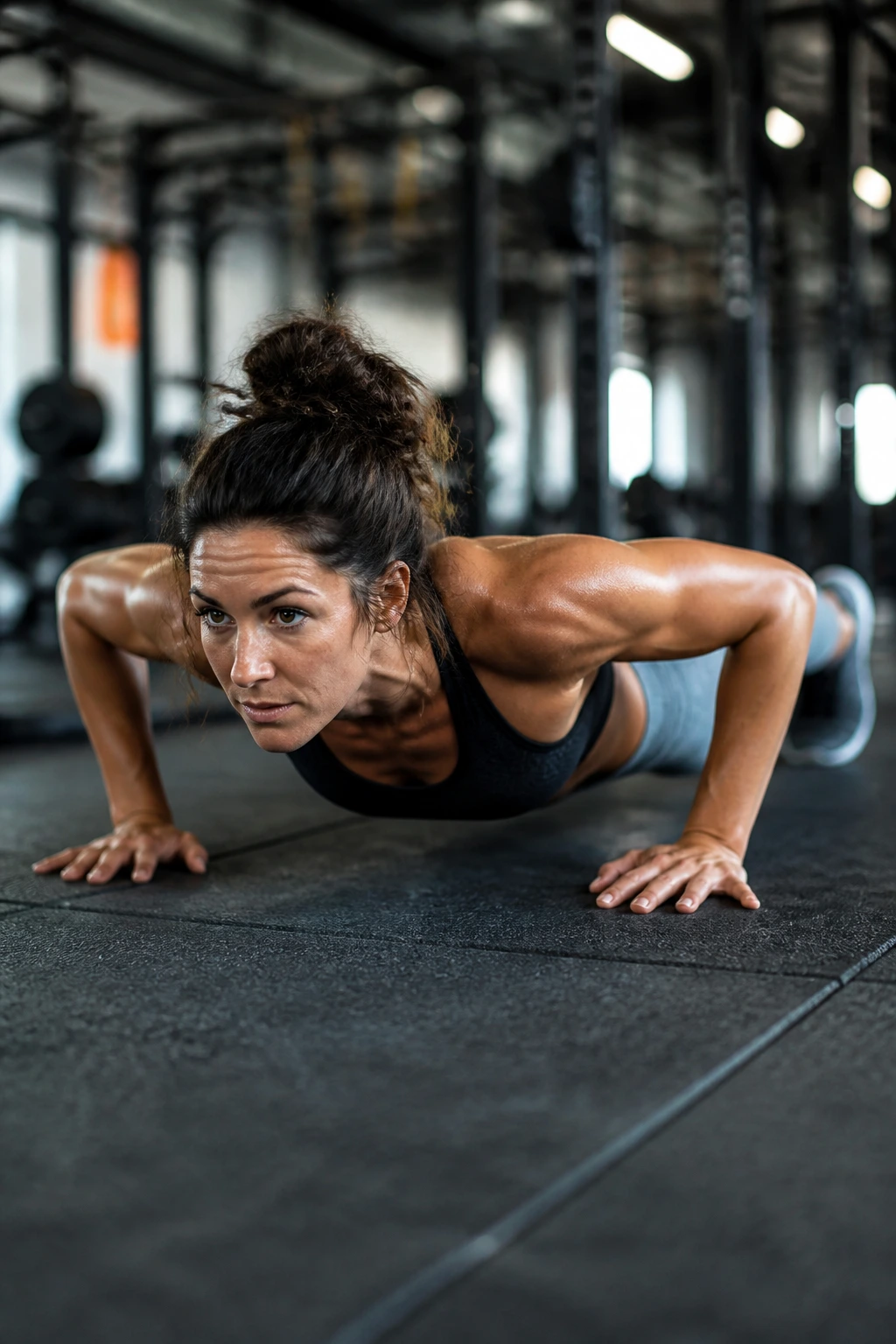
This is the day I like when I want my upper body to burn, pump up, and keep working without long rests. High-rep circuits can be sneaky. They look light on paper and feel very different by round three.
Use 3 rounds of the following with 30 to 45 seconds of rest between moves: push-ups for 12 to 15 reps, seated cable row for 12 reps, lateral raise for 15 reps, rope triceps pressdown for 15 reps, dumbbell curl for 12 reps, and battle ropes for 30 seconds. Spend 8 minutes warming up with light cardio and shoulder circles, then close with a few minutes of easy rowing.
Keep the pace steady, not frantic. If the last rep of every exercise looks like a rescue mission, shorten the reps or lighten the load. This kind of workout is about accumulating quality work. It’s also a nice break from heavy pressing when you want volume without the joint stress.
19. EMOM Full-Body Challenge for a Fast Pace
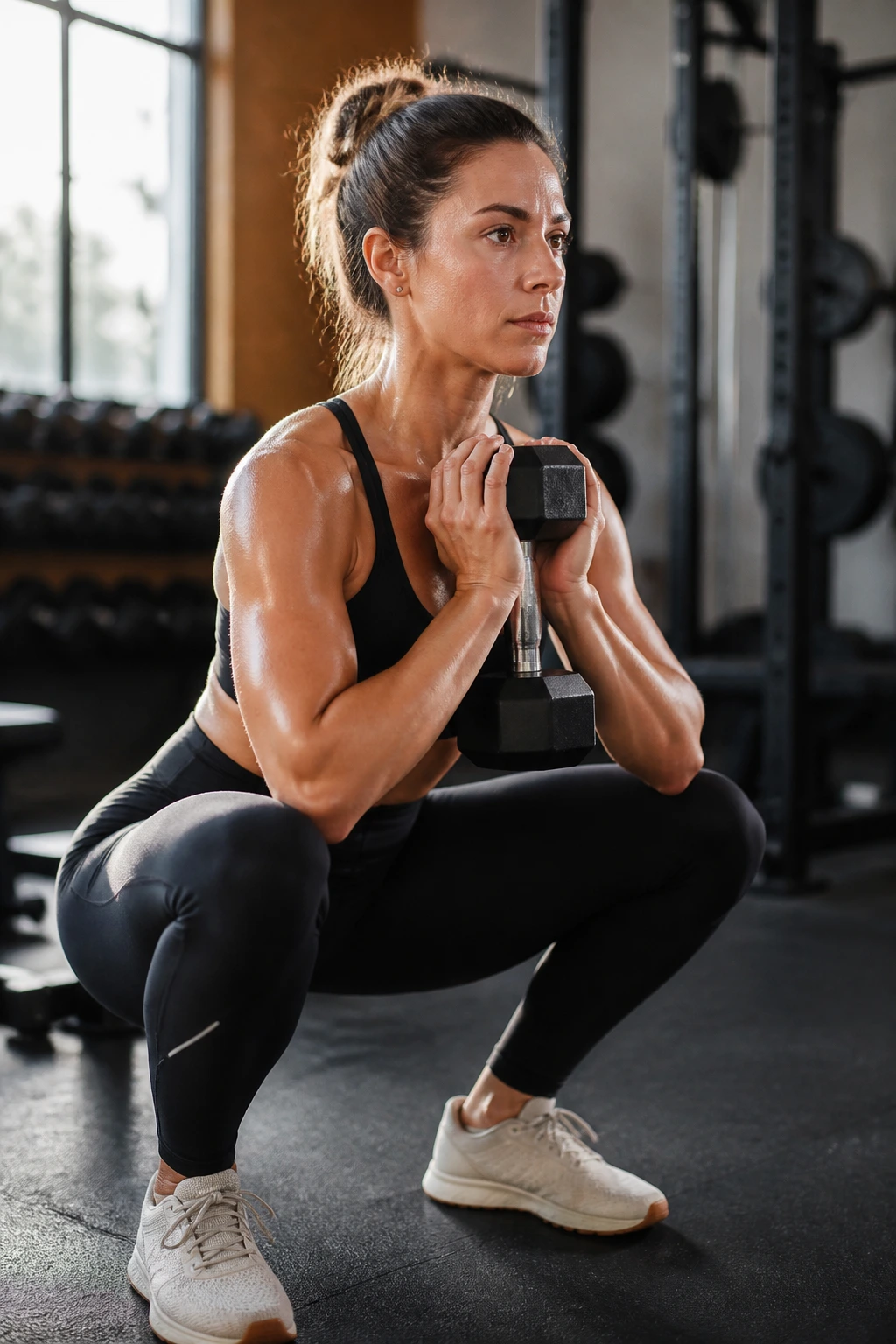
Every minute on the minute sounds simple until you’re halfway through and watching the clock like it owes you money. That’s the charm of it. You get a clear target, a built-in rest window, and a session that moves fast without needing a hundred decisions.
How to keep pace
- 10-minute warm-up: bike, then bodyweight squats and arm swings
- 20-minute EMOM block:
- Minute 1: 10 goblet squats
- Minute 2: 8 dumbbell push press
- Minute 3: 10 dumbbell rows per side
- Minute 4: 12 reverse lunges total
- Repeat for 4 rounds
- 10-minute accessory block: plank variations, glute bridges, and face pulls
- 10-minute cooldown: easy walk and long exhales
The key is to choose weights that let you finish each minute with 15 to 20 seconds left over. If you’re staring at the clock and panicking every round, the load is too heavy. The workout should feel brisk, not frantic.
This style works well when you want to train hard and keep the brain out of it. The time structure does the organizing for you. All you have to do is show up and keep pace.
20. The Flexible Busy-Day Workout That Saves the Week
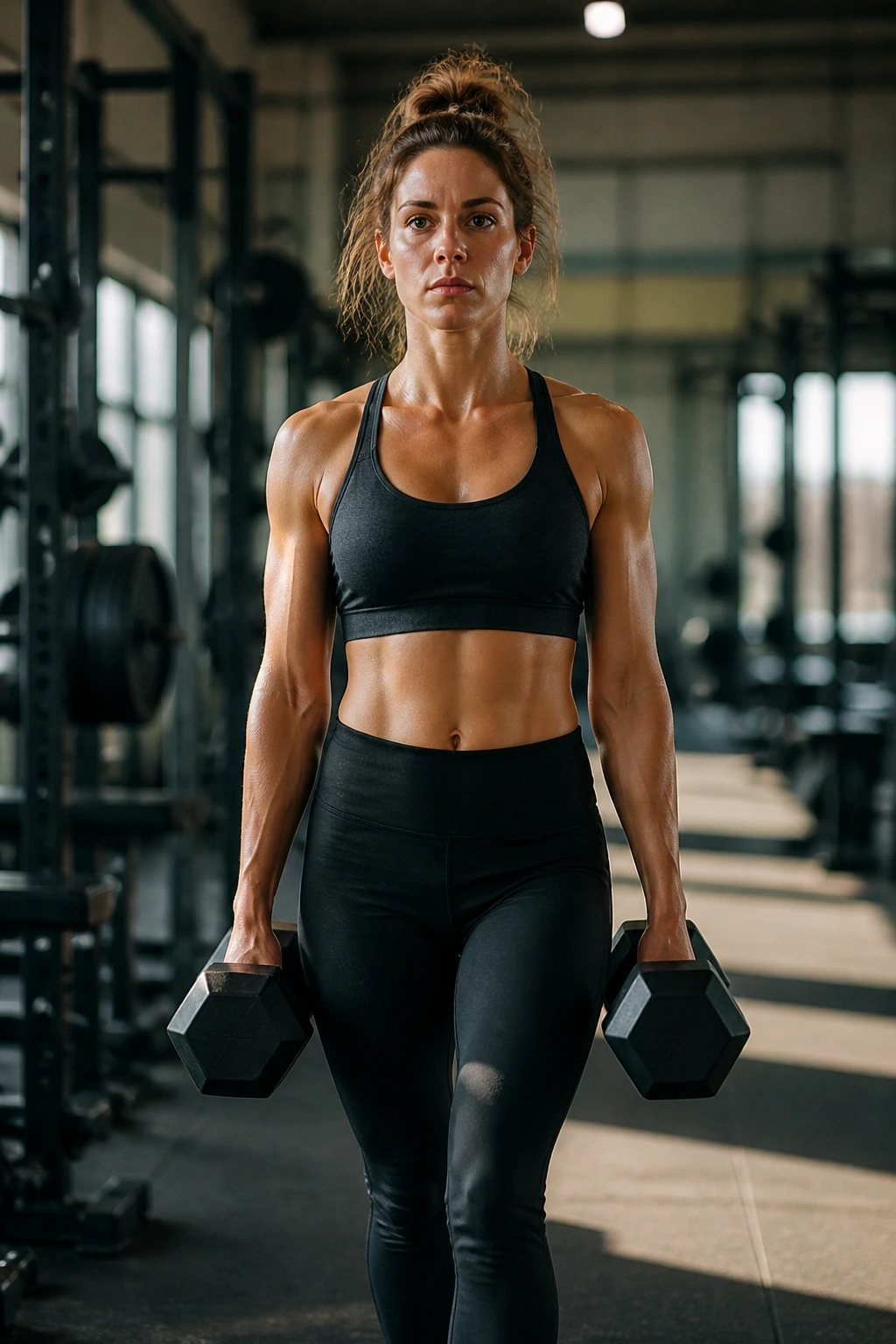
This is the one I’d keep in my back pocket. Not because it’s fancy, but because it solves the actual problem most people have: some days you want a plan, but you do not want to think very hard about it.
Spend 8 minutes warming up on any cardio machine, then do one move from each bucket: a squat pattern, a push, a pull, a carry, and a finisher. A clean version might look like this: leg press for 4 sets of 10, dumbbell bench press for 3 sets of 8, seated row for 3 sets of 10, farmer carries for 4 rounds of 30 seconds, and 5 minutes on the bike. If you’re low on energy, drop one round from each lift and keep the carry.
The beauty of this session is that it flexes with your day. If you’re fresh, load the squat and press a little harder. If you’re tired, keep the tempo controlled and move through it like a maintenance session. Either way, the hour pays off.
And that’s the part I like best: you can keep training even when life gets messy, which is usually when a good gym habit matters most.
