



Twelve-minute workouts for busy women work because they respect the day you actually have, not the day you wish you had. Twelve minutes is enough for a hard circuit, a strength block, or a low-impact sweat session — if the timer is set before your brain starts negotiating.
The trick is to keep the setup tiny. A mat, a pair of dumbbells, a loop band, or a staircase can carry a workout farther than most people expect. Spend five minutes hunting for gear and the session starts feeling heavy before your first squat.
A lot of short workouts fail because they try to do too much. Too many moves. Too much switching around. Too much fluff. These sessions stay sharp: clear intervals, clear goals, and a clean stop point so you can get back to your life without feeling like the workout swallowed the whole afternoon.
1. The No-Equipment Full-Body Circuit
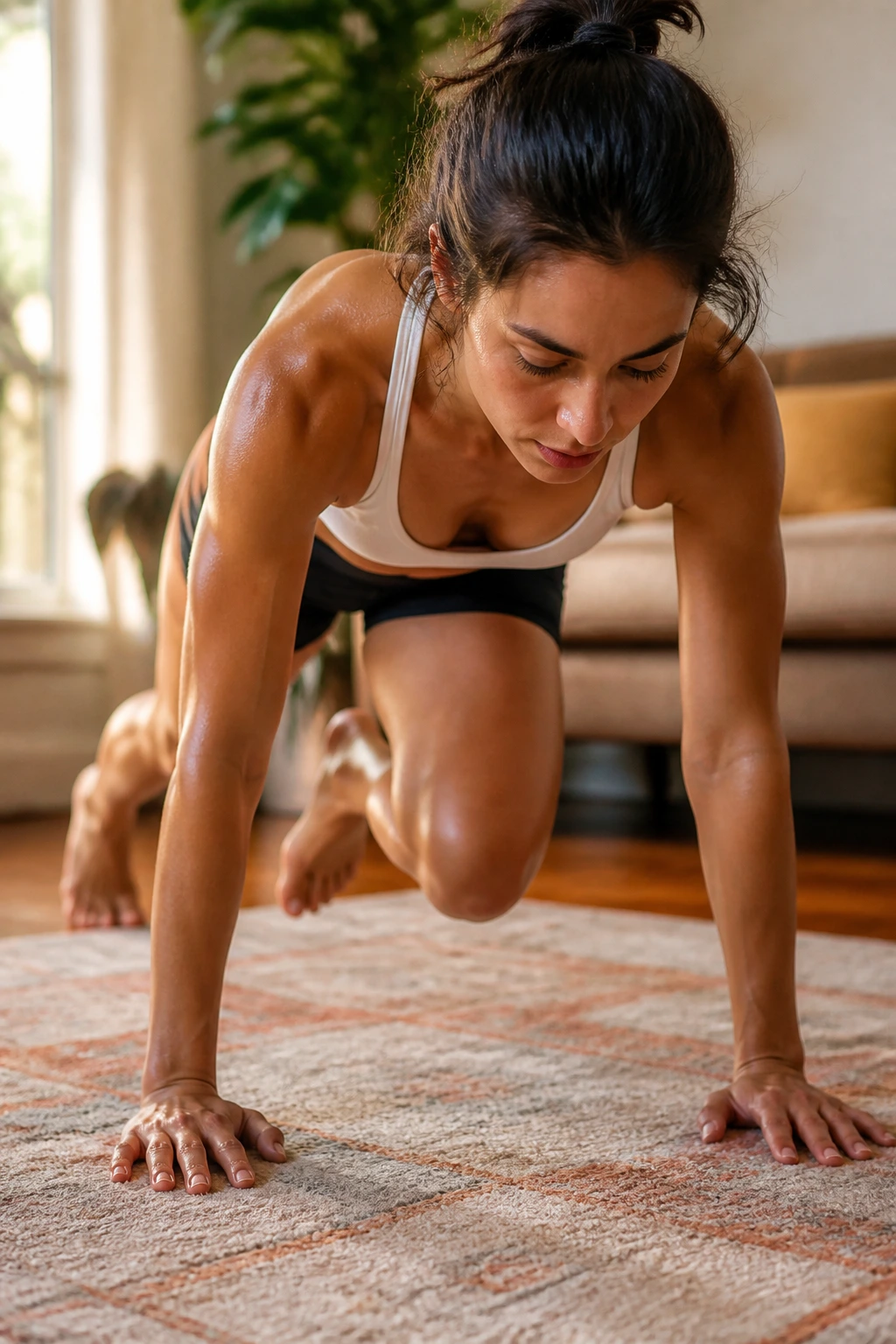
This is the one I’d hand to a woman who wants to stop “meaning to” exercise and actually do it. Forty seconds on, 20 seconds off, six moves, two rounds gives you exactly 12 minutes, and you can do it in socks on a living-room floor.
How the 12 Minutes Break Down
- 40 seconds bodyweight squats
- 40 seconds incline push-ups on a counter or couch
- 40 seconds reverse lunges, alternating legs
- 40 seconds dead bugs, slow and controlled
- 40 seconds mountain climbers, steady not frantic
- 40 seconds glute bridges, squeeze at the top
- Rest 20 seconds between moves
- Repeat the whole circuit once
Keep the first round honest. Don’t race the clock just to feel tired faster. The better move is cleaner reps and a pace you can repeat on round two without turning the last three exercises into chaos.
Tip: If your form starts to wobble, slow the reps down instead of adding speed. A controlled squat and a tidy lunge beat sloppy jumping every single time.
2. The Dumbbell Push-Pull Ladder
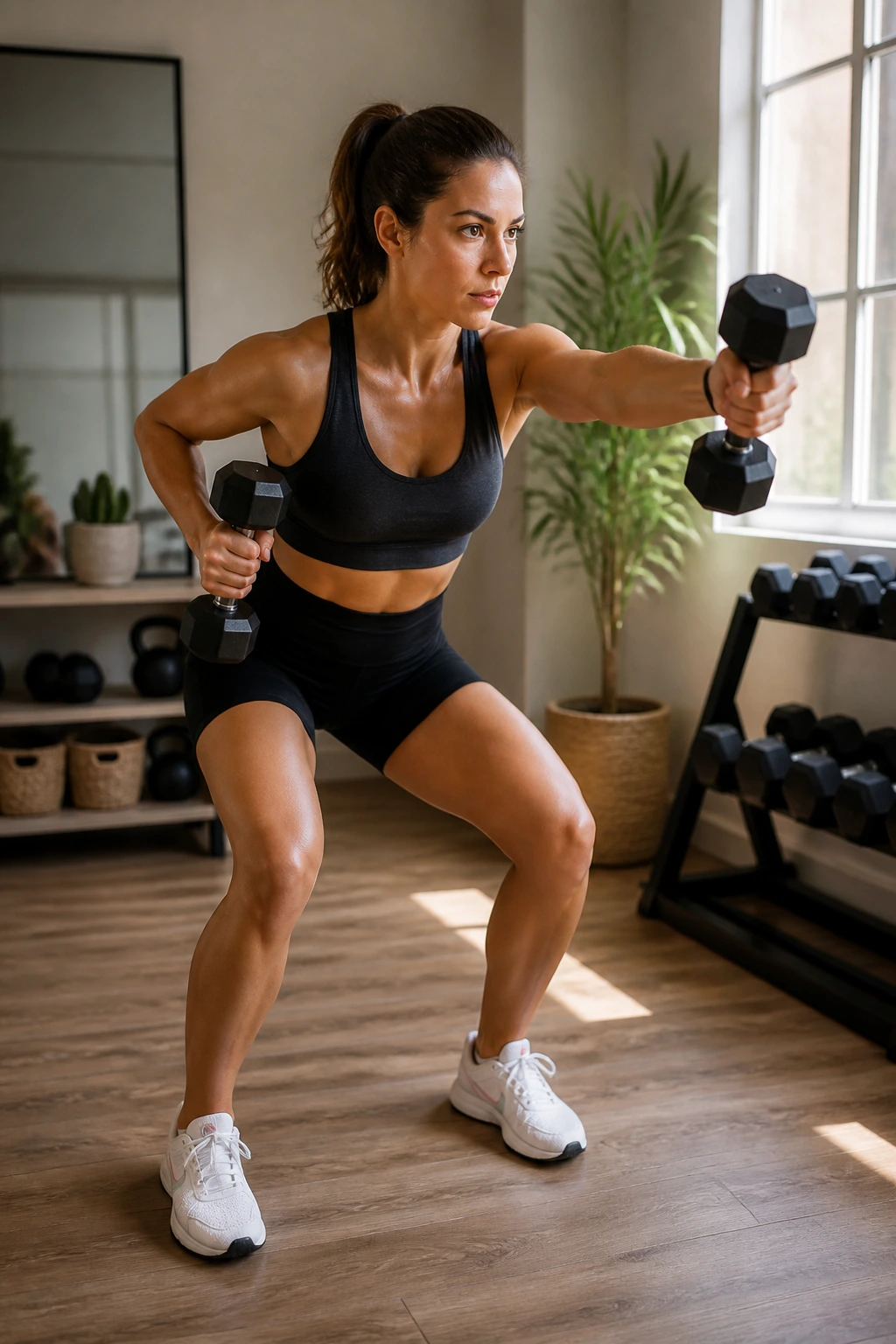
A pair of dumbbells can cover a lot of ground when time is tight. I like this one for women who want strength work that feels focused, not fussy: one lower-body move, one pull, one press, one hinge, then done.
Set a 12-minute timer and cycle through these four moves as many times as your form allows: 8 goblet squats, 8 bent-over rows, 8 floor presses, and 10 Romanian deadlifts. Use weights that feel challenging by the last two reps, but not so heavy that your back starts doing all the work.
If all you’ve got are lighter dumbbells, slow the lowering phase to three seconds. That tiny change makes the workout feel heavier without needing more gear. If you’ve got heavier ones, keep the reps crisp and rest only long enough to get your breath back.
The practical piece matters here. Rack the dumbbells in the same spot every time, keep the timer visible, and move from exercise to exercise without wandering off to refill a water bottle. Twelve minutes disappears fast.
3. The Brisk-Walk Interval Session

What if the best workout is the one you can start while the coffee is still hot?
This is the easiest cardio plan on the list, and I mean that in the nicest way. Put on your shoes, set a 12-minute timer, and alternate 90 seconds brisk walking with 30 seconds fast walking for six rounds. Outside works. A treadmill works. A hallway loop works if that’s what you’ve got.
How to Use It
- Stand tall and keep your ribs stacked over your hips
- Swing your arms on purpose, not lazily
- During the fast minute, breathe through your mouth and let your pace climb
- During the easier minute, stay moving instead of stopping cold
- If you’re on a treadmill, bump the incline to 2–4% for the fast sections
The point is not to crush yourself. The point is to get your heart rate up without needing a change of clothes, a shower, or a complicated plan. If you sit all day, this one also wakes up the hips and upper back in a way that a hard floor routine sometimes doesn’t.
4. The Glute and Leg Burner
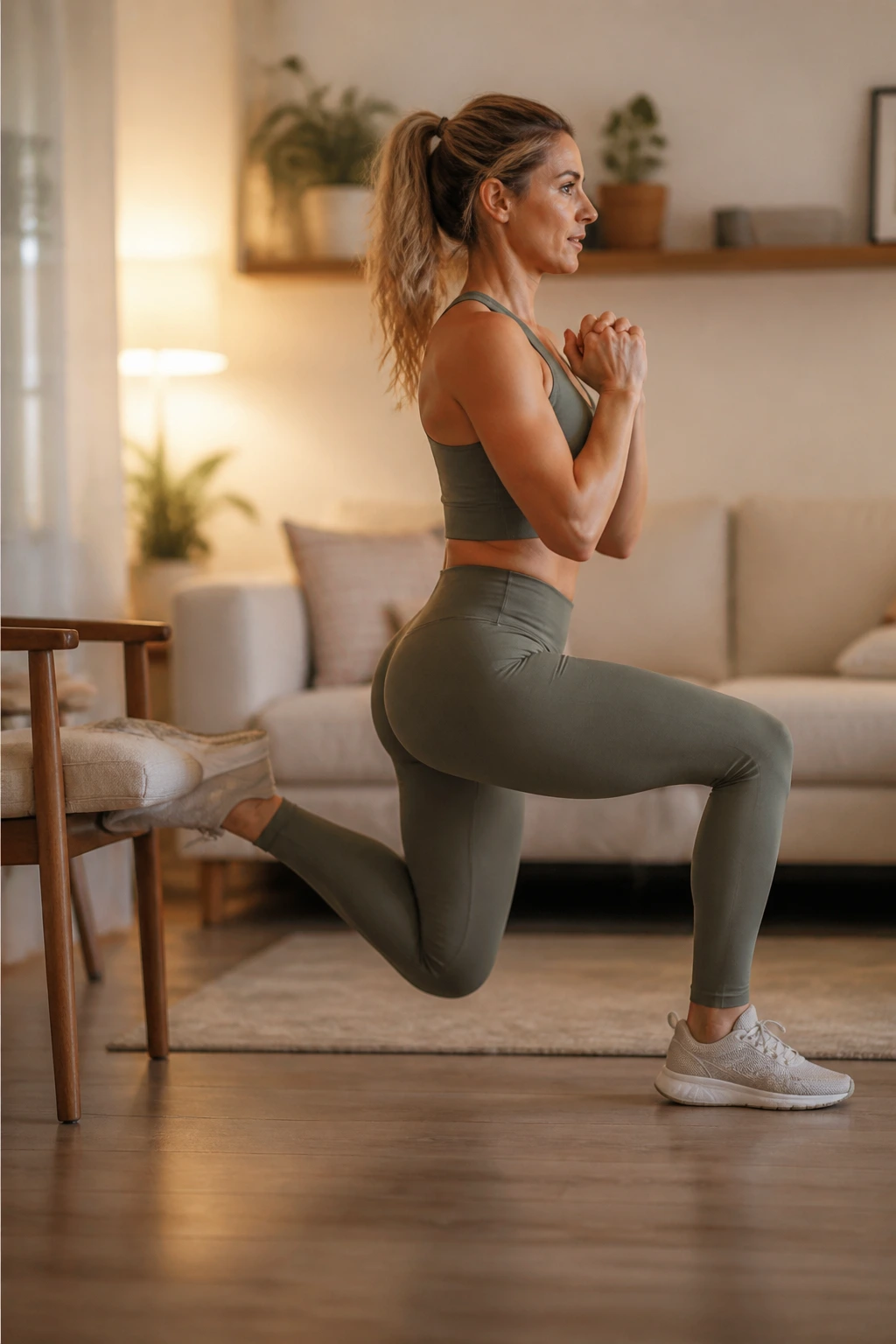
You walk into the room, hit start, and by minute eight your legs are politely asking what they did to deserve this.
That’s the whole charm of a lower-body workout like this. Forty-five seconds work, 15 seconds rest, six moves, two rounds keeps the pace steady and gives your glutes enough time under tension to matter. You do not need a barbell to feel this one.
The Move List
- Split squat, right leg forward
- Split squat, left leg forward
- Sumo squat pulse
- Glute bridge with a two-second squeeze at the top
- Lateral lunge, alternating sides
- Wall sit finish
Use a chair or wall for balance if your knees are cranky. Keep your front foot flat on the split squats, and don’t let the knee cave inward when you lower. The glute bridge should feel like a clean squeeze through the back of the hips, not a lower-back arching contest.
This session works well on days when you want your legs to do the work without needing jumps, sprints, or a ton of floor transitions. It’s simple. It’s direct. And your jeans may feel a little less friendly afterward.
5. The Core and Posture Reset
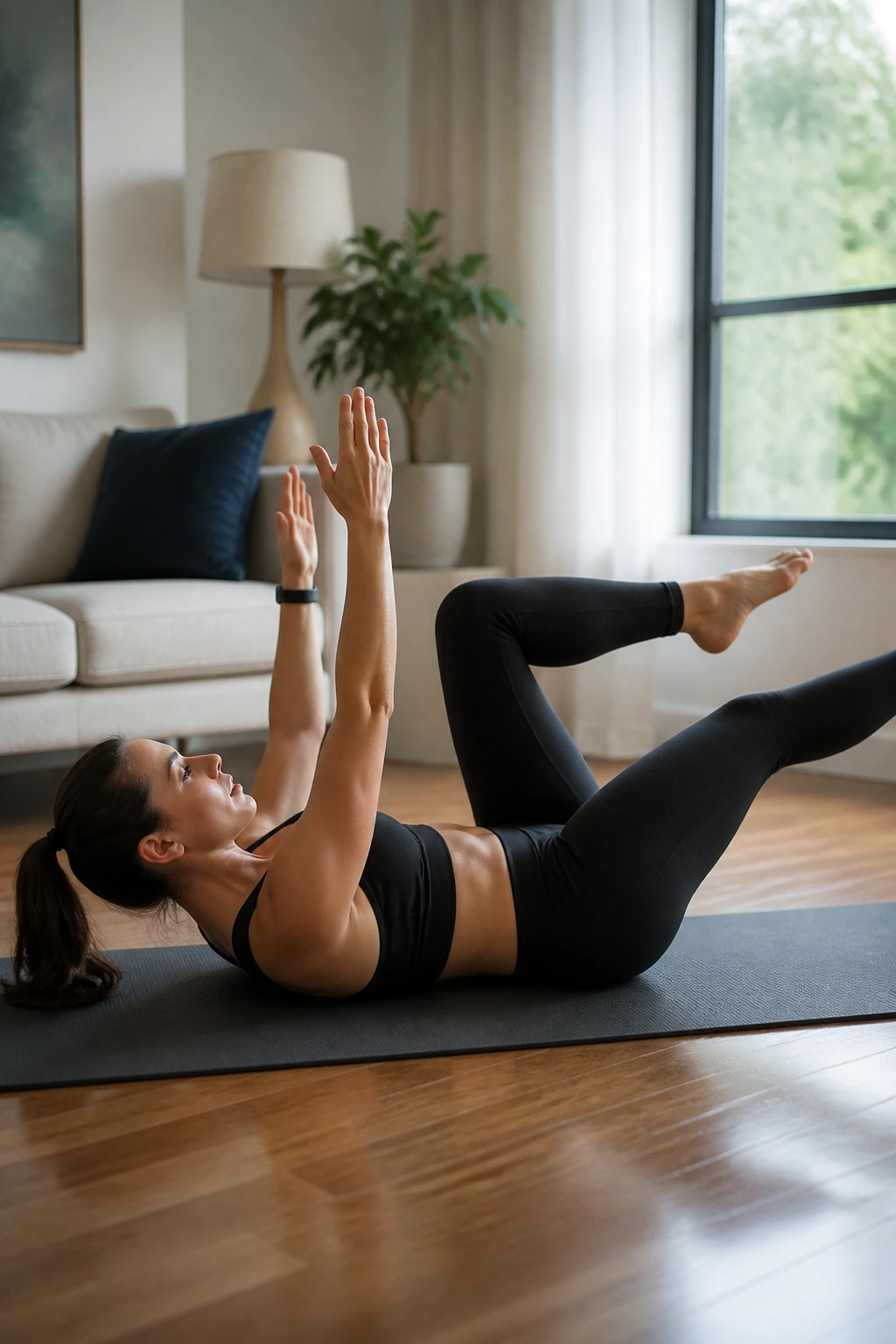
This is the workout I reach for after too many hours hunched over a laptop. Not because it’s glamorous. Because it works.
Start with dead bugs for 45 seconds, then move to bird dogs for 45 seconds, then side planks for 30 seconds per side. Repeat that sequence twice, and finish with one minute of wall slides or wall angels if your shoulders like that better. The whole thing sits right around 12 minutes if you keep the transitions short.
Your lower back should feel supported, not pinched. Your neck should not take over. If it does, shorten the range of motion and slow down. A dead bug done well, with ribs down and a controlled exhale, does more for your trunk than twenty rushed crunches.
I like this session because it feels deceptively calm. Then you stand up and notice your posture is a little taller, your hips feel less welded to the chair, and your breathing has settled into a cleaner rhythm. That’s not flashy. It’s useful.
6. The EMOM Strength Block
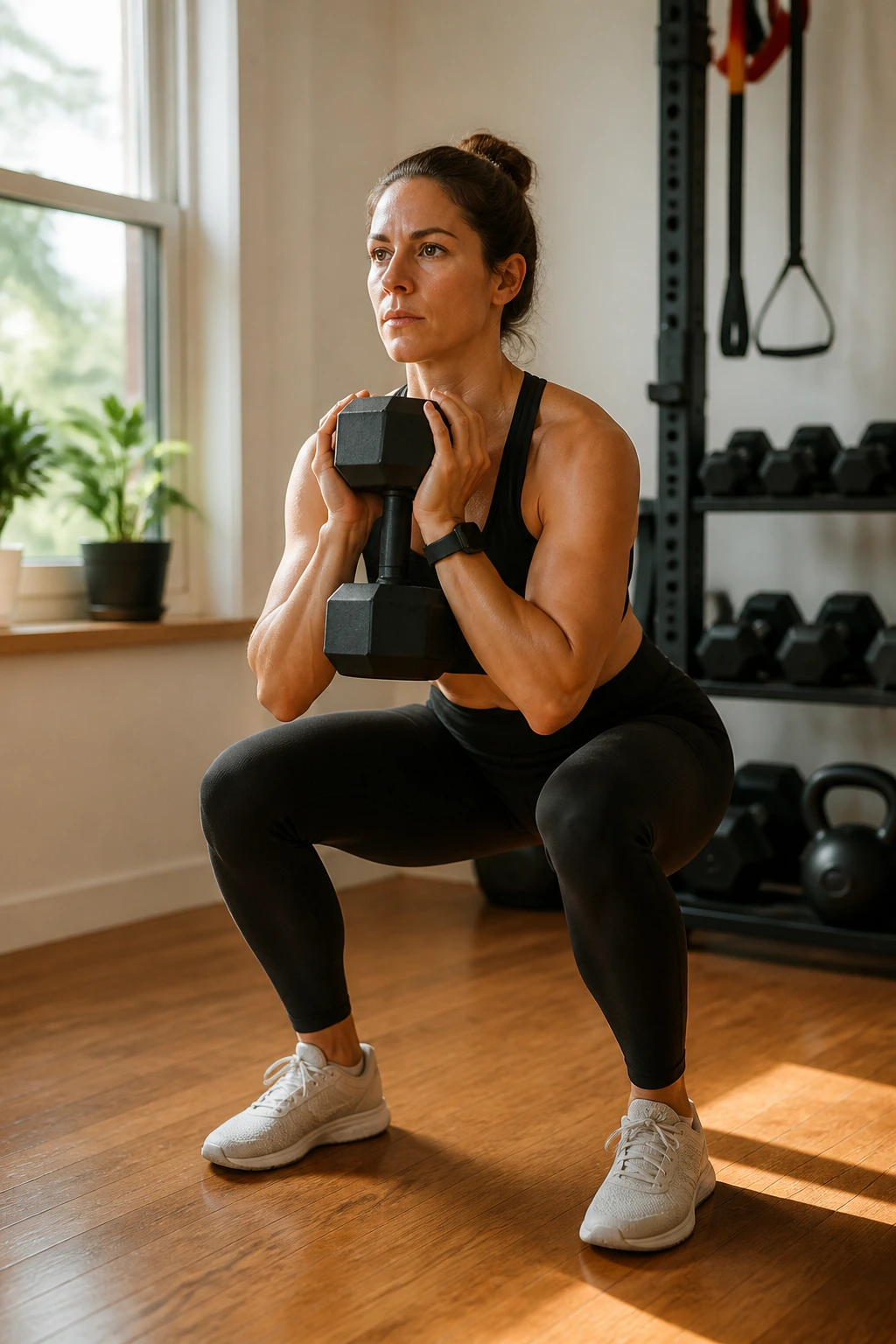
EMOM means “every minute on the minute,” and it’s one of the cleanest ways to cram strength work into a short window. Unlike a random circuit, it gives each minute a job, which means less dithering and more actual training.
Set a timer for 12 minutes. At the start of minute one, do 10 goblet squats. At minute two, do 8 push-ups or incline push-ups. At minute three, do 10 dumbbell rows. At minute four, do 12 hip hinges or Romanian deadlifts. Then repeat that four-minute cycle three times.
The sweet spot is finishing each minute with about 15 to 20 seconds to breathe. If you’re gasping with 40 seconds left, the loads are too heavy or the reps are too high. If you’re done in eight seconds, the work is too light. EMOM training lives in that middle space where you’re challenged but not scrambling.
This format is a good fit for women who like structure. It removes the “what should I do next?” pause that wastes time. And if you only have one pair of weights, even better — you won’t spend half the workout changing equipment.
7. The Low-Impact Sweat Session

Low-impact does not mean easy. It just means your joints get a break from jumping while your lungs still have to earn their keep.
Try six moves for 45 seconds each, with 15 seconds to reset: step jacks, squat to knee drive, skater steps, standing punches, alternating reverse lunges, and a fast march with strong arm swings. Run the whole circuit twice, and you’ve got 12 minutes of steady work without the pounding.
This session is a smart choice if you’re sharing space with sleeping kids, neighbors below you, or a floor that makes jumping feel loud and annoying. It also works on days when you’re a little tired but still want to sweat. Some workouts demand a full blast. This one asks for clean effort and a good pace.
What Makes It Useful
- You stay upright most of the time, which is easier on the wrists and lower back
- The pace can be scaled by shortening the rest to 10 seconds
- You can turn the effort up by adding bigger arm swings and deeper knee bends
- It pairs well with a short warm-up, but it does not need one if you’re already moving around
Keep the steps controlled. Messy, bouncy moves make this feel harder in the wrong way.
8. The Loop Band Lower-Body Set
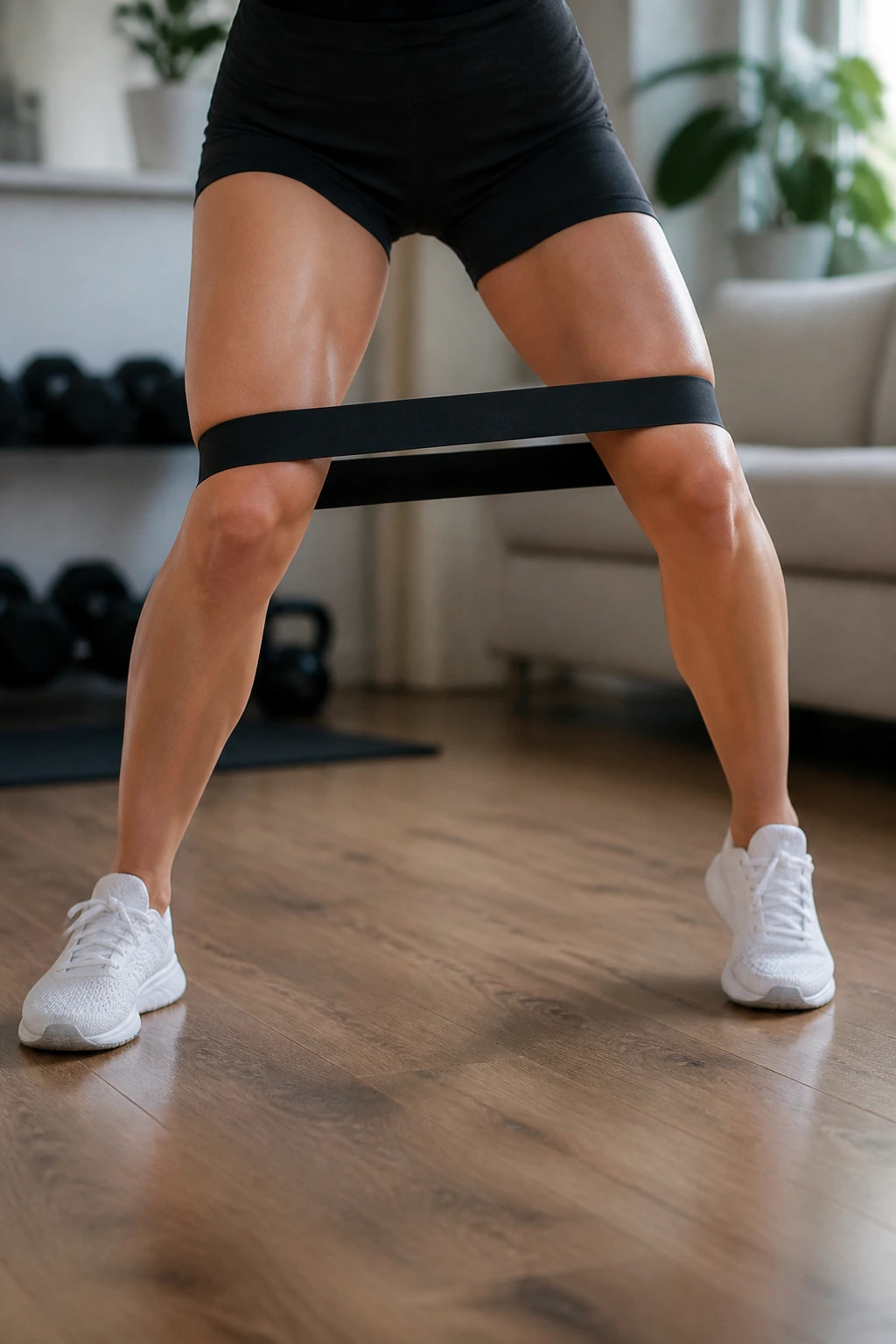
Got a loop band in a drawer? Good. That little circle can make a bodyweight workout feel twice as honest.
Put the band above your knees for squats and glute bridges, then slide it to your ankles for lateral walks and standing kickbacks. Run 40 seconds on, 20 seconds off, through six movements: banded squats, lateral band walks, glute bridge pulses, reverse lunges, standing kickbacks, and frog pumps. Repeat once.
Where to Put the Band
- Above the knees for squats and bridges, because it keeps the knees pressing outward
- At the ankles for lateral walks, which makes the outer hips work harder
- Keep it light to medium tension if you’re new, since a band that’s too tight can wreck your form
The nice thing about band work is the constant tension. There’s no dead zone like you get with some dumbbell moves. Your hips stay under load the whole time, which is why the burn shows up faster than people expect.
If your band rolls up into a sausage, stop fighting it and switch to a slightly wider one. Cheap, thin bands can be annoying. Sometimes the smartest move is a better band, not more grit.
9. The Stair-Climb Power Set
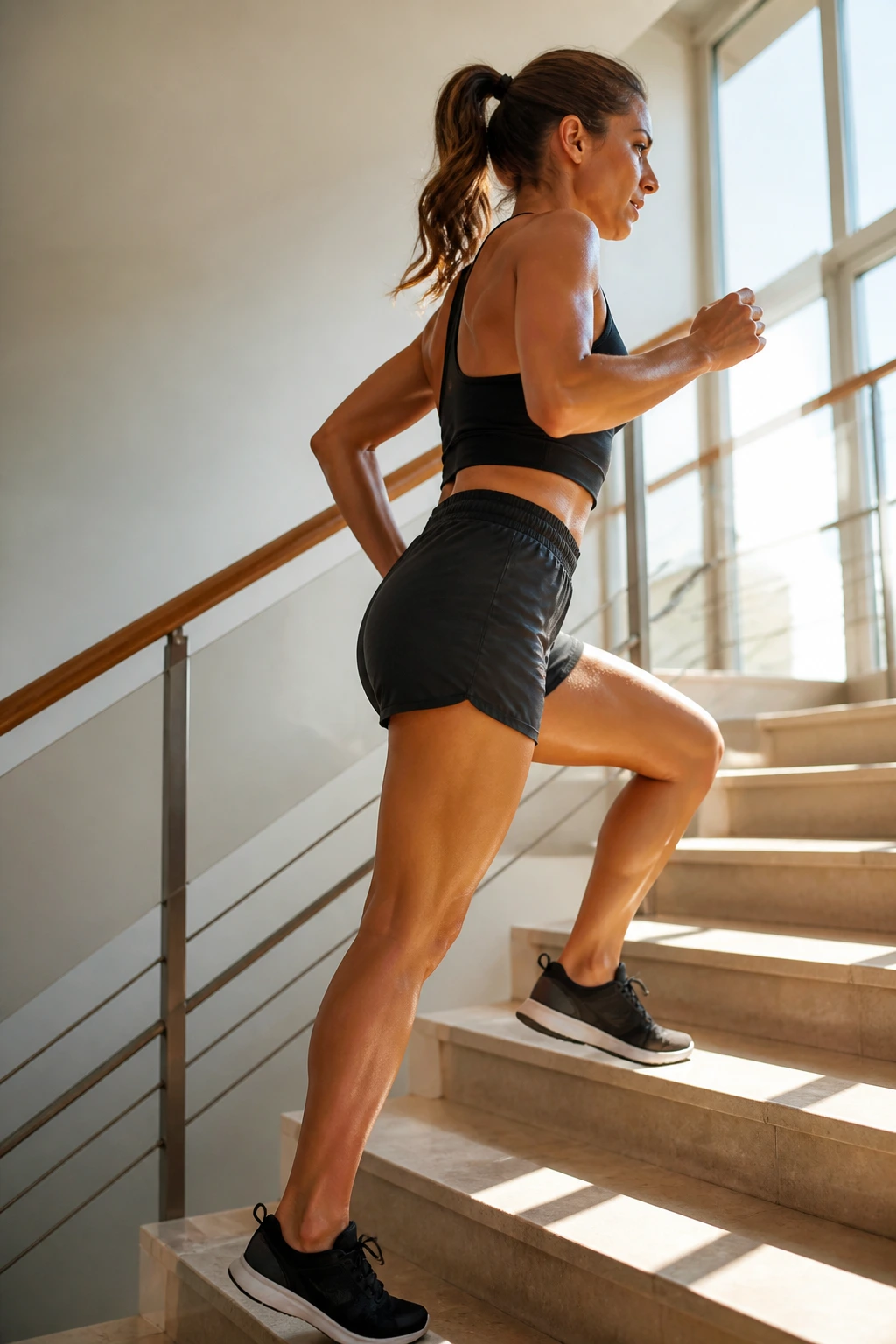
If you have one flight of stairs, you have a workout. That’s not a slogan. It’s just true.
Do 1 minute of stair climbs, then 1 minute of easy walking or standing recovery, and repeat six times. If you want more variety, alternate the climbs with 30-second step-ups, 30-second single-leg calf raises on the landing, and 30-second squat holds at the bottom. Keep the whole session at 12 minutes and don’t rush the descent.
Key Details That Matter
- Put your whole foot on the step, not just the toes
- Keep your chest up so you don’t fold at the waist
- Use the railing if balance is shaky
- Wear real shoes, not slippery socks
- Slow down on the way down; that’s where people get careless
There’s a humble brutality to stair work. Your heart rate climbs fast, your legs get a clear job, and you don’t need to think much once the timer starts. It’s also easy to scale. Take it slower for a moderate cardio session or push harder with quicker step turnover.
I like stairs because they’re practical. No one has to admire them. They just work.
10. The Pilates-Inspired Floor Flow
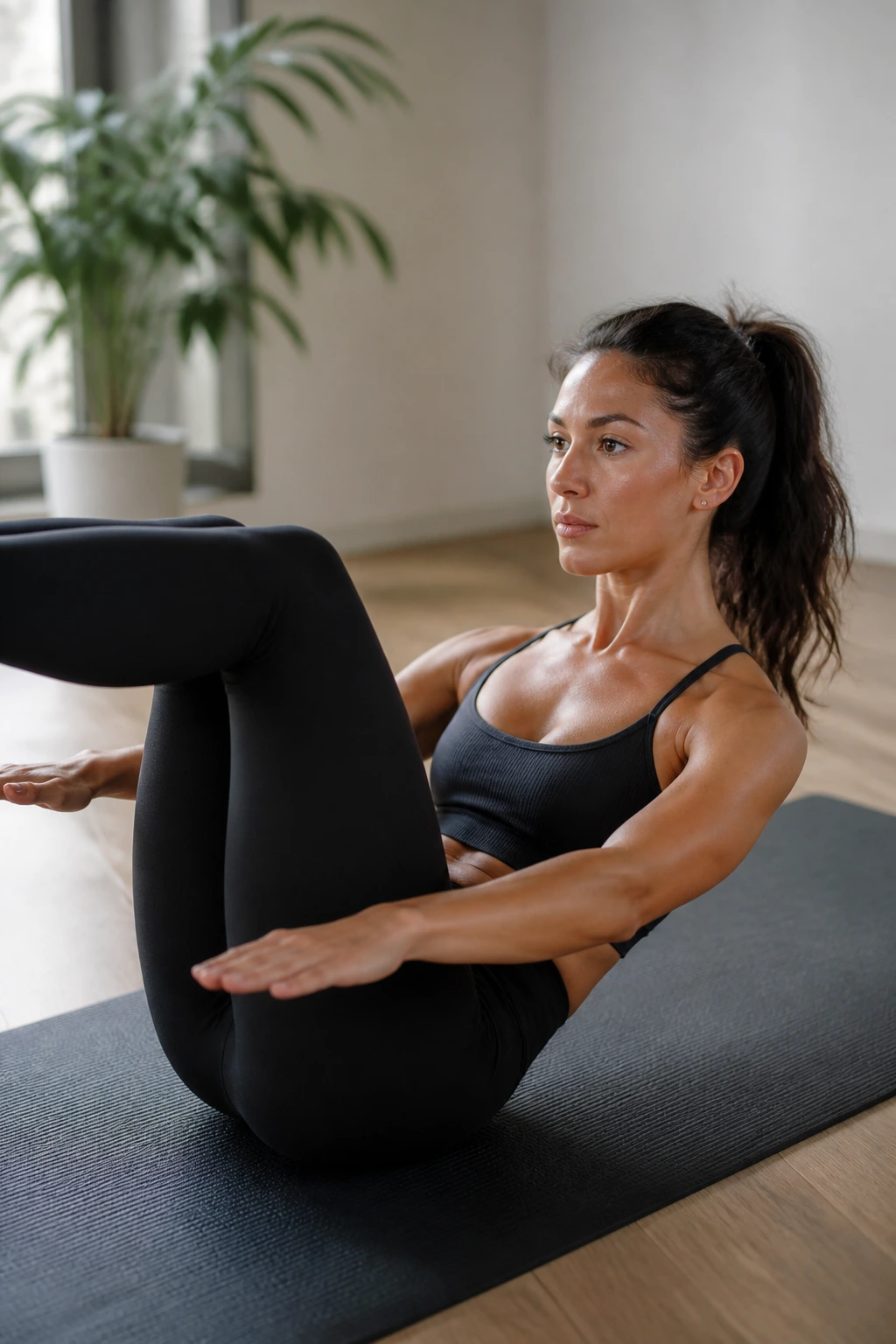
This one is for the woman who wants her workout to feel controlled instead of chaotic. Slow tempo. Quiet feet. A lot of core tension.
Use a 45-seconds-on, 15-seconds-to-switch format and move through hundreds or tabletop pulses, single-leg stretch, glute bridge hold, side-lying leg lifts, and swimming. Repeat the five-move sequence twice. If you need a final minute, finish with a hollow hold or a slow roll-down from standing.
The magic here is not speed. It’s precision. Your ribs stay down, your pelvis stays steady, and your neck doesn’t get to take over just because the abs are tired. When the core is working correctly, the movement looks small from the outside and feels much bigger from the inside.
This style of workout is useful on recovery days, after long drives, or whenever your body wants motion but not pounding. It also pairs well with good music, though I’ve ruined a few sessions by getting distracted by the playlist and forgetting to breathe properly. Annoying, yes. Common, too.
11. The Kettlebell Swing and Squat Combo
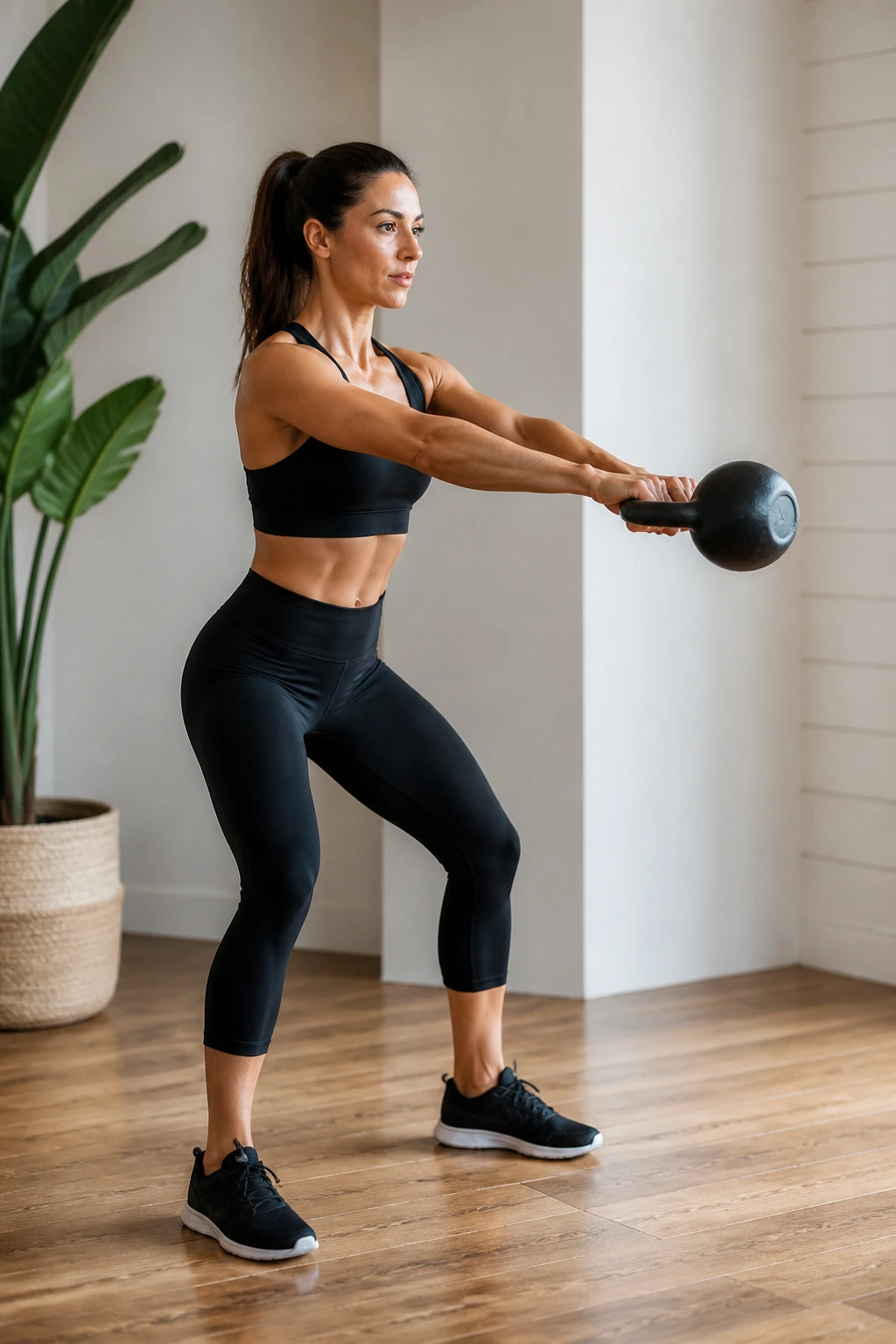
A kettlebell can do a lot in 12 minutes if you stop pretending every rep needs to be slow. This workout is a hinge-and-squat combo built for women who already know the basics and want something punchy.
Set a timer for 12 minutes and rotate through 12 kettlebell swings, 8 goblet squats, 8 reverse lunges, and 20 seconds of rest. If swings aren’t comfortable yet, swap them for kettlebell deadlifts. If one side of your body feels off, put the bell down and fix the hinge before you add speed.
The clean version of a swing is all hips. The bell floats because the hips snap, not because the arms yank it up. That matters. A sloppy swing turns into a low-back tug-of-war pretty fast.
Who’s this best for? People who want a more athletic feel and don’t mind a little learning curve. If you’re brand-new to kettlebells, start with deadlifts and goblet squats first. The swing can wait until your hinge pattern feels solid.
12. The Desk-Reset Mobility Session
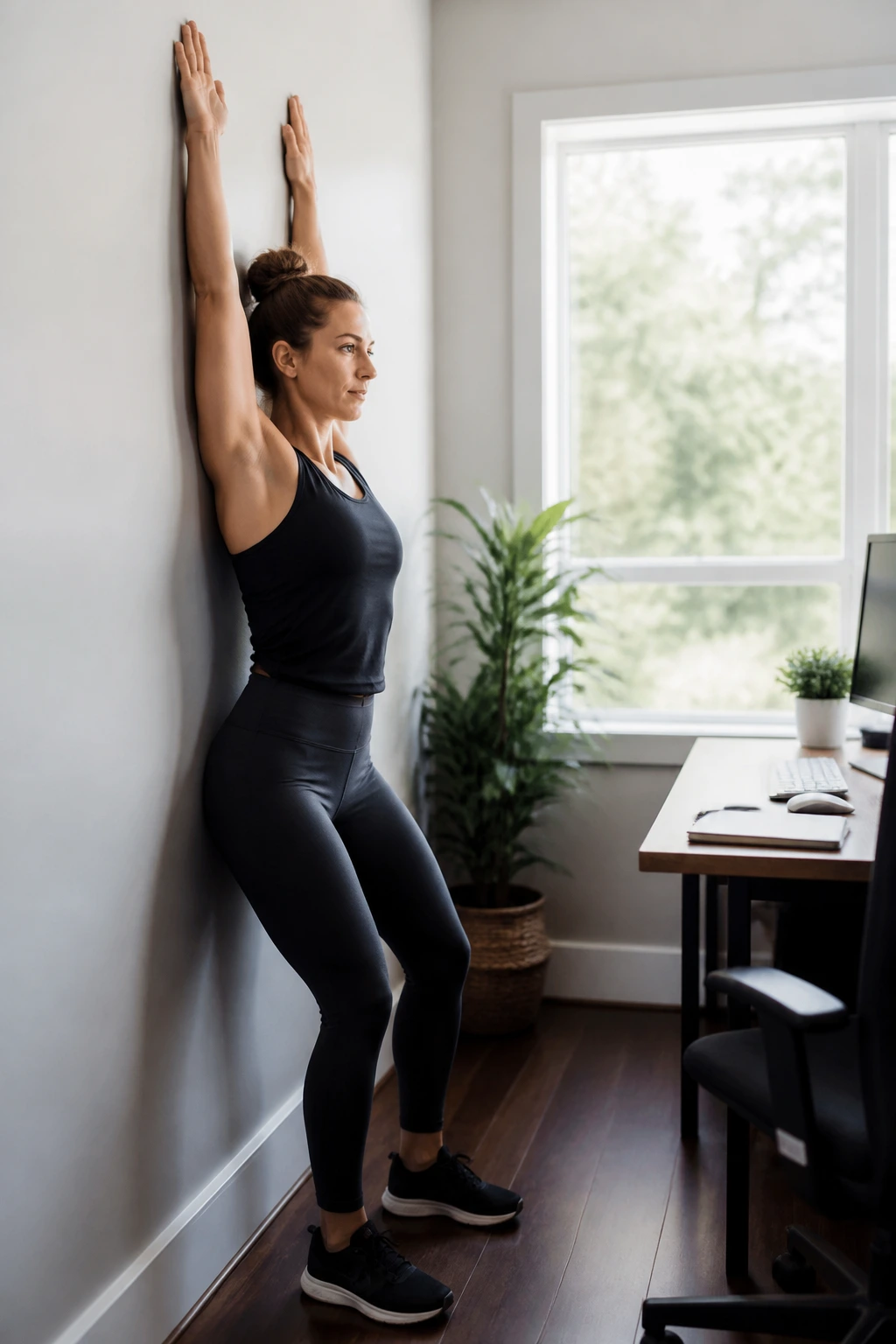
If your shoulders live near your ears by the end of the day, this one earns its keep fast.
Run one minute each of wall slides, chair squats, hip flexor stretches on the right side, hip flexor stretches on the left side, calf raises, and band pull-aparts. That lands you at 12 minutes if you repeat the six-move block twice or hold each stretch long enough to breathe into it.
This is part mobility, part light strength, which is why it feels so good after sitting too long. The wall slides wake up the upper back. The chair squats remind your hips how to sit down and stand up without drama. The calf raises are small, but they help more than people give them credit for.
You can do this in work clothes if you have to. That’s a big reason it belongs here. A useful workout is one you can actually fit between meetings without turning your day upside down.
13. The Tabata Power Hits
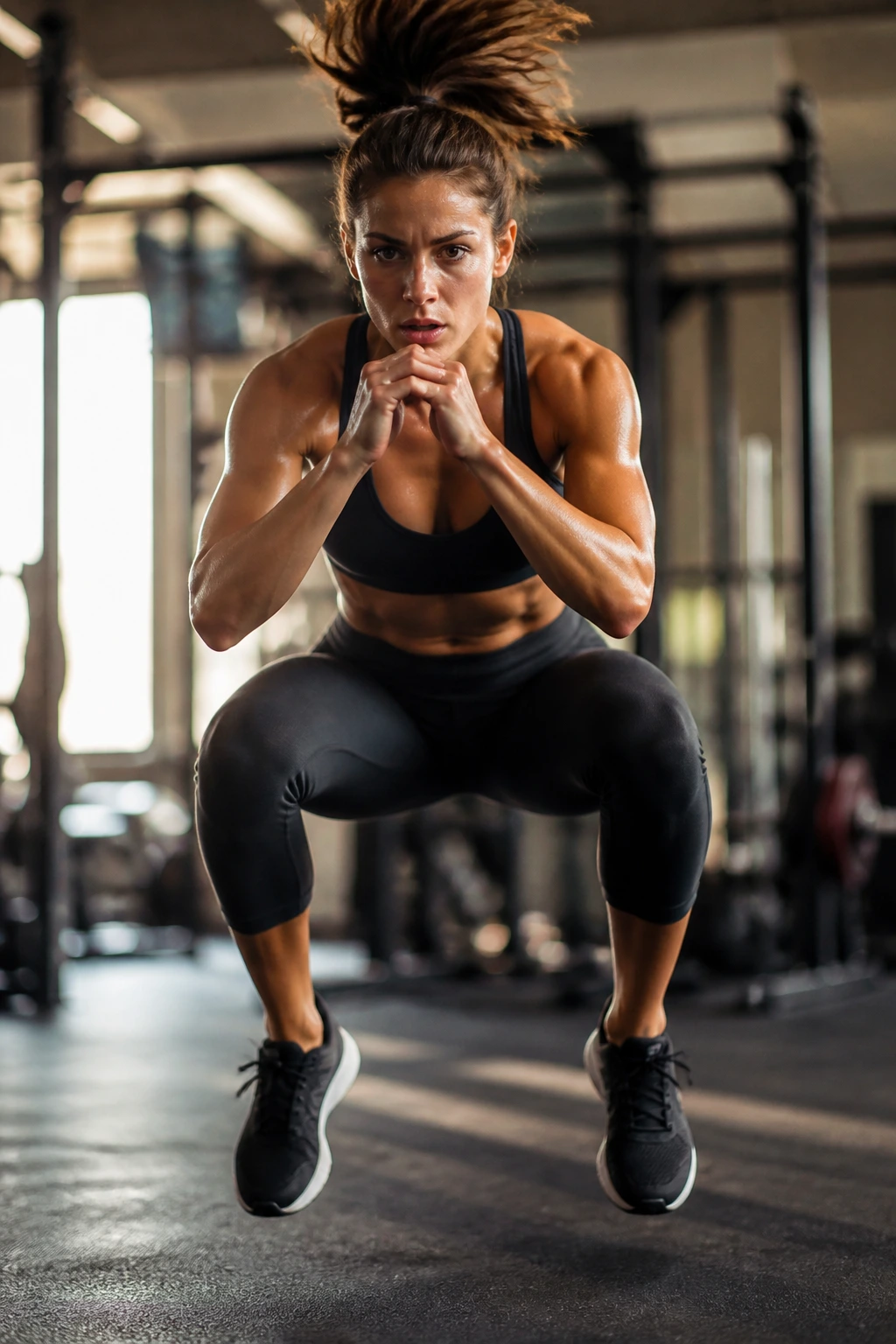
Need the shortest possible hard workout? Tabata is about as blunt as exercise gets.
Use 20 seconds of work and 10 seconds of rest for eight rounds, which gives you four minutes per block. Do three blocks in a row with a minute to catch your breath between them, and you’ve got a 12-minute session that feels sharp instead of long.
A Simple 12-Minute Tabata Layout
- Block 1: squat jacks
- Block 2: mountain climbers or step climbers
- Block 3: push-ups or incline push-ups
- Optional swap: skater steps if jumping bugs your knees
The trick is not going out like a rocket on round one. That is the classic mistake. If you sprint the first two intervals and fade hard by round five, the workout stops being useful and starts being ugly. Aim for a pace you can keep across all eight rounds.
This is the one I’d keep for days when you want to feel very, very done in a short span. It’s not gentle. It’s not subtle. And it works best when the moves are simple enough that you can stay fast without turning sloppy.
14. The Hotel-Room Zero-Equipment Ladder
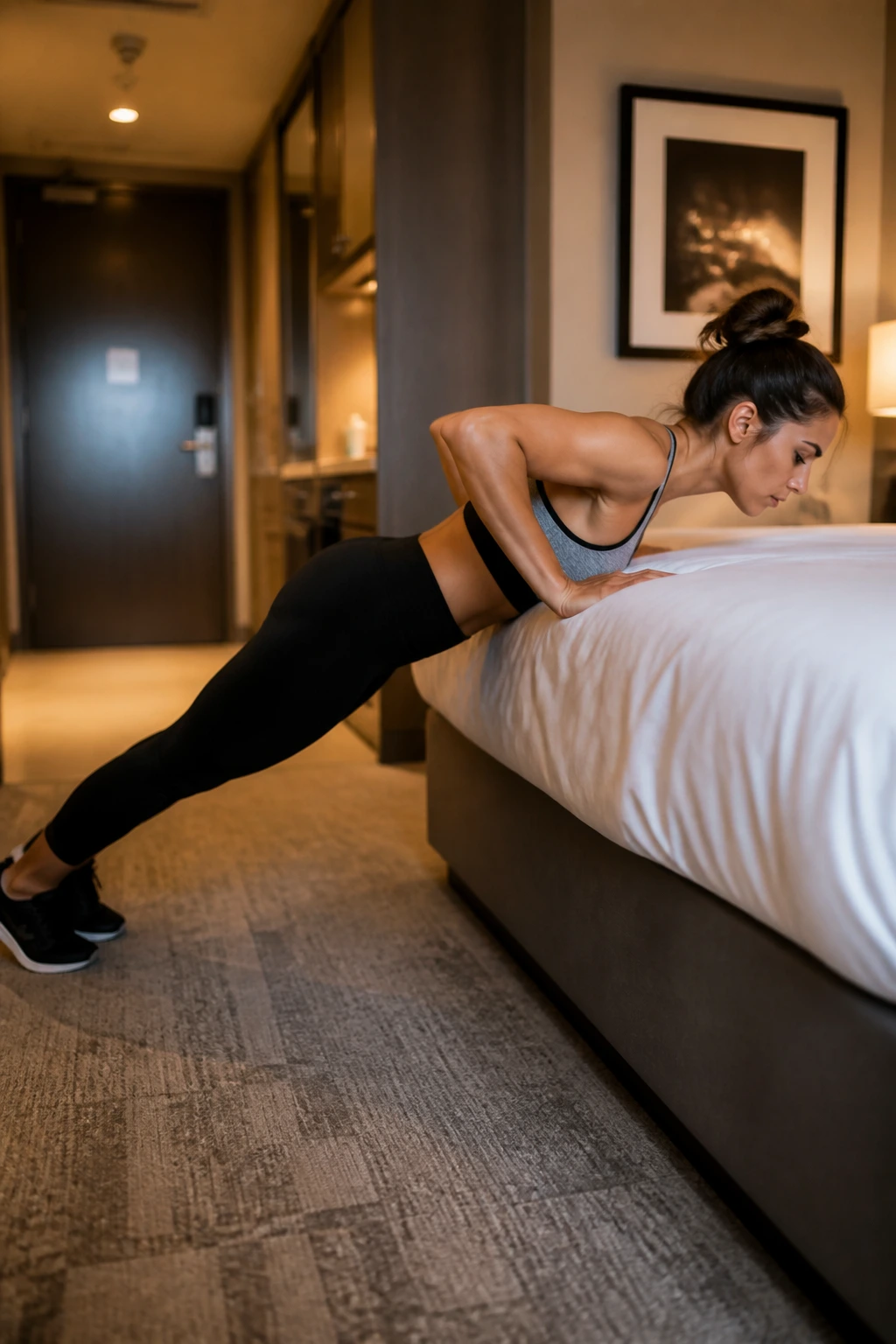
Travel can be a decent excuse, but not a good one.
A hotel room workout needs to be quiet, compact, and a little stubborn. Set three 4-minute blocks: lower body, upper body, then core. In the first block, alternate 10 split squats per side with 20 seconds of glute bridges. In the second, do incline push-ups on the bed edge or desk and add shoulder taps from high plank. In the third, work dead bugs, side planks, and slow climbers.
Keep It Simple
- Use the floor, not unstable furniture
- Keep all movements quiet enough not to rattle the room
- Skip jumps unless you know the floor can handle them
- Bring a mini band if you travel often; it takes almost no space
Hotel workouts get easier when you stop trying to recreate the gym. You don’t need a perfect setup. You need a plan that survives a weird carpet, a narrow corner, and one dumb suitcase sitting open by the door.
This one does that. It also keeps the work balanced, which matters when your body has spent hours folded into a seat. A little symmetry goes a long way after travel.
15. The Slow-Tempo Strength Finisher
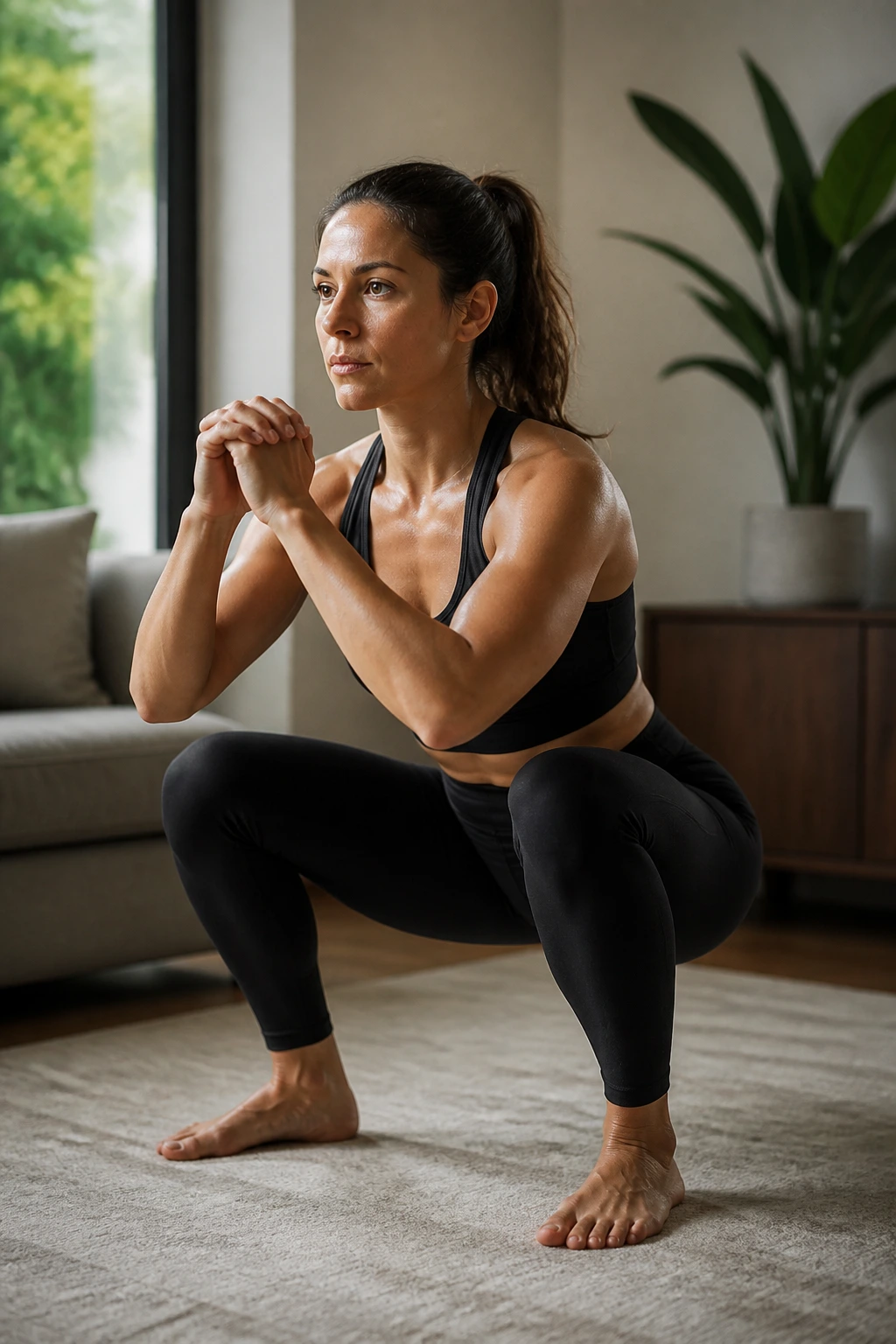
If fast circuits make you sloppy, tempo work is the fix. Slow down the lowering phase, and the same bodyweight move becomes a much more demanding strength drill.
Set a 12-minute timer and run 45 seconds of work with 15 seconds of rest for each of these: tempo squats, tempo push-ups, reverse lunges, and dead bugs. Use a 3-second lower, 1-second pause, 1-second rise pattern on the squats, push-ups, and lunges. For dead bugs, lower one arm and one leg at a time with total control.
The sensation is different from a cardio circuit. You feel your muscles catch, hold, and steady themselves. That pause at the bottom is where the work hides. It also forces cleaner form, because you cannot fake a slow rep very well.
This is a strong pick for women who want strength without impact, or for anyone whose joints are tired but who still wants a real training effect. It’s not flashy. It’s a little gritty. And it tends to leave you more aware of how your body moves for the rest of the day.
Final Thoughts
Twelve minutes is small on paper. In real life, it can be the difference between doing something and doing nothing.
Pick the style that matches your day: cardio when you’re flat, strength when you want structure, mobility when your body feels stiff, and no-equipment circuits when you need zero excuses. Keep the setup simple. Keep the timer visible. Start before you feel ready.
The best short workout is the one you’ll repeat tomorrow. That’s the whole game.
