



Most people think Pilates is all about complex machinery and expensive studio memberships. They imagine complicated pulleys, springs, and straps. The reality is that the method was born on a mat, and the most effective results often come from the simplest movements done with absolute precision. You do not need a reformer to feel the deep abdominal burn or to build the kind of functional strength that makes everyday tasks feel easier.
When you strip away the studio atmosphere, what you have left is your own body weight, gravity, and the coordination of your breath. That is the secret. It is not about how many repetitions you can grind through; it is about how much control you can exert over every single inch of movement. If your neck hurts or your back feels strained, you are likely doing it too fast. Slow it down. Feel the muscles engage. Let’s look at twenty-five routines you can do right in your living room.
1. The Five-Minute Morning Core Wake-Up
Start your day by waking up the deep stabilizers, not by doing a hundred crunches. The goal here is to activate the transverse abdominis, that deep layer of muscle that wraps around your waist like a corset. If you rush this, you miss the benefit.
The Sequence
- The Hundred (Modifications): Start lying on your back, knees bent. Lift your head and shoulders, pump your arms by your sides. Breathe in for five pumps, out for five.
- Single Leg Stretch: Hug one knee in, extend the other leg long. Switch smoothly, keeping your spine pressed into the mat.
- Double Leg Stretch: Reach arms and legs away from the center, then hug everything back to the middle.
Pro tip: Keep your chin slightly tucked toward your chest, like you are holding an orange under your chin. This protects your neck and keeps the tension exactly where it belongs: in your abs.
2. Low Back Relief and Mobility
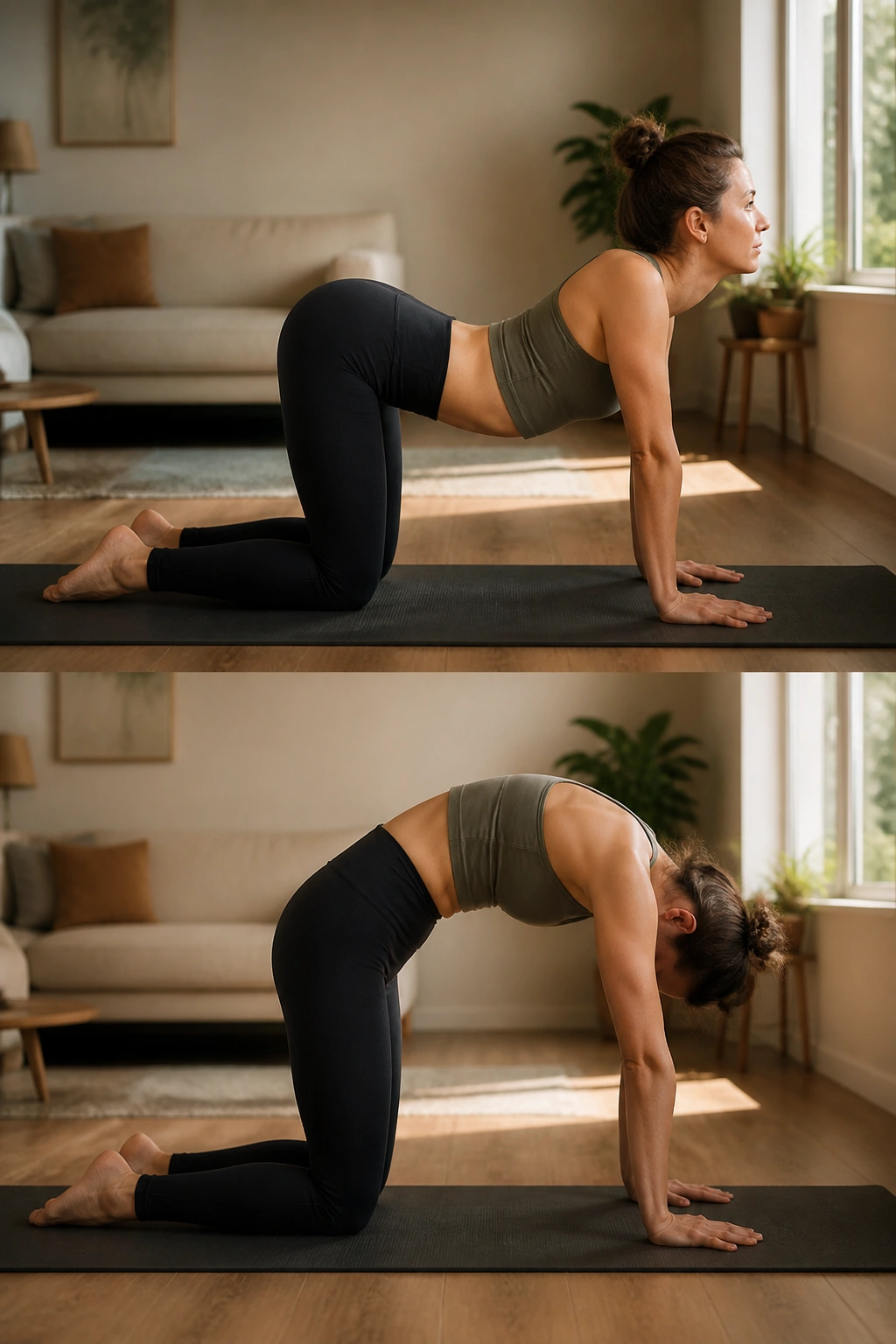
If you sit at a desk for hours, your lower back is likely stiff. This routine is less about “working out” and more about “working in.” It is designed to mobilize the spine and release the tension that builds up around the lumbar vertebrae.
Moving with Intention
- Cat-Cow: On all fours, inhale to arch your back, exhale to round it like a scared cat. Focus on the movement starting from the tailbone.
- Bird-Dog: Extend your opposite arm and leg. Do not let your hips wobble. Your goal is stillness, not speed.
- Child’s Pose: Sink your hips back to your heels and breathe deeply into your ribcage.
This is a gentle way to check in with your body. If you feel a sharp pinch, reduce your range of motion. You are looking for a stretch, not a stress test.
3. The Glute and Hamstring Foundation
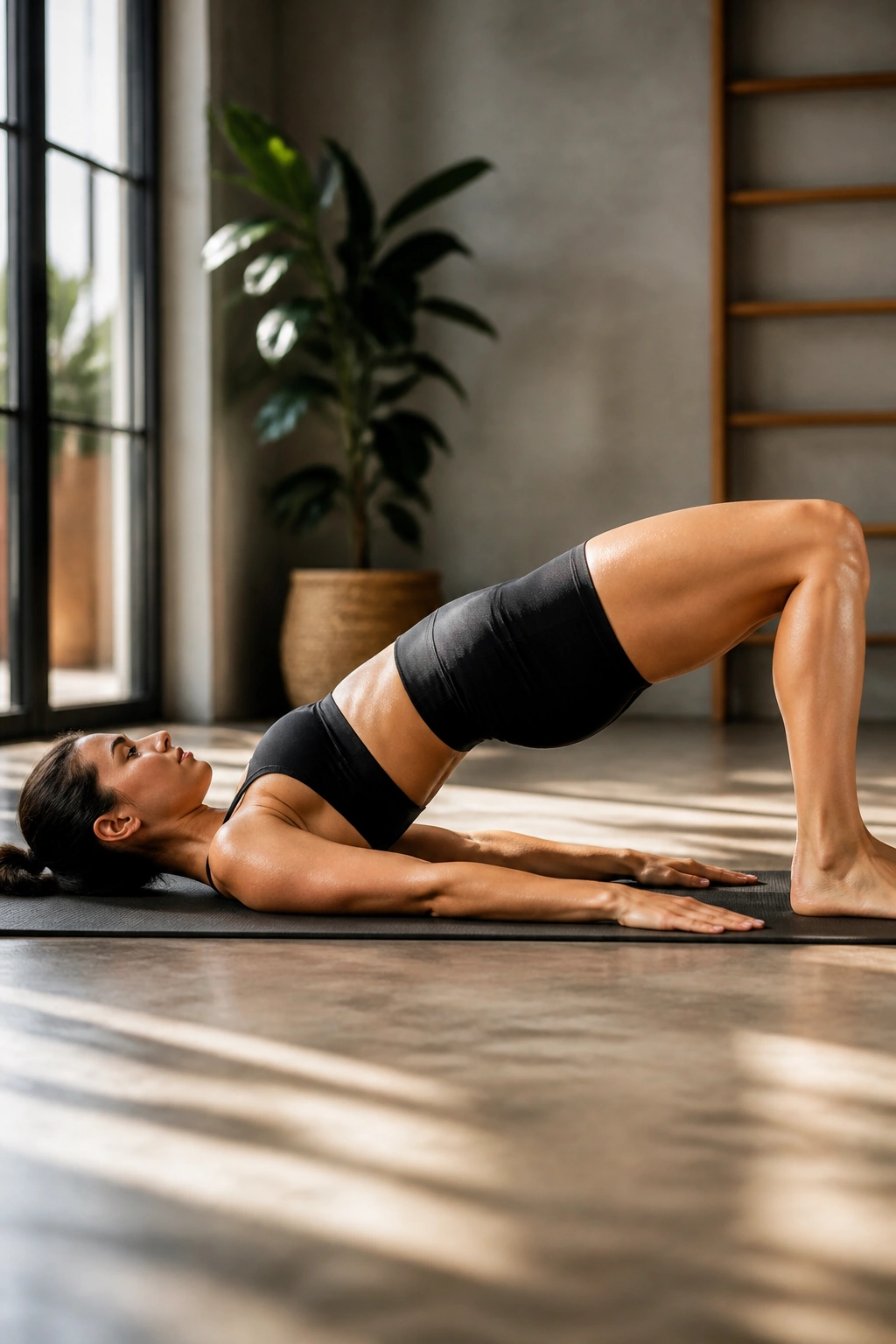
Strong glutes are the best insurance policy for your knees and lower back. This short routine targets the posterior chain using only the floor.
The Movements
- Shoulder Bridge: Lie on your back, feet hip-width apart. Peel your spine off the floor, one vertebra at a time, until you form a line from knees to shoulders. Squeeze your glutes at the top.
- Single-Leg Bridge: Once you have mastered the double-leg bridge, lift one leg toward the ceiling. Keep your hips level. This is much harder than it looks.
- Hamstring Pulses: Stay in the bridge and pulse your hips an inch up and down. Feel that fire in the back of your legs? That is exactly what you want.
4. The Oblique Burner
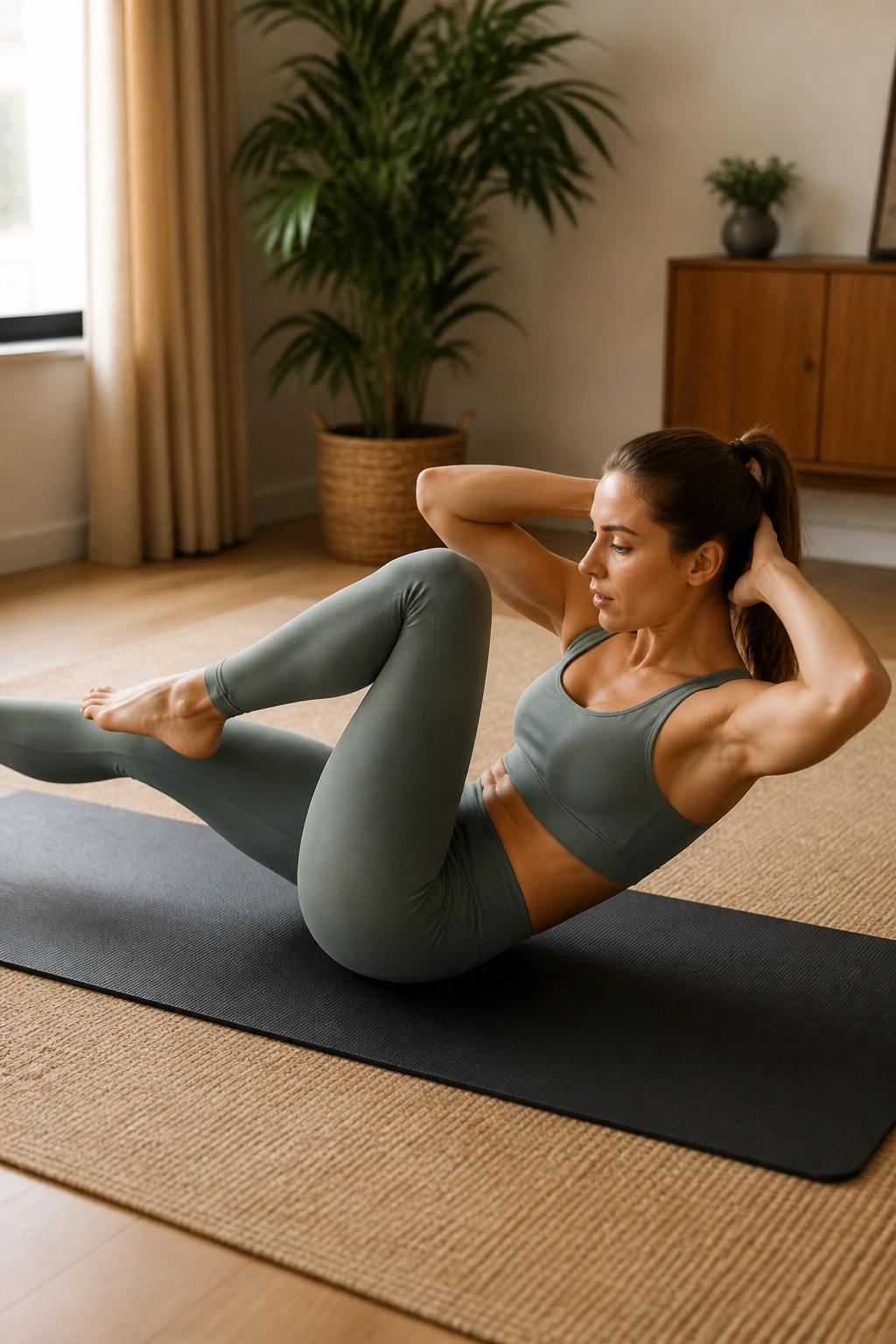
The sides of your waist are often neglected in standard workouts. This sequence focuses on rotation and lateral flexion, two movements that are essential for spinal health.
Why It Matters
When you focus on the obliques, you are actually creating a more stable spine. Weak obliques often lead to lower back pain because the body cannot effectively rotate without compensation.
- Criss-Cross: Lie on your back, hands behind your head. Twist your right elbow toward your left knee as you extend the right leg. Keep your elbows wide—do not pull on your neck.
- Side-Lying Leg Lifts: Lay on your side, legs stacked. Lift the top leg, focusing on the space between your hip and your ribs.
- Side Plank: Hold for 30 seconds. If it is too much, drop the bottom knee.
5. The Spinal Articulation Flow
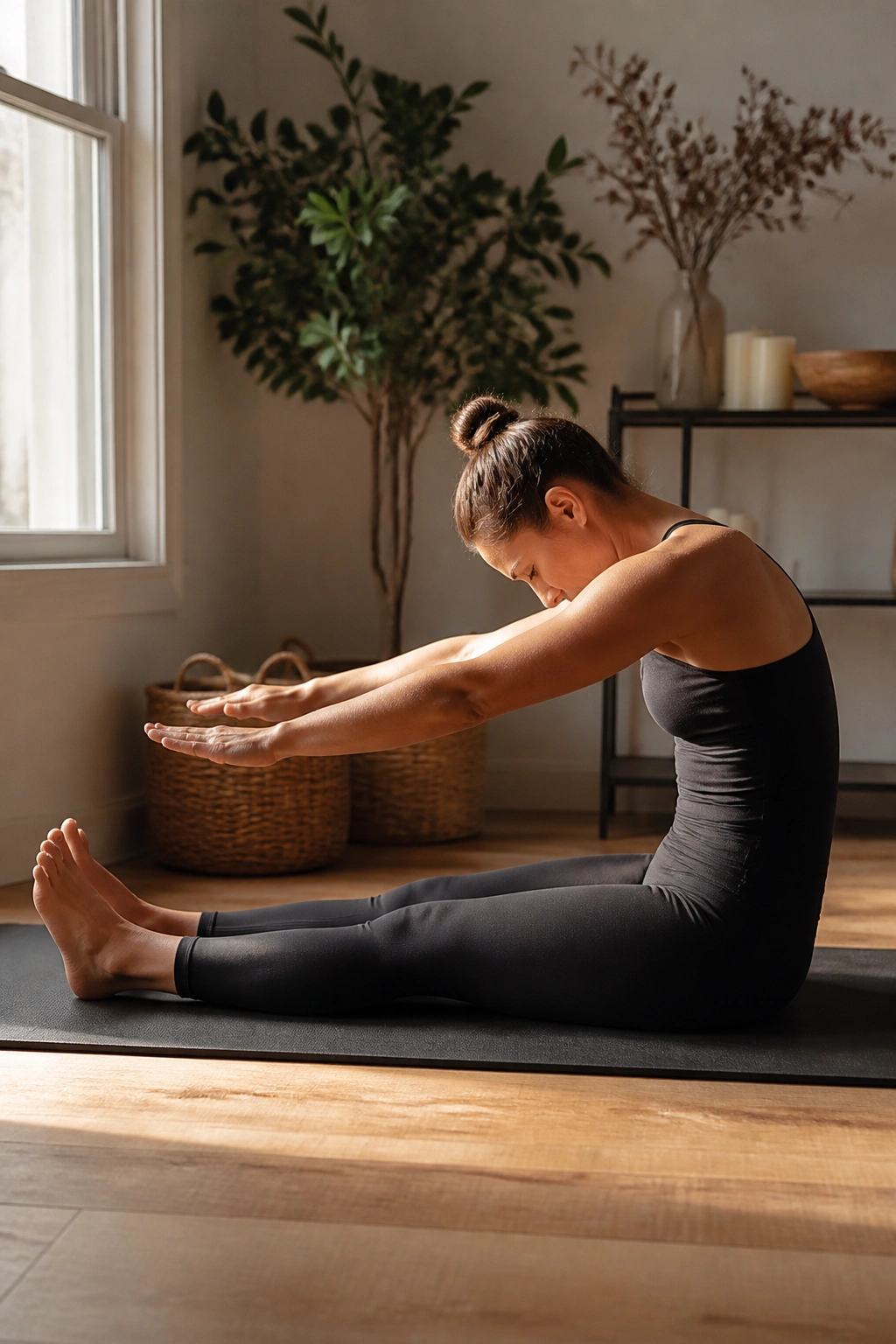
Most of us move our spines like a stiff rod. Pilates teaches you to move it like a pearl necklace—segment by segment. This routine is purely for spinal flexibility and control.
The Technique
Start seated with legs extended. Reach your arms forward. Imagine there is a wall behind you. Peel your spine off that imaginary wall, starting from your head, then neck, then shoulders. Round forward, reaching toward your toes. Slowly roll back up, stacking your vertebrae one by one until you are upright. Do this five times, very slowly. If you feel like you are flopping, use a resistance band around your feet to assist the roll-up.
6. The Standing Posture Reset
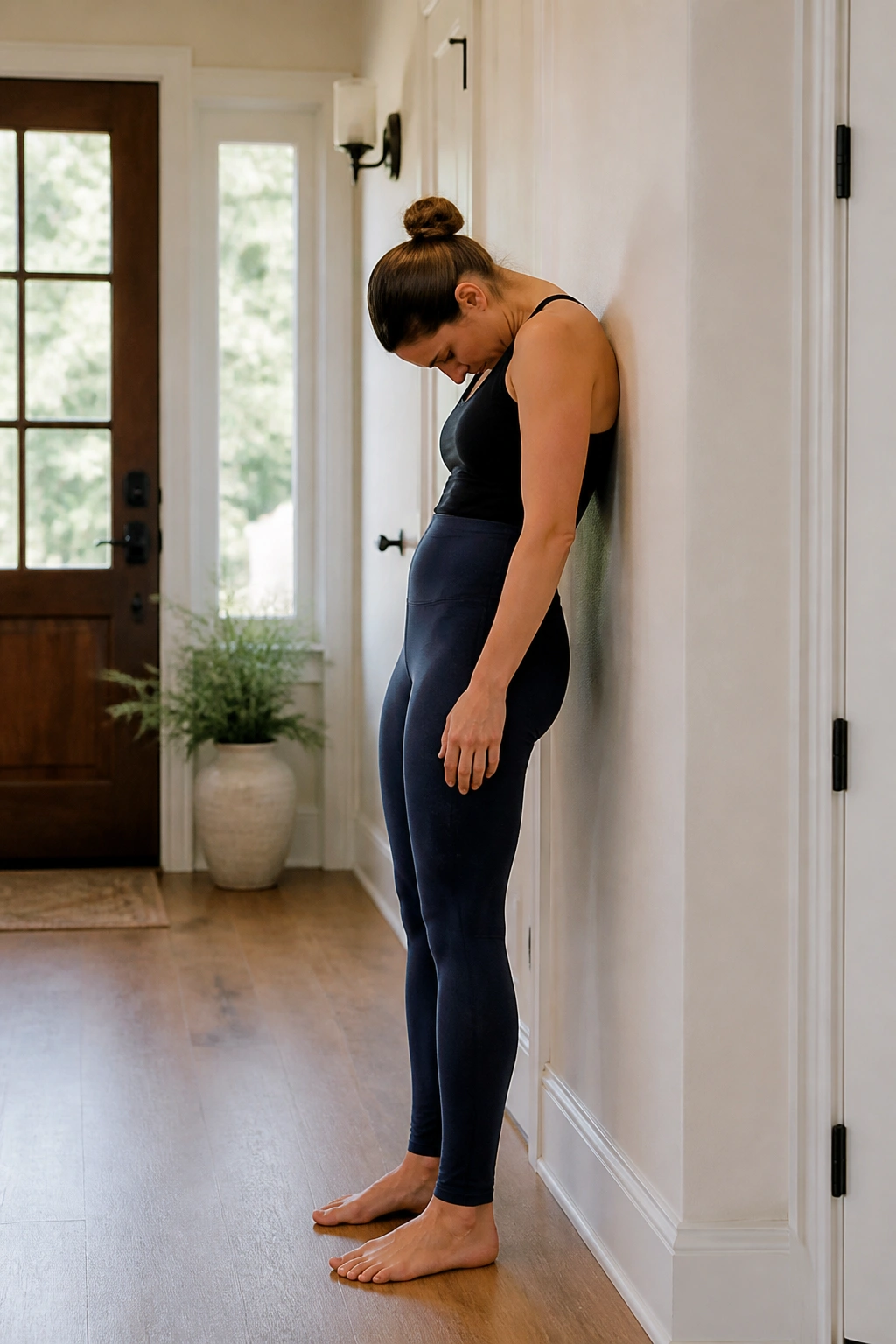
You don’t need a mat for this. This routine is perfect for doing between meetings or while waiting for water to boil. It focuses on stacking your joints properly.
Standing Tall
- The Roll-Down: Stand against a wall. Drop your chin, let your shoulders round forward, and peel your spine off the wall until your hands touch your feet. Let your head hang heavy.
- The Wall Slide: Slide back up, feeling every vertebra reconnect to the wall.
- Shoulder Drops: Shrug your shoulders up to your ears, then melt them down your back, pulling them wide.
7. Hip Opener Sequence
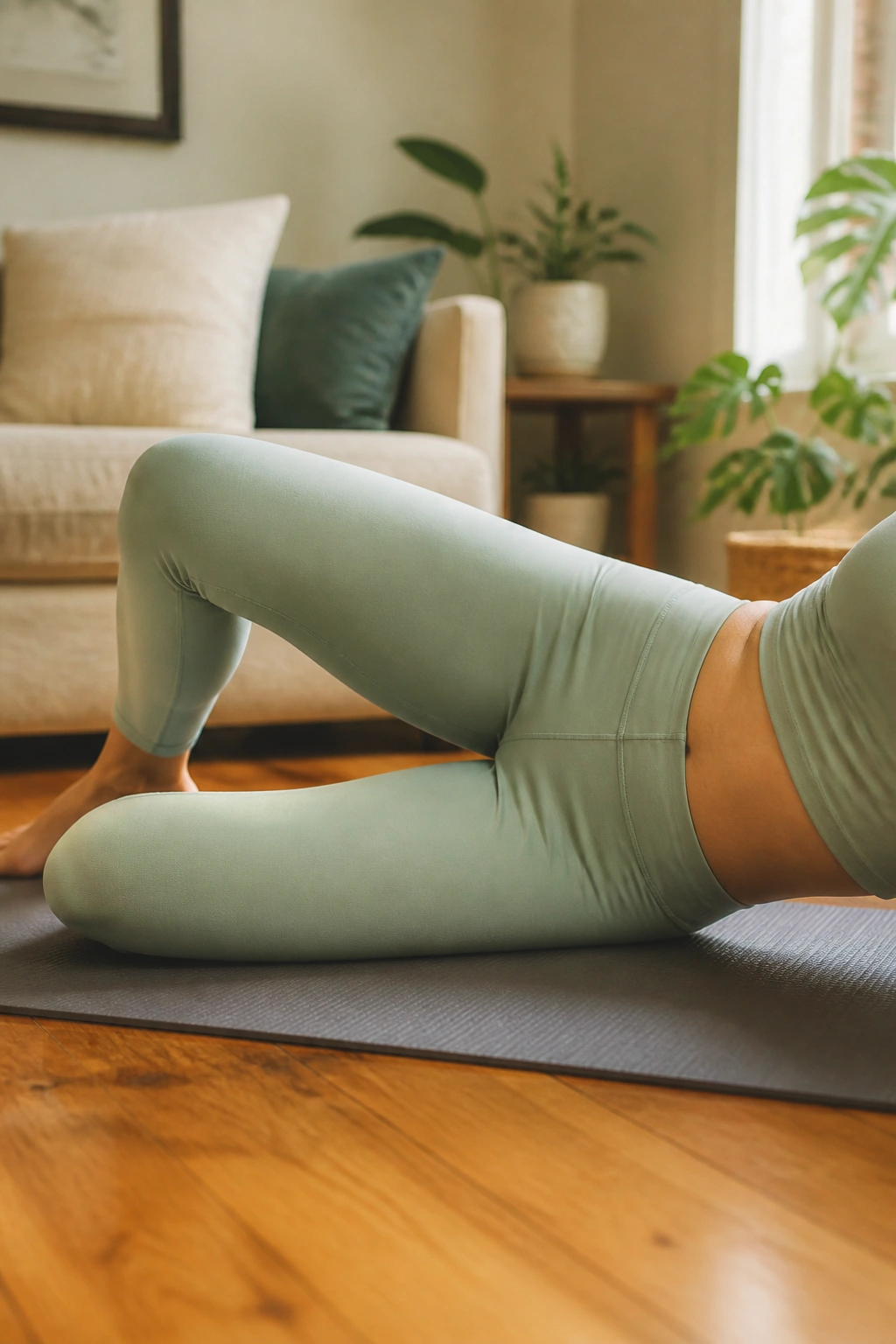
Tight hips are a universal complaint. This routine focuses on the hip flexors and the external rotators.
How to Execute
- Leg Circles: Lie on your back. Keep one leg planted, lift the other toward the ceiling. Draw a small circle with your big toe on the ceiling. Keep your pelvis perfectly still. If your hips are rocking, your circle is too big.
- Frogs: Lying on your back, heels together, toes apart. Extend legs forward at a 45-degree angle, then bend the knees back in.
- Clamshells: On your side, knees bent, lift the top knee while keeping feet together. It targets the small muscles in the side of your hip that often get ignored.
8. The “Teaser” Prep Routine
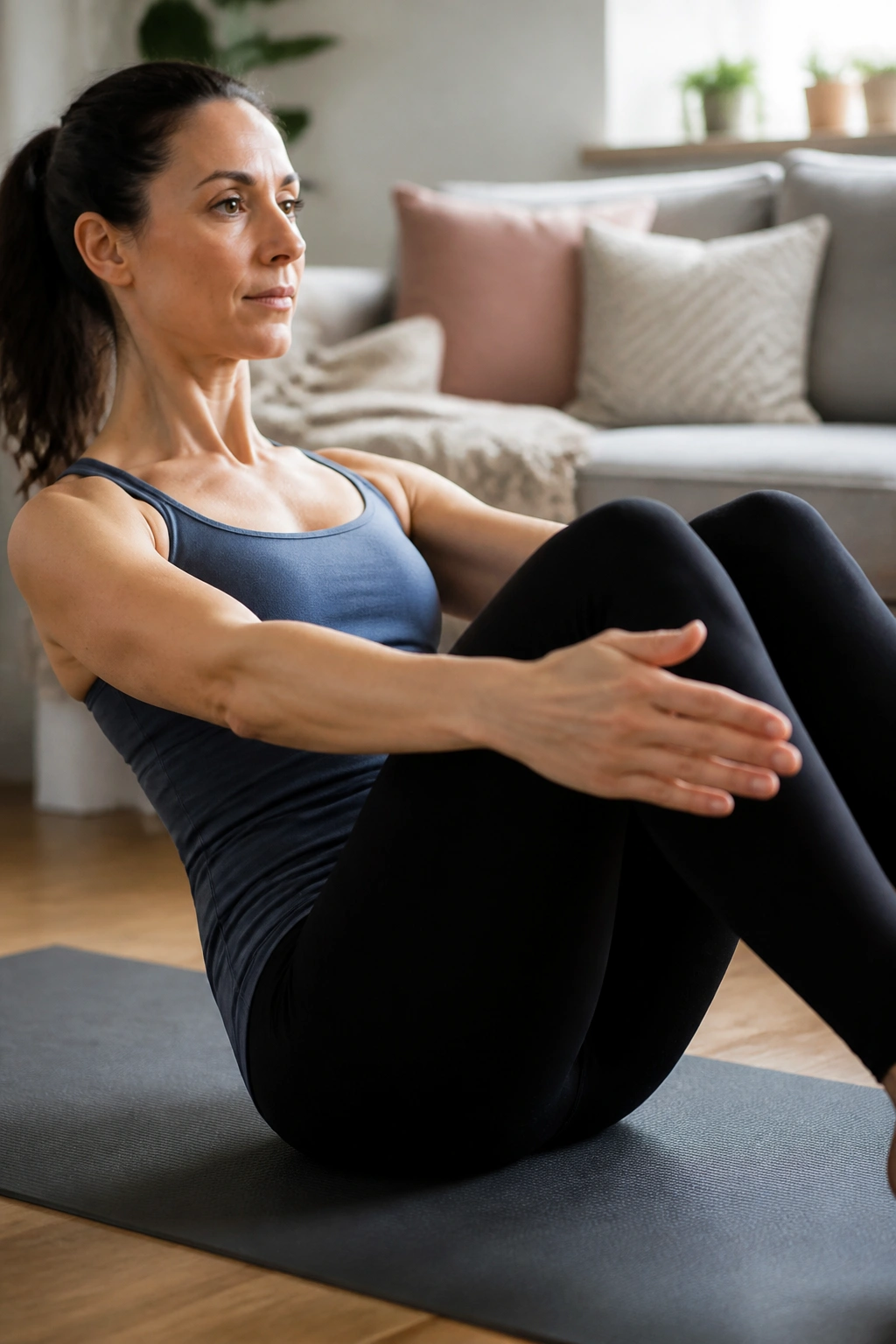
The Teaser is the classic Pilates move that looks impossible. It is not impossible; it just requires a specific sequence of muscle firing. This routine prepares you for that V-shape sit-up without the frustration.
Breaking It Down
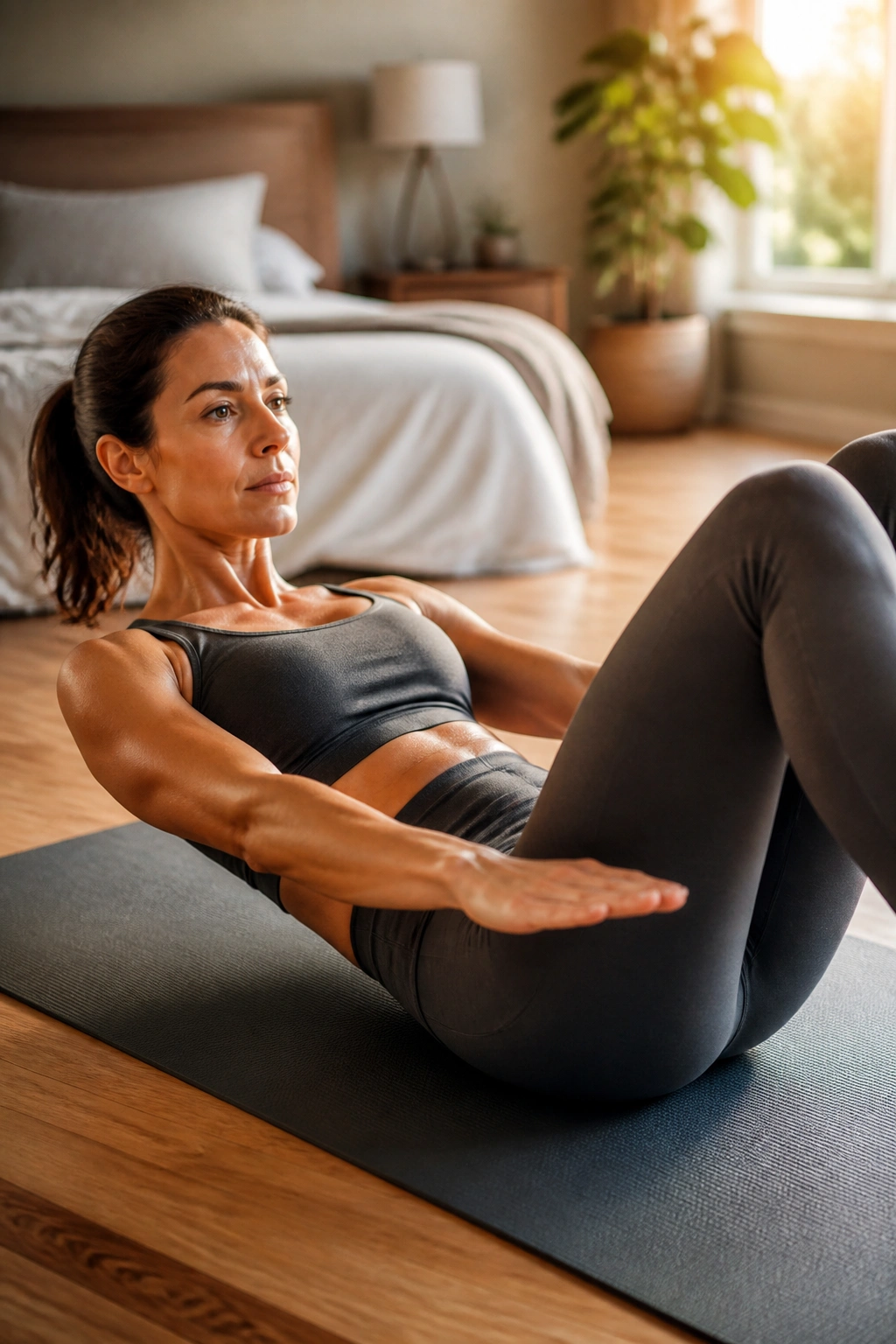
- The Scoop: Sit with knees bent, feet on the floor. Lean back slightly, “scooping” your abs deeply into your spine.
- The Lift: Reach your arms toward your knees while staying in that scooped position.
- The Extension: Try to lift one foot off the floor while maintaining the curve. Then try the other. It is all about balance.
9. The Back Extension Special
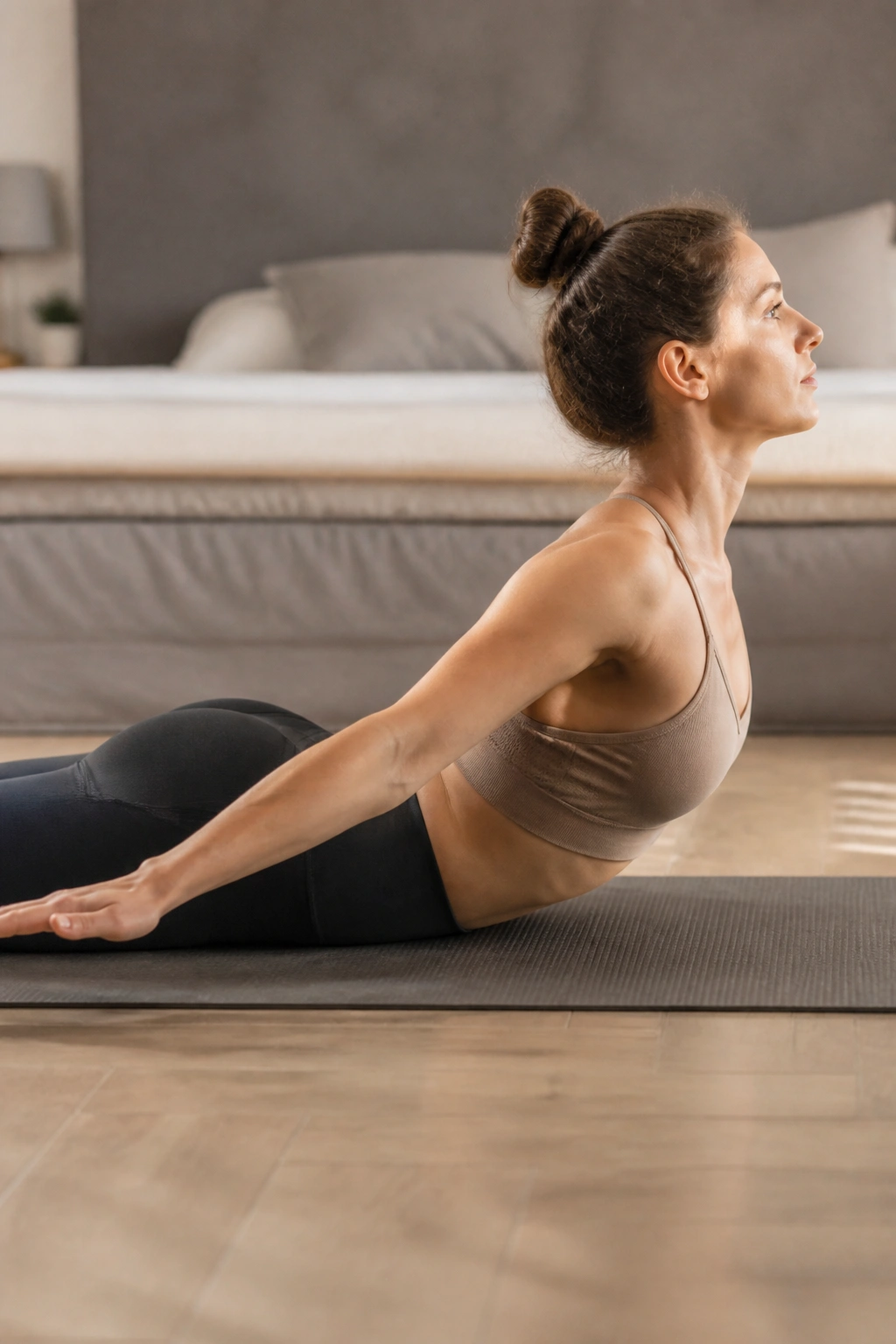
If you spend your day hunched over a laptop, this is the most important routine for you. We are going to strengthen the muscles that keep you upright.
The Movements
- Swan Prep: Lie on your stomach, hands under your shoulders. Gently lift your chest, using your back muscles rather than pushing with your arms.
- Swimming: Lift opposite arm and leg while lying on your stomach. Flutter them quickly, as if you are swimming.
- Double Heel Kick: Lie on your stomach, hands clasped behind your back. Kick your heels toward your glutes twice, then extend your legs and lift your chest.
Warning: Do not crunch your neck looking up. Keep your gaze directed at the mat.
10. The 10-Minute Lunch Break Flow
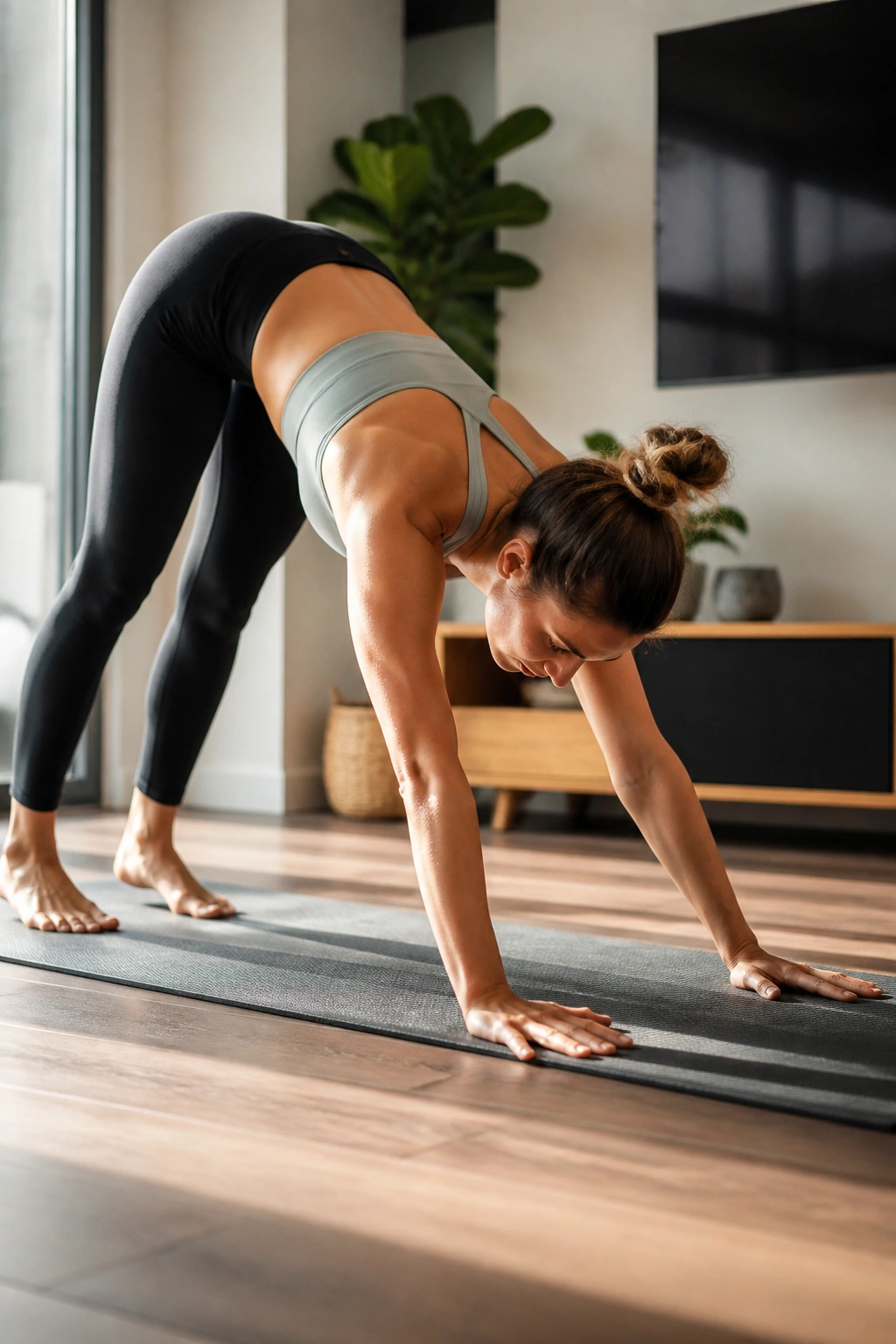
Short on time? This sequence hits every major muscle group in ten minutes. It is efficient, intense, and requires zero equipment.
The 10-Minute Breakdown
- 0-2 Minutes: Hundreds (Core)
- 2-4 Minutes: Single Leg Stretch and Double Leg Stretch (Core + flow)
- 4-6 Minutes: Shoulder Bridge (Glutes)
- 6-8 Minutes: Swan Prep (Back)
- 8-10 Minutes: Plank to Pike (Full body)
Stick to this flow if you have a busy schedule. You will be surprised at how much intensity you can pack into such a short window.
11. The Inner Thigh Focus
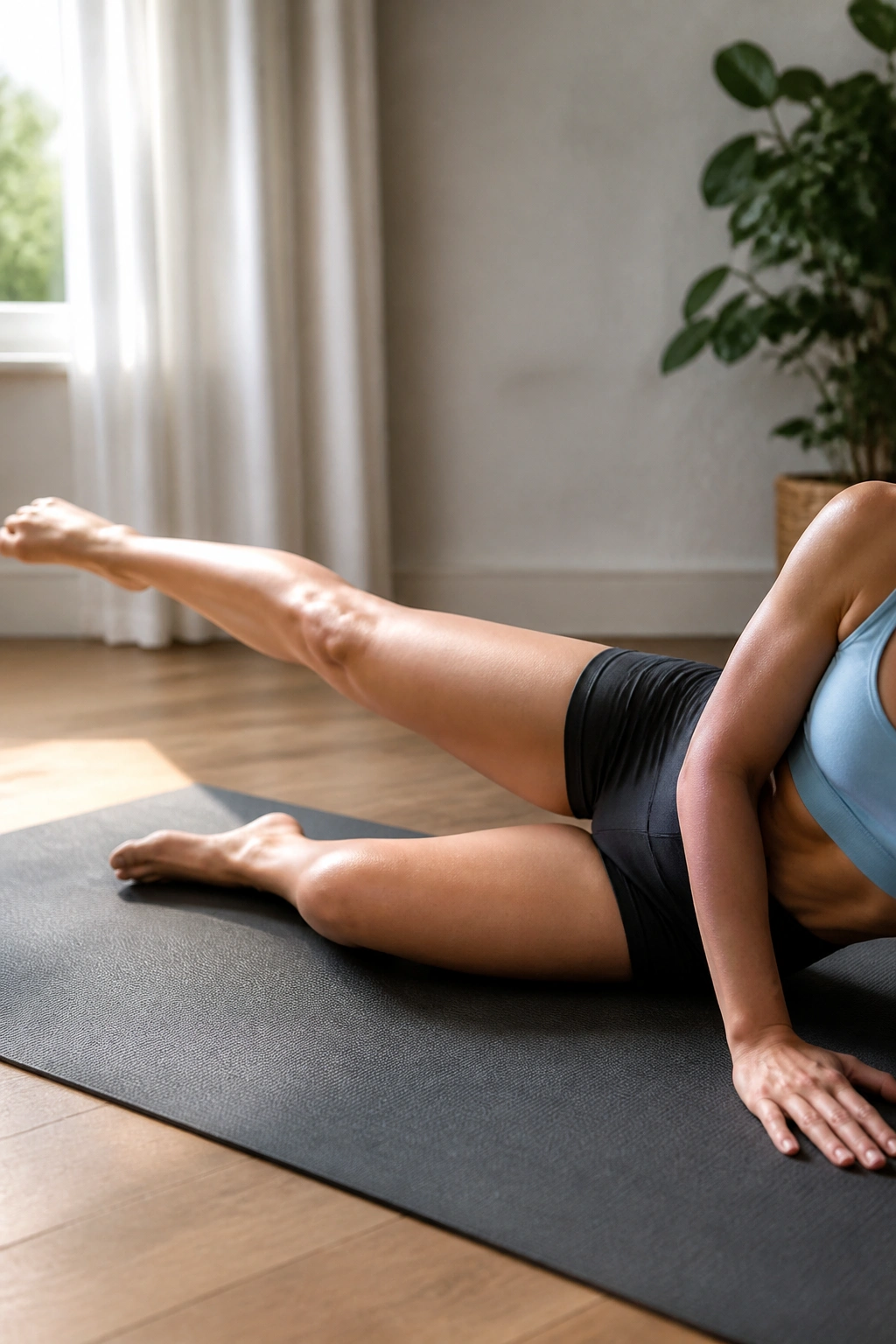
The inner thighs, or adductors, are often weak in people who prioritize quad-heavy exercises. This routine specifically targets that hard-to-reach area.
Exercises to Try
- Side-Lying Adductor Lifts: Lie on your side. Bring the top leg over the bottom leg and rest it on the floor. Lift the bottom leg up toward the ceiling.
- Squeezes: Lie on your back, place a folded towel or pillow between your knees. Squeeze it for a count of ten, release, and repeat.
- Pilates V: Lie on your back, heels together, toes turned out. Lift your legs and pulse them together, engaging the entire length of the inner thigh.
12. The Shoulder and Arm Sculpt
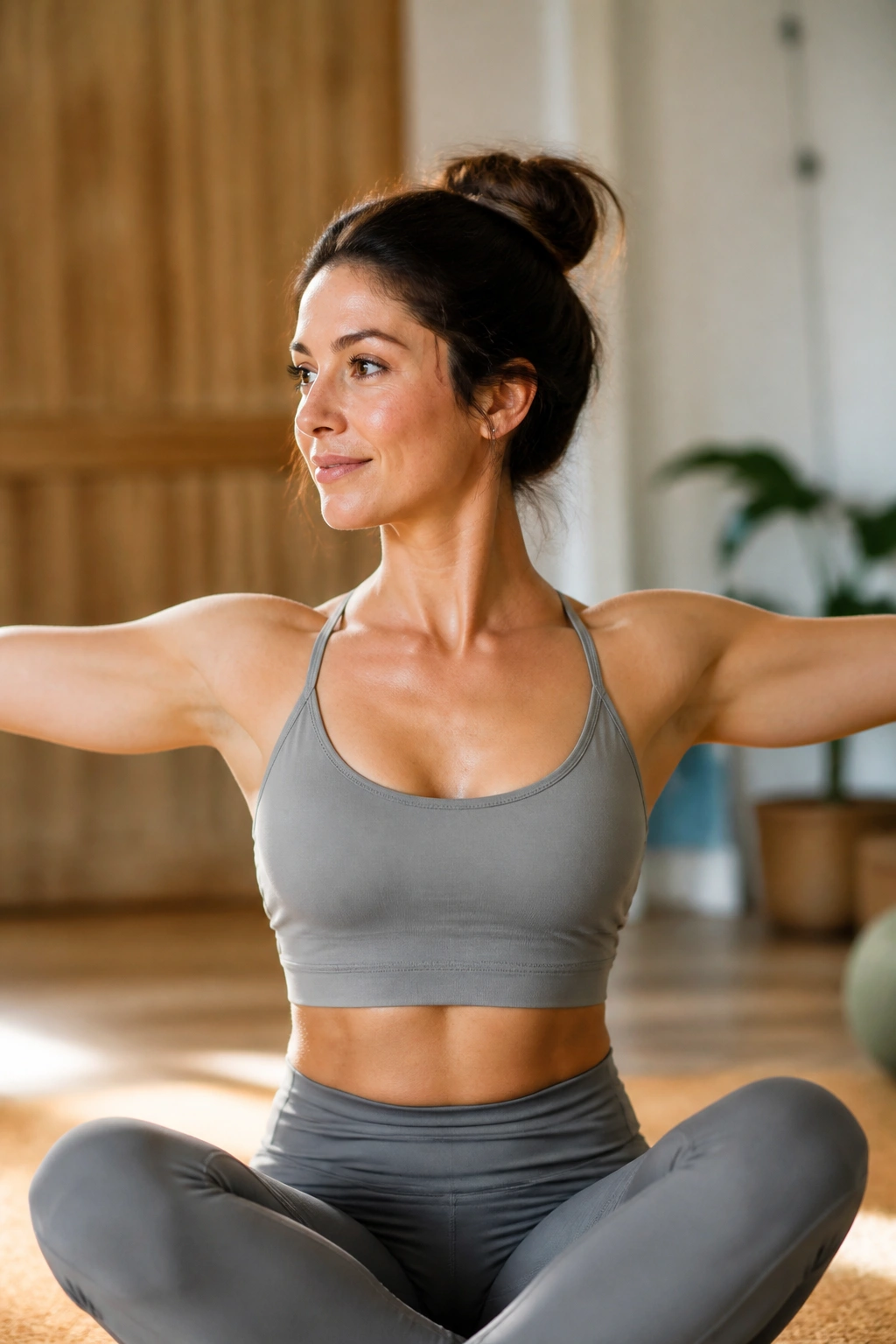
You don’t need weights to get toned arms. You just need to create your own resistance through tension.
Creating Resistance
- Arm Circles: Sit cross-legged. Reach your arms out to the sides. Imagine you are pressing your hands down through thick water. Do small circles forward for thirty seconds, then backward for thirty seconds.
- Tricep Presses: Sit with palms facing behind you. Pulse your arms upward, focusing on the back of the upper arm.
- Wall Push-ups: Stand facing a wall, hands at shoulder height. Lower your chest to the wall using only your triceps.
13. The Flexibility Flow
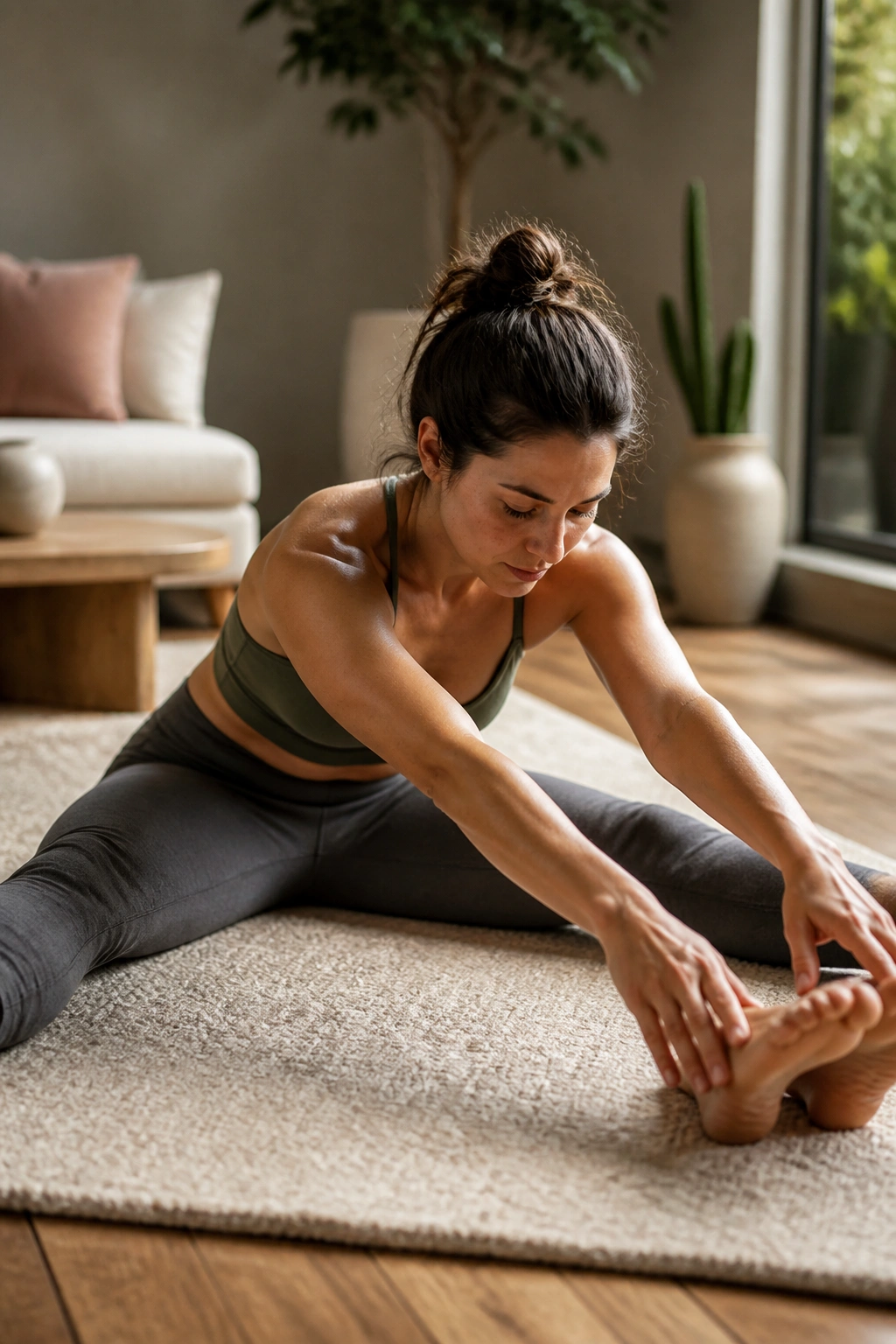
Strength without flexibility leads to injury. This routine is purely for lengthening tight muscles.
The Stretches
- Spine Stretch Forward: Sit tall, legs wide. Reach forward like you are diving over a barrel.
- Saw: Reach your right hand to your left toe, twisting the spine.
- Mermaid: Sit on your hip, legs tucked to one side. Reach up and over for a deep lateral stretch.
Keep your breath steady. If you hold your breath, your muscles will fight the stretch.
14. The Coordination Drill
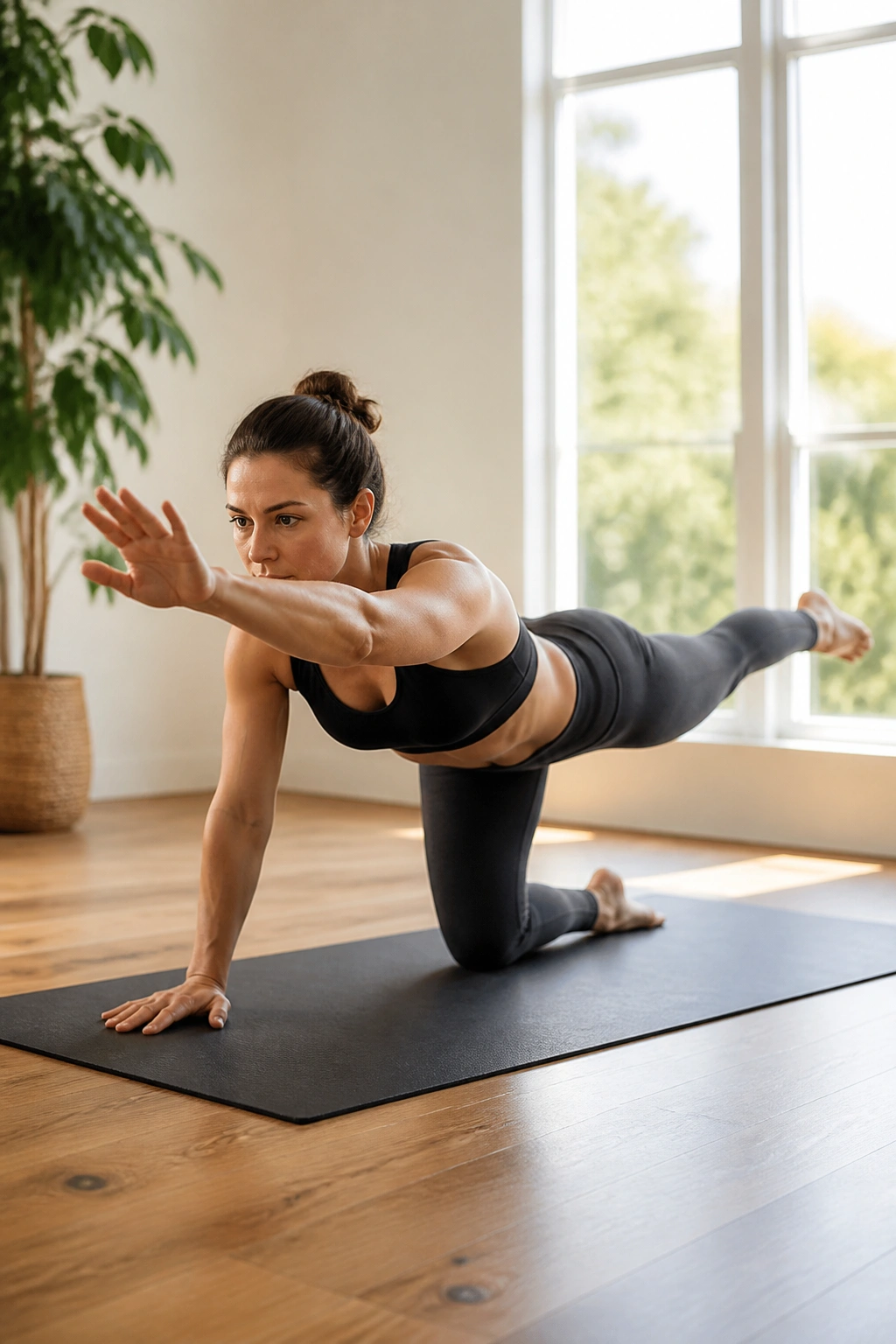
Some people find Pilates confusing because of the choreography. This routine is designed to train your brain as much as your muscles.
Training the Mind-Body Connection
- Opposite Arm/Leg Reach: Get on all fours. Lift right arm and left leg simultaneously. Hold, then switch.
- The Swimming Drill: Lie on your stomach. Lift right arm and left leg, then left arm and right leg, alternating quickly but with control.
This is not about speed. It is about coordination. If you mess up, laugh it off. It takes time for your brain to learn these patterns.
15. The “No-Neck-Strain” Routine
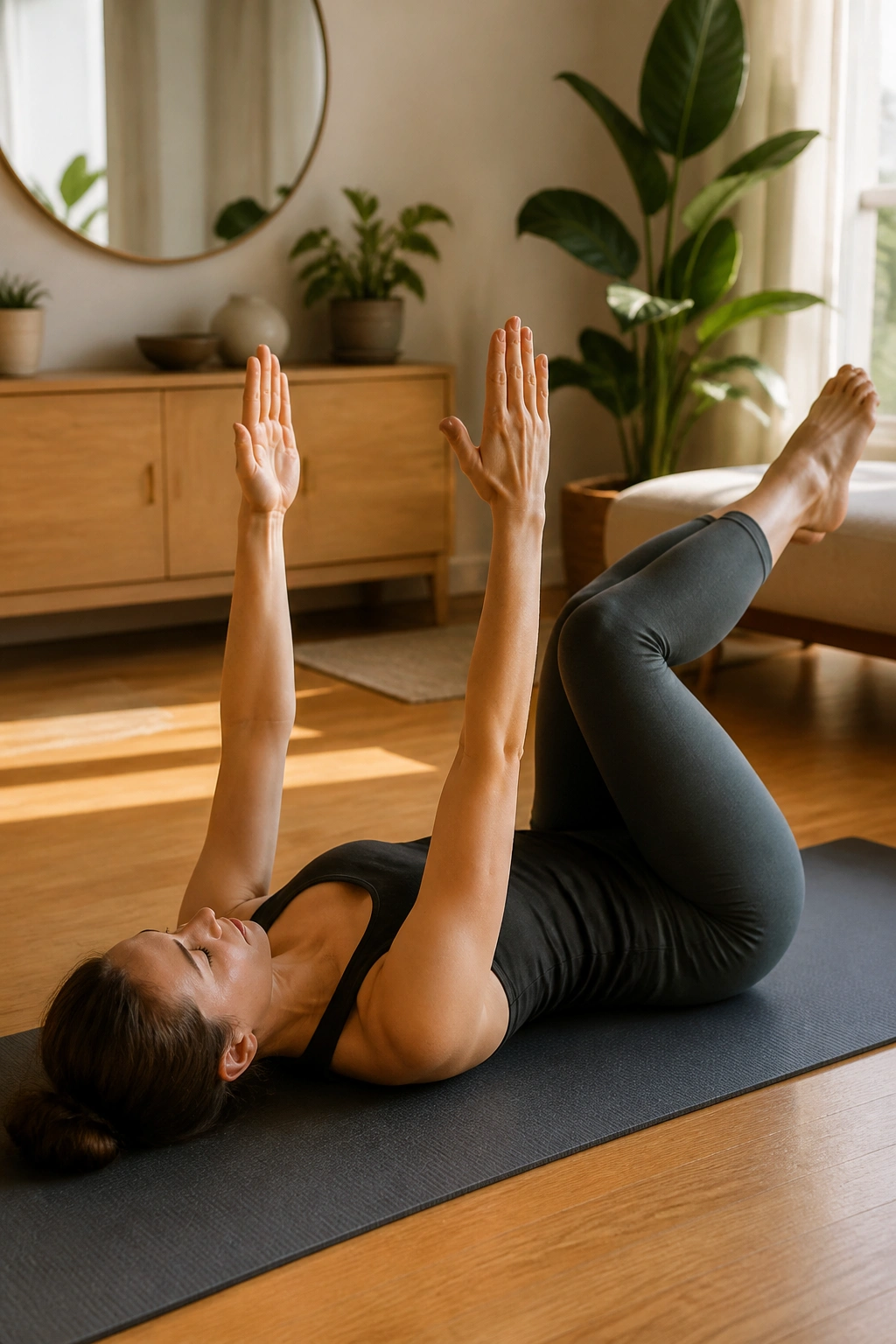
Many beginners quit because their necks hurt during ab exercises. This entire routine is designed to keep your head on the floor, allowing you to focus entirely on your core.
Keeping the Neck Relaxed
- Dead Bug: Lie on your back, arms and legs in the air. Lower one arm and the opposite leg toward the floor, keeping your lower back glued to the mat.
- Pelvic Curls: Focus on curling your tailbone toward your ribs using your lower abs, without lifting your head.
- Leg Slides: Keep legs long, slide one heel away and back in, keeping the core tight.
16. The Full-Body Mat Routine
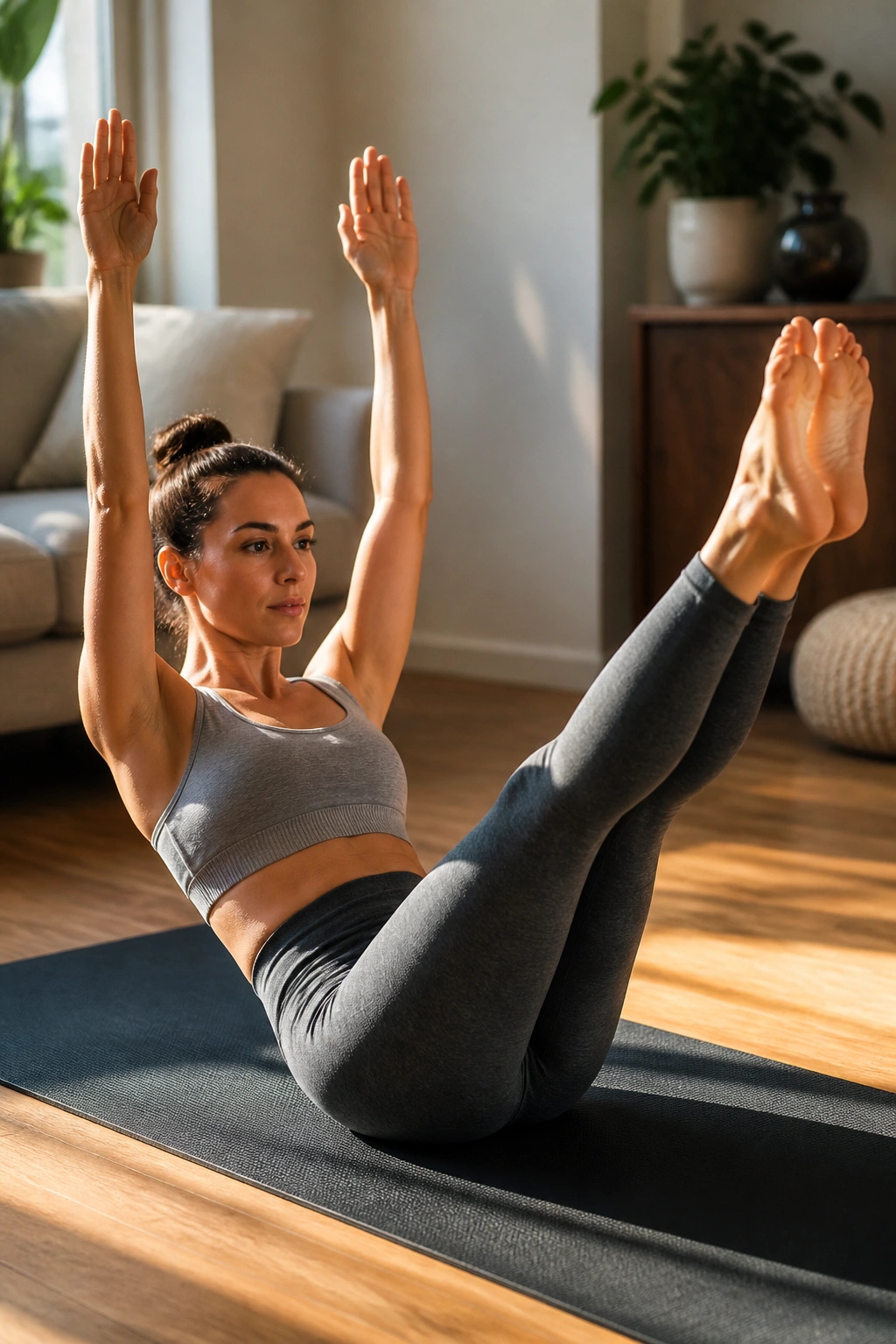
This is a comprehensive workout that touches every part of the body. It uses the foundational exercises to build heat.
The Classic Order
- Hundred (Warm-up)
- Roll-Up (Spine)
- Leg Circles (Hips)
- Rolling Like a Ball (Massage the spine)
- Single Leg Stretch (Core)
- Double Leg Stretch (Core)
- Spine Stretch (Flexibility)
- Swan (Back)
This is the “standard” flow. It is a classic for a reason.
17. The Pelvic Floor and Deep Core Focus
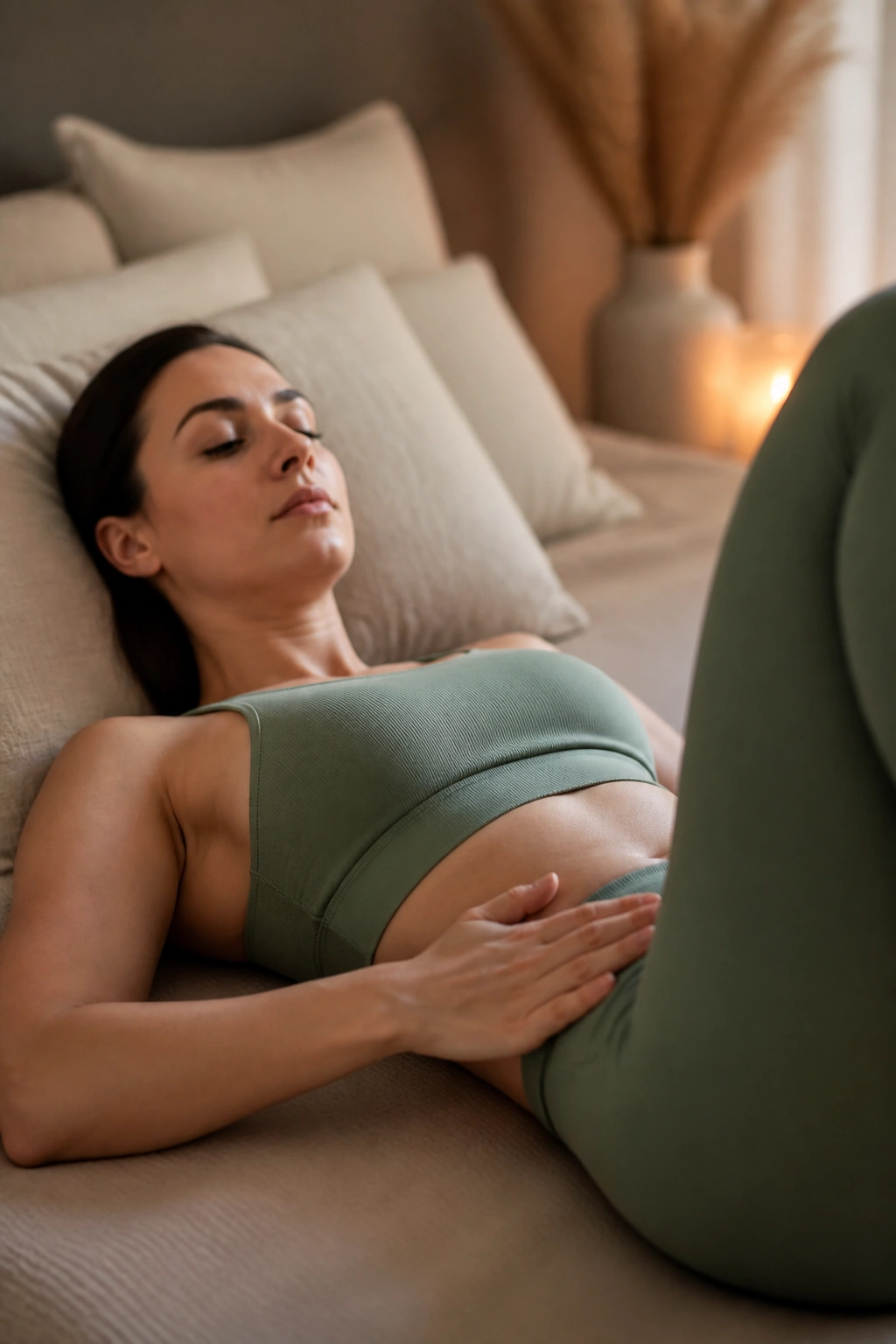
This routine is gentle but extremely important. It focuses on the muscles that support your organs and stabilize your pelvis.
The Cues
Focus on a subtle lifting sensation, as if you are trying to stop yourself from needing to use the restroom, while simultaneously drawing your navel to your spine. That is the feeling of the pelvic floor and deep transversus abdominis working together. Practice this while lying down, then try it while sitting.
18. The “Desk-Bound” Recovery Sequence
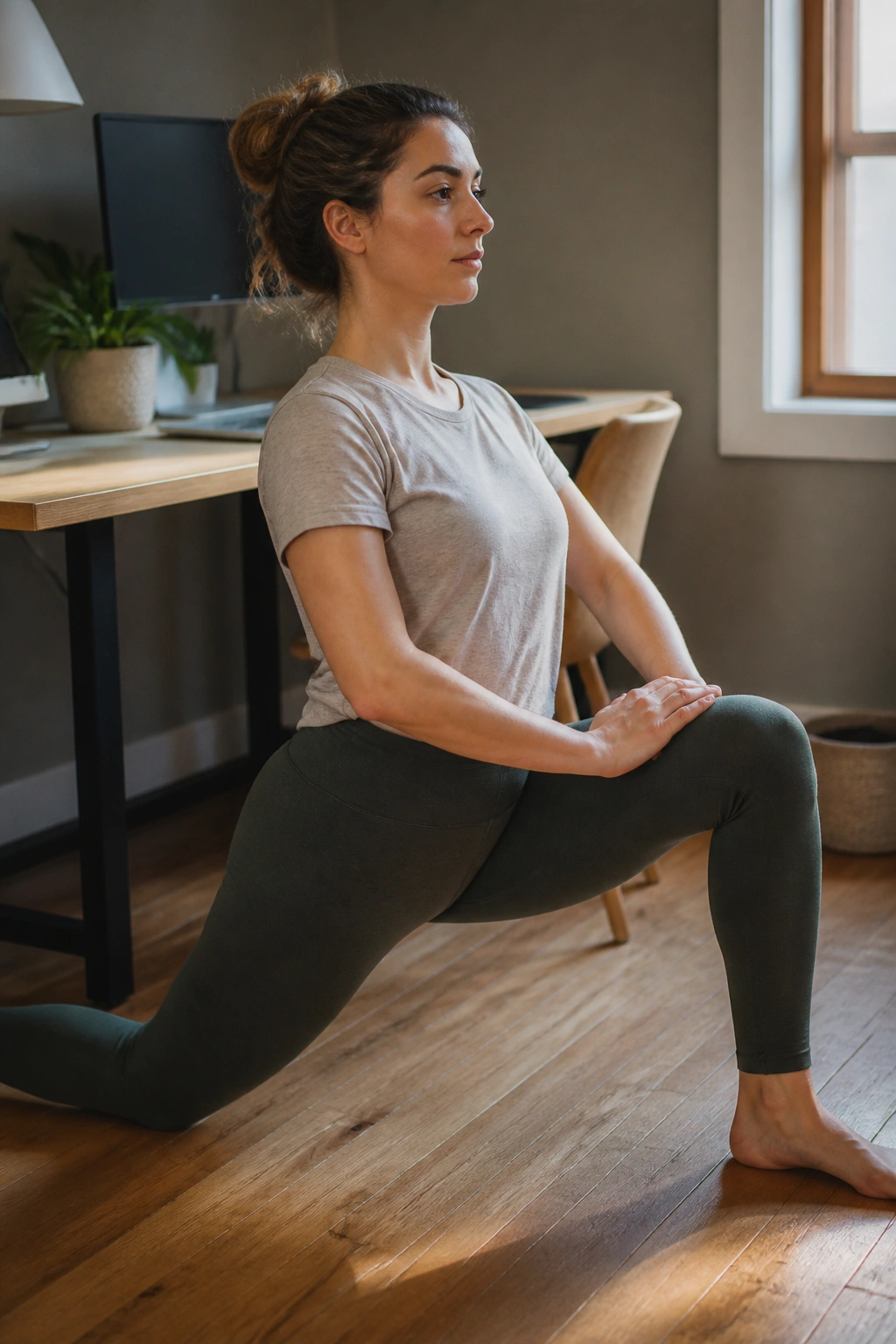
If you’ve been sitting all day, your hip flexors are likely tight and your glutes are “asleep.” This routine wakes them up.
The Plan
- Lunge Stretch: Get into a deep lunge, back knee on the floor. Tuck your pelvis underneath you to feel a deep stretch in the front of the back hip.
- Glute Bridges: Twenty reps to wake up the muscles.
- Thoracic Rotation: Sit, hands behind your head, twist from your mid-back, not your lower back.
19. The Footwork Sequence
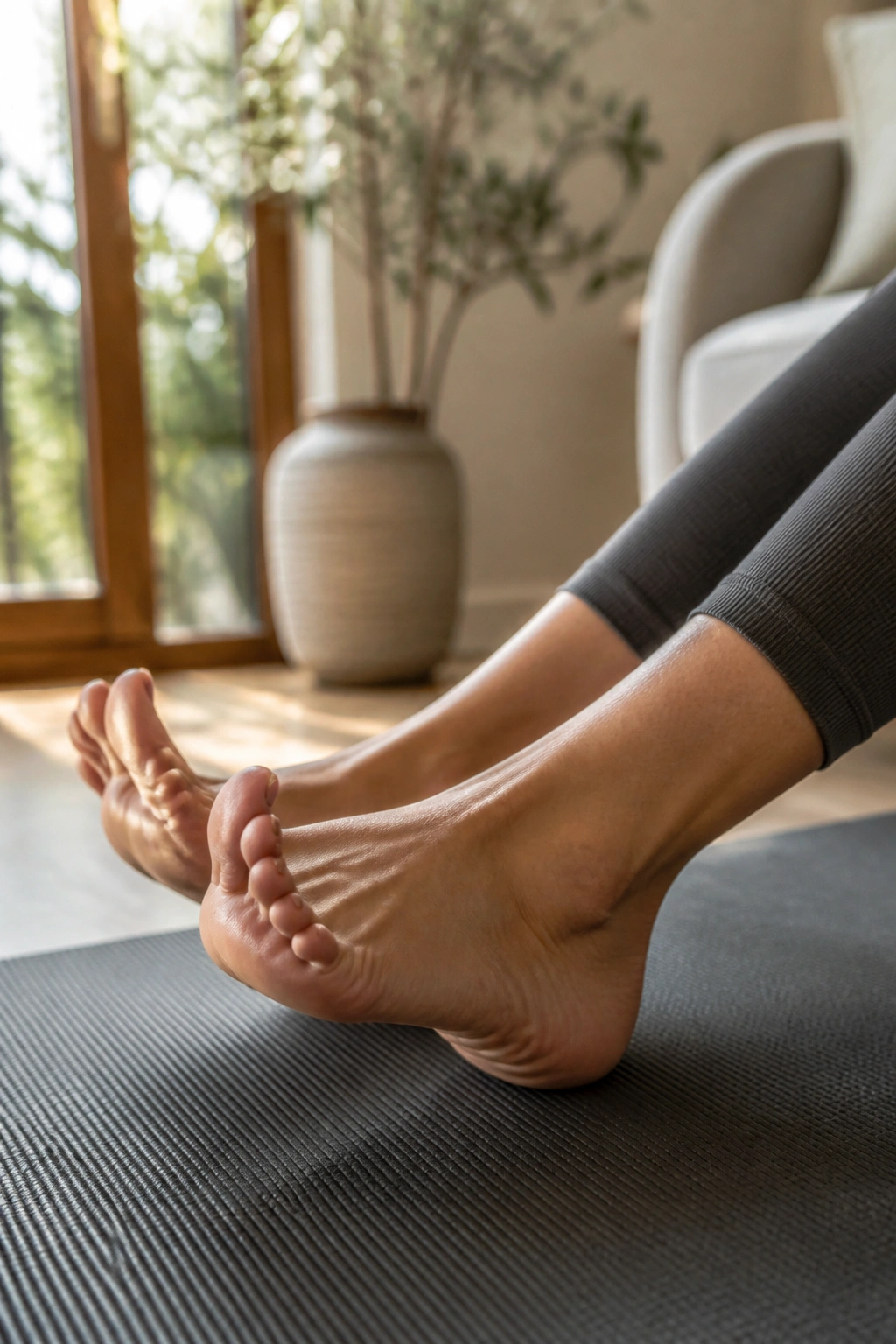
Pilates is heavily focused on the feet, as they are your base of support. This routine is great for building arch strength.
Exercises for Strong Feet
- Toe Extensions: Sit with legs extended. Flex your feet (toes to nose), then point your toes fully.
- Arch Lifts: With feet flat, try to lift the arches of your feet without curling your toes.
- Ankle Circles: Slowly roll your ankles in both directions.
20. The “Long and Lean” Routine
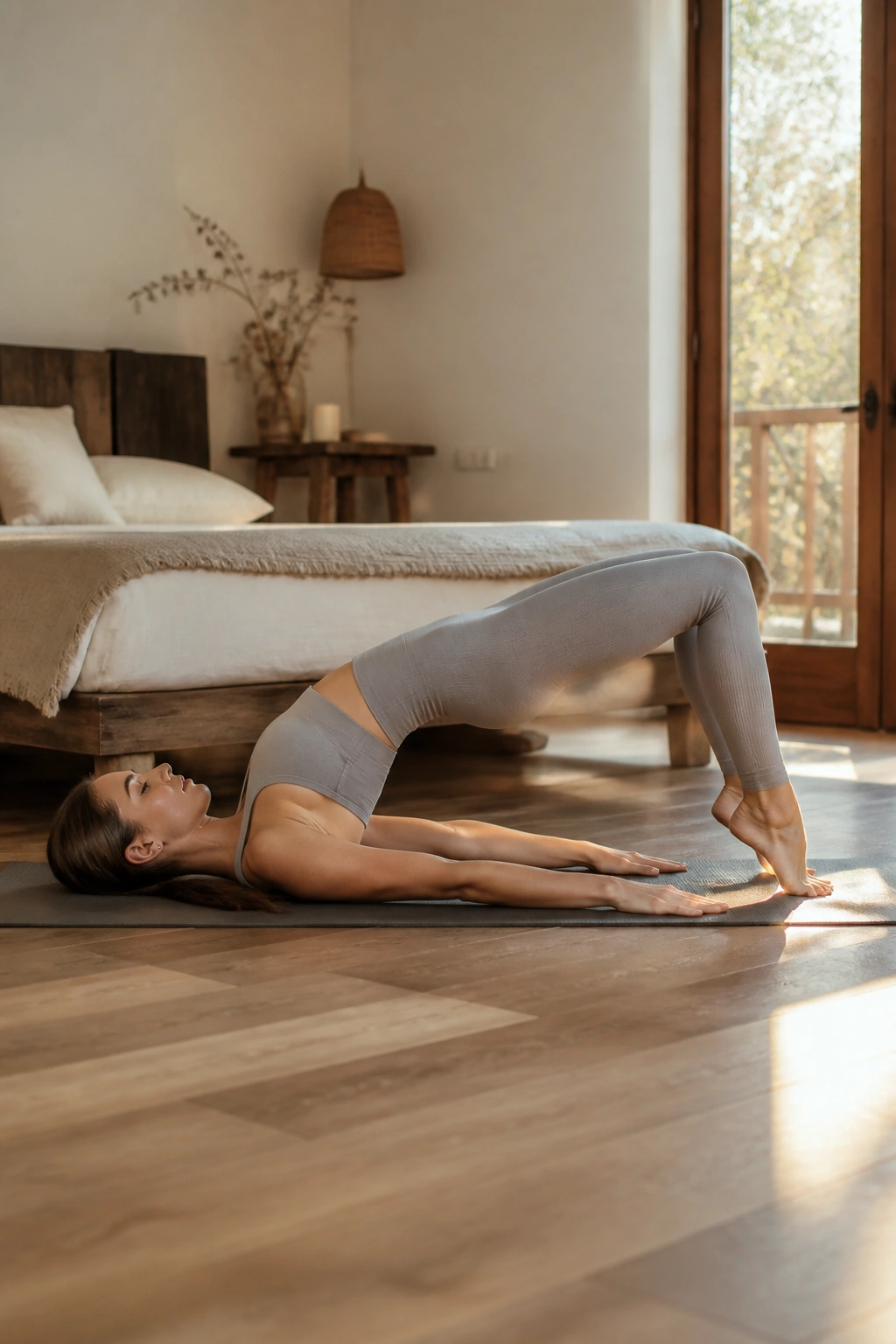
This routine emphasizes lengthening rather than contracting. It is a fantastic way to end a stressful day.
The Approach
Focus on reaching through your fingertips and toes during every move. When you do a bridge, reach your knees away from your shoulders. When you do a side-lying lift, reach your leg out of your hip socket. It is the intent of lengthening that creates the long, toned look people associate with Pilates.
21. The Plank Variations for Stability
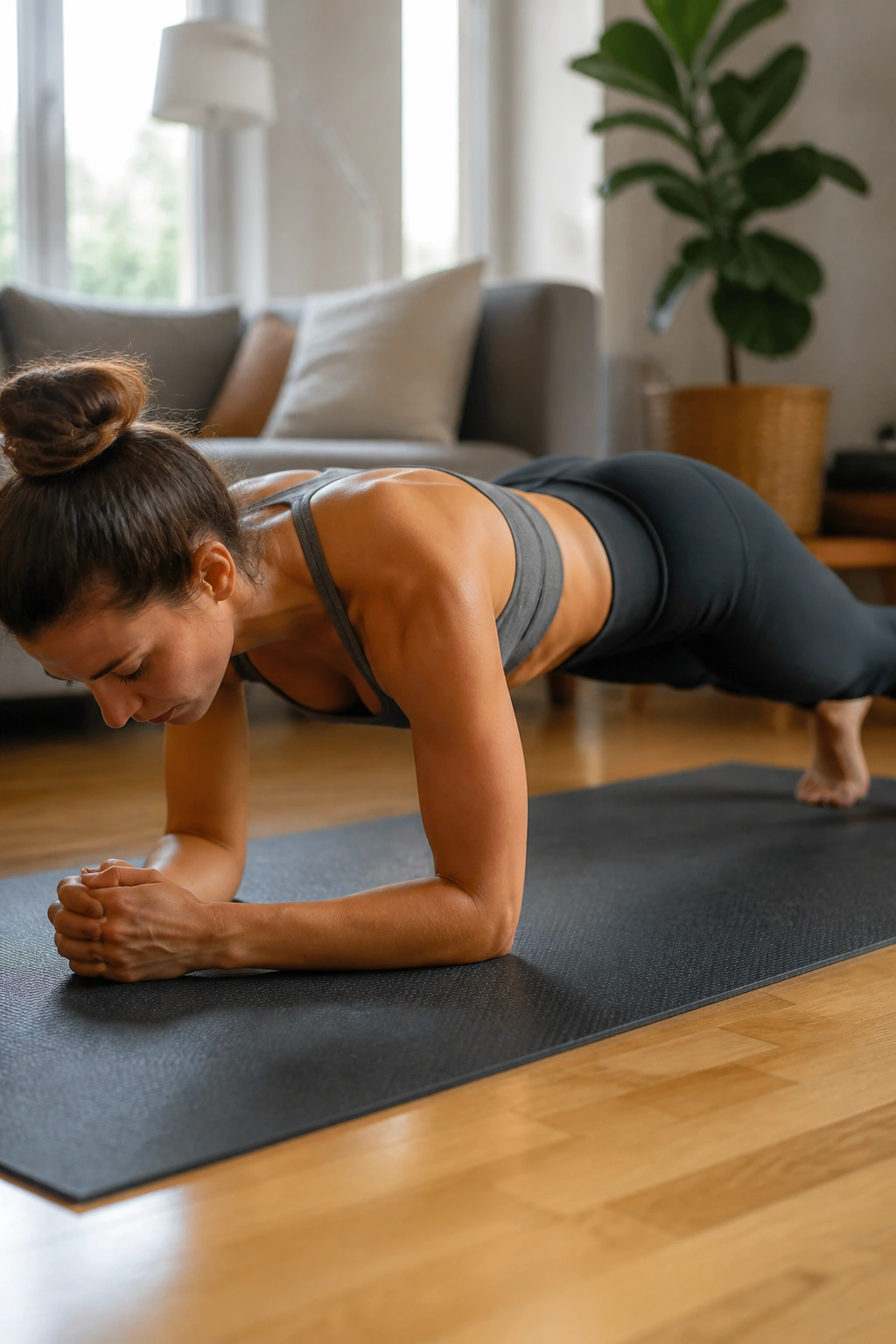
Planks are a staple in most workouts, but in Pilates, we do them with a focus on spinal neutrality.
The Variations
- Forearm Plank: Focus on pulling your ribs together and pushing your elbows into the mat.
- Leg Lifts: From a forearm plank, lift one leg an inch. Keep the hips from rotating.
- Pike: From a full plank, lift your hips to the ceiling into a pike, then return to a flat, straight line.
22. The Scissors Sequence
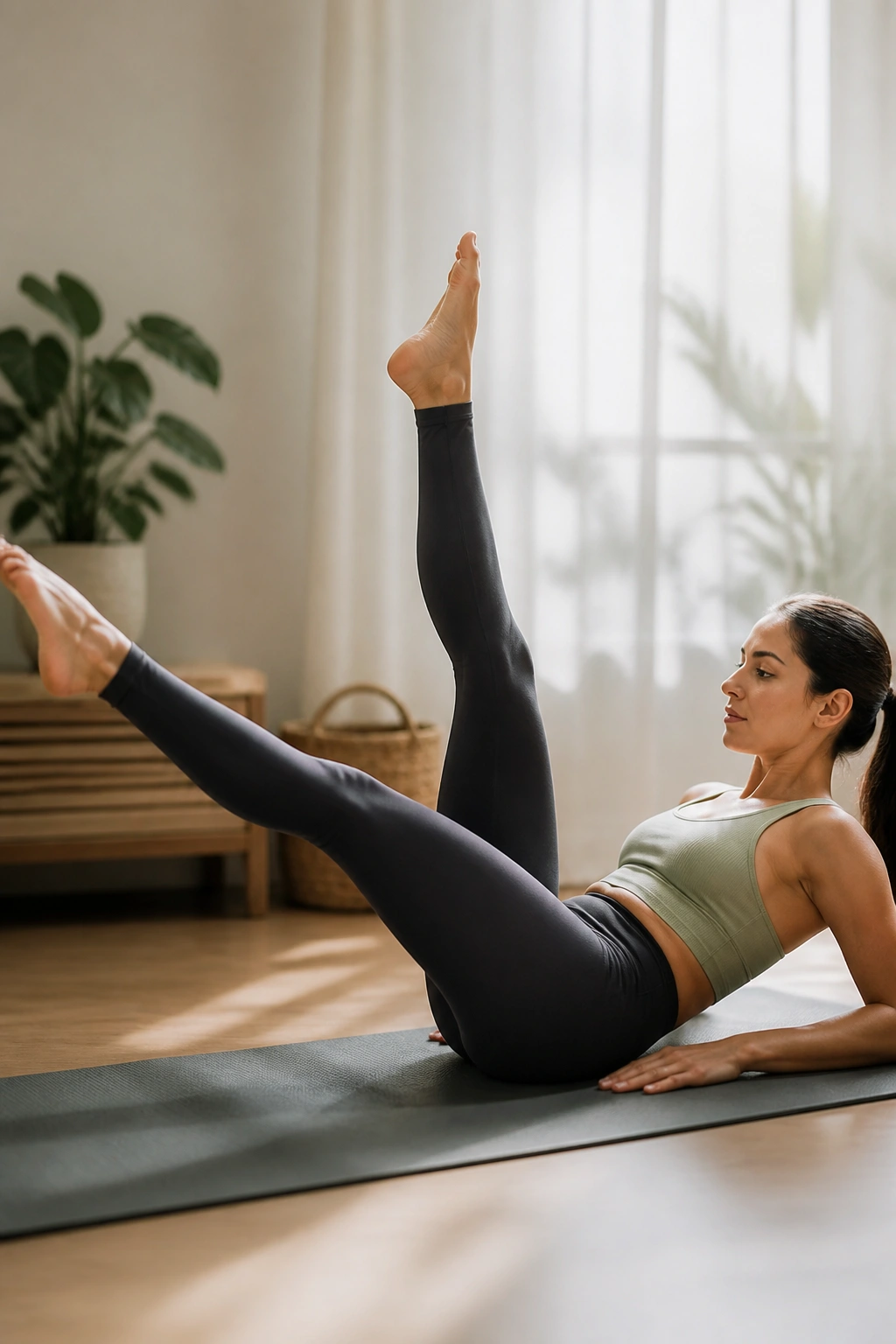
This is fantastic for hamstring flexibility and core control.
How to do it
Lie on your back, legs extended. Lift your head and shoulders. Grab one leg and gently pull it toward you twice—pulse, pulse. Switch legs in the air, keeping the core tight. If your hamstrings are tight, grab behind the thigh rather than the calf. You should feel a stretch in the back of the leg and a strong engagement in the belly.
23. The Saw Routine
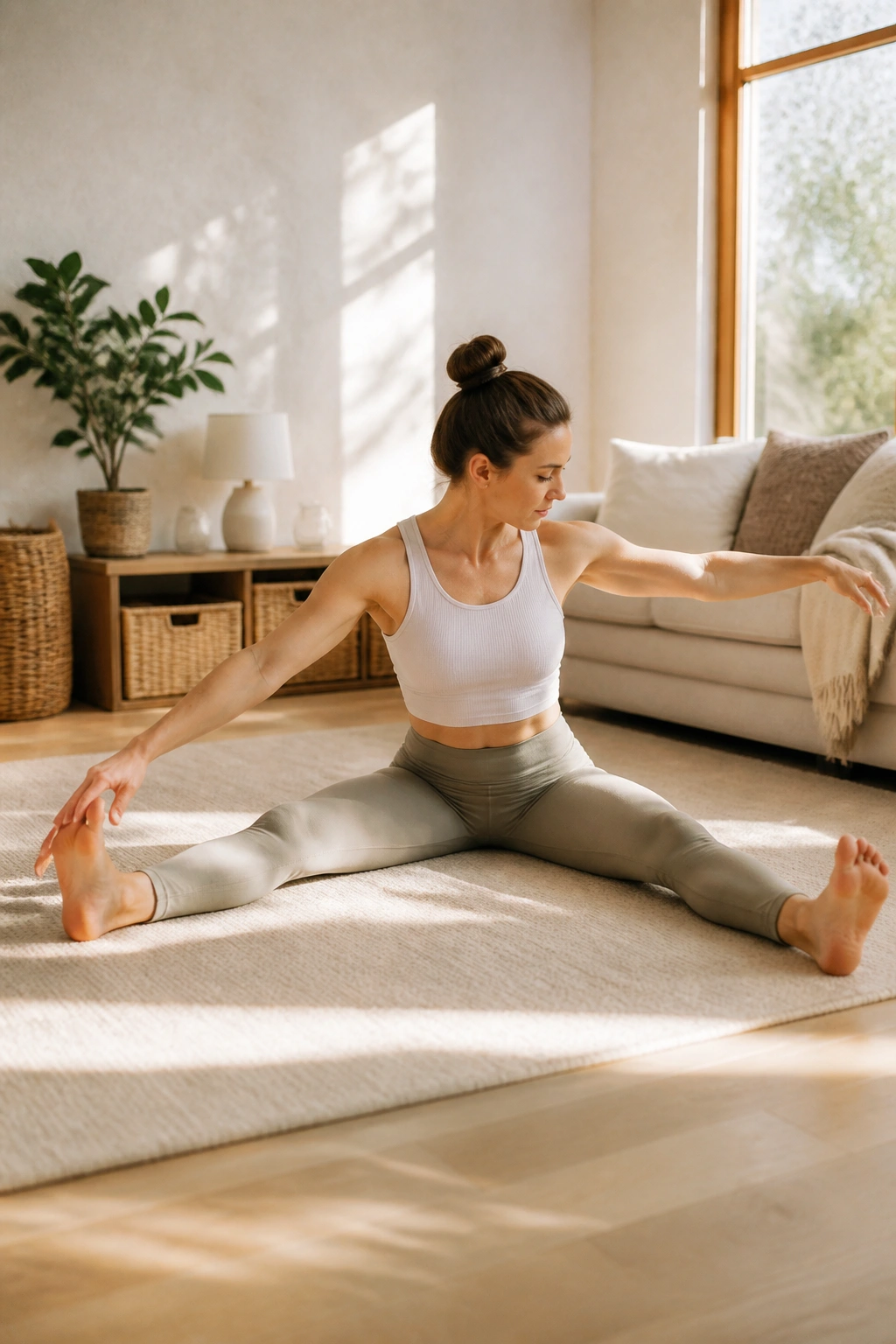
This is a classic mat exercise that combines spinal rotation and forward flexion. It is excellent for waist definition.
The Motion
Sit with legs open wider than your shoulders, arms in a “T” shape. Twist to the right, and reach your left hand toward your right pinky toe. Think of “sawing off” your little toe. Pulse twice, reach further, then return to center. Repeat on the other side. Keep your hips pinned to the floor. Do not let one hip lift as you twist.
24. The Side-Kick Series
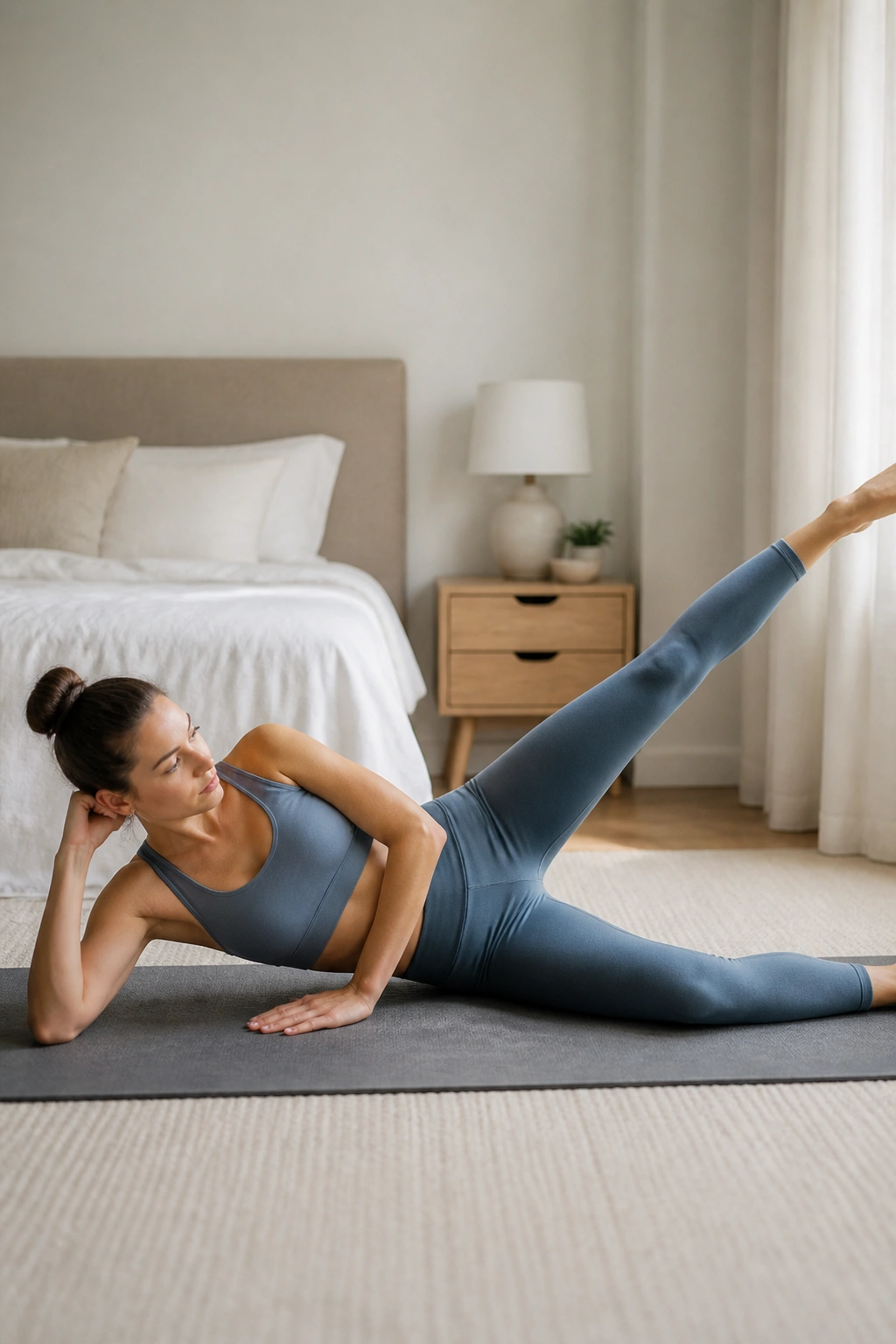
This is a full routine in itself. It is amazing for the outer glutes and hip stability.
The Drill
Lie on your side, legs slightly angled forward. Lift the top leg.
- Kicks: Swing the leg forward twice, then back once.
- Circles: Draw ten small circles in the air.
- Lifts: Lift and lower the leg with control.
- Bicycles: Bend the knee into the chest, extend the leg, and sweep it back.
Keep the torso perfectly still. If your whole body is rocking, you have lost your center.
25. The Mermaid
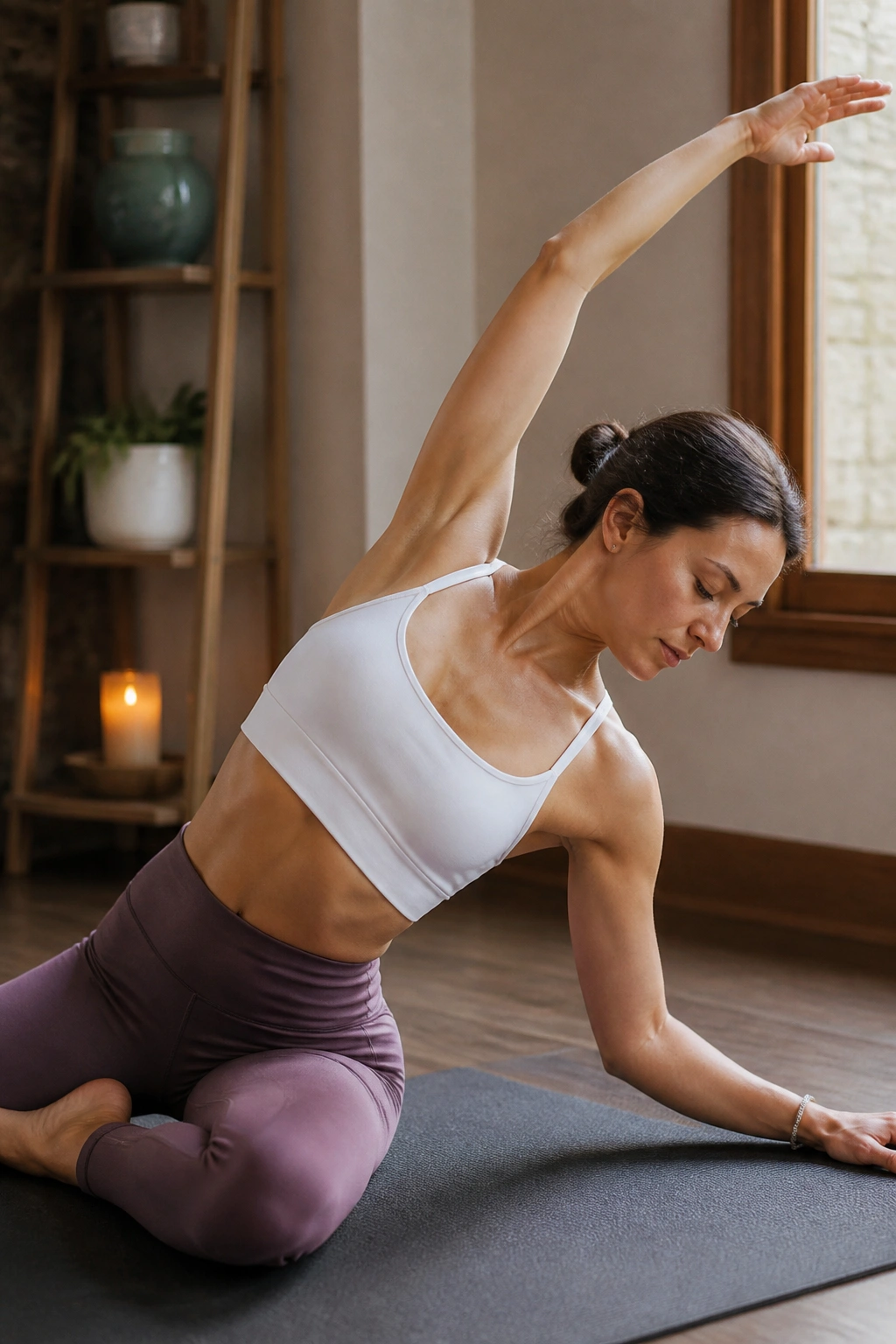
This is the perfect way to finish any routine. It provides a massive lateral stretch for the ribcage and spine.
The Finish
Sit with your legs tucked to the left. Reach your right hand over your head, bending your left elbow toward the floor. You should feel a huge stretch from your right hip up to your armpit. Return to center, then switch sides. Do this slowly, inhaling to stretch and exhaling to return. It feels like wringing out a sponge, leaving your spine feeling refreshed and fluid.
The Final Word
Pilates is not about how many reps you complete; it is about how much focus you apply to the ones you do get through. You will get much more out of ten high-quality repetitions of a single move than from fifty sloppy ones. Do not be afraid to stop early, adjust your position, and try again.
Your body will change when you commit to the work. It might take time, but the sensation of a stronger, more stable core is something you will feel in every other activity you do—from carrying groceries to sitting at your desk. Start with one of these routines, master the form, and you will see why this method has remained a gold standard for physical conditioning.
