



Leg days are often the most dreaded part of any training routine, yet they remain the most rewarding. It is where you build the foundation for your overall strength, stability, and athleticism. If you have ever felt like your lower body training has plateaued or that your workouts have become repetitive, you are not alone. The secret to development is rarely doing more weight; it is about finding new angles of tension, varying your rep ranges, and ensuring that every single repetition is actually hitting the target muscle group.
Many people fall into the trap of doing the same three leg exercises for years, wondering why their physique refuses to change. The body is an adaptive machine—if you give it the same stimulus, it stops responding. By introducing a broader variety of movements, you force your glutes, hamstrings, and quads to work in ways they haven’t before. This builds not just size or definition, but true, functional strength that helps with everything from daily movement to high-intensity training.
We are looking for quality over quantity here. You do not need a three-hour gym session to see results. You need intention. Whether you are working out at home with a set of dumbbells or at a gym with a full rack of equipment, these exercises focus on maximizing recruitment of the posterior chain and the quadriceps. Pay attention to the form cues, as they are the difference between actually sculpting your legs and just going through the motions.
1. Goblet Squats
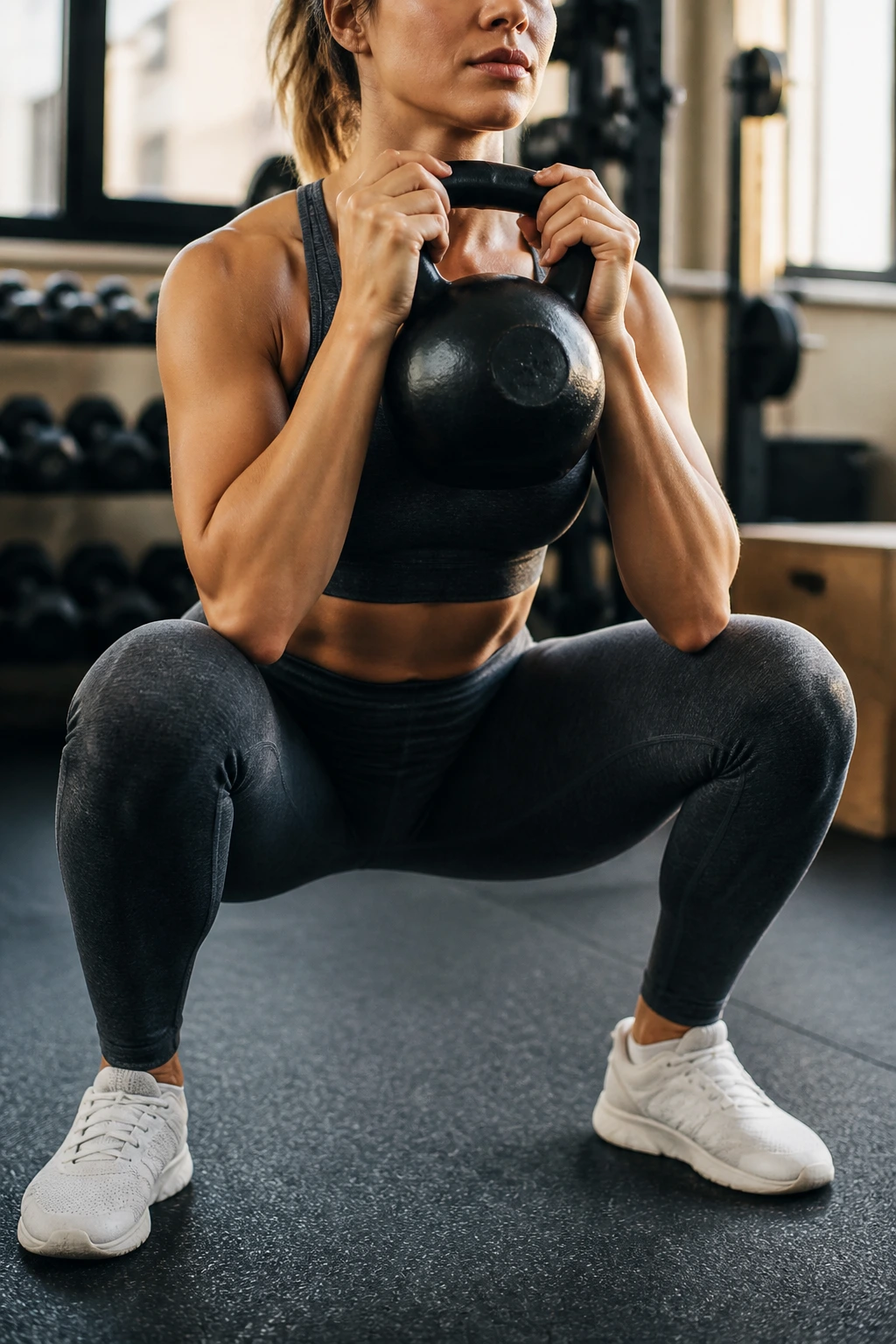
The goblet squat is arguably the best starting point for anyone looking to master squat mechanics. By holding a weight against your chest, you create a counterbalance that forces your torso to stay upright. This is a massive advantage over back squats, which often lead to leaning too far forward if your core isn’t perfectly engaged.
Why It Works for Your Legs
When you hold the weight in front of you, it shifts your center of gravity. This forces your quadriceps to do the heavy lifting while also engaging your core. It is excellent for people who struggle with “butt wink”—that awkward rounding of the lower back at the bottom of a squat. The weight essentially acts as a stabilizer.
How to Master the Form
- Hold a single dumbbell or kettlebell vertically against your chest, gripping it by the horns or the bell.
- Set your feet slightly wider than shoulder-width apart, with toes pointed slightly outward.
- Initiate the movement by sitting back and down, as if aiming for a chair behind you.
- Descend until your elbows touch your knees, or until your thighs are parallel to the floor.
- Drive through your heels to return to a standing position, keeping the weight pinned to your sternum the entire time.
Pro tip: Do not rush the descent. Take a slow, controlled 3-second count on the way down, then explode up. This increases time under tension, which is the primary driver of hypertrophy in the quads.
2. Romanian Deadlifts
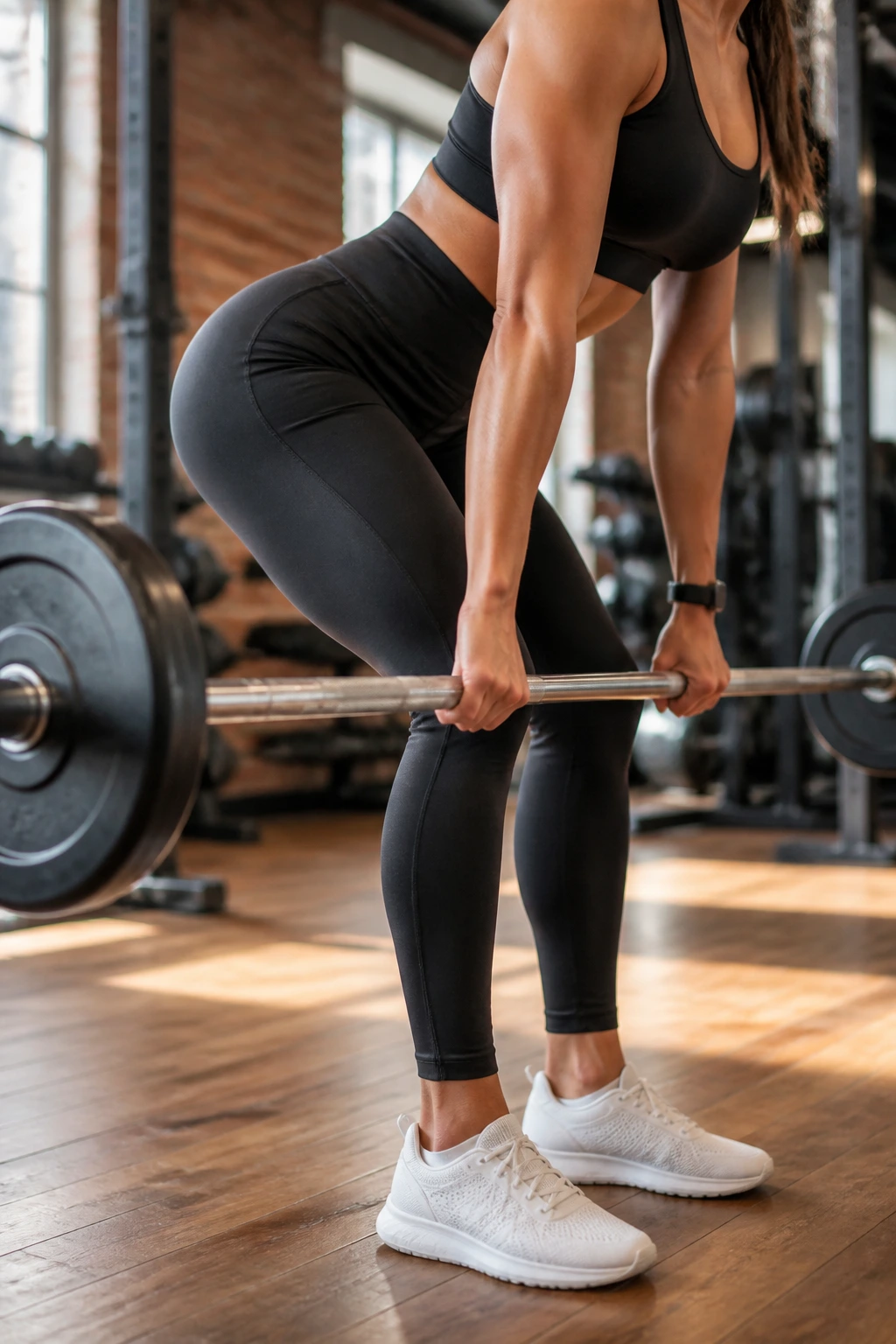
If you want to isolate the hamstrings and glutes without the lower back fatigue often associated with conventional deadlifts, this is your go-to move. The hinge pattern is essential here. You are not squatting; you are pushing your hips as far back as possible while keeping your shins nearly vertical.
Mastering the Hinge
- Hold a barbell or a pair of dumbbells in front of your thighs.
- Keep your knees slightly bent—do not lock them out—but keep that same angle throughout the entire movement.
- Hinge at the hips, pushing your butt backward as if trying to touch the wall behind you with your glutes.
- Lower the weight until you feel a deep, significant stretch in your hamstrings. This usually happens around mid-shin level.
- Squeeze your glutes to pull yourself back to the starting position.
Avoid the temptation to go lower by rounding your spine. The moment your back bends is the moment you stop working your hamstrings and start risking injury. If you can only get to your knees before your back starts to round, stop there. Your mobility will improve over time.
3. Walking Lunges
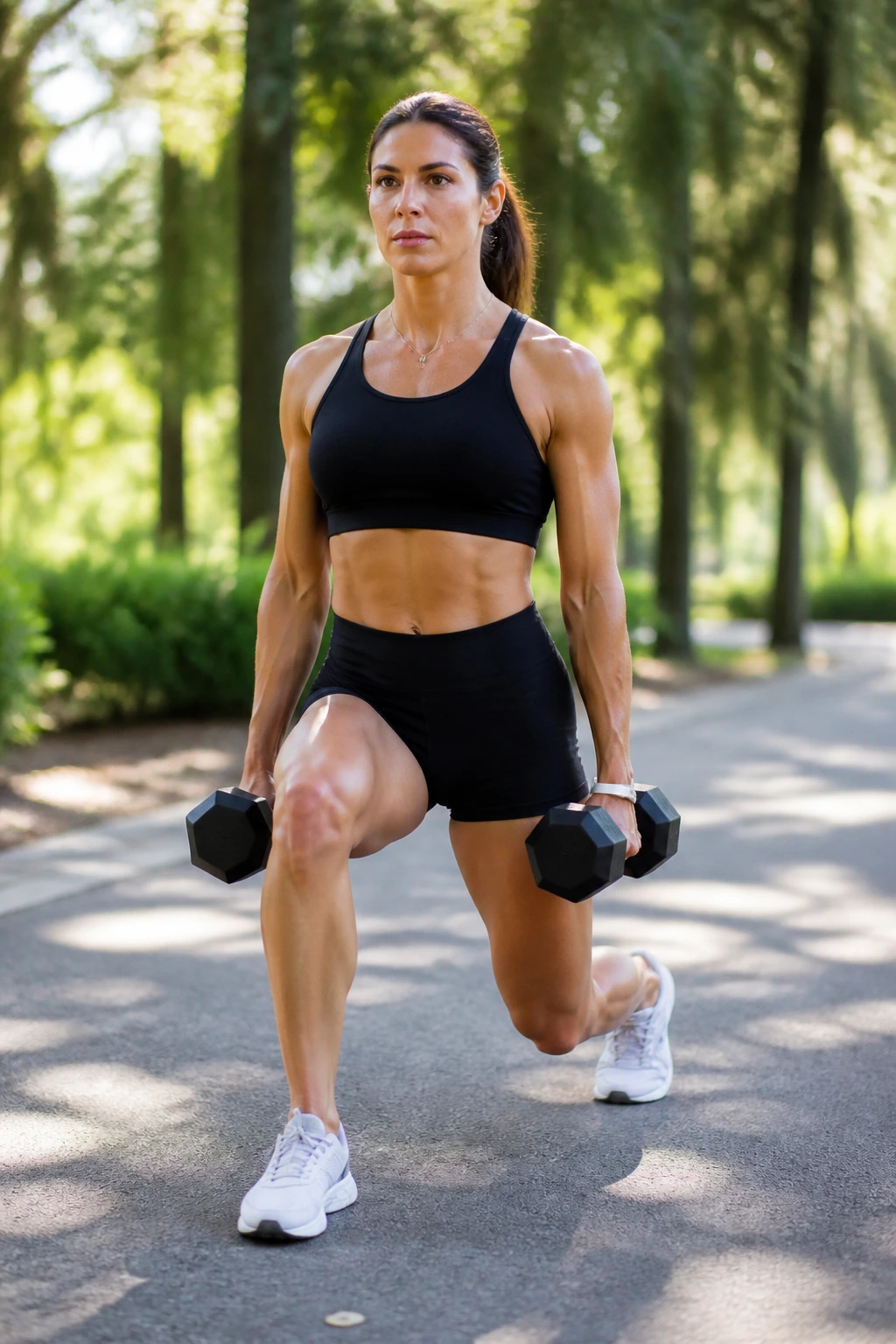
Walking lunges are a staple for a reason. They challenge your stability, coordination, and muscular endurance all at once. Because you are moving forward, you are constantly forcing your stabilizer muscles to fire, which helps build that “toned” look by targeting the small muscles around the hips and glutes.
The Technique
- Stand tall with a dumbbell in each hand or a barbell across your shoulders.
- Take a long, controlled step forward.
- Lower your hips until both knees are bent at approximately a 90-degree angle.
- The front knee should be aligned over the ankle, and the back knee should hover just above the floor.
- Push off the front heel to bring the back foot forward, stepping directly into the next lunge.
Keep your torso upright. Many people lean forward to make the movement easier, but doing so shifts the work onto your lower back. By staying tall, you keep the tension squarely on your quads and glutes.
4. Glute Bridges
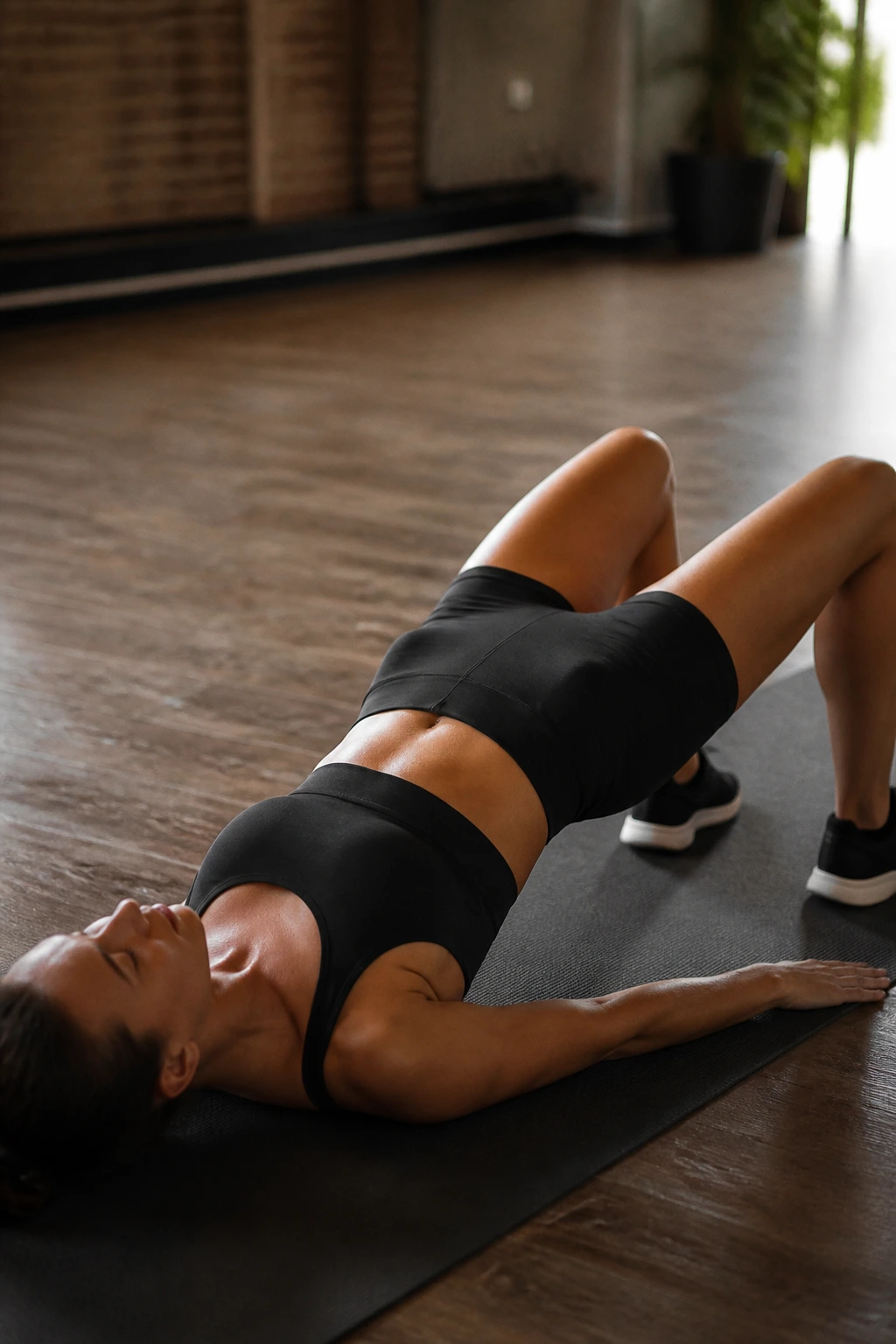
Floor-based glute bridges are fantastic because they remove the lower back from the equation almost entirely. This is an isolation movement, plain and simple. It is excellent for waking up “sleepy” glutes before a heavier compound workout, or for finishing a session with a high-rep pump.
Finding the Contraction
- Lie on your back with your knees bent and feet flat on the floor, hip-width apart.
- Engage your core to flatten your lower back against the ground.
- Drive through your heels and lift your hips toward the ceiling.
- Squeeze your glutes hard at the top—imagine you are trying to crack a walnut between your cheeks.
- Lower your hips back down slowly, but do not let them fully rest on the floor between reps.
Visual Cue: At the top of the movement, your body should form a straight line from your shoulders to your knees. If you find your hamstrings cramping, move your feet slightly closer to your glutes. If you feel it mostly in your quads, slide your feet a few inches further away.
5. Bulgarian Split Squats
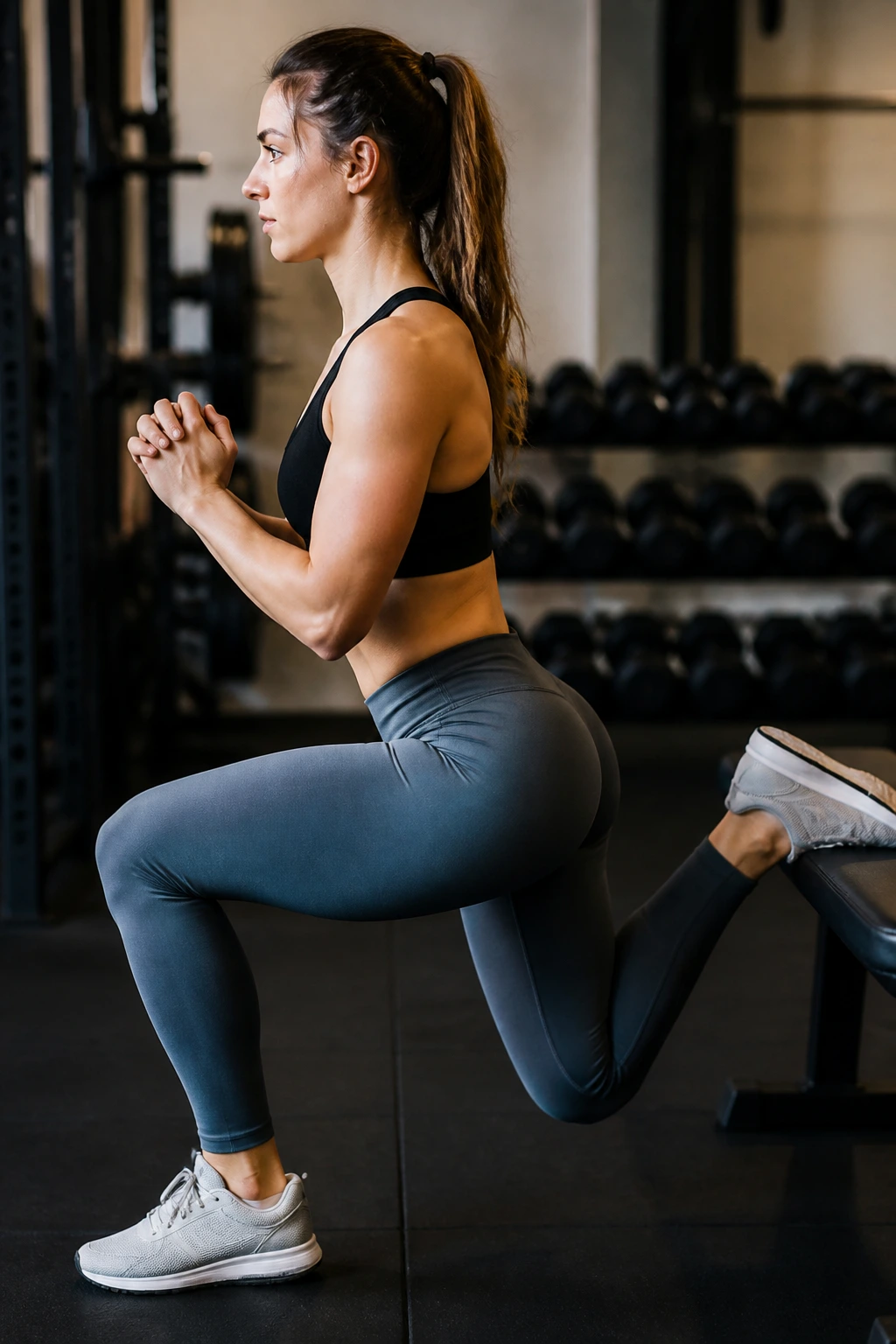
These are widely considered the most effective—and most challenging—unilateral leg exercise. By elevating your rear foot, you place the vast majority of the load on the front leg. It is essentially a single-leg squat, which is incredible for ironing out muscle imbalances between your left and right sides.
Setup and Execution
- Stand a few feet in front of a bench or a sturdy chair, facing away from it.
- Place the top of one foot on the bench behind you.
- Lower your hips until your front thigh is parallel to the ground.
- Keep your front foot flat; do not let your heel lift off the floor.
- Return to the start by pushing through the front heel.
You will likely feel a massive stretch in the hip flexor of the back leg. This is normal. If the movement feels unstable, focus on gripping the floor with your front foot and keeping your core tight. It helps to pick a focal point on the wall in front of you to maintain your balance.
6. Sumo Squats
Sumo squats emphasize the inner thighs, or adductors, due to the wide stance. If you are looking to build mass in the inner leg, this is a superior variation to the standard squat. The key is to keep your chest up and not let your knees cave inward.
Getting the Stance Right
- Take a stance significantly wider than shoulder-width, with your toes pointed out at a 45-degree angle.
- Hold a single heavy dumbbell or kettlebell between your legs with both hands.
- Sink your hips down, ensuring your knees track in line with your toes.
- As you rise, drive through your heels and squeeze your glutes at the top.
The wide stance can put some strain on the hips, so perform a few bodyweight reps first to warm up your hip joints. If your knees start to collapse inward as you drive up, decrease the weight or narrow your stance slightly.
7. Step-Ups
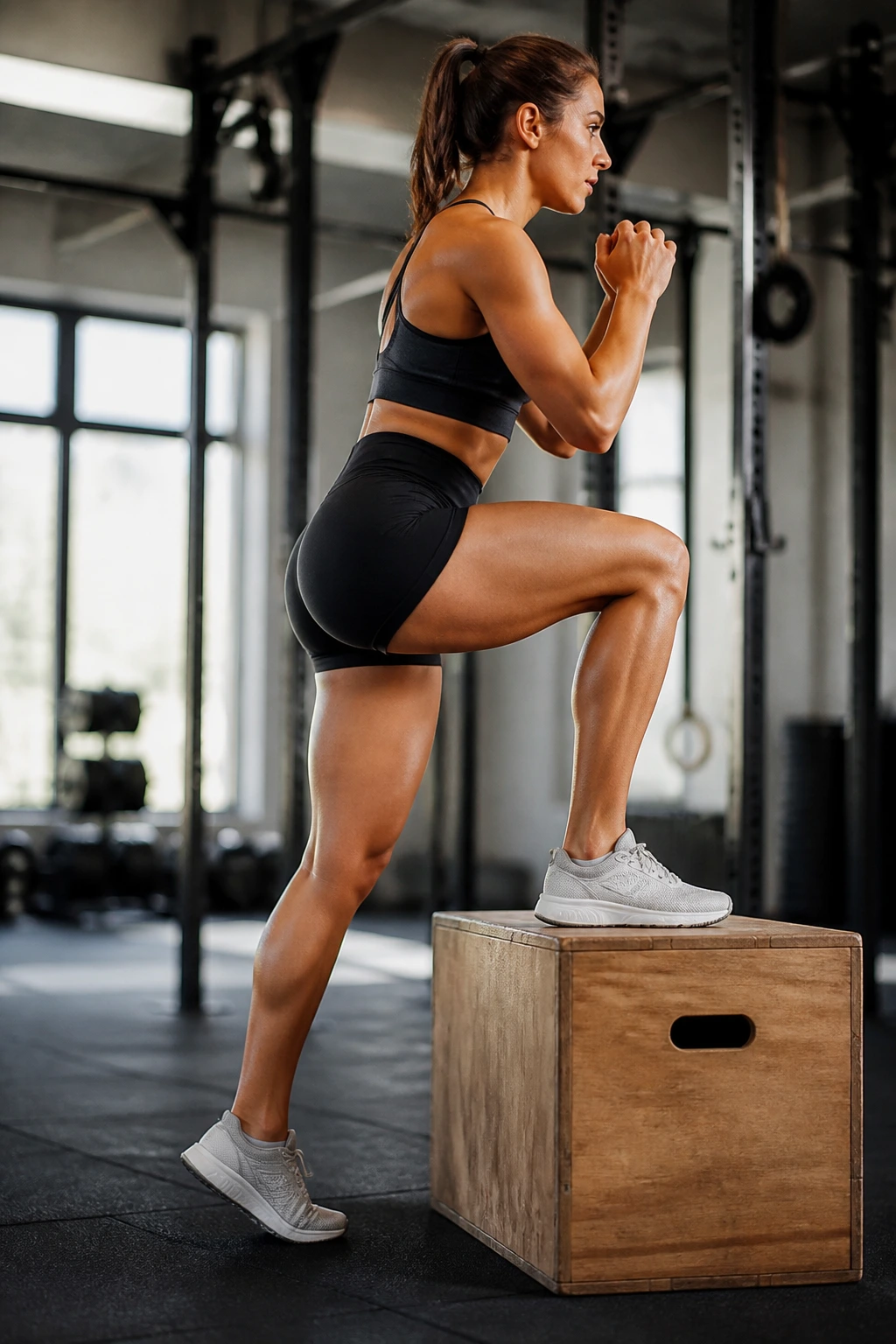
Step-ups are a functional movement that mimic climbing stairs, which sounds simple but becomes brutal when you add weight. They are excellent for targeting the glutes and quadriceps while simultaneously improving your balance and hip stability.
The “One-Leg” Secret
- Find a box or bench that is roughly knee-height.
- Place one foot firmly on the surface.
- Press down through the heel of that foot to lift your entire body up.
- Try to minimize the “push off” from the bottom foot. The goal is to use only the leg on the box to move your body weight upward.
- Lower yourself back down slowly under control.
Do not bounce at the top. Control is everything here. By lowering yourself slowly, you force the muscles to work on the eccentric (lengthening) portion of the lift, which is where a lot of the muscle-building stimulus happens.
8. Hip Thrusts
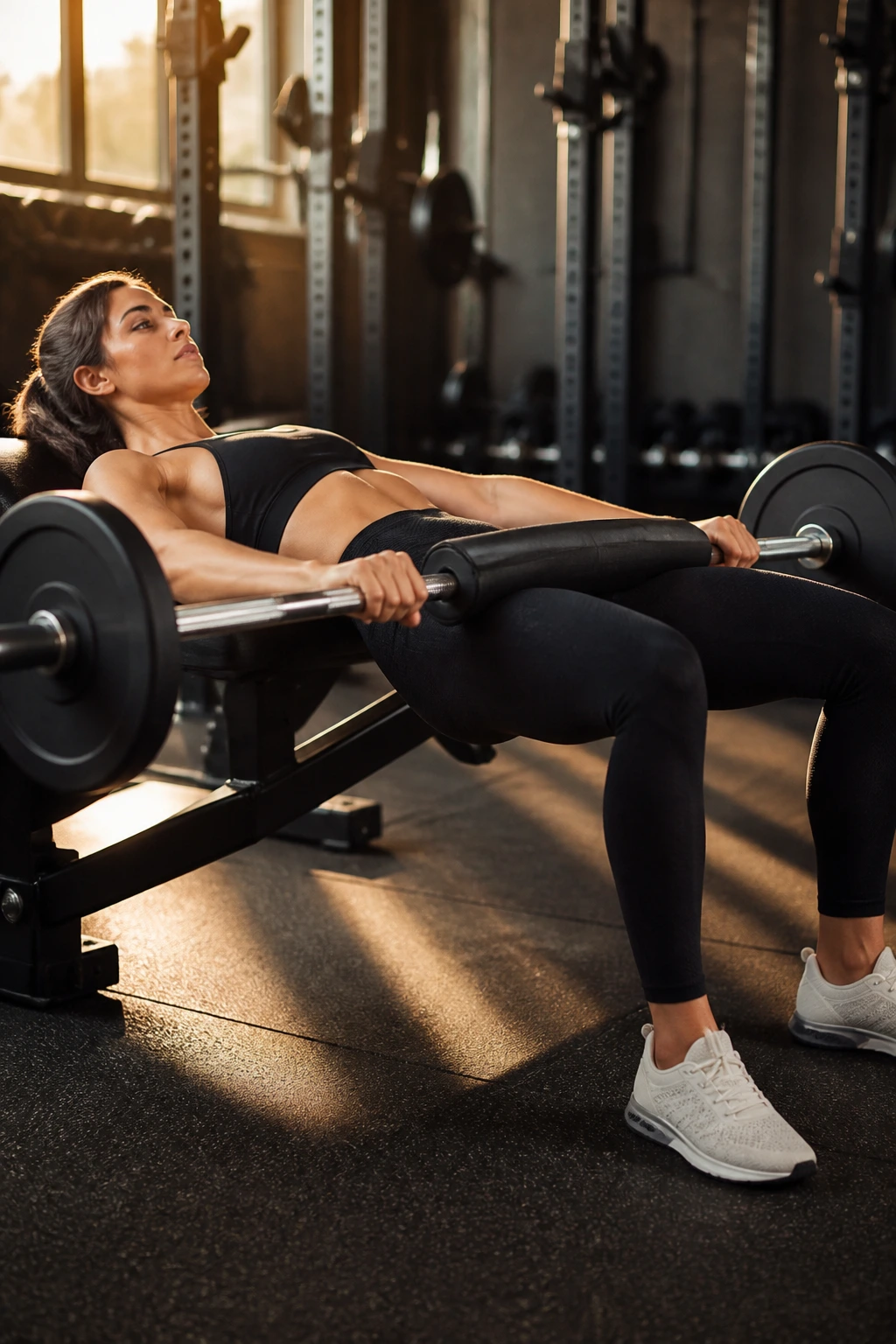
While the bridge is done on the floor, the hip thrust is performed with your back supported on a bench. This increases the range of motion significantly and allows you to load much more weight, making it the king of glute-building exercises.
Setup Essentials
- Sit on the floor with your upper back against the edge of a bench.
- Roll a barbell (padded) over your hips, or hold a heavy dumbbell against your pelvis.
- Drive through your heels to lift the weight, forming that straight line from shoulders to knees.
- Squeeze your glutes at the peak of the movement.
- Keep your chin tucked toward your chest so your spine stays neutral.
Many people make the mistake of using their lower back to push the weight up. If you feel this in your lumbar spine, stop and adjust. You might need to tuck your pelvis slightly—think about pulling your belly button toward your spine—to engage the glutes properly before you even begin the lift.
9. Curtsy Lunges
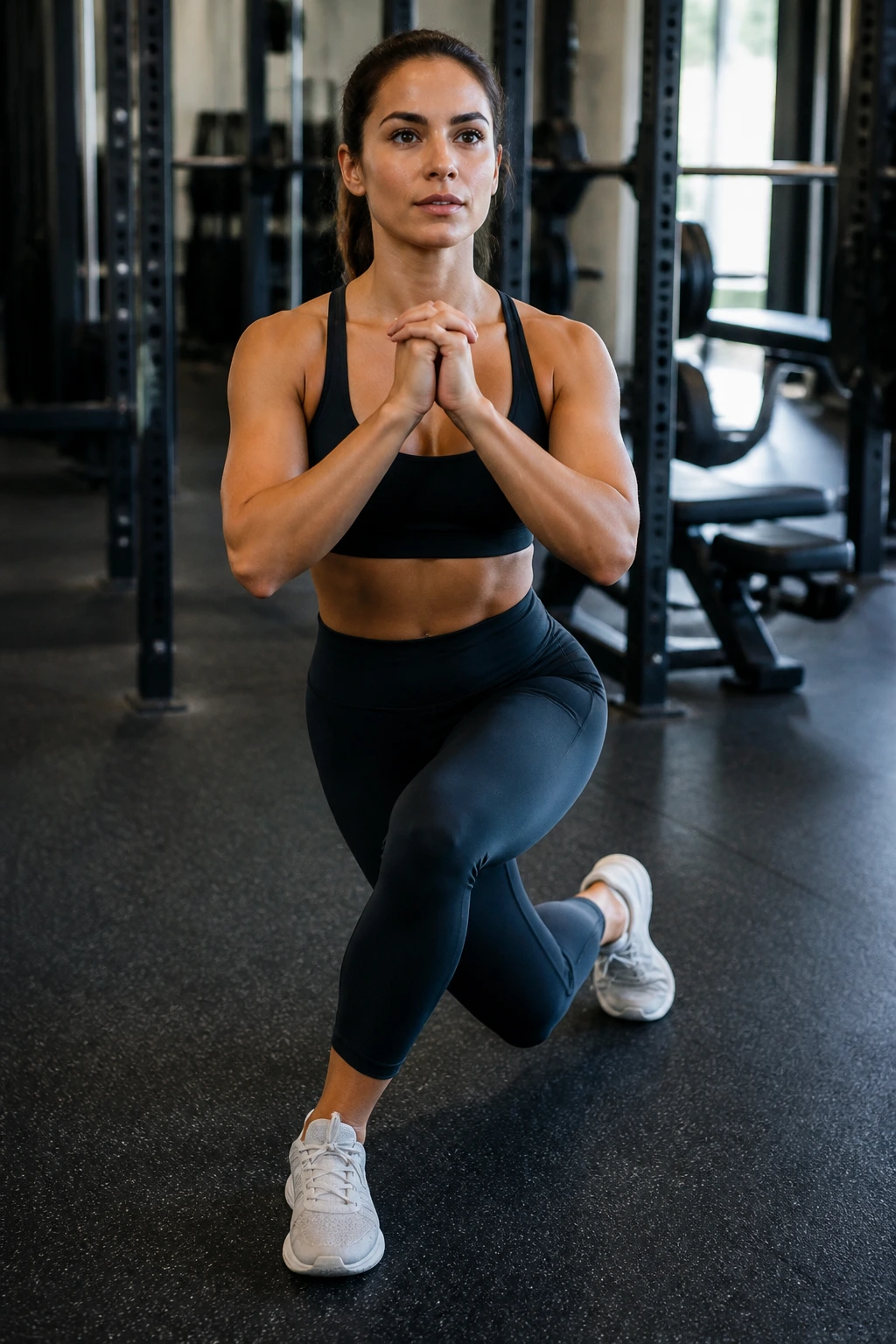
The curtsy lunge is a clever variation that targets the gluteus medius, the muscle on the side of your hip that gives the glutes a rounded, shapely appearance. Because of the crossing motion, it challenges your stability in the frontal plane, which is often neglected in standard workouts.
Mechanics of the Movement
- Stand with feet hip-width apart.
- Take a step back and across with your right foot, placing it behind your left leg.
- Lower your hips until your front left thigh is parallel to the ground.
- Your back knee should hover just off the floor.
- Push through your front heel to return to the starting position.
Think of it as “tucking” your back foot behind your front one. It is not just a backward lunge; it is a diagonal one. You will feel this burn in the side of the glute of the lead leg almost immediately.
10. Side-Lying Leg Lifts
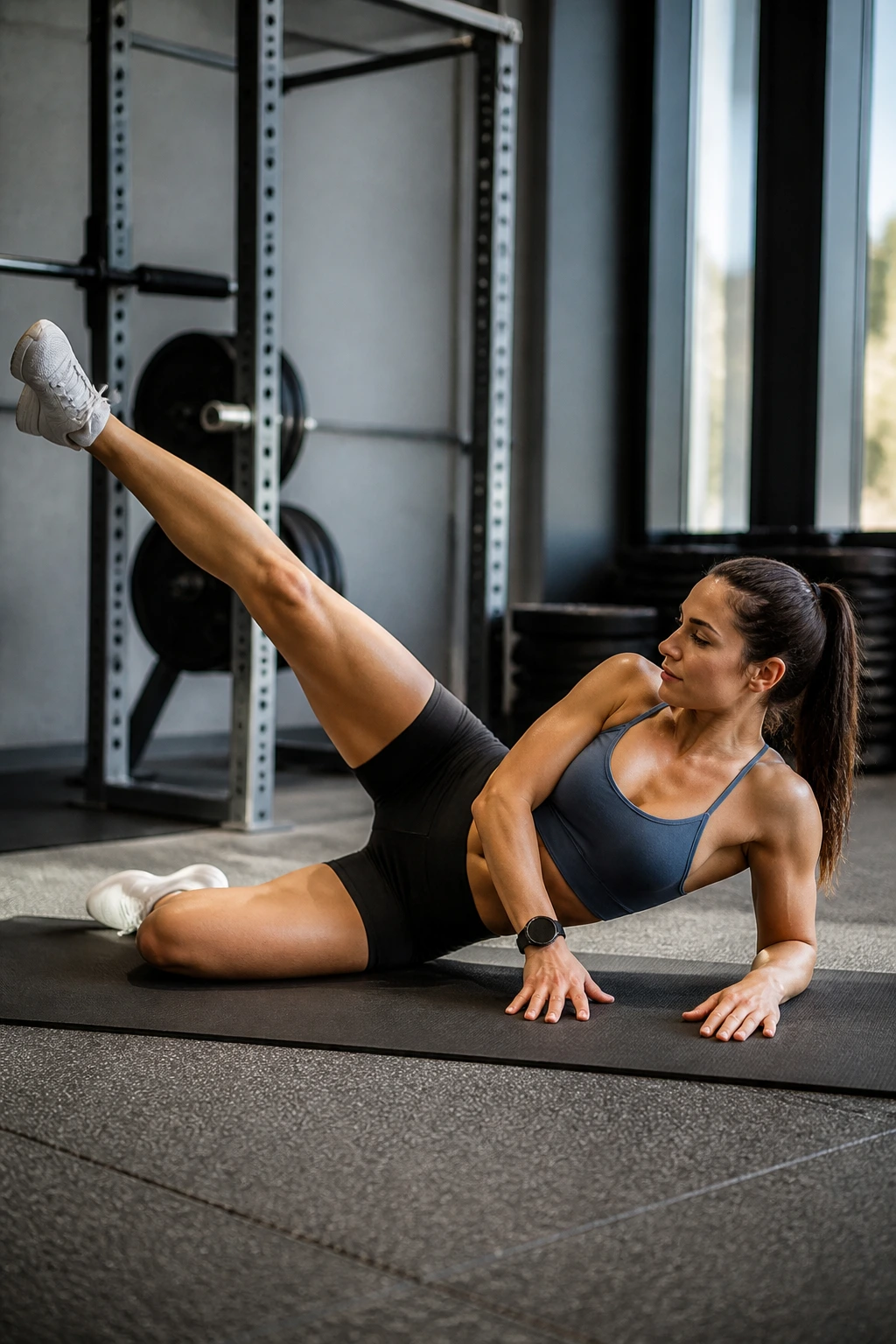
Sometimes you need to take the weight off your feet and work the glute medius in isolation. Side-lying leg lifts look easy, but if you do them with control, they are surprisingly difficult. They are a perfect “finisher” for a leg day session.
Focus on Control
- Lie on your side, legs stacked on top of each other.
- Keep your bottom leg slightly bent for stability.
- Lift the top leg straight up toward the ceiling, keeping your toes pointed forward or slightly down.
- Do not rotate your hip backward. If you start rotating, you are using your hip flexors instead of your glute medius.
- Lower the leg back down, but stop just before it touches the bottom leg to keep the muscle under tension.
You want a slow, steady rhythm here. Avoid kicking your leg up aggressively. The goal is to feel the side of your hip working hard to control the movement.
11. Fire Hydrants
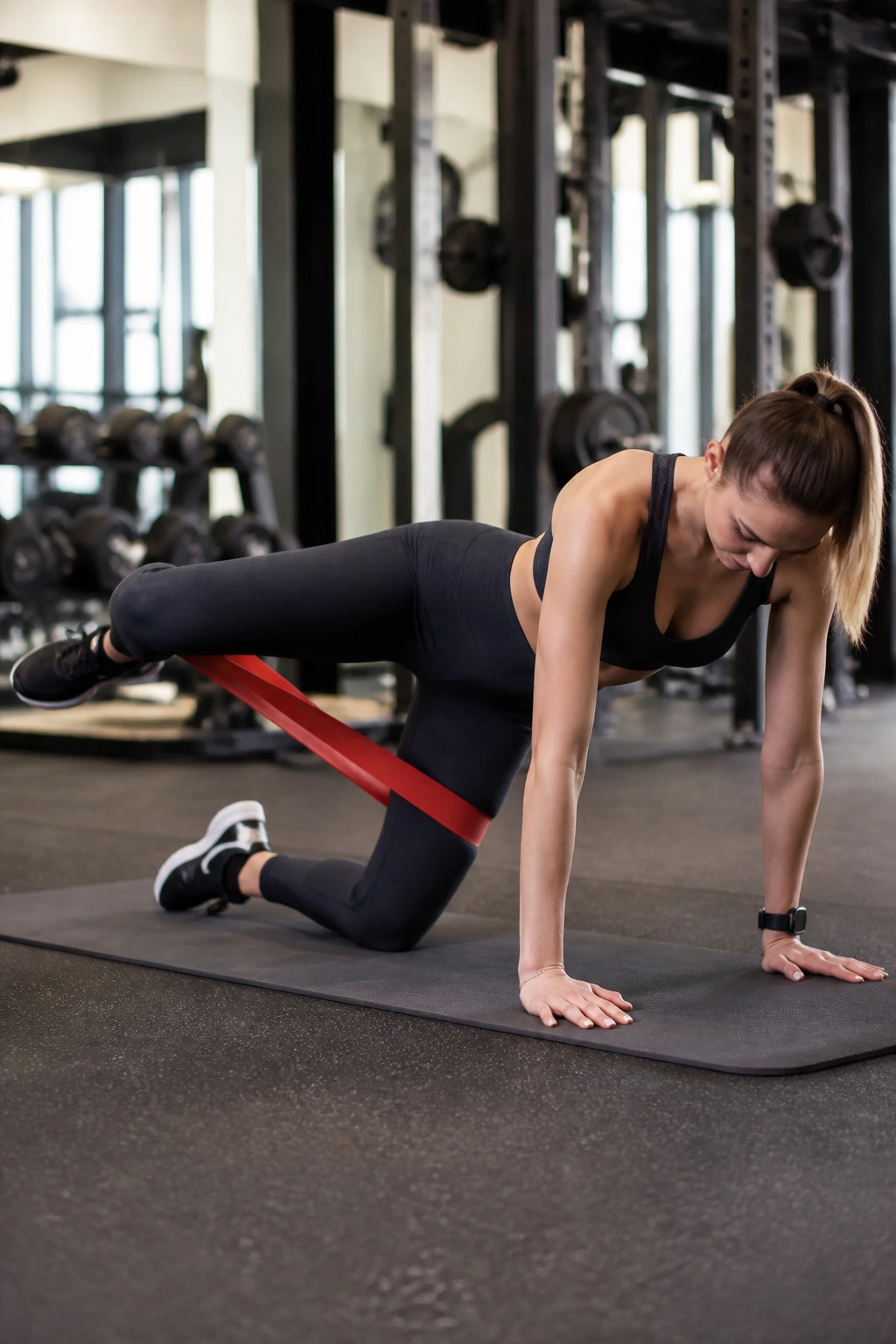
This exercise is named for exactly what it looks like, and while it might seem a bit silly in a gym setting, it is undeniably effective for targeting the outer glutes and hips. It is all about the movement of the femur in the hip socket.
How to Execute
- Start on all fours, with hands under shoulders and knees under hips.
- Keeping your knee bent at a 90-degree angle, lift your right leg out to the side.
- Imagine you are trying to lift your knee as high as you can without rotating your spine.
- Your back should stay completely flat—do not dip or twist to get the leg higher.
- Pause at the top, squeeze the glute, then return to the starting position.
If you have a resistance band, wrapping it around your thighs just above the knees makes this exercise exponentially harder. It is an excellent way to force growth in that lateral glute area.
12. Donkey Kicks
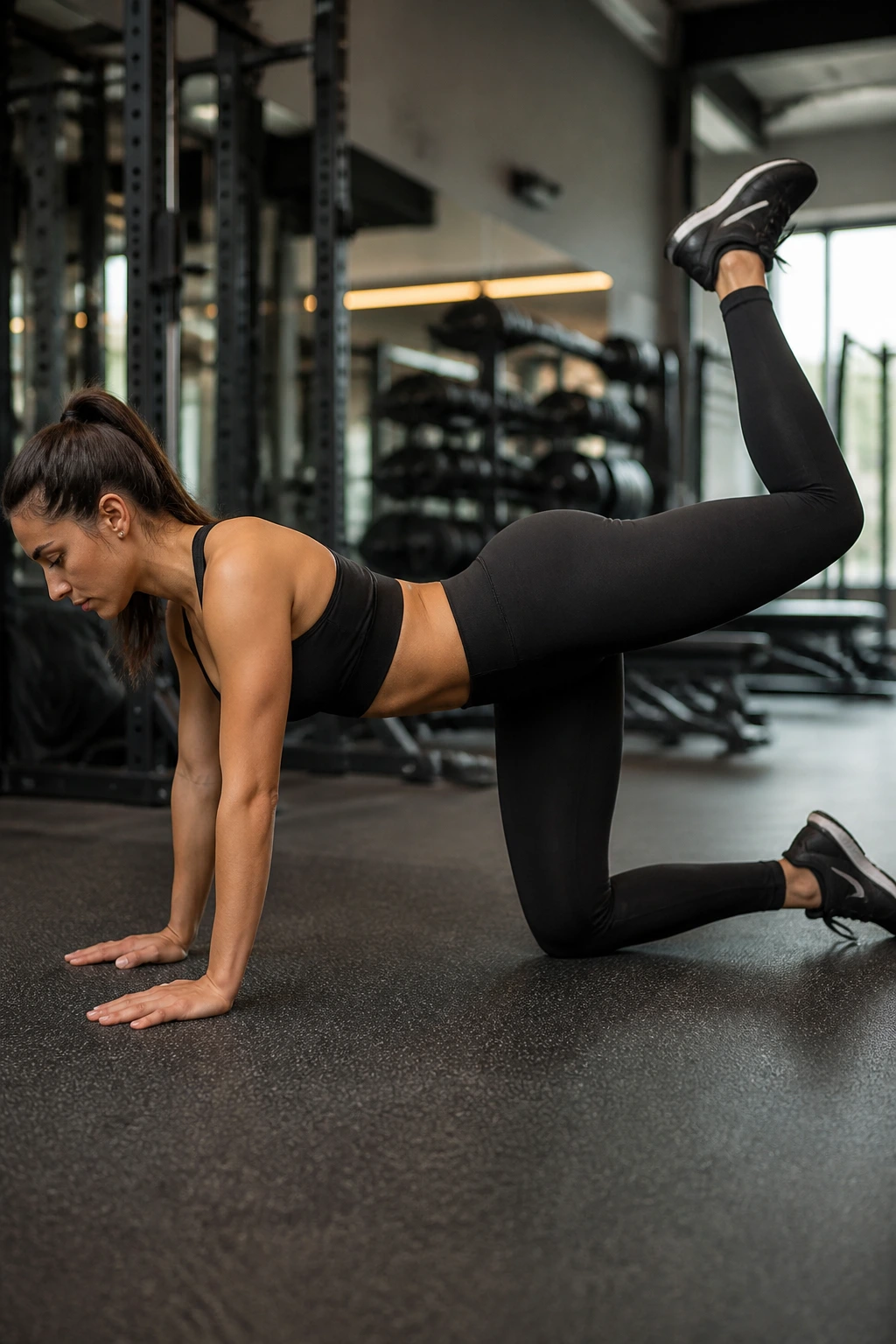
Donkey kicks are a classic for a reason. They isolate the gluteus maximus, the largest muscle in your lower body. They are particularly effective when done with a slow tempo.
The Squeeze
- Start on all fours.
- Keep your core tight so your back remains perfectly still.
- Kick one leg up toward the ceiling, keeping the knee bent at 90 degrees.
- Focus on driving through the heel.
- At the top, your thigh should be parallel to the floor, and you should feel a hard squeeze in your glute.
- Lower the knee back to the starting position without touching the ground.
Make sure you do not arch your lower back to get your leg higher. That arch is a compensation pattern. If your glute can’t get the leg any higher, that is your limit. Respect that limit to keep the focus where it belongs.
13. Kettlebell Swings
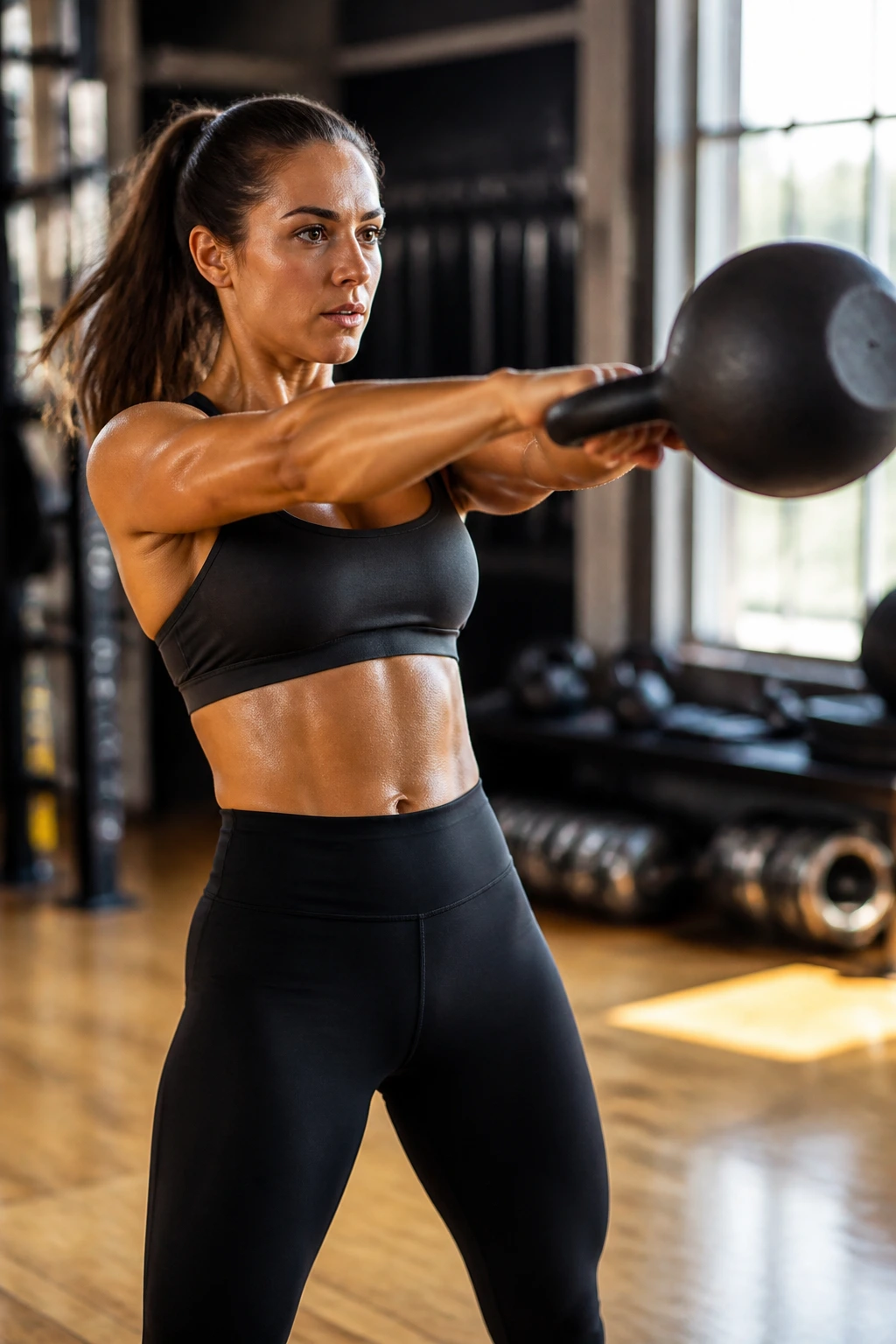
This is an explosive movement that hits the entire posterior chain: glutes, hamstrings, and lower back. Unlike the other exercises on this list, this one is about speed and power.
Power Production
- Stand with feet shoulder-width apart, holding a kettlebell with both hands.
- Hinge at the hips, sending the bell back between your legs.
- Use an explosive hip thrust to snap the bell forward.
- The momentum comes from your hips, not your arms. Your arms are just “ropes” holding the weight.
- Stop when the bell reaches chest height.
- Allow the bell to fall naturally, letting your hips hinge as it passes back between your legs.
Be careful not to turn this into a front raise. If you find yourself using your shoulders to lift the bell, the weight is too heavy or your hip drive isn’t powerful enough. Reset your focus on the “snap” of the hips.
14. Lateral Band Walks
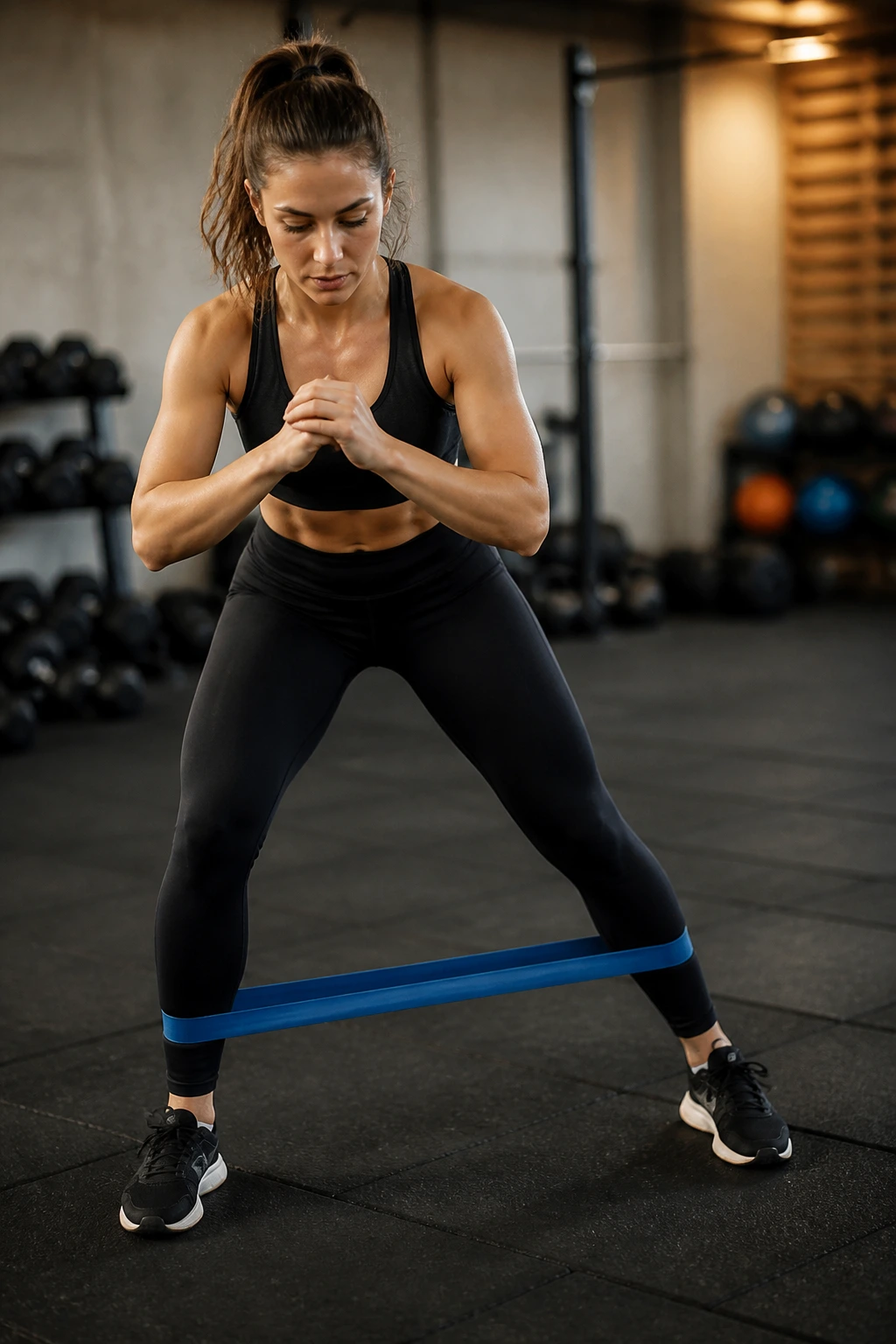
If you want to build strong, stable hips, you need lateral movement. Walking side-to-side with a resistance band around your ankles or knees forces your glute medius to stay active for the entire set.
The “Burn” Factor
- Place a mini-band around your ankles.
- Sink into a quarter-squat position—keep your chest up and core braced.
- Step laterally with one foot, then follow with the other, keeping tension on the band the whole time.
- Do not let your feet come all the way together. Keep them wide enough that the band stays stretched.
This is a high-repetition exercise. You are looking for that deep, burning sensation in the side of your hips. If the band feels too easy, move it from your ankles to just above your knees, which changes the leverage and increases the difficulty.
15. Cable Kickbacks
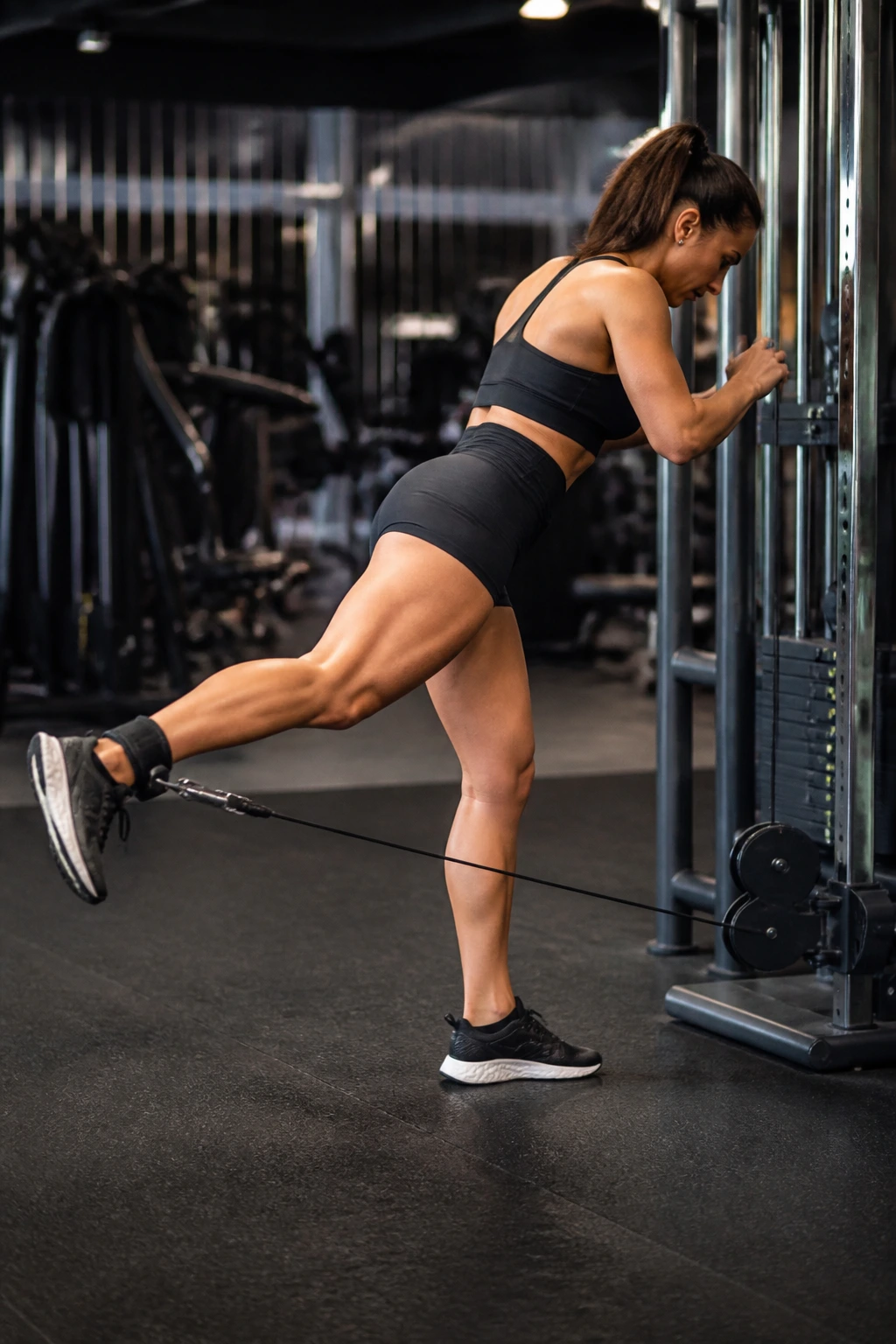
Cable machines allow for constant tension throughout the entire range of motion, which is something you can’t get with free weights. A cable kickback is perfect for targeting the glute-hamstring tie-in.
Finding the Rhythm
- Attach an ankle strap to a low cable pulley.
- Stand facing the machine, holding onto the frame for stability.
- Keep your back flat and core tight.
- Kick your leg backward, focusing on squeezing the glute.
- Do not hyperextend your lower back. The movement should stop when your glute is fully contracted.
- Return the leg slowly to the starting position.
The “negative” or lowering phase is just as important as the kick. Don’t let the weight stack slam down. Control the movement both ways to get the most benefit.
16. Single-Leg Romanian Deadlifts
This is a test of balance, stability, and hamstring strength all rolled into one. It is much harder than a standard Romanian Deadlift because you have to stabilize your entire body on one side while moving the weight.
Balancing Act
- Hold a dumbbell in the hand opposite to the working leg (e.g., if you are balancing on your right leg, hold the dumbbell in your left hand).
- Keep a slight bend in your standing knee.
- Hinge at your hips, extending your non-working leg straight behind you for balance.
- Lower the dumbbell toward the floor, keeping it close to your shin.
- Squeeze your glutes to return to a standing position.
If you struggle with balance, use a wall for support initially. Touch your fingertips to the wall just to stabilize yourself, but try to rely on your own muscles as you get stronger.
17. Box Jumps
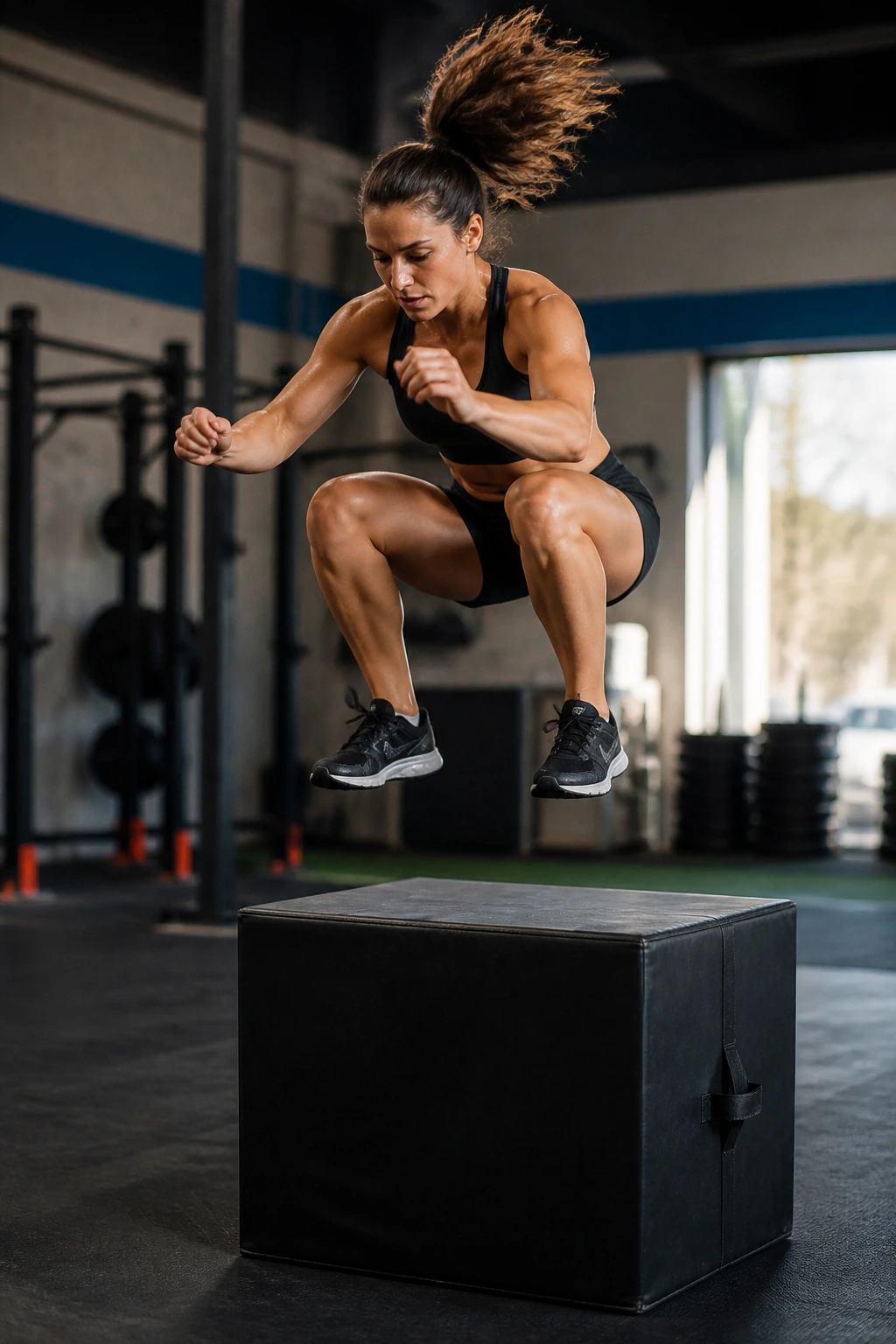
Explosive power isn’t just for athletes. Developing it helps with overall lower body tone and athletic capacity. Box jumps recruit fast-twitch muscle fibers, which are essential for leg development.
Landing Safely
- Stand facing a sturdy box or bench.
- Drop your hips slightly and swing your arms back to generate momentum.
- Leap onto the box, landing softly with both feet.
- Stand all the way up, then step back down—do not jump down.
- Your landing should be silent. If you land with a “thud,” you are not using your muscles to absorb the force.
Focus on the takeoff. Imagine you are trying to jump through the ceiling. The height of the box matters less than the quality of the jump and the softness of the landing.
18. Reverse Lunges
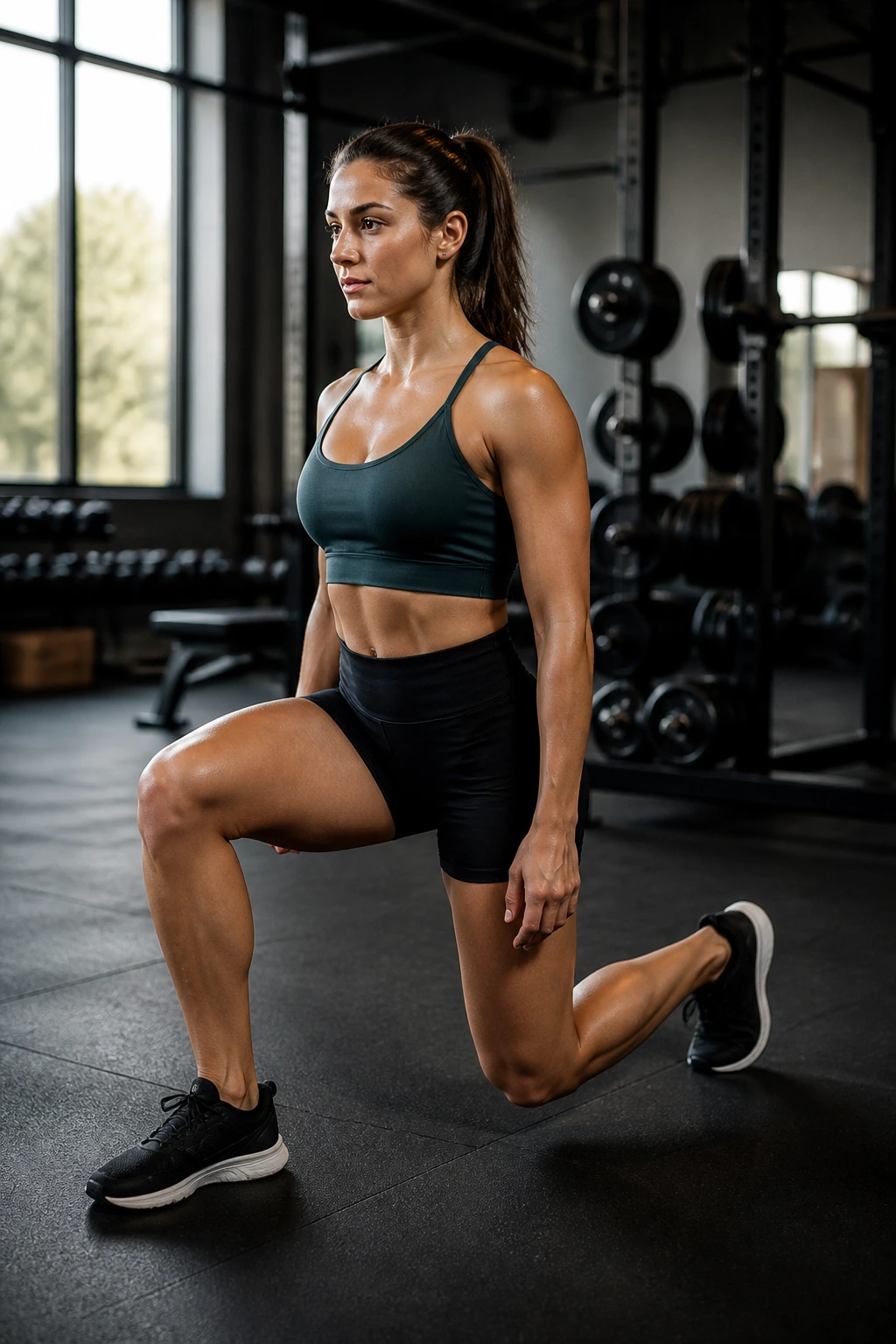
Why choose reverse lunges over forward lunges? They are generally kinder to your knees. By stepping back, you shift the load toward the glutes and hamstrings rather than forcing the knee to take the brunt of the deceleration.
The Safer Alternative
- Stand tall with your feet together.
- Take a long step backward.
- Lower your back knee toward the ground while keeping your front shin vertical.
- Drive through the front heel to return to standing.
Because you are stepping backward, you have to lean slightly forward at the hips, which naturally puts more stretch and tension on the glute of the front leg. This makes them a fantastic glute-builder.
19. Pause Squats
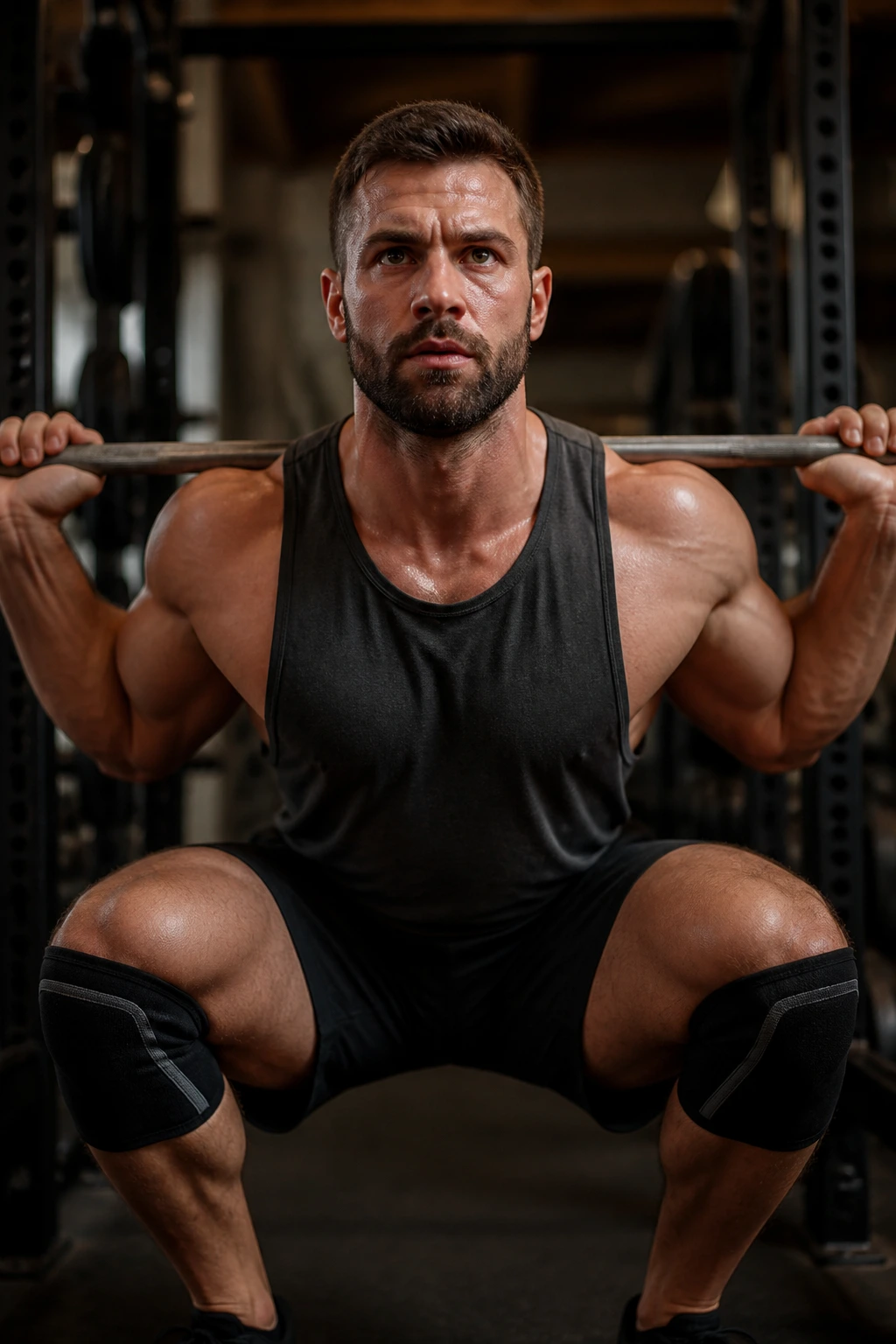
The pause squat is a humbling exercise. By removing the “bounce” or momentum at the bottom of the squat, you force your muscles to work from a dead stop. This builds incredible strength in the hole.
Breaking the Momentum
- Set up for a normal squat (goblet or back).
- Descend as usual.
- Once you reach the bottom, hold that position for a full two seconds.
- Do not relax—stay tight, hold the tension, and keep your core braced.
- Drive up explosively from that paused position.
That two-second pause changes everything. It forces you to use less weight than you normally would, but it makes the squat significantly harder and more effective for building raw strength and muscle.
20. Jefferson Squats
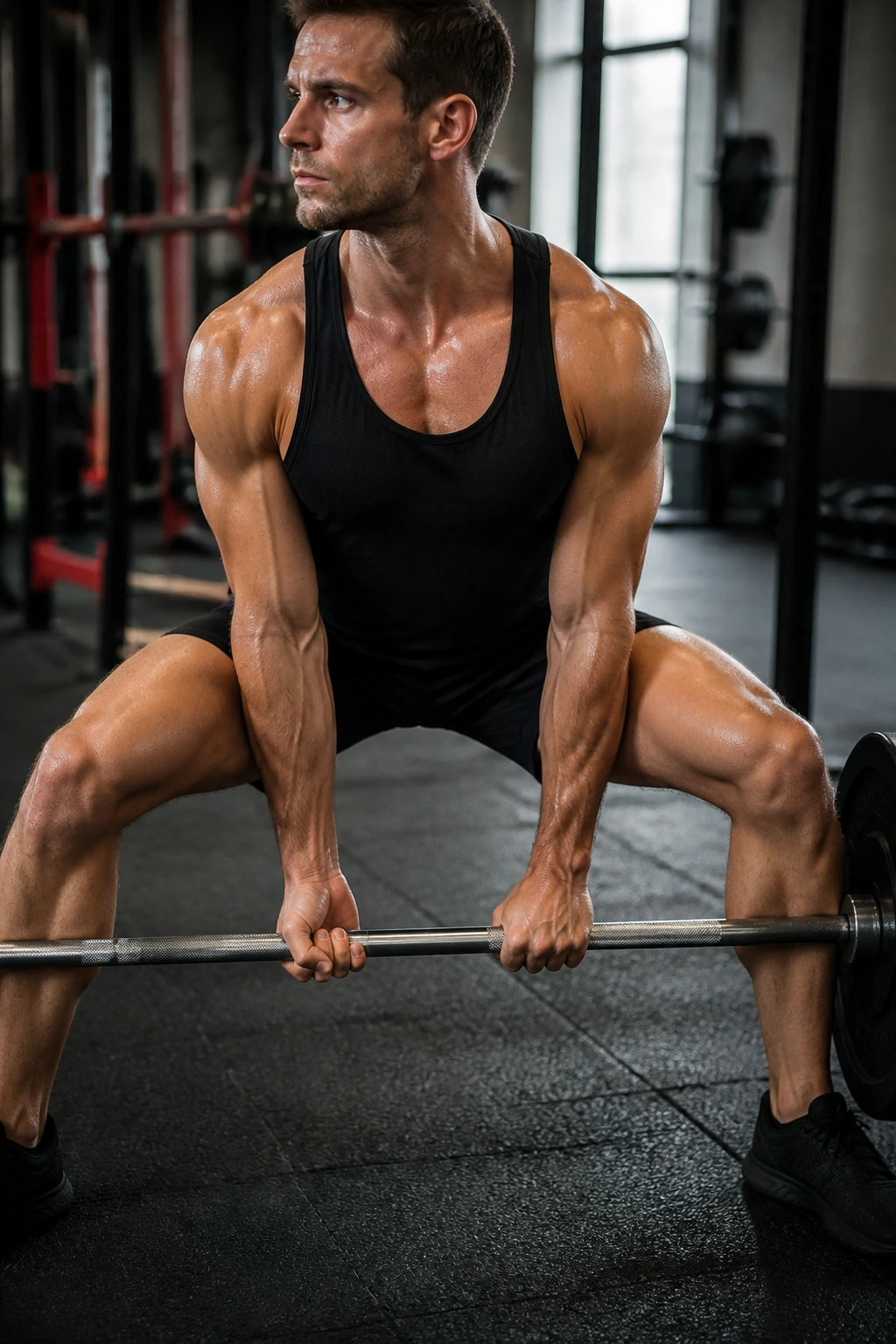
This is a vintage bodybuilding move that is largely forgotten, but it is excellent for hitting the inner thighs and the glutes from a unique angle. You basically straddle a barbell.
The Straddle
- Place a barbell on the floor and stand over it, so the bar is between your legs.
- Squat down and grip the bar with one hand in front and one hand behind you.
- Keeping your chest up, drive through your heels to stand up, pulling the bar straight up between your legs.
- Squeeze your glutes hard at the top.
It requires a bit of coordination to get the grip right, but once you get the hang of it, it provides a very deep, unique stretch that standard squats just cannot replicate.
21. Cossack Squats
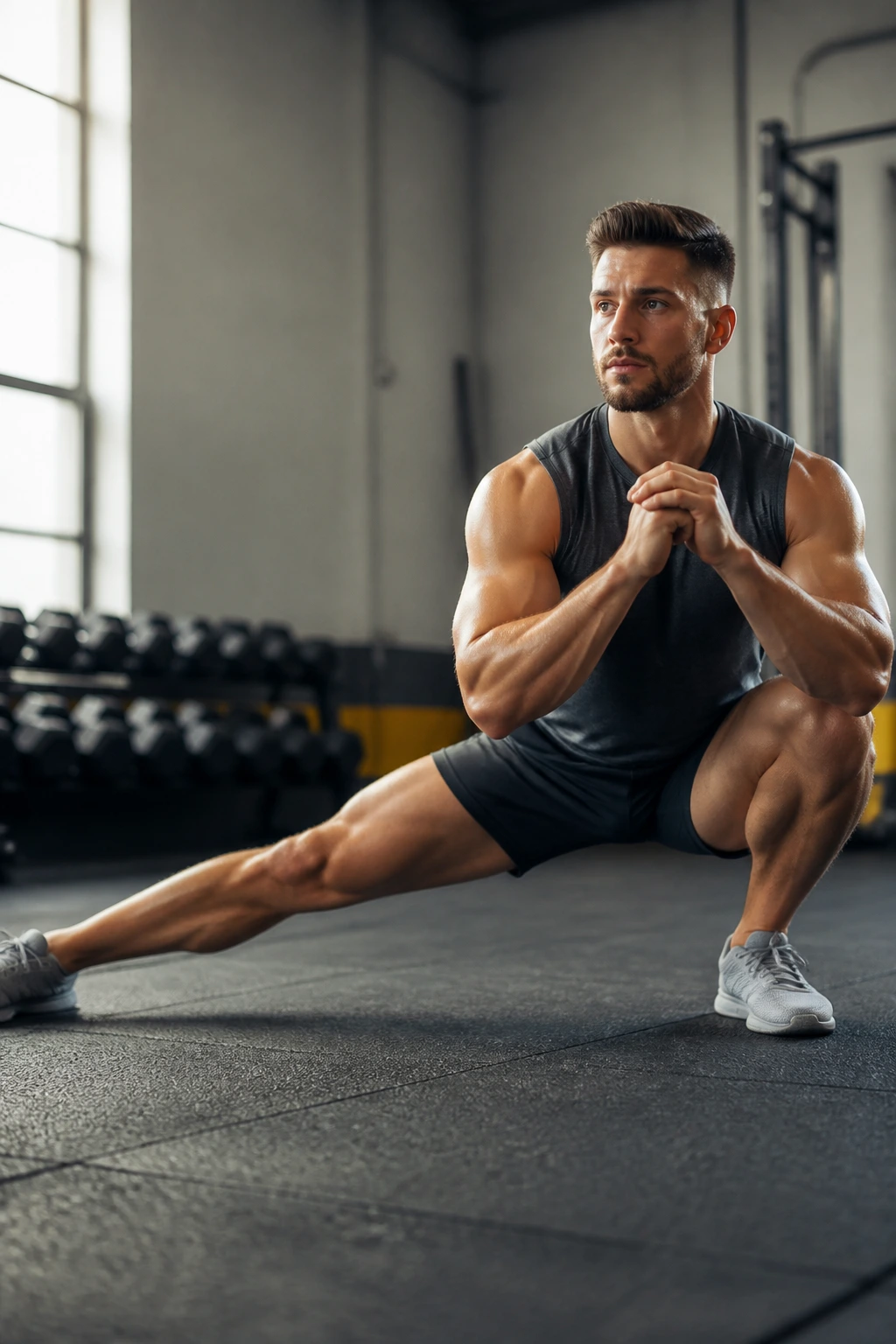
Cossack squats are essentially deep, side-to-side lunges. They are fantastic for mobility, flexibility, and strengthening the adductors (inner thighs) through a huge range of motion.
Range of Motion
- Take a very wide stance.
- Shift your weight to one side, bending that knee while keeping the other leg completely straight.
- Go as deep as your mobility allows.
- Keep your chest up and the heel of the bent leg flat on the floor.
- Push off that foot to shift your weight to the other side.
This is more of a mobility movement, but it is incredibly effective for creating a “toned” appearance because it hits muscle fibers that rarely get activated in traditional forward-and-back movements.
22. Glute Medius Kickbacks
This is a subtle variation of the standard cable kickback. Instead of kicking straight back, you kick diagonally, at about a 45-degree angle. This specifically targets the upper/outer portion of the glute.
Targeting the Upper Glute
- Set up just like a cable kickback.
- Instead of kicking straight back, kick your leg out at an angle—behind you and slightly to the side.
- You will feel a very intense contraction in the side of your hip/glute.
- Perform high reps with a lighter weight; this is an isolation movement, not a power lift.
This is the move for shaping the “shelf” of the glutes. It’s a small, precise movement, not a massive ego lift, so keep the weight manageable and focus on the squeeze.
23. Wall Sits
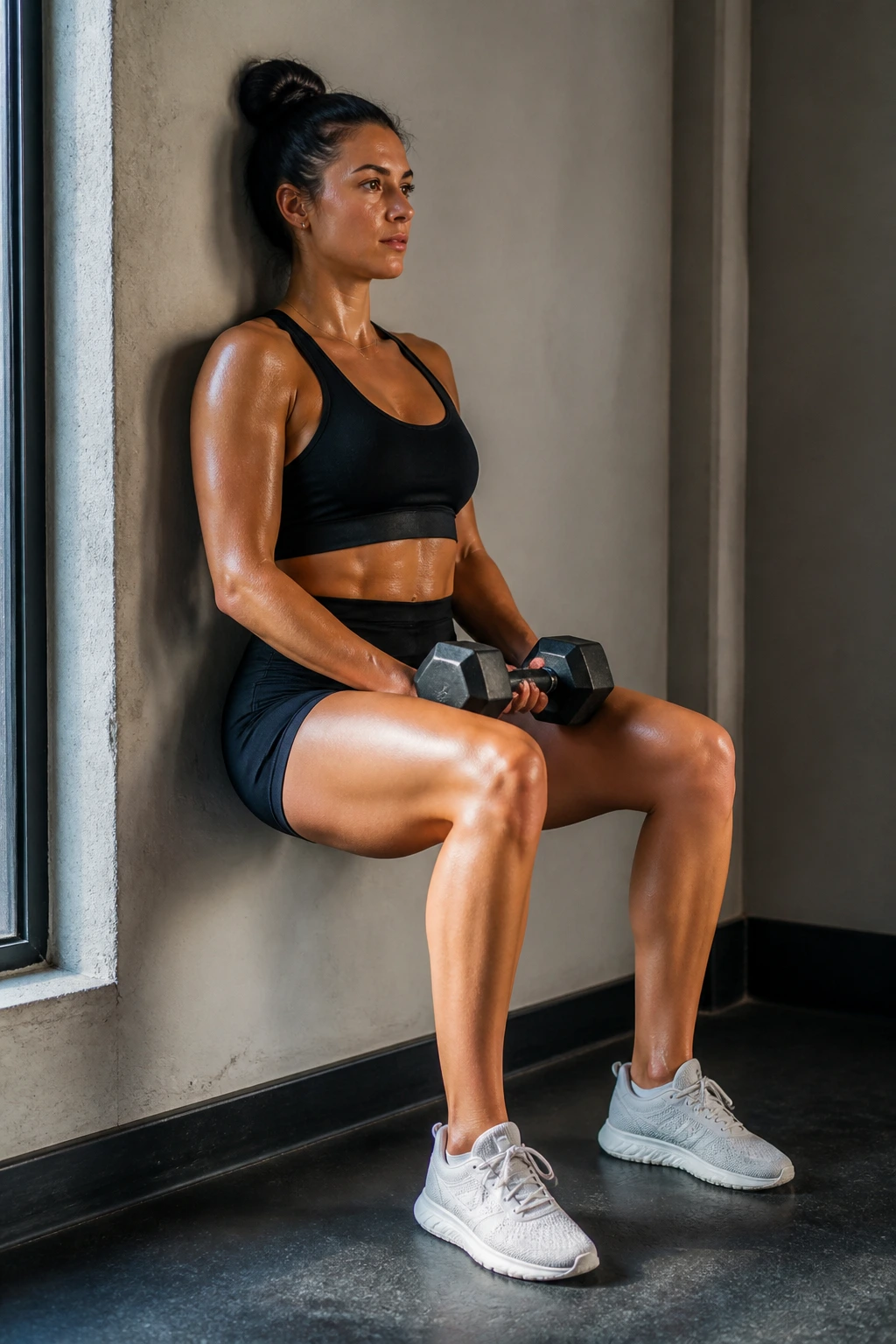
Wall sits are an isometric exercise, meaning there is no movement involved. You hold a position under tension for a duration of time. This is excellent for building muscular endurance and mental toughness.
Holding the Line
- Lean your back against a flat wall.
- Walk your feet out and slide down until your thighs are parallel to the floor.
- Keep your feet flat and your weight evenly distributed.
- Hold this position for as long as you can, aiming for 45 to 60 seconds initially.
If you want to make it harder, place a dumbbell on your lap. You will feel your quads screaming halfway through. It’s an essential exercise for bulletproofing the knees and building a solid foundation.
24. Weighted Glute Bridges
Once you master the standard glute bridge, you need to add weight to continue seeing progress. Progressive overload—the practice of gradually increasing the difficulty of your workouts—is non-negotiable for muscle growth.
Progression
- Start with a dumbbell or a plate held across your hips.
- Follow the same form as the standard bridge: drive through the heels, squeeze at the top.
- As you get stronger, you can move to a barbell.
- Use a foam pad to protect your hips, as heavy weights can be uncomfortable on the pelvic bone.
Remember to keep the movement slow. When you have weight on your hips, it is tempting to use momentum to swing the weight up. Resist that urge. The slower the lift, the more the glute muscles are forced to do the work.
25. Good Mornings
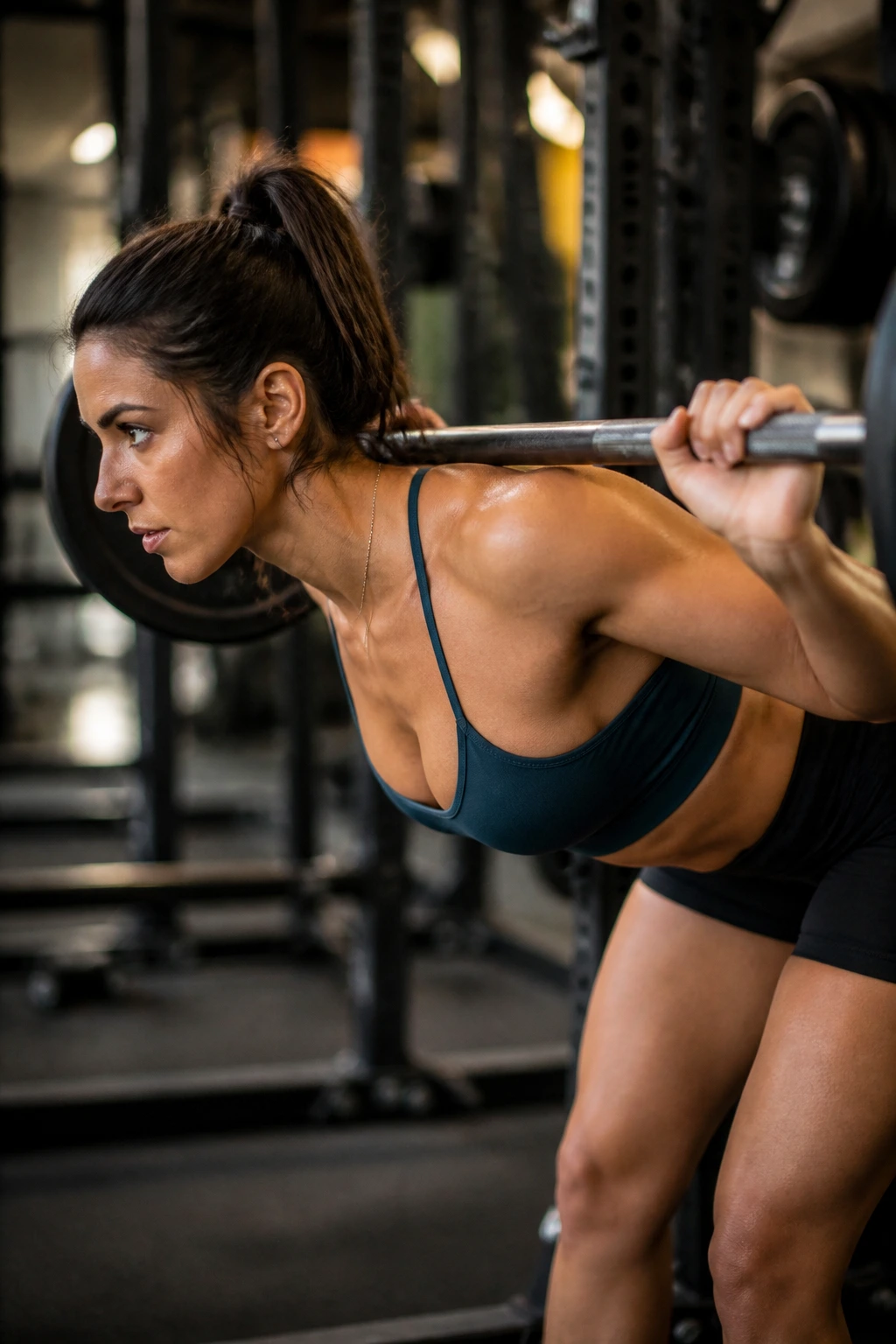
The good morning is essentially a Romanian deadlift with the weight on your back instead of in your hands. It places a huge emphasis on the hamstrings and the lower back/glutes.
Hinge with Care
- Place a light barbell across your traps (not your neck).
- Keep your feet shoulder-width apart and a slight bend in your knees.
- Hinge at the hips, keeping your back flat, until your torso is nearly parallel to the floor.
- Feel the stretch in your hamstrings, then drive your hips forward to return to the upright position.
This is an advanced move. Start with a very light weight—or even just a broomstick—until you perfect the hinge pattern. Your lower back should not round. If it does, you have gone too far or the weight is too heavy.
Final Thoughts
The key to a toned, functional lower body is not picking one magical exercise and doing it until you are exhausted. It is about understanding the mechanics of your own body and selecting movements that provide the right stimulus for your goals.
Consistency is your most valuable asset. Pick three to four of the exercises listed above and build a routine around them for several weeks. Once you master the form and start feeling comfortable, rotate in a few new variations to keep your muscles guessing. Listen to your body, prioritize your form over the amount of weight on the bar, and you will eventually build the lower body strength and shape you are looking for.
