



The gluteal muscles—the gluteus maximus, medius, and minimus—are the powerhouses of the lower body. When people talk about “functional fitness,” they are usually talking about the glutes. They stabilize your pelvis, allow you to stand upright, propel you forward when you walk, and absorb the impact of every stride you take. Most people think they need heavy barbells or complicated machines at a gym to build strength in this area. That is simply not true. You can build a strong, functional posterior chain in your living room with nothing but your own body weight.
The key to training glutes without equipment is understanding intensity and tension. Since you cannot add external load, you must add mechanical disadvantage, increase time under tension, or focus intensely on the mind-muscle connection. If you are just going through the motions, you will find that your quads or lower back take over the work. You need to focus on the squeeze. You need to focus on the hinge. If you feel it in your lower back, stop and reset. The glutes are the primary movers, and they should be doing the heavy lifting, not your spine.
1. Glute Bridge
The classic glute bridge is the foundation of all floor-based glute training. It is deceptively simple, but the difference between just moving your hips up and actually engaging the muscle is significant. Lie on your back with your knees bent and feet flat on the floor, about hip-width apart. Your heels should be close enough to your glutes that you can almost touch them with your fingertips.
How to Execute Properly
Push through your heels, not your toes, to lift your hips toward the ceiling. As you reach the top, tuck your pelvis slightly—think about pulling your ribcage down toward your hips to avoid arching your back. Squeeze your glutes as hard as you can for two seconds at the peak of the movement. Lower back down slowly, feeling the muscles lengthen.
Pro tip: Imagine you are trying to pull your heels toward your shoulders without actually moving your feet. This engages the hamstrings and prevents the quads from dominating the movement.
2. Single-Leg Glute Bridge
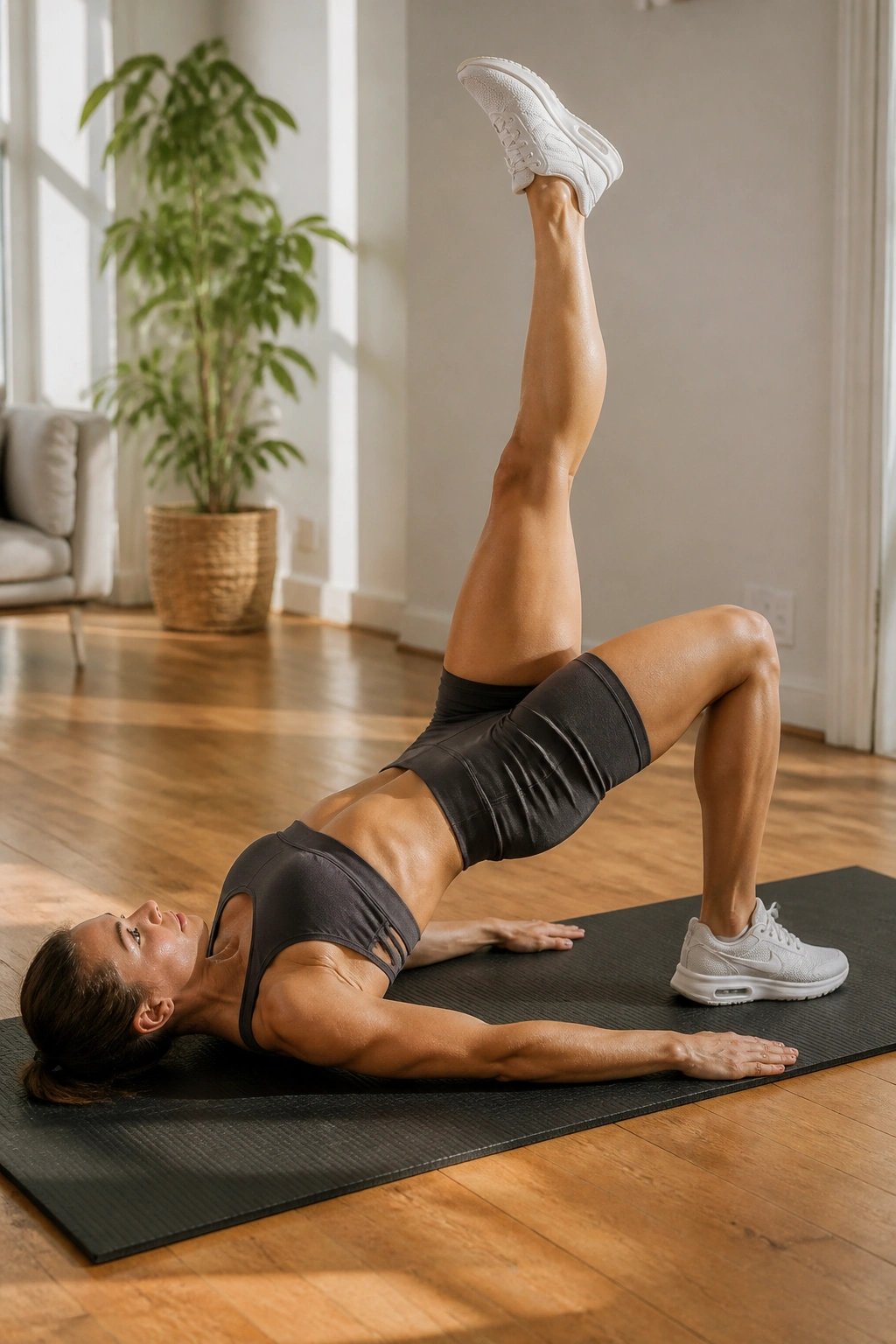
Once the standard bridge feels too easy, you have to increase the load. Using one leg forces the stabilizing muscles in the hip to work much harder to keep your pelvis level. If your hips tilt or drop on one side, you have lost the integrity of the movement.
Troubleshooting the Form
Keep the non-working leg bent or extended in the air—it doesn’t matter much as long as it isn’t helping you push up. Focus on keeping your hips square. If you feel a cramp in your hamstring, your glutes are not firing properly. To fix this, move your foot slightly further away from your body. This adjustment shifts the emphasis away from the hamstring and forces the gluteus maximus to take the lead.
3. Glute Bridge March
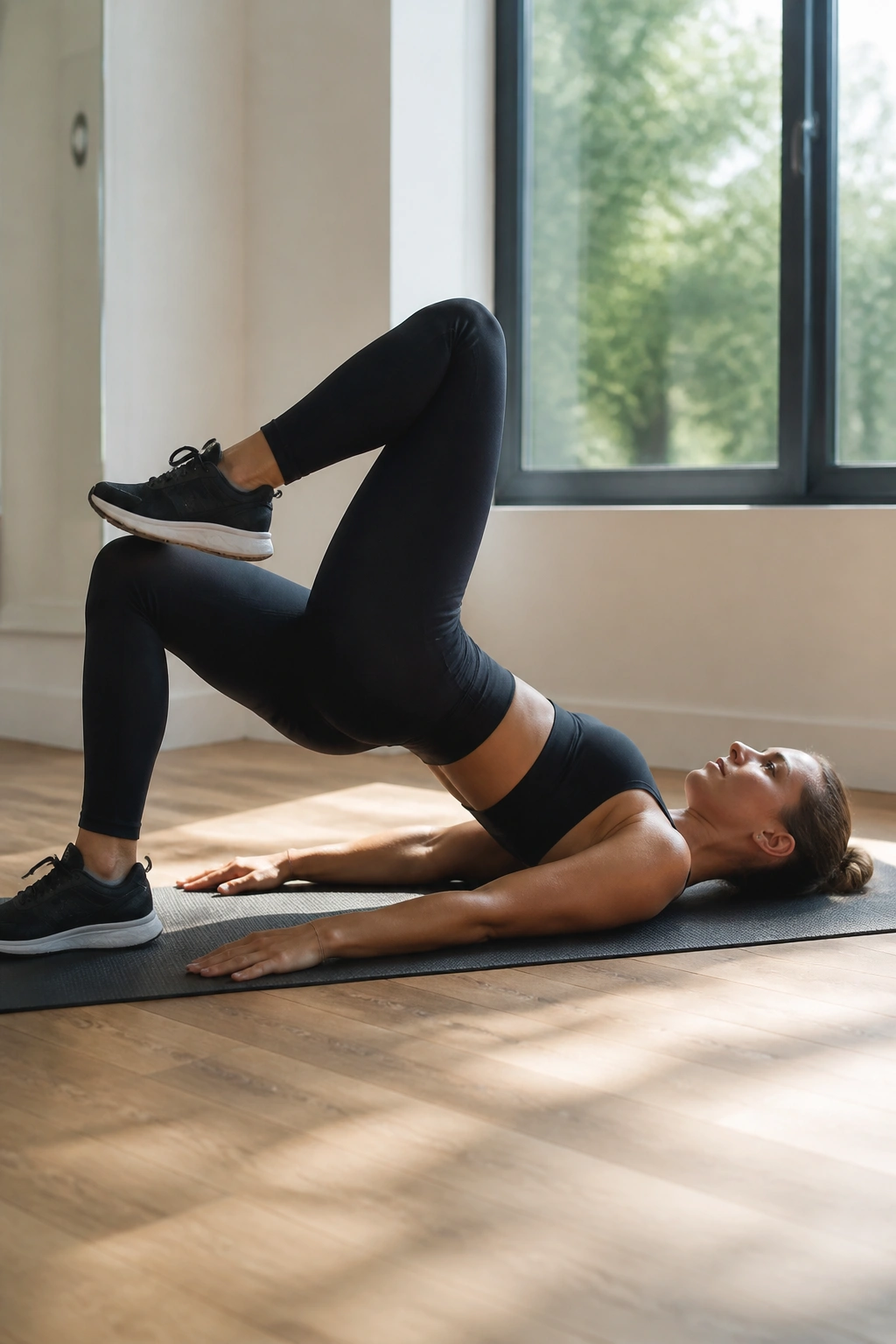
This is an isometric hold combined with an active movement. It is excellent for pelvic stability. Start in the standard bridge position and lift your hips high. While holding that bridge, lift one foot off the ground, bringing your knee toward your chest. Keep your hips absolutely still.
Why This Is Effective
The moment you lift one foot, gravity tries to rotate your pelvis. Your glutes have to fight that rotation. Lower the foot back down, then switch to the other side. Do not let your hips sag even a millimeter. If your hips drop every time you lift a foot, hold the bridge for a few seconds longer between reps to regain your stability.
4. Frog Pumps
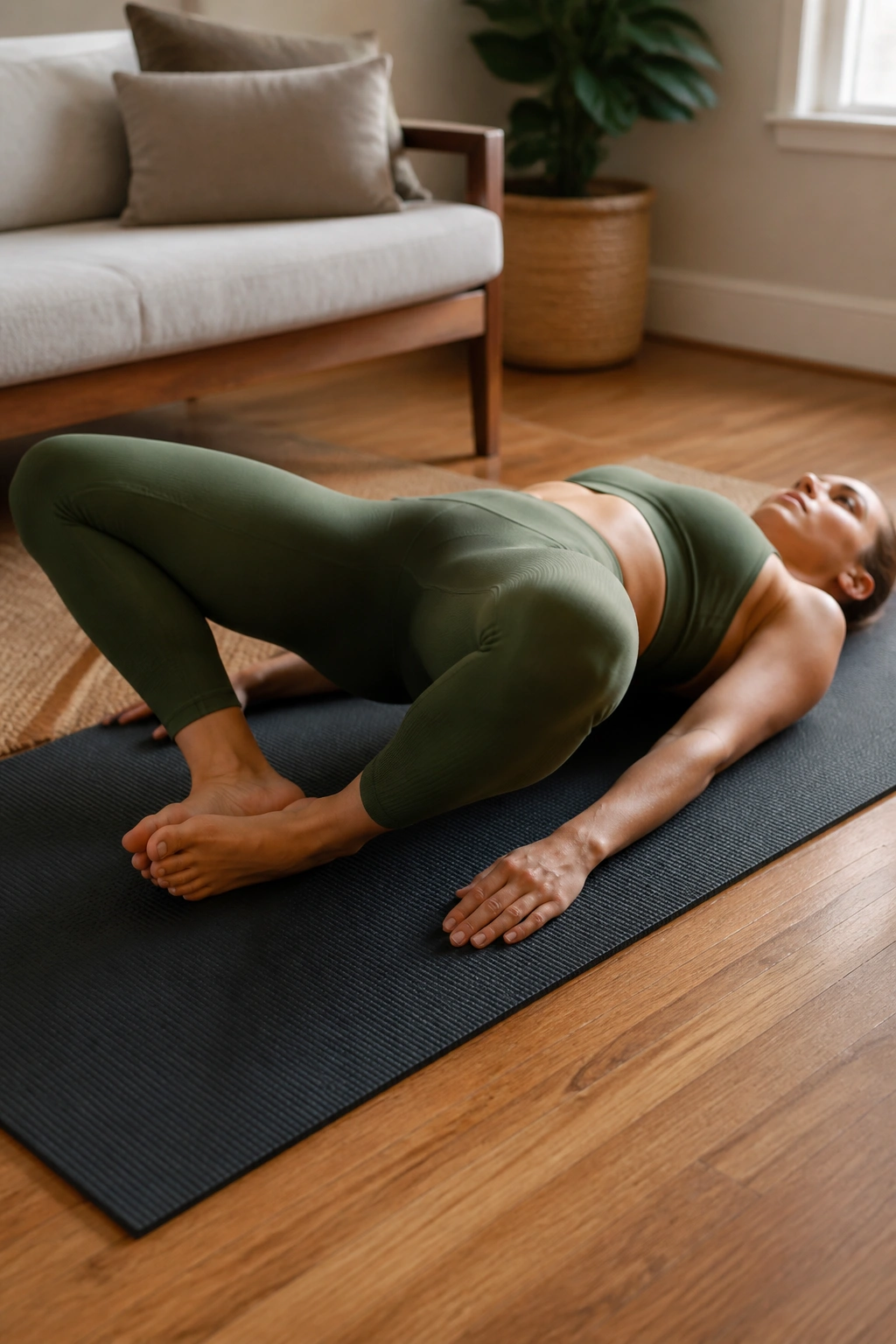
Frog pumps are a unique variation that hits the glutes from a completely different angle. Lie on your back, bring the soles of your feet together, and let your knees fall outward, mimicking a frog’s legs. Your heels should be close to your glutes.
Muscle Engagement
Lift your hips by driving through your heels. Because your knees are wide, the gluteus maximus is put in a shortened position, which makes the contraction feel much more intense. You will likely feel a burn in the upper glutes. It is a smaller range of motion than a traditional bridge, but the constant tension is what makes it so effective for endurance and muscle activation.
5. Bodyweight Squat
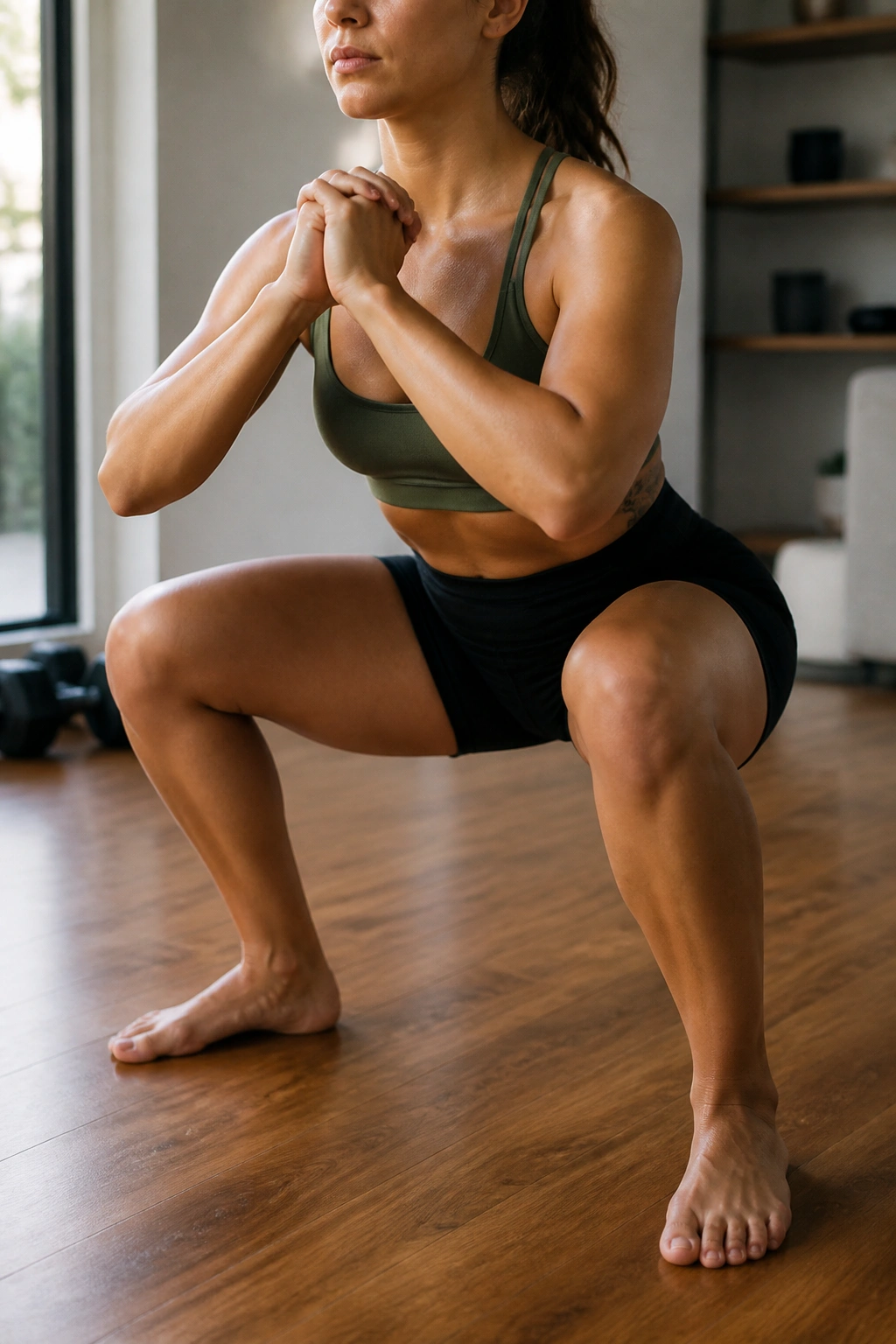
The squat is a foundational human movement, but it is often butchered. To target the glutes, you need to emphasize the hinge at the hips rather than just bending the knees. Stand with feet slightly wider than shoulder-width, toes turned out just a little.
Finding the Depth
Initiate the movement by pushing your hips back, as if you are reaching for a chair behind you. Keep your chest up and your weight balanced across your entire foot, not just the balls of your feet. Go as deep as your mobility allows, but don’t sacrifice form for depth. When you come back up, drive through your heels and squeeze your glutes at the top. Do not hyperextend your lower back at the standing position.
6. Sumo Squat
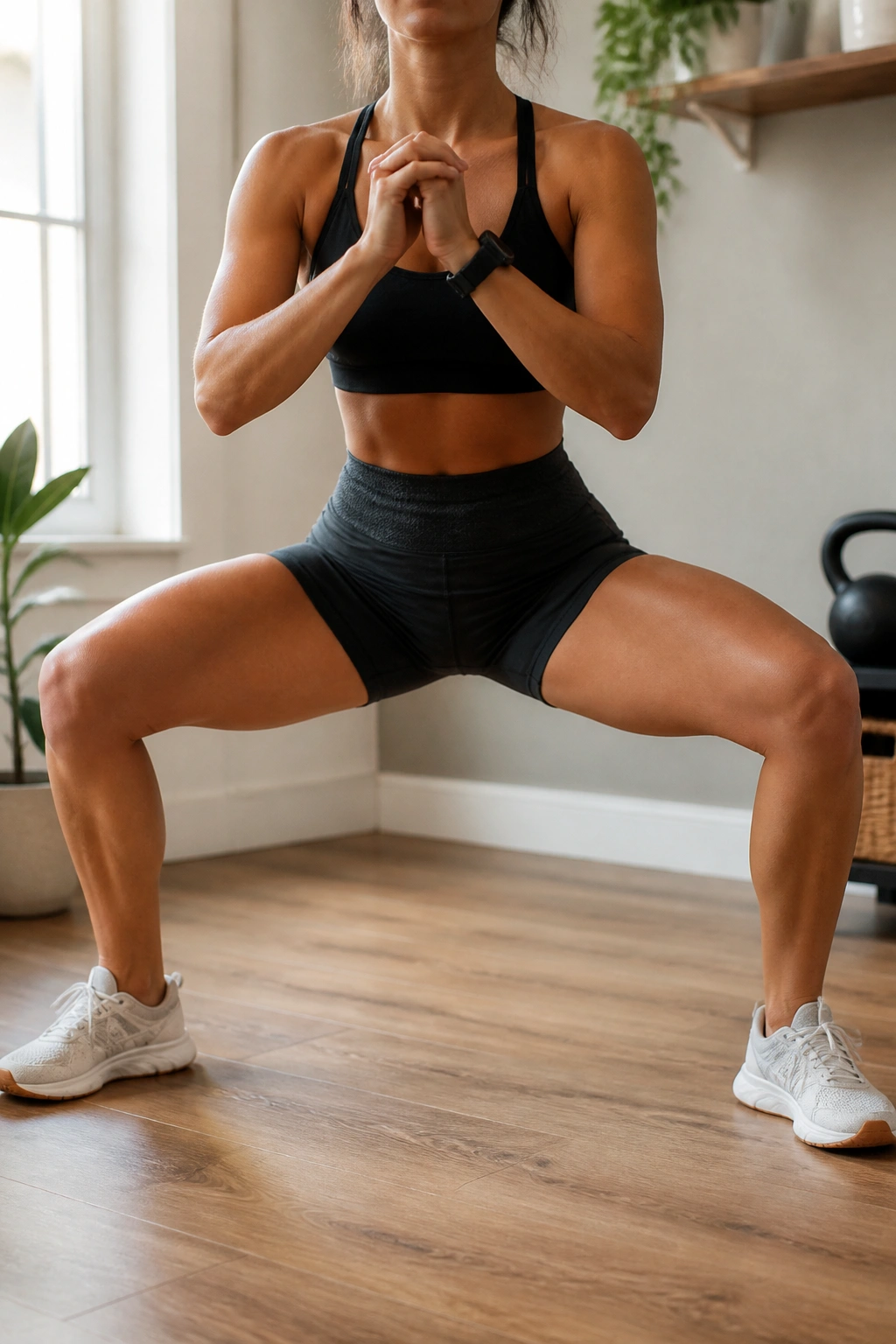
The wide stance of the sumo squat changes the leverage, placing more emphasis on the gluteus maximus and the adductors—the inner thigh muscles. Place your feet significantly wider than your shoulders and point your toes outward at about 45 degrees.
The Mechanics
Because of the width, your knees will naturally track over your toes. This is fine, provided you are pushing your knees outward and not letting them cave inward. Drop your hips straight down, keeping your torso upright. You will feel a deep stretch in the glutes at the bottom of the movement. It requires more balance than a standard squat, so take your time on the descent.
7. Bulgarian Split Squat
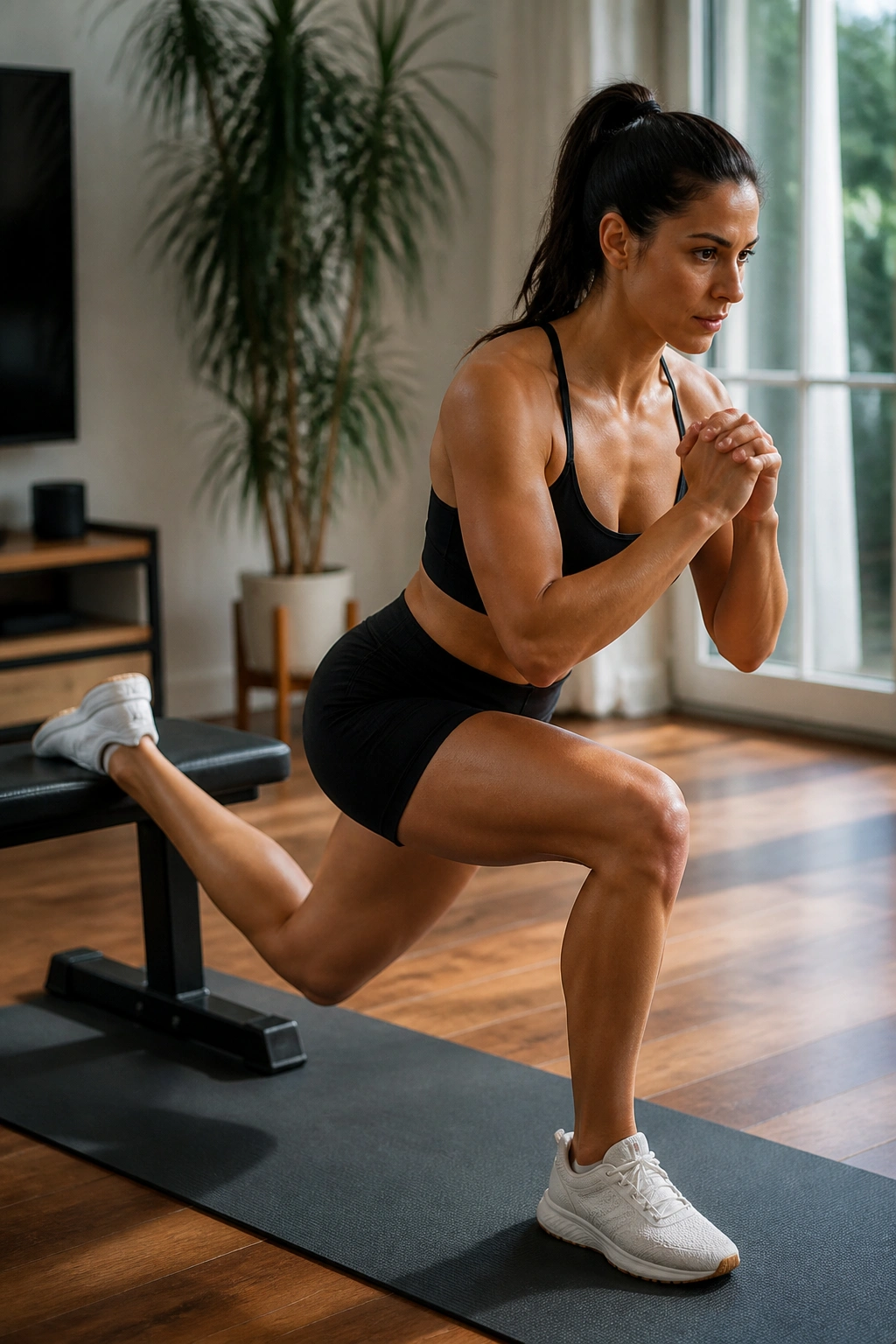
Many people despise these, and that is usually a sign that they are working. This is effectively a single-leg squat with one foot elevated behind you on a couch or chair. It is arguably the best single-leg exercise for glute growth without heavy weights.
Mastering the Setup
Place your back foot on a stable surface. Step your front foot out far enough that when you lower your hips, your front knee stays behind your toes. Lean your torso forward slightly—this is the secret to glute engagement. If you stay completely upright, the quads take the brunt of the work. Leaning forward shifts the load to the hip, forcing the glute to do the heavy lifting.
8. Reverse Lunge
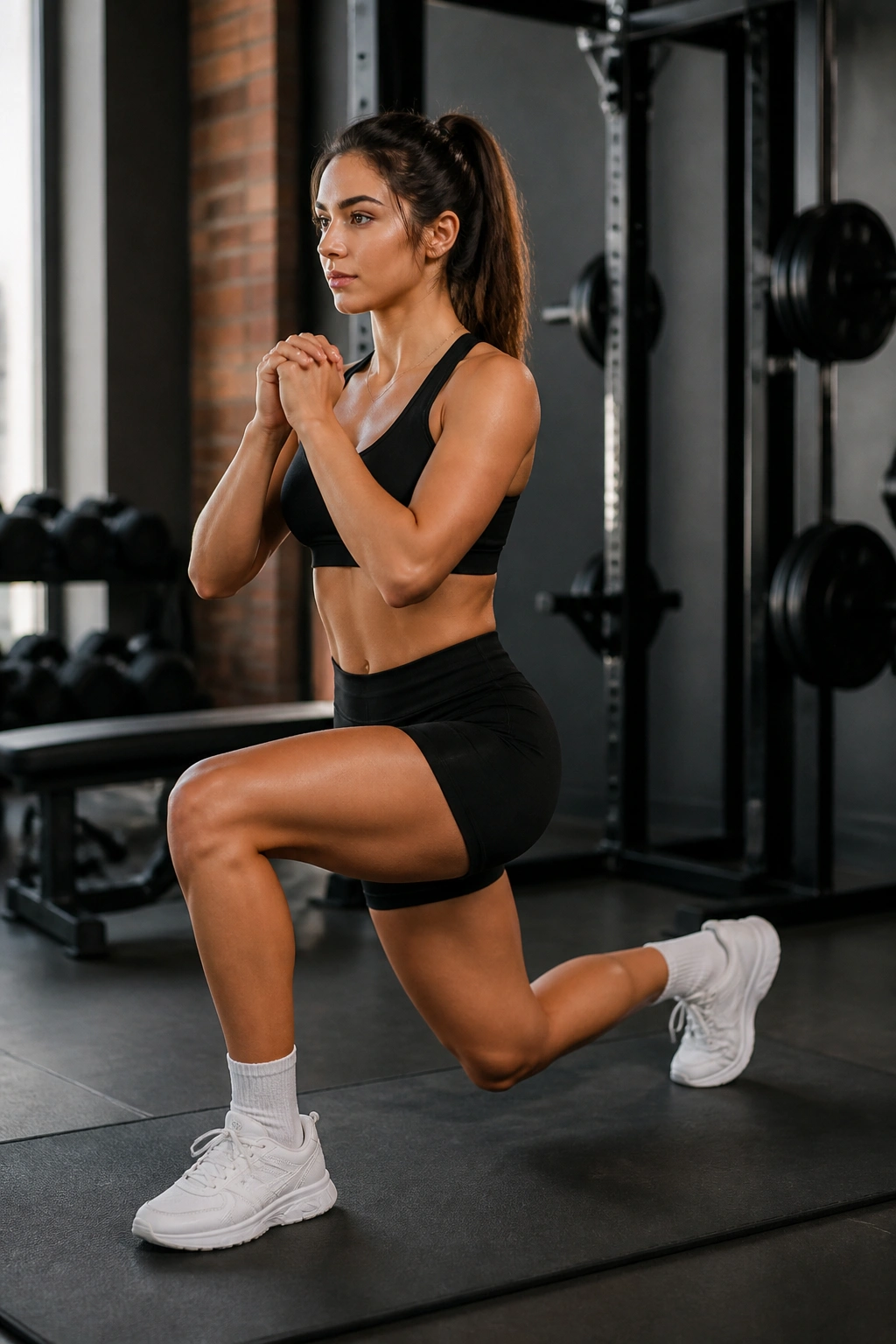
Reverse lunges are generally friendlier on the knees than forward lunges and allow for better glute recruitment. Stand tall, then take a controlled step backward. Drop your back knee toward the ground.
Creating the Right Angles
Aim to have both knees at 90-degree angles at the bottom of the movement. Your front shin should be vertical or slightly tilted back toward you. Drive through the heel of your front foot to return to standing. Because you are pushing backward and up, the front glute has to stabilize and drive the entire movement. It is a fantastic exercise for fixing muscle imbalances between your left and right sides.
9. Curtsy Lunge
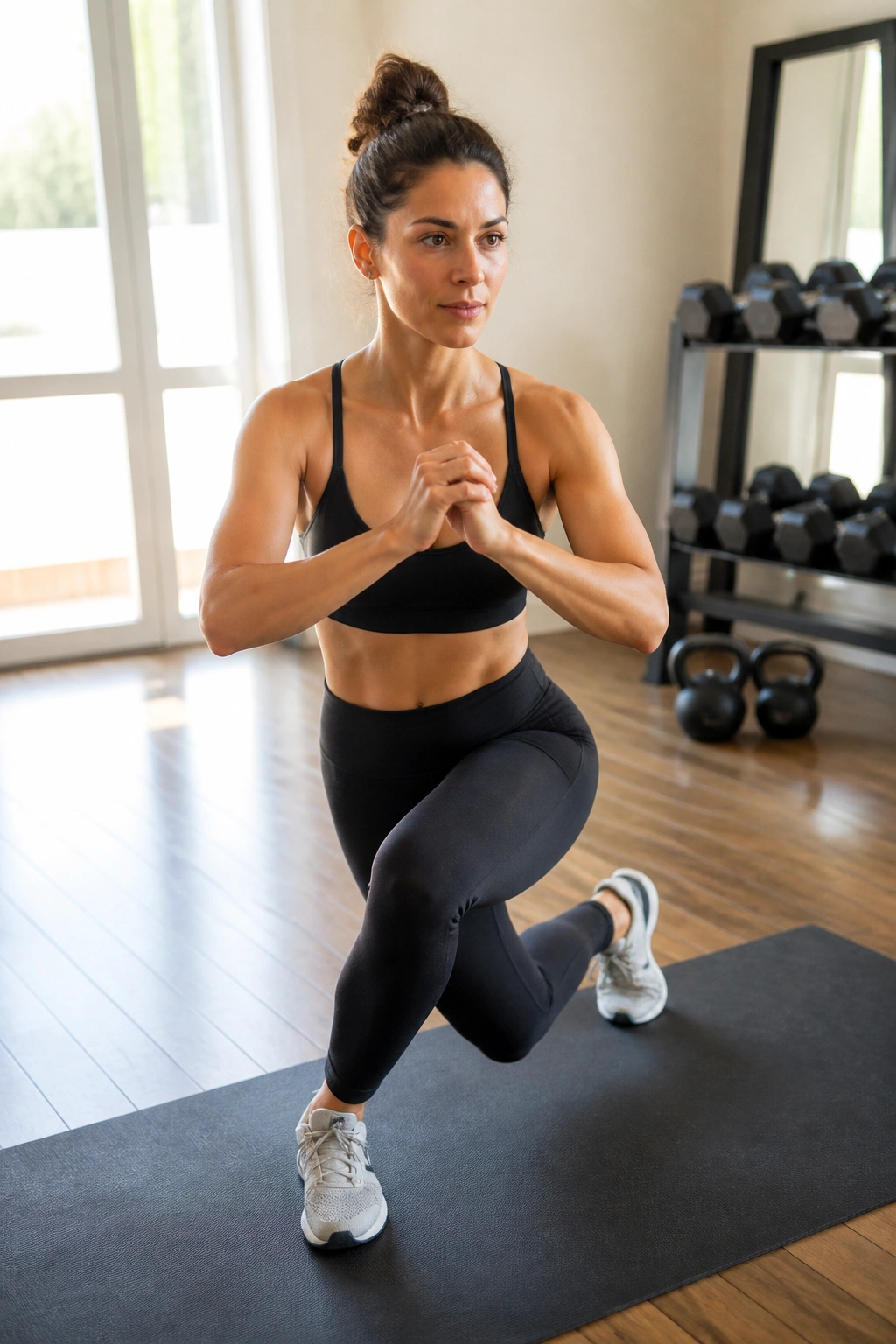
This movement adds a rotational component, which targets the gluteus medius—the muscle responsible for hip stability and the “shelf” look of the glutes. Stand with feet hip-width apart. Take a large step back and across behind your other leg, like you are performing a curtsy.
Why Rotation Matters
The crossing motion creates a stretch in the gluteal muscles that a straight-back lunge cannot replicate. Keep your hips facing forward as much as possible. It is easy to let your hips follow your back foot, but fighting that rotation is what forces the gluteus medius to fire. Do not rush this; control the eccentric, or lowering, phase of the movement.
10. Lateral Lunge
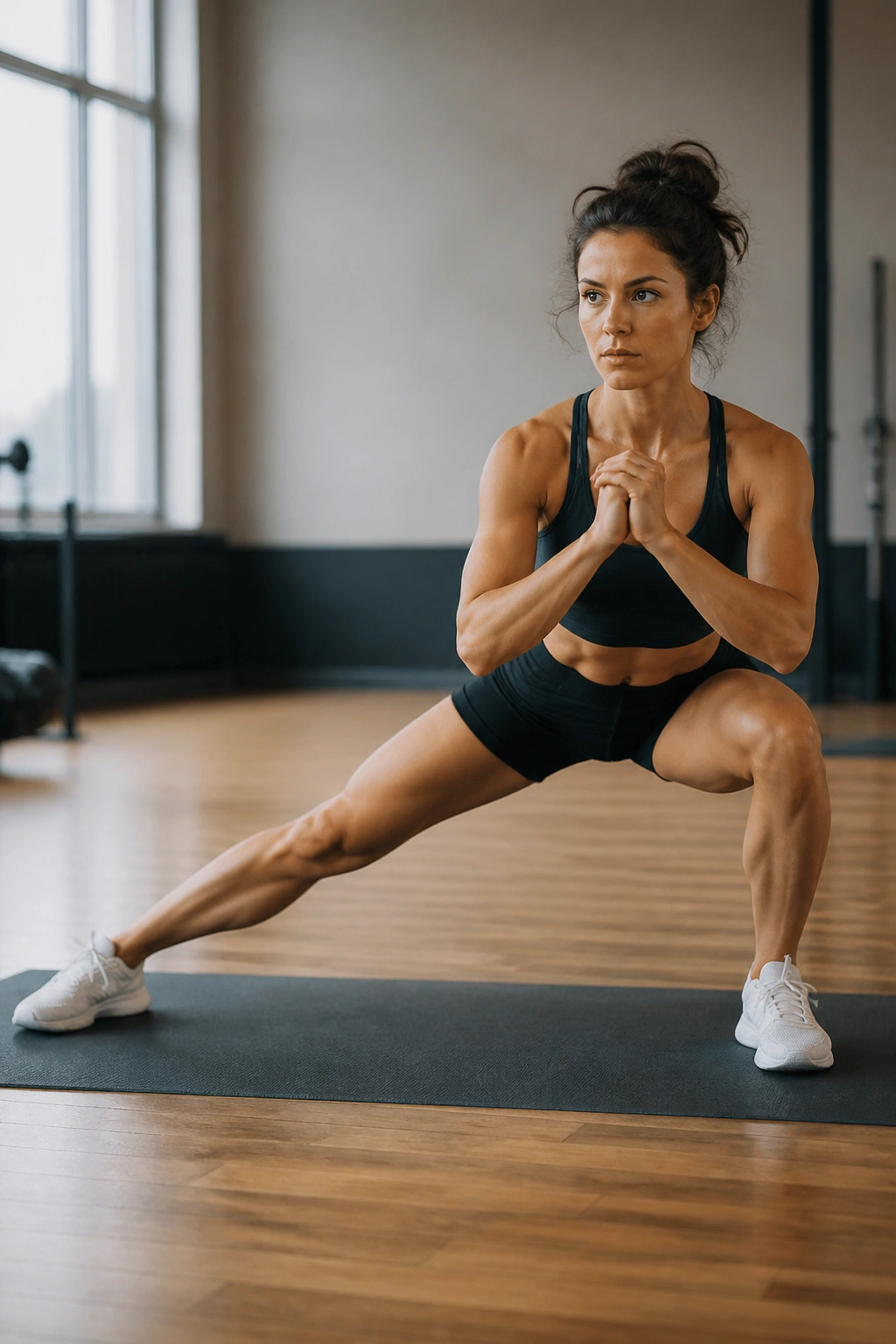
Most of our movement in daily life is forward and backward. Lateral lunges train you in the frontal plane, which is essential for healthy hips and functional strength. Stand with a wide stance, toes pointed straight ahead.
The Shift
Shift your weight to one side, pushing your hips back as if you are trying to sit down on just that one leg. Keep the other leg perfectly straight. Drive back to the center using the heel of the bent leg. You will feel a massive stretch in the working glute. If you aren’t feeling it, push your hips further back and ensure your knee is tracking over your middle toes.
11. Step-Up
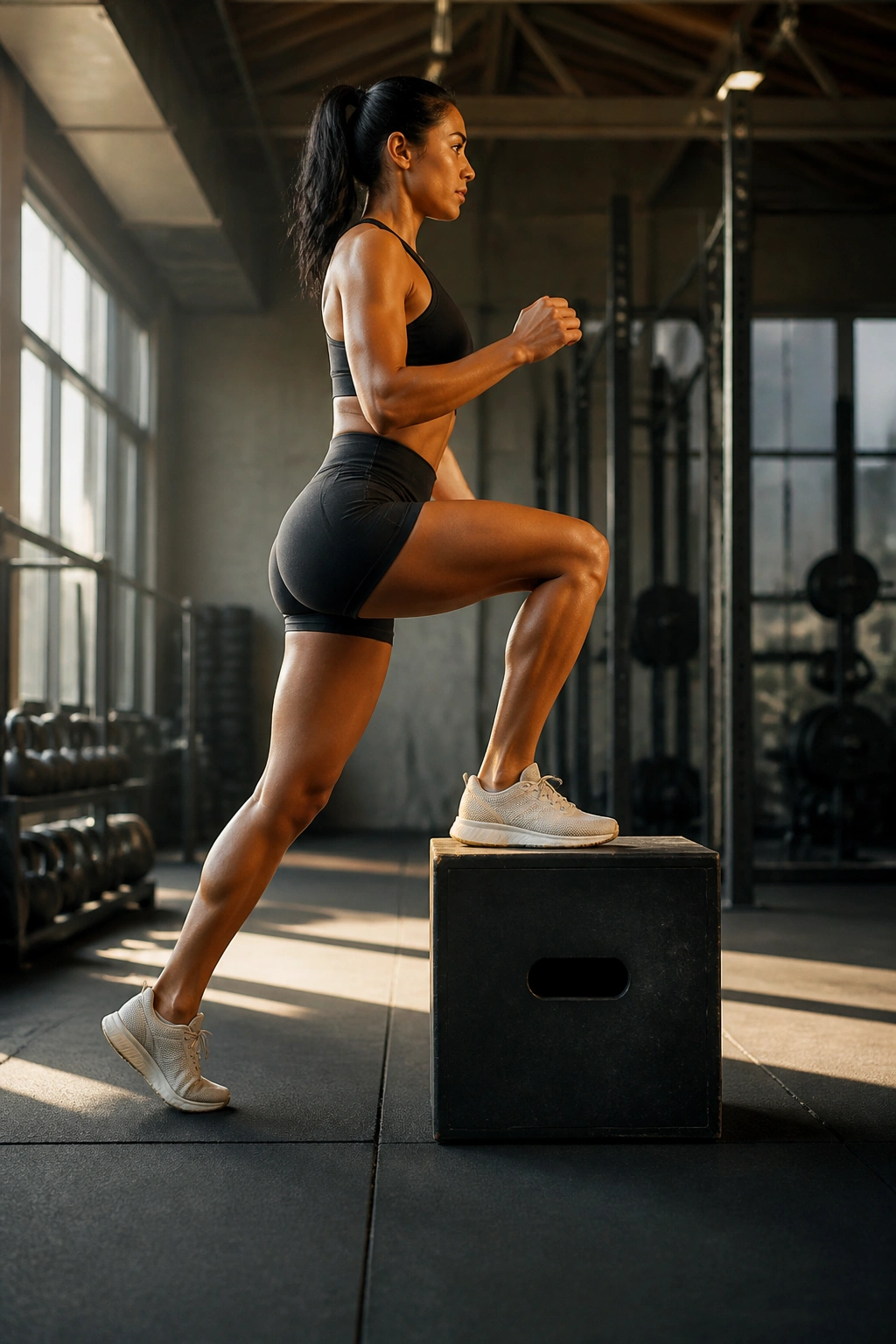
Find a chair, bench, or sturdy box. This exercise relies on the principle of concentric overload—meaning you are doing most of the work pushing yourself up. The key here is the tempo. Do not jump off the ground to get yourself onto the chair.
Precision Matters
Place your whole foot on the chair. Lean forward slightly and drive through that heel to stand up. The moment your foot hits the chair, that glute should be engaged. Do not use your back foot to push off the ground; use it only for balance. The higher the step, the more glute recruitment you get, but do not go so high that you have to round your back to get your foot on top.
12. Donkey Kicks
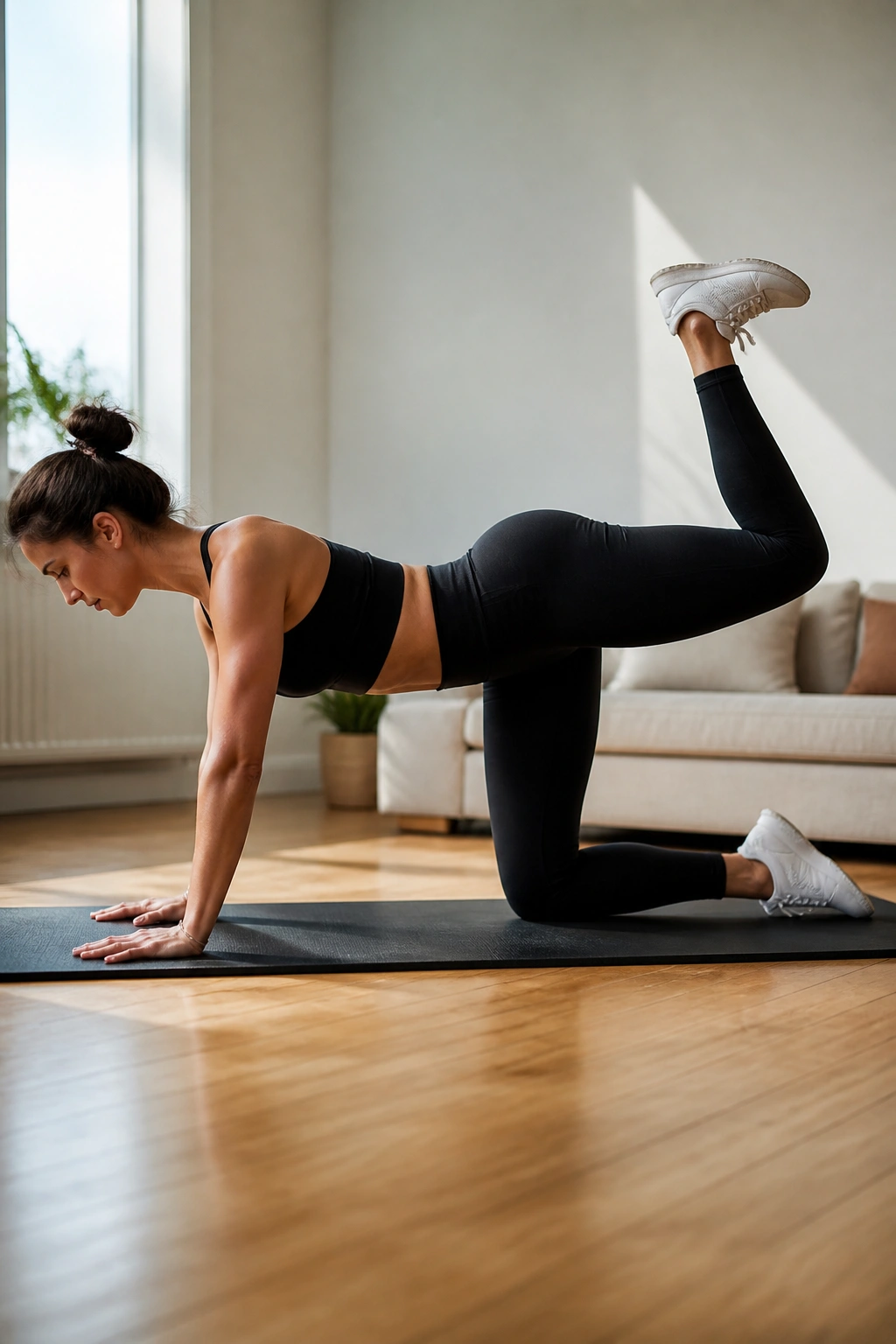
These are a staple for a reason. They isolate the gluteus maximus while minimizing quad and hamstring involvement. Start on all fours, hands under shoulders and knees under hips. Keep your back flat—do not let it arch.
Isolating the Muscle
Keeping your knee bent at 90 degrees, kick one leg up toward the ceiling as if you are trying to imprint your footprint on the roof. Squeeze the glute hard at the top. The mistake most people make is arching their lower back to get the leg higher. Your back should remain completely still. If your leg doesn’t go very high, that is fine. It is about the contraction, not the height.
13. Fire Hydrants
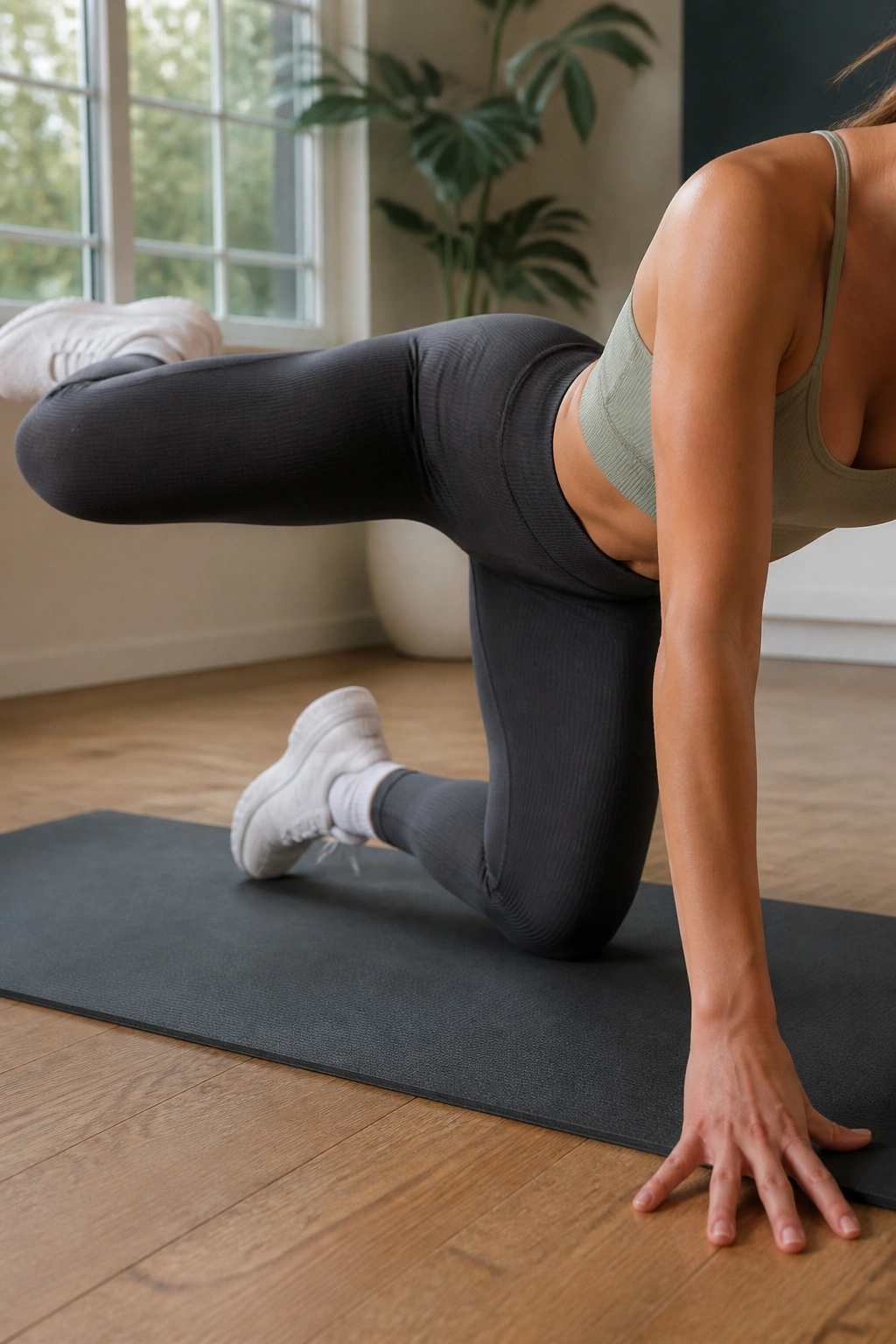
While donkey kicks focus on extension, fire hydrants focus on abduction—moving the leg away from the midline of the body. This is a top-tier exercise for targeting the upper glutes and the hip stabilizers.
The Execution
Remain on all fours. Keeping your knee bent at 90 degrees, lift your leg out to the side like a dog at a fire hydrant. Keep your hips square to the floor. If you start leaning to the opposite side to get the leg higher, you are cheating. Only lift the leg as high as you can while keeping your torso perfectly stable. It is a small movement, but after 15 reps, you will feel the burn deep in the side of your hip.
14. Bird-Dog
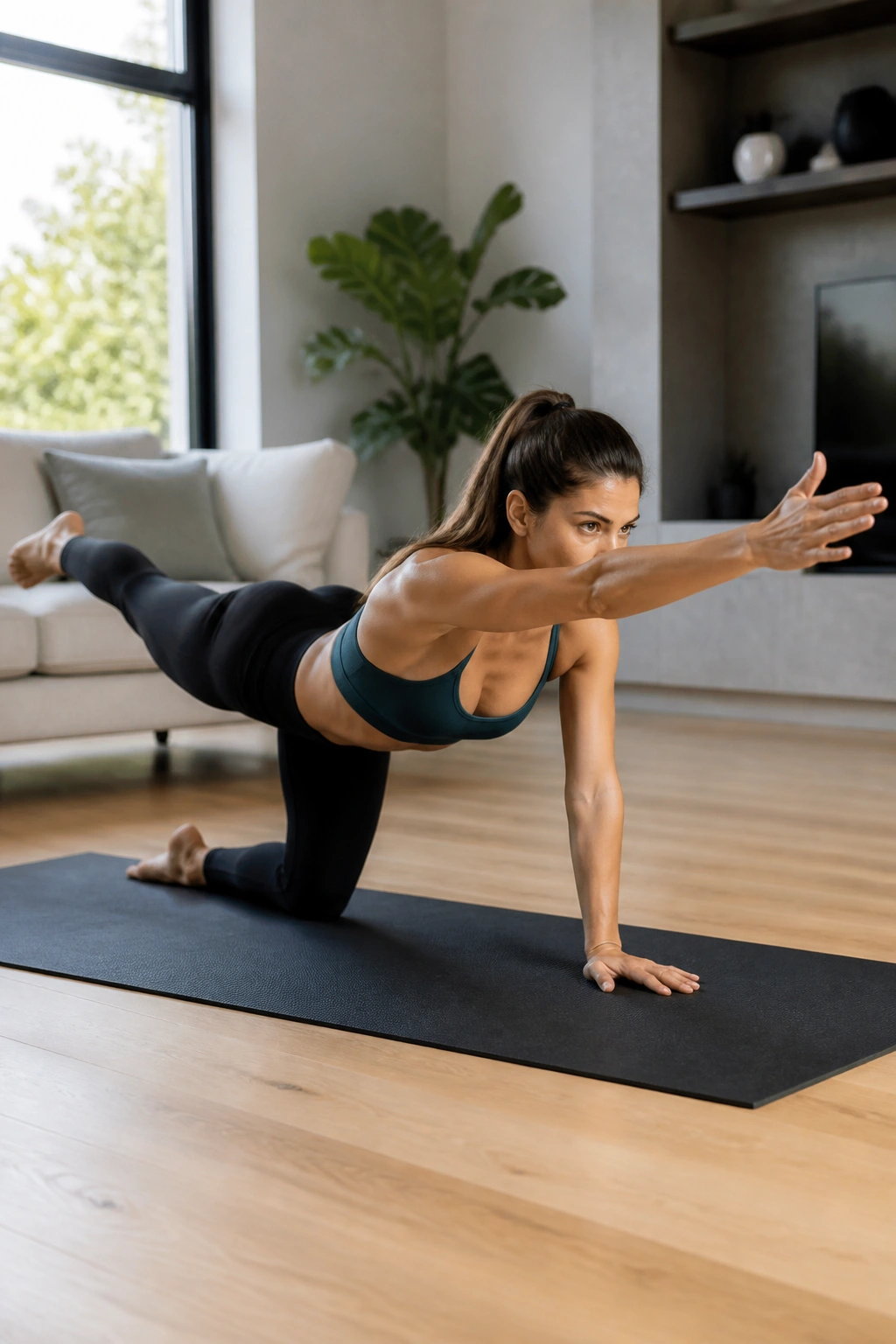
This is often classified as a core exercise, but it is a masterclass in glute stability and posterior chain integration. Start on all fours. Simultaneously extend your right arm forward and your left leg backward.
Achieving Stability
Do not let your hips rotate. Reach through your heel, not your toes, and squeeze your glute at the top of the extension. Pause for a second. Return to center with control, then switch sides. This move teaches you to stabilize your spine while your glutes are working, which is a crucial skill for preventing back pain during heavier exercises.
15. Clamshells
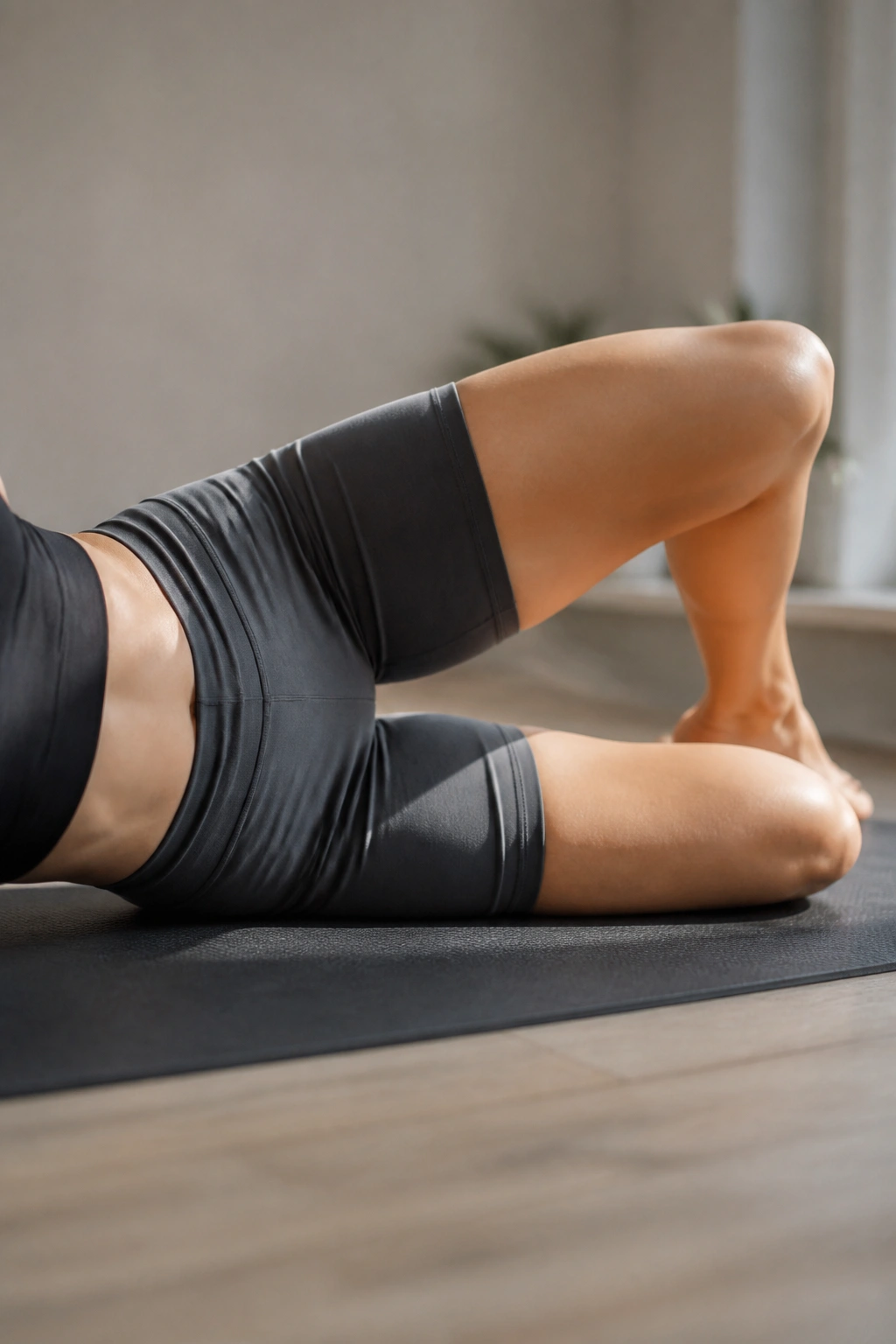
Clamshells look like a boring exercise, but they are incredibly effective for the gluteus medius. Lie on your side with your legs stacked, knees bent at 45 degrees. Keep your feet touching.
The Burn
Keeping your feet together, open your top knee like a clamshell. Squeeze your glutes at the top of the range. Do not let your hips roll backward. The rotation should come entirely from your hip joint. This is a high-repetition exercise. If you are doing fewer than 20 reps, you are missing out. You want to keep going until you feel that deep, intense burn in the side of your hip.
16. Hip Thrusts (Floor)
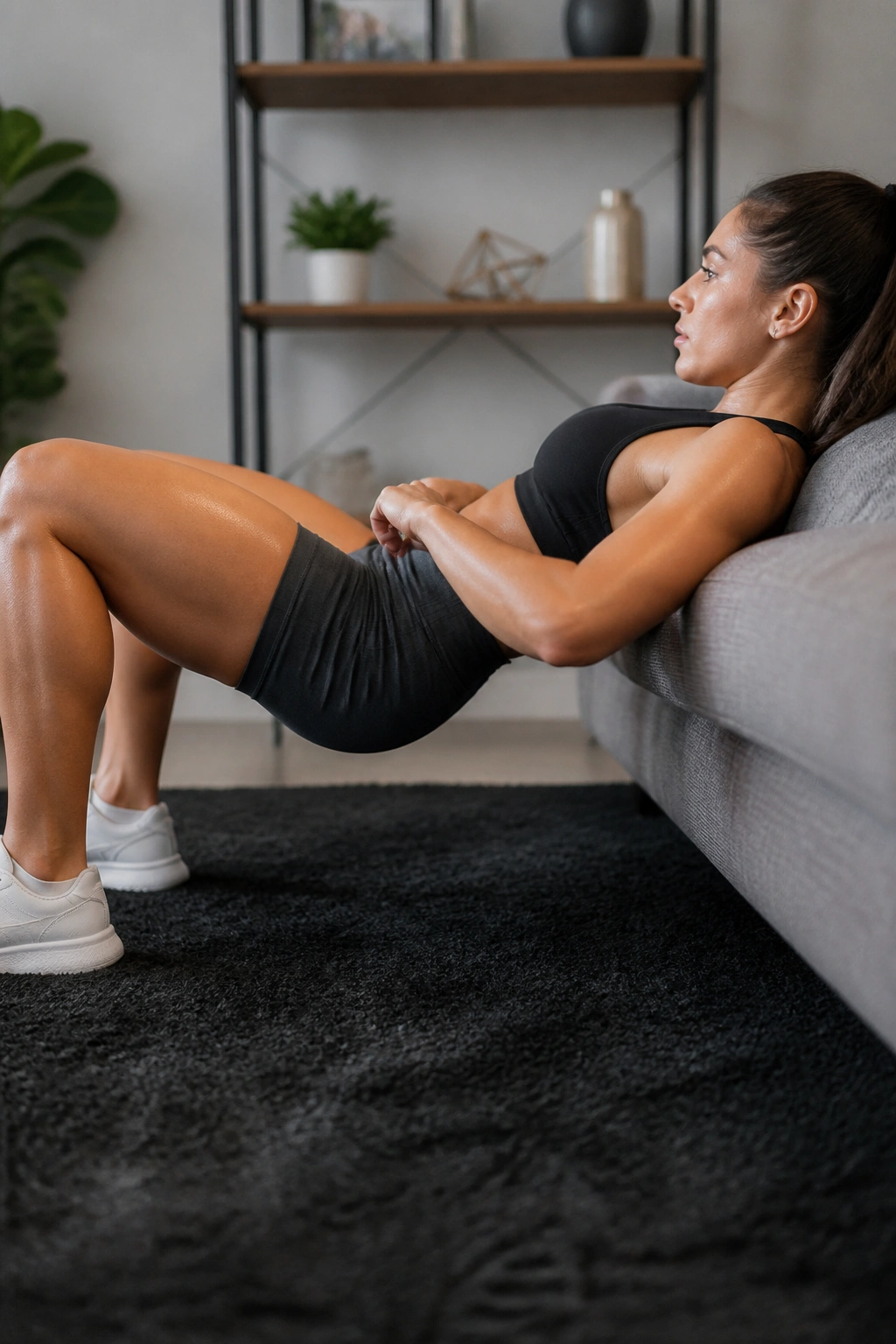
While the classic bridge is great, you can modify it to simulate a hip thrust by performing it against the edge of a couch or a sturdy chair. This elevates your shoulders and increases the range of motion.
The Range of Motion
Place your upper back against the edge of the couch. Plant your feet firmly on the floor. Drop your hips toward the floor, getting a deep stretch in the glutes, and then drive your hips up toward the ceiling. Because your torso is elevated, you can get a better angle for glute extension than you can on the floor. Keep your chin tucked to your chest throughout the movement to keep your spine neutral.
17. Glute Kickbacks (Standing)
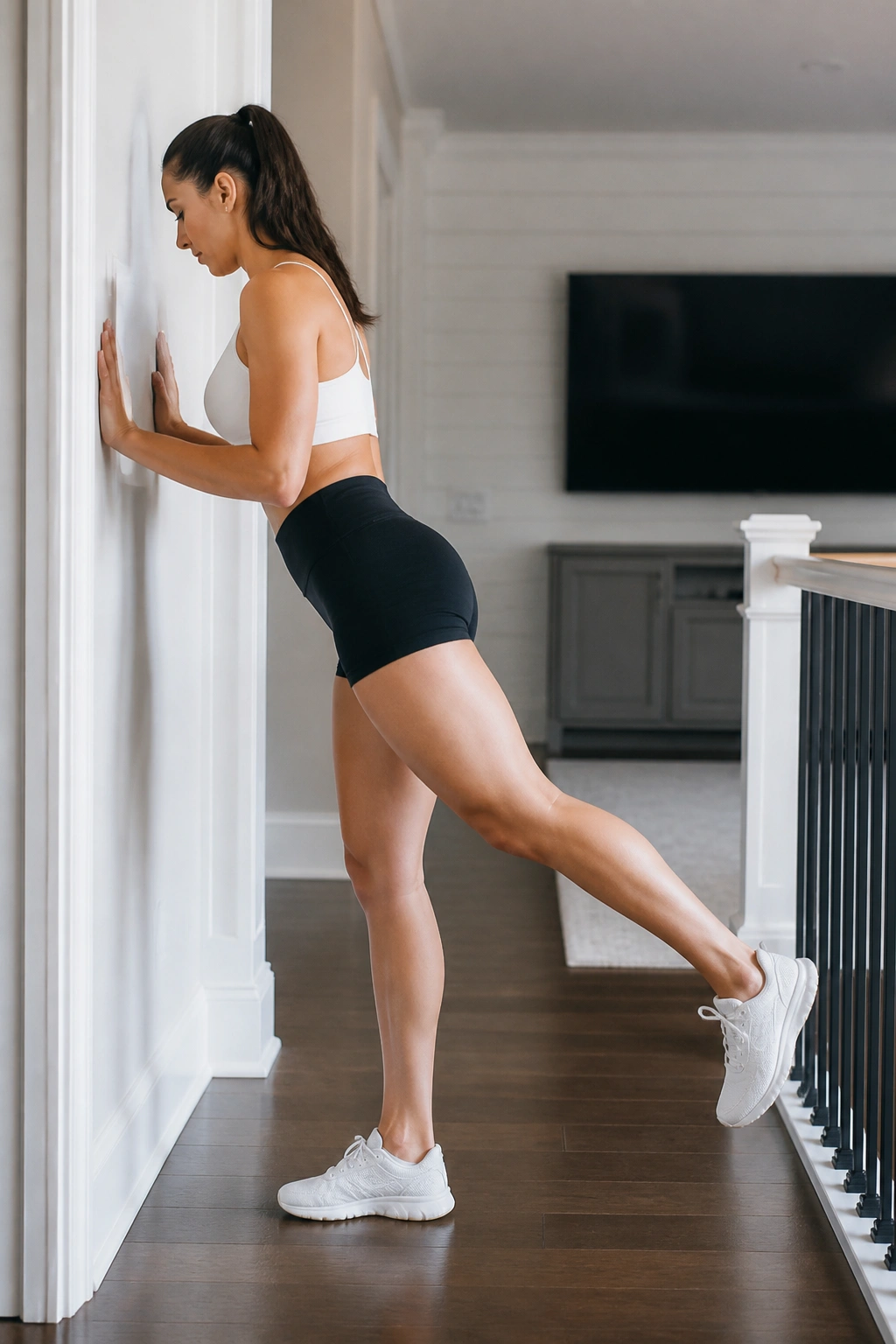
This variation is fantastic because it requires balance, which recruits more muscle fibers to keep you upright. Stand facing a wall or holding onto the back of a chair for balance.
Focusing on Tension
Keep your back straight and your core braced. Slowly extend one leg straight back behind you. Do not swing the leg; move it with intention and control. Squeeze the glute at the apex of the movement for a full second. Return the foot to the floor. Focus on keeping your weight in the standing leg’s heel. If you feel your lower back arching, you are kicking too high. Keep the range small and the tension high.
18. Skater Hops
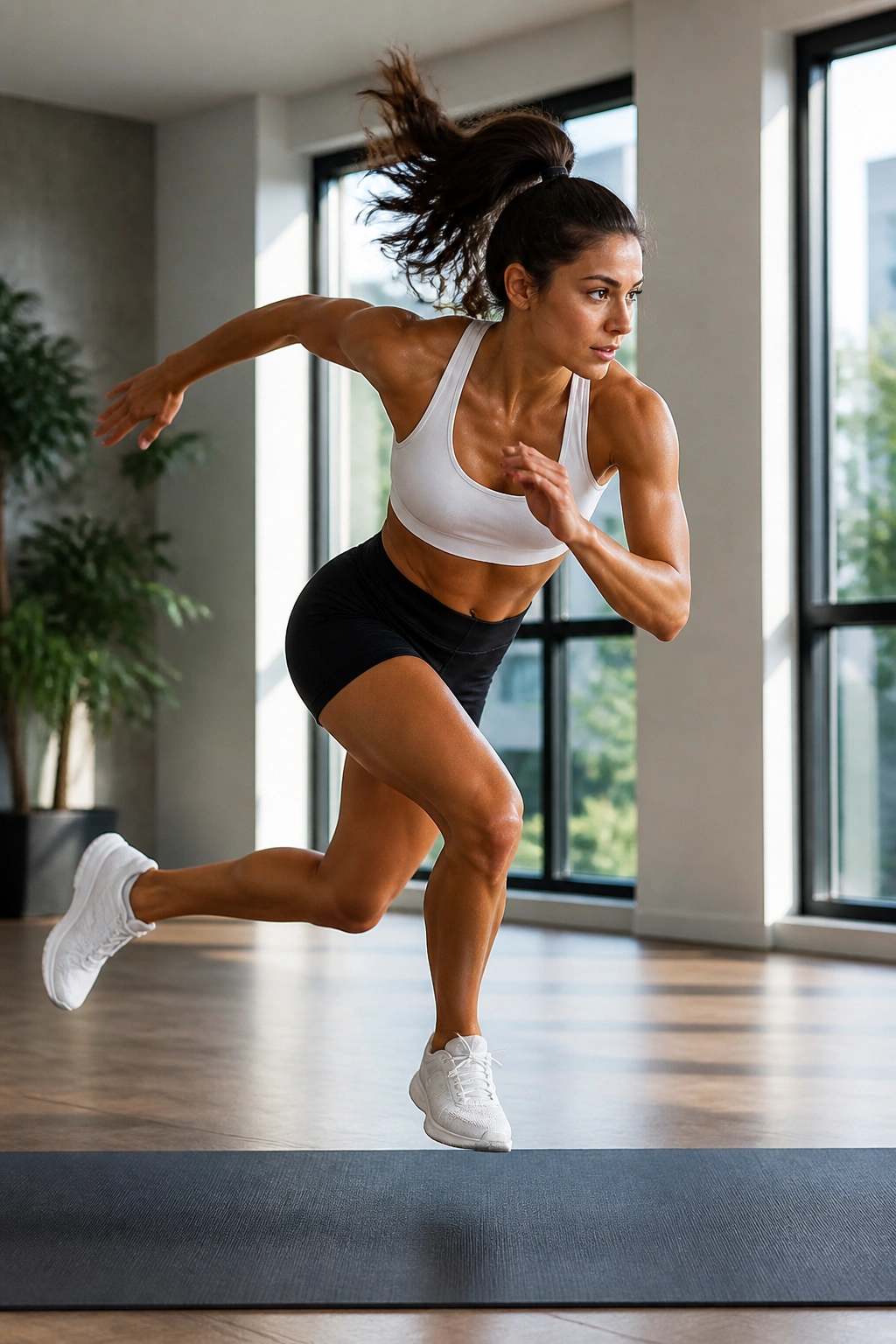
This is a plyometric movement that targets glutes through explosive, lateral power. Start standing. Hop to the right, landing on your right foot with your left leg sweeping behind you.
Dynamic Stability
Stick the landing. You should land softly, absorbing the weight with your glute. As soon as you stabilize, explode off that right foot to hop to the left. The landing is more important than the hop itself. If you are wobbling all over the place, slow down. You need to control your body weight in space to engage the stabilizing muscles of the glute effectively.
19. Single-Leg Romanian Deadlift (Bodyweight)
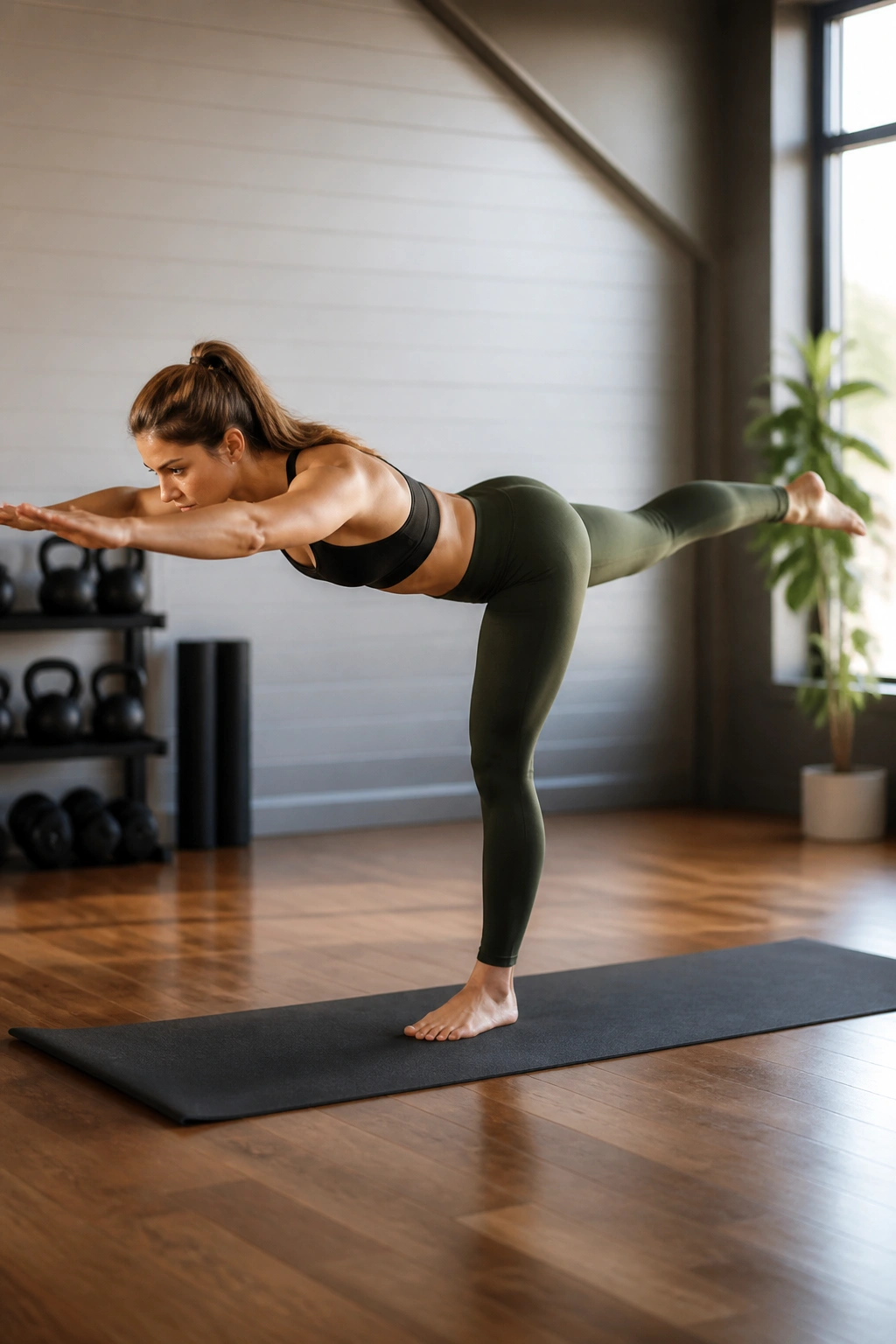
This is the ultimate test of balance and posterior chain control. Stand on one leg with a slight bend in the knee. Hinge at your hips, sending your other leg straight back behind you as you lower your torso.
Maintaining Tension
Your body should form a straight line from your head to your heel at the bottom of the movement. Do not rotate your hips. Squeeze the glute of your standing leg to pull yourself back to an upright position. If you can’t keep your balance, keep your back toe on the floor and use it like a kickstand. It is more important to have good form and work the muscle than it is to look impressive by wobbling around.
20. Prone Glute Extension
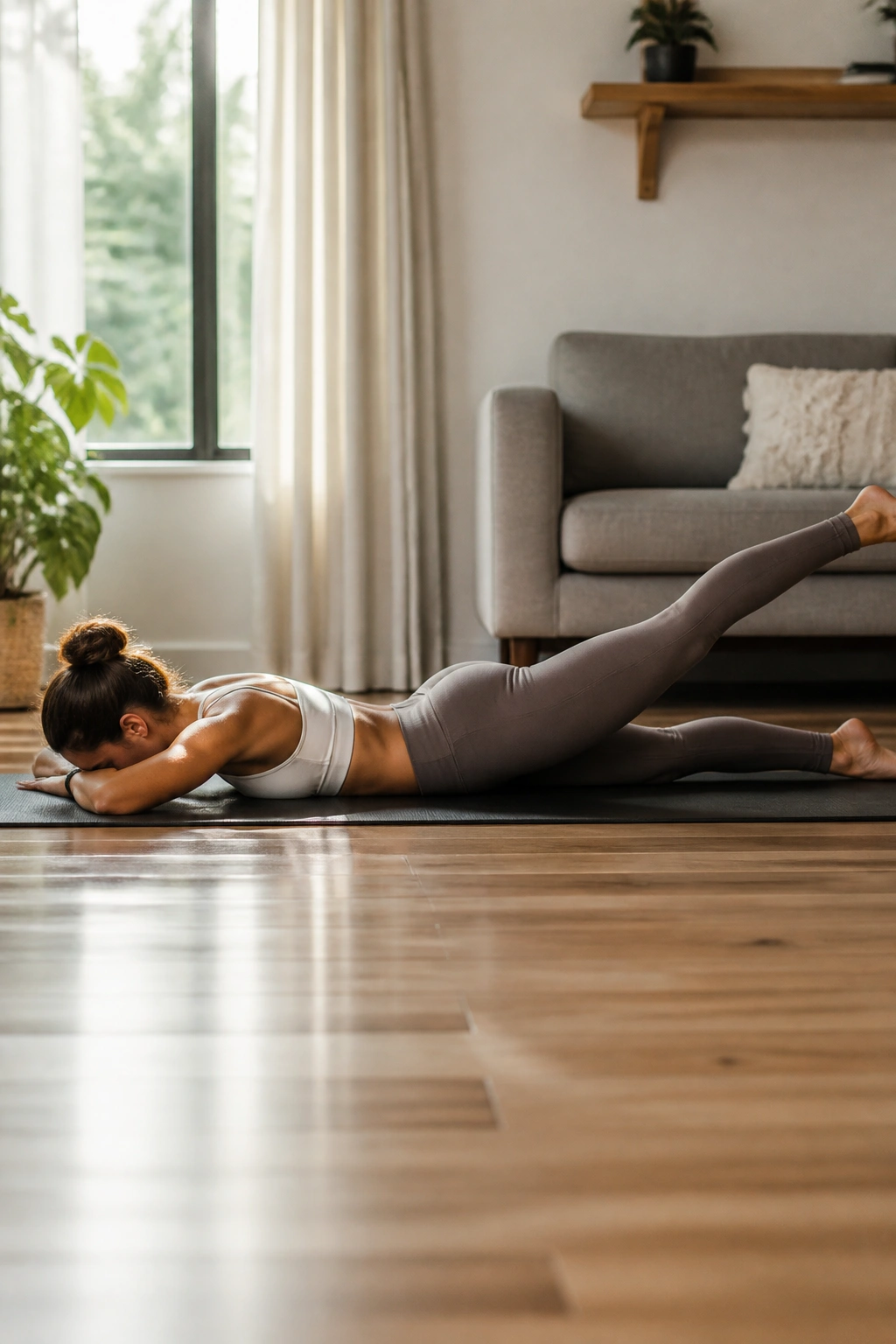
Sometimes called “the swimmer” or “prone leg lifts,” this is a straightforward isolation move. Lie on your stomach, forehead resting on your hands. Engage your core so your belly button pulls slightly away from the floor.
The Final Push
Lift one leg straight up off the floor, focusing entirely on the glute muscle to initiate the movement. Keep the leg straight—do not bend the knee. Hold for a second at the top, then lower it back down without letting it touch the ground. Repeat for all reps on one side before switching to the other. You will find that this exercise requires almost no equipment but offers a high degree of targeted muscular contraction.
Final Thoughts
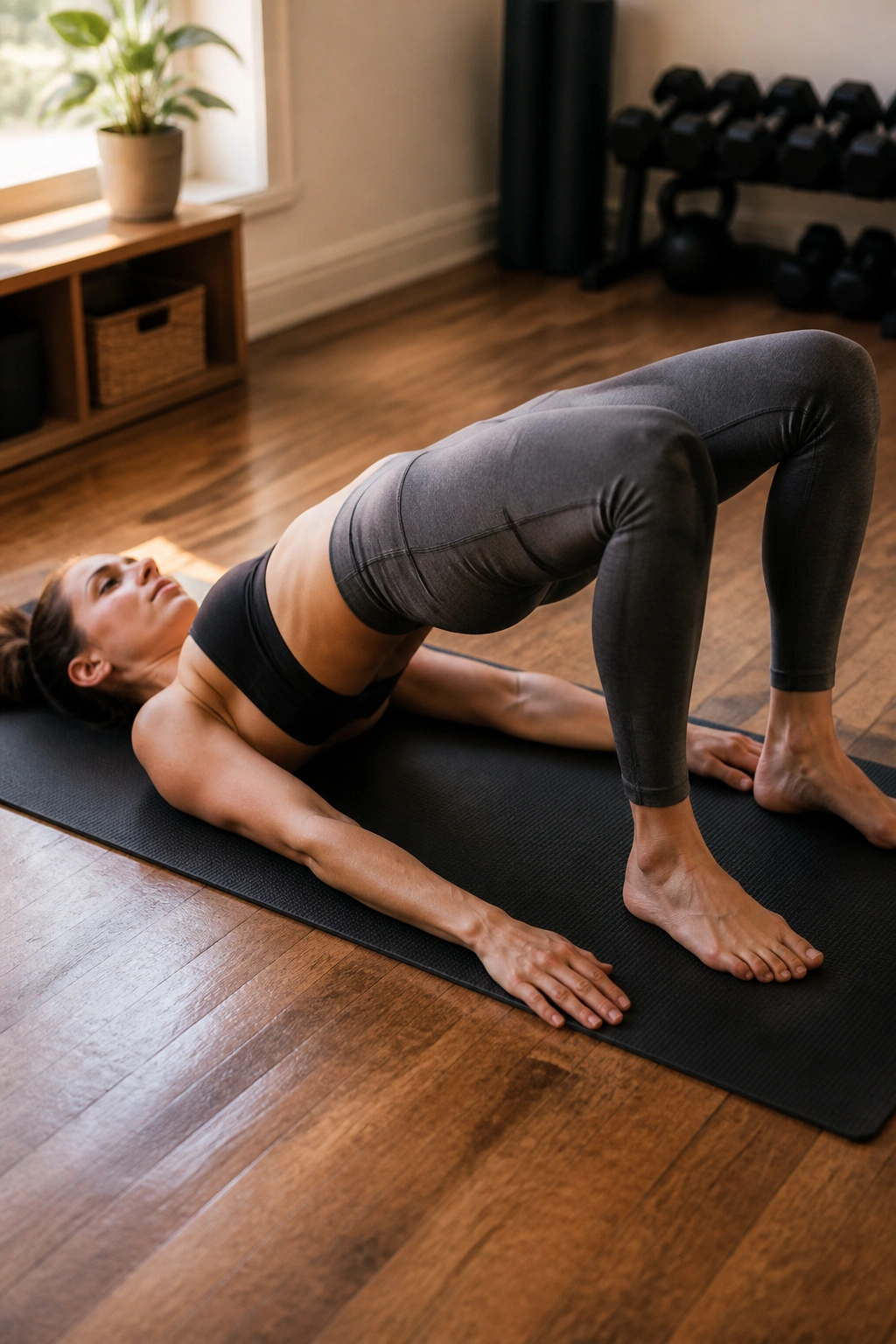
Building glute strength without equipment is not about finding the most complicated move; it is about perfect execution. You could do hundreds of repetitions of these exercises, but if you are using your lower back or quads to cheat, you will not see the results you want. Focus on the mind-muscle connection. Slow down. Feel the glute muscle stretch at the bottom and contract at the top.
Consistency matters more than intensity on any single day. If you struggle to feel a certain exercise in your glutes, take a step back. Reduce your range of motion, slow down your tempo, or adjust your foot placement. The glutes are stubborn muscles for many people, especially those who spend a lot of time sitting, but they respond incredibly well to dedication. Start with a few of these movements, master the form, and over time, add more volume. Your posterior chain will thank you.
