



The gluteal fold, that specific line where your thigh meets the bottom of your glute, is notoriously difficult to target. You can squat until you drop and lunge across every gym floor in the city, but if your biomechanics aren’t prioritizing hip extension under tension, that lower glute area often remains soft or underdeveloped. Many people spend their entire training career focusing on high-volume quad work, mistakenly thinking their glutes will naturally fill out. The anatomy tells a different story. To build the underbutt, you need to combine heavy compound movements with specific isolation work that targets the gluteus maximus at its most stretched position.
Building a lifted, sculpted lower glute is as much about control as it is about weight. You are looking for muscle fiber recruitment, not just movement for the sake of movement. If you find yourself rushing through these exercises or using momentum to swing the weight, you are missing the point entirely. The “lift” you want comes from hypertrophy—the physical growth of the muscle—and that only happens when you put the muscle under significant load and tension.
Stop looking for shortcuts. There is no magic exercise that fixes this overnight. It takes thousands of repetitions, a focus on the eccentric phase of every lift, and the discipline to squeeze at the top of every movement. You need to stop thinking about your glutes as a single, uniform block and start respecting the difference between the upper gluteus medius and the lower gluteus maximus. Let’s get to work on the specifics.
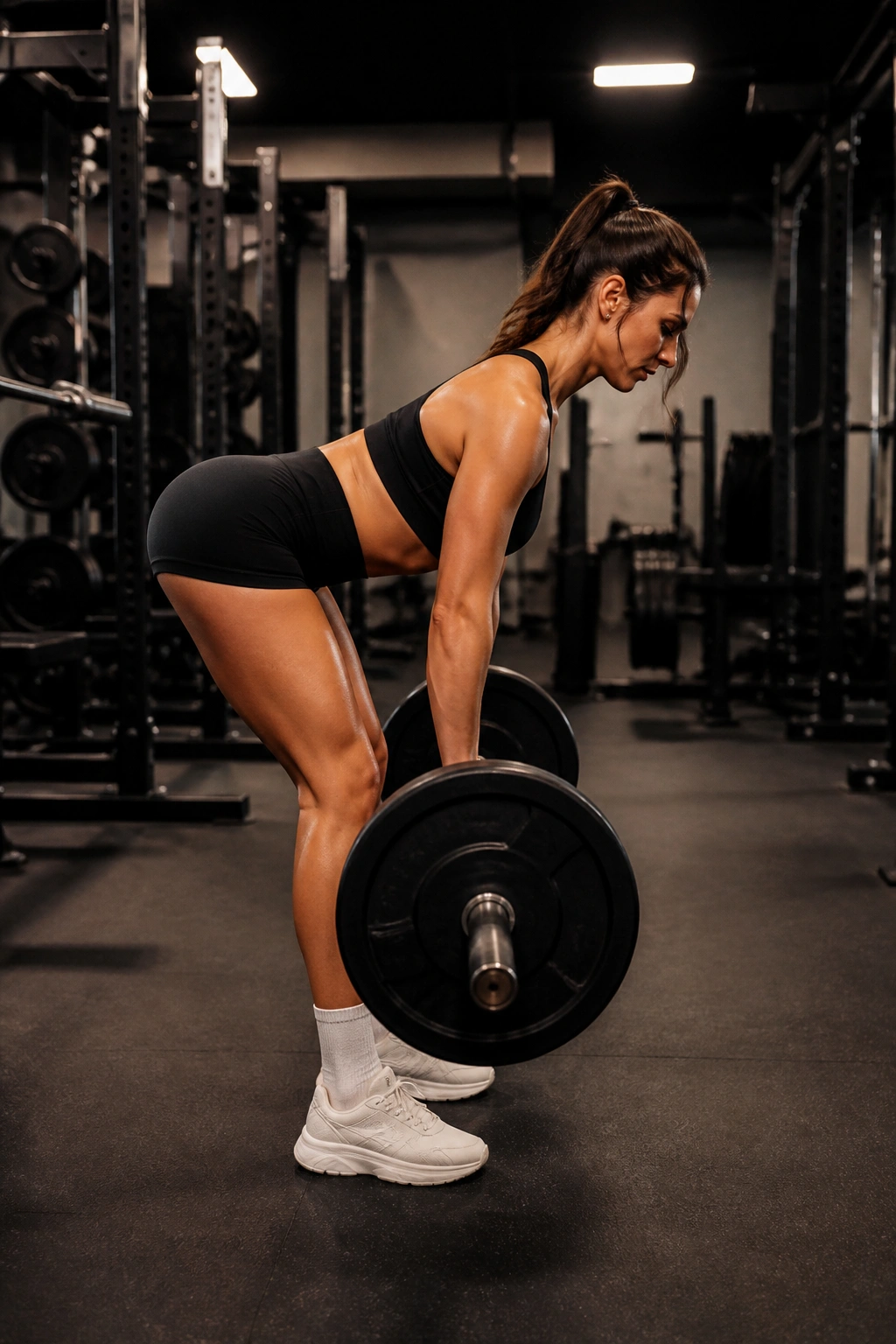
1. Stiff-Legged Romanian Deadlifts
The Romanian Deadlift (RDL) is the non-negotiable king of glute development. If you are not doing these, you are wasting your time. The secret is not in how much weight you pull, but in how far you push your hips back. You want to feel a deep, almost uncomfortable stretch in the lower crease of your glute.
Mastering the Hinge
Keep your knees slightly bent—never locked out—but do not let them travel forward as you lower the bar. Your goal is to keep the barbell glued to your legs as it descends toward your shins. If the bar drifts away from your body, your lower back takes the load instead of your glutes.
Key Performance Cues
- Push your hips back as if you are trying to close a door behind you with your glutes.
- Keep your lats engaged and your shoulders pulled back to protect your spine.
- Lower until you feel maximum tension in the hamstrings and glutes, then drive your hips forward to return to the starting position.
Pro tip: Imagine you are trying to squeeze a penny between your glutes at the very top of the movement. This simple mental cue forces a contraction that most people miss by simply standing up straight.
2. Weighted Barbell Hip Thrusts
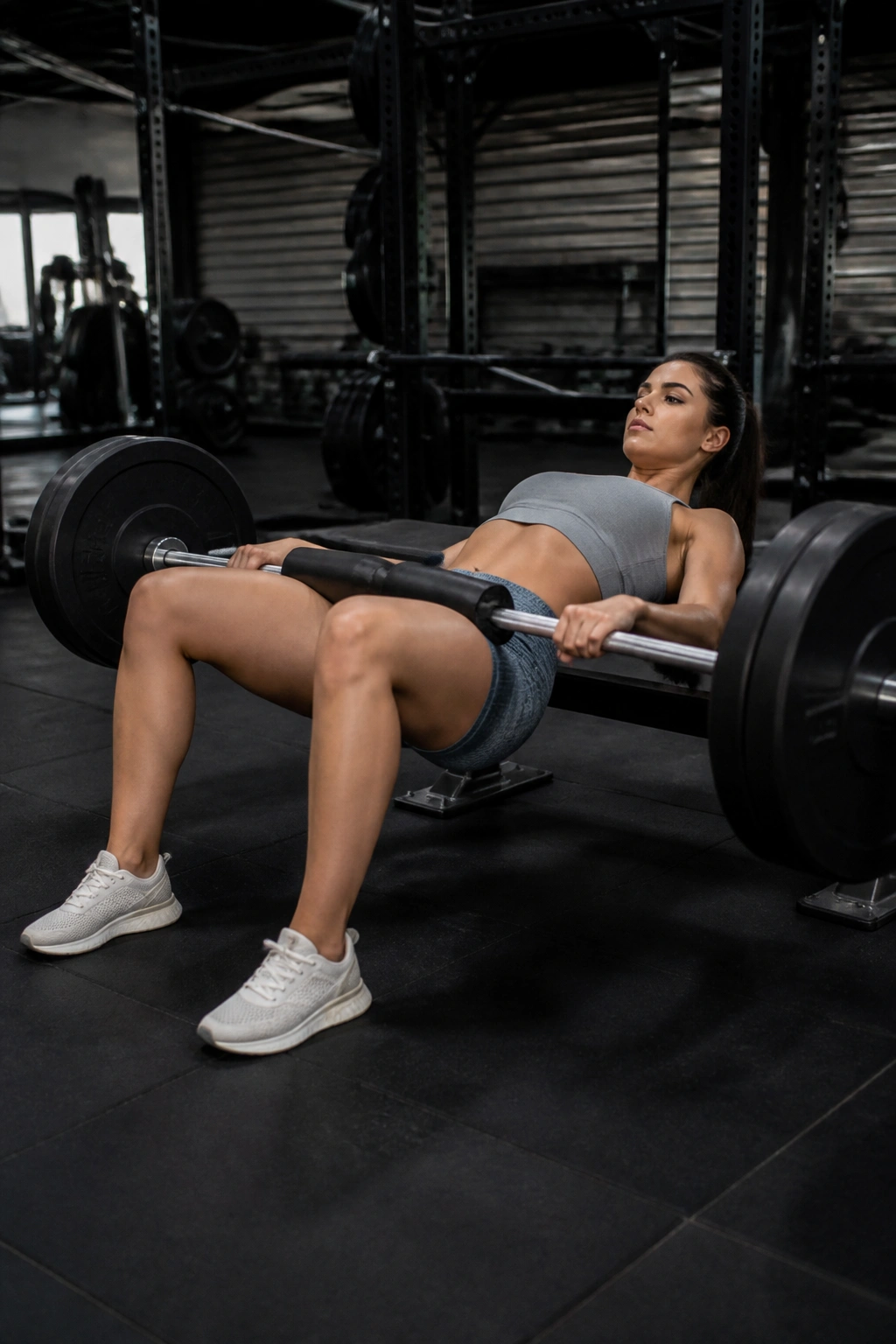
This is the gold standard for glute isolation. Unlike the squat, which is limited by your lower back or core stability, the hip thrust allows you to pile on significant weight specifically targeting the glutes. The resistance is perpendicular to your torso, which means the peak tension occurs at the top of the movement—exactly when your glutes are fully shortened.
Avoiding the Arch
A common mistake is hyperextending the lower back. You want your rib cage tucked down throughout the entire set. If you arch your back, you are cheating your glutes out of the full range of motion. Keep your chin tucked to your chest. Looking forward puts your neck in a position that encourages spinal extension; looking down at your knees keeps your spine neutral.
The Foot Placement Factor
Where you put your feet changes the target. Place your feet wider than shoulder-width and turn your toes slightly outward to hit the lower fibers of the gluteus maximus. If your feet are too close to your body, your quads will take over. Walk your feet out just far enough so that your shins are vertical when you reach the top of the thrust.
3. Cable Kickbacks
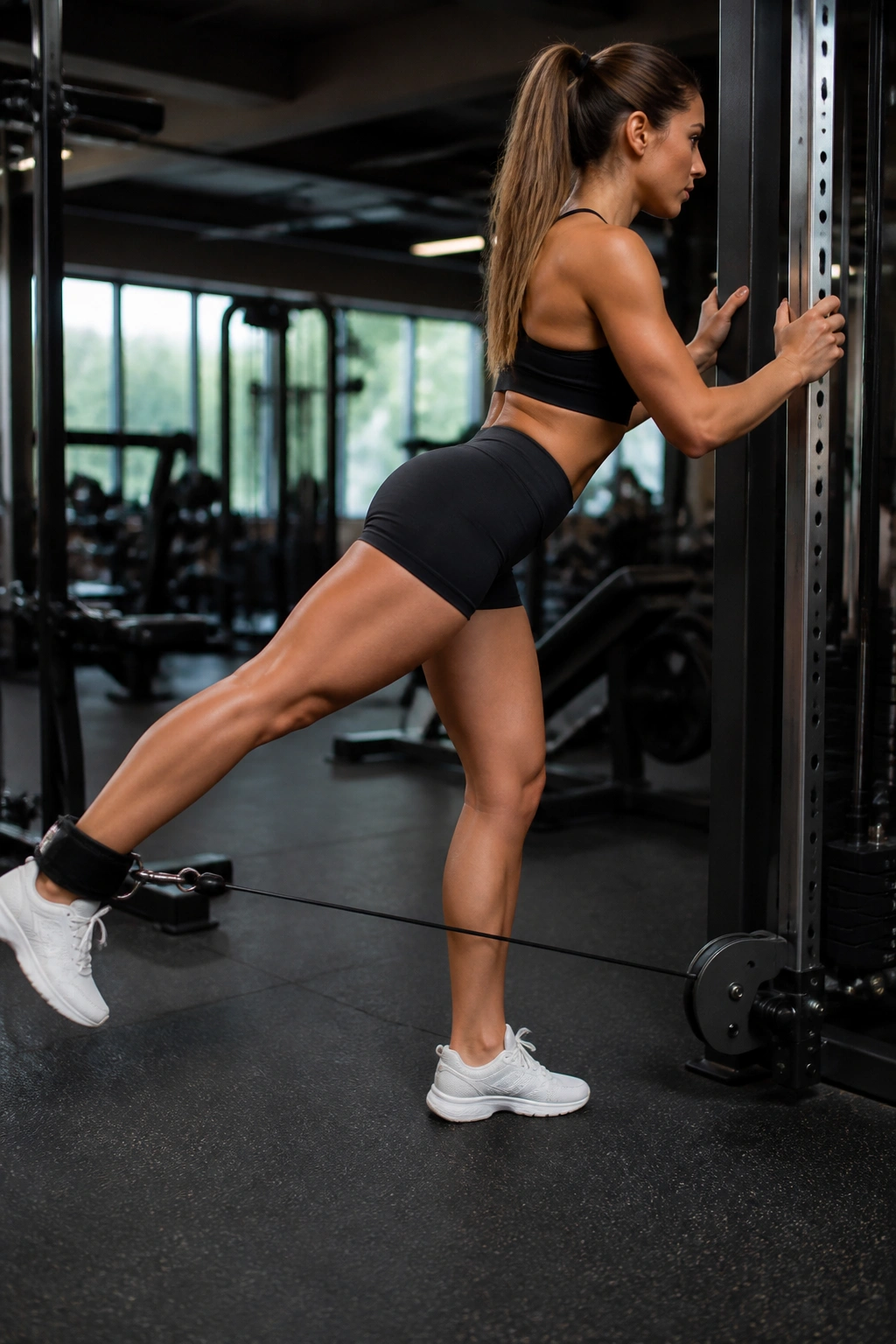
Cable work is different from free weights because the resistance is constant. With a dumbbell, there is a “dead spot” at the bottom of a movement where gravity doesn’t pull on the muscle as hard. With a cable, the machine fights you the entire way. This is essential for the underbutt.
Maintaining Pelvic Stability
When you perform a kickback, do not rotate your hips to get your leg higher. That is a ego lift. You want your pelvis to remain perfectly square to the floor. If you start twisting, you are using your lower back and external rotators to compensate for weak glutes. Keep your core tight and your supporting leg slightly bent.
The Squeeze
Extend your leg back and slightly out, almost like you are drawing a diagonal line. Hold that peak contraction for one second. It feels awkward, but that pause is where the muscle fibers fire most effectively. You should feel a distinct burn in the gluteal fold within the first 10 reps. If you don’t, lower the weight and focus on the hold.
4. Bulgarian Split Squats
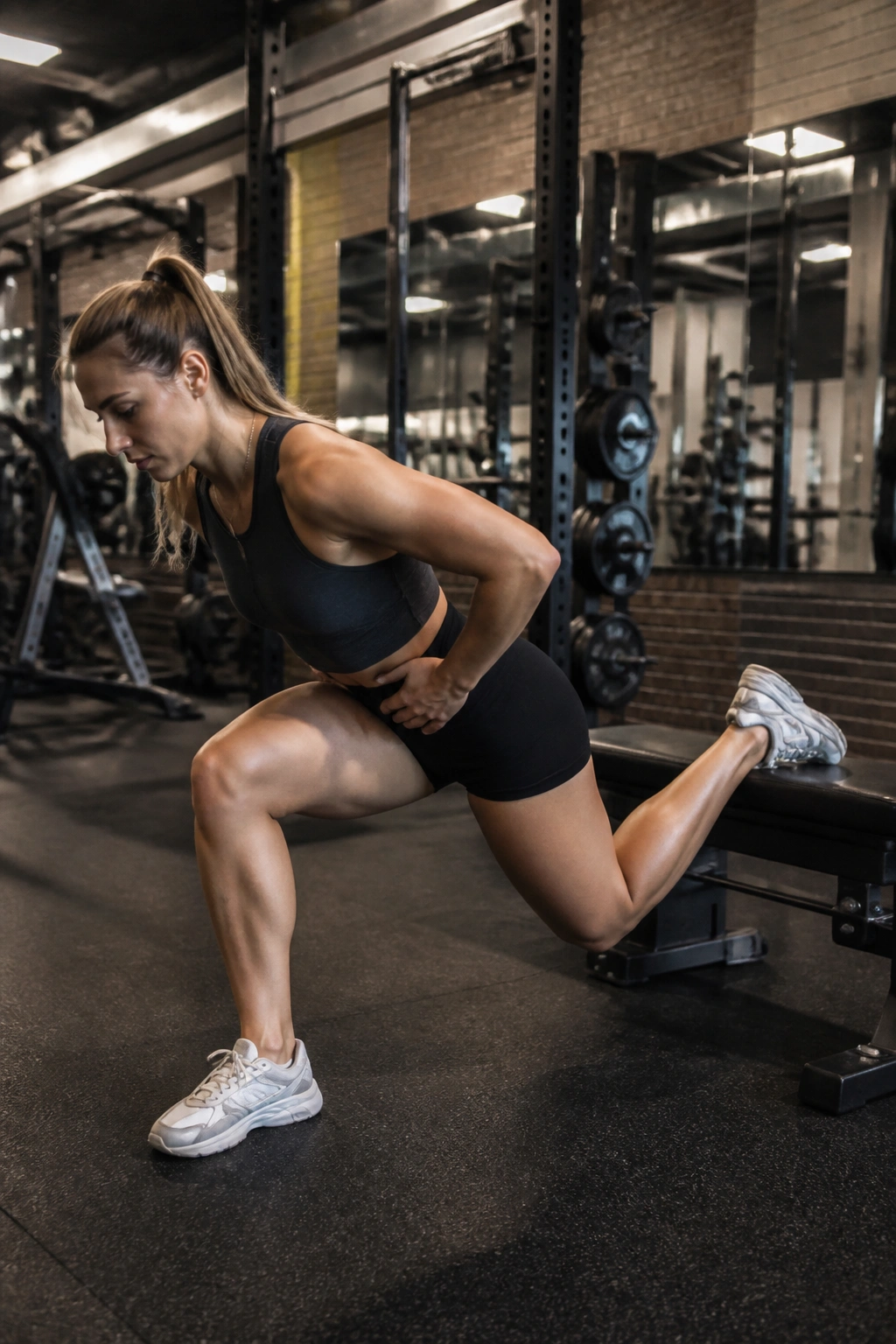
This move is the ultimate test of single-leg stability and glute strength. It’s physically demanding, which is exactly why people avoid it. When you perform a standard split squat, you are working both legs, but the back leg often assists more than it should. By elevating the back foot, you shift the load almost entirely to the lead leg.
The Lean
To target the glutes specifically, you need to change your torso angle. If you stay completely upright, you are focusing on the quads. Lean your torso forward by about 30 to 45 degrees. This position shifts the load off your knee and onto your hip joint, which is the primary driver for glute recruitment.
Mind-Muscle Connection
Push through the entire foot, not just the heel. While many coaches preach driving through the heel, doing so often causes the hips to shift backward prematurely. Distribute your weight evenly across the whole foot to ensure your glute stays engaged from the start of the drive to the very top of the rep.
5. Sumo Deadlift
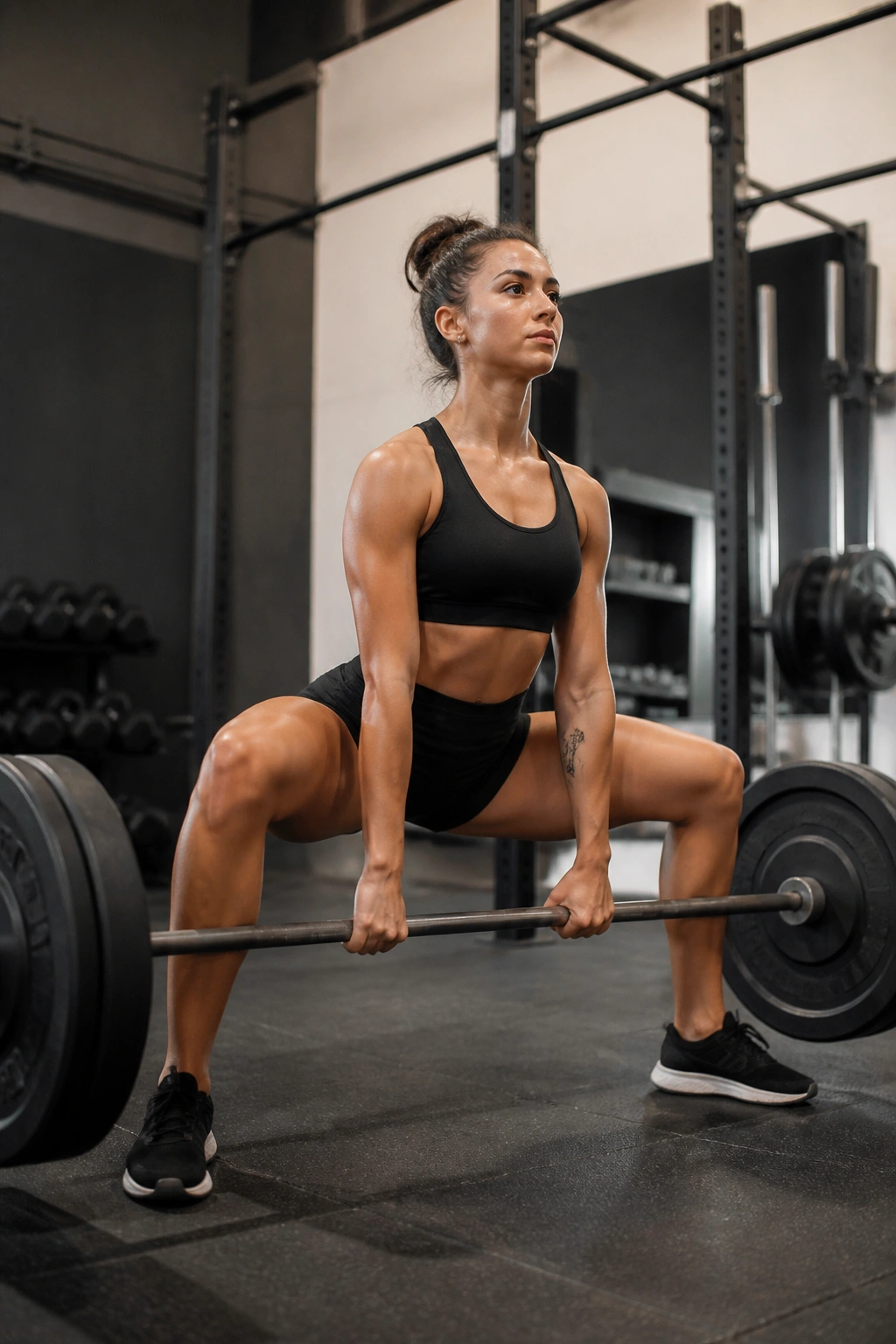
The wide stance of a sumo deadlift alters the biomechanics of the hip joint. By taking a wider-than-shoulder-width stance and pointing your toes out, you put your glutes into a position of greater external rotation. This allows you to target the lower fibers of the gluteus maximus more effectively than a conventional deadlift.
Finding the Bottom
You must get deep enough to engage the glutes at the start. If you don’t have the mobility to get the bar to the floor without rounding your back, use a platform to elevate the weights. The goal is to maximize the range of motion at the hip, not to touch the floor with poor form.
Engagement Strategy
Start the pull by pushing your feet through the floor. Treat it like a leg press from the ground. As you rise, your knees must track in line with your toes. If your knees cave inward, you are putting your joints at risk and losing the gluteal tension you are trying to build.
6. Hyperextensions
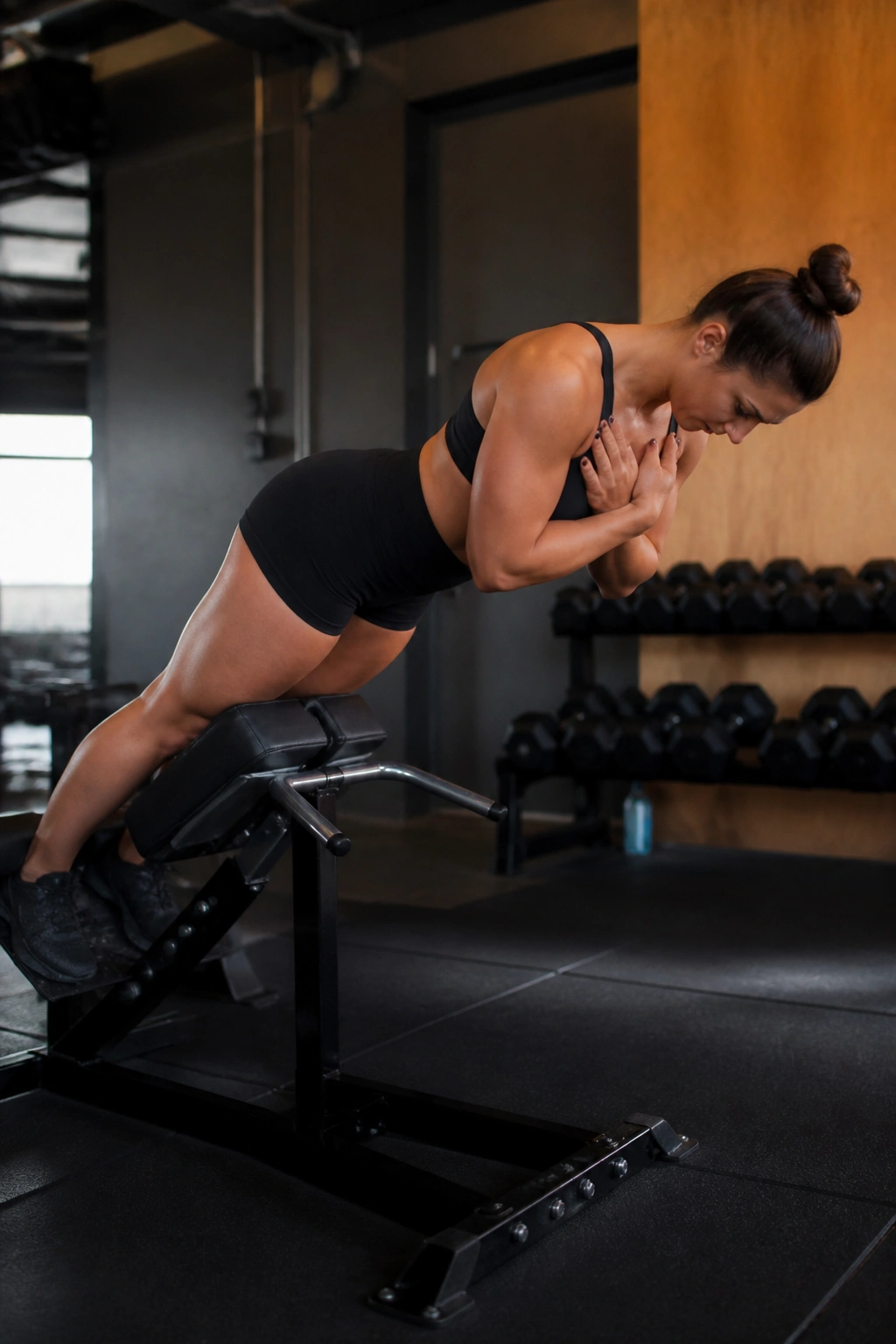
People often treat these as a lower-back exercise. If you do them that way, you are missing a massive opportunity for glute growth. To turn this into a glute builder, you need to round your upper back slightly and tuck your chin. This “curled” position inhibits the spinal erectors from doing all the work.
Adjusting the Bench
Set the pad so it hits just below your hip bones. If the pad is too high, you won’t be able to fold at the hips; if it’s too low, you’ll feel too much pressure on your thighs. You need that gap to create a hinge point.
The Glute-Focused Cue
As you lower your torso, keep your legs completely straight. As you lift back up, focus entirely on pulling with your glutes. Think about pulling your heels toward the ceiling, not just lifting your chest. If you do this correctly, your lower back should feel barely worked, while your glutes should feel like they are on fire.
7. Walking Lunges with a Deficit
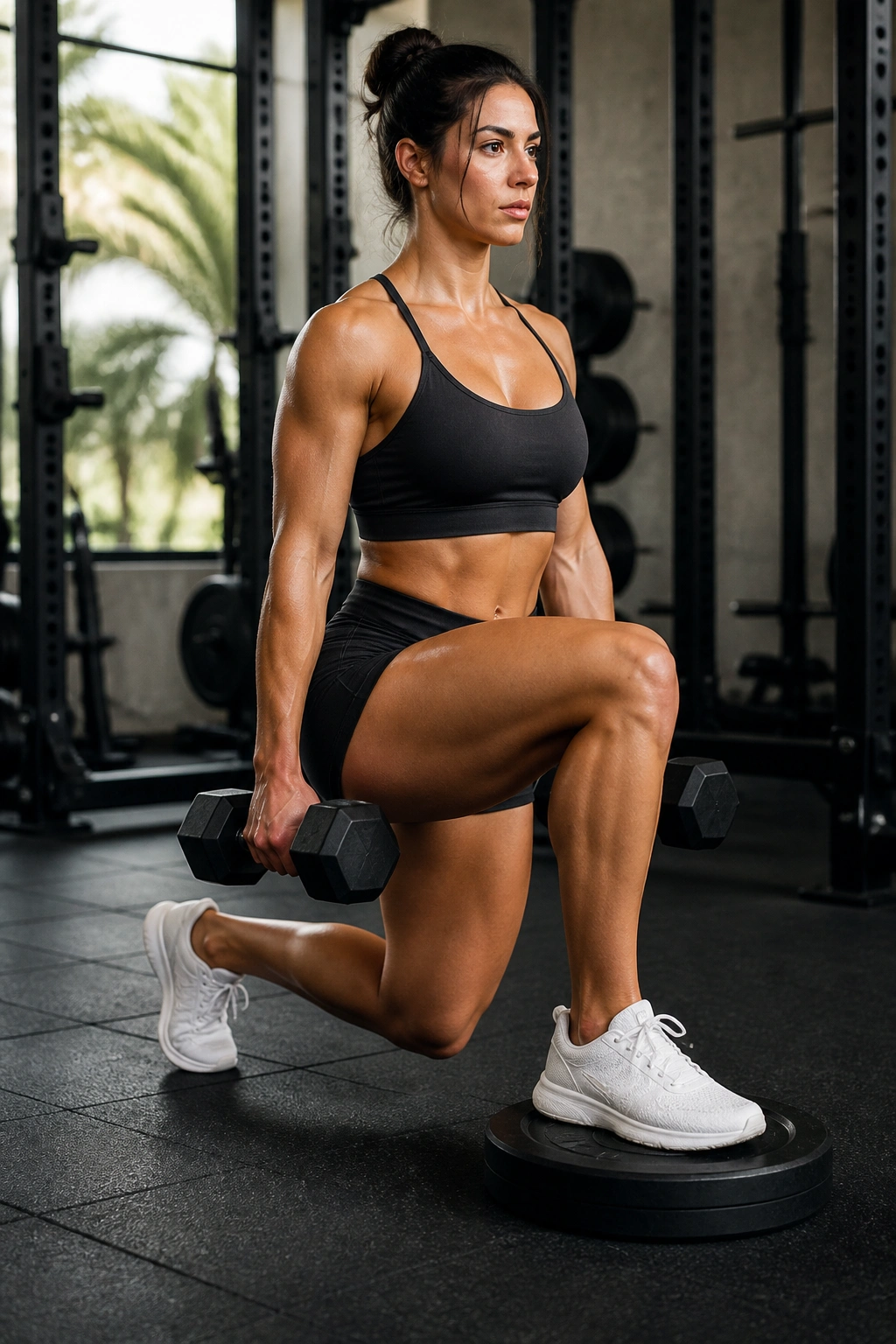
A standard lunge is good, but a deficit lunge is better. Stand on a small weight plate or a step with your lead foot. This added height increases the range of motion, requiring your glute to work through a deeper stretch at the bottom of the movement.
Step Length
Don’t take strides that are too long. A massive stride turns the exercise into a hip flexor stretch, which can actually inhibit glute activation. Take a moderate step—just wide enough so that your shin remains roughly vertical at the bottom. The focus is on the vertical drive, not the distance traveled.
The Stabilizing Knee
Watch your front knee like a hawk. It should track directly over your second and third toes. If it wobbles, your glute medius is weak, and it will struggle to stabilize you under load. This is not just a strength exercise; it’s a stability drill that translates directly to a more solid glute base.
8. Single-Leg Press
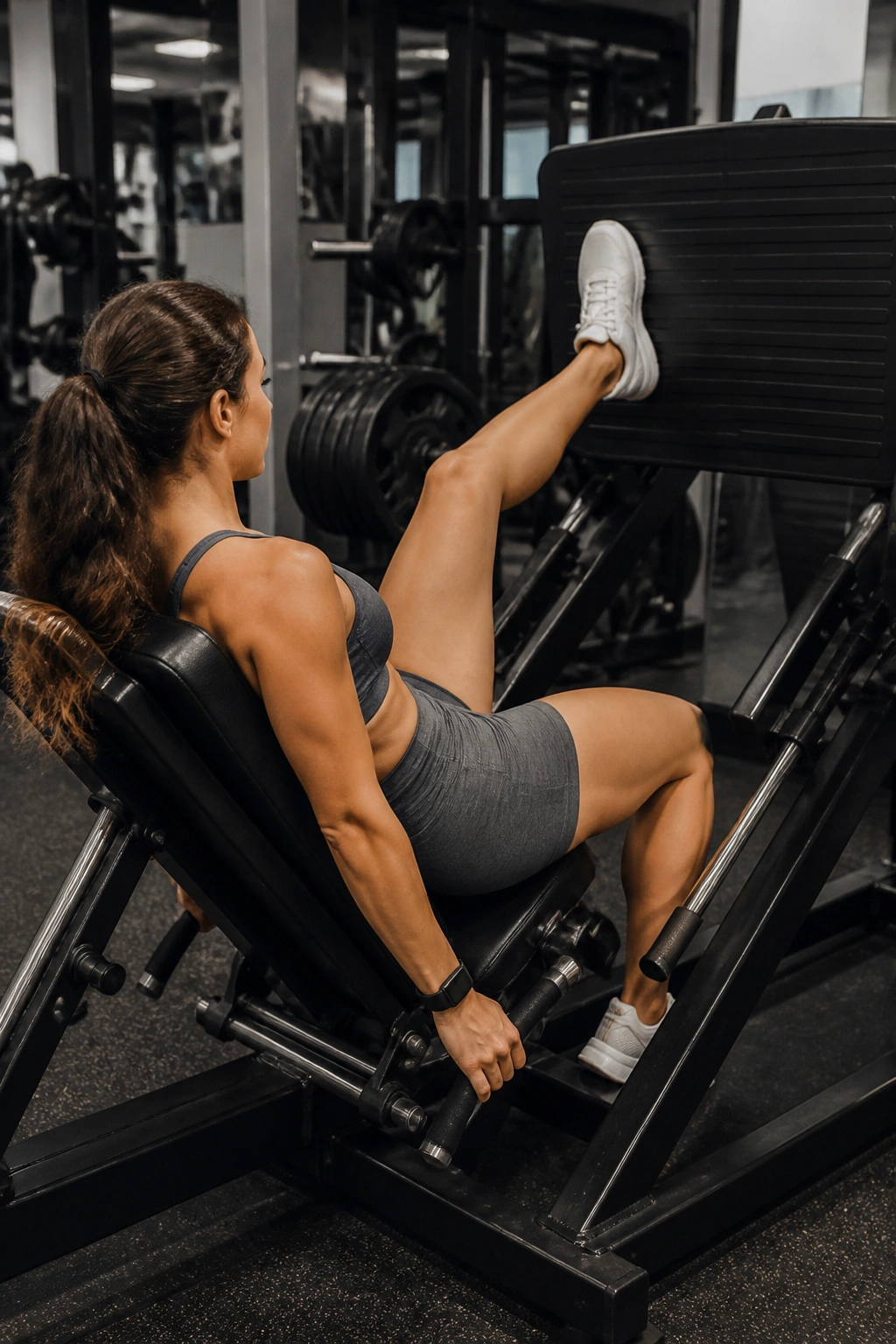
The leg press machine is usually a quad-dominant staple, but you can manipulate it to bias the glutes. By placing a single foot high and wide on the platform, you force the hip to do the heavy lifting rather than the knee.
Foot Placement
Place your foot toward the top of the platform. This increases the amount of hip flexion at the bottom of the rep. The lower your foot, the more your knees flex, which means your quads take the brunt of the load. Keep your foot in line with your hip or slightly wider to maximize that lower glute engagement.
Range Control
Do not let your lower back lose contact with the seat. If your hips start to lift or “tuck” at the bottom of the movement, your range of motion is too deep for your current mobility. Stop the sled an inch or two before that tuck happens. Maintaining a neutral spine is the key to isolating the glute.
9. Lying Leg Curls
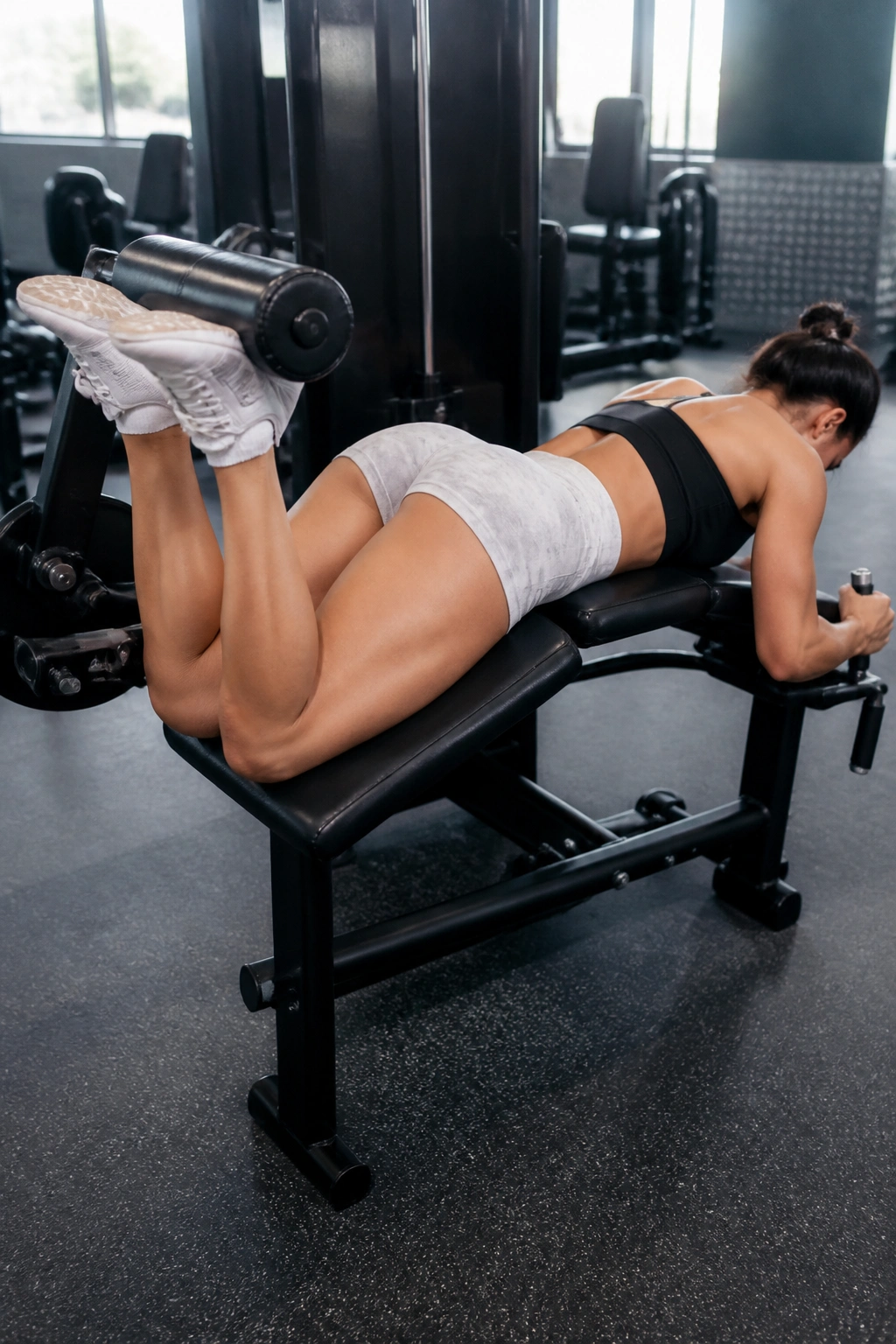
The glutes work in tandem with the hamstrings. If your hamstrings are weak, your glutes will often take over tasks they weren’t designed for, or they will be limited by the weakest link in the chain. Lying leg curls are the best way to isolate the hamstrings, which in turn support the structural integrity of the entire posterior chain, including the lower glute.
Hip Positioning
Keep your hips glued to the bench. A very common error is lifting the hips off the pad to get the weight up. If you have to do that, the weight is too heavy. The movement should be slow and controlled, focusing on the contraction of the hamstrings.
Toe Angle
Point your toes slightly outward during the set. This simple anatomical tweak changes the stress on the hamstring muscles, encouraging more recruitment from the lateral head, which ties into the lower glute area.
10. Kettlebell Swings
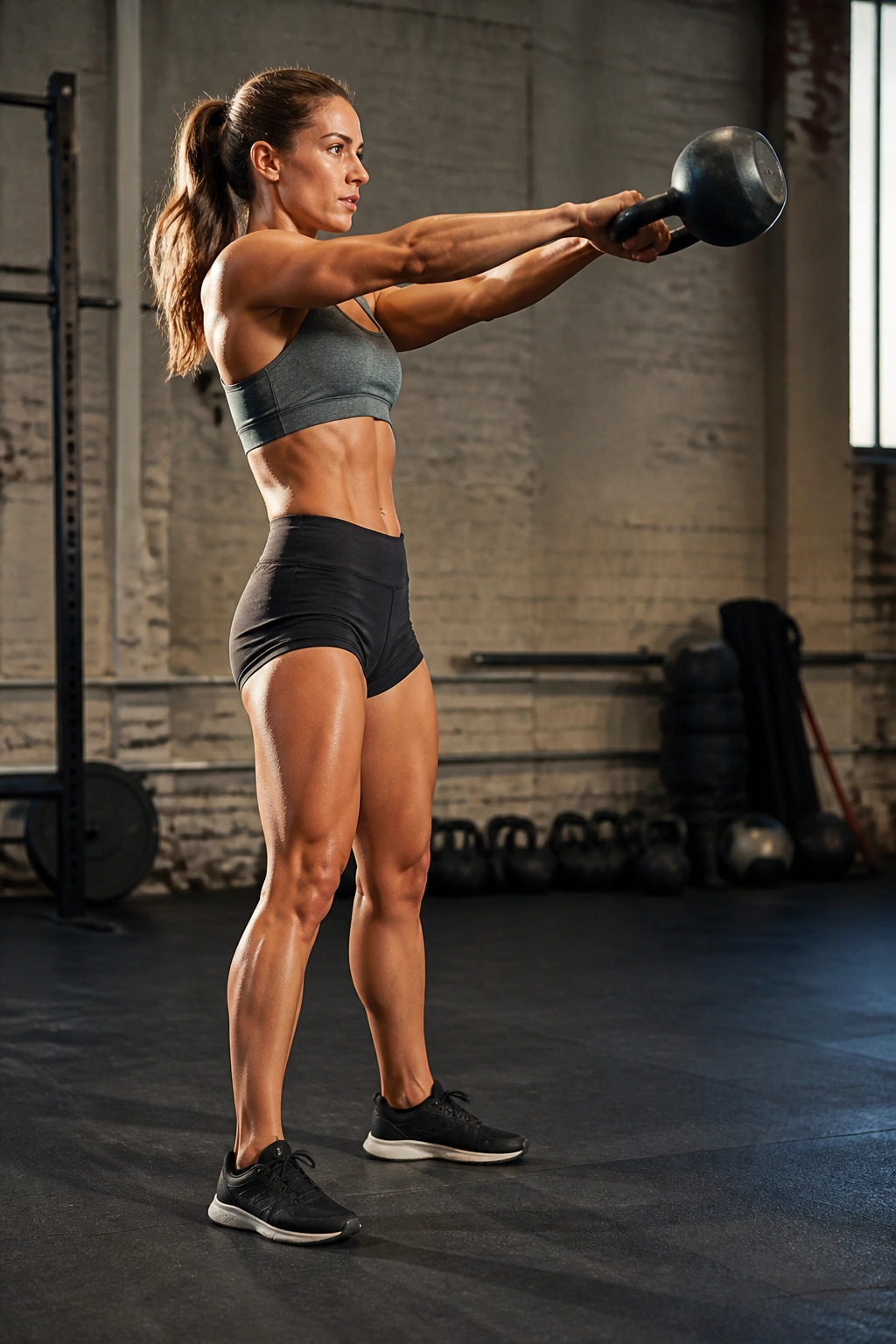
This is a ballistic movement. Unlike the slow, controlled lifts we have covered, the kettlebell swing relies on explosive power. That explosive hip snap is crucial for fast-twitch muscle fiber recruitment in the glutes.
The Hip Snap
The power must come from your glutes, not your arms. Your arms are merely cables holding the bell. Think of your hips as a cannon; the movement is a sharp, aggressive snap forward. The bell should float at the top, not be pulled there by your shoulders.
Breath and Brace
You need to brace your core just before the swing starts. If your core is soft, your lower back will take the load of the bell’s momentum. Think of the swing as a dynamic hinge—exactly like an RDL, just done at high speed. If you don’t feel it in your glutes, you are likely using too much shoulder.
11. Banded Hip Thrusts
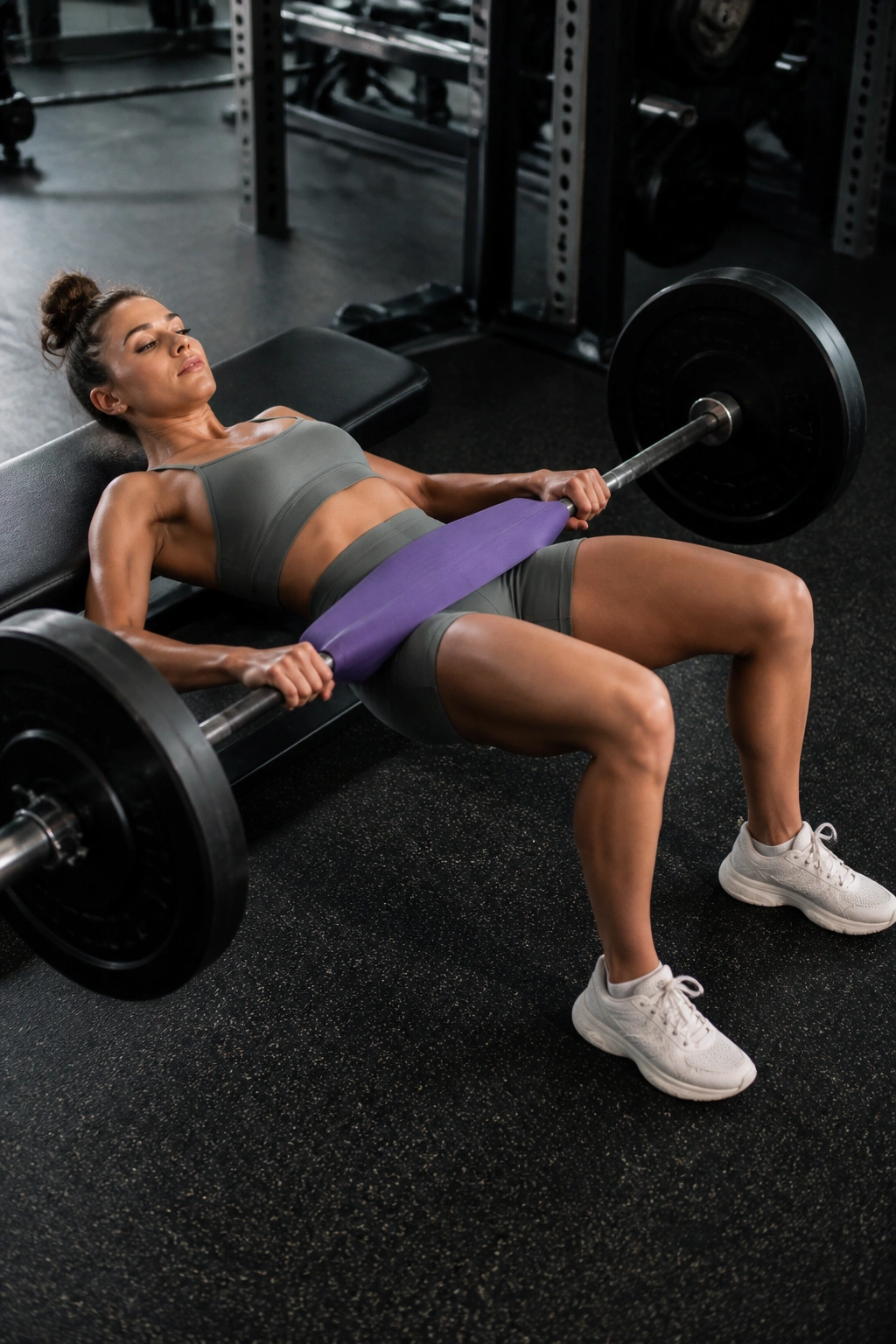
Adding a resistance band to your hip thrusts adds a dimension called “accommodating resistance.” At the very top of the movement, where the barbell is hardest to move, the band is stretched to its maximum, providing the most resistance.
The Band Setup
Loop a heavy resistance band around a secure anchor point (like a squat rack) and then around your hips, underneath the barbell. Now you have two forces acting on you: the bar pulling you down and the band pulling you forward. Your glutes have to work significantly harder to lock out the weight.
The Lockout
The key here is the final inch. Most people get the weight up and stop. With bands, you need to push into that resistance, locking your hips out completely. This forces the gluteus maximus to contract fully, which is the exact area responsible for the “lift” at the bottom of the glute.
12. Curtsy Lunges
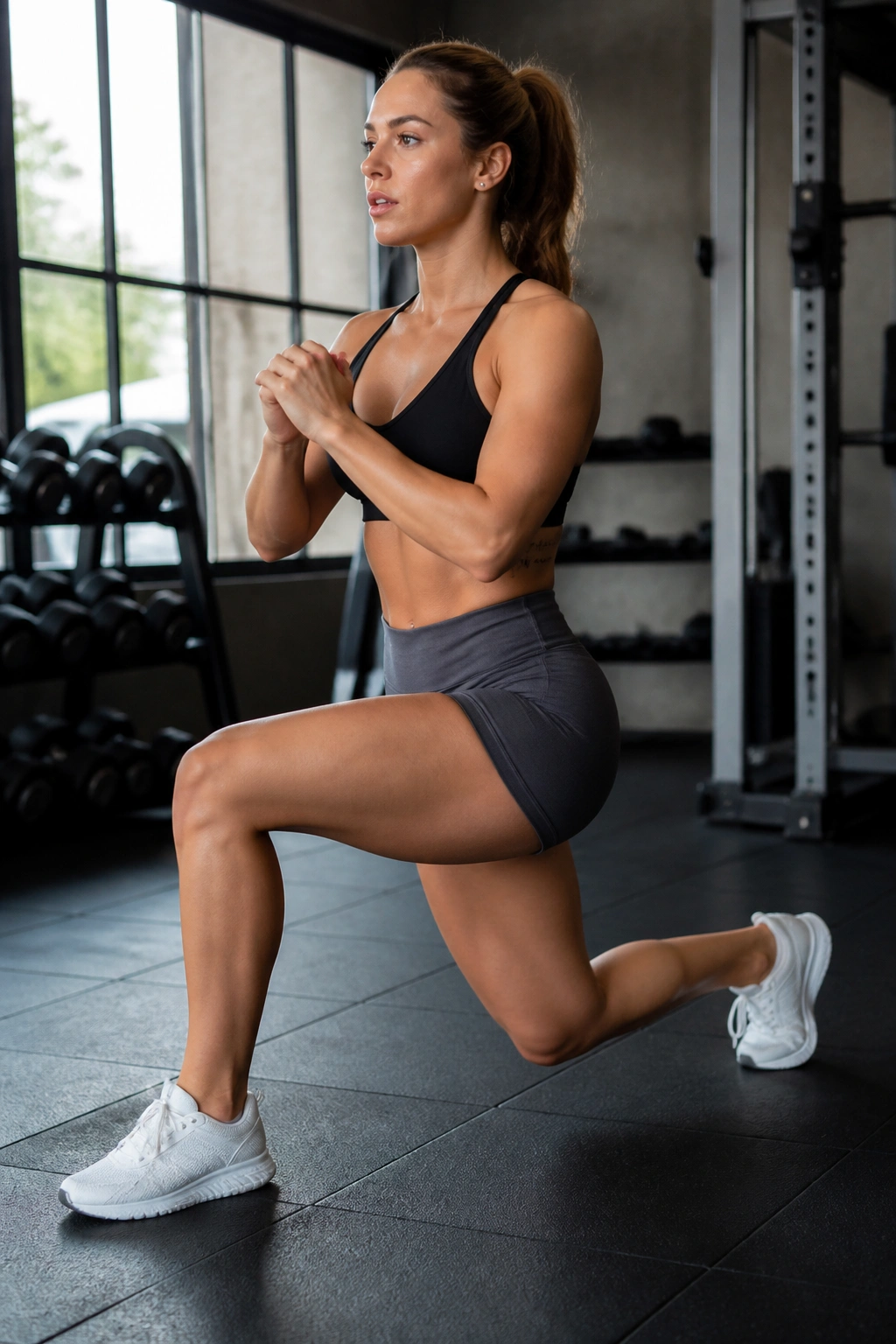
Curtsy lunges are one of the few movements that specifically target the gluteus medius and the lower fibers of the gluteus maximus through a different plane of motion—the frontal plane. By stepping backward and behind your supporting leg, you stretch the outer and lower glute fibers in a way that standard lunges simply cannot.
The Angle
Step back and across at a 45-degree angle. You want to feel a stretch in the “side” of your glute. If you don’t feel it there, you aren’t stepping far enough across. Keep your chest up and your weight centered over the front leg.
The Balance Requirement
This movement is inherently unstable. If you feel like you are going to tip over, that is a sign your glutes are doing exactly what they are supposed to do: stabilizing your pelvis. Embrace the instability. Don’t rush; control the descent.
13. Box Squats (Wide Stance)
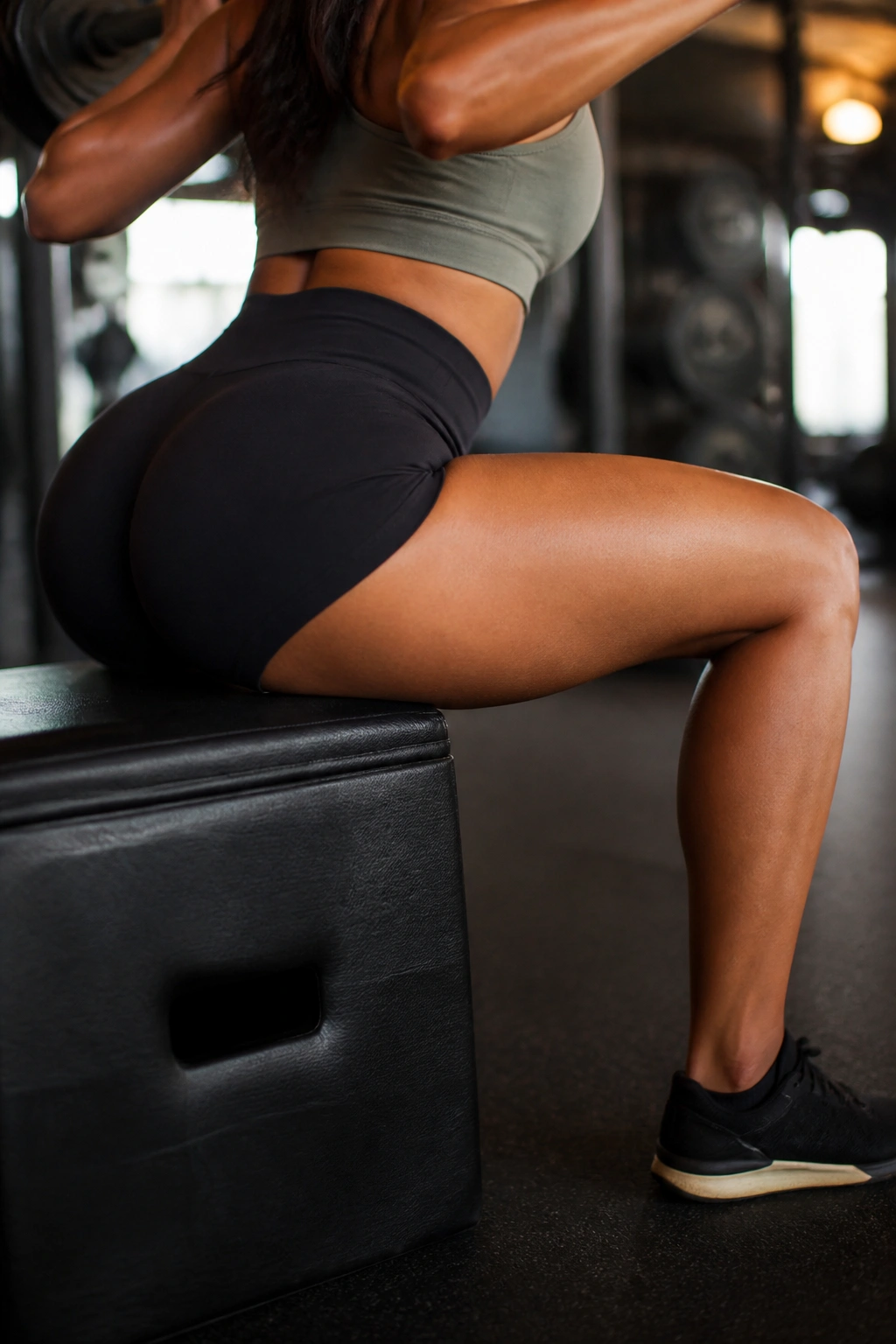
The box squat is a legendary powerlifting movement, but it is also an incredible tool for glute building if done correctly. By sitting back onto a box (or bench), you break the momentum of the squat, forcing you to initiate the ascent from a dead stop using only your hips.
Sitting Back
Do not drop onto the box. You should sit back onto it, not down. Your shins should remain vertical. This forced vertical shin position eliminates quad dominance and forces the hips to handle the load.
The Drive
When you sit on the box, keep your core braced. Do not relax. The moment your glutes touch the box, drive back up. This transition from eccentric (lowering) to concentric (lifting) is where the magic happens. You are training your glutes to produce maximum force from a stretched position.
14. Cable Pull-Throughs
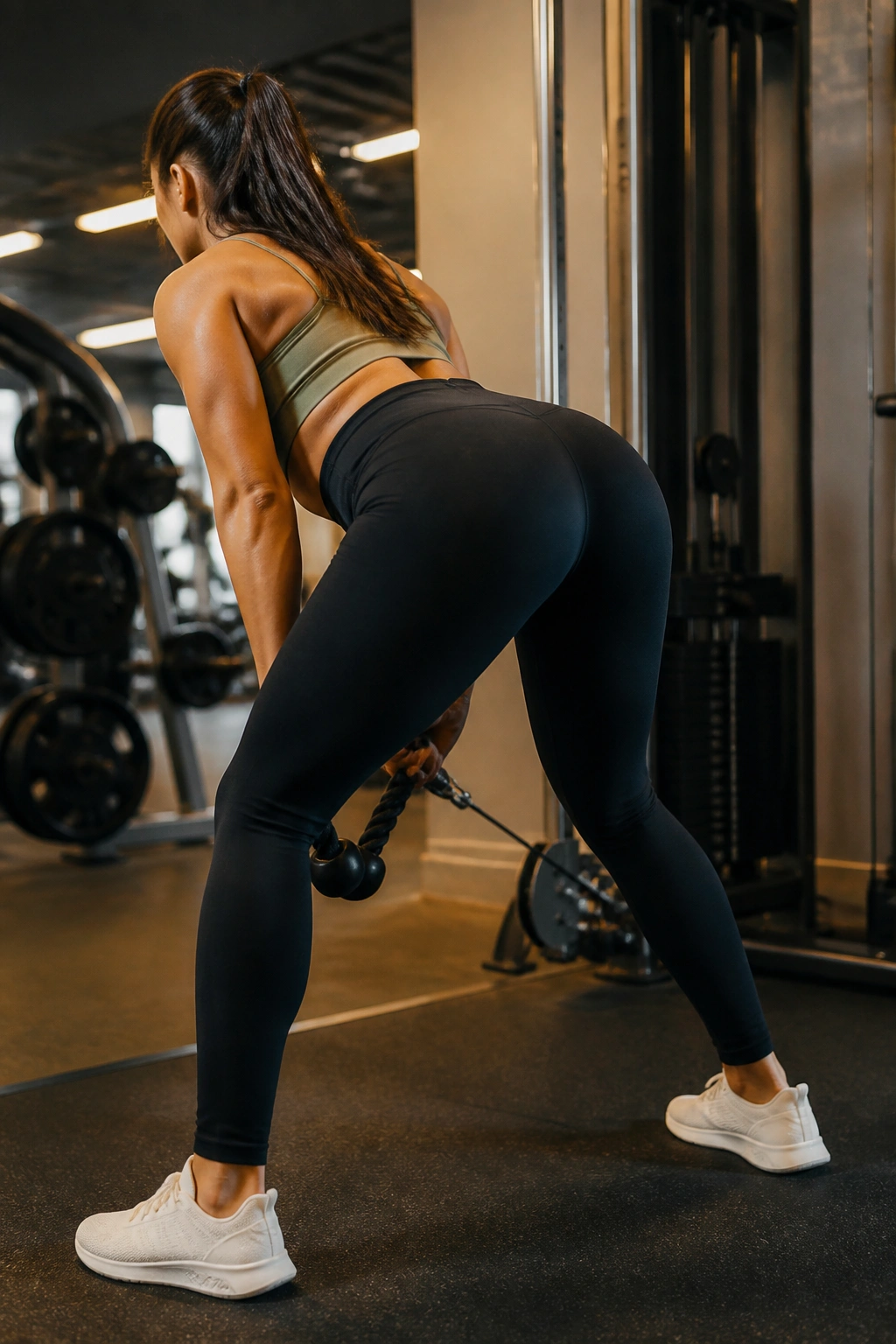
If you struggle with the hinge pattern in RDLs, start with cable pull-throughs. They teach you to use your hips to move the weight, rather than your back.
Setup
Stand facing away from the cable machine with the rope attachment between your legs. Grab the rope, take a few steps forward, and stand with a wide stance. Hinge at your hips, letting your hands pass between your legs until you feel a deep stretch in your glutes.
The Extension
Drive your hips forward aggressively to return to a standing position. Squeeze your glutes hard at the top. The beauty of this move is that the cable is pulling you back, which naturally encourages you to sit back into your hips—the perfect position for glute activation.
15. Single-Leg Glute Medius Kickbacks
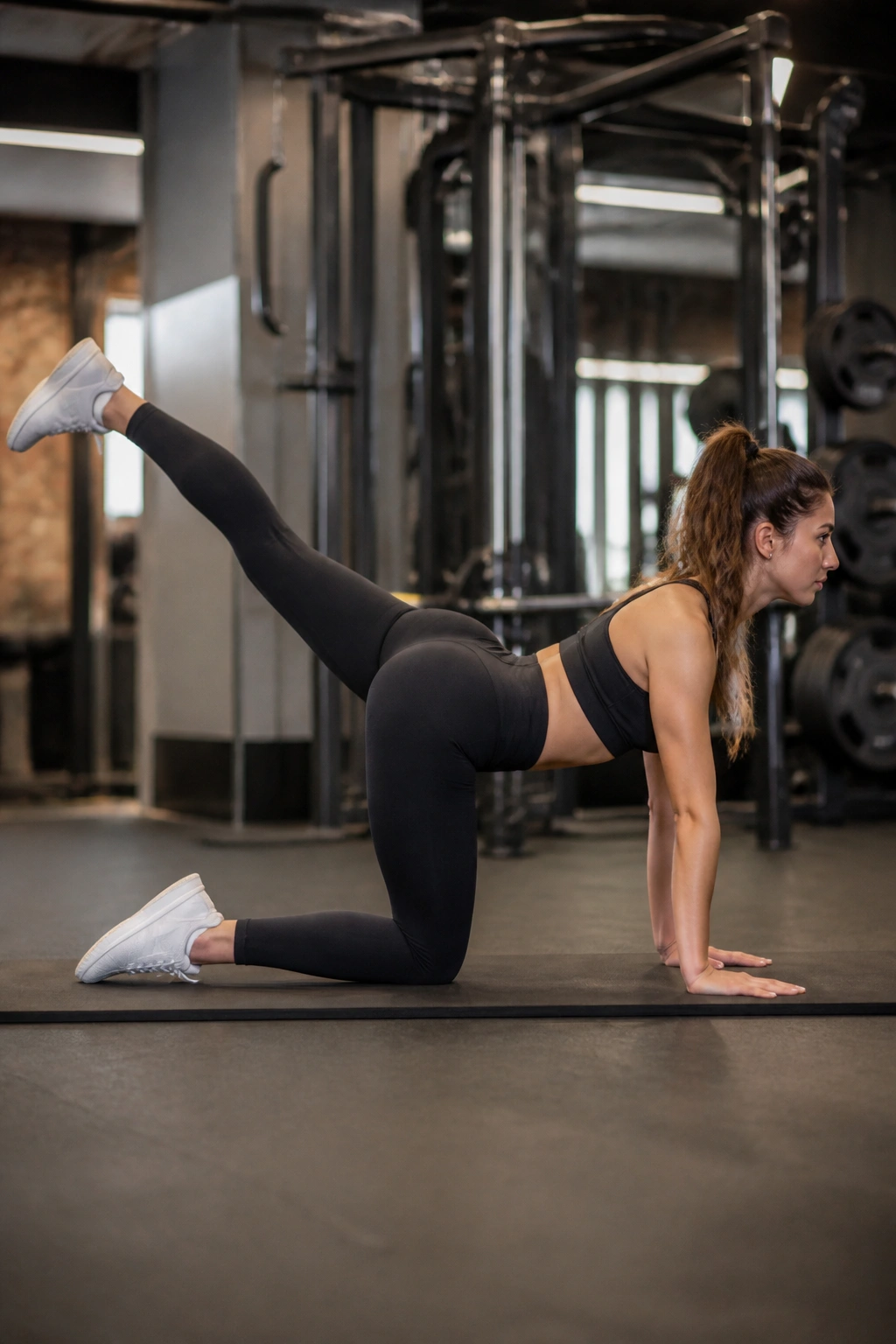
While the gluteus maximus provides the bulk of the “lift,” the gluteus medius provides the “shelf” that makes the glutes look rounded from the side. You need both for a complete look.
The Variation
Instead of kicking straight back, kick your leg out at a 45-degree angle. This angle hits the gluteus medius, which sits higher up on the hip. When you combine this with max-glute-max exercises, you fill out the entire shape.
Control
Use a very light weight. This is an isolation movement. If you need to pile on 50 pounds to feel this, your form is compromised. Focus on feeling the contraction in the upper-side glute area. It should feel like a deep, cramping burn.
16. Single-Leg Romanian Deadlift
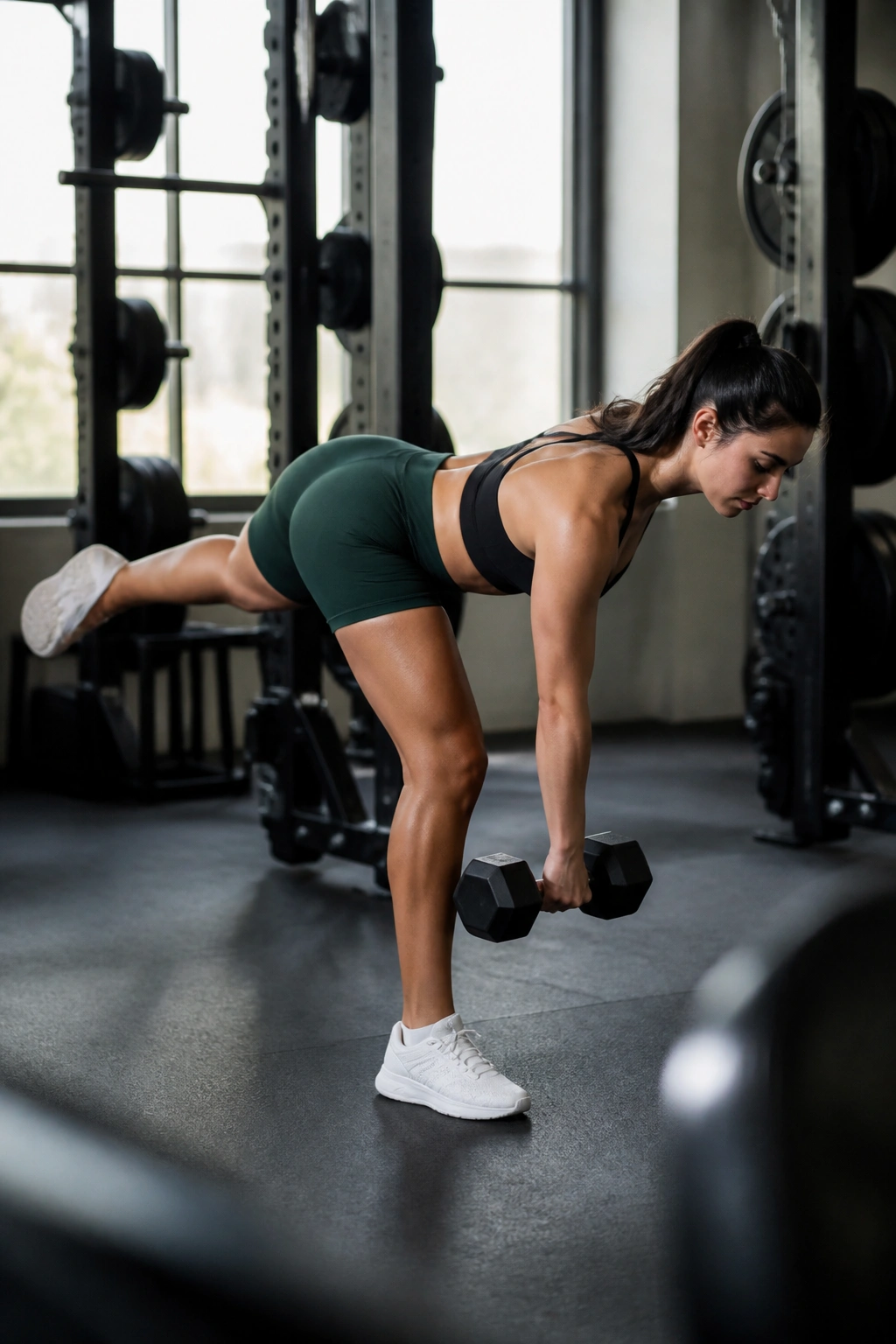
This is the ultimate test of unilateral strength. Unlike the standard RDL, this version forces you to stabilize your body using your glute medius and your core, while the working leg focuses on the glute max.
The Balance Act
If you struggle with balance, hold onto a rack for support. It is better to have perfect form with support than terrible form without it. Focus on keeping your hips level. Don’t let the hip of your floating leg rotate upward.
The Range
Go down until you feel that familiar stretch in the working glute. Because you are balancing, your range of motion might be slightly less than a two-legged RDL. That is perfectly acceptable. The stabilization requirement is what makes this move so effective for shaping the entire hip area.
17. Frog Pumps
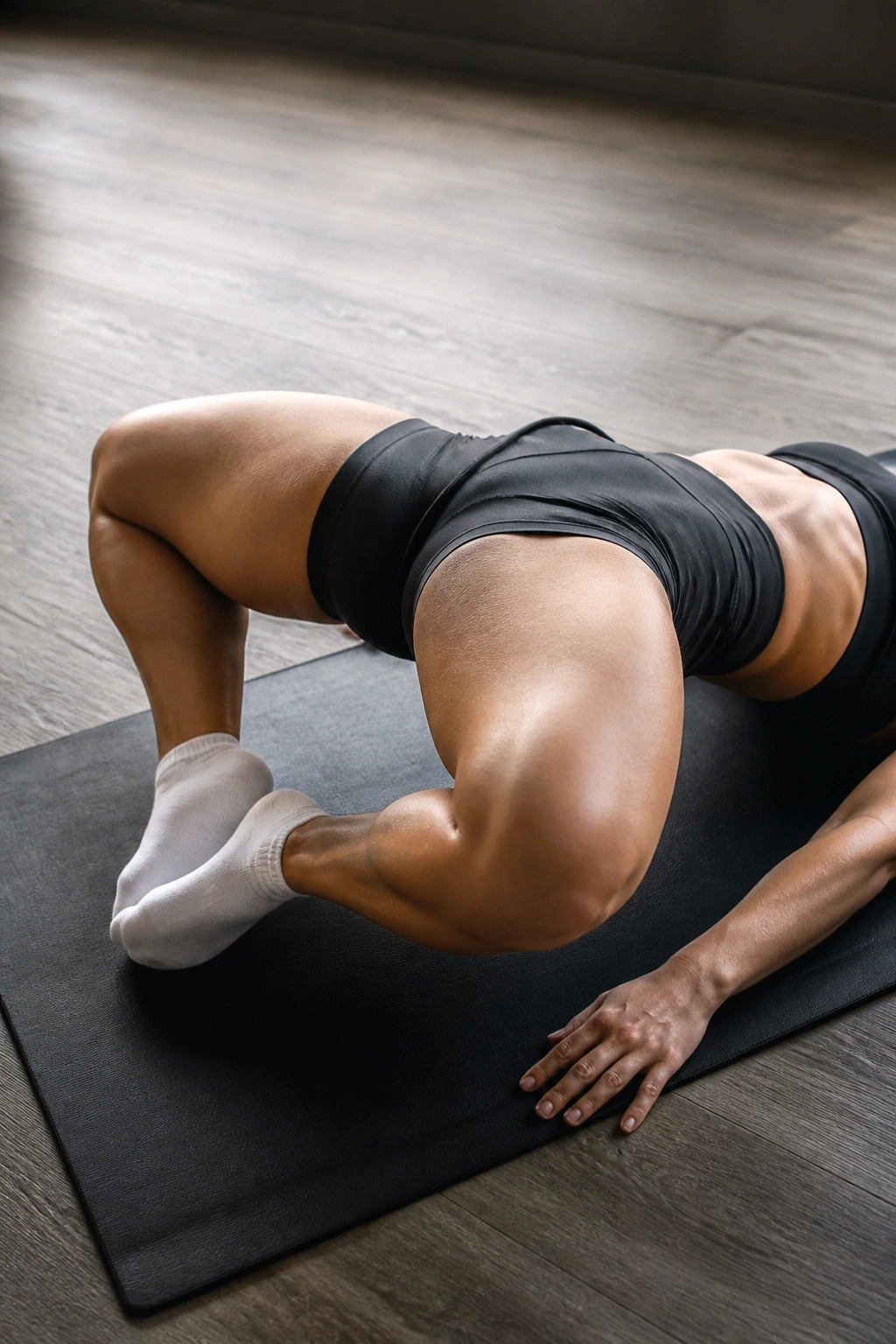
This is a high-volume, low-impact finisher. You don’t need heavy weight here; you need time under tension. The frog pump puts your glutes in a maximally shortened position from the start.
The Positioning
Lie on your back, bring your feet together, and push your knees out to the sides, forming a diamond shape with your legs. Your feet should be close to your glutes. From this position, drive your hips up toward the ceiling.
The Burn
You will feel the burn almost immediately. Because of the external rotation of your hips, your glutes are forced to do all the work. Do these for high repetitions—aim for sets of 30 to 50. It’s an endurance exercise that pumps blood into the lower glutes and finishes off the muscle fibers.
18. Deficit Reverse Lunges
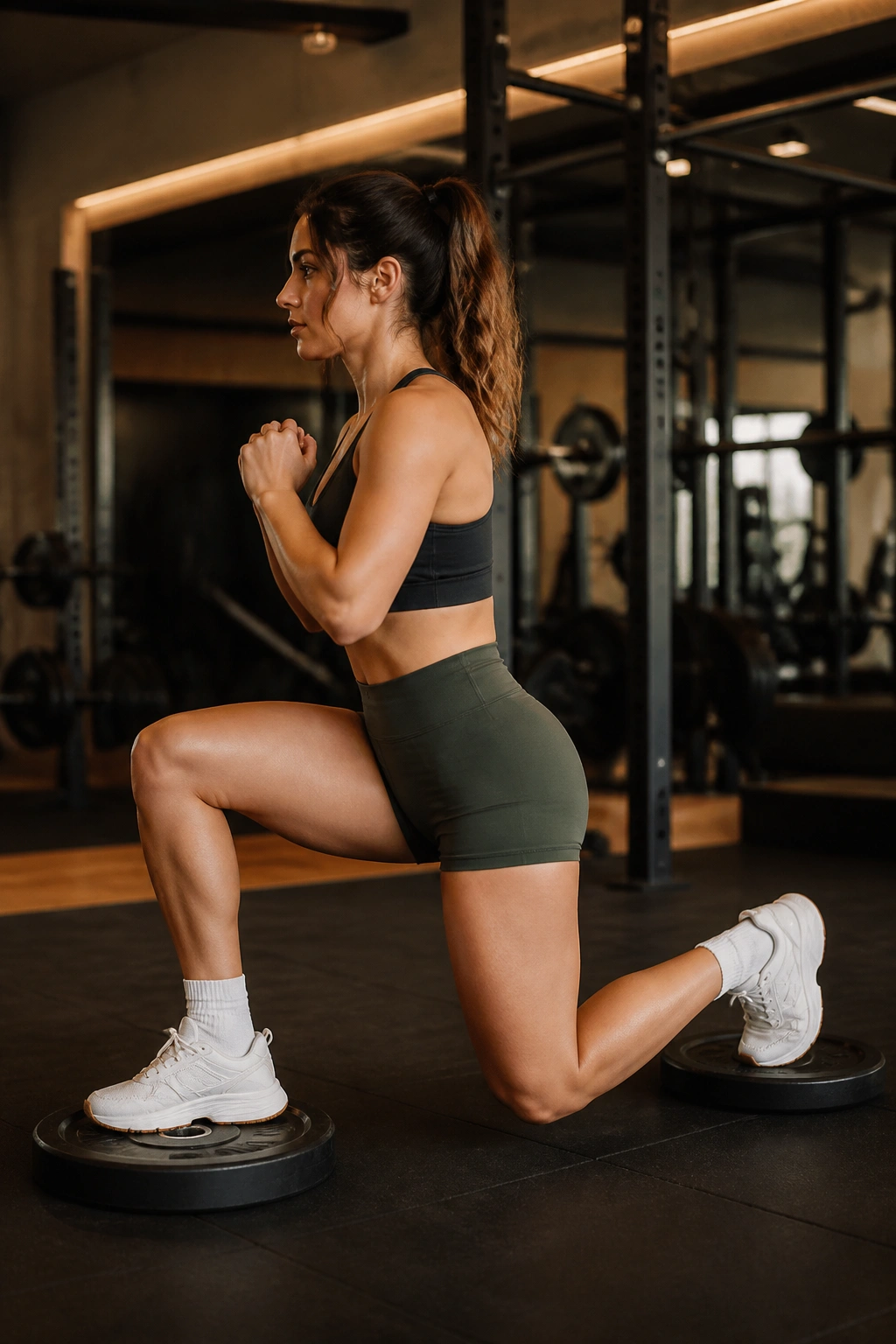
Reverse lunges are generally easier on the knees than forward lunges. By adding a deficit (standing on a plate), you increase the range of motion, allowing for a deeper glute stretch at the bottom.
The Shift
As you step back, keep your torso slightly leaned forward. This shift in the center of gravity keeps the tension on the glute of the front leg. If you stay upright, you turn this into a quad exercise.
The Return
Focus on pushing through the mid-foot of your front leg. Do not push off with your back toes. Your back leg is just a guide; the front leg is the engine. The more you rely on the front leg, the more you will see progress in your lower glute definition.
19. Standing Abduction (Cable)
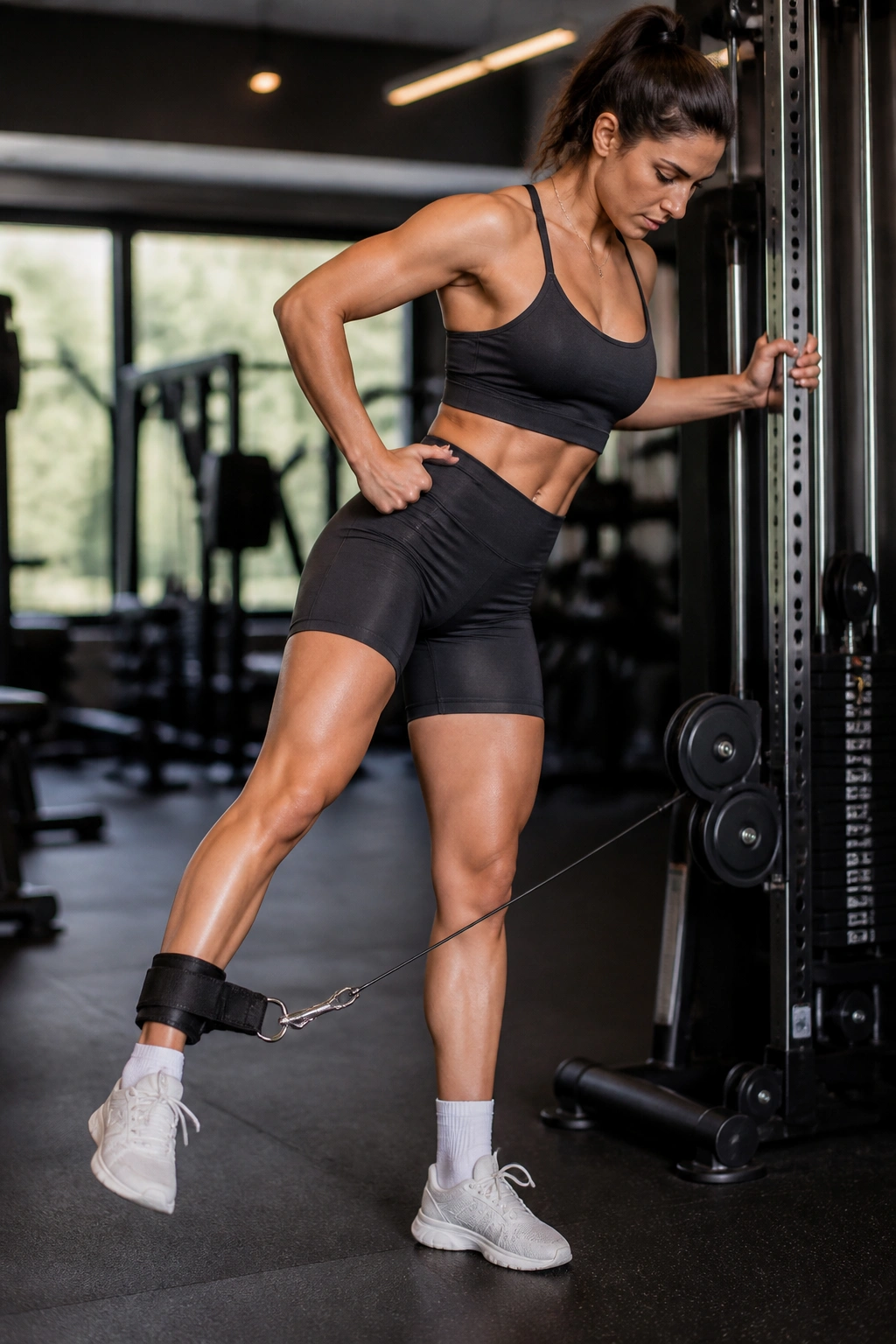
We have hit the maximus and the medius, but we need to ensure the connection is solid. Abduction moves target the outer glute fibers that create the aesthetic “curve” of the hip.
The Tension
Keep the cable leg straight but not locked. As you lift the leg away from the midline of your body, focus on the glute muscle doing the lifting—not the TFL (the muscle right at the front of your hip). If you feel the front of your hip burning, stop, adjust, and re-engage.
The Tilt
A slight forward tilt of the torso can help isolate the glutes during abduction. Experiment with your angle until you find the sweet spot where the glute is doing the lifting. This is subtle work, but it matters for overall shape.
20. Weighted Donkey Kicks
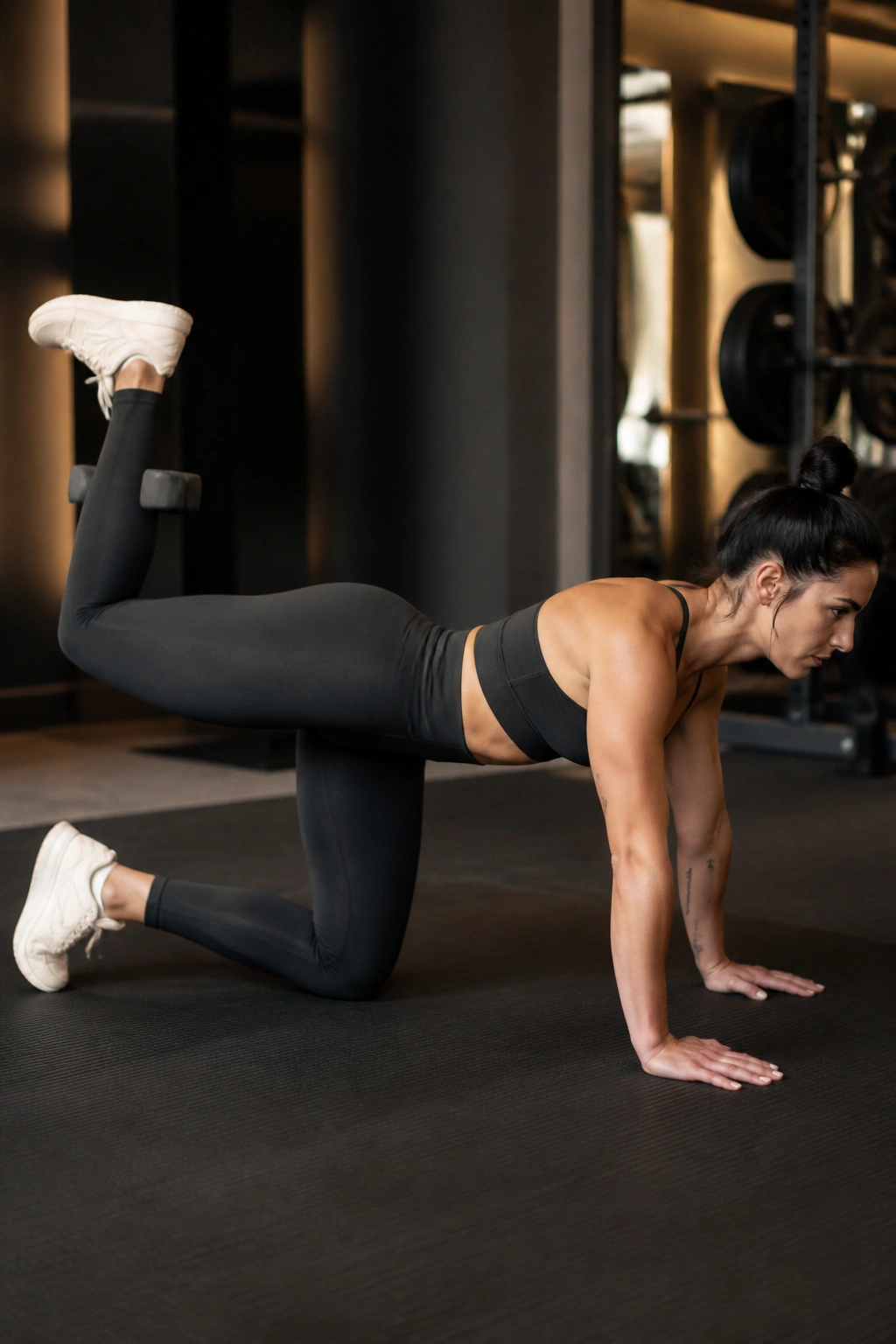
These are often treated as a warm-up, but they are a legitimate builder when done with weight. Put a small dumbbell behind your knee. This forces you to engage the hamstring and glute to keep the weight from dropping.
The Arc
Kick your heel toward the ceiling. Do not worry about height; worry about the squeeze at the top. Keep your back flat—like a table. If your back arches, you have gone too high.
The Stability
Your core must be rock solid. Use your hands to push the floor away from you. This creates tension in your upper body, which stabilizes your spine, allowing your glutes to isolate the movement without your lower back trying to help.
Final Thoughts
Building a lifted, defined lower glute is a slow process that rewards consistency over intensity. You cannot force muscle growth in a week, and you certainly cannot spot-reduce fat to “reveal” the glute. The path forward is simple: prioritize hip extension, embrace the heavy compound movements, and never sacrifice form for the sake of moving more weight.
Focus on the mind-muscle connection. If you are going through the motions without feeling the target area contract, you are just moving weight. Every single repetition in this list should be done with intention. Track your weights, push for a little more volume over time, and ensure you are recovering properly. Consistency is not just about showing up; it is about showing up and doing the work correctly every single time. Your glutes will respond, provided you give them the right stimulus.
