



Training your lower body is not just about aesthetics or filling out a pair of jeans. It is about building a structural foundation that supports everything else you do, from standing upright at a desk to moving heavy loads safely. A weak core paired with strong legs—or a strong core with weak legs—is a recipe for chronic back pain and uneven movement patterns. You need a balanced approach that links the massive muscle groups of the glutes, quads, and hamstrings with the stabilizing power of the abdominals.
Most people approach lower body days with a “just lift heavy” mentality, ignoring the kinetic chain that actually moves the weight. If you focus solely on the quads, your lower back will eventually pay the price. If you focus only on the glutes without strengthening the anterior core, you will likely develop anterior pelvic tilt, which shuts down your glute performance before you even finish your first set.
The following list provides a comprehensive framework for building total lower body strength. These exercises are not just movements; they are tools for teaching your body how to distribute force, stabilize the spine, and generate power from the ground up. Treat them with respect, focus on the eccentric (lowering) phase, and prioritize tension over the amount of weight on the bar.
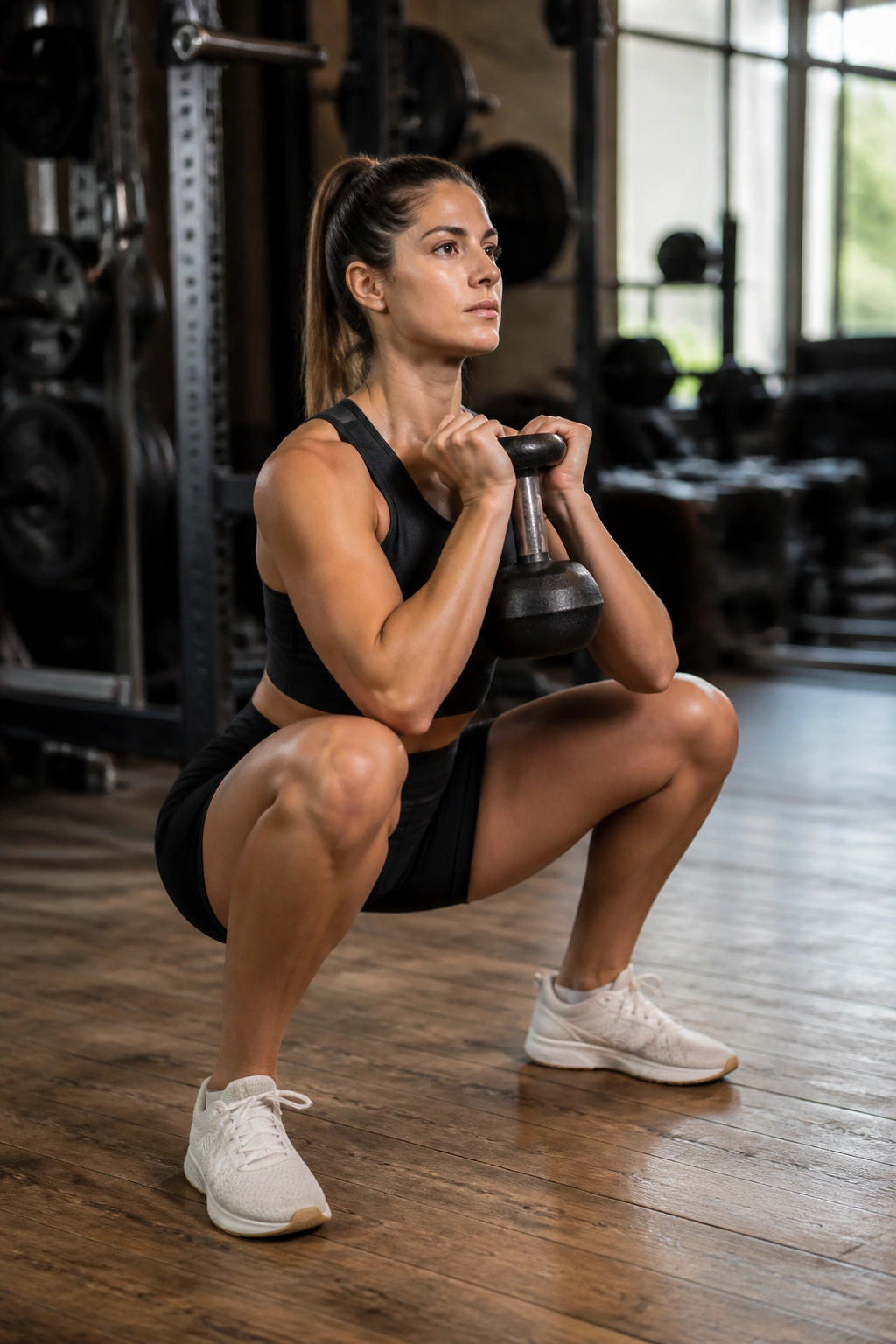
1. Goblet Squats
The goblet squat is arguably the finest teacher of squat mechanics ever devised. By holding a weight against your chest, you are forced to maintain an upright torso. If you collapse forward, you drop the weight. It is that simple. This external load acts as a counterbalance, helping you drop your hips straight down between your ankles rather than pushing them back into a morning-good hinge.
Why It Works for Beginners and Veterans
Many people struggle with “buttwink,” that nasty rounding of the lumbar spine at the bottom of a squat. The goblet squat corrects this by keeping your thoracic spine extended. It also provides immediate feedback: if your elbows do not track inside your knees, you are likely not pushing your knees out wide enough, which is a critical cue for glute activation.
Technique Checklist
- Hold a kettlebell or dumbbell at sternum height, close to your body.
- Keep your heels flat and imagine you are trying to spread the floor apart with your feet.
- Lower until your elbows touch your inner thighs.
- Drive through the mid-foot to stand back up, squeezing your glutes at the top.
Key Insight: Do not use a weight that is so heavy your shoulders fatigue before your legs. Your core strength and upper back stability are the limiting factors here, not your leg power.
2. Romanian Deadlifts
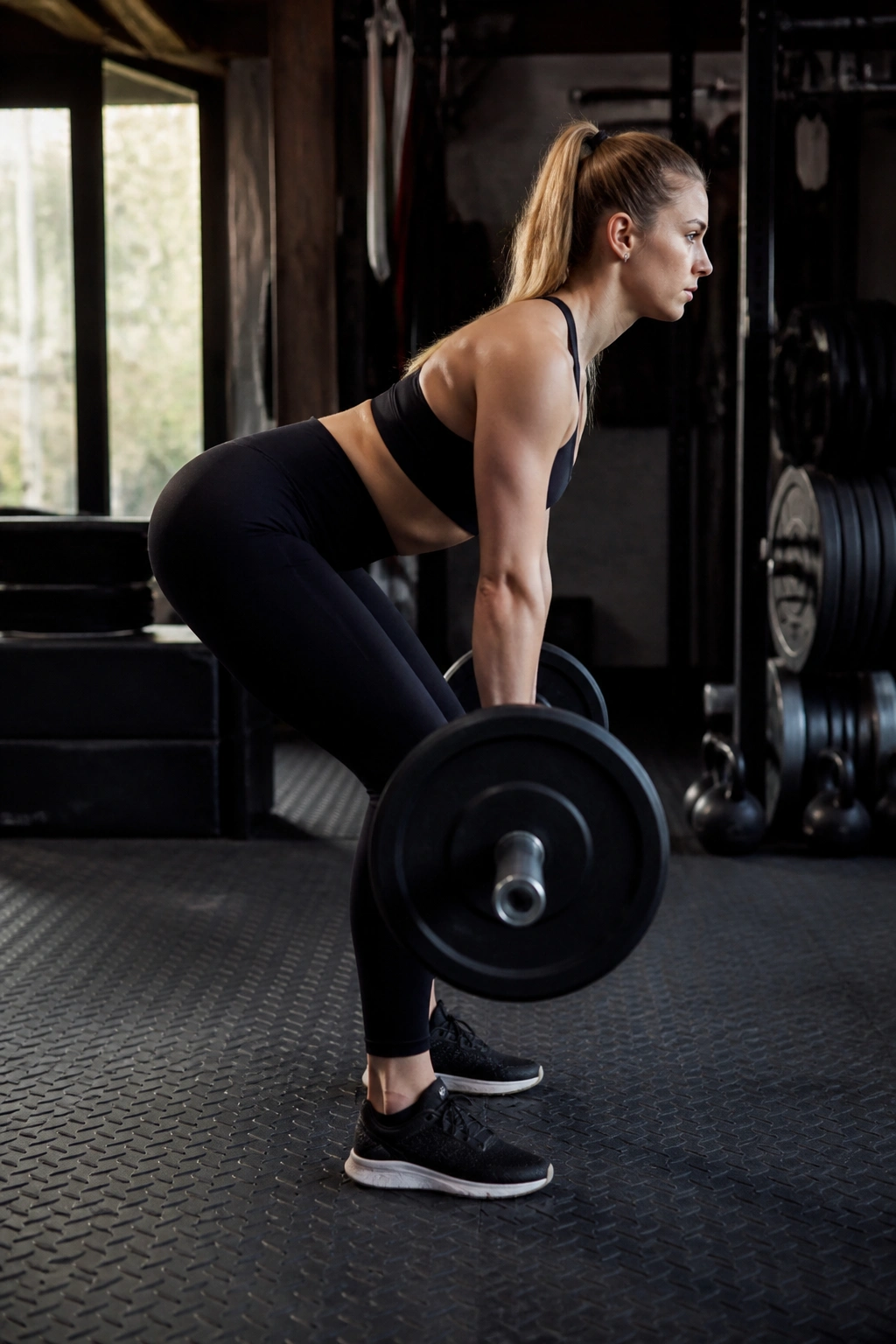
If you want to understand how your hamstrings and glutes actually function, this is your primary exercise. Unlike a conventional deadlift that starts from the floor, the Romanian Deadlift (RDL) starts from the standing position. You descend into a hinge, stretching the posterior chain under load, and then return to standing. It is less about moving massive weight and more about controlling the eccentric stretch.
The Hinge Mechanism
The most common mistake people make is turning this into a squat. Your knees should be soft—meaning slightly bent, not locked—but they should remain fixed in that position throughout the entire movement. The motion is entirely at the hips. Push your butt back toward the wall behind you as if you are trying to close a car door with your glutes.
Anatomy of the Move
- The bar stays close to your shins, almost scraping them.
- Your back remains neutral; think of your spine as a stiff rod.
- You should feel a significant, intense stretch in your hamstrings.
- Once you pass the mid-shin or reach your range of motion limit, drive your hips forward to return.
Training Note: If your lower back hurts, you are likely going too low. Your range of motion is dictated by your hamstring flexibility, not by how close the plates get to the floor. Stop when your back starts to round.
3. Walking Lunges
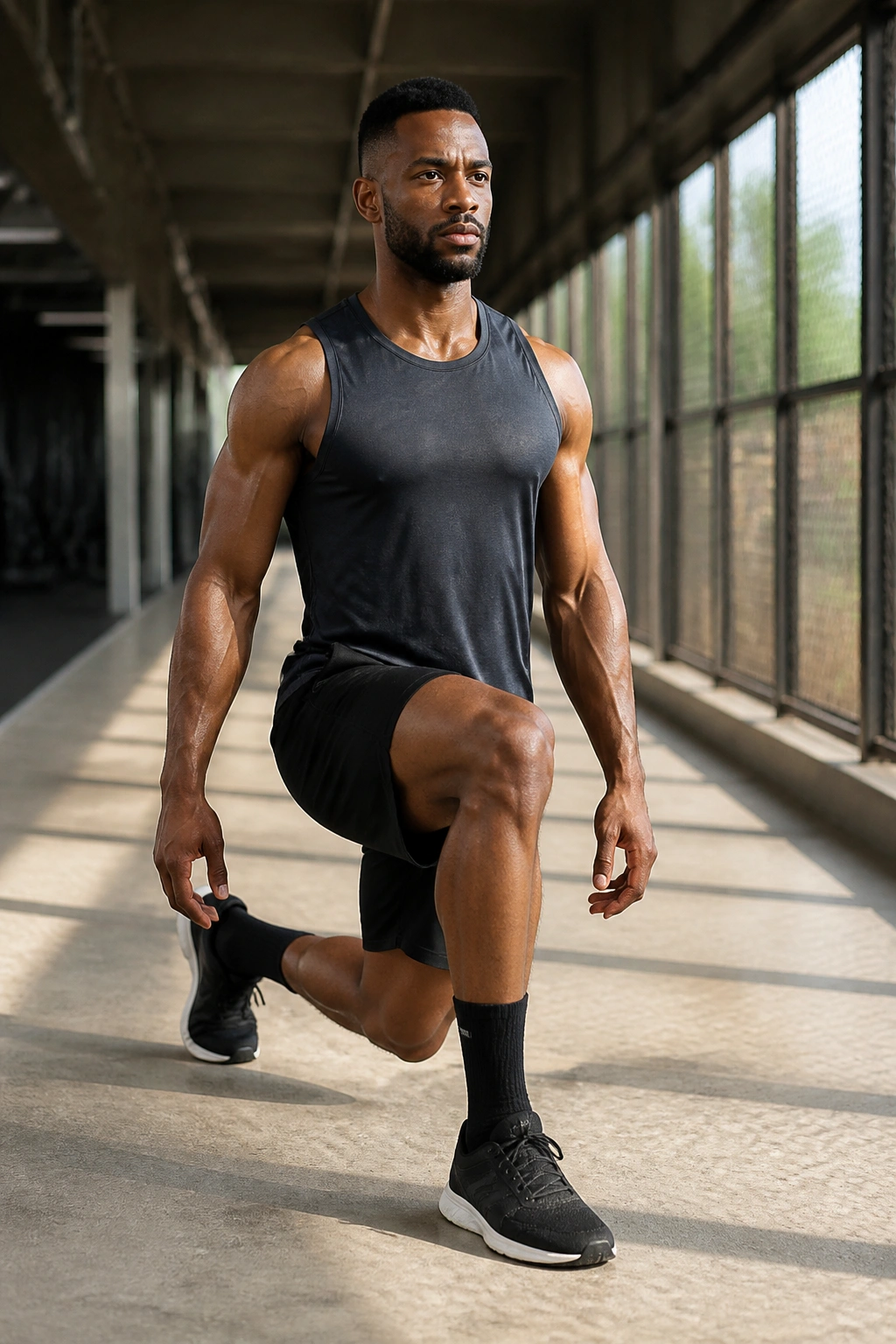
Walking lunges are brutal, simple, and incredibly effective for identifying imbalances between your left and right sides. Everyone has a dominant leg. When you squat, that dominant leg usually does 60% of the work. When you perform walking lunges, there is nowhere for the weaker leg to hide.
Building Stability and Balance
This movement challenges your balance in a way that static squats simply cannot. Because you are constantly transitioning from a stable base to a single-leg stance, your core must fire aggressively to keep you from wobbling. It forces your stabilizing muscles in the hip and ankle to engage, which is vital for long-term joint health.
How to Maximize the Output
Focus on taking a step long enough that your front shin remains vertical at the bottom of the lunge. If your knee drifts too far over your toes, you shift the load from your glutes and hamstrings to the knee joint. This is not inherently bad, but it changes the intended stimulus. Keep your torso tall, engage your core, and do not let your back knee slam into the ground.
4. Bulgarian Split Squats
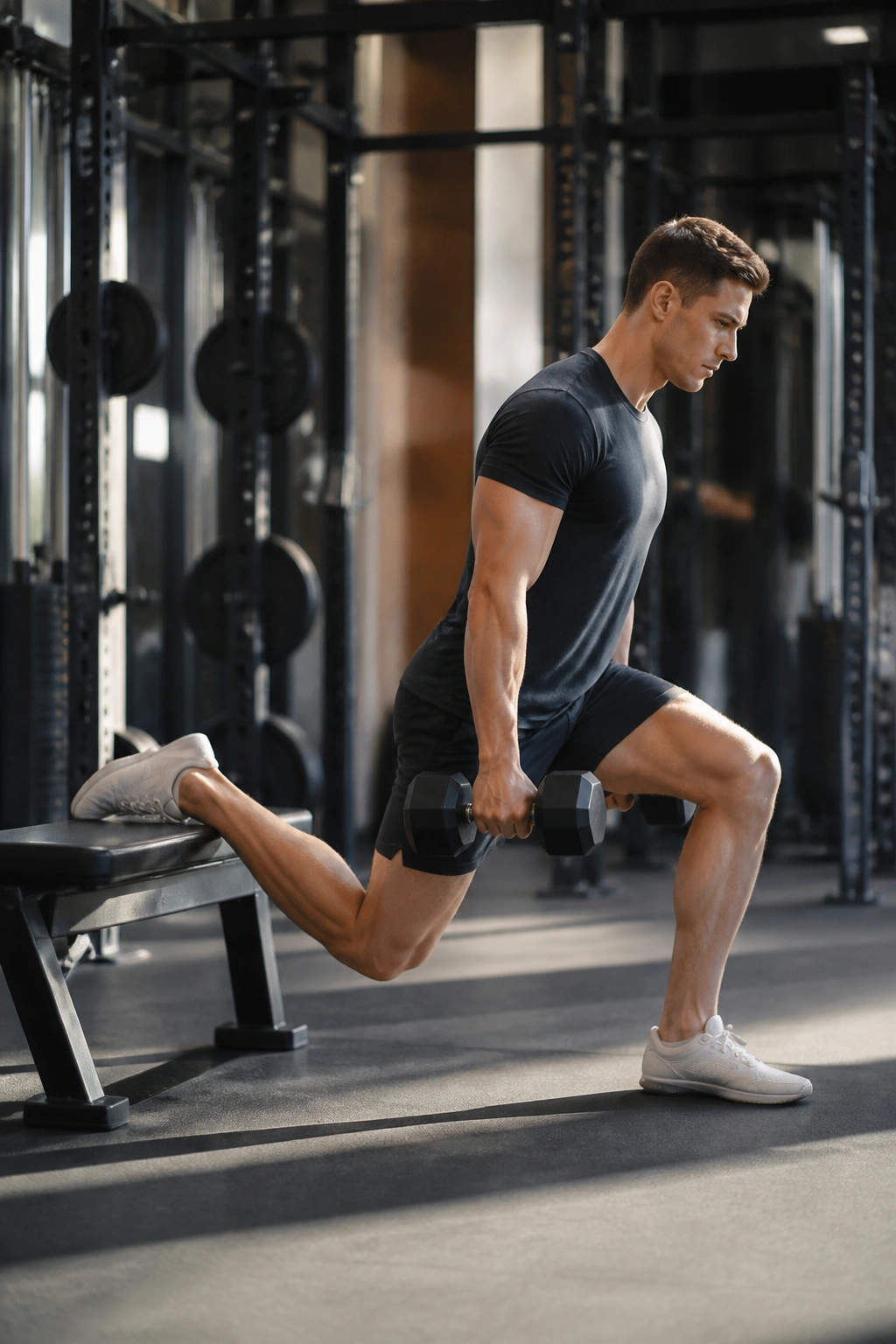
There is a reason this exercise is universally hated by athletes. It is incredibly effective. By elevating your rear foot, you place the vast majority of the load on the front leg while simultaneously stretching the hip flexor of the back leg. It creates a massive stimulus for growth without requiring the kind of heavy spinal loading that back squats demand.
The Setup Matters
The distance between your front foot and the bench is crucial. If you are too close, you will feel it mostly in your knee. If you are too far away, you will feel it mostly in your hip flexors. Find the sweet spot where you can achieve a deep vertical shin position while maintaining a slight forward lean of the torso.
Why You Should Use This
- Hypertrophy: It is one of the best movements for glute growth.
- Balance: It exposes and fixes left-to-right strength discrepancies.
- Core: The instability of being on one leg forces your obliques and deep abdominals to work overtime.
Key Insight: If you struggle with balance, perform this holding a light weight in the hand opposite the working leg. This creates a cross-body stabilization challenge that actually makes the movement easier to control.
5. Hip Thrusts
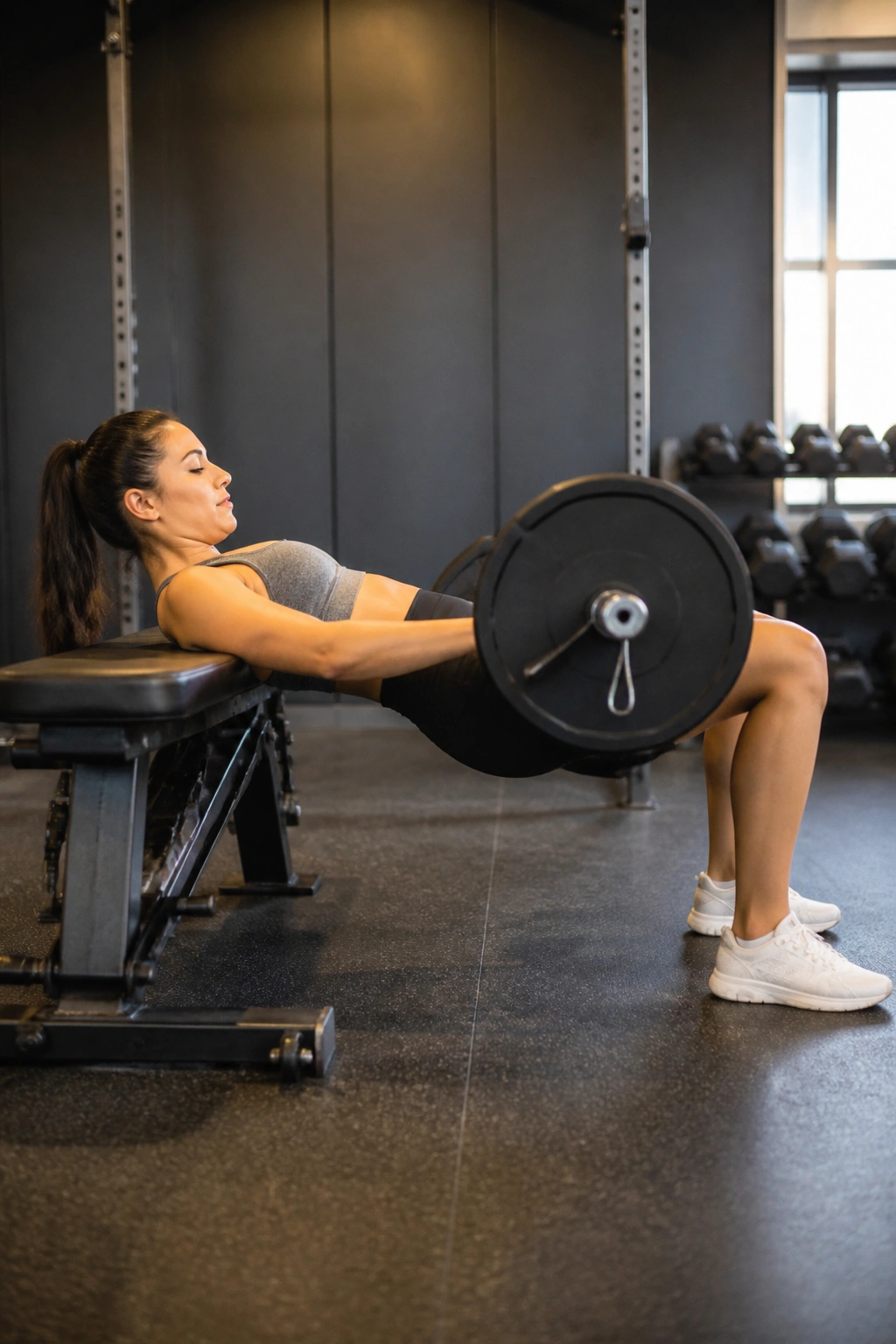
The hip thrust is the undisputed king of glute isolation. While squats and deadlifts work the glutes, they do so while also taxing the lower back, hamstrings, and quads. The hip thrust removes the lower back from the equation, allowing you to load the glutes with significantly heavier weight than you could manage in a squat.
Mechanics of the Thrust
When you set up, your shoulder blades should be supported on a bench, and your feet should be positioned so that your shins are vertical when you reach the top of the movement. If your feet are too far out, your hamstrings will take the load. If they are too close, your quads will dominate.
Crucial Form Cues
- Chin Tuck: Keep your chin tucked toward your chest to prevent your ribcage from flaring.
- Posterior Pelvic Tilt: As you reach the top, tuck your tailbone. Think about pulling your belly button toward your spine.
- Pause: Hold the squeeze at the top for at least two seconds. This creates the time-under-tension necessary for growth.
6. Kettlebell Swings
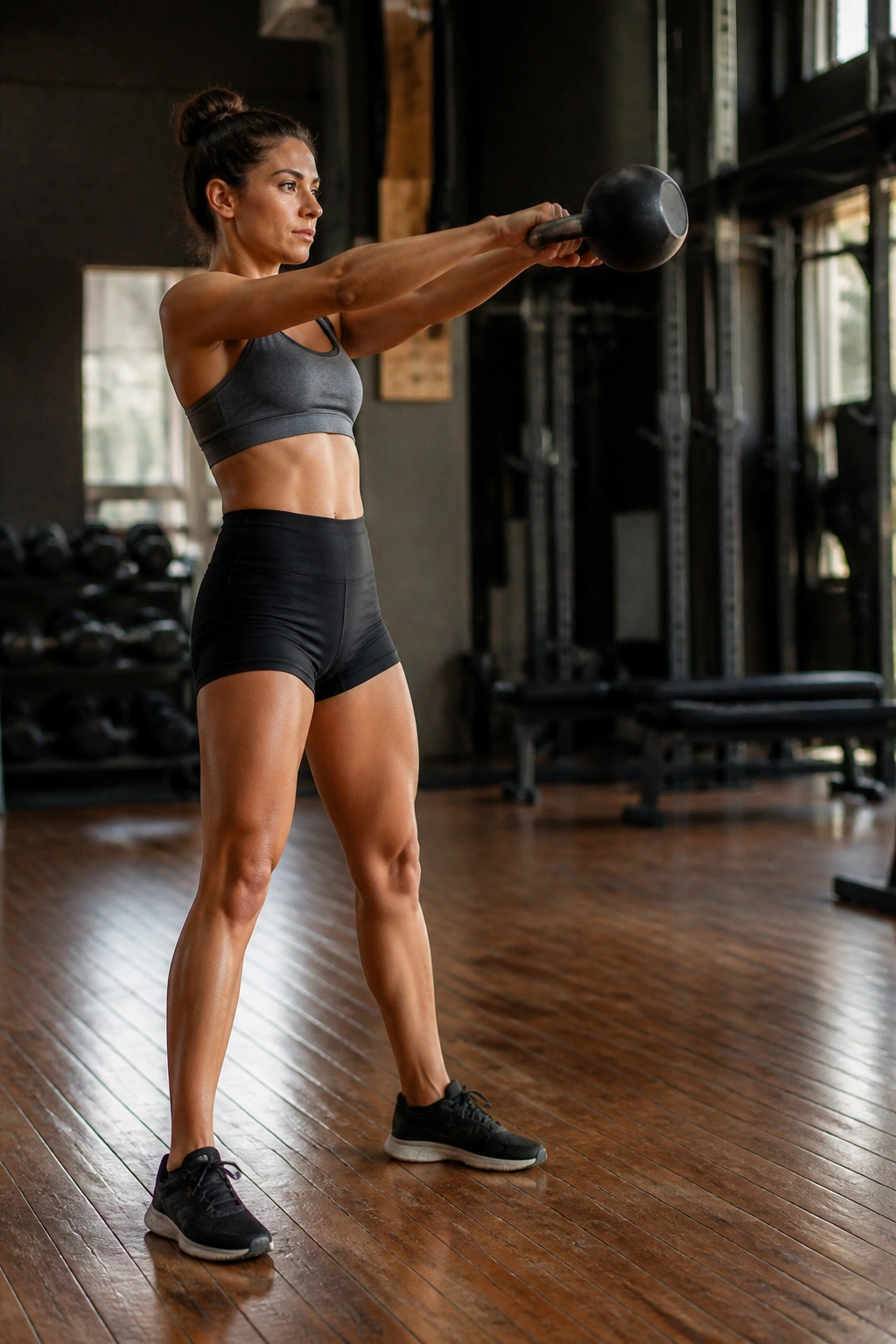
This is a hip-hinge exercise disguised as a cardio move. The kettlebell swing is about explosive power, generated through the forceful extension of the hips. When done correctly, it builds a rock-solid posterior chain, which includes the lower back, glutes, and hamstrings, while teaching you how to absorb force on the way down.
Why Proper Form Is Non-Negotiable
The kettlebell swing is often done incorrectly, with people turning it into a squat-swing hybrid. Do not squat the weight. This is a hinge. Your knees should only bend slightly. The power comes from snapping your hips forward.
Safety and Technique
- Start with the bell in front of you on the floor.
- Hike the bell back between your legs like a football center.
- Use the glutes to snap your hips into full extension.
- Let the bell float at the top—do not use your arms to lift it.
- The bell should be weightless at the peak of the movement.
Key Insight: Your arms are just ropes. If you feel this in your shoulders, you are lifting the weight. The effort should be entirely in your posterior chain.
7. Leg Press
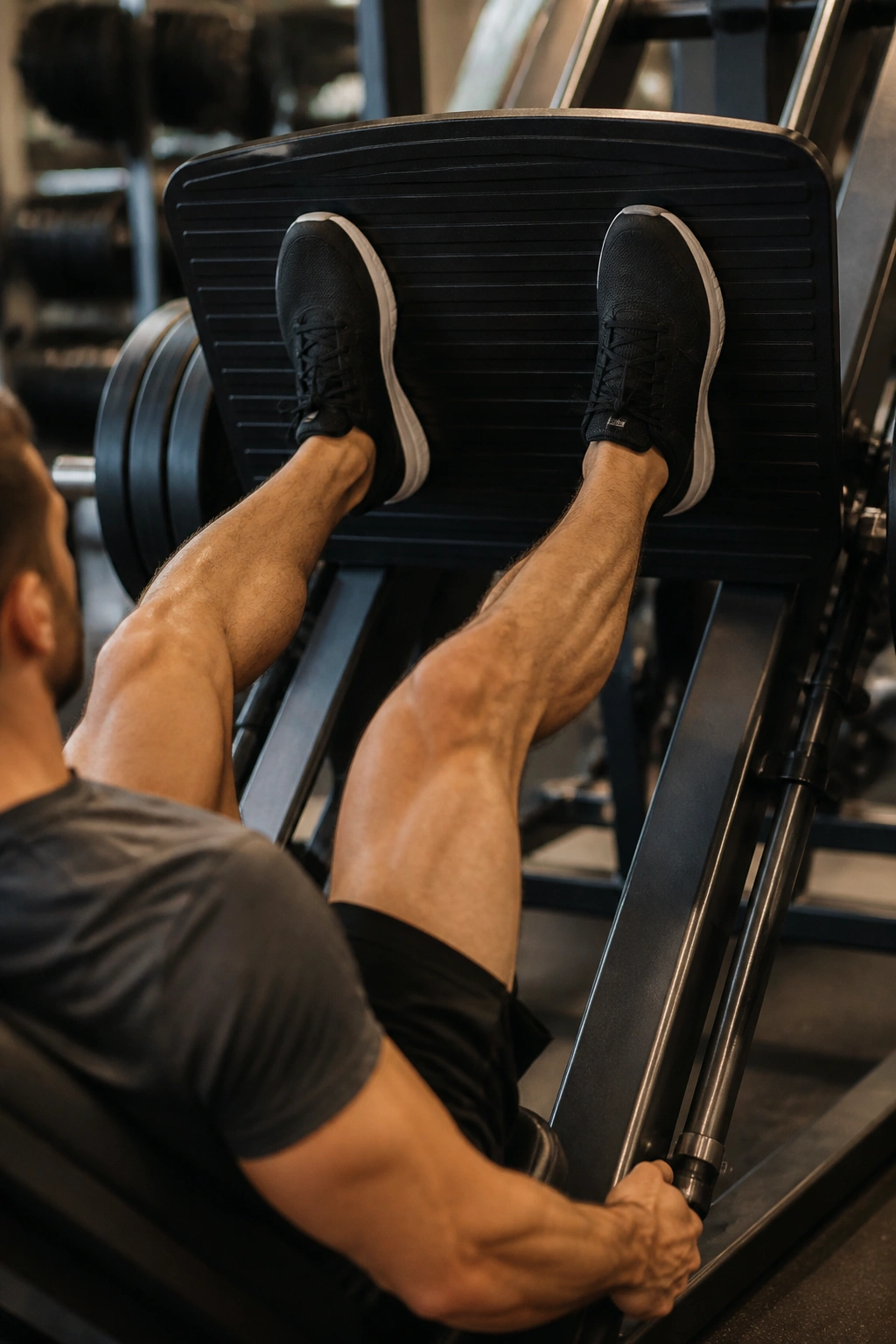
The leg press often gets a bad rap in the “hardcore” fitness community, but it is a legitimate tool for building volume without stressing the lower back. Because you are seated and supported, you can push to total muscular failure without worrying about dropping a heavy barbell or falling over.
Maximizing the Machine
Foot placement dictates the stimulus. A higher foot placement on the platform will engage more glutes and hamstrings. A lower placement will put more emphasis on the quadriceps. Regardless of where you place your feet, ensure your heels remain in contact with the platform. If your heels lift, you are putting dangerous shear force on your knees.
Common Pitfalls to Avoid
- Locking the knees: Never lock your knees out at the top of the rep. Keep a soft tension in the legs.
- Range of motion: Do not pile on plates just to do two-inch reps. Lower the weight enough to get a deep stretch, but keep your lower back glued to the seat pad.
8. Sumo Deadlifts
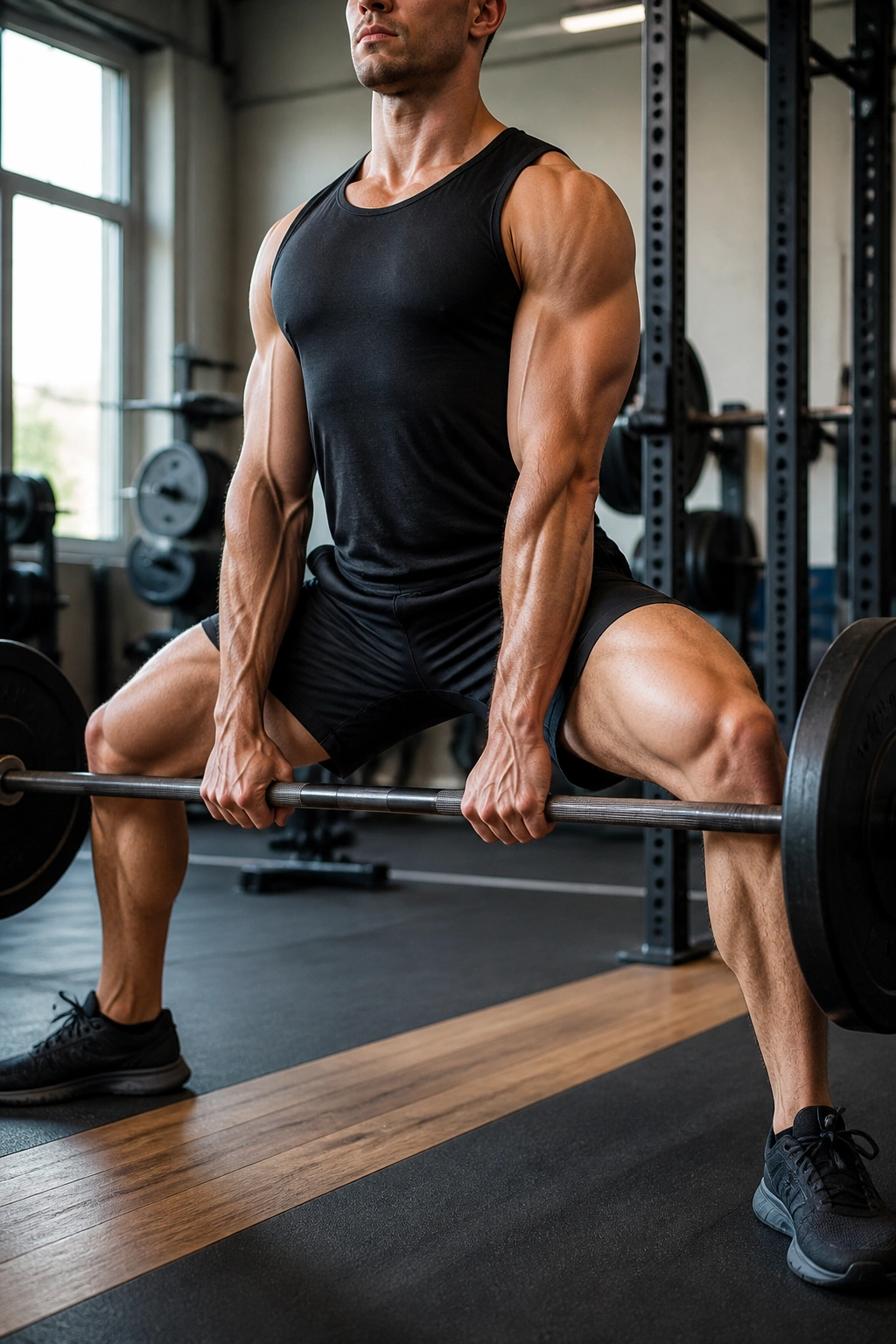
The sumo deadlift is a variation of the traditional deadlift that uses a wider stance and a more upright torso. Because your hands are inside your knees, you don’t have to pull the bar as far, which gives a mechanical advantage to people with long torsos or shorter arms.
Why the Wide Stance Wins
The wider stance forces your knees to track outward, which emphasizes the glutes and the inner thigh muscles (adductors) to a greater degree than conventional deadlifting. It is a fantastic movement for building a wide, sturdy base.
How to Execute
- Adopt a wide stance with toes pointed slightly outward.
- Grip the bar inside your knees.
- Drop your hips down, chest up, and pull the slack out of the bar.
- Drive your heels through the floor, keeping your back flat.
Training Note: Because you are more upright, you must be careful not to sit too low, or you turn it into a squat. Your hips should be higher than they are in a squat but lower than they are in a conventional deadlift.
9. Lying Leg Curls
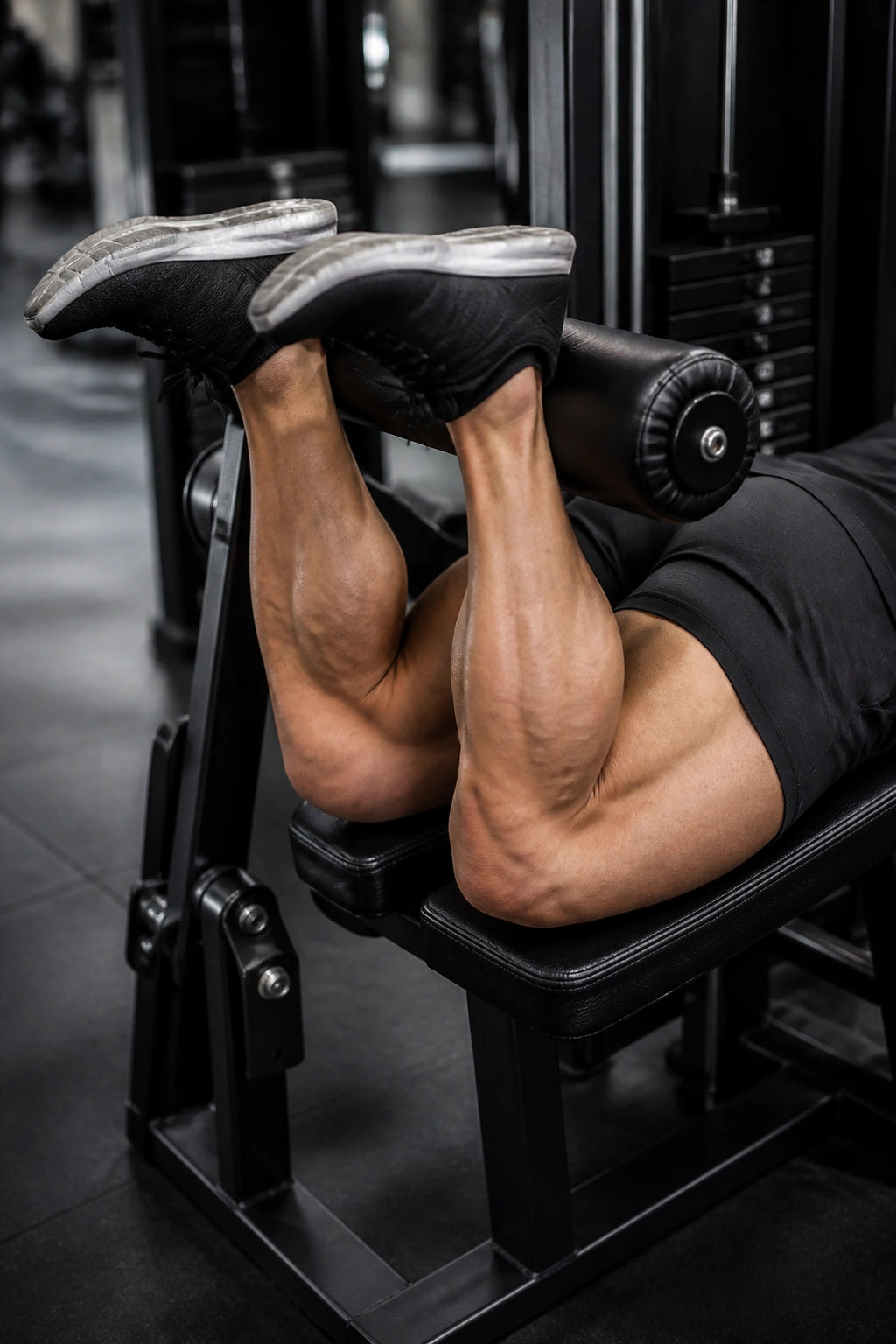
Isolation is necessary if you want balanced development. The hamstrings have two main functions: knee flexion and hip extension. Most compound movements, like squats and deadlifts, focus on hip extension. Lying leg curls target the knee flexion aspect of the hamstrings.
Why You Need Isolation
If you ignore direct hamstring curls, you are leaving muscle growth on the table. The hamstrings are composed of different muscle fibers, and direct isolation ensures that you are hitting the short head of the biceps femoris, which often gets neglected in hinge-only movements.
The Tempo Trick
Do not just swing the weight. Control the concentric (curling) phase, but pay special attention to the eccentric (lowering) phase. Take three seconds to lower the weight back to the starting position. This controlled lengthening is where the most muscle damage—and thus, the most growth—occurs.
10. Leg Extensions
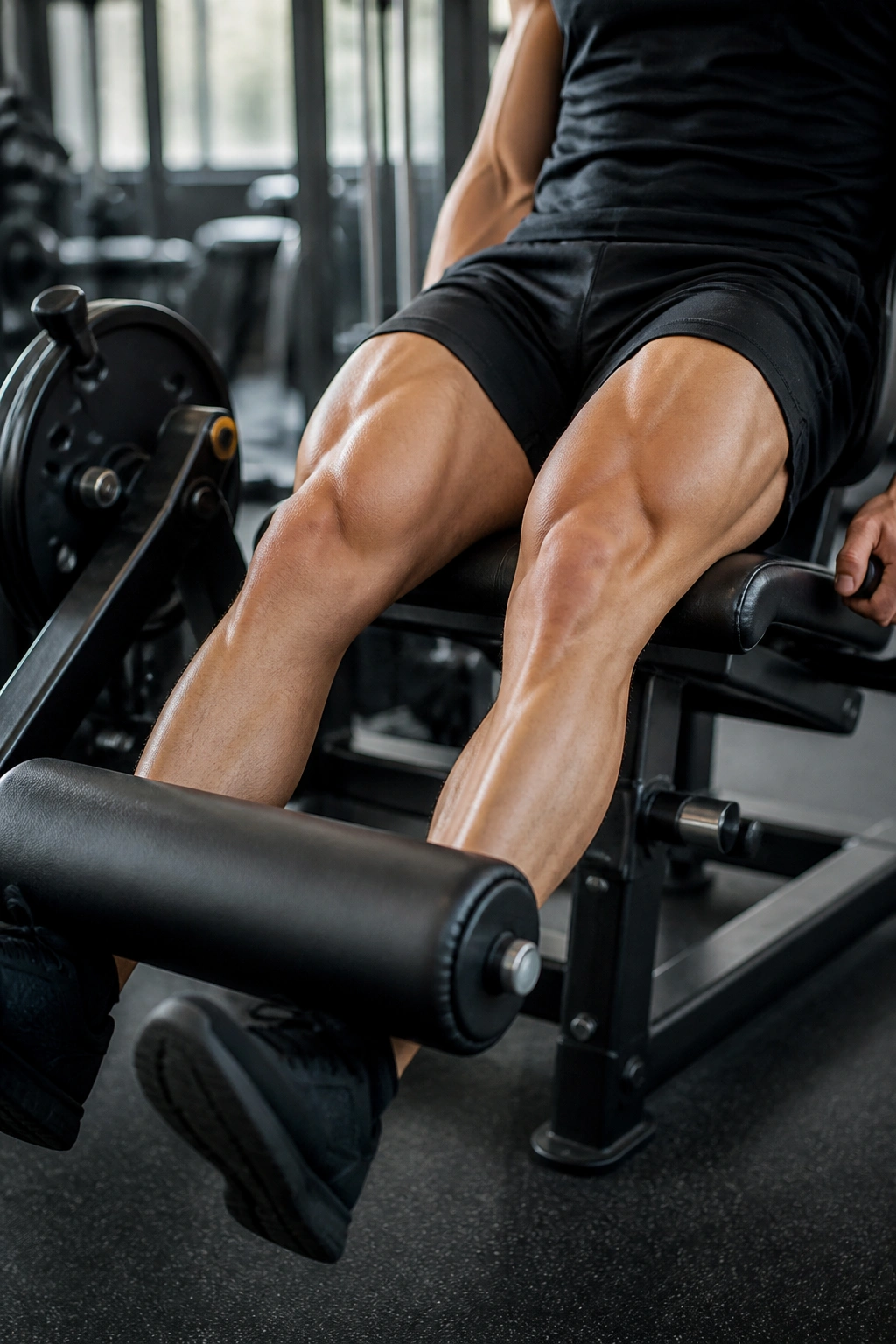
Much like the leg curl, the leg extension is a pure isolation exercise, but for the quadriceps. This movement creates intense localized fatigue in the quads. It is excellent for finishing a leg workout when your glutes and lower back are too tired for more compound lifting.
Protecting the Knees
There is a persistent myth that leg extensions are bad for the knees. They are only bad for the knees if you have pre-existing issues or if you use poor form. If your machine allows it, adjust the back pad so your knee joint aligns perfectly with the pivot point of the machine.
Execution Details
- Select a weight that allows for 10-15 reps with perfect control.
- Pause at the top for a full second to get a peak contraction.
- Do not bounce out of the bottom.
- Keep your back pressed firmly against the seat.
Key Insight: This is not an ego exercise. You do not need to max out the stack. Focus on the burn and the squeeze.
11. Dead Bugs
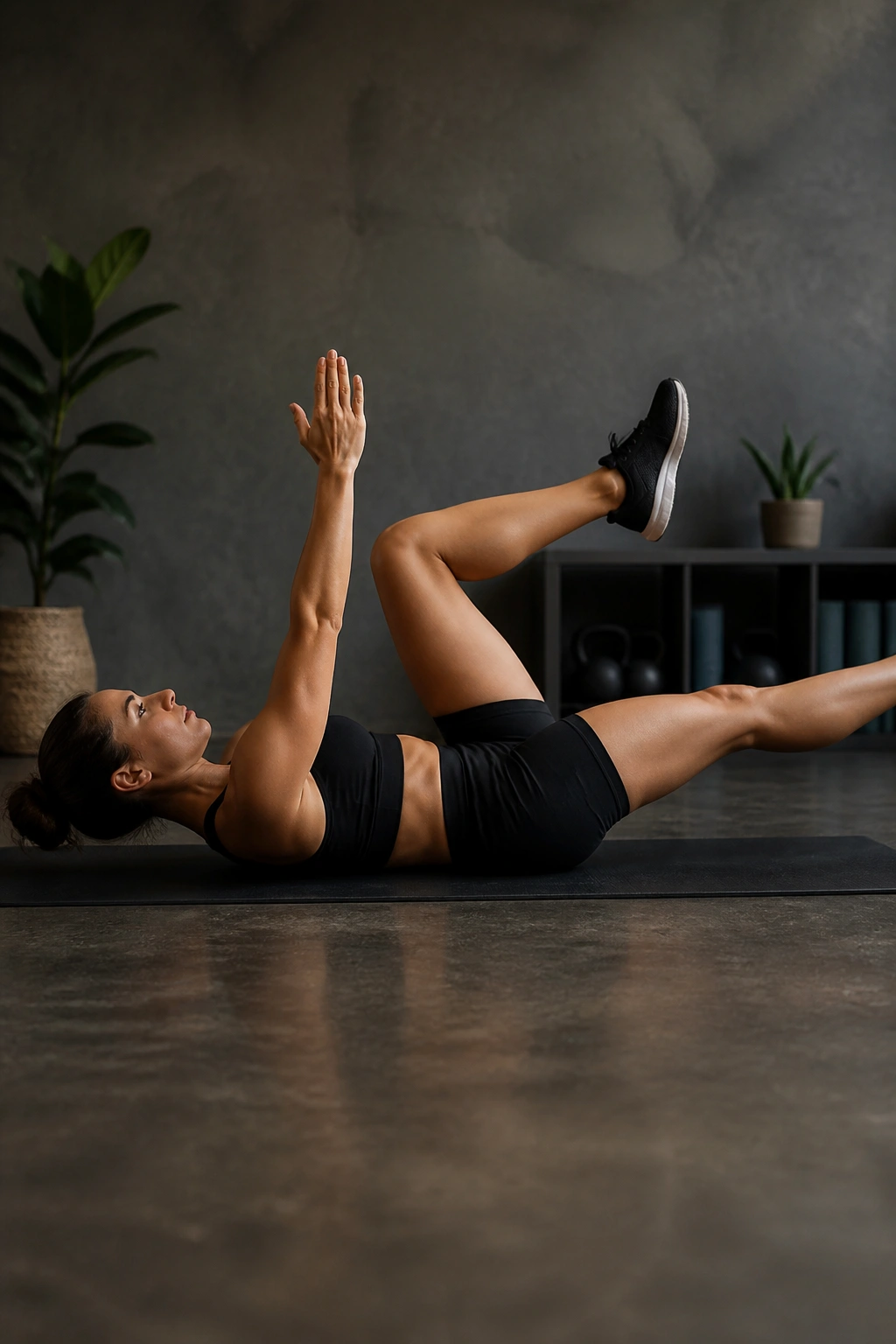
Moving from the legs to the core, we find the dead bug. This is the ultimate “anti-extension” movement. Many lower body exercises put your spine at risk of arching. The dead bug teaches you how to keep your ribcage down and your lower back pressed into the floor while your limbs move.
The Link to Lower Body Strength
If you cannot perform a dead bug without your back arching, you have no business doing heavy overhead squats or heavy deadlifts. This exercise builds the exact type of core stability required to keep your spine safe under heavy loads.
How to Perform It
- Lie on your back, arms extended toward the ceiling, knees bent at 90 degrees.
- Press your lower back into the floor. This is the non-negotiable starting position.
- Slowly lower your right arm behind your head and your left leg toward the floor.
- Return to the start and switch sides.
Training Note: If your lower back comes off the floor, stop the leg from going any lower. The range of motion is irrelevant; the spinal position is everything.
12. Plank with Leg Lifts
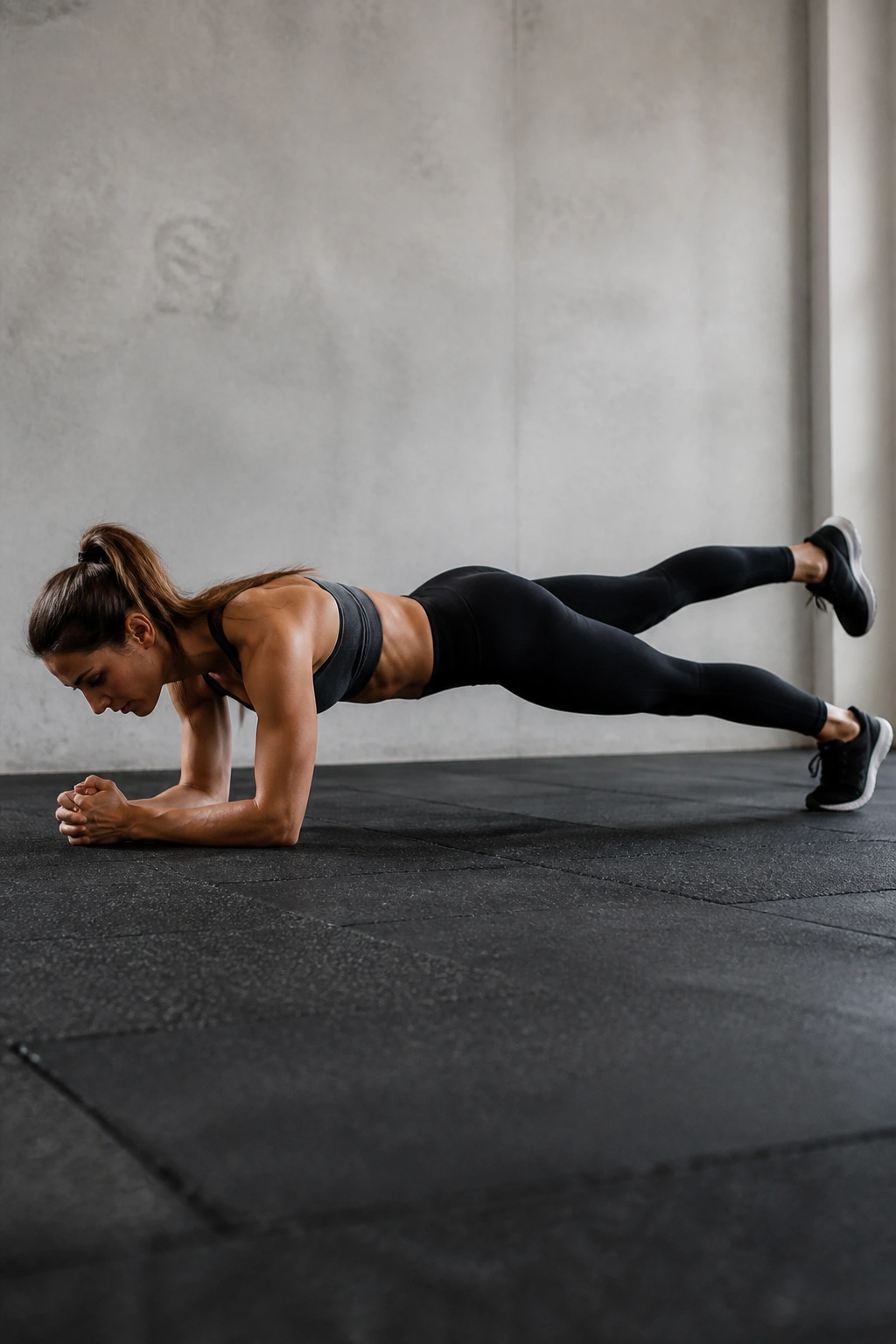
The standard plank is static. It is good, but it is limited. Adding a leg lift introduces a dynamic stability challenge. By lifting one leg, you disrupt the balance, forcing your obliques and glutes to fire to prevent your hips from rotating.
Why This Matters for Leg Day
When you are doing lunges or split squats, your hips are constantly trying to rotate. This variation of the plank trains the exact muscles responsible for keeping your pelvis level during those movements.
The Correct Form
- Get into a standard plank position on your forearms.
- Keep your glutes tight and your belly button drawn in.
- Lift one leg an inch or two off the ground.
- Hold for two seconds, then lower.
- Alternate legs without letting your hips sag or tilt.
13. Hanging Leg Raises
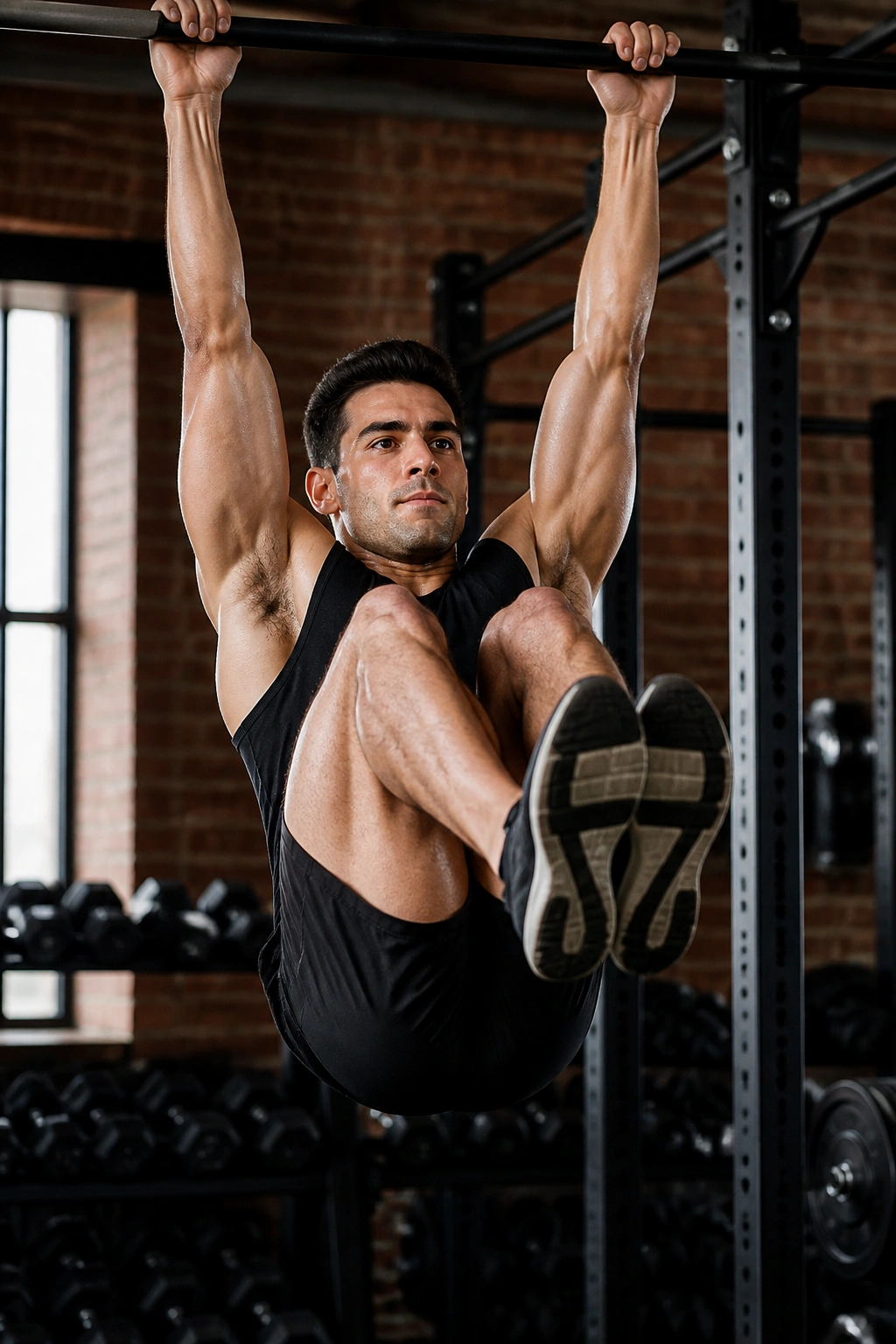
This is the gold standard for lower abdominal work. Most people think crunches are for the lower abs, but crunches primarily work the upper abdominals. The lower abs are responsible for posterior pelvic tilt—basically, curling your hips toward your ribcage.
The Secret to Effectiveness
The mistake everyone makes is using momentum. They swing their legs up and down like a pendulum. To actually train the abs, you must curl your pelvis. Do not just lift your legs; try to touch your toes to the bar by rounding your lower back.
Tips for Success
- Use straps if your grip strength fails before your abs.
- Control the descent. Do not let your legs drop quickly.
- Aim for a slow, controlled cadence.
Key Insight: If you feel this mostly in your hip flexors, try to focus on driving your knees toward your chest rather than just lifting straight legs. That small change shifts the tension to the core.
14. Russian Twists
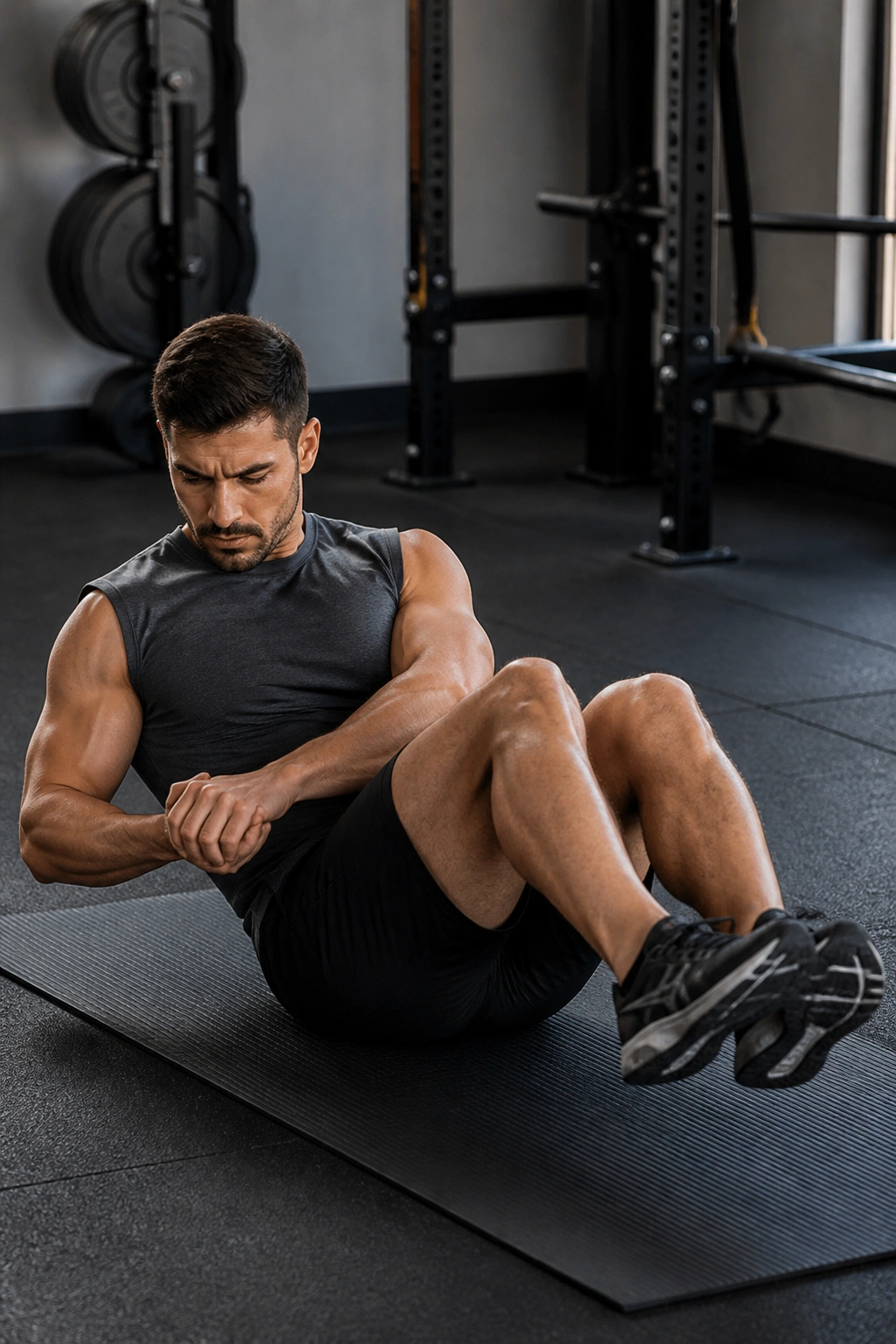
Your core is not just about flexion; it is about rotation and anti-rotation. The Russian twist hits the obliques, which are essential for stabilizing the lower body during any movement that involves a staggered stance, like walking lunges.
How to Do It Right
Sit on the floor with your knees bent and feet elevated. Lean back slightly until you feel your abs engage. Rotate your torso to touch the floor on your left side, then your right.
The Common Mistake
The biggest mistake is moving the arms without rotating the torso. You want your shoulders to turn with your hands. If you only move your arms, you get zero benefit. Keep your chest up, breathe steadily, and ensure the rotation originates from the thoracic spine, not the lumbar spine.
15. Bicycle Crunches
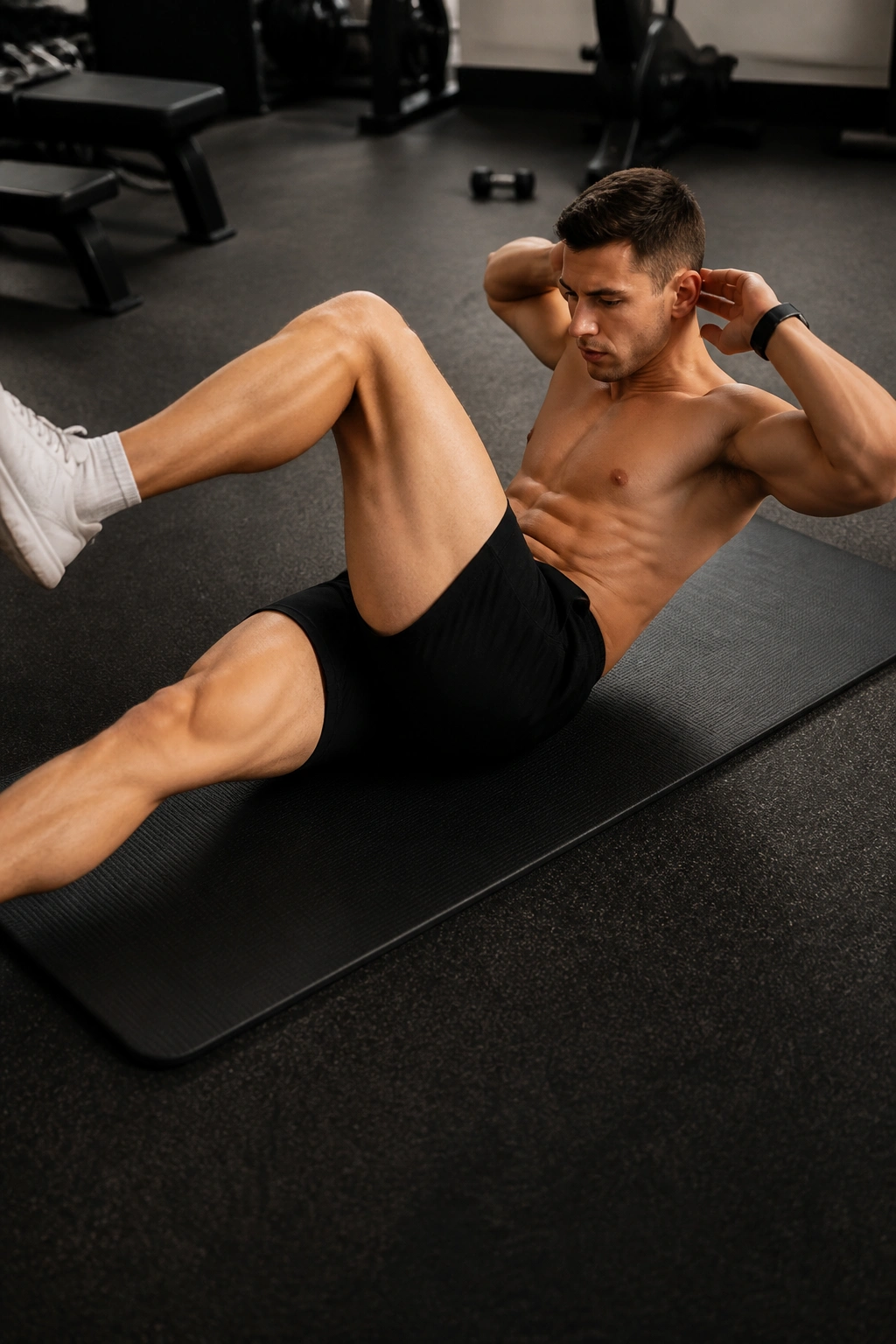
Bicycle crunches are arguably the most effective abdominal exercise for total core engagement, according to electromyography studies. They combine rotation with flexion, hitting the rectus abdominis and the obliques simultaneously.
The Tempo Requirement
Speed is the enemy of effectiveness here. You should perform these in a slow, controlled manner. Imagine you are riding a bike through mud. The resistance is high, and every movement is deliberate.
Form cues
- Interlace your fingers behind your head, but do not pull on your neck.
- Rotate your opposite elbow toward the opposite knee.
- Extend your other leg fully.
- Keep your shoulder blades off the floor the entire time.
Training Note: The goal is not to touch your elbow to your knee—it is to bring your shoulder toward the opposite knee. Focus on the rotation.
16. Mountain Climbers
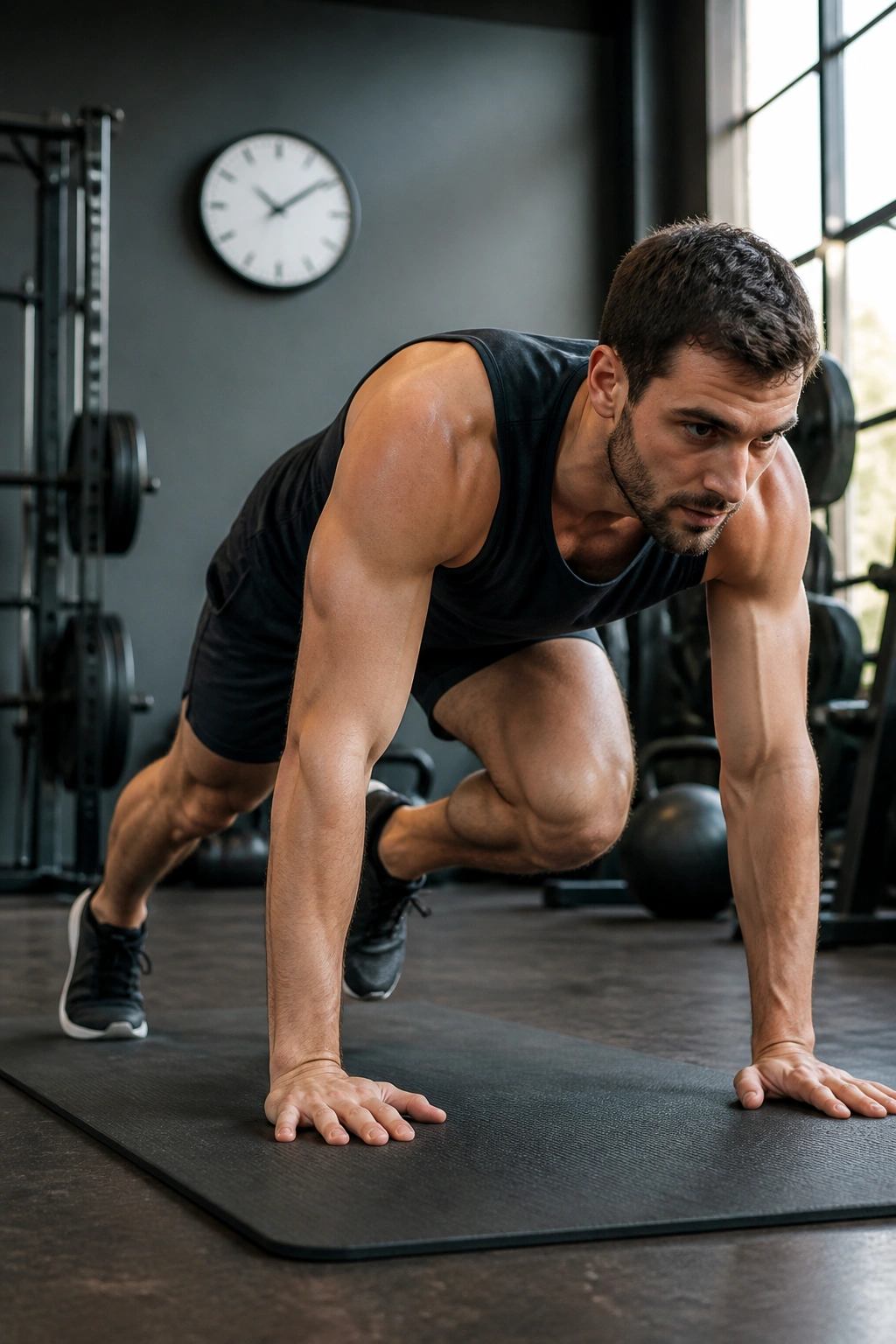
Mountain climbers are a high-intensity movement that acts as a bridge between lower body conditioning and core strength. They force you to stabilize your core while your hips are in a flexed, dynamic state. This is perfect for building endurance in the hip flexors and the core.
Dynamic Stability
The challenge here is to keep your back flat and your hips stable while your legs pump rapidly. If your hips bounce up and down with every step, you are losing the core tension. Keep your torso parallel to the ground.
How to Execute
- Start in a push-up position.
- Bring your knee toward your chest.
- Keep your toes close to the ground.
- Focus on pace, but never sacrifice form for speed.
17. Bird-Dogs
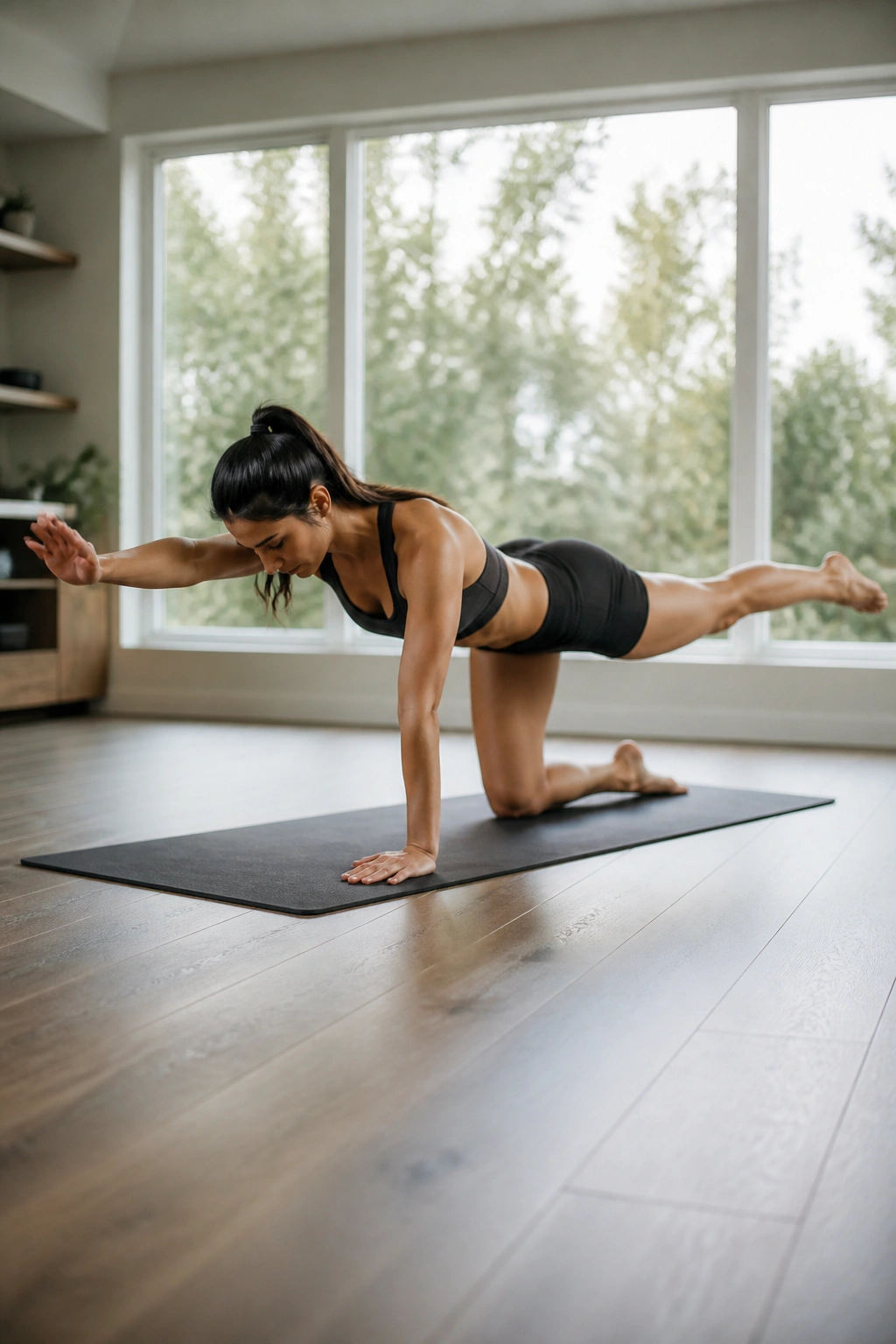
This is a rehabilitative staple, but it is also a fantastic warm-up for heavy leg days. It teaches you how to stabilize your lumbar spine while moving your extremities. It is essentially a cross-crawl pattern that builds the coordination between your lats, core, and glutes.
The Mind-Muscle Connection
This movement should be done slowly. The goal is not to perform a high number of reps; the goal is to create maximum tension. Extend your right arm and left leg simultaneously, forming a straight line from your fingertips to your heel.
Why This Is Crucial
When you extend your leg, you must squeeze your glute hard. If you don’t, you are just moving your limb. By forcing that glute squeeze, you are priming the muscle for heavier compound movements later in your workout. Keep your back from arching as you extend.
18. Standing Calf Raises
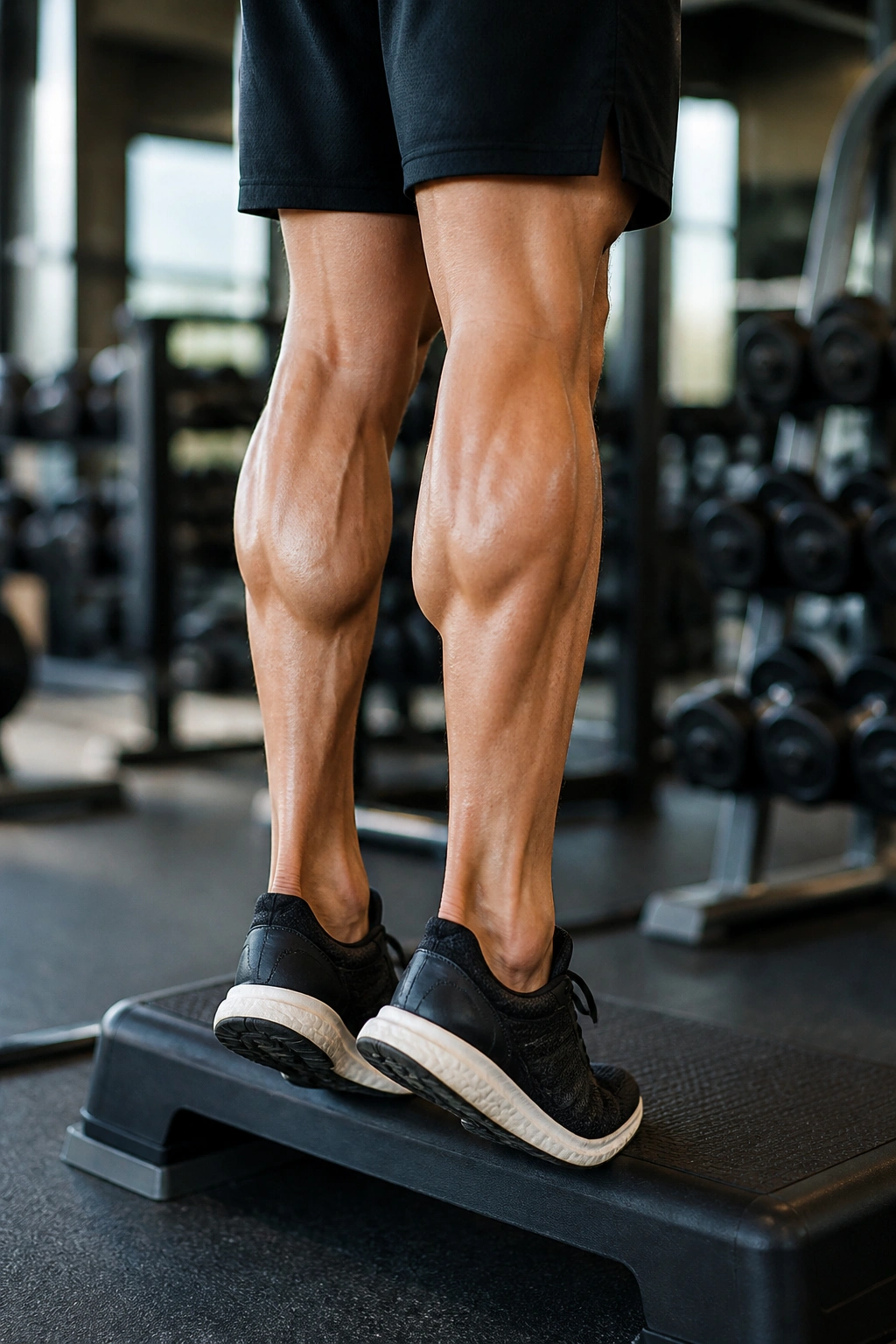
We cannot talk about total lower body strength without mentioning the calves. They are the shock absorbers of the human body. Strong calves contribute to better ankle stability, which directly translates to more power in your squat and deadlift.
The Range of Motion
Most people do calf raises incorrectly. They bob up and down in a tiny range of motion. You need to maximize the stretch and the contraction.
How to Get Results
- Stand on the edge of a step or a calf-raise machine.
- Lower your heels until you feel a deep stretch in the calf.
- Pause for a second at the bottom.
- Explode upward, rising onto the ball of your foot.
- Hold the squeeze at the top for a full second.
Training Note: The calves are high-endurance muscles. They respond well to higher volume (15-20 reps) and a slower tempo. Do not rush these.
Final Thoughts
Strength is not just the sum of the weights you lift; it is the quality of the movement you produce. You can have the strongest legs in the world, but if your core cannot stabilize the spine, or if your glutes remain dormant while your lower back does the work, you are building a house of cards.
The exercises listed above are designed to bridge that gap. By combining heavy, compound leg movements with targeted core stability and isolation work, you create a system that is resilient and powerful. Start by mastering the mechanics of the movement before you worry about the weight on the bar. Precision leads to progress, and progress is what builds a base that lasts for decades.
