



Crunches are cheap.
What most men actually need is a home workout that drives up heart rate, works enough muscle to matter, and can be repeated week after week without feeling like punishment. Belly fat comes off when overall body fat drops, and the fastest way to push that process along at home is to mix hard intervals with strength moves that use the big muscle groups.
The good news is that you do not need a garage full of equipment. A jump rope, a pair of dumbbells, a set of stairs, even a backpack loaded with books can turn a spare room into a useful training space. The bad news is that 200 lazy reps of random ab work won’t change much. Waistline fat is stubborn, especially for men who sit a lot, eat on the run, or keep sleep on the short side.
The workouts below lean on plain workhorses: jumping, squatting, pushing, carrying, crawling, and twisting with control. Some are rough and sweaty. Some are slower and easier on the joints. The trick is to pick a handful, push them hard enough to breathe through your mouth, and keep coming back to them long enough for your body to respond.
1. Jump Rope Intervals for Belly Fat
If I had to choose one cheap tool for home fat-loss work, I’d grab a jump rope first. It hits the calves, shoulders, lungs, and coordination at the same time, which is a fancy way of saying it makes you work without needing much floor space.
Start with 30 seconds of fast skipping and 30 seconds of easy bouncing or marching. Do 10 rounds. If that feels too easy after a week or two, stretch the work phase to 40 seconds or cut the rest to 20. Keep your jumps low. You are not trying to leave the ground. You’re trying to stay springy and smooth.
How to run it
- Keep your elbows close to your sides.
- Turn the rope with your wrists, not your whole arms.
- Land softly on the balls of your feet.
- Stop if your shoulders creep up to your ears.
No rope? Pretend you have one and do the same footwork. It sounds silly. It works.
2. Burpees Done the Right Way
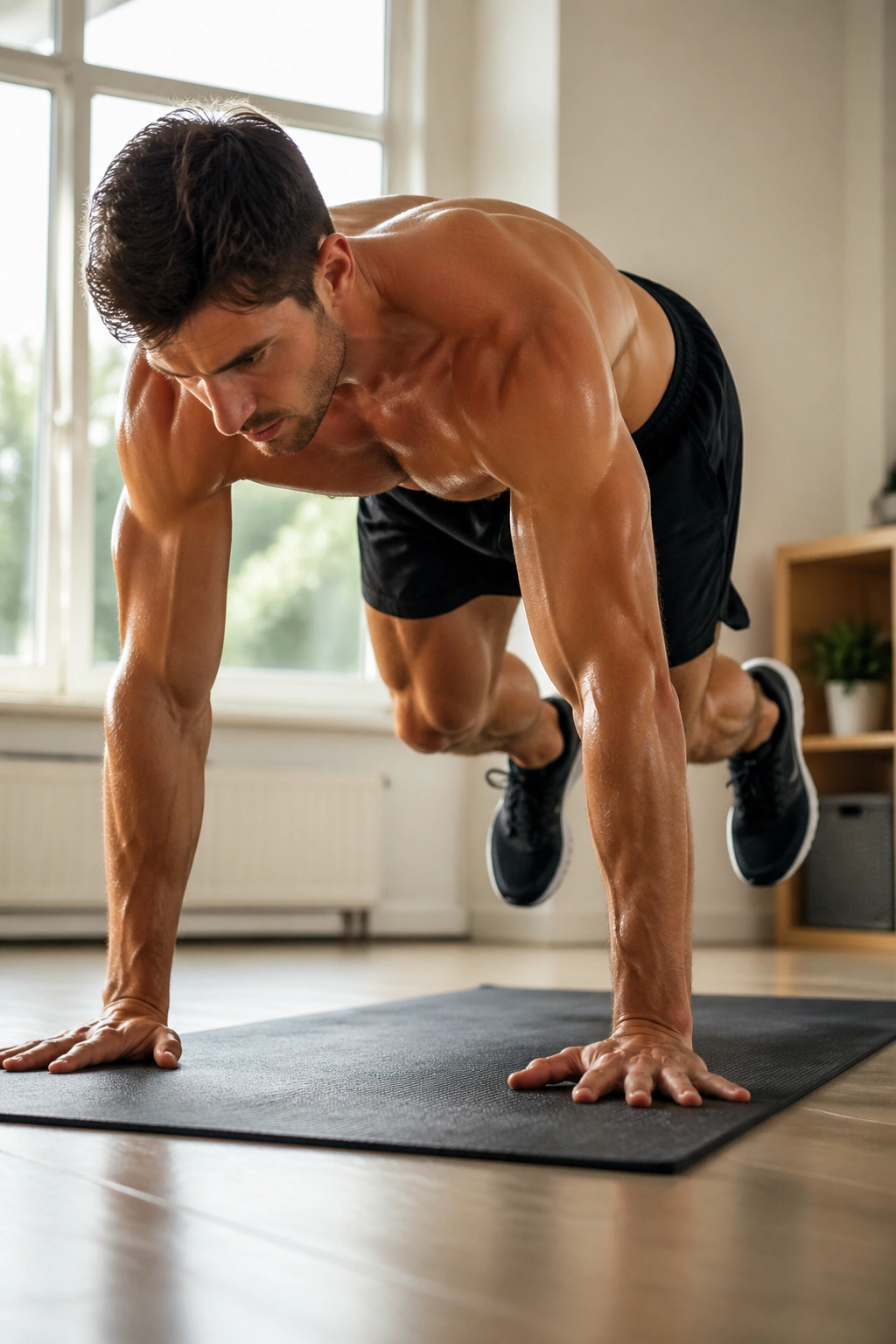
Why do burpees still show up in hard home workouts? Because they don’t politely ask your body to work. They demand it. One good set leaves your chest warm, your legs tight, and your breathing loud enough to annoy anyone in the next room.
Do 5 to 8 reps per set if you are new to them, or 10 to 12 if your conditioning is already decent. Rest 45 to 60 seconds between sets and repeat 4 to 6 times. If full jump burpees beat up your knees or lower back, step back instead of jumping back, then stand up without the leap.
The biggest mistake is collapsing into the floor and then muscling your way up with a sloppy spine. Keep your body braced, plant your hands under your shoulders, and think about moving with purpose. Burpees are not pretty. They do not need to be.
3. Mountain Climbers With a Tight Core
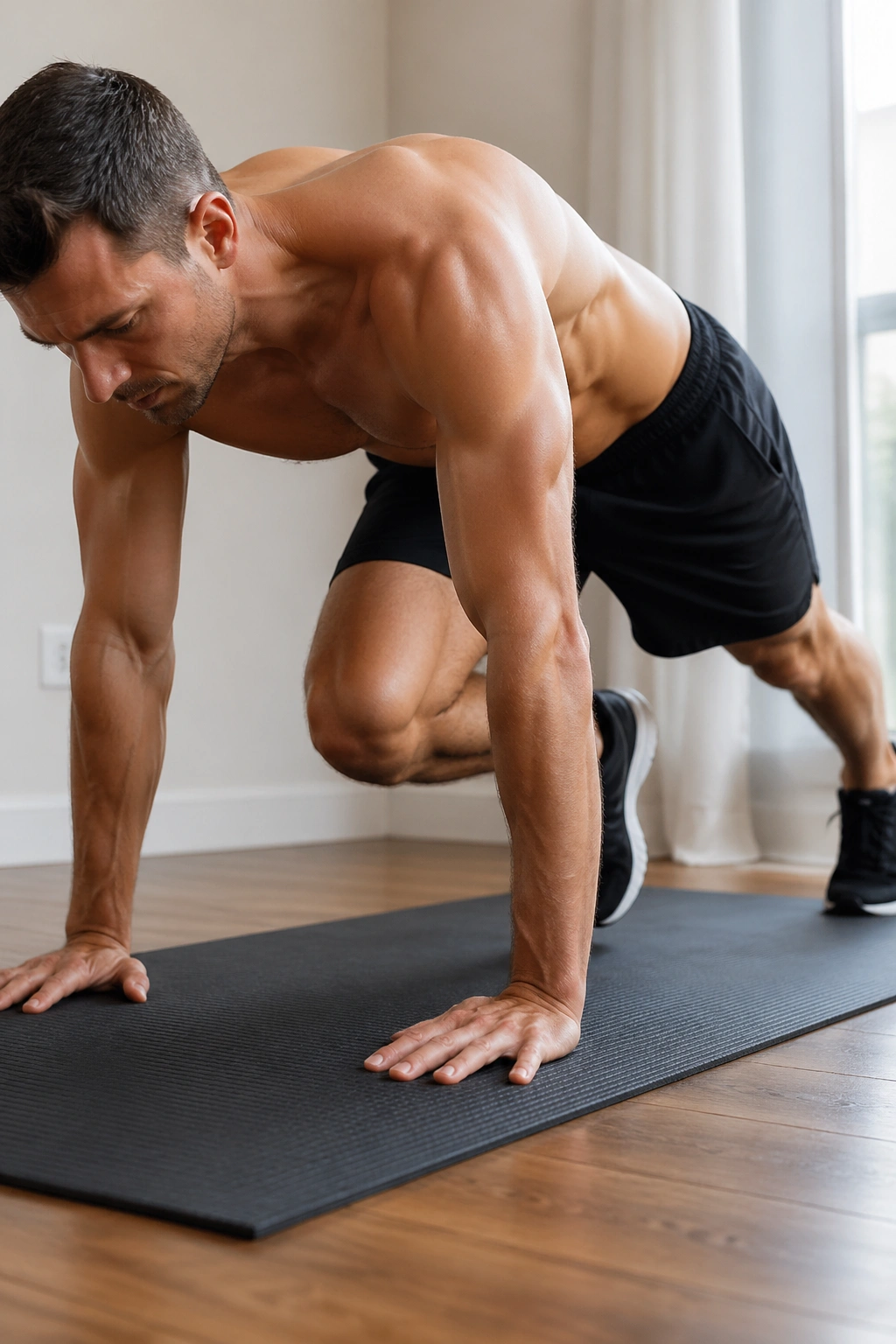
Mountain climbers look simple until your shoulders start shaking and your midsection tries to wiggle out of the deal. That wobble is the whole point. You want the abs working to keep your hips from swinging all over the place.
Run them for 20 to 40 seconds at a time. Go hard, rest for 20 to 40 seconds, then repeat for 6 to 10 rounds. If you want more of a burn, drive the knees in faster but keep the torso still. Speed without control just turns into noisy flailing, and that doesn’t do much for your core.
What to watch for
- Hands stay stacked under the shoulders.
- Hips stay level.
- Knees drive forward, not outward.
- Breathing stays sharp and steady.
If your lower back sags, slow down. Better a cleaner 20-second set than a sloppy minute.
4. Shadow Boxing Rounds in the Living Room
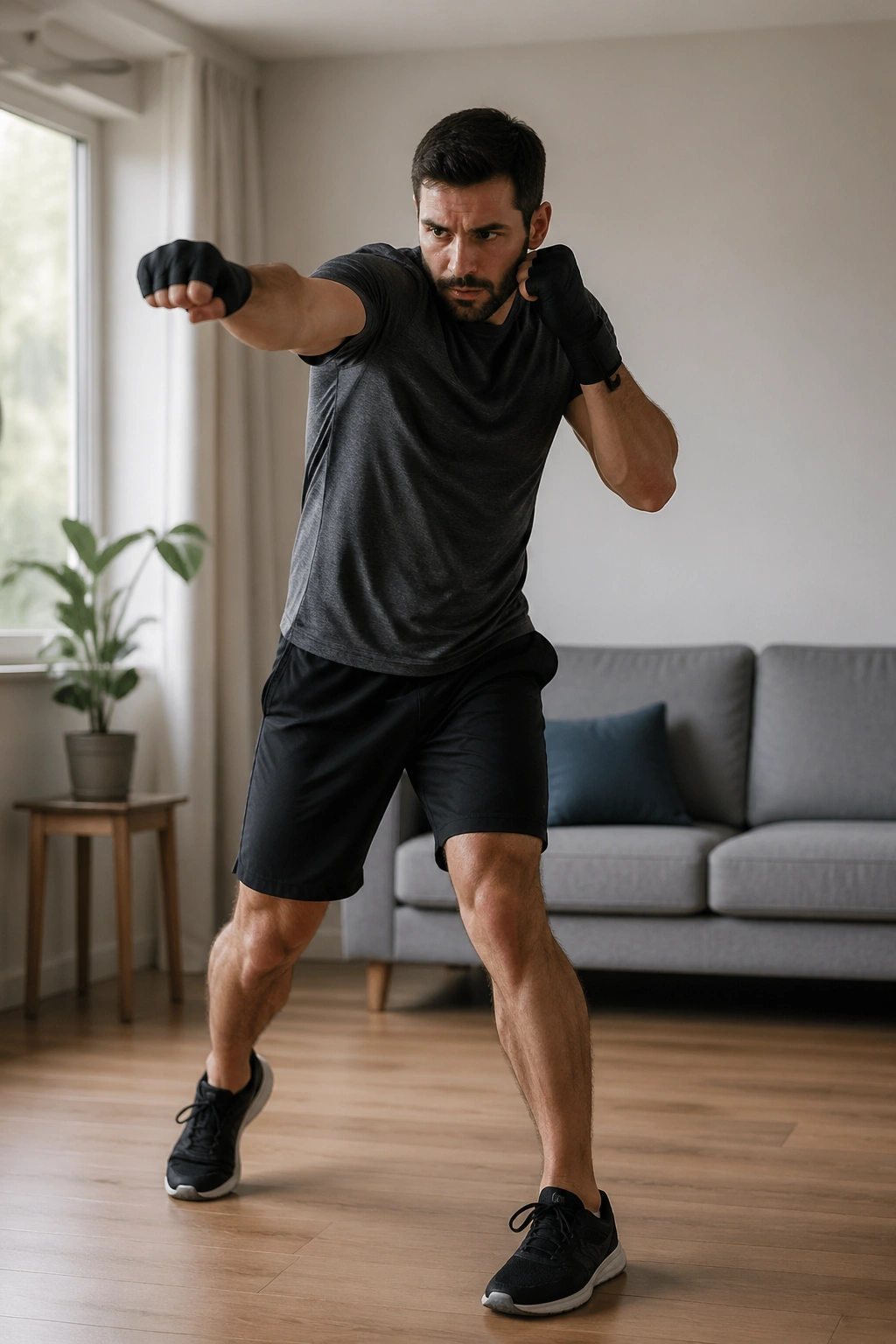
There’s something nice about shadow boxing. No machine. No setup. Just you, a few square feet of space, and enough room to move like you mean it. It also sneaks in footwork, shoulder endurance, and a lot of upper-body calorie burn without pounding your joints.
Work in 2- to 3-minute rounds with 30 to 45 seconds of rest. Throw simple combinations: jab-cross, jab-cross-hook, or body shot to hook to cross. Keep your chin tucked, your ribs down, and your hands coming back to guard after every punch.
A lot of guys punch only with the arms. Don’t do that. Twist the hips, pivot the back foot, and let the whole body do its part. That extra rotation matters. It’s what turns a little kitchen-floor workout into something that feels like actual training.
5. Squat Jumps That Spike Your Heart Rate
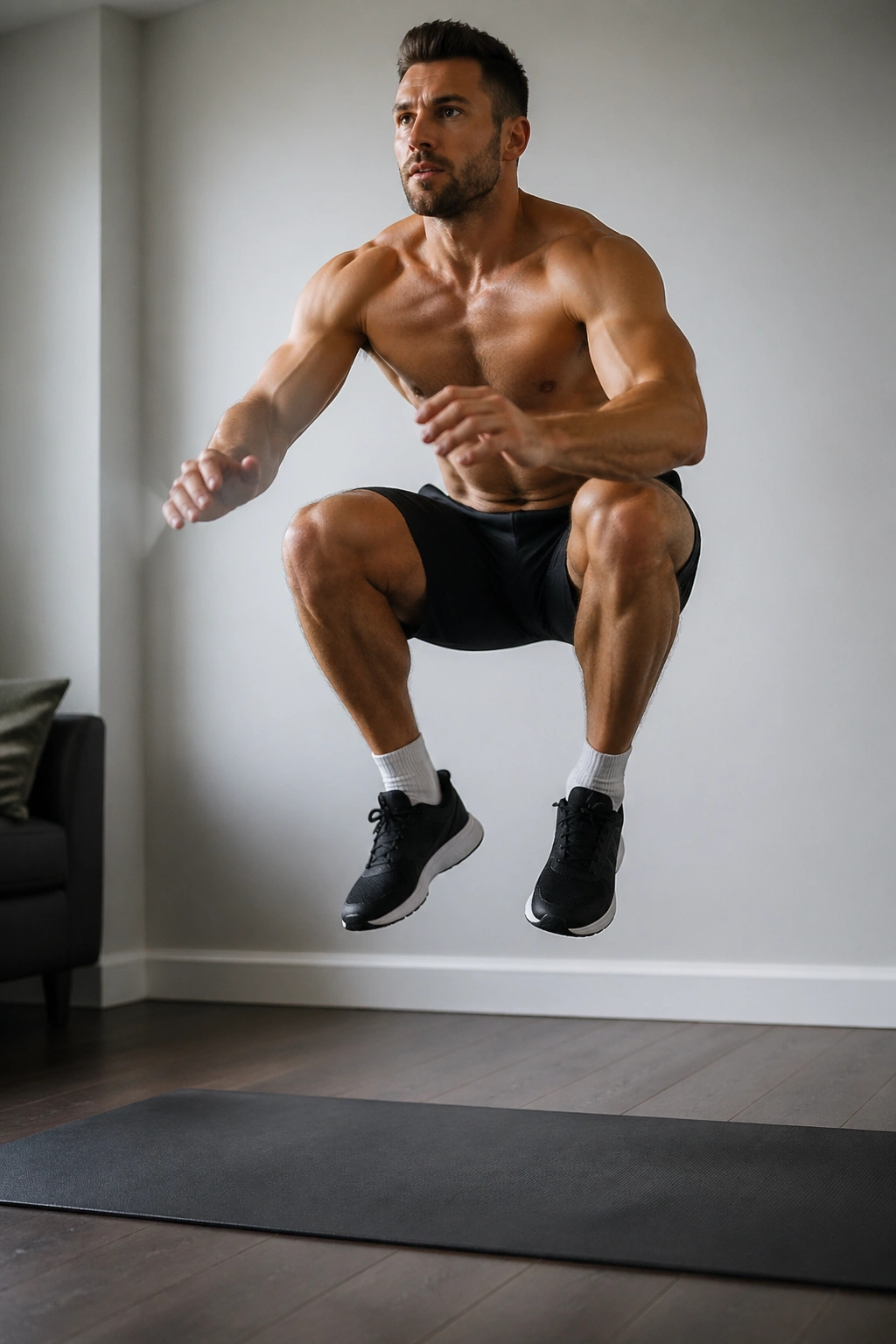
If your legs are strong but your breathing lags behind, squat jumps make the issue obvious fast. They load the quads and glutes, then ask you to leave the floor and land under control. There’s nowhere to hide.
Try 3 to 5 sets of 8 to 12 reps, or use 20 seconds of work and 40 seconds of rest for 8 rounds. Keep the jump crisp, not giant. The landing matters more than the height. A quiet landing means your knees and ankles are doing their job.
If impact bothers you, switch to fast bodyweight squats with a hard exhale at the top. Same leg burn. Less pounding.
The mistake I see most is people chasing height and forgetting posture. Chest up. Knees track over toes. Feet flat before the next rep. That’s the version worth keeping.
6. Push-Up to Plank Jack Combos
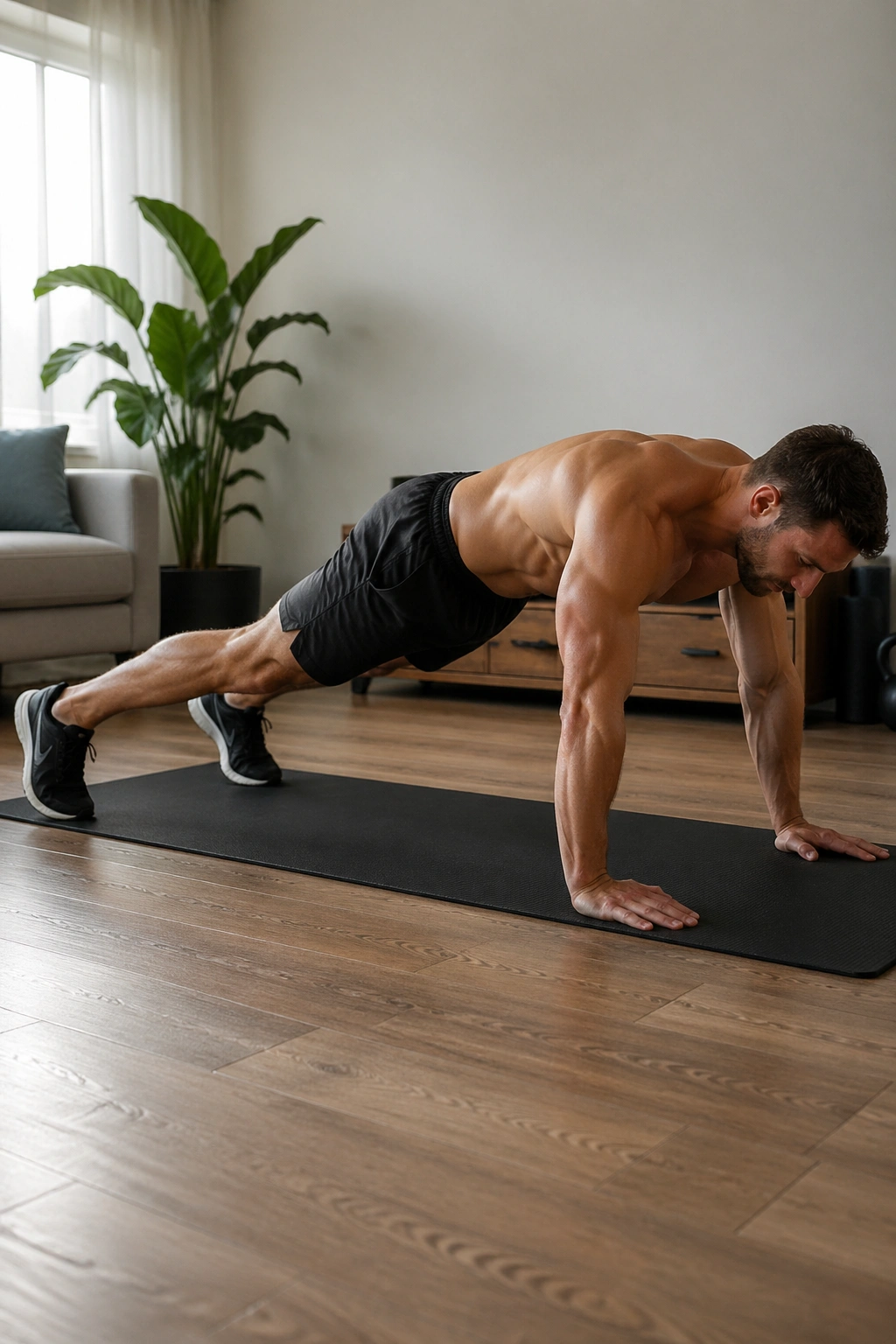
A plain push-up is good. A push-up followed by a plank jack is meaner, and that’s why it belongs here. You get pressing strength, shoulder stability, and a spike in heart rate in one tight sequence.
Start with 6 to 10 reps per set, depending on how clean your push-ups are. After each push-up, jump or step your feet out and in while holding the plank. Rest 45 seconds, then go again for 4 to 5 sets. If full push-ups are rough, use a couch, sturdy table, or bench for an incline version.
Why it hits harder than a regular push-up
A regular push-up trains the chest, triceps, and front shoulders. The plank jack adds anti-rotation work, which means your core has to stop your torso from twisting while your legs move. That extra demand is what makes the combo useful for home fat-loss work. It isn’t fancy. It’s dense.
7. Reverse Lunges With a Knee Drive
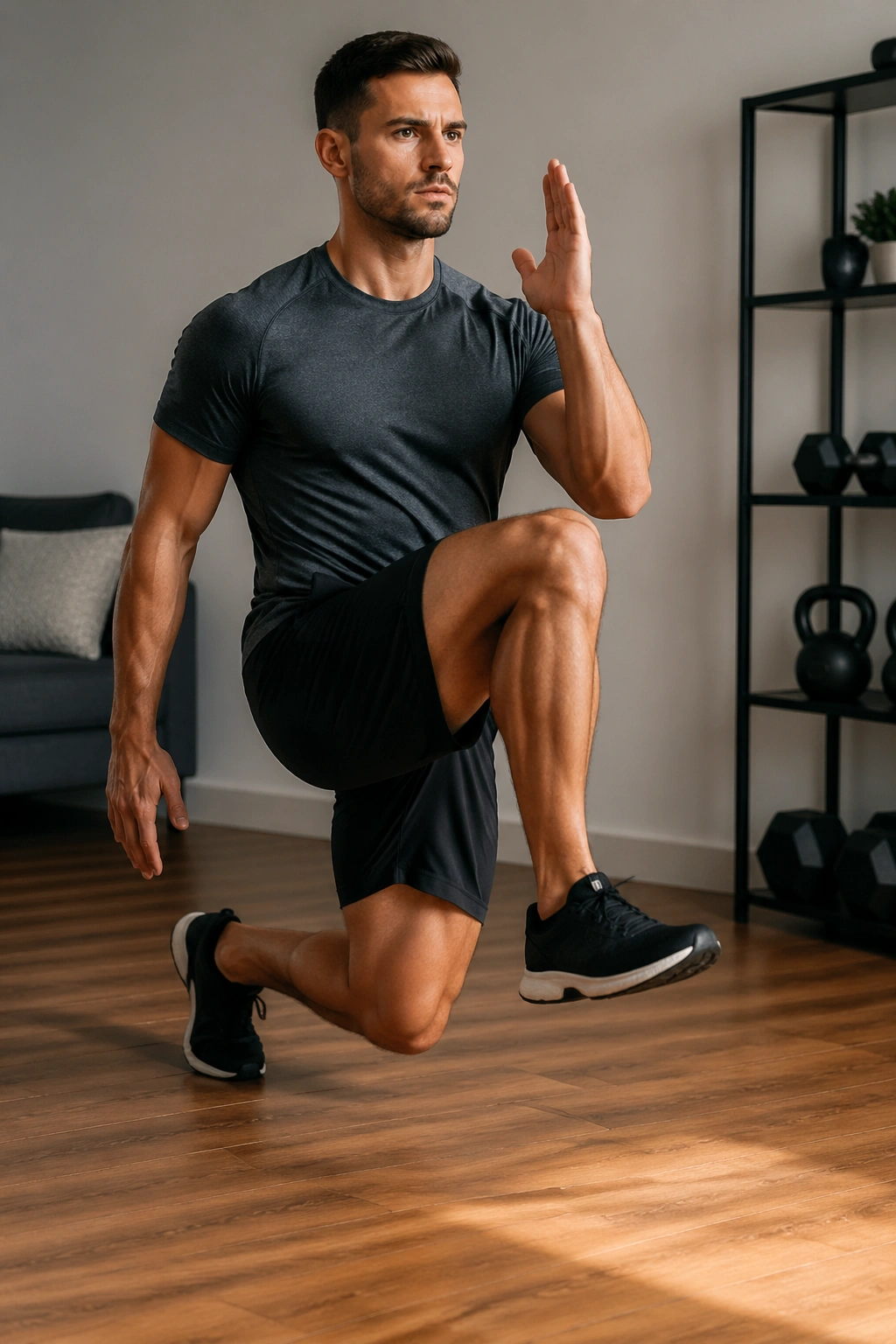
One leg at a time changes the whole feel of a workout. Reverse lunges are already good for glutes and quads, but the knee drive adds a fast, athletic finish that gets the heart moving without needing a lot of space.
Do 8 to 12 reps per side for 3 to 4 rounds. Step back softly, drop the back knee toward the floor, then drive through the front foot and lift the opposite knee high. Keep your torso tall. If you fold forward, the movement turns messy fast.
- Front heel stays planted.
- Back knee hovers just above the floor.
- Drive up with the working leg.
- Pause at the top for one beat if you want more balance work.
This is one of those moves that looks plain on paper and feels much tougher in real life. Good. That means it’s doing something useful.
8. Bear Crawls Across the Floor
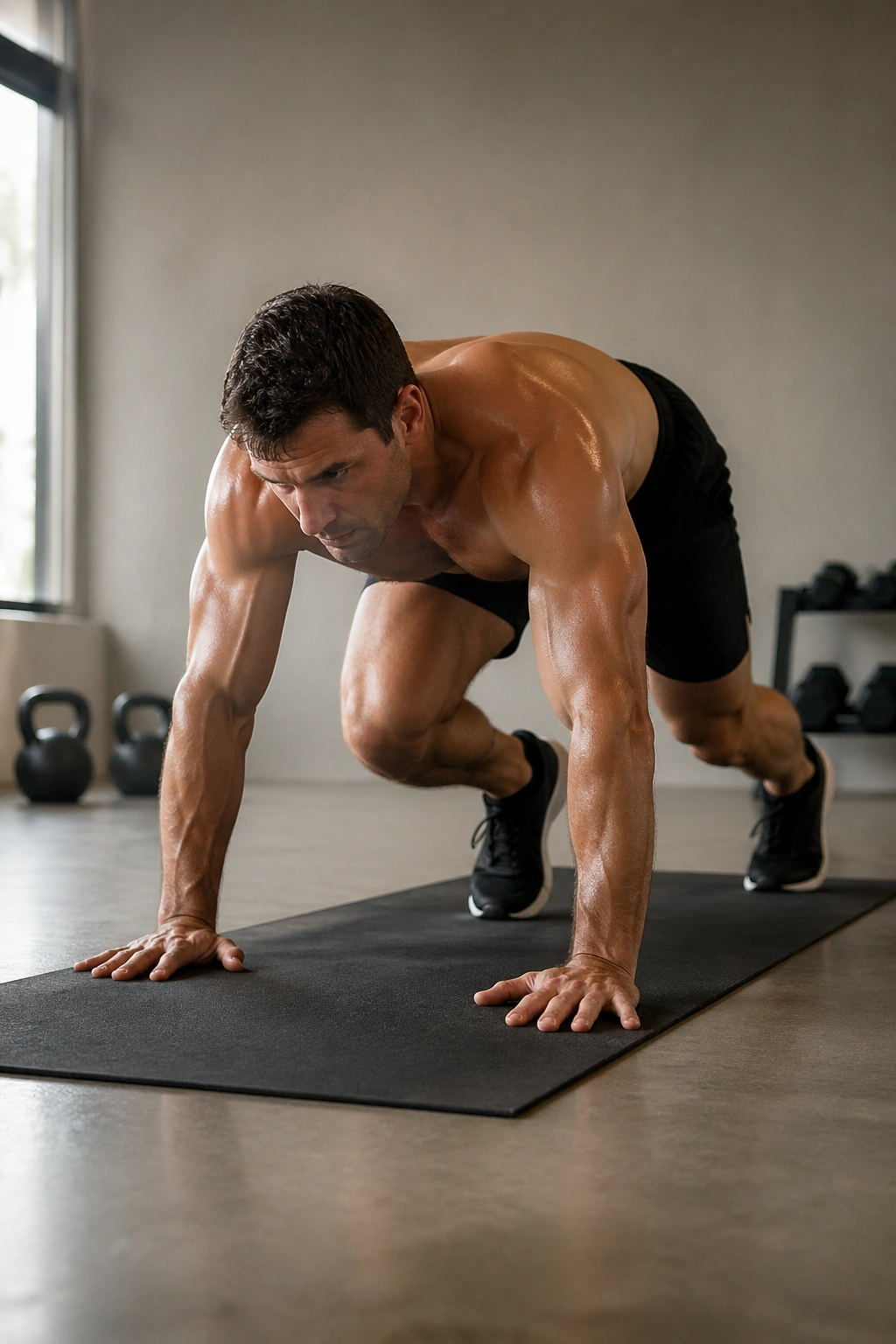
Bear crawls are ugly in the best way. They load the shoulders, wake up the abs, and force the hips to stay low while you move. A lot of men avoid them because they look awkward. That’s precisely why they work.
Crawl forward for 10 to 20 feet, then crawl back. Repeat for 5 to 8 trips. Keep your knees a few inches off the floor and move opposite hand and foot together. If your wrists complain, shorten the sets and take more breaks. You can also crawl on a yoga mat or folded towel to soften the pressure.
The pace should feel controlled, not frantic. A rushed bear crawl often turns into a weird hip hike, and that just wastes energy. Slow enough to stay tight. Fast enough to get warm. That’s the sweet spot.
9. Step-Ups on Stairs or a Bench
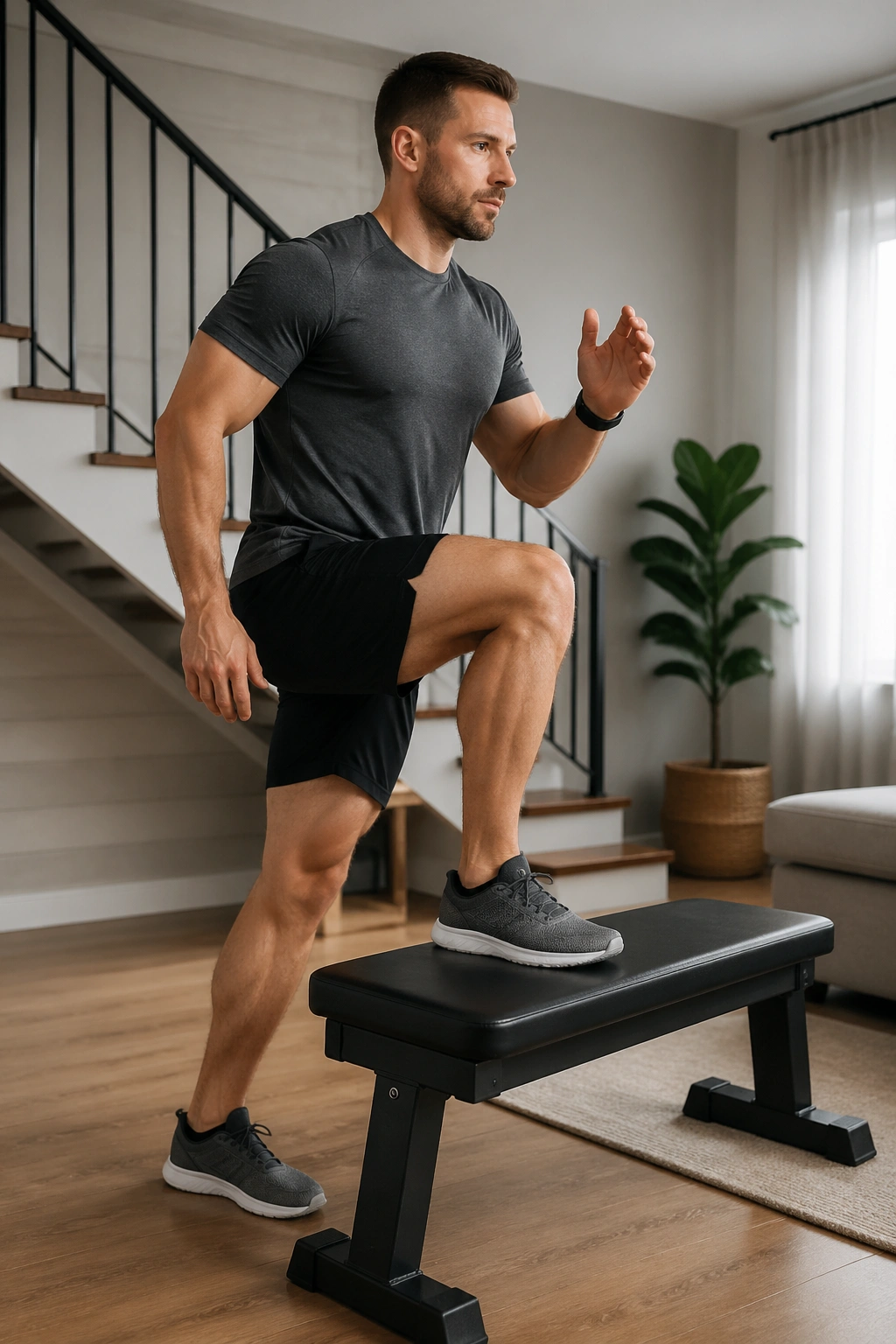
If you’ve got stairs at home, you’ve got a fat-loss tool sitting there waiting. Step-ups are easy to set up, brutal enough to raise your breathing, and friendly to people who don’t love jumping.
Use a sturdy stair, box, or bench. Step up with one foot, drive through the whole foot, and bring the opposite knee up at the top. Do 10 to 15 reps per side for 3 to 4 sets. Lower yourself under control. Don’t bounce off the back leg like you’re trying to cheat the work.
Set it up right
Choose a height that lets your knee stay in line with your hip. If the step is too high, your lower back starts helping too much. If it’s too low, the exercise turns into a slow walk. You want a middle ground where your glutes and quads have to earn each rep.
10. Kettlebell Swings for Belly Fat Burn
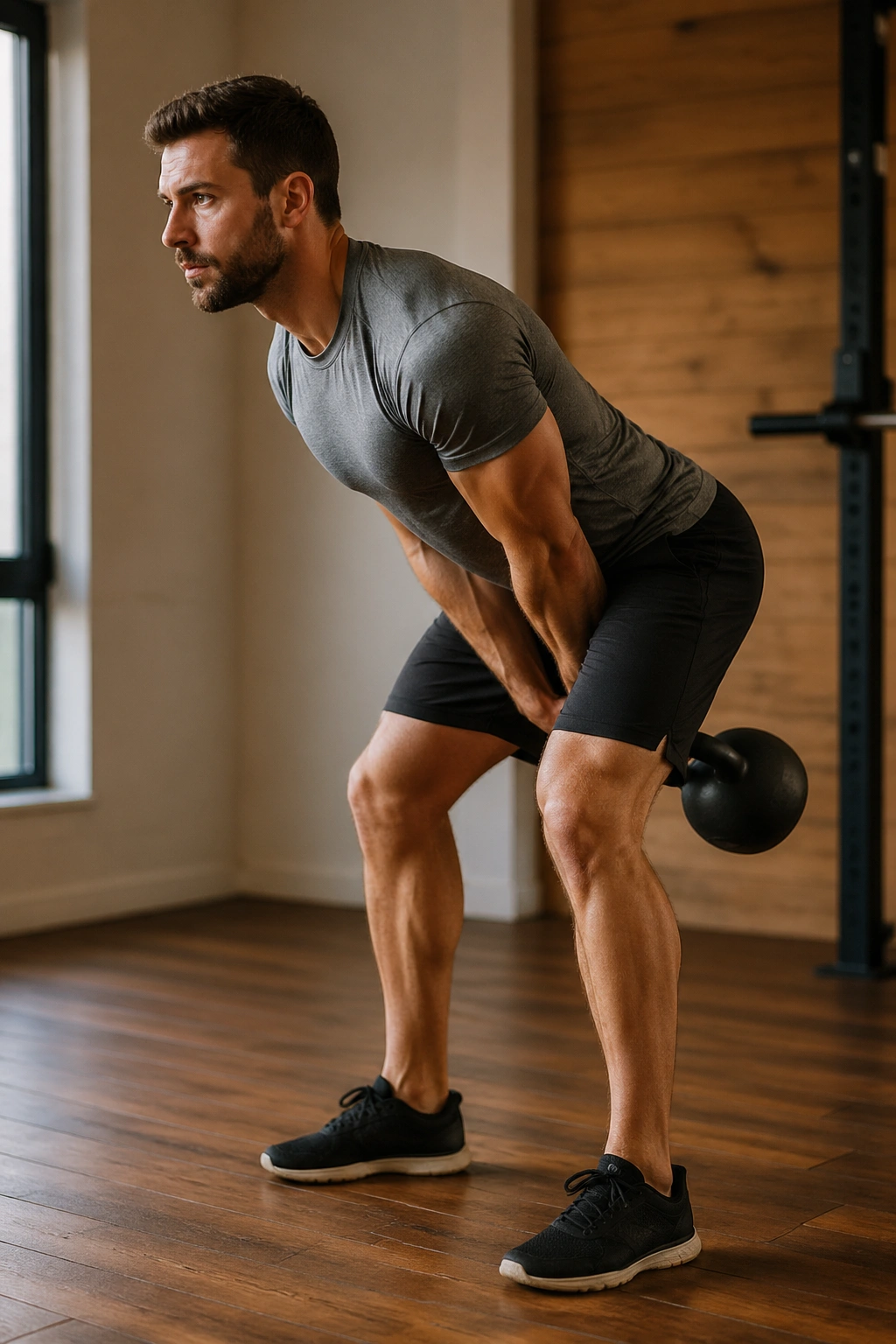
A kettlebell swing looks like a squat to people who’ve never done one, but it’s really a hip hinge. That distinction matters. The power should come from the hips snapping forward, not from squatting the weight up with your legs.
Use 10 to 15 swings per set for 6 to 10 sets, with short rests. Keep the bell close to your body, let it float from hip drive, and stop the set when your back starts feeling like it’s doing the job instead of your glutes. A light kettlebell can still be useful if your form is clean. Heavy is not the same as effective.
Compared with a deadlift, the swing is faster and more cardio-heavy. Compared with a squat, it’s less about knee bend and more about explosive hip power. If your lower back is touchy, learn this one slowly. Don’t rush it. The hinge is the whole move.
11. Dumbbell Thrusters From Squat to Press
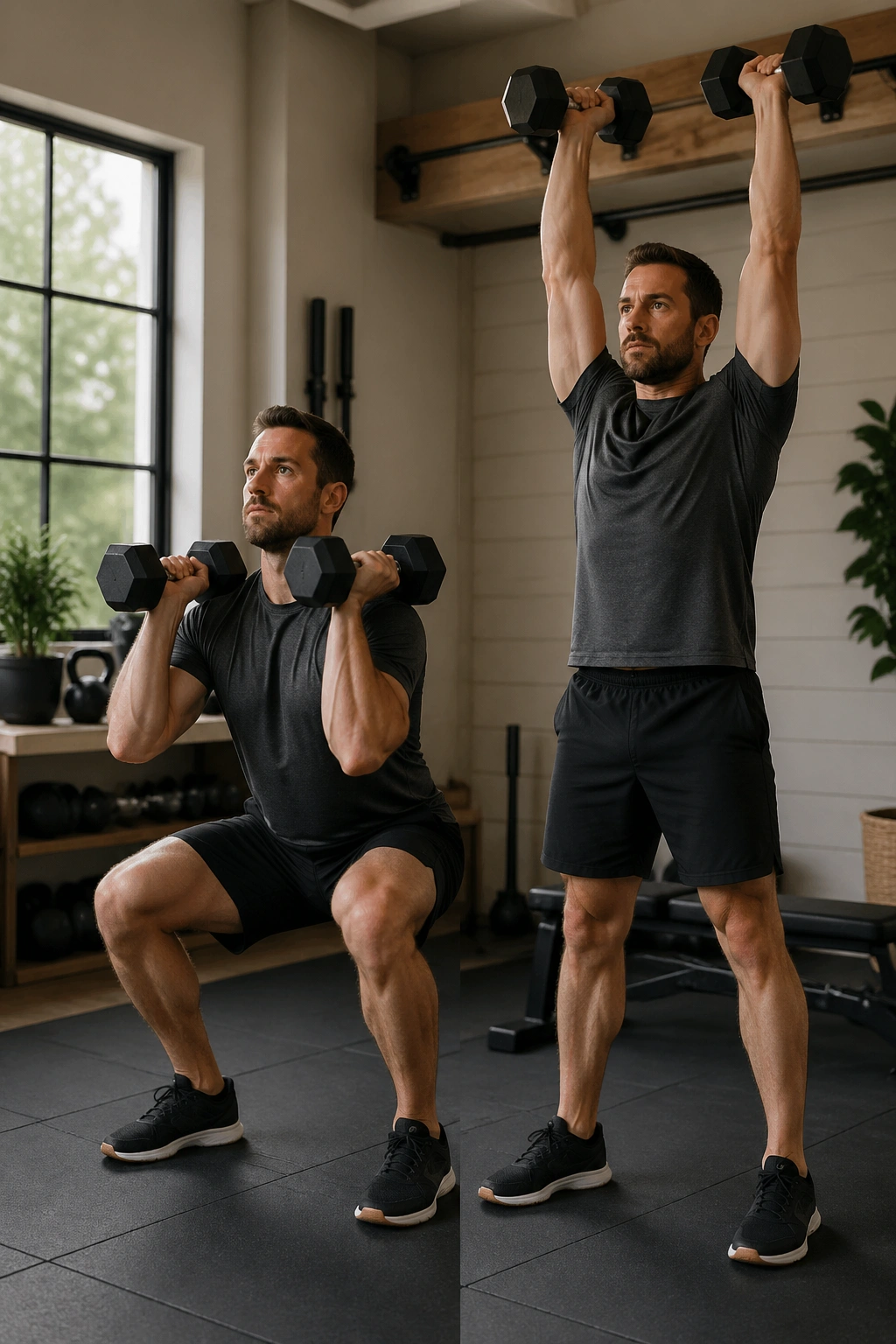
Dumbbell thrusters are one of those exercises that make you wish your lungs could file a complaint. You squat, stand, and press in one flow, which means the legs and shoulders both take a beating while your core stays braced in the middle.
Try 8 to 12 reps for 3 to 5 sets. Pick dumbbells that let you finish every rep without leaning back at the top. Exhale as you press overhead. Keep your ribs down. If the weight forces your lower back to arch, it’s too heavy for this style of workout.
The beauty of thrusters is that they feel like a full-body job because they are. Quads, glutes, shoulders, triceps, abs. All of it gets involved. And yes, you’ll know it by the end of the second set.
12. Renegade Rows for Core Stability
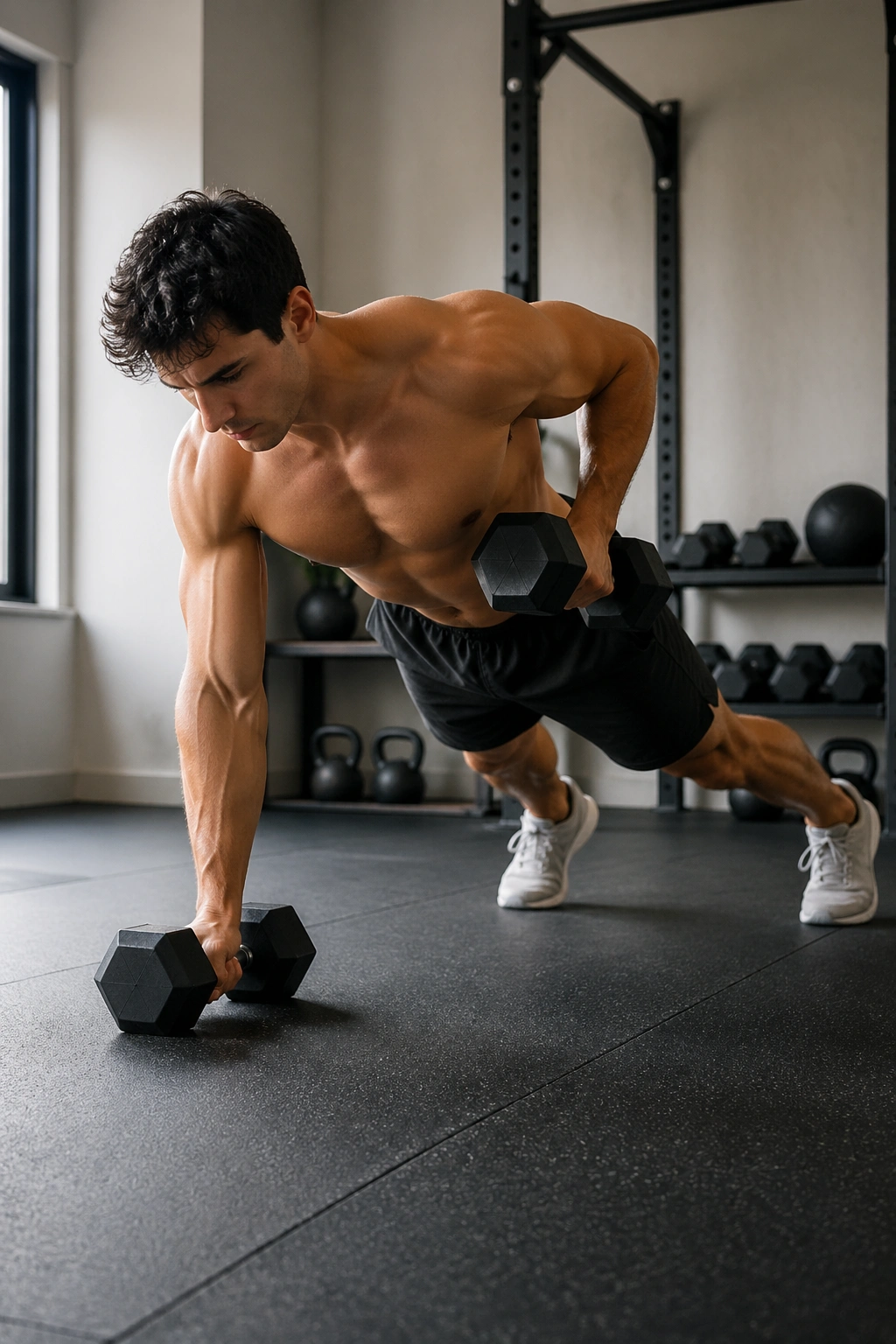
What makes renegade rows so useful is not the row itself. It’s the plank you have to hold while doing the row. That’s what makes your core earn its keep.
Set up in a high plank with a dumbbell or water jug in each hand. Row one weight toward your hip, set it down, and repeat on the other side. Aim for 6 to 8 reps per side for 3 to 4 rounds. Keep your feet wider than shoulder-width if balance is shaky. Narrow feet make the move harder, but they also make sloppy form more likely.
- Hips stay square to the floor.
- Row with control, not yank.
- Keep your neck long.
- Use a lighter weight than you think you need.
If your torso twists every time you row, the load is too heavy or your stance is too narrow. Clean reps beat macho reps every time.
13. Plank Shoulder Taps Without Hip Wiggle
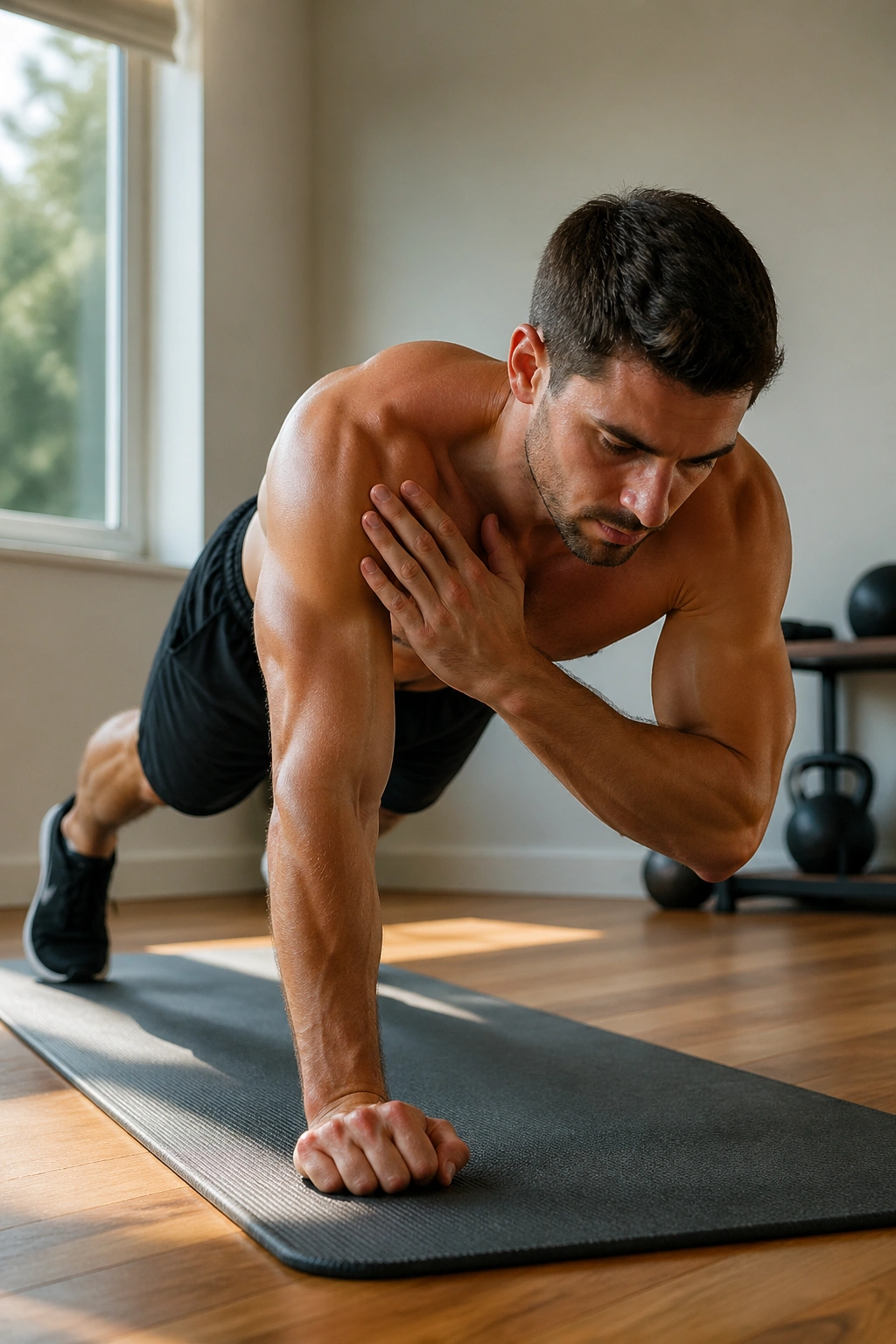
A plank shoulder tap looks harmless. Then you try to keep your hips still while reaching one hand at a time, and the whole thing turns into a test of patience. That’s the point. It teaches the core to resist movement while the arms are busy.
Do 20 to 40 taps total, or 10 to 20 per side, for 3 to 5 rounds. Set your feet a little wider than usual if you need more stability. Reach across with control, touch the shoulder, and set the hand back down before switching sides.
The common mistake is racing through the taps and letting the lower body swing from side to side. Slow down. If the hips rock, the abs are getting cheated. If you can keep the trunk quiet, the exercise starts paying off fast.
14. Bicycle Crunches as a Finisher
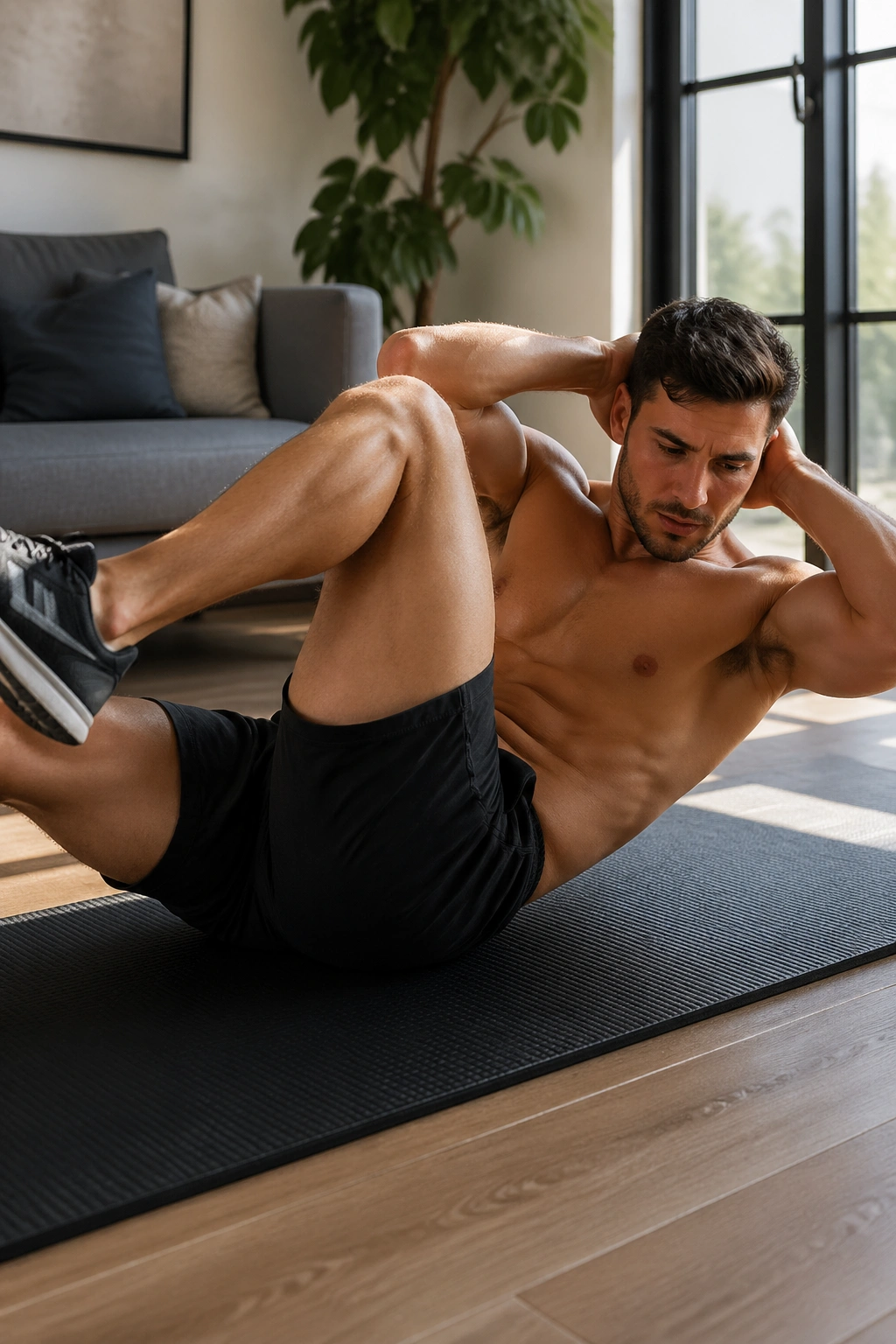
Bicycle crunches get dragged into a lot of bad routines because people do them too fast and too sloppy. Done well, they are a sharp finisher. Done poorly, they’re neck tugging disguised as ab work.
Use them at the end of a workout, not at the start. Try 2 to 3 sets of 20 to 30 total reps. Move slowly enough that you can feel the rib cage rotate toward the opposite knee. Exhale as you twist. Keep the lower back pressed gently into the floor.
This is not the move that burns the most calories on the planet. It is the move that reminds your abs to work hard after the bigger lifts and intervals have already done the heavy lifting. I like it best as a last punch, not the main event.
15. Dead Bug Slow Reaches
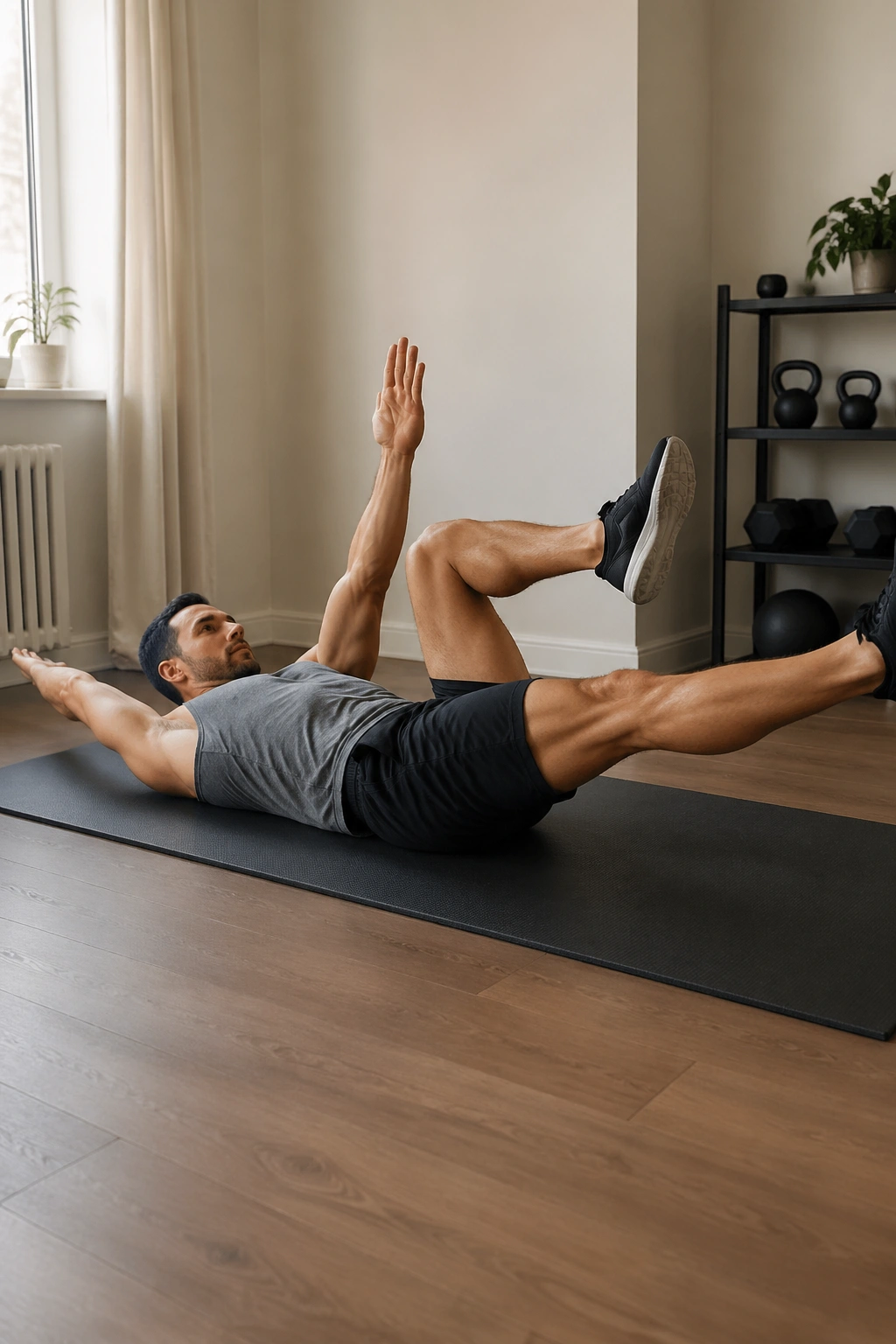
The dead bug is boring in the way good tools are boring. It works because it teaches control. Your lower back stays down, your ribs stay stacked, and your arms and legs move without letting the middle part of you spill out of shape.
Do 6 to 10 reps per side, slow enough that you can count each one. Extend the opposite arm and leg, pause for one second, then return to center. If the back arches off the floor, shorten the reach. That’s your body telling you the range is too big.
Why it matters when you’re tired
After a few hard circuits, your core tends to cheat. The dead bug pulls you back into clean positions and gives your body a chance to keep training without beating up the spine. It’s not flashy. It’s the sort of exercise you appreciate more after a few weeks than during the first five minutes.
16. Glute Bridge Marches
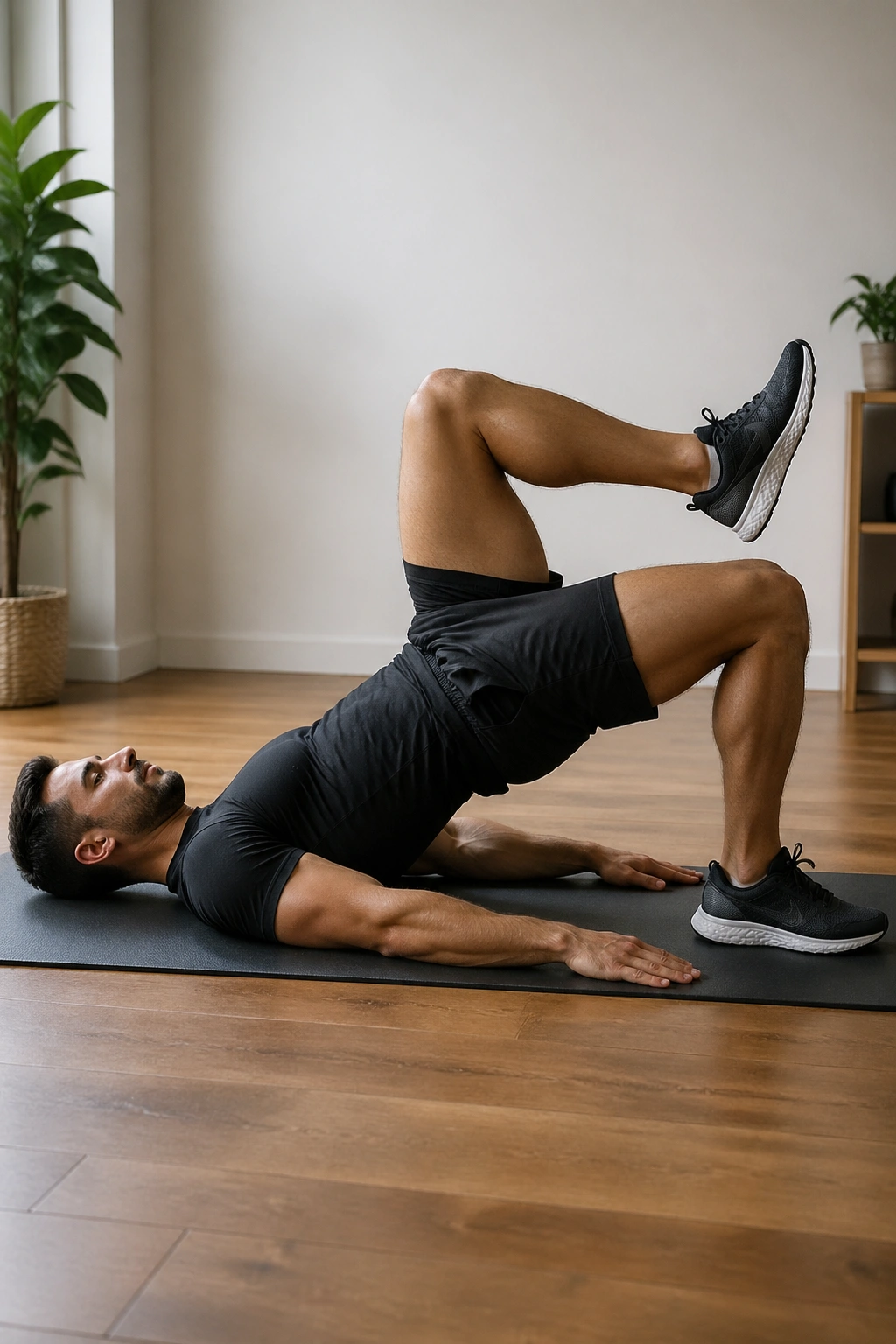
If your lower back gets cranky during hard workouts, glute bridge marches are a useful trade. You still get core demand and hip work, but the floor gives you support while your glutes take over.
Lift into a bridge, then march one knee up at a time without letting the hips drop. Do 10 to 20 marches per set for 3 to 4 sets. Keep the ribs down and the weight in the heels. If the bridge cramps your hamstrings, bring your feet a little closer to your hips.
The marching part is what makes this more than a standard bridge. Each leg lifts while the other side has to stay level. That anti-tilt challenge is small but sneaky, and it’s good work for the waistline because the trunk has to stay braced the whole time.
17. Turkish Get-Ups With a Light Weight
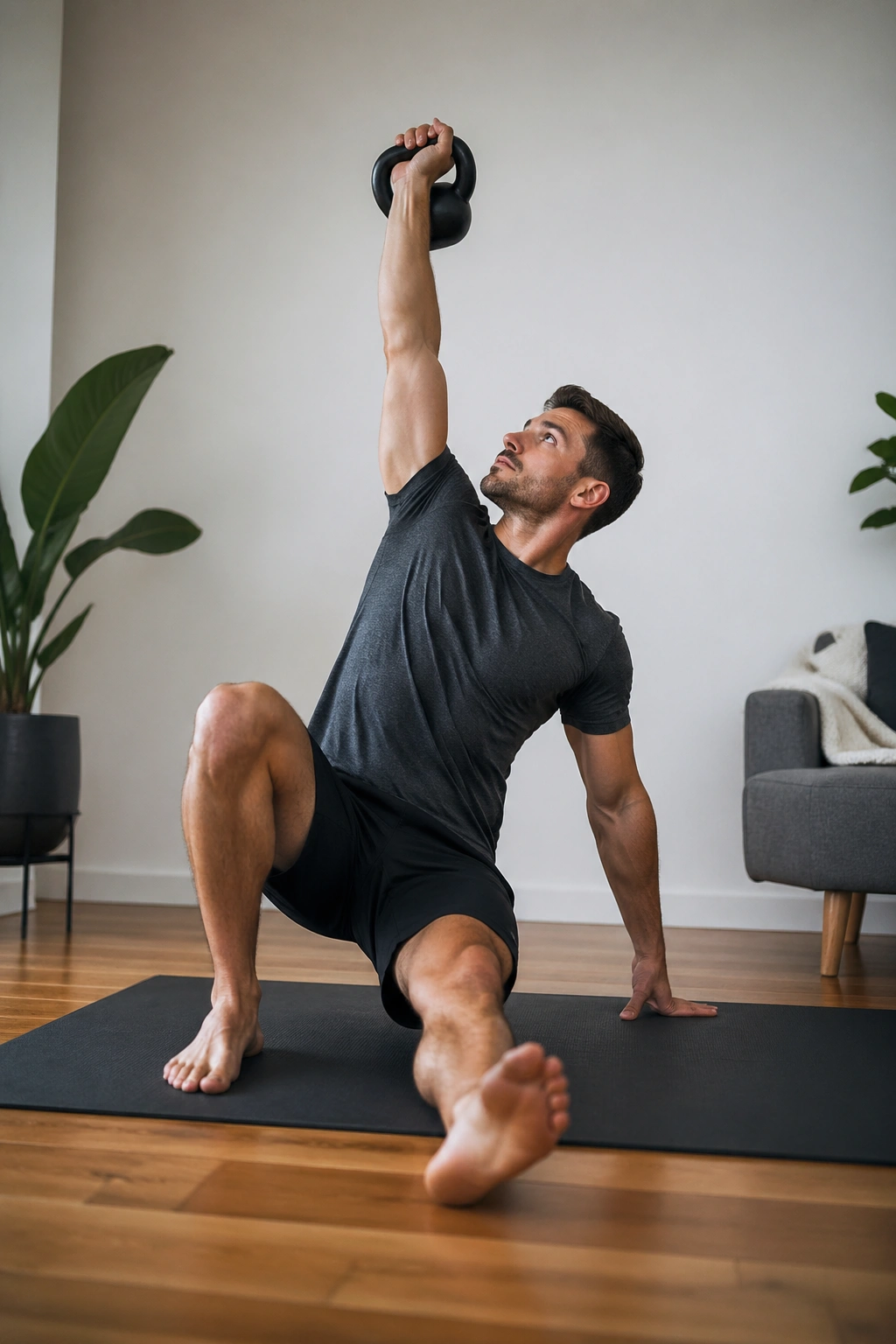
A Turkish get-up looks like a strange mobility drill until you try one with a kettlebell or dumbbell overhead. Then it feels like a full-body test that also teaches balance, shoulder control, and a lot of quiet core strength.
Start with a light weight. One rep on each side may be enough at first. Move from lying down to standing in slow, deliberate stages, then reverse the whole path back to the floor. Keep your eyes on the weight and your wrist stacked straight above the elbow.
This move is not about speed. Speed ruins it. The value comes from how many little muscles have to coordinate to keep the weight stable while you shift positions. It’s demanding in a calm way, which is a weird phrase but the right one here. You’ll feel it.
18. Stair Sprints and Fast Climbs
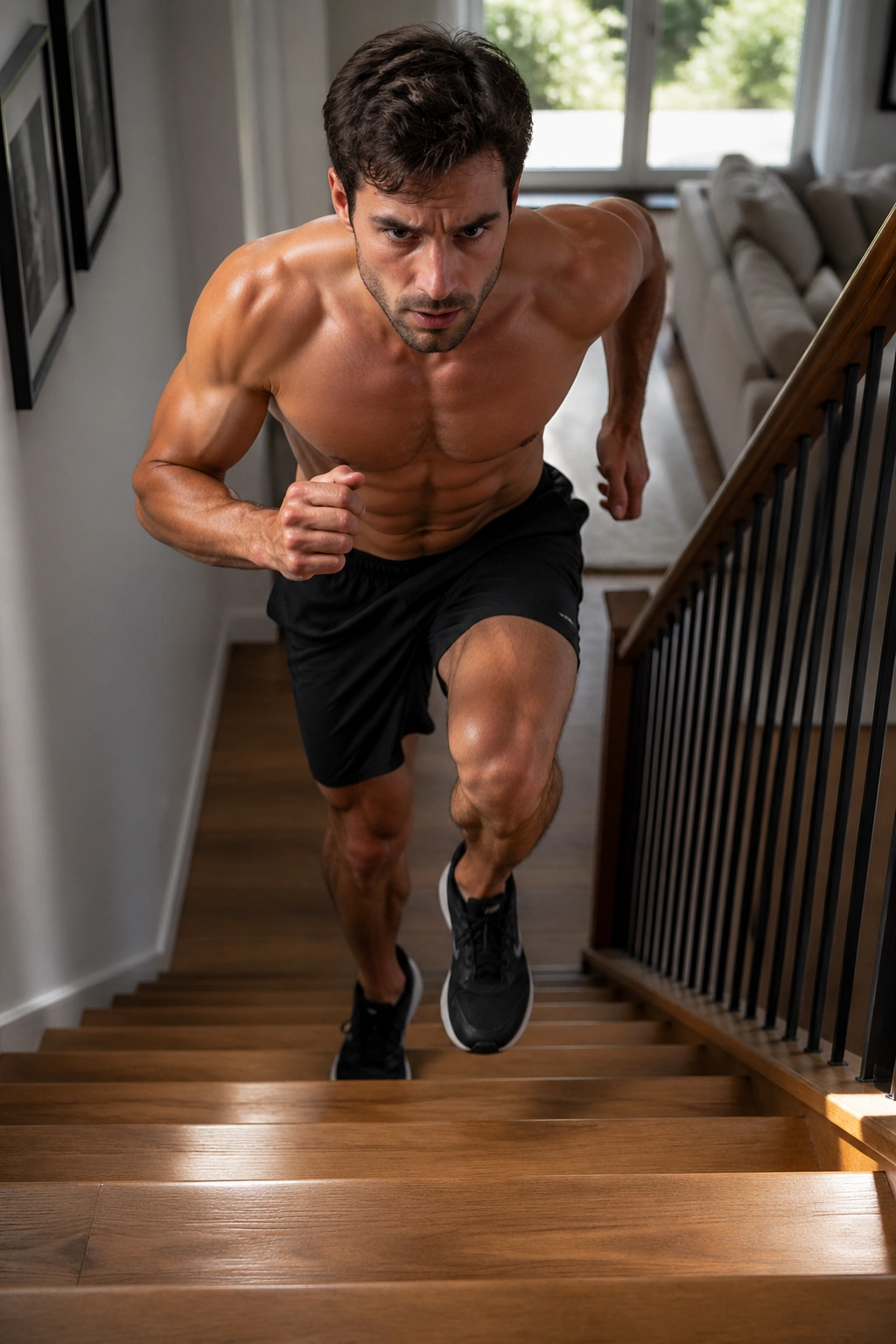
Got stairs? Then you’ve got one of the best home conditioning tools sitting in plain sight. Stair work hits the legs hard, raises heart rate fast, and leaves very little room for coasting.
Run up for 10 to 20 seconds, walk down slowly, and repeat for 6 to 10 rounds. If actual sprints feel too sharp for your knees, use fast, powerful climbs instead. Keep your whole foot on the step and lean slightly forward from the ankles, not the waist.
How to scale it
- Beginners: 6 rounds of 10 seconds.
- Intermediate: 8 rounds of 15 seconds.
- Stronger legs: 10 rounds of 20 seconds.
Use the railing if you need it. Pride is not the goal. Breathing hard and recovering well is the goal.
19. Farmer Carries Around the House
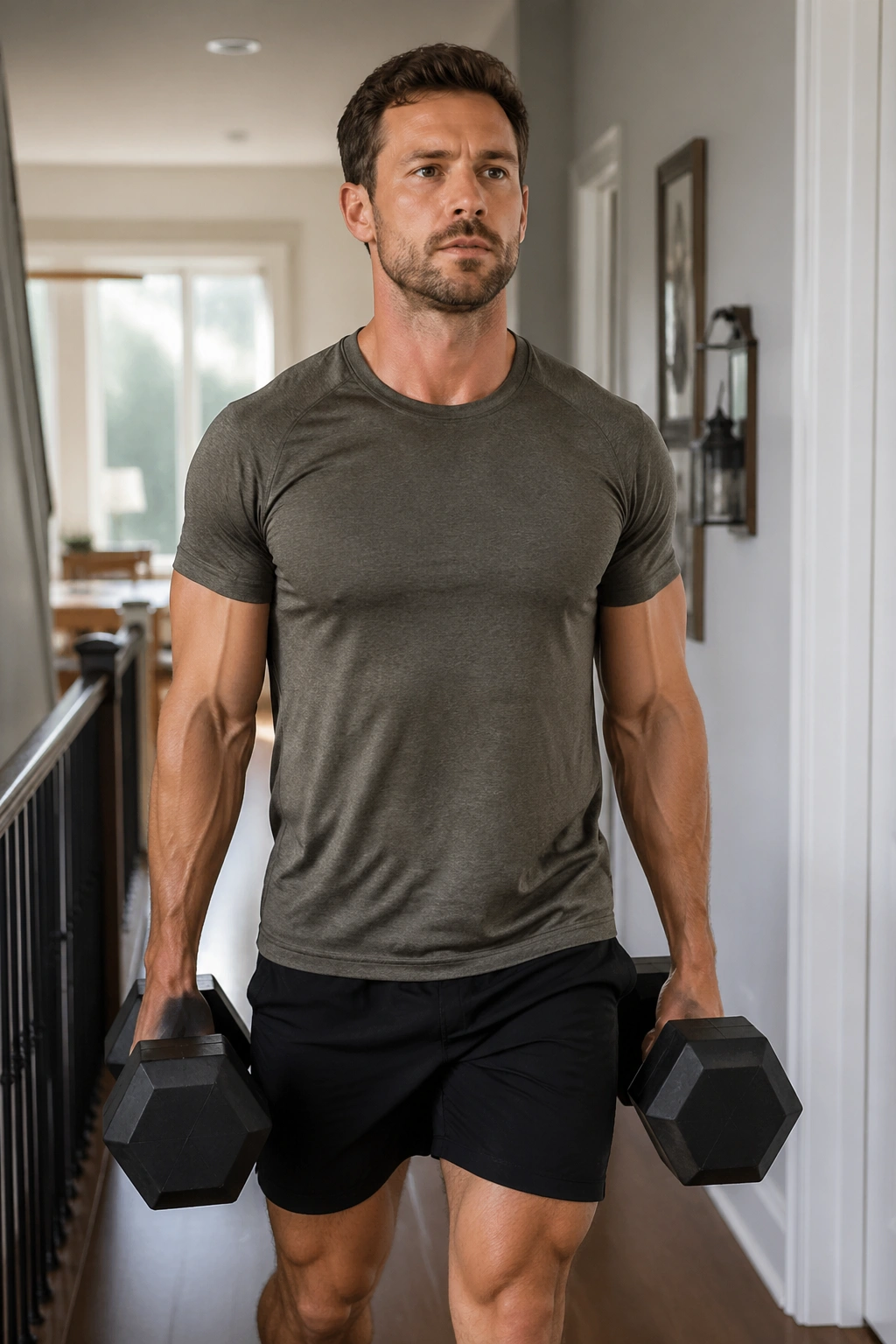
Carrying heavy things while walking sounds almost too plain to matter. Then you try a proper farmer carry and realize your grip, core, upper back, and posture all have to hold together at the same time.
Grab two heavy dumbbells, kettlebells, or buckets. Stand tall, brace your middle, and walk for 30 to 60 seconds. Rest a minute, then repeat for 4 to 8 rounds. If space is tight, walk laps around a dining table or down a hallway and back.
The real win here is bracing. You learn to keep your ribs from flaring and your shoulders from slumping while load is in your hands. That transfer matters more than people think. A stronger brace usually shows up everywhere else, including the big lifts and the high-rep circuits.
20. Skater Hops Side to Side
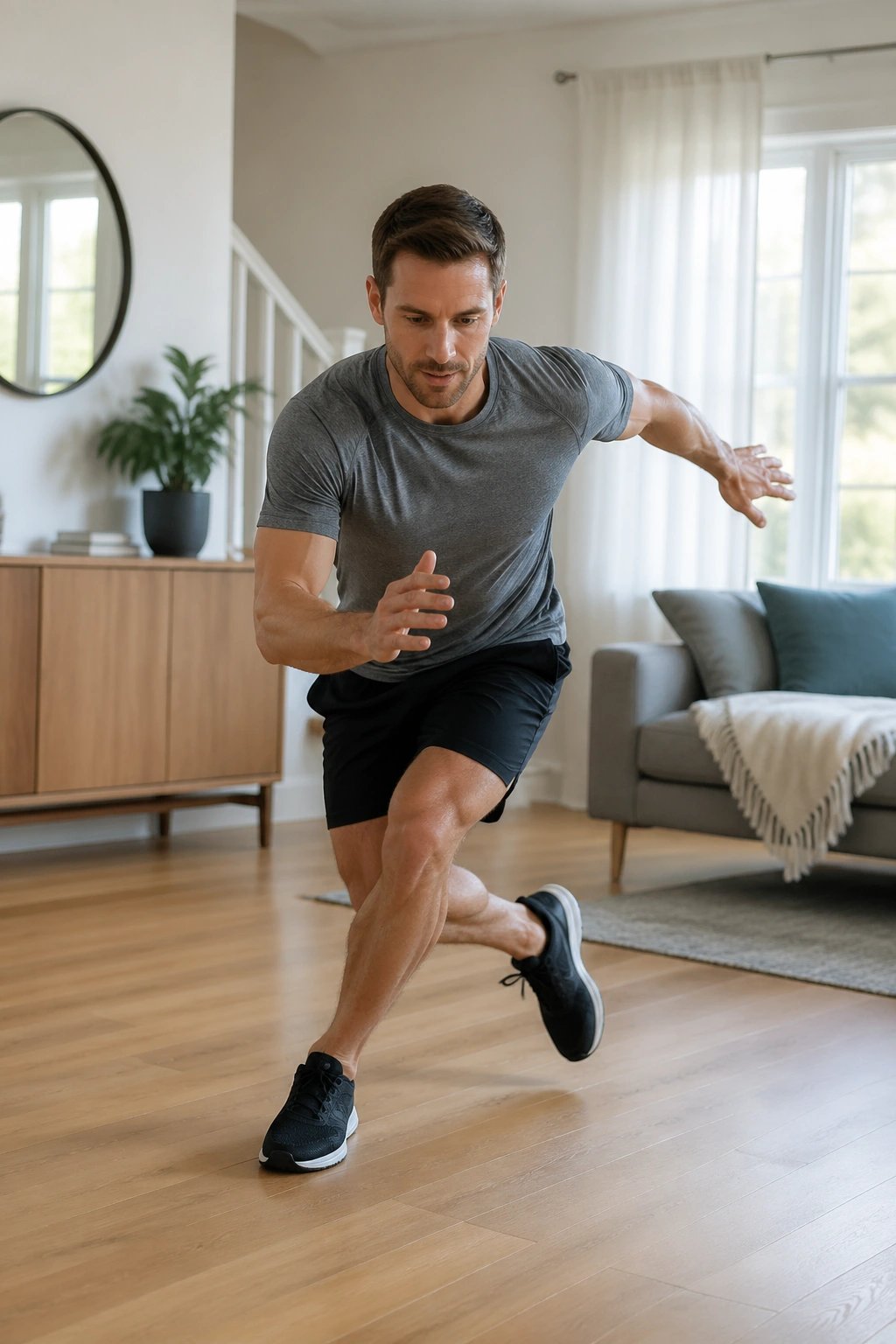
Skater hops bring lateral movement into a workout, which most men neglect because straight-line motion feels easier and more familiar. Side-to-side work wakes up the hips and outer thighs and gives your core a reason to stabilize from a new angle.
Hop from one leg to the other, landing softly and reaching the free leg behind you for balance. Do 8 to 20 reps per side or 30 seconds on, 30 seconds off for 6 to 8 rounds. Keep the landing controlled. If you crash into each rep, the knees and ankles pay for it.
How to get the most from it
Use a smaller hop if you are new. Bigger is not better here. What matters is clean balance, a solid landing, and a rhythm you can hold without losing your shape. It’s a good choice for men who want a cardio move that doesn’t feel like the same old jogging-in-place grind.
21. Resistance Band Woodchops
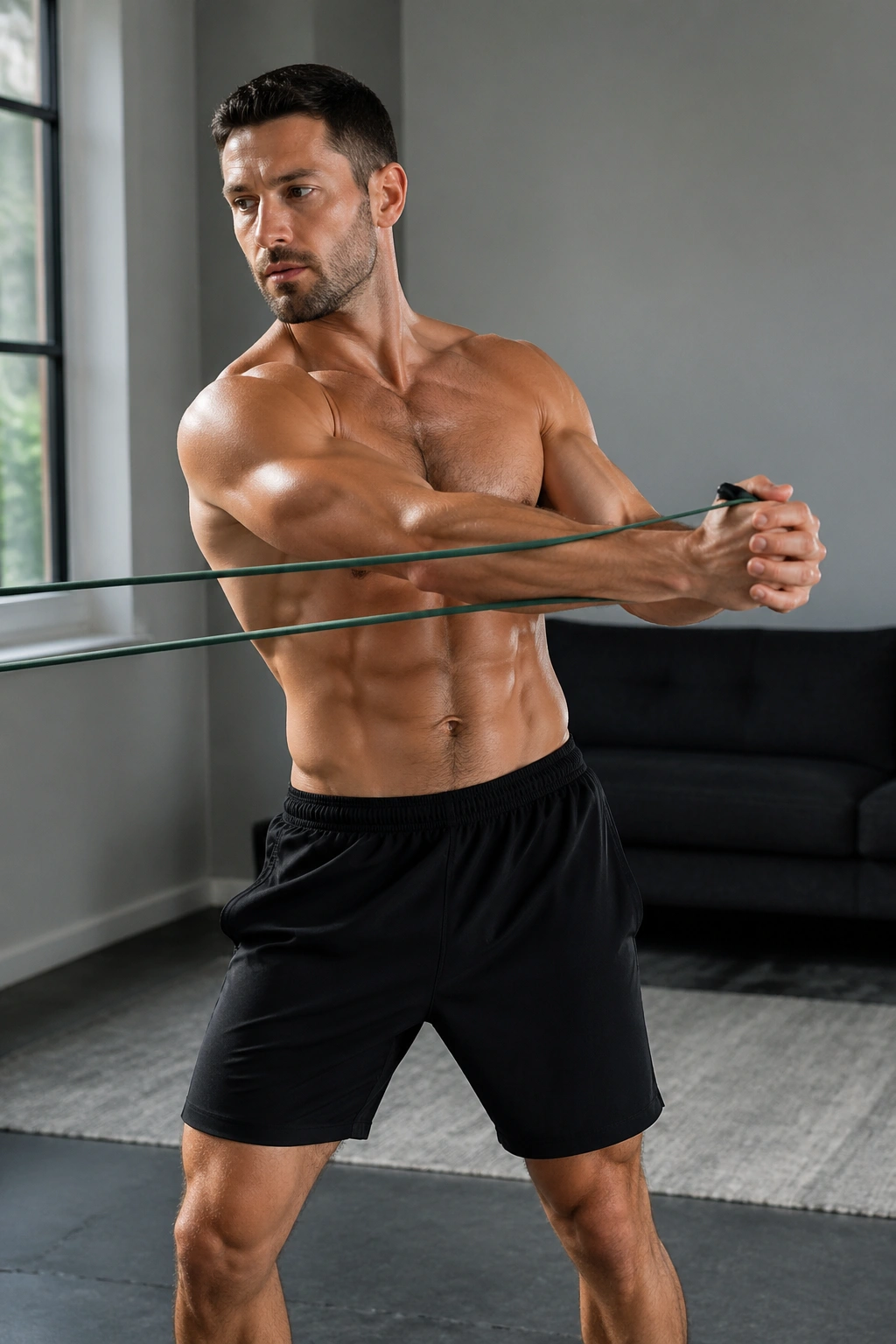
A resistance band woodchop trains the body to rotate under control, which is useful if your core work has been stuck in plank-only mode for too long. It also gives the shoulders and obliques a decent workload without needing a big setup.
Anchor the band safely at chest height or above. Pull across your body with straight arms or a slight elbow bend, then return slowly. Do 10 to 15 reps per side for 3 to 4 sets. Keep the movement smooth and controlled. You want the torso to rotate as a unit, not the arms doing all the work while the rest of you stays asleep.
The biggest mistake is yanking the band and letting the band do the exercise for you. Don’t let that happen. Control the return, brace the middle, and feel the tension build from the ribs down through the hips.
22. A Bodyweight Complex With No Breaks
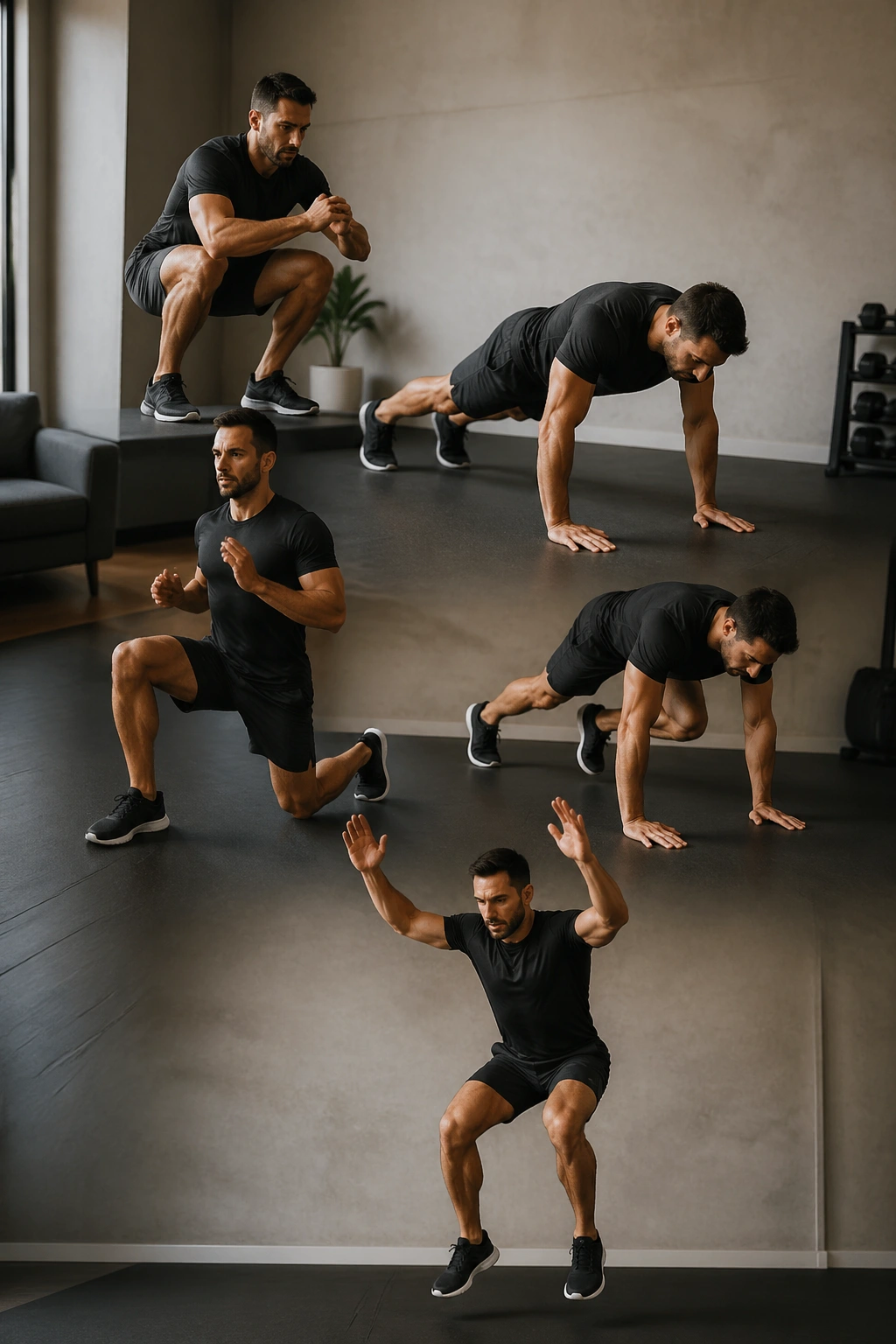
If you want a workout that feels like a short fight with the floor, string several bodyweight moves together with almost no rest. That’s a complex, and it’s one of the easiest ways to make home training feel serious without buying anything.
Try this sequence:
- 10 squats
- 8 push-ups
- 8 reverse lunges per side
- 20 mountain climbers
- 10 squat jumps
Rest 60 to 90 seconds after the full round. Repeat 4 to 6 times. Keep the transitions quick but clean. The point is to stay moving, not to turn each exercise into sloppy half-reps.
This style works because the body never really settles. Heart rate stays up, legs keep working, shoulders keep working, and the middle never gets a full break. That’s a nice place to be if the goal is reducing waistline fat while keeping muscle in play.
23. EMOM Circuits That Keep You Moving
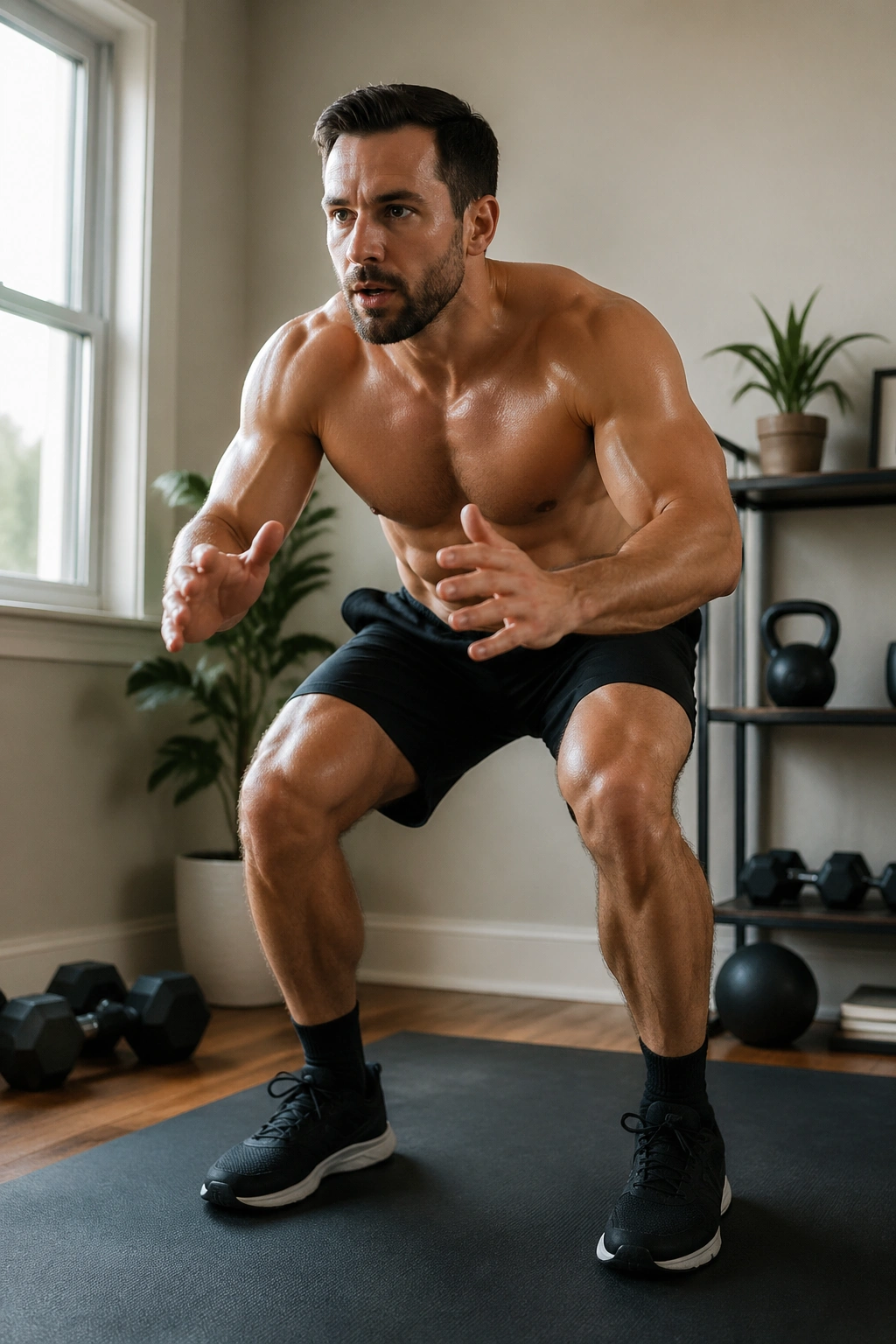
Need structure because you tend to drift when nobody’s watching? EMOM training fixes that. EMOM means “every minute on the minute,” and it gives you a clear start, a clear finish, and almost no room to waste time.
Pick 3 moves and cycle them for 12 to 18 minutes. Minute one: 12 burpees. Minute two: 15 squats. Minute three: 10 renegade rows per side. Then repeat the pattern. Finish each set, rest with whatever time remains in the minute, and start again when the clock turns over.
The trap is going too hard in the first two minutes and blowing up before the workout is half done. Pace yourself. You should finish each minute with a little breathing room, not full panic. That makes the whole thing repeatable, which is what matters if you want results that stick.
24. Tabata Boxing and Squat Mixes
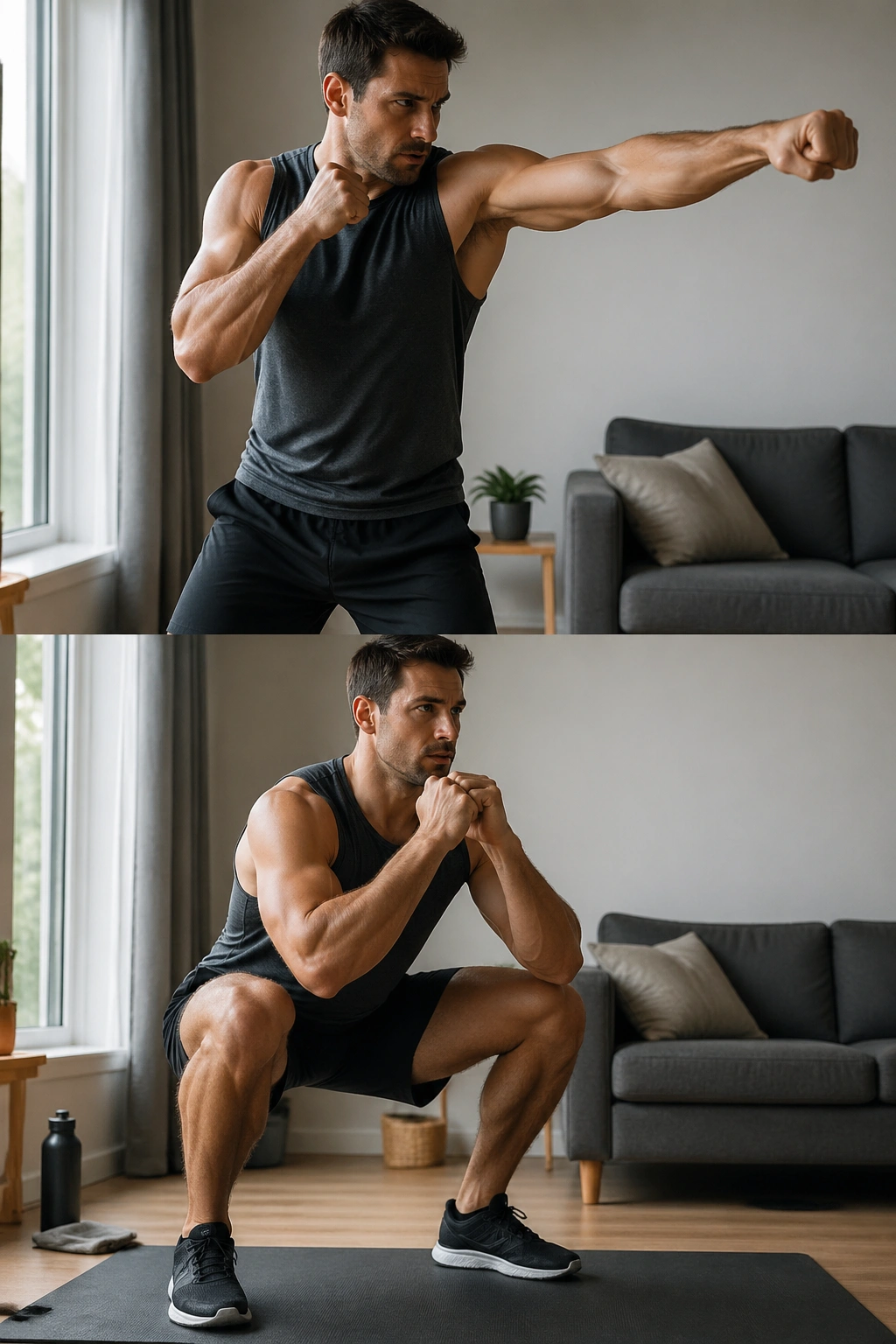
Tabata is short, nasty, and useful when you do not have much time or patience. The format is simple: 20 seconds of work, 10 seconds of rest, repeated for 8 rounds. That’s 4 minutes total. It sounds small. It does not feel small.
Alternate shadow boxing and bodyweight squats, or pair boxing with squat jumps if your joints are fine with the impact. Keep the punches crisp and the squats fast but controlled. By the last few rounds, the breathing should be loud and the legs should feel loaded.
A lot of men like this format because it removes the excuse of “I need an hour.” You don’t. You need a timer, enough space to move, and the willingness to work hard for short bursts. That’s plenty.
25. The 20-Minute Belly-Fat Home Circuit
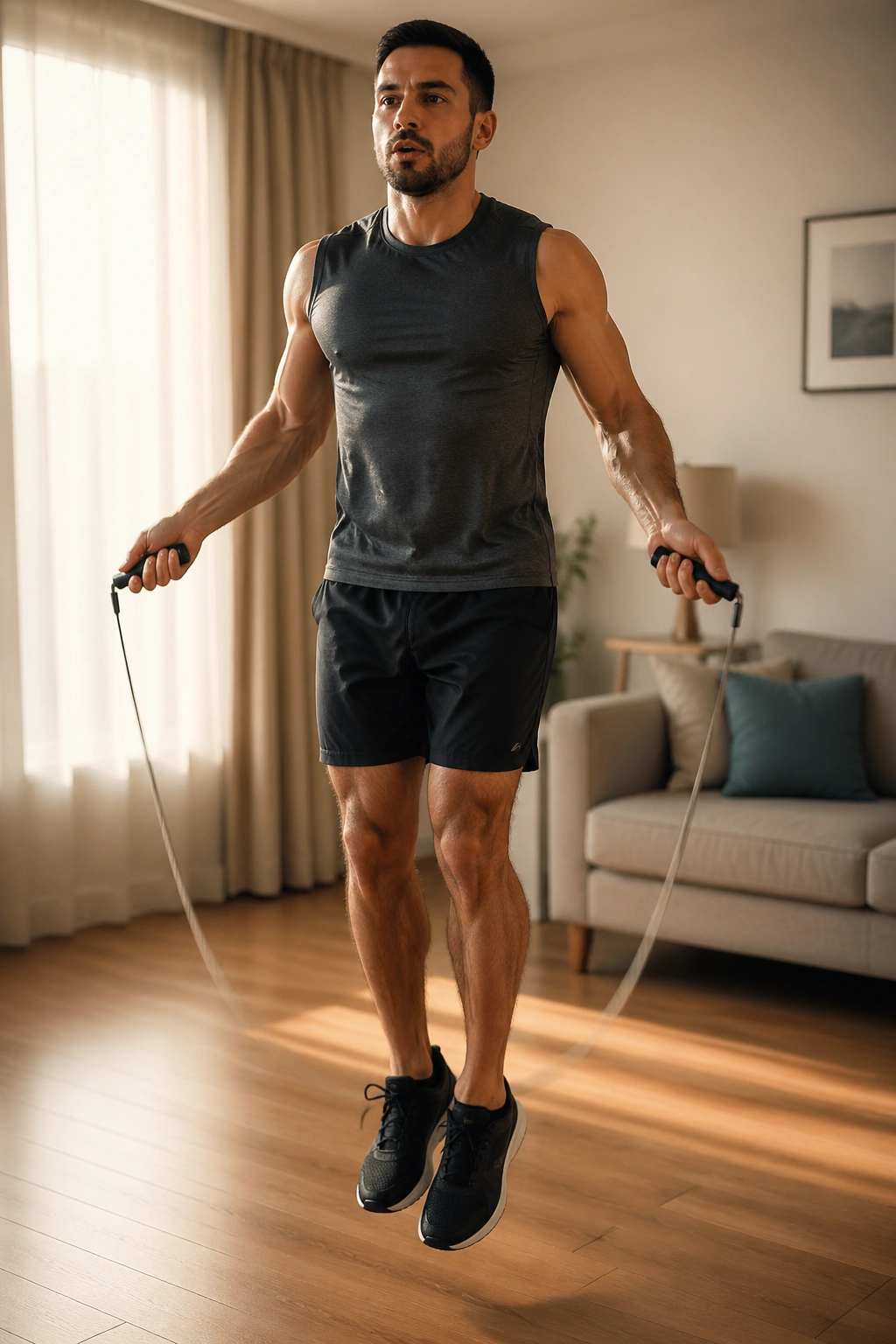
This is the one I’d hand to a man who wants a no-excuse home session that covers the whole body without dragging on forever. It uses the same idea as the rest of the list, only packed into a simple repeatable format: move, breathe hard, rest a little, move again.
Sample 20-minute layout
- 30 seconds jump rope
- 8 push-ups
- 12 reverse lunges per side
- 20 mountain climbers
- 30-second farmer carry or loaded backpack hold
- Rest 60 seconds
Repeat that circuit 3 to 4 times. If you do not have a rope, march fast in place. If you do not have weights for the carry, hold a loaded backpack tight against your chest and walk the room. Keep the transitions quick. Keep the form clean. That’s where the value sits.
The nice part about this circuit is that it covers the stuff that matters most for a home fat-loss workout: a pulse jump, a lower-body push, an upper-body push, core bracing, and a loaded carry. It doesn’t try to be clever. It just keeps the work honest.
Pick four or five workouts from this list and rotate them through the week. Track rounds, reps, or work time on paper. Small progress counts. Ten more seconds on a rope interval, one extra round of a circuit, a heavier backpack on the carry — that’s how home training starts changing the waistline without turning your life upside down.
