



If your plan for belly fat is a few sets of crunches after chest day, I can almost guess how it ends: sore abs, no real change at the waist, and that creeping feeling that the gym is not paying you back. The best gym workouts for belly fat loss do almost the opposite. They train big muscle groups, raise your heart rate on purpose, and give you a clear way to progress instead of leaving you sweaty and directionless.
Abs burn. Belly fat does not care.
That sounds blunt, though it matters. Belly fat comes off when your body spends more energy than it takes in over time, and training helps by driving calorie burn, preserving muscle, and making you more fit so you can handle more work next week than you handled this week. Crunches have a place. So do planks. But if your whole workout for a smaller waist lives on a mat, you are leaving the heavy lifting to wishful thinking.
There is another layer people miss. Belly fat is not only the soft stuff you can pinch; some of it sits deeper around the organs. Coaches, dietitians, and doctors pay close attention to that deeper visceral fat because it tends to travel with worse blood sugar control, higher triglycerides, and a larger waist measurement. The workouts that help most are the ones you can repeat for months without your knees, back, or motivation filing a complaint.
Why Good Gym Workouts for Belly Fat Loss Start With Big Muscles
Spot reduction is a lousy bet. You cannot command fat to leave your stomach first because you added another set of bicycle crunches. Your body pulls stored energy from all over, according to hormones, genetics, sleep, diet, training load, and plain old patience.
What you can control is the kind of work you do in the gym. Movements that use your legs, back, chest, and hips burn more energy than tiny isolation drills because they recruit more muscle at once. A loaded carry, a sled push, or a rowing interval taxes far more total tissue than twenty lazy side bends ever will.
Public-health guidance has stayed steady for a reason: around 150 minutes of moderate activity or 75 minutes of hard cardio each week, plus at least two resistance-training sessions, is a solid starting target for better body composition and waist control. The American College of Sports Medicine has long paired aerobic work with resistance training for fat loss because the mix works better than either one by itself for most people.
There is a catch, though not the dramatic internet kind. The best workout on paper loses to the good workout you can repeat three times a week without missing. Joint-friendly options matter. So does skill. If a barbell clean turns into a wrestling match every set, you are not doing fat-loss training; you are performing damage control.
How to Pick Gym Workouts for Belly Fat Loss That You Will Repeat
What should you choose when the gym gives you treadmills, bikes, cables, dumbbells, kettlebells, sleds, rowers, stairs, and about forty machines that all promise something? Start with repeatability.
Pick one workout from each bucket:
- One low-impact conditioning session such as incline walking, biking, rowing, or the stair climber
- One full-body strength circuit built around squats, hinges, pushes, rows, or carries
- One interval session that pushes hard for short bursts
- One optional longer session at a steadier pace if your recovery is good
Your joints get a vote. If running makes your shins bark after ten minutes, use the air bike or rower. If your lower back rounds during swings, do sled pushes or split squats first. Ego has wrecked more training plans than laziness ever did.
Track something small and concrete. Add 1 round. Cut 15 seconds of rest. Walk at 3.8 mph instead of 3.5. Use 5 more pounds on the dumbbells. Belly fat loss responds well to boring progress. That sentence is not glamorous, but it is true.
1. Incline Treadmill Power Walk Intervals
The treadmill becomes a different machine once the incline goes up and your hands come off the rails.
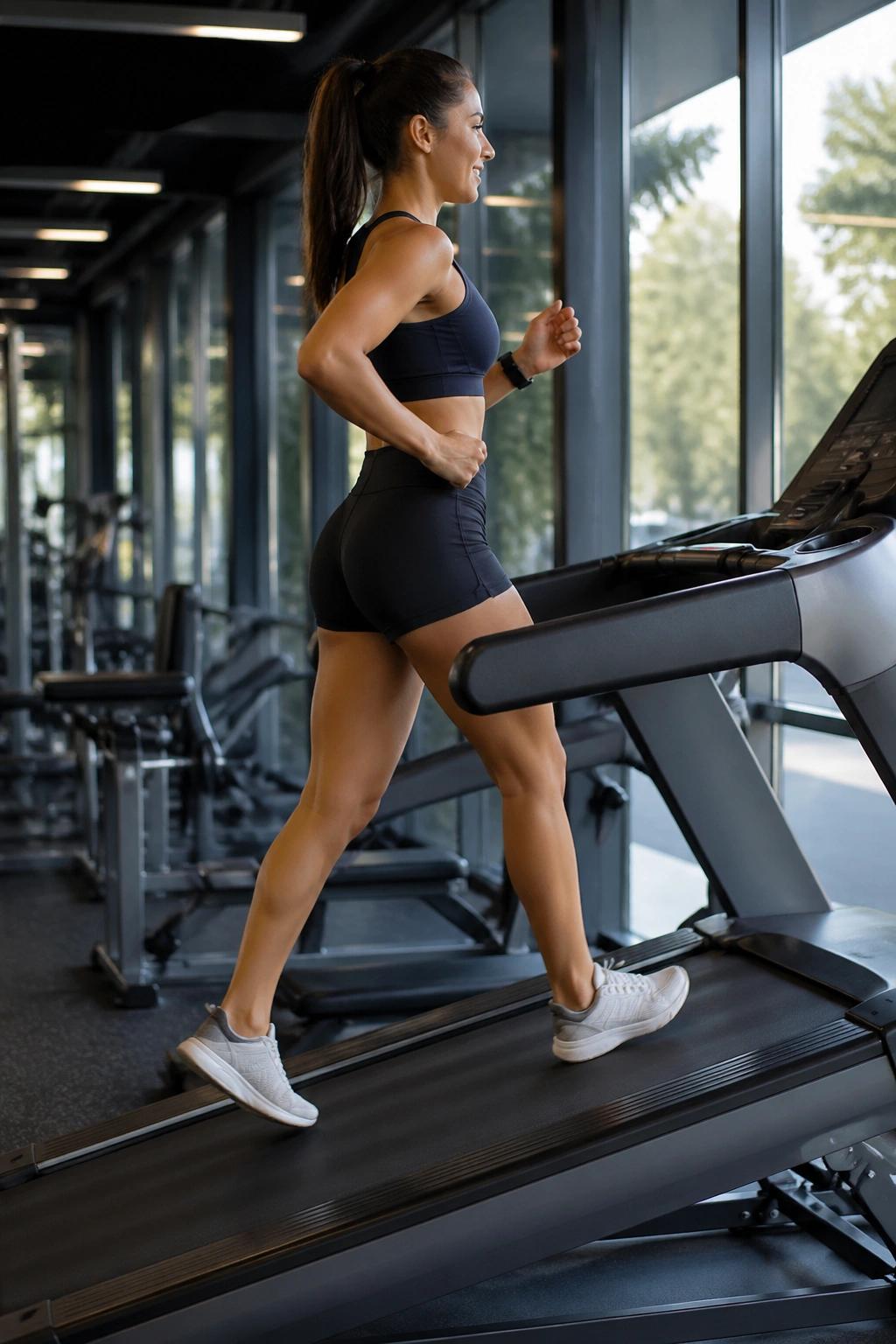
A hard incline walk lights up your glutes, calves, quads, and lungs without the pounding of flat-out running. That makes it one of my favorite starting points for people who want gym workouts for belly fat loss but have no interest in wrecking their knees in week one.
How to run it
Set the treadmill to 8% to 12% incline and walk at 3.0 to 4.2 mph, depending on your stride length and fitness. Go hard for 2 minutes, then drop the incline to 2% to 4% for 1 minute of easier walking. Repeat for 8 to 12 rounds.
Quick details that matter
- Keep your chest tall and do not lean your body weight onto the console.
- Short, quick steps work better than exaggerated lunges.
- If you can chat comfortably during the hard part, raise the incline first, speed second.
- A full session lands around 24 to 36 minutes, warm-up included.
Best use: 2 to 3 times per week, especially if running feels rough on your joints.
2. Rowing Machine Sprint Pyramids
Few machines punish sloppy pacing faster than a rower. That is exactly why it works so well when the goal is a higher calorie burn in a short session.
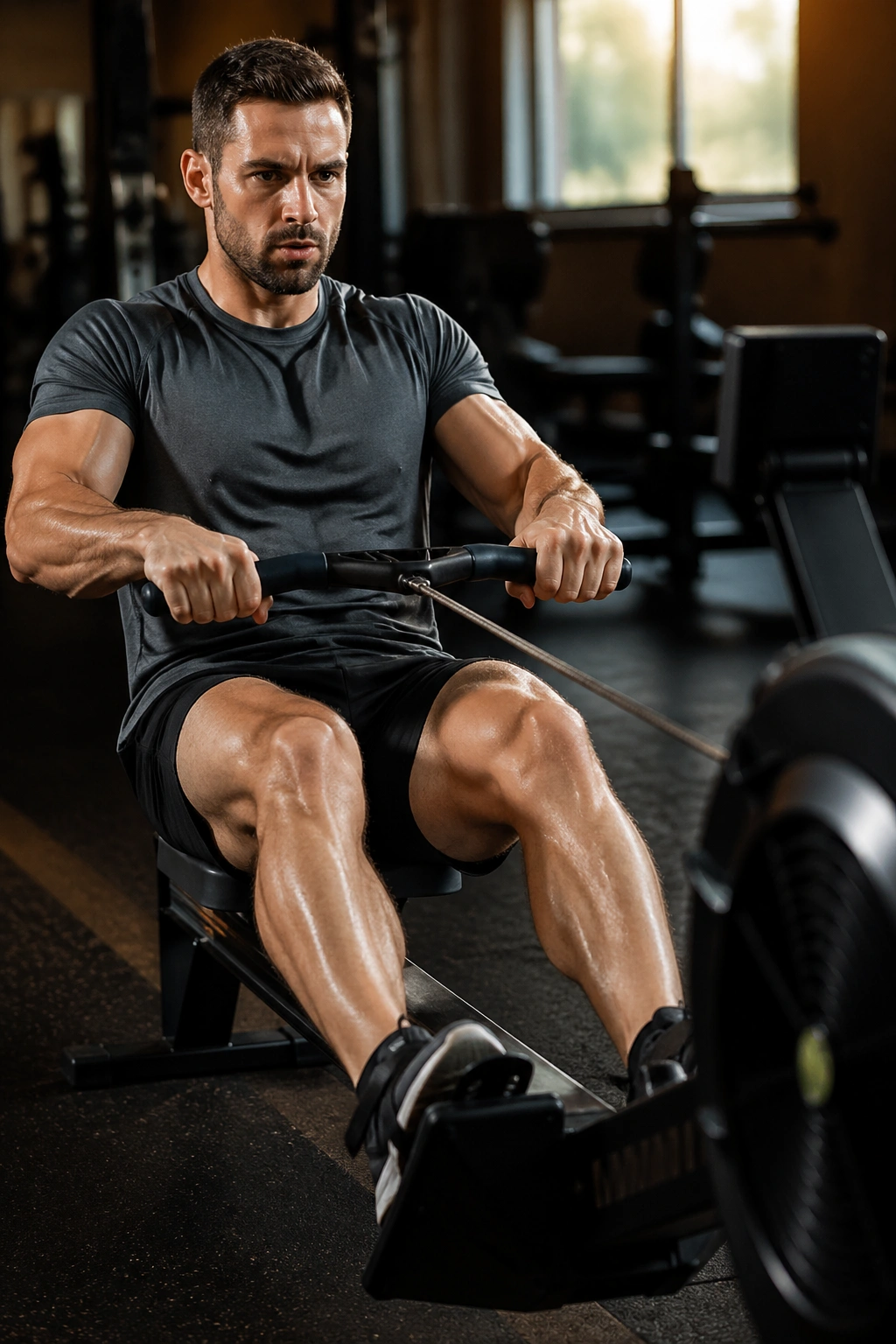
Rowing hits the legs first, then the hips, then the back and arms. Done well, it feels like a moving plank with a powerful leg drive. Done badly, it turns into a cranky lower-back drill, so take five minutes to warm up and get the stroke pattern right: push with the legs, lean back a little, finish with the arms, then reverse the order on the way in.
Try a pyramid like this: 100 meters hard, 100 meters easy; 200 hard, 200 easy; 300 hard, 300 easy; 400 hard, 400 easy; then walk back down to 300, 200, and 100. Keep the hard sections around 80% to 90% effort, not a blind sprint from the first pull. The flywheel rewards smooth power more than frantic yanking.
By the end, your legs will feel heavy and your shirt will usually be soaked. Good. That is the point.
3. Sled Push and Backward Drag
If you carry extra body weight, hate running, or come from a sports background where hard work felt better than choreography, the sled often feels right within one session.
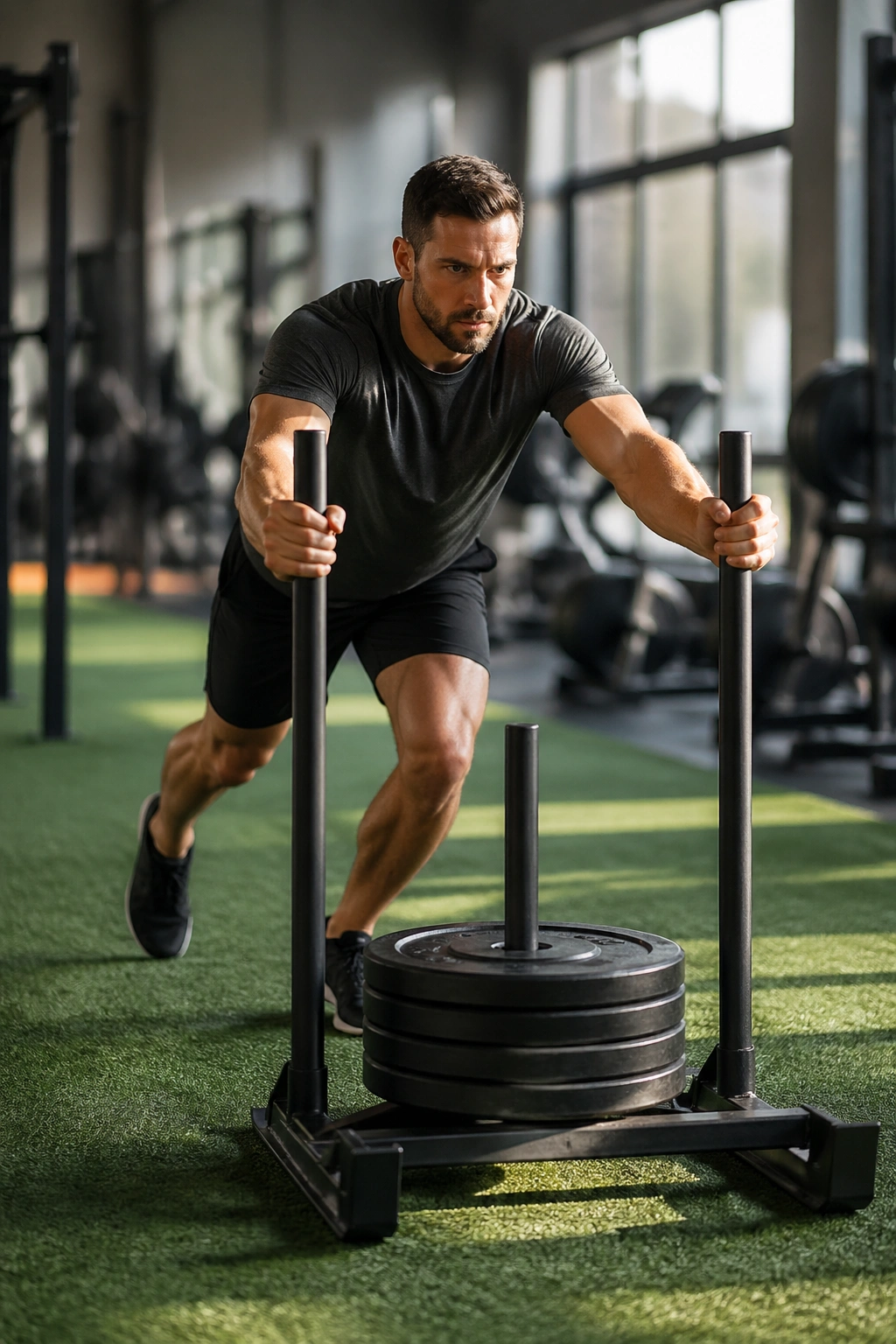
Unlike sprinting, the sled gives you a nasty conditioning effect without much impact and without much muscle soreness the next day. You push, you breathe hard, your heart rate climbs, and your legs have to keep producing force. Backward drags add a huge dose of quad work and can feel surprisingly friendly on beat-up knees.
A clean setup looks like this:
- Load the sled with a weight you can move for 20 to 30 meters while keeping a steady pace.
- Push one length hard.
- Turn around and drag it backward for the same distance.
- Rest 45 to 75 seconds.
- Repeat for 8 to 12 rounds.
Small steps win here. Choppy, piston-like steps. Keep your hands low on the poles, brace your trunk, and drive the floor away.
I like sled work more than most machine intervals for larger beginners because the floor does not hit back.
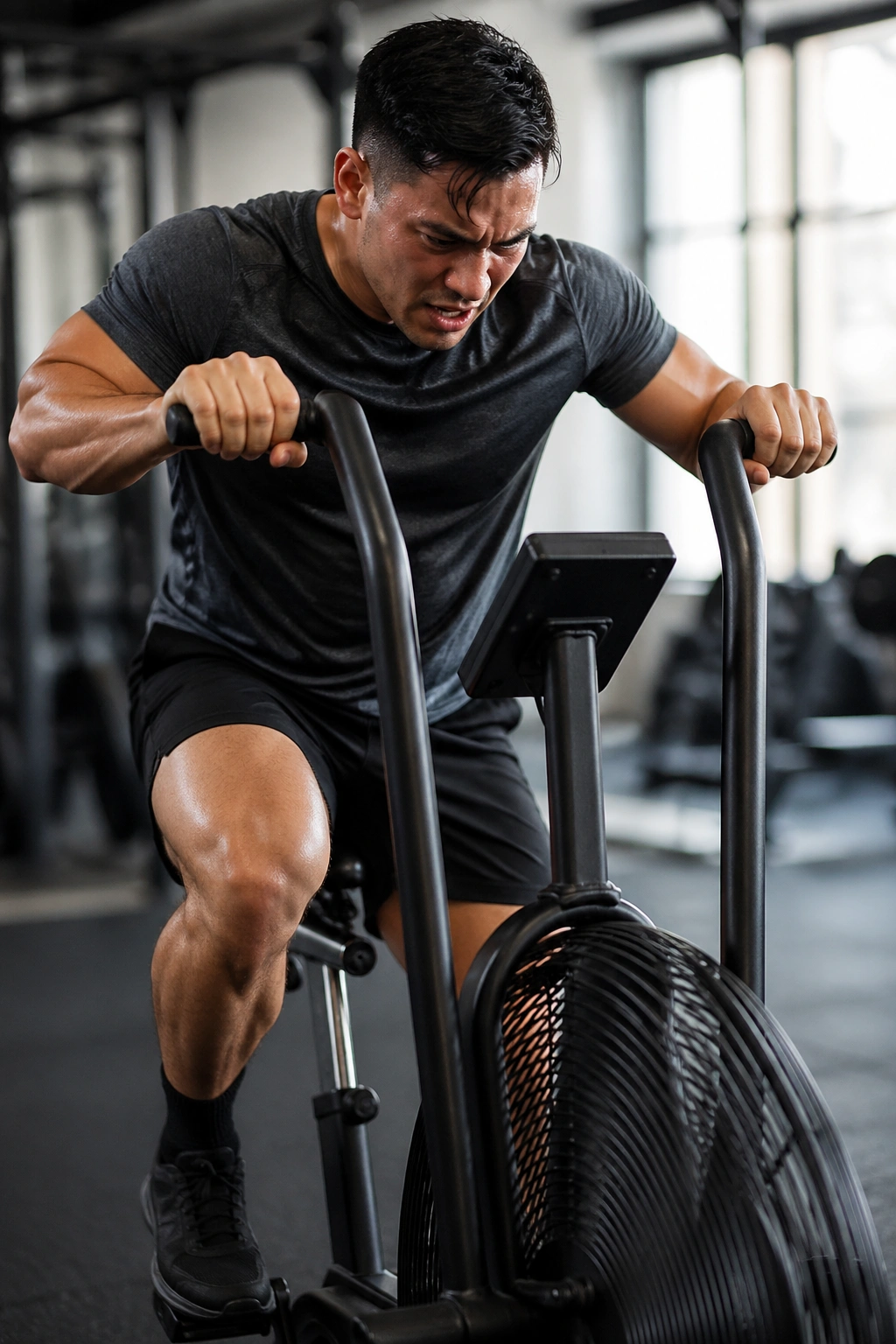
4. Air Bike 10- to 20-Calorie Repeats
Why does the air bike make people bargain with themselves after round three? Because the resistance rises with your effort. The harder you pedal and push, the harder the bike pushes back.
That feedback loop is brutal and useful. Belly fat loss workouts need enough intensity to drive adaptation, and the air bike gives you that without technical headaches. You sit down, move your arms and legs together, and go.
Two ways to set it up
Option one:
Hit 10 calories hard, then pedal easily for 60 to 75 seconds. Do 8 to 12 rounds.
Option two:
Hit 20 calories at a tough but controlled pace, then recover for 90 seconds. Do 6 to 8 rounds.
The first round should feel a touch too easy. That is how you know you paced it well. If you empty the tank in 20 seconds and spend the rest of the session staring at the fan, you overshot. Stay seated, keep your heels driving, and let the arms help instead of flailing.
5. Barbell Complex With Romanian Deadlifts, Rows, Squats, and Presses
No machine here. No breaks between lifts either.
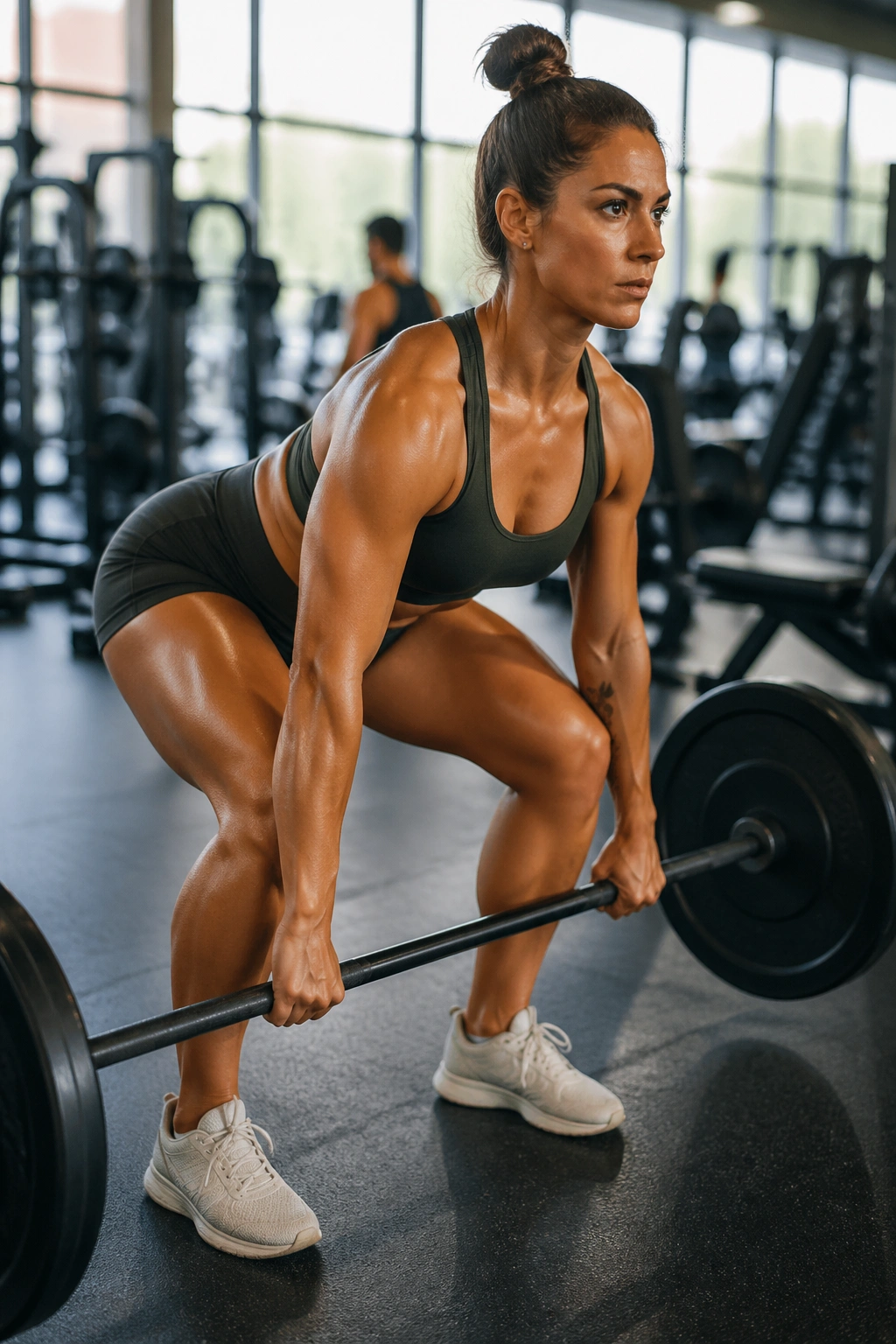
A barbell complex strings multiple movements together without putting the bar down, which drives heart rate up fast while forcing the whole body to work as one unit. You do not need much weight. In truth, most people pick too much and regret it halfway through the first round.
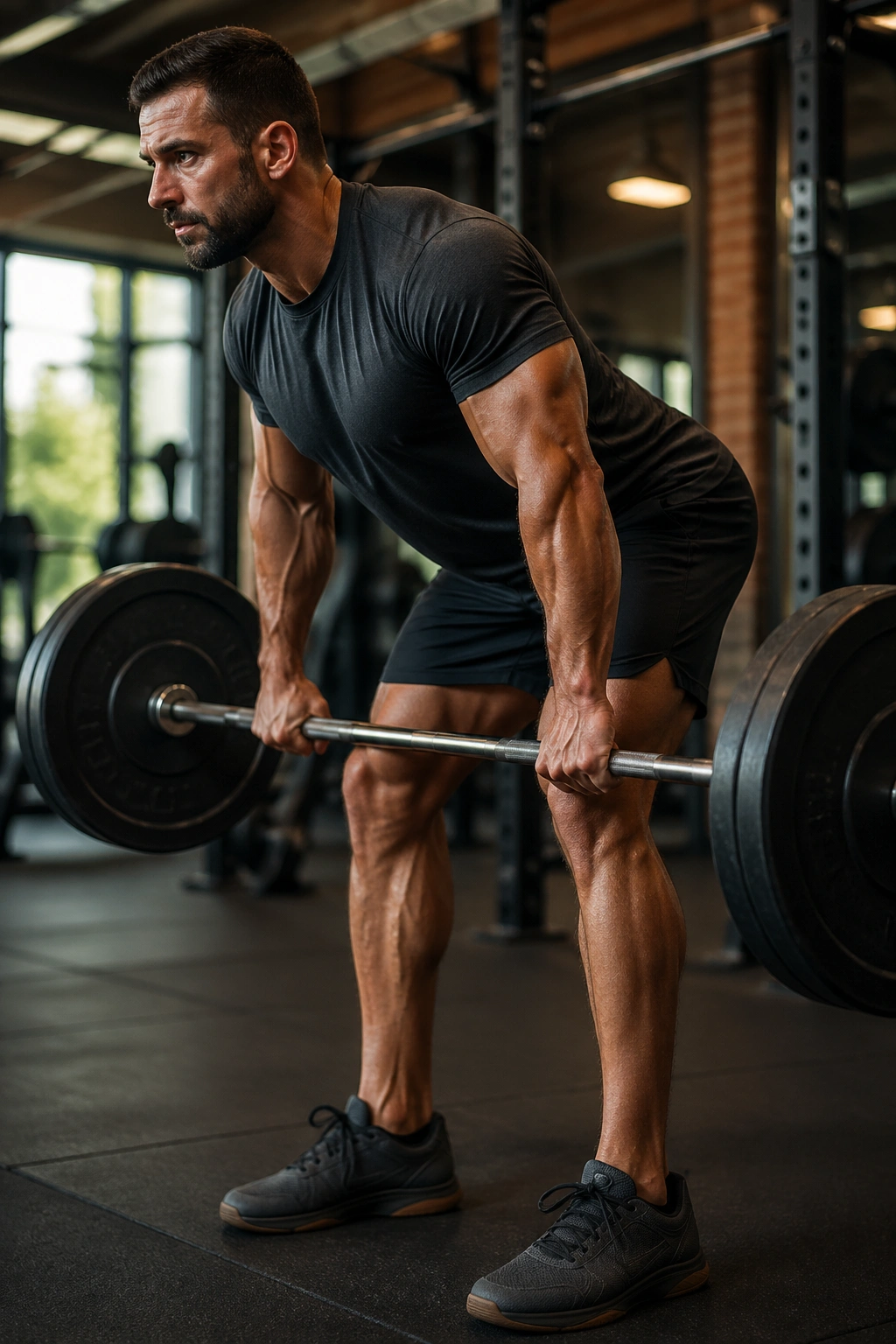
Use an empty Olympic bar or a light load you can control. Perform 6 Romanian deadlifts, 6 bent-over rows, 6 front squats, and 6 push presses without stopping. Rest 90 to 120 seconds, then repeat for 4 to 6 rounds.
The magic is density. Your grip works. Your trunk braces through each transition. Your legs and shoulders have to keep contributing under fatigue. If front squats hurt your wrists, switch to goblet squats with a dumbbell and run the same idea that way.
Technique first. Always. A fat-loss workout is never worth turning the last round into a crooked, breathless mess.
6. Kettlebell Swing and Goblet Squat Ladder
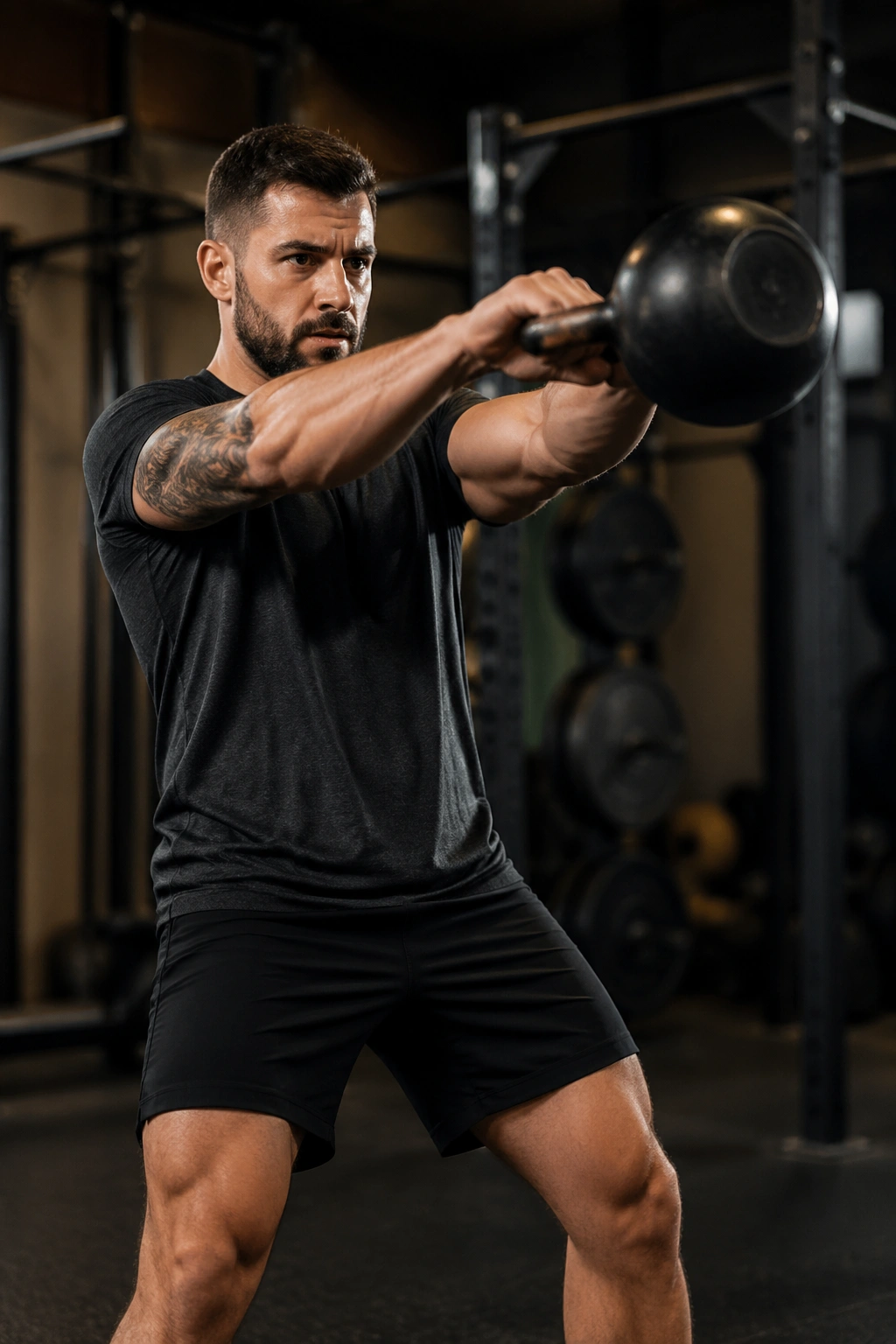
Unlike long, steady cardio, a swing ladder forces your hips to produce force again and again, then asks your legs to keep working under load. It is short, sharp, and far more athletic than people expect from one kettlebell.
Start with 10 kettlebell swings and 5 goblet squats. Rest 30 seconds. Then do 15 swings and 6 squats, rest again, then 20 swings and 8 squats. Walk it back down to 15 and 10. That is one ladder.
Most people are cooked after 3 to 5 ladders.
Who gets the most from it? Lifters with a clean hip hinge, solid breathing mechanics, and no lower-back drama. Who should skip it for now? Anyone whose swing looks like a front raise attached to a squat. If that is you, use the sled, bike, or rower while you learn the hinge pattern.
One more thing. The bell should float to chest height because your hips snapped, not because your shoulders lifted it there.
7. Trap Bar Deadlift Every-Minute Session
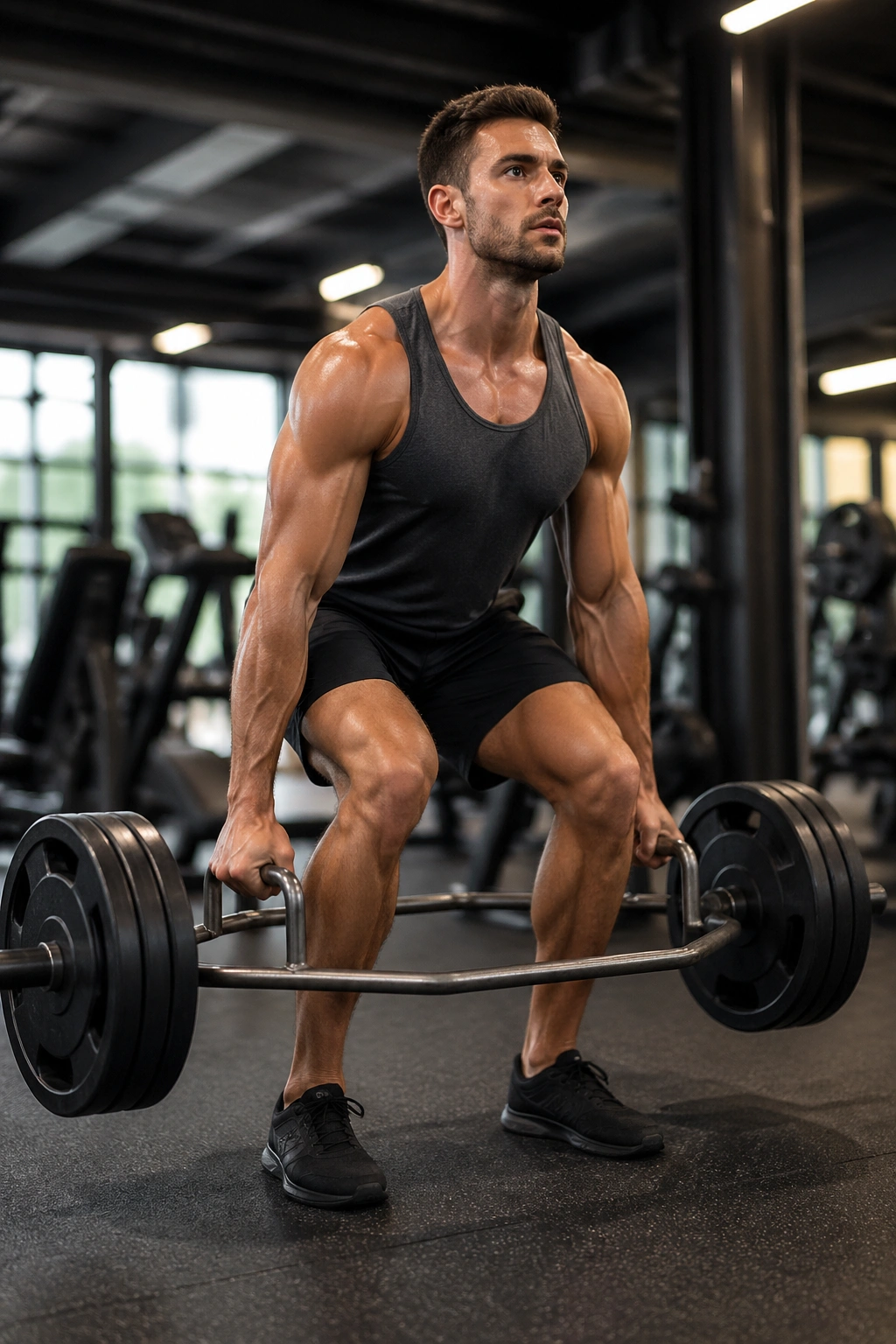
Five crisp deadlifts can do more for your body composition than fifty frantic crunches.
The trap bar deadlift is a strong choice for fat loss because it trains a huge amount of muscle at once and tends to be easier on the back than a straight-bar pull for newer lifters. The neutral handles help. So does the centered load.
Set a timer for 16 to 20 minutes. On odd minutes, perform 4 to 5 trap bar deadlifts at about RPE 7, which means you could still do 2 or 3 more clean reps. On even minutes, row 8 calories, walk briskly for 45 seconds, or do 10 bodyweight step-ups.
That alternating pattern gives you heavy work without turning the deadlift into sloppy conditioning. The lifting preserves muscle while the movement between sets keeps the session dense.
If your last rep slows down enough that you start hitching the bar, lower the load. Pride burns fewer calories than good form.
8. Stair Climber Hard-Easy Rounds
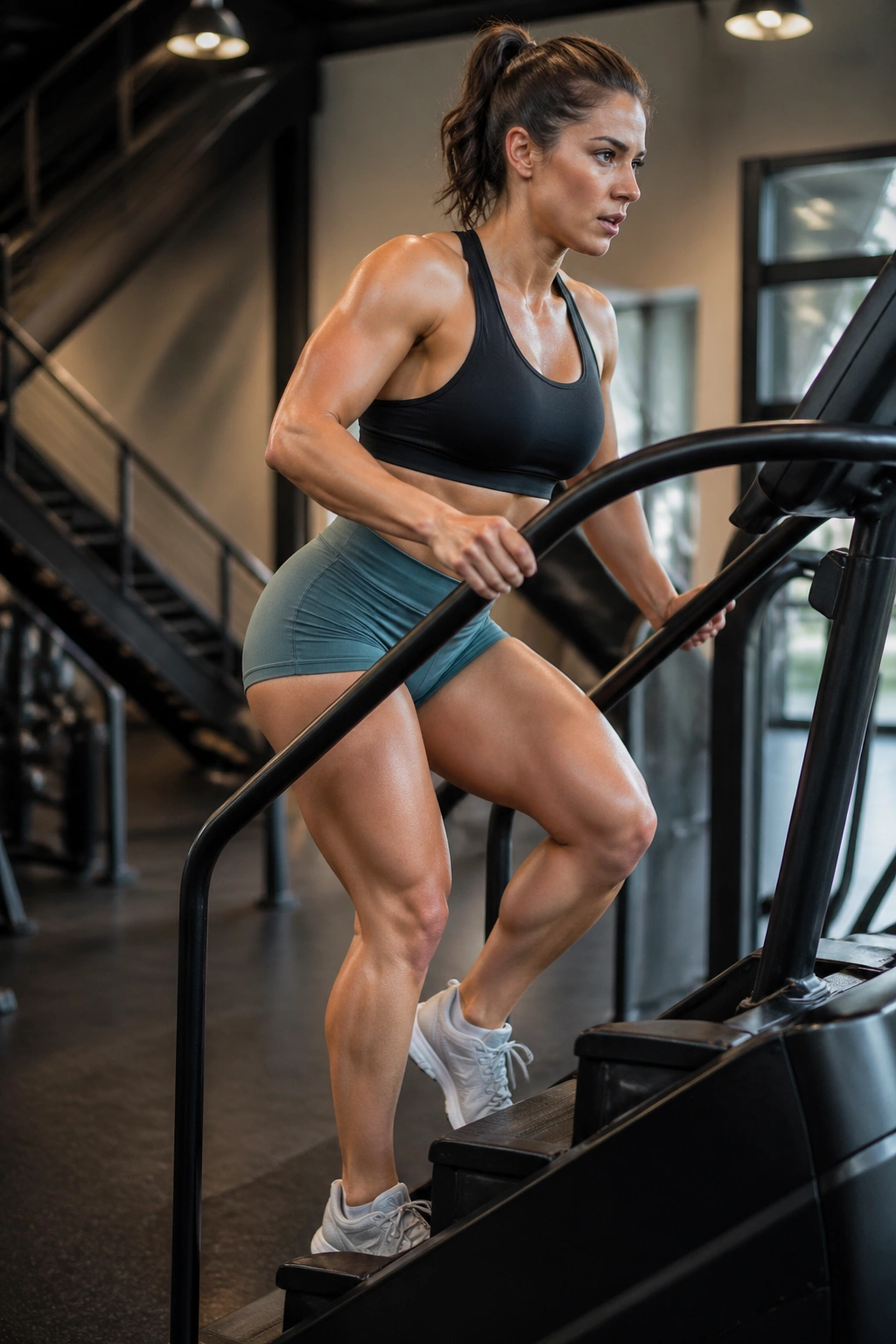
The stair climber gets laughed at until minute six.
Then your calves are hot, your breathing is loud, and your shirt is glued to your back. For belly fat loss, that is useful territory. The machine is low impact, easy to scale, and nasty enough to build real conditioning when you stop treating it like a place to scroll on your phone.
A strong starting format
Work hard for 60 seconds at level 9 to 14, depending on the machine and your fitness. Recover for 90 seconds at level 4 to 6. Do 10 rounds after a 3- to 5-minute warm-up.
What to watch
- Use the handrails for balance, not bodyweight support.
- Keep your whole foot on the step when you can.
- Stay tall through the torso instead of folding over.
- If your toes go numb, your shoes may be laced too tight.
You will feel this one in the glutes more than flat treadmill work, and that is part of why people stick with it.
9. Dumbbell Walking Lunge to StepMill Combo
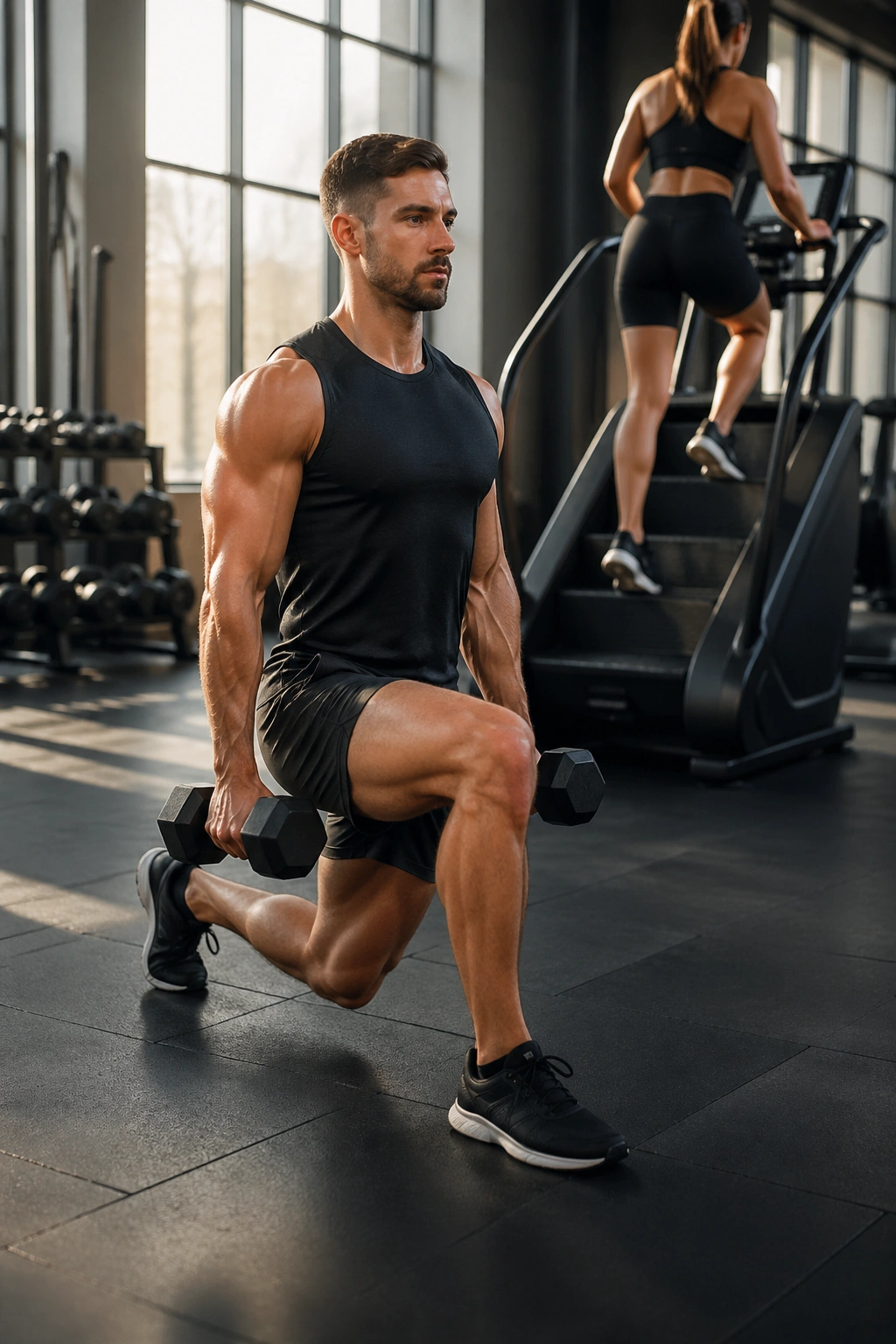
Picture the kind of session that makes your legs feel full of wet cement, though your joints still feel okay the next morning. That is this combo when the weights are chosen well.
Take a pair of moderate dumbbells and perform 10 walking lunges per leg. Rack the weights, walk straight to the StepMill or stair climber, and climb hard for 3 minutes. Rest for 60 seconds. Repeat for 5 rounds.
The lunges load each leg separately, which raises the training effect without needing huge weight. The immediate stair work keeps your heart rate high and forces your legs to keep producing after the first burn hits. That blend is gold for body-composition work.
A few details make or break it:
- Use a stride long enough that the front knee tracks over the middle of the foot.
- Let the back knee dip toward the floor; do not cut the rep short.
- Start lighter than your ego wants. Grip often fails before legs do.
This one is not gentle. It is effective.
10. Battle Rope and Burpee Intervals
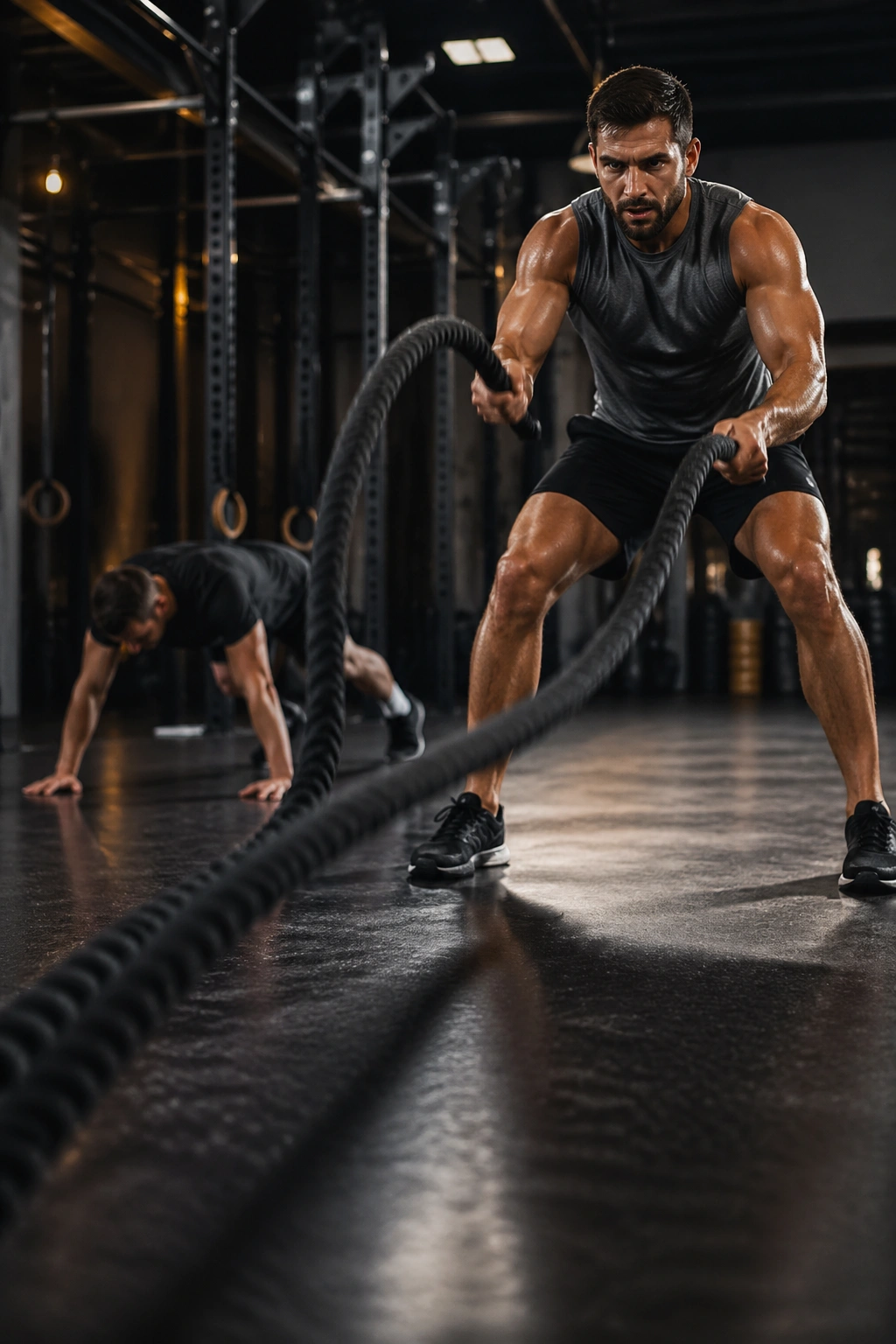
Short workout. Ugly result.
Battle ropes alone can drift into flashy nonsense, but pair them with burpees and the session turns into a compact conditioning hammer. You get upper-body output from the ropes, lower-body work from the jump and sprawl, and a heart-rate spike that shows up fast.
Try 20 seconds of hard alternating rope waves, then do 6 burpees. Rest 40 seconds and repeat for 10 to 15 rounds. If burpees bother your wrists or shoulders, swap in squat thrusts or hands-elevated burpees on a bench.
This is one of those workouts that feels far longer than the clock says. Good. You do not need 50 minutes when the work density is high enough. What you do need is restraint. Save 1 or 2 reps on the first few rounds so you do not turn the last half into survival crawling.
Not every fat-loss session should feel like punishment. This one can.
11. SkiErg Power Bursts

Want sprint work without pounding your ankles? The SkiErg is a smart answer.
The movement looks upper-body dominant from across the room, though it is better thought of as a standing crunch attached to a hip hinge and a powerful lat pull. When done right, your trunk has to brace hard, your hips snap through, and your heart rate climbs with surprising speed.
A clean setup
Warm up for 4 minutes with easy pulls. Then perform 15 seconds hard, 45 seconds easy for 15 to 20 rounds. Keep the hard bouts explosive but smooth. The handles should travel down past your hips while your ribs stay stacked instead of flaring up.
Why it works for belly fat loss
Short power bursts make it easier to hit a high effort repeatedly without the joint stress of running. That matters when you are carrying more body weight or stacking training on top of a calorie deficit. Your abs are working here too, though not in the mirror-flexing way people chase. They are bracing, transmitting force, and helping you stay organized under fatigue.
Messy pulls waste energy. Crisp pulls print it.
12. Cable Wood Chop Conditioning Circuit
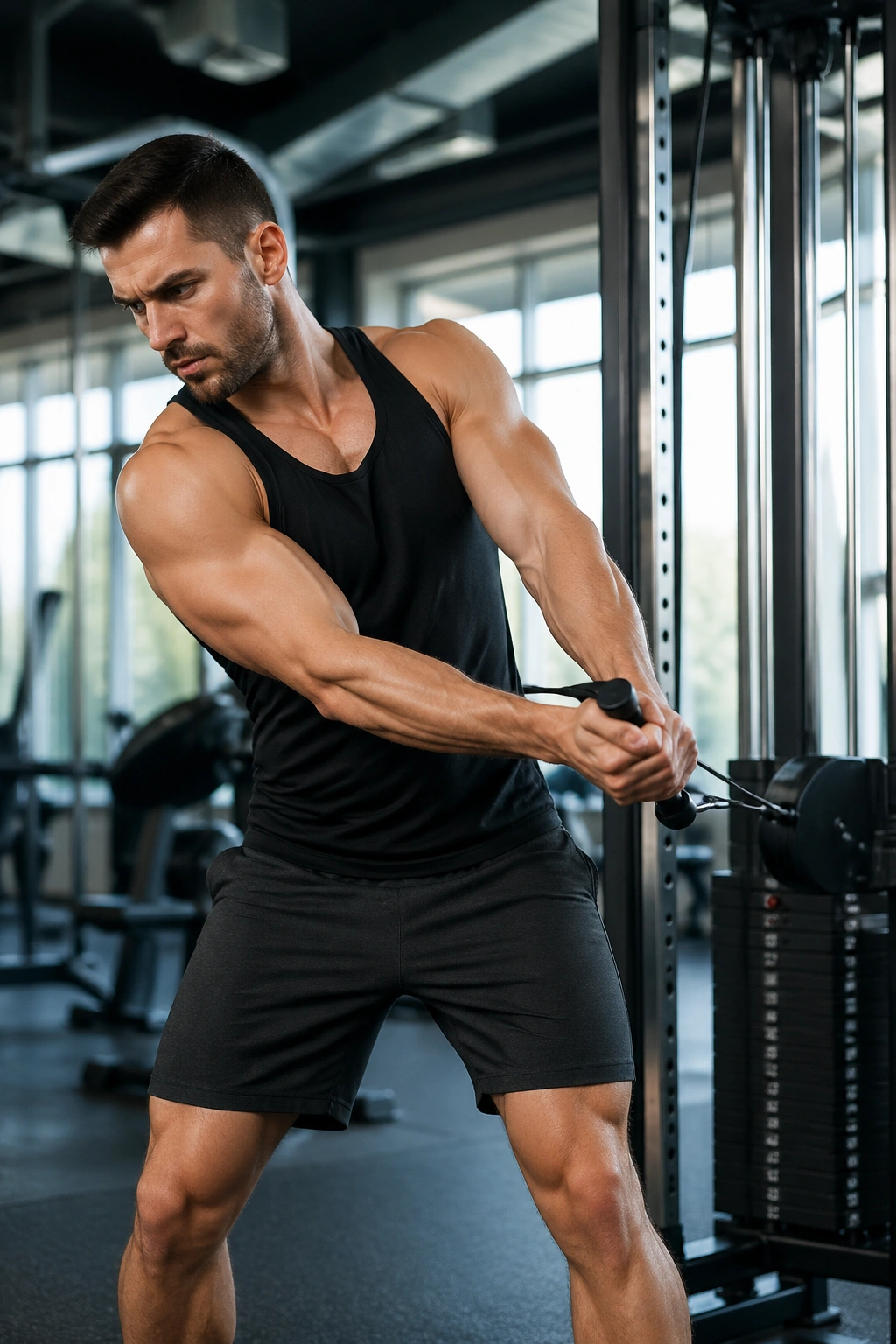
A cable stack will not melt belly fat by itself, and I wish more people would say that plainly. What it can do is add loaded rotation, anti-rotation, and full-body movement to a circuit that keeps your trunk working while the rest of you does the heavy lifting.
Run the circuit like this
Perform 10 high-to-low wood chops per side, then 10 low-to-high lifts per side, then 12 cable squats, then row 250 meters. Rest 60 seconds. Complete 4 to 5 rounds.
Why I like it
The cable keeps tension through the whole rep, which means your obliques and deep trunk muscles are not taking a nap between positions. Pairing that with squats and rowing pushes the session away from “ab day” and into real conditioning with core demand.
A small warning. Go lighter than you think on the chops until you can rotate through the upper back instead of wrenching through the lower spine. Fast and crooked is not better here. Smooth and controlled wins.
13. Medicine Ball Slam and Box Step-Up Circuit

Most core workouts never ask you to create force. Medicine ball slams fix that in a hurry.
A good slam teaches you to reach tall, brace, and drive the ball down with your lats, trunk, and hips. Pair it with step-ups and the circuit turns into a useful blend of power, cardio, and leg work.
Here is a strong template: 12 medicine ball slams, 10 box step-ups per leg, 200 meters of fast walking or light sled pushing, 45 seconds rest. Do 5 to 6 rounds.
Step-up height matters. Aim for a box where your working thigh gets close to parallel with the floor, not one so tall that you have to twist or launch off the back leg. Hold light dumbbells if bodyweight feels too easy after a week or two.
This session has a nice side benefit: people who hate long cardio often enjoy it more because the tasks change before boredom sets in.
14. Spin Bike Tempo Intervals
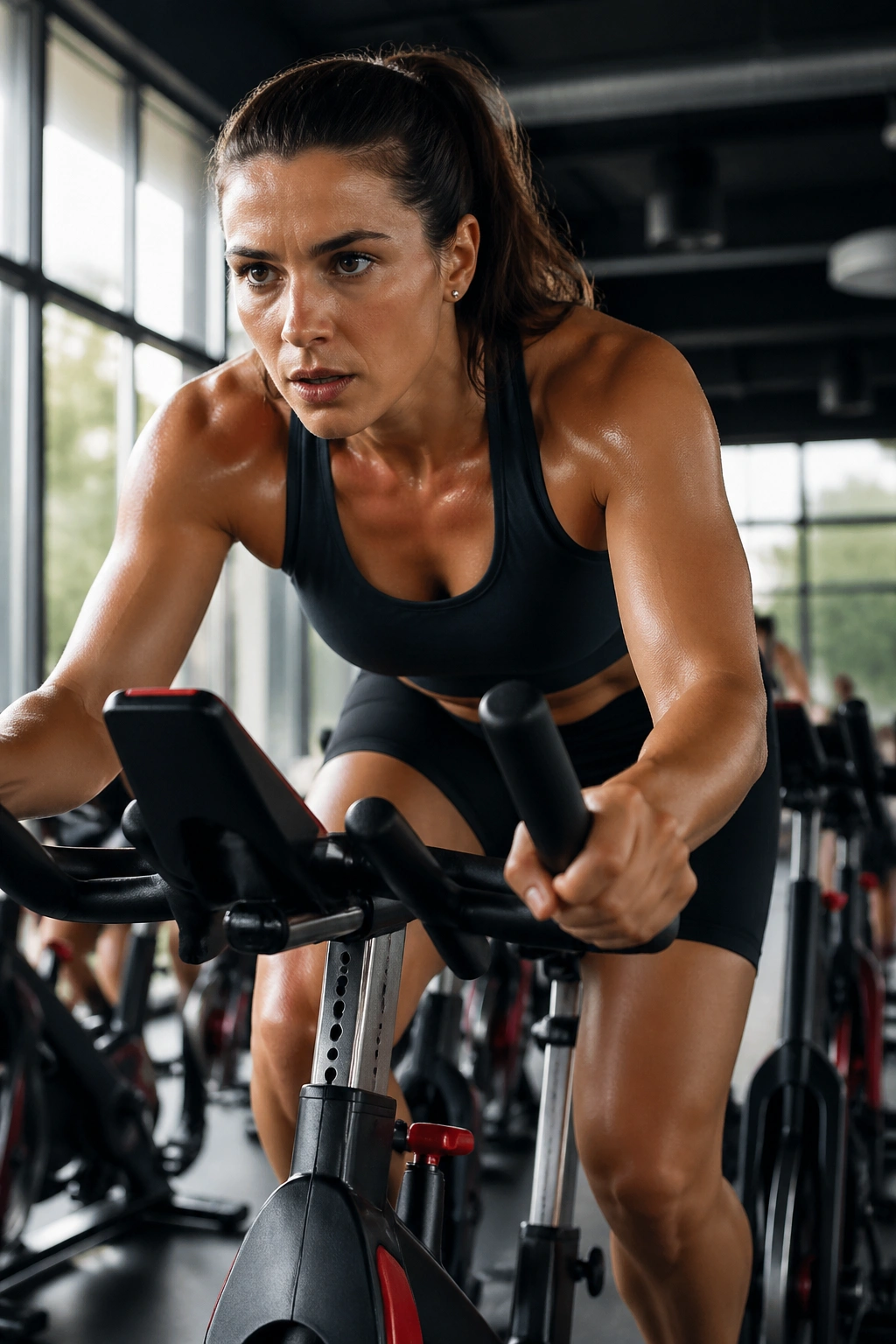
Unlike all-out intervals, tempo work sits in that uncomfortable middle ground where you can still hold the pace, though talking in full sentences sounds like a chore. It is not flashy. It works.
Use a spin bike, upright bike, or recumbent bike if your back prefers the support. After 5 minutes easy, ride 3 minutes hard at about 7.5 to 8 out of 10 effort, then pedal 2 minutes easy. Repeat for 6 rounds. Cool down for another 5 minutes.
Why choose this over sprints? Recovery. You can stack more total work across the week when every session does not feel like a street fight. Tempo intervals build conditioning, burn a solid number of calories, and leave you fresher for your strength days.
Who tends to do well with it:
- Lifters in a calorie deficit who still want decent leg recovery
- Beginners who cannot pace 15-second sprints yet
- People with cranky ankles, knees, or shins
- Anyone who wants one session that feels hard without feeling chaotic
Boring? A little. Useful? A lot.
15. Full-Body Strength Circuit With Squats, Presses, Rows, and Hinges
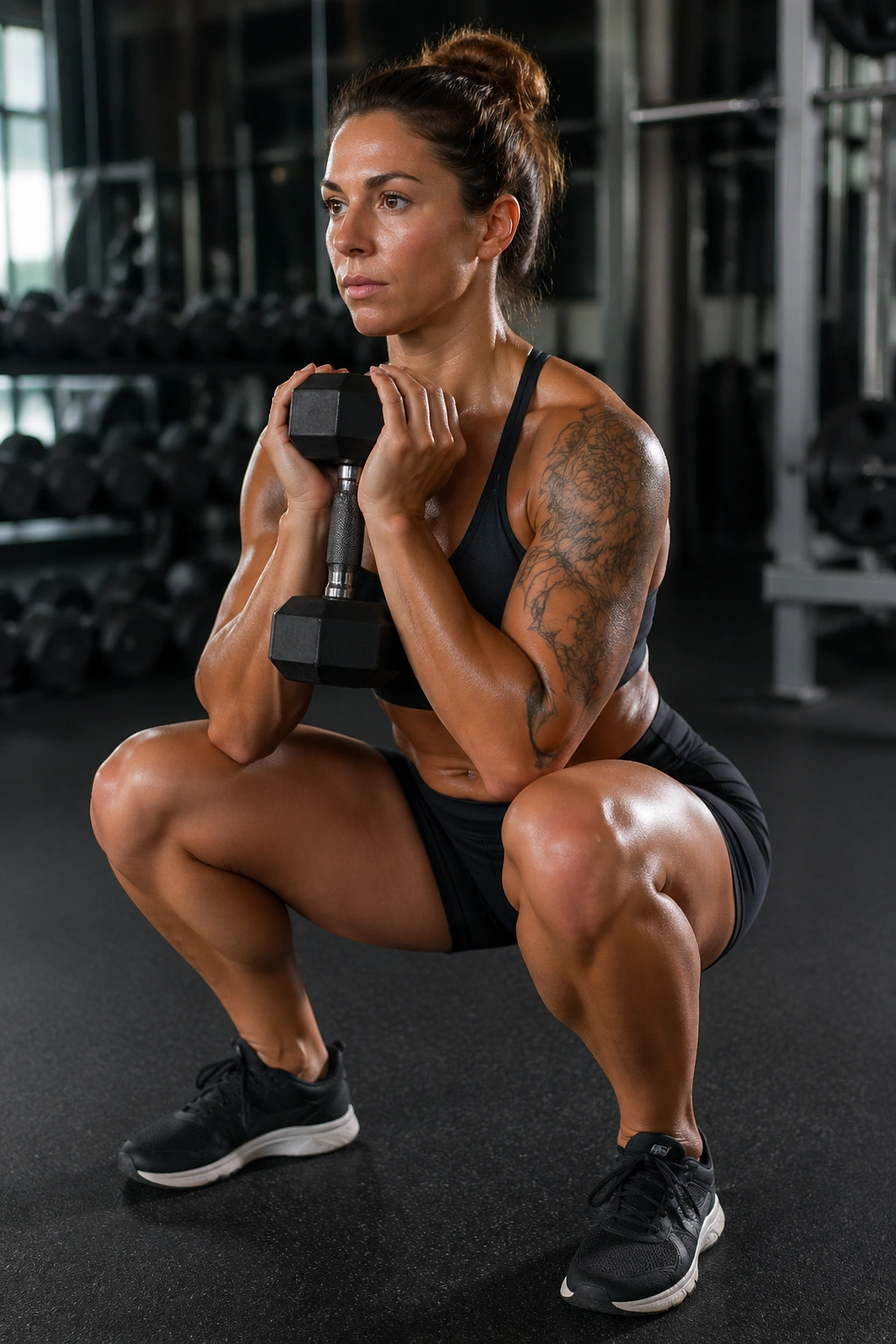
When people ask me to name one style of training that belongs in almost every belly-fat-loss plan, this is the one I keep coming back to.
A full-body circuit built from basic lifts preserves muscle while driving a meaningful heart-rate response. That combination matters because dropping scale weight without enough resistance training often leaves people smaller but softer, flatter, and less strong than they expected. Not ideal.
Run 8 goblet squats, 10 incline dumbbell presses, 12 seated cable rows, 10 Romanian deadlifts, and a 30-second front plank. Rest 75 to 90 seconds after the plank. Complete 4 to 6 rounds.
Choose loads that leave one clean rep in reserve on most sets. The goal is not collapse. The goal is quality work with short rests. If your gym is crowded, swap the seated row for a chest-supported dumbbell row and keep moving.
Write your numbers down. Bump one lift up by 5 pounds when all rounds feel clean. That quiet kind of progress changes body composition far better than random “fat-burning” circuits pulled from a hat.
16. Heavy Farmer’s Carry and Incline Walk Combo

Carry work does something ab machines often miss: it forces your trunk to resist movement while your legs and lungs keep going.
Grab the heaviest pair of dumbbells you can carry with good posture for 30 to 40 meters. Set them down, rest 20 to 30 seconds, then hop onto a treadmill at 6% to 10% incline for 2 minutes of brisk walking. Step off, rest another 30 seconds, and go again for 6 to 8 rounds.
A few cues clean it up fast:
- Let the shoulders sit down and back, not shrugged to your ears.
- Keep the ribs stacked over the hips.
- Walk with quick, controlled steps.
- If the dumbbells swing wildly, they are too heavy.
I like this session for people who want a harder workout without learning a new machine or barbell pattern. It is plain, efficient, and humbling in the right way.
Grip will light up first. Then the abs. Then the lungs.
17. Treadmill Run-Walk Intervals

Can beginners use running for belly fat loss without blowing up their calves and shins? Yes, though the walking breaks need to be built into the workout from the start.
Run for 1 minute at a pace that feels like work but still looks controlled. Walk for 90 seconds. Repeat for 10 to 15 rounds. If that goes well for two or three weeks, move to 75 seconds running and 75 seconds walking, then to 90 and 60.
How to make it safer
Warm up with 5 minutes of brisk walking and one short mobility drill for calves or ankles. Keep the run pace smooth enough that your feet land under you rather than way out in front. Overstriding is where a lot of new runners start paying interest.
Who should use a different tool
Skip this if you are carrying a large amount of body weight, have a history of shin pain, or feel knee impact during the first few rounds. The air bike, rower, or incline treadmill will give you much of the same conditioning benefit with less pounding.
The workout is simple. Your pacing should be too.
18. Seated Rower, Push-Up, and Plank Tri-Set
Some days the gym is packed, your patience is thin, and you still need a hard session that fits into half an hour. This tri-set does that.
The setup
Row 250 meters at a strong pace. Drop to the floor for 10 to 15 push-ups. Finish with a 30- to 45-second plank. Rest 60 seconds. Run 5 to 8 rounds.
Why it works
You get lower-body drive and cardiovascular demand from the rower, upper-body pressing from the push-ups, and direct trunk work from the plank. None of the pieces are fancy. Together, they build a dense, full-body session that fits real life.
Small fixes that matter
- Elevate your hands on a bench if push-up form breaks before rep 8.
- Plank with your glutes squeezed and ribs down; sagging is dead time.
- Row hard enough that the split drops, though not so hard that the next push-ups turn into face plants.
This is also one of the easier workouts to repeat weekly and measure cleanly.
19. Kettlebell Clean and Push Press Intervals
One kettlebell can humble a strong person fast. The clean and push press proves it.
The clean brings the bell to the rack using hip drive and timing. The push press lets the legs help the overhead press, which means more total-body work and a higher training density than strict pressing alone. Pair those with a lower-body move and the session gets nasty in a hurry.
Try 6 clean and push presses per arm, then 8 front-rack reverse lunges total, rest 45 to 60 seconds, and repeat for 5 to 6 rounds. Alternate arms each round or switch arms within the set if your conditioning is solid.
If the kettlebell bangs your forearm on every clean, do not tough it out. Fix the path. The bell should wrap around the hand, not arc over it like a wrecking ball. If that pattern is new, sub single-arm swings plus dumbbell push presses until your clean improves.
This one taxes shoulders, hips, trunk, and lungs all at once. Used once or twice a week, it earns its place.
20. Dumbbell Complex Countdown
You need one pair of dumbbells, some floor space, and the willingness to pick a lighter pair than your pride wants.
Perform 10 reps each of Romanian deadlift, hang clean, front squat, push press, and bent-over row without setting the dumbbells down. Rest 2 minutes. Then do the same sequence for 8 reps each, then 6, then 4, then 2.
That countdown structure is beautiful in a grim sort of way. The first round feels manageable. The middle rounds bite. The last two rounds move fast enough that you can empty the tank without your form dissolving.
A few hard-earned notes. Use the clean to get the bells from hang to shoulders; do not curl them. Breathe at the top of the squat before the press. If your lower back starts taking over during the rows, shorten the set and keep the hinge cleaner.
This is one of the best hotel-gym or crowded-gym answers on the list, and it leaves almost no room for drifting.
Building a Week of Gym Workouts for Belly Fat Loss
You do not need all 20 workouts in one week. You need 3 or 4 well-chosen sessions done hard enough to count and easy enough to recover from.
A practical 3-day split could look like this:
- Day 1: Workout 15, then 10 minutes of easy incline walking
- Day 2: Workout 2 or 11
- Day 3: Workout 7, 16, or 20
A practical 4-day split could look like this:
- Day 1: Workout 1
- Day 2: Workout 15 or 5
- Day 3: Workout 14
- Day 4: Workout 3, 9, or 19
You can also pair a harder interval day with a lower-stress conditioning day. That mix tends to keep your legs fresher and your weekly output higher. If food intake supports a calorie deficit, protein stays high enough to protect muscle, and sleep does not fall apart, your waist usually starts to tell the story before the mirror does.
Measure something. Waist at the navel every two weeks. Body weight three mornings per week. Working loads in a notebook. A training plan without records turns into guesswork fast.
Mistakes That Keep Belly Fat Loss Workouts From Working
The first mistake is treating every session like a fitness test. Hard intervals have value. So do tempo rides, carries, and strength circuits that stop one rep shy of ugly. If every workout is a red-line effort, recovery cracks before results arrive.
Second problem: doing abs instead of training. I am not anti-ab work. I am anti-wasting 25 minutes on crunch variations while your biggest muscles do nothing. Use direct core training as a side dish, not the entrée.
Third problem is wandering. Same treadmill pace every week. Same dumbbells every week. Same rest periods, same output, same body. Progress does not have to be dramatic, though it does have to exist.
Sleep and food matter more than most gym regulars want to admit. If you sleep 5 hours, chase stress all day, then erase your calorie deficit with liquid calories and mindless snacking, the best workout plan in the building will still look mediocre. The gym can do a lot. It cannot negotiate with math forever.
Final Thoughts
If you want a smaller waist, build your training around big-muscle lifts, repeatable conditioning, and progression you can track. The flashy stuff is optional. The basics are not.
Pick one low-impact cardio workout, one interval session, and one full-body strength circuit from the list above. Run them for four weeks. Add a round, add a little load, or trim rest when your form stays clean. That is enough to start.
Belly fat loss rarely responds to random effort. It responds to consistent work that your body can recover from and your schedule can hold. Start there, keep records, and let the boring stuff do its job.
