



You don’t need a gym membership to spike your heart rate. You don’t need a rack of color-coded dumbbells or a machine that tracks your power output in real-time. What you actually need is floor space, a bit of grit, and the understanding that your own body weight, when moved with intent, is an incredibly potent piece of fitness equipment.
Most people overcomplicate the calorie-burn equation. They look for the newest fitness craze or the specific machine that promises to melt fat. But the human body doesn’t care about marketing. It cares about intensity, movement, and the metabolic demand you place on your system. If you move fast, move with purpose, and minimize your rest periods, you will burn calories. It really is that simple.
The following movements are designed to be done anywhere. You can do them in a cramped hotel room, a garage, or your living room while waiting for the coffee to brew. The key isn’t just the exercise itself; it’s the density of the work. You need to keep the tempo high. If you find yourself chatting while doing these, you aren’t doing them right. Let’s look at the movements that give you the most metabolic bang for your buck.
1. Burpees
The burpee is the gold standard for a reason. It forces your body to drop to the floor, push back up, and jump, requiring total-body coordination. You are engaging your chest, shoulders, triceps, core, quads, and glutes in a single, fluid motion.
Why They Burn So Many Calories
It’s the vertical displacement. You are moving your body from a prone position on the floor to standing, then launching into the air. This forces your heart to work overtime to pump blood from your feet to your head and back again. It is physically taxing and intentionally difficult.
The Technique
- Start standing, then drop your hands to the floor.
- Kick your feet back into a high-plank position.
- Perform a push-up—keep your back straight, don’t let the hips sag.
- Jump your feet back toward your hands.
- Explode upward, reaching toward the ceiling.
Pro tip: Do not pause at the bottom of the movement. The moment your chest touches the floor, push back up. The “rest” happens when you stand up, not when you’re on the ground.
2. Jump Rope
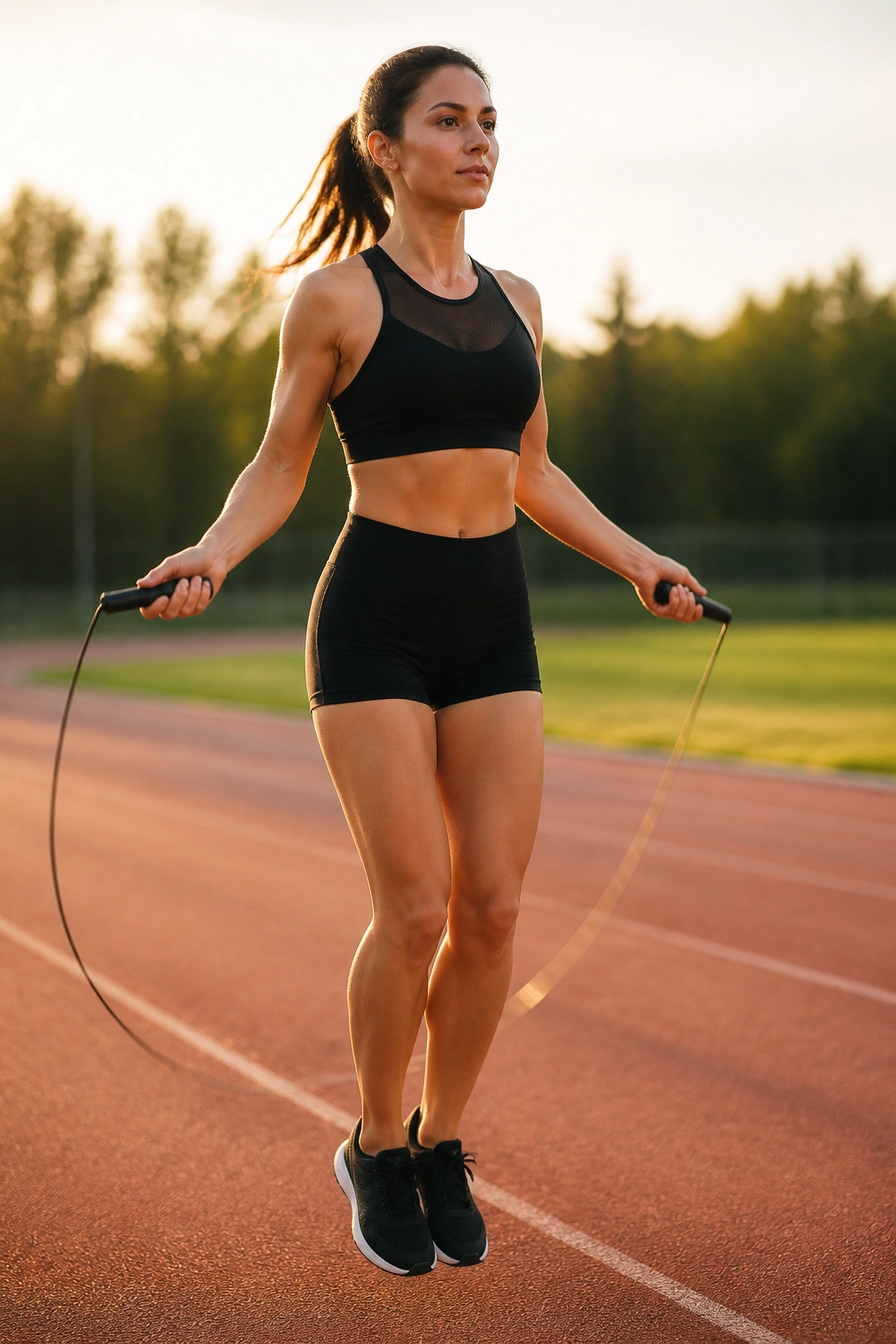
You might think jumping rope is just for boxers or kids in the playground, but it is one of the most efficient cardiovascular exercises in existence. It requires constant engagement of the calves, shoulders, and core to maintain rhythm.
The Metabolic Effect
Jumping rope creates a high-frequency impact. Your heart rate will climb within sixty seconds if you maintain a steady pace. It is a fantastic tool for improving agility and coordination while torching calories. Even if you don’t have a rope, the “shadow jump” motion—mimicking the spin with your wrists—works just as well.
How to Get the Most Out of It
- Keep your elbows tucked in close to your ribs.
- Stay on the balls of your feet; do not let your heels slap the ground.
- Maintain a slight bend in your knees to absorb the impact.
If you trip on the rope, don’t stop. Just reset and jump back in immediately. The “trip” is just a momentary pause in your heart rate; get back to the work as fast as possible.
3. Mountain Climbers
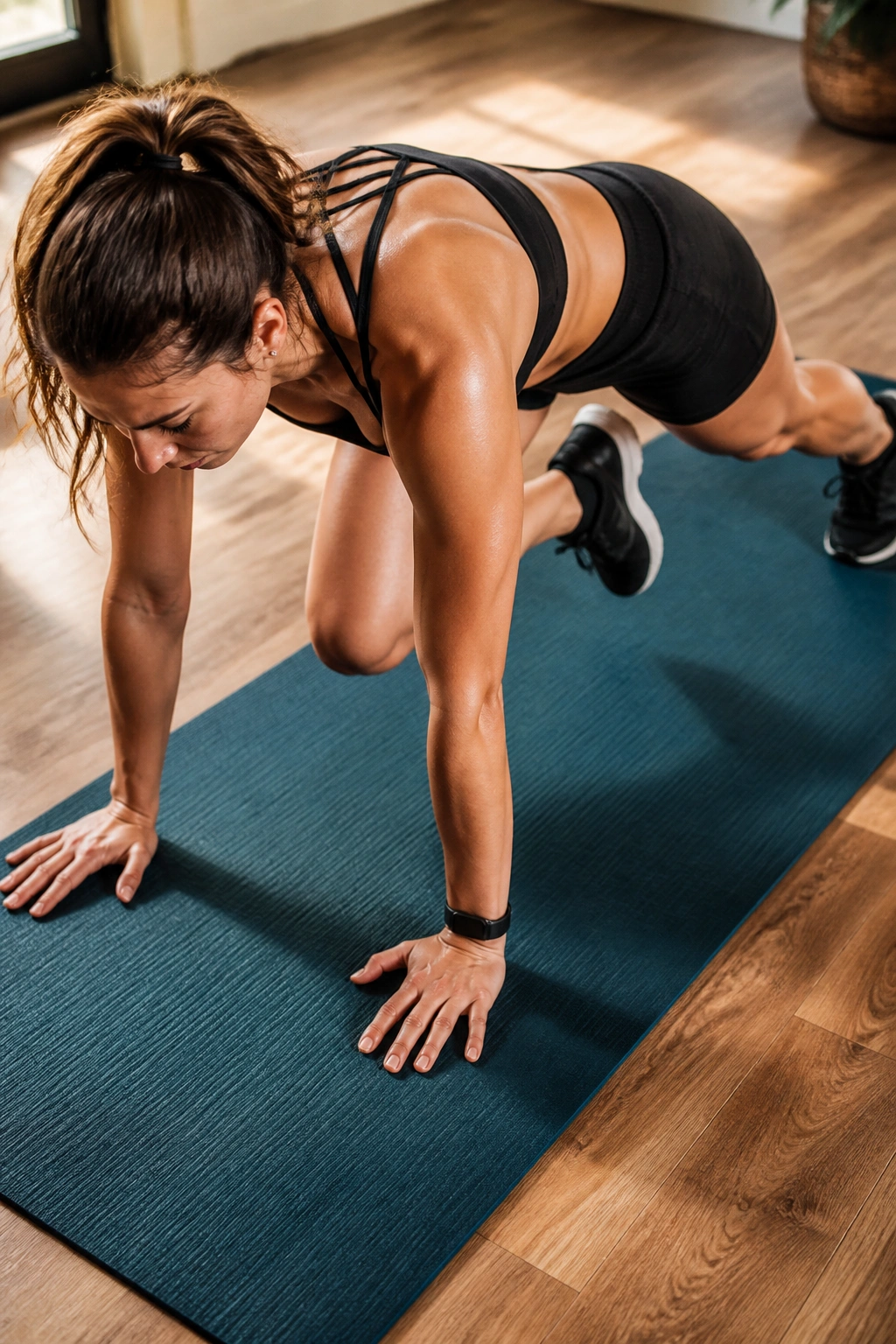
This is essentially a high-speed sprint performed in a horizontal plane. By keeping your body in a plank position and driving your knees toward your chest, you are forcing your core to stabilize while your legs perform the heavy lifting.
The Core Challenge
Your rectus abdominis, obliques, and hip flexors are working constantly to pull the knees up. If you do these slowly, it’s a core exercise. If you do them with speed—driving the knees in rapid succession—it becomes a massive calorie-burning cardiovascular drill.
Key Details
- Keep your hands directly under your shoulders.
- Drive your knee toward your elbow, not just toward your chest.
- Do not let your butt drift up toward the ceiling. Your body should remain as flat as a tabletop.
Watch for this: Many people bounce their hips. Keep your back flat. The only things moving should be your legs.
4. High Knees

Think of this as running in place but with an exaggerated emphasis on range of motion. You aren’t just jogging; you are trying to drive your knees up to hip height with every single step.
Why Intensity Matters
This movement demands significant power from your hip flexors and deep core stabilizers. Because you are essentially doing hundreds of tiny jumps in a short period, your cardiovascular system has to supply oxygen to your muscles at an incredible rate.
Incorporating High Knees
- Pump your arms in rhythm with your legs.
- Focus on driving the knee up forcefully rather than just lifting the foot.
- Keep your torso upright—don’t hunch over as you fatigue.
If you find your form breaking down, slow the tempo but keep the height of the knees consistent. Consistency beats speed if speed leads to sloppy, half-hearted knee lifts.
5. Skaters
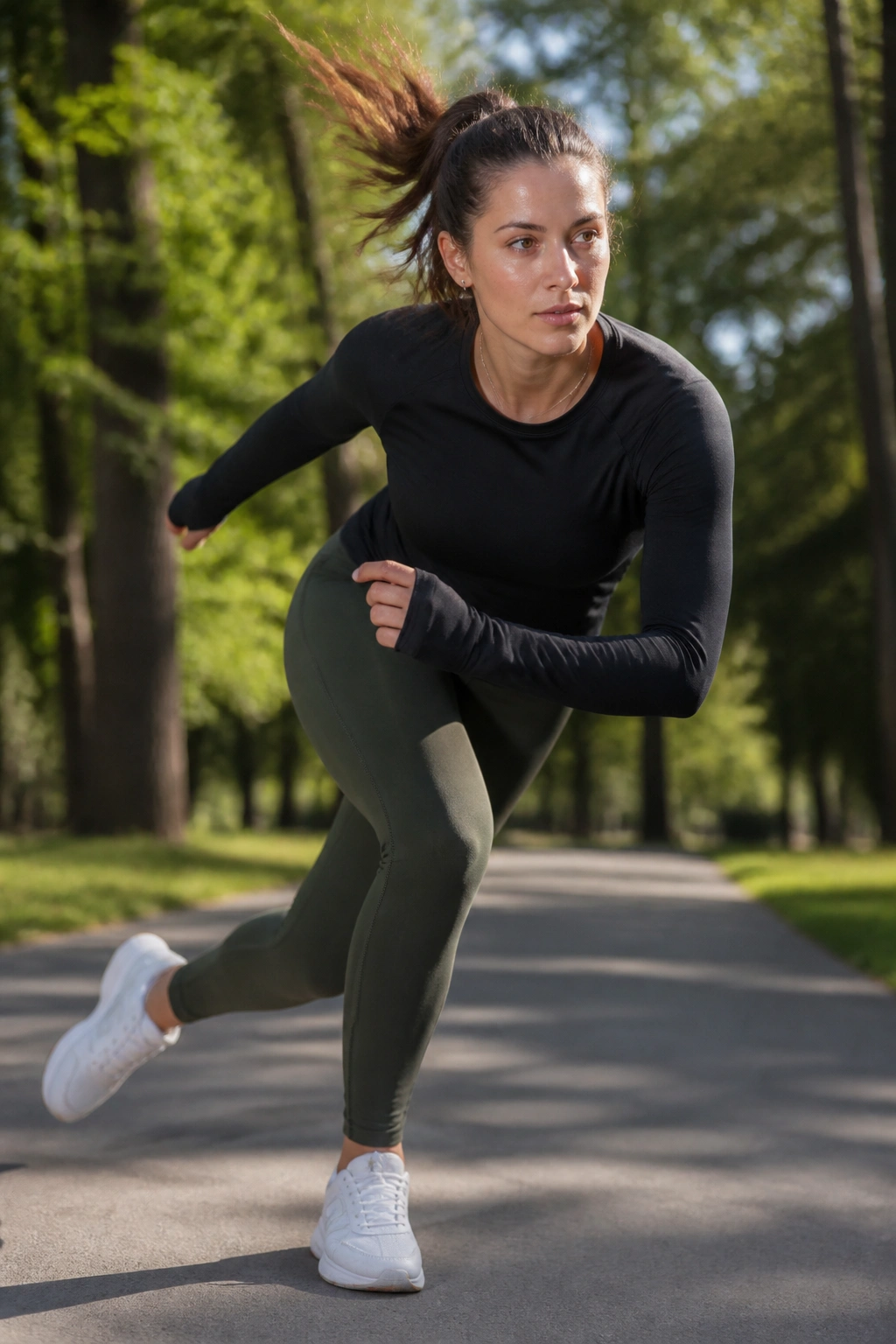
Lateral movement is often missing from standard workout routines. We spend most of our time moving forward and backward. Skaters change the plane of motion, forcing you to use your glutes, hips, and stability muscles to catch your balance.
Activating the Stabilizers
When you push off your left foot to jump to the right, your gluteus medius—a key muscle for hip stability—has to fire to stop your momentum. This constant firing and balancing burn calories while toning the legs.
How to Perform
- Start standing, then jump to the right, landing on your right foot while swinging your left leg behind you.
- Immediately push off the right foot to jump back to the left.
- Use your arms to create momentum; swing them side-to-side as you jump.
It should feel like you are ice skating on a synthetic rink. The wider your jump, the harder your legs have to work to decelerate and push back.
6. Bear Crawls
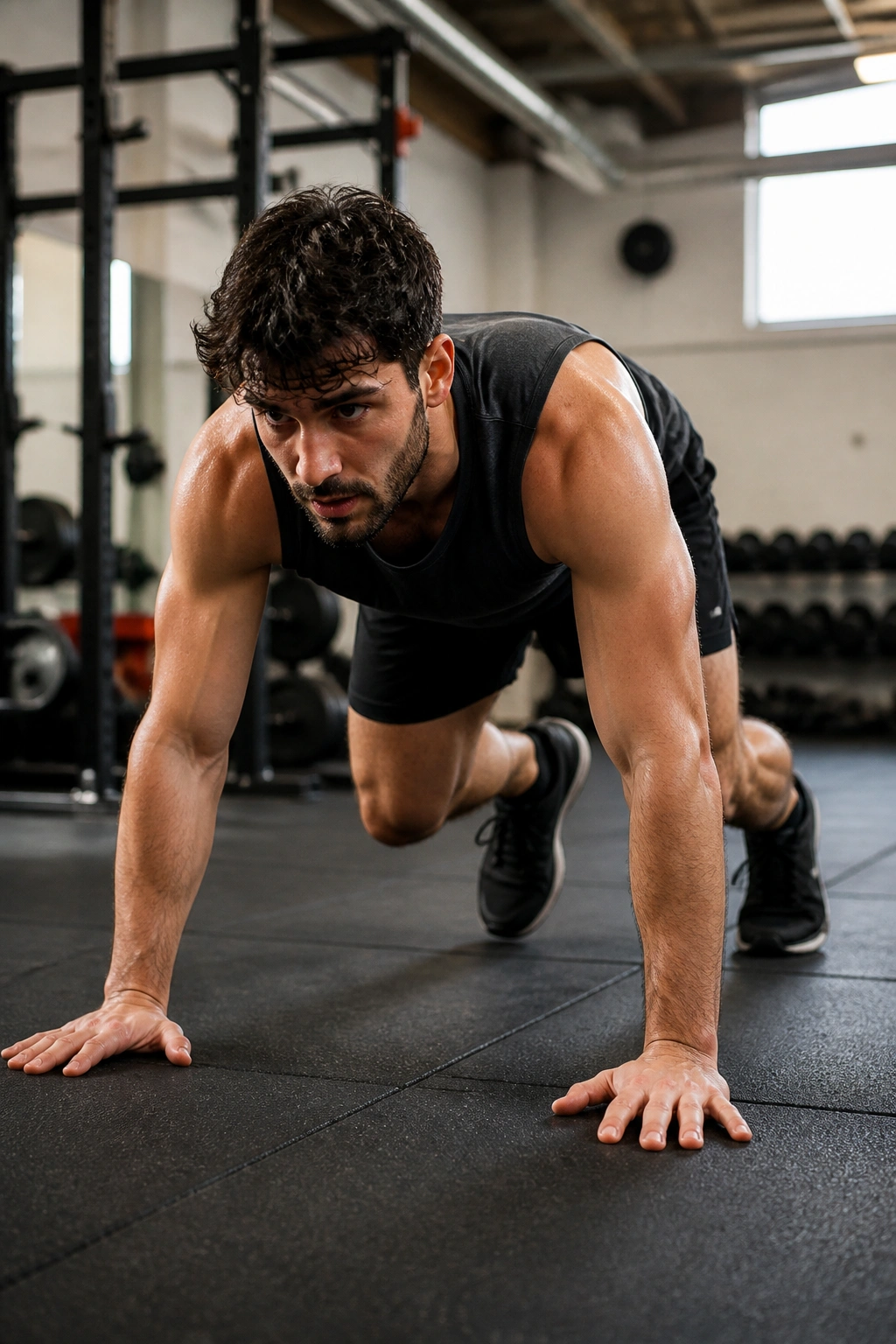
Bear crawls are deceptively hard. They require shoulder stability, core strength, and coordination. By moving on all fours, you are putting your body through a functional, crawling movement that mimics primal patterns.
The Full-Body Burn
Every step you take requires your opposite hand and opposite leg to work in tandem. This cross-body coordination taxes your brain and your muscles equally. You will notice your heart rate spikes quickly, even though you aren’t moving fast in terms of raw speed.
Proper Form
- Keep your knees hovering just an inch or two off the ground.
- Keep your back flat.
- Move your right hand and left knee, then left hand and right knee.
Do not let your hips pike up in the air. If your butt is high, you aren’t doing a bear crawl; you’re just walking on your hands and feet. Keep the hips low to maximize the core engagement.
7. Squat Jumps
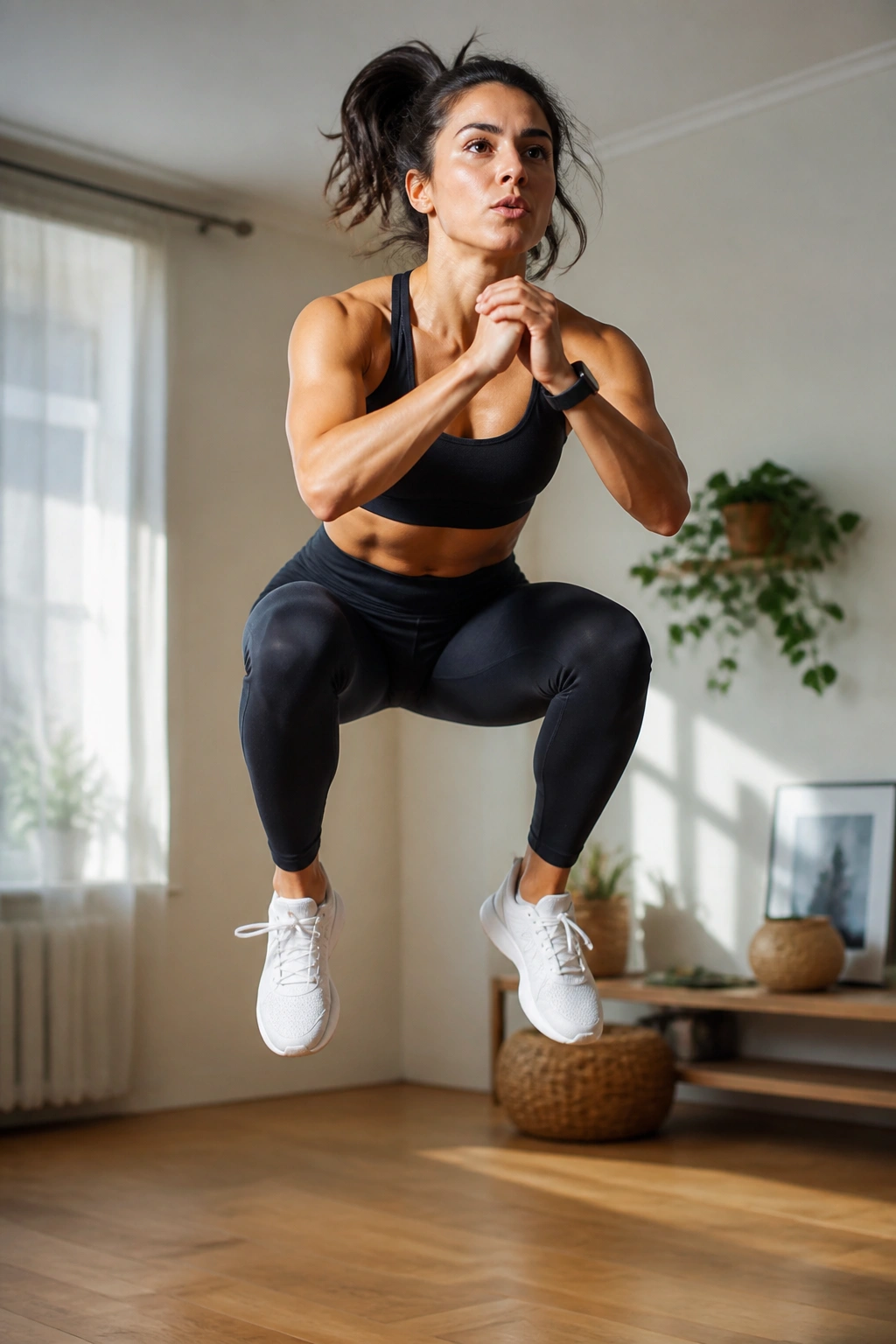
Squats are great, but adding an explosive jump at the top turns a strength movement into a metabolic powerhouse. You are recruiting fast-twitch muscle fibers in your quads and glutes to launch your body off the floor.
The Power of Explosiveness
The eccentric (lowering) phase combined with the concentric (jumping) phase creates a massive demand for oxygen. Your body has to reset quickly between jumps, which keeps your heart rate elevated throughout the set.
Important Cues
- Land softly. Your knees should never lock out upon impact.
- Focus on using your glutes to explode upward.
- If your knees hurt, scale back the jump height and focus on speed in the air.
Warning: Don’t land on your toes. Your weight should hit the floor through the midfoot and heel to save your joints from unnecessary stress.
8. Plank Jacks
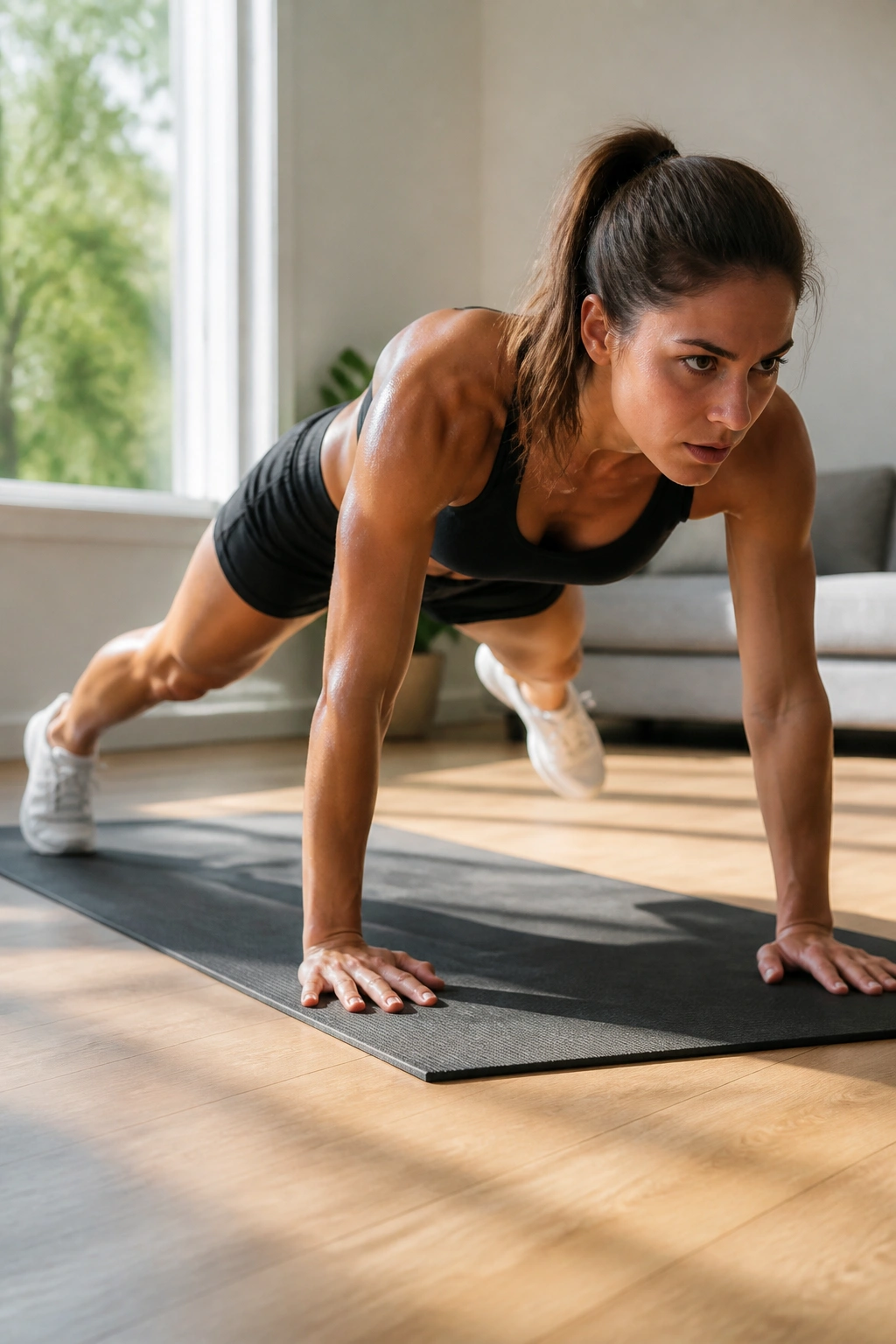
This is the cardiovascular version of a standard plank. You hold the static core position while your legs jump in and out, similar to a jumping jack movement but in a horizontal orientation.
Combining Stability and Cardio
Most people think of planks as boring, static holds. By adding the leg movement, you force your core to fight against the shifting center of gravity. This is intense on the obliques and the deep transverse abdominis.
Execution
- Start in a push-up position.
- Jump your feet wide, then jump them back together.
- Keep your core tight so your hips don’t wobble or dip.
If you feel your lower back arching, you are losing tension. Drop to your knees, reset your core, and get back into the plank.
9. Shadow Boxing

You don’t need a heavy bag to get a fighter’s workout. Shadow boxing forces you to move constantly, using your legs for balance and your core for rotation. It’s an incredible full-body movement that hides how much effort you’re actually exerting.
The Rotational Demand
The power of a punch doesn’t come from the arm; it comes from the rotation of the torso and the push of the leg. Every time you throw a punch, you are engaging your core. Doing this for three minutes straight will leave you gasping for air.
Technique Tips
- Keep your fists light.
- Stay light on your feet; bounce and shift your weight.
- Throw punches in combinations: jab-cross-hook.
Don’t lock out your elbows fully. Keep a tiny bend in the arm to protect your joints, especially when you are throwing punches fast.
10. Stair Climbs
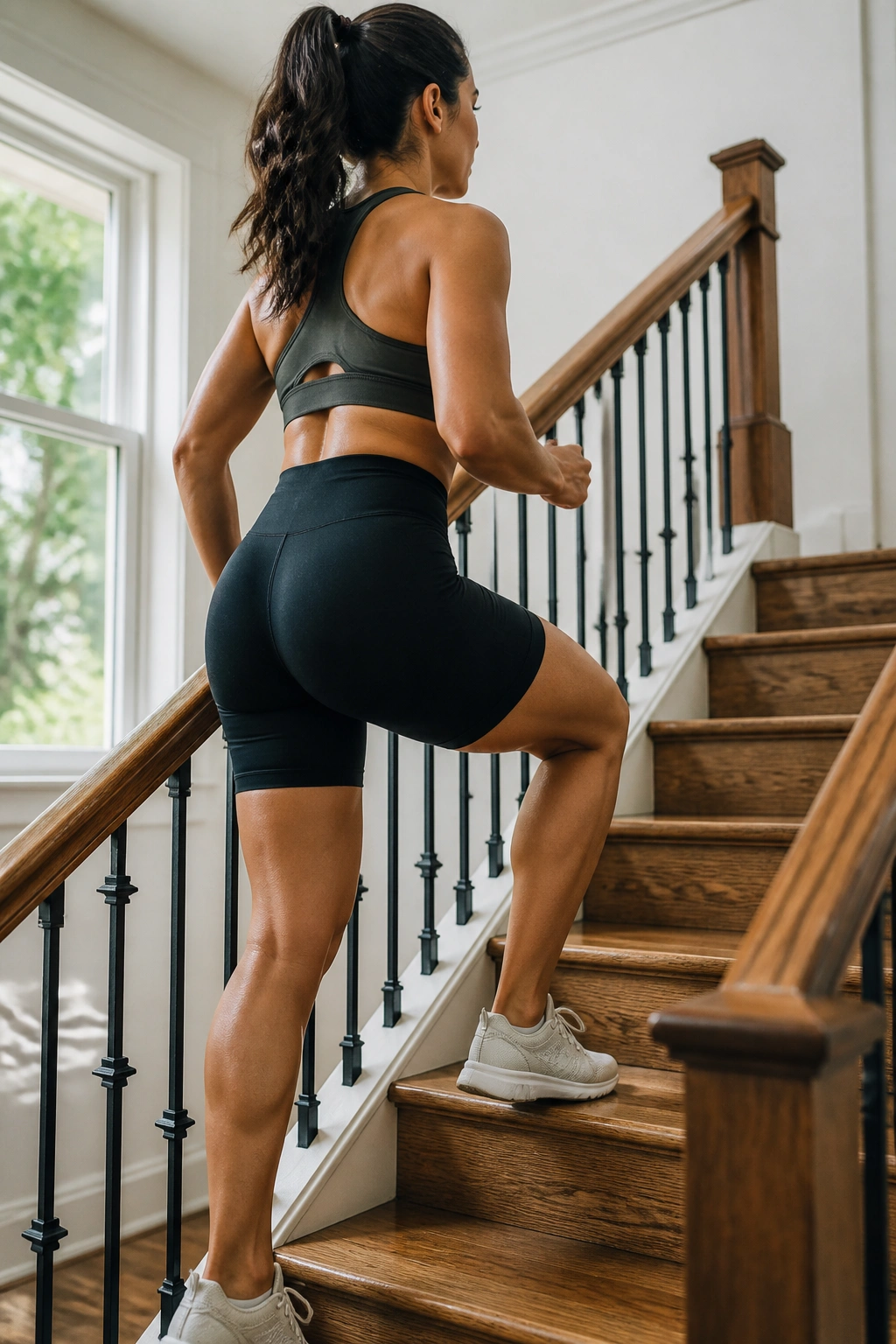
If you have a flight of stairs in your home, you have the best cardio machine ever made. Walking or running up stairs uses your glutes, hamstrings, and calves to overcome gravity with every step.
Why Stairs Work
Gravity is your opponent here. You are literally lifting your entire body weight up vertically. That is a high-cost metabolic activity. You can climb for 30 seconds and feel the burn deep in your quads immediately.
Strategies to Increase Burn
- Step-ups: Focus on driving through the heel to activate the glute.
- Running: Take them two at a time to increase the hip flexion.
- Descent: Always walk down slowly to recover and focus on balance.
Keep your chest up. Looking down at your feet ruins your posture and restricts your breathing. Look forward at the top of the stairs.
11. Inchworms
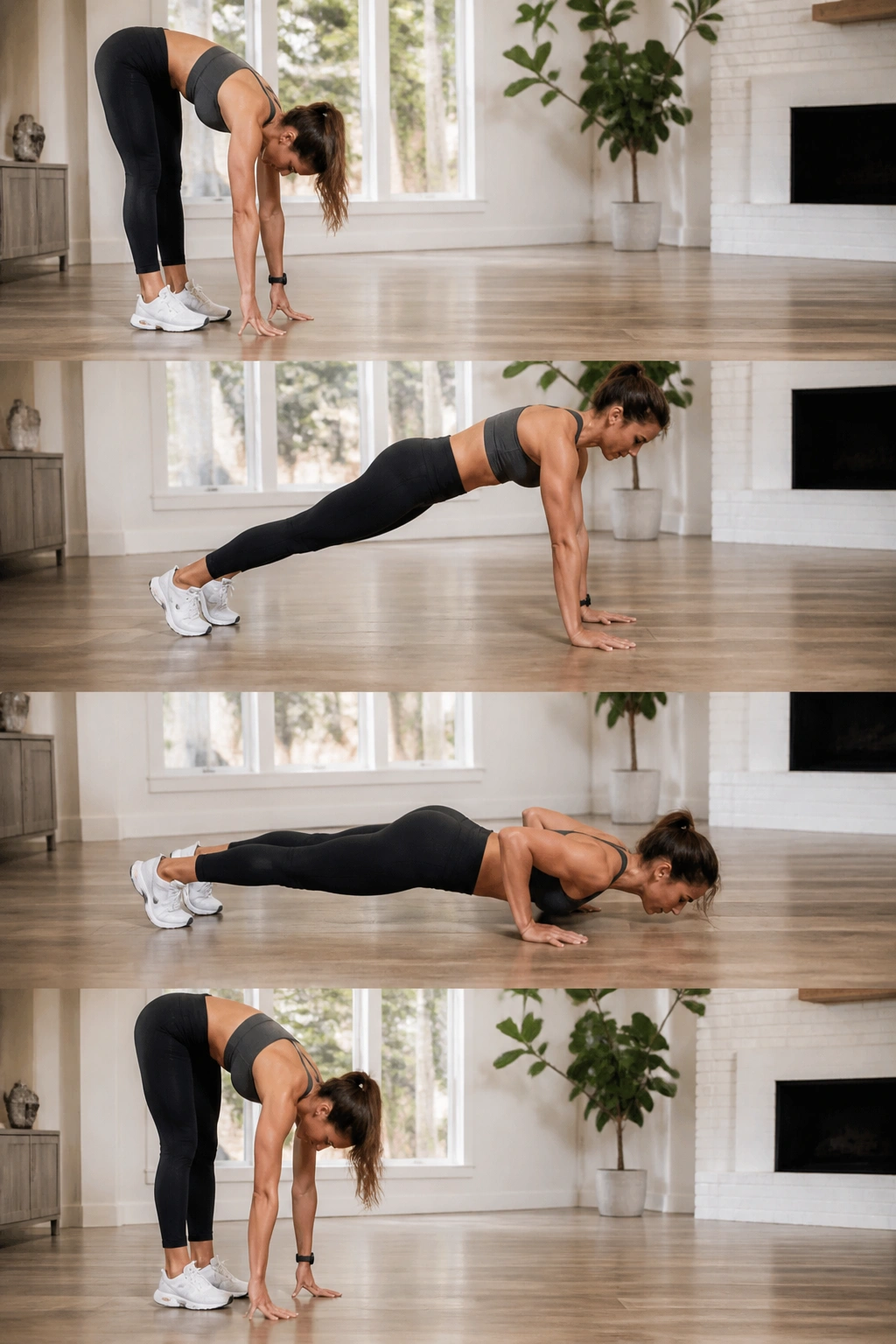
Inchworms are a mobility-meets-strength movement. They challenge your hamstrings, shoulders, and core, all while getting your blood moving.
The Mechanics
You start standing, hinge at the hips, touch the floor, walk your hands out into a plank, perform a push-up, and walk your hands back to your feet. It is a slow, methodical movement that, when performed for reps, creates significant metabolic fatigue.
Why It’s Useful
- It stretches the hamstrings while they are under load.
- It builds shoulder stability through the walk-out.
- It engages the core through the plank and transition.
Focus on keeping your legs as straight as possible during the walk-out. If you have tight hamstrings, it’s okay to bend your knees slightly, but try to minimize it over time.
12. Lunge Jumps
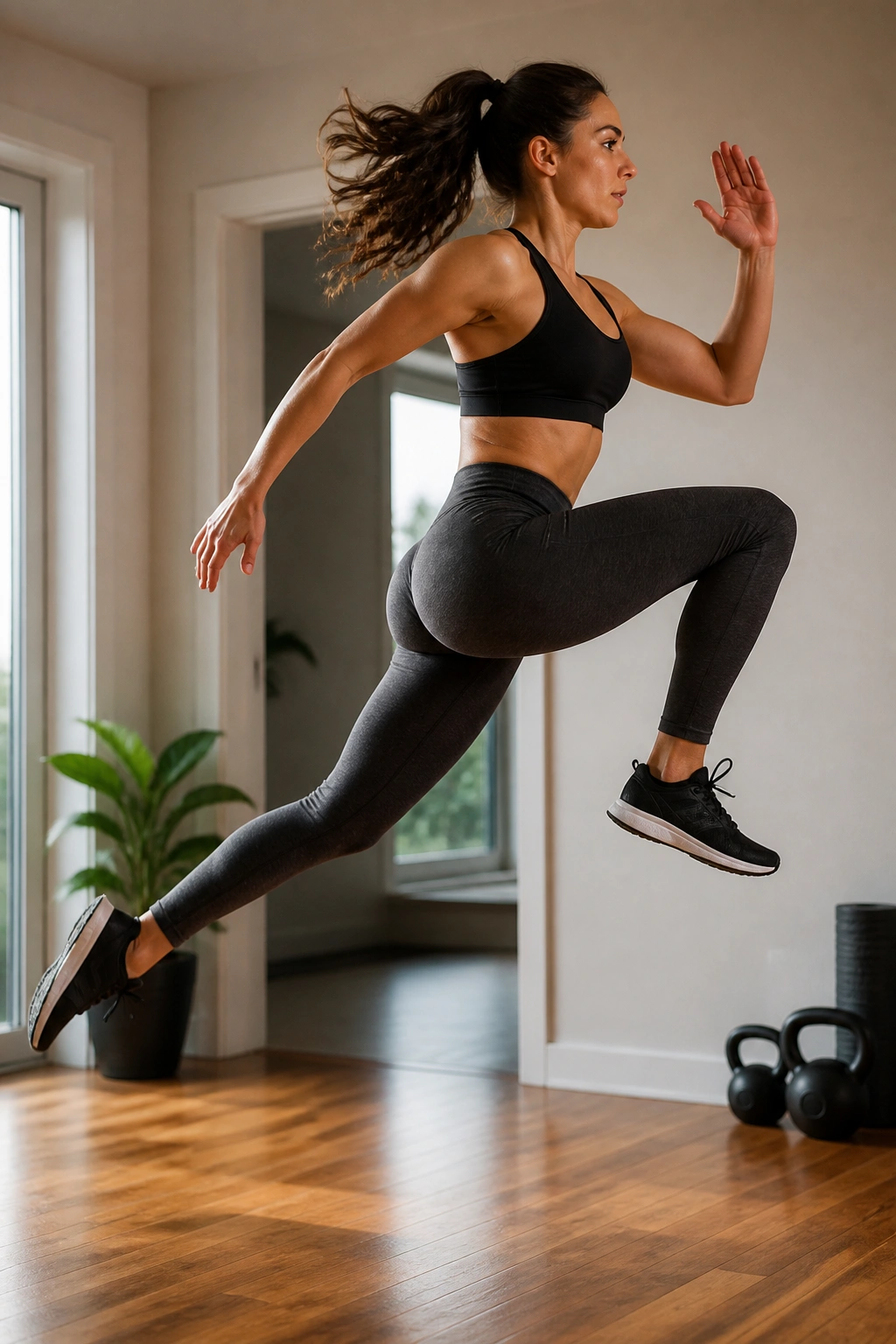
These are the ultimate test of leg endurance. A standard lunge is a good movement, but jumping between lunges puts your body through a plyometric cycle that depletes glycogen stores rapidly.
The Burn
You will feel this in your glutes and quads within 10 repetitions. The transition phase—switching feet in the air—is where the real work happens, as you have to stabilize your body instantly upon landing.
Form Check
- Land with your front foot flat.
- Drop your back knee toward the floor, but don’t let it slam.
- Keep your torso tall. If you lean forward, you lose the glute engagement and put pressure on the lower back.
If the jumping version is too hard, perform alternating lunges with speed. The goal is heart rate, not just explosive power.
13. Bicycle Crunches
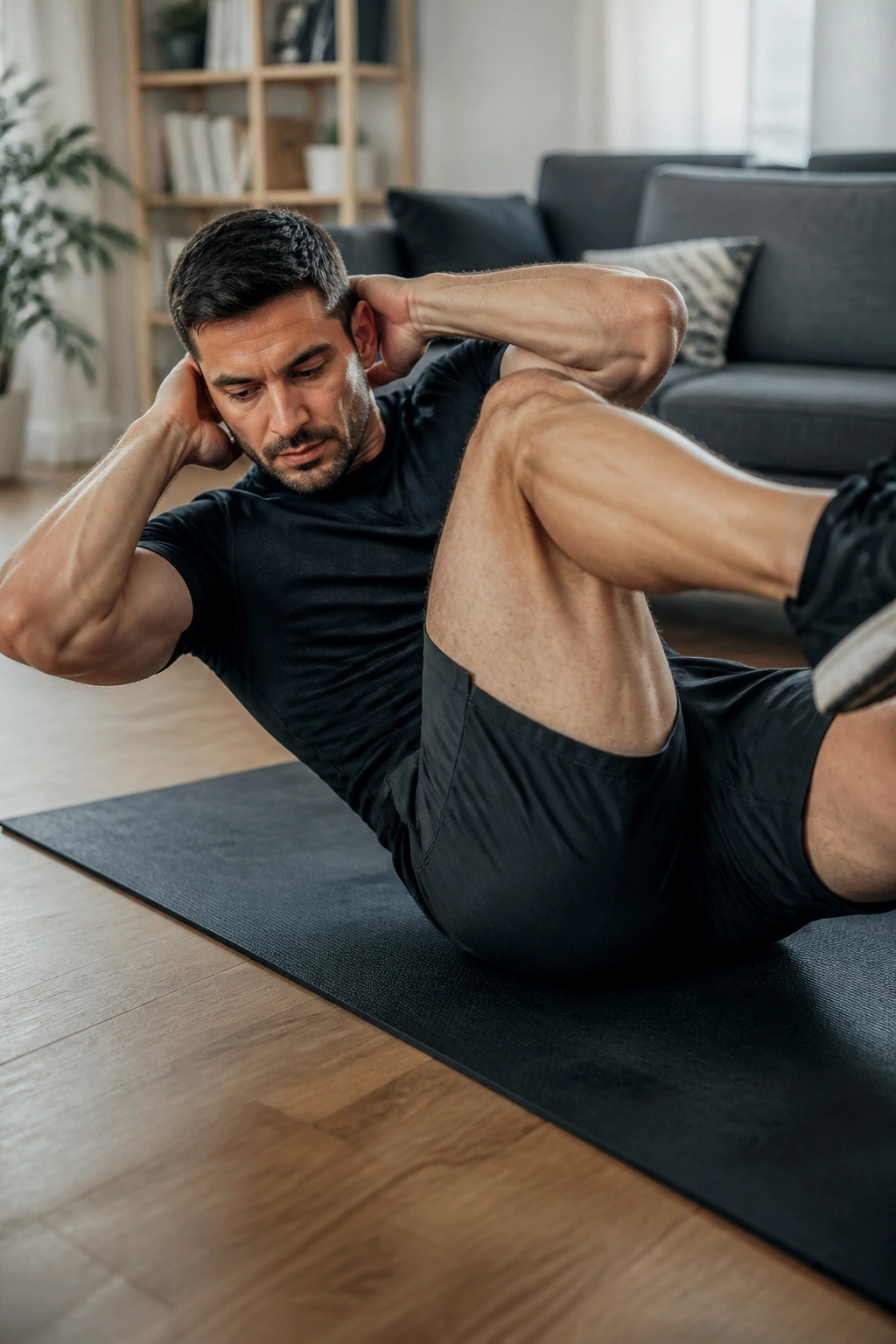
These are effective because they require active rotation. Unlike a sit-up, which focuses on the front of the abs, the bicycle crunch forces the obliques to fire to rotate the torso toward the opposite knee.
Targeted Intensity
You aren’t just crunching; you are twisting. This rotational force is what makes these so effective. By keeping the legs moving throughout the set, you sustain tension on the entire abdominal wall.
The Technique
- Keep your lower back pressed into the floor.
- Rotate your shoulder toward the opposite knee, not just your elbow.
- Extend the “straight” leg fully, reaching with the heel.
Slow down. The slower you move, the harder the muscle has to work to control the movement. Speed is for cardio; control is for strength.
14. Glute Bridges
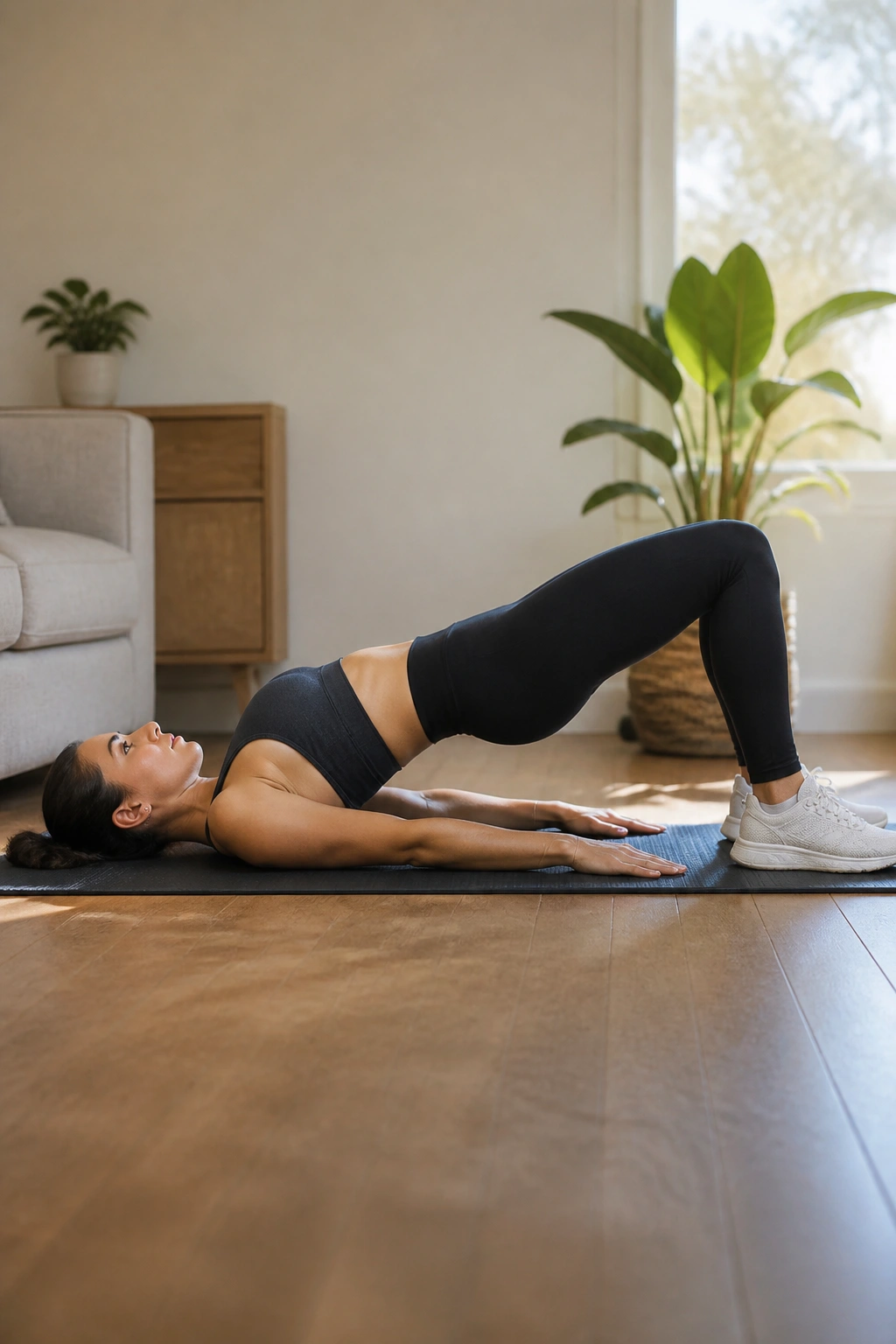
While often thought of as a strength move, glute bridges can be a great way to increase heart rate if you perform them in a circuit with minimal rest. They target the posterior chain—the back of your legs and glutes—which is crucial for posture.
Why the Posterior Chain Matters
Your glutes are the largest muscle group in your body. When you work them hard, your body requires more oxygen, which elevates your heart rate and calorie burn. It is a win-win for metabolic output and muscle definition.
Variation for Difficulty
- Keep both feet on the floor for standard bridges.
- Lift one leg off the ground and do single-leg bridges to double the intensity.
- Squeeze at the top for a two-count.
Ensure you aren’t using your lower back to lift. The power should originate from the glutes. Drive your hips to the ceiling.
15. Wall Sits
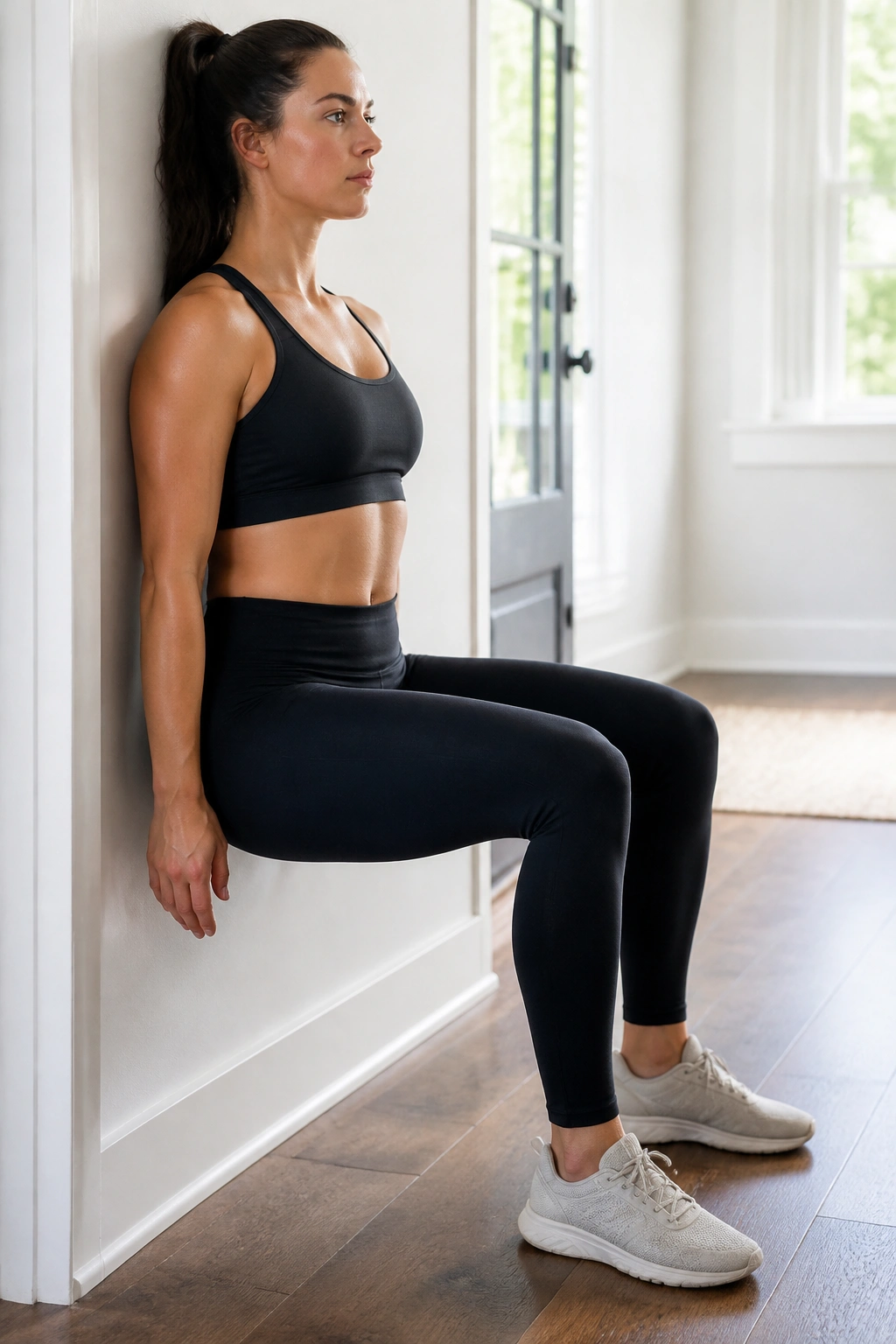
This is an isometric exercise. You aren’t moving, but your muscles are working overtime to support your weight against gravity. It’s a test of mental fortitude as much as physical strength.
The Isometric Benefit
Holding a squat position at 90 degrees causes the blood flow to be restricted in the quads. When you finally stand up, blood rushes back into the muscles, which creates a massive metabolic flush.
Tips for Success
- Keep your back flat against the wall.
- Ensure your knees are at a 90-degree angle.
- Don’t push with your hands on your knees; keep your arms hanging at your sides or crossed over your chest.
Start with 30 seconds. If you can do 60 seconds easily, you aren’t doing them right—go lower.
16. Spiderman Push-Ups
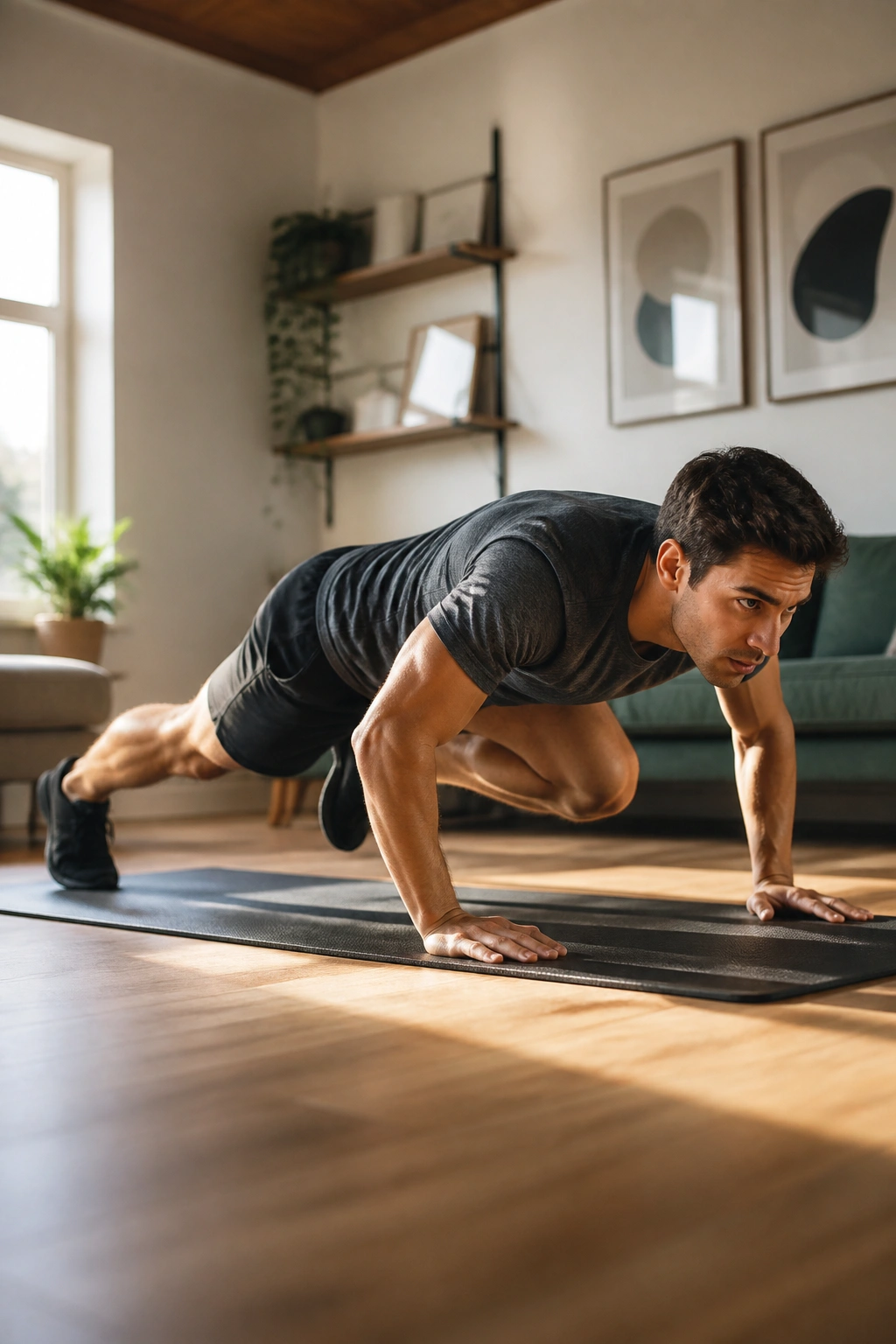
Standard push-ups are great, but the Spiderman variation adds a lateral knee drive that forces your obliques to stabilize you. It turns a chest exercise into a total-body challenge.
The Coordination Element
As you lower your body toward the floor, you bring your knee out to the side toward your elbow. This requires balance. You aren’t just pushing; you are balancing on three points of contact.
Form Details
- Don’t let your hips sag.
- Keep the elbows at a 45-degree angle from your body, not flared out.
- The knee should touch (or get very close to) the elbow at the very bottom of the push-up.
This is a movement for people who find regular push-ups too easy and need an extra layer of difficulty to keep their heart rate high.
17. Lateral Lunges
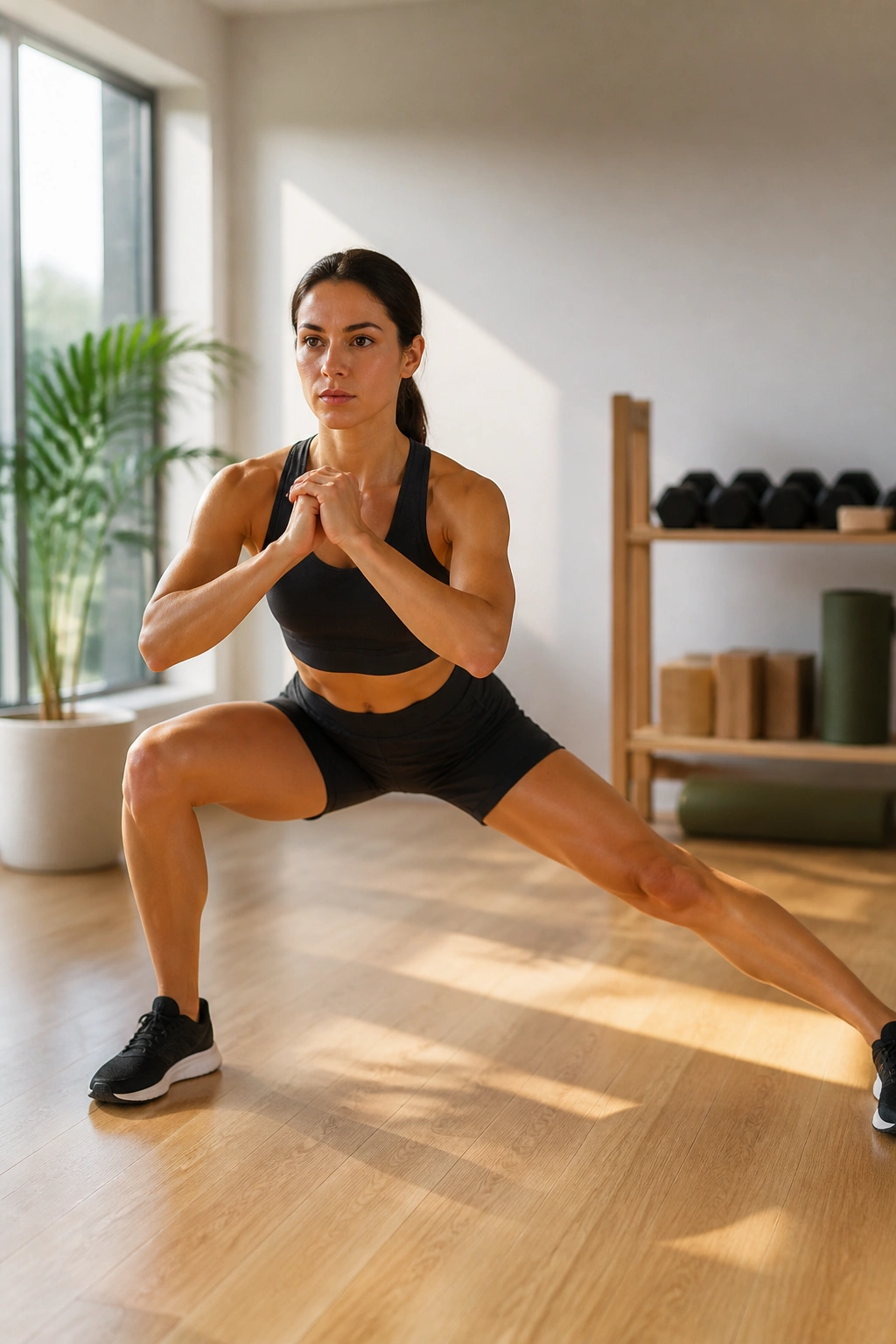
Lateral lunges target the inner and outer thighs (adductors and abductors), areas that are often neglected in standard forward-moving workouts. They also help improve hip mobility.
Why They Burn
Moving your body weight sideways requires you to recruit stabilizer muscles that are rarely used in forward-back movements. This recruitment demands more energy from your system.
How to Execute
- Step wide to the side.
- Keep the other leg straight.
- Sit your hips back as if you are sitting into a chair on that side.
- Push off the bent leg to return to the start.
Keep your heels down. If you find yourself up on your toes, your center of gravity is off, and you aren’t engaging the glutes as effectively.
18. The Tabata Finisher
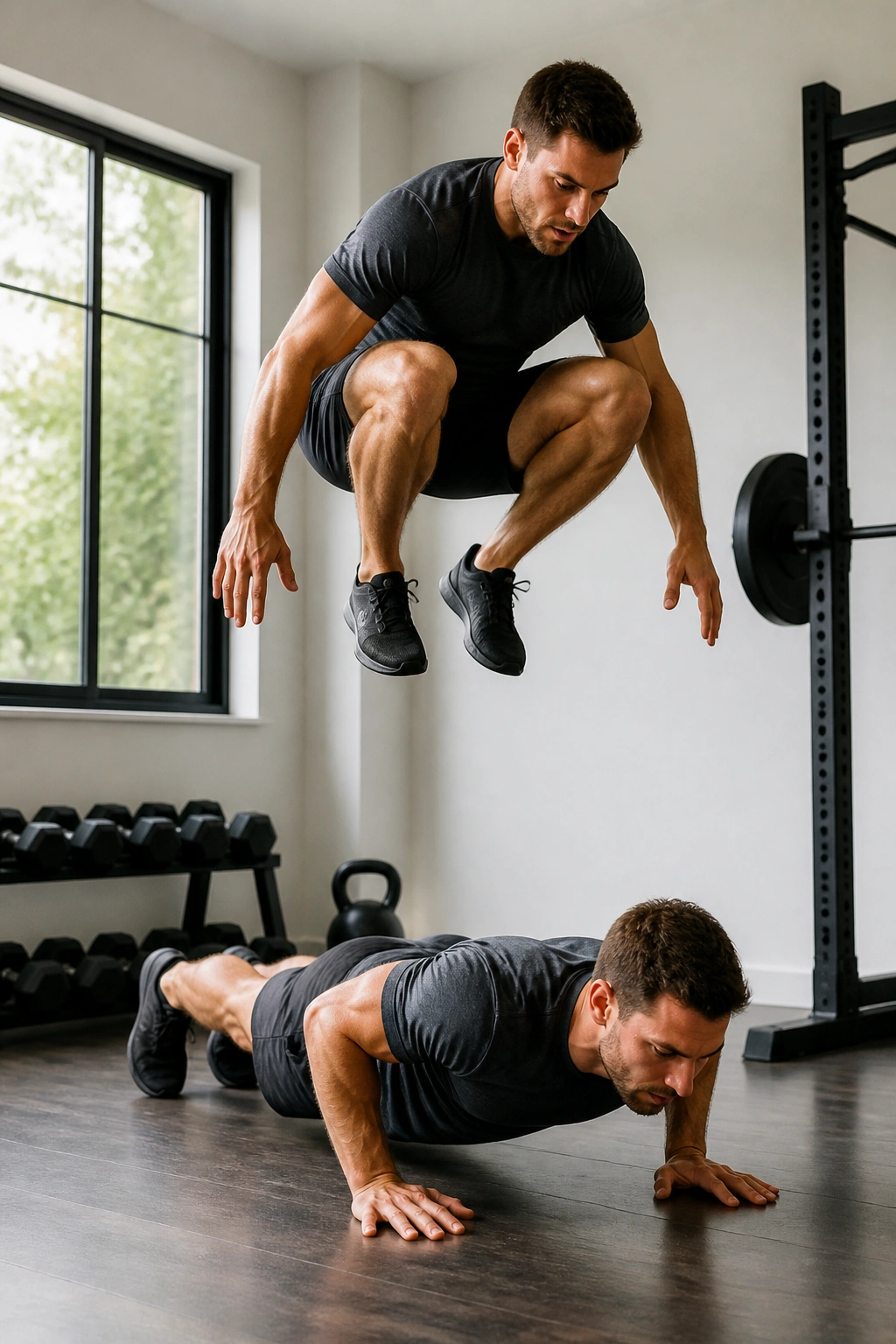
If you have time for nothing else, do a Tabata finisher. This isn’t one exercise, but a method. You choose one movement—burpees, jump rope, or high knees—and perform it for 20 seconds at maximum intensity, followed by 10 seconds of rest. Repeat this 8 times.
Why This Works
Four minutes of total work at maximum heart rate intensity is more effective for metabolic conditioning than 30 minutes of light jogging. It puts your body into a state of “oxygen debt,” where it continues to burn calories at an elevated rate for hours after the workout ends.
Choosing Your Movement
- Choose something that allows for high intensity (Burpees or Jump Rope are best).
- Track your reps. The goal is to keep the number of reps consistent across all 8 rounds.
- Don’t save energy for the end. Go hard from round 1.
This is the ultimate test. If you can complete this and aren’t out of breath, you didn’t go fast enough.
Final Thoughts
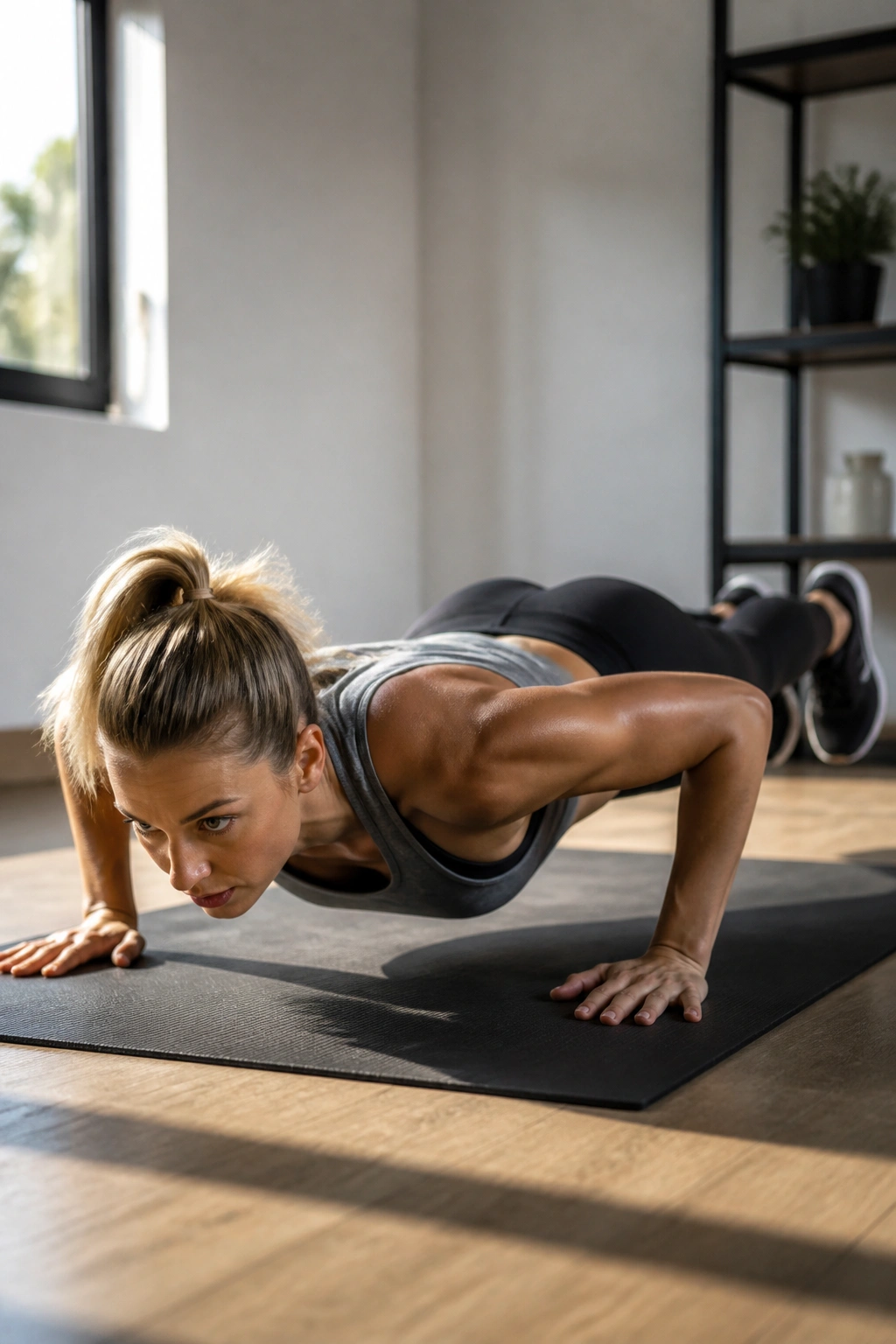
Calorie burning isn’t magic. It is simply work. You choose an intensity, you sustain it, and you push through the fatigue. That’s how the body changes. Whether you choose one of these movements or string them together into a high-intensity circuit, the principle remains the same. Stop waiting for the perfect equipment and start moving. Your living room is enough. Your body is enough. The work is yours to do.
