



If you want to reduce belly fat for women at home, start by forgetting the idea that a hundred crunches will flatten your waist. They won’t. Your body does not pull fat from one spot because you punished that spot with a workout.
The middle changes when your week changes. More movement. Better food choices. A bit more muscle. Less sitting. Less snacking from the bag while you half-watch something on the couch. Hormones, stress, sleep, and plain old habit can make the waistline feel stubborn, which is why the flashiest workout is often the least useful one.
And yes, home workouts can work. You do not need a fancy setup, a treadmill in the corner, or a stack of machines that collect laundry. A hallway, a chair, a set of stairs, a resistance band, and twenty minutes of honesty can do more for your waist than a dramatic plan you abandon by Thursday.
The trick is mixing the boring things that work. The first one is almost too simple.
1. Take a 10-Minute Walk After Every Meal
A short walk after eating can do more for your waist than another round of endless crunches. It helps you use some of the energy from that meal, keeps you from drifting straight into sofa mode, and gives you a clean little habit that fits into real life.
You do not need a long route. Walk laps through the kitchen and living room. Pace the hallway. Go up and down the stairs once or twice if your joints are happy with that. Ten minutes after lunch and dinner is enough to build the habit, and if you can stretch dinner walks to 15 minutes, even better.
Why It Works Better Than It Sounds
When you sit down right after eating, the rest of the evening often turns into more snacking and less movement. A walk interrupts that pattern. It also helps keep blood sugar swings steadier, which matters when belly fat is the thing you are trying to move.
A Simple House Version
- Walk for 10 minutes after your biggest meal.
- Keep the pace brisk enough that you can talk, but not sing.
- If the weather is bad or the floor space is tight, march in place while watching the clock.
- If dinner is heavy, wait 5 to 10 minutes before you start.
Small habit. Big payoff. It is one of those moves that looks almost too easy until you stack it into a week.
2. Use 20-Minute Bodyweight Circuits in the Living Room
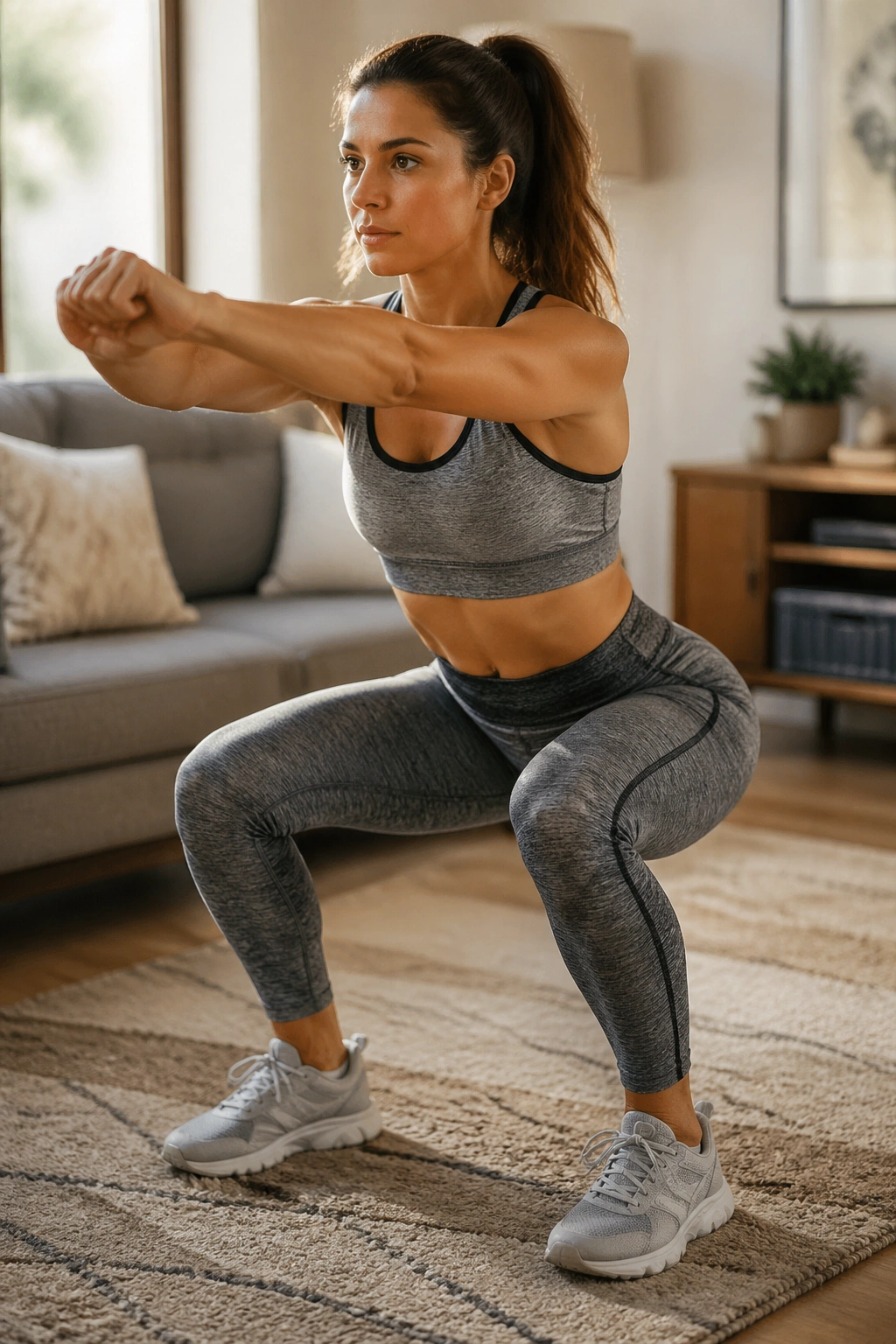
A good bodyweight circuit raises your heart rate and works your muscles at the same time. That combination matters because fat loss is easier when the workout feels doable enough to repeat. A routine you repeat beats a heroic one you avoid.
Set a timer for 20 seconds of work and 10 seconds of rest, then cycle through moves like squats, incline push-ups on the couch, glute bridges, and mountain climbers. Four rounds is a solid start. If you need a gentler version, slow the pace and keep the moves clean.
What a Circuit Can Look Like
- Squats for the legs and glutes.
- Incline push-ups with hands on a bench, sofa, or sturdy table.
- Glute bridges on a mat for the backside and hips.
- Mountain climbers or fast step-ins if you want more cardio.
- Reverse lunges if your knees tolerate them well.
Do not chase exhaustion on day one. Chase consistency. If your breathing is up and your legs feel warm by round two, you are in the right zone. If your form falls apart, slow down and clean it up.
3. Add Short Bursts of Interval Cardio
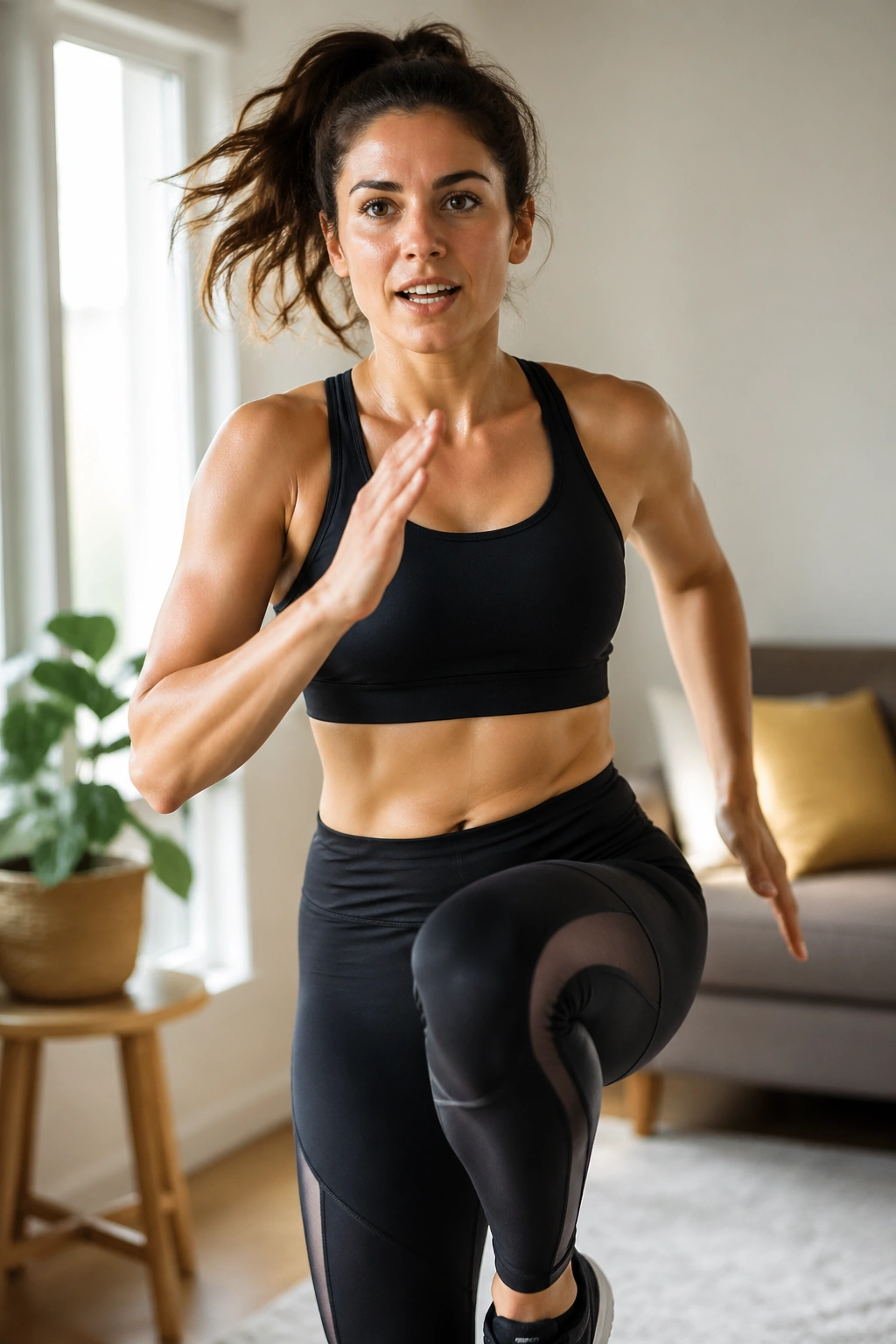
If a workout only feels useful when it lasts an hour, most home routines are doomed before they start. Interval cardio fixes that problem. You work hard for a short stretch, ease off, then repeat. It is efficient, a little uncomfortable, and far better than doing the same easy pace forever.
Try 30 seconds hard, 60 to 90 seconds easy for 6 to 10 rounds. Shadow boxing works. Fast marching works. Step jacks work. High knees work if your knees and back are happy with them. You are not trying to look elegant here. You are trying to make your lungs and legs earn their keep.
A Low-Impact Interval Template
- March fast in place for 30 seconds.
- Recover with slow walking for 60 seconds.
- Repeat with shadow boxing.
- Repeat again with side steps or step jacks.
That kind of work burns more energy in a short window than a lazy half-hour of wandering around the room. It also builds fitness, which makes the rest of your workouts feel easier. And that matters more than people think.
4. Build Muscle With Squats, Lunges, and Hip Hinges
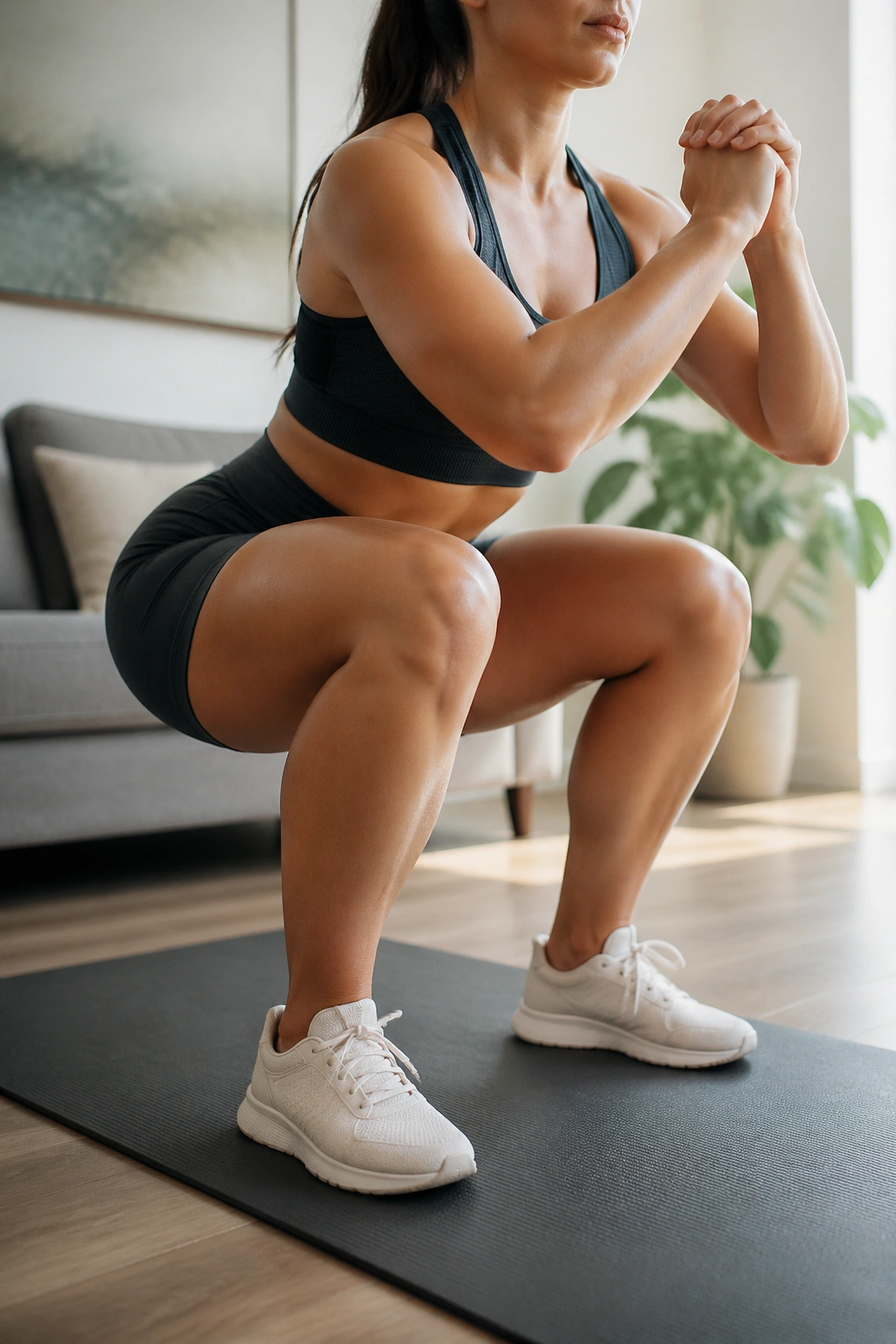
Muscle doesn’t melt belly fat on its own. That would be nice, and also fake. What muscle does give you is a body that uses more energy, handles daily movement better, and looks firmer through the legs, hips, and midsection as the fat comes off.
Squats, lunges, and hip hinges are the workhorses. You can do them with bodyweight, a backpack filled with books, or a pair of dumbbells if you have them. Three sets of 8 to 12 reps is enough for most home routines. The last two reps should feel honest.
The Three Moves That Matter Most
- Squats: Sit back like you are reaching for a chair, then stand tall.
- Reverse lunges: Step back, lower under control, and push through the front heel.
- Hip hinges: Push the hips back with a flat back, then stand by squeezing the glutes.
Keep the torso braced and the ribs from flaring. That little detail helps your core do its job and keeps the exercise from becoming a sloppy knee bend. Sloppy reps waste time.
5. Train Your Core With Dead Bugs and Planks
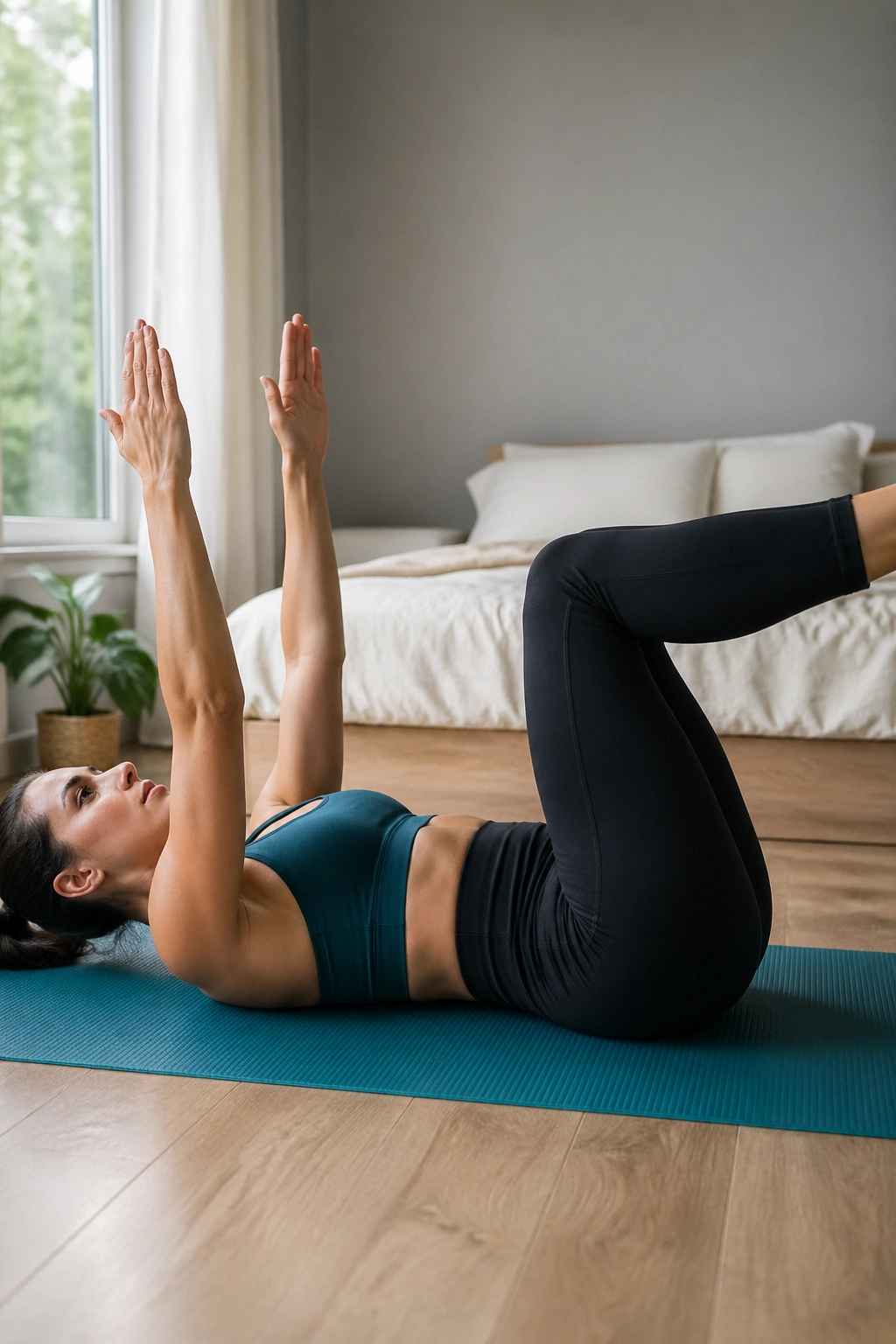
Crunches are not evil. They are just overrated. If your goal is a tighter-looking waist and better body control, the smarter move is to train the core to resist movement, not only to bend and curl.
Dead bugs, planks, side planks, and bird dogs are the moves I’d keep on the shelf first. They work the deep abdominal muscles, help with posture, and support the kind of bracing that makes every other workout look cleaner. If your lower back tends to complain, this is the section to pay attention to.
Why These Moves Work
Your core is supposed to hold you steady while your arms and legs move. That means anti-extension, anti-rotation, and control. Dead bugs teach that. Side planks challenge the sides of the waist. Bird dogs help the back stay quiet while limbs move.
Simple Core Work You Can Repeat
- Dead bug: 6 to 8 controlled reps per side.
- Plank: 20 to 40 seconds, with a flat back.
- Side plank: 15 to 30 seconds per side.
- Bird dog: 6 slow reps per side.
If you feel pressure in the neck or lower back, stop chasing longer holds and slow the movement down. The form matters more than the clock.
6. Climb Stairs for a Fast Home Cardio Finisher
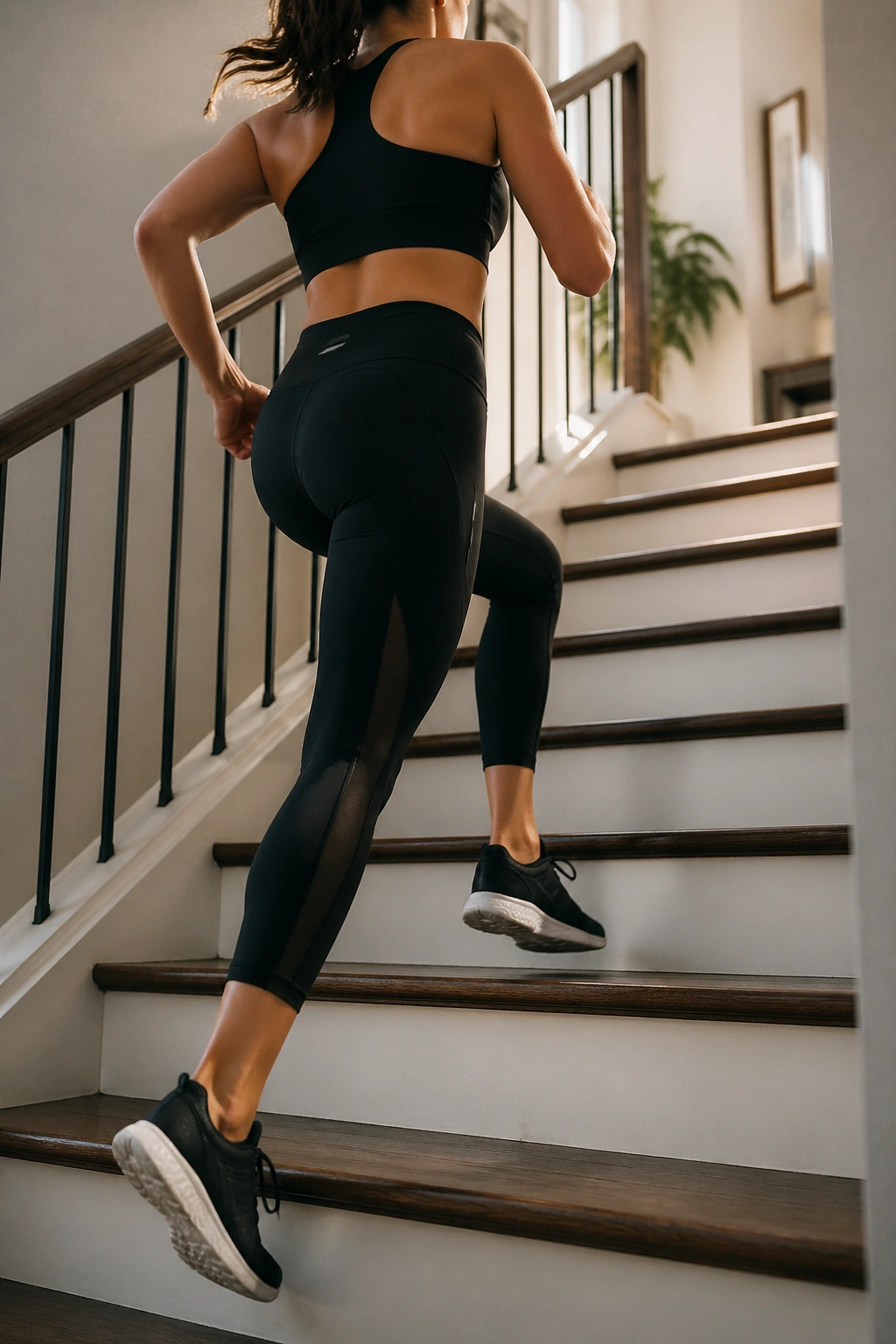
Stairs are rude in the best way. They don’t care about your mood, and they ask for work right away. If you have stairs at home, they are one of the simplest ways to add a punch of cardio without leaving the house.
Use them as a finisher after strength work or as a stand-alone burst. Walk or jog up for 30 to 60 seconds, recover on the way down, then repeat 5 to 8 times. If you only have a single step, use that. The movement is still useful.
A few people blast stairs too hard and end up holding the railing like a lifeline. Don’t do that. Step fully onto each stair. Keep your chest lifted. Use the handrail for balance, not for dragging yourself through the workout. If your knees hate fast stairs, lower the speed and keep the rhythm steady.
7. Turn Chores Into Steady Fat-Burning Movement
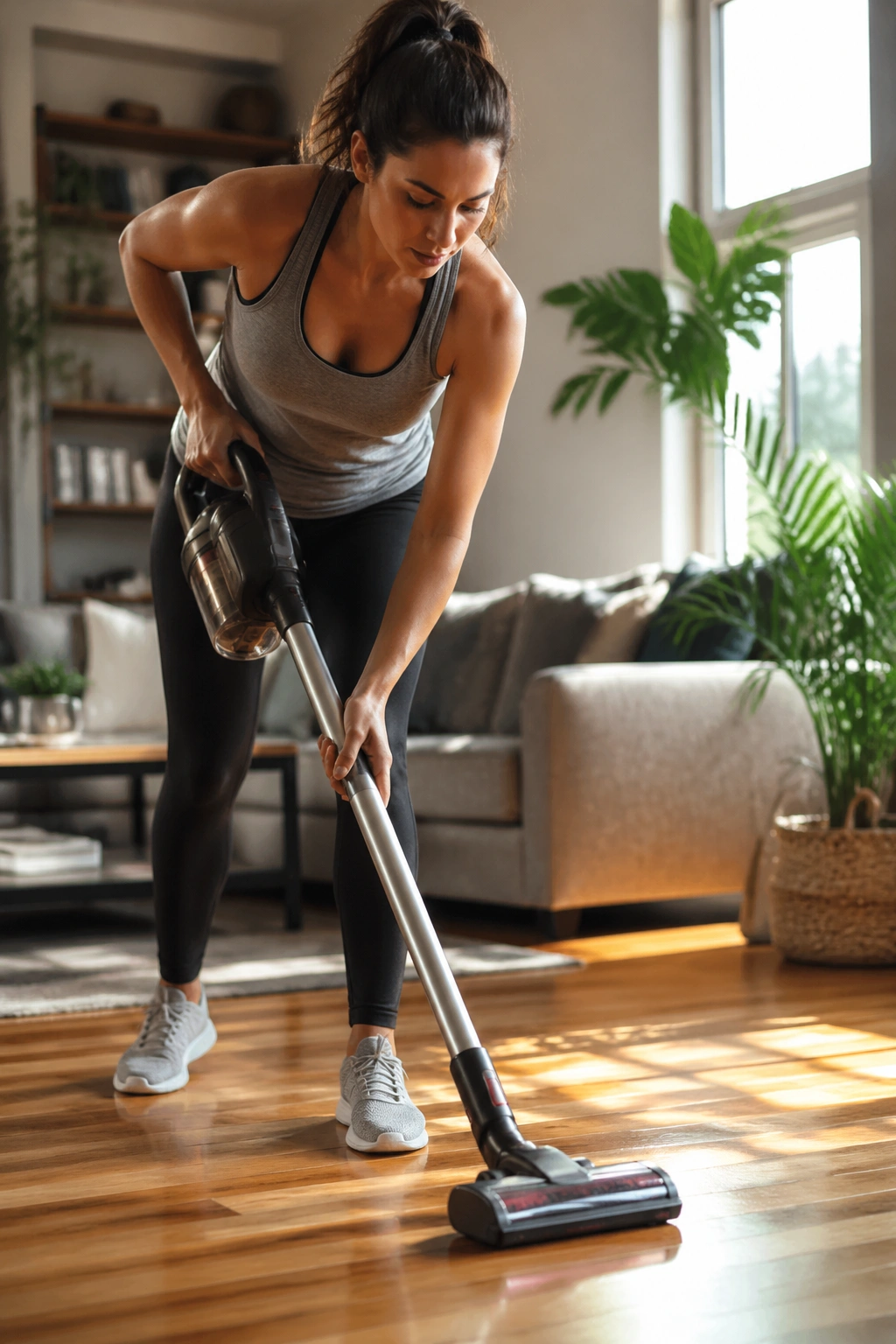
Not every useful session has to feel like exercise. Some of the best calorie-burning work at home comes from the stuff you already do: vacuuming, mopping, sweeping, carrying laundry, putting things away, wiping counters with intent instead of wandering around the kitchen.
The trick is pace. If you fold laundry standing up, carry the basket yourself, and keep moving between rooms instead of parking in one spot, you rack up movement without thinking about it. That adds up over a week.
Ways to Make Chores Count
- Set a 15-minute timer and clean at a steady pace.
- Carry laundry instead of pushing it in a cart.
- Take trash and recycling out in one trip.
- Do a quick walk between rooms before sitting down again.
This is not glamorous. Fine. It is useful anyway. If you are trying to reduce belly fat at home, useful beats stylish.
8. Dance to Three Songs Without Stopping
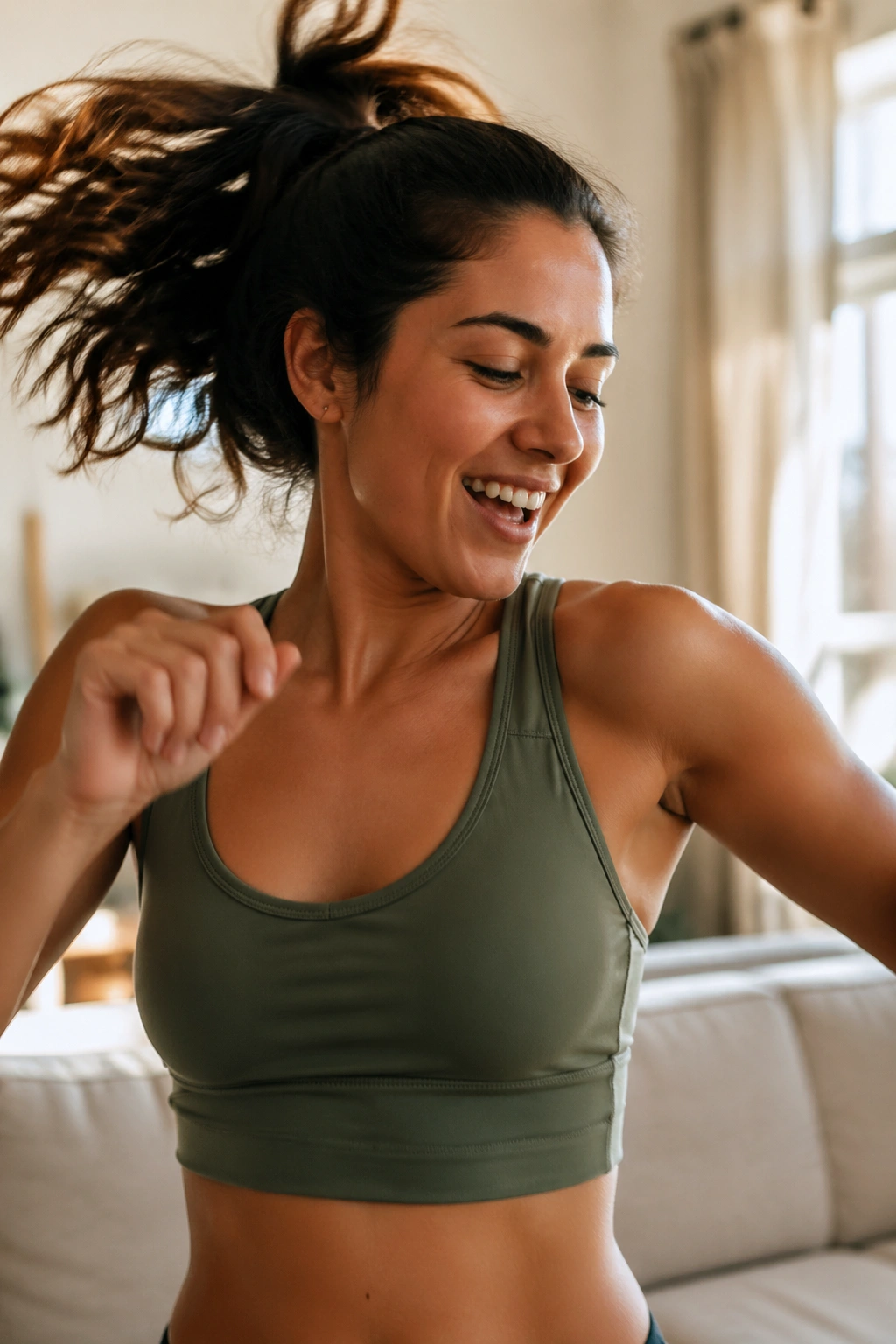
Dance cardio works because it sneaks the effort in under a layer of fun. You move more than you would on the couch, you keep the intensity up, and your brain stops complaining as loudly because the music is carrying some of the load.
Pick three songs and keep moving until the last one ends. Big arm swings, side steps, knee lifts, and little turns are enough. You do not need choreography. You need motion. If a song makes you speed up, let it. If the beat drops and you keep shuffling, that still counts.
A lot of people dismiss dance workouts because they feel silly alone at home. That is fine. Silly is better than stuck. You are trying to change your waistline, not audition for a stage show.
9. Use Resistance Bands for Full-Body Tension
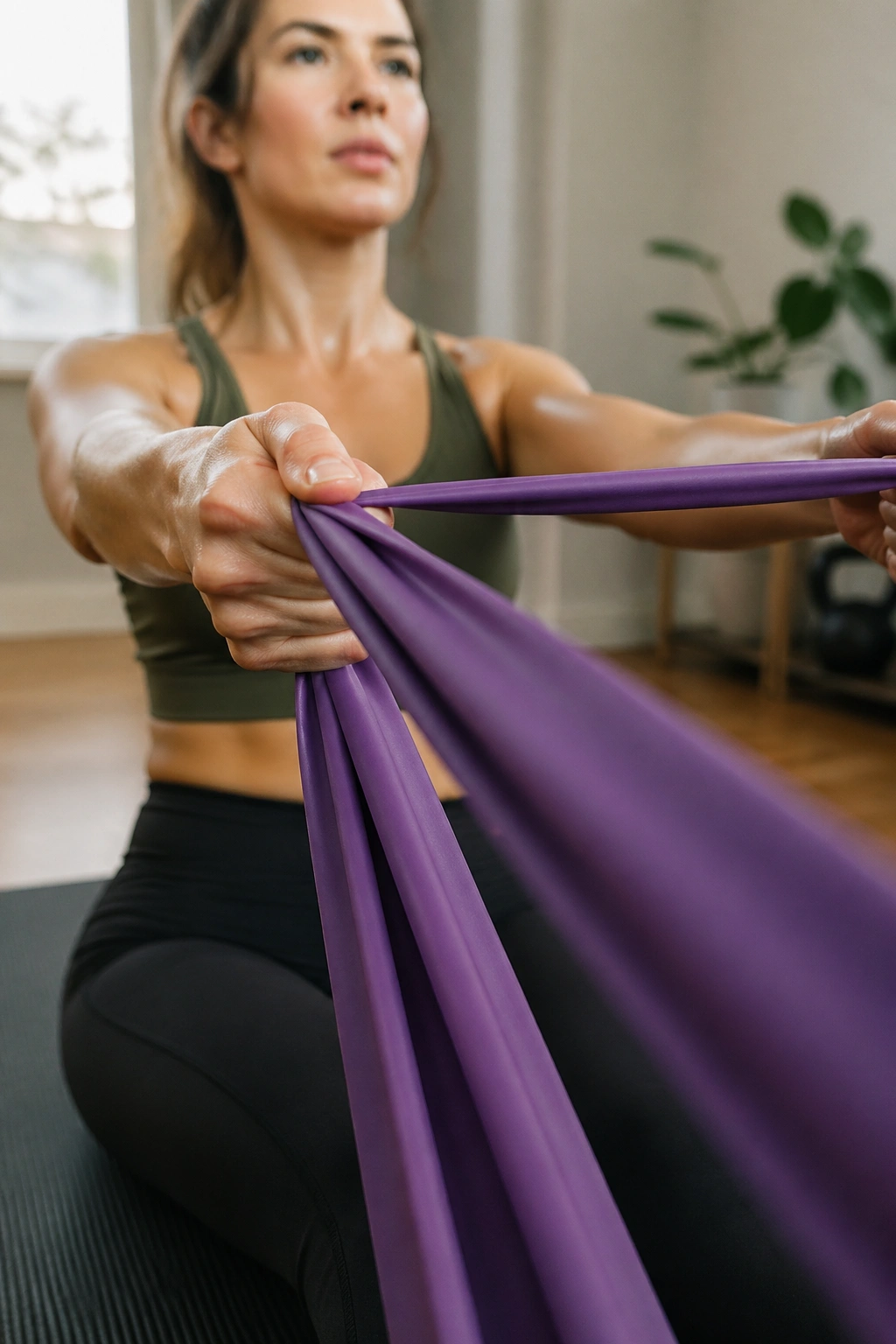
Resistance bands are cheap, small, and annoyingly effective. They let you add tension to rows, squats, glute work, and shoulder presses without filling your house with equipment. For home workouts, that matters.
What Bands Do Better
Bands keep muscles under tension through a lot of the movement. That can make a simple exercise feel harder without needing heavy weights. They also pack up fast, which means you are more likely to use them instead of making excuses about setup.
A Solid Band Circuit
- Band rows for the upper back.
- Band squats for the legs and hips.
- Band overhead presses for shoulders and posture.
- Glute band walks for the outer hips.
- Band deadlifts for the back of the body.
Do 2 to 3 sets of 10 to 15 reps for each move. If the band snaps back like a slingshot, it is too loose in one place or too aggressive for the move. Keep tension smooth. That is the whole point.
10. Slow Down With Pilates-Style Control
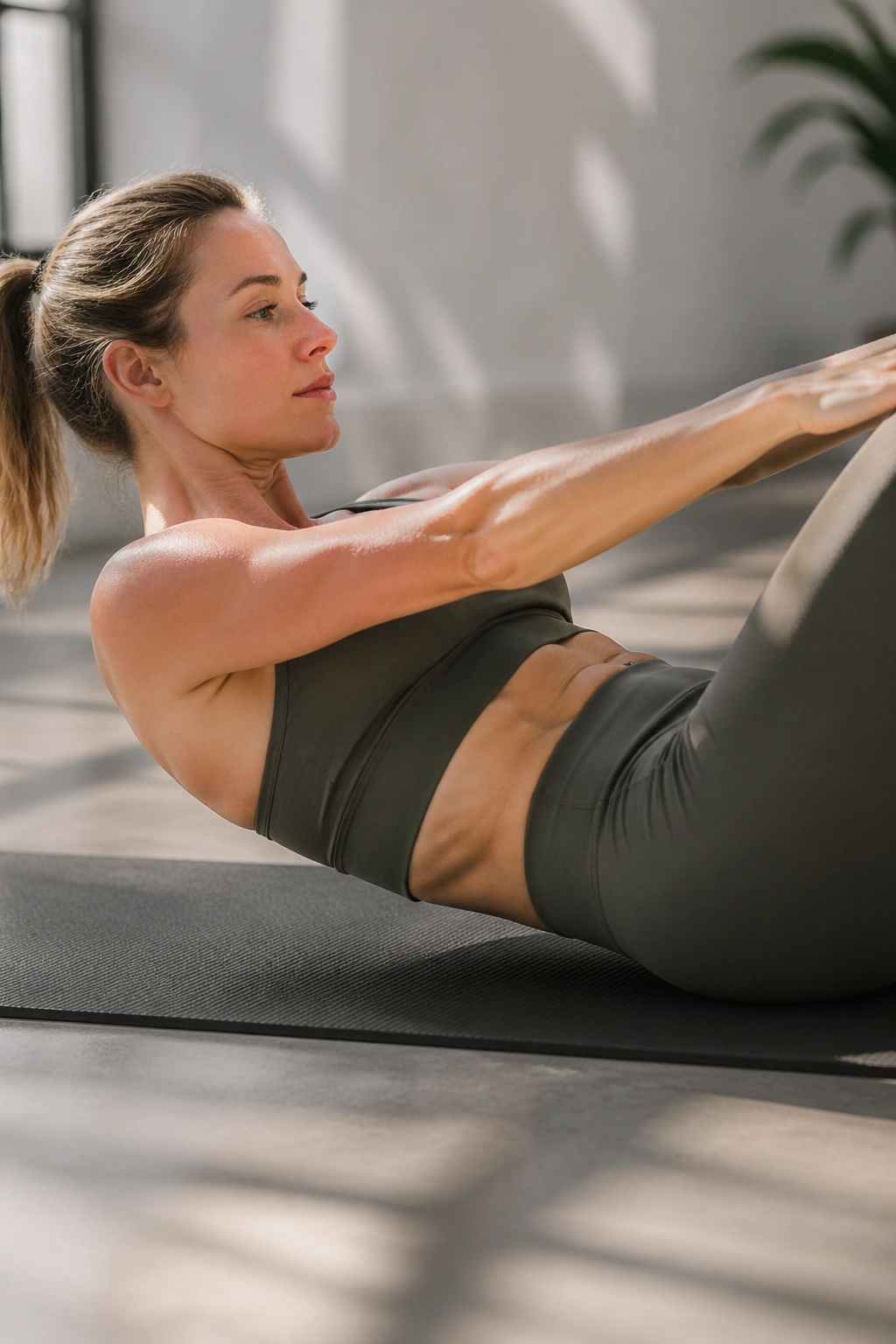
Pilates-style work is not about burning yourself out. It is about precision. Slow, controlled movements make you use your core, hips, and glutes in a way that sloppy speed never does.
Try moving on a count: 3 seconds down, 1 second pause, 2 seconds up. That tempo makes simple exercises feel harder without needing more space or more gear. Toe taps, leg lowers, glute bridges, and controlled roll-downs are all good choices.
A Calm but Hard Session
One round might look like this:
- 8 dead bugs
- 10 glute bridges
- 8 toe taps per side
- 15-second side plank per side
If you like workouts that leave you shaking without leaving you wrecked, this style is a good fit. It is also kinder on the joints than a lot of jump-heavy cardio.
11. Stand Up More During the Day
A flat stomach is not built in the ten minutes you work out. It is shaped by the other 23 hours too. Sitting all day makes it too easy to burn less energy than you think, and that creates trouble fast.
Set a timer for every 30 to 45 minutes and stand up for 2 to 3 minutes. March in place. Do calf raises. Walk to the kitchen and back. Stretch your hips against the wall. Tiny interruptions help more than people give them credit for.
One minute matters. Three minutes matter. That is especially true if your work, phone time, or home routine has you parked in the same chair for long stretches. You don’t need to turn the room into a boot camp. You just need to stop disappearing into the chair.
12. Set a Step Goal Inside the House
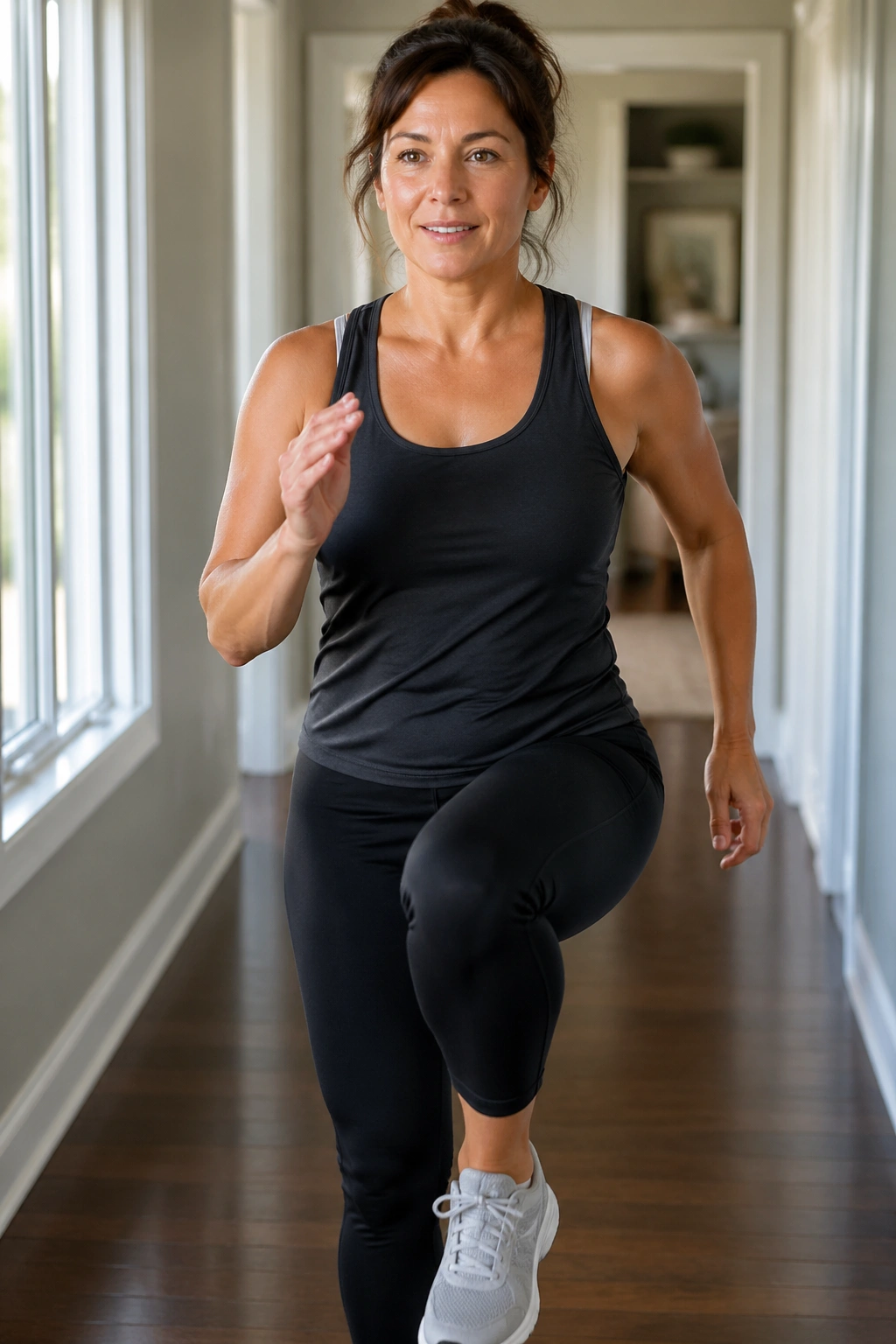
If outdoor walking is hard to fit in, indoor steps still count. Hallway laps, pacing during calls, walking while waiting for water to boil, and even doing a lap between tasks can build a better daily total than you expect.
Don’t obsess over a magic number. Start from your usual day and add 1,000 extra steps. If that sounds small, good. Small is repeatable. A goal that’s too high becomes a guilt machine, and guilt is useless for fat loss.
The easiest trick is to connect walking with things you already do:
- Take one lap after every bathroom break.
- Pace while listening to voice notes.
- Walk during phone calls.
- March in place during commercial breaks.
That kind of accidental movement is the stuff that quietly changes a body.
13. Keep One Chair Workout on Repeat
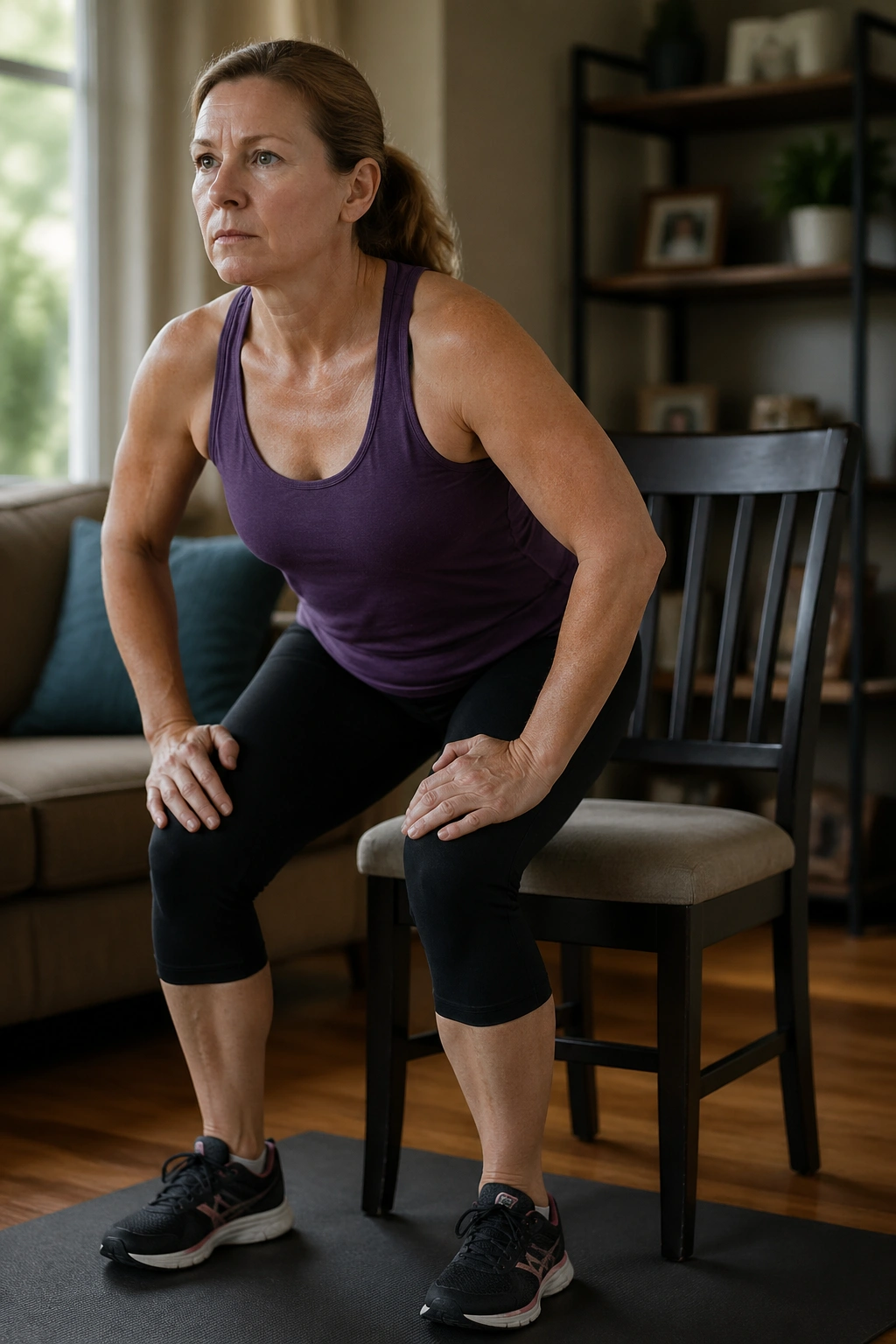
A sturdy chair opens up a lot of useful home training. It gives beginners a place to start, and it gives tired days a way to stay in the game without overthinking it.
Use one chair workout over and over until it feels smooth. Sit-to-stands, incline push-ups, step-backs, and knee lifts are enough. Three rounds of 10 to 12 reps is a fine target. If the chair wobbles, pick another one. No cheap drama from furniture.
A Simple Chair Routine
- Sit-to-stand for legs and glutes.
- Incline push-ups with hands on the seat or back.
- Step-backs for balance and leg strength.
- Standing knee lifts while holding the chair lightly.
This style is plain, but plain is often what people can keep doing. And repetition matters. A lot.
14. Make Breakfast Higher in Protein

Belly fat reduction is not only about workouts. Hunger management matters too, and breakfast is one of the easiest places to get ahead of it. A protein-heavy first meal can calm the rest of the day.
Eggs, Greek yogurt, cottage cheese, tofu scramble, and protein oats are all useful. Aim for a breakfast that gives you 20 to 30 grams of protein if that fits your needs and appetite. That often keeps you from hitting the snack drawer an hour later.
A few practical combos:
- Two eggs, Greek yogurt, and berries.
- Tofu scramble with toast and tomato.
- Cottage cheese with fruit and chopped nuts.
- Oats stirred with protein powder and cinnamon.
If breakfast leaves you hungry by mid-morning, it was too light for your body. Fix that first before blaming willpower.
15. Cut Sugary Drinks and Liquid Calories
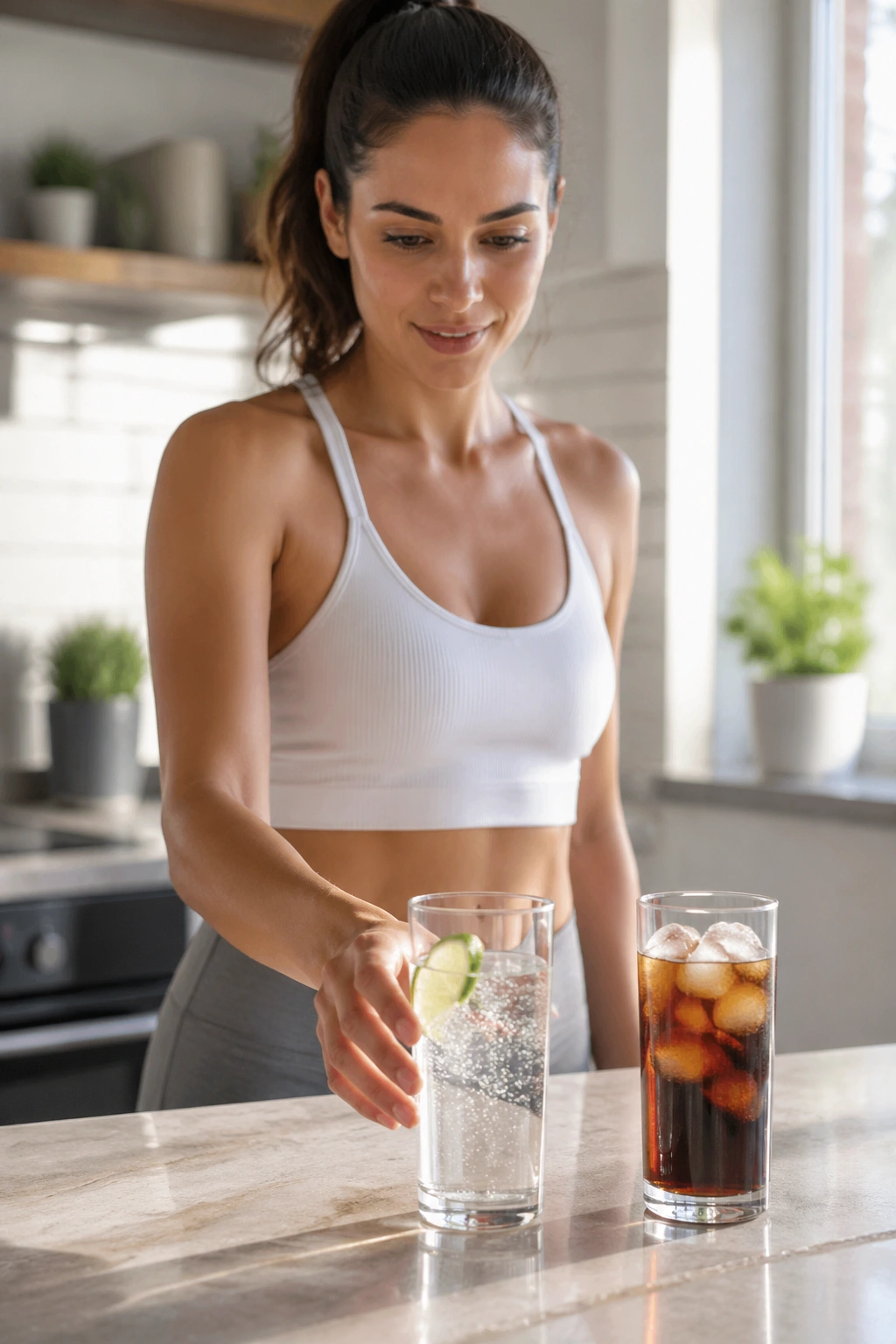
Liquid calories are sneaky because they go down fast and leave almost no trace in your stomach. Sweet coffee drinks, soda, juice, fancy teas, and alcohol can stack up without making you feel fed.
Start with the easiest swap. If you drink soda, switch one serving a day to sparkling water. If your coffee comes with syrup and whipped cream, halve the syrup first. If juice is a habit, pour a smaller glass and fill the rest with water.
Easy Swaps That Actually Stick
- Water with lemon or cucumber.
- Unsweetened tea, hot or iced.
- Coffee with milk instead of sugar-heavy add-ins.
- Sparkling water with a squeeze of lime.
Alcohol deserves its own mention. It is not evil. It is just easy to overdo, and it can lower the odds that you care what happens after dinner. That is usually where the waistline gets hit.
16. Clean Up Late-Night Snacking
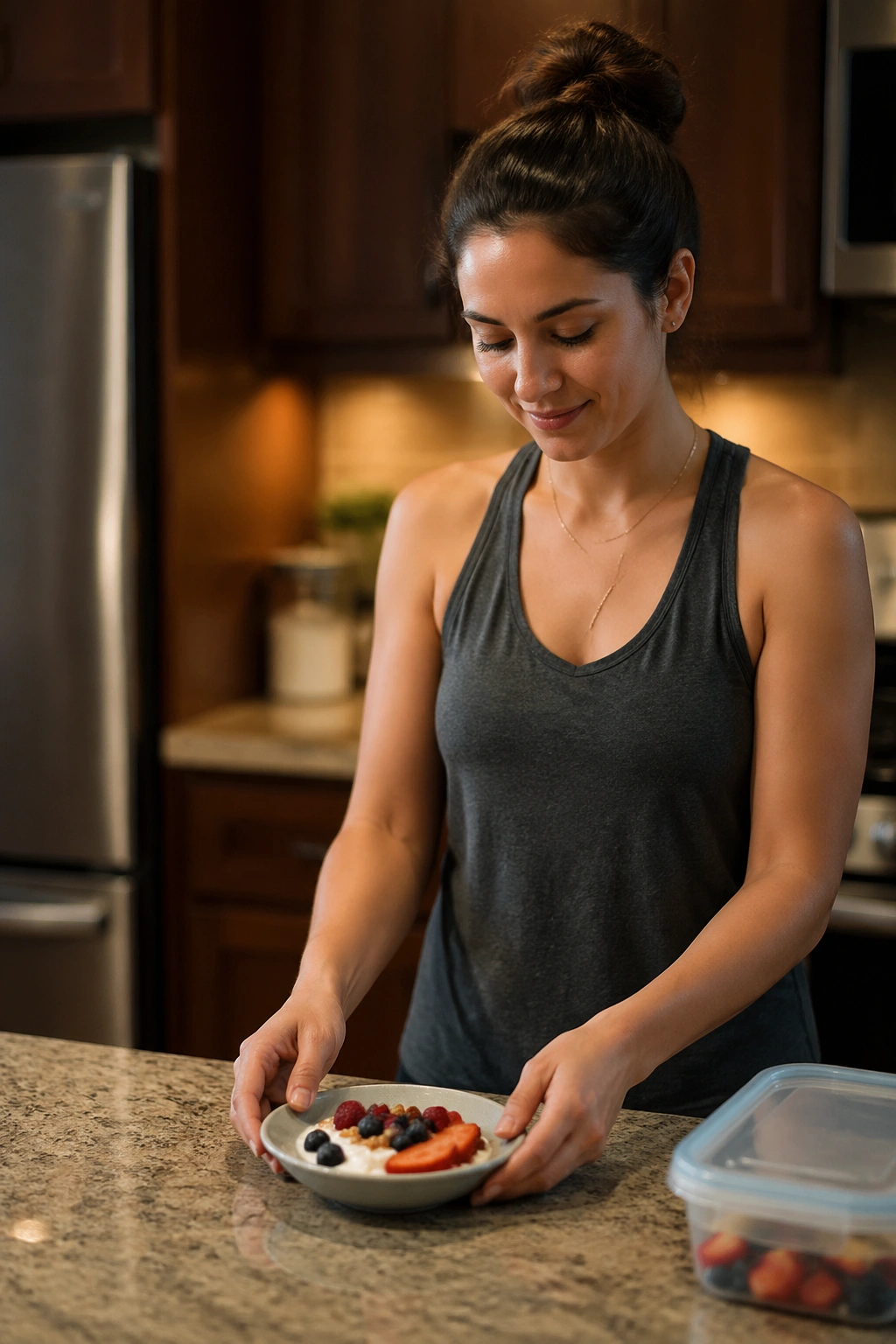
A lot of belly-fat frustration lives in the hours after dinner. You have eaten. You are not hungry exactly. Still, the kitchen calls, and the snacks are there, and one thing leads to another.
Set a cut-off time for casual eating, then make it real. Brush your teeth. Put a tea kettle on. Portion any planned snack onto a plate instead of eating from the bag. If you do need something, choose a snack with protein or fiber, like yogurt, fruit with peanut butter, or hummus with carrots.
A Better Evening Pattern
- Eat dinner without screens if you can.
- Put the snacks away before sitting down.
- Pick one planned evening snack if you know you’ll want one.
- Close the kitchen with a simple routine: tea, water, brush teeth.
That little structure helps more than sheer discipline. Most people do not fail because they are weak. They fail because the snack setup is too easy.
17. Sleep Long Enough to Stop Cravings

A tired body behaves like a hungry body. You feel it the next day in your appetite, your patience, and your willingness to move. Sleep loss also makes workouts feel heavier than they should.
Aim for a regular sleep window and give yourself a real wind-down. Dark room. Cooler room. Fewer bright screens before bed if you can manage it. If your mind runs hot at night, write down the next day’s top three tasks and stop carrying them around in your head.
What Sleep Changes
- Hunger gets louder.
- Cravings get sharper.
- Training feels harder.
- Recovery slows down.
If you only fix one thing here, protect the hour before bed. A calmer night often shows up around the waist before it shows up anywhere else.
18. Lower Stress So Your Waist Stops Holding Tension

Stress does not create belly fat out of thin air. But it can push you toward more snacking, less movement, and worse sleep, which is a messy little trio. It can also make your body hold water in ways that leave the waist feeling puffier than it really is.
You do not need a two-hour ritual. You need a five-minute reset you can actually repeat. Slow breathing works. A short walk works. Stretching your hips and lower back works. Even sitting down with a cup of tea and no phone for a few minutes can cool the whole day off.
A Five-Minute Reset
- Inhale for 4 counts.
- Exhale for 6 counts.
- Repeat for 5 rounds.
- Add a gentle forward fold or child’s pose if that feels good.
The goal is not to become a meditation monk. The goal is to stop stress from driving the bus.
19. Measure Your Waist, Not Only Your Weight
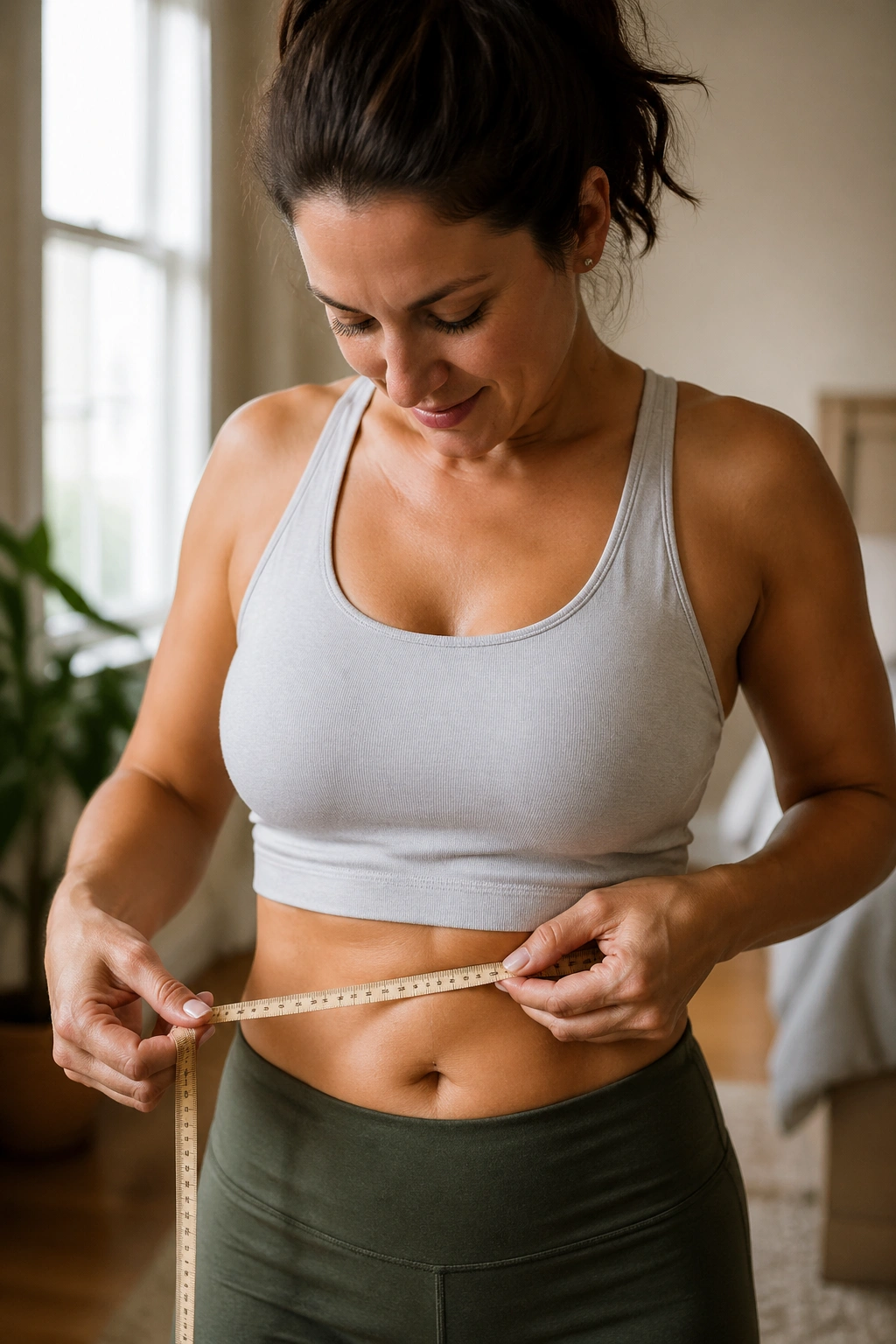
The scale can be annoying. It reacts to salt, hormones, soreness, sleep, and the volume of food in your gut. That makes it a noisy tool for belly-fat goals, especially for women whose water retention can shift through the month.
Use a soft tape measure at the narrowest part of your waist or around the navel, and do it the same way each time. Once a week is plenty. Keep the tape snug, not squeezed. Write the number down. Take a photo in the same light if you want a clearer picture.
What to Track
- Waist measurement.
- How a pair of jeans fits.
- Energy during workouts.
- Hunger levels at night.
That gives you a cleaner read than the scale alone. Some weeks the waist changes before the weight does. Sometimes it goes the other way. That is normal, and it is useful to know.
20. Keep a Simple Weekly Routine You Can Repeat
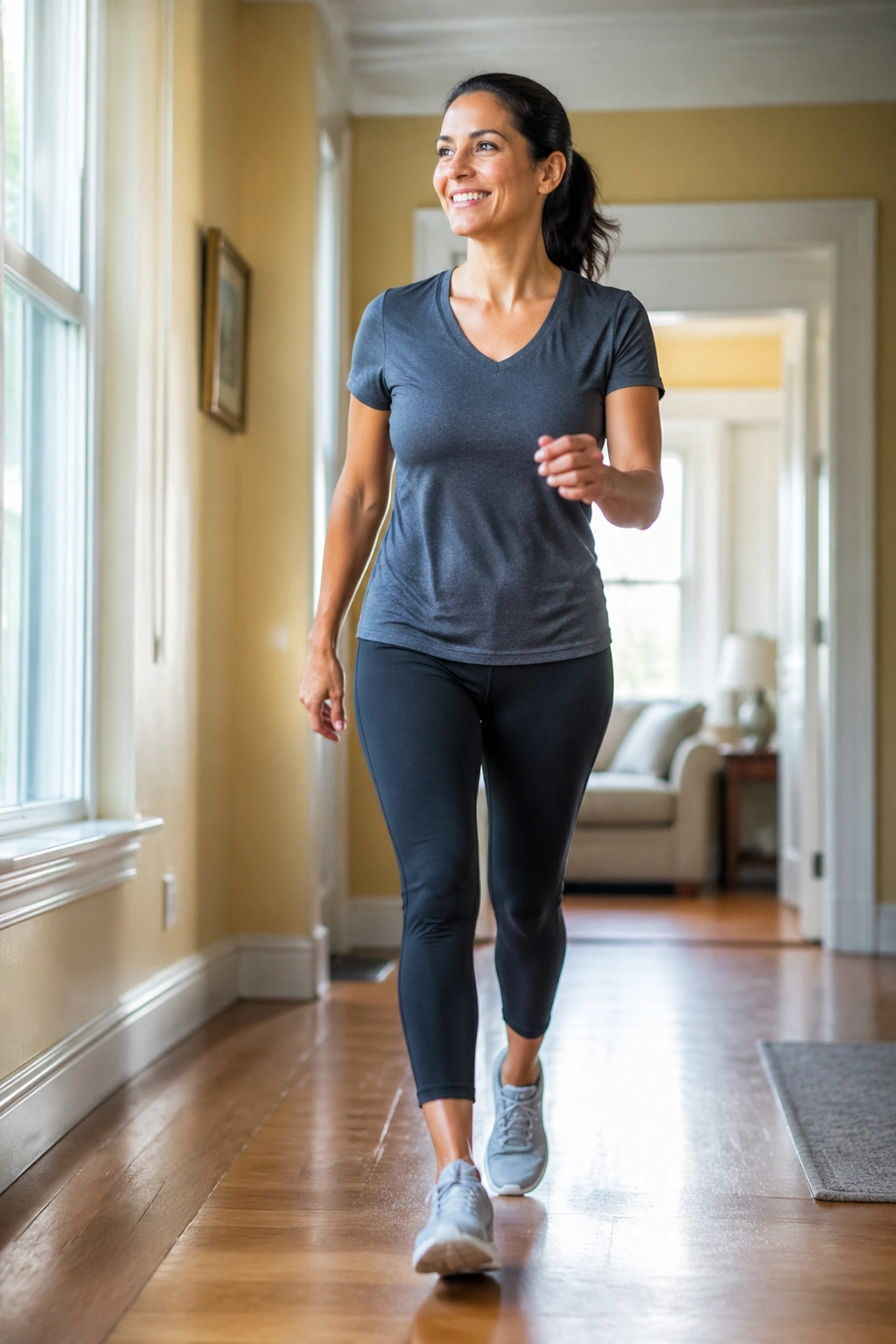
A good home plan is not the one with the most tricks. It is the one you can do on a normal week, when work is annoying, dinner runs late, and your energy is only half there. That is the week that matters.
A simple structure might look like this:
- 3 days of bodyweight or band strength work.
- 2 days of intervals, stairs, or dance cardio.
- Daily walks after meals or around the house.
- 1 lighter day for stretching, chores, or a slow walk.
- 1 rest day if your body wants it.
Have a backup version that takes 10 minutes. Seriously. A short version keeps momentum alive when the full session feels too big. That is how women at home actually get leaner: not by being perfect, but by staying in motion long enough for the plan to work.
