



You have four minutes. Maybe five, if you count the time it takes to lace your shoes and clear a small patch of floor. That is the entire window you have to squeeze a workout into your day. Most people would look at that sliver of time and choose to do nothing, assuming that if a session doesn’t last for forty-five minutes or an hour, it simply isn’t worth the effort.
They are wrong.
High-intensity training does not require a vast, cavernous block of time to be effective. It requires intensity, focus, and a brutal adherence to the clock. This is the premise of the Tabata protocol. It is not a suggestion; it is a mathematical structure designed to push your body to its absolute limit in the shortest duration possible. If you are breathing easily by the end of these four minutes, you have failed the protocol.
You are here because you need results, not excuses. You need a system that fits into the cracks of a chaotic life. These twenty-two protocols cover everything from raw cardiovascular capacity to core stability and muscular endurance. They require zero complex equipment, just a willingness to push through the discomfort that sets in around the ninety-second mark.
Stop checking the clock, stop planning to start “later,” and prepare to work.
The Physiology of the Four-Minute Protocol
Tabata training is often misunderstood as just “fast exercise.” In reality, it is a specific anaerobic conditioning protocol. The structure is non-negotiable: twenty seconds of all-out, maximal effort followed by ten seconds of complete rest. You repeat this sequence eight times. That creates a total of four minutes.
The effectiveness lies in the intensity ceiling. During those twenty seconds, you must operate at or above 100% of your maximum effort. You are not pacing yourself. You are not trying to “feel the burn.” You are trying to empty the tank as quickly as possible. This rapid-fire repetition forces the body to rely on stored energy sources immediately, creating a metabolic demand that persists long after the timer hits zero.
Consistency beats intensity over the long term, but in the short term, intensity is the only lever you have to pull. When you perform these workouts, you are teaching your nervous system to fire rapidly and recover under pressure. It is not comfortable. It is not supposed to be. It is, however, the most efficient way to maintain fitness when your schedule leaves you with nothing but scraps of time.
Setting Up Your Training Environment

Preparation matters because the four-minute window is so tight that you cannot afford to waste a single second adjusting equipment or wondering what the next move is. If you spend your ten-second rest period walking across the room to grab a dumbbell, the entire rhythm of the Tabata structure breaks.
Your floor space should be clear before you even start the timer. If you are doing bodyweight drills, make sure you have enough room to extend your limbs fully. If you are using weights, have them placed directly next to your workspace.
Why Timing Tools Are Critical
You should never try to count the seconds in your head while exercising. The human brain is terrible at judging time when the heart rate is climbing into the anaerobic zone. Use a dedicated interval timer app. Set it to eight rounds of twenty seconds on and ten seconds off. The auditory cue of the timer is your boss. When it beeps, you start. When it beeps again, you stop. There is no negotiation.
1. The Classic Bodyweight Foundation

This is the baseline. If you have never performed a Tabata session, start here to learn how the timing feels. You need to focus on moving through the full range of motion while maintaining speed.
The Protocol
- Move 1 (Rounds 1, 3, 5, 7): Air Squats
- Move 2 (Rounds 2, 4, 6, 8): Push-ups
Ensure your squats go below parallel. On the push-ups, keep your core tight and your chest to the floor. If you tire out, drop to your knees, but do not stop moving. The goal is total volume.
Pro tip: Do not lock your knees at the top of the squat. Keep the tension in your quadriceps the entire time.
2. The Lower Body Power Surge

Your legs hold the largest muscle groups, which means hitting them hard creates the biggest metabolic response. This protocol focuses on explosive movement.
Movements to Master
- Jump Squats: Explode off the floor. Land softly.
- Reverse Lunges: Alternate legs quickly. Keep your torso upright.
You will feel your lungs burning by round four. That is the point. The rest interval is short, and your heart rate will not fully recover, which is exactly how the protocol is designed to function.
3. The Core Stability Crusher

A strong core is the foundation for every other movement you perform. This protocol targets the anterior chain, specifically the abdominals and hip flexors.
The Sequence
- Mountain Climbers: Drive your knees toward your chest with maximum speed.
- Plank Jacks: Hold a high plank position while hopping your feet in and out.
Keep your hips level. Do not let your lower back sag. If your form breaks, you are moving too fast for your current strength level. Slow down slightly, but keep moving for the duration of the twenty seconds.
4. The Upper Body Pump

This protocol is designed to tax your shoulders, chest, and triceps. It is brutal on the muscular endurance of the upper body.
What to Expect
- Pike Push-ups: Target the shoulders and upper chest.
- Tricep Dips (using a chair or bench): Keep your back close to the support.
Do not worry about the number of reps you get in the first round. Worry about keeping that number consistent by the final round. Most people start fast and drop off sharply; your goal is to hold your pace steady.
5. The Cardio Inferno

If you want to simulate running without actually moving, this is your go-to. It focuses purely on elevating your heart rate to near-maximal levels.
The Movements
- High Knees: Get those knees up to waist height.
- Butt Kicks: Maintain a rapid cadence.
This is a frantic pace. Your feet should barely touch the ground. If you feel like you are jogging, you are doing it wrong. This needs to be a sprint.
6. Explosive Plyometric Power

Plyometrics are dangerous if you are fatigued, so keep your eyes on your form. This sequence builds fast-twitch muscle fiber activation.
The Routine
- Broad Jumps: Jump forward as far as possible, then turn around quickly.
- Lateral Skaters: Leap side to side, engaging the glutes.
The key here is the landing. You must absorb the force with your muscles, not your joints. If your knees cave in, you need to reduce the distance of your jumps immediately.
7. The Burpee Marathon

The burpee is the gold standard for high-intensity conditioning. It hits every major muscle group and destroys your cardiovascular system in the process.
The Structure
- Standard Burpees: Chest to floor, full jump at the top.
This is simple but savage. You perform burpees for all eight rounds. There is nowhere to hide. If you find your pace slowing, focus on the rhythm of your breathing. Exhale on the push, inhale on the descent.
8. Mountain Climber Medley

This is a variation on the standard climber that forces you to change your plane of motion, hitting the obliques harder.
The Movements
- Cross-Body Climbers: Bring your right knee to your left elbow.
- Wide-Stance Climbers: Bring your knees to the outside of your elbows.
Alternate these two movements for the full four minutes. The twist in the cross-body variation will challenge your stability. Keep your shoulders directly over your wrists.
9. Kettlebell Speed Drills

If you have a kettlebell, use it. This protocol is meant for a lighter weight that you can swing rapidly, not a heavy weight that forces you to slow down.
The Protocol
- Kettlebell Swings: Use the hips to drive the weight, not the arms.
- Goblet Squats: Keep the bell tight against your chest.
The swing is all about posterior chain engagement. If you are using your back to lift the bell, you are doing it wrong. Pop your hips forward aggressively.
10. Dumbbell Intensity Rounds

Using dumbbells adds a level of resistance that bodyweight moves cannot match. Choose a weight that you can safely handle for twenty seconds of rapid repetition.
The Sequence
- Dumbbell Thrusters: Squat, then press the weights overhead.
- Renegade Rows: High plank position, rowing one weight at a time.
Thrusters are exhausting. They combine a lower-body push with an upper-body pull. Your heart rate will skyrocket in the first thirty seconds.
11. Resistance Band Tension
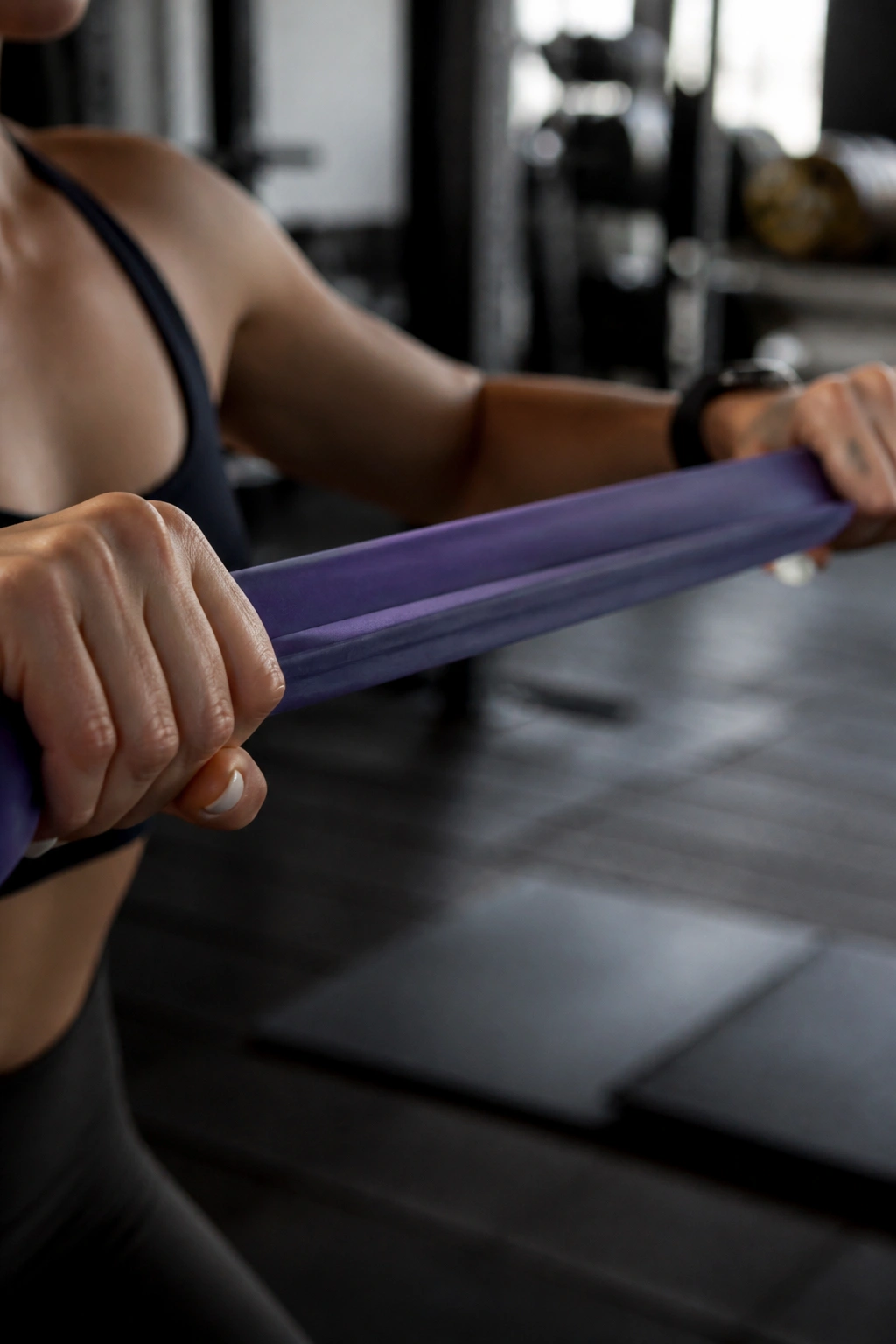
Resistance bands offer constant tension, which is a different stimulus than the gravity-based resistance of free weights or body weight.
The Movements
- Band Pull-Aparts: Focus on the rear deltoids and back.
- Band Squat Walks: Step side to side against the band’s tension.
The burn you feel with bands is muscular, often described as a “pump.” This protocol is excellent for joint health and postural muscles.
12. Agility Ladder Drills

You do not need a physical ladder. Just imagine lines on the floor. This is about footwork speed and coordination under duress.
The Drill
- In-and-Outs: Rapid footwork in and out of your imaginary ladder.
- Lateral Shuffles: Stay low and move side to side.
If you trip, you reset. This is mental conditioning as much as physical. Stay light on your toes. Your heels should never make heavy contact with the ground.
13. Isometric Holds

This is the only Tabata protocol that focuses on tension rather than velocity. It builds incredible muscular endurance and mental grit.
The Protocol
- Wall Sit: Press your back flat against the wall.
- High Plank Hold: Squeeze every muscle in your body.
You aren’t moving, but you are working. The shakes will start around round three. Do not exit the position. This teaches you to stay in the “discomfort zone.”
14. The “No-Jump” Low Impact

If you have joint issues, you can still perform Tabata. This routine avoids jumping but maintains intensity through speed and muscle engagement.
The Sequence
- Speed Squats: Fast, controlled, full-range movement.
- Inchworms: Walk your hands out to a plank and back.
You don’t need impact to get a high heart rate. The metabolic cost of moving your full body weight repeatedly is significant, even without the jump.
15. Advanced Athlete Drill

This protocol assumes you have a base level of fitness. It combines complex movements that require balance and coordination.
The Movements
- Lunge Jumps: Explosive lunge changes.
- Push-up to T-Rotation: Push-up, then open to a side plank.
The T-rotation forces you to pause and stabilize, which makes the recovery harder. It is an excellent way to train transition speed between positions.
16. Tabata Abs Finishers

This is not a full-body workout. It is an isolation protocol specifically for the core. Use this at the end of a longer training session.
The Sequence
- V-Ups: Reach for your toes.
- Bicycle Crunches: Slow, controlled rotation.
Keep the lower back glued to the floor. If your back arches, you have lost the engagement of your abdominals. Reset your position immediately.
17. Total Body Synergy

This protocol requires moving from the floor to standing. The transition itself is part of the work.
The Movements
- Burpees (no push-up): Focus on speed.
- Jumping Jacks: Keep the tempo high.
The constant change in vertical level is what makes this difficult. Your heart has to work overtime to push blood from your feet to your head as you stand and fall.
18. The AMRAP Hybrid

AMRAP stands for “as many reps as possible.” In this protocol, you pick one move for all eight rounds and count your reps.
The Strategy
- Choose one movement (e.g., Kettlebell Swings): Count your reps for each 20-second interval.
Your goal is to keep the number of reps consistent. If you get 15 in the first round and 8 in the last, you paced it poorly. The objective is to sustain your output.
19. High-Power Explosive

This is about generating maximum force in minimum time. These are movements that require intent.
The Routine
- Medicine Ball Slams: Throw the ball down with everything you have.
- Broad Jumps: Maximum distance.
You need a soft surface or a slam ball that doesn’t bounce. This is a stress-reliever as much as a workout. Put your anger into the floor.
20. Mobility & Flow

This is a lighter Tabata session, best used on active recovery days. The focus is on range of motion and blood flow, not cardiovascular destruction.
The Movements
- Deep Squat to Reach: Sink into the squat, then reach to the sky.
- World’s Greatest Stretch: Lunge with a torso twist.
Move fluidly. Breathe deeply. This isn’t about how many reps you get; it’s about how much quality you can inject into each movement.
21. Everyday Functional Movement

These movements mimic the actions you do in daily life: picking things up, reaching, balancing.
The Protocol
- Good Mornings (bodyweight): Hinge at the hips.
- Step-Ups: Step onto a sturdy surface.
Functional movement is often overlooked in “hard” workouts. By doing it at Tabata intensity, you build durability that actually matters for your quality of life.
22. The Mental Grit Challenge

This is the final test. This is for the days when you are tired, unmotivated, and tempted to skip the workout.
The Protocol
- Plank to Push-up: Drop to elbows, push back to hands.
- Speed Skaters: Fast side-to-side movement.
This is uncomfortable. It is supposed to be. If you get through this, you have proven that you can prioritize your health even when you don’t “feel” like it. That discipline carries over into everything else.
Recovery Protocols for High-Intensity Training

High-intensity training creates micro-tears in muscle fibers and spikes cortisol levels. If you do not manage your recovery, you will eventually burn out or sustain an injury. Tabata is not meant to be done seven days a week, regardless of how short the sessions are.
After your four minutes are up, do not simply sit down. Spend at least two minutes walking around. You need to clear the metabolic byproducts, like lactate, from your muscles. If you lie on the floor immediately, you may feel lightheaded, as your heart is still pumping blood to muscles that are no longer moving.
Hydration is equally vital. You will lose significant water weight through sweat, even in four minutes. Rehydrate with water and electrolytes. If you are doing this as a standalone workout, your nutrition in the hour following the session is critical. Focus on protein and complex carbohydrates to kickstart the repair process.
Programming for Long-Term Success

You might wonder how to integrate these protocols into a weekly routine. The answer depends on your current fitness level. For a beginner, three sessions a week, with at least one day of rest in between, is sufficient. Your central nervous system needs time to recover from the high-intensity stress.
Advanced athletes can handle more volume, but “more” does not always mean “better” with Tabata. If you are doing high-intensity work every single day, you are likely not pushing hard enough during the actual intervals. If you truly give 100% effort, your body requires downtime.
Try alternating your Tabata sessions with steady-state cardio or strength training. Use the Tabata protocols as a “finisher” at the end of a longer workout, or as a standalone session on days when you are truly time-crunched. The flexibility of the four-minute burst is its greatest asset. It allows you to train in situations where you previously would have skipped the exercise entirely.
Consistency Is the Ultimate Metric

The beauty of the Tabata protocol is not that it is some magic pill for fitness. It is simply a tool that eliminates the “I don’t have time” excuse. If you can commit to four minutes of genuine, unfiltered effort, you can maintain a baseline of conditioning that most people struggle to achieve with hours of low-intensity cardio.
You will have days where the workout feels easier, and days where you struggle to get through round four. That is normal. The goal is not to perform perfectly every single time. The goal is to show up, set the timer, and move until the final beep. Over time, that consistency builds the physiological adaptations you are after.
Do not worry about becoming an elite athlete overnight. Focus on the four minutes you have today. Execute with intensity, respect the recovery process, and repeat. That is how you build a body that can handle whatever life throws at it.
