



The first time you experience the specific, deep fatigue of a barre class, you realize it is not about how much weight you can move or how fast you can jump. It is about the shake. That involuntary trembling in your muscles, particularly in your core, is the gold standard of this training style. You are holding a position—often a very small, seemingly simple one—and by refusing to drop, you force your stabilizing muscles to fire in a way that standard crunches or sit-ups simply cannot replicate.
Barre-inspired core work is defined by high repetition, small range of motion, and isometric holds. It is less about “working” the abs in a traditional sense and more about engaging the deep transverse abdominis, the corset-like muscle that wraps around your spine. When you bring this methodology home, you do not need a studio setup or expensive equipment. You need a floor, a bit of focus, and the willingness to let your muscles tremble just a little bit.
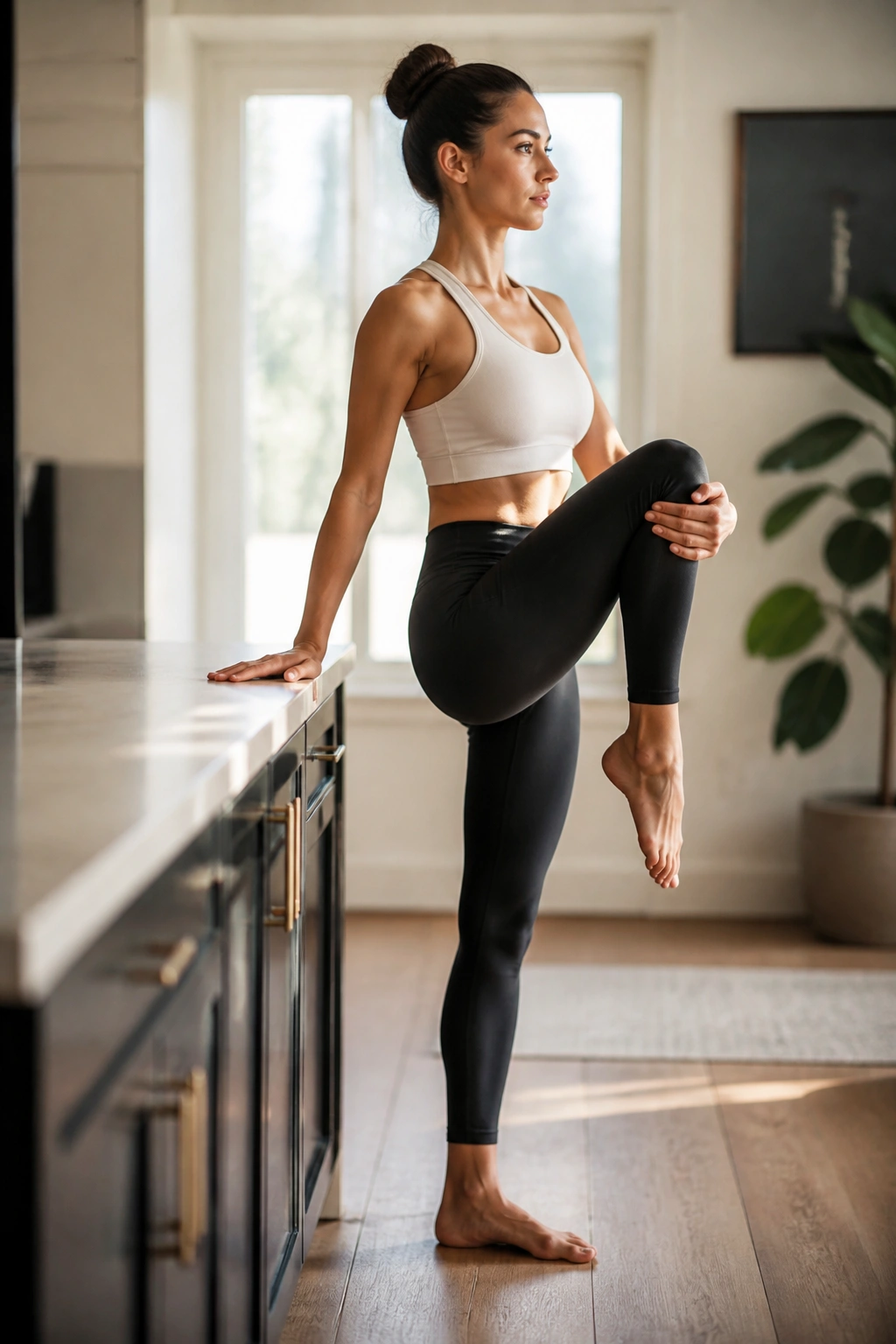
1. Standing Knee-to-Chest
This movement acts as the perfect warm-up, forcing you to find your center of gravity before the floor work begins. Stand near a sturdy surface, like a countertop or the back of a couch, keeping your spine tall and your shoulders stacked directly over your hips.
The Mechanism of Engagement
Lift your right knee toward your chest, but keep your torso absolutely vertical. Do not lean back to meet the knee; instead, use your lower abdominal wall to pull that knee upward. Think about drawing your belly button into your spine, creating a hollow sensation in your stomach.
- Pulse the knee: Once the knee is up, perform 20 tiny pulses, lifting the leg an inch and lowering it an inch.
- Maintain integrity: If you feel your lower back arching, you have gone too high. Keep the range small.
- The pivot point: Ensure your standing leg is slightly bent to protect the knee joint.
Pro tip: Imagine you are balancing a tray of drinks on your head. If you lean, the tray tips. Keep your posture rigid and your focus forward.
2. Plank with Knee Tucks
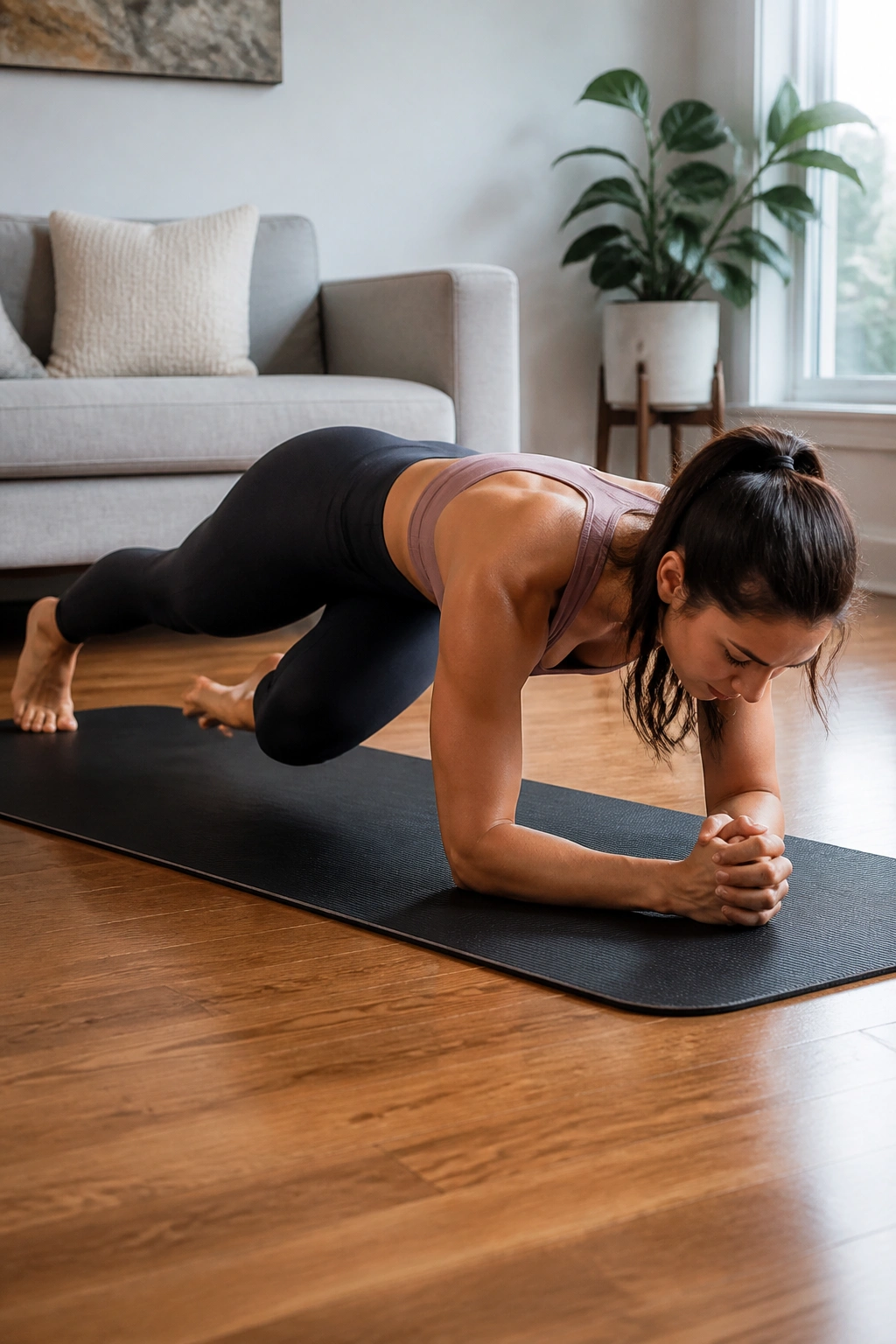
Planks are ubiquitous, but the barre-inspired version prioritizes control over endurance. Move into a forearm plank, making sure your elbows are planted firmly under your shoulders. Your body should form a straight, unbroken line from your heels to the crown of your head.
Why This Challenges the Deep Core
The moment you add a knee tuck, you disrupt your stability, forcing your abs to reset with every rep. Draw your right knee toward your right elbow, pause for a full second, and then extend the leg back out. Focus on the oblique contraction on that right side as you draw the knee in.
Repeat 15 times on the right, then switch to the left. Do not let your hips sag toward the floor when you extend the leg. If your lower back starts to ache, you are likely dropping your belly; visualize pulling your navel toward your ribcage to keep the tension where it belongs—in your abs.
3. Chair-Supported Leg Lifts
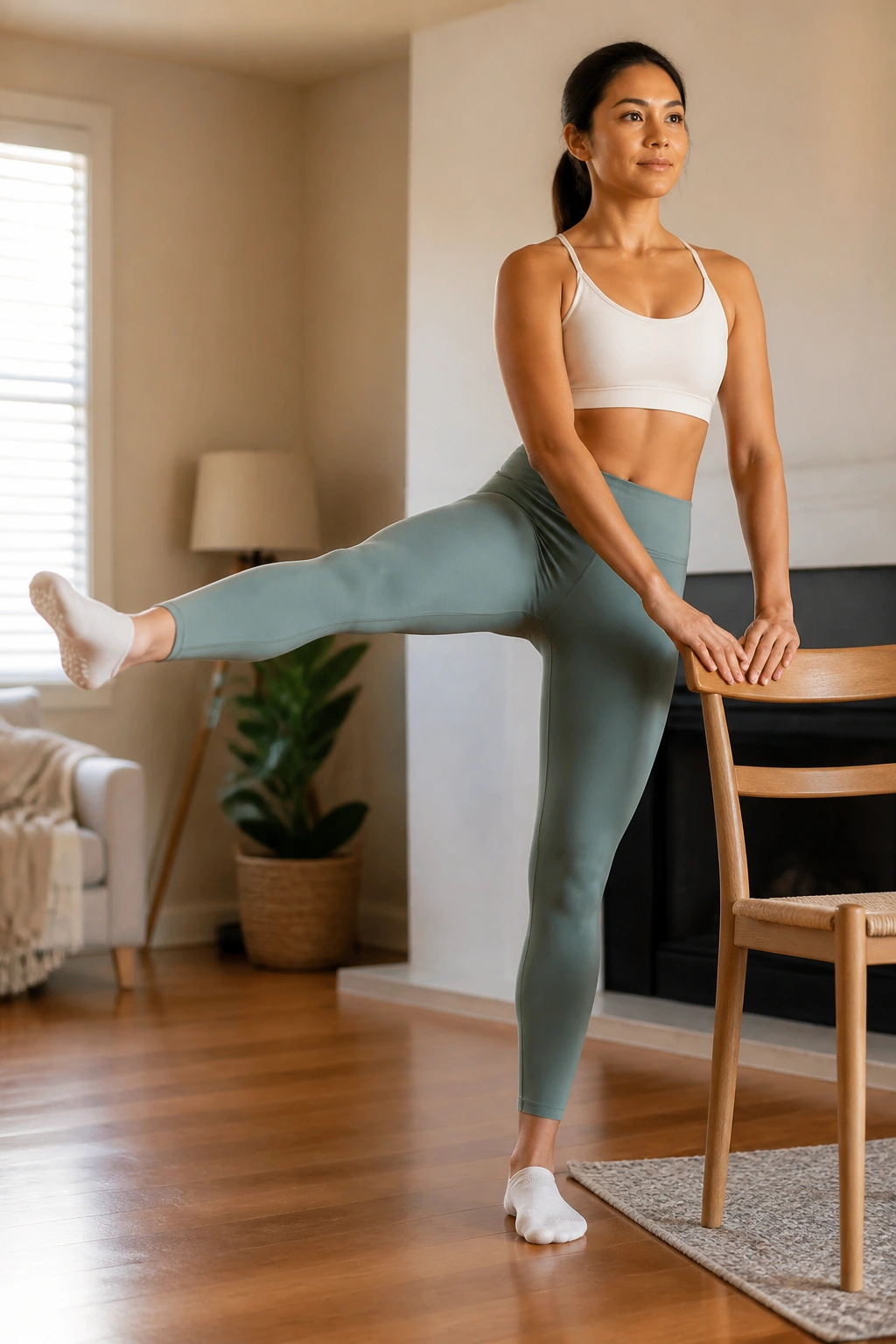
Using a chair or countertop for support, stand with your feet parallel and hip-width apart. This move is deceptively simple and isolates the lower abdominal region. Keep your upper body still and your hands lightly on the support surface—do not grip it with a death toll.
Lift your right leg straight out to the side, foot flexed. Using your obliques, lift and lower the leg in a very small range of motion—think two inches up, two inches down. The movement is generated by the core, not the hip flexor. After 20 pulses, hold the leg at the top for a 10-second count. You will feel a deep fatigue in the side of your waist. This is exactly the point.
4. Supine Leg Extensions
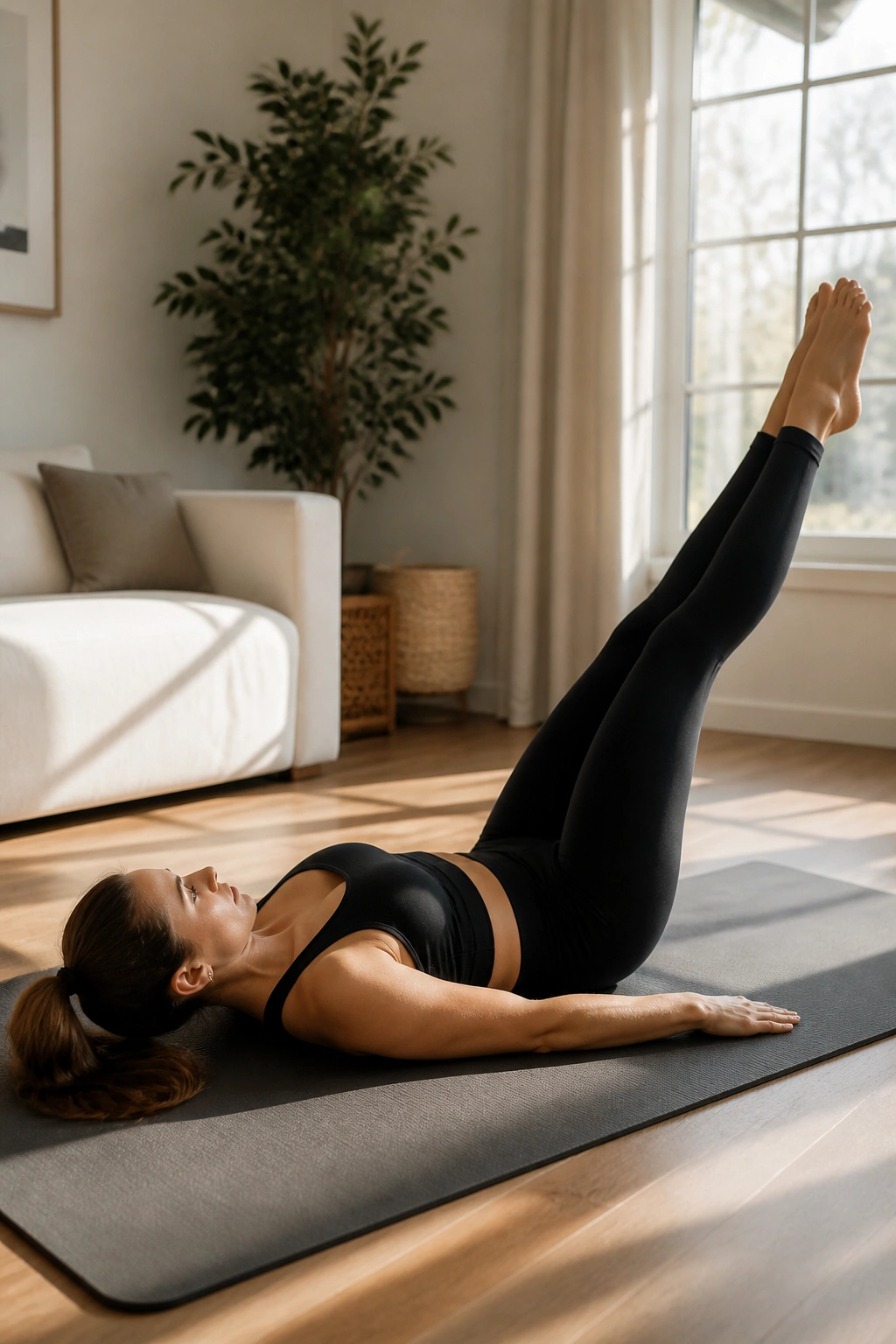
Lie flat on your back, arms reaching long by your sides. Press your lower back firmly into the floor—this is called imprinting. If your back lifts, your core is not supporting the weight of your legs, and you risk strain.
Bring your knees into a tabletop position, shins parallel to the ceiling. Extend your legs out to a 45-degree angle, or lower if your back allows it. As you extend, exhale sharply. The breath is crucial; it helps engage the pelvic floor and deep abdominals. Return to tabletop with control. Do not rush the return phase. The slower you move, the more time your muscles spend under tension.
5. Tabletop Crunches
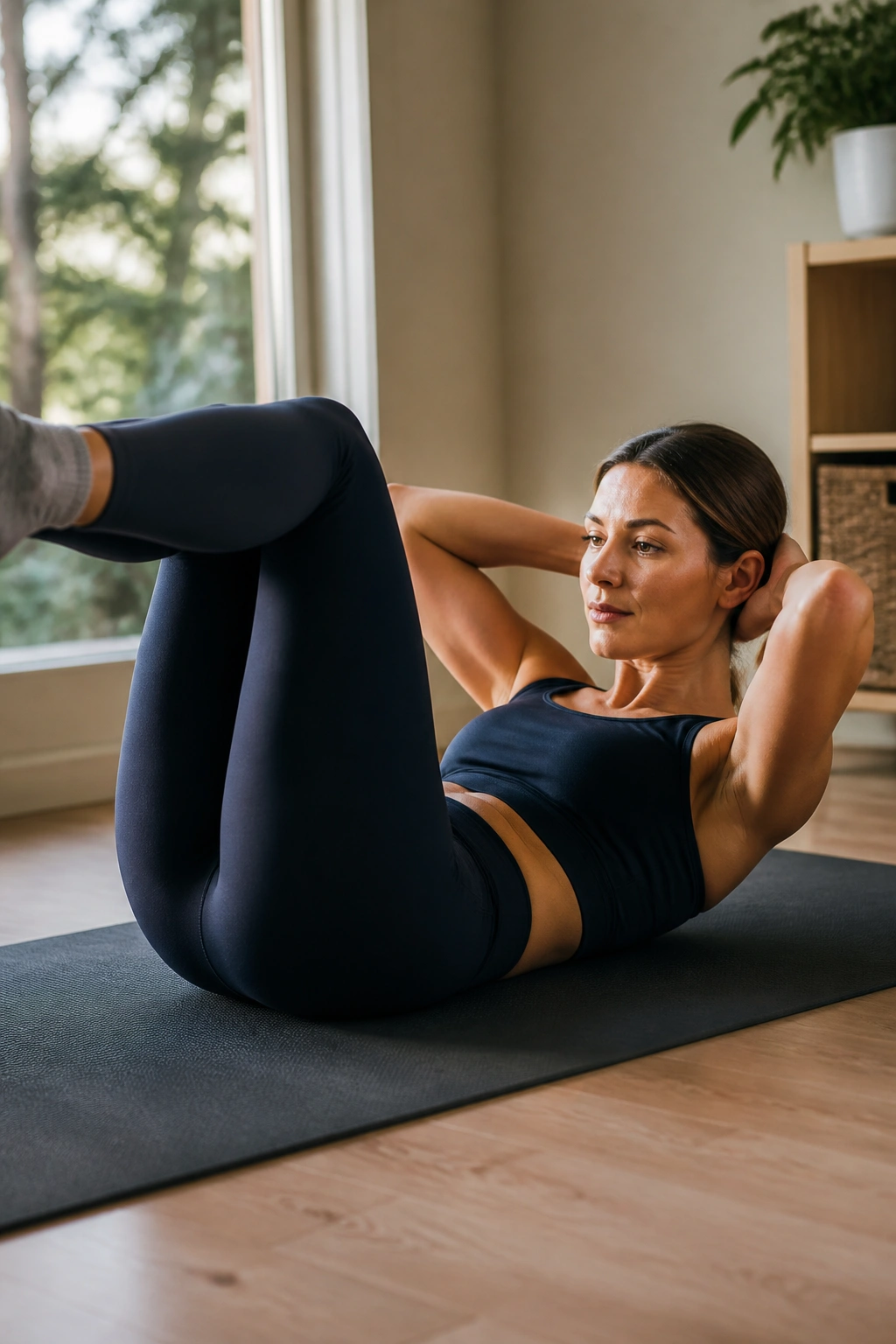
This is the classic barre crunch, modified for home. Lie on your back, knees in tabletop, and interlace your hands behind your head to support the neck. Your goal is not to pull on your head but to lift your shoulder blades off the floor using only your core strength.
Isolating the Upper Rectus Abdominis
Rise into a crunch and hold at the peak of the movement. Pulse upward for 30 counts. Each pulse should be tiny—only moving an inch—but stay at the top. Do not return your shoulder blades all the way to the floor between pulses. By keeping the tension constant, you keep the muscle fiber engagement at its highest level. If your neck starts to hurt, look at your thighs rather than the ceiling to keep your cervical spine neutral.
6. Side Plank Hip Dips
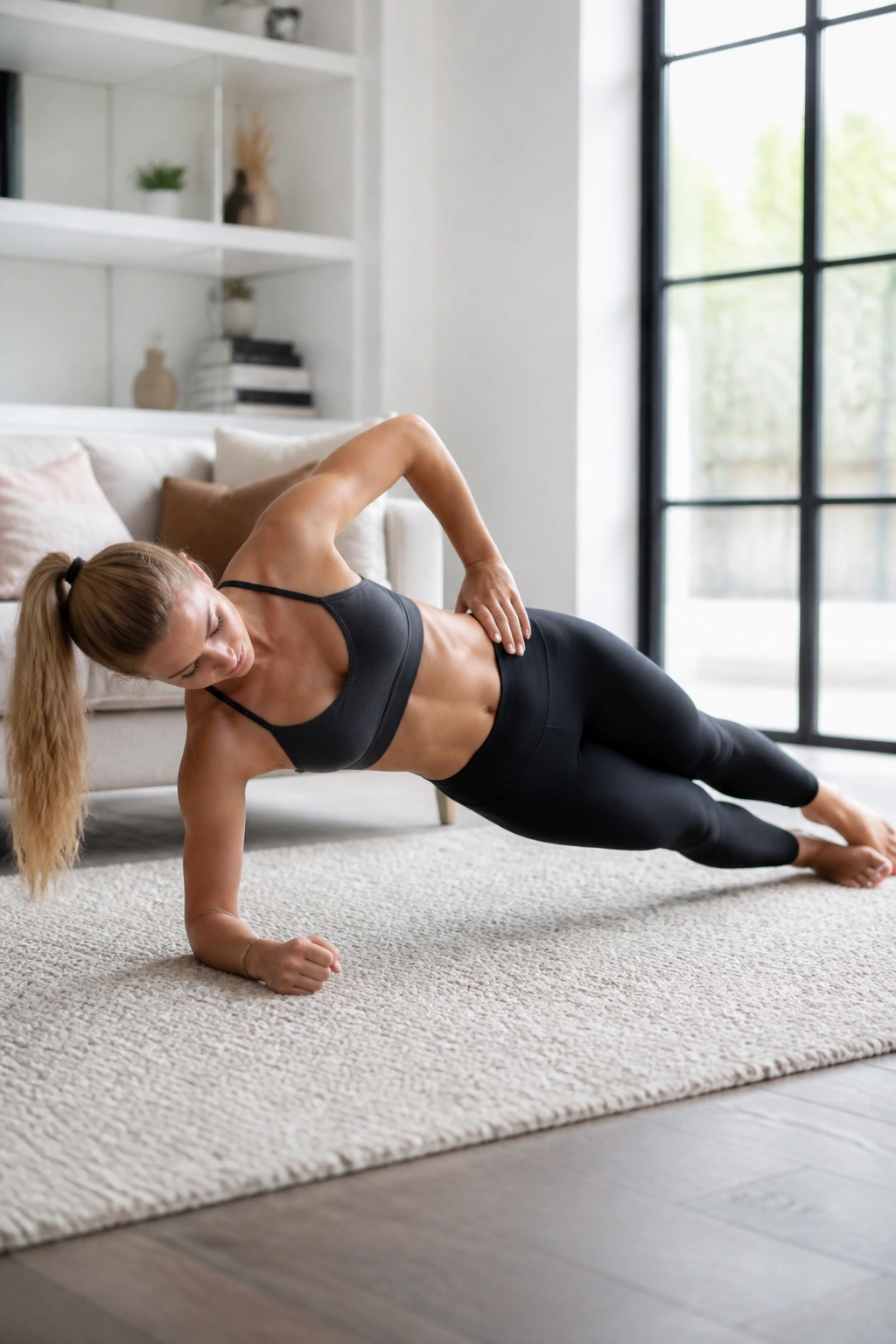
Side planks are the ultimate oblique burner, but adding the hip dip introduces a dynamic element that forces the stabilizer muscles to work harder. Get into a forearm side plank, stacking your feet or placing the top foot in front for stability.
Lower your hips toward the floor until they almost touch, then lift them back up, focusing on the squeeze in your side waist. Perform 15 dips on each side. Keep your chest open—do not let your top shoulder roll forward. The movement should feel linear, like your body is moving between two panes of glass.
7. Bicycle Twists with a Pause
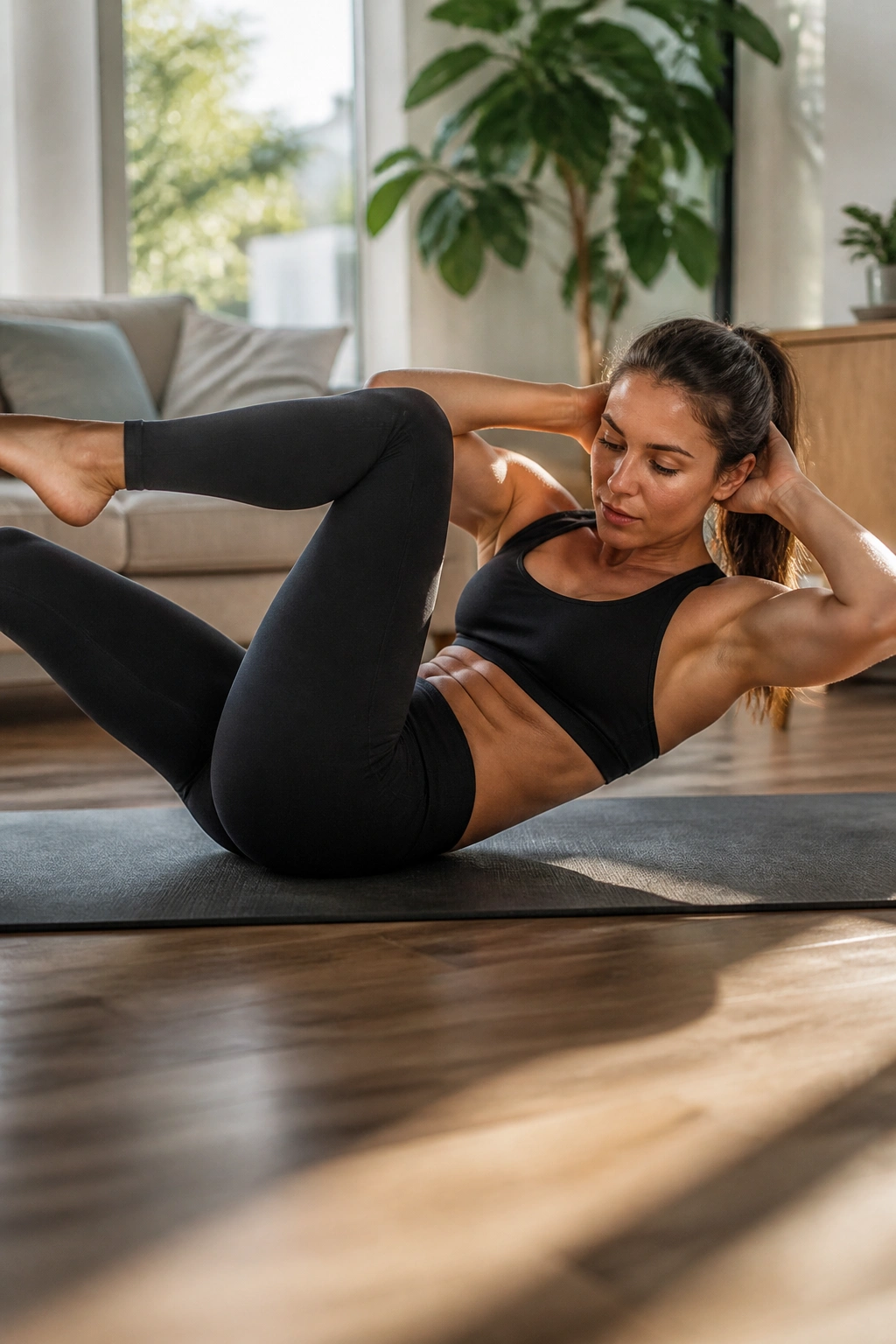
The traditional bicycle crunch is often done for speed. We are going to do the opposite. Slow down. Lie on your back, hands behind your head, legs in tabletop. Rotate your right elbow toward your left knee, extending your right leg long.
The Power of the Pause
Once you reach the twist, hold it for three seconds. Really squeeze your ribs toward your opposite hip. Many people just flop through this movement, but the pause forces the deep obliques to take over. Return to center slowly, then switch. Do 20 reps total. If you feel your neck straining, focus on rotating from your ribcage, not just your elbows. Your elbows should remain wide, peripheral vision seeing them at all times.
8. Seated C-Curve Lean
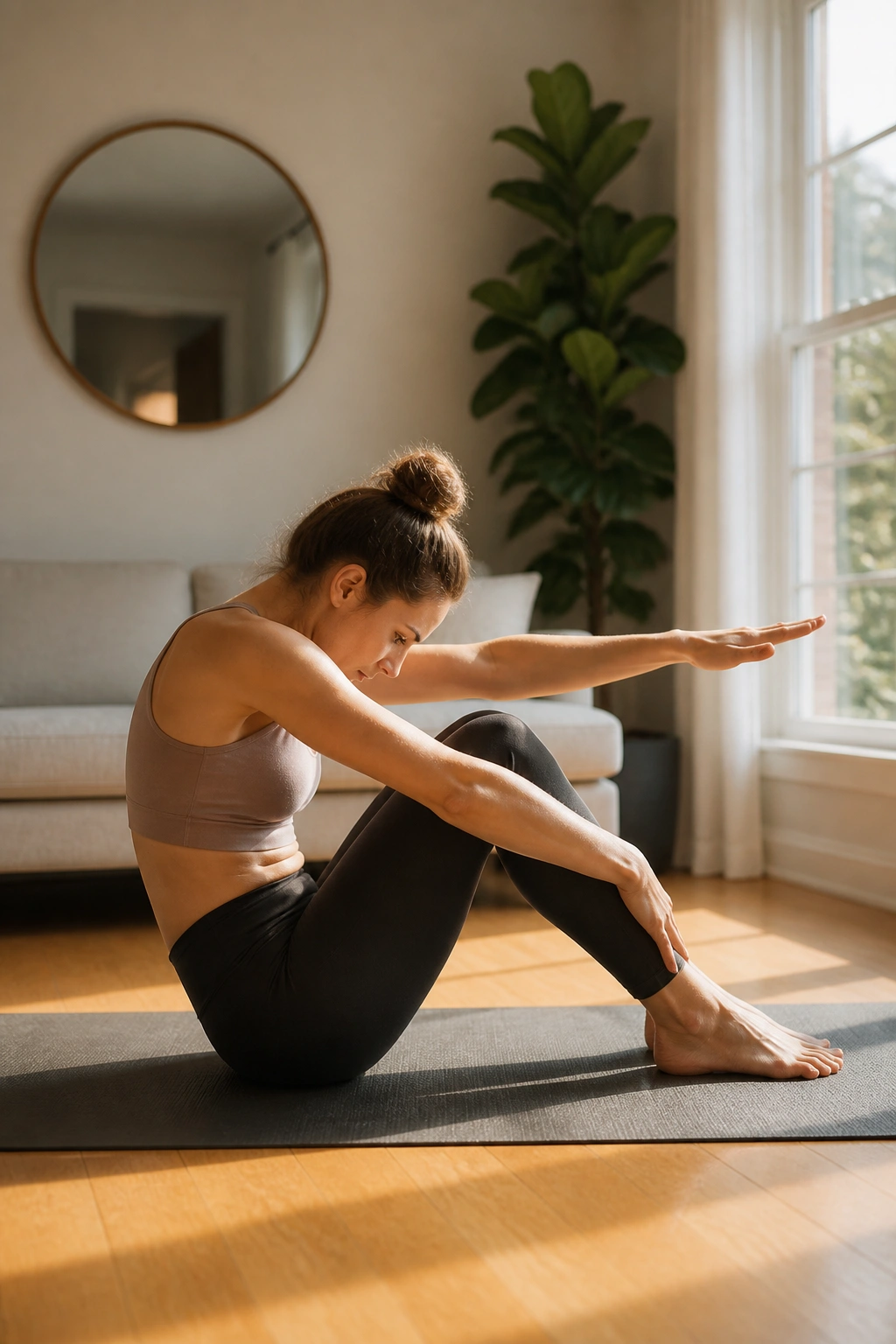
Sit on the floor with your knees bent, feet flat. Place your hands behind your thighs. Round your spine into a “C” shape, tucking your pelvis. This is the hallmark of barre technique—the “tuck.”
Lean back slightly until you feel your abs begin to shake. Keep your spine rounded; do not let it flatten out. Extend one arm forward, then the other. Hold this position for 30 seconds. While holding, pulse your arms up and down an inch. The challenge is maintaining the pelvic tuck while your arms move. It is a coordination test for your core. If your feet lift off the floor, shift your weight slightly forward or adjust your lean.
9. Barre-Style Mountain Climbers
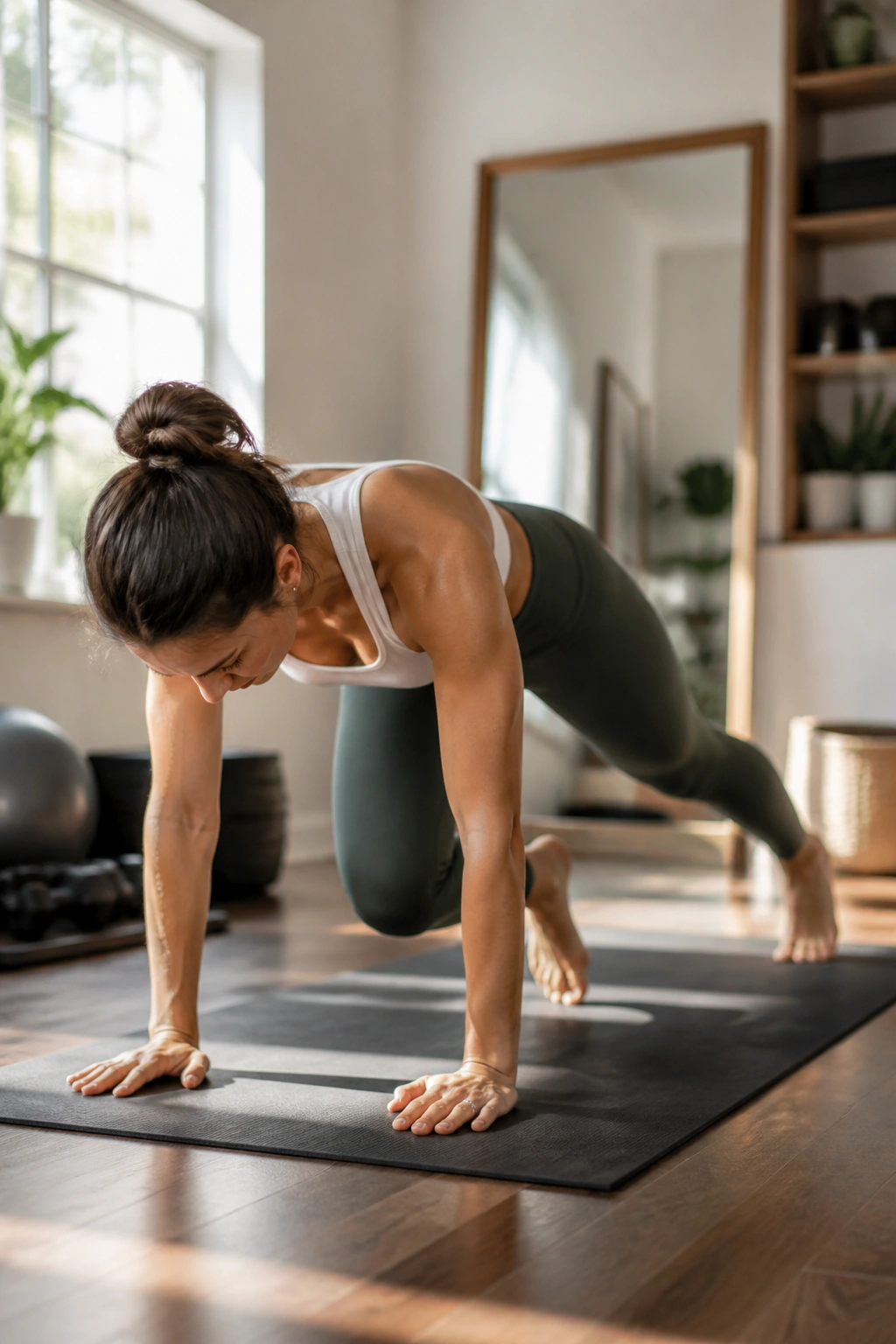
Most mountain climbers are cardio-focused. These are control-focused. Start in a high plank position. Bring your right knee toward your chest, but move it with extreme deliberation—slow, controlled, and intentional.
Focus on the crunch. When the knee is at the chest, squeeze your abs so hard you feel like you might cramp. That squeeze is the goal. Extend the leg back slowly. Do not let your hips bounce as you switch legs. The stability of your torso is the priority here. Keep your gaze between your hands to keep your neck long. Aim for 20 reps total, 10 per side.
10. Reverse Curls
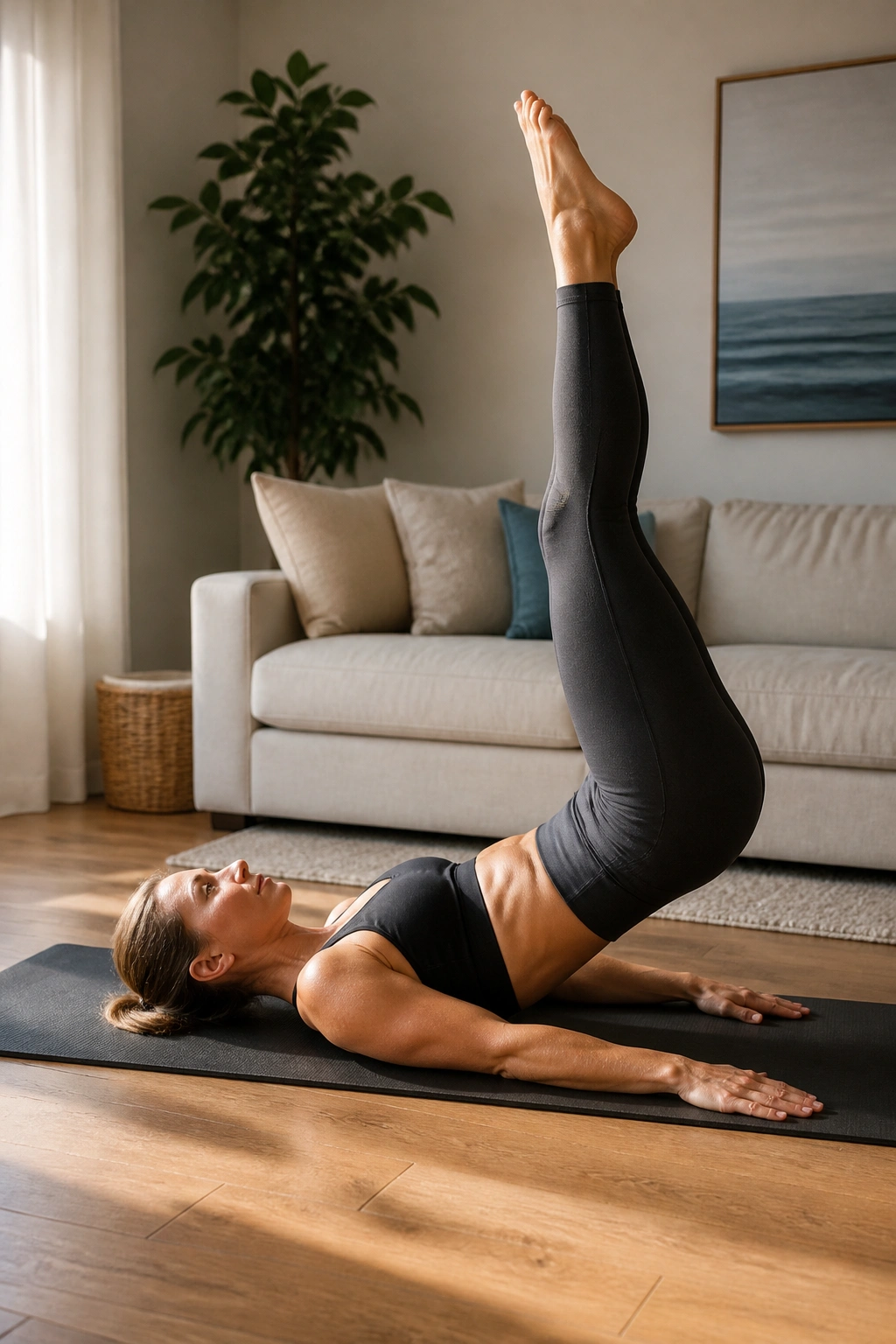
This move targets the elusive lower abdominal region. Lie on your back, legs extended straight toward the ceiling. Place your hands on the floor for support, palms down.
Using your lower abs, lift your hips just an inch off the floor. The movement is vertical—your toes should point toward the ceiling, not over your head toward your face. Lower with intense control. If you use momentum, you will not get the benefit. Do 15 reps, and on the last one, hold your hips up for 5 seconds. This requires serious focus.
11. Standing Oblique Dips
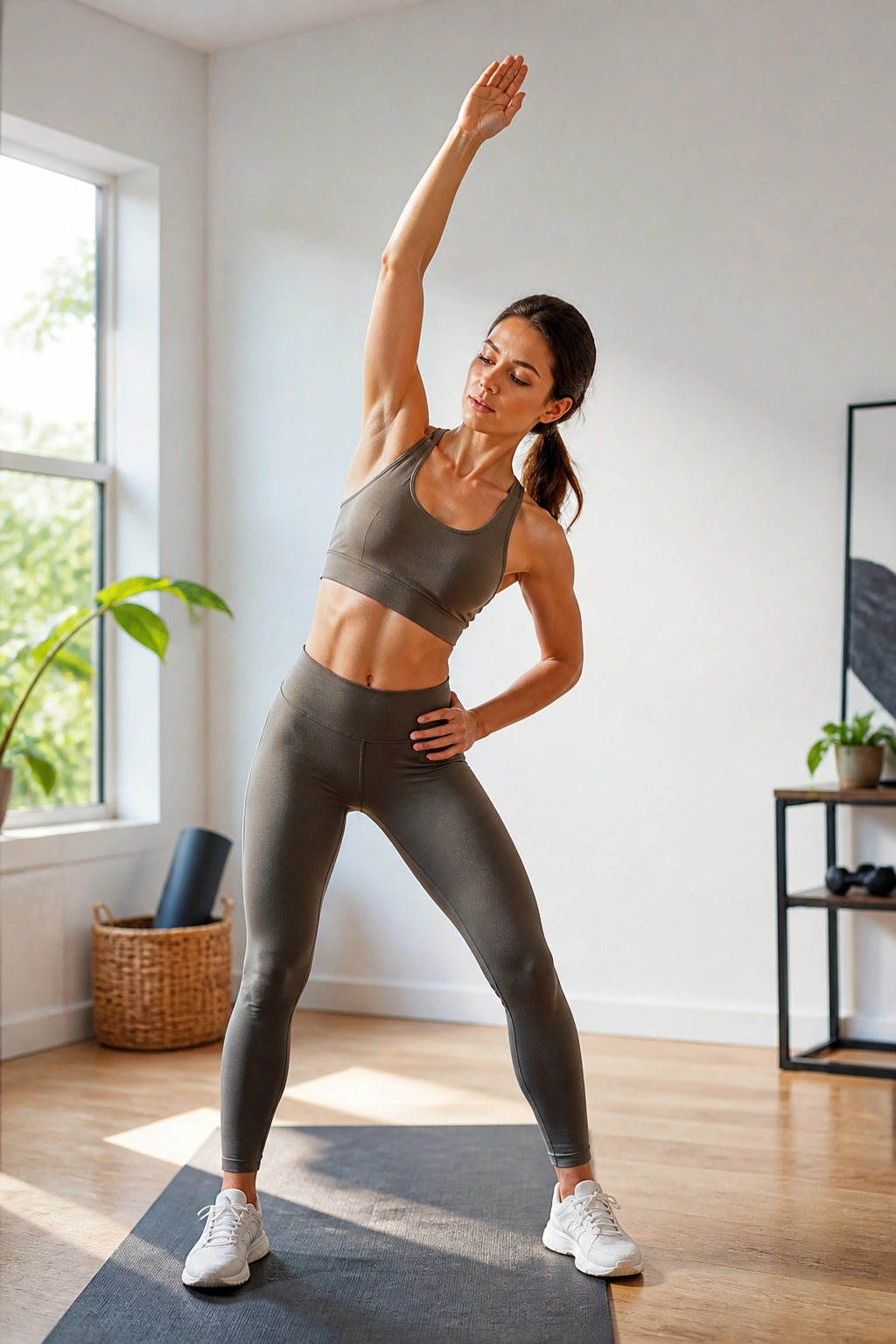
Stand with feet wider than hip-width, knees soft. Reach your right arm straight up toward the ceiling. Keeping your hips square to the front, lean your torso to the left, using your right side waist to control the movement.
Creating the Resistance
Imagine you are pushing against a heavy weight in the air. This helps engage the muscles even without equipment. Return to center using your obliques to pull you back up. Do 15 repetitions on the right side, then switch. Notice how the muscles along the side of your ribs work to prevent you from falling over. That lateral control is essential for spinal health.
12. Pilates Hundreds
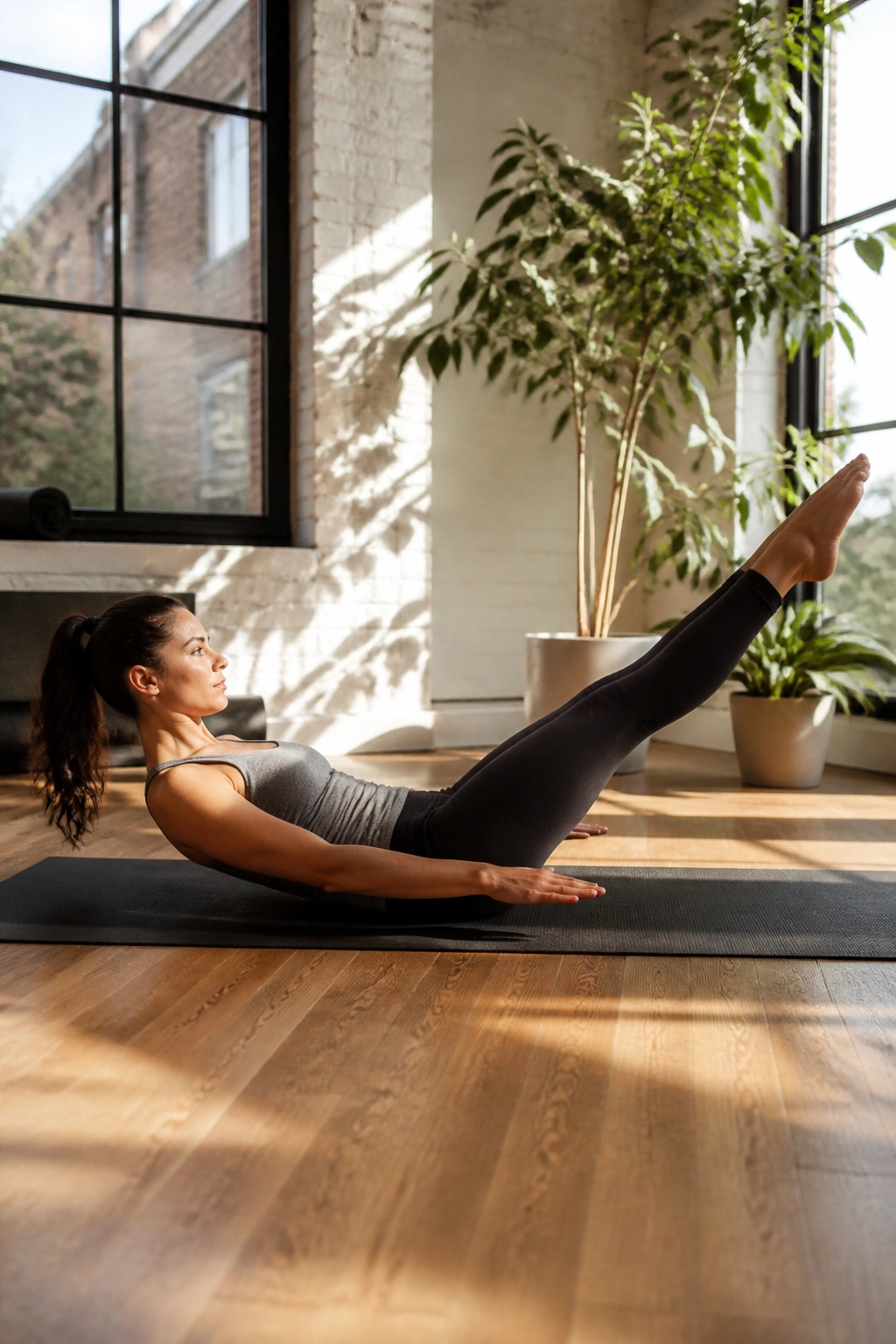
This is a foundational exercise for a reason. Lie on your back, lift your head and shoulders, and extend your legs to 45 degrees. Pump your arms vigorously by your sides while inhaling for five counts and exhaling for five counts.
The key to the “Hundreds” is the breath. You are taking 10 sets of 10 breaths. If you are struggling with the leg extension, bend your knees into tabletop. The goal is to keep your core flat and stable for the entire 100 counts. If your lower back arches, adjust your leg angle higher or keep the knees bent.
13. Leg Lowers with Pulse
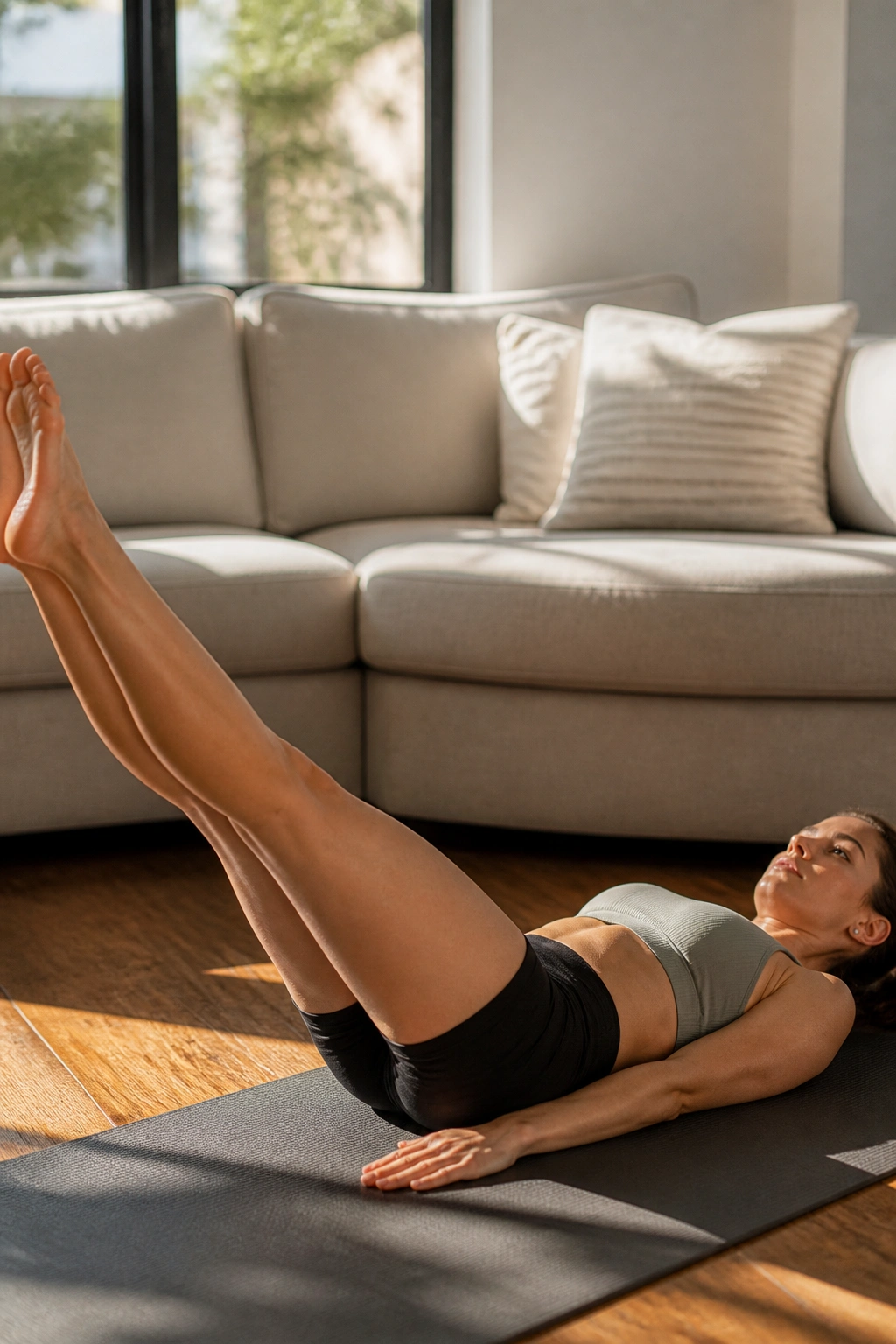
Start on your back with legs straight up. Lower your legs toward the floor in three counts—down, down, down. At the lowest point your back can support, stop.
The Lower Abdominal Burn
While at that low point, pulse your legs up and down an inch for 10 counts. Then, lift them back to the starting position in one smooth motion. Repeat this cycle 10 times. The pulse at the bottom is where the magic happens. Your lower abs will fight to keep your back pressed into the floor. It is a grueling, effective sequence that builds deep endurance.
14. Plank Pikes
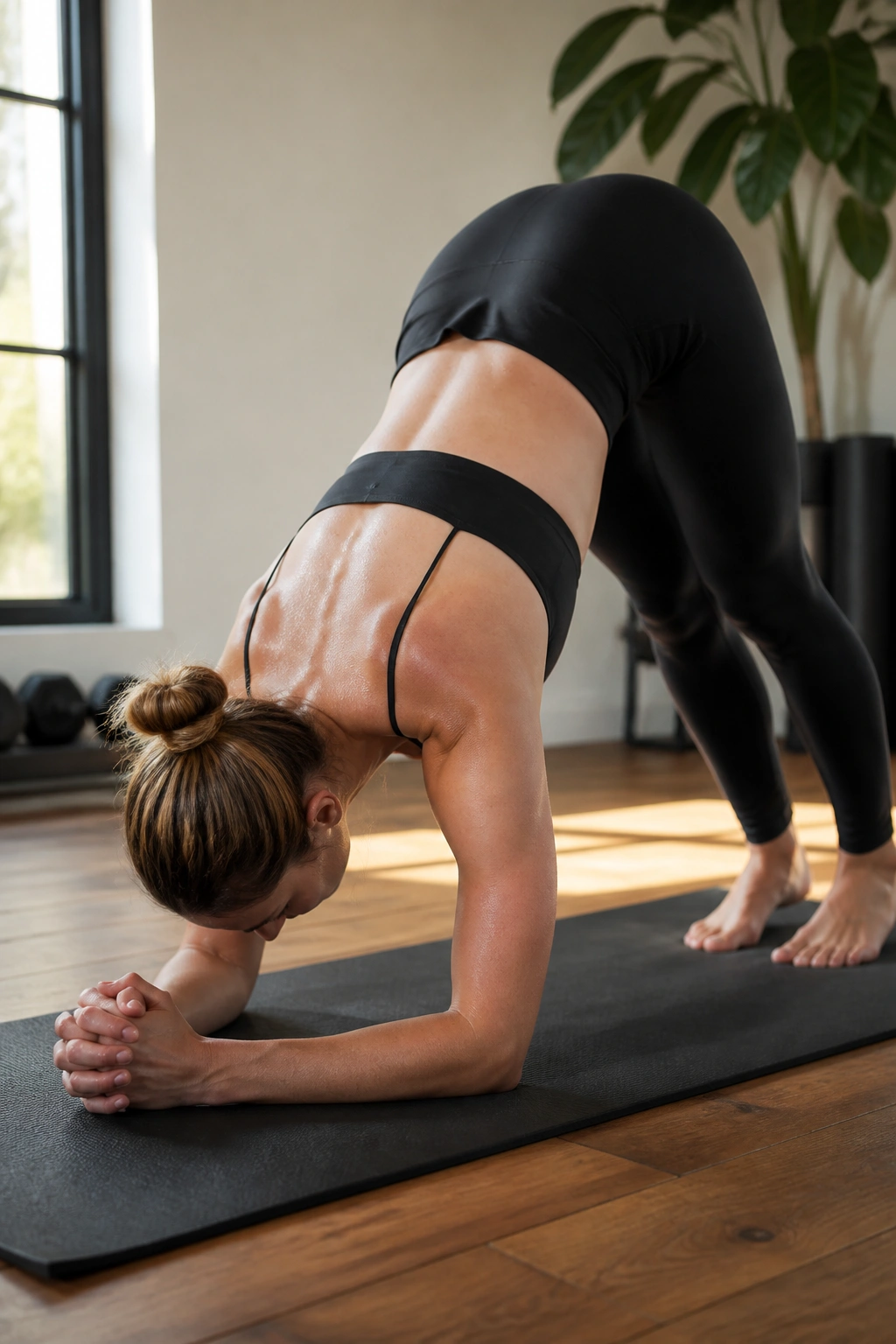
Start in a forearm plank. This time, push into your forearms and pike your hips toward the ceiling, creating an inverted “V” shape with your body. Focus on pulling your belly button into your spine to drive the movement.
Lower back down to the plank position with total control. Do not let your hips collapse. Repeat 12 times. This movement works the entire abdominal wall—the rectus abdominis for the pike and the transverse for the stabilization. Keep your heels reaching toward the floor when you pike to get a nice stretch in your calves, too.
15. Clam Crunch
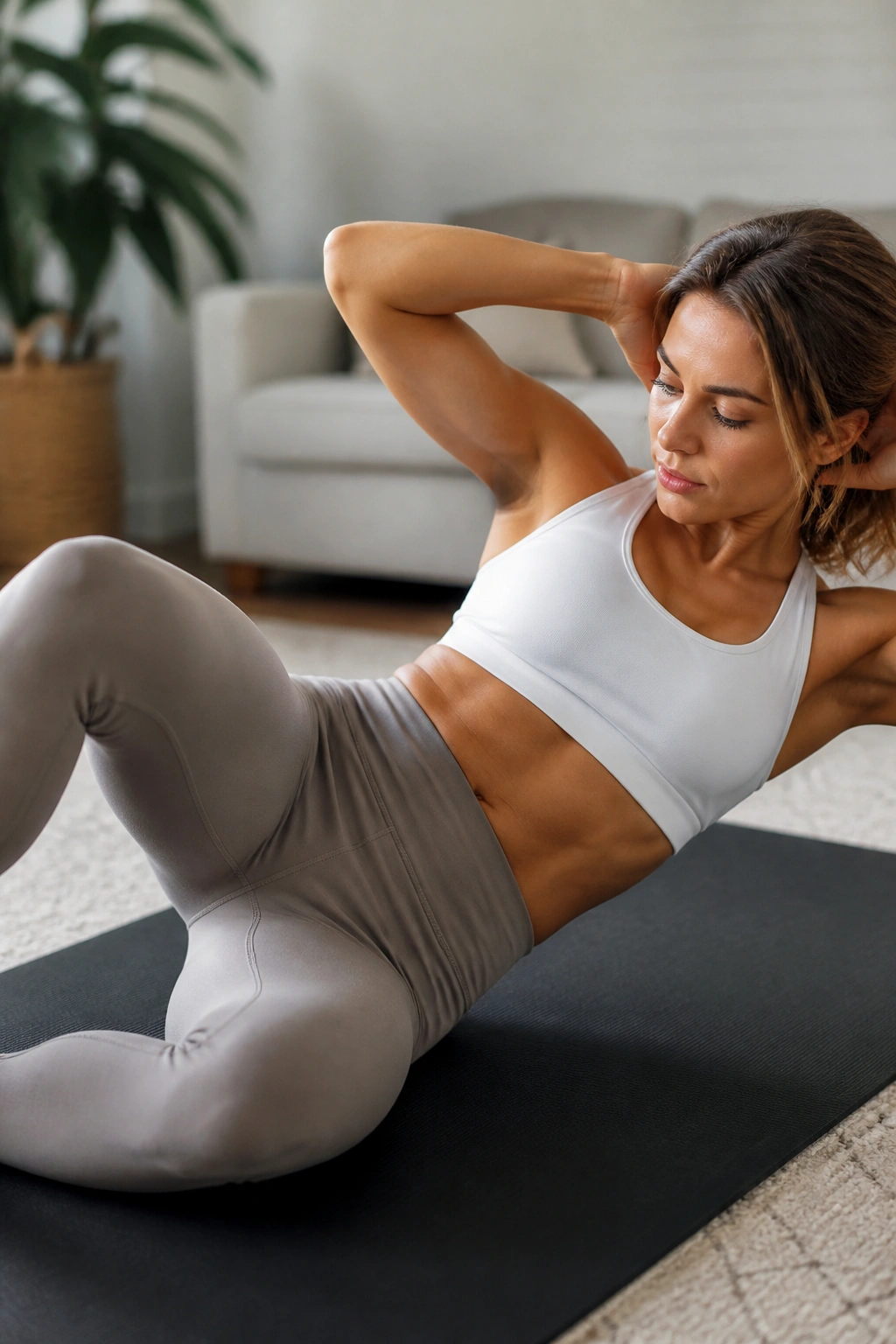
Lie on your left side, knees bent at a 45-degree angle, feet stacked. This is a classic barre move usually done for glutes, but by adding a crunch, we turn it into an oblique workout.
Place your right hand behind your head. Open your top knee while simultaneously lifting your torso into a side crunch. Close the knee as you lower. You are working the top of your waist. Perform 15 repetitions on each side. The burn in your obliques should be immediate. Keep the movement fluid.
16. Knee-to-Elbow Hover
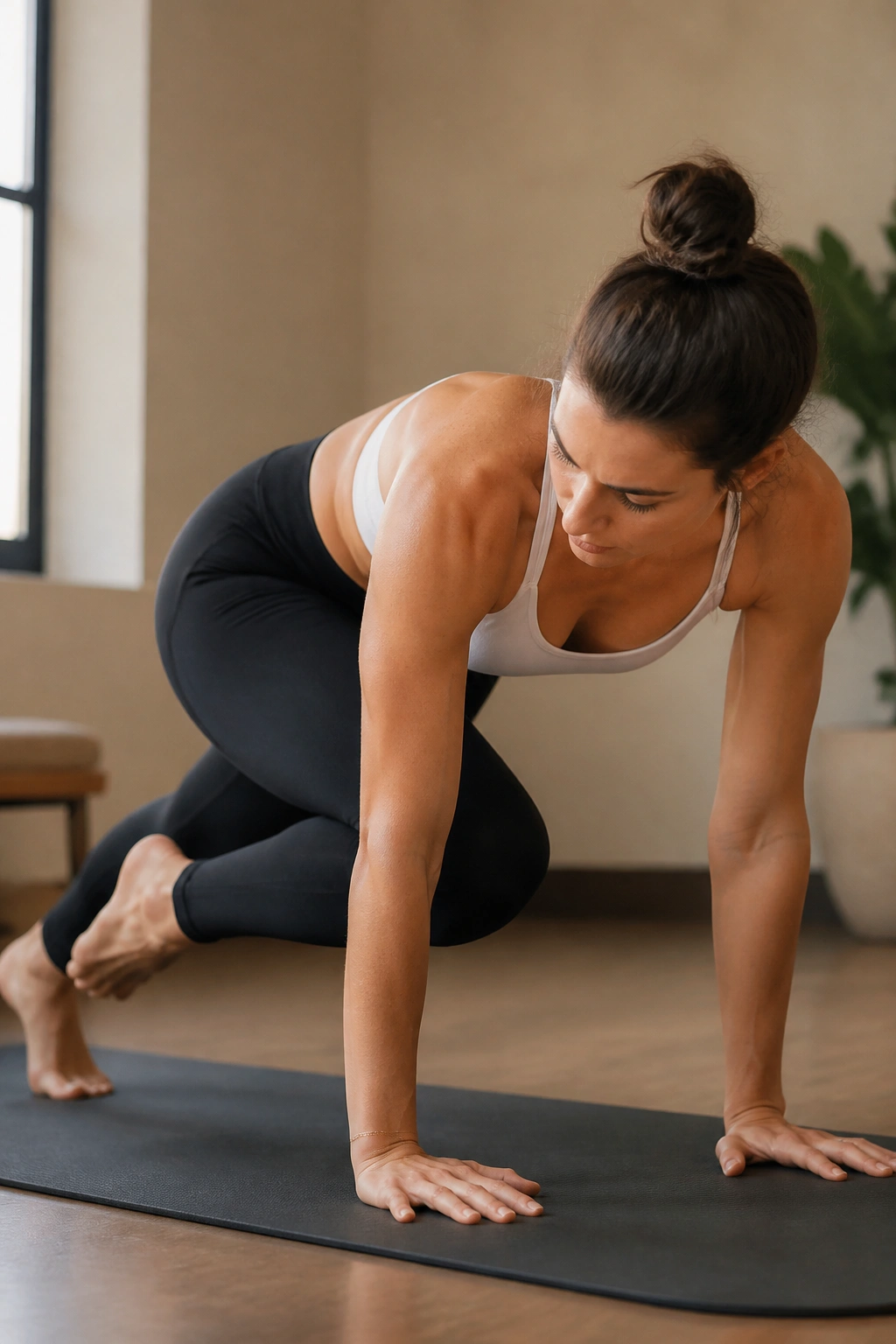
Get into a tabletop position on your hands and knees. Tuck your toes and lift your knees just one inch off the floor. Hold this hover. Now, bring your right knee toward your right elbow without dropping the left knee or the hips.
Stability Under Stress
This is a test of sheer abdominal stability. The hover is physically demanding, and the added movement of the knee creates instability that your core must fight to correct. Do 10 reps on each side. If you need to break, set your knees down, take one deep breath, and reset. The quality of the hold is more important than the speed of the movement.
17. Scissors
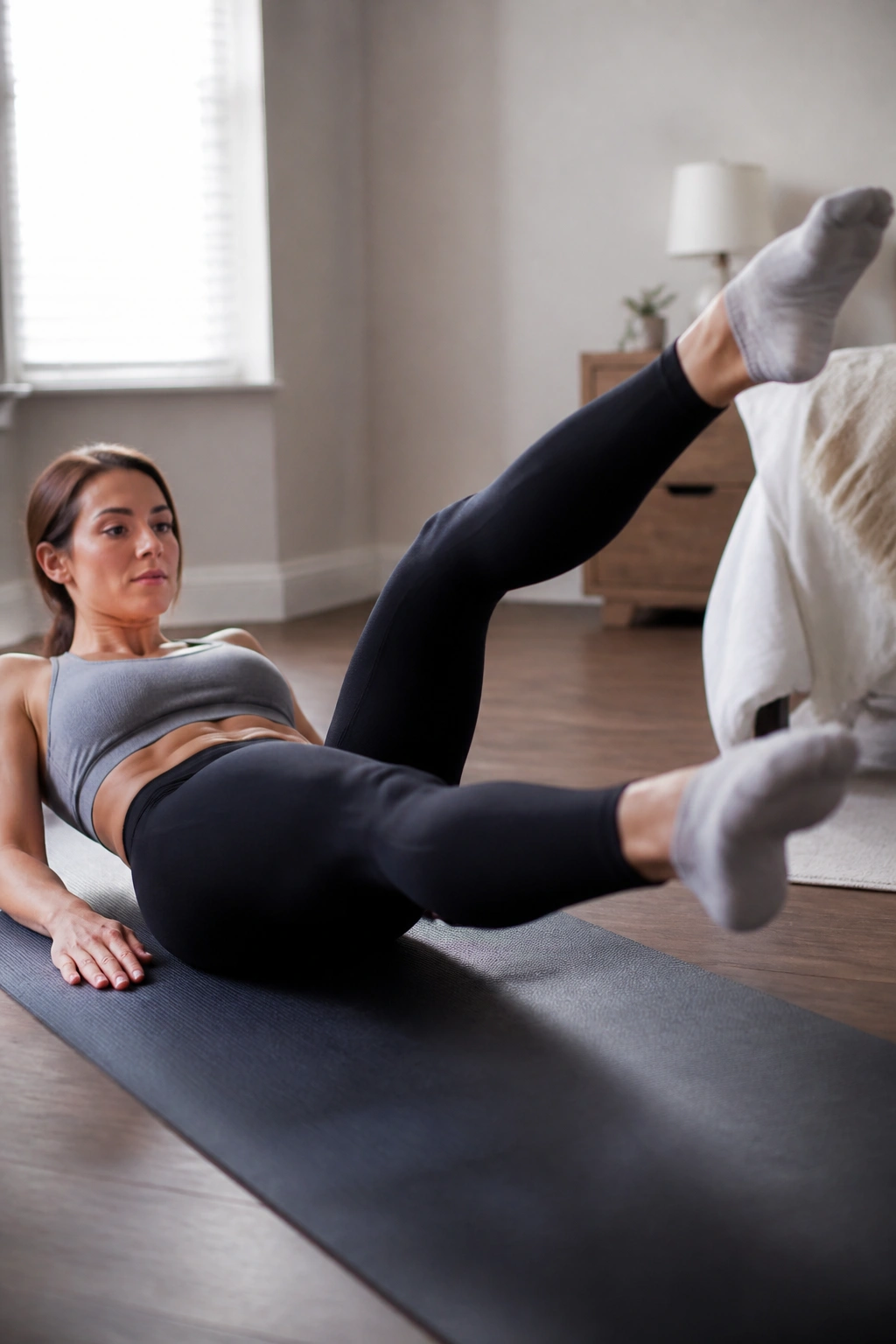
Lie on your back, legs extended. Lift your head and shoulders, and grab your right calf. Pull it toward you twice while scissoring your legs. Switch legs.
The key here is to keep the legs straight and the core engaged. Do not let the legs just flop. The movement should be sharp, controlled, and precise. Aim for 20 scissor motions. If your neck feels heavy, go back to resting your head on the floor, but keep the legs moving with the same intensity.
18. Flutter Kicks
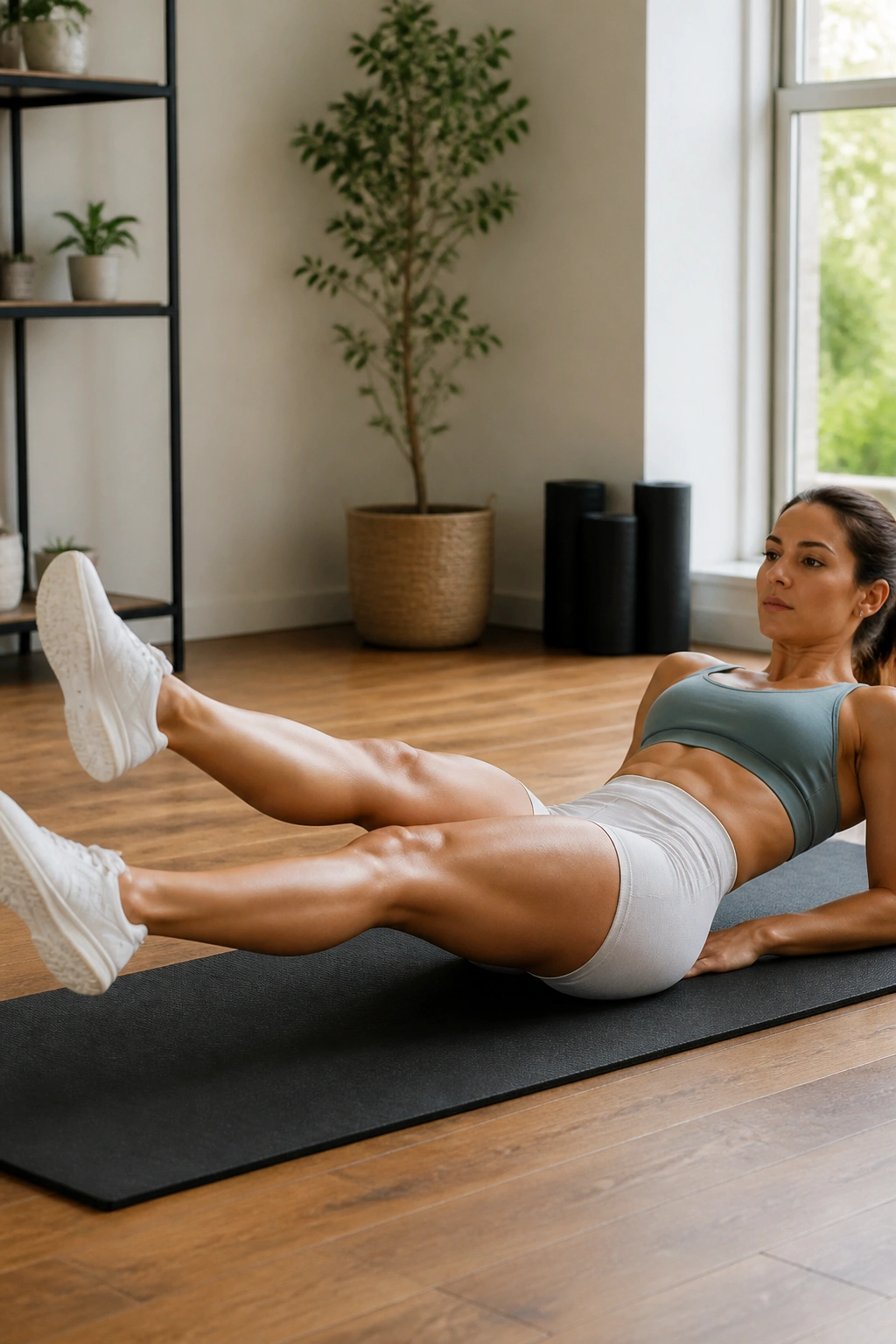
Lie on your back, legs extended straight out. Lift your head and shoulders, hands behind your head or by your sides. Lift your legs six inches off the floor.
Perform small, rapid flutter kicks. The lower your legs are to the ground, the harder the abs must work. Keep your lower back imprinted on the floor. Do 30 seconds of kicking. You should feel your abs shaking by the end of the duration. If your back starts to arch, lift your legs higher toward the ceiling.
19. Forearm Plank Holds
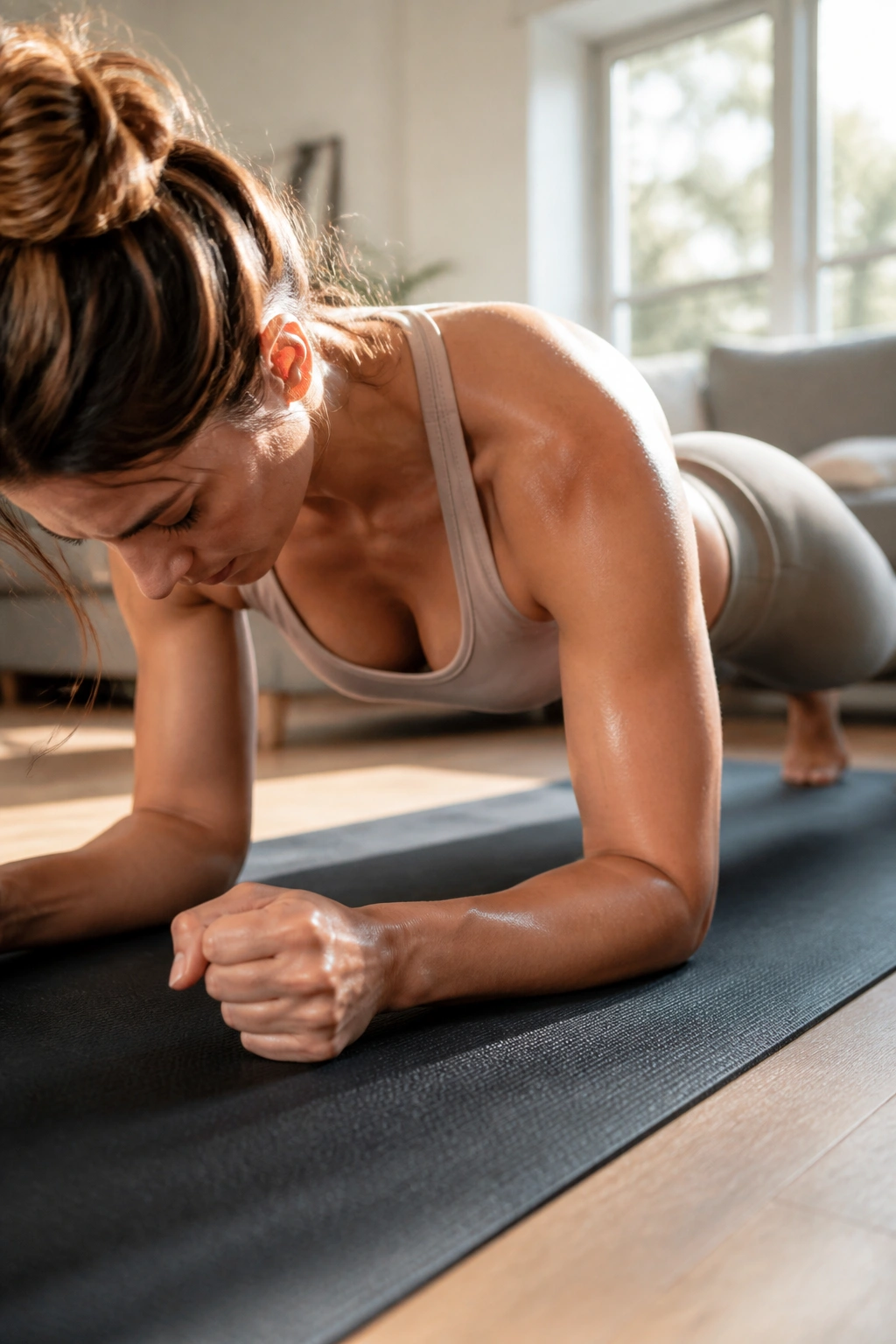
We finish the series with an isometric hold. Get into a forearm plank. Hold for 60 seconds. During this minute, perform a “tuck.”
The Final Challenge
Think about pulling your ribcage toward your hips and your hips toward your ribcage. This creates tension throughout the entire core. Do not just exist in the plank—active in the plank. Squeeze your glutes, press into your forearms, and breathe. If you have to drop, drop, reset, and finish the time. This is about building the discipline to hold the form when the body wants to quit.
20. Cat-Cow to Plank Flow
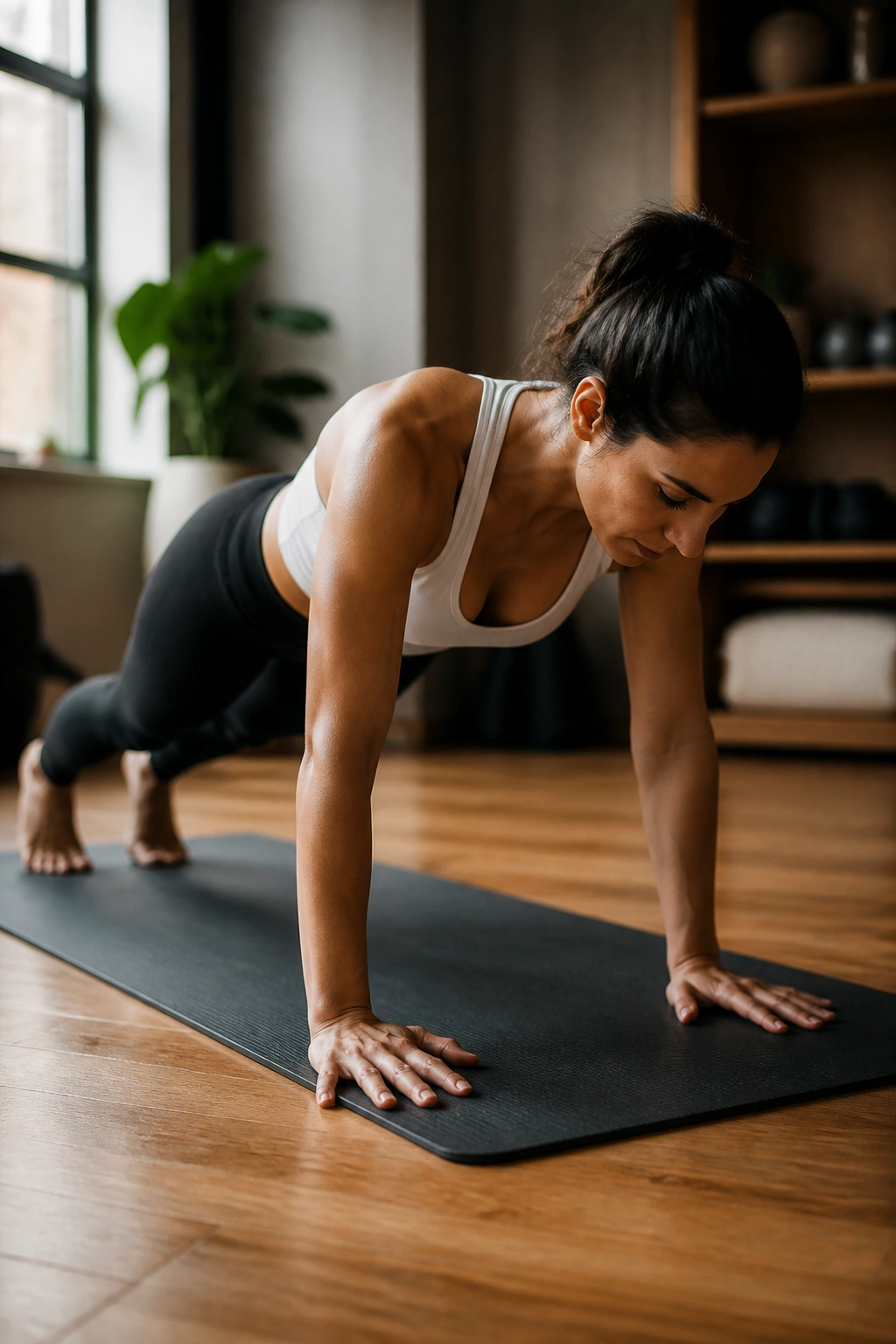
Finish with a bit of mobility. Start in tabletop. Inhale, drop your belly, and look up (Cat-Cow). Exhale, round your spine. Transition into a plank and hold for three seconds. Return to tabletop.
Repeat this flow five times. It stretches the abdominals you just worked while also forcing a quick, final re-engagement of the core in the plank position. It is the perfect way to cool down, giving your spine the movement it needs after a session of intense, isometric-focused abdominal training.
Final Thoughts
Barre-inspired training is not about reaching exhaustion through high-impact movement. It is about reaching fatigue through precision. When you move at home, focus on the details that often get lost in a larger setting: the exact angle of your spine, the deliberate tuck of your pelvis, and the constant, active engagement of your core muscles.
You will find that the exercises that seem the simplest—the holds and the tiny pulses—are often the ones that create the most lasting change. The shake is not a sign that you are doing it wrong; it is the sign that you are doing it perfectly. Keep your movements controlled, keep your breathing deep, and trust the process of small, repeated effort.
