



Walk into almost any gym and the same mistake shows up fast: a beginner loads too much weight, skips the warm-up, and copies a lifter who’s been at it for years. That’s how people turn a simple goal into sore elbows, cranky knees, and a workout they dread finishing. Beginner gym workouts for men work best when they’re plain, repeatable, and honest about where you are right now.
That does not mean easy in the lazy sense. It means smart enough to build muscle, burn fat, and get stronger without needing a spotlight or a chiropractor. The best starter sessions use machines, dumbbells, cables, bodyweight drills, and a little conditioning so you can learn the big movement patterns first: push, pull, squat, hinge, brace, carry, breathe.
I’m a fan of boring first weeks. Seriously. Boring weeks are where good form gets built, where your joints stop arguing with you, and where the numbers start moving in the right direction because you’re not trying to prove anything on day one.
Some of these workouts are full sessions. Some work better as short add-ons on busy days. A few are better as technique days, especially if the barbell still feels awkward in your hands. Pick the ones that fit your gym, your confidence level, and how much time you’ve got, then keep the weight honest and the reps clean.
1. Machine Circuit for a Low-Stress First Session
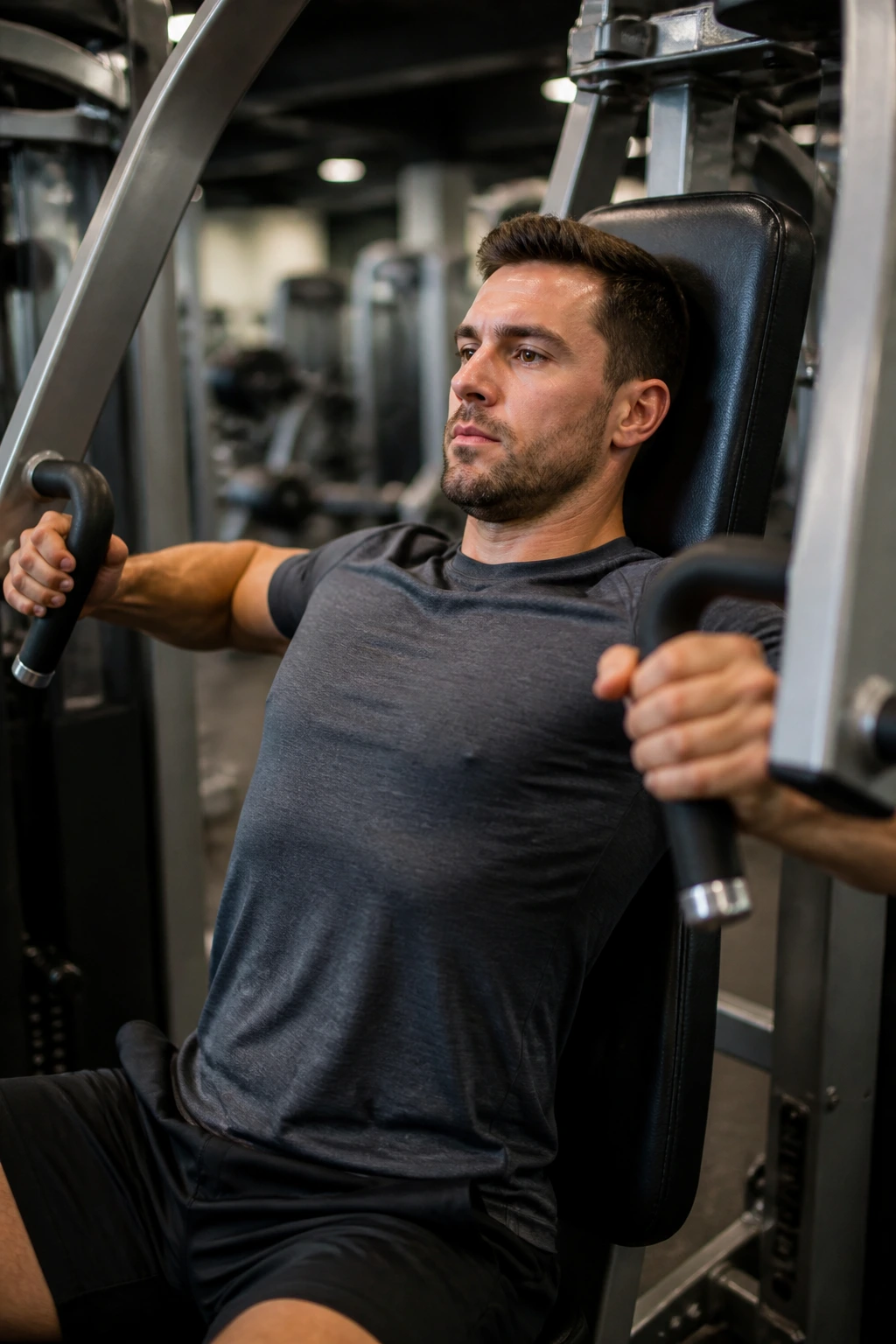
Machines are not cheating. They’re training wheels with a purpose.
Start with 5 exercises, each for 2 sets of 10 to 12 reps: chest press, seated row, leg press, shoulder press, and leg curl. Rest about 60 to 90 seconds between sets. Use a load that leaves 2 reps in the tank when you finish each set. If the last rep turns into a grind, the weight’s too heavy.
How to Run It
- 5-minute treadmill walk or bike warm-up
- Chest press: 2 x 10-12
- Seated row: 2 x 10-12
- Leg press: 2 x 10-12
- Shoulder press: 2 x 10-12
- Leg curl: 2 x 10-12
Keep the tempo smooth. No bouncing. No slamming the stack. You want to feel the target muscle do the work, not your ego.
2. Dumbbell Bench Press and Seated Row Day
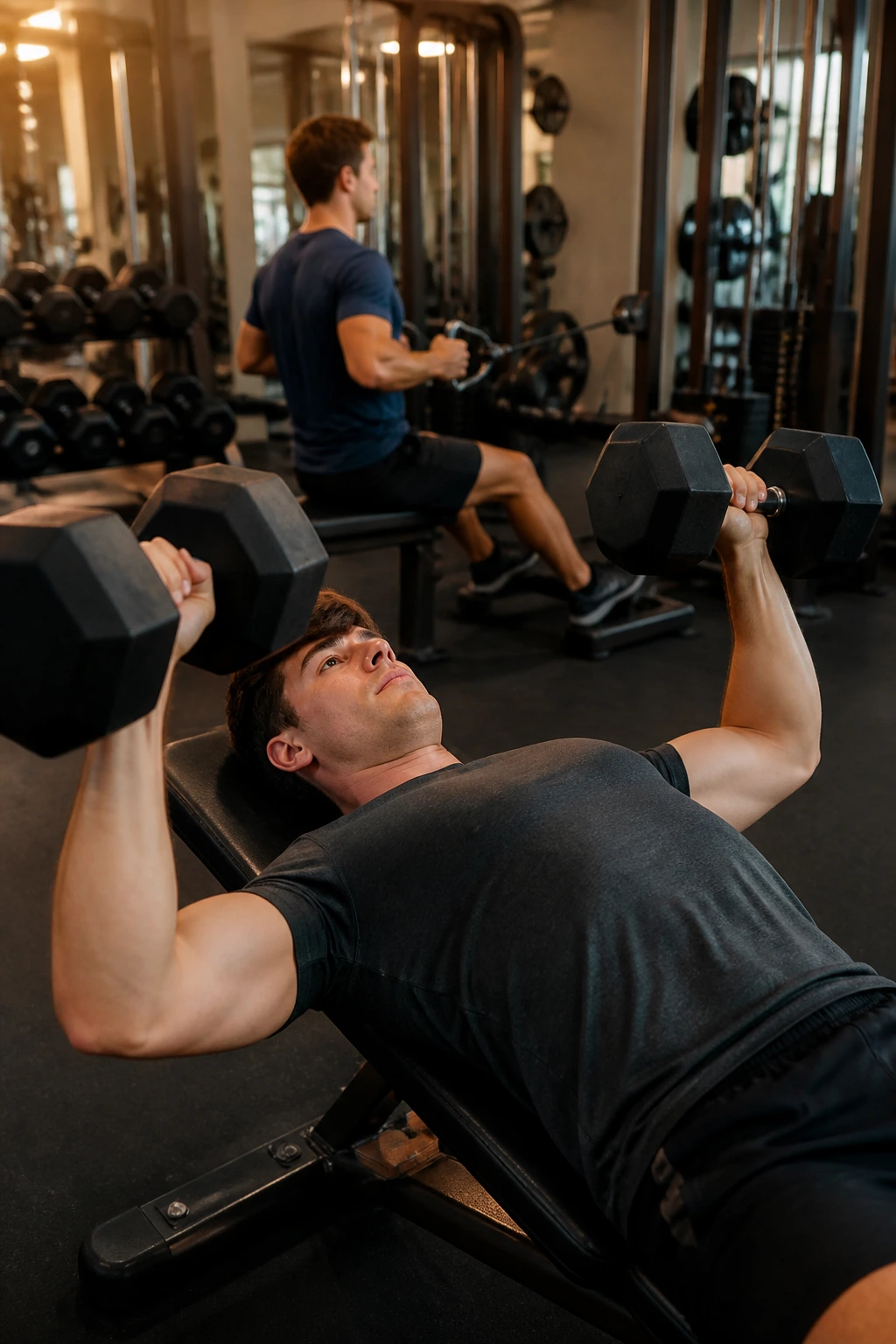
This is the kind of session that teaches balance fast. One movement pushes, the other pulls, and your shoulders usually thank you for keeping the two sides honest.
Use 3 sets of 8 to 10 reps for each main lift. Pair dumbbell bench press with seated cable row, then add incline dumbbell curls and rope triceps pressdowns for 2 sets of 12. Rest 75 seconds between rounds. If your lower back starts arching hard on the bench, drop the load and plant your feet more firmly.
The cleanest version of this workout feels controlled, not frantic. Dumbbells force each arm to do its own job, which is great if one side is stronger or tighter than the other. Keep your wrists stacked over your elbows, and stop each rep when the dumbbells are still under control.
3. Goblet Squat and Romanian Deadlift Session
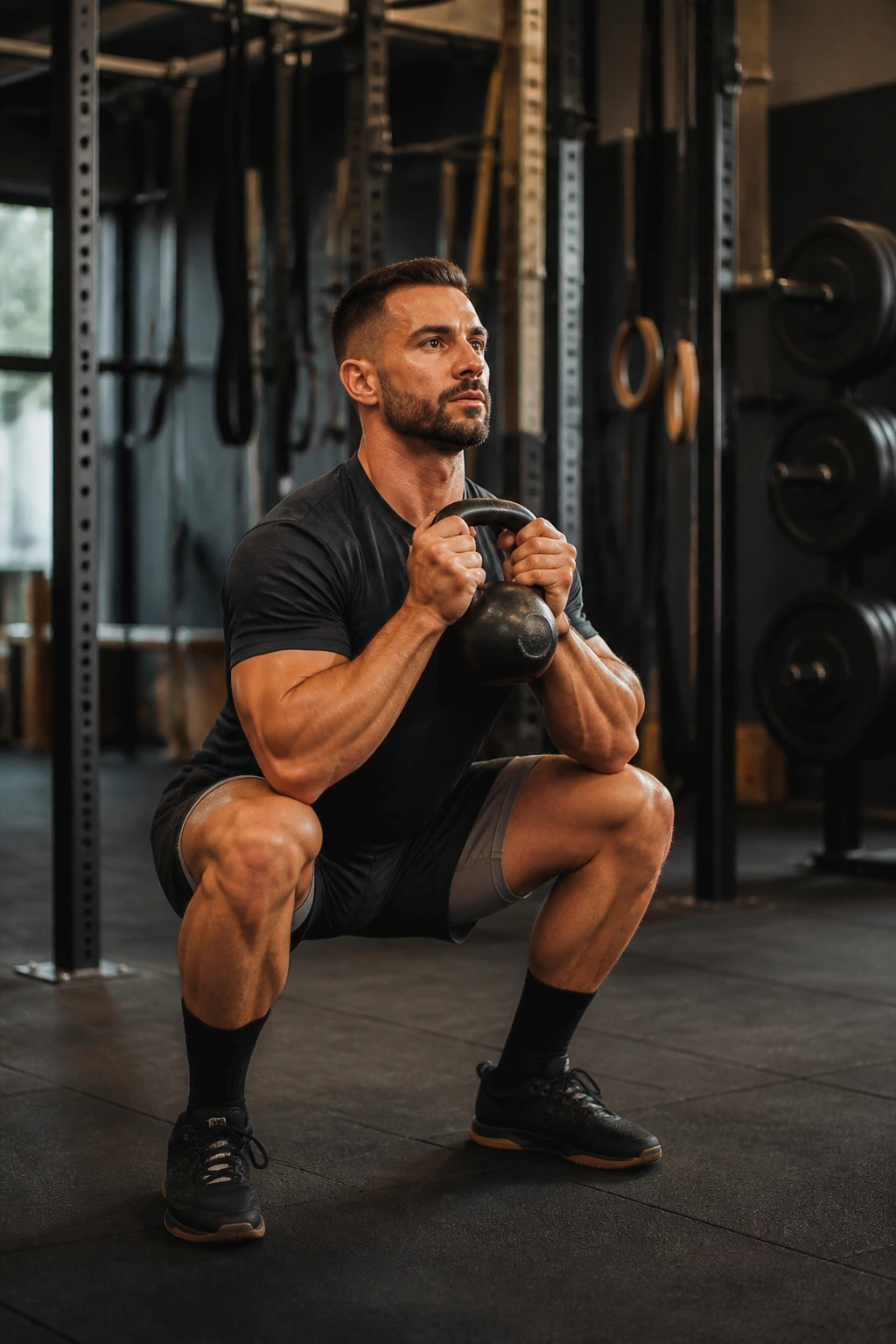
If a man wants better legs and a sturdier back, this is a useful place to start.
Main Lifts
Goblet squats and Romanian deadlifts teach the two patterns beginners need most: squatting down and hinging back. Do 3 sets of 8 reps on each, then add walking lunges for 2 sets of 10 steps per leg. Finish with a plank for 3 rounds of 20 to 30 seconds.
What Makes It Work
The goblet squat keeps your torso upright and makes depth easier to judge. The Romanian deadlift teaches you to push your hips back without rounding your spine. Slow reps matter here. Count 2 seconds down on both lifts, then come back up with control.
Do not chase the floor on the deadlift. Stop when your hamstrings feel stretched and your back still looks flat in the mirror.
4. Incline Treadmill Walk with Core Finisher
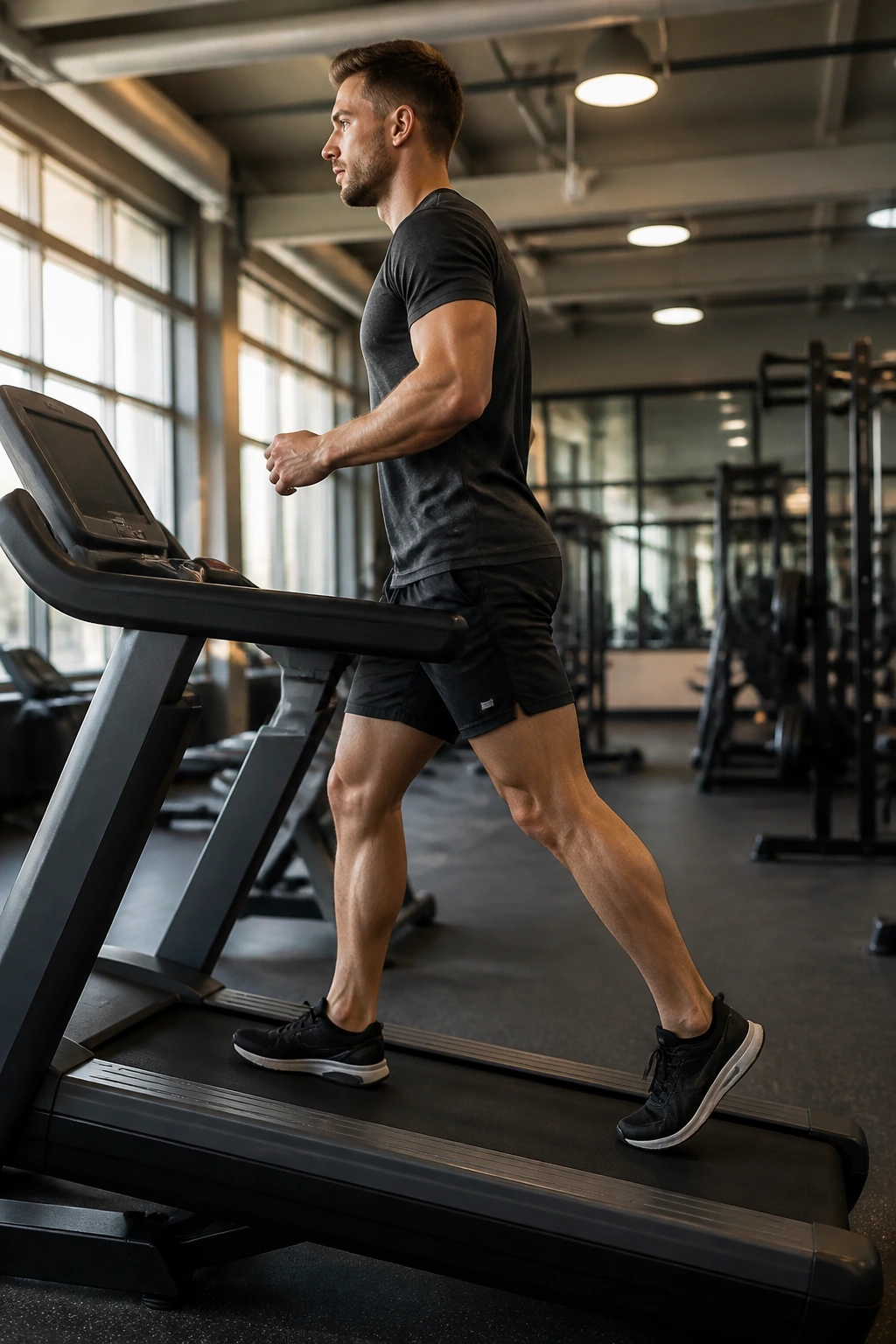
Not every beginner workout has to leave you gasping. Some should leave you feeling like you could do one more round, but don’t need to.
Set the treadmill to 6 to 12 percent incline and walk for 20 to 30 minutes at a pace that keeps your breathing steady but a little heavy. After that, move to the floor for dead bugs, side planks, and reverse crunches. Two rounds is enough: 8 dead bugs per side, 20 seconds per side on the plank, and 12 reverse crunches.
This works well on days when your joints feel beat up or your schedule is tight. The incline does the work without pounding your knees like hard running can. Add a slight arm swing, stay tall, and avoid hanging on the rails like you’re on a moving bus.
5. Leg Press, Leg Curl, and Calf Builder
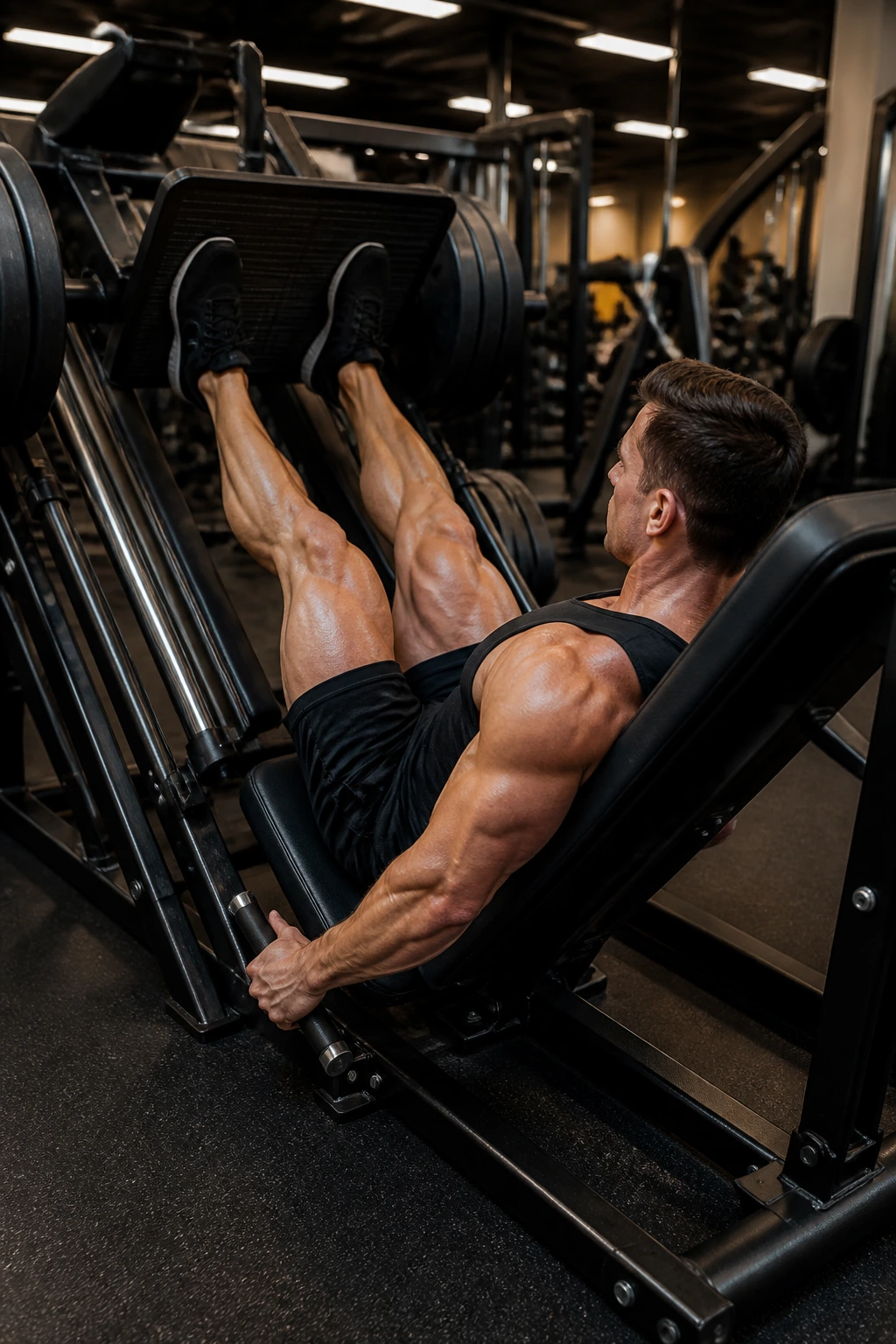
Some guys skip leg day because squats scare them. Fine. Start here and earn your way up.
The leg press gives you load without a long learning curve. Use 4 sets of 10 reps on the press, 3 sets of 12 on the seated or lying leg curl, and 3 sets of 15 to 20 on calf raises. Rest 60 to 90 seconds between sets. Keep your feet mid-platform on the press unless your knees feel better with them slightly higher.
The mistake here is turning the leg press into a half-rep ego test. Lower the sled until your thighs come close to your chest, but only as far as your lower back stays glued to the pad. Calves need patience. Full stretch at the bottom, full squeeze at the top.
6. Cable Push-Pull Workout
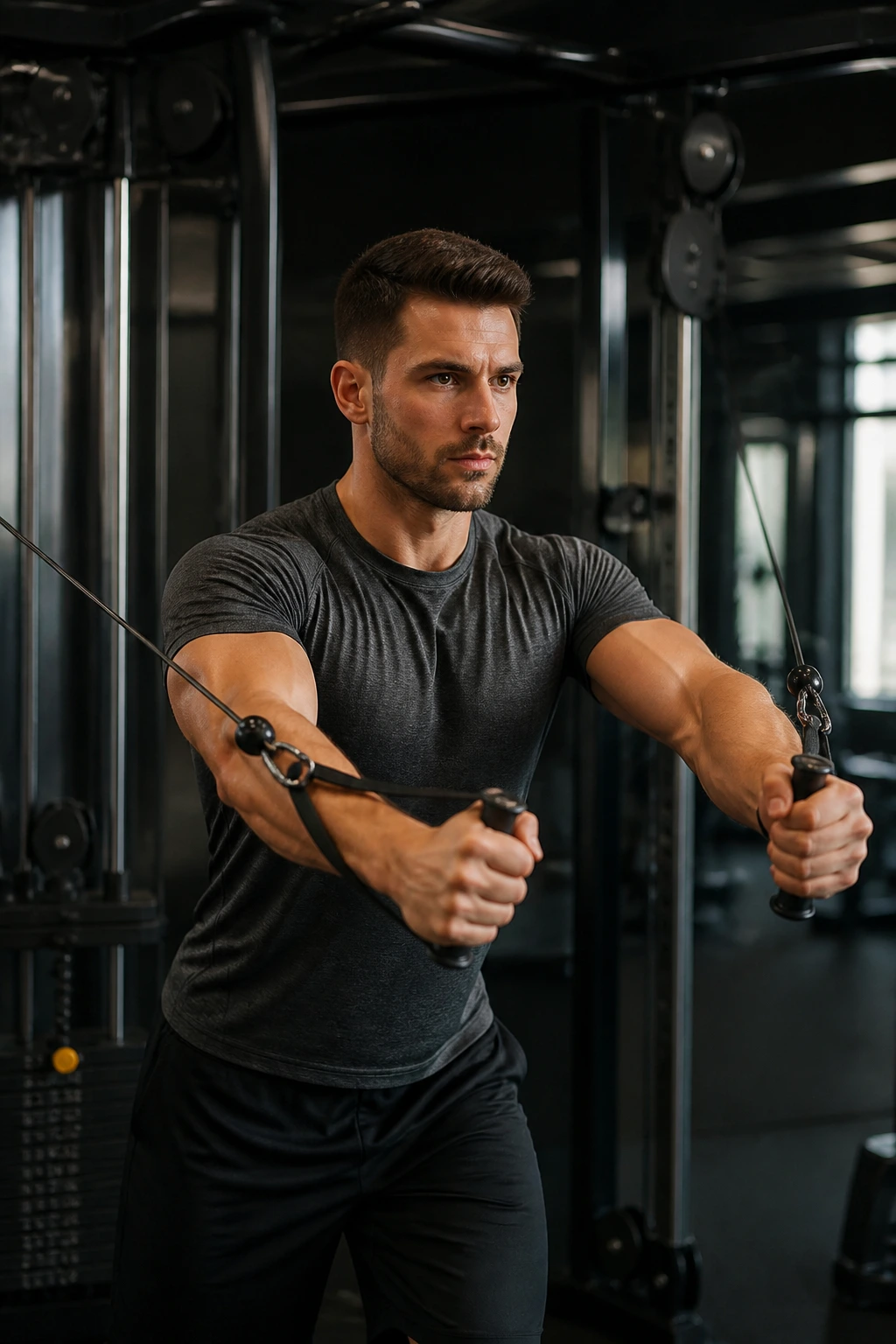
Cable stations are gold for beginners because the resistance stays smooth from start to finish.
Suggested Pairings
- Cable chest press: 3 x 10
- Seated cable row: 3 x 10
- Cable lateral raise: 2 x 12
- Face pull: 2 x 15
- Cable woodchop: 2 x 10 per side
The cable stack lets you keep tension on the muscle even when the weight feels light. That matters. Light resistance with clean form beats sloppy heavy reps nearly every time for a newer lifter.
Face pulls deserve more respect than they get. They help the upper back and rear shoulders, which makes pressing feel better and posture look less collapsed after long days at a desk. Pull the rope toward your nose or upper face, then finish with your hands apart.
7. Smith Machine Full-Body Starter
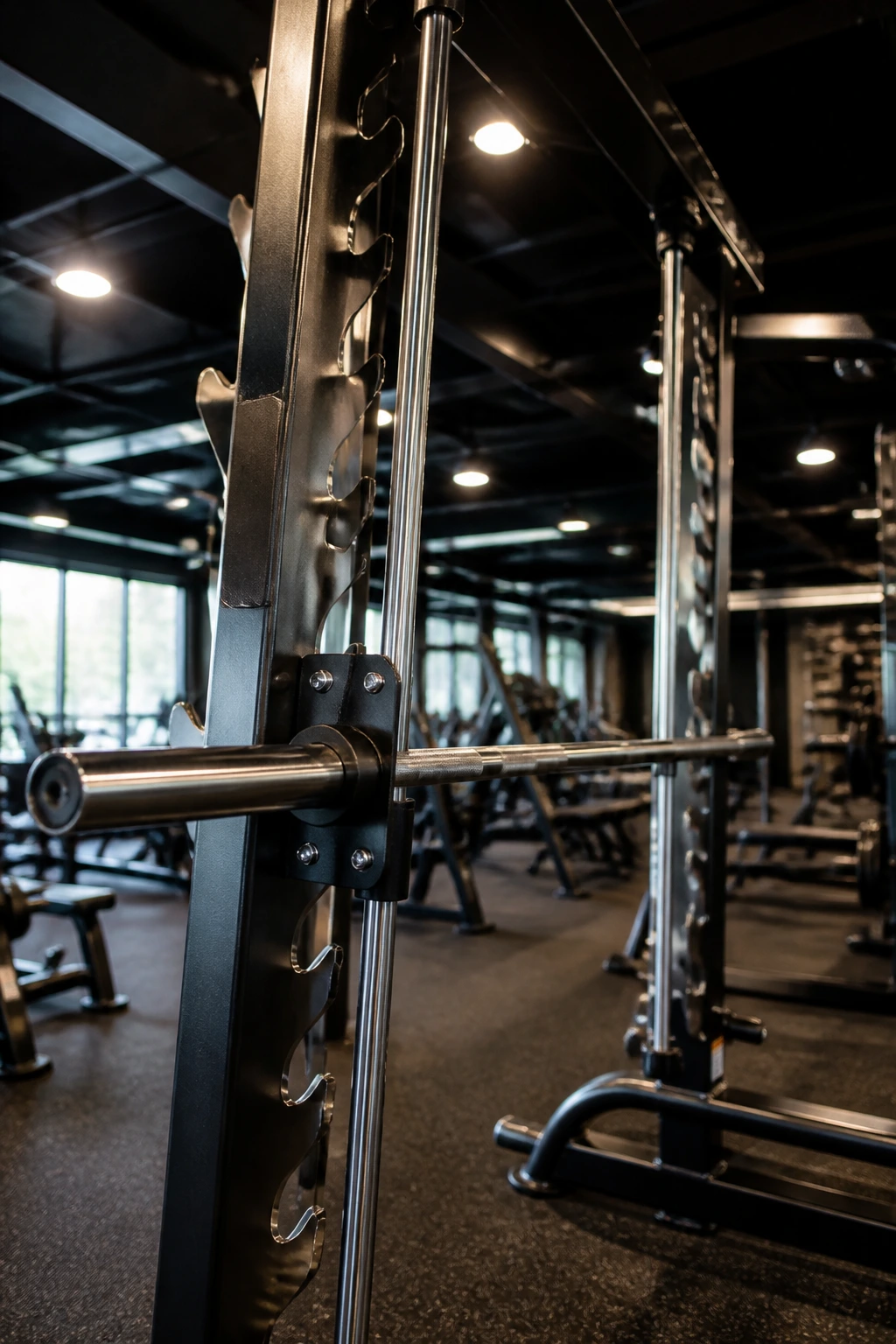
The Smith machine gets mocked a lot, but beginners often need something simple, stable, and easy to repeat.
Use it for Smith squats, incline presses, and split squats. A clean starter session looks like this: 3 sets of 8 reps on Smith squats, 3 sets of 8 reps on incline press, 2 sets of 10 reps per leg on split squats, and 2 sets of 12 reps on a machine row.
What makes this useful is the fixed bar path. You don’t have to worry about balancing the bar while your movement pattern is still messy. That frees you up to learn stance, depth, and pacing. Keep your feet slightly in front of the bar on squats if your gym’s machine feels better that way. Small adjustments matter.
8. Empty-Bar Technique Day
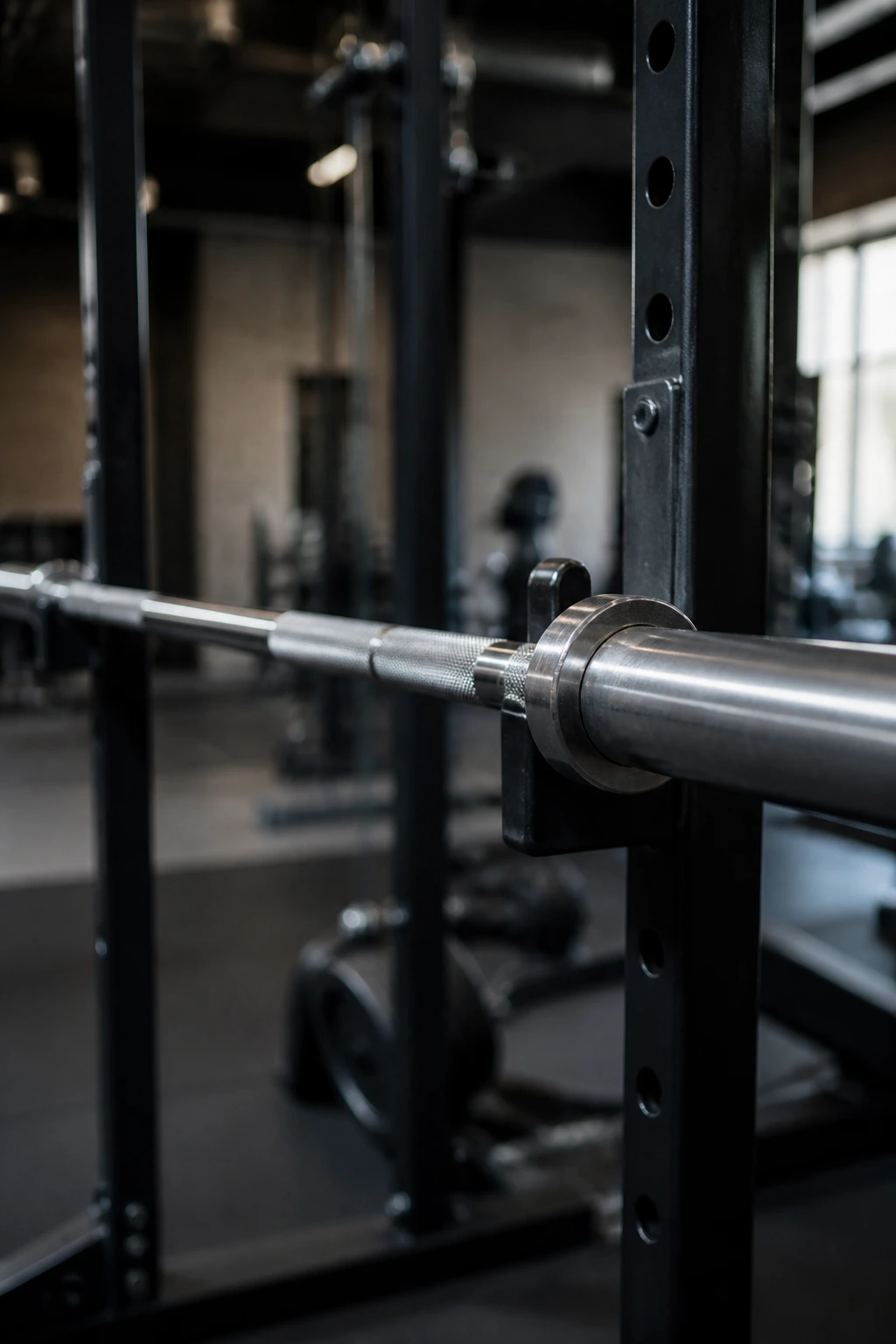
A lot of men skip the empty bar because it feels too light. That’s usually a mistake.
This is your form day. Use an empty barbell or the lightest training bar available for overhead press, front squat, deadlift setup, and barbell row mechanics. Do 3 sets of 5 reps for each movement, with long enough rests to reset your posture. The point is not fatigue. The point is getting the positions right before load enters the picture.
What to Focus On
- Feet rooted to the floor
- Bar path close to the body
- Ribs down, not flared
- Neck relaxed
- Breathing before each rep
A technique session can feel slow. Good. Slow is where the mistakes show up. If the bar drifts away from your shins on the deadlift or your elbows shoot everywhere on the press, you’ve found something worth fixing before you pile on plates.
9. Upper-Body Push Workout for Chest, Shoulders, and Triceps
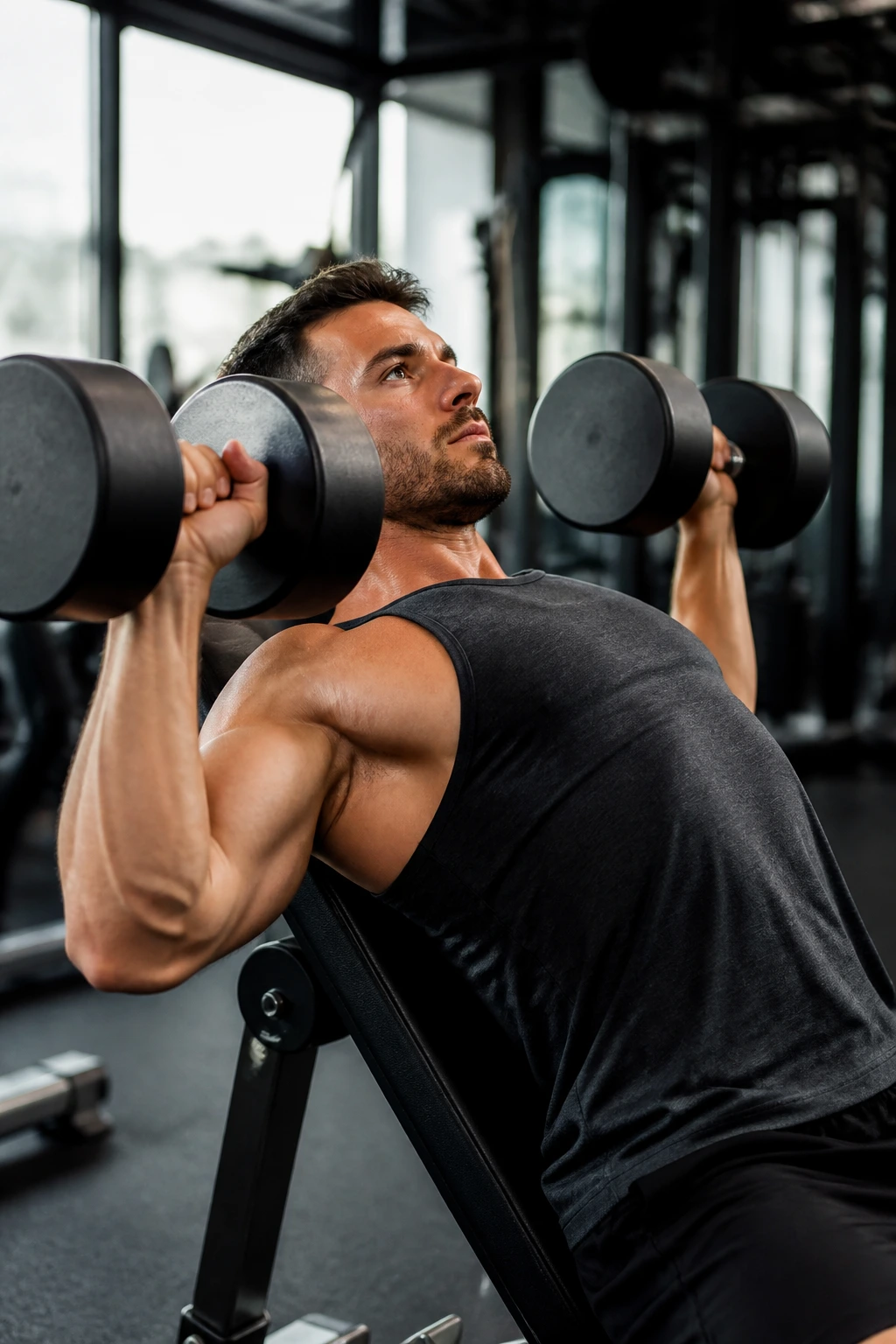
Push workouts are simple on paper and easy to mess up if you chase too much pressing volume too soon.
Start with incline dumbbell press for 3 sets of 8, then do machine chest press for 3 sets of 10, seated dumbbell shoulder press for 3 sets of 8, and finish with rope pressdowns for 2 sets of 12 to 15. Rest about 75 seconds between sets.
The chest and triceps will usually give out before the shoulders do, and that’s fine. Keep your shoulder blades set on presses, don’t bounce the dumbbells, and stop a rep early if the weight starts traveling in a crooked line. That crooked line is the giveaway.
One nice thing about a push day is how easy it is to track progress. When the same weights feel smoother for the same reps, you’re moving in the right direction.
10. Upper-Body Pull Workout for Back and Biceps
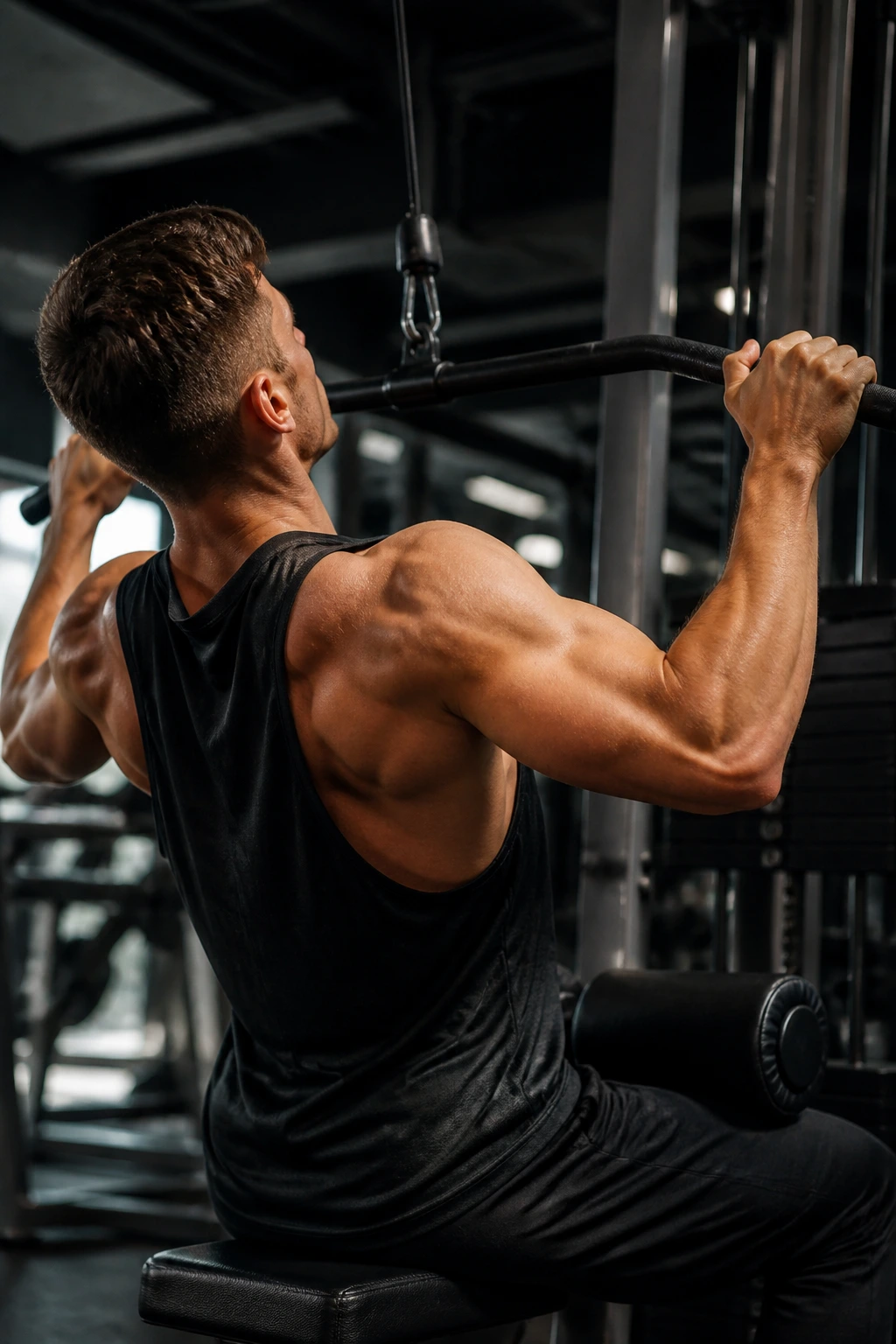
If your posture gets lazy from sitting, this session helps more than you’d think.
Core Moves
- Lat pulldown: 3 x 10
- Chest-supported row: 3 x 10
- Single-arm cable row: 2 x 12 per side
- Dumbbell curl: 2 x 10
- Hammer curl: 2 x 12
Pull workouts feel best when you start with the bigger back movement and save the arm work for the end. Keep your chest lifted on rows, and let your elbows drive the movement instead of yanking with your hands. That one detail saves a lot of wasted effort.
The trap beginners fall into here is shrugging every rep. Don’t. Keep the shoulders down and think about pulling your elbows toward your back pockets. That cue sounds odd, but it works.
11. Lower-Body Strength Workout
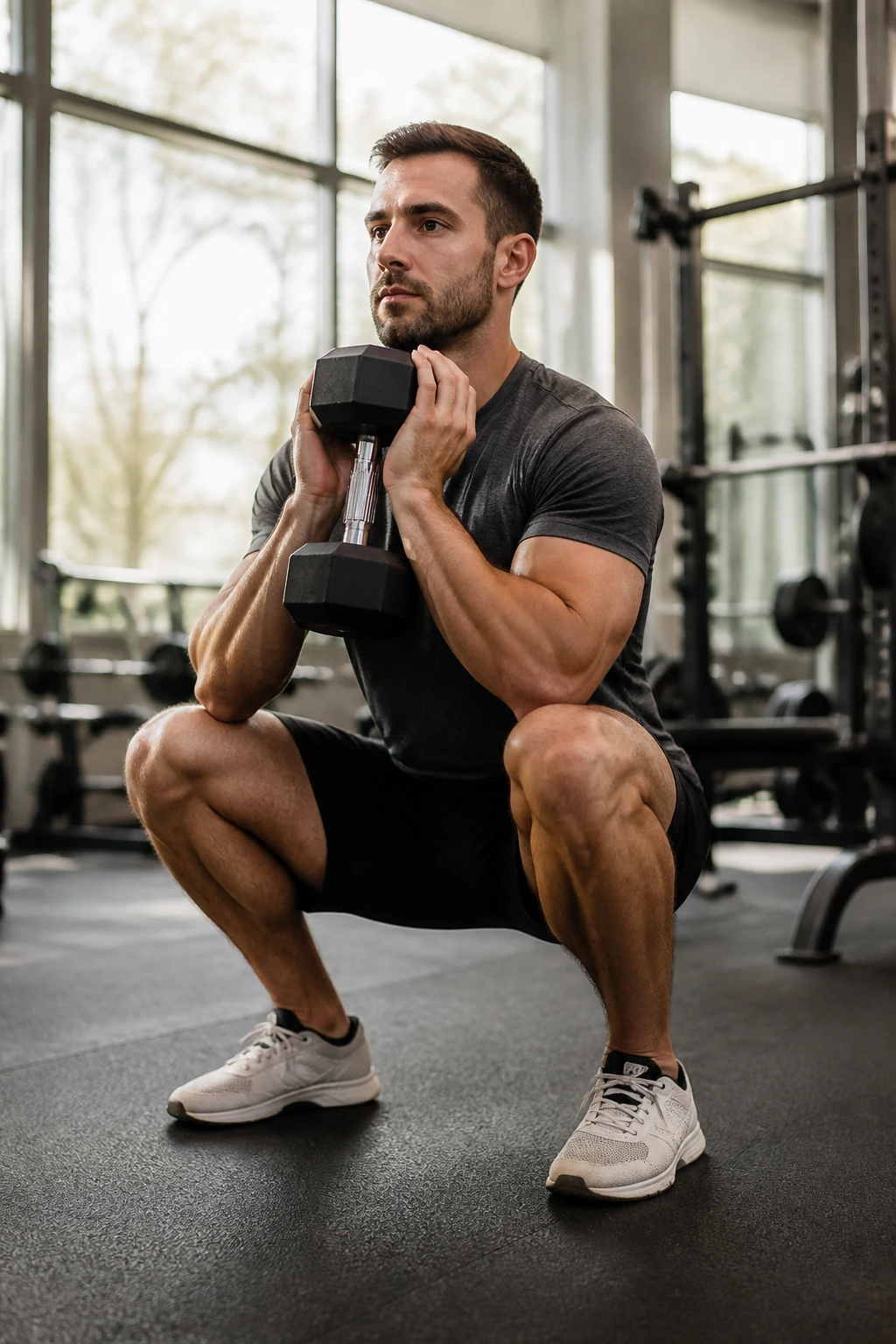
A beginner lower-body day should feel firm, not punishing.
Use hack squats or goblet squats for 3 sets of 8, Romanian deadlifts for 3 sets of 8, walking lunges for 2 sets of 10 steps per leg, and standing calf raises for 3 sets of 15. Rest 90 seconds on the first two lifts, then 60 seconds on the accessories.
This session builds legs from the ground up. The squat hits the front of the thighs, the hinge loads the hamstrings and glutes, and lunges clean up side-to-side weakness that a lot of men never notice until a knee starts acting weird. That’s the sneaky value here.
Keep the dumbbells or bar close to your body on the hinge. Once the weight drifts away from your shins, your lower back starts doing work it was never meant to do all by itself.
12. Dumbbell Full-Body A Session
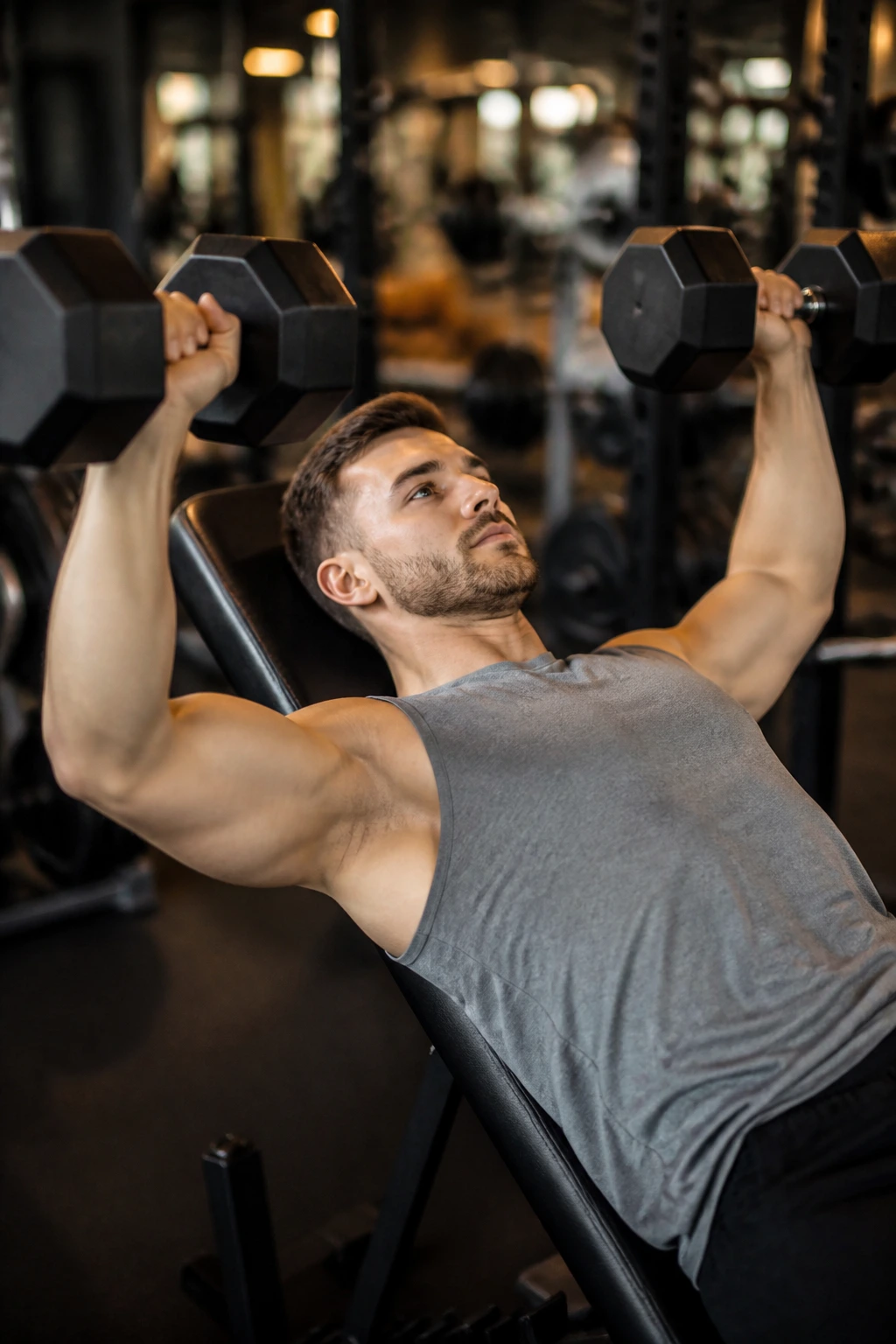
Dumbbells are a good middle ground: more freedom than machines, less setup than barbells.
Try dumbbell bench press, one-arm dumbbell row, goblet squat, dumbbell Romanian deadlift, and farmer’s carry. Do 3 sets of 8 to 10 reps on the first four moves, then walk for 3 carries of 30 to 40 seconds. Rest 60 to 90 seconds as needed.
This kind of session is especially useful if your gym gets crowded. You only need a bench, a pair of dumbbells, and a little floor space. Keep the bench press tight, row from a stable base, and let the carries teach your grip and core to work together. They’re plain. They also work.
13. Kettlebell Conditioning Workout
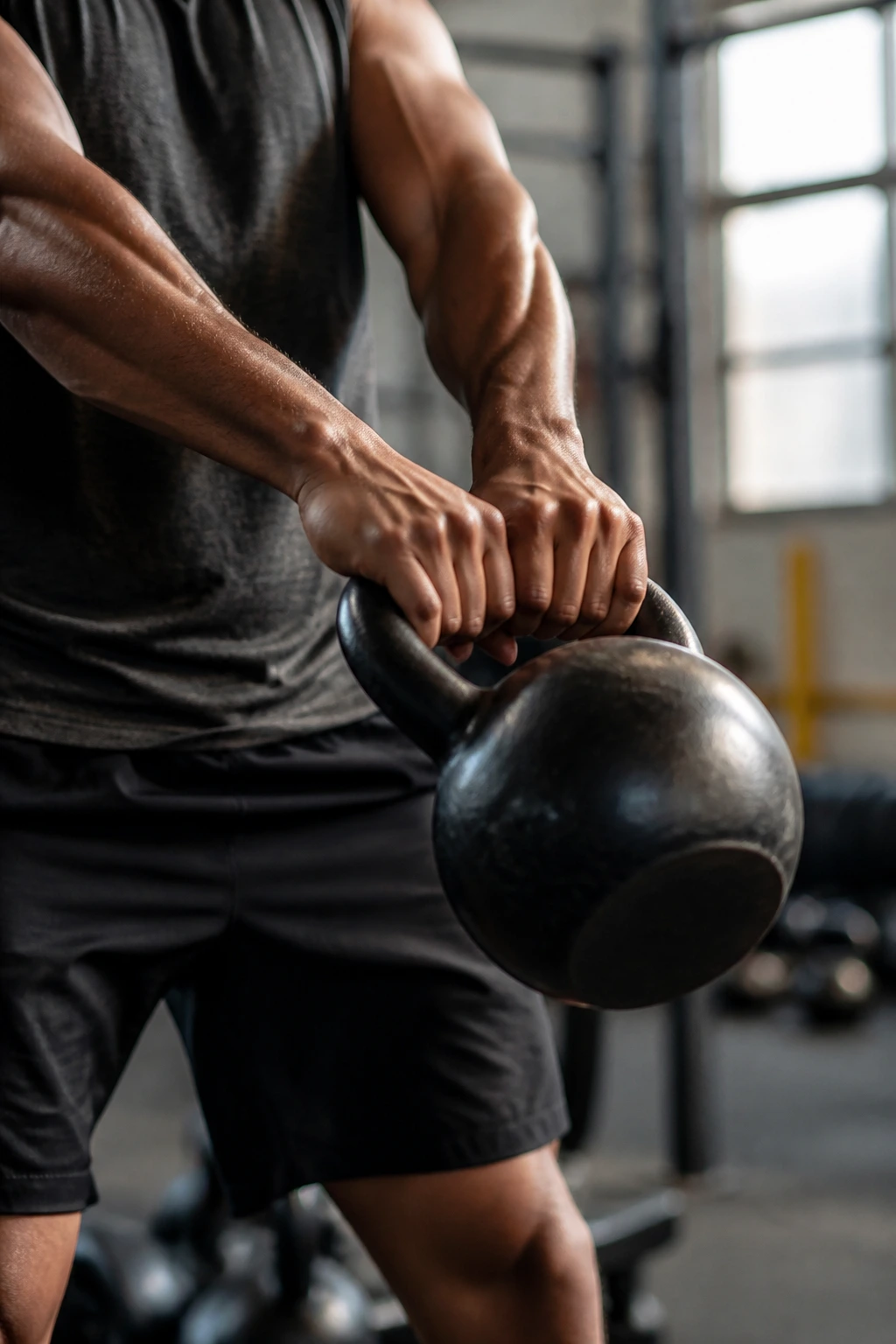
Kettlebells bring a different feel. The offset weight forces you to stay honest.
Simple Kettlebell Flow
- Kettlebell deadlift: 3 x 10
- Kettlebell swing: 3 x 15
- Goblet squat: 3 x 10
- Suitcase carry: 3 x 30 seconds per side
Use a moderate bell. Not tiny, not heroic. The swing should snap at the hips, not turn into a front raise with momentum. If your back is doing the snapping, the bell is too heavy or the hinge needs more practice.
Kettlebell sessions work well when you want strength and conditioning together. Keep your rest short, about 45 to 60 seconds, and move with purpose. That slightly breathless feeling is part of the point, but sloppy reps are not.
14. Rowing Machine Intervals and Bodyweight Circuit
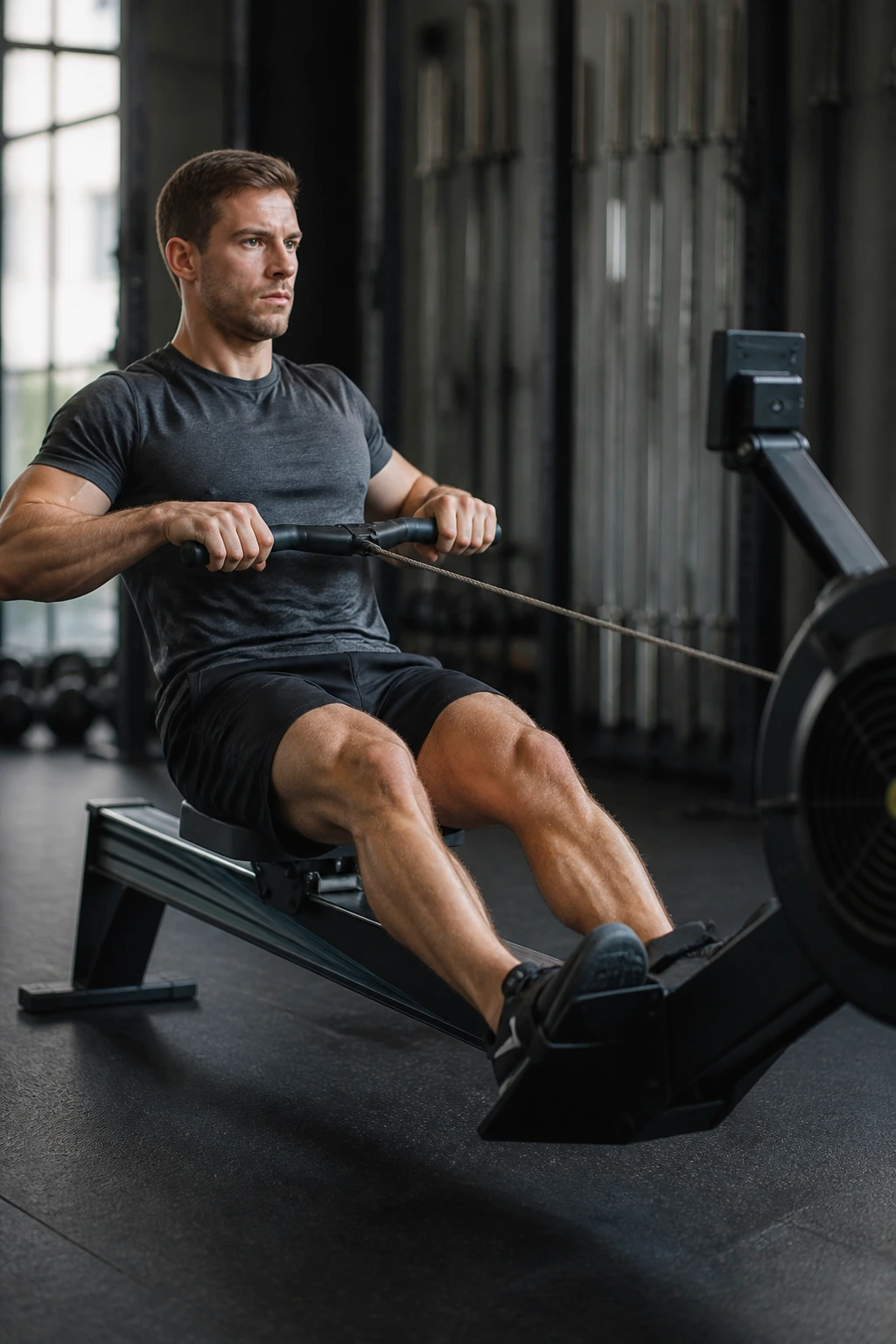
The rower is ugly in the best way. It exposes weak lungs fast.
Row for 30 seconds hard, then 90 seconds easy, and repeat that 8 rounds. After the rower, do a simple bodyweight circuit: push-ups for 8 reps, air squats for 15 reps, plank for 30 seconds. Two rounds is enough for a beginner.
The rowing stroke starts with the legs, then the hips, then the arms. That sequence matters. If you yank early, your lower back ends up doing too much and the machine feels harder than it should. Keep the chest up, drive through the feet, and finish smooth.
This is a strong option for fat-loss goals because it burns a lot of energy without needing complicated setup. It also teaches pacing, which matters more than people think.
15. Chest and Triceps Machine Day
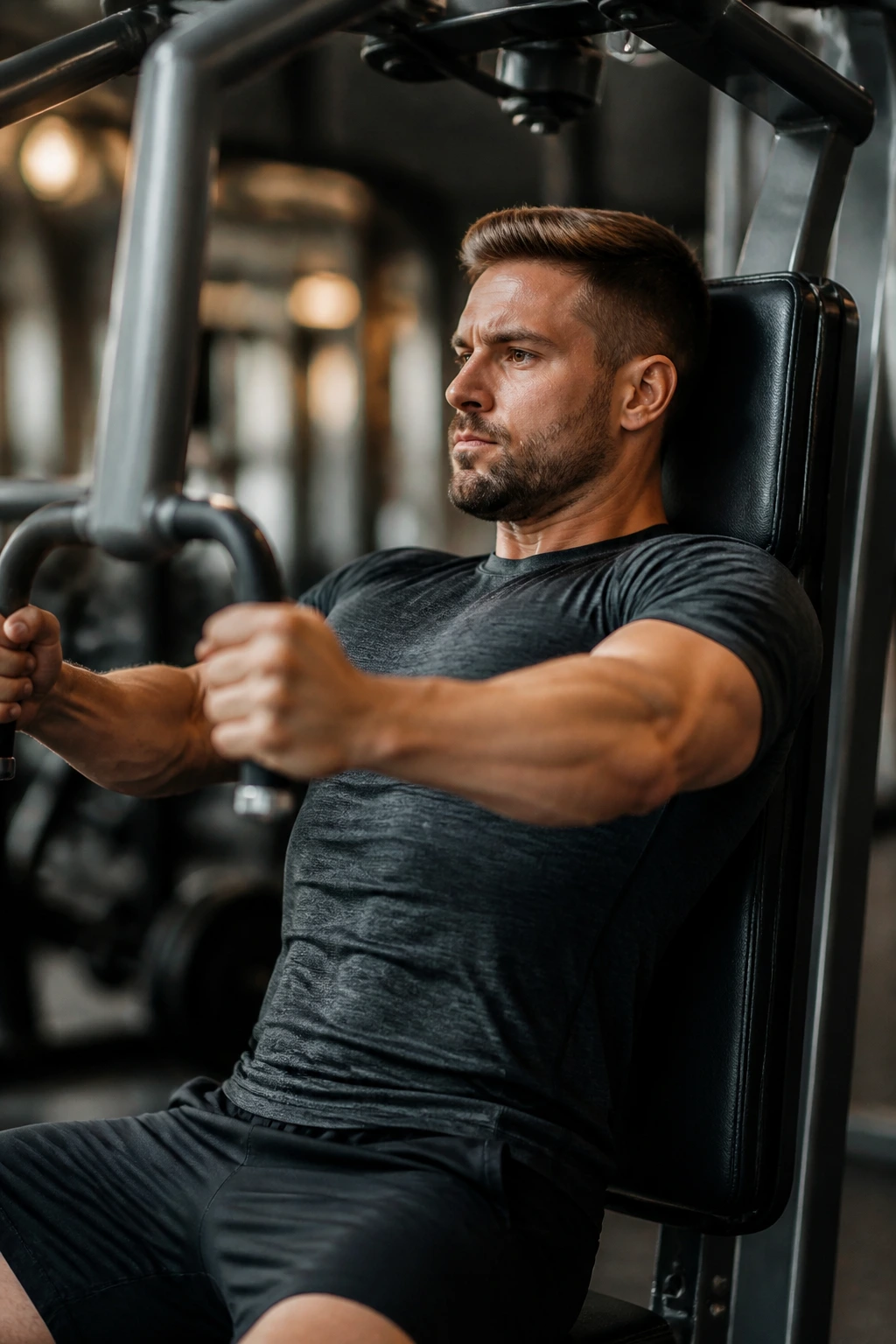
Some days, the simplest answer is the right one.
Use the pec deck or chest press machine, then a triceps pressdown and an assisted dip machine if your gym has one. A useful structure is 4 sets of 10 on chest press, 3 sets of 12 on pec deck, 3 sets of 12 on pressdowns, and 2 sets of 8 to 10 on assisted dips. Rest 60 to 75 seconds.
Machines shine on days when you want to press hard without worrying about balance. Keep your elbows at a comfortable angle and don’t slam the weight stack. The chest should feel worked, not your shoulder joints. If the dips pinch at the front of the shoulder, skip them. No prize for forcing it.
16. Back and Biceps Machine Day
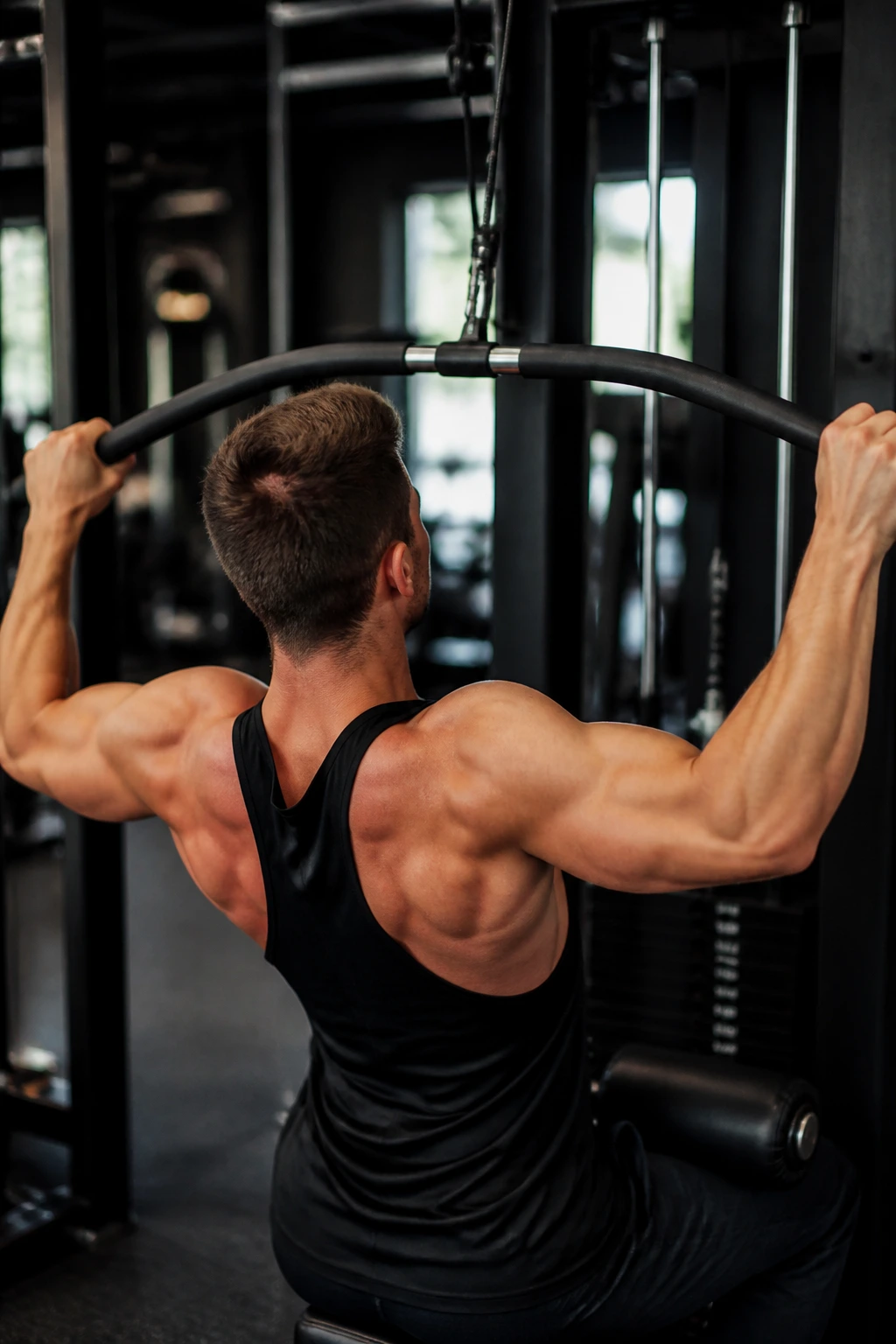
This one is for men who want a back that looks strong and feels less stiff.
The Session
- Lat pulldown: 4 x 8 to 10
- Seated row machine: 4 x 10
- Reverse pec deck: 3 x 12
- Preacher curl machine: 3 x 10
- Cable curl: 2 x 12
Start with the pulldown because it gives the biggest back stimulus when you’re fresh. Then move to rows, then rear delts, then arms. That order makes the session feel cleaner and helps you avoid letting the curls steal energy from the stuff that actually builds a wide back.
Pull the bar to your upper chest on pulldowns, not behind your neck. Behind-the-neck work looks tough and usually feels worse than it looks.
17. Shoulder Stability and Posture Workout
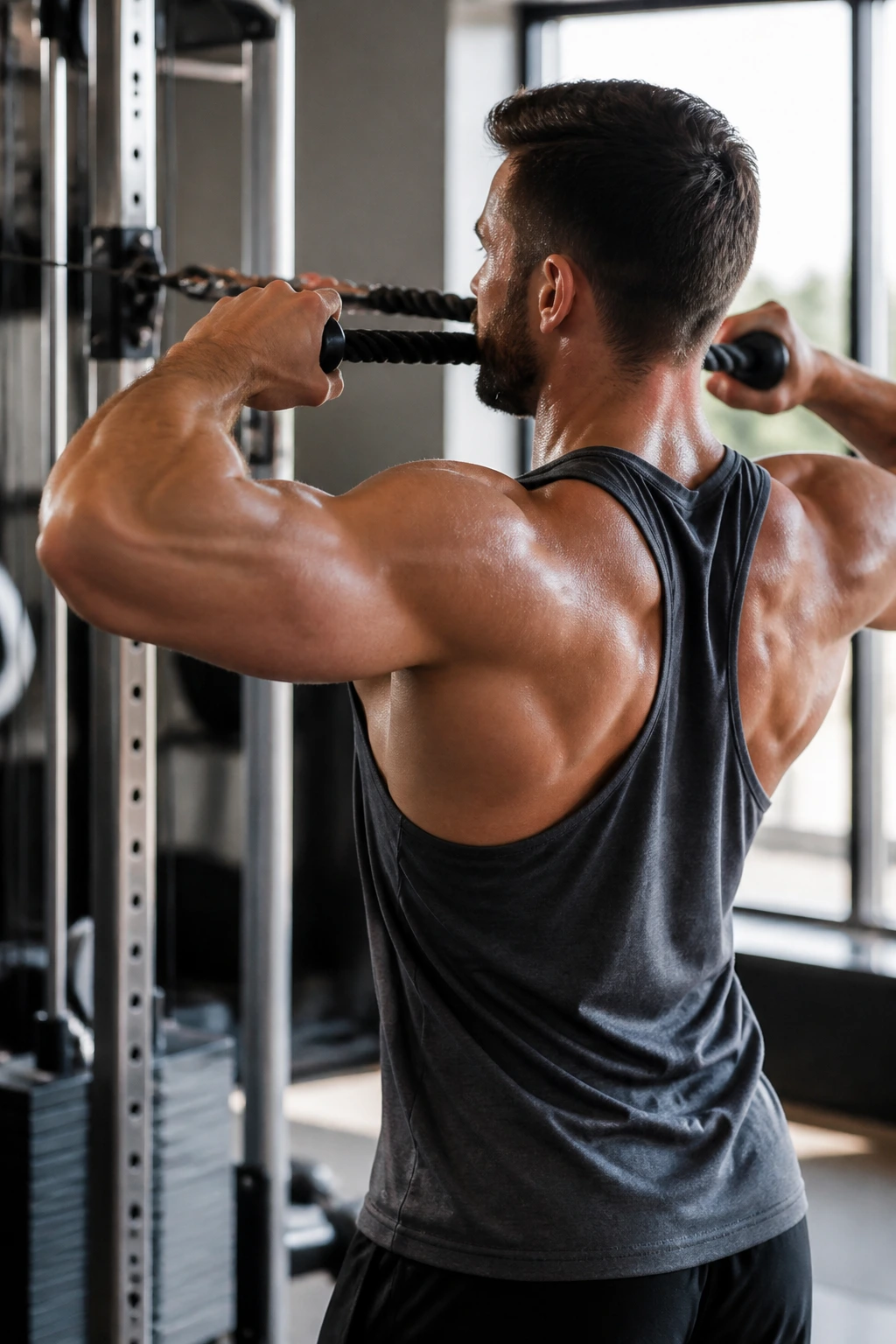
Shoulders need more than pressing. They need control.
Open with face pulls for 3 sets of 15, then lateral raises for 3 sets of 12, landmine press for 3 sets of 8 per side, and external rotations with a cable or band for 2 sets of 15. Keep the rest short, around 45 to 60 seconds.
Why This One Matters
A lot of beginner men rush overhead pressing and end up with cranky shoulders because the small stabilizers never got any attention. This session fixes that gap. The landmine press is especially friendly because the bar moves on a safer angle and doesn’t demand perfect overhead mobility.
Light weight is the rule here. You should feel the side of the shoulder burn on raises, not your neck cramping up. If your traps take over, lower the dumbbells and slow the pace.
18. Core, Carries, and Anti-Rotation Session
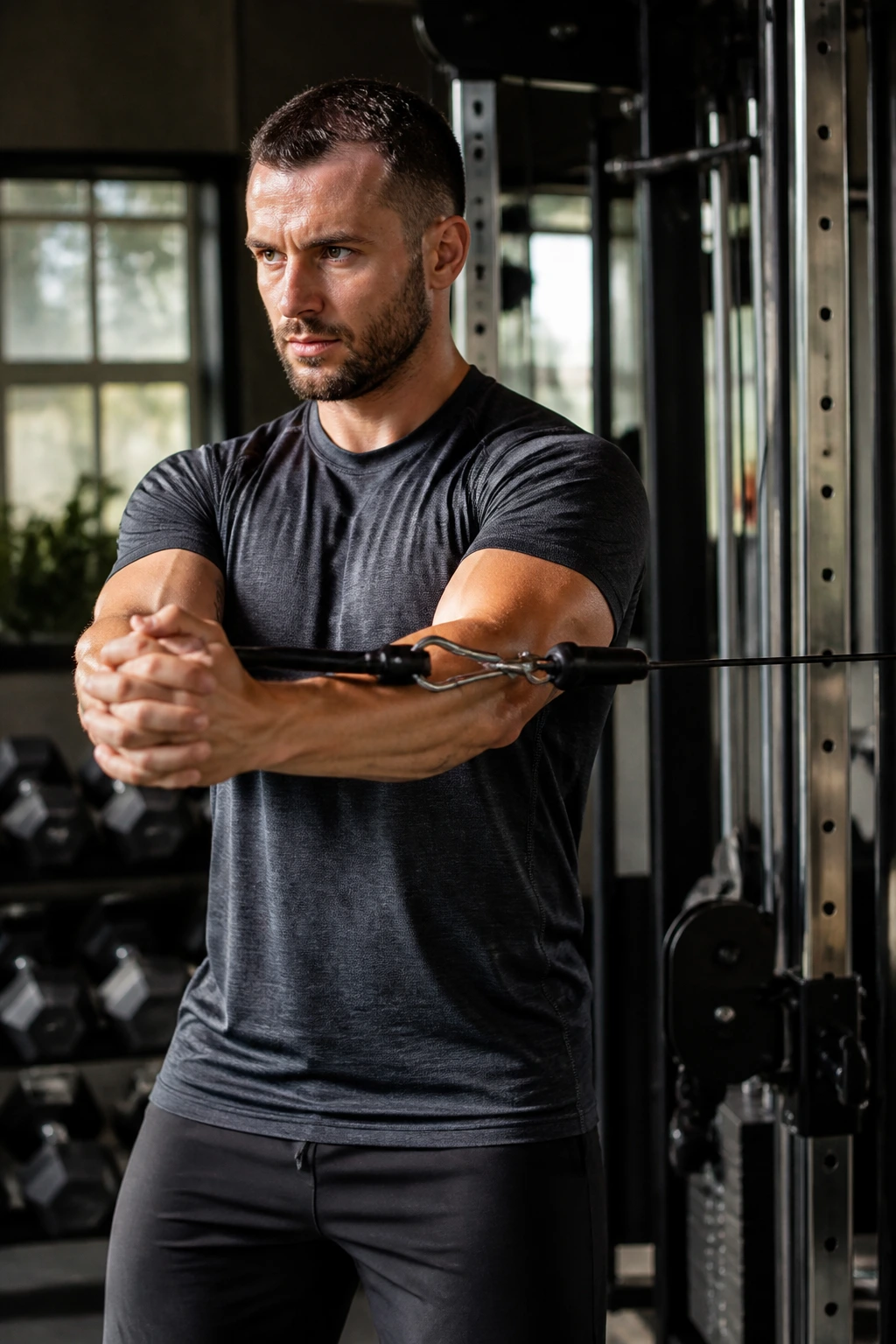
Core training gets better when you stop treating it like endless crunches.
Do Pallof presses for 3 sets of 10 per side, dead bugs for 3 sets of 8 per side, farmer’s carries for 4 rounds of 30 seconds, and side planks for 2 rounds of 20 to 30 seconds per side. That’s enough. More isn’t always better if the reps get sloppy.
The magic here is anti-rotation. Your body learns to stay square while your arms and legs move. That helps with lifting, walking with heavy grocery bags, and the odd moment when you have to brace hard in real life. Keep your ribs down and your breathing calm. If the lower back arches, you’ve lost the point.
19. Single-Arm Dumbbell Workout
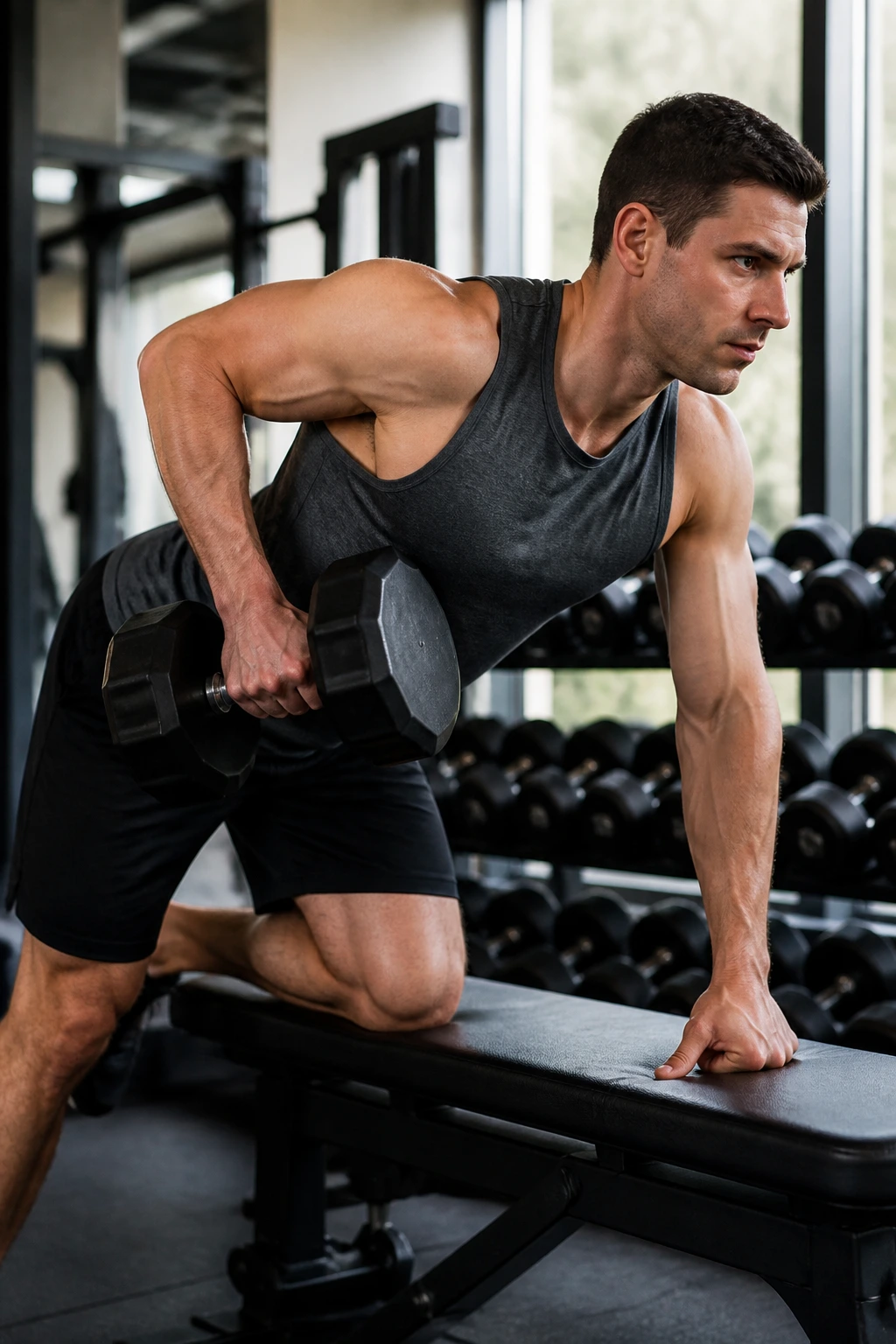
One side at a time changes the whole feel of a workout.
What to Do
- Single-arm dumbbell bench press: 3 x 8 per side
- Single-arm row: 3 x 10 per side
- Split squat: 3 x 8 per leg
- Single-arm shoulder press: 2 x 8 per side
- Suitcase carry: 3 x 30 seconds per side
Unilateral work shows you leaks fast. If one side shakes or finishes earlier, you can’t hide it. That’s useful. It also forces the core to stop leaning and twisting around a heavier side, which is something many beginners never train directly.
Keep the bench or floor stable, brace before each rep, and move slower than you think you need to. The slower pace makes the exercise harder in the right way.
20. Glute and Hamstring Focused Day
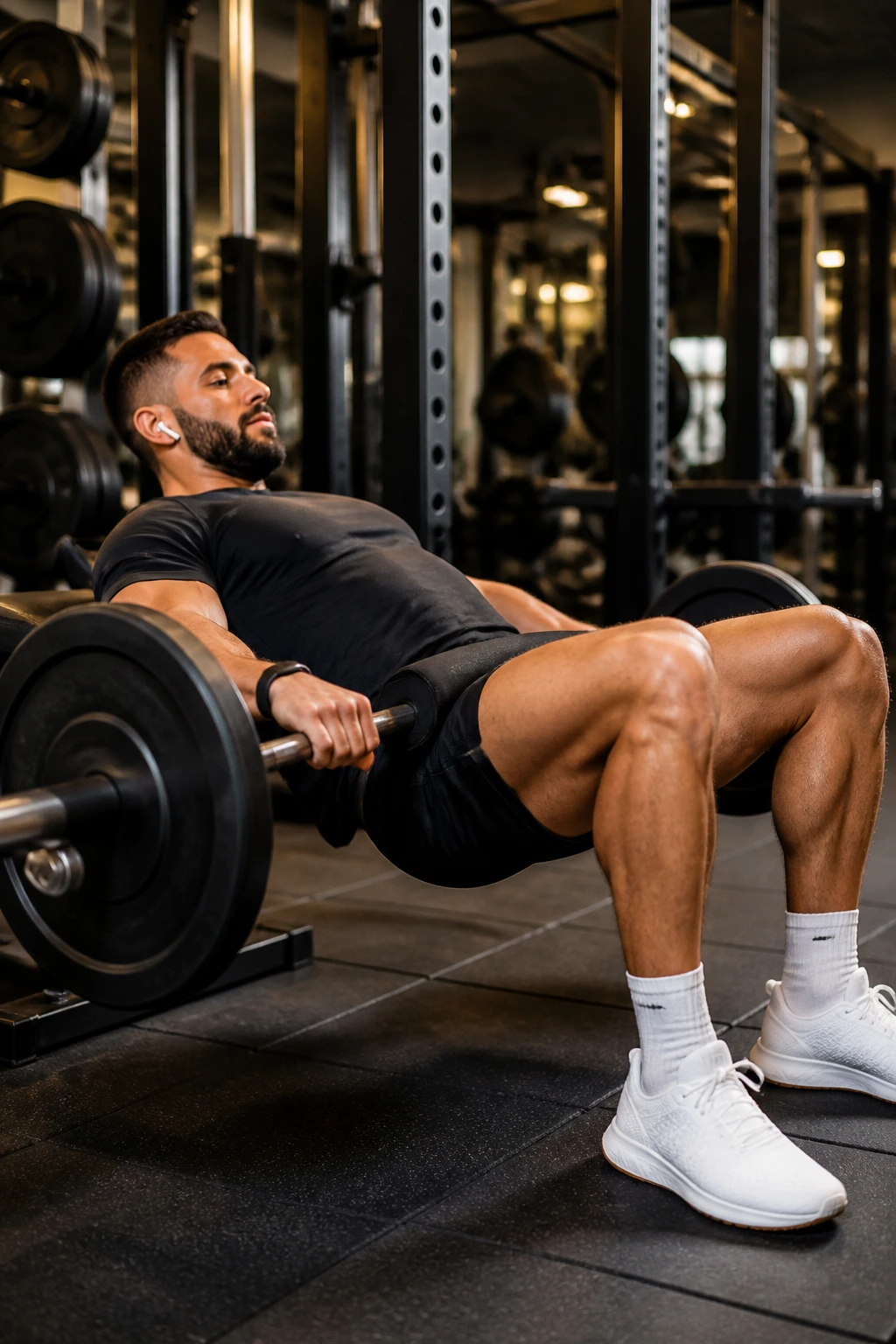
A lot of men have strong quads and sleepy hamstrings. This session fixes that imbalance.
Start with hip thrusts for 4 sets of 10, then Romanian deadlifts for 3 sets of 8, lying leg curls for 3 sets of 12, and reverse lunges for 2 sets of 10 per leg. Rest 75 to 90 seconds on the first two lifts.
The glutes should feel the hip thrust almost immediately. If you only feel your lower back, your ribs are probably flared and your chin may be lifted too high. Tuck the pelvis slightly at the top and pause for one second.
Hamstring work pays off in a way beginners usually notice later: better knee support, more stable hips, and fewer weird tugs during sports or heavy walking. That’s a solid trade for an hour in the gym.
21. Beginner Pull-Up Progression Workout
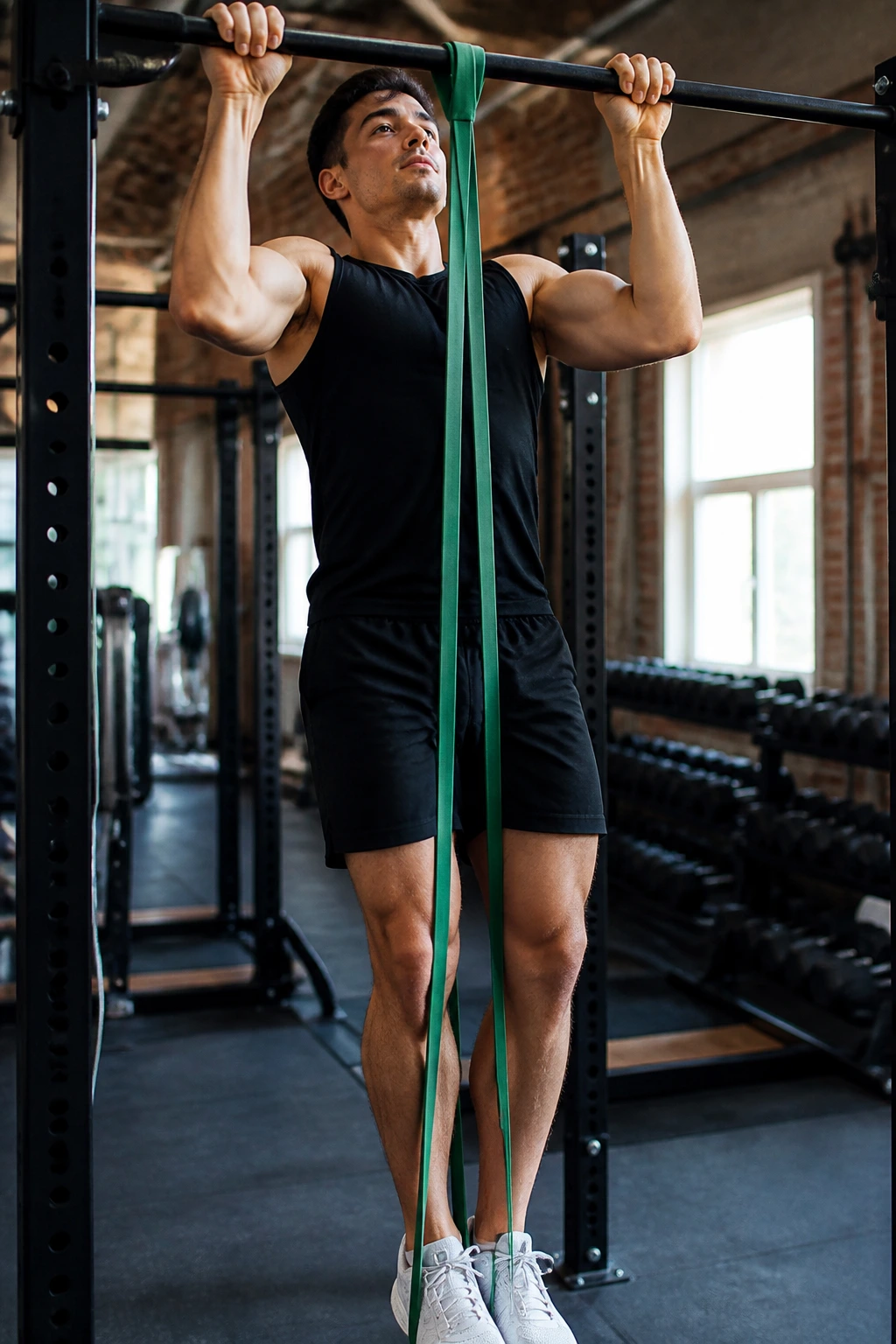
Pull-ups are a milestone, but they’re built from smaller pieces.
Use assisted pull-ups for 4 sets of 5 to 8 reps, lat pulldowns for 3 sets of 10, slow negatives for 3 reps of 5-second lowers, and dead hangs for 3 rounds of 15 to 30 seconds. Rest 90 seconds on the assisted work, a bit less on the hangs.
The trick is not to panic when your first unassisted rep looks ugly. Everybody starts somewhere. Assisted machines, bands, and negative reps all build the strength pattern you need. Lower yourself slowly and keep the shoulders packed rather than yanking from a dead, loose hang.
If grip gives out before your back does, that’s a clue too. Add a carry day or a little extra hanging work and it usually catches up.
22. Beginner Deadlift Practice Day
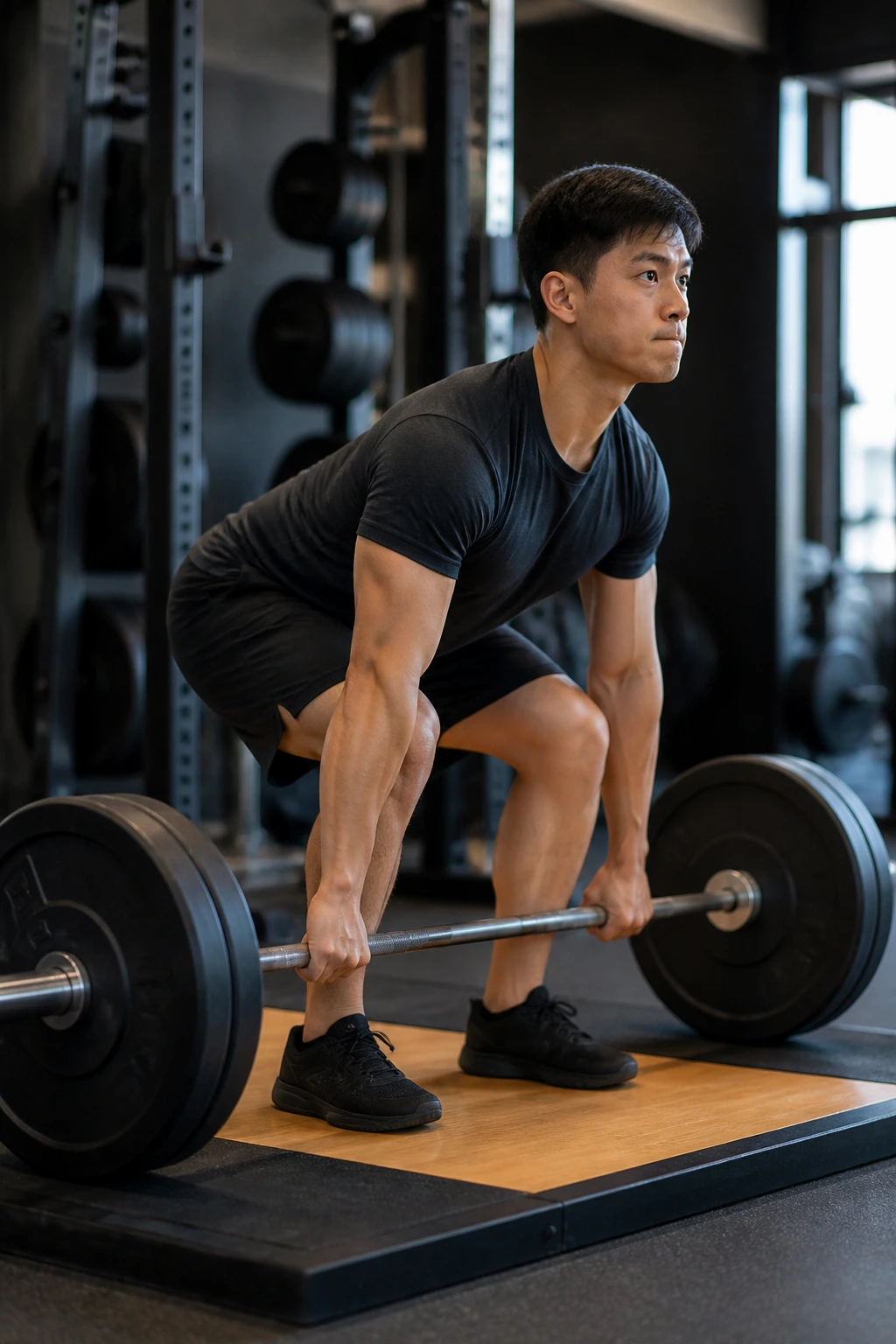
Deadlifts scare people because the barbell sits there looking serious. Fair enough.
Step-by-Step Setup
- Start with a loaded bar or kettlebell deadlift from a raised surface if the floor feels too low.
- Take 3 sets of 5 reps with a weight you could lift for 8.
- Keep the bar close to your shins and your chest proud.
- Stand tall at the top. Do not lean back.
- Lower the weight with control, one hip hinge at a time.
A beginner deadlift day should feel technical. If your back rounds, the load is too heavy or the setup is off. Think about pushing the floor away and keeping the bar sliding along your legs. That cue helps more than people expect.
Deadlifts are rewarding because the progress shows up fast. A cleaner setup often adds strength before the weight even changes much.
23. Recovery and Mobility Gym Session
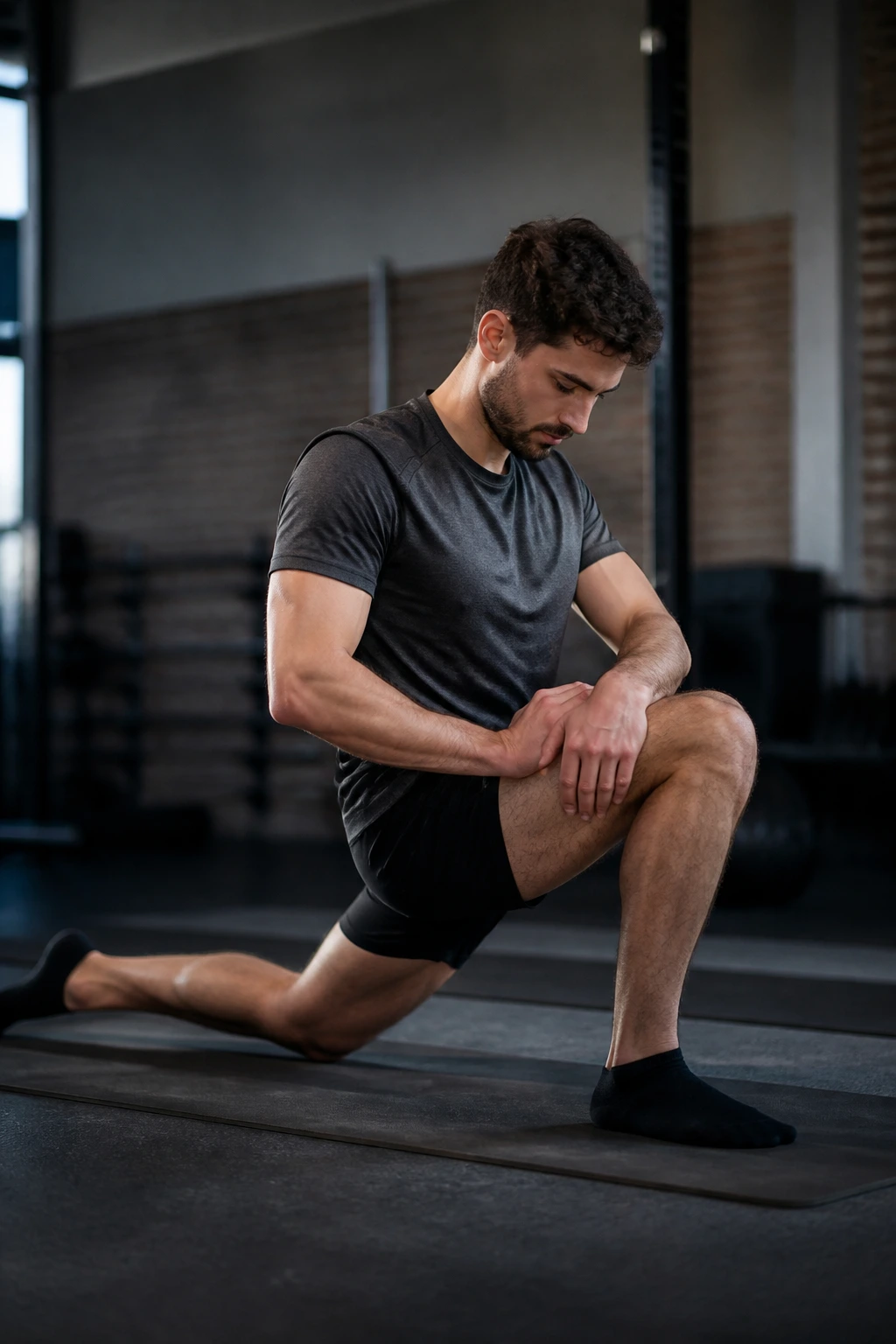
Not every visit needs to leave you smoked.
Use this day when sleep was poor, work was long, or your body feels tight in that dull, annoying way. Spend 10 minutes on the bike, then move through hip flexor stretches, thoracic rotations, band pull-aparts, bodyweight squats, and light sled pushes. Keep the effort around 4 or 5 out of 10.
A Simple Sequence
- Bike: 10 minutes
- Hip flexor stretch: 2 x 30 seconds per side
- Thoracic rotations: 2 x 8 per side
- Band pull-aparts: 2 x 15
- Bodyweight squats: 2 x 15
- Light sled push: 4 short runs
The point is to leave feeling looser than when you arrived. If a movement hurts, skip it. Mobility work should open up the body, not pick fights with it.
24. Treadmill Speed and Incline Workout
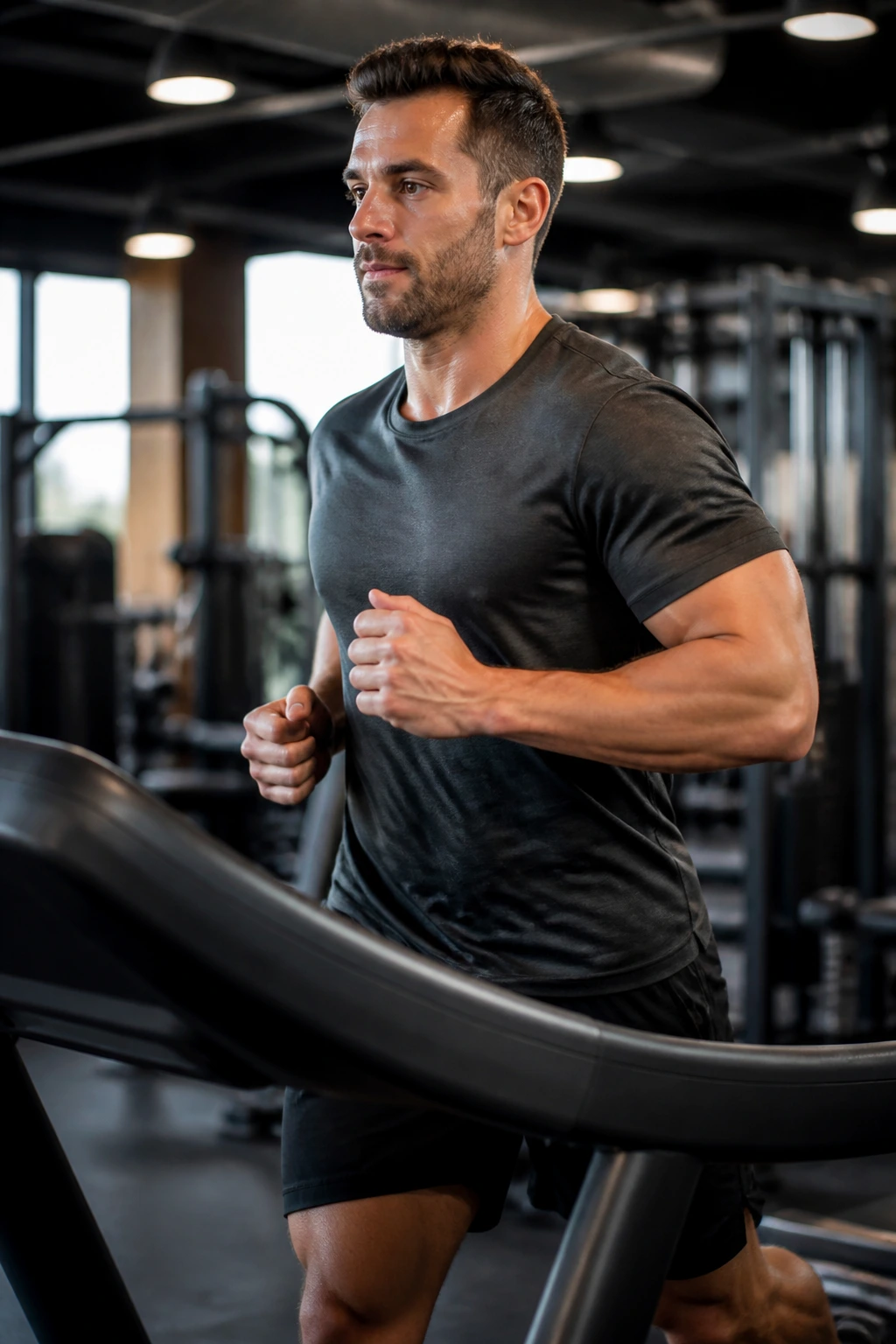
A treadmill can do more than slogging along at the same pace for half an hour.
Try 1 minute fast, 2 minutes easy for 8 rounds. Set the fast pace at a level where talking gets hard but form stays neat. If running feels rough on your joints, use a brisk incline walk instead: 2 minutes at 8 to 10 percent incline, then 2 minutes flat, repeated 6 to 8 times.
The reason this works is simple. Short hard efforts push your heart rate up without forcing you into a long grind. That makes it a nice fit for beginners who want conditioning but don’t yet enjoy long runs. Keep your strides short and avoid hammering the belt with heavy steps.
Finish with a slow walk for five minutes. Your lungs will thank you.
25. Full-Body Benchmark Workout
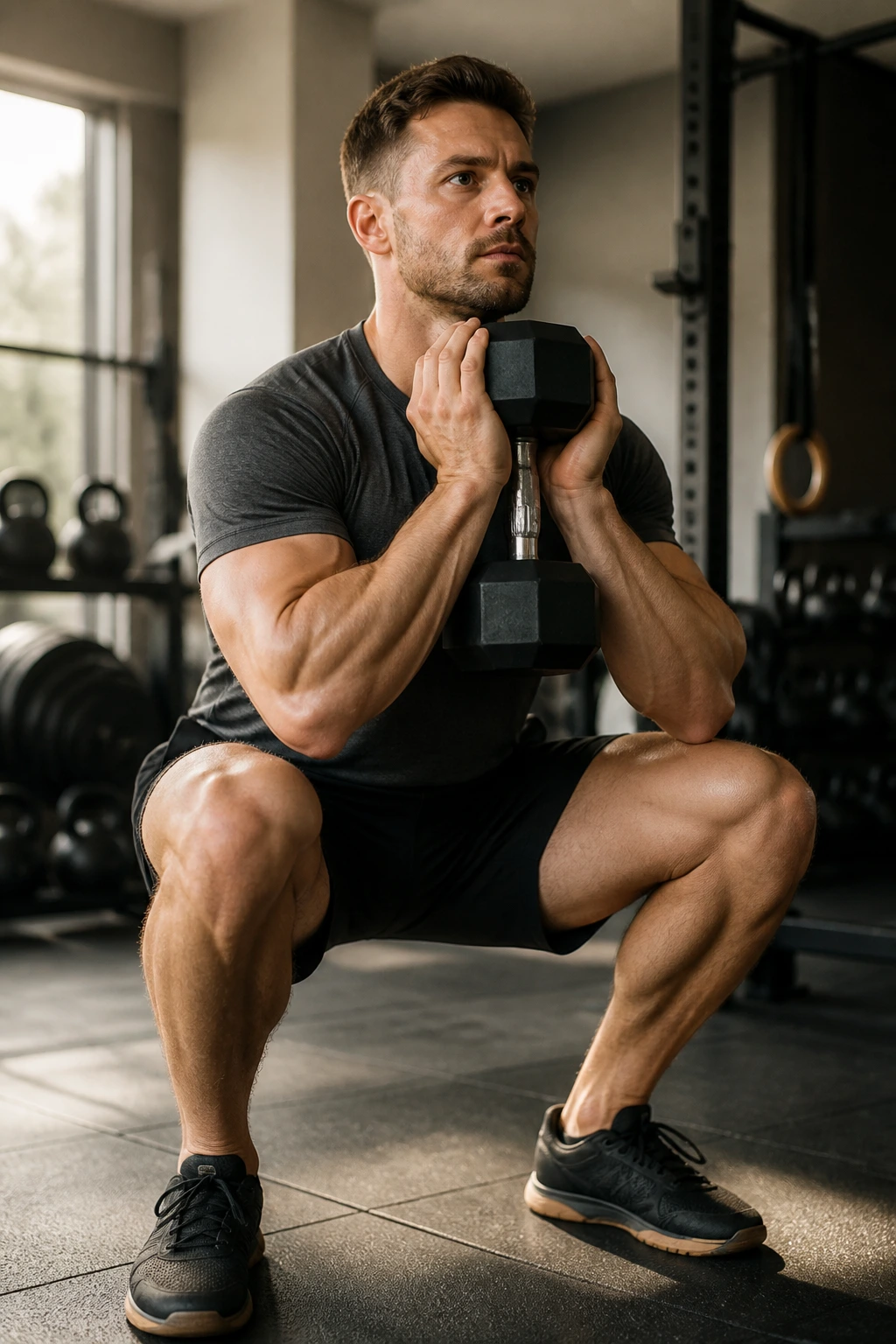
This is the session I’d save for checking progress, not proving toughness.
Do goblet squats for 3 sets of 10, dumbbell bench press for 3 sets of 10, seated rows for 3 sets of 10, Romanian deadlifts for 3 sets of 8, and planks for 3 rounds of 30 seconds. Rest 60 to 90 seconds and keep every rep clean. The goal is to repeat the same workout every few weeks and see what changed.
What to Track
- Load used
- Number of clean reps
- Rest times
- How stable the last set felt
- Whether form stayed sharp
A benchmark day tells the truth. If the same weights feel easier, the plan is working. If form falls apart, the weight may be creeping up too fast. Either way, you get useful information, and useful information beats random effort every time.
Final Thoughts
The best beginner gym workouts for men do not try to impress anybody. They teach movement, build a base, and keep the door open for more weight later. That’s the part people miss when they rush.
Pick three to five of these sessions and repeat them for a while. The real win is not novelty. It’s walking back into the gym and knowing exactly what to do without standing around wondering what body part you’re supposed to punish today.
A clean rep done well beats a messy rep done heavy. Every time.
