



If the gym makes you want to turn around in the parking lot, you’re in good company. A pair of dumbbells, a sturdy chair, and a little floor space can do far more than most people give them credit for, especially when the goal is to get stronger without feeling trapped in a room full of mirrors and metal.
The best weight exercises for women who hate the gym are the ones that feel useful. Squats. Hinges. Presses. Rows. Carries. Nothing flashy. No fake drama. These moves train the muscles you use to lift groceries, climb stairs, haul laundry, and keep your back from feeling like it’s been folded in half after a long day.
That’s the part people miss. Strength work does not need to look like a class, and it does not need a crowd cheering you on. It just needs good form, enough resistance to make the last few reps matter, and a setup you don’t resent.
Start with the squat pattern, because once that feels normal, the rest gets a lot less intimidating.
1. Goblet Squat
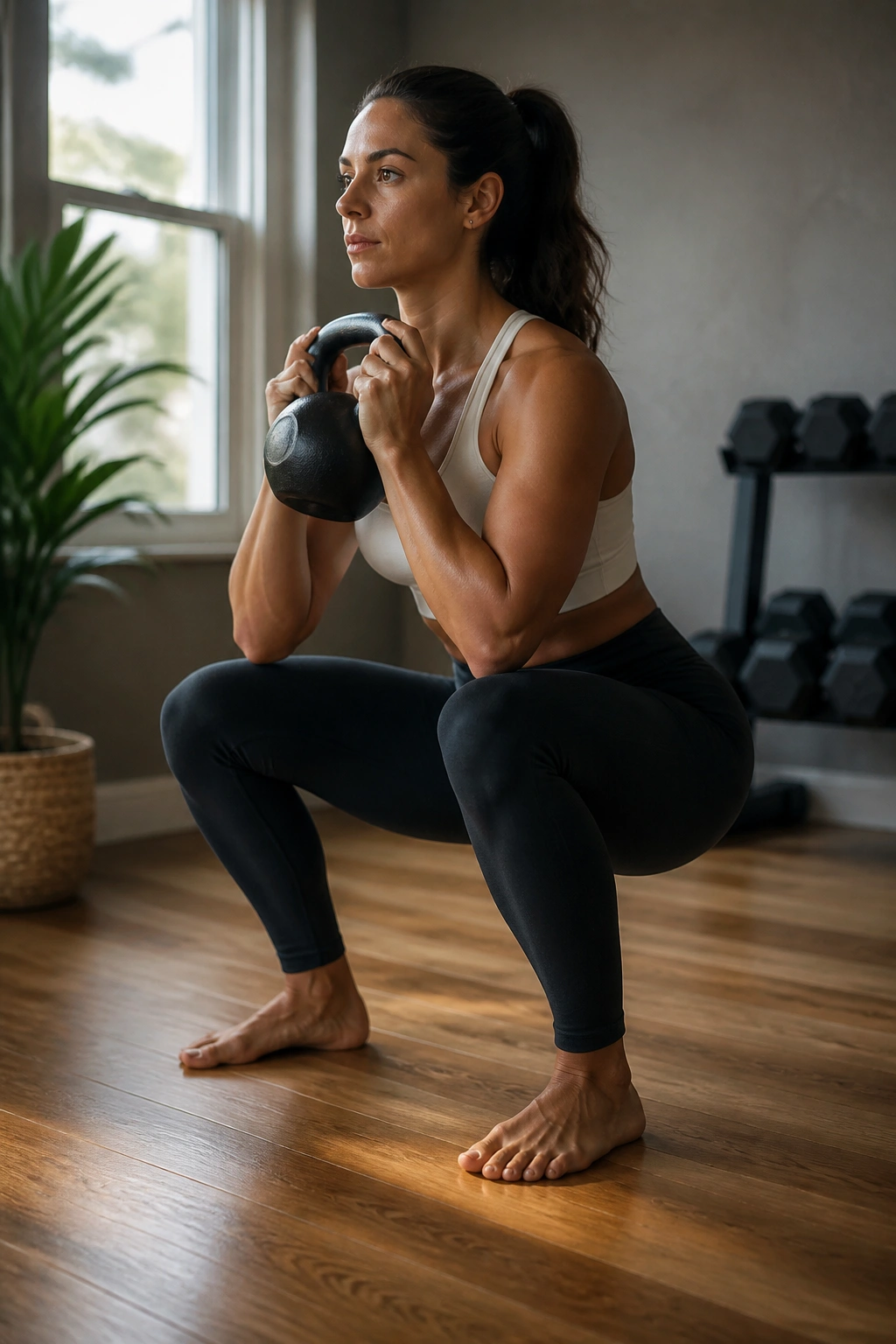
The goblet squat is the easiest way to make squat training feel less awkward and more useful. Hold one dumbbell or kettlebell close to your chest, sit down between your hips, and stand back up with control. That front-loaded weight helps you stay upright, which is a gift if barbell back squats feel like too much right away.
Why It Works So Well at Home
A goblet squat gives you feedback fast. If your elbows drop, if your heels lift, or if your knees cave inward, you feel it right away. That makes it a better teacher than a lot of fancy lower-body moves that look impressive and do less for your everyday strength.
Use a weight that lets you hit 8 to 12 clean reps with a little left in the tank. If you can breeze through 15, it’s too light. If you fold forward on rep 4, it’s too heavy. The sweet spot is a controlled descent, a brief pause near the bottom, and a stand that feels strong but not sloppy.
Watch for these common mistakes:
- Letting the weight drift away from your chest
- Cutting depth short because your ankles are stiff
- Bouncing out of the bottom like you’re trying to escape
- Letting the heels peel off the floor
Pro tip: Use a slightly wider stance than your normal standing position and point your toes out a little. It usually feels better on the hips.
2. Romanian Deadlift
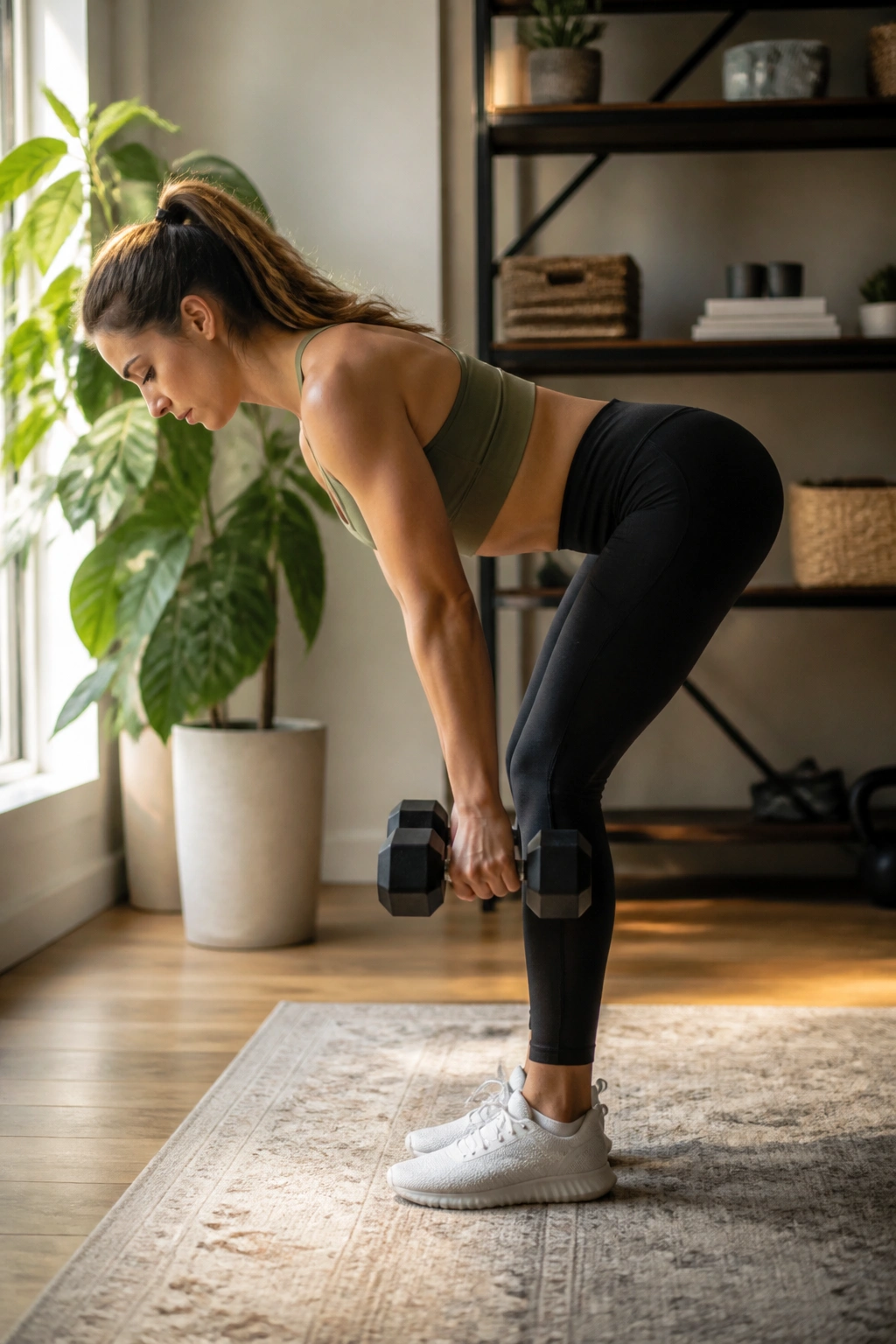
A lot of people think deadlifts are about lifting from the floor. The Romanian deadlift is different. It starts standing, then you push your hips back, keep a soft bend in the knees, and lower the weights until you feel your hamstrings go on stretch without your back rounding.
That’s the whole magic. Simple, but not easy.
This move is one of the best weight exercises for women who want glutes and hamstrings that actually do something. It also helps if you sit a lot, because it teaches your body how to hinge at the hips instead of bending through the lower back every time you pick something up. Use dumbbells, kettlebells, or even a loaded backpack if that’s what you have.
Keep the weights close to your legs. Think “zipper line” from thighs to shins. If the dumbbells drift forward, your lower back takes the brunt of the work. Aim for 6 to 10 reps, slow on the way down, with a one-second pause when you feel the stretch.
No rush. This is a control move.
3. Reverse Lunge
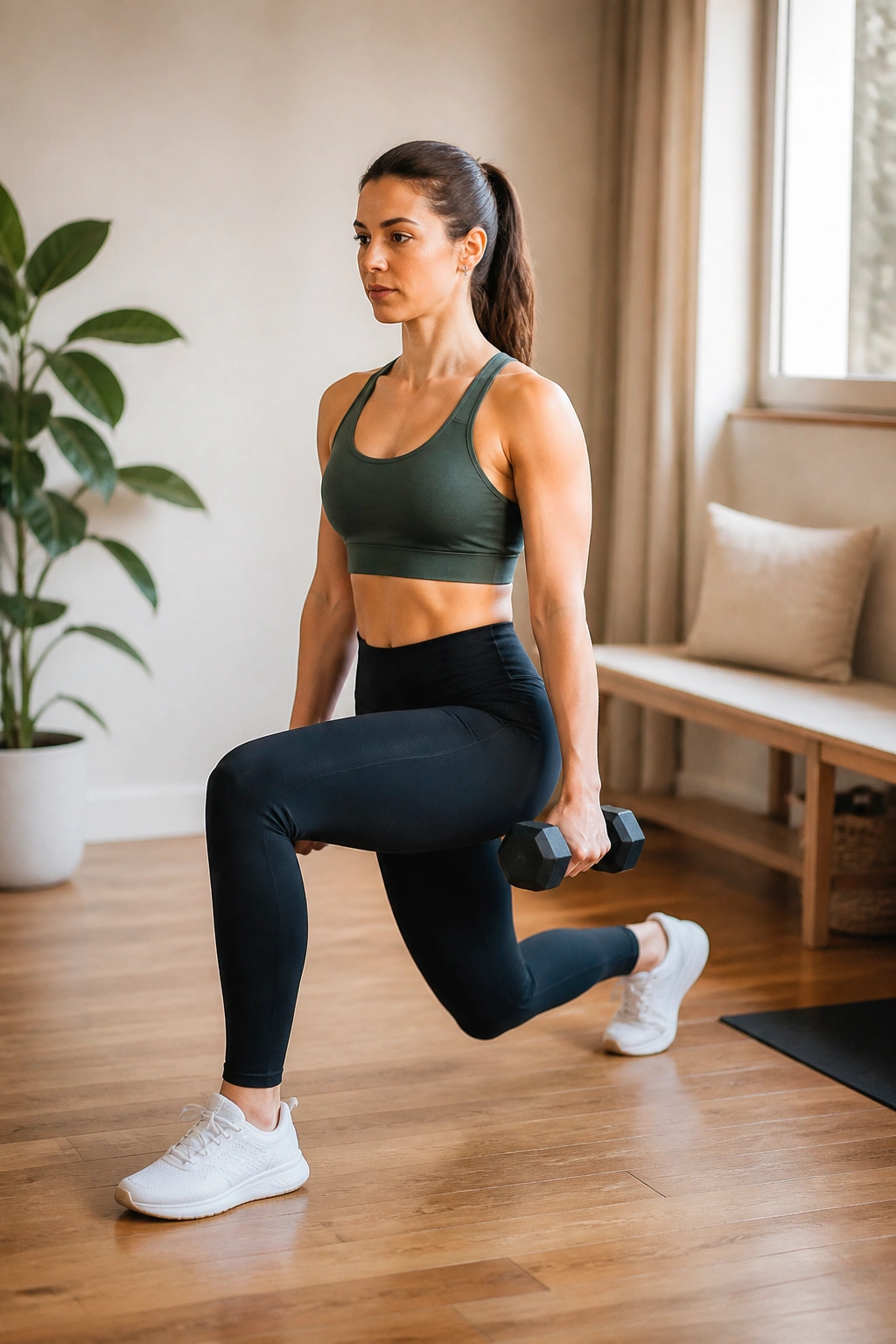
Forward lunges can feel clumsy and rude. Reverse lunges usually feel kinder. You step one foot back, lower under control, then drive through the front foot to stand. The backward step gives you a bit more stability, which matters when you’re still building balance or your knees get cranky.
What Makes It Easier to Learn
The reverse lunge is useful because it doesn’t ask for much equipment and it trains one leg at a time. That matters more than people think. Single-leg work exposes weak links fast, and once you notice them, you can fix them.
Try 6 to 8 reps per side with body weight first. Add dumbbells when the movement feels smooth. Keep your torso tall, but not stiff, and make sure the front knee tracks over the middle toes instead of diving inward.
If your balance is messy, shorten the step back a little and hold onto a wall with one hand for the first few sets. That is not cheating. It’s smart.
- Step back softly, not hard
- Keep most of your weight on the front leg
- Push the floor away instead of yanking yourself up
- Stop before your back knee smacks the ground
4. Bulgarian Split Squat
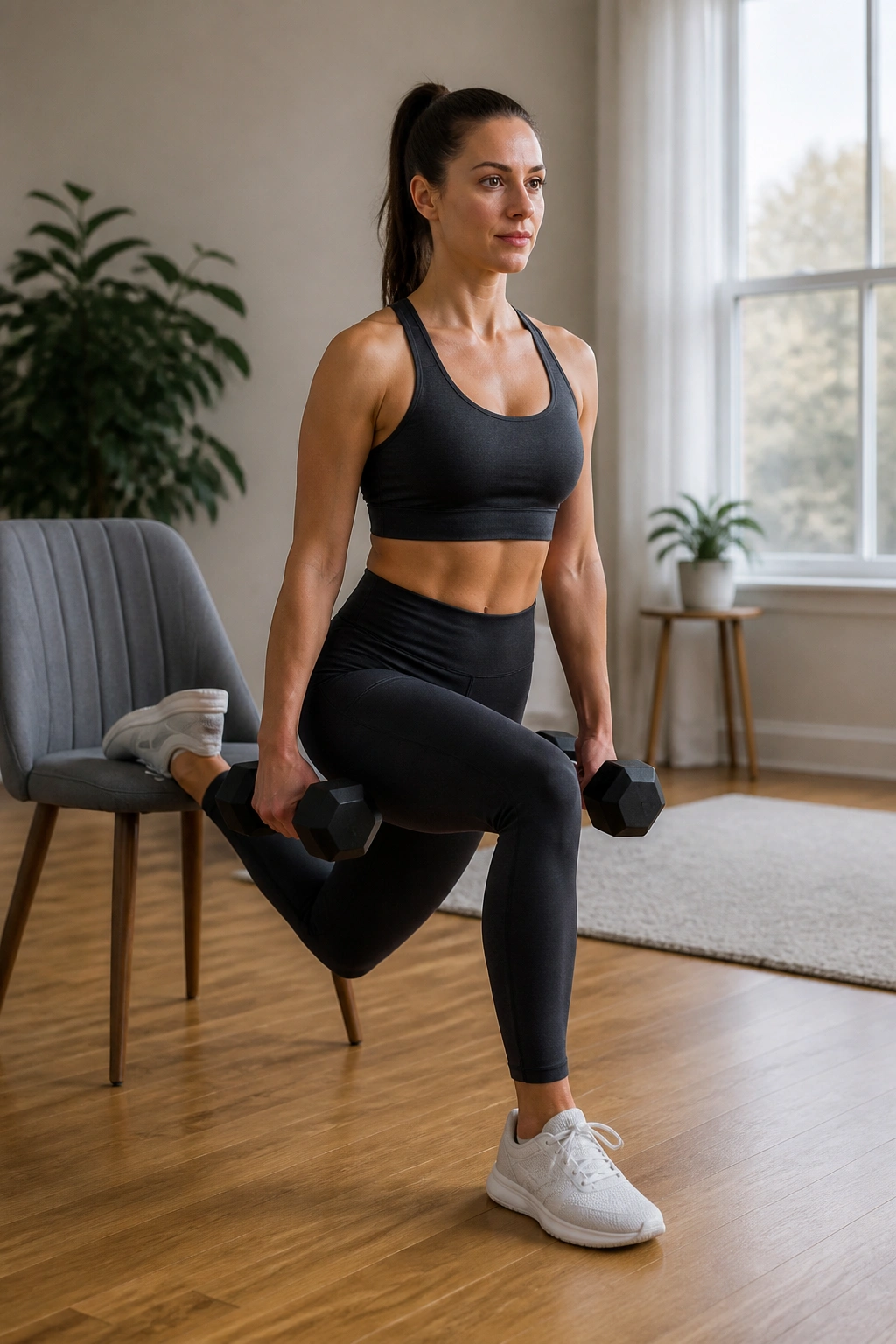
This one is a serious exercise disguised as a humble setup. Put your back foot on a chair, couch, or low bench, then lower your body with the front leg doing almost all the work. The first few reps feel weird. The next few tell the truth.
The Bulgarian split squat is one of the best lower-body moves if you want glutes and quads without needing a rack, a barbell, or a gym floor. It also exposes side-to-side differences in a way two-legged exercises never do. If one leg feels shaky, you’ll know right away.
Keep the front foot far enough forward that your front heel stays down and your shin can move a little. Too close, and your knee takes over. Too far, and the whole thing turns into a awkward hamstring stretch. Eight reps per side is enough to start. You do not need to chase pain for this to work.
And yes, it burns. That’s normal. That’s the point.
5. Step-Up
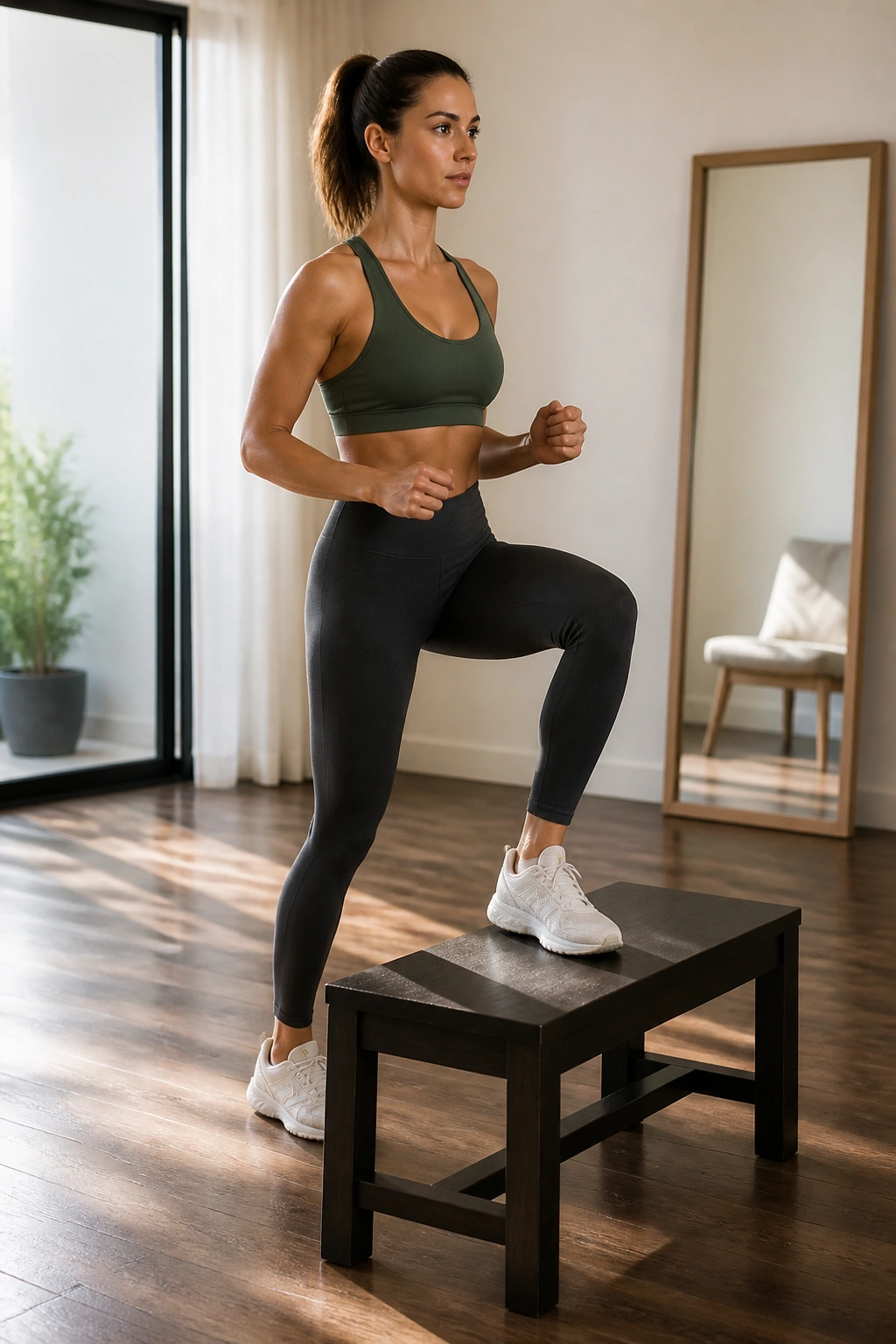
A step-up looks tame until you do it with real control. Put one foot on a sturdy step, box, or low bench, lean forward slightly, and stand up by driving through the foot on the platform. It’s one of those exercises that quietly trains legs, glutes, and balance at the same time.
The nice part is the learning curve. Step-ups are easy to understand, and they feel more like a real-life movement than a “workout move.” If stairs are part of your life, this one pays off fast. If they aren’t, it still teaches your body how to push through one leg without wobbling all over the place.
Start low. Knee height is too much for most people at first. A step around mid-shin to just below knee level is plenty. Use 8 to 10 reps per side and keep the lowering phase slow. Don’t bounce off the back foot to cheat your way up.
A cleaner rep matters more than a heavier dumbbell here.
6. Glute Bridge
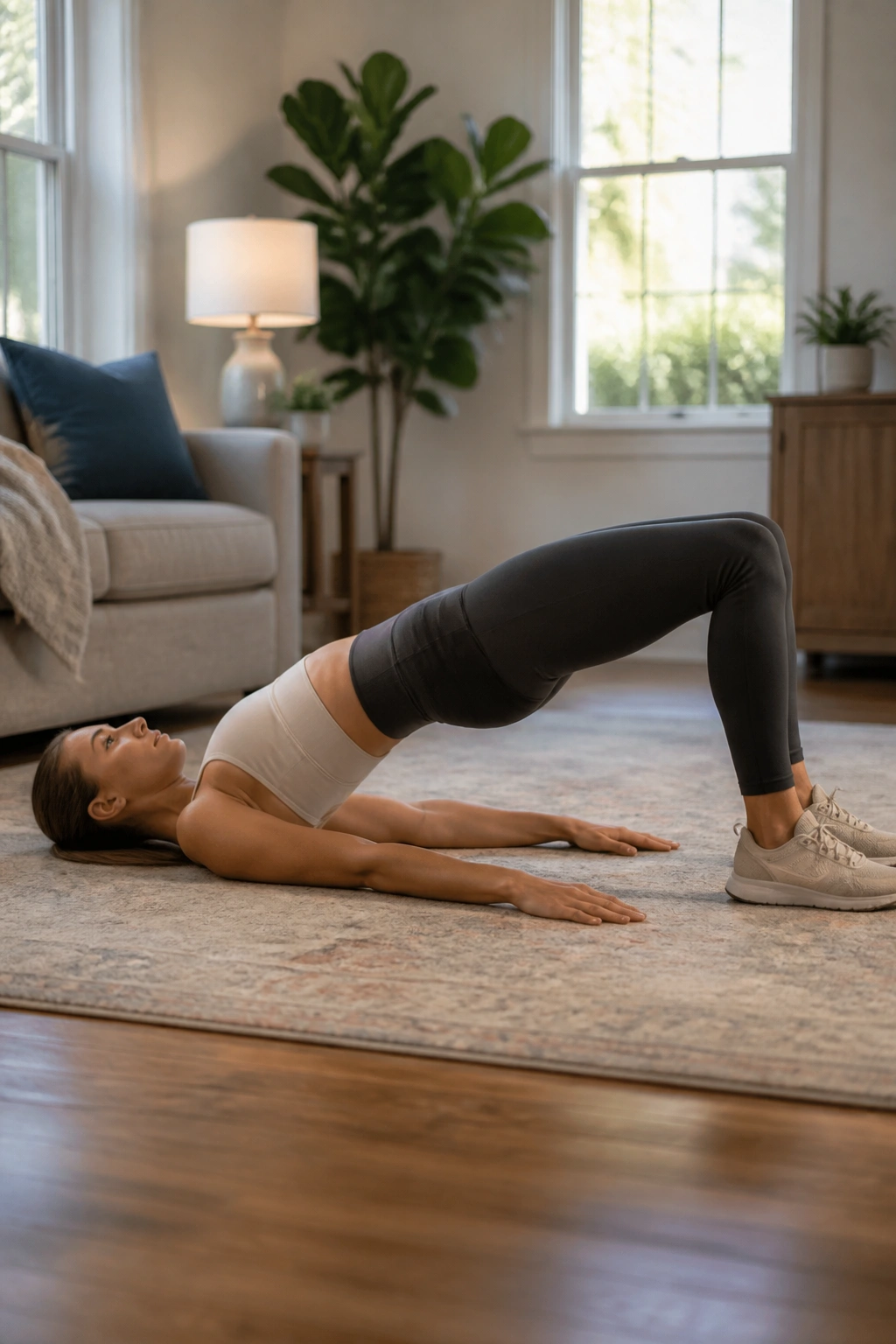
The floor version is beautifully simple. Lie on your back, bend your knees, plant your feet, and drive your hips up until your body makes a straight line from shoulders to knees. Add a dumbbell, kettlebell, or loaded backpack across your hips when body weight stops feeling like enough.
Glute bridges are the kind of exercise people dismiss because they look too easy. Then they do a slow set of 15 with a two-second squeeze at the top and realize the glutes are not messing around.
Use them when you want lower-body work that doesn’t beat up your joints. They’re also handy on days when your back feels tired and you still want to train. Keep your ribs down, avoid arching through the low back, and push through the whole foot, not just the toes.
Best cue: tuck the chin slightly and think about curling the tailbone up, not flinging the hips to the ceiling.
7. Dumbbell Floor Press
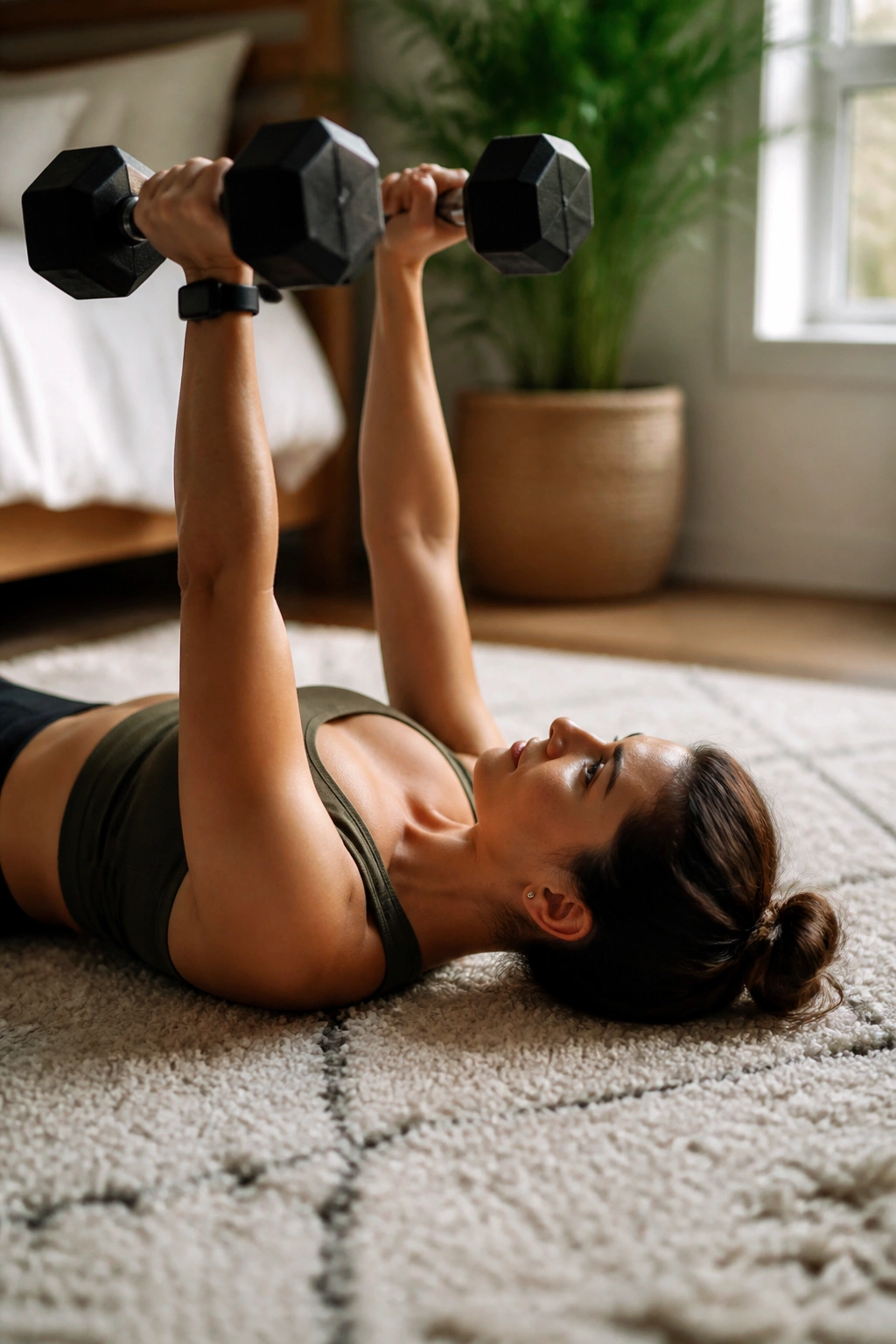
If bench pressing feels too exposed or too clunky, the floor press is your friend. Lie on the floor with dumbbells in hand, elbows bent, then press the weights straight up until your arms are long. The floor limits shoulder range, which is part of why this move feels friendlier than a traditional bench press for a lot of people.
It’s a press, but with training wheels in the best sense. Your upper back stays supported, your setup is simple, and you can do it in a bedroom, living room, or home office after work. No spotter. No bench. No drama.
Aim for 8 to 12 reps and lower the weights until your triceps gently touch the floor. Don’t crash. That short pause at the bottom gives the rep more value. Keep your wrists stacked over your elbows, and don’t flare the elbows so wide that your shoulders complain.
If you want chest and triceps work without a gym vibe, this one earns its keep fast.
8. One-Arm Dumbbell Row
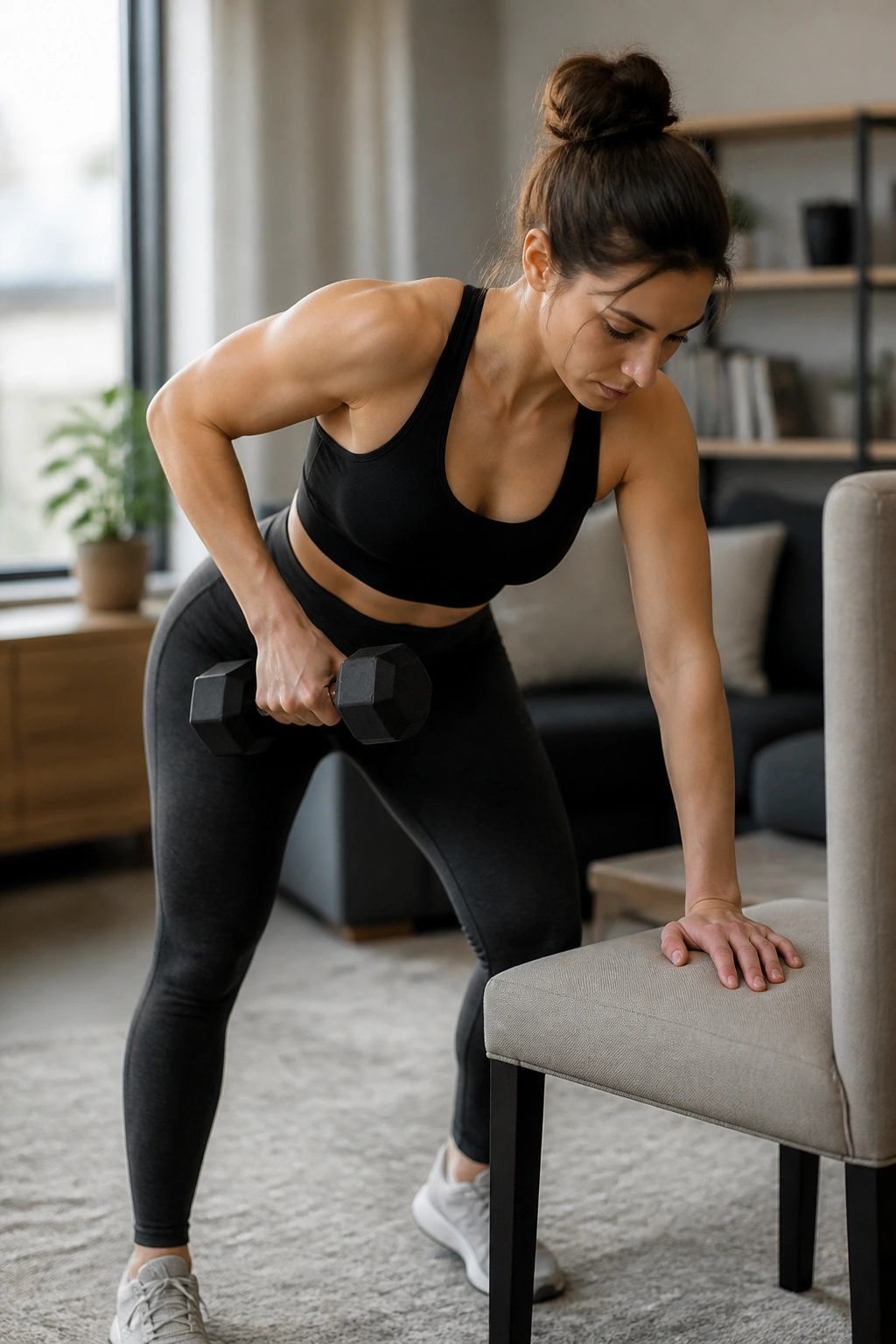
A row solves a lot of problems. Hunched shoulders. Weak upper back. The “I sit too much and it shows” feeling. Support one hand and knee on a chair or couch, then pull the dumbbell toward your hip, not your shoulder. That little detail matters.
The Shape You’re After
The movement should feel like your elbow is sliding toward your back pocket. If you yank the weight up toward your ribs and shrug at the top, the traps take over and the lats miss the party.
A one-arm row is useful because it lets you work each side on its own. That’s a big deal if one arm feels weaker or one shoulder sits a little weird. Use 8 to 12 reps per side, pause for a beat at the top, and lower the weight under control instead of dropping it.
A lot of people rush rows. Don’t. The lowering phase is where your back does a lot of the work.
- Keep your neck long
- Brace your free hand on something sturdy
- Pull with the elbow, not the hand
- Stop the set when the torso starts twisting hard
9. Overhead Press
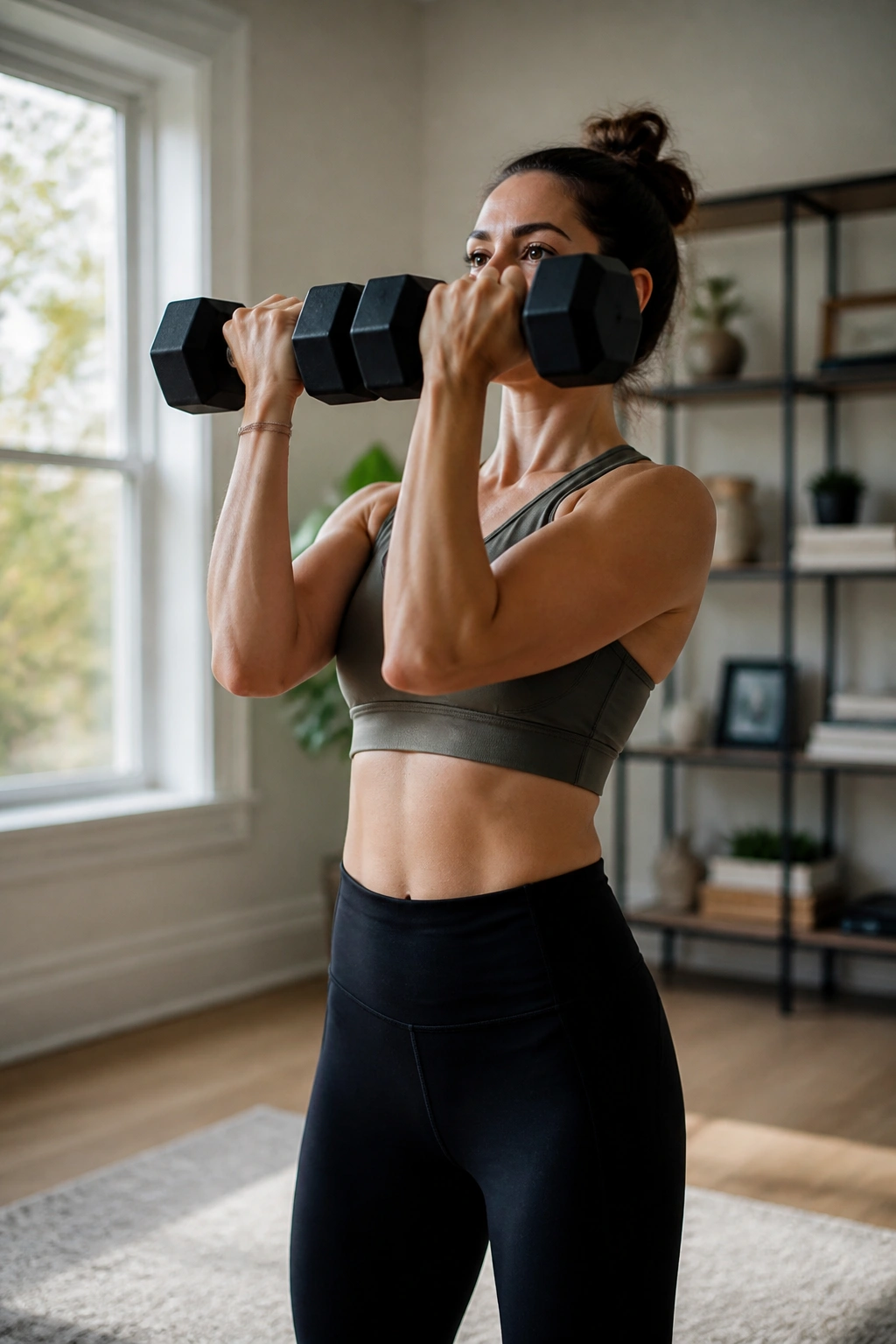
This one separates polite effort from real work. Pressing weight overhead trains the shoulders, triceps, and the core muscles that keep you from flaring your ribs like a broken umbrella. It also makes daily stuff feel easier than you’d expect — reaching into a high cabinet, lifting a suitcase, shoving a bag into the overhead bin.
Standing presses ask a lot from your midsection, which is useful. Half-kneeling presses are a smart option if standing balance feels messy or your lower back likes to overwork when the weight goes overhead.
Use a neutral grip if your shoulders prefer it. That means palms facing each other. Keep the weights just in front of your face at the start, then press up in a straight line. Five to 8 reps is a solid strength range here.
No leaning back. No rib flare. If you have to turn it into a standing incline bench press just to finish the set, the load is too heavy.
10. Bent-Over Row
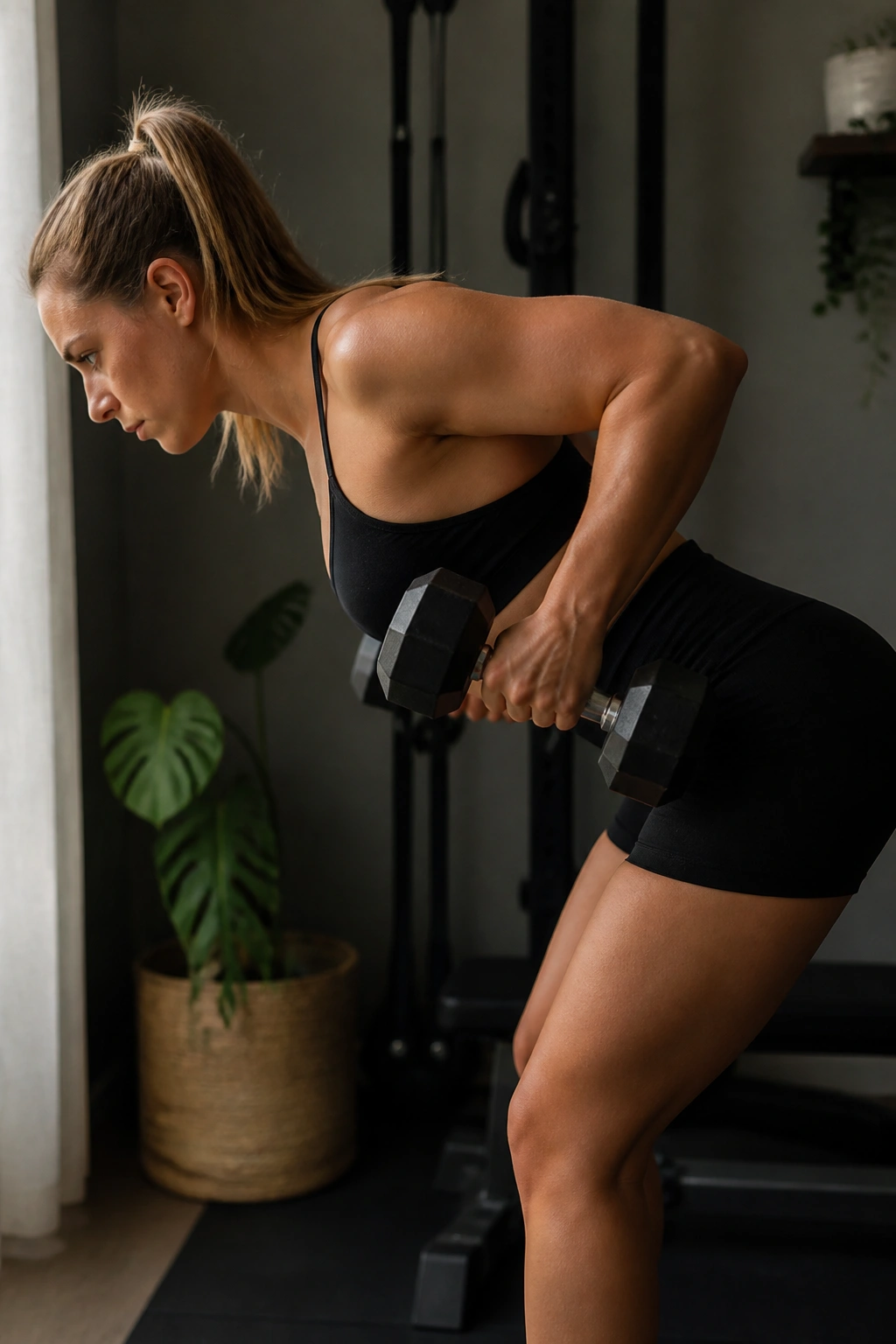
The bent-over row is the cousin of the one-arm row, only both dumbbells work at once. Hinge at the hips, keep a flat back, let the weights hang under your shoulders, then pull them toward your lower ribs with control. It’s one of the best moves for the mid-back when you want symmetry and a little more total workload.
This version is a little more demanding on the lower back because you have to hold the hinge the whole time. That’s not a bad thing. It just means the weight should be honest. If your back rounds after a few reps, the load is too much or your hinge needs work first.
Use 8 to 12 reps and keep your chest proud without cranking your neck up. The row should feel strong, not jerky. If you can’t keep both dumbbells moving together, slow down and reduce the load.
Some people prefer this to one-arm rows. Some don’t. I like both. They give slightly different feedback.
11. Single-Leg Romanian Deadlift
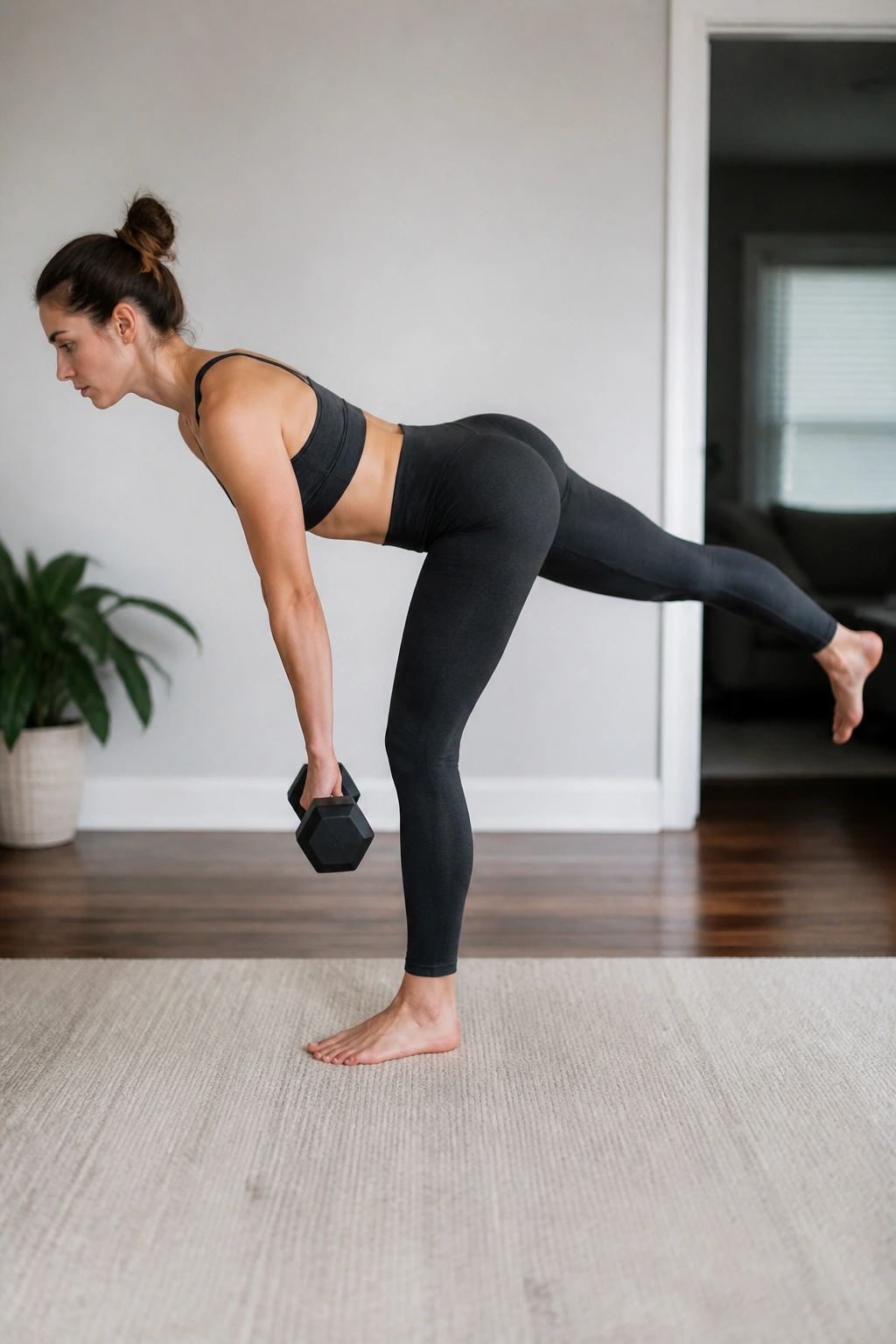
This is one of those exercises that looks graceful in a video and a little wobbly in real life. That’s fine. You stand on one leg, let the opposite leg drift back as a counterbalance, and hinge at the hips while lowering one or two weights. The goal is a long line from head to heel, not a performance.
The single-leg Romanian deadlift does a lot in one shot. Hamstrings. Glutes. Balance. Foot stability. Even your hips wake up and pay attention. It’s especially useful if one side feels tighter or weaker than the other, because the movement exposes imbalances without being dramatic about it.
Start with a light dumbbell in the opposite hand of the standing leg. That contralateral setup makes balance a little easier and feels more natural for many people. Keep a soft knee and move slowly. Six to 8 reps per side is enough to start building control.
If you feel it in your lower back first, shorten the range and slow down.
12. Farmer’s Carry
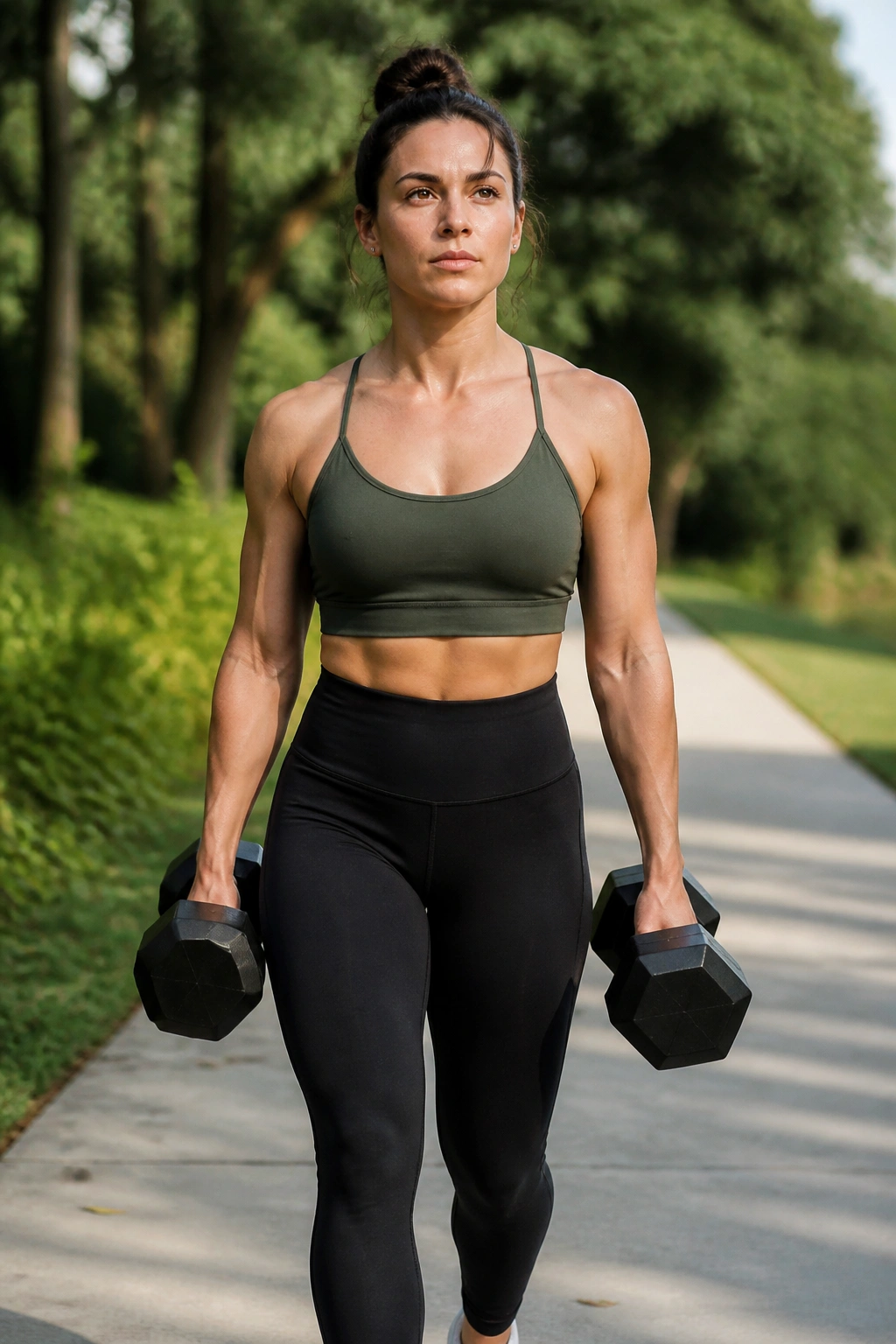
Pick up two heavy dumbbells or kettlebells and walk. That sounds too plain to matter, which is exactly why it works. The farmer’s carry trains grip, posture, core tension, and the kind of full-body bracing that makes everything else feel more stable.
Why Walking With Weight Hits Hard
The body hates being tilted, twisted, or yanked off center. A loaded walk teaches it to stay upright under pressure. That translates to better posture, stronger hands, and a torso that doesn’t fold the second a bag gets heavy.
Walk for 20 to 40 yards or 30 to 60 seconds per round. Keep your ribs stacked over your hips and your shoulders quiet. You should feel like you’re carrying something useful, not like you’re trying to win a parade.
- Hold the weights at your sides
- Take controlled steps
- Keep your gaze forward
- Stop when grip or posture starts to break
This one looks plain. That’s part of the charm.
13. Suitcase Carry
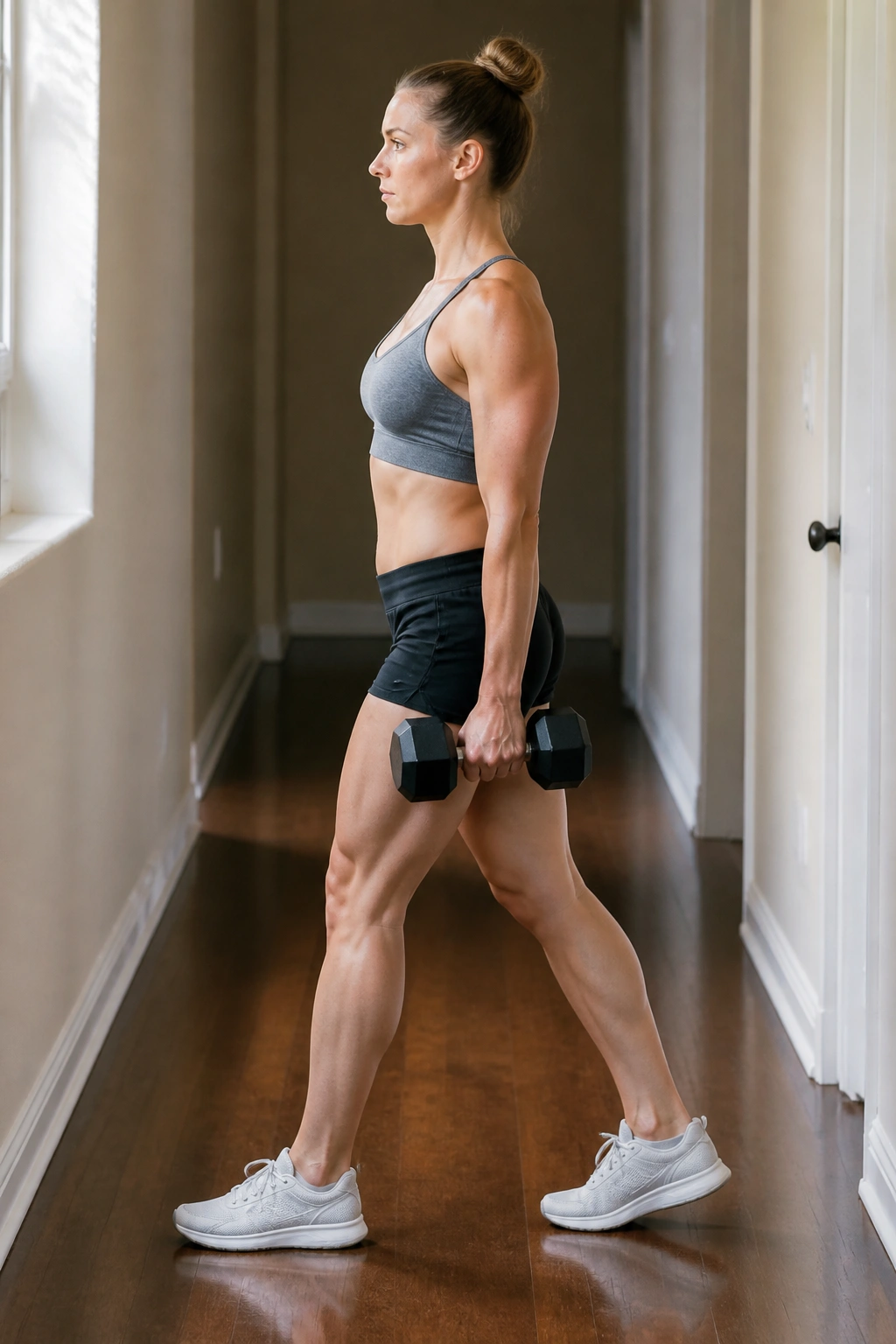
One weight on one side changes the whole game. A suitcase carry asks your body to resist leaning, twisting, and cheating. It looks almost too simple, but the obliques and side-body muscles work hard to keep you tall and steady.
Compared with the farmer’s carry, this version puts more demand on anti-rotation and anti-side-bend strength. That makes it a sharp tool for a strong core without a hundred crunches. It also shows you where your posture falls apart fast. If you drift toward the weight, the exercise tells on you.
Hold one heavy dumbbell or kettlebell in one hand and walk for 20 to 40 yards before switching sides. Stay slow. Stay tall. Don’t let the free hand flap around like you’ve lost a map.
This is one of my favorites for home training because you barely need space. A hallway works. So does the side of a driveway.
14. Lateral Raise
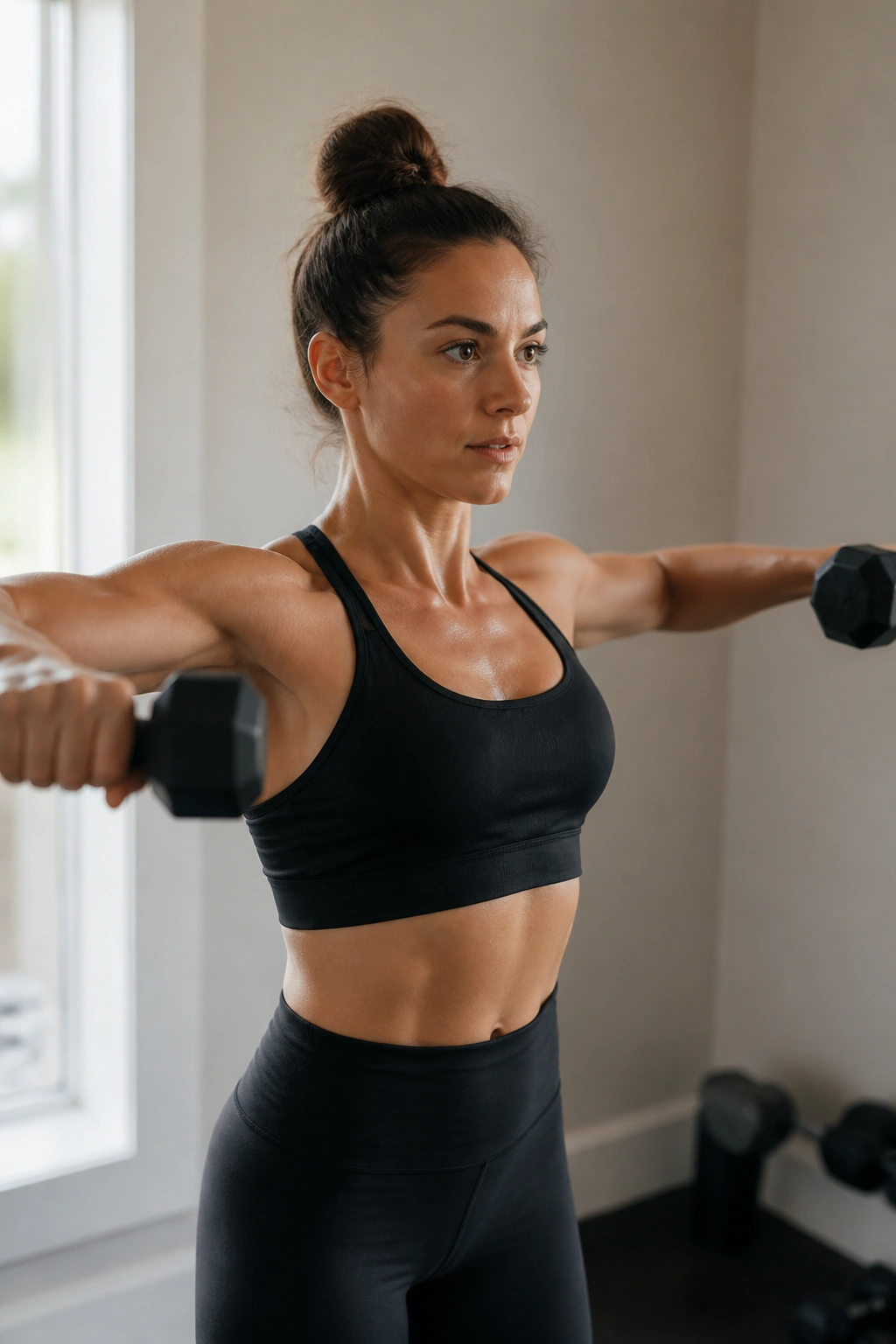
The lateral raise is where honesty starts. Light dumbbells. Slow reps. No swinging. If you try to impress the room with this one, the shoulders will make you pay for it.
Stand tall, let the dumbbells hang by your sides, then raise them out to about shoulder height with a slight bend in the elbows. The movement should feel smooth, not explosive. You’re training the side delts here, which give the shoulders a rounder look and help with overhead work.
Use 10 to 20 reps because the weight usually needs to stay modest. Three-pound dumbbells can be plenty. Five pounds can be plenty. The right load is the one that lets you move without shrugging the traps up to your ears.
How to Keep It Honest
If your wrists rise above your elbows, lower the weight. If you have to swing, lower the weight. If your neck gets tight, lower the weight. There’s a pattern here.
The best lateral raise is the one that still looks controlled at rep 15.
15. Biceps Curl
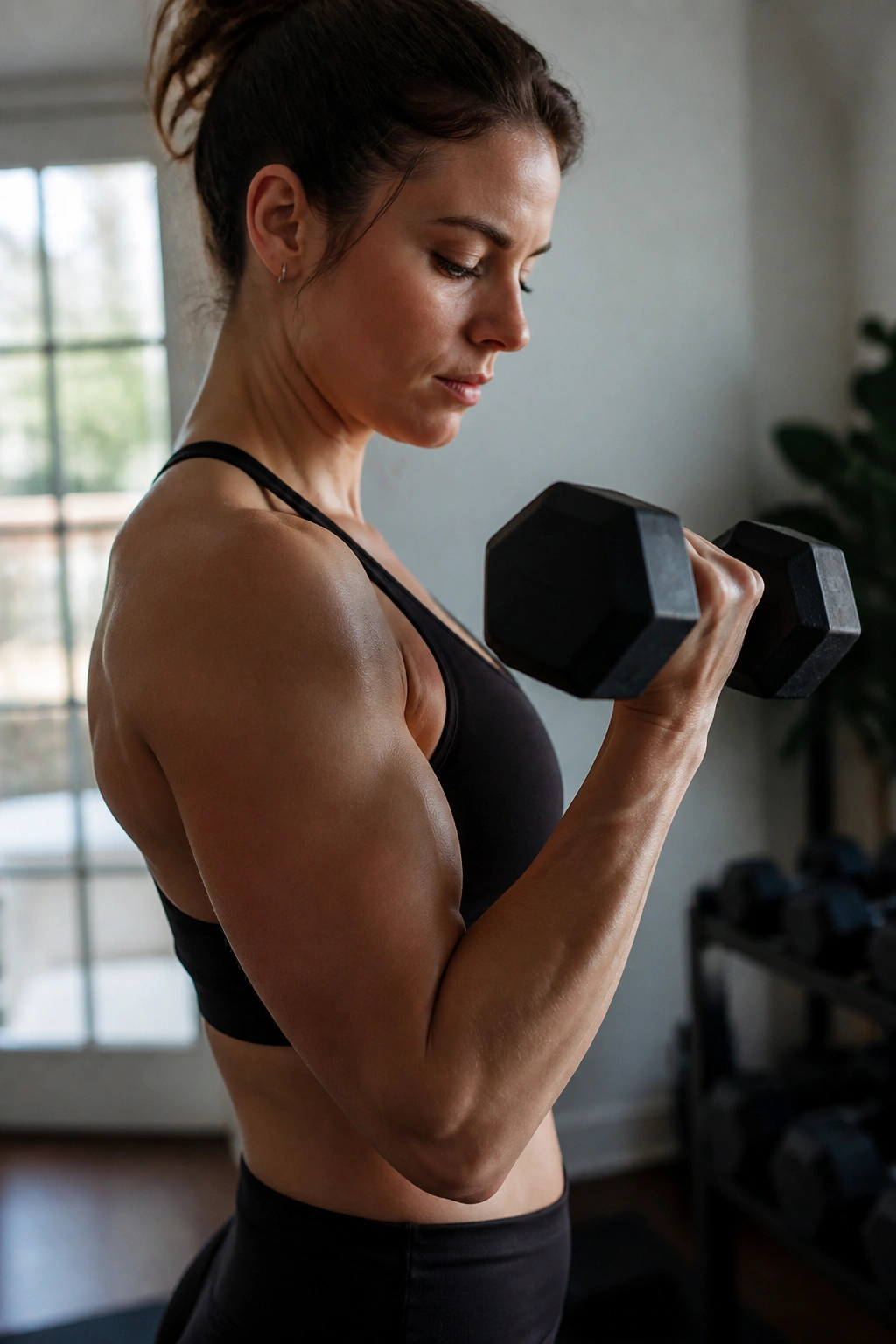
Yes, curls count. They aren’t the whole story, and they are not magic, but they do matter. Stronger biceps help with pulling strength, carrying things, and elbow comfort during rows and deadlifts. They also make it easier to hold on to heavier weights elsewhere, which people forget.
A plain dumbbell curl is enough. Stand tall, keep your elbows near your sides, and curl the weights up without turning it into a hip-thrusting contest. Lower them under control. If the top half of the body starts swinging, the weight is too heavy or you’re rushing.
Hammer curls are a nice option if your wrists prefer a neutral grip. They often feel smoother, especially if straight-up palm-forward curls make your forearms complain. Aim for 8 to 15 reps and use the full range, not the half-rep version people do when they get lazy halfway through a set.
Tiny exercise. Real payoff.
16. Overhead Triceps Extension
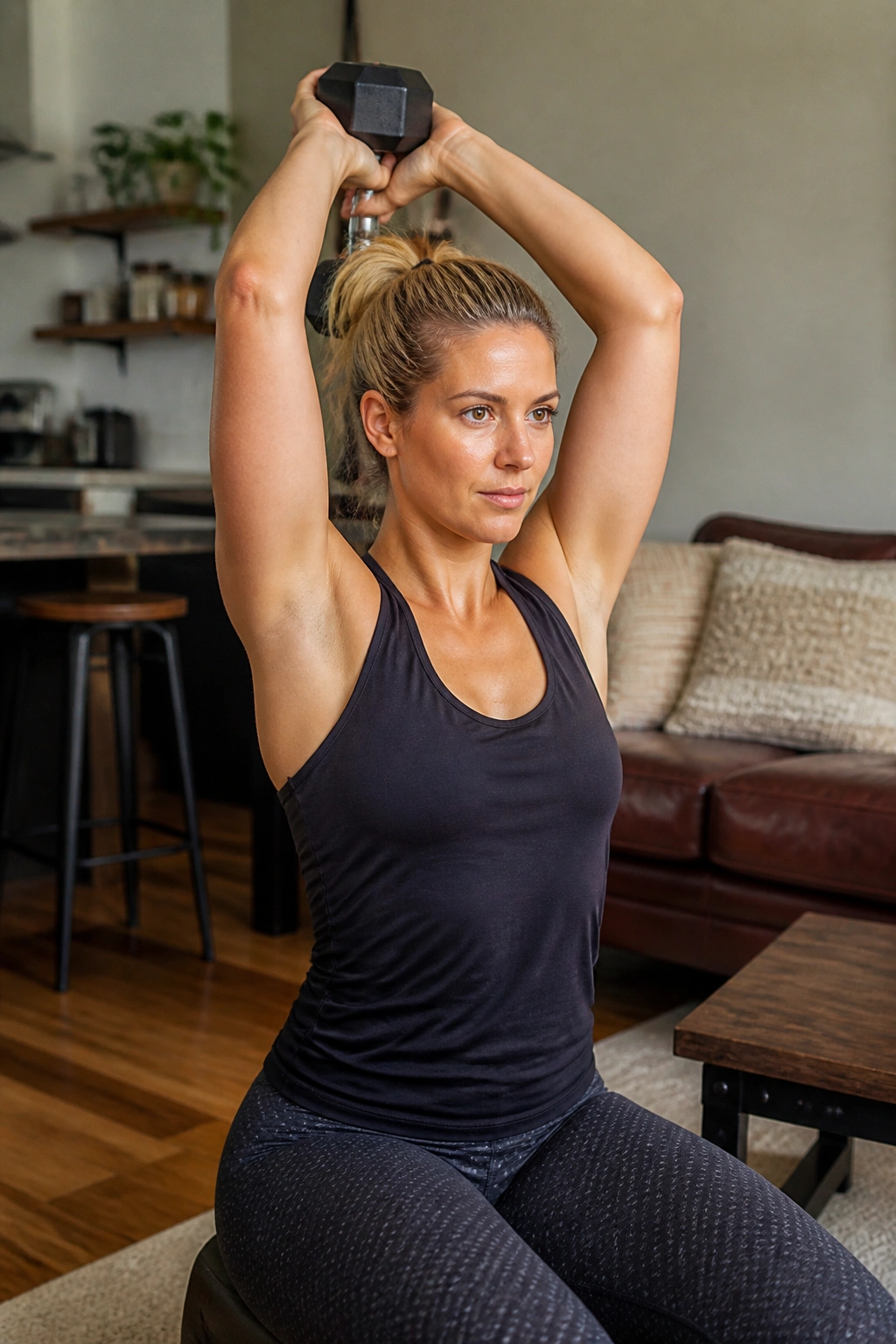
If you want the back of the arm to do more work, overhead triceps extensions are worth the space they take. Hold one dumbbell with both hands, or use one dumbbell in each hand, and let the weight travel behind your head before pressing it back up.
The long head of the triceps gets more stretch here than it does in some other arm moves, which is why this exercise feels different. It also plays nicely with pressing work. If your triceps are weak, your floor press and overhead press will feel that weakness fast.
Keep the elbows mostly pointed forward, not flared wide. That’s the part that matters. Use 8 to 12 reps and keep your ribs from flaring just to help the weight up. If your lower back starts arching, sit down or reduce the load.
Shoulders cranky? Try doing it seated. Sometimes the fix is boring. Sometimes boring works.
17. Kettlebell Swing
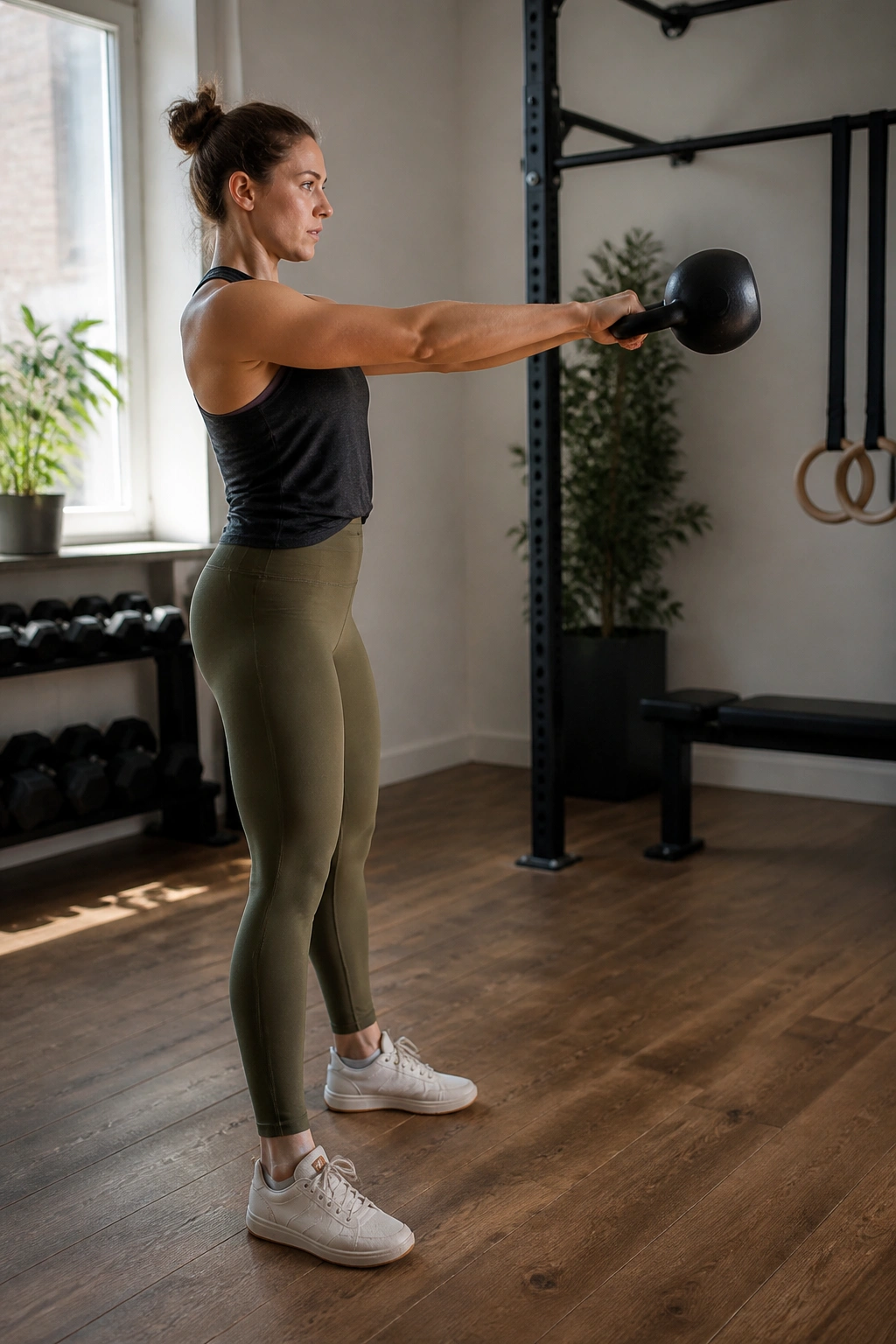
The kettlebell swing is not a squat. It’s a hinge. That distinction matters a lot, because the power should come from the hips snapping forward, not from lifting with the arms or dropping into a deep knee bend like you’re doing a tiny deadlift.
When it’s done well, the swing feels fast, sharp, and athletic. When it’s done badly, it feels like a lower-back gamble. Start light. Master the hinge first. If you can deadlift cleanly and keep your core braced, swings can be a short, hard conditioning finisher that doesn’t require a treadmill you hate.
Use 10 to 20 swings per set with plenty of rest. The bell should float because your hips drive it, not because your shoulders are doing the lifting. Stop the set the moment your form turns sloppy. Do not keep swinging just because the number looked good on paper.
- Hinge back, don’t squat down
- Let the bell pass high from momentum
- Keep arms relaxed
- Snap the hips hard at the top
18. Turkish Get-Up
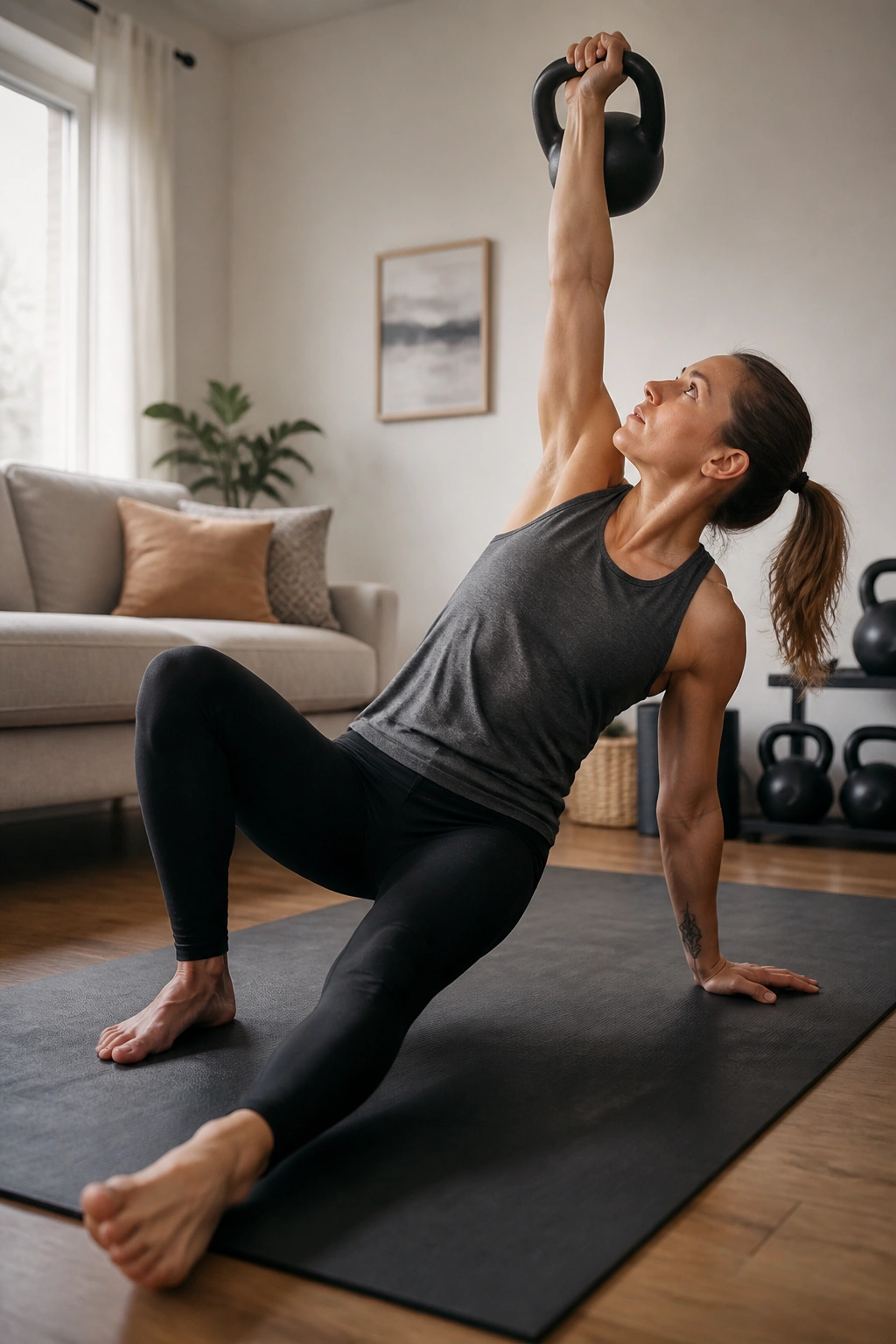
The Turkish get-up is the exercise that makes people laugh until they try it. One rep takes you from lying on the floor to standing and back down again, all while keeping a weight locked overhead. It asks for shoulder stability, core strength, balance, and enough focus to avoid tripping over yourself.
That sounds dramatic, but the movement is actually beautiful once it starts making sense. It teaches body control in a way almost nothing else does. If you hate the gym and want one exercise that feels self-contained, this is a strong pick. One kettlebell or dumbbell is enough.
Start without weight if you need to. Work the parts in order. Roll to the elbow, post on the hand, lift the hips, sweep the leg, kneel, stand. Then reverse it. One to 3 reps per side is plenty at first. This is not a rush job.
How to Learn It Without Getting Lost
- Practice each transition separately
- Keep your eyes on the weight during the early stages
- Move slowly enough to breathe
- Use a light load until the whole pattern feels smooth
The get-up is awkward before it is elegant. That’s normal.
Final Thoughts
You do not need a gym membership to get strong. You need a few moves that train your legs, hips, back, shoulders, and core in ways that matter when real life gets messy and heavy.
Pick one squat, one hinge, one push, one pull, one carry, and one single-leg move. That alone is enough to build a home routine that feels solid instead of random. A pair of dumbbells can go a long way when you use them with purpose.
And if you still hate the gym after all that? Fine. Keep the weights at home, put on music you actually like, and get the work done without anybody watching. That setup has a certain charm.
