



Balance usually doesn’t fall apart in a dramatic way. It starts with a small ankle wobble, a knee that drifts a little too far, a ribcage that tips, and then the whole body feels a beat behind.
That’s why standing core exercises for better balance work so well. They train the trunk the way you actually use it: upright, breathing, shifting weight, and keeping your torso from flopping around when one foot leaves the floor.
Crunches have their place, but they don’t teach much about staying steady while you reach, step, carry, twist, or hold a position. Standing drills do. They ask your core to manage rotation, side-bending, and extension while your legs and feet keep changing the base underneath you.
The best part is that these moves don’t need to look fancy to matter. A slow march with a dumbbell can be harder than a flashy combo, and a simple carry can teach more useful control than a hundred sloppy reps. Start with the first few that feel honest, not impressive.
1. Marching Knee Drives
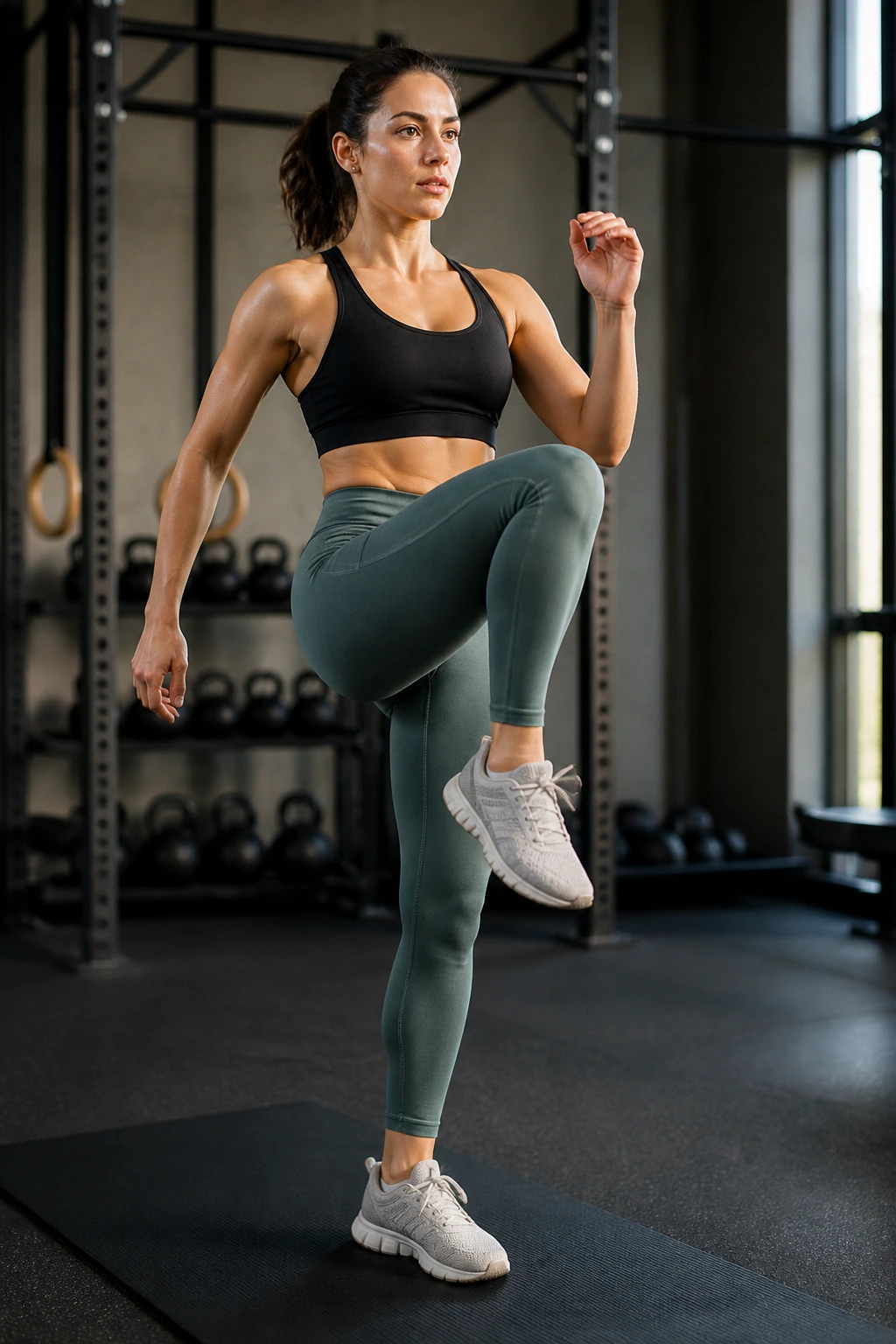
Marching knee drives look almost too plain to count as training, which is why people underestimate them. Stand tall, brace lightly, and lift one knee toward hip height without letting your torso lean back or sway side to side.
The key is the pause. Hold the top for one second, lower with control, then switch legs. That tiny pause forces your core to stop the body from “helping” too much, and that’s exactly what balance work needs.
A few cues help a lot:
- Keep your ribs stacked over your hips.
- Exhale as the knee comes up.
- Let the standing foot stay heavy and quiet.
- Stop the movement if you start hopping.
This is a smart starter drill because it teaches weight shift without chaos. It also works well before walking lunges, step-ups, or any day when your balance feels a little off.
2. Standing Cross-Body Knee-to-Elbow
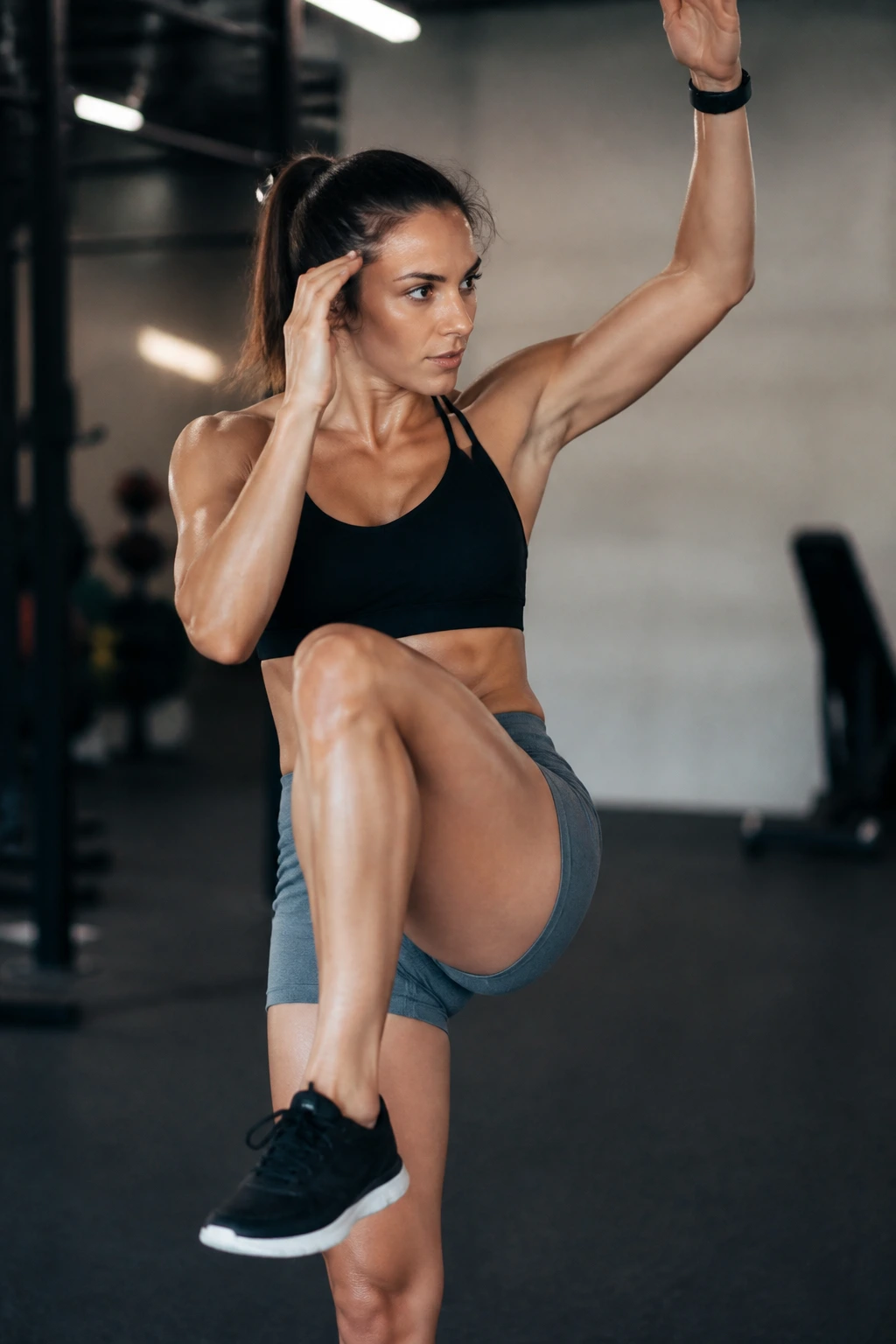
Why does this one feel harder than it looks? Because the body wants to turn it into a sloppy crunch. The goal is smaller and cleaner: bring one knee up and across toward the opposite elbow while keeping your shoulders level and your standing leg firm.
You should feel the front of the hip working, but the bigger job is in the obliques. If your chest collapses or your elbow dives toward the knee, you’ve lost the point. The movement should come from control, not speed.
Try this with a slow count: lift, pause, lower. Then switch. If you want more challenge, add a light overhead reach on the non-working side and keep that arm long. That extra reach makes the torso work a little harder to stay centered.
No rushing. Seriously. Fast reps turn this into a cardio flail, and that’s not what your balance needs.
3. Standing Pallof Press
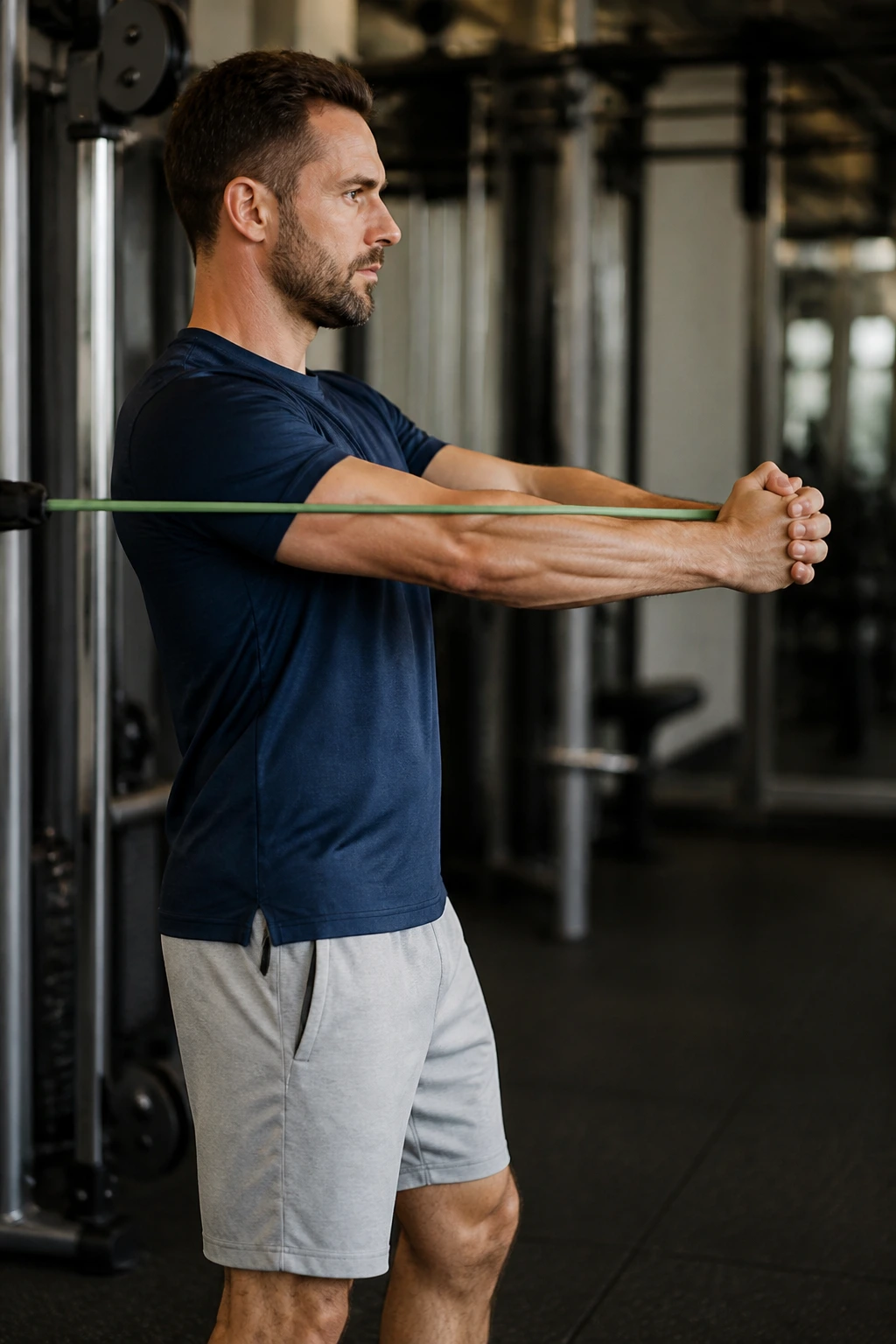
The Pallof press is the kind of exercise that looks boring until you try to stop your body from twisting. Stand sideways to a band or cable, hold the handle at your chest, then press straight out and bring it back without letting your torso rotate.
Setup first
Anchor the band at chest height. Step far enough away that the band has real tension, but not so far that your shoulders hitch up toward your ears. Feet can be hip-width apart, or you can stagger them for a steadier base.
What to feel
Your abs should feel like they’re quietly bracing from the inside. Not clenched. Braced. Your hips stay square, your ribs stay quiet, and the band tries to pull you sideways while you refuse to move.
What usually goes wrong
- Leaning into the band instead of resisting it.
- Pressing too fast.
- Arching the lower back.
- Letting the front knee lock hard.
Use 6 to 10 slow presses per side. The hold matters too — even a 2-second pause at full extension makes the core work harder than people expect.
4. Standing Wood Chop
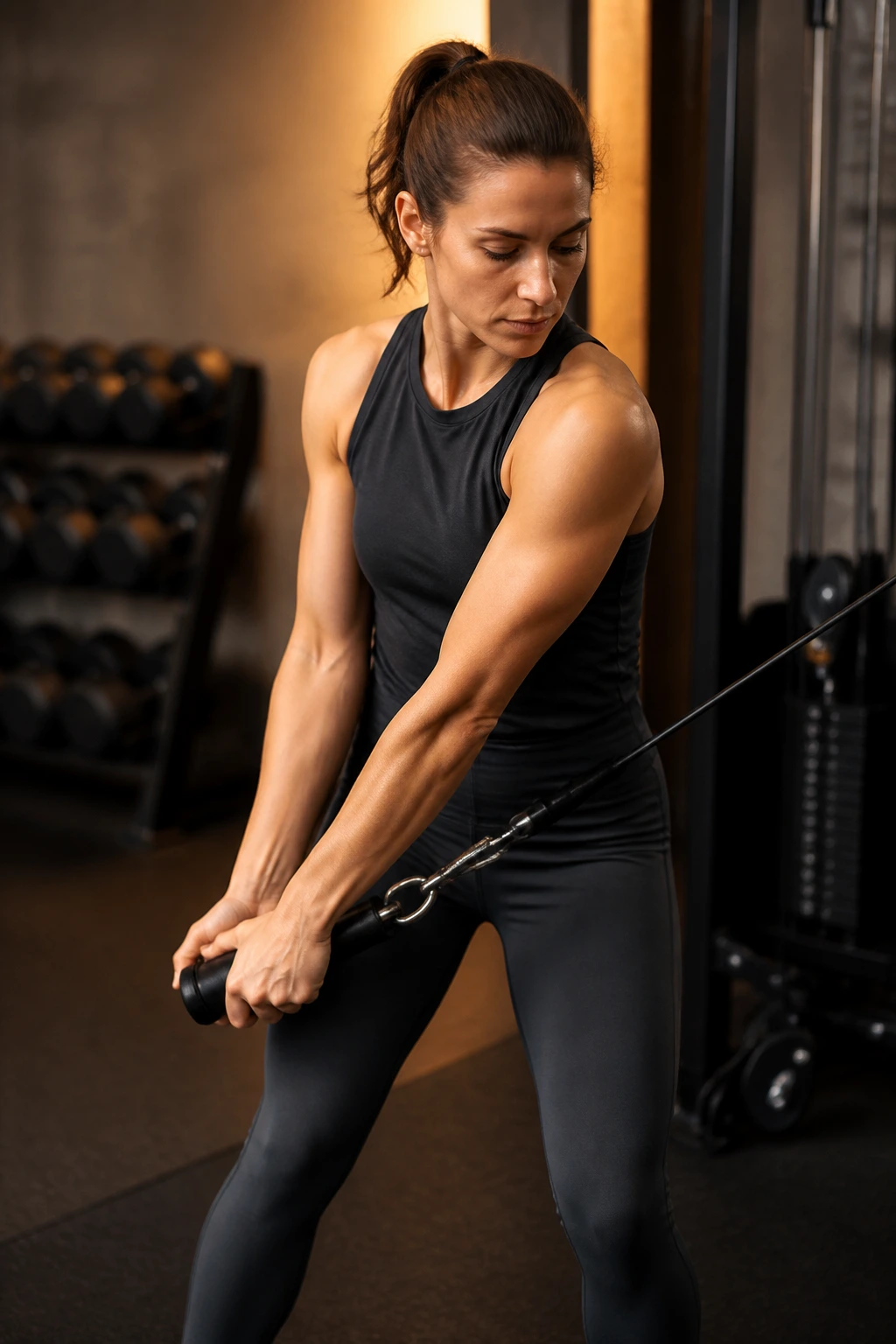
A standing wood chop gives you diagonal work, which balance training loves. Hold a cable, band, or light dumbbell and move from a higher position down across the body, or from low to high if you want the reverse pattern.
The trick is not to fling the weight around. The arms guide the shape, but the trunk controls the path. Your hips and shoulders can rotate a little, yet the motion should feel organized, not loose.
This drill is especially good for people who live in one plane all day. Standing at a desk, sitting in a car, walking on flat ground — all of that gets repetitive. A chop teaches your torso to create power and then stop that power at the right point.
Use a light load at first. If your lower back takes over, the weight is too heavy or the range is too big. A clean chop is smooth and controlled from start to finish.
5. Suitcase Carry
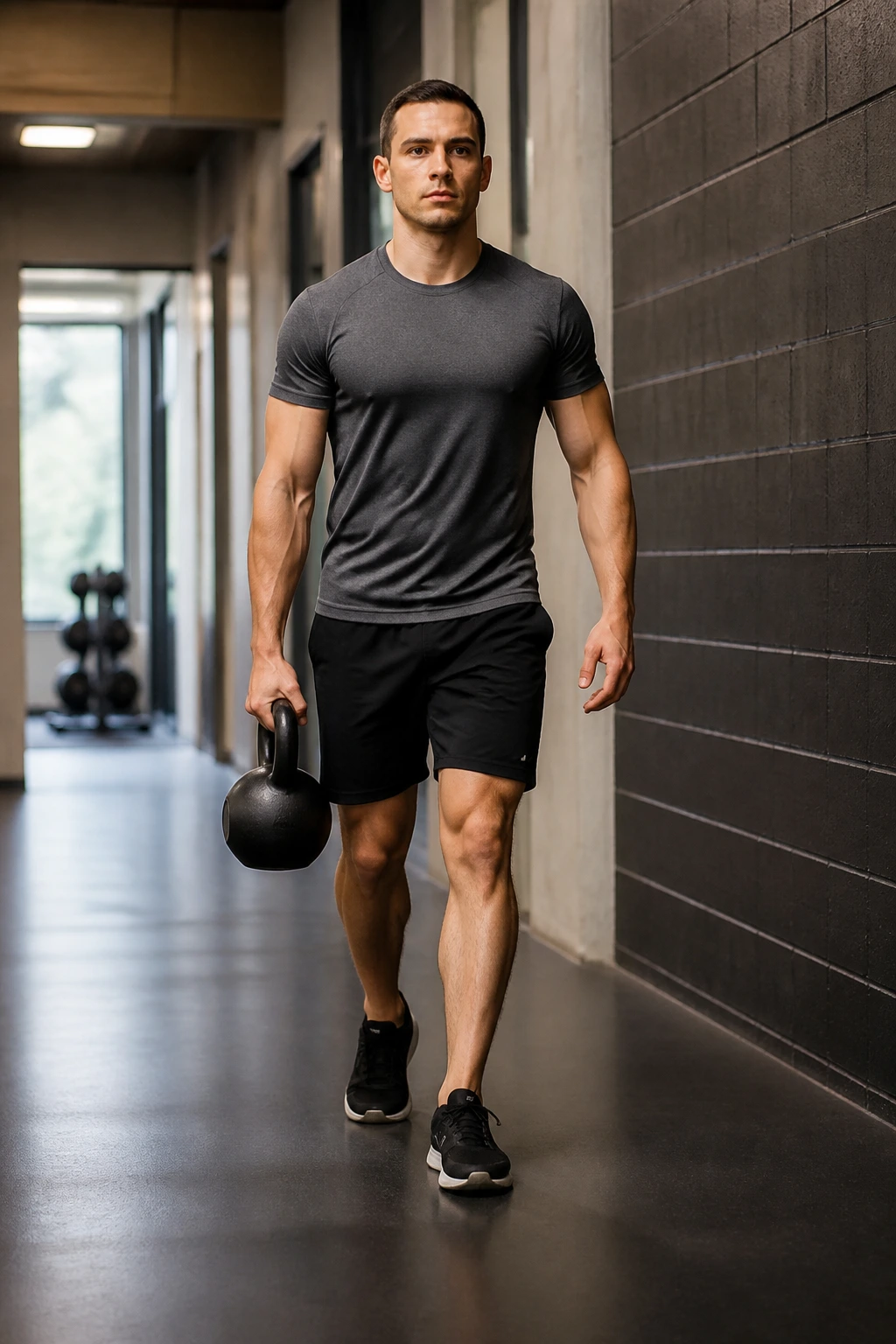
A suitcase carry is brutally simple. Pick up one heavy weight, hold it at your side, and walk. That’s it. And it’s excellent.
The challenge is resisting the pull of the weight. Your body wants to lean toward or away from it, your shoulder wants to creep up, and your trunk wants to tilt. If you keep everything tall and level while moving, the obliques, glutes, and even the small foot muscles all have to do their jobs.
Use these cues
- Walk slowly.
- Keep your chin level.
- Don’t shrug the loaded shoulder.
- Let your free arm swing naturally.
Try 20 to 40 steps per side. A heavier weight with clean form beats a lighter weight carried badly. If the torso bends or the step gets sloppy, shorten the walk and fix the posture before adding load.
This is one of my favorites. No fluff. Just honest work.
6. Overhead Reach and Heel Raise
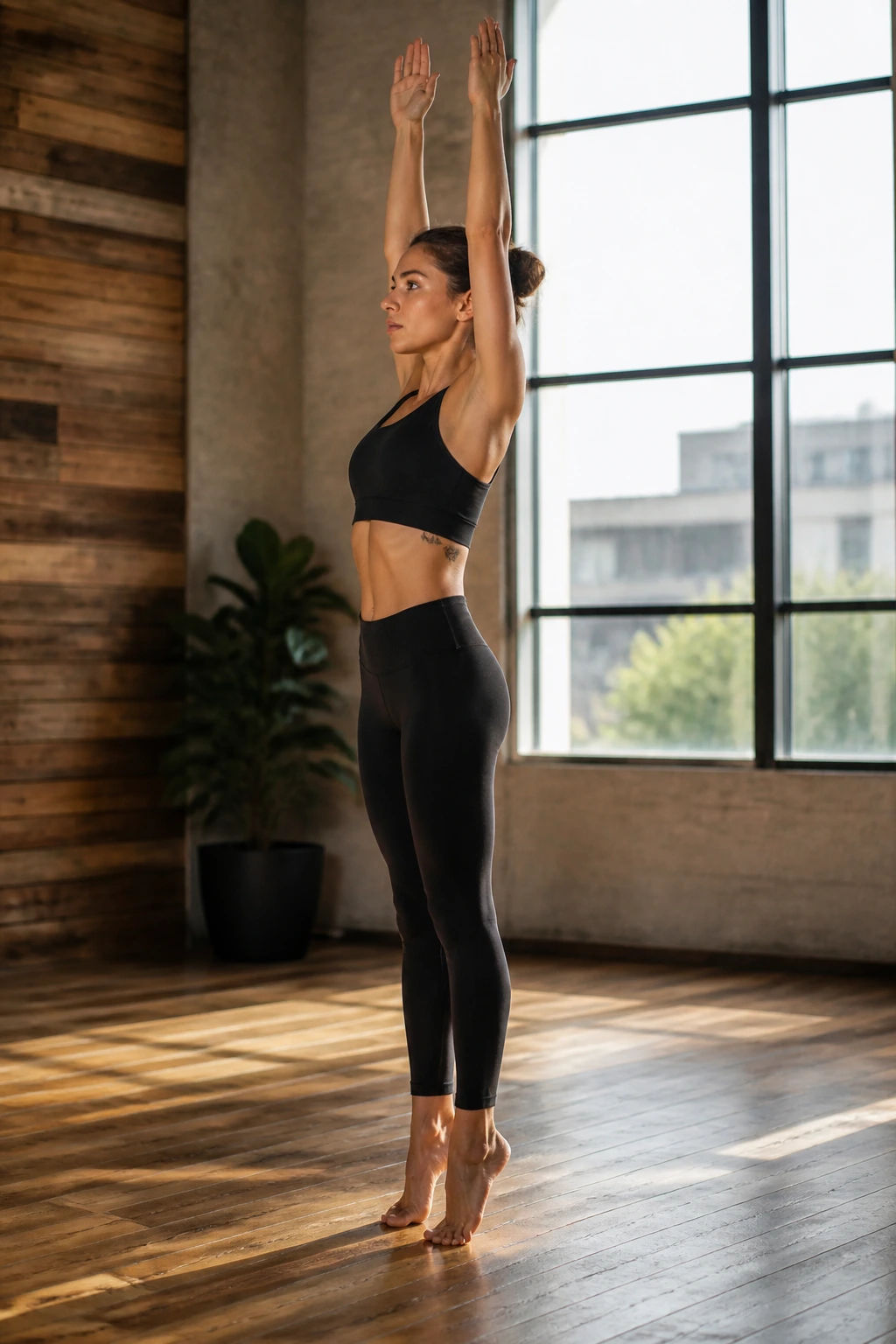
This one starts gently, then gets sneaky. Reach both arms overhead, lift onto the balls of your feet, and hold for a second before lowering under control.
The overhead reach lengthens the whole body, while the heel raise asks the feet and calves to stabilize the base. Put them together and your core has to keep the ribs from flaring and the lower back from arching. It’s a small move with a surprisingly sharp payoff.
You can make it tougher by reaching one arm slightly higher than the other, or by holding a very light dumbbell in one hand. Keep the load tiny. If you start wobbling hard, the exercise stops being useful and turns into a fight with gravity.
A lot of people skip drills like this because they look too easy. That’s usually a mistake. Easy-looking standing work often exposes the weak spots faster than the heavy stuff.
7. Front Rack March
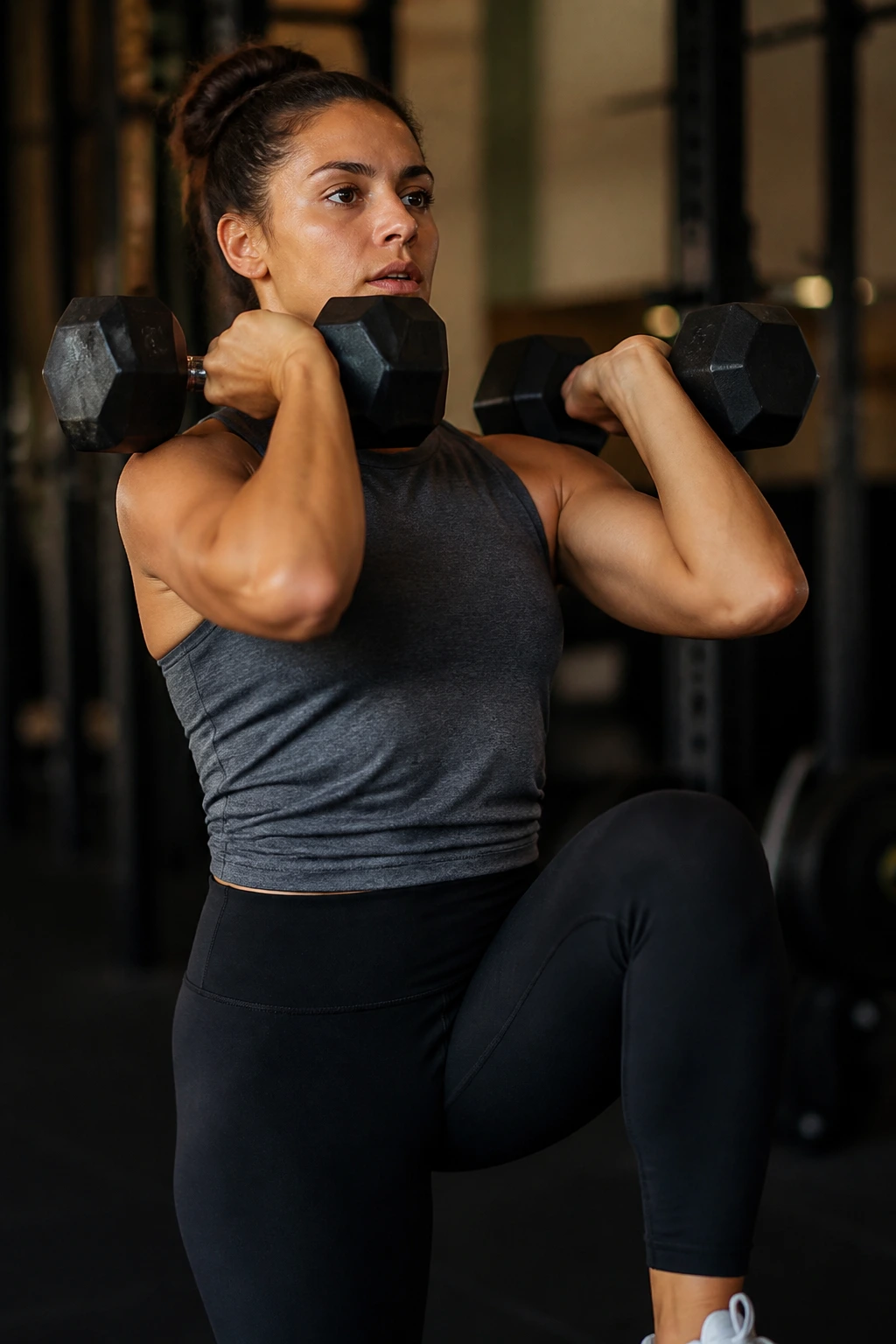
Front rack marching is a clean bridge between strength and balance. Hold one kettlebell or two dumbbells at shoulder height, elbows slightly forward, then march in place with slow, controlled knee lifts.
The front rack position changes everything. The weight sits close to your center, which sounds friendly, but it also asks your trunk to stay packed and upright while your legs move. If your ribs flare, the load gets ugly fast.
What to watch
- Keep the weights close to the body.
- Don’t let the lower back arch.
- Step high enough to challenge balance, not so high that you lose rhythm.
- Switch sides if you’re using one kettlebell.
This drill is great when regular marching gets too easy. The rack position adds more core demand without needing a crazy amount of weight. If you can keep breathing steadily here, you’re doing the drill right.
8. Single-Leg Toe Tap with Brace
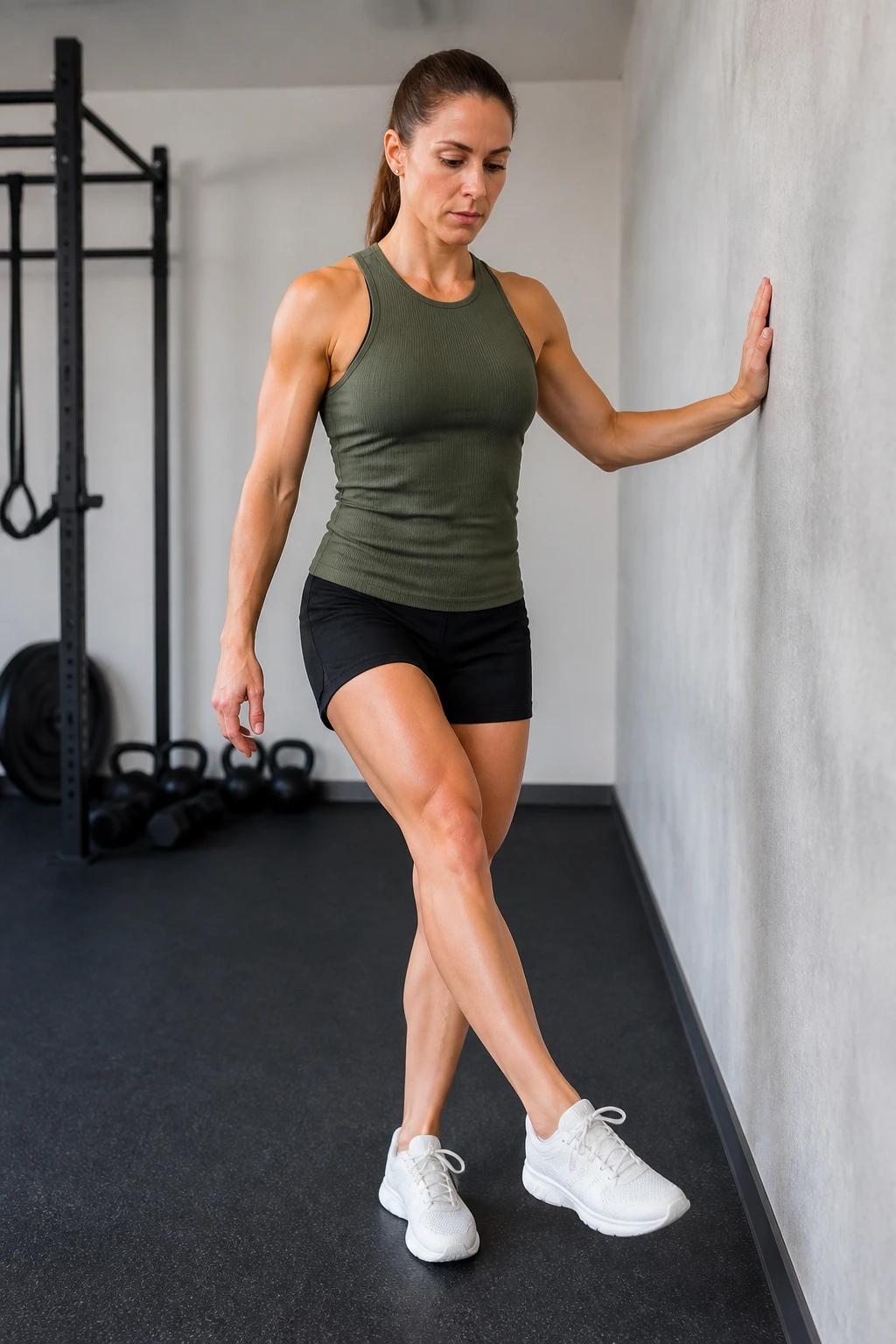
Can you balance on one leg without turning the movement into a circus act? That’s the whole point here. Stand on one foot, keep your torso tall, and tap the other foot lightly to the floor in front of you, then to the side, then behind you.
The standing leg should do most of the work, but the core keeps your torso from tipping. Think of your ribs as a stack sitting over the pelvis. If that stack shifts too much, the exercise turns into a wobble instead of a skill drill.
A simple pattern
- Tap front.
- Tap side.
- Tap back.
- Reset and switch legs.
Use a hand on a wall if you need it at first. That is not cheating. It just makes the movement honest enough to practice well. Once the taps feel clean, remove the support and slow the tempo down. That little bit of control matters more than range.
9. Standing Band Row in Split Stance
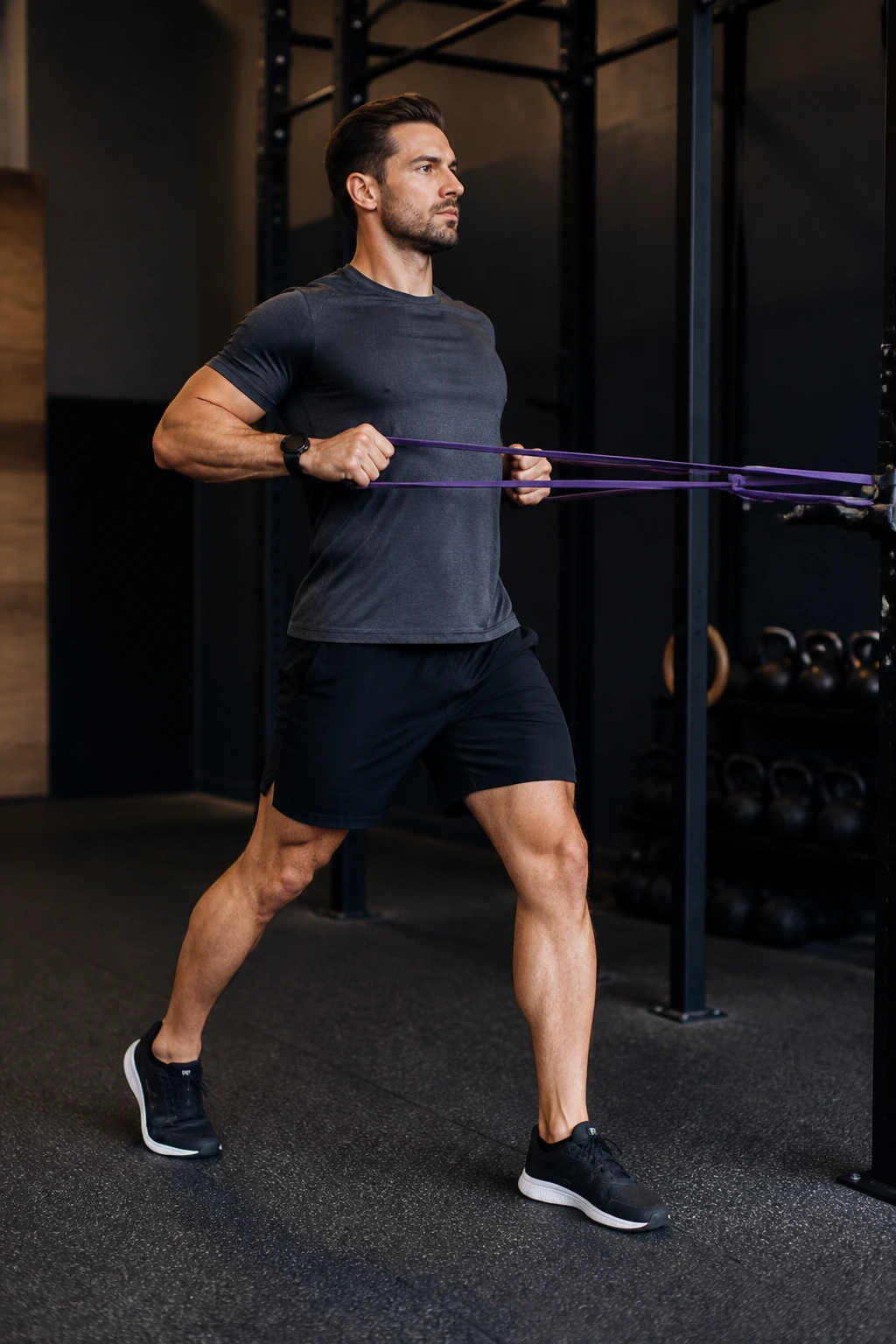
A split stance changes the feel of a row in a useful way. One foot sits forward, one back, and you pull a band or cable toward your ribs while keeping the torso from twisting or leaning.
This is not just an upper-back exercise. The split stance gives your core a job, because the body has to stay square while the arms do the pulling. If the front knee caves or the chest rotates toward the pulling arm, the load is too much or the stance is too narrow.
The beauty of this drill is that it builds quiet stability. You pull, hold, return, then repeat without any dramatic motion. That makes it useful for people who want balance work without a lot of impact.
Use 8 to 12 controlled reps per side. Keep the back heel light and the front foot rooted. The row should feel crisp, not jerky.
10. Standing Side Bend with Dumbbell
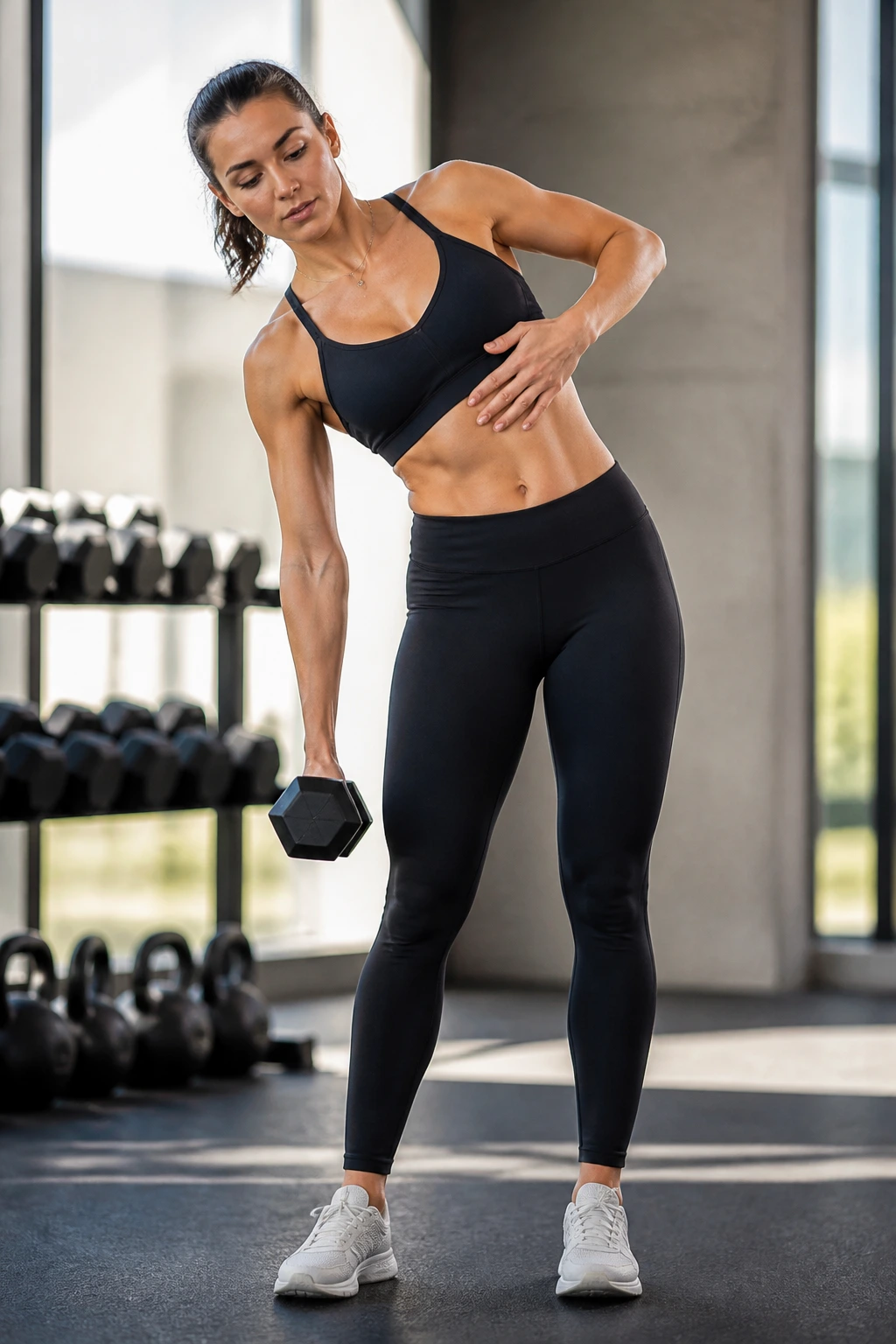
Side bends get treated badly sometimes, and fair enough — sloppy reps can pull the lower back around in an ugly way. Done with a light dumbbell and a small range, though, they teach the obliques to control side-to-side motion.
Hold one dumbbell in one hand, let the opposite hand rest on your ribs or behind your head, and bend a few inches toward the loaded side. Then come back to center without leaning backward.
The range should stay modest. You are not trying to fold in half. You’re teaching the torso to manage side load while staying tall, which matters when you carry groceries, hold a child, or shift weight on one leg.
If the movement feels pinchy, stop. Use less weight, shorten the range, or skip this one for a while. There’s no prize for forcing a side bend that feels wrong.
11. Lateral Band Walk with Tall Torso
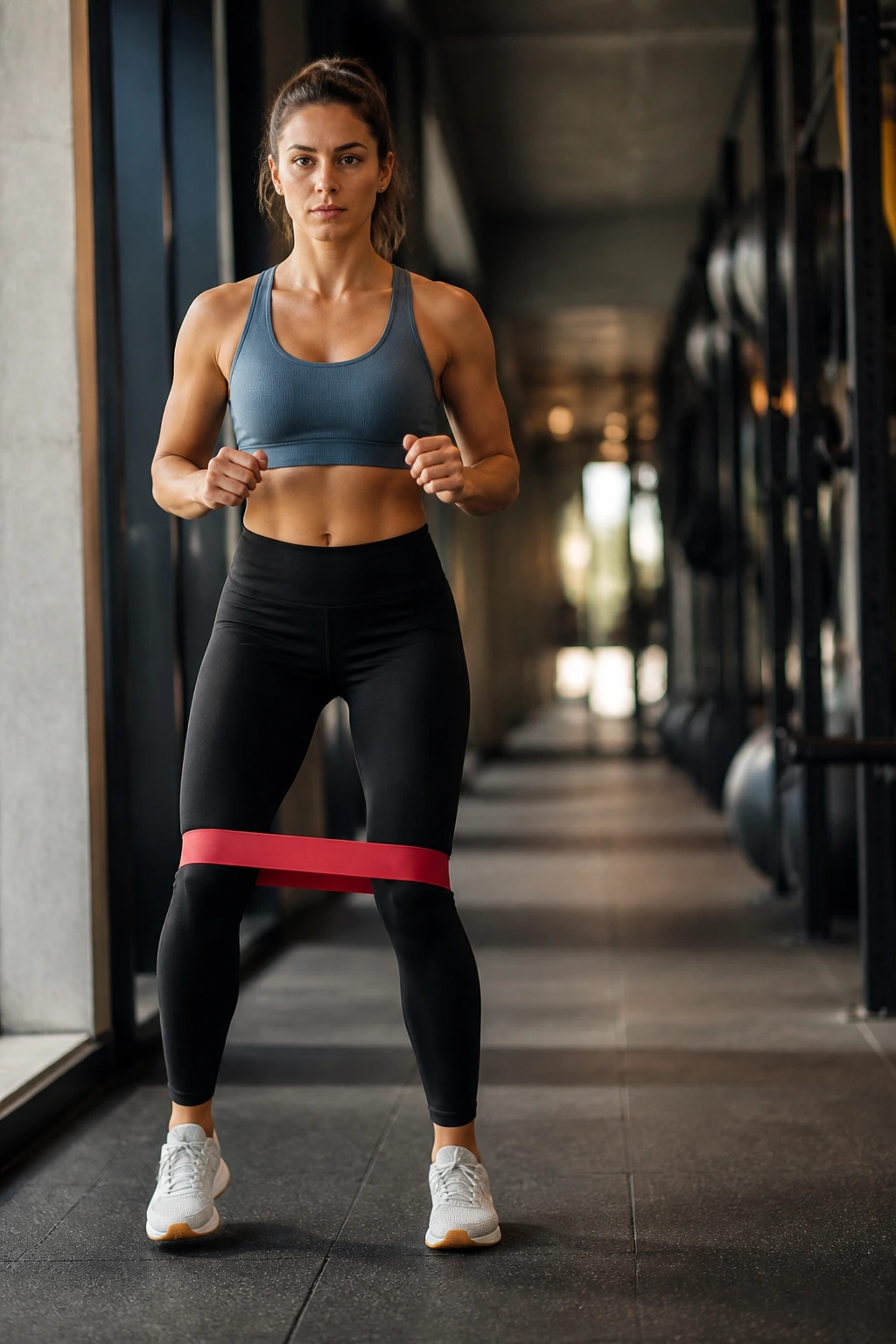
Lateral band walks are usually sold as a glute move, which is true, but the core does a lot of cleanup work too. Put a band above the knees or around the ankles, soften the knees, and step sideways without letting your chest tip.
The hard part is staying tall while your hips burn. People often lean forward, sway side to side, or drag the trailing foot too much. That turns the drill into a mess and steals the balance work right out of it.
Clean form looks like this
- Knees stay slightly bent.
- Feet stay parallel, not turned out hard.
- Each step is controlled, not a hop.
- The torso stays stacked over the hips.
Use 8 to 12 steps in one direction, then return. If the band is pulling you into a crab walk, the tension is too strong. This one should feel steady and deliberate, with the core keeping the top half calm while the hips work underneath.
12. Alternating Punches with a Locked Ribcage
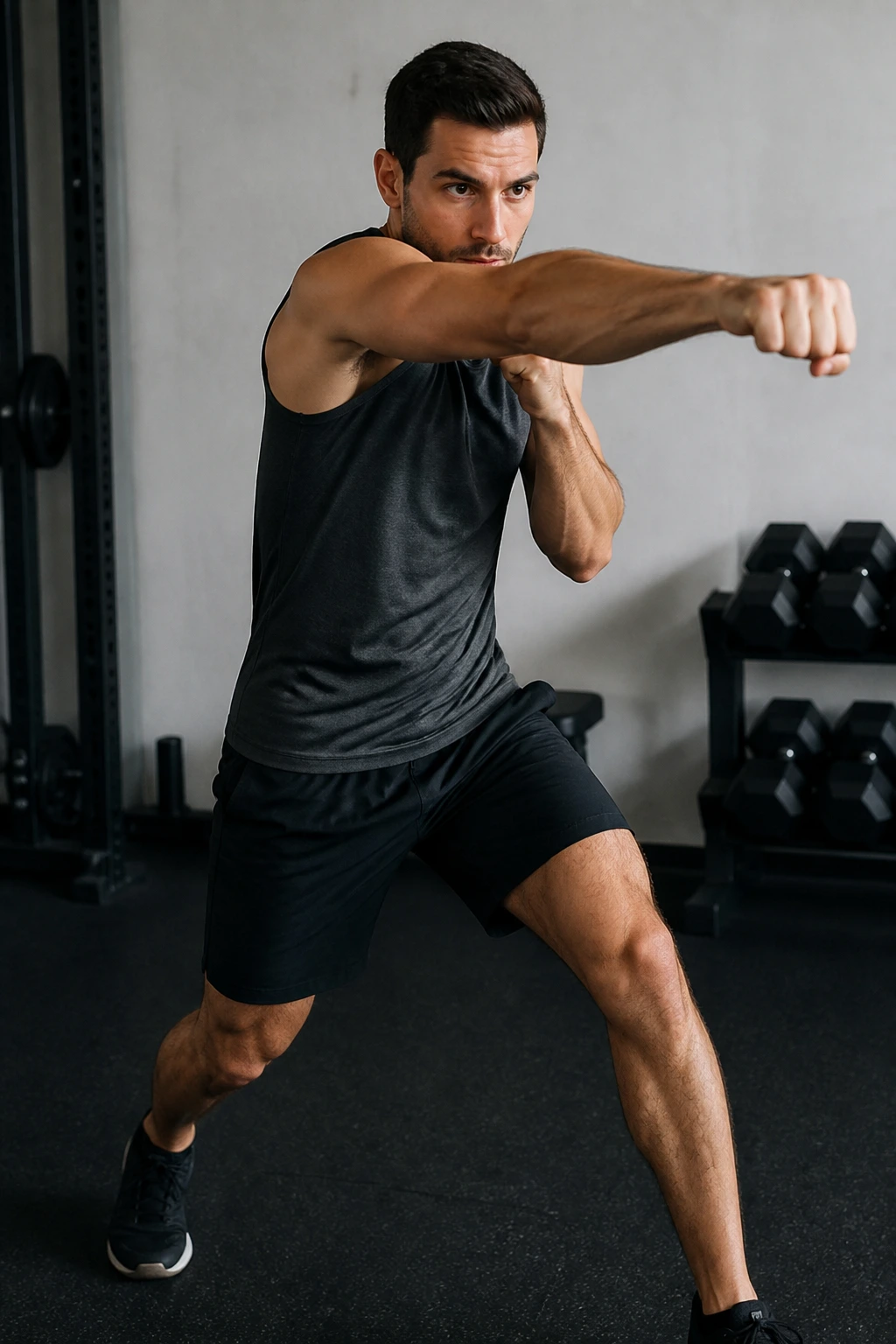
Shadowboxing is sneaky core training when you do it with discipline. Stand in a staggered stance, brace lightly, and punch straight ahead with alternating arms while keeping your ribcage from swaying with every strike.
The temptation is to chase speed. Don’t. A fast, sloppy punch lets the torso swing around and turns the movement into arm cardio. A clean punch, though, makes the trunk resist rotation and teaches the body to stay organized while the arms move quickly.
You can do this barehanded, with 1- to 2-pound hand weights, or in front of a mirror. The mirror helps a lot because it shows the little torso leaks that are easy to miss from inside the movement.
One rule: if your shoulders start doing all the work, slow down. The punch should snap out and return while the center stays steady.
13. Standing Cable Rotation
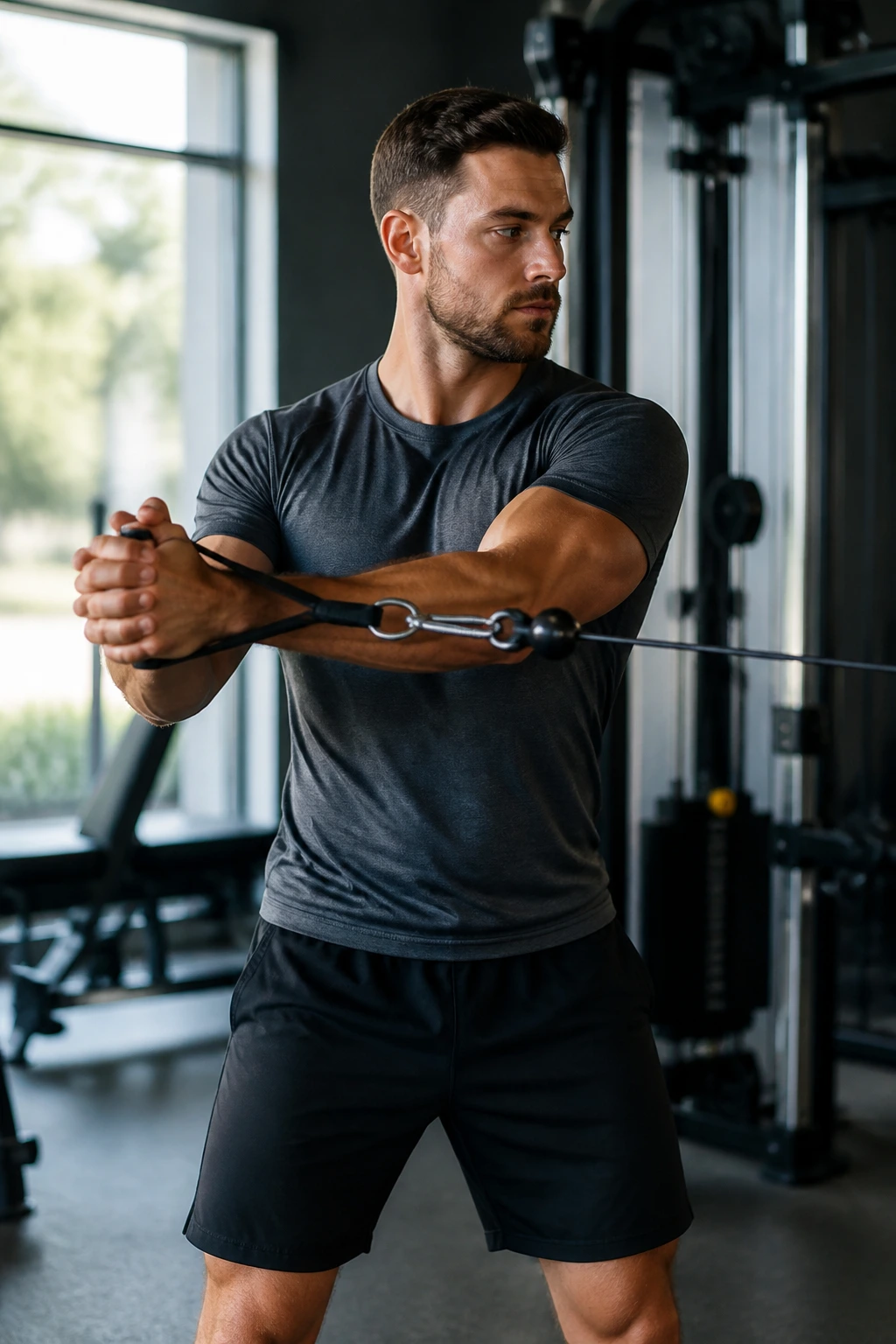
This is the controlled cousin of the wood chop. Stand with a band or cable at chest height, elbows soft, and rotate the torso a short distance side to side without letting the hips swing around wildly.
The range should be small. That matters. A lot. You want to train rotation control, not turn the movement into a big, loose twist that the lower back has to absorb.
Keep the motion clean
- Rotate from the ribcage.
- Keep the pelvis mostly forward.
- Move with a smooth tempo.
- Stop before the shoulders drift too far.
This drill is useful for sports, but it also matters for ordinary life. Reaching across a car seat, turning to grab something from a shelf, or twisting while carrying a bag all ask for this kind of control. Small, boring-looking rotations often do more good than the flashy ones.
14. Overhead Press and March
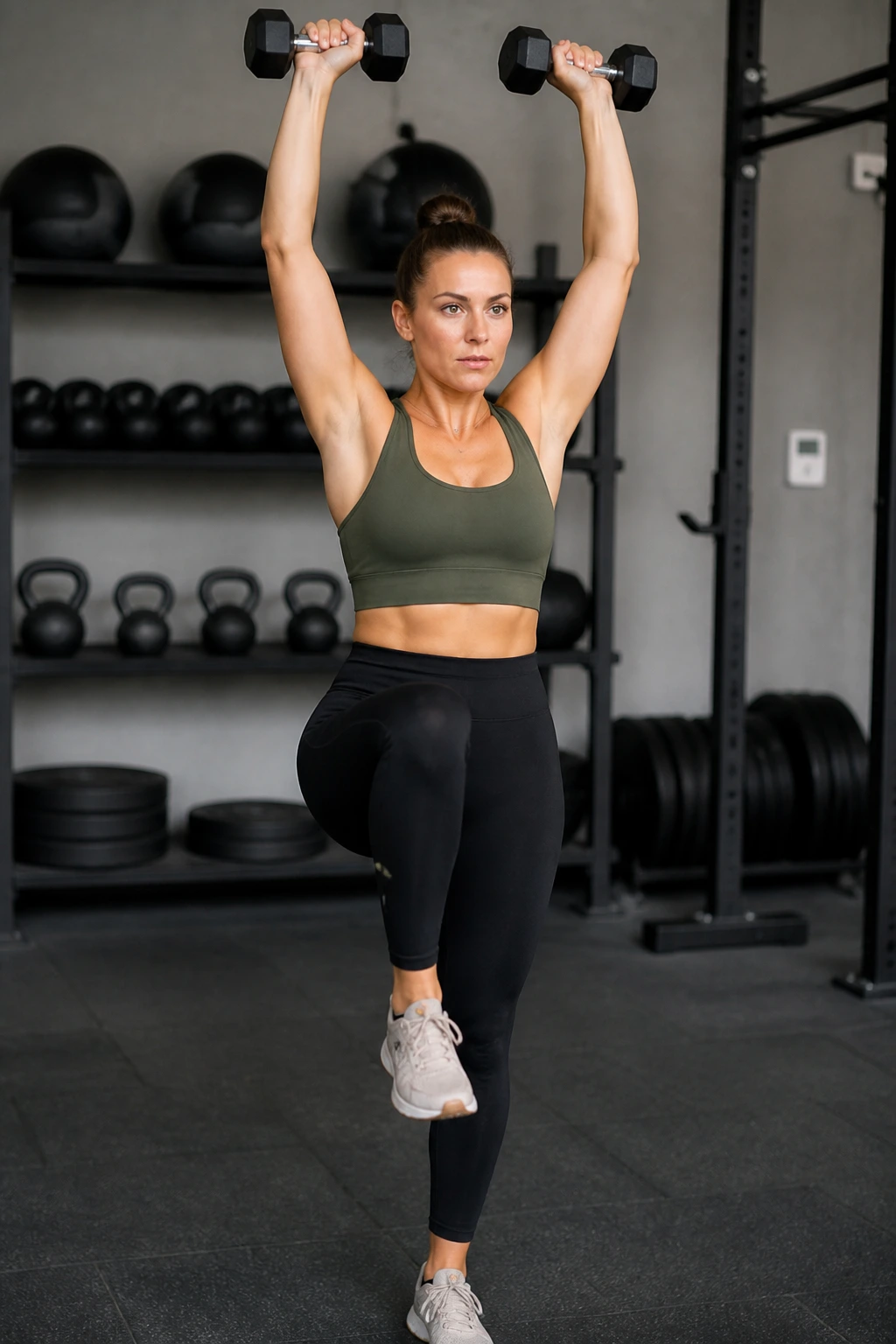
An overhead press with a march sounds simple until you try to keep the trunk from arching. Press a light dumbbell or pair of dumbbells overhead, lock the arms out gently, and march in place with slow knee lifts.
The overhead position forces the ribs to stay down and the glutes to keep the pelvis from tipping forward. That makes the core work in a very real way. If the lower back sways or the elbows bend and wobble, the load is too heavy.
This one rewards patience. Start with a single dumbbell in one hand before trying both arms overhead. A single-side version exposes balance issues faster and gives you a cleaner read on what’s happening through the middle of the body.
Use 6 to 8 marches per side. Keep the neck long. Breathe. If the breath gets stuck, the brace is too hard.
15. Single-Arm Carry with March
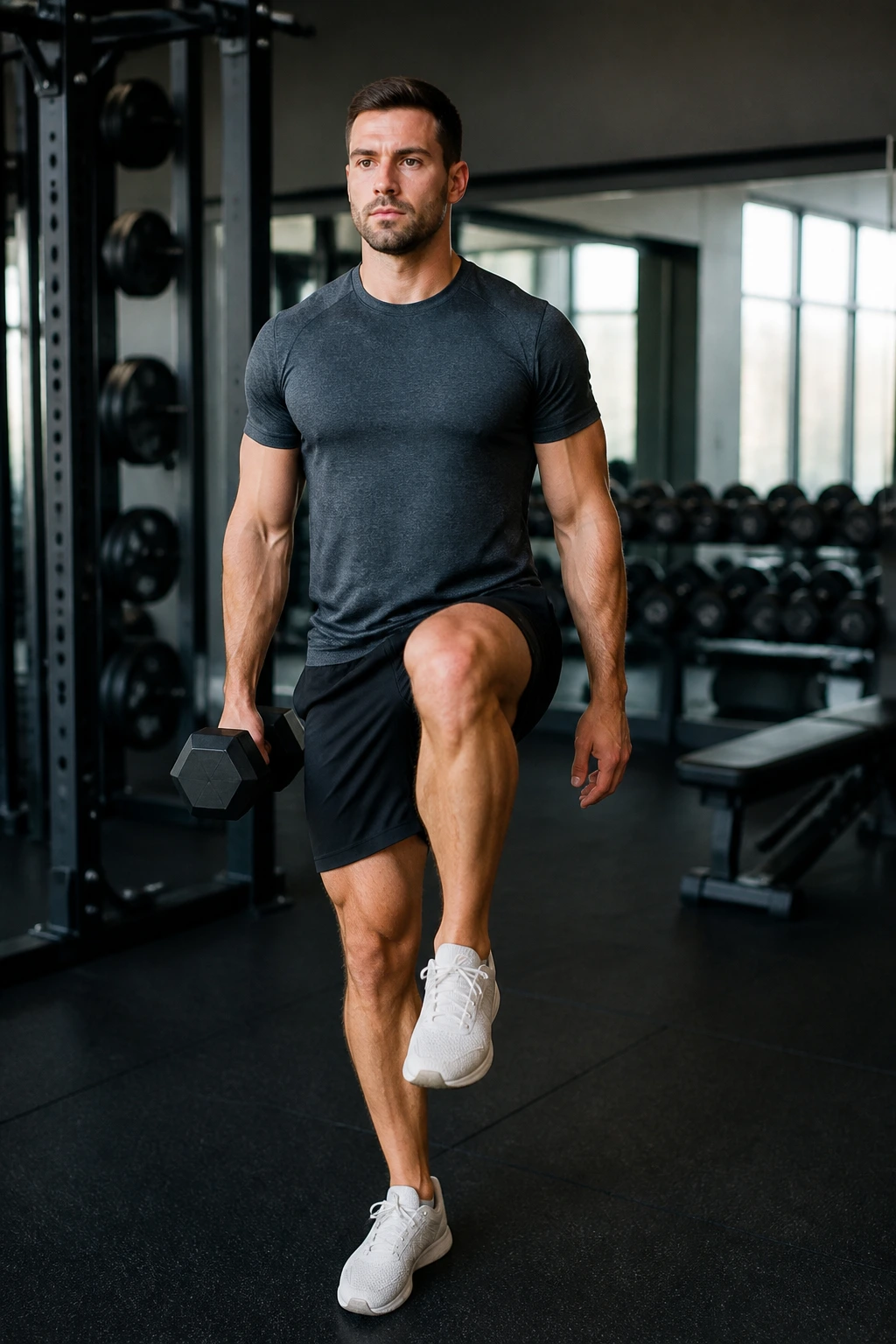
A single-arm carry with a march is one of those movements that feels oddly formal the first time you do it. Hold a weight in one hand, stand tall, and march with slow, deliberate steps while keeping the weight from pulling your torso sideways.
The difference from a suitcase carry is the rhythm. You are not just walking. You’re asking the body to maintain balance while one knee lifts, then the other, all without letting the load tilt you off center.
This is a good drill when you want balance work that feels a little more athletic. It trains the same anti-rotation pattern as a carry, but the marching adds a clearer coordination challenge.
Try 20 to 30 seconds per side. Switch hands, reset your posture, and do not rush the feet. Slow steps expose weak control faster than fast ones.
16. Clock-Tap Balance Drill
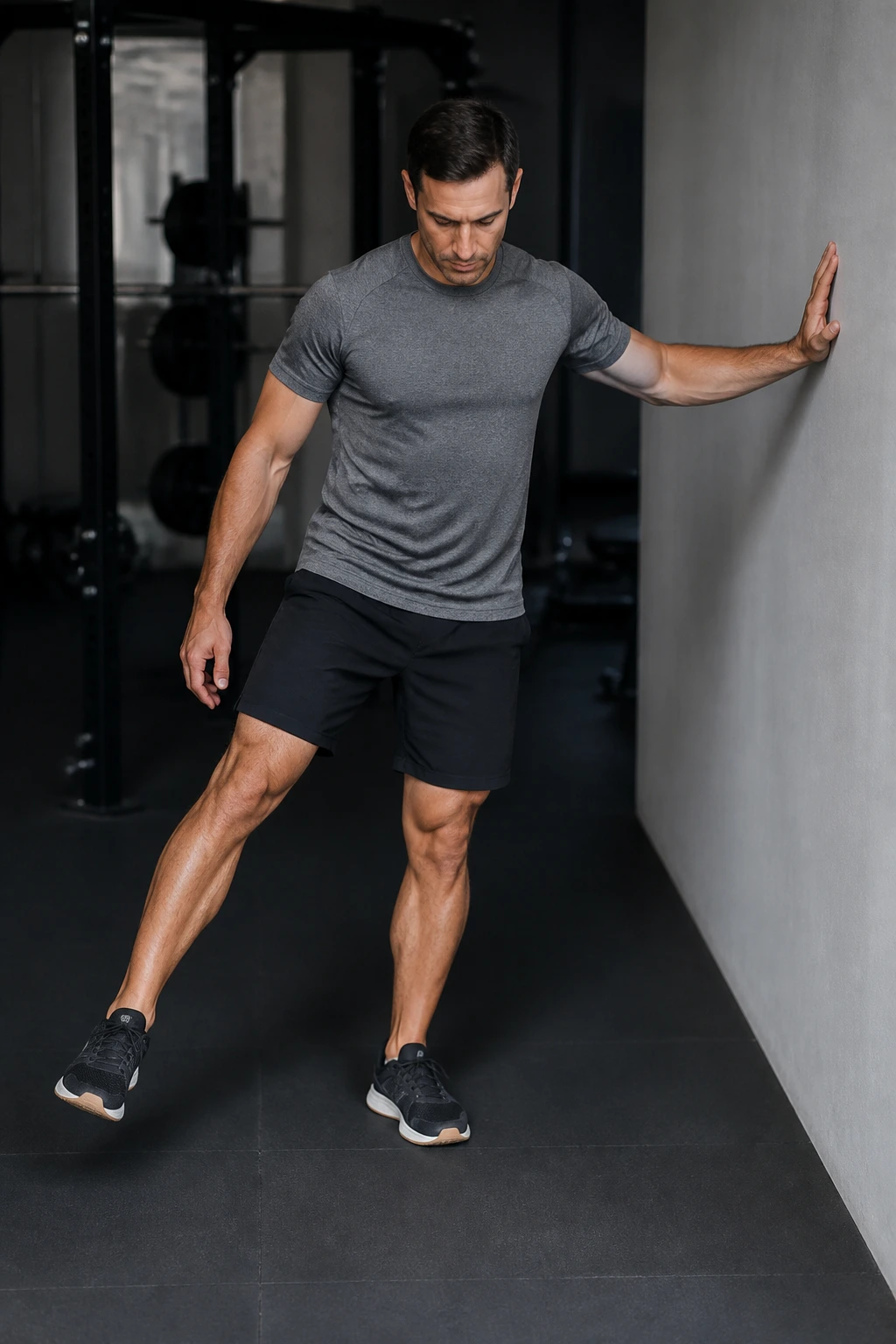
Stand on one foot and imagine a clock on the floor around your other foot. Tap that free foot to 12 o’clock, 3 o’clock, 6 o’clock, and 9 o’clock, then fill in the diagonal spots if you want more challenge.
The point is not distance. The point is control. Each tap forces the standing leg and core to adjust to a new angle, which is a lot closer to real balance demands than just standing still and hoping for the best.
A useful progression
- Start with four taps.
- Move to six.
- Then try eight.
- Use a wall nearby only if you need it.
This drill can feel humble, but it tells you a lot. If one direction feels shaky, that usually shows where your body is less organized. And that’s useful information, not a failure.
17. Standing Hip Hinge Reach
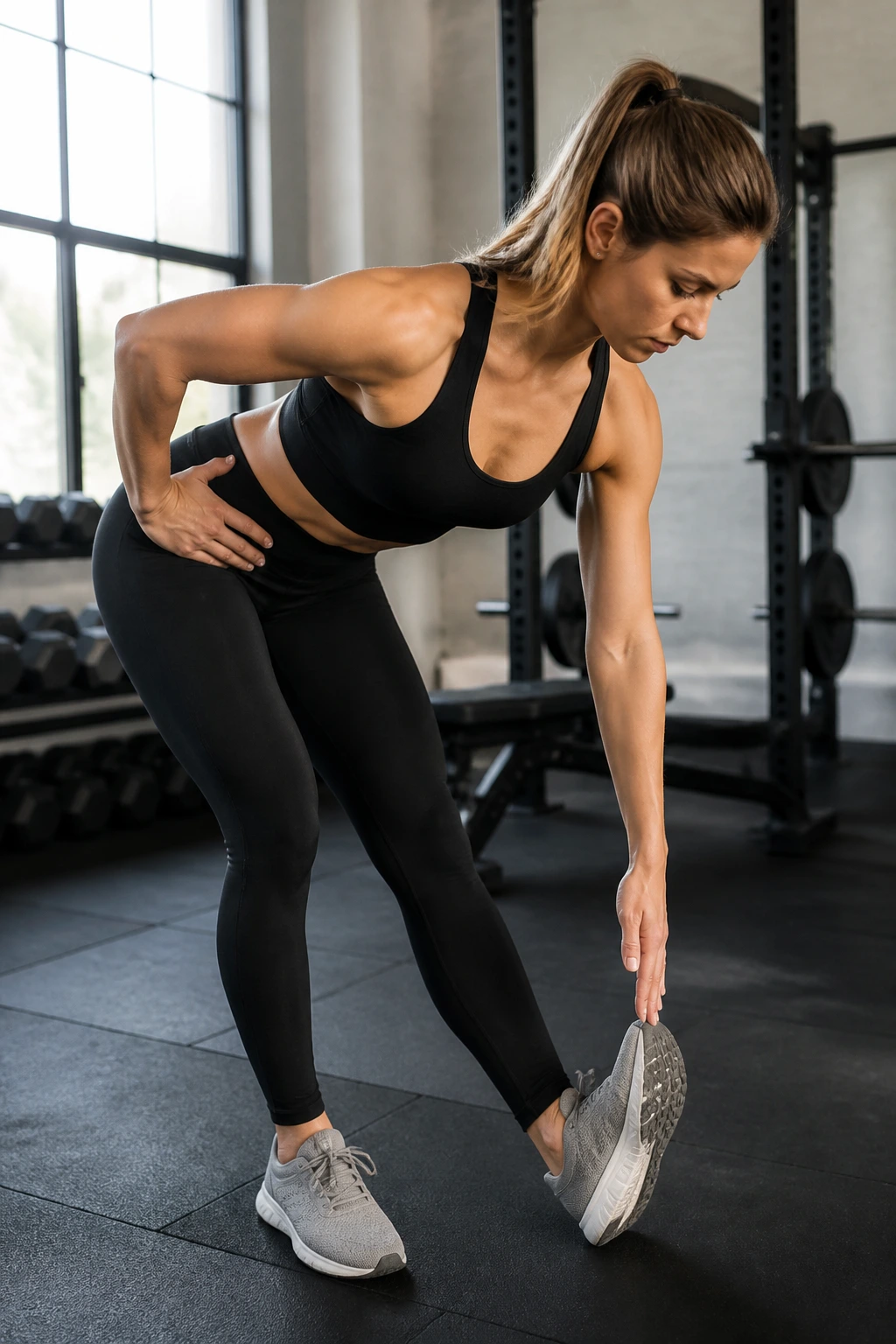
A standing hip hinge reach teaches the back side of the body to cooperate with the trunk. Stand tall, soft bend in the knees, push the hips back, and reach one hand toward the shin or ankle while keeping the spine long.
The movement should come from the hips, not the waist. If your back rounds hard, you’ve gone too far or moved too fast. The core’s job here is to keep the torso from folding while the hips send the pelvis backward.
This is one of the best “quiet” balance drills because it links the feet, hamstrings, glutes, and midsection in one clean line. It also builds the kind of control you need for picking things up off the floor without feeling wobbly or pinned.
Use both sides, or turn it into a kickstand version by keeping one toe lightly on the floor behind you. That makes the movement easier without making it useless.
18. Around-the-World Plate Hold
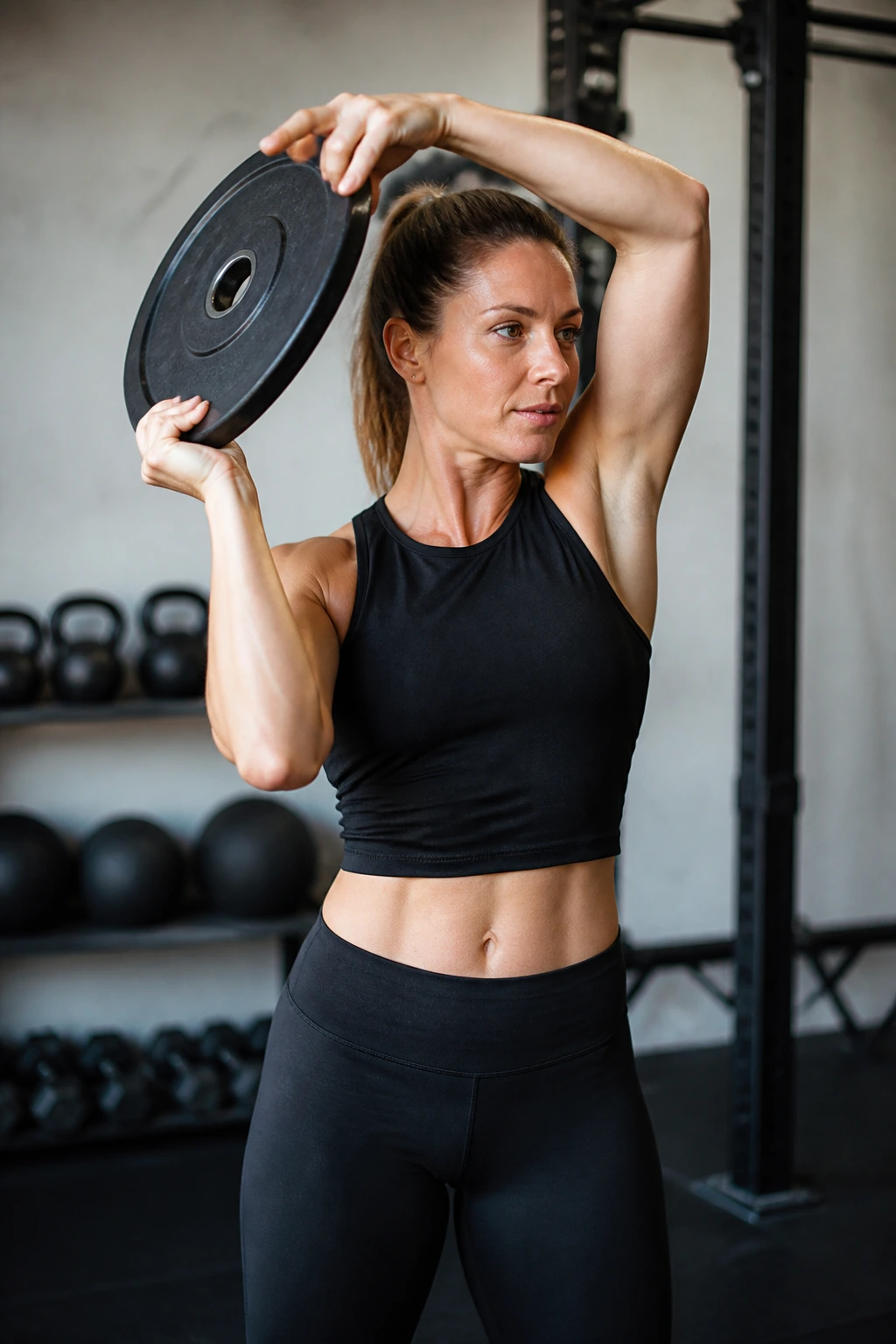
Hold a light weight plate with both hands out in front of your chest, then trace a slow circle around your head or torso without letting your ribs flare. Keep the movement smooth and small.
It sounds a little theatrical. It isn’t, once you feel it. The body wants to chase the circle with the shoulders and lower back, and the core has to stop that from happening. That makes this a very honest anti-extension drill.
What matters most
- Use a light plate.
- Keep the circle tight.
- Move slowly in both directions.
- Stop if the low back arches.
You can also hold the plate a little farther from the body to make the drill harder. Don’t get greedy. A bigger circle is usually worse, not better. Small circles reveal control, and control is the whole point.
19. Reverse Lunge to Knee Drive
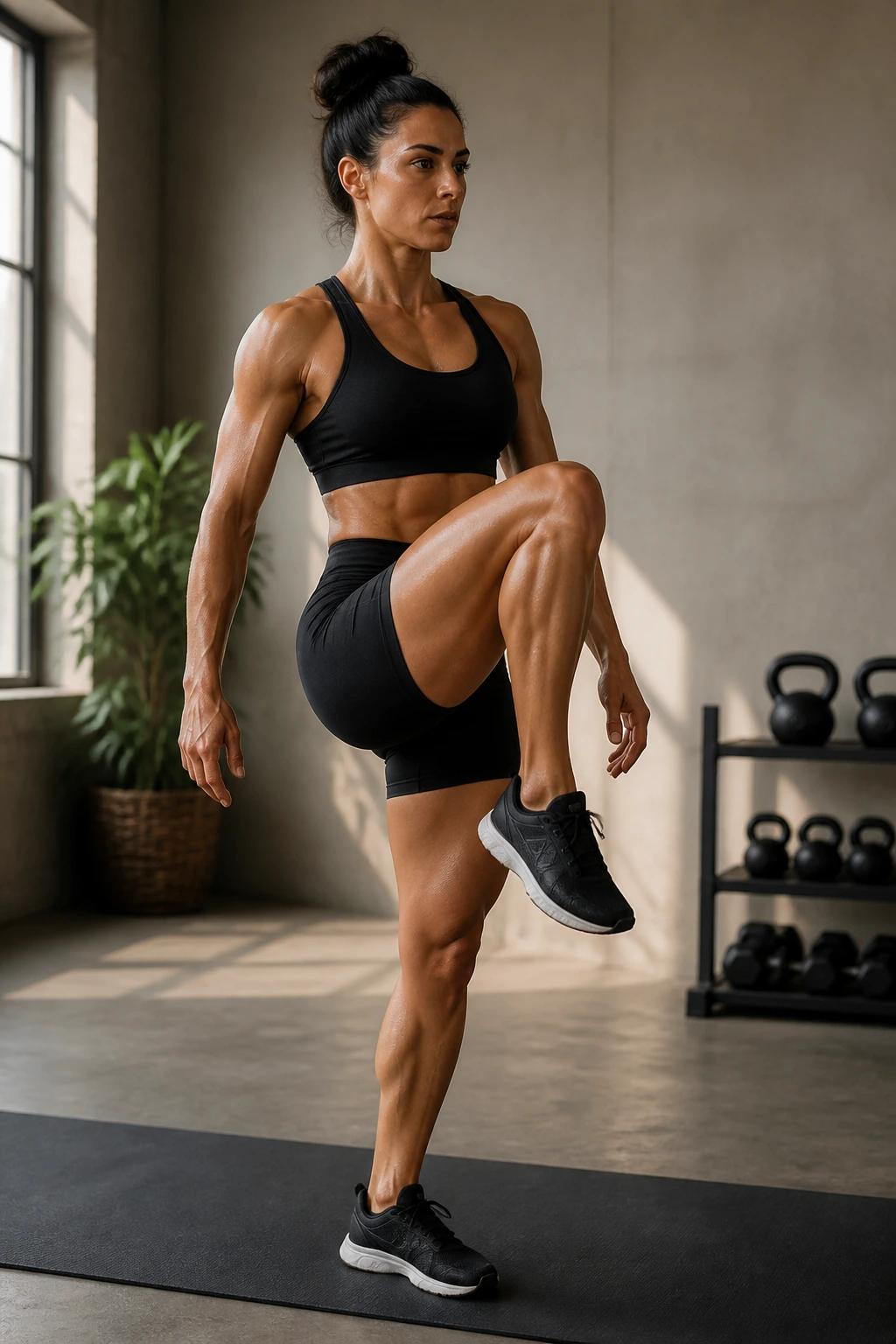
A reverse lunge into a knee drive is one of the best standing drills for balance because it asks for strength, timing, and recovery all at once. Step back into a lunge, push through the front foot, then drive the back knee up and balance for a beat.
That final knee drive is where the core comes in. If the torso tips, the standing hip shifts, or the shoulders twist, you feel it immediately. A clean finish tells you the body can move from one position to another without losing its center.
Use bodyweight first. Add a goblet hold later if you want more challenge. I’d rather see 6 clean reps than 12 rushed ones with a wobble at the top every time.
The best cue is simple: step back quietly, rise sharply, stand tall. That little pause at the top matters more than people think.
20. Heel-to-Toe Walk with Arm Reach
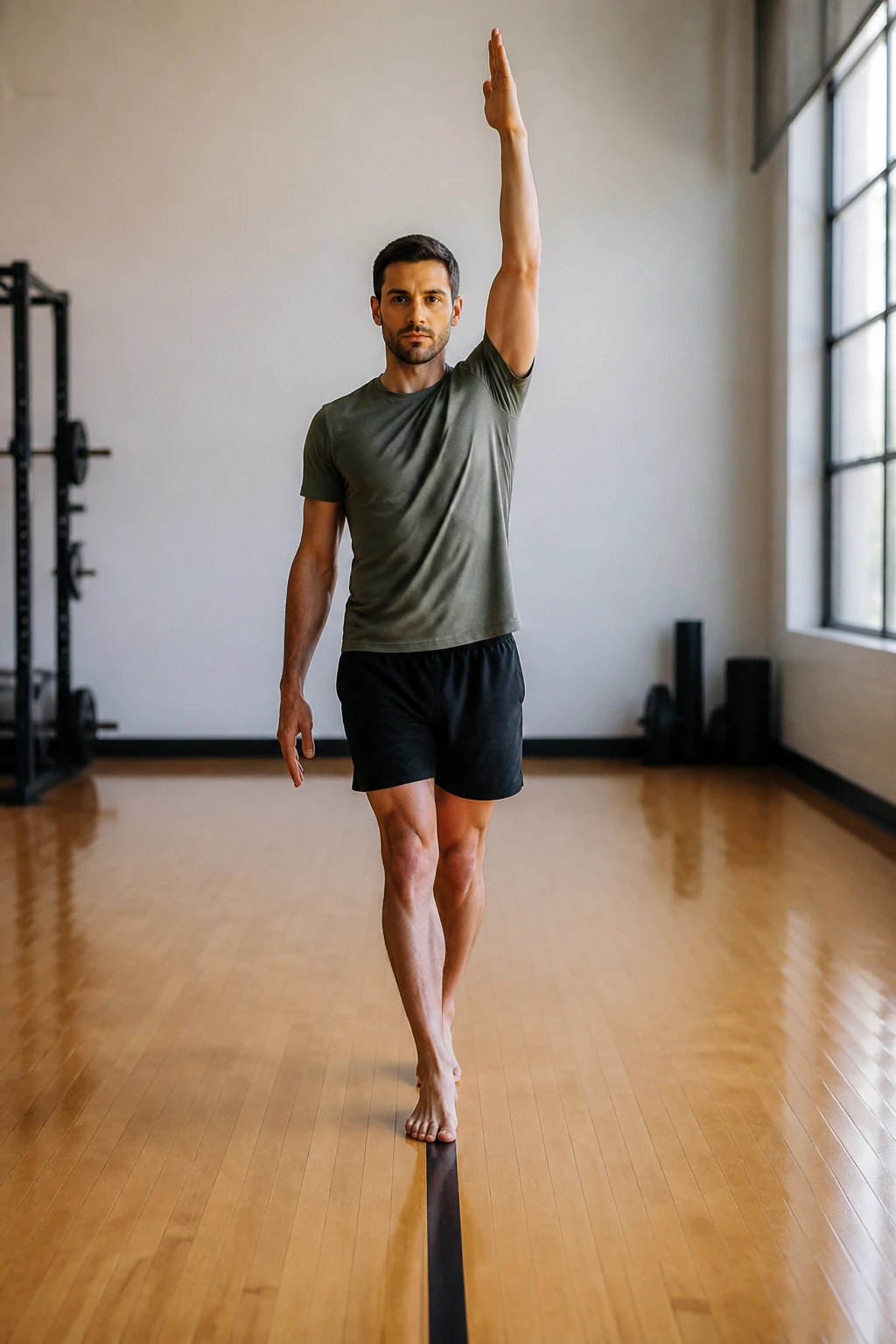
A heel-to-toe walk is old-school for a reason. It works. Place the heel of one foot directly in front of the toes of the other and walk in a straight line, then add an arm reach overhead or out to the side once the basic pattern feels stable.
The narrow base makes the core earn its keep. You can’t hide sloppy posture here. If the chest tilts or the feet drift apart, the drill gets easier but less useful.
Make it harder in small ways
- Slow the steps down.
- Pause for one second on each step.
- Reach one arm overhead.
- Hold a light object in front of you.
This is a good finisher because it strips away the noise. No load chasing. No rush. Just control, foot placement, and a torso that stays calm while the line gets tighter under you.
Pick three or four of these standing core exercises for better balance, run them slowly, and treat the pauses as part of the work. That’s where the body learns to stay organized — not in the flashy part, in the quiet one.
