



A pair of dumbbells, a backpack, and 20 minutes can do more for your strength than a garage full of machines you never touch. The catch is not equipment. It’s effort, consistency, and choosing workouts that make the last couple of reps feel honest.
Home strength training works best when it covers the basics: squat, hinge, push, pull, carry, brace. You do not need all six every single session, but you do need most of them across the week if you want stronger legs, a steadier back, and arms that can do something useful besides look good in a mirror. That’s true whether you’re working with bodyweight alone or hauling a backpack full of books like it owes you money.
The best home strength workouts also leave room for levels. A newer lifter might use a chair, a wall, and slower reps. Someone with more experience might use a dumbbell, a band, or a harder tempo and still get smoked. Same room. Different challenge.
Pick the workout that matches your space and tools, then make the reps clean enough to matter. That’s where the progress starts.
1. The No-Equipment Full-Body Circuit
You can get a lot done with no gear at all, and I mean a lot if the reps are honest. This is the kind of home strength training workout that looks almost too plain on paper, then sneaks up on you by round two.
Start with the big patterns. Squat, push, hinge, brace. Simple. Not easy.
How to run it
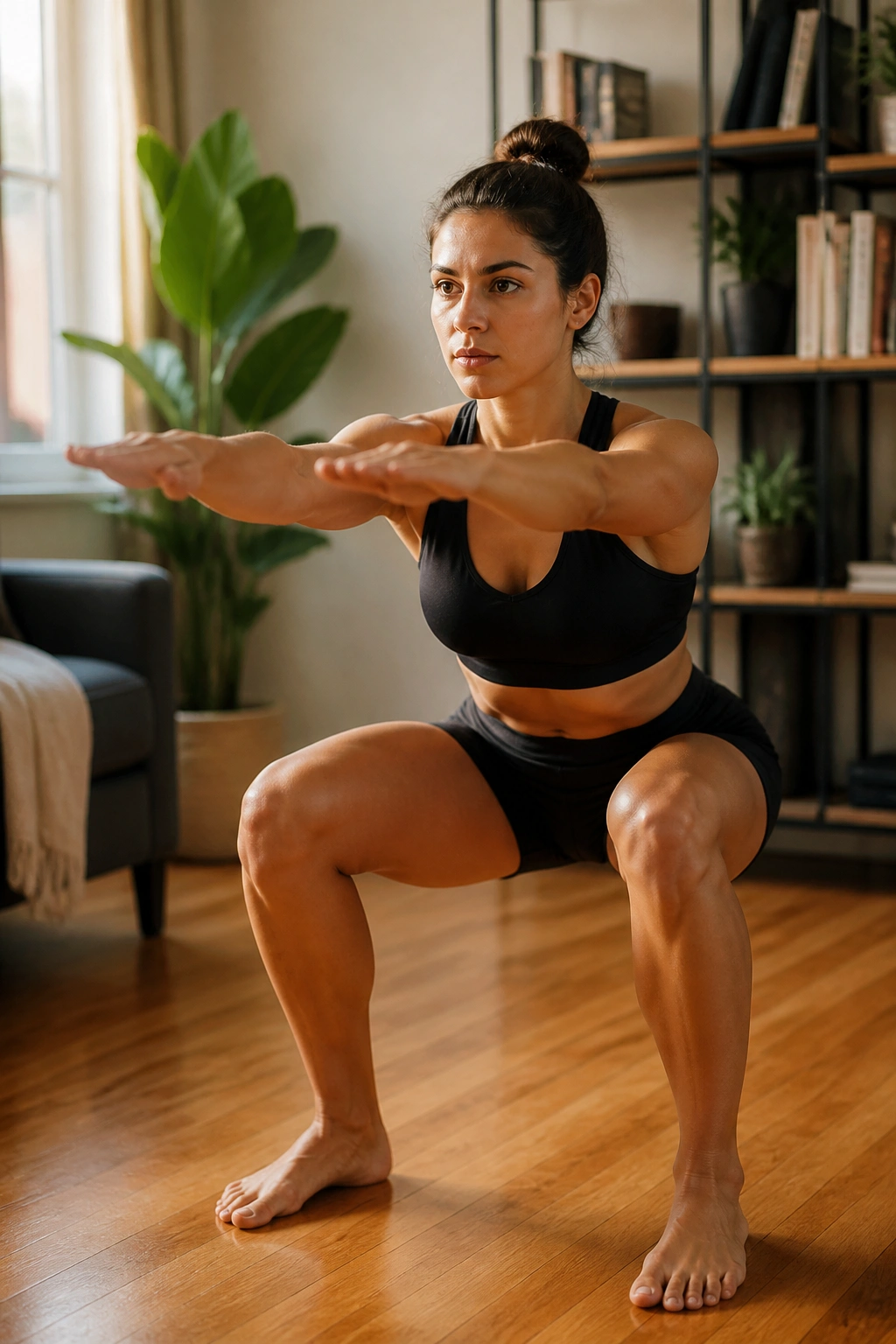
- 10 bodyweight squats
- 8 incline push-ups with hands on a counter or couch
- 12 glute bridges
- 8 dead bugs per side
- 20-second plank
Do 2 rounds if you’re newer to strength work. Go to 3 rounds when the first version stops feeling challenging. Advanced lifters can keep the same circuit and slow the lowering phase on every rep.
The trick is to keep the form crisp. On squats, your feet stay flat. On push-ups, your ribs don’t sag. On glute bridges, squeeze hard at the top for a full second. That one-second pause matters more than most people think.
Best for: beginners, busy days, and anyone who needs a zero-setup session.
2. The Dumbbell Floor Press and Goblet Squat Session
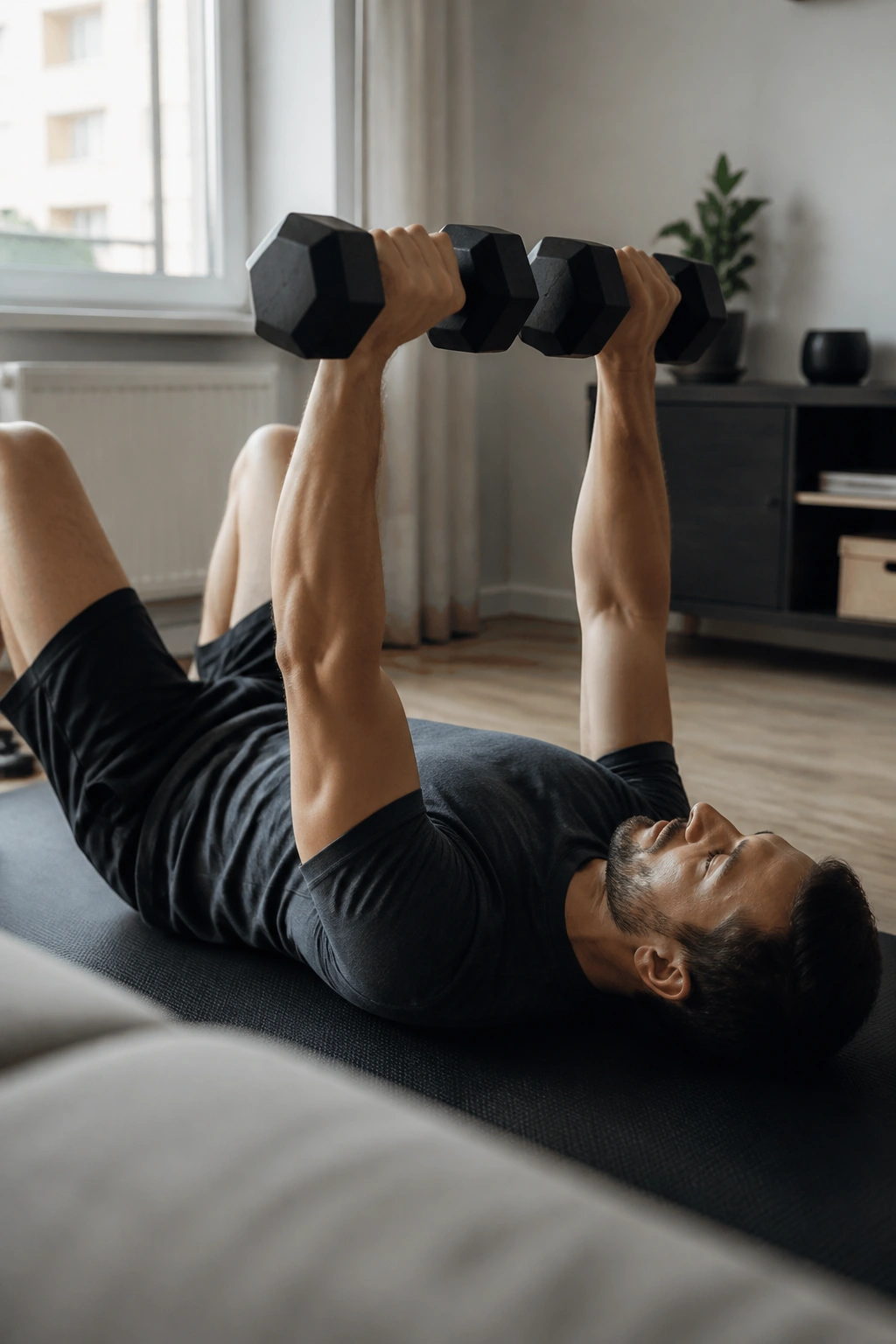
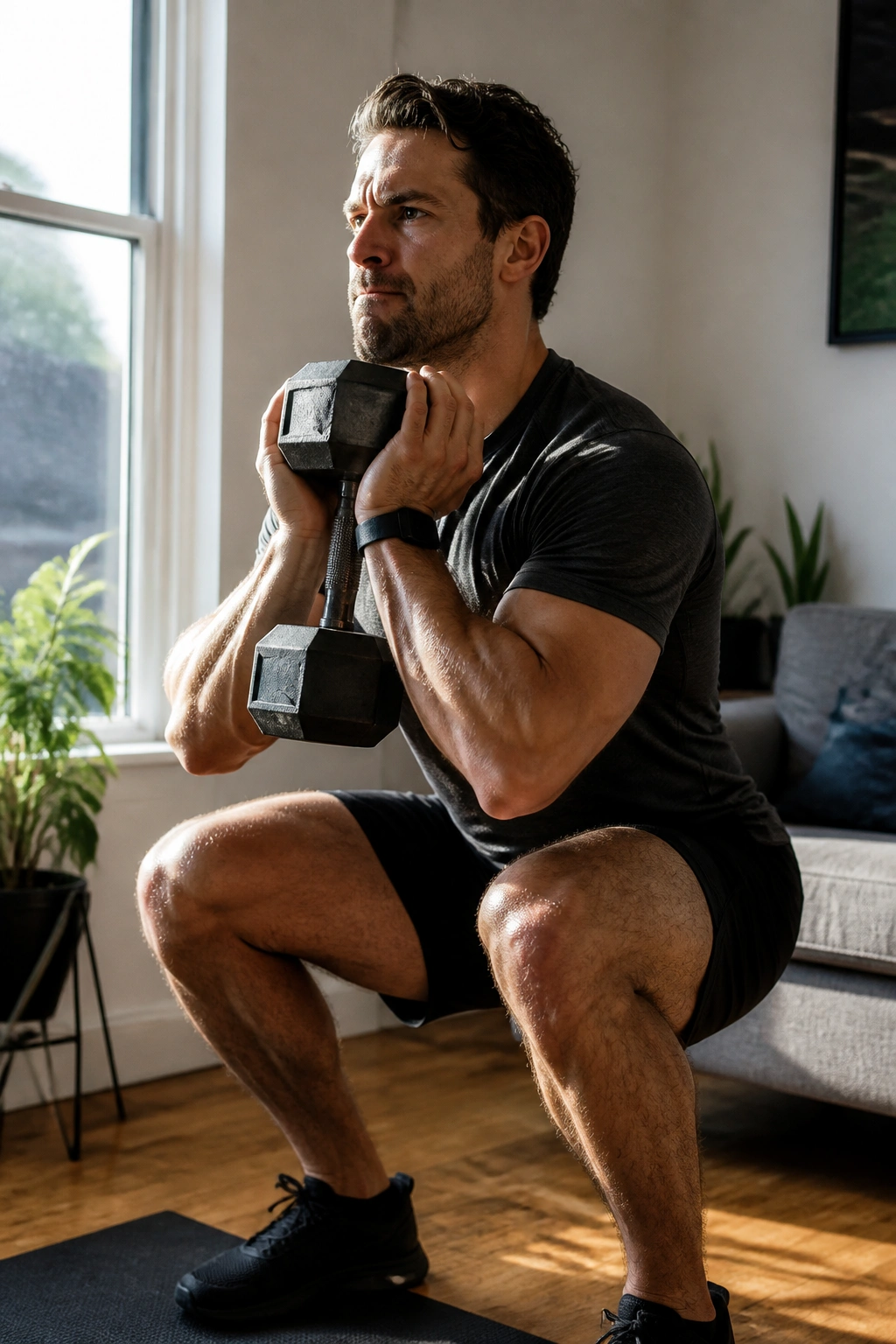
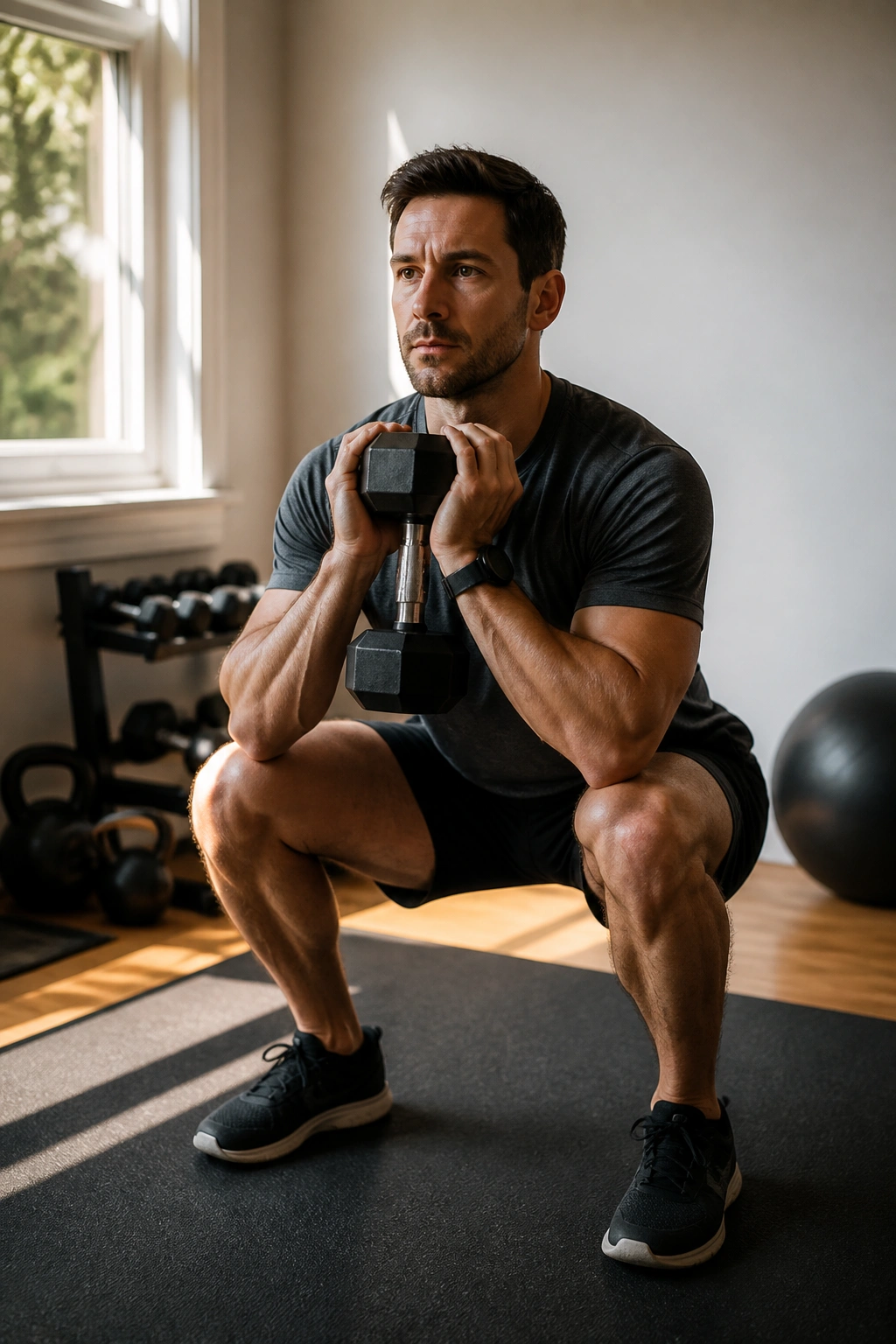
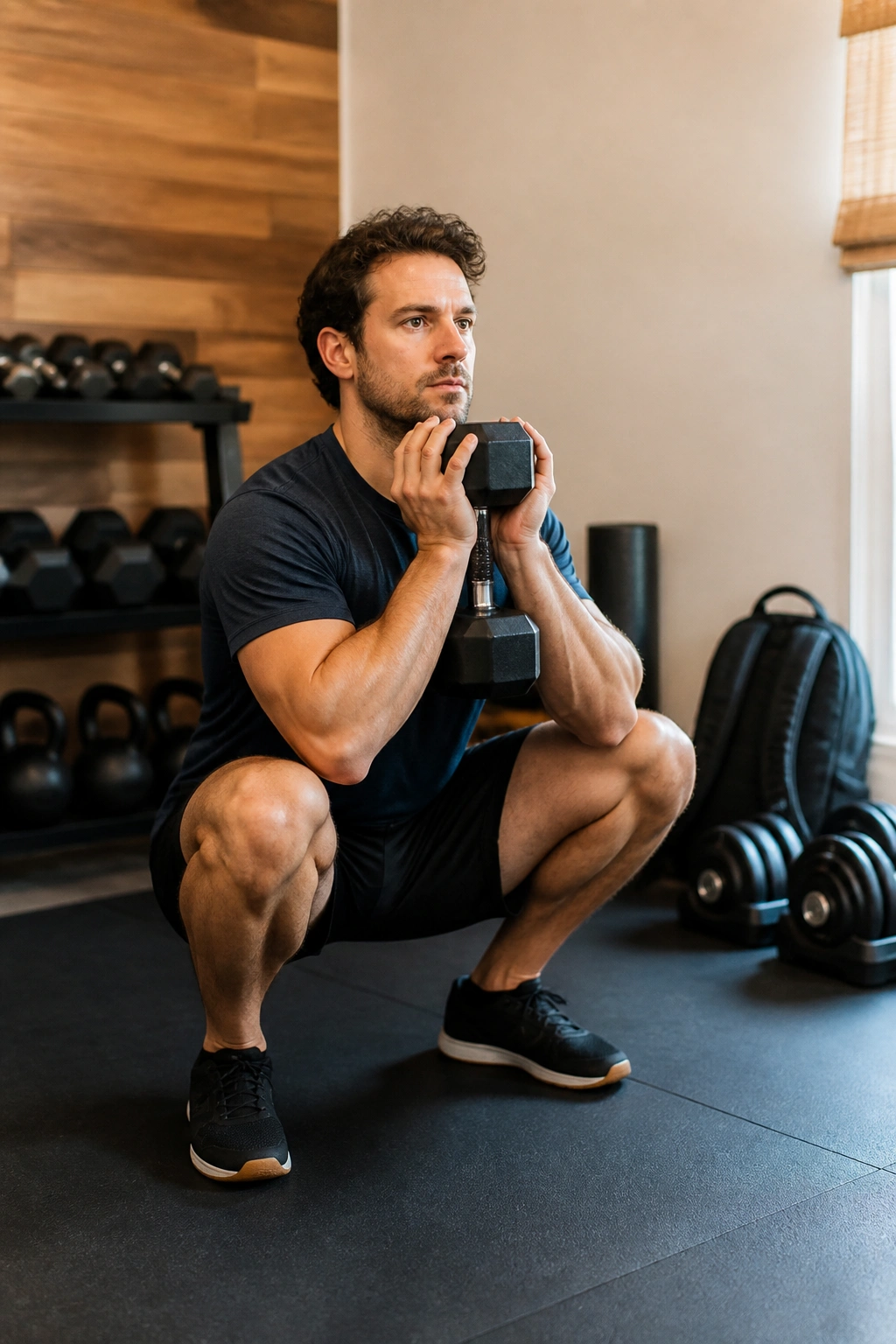
This is the most underrated home strength workout for people who want real tension without needing a bench. The floor press protects the shoulders a bit, and the goblet squat keeps your torso tall enough that you can tell if your legs are actually working.
Pair those with a one-arm row and a loaded carry, and you’ve got a session that feels complete instead of random.
Here’s a clean setup:
- 4 sets of 8 goblet squats
- 4 sets of 8 dumbbell floor presses
- 4 sets of 10 one-arm rows per side
- 4 carries of 30 seconds per side
Rest 45 to 75 seconds between sets. If you’re newer, use one dumbbell and keep the pace controlled. If you’ve got two dumbbells, great. But do not rush the squats. The bottom position tells the truth.
I like this workout for people who want strength they can feel in the legs, chest, and upper back without turning their living room into a mini gym. It’s solid. Direct. No fluff.
3. The Tempo Strength Ladder
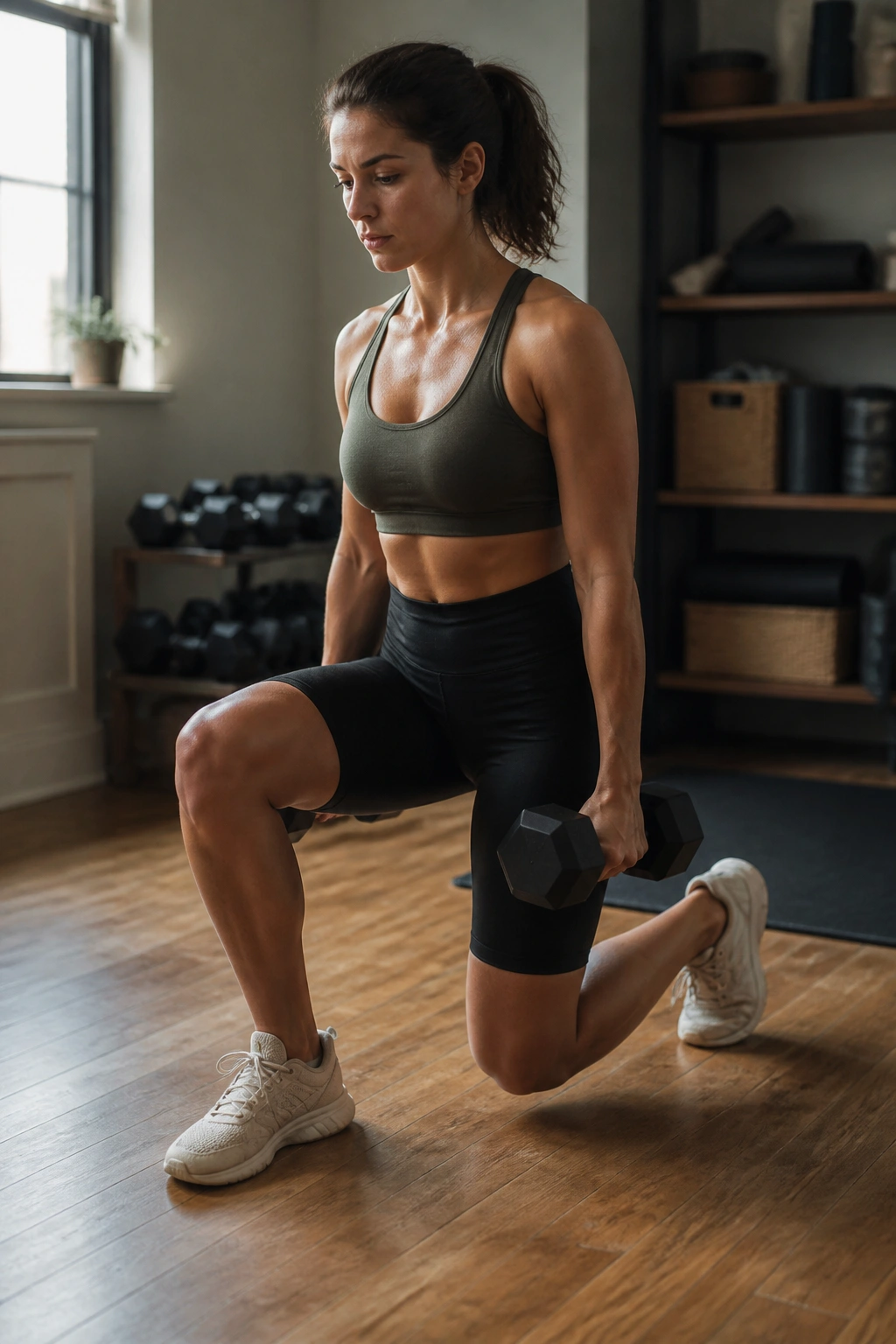
Why does a three-second lowering phase feel so mean? Because it removes the usual escape route. You can’t bounce, swing, or cheat your way through a slow rep, and that makes lighter weight act a whole lot heavier.
Tempo training is one of the smartest home strength training workouts for all levels because it gives beginners more control and gives advanced lifters a harder job without adding plates.
The tempo that works
Use a 3-1-1 count on each rep:
- 3 seconds down
- 1-second pause
- 1 second up
Try it on:
- Split squats
- Push-ups
- Romanian deadlifts with dumbbells or a backpack
- Rows with a band or dumbbell
Do 3 sets of 6 to 8 reps per move. That usually feels like more work than a faster set of 10.
How to use it: count out loud on the first set. If your lowering speed starts turning into a stumble, the load is too heavy or the reps are too high. That’s a useful correction, not a failure.
4. The Backpack Row and Carry Workout
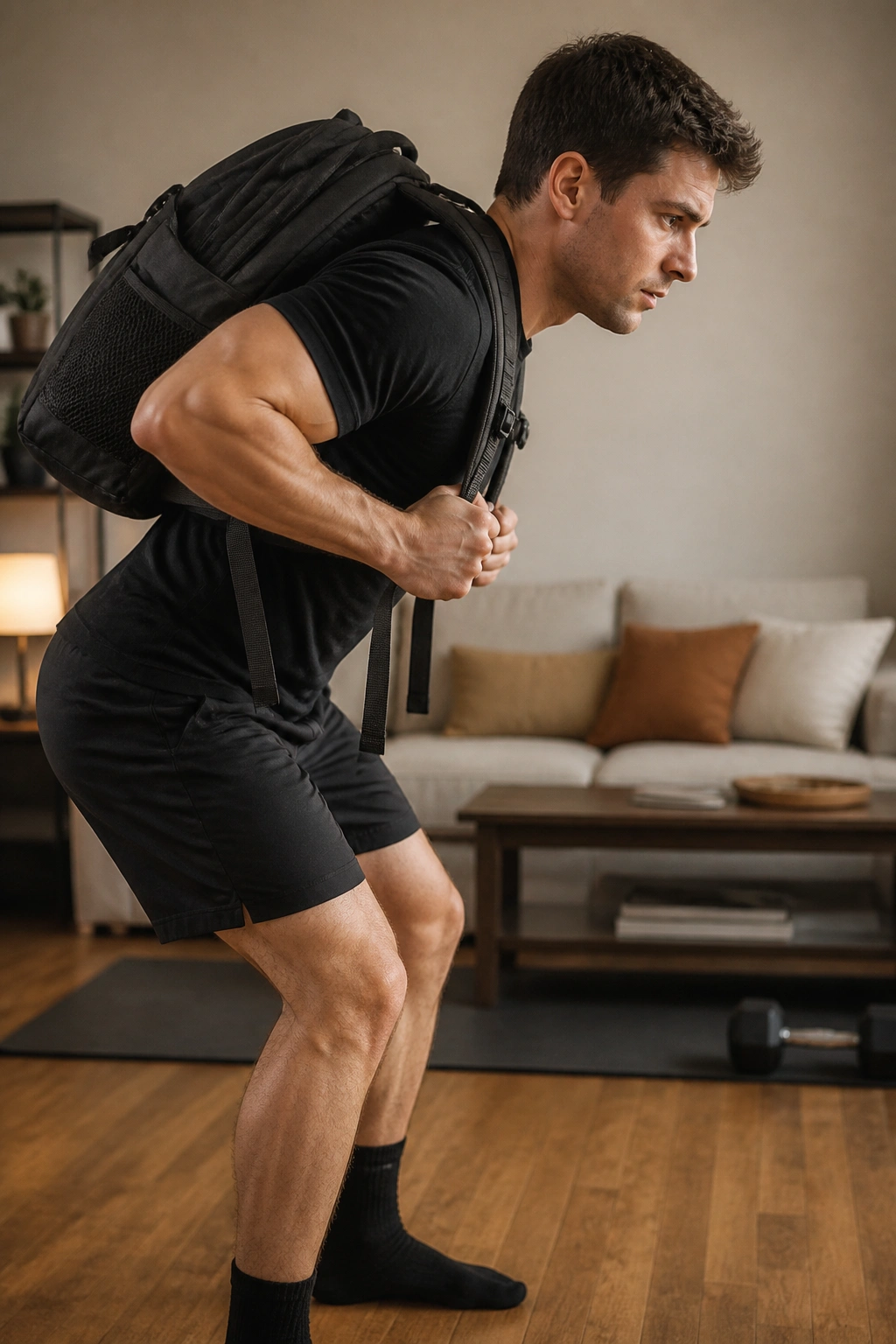
If all you’ve got is a backpack, this one earns its keep fast. Load it with books, bottled water, or canned food, zip it tight, and suddenly you have a piece of equipment that can row, squat, hinge, and carry.
This workout is especially good for people who want back strength but do not own a bench or cable machine. A backpack row hits harder than most people expect because the load hangs awkwardly and pulls your torso forward if you get sloppy. That’s useful feedback.
A simple version
- 3 sets of 10 backpack rows per side
- 3 sets of 12 backpack front squats
- 3 sets of 8 backpack Romanian deadlifts
- 3 sets of 30-second bear-hug carries
Keep the backpack close to your body. Tighten the straps if they swing around. A loose load is harder to control and easier to yank on your lower back.
And yes, you can use a backpack for farmers’ carries too. Hold it at one side, walk slowly, and keep your ribs stacked over your hips. It’s not fancy. It works.
5. The Resistance Band Pull-Apart and Hinge Day
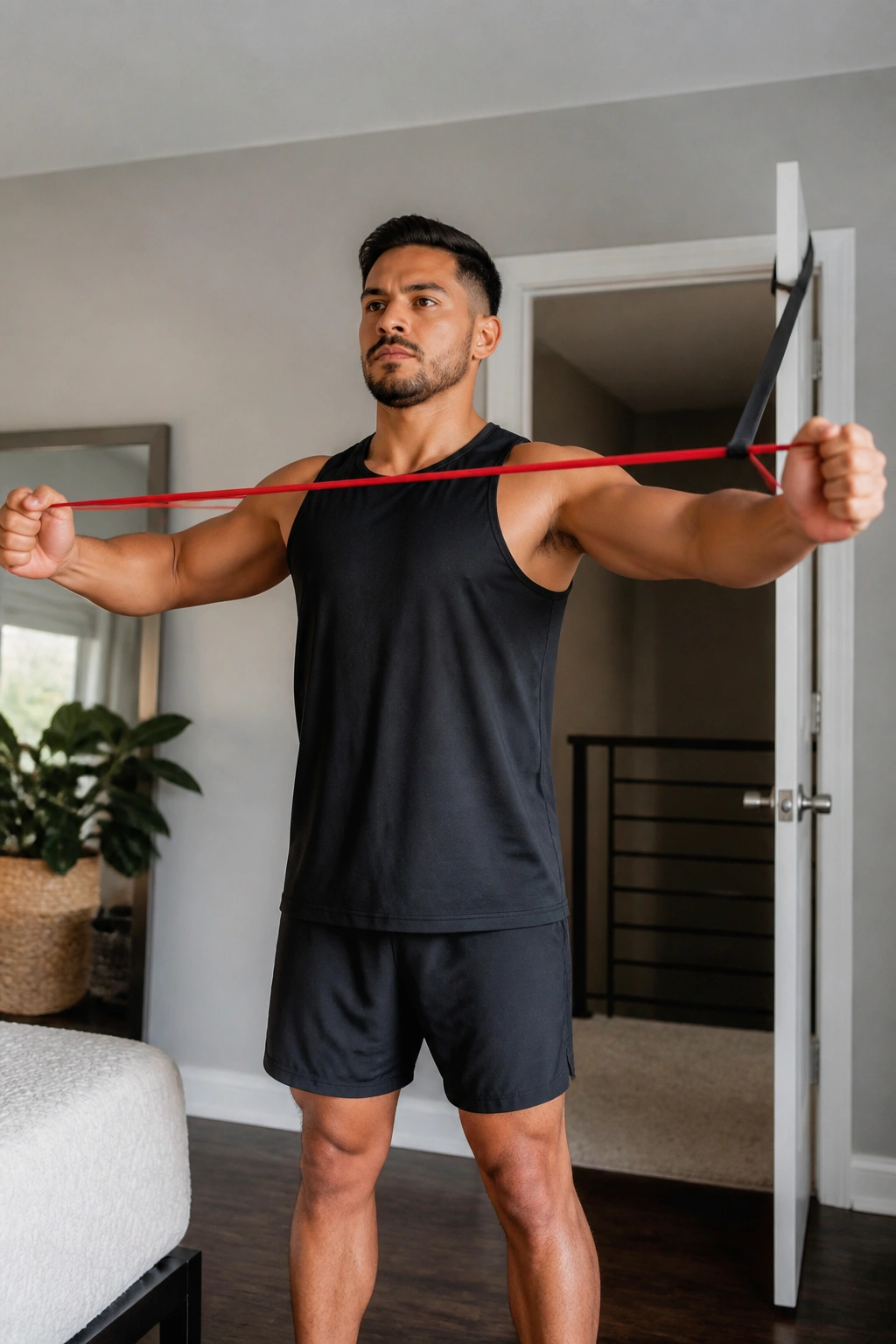
Bands get brushed off by people who think strength only counts if metal plates clank. That’s lazy thinking. Bands give clean tension, they’re easy on the joints, and they’re excellent for the upper back, glutes, and shoulders when you use them with intent.
Anchor the band safely
Use a closed door with a proper anchor point or wrap the band around a sturdy post. Do not clip it to anything that wobbles, slips, or can snap back toward your face. That part is not negotiable.
A good band session looks like this:
- Band deadlift: 3 sets of 12
- Band row: 3 sets of 12 to 15
- Pull-aparts: 3 sets of 15 to 20
- Face pulls: 3 sets of 12
- Pallof press: 3 sets of 10 per side
The pull-aparts and face pulls clean up posture work without pretending posture is some magical fix. They help because the upper back finally gets actual volume.
If you want a little more challenge, step farther from the anchor point. That changes the tension fast.
6. The EMOM Full-Body Block
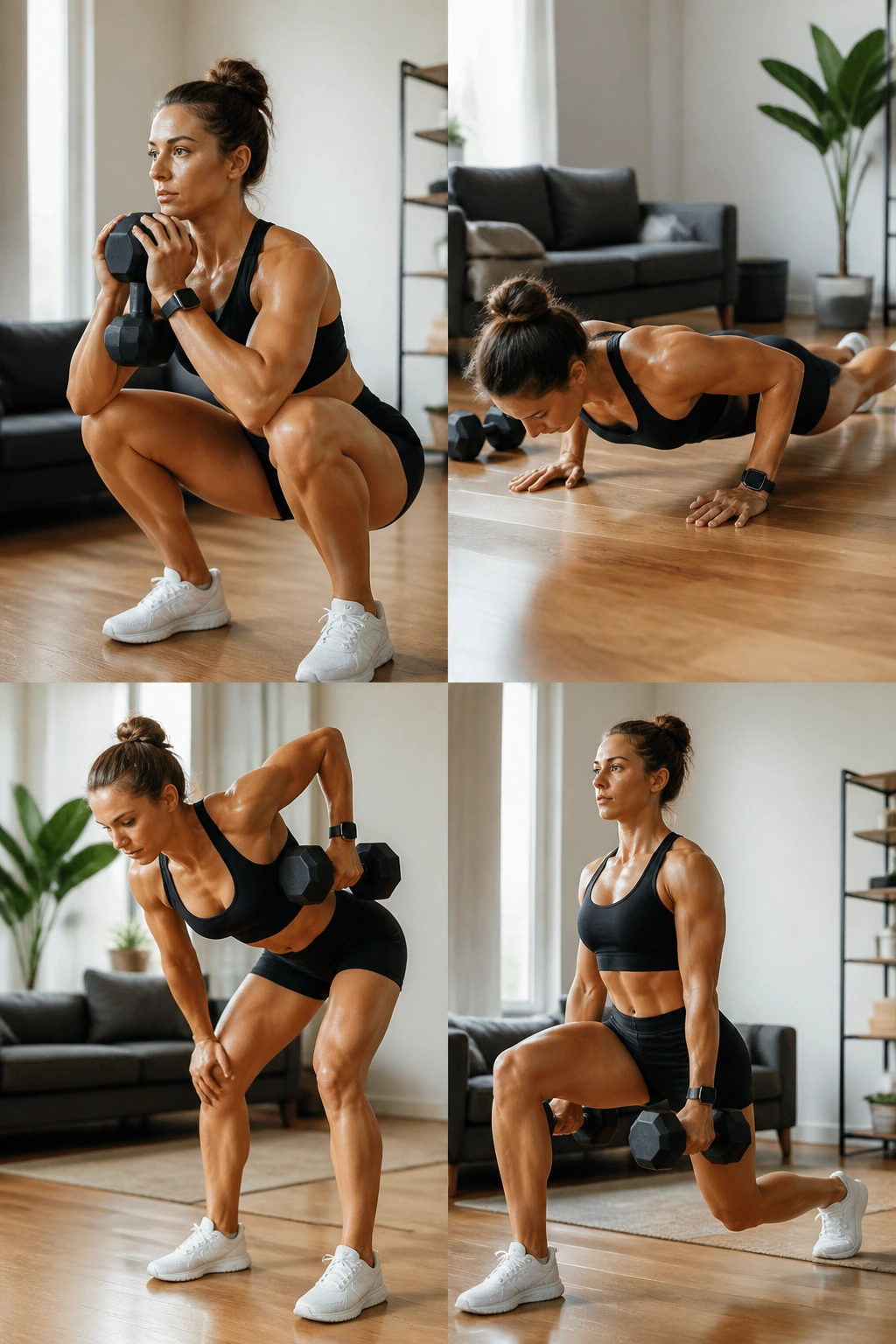
A 12-minute EMOM can feel tougher than a long, meandering workout because the timer keeps you honest. EMOM means every minute on the minute. You do the reps, then rest for whatever time is left in that minute.
That structure is gold for home strength workouts when your attention is short and your space is small.
One good format
- Minute 1: 8 goblet squats
- Minute 2: 8 push-ups
- Minute 3: 10 band rows
- Minute 4: 8 reverse lunges per side
Repeat that three times.
For beginners, trim the reps so you finish each minute with 20 to 30 seconds left. For intermediate lifters, keep the same reps and make them cleaner. Advanced lifters can add load or use slower lowering on the squat and push-up.
The timer changes the feel fast. You stop wandering between sets, and that alone makes the session tighter and more productive. Also, it’s weirdly satisfying.
7. The Chair Step-Up and Single-Leg Deadlift Circuit
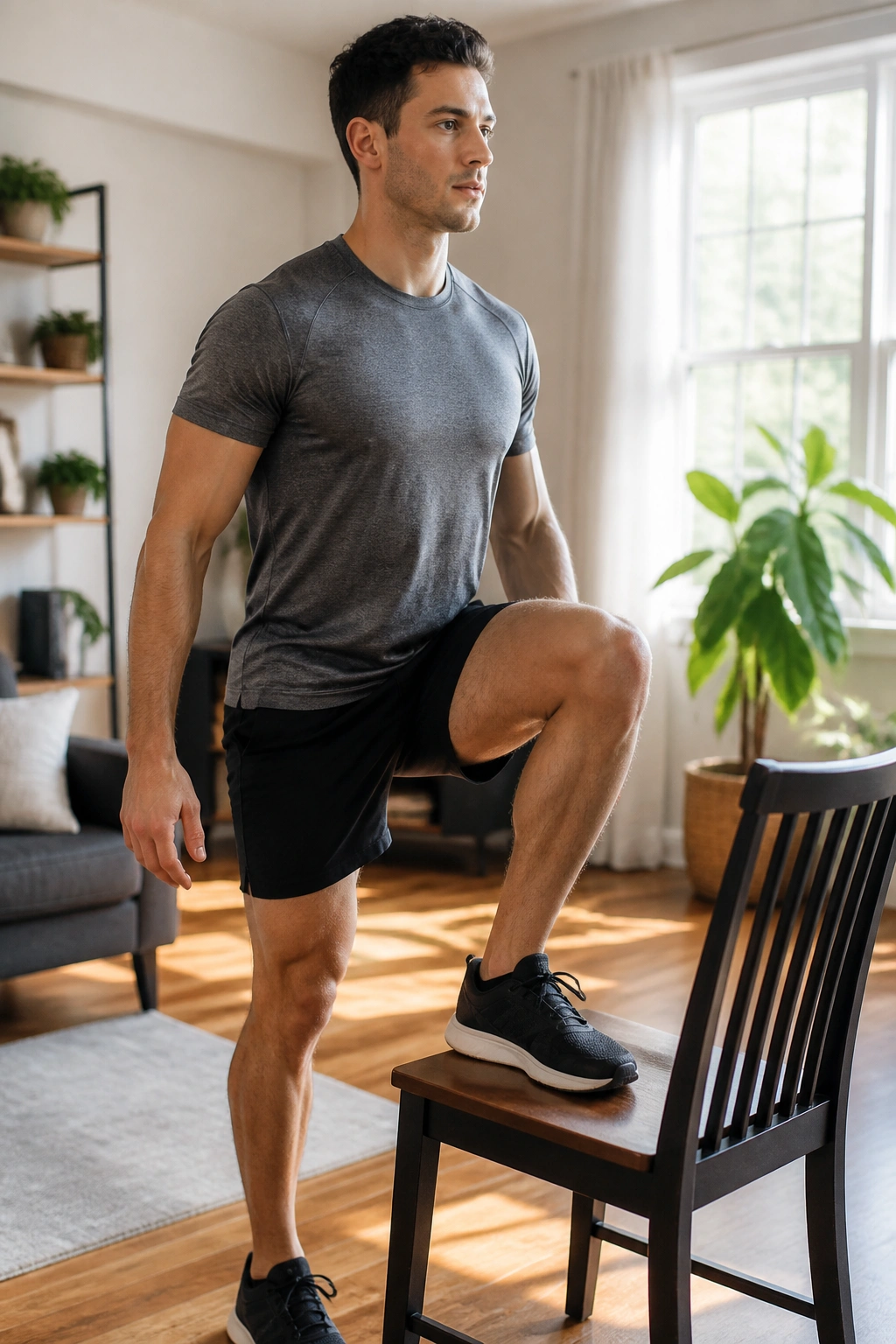
A sturdy chair or step can turn a plain room into a very annoying leg session. I say that with affection. Step-ups and single-leg deadlifts both ask your hips to do more work, and they expose side-to-side differences you might not notice in normal squats.
This workout is a smart choice if one leg tends to feel weaker, or if you want glutes and hamstrings that actually pull their weight.
- 3 sets of 8 step-ups per side
- 3 sets of 8 single-leg deadlifts per side
- 3 sets of 10 split squats per side
- 2 sets of 30-second wall sits
Keep the step height reasonable. Around knee height or lower usually works better than some heroic high platform. If your knee caves in or your foot rolls around, lower the step and slow down.
One clean rep beats three wobbly ones. Every time.
8. The Upper-Body Push/Pull Superset Day
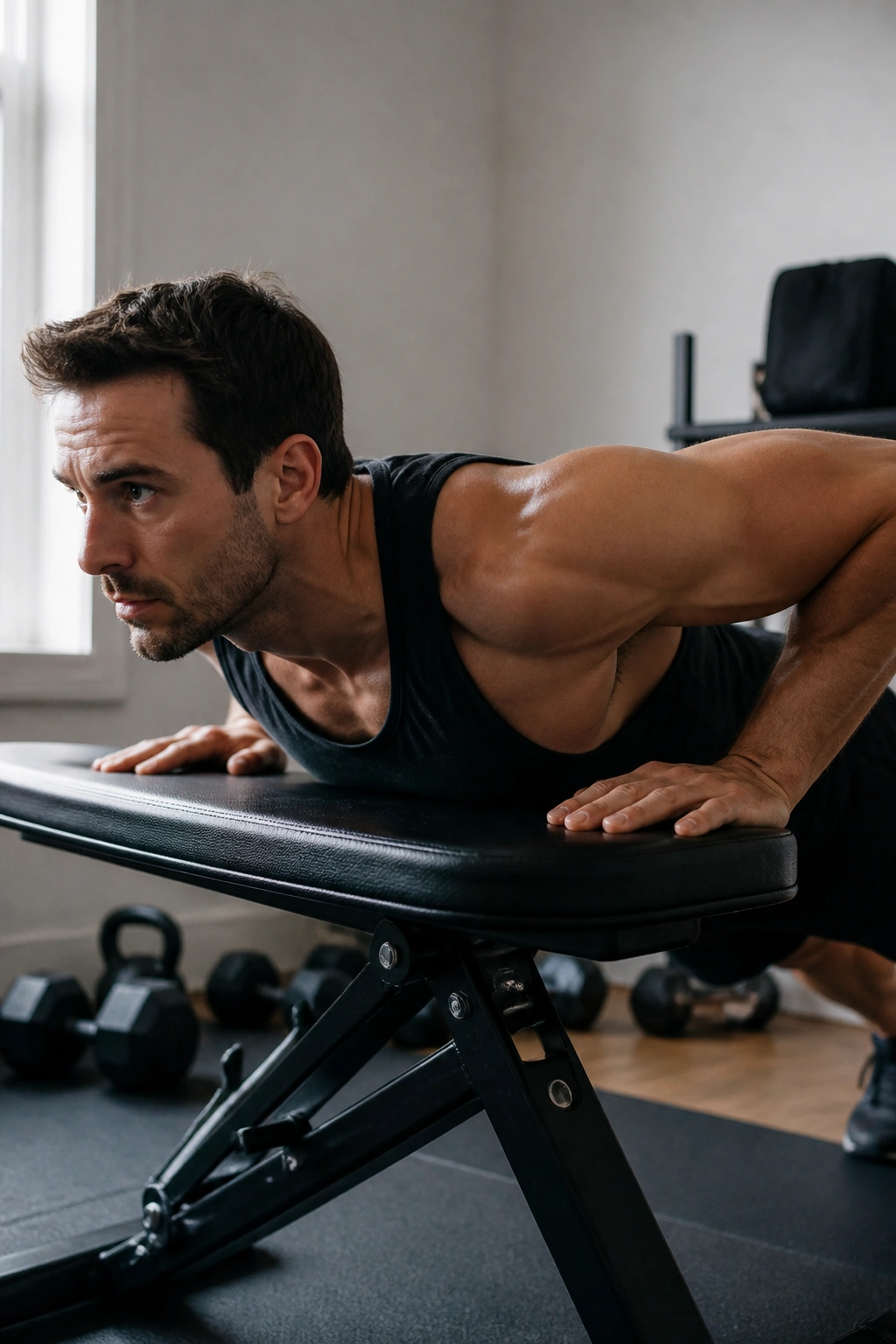
Random arm day has a nice ring to it, but it’s a sloppy way to train. A better upper-body home strength workout pairs pushing and pulling so the shoulders stay happier and the work feels more balanced.
Think in supersets. Push, then pull. Rest. Repeat.
Pairs that make sense
-
A1: Incline push-ups — 8 to 12 reps
-
A2: Band rows — 10 to 15 reps
-
B1: Dumbbell floor press — 8 to 10 reps
-
B2: Band face pulls — 12 to 15 reps
-
C1: Pike push-ups or wall push-ups — 6 to 10 reps
-
C2: Reverse fly with light dumbbells or bottles — 12 reps
Do 3 rounds of each pair. Rest 30 to 60 seconds between moves and 60 seconds after each pair.
This is a good day for people who want a stronger chest, better upper-back shape, and less “desk posture” stiffness. If overhead work bothers your shoulders, swap pike push-ups for a higher incline press. No drama.
9. The Reverse Lunge and Side Plank Stability Workout
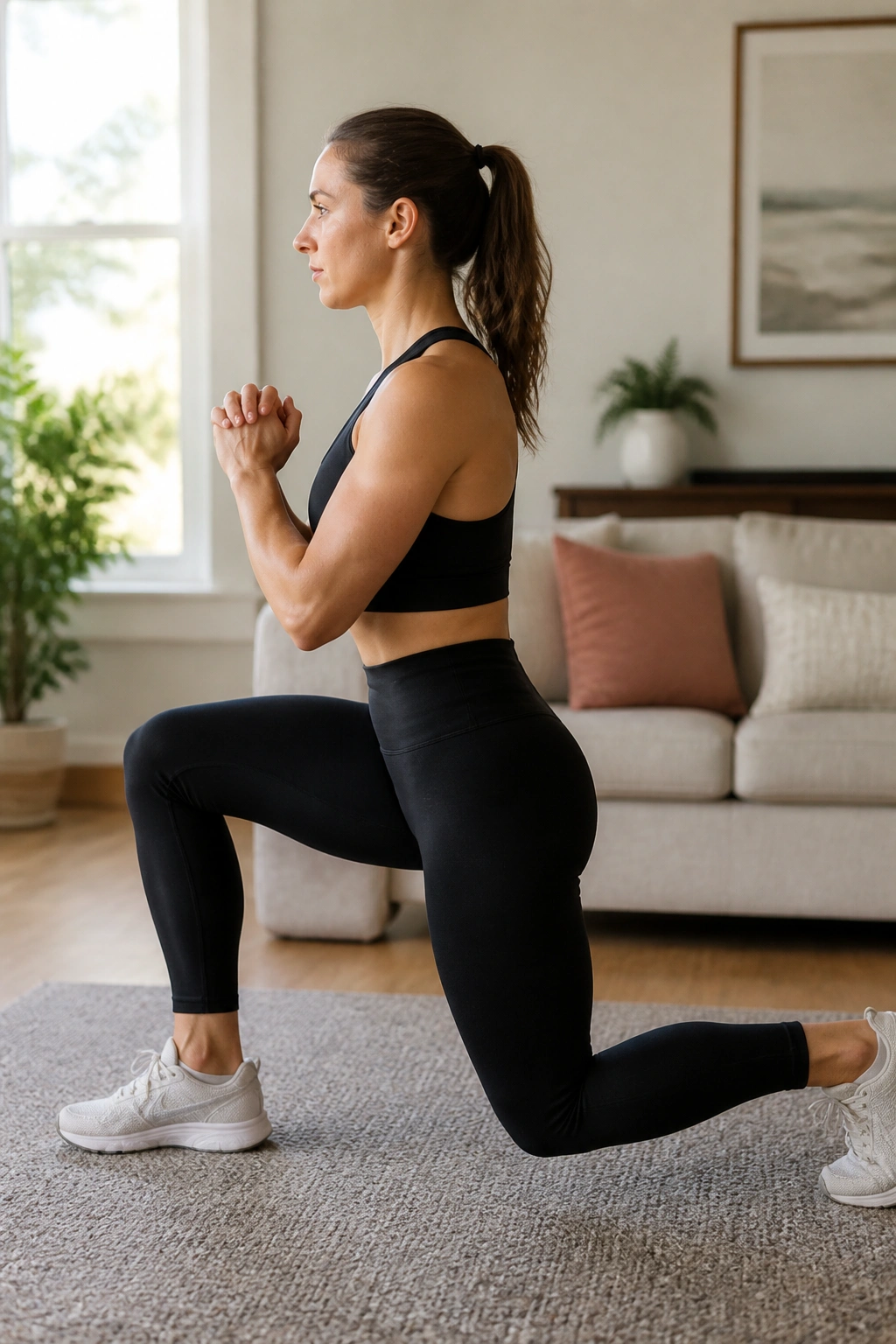
Why do so many home plans ignore single-leg work? Because it’s slower, less flashy, and a little humbling. That’s exactly why it belongs.
Reverse lunges, side planks, and single-leg glute bridges build the kind of stability that shows up when you carry groceries, step off a curb, or stand on one leg to tie a shoe without wobbling like a newborn deer.
Try this:
- 3 sets of 8 reverse lunges per side
- 3 sets of 20 to 30 seconds side plank per side
- 3 sets of 10 single-leg glute bridges per side
- 2 sets of 10 lateral lunges per side
If balance is the issue, slow the descent and use a wall or chair for light support. That is not cheating. It’s how you keep the target muscles working instead of turning the set into a balance circus.
I like this session for newer lifters, runners, and anyone who wants stronger hips without loading the spine heavily.
10. The Dumbbell Complex Without Setting the Weights Down
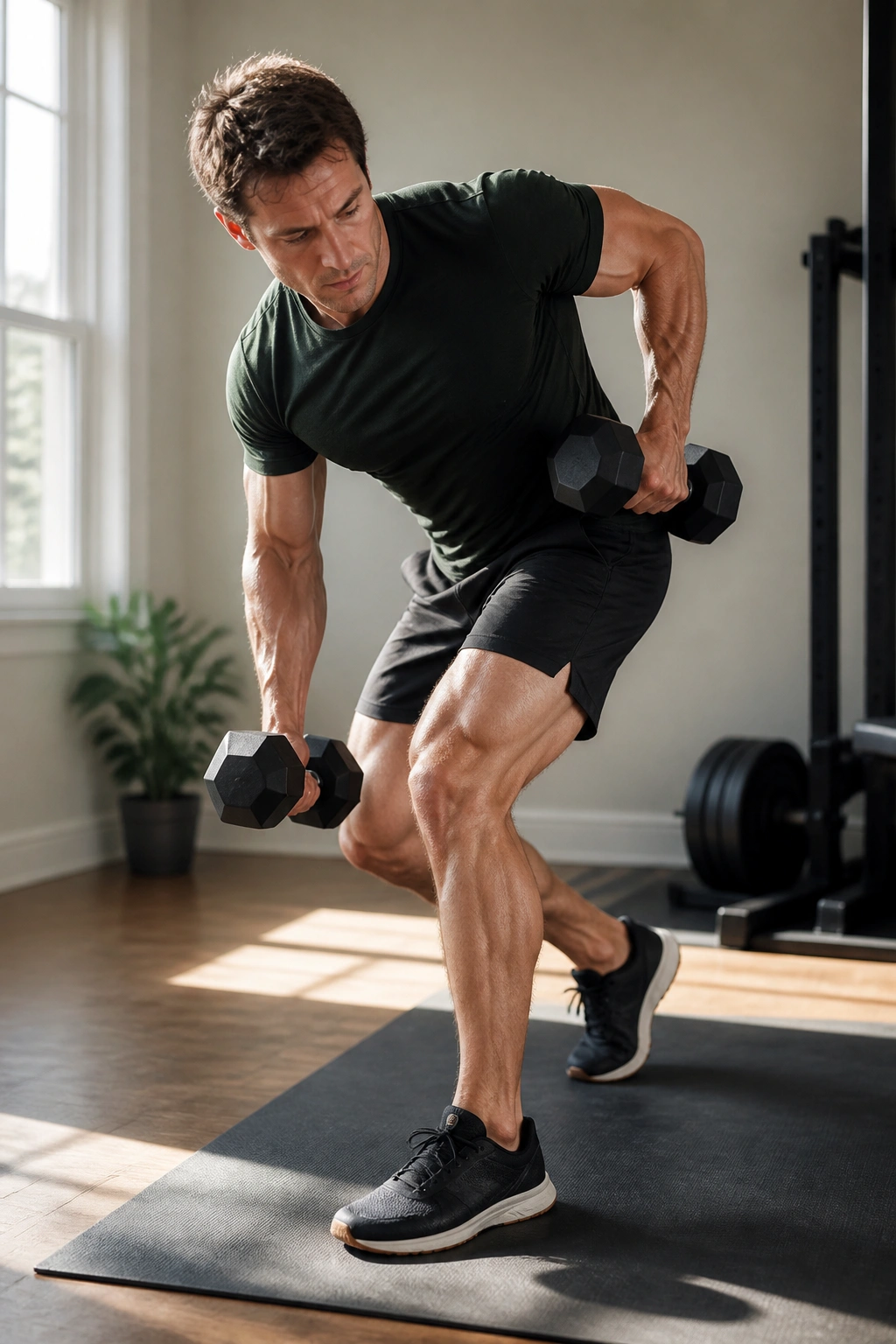
The best dumbbell complex is the one you can finish without dropping the bells and without losing your form halfway through. That’s the whole point. A complex keeps the same weights in your hands while you move through several exercises in a row.
Pick a moderate pair of dumbbells and run this sequence:
- 6 Romanian deadlifts
- 6 bent-over rows
- 6 front squats
- 6 push presses
Rest 90 seconds, then repeat 3 to 5 rounds.
If push presses feel too wild, switch to strict presses. If front squats bother your wrists, hold the bells at your sides and do goblet squats instead. The load should feel challenging by the end of the second round, not impossible from the first move.
This workout builds grip, conditioning, and muscle endurance at the same time. It’s especially good when you want one session that covers a lot of ground without needing to think too hard about setup. The thinking comes later. During the set, you just hold on.
11. The Wall Sit and Pike Push-Up Session
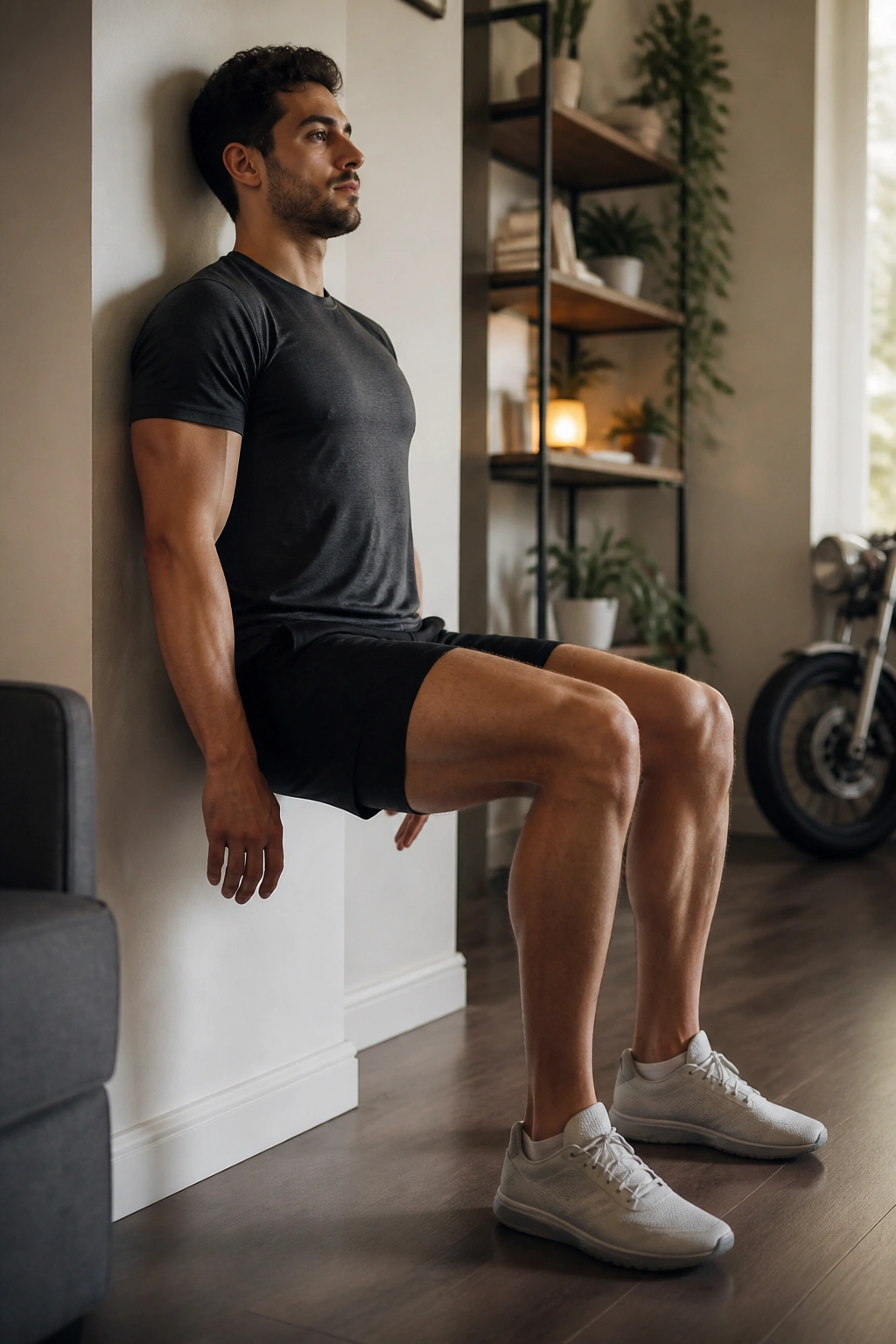
Not every strong session has to bounce around the room. Some of the best ones look almost boring from a distance, then leave your quads and shoulders shaking in private.
This workout is great when you want lower-body and shoulder work with a very small footprint. A wall, a floor, and a mat are enough.
- Wall sit: 30 to 60 seconds
- Pike push-up: 6 to 10 reps
- Glute bridge march: 10 reps per side
- Standing calf raise: 20 reps
- Hollow hold: 20 to 30 seconds
Repeat for 3 rounds. Rest 45 seconds between moves.
What to watch for
On wall sits, your knees should stay roughly over your ankles, not shoved way forward. On pike push-ups, keep your head moving between your hands, not diving straight down. If the shoulder load is too much, raise your hands on a couch or bench.
It’s a plain workout. That’s part of the appeal.
12. The Core-First Strength Workout
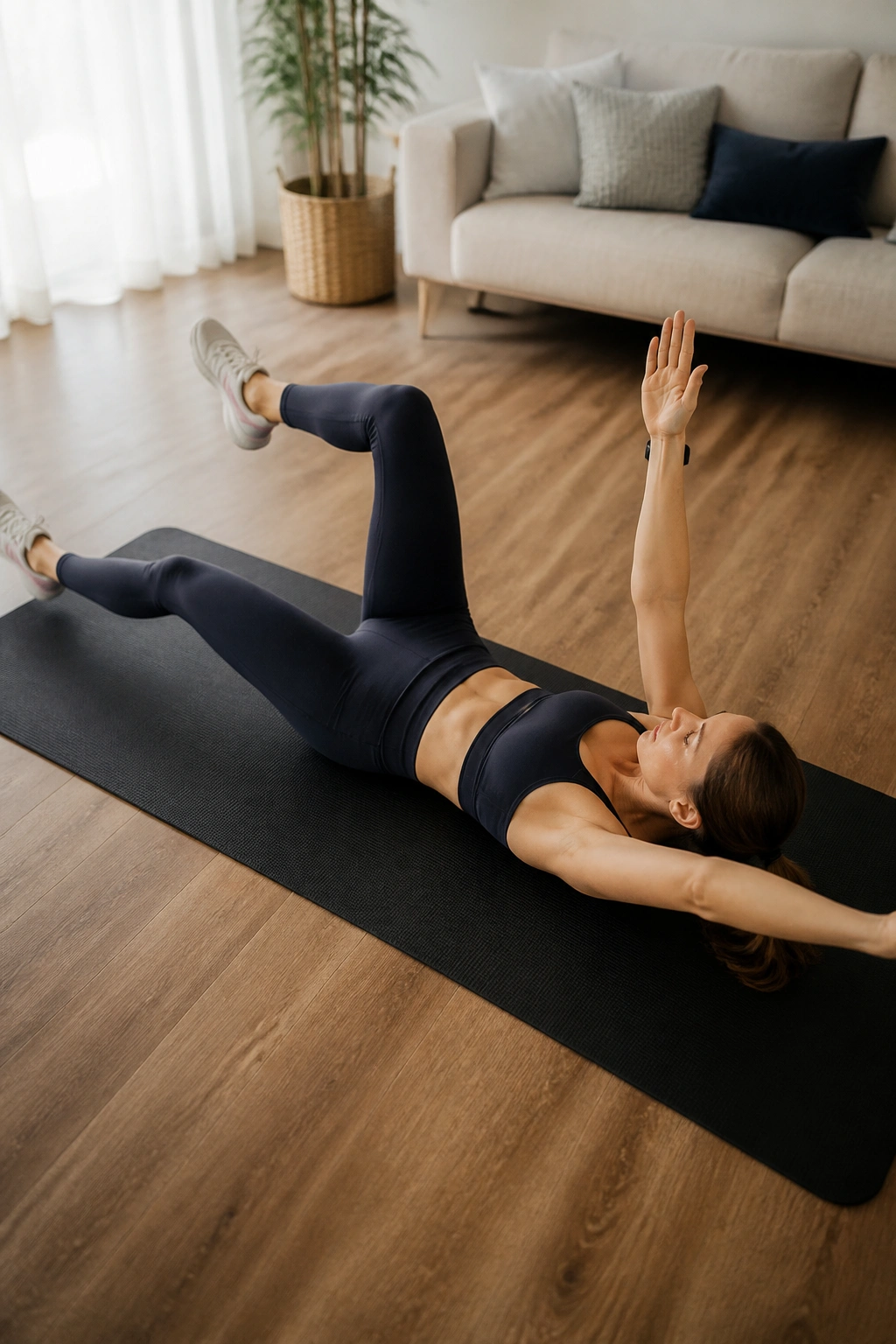
The core is not just about crunches. It’s about keeping your torso from folding, twisting, or tipping while your arms and legs do harder work. That’s a different job, and home training is a good place to teach it.
Start with movements that force control:
- Dead bug
- Bird dog row
- Hollow hold
- Suitcase carry
- Plank shoulder tap
Do 3 rounds. Keep the reps slow enough that your lower back stays quiet. If it starts arching, the set is over.
What bracing feels like
Your ribs should feel stacked over your hips. Your breath stays controlled. Your midsection feels firm, not clenched to the point where you can’t move. That tiny difference matters.
The suitcase carry is the sneaky one here. Hold one dumbbell or a heavy bag on one side and walk for 20 to 30 seconds. If you tip toward the weight, slow down and shorten the walk. The point is to resist the pull, not to show off.
This is the kind of workout that helps every other workout behave better.
13. The Antagonist Arm and Upper-Back Session

Curl-only arm days are usually a waste of time. There, I said it.
If you want arms that look and work better, pair biceps with triceps and keep the upper back in the mix. That’s where posture, elbow health, and sensible strength come from.
Try these supersets:
- Hammer curl + overhead triceps extension — 10 to 12 reps each
- Band row + reverse fly — 12 to 15 reps each
- Close-grip push-up + curl hold at the top — 8 to 10 reps
Do 3 rounds of each pair. Rest 30 to 45 seconds between exercises.
This session is best for people who want visible arm work without turning the shoulders into a mess. It also works well when your equipment is limited because you can make light dumbbells feel heavier by using slower reps and shorter rest.
If your elbows are cranky, skip the heavy isolation work and keep the rows and close-grip push-ups. That usually feels better on the joints.
14. The Slow-Eccentric Beginner Plan
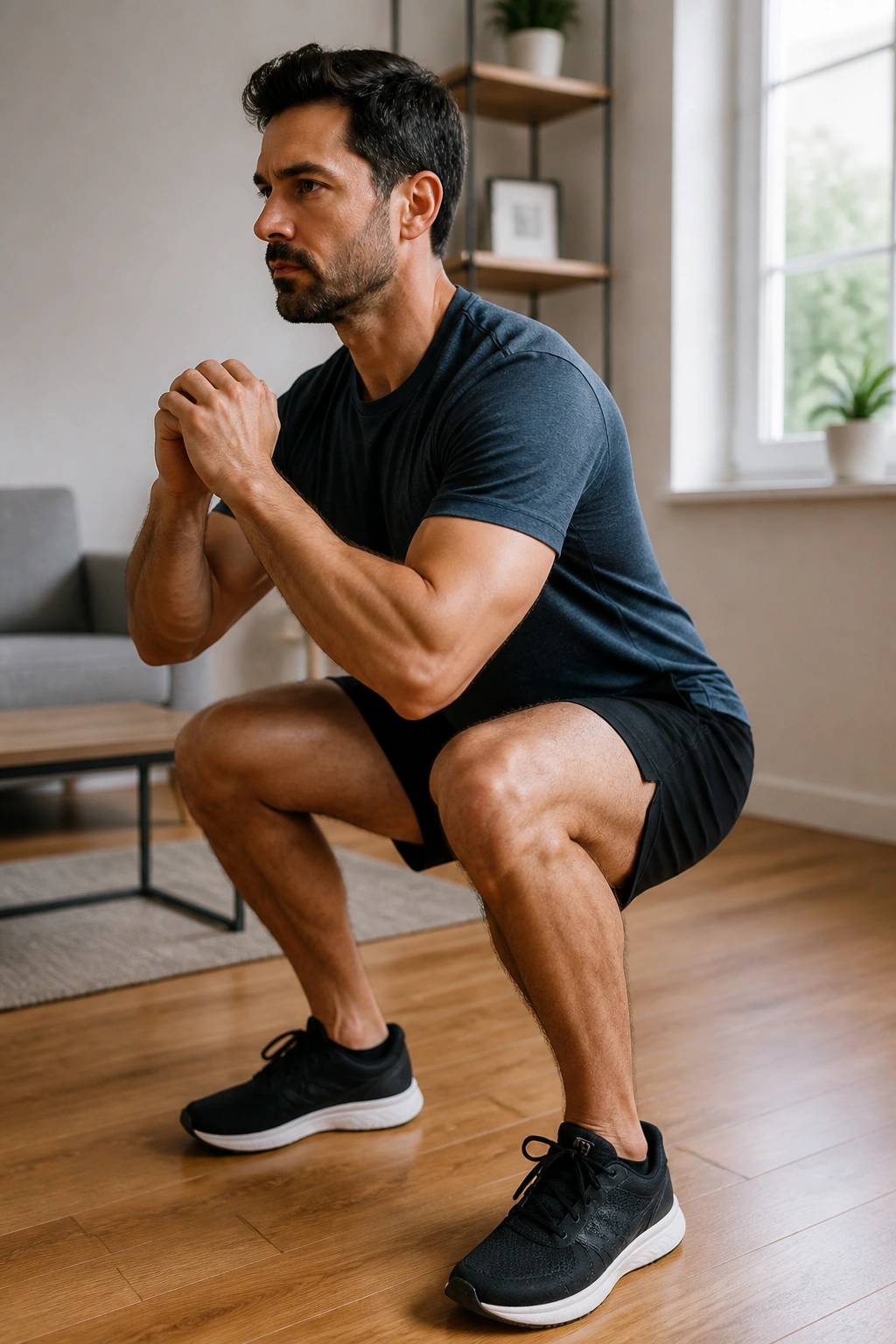
Light weights get serious fast when you slow the lowering phase. That’s why eccentric training is such a smart entry point for newer lifters, or for anyone coming back after a break.
Use a 4-second lower on each rep. Count it out. Don’t rush.
Use the count out loud
- Squat: 4 seconds down, 1 second up
- Incline push-up: 4 seconds down, controlled press up
- Hip hinge: 4 seconds down, steady rise
- Row: 4 seconds down, squeeze at the top
Do 2 to 3 sets of 6 reps per move.
The beauty here is control. You learn positions without getting yanked around by momentum, and the workout feels harder than the load looks on paper. If the lowering phase gets sloppy, reduce the load or shorten the range.
If you can’t count the descent cleanly, it’s too much. That rule saves a lot of frustration.
15. The Power-Strength Hybrid
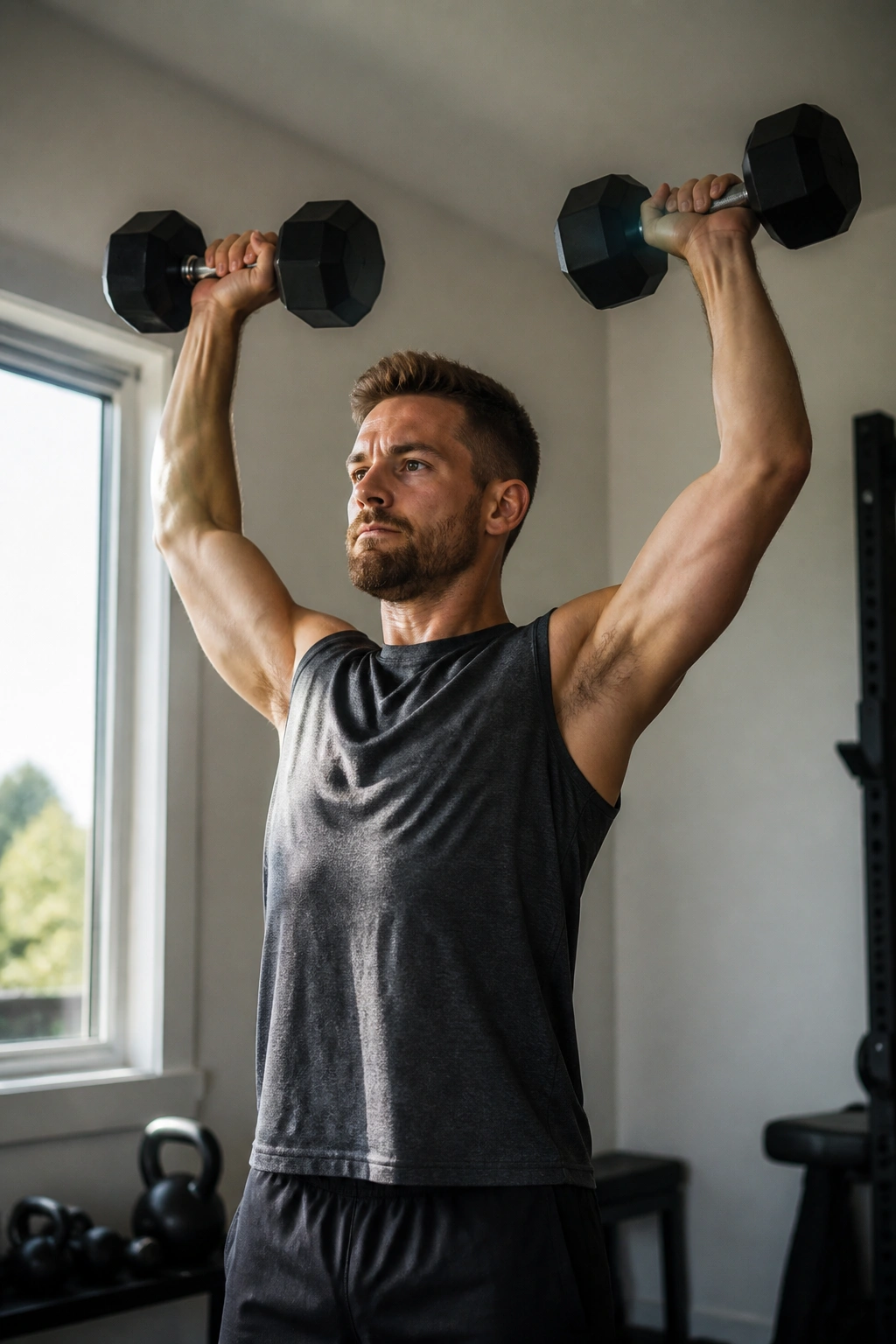
Strength training does not have to be slow and grindy all the time. Some days should feel snappy. Fast. Controlled, but quick on the way up.
That’s where a power-strength hybrid fits. You use a moderate load, then move with intent. Not recklessly. Just fast enough that the rep has life in it.
Try this format:
- 5 fast goblet squats
- 5 dumbbell push presses
- 6 speed step-ups per side
- 8 glute bridges with a hard squeeze
- 20-second brisk mountain climber or march
Do 4 rounds. Rest 60 to 90 seconds.
If jumping bothers your knees, keep both feet on the floor and move quickly through the top of the rep instead. A fast sit-to-stand from a chair works well here. The goal is force, not noise.
This is a nice change of pace for people who feel stale doing slower strength sessions all the time. It wakes the body up.
16. The Quiet Apartment Strength Workout
A noisy workout can be a dealbreaker when you share walls, floors, or both. So this one stays quiet. No jumping. No dropping weights. No frantic footwork.
Think controlled and low-impact:
- Split squat
- Floor press
- Band row
- Glute bridge
- Dead bug
Do 3 rounds of 8 to 12 reps on the main moves and 20 to 30 seconds on the core work.
I like this session because it behaves well in a small space. You can put a towel under dumbbells, keep your feet soft on the floor, and still get a workout that feels like strength rather than rehab. That said, it can get hard fast if you slow the lowering phase and pause at the bottom.
The quiet part is the selling point. The real value is that you can actually repeat it without annoying anyone.
17. The 3×3 Heavy Effort Session
Three hard reps can do more than a sloppy set of 20. There’s a reason low-rep strength work has a loyal following: it lets you focus on load, position, and clean force.
For home training, that might mean heavier dumbbells, a loaded backpack, or a harder unilateral variation.
Use this structure:
- Goblet squat: 3 sets of 3
- Floor press: 3 sets of 3
- One-arm row: 3 sets of 3 per side
- Hip thrust or glute bridge with load: 3 sets of 3 to 5
Rest 90 to 120 seconds between sets.
This one is better for intermediate or advanced lifters, but beginners can use the same template with lighter loads and 5 reps instead of 3. The point is quality. If the last rep turns into a wobble, cut it short and log the better version next time.
Heavy does not mean ugly. That’s the rule.
18. The Pyramid Repetition Workout
Why do descending ladders feel so satisfying? Because the early sets warm you up without draining you, and the later sets make the work feel earnestly hard.
A simple pyramid can look like this:
- 12 reps
- 10 reps
- 8 reps
- 6 reps
Use that pattern on goblet squats, push-ups, rows, or split squats. Rest 45 to 90 seconds between sets, depending on the move.
The first set should feel almost easy. The last set should make you pay attention. That spread is useful because it lets different levels work from the same plan. A beginner uses bodyweight and higher rest. An advanced lifter uses load and shorter rest.
If you want more volume, turn the pyramid back around and go 6-8-10-12 on a second round. That adds work without turning the session into a long slog.
It’s tidy. It works.
19. The Travel-Friendly Hotel Room Plan
Tiny room, stiff bed, no rack, no problem. If you’ve got a suitcase and a patch of floor, you can keep your strength work alive while you’re away from your usual setup.
Load the suitcase with clothes or books, then use it for carries and squats. Bodyweight work fills the rest.
- Suitcase squat: 10 reps
- Push-up: 8 to 12 reps
- Reverse lunge: 8 reps per side
- Suitcase carry: 20 to 30 seconds per side
- Dead bug: 8 reps per side
Do 3 rounds.
This session is useful because it’s quiet, small-space friendly, and easy to recover from if travel already has you a bit beat up. You can make it harder by slowing the lowering phase or adding a fourth round.
A loaded suitcase is awkward in the best possible way. It teaches the body to brace without needing a rack or a big floor plan.
20. The Three-Day Weekly Split That Makes Progress Stick
A weekly split beats random workouts when you want actual progress. Pick three sessions, spread them across a regular week, and give each one a clear job. That keeps the effort focused and your recovery sane.
A simple weekly layout
- Day 1: full-body push and squat work
- Day 2: hinge, pull, and carry work
- Day 3: unilateral legs and core work
For a newer lifter, that might mean the no-equipment circuit, the backpack row and carry day, and the reverse lunge session. For someone with more experience, it could be the dumbbell floor press day, the 3×3 heavy session, and the dumbbell complex.
Progress by changing one thing at a time. Add 1 rep. Add a little load. Add one round. Slow the lowering phase. Pick one. Not all four at once.
That’s the part people skip. They jump around, chase variety, and wonder why they feel busy but not stronger. Choose three home strength training workouts, repeat them long enough to notice a real change, and let the numbers get a little less comfortable each week. That’s where the good stuff shows up.
