



Thirty minute full body workouts at home work best when the plan is blunt. Give yourself a timer, a small patch of floor, and a sequence that hits legs, chest, back, shoulders, and core without a lot of wandering around, and the half hour starts to feel useful fast.
The mistake most people make is not effort. It’s clutter. Too many exercises, too much rest, too many choices, and suddenly a workout that should feel clean turns into a slow drift around the house looking for motivation.
A good home session has a job. Some days that job is strength. Some days it’s sweat. Some days it’s just keeping the joints moving so the next workout feels better. The nice part is that you can get all three moods from the same room if the structure is tight enough.
These 20 options cover quiet floor work, dumbbells, bands, stairs, backpacks, low-impact conditioning, and a few harder sessions for the days when you want to feel the effort in your lungs. Pick the one that fits the space you have, then get moving before you talk yourself out of it.
1. 30-Minute Full-Body Circuit With No Equipment
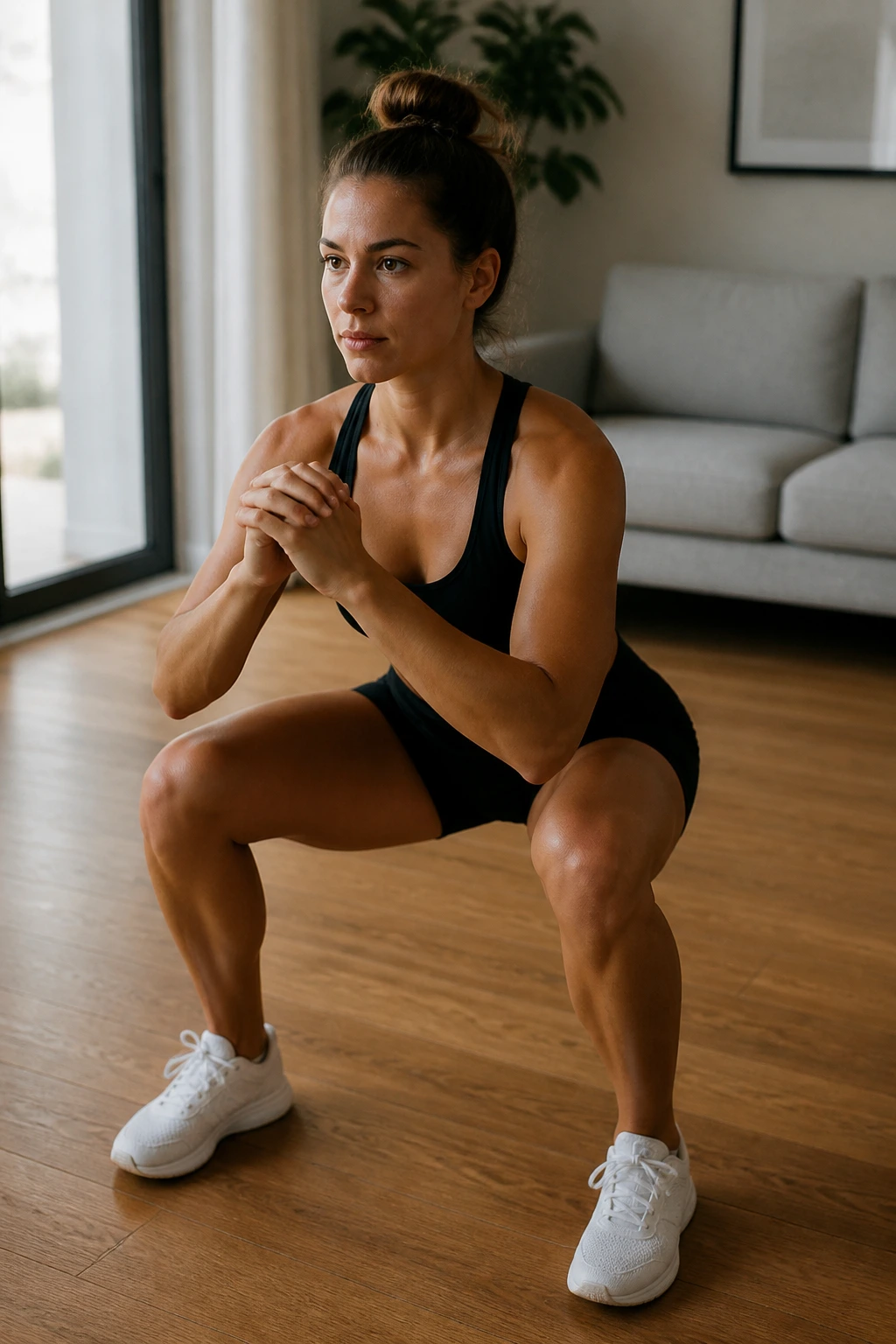
If you only have a clear patch of floor, this is the one I’d start with. It uses the moves that never go out of style: squat, push, hinge, plank, and lunge. No fancy setup. No waiting around.
Set the clock for 30 minutes:
- 4 minutes to warm up
- 20 minutes of work
- 6 minutes to cool down
The circuit
Run 45 seconds on, 15 seconds off for 3 rounds:
- Bodyweight squats
- Push-ups, hands elevated on a couch if needed
- Reverse lunges
- Plank shoulder taps
- Glute bridge marches
- Mountain climbers
The pace should feel steady, not frantic. Your legs should start to warm by the second round, and your breathing should be a little loud by the end of each block. If your form breaks, slow down before the workout turns sloppy.
Small-space tip: keep the move transitions tight. A smooth rhythm matters more here than speed.
2. The Dumbbell Complex That Hits Everything
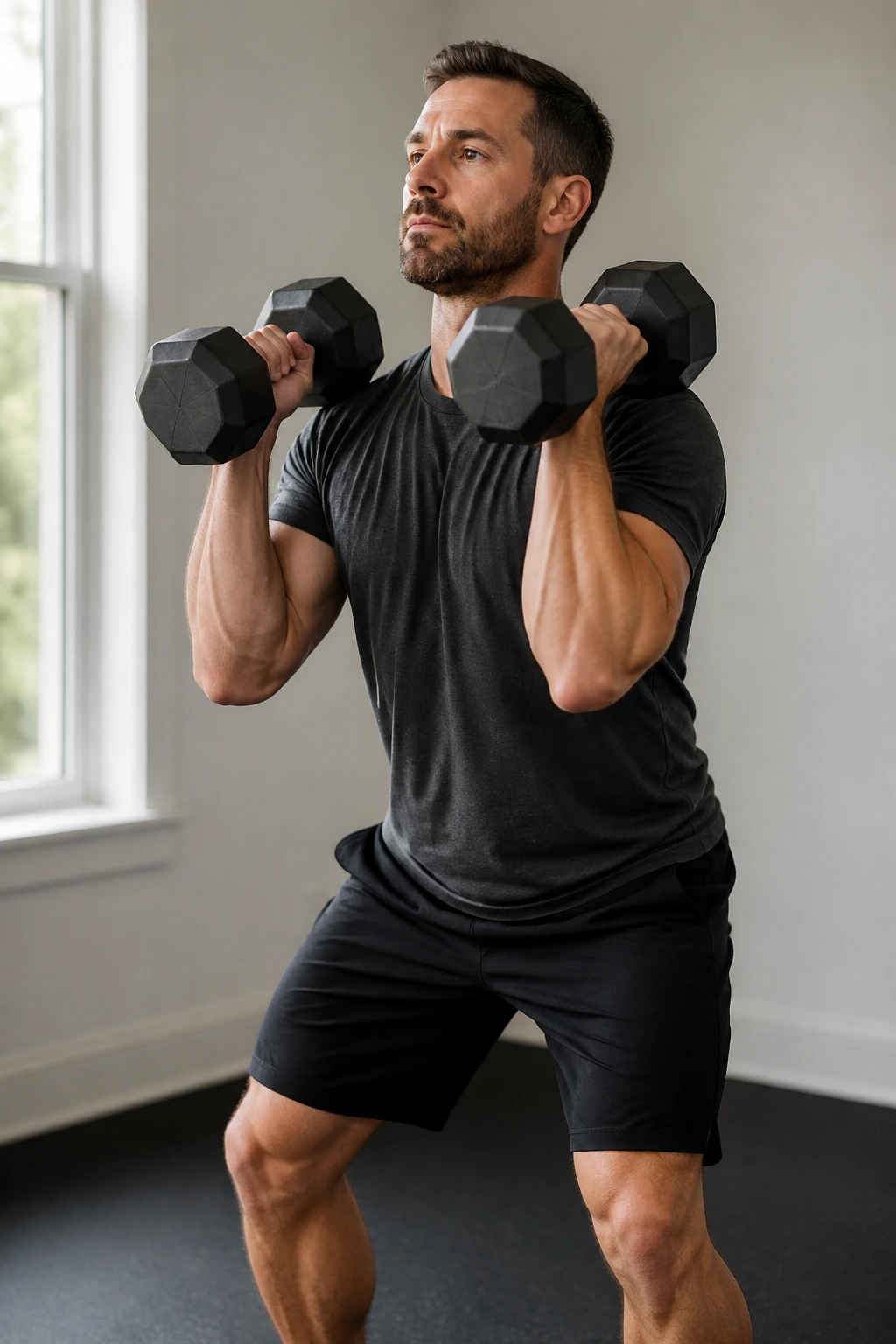
A dumbbell complex is a sneaky little thing. It looks simple on paper, then your shoulders and grip start complaining halfway through the first round. That’s the point.
Use one pair of dumbbells and do 6 reps of each move without setting them down:
- Romanian deadlift
- Bent-over row
- Hang clean
- Front squat
- Push press
- Reverse lunge, 6 per leg
Rest 90 seconds after the sequence, then repeat for 4 rounds. The whole session fits neatly into 30 minutes if you keep the rests honest.
What makes this style work is the way one move flows into the next. Your lower body helps your upper body. Your grip gets taxed. Your heart rate climbs, but you’re still doing real strength work. Use a moderate weight here, not your heaviest pair. If you can’t stay crisp through the clean and the press, the load is too much.
3. The EMOM Bodyweight Workout That Keeps You Moving
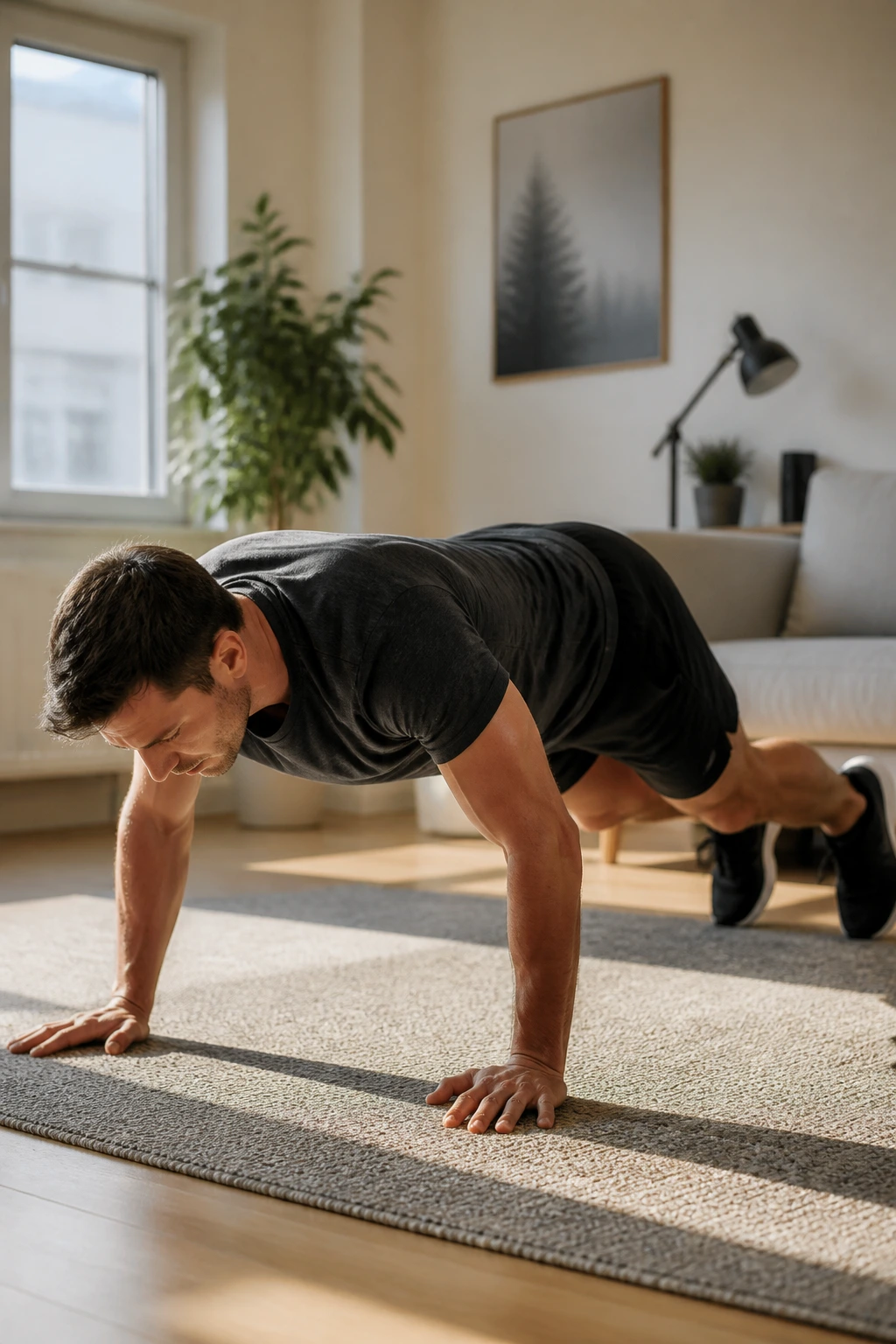
Need something structured enough to stop you from coasting? EMOM helps. Every minute on the minute, you start a new set, and the leftover seconds become your rest.
The minute plan
Set a timer for 20 minutes and cycle through these 5 stations four times:
- Minute 1: 10 burpees
- Minute 2: 12 goblet squats or air squats
- Minute 3: 10 push-ups
- Minute 4: 16 alternating lunges
- Minute 5: 30-second hollow hold
If you finish early, breathe and recover. If you finish late, scale the reps. That’s the whole game.
How to use it
Start conservatively on the first round. The worst EMOM habit is sprinting the opening minutes and spending the rest of the session trying to survive. Ten clean burpees can be plenty. So can eight. You want to finish each minute with maybe 10 to 20 seconds left, not zero.
A workout like this feels tidy, almost mechanical, and that’s useful. No wasted time. No wandering.
4. The Low-Impact Cardio Strength Session
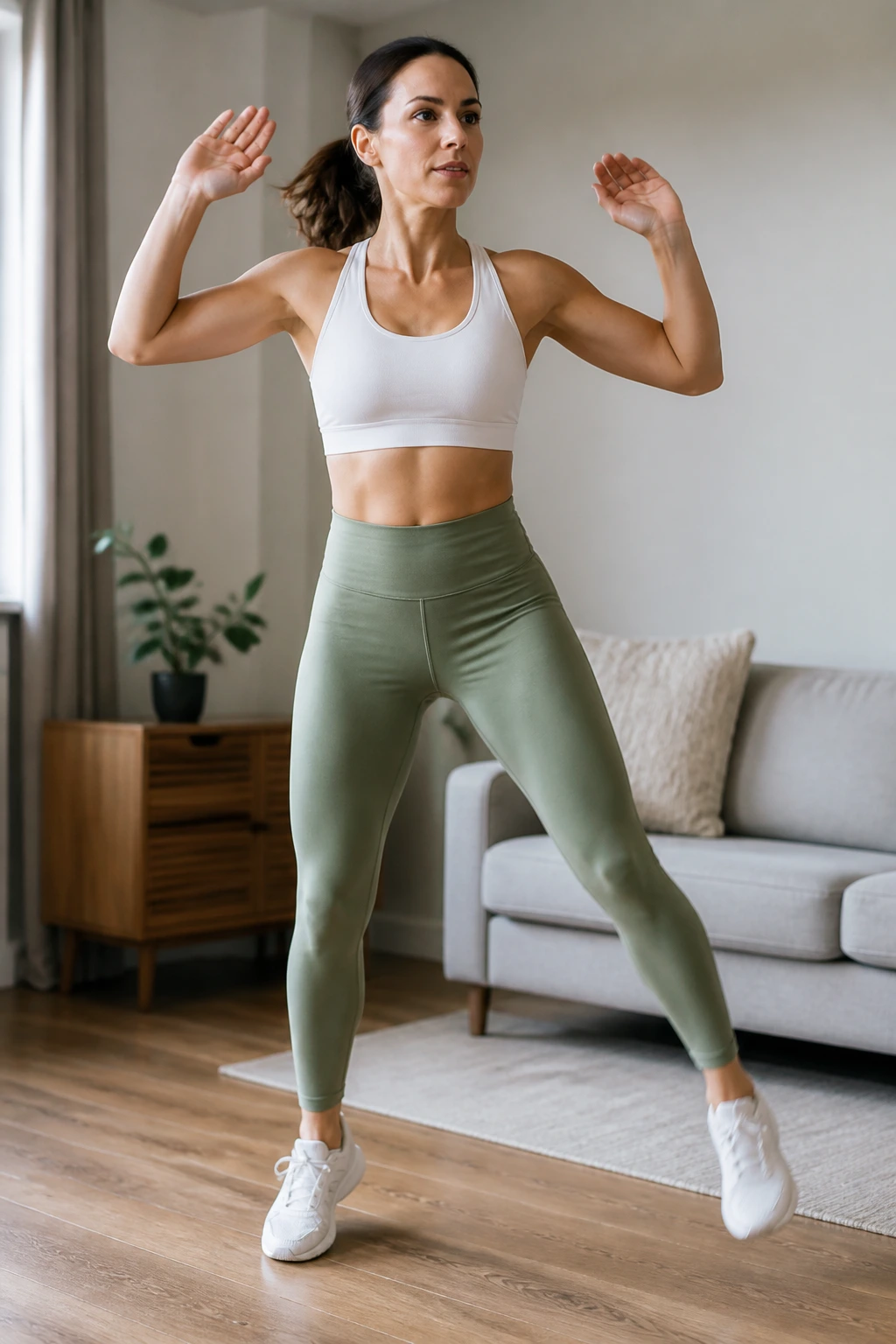
This is the workout for thin walls, sleepy knees, and mornings when jumping sounds annoying. It still works hard. It just does it without the floor-rattling.
Run 40 seconds on, 20 seconds off for 3 rounds:
- Step jacks
- Squat to overhead reach
- Step-back lunges
- Incline push-ups on a counter or bench
- Dead bugs
- Skater steps without the hop
A lot of people assume low-impact means easy. Nope. If you move with purpose and keep the transitions sharp, your breathing climbs fast. The trick is to make the legs do honest work while your feet stay planted or only leave the ground a little.
I like this one for apartment training because it never feels chaotic. You can hear yourself breathing. You can keep count. And you don’t have to apologize to anyone below you. Use it on days when you want sweat without the bounce.
5. The Alternating Upper-Lower Circuit
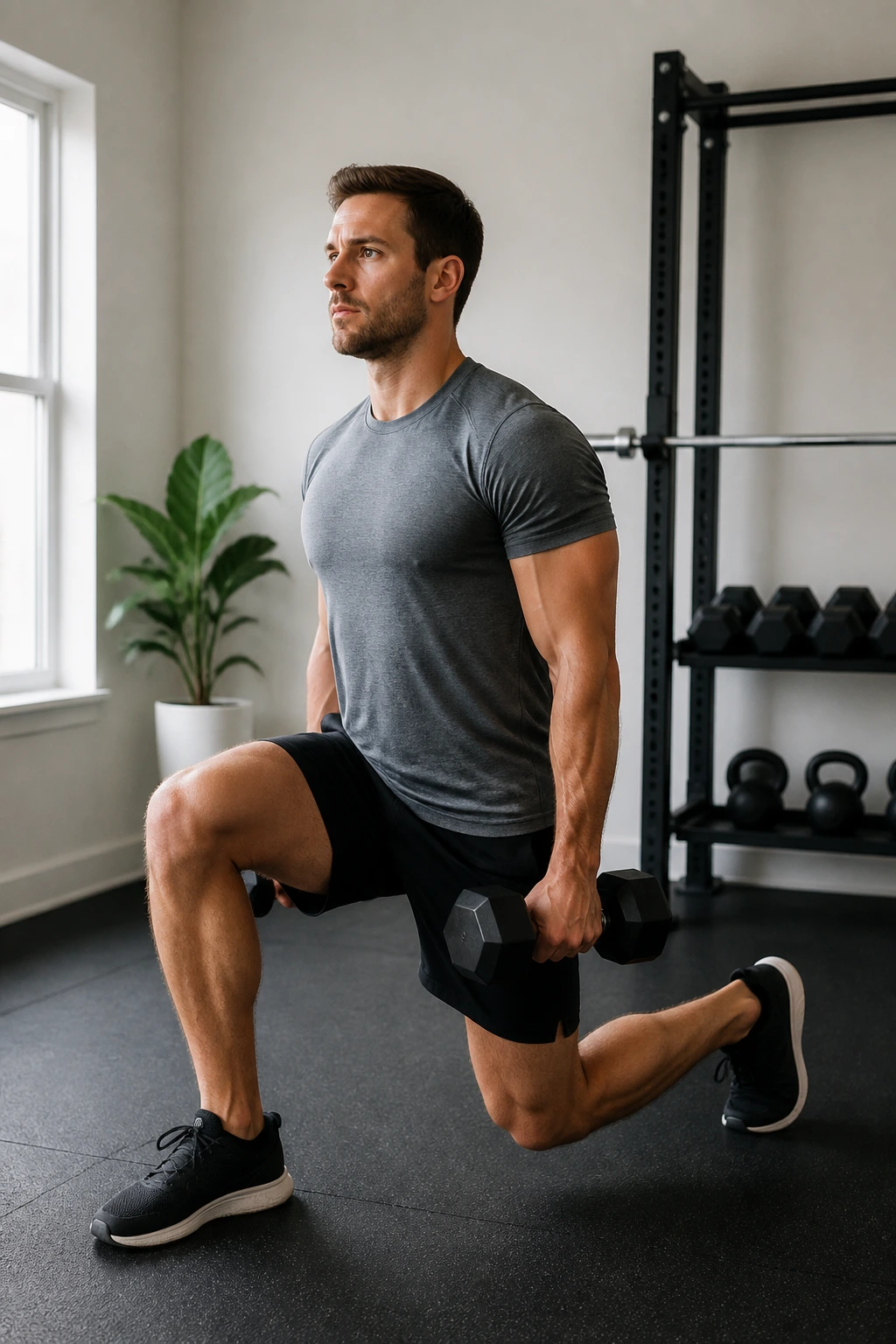
Unlike circuits that bury your legs under five moves in a row, this one swaps upper and lower body on purpose. That little change matters more than people think. You get enough recovery to keep quality high, but not enough to cool off.
Do 3 rounds of this sequence:
- 10 split squats per leg
- 10 one-arm rows per side
- 12 goblet squats
- 10 floor presses
- 12 hip hinges or Romanian deadlifts
- 20 plank shoulder taps
The rhythm keeps your heart rate in the middle zone. Hard, but not ugly. If you only have one dumbbell, that’s fine; just work one side at a time and keep switching.
Why it works: the legs get a break while the upper body works, then the upper body gets a break while the legs go again. That makes the whole 30 minutes feel smoother than a pure leg day or a pure push day. Good for people who hate being pinned to one muscle group for too long.
6. The 20-Minute AMRAP That Builds Pace
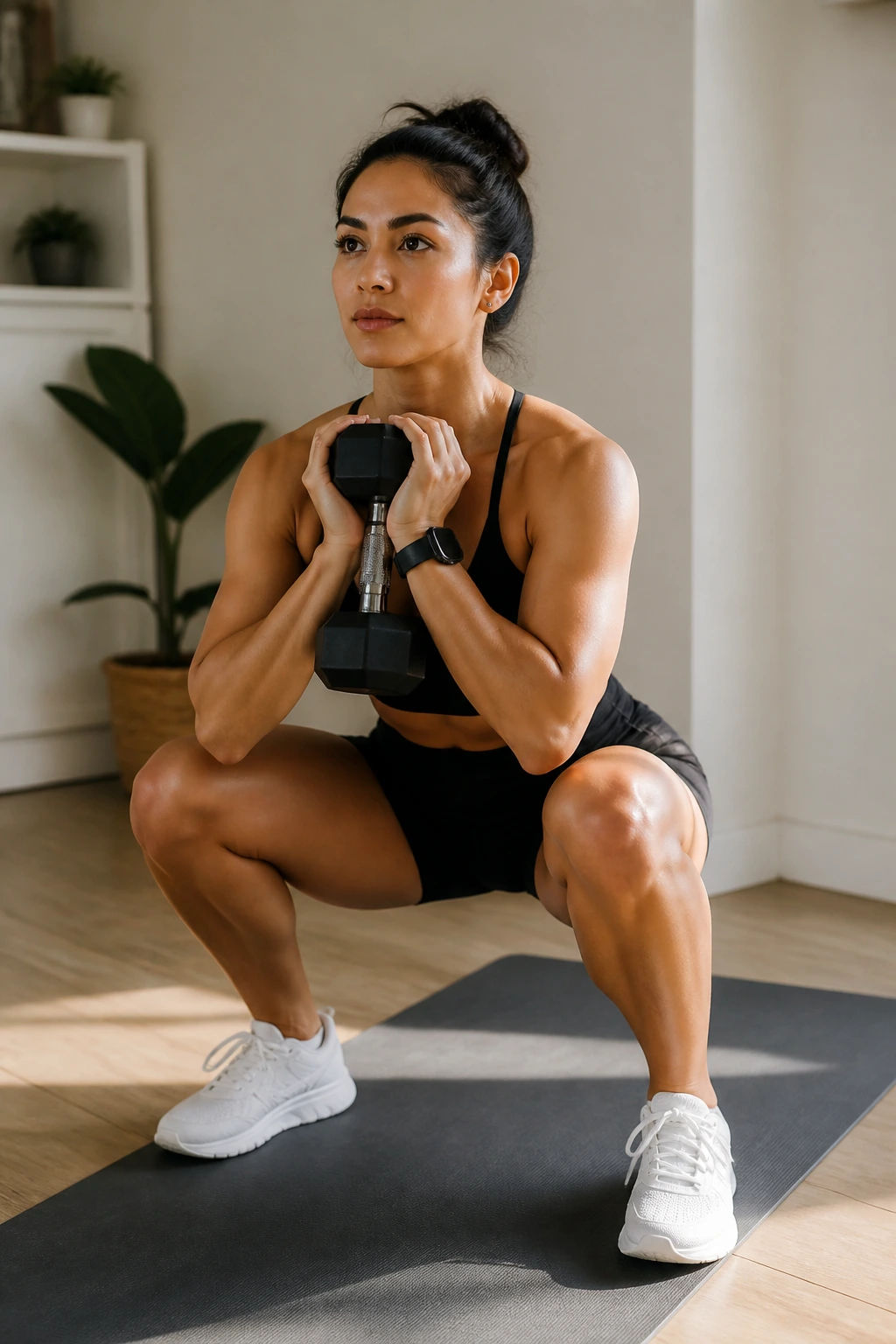
Twenty minutes of as many rounds as possible sounds harsh because it is. The nice part is that it gives you a clear target: keep the reps clean and the pace honest.
Use this loop for 20 minutes:
- 8 air squats
- 6 push-ups
- 10 alternating reverse lunges
- 8 dead bugs per side
- 12 glute bridges
Write down your rounds if you care about progress. That tiny bit of tracking changes the feel of the workout, because next time you know whether you held steady or drifted.
The trap here is chasing speed too early. Don’t do that. A messy round that takes 45 seconds doesn’t count as a win if your push-ups turn into half-reps and your lunges wobble all over the room. Smooth reps, controlled breathing, then keep moving. That’s the whole point.
Finish with 5 minutes of walking in place and deep breathing. Your legs will like the downshift.
7. The Core-and-Carry Workout
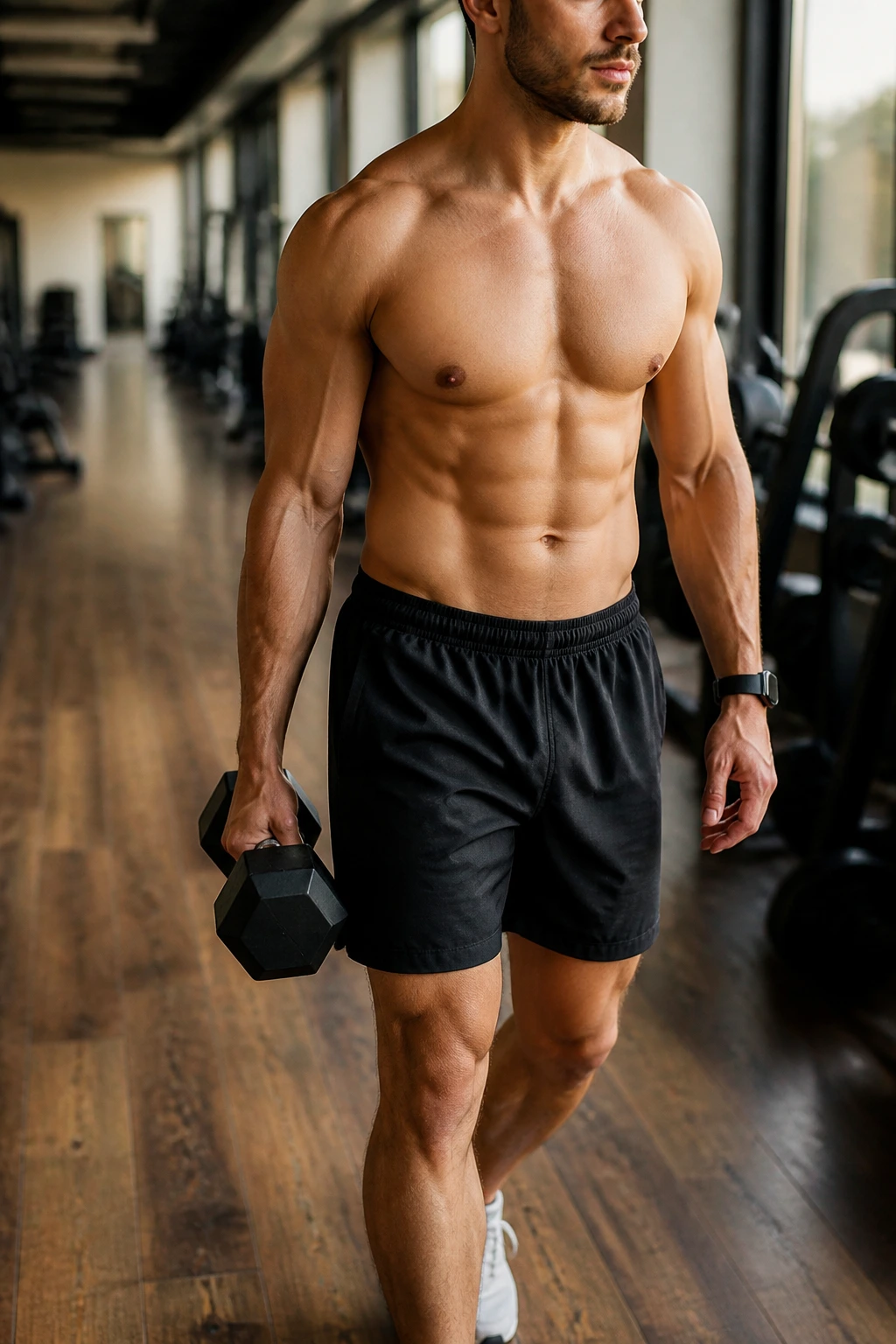
Core work gets boring when it’s all crunches. Carries fix that fast. They force your trunk to stay tight while the rest of you moves, which is closer to real life anyway.
The format
Set up 4 stations and move through them for 4 rounds:
- Suitcase carry or suitcase march, 30 seconds each side
- Bear crawl, 20 to 30 steps
- Dead bug with a dumbbell or backpack held overhead, 8 reps per side
- Side plank hip lifts, 10 reps per side
If you don’t have room to walk, march in place with one weight on one side. That still lights up the obliques. A backpack works too. So does a grocery bag packed with books, though that one asks for a firmer grip.
What to watch for
Keep your ribs stacked over your hips. Don’t lean away from the weight just to make it easier. The whole point is resisting that pull. You should feel your midsection working almost immediately, and by the third round, even the bear crawl starts to feel like a little negotiation.
8. The Plyometric Power Session

This one gets loud. Not insane, but loud enough that you’ll know when you’re landing badly. That feedback is useful.
Run 30 seconds on, 30 seconds off for 5 rounds of:
- Jump squats
- Skater hops
- Burpees
- Split squat jumps
- Fast mountain climbers
Spend the first 4 minutes warming up with ankle rolls, bodyweight squats, and marching knee drives. Skipping the prep is how people end up with cranky knees and flat feet halfway through.
Landing matters
Land softly, with knees tracking over the toes and the chest tall. You are not trying to stomp the floor into agreement. If a move feels too jarring, step it down. Swap jump squats for fast air squats, or take the hop out of skater hops and turn them into quick side steps.
This style is short, sharp, and a little rude. Great for days when you want your heart rate up fast and you do not feel like counting long sets.
9. The Tempo Strength Workout
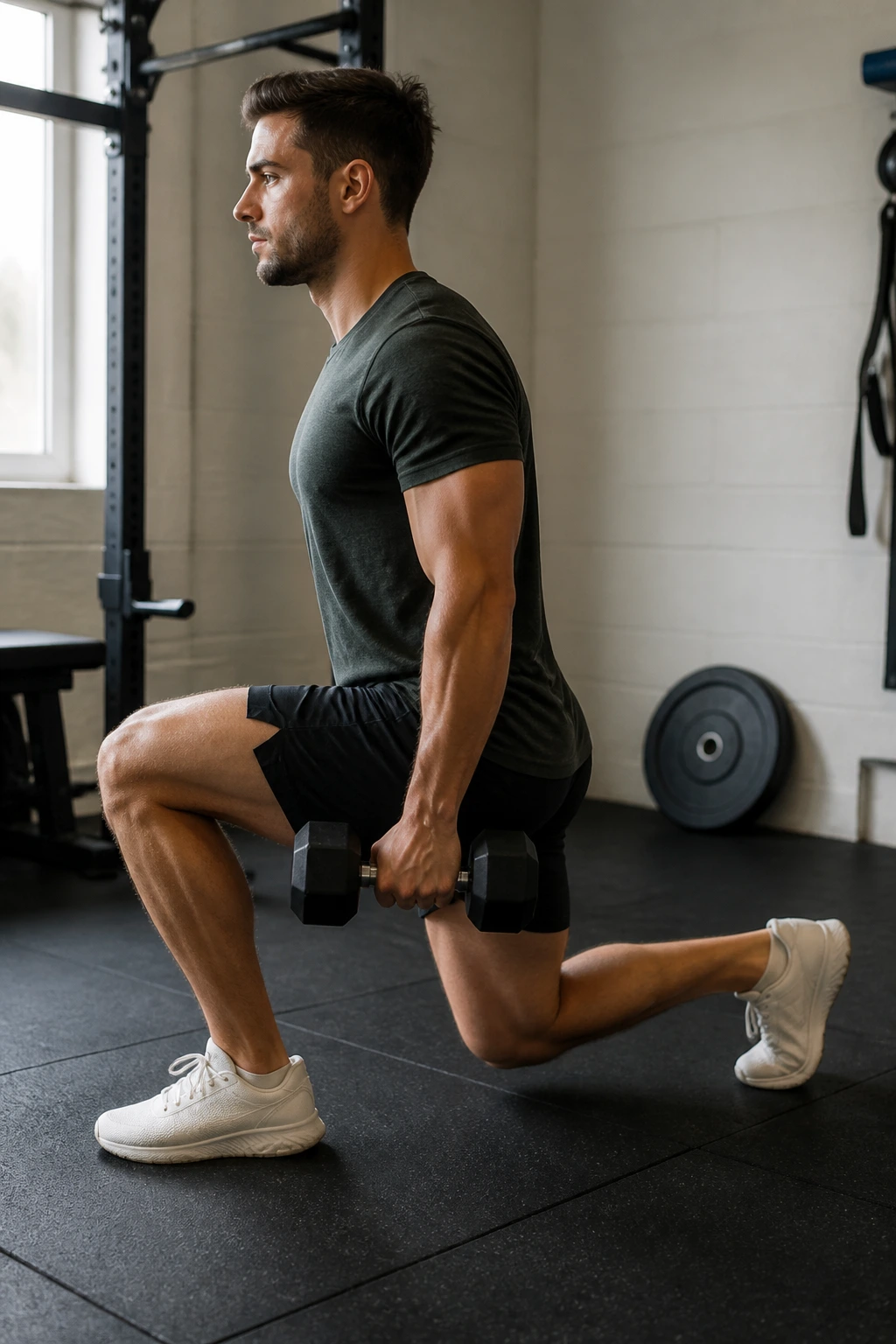
Slowing a rep down makes a dumbbell feel heavier than people expect. That’s why tempo work is such a neat trick at home. You don’t need huge weight to get a serious session.
Use a 3-1-1 tempo: three seconds down, one-second pause, one second up. Do 3 rounds of:
- 8 tempo split squats per leg
- 8 tempo push-ups
- 10 tempo Romanian deadlifts
- 12 glute bridges with a pause at the top
- 6 pike push-ups or overhead presses
The slower pace keeps the muscles under tension longer. It also makes cheating harder, which I appreciate. When you can’t bounce through the hard part, you have to own the movement.
This is a quieter workout than the plyometric one, but it can leave your legs feeling just as cooked. Keep your resting periods honest, about 45 to 60 seconds between exercises, and use the mirror if you have one. Sloppy tempo is still sloppy.
10. The Yoga-Strength Flow
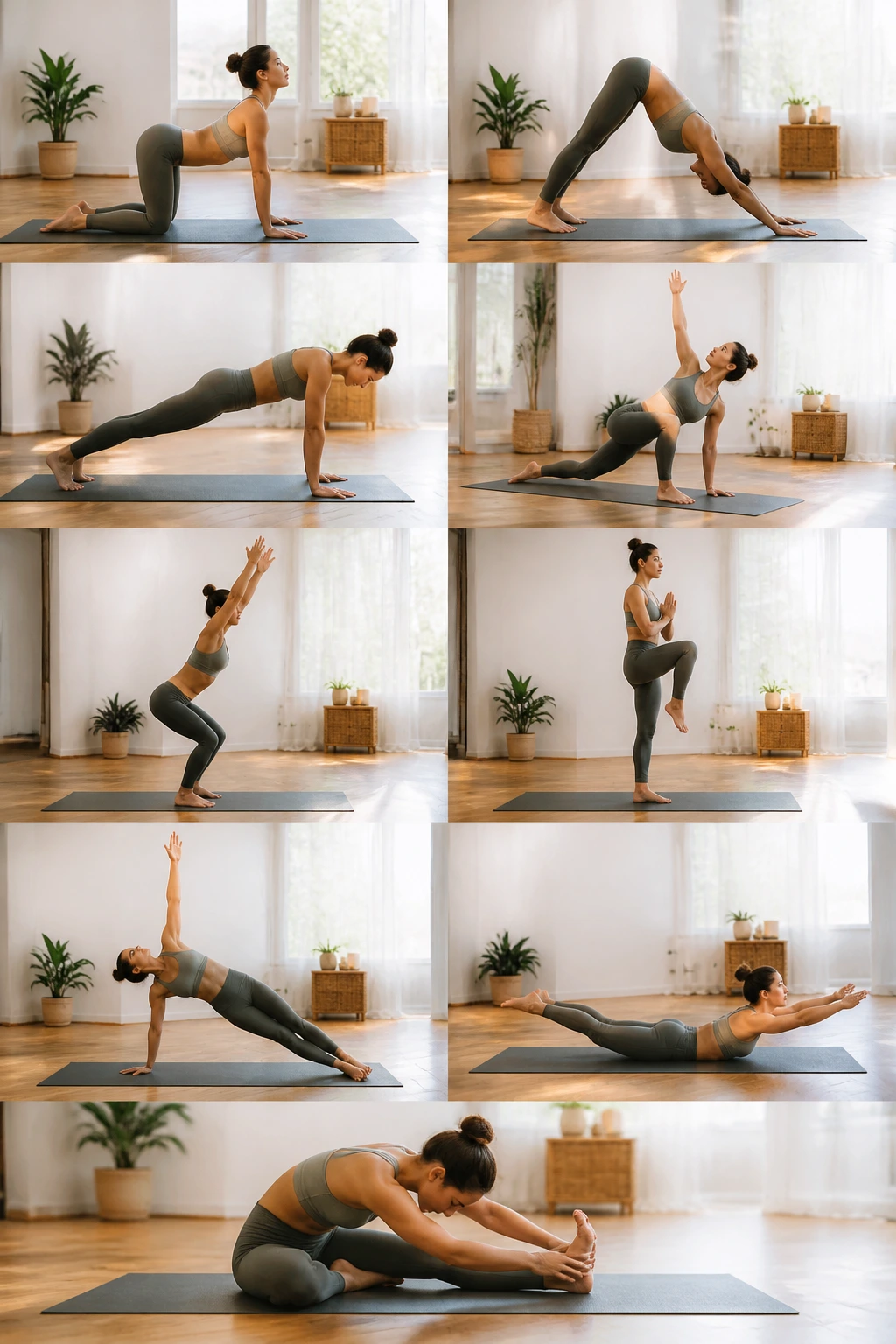
Some days, a hard circuit feels like too much and a stretching session feels like not enough. This is the middle ground. It moves, it breathes, and it still makes the muscles work.
Flow through this sequence for 20 minutes, then spend the last 10 minutes on slower breathing and longer holds:
- Cat-cow
- Downward dog to plank
- Low lunge with a twist
- Chair pose to knee drive
- Side plank
- Locust lift
- Half split
The interesting part is how fast the work sneaks up on you. A deep lunge with a twist sounds gentle until your front leg starts shaking. A long side plank sounds peaceful until your shoulder has opinions.
Keep the transitions slow and smooth. Don’t rush the breath. If one side feels tighter, hold that position for an extra breath or two before switching. This one is good on days when you want to move well more than you want to sweat through your shirt.
11. The 30-Minute Full-Body Kettlebell Circuit
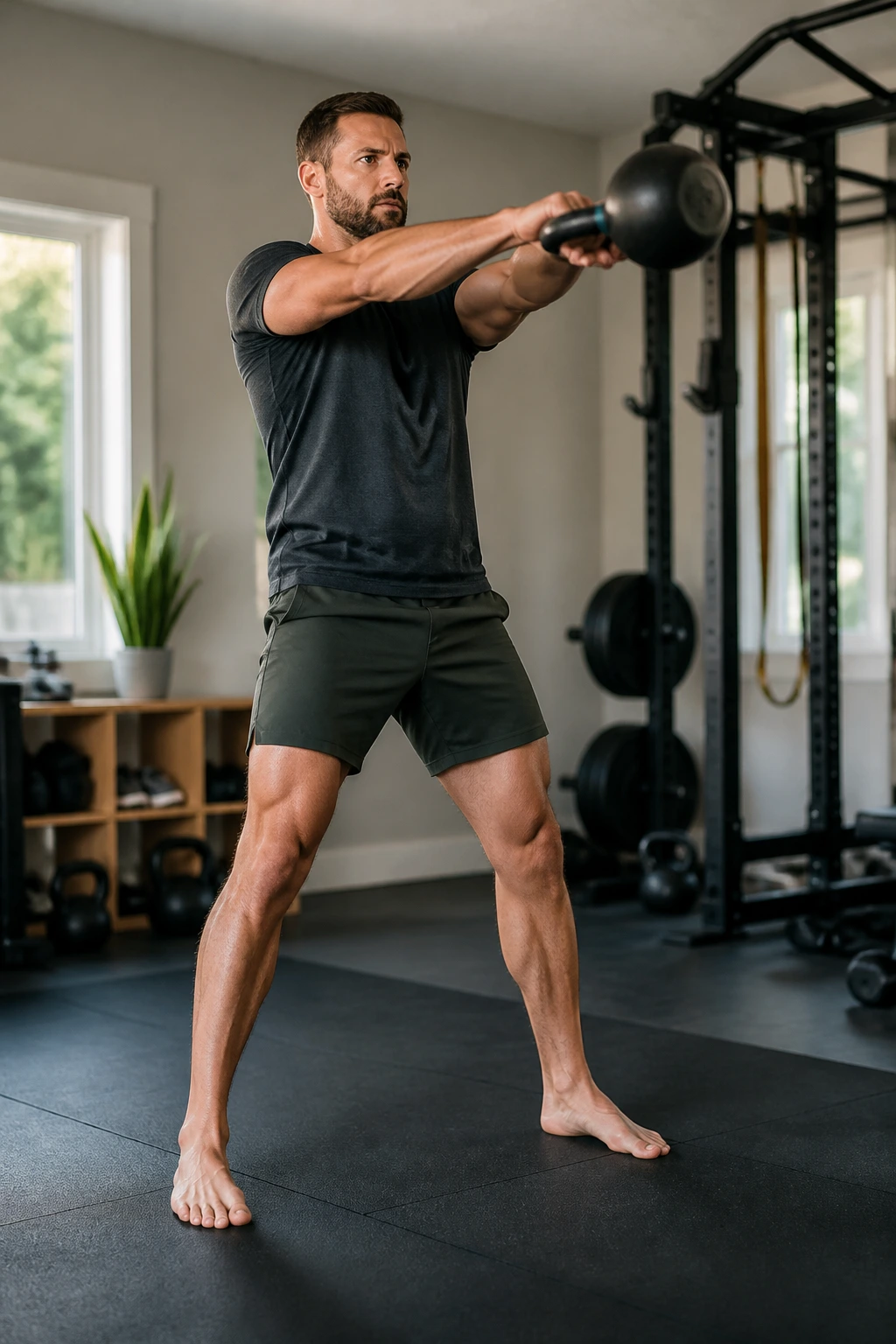
A kettlebell changes the whole feel of a home workout. The offset weight makes the hinge more honest, and the grip work shows up earlier than it does with many dumbbells.
Use one kettlebell and run 4 rounds of:
- 15 kettlebell swings
- 10 goblet squats
- 8 cleans per side
- 6 presses per side
- 10 reverse lunges per side
Rest 60 to 90 seconds between rounds. If the bell is light, move faster. If it’s heavy, stay cleaner. The workout should feel like a mix of strength and conditioning, not a race.
What makes it different
The swing teaches the hinge. The goblet squat keeps the torso honest. The clean and press ask for timing, not just muscle. That combination gives you a full-body hit without needing a huge pile of equipment.
If you only own one kettlebell, this is one of the best ways to use it. Keep the space around you clear, though. A kettlebell swing in a crowded room is a terrible idea.
12. The Resistance Band Burn
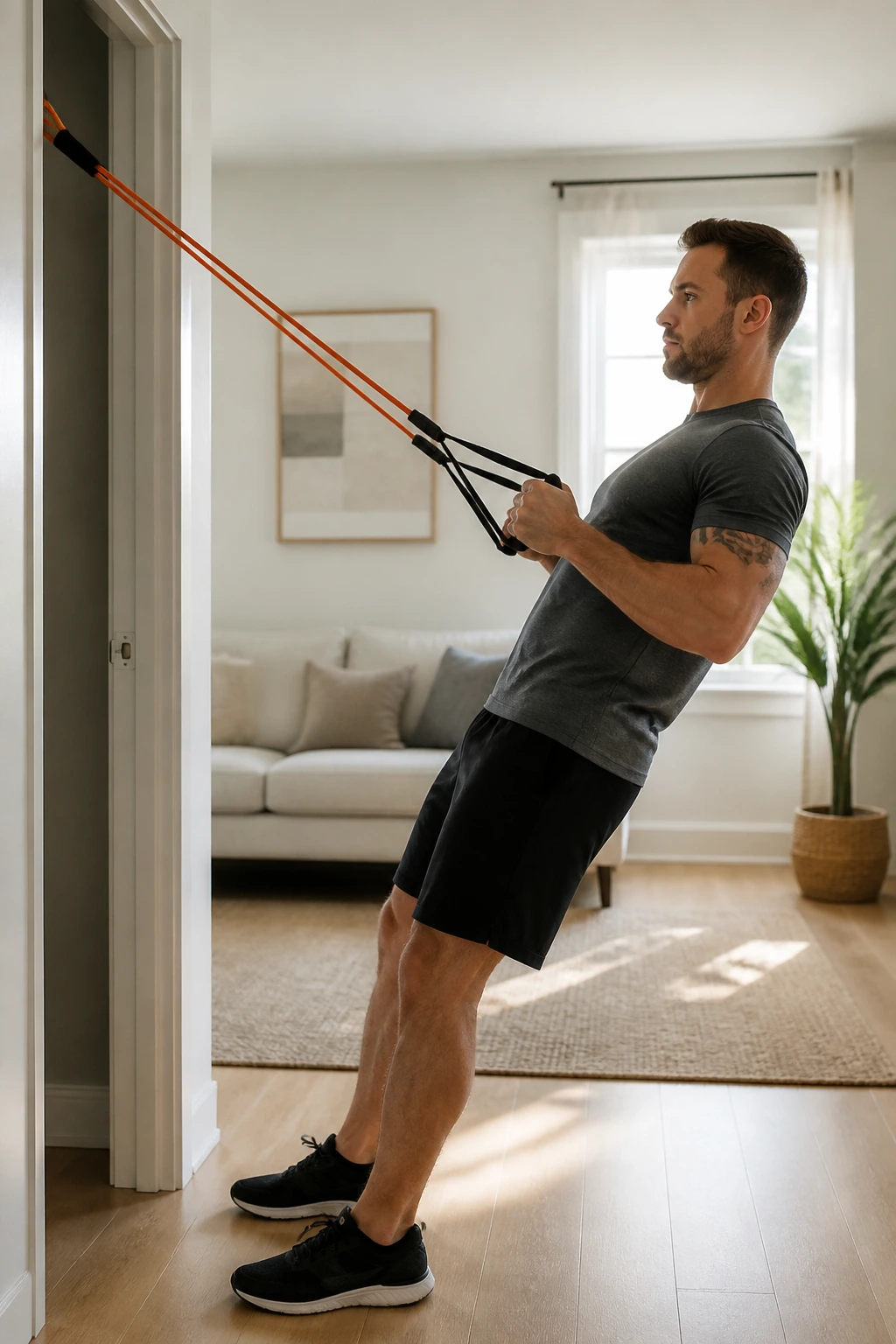
Bands are easy to dismiss until your shoulders and hips start working against one. Then they become useful fast. They’re quiet, cheap, and a little humbling.
Set the anchor
If you’re attaching a band to a door, close and lock it first. Tug it once before you start. If the anchor moves, stop. No workout is worth a band snapping toward your face.
The circuit
Do 3 rounds of:
- Band squat, 15 reps
- Band row, 12 reps
- Band chest press, 12 reps
- Lateral band walk, 12 steps each way
- Band pull-aparts, 15 reps
- Glute bridge with band abduction, 15 reps
The pull-aparts and rows help balance out all the pressing people do at home. The lateral walks catch the glutes in a way that bodyweight work sometimes misses. Bands also keep tension on the muscles longer, which is why the last few reps often feel sneakier than expected.
This is a smart choice for anyone who wants joint-friendly resistance without setting up a whole rack of gear.
13. The Chair-Supported Beginner Workout
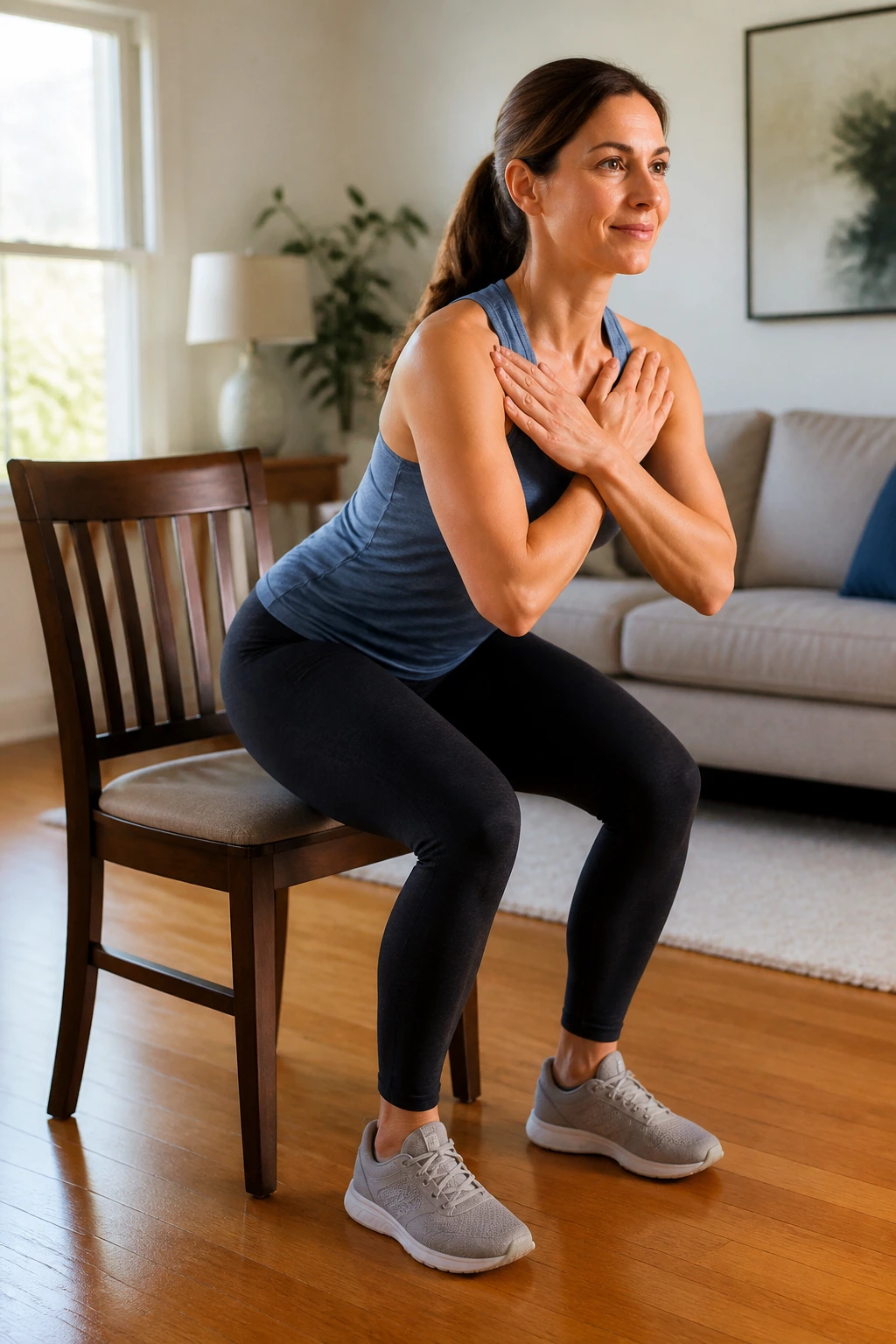
What if getting on the floor is the hard part? Start here. A chair, a wall, and a little patience are enough for a solid half hour.
Run 30 seconds work, 30 seconds rest for 3 rounds:
- Sit-to-stand from a chair
- Wall push-ups
- Supported split squats while holding the chair
- Bird dogs
- Standing knee raises
- Calf raises
Why this works
You still train the big patterns: squat, push, lunge, brace, and balance. The support just takes away the panic factor. That matters if you’re coming back after a break, handling balance issues, or simply trying to build a habit without feeling wrecked.
Keep the chair stable. Keep your chest up on the sit-to-stands. And when the bird dog comes around, move slower than you think you need to. Fast bird dogs usually turn into wobbly bird dogs.
This workout is calm on purpose. Don’t confuse that with easy.
14. The Stair Workout for Small Spaces
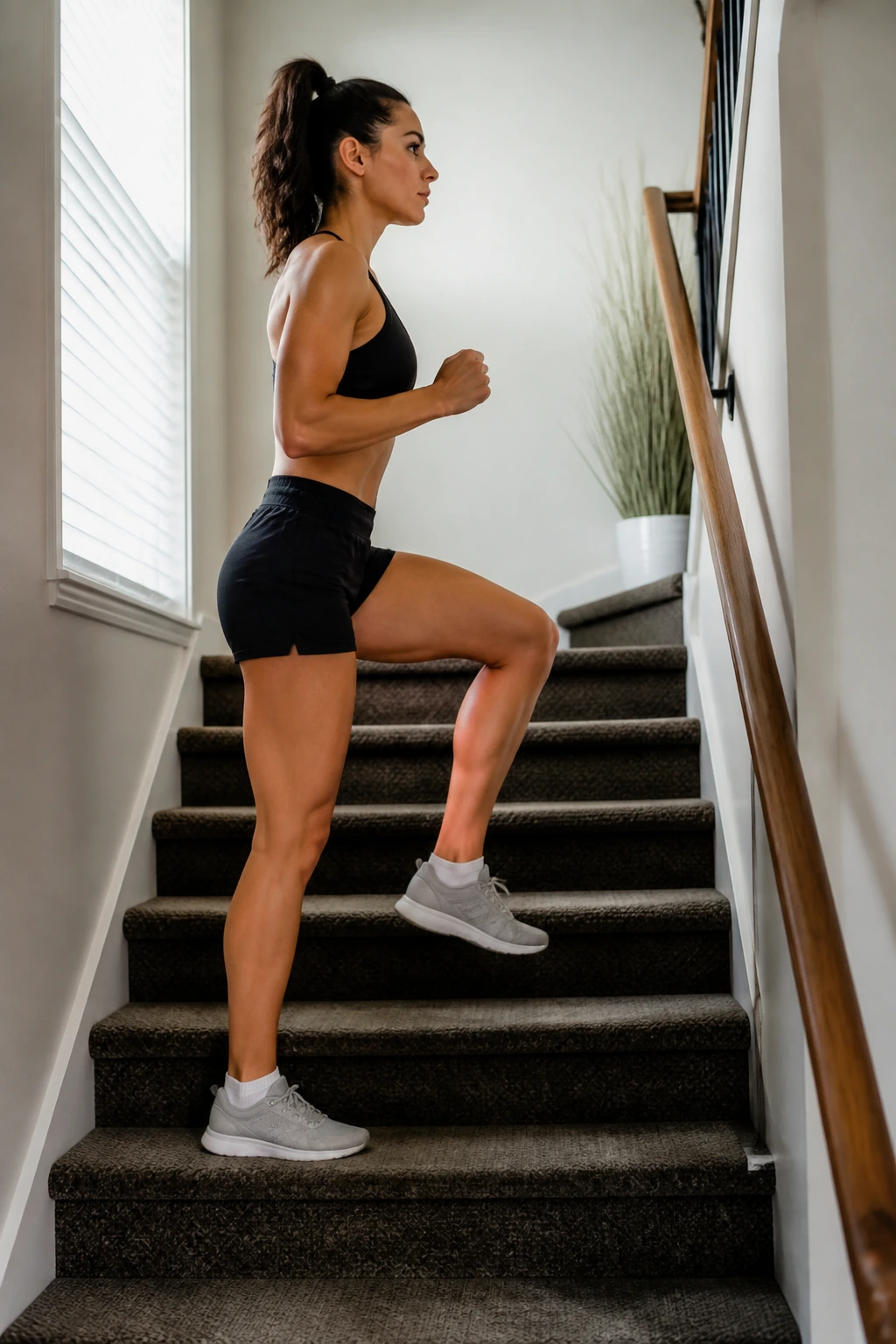
A staircase can do more work than it looks like it should. One flight, done well, gives you cardio, leg strength, and a little grit without much setup.
Use 4 rounds of:
- Stair march or fast walk up and down for 2 minutes
- Step-ups, 10 per leg
- Incline push-ups on the stair rail or wall, 12 reps
- Reverse lunges at the bottom, 10 per leg
- Plank hold on the floor, 30 to 45 seconds
Treat the stairs with respect. Use the handrail if the pace gets sloppy. Keep the foot fully on the step during step-ups, and don’t rush the descent.
A staircase workout has a nice built-in rhythm. You go up, you come back down, and then you do it again. The repeated climb is what makes the lungs wake up. If you want a home session that feels more athletic than a basic circuit, this one is a strong pick.
15. The Minimal-Space Travel Routine
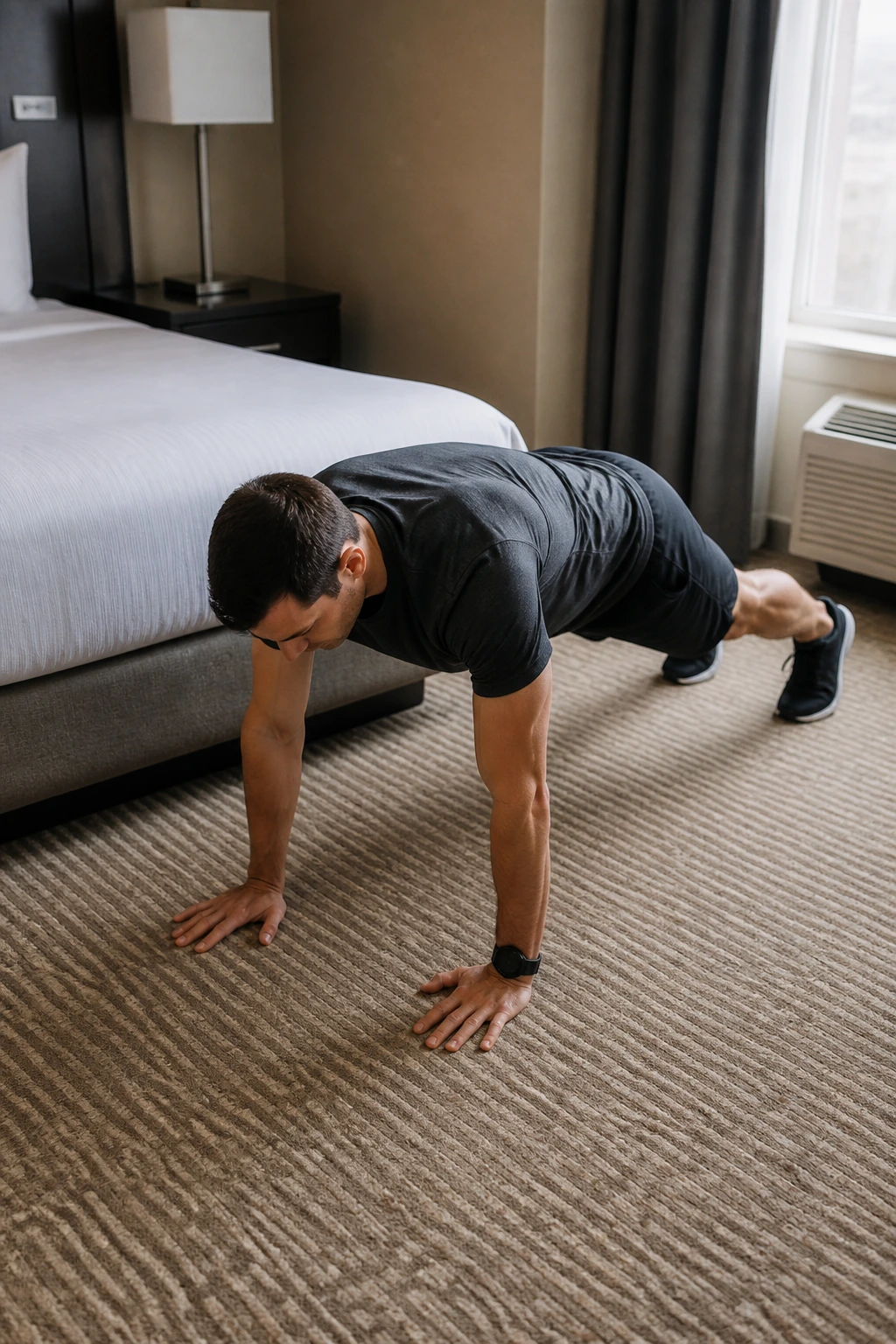
Two square meters is enough. Honestly, sometimes less is enough if you’re careful and the floor is clear.
Do 5 rounds of:
- Inchworm to plank, 5 reps
- Air squats, 12 reps
- Split squats, 8 reps per leg
- Plank shoulder taps, 20 taps
- Toe taps or high knees, 30 seconds
Keep the rest short, about 20 to 30 seconds between moves. The goal is to stay moving without bouncing into furniture or making the room feel cramped.
This workout is made for borrowed spaces: hotel rooms, guest rooms, a tiny bedroom, the corner of a studio apartment. It doesn’t need much, which is exactly why it’s useful. If you travel often or share a small home, having one routine that never fails to fit is worth a lot.
A towel on the floor can make inchworms and planks feel a little smoother too.
16. The Tabata Pairing Workout
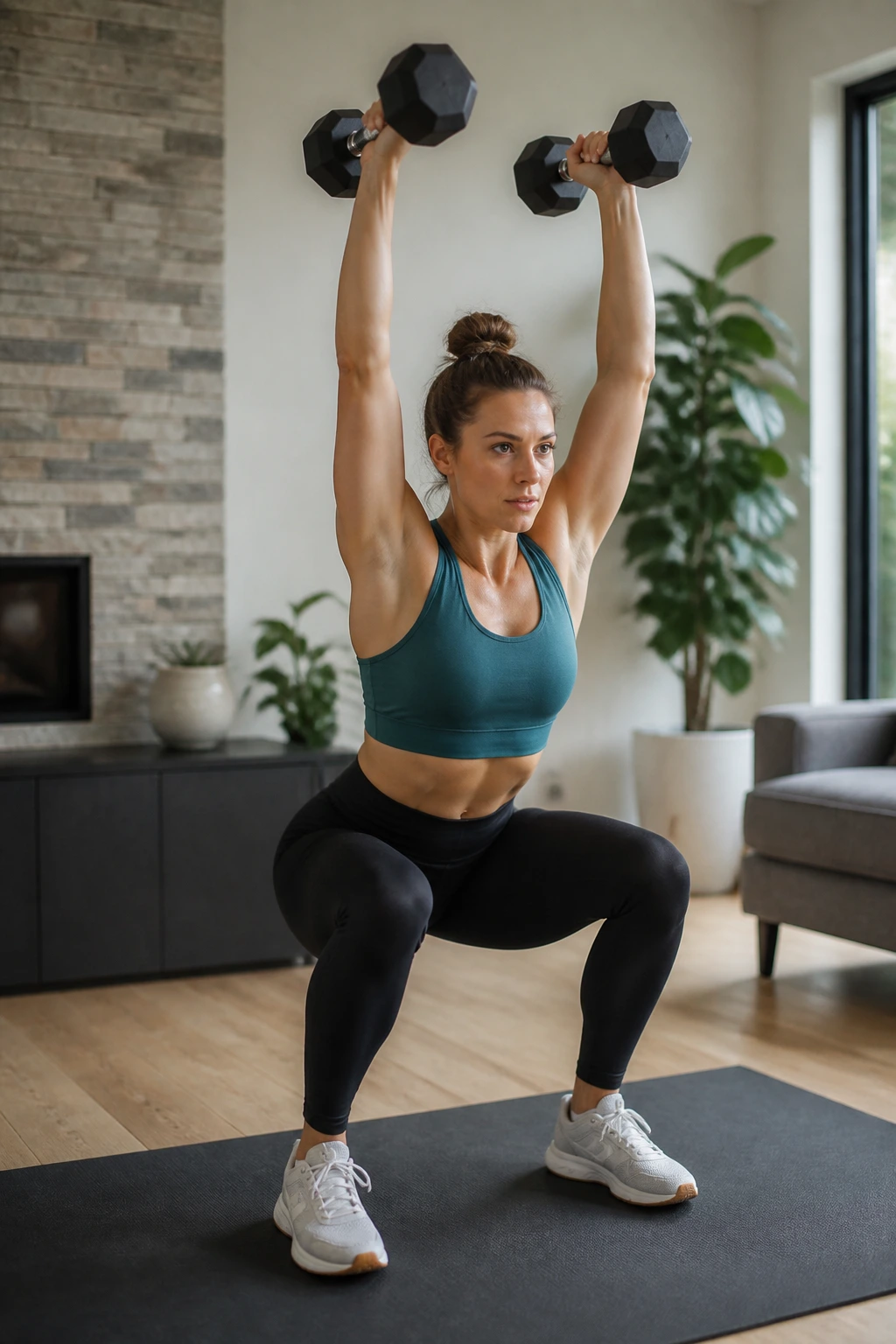
Tabata is tiny on paper and rude in practice. Twenty seconds on, ten seconds off, repeated until your timer starts to feel personal.
Use 4-minute blocks like this:
- 20 seconds squat thrusters, 10 seconds rest, repeat 8 times
- Rest 1 minute
- 20 seconds mountain climbers, 10 seconds rest, repeat 8 times
- Rest 1 minute
- 20 seconds alternating lunges, 10 seconds rest, repeat 8 times
- Rest 1 minute
- 20 seconds push-ups, 10 seconds rest, repeat 8 times
That’s the work. Add a 5-minute warm-up and a 5-minute cool-down, and you land right around 30 minutes.
The trick is not to turn the rest periods into scrolling breaks. They’re short on purpose. Breathe through your nose if you can, shake out your arms, and go again. If your form falls apart by round four, reduce the range of motion or slow the move down. Better to stay tidy than to chase one more sloppy rep.
17. The Backpack Strength Session
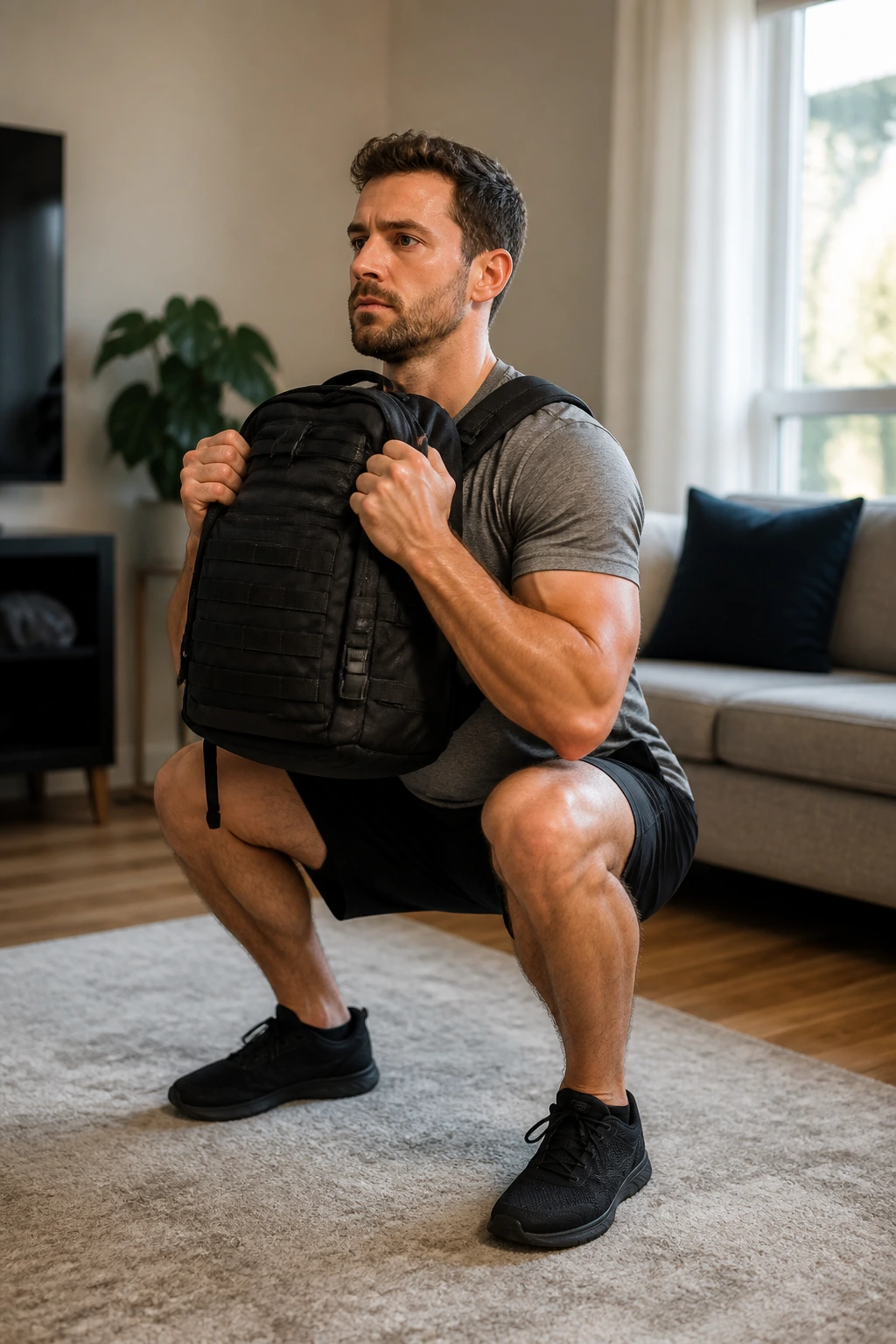
A backpack full of books can save a day when dumbbells aren’t around. Tighten the straps, check the weight, and you’ve got a load that works for squats, hinges, rows, and carries.
Do 4 rounds of:
- Bear-hug backpack squat, 12 reps
- Backpack Romanian deadlift, 12 reps
- Bent-over backpack row, 12 reps
- Backpack overhead press, 10 reps
- March in place with the backpack hugged to your chest, 30 seconds
- Reverse lunge holding the pack, 8 reps per leg
This is one of those workouts that looks homemade because it is. That does not make it weak. A loaded backpack changes your posture fast, and the front-loaded carries make your core brace harder than expected.
I like this format for days when the house has no training tools in sight. It keeps the session honest, and it proves a simple point: if you can load the body in a clean way, you can get a real workout almost anywhere.
18. The Side-to-Side Athletic Circuit
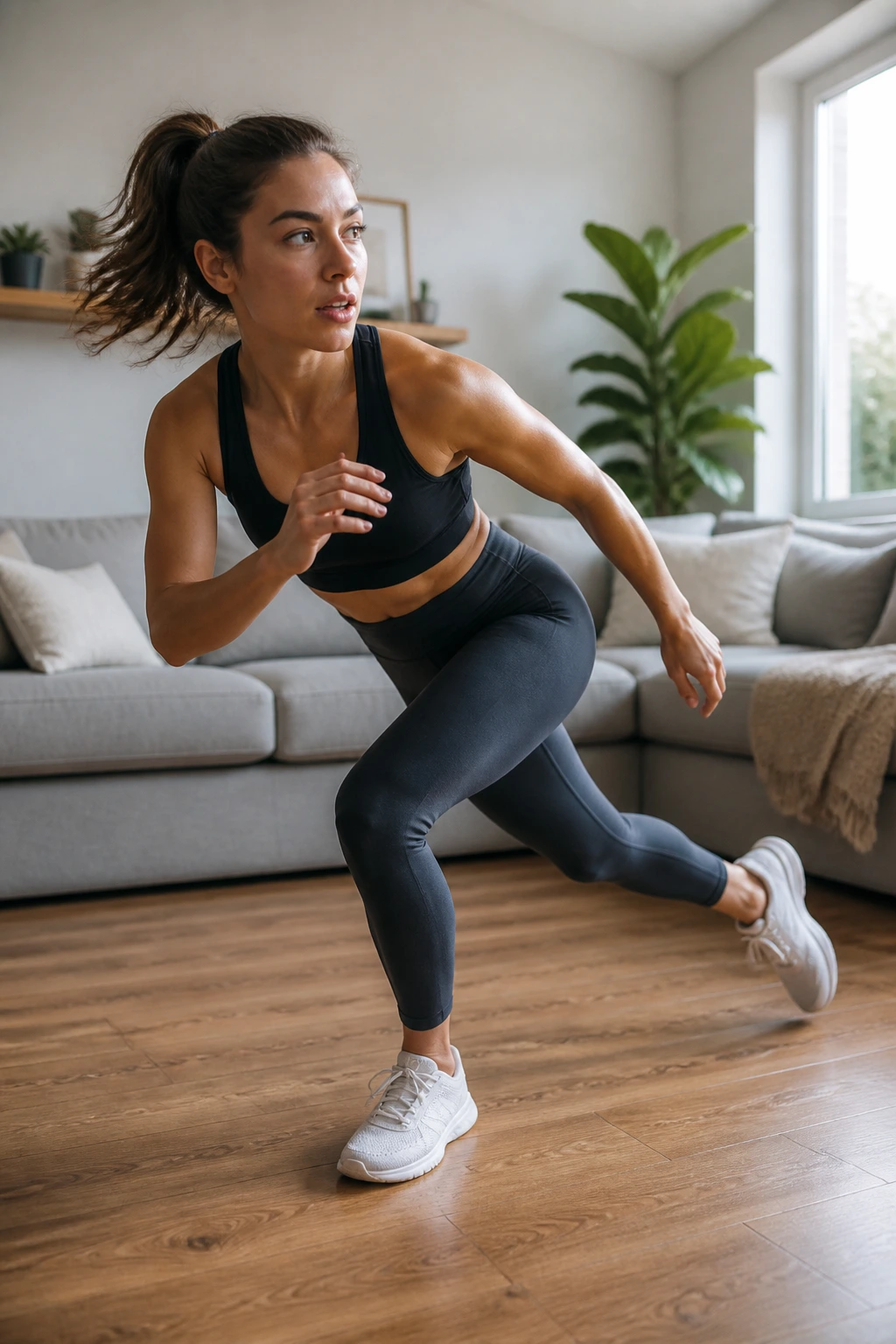
Most home workouts move forward and back. Hips and knees often need side-to-side work too, and this circuit gives it plenty.
Run 3 rounds of:
- Skater step or skater hop, 30 seconds
- Lateral lunge, 10 per side
- Bear crawl forward and back, 20 steps total
- Rotational reach from a split stance, 8 per side
- Curtsy lunge, 10 per side
- Plank shoulder tap, 20 taps
This session asks your body to control force in different directions, which is where a lot of people get clumsy. The lateral lunge should feel like a sit-back into one hip. The bear crawl should stay low and slow. If the room is tight, cut the distances in half and keep the movement clean.
It’s a good one for people who play sports, but it’s not only for athletes. Anyone who sits a lot gets stiff from side-to-side weakness, and this is a tidy way to deal with that.
19. The Dumbbell Floor Hybrid
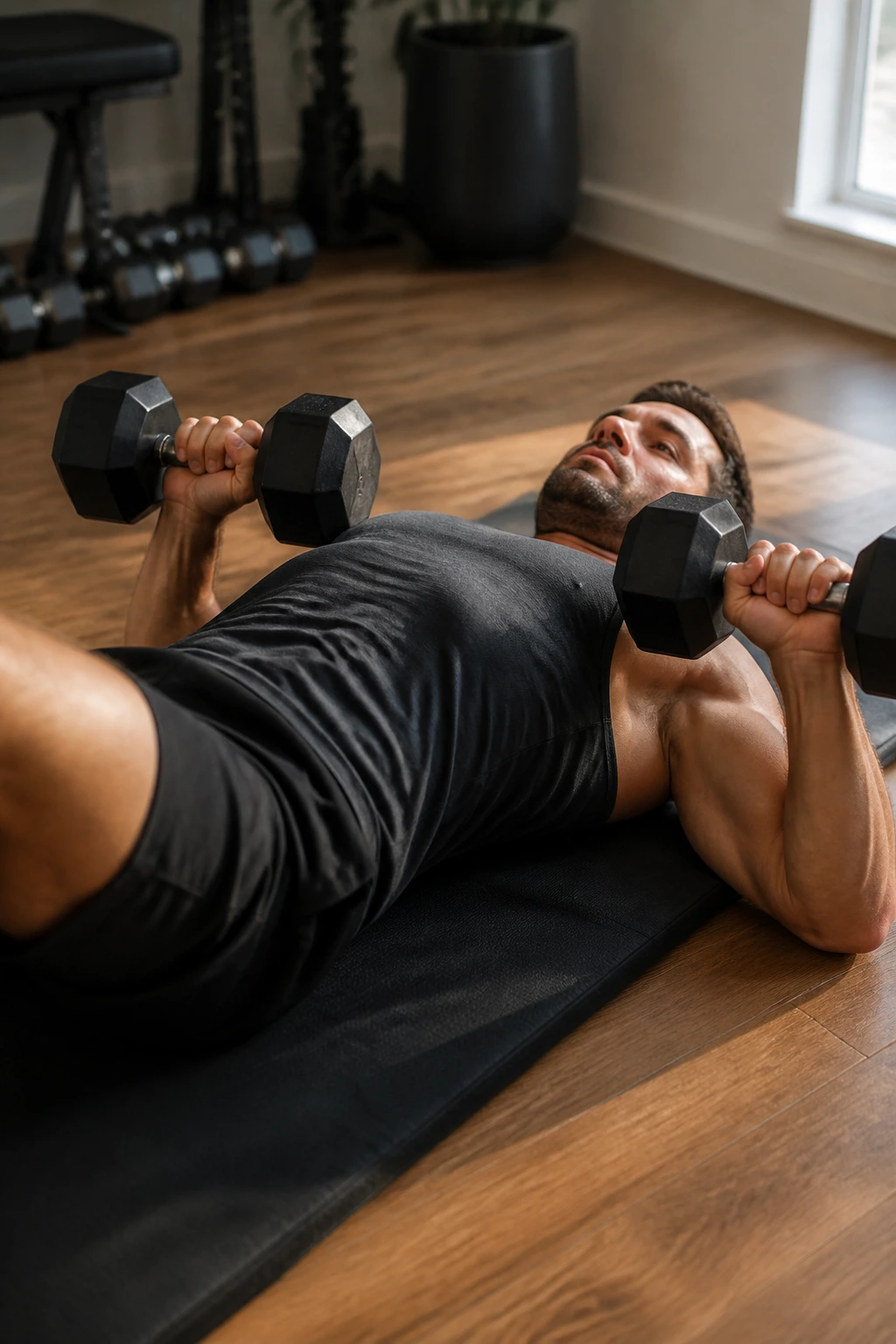
Need a session that feels like lifting, not boot camp? This is the one. It stays grounded, uses simple moves, and still covers the whole body.
The sequence
Do 4 rounds of:
- Dumbbell floor press, 10 reps
- Goblet squat, 12 reps
- One-arm row, 10 reps per side
- Glute bridge with dumbbell across the hips, 15 reps
- Dead bug with light dumbbells or no weight, 8 reps per side
- Dumbbell thruster, 8 reps
Rest 60 seconds between rounds. If you want the session to feel tougher, shorten the rest before you start piling on more weight.
The floor press keeps the shoulders in a friendly range. The row balances that with pulling. The squats and bridges take care of the lower body, and the thruster adds the little burst that pulls the whole thing together. If you’ve ever wanted a home workout that feels close to a compact gym session, this is probably the cleanest version.
20. The 30-Minute Full-Body Reset for Recovery Days
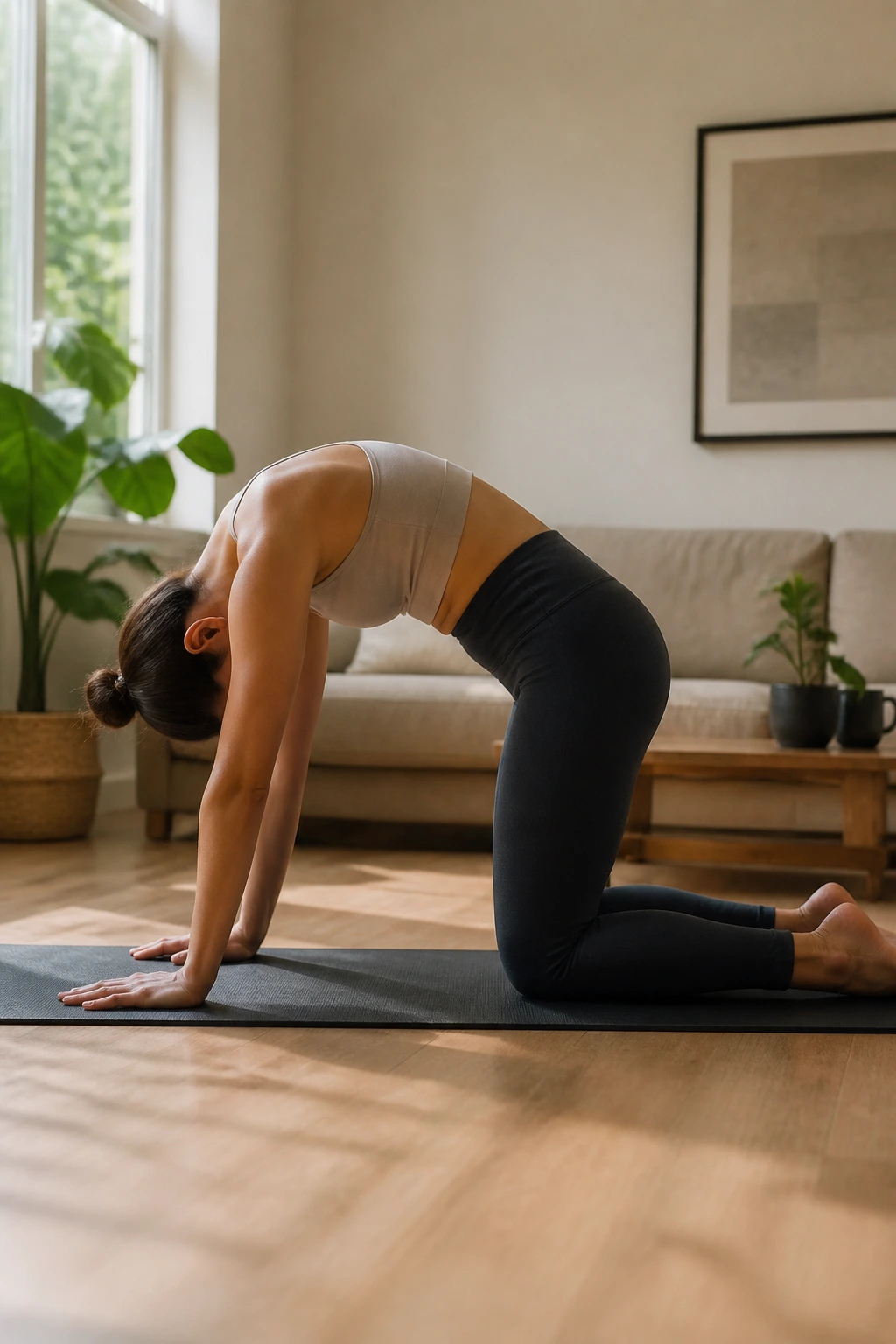
Not every workout needs to leave you wrecked. Some days, the smartest move is to train hard enough to wake the body up, then stop before you dig a hole.
Spend 10 minutes on slow movement, 10 minutes on isometric holds, and 10 minutes on light mobility:
- Cat-cow and thoracic rotations
- Wall sit, 30 to 45 seconds
- Split squat hold, 20 seconds per side
- Forearm plank, 30 seconds
- Glute bridge hold, 30 seconds
- Bird dog hold, 20 seconds per side
- Deep squat breathing or child’s pose
Hold the positions with steady breathing. That means no rushing, no bouncing, no trying to “win” recovery day. If your hips are tight, stay a little longer in the squat. If your back wants more ease, spend an extra round on the cat-cow.
This kind of session is worth keeping around because it helps you stay consistent when energy is low. And consistency beats drama. Most of the time, that’s the real win at home.
