



Functional workouts earn their keep when the room is small, the clock is short, and you still want to train like a human body — not a set of isolated parts. Total body strength lives in movements that make you brace, reach, squat, pull, carry, and rotate without falling apart at the waist or shoulders.
That sounds simple. It isn’t.
A lot of gym work looks busy but never asks the body to coordinate itself under load. Functional training does the opposite. A good goblet squat, a hard carry, a clean, a crawl, or a press done from one side forces your core to work as a bridge between your legs and your upper body. That bridge matters. When it gets stronger, everything else feels a little less shaky.
And the best part? You do not need a circus of equipment. A pair of dumbbells, one kettlebell, a sandbag, a cable machine, or even just your own bodyweight can build serious strength if the movement is honest and the load is chosen with a little nerve. The trick is picking exercises that ask more than one muscle group to show up at once.
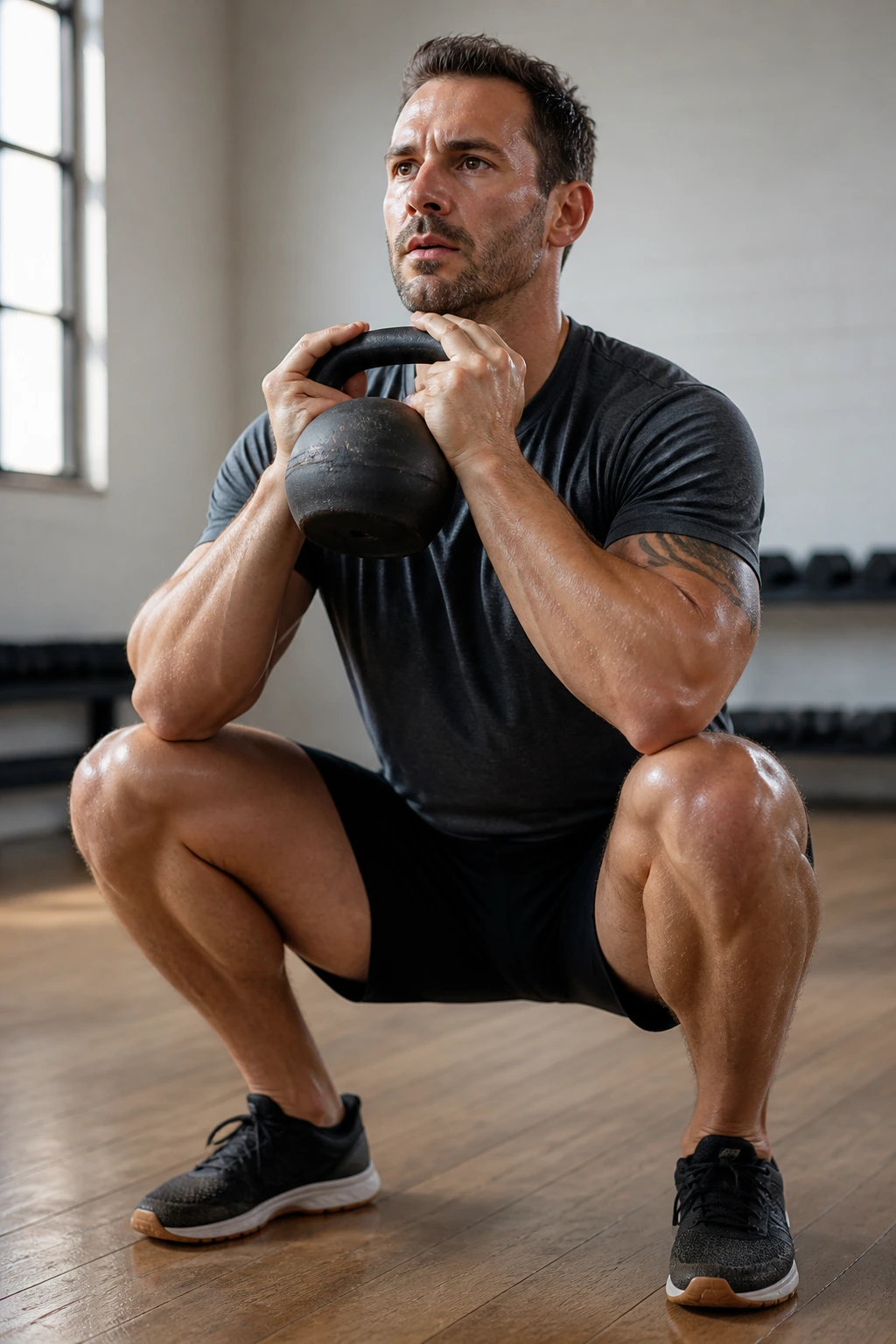
1. Goblet Squat Ladder for Total Body Strength
The goblet squat is one of those lifts that looks almost too plain to respect. Then you load it, hold the weight close to your chest, and realize your legs, midsection, and upper back all have opinions about the matter.
Why It Works So Well
A dumbbell or kettlebell held at the sternum helps you stay upright, which makes the squat easier to learn and harder to cheat. Your elbows naturally stay inside your knees, your chest stays tall, and your torso has to brace instead of folding forward. That makes this a smart first stop for total body strength.
Try a ladder: 5 reps, 4 reps, 3 reps, 2 reps, 1 rep, rest 30 to 45 seconds, then repeat the ladder twice. Or keep it simple and do 4 sets of 8 with a load that makes the last two reps feel slow but clean.
What to Watch For
- Keep the heels flat.
- Let the knees travel forward a bit; that is not a crime.
- Hold the weight tight to the body.
- Stop the descent when your hips start tucking under.
Tip: If your lower back rounds, the bell is too heavy or your stance is too narrow.
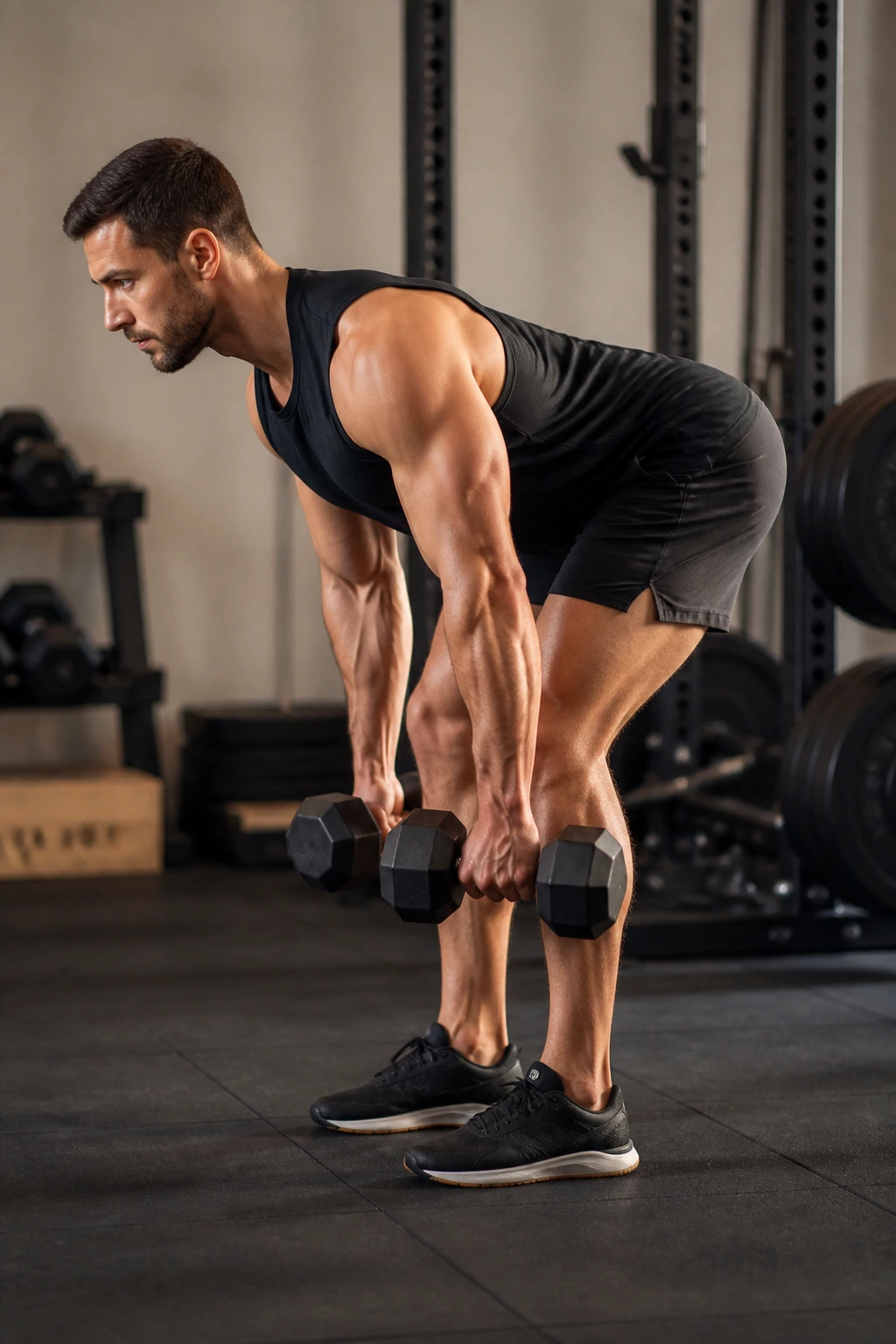
2. Hinge-Row Complex
Can one movement teach your back, glutes, and grip to work together without a machine? Yes — and the hinge-row complex does it in a way that feels old-school in the best possible sense.
A Romanian deadlift paired with a row is sneaky. The hinge loads the hamstrings and glutes. The row teaches the upper back to stay packed while the trunk resists twisting. Put them together and you get a pattern that carries over to lifting groceries, picking up a kid, or dragging a bag off the floor without yanking your spine around.
Use a pair of moderate dumbbells. Hinge for 8 reps, then row for 8 reps, then stand tall and reset. Do 3 to 4 rounds with 60 to 90 seconds of rest. The load should feel honest, not heroic. If your back starts doing the job of your hips, the set is over.
A small detail matters here: keep the dumbbells close to the legs on the way down. When they drift forward, the whole thing turns into a back exercise with bad manners.
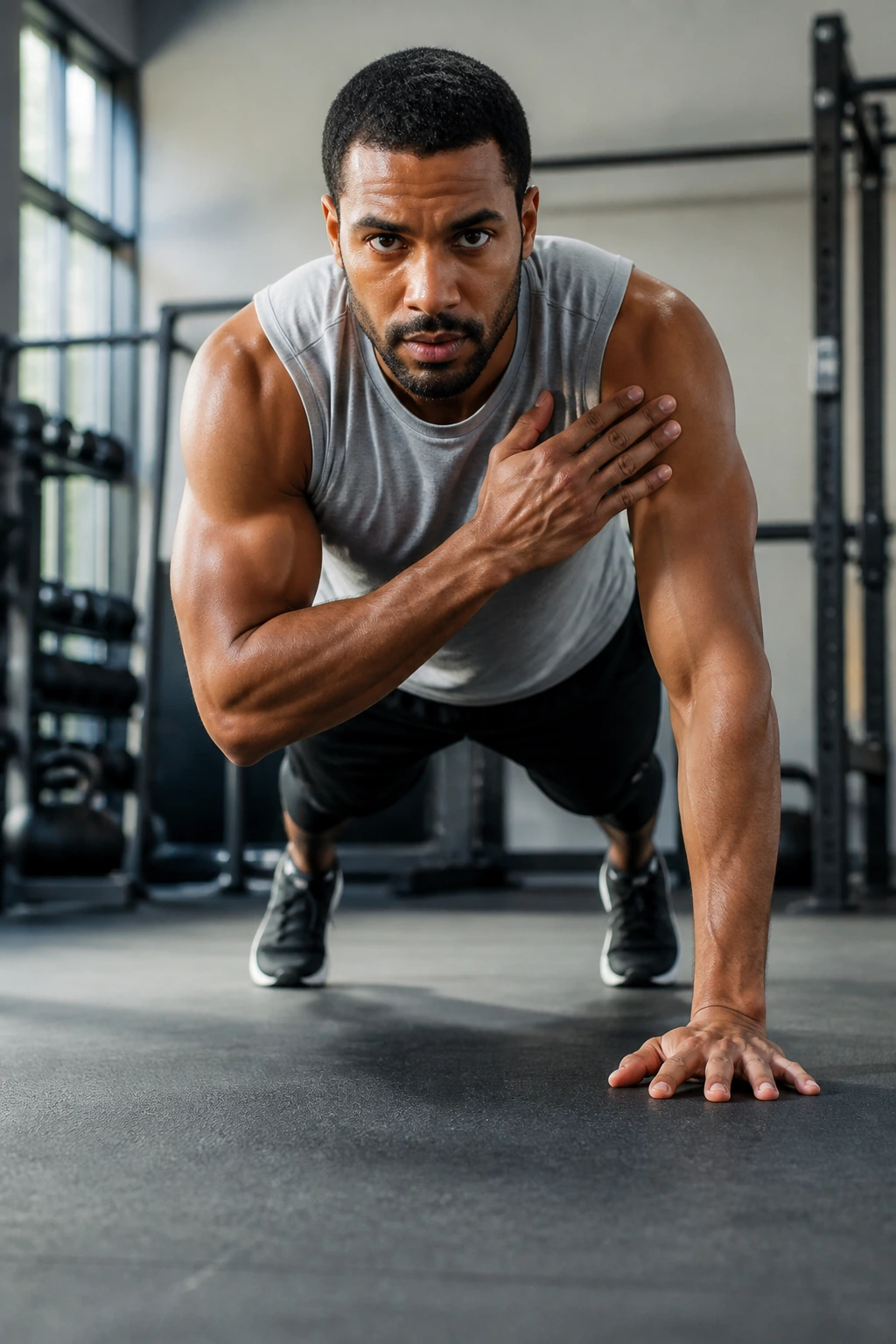
3. Push-Up and Shoulder Tap Circuit
A push-up by itself is good. Add shoulder taps, and suddenly the floor becomes a test of whether your trunk can stay quiet while your arms move.
How to Keep It Clean
This one is best in short bursts. Do 6 to 10 push-ups, then 8 shoulder taps per side, then rest 30 to 45 seconds. Three to five rounds is enough for most people. If your hips swing like a loose gate during the taps, slow down and widen your feet a little.
The appeal is simple: pressing strength is only half the story. Anti-rotation strength — the ability to resist turning — is what makes this useful. That’s the bit most people miss.
Small Form Checks
- Hands under shoulders.
- Neck long, not jammed forward.
- Feet a little wider than hip-width on the taps.
- Exhale as you tap to keep the ribs from flaring.
Don’t rush the taps. The pause at the top is where the work lives.
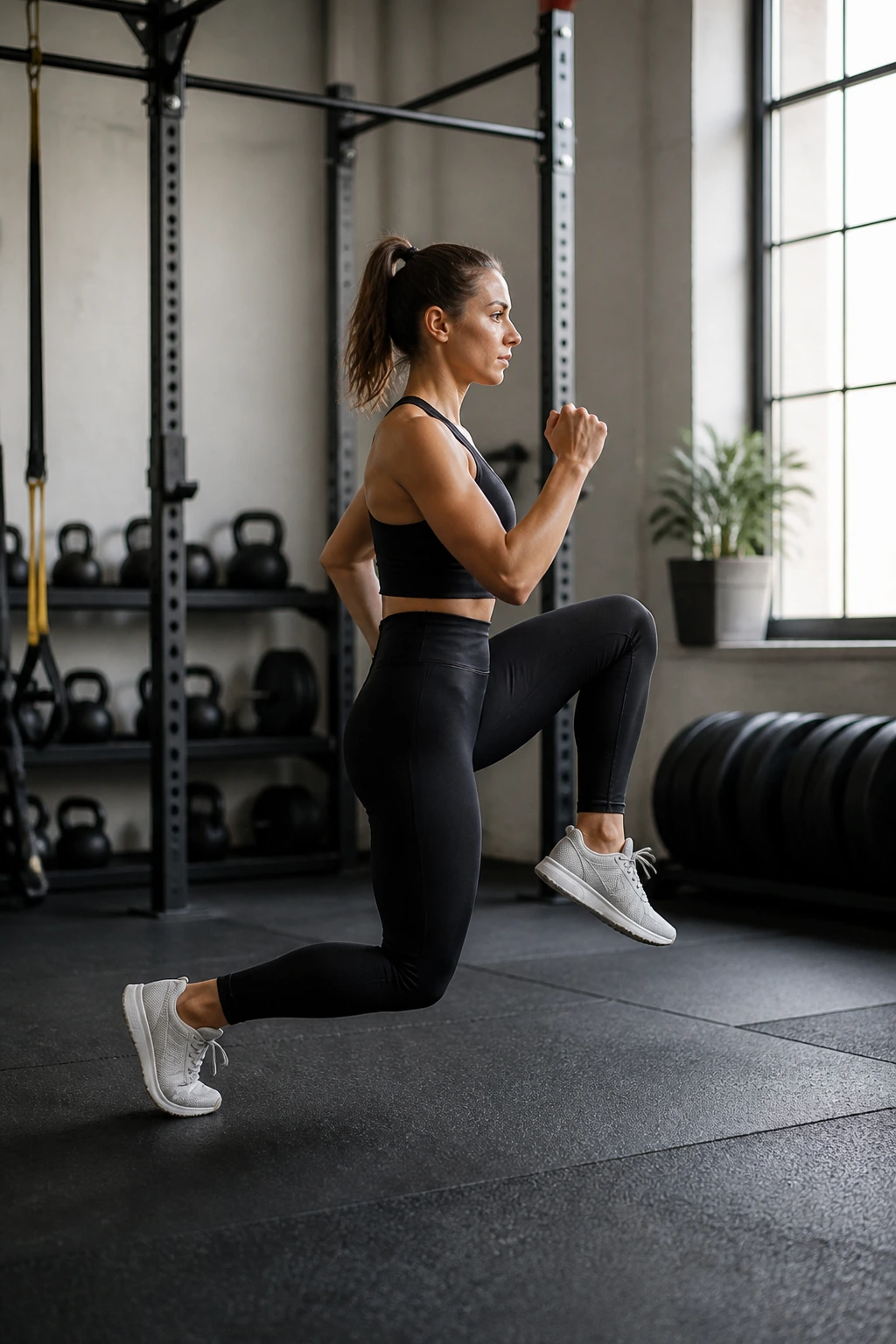
4. Reverse Lunge to Knee Drive
A reverse lunge feels calmer than a forward lunge, which is why I like it more for strength work. You step back, lower under control, and then drive up through the front foot with enough force that the standing leg has to earn its keep.
That knee drive at the top is the useful part. It teaches hip extension, balance, and single-leg control in one move. It also has a nice habit of exposing side-to-side differences. One leg usually feels smoother than the other. That is normal. Annoying, but normal.
Use bodyweight first if your balance is shaky. Then hold one dumbbell at the chest, and later try two at your sides. Aim for 3 sets of 8 reps per leg. Keep the front foot planted like you mean it; the heel should not pop off the floor when you stand.
If your front knee caves inward, shorten the step and slow the descent. The lunge is a strength builder, not a speed contest.
5. Kettlebell Swing Intervals
The kettlebell swing looks explosive because it is explosive. But it is not a shoulder raise. It is a hip snap.
The bell should float because your hips drove it there, not because your arms muscled it up. That distinction matters. A clean swing builds glutes, hamstrings, grip, and midline tension while keeping the reps fast enough to feel athletic. Ten reps done well can light up the backside in a way that slow lifting sometimes misses.
Try 10 swings every 30 seconds for 10 minutes. That gives you 20 rounds, which sounds easy until your grip starts to complain. A lighter bell is better than a heavy one if your back rounds or the bell drifts above shoulder height.
One-sentence truth: the swing is a hinge, not a squat.
If you can’t maintain a crisp snap from the hips, stop the set. Sloppy swings tend to get louder, not better.
6. Farmer’s Carry Blocks
Nothing fancy here. Two heavy weights, one sturdy walk, and a core that has to keep the whole thing from wobbling apart.
Farmer’s carries are the cleanest proof that functional training still respects gravity. Your grip gets taxed first. Then your sides, upper back, and breathing pattern get involved. Walk too fast and your posture falls apart. Walk too slow and the carry turns into a sleepy stroll. Find the middle.
Use dumbbells, kettlebells, trap-bar handles, or two heavy bags if that is what you have. Walk for 20 to 40 meters, turn around under control, and repeat for 4 to 6 rounds. The load should make your forearms feel full and your ribs stay tucked. If you’re leaning hard to one side, the weight is lopsided or too heavy.
Quick Cues
- Stand tall before you move.
- Keep your chin level.
- Let your arms hang.
- Don’t shrug.
A carry looks boring on paper. In person, it’s one of the best strength tests around.
7. Dumbbell Thruster Sets
A thruster is a squat and a press welded together, which is exactly why it gets people’s attention. Your legs drive the weight up, and your shoulders finish the job without a long pause in between.
How to Program It
Do 4 sets of 6 to 10 reps with a pair of dumbbells in the front-rack position. The squat should be deep enough that your thighs at least reach parallel, but not so deep that your chest folds and the press turns messy. Use enough load to make the last two reps honest.
The beauty of the thruster is that it punishes laziness. If you skip the squat, the press gets harder. If you rush the press, the squat loses shape. The lift demands timing, which is one reason it works so well for functional workouts.
A Better Cue Than “Explode”
Think “stand fast, press smooth.” That keeps the movement sharp without turning it into a fling.
8. Renegade Row and Plank Hold
What happens when you try to row without letting your body twist? You find out fast.
The renegade row starts as a plank and turns into a test of spine control. One hand stays on the floor, the other pulls a dumbbell to the rib cage, and the whole torso wants to rotate. That’s the point. You are training your core to resist movement while the shoulders work through a pull.
Keep the weights light at first. A lot of people make this harder than it needs to be and then spend the set rocking from hip to hip. Place the feet a little wider than usual, row one side for 5 reps, hold the top plank for 15 to 20 seconds, then switch. Three rounds is enough if you keep the body tight.
If the lower back sags, elevate the hands on a bench and shorten the lever. There is no prize for doing this from the floor on day one.
9. Bear Crawl Shuttle
Bear crawls are ugly in the best way. Knees hover an inch or two off the floor, hands press hard, and your whole trunk has to stay honest while your limbs move in opposite directions.
I like them because they strip away excuses. There’s no momentum to hide behind. If the hips shoot up, you feel it. If the shoulders are weak, you feel that too. A 10-meter crawl forward and 10 meters back sounds harmless until your shoulders start warming up and your breathing gets choppy.
How to Use It
- Crawl for 10 to 20 meters.
- Rest 30 to 60 seconds.
- Repeat for 4 to 6 rounds.
- Keep the knees low and the steps small.
A neat detail: the crawl works better when the hands land under control instead of slapping the floor. Quiet hands usually mean better body tension.
10. Weighted Step-Up Series
Step-ups are a gift to people who want single-leg strength without beating up the knees. The box or bench gives you a clear target, and the standing leg does the real work.
Pick a height that puts your working thigh around parallel to the floor, maybe a little below. Hold dumbbells at your sides or a single kettlebell at the chest. Drive through the whole foot on top, not just the toes, and stand tall before stepping down. That top pause matters. It keeps the movement from turning into a bounce.
Do 3 to 4 sets of 8 reps per leg. If one side feels noticeably weaker, start there and match the other side to it. Don’t chase speed. Chase clean reps and a steady torso.
A one-foot-on-the-box movement can tell you more about your balance than three minutes on a wobble board.
11. Turkish Get-Up Practice
The Turkish get-up is the movement people think is about the shoulder. It isn’t. It’s about the shoulder, the core, the hips, the eyes, and the patience to move from the floor to standing without losing your shape.
Take it slow. One rep can take a full minute if you do it well. Start with a shoe balanced on your fist if you’re learning the pattern. Later, use a light kettlebell or dumbbell. The goal is smooth transitions, not drama. Each part — elbow, hand, bridge, sweep, kneel, stand — has to hold together.
Why I Keep It in Strength Plans
Unlike a lot of flashy lifts, the get-up teaches you how to organize force in awkward positions. That matters when real life gets awkward, which it tends to do.
A Simple Practice Format
- 1 rep per side
- Rest 30 to 60 seconds
- Repeat for 3 to 5 rounds
If your shoulder feels pinched, shorten the lever and lighten the load. No heroics needed here.
12. Sandbag Clean to Front Squat
Sandbags are messy. That’s why I like them.
A sandbag never sits perfectly in your hands, so your forearms, trunk, and upper back have to make peace with instability. Clean it from the floor or a dead-stop lap position, then hold it in the bear-hug position and squat. The front-loaded position forces you upright in a way that feels very different from a barbell back squat.
What Makes It Different
The bag shifts a little every time you breathe. That is the entire point. It asks for grip, bracing, and control under awkward load — the kind of thing a clean gym machine never teaches.
Use 5 cleans followed by 5 front squats for 4 rounds. Rest about 90 seconds between rounds. If the clean is clumsy, skip the floor pick and start from the lap. That version is less glamorous and far more useful than forcing a sloppy lift.
A good sandbag rep sounds heavy and dull. Not sharp. Not bouncy. Just controlled.
13. Single-Arm Press and March
Can a shoulder press be a core exercise? Absolutely, if you remove the second hand and make the body stabilize itself while you move.
Press one dumbbell or kettlebell overhead, lock it out, and march in place for 20 to 30 steps before switching sides. The standing leg, glute, and side body all work to stop you from tipping. That’s the hidden work. The shoulder still matters, but it stops being the whole story.
Keep the rib cage down as you press. If the lower back arches, the load is too much or you’re pressing before you’ve braced. Three rounds of 6 presses per side is enough for most people. Add the march only after the lockout feels steady.
Tip: Try this barefoot on a flat floor once. You’ll notice balance mistakes much faster.
14. Sled Push Sprints
A sled push is almost unfair in how straightforward it feels. Lean in, drive your legs, and move the load. No eccentric lowering, no tricky setup, no fancy grip.
That simplicity is why it belongs here. The sled hits the quads, glutes, calves, and lungs at the same time, and it lets you work hard without the same muscle soreness you’d get from heavy squats. It’s a useful choice when you want power and conditioning without turning the session into a recovery problem.
Push for 15 to 25 meters, rest long enough to breathe normally, then go again. Six to ten repeats is plenty. The torso should stay slightly forward with a strong midsection, not broken at the waist.
No sled? A steep hill works. So does a heavy prowler if your gym has one. The point is the drive, not the brand of metal.
15. Medicine Ball Slam Ladder
The medicine ball slam is one of the few drills that lets you be loud on purpose. Nice change.
Why It Beats Random Cardio
A slam is a full-body power move. You raise the ball, brace hard, and throw it down with enough intent that your abs, lats, and hips all fire at once. There is no grinding through a tired middle rep the way there is with some strength work. The finish is blunt. Clean. Satisfying.
Try a ladder of 10, 9, 8, 7, 6 slams with 20 to 30 seconds of rest between rounds. Or keep it simple and do 3 sets of 12. Use a ball that lets you move fast without losing shape; too heavy and the slam turns into a slow heave.
Good Slams Sound Like This
- Strong overhead reach
- Hard brace before the throw
- Ball crashes straight down
- Hips and ribs reset before the next rep
If the ball barely leaves your hands, it’s not a slam yet. It’s a sigh.
16. TRX Row and Split-Stance Hold
A suspension trainer can look easy until your feet slide a few inches and the row starts feeling weird in all the right places.
The TRX row gives you a pull pattern with a built-in core demand. Move into a split stance, row the handles to your ribs, and hold the body still while the arms do the work. The split stance matters because it keeps the lower body awake instead of letting you lean back like a porch swing.
Do 10 rows, then hold the top row for 10 seconds, then lower slowly. Three to four rounds works well. Step closer to the anchor point if you want it harder; step back if your shoulders shrug or your low back takes over.
This is a good option when a barbell row feels too fixed and you want the upper back to work in a more athletic position.
17. Landmine Press and Reach
Why do landmine presses feel friendlier than straight overhead presses? Because the path of the bar is angled, which is often kinder to the shoulders and easier to control.
One hand pushes the bar forward and up while the body stays in a half-kneeling or split stance. Then, at the top, reach a little farther through the shoulder blade without losing your ribs. That extra reach turns the movement into more than a press; it becomes a lesson in control from the floor up.
Use 3 sets of 8 reps per side. If half-kneeling feels unstable, keep the back knee down and squeeze the glute on that side. The front foot should stay rooted. If the lower back arches, the load is too much or the reach is too aggressive.
A landmine press is one of those lifts that looks modest and feels sharper than expected.
18. Cable Chop and Lift Superset
A cable station can be a gold mine if you stop thinking of it as a machine for one muscle at a time.
How to Use Rotation Without Wrecking Your Back
The chop and lift pattern teaches the trunk to rotate under control, then stop rotating when it should. That’s the useful part. You’re not tossing weight around. You’re guiding force from shoulder to hip, or from hip to shoulder, with the ribs stacked and the pelvis steady.
Do 10 chops per side, then 10 lifts per side, for 3 rounds. Keep the arms long and let the torso move a little, but not enough that the lower back feels like it’s doing all the work. Light to moderate resistance is enough. If the cable jerks you off balance, back off.
Form Notes
- Hips and feet stay planted.
- Exhale as you pull.
- Control the return.
- Finish each rep with a pause.
The goal is rotation you can own, not spin.
19. Crawl-to-Stand Flow
Some drills are exercises. This one feels like a skill.
Start on the floor, crawl forward a few steps, shift into a squat, place one hand down, and stand back up without rushing the transitions. Then reverse it. The floor-to-stand pattern is useful because life does not always hand you perfect posture and a clean grip. Sometimes you’re just getting up, and it helps if that can happen without wobbling.
Use a 2- to 3-minute continuous flow, rest a minute, and repeat for 3 rounds. You can make it harder by holding a light kettlebell in the goblet position or by moving a little slower so every transition has to be controlled.
This one is humbling in a quiet way. The movement is simple. The coordination is not.
20. Full-Body Carry Circuit for Total Body Strength
This is the kind of finisher I keep coming back to because it leaves no place to hide. Carry one thing in one position, then change position, then change again. Your grip, breathing, posture, and legs all take a turn.
Run 4 stations for 30 seconds each: suitcase carry, front-rack carry, overhead carry, and march in place with a load held at the chest. Rest 30 to 45 seconds between stations, then repeat the full circuit 3 times. Pick loads that let you stay tall and smooth. If the overhead piece makes you arch, lighten it before you chase more weight.
A good circuit like this should leave your forearms full, your ribs tight, and your walk a little more deliberate when you’re done. That’s the point. Strength that travels is never just about the prime mover. It’s about the parts that keep the prime mover from leaking force all over the floor.
If you only have time for one functional session, build it around carries, squats, one push, one pull, and one crawl. Keep the rest short. Keep the form honest. The body likes clear jobs, and it remembers them well.
