



The first time I stepped into a barre studio, I thought it was just ballet-lite—until I hit the twenty-minute mark. My legs were shaking so violently I was certain I’d tip over. That is the reality of this practice. It is not about how much weight you lift or how fast you run; it is about the sheer intensity of holding a position that seems simple but slowly dismantles your comfort zone. You are not just moving; you are isolating muscles, holding them under tension, and forcing them to work harder than they do in any other form of exercise.
Most people underestimate barre because the movements look small. They see the tiny pulses, the subtle shifts in alignment, and they assume it must be easy. They are wrong. When you sustain a high-relevé plié, you are essentially training your muscles for endurance and precision. The burn you feel—that deep, shaking sensation in your quads or glutes—is the result of isometric contraction, a method that is incredibly effective for toning without the bulk that heavy weightlifting can sometimes produce.
If you are looking to build strength, improve your posture, or simply find a routine that you can actually stick to, you have to get specific. A generic workout plan usually leads to boredom or injury. You need variety, you need intention, and you need to know exactly why you are doing a specific set of movements. Below are twenty-five targeted approaches, each designed to address a different aspect of your fitness, from core stability to cardio endurance. Pick the one that suits your mood and get to work.
1. Classic Isometric Holds
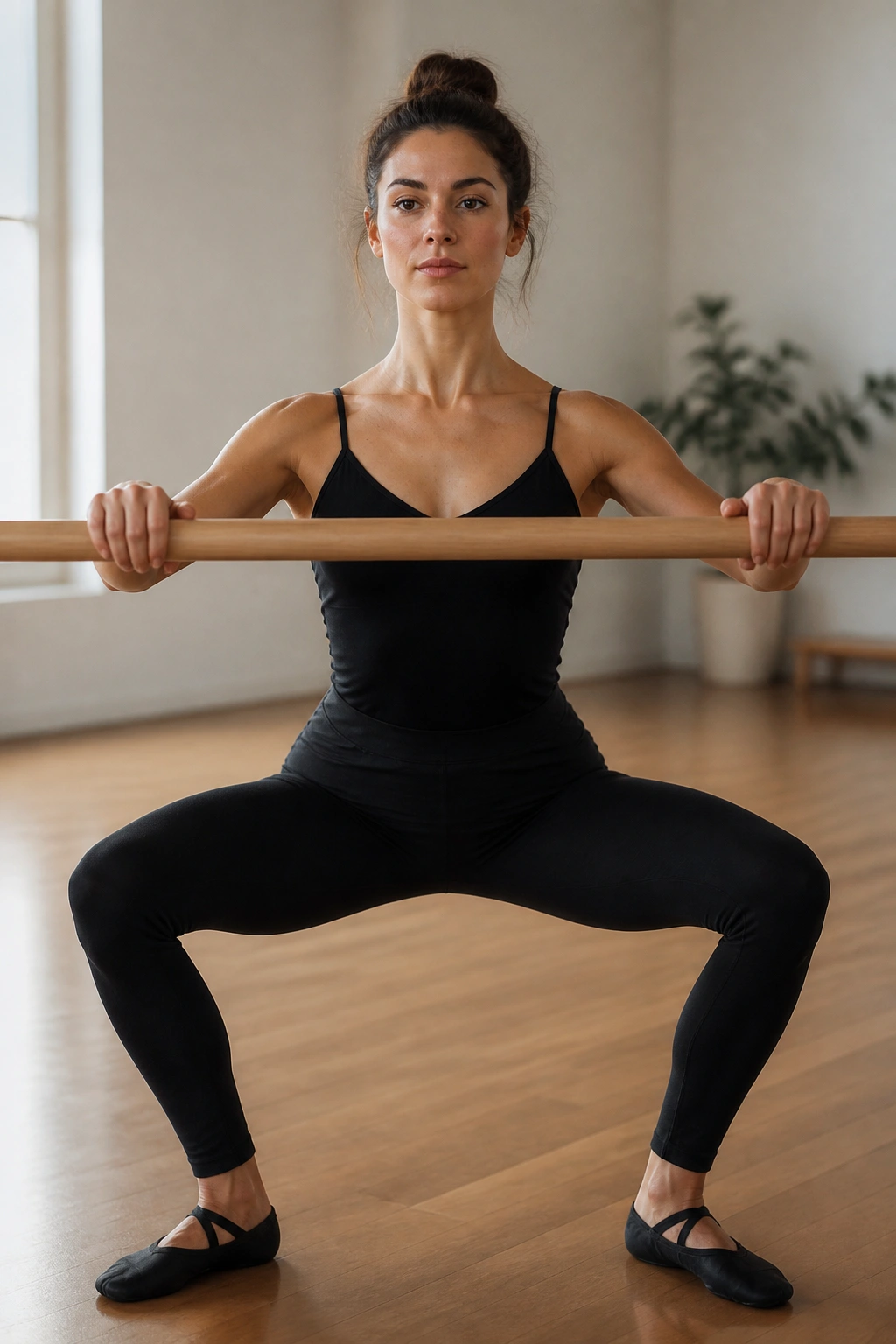
This is the bread and butter of traditional barre. It is deceptively simple: you hold a challenging position, like a wide second-position plié, and sustain it for as long as possible. The goal is to maximize the time under tension. When you stop moving, your muscles have to stabilize the load, which recruits deep muscle fibers that often get ignored in high-impact training.
Why It Works for Endurance
Holding a static pose requires immense mental focus. Your brain will tell you to quit long before your muscles actually give out. By pushing past that initial urge to shake or stand up, you build mental toughness.
How to Execute the Hold
- Start in a second position: feet wider than shoulder-width, toes turned out.
- Drop your hips until your thighs are parallel to the floor—or as close as you can get.
- Keep your pelvis tucked under slightly to protect your lower back.
- Hold for 60 seconds, then pulse for 30 seconds. Pro tip: Focus on your breath. If you hold your breath, your muscles will tense up and fatigue faster. Breathe deeply to stay in the zone.
2. Cardio-Barre Burner
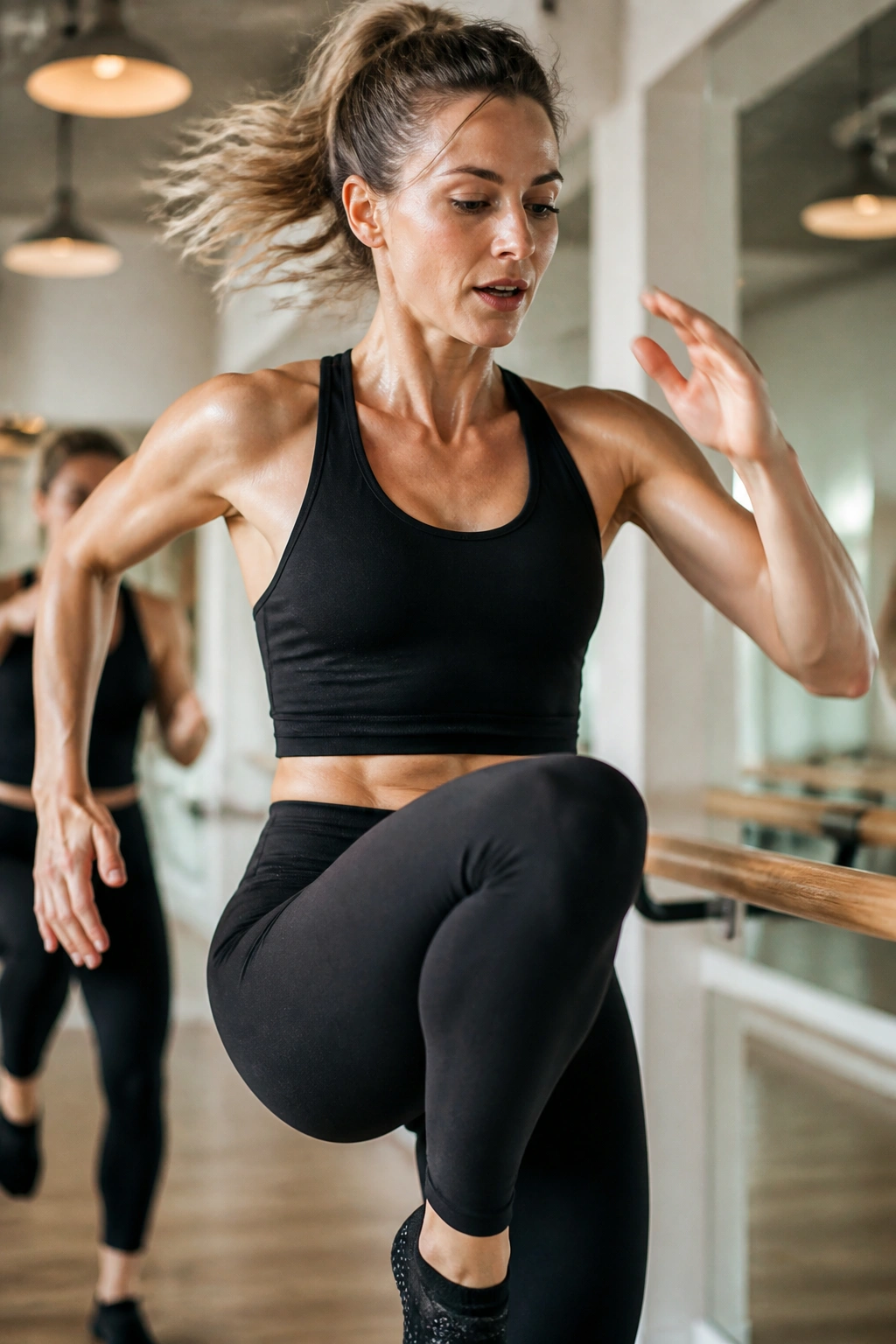
The claim: You can absolutely get a sweat-inducing, heart-pumping workout at the barre without running a single mile. This approach strips away the slow, controlled movements and swaps them for tempo and repetition. By keeping your heart rate elevated, you turn your toning session into a metabolic conditioning workout. It is fast, it is sweaty, and it requires zero equipment.
The secret is the transition. You move quickly from standing knee lifts to high-knees, then immediately into side-to-side lunges, all while maintaining the core-engaged posture that barre requires. You are not just working your legs; you are forcing your cardiovascular system to keep up with the muscular demand. It is the perfect plan for when you have twenty minutes and need to feel completely drained afterward.
This is not the time for perfect, slow alignment. It is the time for intensity. Keep your core tight, swing your arms to maintain momentum, and do not let your posture collapse as you get tired. If you find yourself holding your breath, slow the tempo by five percent, but keep moving.
3. Lower Body Sculpting
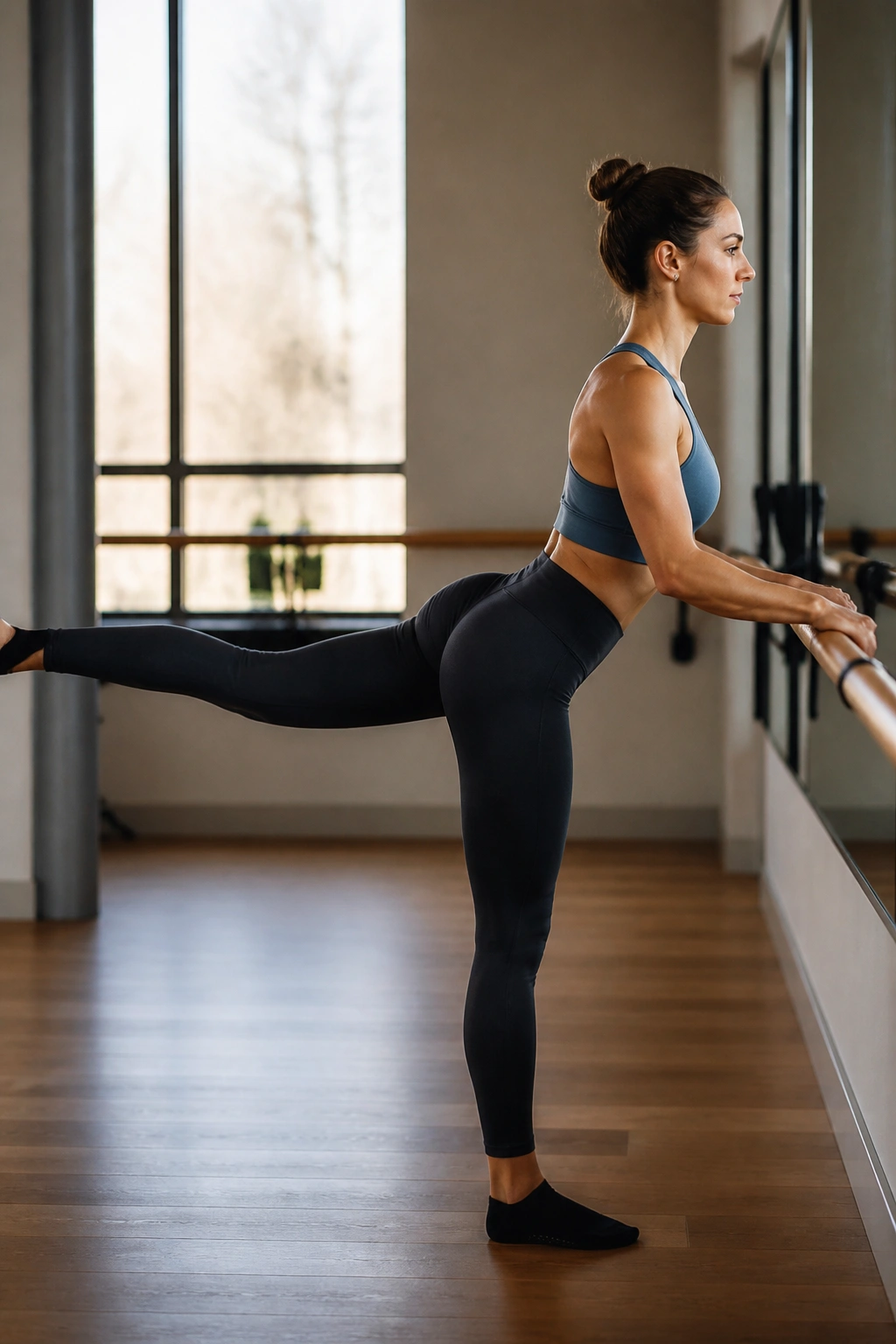
Why do so many people struggle to see definition in their glutes? Usually, it is because the hamstrings and lower back take over during compound movements. Barre excels here because it effectively “turns off” the big, dominant muscles to isolate the smaller ones.
The Mechanism of Isolation
When you perform a standing glute kickback, the goal is to prevent your lower back from arching. By hinging forward slightly and keeping the standing leg soft, you force the gluteus medius and maximus to do the lifting.
Essential Movements
- Standing kickbacks: Lift the leg straight back, squeezing the glute at the top.
- Plié pulses: Drop into a squat and pulse at the lowest point.
- Side-lying leg lifts: These target the hip abductors, which are crucial for pelvic stability. Pro tip: Imagine you are squeezing a penny between your cheeks with every single repetition. That visualization changes everything.
4. Core and Abdominal Focus
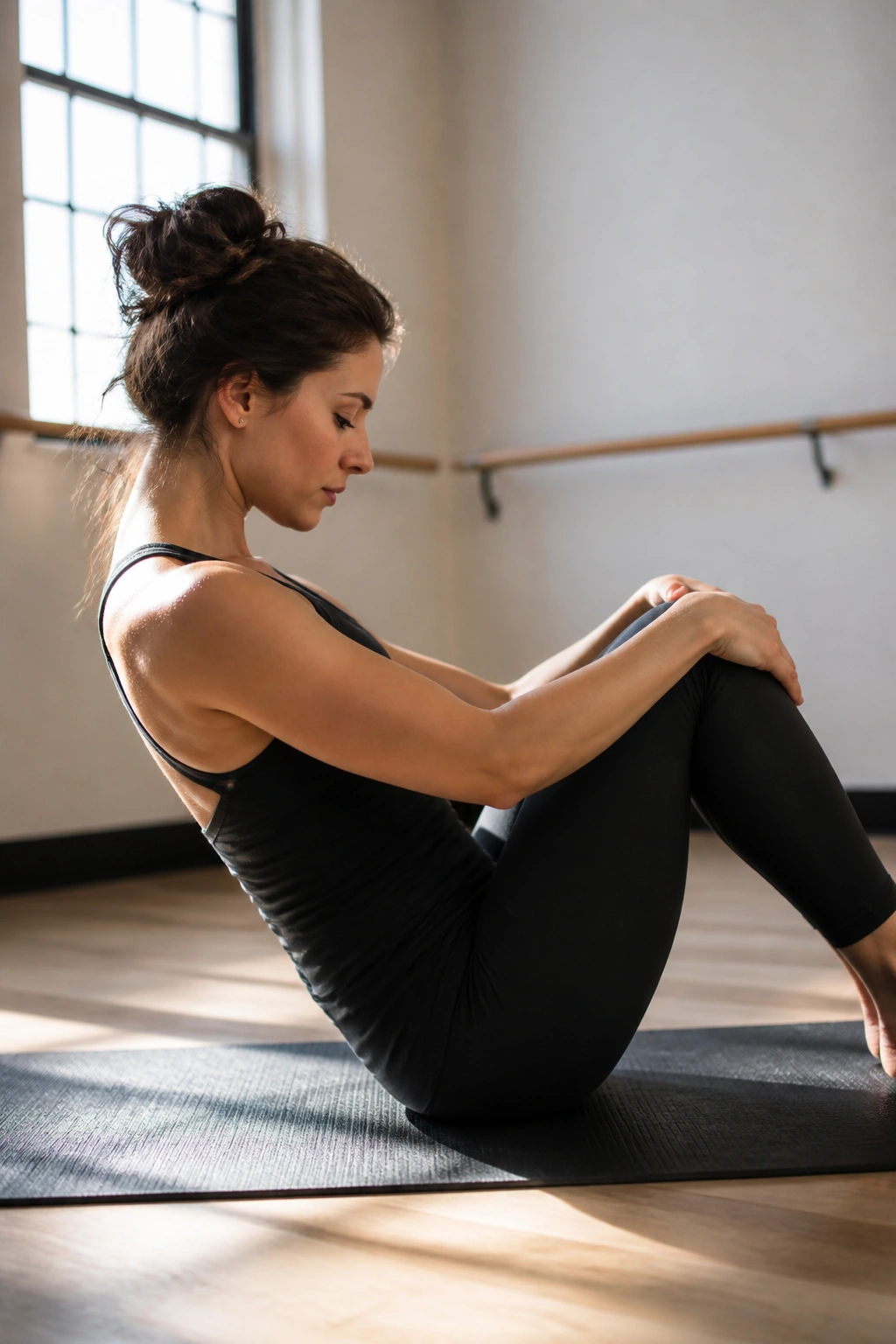
A strong core is the foundation of every movement you make at the barre. While many people think core work means crunches, barre takes a different approach. It uses the entire abdominal wall, specifically targeting the deep transverse abdominis—the muscle that acts like a corset for your spine.
You rarely see standard crunches in a barre class. Instead, you see movements that challenge your stability. Think of C-curving your spine while sitting on the floor, or holding a plank while tapping your toes out to the side. These movements force your abs to stabilize you against gravity.
The goal here is not to “feel the burn” in your neck or shoulders. If you feel it in your neck, you are likely pulling on your head. Keep your gaze toward your belly button, keep your shoulders down, and visualize your ribcage knitting together. This is internal work that is often harder than it looks.
5. Upper Body Toning
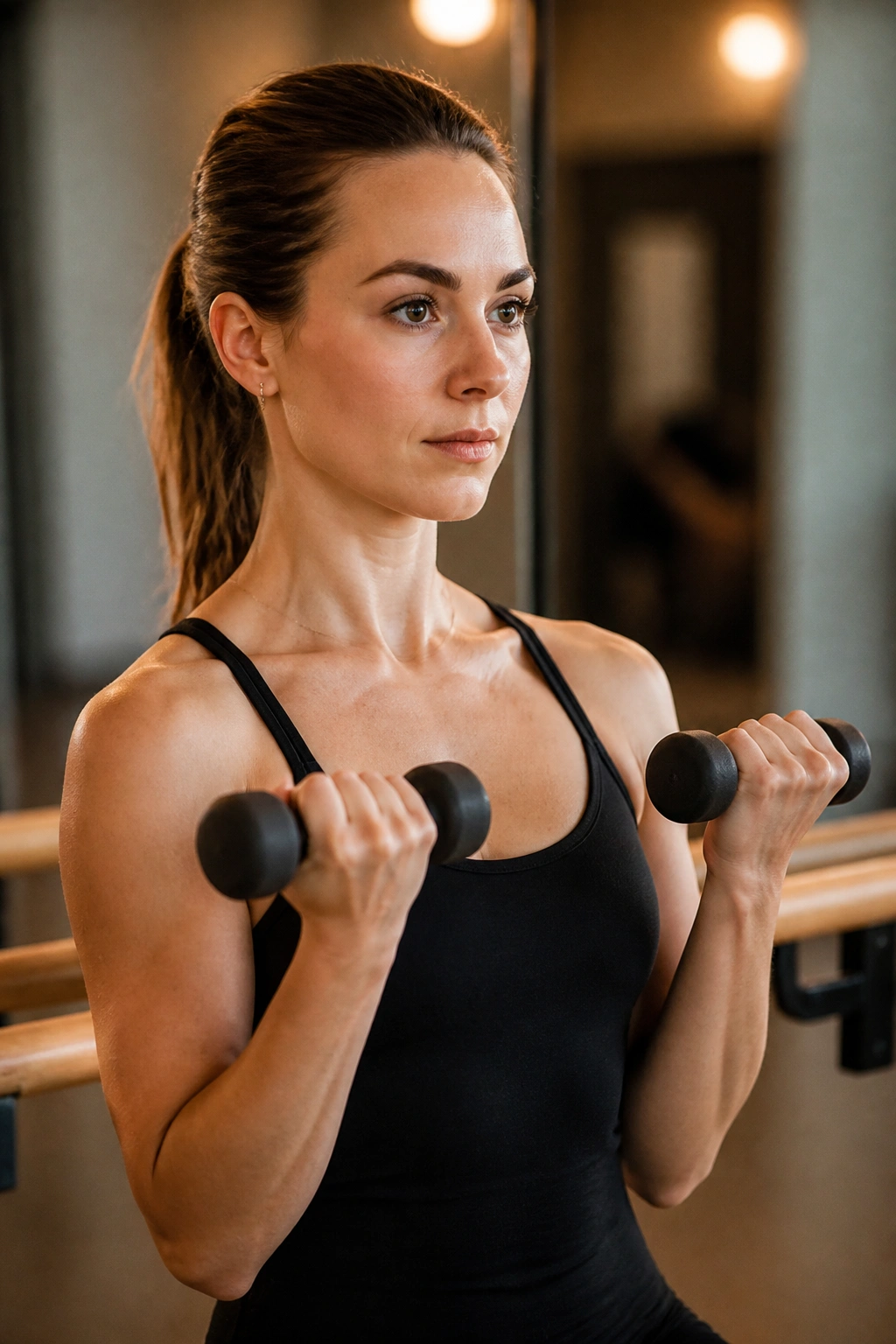
People often treat arm work as an afterthought, but your shoulders, back, and triceps are the primary muscles that dictate your posture. A strong upper back pulls your shoulders back, correcting the “computer slouch” that many of us deal with daily. Barre uses light weights—usually two or three pounds—to fatigue the smaller muscle groups.
The magic is in the pulse. You aren’t doing big, swinging motions. You are making micro-movements, inches at a time, to isolate the deltoids. You will do hundreds of repetitions. By the time you reach the end, your arms will feel like lead.
This plan focuses on high-rep endurance. You will do rows, presses, and small circles. Do not drop your arms, no matter how much they burn. The moment you lower your arms, the tension releases, and the muscle stops working. Fight through the fatigue.
6. Beginner-Friendly Floor Barre
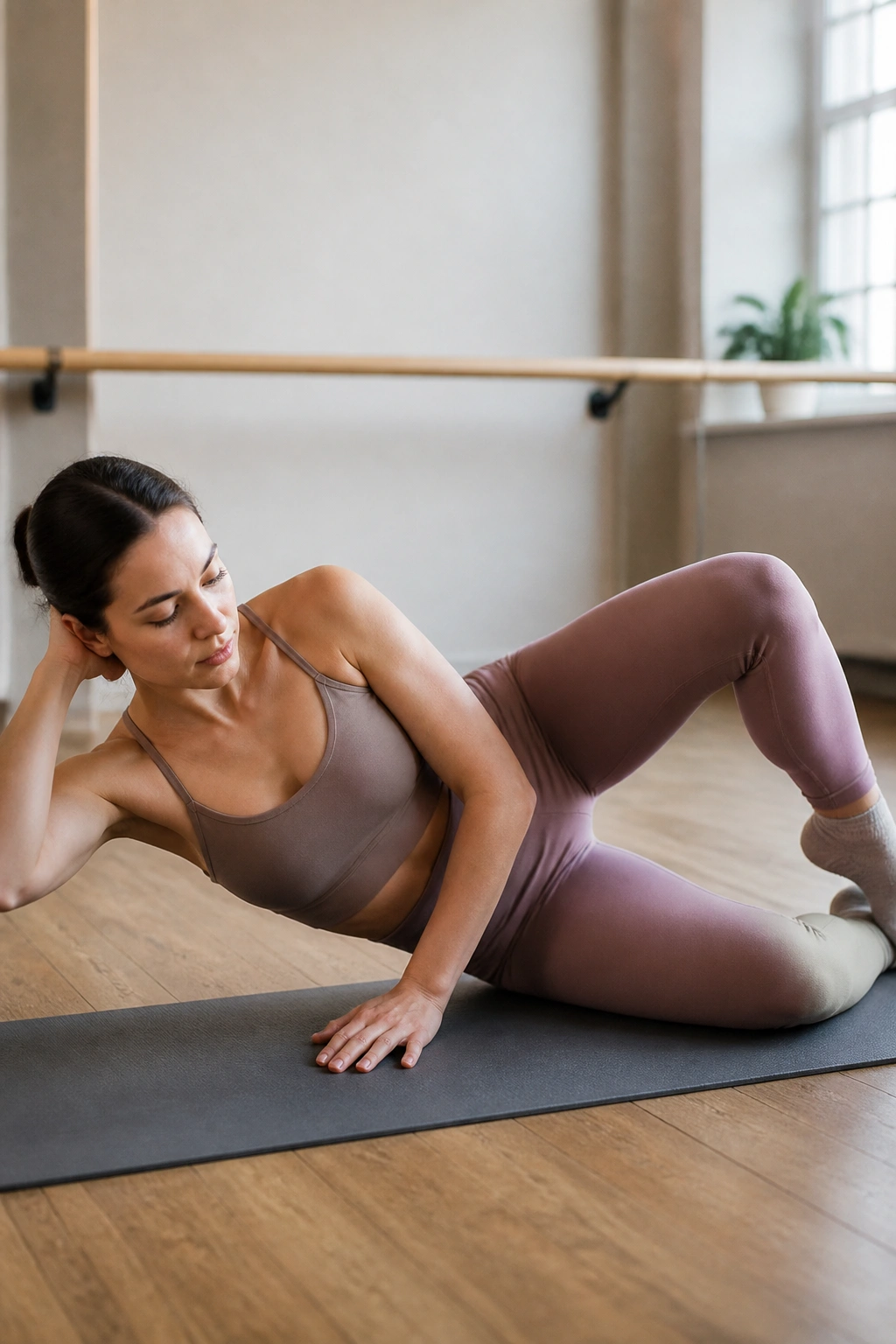
Floor barre is often misunderstood as being “easier.” In reality, it removes the complexity of balance, allowing you to focus entirely on your form. This is where you learn to articulate your feet, engage your pelvic floor, and understand the mechanics of turnout without falling over.
Why Start on the Floor
Gravity works differently when you are lying down. You can feel exactly which muscles are firing because your spine is fully supported by the mat. This feedback loop is essential for learning proper engagement.
Key Floor Exercises
- Clamshells: Great for outer hip activation.
- Supine leg circles: Develops control in the hip socket.
- Abdominal tucks: Prepares you for standing core work. Pro tip: Keep your lower back pressed firmly into the mat. If your back lifts, your core isn’t working—it’s straining.
7. Advanced Pliés and Relevés
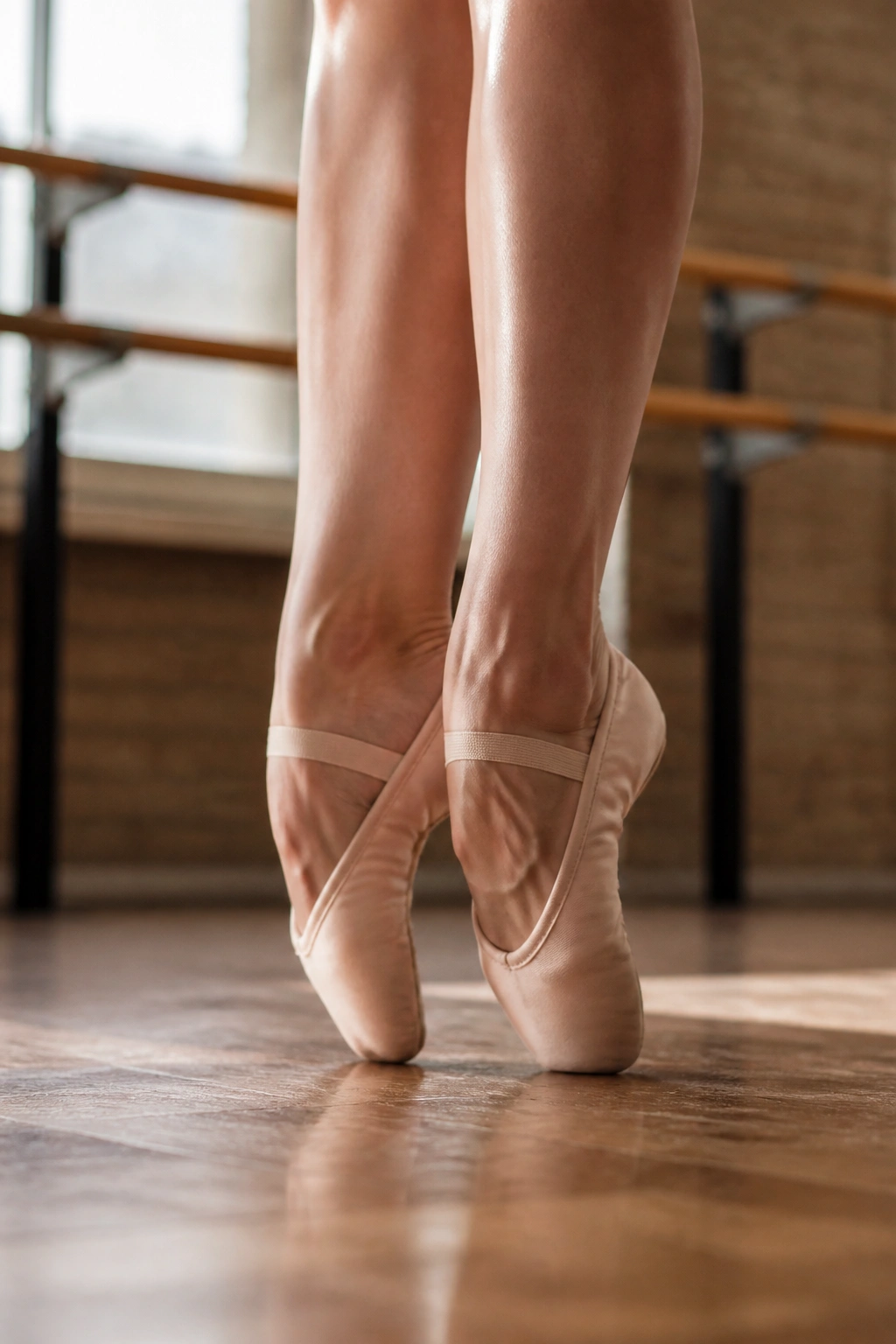
The claim: Once you master the basics, adding complexity through changing your foot position is the fastest way to progress. This plan is for those who are bored with standard movements. You will move from first position to second, but with a twist—balancing on your toes (relevé) for the entire duration of the set.
By elevating onto your toes, you reduce your base of support, which forces your stabilizers to fire constantly. It isn’t just about the legs anymore; it is about the ankles, the arches of your feet, and your entire nervous system. This is a balance challenge masquerading as a leg workout.
If you find yourself wobbling, don’t worry—that is the workout. Every time you wobble, your deep core muscles are working to correct your balance. It is a win-win situation. Just ensure you are not gripping the barre for dear life; use it as a light guide, not a crutch.
8. Barre with Light Hand Weights
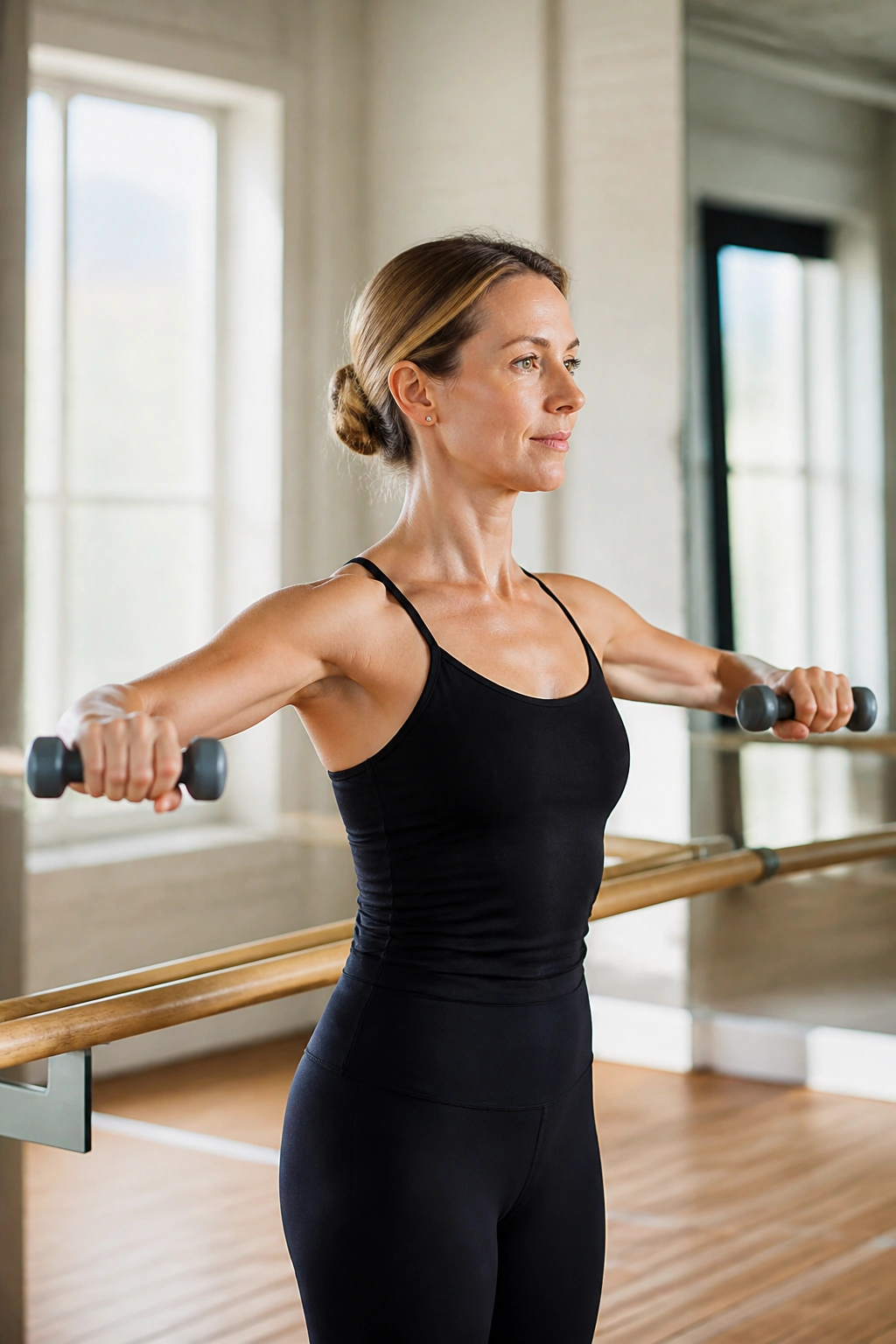
Why do we use such light weights in barre? If you go too heavy, your body will naturally recruit the bigger muscles (the lats, the pecs) to move the weight, which defeats the purpose. We want to isolate the tiny stabilizer muscles in your shoulders and arms.
The Physics of the Resistance
When you extend your arm straight out, you are creating a long lever. Even a two-pound weight becomes heavy when held at a distance. If you use five or ten pounds, your form will inevitably break down, and you will lose the isolation.
Common Weight Mistakes
- Locking the elbows: Keep a tiny, almost invisible micro-bend in your elbows to protect your joints.
- Shrugging the shoulders: Keep your traps down and away from your ears at all times.
- Swinging the weight: Every movement must be controlled. If you are swinging, you are using momentum, not muscle. Pro tip: If you don’t have hand weights, use two cans of soup. They work just as well for this specific type of high-rep training.
9. The Resistance Band Special
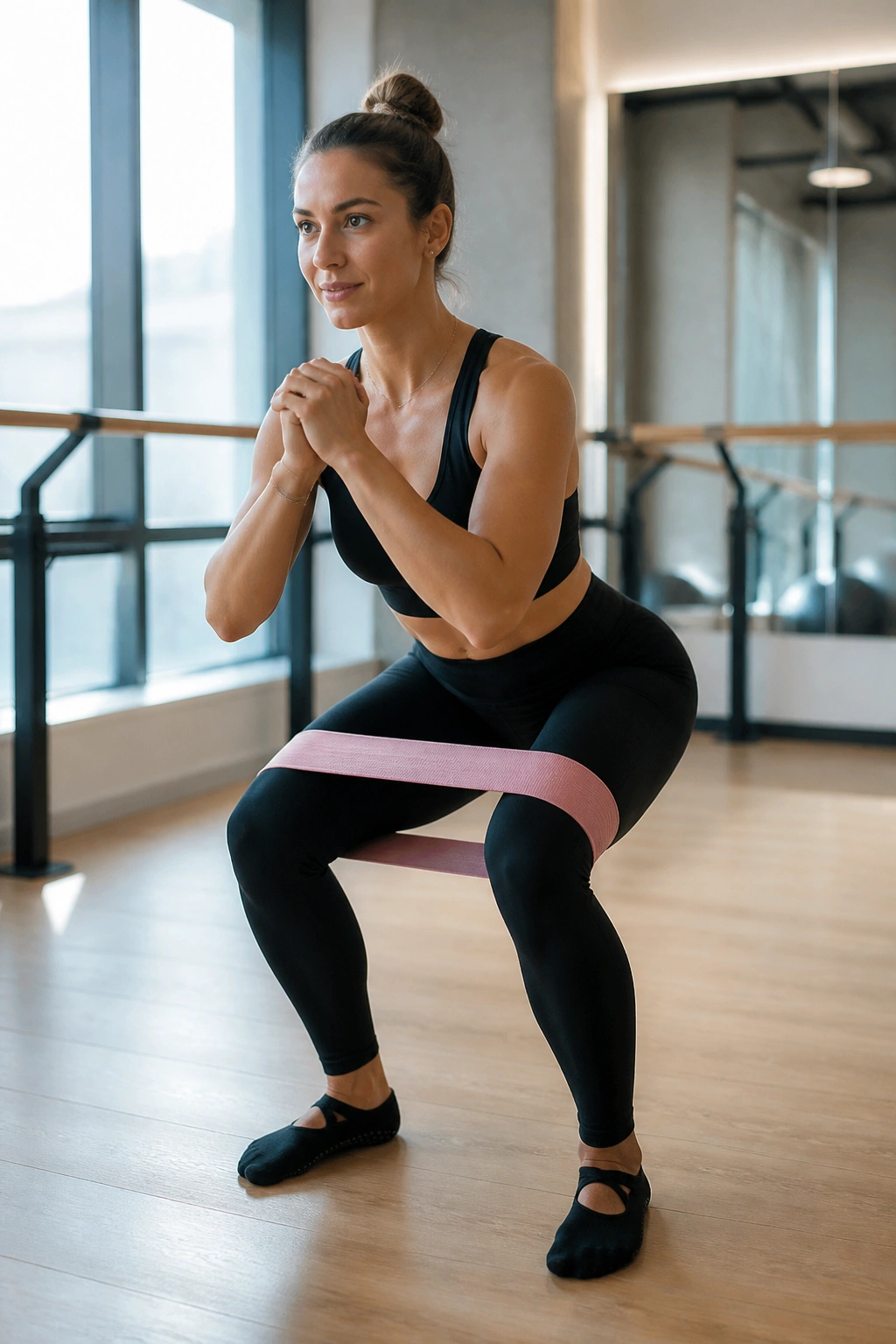
Elastic resistance is a secret weapon for barre. Unlike weights, which are affected by gravity, bands provide constant tension throughout the entire range of motion. This is particularly effective for glute isolation, where the muscles are often strongest at the very end of the movement.
You can wrap a loop band around your thighs for extra resistance during squats, or hold a longer band in your hands for arm pulses. The band forces you to stay “on” even when you are relaxing or resetting. It adds a layer of difficulty that makes simple movements feel significantly heavier.
This plan is intense. You will feel the burn faster. It is perfect for those days when you feel like you aren’t “getting enough out of” your usual routine. Just ensure you choose a band tension that allows you to maintain full range of motion. If you can’t complete the full move, the band is too thick.
10. Posture and Alignment Routine
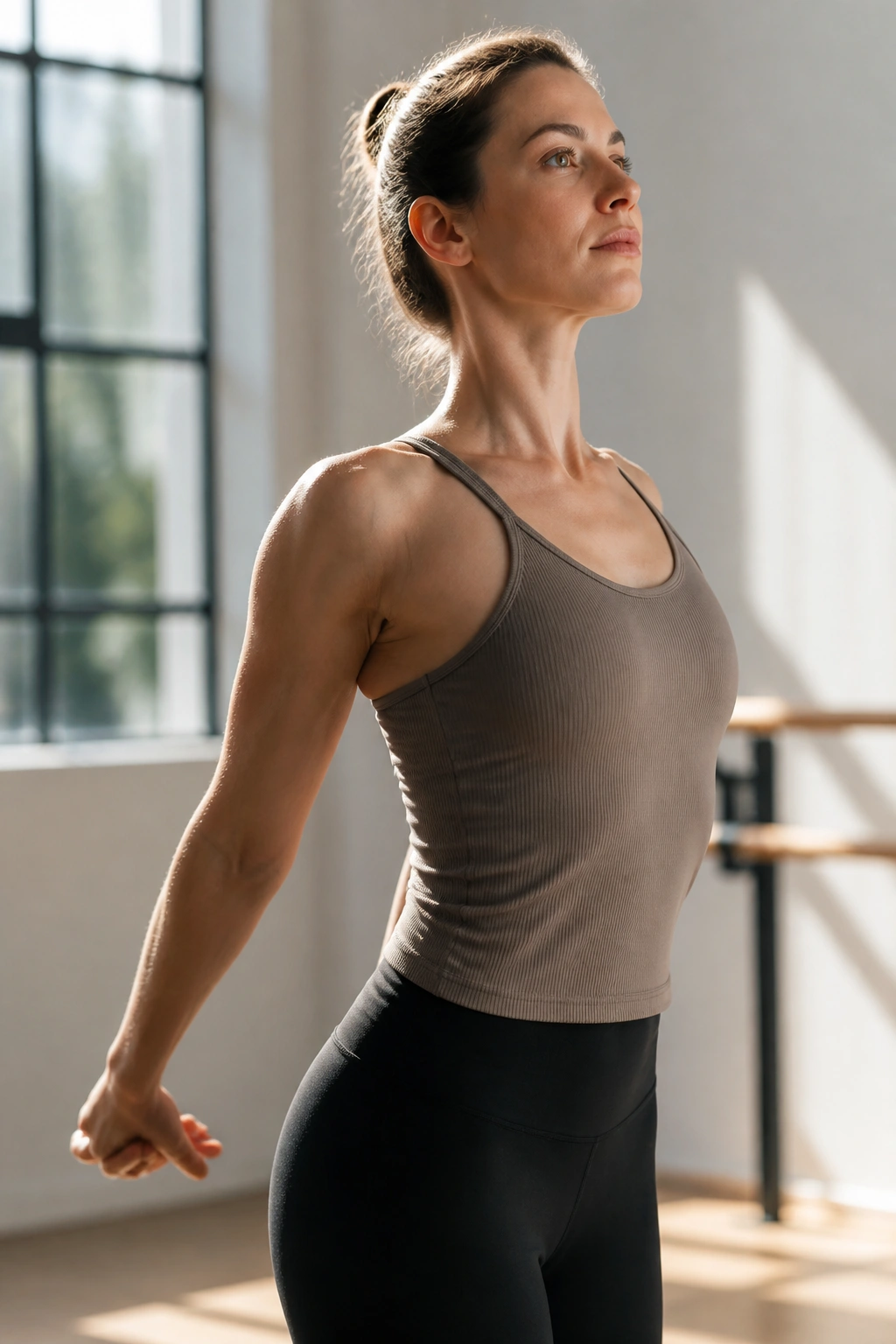
Most of us spend the majority of our days hunched over screens, which tightens our chest and weakens our upper back. This routine is designed to undo that. It is less about “burning” and more about “resetting.” You will focus on opening the chest, engaging the lats, and realigning the pelvis.
You start with chest openers, move into scapular retractions, and finish with standing posture holds. It feels amazing. It is the type of workout that leaves you feeling taller and more confident, rather than exhausted.
This should be a staple in your week, regardless of how intense your other workouts are. Think of it as maintenance for your body. If you perform this sequence consistently, you will find it easier to maintain good form during your more vigorous barre sessions.
11. Fast-Paced HIIT-Barre Hybrid
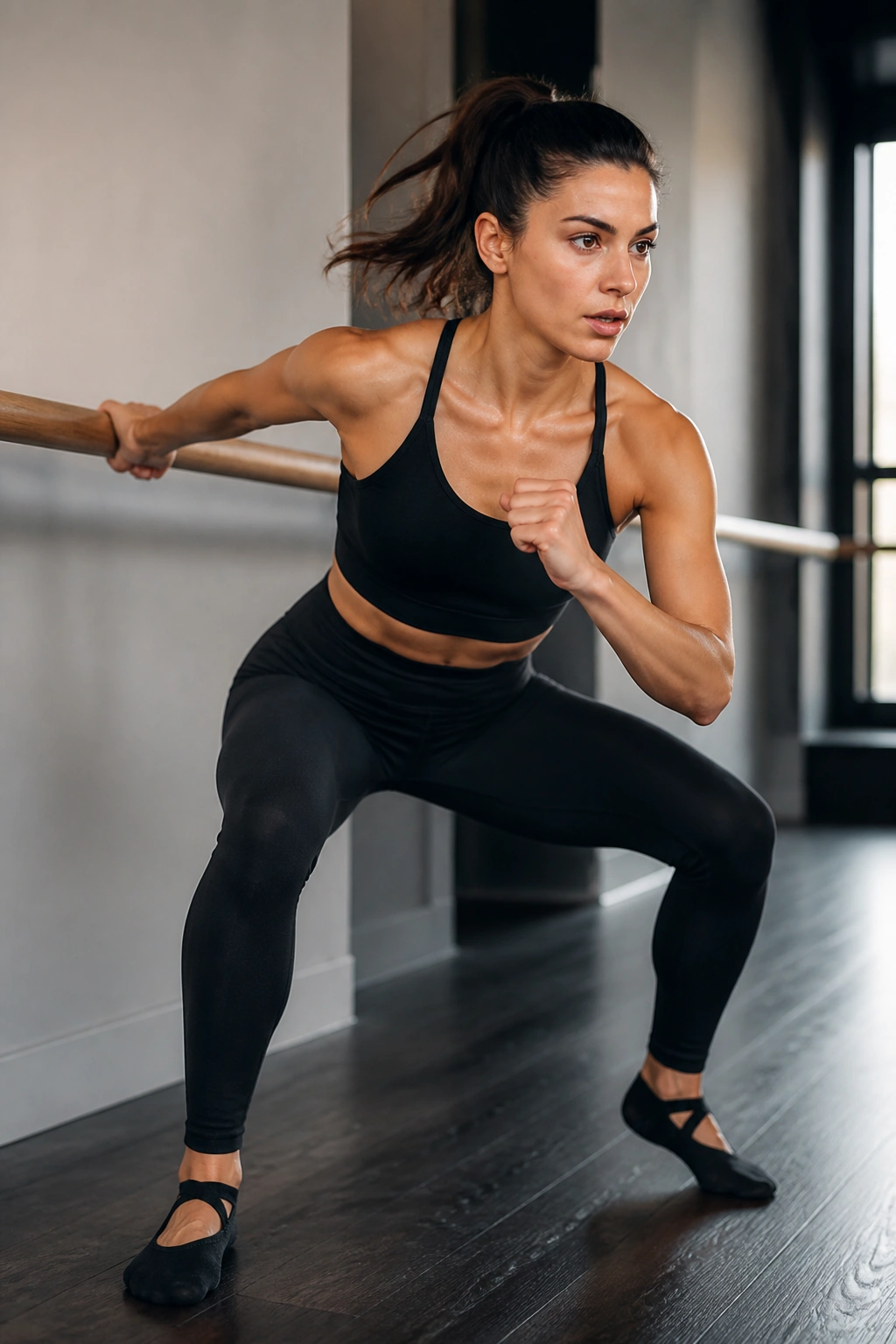
This combines the high-intensity intervals of HIIT with the precision of barre. You do 45 seconds of intense, pulse-based barre work, followed by 15 seconds of explosive movement—like jumping jacks or burpees. It is a fantastic way to spike your heart rate while still focusing on muscle endurance.
Benefits of the Hybrid
It solves the problem of “slow” workouts feeling like they don’t count for cardio. You get the best of both worlds.
Structuring Your HIIT-Barre
- 45 seconds: Isometric wall sit or deep squat pulse.
- 15 seconds: Explosive jump squats or high knees.
- Repeat for 10 minutes. Pro tip: Because this is high intensity, prioritize safety. Keep your core tight during the explosive movements to support your spine.
12. The “Tight Tights” Inner Thigh Focus
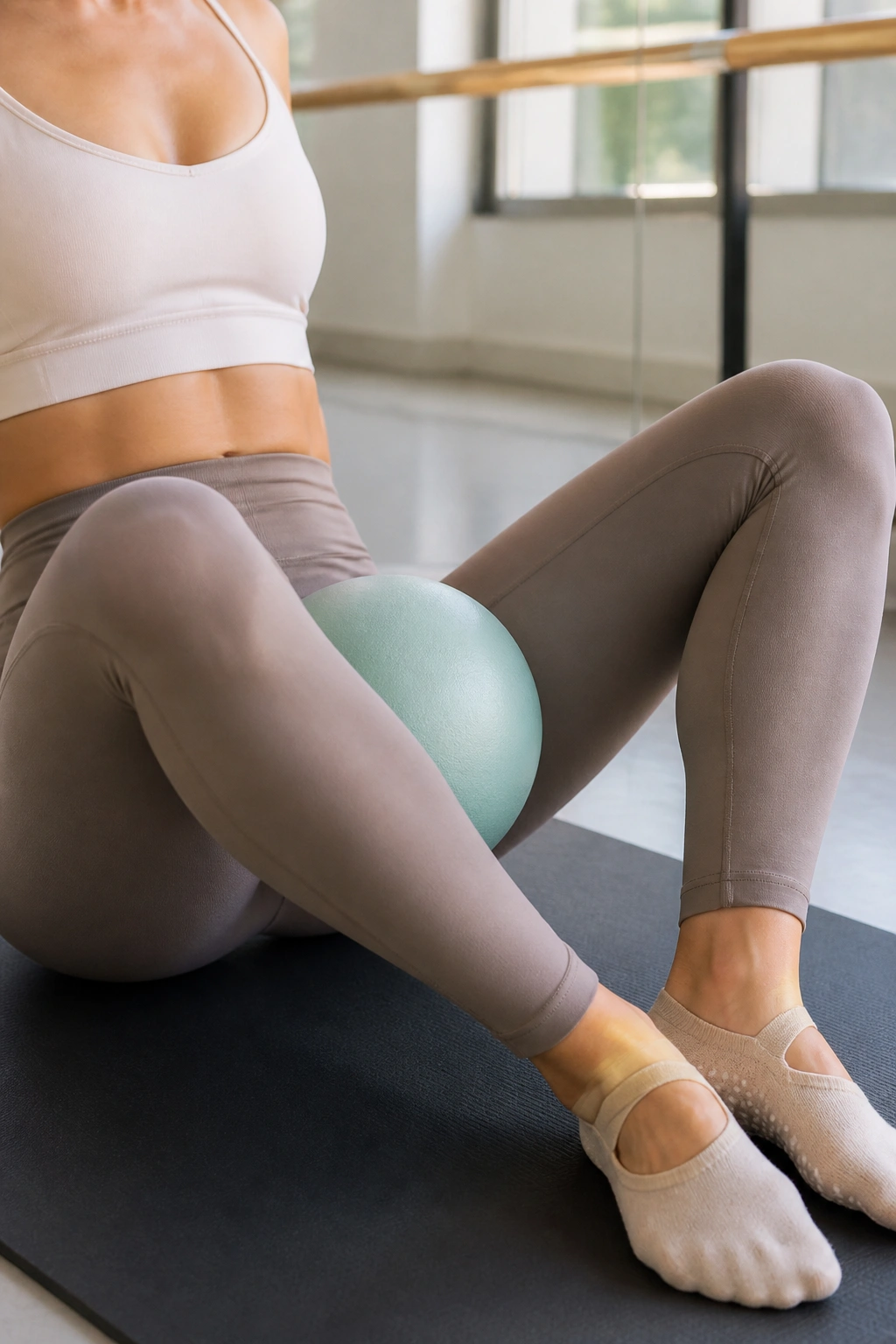
The claim: You cannot “spot reduce” fat, but you absolutely can “spot tone” muscle. This routine targets the adductors—the muscles that run along the inside of your thighs. These muscles are often neglected in standard squats and lunges.
The key to inner thigh work is the “tuck.” If you let your pelvis tilt forward, your lower back takes the brunt of the load, and the inner thighs disengage. You must maintain a neutral spine. The movements are subtle—squeezing a ball between your thighs or doing narrow-stance relevés—but they are effective.
Do this twice a week if you want to see a difference in tone. It is not glamorous, and it is usually where you will feel the most “shaking.” Embrace that shaking; it is a sign that your muscles are reaching fatigue.
13. Stretching and Mobility Recovery
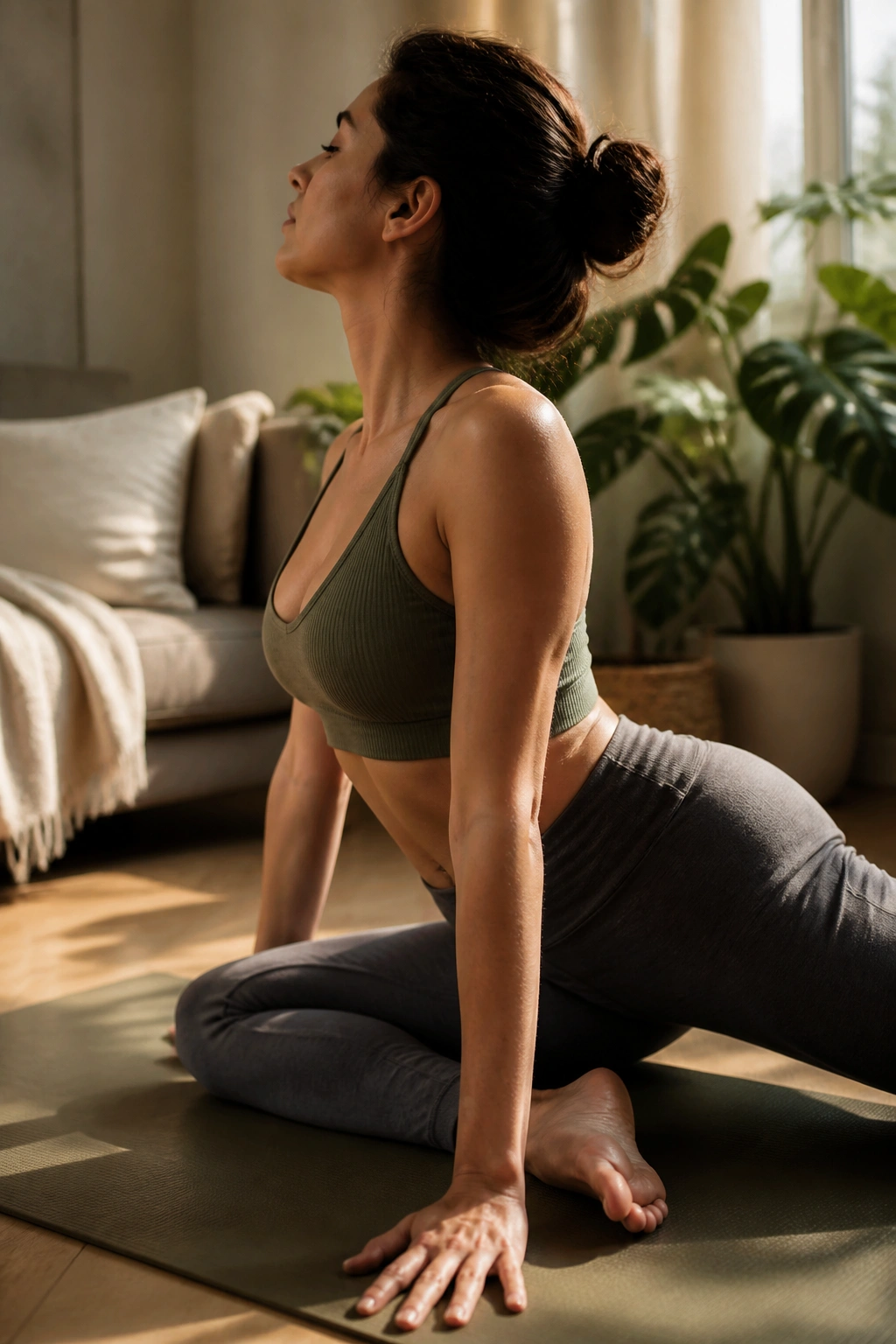
Recovery is a workout, too. If you are training hard, you need to lengthen the muscles you have been shortening. This routine is purely for flexibility and joint health. It includes deep lunges for the hip flexors, hamstring stretches, and overhead reaches for the lats.
Why You Need Mobility
If your muscles are tight, your range of motion decreases. If your range of motion decreases, you can’t perform exercises effectively, which leads to compensation and injury. Stretching isn’t just “extra”—it is essential.
Essential Recovery Moves
- Pigeon pose: Targets the deep glutes.
- Cat-cow: Mobilizes the spine.
- Seated forward fold: Lengthens the entire posterior chain. Pro tip: Spend at least two minutes in each pose. Your body doesn’t actually begin to release tension until about the ninety-second mark.
14. Small-Space Apartment Barre
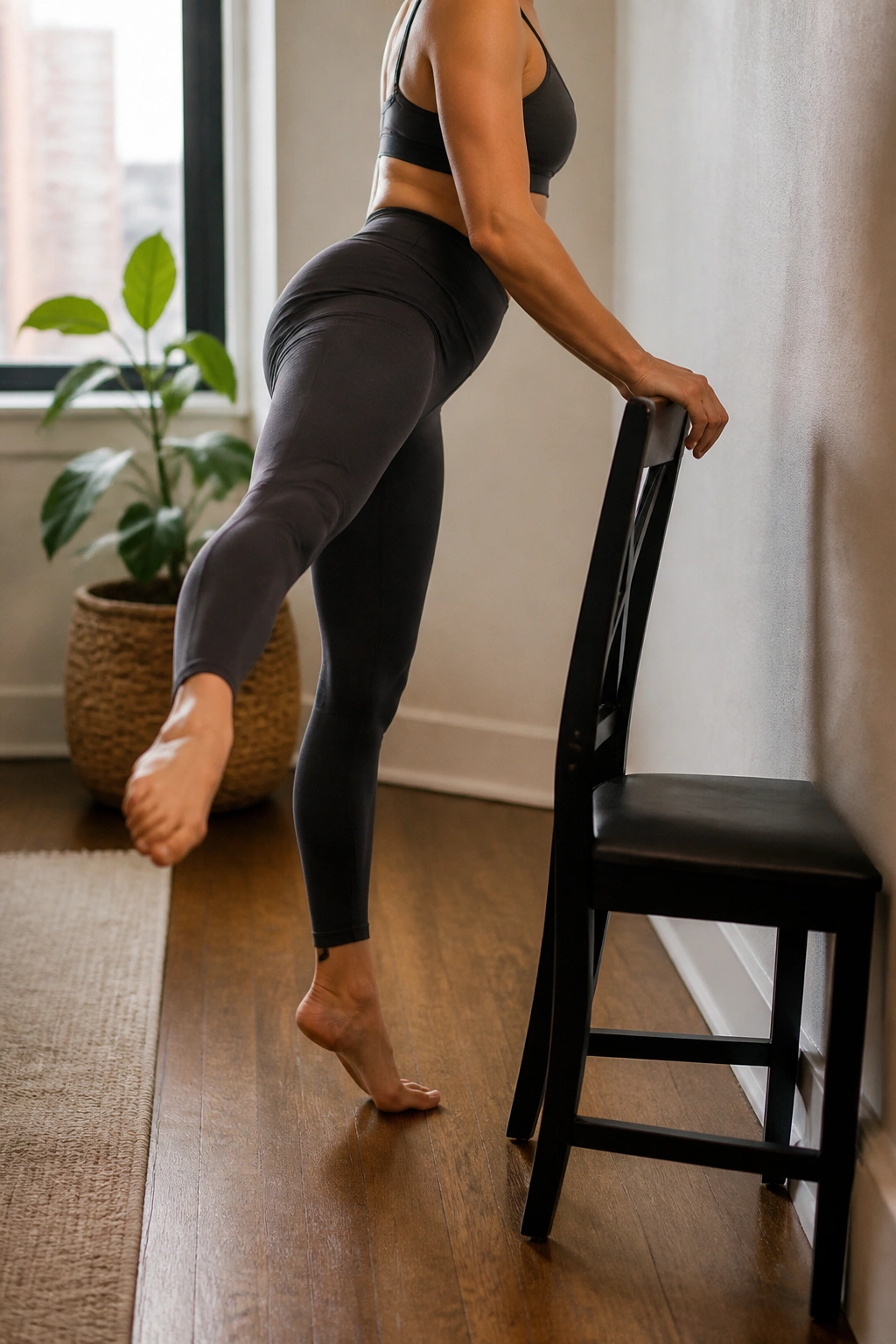
You don’t need a professional ballet studio to do barre. You need a chair, a wall, or a kitchen counter. This plan is designed for people living in tight quarters. Every movement is done in place. You don’t step forward, back, or side to side. You stay in your one-square-foot radius.
It utilizes vertical space. You do high-knees, standing leg raises, and side-leg lifts, all while holding onto the back of a sturdy chair. It is just as effective as a full-scale studio session because the burn comes from the muscles, not the travel.
This is the ultimate “no-excuses” workout. You can do it while your coffee is brewing or while you are waiting for the laundry. It proves that equipment is secondary to intensity.
15. Post-Work Desk Relief Routine
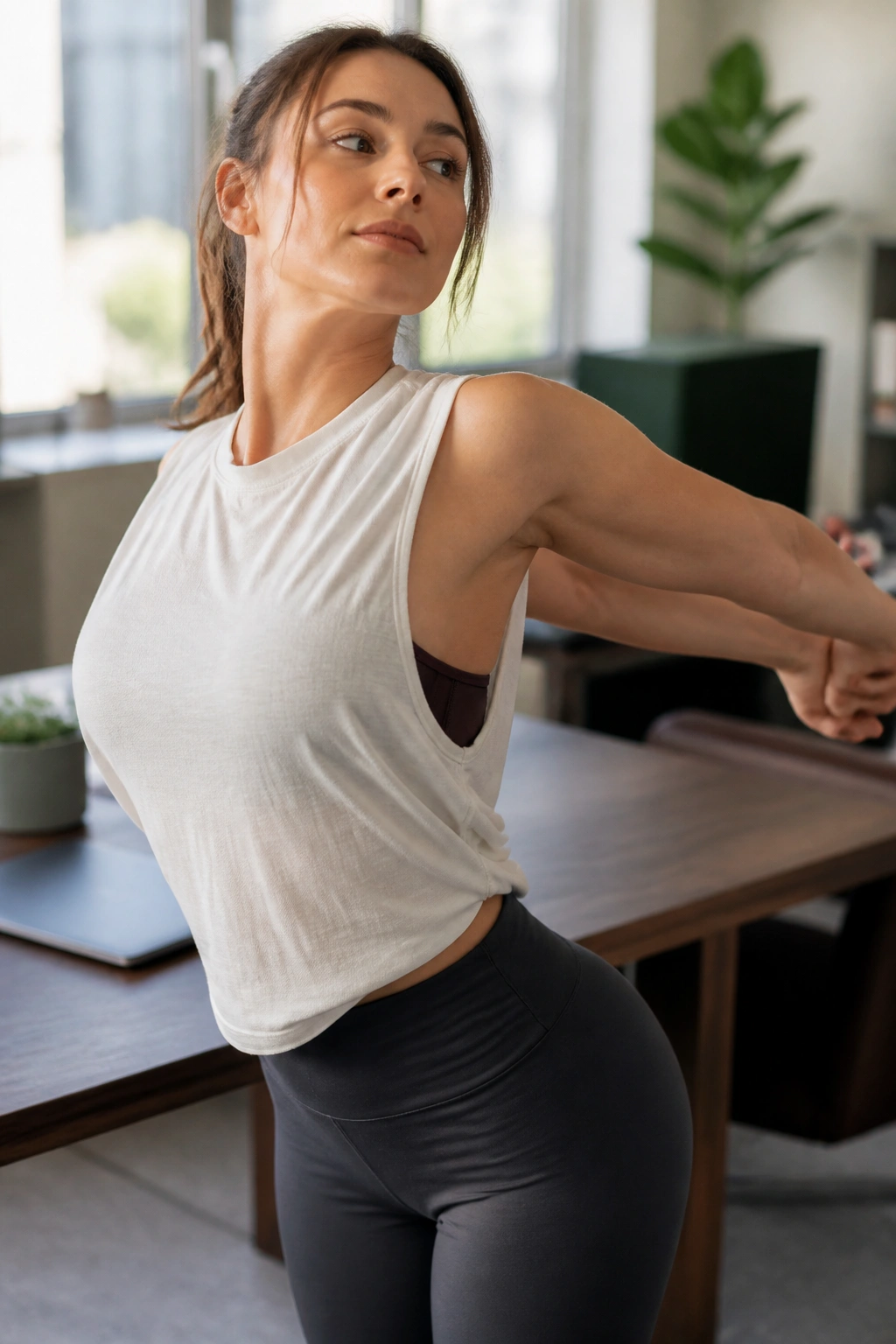
This is a gentle, fifteen-minute flow specifically designed for people who sit all day. It targets the tight hip flexors and the rounded shoulders. You won’t be breaking a sweat, but you will be unlocking stiffness.
You will do standing hip openers, gentle spinal twists, and chest-opening pulses. It feels less like an exercise session and more like a necessary maintenance task for your body. After a day of sitting, your body is effectively “stuck” in a seated position.
This routine effectively “undoes” the day. It doesn’t need to be high-impact. The goal is to move the blood through the hips and to remind your shoulders where they should actually be.
16. Ballet-Inspired Flow
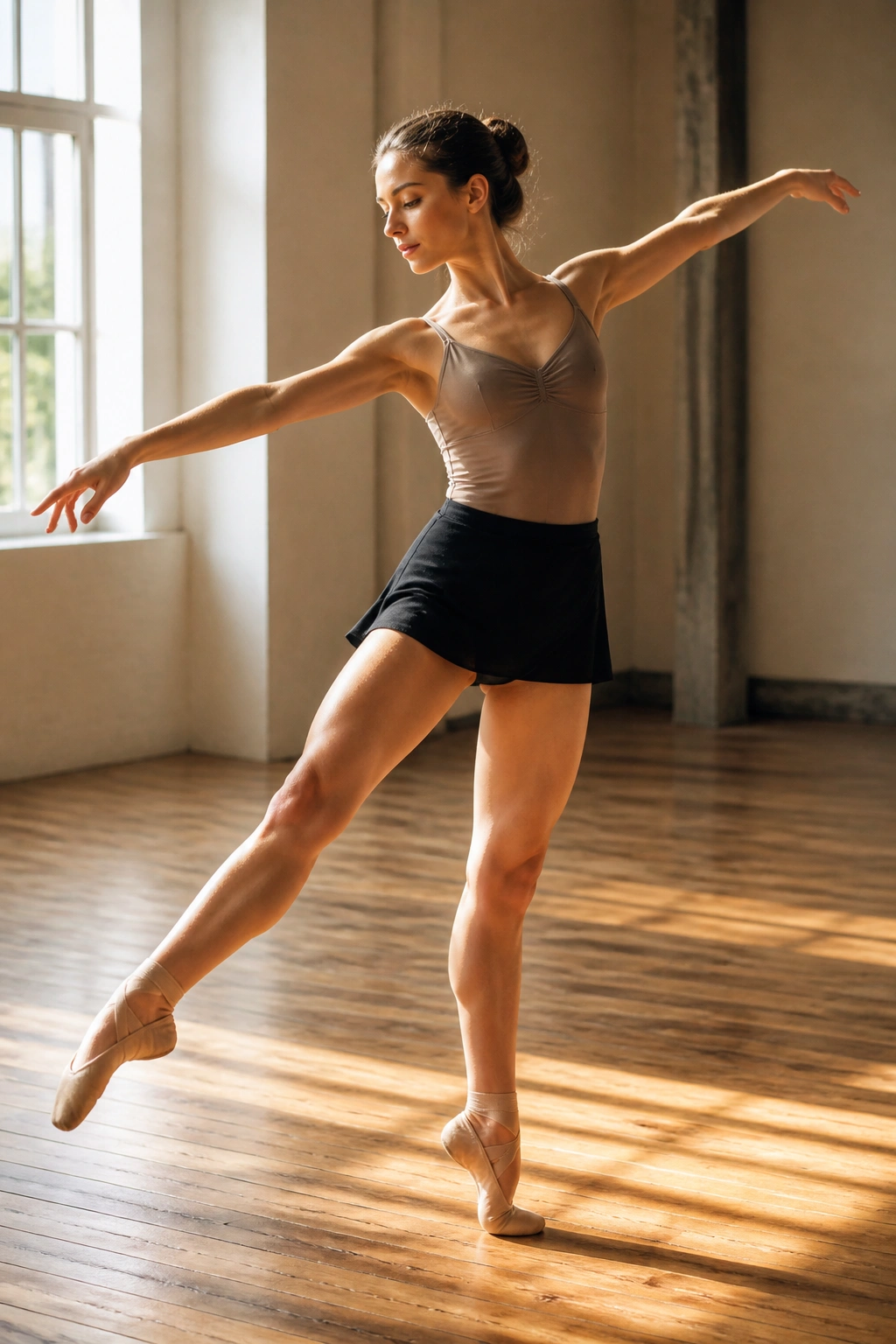
This approach leans heavily into the grace of ballet without requiring any dance experience. It focuses on fluid transitions and elegance. Instead of doing “sets and reps,” you move through a sequence that flows from one position to the next.
Why Flow Matters
Flow movements teach you body control. By linking movements together, you challenge your coordination and your ability to maintain engagement over a longer period of time, rather than just in quick, disconnected bursts.
Getting the Flow Right
- Think of your limbs as extensions of your center.
- Focus on the transition between moves, not just the move itself.
- Keep the movement continuous. If you lose your balance, just reset and keep flowing. Pro tip: Put on some music that matches the tempo. It will help you find the rhythm, making the flow feel more natural.
17. Barre for Improved Balance
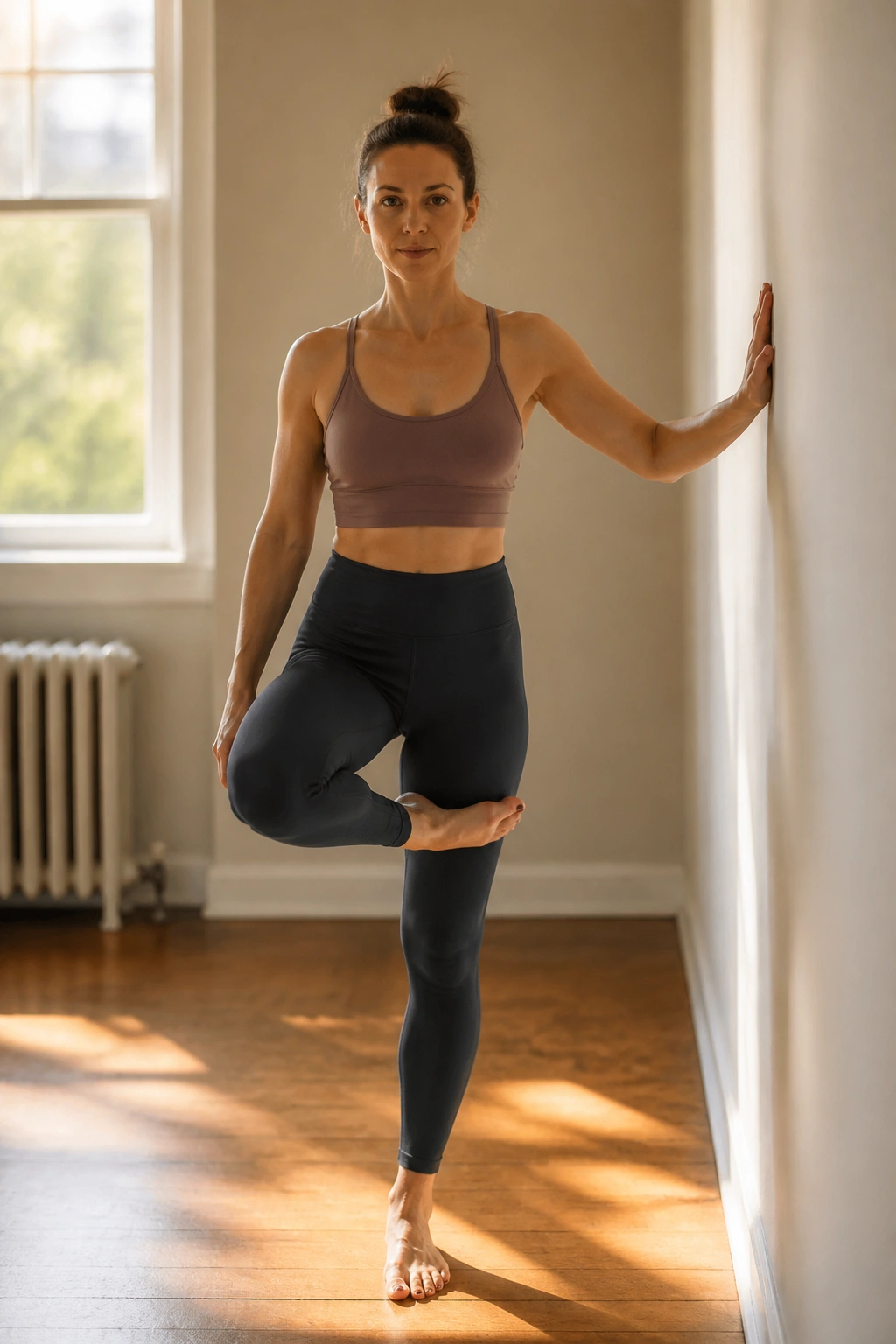
Balance is a skill, just like strength or speed. If you don’t train it, you lose it. This plan is all about proprioception—your body’s ability to know where it is in space. You will do single-leg balances, closed-eye pulses, and slow, controlled relevés.
By removing your visual cues—either by closing your eyes or by moving slowly enough that you can’t “cheat” your way through—you force your inner ear and your smaller stabilizing muscles to take over. This is critical for preventing falls and maintaining mobility as you age.
It is humble work. You might fall out of a pose. You might wobble. That is fine. Every time you wobble, your nervous system is learning, adapting, and getting stronger.
18. High-Rep Endurance Challenge
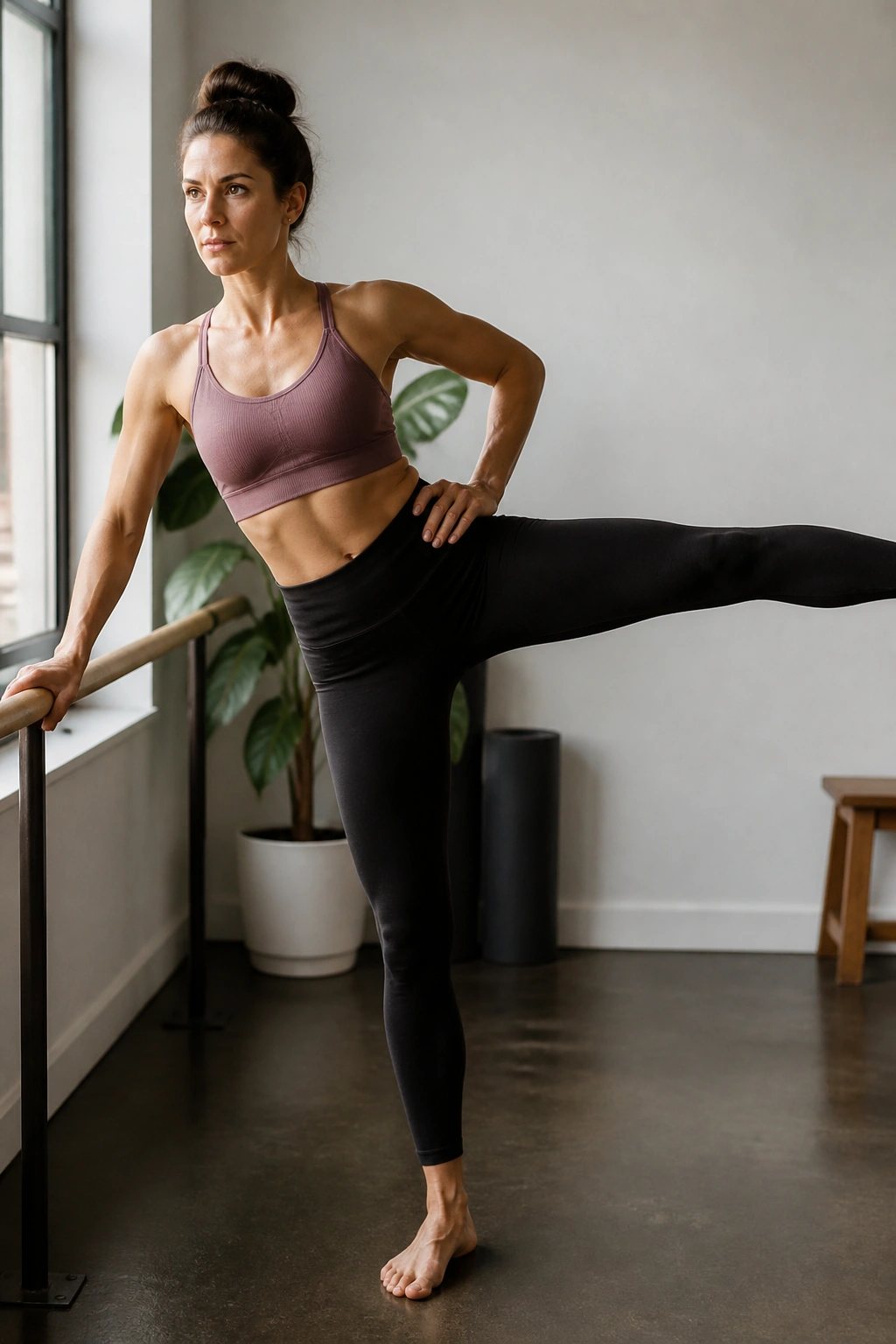
The claim: High-rep endurance is the hallmark of professional dancers. This plan is brutal. You do not stop. You don’t have “rest” periods. You choose a movement—like a standing side-leg lift—and you do 100 reps on each side.
The burn you feel at rep 50 is different from the burn at rep 20. At 20, it is muscle fatigue. At 50, it is mental. By 80, your body is looking for any way to quit. This challenges your mental ceiling.
Do this only when you are mentally prepared. It is not for the days when you are tired or stressed. It is for when you want to prove to yourself that you can push through discomfort.
19. The “15-Minute” Busy Morning Blast
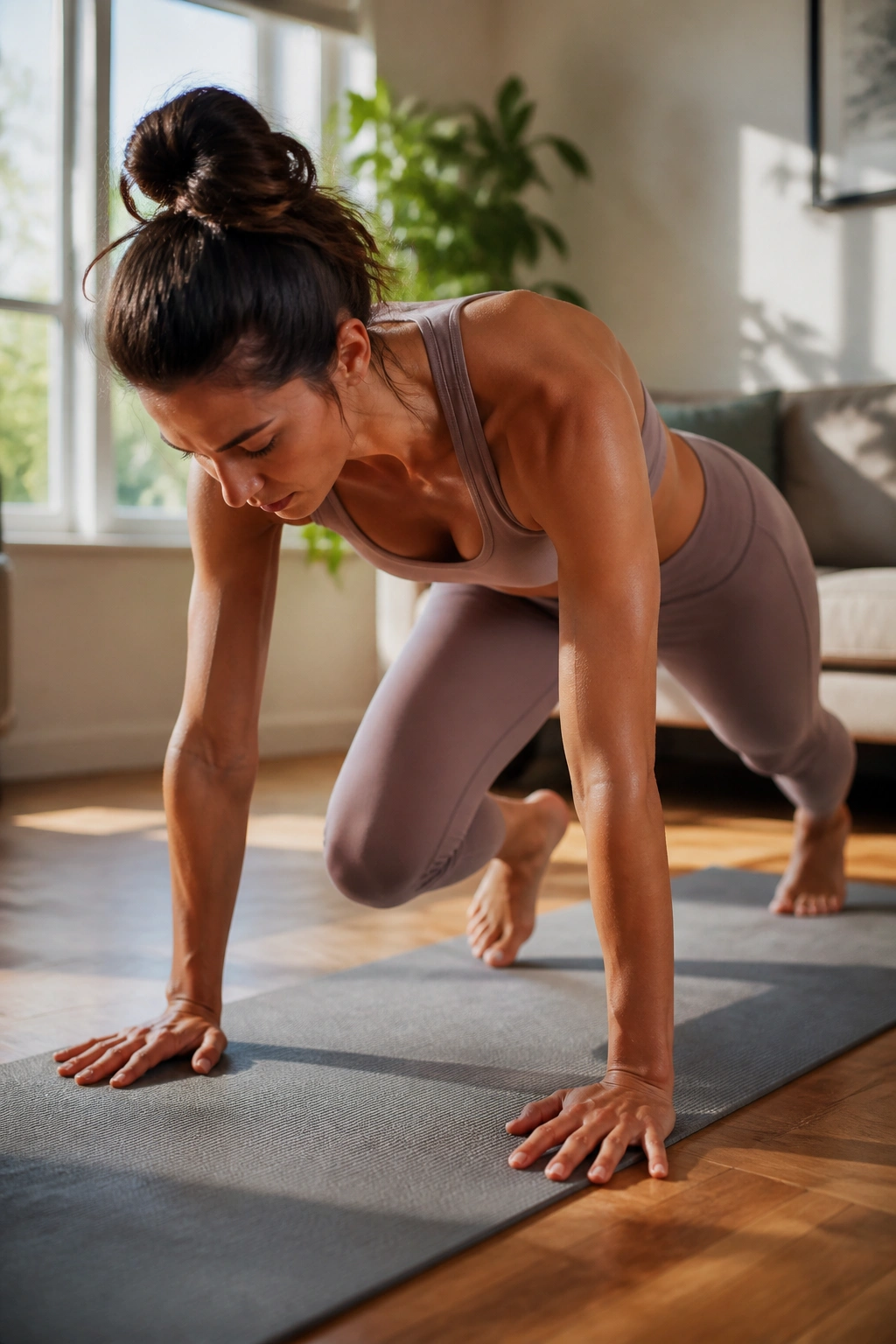
Some days, you simply do not have time for an hour-long class. That is where this 15-minute express routine comes in. It is high-density work. You do five minutes of core, five minutes of lower body, and five minutes of upper body. No fluff, no warm-up (or, a very quick one), just straight into the action.
It is effective because it forces you to maximize every second. You don’t have time to stare at the clock, which actually helps you focus on the movement. You just do the work and get on with your day.
This is the perfect routine to keep in your back pocket. It is better to do fifteen minutes of focused, intense work than to skip a workout entirely because you couldn’t find an hour.
20. Glute Bridge and Thigh Mastery
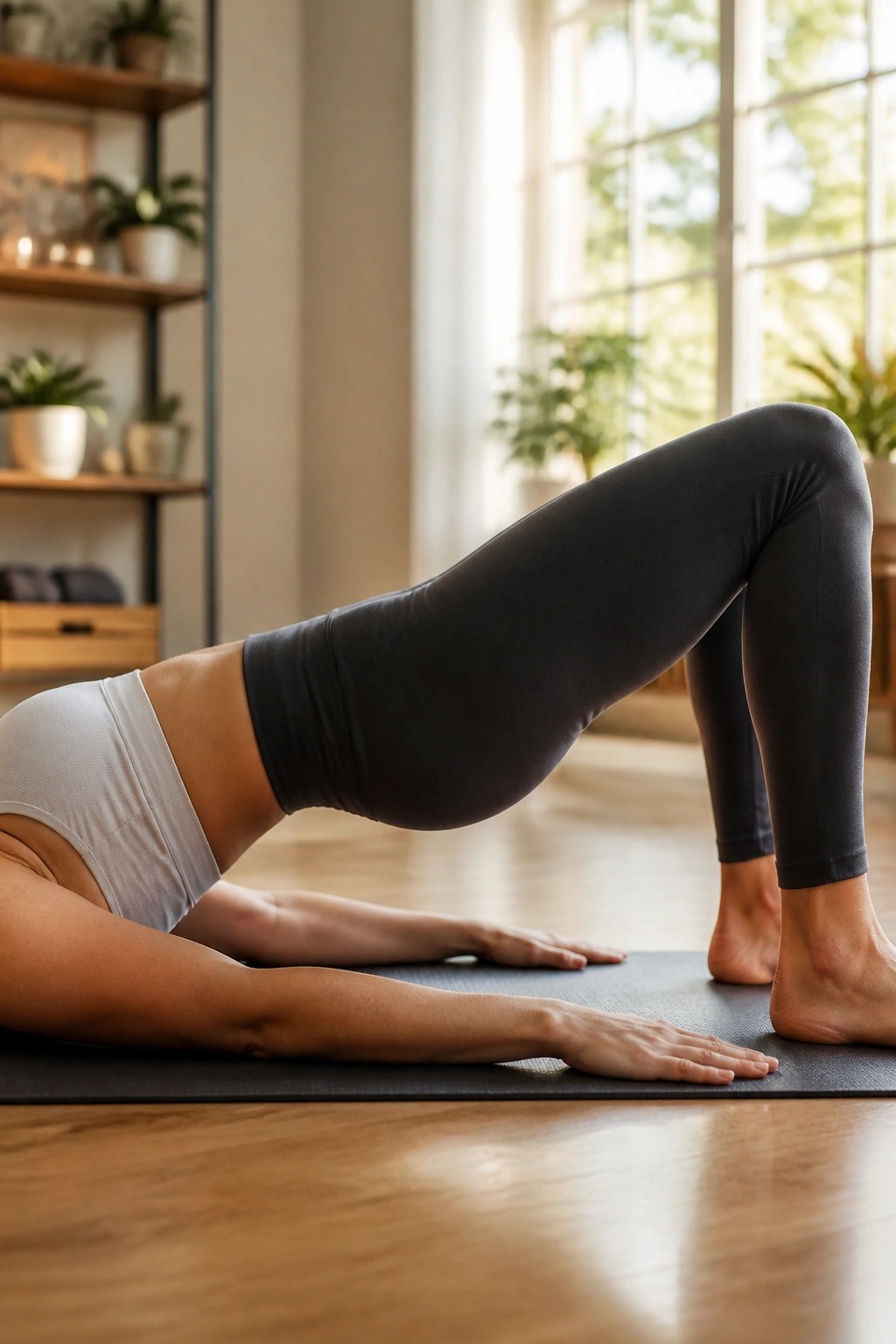
This routine stays almost entirely on the mat, specifically targeting the posterior chain—your hamstrings and glutes. Glute bridges are the safest way to work your lower body without putting any pressure on your spine or knees.
You will do static holds, pulses, and single-leg variations. It’s deceptively challenging. By the time you reach the single-leg bridge, you will realize how important hip stability really is.
This is a great routine for people with minor knee issues, as the closed-chain nature of the exercise (feet on the floor) is much easier on the joints than standing squats or lunges.
21. Arm-Sculpting Without Equipment
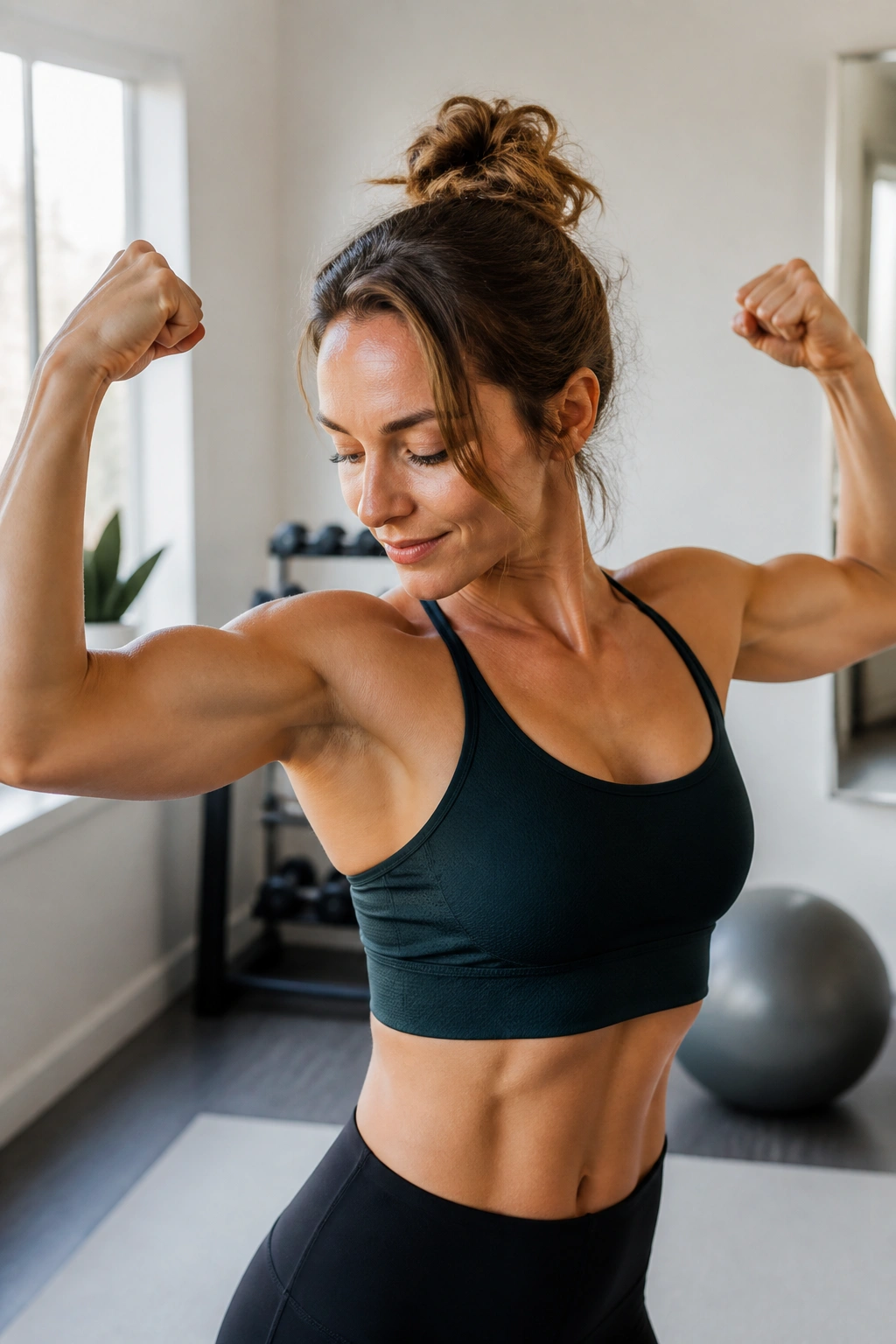
You do not need weights to build arm endurance. You can create resistance just by imagining it. This is the “squeeze” method. You make a fist, you flex your bicep, and you move through the range of motion as if you were moving through thick water.
The Power of Mind-Muscle Connection
This might sound like pseudoscience, but studies consistently show that focusing intently on a muscle during movement increases activation. If you actively “flex” your arm, you are creating an internal resistance that is just as effective as a weight.
The Moves
- Tricep presses: Imagine pushing a heavy object behind you.
- Bicep curls: Flex hard as you curl up; resist hard as you lower.
- Shoulder raises: Press into the air as if you are lifting a heavy ceiling. Pro tip: The harder you flex, the more effective this is. Don’t just go through the motions—make every rep count.
22. Stability Ball Integration
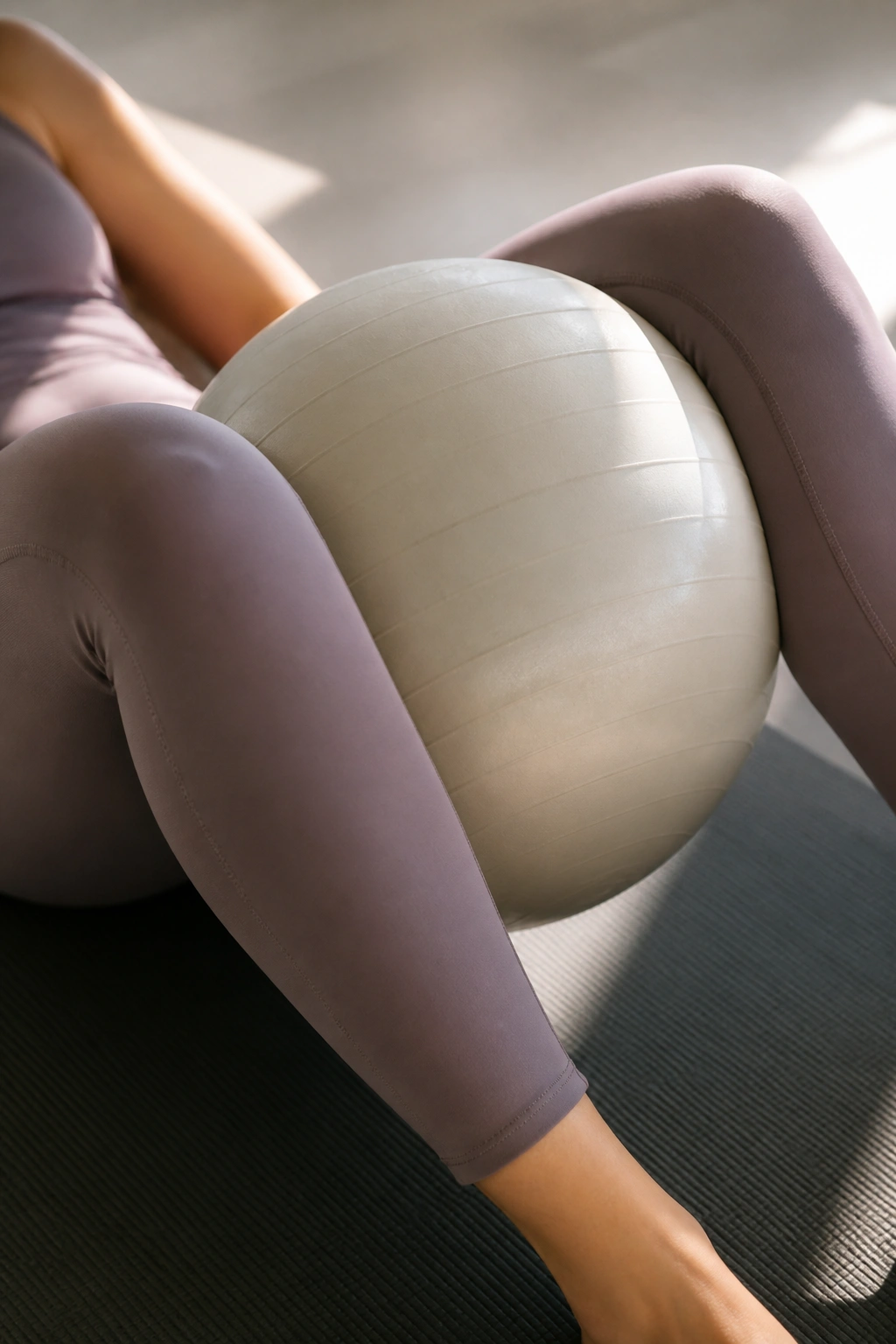
Adding a small inflatable ball between your inner thighs or behind your knee changes the entire dynamic of a barre workout. It gives you a physical object to squeeze, which automatically engages your adductors (inner thighs) and your pelvic floor.
It adds a “target” for your muscles. When you have something to squeeze, you naturally focus more on the engagement. It takes the guesswork out of where your muscles should be working.
If you don’t have a stability ball, a rolled-up towel or a small cushion works just fine. The goal is to have something that provides biofeedback for your muscles to work against.
23. Floor Barre for Pelvic Floor Awareness
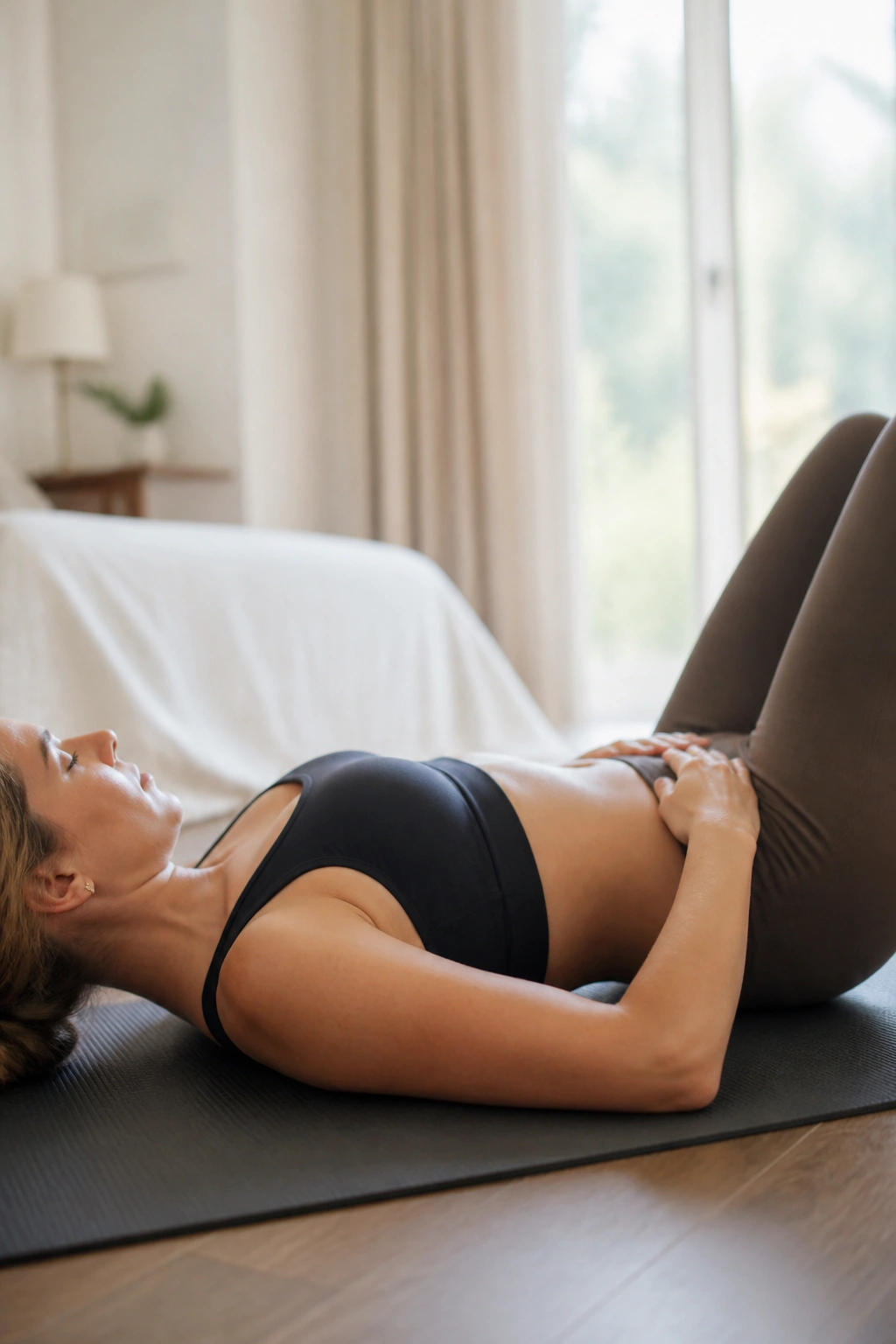
This is highly specialized work. The pelvic floor is the base of your core, and in many workout programs, it is completely ignored. This routine focuses on gentle, precise movements that teach you how to engage your deep core and pelvic floor in coordination with your breath.
Why This Matters
If you do standard crunches without pelvic floor engagement, you might be creating pressure downward rather than inward. Learning to “lift” from the bottom up protects your organs and builds a truly stable foundation.
How to Engage
- Focus on the sensation of “zipping up” from your pelvic floor to your belly button.
- Coordinate this with your exhale—exhale as you contract, inhale as you release.
- It should feel subtle and internal, not like a bear-down. Pro tip: Do this slowly. If you rush, you lose the connection. This is about precision, not power.
24. The Full-Body Athletic Barre
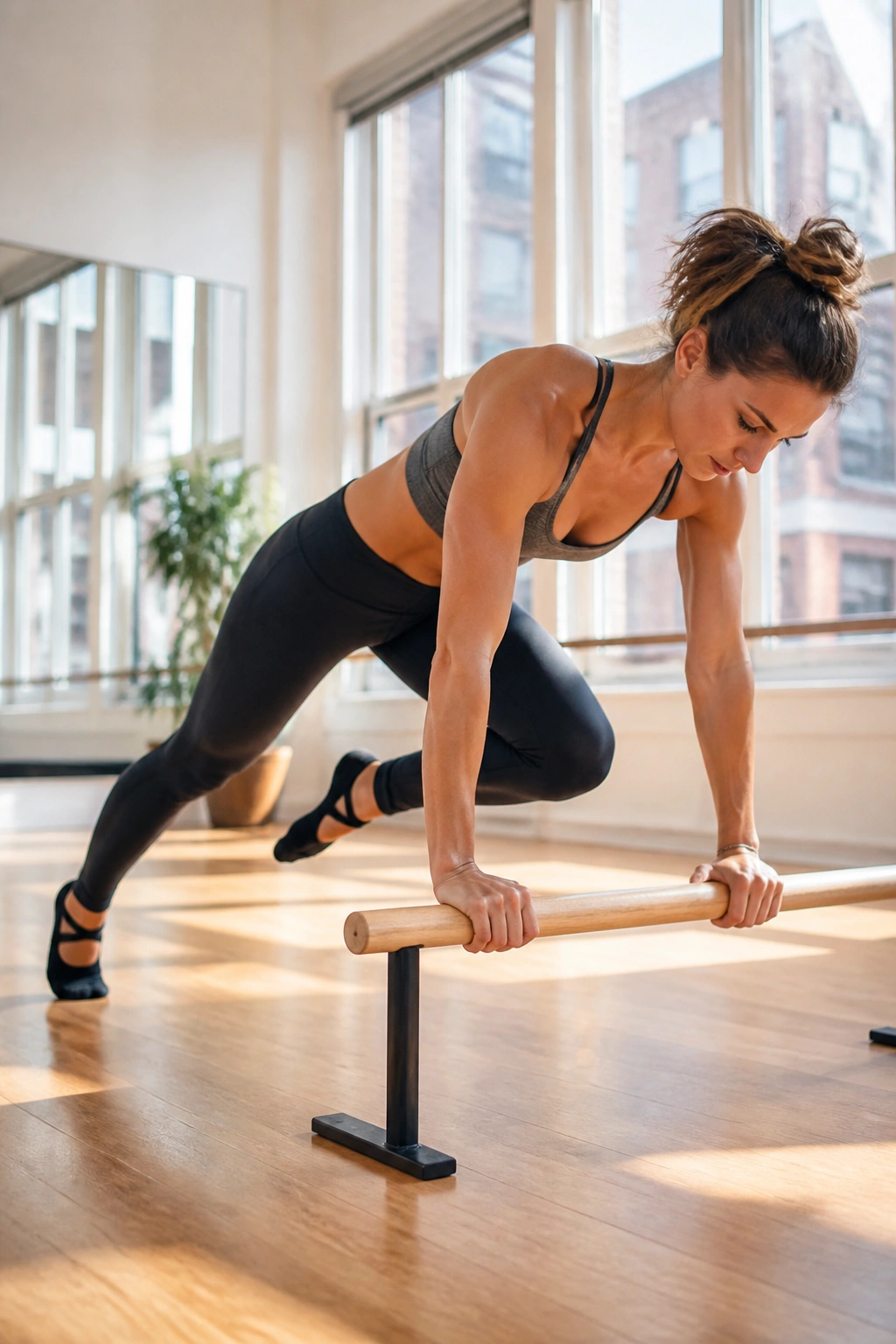
This is barre for the athlete. It includes dynamic movements, lunges, and plank variations. It takes the foundational “ballet” movements and makes them functional. You will move through ranges of motion that mimic real-life activities.
It is less about “tucking” and more about stability and strength. You will use your core, your glutes, and your shoulders in tandem. This is excellent for cross-training, as it helps correct imbalances developed in other sports.
If you are a runner, a swimmer, or a cyclist, this should be your go-to barre routine. It fills the gaps in your training, strengthening the smaller muscles that your primary sport might be neglecting.
25. Mind-Body Connection Meditation Flow
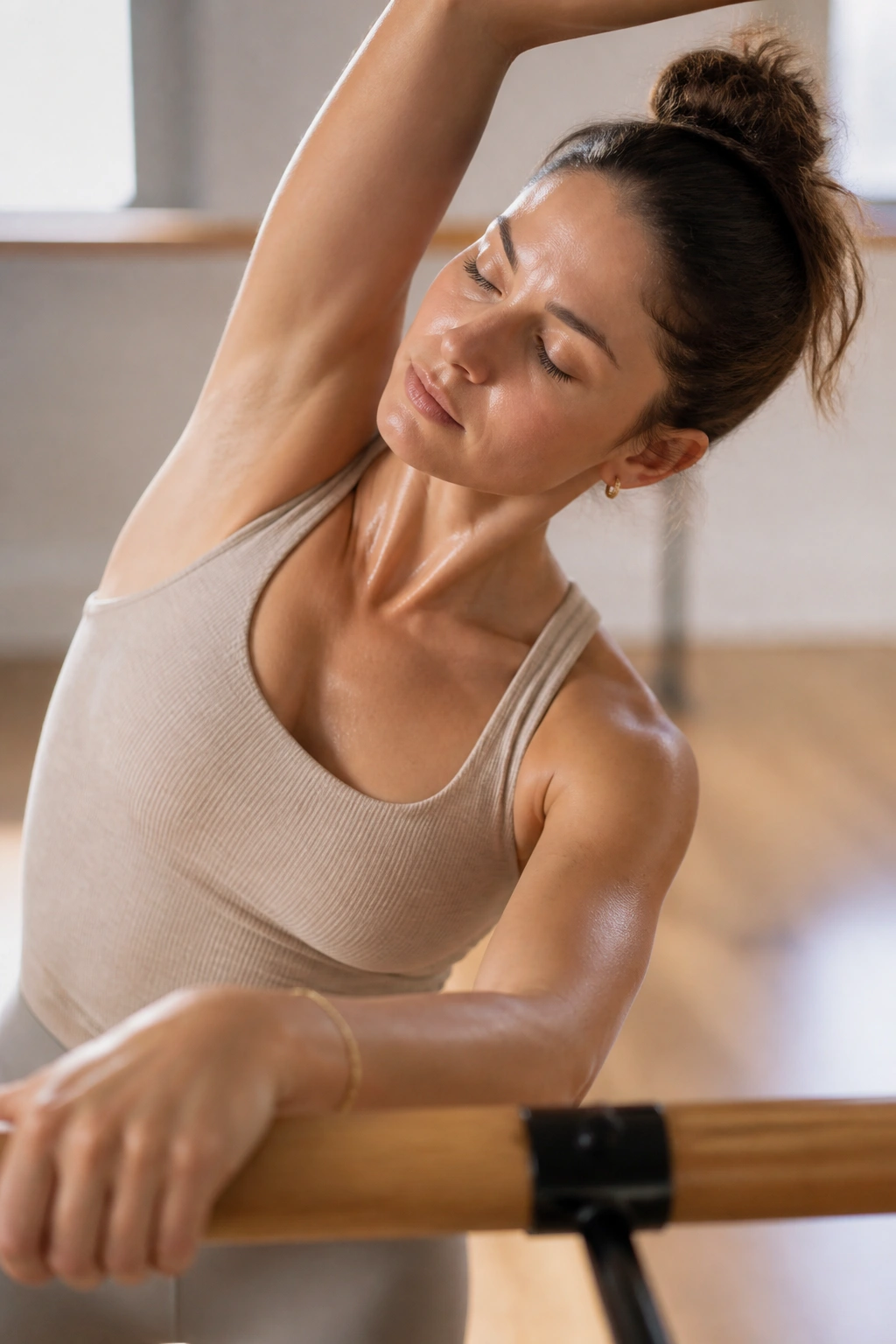
Sometimes, the best workout is the one that slows you down. This final plan is a fusion of barre movements and mindfulness. You do movements, but you do them at a snail’s pace. You focus entirely on the sensation of the muscle moving, the shift of weight, and the rhythm of your breath.
It is surprisingly hard. Moving slowly is much more difficult than moving quickly. It forces you to control every single inch of the movement. There is nowhere to hide, no momentum to carry you through.
This is the perfect way to finish a week of high-intensity training. It returns you to yourself. It reminds you that exercise is not just about burning calories or sculpting muscles—it is about inhabiting your body with intention and awareness.
Final Thoughts
Barre is a practice, not a quick fix. You will not see massive, overnight transformations, but you will see something better: a body that feels more capable, more resilient, and more connected. The key is consistency. It is the boring, unsexy habit of showing up and doing the pulses even when you aren’t feeling it.
Don’t overthink which plan to start with. Just pick one, commit to the movement, and listen to what your body tells you. The burn is your feedback; the shaking is your growth. Keep your core tight, your shoulders relaxed, and your focus entirely on the muscles you are working. Over time, that focus builds strength that goes far beyond the walls of the studio.
