



Legs change after 40. Not overnight, and not in some dramatic movie-montage way. They get a little less forgiving: stairs feel steeper, knees notice sloppy alignment faster, and hips can turn stubborn after too much sitting.
That is exactly why Pilates leg workouts for women over 40 deserve a place in the conversation. The good ones do more than “tone” anything. They wake up the glutes, steady the hips, strengthen the quads and hamstrings, and keep the ankles from doing all the work while the rest of the leg checks out.
Pilates is useful here because it asks for control, not brute force. Small, clean repetitions can do a lot when they’re paired with good breathing and good placement. That matters even more when joints feel cranky, balance takes more attention, or recovery doesn’t happen as fast as it used to.
I’ve kept this list practical: mat work, wall work, chair work, and a few reformer-based options for anyone who has the equipment. Start with the basics. Move slowly. If a move feels sharp in the knee or low back, shrink the range before you throw the exercise out. Small adjustments solve more problems than most people think.
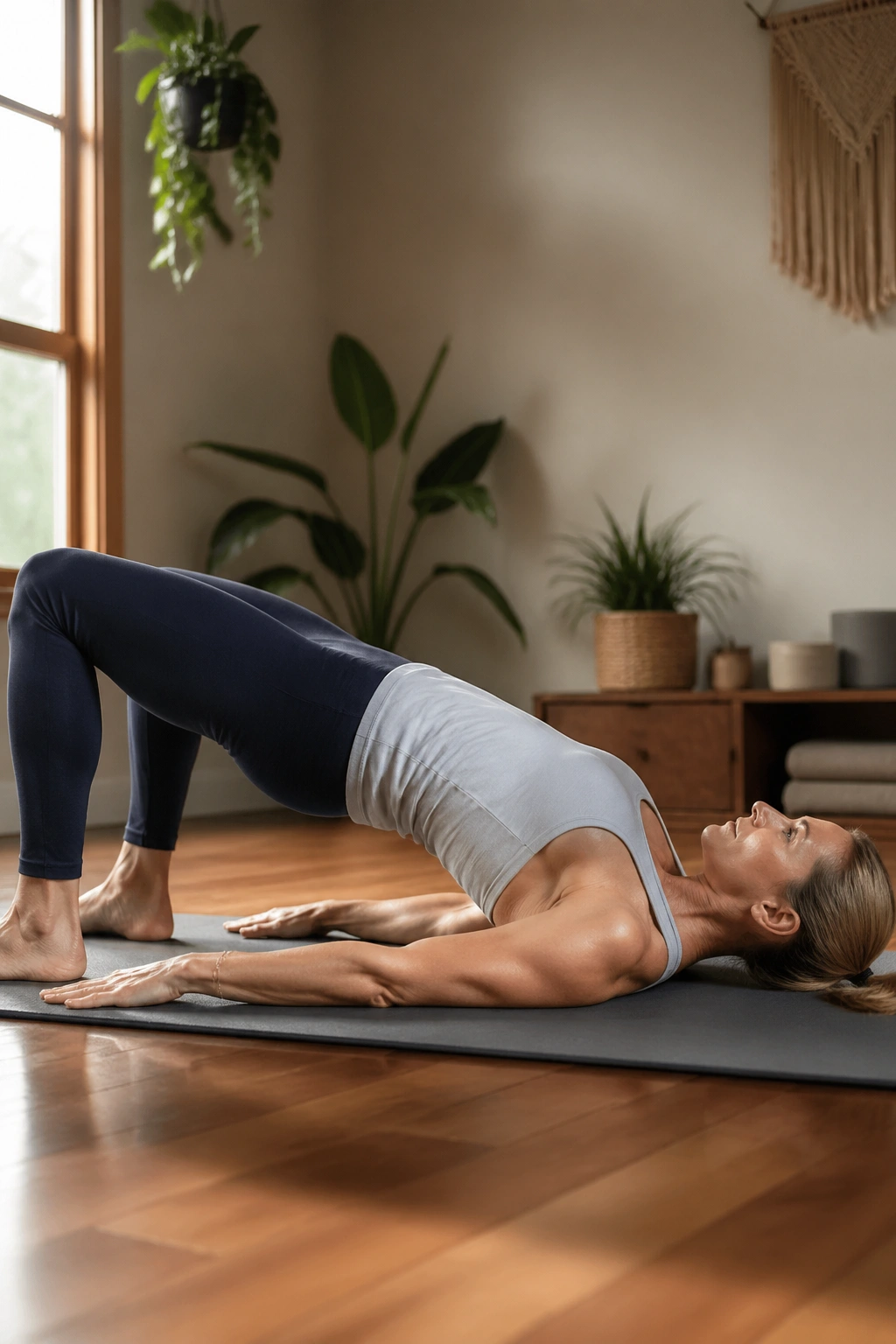
1. Pelvic Curl Bridge
A bridge looks gentle right up until you do it slowly.
That slow roll-up is the point. Pelvic curls train the glutes and hamstrings while teaching your spine to move one segment at a time, which is a very Pilates thing and a very useful thing after 40. If your low back likes to take over, this move teaches it to calm down and let the hips do their share.
What to feel
- Feet hip-width apart, heels close enough that your fingertips can graze them.
- Exhale as you peel your hips off the mat, one vertebra at a time.
- Pause at the top for 2 breaths or 2 seconds.
- Lower with control, starting from the upper back.
If your hamstrings cramp, walk your feet a few inches farther away from your hips. That small change often fixes the problem.
Three to eight slow reps are enough to start. More is not always better here. Better means smoother, quieter, and less gripping through the front of the thighs.
2. Wall Footwork Presses
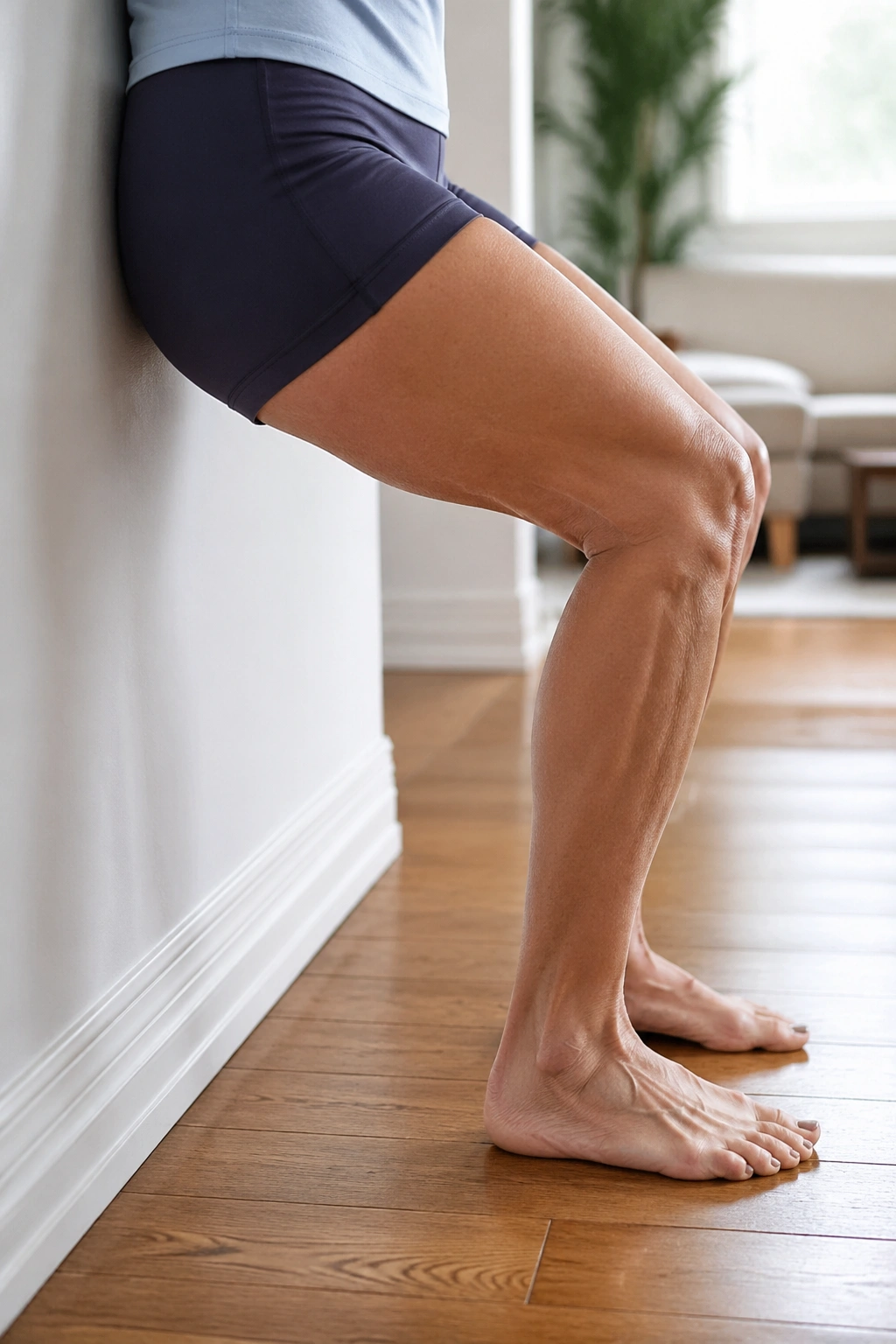
If squats bother your knees, wall footwork is the calmer cousin.
Stand with your back against a wall and your feet about a foot in front of you. Bend the knees so they track over the second and third toes, then press through the whole foot and stand back up without locking out hard at the top. The wall keeps your torso honest, which is half the battle.
Set it up cleanly
- Feet hip-width and parallel.
- Weight spread across the heel, big toe mound, and little toe mound.
- Keep the rib cage from flaring as you bend.
- Do 8 to 12 slow presses.
The magic is in the foot pressure. If the inside of your heels lift or the knees cave inward, you’re rehearsing bad habits, not strength.
One more thing. Go smaller than you think you need to go. A half bend done well beats a deep bend done sloppily.
3. Clamshells
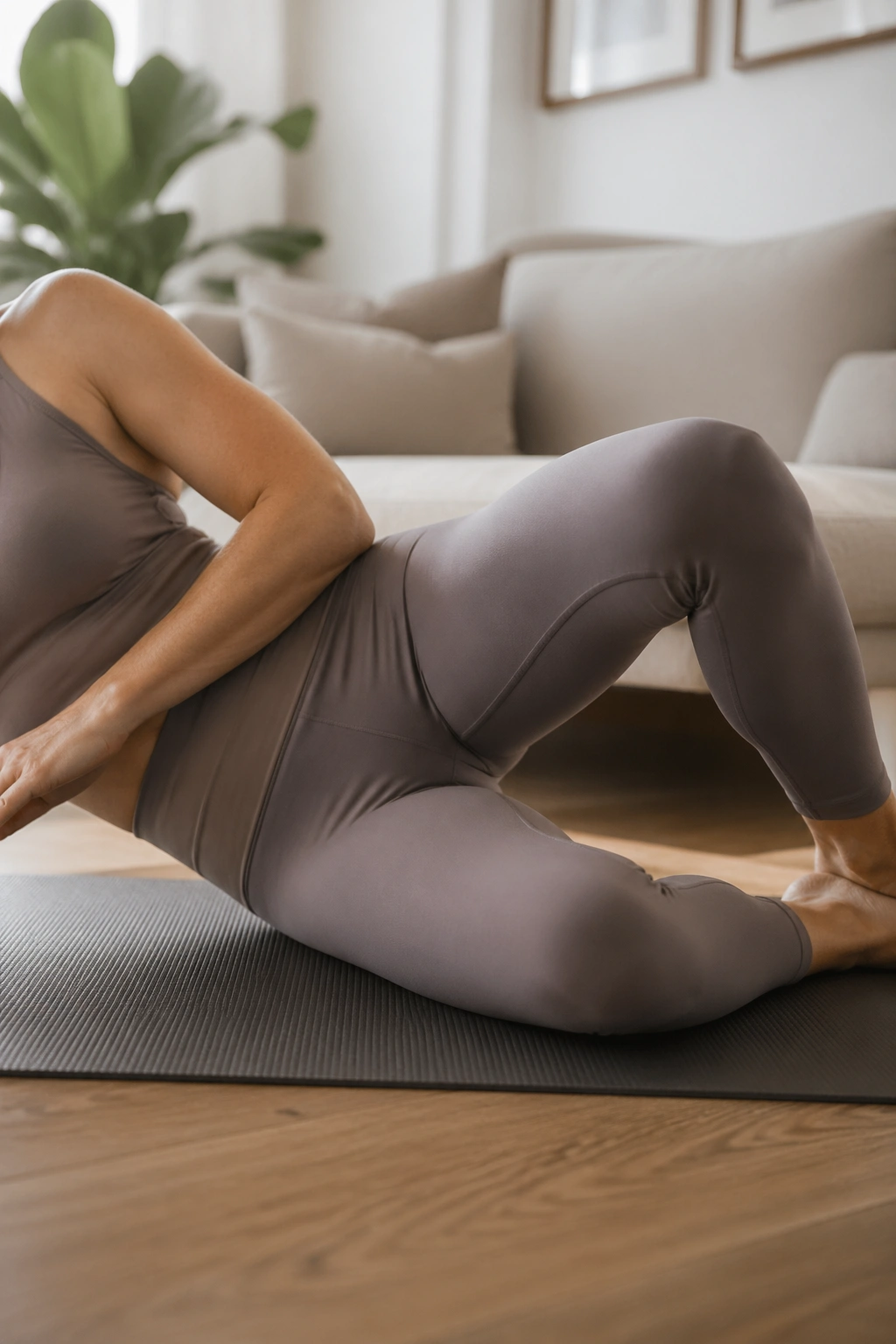
Why do clamshells show up in so many smart lower-body routines? Because the outer hip is often underworked, and that shows up as wobbly knees, tight hip flexors, and a pelvis that shifts around more than it should.
Lie on your side with knees bent, heels together, and hips stacked. Open the top knee without rolling the pelvis backward. That part matters. If your top hip opens with the knee, you’ve lost the exercise. You want the movement to come from the side of the hip, not from twisting the whole body.
How to make them work
- Keep the waist long.
- Move only as far as you can without rocking back.
- Use a mini band only after you can do clean reps without it.
- Try 10 to 15 reps per side.
This is a small move with a sneaky payoff. It helps the glute medius, which sounds technical and is actually just the muscle that keeps your leg from collapsing inward when you walk, squat, or climb stairs.
4. Side-Lying Leg Lifts
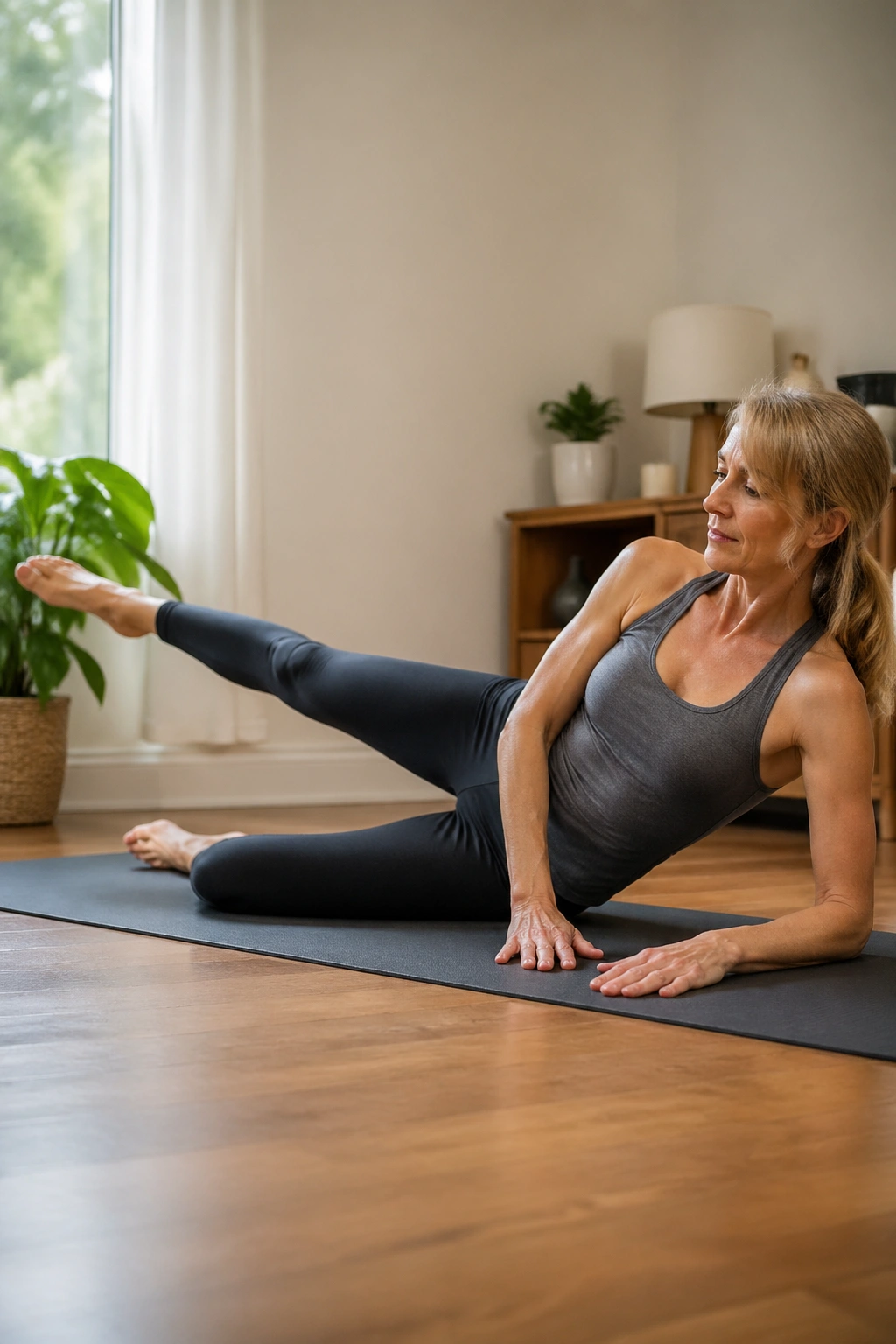
If the outside of your hip feels sleepy when you walk, this one matters.
Side-lying leg lifts hit the glute medius and the smaller stabilizers that keep the pelvis level. Lie on your side, bottom leg bent for balance if you want, and lift the top leg only as high as you can without hiking the waist. That last part is the trap. If the waist shortens, the wrong muscles are stealing the show.
I like to keep the top foot slightly flexed or turned just a little down. That tends to take some of the hip flexor noise out and puts more work where it belongs.
A few honest cues help:
- Lift on an exhale.
- Lower on a slow inhale.
- Keep the movement about 6 to 10 inches high.
- Stop before you feel momentum.
Small range. Clean line. Stronger hip. That is the trade here.
5. Side-Lying Circles
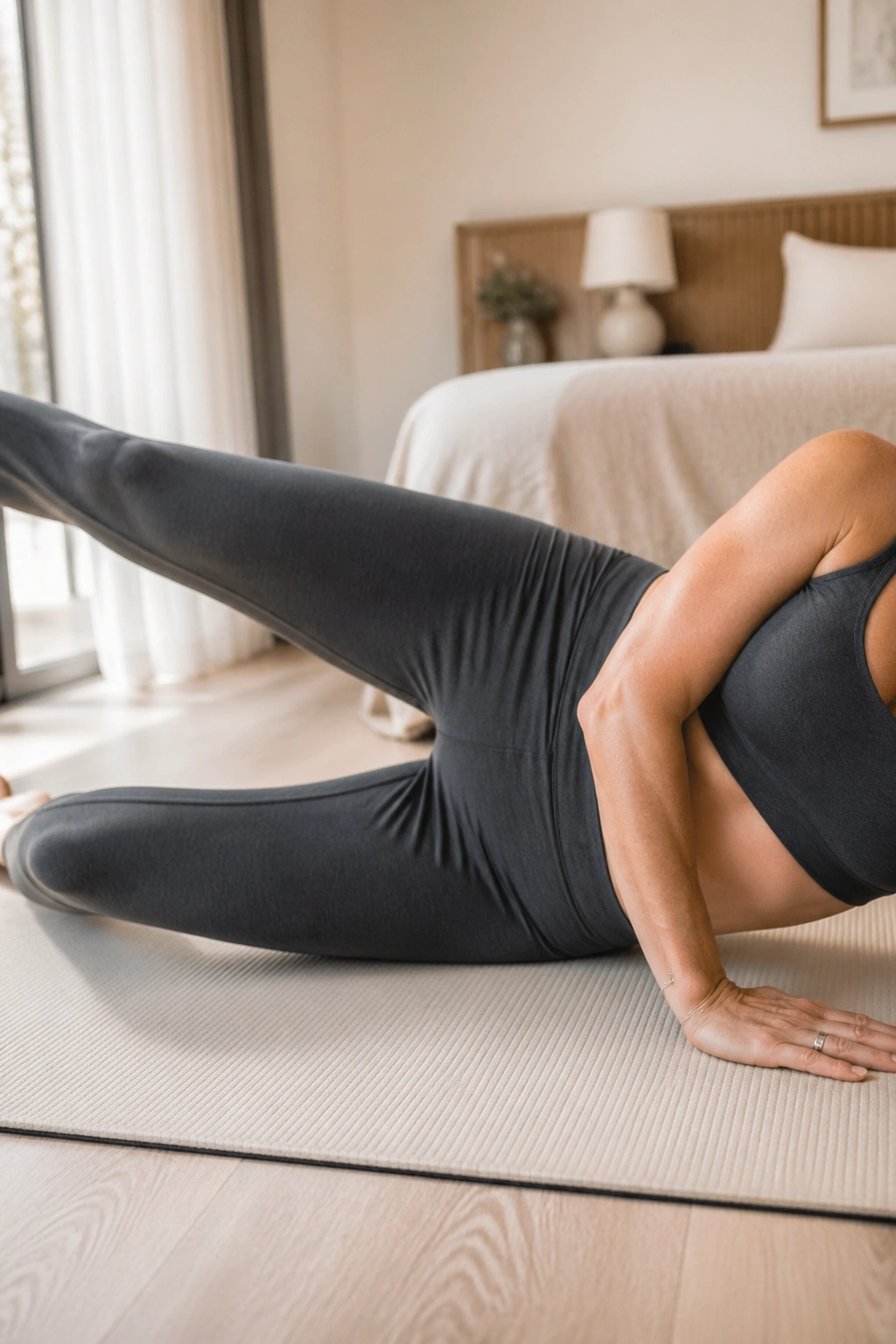
Circles look tiny. Good. They should.
This is one of those Pilates leg workouts that teaches control more than strength, although you’ll feel both if you do it well. With your top leg lifted a few inches off the mat, draw slow circles from the hip joint. Keep the pelvis still. If the whole torso rocks, the circle got too big.
Start with 5 circles one direction and 5 the other. Then switch sides. If you want a harder version, point and flex the foot on a few circles so you can feel how the leg changes when the ankle changes.
What makes it useful
The circles challenge hip stability in a way straight lifts don’t. They also make you pay attention to the difference between moving the thigh and moving the whole body. That distinction matters more as you get older, because balance and control start to count for more than speed.
A dinner-plate-sized circle is plenty. Sometimes even smaller.
6. Inner-Thigh Ball Squeezes
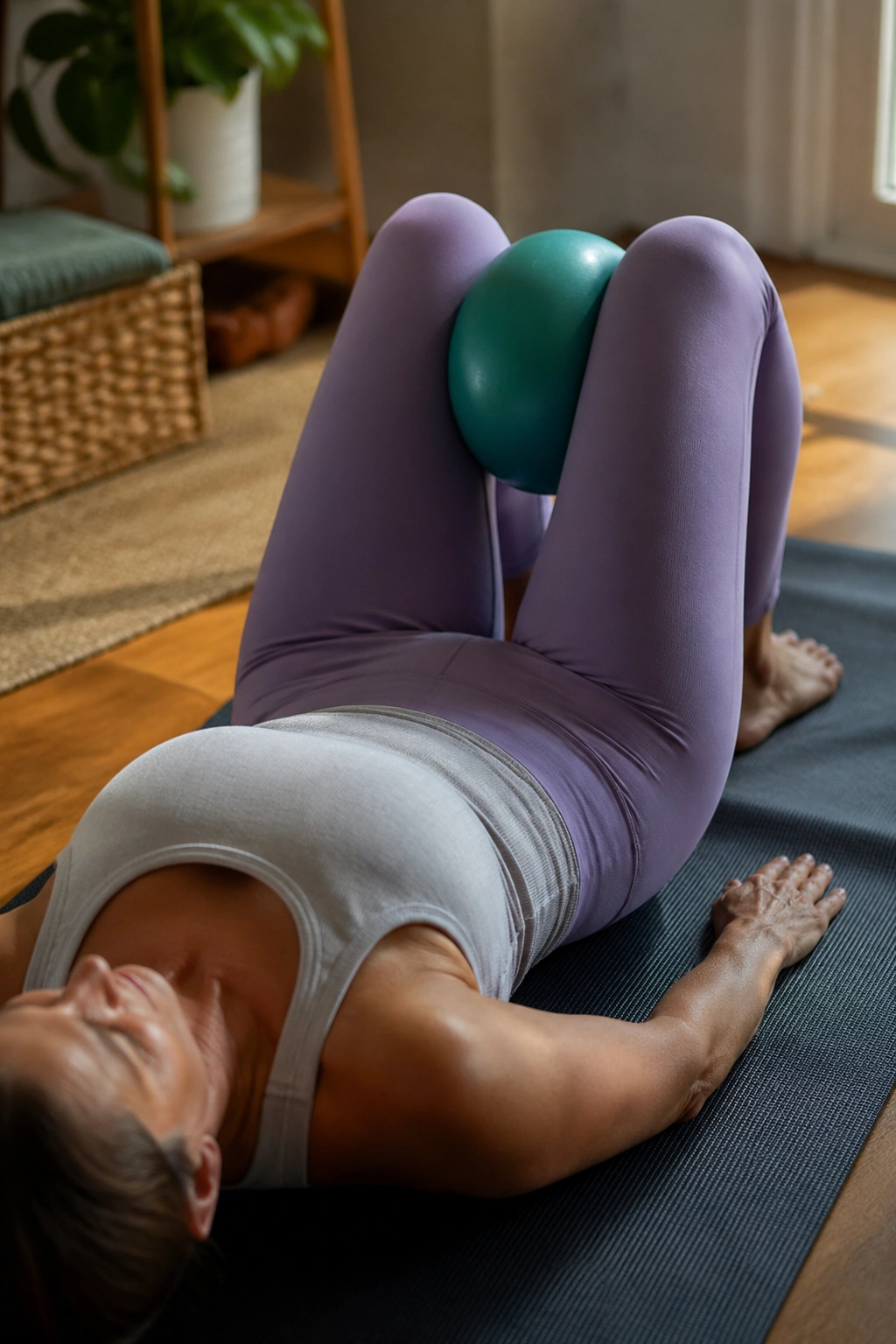
A lot of women ignore the inner thighs until balance work starts feeling shaky. Then suddenly everyone wants the adductors to do their job.
Lie on your back with knees bent and place a small Pilates ball, yoga block, or firm pillow between the knees. Squeeze gently, hold for 3 to 5 seconds, then release halfway. The goal is not to crush the ball. The goal is to wake up the inner line of the legs without tightening your neck or jaw.
Best way to use them
- Do 8 to 12 squeezes.
- Keep the tailbone heavy.
- Exhale on the squeeze.
- If the knees feel irritated, use a softer pillow and a lighter press.
This move is boring in the best way. It builds awareness, and awareness is what keeps the knees from wandering inward during squats and lunges. Pilates always comes back to this: the small muscles matter more than they look like they should.
7. Frog Pumps
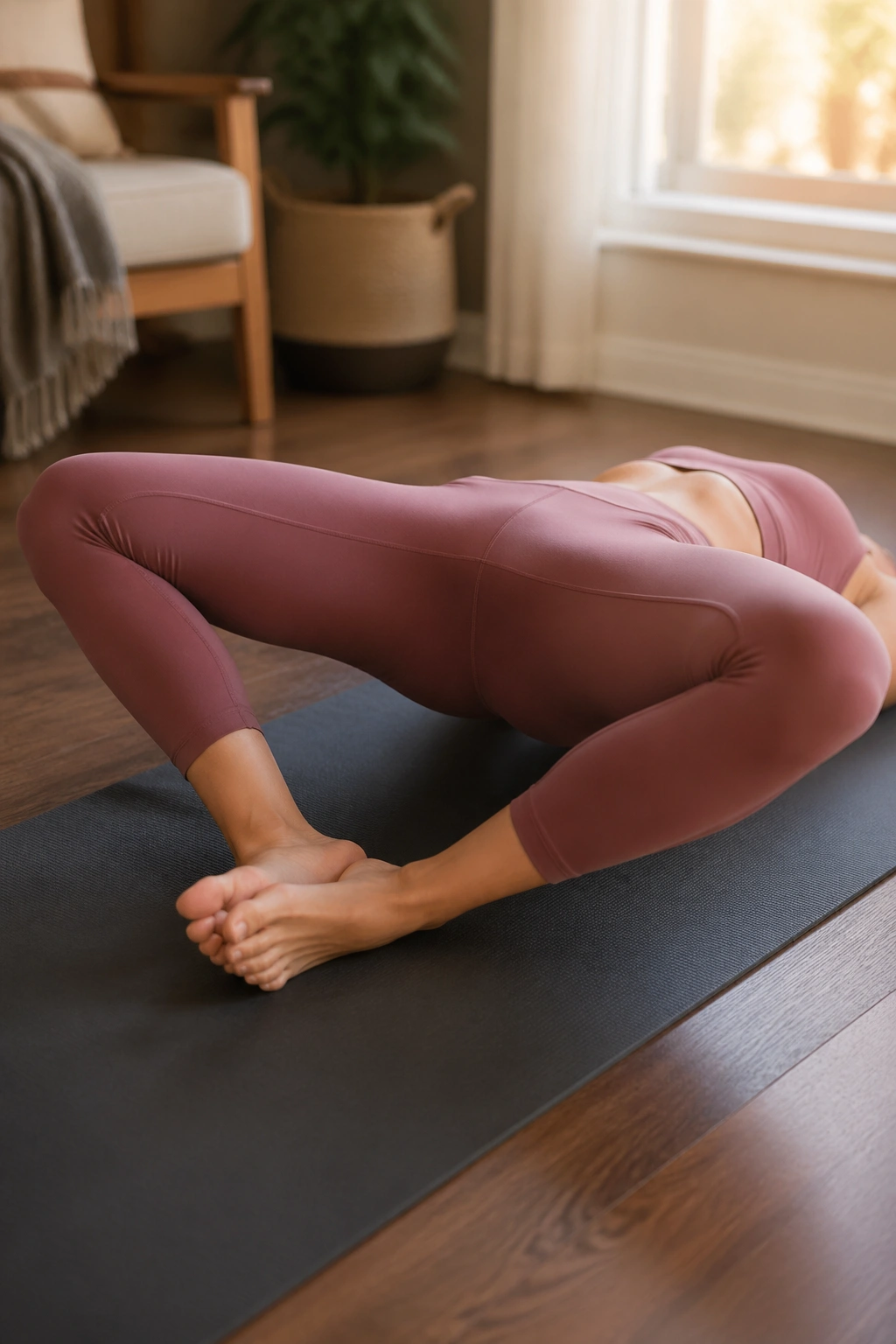
This is the move that makes the glutes wake up fast without needing a dumbbell.
Bring the soles of your feet together, let the knees fall open, and lift the hips in a small bridge pulse. The range is tiny. That is not a flaw. Tiny is what keeps the glutes active and stops the low back from grabbing the whole job. If you go too high, the movement turns messy almost immediately.
Do 15 to 20 pulses, then hold the top for 3 breaths if you want more burn. If your lower back pinches, lower the bridge height and press the tailbone slightly toward the mat before you start.
This one is excellent for women over 40 because it gives the glutes a lot of work without a lot of impact. That matters on days when jumping, running, or heavy lifting does not sound appealing. Or smart.
8. Donkey Kicks
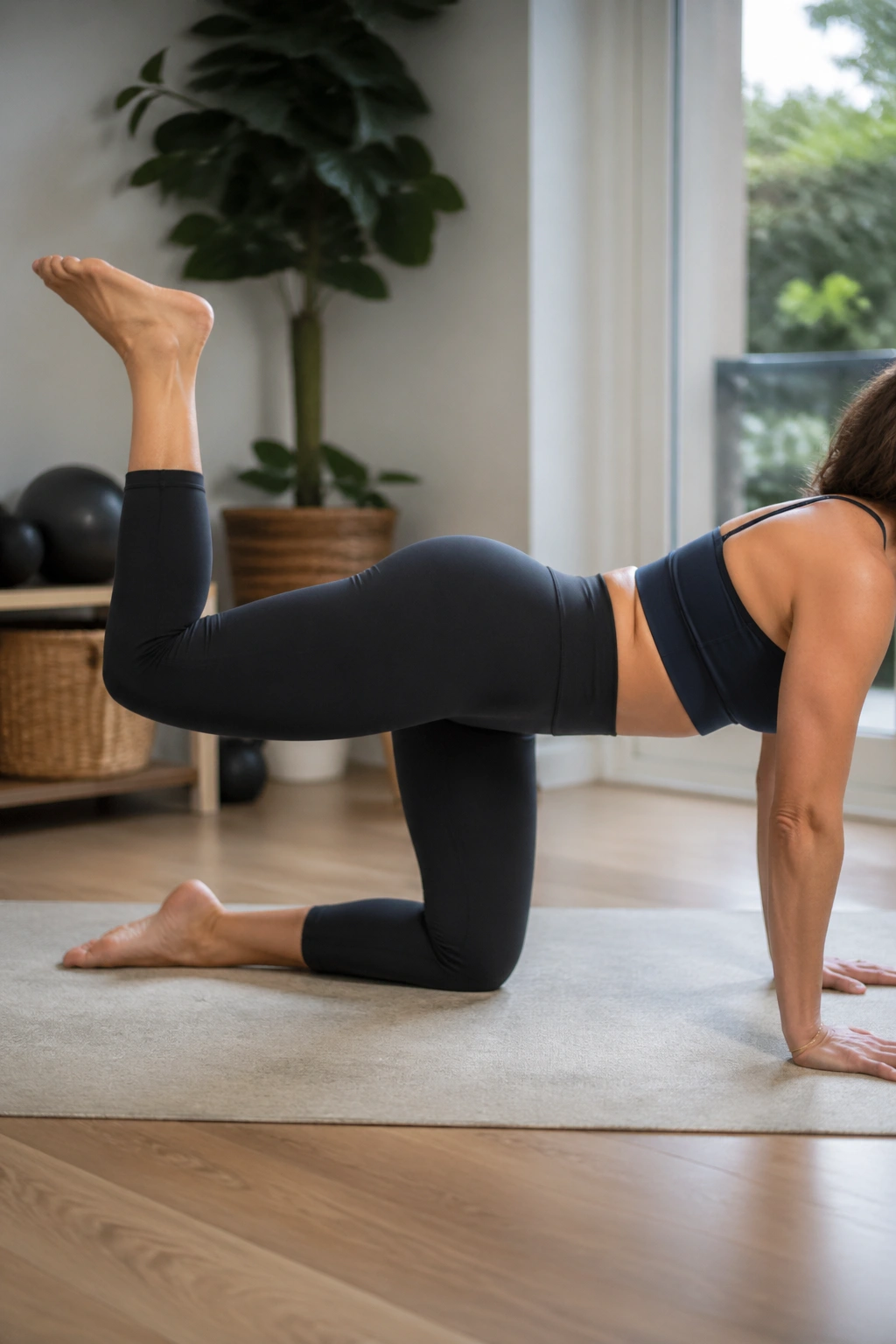
Donkey kicks look simple. They are not simple if you do them correctly.
Start on hands and knees, with wrists under shoulders and knees under hips. Bend one knee to 90 degrees, then lift the foot toward the ceiling without arching the low back. The temptation is to fling the leg up high. Don’t. A smaller lift with a still spine will do more for your glutes than a big swing.
What to watch for
- Keep your ribs from dropping toward the floor.
- Press evenly through both hands.
- Lift until you feel the glute, not the low back.
- If wrists bother you, come down to forearms.
Ten controlled reps per side is enough for a solid set. Add a mini band above the knees when your form is steady. That turns the exercise from “pretty easy” into “oh, there it is.”
9. Fire Hydrants
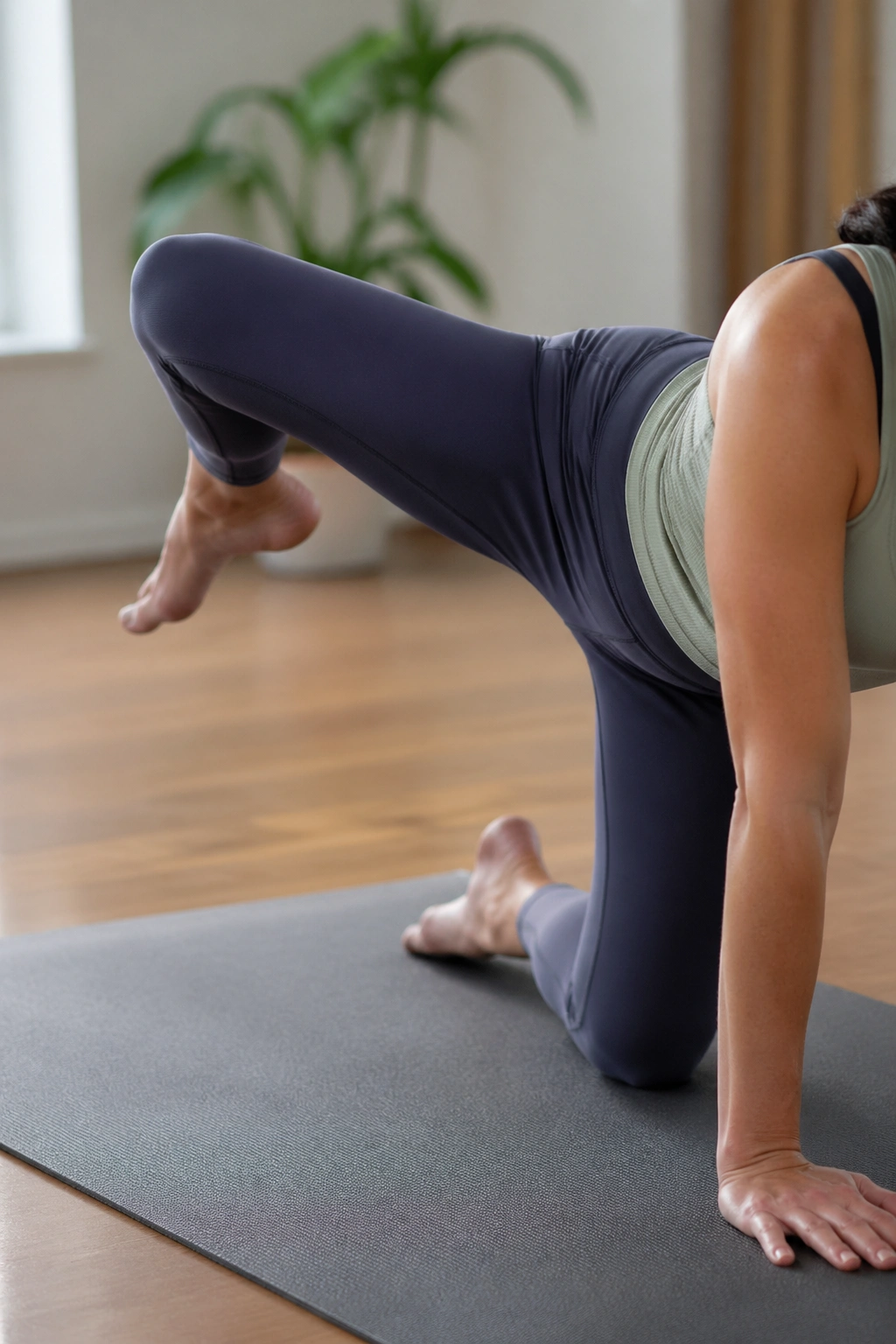
Fire hydrants hit the side of the hip in a way donkey kicks do not.
From hands and knees, lift one bent knee out to the side like the leg is opening a car door. Keep the pelvis level and avoid twisting the torso to fake a higher lift. The movement is shorter than most people expect, and that is fine. A small, strict range works the lateral hip hard.
If you’ve done donkey kicks and wondered why your outer hips still feel weak, this is the missing piece. One move works extension. The other works abduction. Your hips want both.
Try 8 to 10 reps per side, then pause at the top for a one-count. That pause is sneaky. It kills momentum and forces the stabilizers to stay awake.
10. Standing Side Leg Lifts
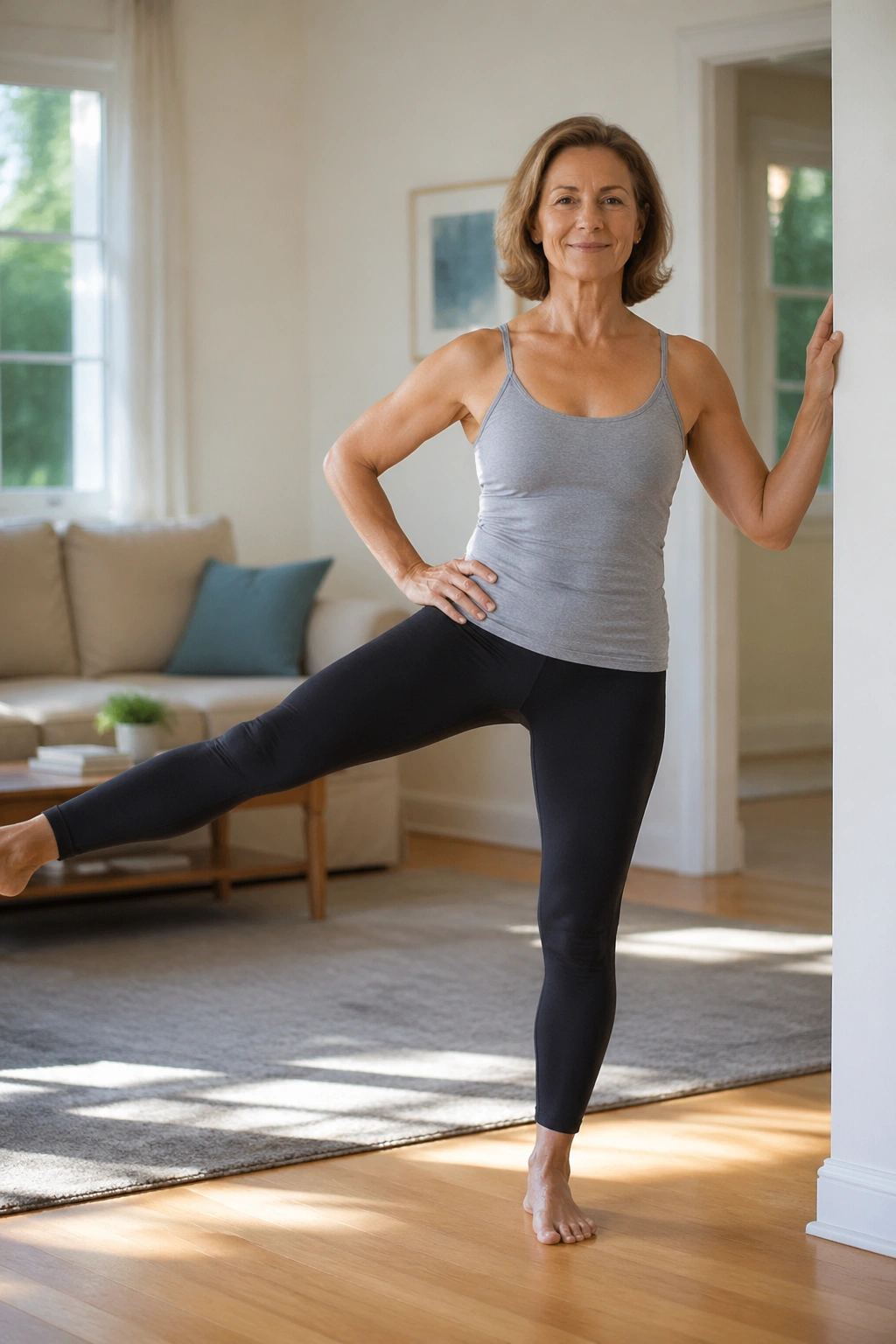
This is where Pilates starts sneaking into real life.
Stand tall beside a wall, countertop, or chair and shift your weight onto one leg. Keeping the standing knee soft, lift the other leg out to the side without letting your torso lean. The hand on the support should feel light. If you’re hanging on for dear life, the balance work has already become too hard.
The real benefit here is functional. You’re training the muscles that keep you steady when you step out of a car, walk on uneven ground, or pivot quickly in the kitchen. Those are the moments where hip strength pays rent.
A good target is 10 to 12 lifts each side. Add a small pulse at the top if you want more challenge. Save the resistance band for later. First get the body line clean.
11. Calf Raises
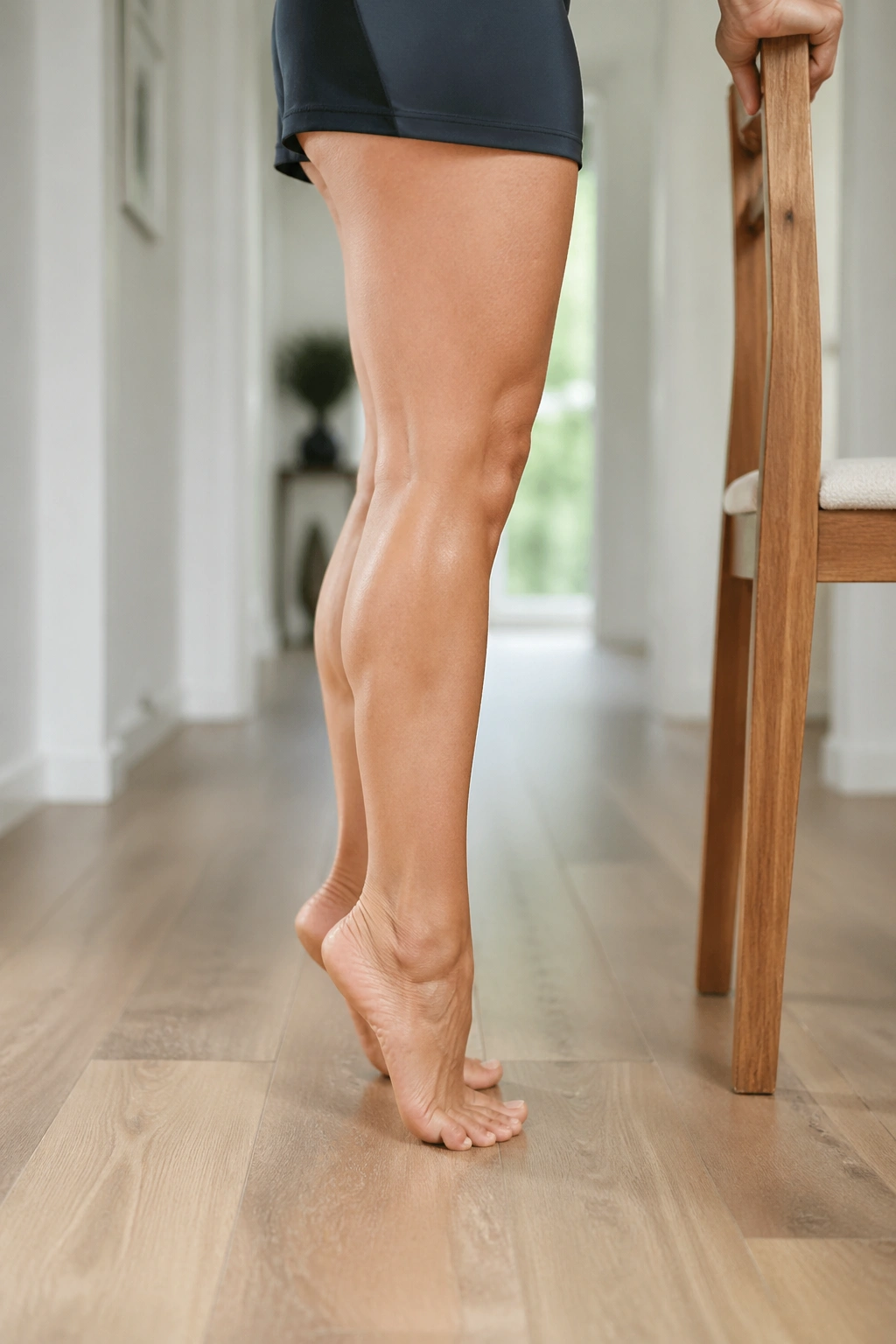
Calves are underrated until your balance starts getting wobbly.
Stand with feet parallel and rise onto the balls of the feet slowly, then lower for a full count of 3. That slow lower is where a lot of the work lives. If you bounce, you miss half the benefit. If you roll outward onto the pinky toe, you also miss half the benefit.
A few ways to do them well
- Hold the back of a chair for light support.
- Keep the ankles stacked over the second and third toes.
- Try 12 to 15 reps before moving to one-leg work.
- Pause for 2 seconds at the top if you want more control.
Strong calves help with walking, stair climbing, and balance. They also support the feet, and feet matter more than people admit. Weak feet turn every other leg exercise into a little less stable than it should be.
12. Chair Squats
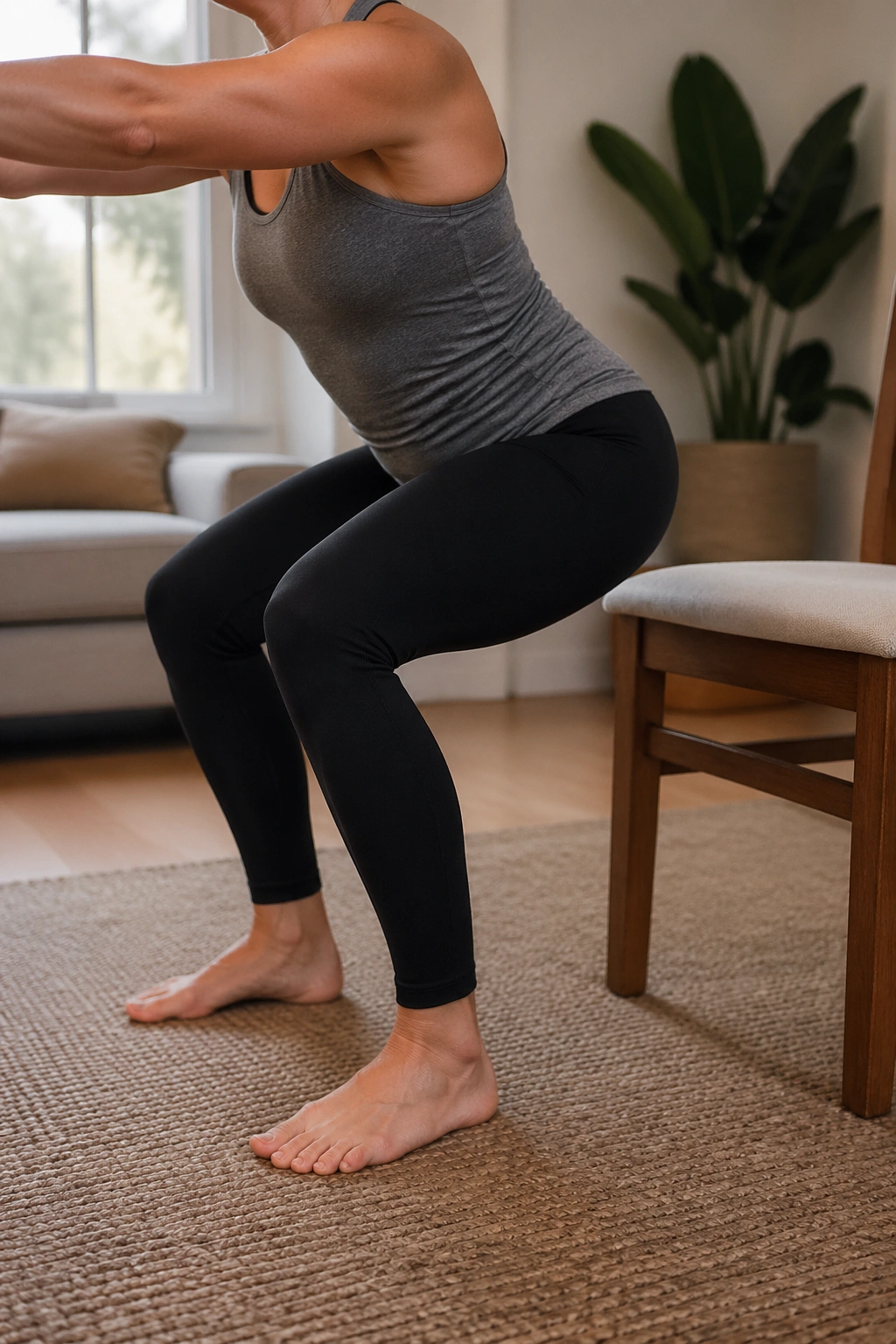
A chair squat tells the truth fast.
Sit back to a sturdy chair and stand up without throwing yourself forward or collapsing into the seat on the way down. The movement should feel controlled both directions. If you plop, the legs are getting a break they did not earn.
Keep the feet about hip-width apart and aim the knees over the middle toes. The torso can tip forward a little, but not in a dramatic way. A little forward lean is normal. Falling over your thighs is not.
How low should the chair be?
Use a height that lets you stand without pain and without twisting the knees inward. Higher chairs make the move friendlier. Lower chairs make it harder. There is no prize for choosing the painful option.
Eight steady reps is enough to start. Add a 2-second hover above the chair if you want more work. That tiny pause teaches the legs to own the transition instead of bouncing through it.
13. Split-Stance Lunges
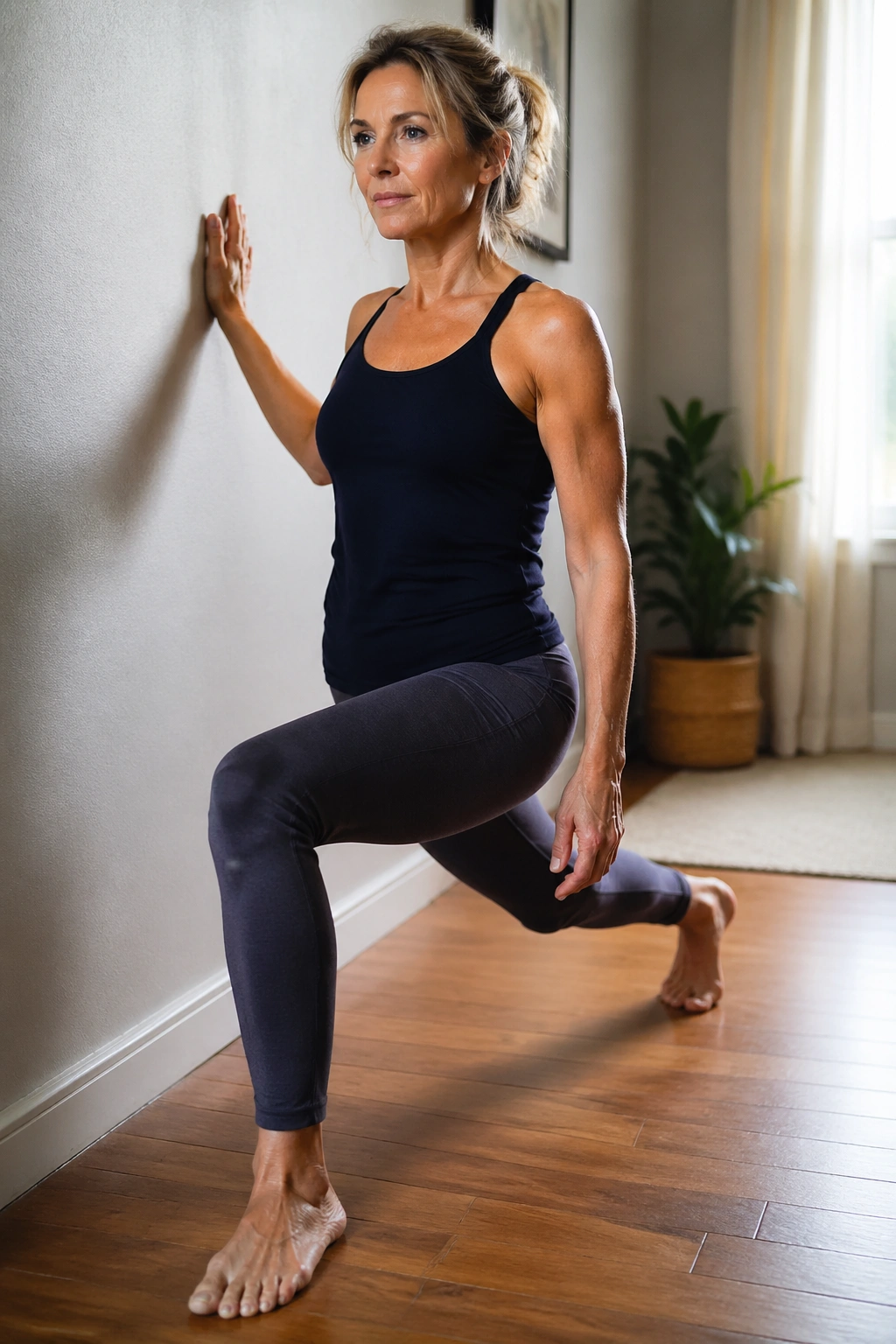
A split stance lets you train the legs without demanding a huge bend from the knees.
Set one foot forward and one foot back, holding a wall or chair if needed. Lower straight down a few inches, then rise. Keep the front heel heavy and the torso upright enough that the glutes and quads share the load. If the front knee dives inward, shorten the range before you go deeper.
A cleaner version for cranky knees
- Start with a shallow bend.
- Keep the back heel lifted or lightly grounded, whichever feels better.
- Use slow pulses instead of full range if balance is shaky.
- Stop if you feel sharp pain, not normal muscle effort.
This is a great step between chair squats and more demanding lunge work. It teaches control, and control is what keeps leg training useful instead of annoying.
14. Step-Ups
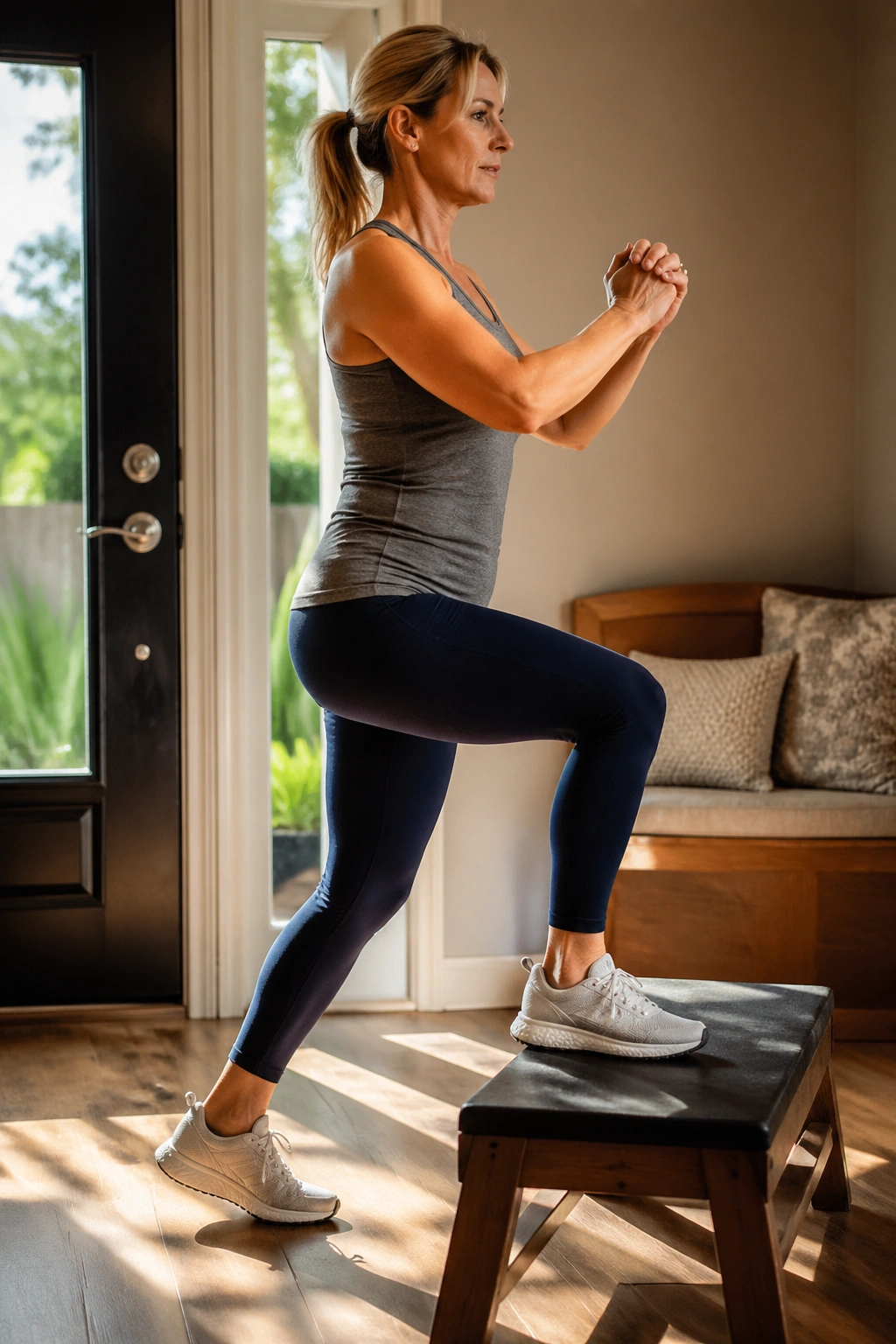
Stairs are where leg strength turns into daily life.
Use a low step, a sturdy aerobic platform, or even the bottom stair in your house. Step up with one foot, drive through the whole front foot, and lower with control for a count of 3. Don’t spring off the back leg. The front leg should be doing the real work.
A low step is plenty. If your pelvis tips or your shoulders hunch, the height is too high. That’s the whole trick with step-ups: the best version looks almost too easy when it’s set up right.
This move is especially good for women over 40 because it builds the quads, glutes, and balance in a way that feels close to real movement. If stairs bother you in daily life, step-ups are one of the most honest ways to practice getting better at them.
15. Standing Hamstring Curls
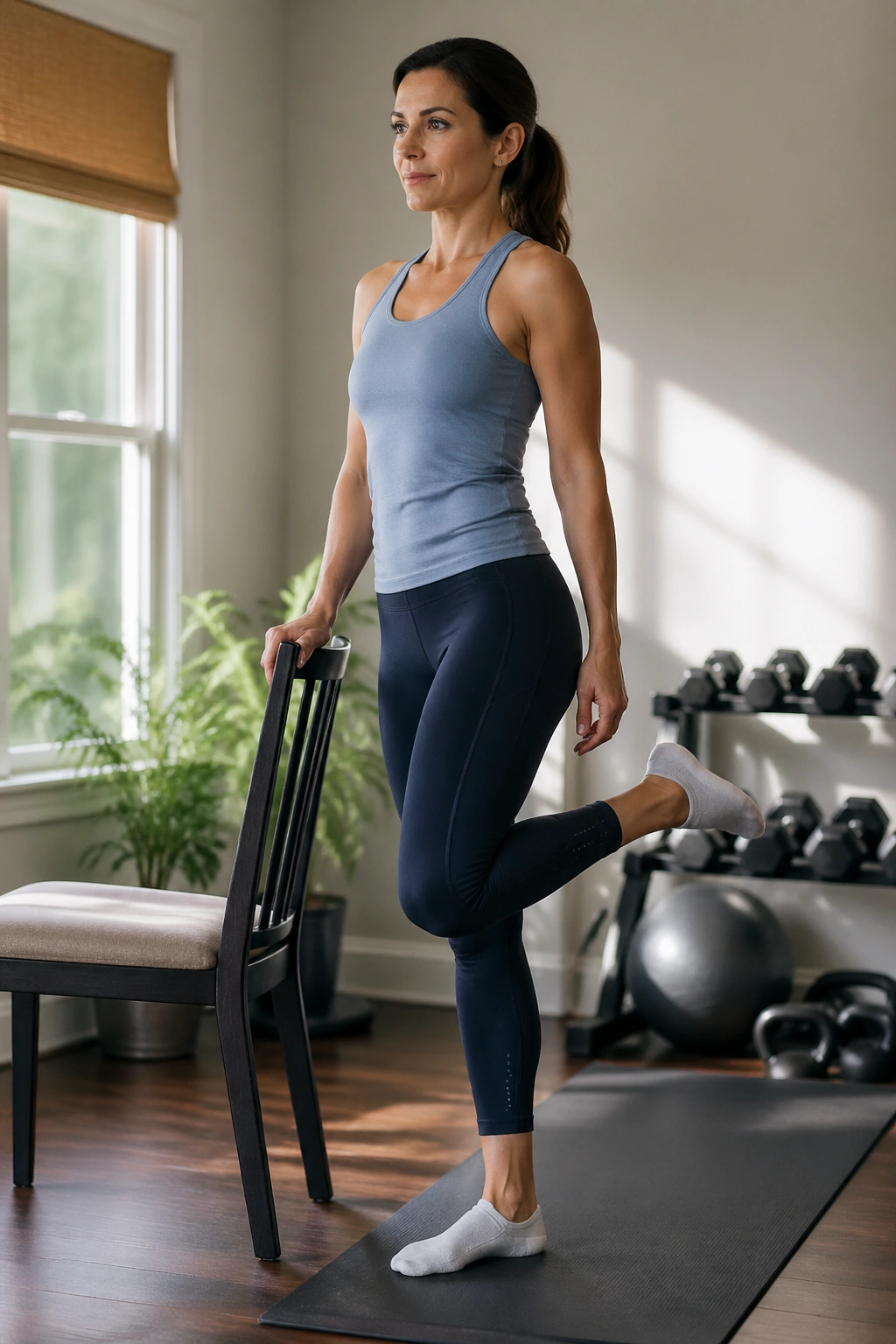
Do standing curls matter if you already do bridges? Yes. A little.
Bridges load the hamstrings in a long line. Standing curls ask the knee to bend against gravity, which is a different job and a useful one. Stand with one hand on a chair, bend one knee so the heel draws toward the glute, and keep the thighs lined up. Don’t let the working knee drift forward or the low back arch to create extra range.
Make them honest
- Keep the hips square.
- Move the heel toward the seat, not behind the body.
- Pause for one count at the top.
- Do 10 to 12 reps each side.
If you want more challenge, loop a light ankle band around both ankles. But first get the shape right. A sloppy hamstring curl is just a swing. A clean one teaches the back of the leg to contribute without stealing from the spine.
16. Bird Dog Leg Reach
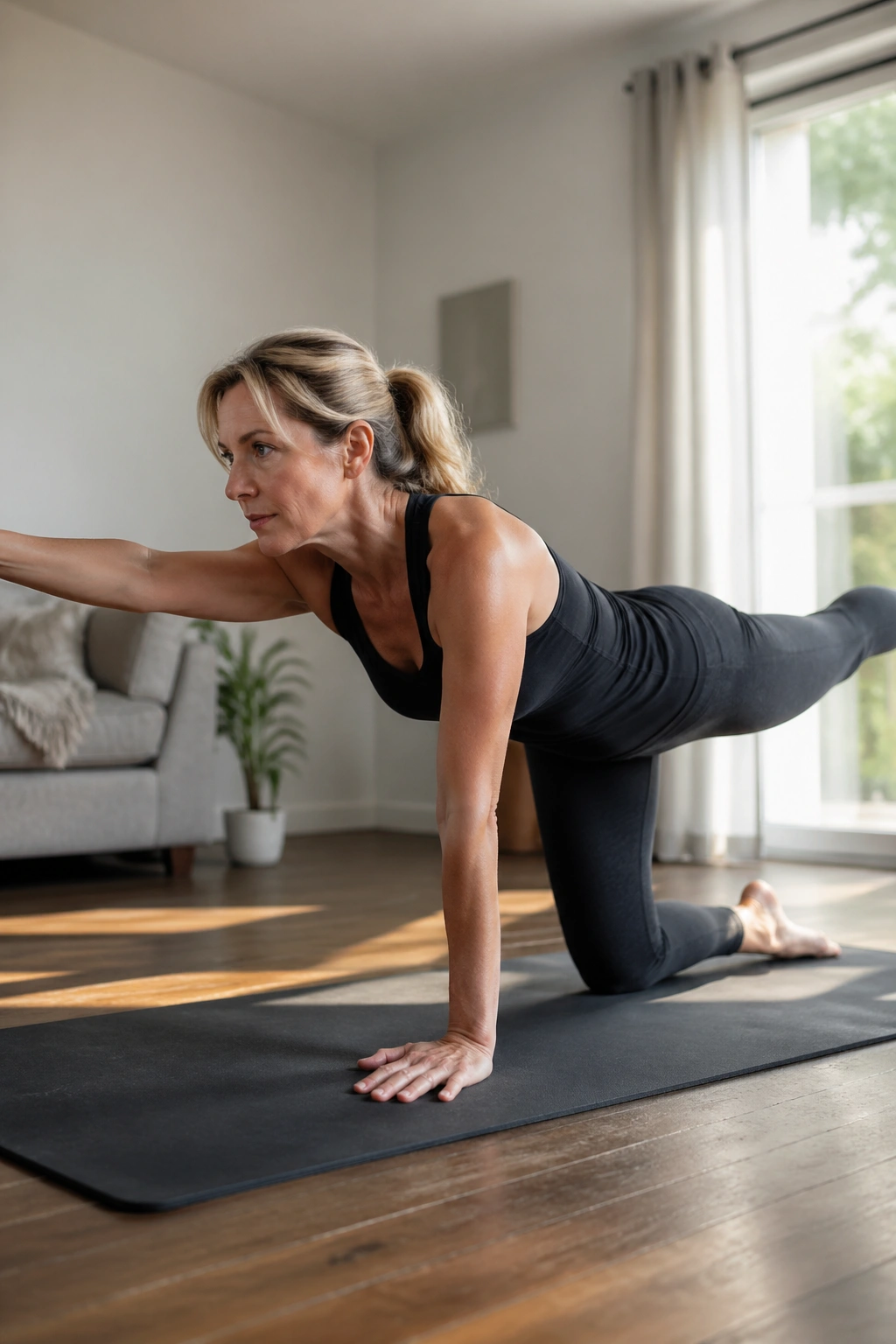
If your low back takes over on glute work, bird dog is the reset button.
From all fours, extend one leg straight back and reach the opposite arm forward. Hold the line for 2 breaths, then return slowly. You can keep the toes on the floor for a toe tap if full extension feels shaky. That still counts. In fact, it may be the smarter version for some bodies.
Why it belongs here
- It trains the glutes without compressing the spine.
- It challenges balance in a controlled way.
- It asks the hamstrings to support the leg without cramping.
- It teaches your torso not to wobble every time a limb moves.
A lot of people make this move too big. You don’t need a higher leg. You need a steadier trunk. The cleaner the line, the better the exercise works.
17. Scissor Kicks
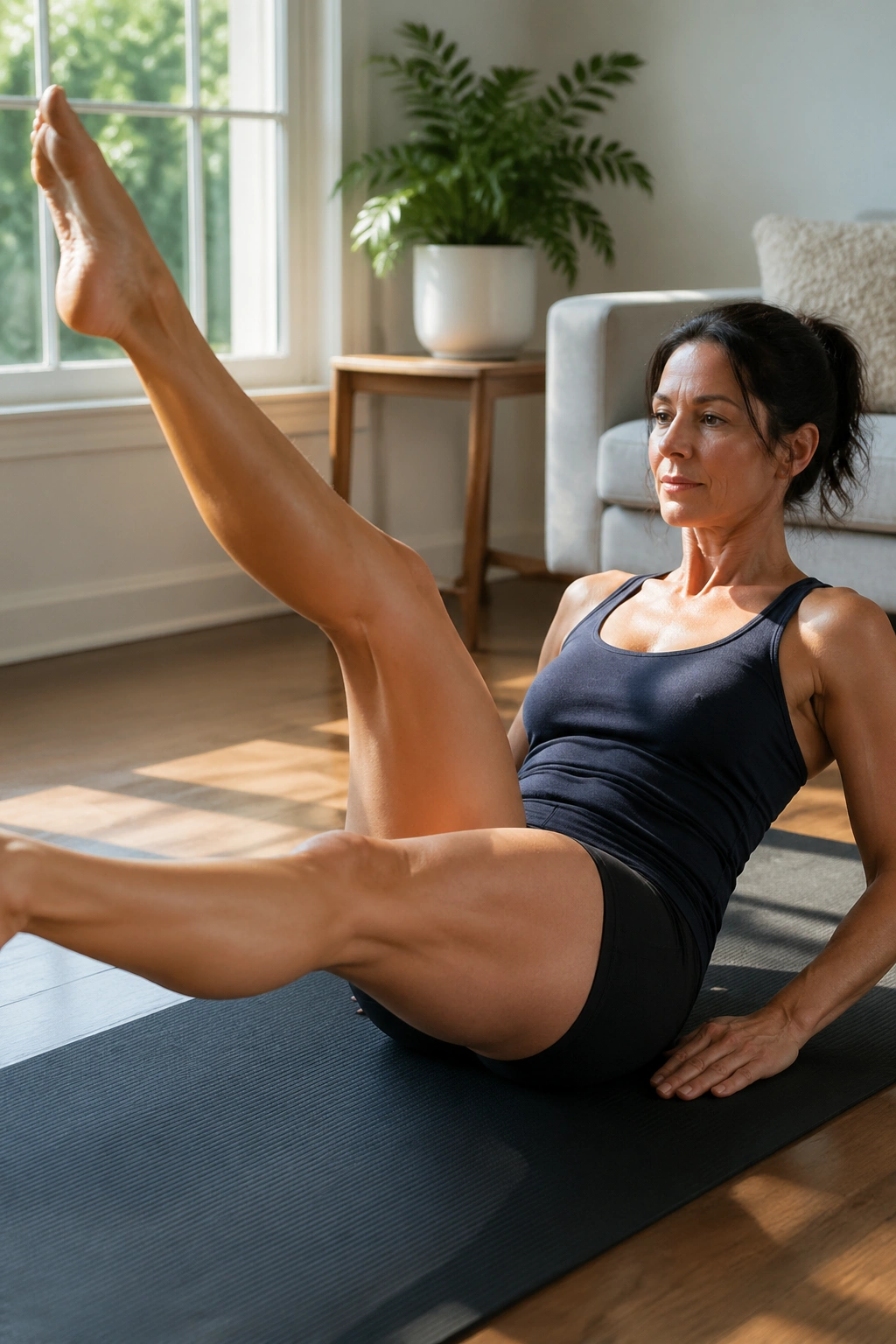
Scissor kicks look like a core move, and they are, but the legs do plenty of the work too.
Lie on your back and extend one leg up while the other reaches long toward the floor, staying as high as you need to keep the low back quiet. Switch with control. If the back arches or the hip flexors start shouting, bring both legs a bit higher. There is no medal for dropping the legs lower than your spine likes.
This is a good reminder that Pilates leg work is not always about burning the thighs. Sometimes it’s about teaching the legs to move while the pelvis stays heavy and the rib cage stays calm.
Use 6 to 8 slow switches to start. Bent knees are a fine modification. Honestly, they are often the smarter choice.
18. Wall Sit Pulses
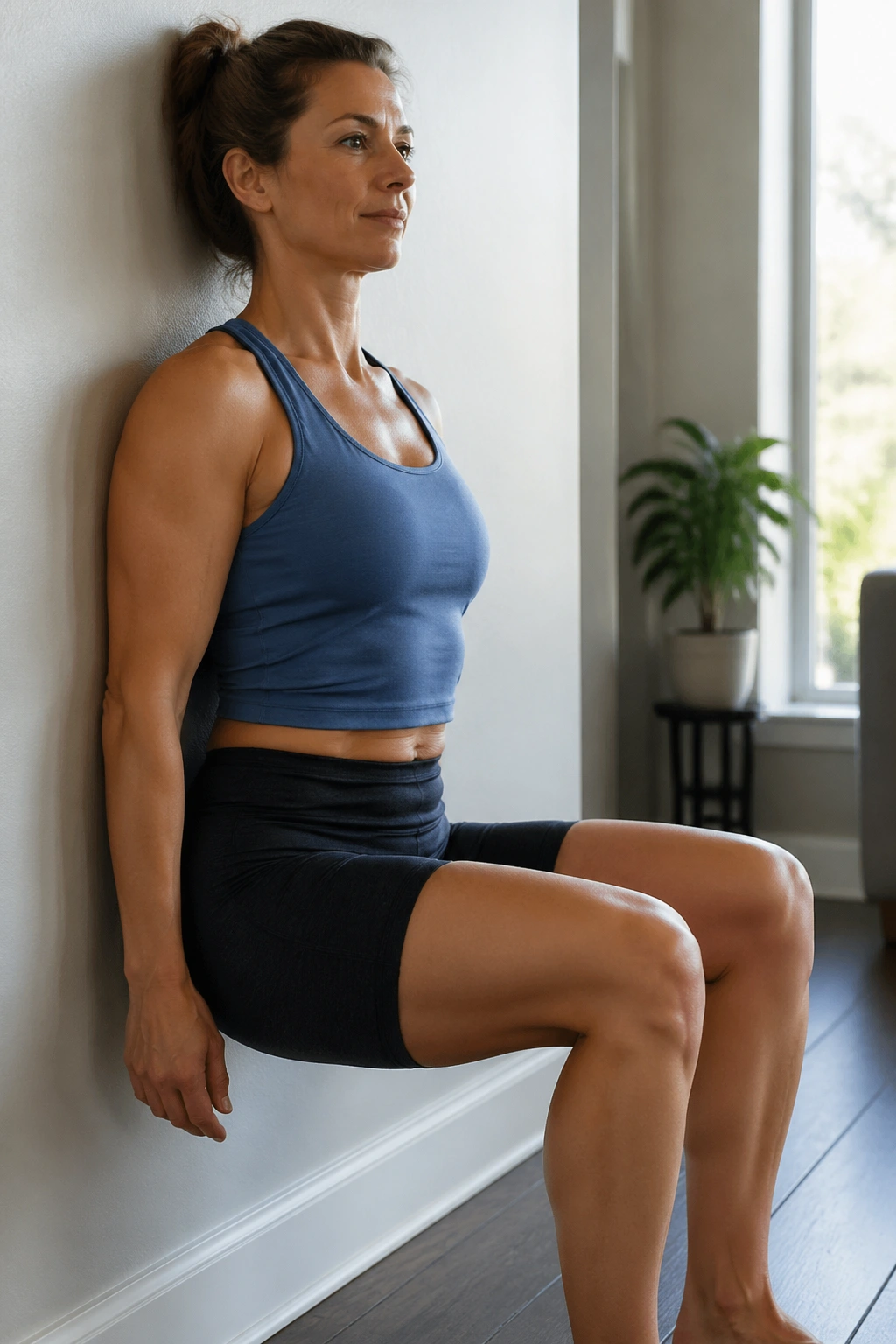
A wall sit is boring. That’s why it works.
Slide down the wall until your knees are bent about 70 to 90 degrees, depending on comfort, and hold. Then pulse up and down an inch or two. Keep the low back in contact with the wall and the knees lined up over the feet. If the quads shake, good. If the knees complain sharply, stand up a little higher.
Why it earns a spot
Wall sits load the thighs without impact. They also ask the glutes to stay on while the abs keep the pelvis from tipping forward. That mix is useful if you want stronger legs without pounding the joints.
Try a 20-second hold, then 10 tiny pulses. Rest, then repeat once. That’s enough for a clean set. More turns it into a survival contest, which is usually not the point.
19. Single-Leg Balance Reaches
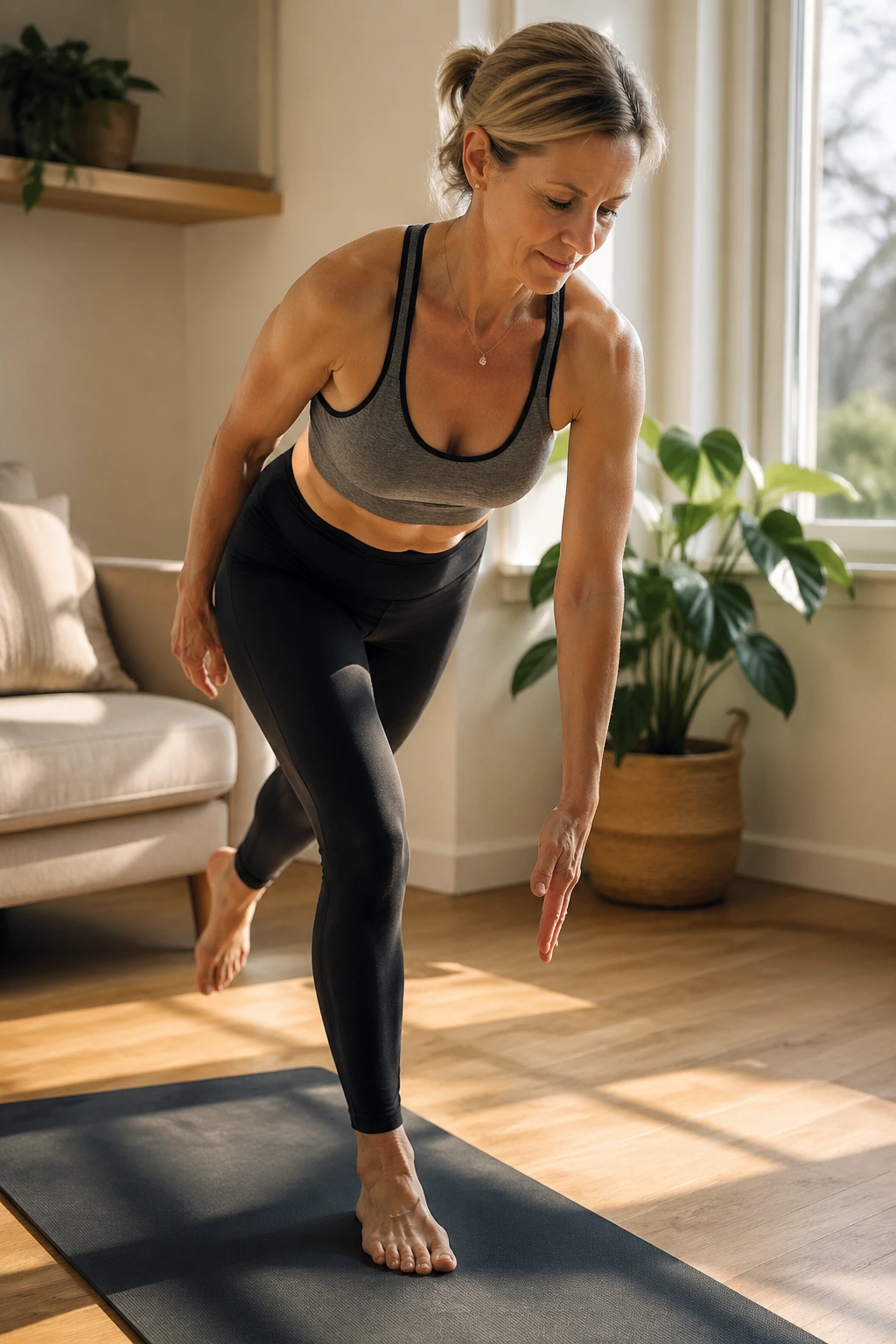
Balance is strength wearing a different outfit.
Stand on one leg and reach the free hand toward the shin, ankle, or floor while the lifted leg reaches back a little for counterbalance. Come back up slowly. Keep the standing foot active, not frozen. You want the arch awake and the toes spread, not clenched.
A few ways to scale it
- Hold a wall with one fingertip.
- Keep the back leg slightly bent.
- Reach only to knee height if the floor feels too far.
- Do 5 slow reaches each side.
This is one of the most useful Pilates leg workouts for women over 40 because it trains the ankle, hip, and foot at the same time. That combination matters when you’re walking on uneven ground, carrying groceries, or turning fast. Balance work looks easy until it saves you from a wobble you never saw coming.
20. Half-Kneeling Side Leg Lifts
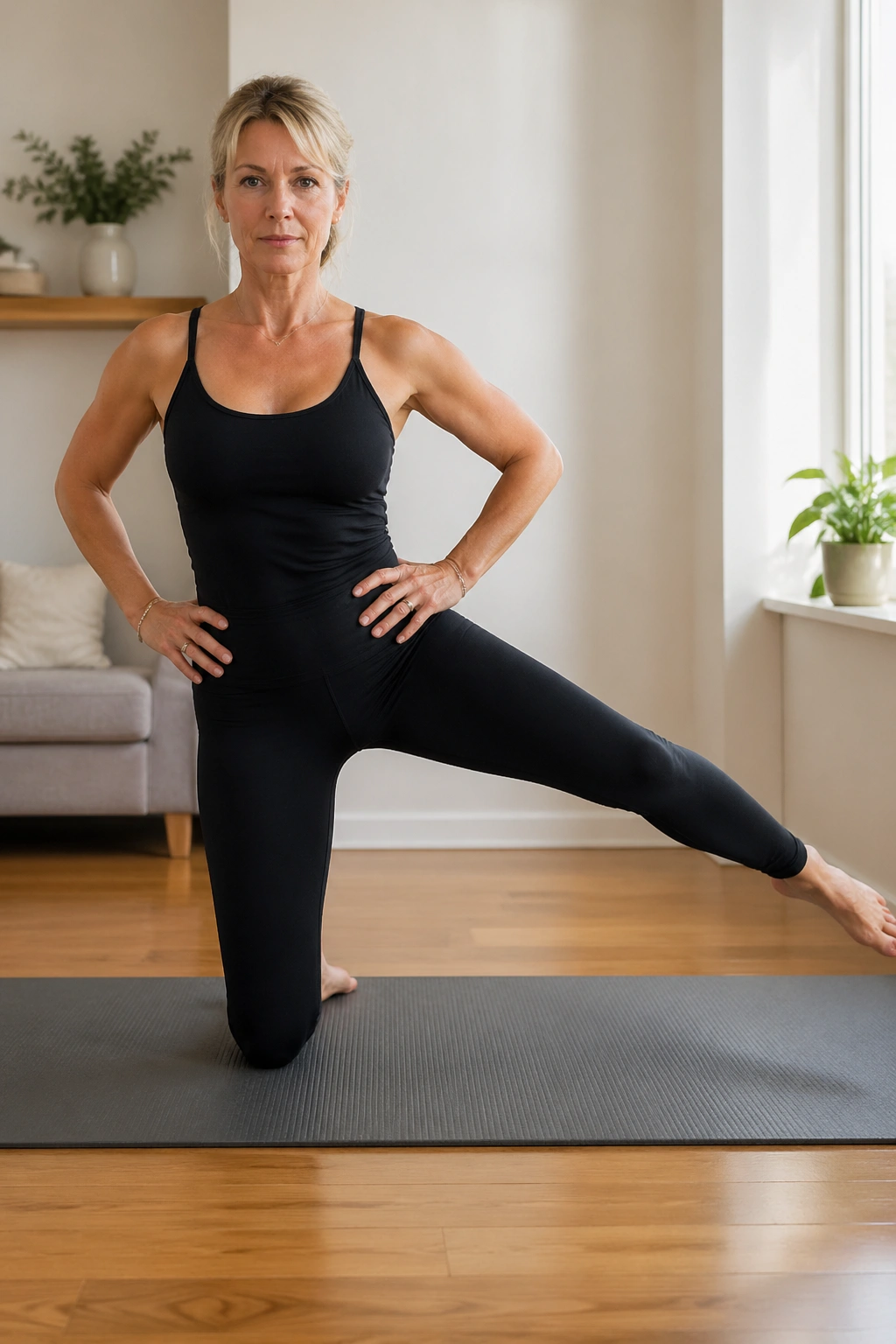
This old-school Pilates move is a sneaky outer-hip burner.
Kneel on one knee with a mat or folded towel under it, and extend the other leg straight out to the side. Keeping the torso tall, lift the straight leg a few inches and lower with control. The support knee does a little stabilizing, but the lifted leg and the standing hip are the stars.
If the setup feels awkward, hold the back of a chair or keep one hand on the wall. That is not cheating. It is making the move work for your body instead of your ego.
This one does a nice job of loading the side glutes while also opening the inner thigh of the extended leg. You get strength and mobility at the same time, which is a good deal. Do 8 to 10 lifts per side and keep the motion small.
21. Reformer Footwork Presses
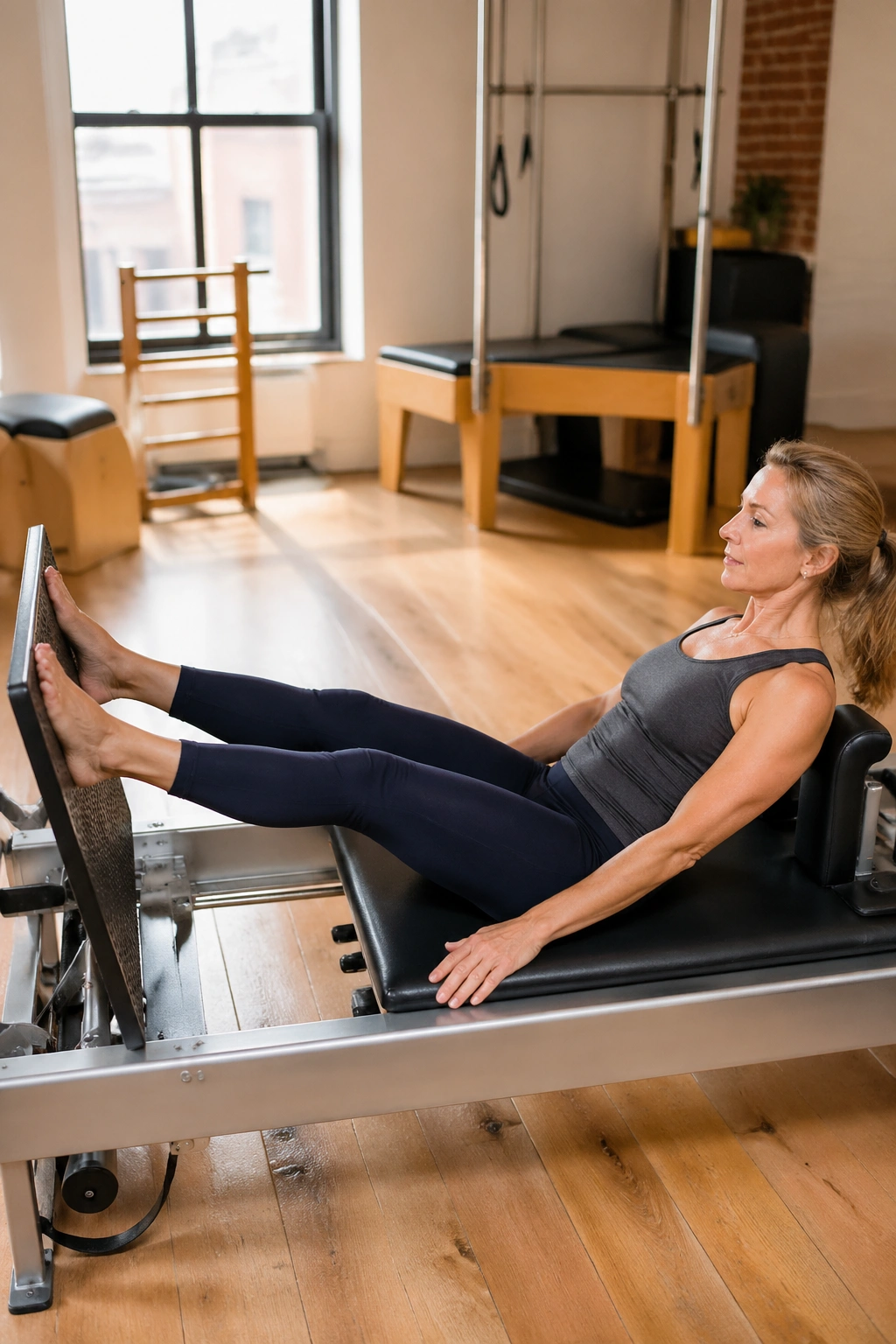
If you have a reformer, this is one of the classic leg pieces for a reason.
Footwork on the reformer loads the legs in a clean, guided path. Heels, toes, and a wide turned-out position each ask for something a little different. Heels tend to hit the hamstrings and glutes. Toes tend to bring the quads into the picture. A small turnout can wake up the inner thighs, if your hips tolerate it.
The machine should feel smooth under you. If the carriage slams or jerks, the spring choice or the control is off. This is not about muscling the carriage around. It’s about pressing evenly through the feet and coming back with the same control.
No reformer? Go back to the wall footwork from #2. Same idea, fewer moving parts. Honestly, that version is easier to repeat at home and easier to keep clean.
22. The Standing Finisher Circuit
The smartest finisher is the one you’ll actually do on a regular Tuesday.
Try this little circuit after any of the moves above, or use it on its own when time is short:
- 30 seconds of calf raises
- 30 seconds of standing side leg lifts
- 30 seconds of chair squats
- 30 seconds of single-leg balance reaches
Rest for 30 seconds, then repeat once.
The beauty of this circuit is that it covers the bases without feeling like a punishment. You get ankle work, hip work, squat patterning, and balance in under 5 minutes. That is enough to matter. It is also enough to keep you coming back, which is the part that actually changes legs over time.
For women over 40, consistency beats drama every single time. Clean reps, good posture, and a few minutes of focused work can do more than a random hard session that leaves you sore for three days. Keep the movements crisp. Keep the ego out of it. Return to the basics often. That is where the useful strength lives.
