



Pilates arm workouts with light weights are sneaky. A pair of 1- or 2-pound dumbbells can make your shoulders tremble far sooner than a heavier gym set, mostly because Pilates asks for slow control, steady breath, and clean alignment instead of momentum.
That is the whole trick. If you swing, shrug, or let your ribs pop forward, the work disappears into your neck and lower back. If you keep the movement tidy, even tiny arm patterns turn into a real upper-body challenge.
I like this style of training for a simple reason: it leaves you feeling worked, not beat up. The arms get stronger, the shoulders learn how to sit better, and the core has to help without turning every rep into a full-body drama. A lot of people think “arm workout” means heavy curls and big presses. Pilates says otherwise. Small range. Slower tempo. Better posture.
The moves below are built for that kind of strength — the kind you can feel in your triceps, shoulders, and upper back while still keeping your breathing smooth and your neck calm. Start lighter than you think, keep the motion crisp, and pay attention to the places that try to take over. They will tell you plenty.
1. Pilates Arm Workouts With Light Weights: Supine Presses
Lying on your back takes most of the cheating out of the picture. Your ribs have a place to settle, your feet can stay planted, and you can feel immediately whether your shoulders are creeping up toward your ears.
How to Do It
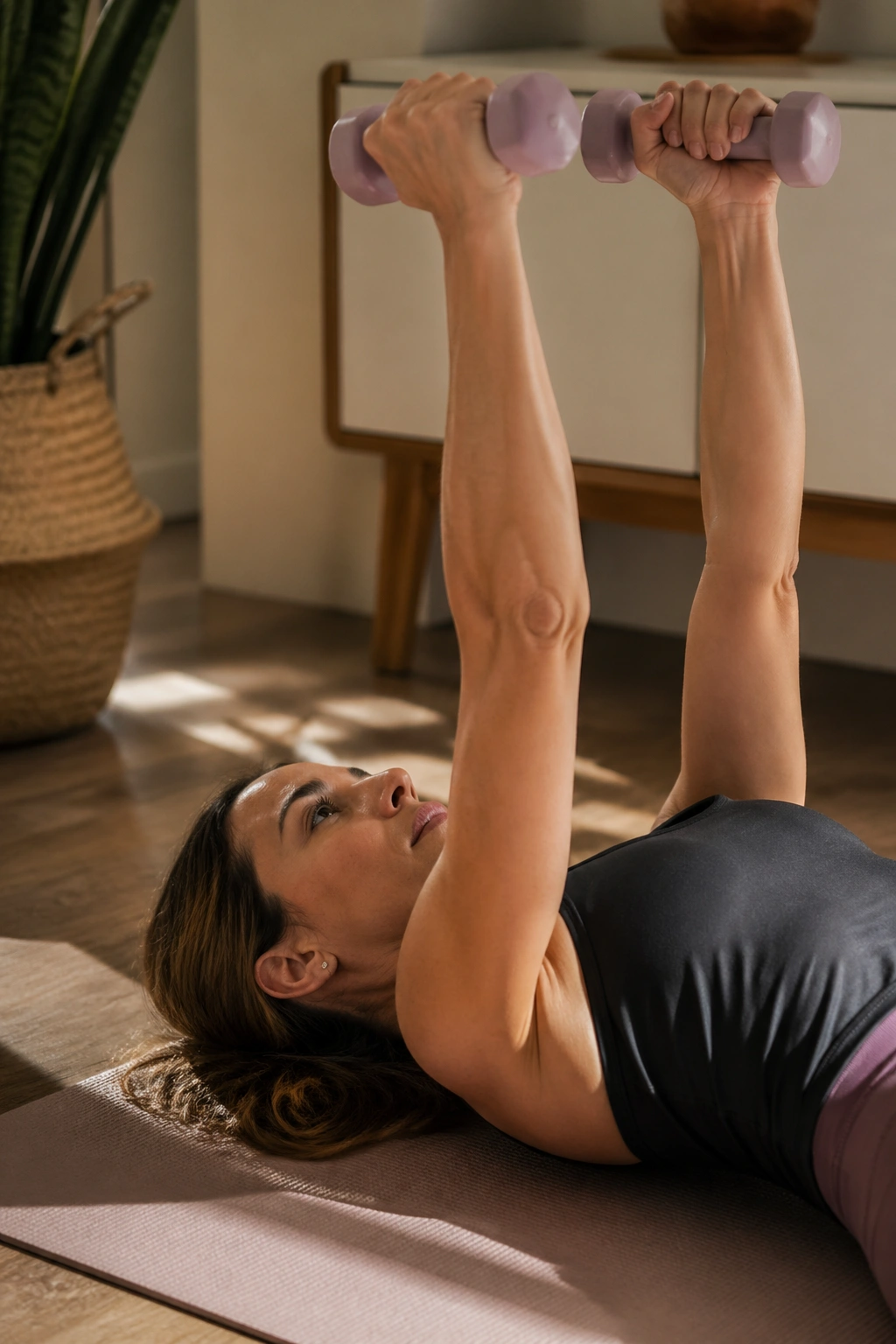
Hold a light dumbbell in each hand, bend your knees, and place your feet flat on the floor. Start with the arms over your chest, palms facing one another, then press the weights straight up until the elbows are almost straight. Lower with control until the elbows hover just above the floor, or stop higher if your shoulders feel cranky.
- Use 1 to 3 pounds per hand to start.
- Keep the wrists stacked over the elbows.
- Exhale as you press up.
- Inhale as you lower for 8 to 12 slow reps.
The floor gives you feedback fast. If your lower ribs start arching, you’re pushing too hard or dropping too low on the way down. That little lift through the rib cage is the giveaway.
Best cue: keep your chest broad, but not puffed up. Broad is good. Flared ribs are not.
2. Standing Boxing Jabs With Soft Knees
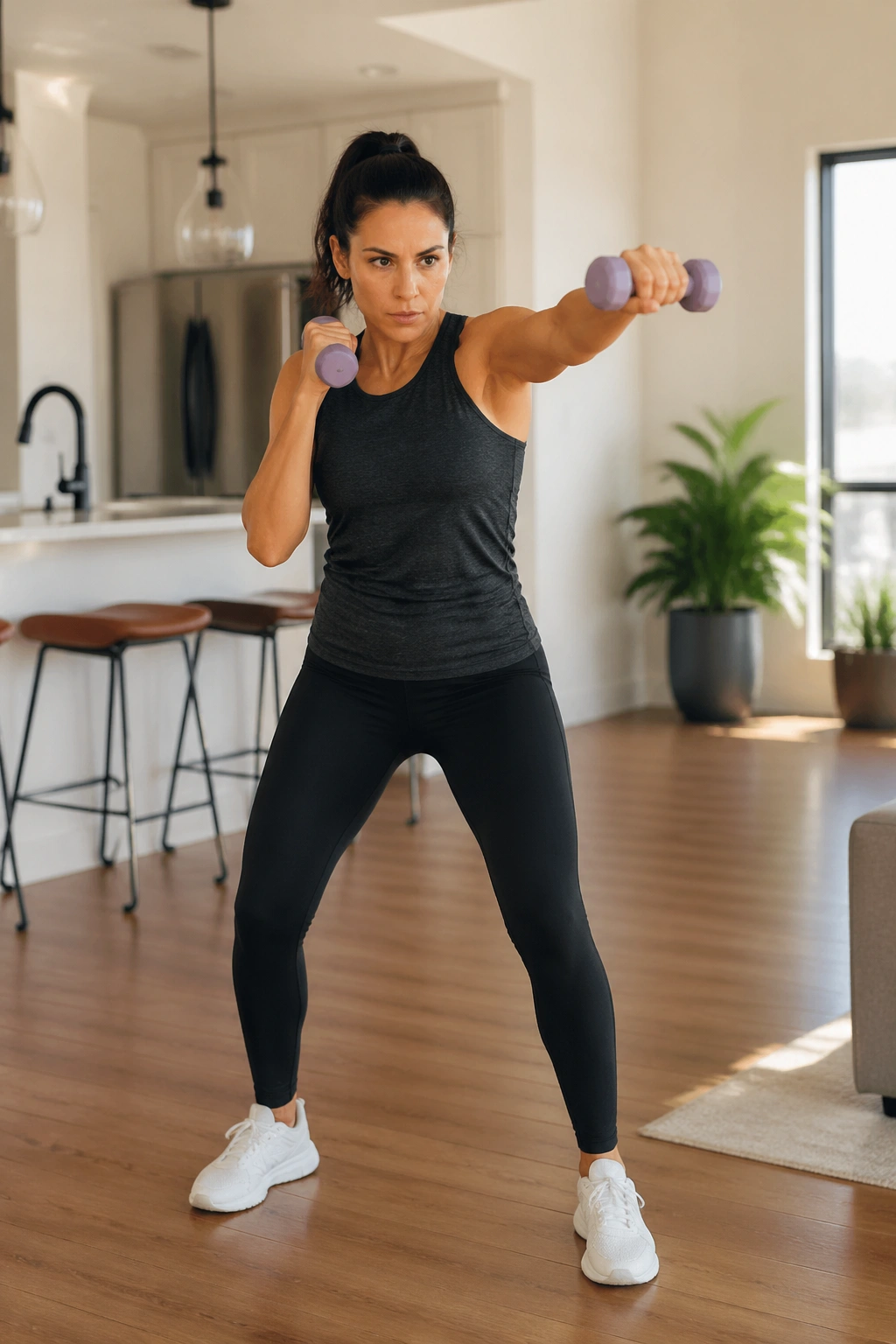
A 2-pound jab can feel nastier than a heavier curl. That’s because the shoulder has to stay organized while your arms move quickly and your stance keeps you from bouncing around like you’re in a gym class warm-up.
Tiny weights. Fast hands. Long burn.
Stand with your feet about hip-width apart, knees soft, and fists hovering near your chin. Punch one arm forward, retract it, then switch sides in a steady rhythm. You can keep the punches straight, or mix in light crosses if your shoulders enjoy a little rotation. The point is not speed for its own sake. The point is clean, repeatable effort.
Do this for 30 to 45 seconds at a time, rest for 15 to 20 seconds, then repeat for 2 to 4 rounds. If your shoulders start to shrug, slow down. If your wrists bend back, lower the weight or make the punch shorter. It should feel brisk, not messy.
I like boxing patterns for days when the body feels flat. They wake up the arms fast, and they wake up your attention too. That matters more than people think.
3. Front Raise to Overhead Reach
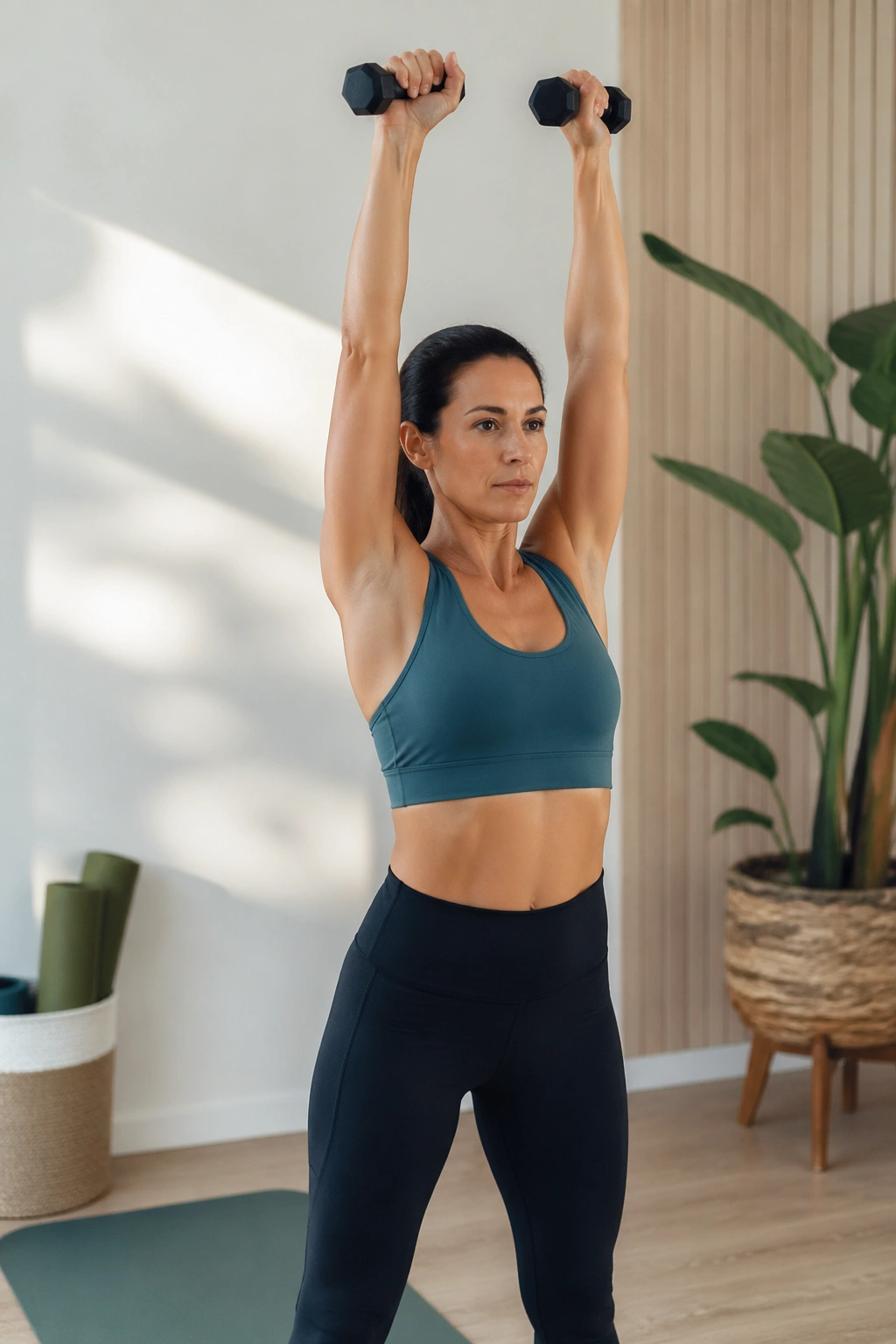
Why does a front raise feel innocent until rep six?
Because the front of the shoulder works hard in a small space, and the moment the weight gets too far from your body, the lever gets longer and the burn gets loud. Add a slow tempo and a quiet torso, and even a light dumbbell starts to feel like a serious piece of work.
Stand tall with the weights in front of your thighs, palms facing your body. Lift the arms to shoulder height first. If that feels smooth, continue into a controlled overhead reach, but only if your shoulders can keep the motion clean. Lower through the same path, without dropping the weights or leaning back.
How to Use It
- Start with 1 to 2 pounds if your shoulders are sensitive.
- Stop the lift at shoulder height if overhead work pinches.
- Keep the ribs stacked over the pelvis.
- Use 6 to 10 slow reps rather than racing through 20.
A lot of people love to throw the arms up here. That misses the whole point. The slower the return, the more honest the exercise becomes.
4. Triceps Kickbacks With a Long Spine
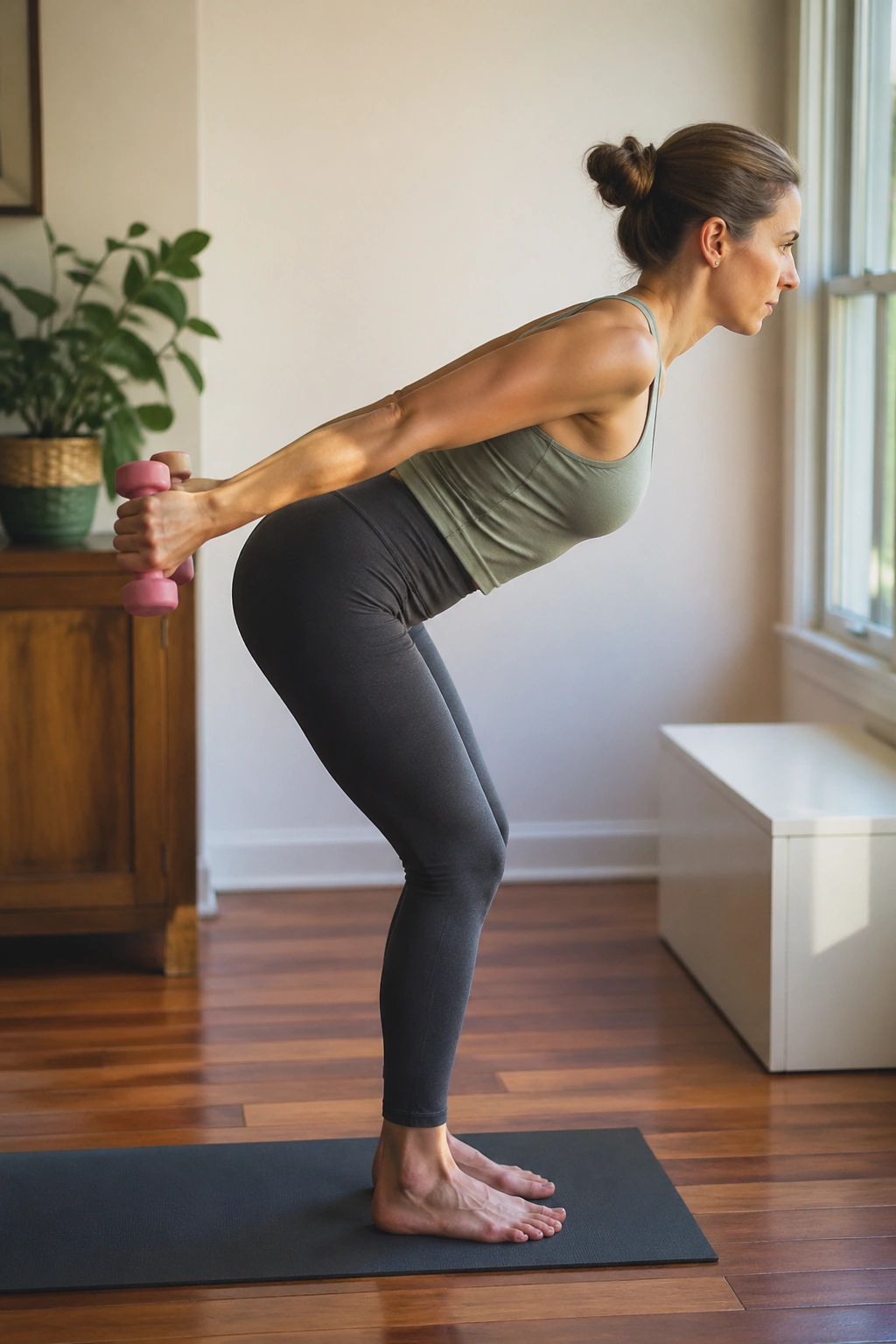
Picture someone trying to do kickbacks while glancing at the mirror and hunching their shoulders. It looks busy. It works badly.
Now picture a long hip hinge, a flat back, and upper arms glued near the sides of the body. Different story. Much better.
Hinge forward a little from the hips, bend the elbows so the dumbbells sit near your waist, and then straighten the arms behind you until the triceps switch on. The upper arm should stay almost still. If it swings, the back does too much and the triceps get a free ride.
- Keep the torso roughly parallel to the floor.
- Use a light weight you can control for 10 to 12 reps.
- Pause for 1 second at the back of the movement.
- Stop if the lower back starts arching.
This one looks mild. It isn’t. The burn shows up fast because the triceps are working from a stretched position, and there’s no place to hide. That’s why a lot of people overdo the weight here and then turn it into a shoulder-and-back exercise by accident.
5. Hug-a-Tree Chest Fly
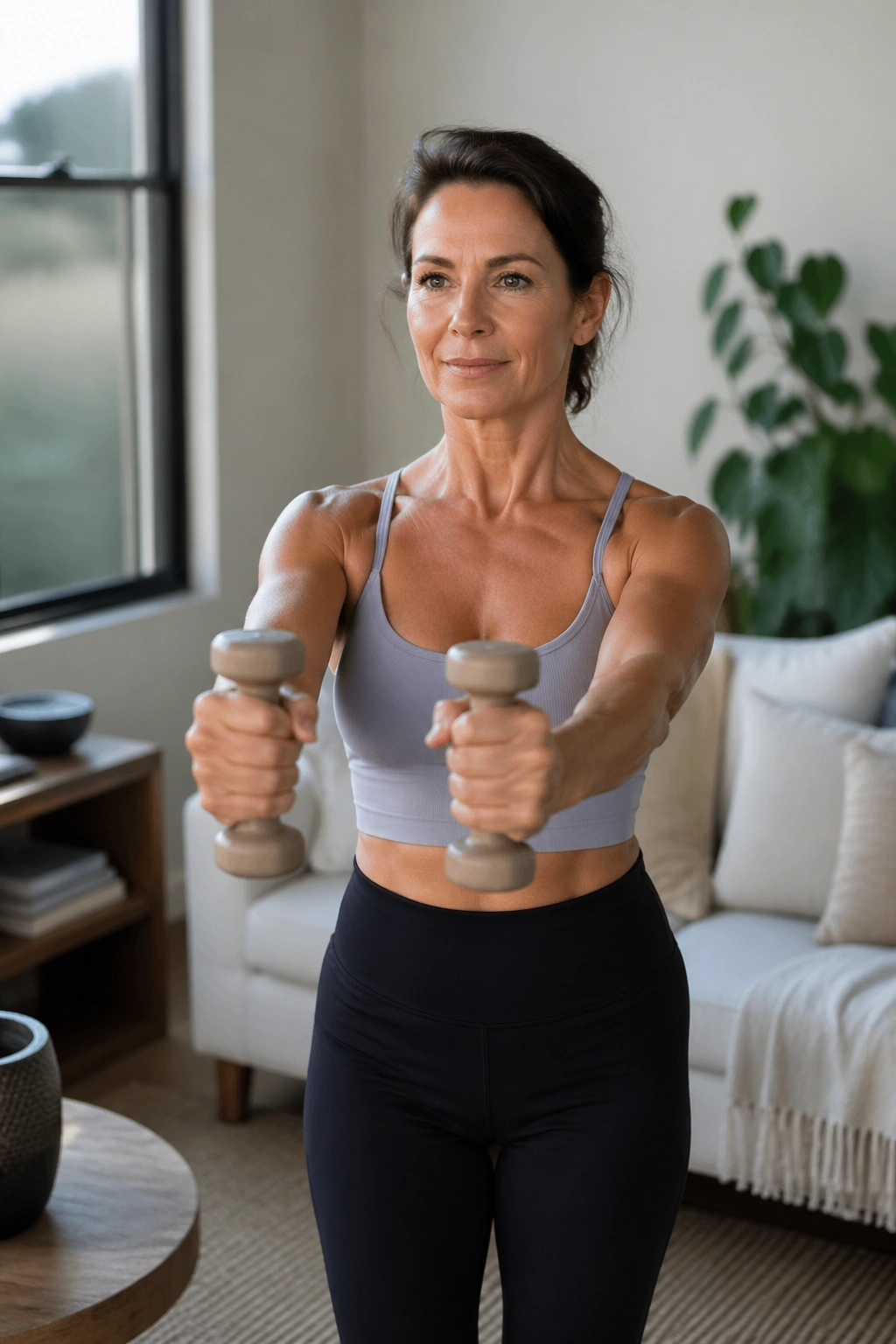
The name sounds almost too gentle for what this movement does. It isn’t gentle. It is controlled, tight, and sneaky in the best way.
Stand or lie on your back with the arms open wide, elbows softly bent, weights in hand. Bring the arms toward the center as if you’re wrapping your hands around a big barrel or hugging a tree trunk. That rounded path trains the chest, front shoulders, and the muscles that keep the arms moving without collapsing your posture.
The key is the elbow bend. Locking out the arms turns the move into a joint exercise, and nobody wants that. Keep the elbows soft, keep the shoulders down, and think about the chest drawing the arms together. The motion should feel smooth from start to finish, not pinchy at the top.
I use this when I want the front of the body to work without turning the session into a full pressing day. It’s especially useful if your shoulders get cranky from too much overhead work. Small range, clean line, calm neck — that’s the sweet spot here.
If you feel it mostly in your biceps, the arms are too bent. If you feel it in your neck, the weights are too heavy or the shoulders are riding up.
6. Side-Lift Raises With Palms Slightly Forward
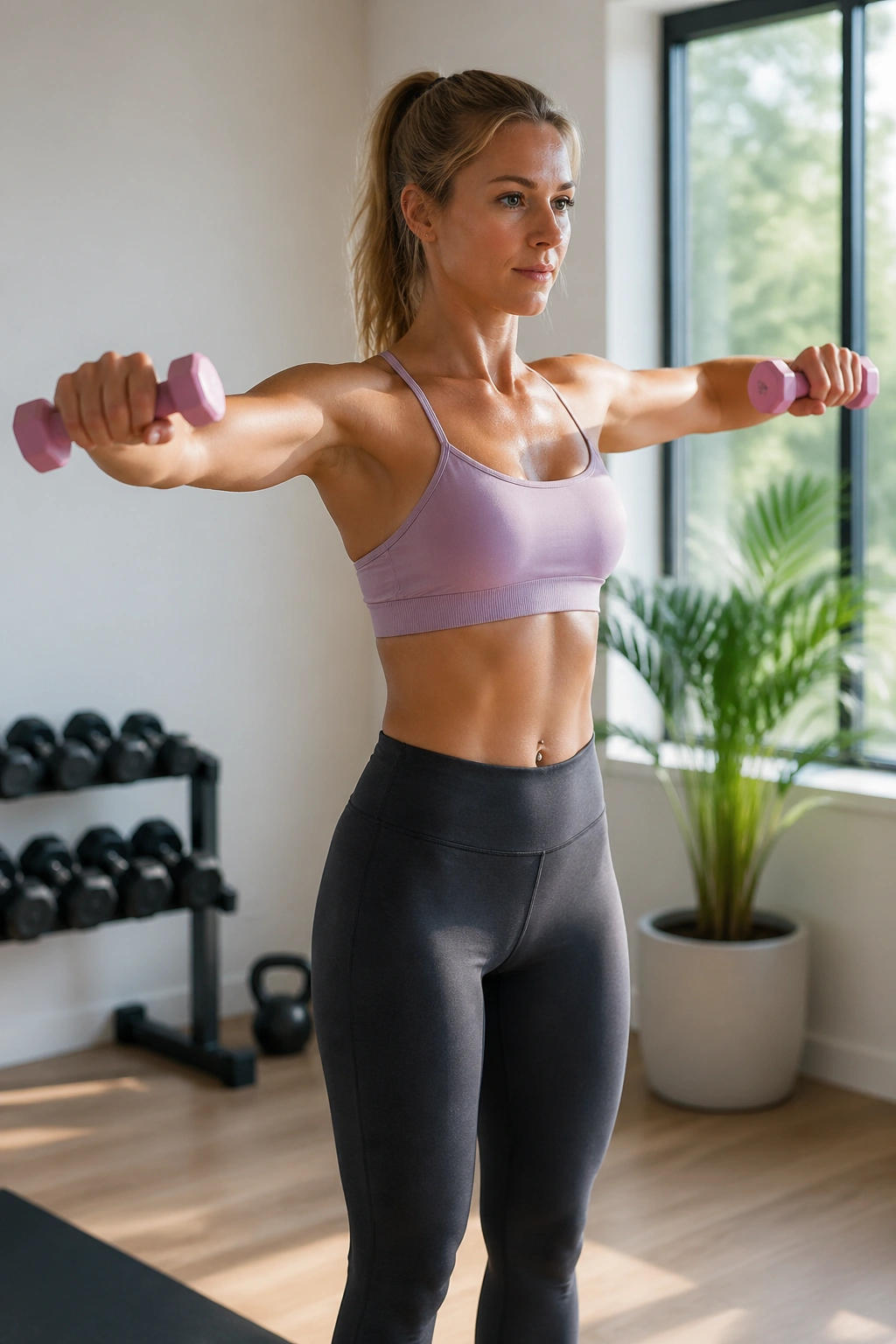
A straight lateral raise is fine. A slight forward angle is kinder.
That tiny hand position change can make a big difference, especially if your shoulders complain when you lift out to the side. Turn the thumbs a touch forward, keep the elbows soft, and raise the weights only to shoulder height. No need to climb higher. Past that point, the shoulder tends to take over and the neck starts helping in ways you did not ask for.
This move is best for people who want the side of the shoulder to work without feeling like they’ve jammed the joint into a bad angle. The palms-forward setup usually feels smoother, and smooth matters more than range here.
Use 8 to 12 reps with 1 to 3 pounds, and lower for a full count of three. That slow lowering phase does a lot of the heavy lifting. It also keeps the movement honest. Half the benefit comes from resisting gravity on the way down.
If you’ve ever felt a side raise turn into a shrug-fest, this version is the fix I’d reach for first. Light weight. Small lift. No drama.
7. Half-Kneeling Single-Arm Press
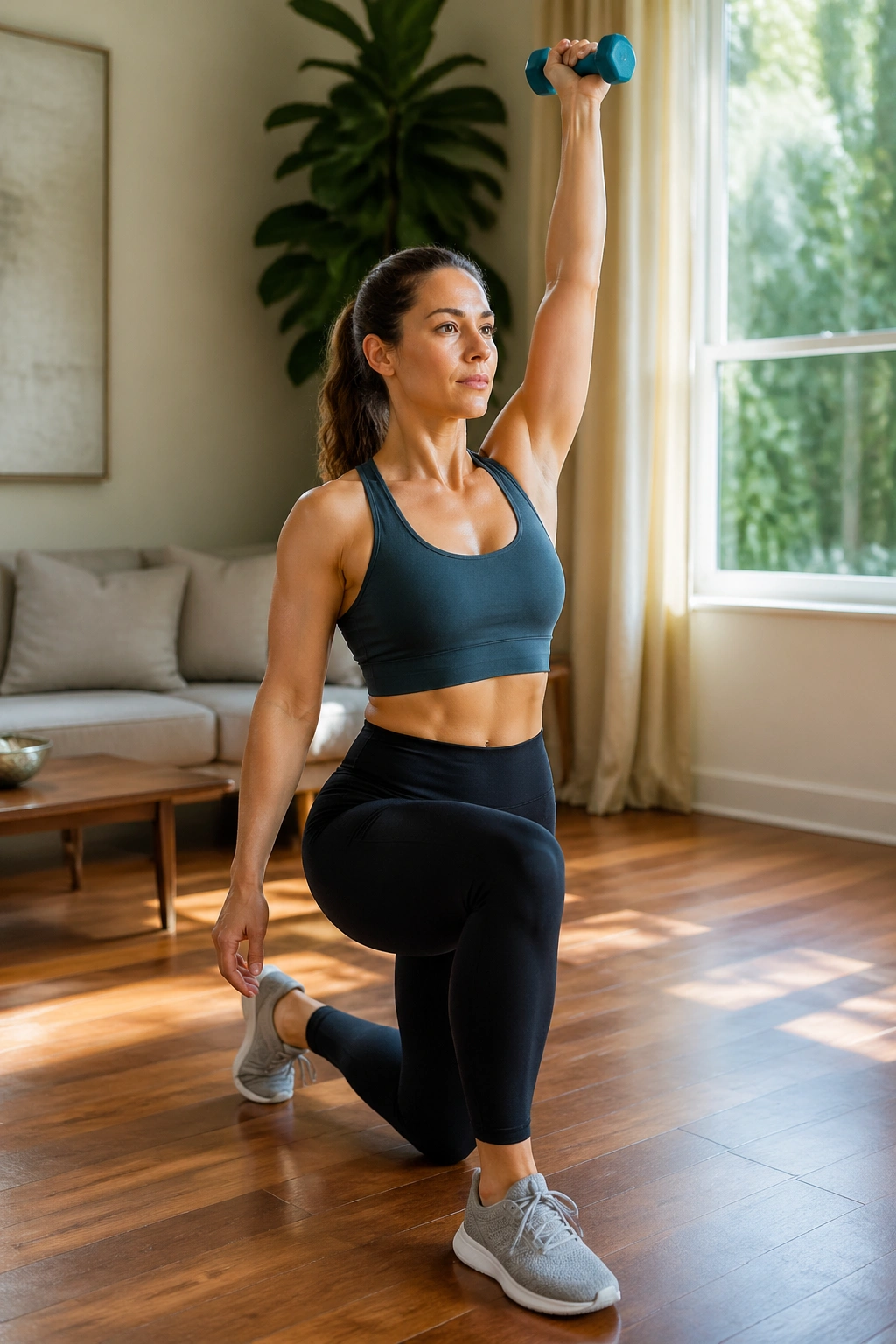
Half-kneeling looks tame until you try to keep your torso from wobbling. Then it gets interesting fast.
Why Half-Kneeling Helps
One knee on the floor, the other foot planted in front, and the body has to organize itself before the press even begins. That setup strips away a lot of the extra sway you get in standing overhead work. It also makes the core wake up without turning the exercise into a plank contest.
Press one dumbbell overhead, lower it under control, then switch sides. Keep the front knee stacked over the ankle, and squeeze the glute on the down-knee side if you want a little extra stability. That back-side squeeze helps keep the ribs from jutting forward.
Quick Setup Cues
- Start with 1 to 5 pounds, depending on shoulder strength.
- Keep the rib cage quiet.
- Press slightly in front of the ear, not behind it.
- Do 6 to 8 reps per side.
The beauty of this one is the feedback. If you lean, the body tells on you. If you brace well, the arm feels strong without the rest of you collapsing around it. Simple. Effective. A little humbling, too.
8. Pilates Arm Workouts With Light Weights: Tiny Arm Circles
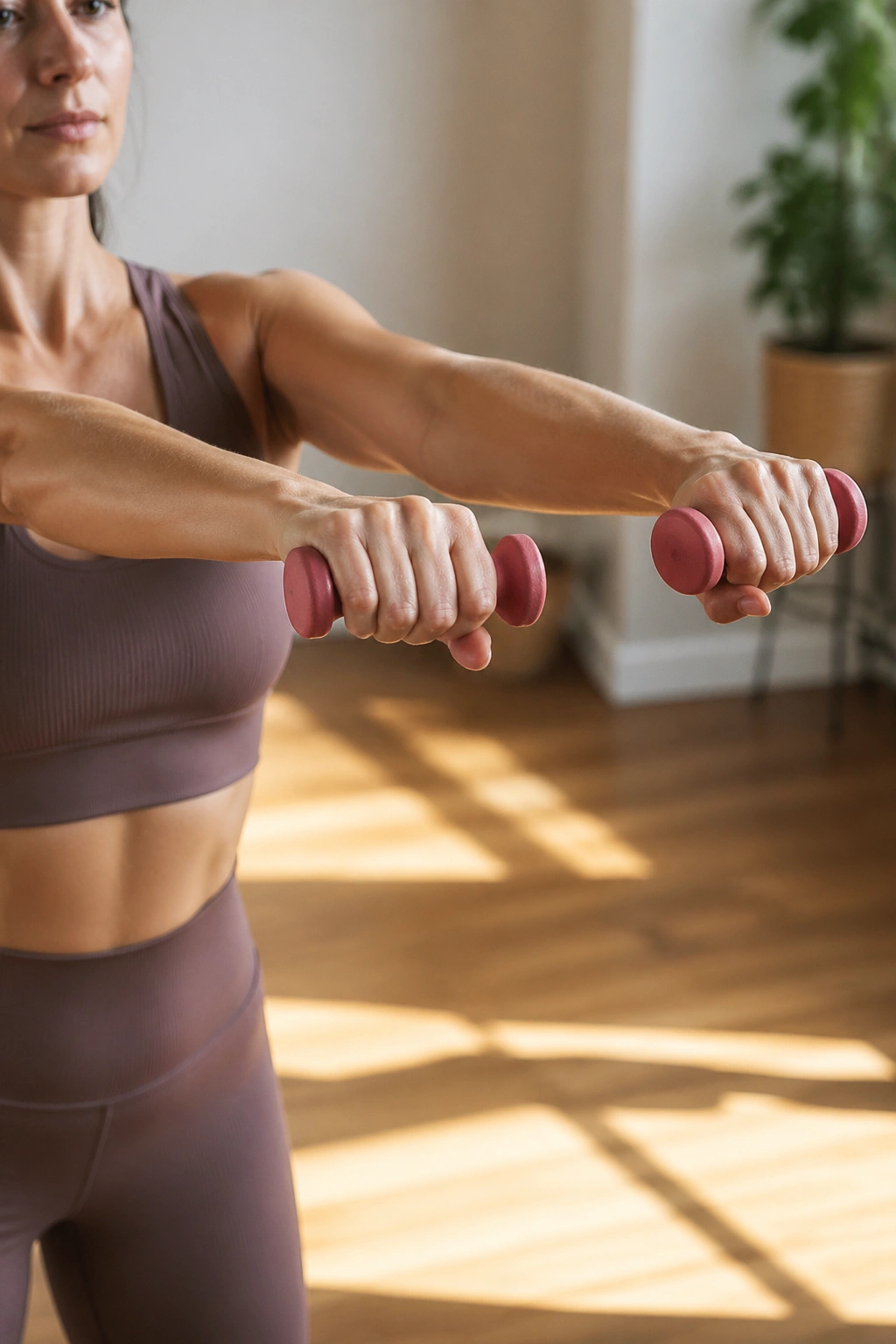
One-pound circles can light up the shoulders faster than a heavier curl. That’s the magic of long levers and constant tension — the arm never gets to rest, and the shoulder keeps fine-tuning the line of the movement.
Stand with the arms extended forward or out to the sides, then make circles that are so small they almost look silly. Almost. After 20 to 30 seconds, reverse the direction and do it again. If that feels clean, try a third round with the arms slightly angled forward, which usually feels kinder on the shoulder joint.
Keep the circles neat. If they turn into windmills, the weight is too heavy or the tempo is too fast. The neck should stay long. The ribs should stay stacked. And the hands should feel like they’re tracing a coin-sized path through the air.
How to Get the Most From It
- Use 1 to 2 pounds, maybe 3 if the form stays crisp.
- Think “small and steady,” not “big and dramatic.”
- Stop before the shoulders climb toward the ears.
- Breathe through your nose if you can.
This is the kind of move people underestimate, then regret. Good. A little respect keeps the form honest.
9. Hinge-and-Open Reverse Fly
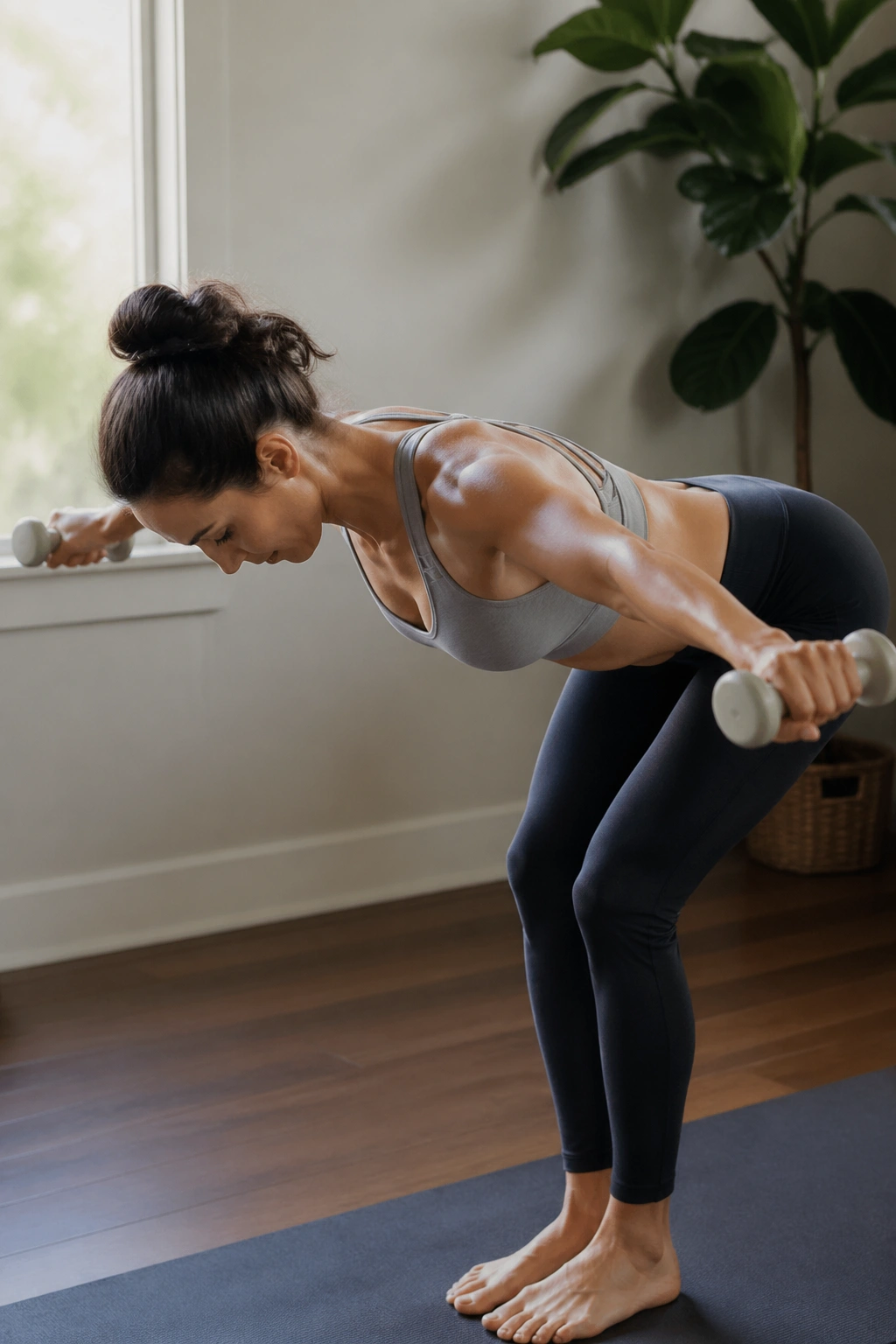
If your upper back rounds after a long desk day, this one will feel like a reset.
Bend forward from the hips with a flat spine, let the arms hang below the shoulders, then open them out to the sides like you’re spreading wings. The goal is not height. The goal is control. The shoulder blades should slide together gently as the arms open, then separate on the return without losing the hinge.
- Keep the neck long and the gaze down.
- Use 1 to 3 pounds, never more than you can hold without swinging.
- Pause for 1 second at the top.
- Aim for 8 to 12 reps.
This move is easy to mess up if you chase range. Don’t. A small, controlled reverse fly does more for the upper back than a sloppy big one. The difference is in the shoulder blades. When they move cleanly, the back of the shoulders and the mid-back do their job. When they don’t, the whole thing turns into momentum.
I like this one because it balances out all the front-side work. It keeps the posture honest.
10. Pilates Arm Workouts With Light Weights: Diagonal Chop and Lift
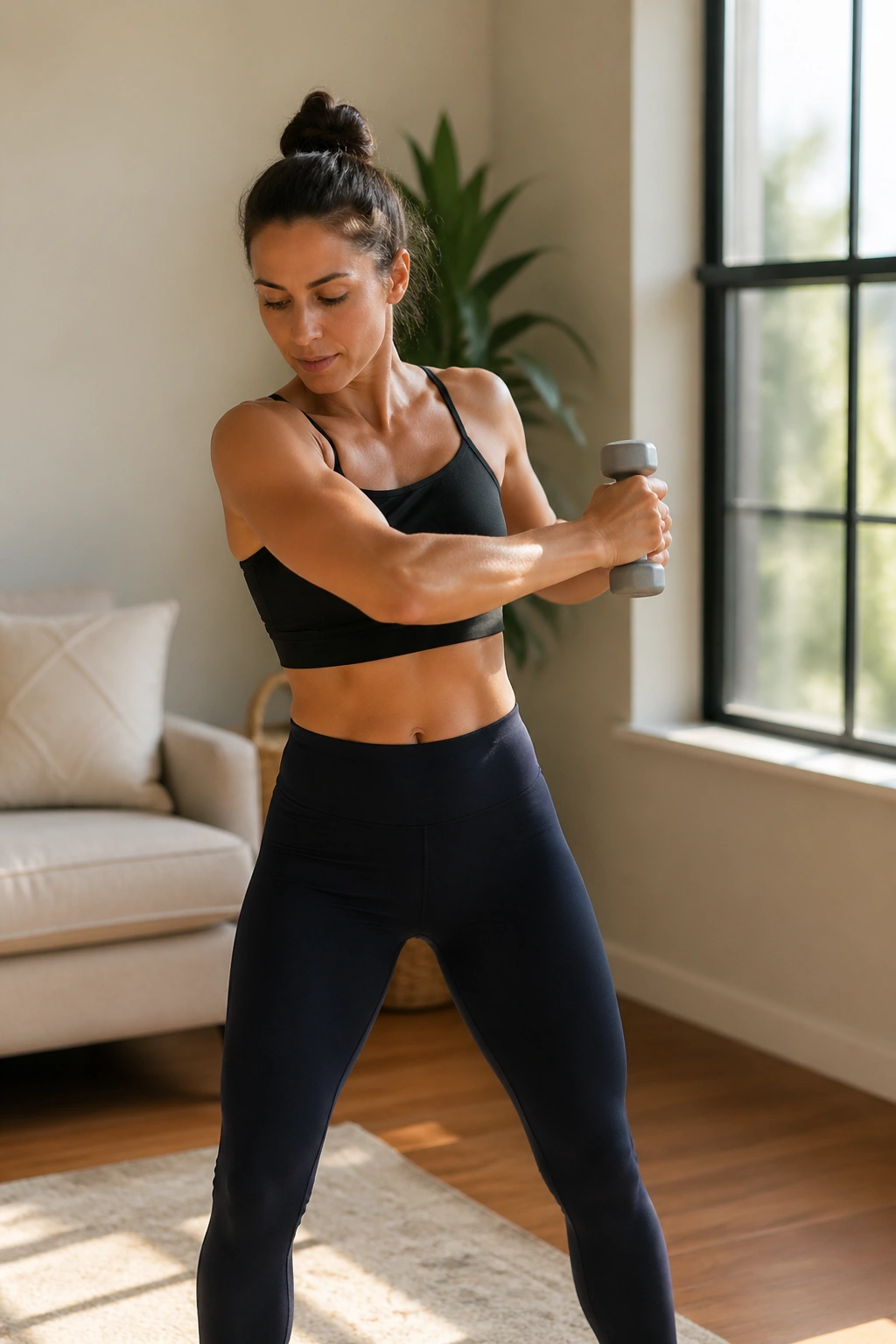
Why train straight up and down when the body lives in diagonals?
The chop-and-lift pattern brings the arms across the body, which forces the trunk to stay awake while the shoulders guide the dumbbells through a more natural path. Hold one weight with both hands, or use two very light weights, then move from one hip toward the opposite shoulder in a smooth diagonal. Return along the same line. Switch sides after each rep or after a set.
This pattern feels especially useful if you want the arms and waistline to work together without doing a full core routine. The torso resists rotation a little, the shoulders stay organized, and the movement has a clean, athletic feel that many straight-ahead raises never quite deliver.
What to Watch For
- Don’t twist the pelvis hard.
- Keep the movement controlled, not whipped.
- Use 8 reps per side.
- If the low back takes over, shorten the path.
The diagonal is where a lot of real-life reaching lives anyway — putting a bag into a car, grabbing something off a shelf, pulling a strap across your body. This exercise makes that pattern stronger without needing heavy load.
11. Curl-Hold Biceps Burnout
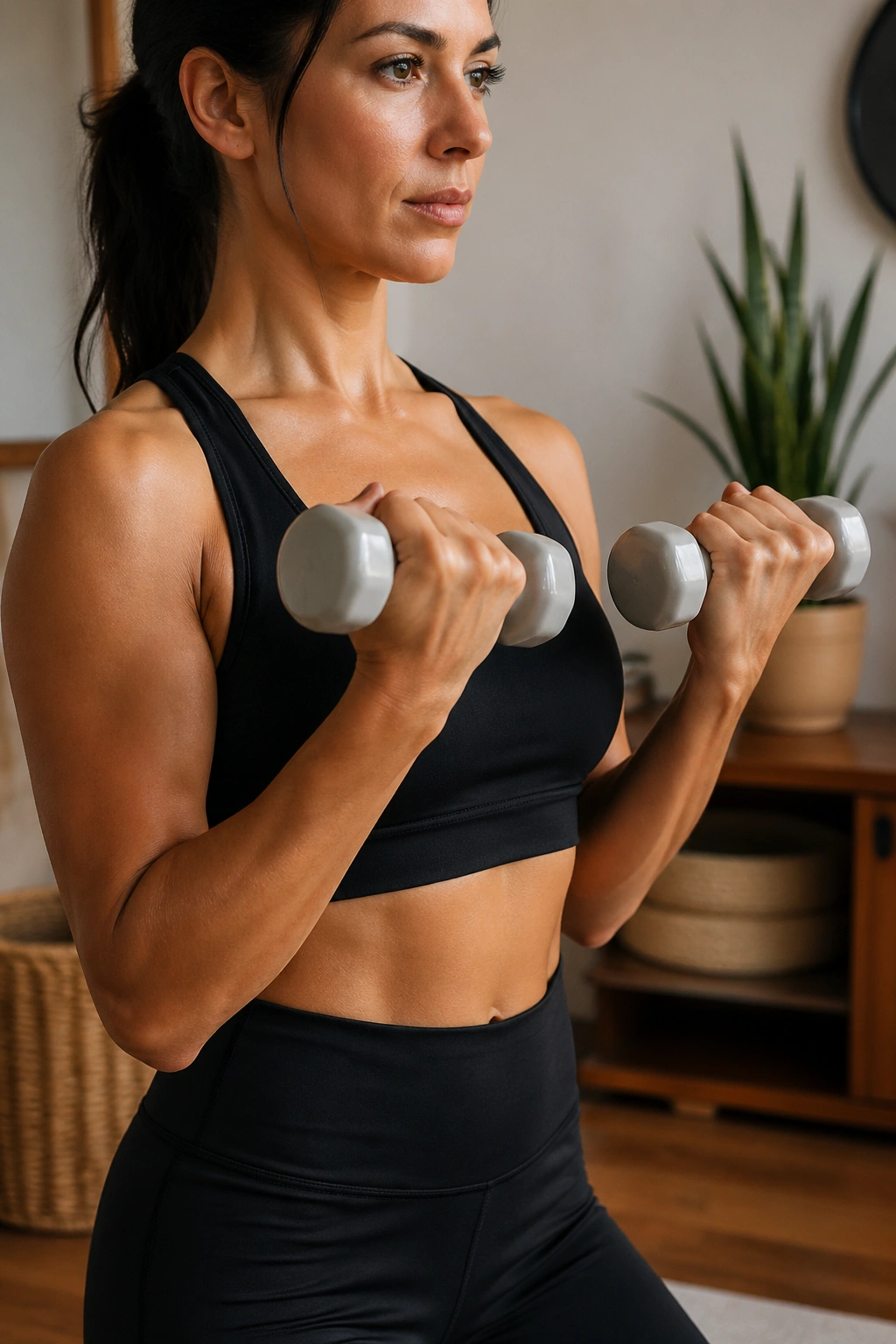
This is the one I reach for when time is short and I want the biceps to stop pretending they’re doing all the work with a cute little curl.
Curl the weights up slowly until the elbows bend to about 90 degrees, then hold. Not forever. Just long enough to feel the muscle start to tremble. From there, add tiny pulses in the top half of the curl, then lower with control for a full count of three or four. Repeat for 8 to 10 reps, or do a 20-second hold if you want a fast finisher.
The trick is not to swing from the shoulder. Keep the upper arms quiet and the elbows near the sides. The wrists should stay straight, too. If they bend back, the forearms get grumpy and the biceps lose some of the load.
This movement is simple, but not easy. That’s what makes it useful. You can do it almost anywhere, and a pair of very light dumbbells is enough. If the burn shows up in the front of the shoulders instead of the biceps, the elbows have drifted forward. Pull them back a touch and try again.
One clean set can tell you plenty.
12. Boxing Guard Pulses With Trunk Rotation
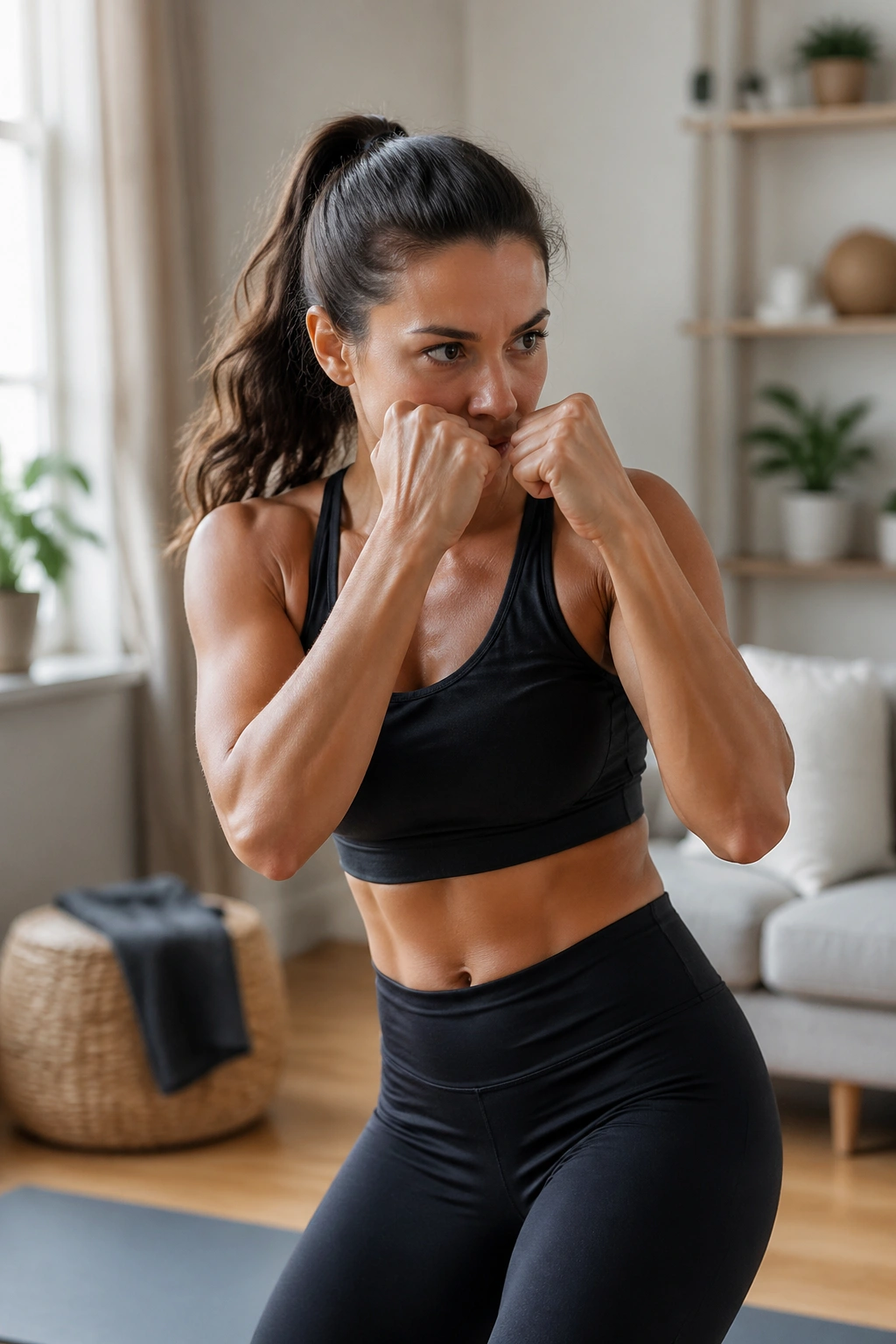
Unlike straight punches, the guard position keeps the elbows lifted and the shoulders active from the start. That changes the feel right away.
Bring both fists near the face, elbows bent, then pulse the arms forward a few inches while the ribs rotate softly side to side. Think small, quick, and controlled. The torso is doing some of the work, but not in a wild twist. More like a tidy swivel through the upper body.
This is a good choice if you get bored fast. It has a rhythm to it, and rhythm keeps people moving longer than they expect. It also teaches the shoulders to hold a working position while the trunk stays organized underneath, which is a nice skill for any arm routine.
Use 30 to 40 seconds, rest 20 seconds, and repeat for 2 or 3 rounds. Light weights only. If the movement turns jerky, slow down. If the neck starts to harden, lower the elbows a little and shorten the pulse.
I’d pick this one over big flashy arm combos any day when the goal is to build endurance without pounding the joints.
13. Prone Y-T-W Shoulder Sequence
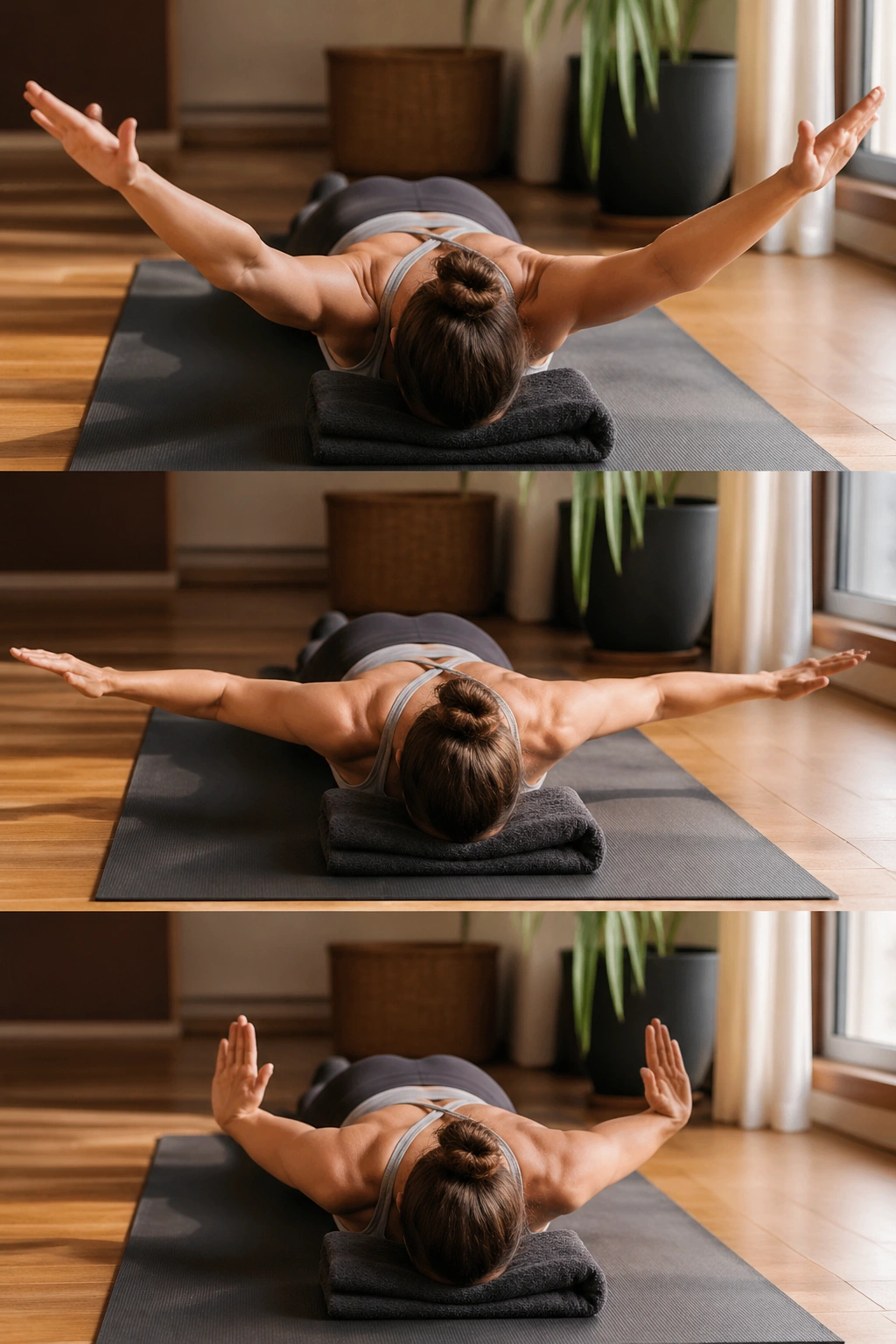
Face down on the mat is not glamorous, but the upper back loves it.
The Y-T-W sequence uses three arm shapes to teach the shoulders how to move without losing control. Lie prone with the forehead on a towel if needed. Lift the arms into a Y, then a T, then a W shape, either with no weights or with very light weights if you can keep the neck relaxed. Each shape hits the upper back a little differently, and that variety is the whole point.
Three Shapes, Three Jobs
- Y: reaches the arms long overhead and wakes up the lower traps.
- T: opens the chest and trains the rear shoulders.
- W: bends the elbows and teaches the shoulder blades to settle down and back.
Keep every lift small. If the chest flies off the mat, the back is doing too much. If the forehead digs into the towel, ease up and shorten the range. I like this sequence because it cleans up posture without needing a complicated setup. It’s plain, which is part of why it works.
Finish with 3 to 5 reps of each shape, moving slowly enough that you can feel the shoulders make each adjustment. That quiet feeling? That’s what you want.
14. Wall-Supported Halo and Reach
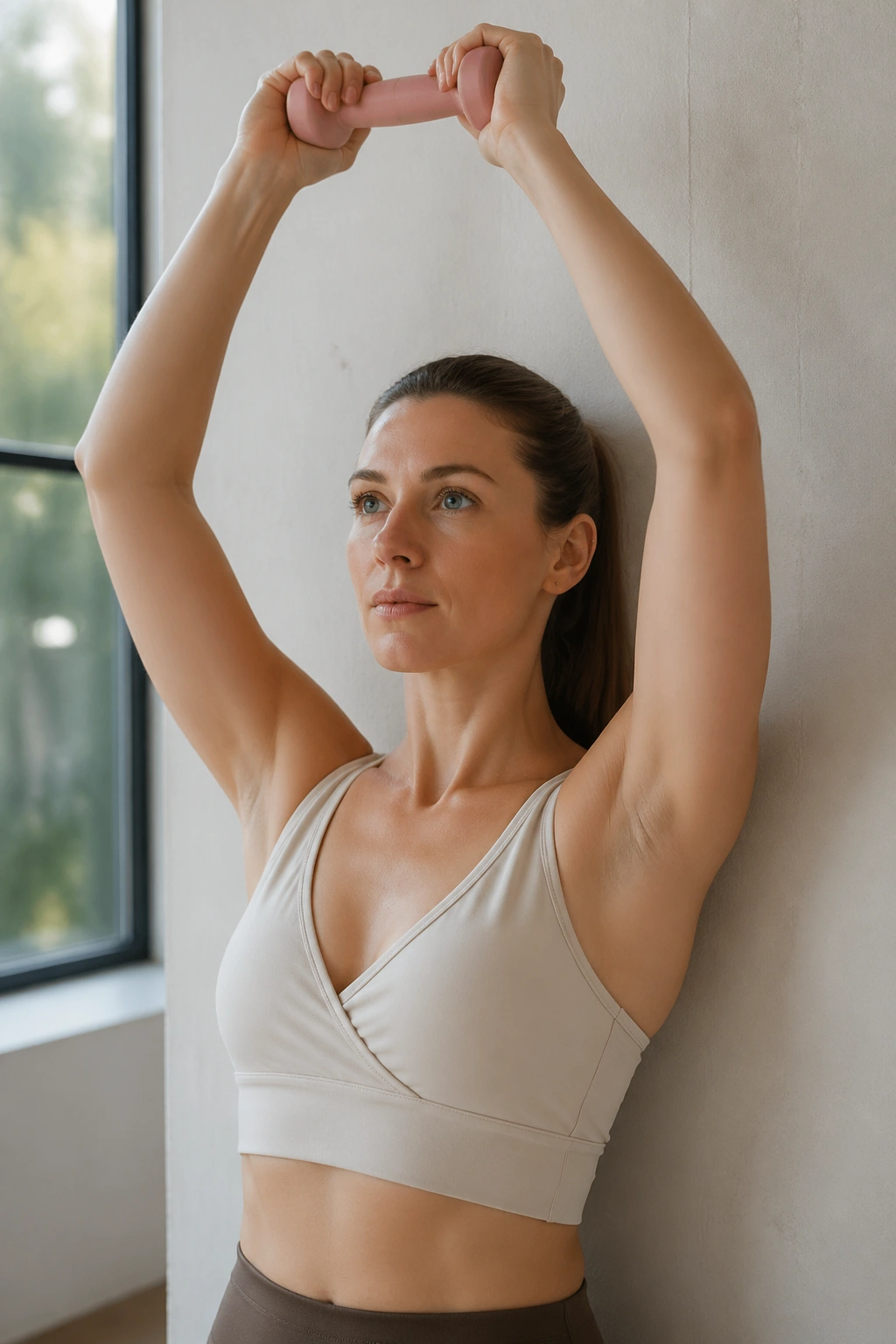
Can a wall make an arm workout harder? Absolutely.
Stand with your back near a wall so your ribs can’t flare out as easily. Hold one very light dumbbell with both hands at chest height, or use two light weights if the shoulders feel steady, then circle the arms around the head in a controlled halo before reaching forward or upward again. The wall keeps the torso honest, which means the shoulders and upper arms have to do the real organizing.
This one is excellent for people who tend to arch when the arms go overhead. The wall gives immediate feedback. If your lower back presses away, you know the ribs are escaping. If the shoulders pinch, the circle is too wide. Keep the path smooth and keep the weight light enough that the wrists don’t get squashed.
A partial halo works fine, too. You do not need full range to get value from the pattern. In fact, a smaller, cleaner circle usually feels better and teaches more.
Use 4 to 6 circles each direction, then finish with 4 overhead reaches. Slow is your friend here. Fast turns it into a shrug exercise, and nobody needs that.
15. Finisher
If you want one short circuit that ties the whole thing together, steal this one.
Do 30 seconds of standing jabs, 30 seconds of front raise to overhead reach, 30 seconds of hug-a-tree chest fly, 30 seconds of triceps kickbacks, and 30 seconds of tiny arm circles. Rest for 30 to 45 seconds, then run the list again. Two rounds is enough for most people. Three rounds is a lot.
Keep the weights light enough that your shoulders stay down and your neck stays loose. That matters more than chasing a bigger dumbbell. With Pilates arm work, control is the point, and the burn comes from position, tempo, and attention — not from piling on weight and hoping for the best.
A clean finisher should leave your arms warm and your posture a little taller. If your lower back is tight or your traps are burning, cut the next round short and make the movements smaller. That is not failure. That is the workout telling you the load was enough.
And honestly, that’s the right place to stop. Leave a little energy in the tank, keep the form sharp, and come back to the same light weights another day. The gains show up in steadier shoulders, better control, and arms that look and move with a lot more purpose than the weight in your hands would suggest.
