



You have probably felt it before—that specific, deep-seated trembling in your quadriceps when you are holding a position that seems simple on the surface but feels like pure fire after thirty seconds. Barre training is deceptive. It looks elegant, almost effortless, drawing heavily from the principles of ballet, yet it delivers a level of muscle fatigue and isolation that heavy lifting often misses. The goal isn’t to bulk up with massive size, but to build long, lean, and incredibly functional leg muscles through high-repetition, low-impact movements. If you want to tone your legs, you have to embrace the shake.
That vibration you feel in your muscles is where the transformation happens. It is the moment your muscle fibers reach near-exhaustion, forcing them to adapt and strengthen. By focusing on isometric holds, tiny pulses, and extreme range-of-motion control, you can reshape your legs without the joint-jarring impact of high-intensity plyometrics. You do not need a fancy dance studio to get these results; a sturdy chair or a kitchen counter works perfectly as your makeshift barre.
Consistency matters more than intensity here. You could spend hours doing heavy squats, but if your form is sloppy, you are only working the superficial muscles. The following moves require you to engage your core, tuck your tailbone, and keep your movements precise. Pay attention to the subtle shifts in your alignment—those minor adjustments are the difference between a mediocre workout and one that truly sculpts your physique.
1. The Classic Plié Squat
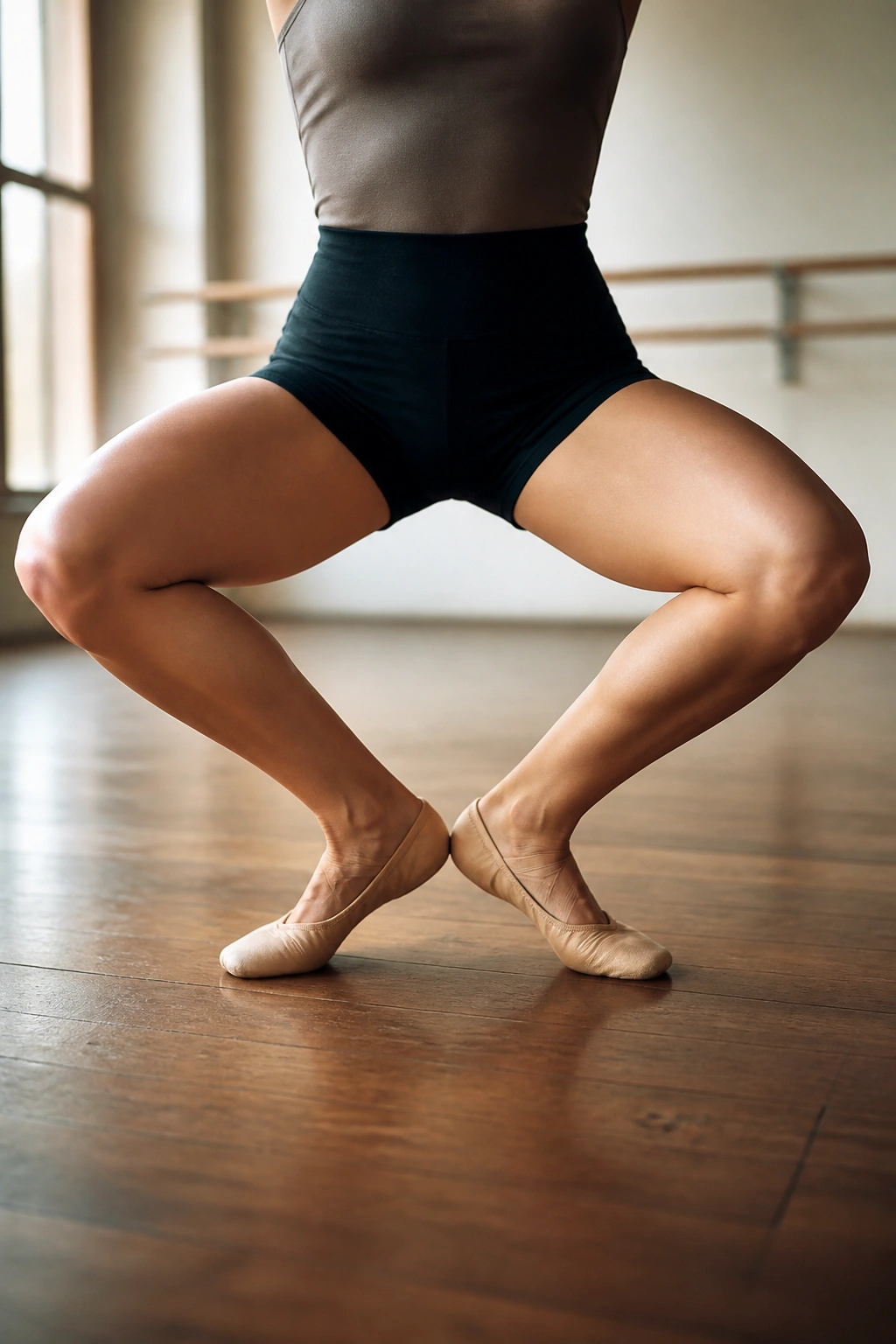
The foundation of any barre-inspired routine is the plié. This move targets the quads, glutes, and inner thighs simultaneously by shifting the orientation of your legs. Start with your heels together and toes turned outward, forming a wide ‘V’ shape with your feet. As you lower your hips, keep your torso completely upright—imagine you are sliding your back down a glass wall.
Why It Works for Toning
When you turn your feet out, you activate the adductor muscles—the inner thighs—which are notoriously difficult to target with standard gym squats. By keeping the spine neutral and the knees tracking over your toes, you minimize stress on the joints while maximizing muscle recruitment. The constant tension in this position forces the legs to work harder to maintain balance.
The Form Check:
- Keep your chest lifted and shoulders back throughout the movement.
- Do not let your knees collapse inward as you descend.
- Maintain an even distribution of weight across your feet.
Pro Tip: If your heels begin to lift involuntarily, widen your stance just a fraction. You want your heels connected to the ground for the base version of this move to ensure your glutes remain fully engaged.
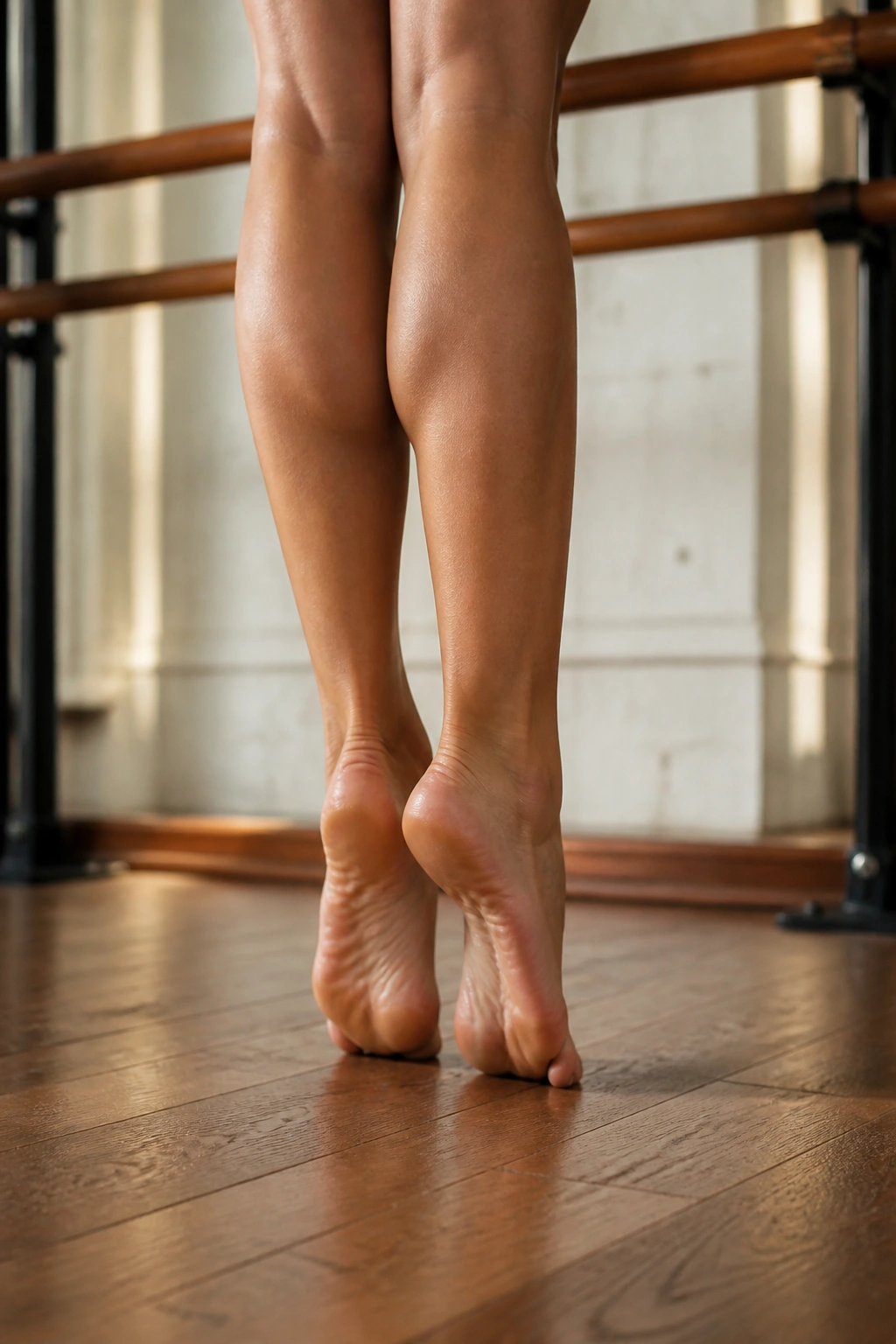
2. Relevé Calf Raises
Often overlooked, the calves are the unsung heroes of defined, sculpted legs. Relevé, a ballet term for “raised,” involves lifting your heels off the floor while maintaining a straight leg or a plié position. This movement builds endurance and definition in the lower leg, specifically targeting the gastrocnemius and soleus muscles.
Start standing with your feet hip-width apart. Rise up onto the balls of your feet, squeezing your ankles together as if you are trying to hold a piece of paper between them. Hold the peak contraction for two seconds before lowering slowly. The key is to resist gravity on the way down; do not just drop your heels.
How to Maximize the Burn
- Hold it: Pulse your heels up and down in the top range of motion.
- Add weight: Once you master the balance, hold a light dumbbell in each hand.
- Shift tempo: Spend three seconds rising, one second holding, and three seconds lowering.
Building definition here takes patience because calves are high-endurance muscles. They are used to carrying your body weight all day, so they require high repetitions to see a change in shape. Aim for sets of at least thirty to fifty reps to really fatigue the tissue.
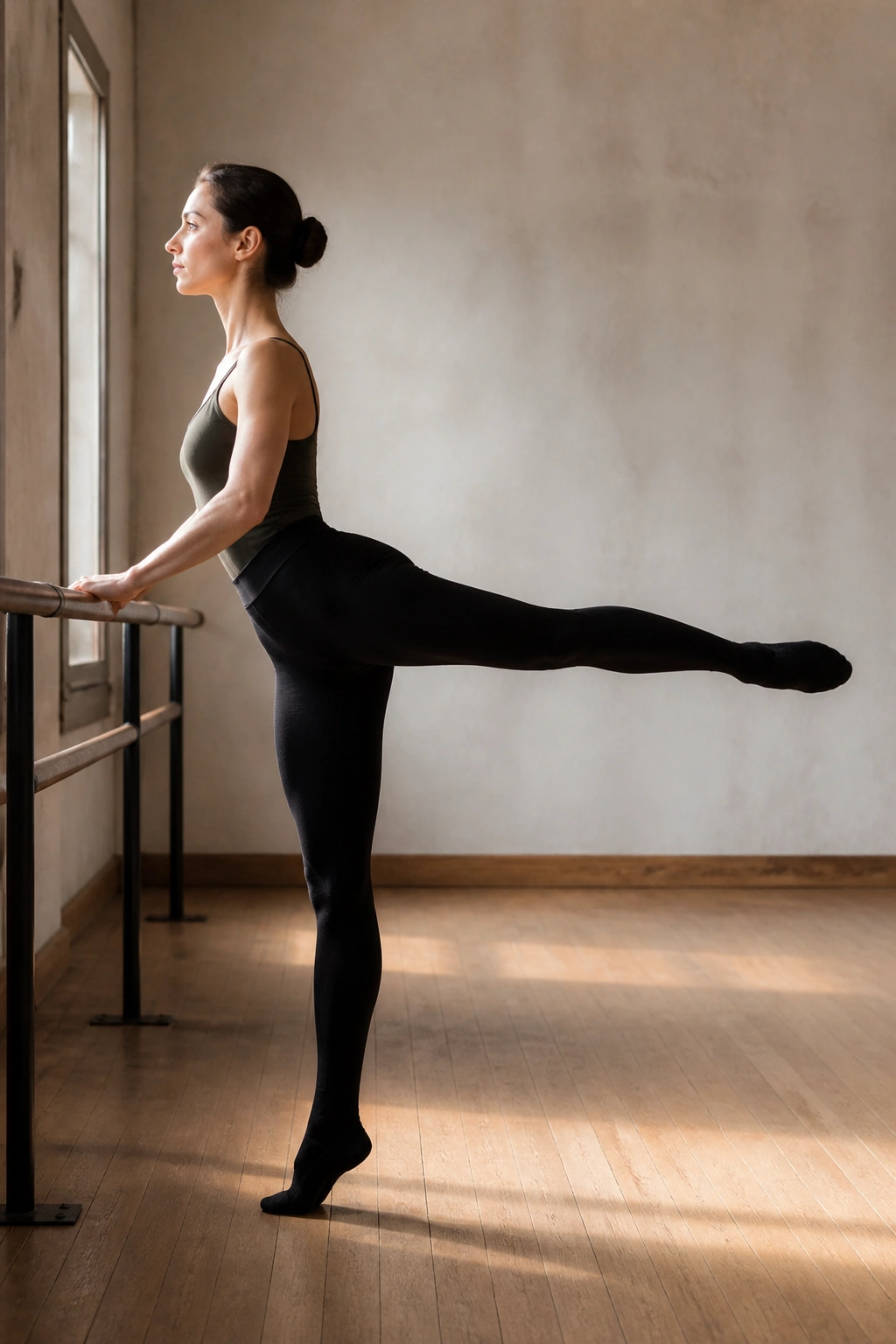
3. The Barre Arabesque
The arabesque is a graceful pose where you extend one leg behind you while balancing on the other. In a barre context, it is a powerhouse move for the hamstrings and the glutes. Stand facing your barre, resting your hands lightly on it for balance. Lean your torso slightly forward—no more than forty-five degrees—and extend one leg back, keeping it straight.
Keys to Proper Execution
- Square your hips: Do not let the hip of your working leg open up toward the ceiling. Your pelvis should face the floor the entire time.
- Lengthen, don’t just lift: Focus on reaching your foot toward the back wall, creating length in the leg.
- Core engagement: Your lower back should not arch excessively. Pull your belly button to your spine to protect your lumbar area.
This exercise isn’t about how high you can kick your leg. It is about isolating the glute-hamstring tie-in. If your leg is high but your back is arched, you are missing the muscle group you are trying to tone. Keep the movement small and controlled, pulsing the leg upward just an inch or two.
4. Inner Thigh Squeezes
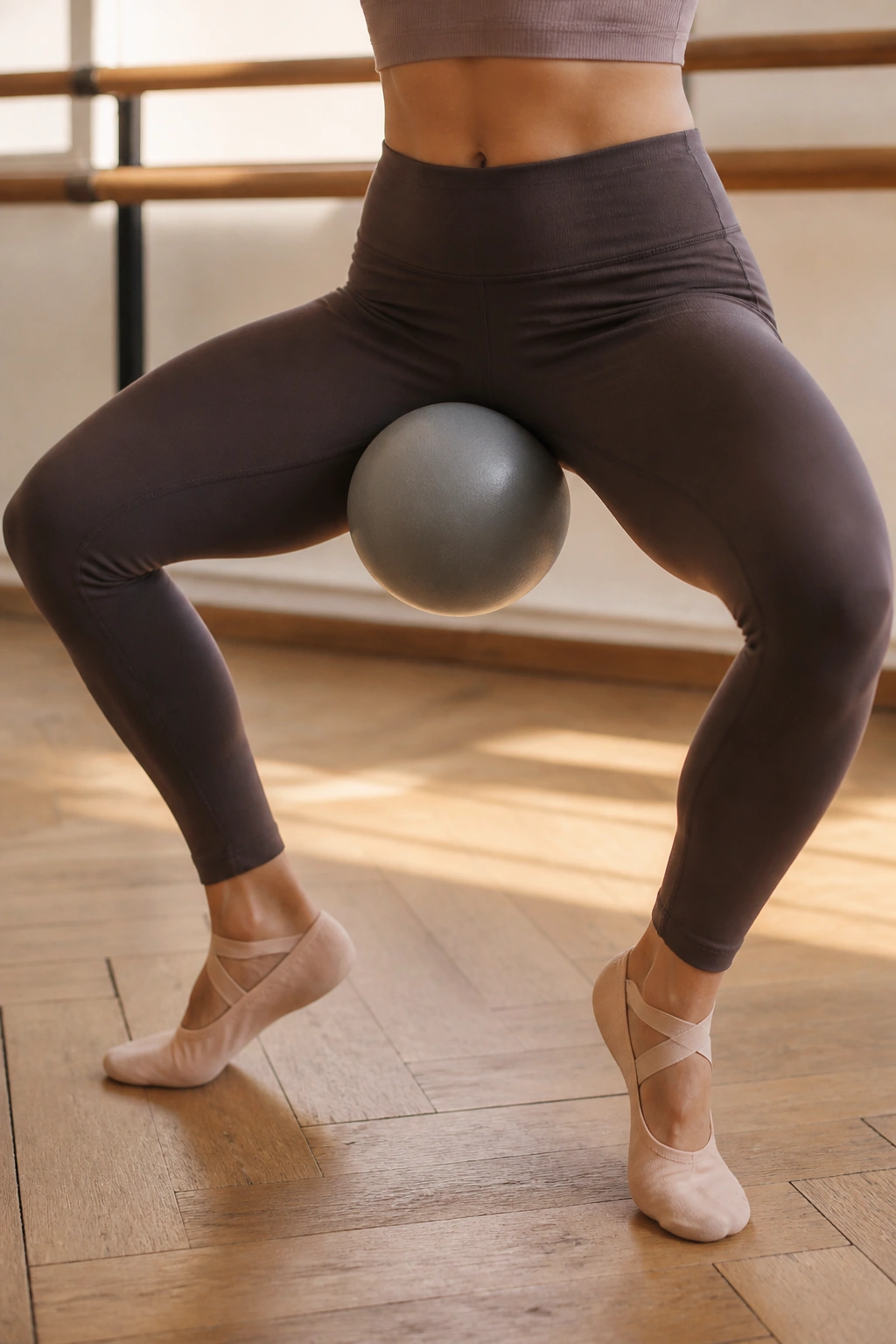
The inner thigh is a stubborn area for many. Because we rarely use these muscles in daily life, they tend to atrophy if not specifically targeted. For this move, place a small pilates ball or a rolled-up towel between your thighs. Stand in a wide, turned-out plié position, knees bent.
The Mechanism of Action
The isometric squeeze is the secret weapon here. While your legs are already in a state of tension from the squat, squeezing the ball forces the adductor group to contract harder. It is an “add-on” move—the legs are working to hold the squat, and the adductors are working to hold the object in place.
- Pulse: Squeeze and release the ball rhythmically for sixty seconds.
- Hold: Squeeze the ball as hard as you can and hold for thirty seconds without moving your legs.
- Transition: Combine the two—squeeze, pulse, hold, repeat.
Avoid leaning your torso forward to compensate for fatigue. The burn will be intense, but that is exactly where the muscle shaping occurs. If your knees start to shake uncontrollably, that is a sign of progress, not a reason to stop.
5. Lateral Leg Lifts
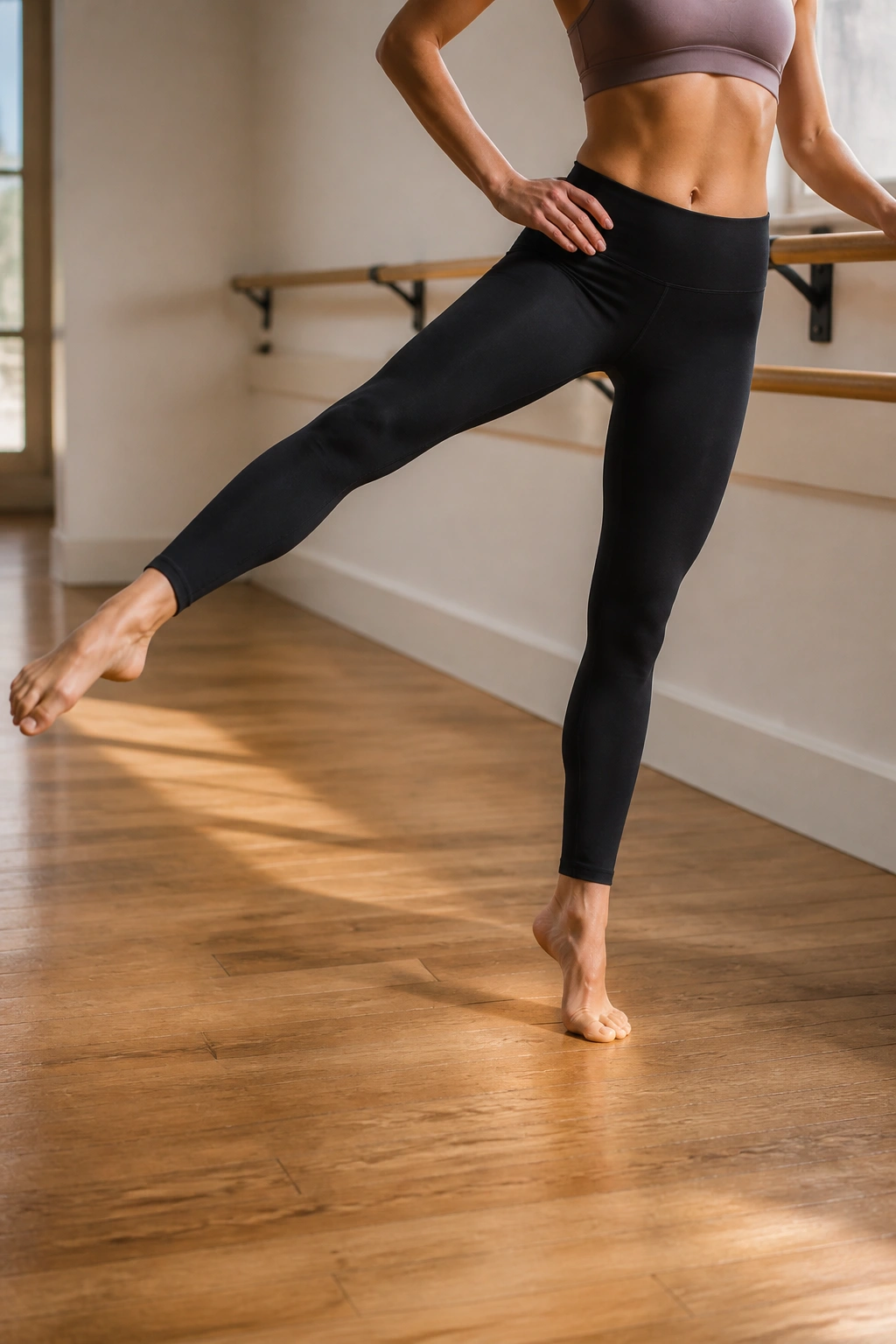
This move isolates the gluteus medius, the muscle on the side of your hip that gives the glutes that rounded, toned look. Stand sideways to your barre, holding on with one hand. Keep your standing leg slightly bent and your working leg straight. Lift the working leg out to the side, leading with your heel.
Why This Matters for Stability
Your gluteus medius is responsible for stabilizing your pelvis when you walk or run. Weakness here often leads to hip pain or imbalances. By isolating this muscle in a controlled barre environment, you improve your overall athletic performance and create a more sculpted look through the hip and outer thigh.
Essential Cues for Success:
- Lead with your heel, not your toe. Turning your toes toward the ceiling will shift the tension into your hip flexor.
- Keep the standing leg perfectly still. Do not let your body sway from side to side.
- Maintain a neutral spine; resist the urge to lean your upper body away from the leg you are lifting.
6. The Attitude Lift
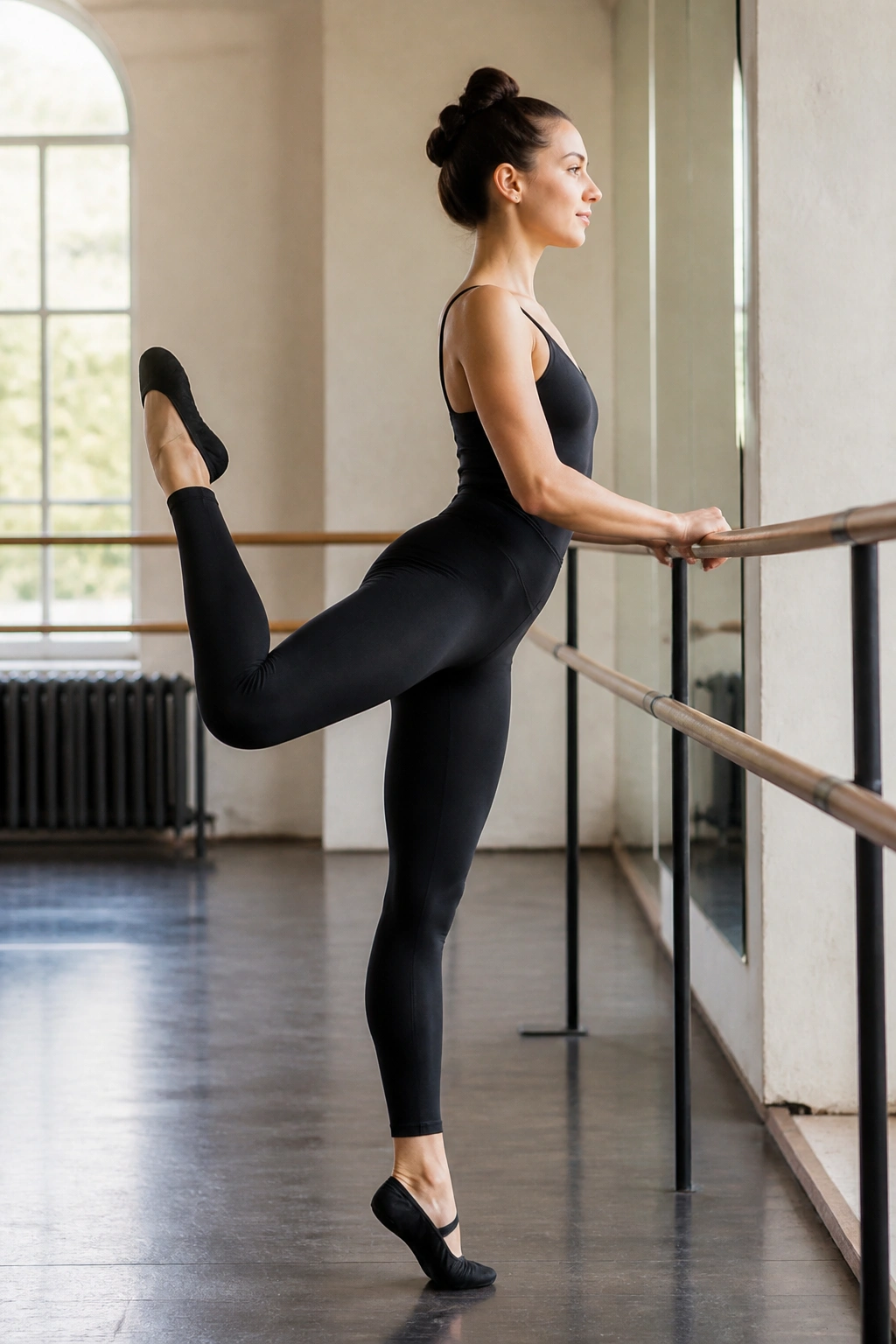
An “attitude” in dance is a position where the leg is lifted, bent at the knee, and turned out. It is a more challenging variation of the arabesque that targets the high glute—the area right underneath the lower back.
Performing the Move Correctly
Face your barre and hinge at the waist, resting your forearms on the surface. Bend your working leg and lift it behind you, keeping the knee bent at a ninety-degree angle. The goal is to lift the knee upward, keeping the foot higher than the knee if possible.
The range of motion here is very small. You are essentially pulsing the knee toward the ceiling. Because the lever is shorter than the straight-leg arabesque, you can put more emphasis on the gluteal contraction. Ensure your working-side hip stays pointed down toward the floor throughout the entire set. If you open your hip, the lower back will take over the work, which is exactly what we want to avoid.
7. The Barre Lunge
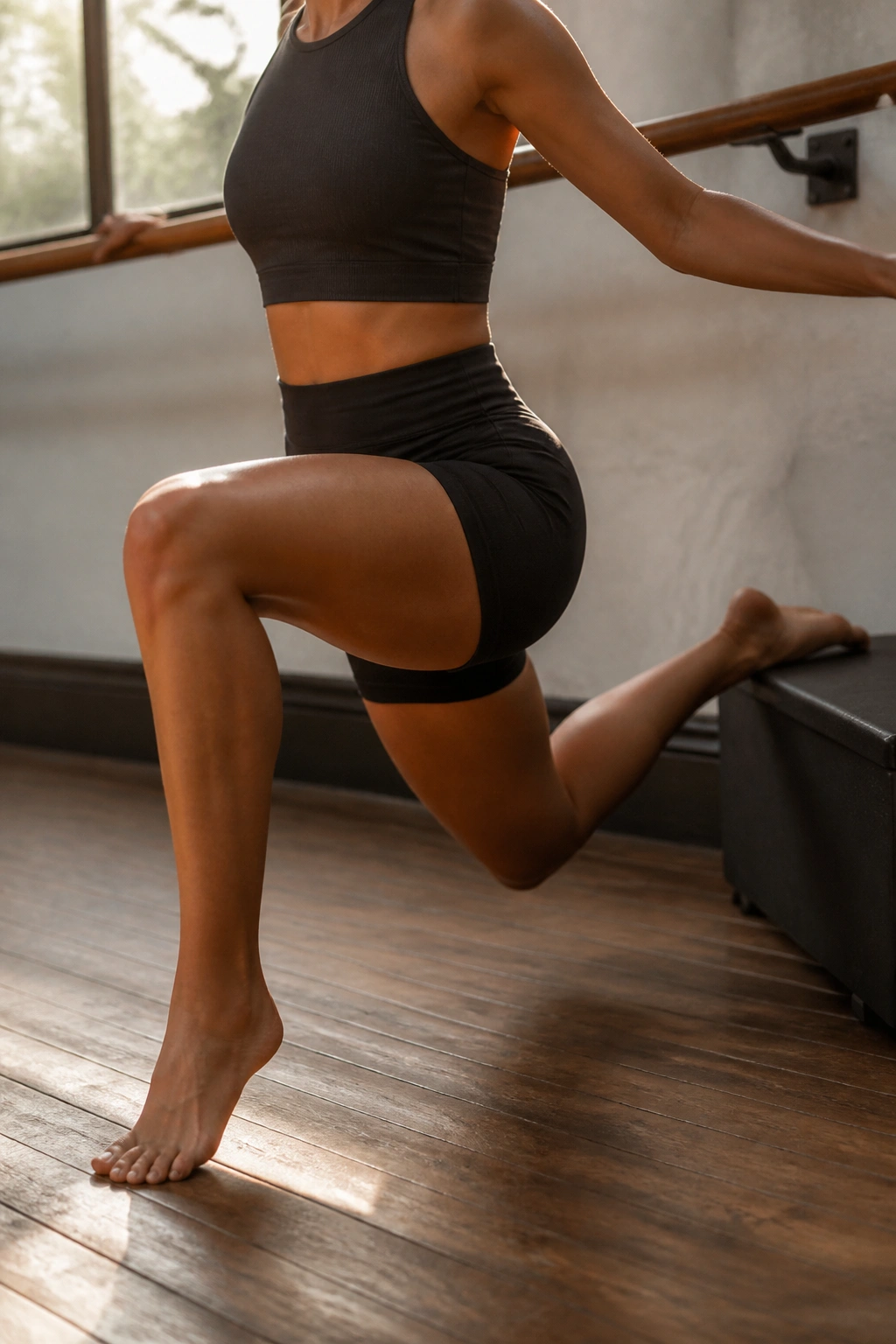
The standard lunge is a functional staple, but the barre lunge adds a layer of precision that takes it to another level. Place one foot on the floor and the other resting on a surface behind you, or simply step back into a deep lunge while holding the barre for balance.
Focusing on Depth
The goal is to get your back knee as close to the ground as possible. This stretches the hip flexor of the back leg while deeply engaging the glute and quadriceps of the front leg.
Structure the Set:
- The hold: Drop into the lowest point of your lunge and hold it for thirty seconds.
- The pulse: Perform small, deep pulses at the bottom of the range.
- The full range: Slowly move from full extension to deep flexion.
Focus on pushing through your front heel. If you push through your toes, you move the load onto your knee, which can cause discomfort. By keeping the weight in the heel, you ensure the posterior chain does the heavy lifting.
8. Curtsy Squats
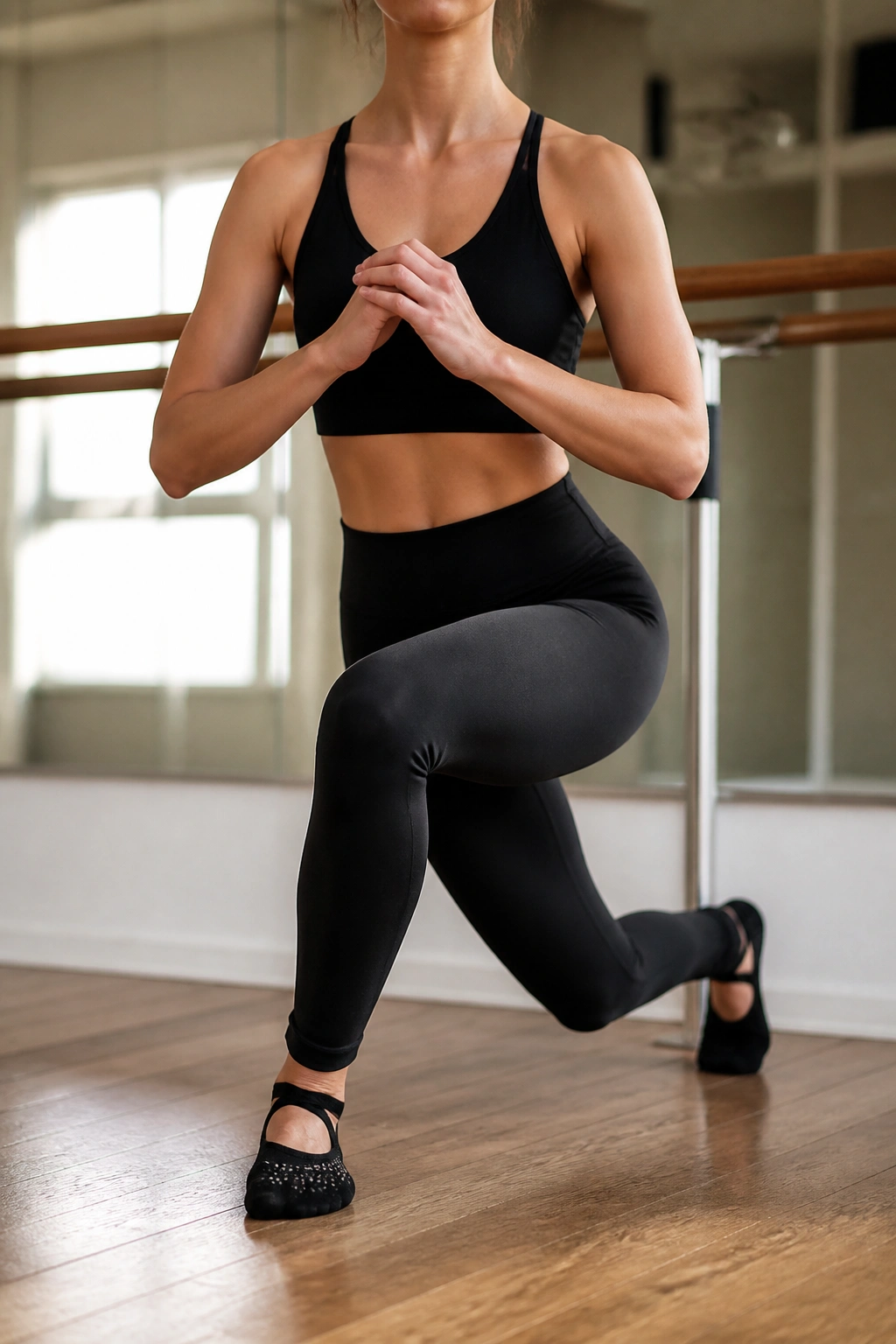
Curtsy squats, or “skater lunges,” are fantastic for targeting the gluteus medius and the quads in a way that feels athletic and fluid. Stand with feet hip-width apart. Step one foot back and across behind the other, bending both knees as if you are doing a formal curtsy.
The Biomechanical Advantage
This diagonal movement patterns the hips differently than a standard forward lunge. It recruits the glutes at an angle, which helps define the “shelf” where the glute meets the hamstring.
- Keep your front knee steady. Do not let it wobble side-to-side.
- Keep your torso upright. Leaning too far forward negates the glute engagement.
- Imagine your back knee tapping the floor directly behind your front heel.
You will feel this in the outer glute of your front leg immediately. It is one of the most effective moves for creating width and definition in the hips, helping to create that coveted hourglass silhouette.
9. Barre Leg Circles
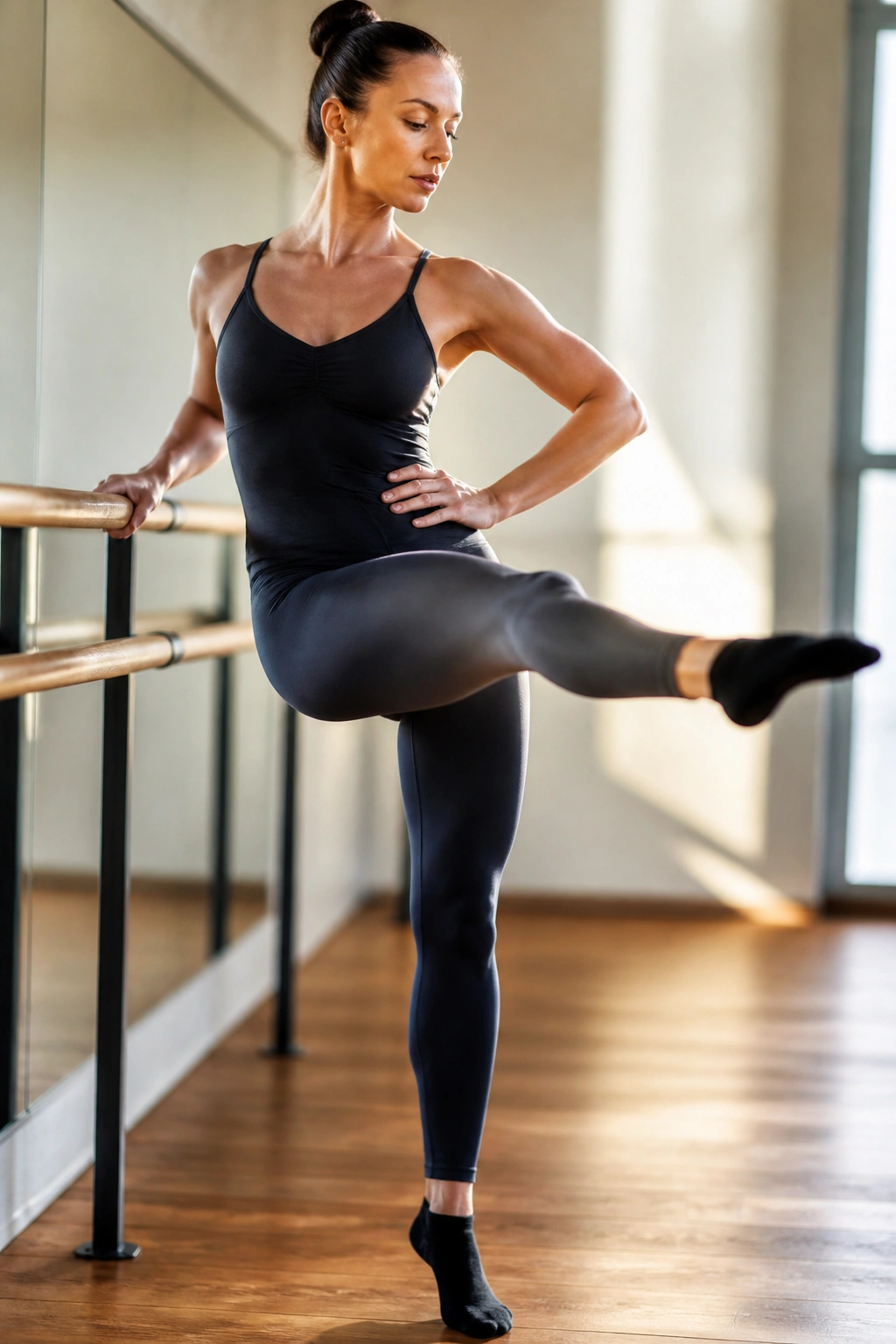
Leg circles are all about hip mobility and deep muscular endurance. Stand facing the barre, balancing on one leg. Extend the other leg forward, then trace a controlled circle around to the side and back, ending in a slight extension.
Improving Hip Health
Hip circles are not just about aesthetics; they are about joint health. By moving the femur through its full range of motion within the hip socket, you lubricate the joint and strengthen the stabilizing muscles.
Execution Checklist:
- Do not let your torso move. The circle should come entirely from the hip joint.
- Maintain a tight core.
- Keep the working leg engaged and straight the entire time.
Try doing ten circles in one direction, then ten in the other. If you feel a “clicking” sensation in your hip, reduce the size of your circle. You do not need a massive range of motion to get the benefits; the tension created by the slow, controlled movement is what counts.
10. The Pendulum Kick
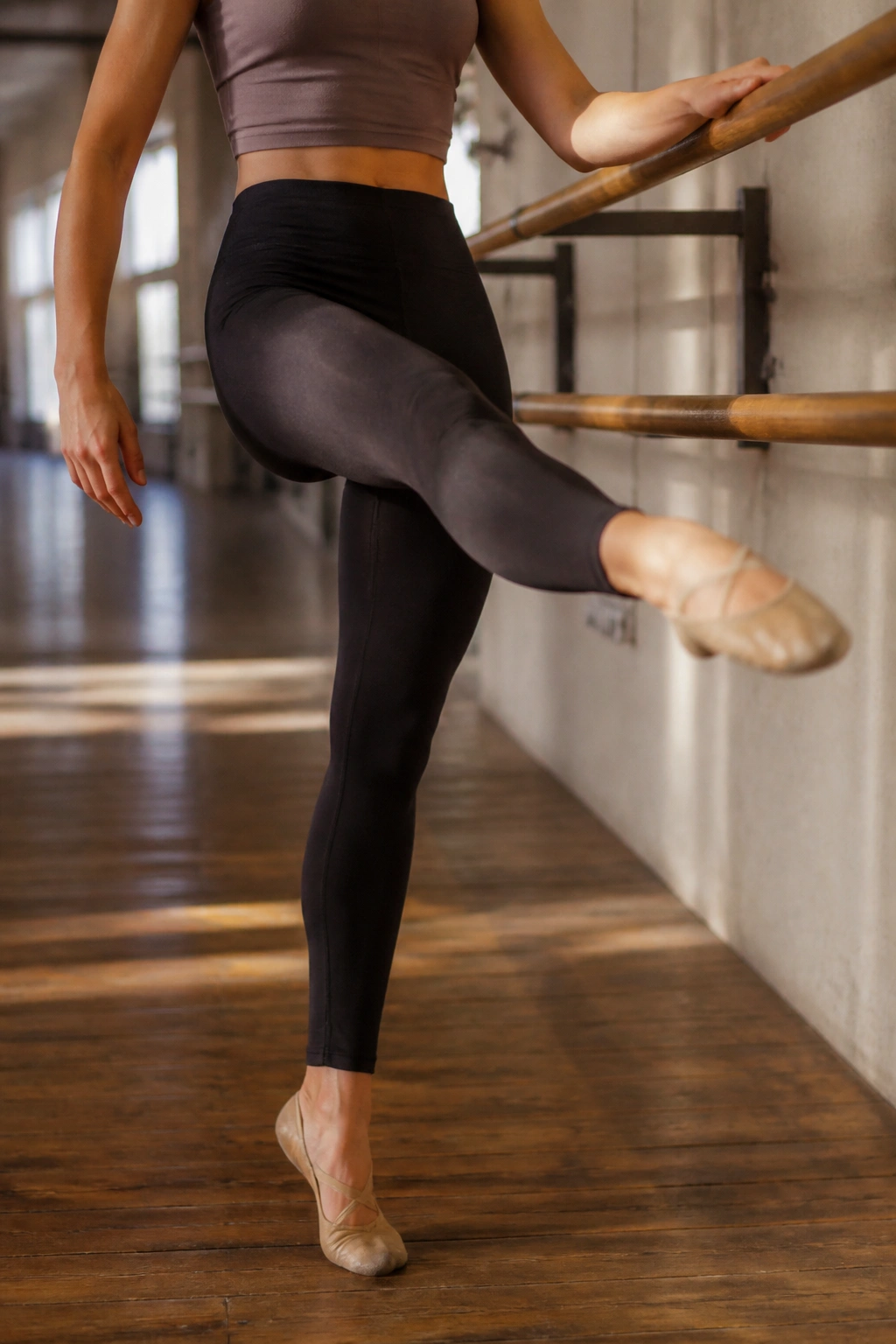
The pendulum kick adds a dynamic element to your routine. It combines the arabesque with a forward kick, forcing your core to stabilize your body against the shifting momentum of your leg. Stand facing the barre, then swing your leg forward, then back, in one smooth motion.
Why Dynamic Movements Matter
While isometric holds are great, adding a dynamic component challenges your balance and forces your muscles to fire in different sequences. It prevents the workout from feeling stagnant and builds functional strength.
- Start with a controlled swing—no flinging the leg.
- Focus on the squeeze of the glute as the leg moves back.
- Keep the upper body completely motionless. The only thing moving should be the leg.
If you find yourself losing balance, hold the barre more firmly or shorten the swing. As you get stronger, you can release the barre and perform the movement with just your fingertips for support.
11. The Barre Plank Leg Extension
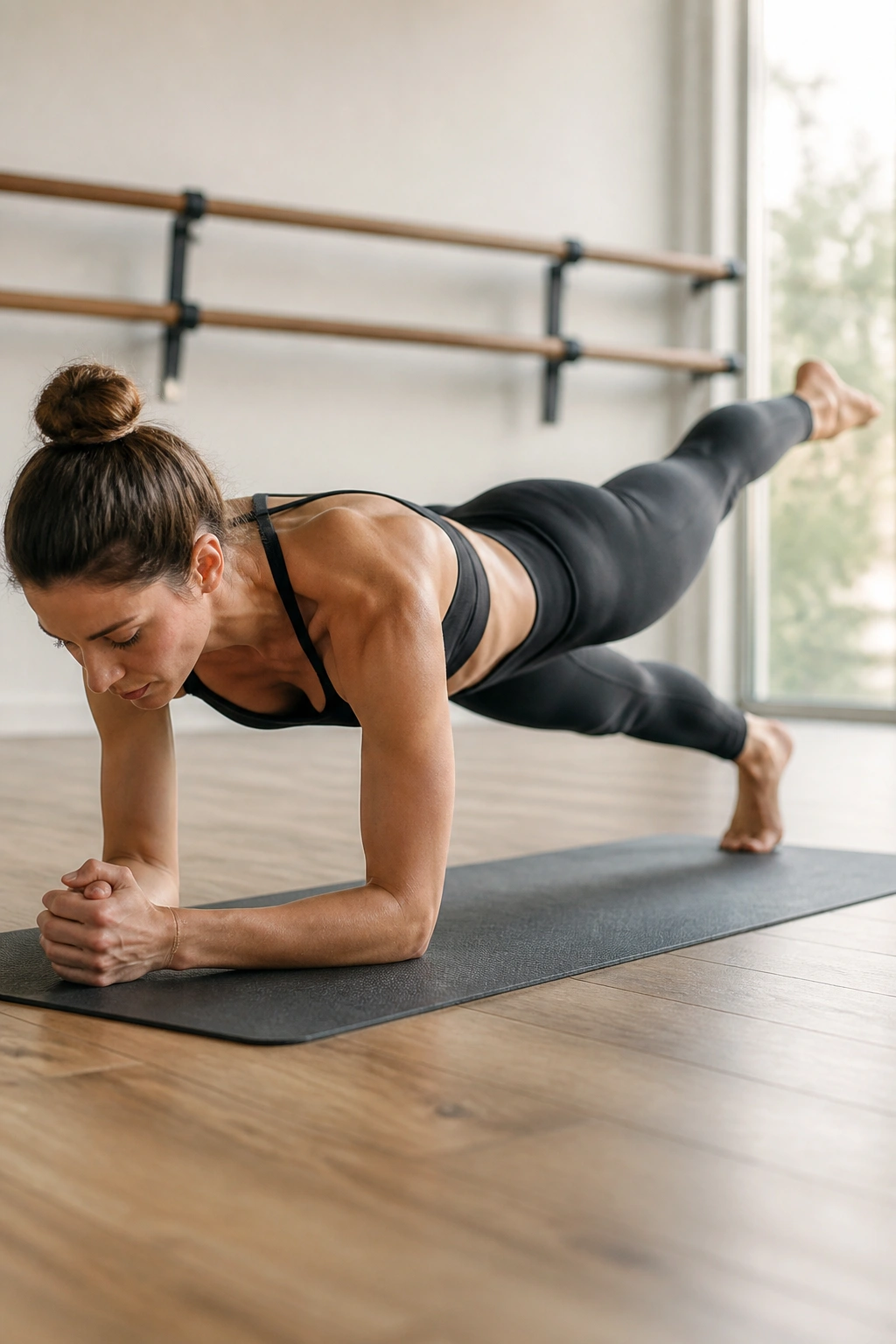
This is a core and leg hybrid. Start in a forearm plank position. While maintaining a perfectly flat back, lift one leg off the floor and extend it straight back, pulsing upward.
Integrating Core and Legs
You are essentially performing a glute kickback while holding an isometric plank. This recruits the entire posterior chain and requires immense core strength to prevent your lower back from sagging.
Key Cues:
- Pull your abs in tight. Imagine your belly button pushing through to your spine.
- Squeeze your glutes at the top of the lift.
- Keep your gaze slightly ahead of your hands to maintain a neutral neck alignment.
This move is brutal because it demands total body tension. Do not rush it. The slower you move, the harder the muscles have to work to maintain the position.
12. Clamshell Barre Hybrid
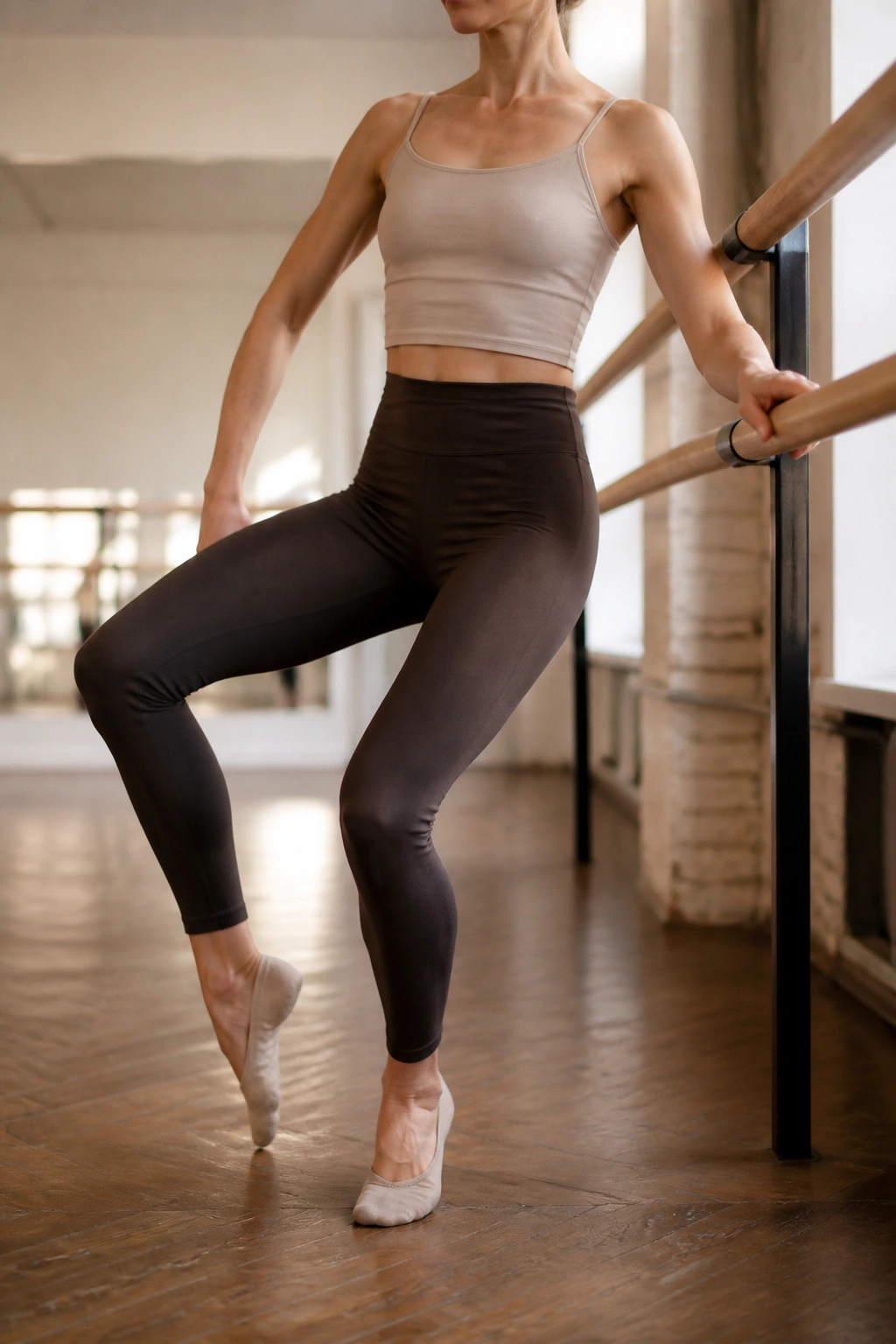
The clamshell is a classic physical therapy exercise for hip stability, adapted here for barre. Lie on your side, or stand leaning against the barre, with knees bent and feet together. Open your knees like a clamshell, then close them with control.
Why It Reshapes the Hips
This specifically targets the deep hip rotators and the gluteus medius. By performing this while standing, you add the element of gravity and balance, which increases the difficulty.
- Keep your toes touching throughout the movement.
- Do not let your hips rotate backward as you open the knee.
- Visualize your knee reaching for the ceiling, not just moving outward.
If you are performing this standing, ensure your standing leg is slightly bent to absorb the impact and protect the knee joint.
13. The Barre Squat Pulse
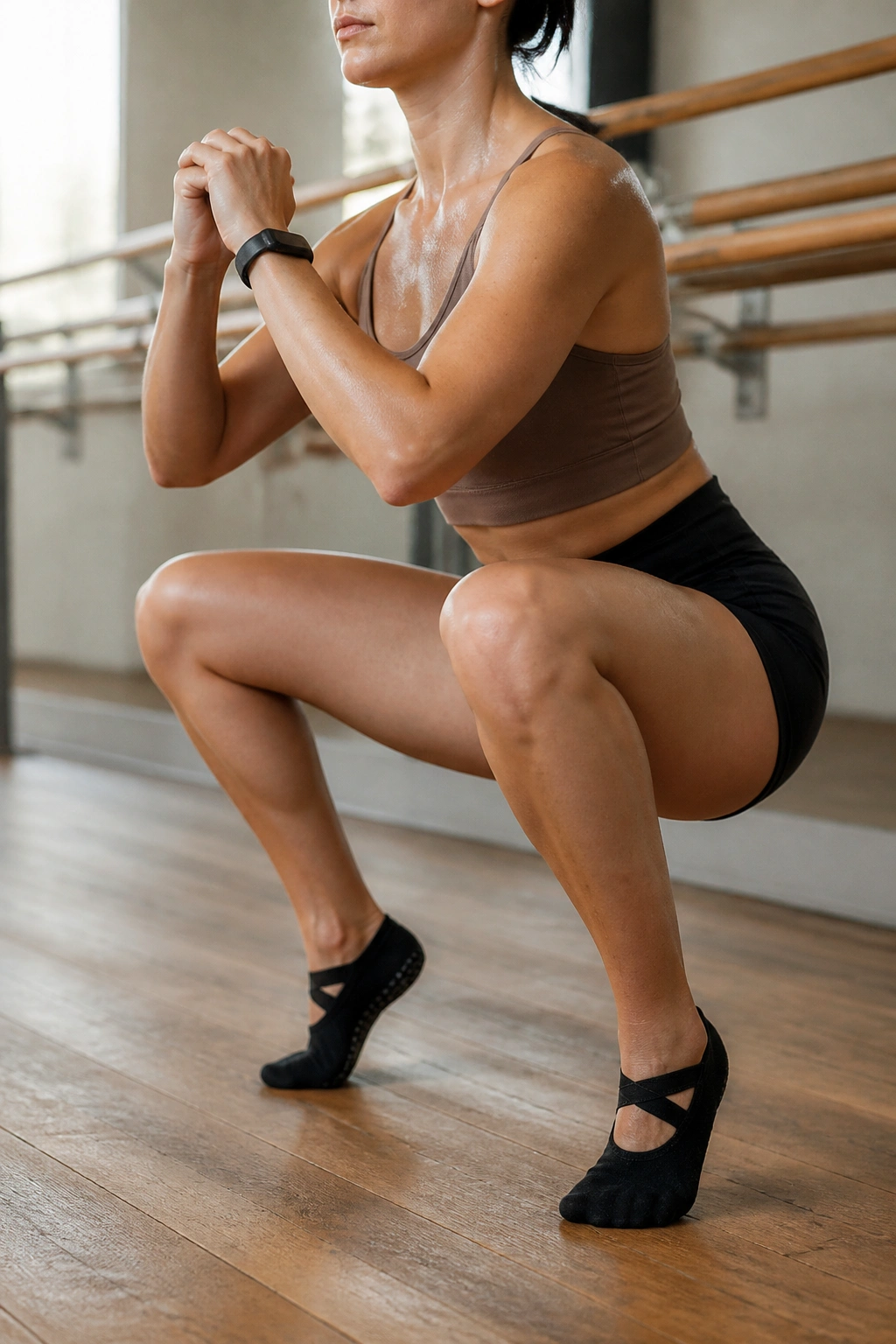
Isometrics are the hallmark of barre. The squat pulse involves holding your squat at the lowest point and moving up and down just an inch or two. This keeps the muscle under constant tension, preventing any “rest” period during the set.
Understanding Time Under Tension
Muscle growth and toning are driven by metabolic stress and time under tension. By never fully extending the leg, you trap blood in the muscle, creating that signature “pump” and burning sensation.
- Stay low. The temptation is to rise as you get tired; fight it.
- Keep the chest high.
- Breathe through the burn.
Aim for high-volume pulses—think sixty to one hundred reps. It will be intense, but the endurance you build is what allows for the sustained muscle definition over time.
14. Elevated Heel Squats
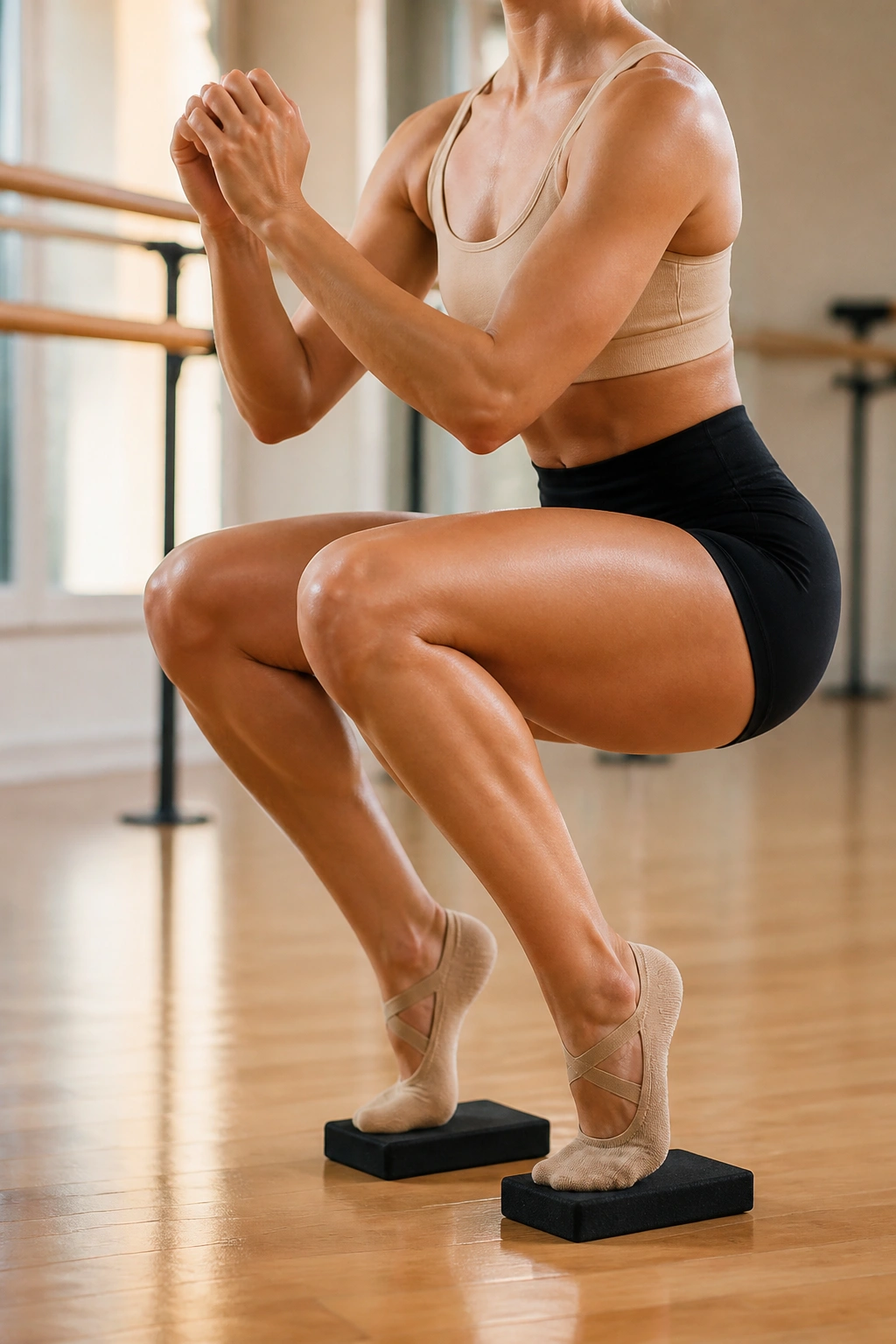
Take your standard squat but place a small block or book under your heels. This simple adjustment forces your knees further forward and puts the entire load onto your quadriceps.
Targeting the Quads
This variation isolates the quads, stripping away some of the glute involvement that happens in a flat-footed squat. It is excellent for developing the “teardrop” muscle (vastus medialis) just above the knee.
- Ensure your spine stays vertical.
- Go as deep as your mobility allows.
- Keep your knees aligned with your toes to prevent shearing forces on the joint.
This is a very specific, intense movement. You will likely feel fatigue much faster than with a standard squat, so start with fewer reps and focus on the quality of the contraction.
15. The Barre Knee Drive
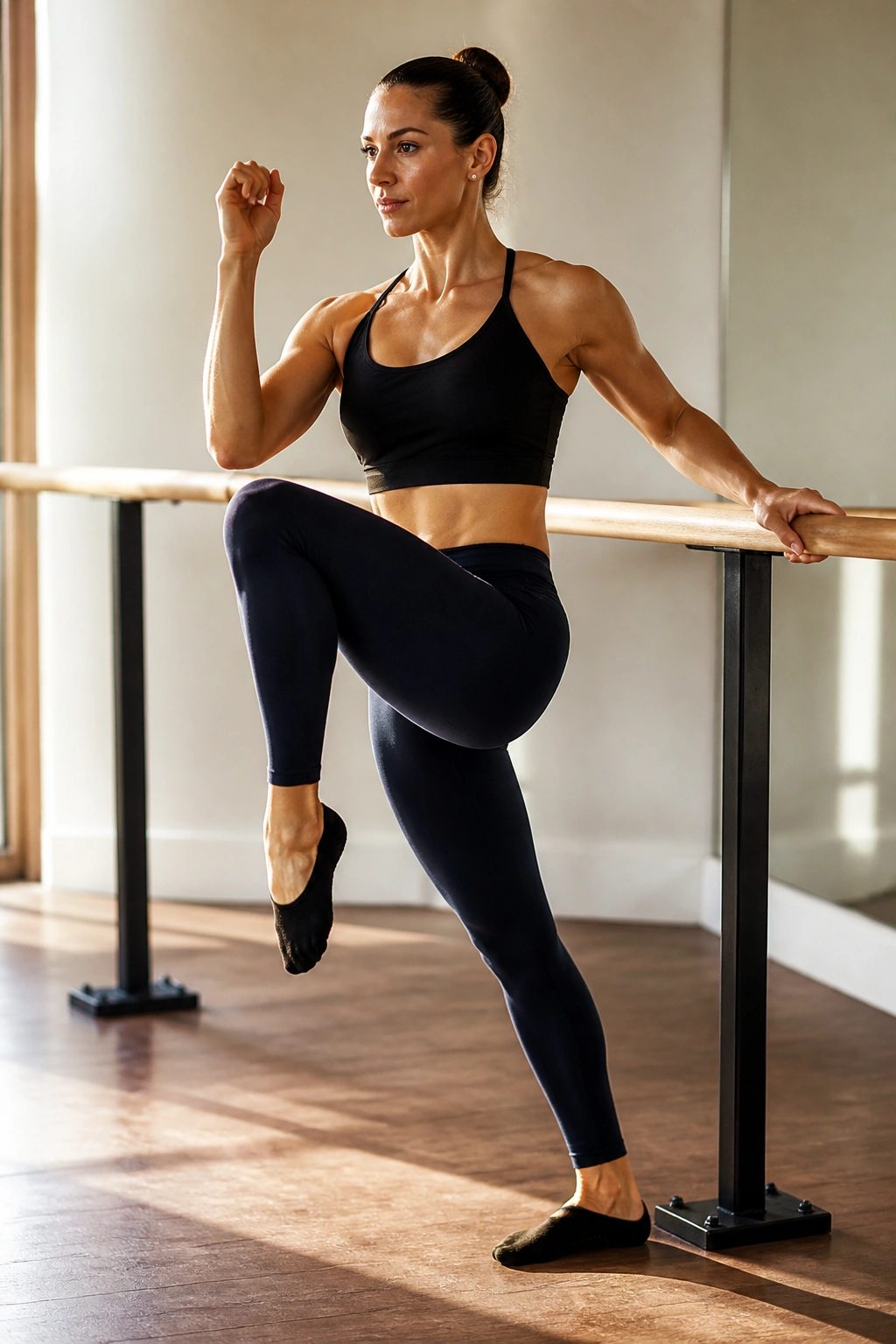
This move incorporates a cardio element to get the heart rate up while still focusing on leg strength. Stand facing the barre, then step back into a lunge and drive the back knee forward toward your chest in an explosive, controlled movement.
Developing Power and Control
The knee drive forces you to engage your core and hip flexors simultaneously. It is an athletic move that builds coordination.
- Use the barre for balance if needed, but aim to eventually use it just for light support.
- Exhale as you drive the knee up to engage the deep core.
- Keep the standing leg stable—do not let the ankle collapse.
Repeat this for a set duration—thirty seconds per leg—rather than a rep count. The combination of the lunge and the drive keeps the intensity high and the legs working through a full range of motion.
16. Side Lying Barre Kicks
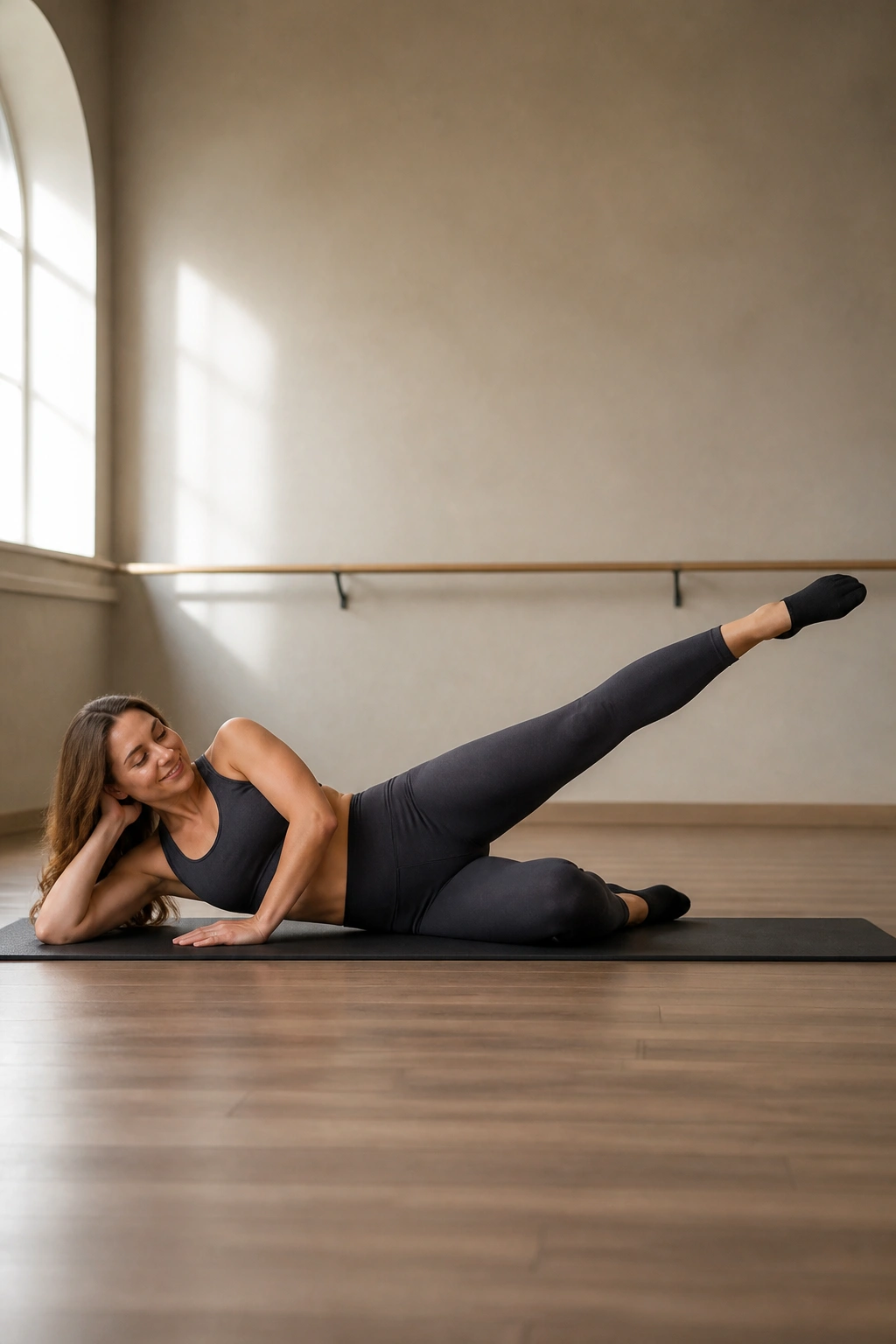
Lie on your side on a mat, resting your head on your arm. Extend your top leg straight. Lift the leg as high as you can without moving your torso, then lower it slowly. This is the gold standard for outer thigh isolation.
The Precision Difference
In a studio, you might see people kicking their legs wildly. In a results-focused workout, you keep it slow. The goal is to feel the muscle on the side of your hip contract at the peak of the movement.
- Flex your foot to engage the calf and keep the entire leg active.
- Keep the bottom leg slightly bent for stability.
- Ensure your hips are stacked—do not roll back onto your glute.
Perform these for twenty reps, then hold at the top for twenty seconds. The accumulation of work here creates incredible definition in the outer thigh.
17. Barre Hamstring Curls
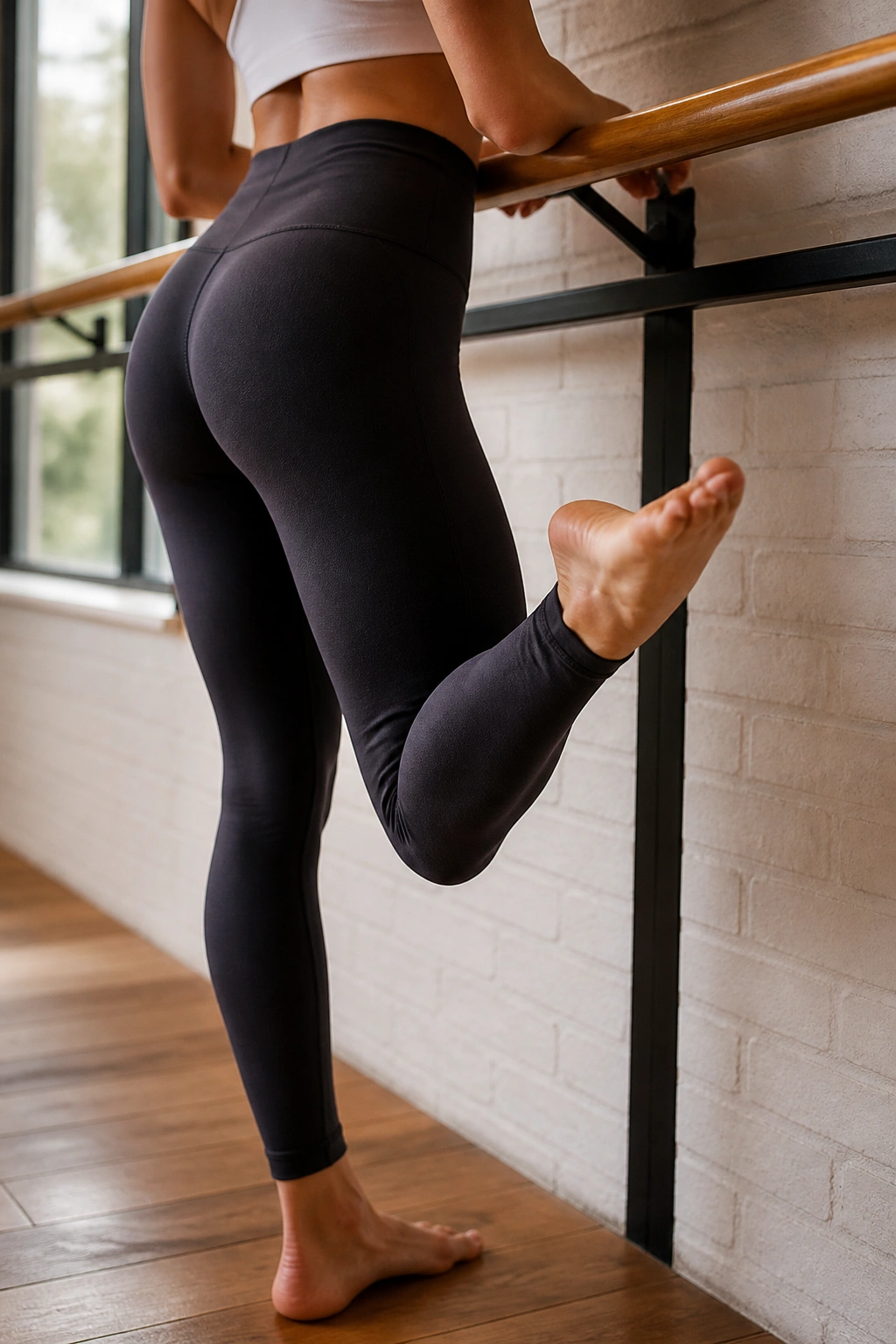
Face the barre, balancing on one leg. Bend the other leg at the knee, bringing your heel toward your glute. Then, extend it back down but stop before the foot touches the floor.
Isolating the Back of the Leg
The hamstrings are often neglected in favor of the quads. This exercise targets them specifically by isolating the knee flexion.
- Keep your knees aligned. Don’t let the working knee drift forward or backward.
- Squeeze the hamstring at the top of the curl.
- Focus on the eccentric (lowering) phase—don’t let gravity do the work.
If you want to make it harder, attach a light ankle weight. You will notice the difference within just a few repetitions.
18. The Barre Chair Pose
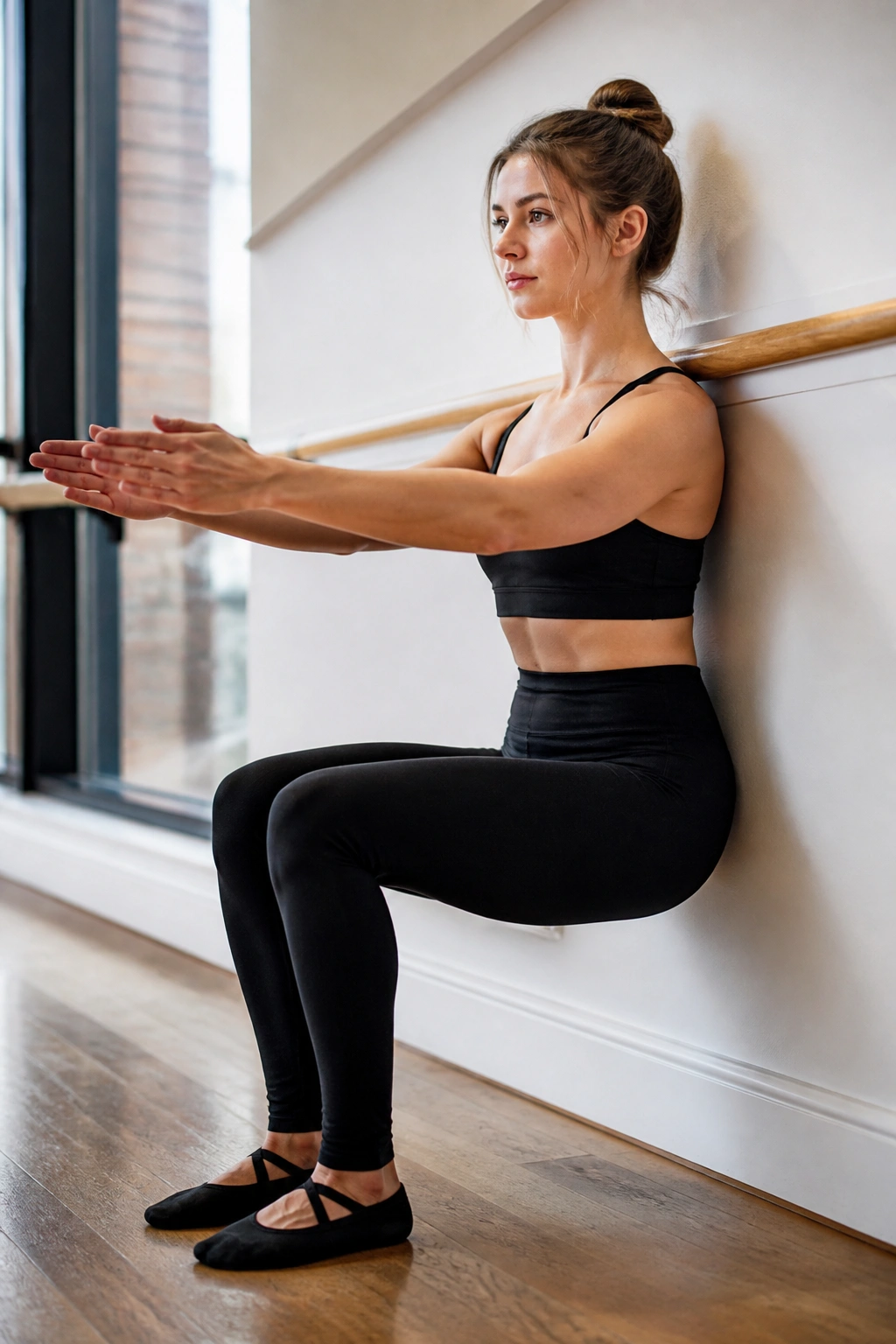
This is pure, unadulterated endurance. Stand with your back against a wall or simply hold a deep squat position (a “chair” position) with your arms reaching forward for balance.
Building Static Strength
The chair pose builds the kind of mental and physical toughness that carries over into all other movements. It teaches you to stay calm when your muscles are screaming.
- Keep your weight in your heels.
- Keep your back flat.
- Don’t let your chest drop.
Start with thirty seconds and build up to ninety seconds or more. This is an excellent “finisher” for any leg workout, forcing the muscles to exhaust themselves entirely before you stop.
19. The Barre Squat-to-Lunge Transition
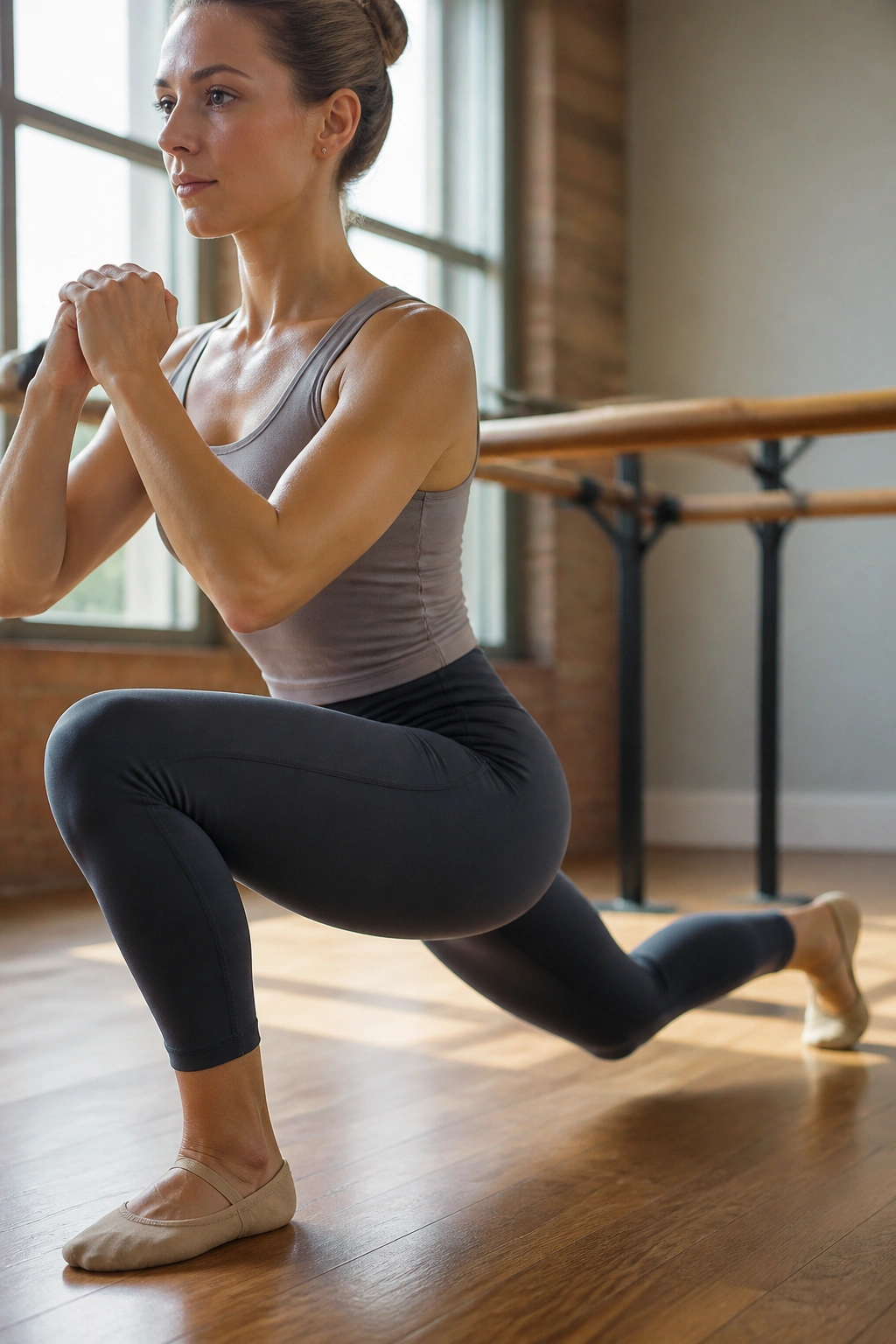
This move links a wide squat to a backward lunge, keeping the body in constant motion. It challenges your balance and hits the legs from multiple angles in a single set.
Flowing Through Movement
The transitions between positions are where the real work happens. You have to stabilize your body and adjust your balance on every rep.
- Step back with control.
- Sink into the squat on the return.
- Stay low throughout the entire transition—do not fully stand up between the lunge and the squat.
This constant low-level position is what builds that deep, sculpted look in the quads and glutes.
20. Single-Leg Barre Hinge
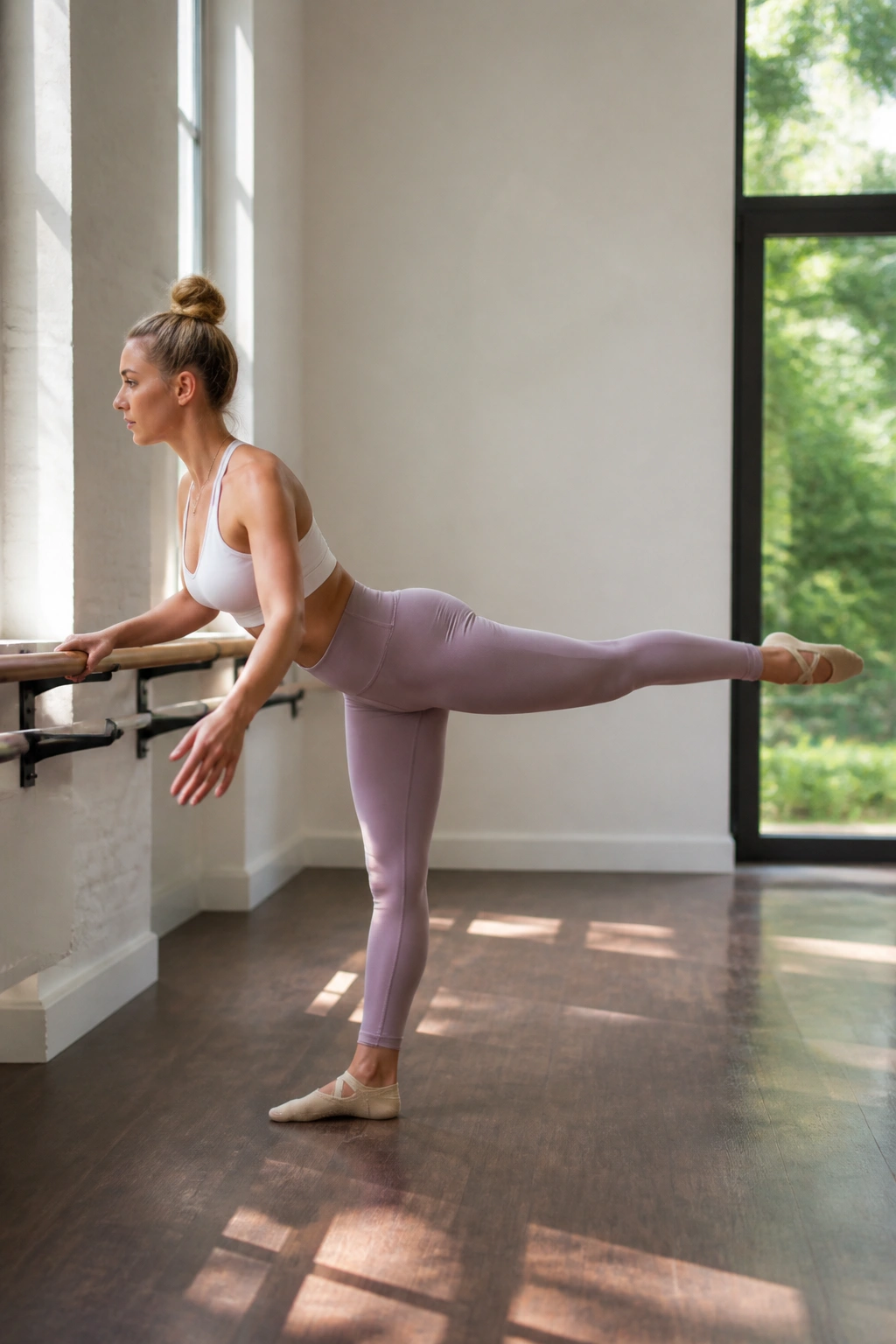
Similar to a deadlift, the single-leg hinge involves standing on one leg and hinging at the hips, keeping the other leg extended straight behind you. It is the best move for hamstring and glute isolation.
The Art of the Hinge
The hinge is a movement pattern, not a squat. Your knee should only have a slight “soft” bend; the majority of the movement comes from pushing your hips back.
- Keep your hips square to the floor.
- Reach your extended foot toward the back wall.
- Focus on the stretch in the hamstring of the standing leg.
If you lose balance, tap your toe down. The goal is a clean, hinge movement where you feel the back of your leg do the work, not your lower back.
21. The Barre Side-Bend Leg Extension
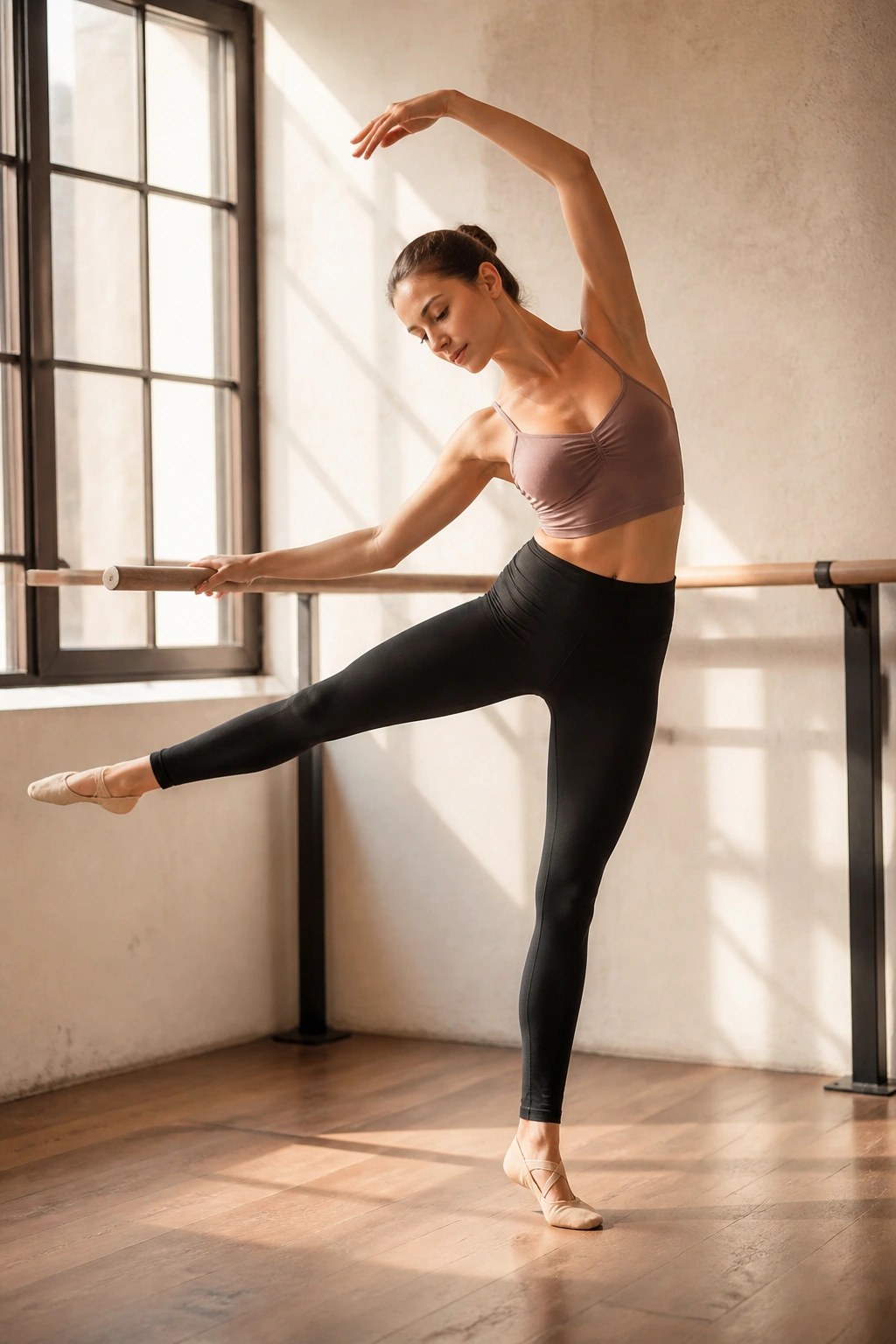
Stand sideways to the barre. As you lift your outer leg, perform a side bend toward the barre, engaging your obliques. This adds a core-strengthening element to your leg work.
Total Body Engagement
Leg toning is most effective when you engage the core. This move forces you to stabilize your spine while moving your legs, creating a more integrated, athletic physique.
- Keep the movement controlled.
- Do not collapse into your side.
- Maintain a long line from your head to your toes.
This is a great multi-planar movement that hits the obliques and the outer thigh in one motion.
22. Barre Plié-Relevé Combo
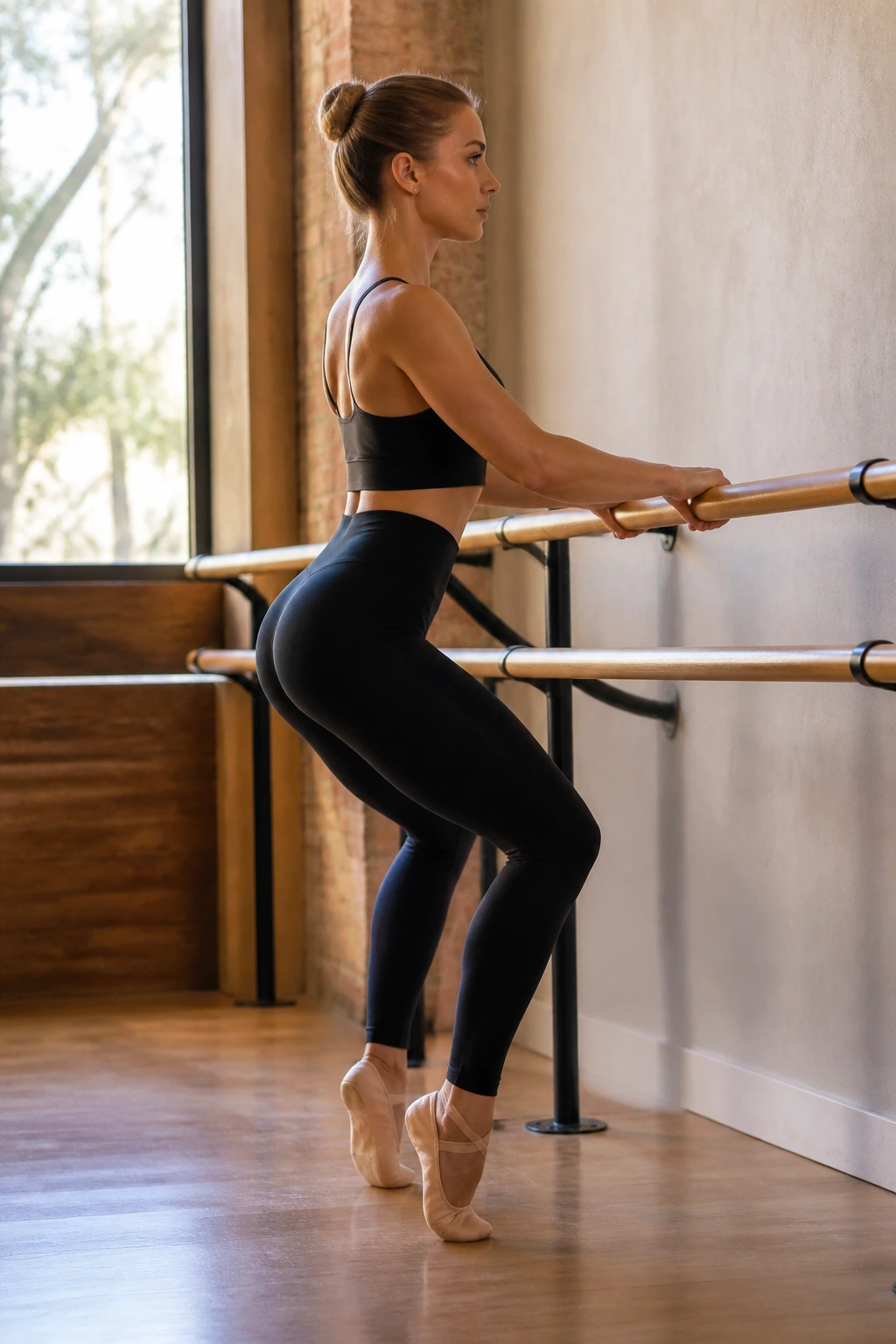
Combine the moves from sections 1 and 2. Perform a deep plié, then as you rise, lift your heels into a relevé. It is a fluid, rhythmic movement.
The Rhythm of the Burn
This combo works the quads, inner thighs, and calves in a single rep. It requires coordination and balance, which forces your stabilizer muscles to work overtime.
- Keep the transition smooth.
- Do not rush the rise.
- Maintain the engagement in your inner thighs the entire time.
This is a high-repetition move. Do sets of twenty or thirty, keeping the tempo consistent.
23. The Barre Glute Bridge
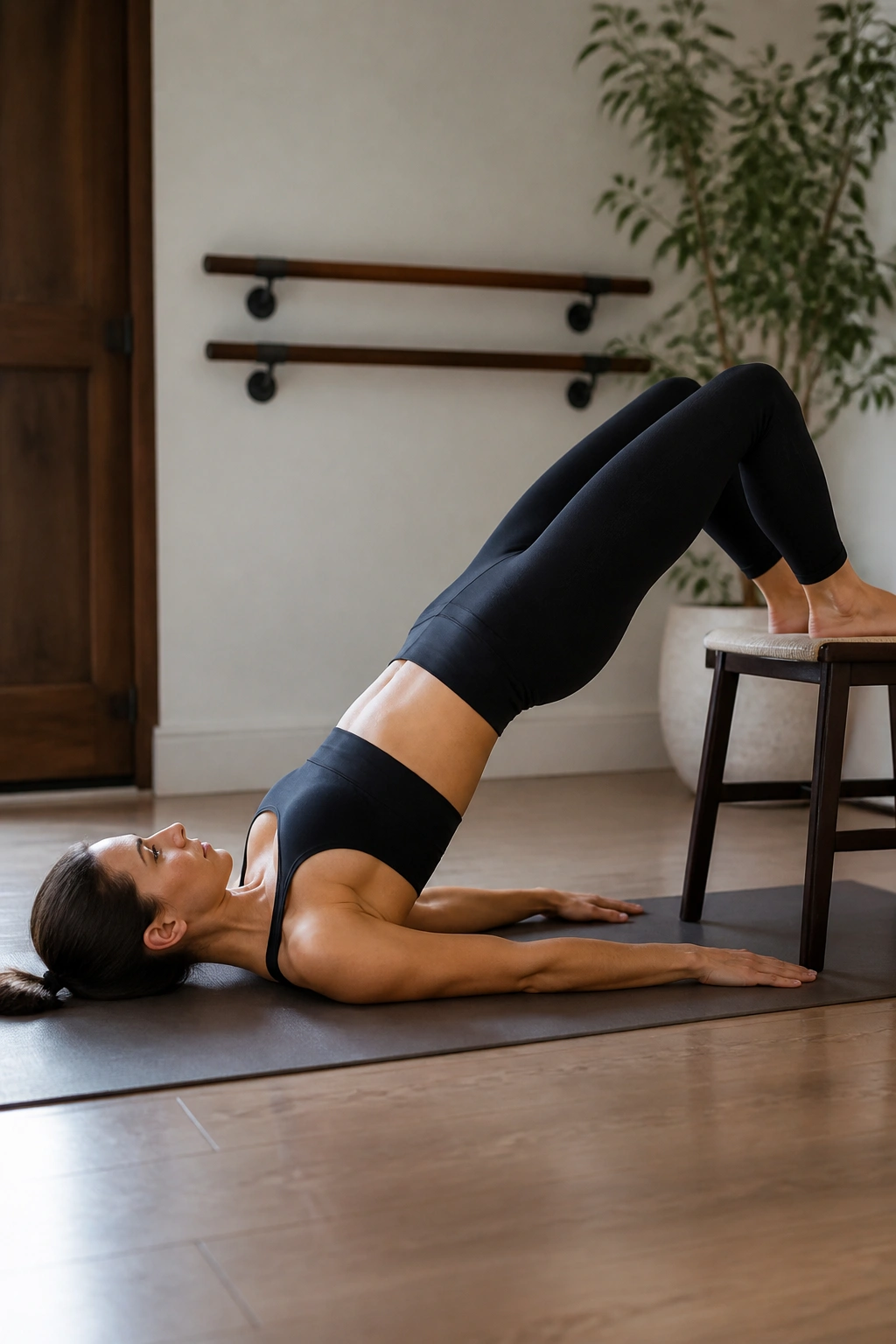
Lie on your back with your feet elevated on a sturdy chair or the barre itself. Lift your hips toward the ceiling, squeezing your glutes at the top.
Targeting the Posterior Chain
The elevation increases the range of motion for the glutes, allowing for a deeper contraction than a floor-based bridge.
- Keep your ribs pulled down—don’t arch your back.
- Push through your heels.
- Hold at the top for three seconds on each rep.
This is a fantastic way to finish your leg routine, ensuring the glutes are thoroughly fatigued.
24. Barre Inner Thigh Pulses
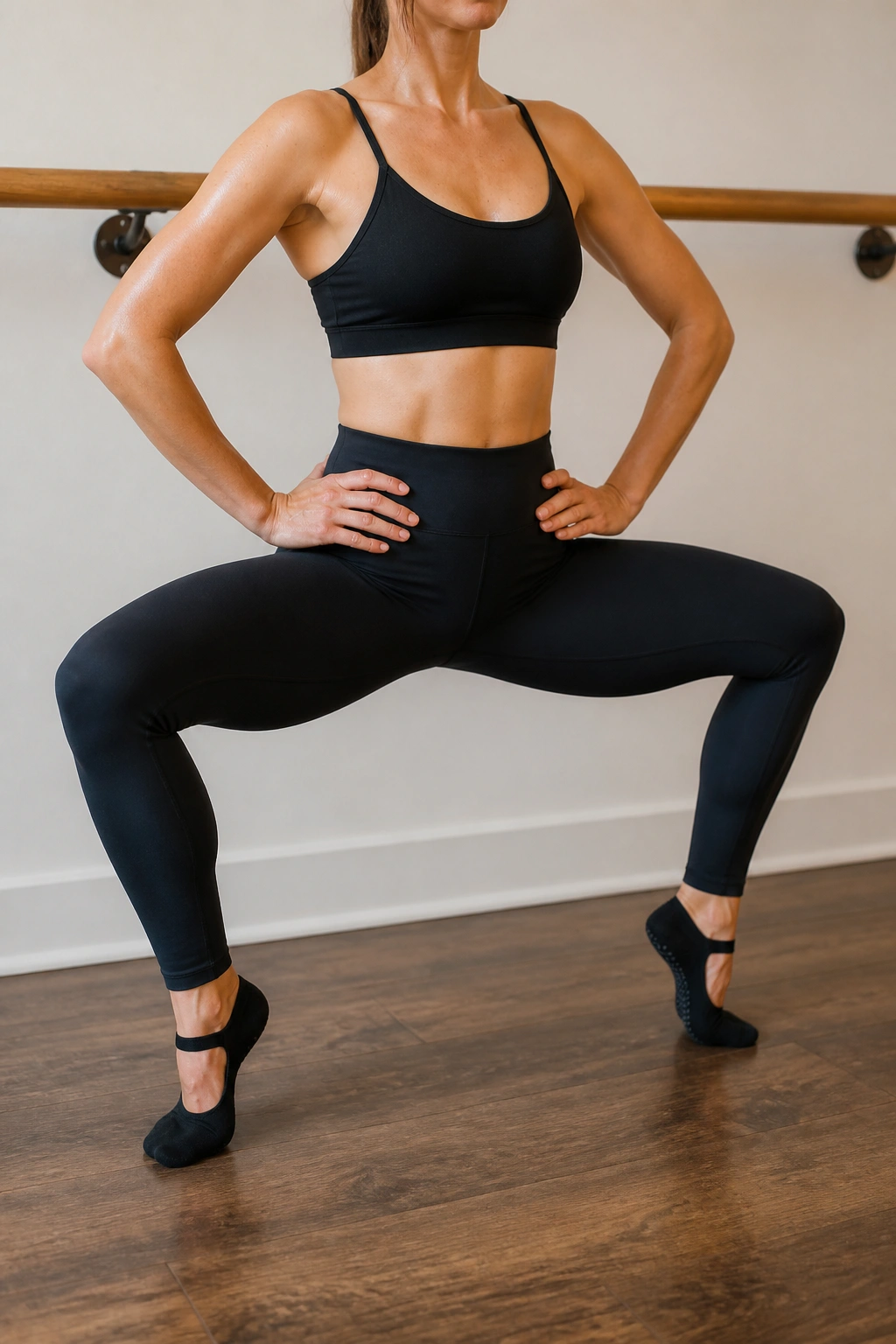
Return to the wide, turned-out plié position. Sink deep, and pulse your hips up and down, focusing on the inner thighs.
Endurance and Isolation
By keeping the focus on the pulse, you avoid the temptation to use momentum. It is a slow burn that shapes the muscle.
- Keep the chest high.
- Keep the heels connected to the floor.
- Imagine your inner thighs pulling toward each other with every pulse.
The burn here is different—it’s sharp and targeted. Embrace it.
25. The Barre Finishing Stretch
Never skip the cool-down. After twenty-four exercises targeting the legs, your muscles will be tight. Use the barre to hold a standing quad stretch, a hamstring stretch (placing one heel on the barre), and a figure-four glute stretch.
Why Recovery is Part of Training
Stretching helps return the muscles to their resting length, preventing that “tight” feeling that can lead to imbalances or discomfort. It also promotes circulation, which helps flush out metabolic waste and speeds up recovery.
- Hold each stretch for at least thirty seconds.
- Breathe deeply, focusing on relaxing into the stretch.
- Do not bounce; keep the stretch static.
Your legs have worked hard. Giving them five minutes of dedicated stretching is the final step in the process of building long, lean, and defined muscles.
Final Thoughts
Barre training is a practice of precision. It is not about how much weight you can move, but about how much control you can exert over your own body. You will notice the changes not just in the mirror, but in how you move—with more stability, better posture, and greater leg strength.
Keep your movements slow, keep your focus sharp, and always prioritize form over speed. The shake is where the magic happens, so lean into it. With consistent, disciplined practice, you will build the kind of strength that lasts, ensuring your legs are as functional as they are defined.
