



Bands are small, cheap, and a little mean. You pull one tight, and suddenly your glutes, shoulders, and upper back are doing honest work instead of drifting through a halfhearted set. That’s why band workouts have such a loyal following for toned muscle: the resistance keeps rising as the band stretches, so the hard part of the rep doesn’t disappear at the top.
“Toned” gets thrown around a lot, usually in a sloppy way. The useful version is simpler: build a bit of muscle, keep training consistently, and choose resistance that makes the last few reps matter. Bands help with that because they load the muscle through the full range, and they do it without the clang of dumbbells or the need for a full gym. Good. Sometimes all you need is a loop of rubber and a patch of floor.
A mini loop, a long flat band, and a tube band with handles will cover most of what matters here. If a band feels easy for 20 clean reps, it’s too light for the main set. If the final 3 reps make you slow down while your form stays neat, you’re in the right neighborhood. Start there, and pay attention to which muscles start complaining first.
1. Banded Squat Pulse Burnout for Toned Glutes
A squat pulse with a mini band above the knees looks tame until the second round. The band forces your knees to stay open, the pulses keep the glutes under tension, and the burn shows up fast. That is the point.
Why It Works
The outside of your hips has to fight the band the whole time, so your knees can’t cave inward without effort. That keeps the glutes working when a plain bodyweight squat would get easier near the top.
- Use a light to medium mini band above the knees.
- Do 12 full squats.
- Add 15 short pulses at the bottom.
- Finish with a 10-second hold where your form still feels clean.
Tip: Drive your knees out a little as you stand, but do not turn the squat into a wide, messy stance. Your feet stay planted. Your heels stay down.
2. Lateral Band Walks for Side Glute Strength
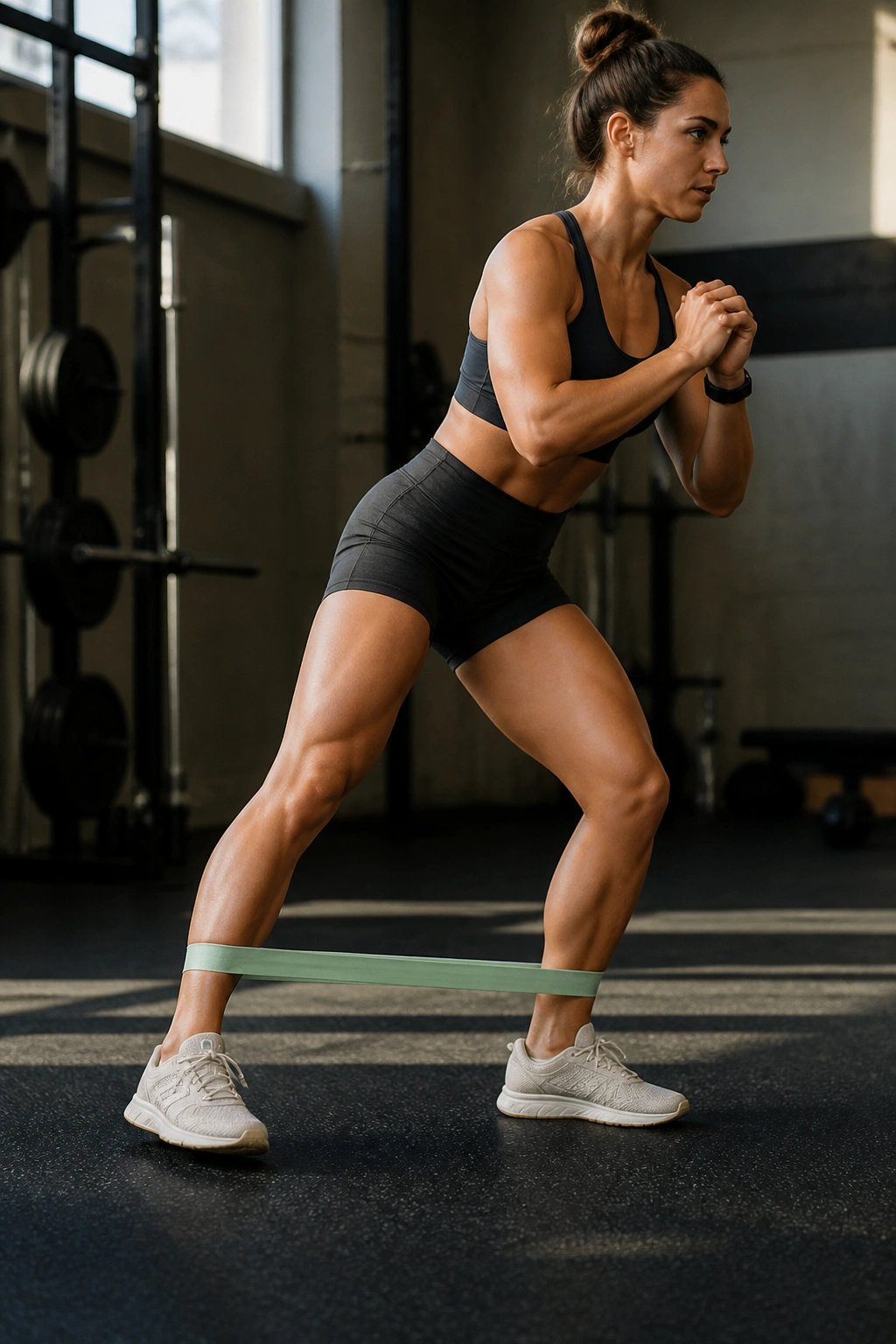
Lateral band walks are boring in the best way. That is why they work.
Put the band at your ankles if you want a harder hit, or above the knees if you need more control first. Sink into a shallow quarter squat, keep your feet parallel, and step 8 to 12 times to the right, then back to the left without letting the band go slack. The moment your torso starts leaning like a tired shopping cart, shorten the steps.
These are a smart warm-up before squats and deadlifts, but they also earn their place as a finisher. Side glute strength matters more than people think. It helps the hips stay level, and it keeps the knees from wobbling all over the place when the load gets real.
3. Banded Romanian Deadlift for Hamstrings
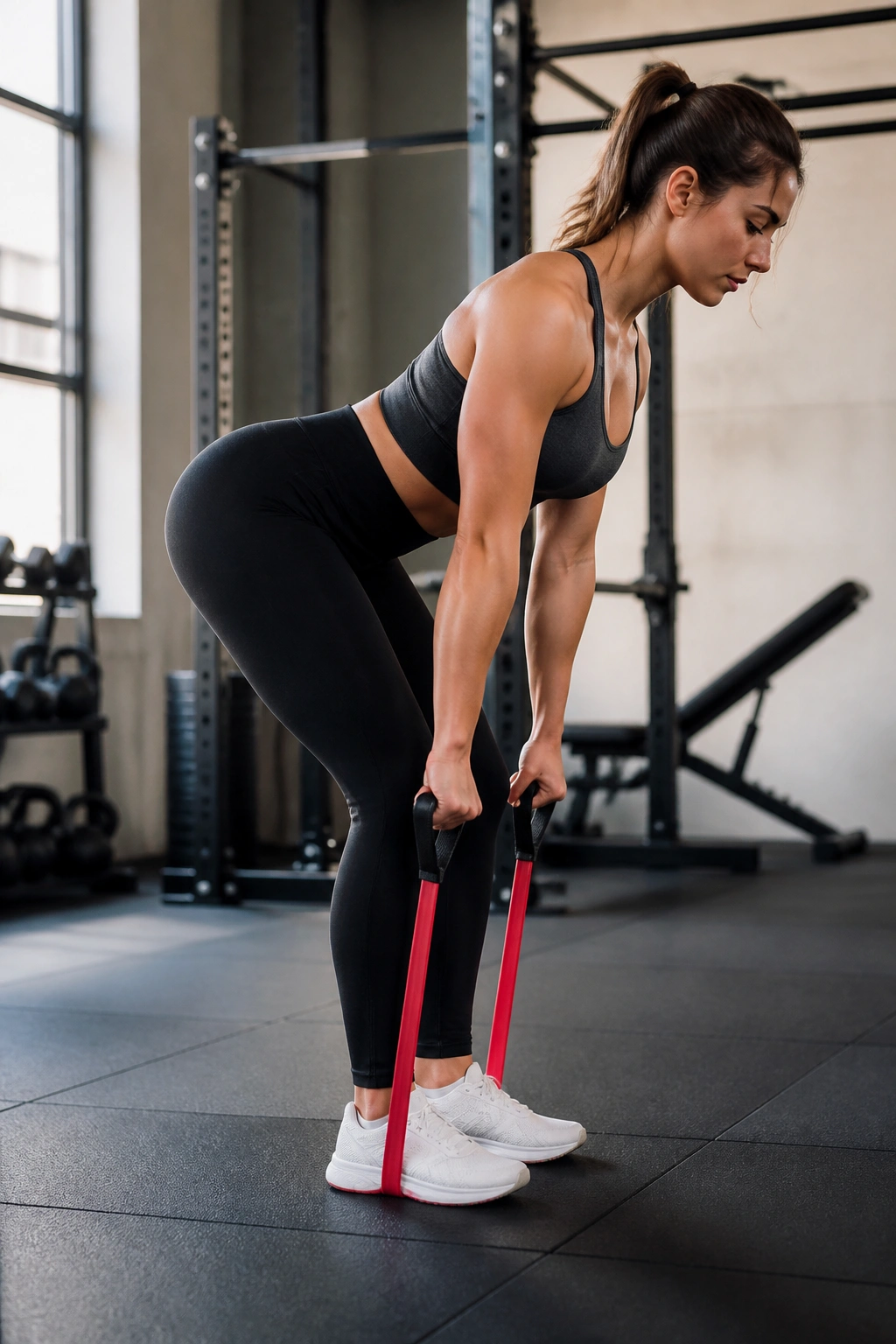
Why does a banded Romanian deadlift feel harder at the top than a dumbbell version? Because the band keeps pulling hardest where people usually coast. That little detail changes the whole exercise.
Stand on a long band with both feet hip-width apart, then hold the ends in each hand. Push your hips back, keep a soft bend in the knees, and slide the band down your legs until you feel the hamstrings stretch. Come up by driving the hips forward, not by yanking with your lower back.
How to Set It Up
If the band slips, step on it wider. If it feels too easy, choke up on the band a little shorter or use a thicker one. Eight to 12 reps works well here, and a 2-second pause near the bottom makes the hinge feel cleaner.
4. Standing Band Row for a Toned Upper Back
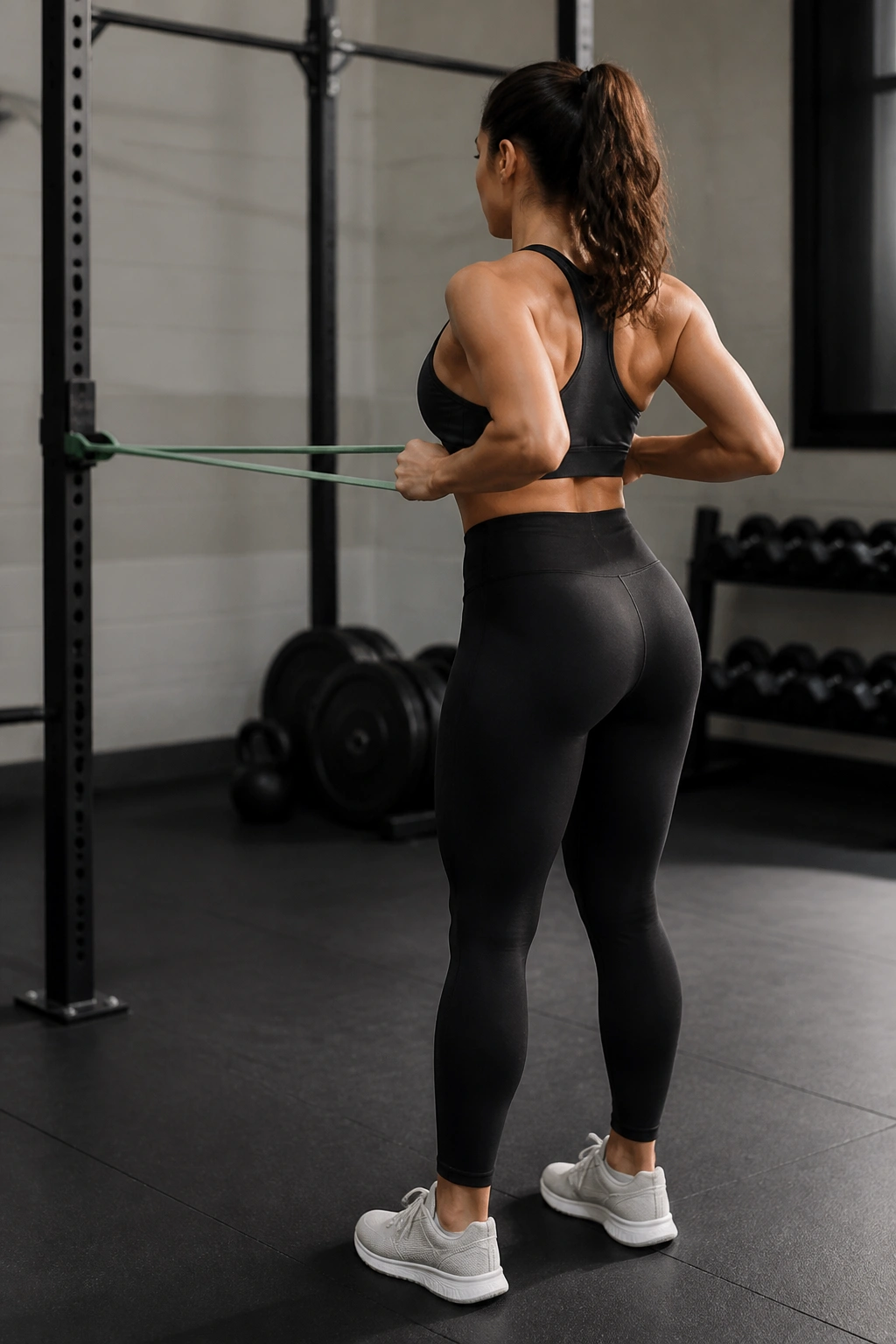
If your upper back spends half the day folded over a keyboard, rows should not be optional. The standing band row is one of the simplest ways to pull your shoulders back where they belong.
Anchor the band at about chest height, grab both ends, and walk back until you feel light tension before you even start. Pull your elbows toward your back pockets, squeeze your shoulder blades gently together, and pause for a beat before letting the band return with control. No shrugging. That’s the mistake people make.
- Keep your ribs down.
- Keep your neck long.
- Pull with the elbows, not the hands.
- Aim for 12 to 15 reps.
This move hits the mid-back, rear delts, and the muscles that make posture look less collapsed.
5. Band Pull-Aparts for Rear Delts and Posture
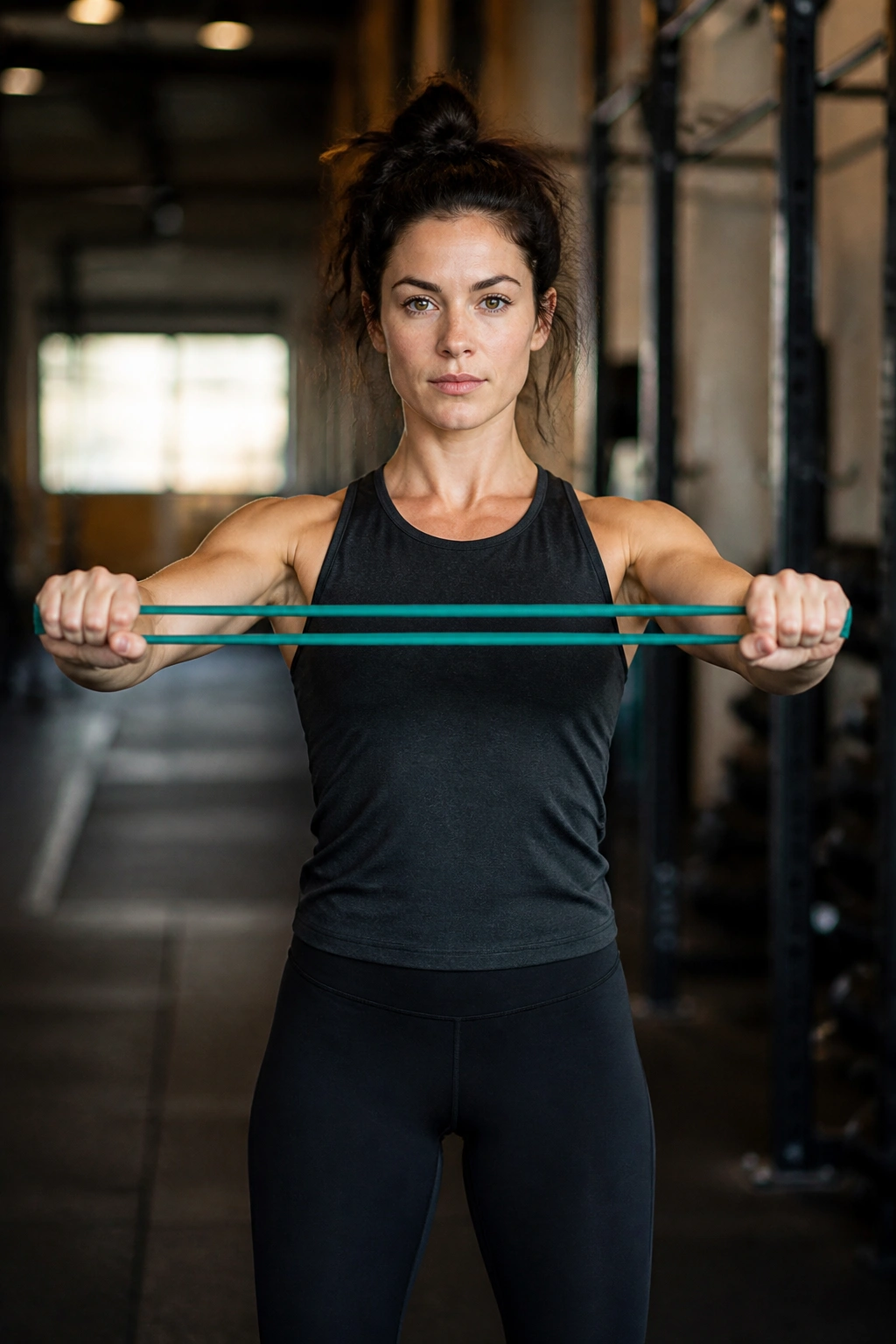
Band pull-aparts look almost too easy. Then you do 25 clean reps and your upper back starts speaking up.
Unlike rows, pull-aparts train the rear delts and upper back with almost no elbow bend. That makes them a clean warm-up when your shoulders feel tight and you don’t want a heavy session to start with too much load. Hold the band at shoulder height, keep the arms straight, and pull until the band touches your chest or the hands move well past shoulder width.
A light band is better here than a thick one. If the band is too stiff, your traps take over and the movement gets ugly fast. Use these between sets, before pressing work, or as a tiny finisher at the end of an upper-body day.
Best use: 15 to 25 reps, slow and neat.
6. Banded Chest Press for Chest and Triceps
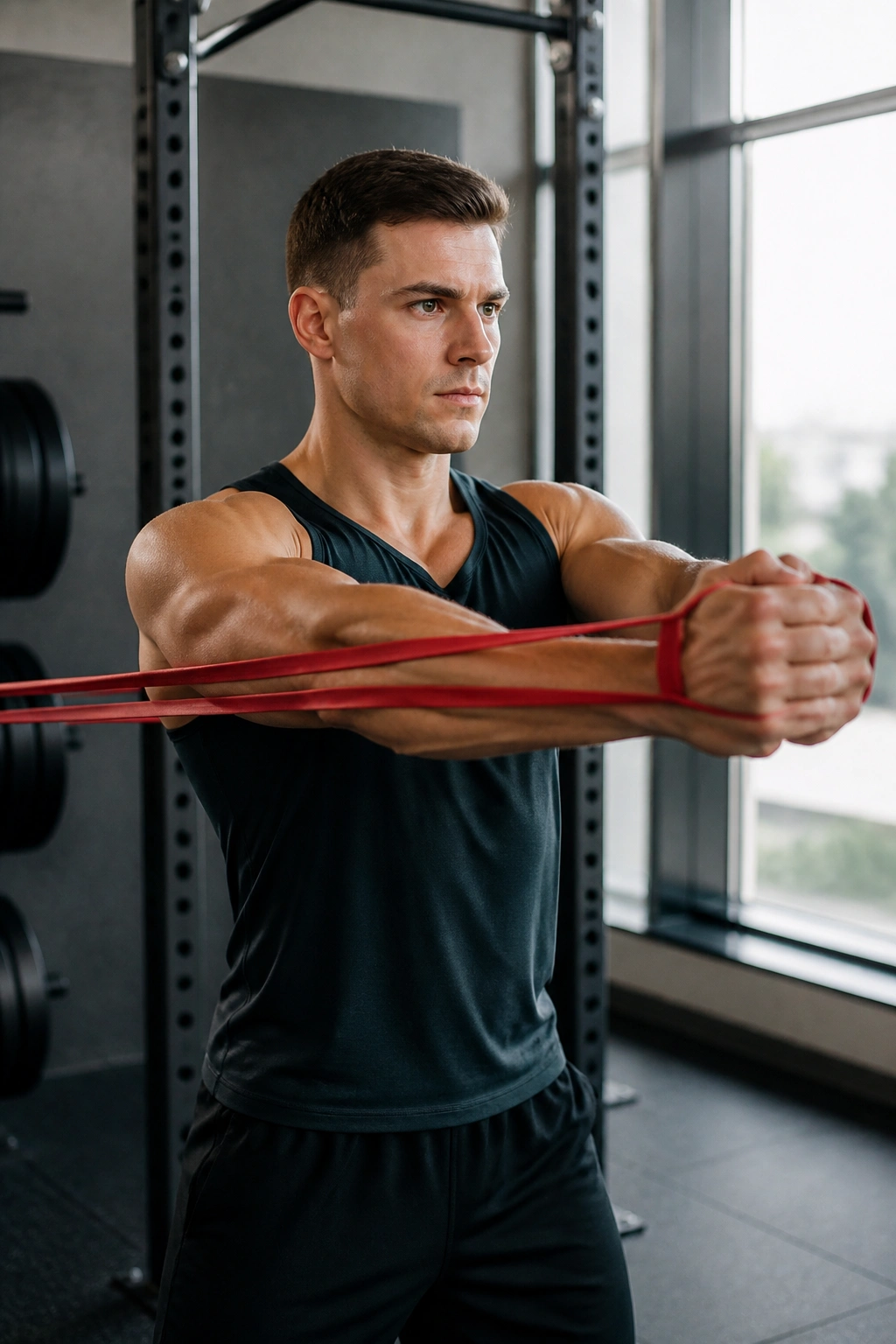
A band chest press is hardest where a dumbbell press gets easy. That matters more than people think.
With dumbbells, the top of the press can feel a bit sleepy if your joints line up nicely. With a band, the tension climbs as you extend the arms, so the triceps stay involved right through the finish. You can do it standing with the band wrapped behind your back, or on the floor for a more stable setup.
Press forward in a straight line, keep the wrists stacked, and stop the elbows from flaring wildly. If your shoulders shrug up toward your ears, the band is probably too heavy or your stance is too loose. A solid set is usually 8 to 12 reps with enough control that the last two feel earned.
This one is a home-gym staple for a reason. It does not need much room, and it does not need a fancy bench.
7. Overhead Band Press for Shoulder Strength
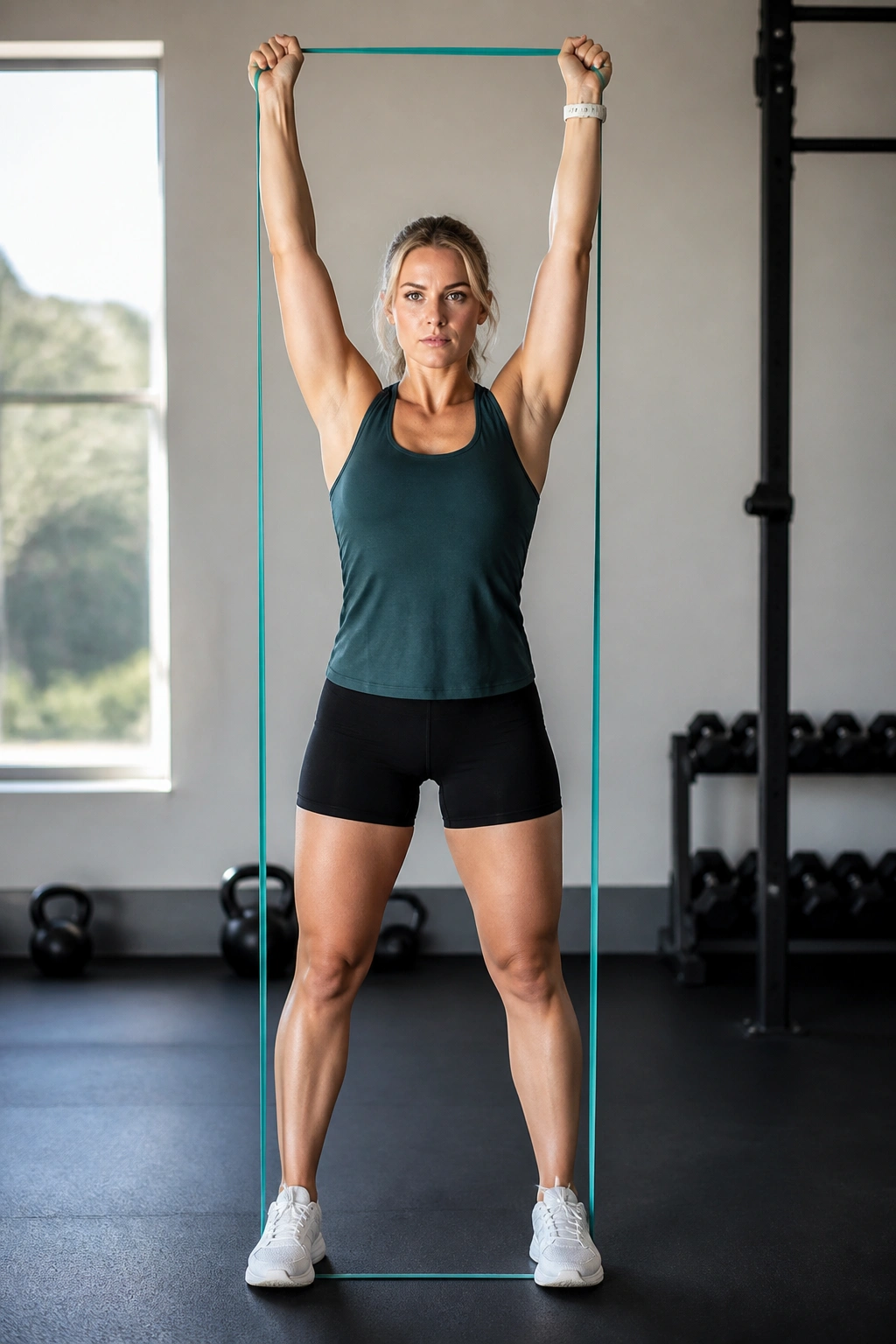
Can you press overhead with a band without leaning back like you’re dodging rain? Yes. But the ribs have to stay quiet.
Stand on the middle of a long band, hold the ends at shoulder height, and press straight up until the elbows lock out gently. The band wants to drag your torso backward, so brace your core and keep your glutes lightly on. If the lower back arches hard, the set is already lost.
Clean Rep Cues
- Start with the hands just outside the shoulders.
- Press up and slightly back, not forward.
- Stop if the neck starts rising with the shoulders.
- Use 8 to 12 reps.
This is a nice shoulder builder when overhead dumbbells feel clunky or when you want a lighter setup that still forces control.
8. Banded Glute Bridges with a Two-Second Squeeze
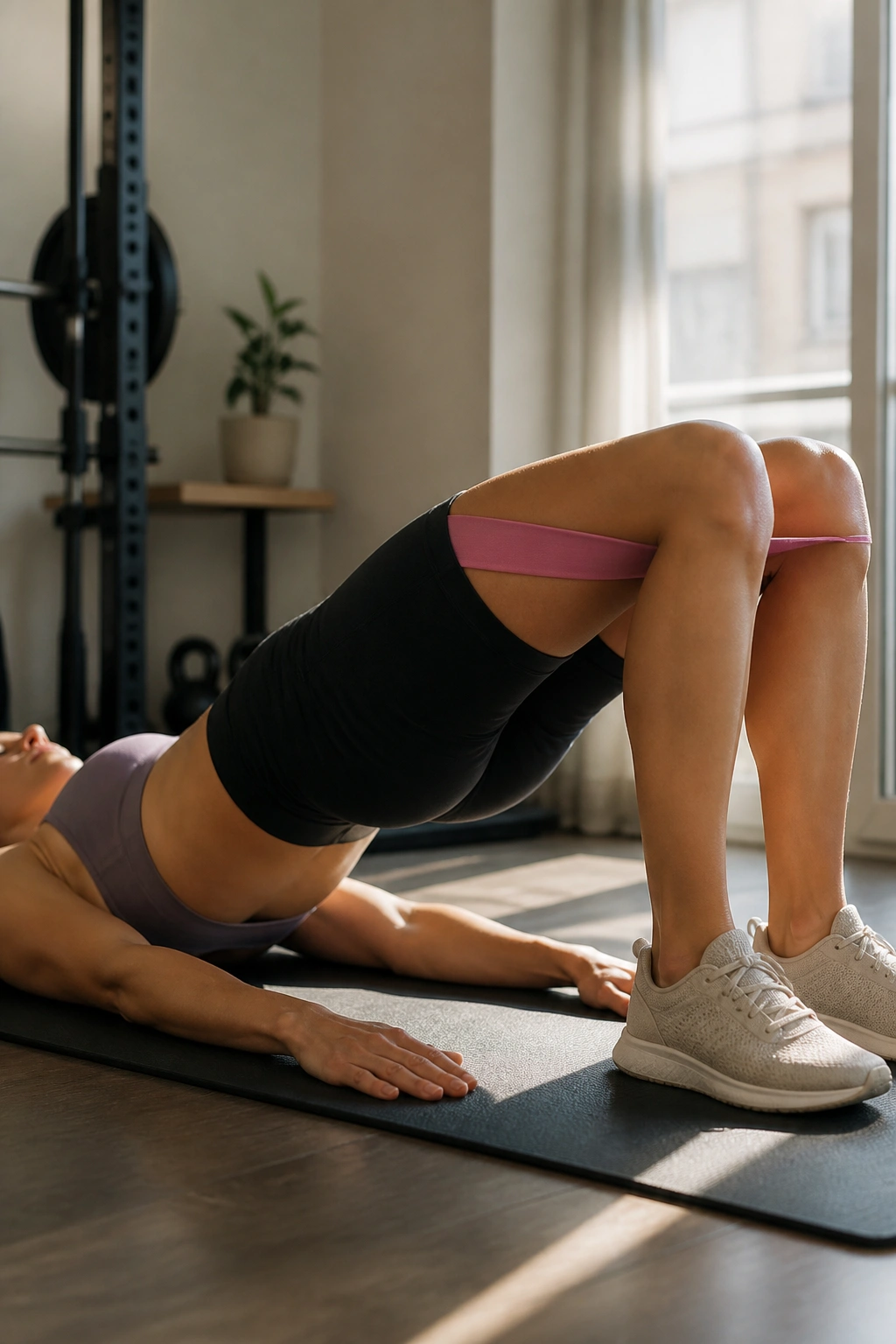
A glute bridge with a mini band above the knees is one of those exercises that looks harmless until the last few reps. The tiny squeeze at the top is where the money is.
Lie on your back with feet flat, knees bent, and the band just above the knees. Drive through the heels, lift the hips, and push the knees gently outward as you reach the top. Hold there for two full seconds. Then lower with control instead of dropping like a sack of laundry.
The setup sounds simple because it is. That’s the charm. If you want a bigger challenge, put a stronger band on and slow the lowering phase to 3 seconds. Fifteen to 20 reps is a good target, and the glutes should be doing the work, not the lower back.
9. Band Kickbacks for the Top of the Glute
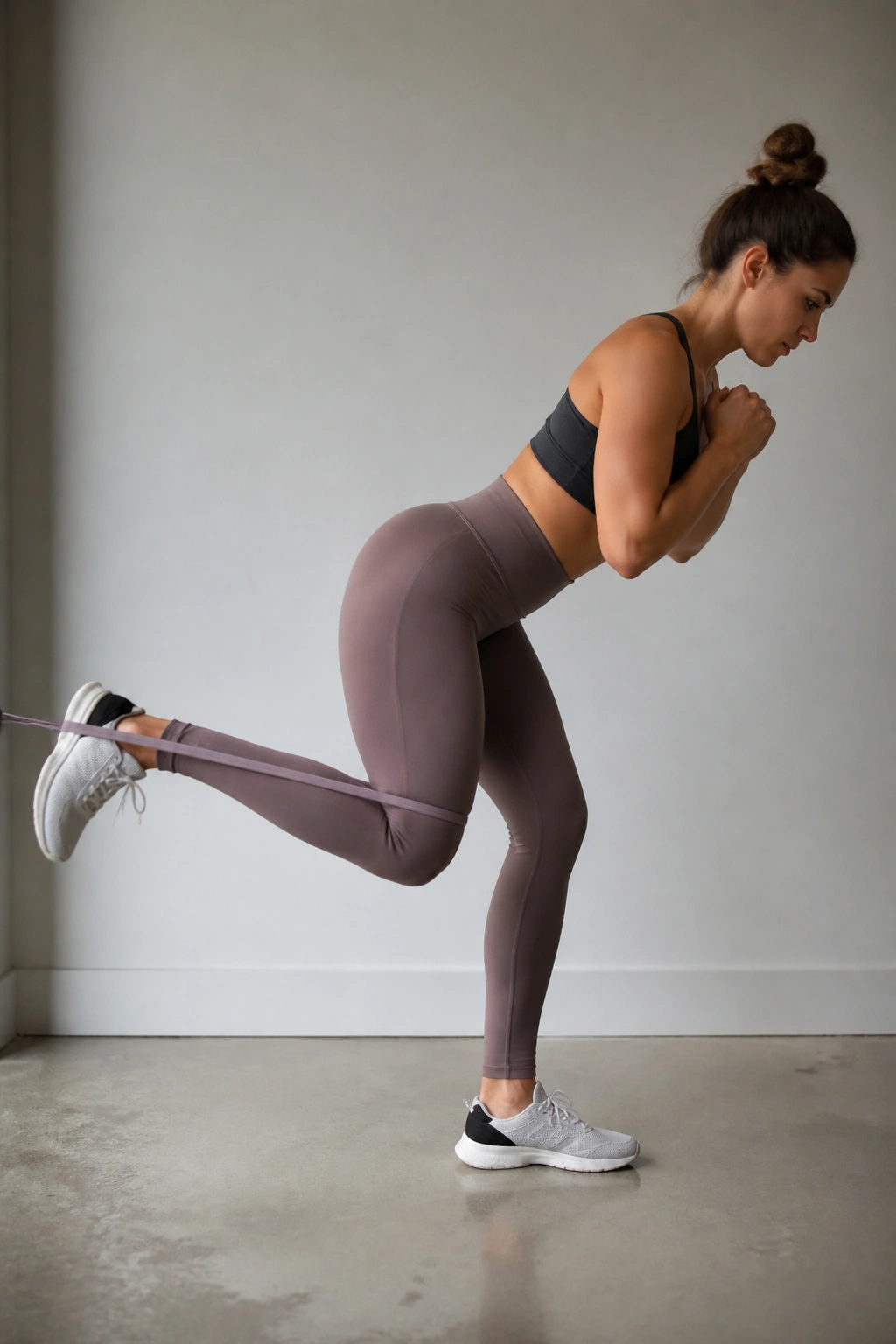
Kickbacks are not glamorous, and that is exactly why they earn a spot.
Anchor a band low behind you, step into it, and hinge slightly at the hips so your torso leans forward a bit. Keep the working leg bent, then drive the heel back and up without arching the lower back. The leg should move because the glute is extending the hip, not because you’re swinging the whole body.
One clean set tells you a lot. If you feel the lower back more than the glute, shorten the range and slow down. If the band snaps you back too fast, you need a lighter band or a shorter step away from the anchor. Aim for 12 to 20 reps per side and keep the motion tight.
10. Face Pulls for Rear Delts and Shoulder Health
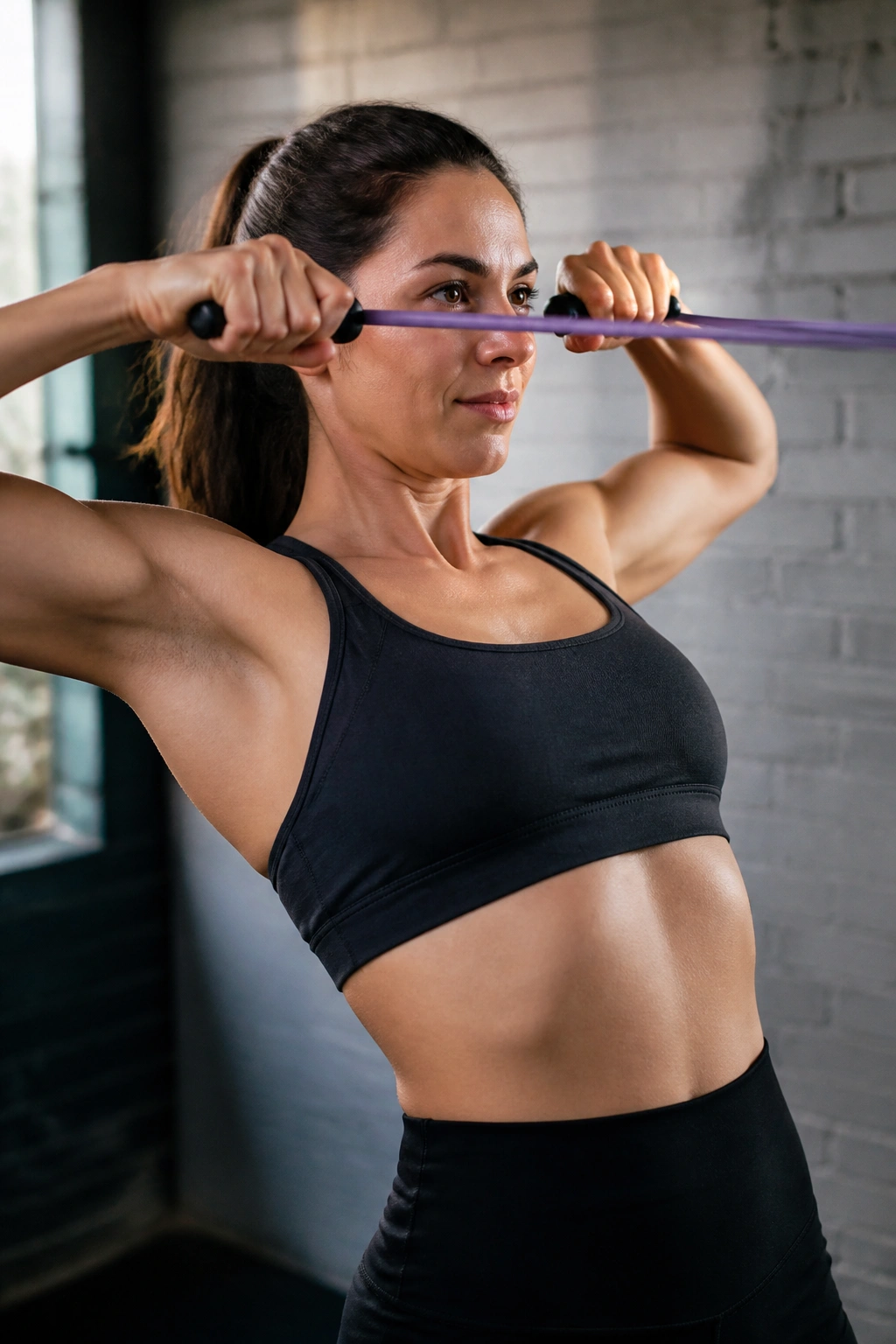
Why do face pulls show up in so many shoulder routines? Because they clean up the sloppy stuff.
Anchor a tube band at face height, grab both ends, and pull toward the eyebrows while keeping the elbows high and the hands separating at the end. The finish should look a little like a goalpost. If the shoulders shrug, the movement turns into a trap exercise. That’s not what we want here.
- Pull to eyebrow or nose height.
- Finish with the hands apart and the thumbs near the ears.
- Use a light to medium band.
- Do 12 to 20 reps.
This is one of the better choices when pressing work has your shoulders feeling cranky. It’s also useful as a warm-up before rows, presses, or upper-body days that need a little joint-friendly prep.
11. Pallof Press Holds for a Stronger Core
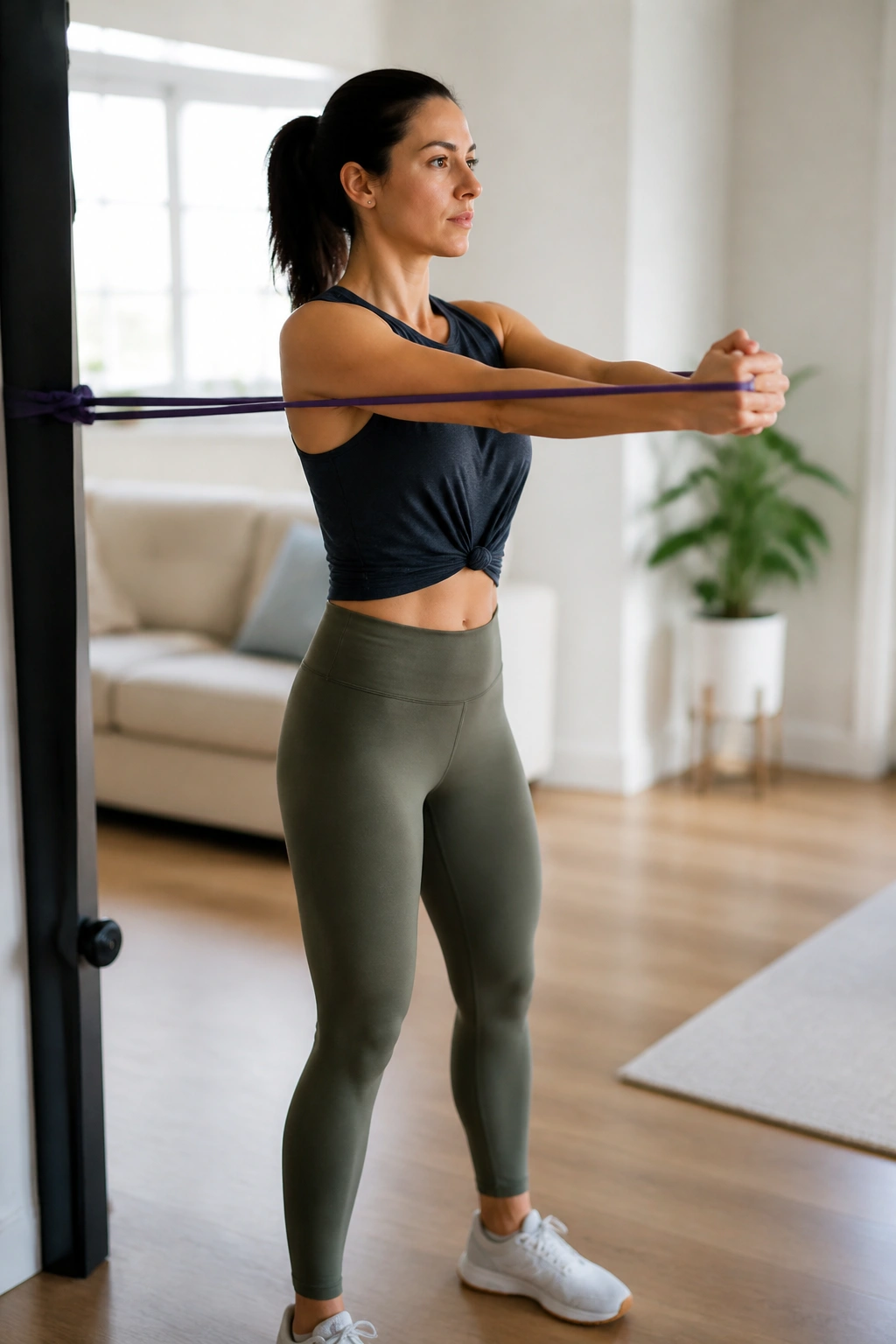
Your core is supposed to stop motion as much as it creates it. The Pallof press makes that painfully obvious.
Set a band anchor at chest height and stand sideways to it. Pull the band to your sternum, then press straight out from your chest and hold. The band tries to twist you toward the anchor. Your job is to look boring and stay square. No rotation, no leaning, no hip drift.
A half-kneeling position makes the drill harder to cheat if standing feels too easy. I like 10 to 20-second holds per side, but you can also do slow presses for 8 to 12 reps. Your obliques, deep abs, and glutes all chip in here.
This is not flashy. It is useful.
12. Banded Split Squats for Legs That Actually Burn
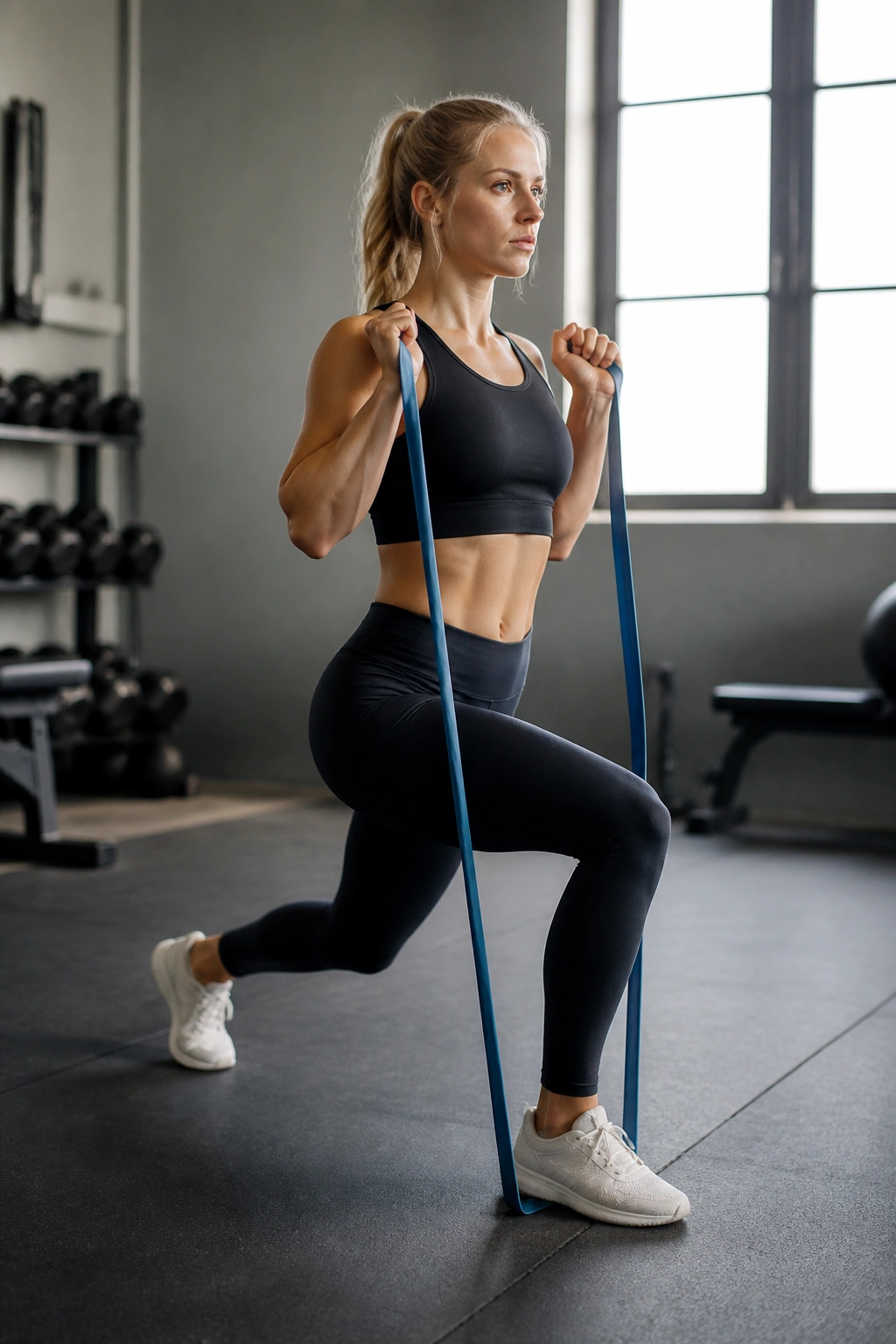
Split squats feel like a small exercise until they’re done right. Then they feel huge.
How to Set It Up
Stand on the middle of a long band with your front foot, then hold the ends at shoulder height. Step the other leg back into a split stance. As you lower, the band adds resistance through the whole rep instead of only loading the bottom.
What to Watch For
Keep most of the weight on the front leg. The back foot is there for balance, not for cheating. If the front knee tracks cleanly and the torso stays tall, the set will hit the quads and glutes hard. Eight to 12 reps each side is enough to make the point.
The Real Payoff
This move is useful because it exposes weak spots fast. If one side shakes more, that side gets the extra attention. No drama. Just work.
13. Monster Walks for the Glute Medius
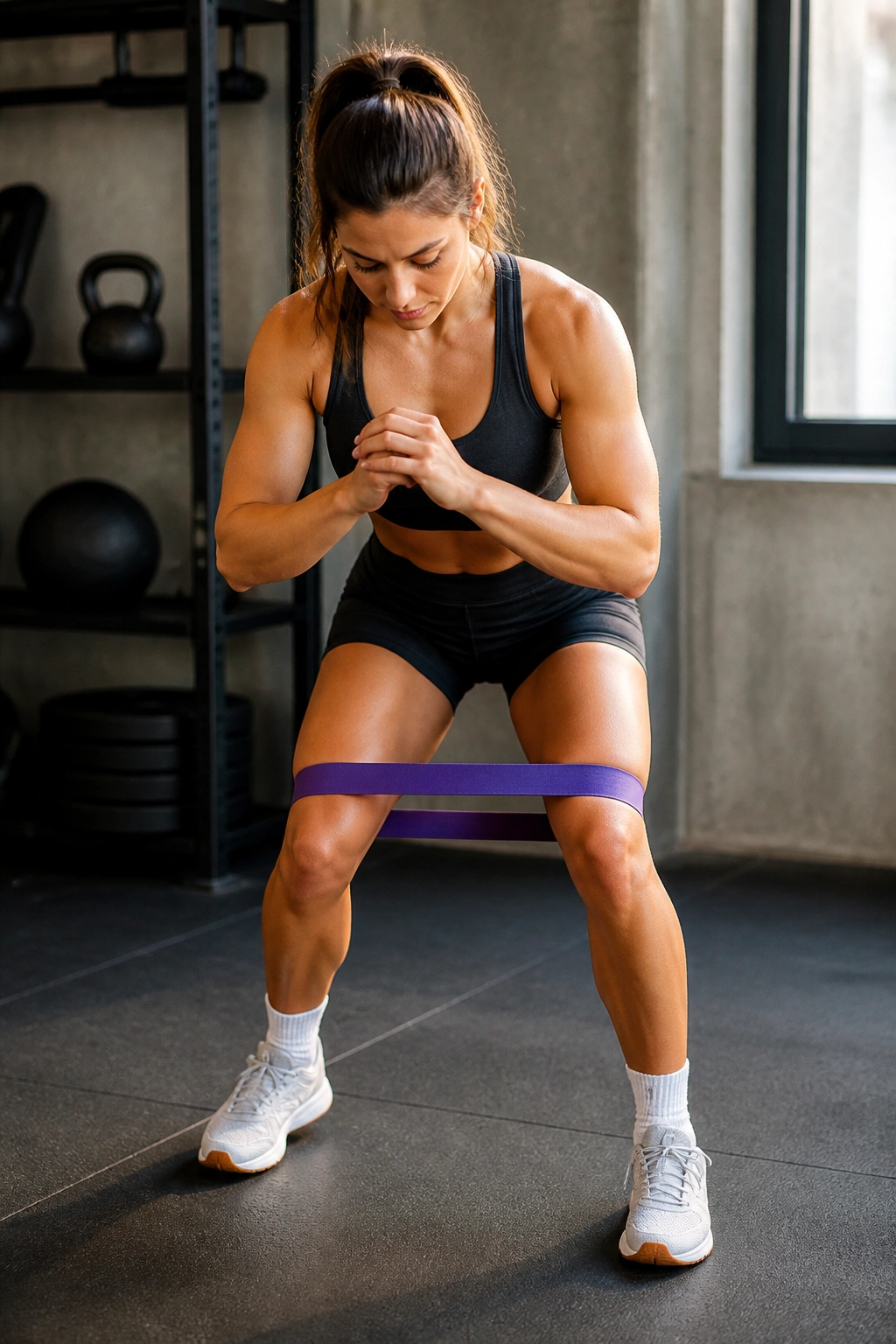
If lateral walks are the appetizer, monster walks are the awkward little extra plate.
Put a mini loop above the knees or at the ankles, sink into a shallow athletic stance, and walk forward for 8 to 10 small steps. Then walk backward the same way. Keep the feet pointed mostly forward and let the hips stay low the whole time. The band should stay under tension from the first step to the last.
- Take short, controlled steps.
- Keep the chest lifted.
- Stay out of a deep squat.
- Use 10 to 12 steps forward, then back.
This is one of the better drills for waking up the hips before lower-body work. It does not need much space, and it punishes sloppy form fast. That’s a good thing.
14. Banded Hamstring Curls on the Floor
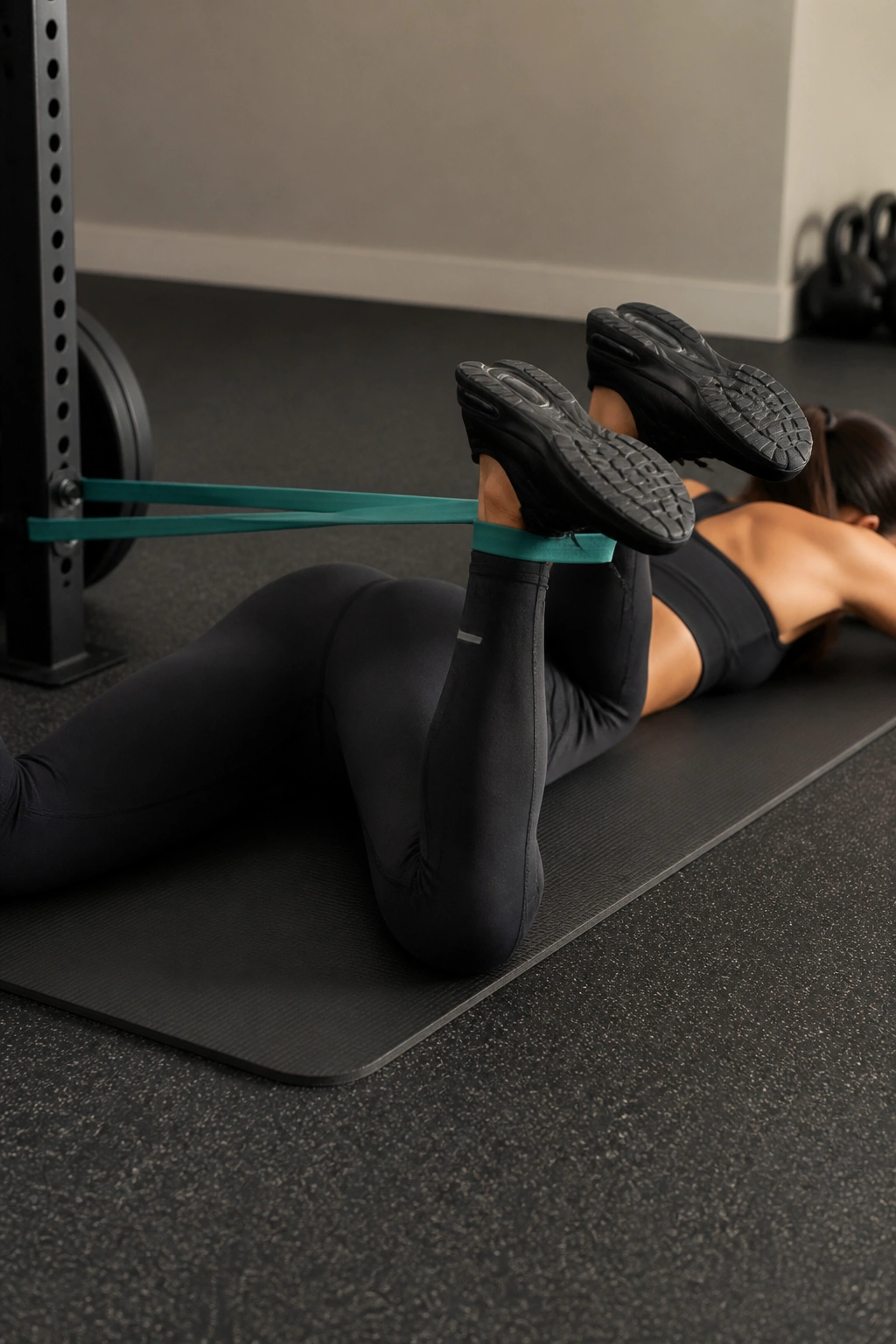
If you want hamstrings to cramp fast, this is the move.
Anchor a band low and loop it around the ankles, then lie face down or set up standing with the torso slightly hinged forward. Bend the knees and curl the heels toward the glutes with control. The tricky part is the lower half of the rep. Do not let it fly open like a broken spring.
For a floor setup, keep the hips pressed into the mat so the lower back doesn’t take over. For a standing setup, keep the chest still and the thighs quiet. Twelve to 15 reps is enough for most people, and a slow 3-second return makes the band feel a lot heavier than it looks.
Hamstrings often get neglected in home workouts. This fixes that fast.
15. Long-Band Biceps Curls with a Slow Lower
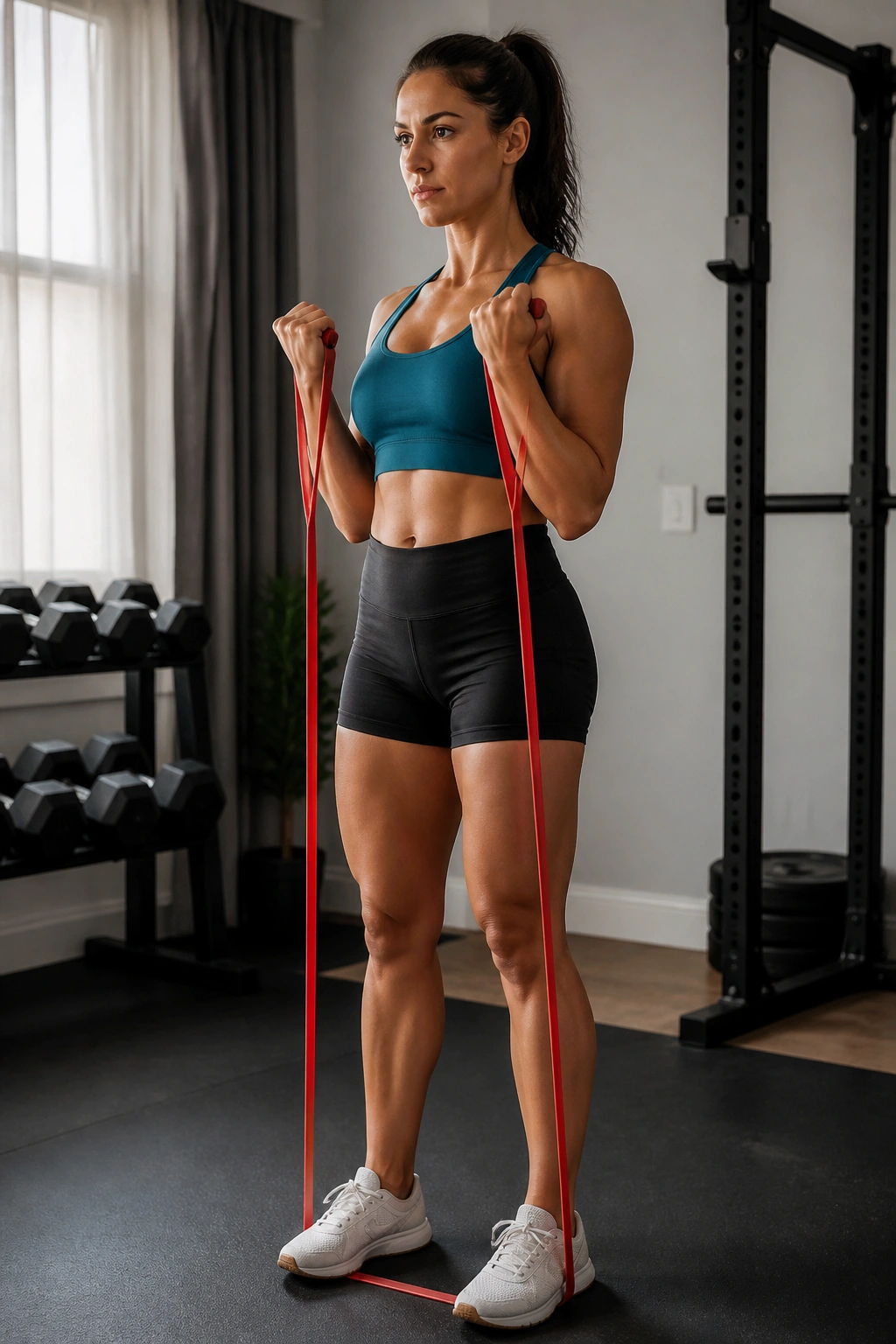
Bands make curls weird in a useful way.
Stand on the band with both feet, palms facing forward, and curl the hands toward the shoulders. The top of the rep gets harder because the band is stretched the farthest there. That means the biceps can’t relax and coast the way they sometimes do with dumbbells.
A slow lower matters here. Take about 2 to 3 seconds to return to the start, and keep the elbows pinned near the ribs. If the shoulders roll forward to help, the set is getting sloppy. Ten to 15 reps is plenty, though a lighter band can handle more.
This is a simple arm move, sure. Simple is not the same as useless.
16. Triceps Pressdowns with a Door Anchor
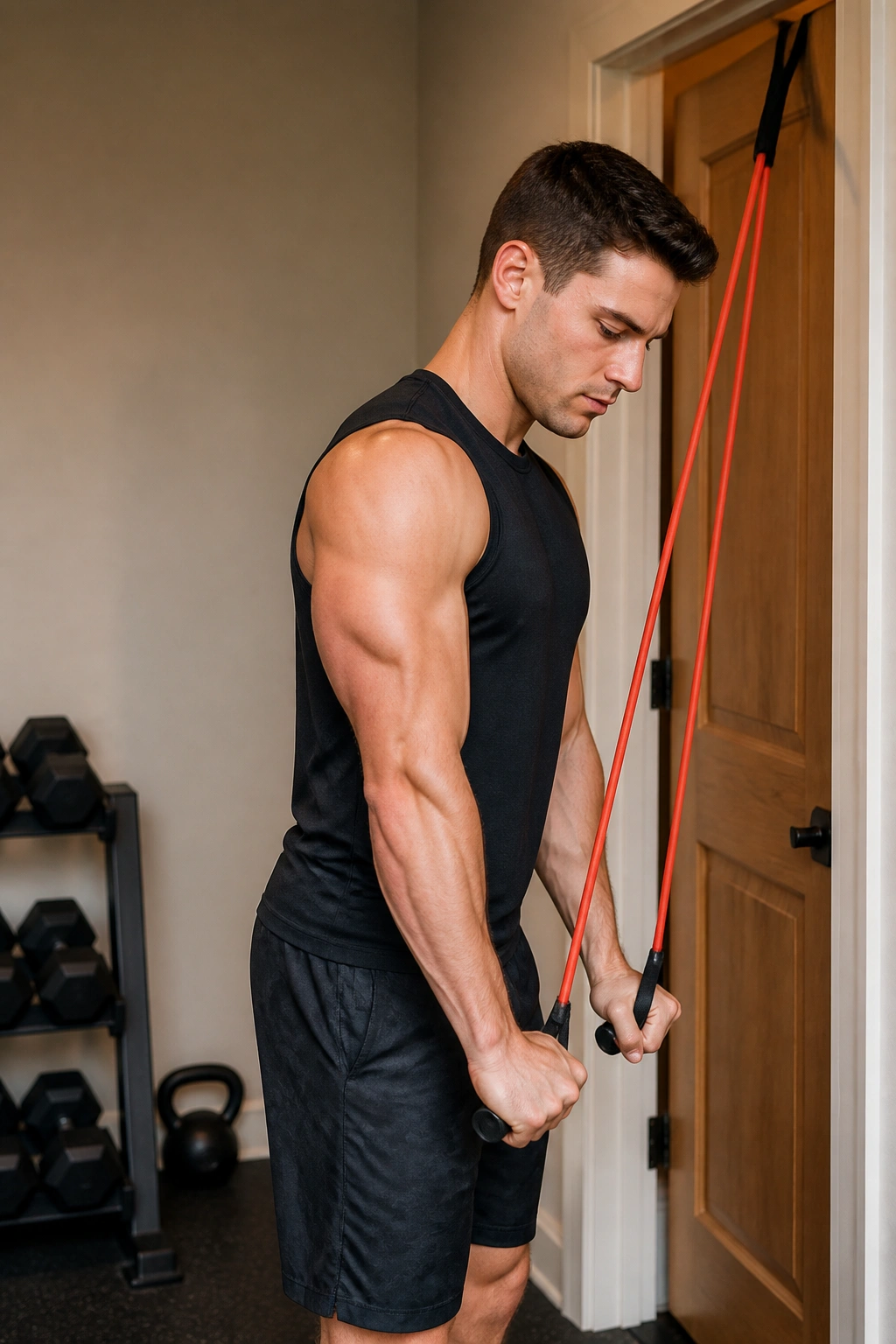
If skull crushers bother your elbows, the band pressdown is the better swap.
Anchor a band high in a door or overhead point, grab the ends, and pin the elbows to your sides. Press the hands down until the arms are straight, then let the band come back only as far as the upper arms stay still. The triceps should feel like they’re doing all the work, not the shoulders.
Compared with free-weight extensions, pressdowns usually feel friendlier on the elbow joint because the load is smoother and the path is fixed. That’s part of why people keep coming back to them. Use 12 to 15 reps and make the bottom squeeze count.
If the shoulders start drifting forward, step closer to the anchor or lighten the band.
17. Band Lateral Raises for Side Delts
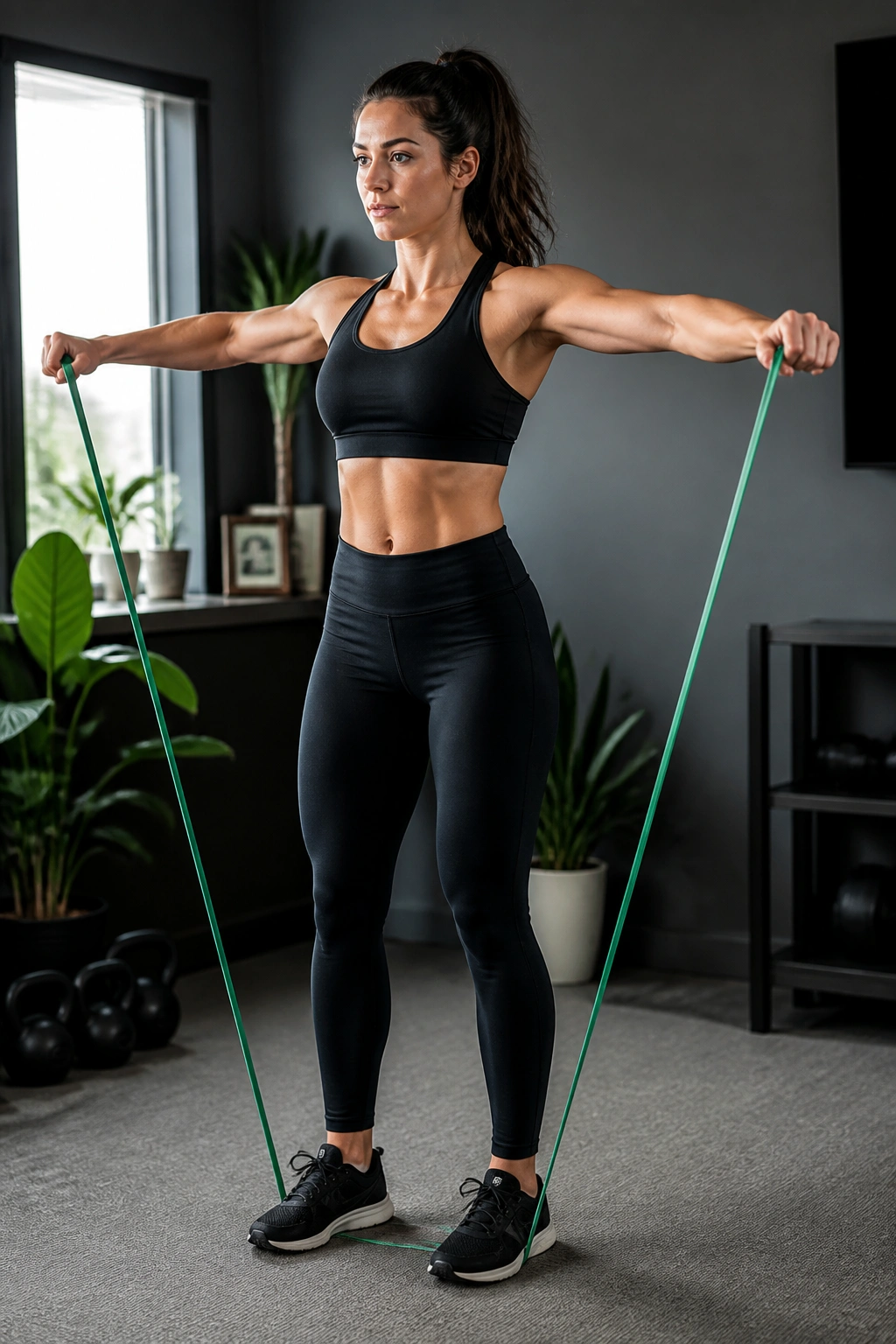
Side delts are the quiet sculptors of the shoulder. Ignore them, and the upper body looks flat from the front.
Stand on a light band and hold the ends at your sides. With a slight bend in the elbows, raise the arms out to shoulder height and stop there. Higher than shoulder level usually turns into trap work. Lower than shoulder level leaves some of the target behind. The middle is the sweet spot.
A single-arm version can be cleaner if both sides feel too crowded. It also lets you use a little more control, which helps when the band wants to yank the arm down fast. Twelve to 20 reps is a good range because these are not meant to be maximal strength work. They’re about control, burn, and shoulder shape.
18. Reverse Flys for the Upper Back
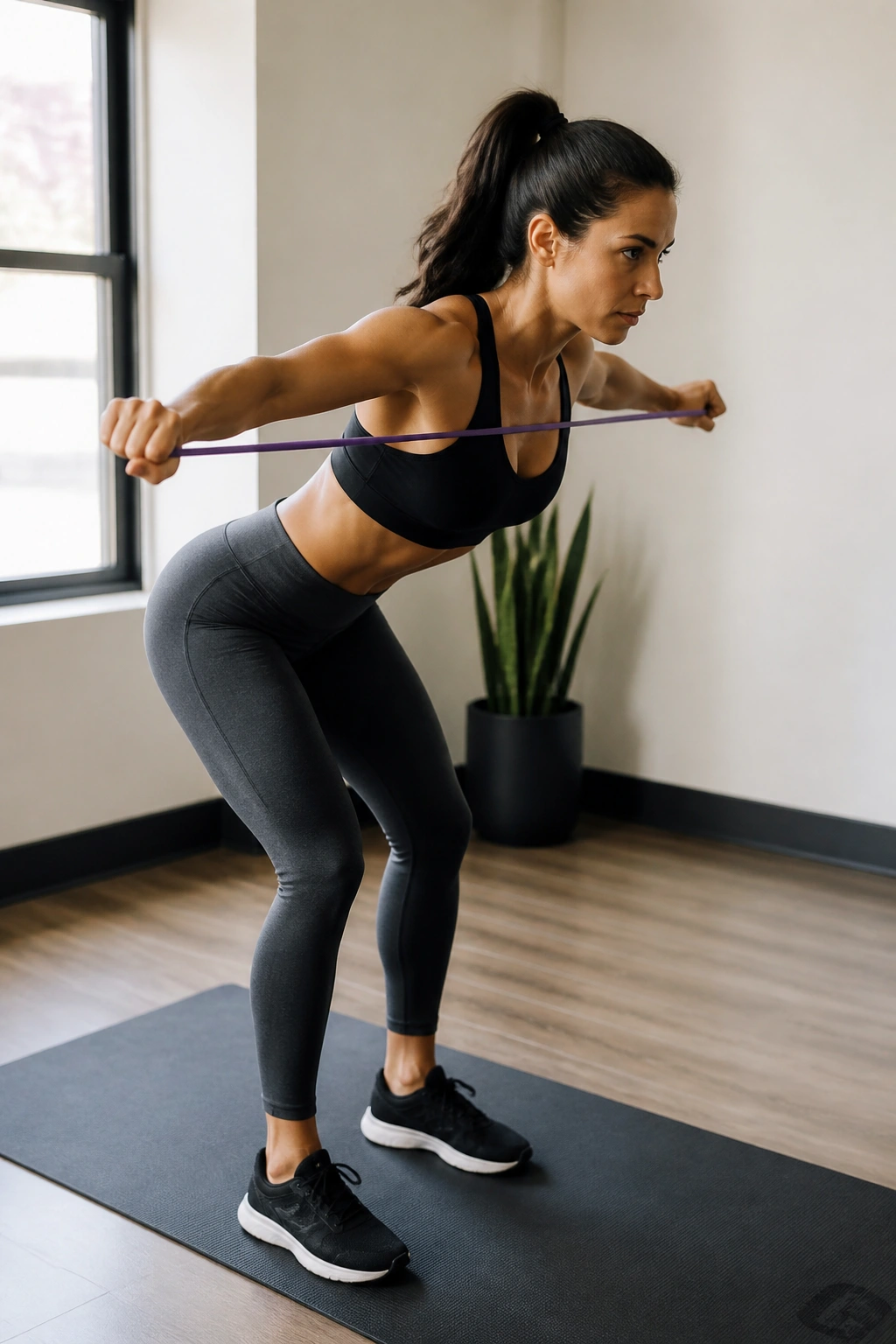
Why do reverse flys feel tiny but leave your upper back cooked? Because they’re brutally honest.
Hinge forward slightly, keep a soft bend in the elbows, and open the arms out to the sides until the shoulder blades move without the torso swinging. The movement should come from the rear delts and upper back, not from snapping the band around like a fishing line. A light band is the right call. Heavy is where form goes to die.
This one works well after rows or face pulls, when the back is already awake and ready to behave. Use 12 to 15 reps, and keep the neck long. If the lower back starts fighting for attention, stand taller and cut the range a bit.
19. Wood Chop Band Rotations for Obliques
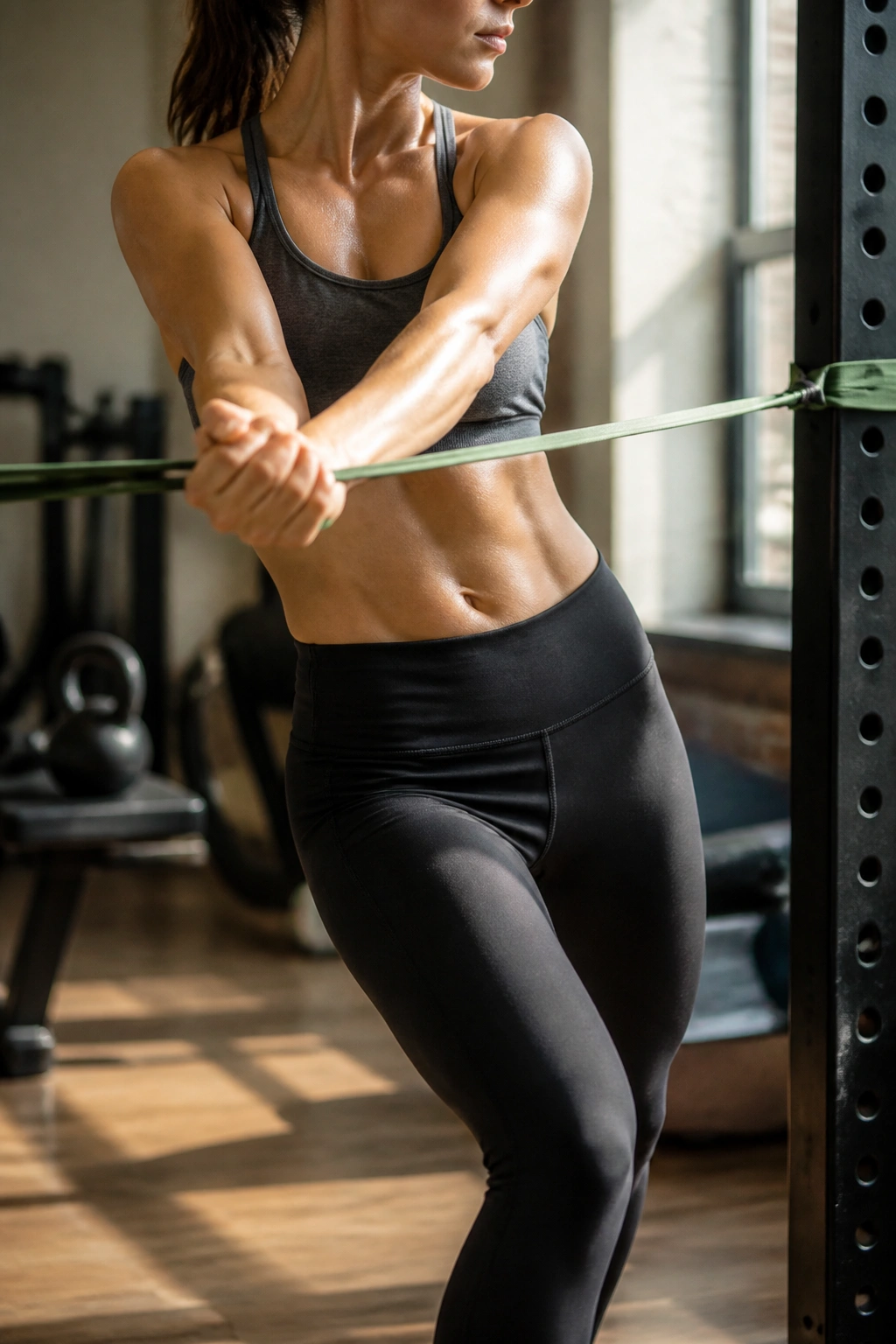
Diagonal work belongs in a toned-muscle routine because life is not built from straight lines.
High to Low or Low to High
A wood chop can come down from high to low, or rise from low to high. High to low often feels more natural for the obliques and shoulders. Low to high adds more hip drive. Both are useful, and both can get sloppy fast if you rush.
What to Keep Tight
- Anchor the band beside you.
- Rotate through the ribs and hips together.
- Keep the arms mostly as a guide, not the engine.
- Do 10 to 12 reps per side.
A nice wood chop should feel like a controlled twist, not a flung-open punch. The torso moves, the core resists, and the band stays under tension all the way through.
20. Band Good Mornings for the Hip Hinge
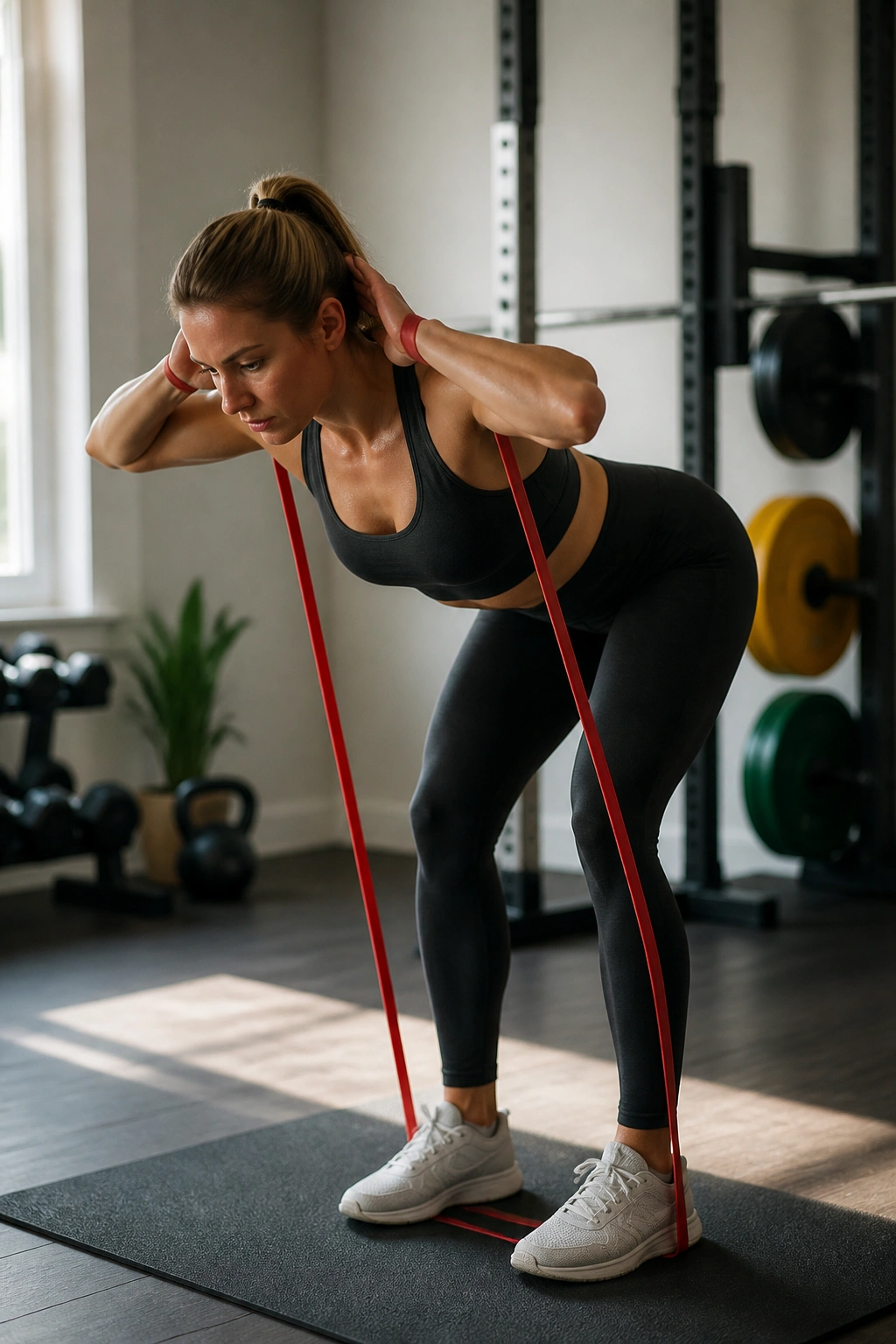
A band good morning teaches the hinge without loading the spine like a barbell can.
Step on a long band, loop it behind the neck or across the upper back, and hinge the hips back with a soft bend in the knees. The torso inclines forward until the hamstrings start tugging, then you stand back up by driving the hips forward. The back stays neutral. No rounding, no deep knee bend, no weird neck crane.
This is a useful warm-up before deadlifts, but it can also stand as a main lower-body move if your band is heavy enough. Twelve to 15 reps is a solid target. The main cue is simple: push the hips back first. Everything else follows.
21. Assisted Push-Ups with a Band
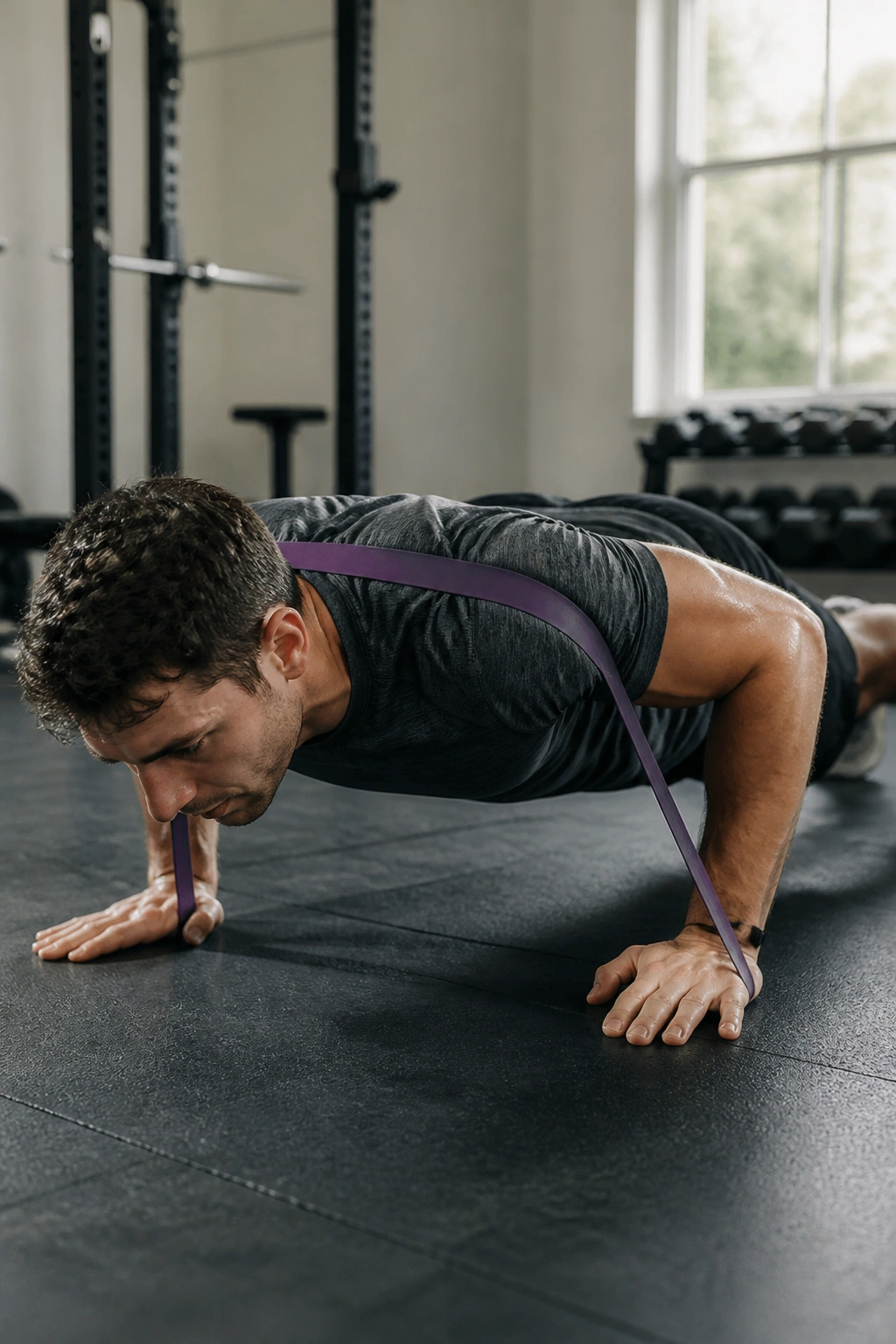
If full push-ups disappear after six reps, a band can keep the set useful.
Setup Matters
Loop a band across your upper back and hold the ends under your palms on the floor. The band should support the bottom part of the rep, where people usually stall. That lets you get full-range work without collapsing halfway up.
What Clean Looks Like
- Hands stay under the shoulders.
- Body stays in one line.
- Chest touches close to the floor before pressing up.
- Use a band thick enough to help, not float you.
How to Progress
Use a thinner band over time, or move to a less supportive angle. That’s the whole trick. The set should feel hard, but not broken.
22. Seated Cable-Style Rows with a Band
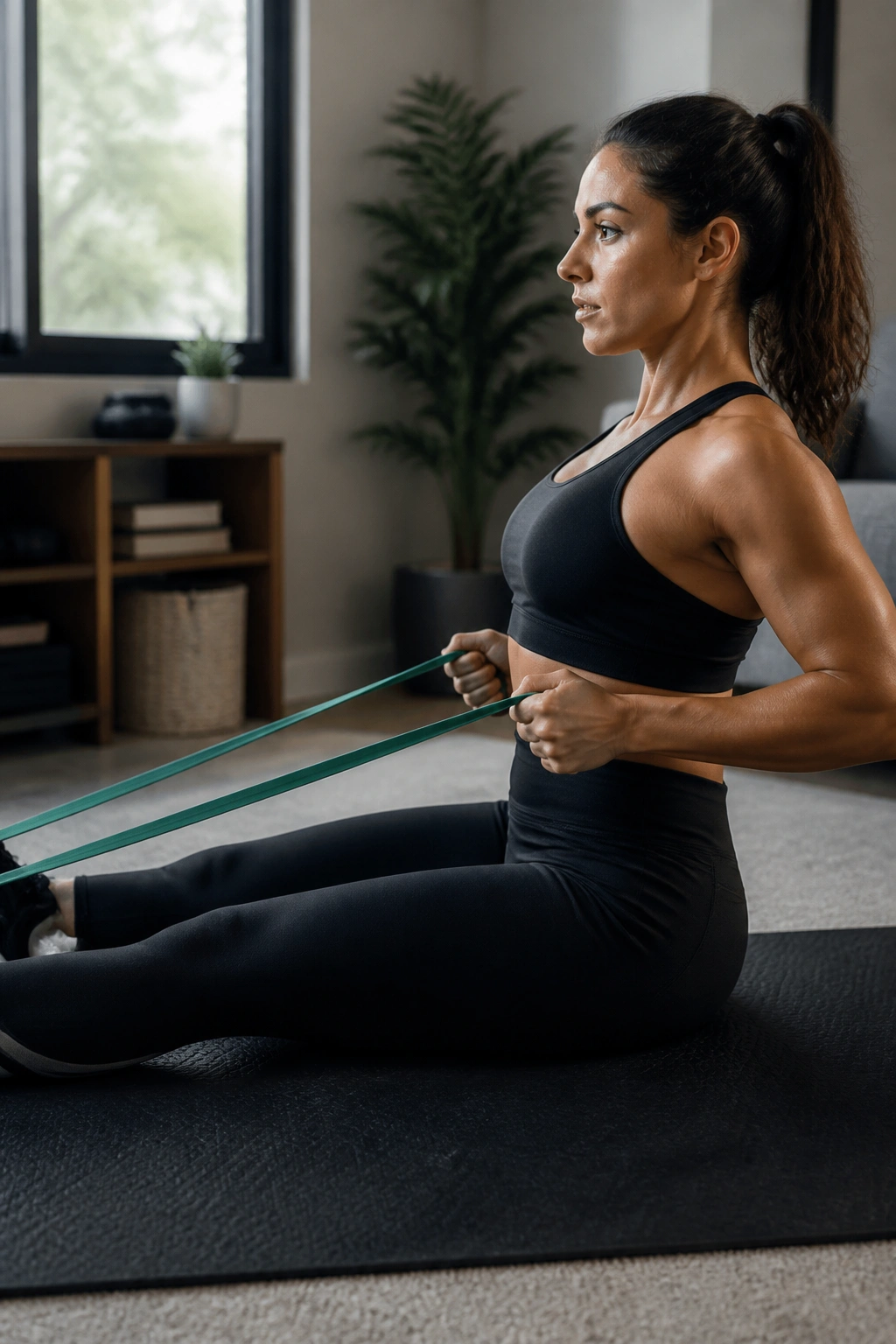
If you only do one band move for your back, make it this one.
Sit with the band anchored around your feet or a solid post, grab the ends, and row them toward the lower ribs. The torso stays tall. The elbows travel close to the body. The shoulder blades move back and down at the finish, then return under control. A short pause at the squeeze makes the rep feel much cleaner.
This is the closest thing to a home cable row that feels honest. It lets you train the lats, mid-back, and arm flexors without needing a machine that eats half the room. Try 12 to 15 reps and keep the return slow enough that the band never snaps you back.
23. Banded Calf Raises for Lower-Leg Definition
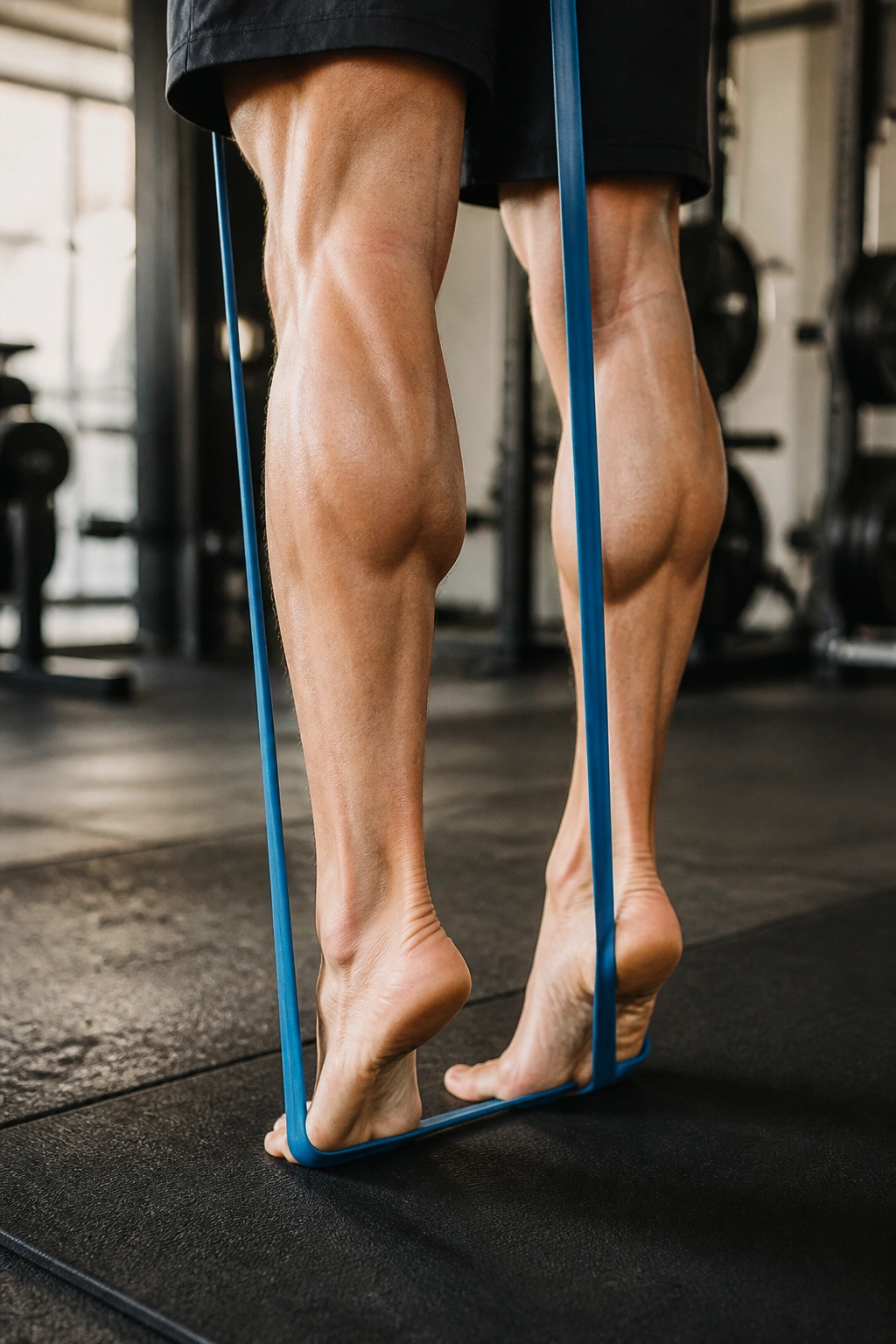
Calves get ignored until stairs remind you they exist.
Stand on a band and hold the ends at your sides or across the shoulders. Rise onto the balls of the feet, pause for a second at the top, then lower until the heels nearly touch down. If you want more challenge, do it on one leg and keep the free foot tucked slightly behind you.
- Use a slow 2-second rise.
- Hold the top for 1 full second.
- Lower for 2 to 3 seconds.
- Aim for 15 to 25 reps.
The lower leg responds well to patience. Fast reps waste the tension. Slow reps make the calves work.
24. Curtsy Lunges with Band Resistance
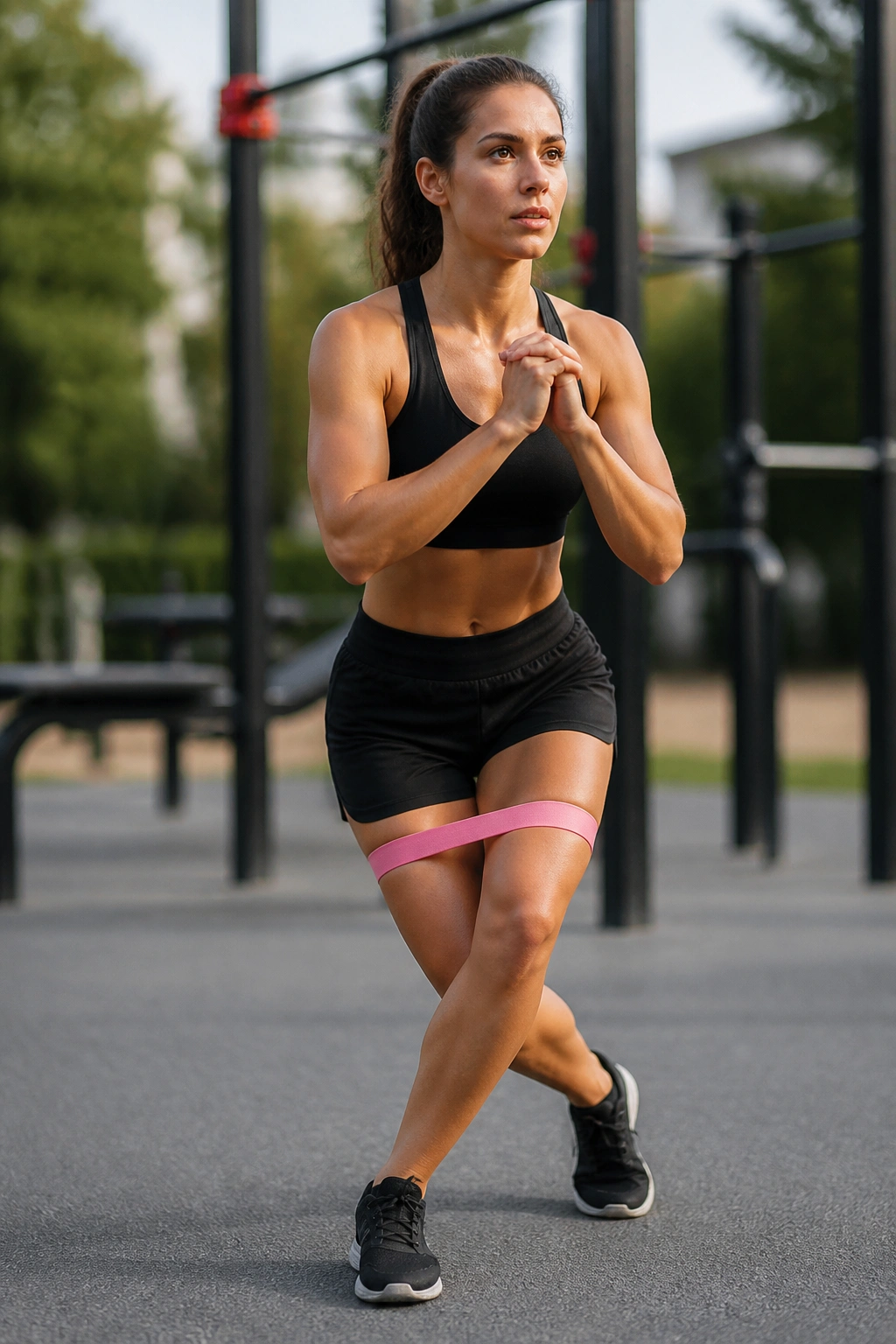
Curtsy lunges are not for everyone, and that’s fair. Knees that hate twisty angles will tell you right away.
A mini band above the knees can make the movement more useful by forcing the hips to stay engaged. Step one leg back and across behind you, keep the front foot rooted, and lower only as far as the knee feels stable. The torso stays proud. The back leg is there to challenge the balance, not to drag you into a mess.
Use a small step if your hips feel tight. Bigger is not better here. Eight to 12 reps per side is enough, and the glute on the standing leg usually knows exactly what happened by the end.
25. Full-Body Band Complex for a Fast Finisher
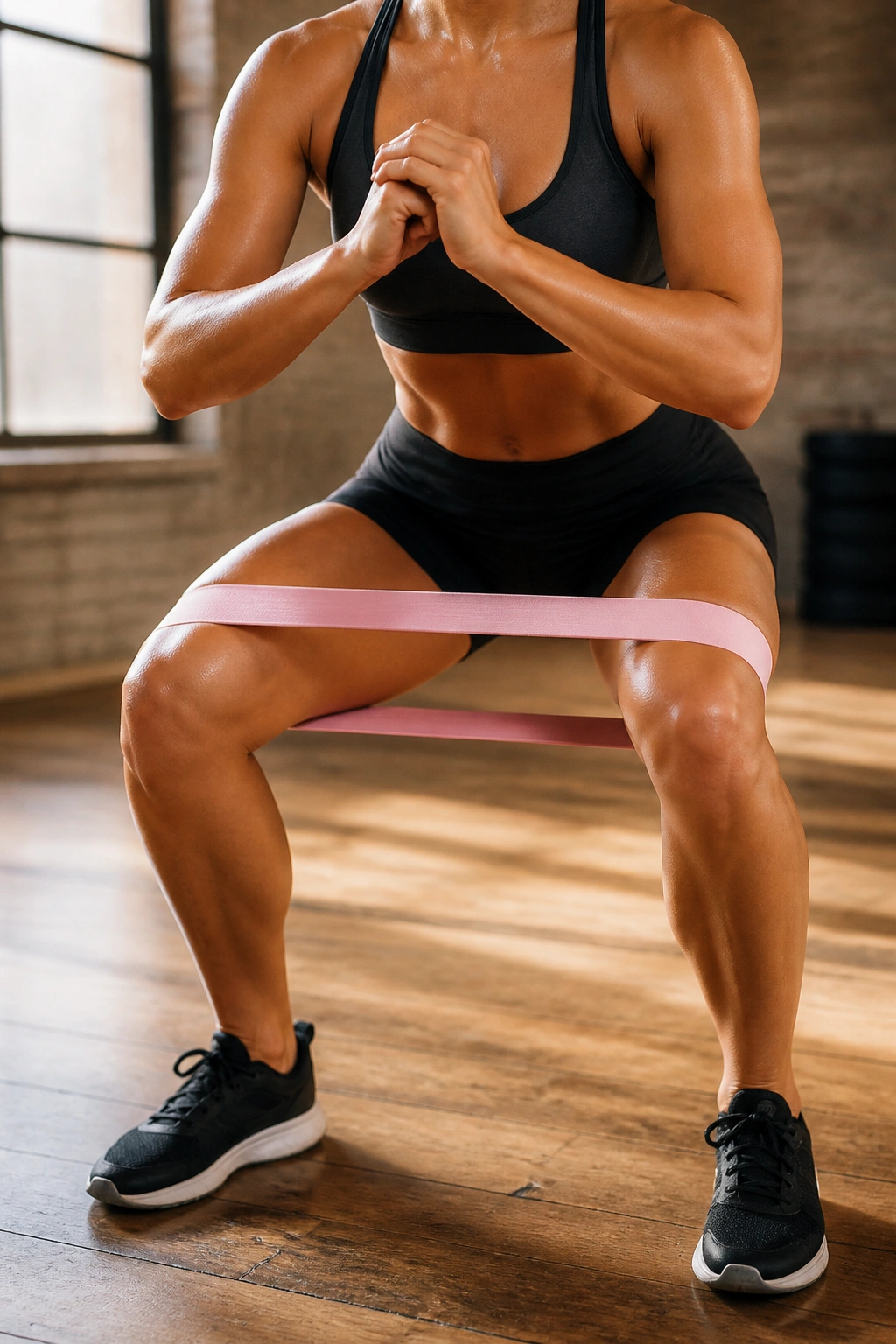
This is the move I hand to anyone who wants a band workout to feel complete without taking up half the evening.
The Sequence
Use one long band and move through these without setting it down:
- 8 band rows
- 8 band squats
- 8 band good mornings
- 8 overhead presses
- 20 marching steps in place
Rest for 45 to 60 seconds, then repeat for 4 to 6 rounds.
Why It Works
You get a push, a pull, a squat, a hinge, and a bit of core control in one run. That mix matters if your goal is toned muscle, because you’re not just chasing one tiny body part. You’re training the whole system to keep working when fatigue shows up.
Start lighter than your ego wants. Seriously. The best band complex is the one you can repeat with clean reps on round four, not the one that makes you flail on round two. If you want a simple rule for band workouts, this is the one I trust most: keep the tension honest, keep the form clean, and let the burn build instead of rushing it.
