



Most people do not need a fancy home gym. They need a plan they can start before the excuse-making kicks in.
Free workout programs at home work when they are simple enough to repeat and specific enough to follow. A chair, a mat, a towel, maybe a backpack or a loop band — that’s enough for a serious amount of work if the structure is right.
Public health advice has been annoyingly consistent on one point: keep your body moving, train your muscles, and do enough easy recovery work that you can come back tomorrow. That mix matters more than the brand of dumbbell you never bought.
The 22 programs below cover strength, cardio, mobility, balance, and recovery, so you can pick the one that matches your space, joints, and energy without wasting a week trying to force the wrong fit.
1. The 20-Minute Bodyweight Strength Circuit
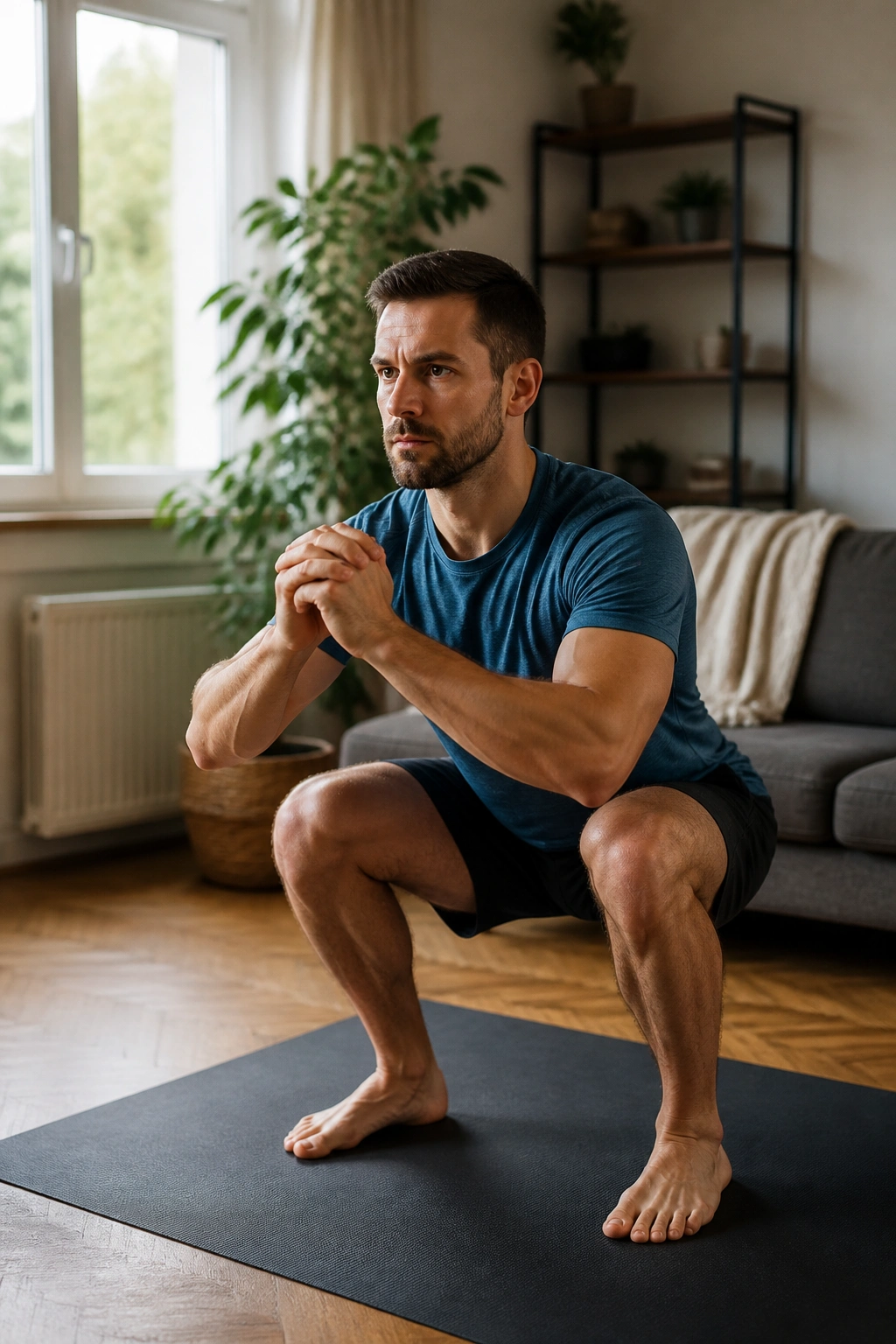
This is the cleanest place to start. No gear, no setup, no drama. You pick five moves, run them in a circuit, and finish a session that hits your legs, chest, back side, and core without eating your whole evening.
A solid version looks like this: 40 seconds of work, 20 seconds of rest, three rounds. Use squats, incline push-ups on a couch or counter, hip hinges, dead bugs, and a plank. That gives you the big patterns most beginners miss when they only do cardio. Your legs work, your upper body works, and your trunk has to stay awake the entire time.
How to Make It Fit Your Level
- Beginner: do chair squats, wall push-ups, and a plank from your knees.
- Middle ground: use full squats, countertop push-ups, and a forearm plank.
- Harder: slow the lowering phase to 3 seconds on each rep.
- Best detail: keep the last 5 seconds of each interval clean. Sloppy reps are cheap reps.
Pro tip: if you can still chat comfortably after round one, make the next round harder by shortening your rest to 15 seconds.
2. Low-Impact Cardio Intervals
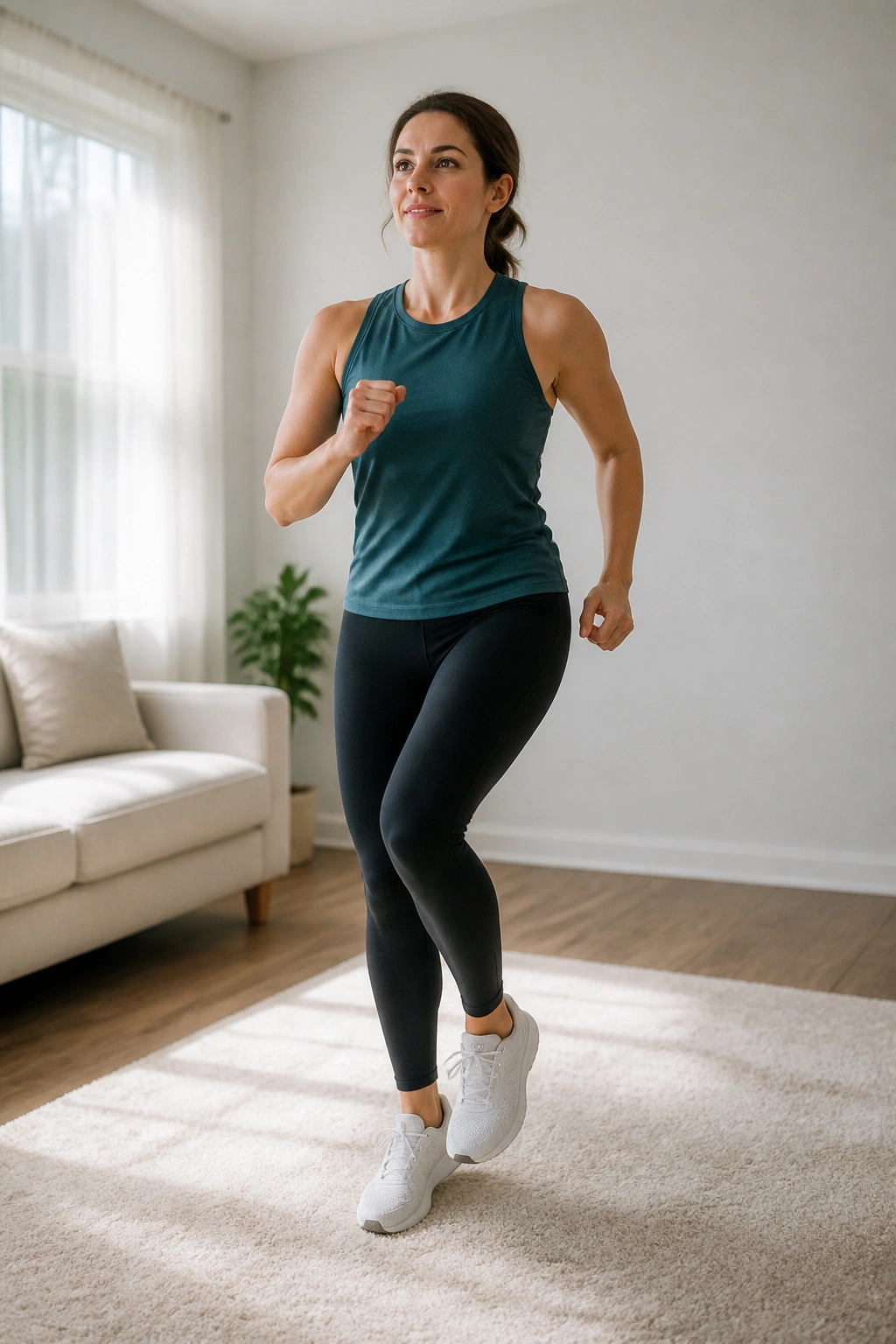
Want to sweat without sounding like a stampede? Start here. Low-impact cardio can be brutal in a sneaky way because the moves are simple, but the pace keeps climbing until your breathing turns sharp and fast.
Set a timer for 30 seconds on, 15 seconds off, and cycle through marching in place, step jacks, side-to-side skaters without the hop, speed punches, and knee drives. The key is that both feet do not have to leave the floor. Your heart rate still rises. Your knees usually complain less. Your downstairs neighbor probably stays calm.
Keep the effort smooth, not frantic. The best version feels springy, with quiet feet and relaxed shoulders, not like you are trying to win a fight with the carpet.
If you want a longer session, run 8 to 12 rounds. If you want a short one, do 5 rounds and finish with a 2-minute walk around the room. That last part matters. A hard stop after high breathing always feels harsher than a short cooldown.
3. The Mobility Flow for Stiff Mornings
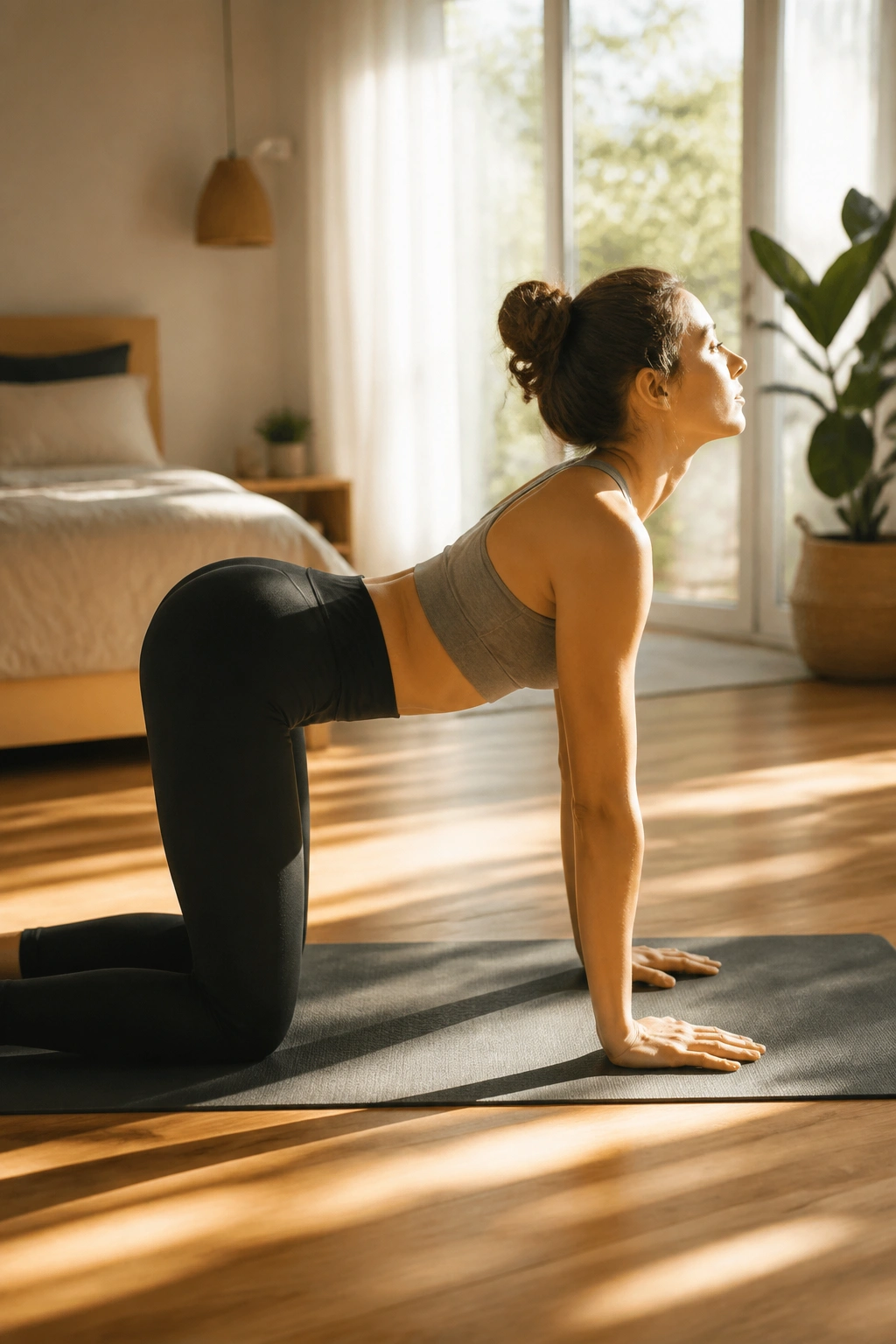
If your hips feel welded shut after sitting too long, this is the program that pays rent. Mobility is not fluff. It is the difference between moving like a person and moving like a folding chair with a bad hinge.
Start with cat-cow for 6 slow cycles, then move into thread-the-needle for 5 reps per side, squat-to-stand for 5 reps, and a low lunge with reach for 4 breaths per side. Finish with ankle rocks for 10 reps per side and a child’s pose breath hold for 5 breaths. That sequence hits the spine, hips, ankles, and shoulders without forcing anything.
The Sequence That Works
- Cat-cow to wake up the back.
- Thread-the-needle to open the upper spine.
- Squat-to-stand to stretch the hamstrings and hips.
- Low lunge with reach to loosen the front of the hips.
- Ankle rocks because tight ankles make squats feel ugly.
One-minute rule: if a joint hurts in a sharp way, skip that move and stay with the one that feels smooth.
4. The Push-Up and Plank Ladder
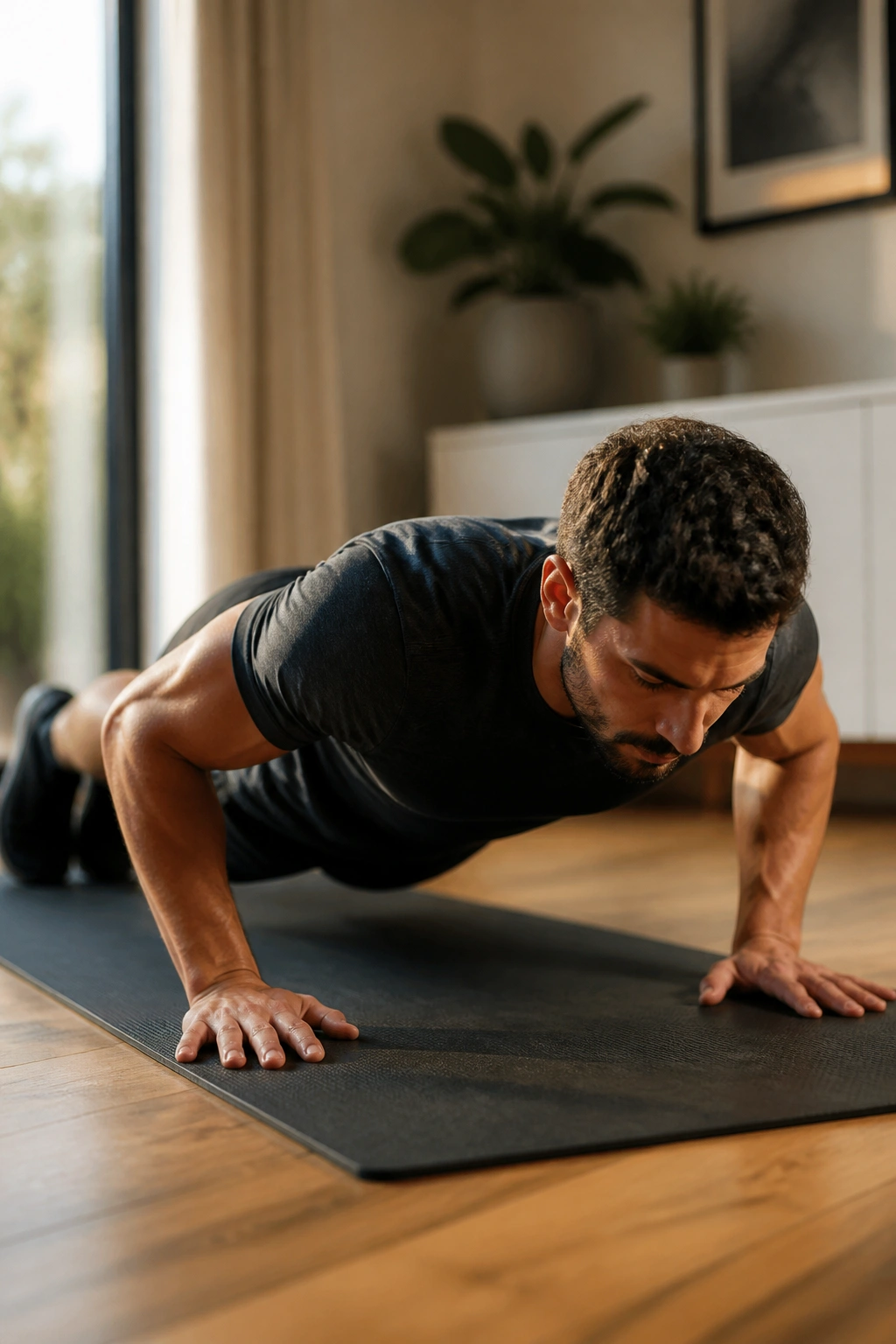
Boring is good here. The push-up and plank ladder is a plain little program that quietly builds upper-body strength and trunk control without any gear at all.
Use a simple ladder: 1 push-up and 10 seconds of plank, then 2 push-ups and 20 seconds, then 3 and 30, and keep climbing until you hit a number that feels challenging but clean. Most people land somewhere between 5 and 8 rungs. If full push-ups are too much, use a counter, couch, or wall. The point is not to chase ego. The point is to keep your ribs from flaring and your hips from sagging.
The ladder format is nice because it gives you a built-in test. When your form starts to crumble, you stop. That is your ceiling for the day, and it tells you exactly where to begin next time.
You can run this 2 or 3 times a week and pair it with a lower-body day. It is small, but it adds up fast.
5. Glute and Leg Builder
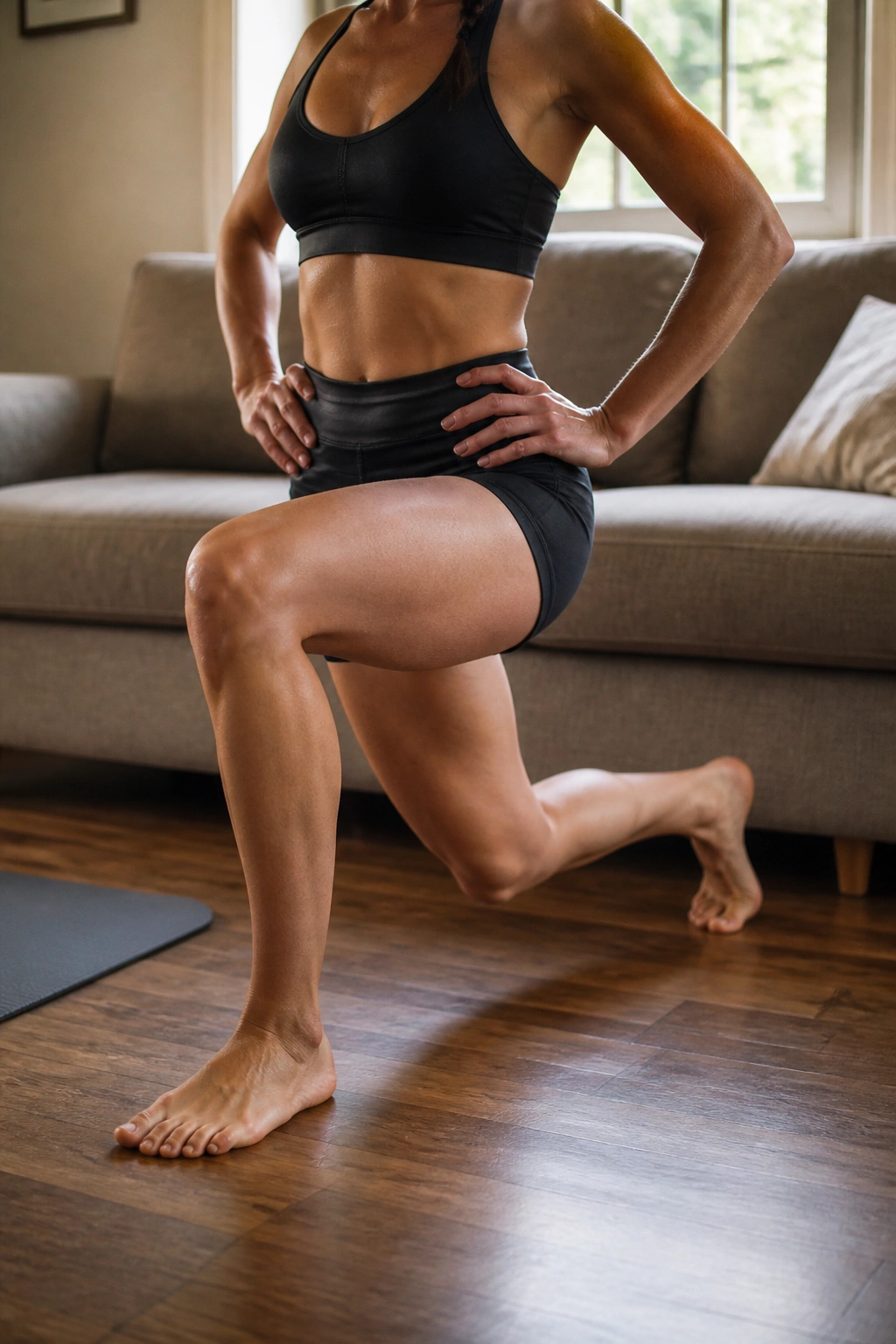
Your legs do not need a barbell to burn. They need single-leg work, a pause at the bottom, and enough repetition to make your quads and glutes pay attention.
The 3 Moves Worth Repeating
- Split squats: 8 to 12 reps per side.
- Glute bridges: 12 to 20 reps, with a 2-second squeeze at the top.
- Reverse lunges: 8 to 10 reps per side, stepping back under control.
Run those in 3 rounds and rest 45 to 60 seconds between rounds. If you want a small finisher, add 30 seconds of wall sit or 20 calf raises at the end. That last bit is not glamorous. It works.
How to Progress Without Gear
- Lower more slowly on split squats.
- Elevate the back foot on a couch for more range.
- Hold the glute bridge top position for 10 seconds on the final rep.
- Carry a backpack hugged to your chest if bodyweight starts feeling too easy.
Good leg days leave you a little wobbly. Not wrecked. Just aware.
6. The Upper-Body No-Equipment Day
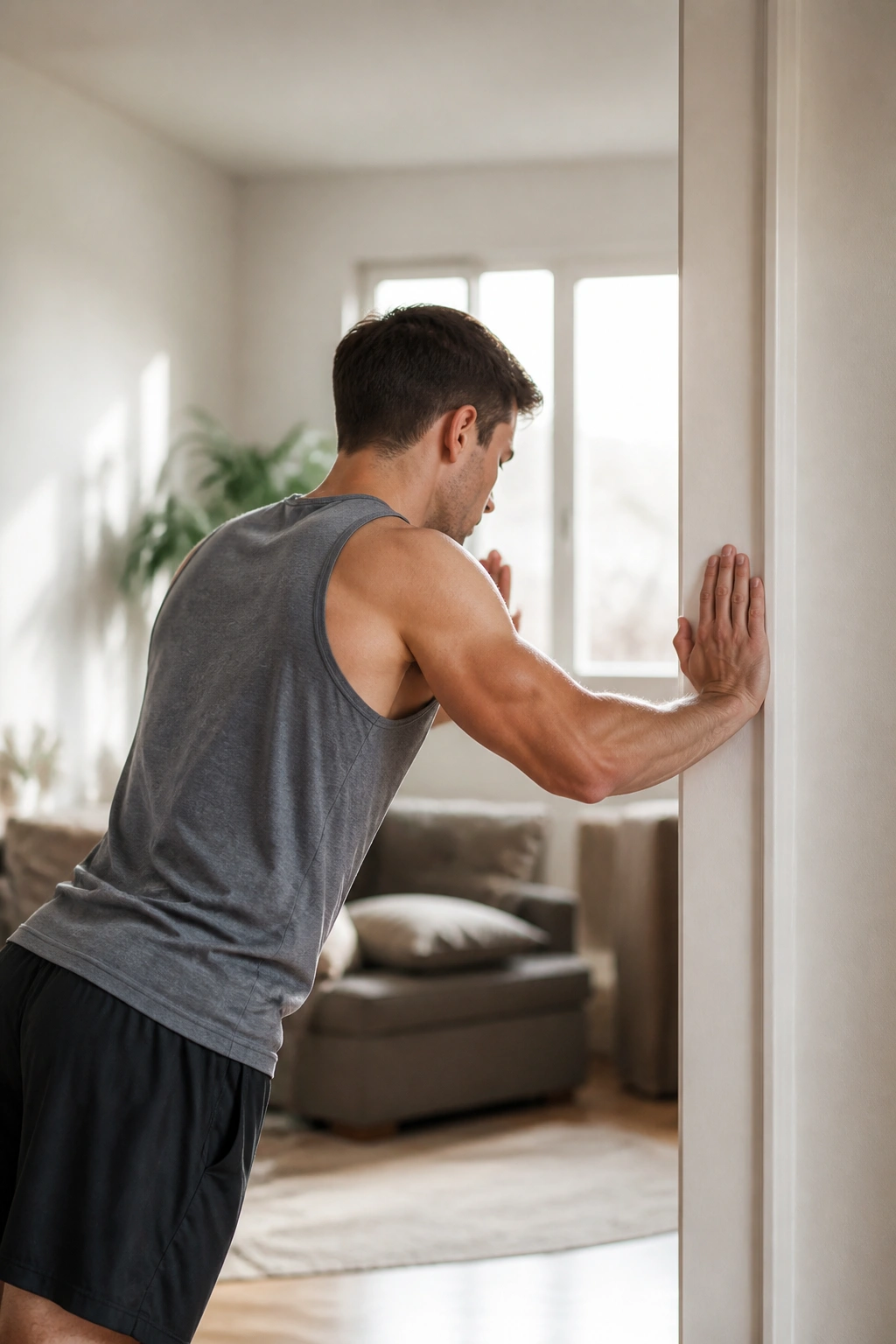
Unlike a push-up-only plan, this one spreads the work across the chest, shoulders, triceps, and the muscles that keep your shoulder blades from sulking. Upper-body training without equipment is possible, but you have to be a little creative.
Start with wall push-ups or countertop push-ups for pressing strength. Then add prone Y-T-W raises on the floor to wake up the upper back, plank shoulder taps to challenge stability, and pike holds for shoulder loading. A lot of people skip the back-of-the-shoulder work, which is how posture starts looking slumped by mid-afternoon.
Keep the reps modest: 2 to 4 sets of 8 to 12 controlled reps for the movement-based exercises, plus 20 to 30 seconds for the holds. This is not a race. If your neck starts doing the work your shoulders should have handled, you are going too fast.
Best use case? Three short sessions a week. That is enough to build a real base.
7. The Core Stability and Back-Support Session
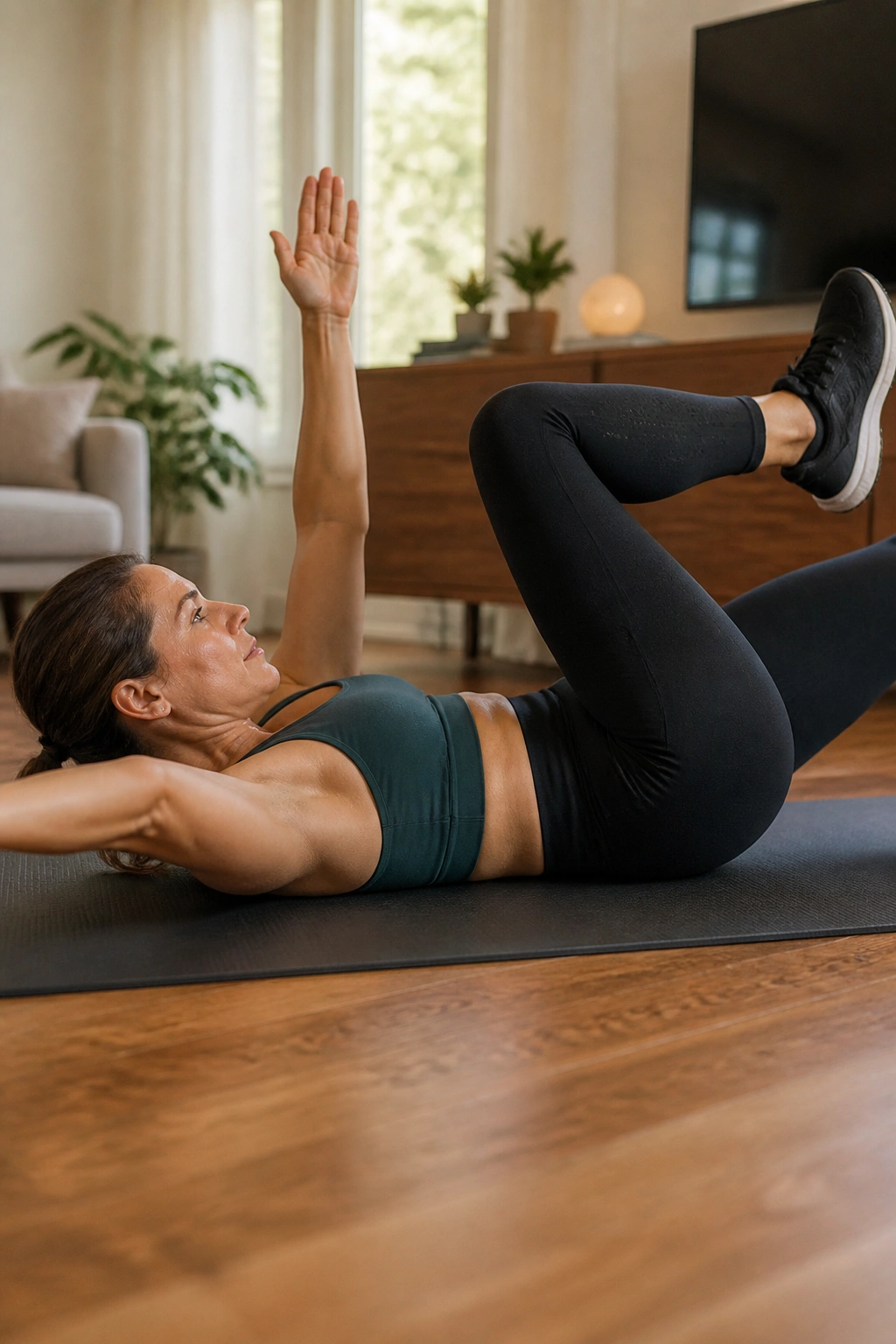
Sit-ups are loud, overused, and often the wrong tool. Core stability work is quieter and usually more useful, especially if your lower back gets cranky after long sitting.
A good core session includes dead bugs, bird dogs, side planks, and glute bridge marches. Do 6 to 10 controlled reps per side on the movement drills and 15 to 25 seconds on the holds. The goal is not a burn in your neck. The goal is to keep your torso steady while your arms and legs move.
What to Focus On
- Keep your lower back from arching on dead bugs.
- Reach long through the heel on bird dogs.
- Stack the shoulder and hip on side planks.
- Move the marching leg slowly on bridge marches.
That last part matters more than it sounds. Slow reps expose weak spots. Fast reps hide them.
If you want a short version, do one round of each exercise and stop. If you want a longer one, run the circuit twice with a minute between rounds. Either way, your spine tends to thank you later.
8. Stair Climb Conditioning
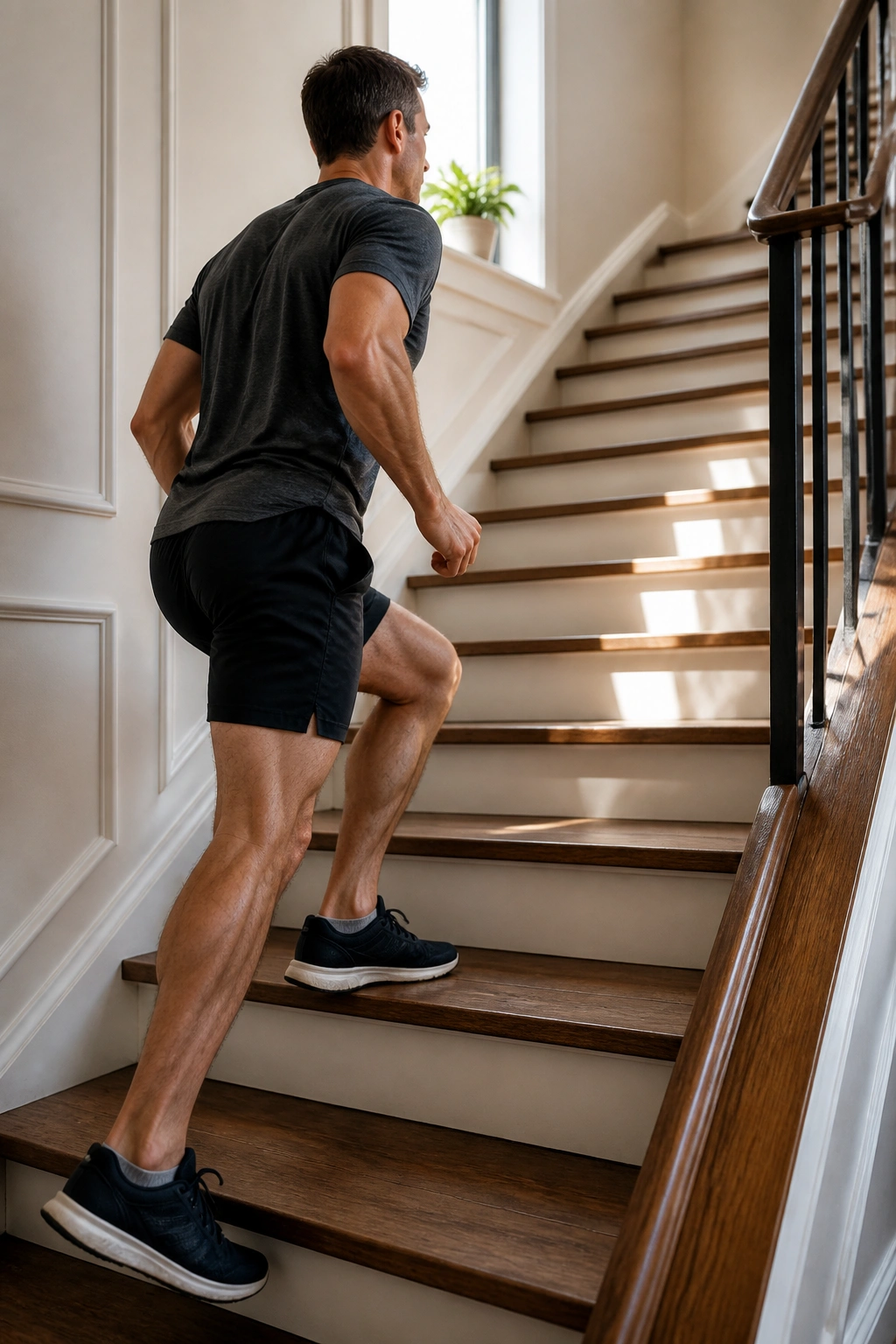
A staircase is a rude coach. That is exactly why it works. Stair training hits the heart, calves, glutes, and quads in one small space, which makes it one of the best free workout programs for people who want a lot of return from very little equipment.
Start with 1 minute climbing, 1 minute walking, and repeat that for 8 to 12 rounds. If that sounds too easy, climb faster, not sloppier. Use the handrail if your balance is shaky. Step down carefully. Descending hammers the knees harder than most people expect.
A useful trick is to change the pattern every few rounds: one flight at a time, then two steps per stride if the staircase is safe, then a slower climb with deliberate knee drive. That variation keeps the session from turning flat.
Do not do this in socks on slick stairs. That sounds obvious until someone twists an ankle.
9. The Dance Cardio Playlist Workout
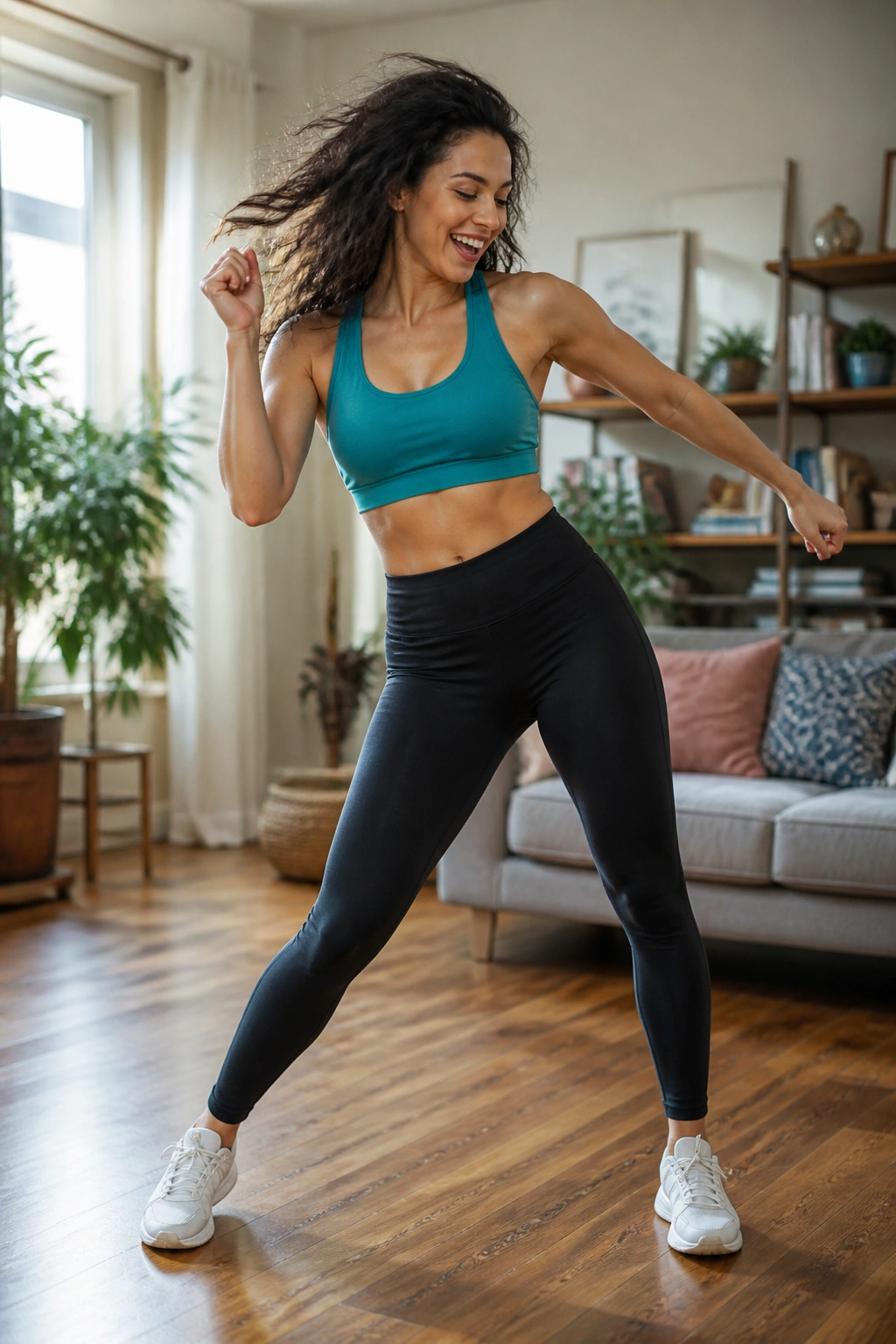
If counting reps makes you sigh, borrow a song instead. Dance cardio is one of the easiest programs to stick with because the music does half the work.
Build a 20- to 30-minute playlist and assign each song a job: warm up, raise the heart rate, peak, and cool down. Use simple moves — side steps, grapevines, knee lifts, toe taps, quick march patterns, and a few squat pulses if your knees are happy. You do not need to look stylish. You need to keep moving.
The best part is how little it asks from your brain. Once the song starts, you keep following the beat until the track ends. That creates a natural work block without the grind of watching a timer every 12 seconds.
If you want a cleaner structure, make the first song easy, the middle three songs brisk, and the last one calmer. That shape helps you avoid the weird all-out feeling that leaves you cooked before the workout is even over.
10. The Yoga Strength Flow
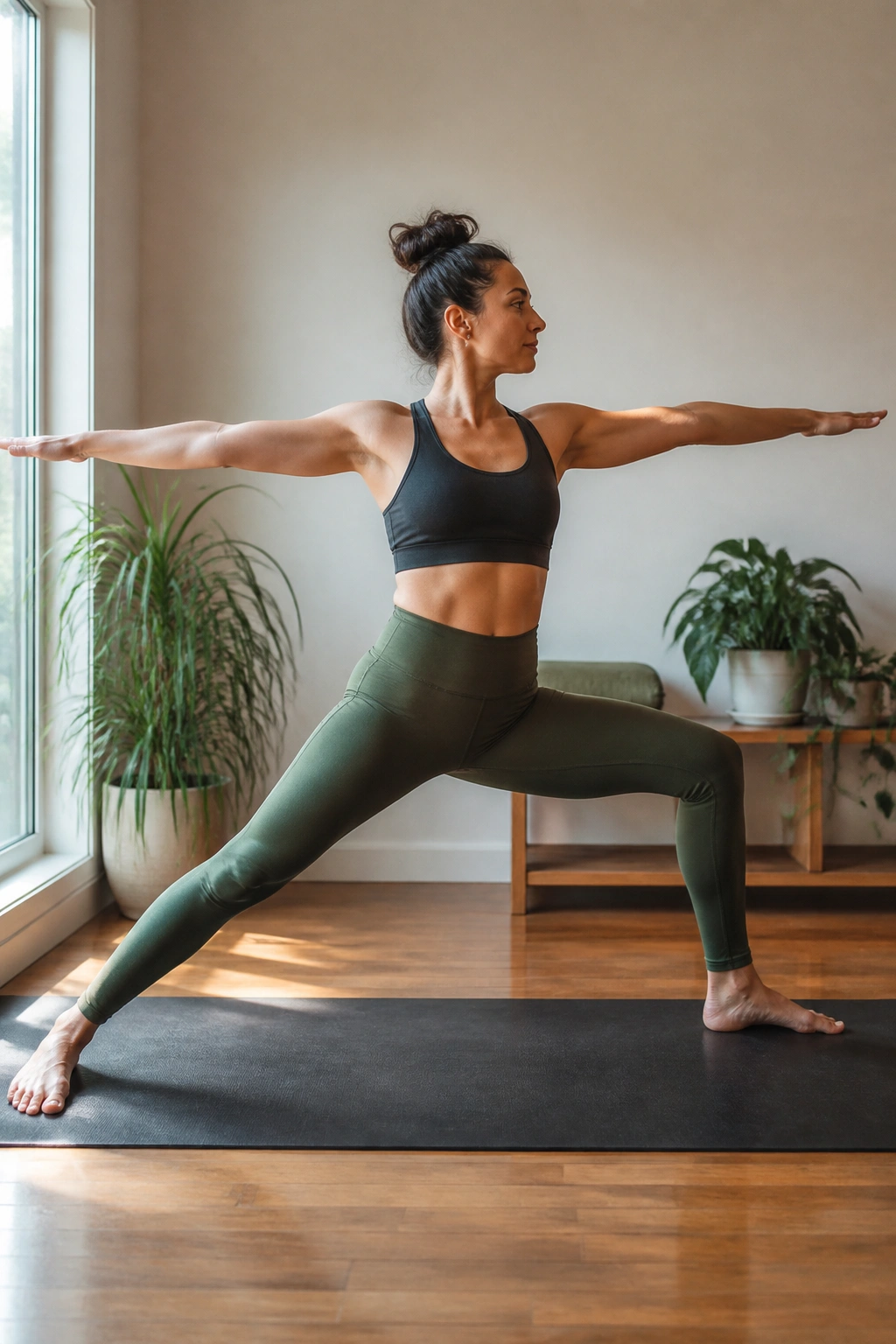
Can yoga build strength without feeling flimsy? Yes — if you hold the poses long enough to make them count. A flow with real holds is not a stretch break. It is a strength session that happens to be quiet.
Try plank for 20 seconds, downward dog for 5 breaths, warrior II for 5 breaths per side, crescent lunge for 5 breaths per side, and chair pose for 20 to 30 seconds. Add a slow cobra or sphinx hold if your lower back likes gentle extension. The power here comes from control, not speed.
Hold Times That Make a Difference
- 20 seconds for plank.
- 5 slow breaths for standing poses.
- 2 to 3 rounds of the sequence.
- 30 to 45 seconds total in the final cool-down shape.
You should feel steady muscle work, not strain in the wrists or neck. If a pose feels unstable, shorten the hold and clean up your setup.
This one is especially good on days when you want a workout but do not want the room to feel loud.
11. The EMOM Sweat Test
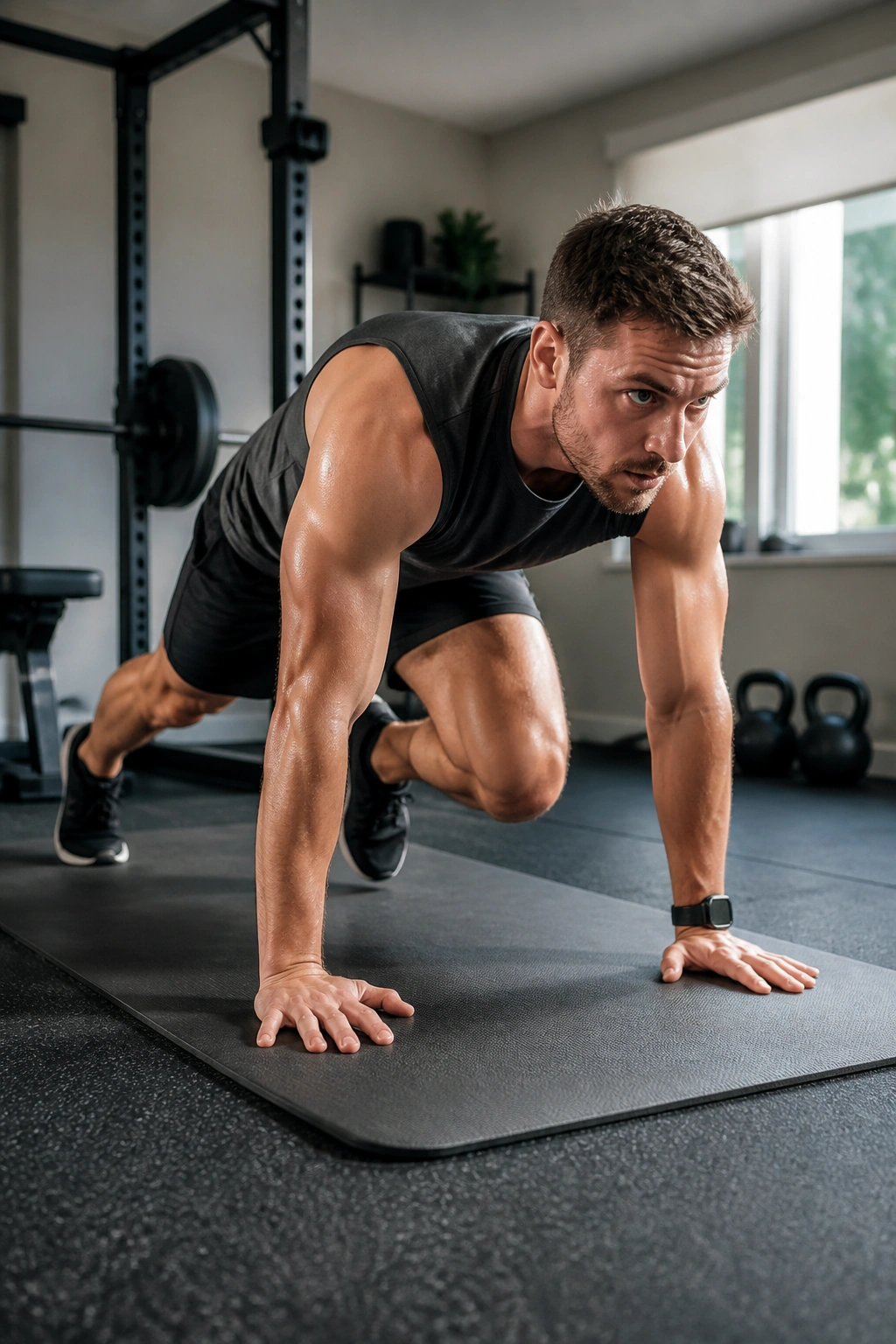
Every minute on the minute sounds simple until minute 7. That is the whole appeal. You get a tiny burst of work, then a short rest, and the clock keeps you honest.
Pick 4 moves and repeat them for 12 minutes. A clean version might be minute 1: 12 squats, minute 2: 8 push-ups, minute 3: 20 mountain climbers per side, minute 4: 10 hip hinges, then repeat that cycle three times. If you finish early, the rest of the minute is your recovery. If you cannot finish in time, the reps are too high.
That timing matters more than the exercise choice. EMOM workouts get messy when people try to cram in too much and end up gasping from the first round. Leave yourself 15 to 20 seconds of rest per minute when possible. That is the sweet spot.
Use this when you want a compact session that feels structured and a little sharp. It is not subtle. That is the point.
12. The Resistance Band Full-Body Plan
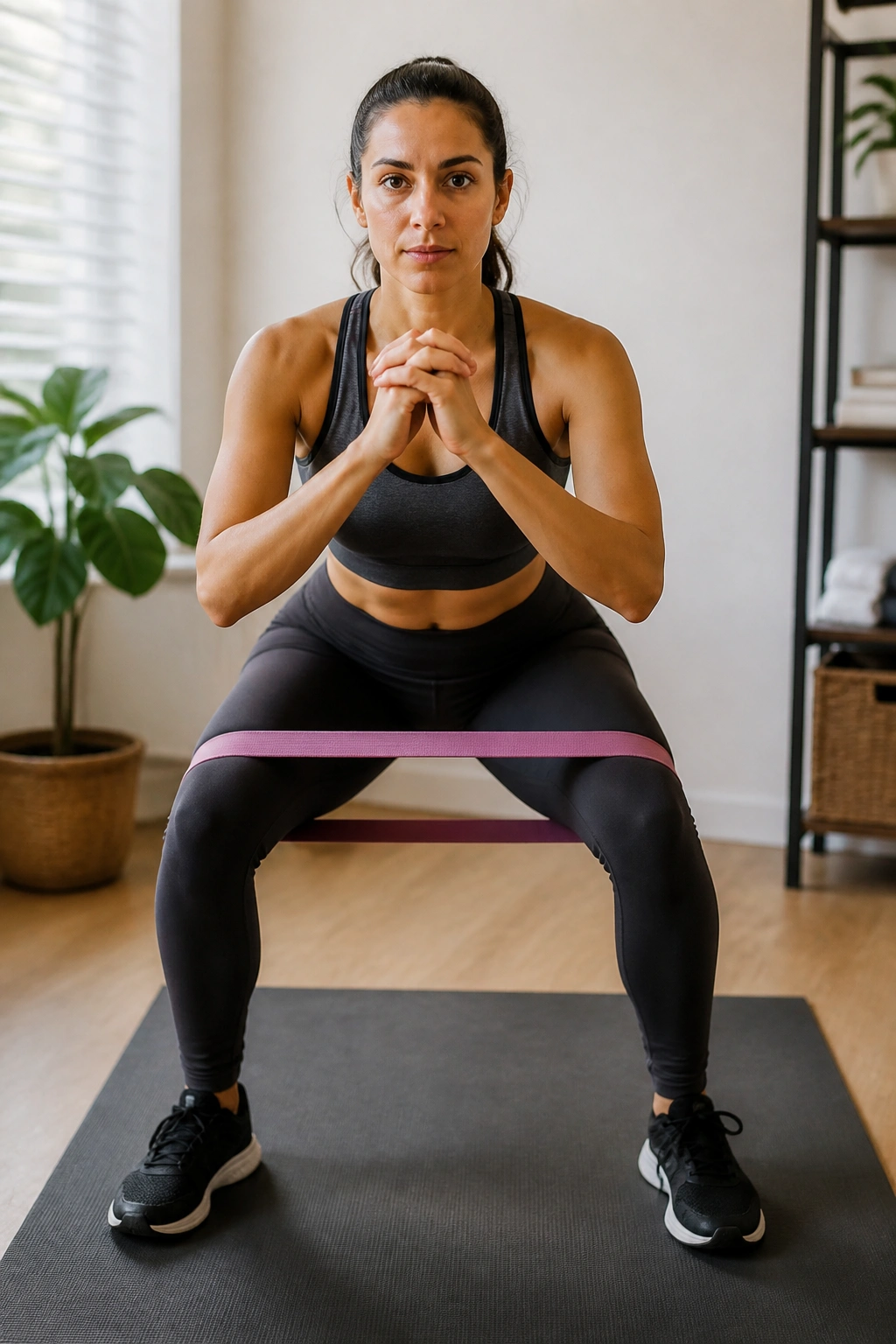
A loop band in a drawer earns its keep fast. Resistance bands add tension without taking up space, and they make some bodyweight moves feel much more demanding than people expect.
A tidy full-body session uses band squats, band rows, overhead presses, and lateral walks. Do 3 rounds of 10 to 15 reps for the upper and lower moves, and 12 to 20 steps per side for the lateral walk. If you have a long band with handles, you can swap in a chest press or pull-apart. If you only have a loop band, anchor it around your legs or a sturdy post with care.
The Pieces That Matter Most
- Squat: keep the knees tracking over the toes.
- Row: squeeze the shoulder blades, not the neck.
- Press: avoid arching the lower back.
- Lateral walk: stay low and controlled.
The mistake people make is rushing the band work because it looks small. It is not small. The band gets harder the farther it stretches, which means the top of the rep often hurts more than the start.
13. The Tabata Home Sprint Session
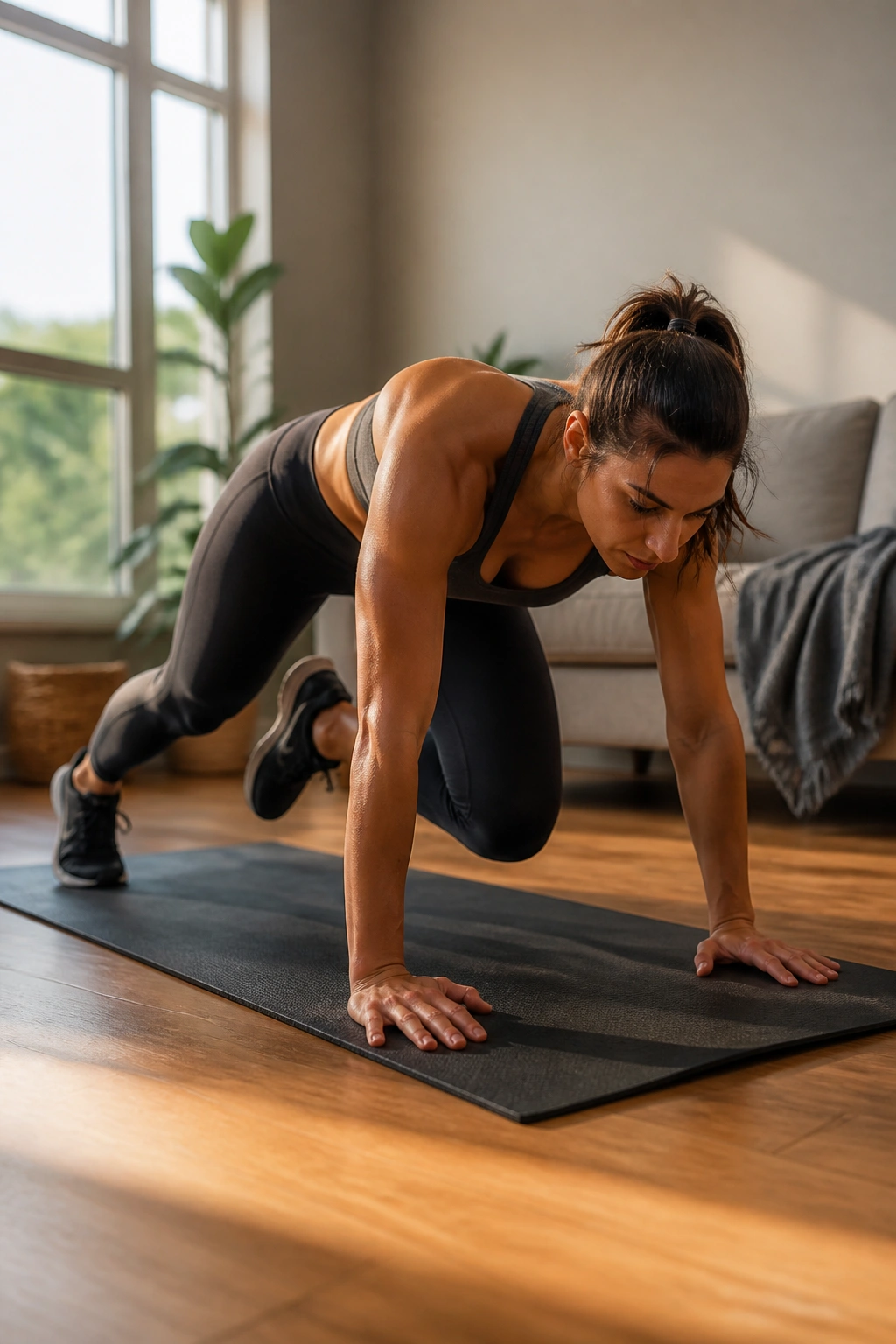
Four minutes can feel longer than twenty. Tabata does that to people. The format is simple: 20 seconds hard, 10 seconds rest, 8 rounds. What changes is how hard the hard parts feel when the rest gets cut so short.
For home use, choose low-space moves like fast squats, squat-to-reach, speed punches, skater steps, or mountain climbers. Do one move for all 8 rounds, or alternate between two moves. If you are new to this style, start with 2 Tabata blocks and rest 2 minutes between them. That is enough to make the point.
This is not the best first workout for someone who has been sedentary for a while. It asks for a lot of effort in a tiny window, and that can feel rough if your conditioning base is thin. On the other hand, if you want a short session that leaves no doubt you trained, it is hard to beat.
Keep the landing quiet and the movement sharp. Wild form does not earn extra points.
14. The Pilates Mat Series
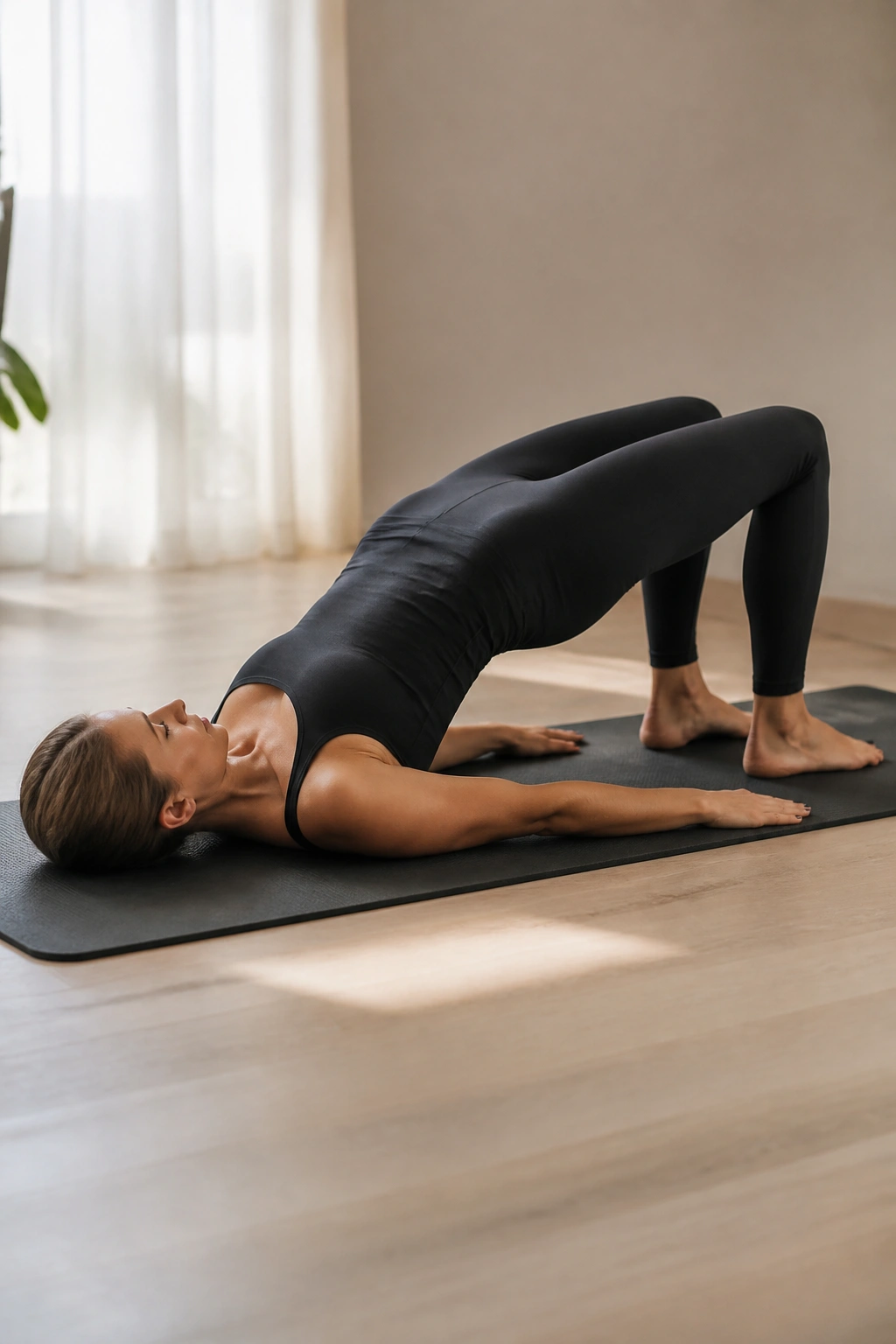
Pilates is sneaky in the best way. It looks calm while quietly torching your centerline, hips, and deep stabilizers. You finish thinking, “That was gentle,” and then your abs disagree later.
A home series can include pelvic curls, toe taps, the hundred prep, side-lying leg lifts, and swimming. Do 8 to 12 reps on the slower moves and 20 to 30 seconds on the holds or pulses. Breath matters here. Exhale during the hard part, and keep your ribs from flaring open like a drawer stuck halfway out.
What makes this style useful is the control. You are not chasing exhaustion through speed. You are making tiny positions count. That makes Pilates a good match for people who want better posture, stronger hips, and a core that behaves under load.
If your neck gets tired fast, keep your head on the mat during the hundred prep and shorten the lever on toe taps. Small corrections beat heroic form failures.
15. The Walk-At-Home Endurance Plan
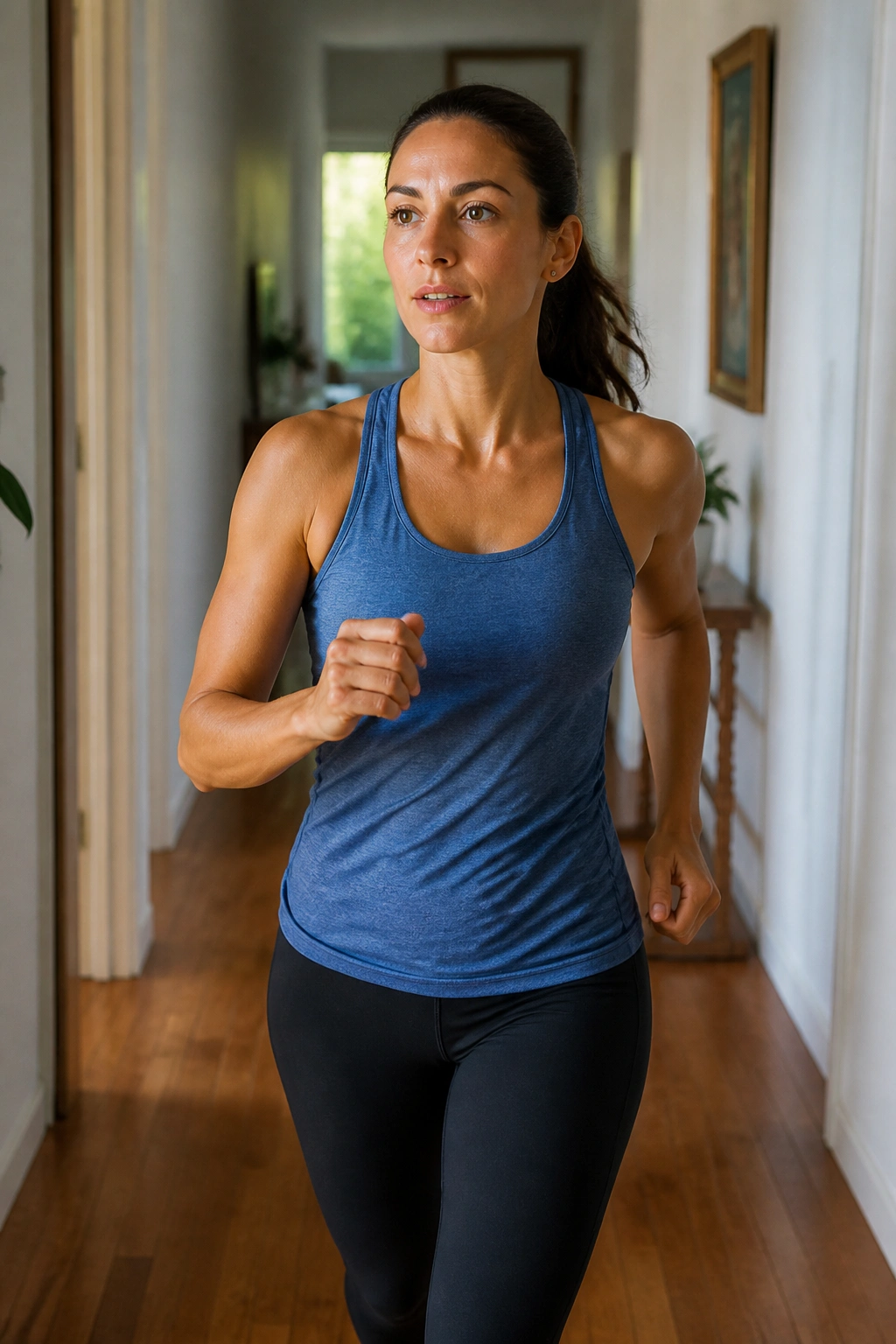
Sometimes the best workout is the one that starts by walking from one end of the room to the other. That sounds too simple until you string together 20 or 30 minutes of purposeful indoor walking and realize your calves, hips, and breathing all got the message.
Use a pattern like this: 5 minutes easy marching, 10 minutes brisk walking or marching, 5 minutes side steps and heel digs, then another brisk block if you have time. If you have stairs, fold in a few slow climbs. If you do not, keep the pace up and swing your arms with intent.
Easy Ways to Keep It From Getting Dull
- March high for 2 minutes.
- Add shoulder rolls for 30 seconds.
- Turn one minute into a power walk with bigger arm drive.
- Break the session into two 10-minute blocks if that feels easier.
This program is good on days when you want movement more than punishment. That distinction matters. Consistency beats the dramatic workout you dread tomorrow.
16. The Shadow Boxing Rounds

Wrap your hands in nothing and start moving. Shadow boxing is cardio, coordination, and stress relief in the same package. It also has a way of making people stand taller without any coaching.
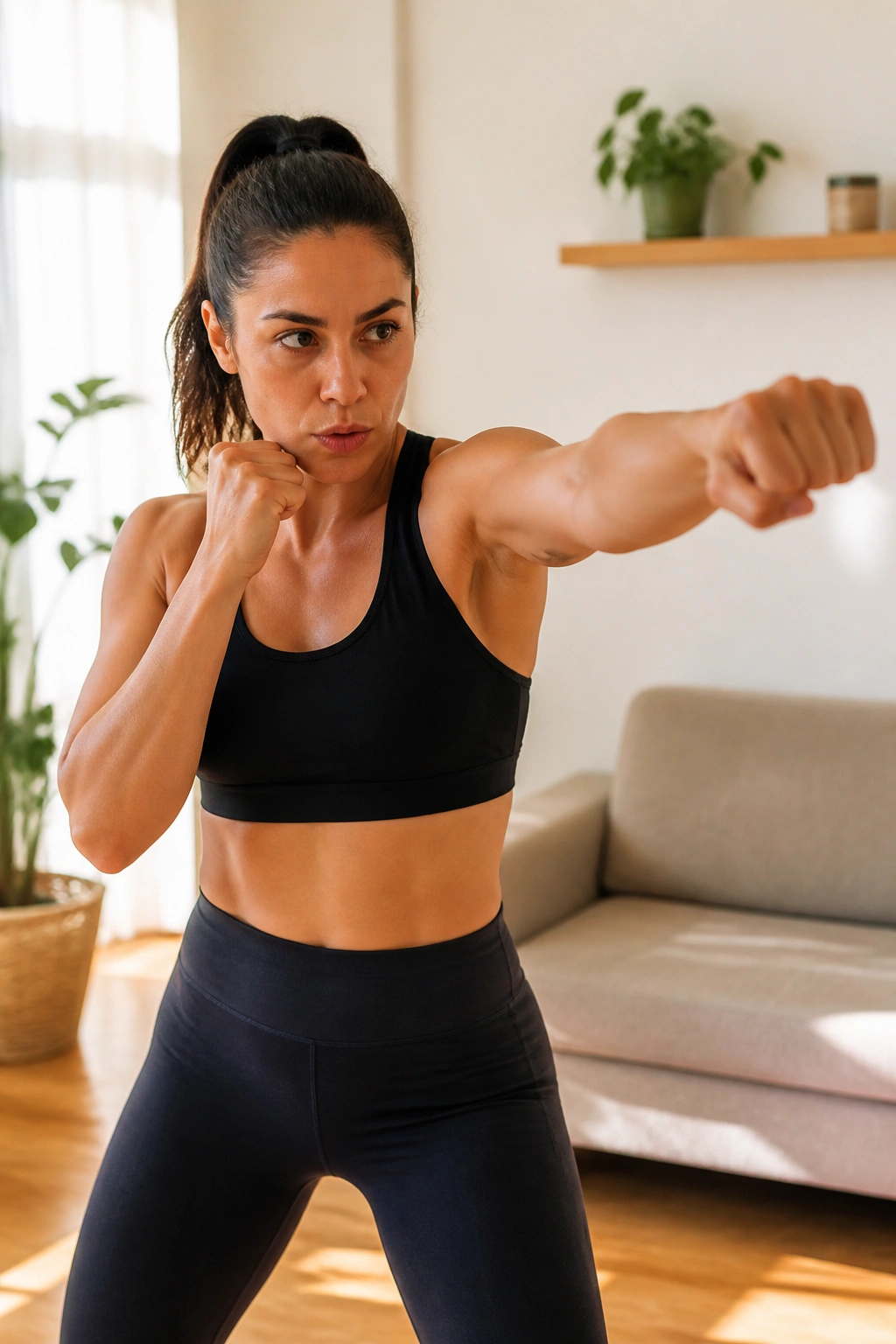
Set a timer for 2-minute rounds with 30 to 45 seconds of rest. Use simple combinations: jab-cross, jab-cross-hook, jab-cross-slip, and a few knee drives mixed in between. Keep your hands up, chin tucked, and shoulders loose. If your punches come from the arms only, the session feels flat. The hips should help drive the rotation.
A good first session is 4 rounds. A stronger one is 6 to 8 rounds. You do not need to punch hard to get the conditioning effect. You need to move continuously, stay light on your feet, and keep the combos clean enough that you are not twisting your knees into nonsense.
Short, sharp, and oddly satisfying. That is the whole deal.
17. The Single-Kettlebell Strength Basics
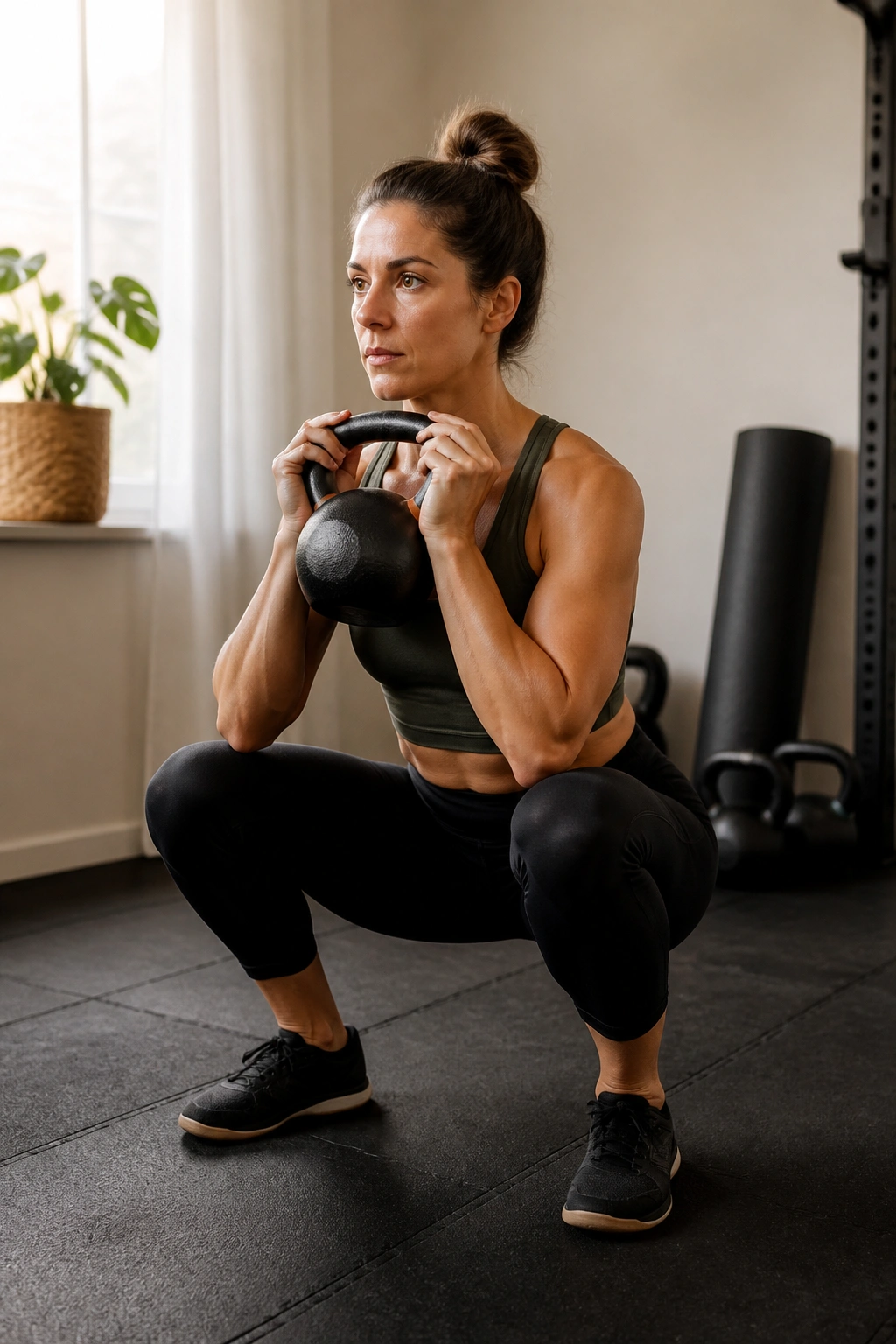
One kettlebell can carry a whole week. It gives you hinge work, squat work, overhead work, and loaded carries without asking for much floor space. If you own one bell, use it well.
A simple starter program looks like deadlifts for 10 reps, goblet squats for 8 reps, single-arm presses for 6 reps per side, and suitcase carries for 30 seconds per side. Do 3 rounds and rest 60 to 90 seconds between rounds. If the kettlebell is new to you, keep the weight light enough that your shoulders do not shrug on the press and your lower back does not take over on the hinge.
What to Watch For
- The bell should stay close on deadlifts.
- Your ribs should not flare on presses.
- The goblet squat should feel stable at the bottom.
- Carrying on one side should make your torso resist twisting.
This is one of the best home programs if you want strength that feels real, not decorative.
18. The Chair Workout for New Starters
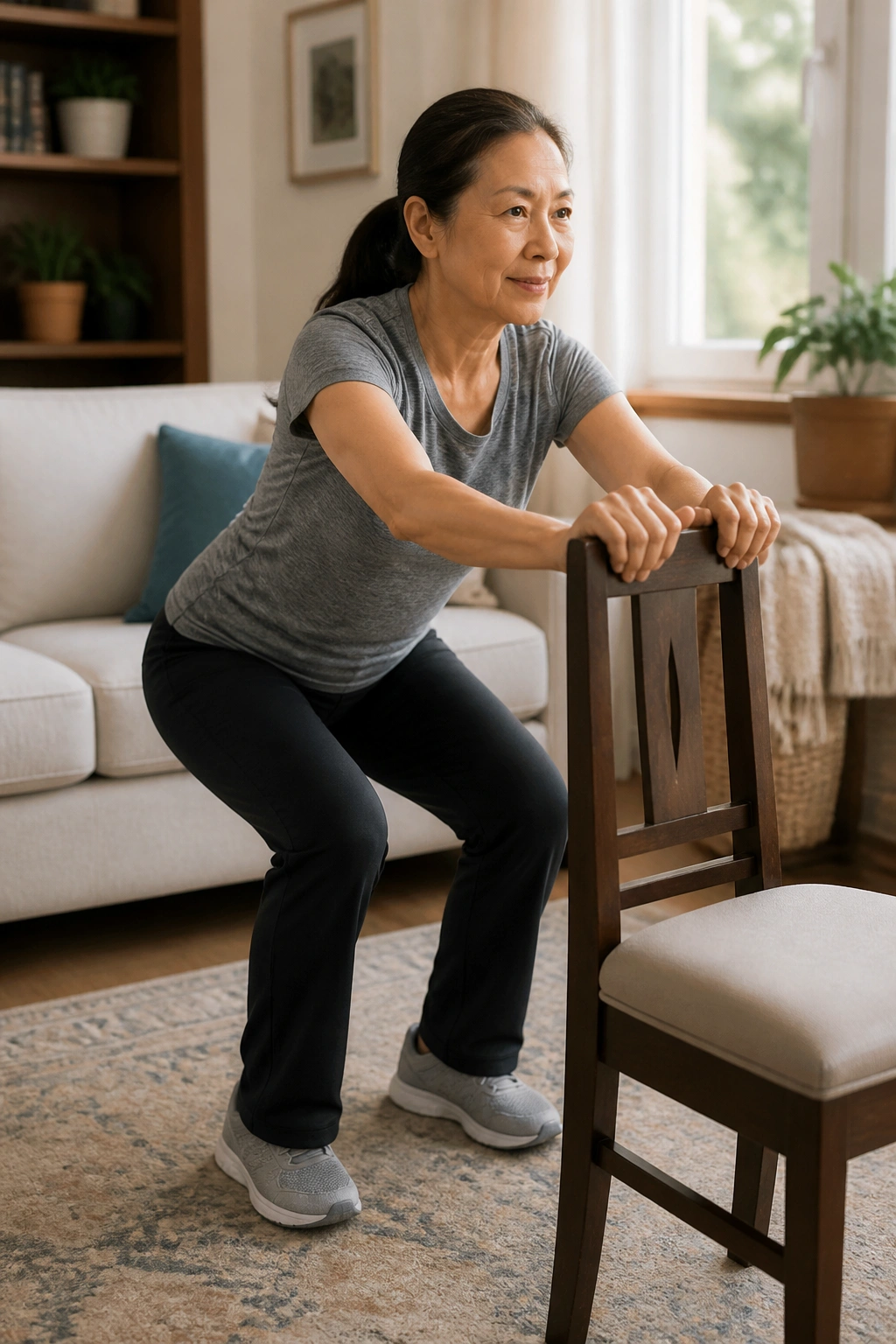
The chair is not cheating. It is smart. A sturdy chair lowers the barrier enough that people actually begin, and beginning is the part that matters.
Use the chair for sit-to-stands, seated knee lifts, incline push-ups with hands on the seat, calf raises while holding the backrest, and seated overhead reaches. A clean session could be 2 to 3 rounds of 8 to 12 reps for each move, with a slow pace and plenty of room to breathe. If balance is shaky, keep one hand on the chair back during the standing drills.
This program is a strong choice for someone returning after a long break, anyone nervous about floor work, or anyone who wants a gentle start that still has a pulse.
The chair gives you feedback fast. If you can stand up without collapsing into the seat, you are building something useful. If you need the hands to help on every rep, that is fine too. That is information, not failure.
19. The Backpack Strength Training Plan
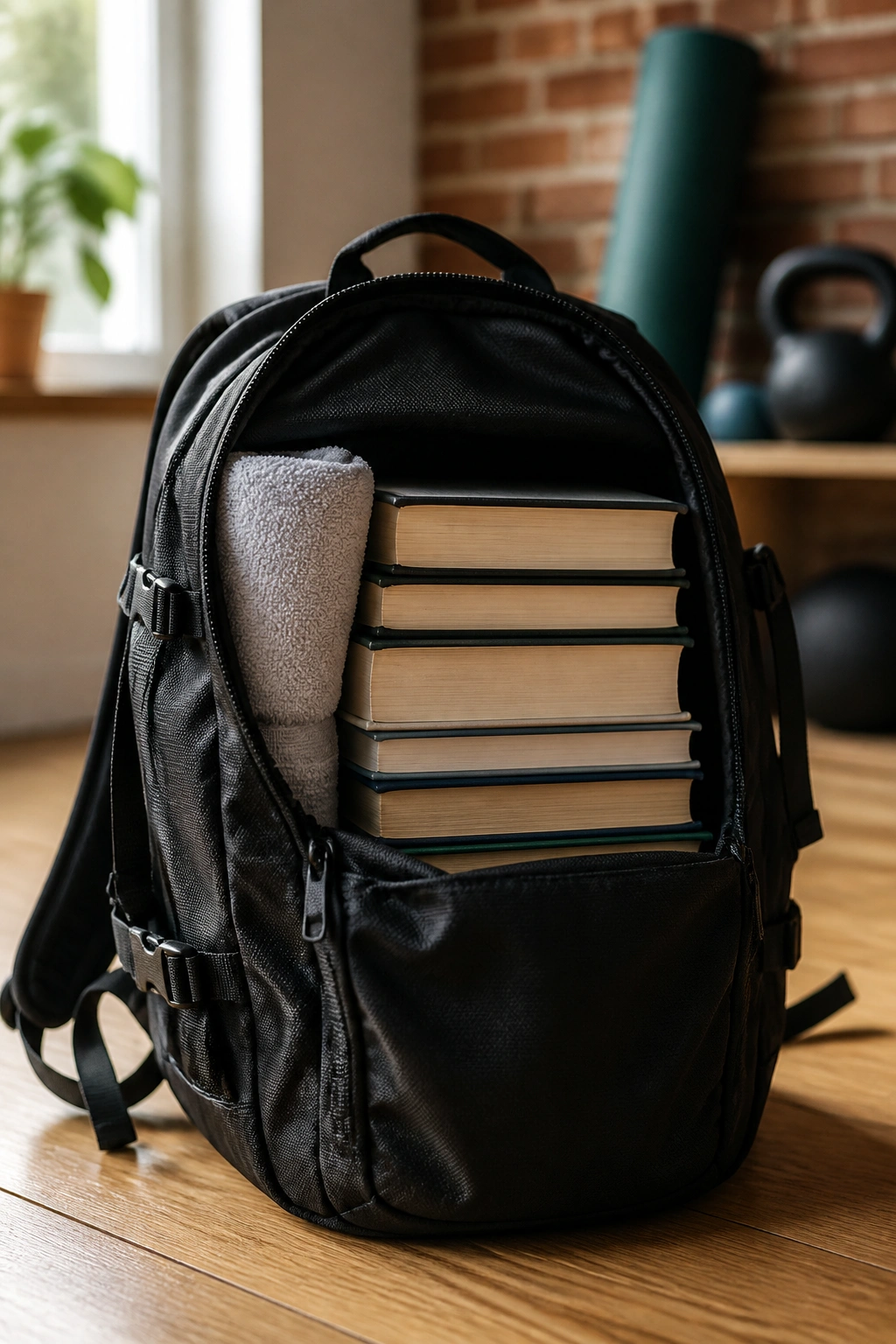
A backpack full of books can do real work. It gives you load, grip, and a little instability, which makes ordinary movements feel more honest. Toss a towel inside so the books do not slam around.
Try backpack front squats, bent-over rows, Romanian deadlifts, and loaded carries. Use 8 to 12 reps on the squats and rows, 10 reps on the hinges, and 30 to 45 seconds for the carries. If the bag digs into your shoulders, hold it in front of your chest for the squat and carry sections.
This works best when the backpack is packed tightly. Loose items shift, and shifting turns a useful tool into an annoying one. You want the load to stay stable enough that your body has to work, not so sloppy that the movement feels messy.
Cheap gear can still be serious gear. The backpack proves it.
20. The Recovery and Stretch Day
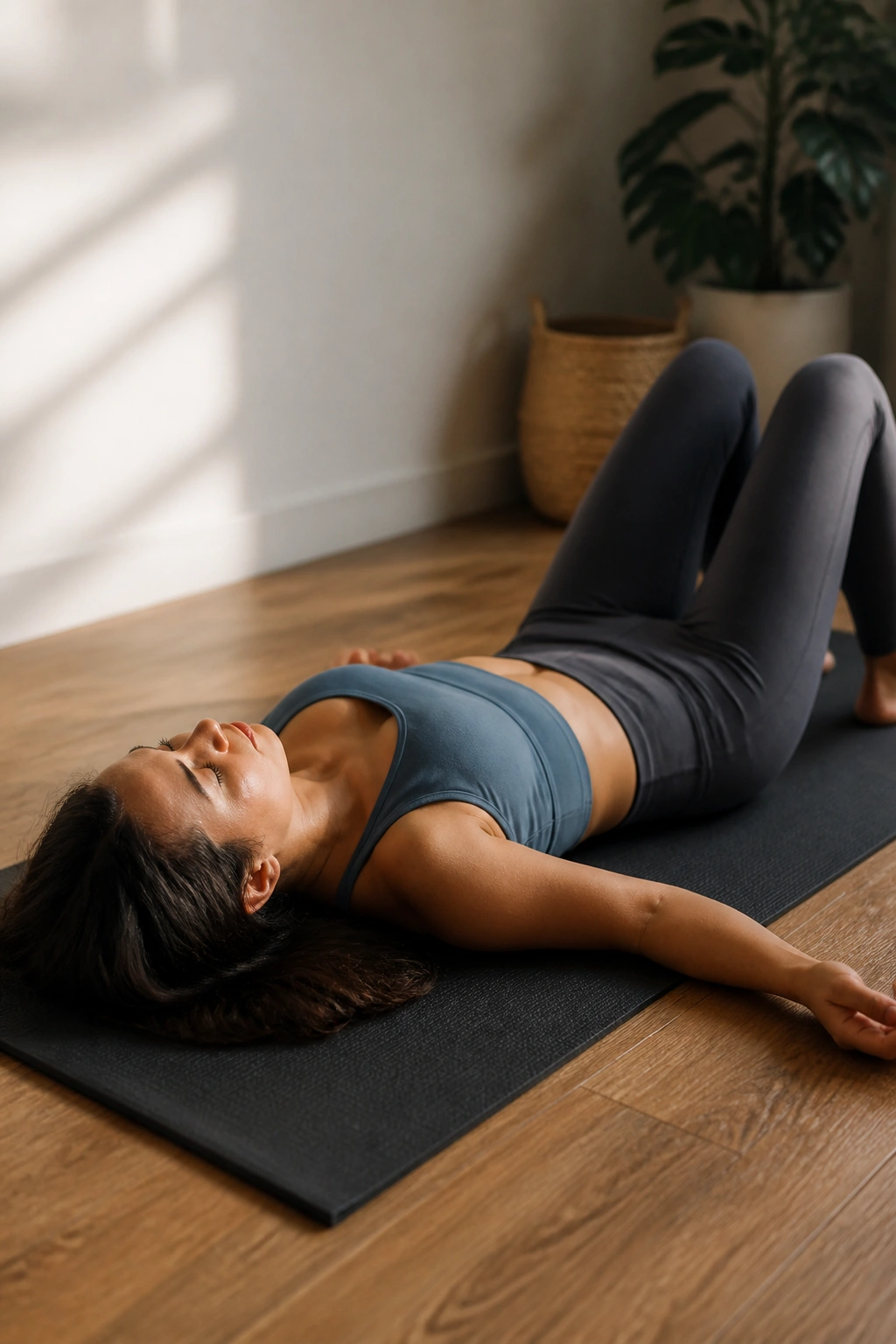
A lighter day is not wasted training. Recovery keeps the rest of the week from feeling like a pile of stiff joints and angry calves. It also gives you a place to breathe, which sounds small until you skip it for too long.
Spend 10 to 15 minutes on easy movement: neck rolls, gentle hip flexor stretches, calf stretches against a wall, thoracic rotations, and a slow hamstring reach with bent knees if needed. Pair that with 1 to 2 minutes of nasal breathing while lying on your back. The breathing piece often gets ignored, which is a shame, because it can settle the whole system down.
You should finish feeling looser, not yanked apart. If a stretch hurts in a sharp or pinchy way, stop. Mild tension is fine. Pain is not the goal.
This is the day that makes the other days more repeatable.
21. The Quiet Apartment-Friendly Workout
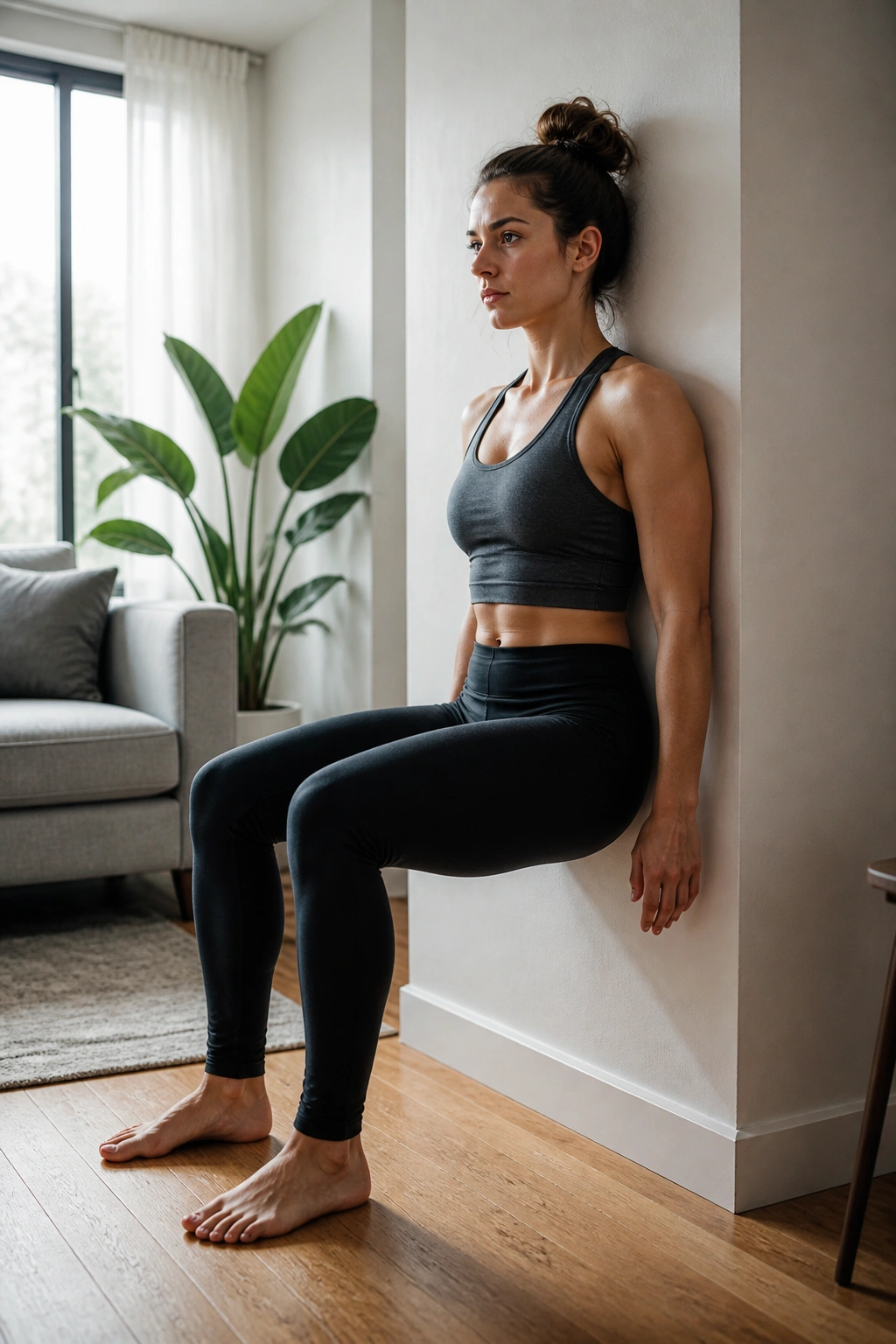
Need something that will not rattle the floor? Use this. Quiet workouts are built on control, not impact, so they tend to be easier on joints and easier on neighbors.
A good quiet session includes slow tempo squats, glute bridges, wall sits, dead bugs, side planks, and plank shoulder taps done with controlled feet. Keep the descent to 3 seconds on the squats and hold the bridge for 2 seconds at the top. Run the circuit for 3 rounds with 30 to 45 seconds of rest between moves if you want a fuller session.
The trick is to remove the bounce. No jumping. No dropping. No flinging your body down and hoping it lands well. Smooth reps create enough work on their own.
This kind of program is a lifesaver in small spaces, especially when you want to train early or late without making the room sound like a construction site.
22. The Weekly Hybrid Home Program
The best plan is usually the one you can repeat without thinking too hard. A hybrid week lets you borrow from the other programs instead of worshipping one style forever. That keeps training from getting stale and helps you cover strength, cardio, mobility, and recovery in a sane way.
A clean weekly pattern looks like this:
- Day 1: bodyweight strength circuit.
- Day 2: mobility flow for stiff mornings.
- Day 3: low-impact cardio intervals or dance cardio.
- Day 4: glute and leg builder or upper-body no-equipment day.
- Day 5: core stability and back-support session.
- Day 6: shadow boxing, stairs, or a kettlebell session.
- Day 7: recovery and stretch day.
If that feels like too much, shrink it. Three days can work fine: one strength day, one cardio day, one mobility day. That is enough to build a habit without turning your week into a gym assignment.
The real win is variety with a spine. You are not guessing what to do each day, and you are not relying on motivation to invent a workout from scratch. Pick the session, set the timer, and start.
