



The first time you hear a room full of lifters talking, it can sound like a different language. Rep, set, RIR, PR, tempo — people toss these words around like everyone was born knowing them, and the weird part is that most beginners fake their way through the conversation for months before anyone admits they were confused too.
That confusion matters more than it looks. A lot of beginner mistakes in the gym come from misunderstanding basic weight lifting terms, not from a lack of effort. If someone tells you to “stay two reps shy of failure,” or “keep your working sets in the 6 to 8 rep range,” those words change how heavy the bar feels, how long you rest, and whether you leave the gym tired in a good way or wrecked in a sloppy one.
You do not need to memorize every gym term ever invented. You do need the vocabulary that controls the big stuff: how many times you lift, how hard you push, how close you get to your limit, and how to keep your shoulders, knees, and back from doing weird things under load. That’s where the useful language lives.
So here’s the plain-English version of the 20 weight lifting terms beginners run into most, with the practical meaning behind each one.
1. Rep

A rep is one full repetition of an exercise. One squat down and back up. One press from your chest to the top. One curl from straight arms to a bent elbow and back again. If you can count to one, you can count reps.
The reason this tiny word matters is that reps are how lifting plans get measured. “Do 8 reps” means something very different from “do 15 reps,” even if the exercise stays the same. Eight reps usually means a heavier weight and more rest. Fifteen usually means lighter weight, more burn, and a little less ego at the door.
How beginners should think about reps
A rep is not supposed to be rushed. If you swing the weight, bounce it, or cut the movement short, you may have moved the dumbbell, but you did not really finish the rep. That matters because good rep counting depends on consistent form.
- 1 rep = one complete movement
- 5 reps = usually heavier than 15 reps
- Reps that look sloppy = often too much weight
- Clean reps = easier to track progress week after week
Quick rule: if you would not count it on video, do not count it in your head.
2. Set

A set is a block of reps done without a long break. If you do 10 reps of dumbbell bench press, rest for a minute or two, then do 10 more, that is two sets. Reps are the pieces. Sets are the bundles.
Beginners often say, “I benched 10,” when what they really mean is “I did 10 reps in one set.” That sounds small, but the difference is huge once the numbers climb. Three sets of 10 and one set of 30 are not the same thing at all. Your muscles notice, and so does your breathing.
The simple way to read a workout is this: sets x reps. “3 x 8” means 3 sets of 8 reps. “4 x 12” means 4 sets of 12 reps. Once you know that code, gym programs stop looking mysterious and start looking like basic instructions.
3. Warm-Up Set

A warm-up set is a lighter set you do before the real work begins. It is not there to exhaust you. It is there to wake up the movement, warm your joints, and remind your body what the exercise feels like before the heavy load shows up.
Do people skip them? Constantly. Bad idea. A cold first set on a heavy squat or bench press often feels awkward, and awkward under load is where technique gets sloppy. A warm-up set gives your nervous system a heads-up. Your body likes that.
What a warm-up set looks like
You might do 5 reps with an empty bar, then 3 reps with a lighter load, then move into your working weight. For smaller exercises, the warm-up can be shorter. For big lifts, it usually makes sense to do two or three ramp-up sets.
A warm-up set should feel easy. Not lazy. Easy.
4. Working Set

A working set is a set that actually counts toward the goal of the workout. It is the set with the weight that challenges you, not the light practice round before it. If your plan says “3 working sets of 8,” that is the part that matters.
This term matters because beginners often count every set the same. A warm-up set and a working set are not twins. One prepares you. The other builds strength, muscle, or both, depending on the program.
Here’s the cleanest way to think about it: warm-up sets get you ready, working sets drive the progress. That difference saves you from accidentally overestimating how much volume you actually did. It also keeps you from pretending a very easy set was hard work. The gym does not care about your enthusiasm. The logbook does.
5. Reps in Reserve

Reps in reserve, often shortened to RIR, tells you how many more good reps you probably had left at the end of a set. If you finish a set and feel like you could have done two more clean reps, that set was about 2 RIR.
This is one of the most useful weight lifting terms for beginners because it teaches effort without forcing you to max out all the time. A lot of new lifters either stop way too early or go too hard and turn every set into a mess. RIR sits in the middle. Honest, but not dramatic.
Why RIR helps
- 0 RIR means you hit failure or came very close
- 1-2 RIR is hard work with some room left
- 3-4 RIR is useful for lighter sessions or technique work
- Too many RIR and the set may be too easy to drive progress
A simple habit helps here: after each hard set, ask yourself whether your next rep would have stayed clean. If the answer is yes, you probably had reps left.
6. One-Rep Max

Your one-rep max, or 1RM, is the most weight you can lift for one clean rep of a given exercise. One bench press rep. One squat rep. One deadlift rep. That number gets tossed around a lot in gym talk because it gives people a fast way to talk about strength.
It also tempts beginners into doing something silly. Testing a true 1RM is not necessary for most people, and it is definitely not the first thing you should chase. Heavy singles are demanding, and bad technique at maximal load is a fast way to find out what your spine complains about. Not fun.
How lifters use 1RM without testing it
A lot of programs use percentages of your 1RM. If your squat 1RM is 200 pounds, then 70 percent is about 140 pounds. That gives you a rough guide for training loads.
You do not need to know your exact max to train well. You can estimate it from a hard set of 5 or 8 reps and keep moving.
7. Progressive Overload
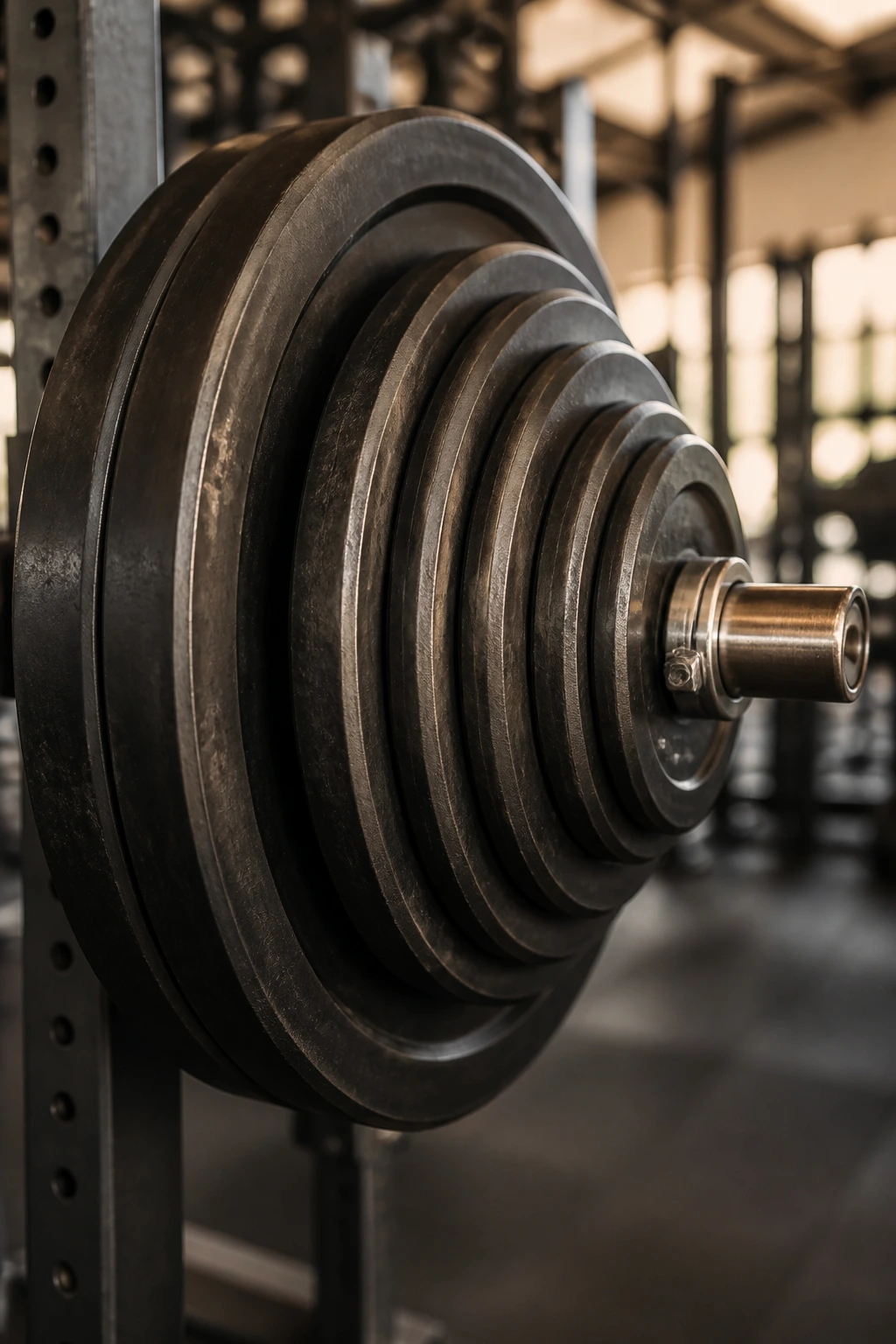
Progressive overload means gradually making your training harder over time. More weight, more reps, more sets, cleaner form with the same load, shorter rest, a bigger range of motion. The body adapts when the demand changes.
That sounds simple because it is simple. People dress it up with fancy language, but the idea is plain: if you do the same thing forever, you usually get the same result forever. A beginner who adds 5 pounds to a lift, or one extra rep, or one more set every couple of weeks is already using progressive overload.
Common ways to progress
- Add 2.5 to 5 pounds to a barbell lift
- Add 1 rep to each set
- Keep the reps the same and use cleaner form
- Shorten rest by 15 to 30 seconds
- Move from a smaller range of motion to a fuller one
The trick is not to force progress every single session. Sometimes the lift stays the same and the win is better control. That still counts.
8. Range of Motion

Range of motion, or ROM, is how far a joint and muscle move during an exercise. A squat done to parallel has a different range of motion than a quarter squat. A dumbbell curl that ends short of the shoulder is not the same as one that finishes with a full bend at the elbow.
This term matters because ROM changes the feel of a lift and, often, the result. Partial reps can be useful in some advanced cases, but beginners usually get more from full, controlled movement. You want the muscle working through the part of the lift it was meant to handle.
A deep squat that looks ugly because the knees cave in is not better than a slightly shallower squat done well. Depth matters. Control matters more. Your goal is a strong, repeatable pattern, not a dramatic photo.
9. Tempo

Tempo is the speed of each part of a rep. Lowering the weight. Pausing. Lifting it back up. Coaches sometimes write tempo with numbers, like 3-1-1, which usually means 3 seconds down, 1 second pause, 1 second up.
Most beginners move too fast on the lowering phase and too fast on the lift. That’s a shame, because slowing down a little teaches control fast. It also makes a moderate weight feel much heavier. Painfully honest, that.
A clean tempo helps in two ways. First, it keeps the weight from becoming a swingy accident. Second, it makes your reps more consistent, which means your progress is easier to compare. If one week you bounce the bar off your chest and the next week you lower it under control, those are not really the same reps.
10. Compound Exercise

A compound exercise uses more than one joint and more than one major muscle group at the same time. Squats, deadlifts, bench presses, rows, pull-ups, overhead presses. These are the big movers.
Why beginners hear so much about compound lifts is simple: they give you a lot of work for your time. One squat trains the legs, hips, core, and upper back in a way a machine curl cannot. That does not make isolation work useless. It makes compound work efficient.
What makes compound exercises different
- They usually let you lift more total weight
- They train coordination, not just raw muscle
- They can be more tiring than smaller movements
- They often show up first in a workout, when you’re fresh
A lot of people think “compound” means “advanced.” It does not. It just means multi-joint. Beginners usually need these lifts early because they teach the body to move as a unit.
11. Isolation Exercise

An isolation exercise focuses on one main joint or a smaller muscle group. Dumbbell curls, triceps pushdowns, leg extensions, lateral raises. The movement is narrower, the target is more specific, and the load is usually easier to control.
That does not make isolation exercises second-rate. Far from it. They are useful for building weak points, adding extra volume without wrecking your whole body, and learning how a muscle should feel when it actually does the work. Sometimes a new lifter needs that kind of clear signal.
If compound lifts are the main course, isolation work is the side dish that keeps the meal balanced. A bench press is not a full answer for chest or triceps development by itself. A few well-chosen isolation moves can fill the gaps without turning your session into a marathon.
12. Spotter

A spotter is another person who helps keep you safe during certain lifts, especially bench press or heavy squat work. Their job is not to lift the weight for you. Their job is to step in if the bar gets stuck, drifts off path, or turns into a bad situation fast.
Beginners sometimes think spotters are only for show-offs. Not true. A good spotter can make a hard set feel a lot less stressful, especially when you are learning how a heavy bar moves. The best spotters pay attention without hovering. Quiet. Ready. Not chatty.
What a good spotter does
- Watches the bar and your face
- Knows when to help and when to stay out
- Stays close enough to react fast
- Uses clear cues before the lift starts
You still need to know how to bail safely on your own when possible. A spotter is backup, not a substitute for judgment.
13. Failure
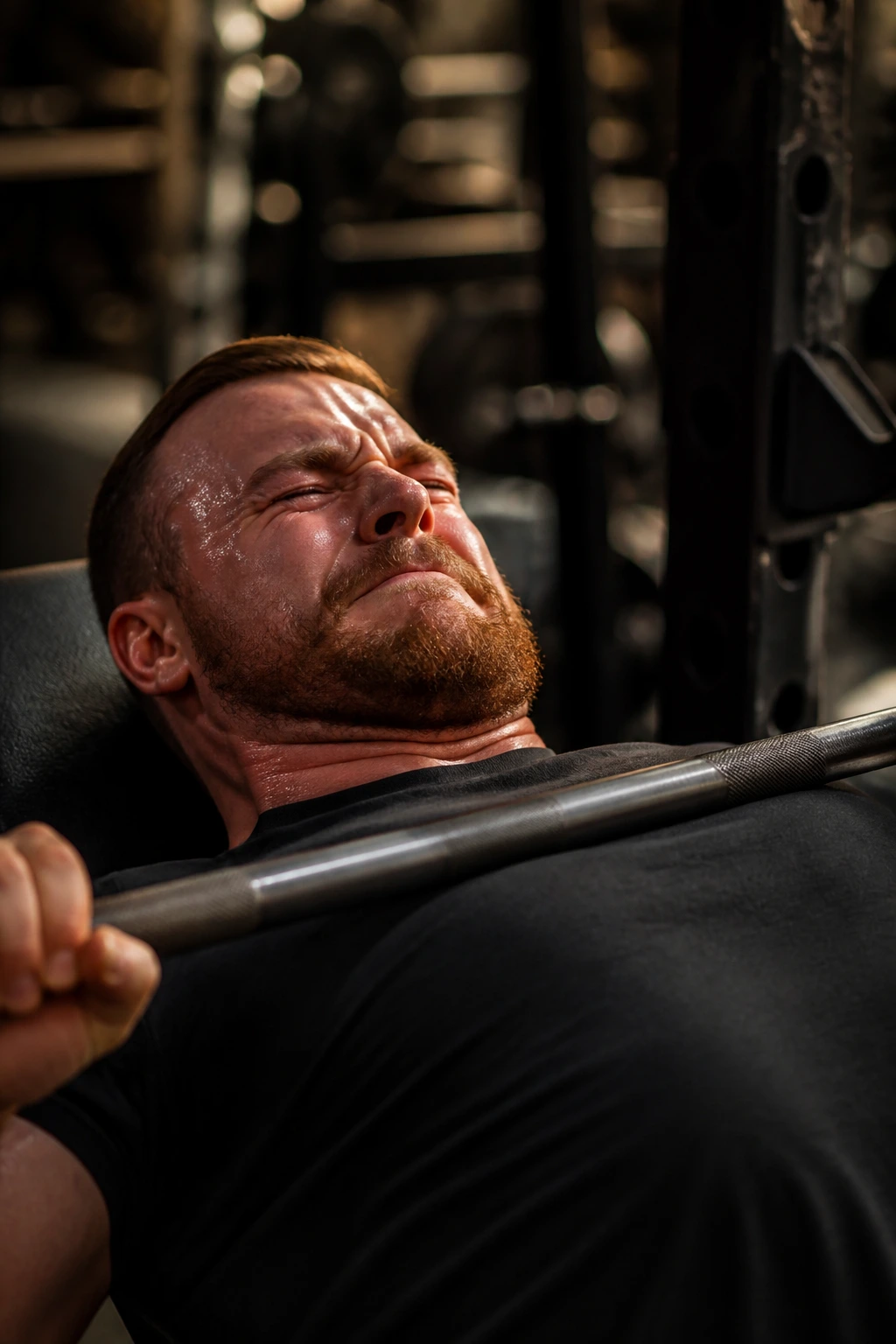
Failure in lifting means you reached the point where you cannot complete another rep with the target weight. Sometimes that means the bar stops moving. Sometimes it means your form falls apart so much that the rep no longer counts.
This term causes a lot of confusion because people use it loosely. There is muscular failure, where the muscle cannot keep producing force, and technical failure, where the movement gets so ugly that continuing would be a bad idea. Beginners should care more about technical failure. That one protects your joints and keeps the rep honest.
Not every set needs to end in failure. In fact, many don’t. Stopping one or two reps before failure is often smarter, especially on big lifts. You get strong without turning every session into a rescue mission.
14. Superset

A superset means doing two exercises back-to-back with little or no rest in between. You might do a set of dumbbell presses, then a set of rows, then rest. Or pair biceps curls with triceps extensions. Same idea. Less waiting.
Supersets are useful when you want to save time or keep your heart rate up. They also help when the two exercises do not fight each other too much. Chest and back is a classic combo. Biceps and triceps, too. Heavy squats paired with heavy deadlifts? That’s a different animal, and not a beginner’s favorite way to suffer.
How to make supersets work
- Pair movements that do not clash badly
- Keep the weights a little lighter than normal
- Rest enough to keep form clean
- Use them for accessories more than your heaviest lifts
A superset should feel brisk, not chaotic. If your second exercise turns into a mess because the first one smoked you, the pairing needs work.
15. Circuit

A circuit is a group of exercises done one after another, usually with short rest between moves and a longer rest after you finish the full round. Think squat, push-up, row, rest. Then repeat.
Circuits are different from supersets because they usually involve more than two exercises and often cover the whole body. They can be useful for conditioning, beginner workouts, or days when you want movement without a lot of heavy loading. They also have a sneaky downside: form can slide when you’re tired, and fatigue makes dumb choices feel acceptable.
A lot of people like circuits because they feel busy. Fair enough. But busy is not the same as effective. If the goal is muscle or strength, the circuit should still have enough structure to keep each movement clean. If the goal is general fitness, circuits can be a good fit without needing a heroic amount of weight.
16. Eccentric

The eccentric phase is the lowering part of a lift. Lowering the dumbbell in a curl. Coming down in a squat. Bringing the bar to your chest on a bench press. Your muscle is still working here, even though the weight is moving down.
This phase gets overlooked by beginners because it does not look flashy. That’s a mistake. The eccentric phase is where control lives. It teaches your body how to resist load, and it usually feels tougher the more honest you are about it. Slow the lowering and the exercise suddenly tells the truth.
A lot of coaches like a controlled eccentric because it cuts out bouncing and yanking. You don’t need to make every lowering phase painfully slow, but you do need to own it. Drop the weight like you’re in a hurry, and you lose half the point of the lift.
17. Concentric

The concentric phase is the lifting part of a rep. Standing up from the squat. Pressing the dumbbell overhead. Pulling the bar toward your torso. This is the part people picture first because it looks like the “work” portion.
And yes, it matters. But the concentric is only half the story. If the lift goes up fast because you threw your body around, the concentric may technically be done, but the rep is not as useful as it could be. Power matters. Control matters too.
The cleanest way to think about concentric work is this: push or pull with intent, but keep the path tidy. A rep that looks smooth on the way up and controlled on the way down is usually a better rep than one done with wild speed and loose form. That sounds obvious. It still gets ignored every day.
18. Deload

A deload is a planned period where you reduce training stress. Usually less weight, fewer sets, or both. It is not laziness. It is not “failing to work hard.” It is a break built into the plan so your body can recover before you grind yourself into the floor.
Beginners sometimes think deloads are only for elite lifters. Nope. New lifters get beat up by bad sleep, sore joints, and too much enthusiasm just like everyone else. If your lifts stall, your joints ache, and every warm-up feels like a chore, a deload can be the sane move.
What a deload can look like
- Use 10 to 20 percent less weight
- Cut your sets in half
- Keep the movements the same
- Leave the gym feeling fresh, not destroyed
A deload is one of those boring ideas that works because it respects reality. Recovery is not optional, even if people talk about training like it is.
19. PR

A PR, or personal record, is your best performance in a lift or exercise. Heaviest squat. Most pull-ups. Best set of 8 on the bench. Fastest mile on the rower if that’s part of your training. It does not have to be a max.
This term can become a trap if you let it. Some people chase PRs so hard they miss the larger picture. Better sleep, cleaner form, more reps at the same weight, and less rest between sets are all useful wins. A new PR is nice. A better movement pattern is often nicer.
A smart gym log can track more than one kind of PR:
- Weight PR = more load
- Rep PR = more reps at the same load
- Form PR = better technique with the same load
- Tempo PR = same work, better control
That last one gets ignored a lot. It shouldn’t.
20. RPE

RPE stands for rate of perceived exertion. It’s a way to rate how hard a set feels, usually on a scale from 1 to 10. An RPE 10 set is about as hard as you can go. An RPE 7 means you had a few good reps left.
This term sounds technical, but the idea is simple: how much effort did that set take, honestly? RPE is useful because two sets with the same weight can feel different depending on sleep, stress, warm-up quality, and how much coffee you had. Your body is not a machine. Annoying, but true.
Beginners can use RPE without turning training into a math test. A hard but controlled set might be RPE 7 or 8. A grindy, near-max set might be RPE 9. If you have no idea where to start, match it to effort, not drama. You should finish a good set knowing it was work, but not wondering whether your eyes changed shape.
Final Thoughts
The good news about weight lifting terms is that you only need a few before the whole gym starts making sense. Rep, set, RIR, tempo, and progressive overload carry a lot of the load. Once those click, the rest stop sounding like secret code and start sounding like normal coaching language.
Start there. Use the words correctly, and the workouts get easier to follow. Use them well, and the workouts get easier to improve.
If a term still feels fuzzy, that is usually a sign to slow down and watch one set closely instead of trying to memorize twenty definitions at once. The bar will teach you a lot faster than a glossary will.
