



A decent resistance band can do more than most people give it credit for. A set of band exercises can cover squats, presses, rows, hinges, core work, and a few of the annoying little stability moves that keep shoulders and hips from complaining later.
Most people treat bands like the emergency backup when the gym is packed. That’s selling them short. With a long loop band, a mini band, and a door anchor, you can replace a stack of machines, a few dumbbells, and a lot of space you probably do not have at home.
The real difference is how the resistance feels. A band loads hardest near the top of a movement, which makes some exercises feel cleaner than their free-weight cousins. Rows get a sharper squeeze. Glute work stays hot without chewing up your lower back. Pressing feels kinder on the shoulders when the setup is right.
That setup matters more than fancy gear. And the first move is the one I’d use almost anywhere.
1. Banded Back Squat
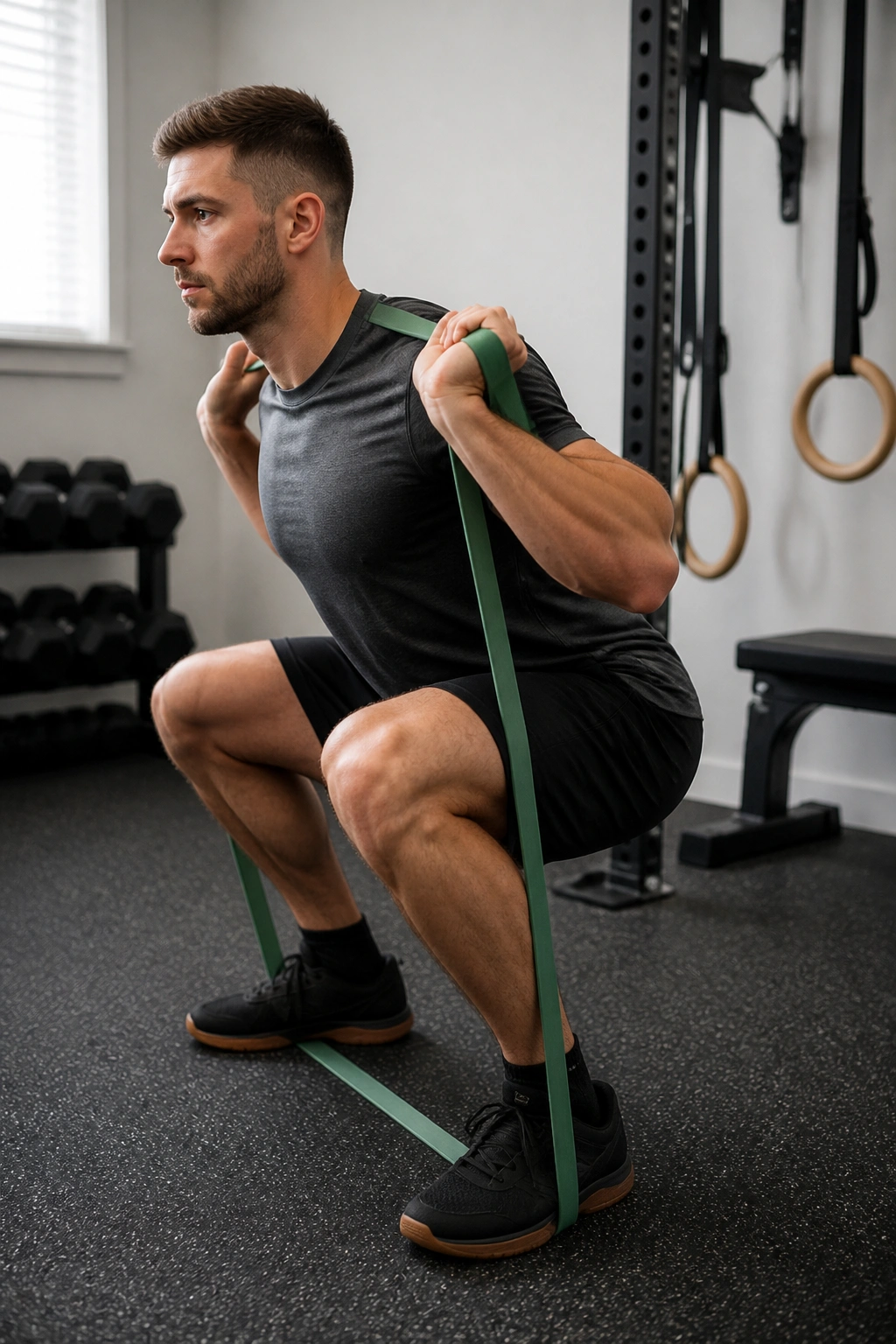
A banded back squat is the closest thing to a rack-free leg day that still feels like real work. Stand on a long loop band, bring the band up to shoulder height, and keep your chest tall as you sit down between your hips. The tension should grow as you stand, which means the top of the rep is where the band starts to bite.
This is a good swap for goblet squats, Smith machine squats, and a lot of the “I guess I’ll just do bodyweight” moments that happen at home. The nice part is how fast the tension shows up. You do not need to chase a huge load before your quads and glutes know they’re training.
Use 8 to 15 reps for most sets. If your knees cave in on the way up, the band is probably too light or your stance is too narrow. Wide enough to feel stable. Not so wide that you turn it into a sumo hinge.
2. Banded Romanian Deadlift
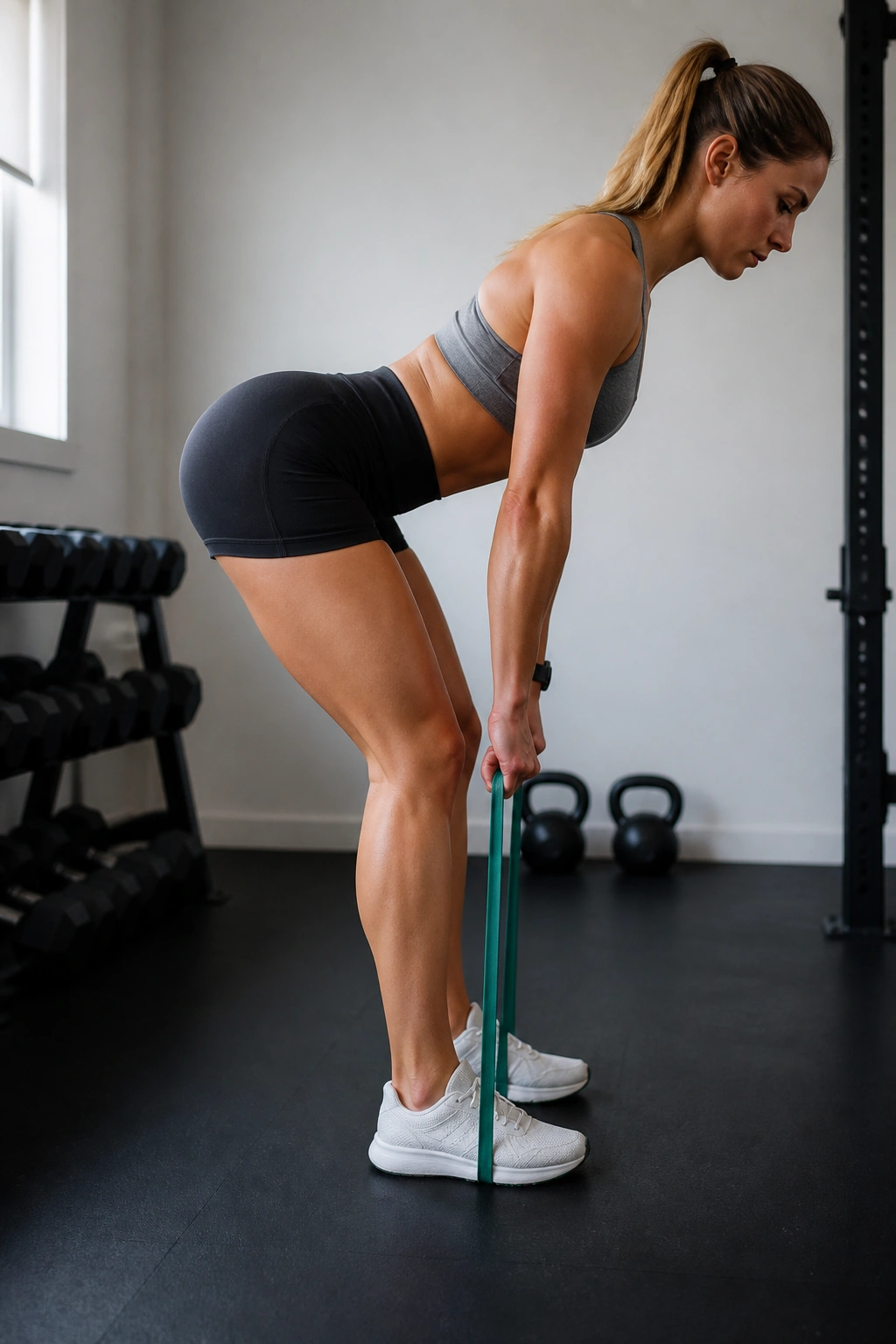
The banded Romanian deadlift is one of those movements that looks polite until the last few reps. Stand on the band, hinge your hips back, and keep your shins nearly vertical while your torso tips forward with a flat back. Then drive your hips through and finish tall, with the band pulling hardest near the top.
It replaces the dumbbell hinge better than people expect, especially if your home gym is missing heavy weights. The tension curve makes the glutes do a lot of the closing work, and that’s a blessing if your lower back usually takes over. Good form here feels like your hamstrings are being stretched, not yanked.
What to Watch For
- Keep the band close to your legs on the way down.
- Stop the descent when your back wants to round.
- Finish by squeezing your glutes, not by leaning back.
- A slow 3-second lowering phase makes light bands feel much heavier.
Pro tip: If you can only feel this in your lower back, shorten the range and push your hips farther behind you.
3. Banded Chest Press
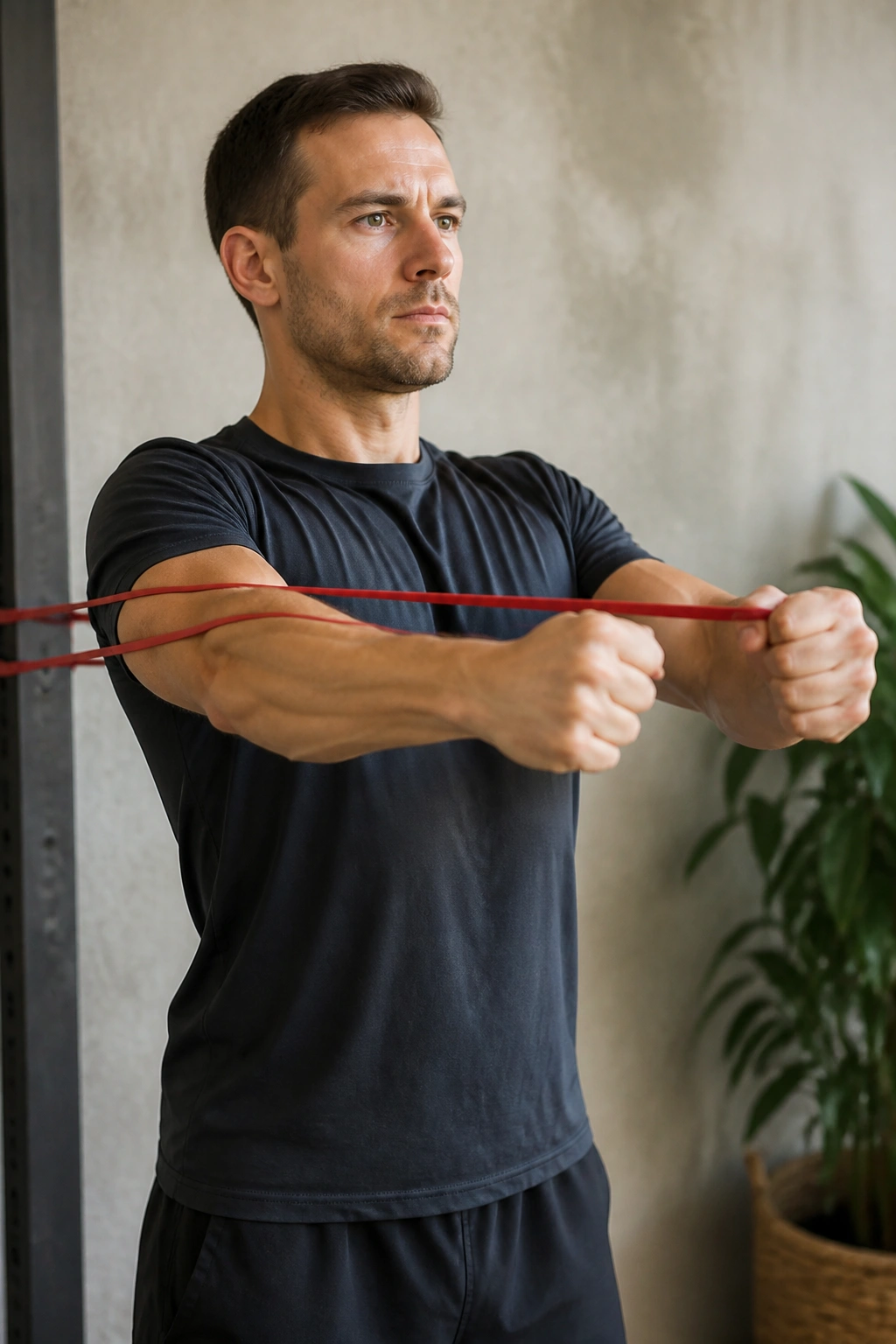
Can a band replace a chest press machine? Yes, if you anchor it correctly. Loop the band behind you at chest height, hold one end in each hand, and press straight forward until your arms are nearly locked out. The band should feel smooth off the chest and hardest when you finish the press.
That makes it a clean substitute for a machine chest press, dumbbell floor press, or even light bench work when you just want to keep things simple. I like it because the shoulders usually feel more settled than they do under a barbell, especially if you keep the elbows at about a 45-degree angle.
Setup That Actually Helps
- Anchor the band to a sturdy post or door anchor at mid-chest height.
- Step one foot forward to keep your torso from drifting.
- Press in a slight arc, not straight into your face.
- Pause for 1 second with the arms extended if you want more chest tension.
A lot of people rush this one. Don’t. The band rewards clean, controlled reps, not frantic pushing.
4. Banded Bent-Over Row
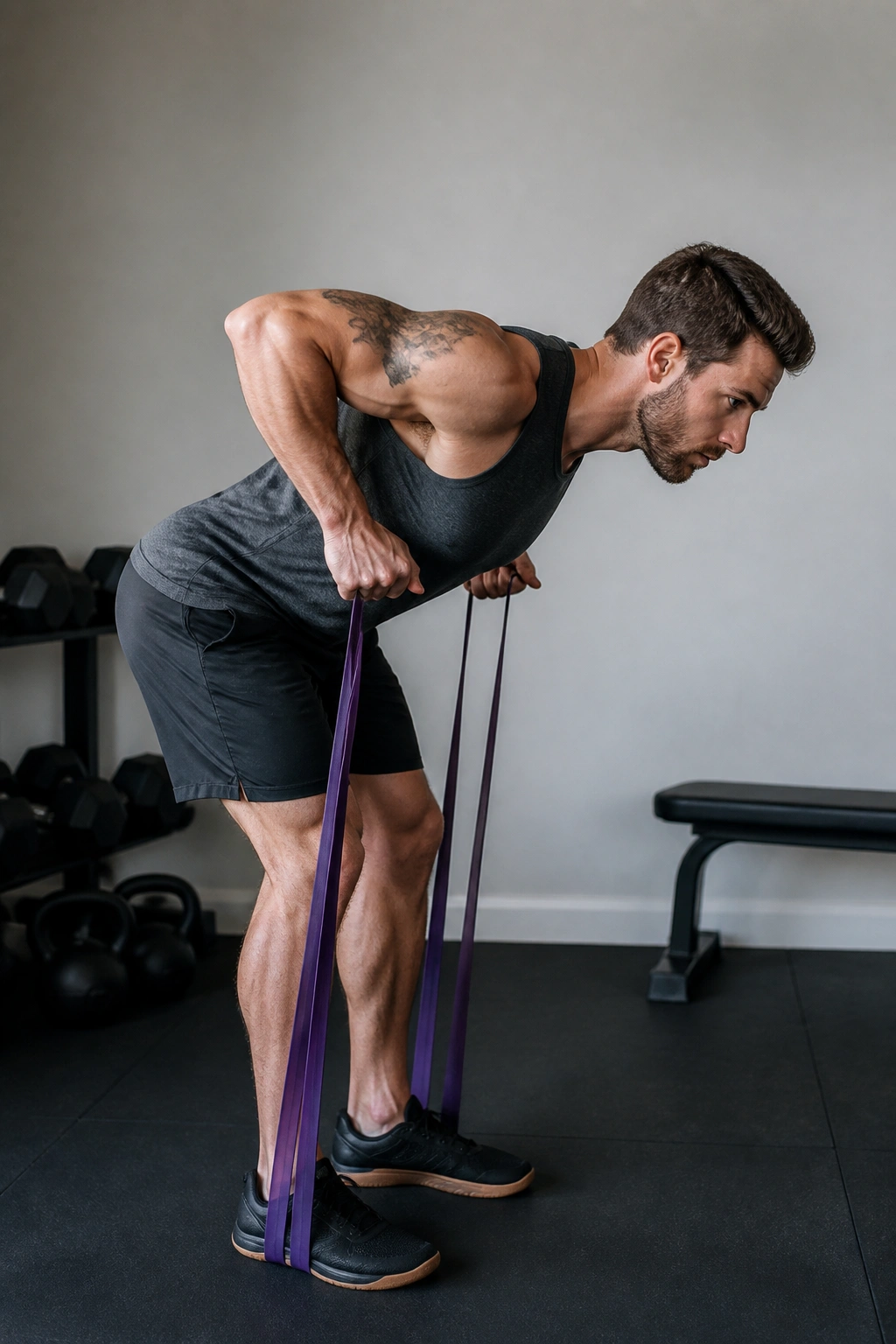
A banded bent-over row is the ugly little workhorse of a home program. Stand on the band or anchor it low, hinge into a strong athletic position, then pull your elbows back toward your hips while keeping your torso fixed. If your shoulders creep up, the band is winning.
This move replaces cable rows better than most people expect. You get constant tension through the whole pull, and the upper back has to finish the job instead of coasting through the first half and relaxing at the top. It’s especially useful if you sit a lot and your mid-back feels sleepy.
Keep your neck long. Squeeze your shoulder blades together only at the end of the pull, not the whole way through. That tiny distinction matters more than it sounds.
Use 10 to 20 reps. Lighter bands work fine here, because the point is control and clean scapular motion. Heavy cheating rows look busy. They are not the same thing.
5. Banded Overhead Press
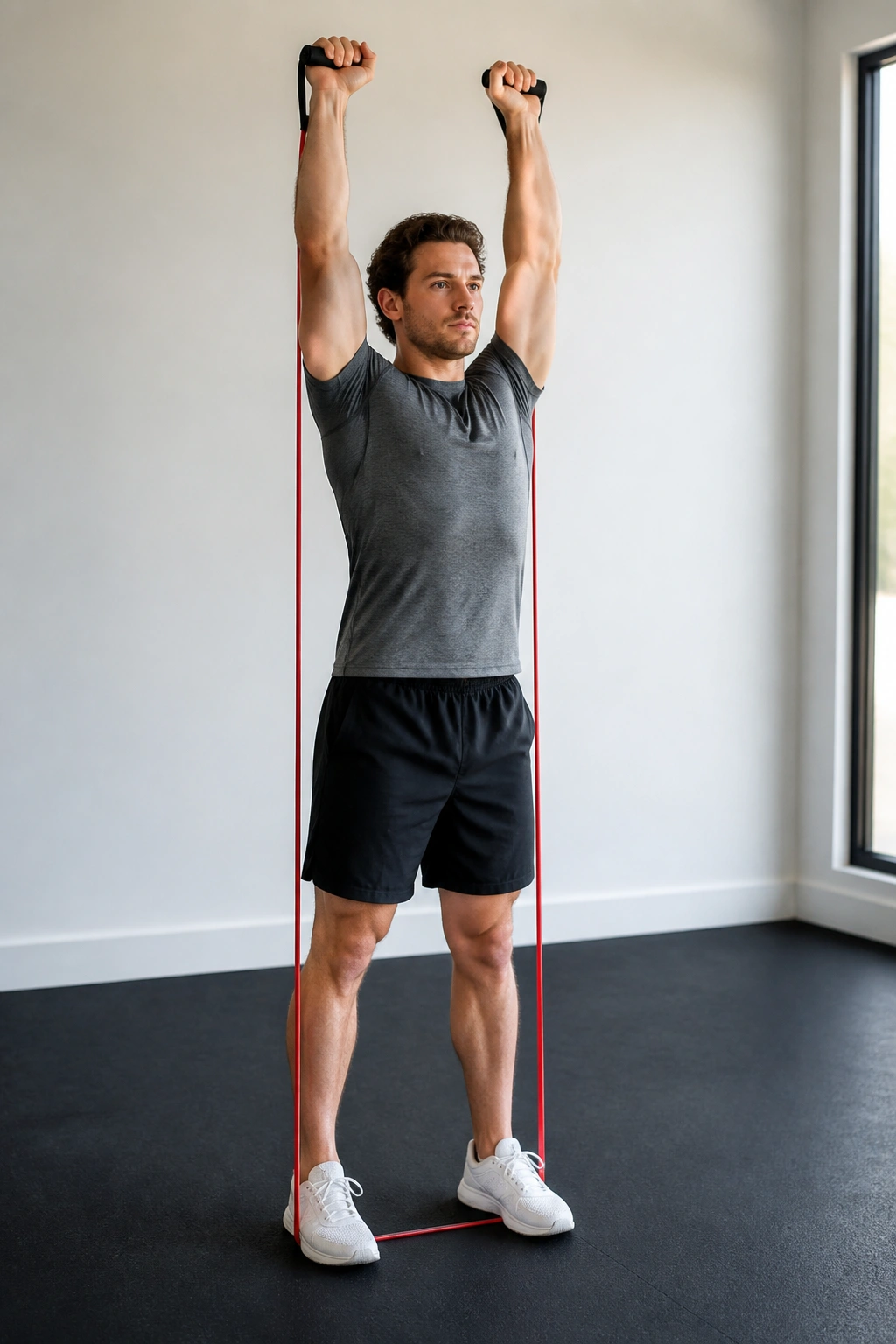
The banded overhead press is where a lot of people discover whether their core is awake or not. Stand on the band, start with your hands just outside your shoulders, and press overhead without letting your ribs flare. The line from wrist to elbow should stay stacked as you push.
It replaces a shoulder press machine, dumbbells, and some of the grind of barbell pressing. The band’s rising tension means the lockout gets harder, which is a nice test of shoulder stability. If you tend to arch your lower back on pressing days, this version makes that habit obvious fast.
A narrow stance can feel wobbly. A stance that’s too wide can turn the whole thing into a shrug. Find the middle ground and keep your glutes lightly squeezed.
One clean set here says more than three sloppy ones.
6. Banded Lat Pulldown
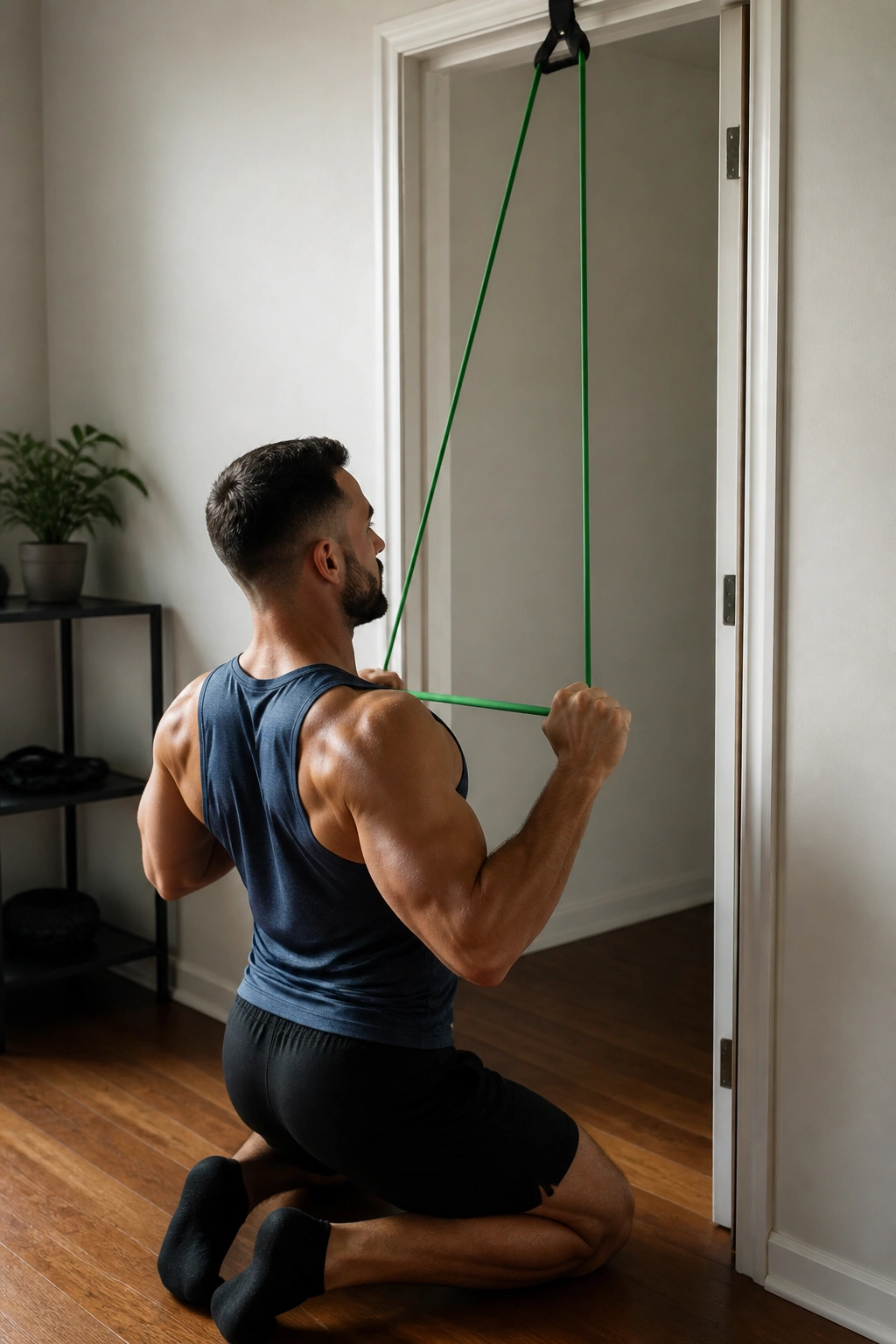
A banded lat pulldown is one of the best reasons to own a door anchor. Secure the band overhead, kneel or sit underneath it, and pull your elbows down toward your ribs as if you’re trying to stuff them into your back pockets. The band should stay under control all the way back up.
This is the move that most closely replaces a lat pulldown machine at home. It trains the lats, helps with pull-up strength, and gives you a vertical pull when you do not have a cable stack. The key is not yanking with your arms. Start by depressing the shoulder blades, then finish the pull.
How to Get More Out of It
- Use a full stretch overhead, but keep your lower back from arching.
- Pull to the top of the chest or collarbone area.
- Pause for half a second at the bottom.
- Keep the wrists neutral so the forearms do not take over.
If the band snaps your hands up too fast, step farther back or use a heavier tension. Control beats load here.
7. Banded Face Pull
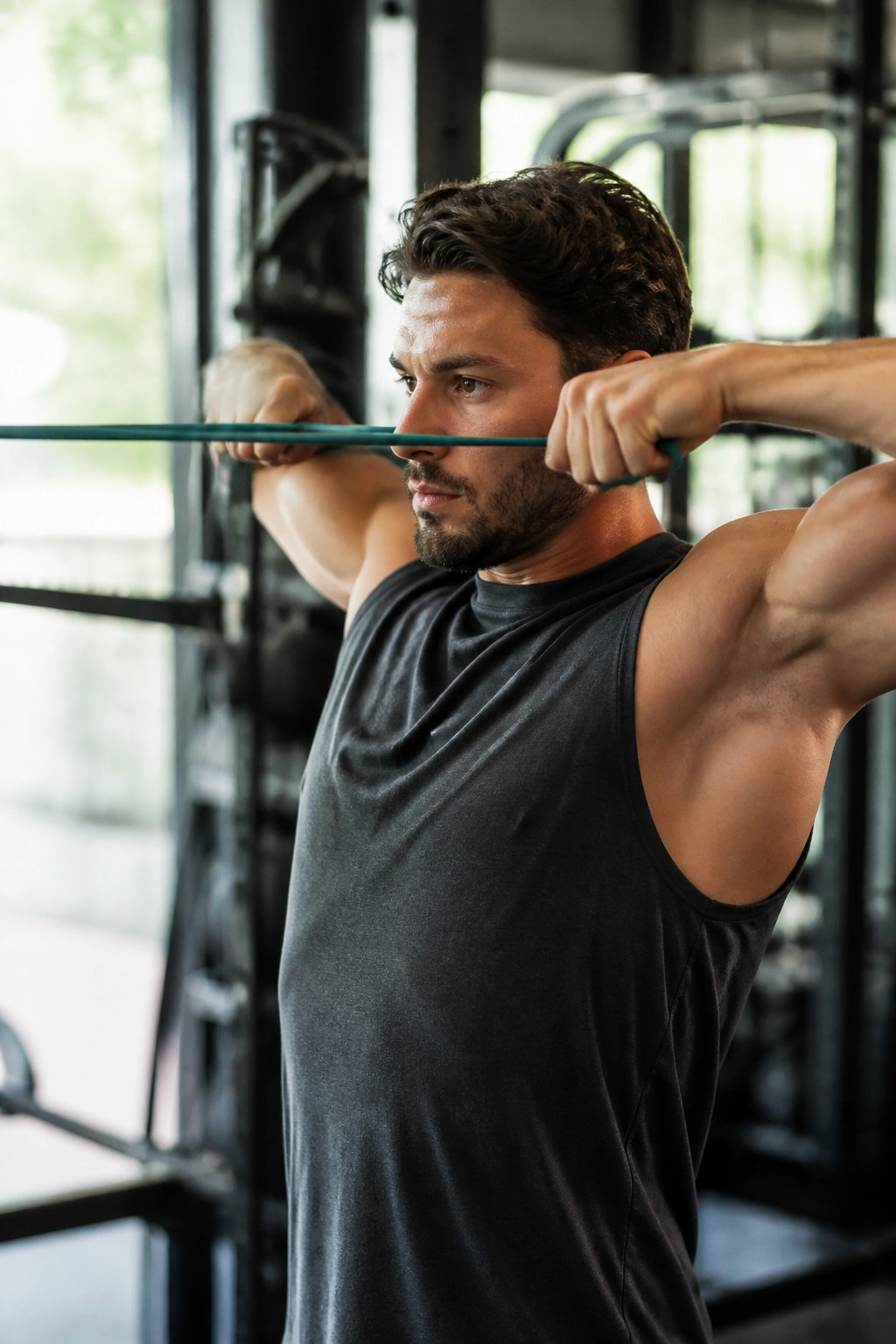
The banded face pull is not glamorous. It does a lot of quiet work, and I trust that kind of exercise more than the noisy ones. Anchor the band around face height, pull toward your nose or forehead, and finish with your elbows high and your hands separated.
It hits the rear delts, upper back, and the little stabilizers that keep your shoulders from feeling pinched after pressing. A lot of people skip this until their shoulders start barking. That’s the wrong order. Keep it in the mix before things get grumpy.
The rep should feel smooth and a little weird in a good way. If your traps are taking over, lower the anchor point a touch and slow down the return.
Use 12 to 20 reps. This is a place where a lighter band is often better. You want control, not a wrestling match.
8. Banded Pull-Apart
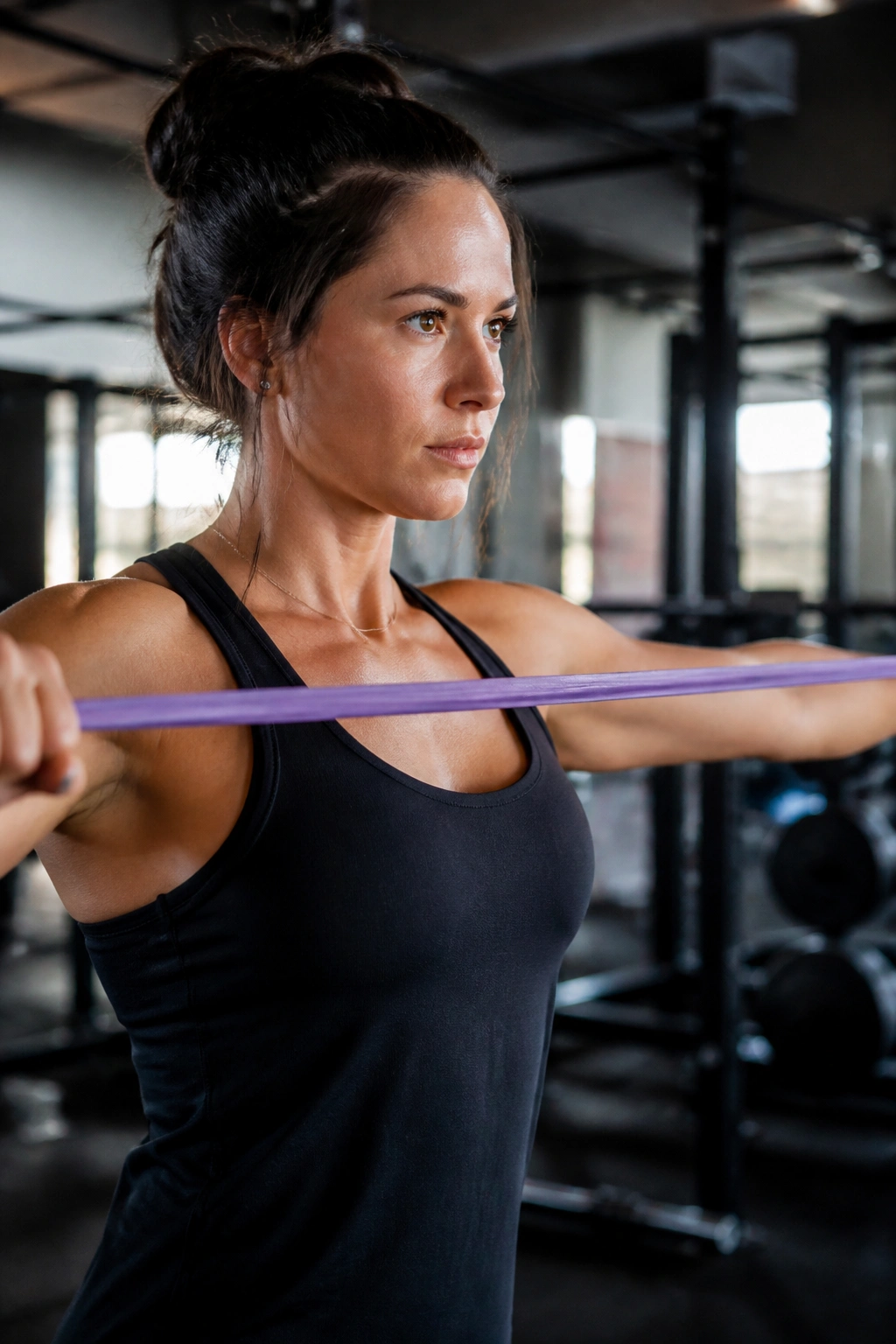
A banded pull-apart looks simple enough to fool people. Straight arms, band at chest height, pull the band apart until your shoulder blades glide together, then return slowly without losing tension. That’s it. No fancy setup. No machine. No excuses.
It replaces a rear delt machine in spirit, even if the feel is a little different. The appeal is that you can use it as a warm-up, a posture reset, or a real accessory lift when your upper back needs more work. It’s one of the few exercises where the small band feels like it’s doing a much bigger job than it looks.
Keep the hands just outside shoulder width to start. Go wider if the band is too light. Don’t turn it into a shrug. That’s a wasted rep.
A slow return matters. Fast pull-aparts are mostly noise.
9. Banded Glute Bridge
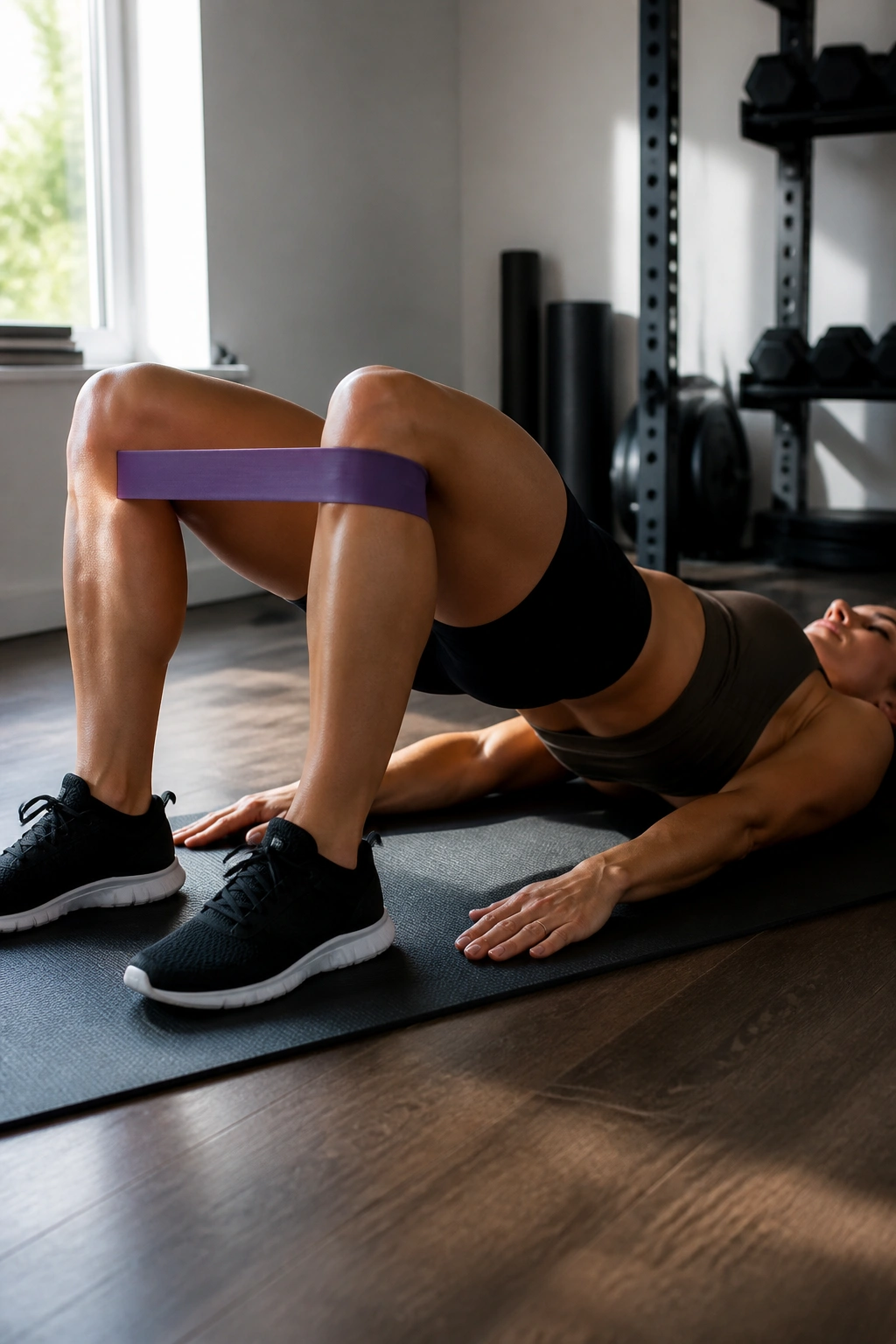
The banded glute bridge is the home version of a hip thrust that does not ask you to drag a bench around. Place a mini band above your knees, lie on your back with your feet flat, and drive your hips up while pressing the knees slightly outward. If you want more load, use a long band across your hips and secure it under your feet.
What I like here is the way it lights up the glutes without loading the spine much. That makes it useful on days when squats or hinges already handled the heavy work. The band above the knees also gives you immediate feedback. If the knees collapse inward, you know right away.
Squeeze at the top for 1 to 2 seconds. You should feel glutes, not low-back pinching. If you feel the hamstrings doing everything, bring your heels a little closer to your hips.
Short reps are fine. Long holds are fine too. Both can leave you wobbling.
10. Banded Split Squat
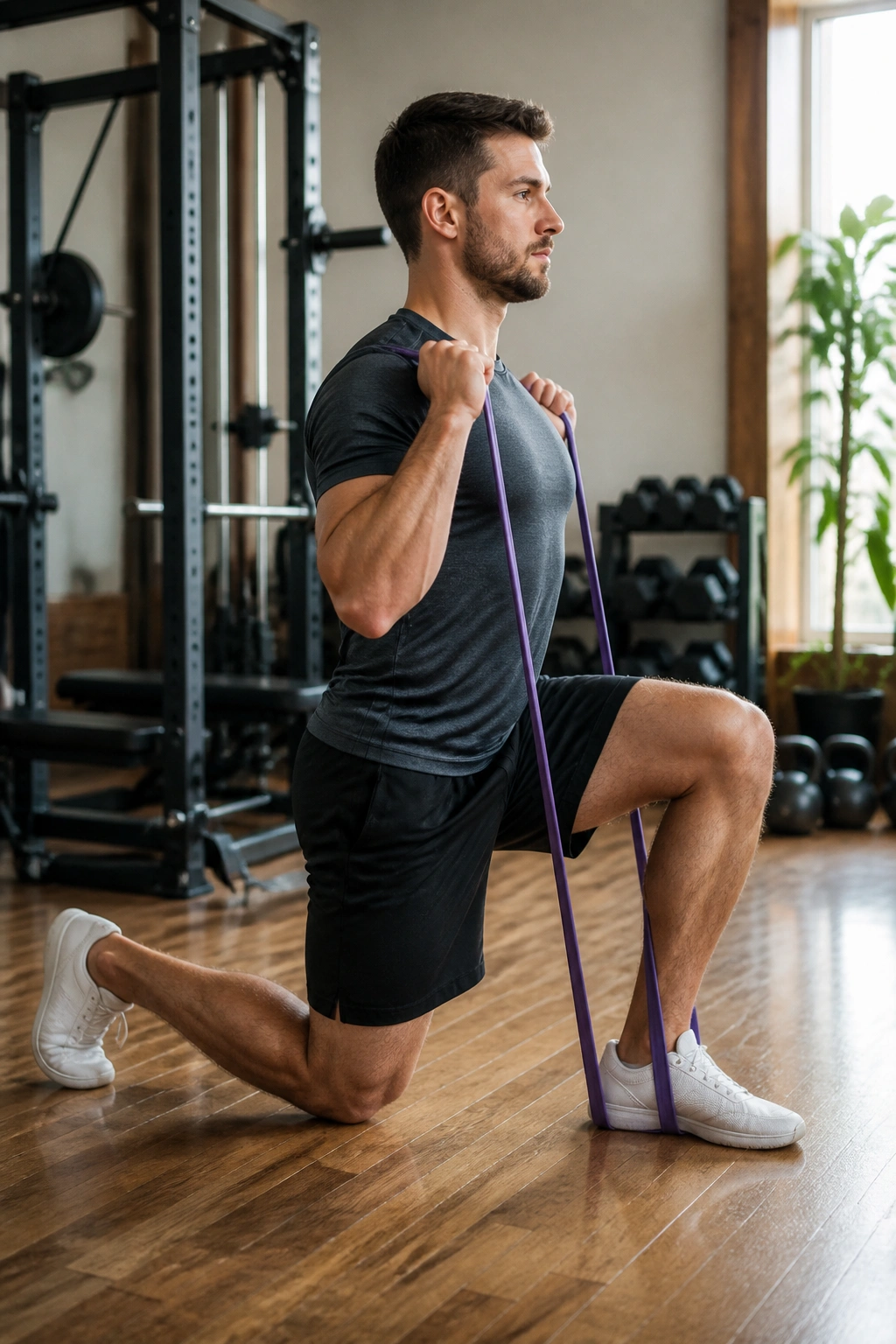
A banded split squat is rude in the best way. Put one foot on the band, hold the ends at shoulder height or by your sides, and drop straight down until the rear knee comes close to the floor. Then drive through the front heel and come back up without bouncing.
This replaces a lot of unilateral leg work that people usually chase with dumbbells. The beauty is that it exposes side-to-side weakness fast. If one leg shakes more than the other, good. You found something useful.
Make It Count
- Keep your front foot planted the whole time.
- Let the torso lean slightly forward, not collapse.
- Stay tall through the chest.
- Use a slow descent if balance is a problem.
I prefer this version over endless bodyweight lunges because the band gives you real tension at the top, where a lot of people tend to coast. That’s where the work is.
11. Banded Lateral Walk
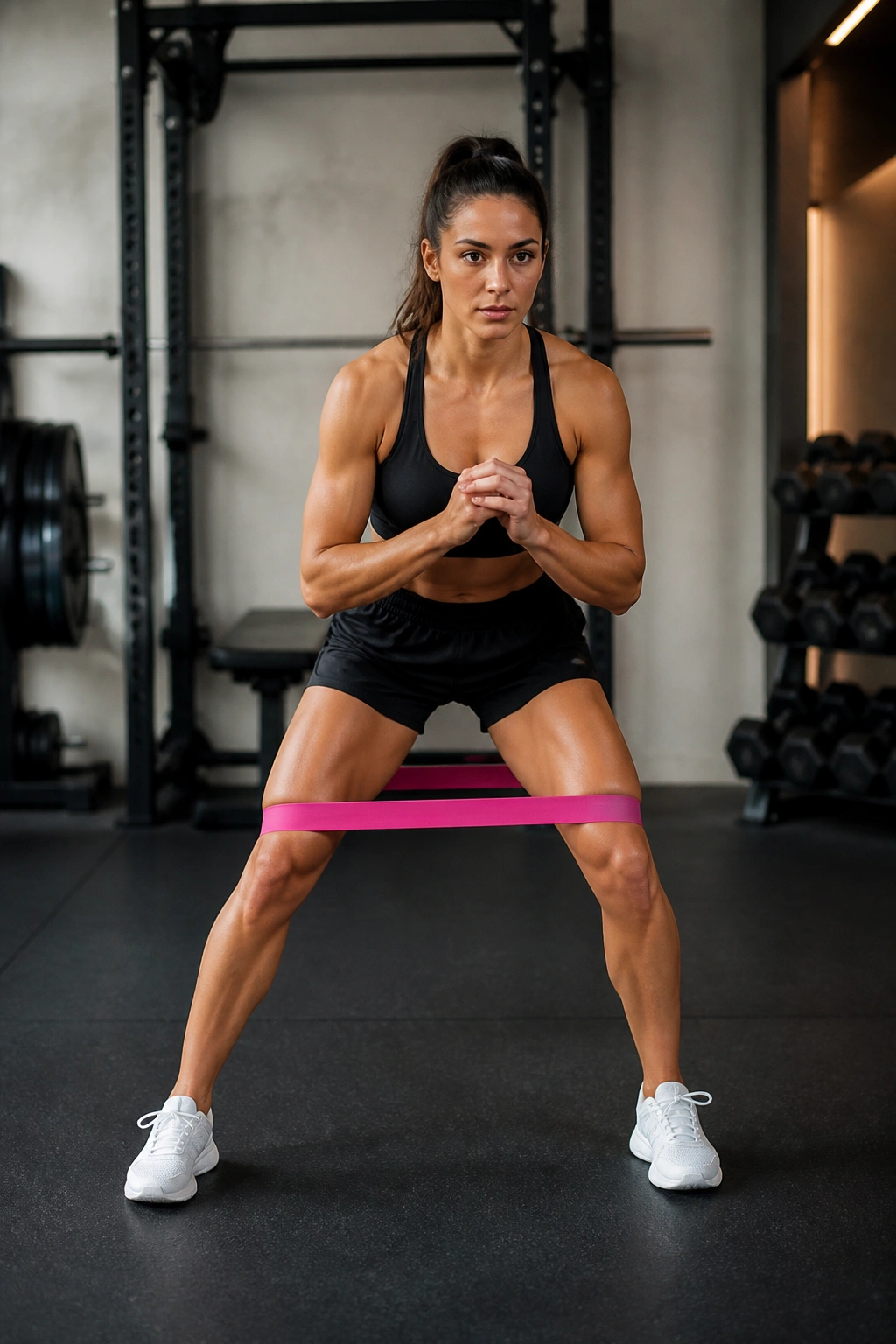
A banded lateral walk is not cardio, and pretending it is leads to lazy reps. Put a mini band above your knees or around your ankles, sit into a shallow athletic stance, and step sideways without letting your hips sway. The glute medius does the job here, which is the small but stubborn muscle that keeps knees from collapsing.
This one replaces some of the hip abduction work you’d usually chase on a machine. It is also one of the best warm-ups for squats, deadlifts, and single-leg work. You feel it in the outside of the hip fast, especially if you keep the steps short and controlled.
Do not stand up between steps. Do not let your feet drag together. Keep tension in the band the whole time.
Two slow trips down and back is enough to wake things up. The burn arrives early.
12. Banded Biceps Curl
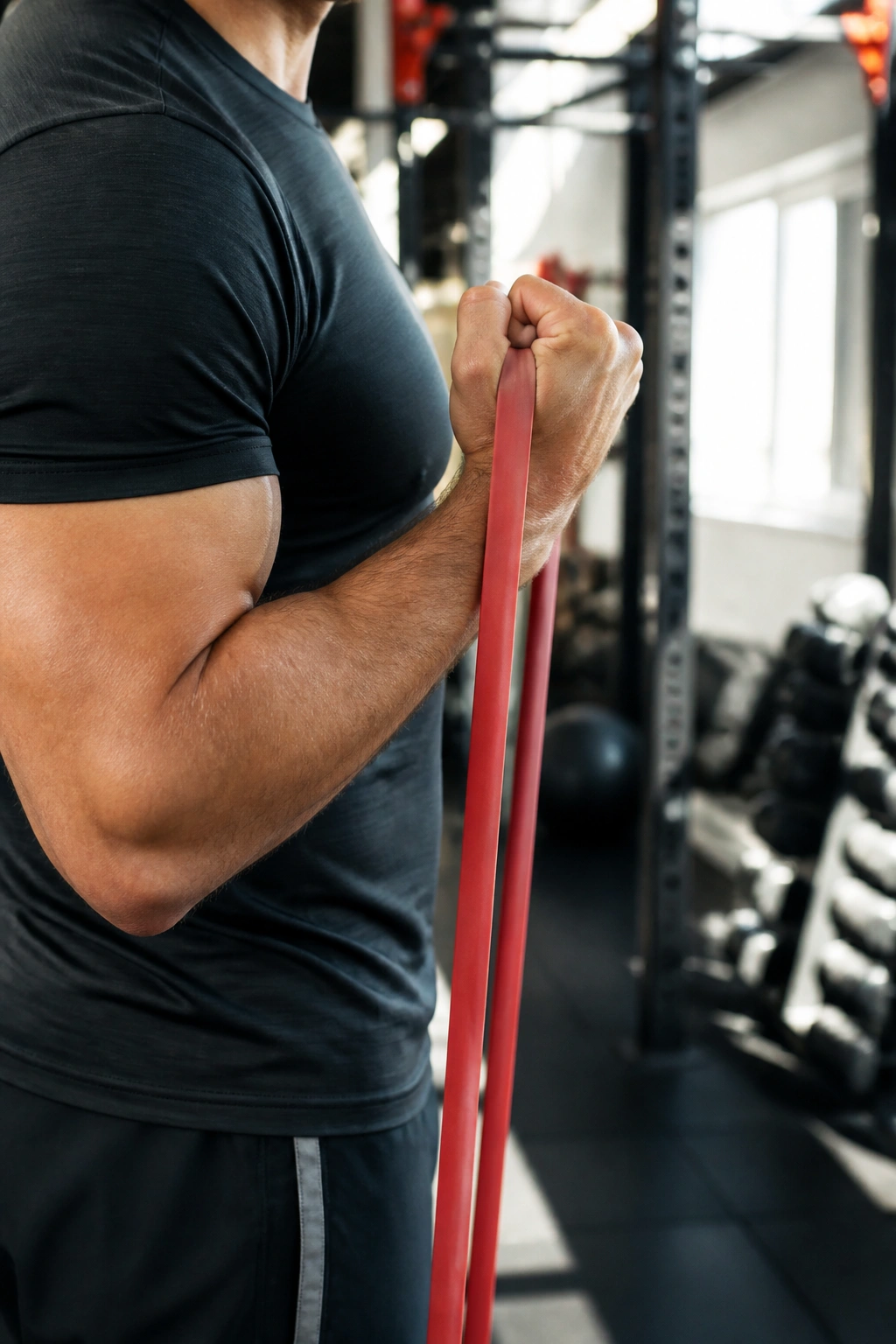
A banded biceps curl gives you a cleaner pump than most people expect. Stand on the band, keep your elbows pinned near your ribs, and curl up without rocking your shoulders forward. The hard part is near the top, which makes it a good replacement for cable curls and light dumbbell work.
The mistake here is obvious. People turn it into a whole-body heave. If your lower back is doing the work, the band is too heavy or you’re rushing. Keep the wrists straight and let the forearms do the lifting.
Best Way to Use It
- Use a medium band for 10 to 15 reps.
- Pause briefly at the top.
- Lower slowly for 2 to 3 seconds.
- Stop short of full lockout if the band goes dead at the bottom.
I like this after pulling work, not before it. The arms already help on rows and pulldowns, so you may as well finish them while they’re warm.
13. Banded Triceps Pressdown
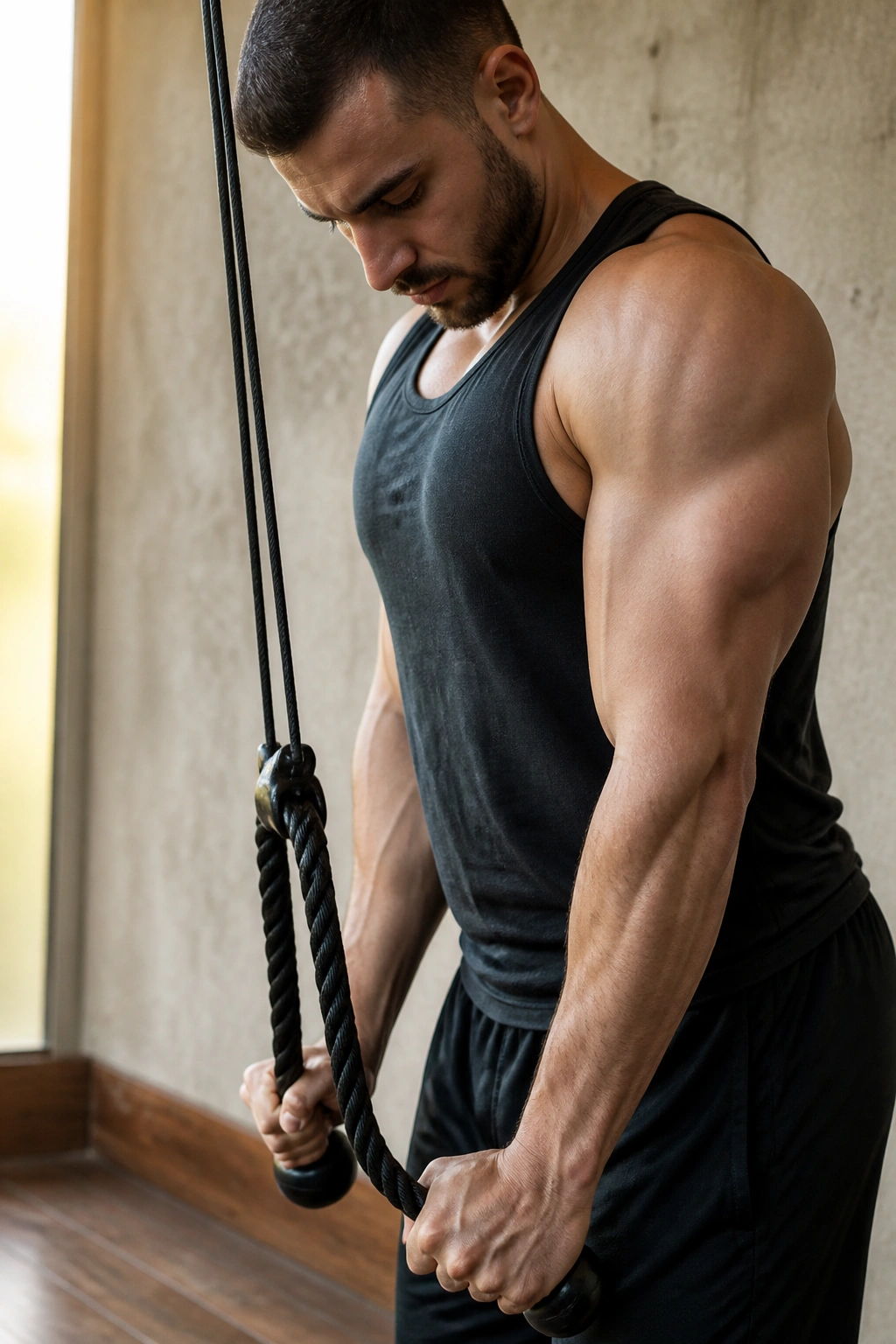
A banded triceps pressdown is one of the easiest ways to replace a cable stack at home. Anchor the band overhead, keep your elbows tucked tight to your sides, and press down until your arms are straight. Then return with control and let the triceps stretch.
This movement is boring in the way good accessories often are. It works because the elbows stay still and the triceps do the extending. That’s the whole point. If the shoulders roll forward or the torso leans into it, the tension leaks out of the arms.
Use a rope-style handle if you have one, or a plain loop band if you don’t. Either can work fine. The trick is keeping the upper arms locked where they belong.
I’d rather see 12 crisp reps than 25 rushed ones. The arms will tell you when you got it right.
14. Banded Wood Chop
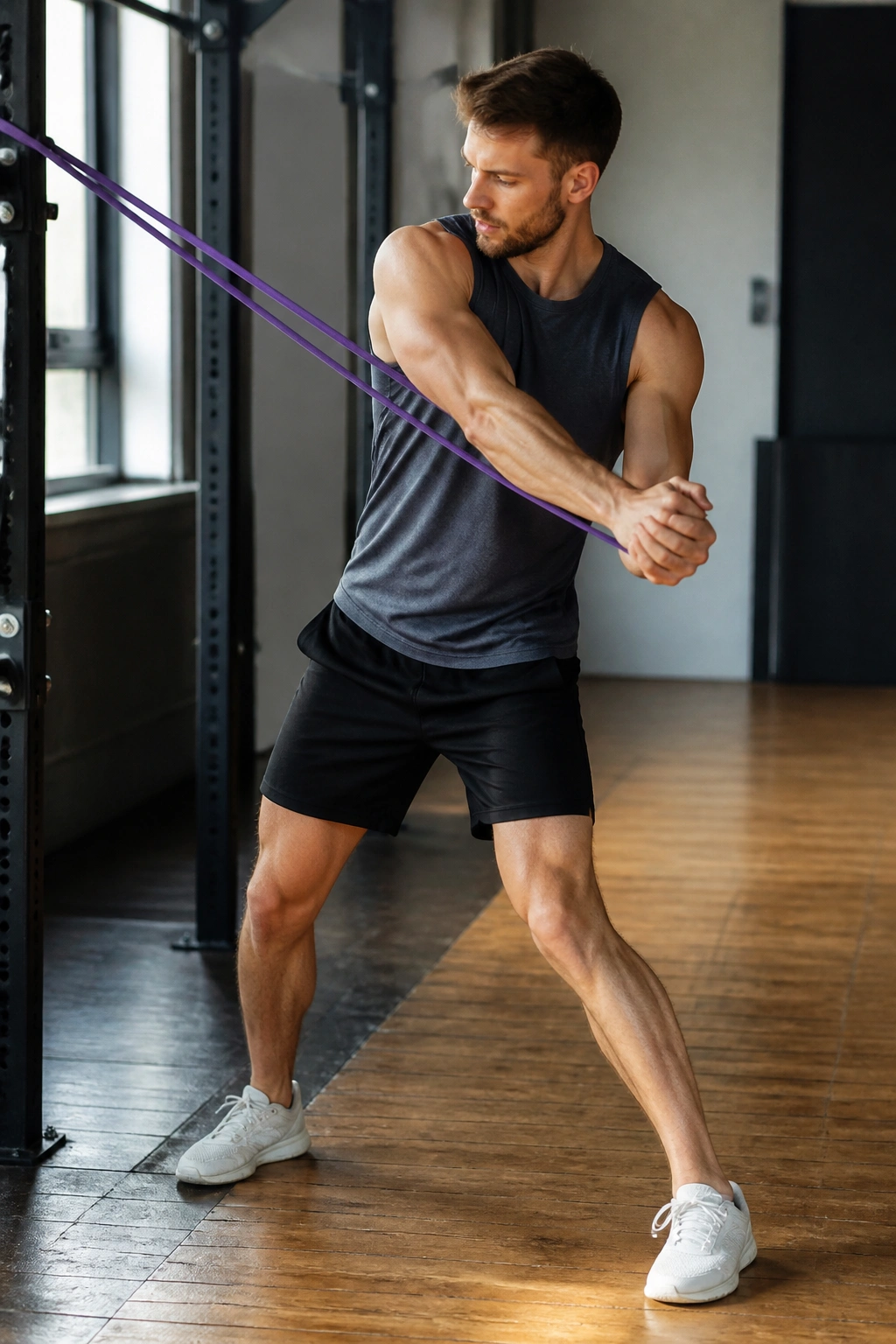
The banded wood chop brings some rotation into a program that may be too straight-line and stiff. Anchor the band high or low, grab it with both hands, and pull across your body in a diagonal line while the hips and ribs stay organized. The motion should feel powerful, not sloppy.
This is a strong replacement for cable chops and a useful bridge between core work and athletic movement. The best version is controlled through the torso, with the arms acting more like hooks than drivers. Rotation comes from the trunk and hips together, not from wrenching the shoulders around.
A Few Things That Help
- Keep the feet planted.
- Start light until the pattern feels smooth.
- Exhale as you pull through the middle.
- Stop before your back starts twisting wildly.
I like this one on days when everything else has been too linear. It wakes up the midsection in a way planks do not.
15. Pallof Press With a Band
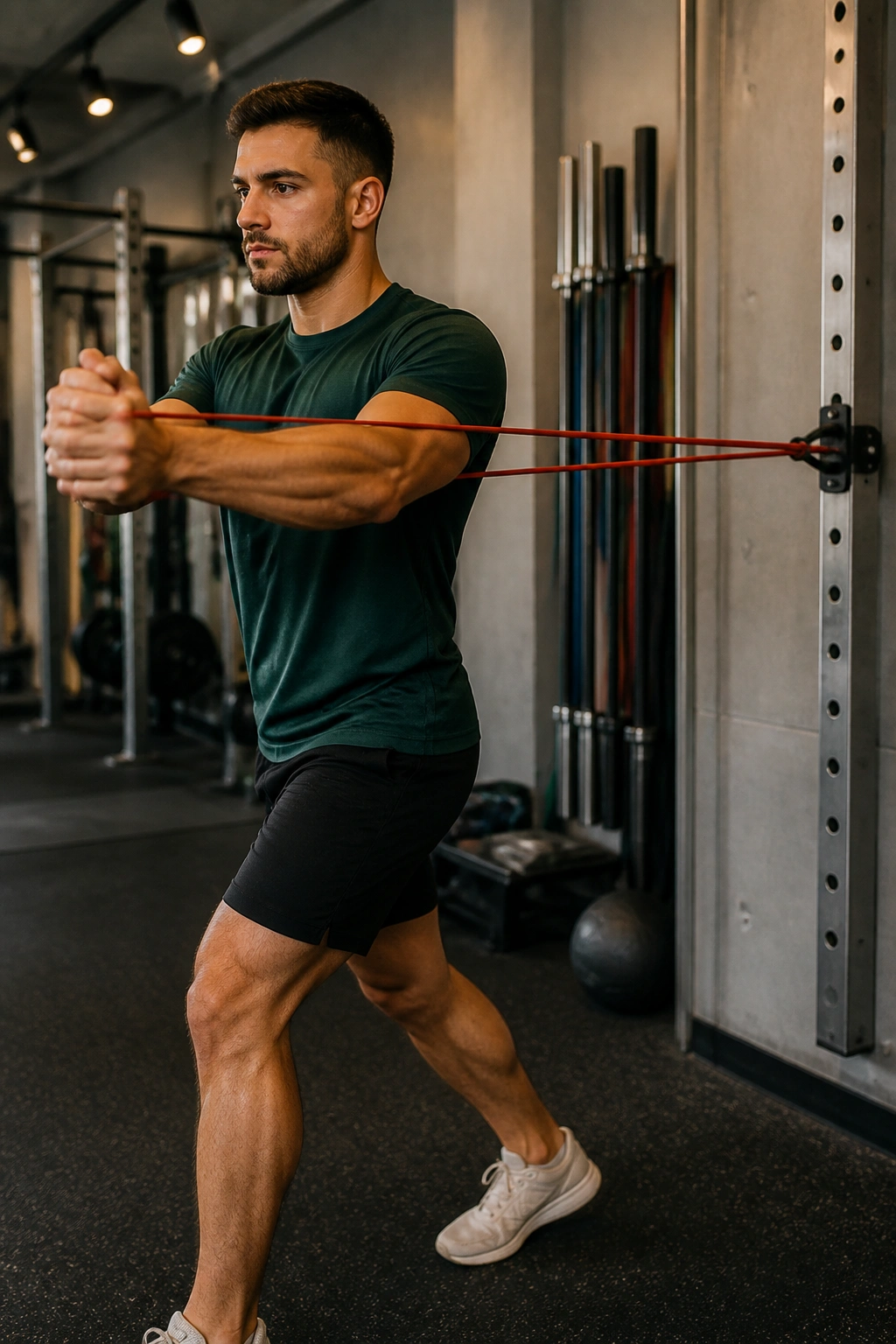
The Pallof press with a band is a quiet little anti-rotation test that exposes weak core control fast. Anchor the band at chest height, stand sideways to it, press both hands straight out, and resist the pull trying to twist you toward the anchor. Hold, then bring the hands back without leaning.
This is not about crunching or spinning. It’s about staying still while force tries to drag you off line. That makes it a smart substitute for cable anti-rotation work and a useful accessory for lifters, runners, and anyone whose midsection needs to stop freelancing.
The feet matter here. A slightly staggered stance makes the move easier. A narrow stance makes it harder. Pick the version that lets you stay honest.
One clean 10-second hold tells you more than ten sloppy reps. That is why I keep this one around.
16. Banded Push-Up
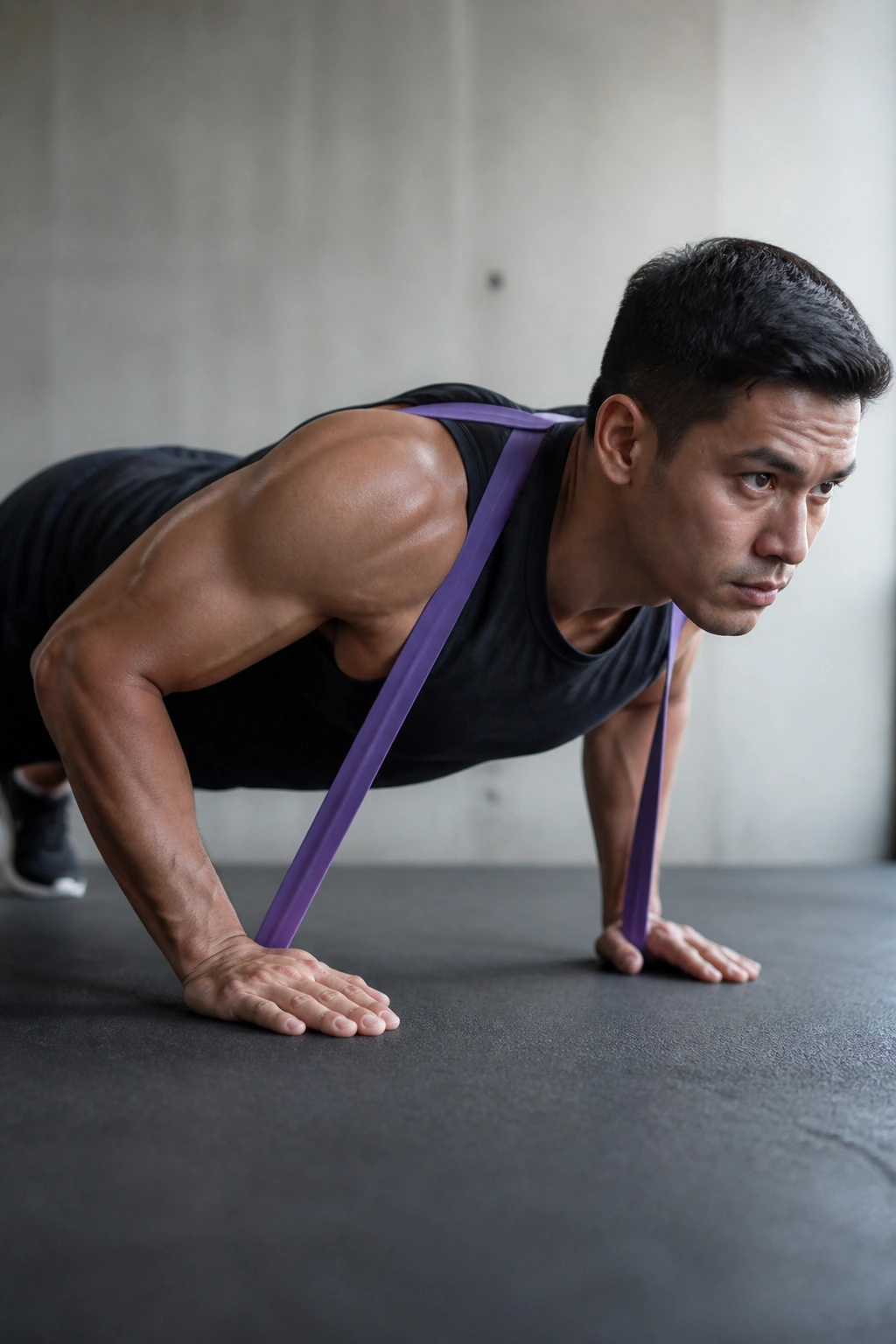
A banded push-up is what happens when bodyweight stops being enough and you want to make the top of the rep nastier. Loop the band across your upper back and hold the ends under your palms. As you press up, the band stretches and adds resistance where the lockout usually feels easiest.
It replaces a lot of machine pressing for people who already own their push-up pattern. And if you only do one or two sets, that’s fine. The band can turn a standard push-up into a tough upper-body set without needing a bench or dumbbells.
Use It Well
- Keep the band flat across the upper back.
- Set the hands a little wider than shoulder width.
- Brace the core hard so the hips do not sag.
- Stop the set when the rep speed falls apart.
If your wrists hate it, use push-up handles or hold dumbbells as grips. The band still does the same job.
17. Banded Assisted Pull-Up
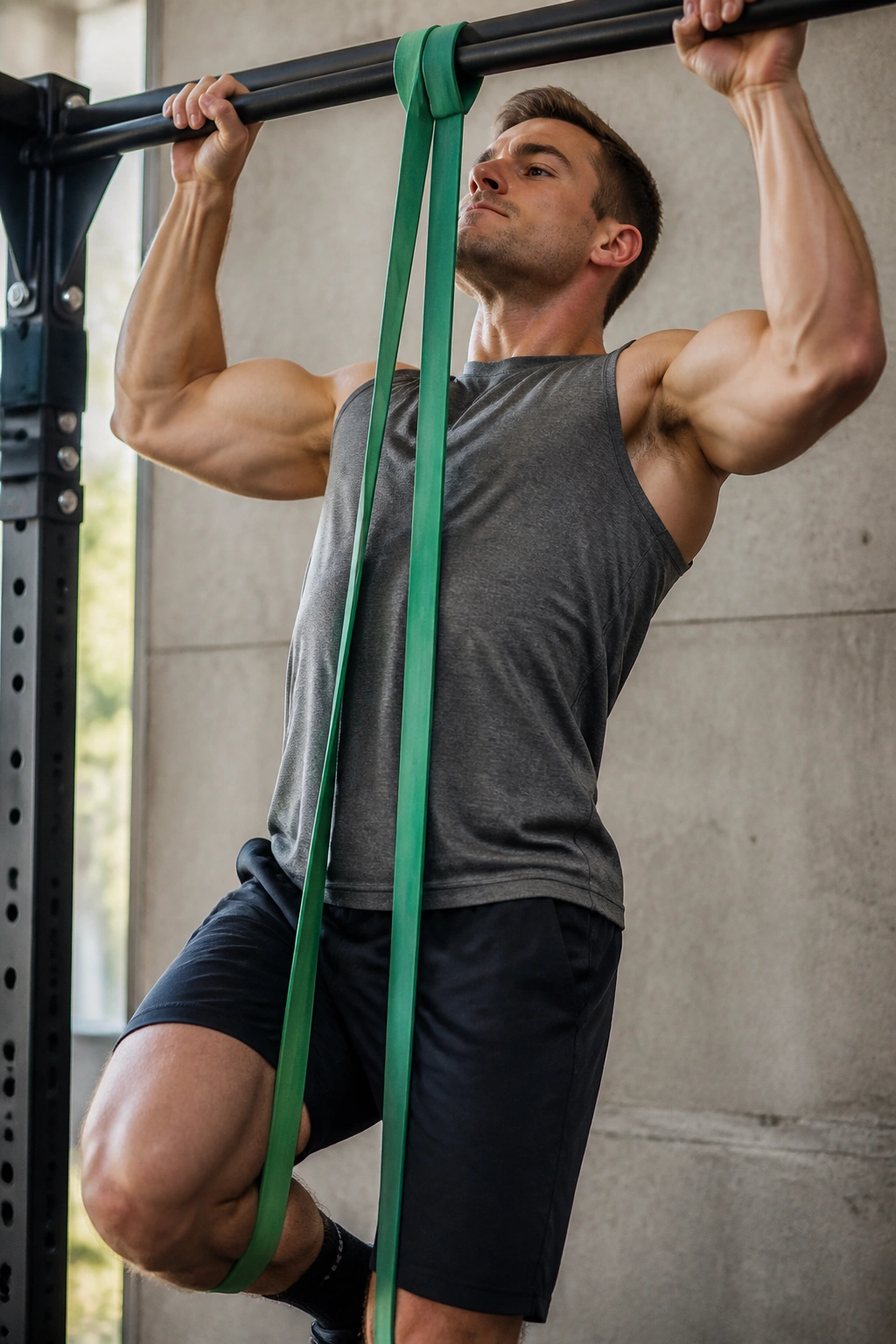
A banded assisted pull-up is the obvious place where a band can replace a big machine, and it does the job well. Loop the band over the bar, place one foot or knee in it, and use the assistance to climb through the hardest part of the pull. The top still needs work. The band just trims enough bodyweight to let you practice the pattern.
This is one of the few band exercises that can genuinely move you toward a harder bodyweight skill. That matters. You’re not just getting a workout; you’re rehearsing the exact line of force the pull-up asks for.
Pick a band that helps, not one that launches you upward. If the bottom feels too easy, the band is too thick. If you cannot control the lowering, it’s too thin or your grip is cooked.
Use slow negatives if you can. They build confidence fast.
18. Banded Reverse Fly
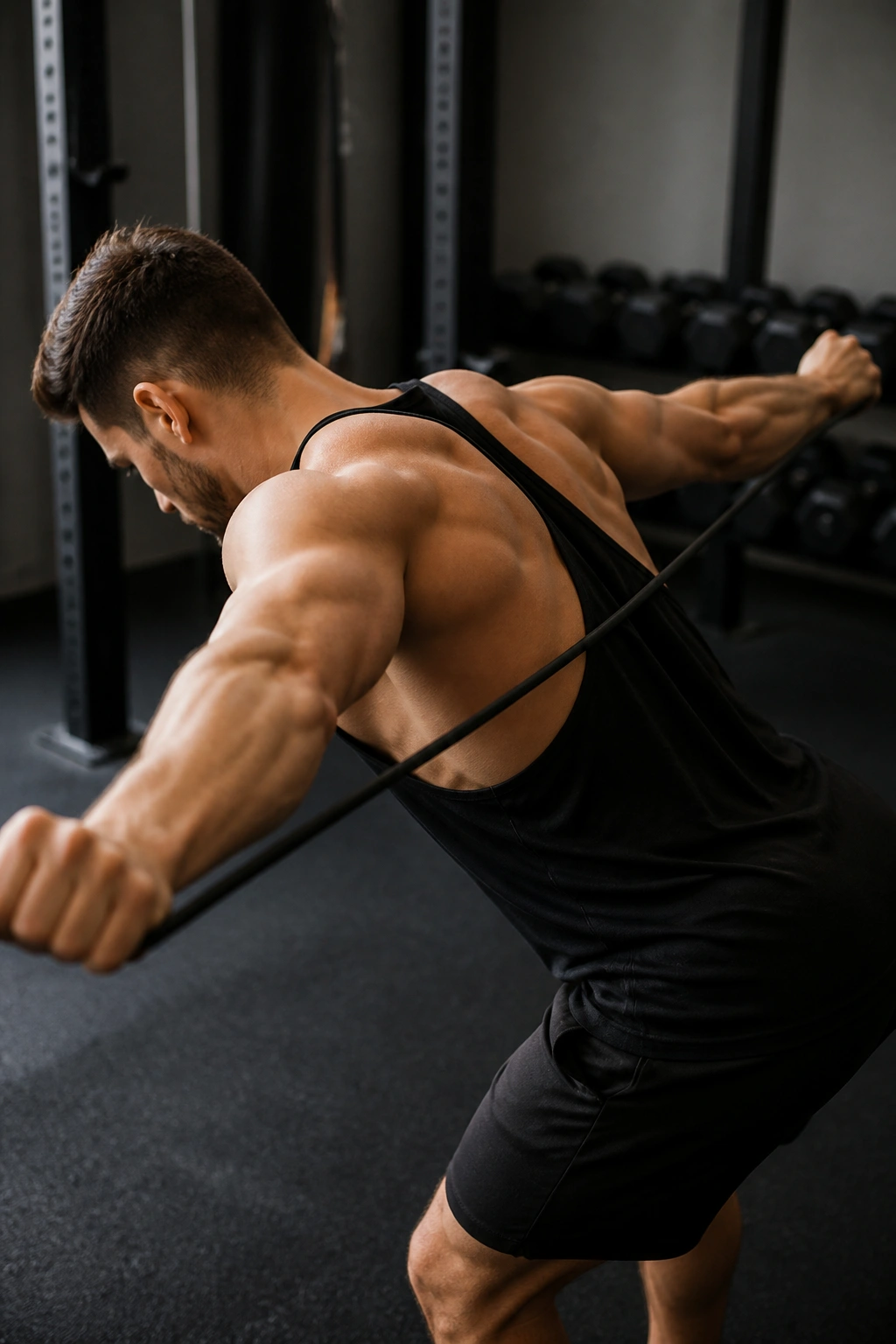
The banded reverse fly is the smaller, quieter cousin of the row, and I like it for that reason. Hinge forward slightly, keep a soft bend in the elbows, and open your arms out to the sides until the upper back lights up. The hands should move like wings, not like a bench press in reverse.
It replaces rear-delt fly work from dumbbells or a pec deck, but the feel is its own thing because the band gets harder as the arms spread apart. That means the final third of the rep matters a lot. If the traps start taking over, the band is probably too heavy or the hinge is too upright.
How to Keep It Clean
- Keep the chin tucked a bit.
- Move the hands out, not up.
- Think “open the chest” without arching the lower back.
- Use a small range if shoulder mobility is tight.
This is a great finisher after rows and presses. Small movement. Big burn.
19. Banded Hamstring Curl
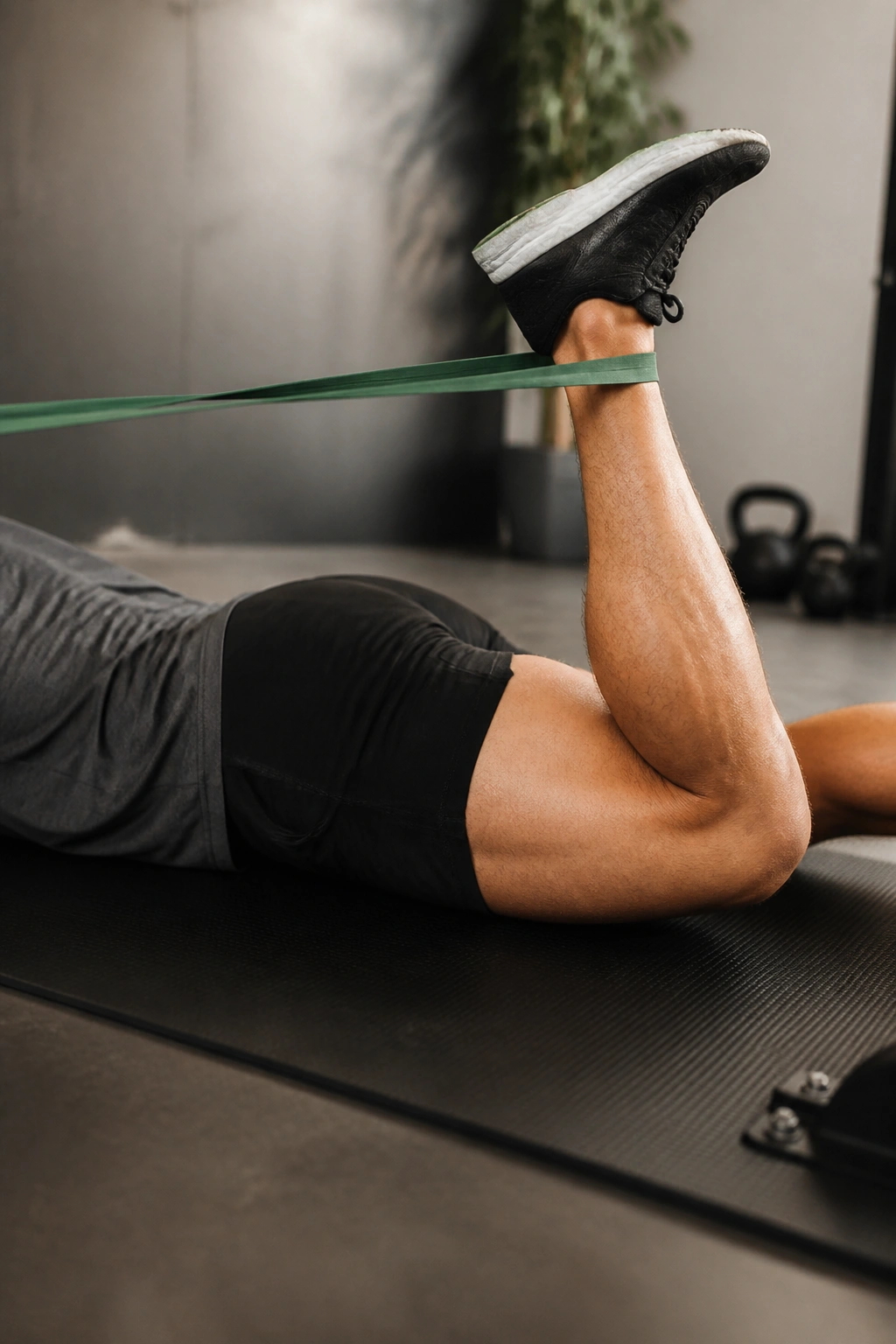
A banded hamstring curl is awkward the first time and useful every time after that. Anchor the band low, loop it around one ankle, and curl the heel toward the glute while keeping the thigh steady. You can do it standing or lying face down if the setup lets you.
It replaces machine curls well enough to matter, especially if your gym gear is limited to one band and a door anchor. The hamstrings respond nicely to this kind of constant tension, and the band’s top-end resistance makes the curl feel harder right where the muscle shortens.
Keep the hips still. If the pelvis tips forward or the whole leg swings, the rep is getting stolen by momentum. Slow down the lowering part and you’ll feel the back of the leg stay loaded longer.
A light band can be enough here. The hamstrings do not need much drama to work.
20. Banded Calf Raise
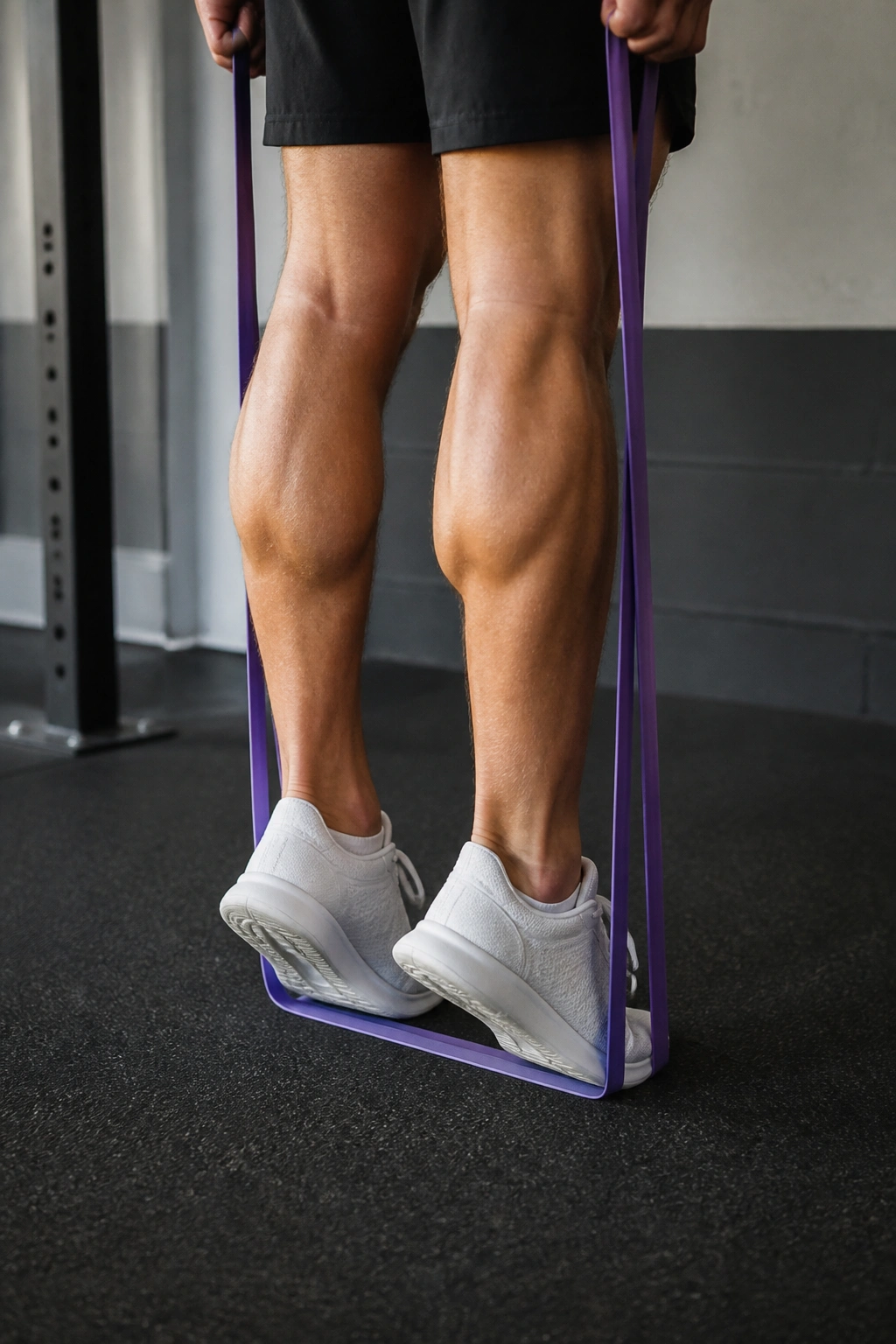
The banded calf raise is a reminder that tiny muscles can be stubborn. Stand on the band with the balls of your feet on a flat floor or a small step, hold the ends for balance, and rise onto your toes as high as you can. Pause at the top, then lower until you feel a deep stretch through the calf.
This is a clean replacement for standing calf machines and one of the easiest ways to add lower-leg work without buying another piece of equipment. It also plays well with single-leg work, which is useful because calf strength tends to be uneven and nobody notices until they try stairs or sprints.
Go slow here. Fast calf reps are mostly noise. A 2-second pause at the top and a full stretch at the bottom make the set matter.
If you want more challenge, do one leg at a time. That’s where the burn shows up. Hard.
These twenty band exercises cover a lot of ground without asking for a crowded rack, a cable stack, or a garage full of iron. Pick six or eight, string them into a full-body session, and you’ve got a home routine that does not feel like a downgrade.
