



If your week falls apart the moment one workout gets missed, the plan is probably too clever for its own good. The best workout routines are the ones you can repeat without a little mental drama every single time. They should fit your equipment, your joints, your schedule, and the amount of energy you actually have after work.
People love variety until variety starts eating their consistency. Then the dumbbell rack becomes a trivia test, the treadmill feels like a punishment box, and every session needs a fresh plan. A better setup is a small set of repeatable workouts that cover strength, cardio, mobility, and recovery without forcing you to think too hard on tired days.
These 22 workout routines are built for that kind of repeatable weekly rhythm. Some are heavy. Some are short. Some are the kind you do when the day gets messy and you still want to count it. Pick the ones that match your space and your goals, then run them long enough for the boredom to become a feature instead of a bug.
1. Full-Body Barbell Reset

A barbell day works when you keep it plain. One squat pattern, one press, one pull, then out the door. That’s the whole appeal.
A clean version looks like 3 sets of 5 back squats, 3 sets of 5 bench presses, and 3 sets of 8 barbell rows, with 2 to 3 minutes of rest between sets. If you want a little more work, add 2 sets of Romanian deadlifts at 8 reps and finish with a farmer’s carry for 3 trips of 30 to 40 meters.
Simple is the point here. You get a full-body stimulus without the weird fatigue that comes from stacking six different machine exercises in a row. If you only train three times a week, this routine gives you a strong anchor day that does not need much thought.
The real win is progression. Add 2.5 to 5 pounds when the last rep still moves cleanly, and stop chasing failure on every set. That’s how a weekly routine stays repeatable instead of turning into a recovery problem.
2. Upper/Lower Split

Four training days are enough to change your body if each day has a clear job. Upper/lower splits are popular for a reason: they let you push hard without stuffing every muscle into one long session.
A simple weekly layout
- Upper A: bench press, chest-supported row, incline dumbbell press, cable triceps pressdown, dumbbell curl
- Lower A: back squat, Romanian deadlift, walking lunge, leg curl, calf raise
- Upper B: overhead press, lat pulldown, flat dumbbell press, rear delt fly, hammer curl
- Lower B: front squat or leg press, hip thrust, split squat, hamstring curl, tib raise
That structure gives you enough rest between similar movements to keep the work quality high. It also makes it easy to repeat the same week for months while swapping only one or two exercises when equipment is busy.
How to keep it moving
Use 3 to 4 working sets per lift and keep most sets in the 6 to 12 rep range. If the workout runs long, trim the arm work first. Arms are nice. Compound lifts pay the bills.
One good rule: keep one upper day a little heavier and one a little higher-rep, then do the same on lower days. That tiny shift keeps the week from feeling flat.
3. Push-Pull-Legs Rotation

Why do push-pull-legs plans keep showing up in decent gyms? Because they split the body in a way that lets you train hard without turning every session into a marathon. Push covers chest, shoulders, and triceps. Pull covers back and biceps. Legs cover, well, legs.
If you train 3 days a week, run one push, one pull, one legs session. If you train 6 days a week, repeat the cycle twice and keep the volume slightly lower per session. The plan scales nicely either way, which is a big reason people stick with it.
The trap is turning every day into a junk-volume festival. Don’t do that. Aim for 1 main lift, 2 to 4 accessories, and a clear finish line. A push day might be bench press, incline press, lateral raise, and rope pressdowns. A pull day might be row, pulldown, rear delt work, and curls. Legs day can stay focused on squat or hinge work plus one single-leg move.
How to use it
Keep the main lift in the 4 to 8 rep range and the accessories in the 8 to 15 rep range. You’ll feel the work, but you won’t need a nap in your car afterward.
4. Dumbbell-Only Home Session
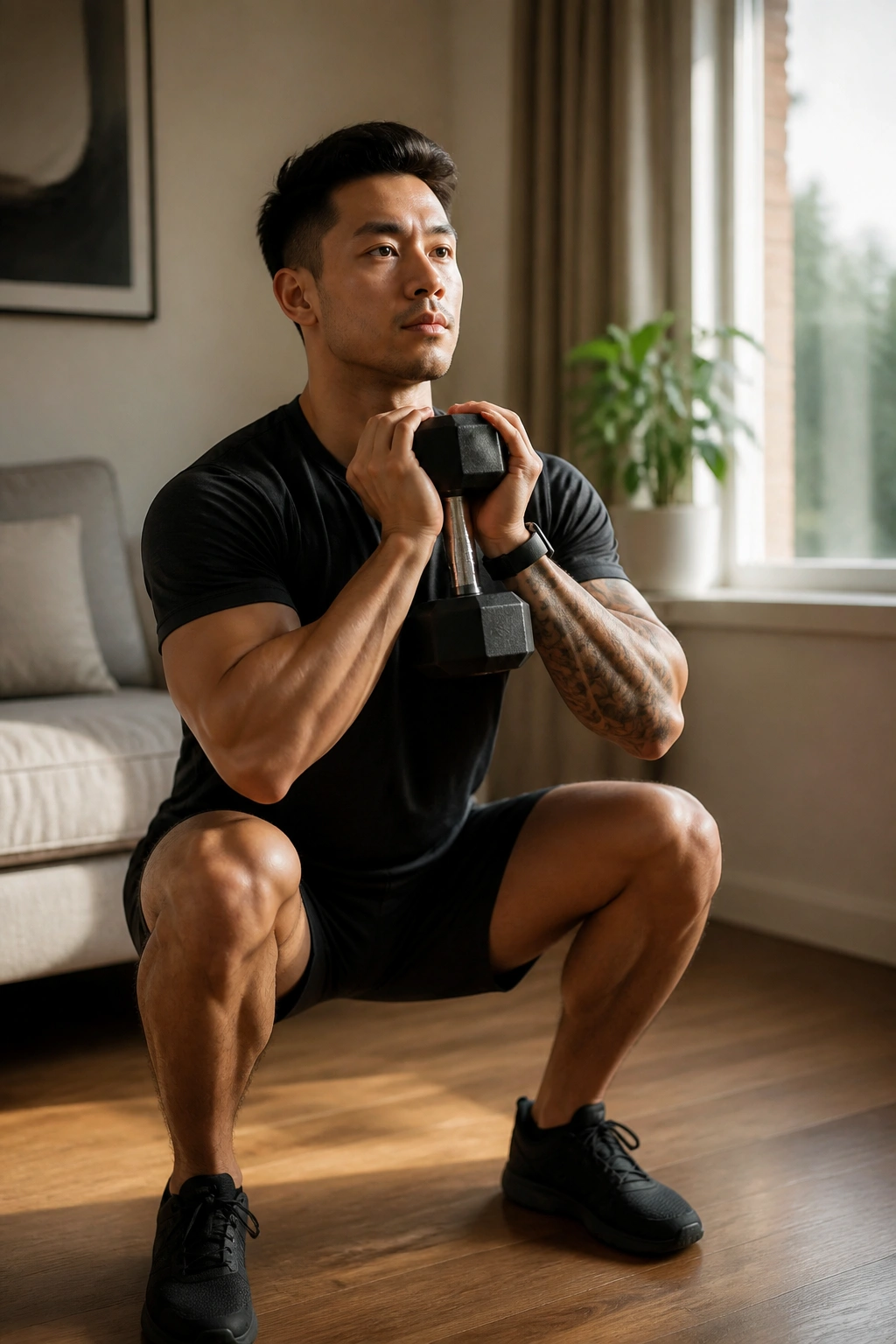
Picture a small living room, one bench, and two dumbbells that don’t even match. That’s not a problem. It’s a very workable setup.
A good dumbbell-only session might run 35 minutes and use goblet squats, one-arm rows, floor presses, reverse lunges, and dumbbell RDLs. Do 3 rounds of 8 to 12 reps per move, resting about 45 to 75 seconds between exercises depending on how spicy the set feels.
The floor press is the sneaky hero here. It protects the shoulders a bit and keeps you from turning the workout into an awkward bench-press imitation on a couch. One-arm rows are the other workhorse, because they let you train the back hard without fancy gear.
If you only own a light pair of dumbbells, slow the lowering phase to 3 seconds and pause at the hardest point. That tiny adjustment makes the same load feel much heavier, which is useful when the weights in your house are decent but not huge.
5. Bodyweight Density Circuit

Bodyweight workouts don’t have to be easy to count. In fact, the best ones are often brutally simple: a timer, a floor, and a list of moves you can repeat without hunting for equipment.
Set a 20-minute timer and cycle through push-ups, air squats, reverse lunges, plank shoulder taps, and glute bridges. Pick a rep goal you can hold for the full twenty minutes, such as 8 push-ups, 15 squats, 8 lunges per side, 20 taps, and 15 bridges. When the reps get sloppy, you’ve gone too fast.
The point is density. You’re not trying to win a race against the clock on minute one. You’re trying to keep a steady pace that leaves you breathing hard by the end and moving well throughout.
If standard push-ups are too hard, use an incline on a couch or table. If they’re too easy, elevate your feet. Tiny changes matter here. They keep the routine useful for months instead of making it a one-week novelty.
6. Kettlebell Conditioning Day

Unlike dumbbells, a kettlebell pulls your hand off center. That sounds small, but it changes the whole session. Your grip works harder, your trunk has to stay honest, and sloppy reps show up fast.
A solid kettlebell day might start with swings for 10 reps on the minute, then move into goblet squats, cleans, presses, and suitcase carries. Keep the load moderate and the session short, around 15 to 25 minutes of actual work. This is not the place for marathon sets.
The kettlebell swing is the centerpiece if you know how to hinge. The movement should feel like a snap through the hips, not a squat with a fuzzy handle. If your lower back is doing all the talking, the bell is too heavy or the pattern needs work.
This routine fits people who want conditioning and strength without switching equipment every two minutes. It’s also a nice choice when you want to sweat, but don’t want the random joint irritation that can come from lots of jumping.
7. Treadmill Interval Routine

A treadmill can be boring. It can also be ruthless in a good way.
A simple 24-minute session
- 5 minutes easy walk or light jog
- 8 rounds of 30 seconds hard and 90 seconds easy
- 4 minutes cool-down walk
That’s enough to raise your heart rate without turning the day into a lung test. If sprinting feels too sharp, use a fast incline walk instead and keep the speed lower. The work still counts.
What to adjust
Set the “hard” part at a pace you can hold with good form for all eight rounds. The first two intervals should feel almost too manageable. That’s the right start.
If you want more hill work, add 3 to 6 percent incline on the hard intervals. If you want less pounding, use the bike or elliptical and keep the same timing. The structure matters more than the machine.
8. Zone 2 Cardio Base

Zone 2 is boring on paper. That’s also why it works for so many people. The pace is calm enough to sustain, but steady enough to build a real aerobic base.
Use the talk test. You should be able to speak in full sentences, though you probably would not want to sing. For most people, that lands in a walk, easy jog, bike ride, row, or incline treadmill session lasting 30 to 60 minutes.
The sneaky benefit is recovery. A zone 2 day usually leaves you feeling better after the workout than before it, which makes it easy to repeat each week. That matters if your other sessions are heavy, fast, or just plain hard on the legs.
I like this routine for people who think cardio has to feel dramatic to count. It doesn’t. A steady pace, a sweat that builds gradually, and breathing that stays under control can do a lot over time.
9. Mobility and Core Reset
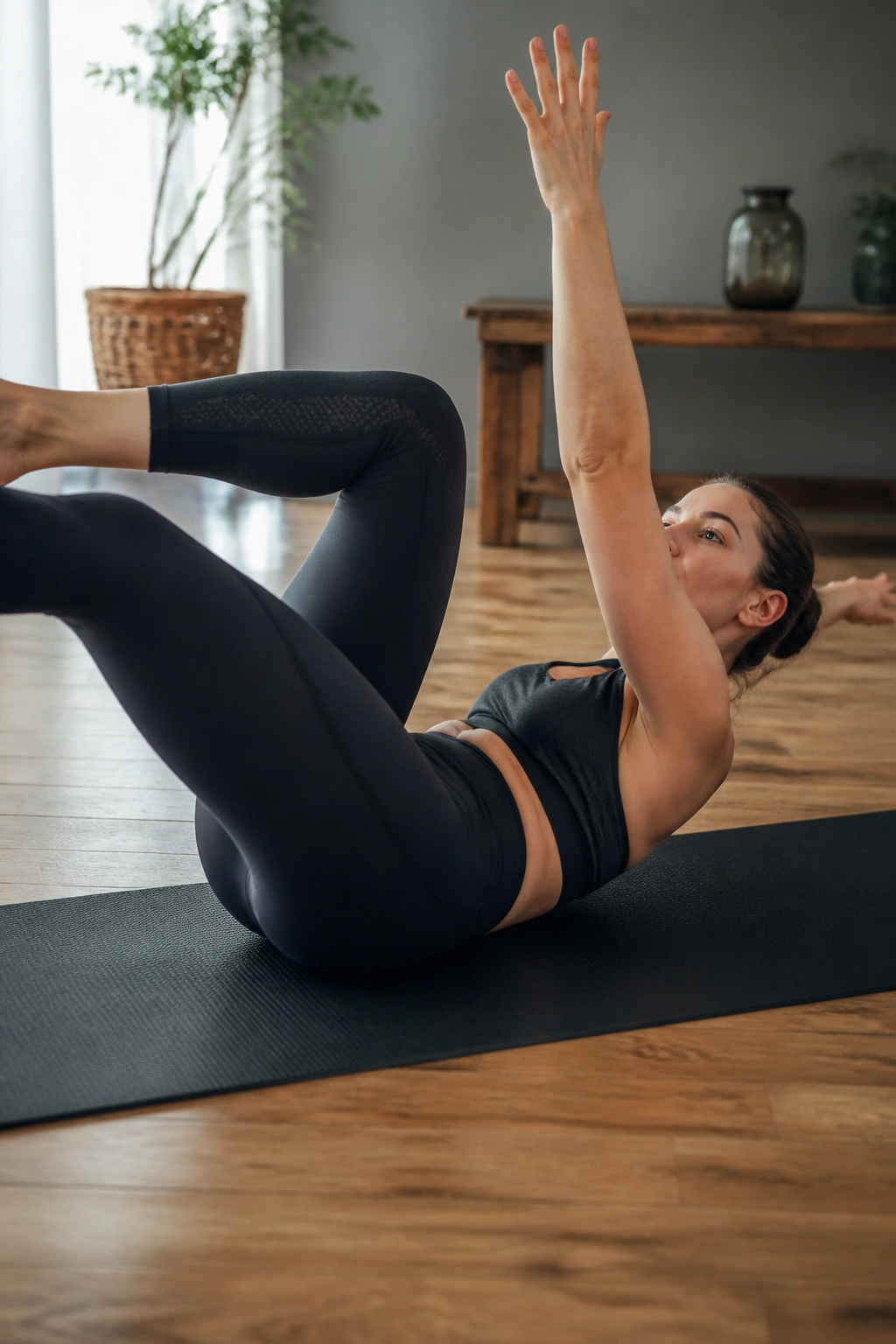
What if the most useful workout of the week is the one that does not leave you wrecked? That’s the idea here. A mobility-and-core day keeps the joints moving and the trunk doing its job without burying you in fatigue.
Where to feel it
- Hip openers: 90/90 switches, couch stretch, deep squat hold
- Spine work: thoracic rotations, cat-cow, thread-the-needle
- Core control: dead bugs, side planks, bird dogs
- Breathing: 3 to 5 slow breaths in each stretch position
Keep the session at 20 to 30 minutes. The goal is not to chase a burn in every move. You want to walk out feeling a little looser, a little taller, and less cranky in the lower back.
This routine is a good repeat day between heavier sessions. It also works after travel, long sitting, or a tough lift day when your body feels a bit welded together.
10. Glute and Hamstring Builder

A lot of people say they train legs, then spend all week on squats and wonder why their lower back complains. The fix is to give the hinge side of the body its own space.
Start with Romanian deadlifts, then move to hip thrusts or glute bridges, follow with hamstring curls, and finish with split squats or step-ups. Three to four sets in the 8 to 12 rep range is enough for most people. Heavy enough to matter. Controlled enough to feel.
The cue that changes everything on RDLs is simple: keep the ribs down and push the hips back until the hamstrings feel loaded before the bar gets too far below the knees. If you reach the floor every time, you’re probably losing the hinge.
This routine is a favorite for anyone who wants stronger hips, better sprint mechanics, or less “all legs, no backside” training. It also pairs well with an upper-body day the next day because it doesn’t need the same nervous-system grind as max squats.
11. Back and Posture Session

A solid back session does more than build a wide look in a T-shirt. It makes pressing feel steadier, helps your shoulders sit better, and gives you a real break from all the forward rounding that piles up during desk work.
What makes it different
Unlike chest day, where the work is easy to feel right away, back training rewards patience. Rows, pulldowns, chest-supported rows, reverse flyes, and face pulls all ask you to control the shoulder blades instead of yanking with the arms.
A good version looks like 4 sets of row variations, 3 sets of pulldowns, and 2 to 3 small accessory moves for rear delts and lower traps. Keep the loads honest, but don’t turn every set into a body-English contest. The back gets more useful when the reps stay clean.
If you sit a lot, this is one of the few routines that pays off almost immediately in daily life. Your upper back feels less tired, overhead work gets easier, and your posture tends to stop collapsing by mid-afternoon.
12. Chest, Shoulder, and Triceps Press Day

Pressing days can go sideways fast if you try to cram too much into them. The trick is to choose a main press, one overhead move, one chest accessory, and a couple of small finishers.
A practical version starts with bench press or incline dumbbell press, then moves to overhead press, followed by push-ups, lateral raises, and triceps pressdowns. Most of the work lives in the 6 to 12 rep range, with the lateral raises often doing better a bit higher, around 12 to 20 reps.
You want the last rep to slow down. You do not want it to turn into a bounce contest. That’s the line. When the shoulders and triceps get sloppy, the chest stops doing its share and the joints take over.
This routine repeats well because the exercises are familiar and the progress is easy to track. Add a rep here, a little load there, and you’ve got a session that keeps paying off without needing a different exercise menu every week.
13. Legs and Calves Strength

Leg day gets better when you stop treating calves like an afterthought. They may be small, but they respond well to real work, and they usually complain if you rush them.
Order matters
- Front squat or leg press as the main lift
- Bulgarian split squat for single-leg strength
- Leg curl or hinge work for the back of the thigh
- Standing calf raise with a pause at the bottom
- Tibialis raises if you want balance around the ankle
The squat or press should come first while you’re fresh. After that, single-leg work cleans up imbalances and tends to expose any side-to-side weakness pretty quickly.
Calves need a slower eccentric than most people think. Lower for 2 to 3 seconds, pause in the stretched position, then drive up hard. If you bounce through the bottom, you’re leaving a lot of the work on the table.
This is a good weekly session for people who want stronger legs without making every lower-body day hinge-dominant. It also leaves enough room to put your harder conditioning work on another day.
14. Athletic Power Session

Power hates fatigue. That’s why this routine looks small on paper and still feels serious in real life. You’re working fast, not long.
Use box jumps, broad jumps, medicine ball slams, short sprints, or kettlebell swings for very low reps. Think 3 to 5 reps per set with full rest, not sweat-drenched circuits. The goal is speed and crisp landings, not a slow grind.
A good session might be 5 rounds of 3 jumps, 5 rounds of 5 med-ball throws, and 6 short sprints of 10 to 20 seconds. Stop the moment the reps lose snap. That part matters more than people like to admit.
This is the routine for days when you want to feel athletic again. It’s useful for field sports, but it also keeps regular gym training from turning into nothing but machines and soreness. Fast work makes the body remember how to move.
15. Beginner Machine Circuit

Need a routine that removes most of the guesswork? Machines are fine. Sometimes they are the smartest place to start because they let you learn effort without also learning balance, grip, and bar path on the same day.
Use leg press, chest press, lat pulldown, seated row, and leg curl. Do 2 to 3 sets of 8 to 12 reps on each, resting 60 to 90 seconds between sets. One machine to the next. No wandering.
The seat setup matters more than flashy exercise choices. If the seat is too high or too low, the machine gets awkward fast. Spend the first minute getting your joints lined up, then work through the sets with control.
This routine is especially useful for anyone who wants a repeatable weekly plan but feels overwhelmed by free weights. It is not a cop-out. It’s a stable entry point, and stable entry points tend to stick.
16. Travel Hotel-Room Workout
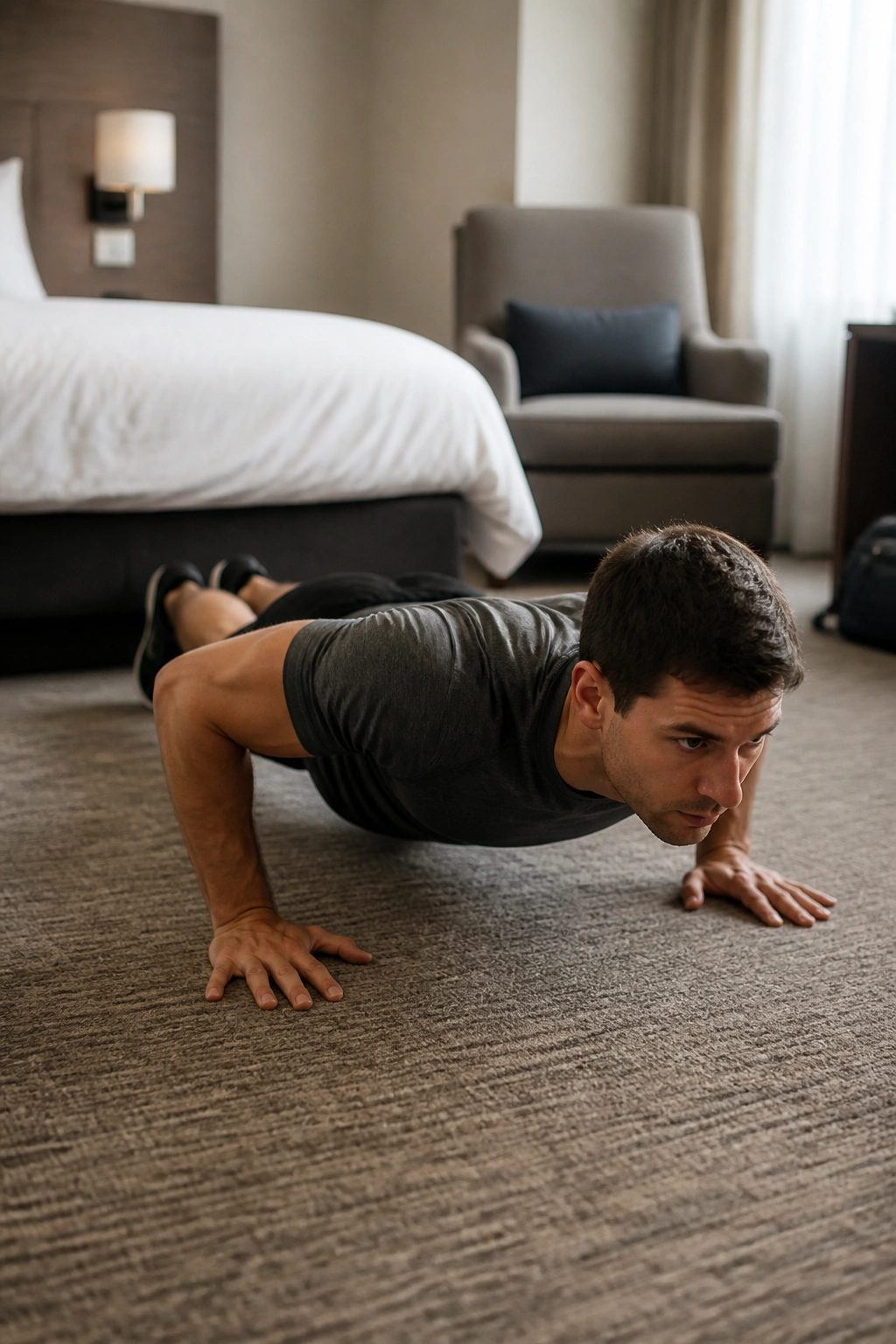
A hotel room with bad lighting and a carpet that grips your socks is not a gym. Fine. That’s still enough space to get something done.
A no-equipment setup
- Push-ups for upper body pushing
- Air squats for legs
- Reverse lunges for single-leg work
- Plank shoulder taps for core control
- Glute bridges for hips and lower back
Run the list for 3 to 5 rounds, keeping the total session around 15 to 20 minutes. If your room has a chair, add split squats or feet-elevated push-ups. If not, keep it plain.
Travel workouts work best when they stay unromantic. You are not building a new program in a hotel. You are protecting momentum, keeping your joints from stiffening up, and making sure one messy trip does not knock out the whole week.
If you want to sweat more, shorten the rest. If you want to keep it easy, cut the rounds to three and walk for a few minutes after. Both versions count.
17. EMOM Sweat Session

Every minute on the minute is a clean way to stop overthinking. The clock tells you when to go, and that alone can make the session feel tighter than a normal circuit.
A simple EMOM could run 20 minutes total: minute one is 10 kettlebell swings, minute two is 8 push-ups, minute three is 12 goblet squats, minute four is rest or easy walk, then repeat five times. If you use bodyweight only, swap the swings for jumping jacks or squat jumps.
The beauty of EMOM work is the built-in honesty. If you finish early, you get a little rest. If you finish late, the next minute punishes the delay. The timer keeps you from drifting into lazy pacing.
This format fits people who want structure but dislike counting long circuits. It also works well when you’re short on time and want a session that feels organized, not random.
18. Circuit Strength Endurance

Straight sets build strength. Circuits build a different kind of stamina. If you like the feeling of moving with purpose and not sitting around too long, this is a useful weekly routine.
Pick 4 or 5 exercises and run them back to back with 30 to 45 seconds of rest after each round. A good lineup might be dumbbell squat, push-up, row, hinge, and plank. Do 3 to 5 rounds depending on how much gas you have.
Use moderate loads. Heavy enough to matter, light enough that the second round still looks tidy. The danger here is ego loading the first movement, then surviving the rest of the circuit with half-reps and a lot of grimacing.
This routine is a strong fit for busy people who want strength work and a cardio hit in the same session. It’s also a good “I don’t feel like standing around” workout, which is a much more honest use case than pretending every day needs a separate purpose.
19. Yoga Plus Light Strength

There are weeks when the smartest thing you can do is stop acting like every workout needs to drain you. A mixed yoga-and-strength session gives you movement, control, and a little muscle work without crushing your legs.
Flow through downward dog, low lunge, thoracic rotations, and pigeon stretch, then add light strength moves like goblet squats, dumbbell presses, and dead bugs. Keep the whole session around 25 to 35 minutes and stay far from failure.
The yoga piece loosens the places that tend to get stiff: hips, calves, upper back, ankles. The light strength piece keeps the body from turning all the way into a stretching-only routine, which is where some people lose the structure they actually need.
This is a good repeat day after a long run, a hard lower-body workout, or a week of poor sleep. You finish feeling more put together, not trashed.
20. Incline Walk and Sprint Intervals

A hill changes everything. So does a smart interval ratio.
A simple hill session
- 5 minutes easy incline walk
- 6 to 8 rounds of 20 seconds hard and 100 seconds easy
- 5 minutes cool-down walk
Use a treadmill incline, a hill outside, or a bike if your joints complain about sprinting. The hard part should feel fast but controlled, not frantic. If your form falls apart, back off.
The incline helps because it forces a bit more glute and hamstring work without needing longer ground contact. That makes the effort feel substantial without turning the session into a series of awkward all-out lunges.
This routine works well once a week for people who like quick conditioning but hate long cardio blocks. It also pairs neatly with a strength day because the total volume stays modest.
21. Recovery Walk and Band Activation

Recovery is a training day. If that sounds overly soft, spend a few weeks skipping it and see what happens to your knees, hips, and shoulders.
A recovery session can be as basic as a 30 to 45 minute walk plus 2 rounds of band pull-aparts, lateral band walks, glute bridges, and face pulls. Keep the pace easy. You should feel better halfway through, not worse.
The bands are there to wake up the small stuff around the joints. They are not there to create a burnout. Ten to 15 controlled reps is plenty for each move, and the walking does a lot of the heavy lifting in the background.
This is the day that helps the harder days keep happening. It’s also the one most people ignore when they’re feeling ambitious, which is probably why the ambitious weeks sometimes fall apart.
22. Flexible Catch-Up Session

A week that blows up does not need punishment. It needs a rescue plan. That’s what this session is for: the missed workout, the late night, the day when the schedule got messy and you still want to train.
Build it around one lower-body move, one push, one pull, and one core exercise. A simple version could be goblet squats, dumbbell bench press, one-arm rows, and dead bugs. Do 3 rounds with 8 to 12 reps on the lifts and 30 to 45 seconds of core work.
The beauty here is flexibility. If you’re tired, keep the loads light and move through it. If you’ve got energy, make the first round your heaviest and let the later rounds stay crisp. Nothing about this routine needs to be fancy. It just needs to keep the week from going dead.
Keep one workout like this in your back pocket and the whole idea of “missing a day” stops feeling like a disaster. Sometimes the most useful routine is the one that helps you restart without a speech, without guilt, and without wasting the rest of the week.
