



A yoga room gets messy faster than people expect. One mat turns into two. A strap ends up on a chair. A candle melts into a lopsided little puddle, and suddenly the space feels more like a storage corner than a place to breathe.
The best yoga room ideas are rarely the flashiest ones. They’re the ones that remove friction. You want to walk in, set down your mat, and feel your shoulders drop before you even start the first pose. That usually comes from a few plain choices done well: softer light, fewer objects, closed storage, and surfaces that don’t shout for attention.
I’ve always thought yoga rooms work best when they feel edited, not decorated to death. A good room doesn’t need to prove anything. It just needs to be calm enough that your mind stops scanning for clutter and your body starts listening again. That is harder to pull off than it sounds, especially if the room has to double as a guest room, office, or spare corner.
So start with the bones of the space. Walls, floor, storage, light. Get those right and everything else gets easier.
1. Paint the Walls a Warm White That Softens the Room
A warm white wall does more than look tidy. It changes the whole feel of the room before you add a single prop. Cool, icy white can make a yoga room feel a little sharp. Warm white, oat, linen, mushroom, or pale stone feels softer and easier on the eyes.
I prefer a matte or eggshell finish here. Glossy paint throws reflections around, and reflections get busy fast in a small practice space. Matte paint also hides tiny scuffs better, which matters if you practice barefoot and move things around often.
What to look for
- Warm undertones rather than blue ones, which keeps the room from feeling sterile.
- Low-sheen paint that won’t glare under lamps or daylight.
- One wall tone repeated on trim if you want the room to feel calm and continuous.
A room like this does not need dramatic contrast. It needs softness. That’s the whole trick.
2. Choose Cork or Light Wood Flooring for a Barefoot Feel
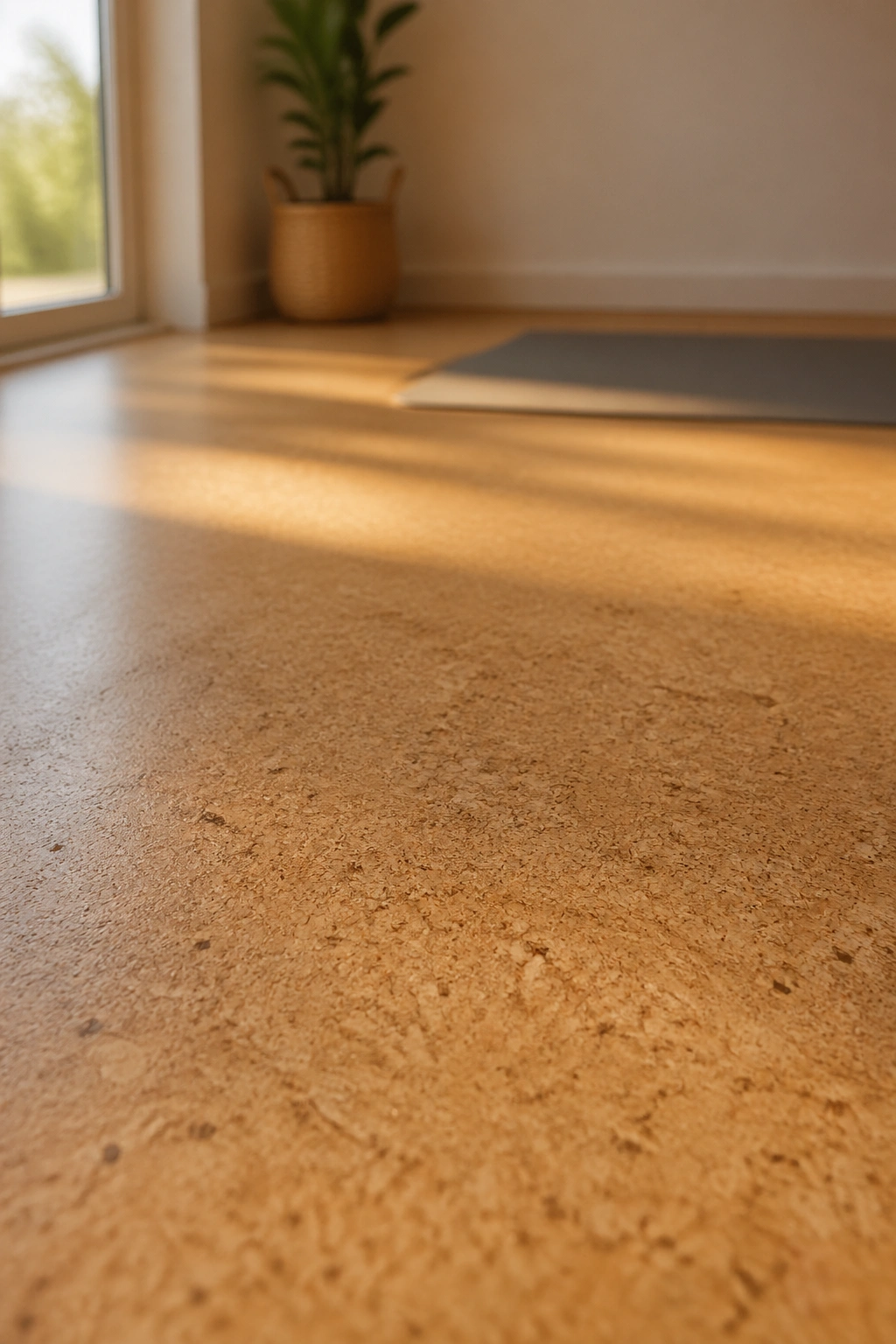
Bare feet notice floor texture fast. If the surface feels cold, slippery, or scratchy, you feel it during the first downward dog. Cork and light wood both do a nice job of keeping the room quiet and grounded. Cork has a little give under pressure, which I like for seated work and long holds. Wood feels cleaner and more crisp if the finish is matte.
A rug can work too, but I’d use it as a layer, not the main event. Too much pattern on the floor pulls the eye downward in a way that can make the room feel smaller. Light floors keep the space open.
One thing people miss: the floor should be easy to sweep or vacuum every few days. Dust shows up fast in a yoga room because the whole point is that you spend time close to the ground.
3. Hide Blocks, Straps, and Blankets Behind Closed Doors
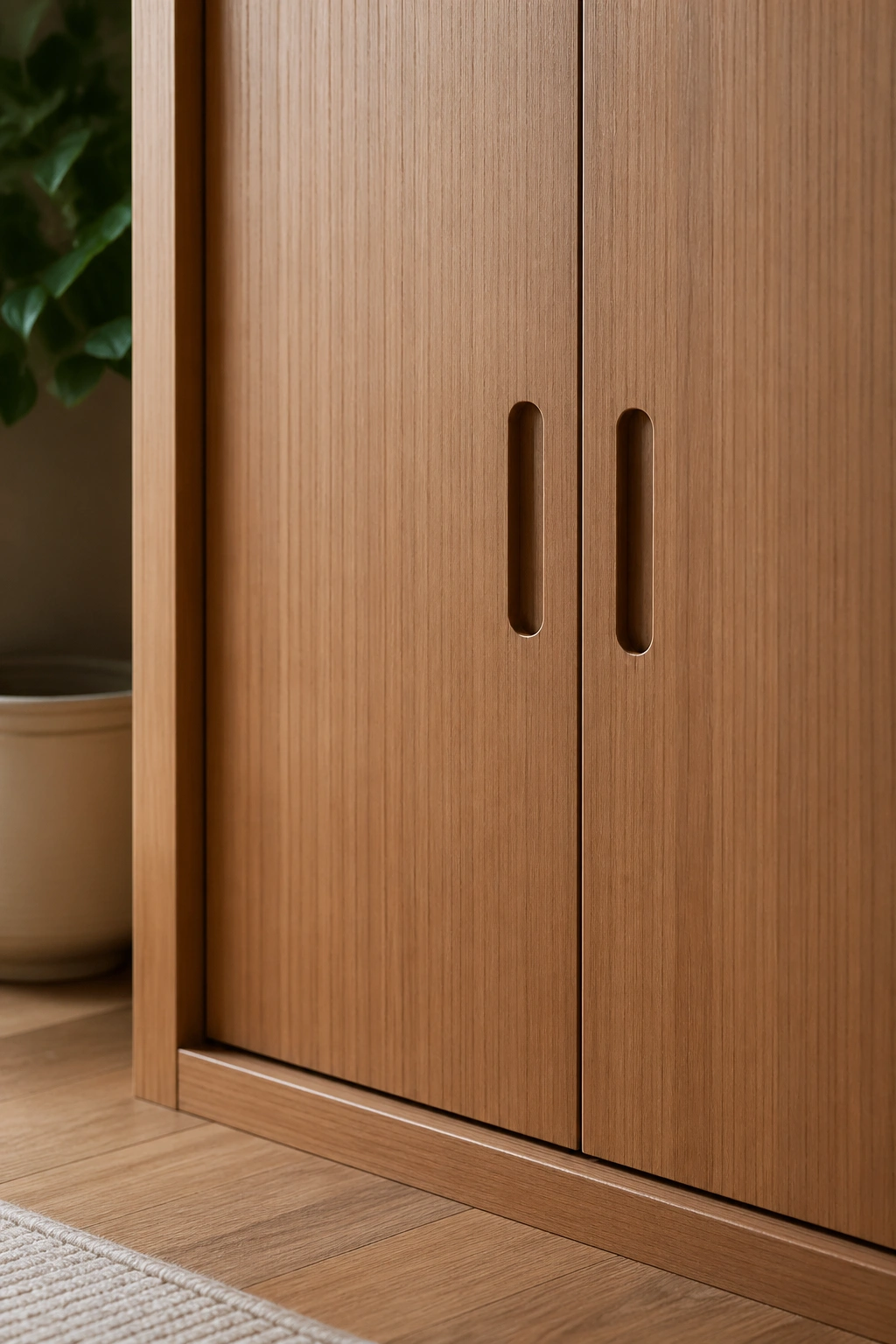
Closed storage is the difference between a room and a pile. That sounds harsh, but it’s true. Open shelves look tidy for about five minutes, then the blocks tilt, the straps sag, and the blanket starts looking tired.
A cabinet, wardrobe, or closed bench makes yoga gear disappear when you’re done. That visual break matters. The room resets faster, and your brain gets the message that practice time is separate from everything else.
What belongs behind a door
- Extra mats that you do not use every day.
- Two or three blocks instead of a stack of five.
- Blankets and bolsters folded once, not stuffed in.
- Cleaning cloths and mat spray kept on one shelf together.
If you have to see it, make it beautiful and minimal. If you do not need to see it, hide it. Easy rule.
4. Keep the Center of the Room Open
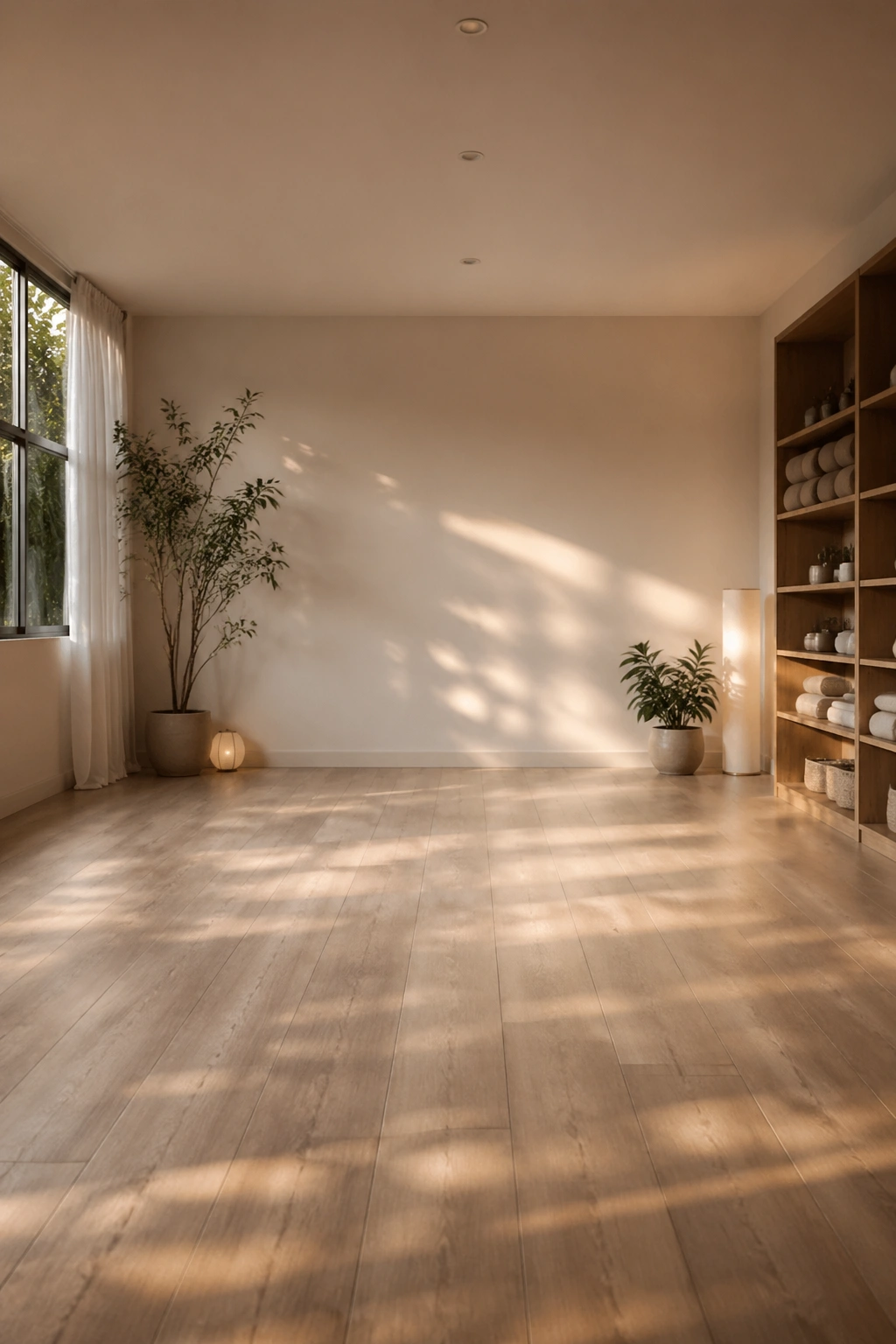
A calm yoga room needs breathing room in the middle. That open patch of floor matters more than people think. It lets you step in, roll out a mat, and move without bumping a corner of furniture or a basket of props.
If the room is small, leave at least 24 to 36 inches of clearance around the mat area where you can manage it. That extra edge makes transitions smoother. You can kneel, sit, stretch, and change sides without thinking about what your foot might hit.
I also like the visual honesty of an empty center. It tells the room what it is for. Not a storage dump. Not a craft room with a yoga mat squeezed in. A practice space.
5. Layer Light Instead of Relying on One Harsh Fixture
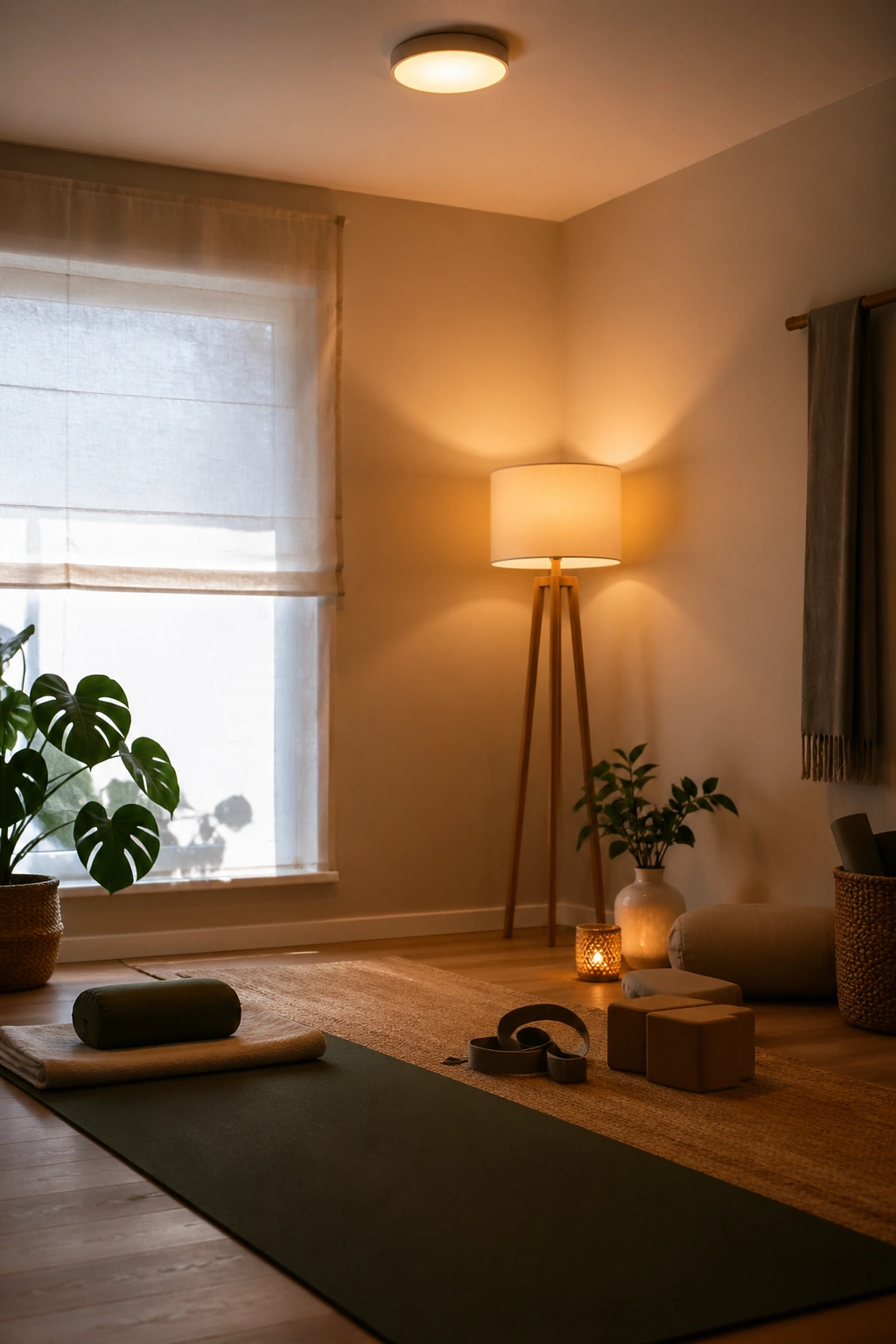
A single ceiling bulb can flatten a room fast. Worse, it can make every object feel harder and more exposed than it should. Yoga rooms do better with layered light: one source for general brightness, one softer source for evenings, and daylight when you have it.
The three light layers that work
- Daylight from a window or skylight, kept soft with a sheer shade.
- Ambient light from a dimmable ceiling fixture or flush mount.
- Low accent light from a floor lamp or small lamp with a warm bulb.
Aim for warm bulbs around 2700K if you’re choosing lamps. That tone feels gentler than cooler white light. I’m also a fan of a dimmer switch. It’s not fancy, and that’s exactly why it works.
Skip the urge to fill the room with candles. A couple can be lovely, but too many candles tip a clean room into clutter very quickly.
6. Bring in One Healthy Plant, Not a Whole Indoor Jungle
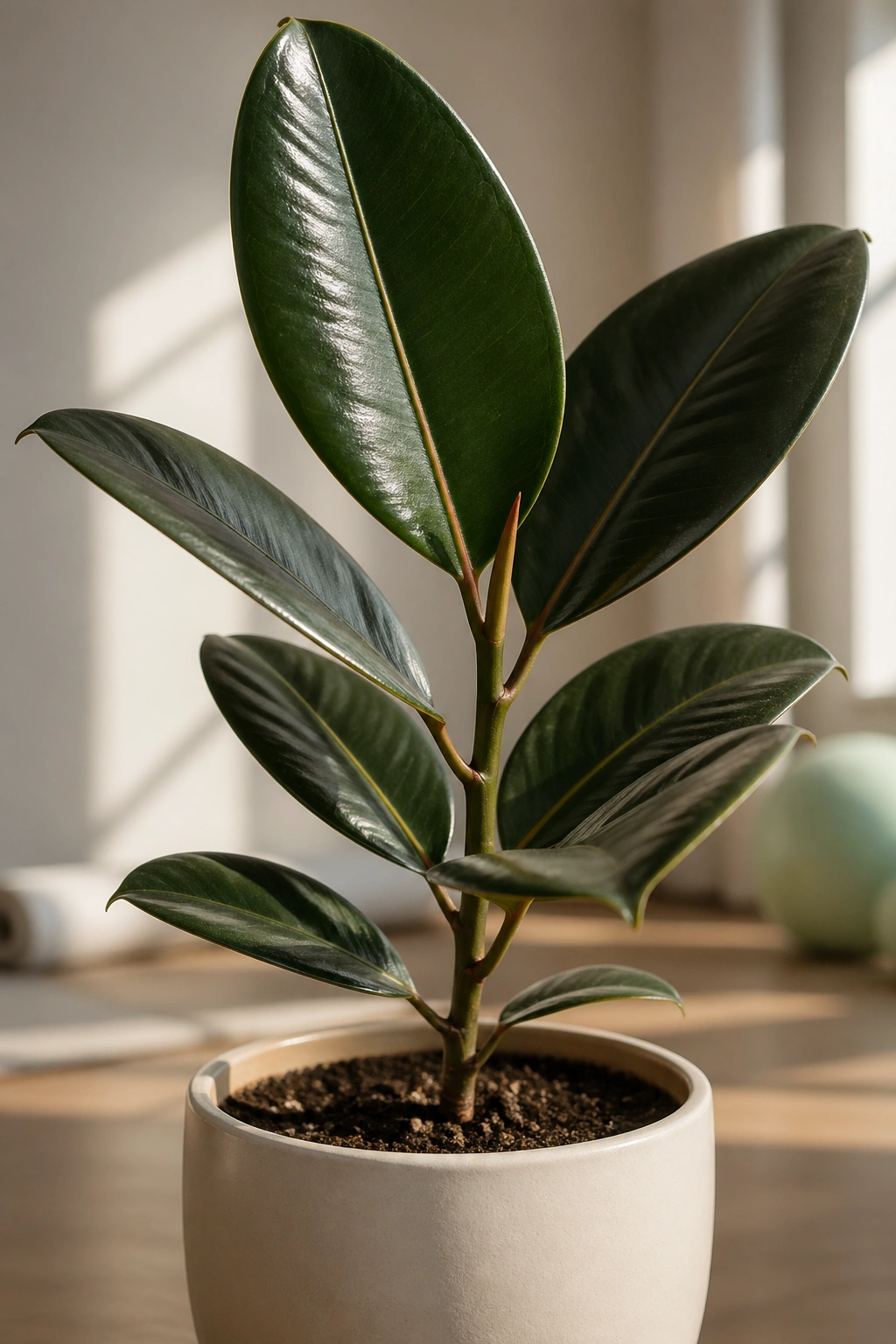
A single plant can soften a yoga room in a way that decor rarely does. The key word is single. One strong plant with a good pot looks calmer than six little ones scattered in corners.
Snake plants, rubber plants, and olive trees all have a clean, upright shape that works well in a practice room. Put the plant in a simple ceramic pot with a saucer that actually fits. No plastic nursery pot sitting on the floor, please. That tiny bit of sloppiness makes the whole room feel unfinished.
If you’re going to water plants in the room, keep a tray under them so drips never reach the floor. Wet floor + yoga mat = no thanks. Simple, tidy, done.
7. Hang One Large Piece of Art and Stop There
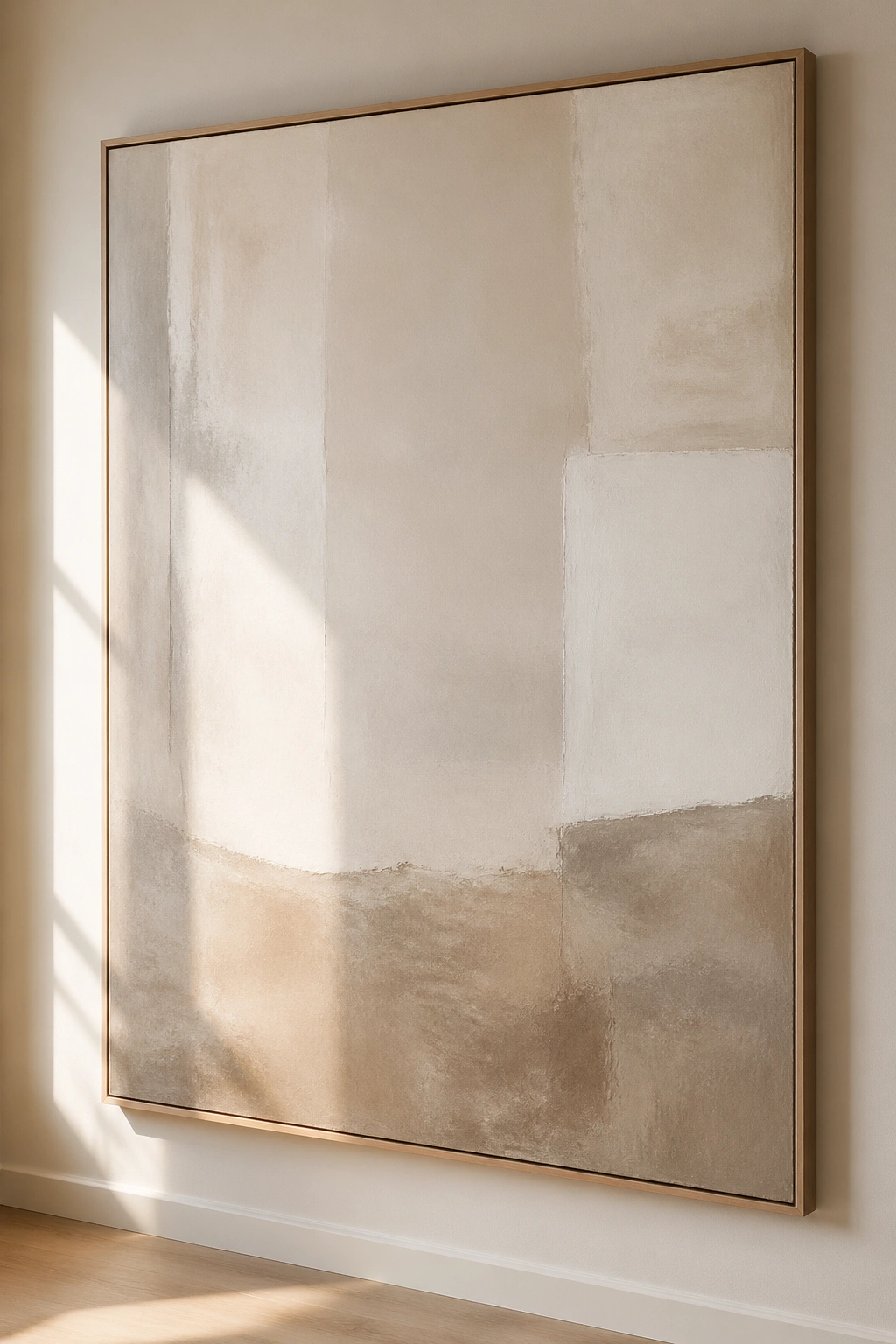
A yoga room does not need a gallery wall. In fact, I think a gallery wall usually makes the room feel busier than people expect. One large piece of art can anchor the room without crowding it.
Choose something with a quiet shape, a wide horizon line, or a soft abstract form. Neutral colors work well, but not because neutral is trendy. They work because they don’t compete with your attention when you’re trying to settle into a pose.
A good rule: if you keep glancing at the art during practice, it’s probably too busy. The art should hold the room, not perform in it.
Better than a gallery wall
A single framed print or textile gives you one focal point, one dusting surface, one thing to keep straight on the wall. That’s enough.
8. Use a Low Bench for Props and Transitions
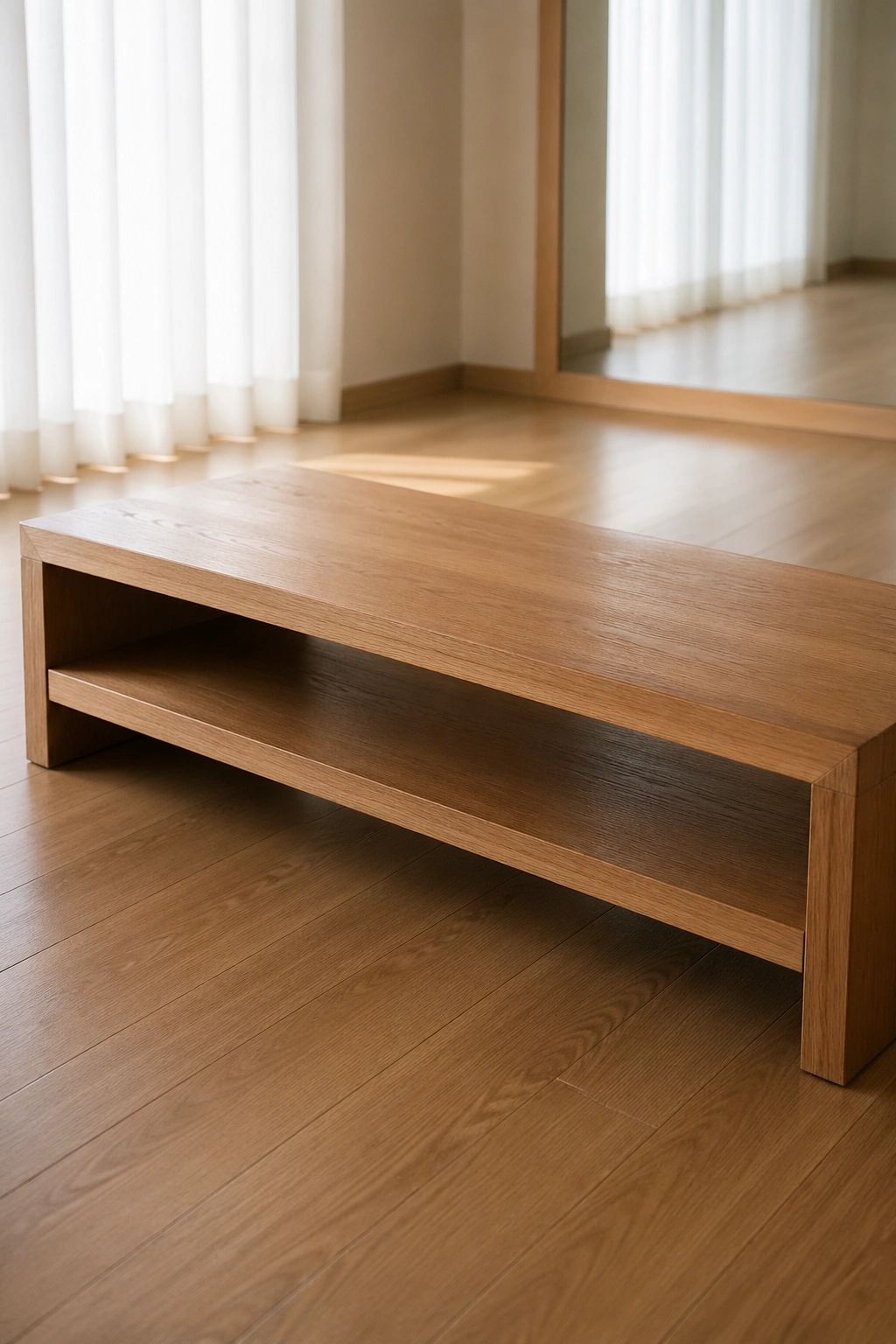
A low bench is one of those pieces people overlook until they have one. Then it ends up being the most-used thing in the room. It gives you a place to stack blocks, fold a blanket, sit while rolling out your mat, or pause between longer holds.
I like benches that sit low and look plain. Wood is safest. Upholstered benches can work, but only if the fabric is wipeable and tightly woven. Big tufting or thick padding tends to look fussy, and yoga rooms already have enough soft surfaces.
If the bench has a shelf underneath, even better. You can keep your daily props there and keep the top surface almost empty. That little bit of negative space makes the room feel cleaner than a full shelf ever will.
9. Put Baskets Under a Shelf, Not Everywhere
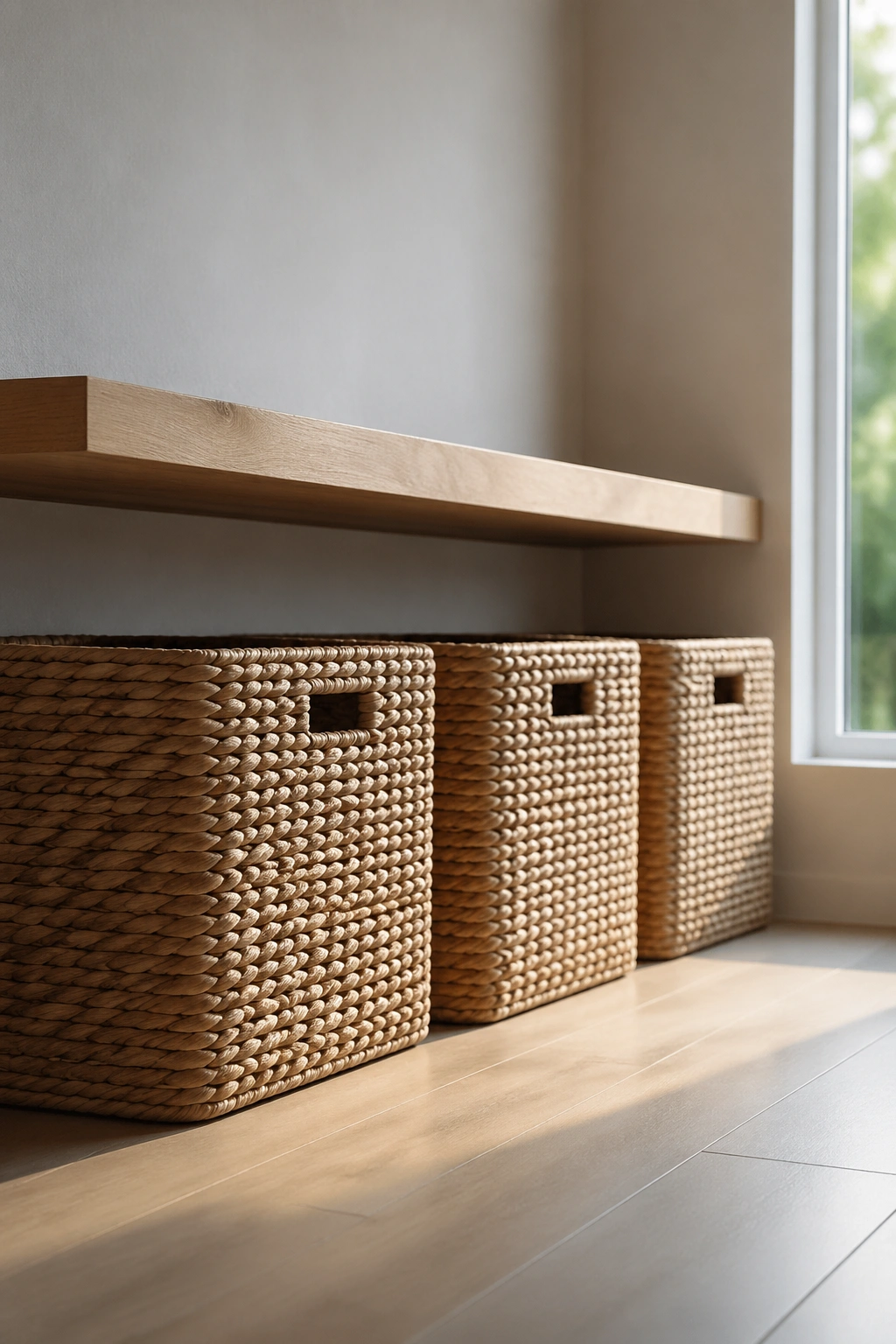
Baskets are useful, but they can turn into visual clutter if you use too many different sizes, colors, and weaves. I’d rather see three matching baskets under one shelf than five mixed baskets scattered through the room.
Use them for straps, blocks, rolled towels, or extra socks. Keep the contents simple. If a basket starts holding random mail or spare chargers, it has stopped being yoga storage and started being a dumping ground.
What makes a basket work
- One material repeated across the room, like seagrass or felt.
- One color family so the storage disappears into the background.
- A flat lid or open top depending on how often you reach inside.
Round baskets feel softer. Square baskets waste less space. Pick based on the room, not the photo you saw somewhere else.
10. Add a Mirror Only Where Alignment Needs It
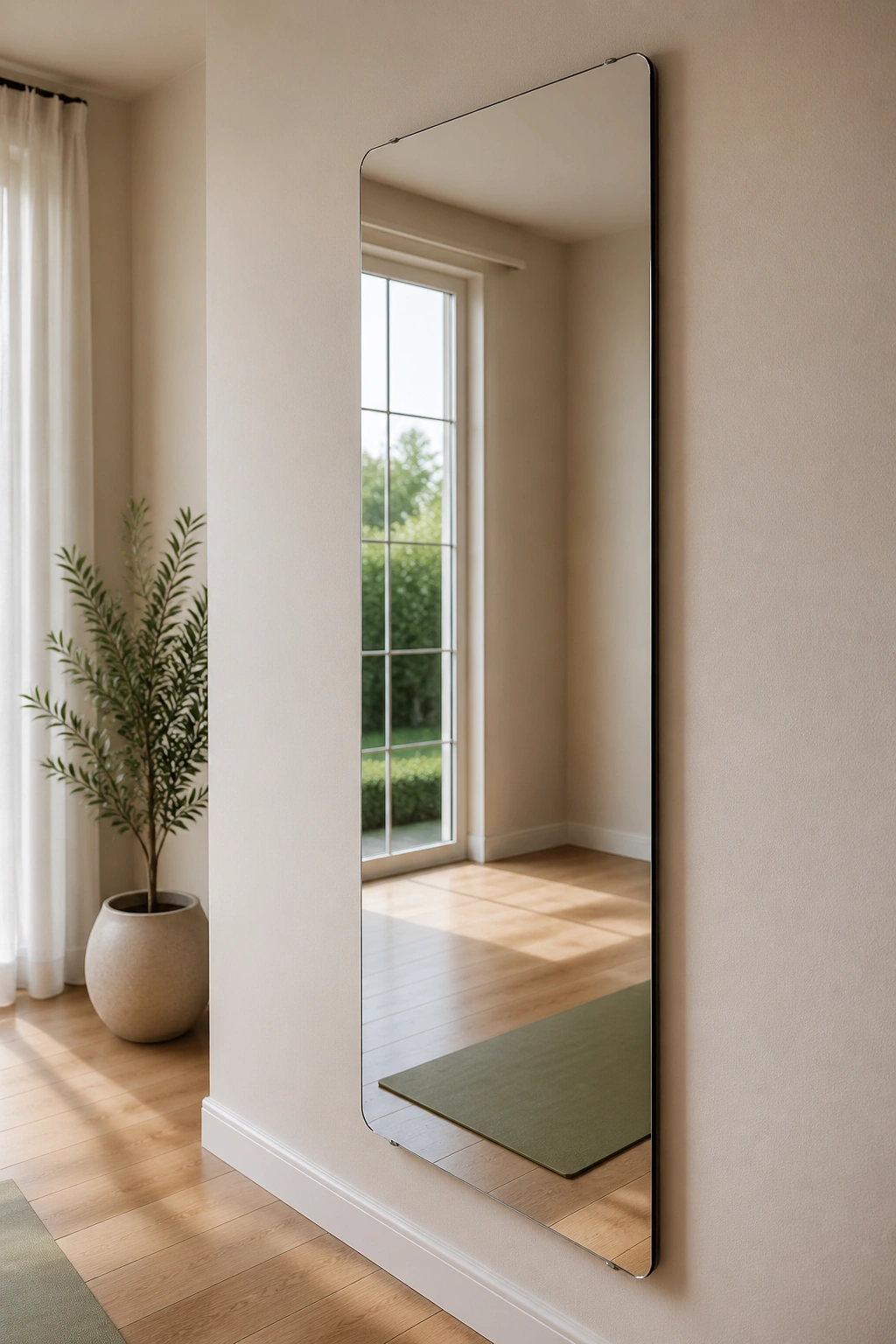
A mirror can help, but a full mirrored wall is rarely the calm move. It turns the room into a visual echo chamber. Fine for dance. Less helpful for a quiet yoga room.
A single mirror on one side wall can be useful for checking alignment in standing poses, especially if you practice alone. Place it where it won’t reflect clutter, a doorframe, or a tangle of gear. If it catches a window, even better, because it can bounce light without adding noise.
Where a mirror earns its keep
If you use one, keep it slim and simple. A frame that disappears into the wall color is usually better than something ornate. You want the mirror to help you, not announce itself every time you sit down.
11. Soften the Windows with Linen Curtains or Simple Shades
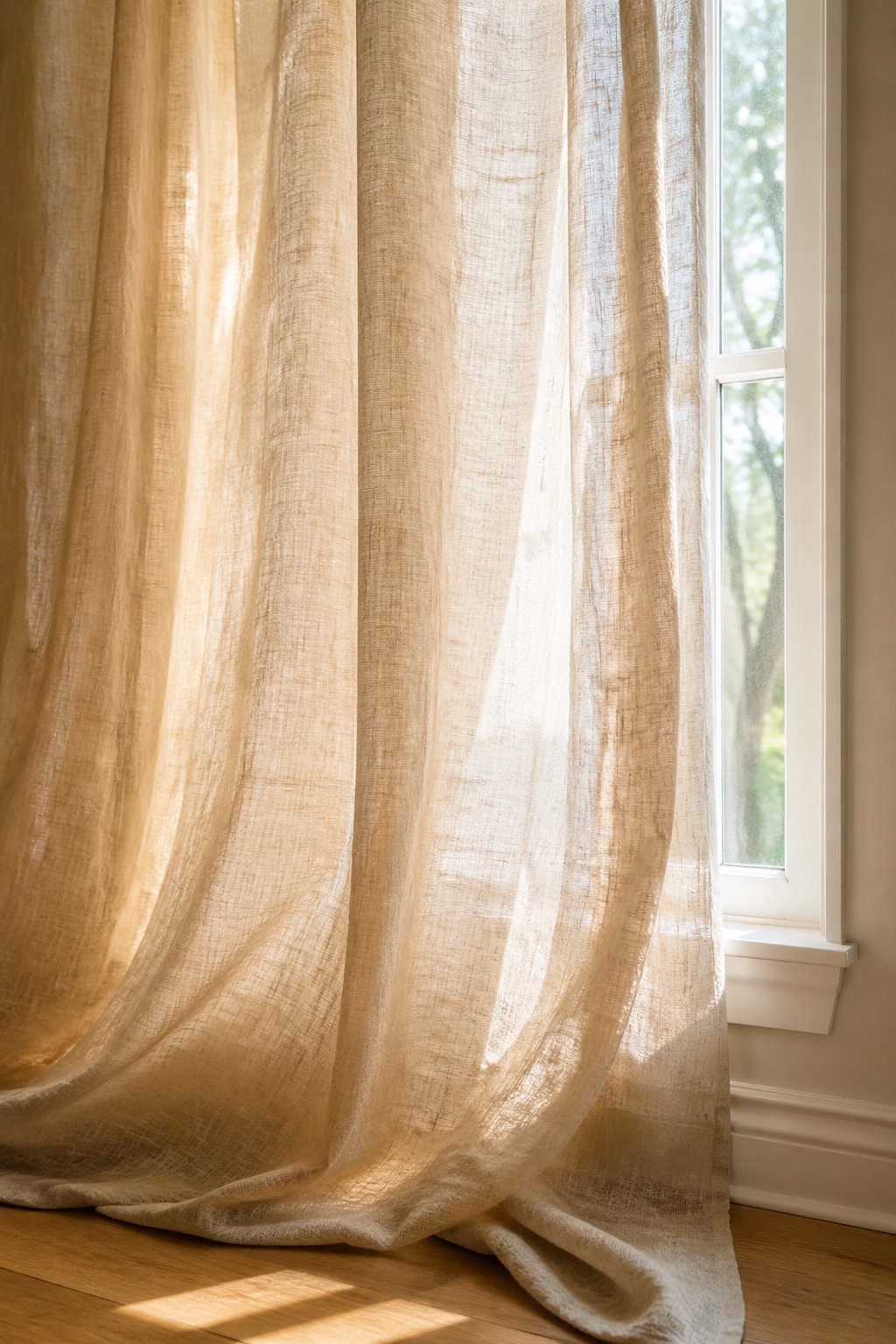
Windows can make a yoga room feel open, but they can also make it feel exposed. The fix is usually soft window treatment, not heavy drapery. Linen curtains, woven shades, or plain Roman shades can keep the space bright while taking the edge off direct sun.
I like fabrics that move a little when the air shifts. That tiny motion makes the room feel alive without looking busy. Heavy blackout curtains can be useful if the room doubles as a sleeping space, but they often feel too dense for a calm practice room unless the room is unusually bright.
Choose hardware that disappears. Matte rods, simple rings, or hidden tracks all work. The goal is to let the window do its job without turning into the main character.
12. Quiet the Room with Textiles and Soft Surfaces
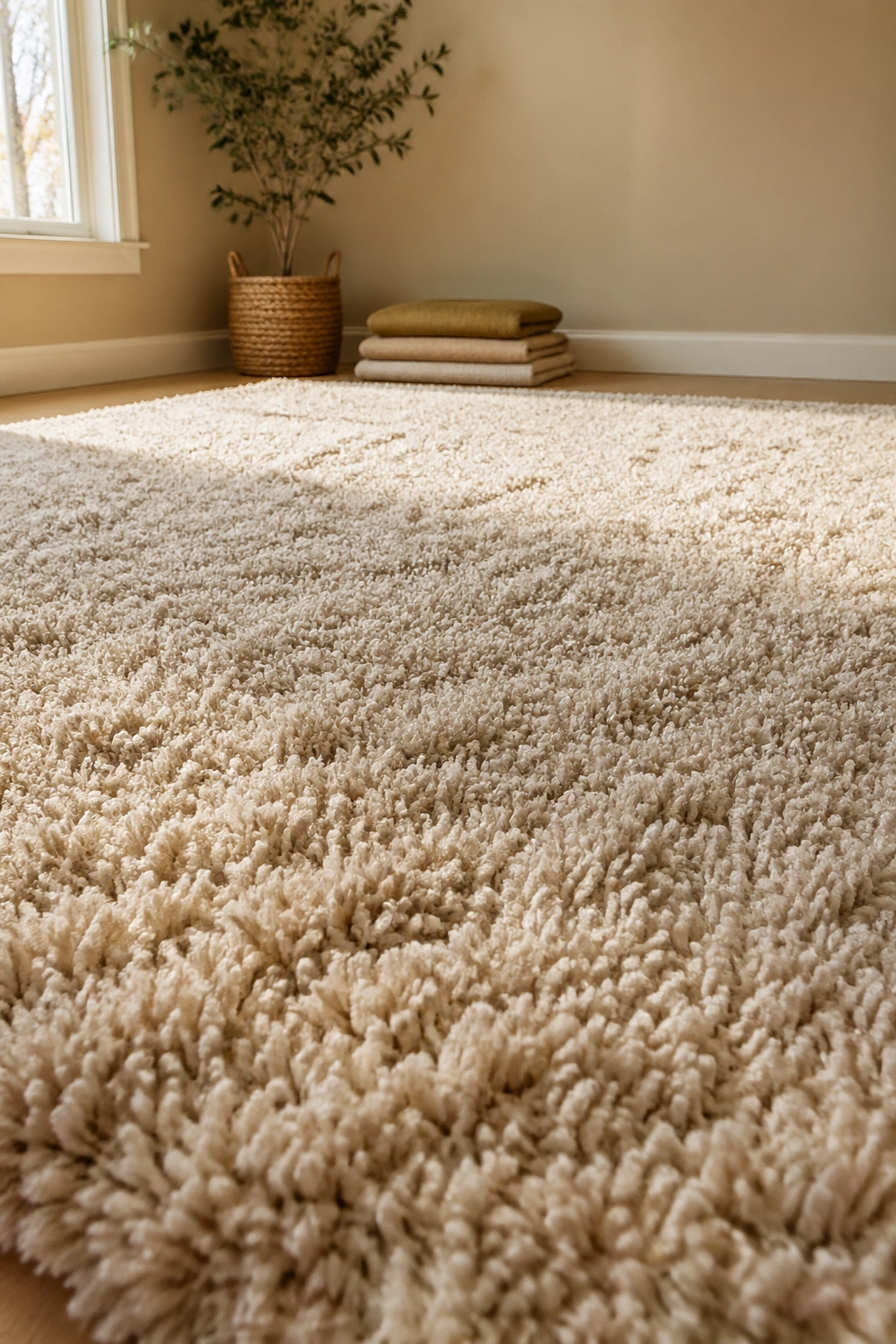
Sound changes mood faster than most people realize. A room with hard floors, bare walls, and sharp corners can feel loud even when nobody is speaking. Add a rug, a woven wall hanging, or a linen bench cushion and the room settles down.
This is one place where texture matters more than pattern. Soft surfaces absorb a little noise and stop the room from bouncing sound around. You don’t need to stuff every wall with fabric. One rug under the practice area and one soft textile on the wall is often enough.
If the room has echo, this section is where I’d spend the money first. It is not glamorous, but it pays off every single session.
13. Build a Small Meditation Corner with One Cushion
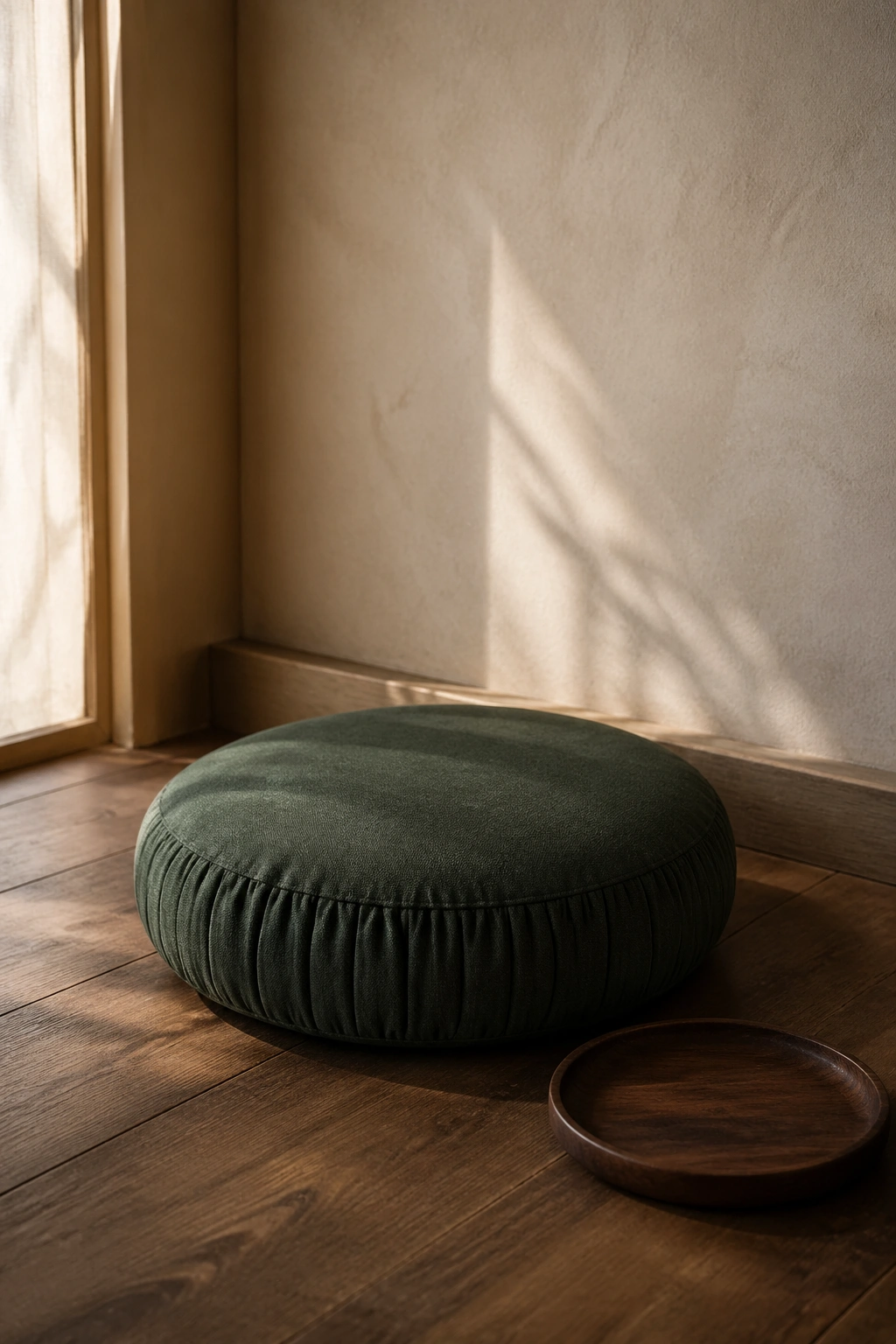
A yoga room feels more complete when it has a place for stillness, not only movement. A small meditation corner does that job. One cushion, one low table or tray, maybe a timer. That’s enough.
Keep the corner modest. A floor cushion can sit near a wall, a window, or beneath a quiet piece of art. If you add a small tray, use it for a candle, a bell, or nothing at all. The point is to create a pause in the room, not a shrine to stuff.
If you practice for ten minutes before or after movement, this little corner becomes a natural landing spot. Nice and simple. No drama.
14. Hide Cords, Chargers, and Screens
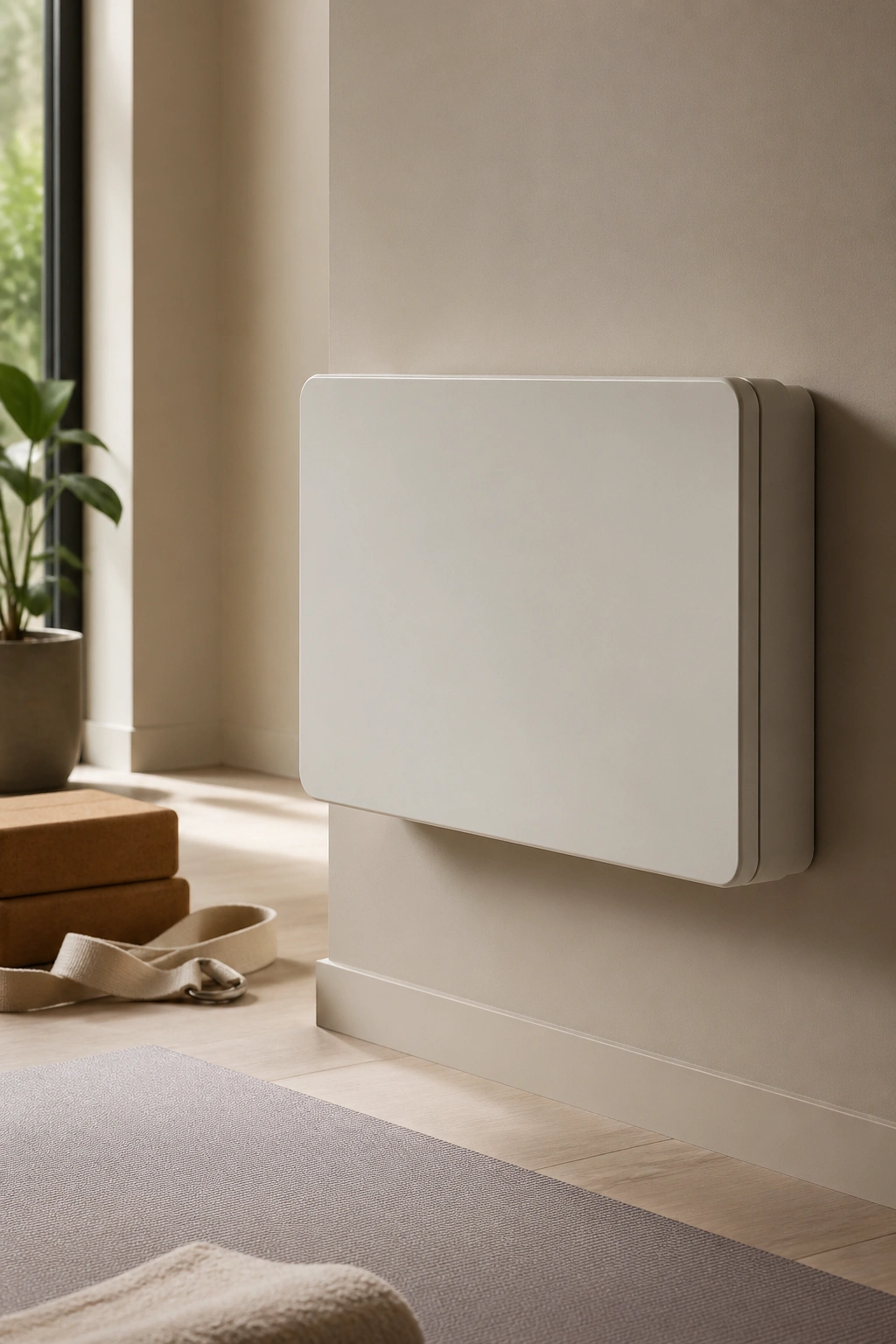
Cables ruin a calm room fast. They pull the eye straight out of the practice space and back into the rest of life. If you can see a charging cord, a power strip, or a blinking screen, the room stops feeling restful.
Use a closed box for charging, a cable clip along the back edge of furniture, or a small drawer for tech. Better yet, keep screens out of the room unless they’re truly needed. I know some people like a playlist or timer nearby. Fine. But the setup should disappear when you’re not using it.
What to tuck away
- Phone chargers and spare cords.
- Power strips with visible lights.
- Headphones that end up on the floor.
- Tablets or remotes that don’t belong in a practice room.
Clean rooms are not magic. They’re mostly rooms where the ugly little stuff has somewhere to go.
15. Use a Washable Rug for the First Layer of Softness
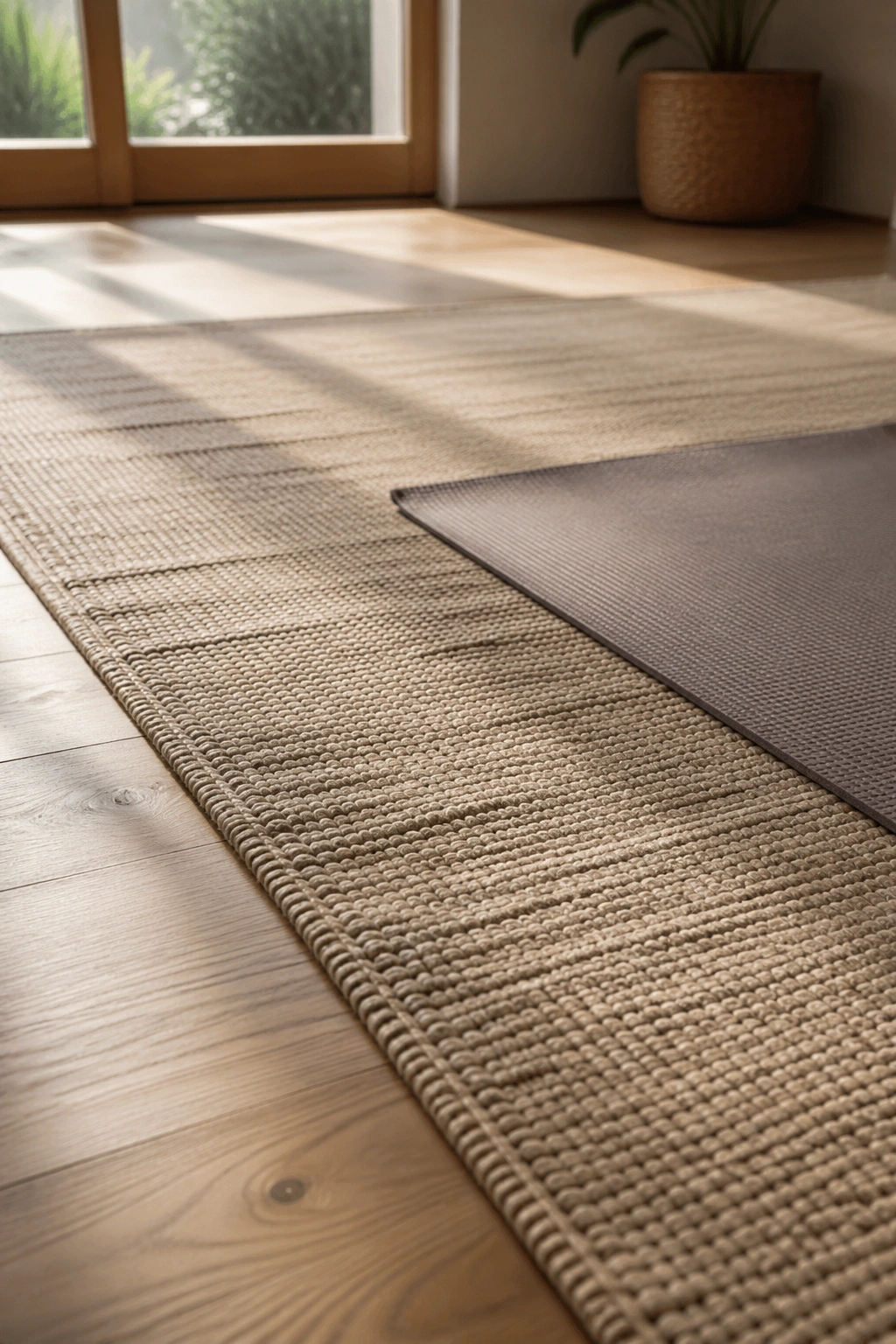
A washable rug is one of the most practical yoga room ideas out there, especially if the room gets heavy foot traffic or doubles as another space. It gives you warmth underfoot without becoming precious.
Flatweave rugs work well because they lie down neatly and don’t trap a ton of dust. Look for a non-slip pad underneath. That matters more than the rug pattern, honestly. A pretty rug that slides is a nuisance.
I’d choose a low-contrast design or a solid tone in oatmeal, pale gray, or muted clay. Busy patterns can make your mat feel like it’s floating on top of visual noise. A quiet rug does the opposite. It makes the room feel finished.
16. Hang a Peg Rail for Towels, Straps, and Light Gear
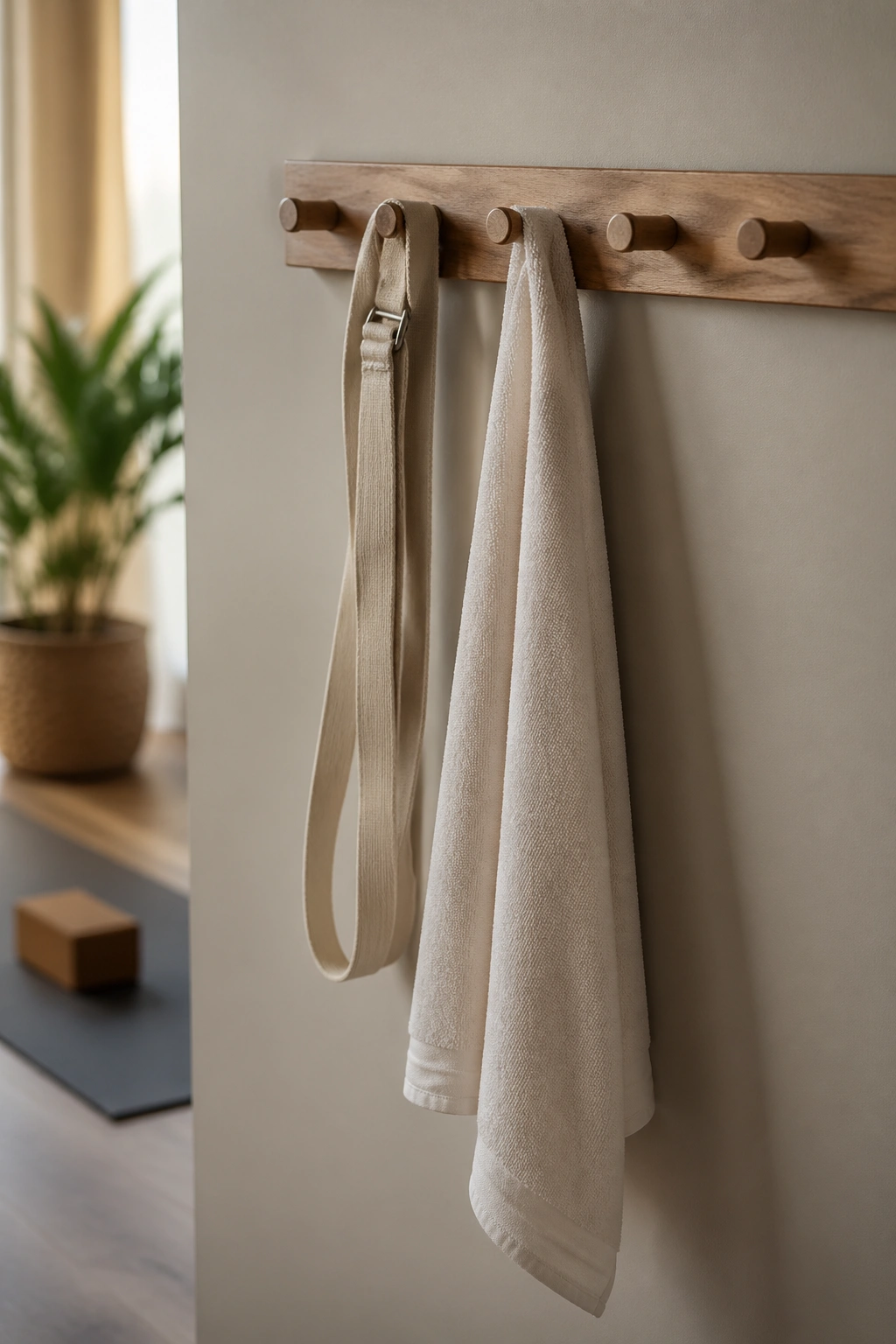
A peg rail is simple, which is why I like it. It gives every day-use item a place without asking for a full cabinet. Towels, a strap, a light shawl, maybe one tote bag — that’s enough.
Three to five pegs is usually plenty. More than that, and the wall starts looking like a coat rack that wandered into the wrong room. Keep the items light and useful. Heavy bags and thick jackets belong elsewhere.
How to keep it tidy
Place the rail near the door or beside the storage cabinet, not in the center of the wall. Then the room still feels open, and the gear stays out of the way. If everything has one hook, you’re less likely to toss things on the floor.
17. Keep a Water and Tea Spot Very Simple
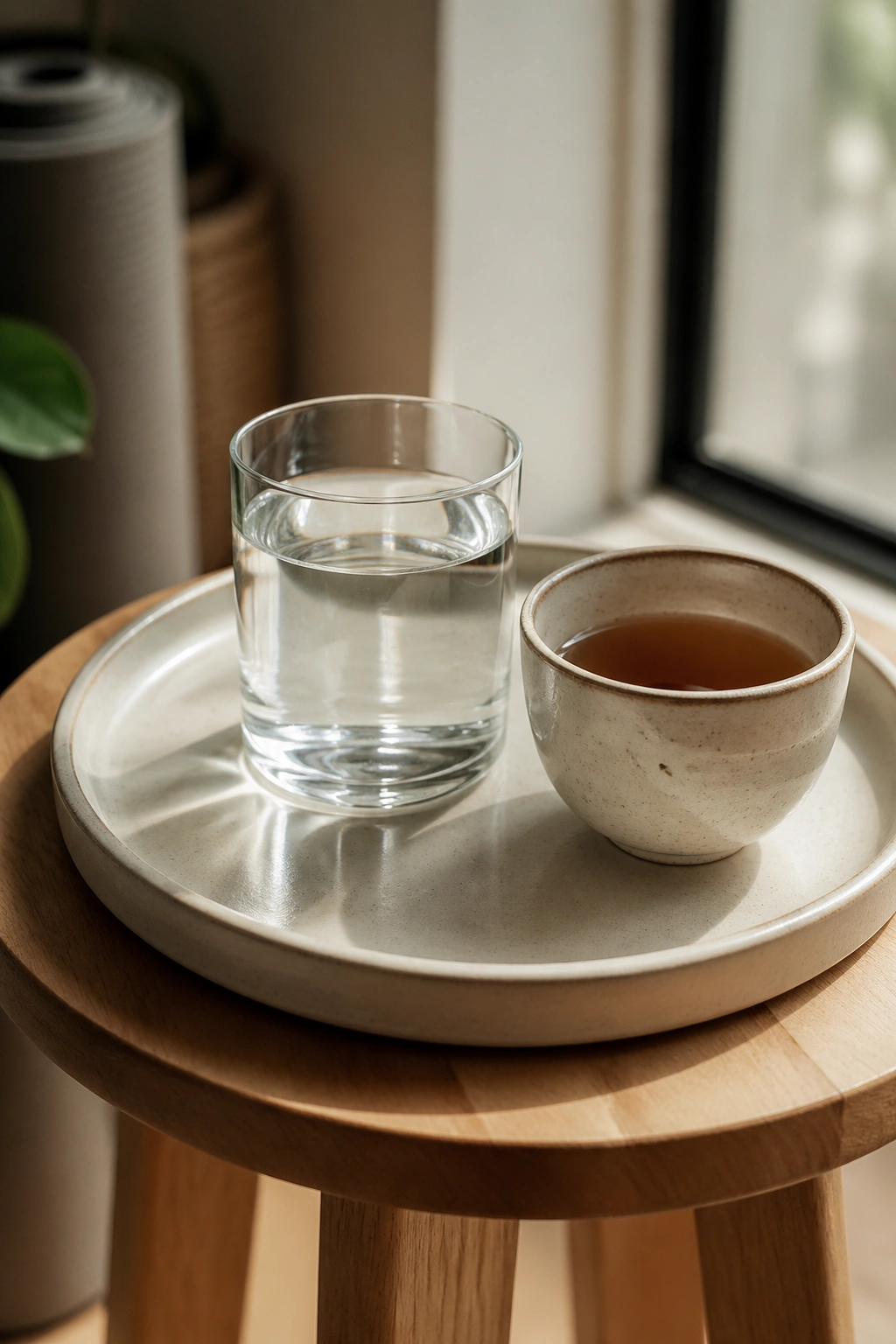
A yoga room can include a tiny refresh station without turning into a kitchenette. The key is restraint. One tray, one bottle or carafe, one cup. That’s it.
I like a small ceramic tray on a side table or shelf. It holds a water glass, a thermos, or a mug without spreading out across the room. If you enjoy tea after practice, keep the tea tools in a closed container nearby, not lined up on the surface all day.
This little station becomes part of the ritual. It says the space is for taking care of yourself, not just stretching. Keep it neat and wipe it down often. Water rings and loose tea bags are not the vibe.
18. Bring in Bamboo, Oak, Jute, and Linen in Small Doses
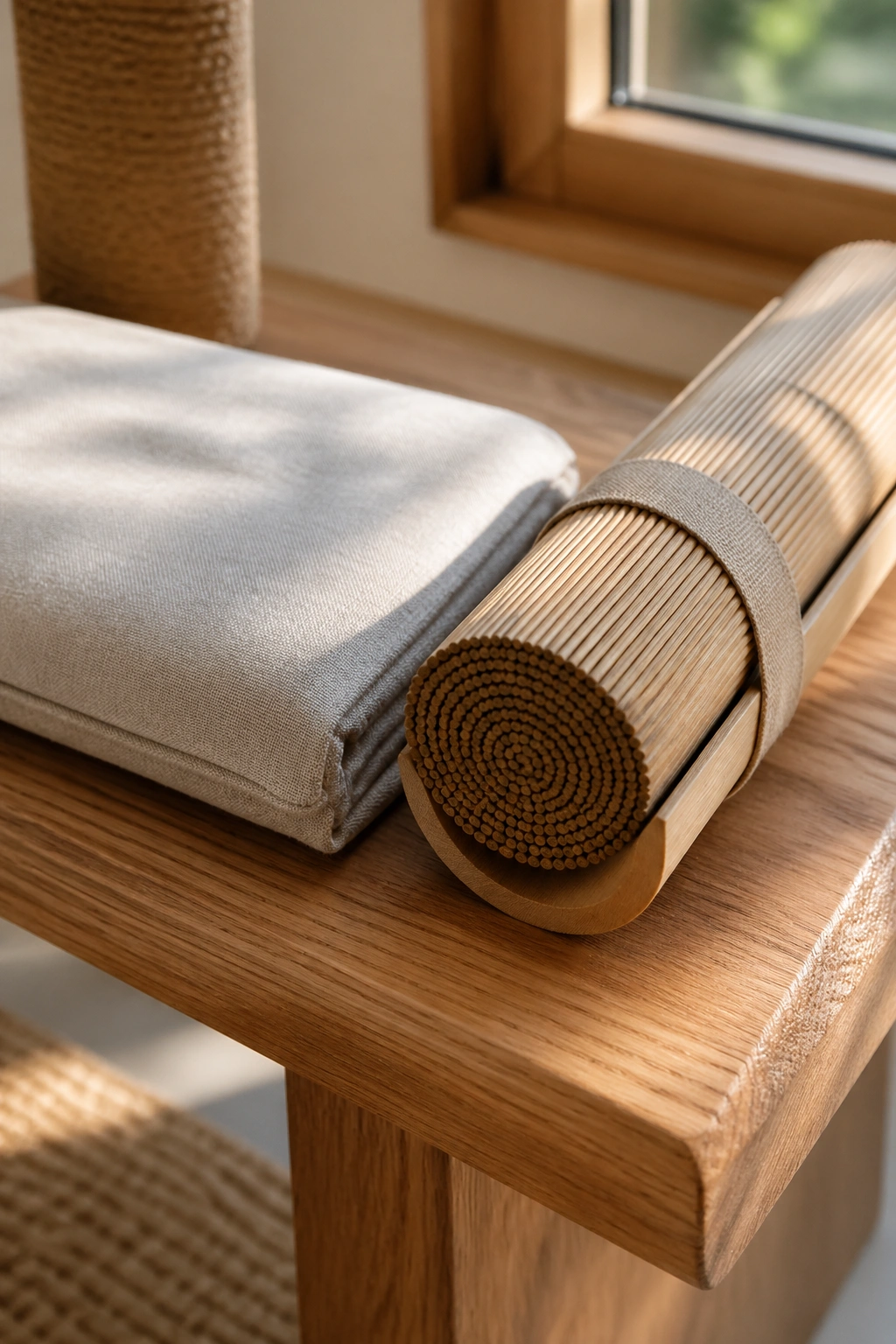
Natural textures calm a room fast, but there’s a catch: too many can make the space feel busy and rustic in a way that fights the clean look you want. I’d rather repeat two or three materials than toss in every texture available.
Bamboo, oak, jute, linen, and stone all work well in a yoga room because they feel grounded and simple. A bamboo mat holder, an oak bench, and a linen cushion cover can speak the same design language without matching exactly. That repetition is what makes the room feel coherent.
A good texture rule
Use one smooth surface, one woven surface, and one soft surface. That trio is enough. Anything beyond that should earn its place.
19. Paint the Ceiling and Trim the Same Tone as the Walls
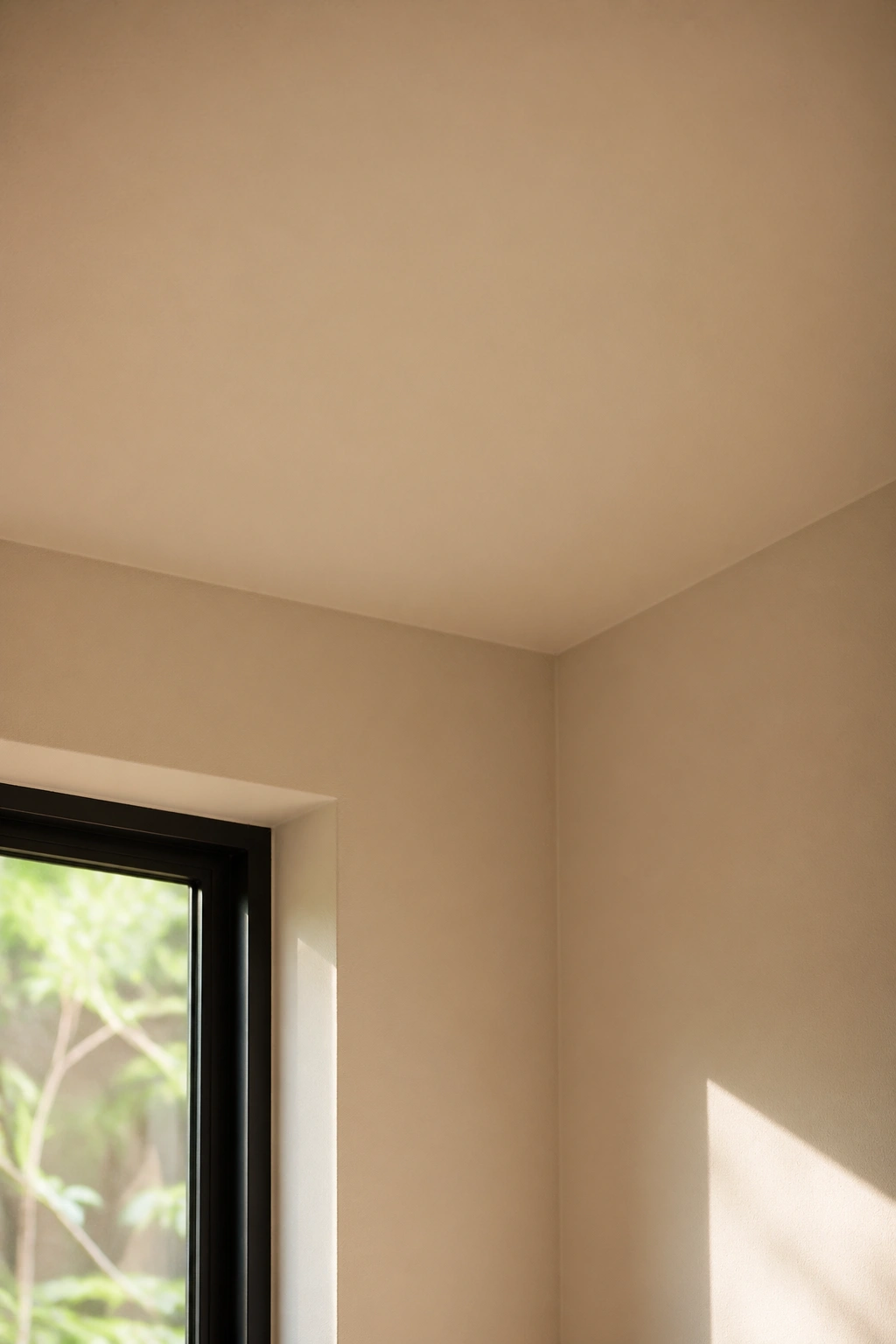
This is the quiet design move people underestimate. Matching the ceiling and trim to the wall color blurs the edges of the room, which makes the whole space feel calmer and a little larger.
High-contrast trim can look crisp in a hallway or living room. In a yoga room, it can create too many visual breaks. The eye keeps stopping. A close color match lets the room flow more naturally.
It also keeps your attention lower and softer, which matters when you’re trying to settle into breath work or floor poses. The room should feel like one simple envelope. Not a patchwork.
20. Separate the Space with a Screen or Curtain
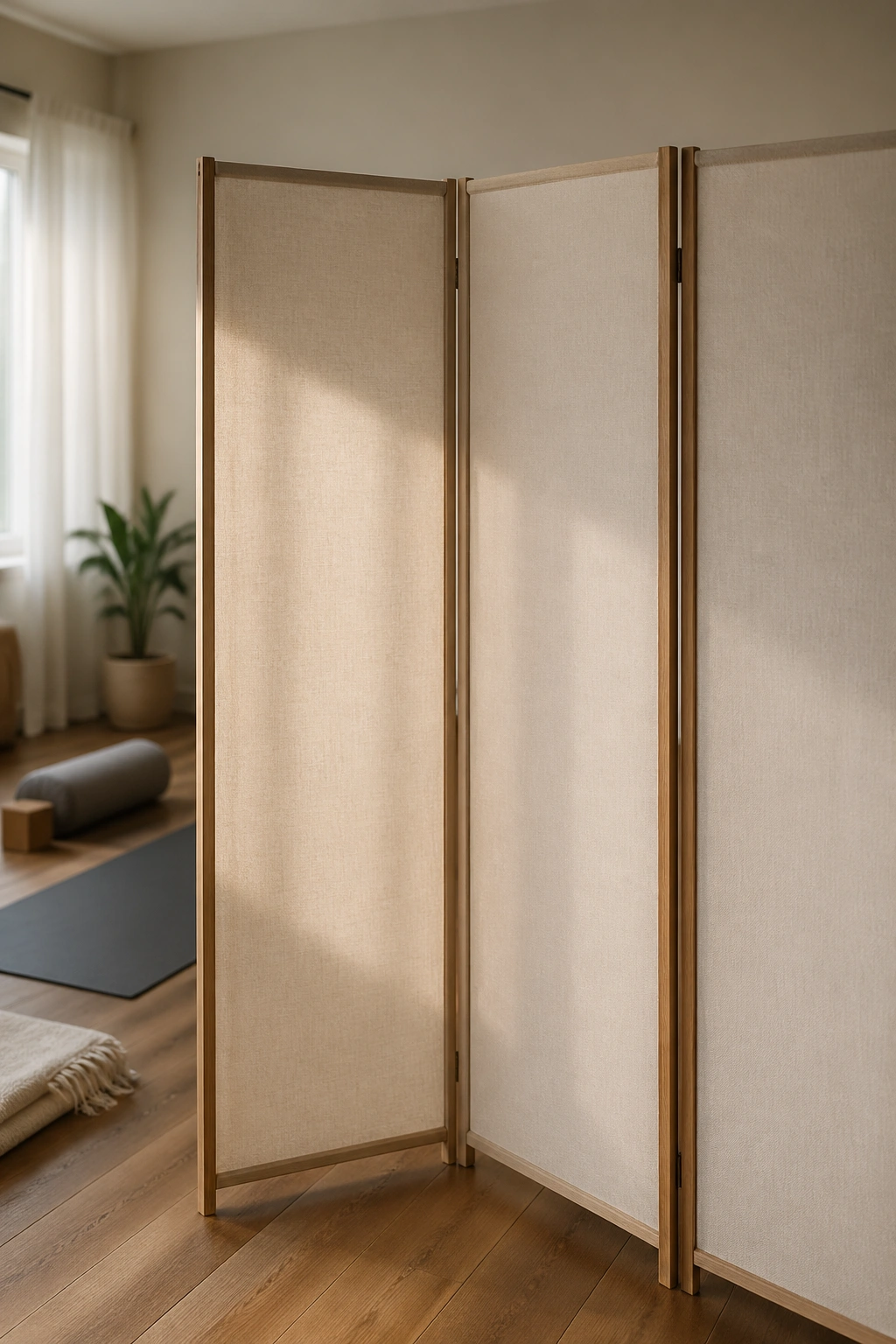
If your yoga room doubles as something else, a screen or curtain can work better than trying to make the whole room behave the same way all the time. That physical boundary changes how the room feels before you even unroll a mat.
A folding screen is easy if you need flexibility. A curtain on a ceiling track feels softer and disappears more completely when open. I lean toward a curtain for narrow rooms and a screen for spaces that need a touch of structure. Both beat a pile of furniture pretending to be a room divider.
The trick is to keep the divider plain. Neutral fabric, simple wood, no heavy pattern. You want a boundary, not a second design problem.
21. Set Up a Reset Basket for Fast Cleanup
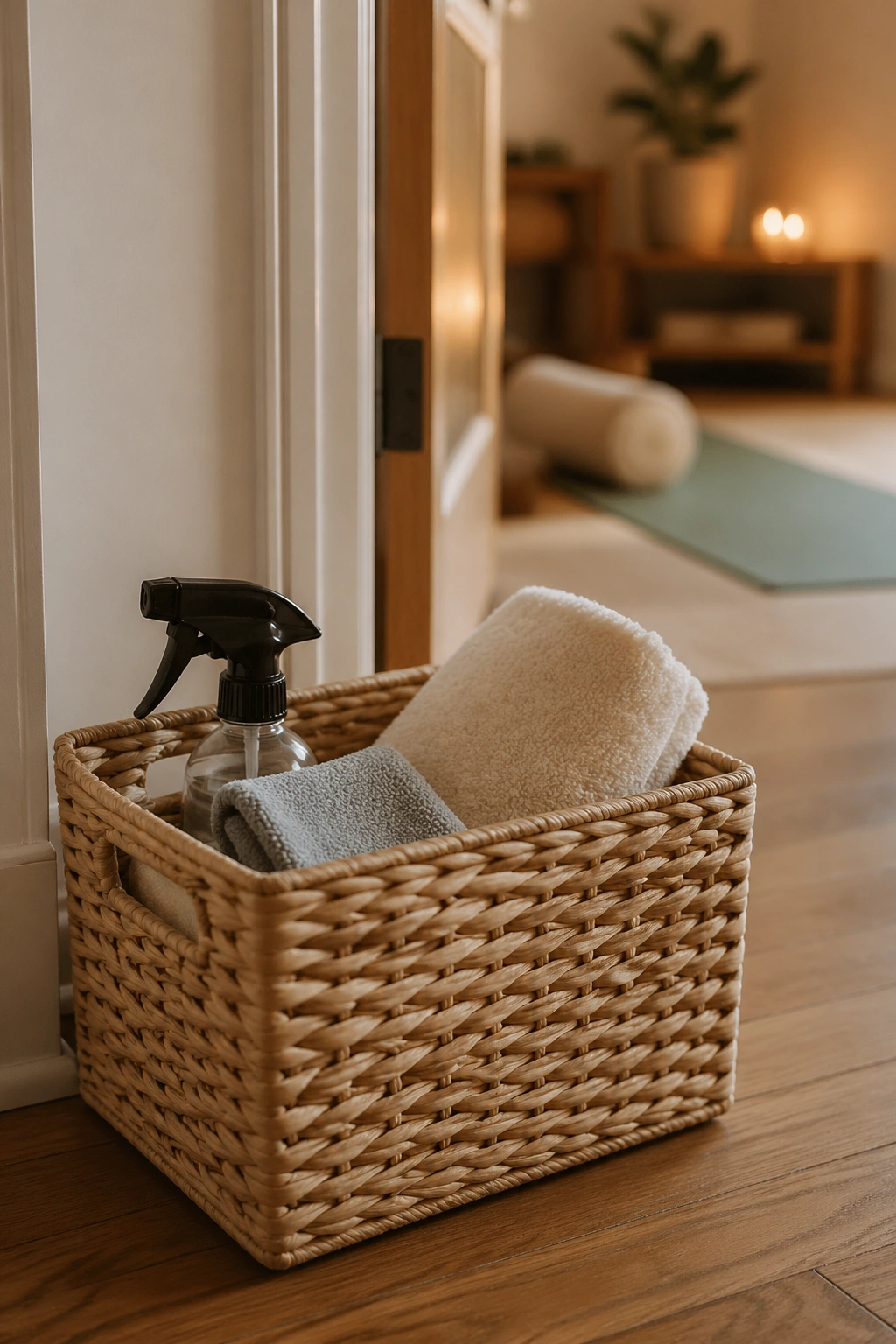
A yoga room stays calm when cleanup is fast. A reset basket makes that possible. I like to keep one near the door with a microfiber cloth, a mat spray, a spare towel, and one small bin for stray things that do not belong in the room.
The basket turns the end of practice into a short habit instead of a vague promise. When everything has a landing spot, you can clear the room in three minutes and move on with your day.
A simple reset basket can hold
- Mat cleaner or spray in a small bottle.
- Cloth or towel for wiping down sweat marks.
- Storage tags or labels if you rotate gear.
- One catch-all pouch for hair ties, clips, or tiny items.
A room that resets quickly gets used more often. That is the whole point.
22. Leave Breathing Room on Every Side
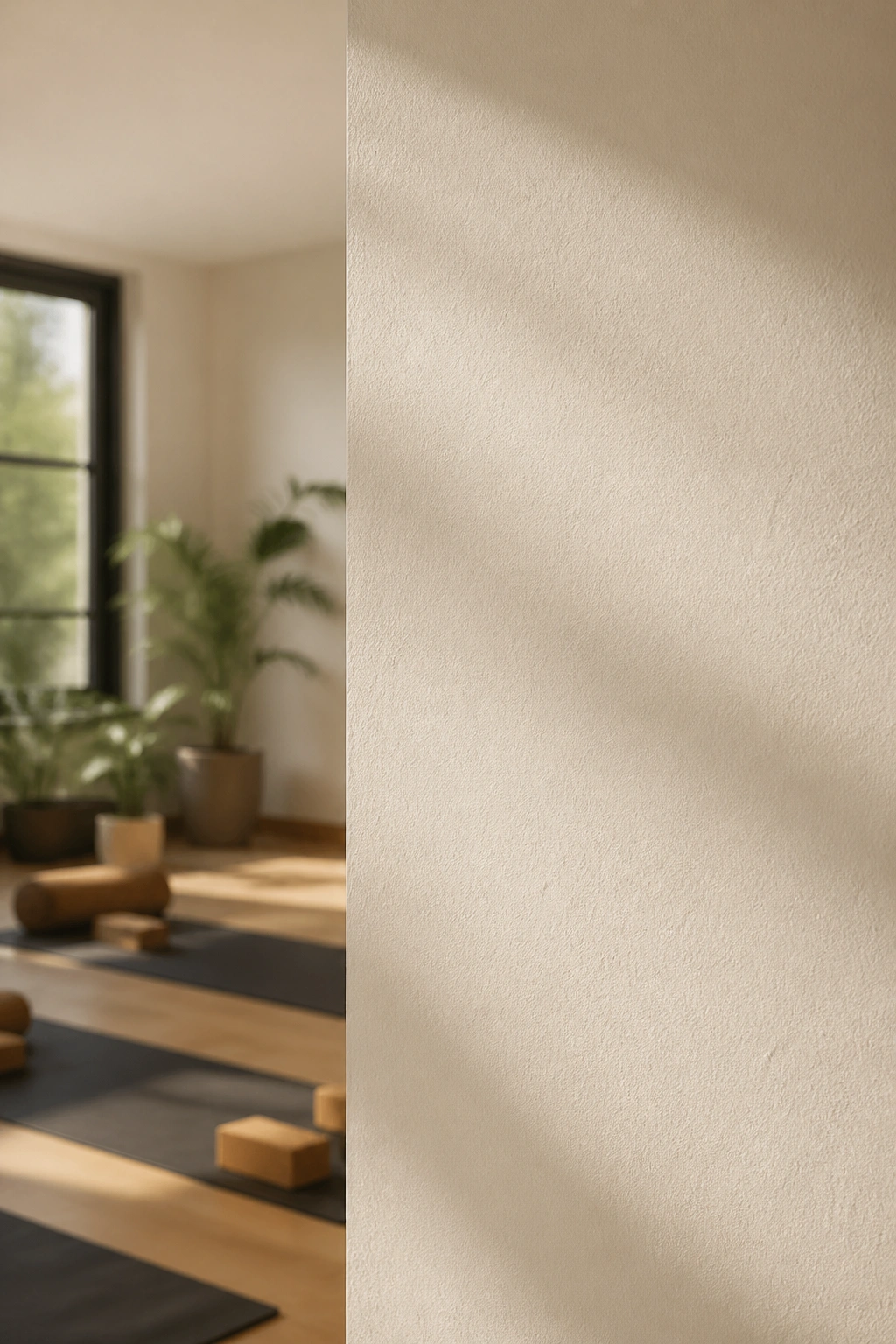
The cleanest yoga room is often the one that leaves a little out. That sounds almost too simple, but it matters. Empty wall space, open floor, and one or two carefully chosen objects make the room feel less busy and more usable.
If you’re deciding between one more decorative item and a blank patch of wall, I’d take the blank patch. Every time. Calm rooms need slack in the design. They need room for the body to move and the mind to stop scanning.
The nicest yoga room ideas are not about adding more. They’re about editing hard enough that the room can breathe with you. Keep the mat visible, the storage closed, and the surfaces easy to wipe. That’s the kind of room you’ll actually want to return to, which is the only test that really matters.
