



Yoga poses for IBS and sensitive digestion work best when they are quiet, not dramatic. A belly that feels bloated, crampy, or oddly tender does not want a power flow; it wants small shapes, slow exhales, and a floor or bolster that takes some weight off the abdomen.
That matters because the digestive tract tends to get fussy when the nervous system is braced. A long exhale, a softer belly, and a position that does not pinch the front body can make a practice feel safer within minutes. The goal is not to fix your gut with a stretch. It’s to stop piling strain onto a system that already feels overloaded.
I think of these poses as pressure valves. Some create a tiny squeeze and release, some open the ribs, and some simply let you lie down without guarding every muscle in your midsection. You’ll also notice that the same posture can feel wonderful for gas and terrible for reflux, which is why the details matter.
If your symptoms are new, severe, or come with blood, fever, vomiting, or unexplained weight loss, skip the mat and get checked. For everyday bloating, constipation, stress belly, or that heavy after-meal feeling, the right sequence can be a quiet relief. Start gently. Your abdomen will tell you fast enough.
1. Child’s Pose for IBS Bloating and Belly Tightness
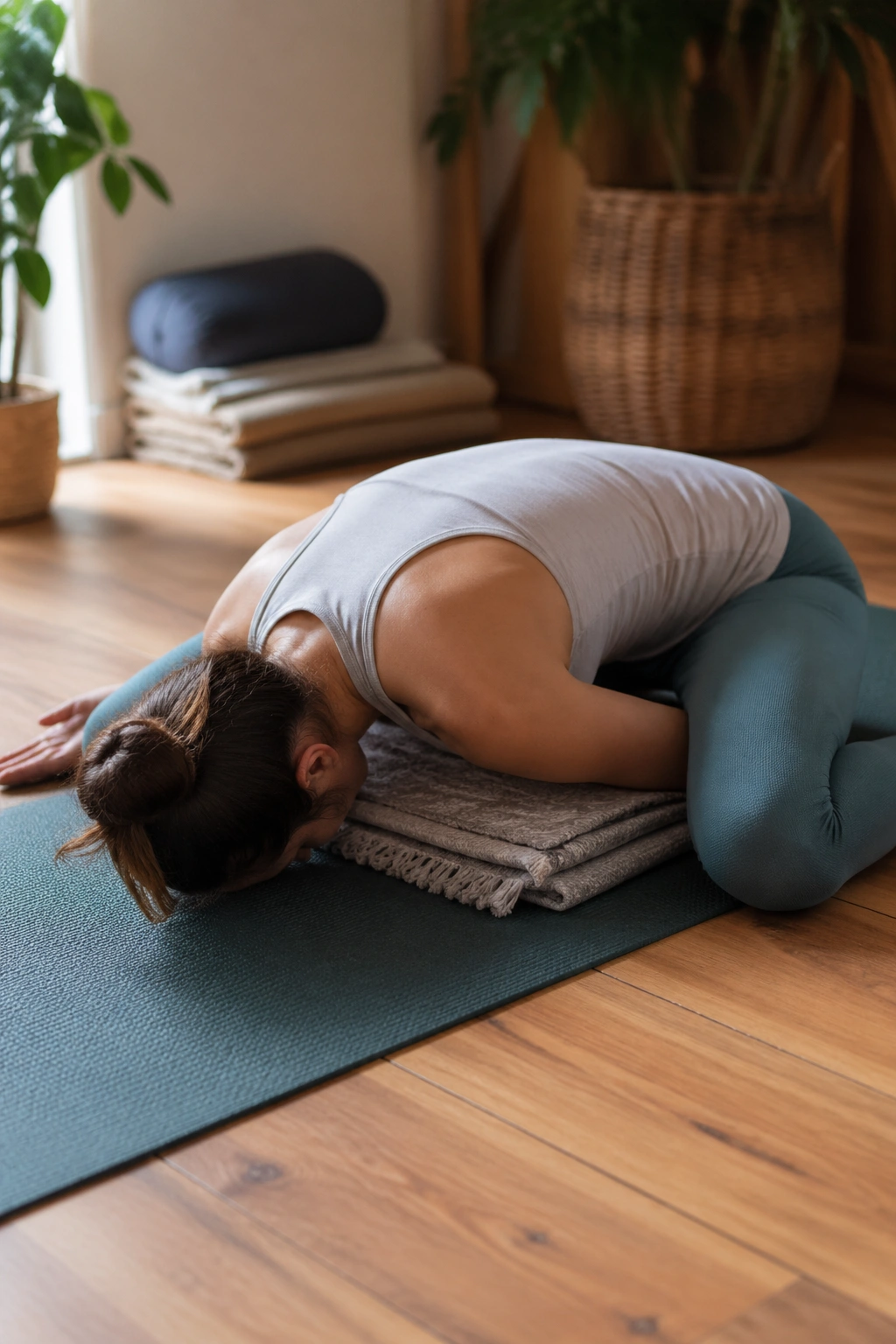
Child’s Pose is the one I reach for when the abdomen feels like it’s wearing a belt one notch too tight. The beauty of it is not the shape itself. It’s the permission it gives the body to stop holding itself upright for a minute.
A wide-knee version usually feels better for sensitive digestion than the standard knees-together shape. Put a folded blanket or bolster under your chest, let your forehead rest down, and keep your arms long or bent, whichever feels less grabby in the shoulders. Breathe into the back of the ribs instead of trying to push the belly forward.
A version that usually feels safest
- Knees wide enough that the belly has space to soften.
- Big toes touching only if that feels easy on the hips.
- Bolster, block, or folded blanket under the chest.
- 5 to 8 slow breaths before you decide whether to stay longer.
Small is fine. If the pose causes throat pressure, reflux, or a stuck feeling in the lower belly, lift the chest a few inches and keep the hips back. That tiny adjustment often makes the difference between calming and irritating.
2. Cat-Cow to Loosen a Guarded Belly
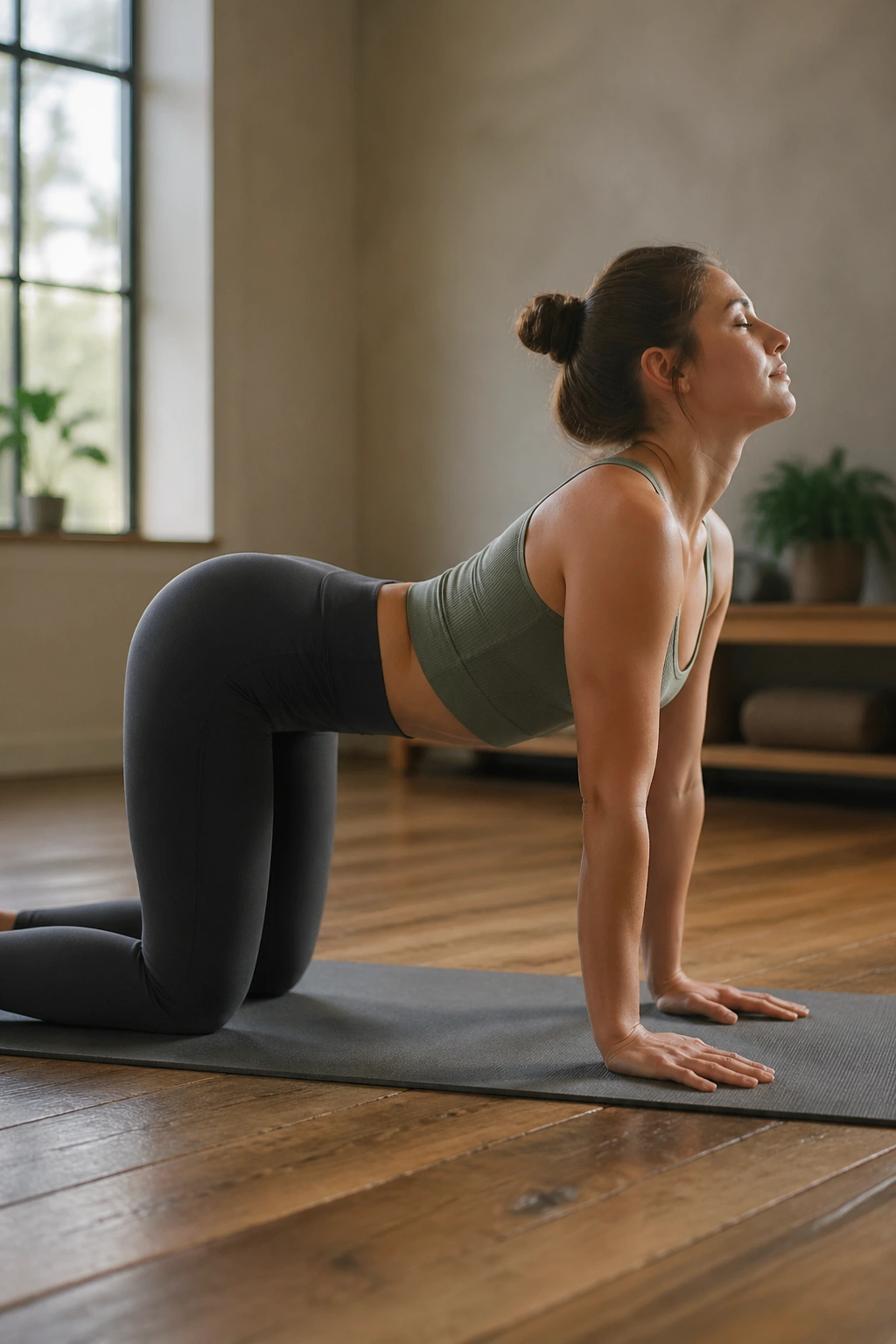
Why does such a simple movement help so much? Because the abdomen often hates being frozen in one shape. Cat-Cow gives the spine a gentle wave, and that wave tends to make the midsection feel less pinned.
Move slowly on all fours, letting the inhale guide a small arch and the exhale guide a soft round. You do not need a huge backbend or a dramatic tuck. A small, smooth range is usually better when the gut is touchy.
How to keep it gentle
- Keep the hands under the shoulders and the knees under the hips.
- Move at about one breath per shape.
- Stop the arch before the lower back feels compressed.
- Keep the jaw loose and the tongue heavy.
A lot of people rush this one because it looks easy. Don’t. When digestion is sensitive, speed can feel like noise, and this is a pose that works best when it’s almost boring.
3. Apanasana, or Knees-to-Chest, for Gas and Lower-Belly Pressure
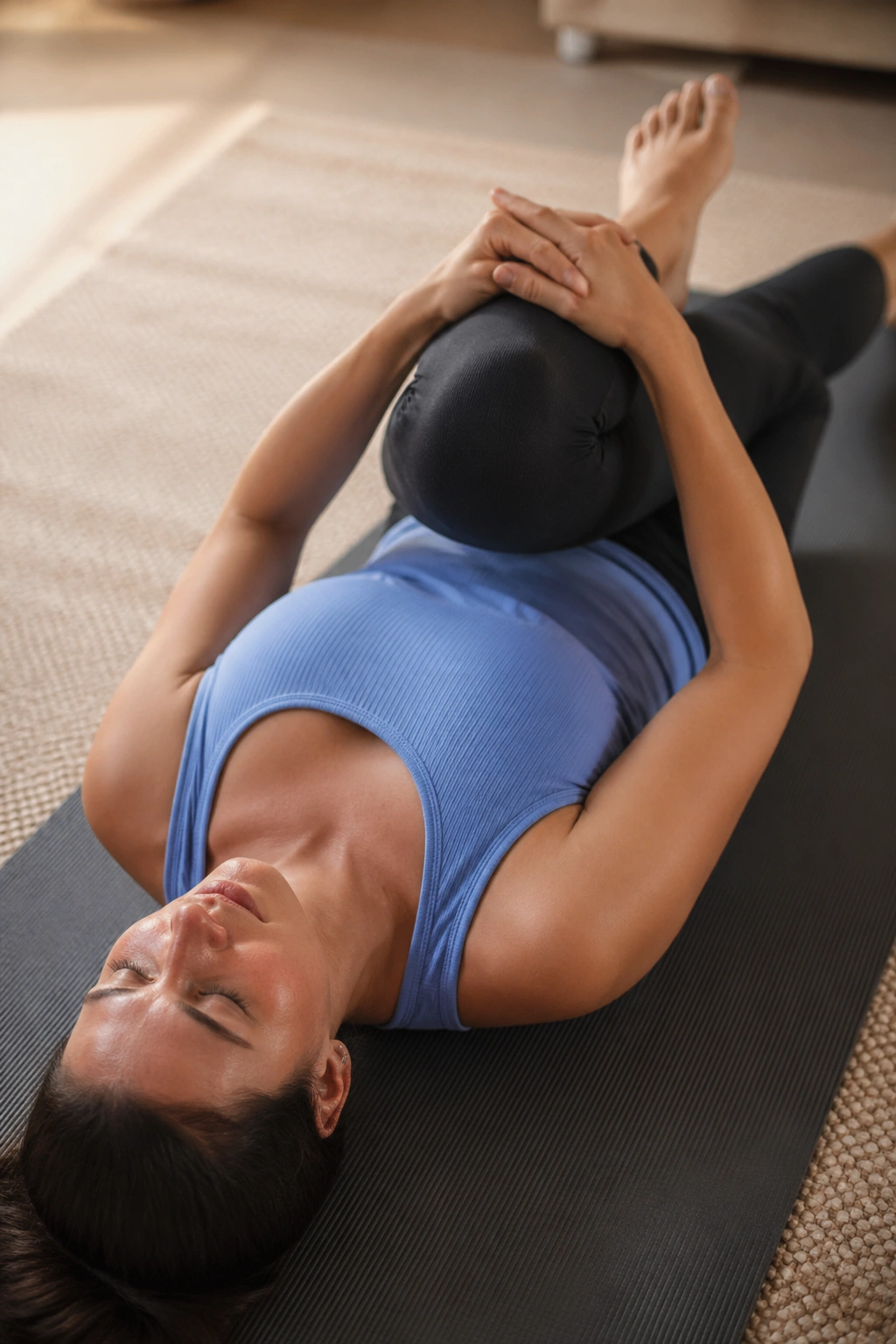
Sometimes the simplest thing is the right thing. Lying on your back and drawing one knee at a time toward the chest can feel like a careful hand under a tense lower belly, especially when pressure is sitting low and heavy.
Apanasana is easier on the stomach than many twists because it stays centered. Hold one shin, then the other, or bring both knees in if that feels okay. Keep your tailbone heavy and your face soft. If you clamp the breath, the pose becomes a fight, and that defeats the point.
One leg at a time is a good call when the low back feels cranky or the abdomen feels bruised from cramping. Both knees in can feel better for gas. Or it can feel like too much. That’s the honest answer.
Do not yank the thighs toward you. Let the exhale do the work. A 3-breath hold on each side is plenty to start with.
4. Wind-Relieving Pose for IBS Gas Pressure
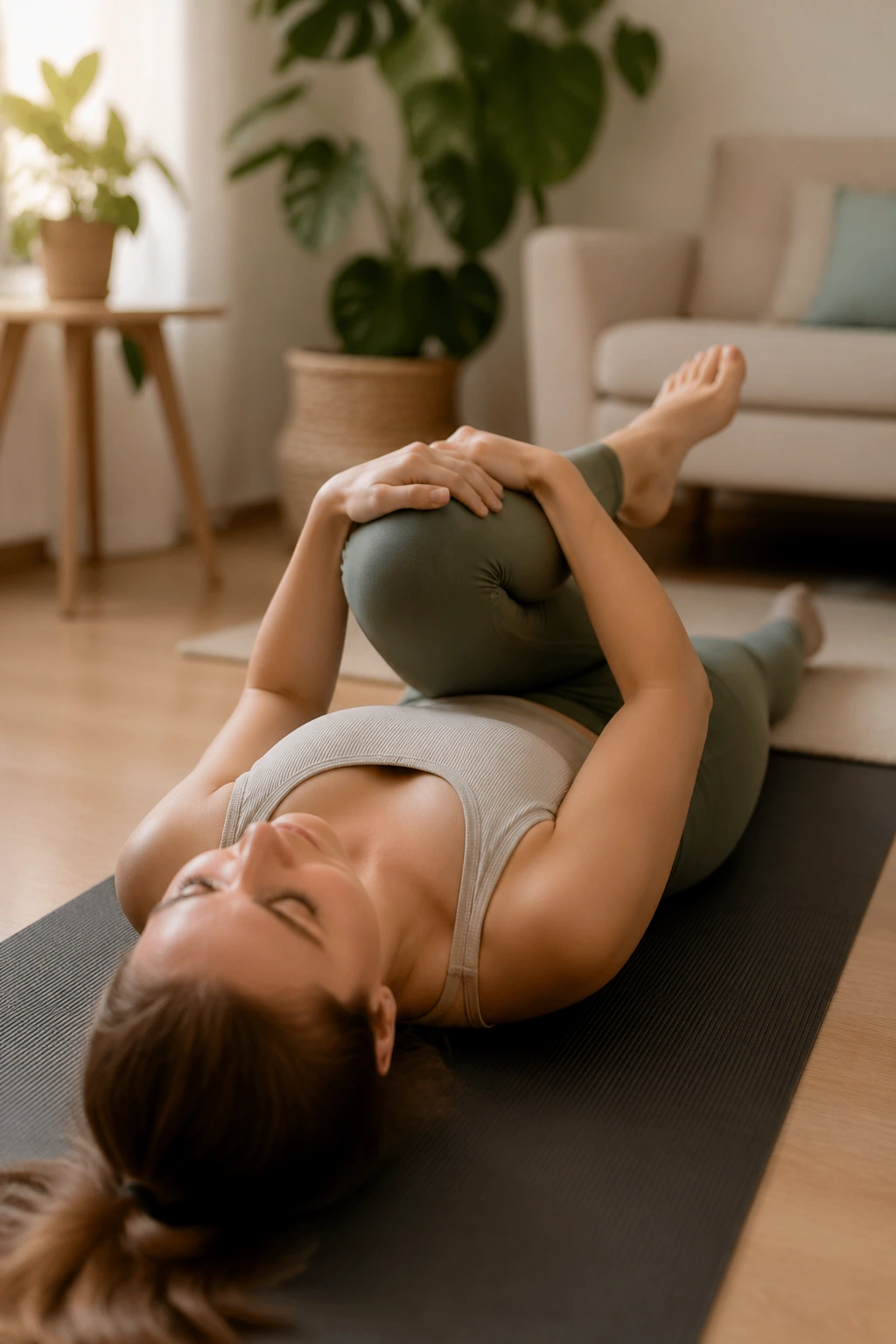
Wind-Relieving Pose has a blunt name for a reason. It creates a mild compression around the lower abdomen and hips, and that can help when trapped gas is the main complaint.
Lie on your back, draw one knee in, then the other if it still feels comfortable. Keep the other leg long if a full double-knee hug feels too tight. Some people like a tiny rock side to side. That’s fine. Little movements can help more than a fixed hold.
What to watch for
- Wait after a big meal. A fresh, overfull stomach does not love this shape.
- Keep the neck neutral, not jammed up toward the chest.
- Use a strap behind the thigh if your hands strain.
- Skip the full version if reflux is active.
This is a compression pose, not a contest. If the belly says no, use one leg only and call it done. That still counts.
5. Happy Baby When Your Belly Feels Braced
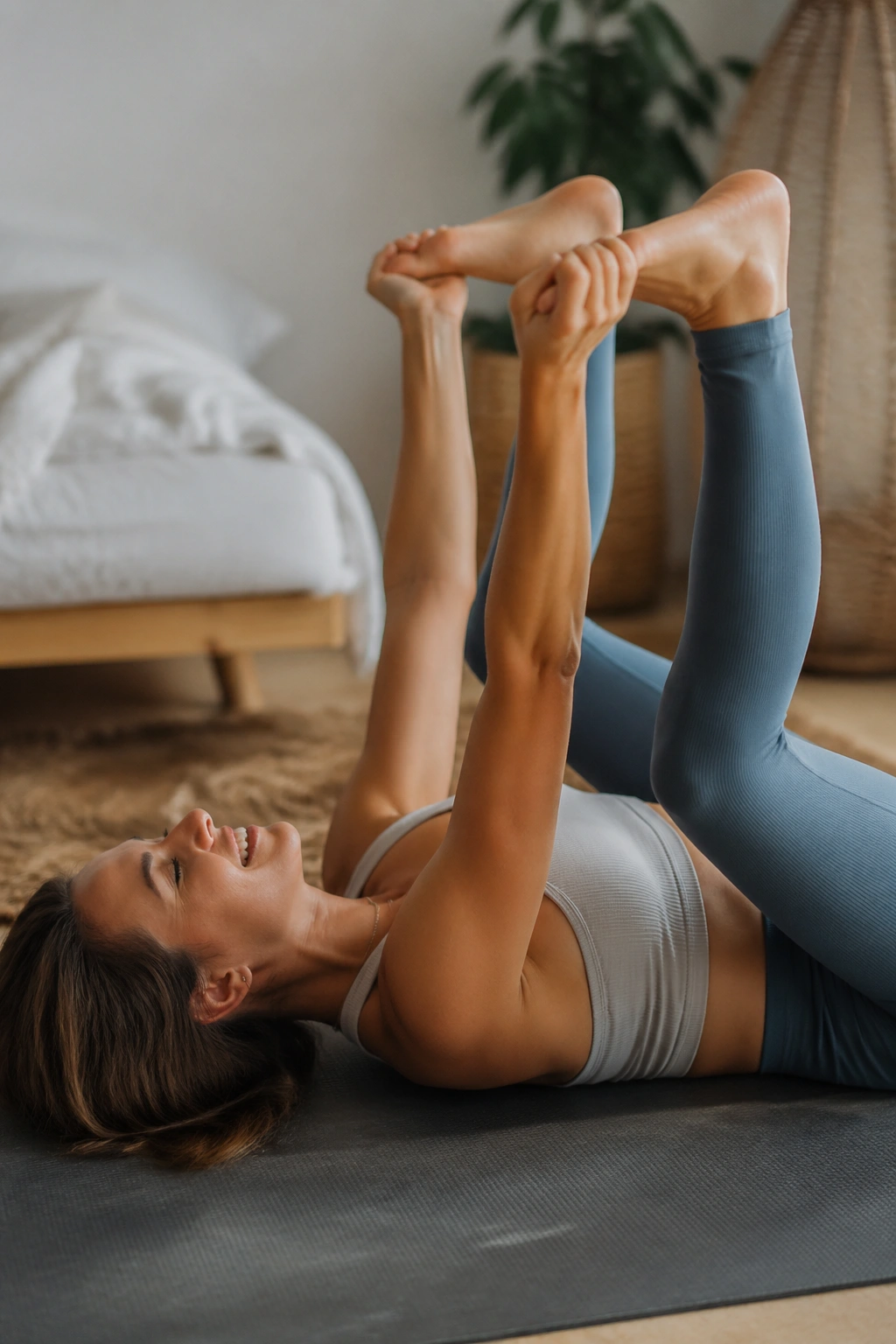
Happy Baby is less about looking cute and more about taking pressure off the low back and groin. When the pelvis feels locked down from stress, this shape can make the whole front body feel less armored.
Lie on your back, bend the knees toward the ribs, and hold the outer edges of the feet or the shins. Keep the sacrum heavy on the floor. If the hamstrings pull hard, use a strap around the feet or stay with your hands behind the thighs instead. That version is usually enough.
A lot of people crank the knees way down toward the floor. I wouldn’t. Not if the abdomen is sensitive. Let the legs float where they naturally land, and keep the elbows inside the knees only if that doesn’t create strain.
If pelvic floor tension is part of the picture, this pose can feel like a useful release. If it makes the belly clench harder, back out. No pose is worth turning your core into a fist.
6. Reclined Bound Angle for Sensitive Digestion
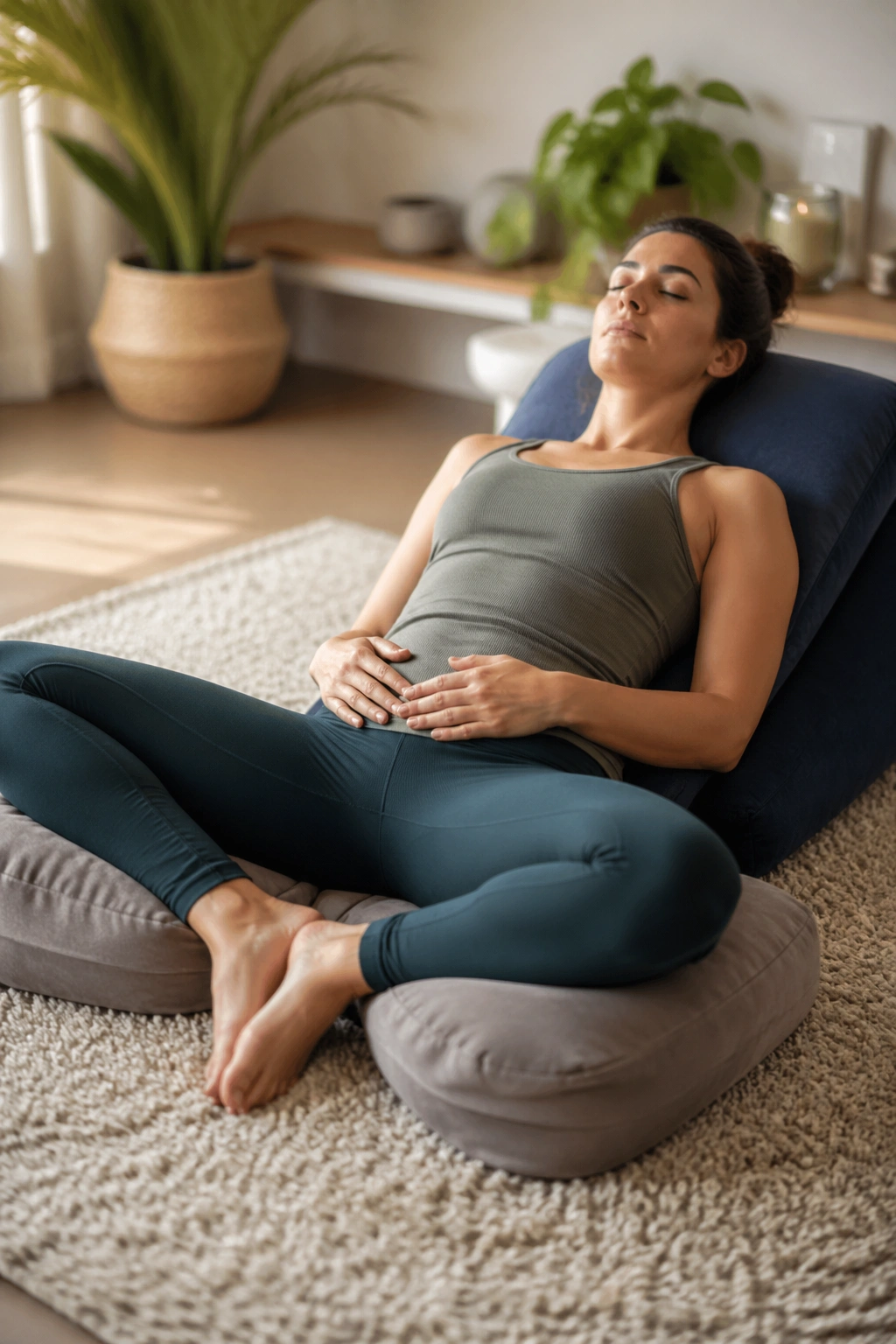
Unlike a deep butterfly shape on the floor, Reclined Bound Angle lets the thighs drop only as far as your props allow. That matters when the front body is touchy and the hips are doing too much of the talking.
Sit in front of a bolster or a stack of blankets, then lie back so the chest and head are supported. Bring the soles of the feet together and let the knees drift outward. If the inner thighs feel too open, slide blocks, pillows, or rolled blankets under each knee.
The prop setup that usually makes it work
- A bolster or folded blanket along the spine.
- One support under each knee if the hips are tight.
- A small pillow under the head if the chin lifts.
- Arms resting wide enough that the chest can spread.
This is one of the better choices when the abdomen wants rest but not pressure. If your belly is very bloated, keep the torso slightly elevated. Flat on the floor is not always the friendliest option.
7. Supine Twist for a Stuck, Heavy Feeling
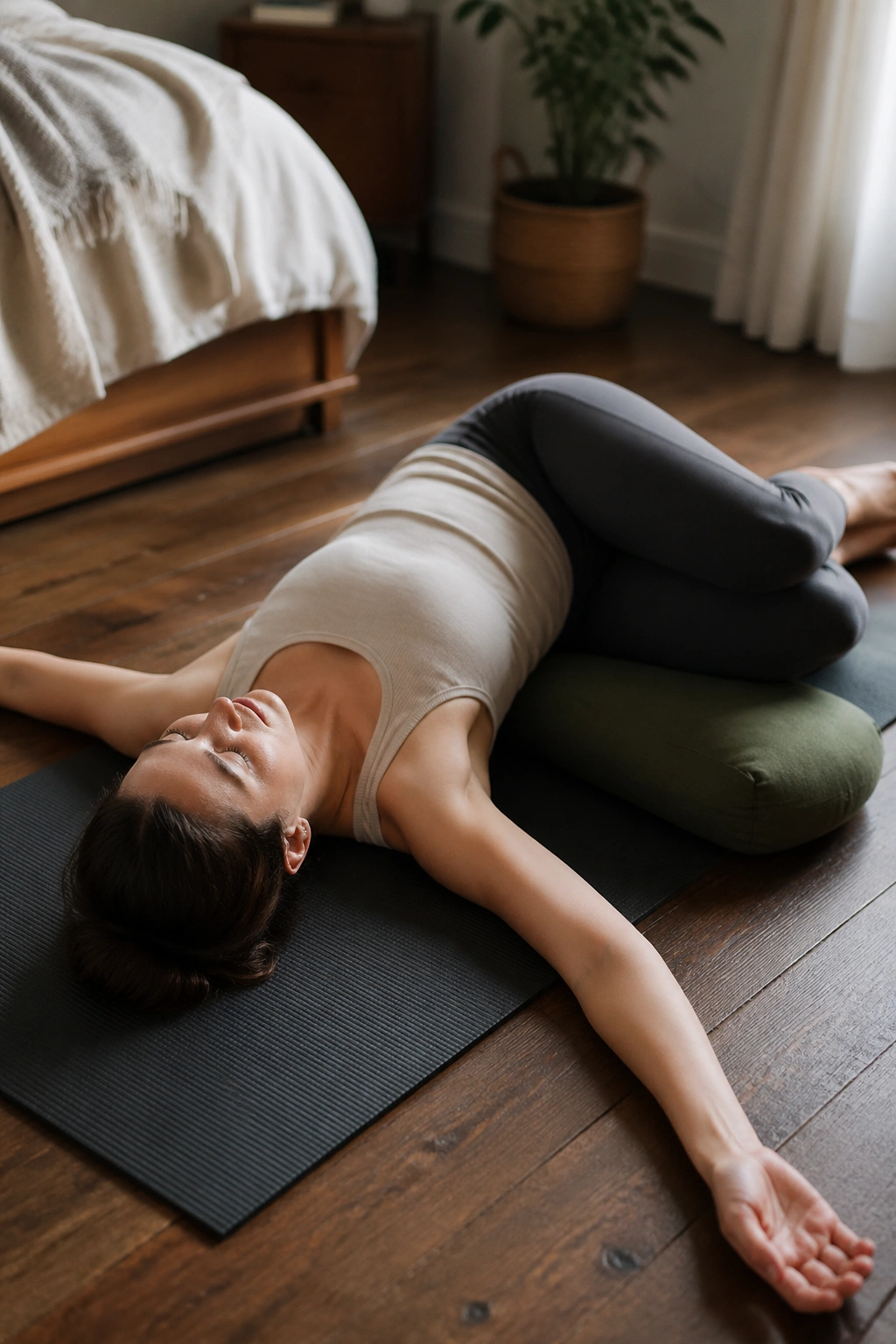
Twists are not about wringing anything out. That idea gets repeated a lot, and it’s too aggressive for people with IBS or a sensitive gut. A gentle twist is more like a slow conversation with the side body.
Lie on your back, bend both knees, and let them drift to one side while the shoulders stay heavy. Put a pillow or bolster under the knees if the twist feels sharp. Keep the top knee from dropping too far if the low back protests. You want a mild spiral, not a wrench.
A short hold is enough: 4 to 6 steady breaths on each side. If you’re crampy, keep the twist tiny and keep your breath smooth. If you’re reflux-prone or carrying a very full stomach, save this one for later.
The nicest thing about a supine twist is the way it often feels like it unclamps the ribs a little. That alone can make the belly feel less boxed in.
8. Legs Up the Wall for a Nervous System Reset
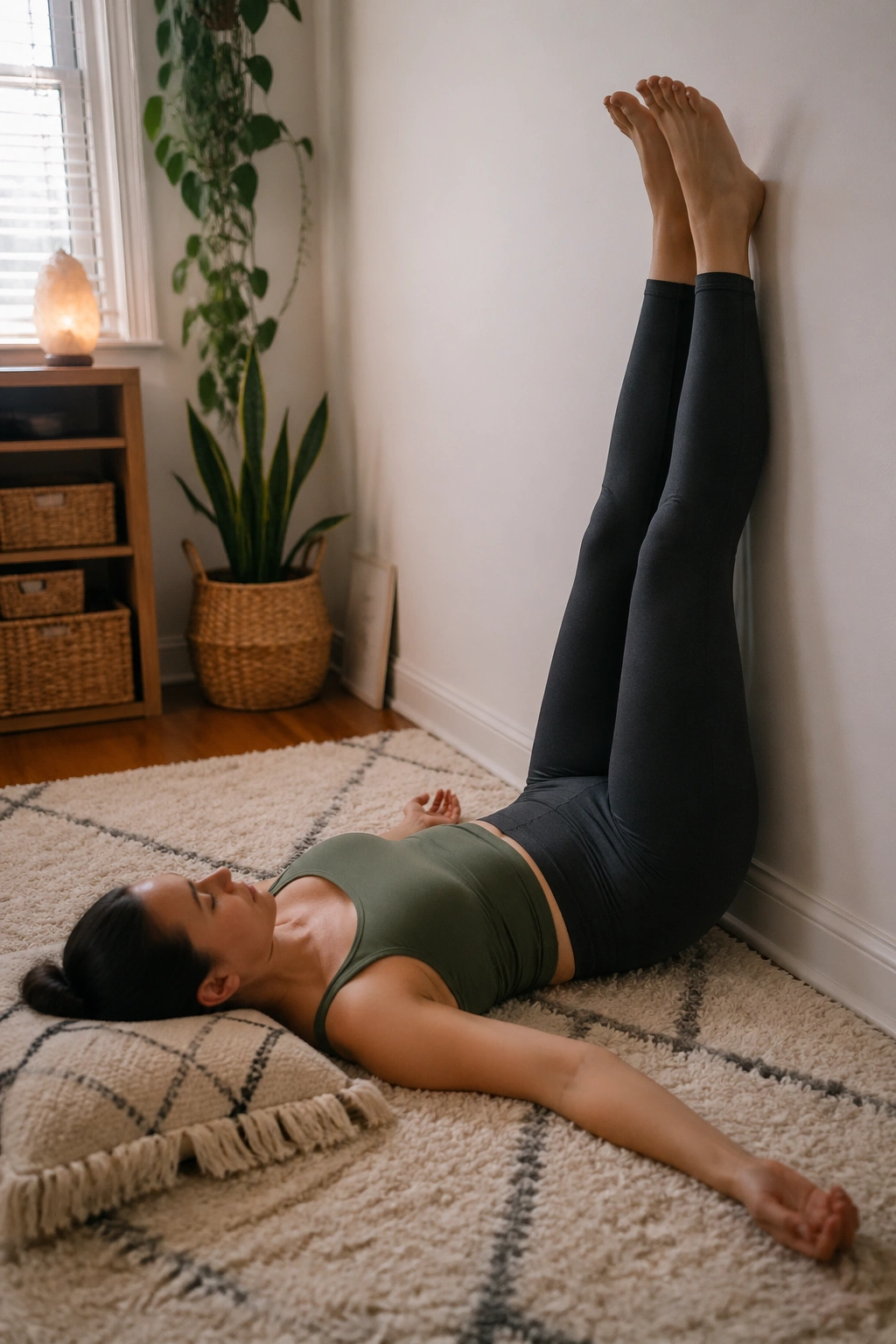
Why does lying with your legs up feel so good after a rough digestive day? Part of it is obvious: nothing is working very hard. The rest is less glamorous. Your body gets a chance to stop bracing.
Sit side-on to a wall, swing the legs up, and lie back with the hips either against the wall or a few inches away. Stay for 5 to 10 minutes if it feels steady. Bend the knees if the hamstrings tug or the low back arches. That version is often more relaxing anyway.
If the wall setup feels awkward
- Move your hips farther from the wall.
- Place a folded blanket under the sacrum.
- Keep knees soft instead of locking the legs.
- Slide a small towel under the neck if it feels strained.
If reflux flares when you’re fully flat, move a little farther from the wall or skip this pose that day. Gravity is useful, but not when it turns the esophagus into the complaint department.
9. Supported Bridge to Ease the Front Body
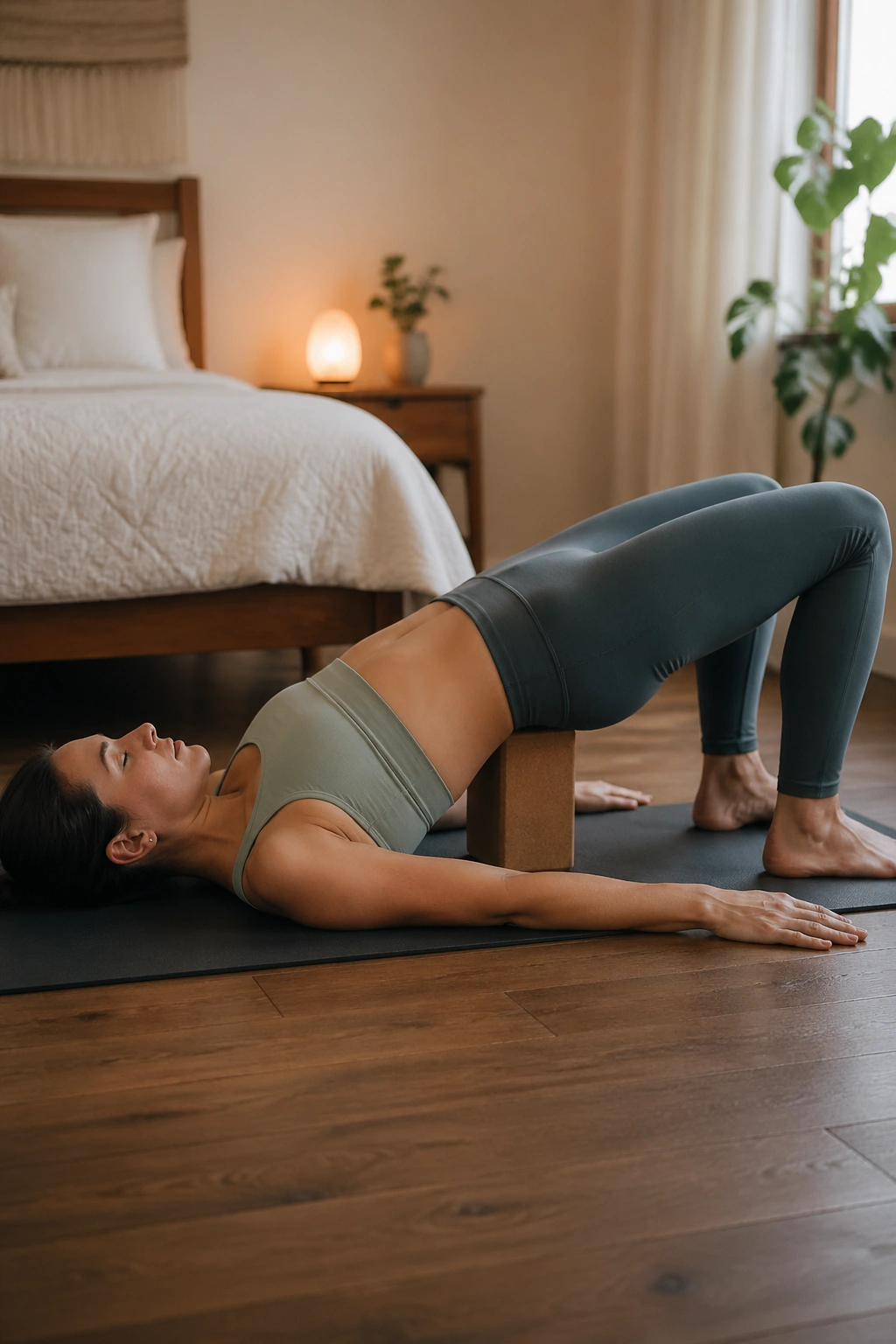
Supported Bridge can feel surprisingly good because it opens the front line without asking the abdomen to hold itself up. The support matters. A low block under the sacrum usually works better than a high one when digestion is sensitive.
Lie on your back, bend the knees, and lift the hips just enough to slide a block or bolster underneath. The props should feel like a shelf, not a shove. Keep the ribs soft and the breath easy. If the lower back grabs, lower the support one notch or take it out completely.
This pose is especially useful when you’ve been sitting hunched over a desk or curled around stress. It creates space through the hip flexors and lower ribs, and that can make the belly feel less compressed.
If the front of the pelvis or the abdomen feels pinched, skip it. There’s no medal for staying in a pose that irritates the exact area you’re trying to calm.
10. Sphinx Pose for a Gentle Abdominal Stretch
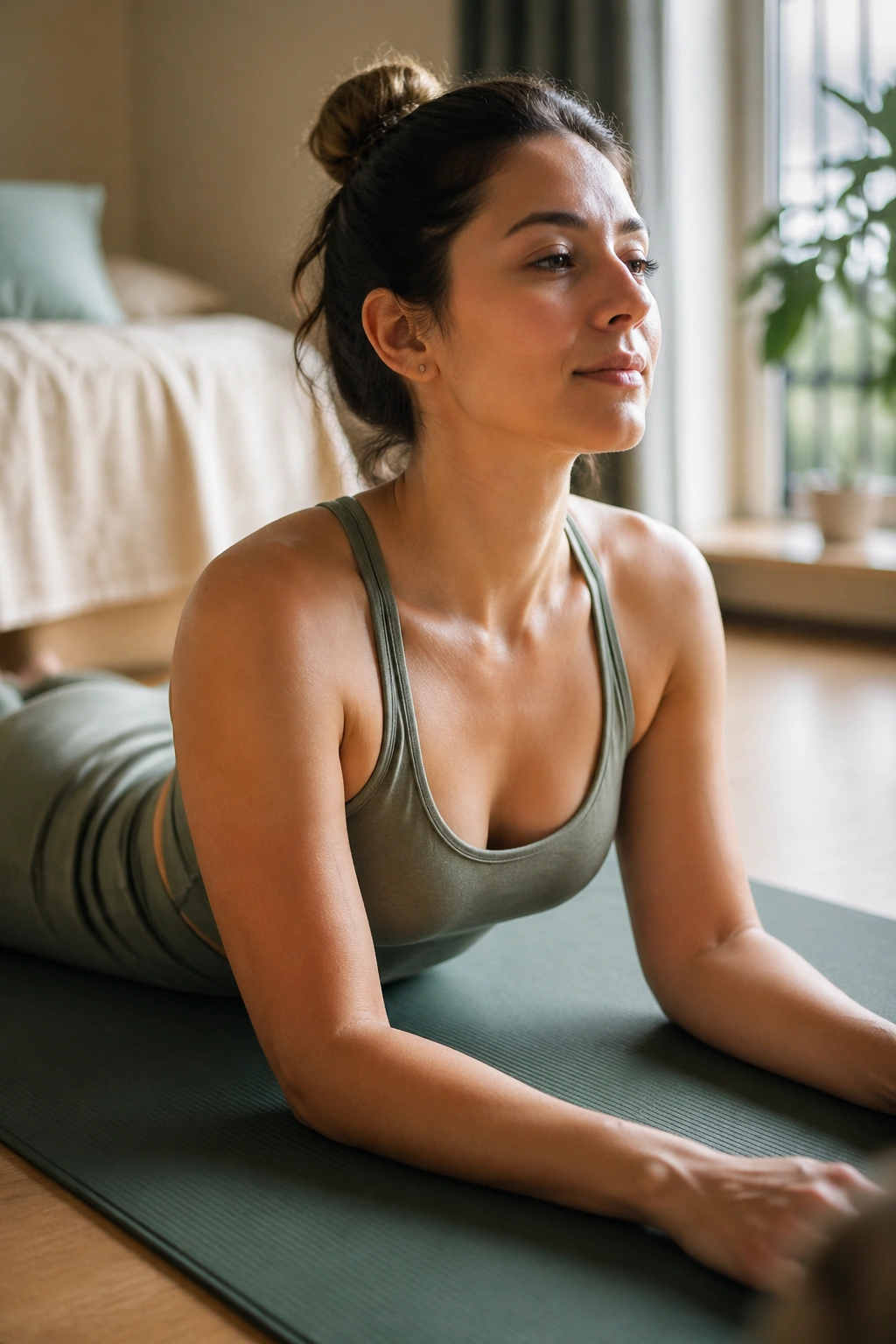
Sphinx is not a full backbend. Good. That’s part of why it works here. It offers a small amount of front-body opening without the intensity of Cobra or Upward-Facing Dog.
Lie on your stomach, place the forearms on the floor, and stack the elbows under the shoulders. Keep the pubic bone heavy and the thighs grounded. The belly should feel long, not jammed. If the low back squeezes, slide the elbows a little farther forward and lower the chest.
What to watch for
- Keep the neck long and the chin slightly tucked.
- Stay for 3 to 5 breaths at first.
- Use a folded blanket under the ribs if the floor feels too hard.
- Back out if pressure in the abdomen increases.
Sphinx is a nice middle ground for people who want a gentle front-body stretch but cannot handle stronger backbends. It’s also a decent antidote to the slumped shape many of us live in.
11. Thread the Needle to Release Side Body Tension
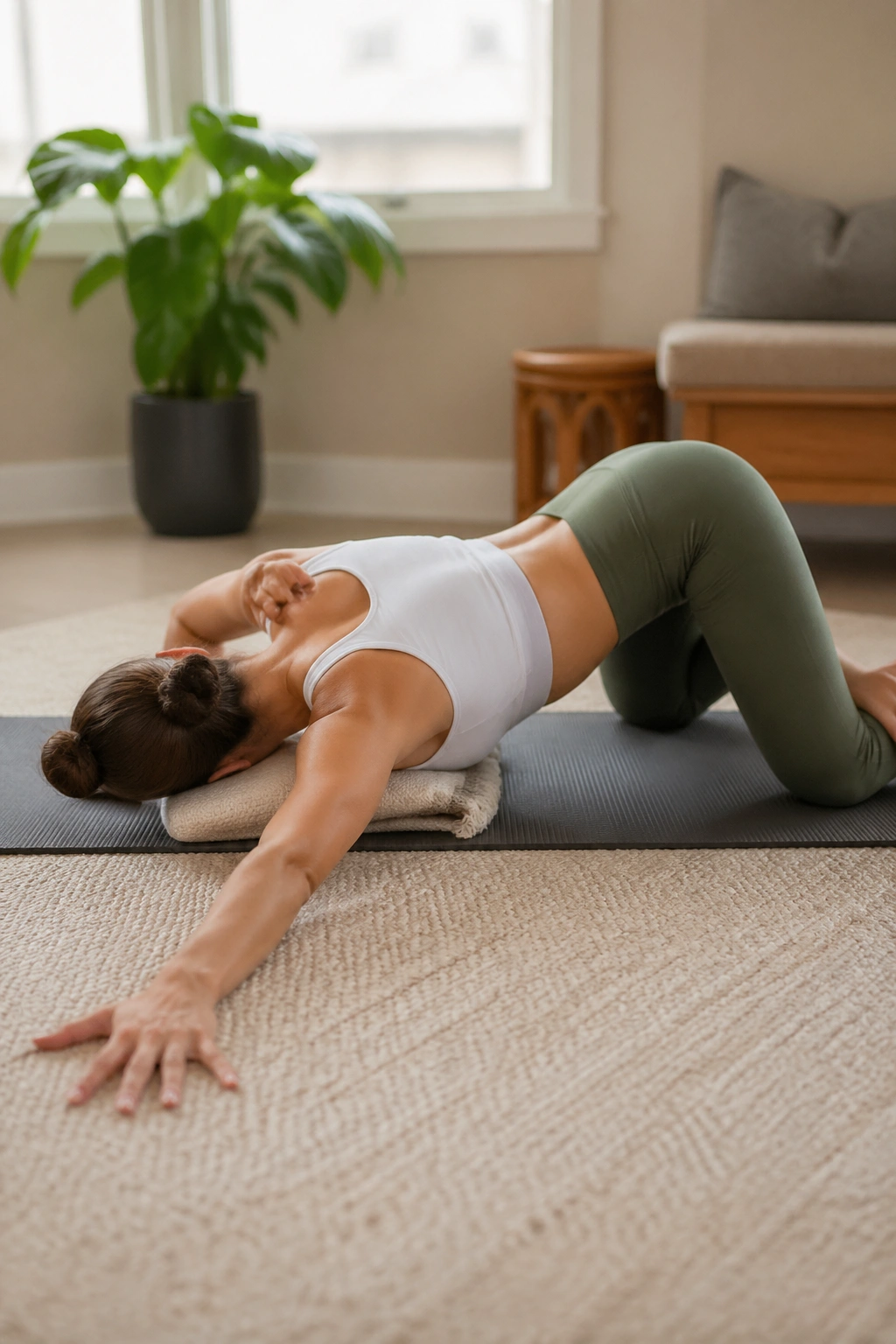
If your ribs and shoulders have been sitting by your ears all day, the belly often feels tighter too. Thread the Needle helps with that, even though it looks like a shoulder stretch on the surface.
From all fours, slide one arm under the body and rest the shoulder and side of the head on the floor or a folded blanket. The other arm can stay planted or reach forward. Breathe into the side ribs that usually get ignored. That’s where the release often shows up first.
Hold each side for 4 to 6 breaths and move slowly when you switch. A rushed version tends to make the whole shape feel clumsy, and this is a pose that rewards patience.
A small note: if kneeling is rough, double the blankets under the knees. No one gets extra digestive relief points for grinding through a hard floor.
12. Seated Forward Fold with Bent Knees
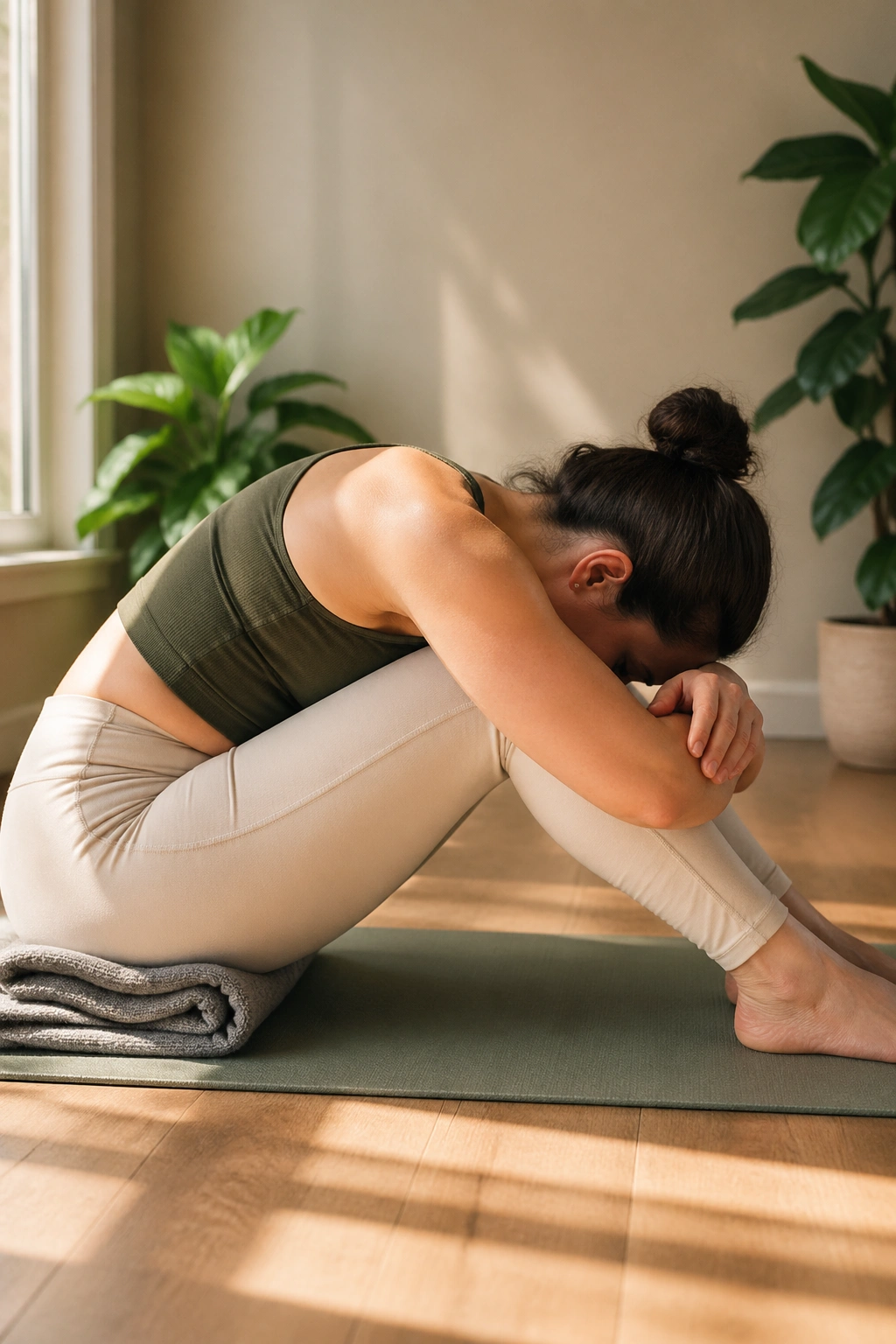
Straight legs are optional. That is the first thing to remember here. If the hamstrings pull hard, the pelvis tilts, the lower back rounds sharply, and the fold can feel like a struggle instead of a rest.
Sit on a folded blanket, extend the legs, and keep a soft bend in the knees. Hinge forward from the hips, not from the waist, and let the hands rest on the shins, a bolster, or blocks. The spine can stay long or gently round once the body has warmed up.
Quick cues that keep it comfortable
- Sit high enough that the pelvis tips forward.
- Keep the feet relaxed, not forcefully flexed.
- Stop the fold if the belly feels squeezed.
- Come back up slowly to avoid a head-rush.
This is one of those shapes that sounds simple and can still go wrong fast if you chase depth. Don’t chase depth. Chase ease.
13. Wide-Knee Child’s Pose for More Room to Breathe
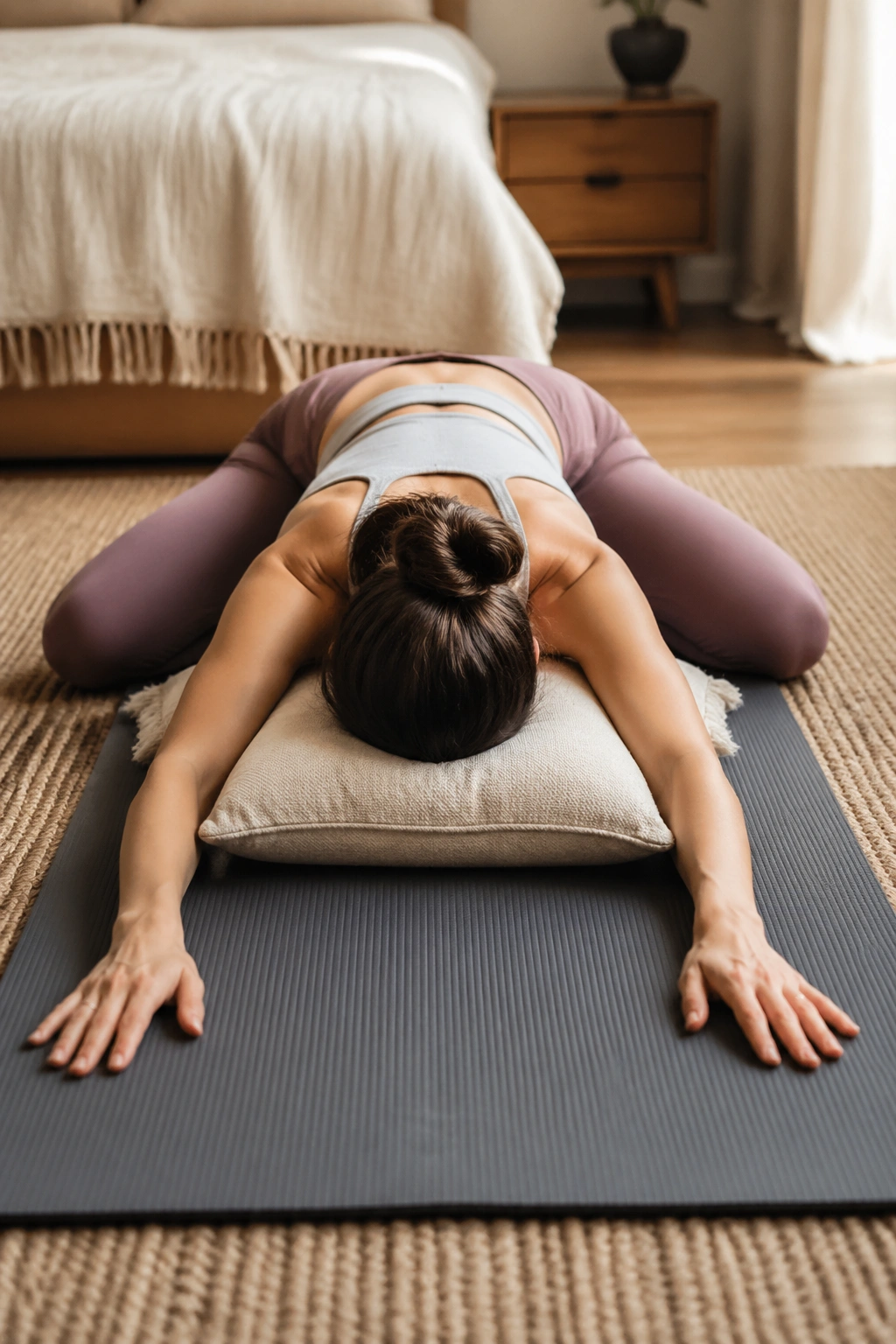
Need a little less pressure on the abdomen than the standard version? Open the knees wider. That one change often gives the belly enough room to soften without losing the grounding effect of the pose.
Wide-Knee Child’s Pose is especially useful when gas pain sits low and the center of the belly wants space rather than compression. You can keep the toes together or separate the feet if the hips prefer that. A pillow under the chest makes the whole shape less demanding.
The wider stance also changes the breath. The ribs can spread a little more side to side, which helps if you tend to breathe high into the chest when you’re uneasy.
If your knees dislike the angle, close them partway and keep the torso supported. The point is not to make the shape bigger. It’s to make the inside of it kinder.
14. Low Lunge with a Side Bend
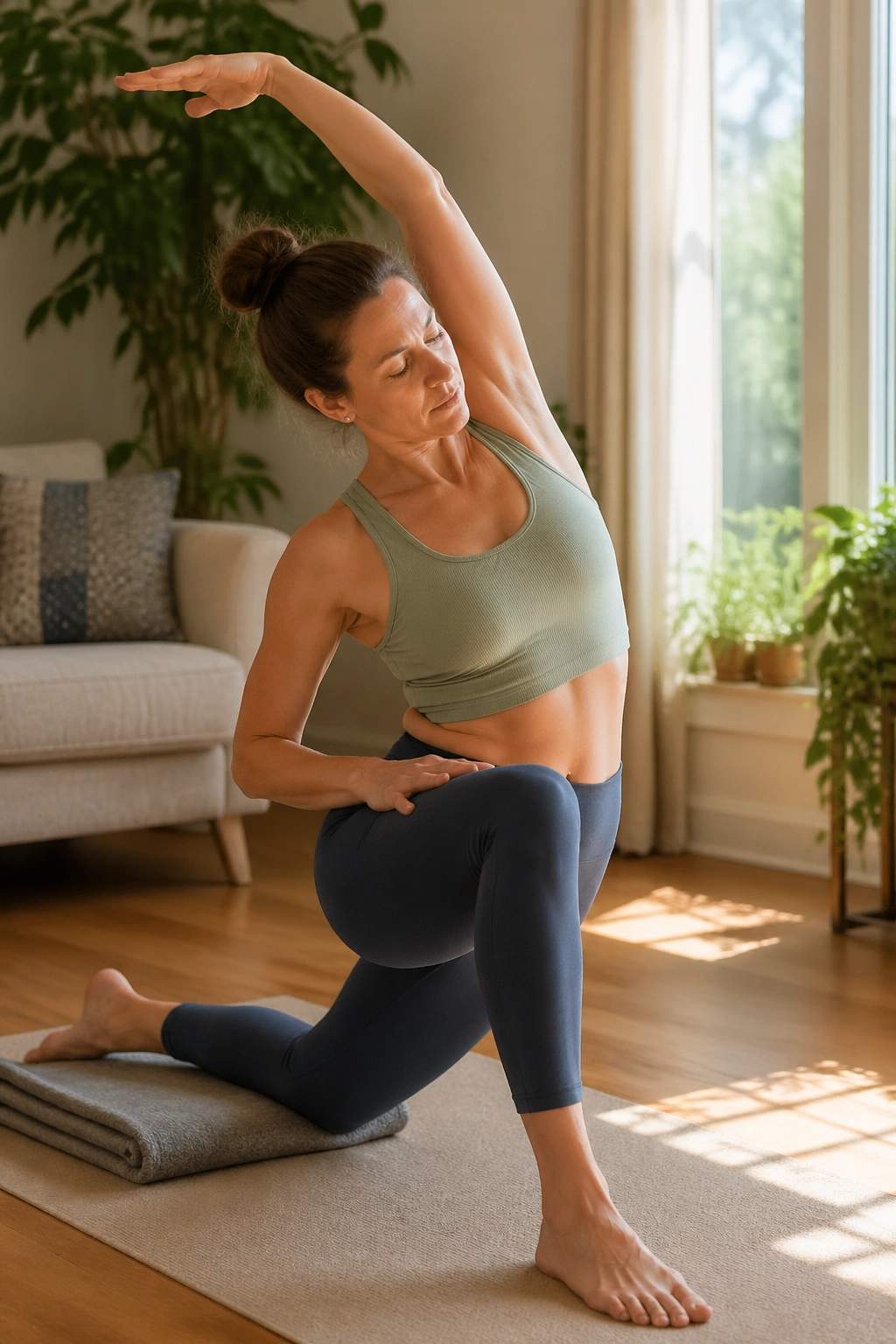
Why bring the hip flexors into this? Because the body does not keep its tight spots in separate boxes. A locked-up front hip can feed the same bracing pattern that makes digestion feel worse.
Step one foot forward into a low lunge with the back knee down on a folded blanket. Keep the torso upright first, then add a side bend away from the front leg if that feels smooth. Reach the arm overhead only as far as the ribs can stay soft.
Best use for this shape
- After long sitting.
- When the psoas feels short and cranky.
- When breathing feels stuck in the upper chest.
- When you want a mild stretch without direct belly compression.
If balance is shaky, stay with both hands on the front thigh. That version still does the job. A calm lunge beats a wobbly one every time.
15. Constructive Rest Between Food, Stress, and Flare-Ups
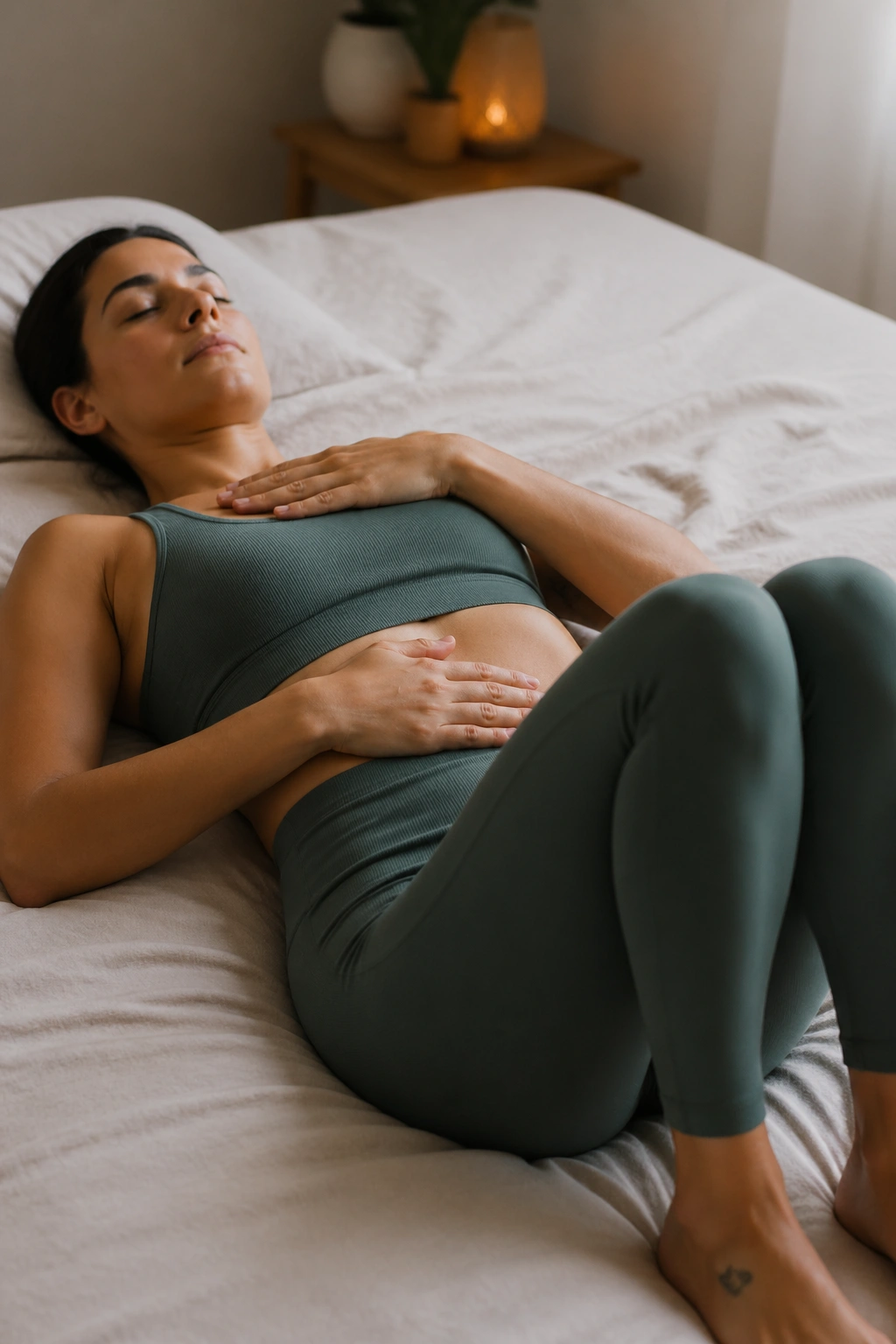
Constructive Rest is the pose people skip because it looks like doing nothing. That’s a mistake. Sometimes doing almost nothing is the exact thing that lets the gut settle.
Lie on your back with the knees bent and the feet flat on the floor, about hip-width apart. Let the knees knock in toward each other or rest them against each other if that feels natural. Place one hand on the belly and one on the ribs, then soften the exhale. No reaching, no stretching, no agenda.
The magic here is how neutral it feels. There’s no compression and no demand. If you’ve just eaten and movement sounds like a bad idea, this is a clean place to land.
One sentence is enough here: Stillness counts.
16. Reclined Figure Four for Hip Tension and Belly Clenching
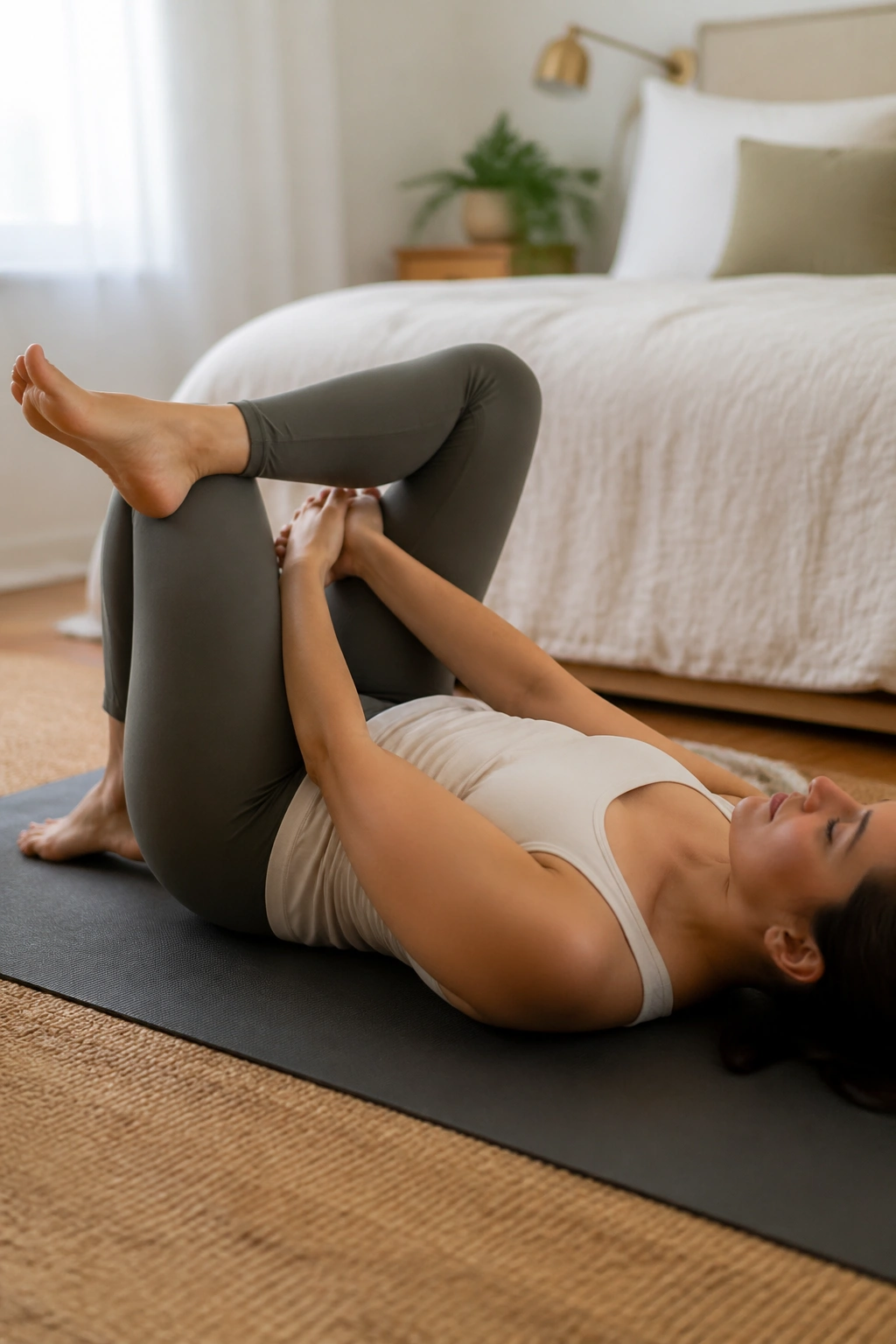
A tight hip can make the whole lower body feel guarded, and the abdomen often joins the party. Reclined Figure Four is useful when the hips, glutes, and low back are all part of the same clenched knot.
Lie on your back, cross one ankle over the opposite thigh, and keep the supporting foot on the floor. Hold behind the thigh of the grounded leg and gently draw it toward you. The crossed knee can stay lifted if the hips are tight. It does not need to fall open.
You’ll probably notice the difference side to side. One side often feels much stickier. Spend a little longer there, but keep it mild. This is not the place for forcing.
If the shoulders are tense, use a strap behind the thigh instead of reaching with both hands. That keeps the neck from pitching forward, which tends to make the whole shape less restful.
17. Standing Forward Fold with Hands on Blocks
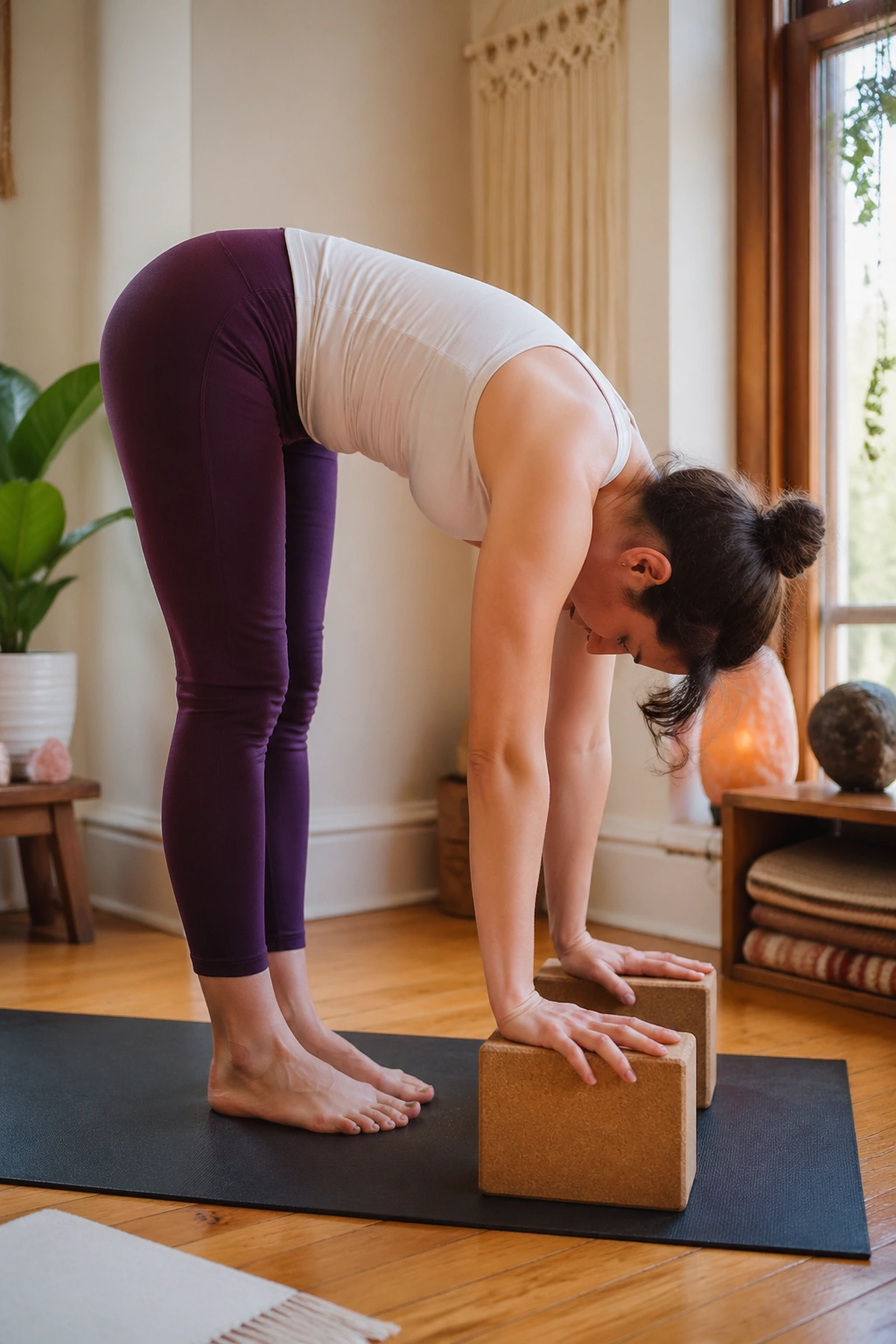
Sometimes the floor is too far away, and that’s exactly why blocks matter. Standing Forward Fold can be gentle enough for sensitive digestion when the knees stay soft and the torso hangs without strain.
Stand with the feet hip-width apart, bend the knees a lot if needed, and rest the hands on blocks, a chair seat, or the shins. Let the head hang only if it feels good. If dizziness or reflux shows up, come halfway up and stay there.
This pose works well as a reset between longer holds. It can also feel nice after a slow walk, especially if the belly likes movement but not compression.
A small bend in the knees is not a cheat. It is often the whole point. Straight legs can wait.
18. Gentle Cobra Without the Crunch
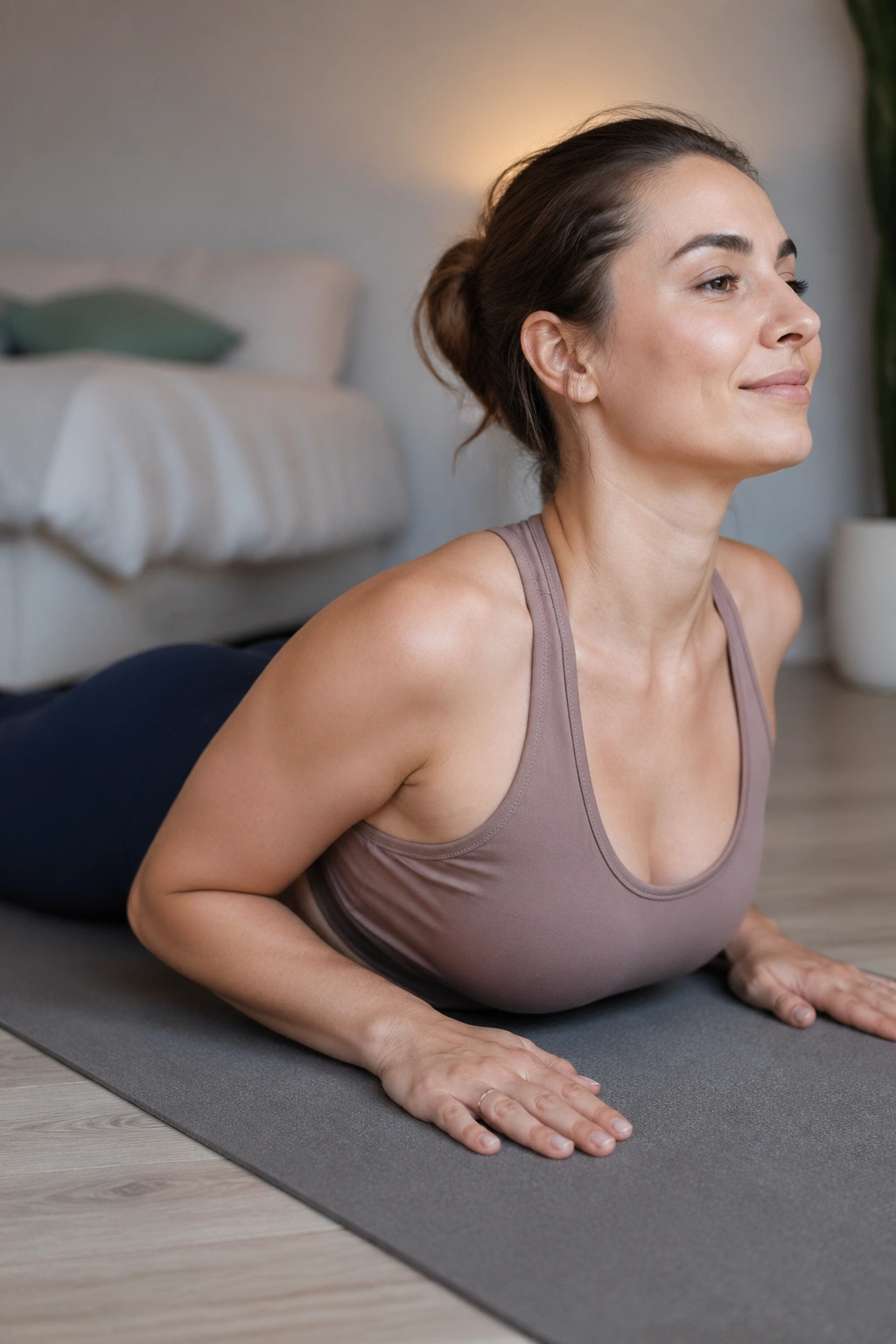
This is not the backbend people picture when they hear Cobra. It’s smaller, lower, and much kinder to a sensitive abdomen.
Lie face down, place the hands under the shoulders, and press the chest up only a few inches. Keep the elbows bent and close to the body. The tops of the feet stay grounded, and the pelvis stays heavy. If the belly feels pinched, lower down and try Sphinx instead.
Gentle Cobra can be a nice counter-shape after a day of curling inward. It opens the front body, asks the shoulders to stop hunching, and still leaves plenty of room for breath.
One clean cue: lift the chest, not the ego. A tiny backbend is enough here.
19. Butterfly Pose for Slow, Soft Compression
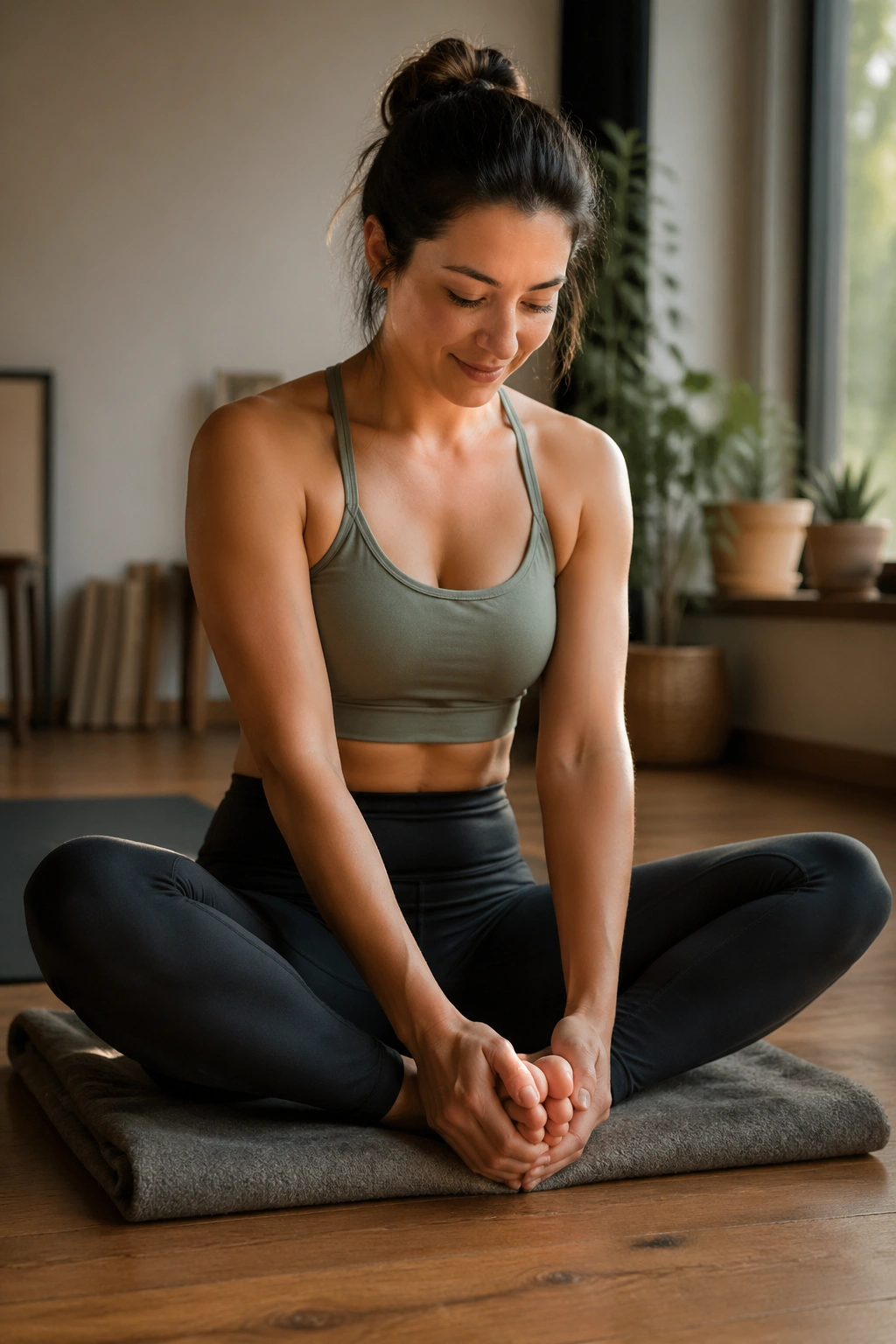
Butterfly Pose can feel calming when the abdomen wants a little input but not a squeeze. The seated shape lets the hips open while the spine stays upright or folds only as far as it comfortably can.
Sit on a folded blanket, bring the soles of the feet together, and let the knees drift out. Hold the ankles or feet, then stay tall for a few breaths before deciding whether to hinge forward. If the knees feel cranky, move the feet farther away from the pelvis and reduce the angle.
How to use it when digestion feels unsettled
- Keep the fold very small.
- Support the knees with blocks or folded blankets.
- Stay upright if bending forward makes the belly feel crowded.
- Use it after mild movement, not right after a huge meal.
This one is useful because it’s easy to scale. You can make it almost nothing or give it a little shape. That flexibility matters a lot when symptoms change day to day.
20. Savasana with Belly Breathing for the Finish
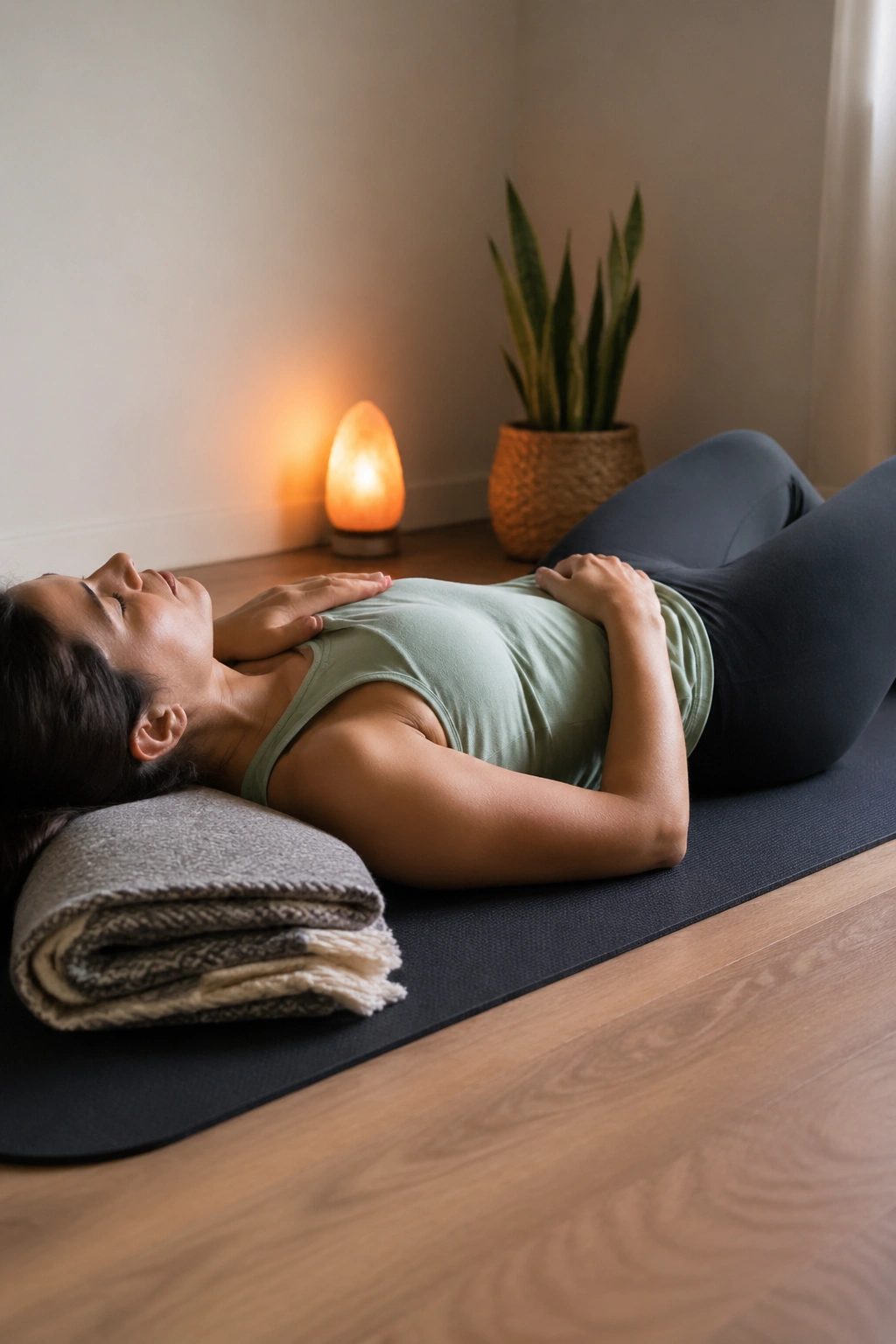
The most useful part of a digestive-friendly practice is often the part people skip. Savasana with belly breathing gives the whole system a chance to settle after the movement is over.
Lie on your back, knees bent or legs long, and place one hand on the belly and one on the chest. Breathe in through the nose for a count of 4, then let the exhale run a little longer, maybe 6 counts. A folded blanket under the knees or over the abdomen can make the body feel safer and warmer.
If the mind wants to race, keep the breath simple and the goals smaller. You are not trying to meditate like a saint on a mountain. You are letting the gut stop bracing for a few minutes. That’s enough.
A short practice can work well: pick 3 to 5 of these poses, stay for 3 to 6 breaths each, and leave the rest for another day. For IBS and sensitive digestion, consistency matters more than a heroic session. Quiet, repeatable, and easy to recover from usually wins.
