



A sharper jawline often starts with a quieter face. When the tongue sits low, the neck cranes forward, and the masseter stays clenched from breakfast to bedtime, the lower face looks fuller and softer than it really is.
These face yoga exercises won’t change your bone structure. They won’t melt fat, either. But they can change the way your face holds itself — and that matters more than most people think, especially if you grind your teeth, live at a desk, or wake up with a puffy, tired-looking lower face.
No miracle here.
What face yoga does well is simple: it builds awareness, eases tension, and nudges the jaw, tongue, cheeks, and neck into better habits. That can make a jawline look cleaner, reduce the “compressed” look you get from clenching, and give the whole lower face a longer, less crowded appearance. I like it best as a daily reset, not as a stunt.
Start with the release work first. Then move into the small strength moves. That order matters, because a tight jaw does not sculpt well, no matter how hard you try to “work it.”
1. Chin Lifts With a Ceiling Kiss
This is one of the easiest ways to wake up the front of the neck without doing anything dramatic. A lot of people chase jawline exercises and skip the most obvious problem: the head is often pitched forward, which shortens the neck and softens the lower face.
How to do it
- Stand or sit tall and keep your shoulders relaxed.
- Tilt your head back until you’re looking at the ceiling.
- Pucker your lips slightly, as if you’re aiming a kiss upward.
- Hold for 5 seconds, then come back to neutral.
Do 8 to 10 slow reps. The front of the neck should feel long, not pinched. If you feel a sharp tug under the chin, you’re probably throwing your head back too far.
The small detail that matters is the neck. Don’t crunch it. Think of lengthening the whole front line from the collarbone to the jaw. That’s what makes this move useful for a more sculpted look.
2. Tongue-to-Palate Presses

What if the jawline problem starts with the tongue? A lot of it does. When the tongue hangs low in the mouth, the lower face tends to look slack, and the jaw often loses that clean, lifted feel people are after.
Press the whole tongue gently against the roof of your mouth, not just the tip. Keep your lips closed, your teeth slightly apart, and breathe through your nose. You should feel a mild lift under the chin, almost like the underside of the jaw is waking up.
Try 6 slow breaths per round and do 3 rounds. This is a quiet move, but I think it’s one of the most underrated. It teaches better resting posture, which is where a lot of jawline improvement begins. If you spend all day mouth-breathing or chewing hard gum, this little reset is worth more than another frantic mirror grimace.
3. Slow Jaw Drops and Close-Backs

Picture someone who clenches their teeth while answering emails. That tight, compressed look is exactly what this exercise tries to undo.
Let your lower jaw drop only a finger-width. Not wide. Just enough to feel the hinge open. Then close it slowly, almost as if you’re lowering the jaw through honey. Keep your lips soft and your neck still.
Do 8 controlled reps. The jaw should feel smoother afterward, not tired in a nasty way. If your teeth click or your jaw feels sharp pain, skip this one and go gentler. A click is not the point.
This move is useful because many people live in a near-clench without noticing it. The masseter gets braced, the cheeks look denser, and the face loses that relaxed contour. Slow jaw drops won’t fix everything, but they can make the whole lower face look less tense within a few minutes.
4. Chin Tucks for a Longer Neck
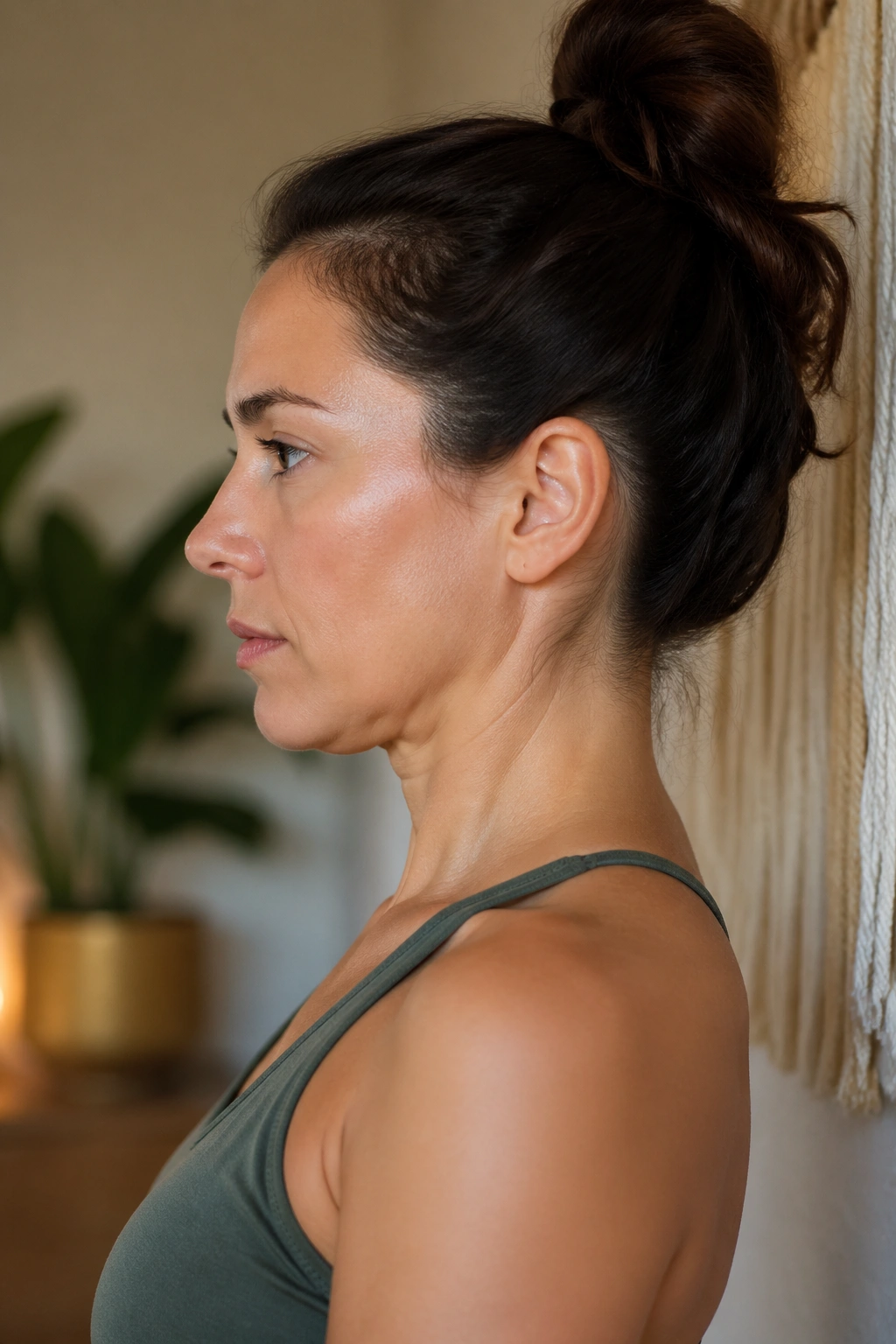
Forward head posture is the enemy of a clean jawline. It shoves the chin forward, folds the neck, and makes the space under the jaw look shorter than it should.
What to feel
- The back of the neck should lengthen.
- The chin should glide straight back, not down.
- The shoulders stay low and boring. Good.
Stand against a wall or sit upright. Draw the chin straight back, as if you’re making a tiny double chin on purpose. Hold for 3 to 5 seconds, then release. Do 10 reps.
If you’ve never done this before, it can feel almost too small. That’s fine. Small is the point. You’re training the deep neck flexors, which help hold the head in a better stack over the spine. And yes, that can make the jawline look cleaner, because the jaw isn’t being dragged forward by a sloppy neck position.
5. Platysma Smiles

The platysma is that thin sheet of muscle running down the neck. When it gets tense, it can create those vertical bands people hate in photos. A little activation here can help the lower face and neck look less flat.
Sit tall, close your lips, and gently pull the corners of your mouth downward while keeping the chin level. You should feel the front of the neck engage. The move is subtle. If you make an angry face, you’ve gone too far.
Hold for 5 seconds and repeat 6 to 8 times. Some people like to do it in front of a mirror until they can see the neck bands engage without the whole face scrunching up.
The goal is not to force a cartoon grimace. It’s to wake up the neck muscle that often goes slack or tense in the wrong way. That muscle matters more than most people realize when they’re chasing a sharper lower face.
6. Cheek Lifts With a Closed-Mouth Smile

This one feels lighter than it looks. You’re training the midface to help carry the expression, which can lift some of the visual weight away from the jawline.
Close your mouth and form a small, closed-lip smile. Then lift the cheeks upward, as if you’re trying to make the cheeks meet the eyes without wrinkling the nose. Hold for 4 seconds and release slowly.
Do 10 repetitions. The sensation should sit high in the cheeks, not in the jaw hinge. If you feel the teeth pressing together, relax them. Teeth apart. Always.
I like this move because it shifts the face out of the “compressed lower half” pattern. It also helps people notice how much of their expression lives in the cheeks versus the jaw. That awareness alone changes how they carry their face during the day.
7. Fish Face Holds

Yes, it looks silly. No, that is not a reason to skip it.
Suck the cheeks in gently, then keep the lips closed and relaxed. The jaw stays soft; you are not biting down. Hold the hollowed-cheek shape for 10 seconds, then release completely for 5 seconds.
Do 5 rounds. The useful part here is the contrast. The cheeks contract, then they soften. That contrast teaches the face to move without clenching, and clenching is one of the biggest things that muddies the jawline.
A lot of people overdo this and end up sucking the face in so hard that the whole lower half tenses. Don’t do that. You want a light hold, not a desperate vacuum. If your jaw starts to ache, you’re using the wrong muscles.
8. Jaw Glides Side to Side

Can your jaw move smoothly without grinding or getting stuck? Many people can’t, and the result is a face that carries tension on one side more than the other.
Keep the movement tiny
Open your mouth just a little, then glide the lower jaw to the right. Return to center. Glide it to the left. Return again. That’s one cycle. Keep the motion slow and shallow.
Do 6 cycles. The jaw should feel as if it’s sliding on rails, not popping around. If it clicks hard or catches, make the range even smaller. No heroics here.
This exercise is less about “sculpting” in the flashy sense and more about restoring easy movement. And that matters because a loose, balanced jaw usually looks better than a tight one. The face tends to read as calmer, which often translates into a cleaner jawline in the mirror.
9. Masseter Massage

If you clench, chew gum a lot, or wake up with a tight face, this is the move you’ll probably love most. The masseter is the thick chewing muscle right at the angle of the jaw, and when it’s overworked, it can make the lower face look wider and harder.
Use your fingertips to find the muscle just in front of the ear and along the back half of the cheek. Work in slow circles for 30 to 45 seconds per side. Press firmly enough to feel it, but not so hard that you bruise yourself.
The muscle may feel dense at first, almost ropey. That’s normal. Stay with the spots that feel gritty, then move around the area. After a minute, the jaw often feels warmer and looser.
This is not glamorous. It is, however, effective in the most practical sense: less clenching, less soreness, and a face that tends to sit with less tension. That alone can change the look of the lower third.
10. Neck Side Stretches

A jawline doesn’t live in the jaw alone. It sits on top of the neck, and a tight neck can make the whole area look shorter and heavier.
Tilt your right ear toward your right shoulder, then let the left hand rest lightly near the collarbone for a bit of grounding. Hold for 20 to 30 seconds, breathe slowly, and switch sides. The stretch should run down the side of the neck, not shoot into the shoulder or jaw.
A small detail: keep the chin from jutting forward. If you crane the head, you lose the point of the stretch. Keep the back of the neck long and the shoulders soft.
This move helps the sternocleidomastoid and neighboring neck muscles stop dragging the face into a compressed position. It’s a little boring, sure. Still useful. Especially if you sit at a screen all day and wonder why the jawline looks messier by evening.
11. Vowel Sounds for the Lower Face

Over-articulation is not just for actors. It can be a tidy way to wake up the mouth, lips, and cheeks without grinding the jaw into a knot.
Say the vowels A, E, I, O, U slowly and clearly. Stretch each shape a little farther than normal, but not so far that your face feels ridiculous or strained. Do one full round, then repeat it twice.
The real trick is making each vowel distinct. Let the mouth open for “A,” pull the corners slightly wider for “E,” and round the lips for “O” and “U.” You’ll feel different parts of the face switch on, which is exactly the point.
This works well as a warm-up before the more focused exercises. It’s also a nice reminder that the face is not just about stillness. It should move. A dull, frozen face tends to look heavier than one that knows how to articulate cleanly.
12. Lion’s Breath Releases

Sometimes the best jawline move is the one that gets you to stop gripping your face in the first place.
Take a deep breath in through the nose. Then exhale with the mouth open, tongue out, and eyes soft. The exhale can make a little “haaa” sound if you want. Do 3 to 5 rounds.
The point isn’t precision. It’s release. The jaw, cheeks, and tongue tend to soften when you let the exhale be messy and open. That matters after a stressful day, after a long call, or after you’ve caught yourself holding your teeth together like a vice.
It’s not a sculpting move in the narrow sense. I’d call it a tension breaker. And tension breaks matter because a face that keeps clenching all day does not show off whatever muscle tone you already have.
13. Under-Chin Resistance Presses

Can you strengthen the area under the chin without puffing out your neck like a bodybuilder? Yes, but you need to be gentle.
Gentle, not grim
Place a closed fist or two fingertips under the point of your chin. Press the chin downward into your hand with light resistance while keeping the neck long. Hold for 5 seconds, then relax for 5 seconds. Do 6 reps.
You should feel a light effort under the chin and along the front of the neck. You should not feel pain in the jaw joint. If you do, back off immediately. This is a small muscle drill, not a contest.
I like this move because it brings awareness to the area people obsess over in selfies. The under-chin region is often ignored until someone notices it in a photo, and then they want a miracle. Better to train it quietly, a little at a time. That usually pays off more than dramatic efforts.
14. Air Swaps From Cheek to Cheek

This one is playful, and that’s part of the appeal. The face often responds better when you move it in a loose, controlled way instead of grinding through another “serious” exercise.
Fill one cheek with air, then shift the air to the other cheek like you’re moving a small marble from side to side. Keep the lips sealed and the jaw relaxed. Do 10 slow transfers.
The key is control, not force. You should feel the cheek muscles working and the mouth staying closed without tension. A lot of people also notice that this exposes asymmetry they hadn’t paid attention to before. Good. That’s useful.
A balanced jawline benefits from even muscle use. If one side is always dominant — from chewing, sleeping, or clenching — this little drill helps bring attention back to both sides of the face.
15. Collarbone Lifts and Swallows

A lifted chest gives the face more room to look long. A collapsed chest does the opposite. It’s one of those annoyingly simple truths that ends up mattering a lot.
Sit or stand tall, lift the sternum slightly, and keep the tongue on the roof of the mouth. Swallow slowly 5 times while keeping the jaw relaxed. Between swallows, check that the shoulders haven’t crept upward.
The swallowing motion engages the muscles under the jaw in a clean, organized way. It also helps you notice whether you habitually jut the head forward while swallowing, which a surprising number of people do without realizing it.
If you want a cleaner jawline look, posture has to behave. That is the part people try to skip, then they wonder why the face still looks crowded.
16. Smile Lifts With Finger Resistance

A smile that travels upward instead of outward can change the whole lower face. This move trains the cheeks to do more work.
Place your index fingers lightly on the tops of your cheeks, just beside the nose. Smile gently into the fingers, letting the cheeks lift against the light resistance. Hold for 8 seconds, then relax for 4 seconds. Repeat 5 times.
You should feel the cheek muscles working hard enough to notice, but not hard enough to make your eyes pinch shut. Keep the jaw soft and the lips closed.
This exercise is useful because it teaches lift without over-clenching. A lot of faces fall into a down-and-in pattern under stress. Cheek-lift work nudges them the other way, which can make the lower face read as brighter and less heavy.
17. Lip Rolls and Pouts

The mouth muscles often hold more tension than people realize. Tight lips can make the jaw look hard, flat, or oddly pressed.
Roll the upper and lower lips inward for 3 seconds, then release into a gentle pout for 3 seconds. Move between the two shapes slowly. Do 8 rounds.
A pucker should never turn into a full-face scrunch. Keep the cheeks calm and the teeth apart. The shape comes from the lips, not the whole head. That sounds obvious, but plenty of people turn a lip drill into a neck workout by accident.
The value here is in control. Better lip mobility helps the face look more relaxed during speech and expression, and a relaxed mouth usually sits better on the jaw. Not dramatic. Just useful.
18. Tongue Circles Inside the Teeth

If your mouth feels stiff, this is one of the easiest ways to bring some movement back without overdoing it.
Why slow circles matter
Close your lips lightly and trace the tip of your tongue around the inside of your teeth. Go along the upper row, then the lower row, in one slow circle. Make 3 circles one way and 3 the other.
The movement should stay gentle and clean. No scraping. No rushing. You’re lubricating the whole oral area, not trying to win a speed contest. That slow contact can help loosen the mouth after a day of clenching or talking a lot.
It also makes you aware of where your tongue lives when it’s not working. If it tends to sit low or pressed hard against one side, you’ll notice that here. That kind of awareness is where better facial posture starts to stick.
19. Temple-to-Jawline Massage
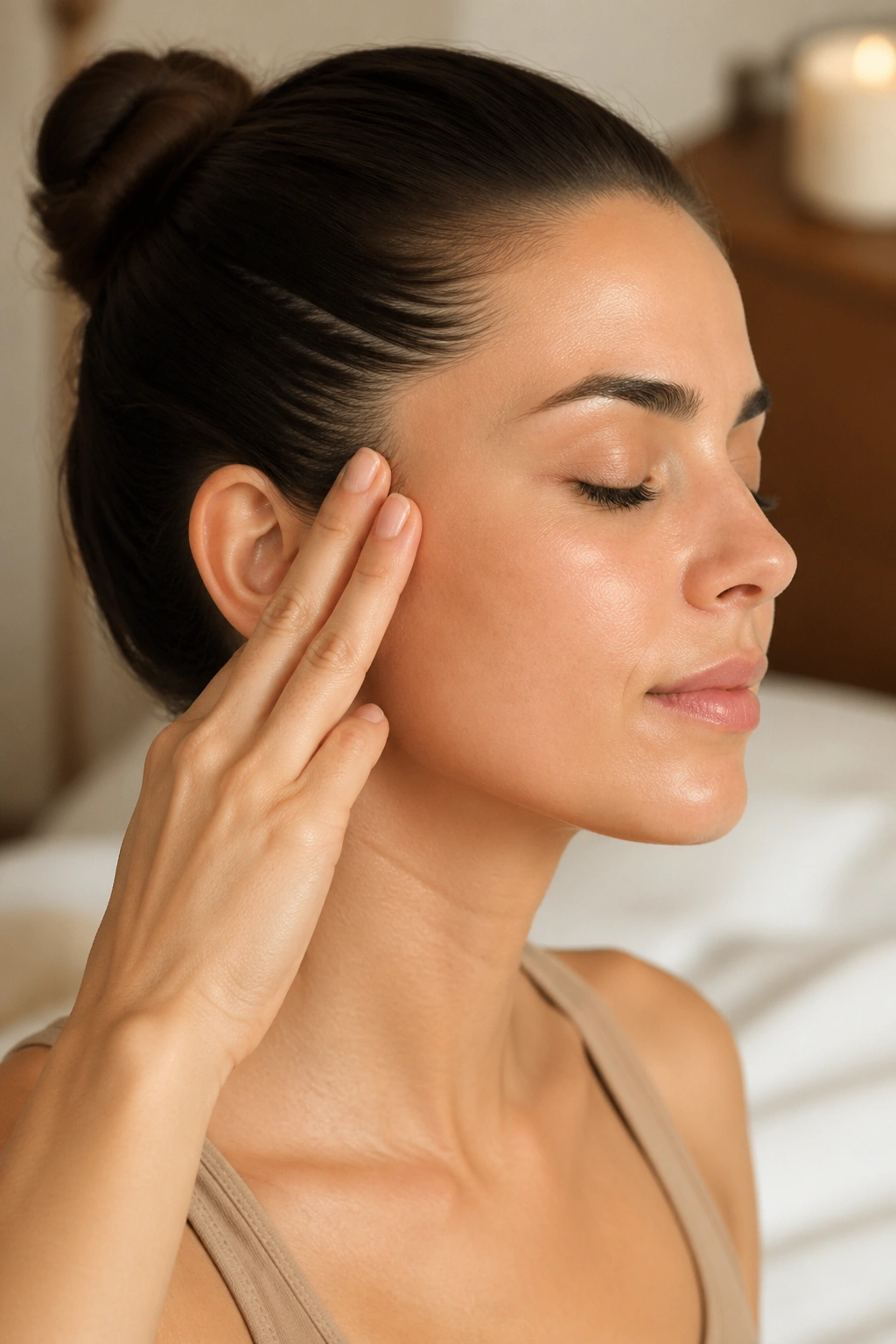
This is the move for the person who gets tension headaches, clenches during concentration, or wakes up with a face that feels compressed from the temples down.
Use two or three fingertips to sweep from the temple, down in front of the ear, and along the edge of the jaw to the angle. Move slowly for 30 seconds on each side. Then pause and see whether the jaw feels warmer, looser, or less crowded.
The temporalis muscle at the temple and the masseter at the jaw work together more than most people think. If one is tense, the other usually joins in. A massage that connects the two can feel like switching off a hidden brace in the face.
This one is excellent after chewing, speaking a lot, or frowning at a screen. It won’t create a jawline out of thin air. It can, however, make the line you already have show up with less tension sitting on top of it.
20. The Full Jawline Reset Pose

If I had to keep only one habit, this would be the one. Not because it’s flashy. Because it’s the simplest way to stack the whole face in a cleaner position.
A 90-second finish
- Sit or stand tall and drop the shoulders.
- Press the tongue gently to the roof of the mouth.
- Keep the teeth apart.
- Lengthen the back of the neck with a tiny chin tuck.
- Breathe in through the nose for 4 counts, out for 6 counts.
- Finish with one slow masseter massage sweep on each side.
That’s the whole reset. Do it once in the morning, once mid-day, and again before bed if your jaw tends to clench at night. The face usually looks better when you stop asking it to do five things at once.
A lot of people want the most aggressive exercise on the list. I’d pick this instead. A jawline often looks more sculpted when the neck is stacked, the tongue is resting well, and the jaw isn’t braced like it’s waiting for trouble. Keep that up for a few weeks, and the changes tend to show first in the mirror at rest — which is the only place they really count.
