



A runner’s legs can feel fine at mile one and wooden at mile four. Yoga poses for runners with tight tired legs work best when they match the way running actually loads the body: calves shorten, hip flexors grip, hamstrings feel like guitar strings, and the glutes go half asleep after endless repetition.
The mistake a lot of runners make is chasing the deepest stretch. Deep is not the goal. Useful is the goal. A good recovery pose should make the legs feel longer, the breath slow down, and the low back stop complaining.
I keep coming back to poses that do one of three things: lengthen the back line of the body, open the front of the hip, or drain that heavy, stale feeling from the feet and ankles. A blanket, a wall, and five steady breaths can do more than a dramatic bend that has you wincing halfway through.
Start with the first pose and keep going in order, or pick the ones that match the part of your run that usually tightens up first. Some are standing, some go straight to the floor, and a few are the kind you’ll want after a tempo session when your legs feel filled with sand.
1. Standing Forward Fold
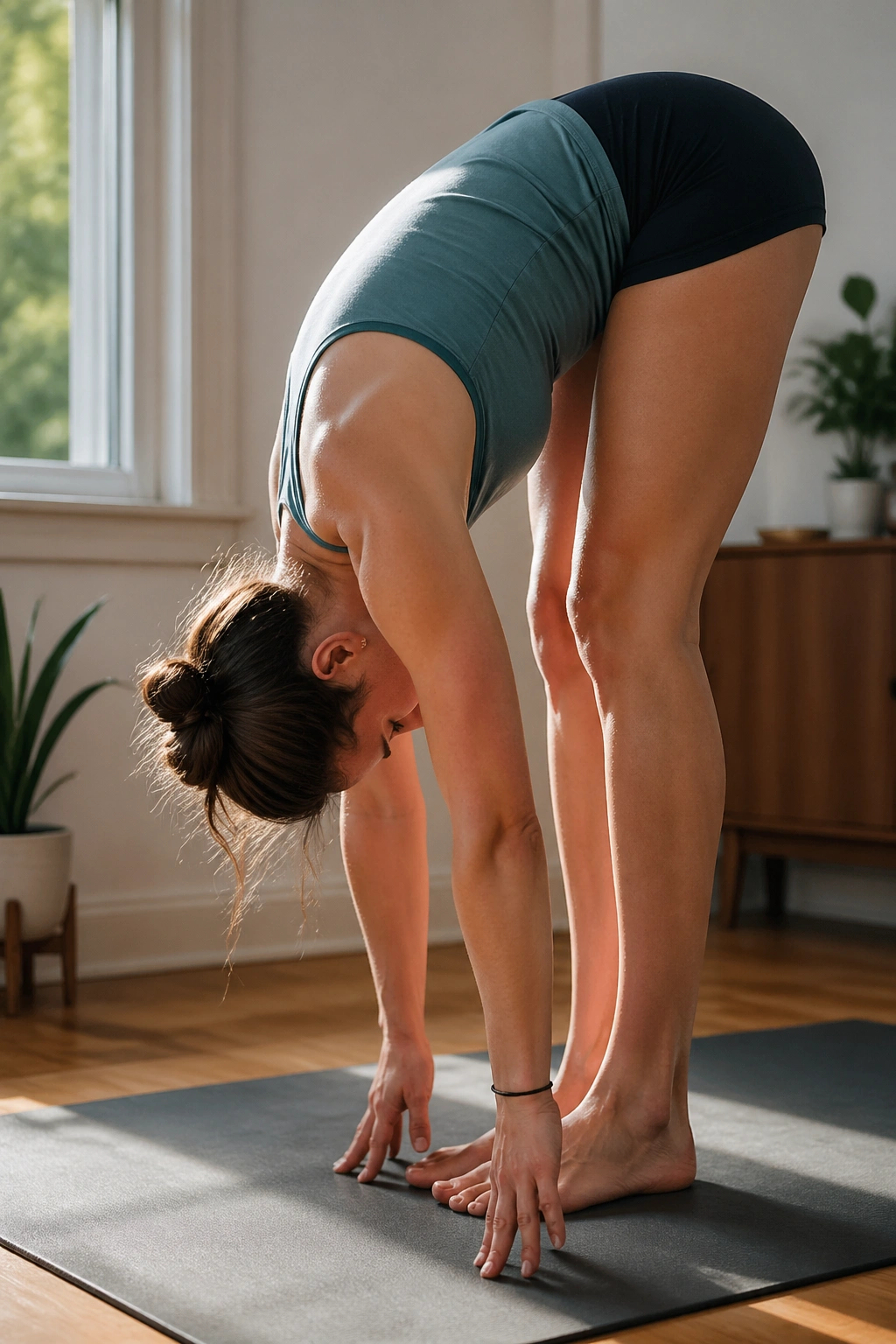
This is the pose runners reach for first because it works fast. Standing Forward Fold gives the hamstrings, calves, and the whole back line of the body a direct stretch without needing much setup, which is handy when you’ve just come in from a run and don’t want to fuss around on the mat.
The trick is to fold from the hips, not yank your torso down like you’re trying to touch the floor by force. Bend your knees as much as you need, let your head hang, and let the weight of your arms settle into gravity. A tiny bend in the knees often gives a better hamstring release than locked legs ever will.
How to make it work after a run
- Keep your feet about hip-width apart.
- Soften the knees before you fold.
- Hold for 20 to 30 seconds and breathe into the back of the ribs.
- Roll up slowly, one vertebra at a time.
Best tip: sway a little side to side. Tight legs often unlock better with motion than with effort.
2. Downward-Facing Dog
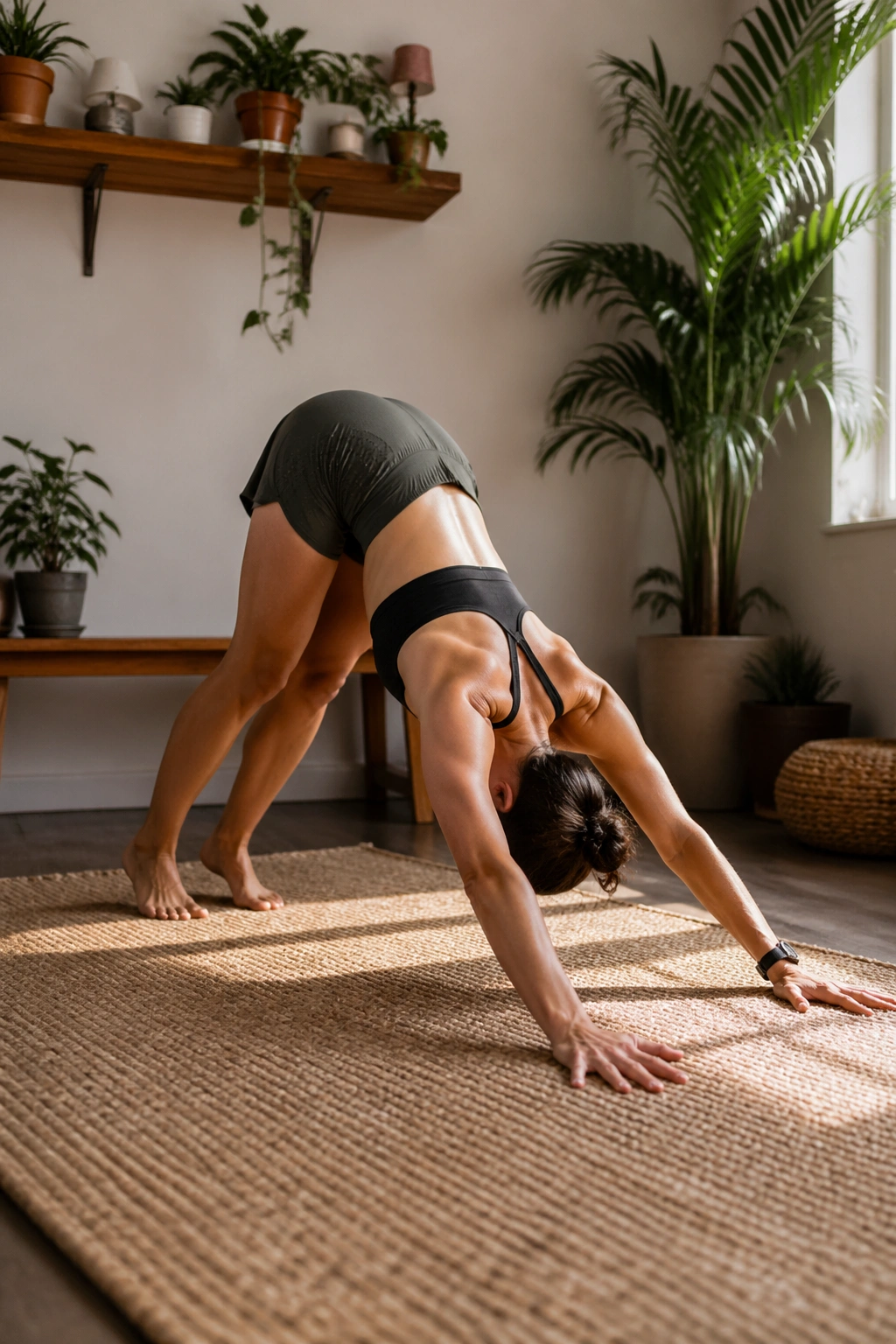
What makes Downward-Facing Dog so useful for runners? It stretches the calves and hamstrings while giving the feet, ankles, shoulders, and upper back something to do too. That matters after running, because tired legs often come with a slumped posture and a cranky lower chain all at once.
Do not chase straight legs here. Bent knees are fair game. In fact, they’re often the smarter choice. Push the floor away with your hands, lift your hips, and pedal the heels gently so one calf stretches at a time. That little alternating action feels especially good after hills or faster intervals.
How runners should modify it
- Place your hands a little wider than shoulder width.
- Keep your knees bent if your hamstrings tug hard.
- Pedal the feet for 5 to 8 slow breaths.
- Let the heels drift toward the floor, but don’t force them there.
A lot of runners love this pose because it resets the whole body in one shot. It’s not subtle.
3. Low Lunge
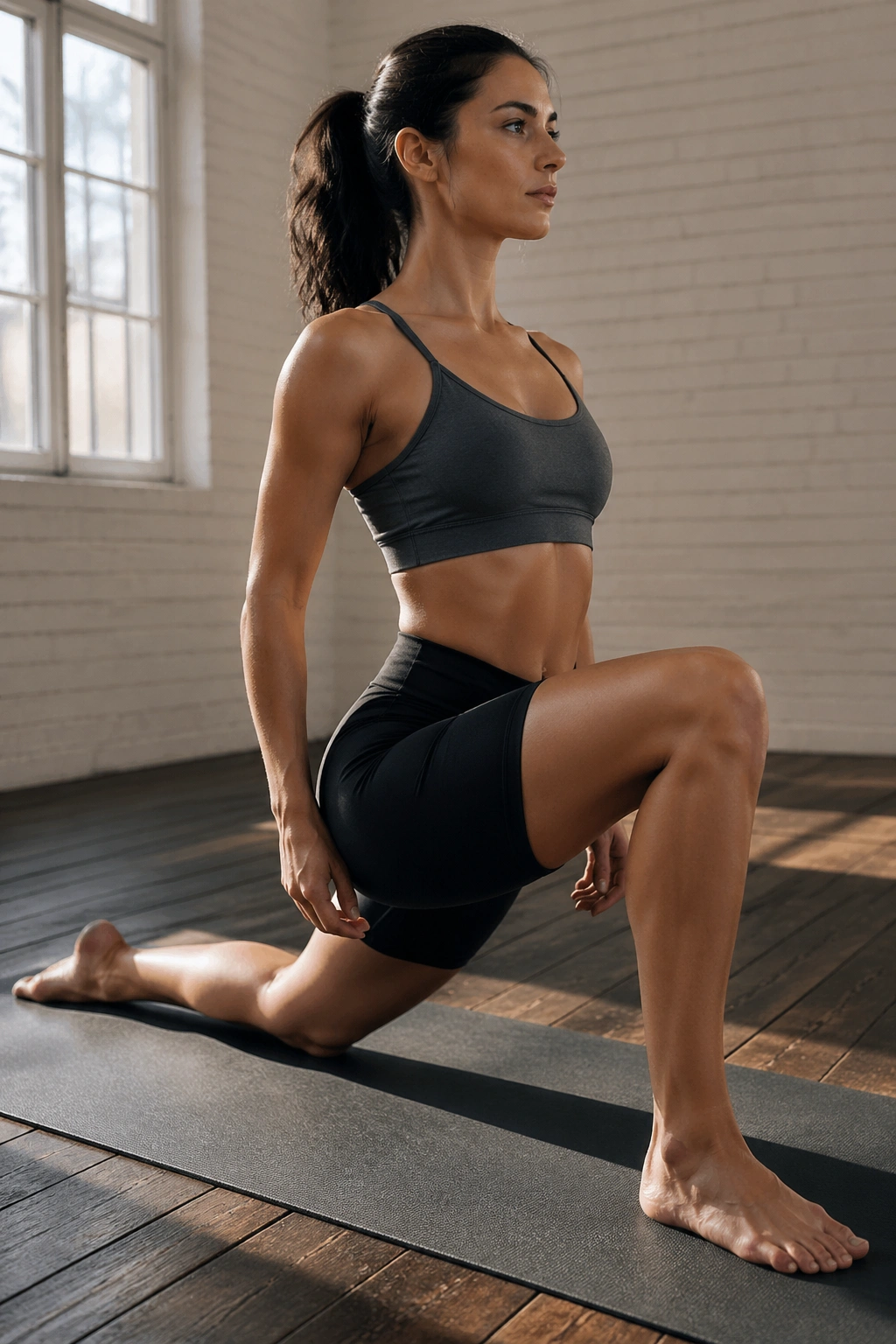
If your front hips feel locked up from sitting, running, or both, Low Lunge is the one that usually gives the clearest relief. It opens the hip flexors and the top of the quad on the back leg, which is exactly where runners tend to get sticky after repeated strides.
Kneel the back knee on a folded blanket if the floor feels hard. Then square the hips forward as much as you can without twisting yourself into a knot. A slight tuck of the pelvis keeps the stretch where you want it instead of dumping into the low back.
What you should feel
- A long line along the front of the back leg.
- Gentle opening in the front hip.
- No pinching in the low back.
Small but important: squeeze the back glute lightly. That helps the hip flexor let go without turning the pose into a lumbar arch.
4. Crescent Lunge
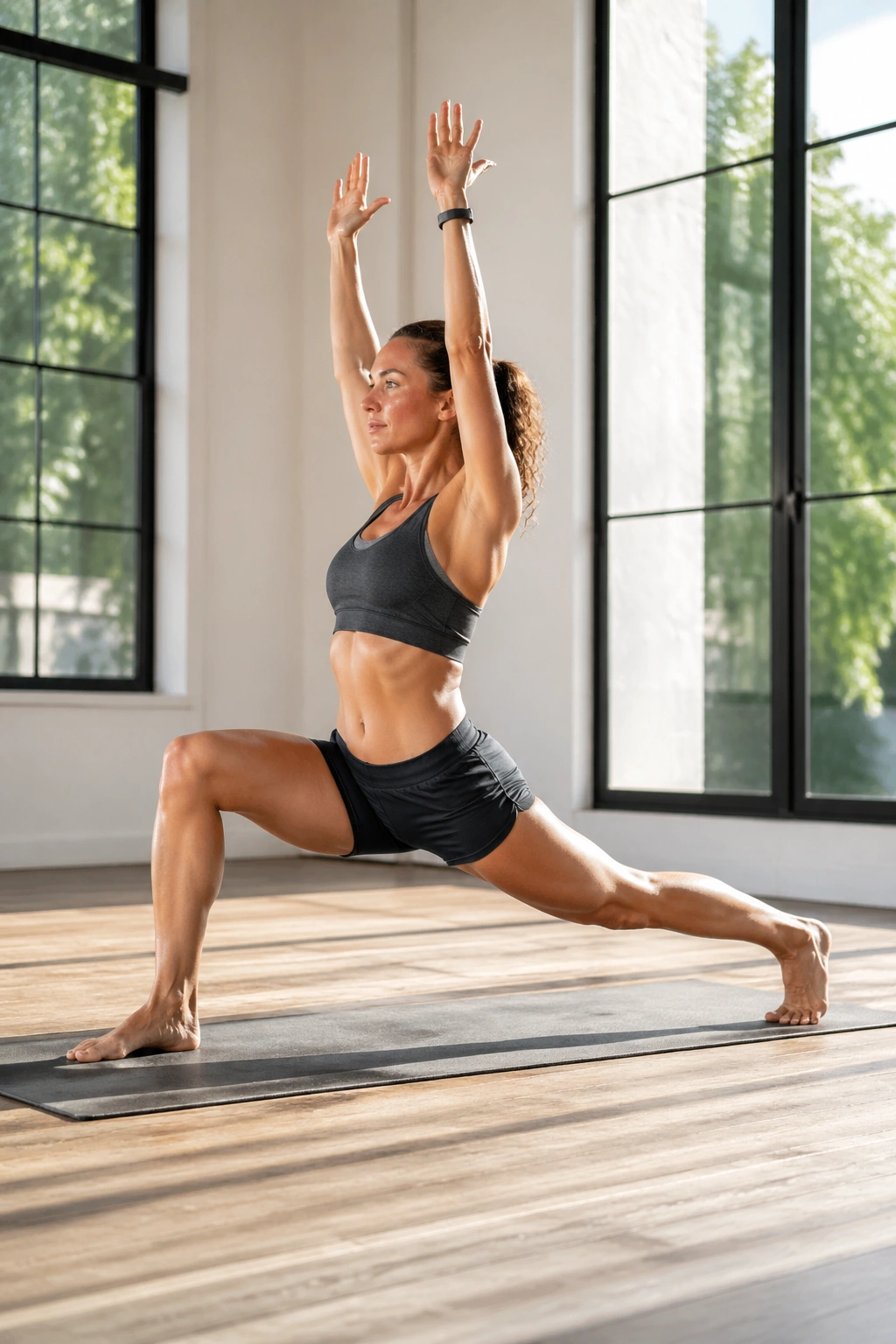
Not every runner needs passive stretching. Crescent Lunge is the more active cousin of Low Lunge, and it’s excellent when your legs feel sleepy rather than stiff. The pose builds a little heat while opening the hip flexors, quads, and calves at the same time.
Stay upright. That matters. If you dump all your weight into the front leg, you lose the point of the pose. Reach through the crown of the head, press the back heel away, and keep the torso stacked over the hips. It feels strong, not floppy.
A runner who sits a lot between workouts will usually get a lot out of this one. The front of the hip gets the message, and the glutes wake up enough to help the next stride feel smoother.
Hold it for 3 to 5 breaths per side. If the back leg starts shaking, that’s normal. If the lower back takes over, come out and reset.
5. Lizard Pose
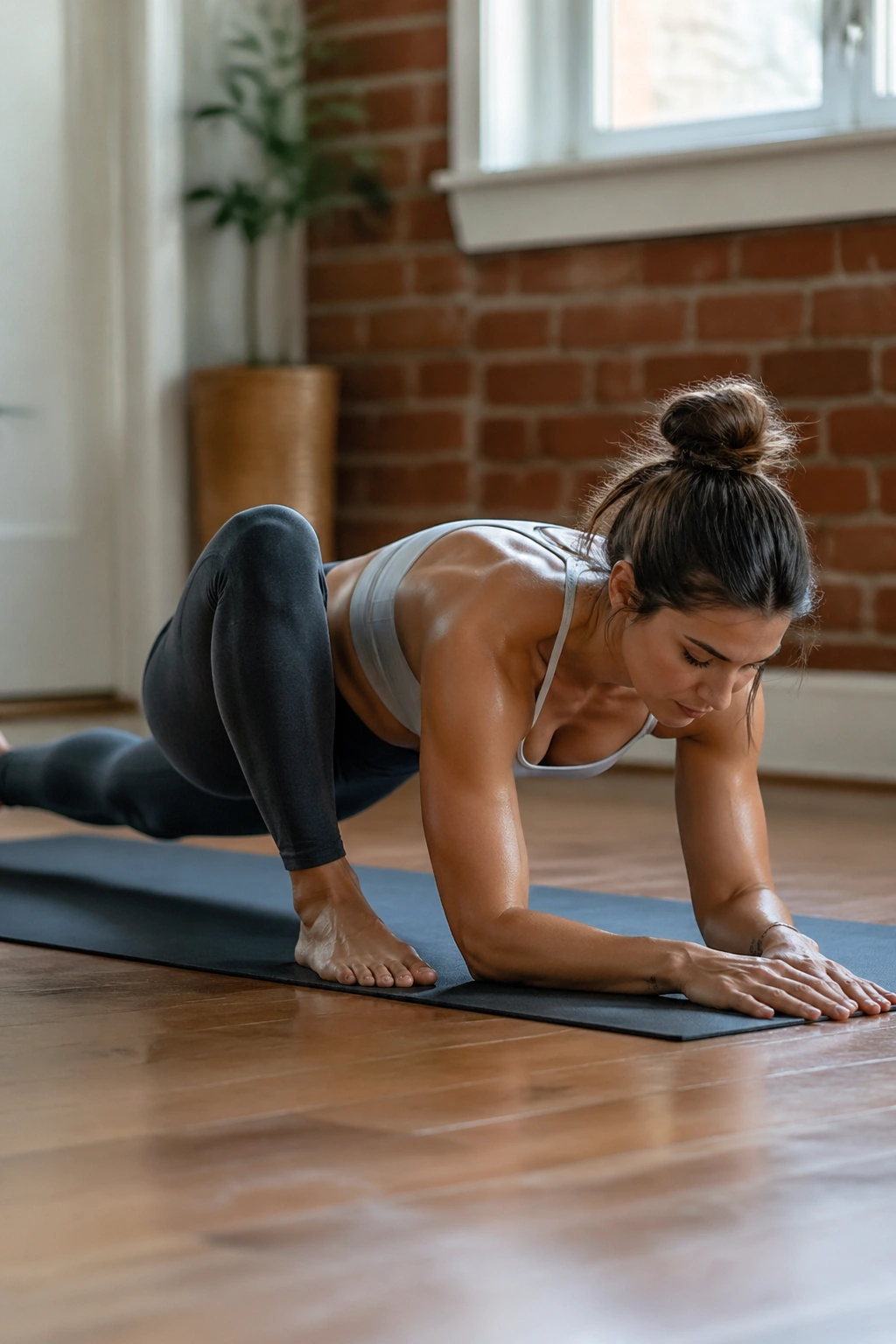
Lizard Pose is the one people either love or avoid. I like it because it gets into the groin, outer hip, and deep hip capsule in a way that feels honest. For runners, that matters after long runs, hill repeats, or anything that leaves the hips feeling boxed in.
Drop the back knee down first if you need to. Then bring both hands inside the front foot, and lower to the forearms only if the body says yes. There’s no prize for getting low. The useful version is the one where you can still breathe slowly and keep the front knee from collapsing inward.
- Use a block under your forearms if the floor is too far away.
- Keep the front foot active, not floppy.
- Stay for 5 to 8 breaths.
- Back out if the front knee complains.
My take: this pose works best when you treat it like a slow release, not a test.
6. Half Split
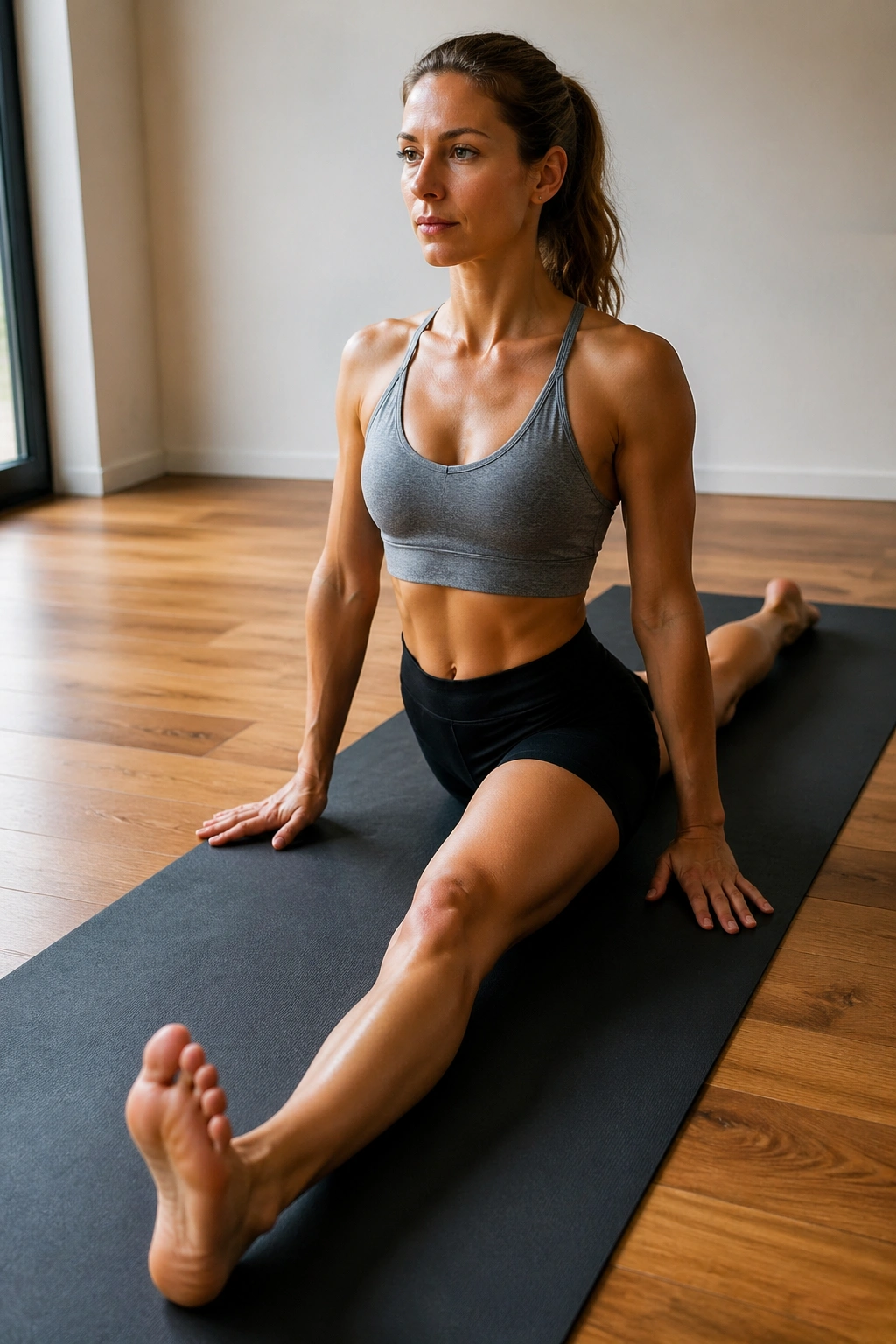
After Low Lunge, Half Split is the cleanest way to shift the stretch into the hamstrings. The front leg straightens, the hips move back, and the whole back of the leg gets a more direct line of pull. Runners who feel tight behind the knees usually notice this one fast.
Flex the front foot hard. That little detail matters more than people think. It protects the knee and gives the calf a say in the stretch. Keep the spine long instead of rounding over the shin like a folded lawn chair, and use blocks under the hands if the floor makes you slump.
The mistake to skip
Do not yank the chest toward the thigh. That usually turns the stretch into a back-rounding contest, and the hamstrings stop cooperating. Move the hips back until you feel the pull, then pause.
A good hold here is 30 to 45 seconds per side. If the front leg is extra tight, bend the knee a little and work from there.
7. Pyramid Pose
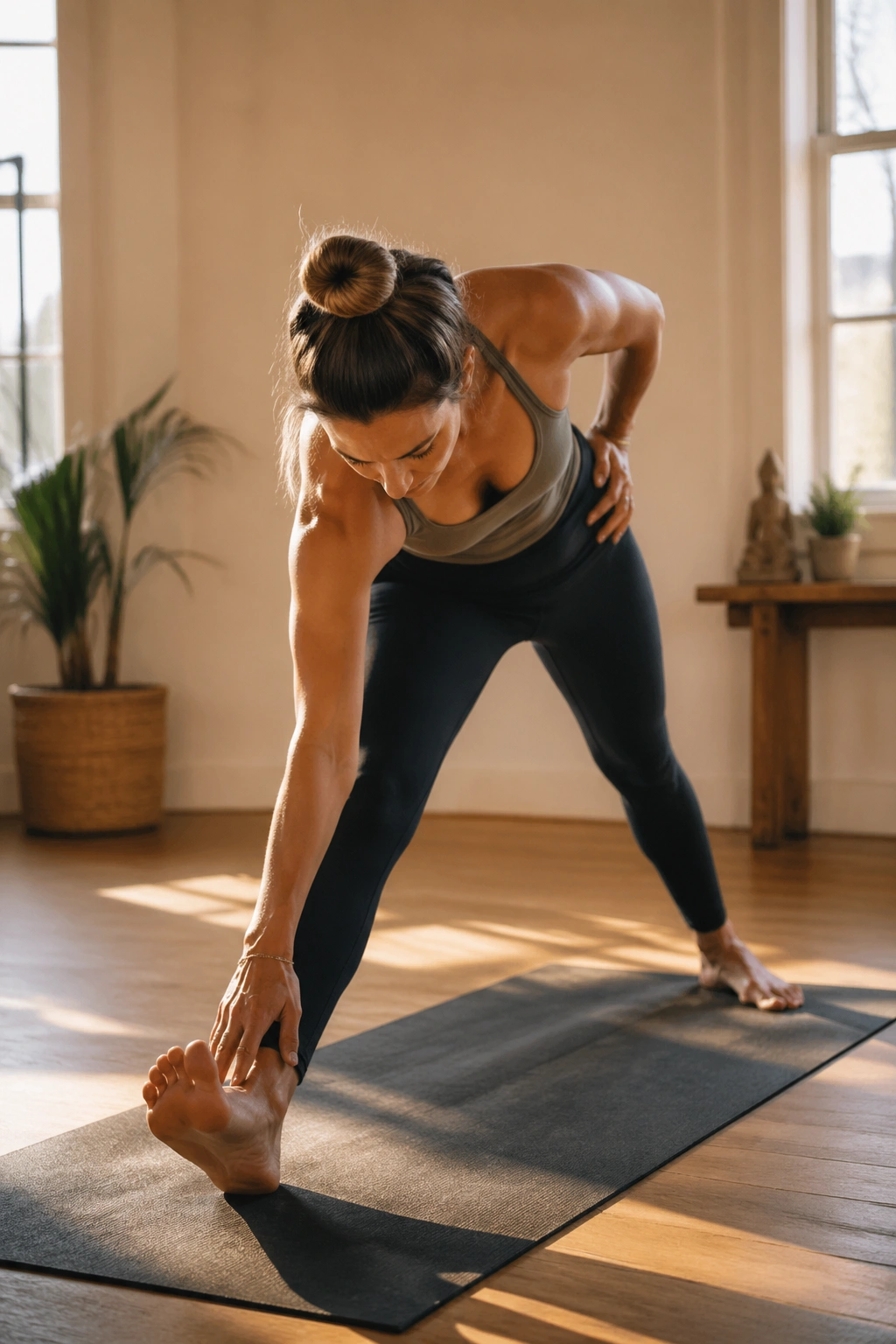
Pyramid Pose hits the same general neighborhood as Half Split, but the standing setup makes it feel a little more grounded. I like it for runners who want a hamstring stretch that doesn’t require sitting on the floor after every set.
Square the hips as much as you can, step the feet onto train tracks rather than a tightrope, and hinge forward from the hips with the front knee softly unlocked. Put blocks under the hands right away if the stretch pulls you into a rounded back. That’s not a failure. It’s smarter mechanics.
What to watch for
- The front heel stays rooted.
- The front foot points forward.
- The torso lengthens before it folds.
- The back leg stays active instead of dead weight.
This one is especially good after tempo runs, when the calves and hamstrings both feel shortened. It has more bite than it looks like it should.
8. Wide-Legged Forward Fold
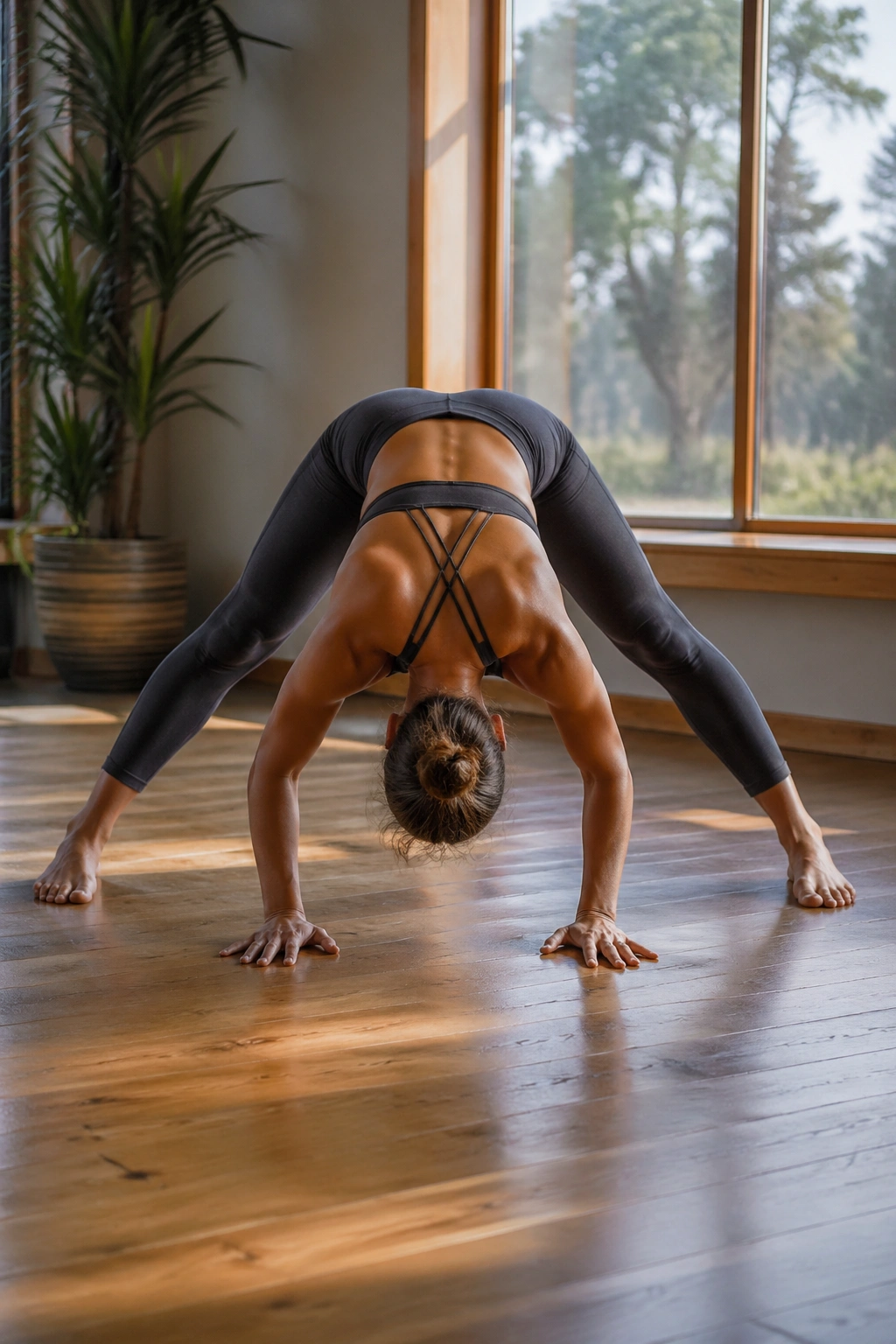
The first thing you notice in Wide-Legged Forward Fold is the inner-thigh pull. Then the hamstrings show up. Then the whole back line starts to quiet down. For runners, that combination is gold after hilly routes or anything that leaves the adductors barking.
Stand with the feet wide and parallel, not turned out like a ballet pose gone sideways. Hinge forward from the hips, keep a soft bend in the knees if needed, and let the crown of the head hang toward the floor. You can rest hands on the ground, on blocks, or on the ankles if the floor is too much.
Small tweaks that help
- Put a slight bend in the knees if your lower back rounds.
- Use a block under the head if dizziness creeps in.
- Shift a little weight toward the balls of the feet to keep the fold active.
- Stay for 5 slow breaths, then come up halfway before standing.
It’s a strong pose. Respect it.
9. Triangle Pose
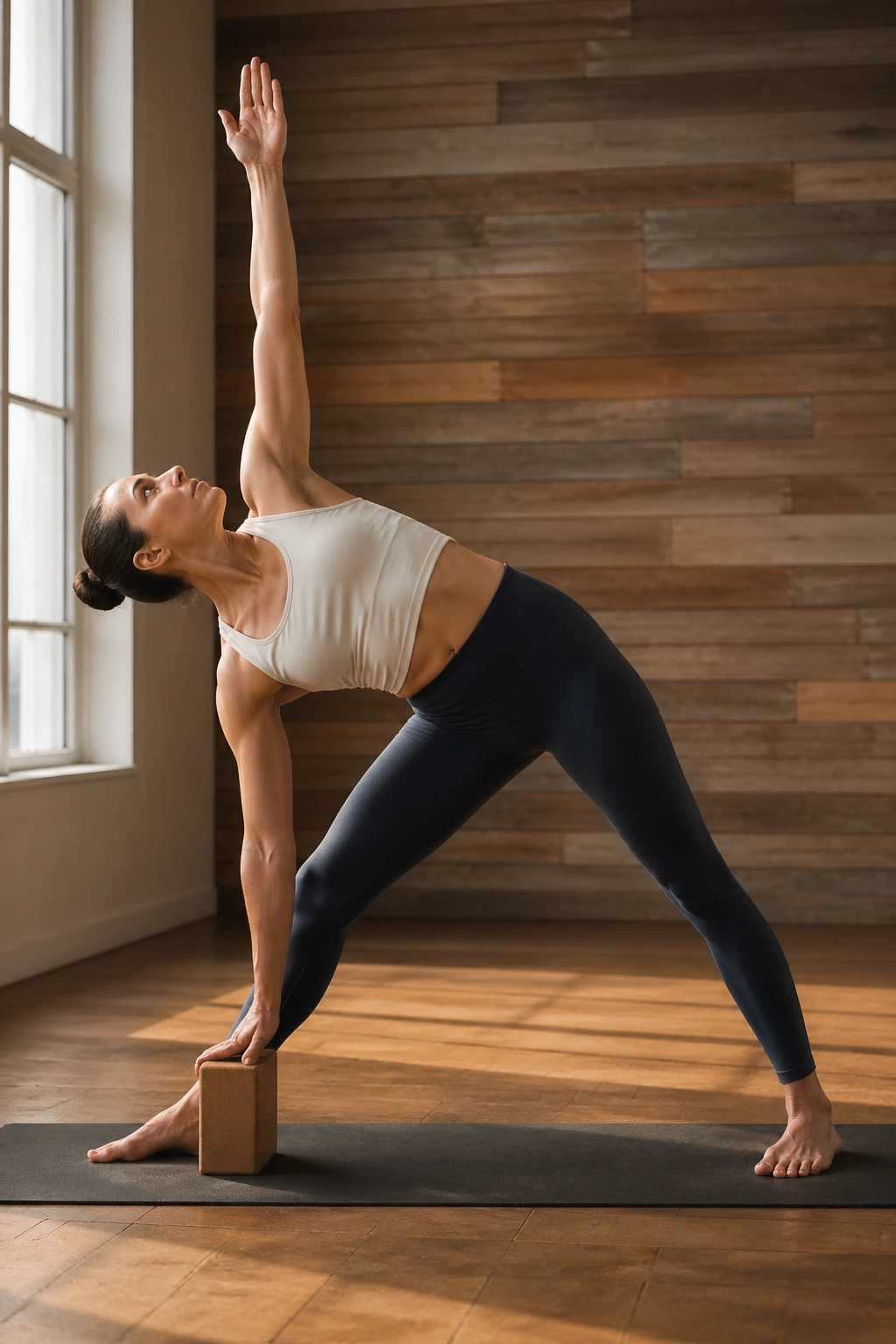
A runner’s body is not just front and back. Triangle Pose opens the side body, the hips, the hamstrings, and the calves while giving the ankles a little stability work. That side-line attention helps when the outer hips feel crowded or one leg always seems tighter than the other.
The key is to lengthen first, then fold. Reach long through the front arm, hinge at the hip, and only then lower the hand to a block, shin, or floor. If you skip that first reach, the torso collapses and the stretch turns sloppy fast.
The block under the bottom hand is not cheating. It keeps the chest open and lets you rotate without dumping weight into the front leg. That matters if you’ve got a tired calf or a cranky ankle.
This pose feels better than it looks when you stay patient with it. Runners often rush here. Don’t.
10. Revolved Low Lunge
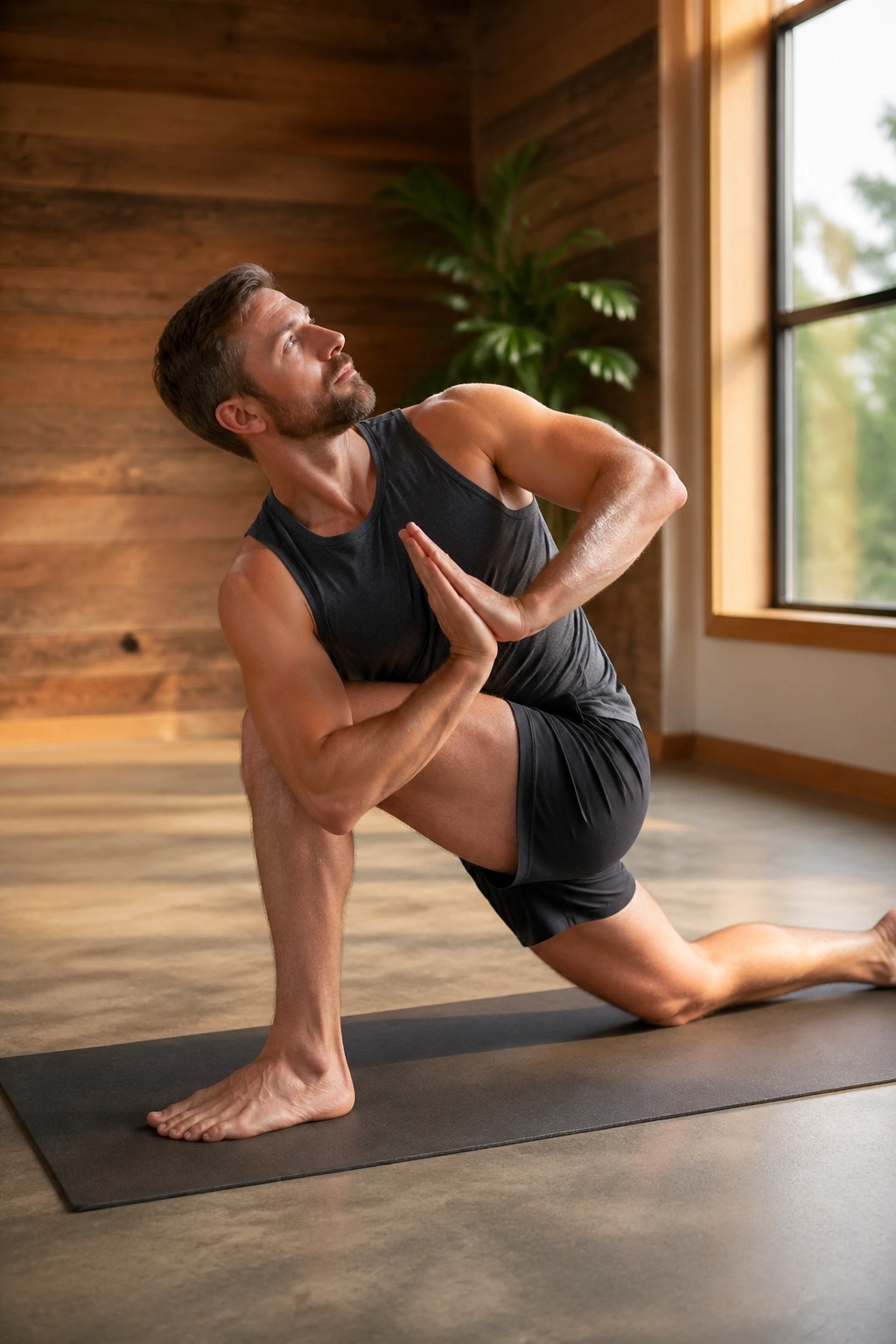
A twist can be surprisingly good for legs that feel stale. Revolved Low Lunge mixes hip flexor opening with a gentle spinal rotation, which helps after repetitive forward motion. Running is a straight-ahead sport. Your body likes a little change.
Keep the back knee down if you want the gentler version. Bring the hands to prayer at the chest or place the opposite hand outside the front foot and rotate from the ribs. That part matters. The twist should rise from the torso, not from yanking the shoulder around.
Why runners tend to like it
- It opens the front hip on the back leg.
- It wakes up the glutes a bit.
- It gives the spine a break from forward drive.
- It can feel easier than deep hip openers on a tired day.
Go easy if the low back is fussy. A twist should feel spacious, not sharp. Hold for 3 to 5 breaths, then switch sides and see if one side unwinds faster than the other.
11. Pigeon Pose
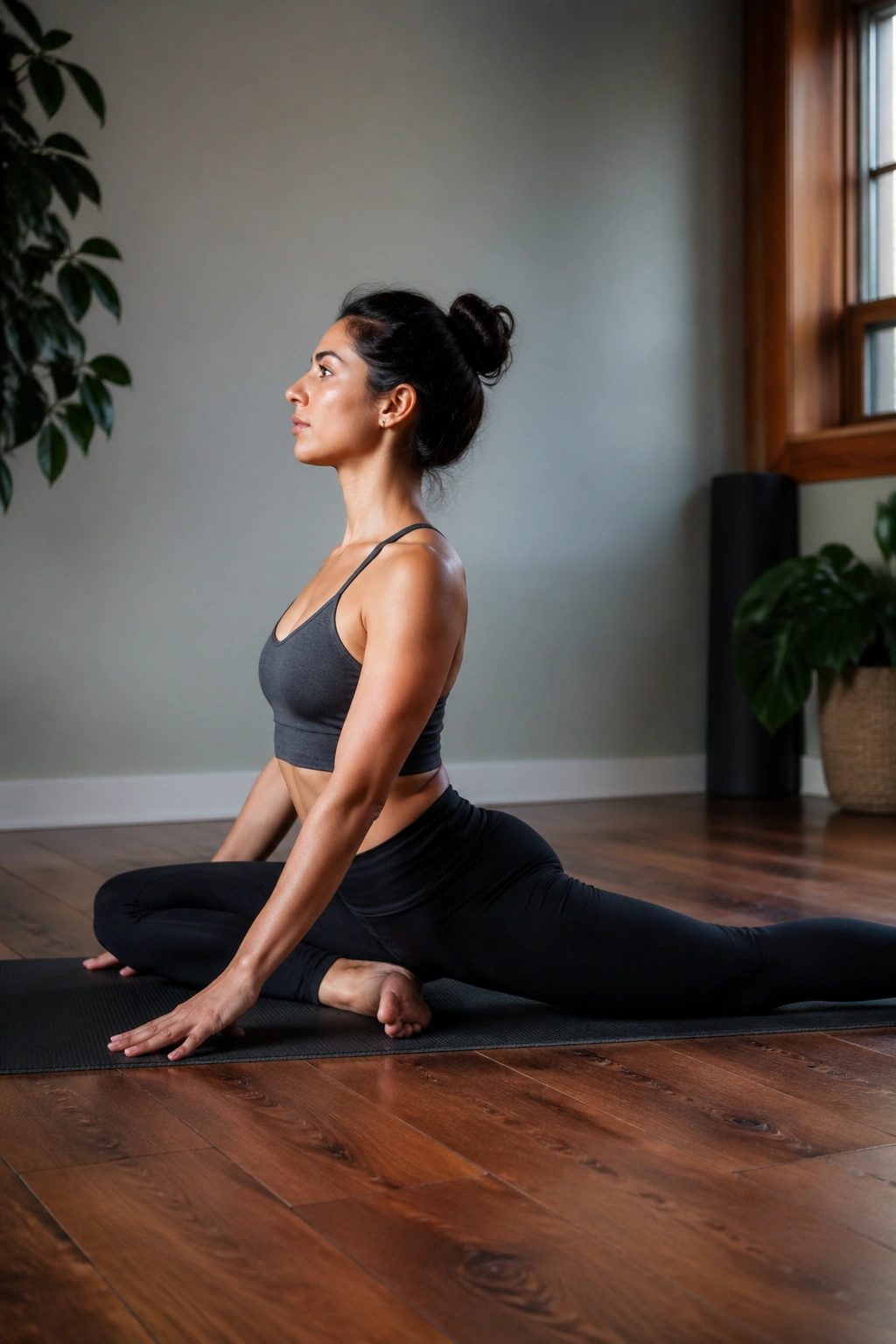
This is the pose people either swear by or side-eye from across the room. Pigeon Pose goes straight at the outer hip and glute, which is why runners with tight, tired legs often find it intense in the best and worst ways.
Set the front shin at an angle that works for your hip, not for the mirror. A square shin looks neat, but it is not the point. Pad the hip on the front side if one cheek lifts off the floor, because that gap changes everything. A folded blanket or firm block under the hip can turn a grimace into a usable stretch.
What to watch for
- Skip the deep version if the front knee aches.
- Keep the back leg long and active.
- Don’t force the pelvis flat.
- Stay upright if the forward fold feels like too much.
If Pigeon feels like a fight, back out. Figure Four is the smarter choice on most tired days.
12. Eye of the Needle
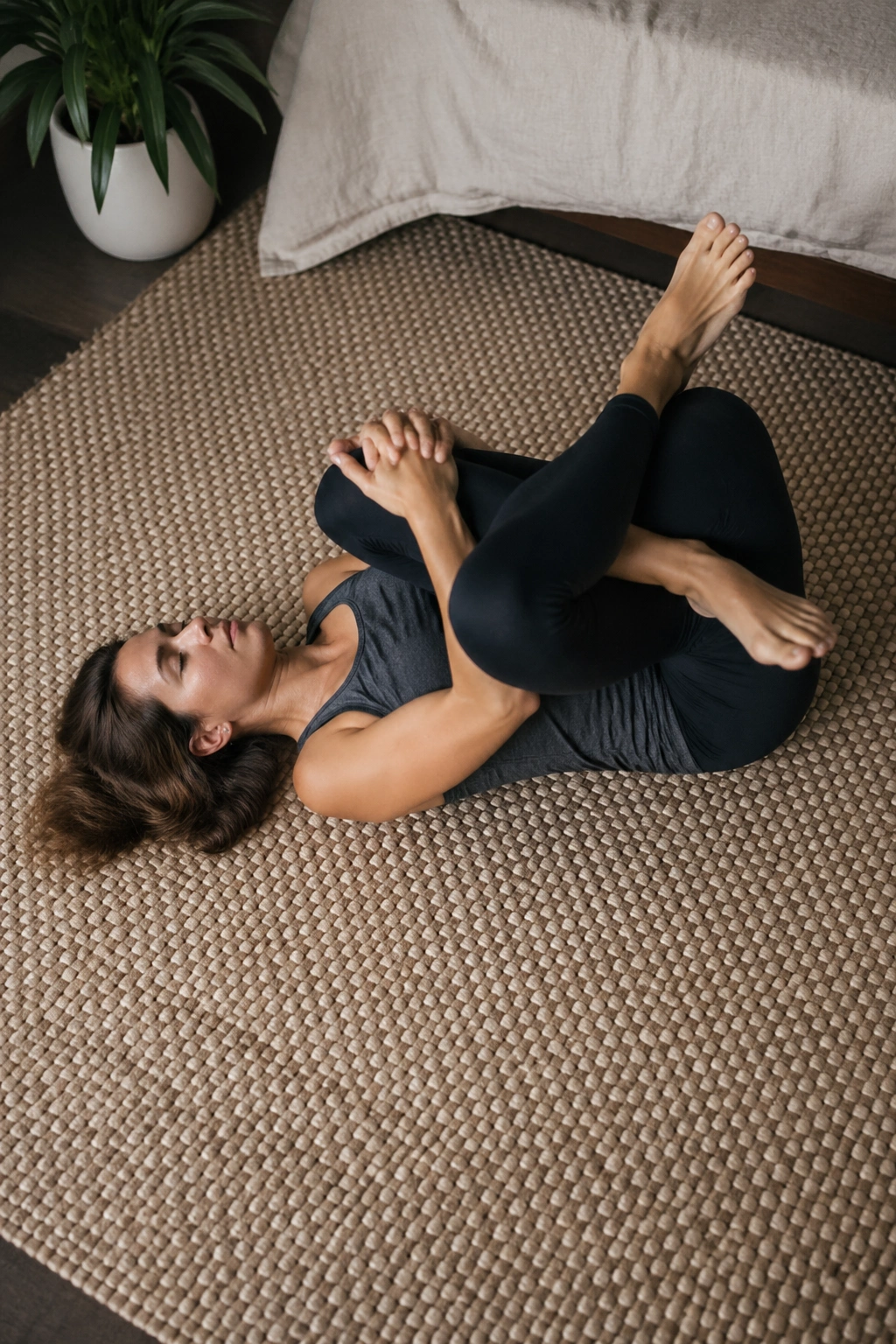
Eye of the Needle is the gentler cousin of Pigeon, and I reach for it when the hips are sore but the floor feels like too much work. It targets the same outer-hip zone without the big knee angle that can bother some runners.
Lie on your back, cross one ankle over the opposite knee, and draw the bottom thigh toward your chest. The stretch lands in the glute and outer hip while the back stays supported. You can keep the lower foot on the floor if your hamstrings are especially grumpy.
A small side-to-side rock often helps here. It loosens the tissue around the hip without turning the pose into a rigid hold.
Use it this way
- Hold each side for 30 to 60 seconds.
- Keep the neck relaxed on the mat.
- Use a strap behind the thigh if reaching feels cramped.
- Ease out if the knee pinches.
This is a tidy little recovery pose. Nothing flashy. Good enough.
13. Reclined Figure Four
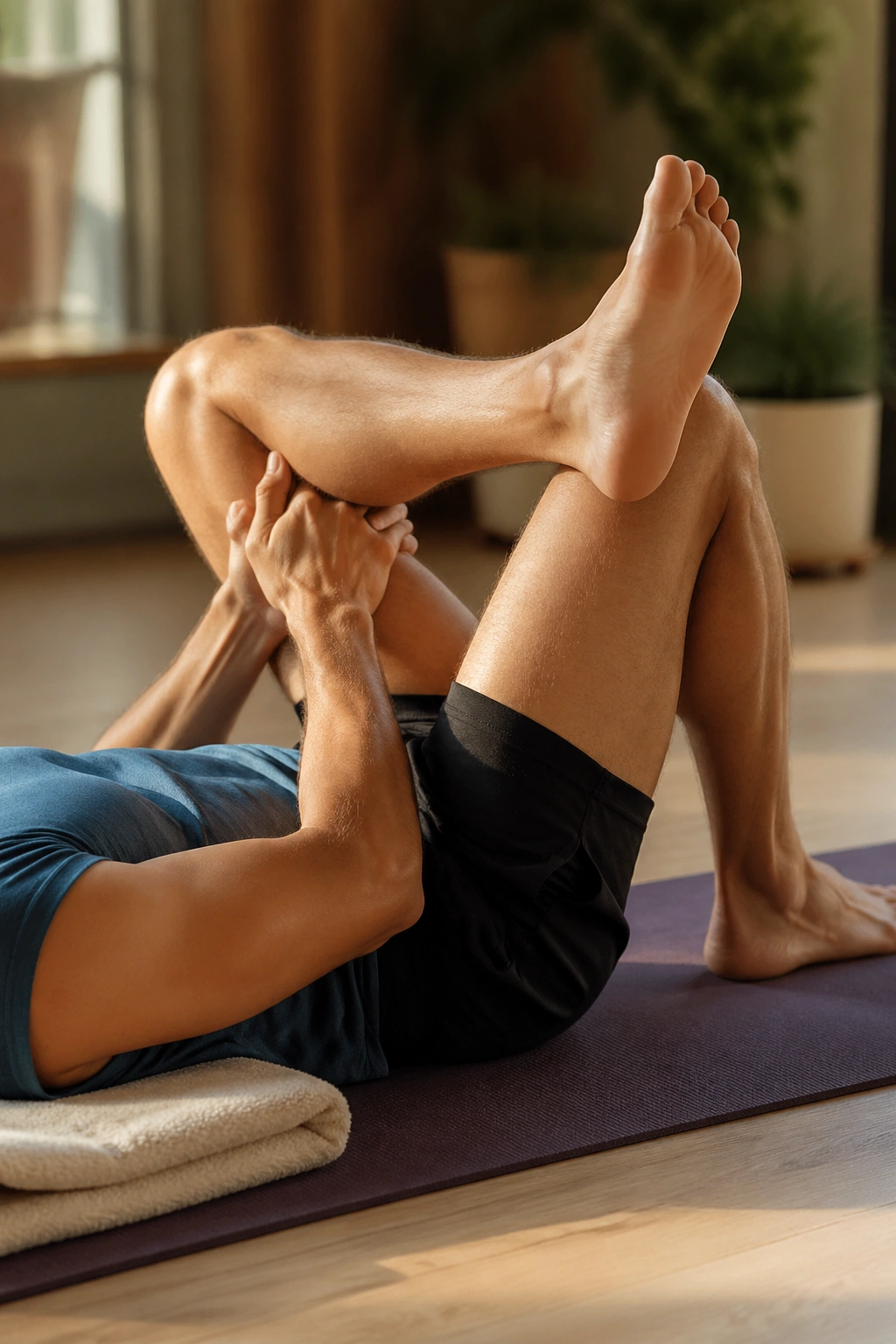
Same family as the last pose, but a touch more open. Reclined Figure Four lets the glutes, piriformis, and deep outer hip release while the body stays on the floor, which makes it ideal after a long run when standing stretches feel like too much.
Press the ankle of one leg over the opposite thigh, then thread the hands behind the hamstring and pull the leg in until you feel a steady stretch. Keep the foot of the crossed leg flexed. That helps protect the knee and keeps the stretch from wandering.
You can rest your head on a folded towel or keep one foot on the mat if the hamstrings fight back. A lot of runners like this one before bed because it doesn’t ask for balance or attention. It just works.
Hold it for 5 to 8 breaths per side. If the hip opens unevenly, stay there and breathe longer rather than chasing a bigger shape.
14. Reclining Hand-to-Big-Toe Pose
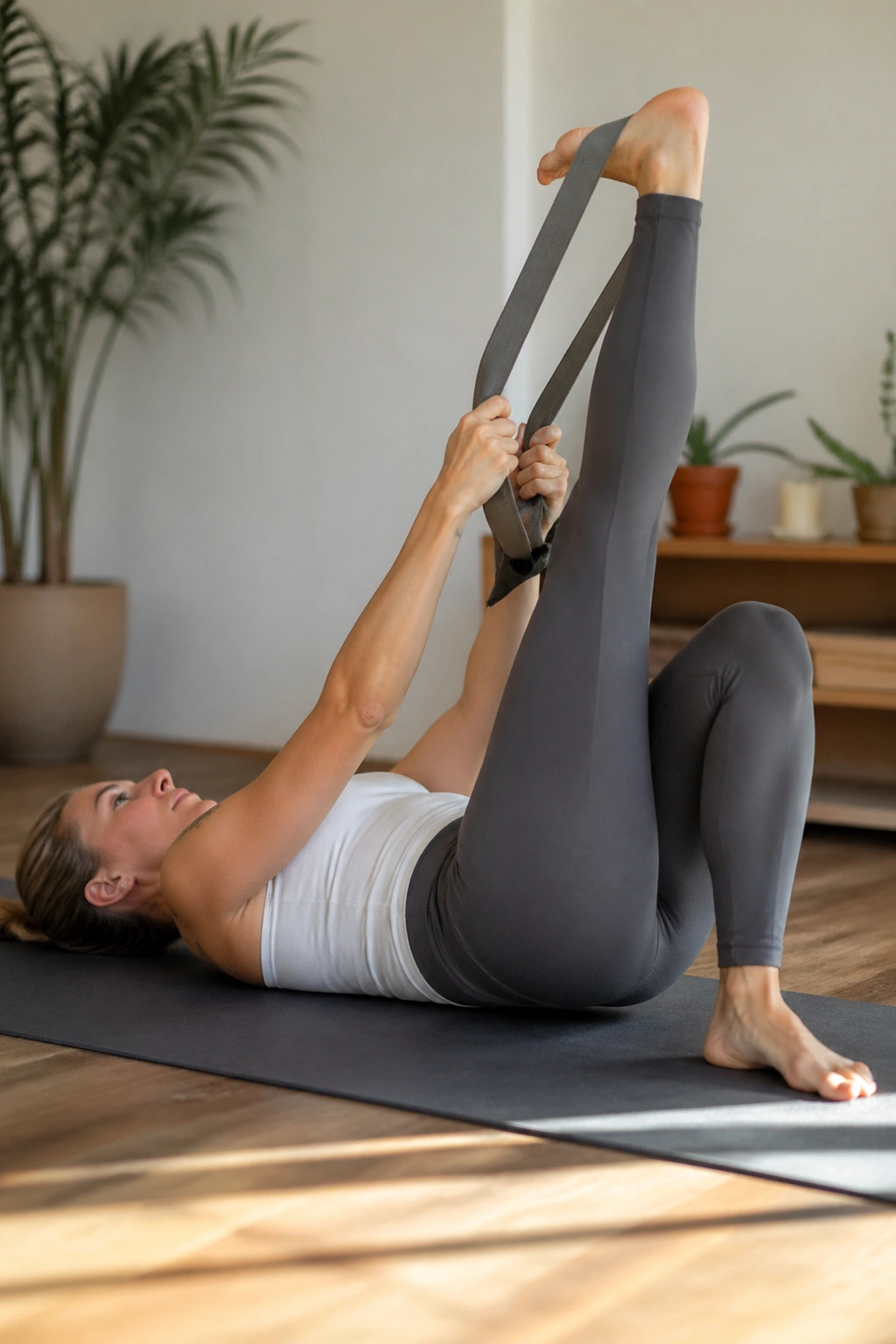
This one is a hamstring stretch with a little more precision. Reclining Hand-to-Big-Toe Pose lengthens the back of the leg while letting you control the angle, which is helpful when one hamstring is tighter than the other and you do not want a guessing game.
Use a yoga strap around the ball of the foot if you can’t hold the leg comfortably. Keep the opposite hip heavy on the floor, and bend the lifted knee if the hamstring grabs hard. Straight leg is optional, not mandatory.
How to get the most from it
- Keep the bottom leg long and relaxed.
- Hold the strap with soft elbows, not locked arms.
- Pull the leg to a point where the breath stays easy.
- Let the foot flex and point a few times to wake up the calf.
This pose is especially nice after speed work, when the back of the leg feels shortened but not inflamed. The control matters.
15. Happy Baby
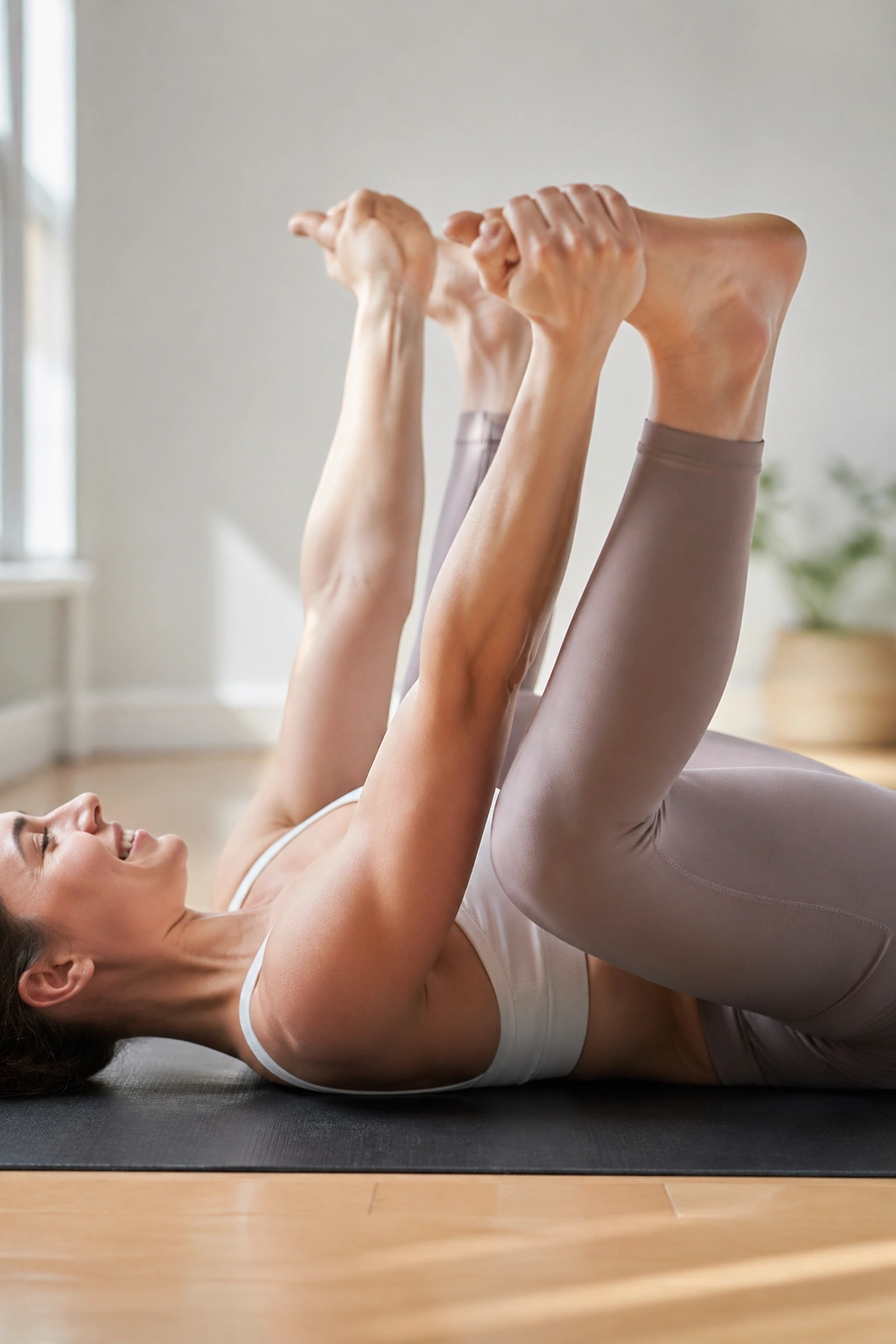
Happy Baby looks a little goofy. That’s fine. Runners tend to appreciate it anyway because it opens the inner thighs, low back, and groin without asking the legs to support any weight at all.
Grab the outer edges of the feet or the shins, bend the knees wide, and let the tailbone settle toward the mat. Rock gently side to side if the sacrum feels stuck. The inner thighs usually respond fast, and the lower back gets a break from holding everything together.
It helps to keep the shoulders relaxed. People often tense up here because the shape feels unfamiliar. Don’t fight the pose into a picture. Use the breath and let the legs fall where they fall.
A minute here can feel better than three minutes of forcing your way through something deeper. That surprises people. It shouldn’t.
16. Bridge Pose
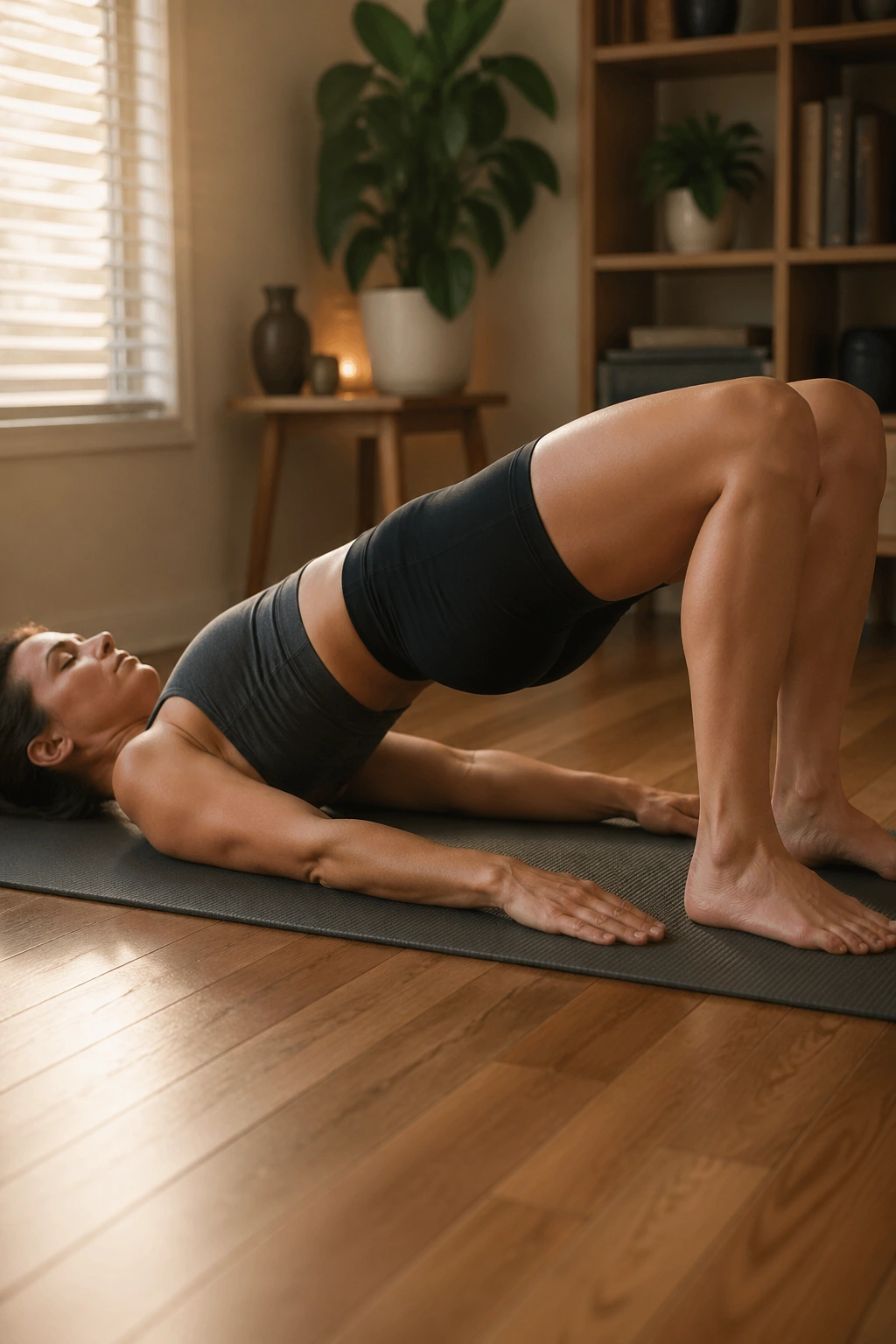
Not all recovery is passive. Bridge Pose is active, and that’s part of why runners benefit from it so much. It wakes up the glutes, opens the front of the hips, and gives the spine a cleaner shape after miles of forward motion.
Lie on your back with the feet hip-width apart and close enough to your seat that the fingertips almost graze the heels. Press through the feet, lift the hips on an exhale, and keep the knees tracking forward. Squeeze the glutes lightly. Lightly. This is not a jam-the-butt-and-wreck-the-back situation.
A few useful cues
- Keep the ribs from flaring up.
- Press evenly through both feet.
- Hold for 3 to 5 breaths or do 5 slow lifts.
- Lower with control, not a flop.
Bridge is one of those poses that looks simple and keeps paying rent. Stronger glutes usually mean happier running mechanics.
17. Supported Bridge Pose
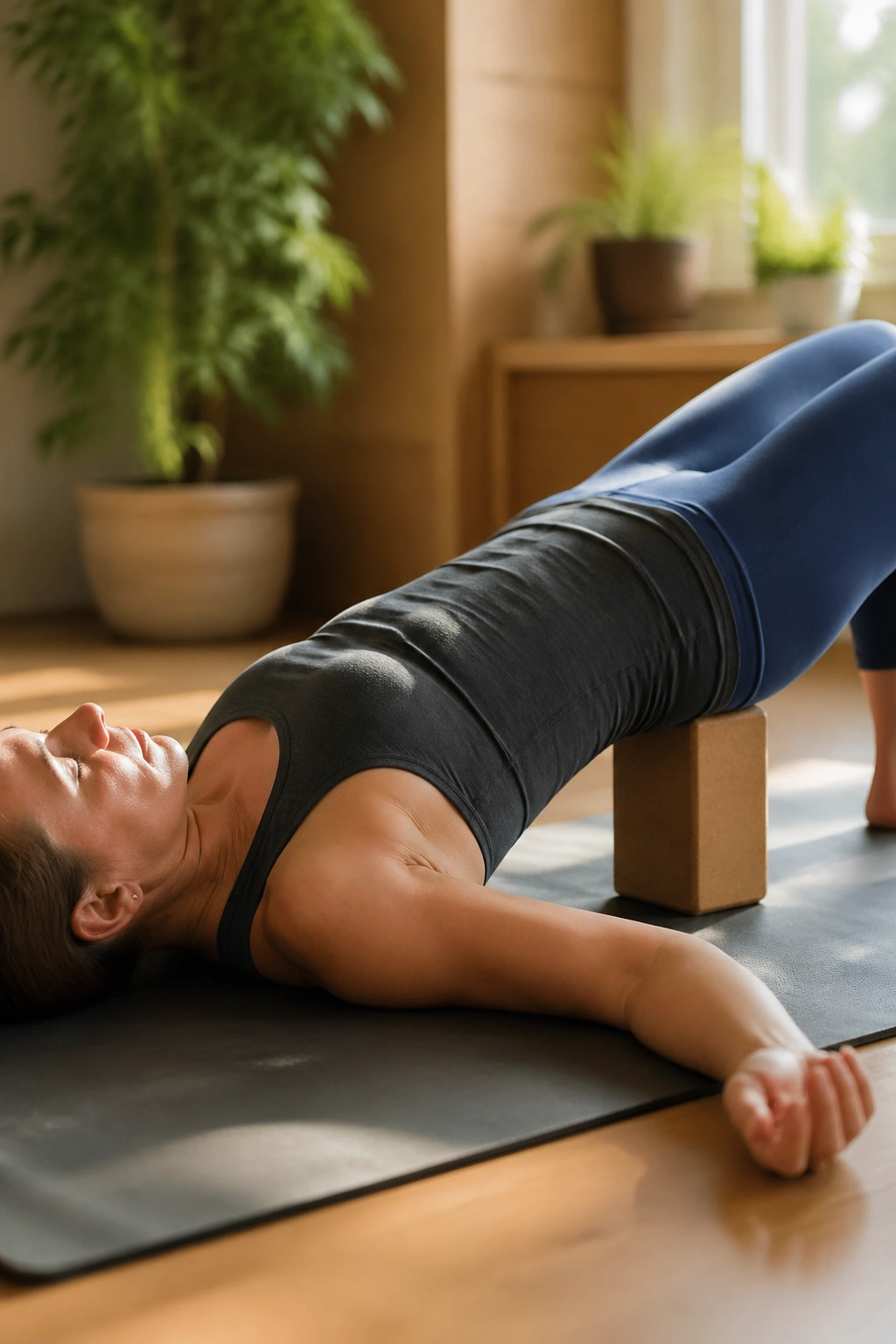
If regular Bridge feels like work, Supported Bridge Pose is the quieter version that lets gravity do some of the heavy lifting. Slide a block under the sacrum, not under the low back, and let the body settle there. The hip flexors get a gentle opening, the chest softens, and the legs stop feeling quite so loaded.
This is a good end-of-day pose when the calves feel heavy or the hips feel compressed. I like the low block setting first. If that feels too low, move to medium, but don’t make the arch so high that the lower back starts to pinch.
You can stay here for 2 to 5 minutes. That longer hold gives tired tissue time to stop resisting. The body usually needs a minute to get the message.
It’s one of the least dramatic recovery poses on the list. Also one of the best.
18. Garland Pose
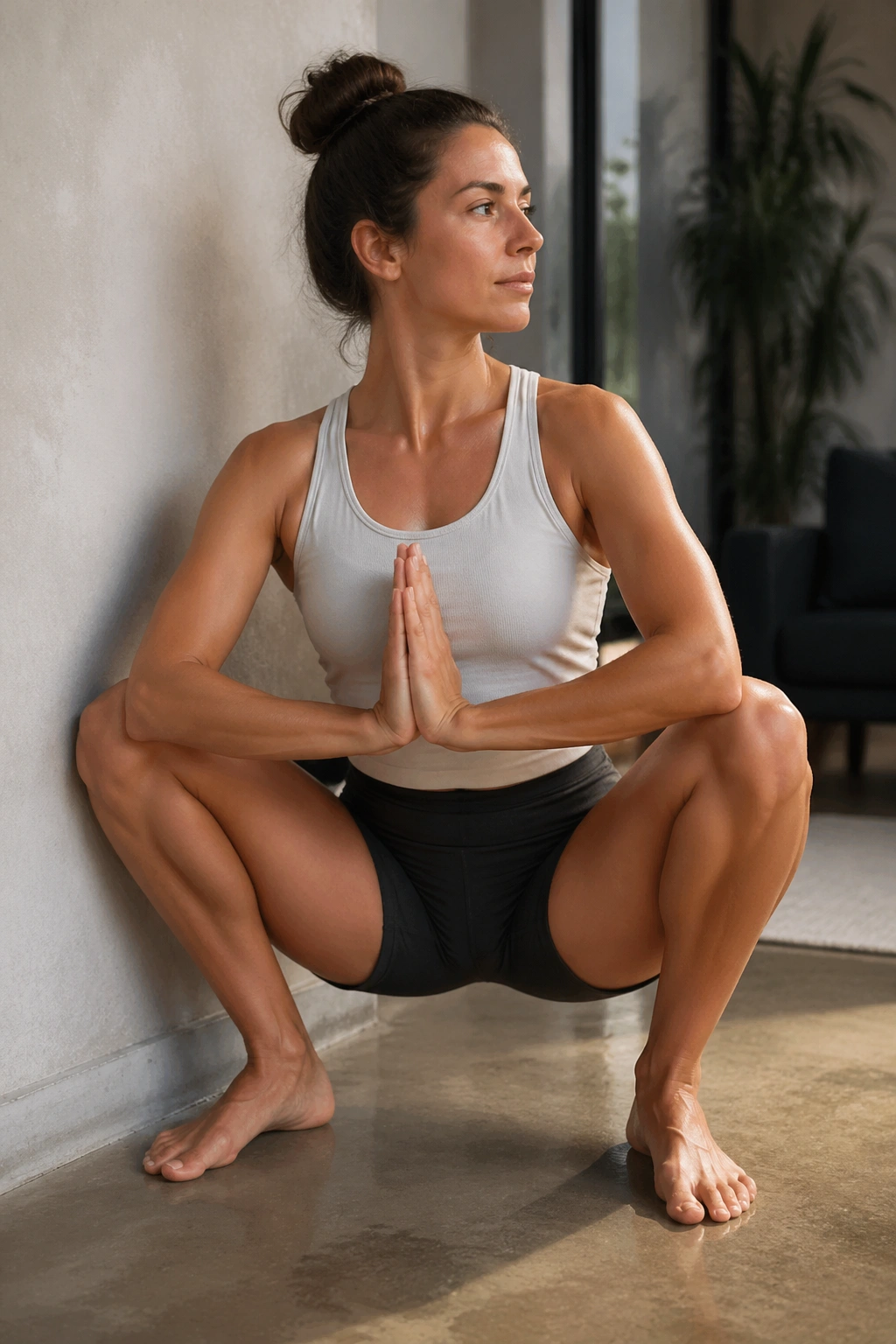
Garland Pose is the runner’s squat. It opens the ankles, calves, hips, and groin in one compact shape, which sounds simple until you try it after a season of pounding miles and realize how much your body has forgotten how to sit low.
Drop into a squat with the feet flat if you can. If the heels lift, fold a towel under them or sit on a block for support. Keep the spine long rather than collapsing into a heap. Press the elbows against the inner knees only enough to create space, not force.
If the squat feels impossible
- Keep the heels elevated on a folded mat.
- Sit on a block instead of hovering.
- Take the knees wider.
- Hold the pose near a wall for balance.
This one tells you a lot about your ankles. That is useful information. Tight calves often show up here before they show up anywhere else.
19. Hero Pose
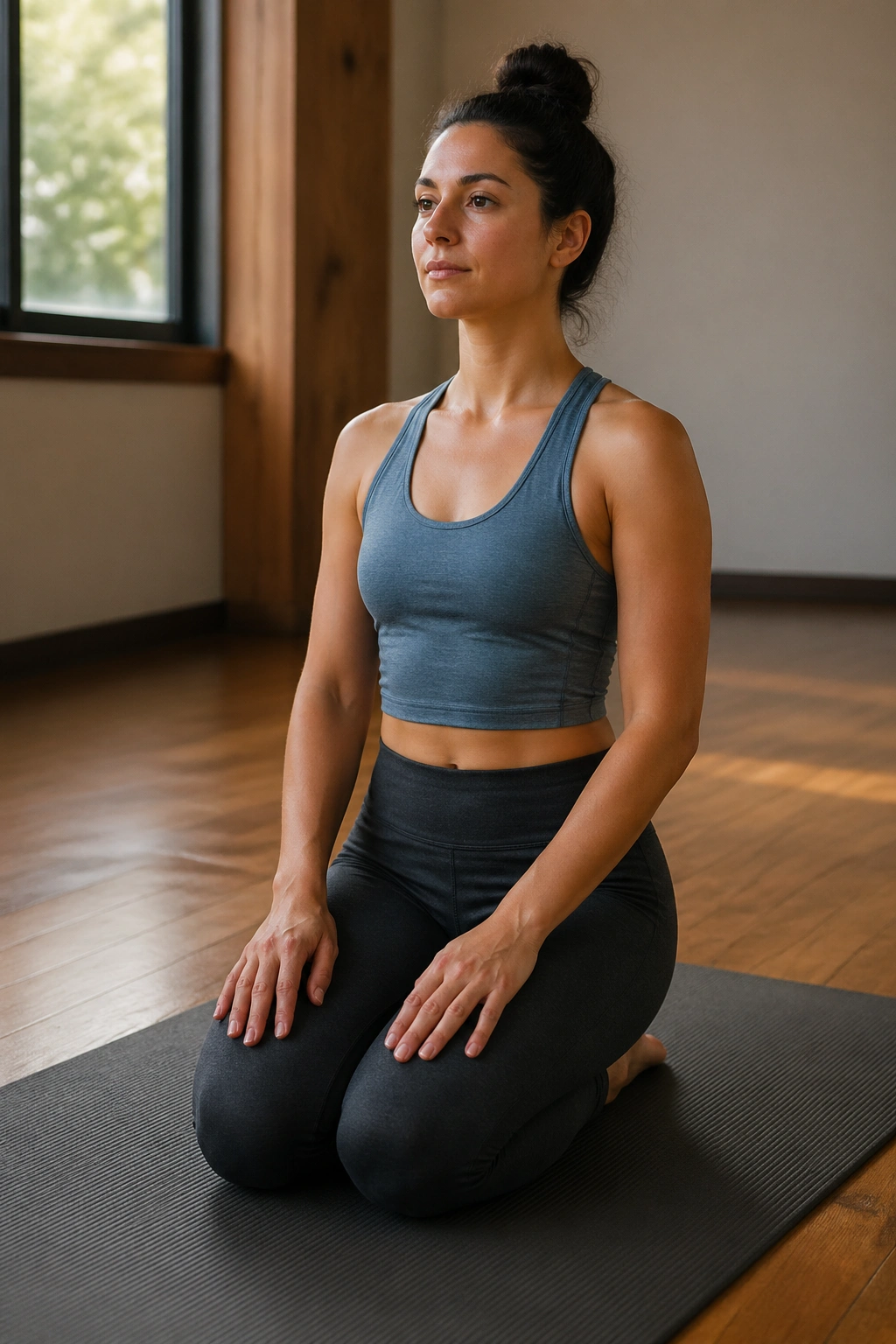
Hero Pose gets overlooked because it looks quiet, but runners with tight quads and shins often get more from it than they expect. Kneeling with the shins on the floor and sitting between the heels opens the fronts of the thighs and the tops of the feet in a very direct way.
Use a block or bolster under the seat if your knees or ankles complain. There is no reason to force your hips all the way down. A supported version is still the real pose. That distinction matters more than people think.
This is a pose to approach slowly. If the knees feel pinchy, back out. If the tops of the feet are cramping, place a rolled towel under the ankles or skip it for the day. The body gives very plain feedback here.
Hero Pose is quiet, almost plain-looking, and that’s part of why it works. No drama. Just front-of-leg release.
20. Camel Pose
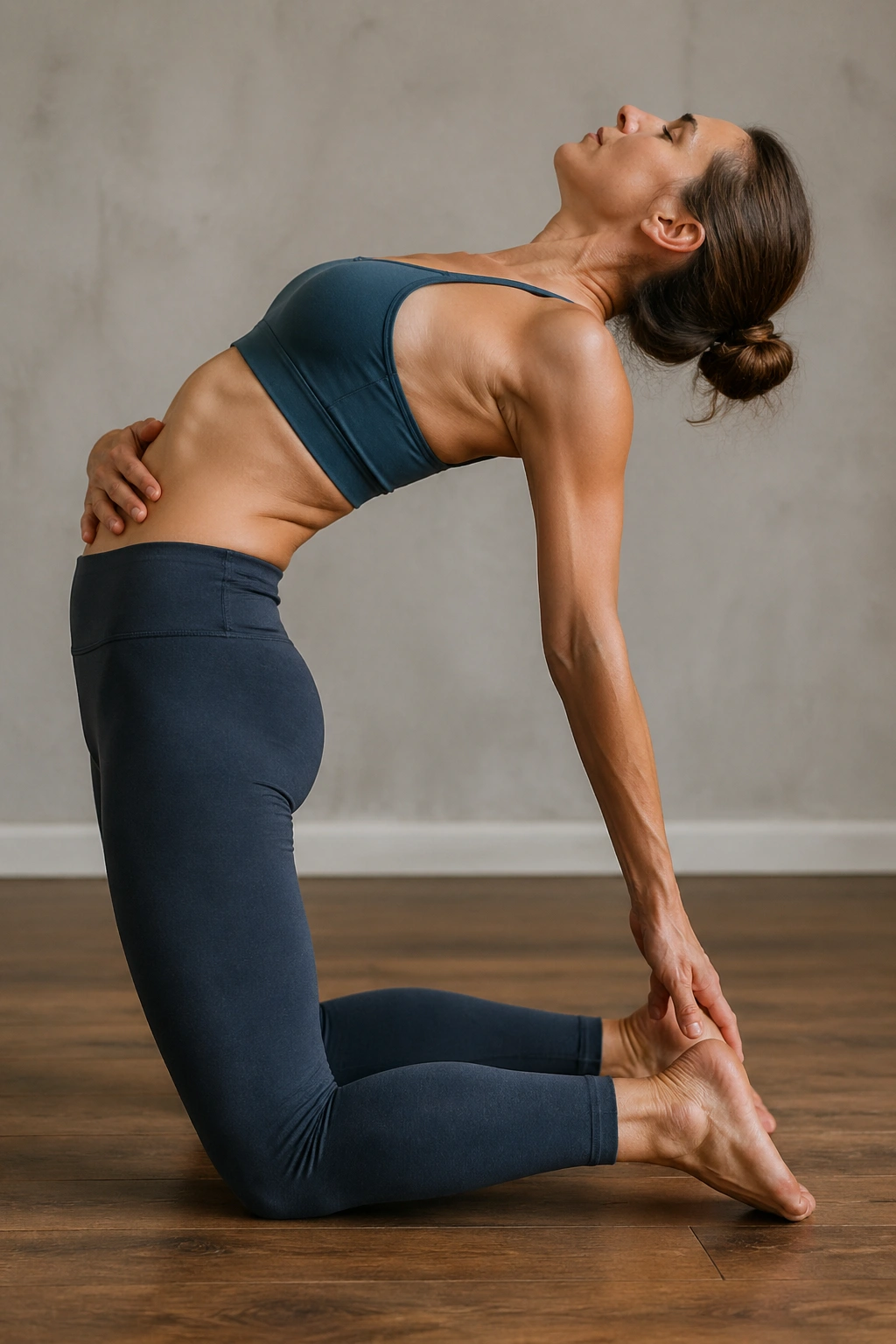
When the fronts of the hips and thighs feel locked, Camel Pose opens that line in a big, unmistakable way. It stretches the quads, hip flexors, and front of the torso, which can feel glorious after lots of sitting or running uphill.
Start with the hands on the low back if full Camel feels too open right away. Press the hips forward slightly, lift through the chest, and keep the ribs from flaring like a popped umbrella. If you go deeper, reach for the heels only if the lower back stays calm. That part is non-negotiable.
A few things that help
- Keep the thighs pressing forward.
- Engage the glutes gently, not hard.
- Move with the breath, not with momentum.
- Stay for 2 to 4 slow breaths.
It’s a bigger pose, so use it with care. A lot of runners love it, but only when they stop trying to make it dramatic.
21. Legs-Up-the-Wall
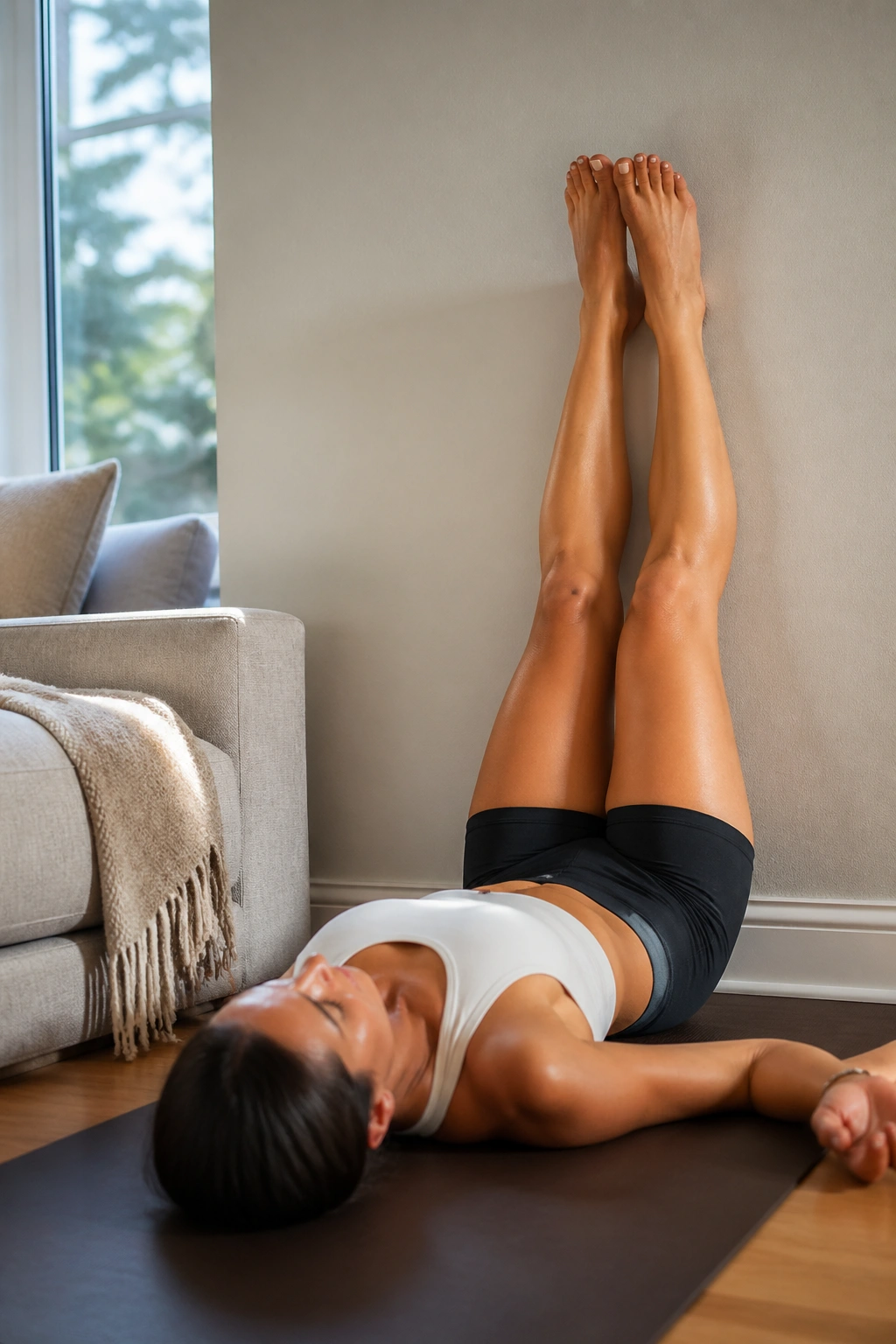
If your legs feel heavy, puffy, or dead after a long run, Legs-Up-the-Wall is the cheapest fix on the list. You do almost nothing, and that’s the point. Gravity helps the calves and feet let go, the lower back settles, and the whole system gets a break from bearing weight.
Scoot your hips as close to the wall as is comfortable, swing the legs up, and let the arms rest out to the sides. If your hamstrings tug, move your hips a few inches away from the wall or bend the knees slightly. A folded blanket under the pelvis can make it feel softer, but it is optional.
A few simple cues
- Stay here for 5 to 10 minutes.
- Breathe through the nose if that feels easy.
- Keep the jaw unclenched.
- Let the feet flop outward.
It’s not fancy. It works anyway. After a long race or a hilly training day, this is one of the few poses that can make tired legs feel less angry almost immediately.
22. Bound Angle Pose
Bound Angle Pose is the quiet finisher I keep coming back to because it asks almost nothing from tired legs. Sit with the soles of the feet together, let the knees drop out to the sides, and support the thighs with blocks or blankets if they hover in the air. It opens the inner thighs, groin, and hips while giving the low back a gentler place to settle.
Stay tall at first. Then, if the body is ready, fold forward from the hips without rounding the spine into a collapse. The forward lean changes the stretch from “gentle opening” to “deeper release,” and both versions have a place. There’s no rush here.
If you only have time for two poses after a run, I’d pick this one and Legs-Up-the-Wall. That combination covers the hips, groin, and the heavy feeling in the lower legs without asking for much in return. On the days your legs feel wrecked, simple usually wins.
