



A steady home practice rarely comes from forcing yourself through an hour you do not have. It comes from having a few yoga flows for a steady home practice that fit the day you actually woke up to.
Some mornings need heat. Some evenings need downshift. Some days the hips feel welded shut from sitting, and other days the shoulders complain first. If your sequence can answer those moods without a lot of setup, you are far more likely to unroll the mat again tomorrow.
I like home yoga best when it feels practical, not precious. A block, a strap, a wall, and a floor space about the size of a rug can do a lot if the flow is smart.
Familiar beats fancy. Pick one of these flows, repeat it until your body knows the shape, then keep a few others on deck for the days that ask for something different.
1. The Five-Minute Wake-Up Flow
Five minutes can change the tone of a morning.
This is the flow I reach for when the body feels a little wrinkled, not injured, not broken, just not ready to sprint into the day. It starts simple and stays simple, which is the whole point. You are trying to wake up the joints, warm the spine, and give the breath something to do before your brain starts making demands.
A clean way to build it
- 5 breaths in Mountain Pose with a slow arm sweep overhead
- 3 forward folds with soft knees
- 5 rounds of Cat-Cow in Tabletop
- 3 to 5 breaths in Downward Dog, pedaling the heels
- 3 breaths in Low Lunge on each side
A short flow like this works because it gives the body small wins. Nothing is held long enough to feel overwhelming. Nothing is rushed either.
Best part: it does not need a perfect mood. Even on low-energy days, this feels doable.
2. Cat-Cow and Spine Wave Flow
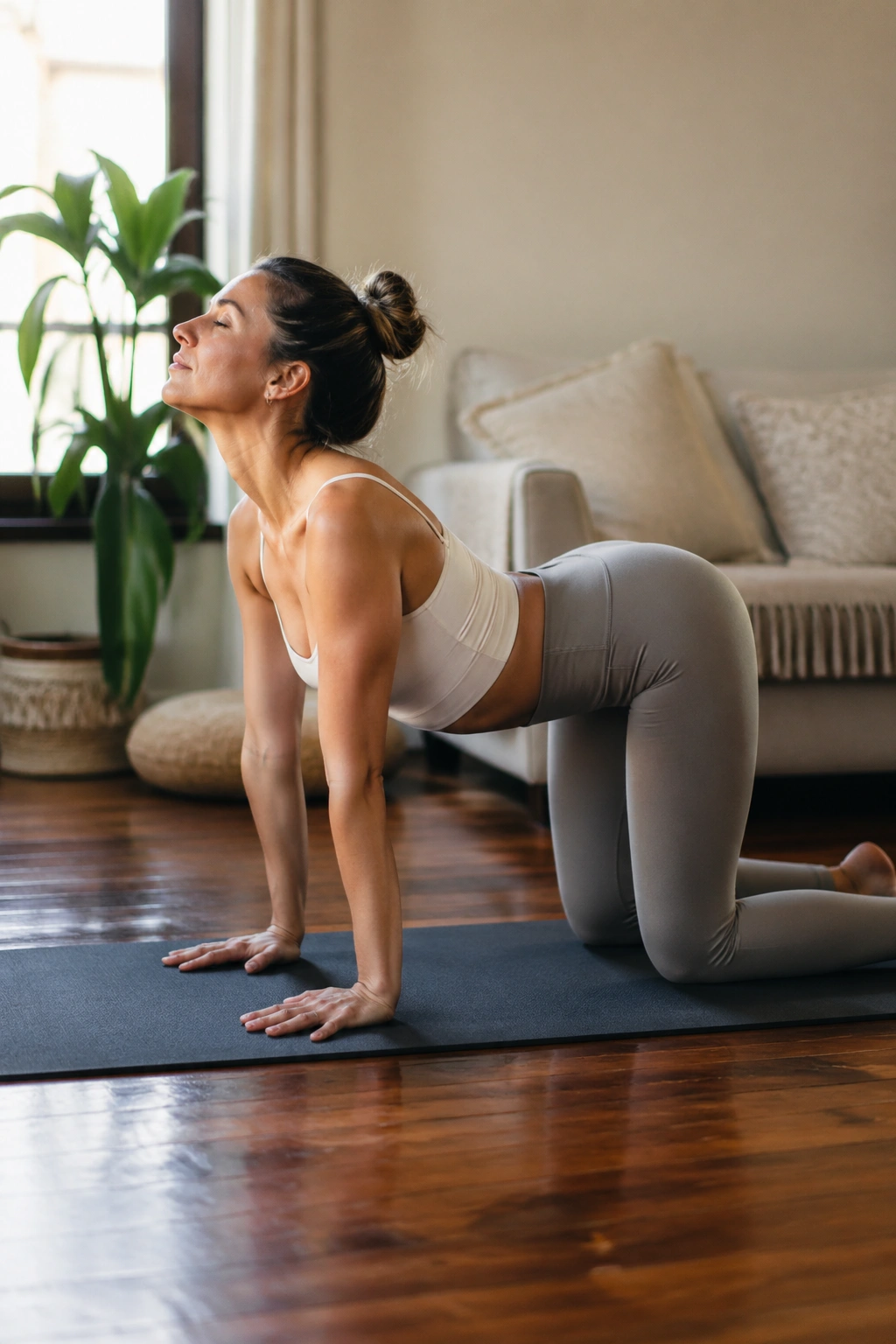
Why does the spine feel so stubborn before coffee?
Because the back likes motion first, not drama. Cat-Cow is one of those bluntly useful shapes that earns its place in any home yoga routine. It warms the whole midline, and it does so without asking the hips or shoulders to be brave too soon.
The simplest version starts in Tabletop. Inhale into Cow Pose, lift the chest, let the tailbone tip back. Exhale into Cat Pose, round the spine, and spread the shoulder blades. Keep the movement slow enough that each vertebra feels like it gets a turn.
What to watch for
- Keep the elbows soft, not locked.
- Press evenly through all four corners of each hand.
- If your wrists gripe, come onto forearms for a few rounds.
- Add Thread the Needle on each side for an extra shoulder release.
No need to force a giant arch. Small movement, repeated well, tends to do more than a flashy version that makes the neck cranky halfway through.
3. Sun Salutation A Loop
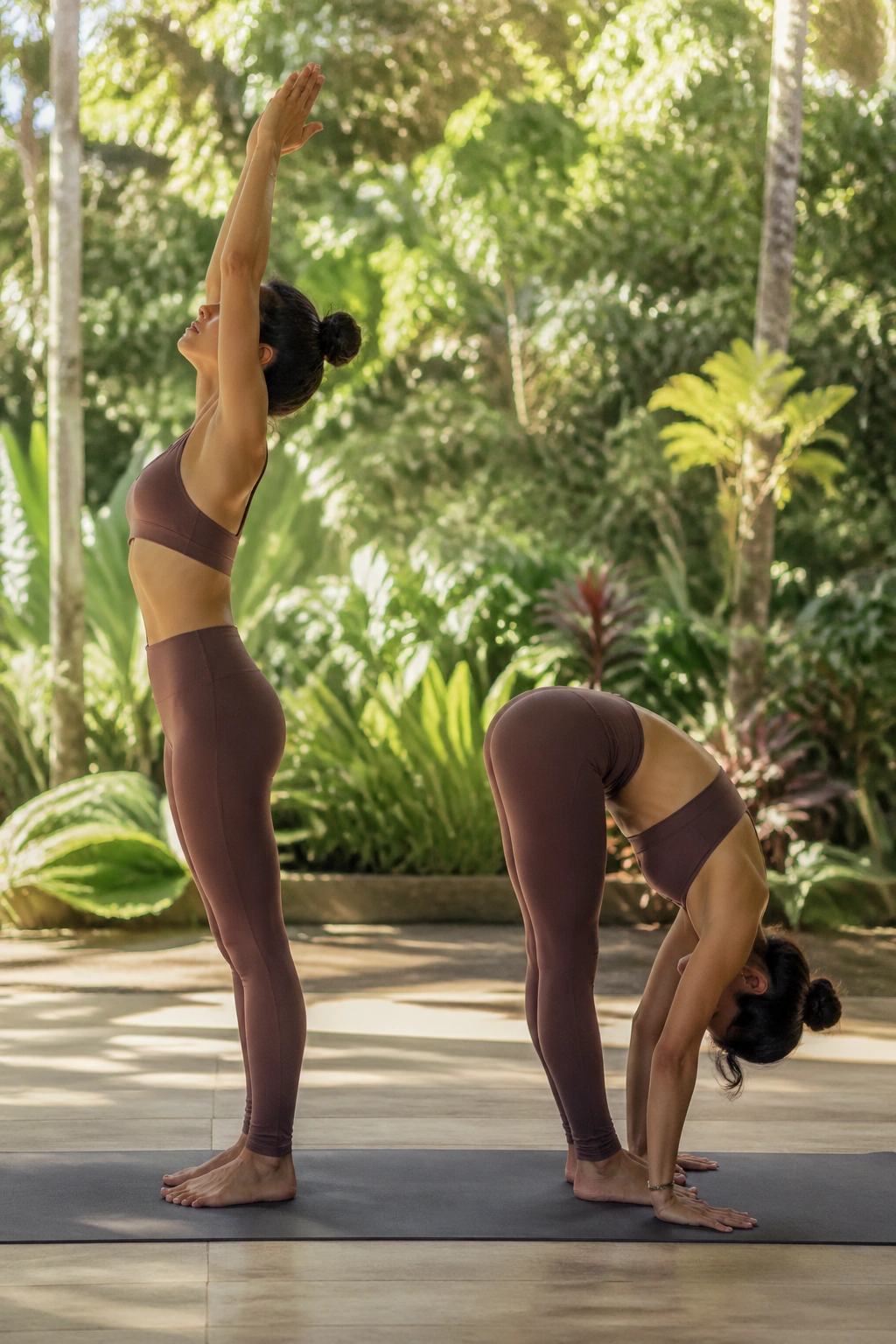
Sun Salutation A is still the cleanest rhythm-builder in yoga. It is compact, familiar, and easy to scale up or down depending on how much energy you actually have.
I like it because it creates a clear shape for the mind. Stand, fold, lengthen, step back, breathe, return. There is a nice bit of muscle memory in that loop, and muscle memory matters on the days when motivation is sloppy.
A standard round can move from Mountain Pose to Forward Fold, Half Lift, Plank, Cobra or Upward-Facing Dog, and then back through Downward Dog to the front of the mat. If Plank feels heavy, lower the knees. If Upward-Facing Dog is too much, choose Cobra and keep the pubic bone anchored.
The magic is not in speed. It is in repeating the pattern until the breath settles into it.
A lot of home practices fall apart because people try to make every session feel new. That gets tiring fast. A Sun Salutation loop gives you one reliable backbone, and then you can layer other shapes on top of it when you want to.
4. Low Lunge Hip Opener Flow
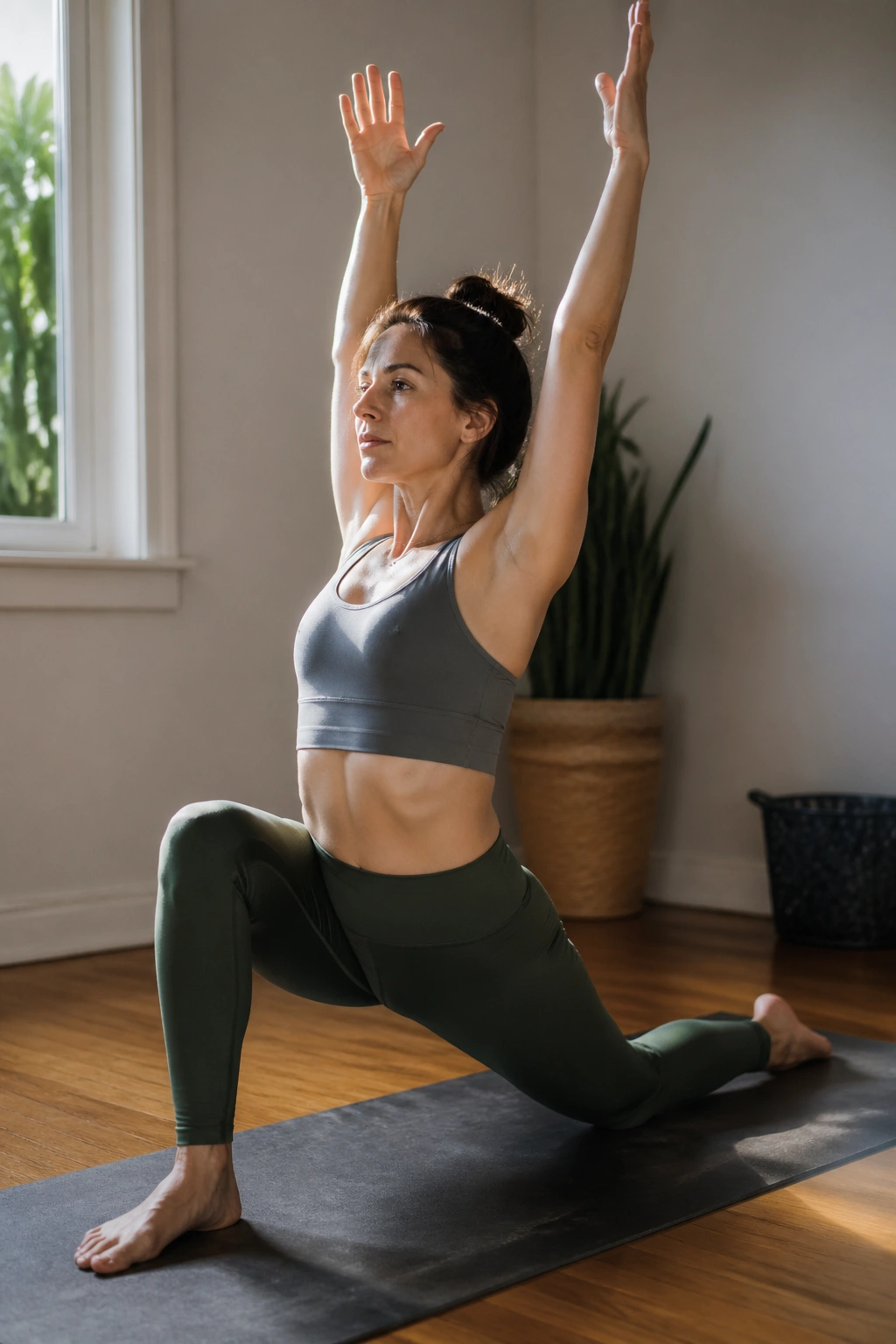
If your hips complain after sitting, this is the flow I would reach for.
The front of the hip can get grumpy in a way that shows up as a weird tug in the low back or an ache at the top of the thigh. Low Lunge takes that tension seriously without yanking on it. Start from Downward Dog, step one foot forward between the hands, and set the back knee down if that feels better.
From there, stay with a few calm breaths in Low Lunge. Sweep the arms up if the shoulders want that. Then slide into Half Split, shifting the hips back until the front leg gets a long line. On the second round, add a gentle twist or a Lizard variation with the hands on blocks.
- 3 breaths in Low Lunge
- 3 breaths in Half Split
- 3 breaths in Lizard or a supported variation
- Repeat on the second side
A block under the hands changes everything here. So does a folded blanket under the back knee.
5. Warrior Flow for Standing Strength
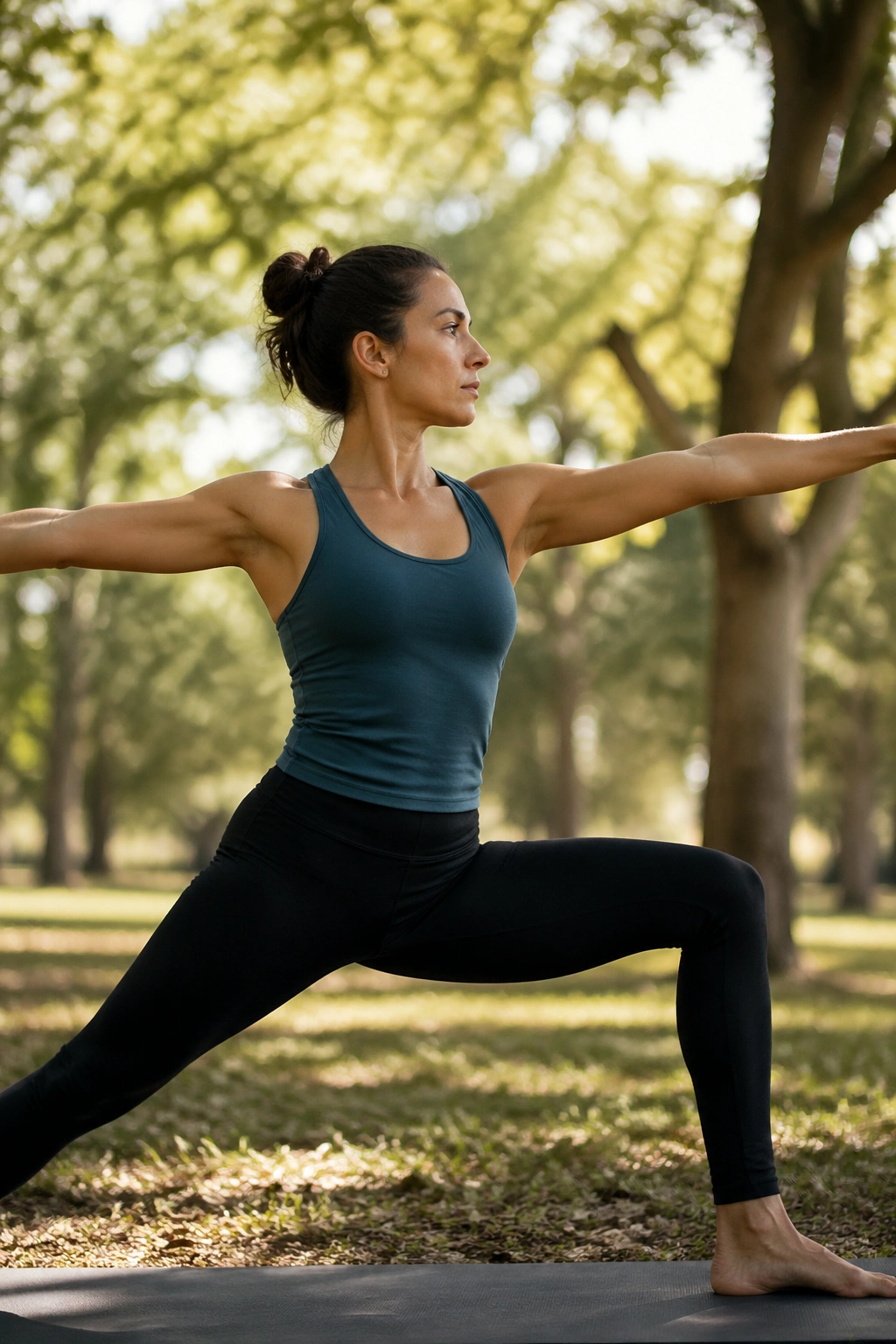
Warrior poses do not need to feel theatrical. They can be plain, grounded, and useful.
This flow is for the days when you want your practice to feel a little stronger without turning into a workout that leaves you bracing for the stairs. Warrior I, Warrior II, Reverse Warrior, Side Angle, and Humble Warrior give the legs a real job to do. The feet work. The back leg fires. The torso learns how to stay long while the legs do the heavy lifting.
I prefer this sequence when I want to feel more organized in my body. There is a calm, almost old-fashioned steadiness to it. No rush. No wobble if you do not want wobble. Just a strong stance and enough breath to stay in it.
How to shape it
Hold each shape for 3 to 5 breaths, then move with an inhale or exhale into the next one. If the front knee wants to collapse inward, shorten the stance a little. If the shoulders creep up toward the ears, let them drop.
Warrior flows are also good on days when you feel mentally foggy. The structure helps. A lot.
6. Hamstring and Calf Release Flow
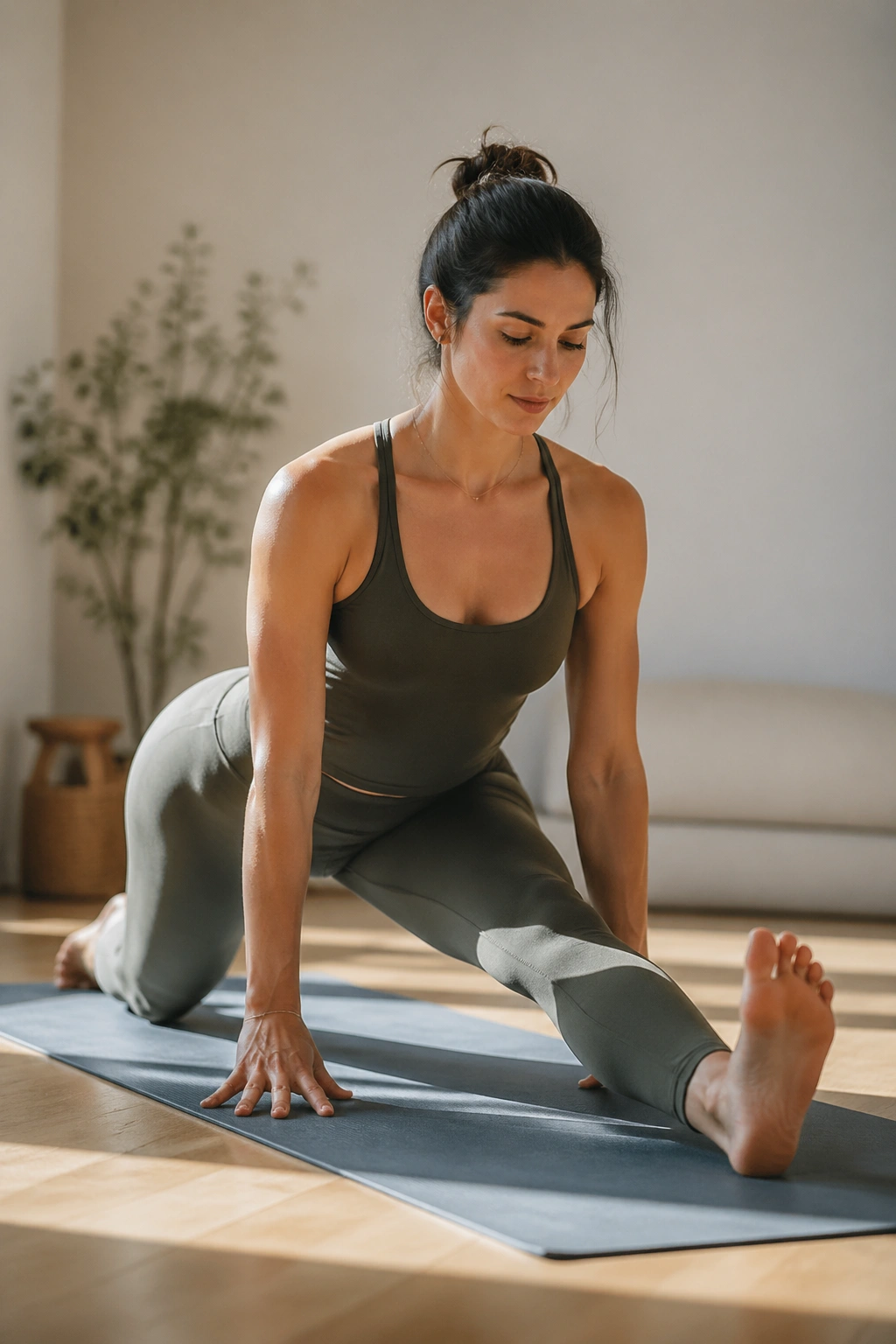
The back of the legs wakes up first.
That is the honest version. Hamstrings get blamed a lot, but calves and even the feet often share the load. This flow gives all of them some attention without making you fold like a question mark. Start in Standing Forward Fold with bent knees, then move into Half Lift, Pyramid, and a supported Downward Dog.
A strap around the ball of the foot works well in Reclined Hand-to-Big-Toe Pose if floor hamstring stretches feel too aggressive. I also like a long hold in Half Split, because the line from heel to hip can be easier to feel there than in a deep standing fold.
Quick sequence
- Bent-knee Forward Fold, 5 breaths
- Half Lift, 3 breaths
- Pyramid, 4 breaths each side
- Half Split, 4 breaths each side
- Reclined hamstring stretch with a strap, 5 breaths each side
Do not chase depth here. Chase evenness. If the breath gets sharp, you have gone too far.
7. Shoulder and Chest Opening Flow
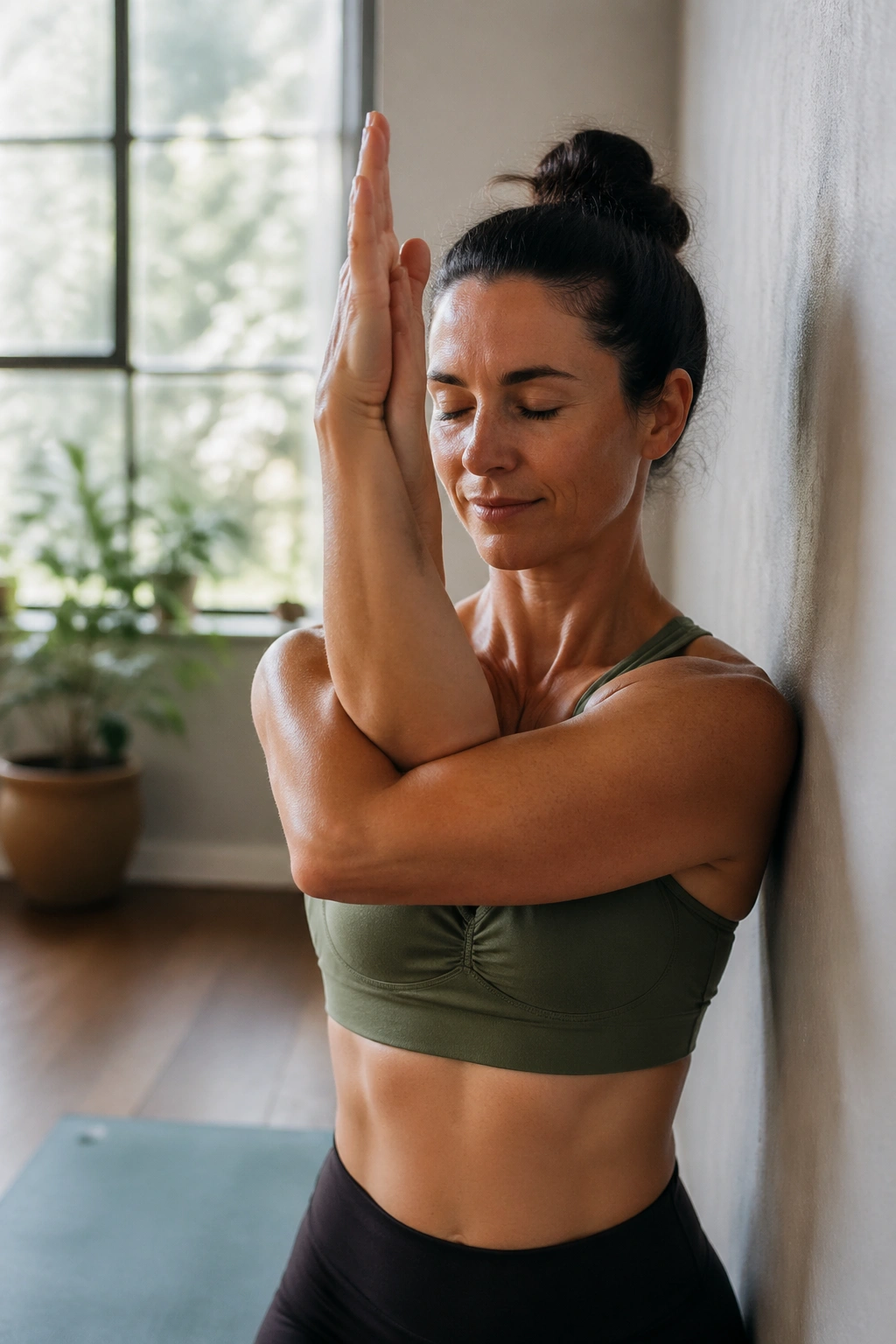
Shoulders live high for a lot of people. Mine do. Yours probably do too.
This flow opens the front body in a way that feels useful after a desk day or a long drive. It starts with Eagle Arms to widen the back of the shoulders, then moves through Puppy Pose, Thread the Needle, and a gentle Chest Opener like Sphinx or supported Fish. If you have a wall nearby, use it. The wall makes chest opening more honest and less wobbly.
Why it settles the upper body
The chest gets tight, the shoulder blades get sticky, and the neck ends up doing too much work. That whole chain likes slow motion. A few breaths in each pose is enough. Longer can be fine, but only if the front of the ribs stays soft and the lower back does not start pinching.
- Eagle Arms: 3 breaths each side
- Puppy Pose: 5 breaths
- Thread the Needle: 4 breaths each side
- Sphinx or supported Fish: 5 to 8 breaths
A little opening goes a long way here. Do not yank the shoulders back and call it progress.
8. Side-Body Stretch Flow
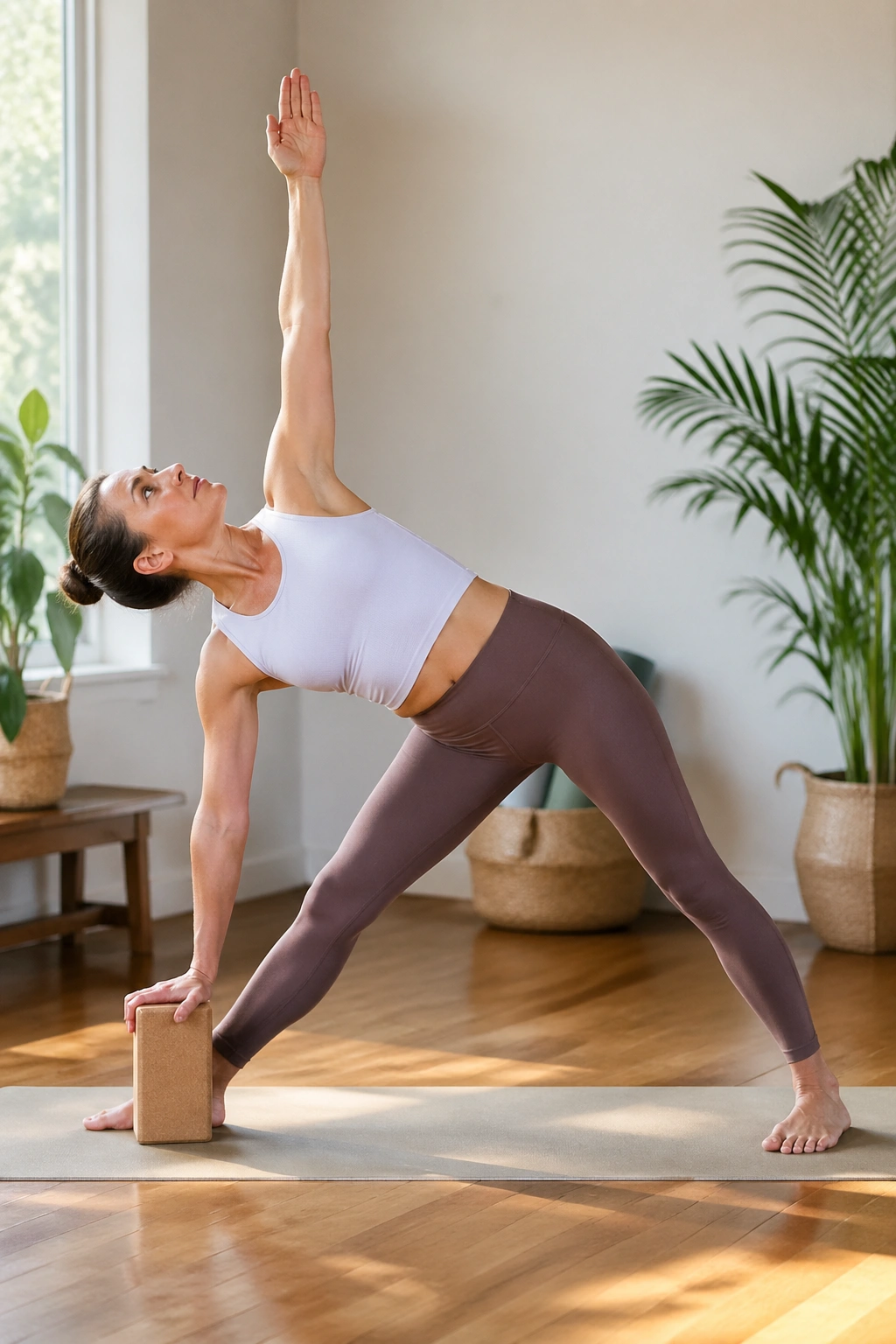
Side bends get ignored more than they should.
Most people love forward folds because they feel familiar, but the sides of the torso need attention too. A good side-body flow helps the ribs move, makes the breath feel roomier, and can take some strain out of the lower back. Triangle Pose, Gate Pose, Crescent Side Bend, and Extended Side Angle give you a few different lines to explore.
The trick is to keep the stretch long, not collapsed. Imagine the whole side of the body lengthening from the outer ankle up to the fingertips. That image keeps the stretch honest.
Use it this way
- Start in a wide stance
- Move into Triangle with a block under the bottom hand
- Shift to Gate Pose on both sides
- Finish with a side bend in Crescent or a gentle Standing Side Stretch
If the lower ribs pinch, reduce the reach. A smaller shape often breathes better.
9. Core and Plank Flow
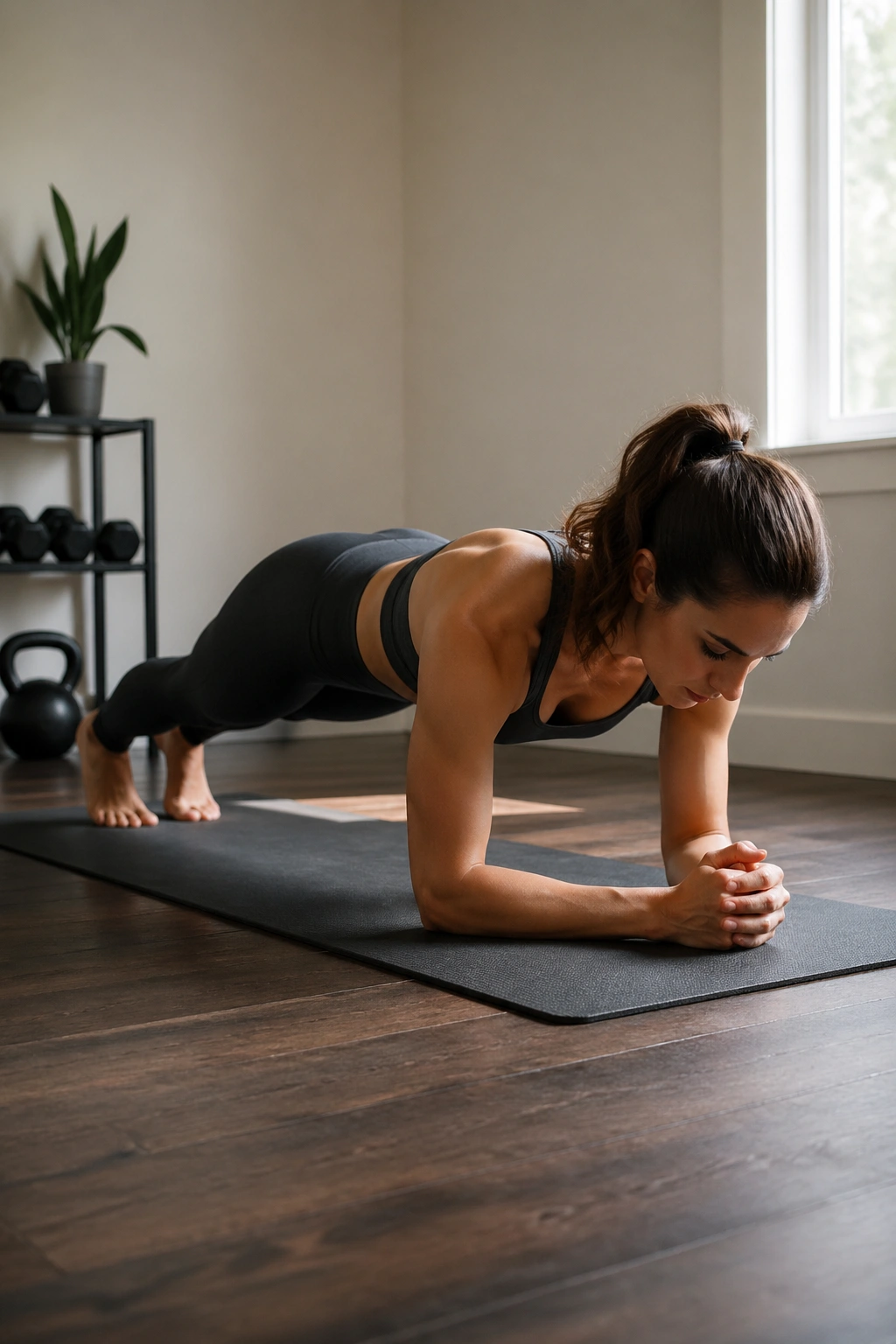
Core work does not need to mean crunches.
A home practice gets steadier when the center of the body learns how to hold shape under load. Plank, Side Plank, Boat Pose, and Dolphin Plank give you that without much setup. The body feels the effort fast. Good. That is part of the point.
I like this flow because it teaches steadiness without turning stiff. If Plank feels too much on the wrists, come down to forearms. If Boat Pose rounds the low back, keep the feet closer to the floor. No prize for going deeper than the breath can support.
What makes it work
- 20 to 30 seconds in Plank
- 15 to 20 seconds per side in Side Plank
- 3 rounds of Boat Pose holds for 3 breaths each
- 20 seconds in Dolphin Plank with knees down if needed
Strong does not have to mean harsh. If the face tightens and the breath gets thin, back off a notch.
10. Balance and Focus Flow
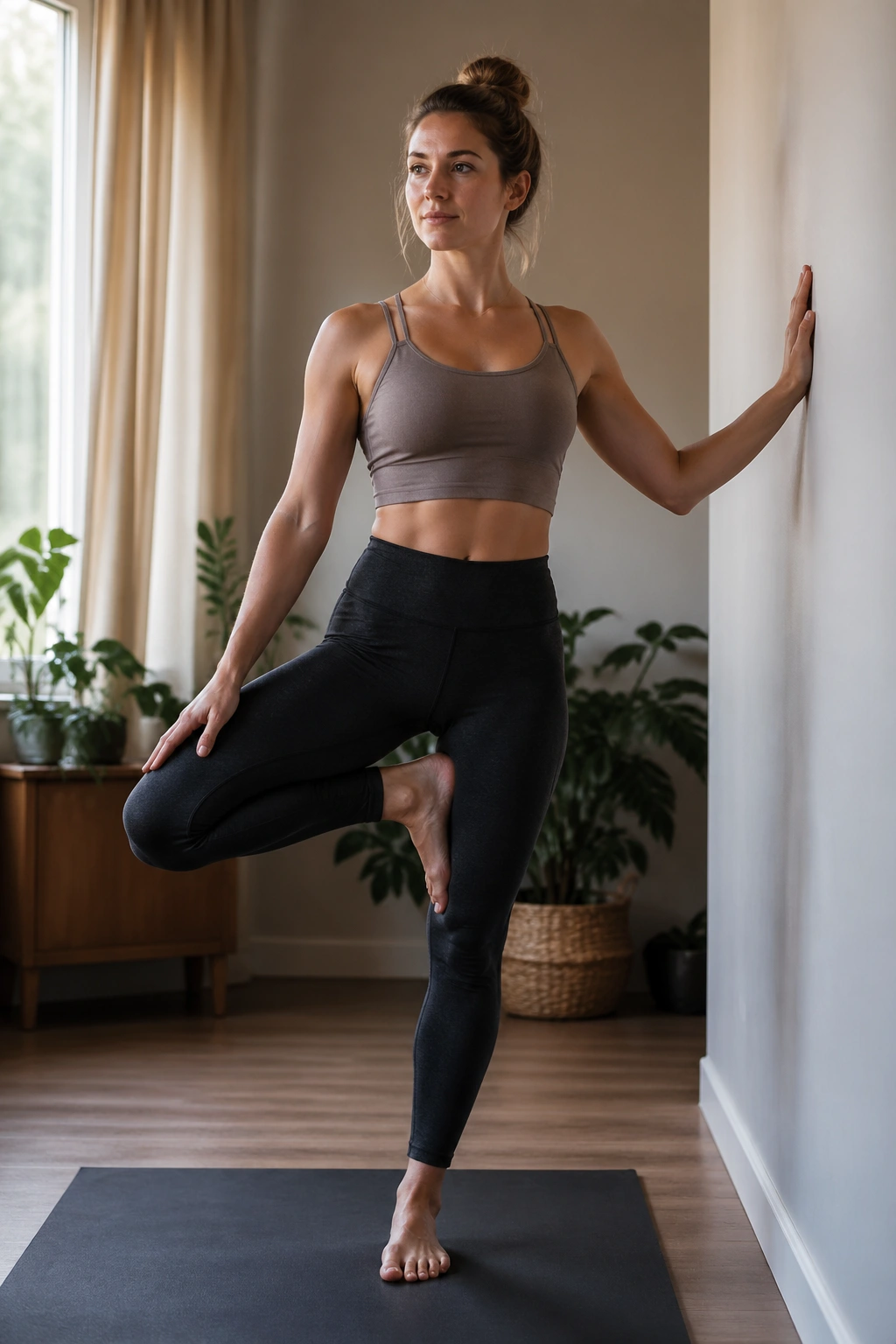
On days when your balance feels wobbly, this is the flow.
Tree Pose, Eagle, Half Moon, and standing Figure Four ask for more than flexibility. They ask for attention. That makes them especially useful in a home practice, because the room can be quiet and you still have something to work with. A wall is welcome here. I would even say it is smart.
The body usually steadies once the eyes have somewhere to rest. Pick one spot in front of you and keep it there. That tiny trick helps more than people expect.
A simple balance ladder
- Tree Pose, 3 breaths each side
- Eagle, 3 breaths each side
- Standing Figure Four, 4 breaths each side
- Half Moon with a block under the lower hand, 3 breaths each side
If you start to topple, that is not failure. It is information. Adjust the stance, soften the knee, try again.
11. Twist and Breath Flow
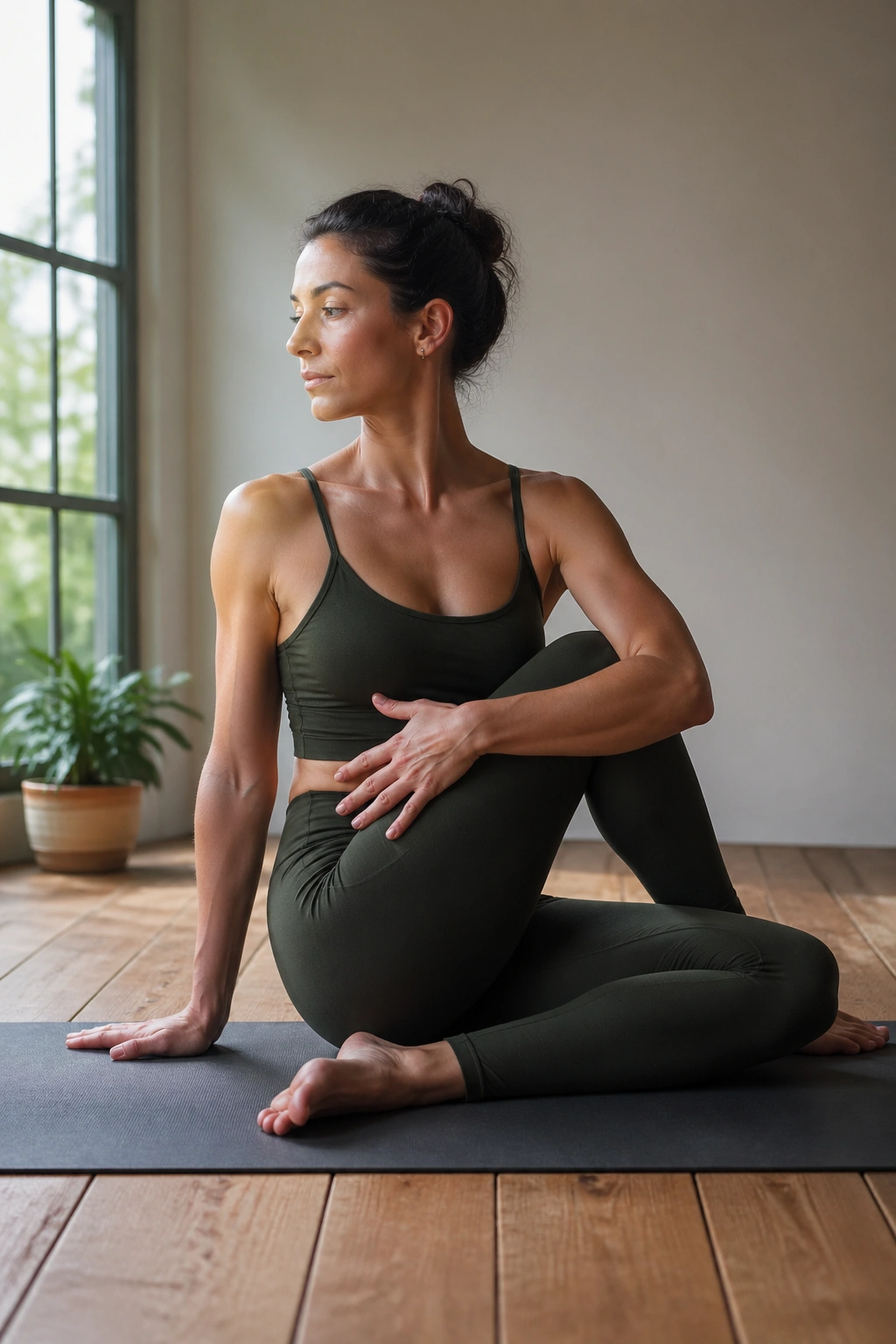
Twists are best when they are slow and honest.
Fast twisting can feel like wringing a towel. That is not what most home bodies need. A better approach is to use the exhale as a cue to rotate a little deeper, then pause and let the breath settle. Seated Twist, Low Lunge Twist, Revolved Chair, and Supine Twist offer different levels of intensity without asking for force.
How to keep it gentle
Keep the pelvis grounded when you can. If the knees are stacked in a supine twist, that is plenty. If you are in a lunging twist, let the back knee rest on the floor. A block under the bottom hand also helps the chest stay open instead of collapsing.
A twist flow like this can sit beautifully after standing work or before a long exhale-heavy finish. It is not about getting farther. It is about making room.
A little room. That’s the win.
12. Evening Unwind Flow
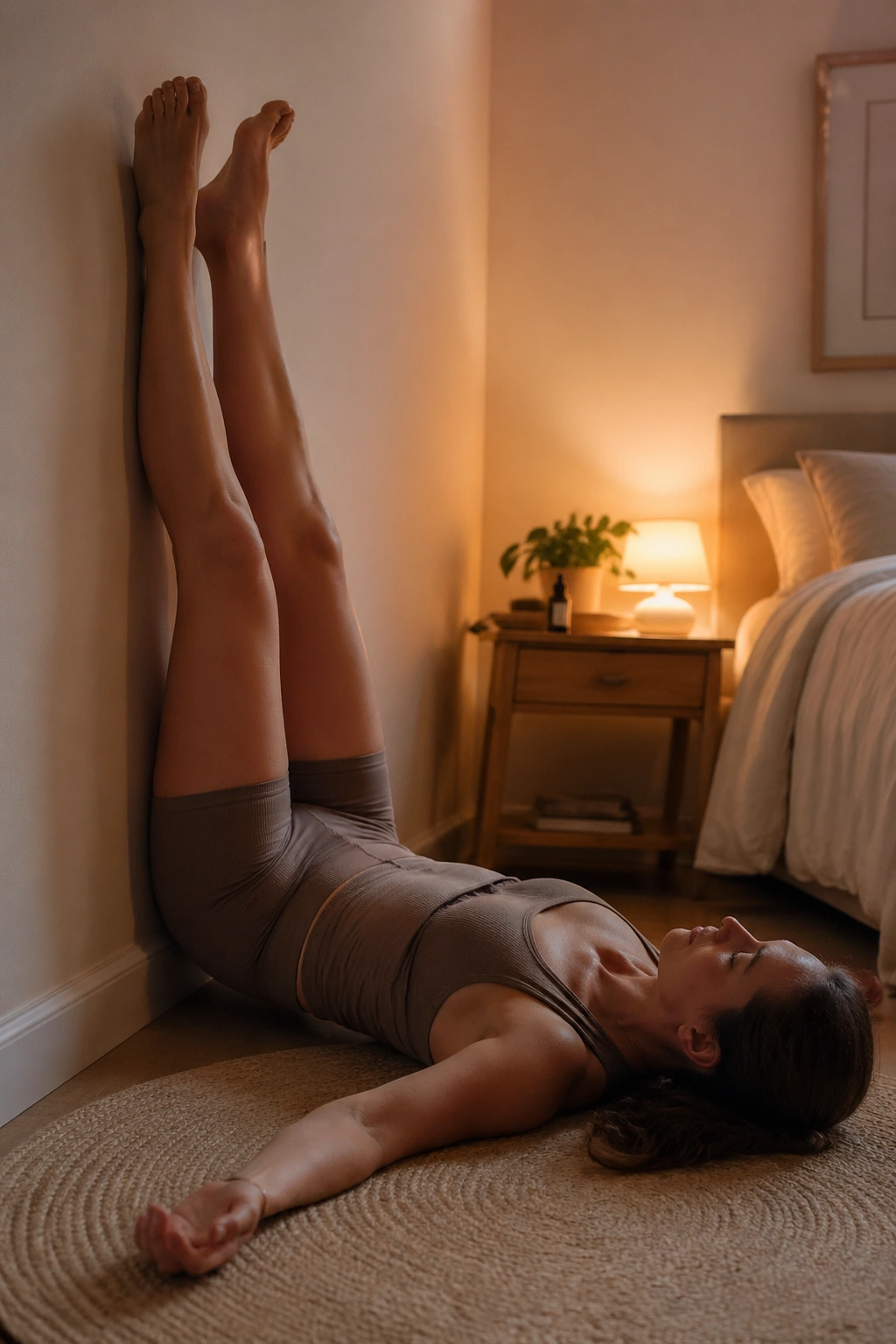
Need a sequence that helps you downshift without collapsing?
This one lives near the end of the day. Legs Up the Wall, Reclined Bound Angle, Happy Baby, and Supported Bridge do a nice job of moving you from effort into release. The floor does more of the work here than you do, which is exactly why it feels good after a full day of being upright.
I like to keep the holds longer in this flow. Five to eight breaths in each shape feels natural. If the low back is tired, place a folded blanket or a bolster under the knees in Reclined Bound Angle. If the neck gets fussy in Bridge, keep the lift low and the chin soft.
- Legs Up the Wall: 1 to 3 minutes
- Reclined Bound Angle: 6 breaths
- Happy Baby: 4 breaths
- Supported Bridge: 5 breaths
No speed here. Let the exhale get long.
13. Lower Back Relief Flow
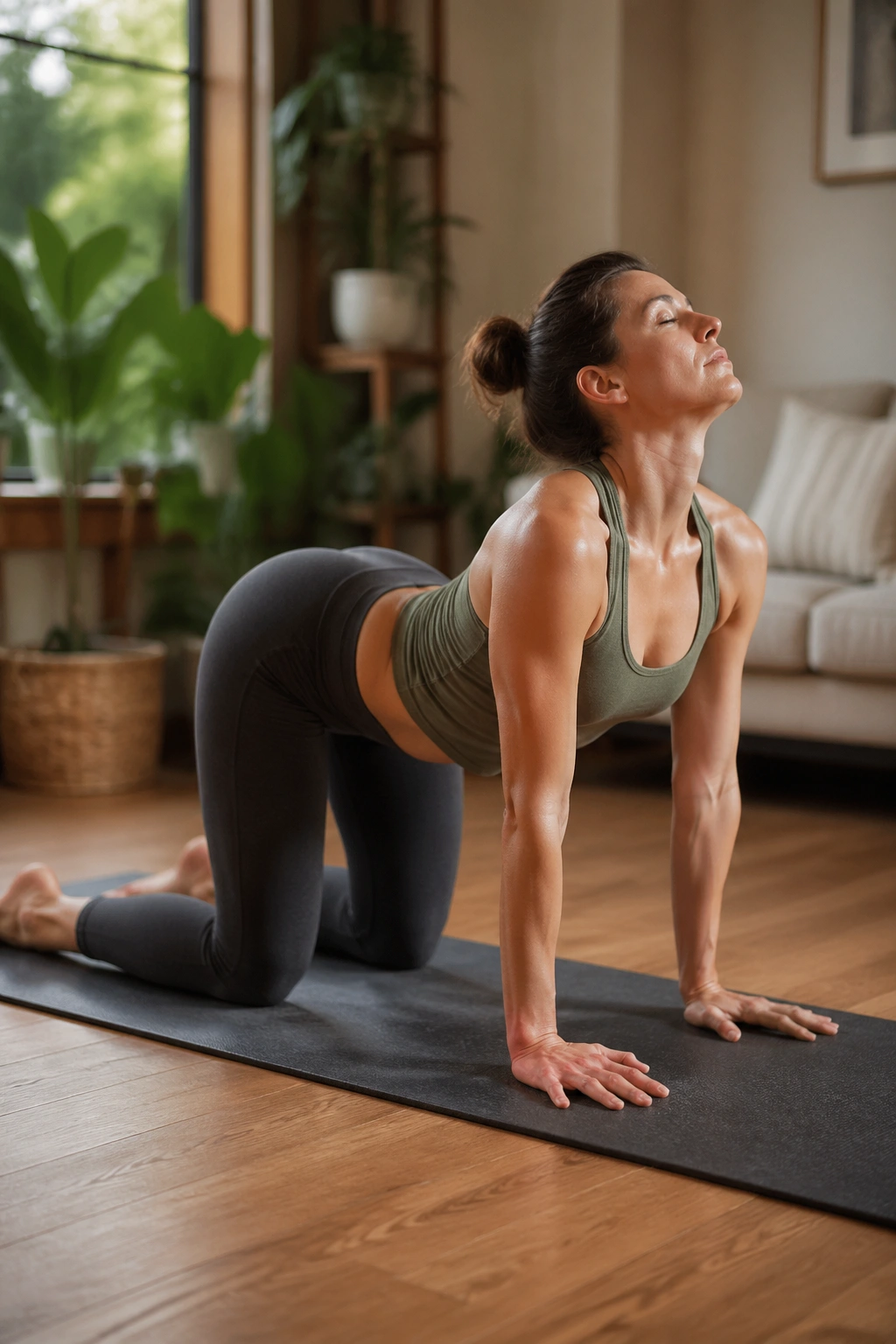
Lower back relief is rarely about forcing one spot to stretch.
The back likes a mix of movement directions. Cat-Cow gives flexion and extension. Child’s Pose softens the whole back line. Sphinx offers a mild backbend. Windshield Wipers add easy rotation from the hips. Put together, those shapes can make the low back feel less boxed in.
Better than chasing a big stretch
A lot of people try to bend the low back harder when it hurts. That usually backfires. The better move is to spread the work around the spine and hips. If the knees are close together in Child’s Pose, try taking them wider. If Sphinx feels pinchy, slide the elbows forward and lower the chest.
You can also finish with Knees-to-Chest for 5 breaths. Simple. Quiet. Effective.
14. Runner’s Recovery Flow
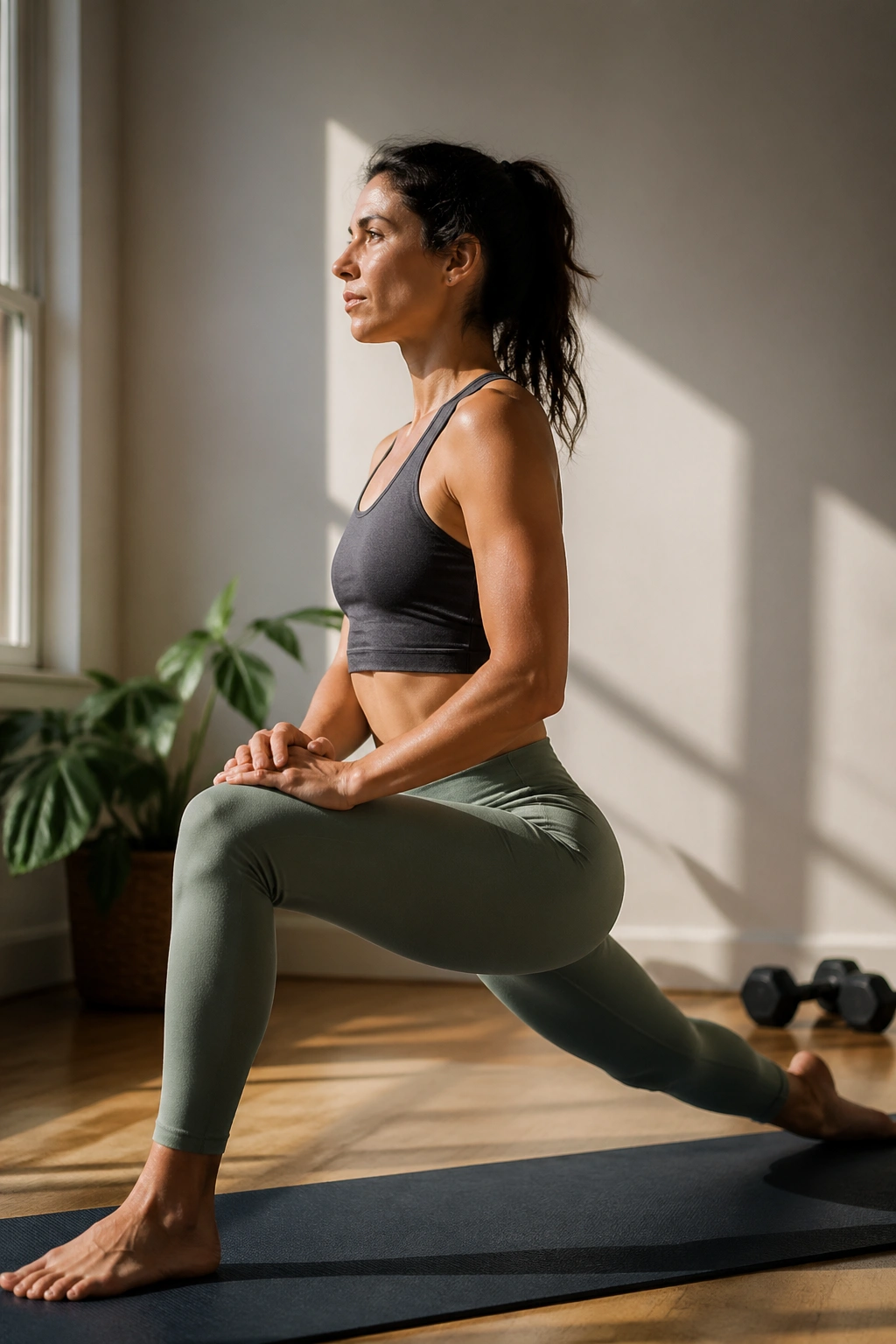
A runner’s legs can feel strangely tight after a short workout.
That tightness usually shows up in the hip flexors, calves, glutes, and outer hips. This recovery flow addresses all four without lingering so long that the body gets cold. Low Lunge, Half Split, Lizard, and Figure Four are the core shapes. Add a calf stretch against the wall if the lower legs feel packed.
A useful order
- Low Lunge, 4 breaths each side
- Half Split, 4 breaths each side
- Lizard, 3 breaths each side
- Reclined Figure Four, 5 breaths each side
- Wall calf stretch, 30 seconds each side
If the hips are hot from a run, keep the stretches mild. If the legs feel stiff and dry, use a strap and slow breathing. Either way, do not force the front knee farther than it wants to go.
15. Chair Yoga Reset
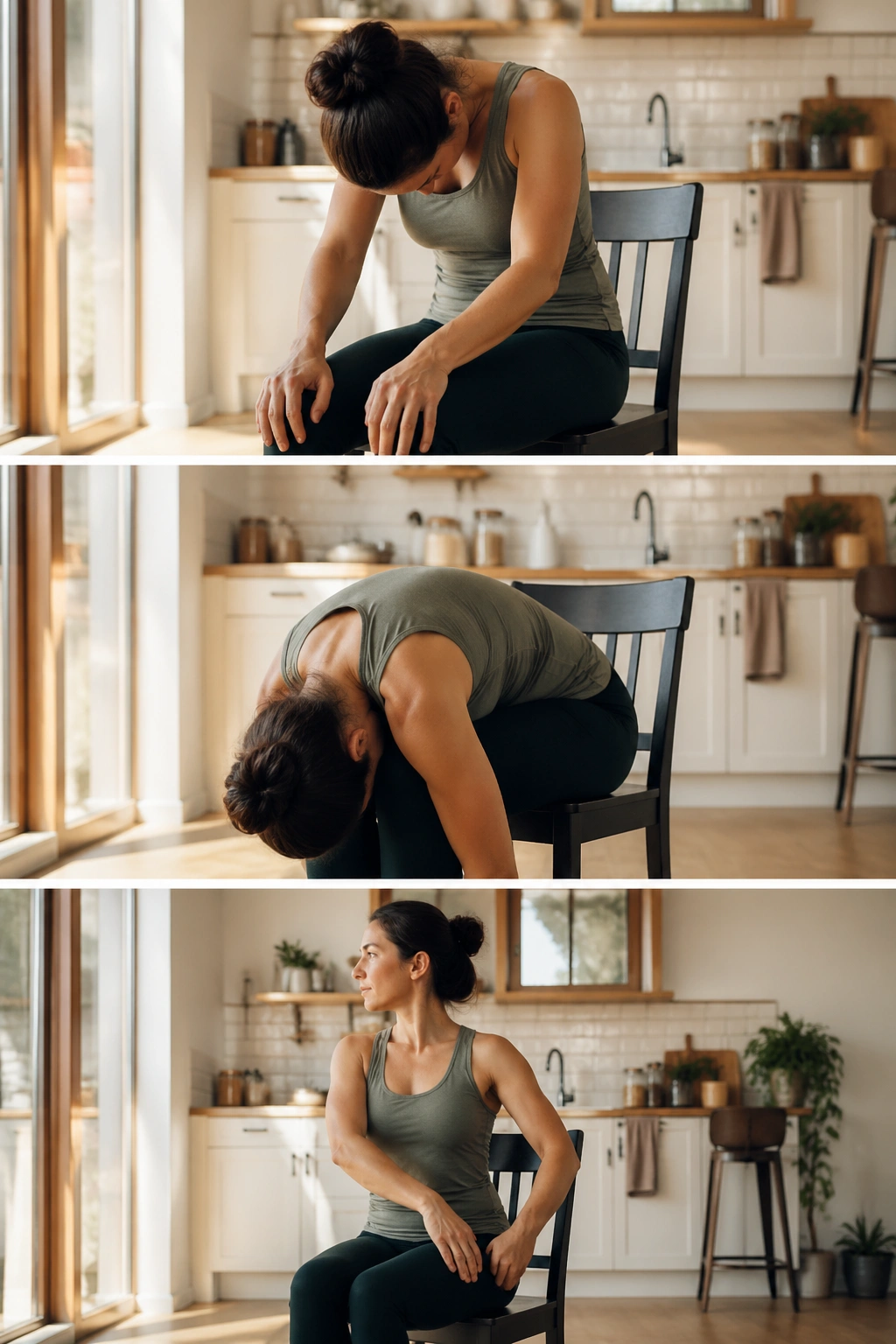
A chair is not a cheat.
It is a prop, and a useful one. Chair yoga can keep a steady home practice alive when standing work feels like too much or the day has already asked enough from the body. Seated Cat-Cow, Seated Forward Fold, Chair Twist, Eagle Arms, and Seated Figure Four give the joints something to do without requiring a mat.
This is also the flow I like for very small spaces. Kitchen chair. Office chair. No excuses, which is not the same thing as pressure. The movements are plain, but plain can be exactly right.
A short chair sequence
- Seated Cat-Cow, 5 rounds
- Seated Forward Fold, 4 breaths
- Chair Twist to each side, 3 breaths
- Eagle Arms, 3 breaths each side
- Seated Figure Four, 4 breaths each side
If your feet do not touch the ground, place a folded blanket under them. Small support changes the whole feel of the sequence.
16. Wrist and Hand Relief Flow
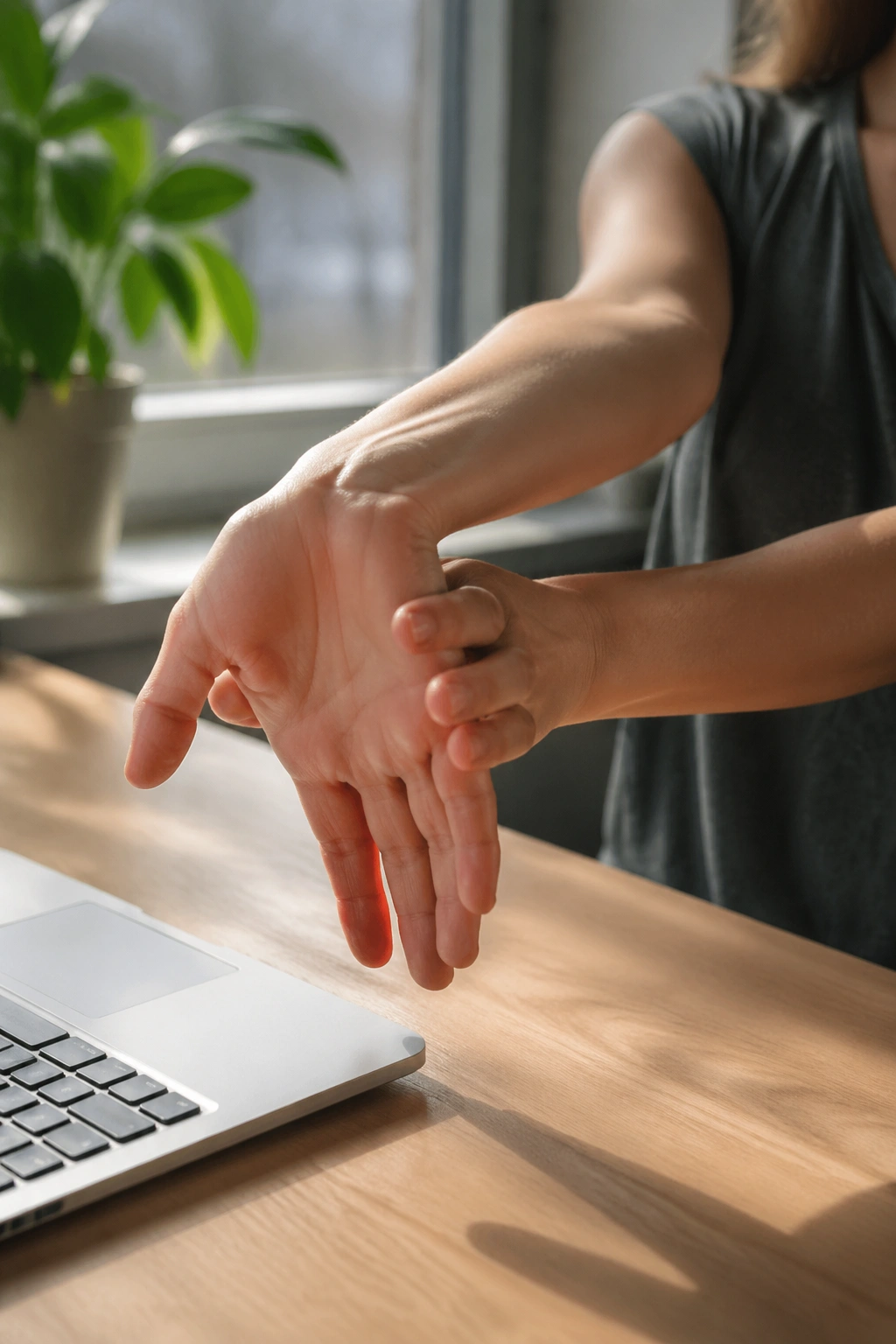
Wrists complain in sharp little ways.
If you spend time typing, lifting, planking, carrying bags, or gripping a steering wheel for too long, the hands can feel tight before you notice the wrists. This flow is boring in the best possible way. It gives the smaller joints attention before they start shouting.
Start with circles through the wrists, palms down and palms up. Then rock forward and back in Tabletop with the fingers spread wide. Add the backs-of-hands stretch, either sitting on the heels or kneeling upright with the palms gently turned back. Finish with forearm stretches.
Small moves that help
- Wrist circles, 10 each direction
- Tabletop rocks, 8 slow shifts
- Palm lifts, 8 repetitions
- Fingers-back stretch, 20 seconds if it feels okay
- Forearm stretch, 30 seconds each side
Skip anything sharp. A mild stretch is the goal. A throb is not.
17. Breath-Led Slow Flow
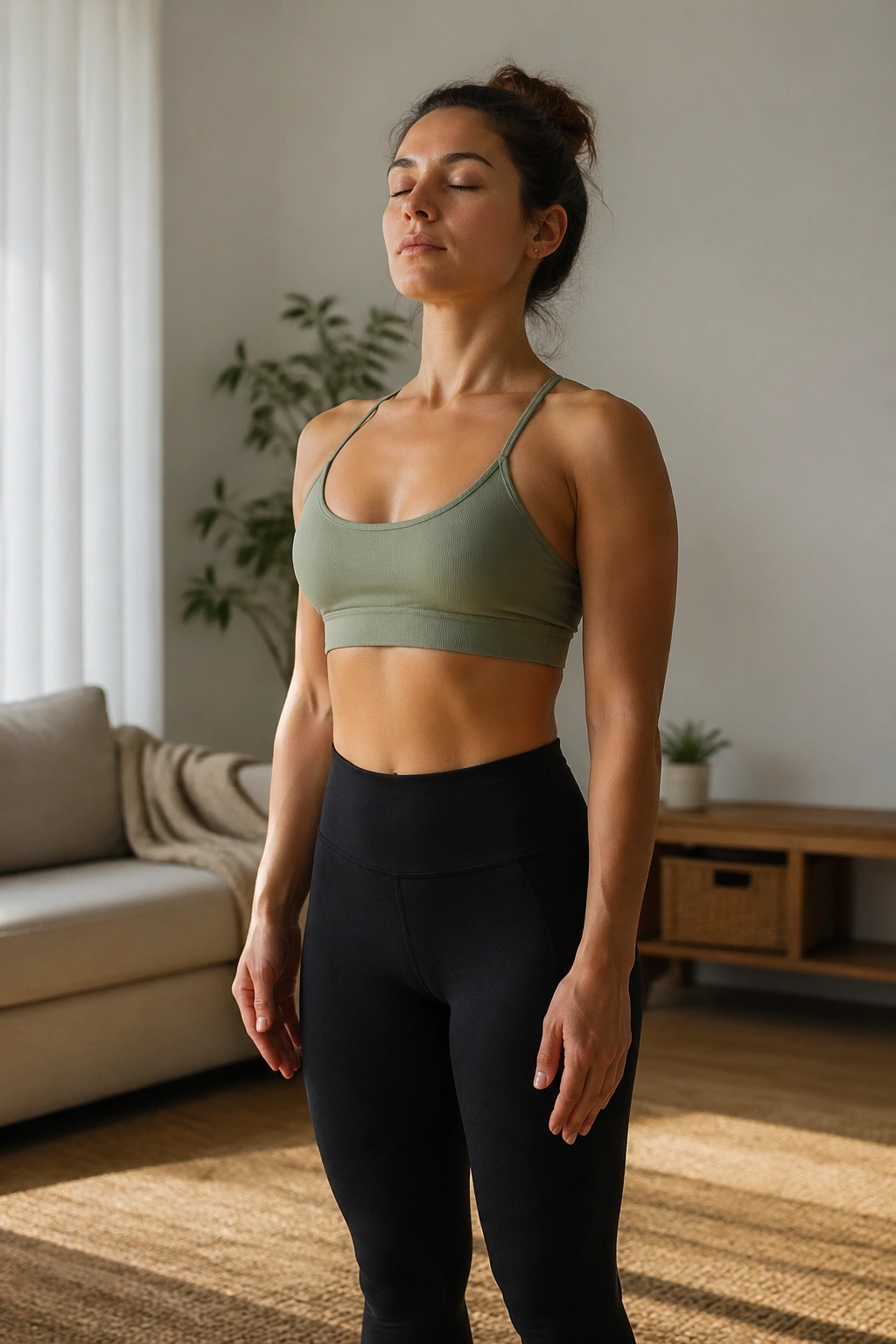
Counting the breath changes the pace fast.
This flow is not about hard shapes. It is about the rhythm between them. Mountain Pose, Forward Fold, Half Lift, Low Lunge, Downward Dog, and Child’s Pose become much more calming when each transition happens on a count of four or five. The mind has less room to race.
How to keep the pace steady
Try an inhale for lengthening, an exhale for folding or stepping back. Hold each shape for one full breath cycle before moving again. If that feels too quick, stretch it to two. If it feels too slow, keep the shapes shorter but the breath smooth.
A breath-led sequence works well when you feel scattered or a little prickly. It does not fix life. It does help the room inside your head feel less crowded.
That is enough for one practice.
18. Hip Circle Mobility Flow
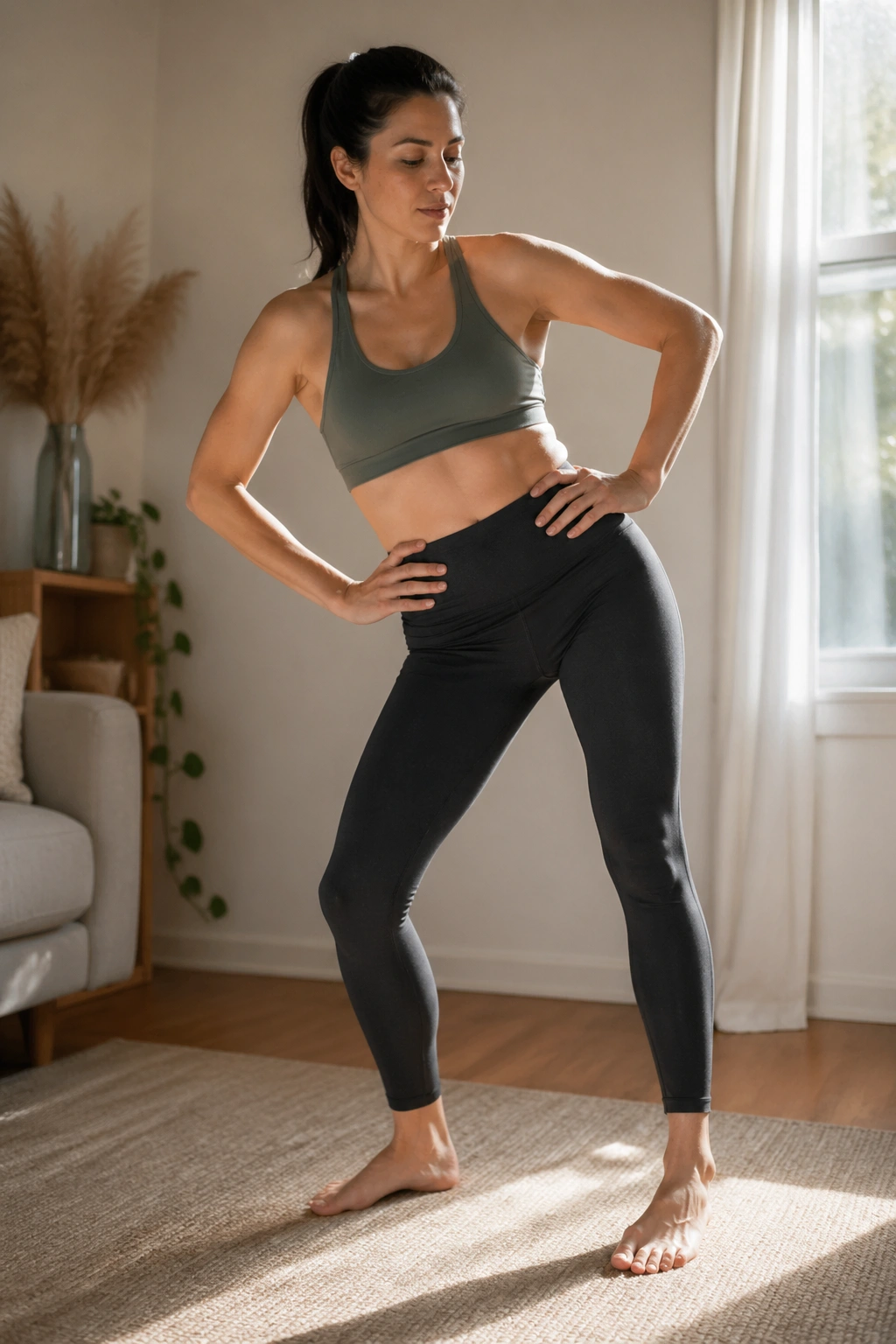
What if your hips need motion more than a deep stretch?
That is often the case. Hips usually like circles, shifts, and transitions more than one giant hold. This flow includes Standing Hip Circles, Goddess Pose with side shifts, Crescent to Low Lunge transitions, Malasana, and a supported 90/90 sitting position if the floor feels manageable.
I like it because it feels playful without turning sloppy. A few circles at the hip joints can wake up areas that have gone dull from sitting. The knees stay soft. The feet stay honest.
Try this order
- Standing Hip Circles, 5 each direction
- Goddess Pose side shifts, 8 repetitions
- Crescent to Low Lunge, 3 slow transitions each side
- Malasana, 5 breaths with heels supported if needed
- 90/90 seated hold, 4 breaths each side
If your hips are stiff, start tiny. Big circles are optional. Clean circles matter more.
19. Standing Strength Flow
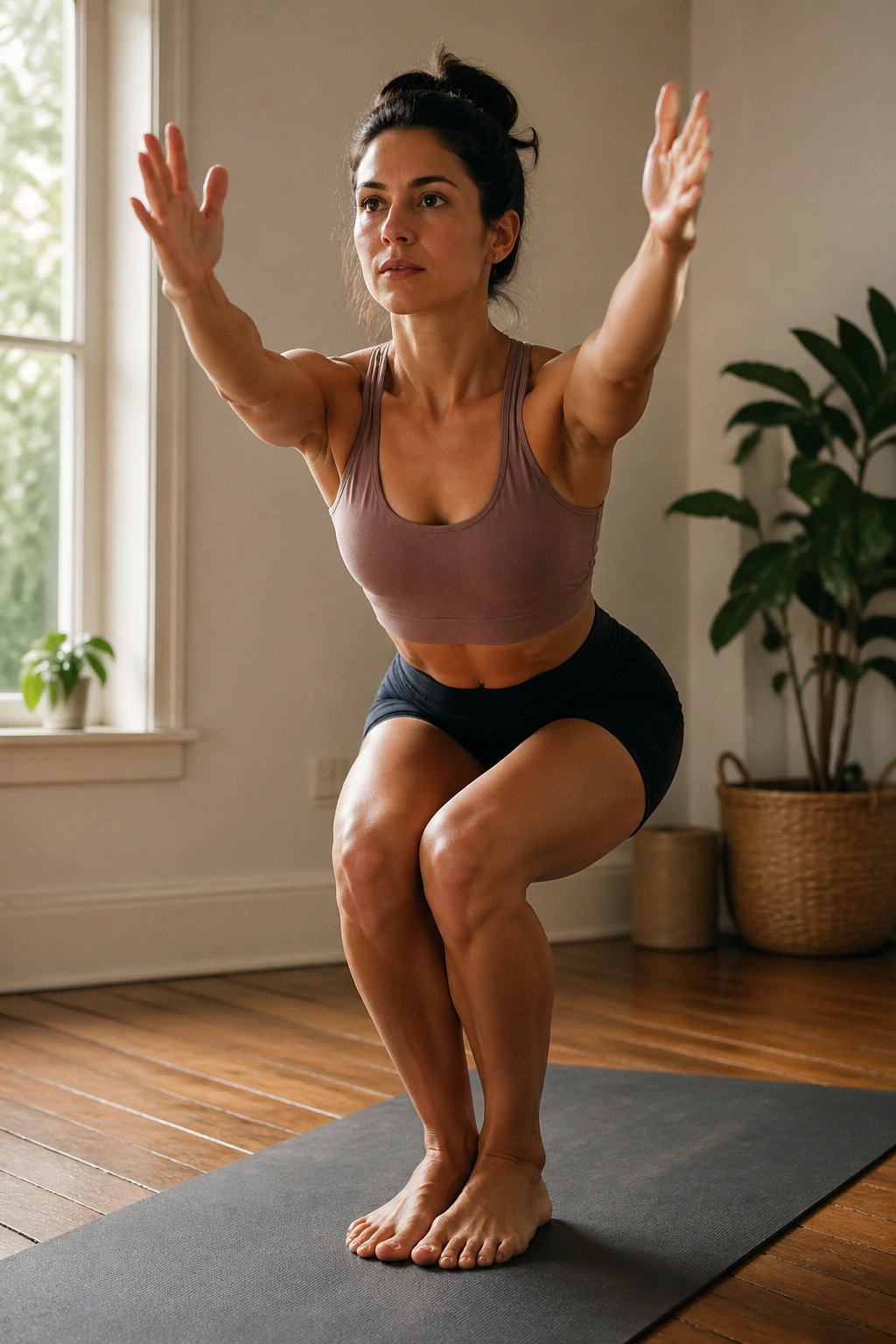
Standing strength does not need to mean hard impact.
Chair Pose, Chair Twist, Skater Lunge, Airplane Pose, and Warrior III build a solid base without leaving the floor for long. This is a good option when you want something that feels more athletic but still lives inside a yoga practice. The thighs will notice. The ankles will notice too.
How to make it work
Hold Chair Pose for 3 breaths, then twist slowly to one side. Step into a Skater Lunge and keep the chest lifted. In Airplane and Warrior III, use a wall or fingertips on a chair if balance gets shaky. That support is not a cop-out. It lets you stay longer, and staying longer builds more than muscling through.
A standing strength flow like this can be a nice middle ground between mobility work and a full sweat session. It has enough load to matter, not enough chaos to knock you sideways.
20. Floor-Based Restorative Flow
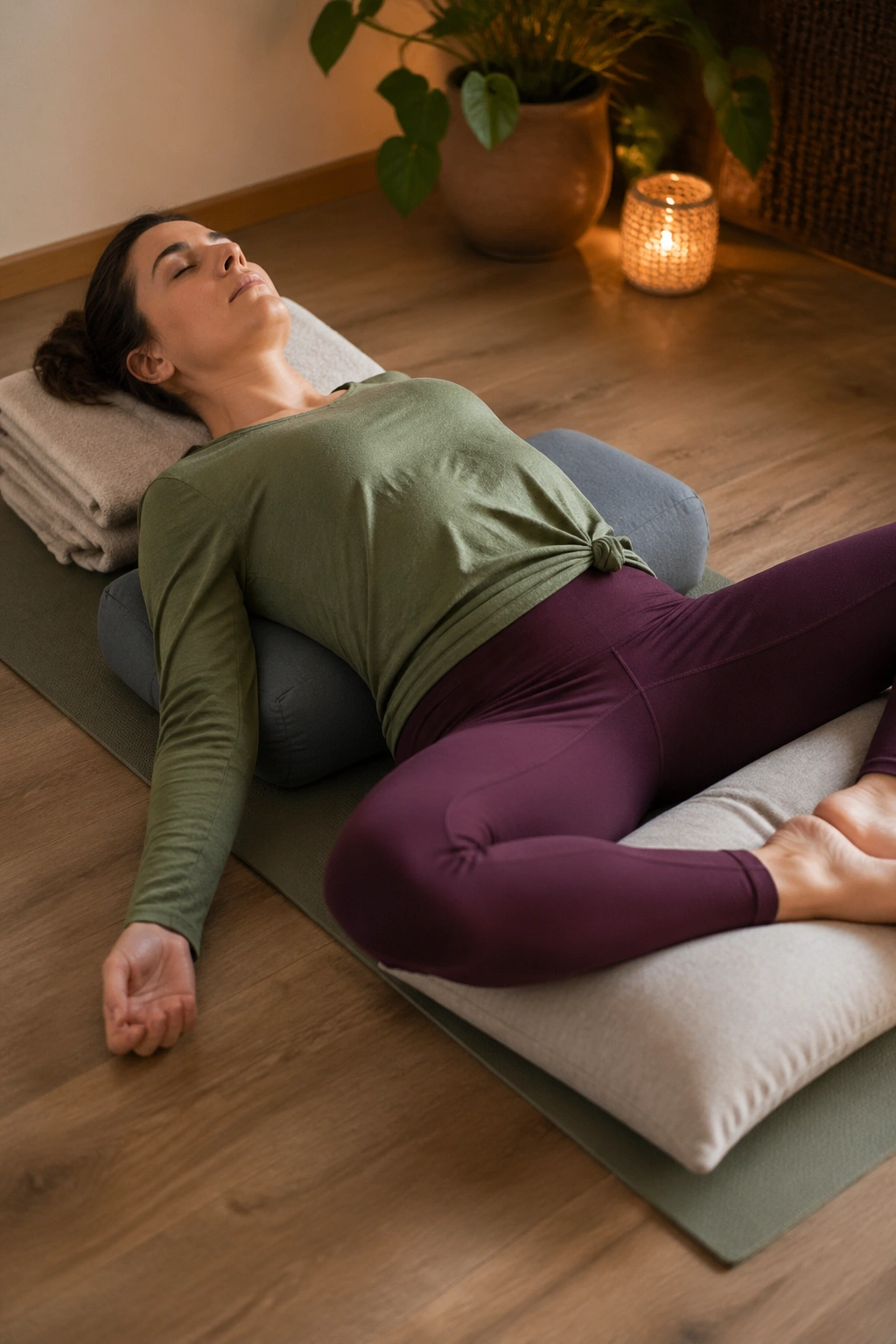
On the floor, the body gets quieter.
Restorative yoga leans into that quiet. Supported Fish, Legs on a Chair, Reclined Bound Angle with pillows, Child’s Pose with a bolster, and Savasana can turn a tired body from ragged to usable. The point is not flexibility. The point is release.
A lot of people skip this kind of flow because it looks too easy. That misses the point. Ease is the work here. If the props are set well, the muscles stop guarding and the breath starts to spread lower into the ribs and belly.
Props that make it better
- One folded blanket under the head or hips
- A bolster or stacked pillows under the back
- A chair for the legs in an inverted rest
- An eye pillow or a small towel over the eyes
Give each shape a few minutes. Not seconds. Minutes.
21. Rainy-Day Reset Flow
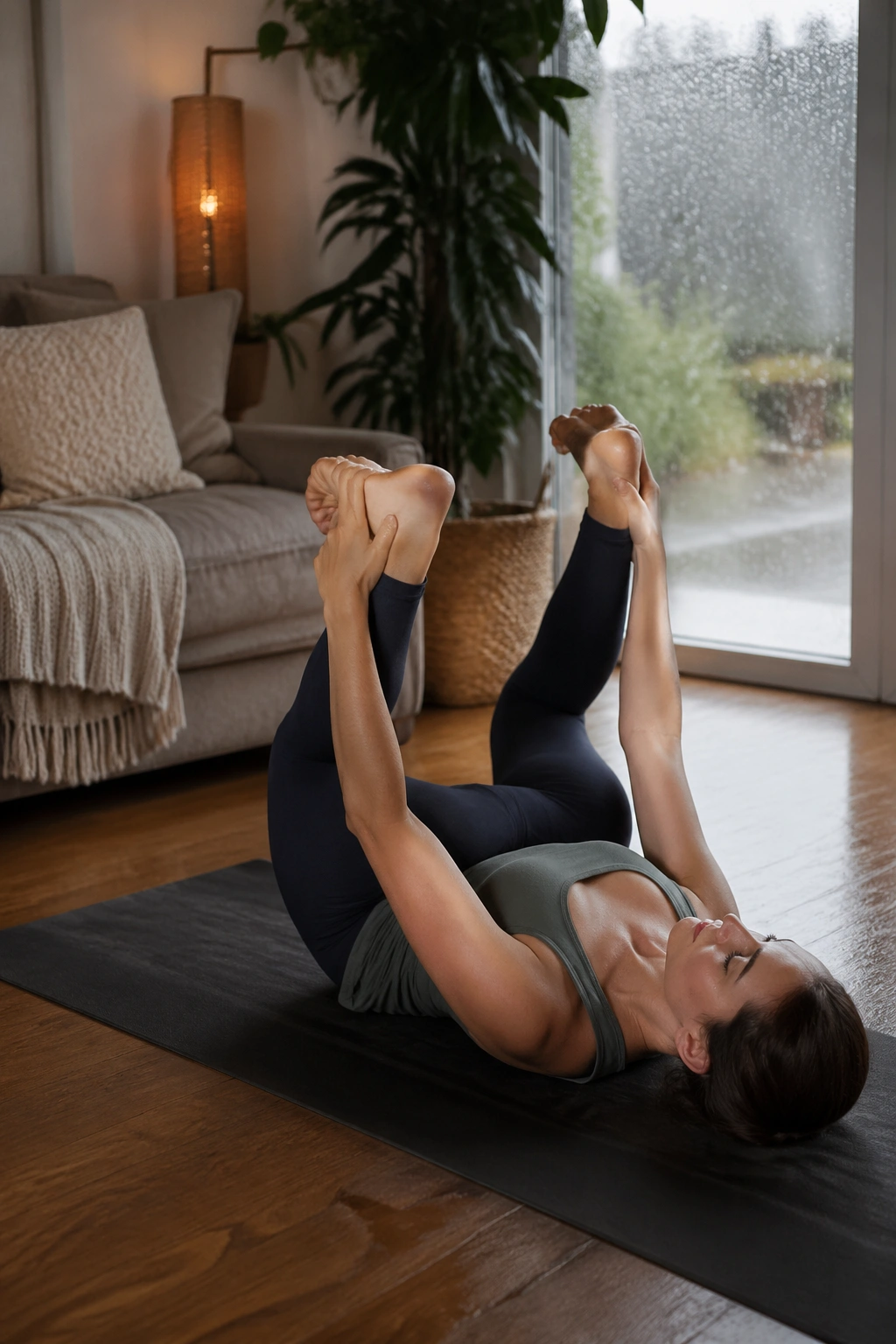
Some days call for a practice that feels like wiping a smudged window clean.
A rainy-day reset is not a workout and not a full restorative session either. It is the middle space. Start with Cat-Cow, move into a Wide-Leg Forward Fold, add a low twist on the floor, step into a soft Low Lunge, then finish with Happy Baby or a reclined rest. The body gets touched from several directions without being pushed hard in any one of them.
A practical mix
- Cat-Cow, 4 rounds
- Wide-Leg Forward Fold, 5 breaths
- Supine Twist, 4 breaths each side
- Low Lunge, 3 breaths each side
- Happy Baby or Knees-to-Chest, 4 breaths
This is the kind of flow that helps when your mood is flat and your body feels a little scruffy. Nothing flashy. Nothing fussy. Just enough motion to feel more like yourself.
22. Restart After a Missed Week Flow
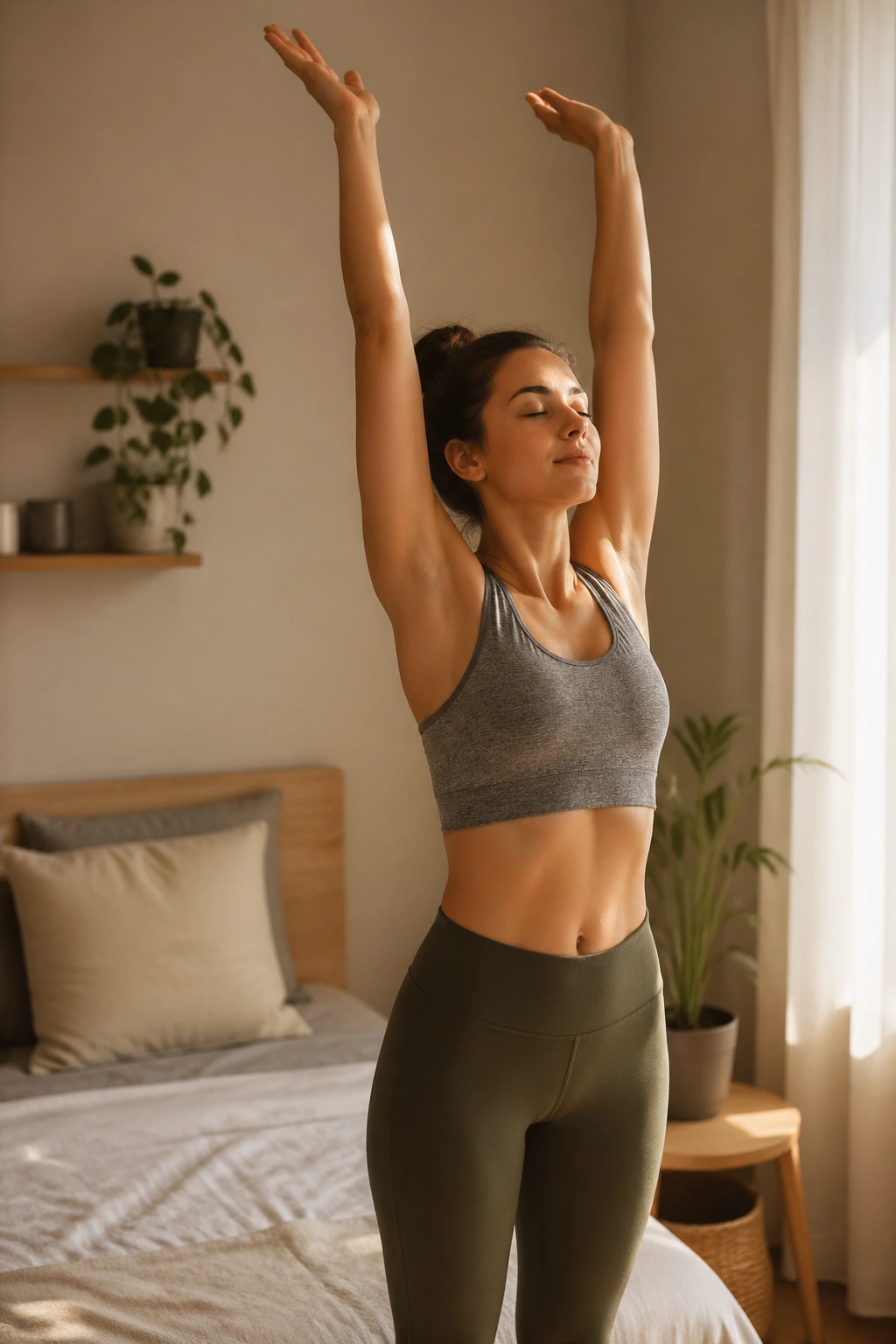
The best restart flow is the one you can do with half your usual energy.
People quit home practice when the restart feels too big. So make it small. Make it almost embarrassingly easy. Mountain Pose, Forward Fold, Tabletop Cat-Cow, Low Lunge, a short Figure Four, and a final minute with the feet up on the couch can be enough to reopen the habit without turning the session into a test.
The smallest version that still counts
- 3 breaths in Mountain Pose
- 3 breaths in a Forward Fold with bent knees
- 4 rounds of Cat-Cow
- 3 breaths in Low Lunge on each side
- 3 breaths in Reclined Figure Four on each side
- 1 minute with the legs elevated
If you missed days, do not punish the return. A steady home practice is built from repeats, not perfect streaks. One small session makes the next one easier to begin, and that is usually where the real change starts.
