



The best yoga poses for nausea are the ones that make your stomach quieter, not the ones that look graceful. A queasy morning needs calm, low effort, and almost no drama. That usually means slow breath, gentle shape changes, and positions that keep pressure off the belly.
No deep folds. No hot room. No heroic stretching.
What helps most is simple: give the diaphragm room to move, keep your head from dropping too low, and stop the moment a pose makes the swaying or churning worse. If nausea comes with repeated vomiting, a hard swollen abdomen, fainting, chest pain, fever, or severe pain, yoga is not the answer for that moment. Get medical help instead.
The good news is that a small, quiet practice can still make a real difference. Some poses calm the nervous system. Some ease a cramped upper back. Some let the body settle without asking much from the stomach at all. The useful ones are usually the boring ones — and that is exactly why they work on a rough morning.
1. Child’s Pose for Nausea Relief
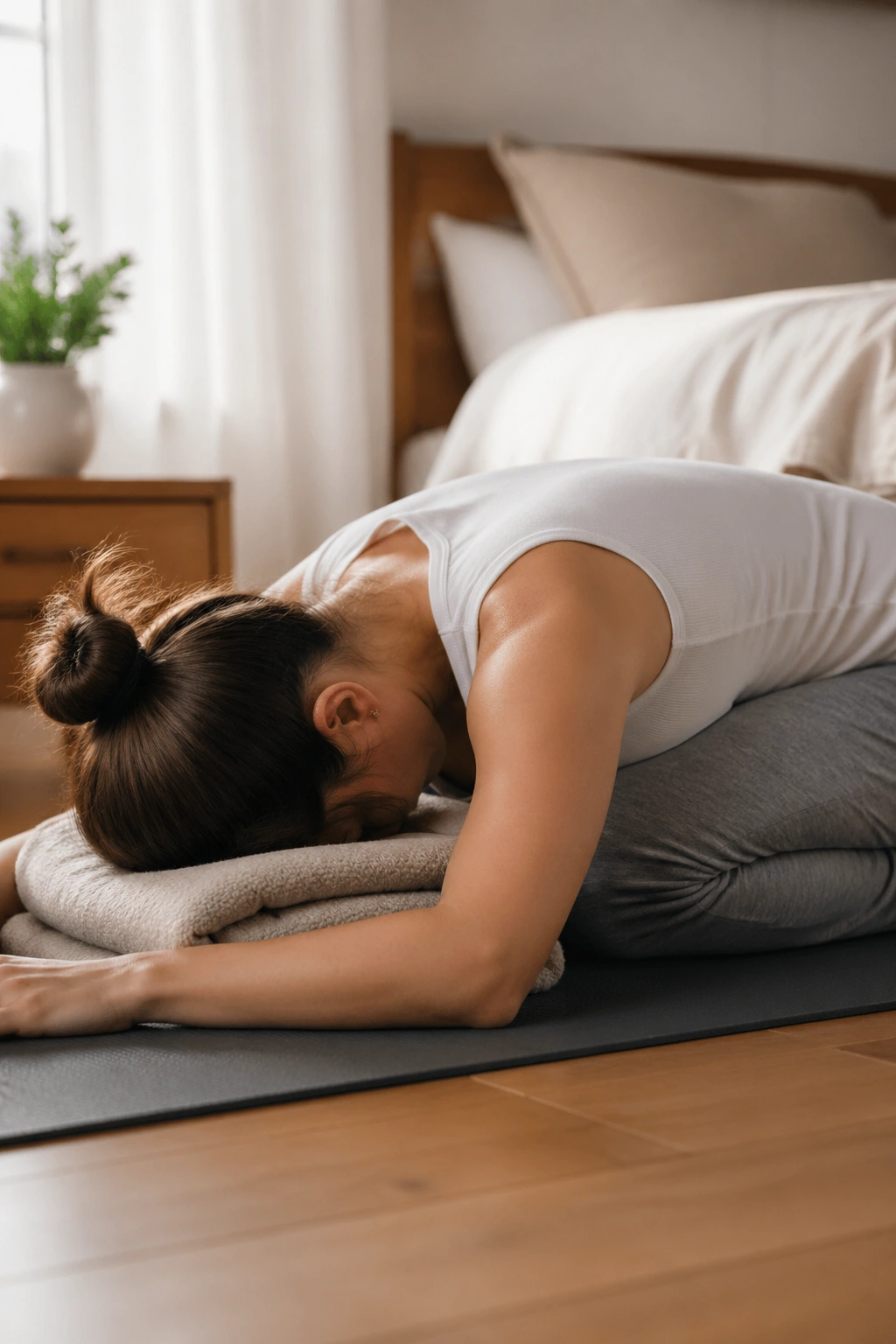
Child’s Pose is the one I’d reach for first when the body feels raw and unsettled. It gives you a place to hide a little, and that matters more than people admit. The posture reduces effort fast, which is often the whole problem when nausea shows up before breakfast.
A wide-knee version is usually kinder than the closed-knee shape. Let your belly have space. Rest your forehead on a mat, a folded blanket, or stacked fists if the floor feels too far away. If your stomach is extra touchy, keep the chest a little higher instead of sinking all the way down.
How to make it work
- Kneel with your big toes together and knees wider than hips.
- Walk your hands forward and lower your torso slowly.
- Let your forehead rest on support, not strain.
- Stay for 5 to 8 slow breaths, then come up on an inhale.
One small rule: if the full fold makes the nausea louder, stop halfway. Halfway is still useful.
2. Supported Child’s Pose
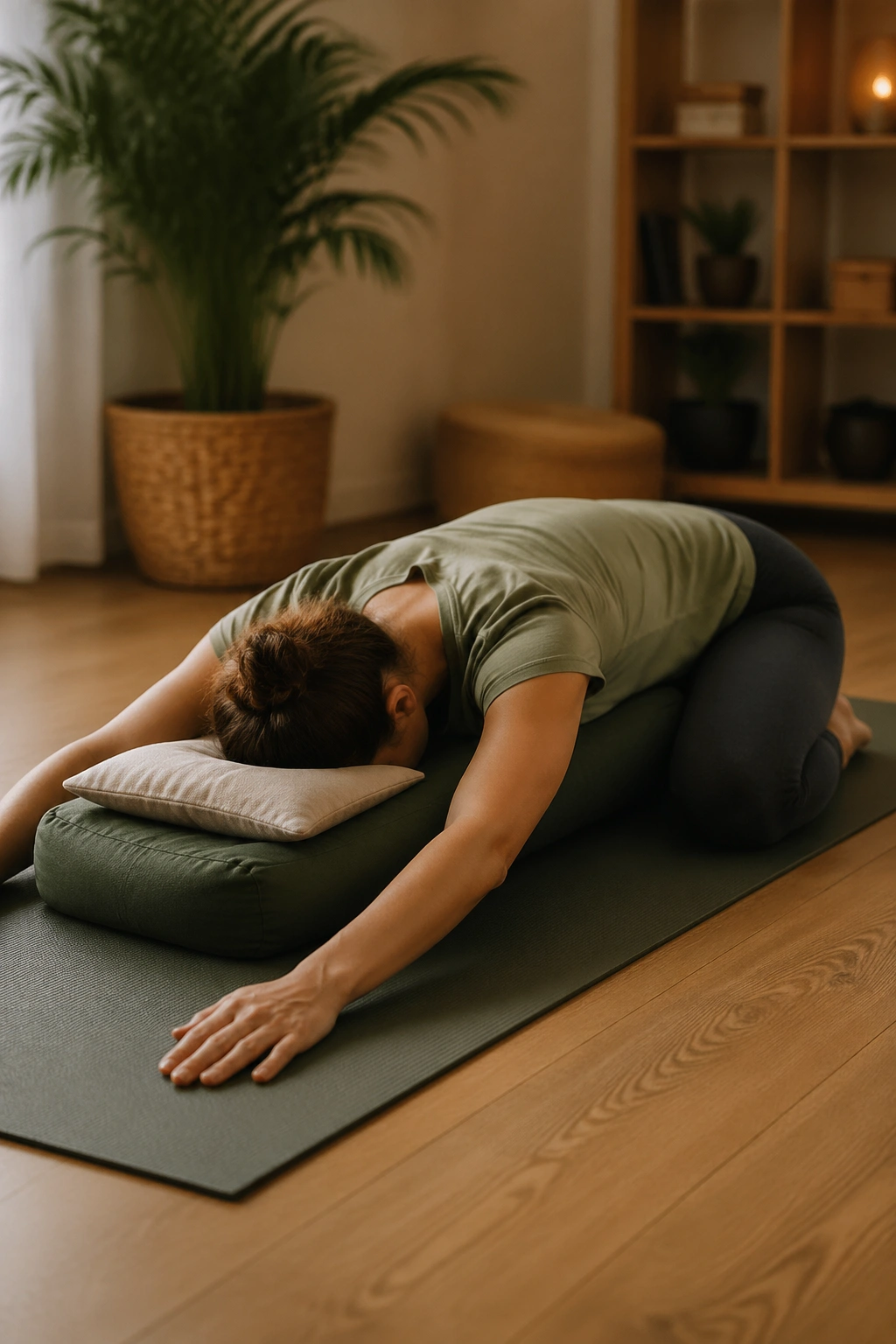
A supported version of Child’s Pose can feel better than the classic shape because it removes the struggle of holding yourself up. That sounds minor. It is not. When your stomach is off, even the effort of hovering over the floor can be too much.
Place a bolster, couch cushion, or folded blanket under the chest and ribs so your torso has somewhere soft to land. The hips stay back, the neck stays long, and the belly does not feel squashed. This version is one I like more than the full fold when somebody feels shaky, tender, or short on sleep.
What to look for
- A cushion height that lets you breathe without pressing the abdomen.
- Enough support under the forehead that the jaw can unclench.
- Knees wide enough that the groin relaxes.
- A slow exhale that feels longer than the inhale.
If you are pregnant, have reflux, or feel queasy after big meals, this supported setup is often easier than dropping straight to the mat. Tiny detail. Big difference.
3. Cat-Cow
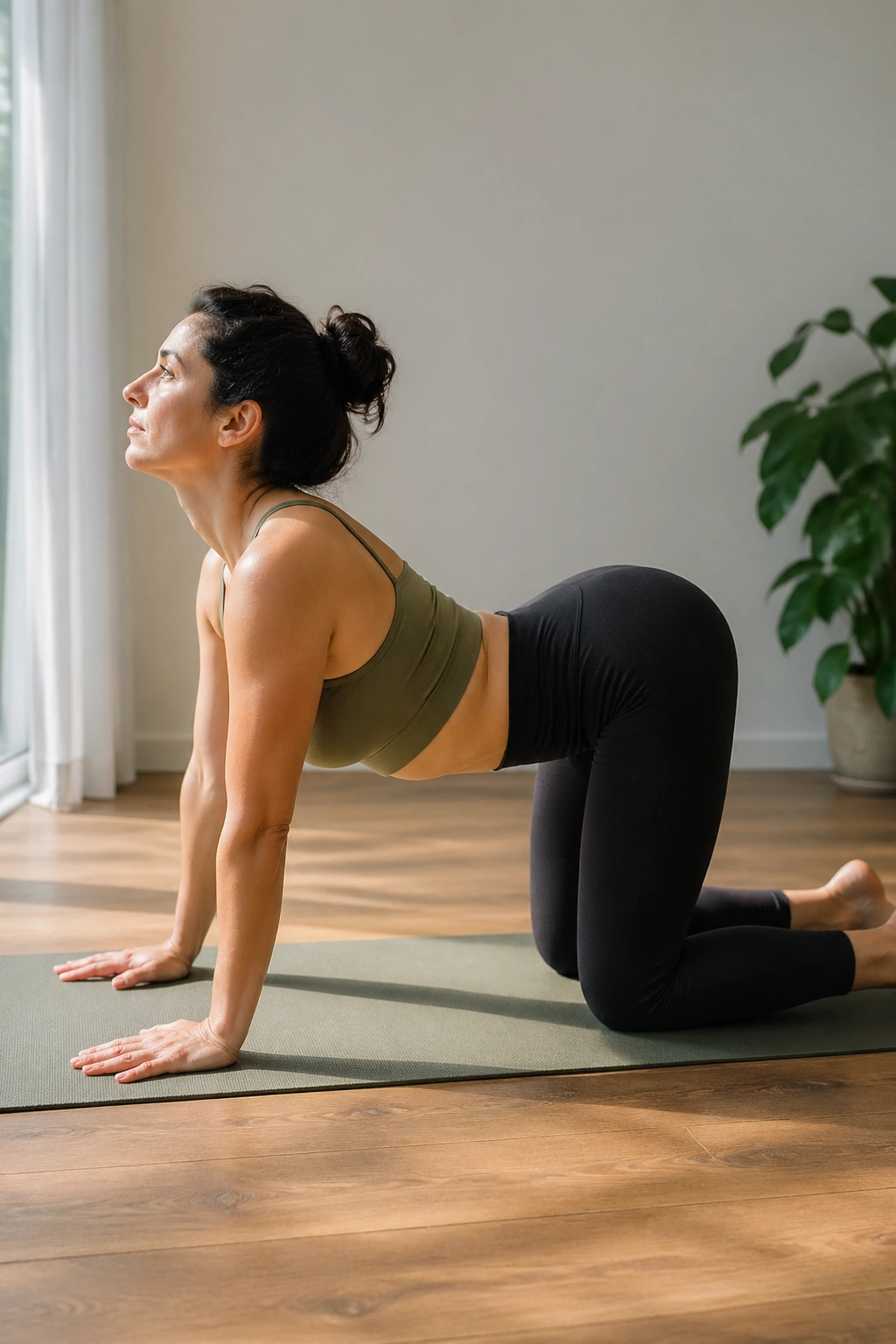
Why does Cat-Cow work so well when your stomach is off? Because it pairs movement with breath instead of asking the body to choose one or the other. The motion is mild, rhythmic, and easy to stop the second it feels wrong.
Come onto hands and knees. As you inhale, let the chest soften forward and the tailbone tip up a little. As you exhale, round the spine and press the floor away. Keep the range small. You are not trying to make a dramatic curve; you are trying to make the spine feel less stuck.
How to move through it
- Place hands under shoulders and knees under hips.
- Keep the motion slow enough that you could speak a full sentence.
- Do 5 to 10 rounds.
- Stop if looking up makes you dizzy.
A lot of people overdo the backbend part. Don’t. A tiny wave through the spine is enough, and if the neck feels tight, keep the gaze down.
4. Easy Seat with Belly Breathing
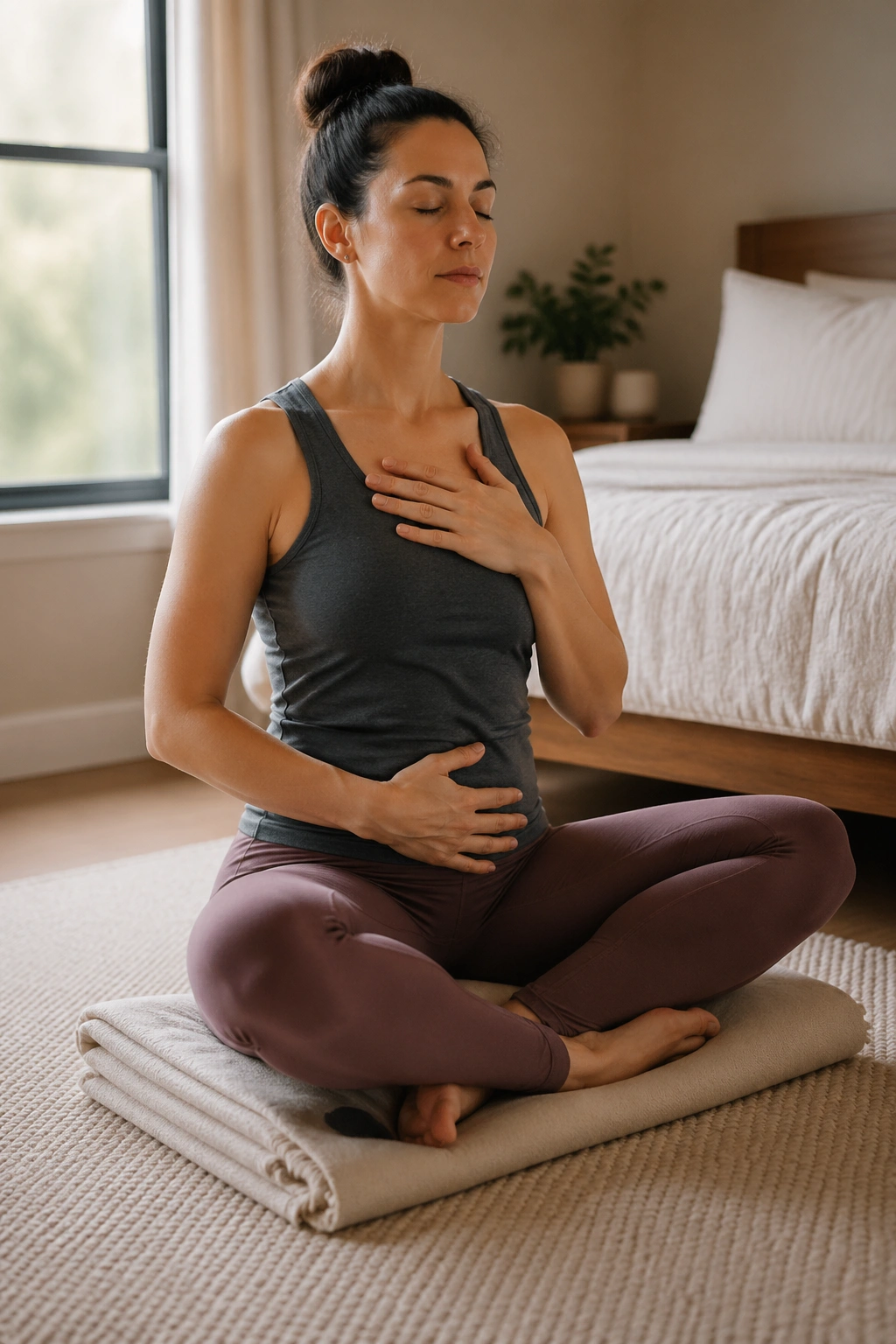
This is the quietest pose in the bunch, and on some mornings it is the one that saves the day. Sit on a folded blanket, a cushion, or the edge of a bed so your hips are slightly higher than your knees. That small lift matters. It keeps the lower back from collapsing and makes belly breathing easier.
One hand can rest on the belly, the other on the chest. Breathe in through the nose for a count of four, then out for a count of six. Don’t force the belly outward; let it rise on its own. The goal is soft, steady breaths that feel almost underwhelming.
How to set it up well
- Sit tall without bracing your ribs.
- Soften the shoulders.
- Let the jaw loosen.
- Keep the exhale longer than the inhale for 6 to 8 rounds.
A short burst of this can be enough before you get up and start moving again. And if sitting upright feels better than lying down, trust that. The body usually tells the truth faster than the mind does.
5. Knees-to-Chest Pose
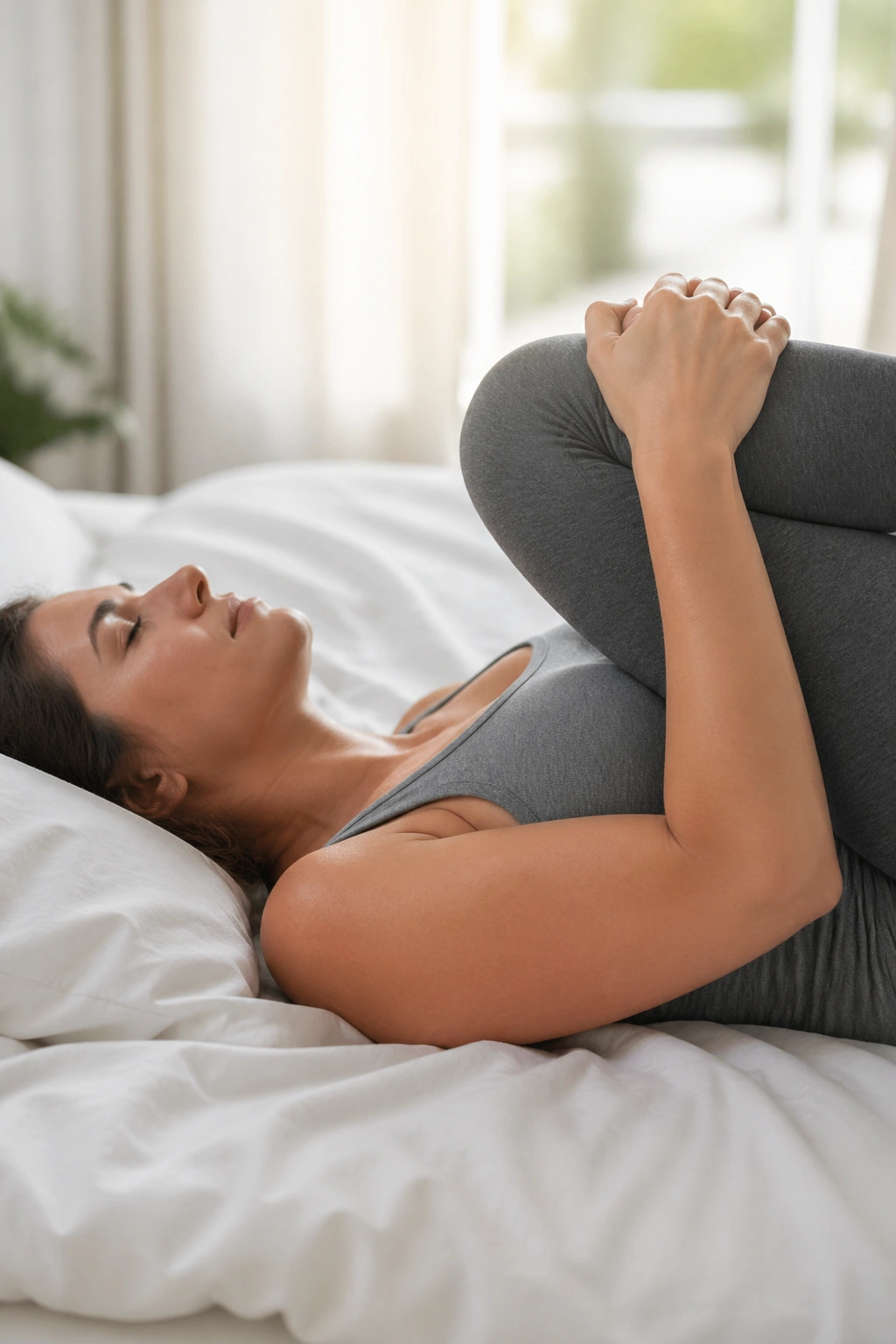
Knees-to-Chest is one of those poses that looks too simple to matter, then ends up being the thing people keep returning to. It gently compresses the abdomen without cranking it, which can be comforting when the stomach feels loose and unsettled. I prefer the one-knee-at-a-time version first, because both knees in can be too much on a rough morning.
Lie on your back and draw one knee toward the chest. Hold behind the thigh or shin, not the knee itself. Then switch sides. If both knees in feels fine, you can hug them together and rock a little side to side. Keep the motion small and slow.
The only catch is pressure. If your nausea comes with reflux, big meals, or a sour rising feeling, the compression may annoy things rather than help. In that case, back off and pick something more open.
6. Supine Twist
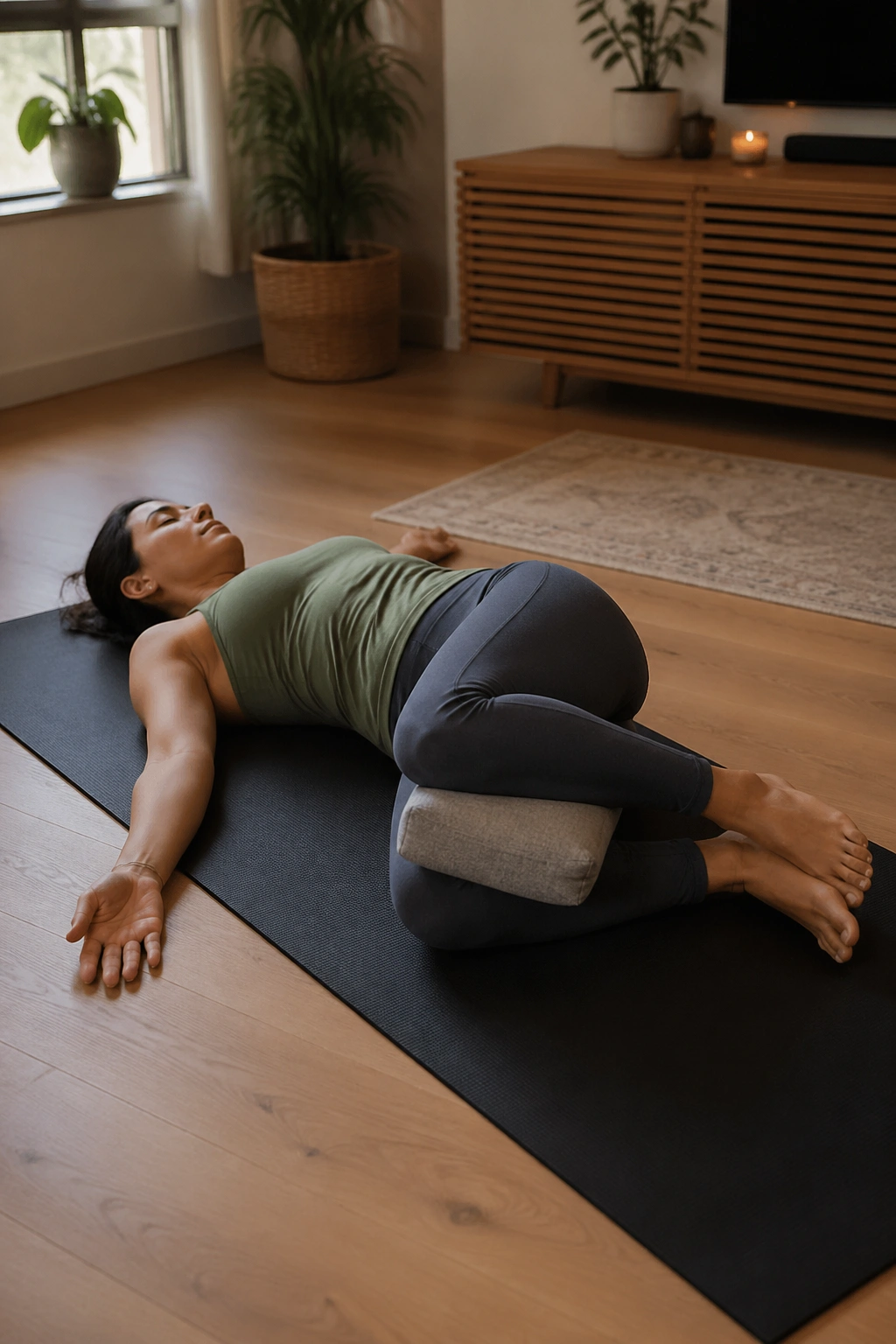
Not every twist needs to be deep to count. In fact, a small supine twist is often better for queasy mornings than an ambitious one that torques the belly and makes your eyes go a little funny. The point is to unwind the back, not wring it out.
Lie down with both knees bent. Let them fall to one side while your shoulders stay heavy on the mat. Put a pillow or folded blanket between the knees if the lower back feels cranky. Keep the twist soft enough that you could breathe through the nose without catching.
What makes this version different
Unlike the showier twists people love to post, this one should feel quiet and low. No forcing the knees to the floor. No pushing the chest open. Just a mild rotation and a long exhale. If your stomach gets worse when you twist after eating, skip it and move on.
This is a better choice for tension than for active digestive upset. That distinction matters.
7. Legs-Up-the-Wall for Queasy Mornings
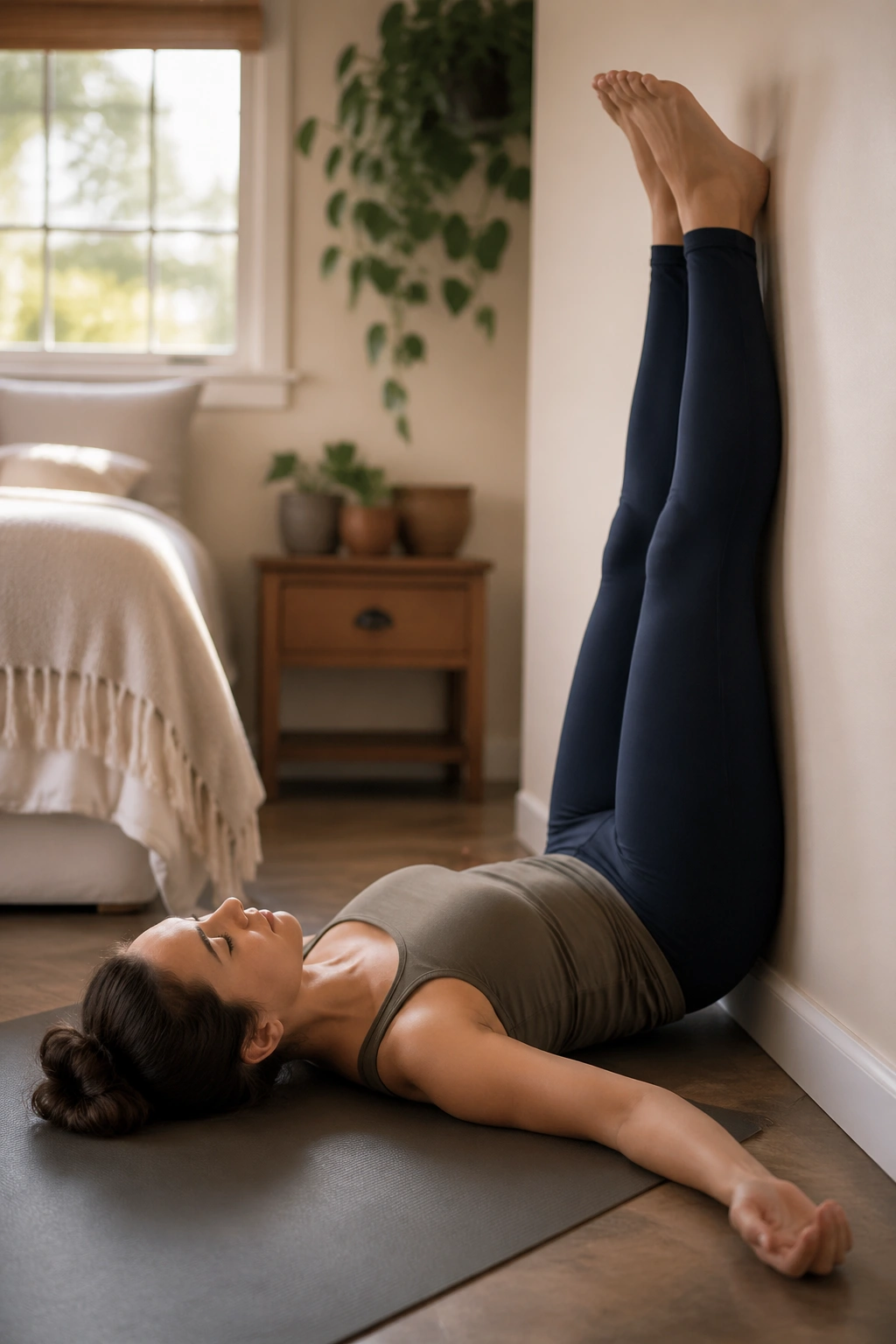
Legs-Up-the-Wall is one of the cleanest ways to settle a body that feels a little overcooked. The legs go up, the shoulders drop, and the whole system gets a chance to stop bracing. There is also a nice side effect: you don’t have to hold yourself in space.
Sit sideways with one hip close to a wall, then swing the legs up as you lower onto your back. If the hamstrings complain, scoot the hips a few inches away from the wall. Stay for 2 to 5 minutes at first. If it feels good, you can stay longer. If it feels odd, get out sooner.
Watch for dizziness. Some people feel lightheaded in this shape, especially if they already woke up a little dehydrated. Exit slowly. Roll to one side, wait a moment, then sit up.
8. Reclined Bound Angle
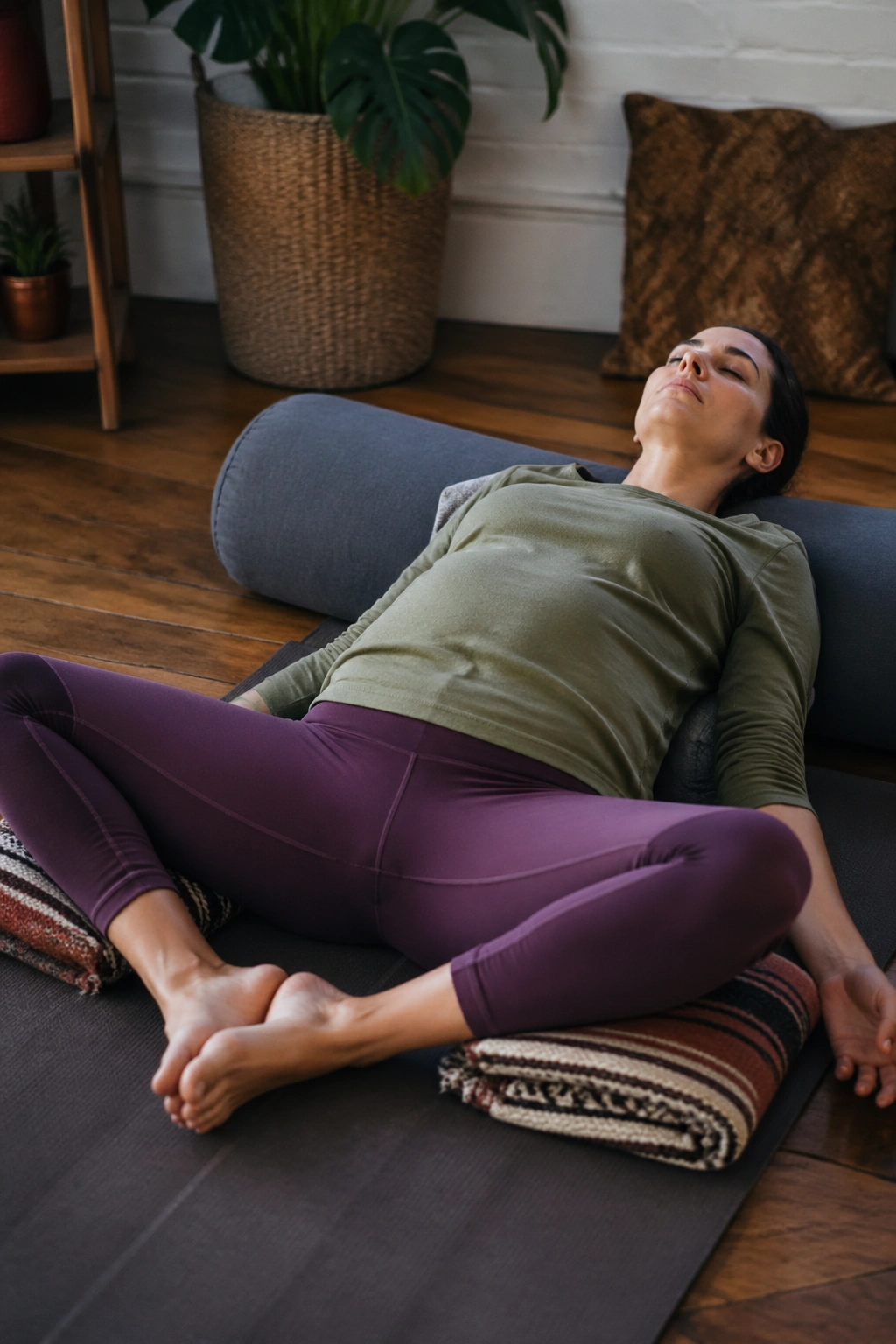
Reclined Bound Angle is one of my favorites when the body wants to open but not work. Lie on your back, bring the soles of the feet together, and let the knees fall apart. Then support the thighs with blocks, pillows, or folded blankets so gravity does not yank the hips open.
The chest stays easy. The belly stays soft. That is the whole charm of it.
Small setup details that matter
- Put a bolster along the spine if you want the chest a little more open.
- Slide blankets under the outer thighs if the groin pulls.
- Keep the feet farther from the pelvis if the lower back arches too much.
- Stay for 5 to 10 breaths, or longer if the room is quiet.
This pose is useful when the nausea feels linked to stress, a tight jaw, or a body that forgot how to unclench. If the knees hover and the hips grip, add more support. More, not less.
9. Sphinx Pose
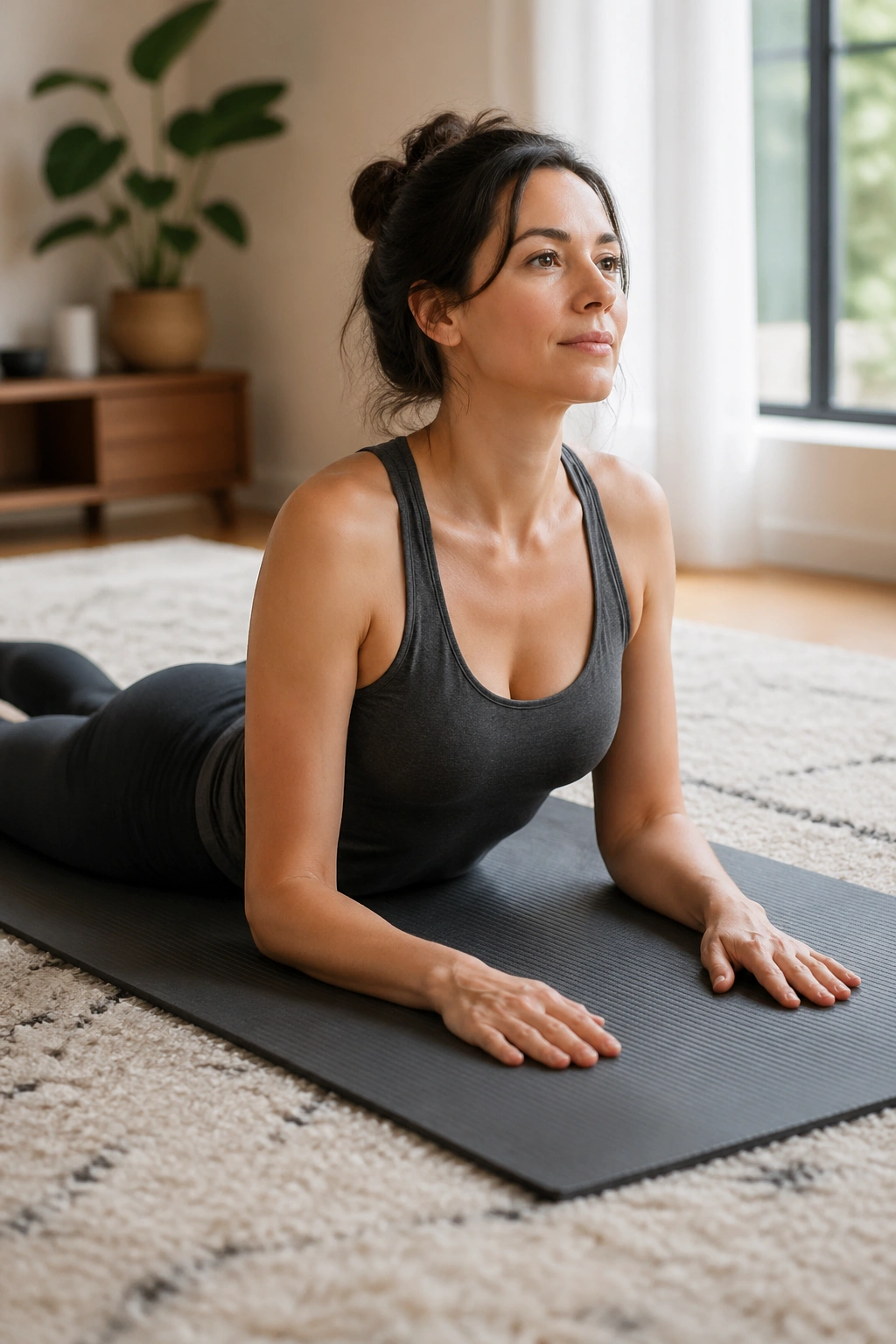
Why lie on your belly at all when the stomach already feels off? Because a tiny backbend can sometimes do the opposite of what you expect. Sphinx opens the front body without demanding much effort, and that can feel grounding when the abdomen is cramped or the upper chest feels tight.
Come onto your stomach and prop up on your forearms. Keep the elbows under the shoulders or slightly in front of them. Lift the chest only enough to create space across the collarbones. The lower belly stays soft against the mat. If your back pinches, lower the chest a little.
This pose is not for everyone. If direct pressure on the stomach feels awful, skip it. If it feels oddly relieving — and that does happen — hold for 4 to 6 slow breaths, then come down and rest your head on stacked hands.
10. Seated Side Bend
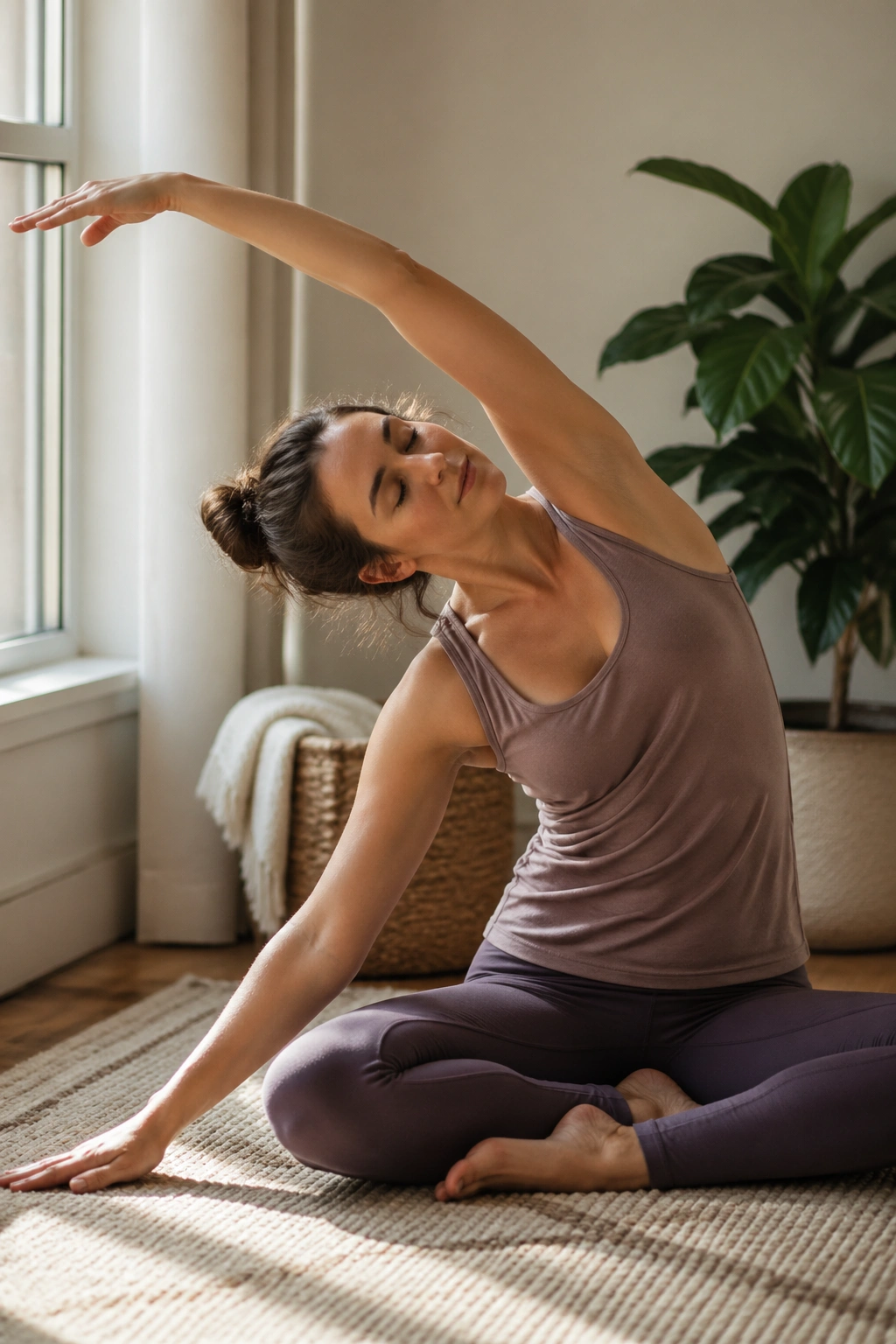
A side bend gives you room through the ribs without compressing the belly much, which is useful when nausea comes with that tight, trapped feeling across the torso. Sit in Easy Pose, one leg crossed in front of the other, or on a chair if the floor is too much. Then slide one hand down toward the floor and reach the other arm up and over.
Keep the movement gentle. Think length, not depth. You should feel space along the side body and maybe a little opening near the top rib cage. If the neck cranes or the shoulders climb, the stretch has gone too far.
The reason I like this one is simple: it gives the body a different shape without asking the stomach to fold or twist. That can be enough to break the loop of queasiness, shoulder tension, and shallow breathing. Switch sides after 3 to 5 breaths.
11. Standing Forward Fold with a Chair
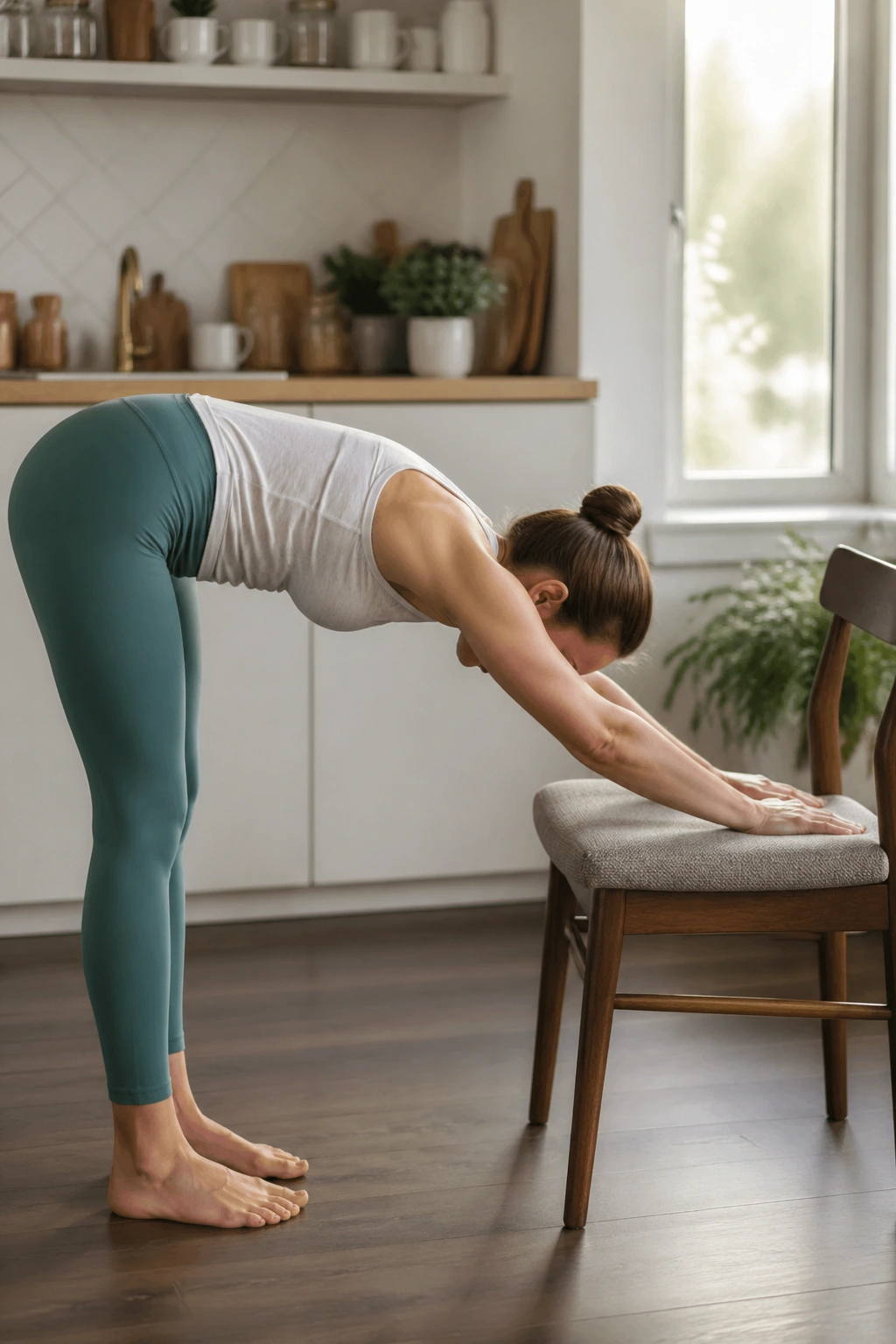
A full standing fold is often too much when you’re nauseous. A supported version can be just right. Stand facing a chair, fold from the hips with bent knees, and let the hands rest on the seat so the upper body has a place to land without hanging heavy.
Your head should stay above the heart, or close to it. That makes this more of a hinge than a dive. Keep the spine long, the knees soft, and the neck relaxed. If the room spins when you lower down, come back up immediately. No debate.
Why this works better than a deep fold
- You get the calming sense of length without a full inversion.
- The support keeps the shoulders from clenching.
- Bent knees make it easier on the low back.
- It is easier to leave the pose fast if you need to.
This is the one to try when standing feels better than lying down, which happens more often than people expect.
12. Thread the Needle
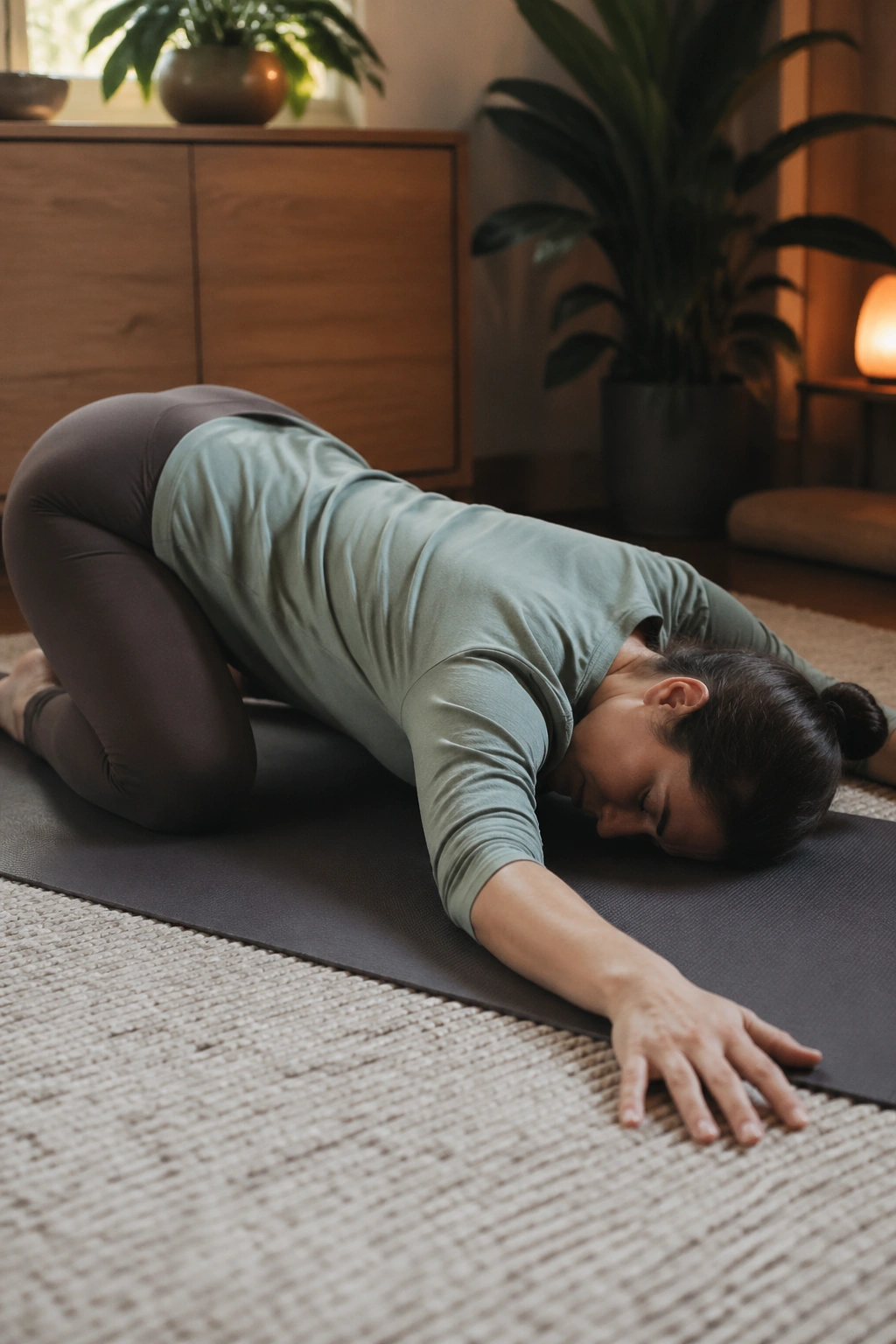
Thread the Needle is one of those poses that looks like a shoulder stretch and acts a little like a nervous-system reset. From hands and knees, slide one arm under the other and rest the shoulder and side of the head on the mat or a block. The torso rotates, but not aggressively. It is more of a quiet tuck than a twist.
What I like here is the upper-back release. Queasy mornings often come with a tight neck, shallow breaths, and a chest that feels too high and too rigid. This pose opens just enough to change that pattern. Keep your belly soft, your breath slow, and your weight light.
If you hate pressure on one ear or shoulder, don’t force it. A folded blanket under the head can make this much easier. Hold 4 to 6 breaths, then switch sides.
13. Constructive Rest
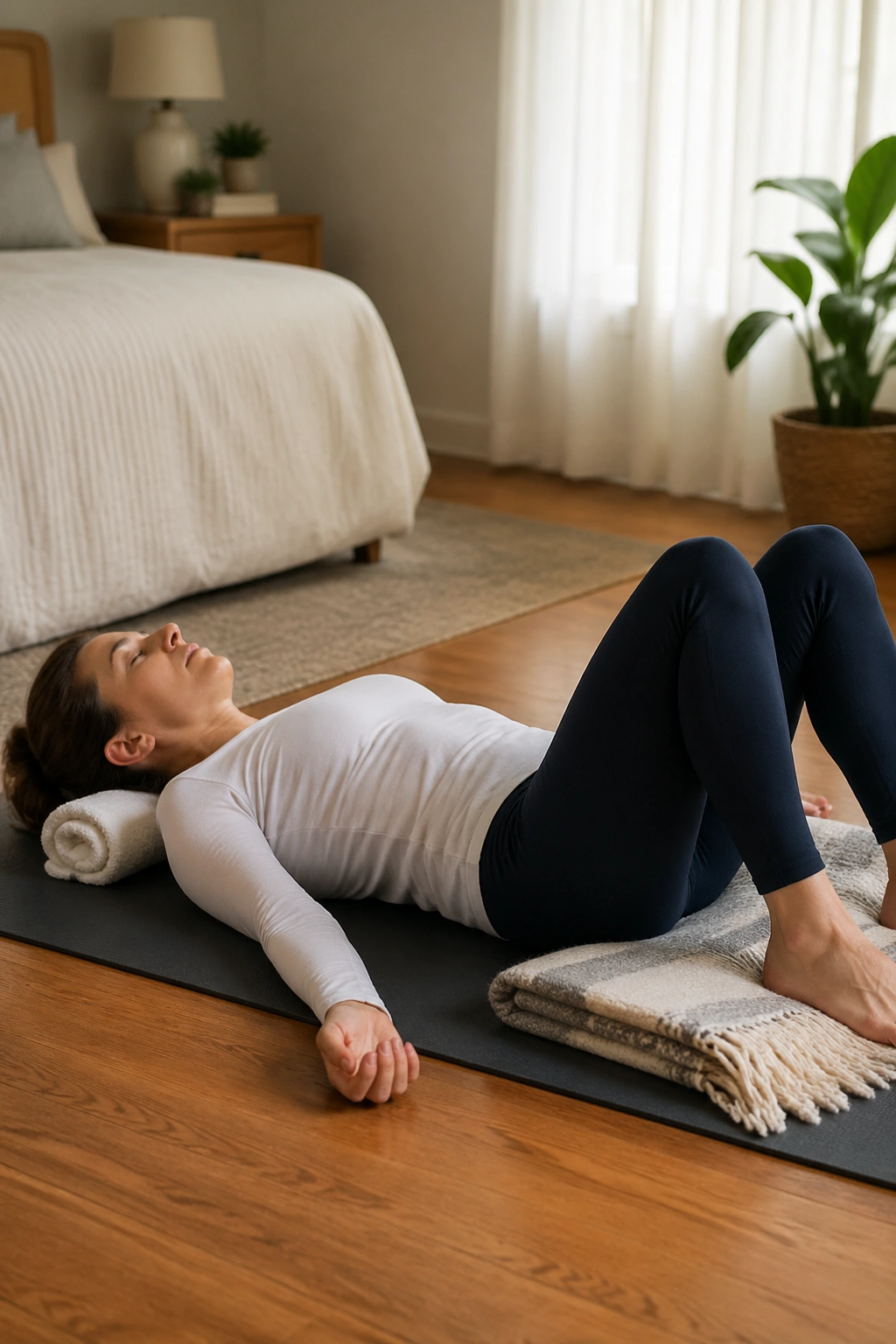
Constructive Rest is the pose for people who are too nauseous to “do yoga” but still need something better than pacing the kitchen. Lie on your back with your feet flat on the floor, knees bent, and feet about hip-width apart. Let the knees knock in toward each other if that feels natural. Place your arms by your sides, palms up or down.
That is it. No shape to maintain. No stretch to chase. The body gets to settle with almost zero demand.
A simple way to set it up
- Put a rolled towel under the head if the chin tips up.
- Place a blanket under the knees if the low back feels strained.
- Stay for 3 to 8 minutes.
- Keep the breath loose and unforced.
This pose works because it is boring. The nervous system seems to enjoy boring when the stomach is acting up.
14. Supported Bridge Pose
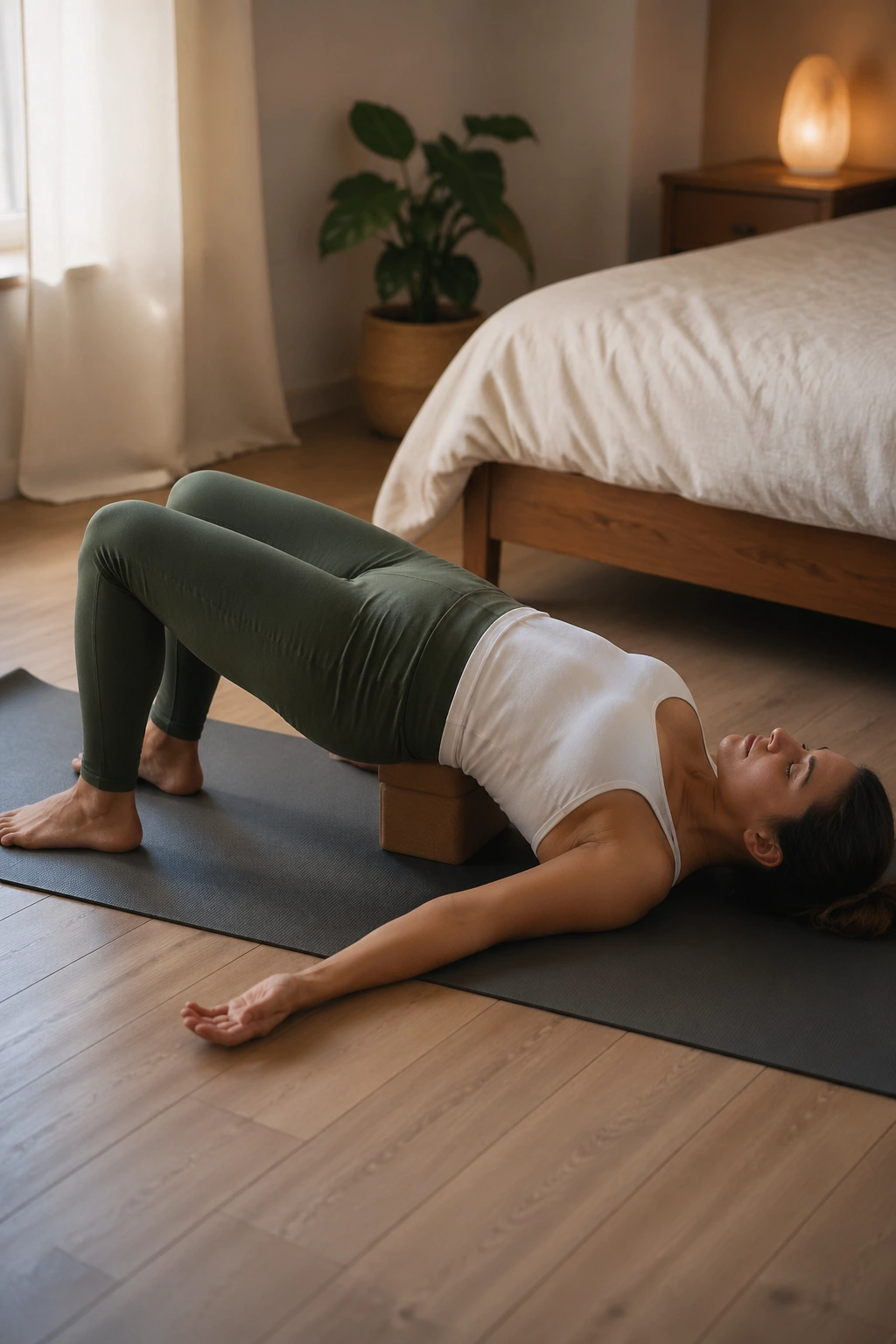
Supported Bridge gives you a little lift without asking you to hold the shape with your legs or back. Lie down, bend the knees, and place a block or firm cushion under the sacrum — the flat bone at the base of the spine. The hips rest there while the chest stays open and the legs relax.
That support changes everything. A regular bridge can feel like work. This version feels more like being held up. It may help if nausea arrives with a heavy, slumped feeling in the torso or if you want a mild chest opening without a full backbend.
Keep the block on its lowest or middle height. If your lower back arches hard or the neck feels compressed, come down. And if head rushes are part of the picture, this is not the time to play around with height. Remove the support slowly when you finish, then pause before standing.
15. Savasana with Bolster Support
Savasana is the last stop for a reason. After all the little adjustments and half-folds and small twists, the body may want nothing more than a flat, quiet floor and a blanket. Put a bolster or rolled blanket under the knees so the lower back releases. Cover yourself if the room feels chilly. An eye pillow helps, but a folded washcloth works too.
Do not treat this like a performance. You are not trying to meditate your way out of a stomach bug. You are giving the system a chance to stop flaring. Stay for 5 to 10 minutes if you can. If the mind keeps jumping, focus on the long exhale and the weight of the calves sinking into support.
The honest part? Sometimes yoga is enough, and sometimes it is not. If the nausea keeps rising, if you cannot keep fluids down, or if something about the discomfort feels sharp, strange, or alarming, stop the practice and get help. A mat can soothe a queasy morning. It cannot fix everything.
