



Morning yoga poses work best when they feel like a slow light switch, not a jolt. If your back is stiff, your ankles feel glued, and your shoulders seem to be sitting somewhere near your ears before you’ve even had water, the answer is not a deep fold or a heroic backbend. Start smaller. Give the joints a few breaths, a few easy bends, and a little room to remember how they move.
That slow approach matters because the body often feels shorter and tighter after sleep. Muscles are cooler. The spine likes gradual motion before bigger shapes. Even the best morning yoga poses can feel off if you rush straight into them like you’re trying to win something. You’re not. The goal is to wake up the body slowly, let breath lead, and keep the nervous system calm enough to actually enjoy the movement.
I’ve always liked morning practice that feels almost plain at first. A little floor work. A little standing work. Nothing dramatic. The surprise is how quickly plain can turn useful when the cues are right: bend the knees, soften the jaw, breathe into the back ribs, and stop chasing depth that isn’t there yet. A stretch that feels easy in the first minute and better in the third is usually the right one.
The 15 poses below move from the floor to standing and back again, so you can build warmth without yanking on cold tissue. Some are tiny. Some ask a little more. None should feel like a contest, and none need to be held forever. Start with the ones that let your breathing stay smooth, and the rest of the sequence tends to fall into place.
1. Easy Seat
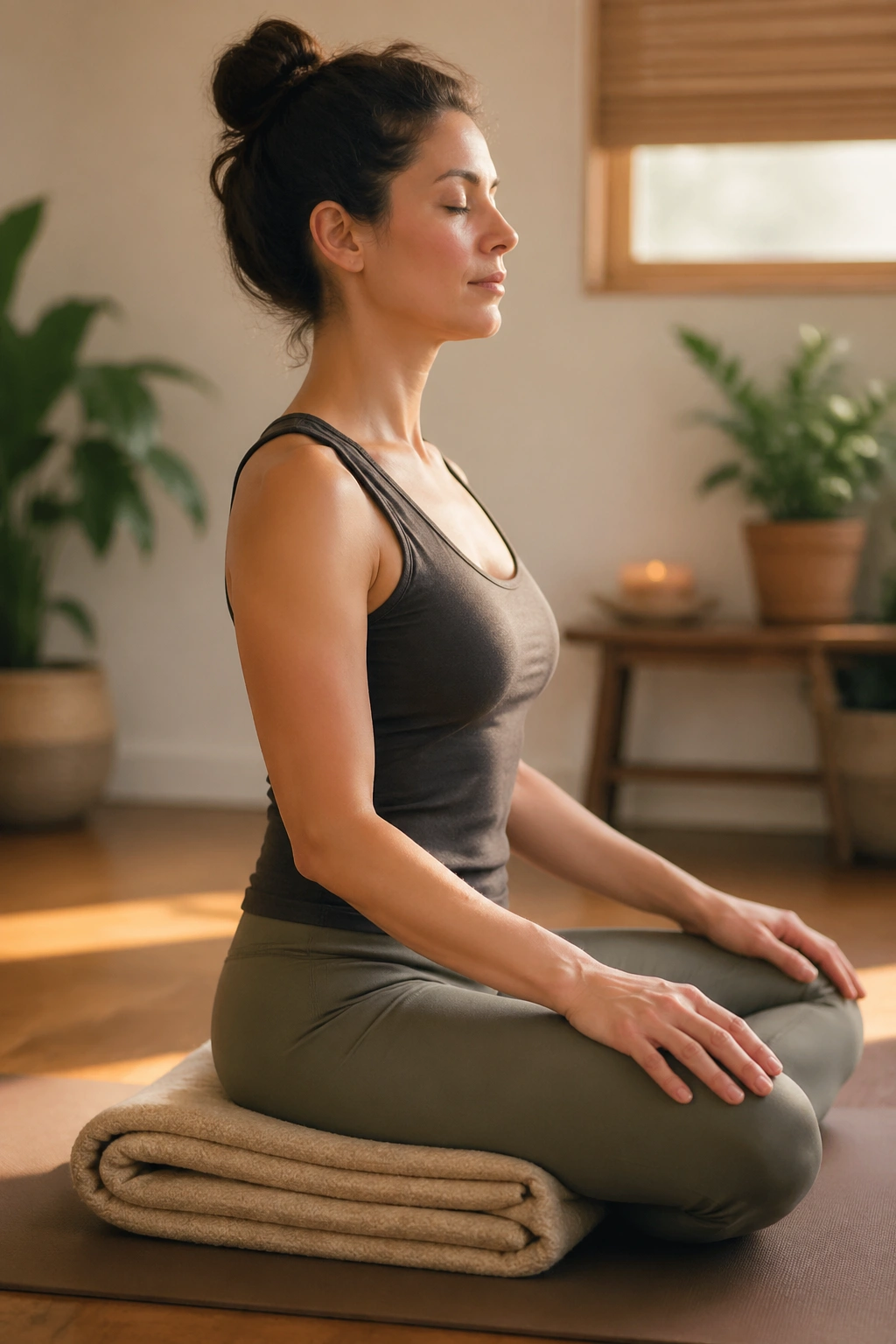
Start here if your body feels a little grumpy before it has even begun. Easy Seat looks plain, and that is exactly why it works so well in the first few minutes of the day. Sitting still for one or two breaths gives the spine a chance to stack, the ribs a chance to expand, and the mind a chance to stop sprinting ahead.
Why Easy Seat belongs first
A folded blanket under your sitting bones changes everything. It tips the pelvis forward just enough to keep the lower back from rounding like a comma, which matters more in the morning than people think. If your knees sit high or your hips pinch, raise the seat another inch. No prize is waiting for a lower sit.
Let the hands rest on the thighs, palms down or up. Close the eyes if that feels steady. Then take 4 to 6 slow breaths, making the exhale a little longer than the inhale. That tiny shift often tells the body it can relax without going slack.
- Sit on 1 folded blanket or a firm cushion if the floor feels too low.
- Keep the chin level, not dropped.
- Soften the belly on every exhale.
- If your ankles complain, switch to a chair.
Tip: if you can breathe smoothly here, the rest of the practice gets easier fast.
2. Cat-Cow
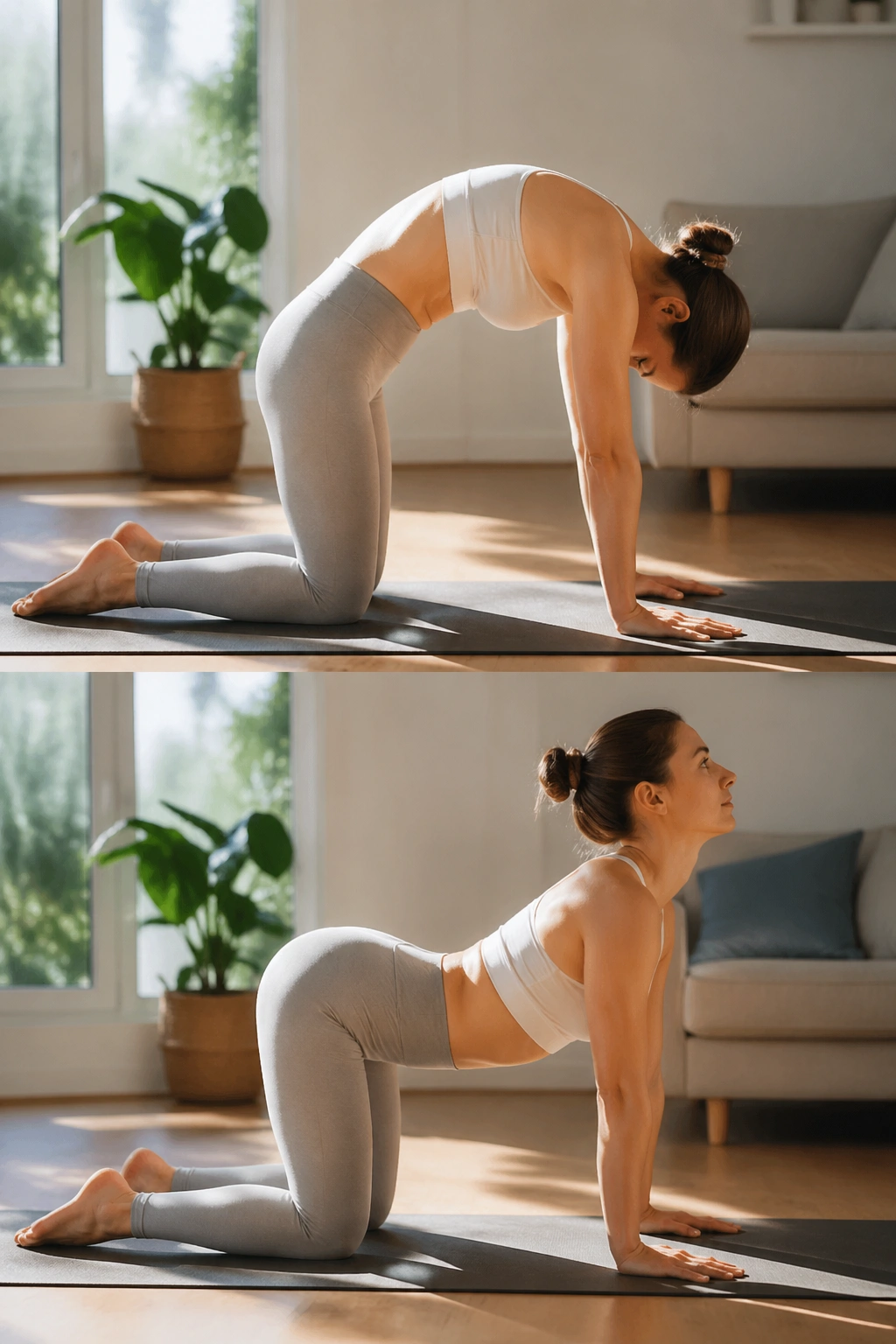
The spine likes small motion first. Cat-Cow is the classic answer, and yes, it earns the praise. It wakes up the middle of the back, ribs, and pelvis without asking for a big range that your body may not want at 7 a.m.
Move slowly onto hands and knees. Stack the shoulders over the wrists and the hips over the knees, then begin with a gentle round of the back as you exhale. On the inhale, let the chest drift forward and the tailbone lift. The trick is not to make the shape huge. Small is better. Smooth is better.
One-sentence truth: don’t throw your head around.
The neck should follow the spine, not lead the whole thing like an impatient cousin. If looking up makes your low back clamp, keep the gaze a little forward on Cow and a little toward the navel on Cat. After 5 to 8 rounds, you should feel more space between the shoulder blades and a cleaner sense of movement through the trunk.
A lot of people rush Cat-Cow because it seems basic. That misses the point. Basic is the point.
3. Child’s Pose
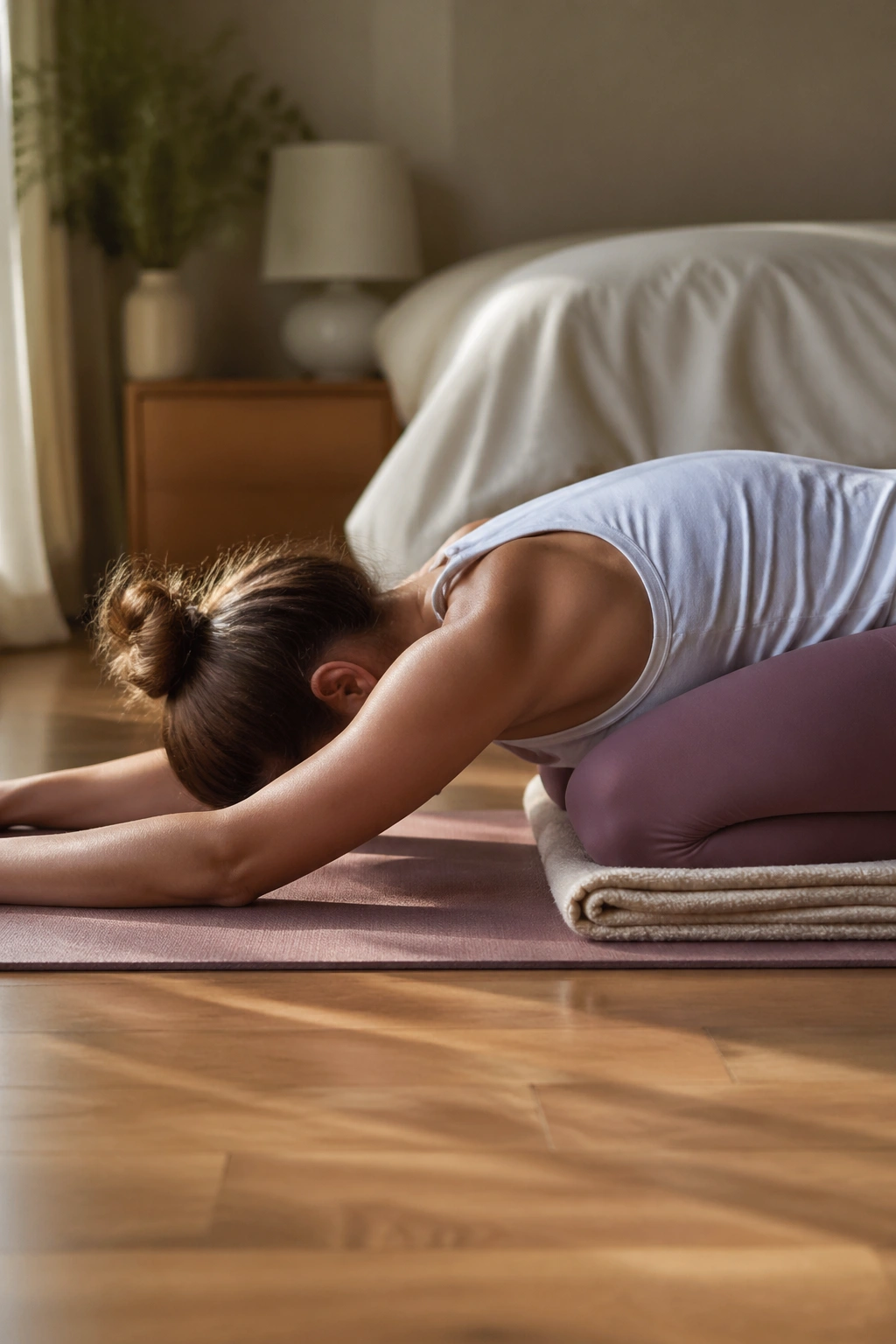
Can a resting pose wake you up? Absolutely, if it’s shaped well and not treated like a nap you fell into by accident. Child’s Pose gives the back body a long, calm opening while the breath spreads into the ribs and low back.
Kneel with the big toes touching and the knees apart, then walk the hands forward and lower the hips toward the heels. If the forehead doesn’t reach the mat comfortably, place a folded blanket or block under it. If the knees feel cranky, bring them wider and support the torso with a pillow. The best version is the one that lets you settle without strain.
What to feel
You want a broad, quiet stretch across the low back and sides of the waist. Not a squeeze. Not a cramp. The breath should make the back ribs expand against the fabric of your shirt. That detail matters. It tells you the pose is giving space, not collapsing you forward.
- Keep the shoulders soft instead of pinned hard to the floor.
- Slide the hands to one side for a side-body stretch.
- Hold for 5 to 8 breaths.
- Lift out slowly; fast exits can feel rude in the morning.
If your hips are stiff, this pose can be a relief before you do anything standing.
4. Thread the Needle
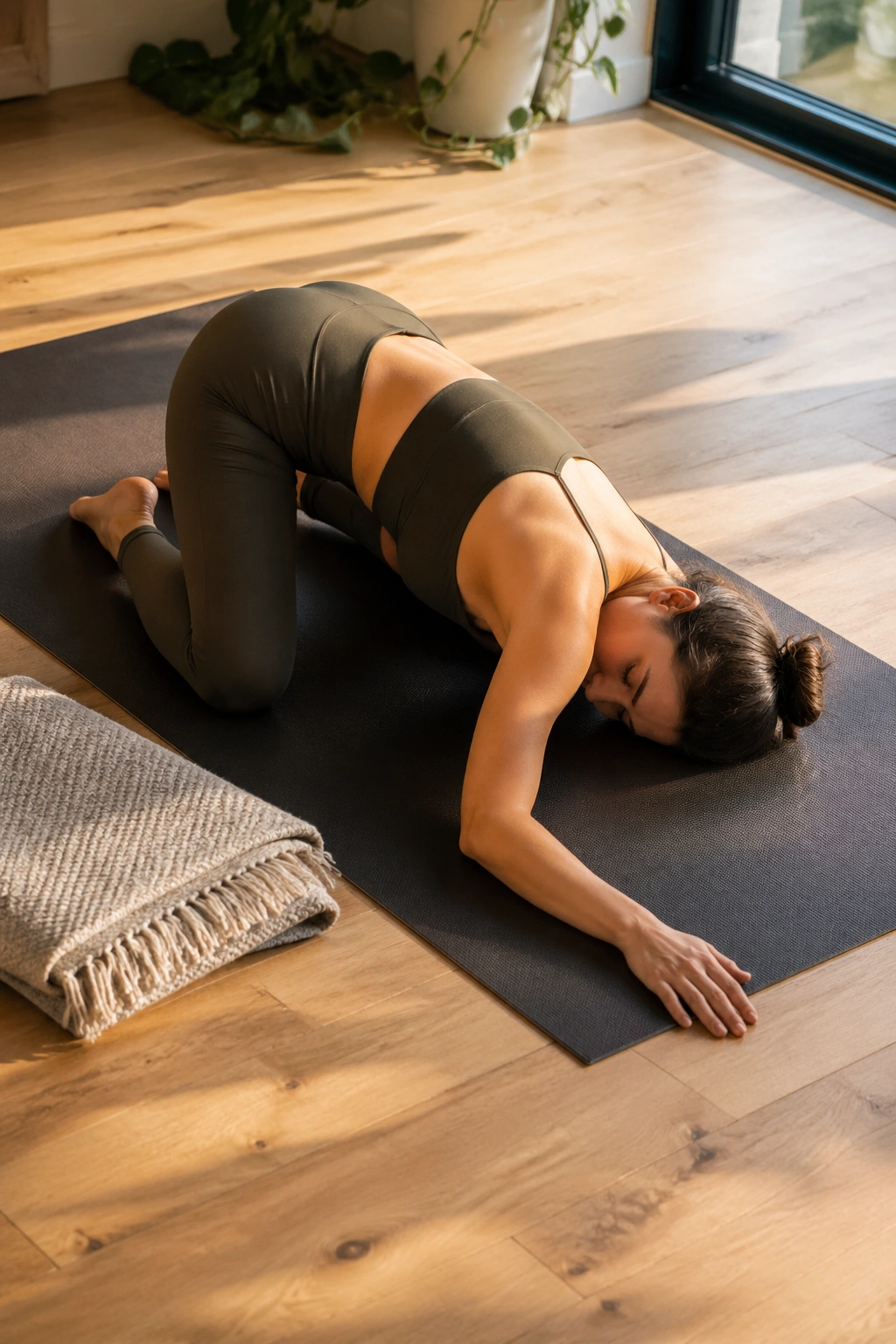
If your upper back feels like a clenched fist, Thread the Needle is the move. It reaches into the shoulder blade area and gives the thoracic spine a gentle twist, which is useful when sleep has left you feeling welded in place.
From hands and knees, slide the right arm under the left and rest the right shoulder and temple on the floor. Keep the hips stacked above the knees as much as you can; that part gets sloppy when people hurry. The chest does not need to crash to the mat. You’re looking for a soft opening across the upper back and the back of the shoulder.
A folded blanket under the knees can make the whole thing feel more grounded. If the supporting wrist is grumpy, spread the fingers wide and press through the whole hand. One side may feel far tighter than the other. That is normal. Stay with the tighter side a breath longer, but not so long that the neck starts to grip.
The pose works because it twists from the rib cage rather than forcing the low back. That difference is small on paper and huge in the body.
5. Downward-Facing Dog
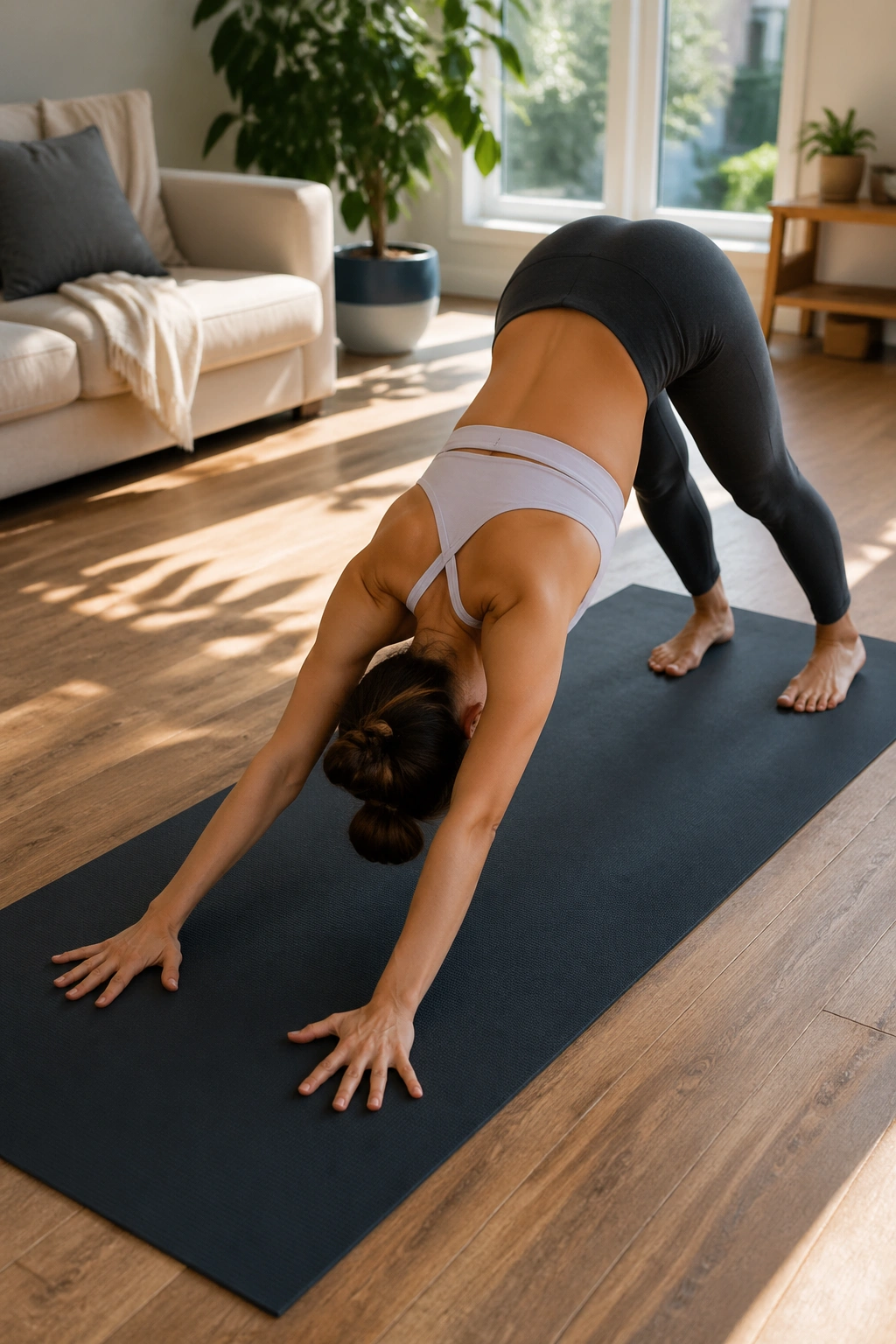
Downward-Facing Dog is not a hamstring test. That’s the first thing to get straight. In the morning, it’s more useful as a long, upside-down shape that wakes up the shoulders, calves, and entire back line without demanding perfect straight legs.
Push back from hands and knees, lift the hips, and keep a generous bend in the knees if the hamstrings feel tight. Pedal the feet a few times. Then pause and let the heels hang wherever they hang. No drama. No forcing. The spine wants length more than the legs want a show.
How to make it morning-friendly
If the shoulders are stiff, press the floor away and keep the upper arms rotating outward a touch. If the wrists feel sensitive, turn the hands slightly out or come to the forearms for a short version. If the heels never touch, that is fine. They do not have to.
- Bend the knees enough to lengthen the spine.
- Spread the fingers wide and press through the knuckles.
- Keep the neck loose.
- Stay for 3 to 5 breaths, then come out before your form gets sloppy.
The pose should feel awake, not aggressive. That distinction matters.
6. Low Lunge
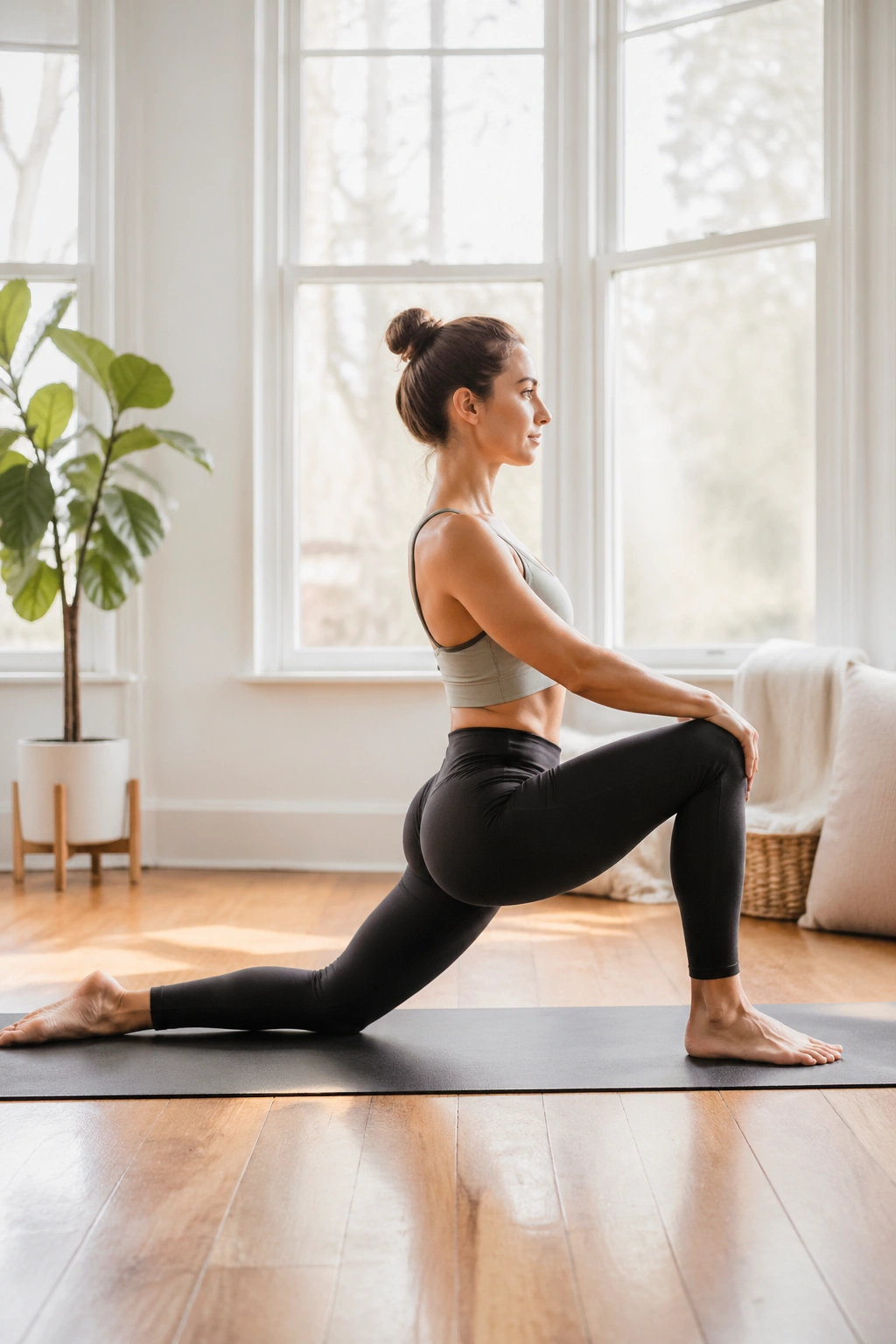
This is where the body starts to wake up in a more obvious way. Low Lunge opens the front of the hip, which tends to feel short after a night of stillness, and it does so without the strain that comes with a deep standing stretch.
Step the right foot forward between the hands and lower the left knee to the mat. Pad the knee if needed. Slide the back foot a little farther behind you so the pelvis has room to settle. Keep the torso tall, then shift forward only until the front of the left hip feels long rather than pinched.
A lot of people dump into the front knee and lose the whole point. Don’t do that. Keep some weight in the back leg, and imagine the hips lifting up rather than sinking straight down. If balance feels wobbly, keep both hands on blocks. That makes the shape calmer and easier to hold.
Breathe into the front of the left thigh. It may feel like a line from hip to knee. That’s the sweet spot. Stay for several breaths, then switch sides and notice how different the second side feels once the body has had a little time.
7. Half Lift
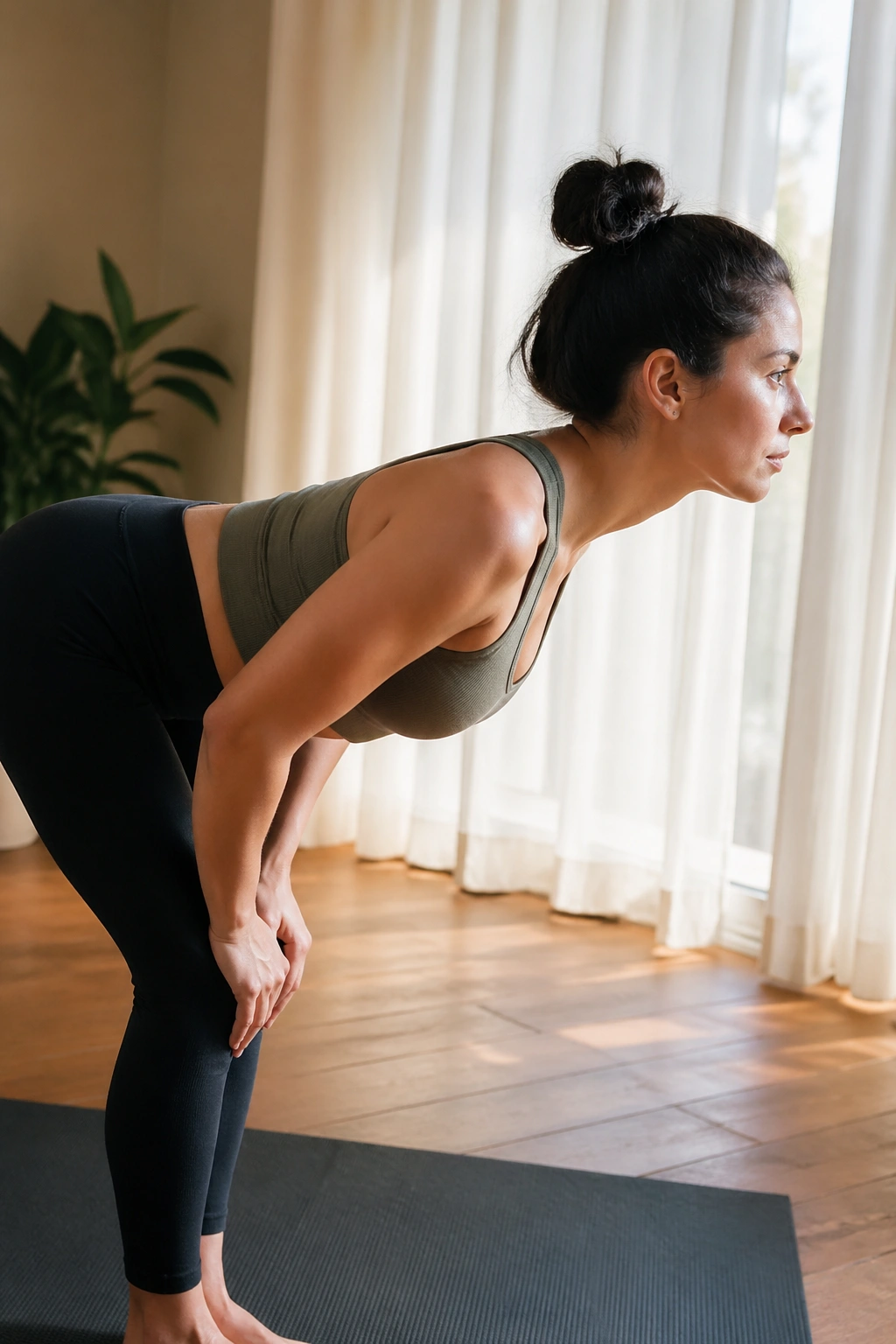
Half Lift looks modest, but it does a lot of quiet work. It teaches the spine to lengthen without collapsing into the folds that often happen when people rush from standing to hanging over their toes first thing in the morning.
Start from a forward fold with bent knees. On the inhale, place the fingertips on the shins or thighs and flatten the back halfway so the chest reaches forward and the crown of the head stretches away from the tailbone. The knees can stay deeply bent. In fact, they probably should. Straight legs are not the goal here.
The part people rush
The temptation is to yank the torso up with the shoulders. That usually shortens the neck and pinches the low back. Instead, think of the sternum sliding forward like the front of a drawer being pulled open. The spine gets long. The belly stays light. The back of the legs can stay soft.
Use Half Lift between folds, or hold it on its own for a few breaths if you want a steady wake-up for the hamstrings and back. It fits beautifully into morning yoga poses because it bridges floor work and standing work without making a fuss about it.
- Keep the neck long.
- Put the hands on shins, blocks, or thighs.
- Stop the lift before the low back protests.
- Exhale back into the fold slowly.
It’s a simple shape. It also teaches patience.
8. Sphinx Pose
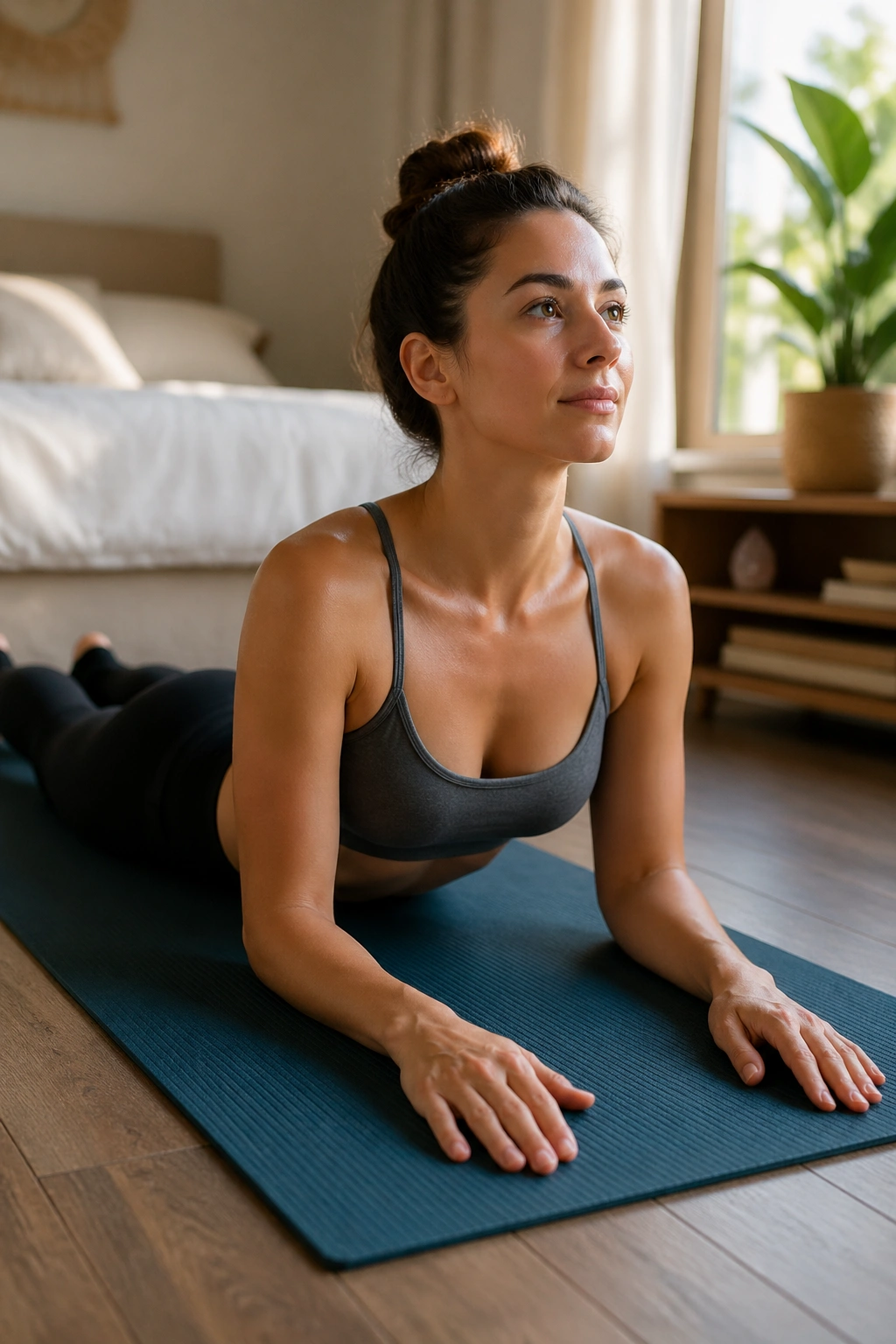
Sphinx Pose has a warm, unhurried feel to it, like pressing your hands around a mug that’s been sitting on the counter for a minute. It opens the front of the chest, the belly, and the low back in a mild way that is often easier than a deeper backbend.
Lie on the belly and place the elbows under the shoulders, forearms parallel on the mat. Then gently draw the chest forward until the front ribs lift a little. The lower belly stays on the floor. That contact matters; it keeps the low back from taking over. If the back feels pinchy, move the elbows forward a few inches and lower the chest slightly.
One-sentence rule: less height, more comfort.
The pose works best when the shoulder blades slide down the back instead of bunching up near the ears. Press the forearms down and lengthen through the crown of the head. The throat stays soft. The gaze can go a few feet ahead on the floor.
Sphinx is a good choice when you want a backbend that feels like a greeting instead of a demand. Morning backs often need that.
9. Cobra Pose
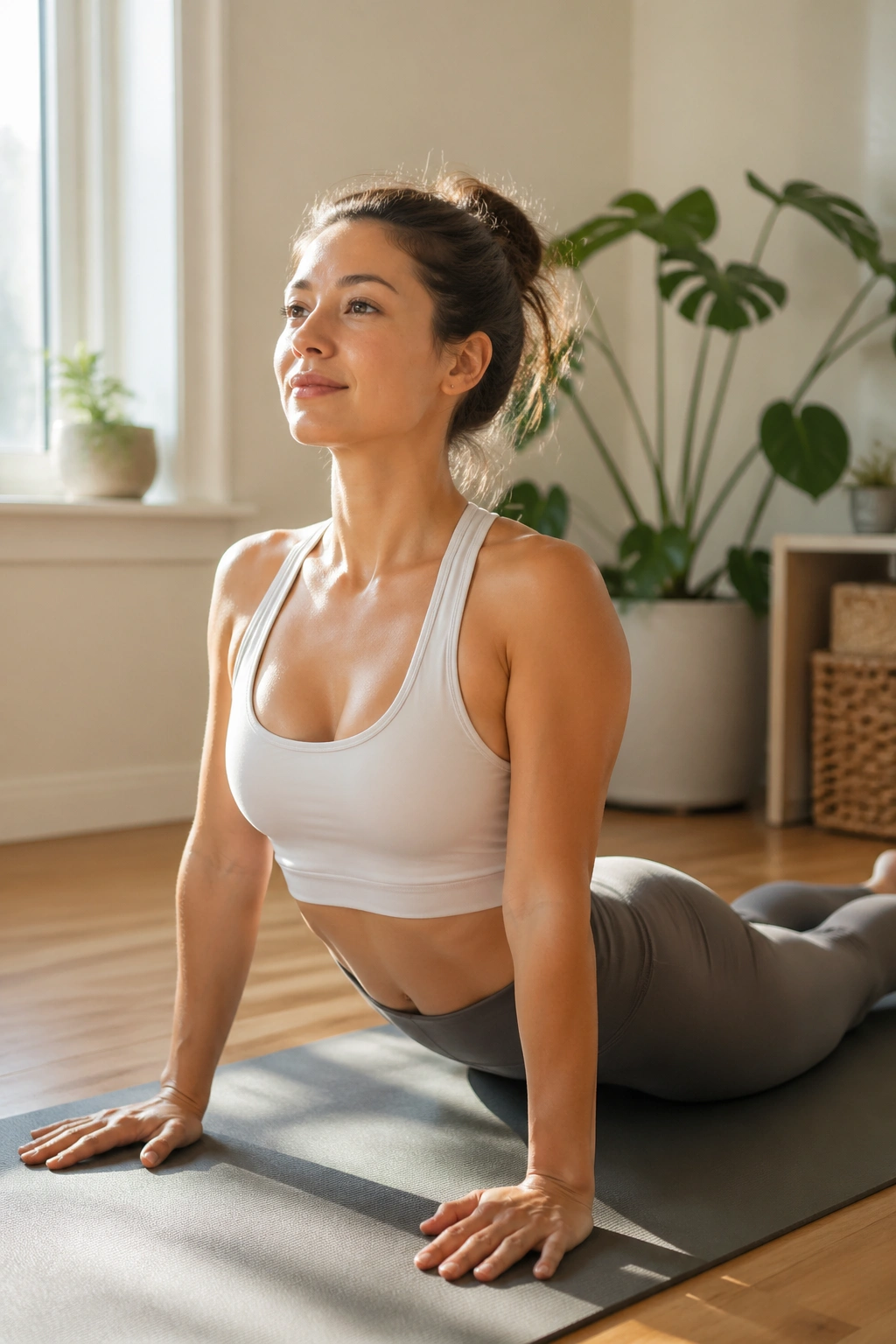
Cobra is the brighter cousin of Sphinx. It asks a little more from the back muscles, but it still belongs in a slow morning sequence if you keep the lift small and honest.
Lie face down with the hands under the shoulders or a little forward from them. Press the tops of the feet into the mat, hug the elbows in, and lift the chest only a few inches. The low ribs may leave the floor, or they may not. Either is fine. What matters is that the low back does not feel jammed.
Cobra vs. Sphinx?
Sphinx is more passive and ground-based. Cobra is more active and precise. That makes Cobra useful when you want a little energy through the spine without heading into a full backbend. If your hands are pressing hard and your shoulders are creeping toward your ears, the lift is too much.
- Keep the pelvis heavy.
- Lift on the inhale, lower on the exhale.
- Think length first, height second.
- Stop immediately if you feel a sharp pinch in the low back.
Cobra is one of those poses that should leave you taller, not crankier. If it doesn’t, make it smaller.
10. Standing Forward Fold
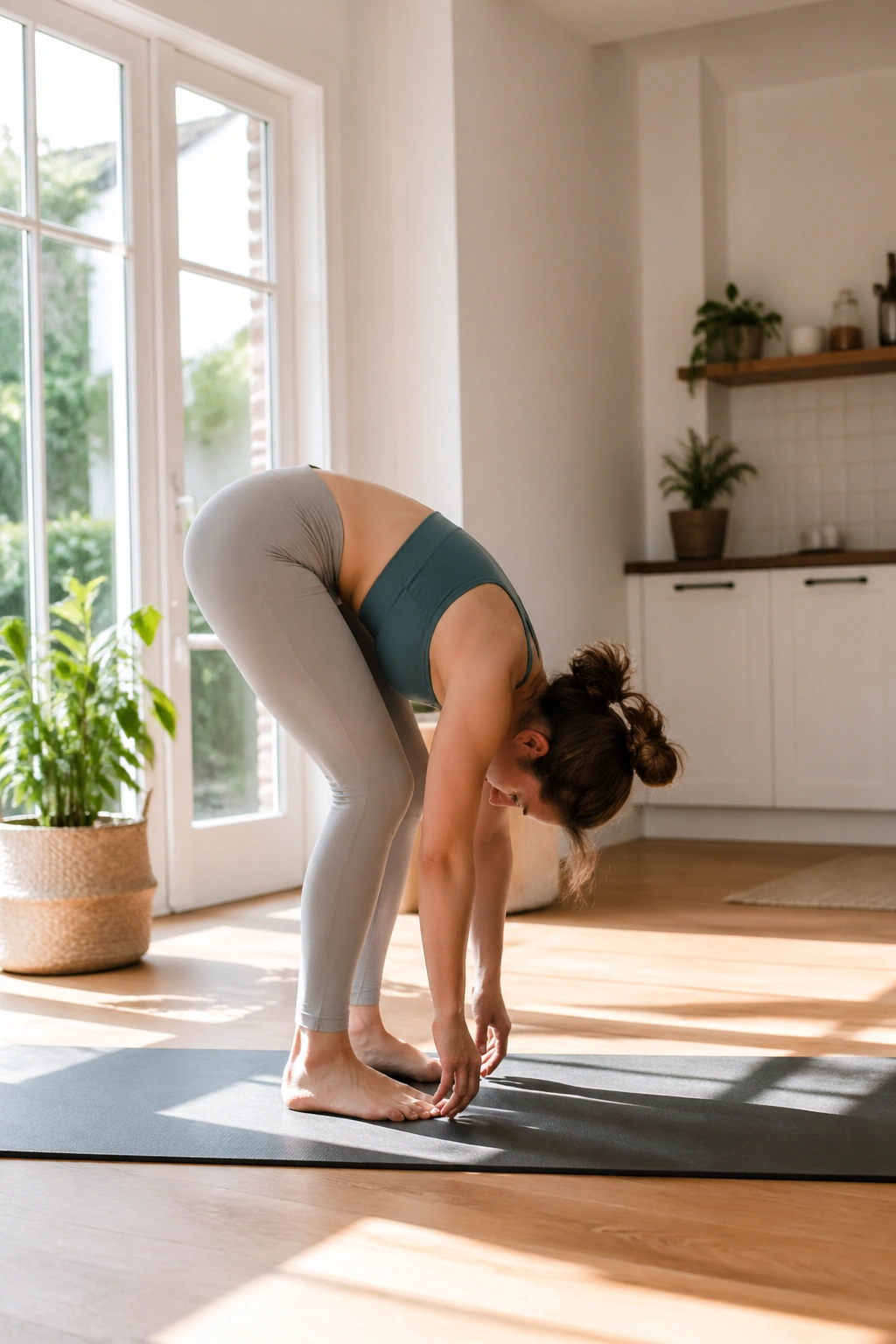
Standing Forward Fold can be gentle or brutal, and the difference comes down to one thing: knees. Keep them bent, and the pose opens the back body in a way that usually feels nourishing. Lock them straight, and it can turn into a tug-of-war you do not need before breakfast.
Stand with the feet about hip-width apart, fold forward from the hips, and let the arms hang. Bend the knees enough that the belly can rest toward the thighs. If the head dangles heavily, that is fine. If it feels better to hold opposite elbows and sway a little, do that. A slow side-to-side motion often releases the low back faster than staying frozen.
The hamstrings may not thank you in dramatic ways at first. That’s okay. You’re not trying to win the morning by stretching the deepest. You’re trying to wake the nervous system and give the back of the body a clean line of length.
A little bend in the knees makes the whole pose friendlier. A lot of people need that reminder.
11. Wide-Legged Forward Fold
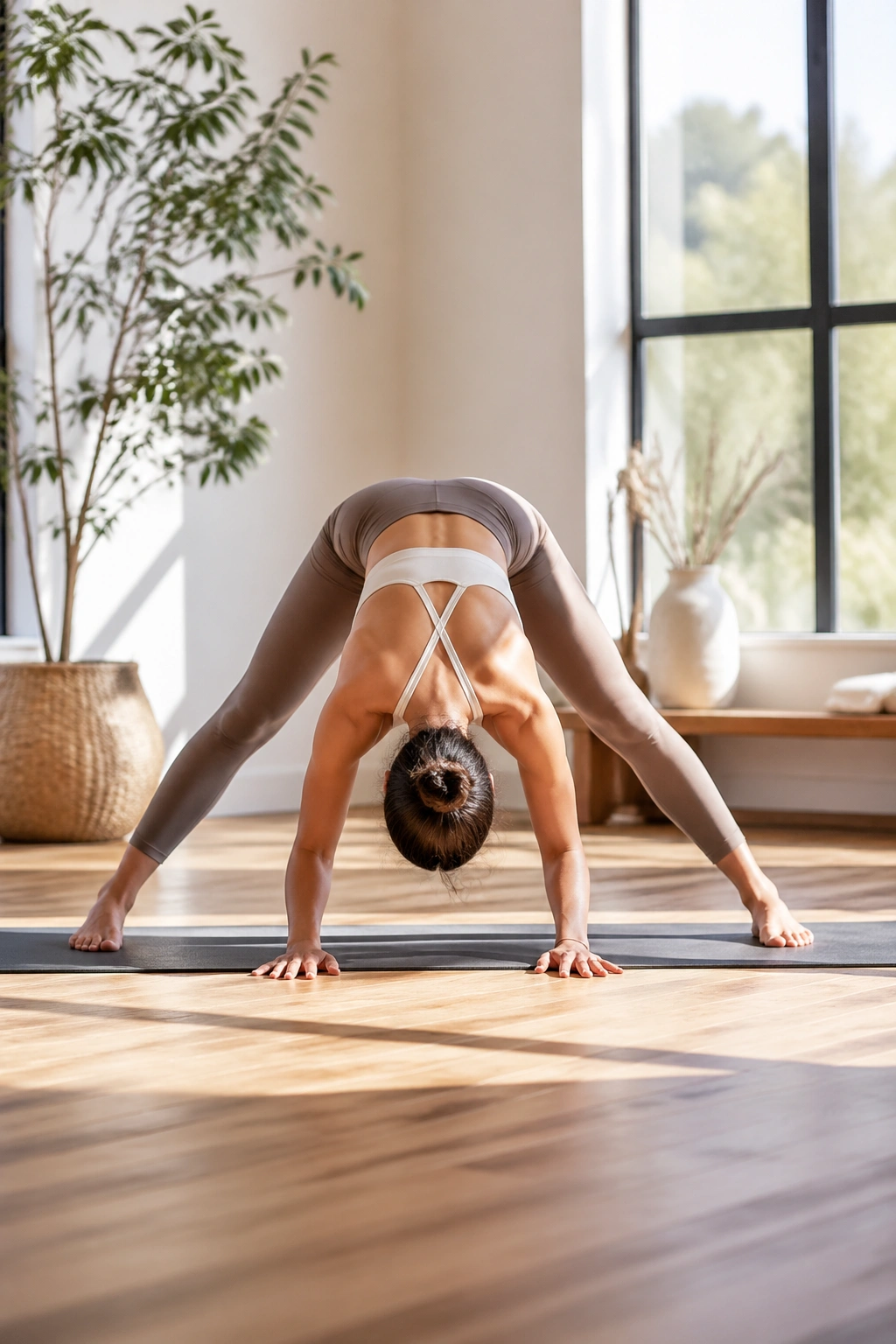
Wide-Legged Forward Fold opens the inner thighs, hamstrings, and hips in a way that feels different from the narrow fold above. There’s more space here, and that can be a relief when the body feels compressed from sleep or from too much sitting.
Step the feet wider than the hips and turn them slightly in or straight ahead, depending on what feels stable. Hinge forward from the hips with a long spine first, then let the torso hang. Hands can touch the floor, blocks, shins, or even the backs of the ankles. You do not need to get low for the pose to count.
A block under the head can make the shape much calmer. So can a soft bend in the knees. If the inner thighs feel tugged too hard, narrow the stance a few inches. Too wide can feel sketchy, especially early in the day when balance is a little off.
There’s a lovely quiet to this pose. The legs work, but the upper body can soften. That combination makes it a strong morning reset without the feeling of being shoved into a stretch.
12. Warrior I
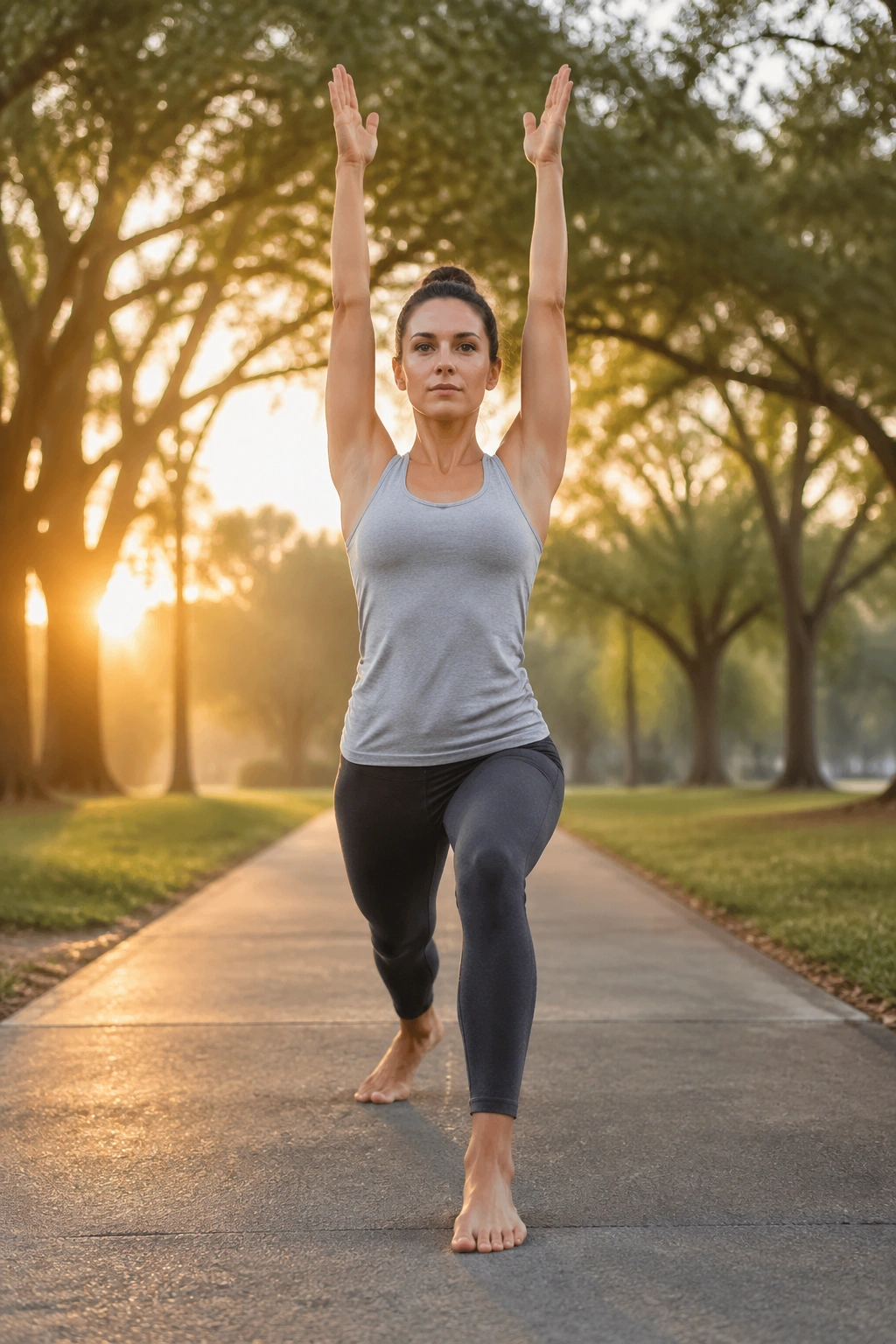
People think of Warrior I as strong, but in the morning it should feel measured. A small stance and a careful pelvis make it much more useful than the deep, squared-up version people sometimes try to force.
Step one foot back and turn the back heel down at a slight angle. Bend the front knee, keep the back leg active, and lift the torso. The hips do not need to face perfectly forward. They just need to feel organized enough that the low back can stay calm. If the shoulders are tight, keep the hands on the hips for a breath before lifting the arms.
What to watch for
The front knee should track roughly over the middle toes, not collapse inward. The back foot should stay rooted. And if the low back starts to arch hard when the arms go up, lower the arms or keep them wide like a goalpost. Morning practice is not the time to force an overhead shape that the shoulders reject.
Warrior I brings heat into the legs, which is useful after a slow start. It also gives the mind a little direction. That matters more than people admit.
13. Triangle Pose
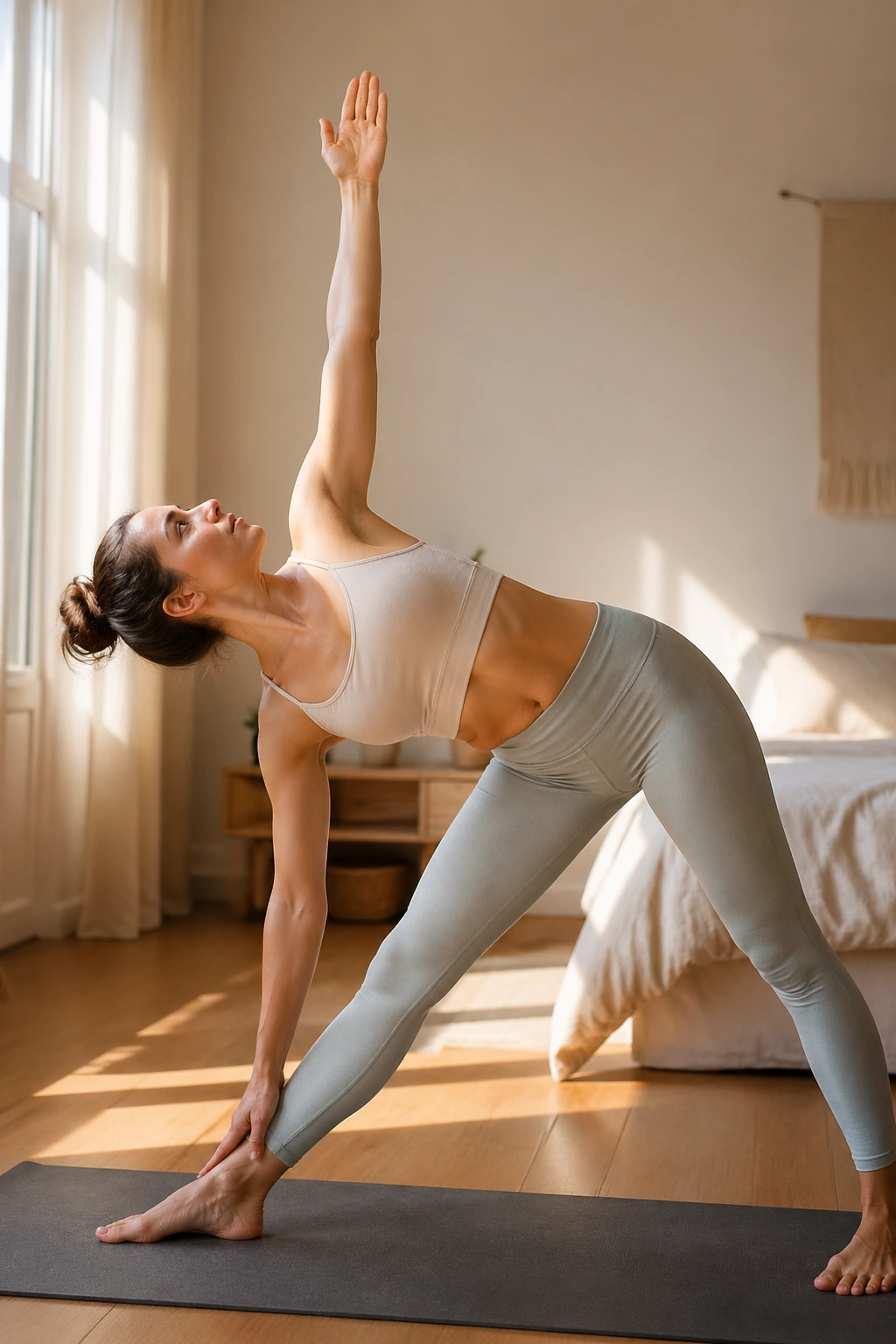
Why does Triangle show up in a slow morning sequence when it looks so active? Because it teaches the body to lengthen sideways, not just forward and back. That sideways line wakes up the outer hips, inner thighs, and waist in a way that feels clean when the setup is sane.
From a wide stance, turn the front foot out and the back foot slightly in. Hinge forward and place the front hand on the shin, a block, or the floor. Then rotate the chest open and reach the top arm up. The top shoulder can stack only partway if that feels more honest. There is no medal for perfect vertical arms.
A block under the lower hand is not cheating. It saves the side body from collapsing and gives the chest room to open. If the front hamstring feels twitchy, bend the front knee a little. If the neck feels strained looking up, keep the gaze forward instead.
Triangle can feel like a pause that stretches you in several directions at once. That’s why it belongs here. It makes you feel awake without making you feel rushed.
14. Bridge Pose
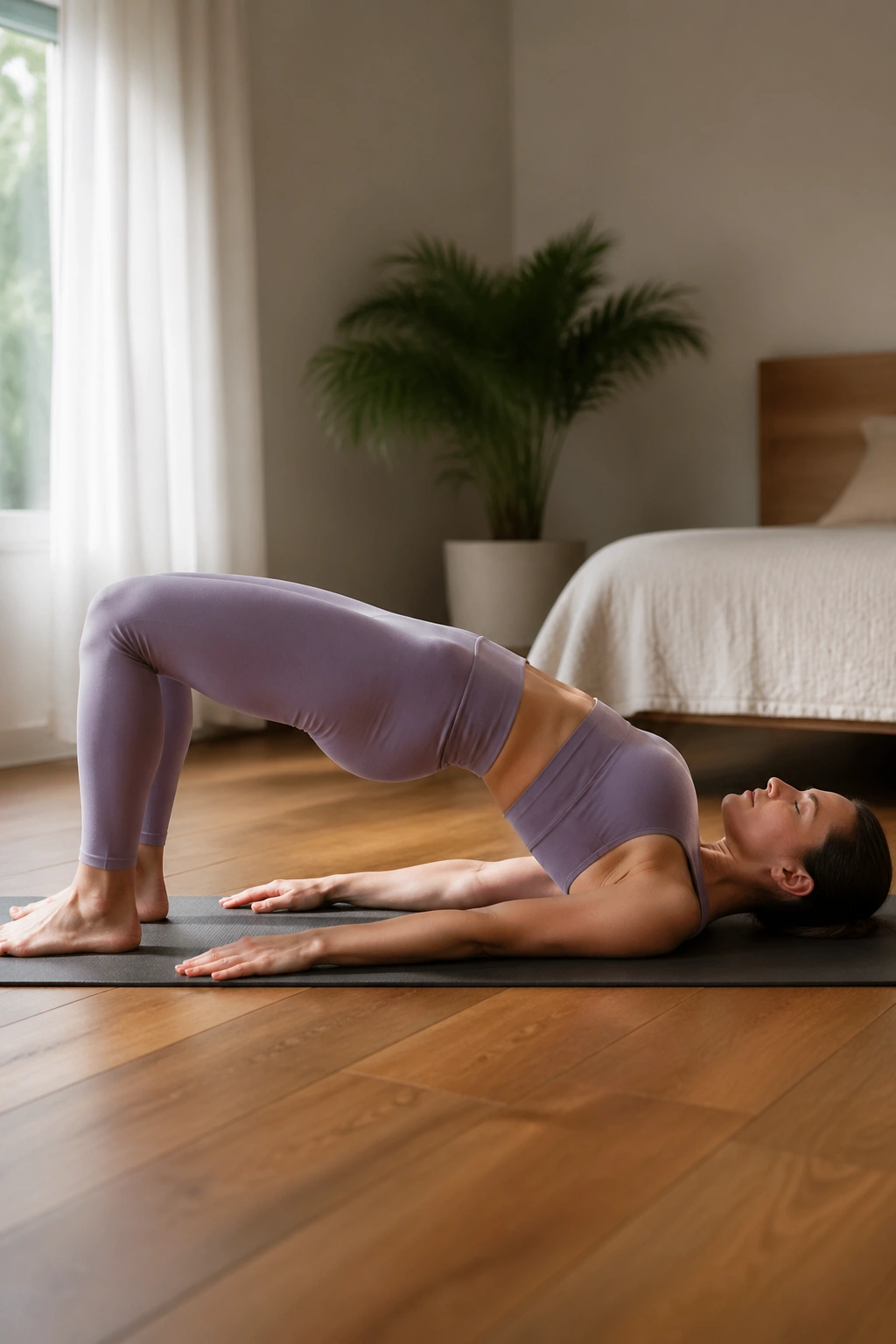
After a few floor openings, Bridge Pose feels like a neat reset for the front body. The hips lift, the chest broadens, and the glutes wake up without the spine needing to bend into anything extreme.
Lie on your back with the knees bent and feet flat, hip-width apart. Press down through the feet and lift the hips on an inhale. Keep the knees tracking forward rather than flaring wide. Interlace the hands under the body if the shoulders allow it, or keep the arms long by your sides if they don’t.
Small lift, big difference
You do not need a high bridge. A modest lift often feels better, especially in the morning when the low back can overreact to too much extension. Think of lengthening the knees away from the chest while the chest reaches toward the chin. That tiny line of energy makes the pose feel tidy.
- Press evenly through the big toe mounds and heels.
- Keep the chin slightly tucked, not jammed.
- Lower one vertebra at a time.
- Hold for 3 to 5 breaths, then rest.
Bridge can bring a quiet spark into the whole body. It’s a useful way to finish the more active part of the sequence before you return to something softer.
15. Legs Up the Wall
Among morning yoga poses, this one is the quietest. It looks almost too easy, which is probably why people skip it. Bad move. Legs Up the Wall gives the lower back a break, the legs a chance to feel lighter, and the whole system a reason to slow down before the day gets noisy.
Sit one hip against a wall, then swing the legs up as you lower onto your back. If your hamstrings are tight, scoot a few inches away from the wall so the legs can rest without pulling. A folded blanket under the hips can make the position feel more supported. If the lower back arches hard, move farther out. That small adjustment changes the whole pose.
Setup matters more than stretch
The legs do not need to be perfectly flat. The heels do not need to touch the wall with force. What you want is a feeling of release through the back of the legs and a soft drop in effort through the belly and jaw. Stay for 1 to 5 minutes if time allows. Even a shorter stay can be useful.
Some people like to place a hand on the belly and another on the chest. I do that when the morning feels busy before it has even started. The pose gives the breath a slower rhythm, and that can change the pace of the whole day in a way that’s hard to fake.
If you only have time for three poses, make one of them this one.
Do not race through a morning practice. The slower version usually works better than the fancier one, and your body will tell you that in the first few breaths. If you only have five minutes, pick the three poses that let your breathing stay easy and keep the pace honest. That alone can change how the day lands in your body.
