



Yoga poses for sciatica pain down the leg have to be chosen with a little more care than the average stretch routine. A pose that calms one person can light up the back of the thigh in seconds for someone else.
Sciatica is messy that way. Sometimes the nerve is irritated near the spine. Sometimes the hip muscles are doing too much gripping around it. Sometimes the hamstring feels tight even though the real complaint is nerve sensitivity, which is why a hard pull on the leg can make everything feel worse instead of better.
If a position sends sharp, electric, burning, or spreading pain farther down the leg, that is your cue to back off. Tingling that creeps into the foot, numbness, or weakness is not a “good stretch.” That’s a stop sign.
The safest way to work with this kind of pain is slow, low-drama movement: small ranges, clear breathing, and a willingness to skip anything that argues with your body. The poses below start on the floor, then move into more active shapes only if the leg is staying quiet. That order matters.
1. Child’s Pose with Bolster Support for Sciatica Pain Down the Leg
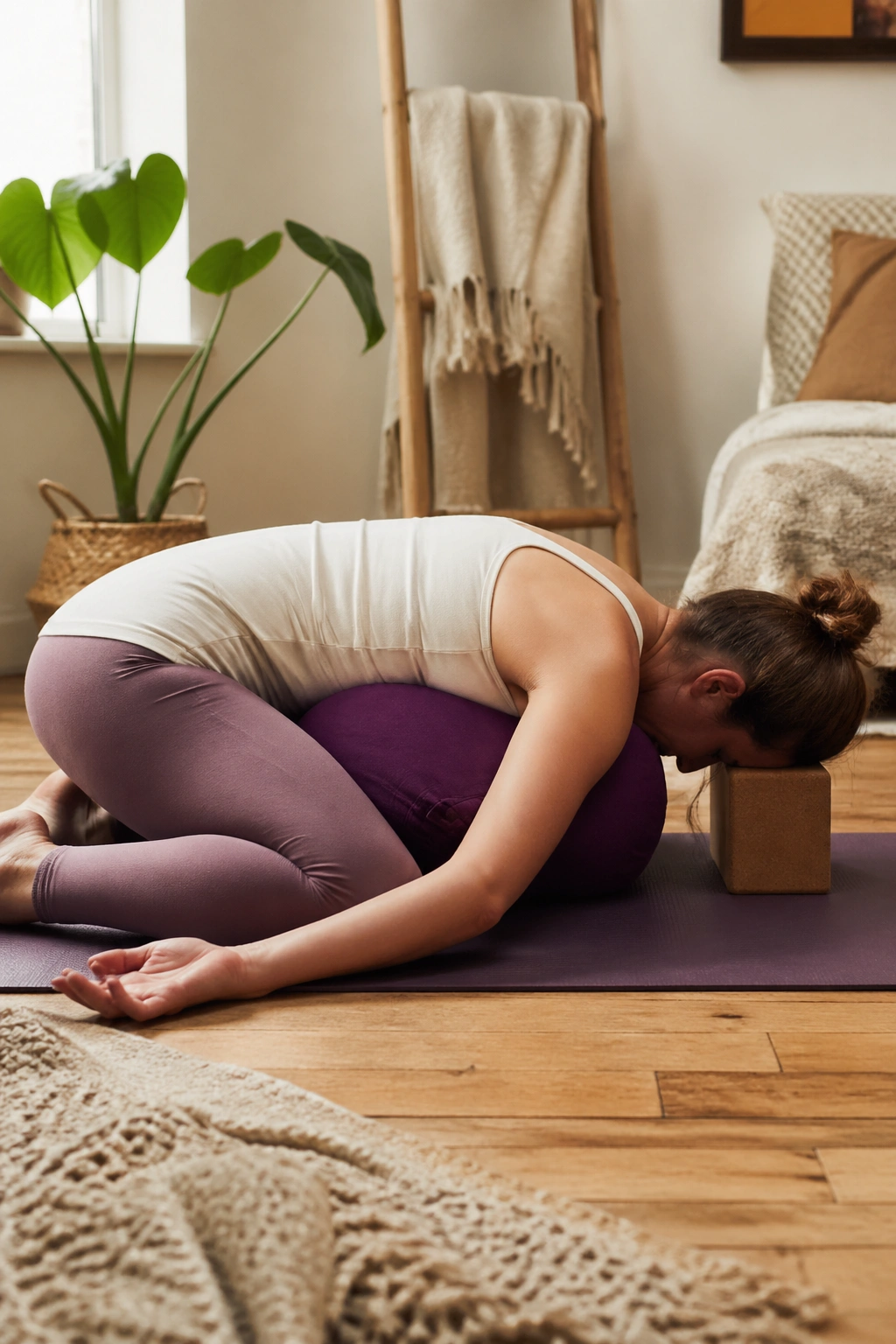
Child’s pose is often the first place I send a cranky low back, but only when it is padded well enough to feel like rest, not collapse. A bolster or a thick stack of folded blankets under the chest takes pressure off the hips and lets the spine round without forcing the hamstrings into a tug-of-war.
The trick here is to make the shape feel generous. Knees can be wide, big toes can touch, and the forehead can rest on a block or another folded blanket. If your leg symptoms are worse when you bend forward, keep the chest higher and the hips less tucked under. No need to jam yourself into a picture-perfect fold.
A lot of people rush this one. Don’t.
Slow breathing into the back ribs is the whole point.
A setup that keeps it gentle
- Place a bolster lengthwise between the thighs and chest, or stack 2 to 3 folded blankets under the torso.
- Open the knees wide enough that the belly has room and the low back does not feel pinched.
- Turn the head to one side for 3 to 5 breaths, then switch.
- Stay for 6 to 10 slow breaths, or longer if the leg stays calm.
If the pain moves farther down the leg, come out immediately and try a less folded position such as knees-to-chest rocking or legs up the wall. Child’s pose is soothing for a lot of backs, but it is not a badge of honor. If your body wants more room, give it more room.
2. Cat-Cow on Hands and Knees
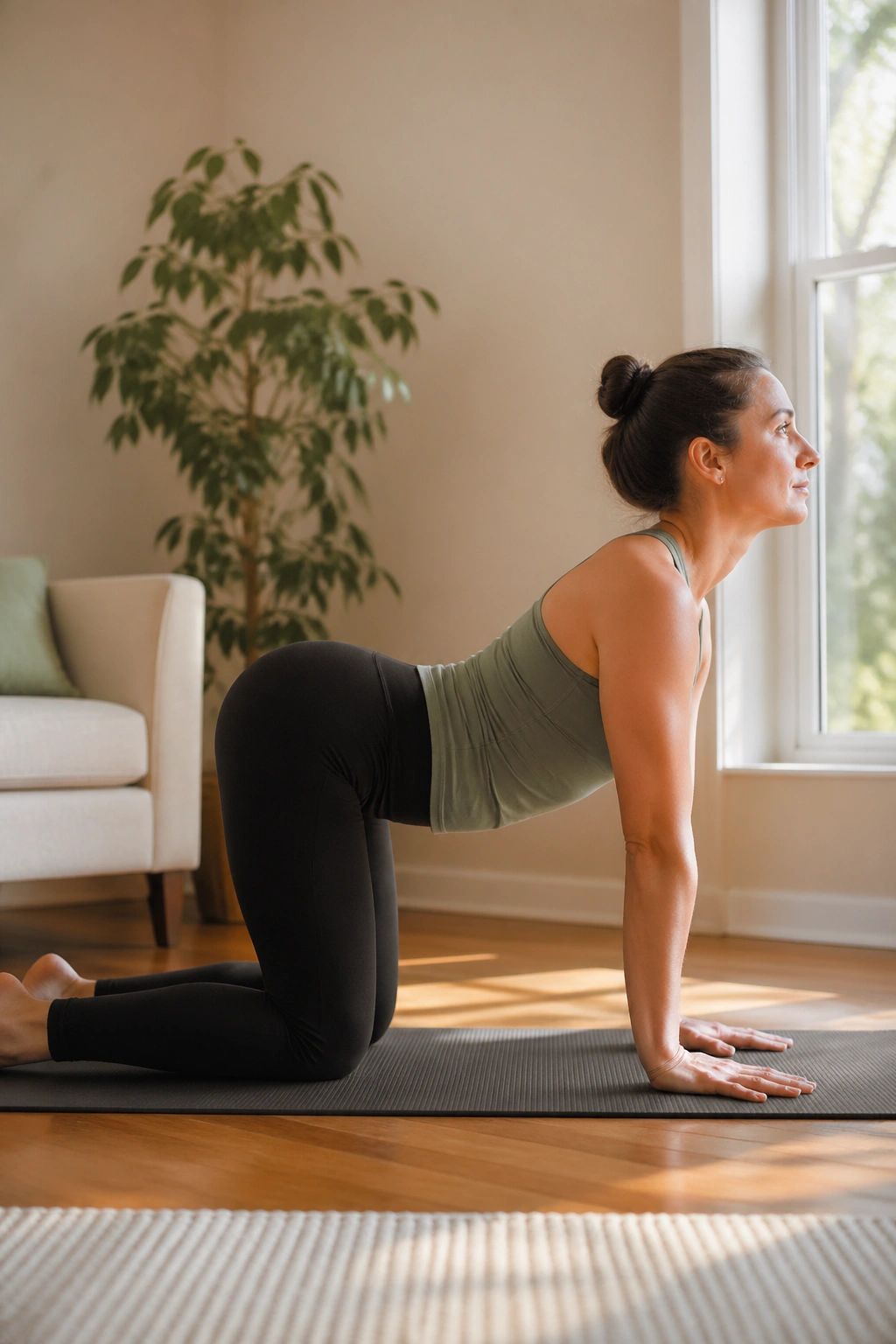
Why does a tiny cat-cow help when a big stretch does nothing? Because this is not about forcing length. It’s about giving the spine a slow, controlled rhythm again.
The movement should be small enough that you can keep your breath smooth. On the inhale, let the tail tip back a little and the chest lift only a few inches. On the exhale, round the spine without cranking the belly to the ceiling or throwing the head down hard. The motion is meant to wake up the joints, not show off.
Keep the range tiny
How to Move Without Poking the Nerve
If the leg feels worse in deep flexion, don’t round as much. If extension feels worse, don’t arch as much. You are testing, not performing.
What I like here is the honesty of it. Cat-cow tells you fast whether your back wants more room in flexion, extension, or a middle ground. If the movement creates a tug down the leg, cut the range by half and slow the breath to 4 counts in, 6 counts out.
You can do 6 to 8 rounds, then pause in a neutral tabletop and notice whether the leg feels warmer, calmer, or more awake. That after-effect matters more than the pose itself. If it settles the pain, great. If it makes you guard, move on.
3. Thread the Needle Stretch
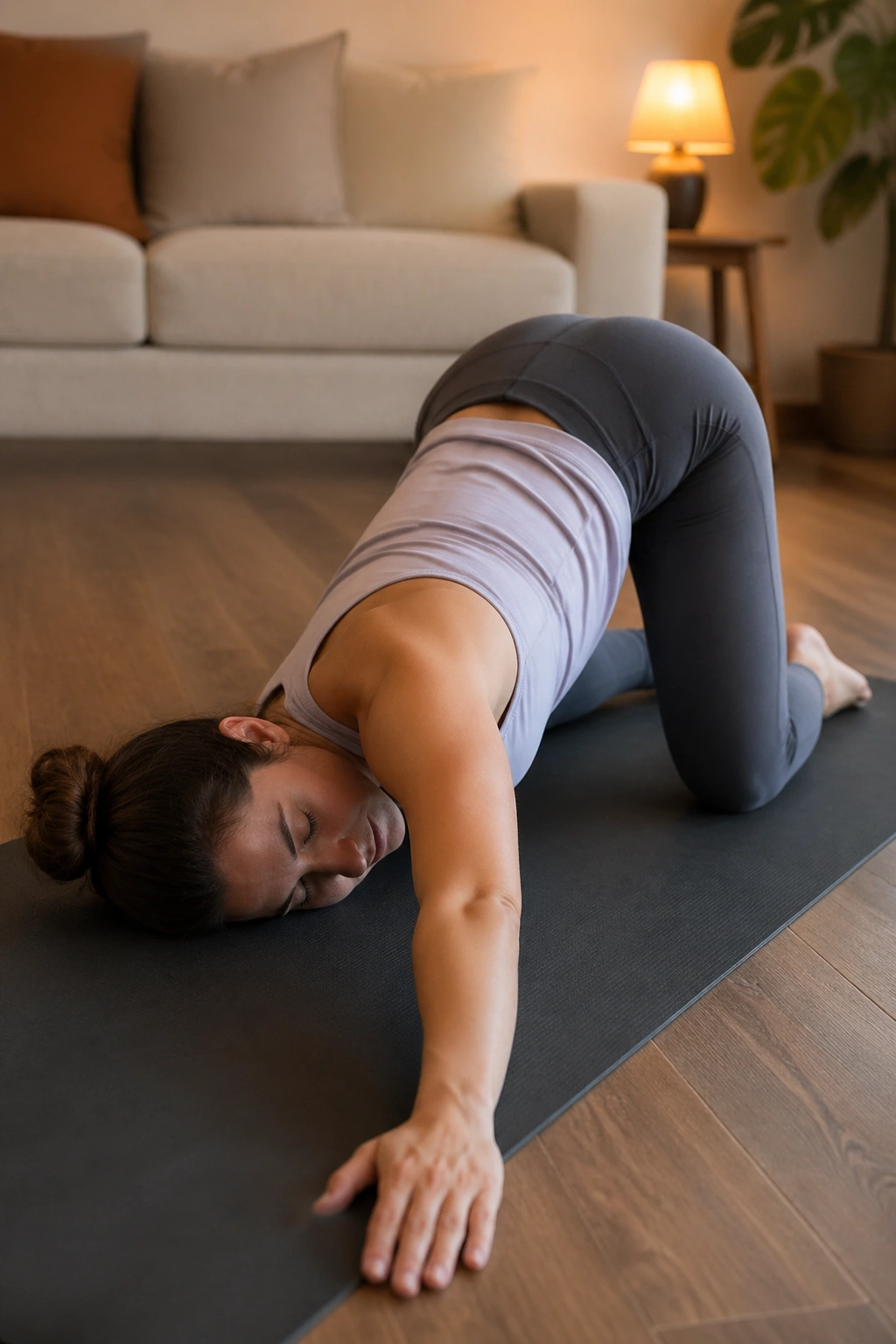
Thread the needle is the pose I reach for when the upper back, outer shoulder, and side body feel locked together like a stubborn knot. It does not sound like a sciatica pose at first glance, but the twist can quiet the chain of tension that keeps the low back braced.
Start on hands and knees, slide one arm under the other, and rest the shoulder and cheek on the floor or on a folded blanket. Keep the hips stacked over the knees. That part is easy to skip, and then the twist turns into a full-body scramble.
The beautiful thing here is the small dose of rotation. You are not wringing yourself out. You are giving the upper spine a little room while the low back stays fairly quiet. If the bottom leg or glute starts to zing, use less twist or keep the top arm reaching instead of sinking deeper.
What to watch for
- The bottom shoulder should feel open, not jammed.
- The neck should stay easy; if the head strains, add height under it.
- Breathe into the ribs on the side of the floor.
- Stay for 4 to 6 breaths per side.
A clean, easy twist beats a deep one every time. When the lower body is irritated, subtle wins.
4. Sphinx Pose
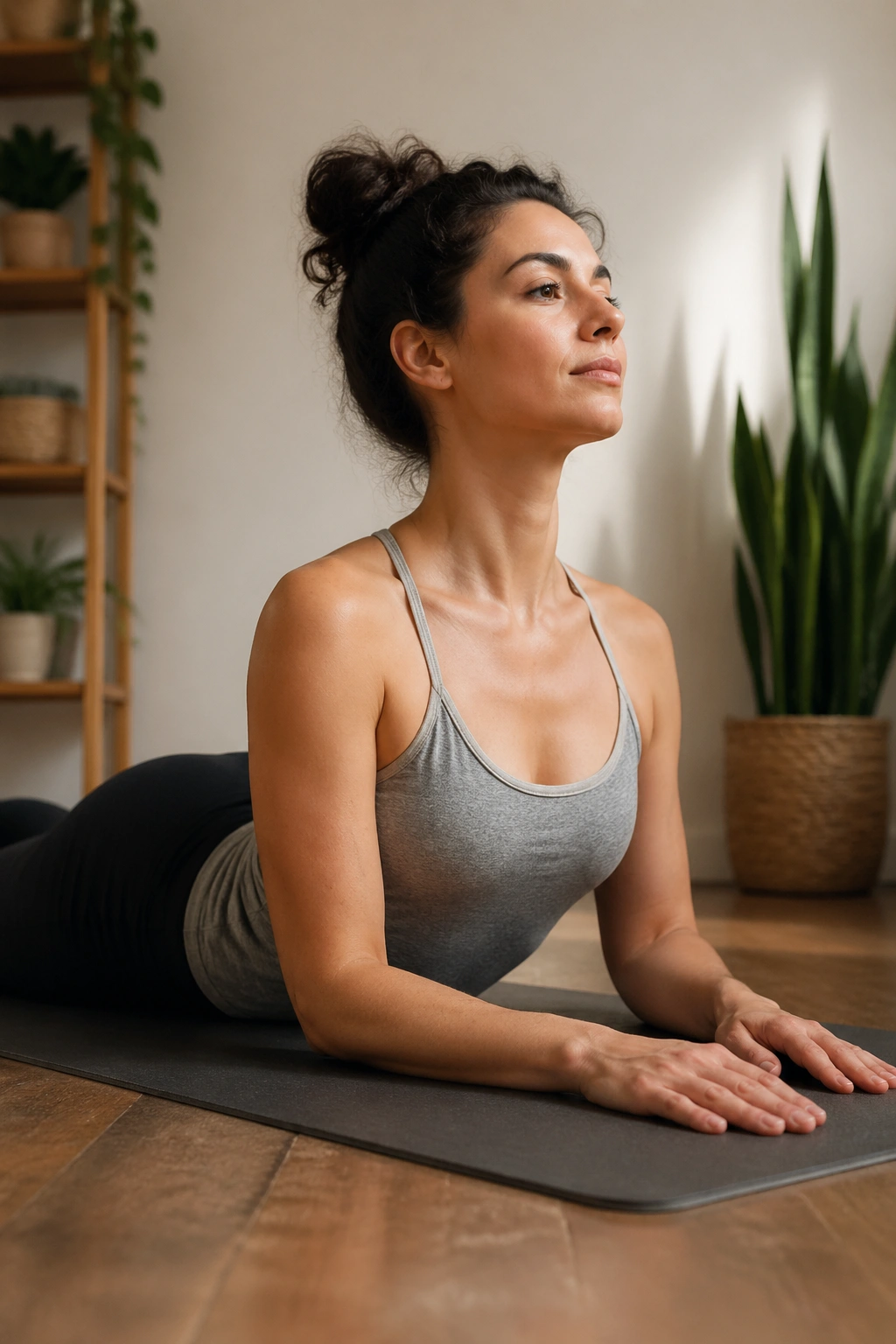
Sphinx pose is a mild backbend, and that matters. For some people with leg pain that flares when they fold forward, a little spinal extension feels like relief instead of strain.
Set the elbows under the shoulders, forearms parallel, palms down, and let the front of the pelvis stay heavy on the mat. The chest can lift a little, but the low back should not feel pinched or compressed. If you feel a hard pinch in the lumbar area, back the elbows farther forward or come out.
This pose asks the belly and glutes to stay soft. That is harder than it sounds. Most of us brace when pain shows up, and sphinx gives you a chance to stop doing that for a minute. It can also be a nice check on whether your symptoms calm with extension or get worse with it.
If the leg pain centralizes upward, you may be on the right track. If it travels farther down the calf or into the foot, sphinx is not your friend right now. That is not failure; that is useful data.
Hold for 3 to 5 breaths at first. Some bodies like a full minute. Others don’t. Fine.
5. Supported Bridge Pose for Sciatica Pain Down the Leg
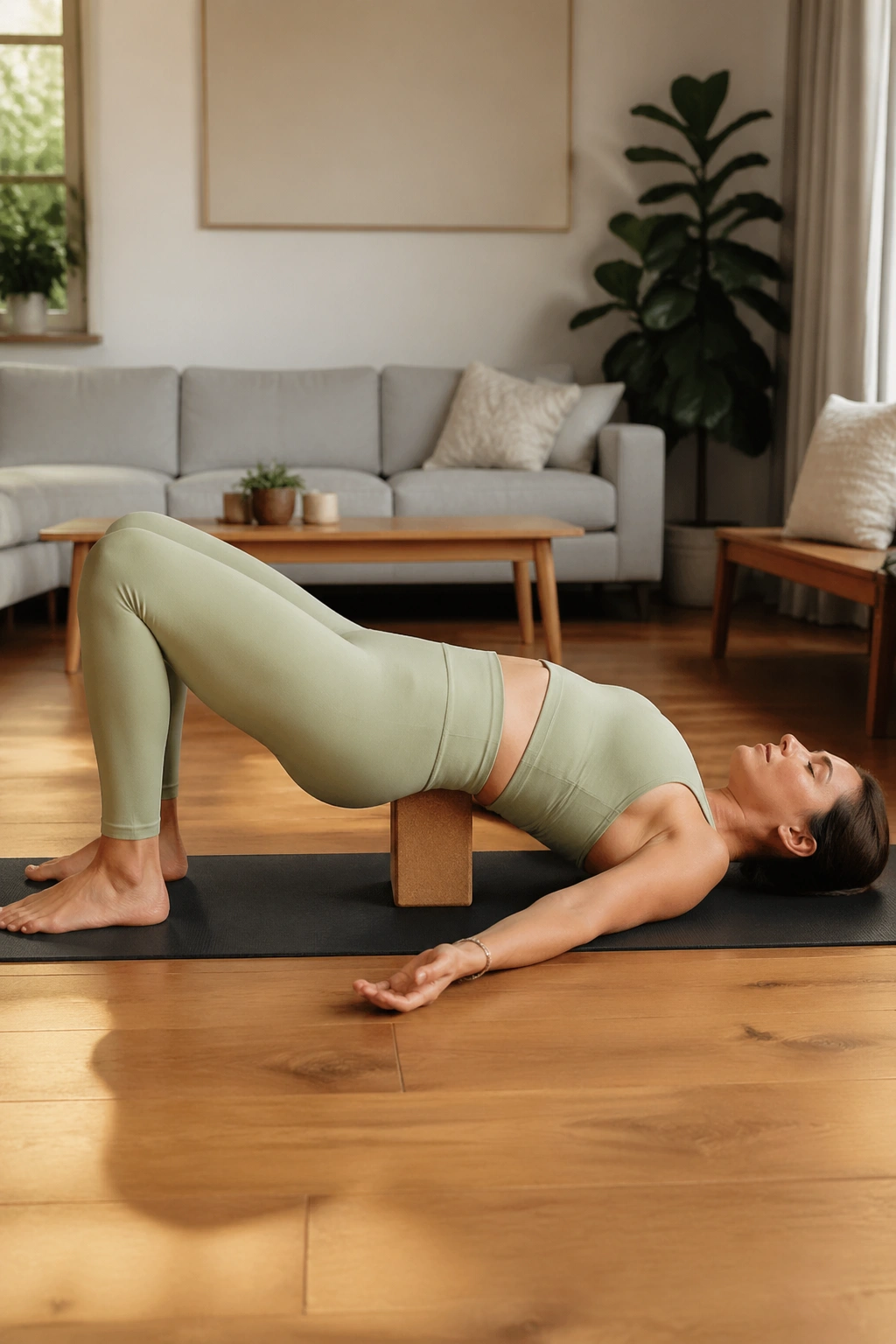
Can bridge pose help sciatica? Sometimes, yes — but only when it stays supported and low. I do not mean a dramatic lift with a hard squeeze in the glutes. I mean a quiet shape with a block under the sacrum so the spine can rest in a mild lift.
Lie on your back, bend your knees, and place a yoga block under the pelvis at the lowest setting first. If that feels fine, you can later try a medium height. The weight should settle into the block, not hover above it. You want the front of the hips to open a little while the low back feels broad.
Where to place the block
When a Full Bridge Is Too Much
If your hamstrings cramp or your low back arches hard, skip the full bridge. Use the supported version and keep the feet about hip-width apart, heels close enough that the fingertips can brush them.
This is one of those poses where less is more. A low, quiet lift can wake up the glutes and reduce that sense of being folded in half. A big bridge can do the opposite. The goal is comfort under load, not how high you can get your hips.
Stay for 5 to 8 breaths. If you want to come down, lower slowly and pause with the knees bent before moving to the next shape.
6. Reclined Figure Four Stretch
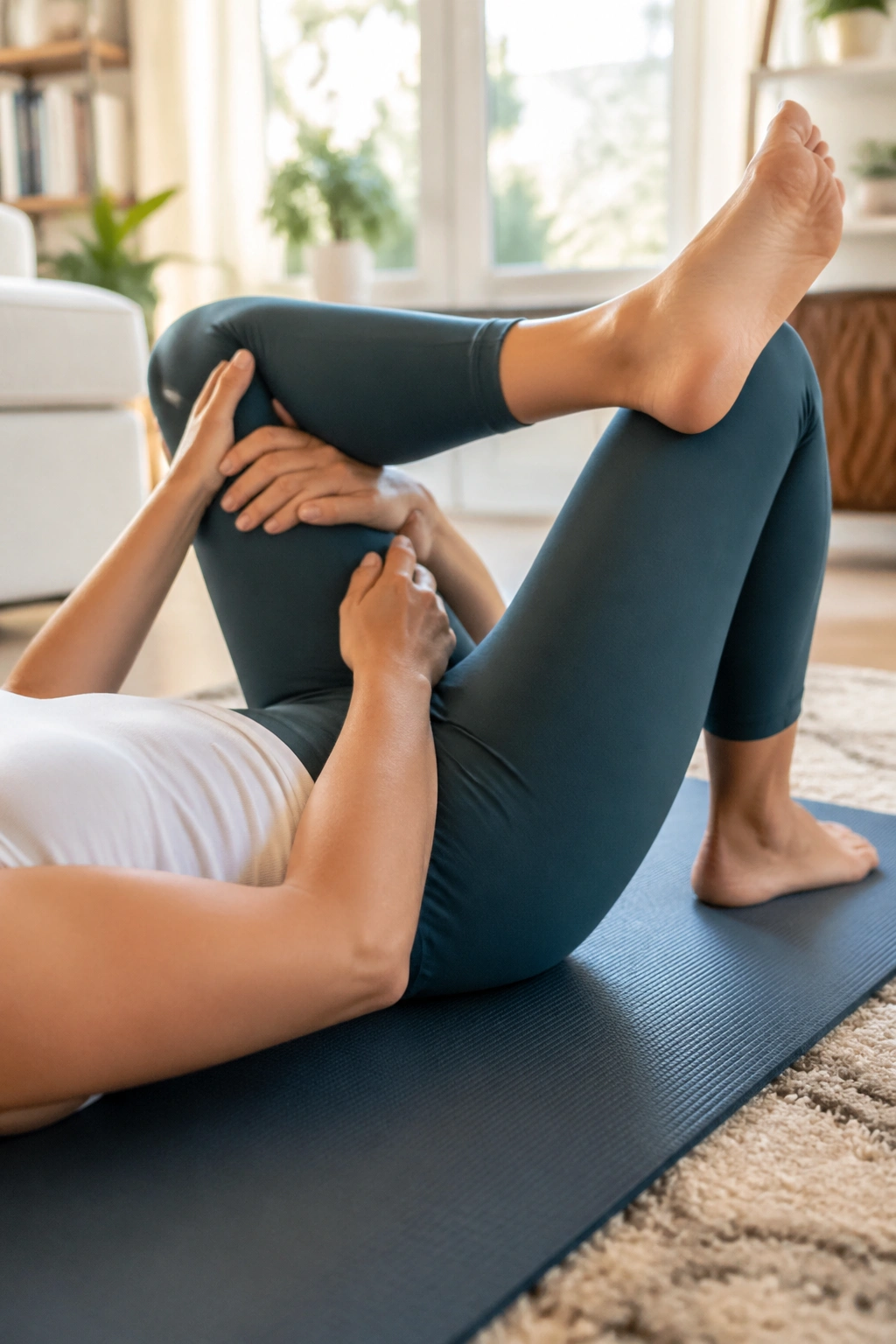
The reclined figure four is one of the cleanest ways to work the outer hip without asking the spine to do a lot of work. You lie on your back, cross one ankle over the opposite thigh, and bring the supporting leg toward you only as far as feels reasonable.
This is the stretch many people think of when they say “piriformis stretch,” and that makes sense. The deep hip muscles can get tight around the sciatic nerve, or at least make it feel boxed in. A reclined version is easier to control than a seated one, which is why I like it early in a routine.
Keep the foot on the floor flexed if you can. That keeps the knee happier and cuts the urge to yank harder than you should. If the crossed leg causes a sharp tug in the outside of the knee or a weird pull in the low back, ease off.
One breath at a time works best here. Stop at the first clean stretch, not the deepest one. People love to hunt for the edge. This is not the day for that.
If this shape feels good, hold for 30 to 60 seconds per side. If it feels too strong, just hover the setup and breathe until the body gets the message.
7. Supine Hamstring Stretch with a Strap
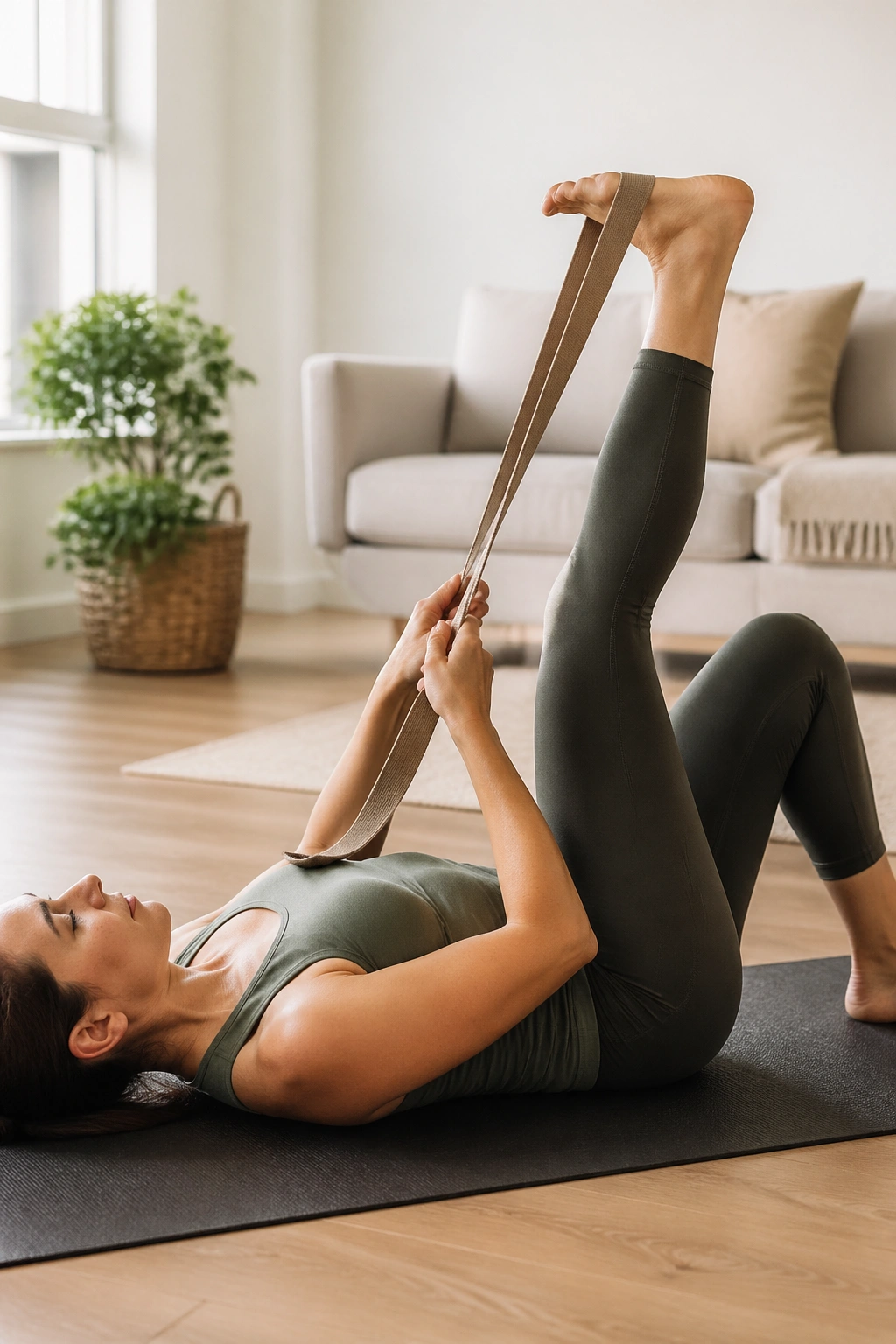
A tight-looking hamstring is not always a hamstring problem. Sometimes the nerve is irritated, and the back of the leg feels short because it is protective, not because the muscle actually needs a hard stretch.
That is why the strap matters. Lying on your back, loop a strap around the ball of one foot and keep the knee slightly soft. Raise the leg only until you feel the back of the thigh lengthen without any zapping, numbing, or pulling into the calf. The second the sensation turns sharp, lower it a little.
What tells you to ease off
- Tingling in the foot.
- Pain that slides below the knee.
- A burning line down the calf.
- A feeling that the leg is being yanked instead of lengthened.
If any of those show up, shorten the range and hold for fewer breaths. Twenty to 30 seconds is plenty for a sensitive leg. Long, aggressive holds are overrated here. A smaller stretch with a quiet nervous system is the better trade.
You can also bend the non-stretching knee so the low back doesn’t arch. That tiny adjustment makes a bigger difference than people expect.
8. Low Lunge with Back Knee Down
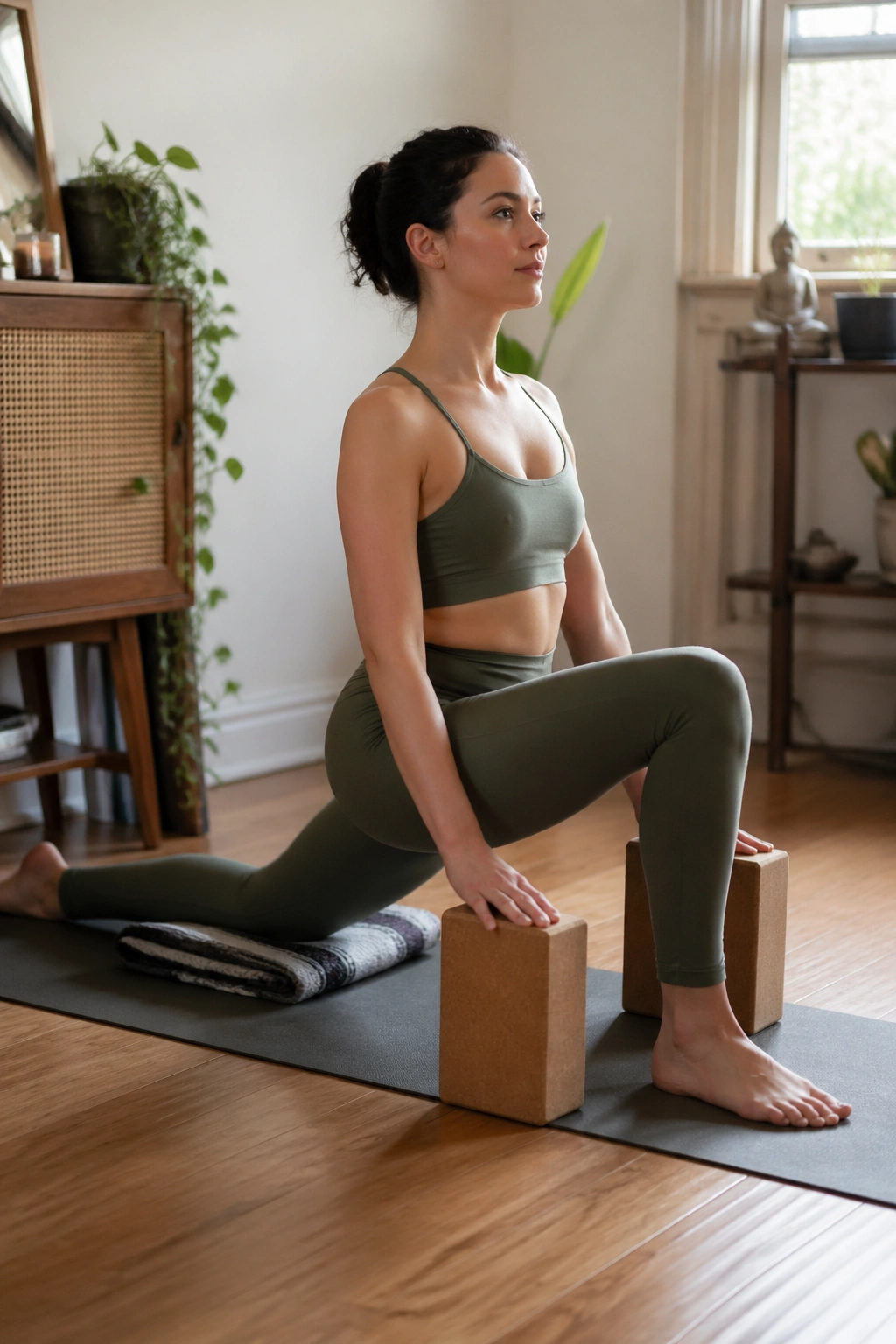
Low lunge is useful when the front of the hip has been sitting in a shortened position for too long and the low back has started carrying the load. It opens the hip flexors, but only if you set it up with enough padding and enough restraint.
Place a folded blanket under the back knee, step the front foot far enough forward that the ankle stays under the knee, and keep the torso upright or even slightly forward with hands on blocks. If you sink too deeply, the low back usually takes over, and that’s not the point.
How to Make the Lunge Gentle
Keep the pelvis level instead of dumping forward. A tiny tuck of the tailbone can help, but if you overdo it, the stretch turns into a cranky abdominal brace. The sweet spot is small. Annoyingly small, sometimes.
If the back leg tingles, switch to a shorter stance or come out. If the front hip opens but the leg stays quiet, stay for 4 to 6 breaths. You can even pulse a centimeter forward and back — not a bounce, just a slow test of range.
This is one of those poses that looks ordinary and works better than it should. The support under the knee is not optional. Without it, the whole shape gets harder than it needs to be.
9. Wall-Assisted Half Pigeon
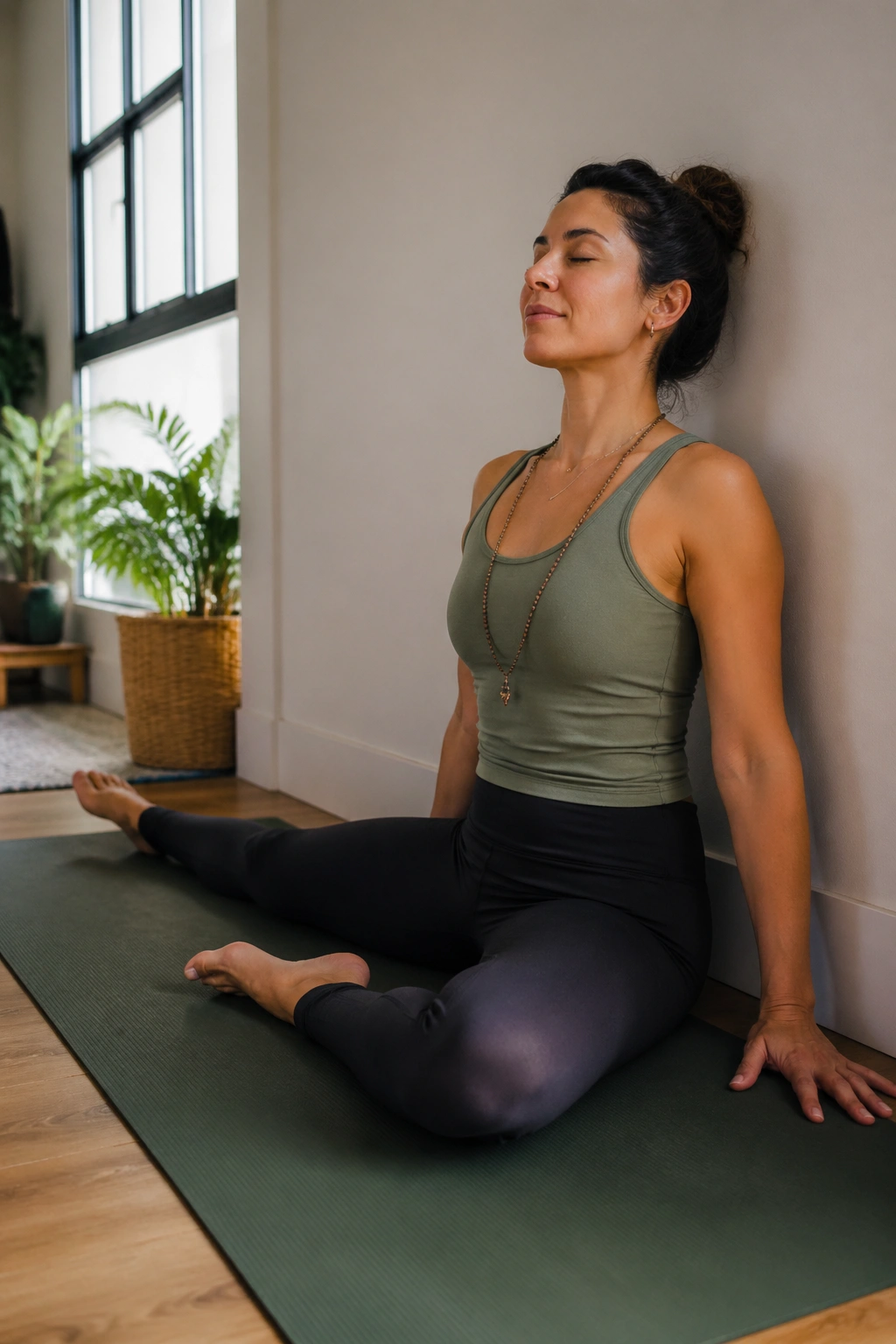
Wall-assisted half pigeon is the safer cousin of the floor version, and I prefer it for sciatica because the wall gives you a way to stop early. You are not trying to fold yourself into a photograph. You are trying to open the outer hip without kicking off a flare.
Sit near a wall, bring one shin across the body, and let the other leg extend in a shape that feels supported. If the front knee complains, back out and switch to reclined figure four. That is not a downgrade; it is the wiser choice.
A wall version also makes it easier to keep the pelvis from tipping too far to one side. That matters, because uneven pressure in the hips can make the low back work overtime. I like to keep the torso upright first, then lean only a little if everything stays calm.
The best pigeon is the one that doesn’t make the next hour miserable. That sounds blunt because it is. You want a hip stretch that you can walk away from, not one that pays you back later.
Stay 30 to 45 seconds, then come out slowly. If the leg feels looser rather than louder, you’ve got a keeper.
10. Knees-to-Chest Rocking for Sciatica Pain Down the Leg
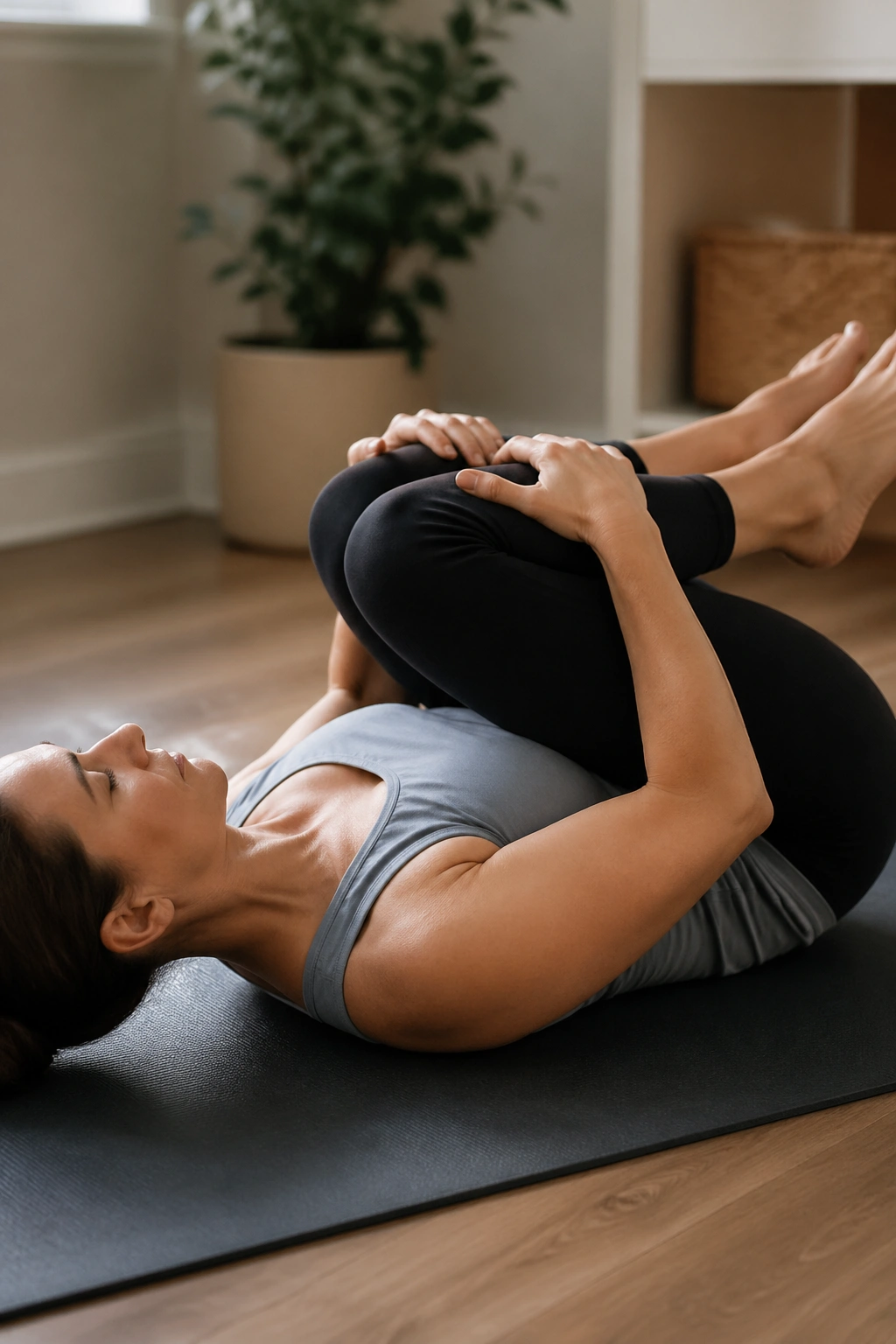
Knees-to-chest rocking looks almost too simple to help, which is probably why people skip it. They shouldn’t. The gentle rocking motion can calm the lumbar area without pinning the nerve in one shape for too long.
Lie on your back, draw both knees toward the chest, and hold behind the thighs or on the shins. Then rock a few inches side to side or toward the sacrum and back again. The movement should feel soft enough that you could keep chatting while doing it.
How much rocking is enough
Aim for 8 to 12 slow rocks, or 5 breaths with a tiny sway. That is enough for most bodies to feel a shift. If the low back feels jammed, widen the knees a little. If the hamstrings tighten, hold behind the thighs instead of the shins.
This is not a stretch you have to “win.” It is more like giving the back a small reset. A rocking motion often feels safer than a static hold when the leg is in a grumpy phase.
I like this one near the start of a routine or between stronger poses. It helps you check whether the leg is settling down or getting more reactive.
11. Reclined Spinal Twist
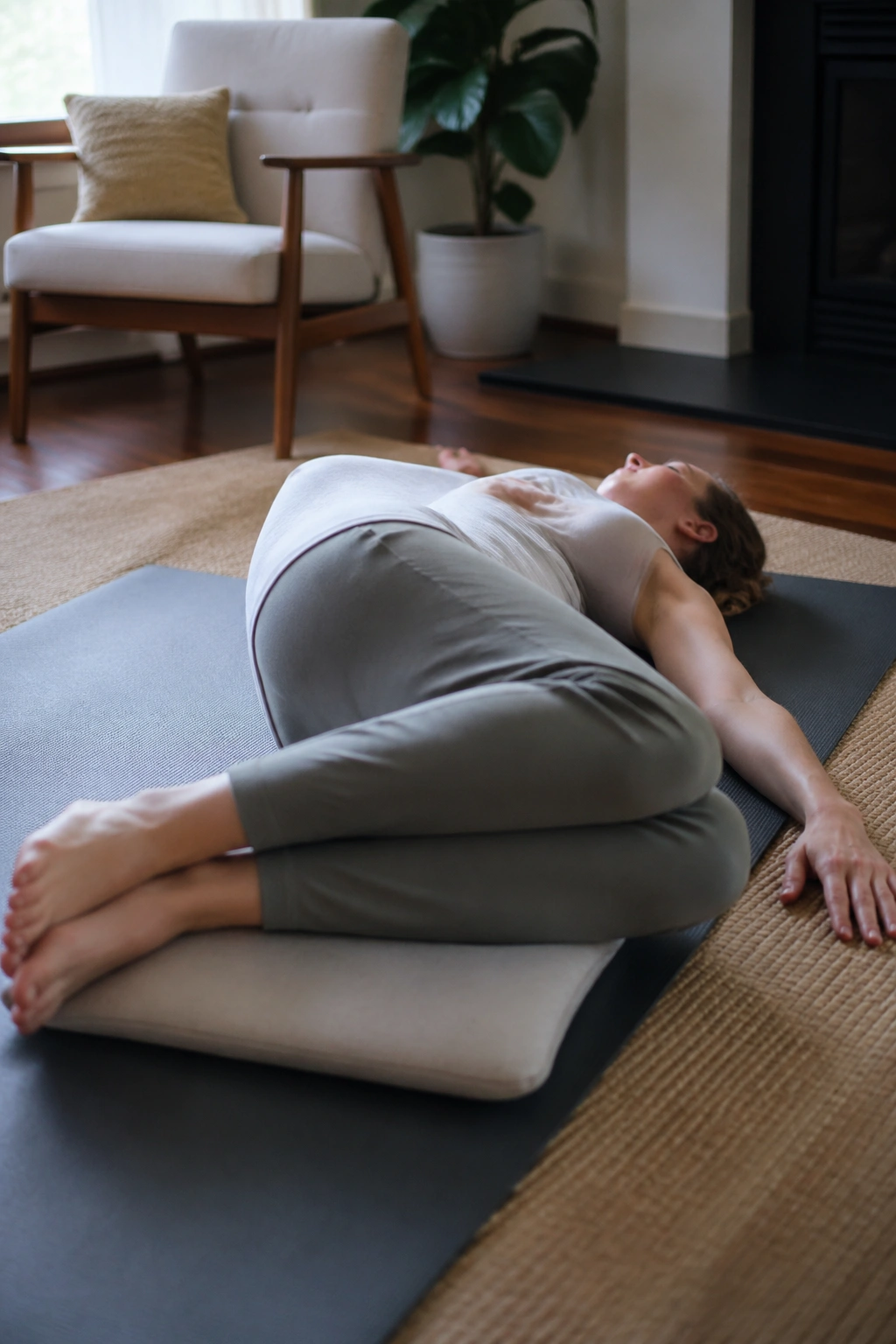
A reclined twist can be lovely or irritating, and the difference usually comes down to size. Keep the knees together, drop them only a little to one side, and let the shoulders stay heavy. If the top shoulder fights to lift, the twist is too deep.
The stretch should live more in the lower ribs and outer hip than in the low back itself. If the lumbar area feels jammed, place a pillow or folded blanket under the knees so the legs don’t sink as far. You can also keep one knee straight and the other bent if that feels cleaner.
What makes this twist work
The breath matters more than the shape. On each exhale, let the belly soften and the ribs widen a little. On the inhale, think “space,” not “deeper.” That tiny mental cue changes the whole feeling.
If your symptoms are sensitive to rotation, keep this one very small or skip it for now. Twists are not the first move for every back. A twist should feel like a release, not a wring-out.
Two to four breaths on each side is enough to start. More is not automatically better.
12. Happy Baby Pose
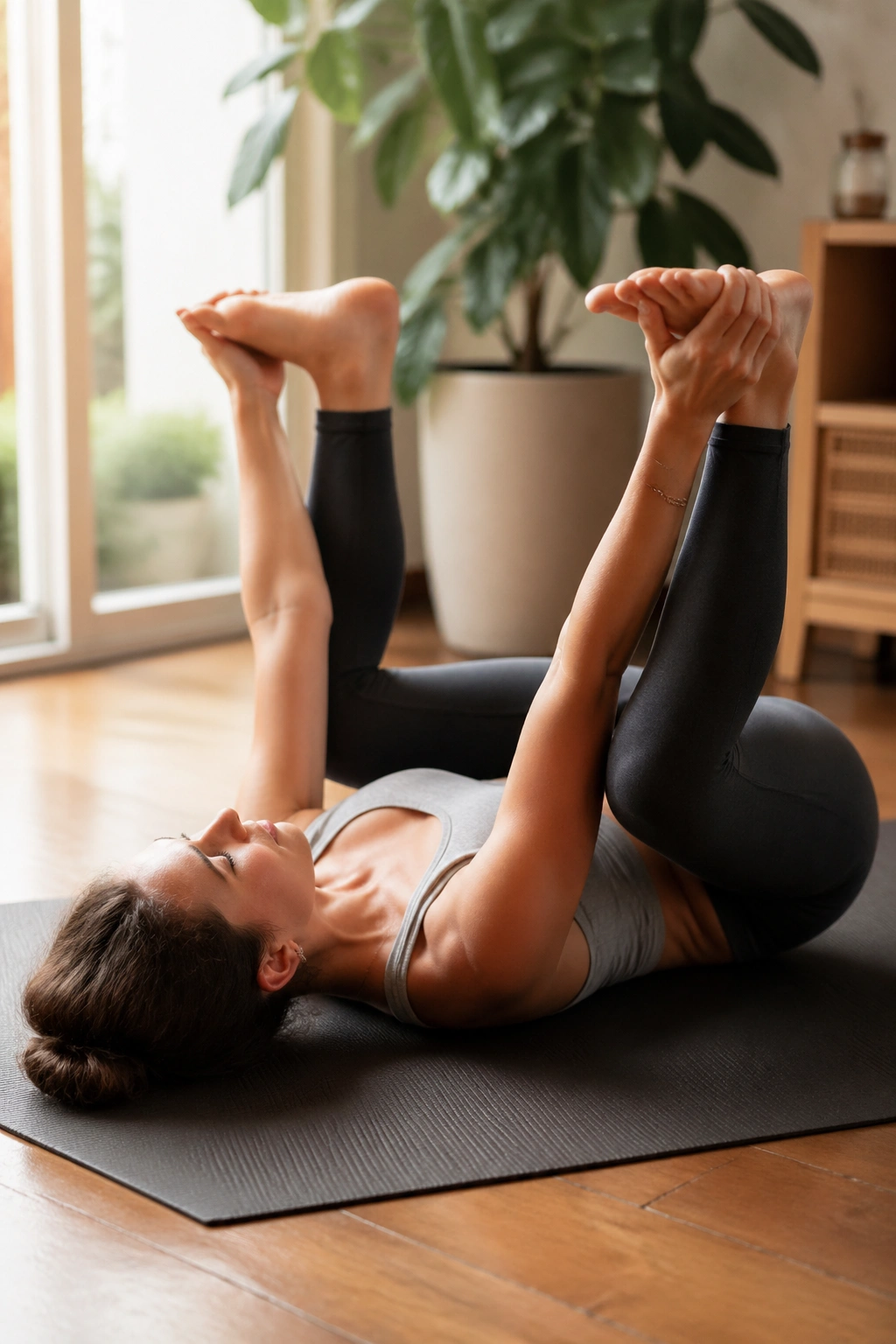
Happy baby looks playful, but it can be sneaky. It stretches the hips, the inner thighs, and the lower back all at once, which is useful if the whole area has been acting stiff and compressed. It also asks you not to yank the feet like you’re trying to win a contest with yourself.
Lie on your back, bring the knees toward the ribs, and hold the outsides of the feet, ankles, or shins. Keep the tailbone heavy and the shoulders relaxed. If reaching the feet makes you strain your neck, use a strap behind the thighs and let the hands rest there instead.
Keep the grip soft
The biggest mistake here is pulling the knees wide and then bracing the jaw. That tightens the whole system. Try to keep the face loose. Sounds silly. Works.
If happy baby pulls on the low back in a good way, stay for 4 to 6 breaths. If it grips the hips or sends a line of pain down the leg, switch to one knee at a time or go back to legs up the wall. The stretch should feel broad, not sharp.
This is a useful middle-of-the-routine pose because it gives a lot of information fast. You can tell whether the hips want opening or whether they want less of everything.
13. Standing Figure Four at the Wall
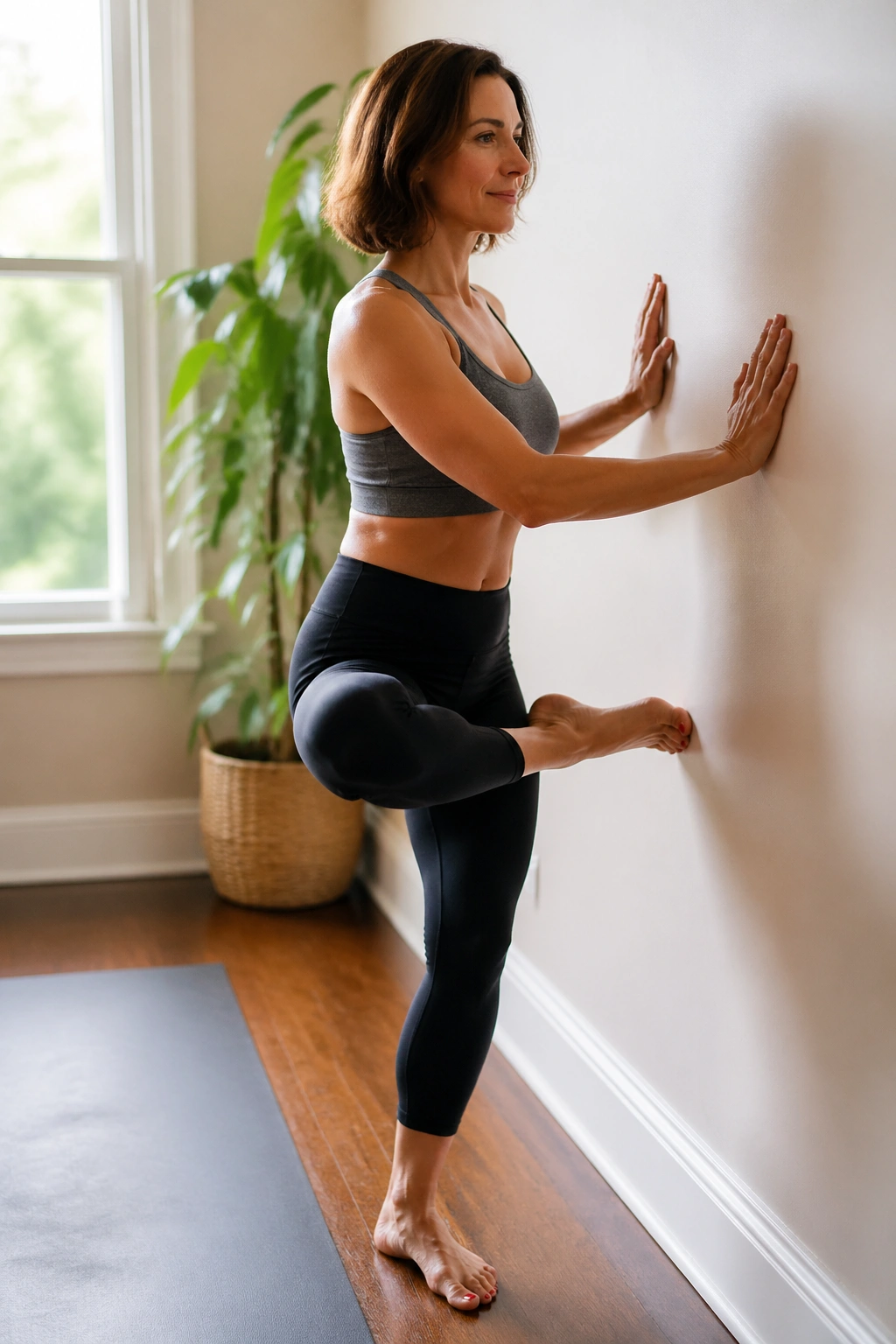
Standing figure four is the version I like when getting up and down from the floor feels like too much work. You stand with the supporting foot a few inches from a wall, cross one ankle over the opposite thigh, and sit the hips back only a little while the hands rest on the wall.
The wall is doing real work here. It helps with balance, keeps the chest from collapsing forward, and stops you from turning the stretch into a deep squat. That makes it easier to stay in a small, useful range.
If the standing leg feels shaky, bend it more. If the crossed knee feels cranky, lower the crossed ankle closer to the shin-side of the thigh or return to the reclined version. I prefer the standing shape for people who need something they can do in a small space, between meetings, or after a long drive.
A tiny bend in the standing knee saves a lot of grief. Locking the knee tends to make the whole pose harsher than it needs to be.
Hold for 3 to 5 breaths per side. It should feel like a hip opener, not a balance exam.
14. Legs Up the Wall
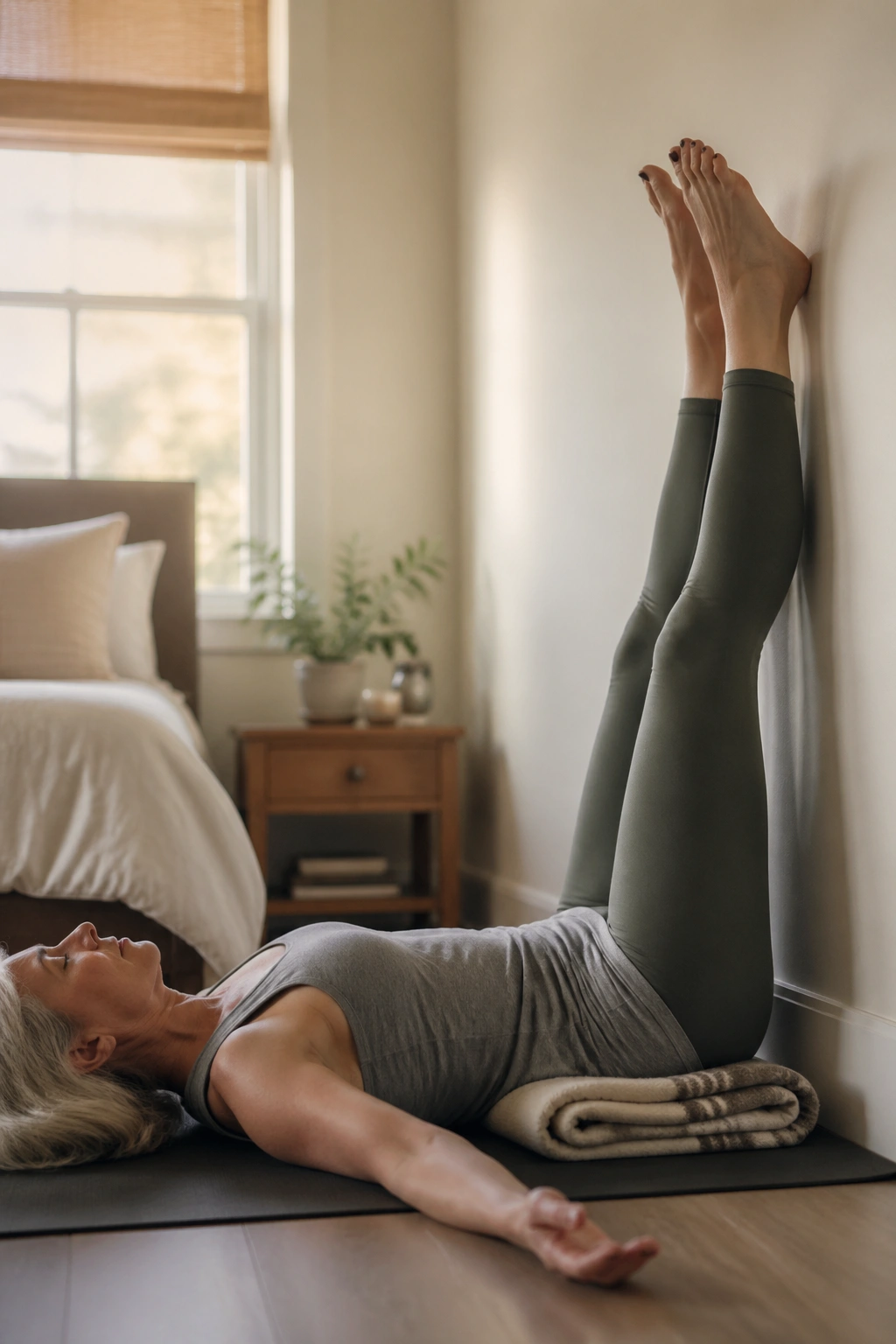
Legs up the wall is not a deep stretch. That’s the charm of it. You lie on your back with the legs resting vertically against a wall, and the body gets a chance to stop holding itself up for a minute.
For sciatica, this can help because it takes some pressure off the low back and lets the hamstrings relax without being pulled. It also tends to quiet the nervous system, which matters more than people admit. Pain has a way of making everything louder — breath, muscle tone, even the jaw.
A better setup
- Scoot the hips a few inches away from the wall if the hamstrings feel tight.
- Place a folded blanket under the pelvis if the low back wants extra softness.
- Bend the knees slightly if full extension feels too strong.
- Stay 5 to 10 minutes and let the breath slow down on its own.
If your legs tingle more when they are straight up, move them a little away from the wall or slide the feet down. This pose should feel like unloading, not stretching.
I like to end with it when the day has been full of sitting. It’s boring in the best way.
15. Constructive Rest with Supported Breathing
Constructive rest is the pose I trust when the leg is touchy and nothing else seems especially appealing. Lie on your back, bend the knees, place the feet flat on the floor hip-width apart, and let the knees rest against each other or slightly apart. If the low back wants more support, tuck a folded blanket under the head or slide a pillow under the knees.
The shape is plain. That’s the point. It gives the hip flexors, hamstrings, and low back a break from holding a story in place. Add slow breathing — inhale for 4, exhale for 6 — and stay there long enough for the jaw to unclench and the abdomen to stop guarding.
If you want, you can use constructive rest as a reset between the stronger poses above. Three minutes here can tell you more about your symptoms than twenty minutes of forcing a stretch. If the leg is quieter after this, you’re learning what recovery feels like.
A good sciatica routine is not about collecting all fifteen poses and doing them like a checklist. It’s about noticing which shapes make the leg settle, which ones make it protest, and which ones are only useful on calm days. Keep the winners. Skip the drama.
