



The best workout plans are the ones you can still do on a tired Tuesday without negotiating with yourself for half an hour. That sounds almost too plain to matter, but it matters a lot.
A good plan does not need fancy gear, a perfect playlist, or a bodybuilder’s schedule. It needs to be small enough to start, clear enough to repeat, and flexible enough to survive the usual chaos — work runs long, the kids are loud, the weather turns ugly, or you just feel flat. Simple workout plans win because they cut out the drama.
I’ve always liked plans that leave a little room for real life. Twenty minutes. Three movements. A walk that counts. A session that feels almost boring while you’re doing it, then somehow turns into the thing that keeps your week from going off the rails. That’s the sweet spot.
So here are twenty workout plans that are easy to understand, easy to repeat, and easy to stick with when motivation is running on fumes.
1. The 20-Minute Walk-and-Mobility Reset

Some days, the smartest workout is the one that starts with your shoes already on.
This plan is built for the moment when your body feels stiff, your head feels noisy, and the idea of a full workout sounds like a bad joke. You walk briskly for 10 minutes, then spend 5 minutes on simple mobility moves, then finish with another 5-minute walk. That’s it. No special equipment, no psyching yourself up, no giant mess to clean up afterward.
What to do
- 10 minutes brisk walking at a pace where you can still talk, but you would rather not sing
- 10 ankle rocks per side
- 10 hip circles per side
- 10 arm circles forward and backward
- 5 minutes easy walking to cool down
The beauty of this plan is that it doesn’t ask much from your brain. Your body usually shows up once the first five minutes are done. Keep your walking shoes near the door and the whole thing gets easier to start.
2. The Three-Move Bodyweight Circuit
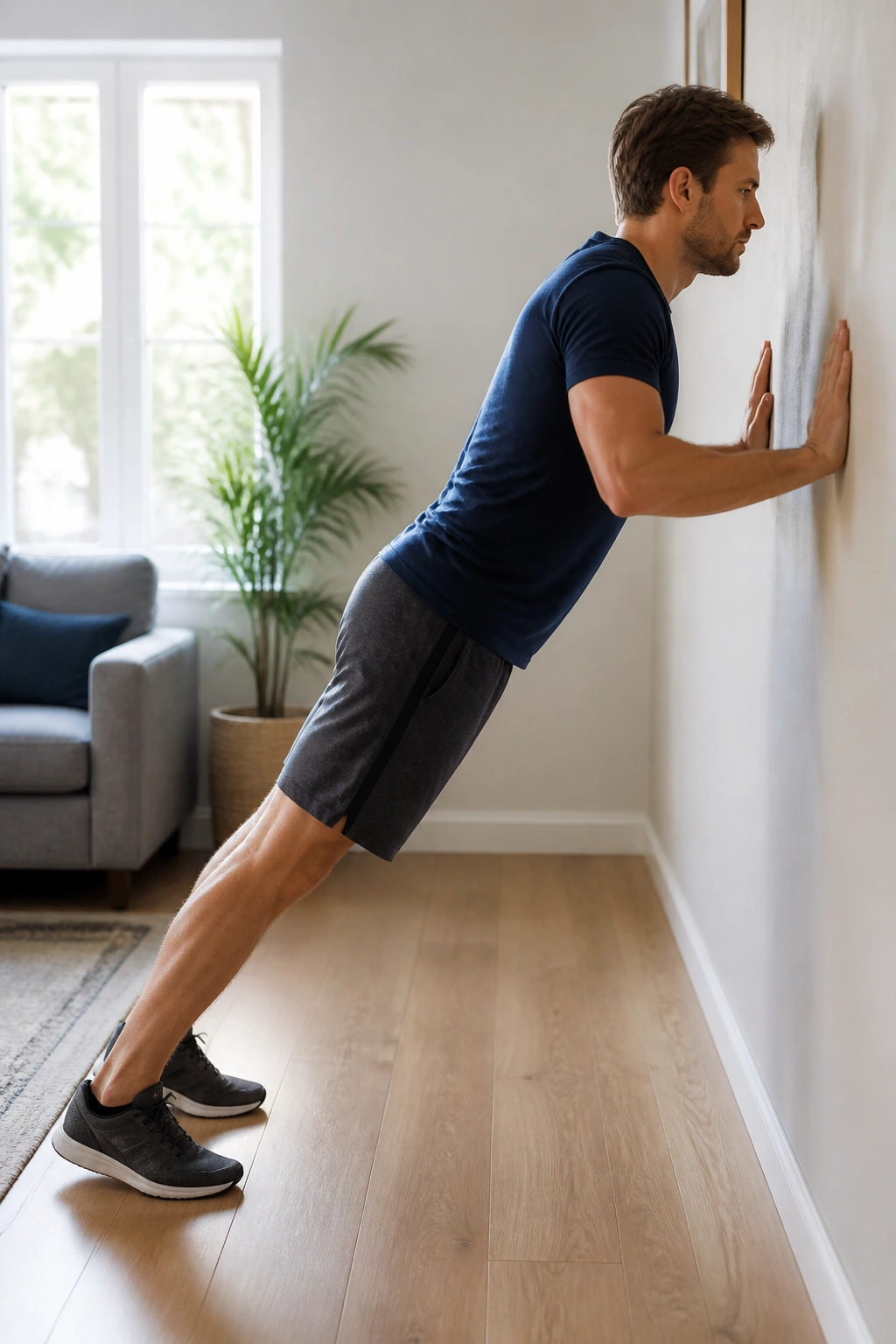
No equipment. No commute. No reason to overthink it.
This is the kind of workout plan that works well when you want structure without a lot of clutter. Pick one push, one squat, and one core move. Do them in a circuit for 3 rounds, resting 30 to 45 seconds between exercises. You’ll get enough challenge to feel like you trained, but not so much that you dread the next session.
A simple version
- 8 to 12 incline push-ups or wall push-ups
- 10 to 15 squats
- 20 to 30 seconds of plank or dead bug
If push-ups on the floor feel like a brick wall, use a countertop or sturdy bench. That small adjustment matters more than people think. The goal is to finish feeling worked, not wrecked. Leave two reps in the tank on most sets, and you’ll recover faster and come back tomorrow with less resistance.
3. The Dumbbell Corner Session
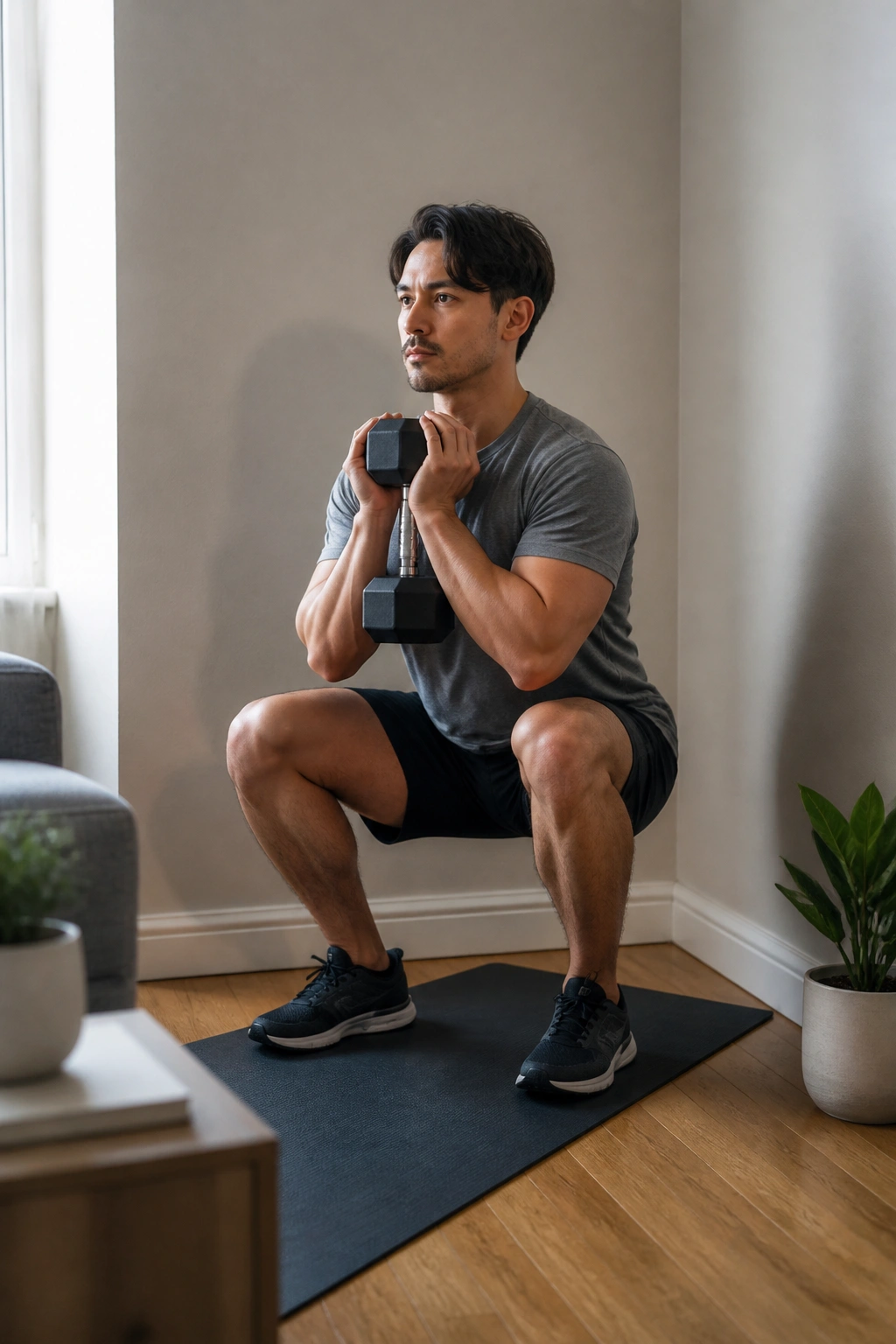
One pair of dumbbells can do a lot more than most people give it credit for.
This plan is for the person who wants a real strength session but doesn’t want to wander around a gym. You need a small space, a mat if your floor is hard, and one pair of dumbbells that feels challenging by the last few reps. Keep the weights modest enough that you can move well. Ugly reps are expensive.
How it works
- Goblet squat: 8 to 10 reps
- One-arm row: 8 to 12 reps per side
- Dumbbell floor press: 8 to 10 reps
- Romanian deadlift: 8 to 10 reps
- Standing shoulder press: 6 to 8 reps
Do 2 to 3 rounds, resting about 60 seconds between moves. If your breathing is getting ragged early, slow the pace instead of chasing more weight. Clean form beats heavier weight on a plan this simple. That’s not a slogan; it’s the difference between a session you can repeat and one that knocks you flat.
4. The Stair Workout That Uses What’s Already There

Stairs are rude. They also work.
If you’ve got a staircase, a step in a building, or even one sturdy curb looped into a route, you already have a solid conditioning plan. This one is short, direct, and a little old-school. Walk up a flight, recover on the way down, and repeat. You can add step-ups or calf raises if you want a bit more leg work without making the session complicated.
A practical version looks like this: 1 to 2 flights up, easy walk back down, repeat 8 to 12 times. If that feels too sharp at first, cut it to 5 rounds and build from there. Knees that grumble do better with slower, smaller steps than with speed and bouncing.
Stair work is useful because it sneaks strength and cardio into the same session. It’s efficient, yes, but it also feels honest. You know when you’ve done it.
5. The Resistance Band Routine for Tight Spaces
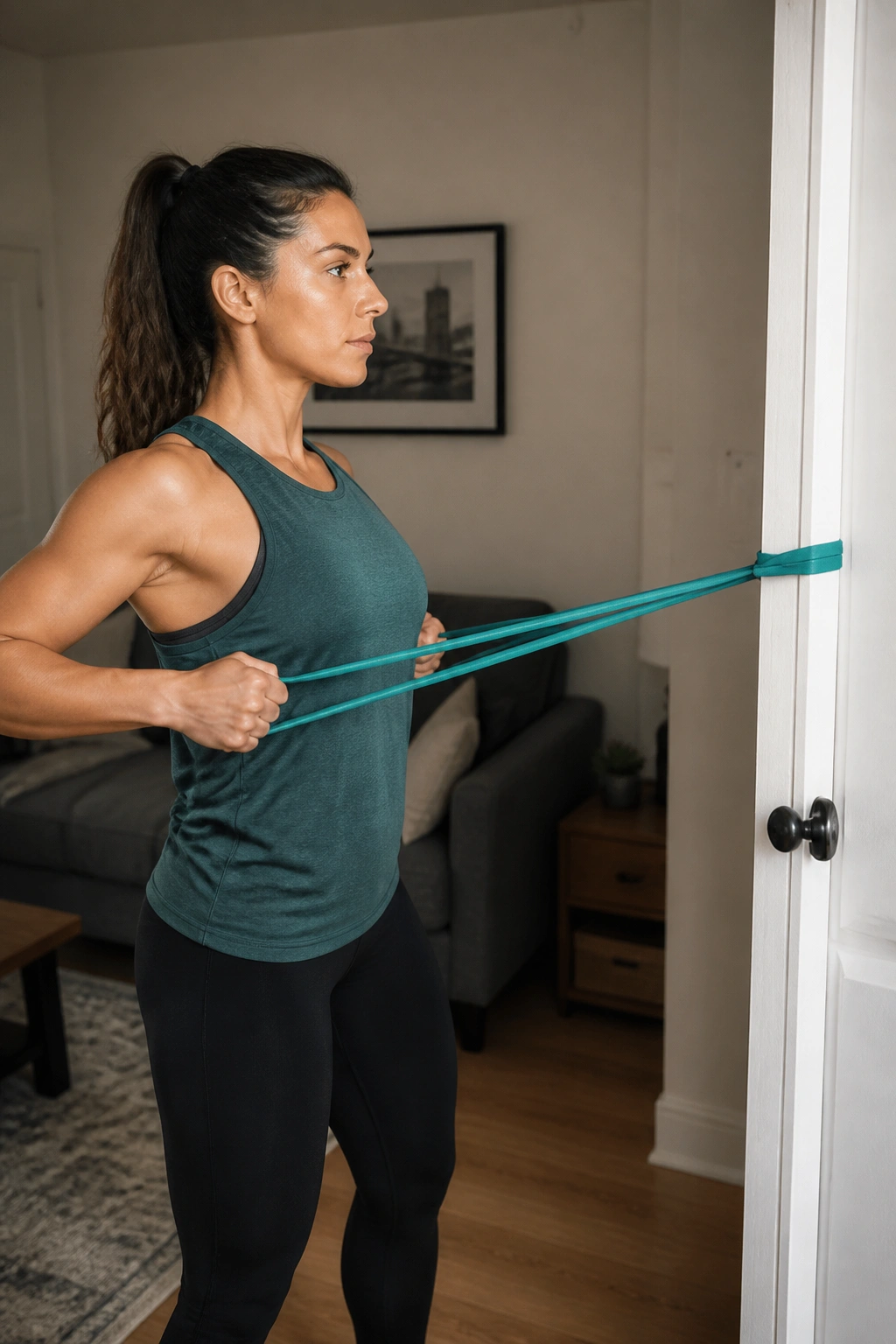
A band tucked in a drawer can do more for your consistency than a garage full of equipment you never touch.
This plan is built for small rooms, apartment living, travel, and anyone who wants joint-friendly resistance without hauling weights around. Bands are light, cheap, and surprisingly useful once you know how to anchor them safely. A door anchor helps, but even without one you can do rows, presses, squats, and side steps.
Good band moves to rotate through
- Standing row: 12 to 15 reps
- Chest press: 10 to 15 reps
- Band good morning or hinge: 12 to 15 reps
- Lateral band walk: 10 steps each way
- Overhead press: 10 to 12 reps
Do 2 to 4 rounds with short rests. Choose a band that gives tension without yanking your shoulders out of place. Too light is boring; too heavy usually turns the movement into a fight. The right band should feel firm by the last third of the set, not impossible from the first rep.
6. The Chair-and-Counter Workout for Low-Energy Days
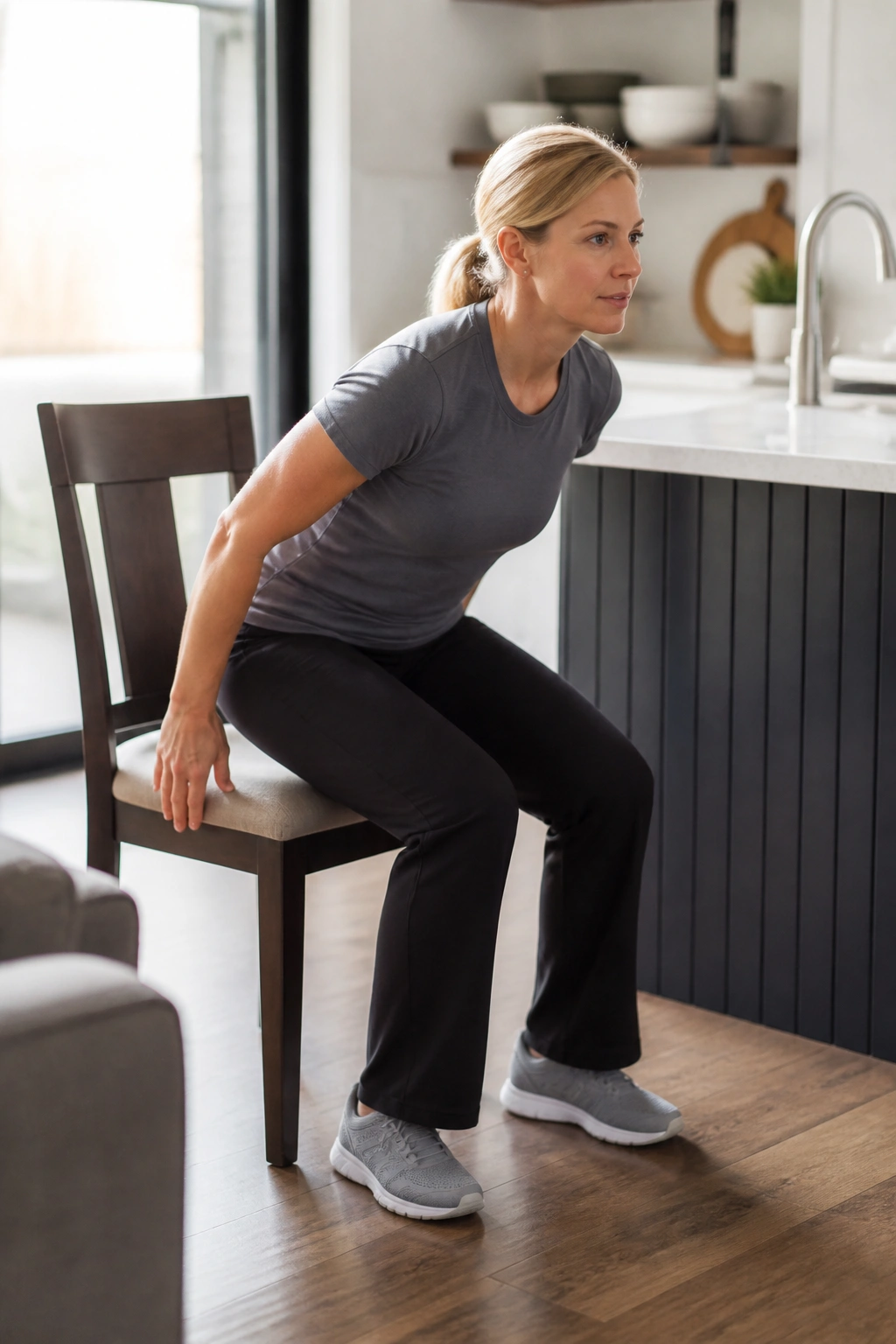
Some afternoons feel like your joints were filled with sand.
That’s exactly when this plan earns its keep. It uses a chair, a wall, and a countertop to make the workout feel less intimidating. Nothing jumps. Nothing crashes. You get blood moving, legs waking up, and shoulders opening without asking your nervous system to put on a show.
Try 2 rounds of the following:
- Seated march for 30 seconds
- Sit-to-stand from a chair for 8 to 12 reps
- Countertop push-ups for 8 to 10 reps
- Standing heel raises for 15 to 20 reps
- Side reaches or wall slides for 8 reps per side
This is not a watered-down workout. It’s a practical one. Keeping the habit alive on low-energy days matters more than making every session feel heroic. If you do this twice a week, it stops the week from going stale.
7. The Treadmill Intervals That Don’t Beat You Up

Want cardio that leaves you breathing harder without feeling flattened afterward?
Use intervals. They’re easier to stick with than a long, steady slog because each hard effort is brief and the recovery is built in. Start with a 5-minute warm-up walk, then alternate 1 minute brisk effort with 2 minutes easy walking for 6 to 8 rounds. Finish with 3 to 5 minutes easy.
A small incline, around 1 to 3 percent, often makes the walking feel more useful without forcing you to run. If you can still speak in short sentences during the hard minute, you’re in the right zone. If you’re gasping, dial it back.
Walking intervals are criminally underused. They build conditioning, protect joints better than all-out running for a lot of people, and they’re easy to scale up later. Increase the pace first, then the incline, then the number of rounds. Not all at once.
8. The Kettlebell Swing, Squat, and Carry Plan

One kettlebell, one corner, and you’re set.
This plan is a favorite of mine because it’s so spare. A swing gives you power and cardio. A squat gives you leg strength. A carry ties everything together and makes your core work without a thousand crunches. If you learn the hinge properly, it’s a clean little package.
A simple circuit
- 10 kettlebell swings
- 8 goblet squats
- 30 to 40 seconds suitcase carry on the right side
- 30 to 40 seconds suitcase carry on the left side
- Rest 60 seconds
Do 4 to 5 rounds. Keep the swing crisp; don’t turn it into a squat with a bell in your hands. If the hinge is new to you, practice it slowly before you go hard. A sloppy swing punishes your lower back faster than most people expect. This one rewards patience.
9. The Yoga Flow and Core Reset
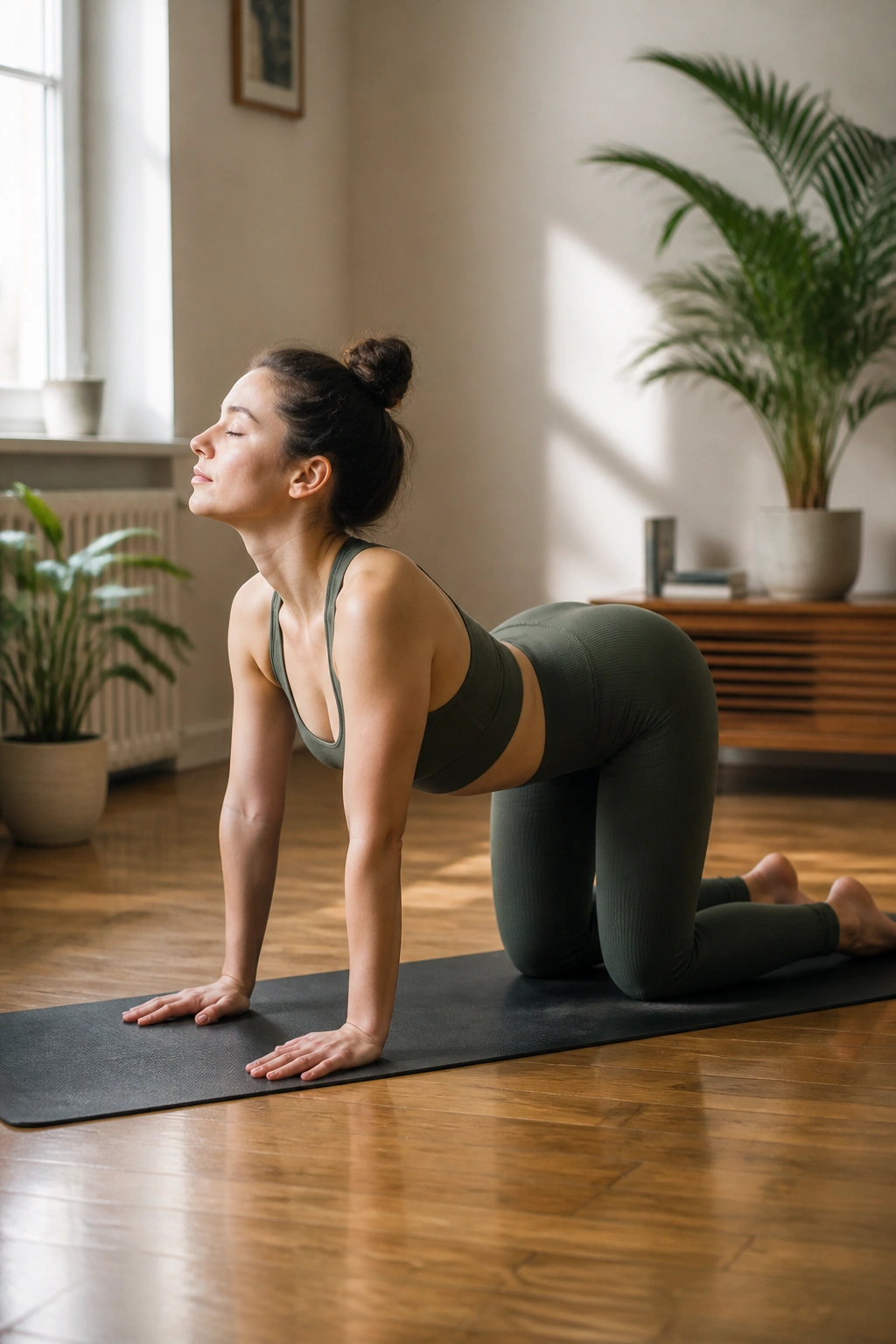
Slow. A little sweaty. Not boring.
This is the plan I’d hand to someone who sits a lot, sleeps badly, or feels stiff through the middle of the week. It’s part movement, part reset button. You are not trying to prove anything here. You are trying to move better when you stand up again.
A simple flow can include:
- Cat-cow for 5 slow breaths
- Downward dog for 30 seconds
- Low lunge on each side
- Half split stretch
- Dead bug for 8 reps per side
- Side plank for 20 to 30 seconds per side
- Child’s pose for a full minute
The core piece matters more than people sometimes think. A calm, controlled dead bug or side plank teaches your trunk to stay steady while your limbs move. That steadiness carries over into walking, lifting, and even just sitting straighter without feeling like you’re bracing all day.
10. The Lunch-Break Micro Workout
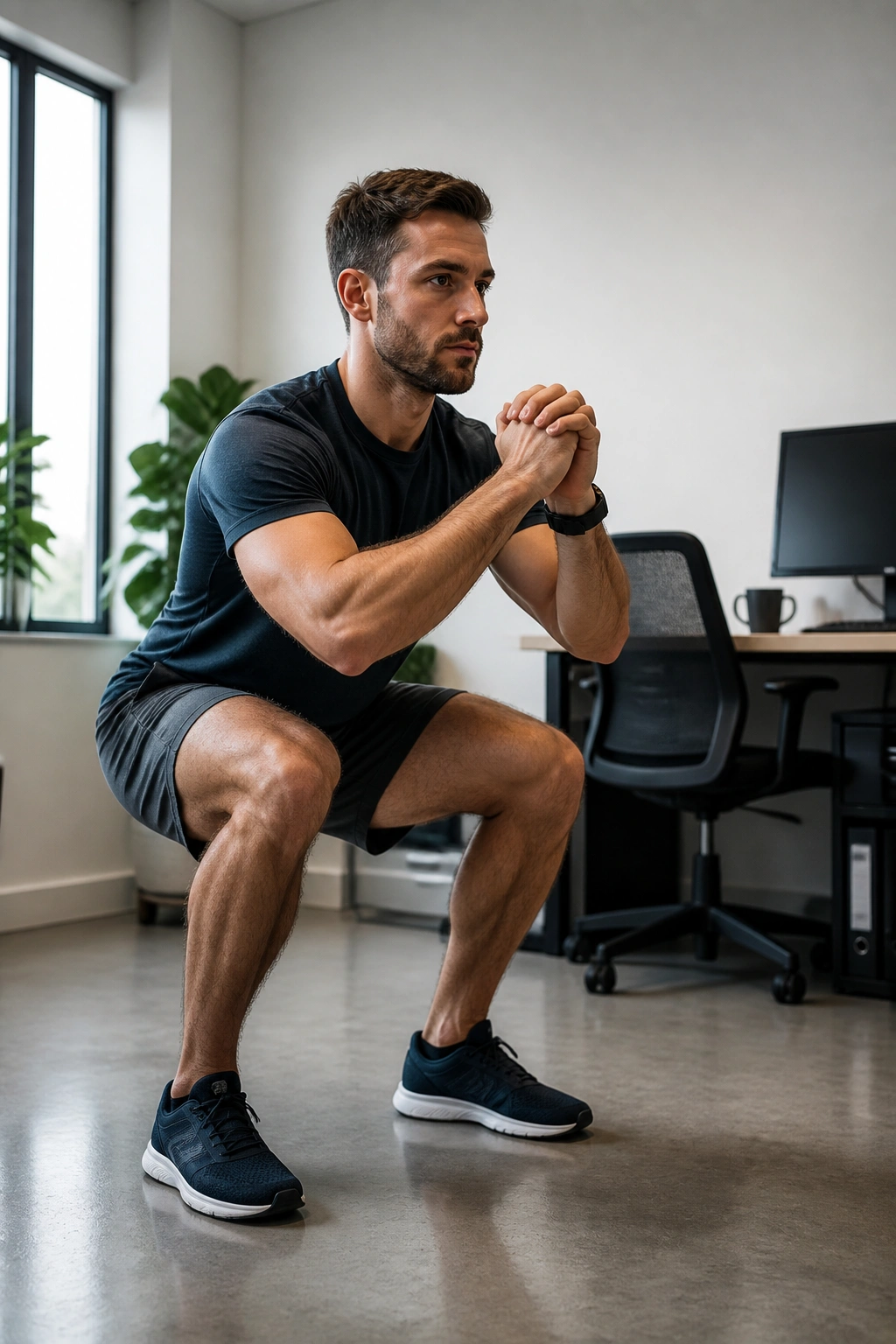
Fifteen minutes is enough.
That sentence irritates people who want exercise to look bigger than it needs to be. Fine. Let it. A short lunch-break session works because it’s easy to repeat, and repeatability is what changes behavior. You can fit this into a workday without rearranging your whole life.
A quick version
- 45 seconds squats
- 15 seconds rest
- 45 seconds push-ups or incline push-ups
- 15 seconds rest
- 45 seconds mountain climbers or marching in place
- 15 seconds rest
- 45 seconds row with a band or backpack
- 60 seconds rest
Do 3 rounds. Keep the pace moderate enough that you can return to work without feeling wrecked. If you have meetings after lunch, drop the intensity and keep the movement. A short workout you actually do beats a perfect one you keep postponing. That one gets easier to believe after the third week.
11. The Push-Pull-Legs Three-Day Split

Three days a week can be plenty.
If you like structure, this plan has it. One day trains pushing muscles, one day trains pulling muscles, and one day trains your legs. That sounds almost too neat, but it works because it’s easy to remember and doesn’t ask for daily decision-making. No one has to wonder what muscle group “today” is supposed to be.
Day 1: Push
Pressing work for chest, shoulders, and triceps.
- Push-ups or bench press
- Dumbbell shoulder press
- Triceps dips or overhead triceps extensions
Day 2: Pull
Back, rear shoulders, and biceps.
- Rows
- Lat pulldown or band pulldown
- Curl variation
Day 3: Legs
Lower-body strength without overcomplicating it.
- Squats
- Romanian deadlifts or hip hinges
- Split squats or lunges
- Calf raises
Keep each workout to 4 or 5 exercises, 2 to 4 sets each, with 6 to 12 reps depending on the movement. The plan is simple because the rules never change. Same three days, same basic structure, steady progress.
12. The One-Set-to-Three-Set Progression Plan
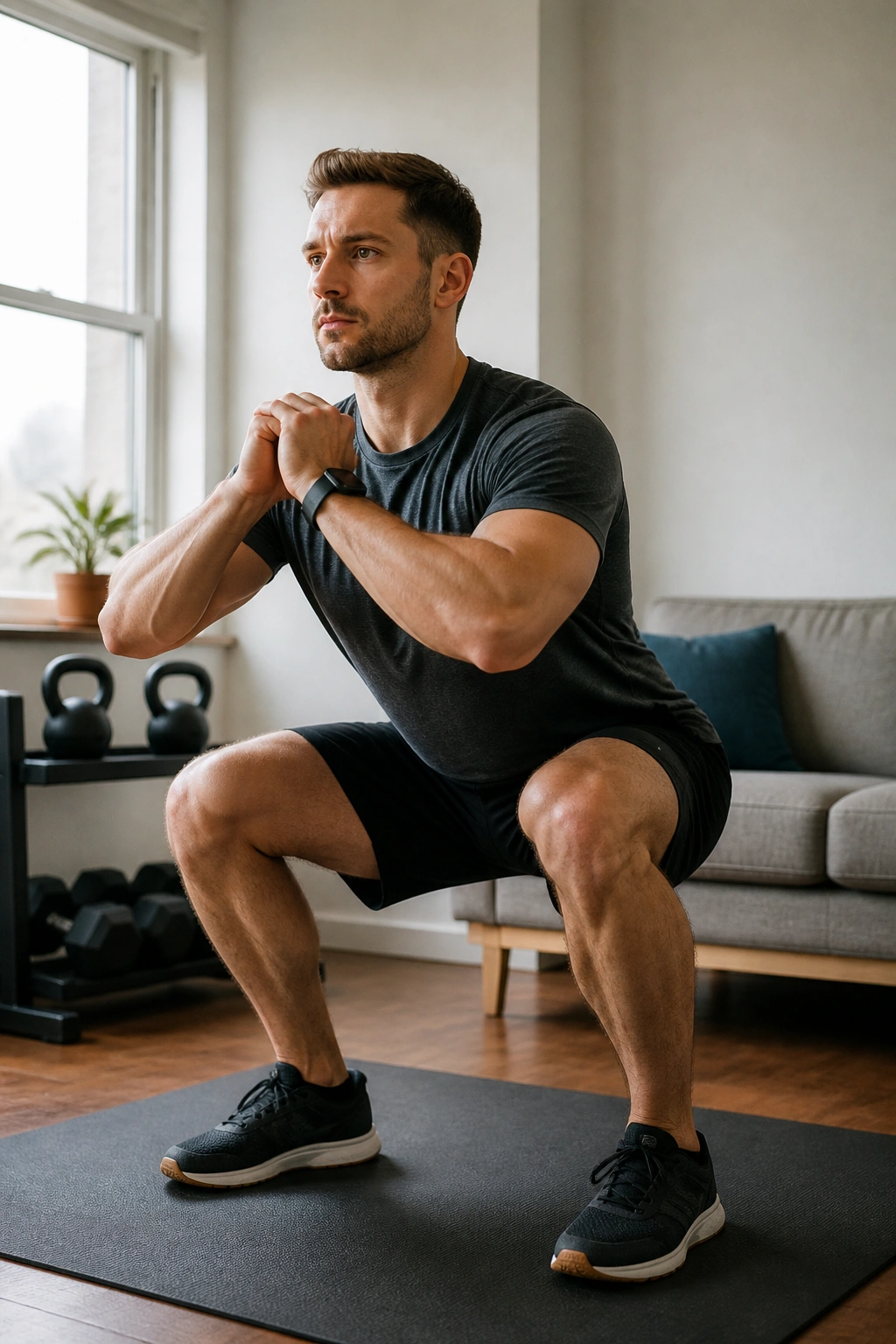
Start embarrassingly small. That’s the point.
This plan is for people who keep failing at “real” programs because the opening week already feels like too much. You begin with one set of each exercise, then add a second set after a couple of weeks, then a third if your energy and schedule can handle it. The workout grows only after the habit feels normal.
A basic lineup might be:
- Squat: 8 to 10 reps
- Push-up or press: 8 to 10 reps
- Row: 8 to 12 reps
- Hip hinge: 8 to 10 reps
One set takes almost no willpower. Two sets feels more like a workout. Three sets is usually enough for a solid session without turning your living room into a full-time training camp. Progression is easier to keep when it’s almost invisible at first. That’s the trick people miss.
13. The Apartment-Safe No-Jump Cardio Plan

No thumping feet. No angry downstairs neighbors.
If noise is the problem, this is your answer. You can still get your heart rate up without jumping, sprinting, or turning your floor into a drum kit. Use marching, shadow boxing, controlled step-outs, and low-impact knee drives. Keep the movements quick, but grounded.
Try this circuit
- March in place: 30 seconds
- Shadow box: 30 seconds
- Step-touch side to side: 30 seconds
- Low-impact mountain climbers: 20 seconds
- Rest: 30 to 45 seconds
Repeat for 15 to 20 minutes. A towel or thin mat can help if your floor feels hard underfoot. The nice thing about this plan is how easy it is to hide in plain sight. It looks simple. It still works. Cardio does not need to be loud to be useful.
14. The Swim, Bike, or Row Day

A pool lane, a stationary bike, or a rower can feel like a reset button for people who hate impact.
This plan is built around steady, rhythmic movement. You pick one machine or one activity and stay with it long enough to warm the body without flattening your joints. For a steady session, 20 to 40 minutes at a moderate pace works well. For intervals, try 4 minutes comfortable-hard, 2 minutes easy, repeated 4 or 5 times.
A few practical notes matter here. On a bike, the seat should be high enough that your knee stays slightly bent at the bottom of the pedal stroke. On a rower, let your legs do most of the work and keep your shoulders relaxed. In the pool, long exhalations in the water help more than people expect. Smooth beats heroic on these days.
This is one of the easiest plans to keep when your knees or back want a break from pounding.
15. The Weekend Long-Session and Weekday-Light Plan
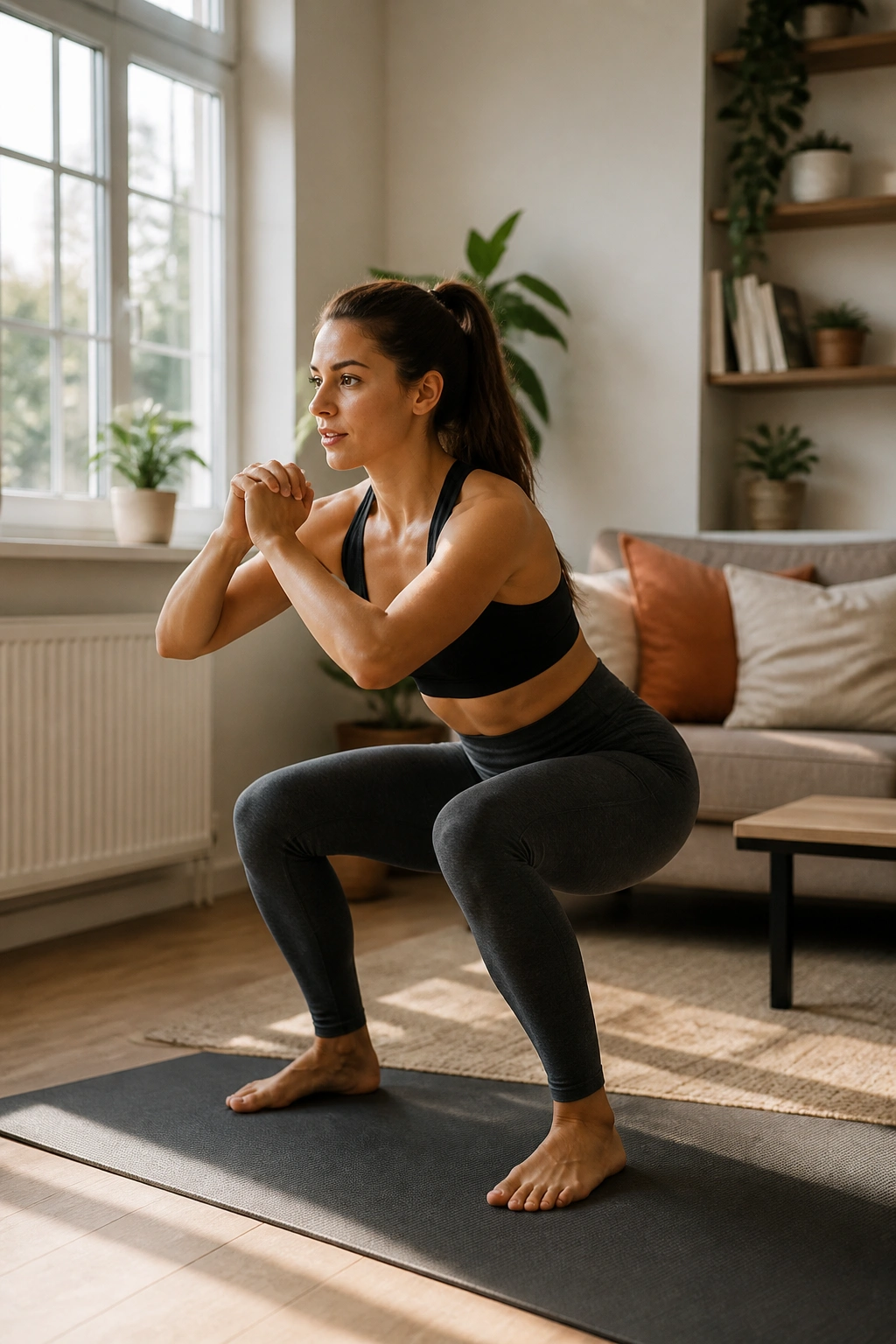
You do not need every day to look the same.
That’s a relief for a lot of people. One longer session on the weekend can carry a lot of the load, and the weekdays can stay lighter so the plan doesn’t become a burden. This works well if your schedule changes a lot, or if you know you’ll resist daily workouts but can usually protect one bigger block of time.
A simple week might look like this:
- Weekend: 45 to 75 minutes of full-body strength or cardio
- Two weekdays: 10 to 20 minutes of walking or mobility
- One or two extra days: a short bodyweight circuit or easy bike ride
The weekday sessions are not filler. They keep you moving and stop the weekend workout from being a one-off event. A lighter week built around one solid anchor session often feels more sustainable than trying to hit the same intensity every morning before breakfast.
16. The Post-Work Decompression Plan
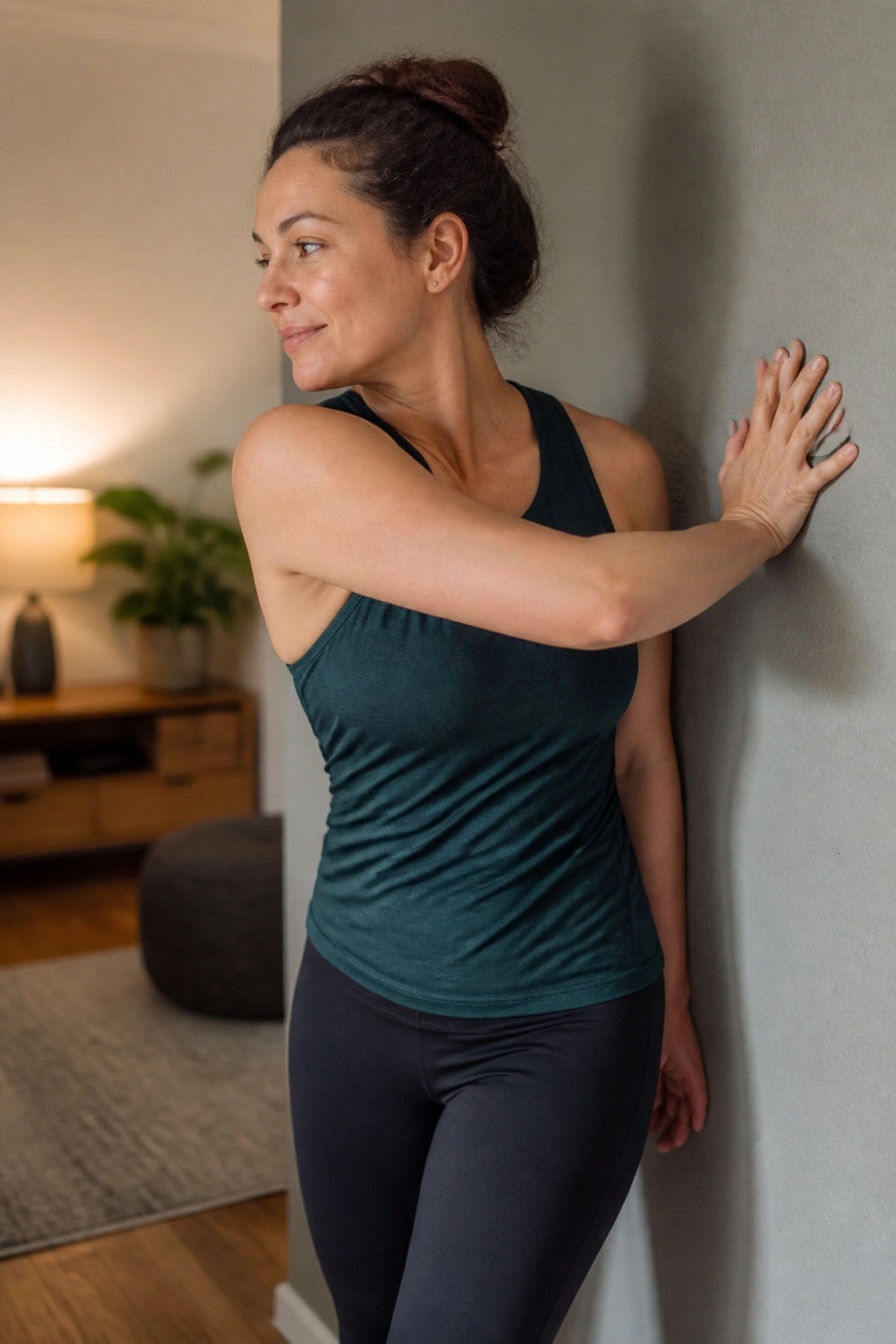
Shoulders up by your ears? Jaw tight? This one’s for that.
A lot of people need a workout that doesn’t just burn energy, but clears out the physical junk that builds up during the day. This plan is short, a little restorative, and very good at making the body feel less boxed in. It’s not fancy. It just works.
Start with a 3-minute walk, then move into 10 thoracic rotations per side, 10 hip hinges, 10 slow squats, and 30 to 60 seconds of child’s pose or another easy floor stretch. If you’re stiff through your upper back, add wall slides. If your hips feel glued, add a lunge stretch.
The real win here is mental, not just physical. You stop carrying your workday in your neck. A decompression workout can be gentle and still count because it changes how you feel when you sit down later. That matters more than a sweaty finish sometimes.
17. The Travel Hotel-Room Workout
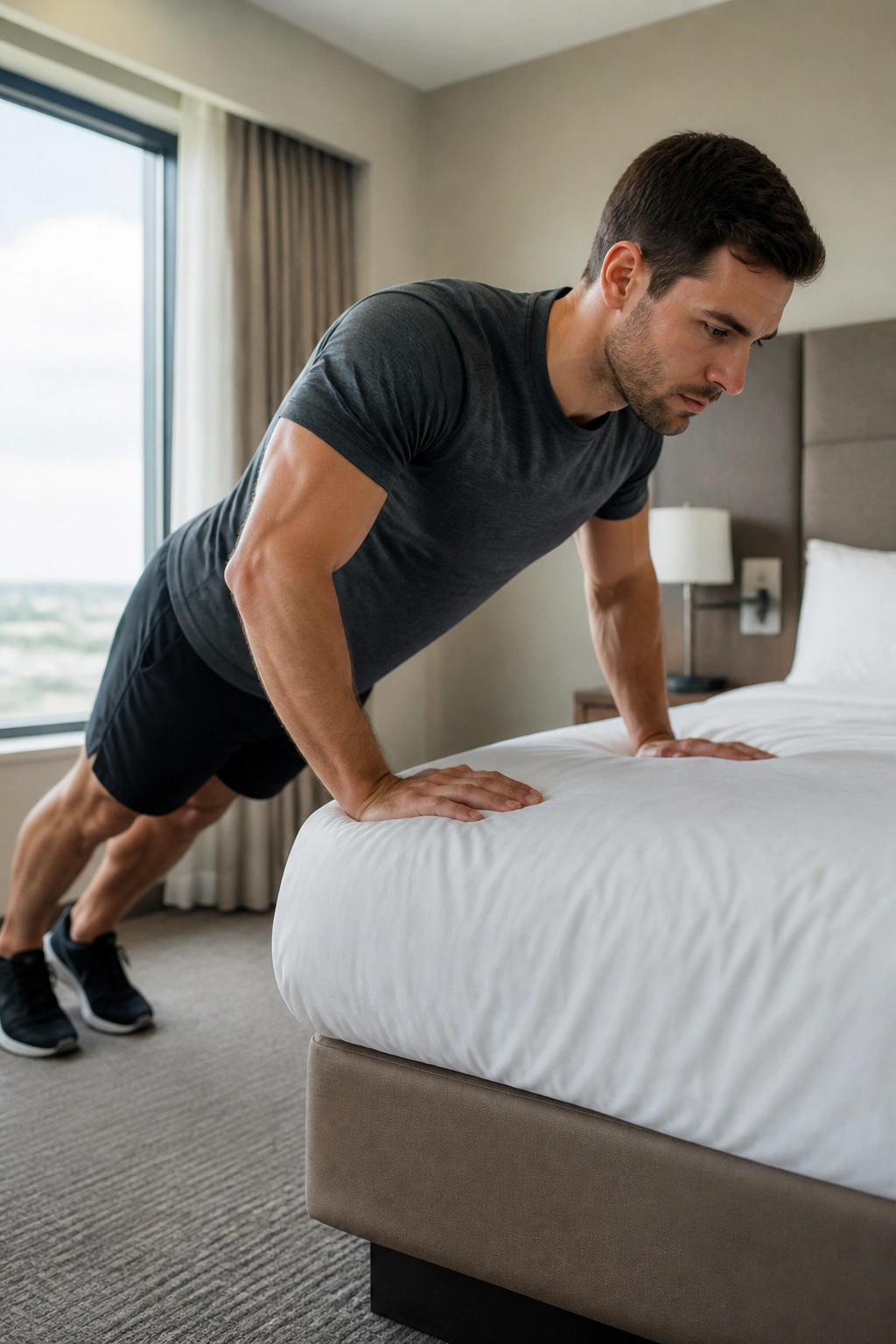
What do you do with 12 square feet and a noisy air conditioner?
You keep it simple. Travel workouts work best when they fit inside a room without making a mess or annoying the person next door. No jumping. No equipment if you can help it. Maybe a backpack, maybe a towel, maybe nothing at all.
A solid room-friendly circuit
- Split squats: 8 reps per side
- Incline push-ups on a bed edge or sturdy desk: 8 to 12 reps
- Backpack rows: 10 to 15 reps
- Glute bridges: 12 to 15 reps
- Plank: 20 to 30 seconds
Do 3 rounds. If you’re carrying a bag anyway, that backpack row becomes surprisingly useful. Keep the pace steady and quiet. Travel workouts should leave you better, not more tired than the trip already did. That usually means avoiding anything explosive and focusing on controlled reps.
18. The Morning Wake-Up Circuit

Eight minutes can change the tone of the day.
I like morning circuits that feel like a nudge, not a punishment. You’re waking the body up, getting some blood moving, and telling your joints that they’re going to be used today. Do this before the inbox if you can. Before the scroll. That part helps.
A tidy version looks like this:
- Reach overhead and side to side for 30 seconds
- Bodyweight squats for 30 seconds
- Marching in place for 30 seconds
- Plank walkout or hands-to-wall hold for 20 to 30 seconds
- Reverse lunges for 30 seconds
- Calf raises for 30 seconds
Repeat the circuit twice. If mornings make you groggy, keep the pace easy for the first round and only pick it up a little on the second. The goal is not to gas yourself out before breakfast. The goal is to move from sleepy to switched on.
19. The Two-Days-a-Week Minimum Plan

Twice a week is not a consolation prize.
It’s a workable plan for a lot of people, especially if your calendar is crowded and your patience is limited. Two full-body sessions can be enough to build strength, keep momentum, and avoid the all-or-nothing trap that ruins so many good intentions. The sessions do not need to be huge.
Session A
- Squat variation
- Push variation
- Row variation
- Carry or plank
Session B
- Hinge variation
- Overhead press or push variation
- Pull variation
- Split squat or lunge
Keep each workout to 30 to 45 minutes, 2 to 3 sets per move. If you miss one day, the whole week does not collapse. That matters. A smaller plan with a high hit rate is worth more than a big one you keep skipping. It’s not glamorous, but it’s practical.
20. The Pick-Five-Moves Plan

Pick five moves, do them well, and stop chasing perfection.
This is the plan for chaotic weeks, weird schedules, and people who hate rigid routines. Instead of memorizing a full program, you build a session from five movement patterns: one squat, one hinge, one push, one pull, and one carry or core move. That gives you balance without locking you into a script.
Your five movement buckets
- Squat: air squat, goblet squat, split squat
- Hinge: Romanian deadlift, hip hinge, kettlebell swing
- Push: push-up, dumbbell press, overhead press
- Pull: row, band pull, backpack row
- Carry/core: suitcase carry, plank, dead bug
Choose one from each bucket, do 2 rounds, and keep the reps around 8 to 12. If the day is rough, choose easier versions. If you’ve got energy, make the moves harder. That flexibility is the whole point. A plan with room to improvise tends to survive real life better than one that falls apart the moment the week gets messy.
Keep It Small
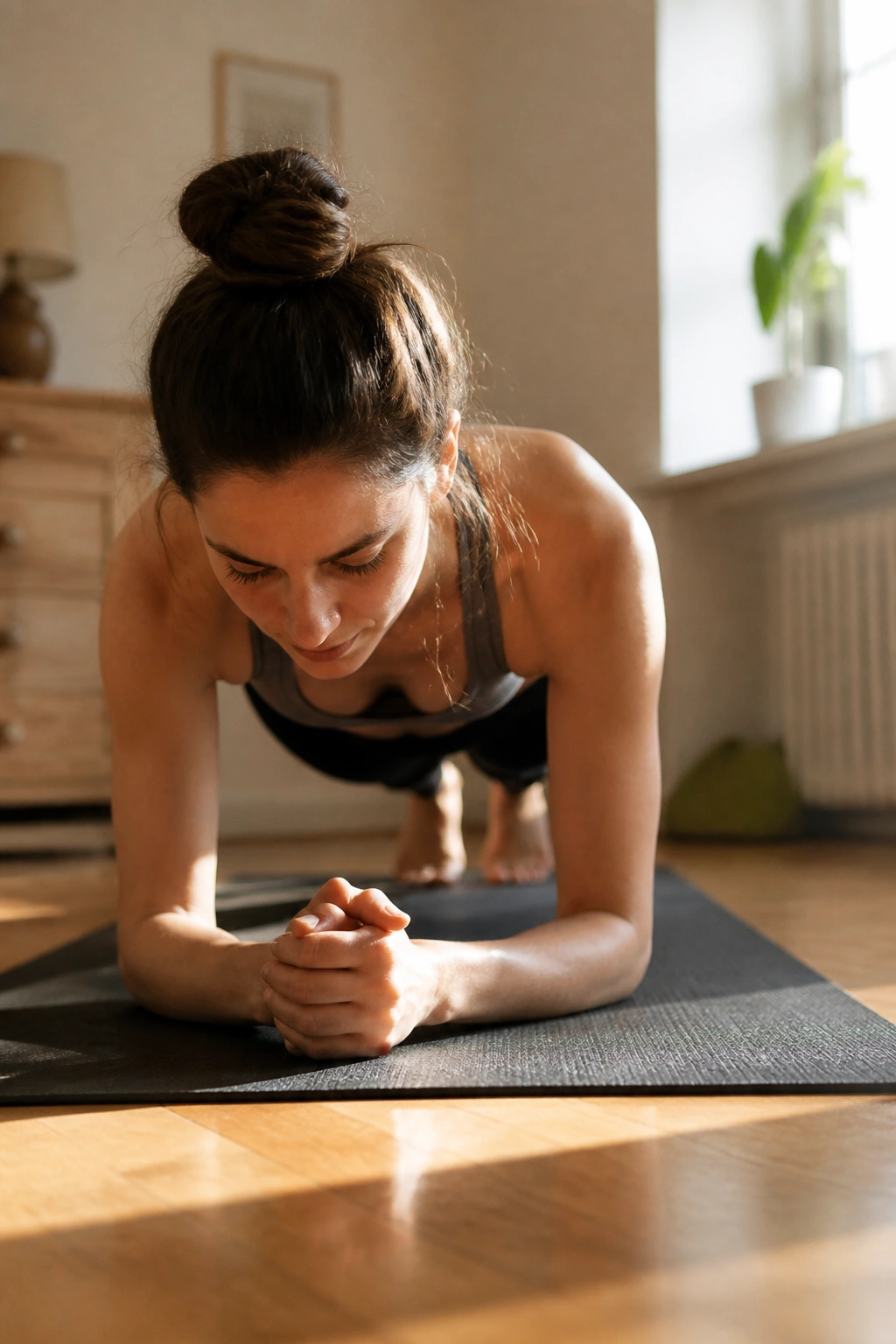
The workout plan you repeat beats the one you admire from a distance.
That’s the part people usually learn the hard way. The fancy routine in your notes app does not matter if it asks too much on day two. The best of these plans share the same trait: they lower the cost of starting. Less setup. Fewer decisions. Fewer excuses.
Pick one that fits the kind of week you actually live, not the one you imagine on a good day. If you need a 15-minute plan, use a 15-minute plan. If you only have room for two sessions a week, use the two-day version. Keep it small enough that it feels almost too easy, then let repetition do the rest.
