



A living room floor can do more than people give it credit for, especially when you’re building at home workouts for women at all levels. A yoga mat, a sturdy chair, and ten honest minutes are enough to get your heart rate up, wake up sleepy glutes, and remind your shoulders they exist. The point is not to copy a gym session inside four walls. The point is to make the space you already have do real work.
Some days call for a low-impact march and a few deep breaths. Other days call for a squat sequence that leaves your thighs talking back. And some days, frankly, call for a short recovery flow because your body feels tight from sitting, lifting, carrying, or doing life with no applause. Home training works best when it matches the day instead of bullying it.
I like workouts like this because they show you the truth fast. If a squat caves in at the knee, you see it. If a plank makes your hips rock side to side, you feel it. There’s nowhere to hide, which is annoying and useful at the same time.
Clear a small space, put your phone on a timer, and start with the kind of session that fits the energy you have right now. The first one is the easiest place to begin.
1. The 10-Minute Standing Warm-Up for Women
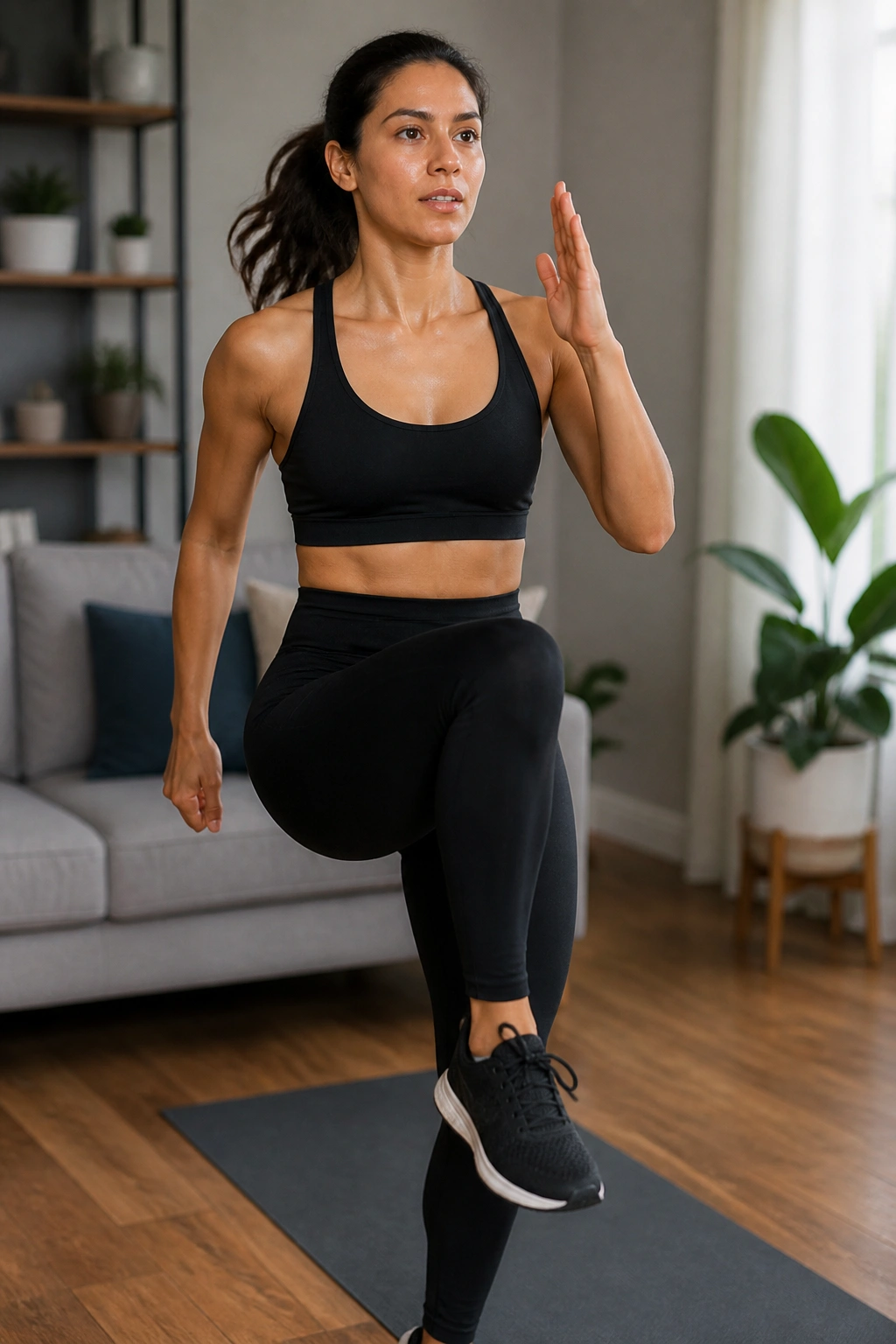
A warm-up that feels almost too easy is usually the right one. This is the session that gets blood moving without draining you before the real work begins. It is especially handy on days when your shoulders feel stiff, your hips feel glued, or you just need to stop staring at the couch.
Why It Works
Marching, side steps, arm circles, and gentle reaches wake up the joints from top to bottom. You get a little cardio, a little mobility, and a little rhythm, which is enough to make the next workout feel smoother. I like standing warm-ups because they do not need floor space, and they are easy to scale.
How to Scale It
Do each move for 30 seconds, then repeat the whole sequence twice.
- March in place with active arms.
- Step side to side and tap the floor.
- Roll the shoulders back and down.
- Reach overhead and slightly back.
- Add knee drives if you want more intensity.
Beginner: keep the steps small and soft.
Intermediate: add faster arms and deeper knee lifts.
Advanced: make the marches crisp enough to raise your breathing, but keep the landing quiet.
One small cue matters a lot here: ribs down, neck long, and feet light. If your warm-up feels bouncy but sloppy, slow it down and clean up the shape first.
2. The Squat-and-Reach Circuit That Wakes Up Your Legs
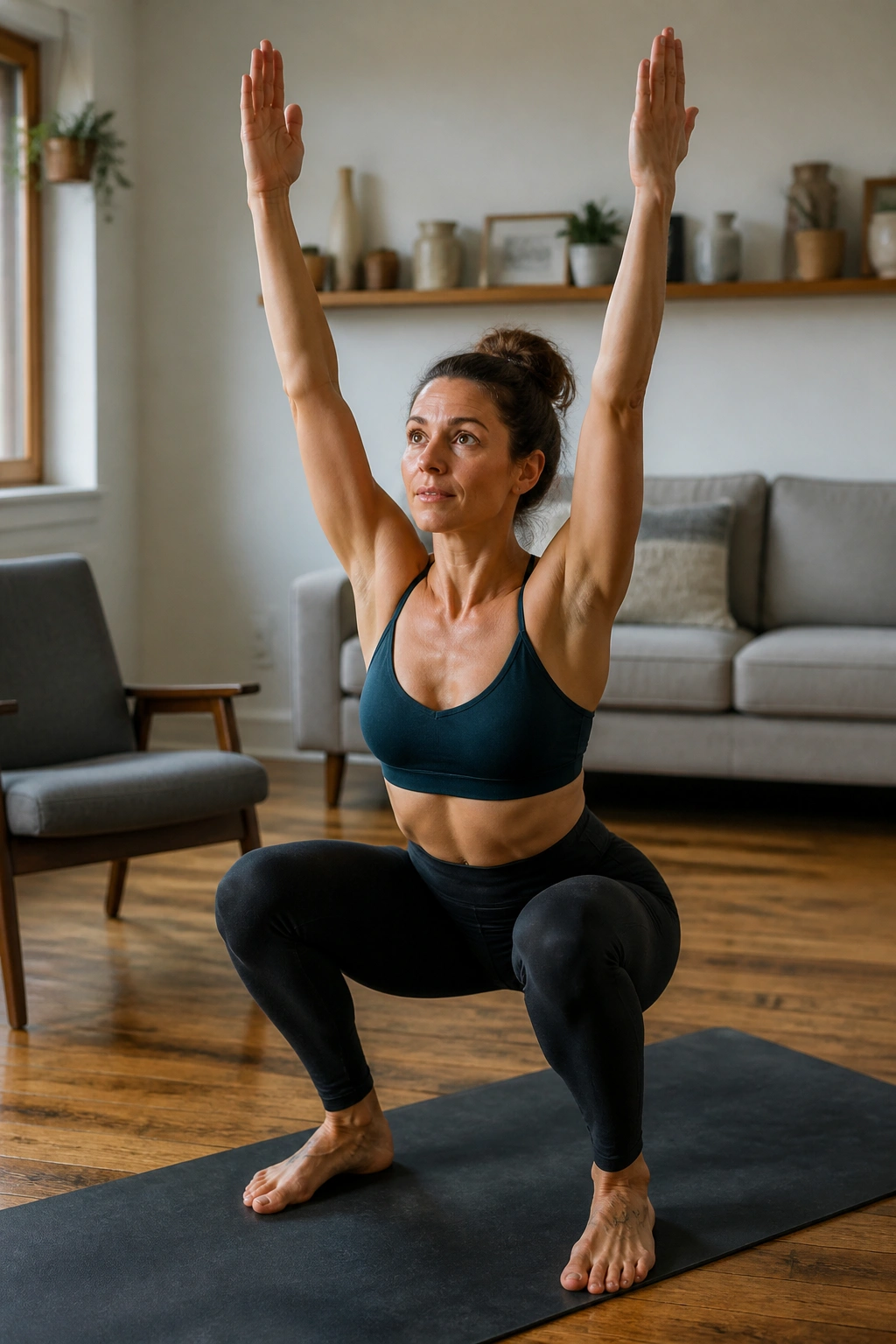
A bodyweight squat gets interesting once you stop rushing through it. Most people do too many reps too fast, then wonder why their legs never really light up. Slow the motion down and the whole thing changes.
Drop into a squat, stand tall, and reach overhead at the top. That simple combo asks your glutes, quads, calves, and core to show up together. It also gives your upper body a little posture work, which I love because it means one movement is doing more than one job.
Try 3 rounds of 12 reps. If the floor-to-stand transition feels awkward, use a chair behind you and tap it lightly on the way down. If you want more challenge, hold the squat for 2 seconds before driving up and reaching.
Quick Form Notes
- Keep your heels heavy.
- Let your knees track over the second toe.
- Reach up without shrugging your shoulders.
- Stop the descent when your spine starts to round.
A squat should feel like work in the legs, not strain in the lower back. If the back starts grumbling, make the stance a little wider and reduce the depth. Small fix. Big difference.
3. The Incline Push-Up Ladder at the Couch
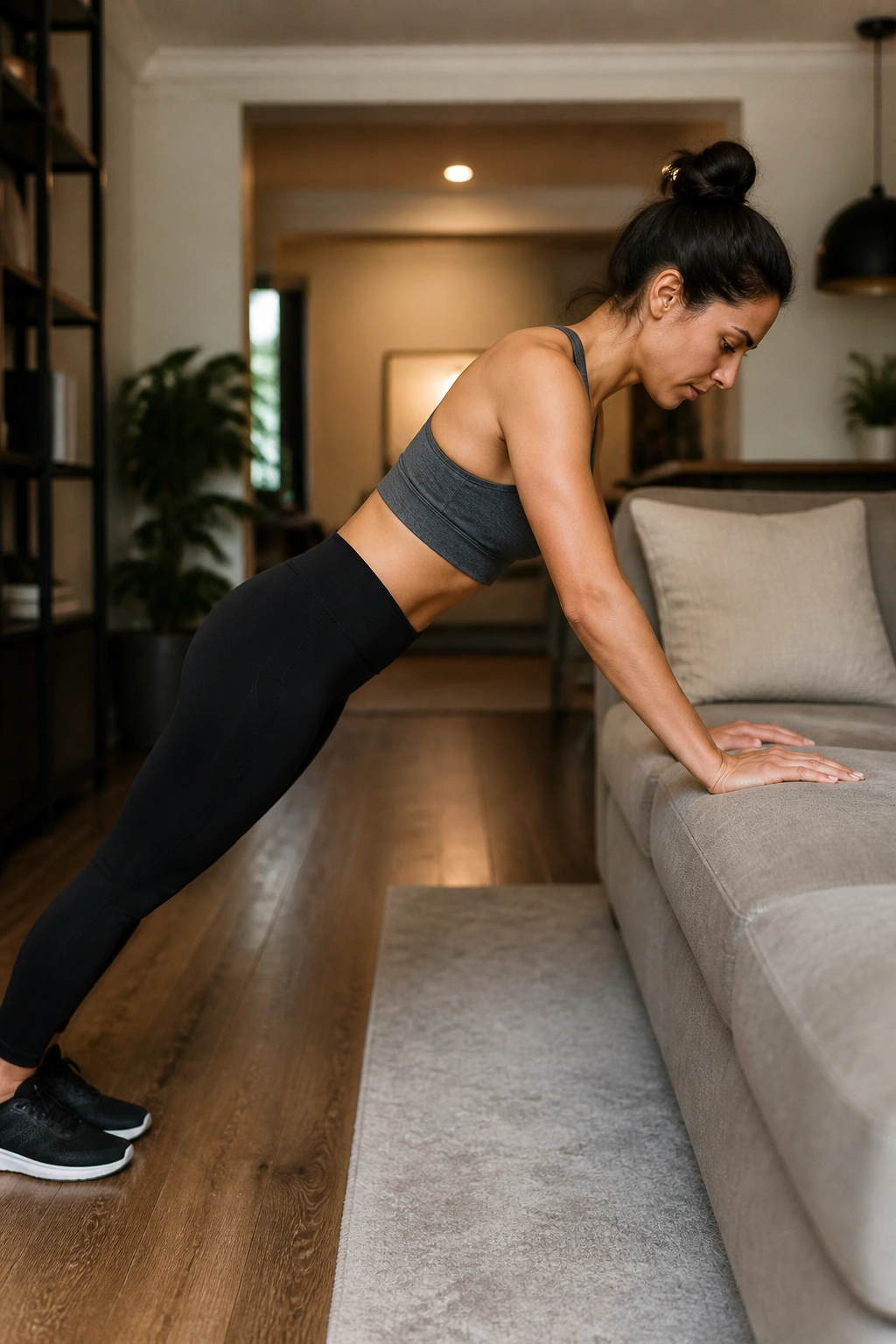
Can you build upper-body strength at home without doing floor push-ups from day one? Yes, and the couch is a better teacher than pride. Incline push-ups let you control the angle, which means you can train your chest, shoulders, triceps, and core without folding like a lawn chair.
Start with your hands on a wall, then move to a counter, then a couch or sturdy chair. Do 6 to 8 reps at each level. Wall push-ups are the easiest; couch push-ups are harder; the floor is hardest. That ladder-style setup gives you a clean way to progress without guessing.
How to Use It
Keep your hands slightly wider than your shoulders and lower your chest toward the surface in one smooth line. Your elbows should travel back at about a 45-degree angle, not flare straight out to the sides. If your hips sag, shorten the range before you chase more reps.
- Wall: 8 to 12 reps
- Counter: 6 to 10 reps
- Couch: 5 to 8 reps
- Floor: 3 to 6 strict reps
A slow lower, around 3 seconds down, makes even the wall version feel serious. And honestly, that is the version most people need first.
4. The Glute Bridge and Hip-Thrust Burner
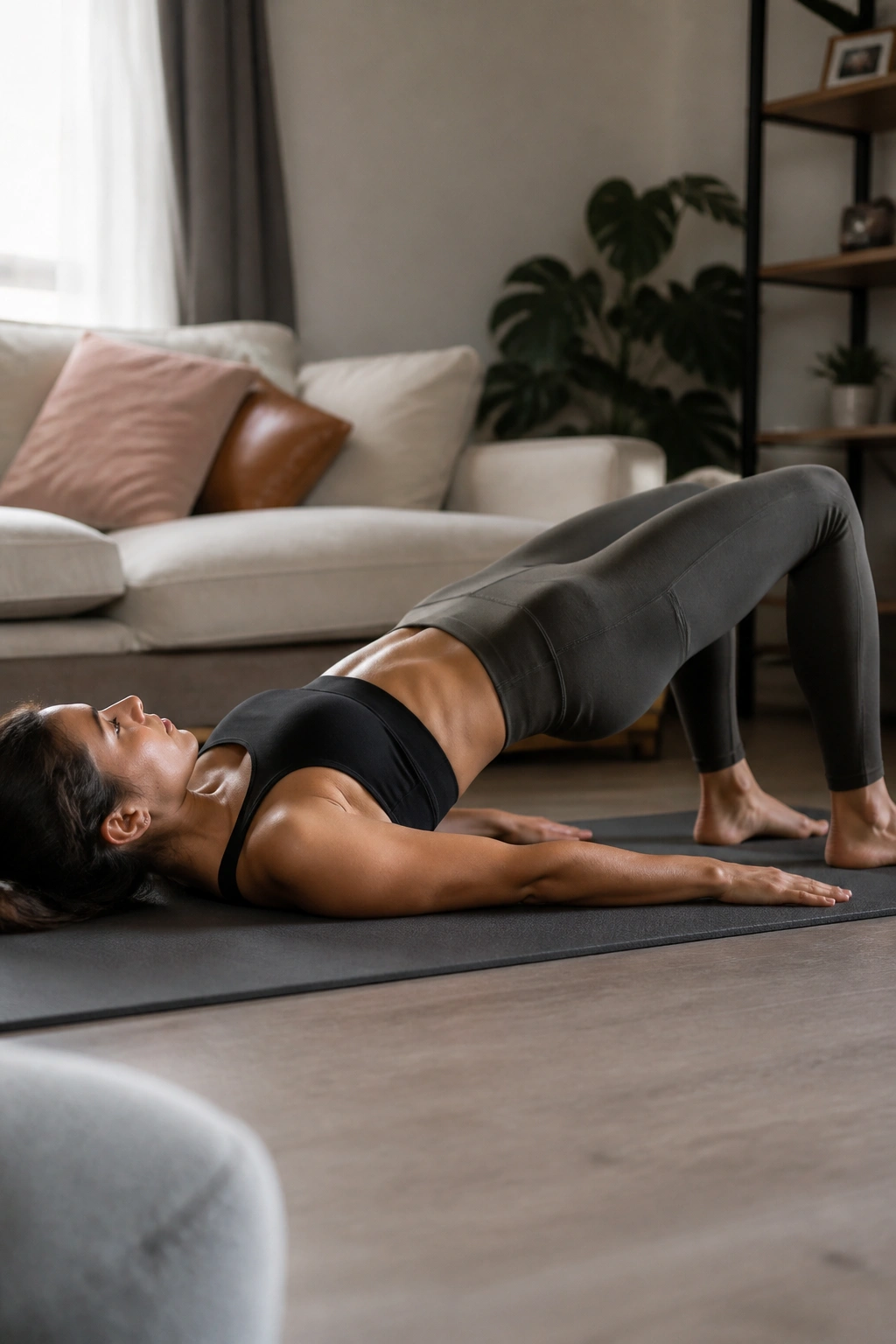
If you sit a lot, your glutes can go quiet fast. This is the workout that reminds them how to work. It is low impact, friendly on the knees, and sneaky hard if you actually squeeze at the top instead of tossing the hips up and calling it done.
Lie on your back with your feet flat and knees bent. Drive through your heels, lift your hips, and pause for a one-count at the top before lowering under control. Start with 15 bridges, then finish with 10 small pulses and a 20-second hold on the last rep. Do 3 rounds.
What to Watch For
- Keep your ribs from flaring upward.
- Squeeze your glutes, not your lower back.
- Keep your chin slightly tucked.
- Place your feet close enough that your shins are near vertical at the top.
If you want a harder version, put your shoulders on the couch for a hip thrust. That extra range makes the top squeeze more intense and usually lights up the glutes faster. A folded towel under the head can make the floor version feel better, too.
5. The Reverse Lunge and Balance Flow
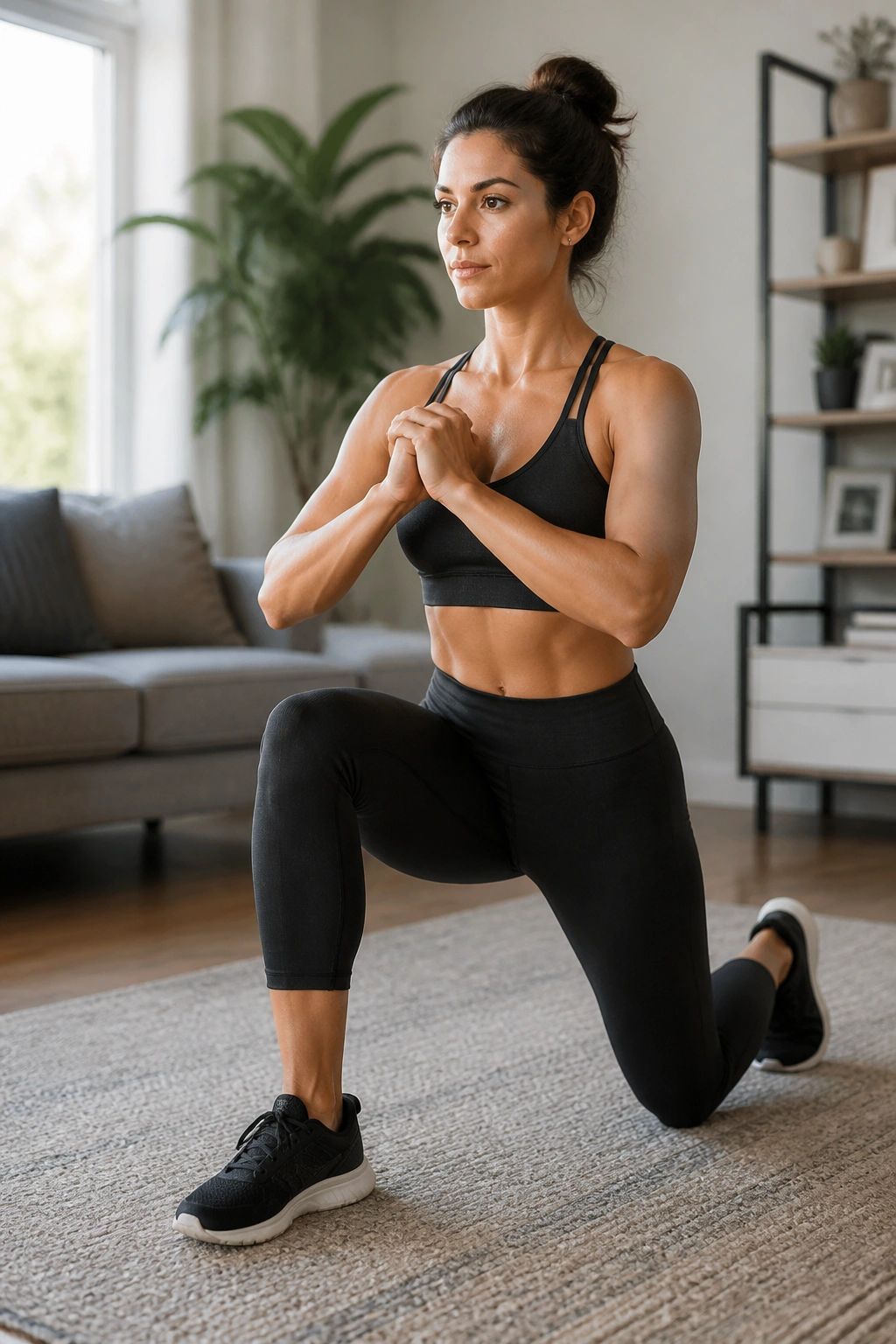
Reverse lunges are kinder than forward lunges for a lot of people because you control the step back. That small difference matters when your knees are fussy or your balance is still a work in progress. It is one of my favorite at-home lower-body moves because it teaches you strength and control in the same rep.
Step one foot back, lower until both knees bend, then drive through the front heel to stand. Add a knee drive at the top if you want more balance work. Aim for 8 to 10 reps on each side and complete 2 to 3 rounds.
The front foot should stay planted like a tripod: big toe, little toe, heel. Keep the torso tall and avoid leaning so far forward that the whole thing turns into a back-strength move. If the rear knee slams the floor, shorten the range. You do not need drama here.
Beginner: hold a wall or chair lightly.
Intermediate: add a slower 3-count lower.
Advanced: hold a backpack at your chest or add an overhead reach.
I’d take one controlled lunge over twenty sloppy ones. Every time.
6. The Dead Bug Core Reset
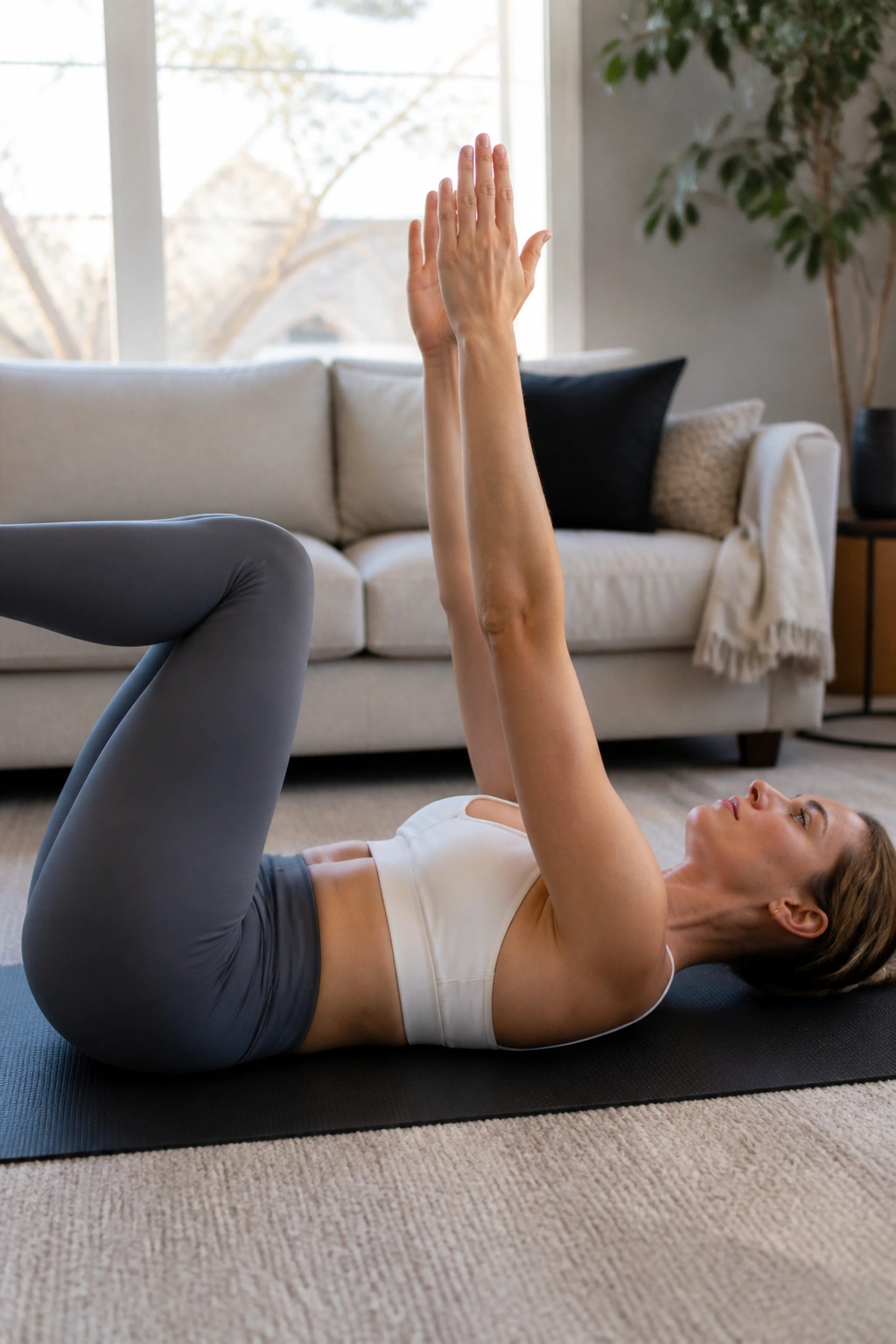
Unlike crunches, the dead bug teaches your ribs and pelvis to stay where they belong. That makes it one of the smartest core exercises for home training. It looks almost boring until your lower back starts trying to peel off the floor.
Lie on your back, lift your legs into tabletop, and point your arms toward the ceiling. Lower one arm and the opposite leg slowly, then return to the start and switch sides. 6 to 8 reps per side is enough when you do them with control. Exhale as the leg extends; that breath helps keep your core braced without turning your face red.
What Makes It Different
The dead bug trains anti-extension, which is a fancy way of saying your core learns not to arch when your limbs move. That matters in real life when you carry groceries, pick up a kid, or lift a bag from the floor. It also spares the neck, which makes it a useful choice if crunches leave you feeling cranky.
How to Get the Most From It
- Press your lower back gently into the mat.
- Move slower than you think you need to.
- Shorten the leg extension if your back arches.
- Keep the shoulders relaxed.
If you want more challenge, hold a light dumbbell or water bottle in each hand. If the low back pops up, reduce the range immediately. That cue is the workout talking.
7. The Low-Impact Jack Pyramid
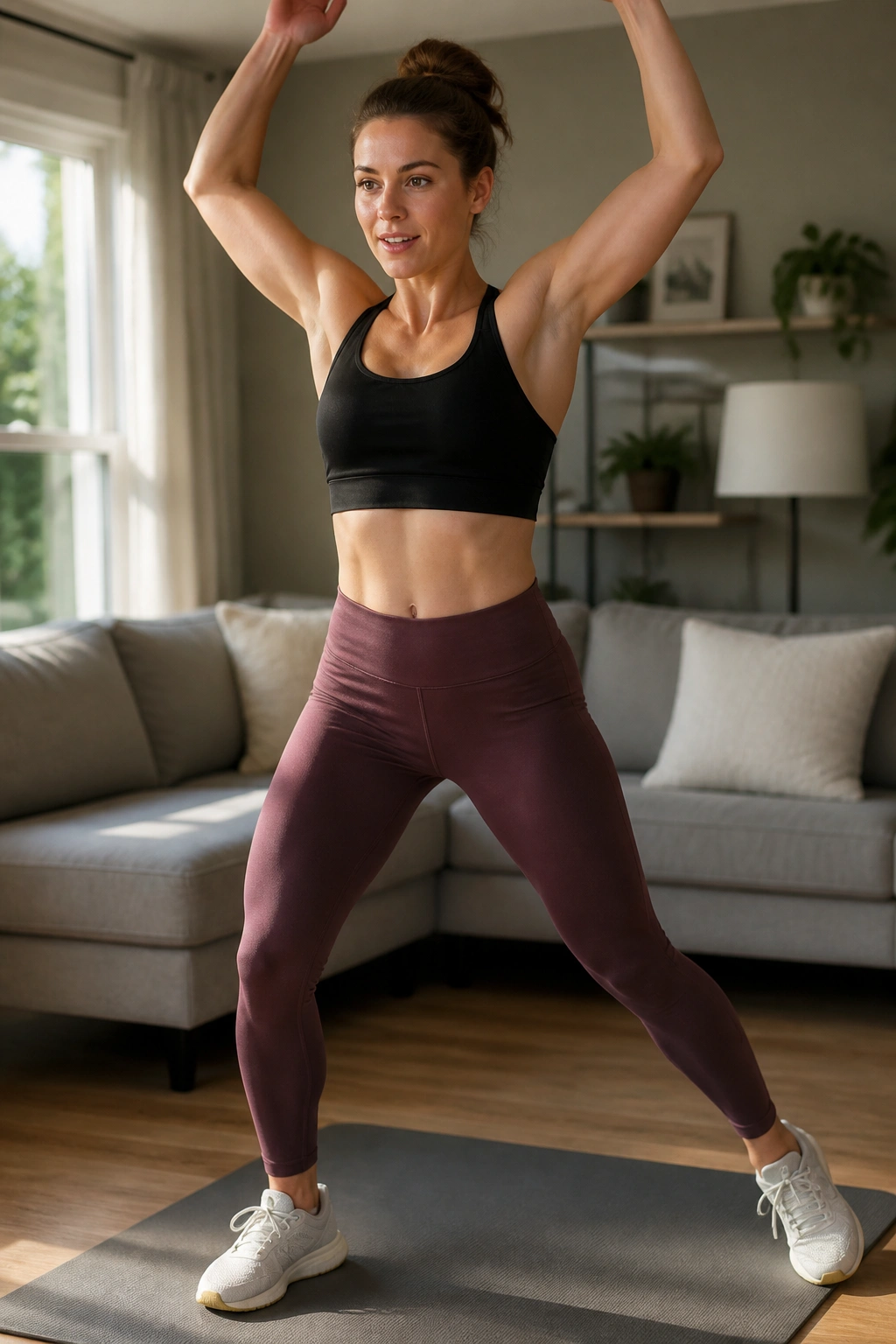
Cardio does not need jumps to count. Low-impact jack variations can still raise your heart rate and leave your lungs working. This is the session I reach for when I want sweat without the thud of repeated jumping.
Start with step jacks for 30 seconds, then rest for 30 seconds. On the next round, work 25 seconds and rest 25 seconds. Keep stepping down until you hit 10 seconds on, 10 seconds off. Then climb back up if you want a longer session.
The motion is simple: step one foot out, sweep the arms overhead, step back in, and repeat. If you want more punch, pick up the pace while keeping one foot on the floor at all times. If your neighbors live below you, they will appreciate this version.
- 30/30
- 25/25
- 20/20
- 15/15
- 10/10
Beginner: stay tall and keep the steps small.
Advanced: add faster arm speed and deeper knee bends.
The nicest thing about this format is that it works on tired days and stronger days alike. You just change the speed.
8. The Plank Shoulder Tap Challenge
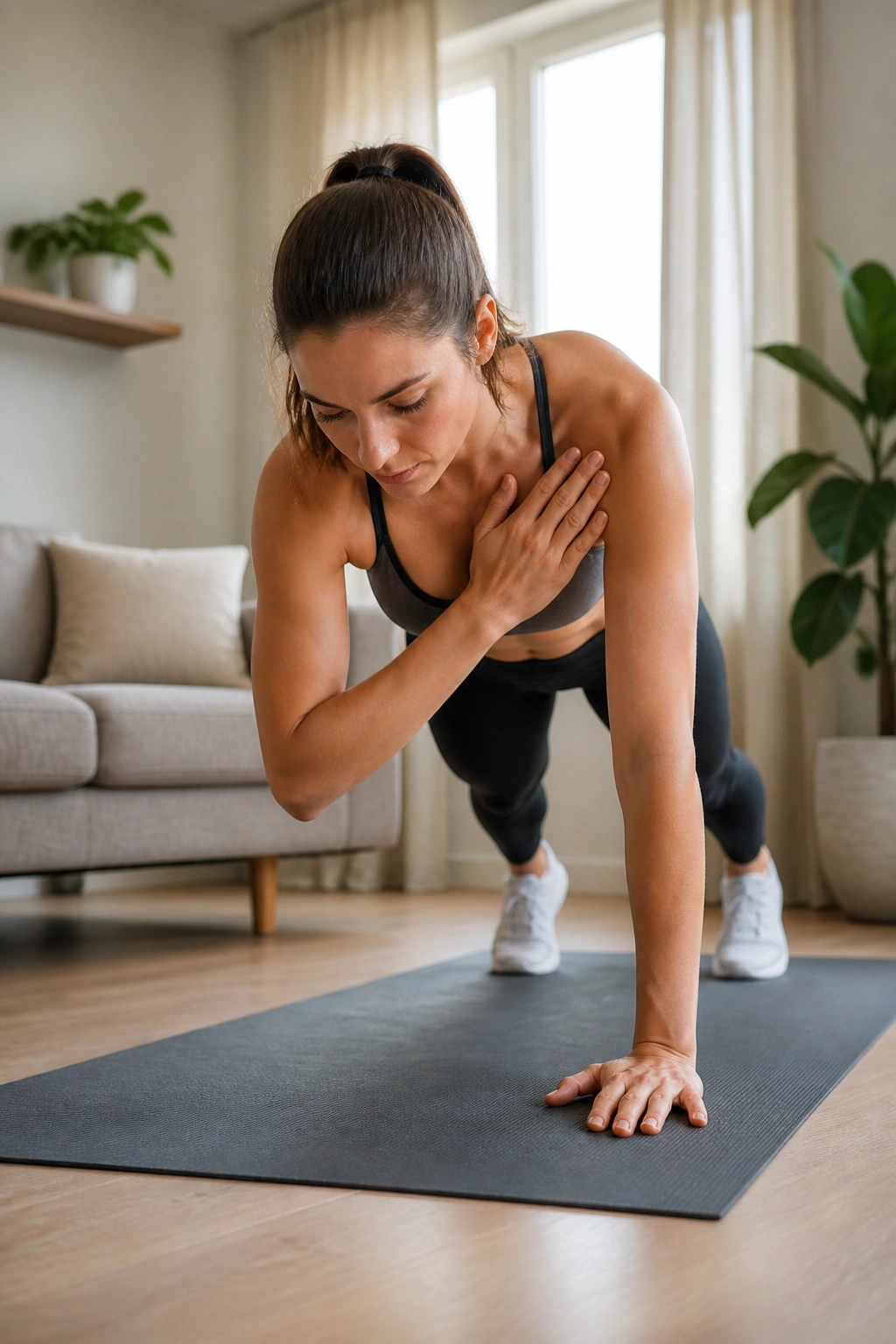
Plank shoulder taps are sneaky. They look tame, then your hips start wobbling and your shoulders start earning their keep. That is the point. This move trains anti-rotation, which means your core has to stop your body from twisting every time one hand leaves the floor.
Set up in a high plank with hands under shoulders and feet a little wider than hip width. Tap one shoulder with the opposite hand, place it down, and switch sides. Keep going for 20 taps total, then rest for 30 to 45 seconds. Do 3 rounds.
What to Watch For
If your hips sway side to side, widen your feet and slow down. If your wrists complain, put your hands on dumbbells or use an incline on the couch. And if you can’t hold the plank cleanly yet, drop to your knees and keep the taps short and controlled.
A fast tap with a crooked torso is less useful than a slower tap with good form. Stillness beats speed here.
How to Make It Harder
- Bring your feet closer together.
- Slow each tap to a 2-count.
- Hold the tap for one beat before returning.
I like this one because it tells the truth fast. If your core is doing its job, you know it. If it isn’t, the floor lets you know too.
9. The Mountain Climber Interval Set
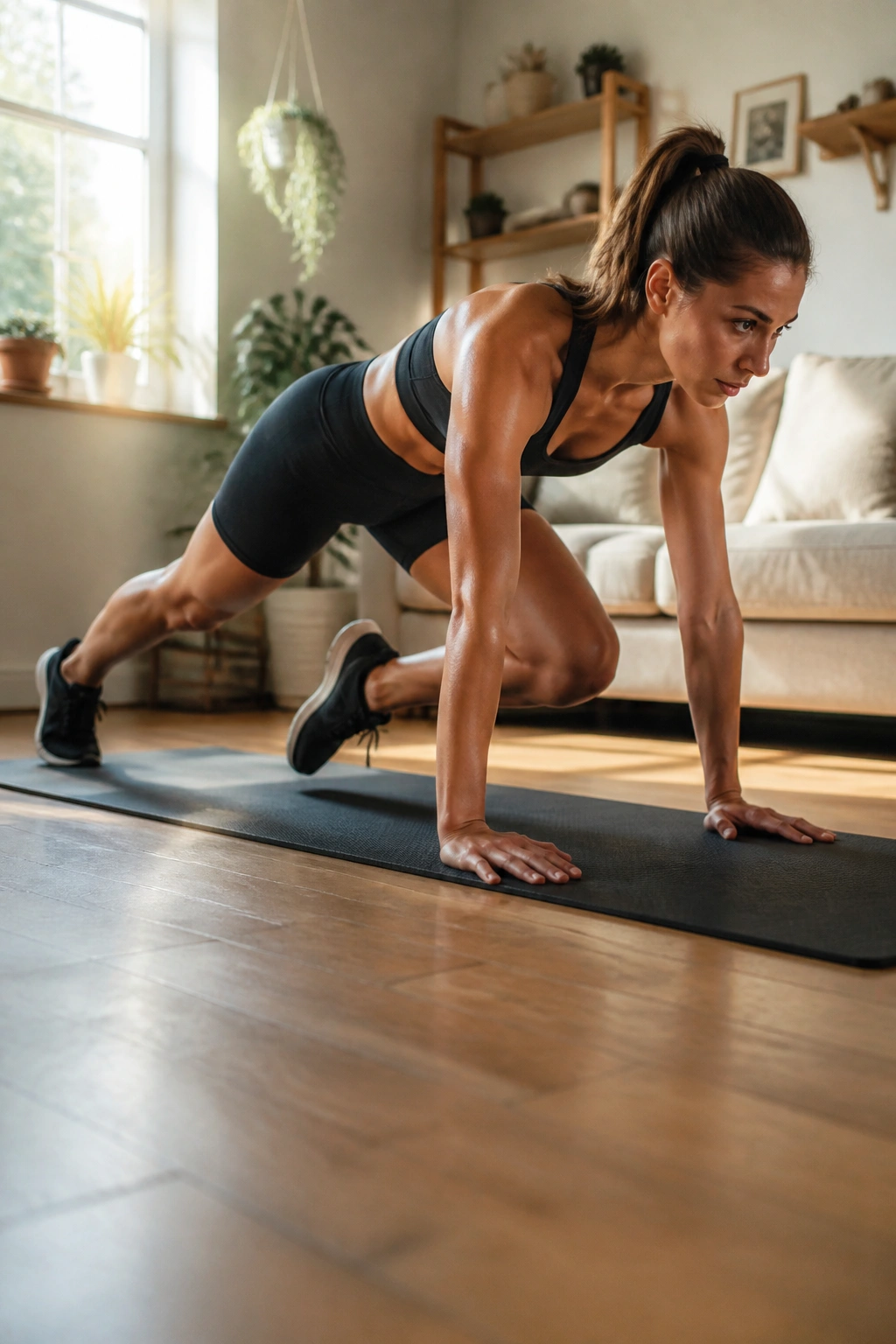
Need cardio and core in the same move? Mountain climbers do both, as long as your hips stop bouncing like a pogo stick. The trick is to drive the knees under the chest with control instead of racing so fast that the shoulders and lower back do all the work.
Set up in a strong plank with your hands under your shoulders. Drive one knee in, switch legs, and keep the rhythm tight. Work for 20 seconds, rest for 20 seconds, and repeat for 8 rounds. If you want a longer sweat, stretch each work interval to 30 seconds.
A couch or sturdy chair can make this easier by raising your hands. That helps if your wrists get sore or your core still needs time to catch up. For a harder version, use cross-body climbers and bring each knee toward the opposite elbow.
Your breathing tells you a lot here. If you can’t keep a steady exhale, you’re probably moving too fast. Slow down, clean up the form, then build the pace back up.
10. The Sun Salutation and Mobility Flow
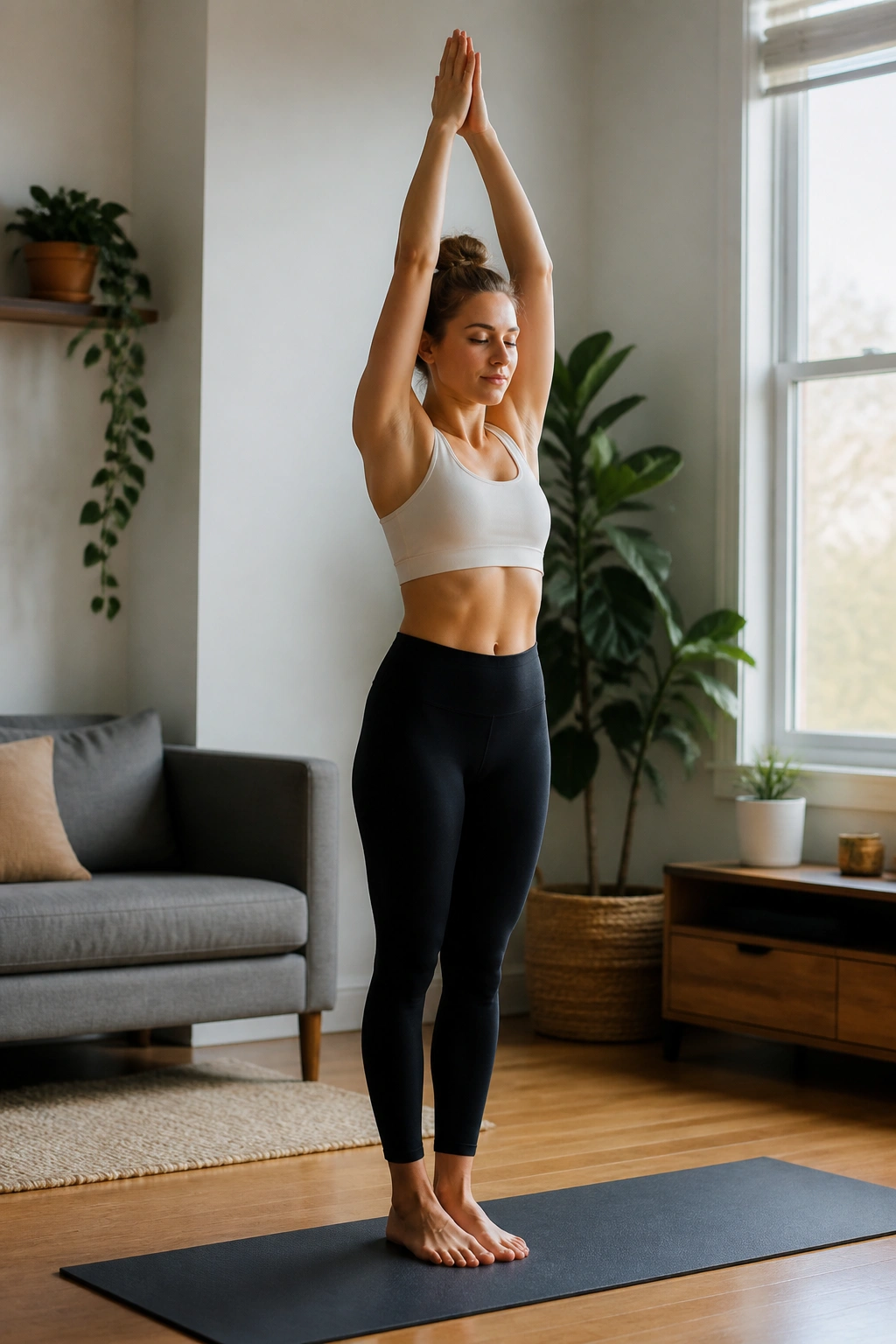
This is the anti-ego workout. No one gets points for rushing through a mobility flow with ugly angles and clipped breathing. A slow sun salutation sequence can loosen your hamstrings, open your chest, and give your spine a break without any pounding at all.
Start standing, fold forward, half lift, then step back to a high plank. Lower to the floor or drop your knees, press into cobra or upward dog, move through downward dog, and step back to the top. That is one round. Do 3 to 5 rounds, taking about 45 to 60 seconds for each one.
The magic lives in the pauses. Hold the forward fold for a breath. Press the heels down in downward dog for another breath. Let the shoulders soften before you stand again. You are not trying to race a yoga class in your kitchen.
How to Keep It Useful
- Bend the knees in the fold if the hamstrings feel tight.
- Drop to the knees in plank if the low back tires.
- Step, don’t jump, if impact feels like too much.
- Breathe out longer than you breathe in.
This kind of session is a good reminder that movement does not have to be loud to matter.
11. The Chair Triceps Dip and Wall Sit Combo
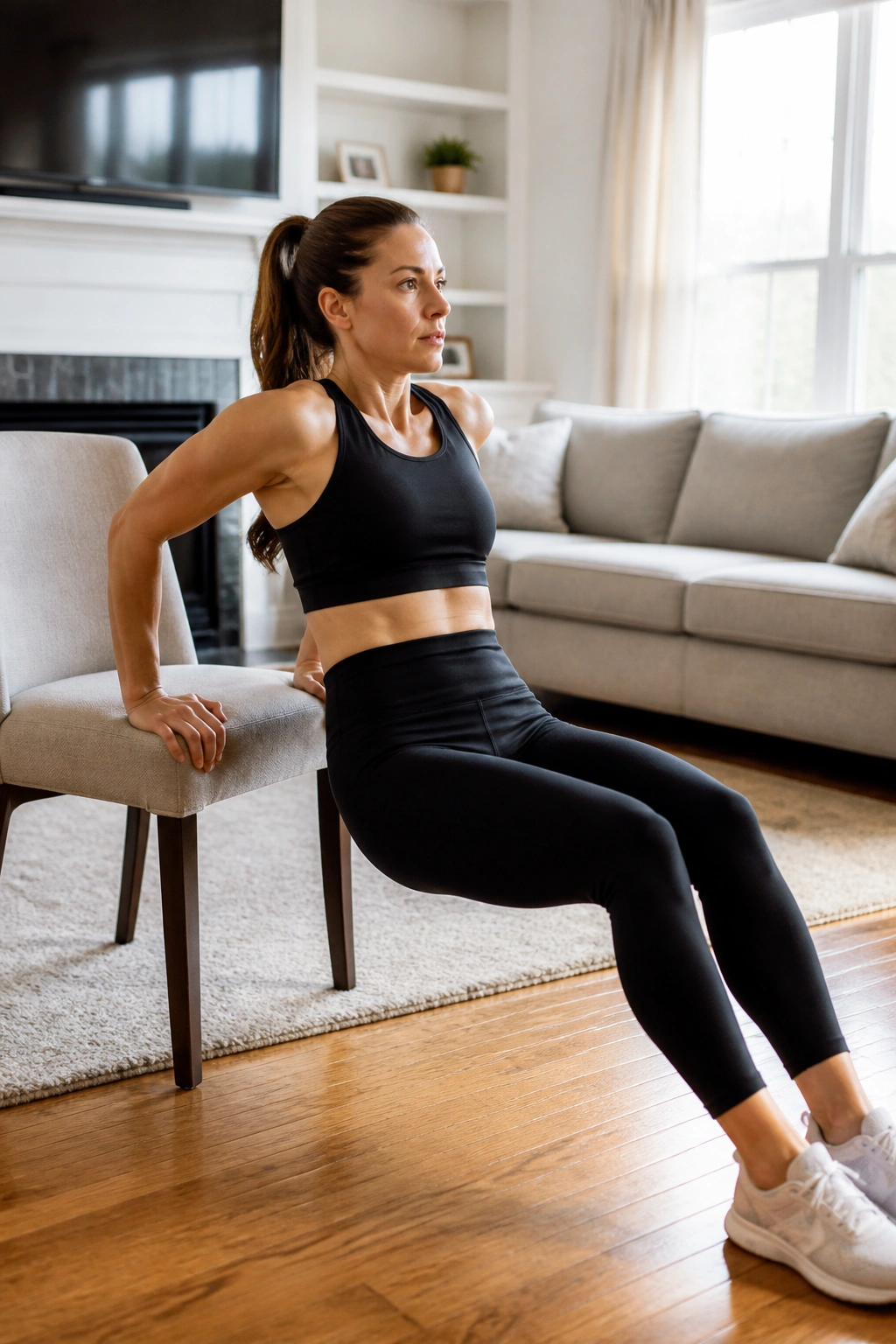
Short, ugly, effective. That’s the honest description of chair dips paired with wall sits. Your triceps work on the dip, your quads light up in the wall sit, and the whole thing fits in a corner of the room with no equipment beyond a sturdy chair.
For the dip, place your hands on the seat edge, slide your hips forward, and bend the elbows straight back. For the wall sit, slide down until your knees are near 90 degrees and hold. Do 8 dips, then 30 seconds on the wall sit. Repeat for 3 rounds.
Quick Safety Notes
- Use a chair that does not move.
- Keep the shoulders away from the ears.
- Don’t dive too low on the dip; upper arms parallel to the floor is enough.
- Keep feet flat in the wall sit.
If your shoulders dislike dips, shorten the range or swap them for overhead triceps extensions with a light dumbbell. If your knees hate wall sits, raise the angle a little and hold a less aggressive bend. The goal is useful strain, not punishment.
The burn shows up fast, which is why this pair works so well when time is short.
12. The Skater Step and Side Lunge Session
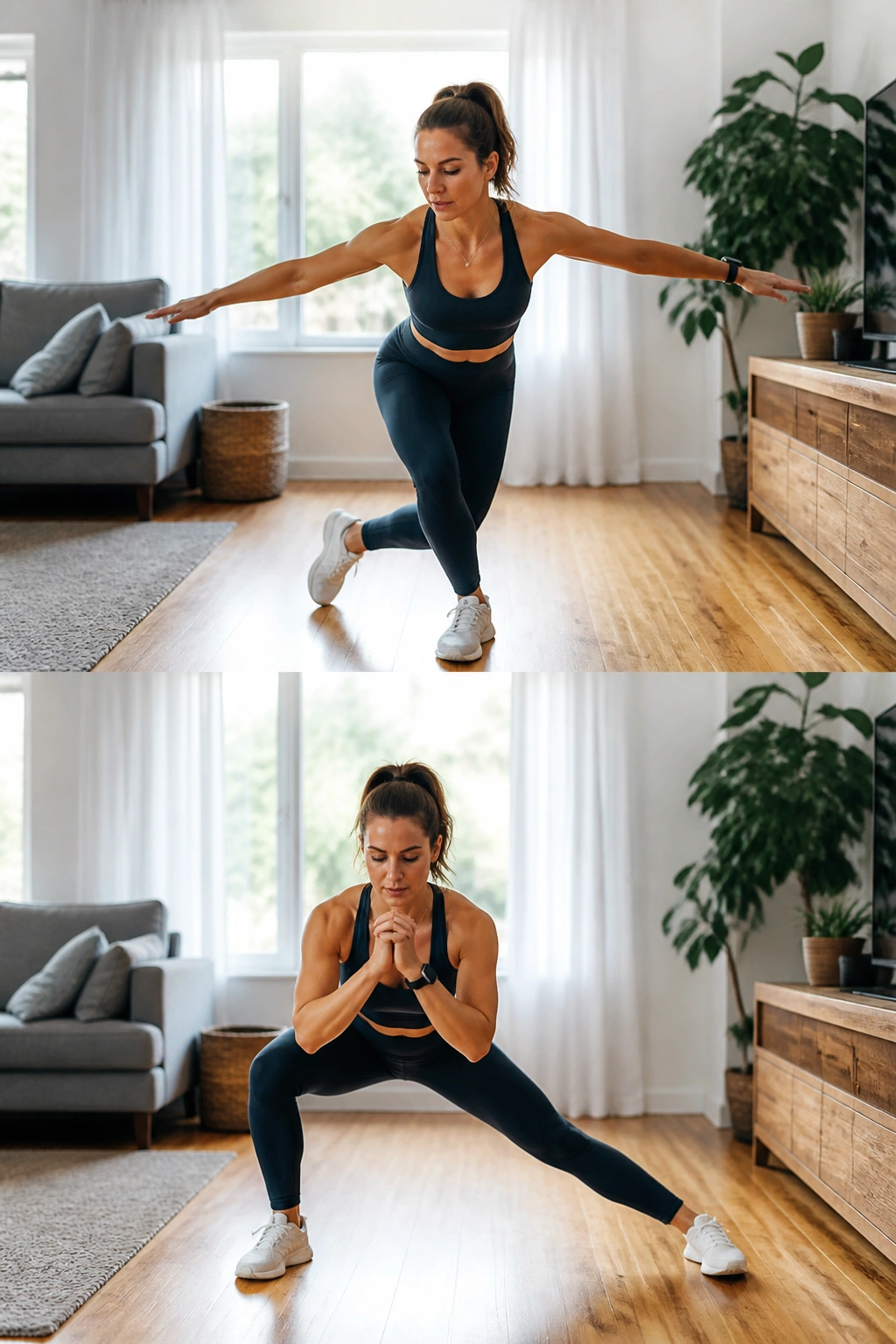
Lateral work is the missing piece in a lot of home workouts. Skater steps and side lunges wake up the outer hips and inner thighs in a way straight-ahead squats never quite do. They also make your body feel more balanced, which matters more than people think.
Start with a skater step to the right, then the left, landing softly and swinging the opposite arm across the body. Follow that with side lunges, shifting your weight into one hip while the other leg stays long. Do 10 skater steps each side and 8 side lunges each side for 3 rounds.
What Makes It Different
Skater steps bring in a little cardio, while side lunges ask for a deeper range of motion. The combination hits glute medius, adductors, and the muscles around the ankles and knees. It feels athletic without needing a big space.
How to Scale It
- Beginner: step side to side instead of hopping.
- Intermediate: add a small reach toward the floor.
- Advanced: hold a weight at the chest or add a quick hop on the skater step.
If your knees cave inward on the side lunge, shorten the step and sit the hips back a little more. That single correction often cleans up the movement quickly.
13. The Split Squat Pulse Session
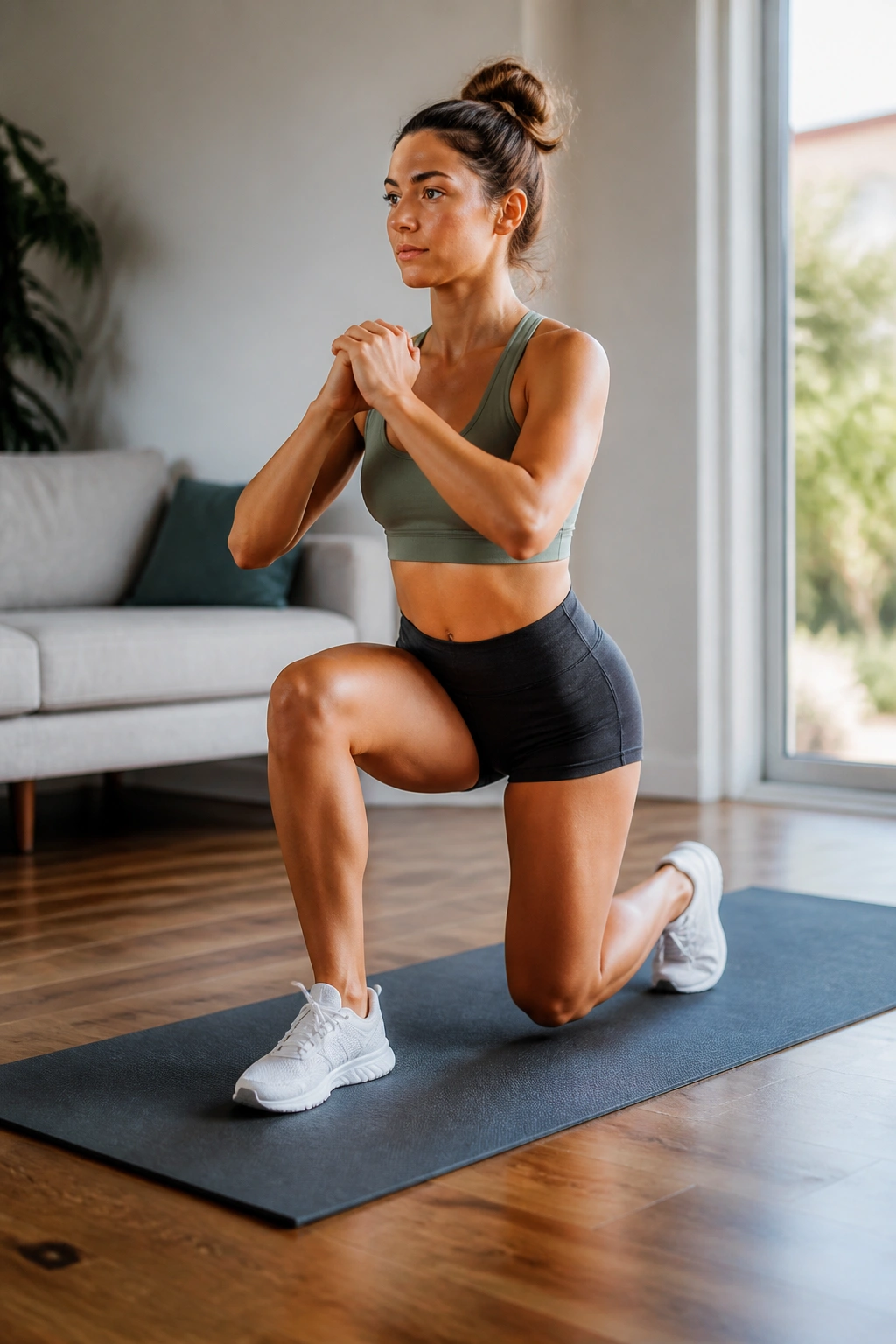
Split squats are rude. They expose weak links fast, which is exactly why they work. One leg stays planted while the other supports the motion, so there is nowhere for your stronger side to do all the cheating.
Set up in a staggered stance and lower straight down until both knees bend. Then pulse in the bottom position for 10 small reps, rise halfway, and complete 8 full reps. Switch sides and do 2 to 3 rounds. A wall, counter, or chair can help if balance is shaky.
Why the Burn Shows Up Early
The front leg does most of the work, and the rear leg is there mostly for balance. That means your quads and glutes get loaded hard even without weights. If you want more challenge, hold a backpack at your chest or elevate the rear foot on a low step for a Bulgarian split squat.
Form Cues That Matter
- Keep most of the weight on the front heel.
- Let the front knee travel forward a little, but not collapse inward.
- Stay tall through the chest.
- Keep the movement slow enough that you control the bottom.
I’m fond of this one because it gives quick feedback. If you wobble, you know it. If you rush, you know that too.
14. The Bear Crawl and Beast Hold Drill
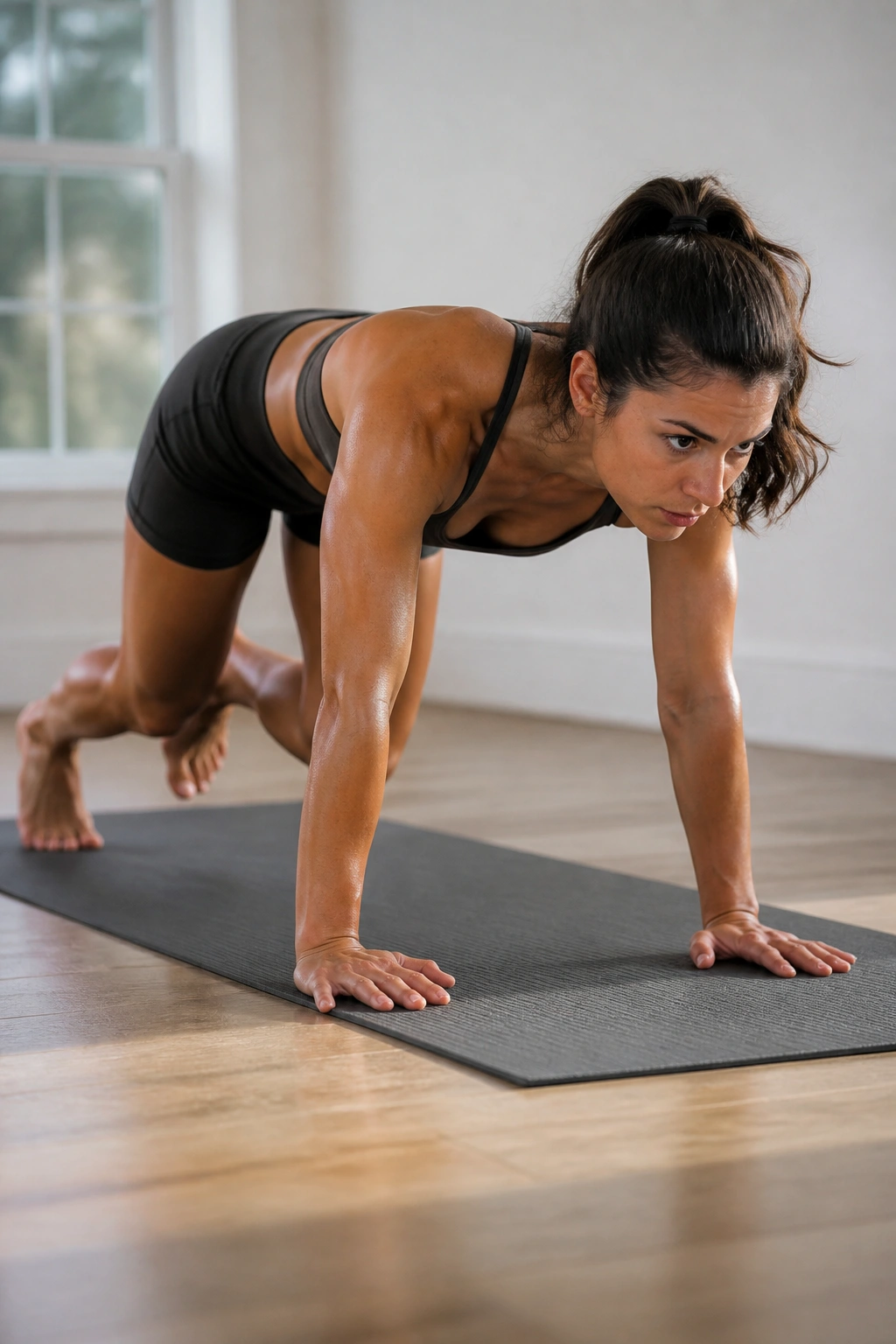
Need full-body strength without dumbbells? Bear crawls and beast holds do the job with a lot less noise than you’d expect. They train shoulders, core, hips, and coordination at the same time, and they make you feel athletic in a very plain, no-frills way.
Drop to all fours, lift your knees about 2 inches off the floor, and hold the beast position for 20 seconds. Then crawl forward 4 steps and backward 4 steps, keeping the back flat and the knees hovering. Rest, then repeat for 4 rounds.
What to Watch For
If your hips pop high, the core is dropping the ball. If your shoulders burn before your legs do, you may be leaning too far forward. Keep the weight spread evenly between hands and feet.
How to Make It Harder
- Hold the beast position for 30 seconds.
- Add shoulder taps while staying low.
- Crawl slower so every step has to be controlled.
One good crawl beats a frantic floor scramble. If your knees barely skim the ground, that is fine. They do not need to drag.
15. The Shadow Boxing Cardio Rounds
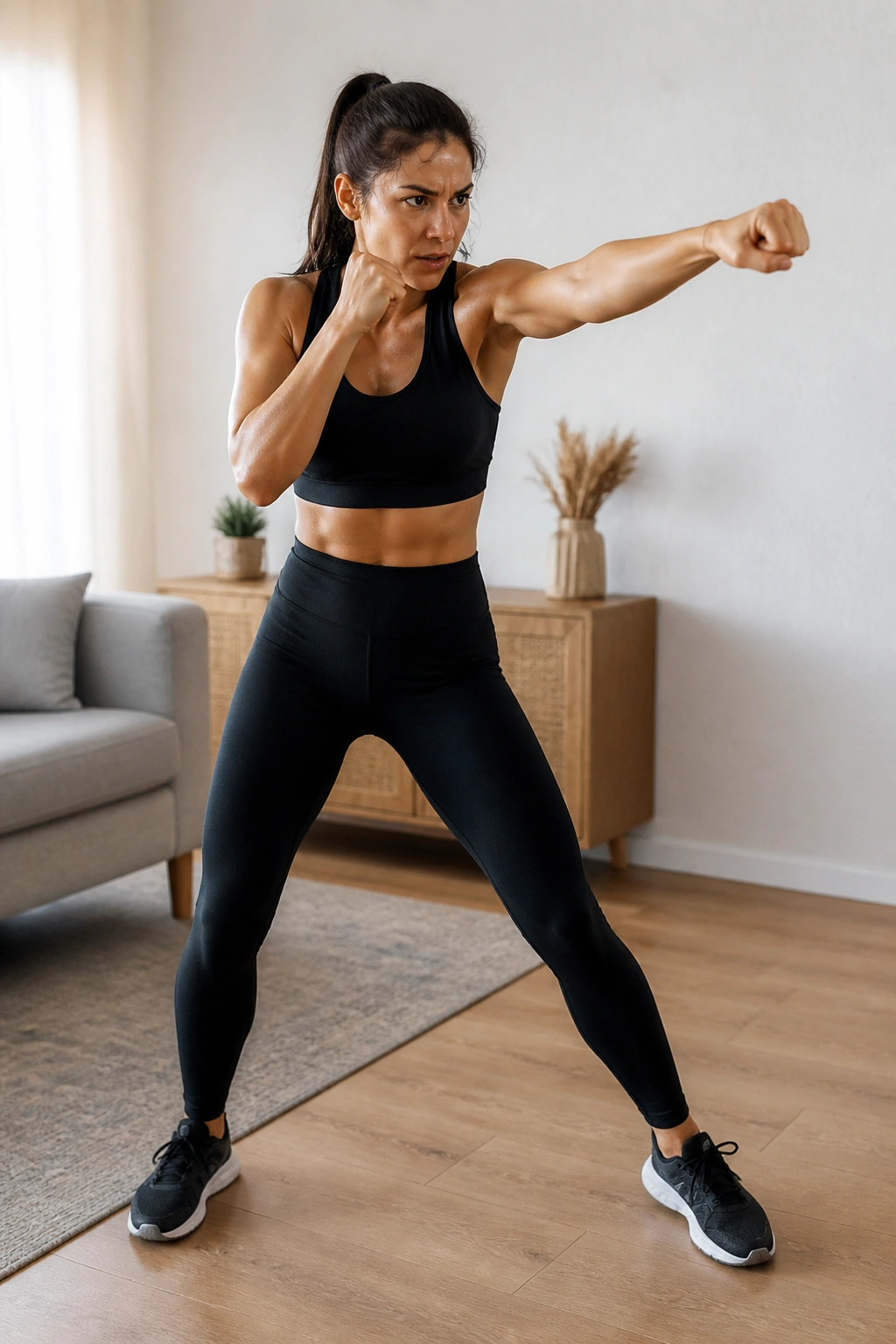
Shadow boxing is underrated because it looks simple until you try to keep the form clean for three full minutes. It gives you cardio, coordination, trunk rotation, and a weirdly good stress release all at once. Some days that matters more than a polished fitness plan.
Stand in a light boxing stance, hands up, and throw jabs, crosses, hooks, and uppercuts while moving your feet. Work for 3 minutes, rest for 1 minute, and repeat for 4 rounds. Beginners can start with 90-second rounds and shorter combinations. Advanced movers can add slips, ducks, and pivots.
The goal is not power first. It is rhythm. Keep the chin tucked, elbows in, and shoulders loose enough that you can keep punching without tightening up. Exhale on every strike.
A simple sequence works well: jab-jab-cross, hook-cross, slip, reset. Repeat it until the round ends. If your wrists ache, loosen the fists and focus on the shoulder and hip turn instead of snapping the punches.
This is one of those workouts that leaves your brain clearer than it was before.
16. The Pilates Leg and Core Series
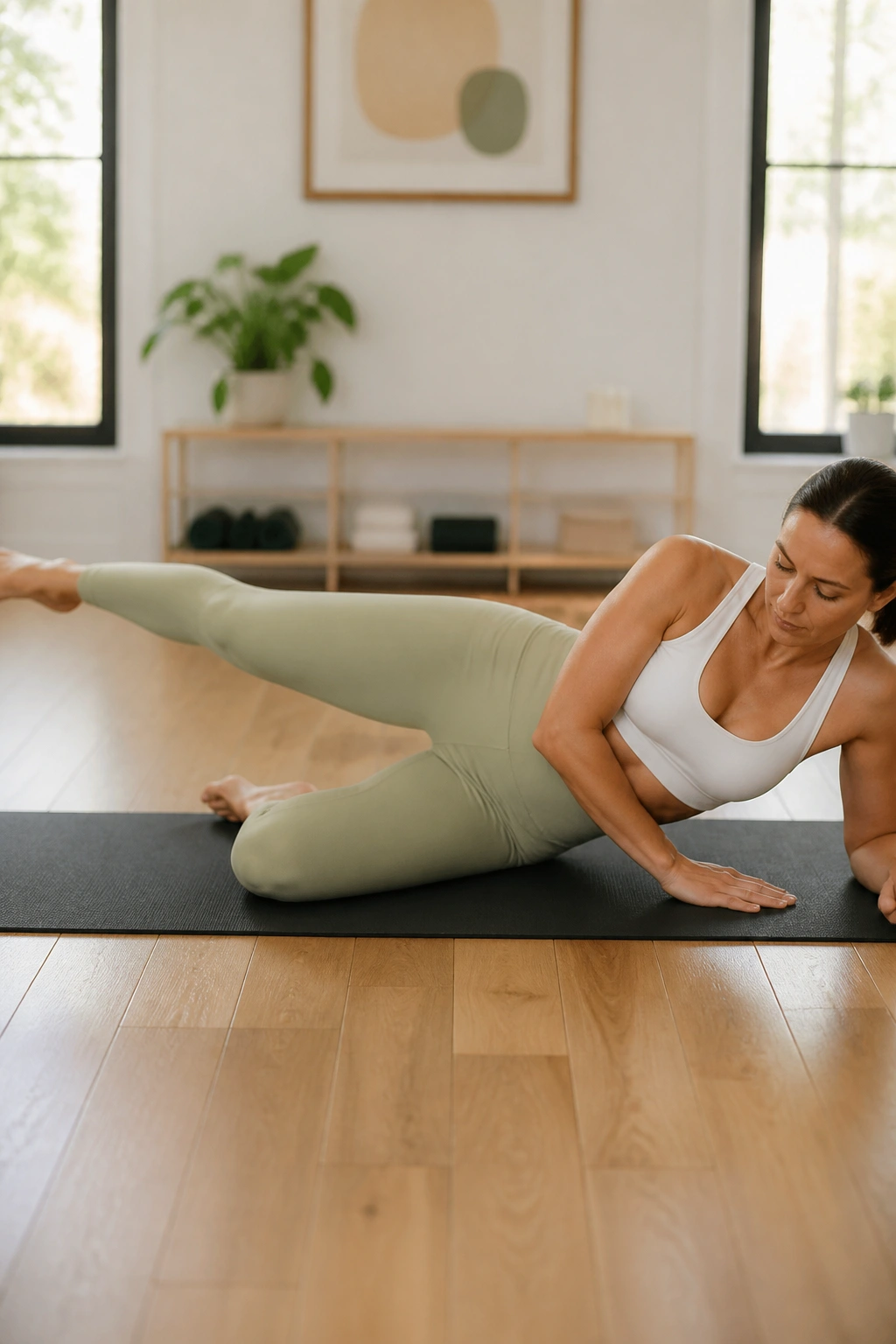
Some workouts work without noise. Pilates-style leg work does exactly that, and it still burns. The range is small, the control is strict, and the muscles that usually coast through daily life get forced to pay attention.
Lie on your side for leg lifts and clamshells, then move to your back for toe taps or single-leg stretches. Keep every rep slow enough that you can feel the working side, not the momentum. Do 10 to 12 reps per move for 2 rounds.
How to Feel It in the Right Places
- Keep the pelvis stacked and still.
- Move the leg from the hip, not the lower back.
- Lift only as high as you can without rocking.
- Keep the neck and jaw relaxed.
The point here is not drama. It’s precision. If you’re flinging the leg up, the hips are probably cheating. If you feel the outer hip and the low belly working together, you’re close.
Advanced version? Add a small ankle weight or stretch the straight-leg reaches longer. Beginner version? Keep the range tiny and the breath steady. Both work.
17. The Resistance Band Full-Body Circuit
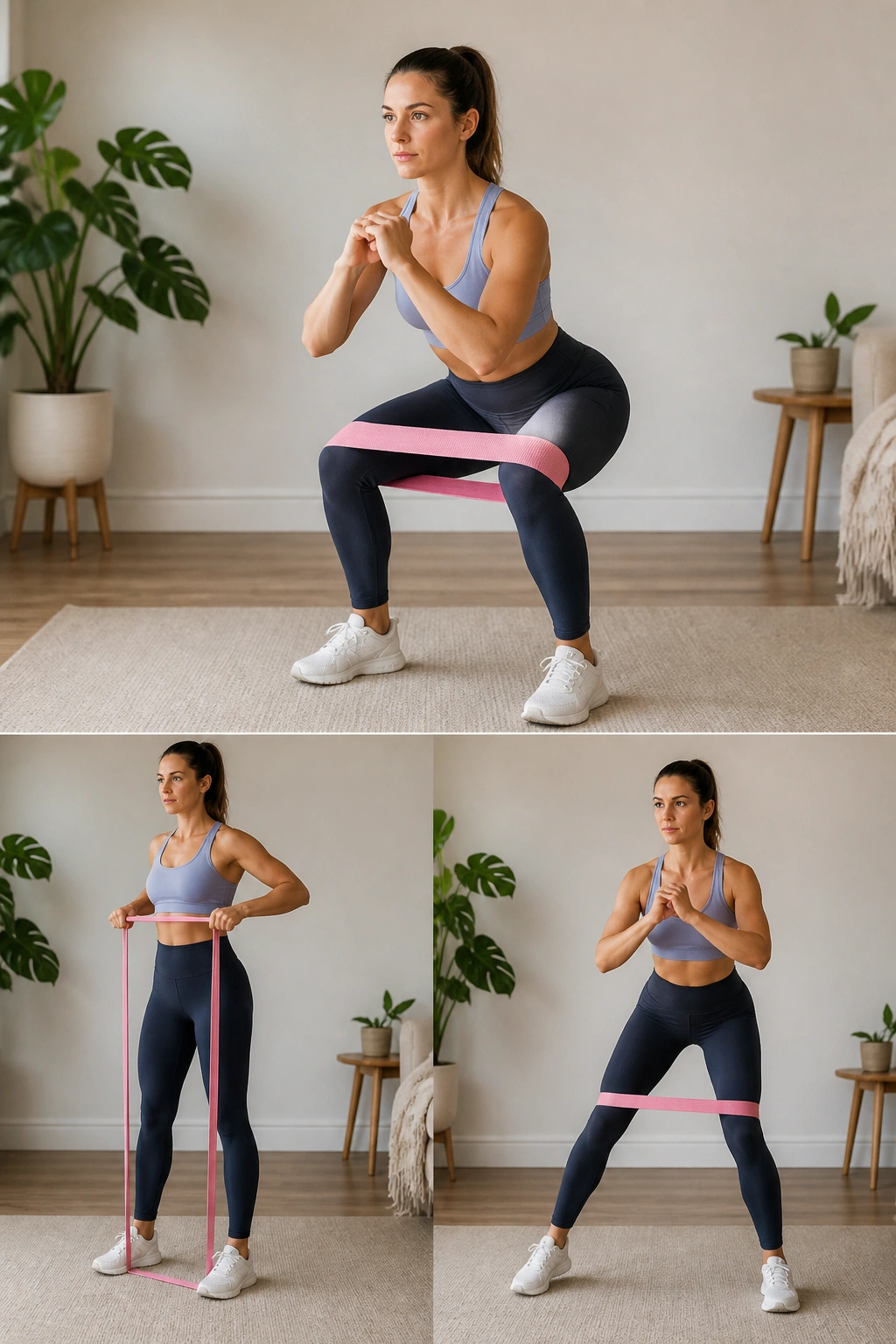
A light band changes familiar moves fast. Squats feel tighter, rows feel sharper, and glute work stops being polite. If you own one loop band or a long resistance band, you can turn a plain home session into a proper strength circuit.
Use the band for banded squats, standing rows, and lateral walks. Do 12 reps of each move, then repeat the circuit for 3 rounds. If the band is light, slow the lowering phase to make the muscles stay under tension longer.
A long band around a sturdy anchor can also work for rows. Pull the elbows back, squeeze the shoulder blades, and return with control. If you do not have a band at all, a backpack filled with books can cover squats or rows in a pinch. It is not fancy. It does work.
Best Uses for a Band
- Glutes during lateral walks and bridges
- Upper back during rows and pull-aparts
- Legs during squats and step-outs
The band should challenge the last 3 reps of each set. If it feels loose the whole time, move up in tension or slow down.
18. The Single-Leg Hinge and Balance Workout
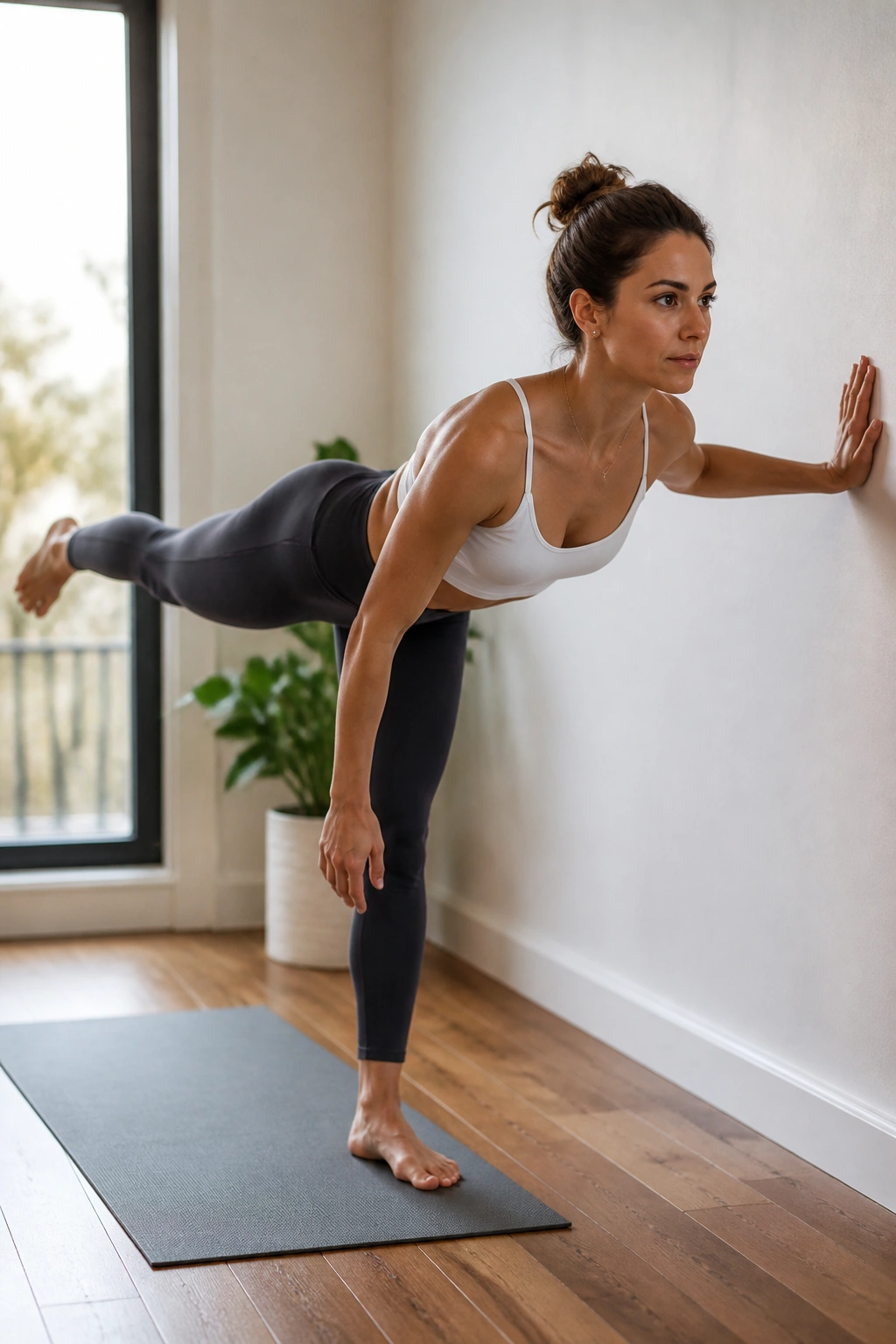
Why do single-leg hinges matter? Because everyday strength starts with one leg at a time. Walking, stepping, and changing direction all depend on hips that can hold steady while the rest of the body moves.
Stand tall, shift weight to one leg, and hinge at the hips while the free leg reaches back like a counterweight. Return to standing without twisting the pelvis. Do 8 reps per side, taking 3 seconds on the way down. Rest briefly, then repeat for 2 to 3 rounds.
What Makes This One Worth Doing
This move trains the hamstrings, glutes, and balance system together. It also exposes the little wobbles that bilateral squats can hide. If balance is a mess at first, keep one fingertip on a wall or counter. That does not make the exercise less useful. It makes it more honest.
How to Progress
- Hold a dumbbell or water bottle in the opposite hand.
- Pause for 1 second at the bottom.
- Keep the standing knee soft but not bent deeply.
- Reach the lifted heel straight back.
If you feel the motion in your lower back, stop and shorten the hinge. The hips should do the work, not the spine. That distinction saves a lot of frustration.
19. The 20-Minute EMOM Full-Body Circuit for Women
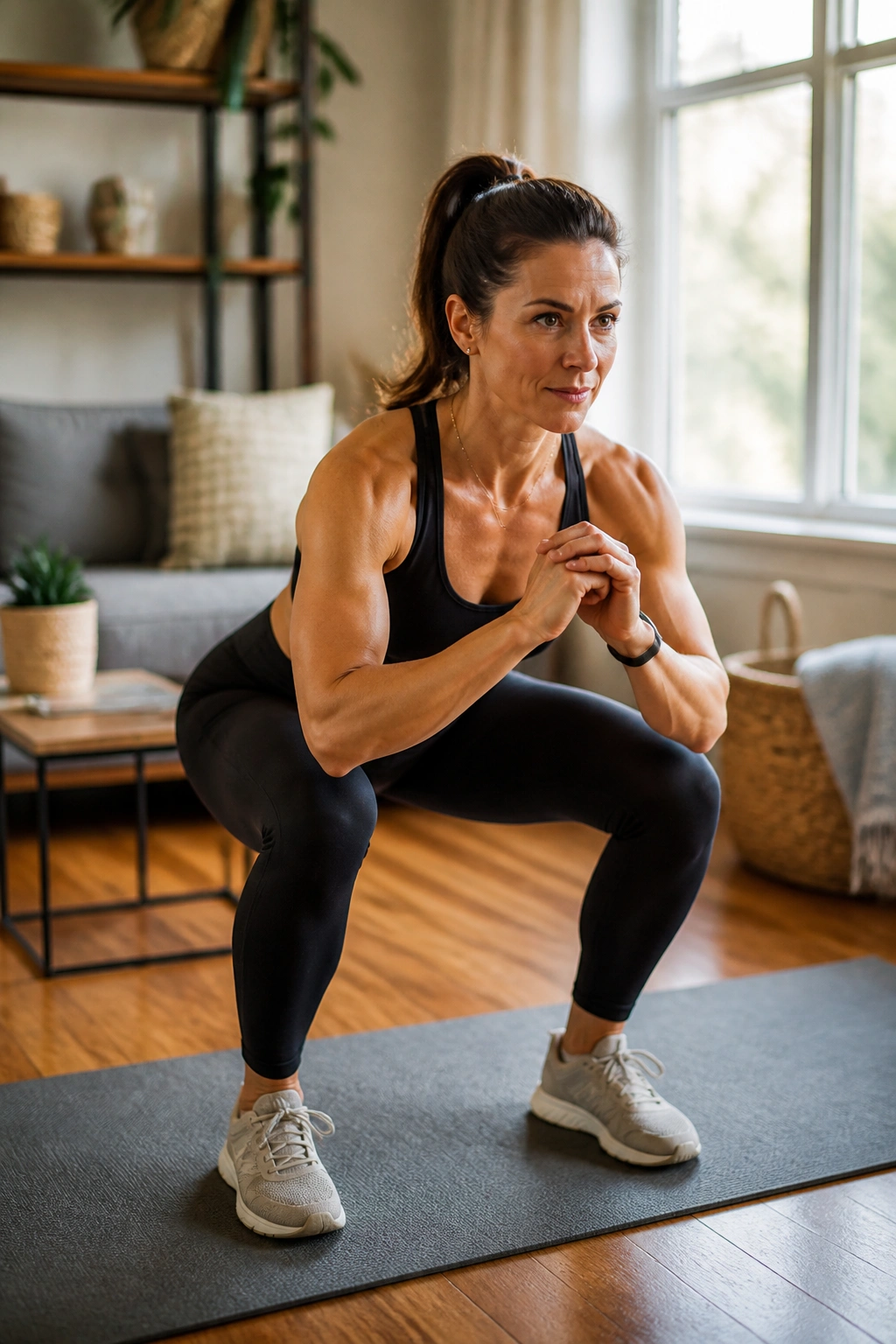
EMOM means every minute on the minute, and it’s a clean way to get a lot done without a complicated plan. Pick a movement, finish the reps at the start of the minute, then rest for whatever time is left before the next minute begins. It is structured, a little ruthless, and very effective when time is tight.
Use a 4-minute rotation and repeat it 5 times for a total of 20 minutes:
- Minute 1: 12 squats
- Minute 2: 8 incline push-ups
- Minute 3: 8 reverse lunges per side
- Minute 4: 20 mountain climbers
If you finish early, rest. If you finish late, cut the reps next round. That feedback loop is the whole point. Beginners can shave each number by about 25 to 30 percent. More advanced readers can hold a backpack during the squats or switch the incline push-ups to the floor.
Why It Works
The built-in rest keeps the pace sharp without forcing all-out sprinting. You get strength, cardio, and a bit of mental structure in one block. It also makes pacing easier than an open-ended circuit, which is handy if you tend to go too hard in minute one and crawl through minute four.
The first time through, keep a little in reserve. You want the last round to look almost as tidy as the first.
20. The Recovery Stretch and Breathing Flow for Women
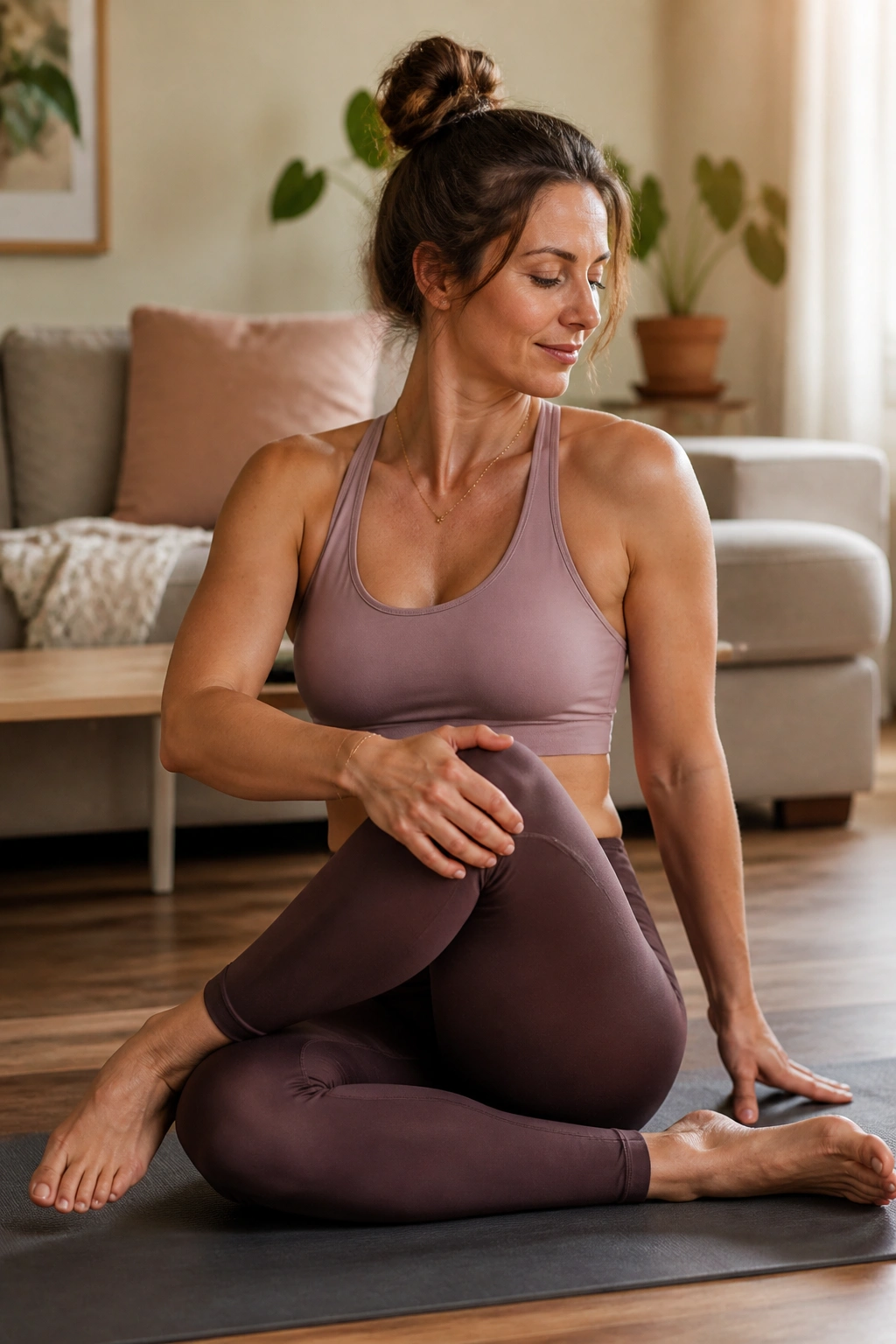
Not every useful session has to leave you sweaty. Recovery work is still training, especially when your hips are tight, your shoulders feel packed, or your breathing has gone shallow. A short stretch and breathing flow can reset the whole day more than another hard circuit.
Move through cat-cow, thread-the-needle, seated figure-four, half-kneeling hip flexor stretch, and a gentle forward fold. Spend 30 to 45 seconds in each position, then repeat the flow for 2 rounds. Finish with 4 slow breaths in and 6 slow breaths out for a minute or two.
How to Keep It Useful
- Breathe through your nose if you can.
- Let the exhale be longer than the inhale.
- Stay out of sharp pain.
- Ease into each shape instead of forcing range.
I like ending with this kind of work because it keeps the habit alive on low-energy days. A body that moves, even quietly, tends to feel more cooperative the next time you ask for a harder session. And that matters more than people admit.
A good home routine does not need to be loud to count. It just needs to be honest, repeatable, and a little bit better than skipping it.
