



Most people chase bigger shoulders with more pressing, then wonder why the mirror still shows a flat slope where a clear cap should be. The smarter shoulder workouts do two jobs at once: they build overhead strength and they make the side and rear delts do some actual work.
That matters because the front delts already get plenty from bench pressing, push-ups, dips, and any other hard horizontal press you like. What usually lags is the side delt and the rear delt — the two heads that give shoulders that wider shape from the front and that fuller look from behind. No magic there. Just enough direct work in the right places.
There’s another wrinkle people miss. Strong shoulders are not only about size. They also need good control through overhead range, clean shoulder blade movement, and enough rotator cuff support that you can keep training without every session feeling a little sketchy.
So the job is not “find one perfect move.” It’s build a mix: heavy presses for strength, raises for shape, rear-delt work for balance, and a few awkward variations that expose weak spots fast. Use the list like a menu, not a checklist.
1. Barbell Overhead Press

The barbell overhead press is the blunt instrument of shoulder training. Heavy, direct, and honest. If you want stronger shoulders, this is usually the first lift I’d keep in the plan because it teaches you to brace, drive, and press as one piece instead of flailing the bar upward.
Why It Belongs in Shoulder Workouts
The press loads the front delts hard, but that’s not the whole story. Your upper back, triceps, glutes, and core all have to do their part or the lift falls apart fast.
Stand tall, squeeze your glutes, and keep the bar close to your face on the way up. The bar should move in a slight arc, not straight out in front of you like a bad incline press. That little path keeps the shoulders in a cleaner line and saves you from grinding against your own ribs.
Programming Sweet Spot
- Strength focus: 4 to 6 reps for 3 to 5 sets.
- Size focus: 6 to 8 reps for 3 to 4 sets.
- Rest: 2 to 3 minutes between sets.
- Best cue: keep the ribs down and the glutes tight.
Keep your head out of the way, then push through once the bar clears your forehead. That small timing cue fixes a lot of ugly reps.
2. Seated Dumbbell Shoulder Press
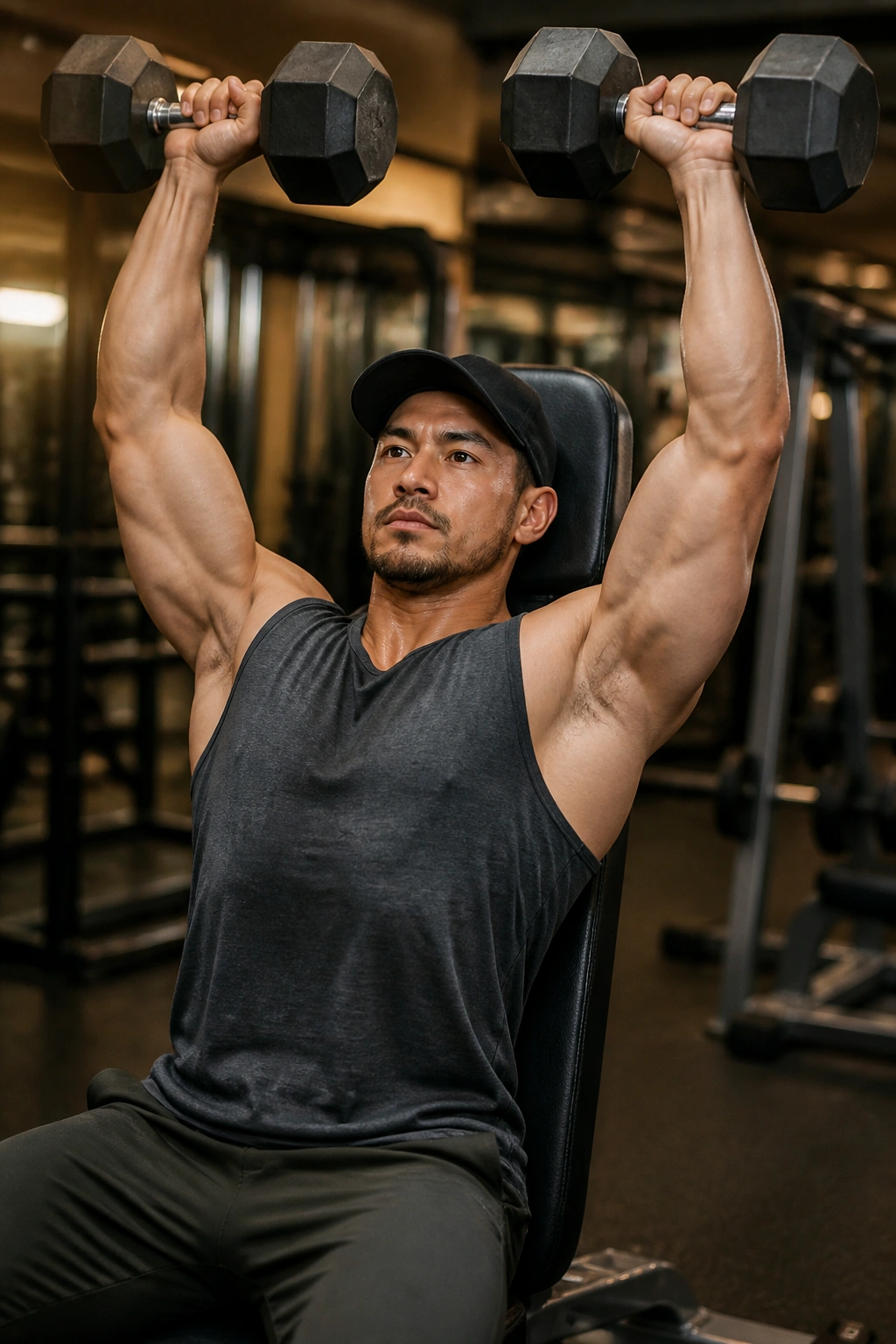
Why pick dumbbells when a barbell already exists? Because each arm has to earn its own rep. That makes the seated dumbbell shoulder press a sneaky good choice for lifters who have one side that lags, one shoulder that feels tighter, or a tendency to lean back and turn every press into a half-incline bench.
The seated position gives you a little more stability than standing, which is handy if you want to hammer the delts without turning the set into a balance contest. Use a bench with back support if you want to take the lower back mostly out of the equation. Use a strict upright bench if you want a bit more torso work.
Keep the dumbbells in the scapular plane, not flared way out to the sides. That means your elbows track a little forward of your shoulders, which tends to feel smoother and usually lets you press deeper without that annoying pinchy feeling up front.
One clean rep matters more here than heroic weight. A controlled 6 to 10 reps for 3 to 4 sets is the sweet spot for most people.
3. Arnold Press

Does the rotation add something, or is the Arnold press just old-school flair? It does add something, but not in the way people sometimes claim. The rotation gives the front delt a longer path and often makes the top half of the rep feel smoother once you’ve learned the groove.
This is not my first pick for max strength. It’s a better volume tool. The movement keeps tension on the shoulder through a longer arc, and for some lifters that extra range makes the delts light up in a way a straight dumbbell press doesn’t.
How to Use It
- Keep the dumbbells light enough that you can control the rotation.
- Aim for 8 to 12 reps.
- Rotate smoothly; don’t whip the wrists.
- Stop short if the front of the shoulder feels pinchy.
The best Arnold presses look almost boring. No bounce, no wild twist, no shrugging into the ears. If the rotation feels like a circus trick, the weight is too heavy.
4. Push Press
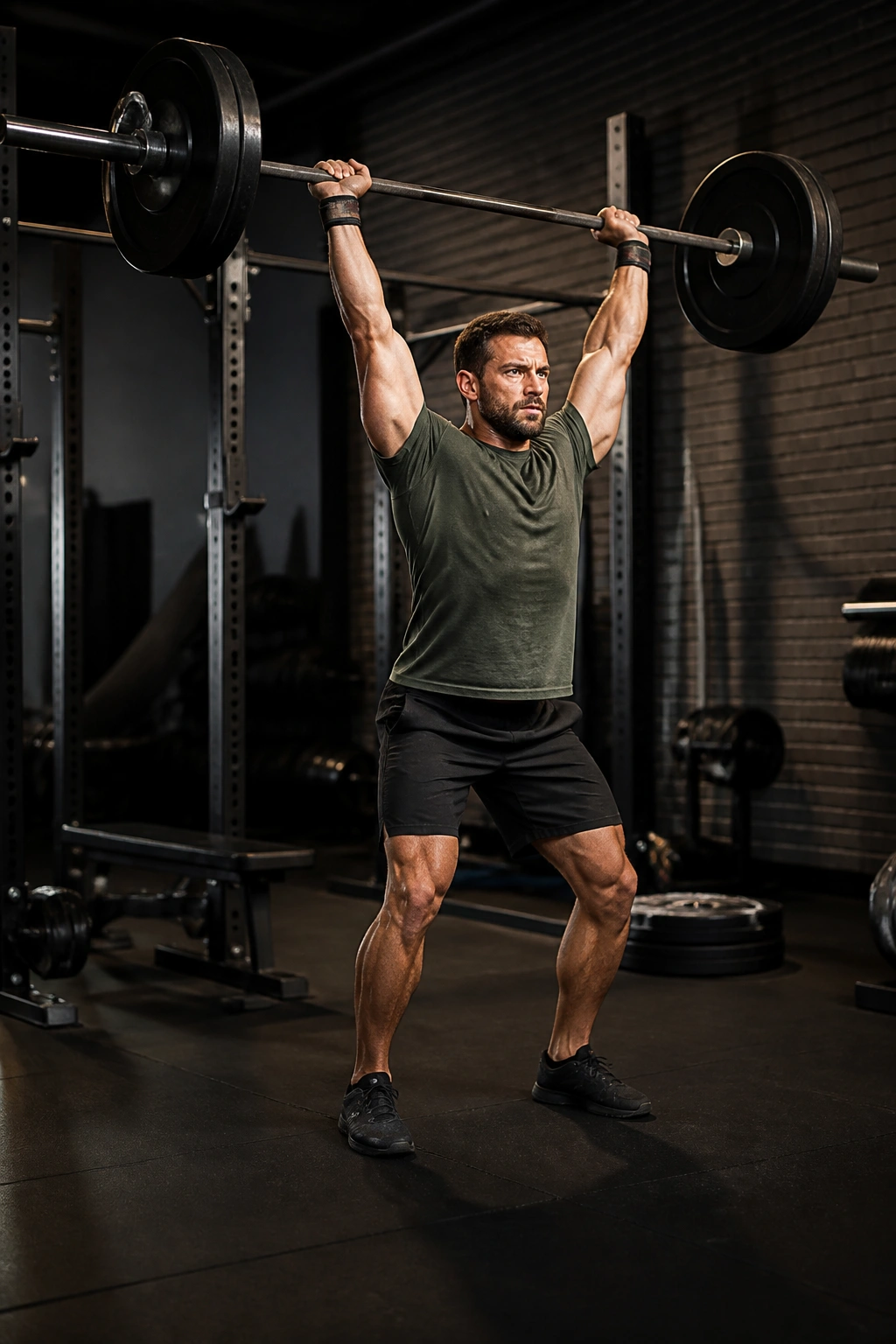
You can tell a lot about a lifter by how they use the push press. Done well, it’s an explosive overhead movement that lets you overload the shoulders with more weight than a strict press would allow. Done badly, it turns into a sloppy dip-and-heave that makes your lower back pay for your ego.
Picture this: your strict press stalls at a weight you can barely move for one clean rep. The push press lets your legs give the bar a short, sharp boost so the shoulders can finish the job. That extra speed can build power and give you a path to heavier overhead loading without grinding every set into dust.
What to Watch For
- Dip only 2 to 4 inches.
- Keep the torso nearly vertical.
- Drive hard through the floor.
- Lock out with the shoulders, not a weird back lean.
Use 3 to 5 reps per set. That’s usually enough to keep the lift crisp. If the dip turns into a squat, cut the load. Simple fix.
5. Dumbbell Lateral Raise
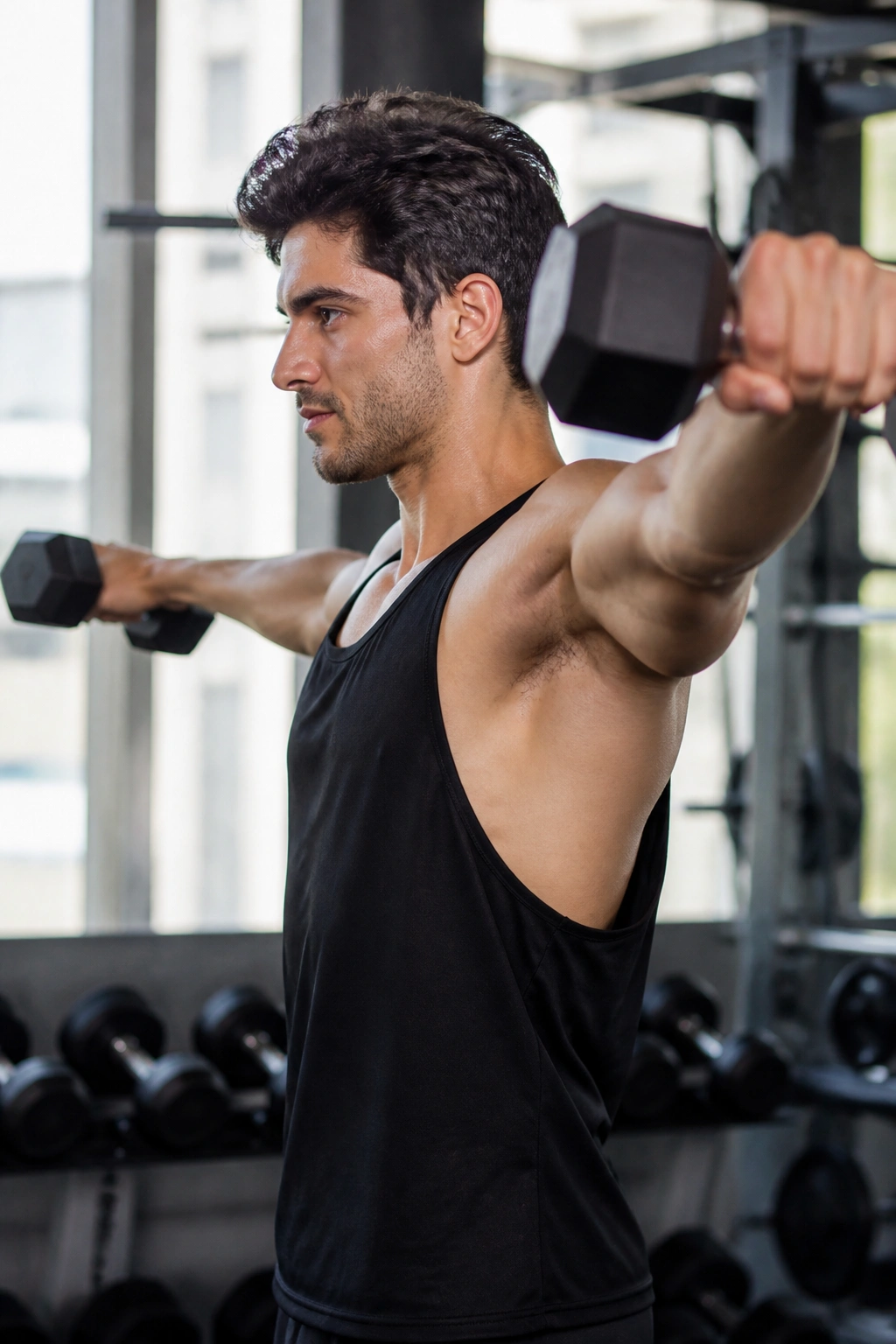
Tiny movement. Big change. The dumbbell lateral raise is one of those exercises that looks harmless until you try to do it with real control and a reasonable amount of weight. Then the side delt starts screaming in that specific, useful way that tells you you’ve hit the right spot.
This is the move that gives shoulders width. Not front-to-back thickness. Width. If the front delt is the hood ornament, the side delt is the part that makes the shoulders look broader in a T-shirt. People love to press and ignore raises, which is why they end up with strong-looking front delts and not much shape from the side.
Keep a slight bend in the elbows and raise the dumbbells until your arms are about level with the floor. Higher is not better here. Once you go past shoulder height, the traps tend to take over, and then the whole thing becomes more shrug than delt work.
A slow lowering phase helps a lot. Two seconds down is a good start. If you need to swing the weight, the dumbbells are too heavy.
6. Cable Lateral Raise for Shoulder Workouts
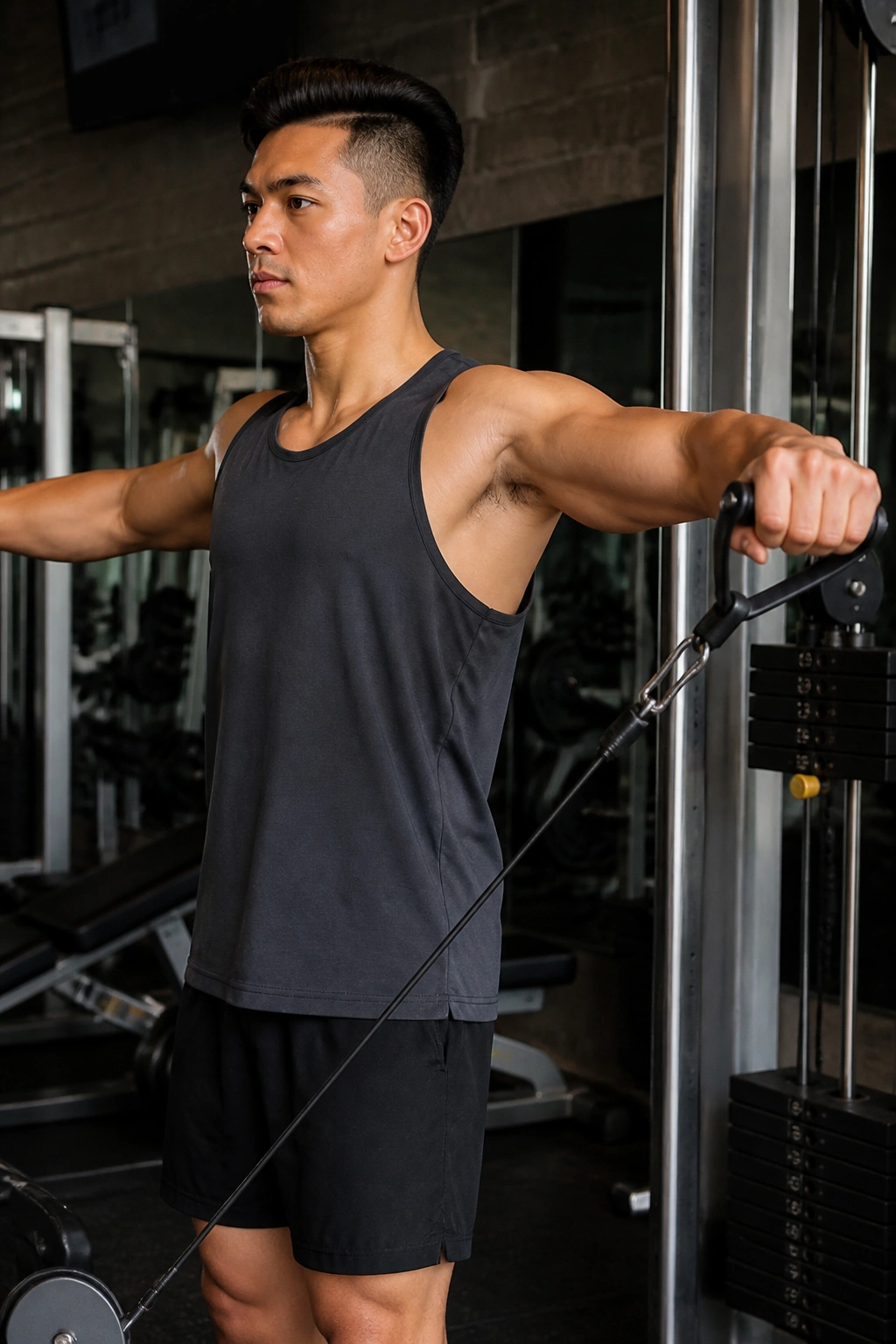
Unlike dumbbells, cables keep tension on the side delt through almost the whole rep. That’s the main reason this variation earns a spot in shoulder workouts that are chasing shape rather than just raw loading.
A dumbbell lateral raise gets easier near the bottom because gravity changes the line of pull. A cable doesn’t care. It keeps tugging the same way from the first inch to the last, which often makes the side delt work harder with less cheating. That can also make the movement feel smoother on cranky shoulders.
Stand side-on to a low pulley, grab the handle with the outside hand, and step a foot or two away from the stack. Raise the arm in a clean arc until it reaches shoulder height. Don’t let the torso lean and twist just to sneak the weight up.
This is one of the best lateral raise options for higher reps. 10 to 15 reps for 3 to 4 sets works well, especially if you like that steady burn that shows up by rep 8 and refuses to leave.
7. Lean-Away Cable Lateral Raise
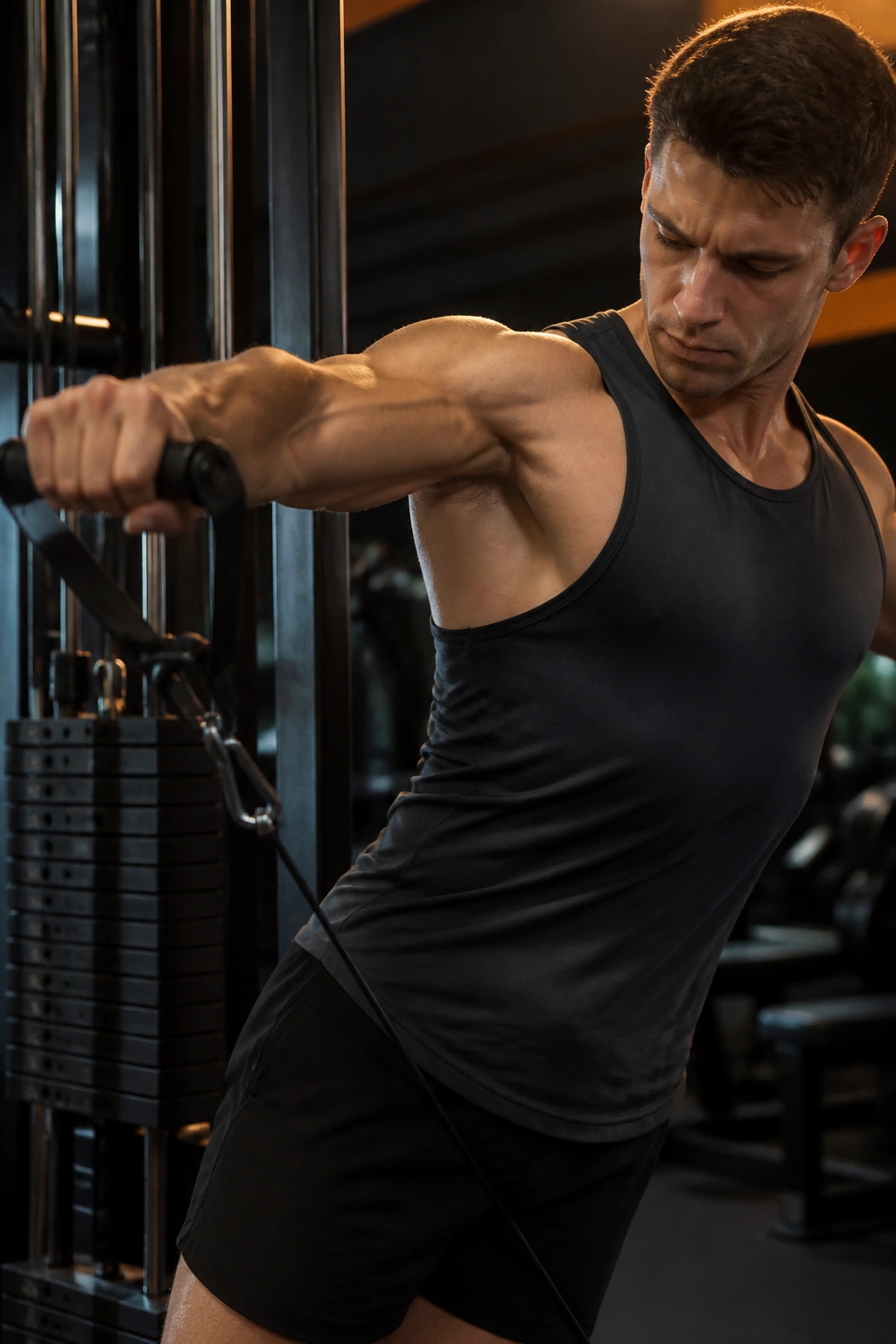
A small lean changes the whole exercise. That’s the charm of the lean-away cable lateral raise. You create a little extra range at the bottom, which means the side delt starts under tension instead of waiting for the rep to get interesting halfway up.
What the Lean Does
The lean pulls your body away from the stack just enough to lengthen the starting position. That extra stretch can make the side delt feel like it’s doing the work instead of your upper trap or torso. It also tends to smooth out the line of pull.
Keep the lean modest. Ten to twenty degrees is plenty. If you have to bend way over, you’re probably turning a simple raise into a body-English contest.
How to Get the Most From It
- Set the pulley low.
- Hold the post or stack lightly for balance.
- Use a lighter load than you think you need.
- Stay within 12 to 15 reps.
Do not twist your torso to finish the rep. The point is a longer delt line, not a sideways dance.
8. Bent-Over Rear Delt Fly
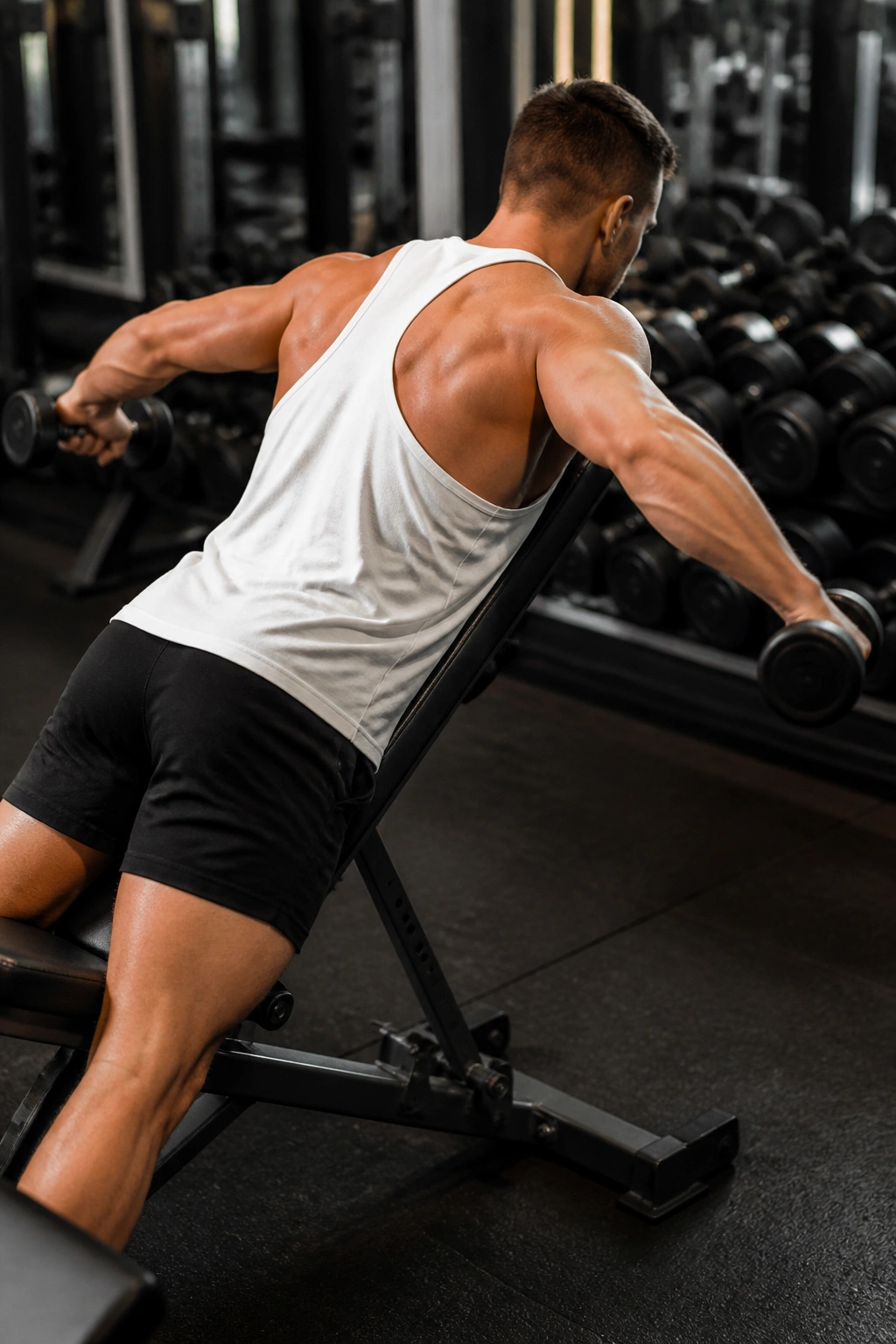
Rear delts are the part most people undertrain. That’s why shoulders often look okay from the front and unfinished from behind. The bent-over rear delt fly fixes that gap if you’re willing to keep the movement strict and the weight modest.
You can do this standing bent at the hips, or chest-supported on an incline bench if your lower back gets tired before your rear delts do. I prefer the chest-supported version for most people because it strips away a lot of cheating and makes the rear delt show up faster.
Think about spreading the back of your shoulders apart. That cue works better than “lift the dumbbells.” The rear delt is a small muscle, and it does not need a giant swing to get involved.
Use a light load and high reps. 12 to 20 reps is the zone where this exercise earns its keep. If the traps take over, slow the lowering phase and cut the weight in half. Seriously.
9. Face Pull
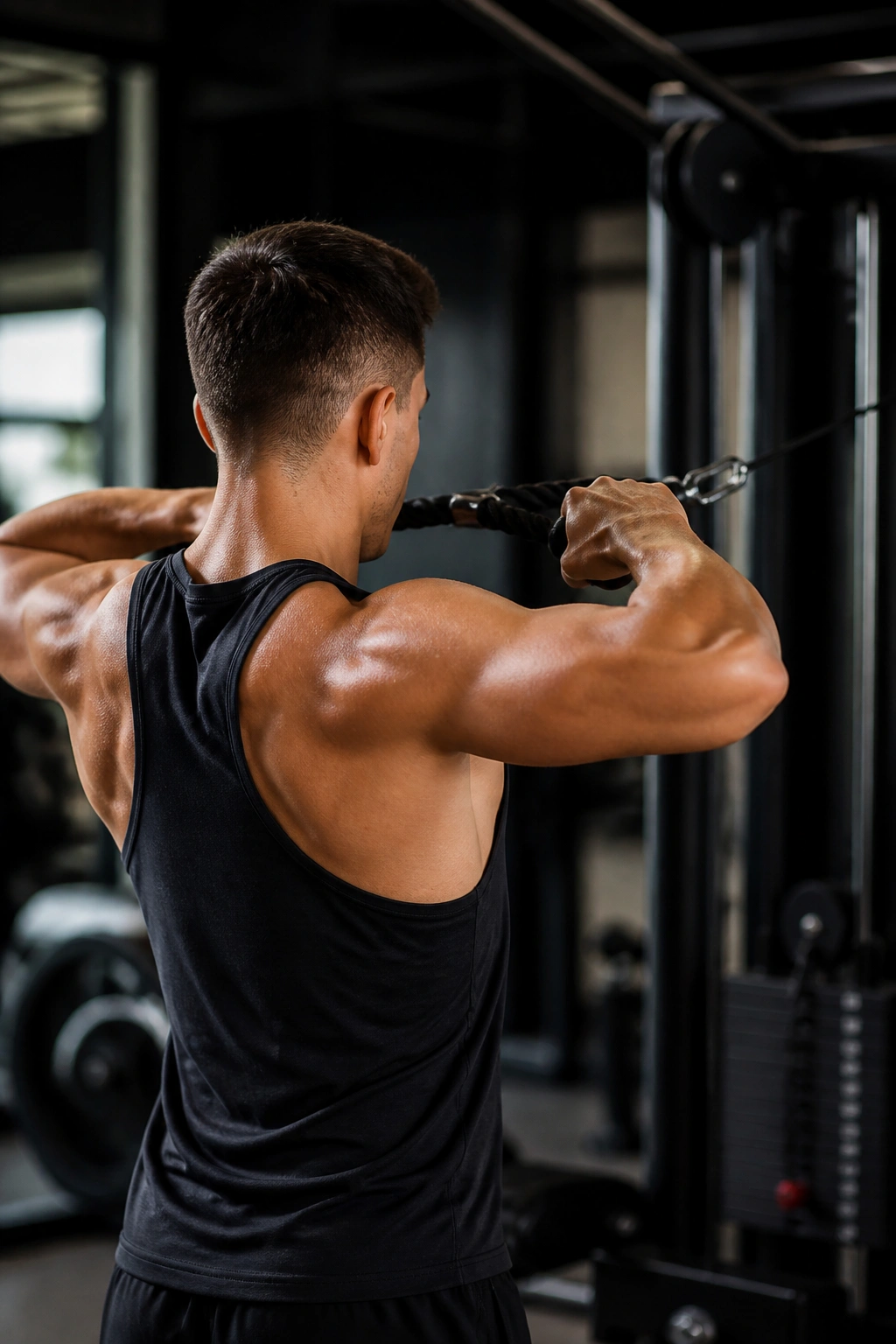
Does a face pull build shoulders or just warm up the upper back? Both, if you do it right. That’s why it lives in so many smart shoulder sessions: it builds rear delts, upper back control, and a little external rotation strength without needing much load.
Set the rope attachment around upper-chest or eye level, step back until the cable has tension, and pull toward the bridge of your nose or forehead. At the end of the pull, your elbows should be high and your hands should split apart slightly. That little external rotation is part of why the move feels so good on the shoulders.
How to Use It
- Use 12 to 20 reps.
- Pause for 1 second at the squeezed position.
- Keep the ribs stacked, not flared.
- Pull with the elbows, not the hands.
A face pull done with careless form turns into a shrug and a row. A face pull done well feels clean, controlled, and oddly satisfying. It’s one of the few movements that can leave the shoulders feeling better after the set than before it.
10. Reverse Pec Deck
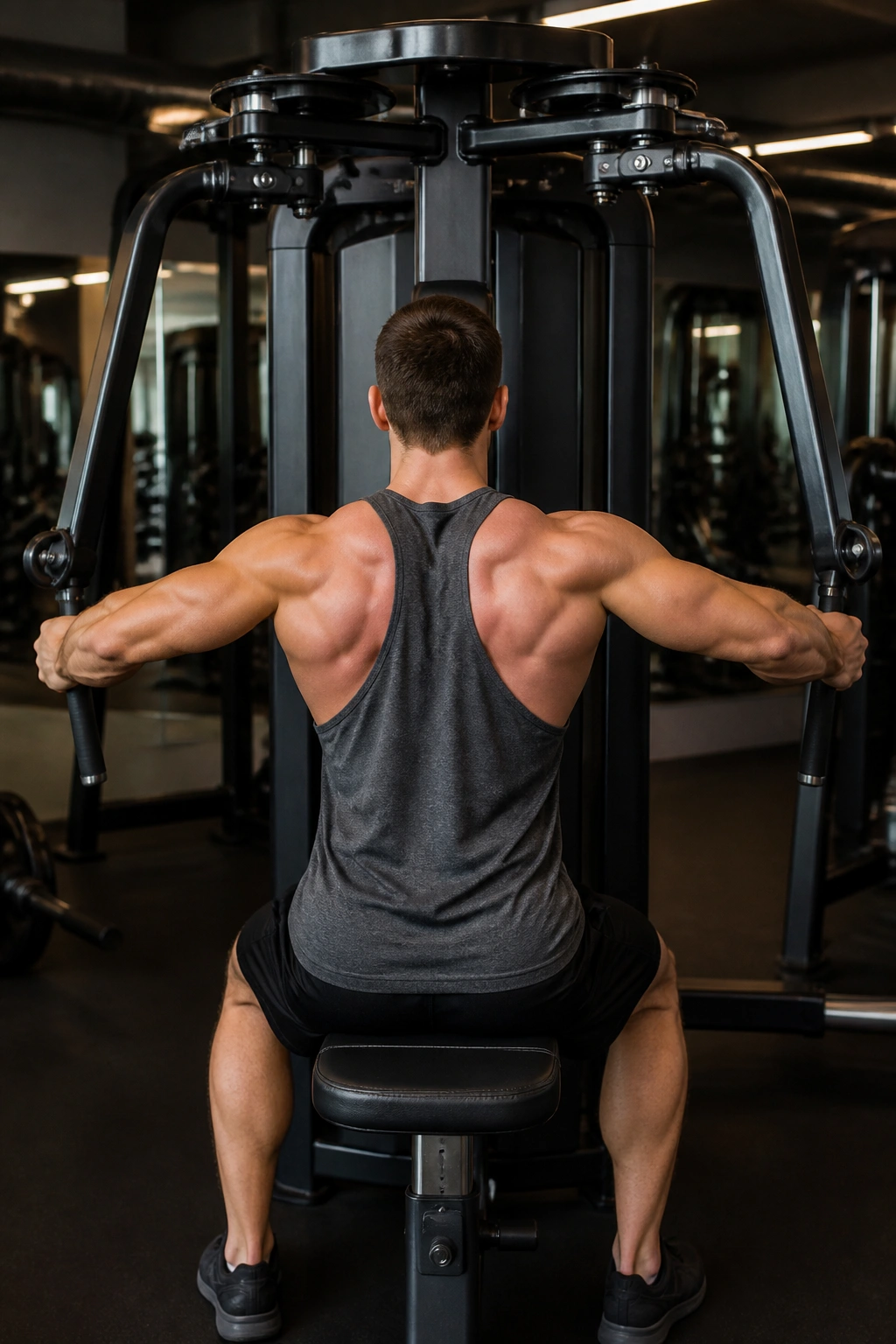
Walk past the reverse pec deck and you’ll see two kinds of people: the ones who use it for precise rear-delt work, and the ones who turn it into a shrugging contest. Only one of those groups gets the look they want.
The machine helps because it locks in the path. Your chest stays against the pad, your torso stops cheating, and the rear delts have to do the job. That fixed setup makes it easier to push the reps hard without turning the movement into a full-body swing.
Set the seat so the handles line up roughly with upper chest height. Keep a slight bend in the elbows and move the arms out and back in a smooth arc. Don’t chase max weight here. Chase the back of the shoulder getting to work.
This is a perfect finisher after pressing or lateral raises. Two to four sets of 12 to 15 reps usually hits the mark. If you feel it mostly in the traps, lower the seat a bit and lighten the stack.
11. Z Press
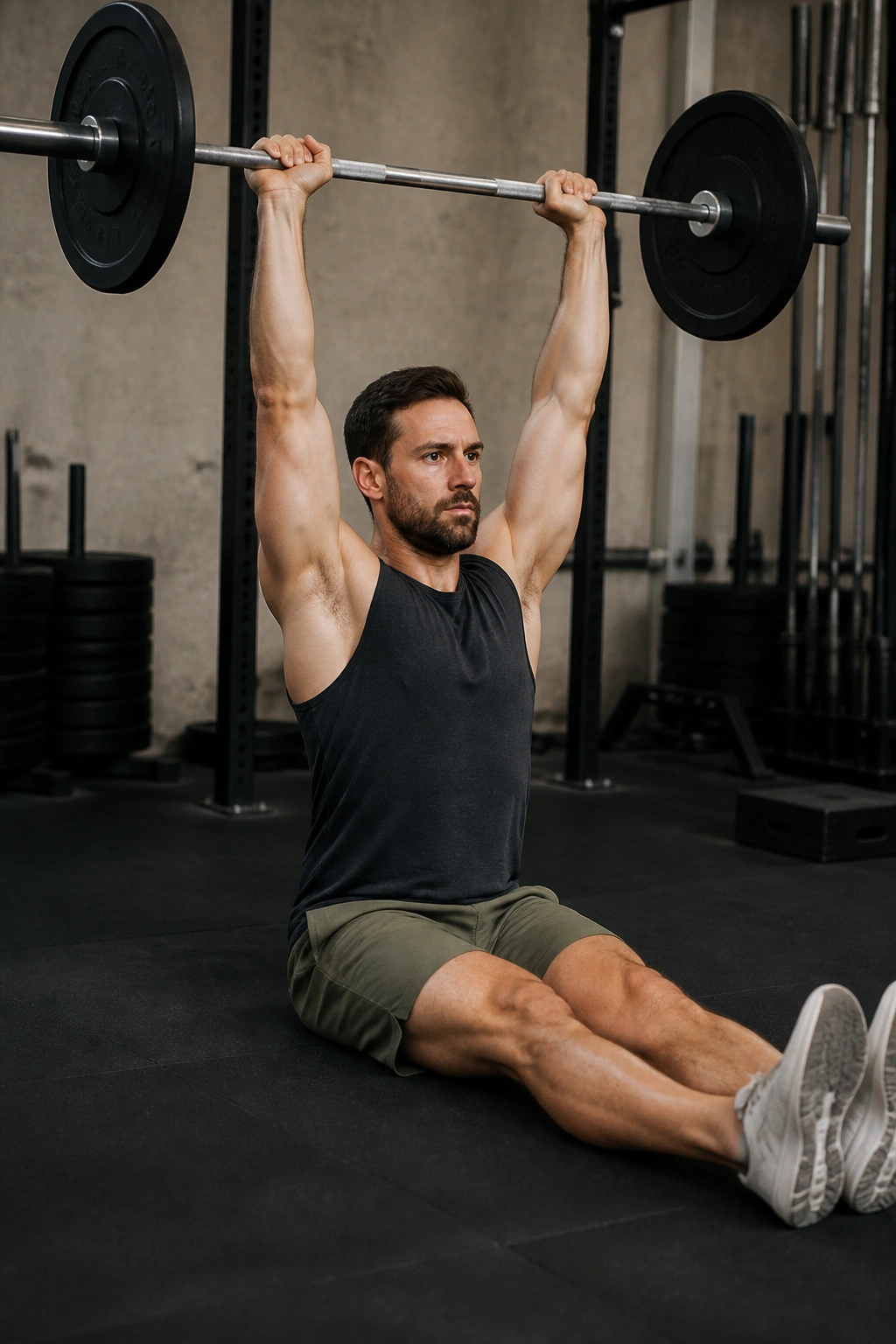
Sitting on the floor turns every sloppy press into a confession. The Z press strips away the leg drive, takes away the backrest, and forces the shoulder, core, and upper back to do their jobs without help.
It looks simple until you try it. Then the hamstrings, hips, and thoracic spine all send little complaints at once. That’s part of the value. The lift tells you where your overhead pattern is clean and where it leaks.
Keep your legs straight, sit tall on the floor, and press from a stacked torso. If you have to lean back hard to start the rep, the load is too heavy or your mobility is not ready for it yet. Both are fine. Just adjust.
Use 5 to 8 reps for 3 to 4 sets. Light to moderate loading works best. If your rib cage shoots forward, reset and start over. The floor catches that cheat every time.
12. Landmine Press for Shoulder Workouts
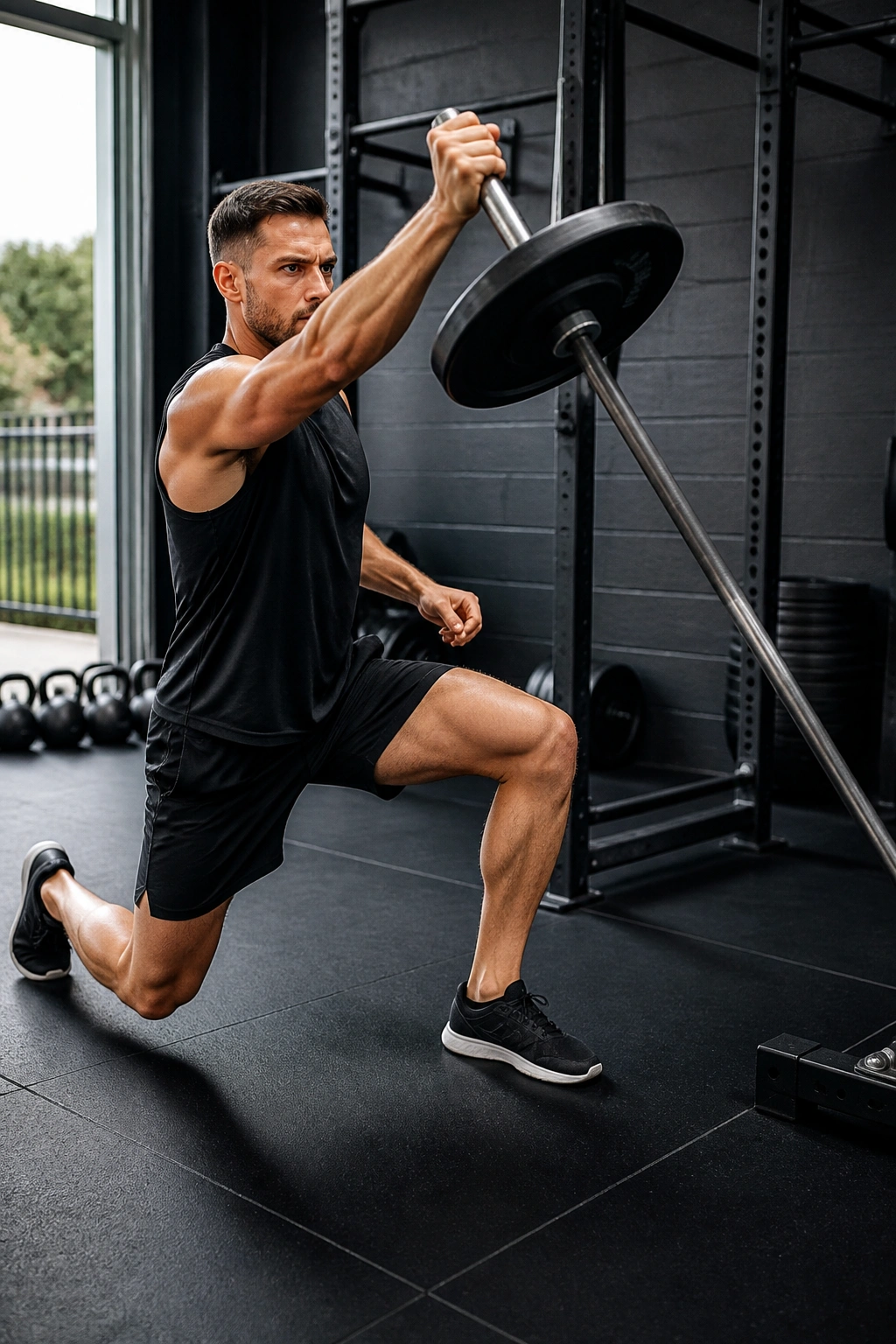
Unlike a straight-overhead press, the landmine press travels on a diagonal, and that small angle can make a huge difference for shoulders that dislike vertical loading. It still hits the front delt hard, but the line of press feels friendlier for a lot of lifters.
The landmine setup also lets the shoulder blade move naturally. That helps the serratus and upper chest pitch in a bit, which is one reason the movement often feels smoother than a strict barbell press. If overhead pressing feels pinchy or awkward, this is one of the first swaps I’d try.
Half-kneeling is my favorite version because it locks the torso down and keeps the lift honest. Hold the end of the bar with the hand on the same side as the kneeling leg, press up and slightly forward, then bring the bar back under control.
Use 6 to 10 reps per side for 3 to 4 sets. If one shoulder feels better than the other, start with the weaker side and match the reps. This is a shoulder workout that rewards control more than load.
13. Pike Push-Up for Shoulder Workouts
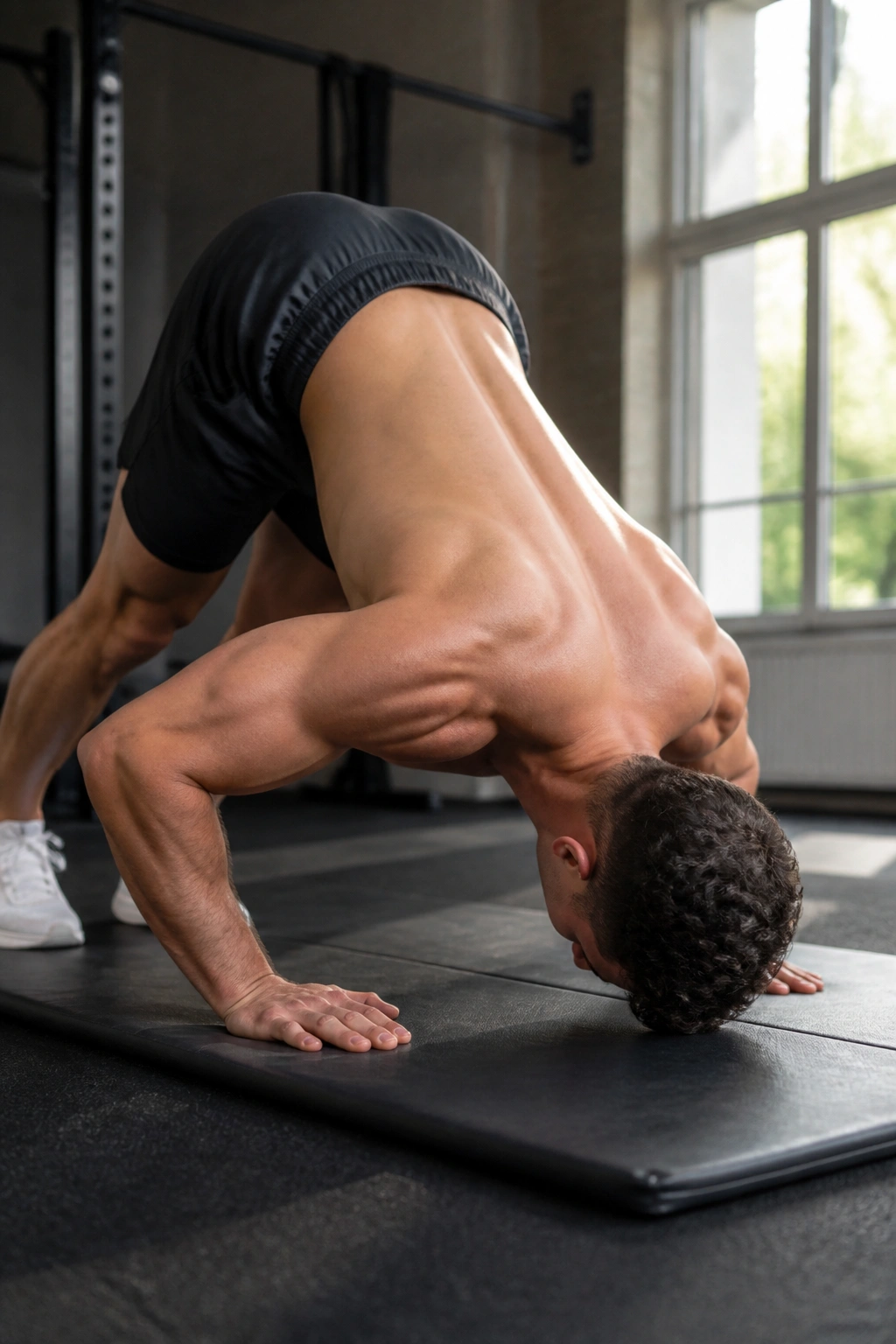
No dumbbells. No machine. Just your body and a triangle of floor space. The pike push-up is one of the cleanest bodyweight shoulder workouts because it shifts load onto the delts by changing your body angle.
The higher your hips, the more the shoulders have to press. Keep your hands about shoulder width apart, walk your feet in, and create that upside-down “V” shape. From there, lower the head toward the floor with your elbows tracking back at a comfortable angle, then press away with control.
How to Make It Work
- Start with feet on the floor.
- Elevate the feet on a bench or box to make it harder.
- Keep the head moving between the hands.
- Aim for 6 to 15 reps depending on difficulty.
If the move feels too easy, raise the feet by 12 to 18 inches. If your neck takes over, shorten the range and slow the descent. The goal is vertical pressing strength, not a forehead-to-floor stunt.
14. Handstand Push-Up
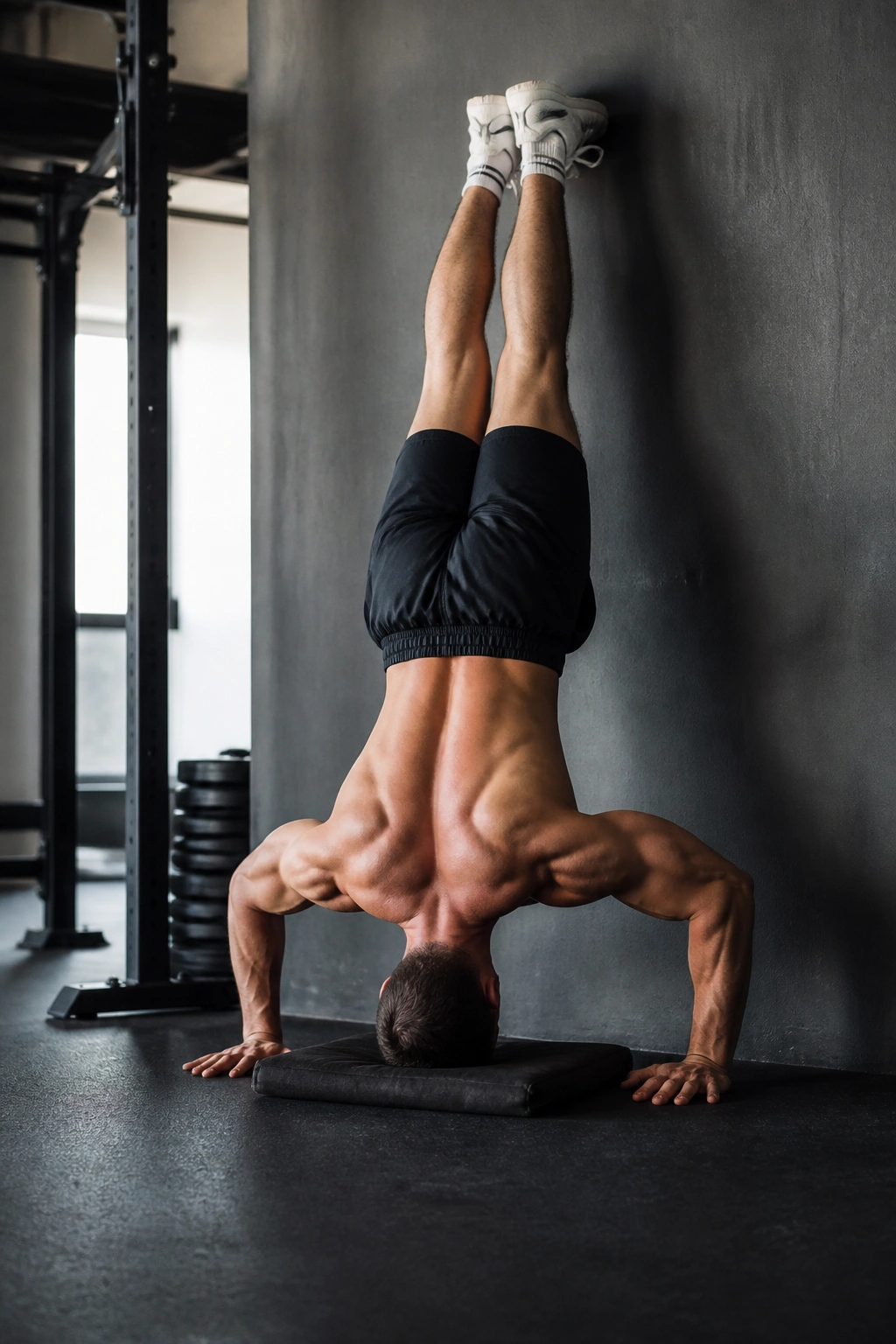
Nothing tests vertical pressing like a handstand push-up. It’s part strength, part balance, part nerve. And if you can do clean reps, your shoulders usually have plenty going on.
The wall-supported version is the most useful starting point. Kick up with control, keep your body straight, and lower until your head lightly touches a pad or the floor, then press back to lockout. The better your line, the less the movement turns into a loose, banana-shaped grind.
This exercise exposes weak spots fast. Poor overhead mobility shows up. Weak serratus shows up. A soft midline shows up. That sounds harsh, but it’s useful. You cannot hide much here.
Start with wall holds, then negatives, then partial reps on pads if needed. Three to five sets of 3 to 6 reps is plenty for most people because the movement is draining. If your wrists complain, use parallettes or push-up handles.
15. Cuban Press

Why do so many good coaches like a move that looks awkward the first time? Because the Cuban press ties together external rotation, rear-delt work, and a controlled press in one light package.
The lift starts like an upright row to roughly chest height, then rotates the forearms upward so the dumbbells finish near ear level before you press overhead. That rotation is where the shoulder gets a lot of useful work, especially if your rotator cuff needs more attention than your ego wants to admit.
How to Get the Most From It
- Use very light dumbbells — often 5 to 10 pounds is enough.
- Keep the elbows at shoulder height during the rotation.
- Move slowly through the turn.
- Use 8 to 12 reps for 2 to 4 sets.
This is not the place for heavy loading. If the front of the shoulder feels pinchy or the wrists wobble, back off. The Cuban press should feel precise, not forced.
16. Y-Raise
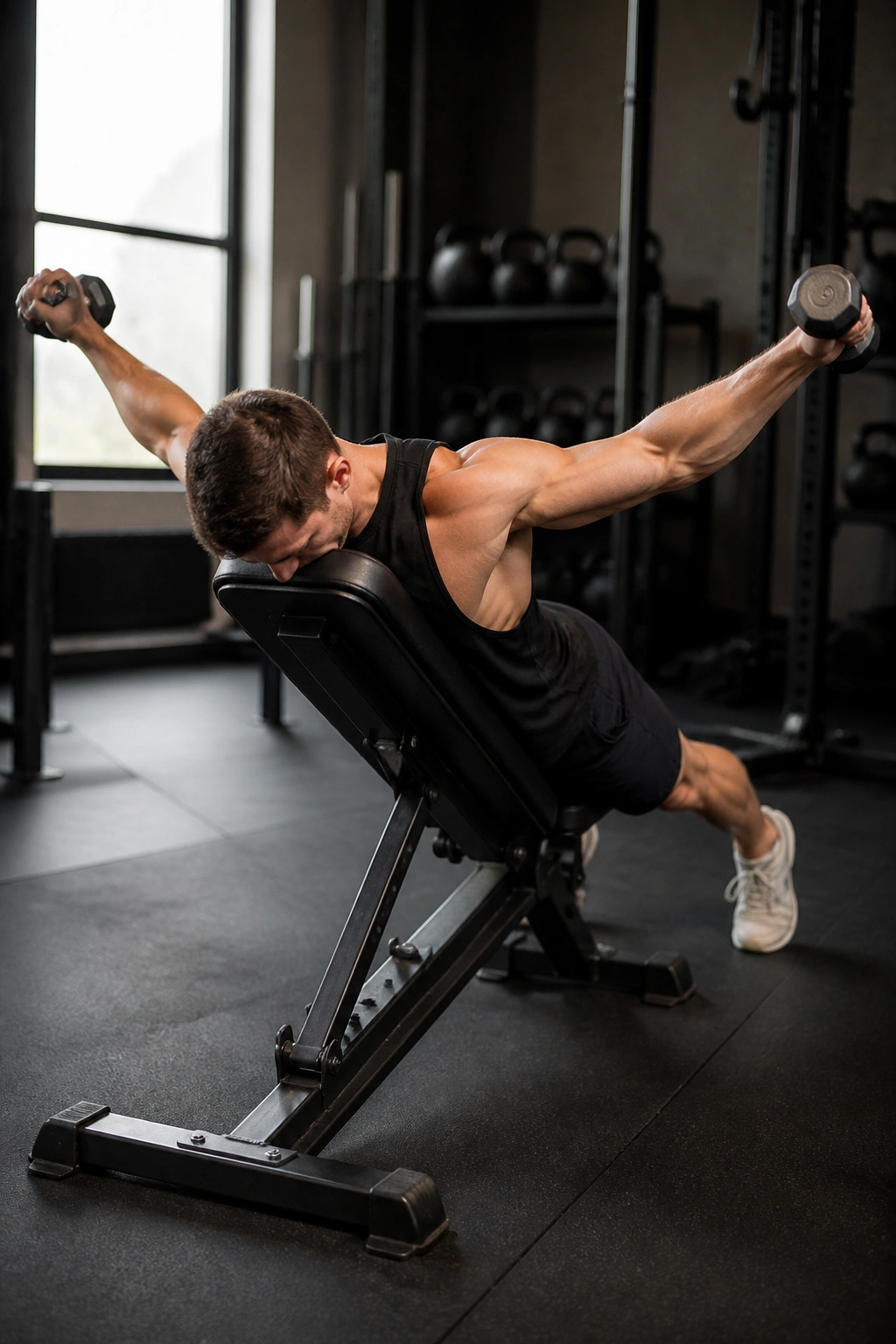
Raise your arms into a Y and the shoulder blade has to move the way it was built to move. That’s the appeal of the Y-raise. It works the lower traps, rear delts, and the upward rotation pattern that keeps shoulders happier when you train them overhead.
An incline bench version is the easiest to control. Set the bench around 30 to 45 degrees, lie chest-down, and lift the arms in a Y shape with thumbs pointing up. The weight should be light enough that you can pause at the top for a second without the whole thing turning shaky.
This is not a big-lift day exercise. It’s a quality rep exercise. A pair of 2- to 10-pound dumbbells is more than enough for many people, and that’s not a joke. If the traps shrug first, lower the load and slow the tempo.
The Y-raise pairs well with presses because it balances the work you just did. A little boring? Sure. Useful? Very.
17. Kettlebell Bottoms-Up Press
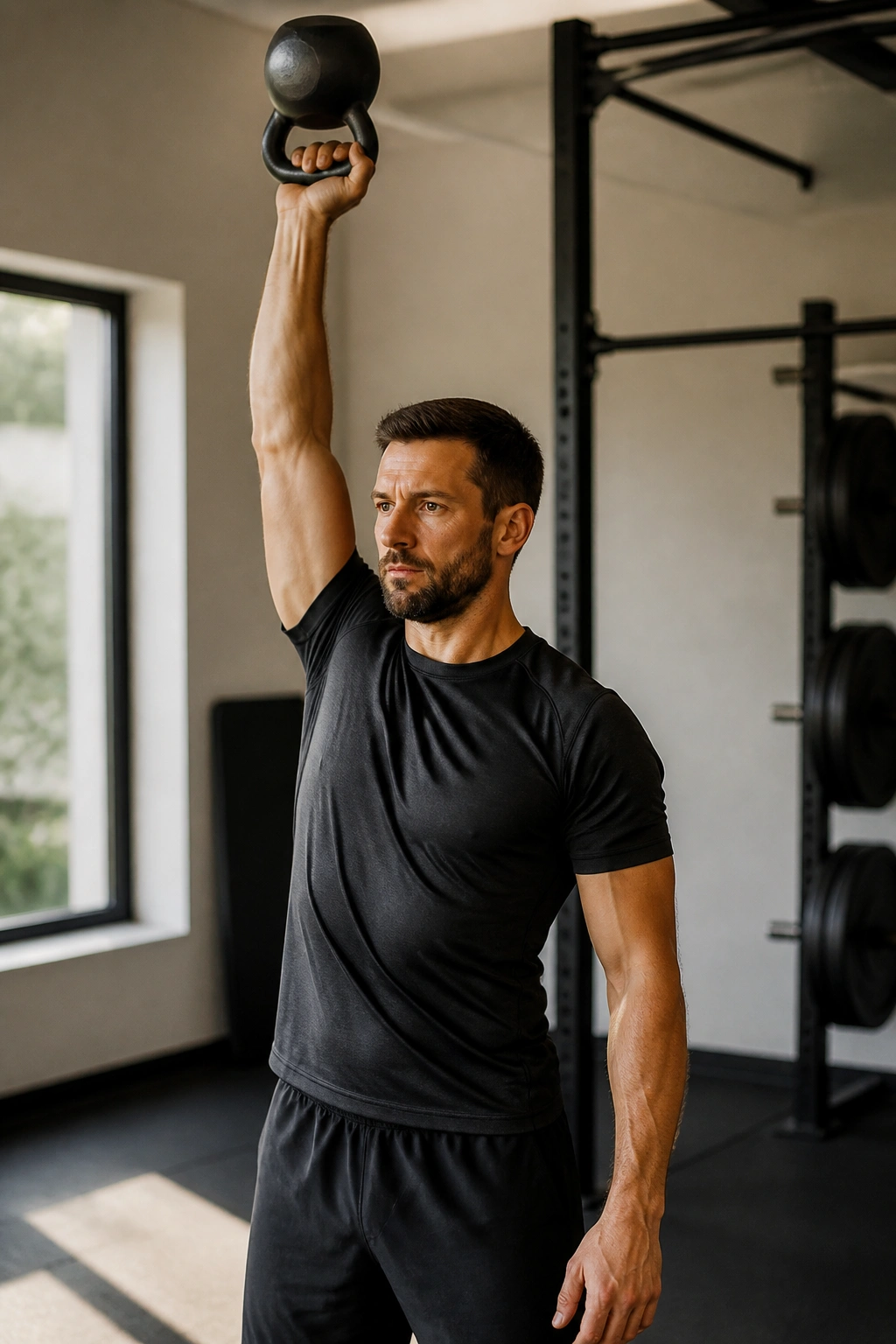
The bell wants to wobble. That wobble is the point. A bottoms-up kettlebell press turns a standard overhead press into a grip and stability test that forces the shoulder to organize itself before the weight goes anywhere.
Hold the kettlebell upside down so the handle sits under the bell. That awkward position demands a stacked wrist, a steady forearm, and enough shoulder control that the bell doesn’t flop around like dead weight. If your wrist caves back, the press gets messy fast.
This move is best done light. Lighter than you think. A bottoms-up press usually needs far less load than a normal dumbbell press because the unstable position is doing half the work.
Use 5 to 8 reps per side for 3 to 4 sets. Keep the ribs down, press smoothly, and lower with control. If the bell tips over every rep, the weight is too heavy or the wrist stack is off.
18. Chest-Supported Rear Delt Row
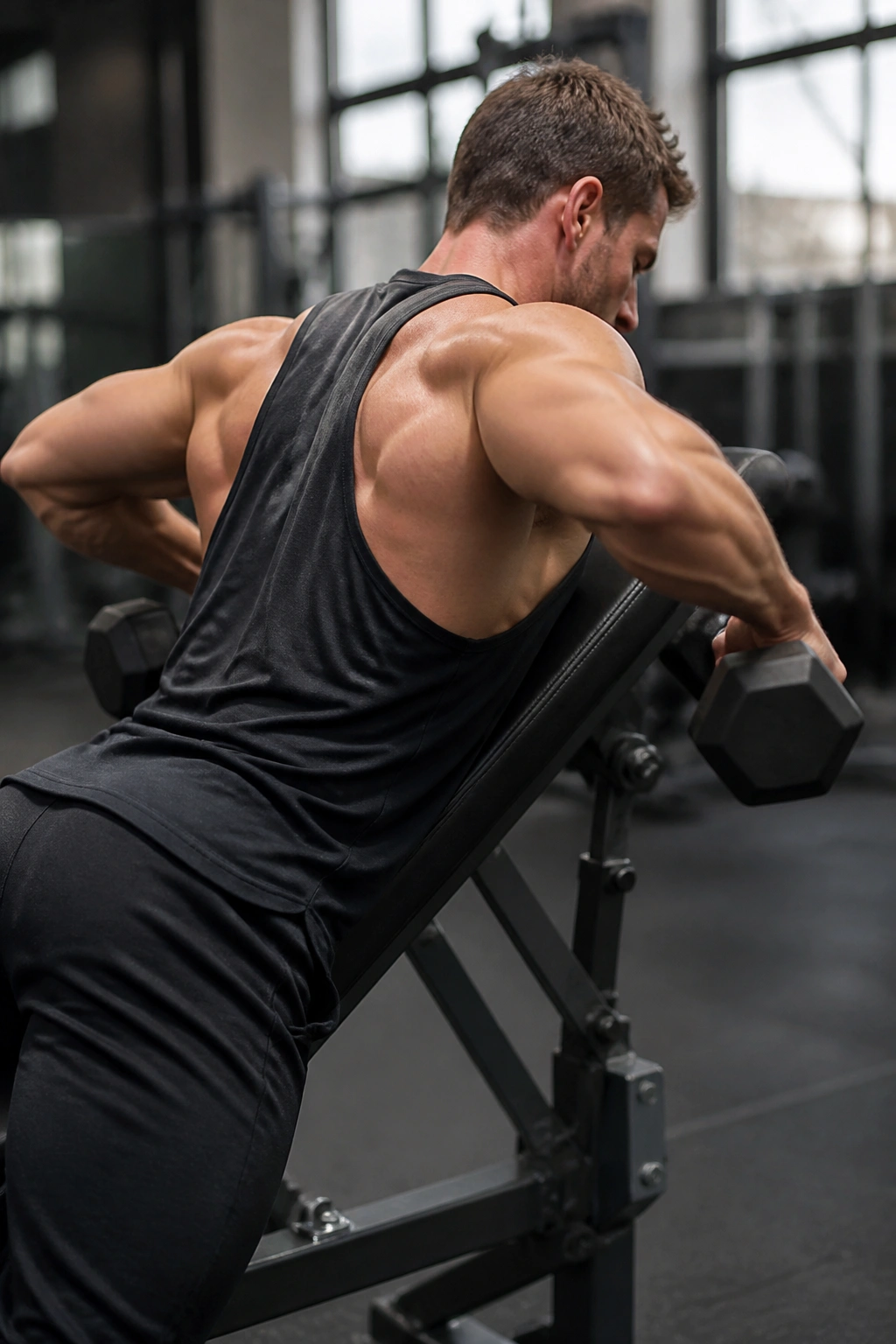
Unlike a fly, this lets you load the rear delt harder without turning the set into a lower-back endurance drill. That makes the chest-supported rear delt row one of the better choices for people who want the back of the shoulder to grow without cheating their way through every rep.
Set an incline bench low enough that your chest stays planted and your arms can hang freely. Pull the dumbbells or machine handles toward the upper ribs with elbows flared out a bit, usually somewhere around 30 to 60 degrees away from the torso. That elbow path shifts the work toward the rear delt instead of turning the row into a pure lat move.
This one works well in the 8 to 12 rep range with moderate load. The chest support lets you keep tension on the target muscles instead of bracing through your lower back. If you shrug the shoulders on every rep, drop the weight and pull with the elbows instead.
It’s a good finishing move after pressing day, and it balances out all the front-delt work that sneaks into normal training.
Final Thoughts

The fastest way to better-looking shoulders is not some secret move. It’s a sensible mix: one or two presses for strength, one lateral raise for width, and one rear-delt move so the back of the shoulder doesn’t get ignored.
If you only have room for three exercises, make them a press, a raise, and a rear-delt drill. That covers the part that drives strength, the part that drives shape, and the part that keeps the whole thing from looking lopsided.
Two clean shoulder sessions a week will usually beat one heroic session where every set turns into a shrug, a bounce, or a half-rep. Keep the form strict, keep the load honest, and give the side delts more attention than your bench press probably wants to admit.
