



A 30 day workout challenge can change the way your body feels long before it changes the way it looks. That’s the part people skip over when they chase “tone” like it’s some secret setting they can switch on with the right ab circuit. It isn’t.
Steady body tone comes from a plain old mix of things that work: resistance training, enough movement to keep your heart rate honest, recovery that gives your muscles a chance to adapt, and food that actually supports all that effort. Skip one piece and the whole thing gets patchy. Do it consistently and your body starts to feel firmer, more stable, and more awake.
The biggest mistake I see is the all-or-nothing mindset. People either pick a brutal plan they can’t repeat, or they nibble around the edges with random workouts that never ask the body to change. Neither one gets you far. A smart 30 day workout challenge should feel demanding, yes, but it should also feel repeatable. That’s the sweet spot.
The best version is not flashy. It is steady, boring in the good way, and hard enough to matter. And that’s where the real changes start.
What Steady Body Tone Actually Looks Like
Steady body tone is not a magic look. It’s a mix of firmer muscle, better posture, a little less softness around the edges, and the kind of movement quality that makes you feel more put together when you stand, walk, or climb stairs.
A lot of people think tone means endless high reps and tiny weights. That’s a half-truth at best. Muscle tone comes from having muscle to begin with, then training it enough that it stays active, responsive, and shaped. If you want your legs to look less flat, your shoulders to look a little more defined, or your midsection to feel tighter under clothes, you need work that builds and keeps muscle.
Shape matters. So does how you carry it.
Muscle, posture, and the way clothes sit
The mirror is not the only place you’ll notice change. Pants often sit better before the scale moves much. Arms look a bit cleaner when you raise them. A stronger upper back can make you stand taller without trying so hard, and that changes how your whole outline reads.
That’s why “tone” is such a slippery word. It isn’t one thing. It’s muscle, body fat, posture, and movement quality all showing up together. If one of those is missing, the look gets muddy.
What people usually notice first
The first signs are small.
- You get up from a chair without that heavy, sticky feeling in your legs.
- Your shoulders sit a little less hunched.
- Core exercises stop feeling like a fight for survival.
- The same jeans feel a touch better around the hips and thighs.
None of that sounds dramatic. Good. Dramatic is overrated here. Steady change is the point.
Why Thirty Days Is Long Enough to Feel a Difference

Thirty days is not enough to turn you into a different person. It is enough to change the way your body responds to work, and that matters more than most people admit.
In the first week, you’re mostly learning. Your nervous system figures out how to recruit muscles more cleanly. By the second week, movements feel less awkward. By the third and fourth, you can often add a little load, a few more reps, or a cleaner range of motion without feeling wrecked after every session. That’s not magic. That’s adaptation.
And yes, your body can look and feel different in that window. Not always in a huge, dramatic way. But enough that you notice your legs feel more alive, your core feels less floppy, and your workouts stop leaving you confused and sore in all the wrong places.
The early wins happen in the body you can feel
People often wait for visual proof and miss the practical signs.
- You recover faster between sets.
- Your walking pace picks up.
- Your posture holds longer before collapsing.
- You can do a set of squats or push-ups with better control on the last day than on the first.
That matters because steady body tone is built on repeatable effort. If a plan leaves you wiped out for two days after every session, you won’t stack enough good work to make a difference.
Why the short timeline works better than people expect
A 30 day workout challenge creates urgency without dragging on forever. That makes it easier to stay honest. You’re less likely to drift into random gym behavior, and more likely to follow the plan on the calendar in front of you.
Short deadlines can be useful. They sharpen attention. They also expose weak spots fast, which is annoying but helpful. If your hips are tight, your warm-up will tell you. If your upper body is undertrained, push work will expose it. If you’re not recovering well, the fourth or fifth hard session will make that obvious. Better to know.
The Training Mix That Shapes a Leaner Look

If your goal is steady body tone, the answer is not “more sweat.” It’s a smarter mix.
You want resistance work for shape, cardio for conditioning and calorie burn, mobility so your joints keep moving well, and enough rest that your body actually adapts to the work. Leave one of those out and the whole thing gets lopsided.
Strength training is the backbone. Cardio helps, but it should support the plan, not swallow it whole. Mobility is the glue that keeps the whole thing from feeling stiff and angry.
Strength training is the anchor
Two to four solid resistance sessions each week is a useful range for most people. You do not need a circus of equipment. Bodyweight squats, push-ups, rows, lunges, glute bridges, planks, and overhead presses can do a lot if you progress them with more reps, slower tempo, or added load.
What matters is that the muscles get a clear signal. “A little movement” is not a clear signal. Sets that end with a few hard reps left in the tank? Much better.
Cardio should help, not crush you
A daily all-out cardio blast sounds efficient. It usually isn’t. It can eat recovery, make you hungrier than you planned, and flatten your energy for the strength work that actually shapes the body.
Better bets: brisk walking, incline walking, cycling, rowing, dance cardio, light intervals, or a short jump rope session if your joints are happy with it. Twenty to thirty minutes is often plenty when the rest of the week is built well.
Mobility and recovery keep the shape visible
Stiff hips and a locked-up upper back can make a fit body look tired. That’s why mobility work belongs in a body tone challenge. Not as a punishment. As maintenance.
Think 5 to 10 minutes of hip openers, thoracic rotations, ankle work, and a little stretching after training. Simple. Not glamorous. Useful.
Picking the Right 30-Day Challenge for Your Schedule

A challenge only works if it fits your actual life. Not the fantasy version where you always have an hour, a clean set of dumbbells, and perfect sleep.
If you’re starting from scratch, bodyweight-only challenges are the safest place to begin. If you already lift a little, a dumbbell-based plan will usually give you a faster shape change because external load makes progression easier to measure. If your knees or back are touchy, a low-impact version will keep you consistent, and consistency wins.
The wrong challenge is the one you admire but don’t do.
Choose the version you can repeat
Ask three blunt questions before you commit:
- Can I do this on a tired day?
- Do I have the space and tools this plan needs?
- Will this still feel doable on day 18?
If the answer is no, scale down. Seriously. People love to pick the hardest version and then spend the next two weeks negotiating with themselves.
Match the challenge to your real obstacle
Some people need structure. Others need simplicity.
- Busy schedule: 20 to 25 minute full-body sessions.
- Low equipment: bodyweight or one pair of dumbbells.
- Joint-friendly: low-impact cardio, split squats, bridges, incline push-ups.
- Shape-focused: more lower-body and upper-back work.
- Energy-focused: moderate cardio plus moderate strength, not both at max effort.
The best plan is the one you can return to tomorrow. That’s it. Nothing sexy about it, and that is exactly why it works.
A Weekly Pattern That Keeps Momentum Without Burnout

A sane weekly rhythm beats random effort every time.
A lot of people try to work hard every day and then wonder why they start skipping sessions by the second week. Your body likes rhythm. It likes knowing what comes next. It also likes not being smashed into the floor seven days in a row.
A cleaner pattern looks like this: two or three strength days, two cardio days, one mobility-focused day, and one fuller rest day. You can shuffle the pieces, but the balance should stay roughly the same.
A sample week that actually holds up
Here’s a simple pattern many people can repeat for four weeks:
- Day 1: Lower body strength
- Day 2: Upper body and core
- Day 3: Brisk walk or low-impact cardio plus mobility
- Day 4: Full-body strength
- Day 5: Core, glutes, and a short conditioning finisher
- Day 6: Cardio of choice or a longer walk
- Day 7: Rest or gentle mobility
That structure gives the muscles time to recover while keeping the body moving often enough to stay engaged.
Why repeating the skeleton helps
The body tone challenge isn’t about constant surprise. It’s about measured progress. If the whole week changes every time, you can’t tell what’s working. When the structure stays stable, you can add reps, shorten rest periods, or increase load and actually see what happened.
There’s a quiet satisfaction in that. One day you realize the second set is no longer a struggle. Another day your heart rate settles faster after a circuit. Small stuff. Real stuff.
Lower-Body Moves That Give Legs and Hips More Shape

Lower-body training does a lot of the heavy lifting in a tone challenge. Squats, lunges, hinges, and bridges recruit big muscle groups, and big muscle groups tend to change the look and feel of the body faster than tiny isolation work does.
I’m not saying glute kickbacks and leg lifts are useless. They’re fine. But if the whole plan leans on them, you’re skipping the main event. The main event is loaded squats, split squats, Romanian deadlifts, step-ups, and hip thrusts or glute bridges.
The best lower-body exercises for a 30 day workout challenge
A solid lower-body session often includes:
- Goblet squats: 3 sets of 8 to 12 reps
- Reverse lunges: 3 sets of 8 to 10 reps per leg
- Romanian deadlifts: 3 sets of 8 to 12 reps
- Glute bridges or hip thrusts: 3 sets of 12 to 15 reps
- Step-ups: 2 to 3 sets of 8 reps per leg
The exact numbers can shift, but the idea stays the same. Use enough resistance that the last few reps feel slow and honest.
What good form feels like
A squat should feel grounded, not rushed. Your feet stay planted, your chest stays proud, and your hips do the work instead of your lower back stealing the show. A lunge should feel stable enough that you’re not wobbling like a shopping cart with one bad wheel.
Glute bridges are underrated. Squeeze at the top for one second. That tiny pause matters more than people think. It keeps the movement from turning into a sloppy bounce.
A smart lower-body setup for tone
If you want the legs and hips to look tighter without beating them up, pair one squat pattern with one hinge pattern and one single-leg exercise. That combination hits the front of the thighs, the back of the legs, and the glutes in one session.
Simple. Effective. Not cute, but it works.
Upper-Body and Core Work That Improves Posture
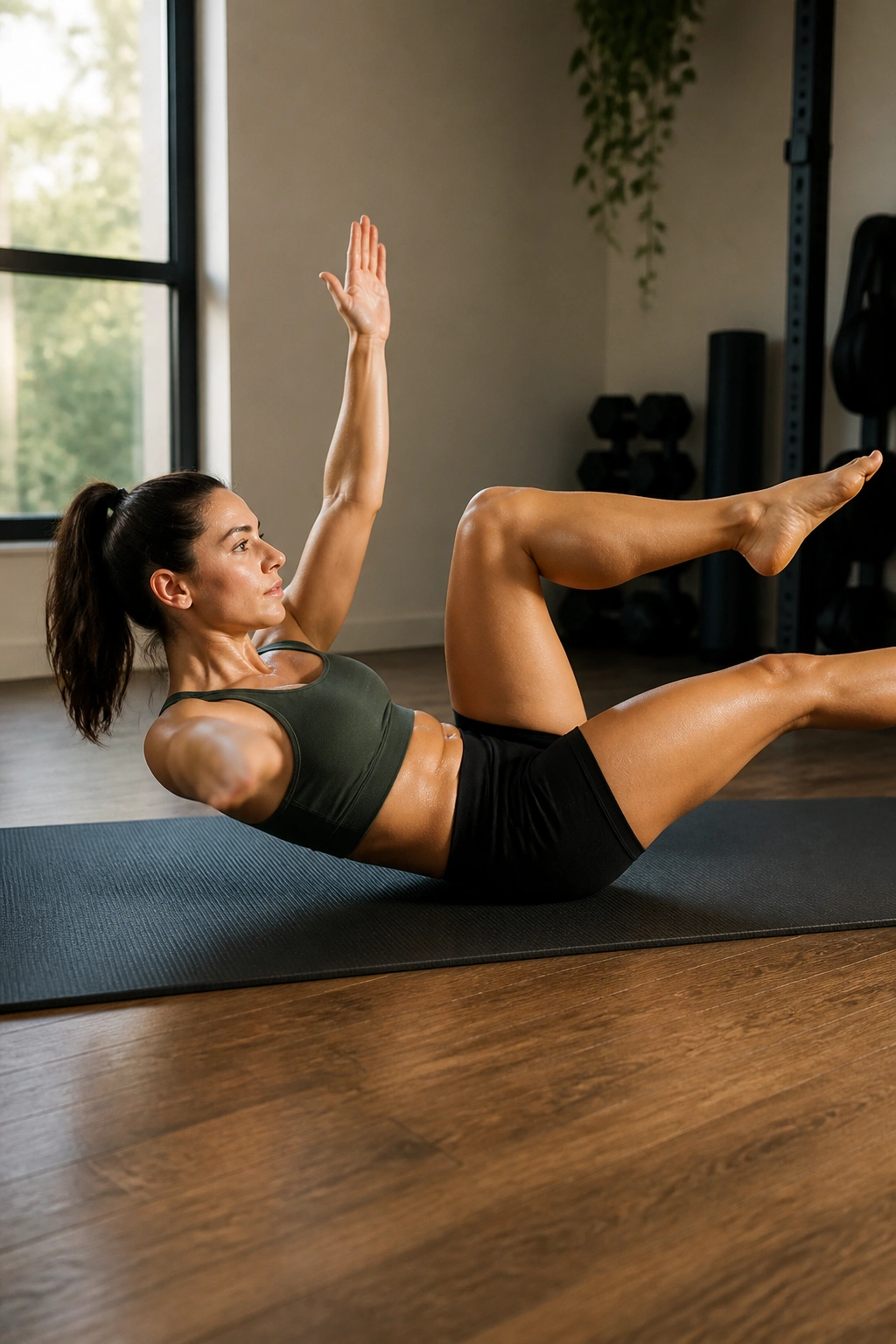
Upper-body work does more than shape arms and shoulders. It changes how you carry yourself.
A stronger back can make your waist look smaller because you stand taller. Better pressing strength helps the chest and shoulders look more defined. Core work, done right, helps you brace, rotate, and hold posture without making every movement feel floppy. That’s the good stuff. Endless crunches? Not so much.
What to train and why it matters
A balanced upper-body day should include a push, a pull, and something for the core.
- Push-ups or incline push-ups for chest, shoulders, and triceps
- Dumbbell rows or band rows for the upper back
- Overhead press for shoulders
- Dead bugs or bird dogs for core control
- Side planks for anti-rotation strength
That anti-rotation piece sounds technical, but it’s just your body learning not to twist every time a limb moves. Useful in life. Useful in workouts. Useful when you want your midsection to feel more solid.
Why posture changes the whole look
Here’s the sneaky part: posture can make the difference between “I’ve been training” and “I’m hoping the lighting is kind.” Rounded shoulders and a slumped rib cage make even a fit body look tired. Stack your ribs, open the chest, and keep the upper back honest, and the whole silhouette gets cleaner.
That’s why I like rows so much. They’re not glamorous. They fix things.
Core work that actually earns its keep
A good core workout should leave you braced, not broken. Planks, dead bugs, heel taps, and Pallof presses are all stronger choices than doing 150 sloppy sit-ups and calling it dedication.
Control beats chaos. Every time.
Cardio Sessions That Support Tone Without Eating Recovery

Cardio is useful here, but it should be the side dish, not the whole plate. The goal is to support body composition, keep your heart and lungs in good shape, and help you burn extra energy without draining the tank for strength work.
Walking is the most underrated option in the bunch. It’s cheap, low impact, and easy to repeat. Incline walking adds a little more work for the glutes and calves without the pounding that comes from jumping or sprinting. Cycling and rowing are also clean choices if you like your joints to stay quiet.
The best cardio formats for a body tone challenge
You don’t need to overcomplicate this.
- Brisk walking: 30 to 45 minutes
- Incline treadmill walk: 20 to 30 minutes
- Bike intervals: 10 rounds of 30 seconds hard, 60 seconds easy
- Rowing intervals: 6 to 8 rounds of 1 minute strong, 1 minute easy
- Dance cardio or low-impact circuits: 20 to 25 minutes
If you can still speak in short sentences, you’re probably in the right zone for many of these sessions. If you’re gasping so hard that your form goes sloppy, back off a bit.
Why too much cardio backfires for some people
A lot of body tone plans go sideways when cardio gets greedy. The legs stay sore. Hunger spikes. Strength sessions feel flat. Then the person starts cutting workouts, eating poorly, and wondering why the mirror is not cooperating.
That pattern is common. It’s also avoidable.
Keep cardio useful. Keep it repeatable. If you enjoy a harder interval day, fine. Just don’t let it chew up the rest of the week.
Recovery Days That Still Count as Training
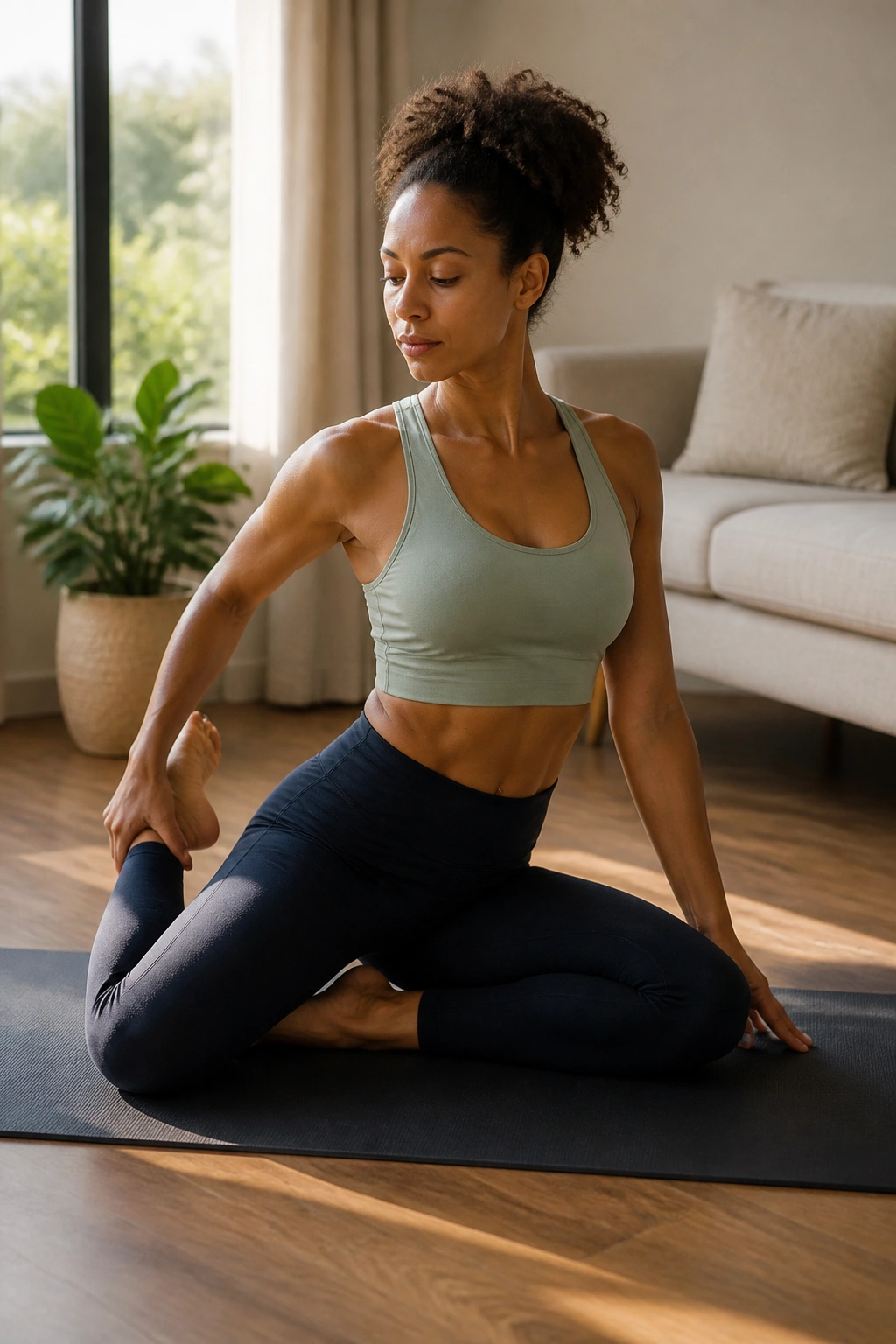
Rest days are not a sign you quit. They’re part of the work.
Your muscles don’t get stronger while you’re doing the squat. They adapt afterward, when you eat, sleep, and recover. Ignore that and you end up stuck in the same tired, sore loop. A recovery day done well keeps you moving without piling on stress.
Sore forever is not a plan.
What a useful recovery day looks like
A solid recovery day can include:
- 20 to 40 minutes of easy walking
- 5 to 15 minutes of mobility work
- Light stretching for hips, calves, chest, and upper back
- A short breathing reset
- An earlier bedtime if your schedule allows it
That’s enough. You do not need to turn recovery into a second workout.
The things that quietly make recovery better
Sleep matters more than most people want to hear. Hydration matters too. So does eating enough to support the training you keep bragging about. If you wake up tight, flat, and weirdly cranky, the answer might not be “train harder.” It might be “sleep more and stop under-eating.”
Active recovery beats total collapse
Some people think a rest day means doing nothing and lying on the sofa like a decorative pillow. That can be fine once in a while, but active recovery usually feels better. A walk loosens the hips. A few mobility drills help the back. Gentle movement often makes the next workout feel smoother.
Not fancy. Just useful.
How to Progress from Week 1 to Week 4

Progression is the engine of any good 30 day workout challenge. If nothing gets harder, your body has no reason to adapt. If everything gets harder too fast, you’ll flame out. The art is moving forward without tipping the whole thing over.
Start where you are. Then nudge it.
Week 1: Learn the moves
The first week is about clean reps, not heroic effort. Use a lighter load, slower pace, and enough rest to keep the form crisp. Your job is to notice where your body wants to cheat.
That information is gold.
Week 2: Add a little volume
Once the movements feel familiar, add one or two reps per set, or one extra set in a couple of exercises. That tiny bump is often enough to wake the body up without making you dread the next session.
Week 3: Increase the challenge
This is the week to make a few sessions sharper. Add a little dumbbell weight, shorten rest by 15 to 20 seconds, or swap in a tougher variation like standard push-ups instead of incline push-ups. Pick one lever, not all three.
Week 4: Hold the line and clean it up
The final week should feel controlled, not reckless. Keep the form tight. Use the load you can handle well. Finish strong by making every rep look the way it should. A clean final week says more than a messy max-out ever will.
Progress does not need to be loud. It needs to be visible in the work.
Food, Protein, and Hydration That Support the Look
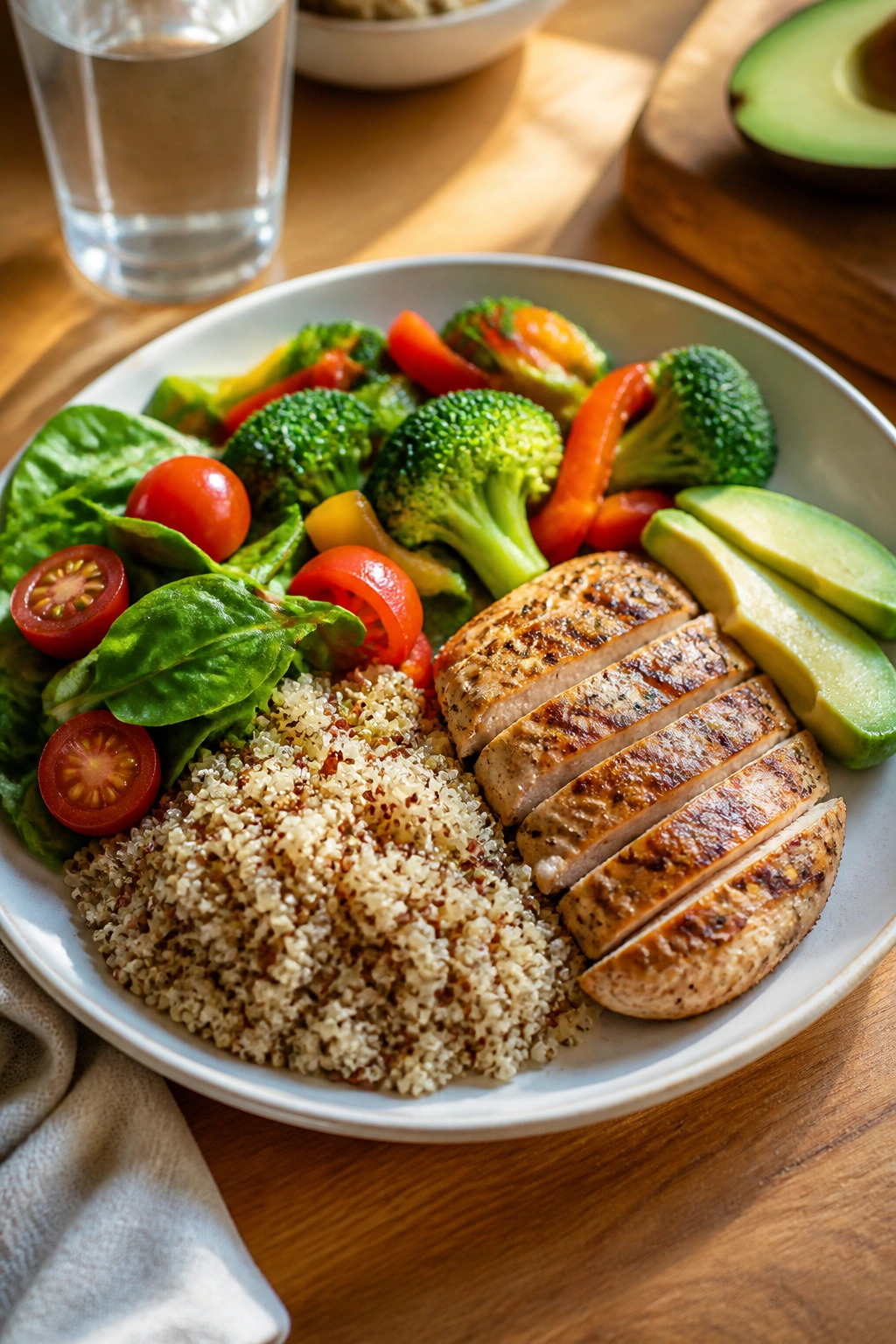
Training can only do so much if the rest of the day is chaos. Food matters. Not in a punishing way, and not with silly rules. Just in a practical way.
If you want steady body tone, your body needs enough protein to repair muscle, enough carbs to support training, enough fats to keep hormones and energy steady, and enough fluids that your sessions don’t feel like you’re dragging through wet cement.
A simple plate that works
A decent meal around training often looks like this:
- A palm or two of protein: eggs, chicken, fish, tofu, Greek yogurt, cottage cheese, beans, or tempeh
- A fist or two of vegetables
- A cupped hand or two of carbs: rice, potatoes, oats, fruit, pasta, or whole-grain bread
- A thumb or two of fats: olive oil, avocado, nuts, seeds, or cheese
You don’t need to weigh every forkful forever. You do need enough protein to support the work.
Protein and timing, without the drama
A lot of people do better when protein shows up at every meal instead of being crammed into one giant dinner. That usually means some solid protein at breakfast, lunch, and dinner, plus a snack if needed.
After a workout, a simple mix of protein and carbs often helps. A yogurt bowl with fruit. Eggs with toast. Chicken and rice. Tofu and noodles. Keep it normal.
Hydration is more practical than people think
If your urine is dark, your workout feels sticky, and your head feels foggy halfway through the session, water is probably part of the fix. Add a little salt if you sweat a lot. Plain water is fine for most days, but heavy sweaters can need more than that.
Under-fueling makes tone plans look harder than they need to be.
Common Mistakes That Flatten Results

People do a lot of unnecessary damage in a 30 day workout challenge. Usually with enthusiasm. Sometimes with stubbornness. Rarely with bad intentions.
The biggest mistake is chasing soreness instead of progress. Sore muscles are not proof of a good workout. Sometimes they’re just proof you did something unfamiliar and angry. If every session leaves you limping, the plan is too aggressive or too random.
Mistakes that show up fast
- Only doing cardio: you lose the strength signal that shapes the body
- Never increasing the challenge: the body adapts and stops responding
- Training hard with no rest: fatigue piles up and performance drops
- Skipping lower-body work: the biggest muscles get ignored
- Eating too little: workouts feel flat and recovery stalls
- Changing the plan every few days: nothing builds long enough to matter
The weird trap of “feeling the burn”
Burn is not the point. Control is the point. Strong reps, good range, steady breathing, and a little progression across the month matter far more than how dramatic the session feels.
I’ll say it bluntly. A workout that looks painful on video and produces no real progression is a waste of time.
Why beginner plans fail
Beginners often copy advanced formats and try to match the pace, not the purpose. The pace is the wrong thing to imitate. Focus on the movement quality, the repeatability, and the recovery. Once that’s in place, the harder versions make sense.
How to Track Progress Without Living on the Scale
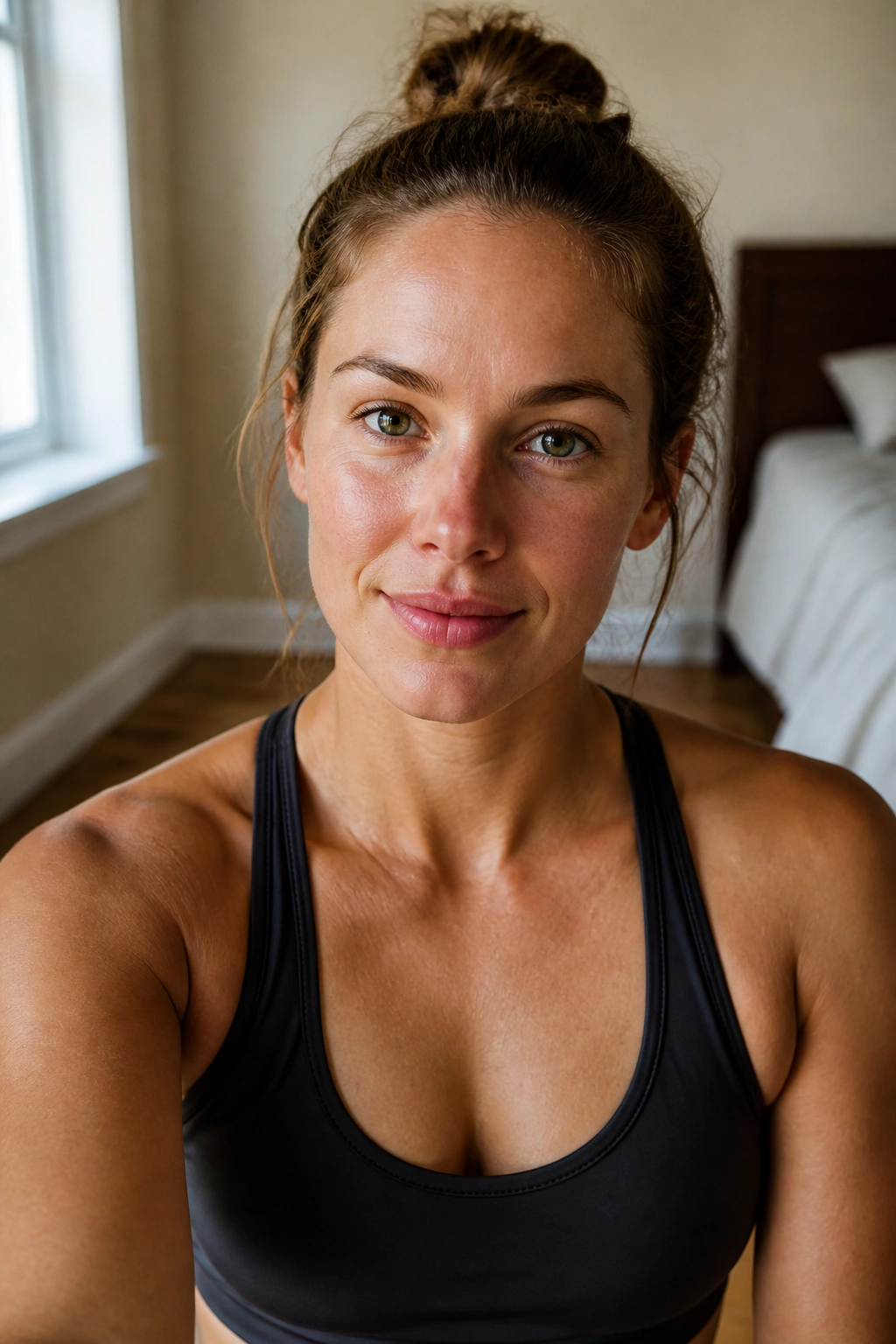
The scale has its place. It is not the whole story, and it can be moody for reasons that have nothing to do with fat loss or muscle gain. Sodium, soreness, sleep, hydration, and hormones can all move the number around.
Use more than one measure. Much more useful.
Better ways to track body tone
- Take front, side, and back photos once a week in the same light
- Measure waist, hips, and upper thighs with a tape measure
- Note how many push-ups, squats, or lunges you can do cleanly
- Pay attention to posture in the mirror and in clothes
- Watch your energy on stairs, walks, and daily tasks
Those changes are quieter than a number on a scale, but they tell you more.
Keep the check-ins boring
Pick one day each week. Same time if possible. Same clothes. Same light. No flexing, no tricks, no trying to catch the most flattering angle of your life. You want a fair comparison, not a photo shoot.
What progress often feels like before it looks obvious
You may notice your body feels firmer before anyone else says a word. Your waistband may sit differently. Your shoulders might rest in a better spot. That is real progress. It counts even when it looks small on paper.
That’s the part people miss when they only chase dramatic before-and-after shots. The body is usually changing before the ego notices.
Final Thoughts

A good 30 day workout challenge is not a punishment block. It’s a short, focused run at better habits, better strength, and a body that feels more stable in its own skin.
The smartest plans mix resistance work, cardio, mobility, and actual recovery. That balance is what keeps the work sustainable long enough for tone to show up in the mirror and in the way you move.
If you want the best odds of finishing strong, pick a version you can repeat on a tired Tuesday, not just on your most motivated morning. That choice matters more than the fancy exercises do.
