



The idea that you can simply do a few hundred crunches and wake up with a flat stomach is perhaps the most persistent myth in the fitness world. If only physiology were that cooperative. The reality is far more nuanced, though arguably more rewarding if you embrace the actual science of body composition. A flat stomach requires two parallel tracks: a caloric deficit that allows your body to shed the layer of adipose tissue resting over your abdominal wall, and a targeted, intense training regimen that strengthens and sculpts the muscles beneath.
You cannot spot-reduce fat. No amount of abdominal work will burn the fat off your belly if your overall nutrition isn’t dialed in. However, that doesn’t mean your core workouts are useless. When you build strength in your abdominals, transverse abdominis, and obliques, you create a “natural corset” effect. This helps hold everything in tight, improves your posture, and gives your midsection a much more defined, compact look even before you reach your lowest body fat percentage.
Forget about doing five sets of fifty sit-ups. Most of those are just putting unnecessary strain on your hip flexors and lower back. Instead, you need exercises that demand stability, engagement, and power. These movements target the core in ways that translate to functional strength, better posture, and a tighter midsection. Let’s look at the movements that actually make a difference.
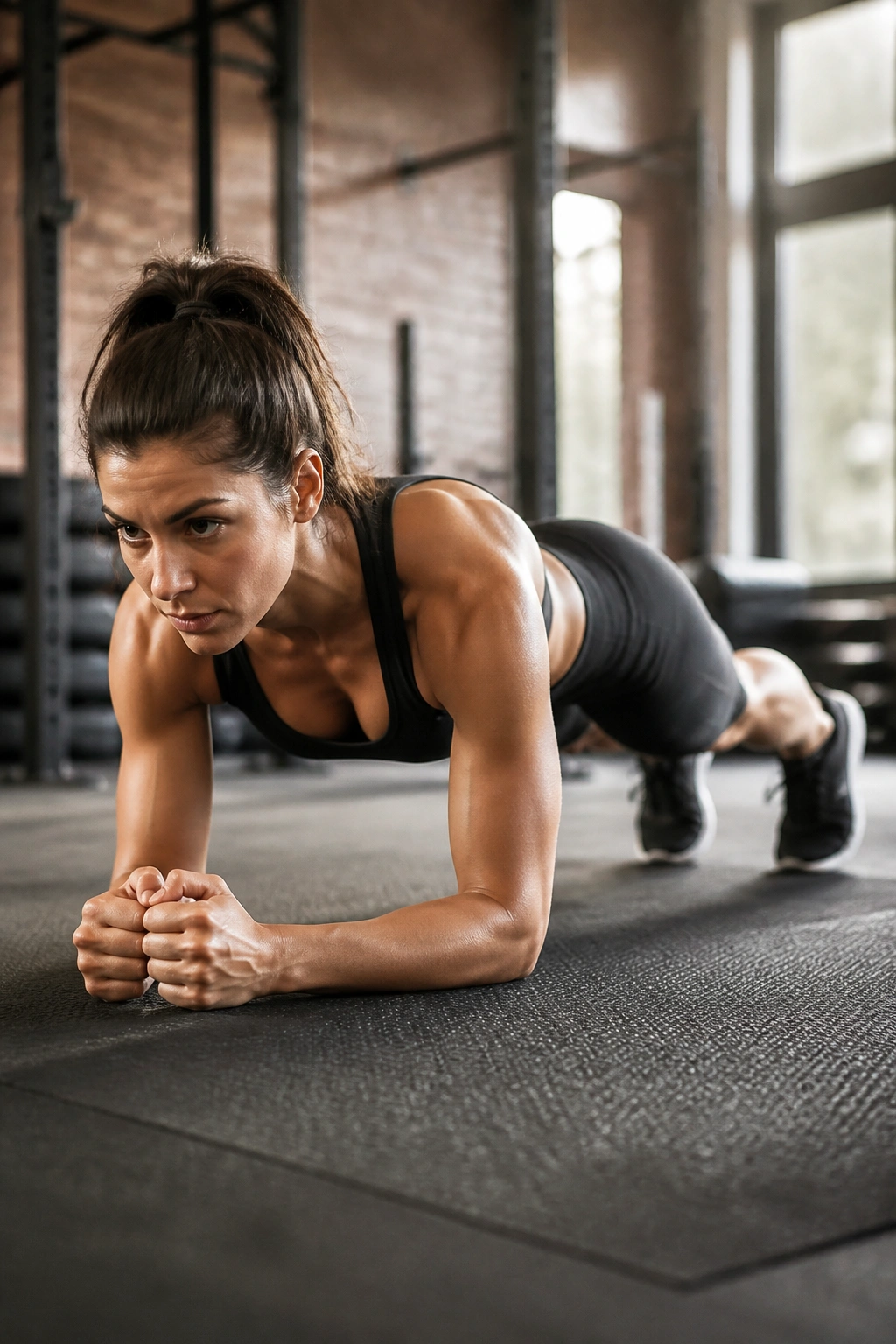
1. The Standard Plank
The plank is the cornerstone of core stability. It is not about how long you can hold it; it is about how much tension you can generate in that time. If you are just hanging out, letting your lower back sag while you watch the clock, you are wasting your energy.
Getting the Form Right
Your goal is a straight line from your heels to the top of your head. Squeeze your glutes as hard as you can—this is the secret to a better plank. If your glutes are loose, your lower back takes the brunt of the load. Keep your elbows directly under your shoulders and push the floor away from you. This simple push helps engage your serratus anterior, which stabilizes your shoulder blades.
Pro tip: Imagine you are trying to drag your elbows toward your toes without actually moving them. This pull will ignite your abs immediately. If you can hold this with perfect tension for 60 seconds, you are done. If you start shaking after 20, stop and rest, then go again. Quality beats duration every single time.
2. Russian Twists
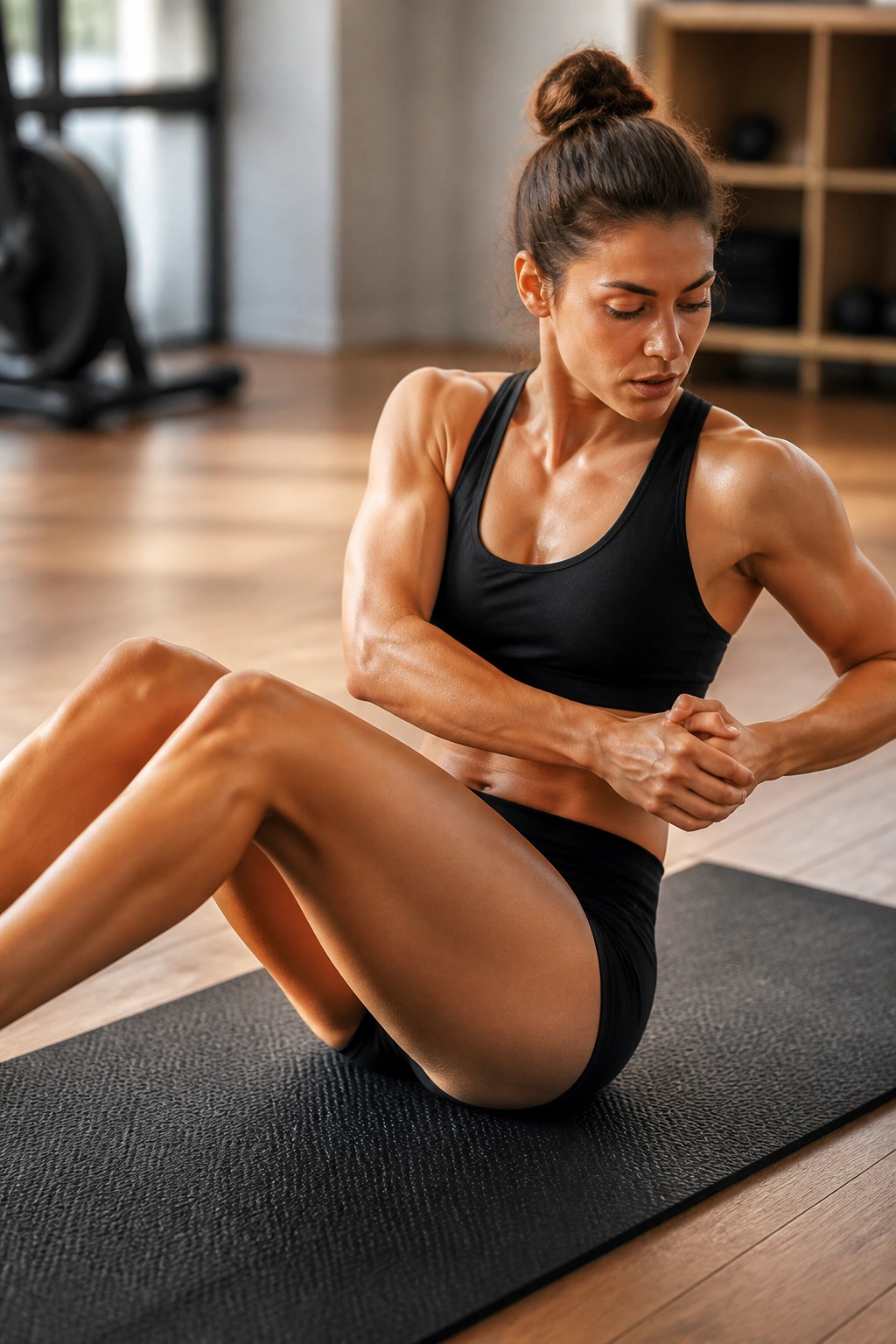
This movement targets the obliques, which are the muscles that run down the side of your abdomen. Developing these creates that desired “tapered” look. However, people often swing their arms side to side without actually moving their torso. That is not a Russian twist; that is just arm swinging.
The Mechanics of the Twist
Sit on the floor with your knees bent and feet lifted a few inches off the ground. Lean back slightly to engage your core—you should feel your stomach tighten immediately. Now, hold your hands together or grab a weight. Rotate your entire upper body from one side to the other, making sure your shoulders follow the movement.
If you are not feeling this in the sides of your waist, you are likely only moving your arms. Watch your hands as you move them; this forces your neck and shoulders to turn, ensuring your spine rotates. For a better challenge, keep your legs completely still. If your knees are swinging back and forth with your torso, your core is not doing the work.
3. Reverse Crunches
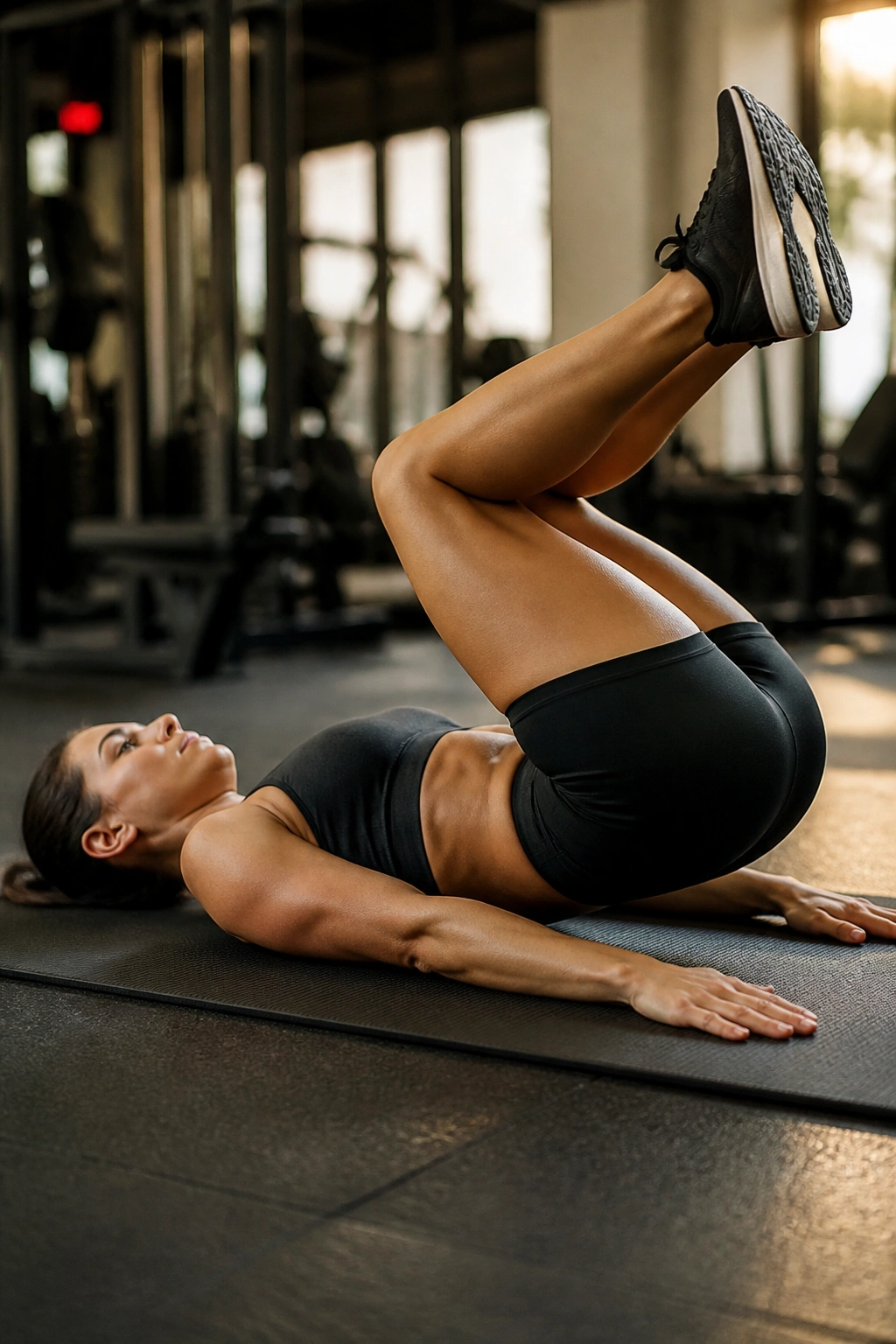
Standard crunches are often glorified neck-straining exercises. Reverse crunches, on the other hand, are one of the most effective ways to target the lower abdominal region. This area is notoriously difficult to hit because it is not attached to the rib cage in the same way the upper abs are.
How to Execute
Lie on your back with your arms by your sides for support. Lift your legs so your knees are bent at a 90-degree angle. The move is simple but precise: lift your hips off the floor, bringing your knees toward your chest. You do not need a massive range of motion. Two or three inches of lift is enough to force the lower abs to contract.
The most common mistake: Using momentum. Do not swing your legs back and forth to gain speed. Control the lowering phase. The moment your butt touches the floor, start the next rep. You should feel a deep, controlled burn right below your belly button. If you feel it in your hip flexors, try to pull your tailbone toward your ceiling rather than just pulling your knees to your face.
4. Dead Bugs
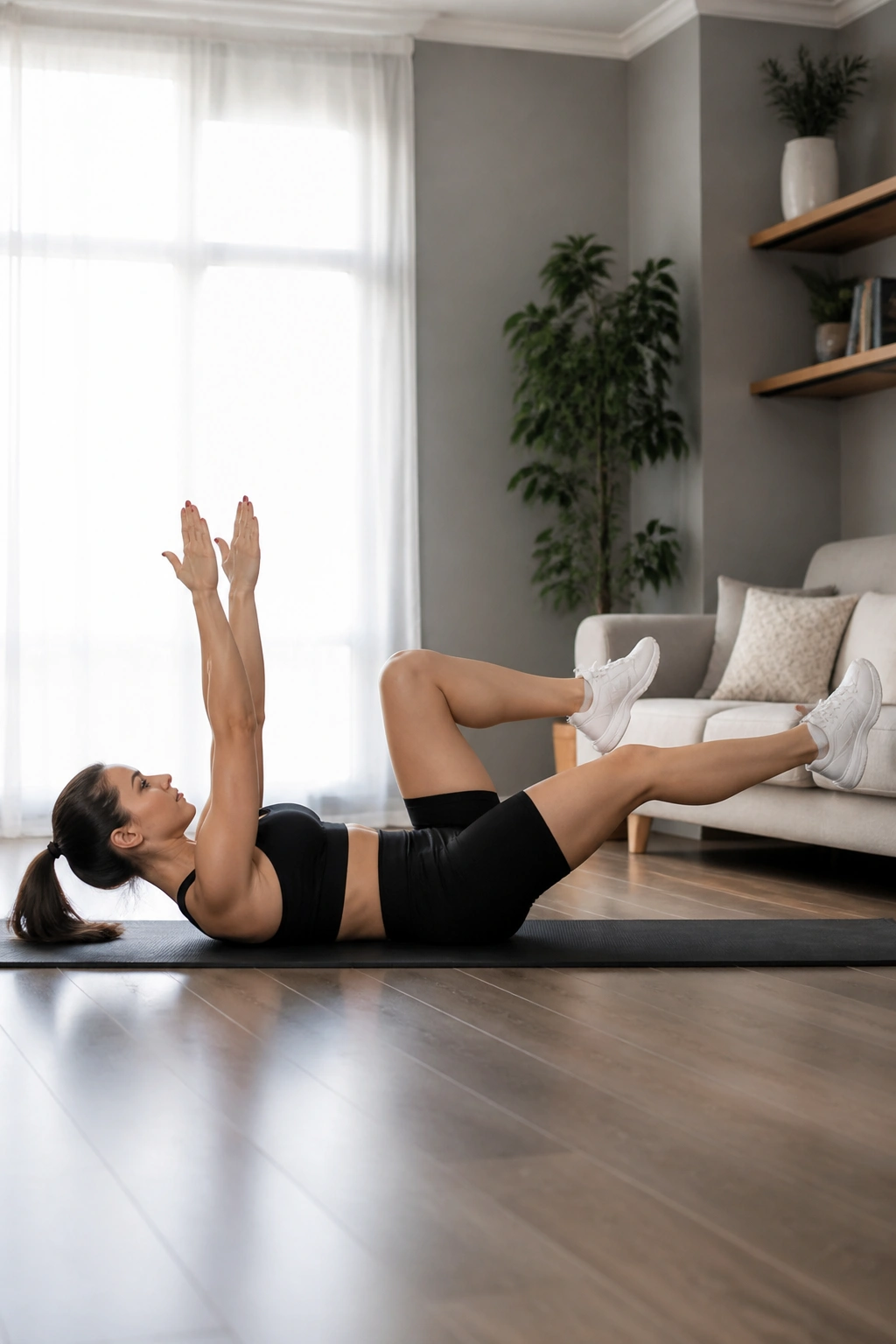
This is a lesson in coordination and anti-extension. If you have ever felt “popping” in your lower back during ab exercises, this is the corrective movement you need. It teaches your core to stay braced while your limbs move.
The Setup
Lie on your back, arms extended toward the ceiling, legs in the air with knees bent. Press your entire lower back into the floor. This is non-negotiable. If there is a gap between your spine and the mat, the exercise fails.
Slowly lower your right arm behind your head while simultaneously extending your left leg straight out. Do not let your back arch off the floor as you move. Return to center and switch to the left arm and right leg. The slower you move, the harder it gets. This is not a race. It is about keeping that spine glued to the ground, which requires intense contraction from your deep abdominal muscles.
5. Mountain Climbers

These bring a cardio element into your core training. They elevate your heart rate while forcing your abdominals to work overtime to stabilize your pelvis. The key here is not just speed; it is maintaining a rock-solid plank position while your legs are moving.
Proper Execution
Start in a high plank position, hands under shoulders. Drive one knee toward your chest, then quickly switch legs as if you are running in place horizontally. Do not let your hips bounce up into the air. Keep your butt down and your back flat.
Watch the hips: If your butt rises higher and higher as you get tired, your abs have stopped working, and your shoulders are taking over. Reset your position. Aim for a pace that is challenging but controlled. If you find yourself slipping or rounding your back, slow the movement down and focus on driving the knee directly into your chest.
6. Lying Leg Raises
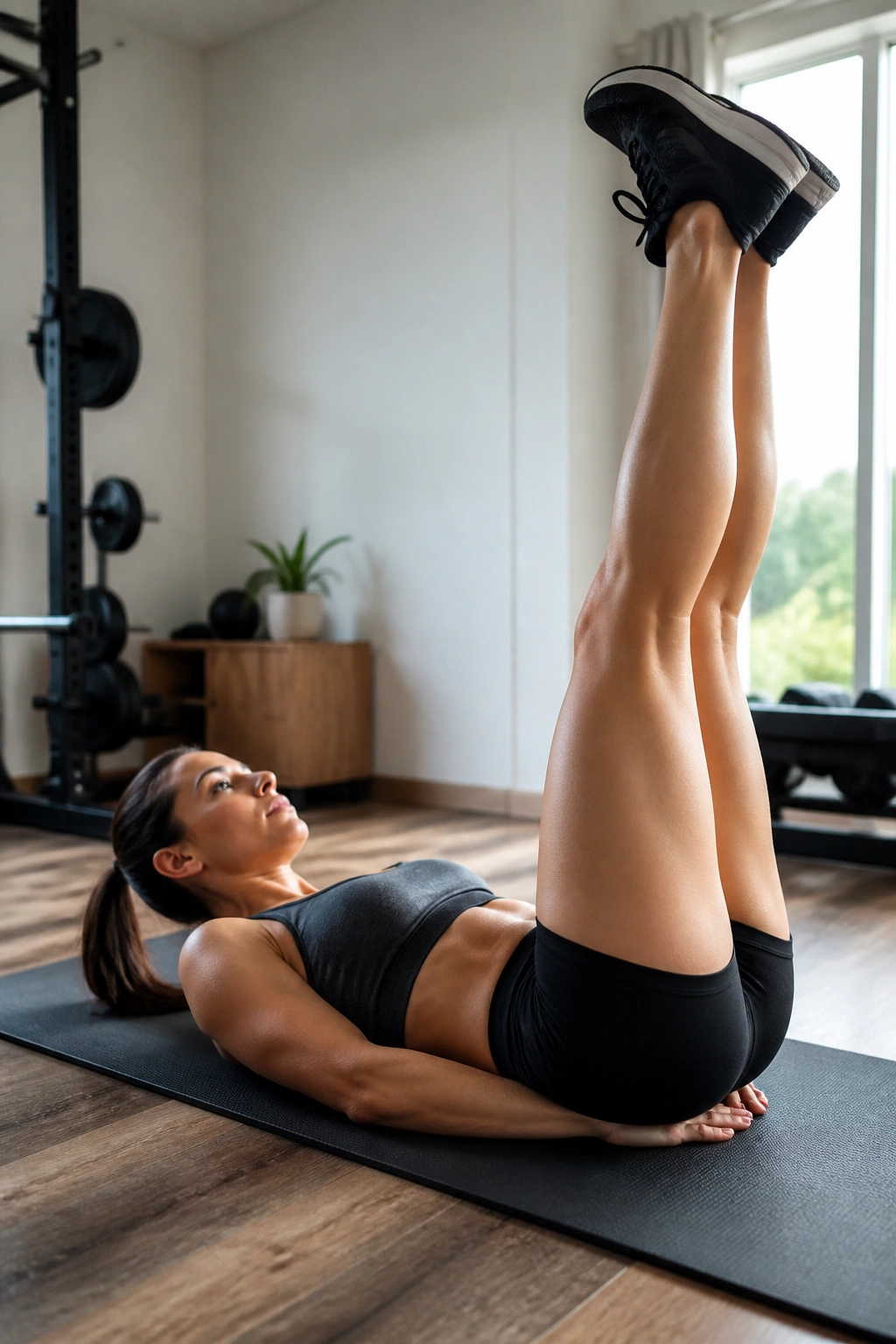
Leg raises are a classic for a reason, but they are often performed with bad form. Most people arch their back the moment their feet lower, which completely disengages the abs and puts stress on the lumbar spine.
Ensuring Safety and Effectiveness
Place your hands under your glutes for a little extra support. Lift your legs straight up until they are perpendicular to the floor. Now, lower them slowly. The lower they get, the harder it is to keep your back pressed down.
Stop lowering the moment you feel your lower back wanting to leave the floor. That is your “limit.” Over time, as your core strength increases, that limit will move closer and closer to the ground. You do not get extra points for touching the floor if your back arches to get there. Consistency with the correct range of motion is how you build strength.
7. Burpees
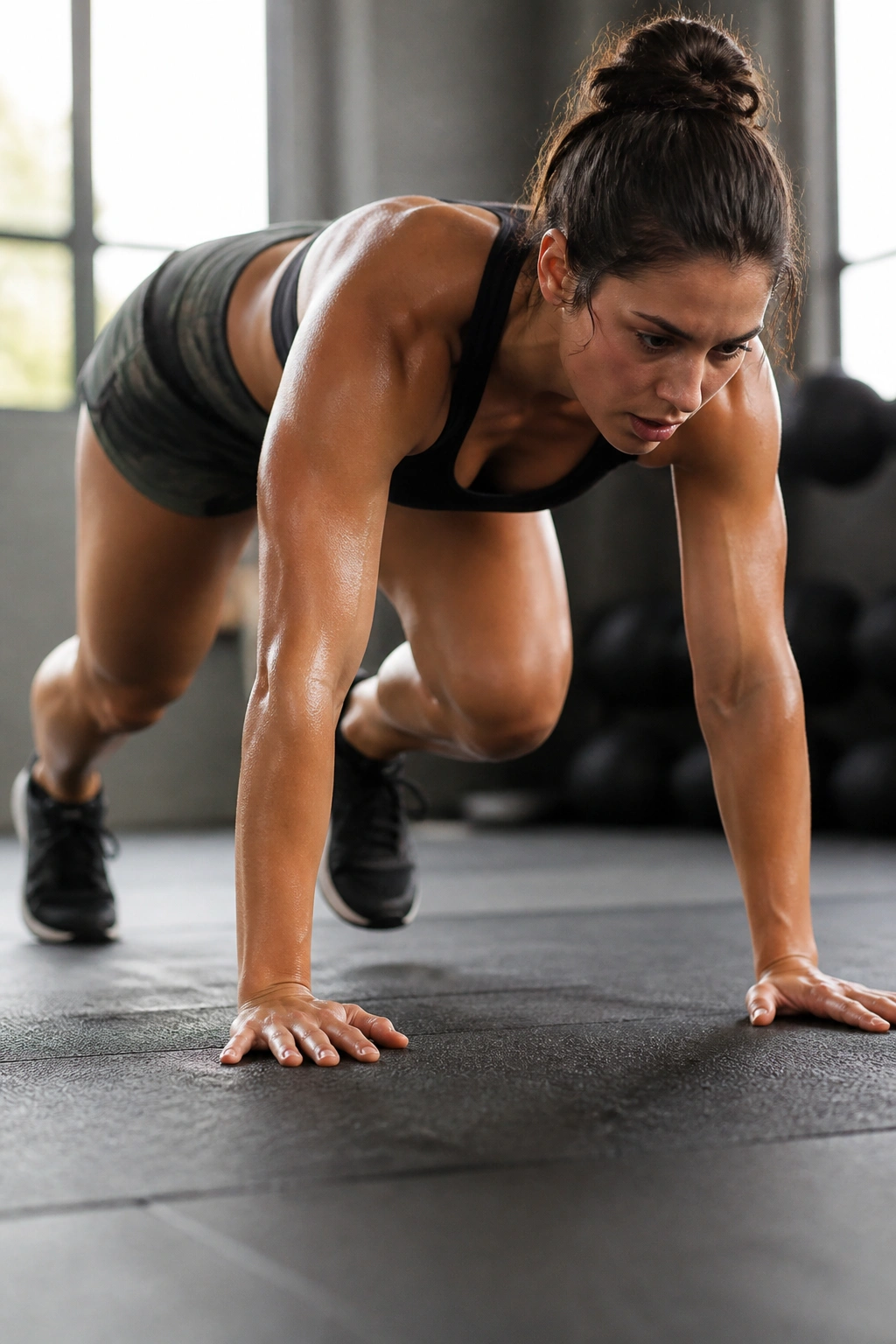
Yes, burpees are a full-body exercise, but they are an incredible tool for burning calories and forcing your core to stabilize your body through rapid level changes. A burpee is essentially a push-up followed by a jump.
The Core Connection
The secret to a good burpee is the “hollow body” position you hit at the bottom. When you drop to the floor, do not just flop down. Lower with control, and as you push back up, brace your core. When you jump up and tuck your knees, that crunching motion engages the abs.
Burpees force you to use your abs to transition from lying on the floor to standing up quickly. If you do these with intention, rather than just throwing your limbs around, you will feel the fatigue in your core very quickly. Aim for sets of ten, rest, and repeat.
8. Kettlebell Swings
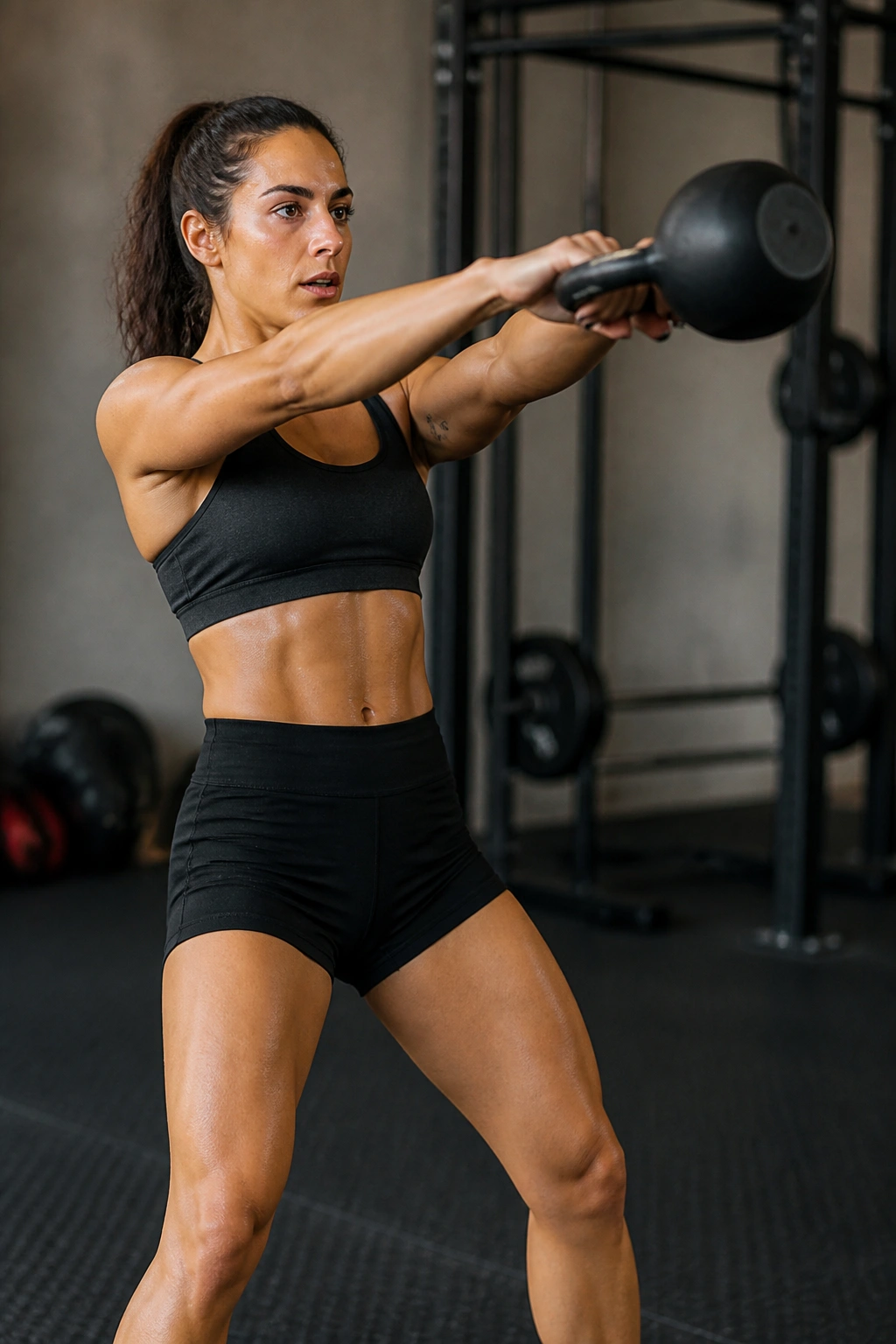
While often categorized as a glute and hamstring exercise, the kettlebell swing is a profound core movement. It is a dynamic, explosive hinge that relies entirely on core bracing to protect the spine.
Generating Power
Hold the kettlebell with both hands. With a slight bend in your knees, hinge at the hips—push your butt back, keep your back flat, and let the bell swing between your legs. Snap your hips forward powerfully to swing the bell up to chest height.
The core is what stops the bell at the top. If your abs were not engaged, the momentum of the kettlebell would pull you over. You must squeeze your abs at the top of every swing. This is not just a weight move; it is a stability move. It trains your core to handle rapid movement and deceleration.
9. Side Planks
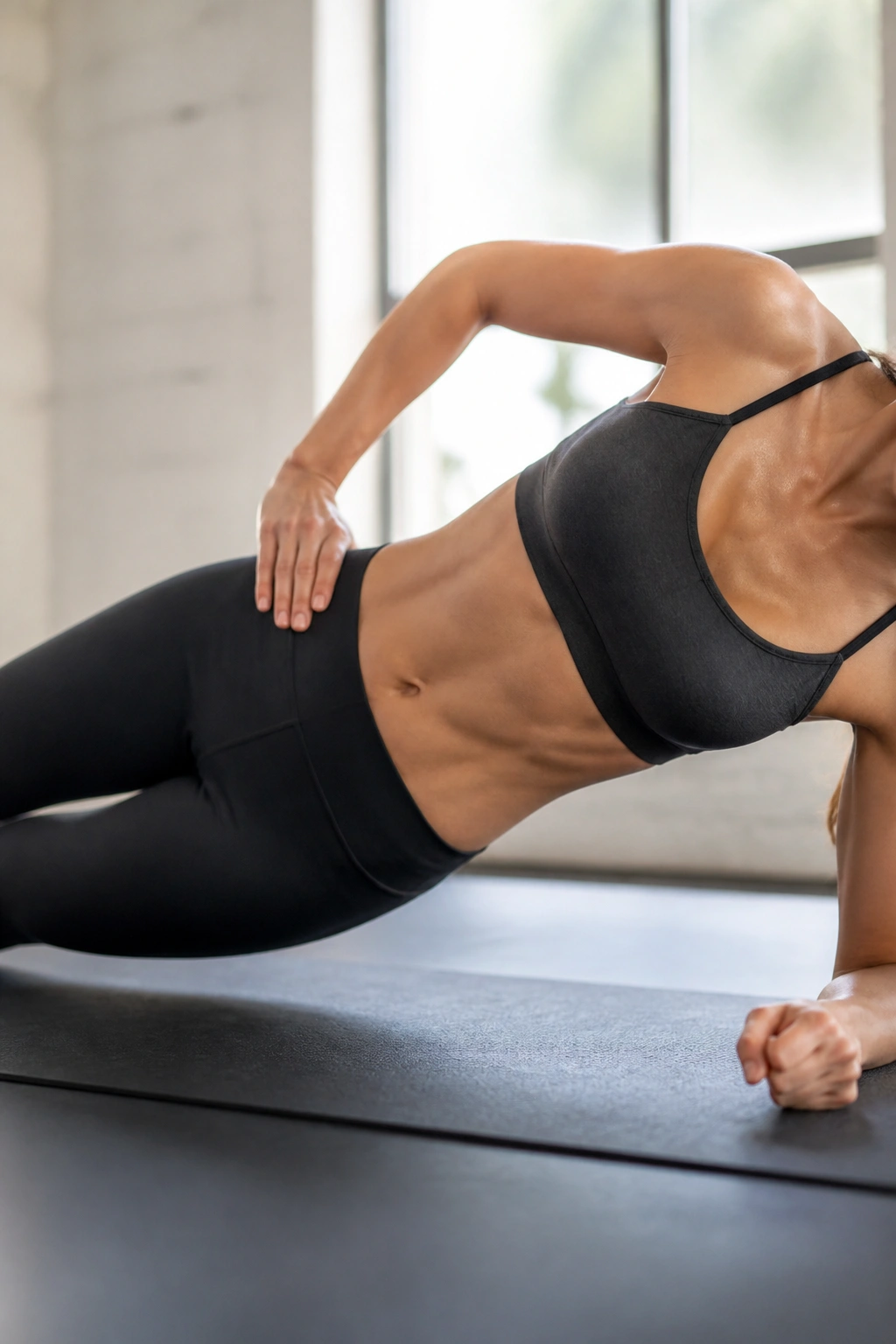
If the standard plank is the foundation, the side plank is the support beam. The obliques are responsible for lateral flexion and rotation, and the side plank is arguably the best way to isolate them without the risk of spinal twisting.
Finding Balance
Lie on your side, propped up on your forearm, and lift your hips until your body forms a straight line. Hold that position. You will immediately feel the bottom side of your core firing to keep you elevated.
Make it harder: Once the static hold becomes easy, add a dip. Lower your hip toward the floor without touching it, then drive it back up to the starting position. This turns an isometric hold into a dynamic movement. Do not let your top shoulder roll forward—keep your chest open and facing forward.
10. Bird-Dogs
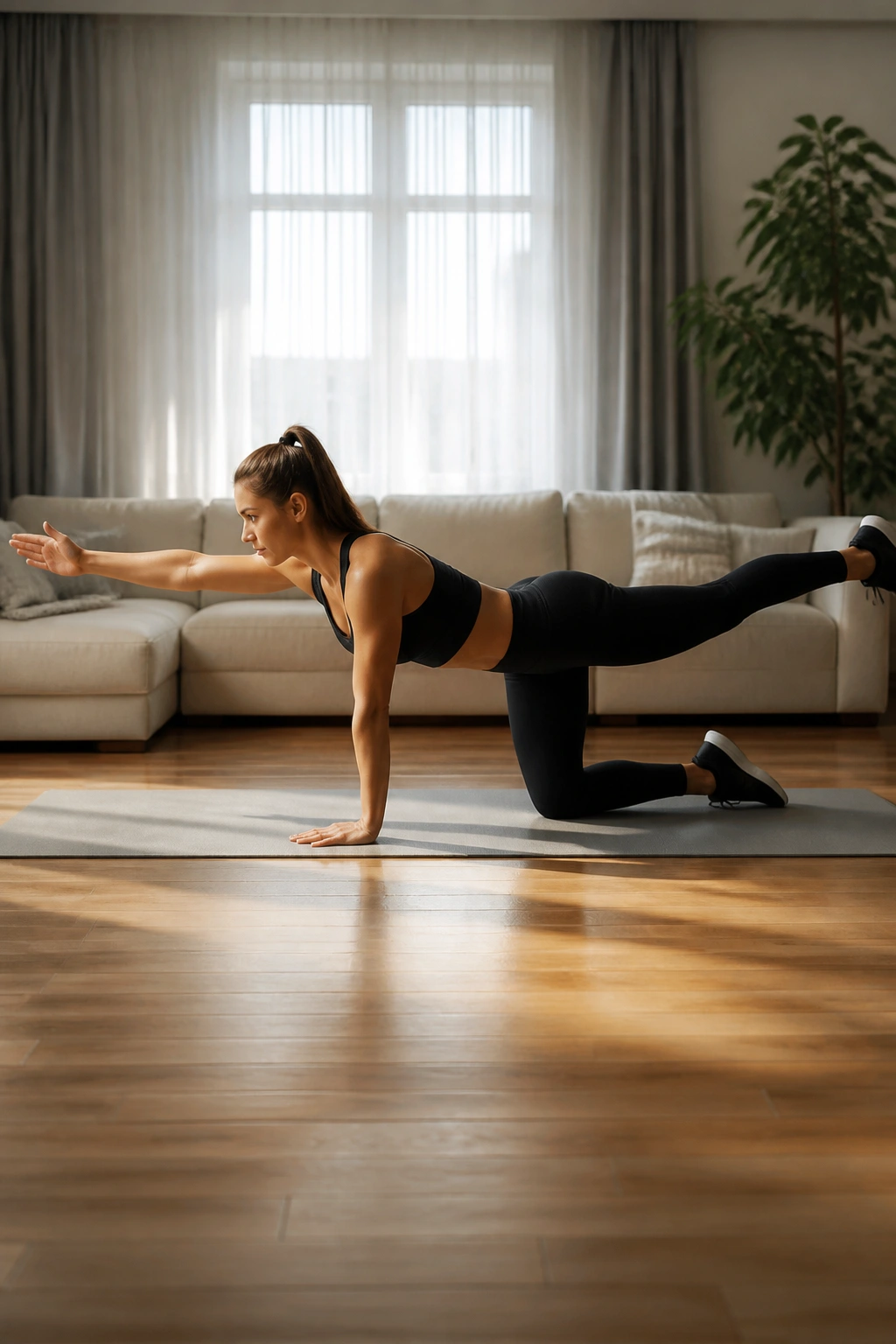
This is the ultimate movement for spinal health and deep core engagement. It seems simple, but it is deceptively difficult to do well. It forces you to stabilize your torso while your limbs move in opposite directions.
The Technique
Get on your hands and knees in a tabletop position. Reach your right arm forward and your left leg back at the same time. Hold for a second, really squeezing your glute and engaging your core. Return to center and switch to the left arm and right leg.
The challenge is to keep your torso perfectly still. If you tilt, twist, or wobble, you are losing the benefit. Pretend you have a glass of water balanced on your lower back. Do not let it spill. This teaches your body how to maintain rigidity under load, which is exactly what a flat stomach requires.
11. Hanging Leg Raises
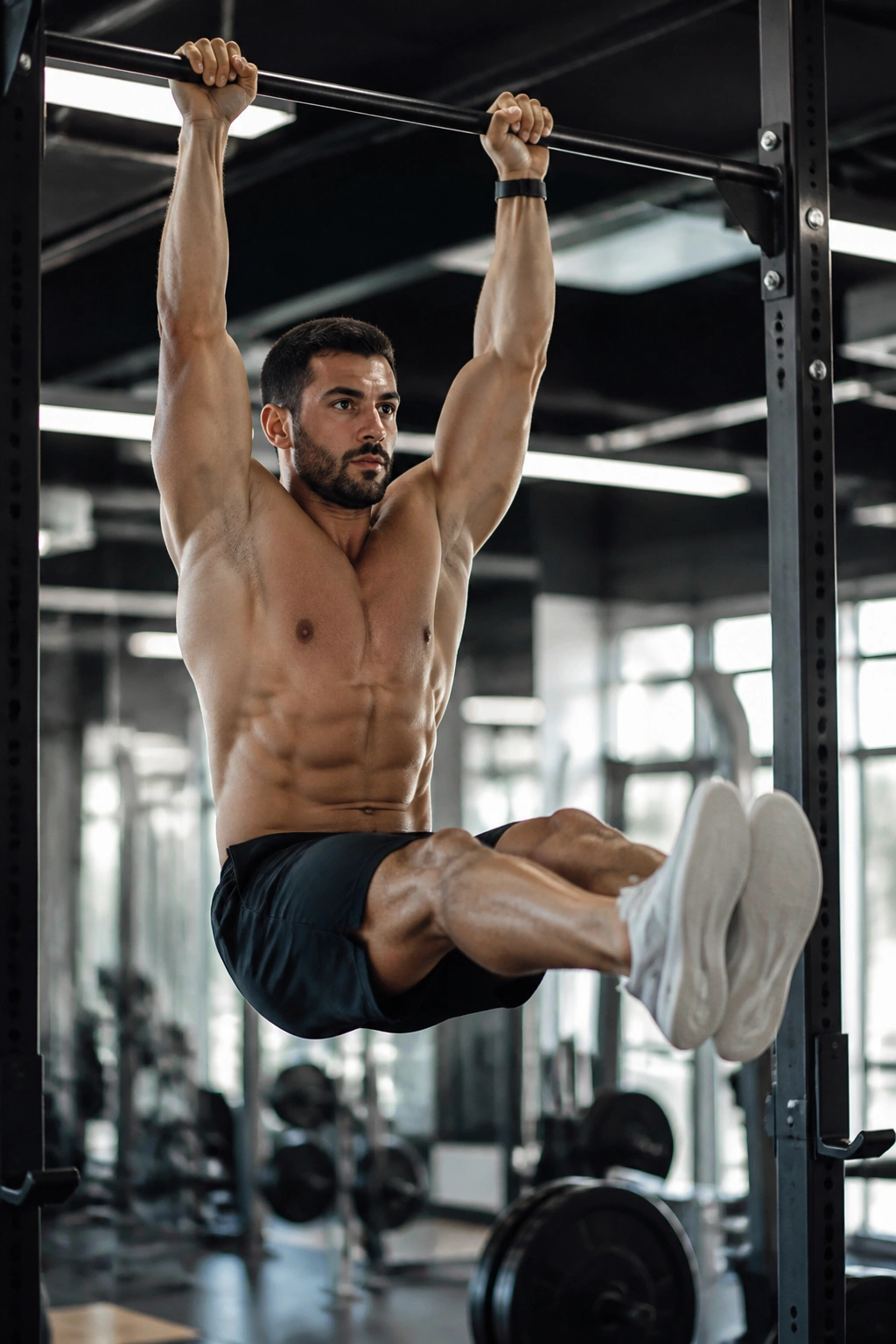
If you have access to a pull-up bar, this is the gold standard for lower abdominal work. It is an advanced move, but nothing hits the lower rectus abdominis quite like lifting your legs against gravity while hanging.
The Movement
Grab the bar with an overhand grip. Do not just let your body dangle like a pendulum. Engage your lats slightly. Lift your legs until they are at least parallel to the floor, or higher if you can.
The biggest mistake is using momentum to swing your legs up. Avoid the “kipping” motion. If you have to swing to get your legs up, you are cheating yourself. If you are struggling, start by just raising your knees to your chest. That is still an effective movement. Once you master the knee raise, work toward the straight-leg version.
12. Hollow Body Holds
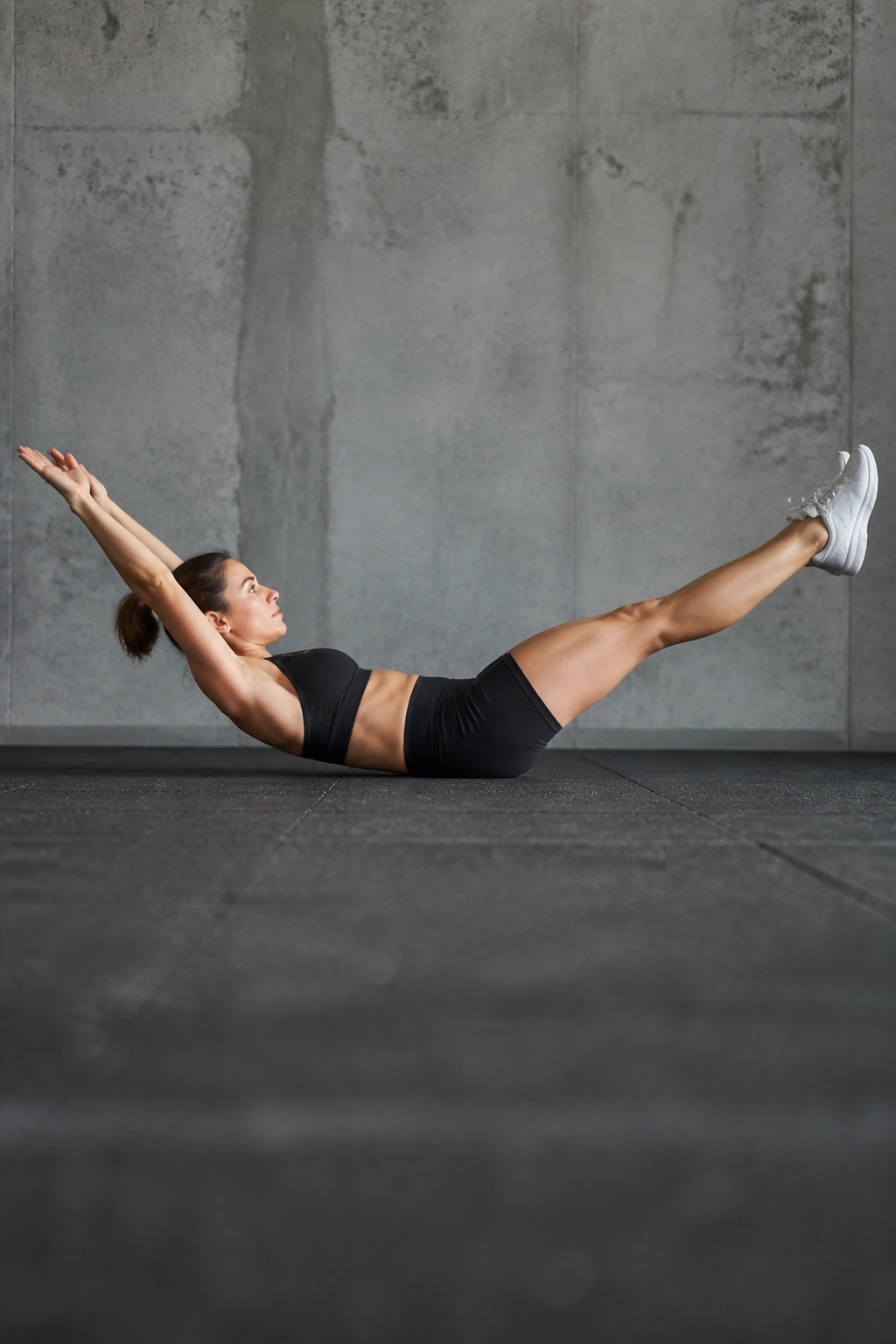
Gymnasts swear by this. It is one of the most brutal core-strengthening exercises because it provides zero room for error. It forces your entire abdominal wall to work in unison to keep your body off the floor.
Establishing Tension
Lie on your back with your arms extended overhead and legs straight out. Lift your arms, head, shoulders, and legs a few inches off the floor. Press your lower back into the ground. Hold that “banana” shape.
You will feel your entire core shaking within seconds. This is a total-body contraction. Keep your breathing steady; do not hold your breath. If your back arches, you have failed the hold. Lower your legs or lift your arms higher to reduce the intensity until you can hold the position with a flat back.
13. Renegade Rows
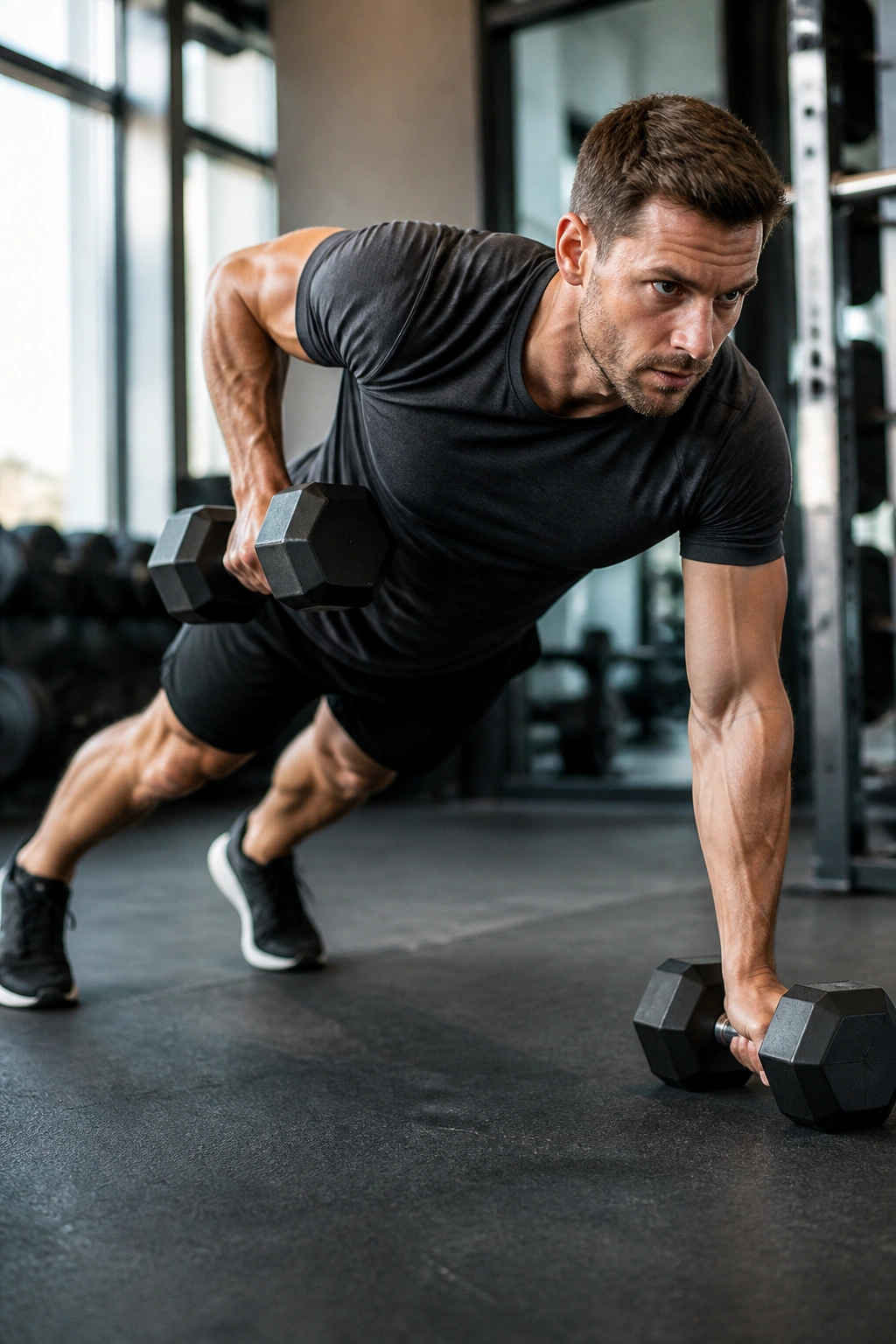
This movement requires a pair of dumbbells. It is an anti-rotation exercise, meaning it trains your core to resist the urge to twist while one arm is working.
The Setup
Get into a high plank position, holding a dumbbell in each hand. The dumbbells should be on the floor. Tighten your core—this is critical. Row one dumbbell up to your hip while keeping your hips and shoulders square to the floor. Do not let your body rotate as you pull the weight.
Place the weight down and switch arms. Your core is working hard to prevent you from falling over to one side. If your hips are rocking wildly, use a lighter weight or widen your stance for more stability. This hits the abs, lats, and shoulders all at once.
14. V-Ups
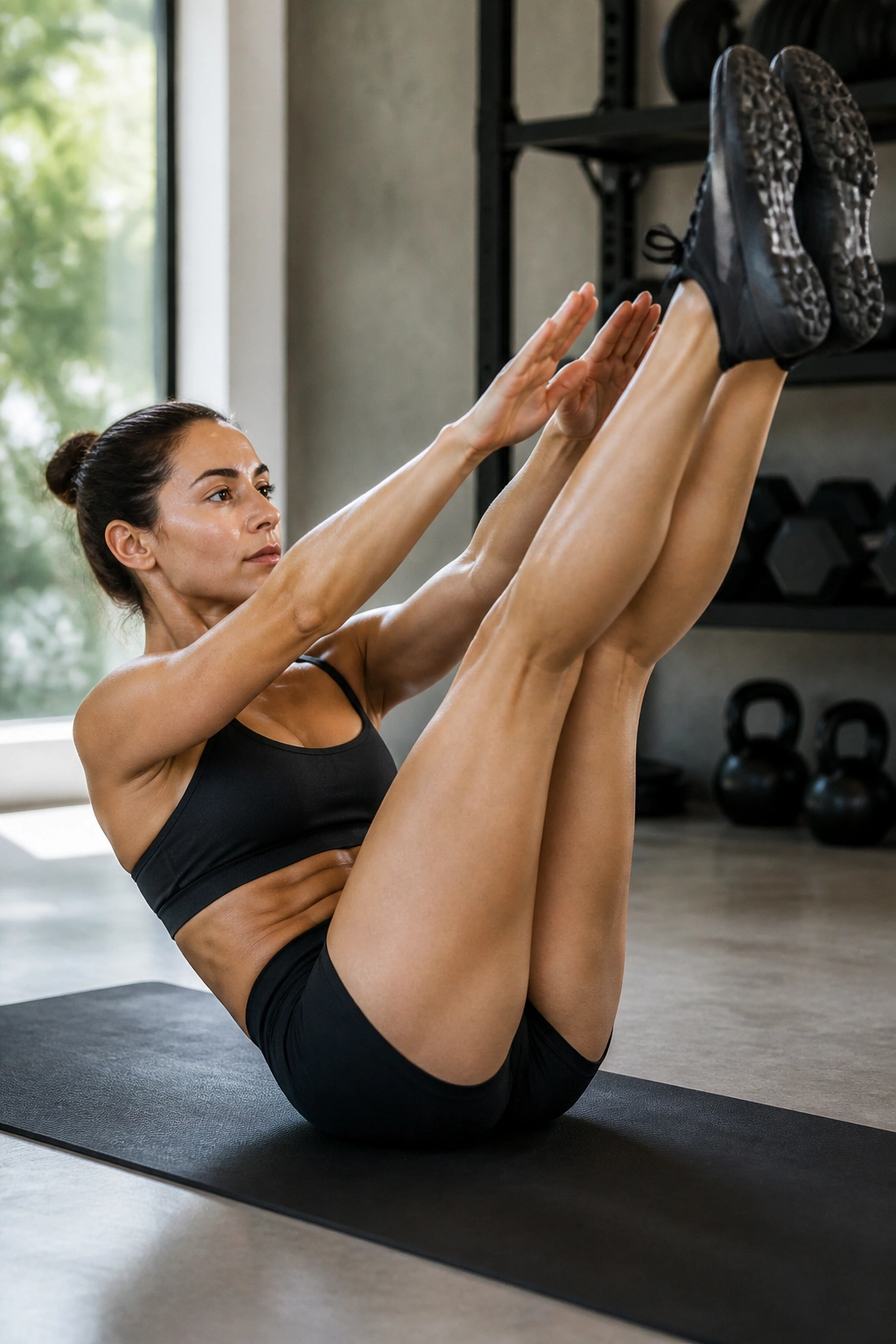
V-ups are the more aggressive cousin of the dead bug. They require significant flexibility and core strength, as they bring your upper and lower body together in a full abdominal contraction.
Execution
Lie flat, arms behind your head, legs straight. In one fluid motion, sit up while lifting your legs, aiming to touch your hands to your toes or shins at the top. Think about folding your body in half, rather than just sitting up.
Lower your body back down with control. Do not just drop to the floor. The eccentric (lowering) phase is where most of the muscle fiber recruitment happens. If you cannot touch your toes, aim for your knees. The goal is the quality of the contraction, not how high you can reach.
15. High Knees
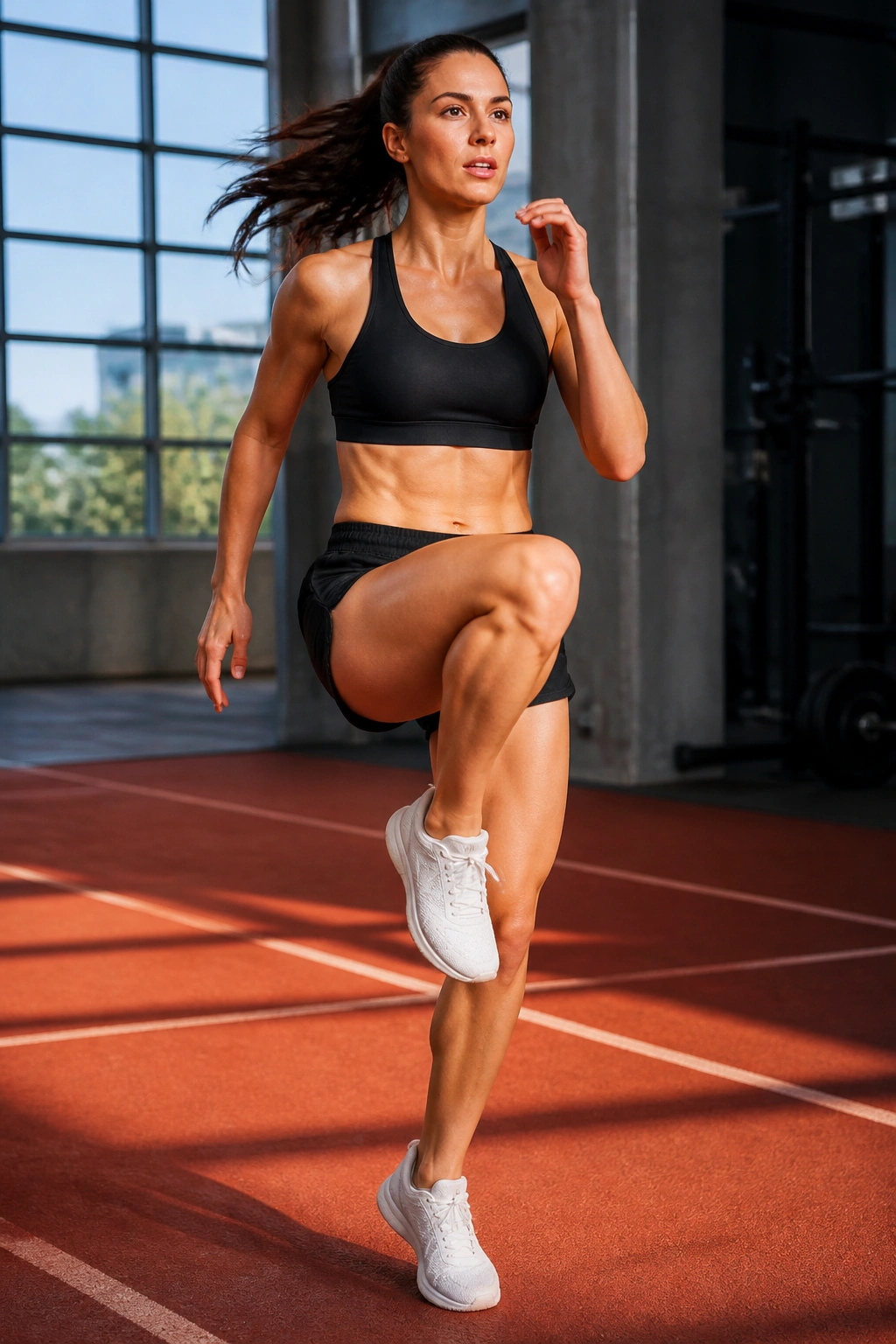
This is a simple HIIT movement. While it is primarily for cardio, the rapid, high-intensity knee drive forces the abdominals to contract forcefully with every step.
Getting the Rhythm
Stand in place and jog, but drive your knees as high as possible—ideally, until your thighs are parallel to the floor. Engage your core as if you are bracing for a punch every time your knee comes up.
This isn’t just about moving your legs; it’s about the torso stability required to keep your balance while moving that fast. It burns significant calories, which, as we established, is the only way to reveal the muscle you are building. Do this for 30-45 second intervals.
16. Suitcase Carries
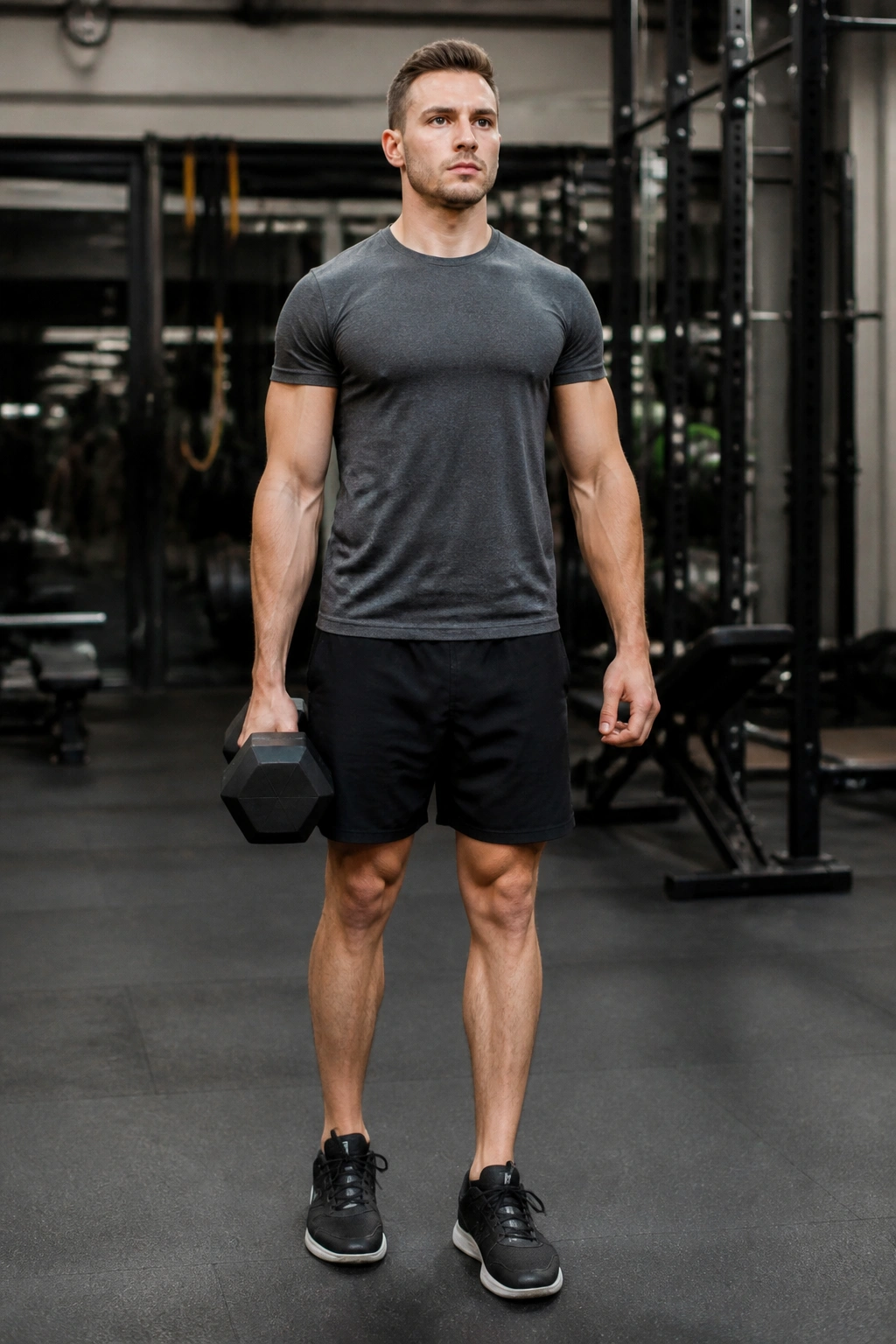
This is a functional strength move that hammers the obliques and transverse abdominis. It mimics the act of carrying a heavy suitcase, hence the name.
How to Do It
Pick up a heavy dumbbell or kettlebell in one hand. Stand up tall. The weight will try to pull you to the side. Resist it. Use your core to keep your body perfectly upright. Walk for a set distance—say, 30 yards—then switch the weight to the other hand.
You will feel the muscles on the side opposite the weight working overtime to keep you straight. This is excellent for anti-lateral flexion. It builds a dense, strong midsection that looks just as good as it performs.
17. Plank Jacks
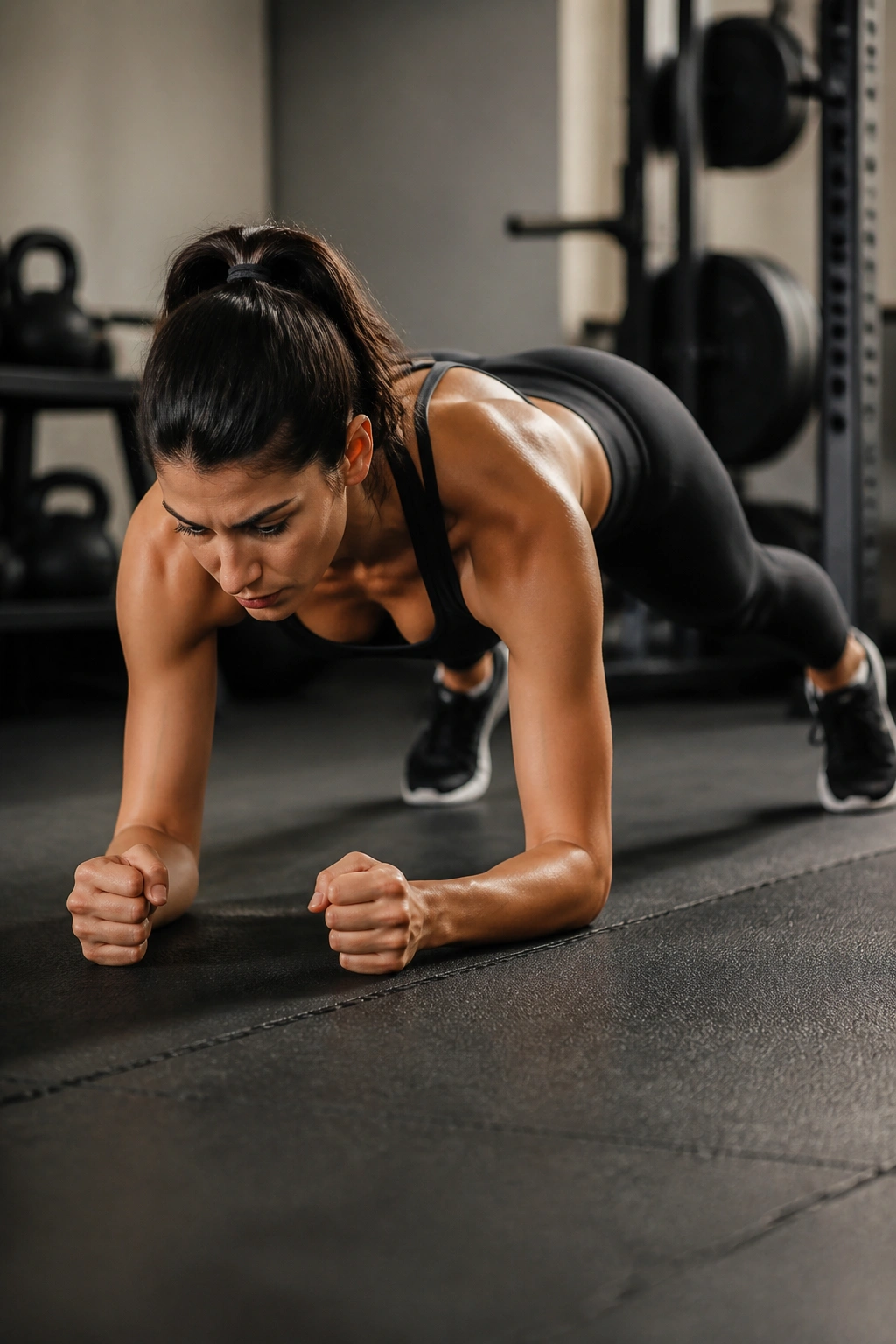
This takes the stability of a plank and adds a dynamic component. It turns a static exercise into a calorie-burning, heart-pumping challenge.
Movement
Start in a forearm plank. Keep your core braced. Jump your feet out wide, then jump them back in, similar to a jumping jack. The entire time, your upper body and torso should remain frozen.
If your torso is bobbing up and down, your core is not tight enough. The movement should be isolated to your lower body. If you feel like your hips are dropping, check your form. This is a high-intensity move that taxes the core stabilizers significantly.
18. Bicycle Crunches
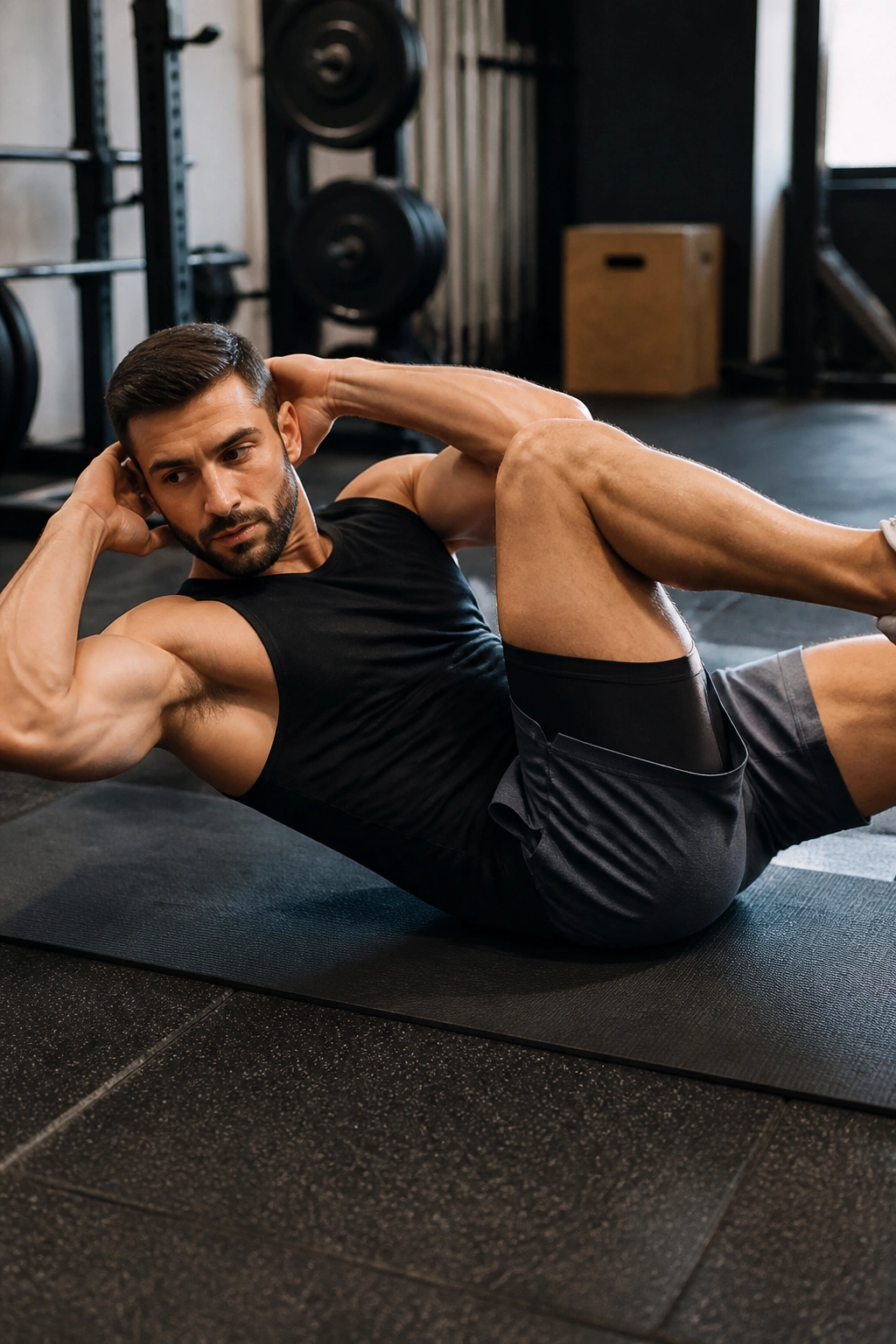
This exercise is often cited in research as one of the most effective for stimulating the rectus abdominis and the obliques simultaneously.
Proper Mechanics
Lie on your back, hands behind your head—do not pull on your neck. Bring your left elbow toward your right knee while extending your left leg straight. Switch. The key here is rotation. You want to touch your elbow to the outside of the opposite knee.
Move slowly. If you are cycling your legs like you are riding a bike at a sprint, you are using momentum. If you move slowly, bringing the elbow across, you force the obliques to do the heavy lifting. This is the difference between a wasted rep and an effective one.
19. Goblet Squats
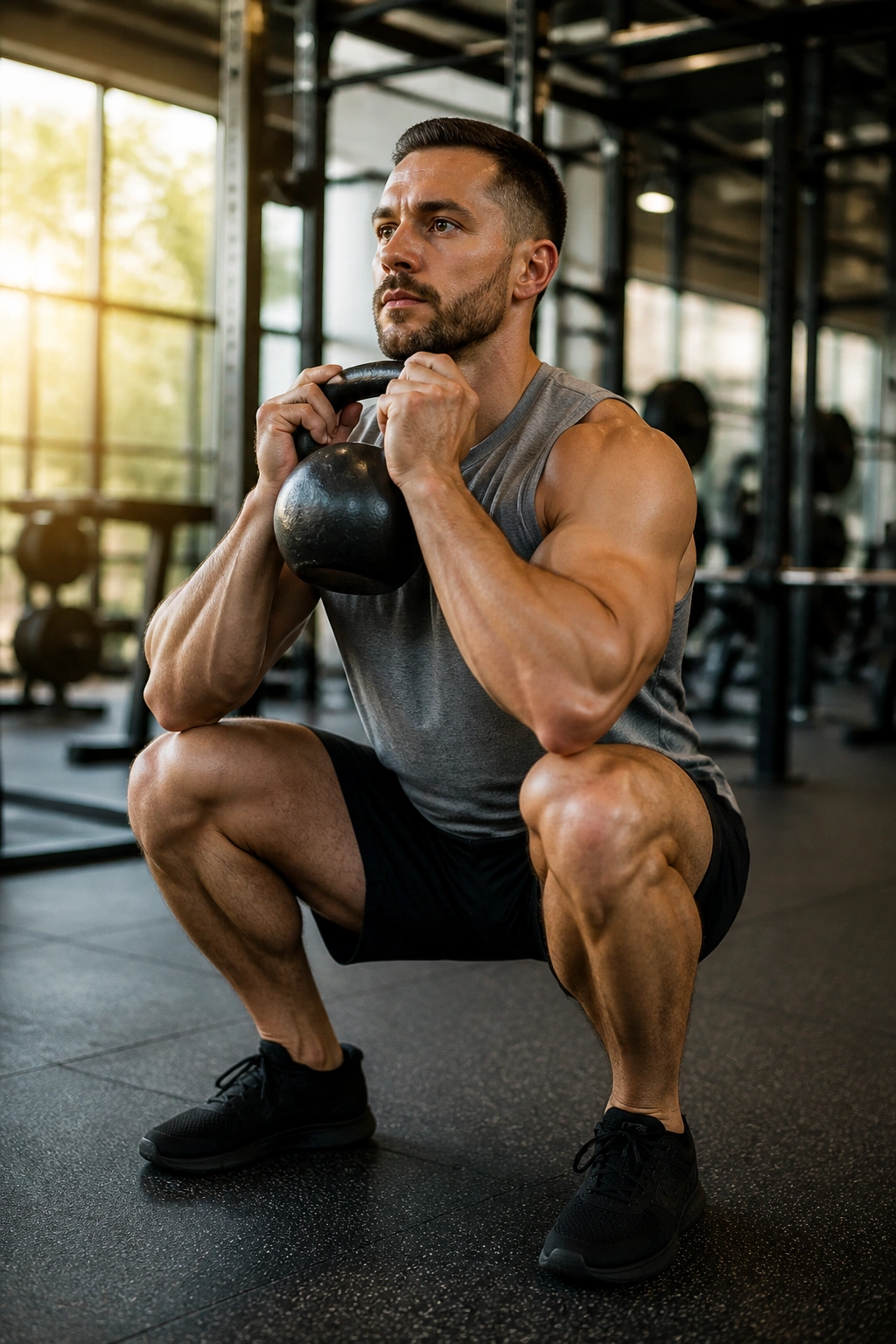
People rarely think of squats as an ab exercise, but they should. If you hold a weight in front of your chest (a goblet squat), your core has to work incredibly hard to prevent you from falling forward.
The “Bracing” Concept
Hold a dumbbell or kettlebell against your chest. Squat down while keeping your chest up and your back straight. You have to actively brace your abs as if someone is about to poke you in the stomach.
By maintaining this “brace” throughout the entire squat, you are putting your core under time-under-tension for the duration of the set. It is a fantastic way to build a strong, thick abdominal wall that will support a flatter-looking midsection.
20. Bear Crawls
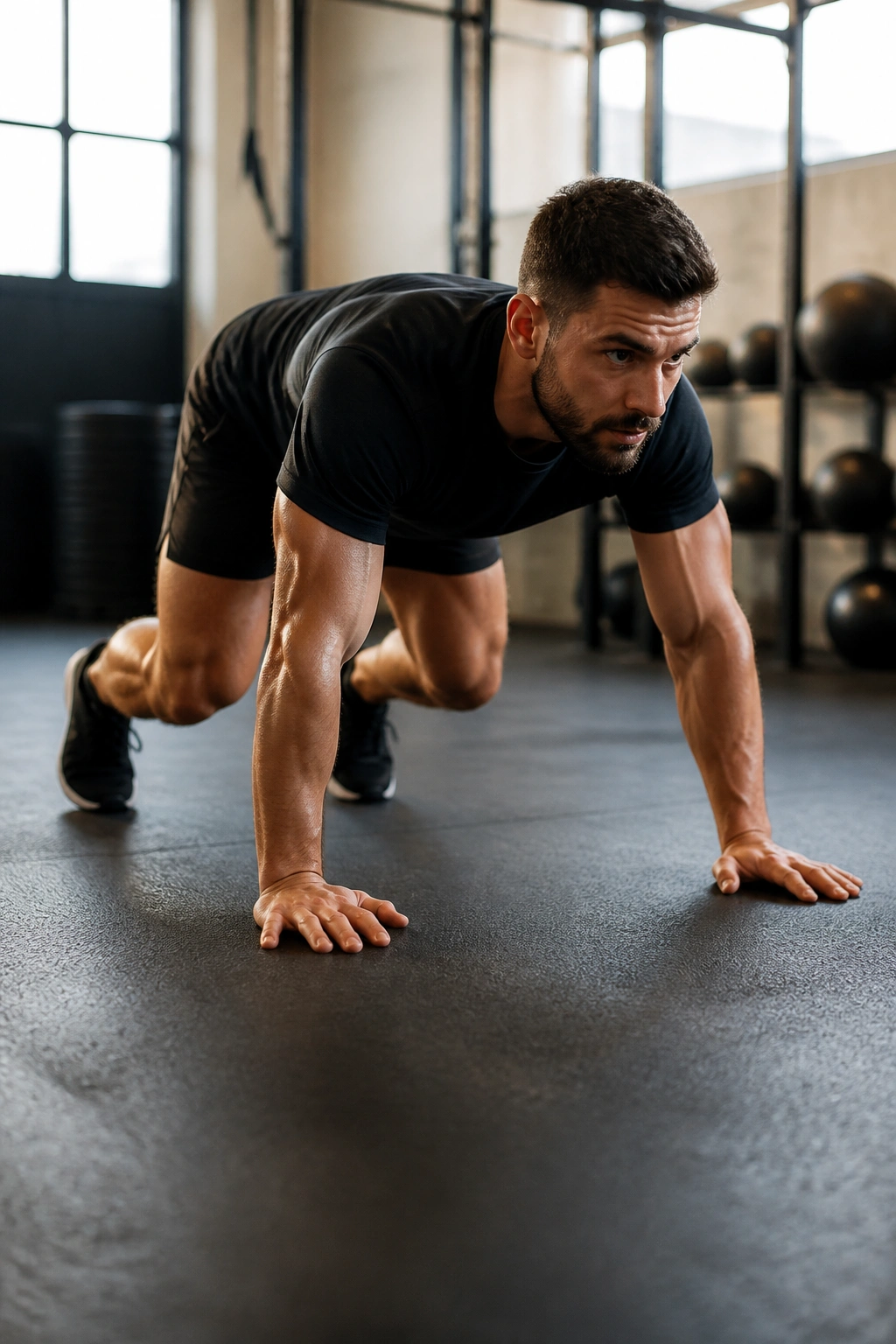
Bear crawls are a total-body nightmare, in the best way possible. They require coordination, shoulder stability, and constant core engagement.
The Motion
Get on your hands and knees. Lift your knees just an inch off the floor. Your back should be flat like a table. Now, crawl forward by moving your right hand and left foot, then your left hand and right foot.
Keep your knees hovering just off the ground the entire time. Do not let your butt spike up into the air. If you do this correctly, you will feel your abs burning within thirty seconds. It requires you to maintain a rigid core while your limbs are moving, which is the definition of functional stability.
21. L-Sits
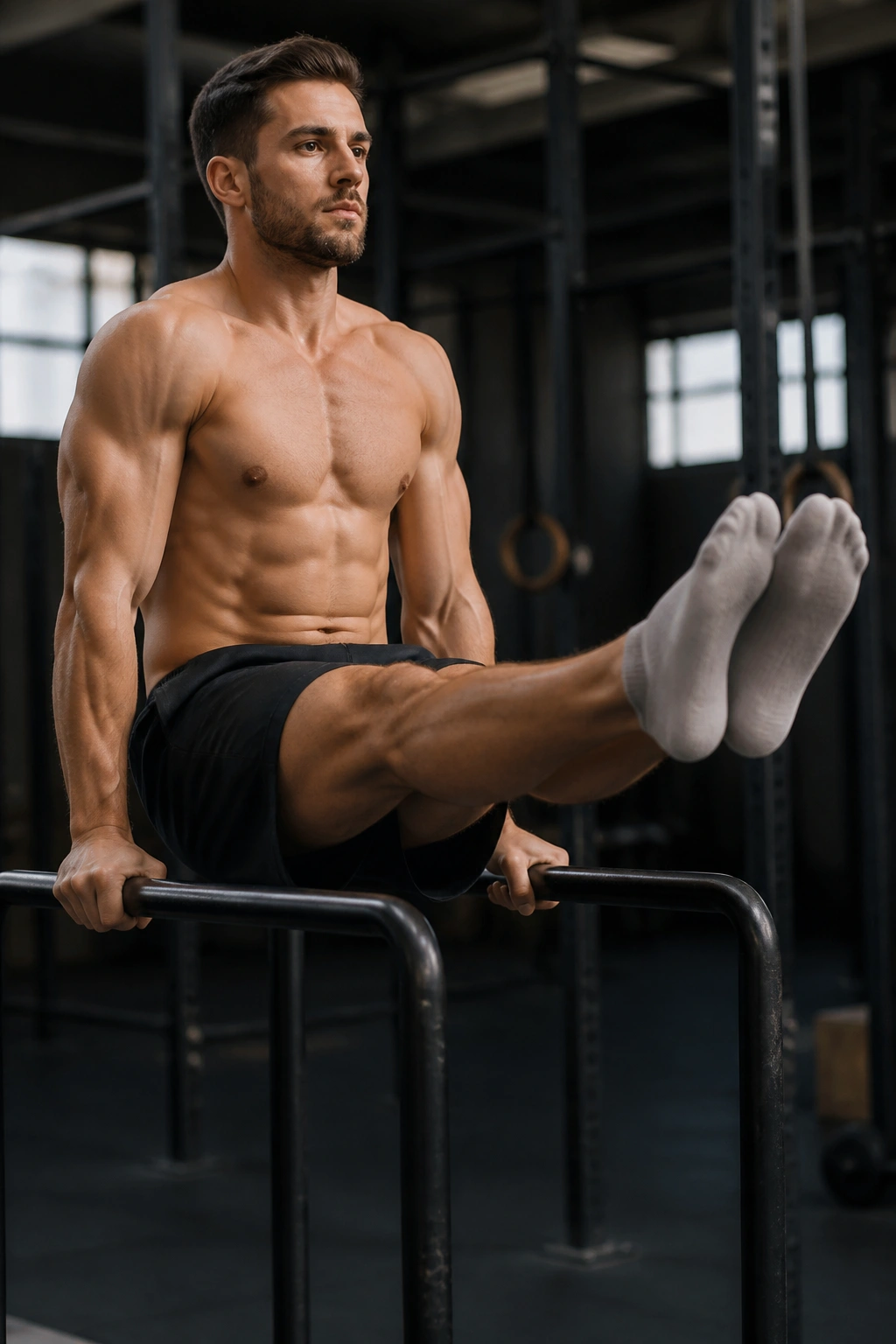
This is an advanced movement that might require a little practice. It is an isometric hold that targets the abdominals, hip flexors, and triceps.
How to Start
You can do these using parallel bars or even two sturdy chairs. Place your hands on the supports, arms straight, and lift your legs out in front of you until they are parallel to the floor, forming an “L” shape with your body.
Hold this for as long as possible. Your abs will be screaming. If this is too hard initially, start by just lifting your knees to your chest while hanging or supporting yourself. Eventually, work toward straightening your legs. This is arguably the best “abs of steel” exercise there is.
22. Standing Torso Rotations
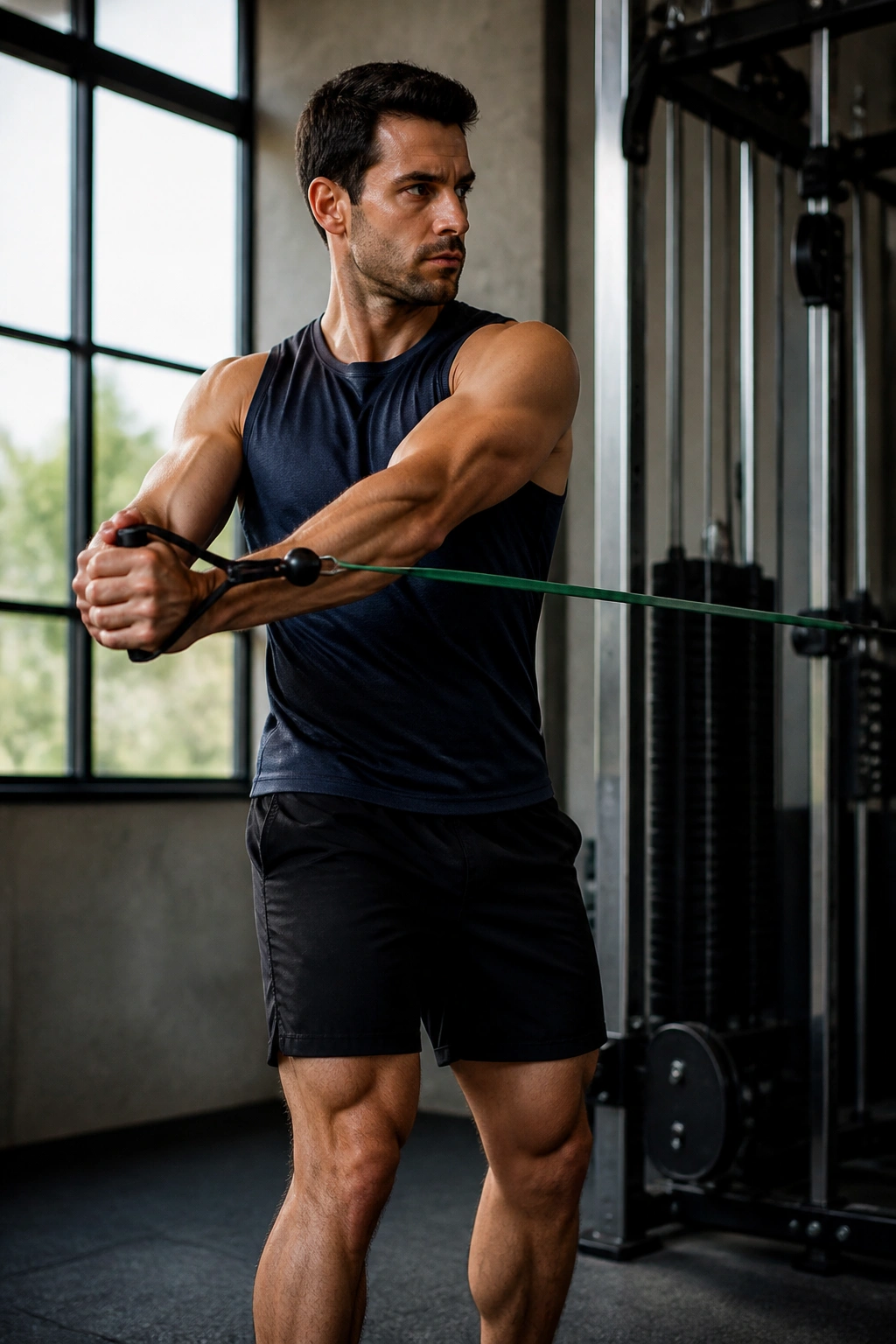
Using a cable machine or a resistance band, this exercise helps train the rotational power and stability of the core.
The Setup
Attach a band to a sturdy pole at chest height. Stand sideways to the anchor point, holding the band with both hands extended. Keeping your arms straight, rotate your torso away from the anchor point.
The tension of the band will try to pull you back to the center. You must resist that pull. Do not just use your arms; twist from your rib cage. You are teaching your body to rotate and control that rotation using your obliques and deep abdominal muscles. It creates a defined, tight waistline over time.
Final Thoughts
Getting a flat stomach is not about finding the “perfect” exercise; it is about combining intensity, consistency, and a realistic approach to nutrition. You can do all twenty-two of these workouts every single day, but if your diet is not supporting fat loss, you will simply be building muscle underneath a layer of fat. The muscle will be strong, but it will not be visible.
Focus on mastering the form of the movements listed here. Choose four or five that you enjoy or that fit your current equipment, and perform them with purpose. Do not rush the movements; focus on the contraction, the breathing, and the stability. Over time, as your body composition changes through a consistent caloric deficit, the strength you have built with these workouts will reveal itself in the form of a tighter, more defined midsection. Remember, consistency in your habits always yields more results than searching for the next “secret” workout.
