



The old mantra is that abs are made in the kitchen, and there is a lot of truth to that. If your body fat percentage is too high, no amount of abdominal training will reveal the muscle underneath. However, relying solely on diet is like buying a high-performance engine and refusing to ever drive it above thirty miles per hour. A clean, high-protein diet creates the environment for fat loss, but specific, high-intensity training is what carves out the definition, builds the muscle tissue, and keeps your metabolism running hot.
You do not need to spend hours doing endless crunches to see results. In fact, most people wasting time on the floor doing thousands of repetitions are missing the point entirely. The rectus abdominis—the muscle responsible for that “six-pack” look—is a muscle just like your chest or legs. It grows with resistance. It responds to tension. When you combine a precise nutritional plan with the right mechanical stimulus, you stop chasing aesthetic goals and start building a physique that actually functions.
This is not about spot-reducing fat, which is physiologically impossible. It is about total-body conditioning that forces your core to work overtime while incinerating calories. The following movements are designed to be integrated into a balanced routine that respects your recovery while demanding maximum effort. Forget the late-night infomercial gimmicks. These are the tools that actually work.
1. Heavy Barbell Compound Lifts
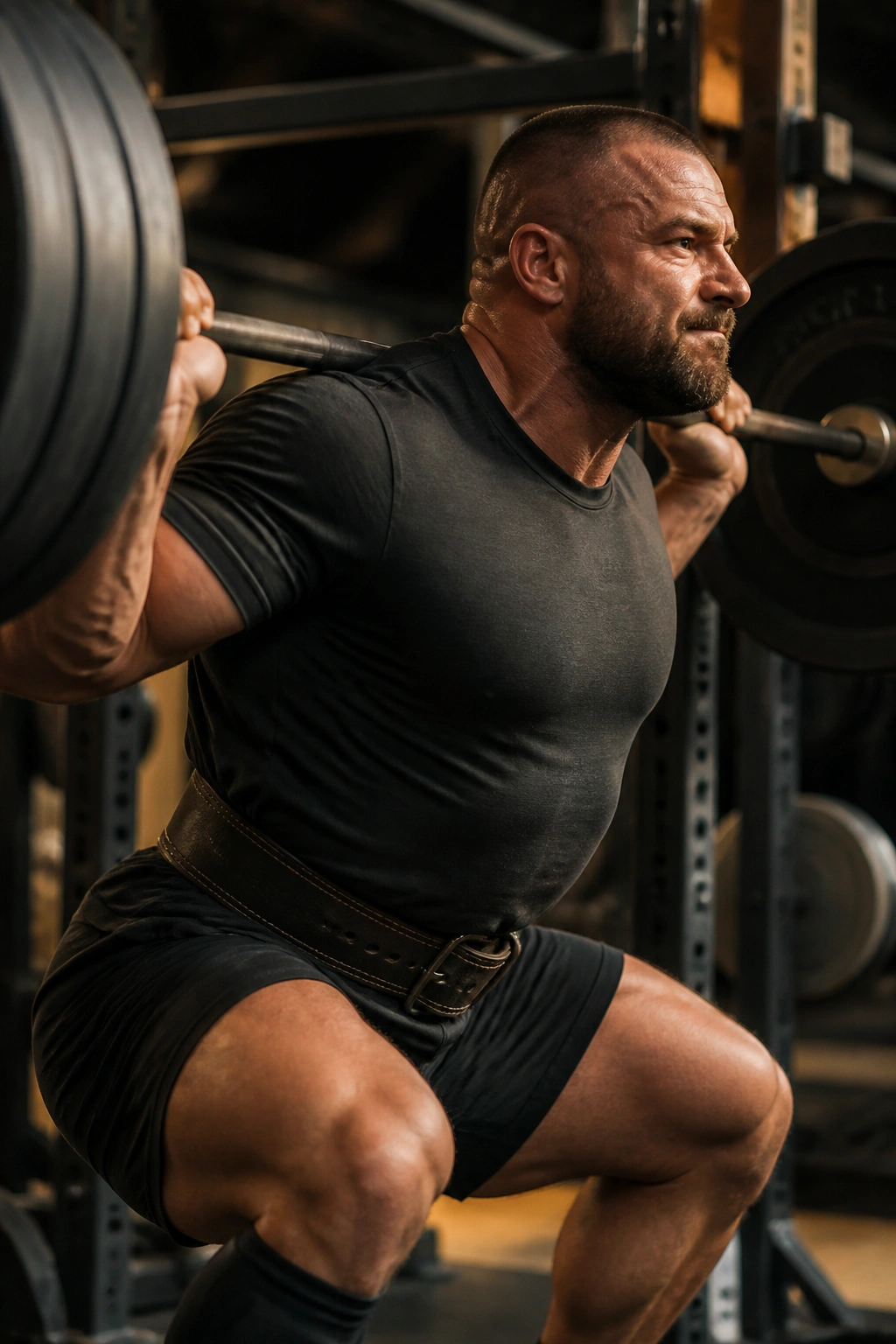
Compound lifts are the bedrock of any serious body composition transformation. Movements like the barbell back squat and the overhead press force your core to act as a stabilizer for the entire load. When you have a heavy barbell across your upper back or locked out overhead, your abdominal wall must contract with extreme intensity to keep your spine from collapsing or hyperextending.
Why They Build Your Midsection
Isolation exercises rarely generate the kind of intra-abdominal pressure that a heavy squat does. When you perform a heavy back squat, you aren’t just training your legs; you are performing the most effective standing abdominal exercise in existence. You are forced to brace your entire midsection against a load that wants to crush you. This recruits every fiber of the core, including the obliques and the deep transversus abdominis.
Tips for Maximum Core Engagement
- Master the brace: Before you unrack the weight, take a deep breath into your belly—not your chest—and hold it. Push your abs out against your belt or your waistline as if someone were about to punch you in the stomach.
- Maintain neutral spine: If your lower back rounds or arches excessively, you lose the tension that builds your abs. Keep that spine rigid.
- Go heavy, but safe: Aim for a weight that challenges your form within the 6–8 rep range. This is the sweet spot for hypertrophy and strength.
2. High-Intensity Interval Training (HIIT)

HIIT is widely misunderstood as just “fast cardio.” Done correctly, it is a metabolic sledgehammer that keeps your body burning calories long after you leave the gym. The key here is not the duration, but the intensity. If you are breathing easily during your intervals, you are not doing it right.
The logic is simple. When you push your heart rate to its near-maximum threshold for short bursts, your body enters a state of oxygen debt. Known as Excess Post-exercise Oxygen Consumption (EPOC), this state forces your body to consume more oxygen and burn more calories to return to its resting state for hours afterward. This is the “afterburn” that helps you stay in the caloric deficit required for a six-pack diet to work.
Common approaches include sprints, air bike intervals, or row sprints. For example, sprinting as hard as you can for 30 seconds, followed by 90 seconds of walking, is often more effective for fat loss than an hour of steady-state jogging. It preserves muscle mass while attacking stubborn adipose tissue.
3. Weighted Hanging Leg Raises
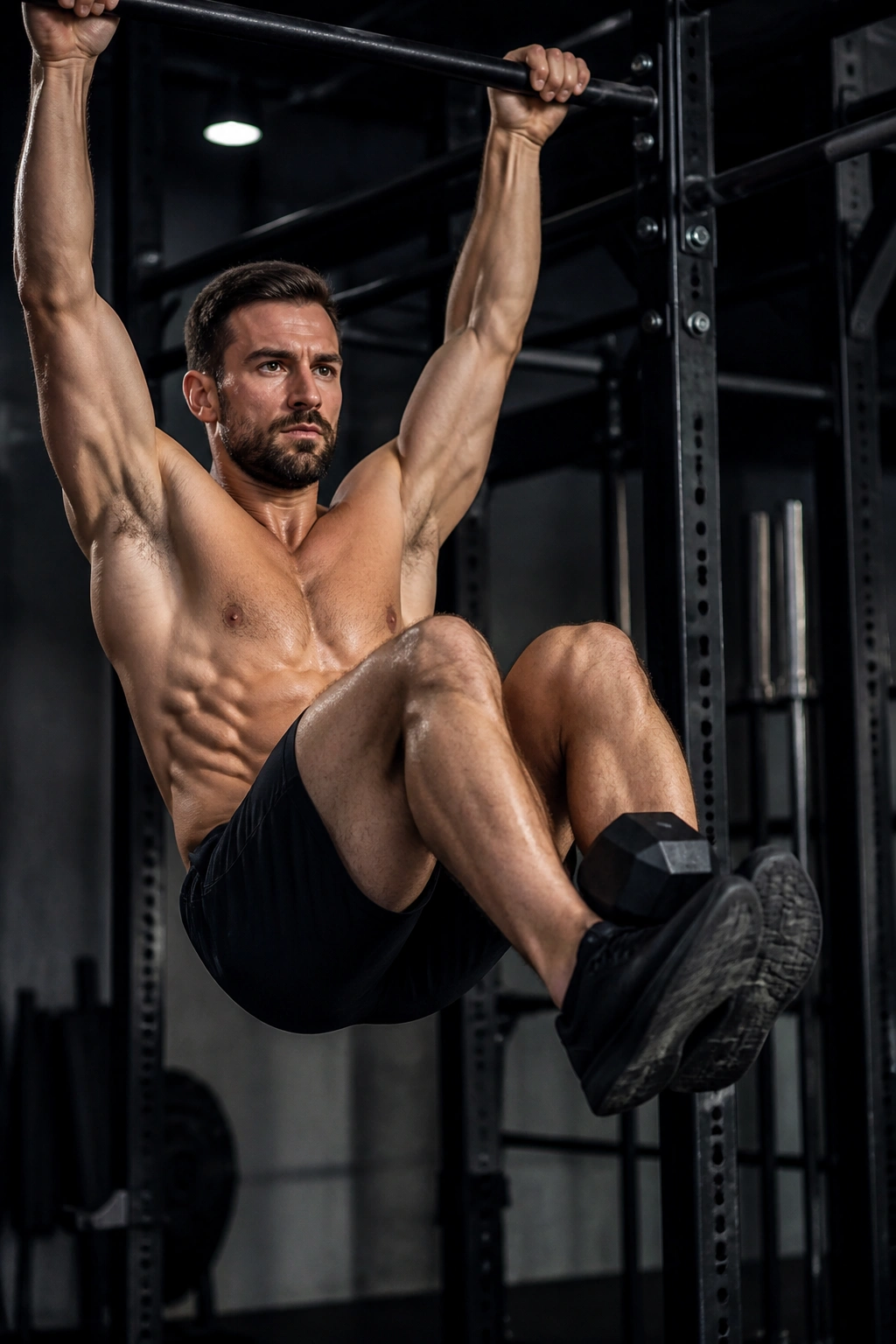
Most people treat hanging leg raises like a swinging pendulum. They use momentum to fling their legs up and down, barely engaging their core, while their hip flexors do all the heavy lifting. To build an impressive abdominal wall, you need to strip away the momentum and focus on the pelvic tilt.
When you hang from the bar, the goal is not just to bring your feet to the bar. The goal is to bring your pelvis to your ribcage. Think about curling your tailbone toward your chest. This is where the actual contraction happens. If you aren’t feeling a deep burn in your lower abs, you are likely just rocking back and forth.
Add a small dumbbell between your feet if you can handle it, or use ankle weights. The added resistance forces the rectus abdominis to work harder to overcome gravity. Keep the movement slow and controlled—three seconds to lift, three seconds to lower.
4. Farmer’s Carries

The farmer’s carry is often relegated to “strongman” events, but it is one of the most underrated core builders for the general population. Carrying a heavy weight in each hand forces your body to fight rotational and lateral forces with every single step.
Think of it as a moving plank. Your core must constantly micro-adjust to keep your spine upright and centered. If you let your core go soft, the weights will pull you toward the floor. To do this properly, you must stand tall, retract your shoulder blades, and brace your abs as if you are preparing for an impact.
Walk with purpose. Do not shuffle. Take deliberate, rhythmic steps for a set distance or time, such as 40 yards or 60 seconds. You will find that your grip strength often fails before your core does, which is fine—it just means you need to work on your grip endurance.
5. Sprint Intervals

Sprinting is the most primal form of conditioning. It requires an explosive drive and an incredibly rigid core to transmit power from your legs to your torso. When you sprint, your abs work to stabilize your spine against the violent oscillation of your limbs.
Do not try to sprint on a treadmill if you are new to this; the mechanical belt can be unforgiving on your joints. Find a track, a patch of grass, or an open field. Start with 50-meter bursts. Rest until your breathing returns to near-normal, then repeat.
Focus on your form. Keep your torso upright and your core braced. If you start to hunch over, your mechanics break down, and you lose the abdominal engagement. Sprinting targets the fast-twitch muscle fibers, which are often the ones that give your legs and midsection that “dense” and athletic look.
6. Russian Twists with a Medicine Ball
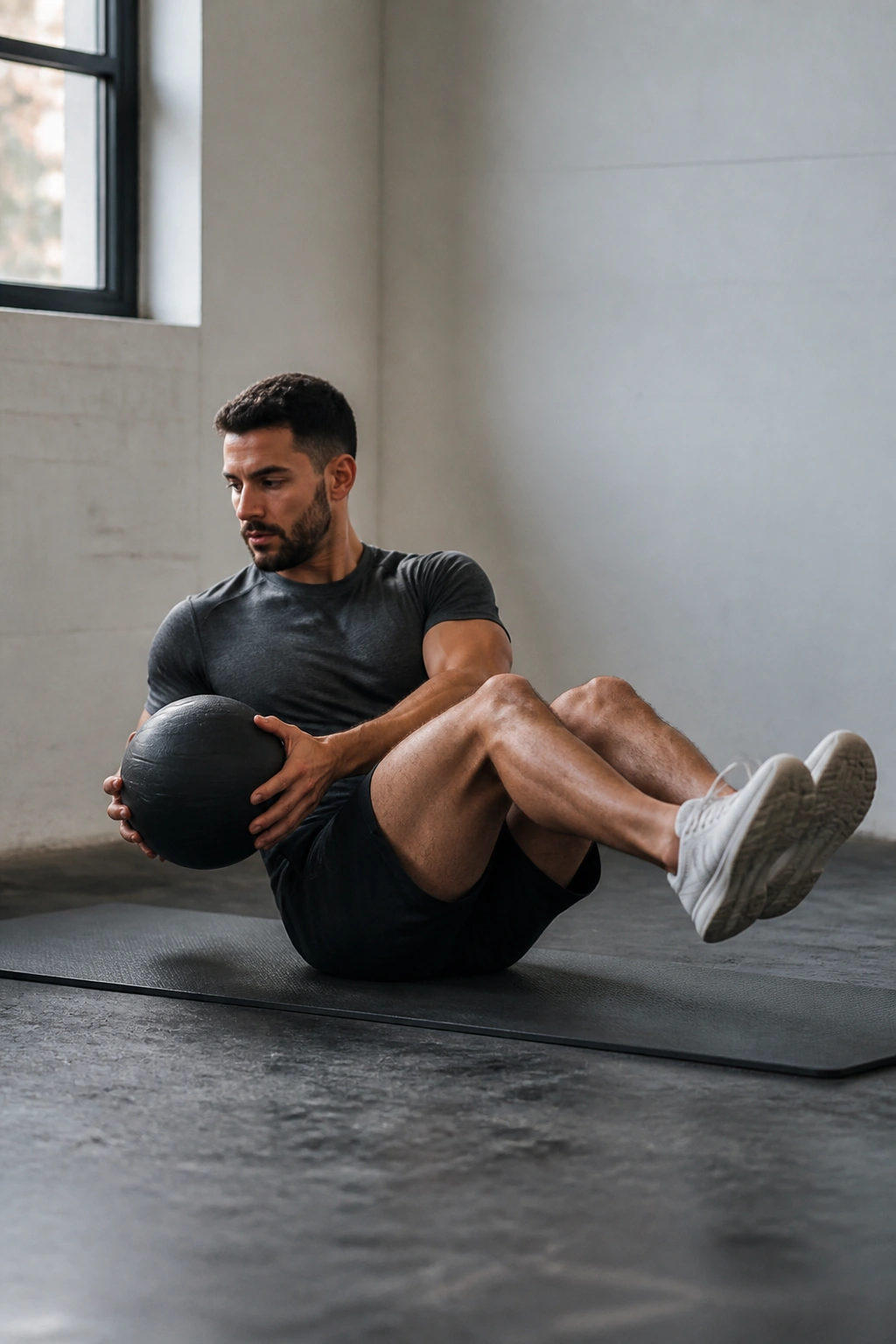
Rotational work is essential, but most people do it wrong. They whip their torso back and forth, putting torque on the lumbar spine. That is a one-way ticket to back pain, not a six-pack.
How to Execute Properly
- Sit on the floor: Lean back slightly to engage your core. If your feet are on the floor, it’s easier. Lift them off the floor, and it becomes significantly harder.
- Follow the ball: Do not just move your arms. Your eyes and your chest should follow the medicine ball. Your rotation needs to come from your thoracic spine, not your shoulders.
- Control the tempo: Pause for a split second at each side. Stop the momentum. Force your obliques to catch the weight of the ball.
The Benefit
This exercise directly targets the obliques, which frame your six-pack. Building these muscles creates the illusion of a narrower waist and a more V-tapered physique. Just remember: control is everything.
7. Barbell Squats
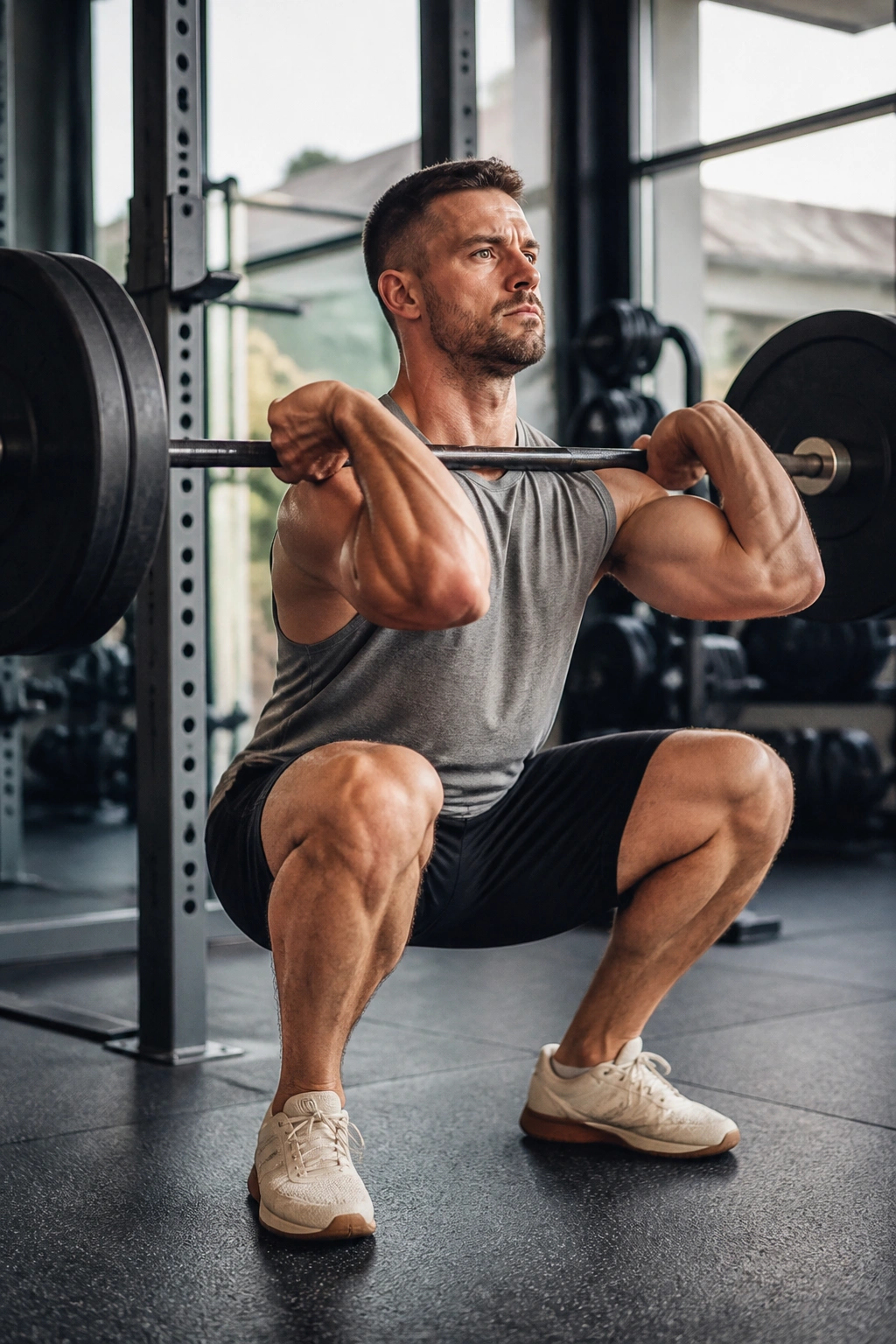
We talked about compound lifts generally, but the barbell squat deserves its own mention because of how it challenges the core. It is the ultimate test of structural integrity. When you are under a bar loaded with weight, your body realizes that if the core collapses, the spine is at risk.
The body is smart. It will naturally prioritize core stability to protect your nervous system. By squatting, you are tapping into this survival mechanism to force abdominal bracing. If you have never done squats with a focus on core tension, try performing a set of front squats. The weight is placed in front of you, which forces you to maintain an upright torso, putting even more demand on your abs than the traditional back squat.
It is uncomfortable, it is hard, and it will leave your midsection feeling exhausted in a way that standard crunches never will. That feeling of soreness is the byproduct of real, structural work being done on your abdominal wall.
8. The Plank Progression
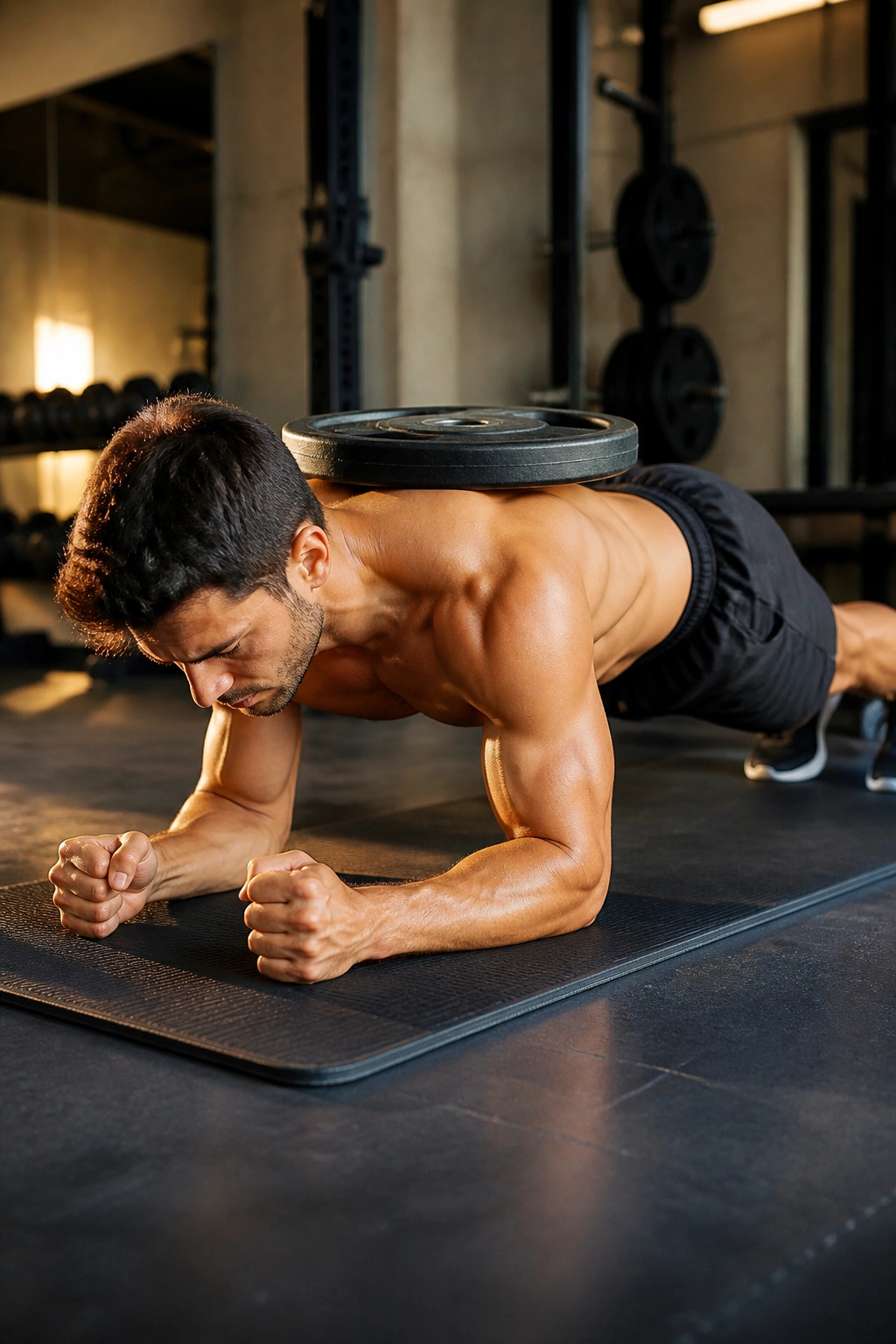
The static plank is a staple for a reason, but it has a shelf life. If you can hold a standard plank for three minutes, you aren’t doing “core training” anymore—you are doing core endurance training. To build a six-pack, you need to make the plank harder, not longer.
Start with a standard plank, but squeeze your glutes as hard as you possibly can. Then, drive your elbows into the floor as if you are trying to drag them toward your toes. This creates massive tension throughout the entire body.
Once you master that, progress to:
- RKC Planks: Shorter hold times (10-15 seconds) but with maximal full-body tension.
- Weighted Planks: Place a weight plate on your mid-back.
- Long-Lever Planks: Move your elbows further forward, away from your body, to increase the demand on the levers.
9. Battle Ropes
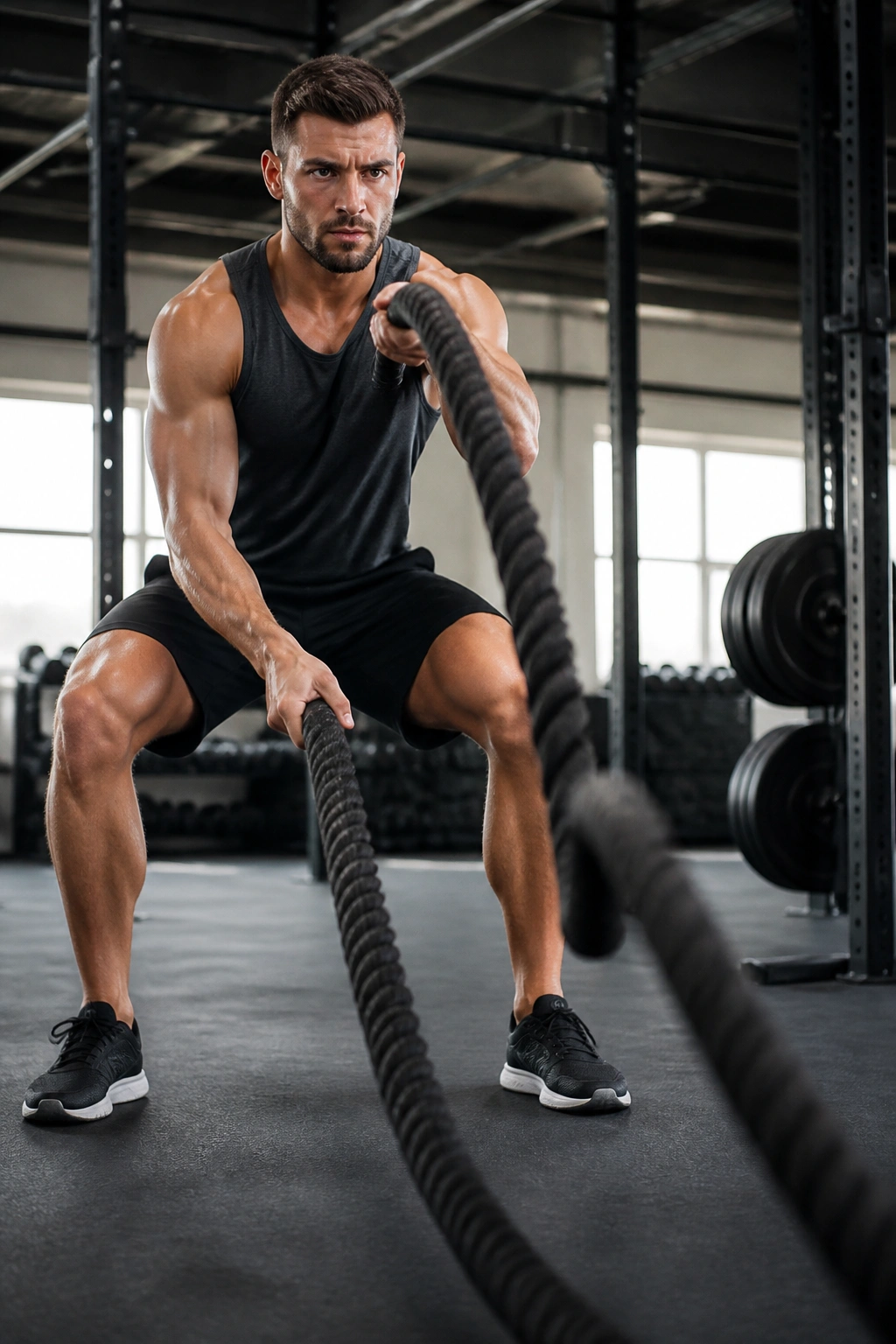
Battle ropes are fantastic for metabolic conditioning, but they are also a sneaky way to train the core. Because you are essentially throwing heavy waves of rope, your core has to act as a pivot point for that energy.
Stand in a quarter-squat position. Keep your chest up and your core braced hard. As you whip the ropes, try to keep your torso perfectly still. Your abs should be working to prevent your body from swaying with the rhythm of the ropes. If you are swaying, you are leaking energy.
Aim for intervals of 30 seconds on, 30 seconds off. You will find that by the third round, your shoulders are burning, but your abs are screaming. This combination of upper-body fatigue and core stabilization is excellent for conditioning.
10. Deadlifts
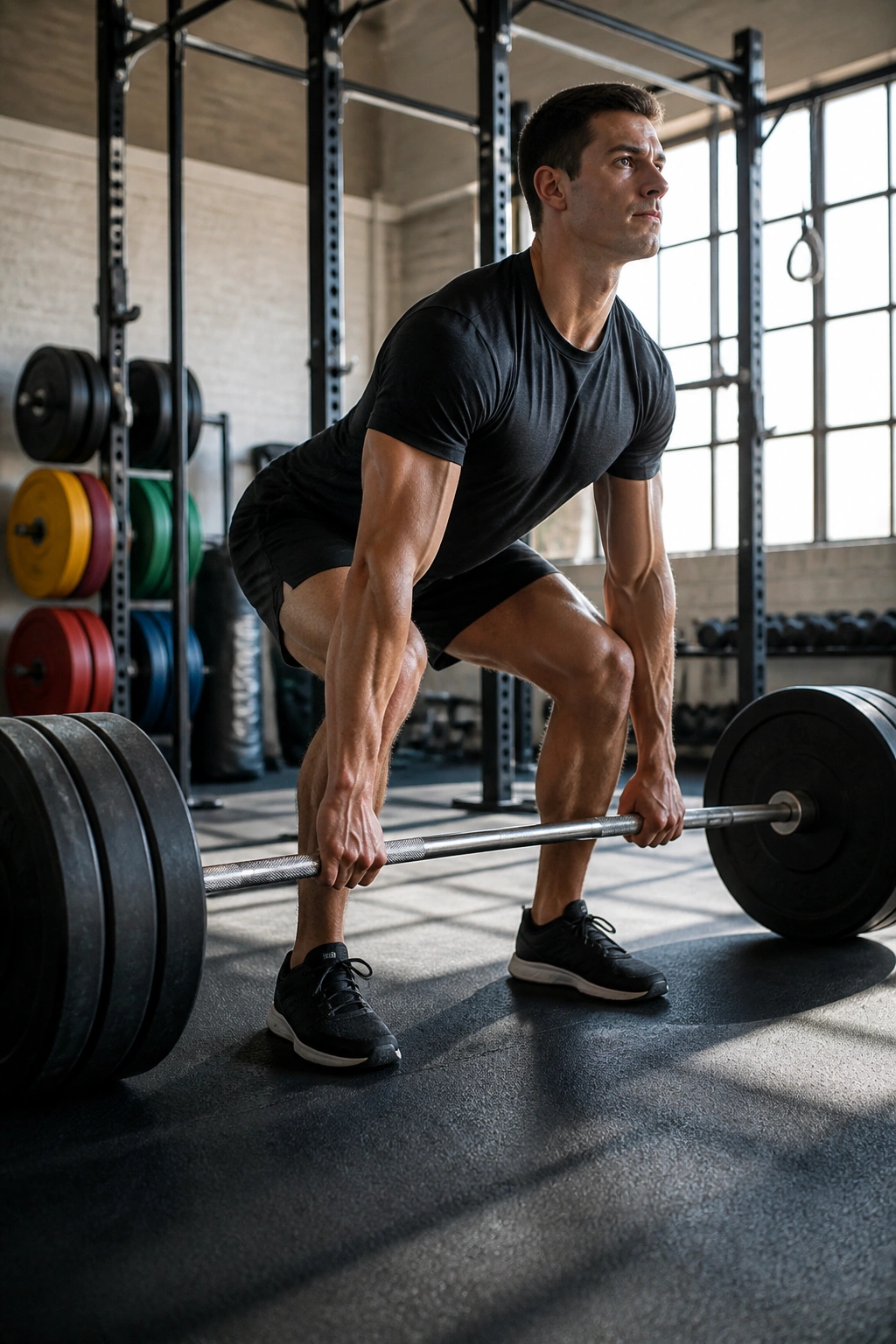
The deadlift is the king of posterior chain movements, but it is also a tremendous core exercise. To pull heavy weight off the floor, you must create a vacuum of pressure in your torso.
When you approach the bar, your setup should be deliberate. Grab the bar, tighten your lats as if you are squeezing oranges in your armpits, and then take that deep breath into your stomach. Brace. As you break the bar off the floor, your abdominal wall is working at maximum capacity to hold your spine in a neutral position against gravity.
Deadlifts are not something you do for high reps. They are meant for low, controlled, high-intensity sets. This is where you build the foundation of strength that supports the definition you are working so hard to diet down to reveal.
11. Cable Woodchoppers
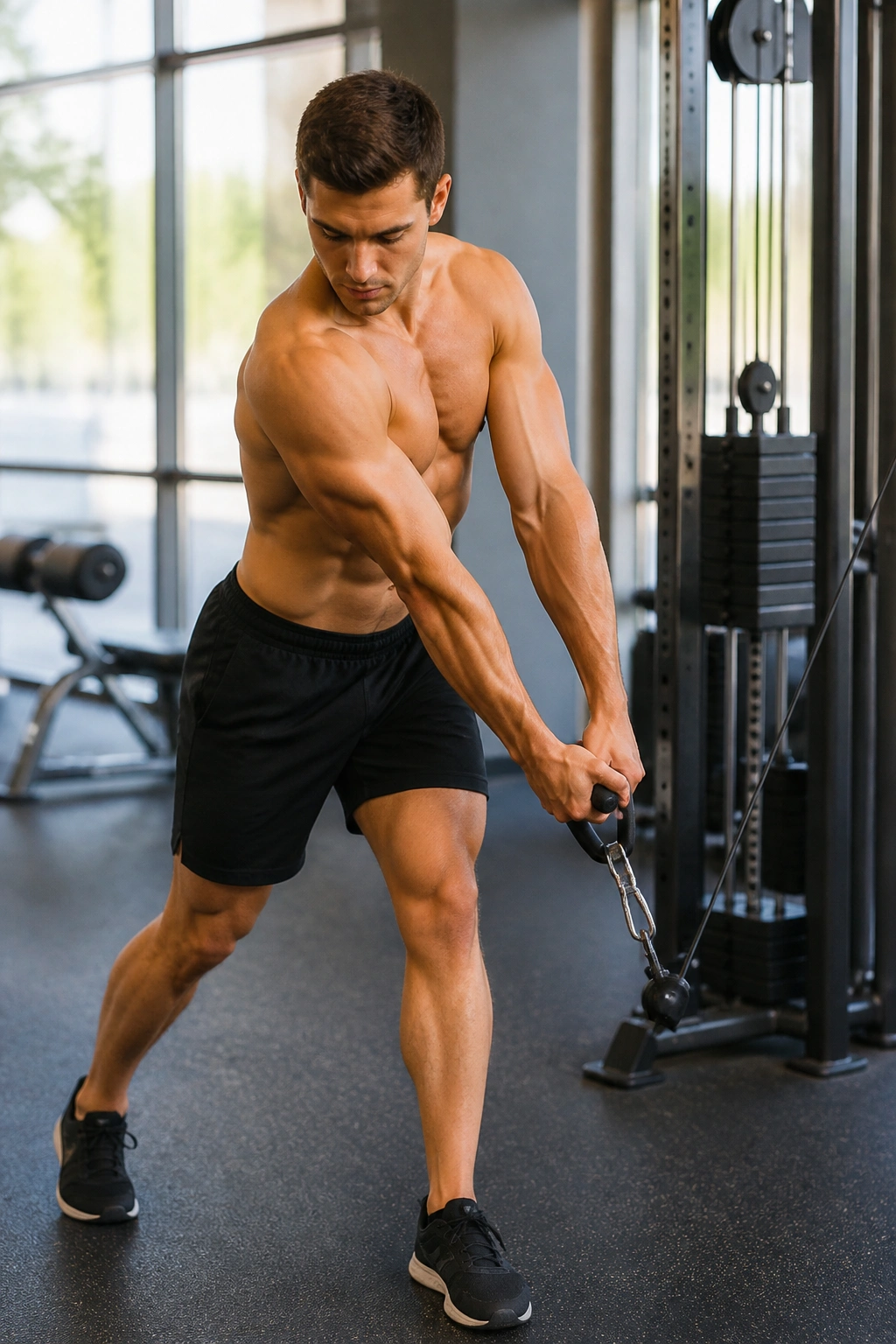
Rotational power is often neglected, but it is vital for athletic performance and abdominal definition. Cable woodchoppers are the best way to load rotation. Unlike the Russian Twist, this movement allows you to use significant weight, which builds muscle tissue in the obliques and serratus anterior.
Set the cable pulley to a high position. Stand perpendicular to the machine with your feet shoulder-width apart. Grab the handle with both hands, arms straight. Rotate through your torso, bringing the handle down and across your body toward your opposite knee.
Return to the starting position under control. The eccentric—the part where you return to the start—is just as important as the pull. Do not let the weight stack slam. If it slams, you are wasting the muscle-building potential of the movement.
12. Kettlebell Swings

The kettlebell swing is a hip-hinge movement that builds explosive power. While it is primarily a glute and hamstring exercise, the core engagement required to stop the swing at the top of the arc is massive.
At the top of the swing, your hips snap forward, and your core must lock your torso into a rigid, upright position. If you have a weak core, the kettlebell will pull you forward and round your back. You are forced to snap your midsection tight to stop the movement.
Do these for reps—sets of 20 or 30. This is not a heavy lifting exercise; it is a metabolic endurance exercise. Your goal should be to maintain a perfect, aggressive posture for the duration of the set.
13. Bicycle Crunches
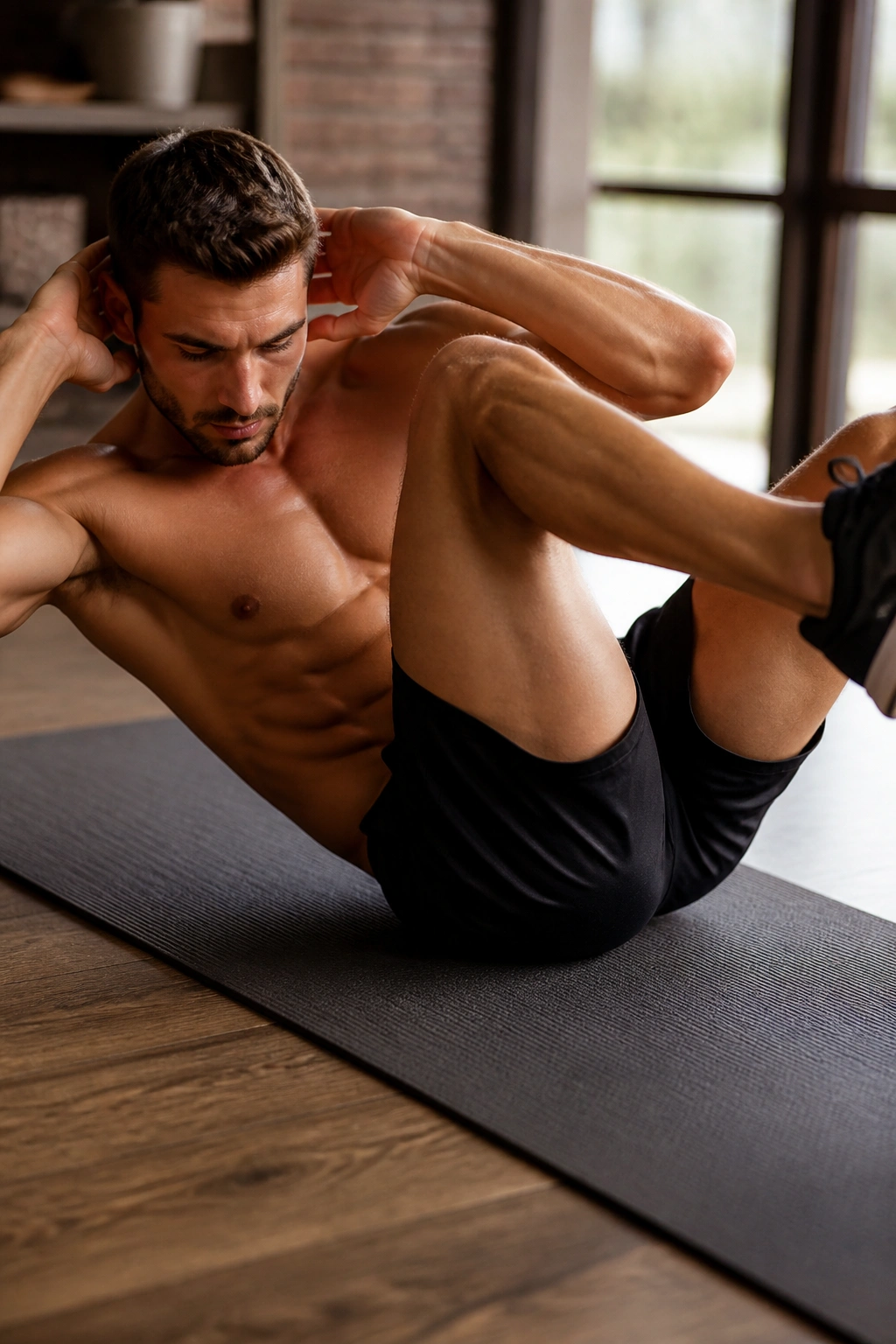
Bicycle crunches are arguably the most effective floor-based abdominal exercise, provided you ignore the “speed” aspect. Most people treat this as a frantic race to see how many reps they can do in 60 seconds. That is the wrong approach.
Slow down. When you bring your right elbow to your left knee, fully extend the other leg and hover it just above the floor. Pause at the peak of the contraction. Actually squeeze your abs. You should feel your obliques working to rotate your torso.
If you are not feeling a burn, you are moving too fast. Speed equals momentum, and momentum is the enemy of muscle growth. Make every single rep count as if it were the only rep you were doing that day.
14. Box Jumps
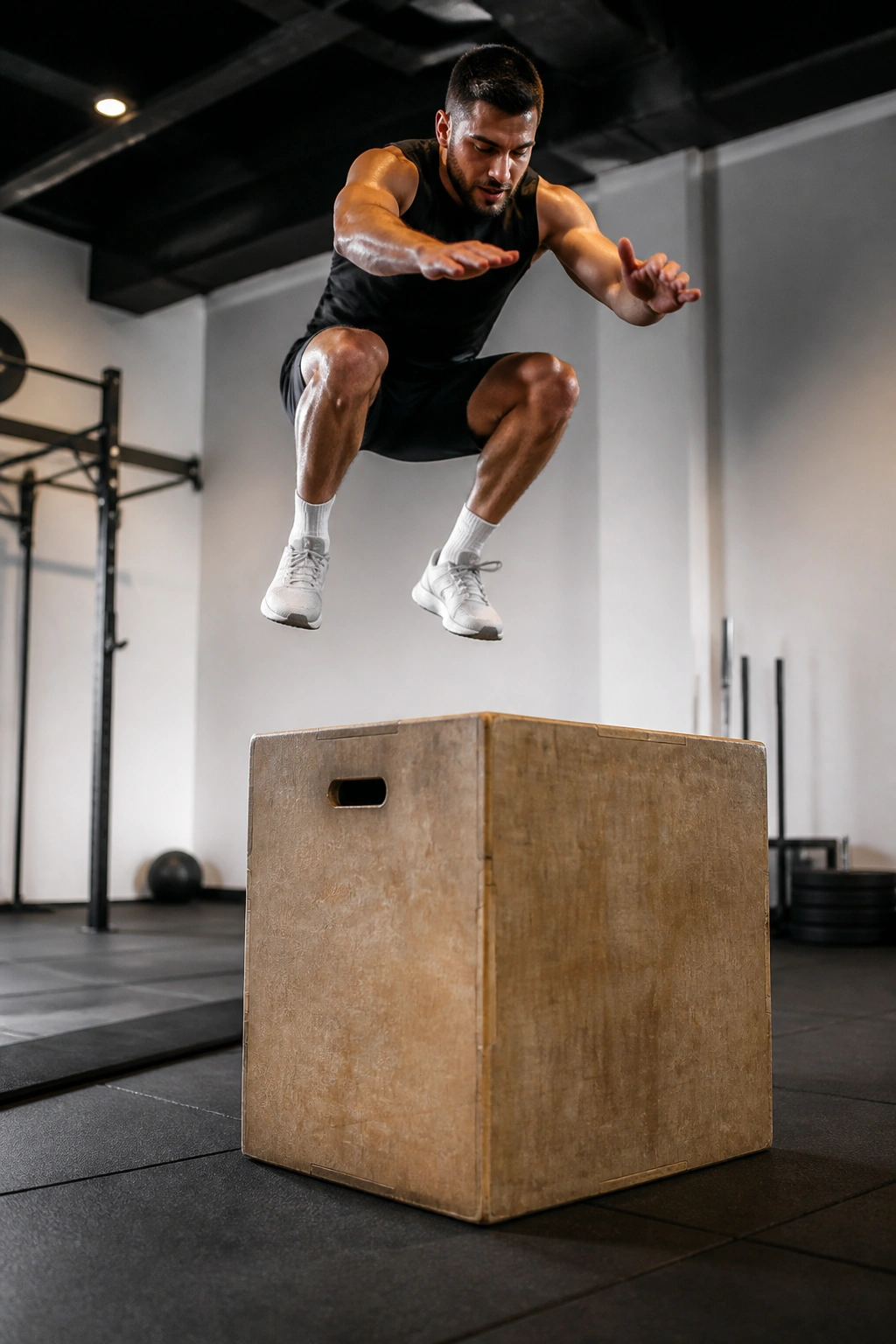
Explosive movements are great for keeping your body lean and athletic. Box jumps force you to recruit your core to stabilize your landing and your takeoff. You cannot jump onto a box with a “soft” midsection—you will find yourself stumbling or unable to reach the height.
Focus on landing softly. The landing requires deep abdominal bracing to absorb the impact of your body weight. If you land with a loud “thud,” you are not bracing correctly. You should be as quiet as a cat.
Start with a height that you can clear comfortably. You don’t need to jump onto a 40-inch box to get the benefits. The goal is the explosive movement and the controlled landing, not the height itself.
15. The Rowing Machine
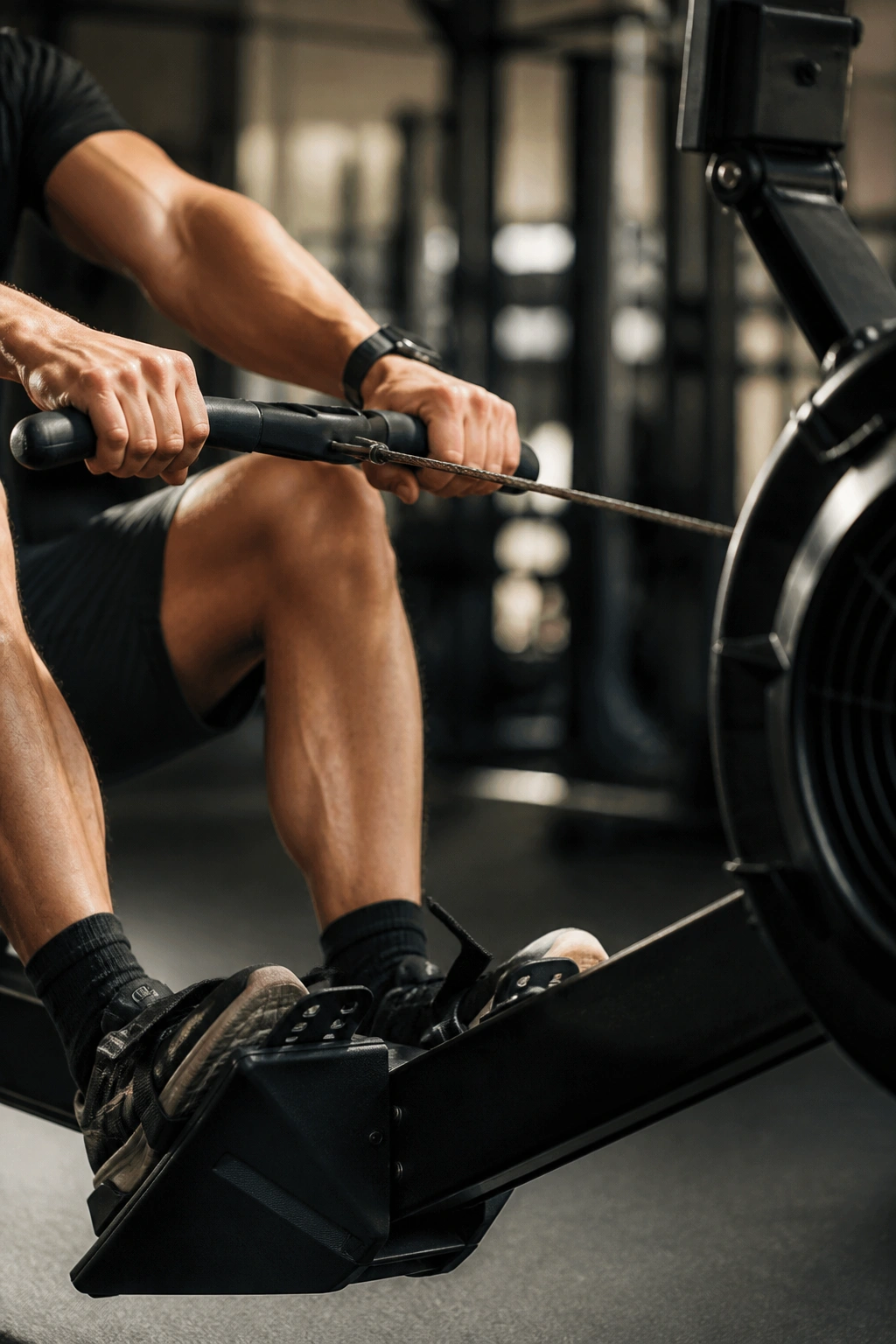
The rowing machine, or ergometer, is a full-body workout that integrates the legs, back, and core into one seamless motion. It is an incredible way to burn calories while keeping the heart rate in the “fat-burning” zone.
The rowing stroke is 60% legs, 20% core, and 20% arms. When you drive your legs back, your core has to act as a bridge to transfer that power to the handle. If your core is weak, your back takes the strain, and your rowing efficiency plummets.
Maintain a steady pace. Focus on the rhythm: drive, lean, pull, return. Your abs should feel engaged throughout the entire stroke, especially during the drive phase. It is one of the few pieces of cardio equipment that actually builds muscular endurance in the midsection.
The Reality of Consistency
There is no magical combination of exercises that will give you a six-pack if your diet is chaotic. But there is also no diet that will give you that “chiseled” look without the muscular stimulus provided by challenging training. The secret is that there is no secret. It is the boring, unsexy process of showing up, lifting heavy things, pushing your heart rate, and eating in a way that respects your performance goals.
Start by picking three or four of these workouts and integrating them into your current week. Do not try to do all fifteen at once. Focus on mastering the technique for each movement, especially the compound lifts and rotational work. If you prioritize intensity over volume, you will find that you don’t need two hours in the gym—you just need forty-five minutes of focused, high-effort work.
Remember that recovery is the final piece of the puzzle. If you push these workouts hard, you must sleep and eat enough protein to repair the muscle you are tearing down. A six-pack is a sign of a healthy, functioning metabolism, not a sign of starvation. Treat your body like the machine it is, fuel it properly, and give it a reason to change, and the results will follow.
